

- Bloom's famous "2 sigma" claim, that tutored students outperform 98% of classroom learners, came from two small studies that later research has rarely come close to. Modern estimates put the advantage of one-on-one tutoring at 0.3 to 0.8 standard deviations, which is still a lot.
- Most of the benefit comes from how the tutor teaches: frequent checks and quick correction, with no moving on until you've mastered the step you're on.
- Chinese makes the case stronger than most languages, because tones need someone listening to you and almost no words are shared with English, so every word is learned from scratch.
- Over the thousands of hours Chinese takes, a modest advantage adds up to months saved or a higher level for the same effort.
- The setup we recommend is one-on-one classes for feedback and pacing, with apps and flashcards on your own for the vocabulary and character memorization.
In 1984 the educational psychologist Benjamin Bloom reported that students taught by a tutor did better than 98% of students in conventional classrooms, a gap of two full standard deviations that became known as "the 2 sigma problem." If it holds, it matters more for Chinese than for most subjects, because of the U.S. Foreign Service Institute's estimate for how long it takes an English speaker to reach professional working proficiency in Chinese: 2,200 hours, roughly three times what Spanish or French requires.
Bloom's finding has shaped how educators think about teaching for four decades, even though his original number is almost certainly too high.
The corrected research is less dramatic. We think it is more useful, though, especially if you're learning Mandarin, one of the hardest languages for English speakers (FSI Category IV).
01 The Most Famous Finding in Education, and What It Actually Says
The studies behind Bloom's paper compared three groups: students in a conventional class of about 30, students in a class using mastery learning (where they had to show they understood a unit before moving on), and students taught with that same mastery approach by a tutor, either individually or in groups of two or three. The tutored students scored two standard deviations above the conventional class, so the average tutored student did better than 98% of the classroom learners.
That result launched decades of research. It also needs some context.
In a 2024 article in Education Next, Paul von Hippel of the University of Texas at Austin points out that the evidence came from two doctoral dissertations by Bloom's own students, small experiments with 4th, 5th and 8th graders that lasted three weeks. The tutored students also got two things at once: individual attention and mastery learning, with its frequent tests and corrective feedback and its rule that you master the material before you advance. The classroom comparison group got neither, and by von Hippel's reading the feedback and retesting alone account for about 1.1 of Bloom's two sigmas.
So what does the research show when you isolate the tutoring effect?
VanLehn's 2011 review of tutoring experiments found that human one-on-one tutoring had an effect size of d = 0.79, which is large but well below 2.0. The most rigorous modern review, by Nickow, Oreopoulos and Quan, pooled 89 randomized controlled trials of tutoring programs (one-on-one and small-group) and found an average effect of about 0.29 standard deviations. Von Hippel's own summary is that about one-third of a standard deviation is the typical effect of an intense, well-designed program measured on broad tests, and that getting there cheaply and at scale would be a huge triumph.
Producing benefits of one-third of a standard deviation would be a huge triumph if it could be done at low cost, on a large scale, and on a broad test.— ポール・フォン・ヒッペル、テキサス大学オースティン校、 教育次 (2024)
What one-on-one tutoring produces is a consistent, well-documented advantage of somewhere between 0.3 and 0.8 standard deviations, depending on the study and the conditions. That may sound modest until you spread it across thousands of hours of study. For Chinese, the structure of the language gives the advantage more to work with than, say, Spanish does.
02 Where the Tutoring Advantage Really Comes From
Undivided attention is the obvious explanation for why tutoring works, but Bloom's data pointed to something more specific.
The tutored students who finished two standard deviations ahead were tested often and corrected straight away. They also had to show they had mastered each concept before moving to the next one. Educators call this mastery learning (掌握学习 ). By von Hippel's reading of the same studies, it accounts for more than half of the gain.
A tutor who simply talks at you for an hour is giving a small, expensive lecture. The better kind keeps checking what you understand and finds exactly where you're confused, then fixes errors as they happen and pitches the work just beyond what you can do on your own. That is a different kind of learning.
Educational psychology has a name for that last part, the Zone of Proximal Development: learning is most efficient when the material sits right at the edge between what you can handle alone and what you can do with guidance. A skilled tutor keeps adjusting to that zone, while a classroom teacher managing 20 or 30 students with different zones has to teach to the middle.
That matters in any subject. For Mandarin it matters more, because the language's core features create specific problems that group classes and self-study tools are poorly built to solve.

03 中国がブルーム氏の主張を強く求める4つの理由
Every language benefits from individual teaching. Mandarin combines tones and a logographic writing system with almost no shared vocabulary with English, on top of the demands of real-time conversation. Together these make an unusually strong case for the kind of teaching Bloom studied.
トーンにはリアルタイムの専門家のフィードバックが必要
Mandarin is a tonal language, so the pitch contour you give a syllable changes the word's meaning. The syllable "ma" can mean mother (妈 ), hemp (麻 ), horse (马 ), or to scold (骂 ), depending on the tone. A wrong tone is worse than a slightly off accent in French, since it can make your sentence hard to understand or, now and then, embarrassing.
If your first language doesn't use tones, they are hard to hear and produce, which is where correction comes in. Bryfonski and Ma, in a 2020 study published in Studies in Second Language Acquisition, followed 41 adult beginners through a 14-week one-on-one online course. Learners whose teacher corrected tones implicitly (by saying the word back with the right tone, a technique called a recast) improved their tone production more than learners who got explicit explanations (d = 0.75), and both the learners and the instructor said they preferred the recasts.
In practice, that means a teacher who hears your third tone flatten out halfway through a sentence and says the word back correctly without stopping the conversation. A group class can't do that for every student, and an app can't do it reliably.
AI pronunciation tools are improving, but most still struggle with subtle tone errors in connected speech, particularly with tone sandhi (变调 ), where tones shift depending on the syllables next to them. For now a human teacher is more reliable for this kind of feedback. If you want to go deeper into how tones work, CLI's guide to Chinese tones covers the system in detail.
すべての言葉はゼロから始まる
Learners of European languages get a head start from cognates. If you're an English speaker studying Spanish, somewhere between 30% and 40% of English words have a recognizable Spanish relative: "family" and familia, "important" and importante. They aren't free vocabulary, but you can often guess what a new word means and be roughly right.
| 言語ペア | 英語とのおおよその同族語重複 | 語彙学習への影響 |
|---|---|---|
| スペイン語 | ~30–40% | 約30~40% |
| 見ただけで認識できる単語が多く、早期の習得を促進 | ~30–40% | 仏語 |
| 約30~40% | 穏健派 | ドイツ語 |
| 中国語 | ~0% | 一部はゲルマン語の語源を共有しているが、部分的に有利 |
Chinese shares almost no cognates with English. Neither its writing system nor its sound system is related to ours. There are a handful of modern loanwords (咖啡 for "coffee," 沙发 for "sofa"), but they're rare. For practical purposes, you build every Chinese word you learn from the ground up.
With no shortcuts, making sure you've kept a word before moving on (the mastery learning principle) matters even more. A tutor who notices you mixing up 买 (, to buy) and 卖 (, to sell), and drills the difference until it sticks, is doing exactly what the tutoring research says works best.
音声短縮のない3,000文字
Reading Chinese means memorizing thousands of individual characters (汉字 ), with no alphabet to sound out. Characters do have internal structure (radicals, phonetic components, recurring patterns), but you can't reliably look at an unfamiliar character and know how to say it, the way you can with a Spanish word you've never seen before.
Functional literacy takes roughly 3,000 characters. The HSK 4 exam (汉语水平考试 ), a solid intermediate level, covers 2,000 words in total under the current HSK 3.0 syllabus. The older HSK 2.0 version of Level 4 had 1,200.
For keeping characters in your head, over a century of research on the spacing effect backs spaced repetition: you spread practice over intervals that grow as you remember, instead of cramming. Anki and Pleco do this with an algorithm, and they're very useful for self-study. The right intervals vary by learner and by character, though, and a tutor who knows which characters you keep confusing can adjust your review in a way a generic algorithm only approximates.
You don't have to choose between a tutor and flashcards. Structured tutoring puts the characters in a sensible order and catches your errors early, while spaced repetition on your own handles the raw memorization. Used together, they work better than either one alone.

会話には適応的な足場が必要
Speaking Mandarin in real time means juggling tones and grammar while you search for the right word and keep the cultural context straight. Because that is overwhelming for a beginner or intermediate learner, conversation practice only helps when someone meets you at your level.
A skilled tutor adjusts as you talk: slowing down, swapping in simpler words, rephrasing a question, then stretching you when you're ready for more. Keeping the conversation just hard enough to push you without making you freeze is exactly the Zone of Proximal Development described above. Group classes can get close, but they default to the middle of the room, so some students are bored while others are lost.
The one-on-one advantage is strongest for productive skills, speaking and writing, where you need immediate correction aimed at your own mistakes. One reviewer on Go Overseas put it this way: "Compared to group classes it is amazing how effective 1 on 1 lessons are - especially for speaking and correcting your 'classic mistakes', so the things you do wrong over and over." For receptive skills like reading and listening, self-study tools, podcasts and graded readers work well.
04 What This Means in Practice: Time, Format and Realistic Expectations
The FSI's 2,200-hour estimate is real, but it targets a very specific outcome: S-3/R-3 professional working proficiency, the level expected of career diplomats. Most learners don't need that. A more practical benchmark for many Chinese learners is HSK 4, a solid intermediate level where you can discuss a range of topics, read moderately complex texts and get along comfortably in a Chinese-speaking environment.
How long does reaching HSK 4 actually take? It depends a great deal on the format and intensity of your study. The table below is a rough estimate, not a guarantee or a measured result.
| 学習形式 | 週の労働時間の目安 | HSK4合格までの目安時間 | 主な利点 | キー制限 |
|---|---|---|---|---|
| 集中的な1対1の没入学習(例:中国でのフルタイムプログラム) | 20~30時間以上 | 約4~6ヶ月 | 急速な進歩、継続的なフィードバック、完全な環境への没入 | コストが高く、時間の拘束が必要であり、誰もが利用できるわけではない |
| 体系的な定期学習(家庭教師+自習の組み合わせ) | 8-15時間 | 約1.5~2.5年 | 柔軟性があり、長期的に持続可能であり、指導と独立性のバランスが取れている | 進歩が遅く、一貫した規律が必要 |
| 気軽な自習(アプリ、教科書、時々の練習) | 3-7時間 | 約3~5年 | 低コスト、自分のペースで学習可能、どこからでもアクセス可能 | 話し方や声のトーンに関するフィードバックがほとんどなく、中退リスクが高く、進歩が停滞することが多い |
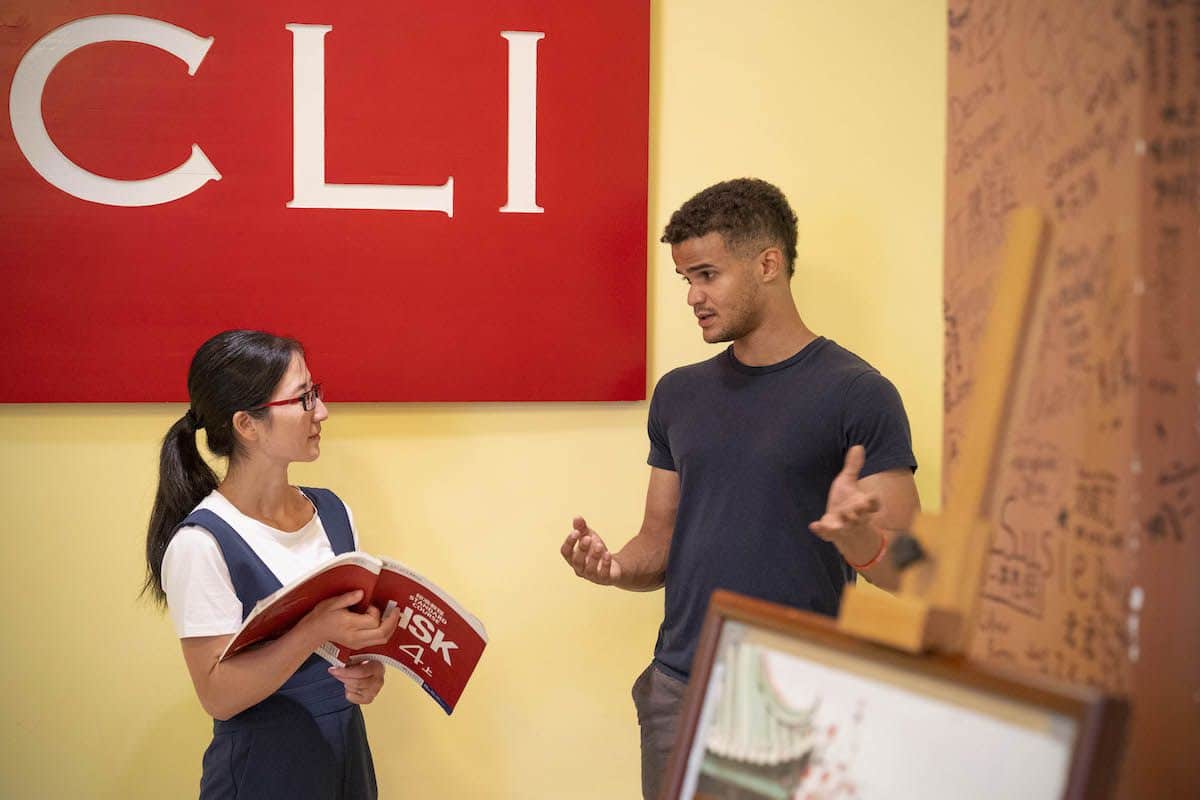
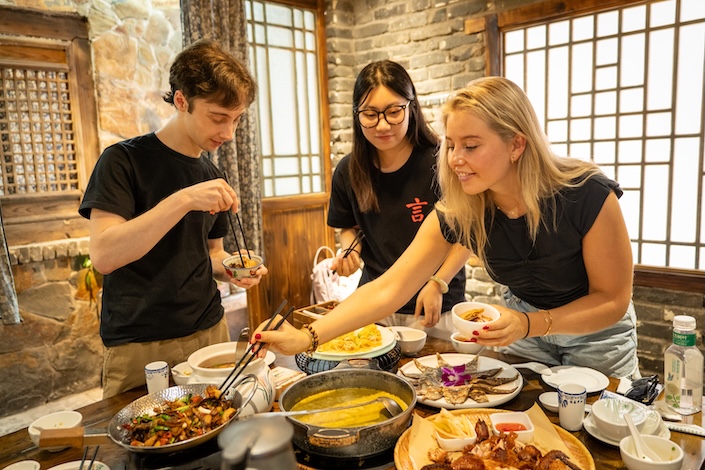
The intensive row (HSK 4 in four to six months) assumes the kind of teaching the research supports: daily one-on-one classes with corrective feedback, moving on only after mastery, and a Chinese-speaking city around you. Your own pace will depend on where you start and how much you study outside class. For a sense of what intensive means day to day, the Immersion Program at the Chinese Language Institute (CLI) in Guilin is 20 hours a week of one-on-one classes with three teachers, taught in two-hour sessions. It is demanding: one student wrote in a course evaluation that "two hours is a long time to stay focused during a one-on-one lesson."
Take the corrected figures at face value. If one-on-one tutoring gives even a 0.3 standard deviation advantage (the conservative end of modern estimates), that advantage adds up across hundreds or thousands of study hours. Over a 2,000-hour learning arc, even a modest gain in efficiency can mean months saved, or a noticeably higher level reached in the same time.
You don't need to study full-time to benefit. Even four to eight hours a week of structured one-on-one classes, with independent study alongside, adds up over the long run. If you're working out how to structure your Chinese studies, CLI's immersion programs and online classes both use this one-on-one approach at different intensity levels.
研究を実践に移す
CLI's immersion programs and online classes are built around structured, mastery-based one-on-one teaching, the kind the research supports.
05 アプリとグループクラスがまだ適合する場所
Apps and group classes still have a place in a Chinese study plan.
Duolingo and similar apps are good for picking up vocabulary, building a daily habit and developing basic reading and listening at the beginner level. Duolingo's own Chinese course targets roughly HSK 3 (about A2), and for that introductory range it does a reasonable job of building study habits and teaching core vocabulary and sentence patterns. Past that level an app gives you little tone correction and no real conversation, so most serious learners hit a ceiling within a year or two.
Group classes offer something one-on-one teaching can't: other learners. Hearing other people's questions and mistakes teaches you things, and being part of a group keeps you going if you find solo study isolating. Some of our own students have asked for more of it. One wrote in their end-of-program evaluation: "I love the one on one classes, but also feel that more group speaking activities would be very beneficial." Collaborative learning has its own research base, so it's a mistake to frame the choice as individual teaching against everything else.
Our advice is to mix formats. You might use an app for daily vocabulary review and character practice, join a group class for the social side, and have regular one-on-one classes where a teacher fixes your tones and your writing and pushes your speaking to the next level. The research shows a measurable advantage for one-on-one teaching, which the demands of Chinese make count for more. It doesn't show that one-on-one is the only thing that works.

06 適切な1対1の指導方法の選択
One-on-one classes vary a lot. The tutored students in Bloom's studies pulled ahead because they were working through a structured process with specific parts, which a friendly conversation partner doesn't give you on their own.
研究結果に基づいて、注目すべき点は次のとおりです。
- Mastery gates: the tutor or program should have a clear curriculum and ask you to show you've mastered each level before you move on. Moving ahead while you're shaky on the fundamentals, particularly tones and basic character recognition, causes bigger problems later.
- Tone correction as you speak: your tutor should be listening for tone errors and correcting them in the moment, which Chinese needs more than most languages. Letting them slide in favor of "communication" feels kind in the moment, but it costs you months down the road.
- The right difficulty: the conversation and the reading should sit at your current level, always slightly beyond what you can do comfortably alone and never so far beyond it that you're guessing blindly.
- Checks on retention: your tutor should regularly test what you've retained, as well as what you've covered, which is the mastery learning part of Bloom's findings. It's the difference between "we talked about measure words last week" and "let's check you can use them correctly."
- Guided self-study: good one-on-one teaching directs and corrects your self-study instead of replacing it. Your tutor should be guiding your flashcard practice and character writing and setting listening homework, and an hour of pure chat every time is a warning sign.
If you're comparing Chinese tutoring options, these five things matter more than the platform, the price per hour or the tutor's nationality. A well-structured program with trained teachers who understand mastery-based progression will usually beat a more expensive one without that structure.

If you're ready to put this research into practice, CLI offers both intensive immersion programs in Guilin, China, and online one-on-one Chinese classes, both built on the structured, mastery-based teaching the evidence supports. Whether you have four hours a week or forty, building a Chinese study plan around structured classes is the first step, and a call with Mira, our Admissions Manager, can help you work out the format that fits your goals and timeline.
07 語彙
| 中国語 | ピンイン | 翻訳 |
|---|---|---|
| 妈 | 母 | |
| 麻 | 麻 | |
| 马 | うま | |
| 骂 | 叱る | |
| 变调 | 声調変化 | |
| 咖啡 | コーヒー | |
| 沙发 | ソファ | |
| 买 | 買う | |
| 卖 | 売る | |
| 汉字 | 漢字 | |
| 汉语水平考试 | HSK(中国語能力試験) | |
| 掌握学习 | 習熟学習 |
08 ソース
- Bloom (1984). The 2 sigma problem: the search for methods of group instruction as effective as one-to-one tutoring. Educational Researcher. View study →
- von Hippel (2024). Two-sigma tutoring: separating science fiction from science fact. Education Next. View study →
- VanLehn (2011). The relative effectiveness of human tutoring, intelligent tutoring systems, and other tutoring systems. Educational Psychologist. View study →
- Nickow, Oreopoulos & Quan (2024). The promise of tutoring for PreK–12 learning: A systematic review and meta-analysis of the experimental evidence. American Educational Research Journal 61(1), 74–107. View study →
- U.S. Department of State, Foreign Service Institute. Language difficulty rankings and class-hour estimates for native English speakers. View source →
- Bryfonski & Ma (2020). Effects of implicit versus explicit corrective feedback on Mandarin tone acquisition in a SCMC learning environment. Studies in Second Language Acquisition. View study →
- Colorín Colorado. Cognate resources for English language learners. View source →