
- Chinese characters are formed according to six traditional categories known as 六书 (liùshū).
- 상형자는 가장 배우기 쉬운 한자이지만, 전체 한자의 약 4%에 불과합니다.
- 한자의 80% 이상은 뜻을 나타내는 부수와 소리를 나타내는 요소를 결합한 형성자입니다.
- 자주 쓰이는 부수와 표음 성분을 익히면 낯선 한자의 뜻과 발음을 유추하는 데 도움이 됩니다.
- 한자의 발음은 수 세기에 걸쳐 변해 왔기 때문에, 발음 요소는 확실한 규칙이 아니라 도움이 되는 단서로 보는 것이 좋습니다.
At first glance, Chinese characters can look like a set of random and confusing symbols. In reality, they are formed and used according to a well-documented set of rules known as 六书 (liùshū), or the “six types” of Chinese characters.
파란색 중국어 단어나 표 안의 병음을 클릭하거나 터치하면 발음을 들을 수 있습니다.
HSK 시험 통과가 목표든 식당 메뉴판을 읽는 것이 목표든, 한자의 구성 원리를 알면 실력이 더 빨리 늘어납니다. 중국에서 중국어 배우기가 목표라면, 이 여섯 가지 범주를 이해해 두면 실제 대화 연습과 함께 한자 지식을 쌓기도 더 쉬워집니다.
01 한자란 무엇인가요?
한자는 표어 문자입니다. 알파벳 글자로 쓰는 대신, 표어 문자는 하나의 단어를 나타내는 문자, 즉 '그림'으로 이루어져 있습니다. 이집트 상형 문자가 같은 원리를 보여 주는 좋은 예입니다.
오늘날 세계 대부분의 언어는 알파벳 체계로 단어를 표기합니다. 중국어와, 중국어의 문자 체계를 빌려 쓴 일본어, 한국어 같은 다른 동아시아 언어가 표어 문자를 사용하는 대표적인 언어입니다.
모든 한자는 상형자일까요?
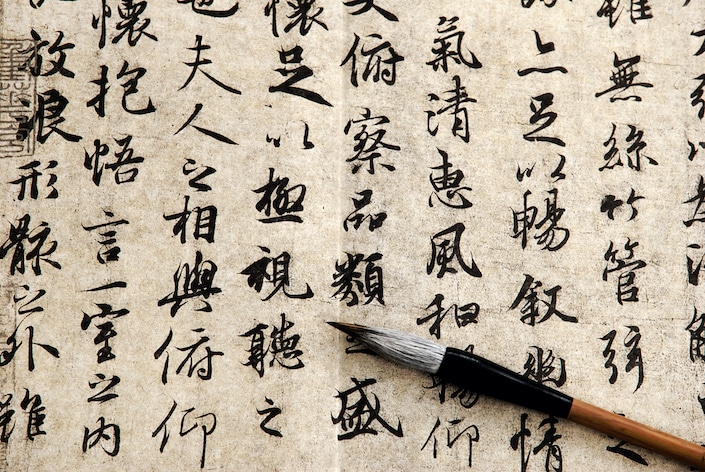
There is a widespread misconception that all Chinese characters are pictograms, meaning that every character visually resembles the word or meaning it represents. It’s common to see characters such as 木 (mù; wood or “tree”) and 山 (shān; mountain) used as examples of the “easy” nature of Chinese character composition.
이런 생각은 중국어를 처음 배우는 사람에게 중국어를 '홍보'할 때 쓰이기도 하지만, 오해의 소지가 있습니다. 상형자는 재미있고 초보자에게 친숙하지만, 전체 한자의 약 4%에 불과합니다. 실제로 한자의 구성은 훨씬 복잡하며, 상형자는 여섯 가지 유형 중 하나일 뿐입니다.
02 한자의 여섯 가지 유형(六书)
Chinese characters are split into six categories referred to as 六书 (liùshū). This framework was first developed by scholars who studied the composition and usage patterns of individual characters, and it’s still the standard way linguists describe how Chinese characters are formed.
유형 1: 상형자 象形字(xiàngxíngzì)
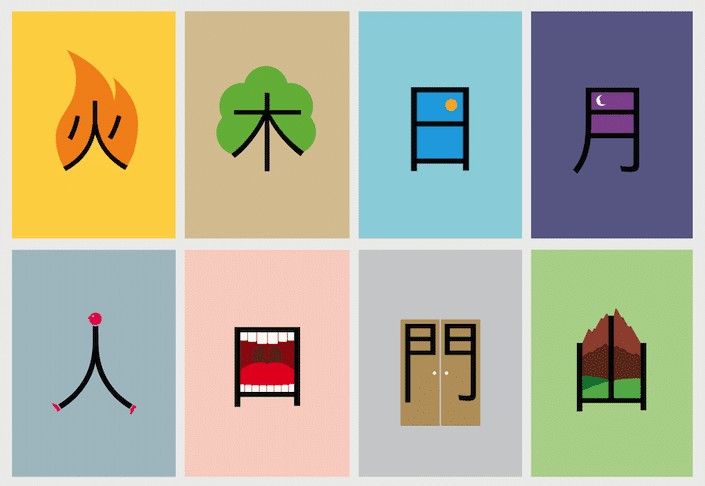
象形 (xiàngxíng) characters are pictograms. This method of forming characters is the easiest and most comprehensible for beginners to learn, since the characters are descriptive and resemble the object or phenomenon they represent.
Common pictographic characters include 日 (rì; sun), 雨 (yǔ; rain), 火 (huǒ; fire), and 口 (kǒu; mouth). Each of these 象形 characters visually echoes the concept it represents, but as mentioned above, they only make up about 4% of all Chinese characters.
유형 2: 형성자 形声字(xíngshēngzì)
形声 (xíngshēng) literally means to “form sound.” Over 80% of all Chinese characters fall into this category, making it by far the most common formation type.
형성(形聲)이라는 말은 이런 글자의 발음과 뜻을 대체로 글자만 보고도 짐작할 수 있다는 뜻입니다. 원어민은 글자 속에 숨어 있는 발음 부분을 잘 알고 있습니다.
When they come across an unfamiliar character, they typically follow the rule of thumb 有边读边 (yǒu biān dú biān), which translates to “if it has a side, read the side.” This works because the phonetic component of a character usually appears on one of its sides.
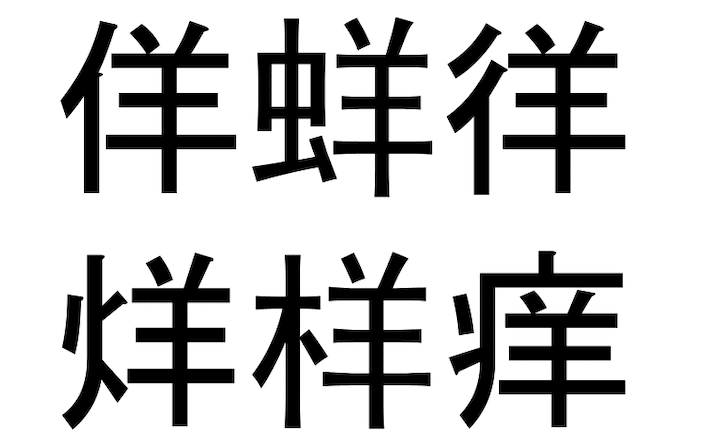
일반적으로 한자의 소리 부분은 오른쪽에, 뜻 부분은 왼쪽에 옵니다. 발음 부분이 위에 있고 뜻 부분이 아래에 있거나, 한쪽이 다른 쪽 안에 들어가는 한자도 있습니다.
뜻을 나타내는 부분은 대개 부수이므로 부수를 익혀 두면 도움이 됩니다. 부수를 많이 알수록 한자의 발음도 짐작하기 쉬워집니다. 부수를 빼면 대개 발음 부분만 남기 때문입니다.
발음 부분이 같은 한자
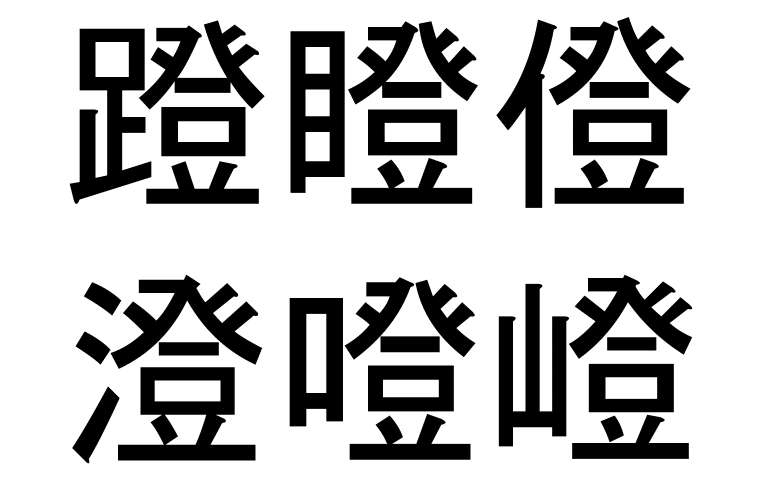
To see how a phonetic component can shape pronunciation across several characters, it helps to look at a few examples. The characters below all contain the phonetic component 登 (dēng; to ascend, to put on).
| 중국어 | 병음 | 의미 | 구성 |
|---|---|---|---|
| 蹬 | dēng | 밟다 | 足(발) + 登 |
| 瞪 | dèng | 노려보다 | 目(눈) + 登 |
| 僜 | dèng | 덩족(티베트) | 亻(사람) + 登 |
| 澄 | dèng | 가라앉히다, 맑아지다 | 氵(물) + 登 |
| 噔 | dēng | 쿵(의성어) | 口(입) + 登 |
| 嶝 | dèng | 산길 | 山(산) + 登 |
The table below shows another pair of characters that both contain the phonetic component 反 (fǎn; contrary, in reverse).
실력을 테스트해 보세요: 扳
지금까지 배운 내용을 바탕으로 扳의 뜻과 발음을 짐작할 수 있나요? 한자 부수에 익숙하다면 이 글자에 손 부수(扌, 手의 부수 형태; shǒu)가 들어 있다는 것을 알아차릴 것입니다.
That means this character is probably related to the use of hands. We also know the sound component is usually on the right, and here that’s 反 (fǎn), so you might guess the whole character is pronounced “fan.”

사실 扳 글자의 발음은 bān이고, 뜻은 무언가를 잡아당기거나 돌려놓는 것입니다. 손 수 부수로 뜻을 짐작한 것은 맞았지만, 예상한 발음은 그대로 이어지지 않았습니다. 여기서 한자 발음이 어떻게 변해 왔는지에 관한 중요한 점을 짚어 볼 수 있습니다.
발음 부분으로 발음을 짐작하는 방법이 항상 들어맞는 것은 아닙니다. 한자의 소리가 역사 속에서 달라졌기 때문입니다. 발음 부분이 같은데도 오늘날 발음이 눈에 띄게 다른 한자도 있습니다.
The characters below all contain the phonetic component 周 (zhōu). Most of them shifted toward an “iao” vowel sound over time, while only one kept the original “ou” ending.
이런 규칙을 알아채면 처음 보는 한자의 발음도, 딱 맞지는 않더라도 짐작하기 쉬워집니다. 이런 규칙을 더 체계적으로 익히고 싶다면 체계적인 중국어 학습 계획을 따라가 보세요. 한꺼번에가 아니라 차근차근 지식을 쌓는 데 도움이 됩니다.
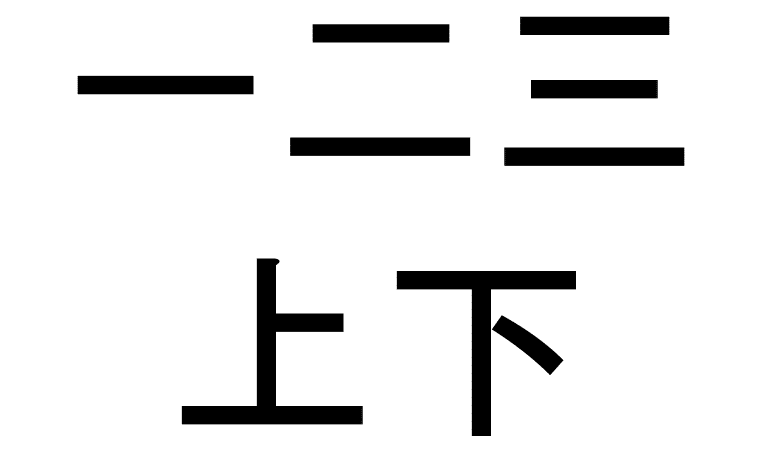
3유형: 지사자 指事字 (zhǐshìzì)
指事 (zhǐshì) literally translates as “pointing to matters.” Characters in this category are ideogramic: they express an abstract idea in an iconic form and are often called “self-explanatory” characters.
The characters 上 (shàng; up) and 下 (xià; down) are good examples. If the horizontal line represents the ground, the vertical stroke pointing upward conveys “up,” while the flipped version conveys “down.”

4유형: 회의자 会意字 (huìyìzì)
会意 (huìyì) characters are also fairly self-explanatory. They’re usually created by combining two or more pictograms or ideograms, resulting in a more abstract meaning.
This method “remedies” the limits of pure pictograms or simple ideograms, since combining elements makes it possible to express more abstract ideas. For example, the pictograph 木 (mù; wood) combines with the person radical 亻 (rén) to create 休 (xiū; to rest) — picture a person resting in the shade of a tree.

Other interesting compound ideograms include 看 (kàn; to look), a combination of 手 (shǒu; hand) and 目 (mù; eye), and 烦 (fán; to trouble, to feel vexed), which combines 火 (huǒ; fire) with the radical 页 (yè; page, leaf). A pile of burning pages certainly sounds stressful.
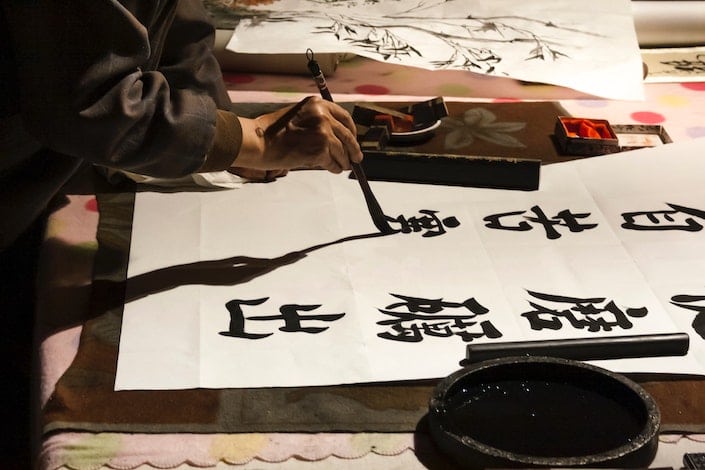
5유형: 전주자 转注字 (zhuǎnzhùzì)
转注字 (zhuǎnzhùzì) are characters whose meanings were influenced by other words, sometimes called “mutually explanatory” characters. Chinese linguistics recognizes three styles of transfer: form transference (形转; xíngzhuǎn), meaning transference (义转; yìzhuǎn), and sound transference (音转; yīnzhuǎn).
The characters 考 (kǎo; to test) and 老 (lǎo; old) are considered 转注 characters because they were once interchangeable before their meanings drifted apart over time. 窍 (qiào; hole) and 空 (kōng; emptiness) show a similar pattern of historically overlapping meanings that later diverged.
6유형: 가차자 假借字(jiǎjièzì)
假借字 (jiǎjièzì) are “borrowed” or “loan” characters, used to write words that sound the same or similar to an existing character. Linguists refer to these as homophonous or near-homophonous morphemes.
Sometimes a borrowed character’s original meaning was later dropped entirely, and a brand-new character was created to preserve it. The character 乎 (hū) originally meant “to call out,” but it was also borrowed as a grammatical particle in classical Chinese to express a question.
Eventually, a new character, 呼 (hū), was created to write the verb “to call out” by adding a mouth radical to 乎. A similar story applies to 必 (bì; must), which originally meant “weapon handle” before its sound was borrowed for the more common meaning of “must,” prompting the creation of 柲 (bì) to preserve the original sense.
The common character 来 (lái) has a similar history. It originally meant “wheat,” but that meaning was gradually replaced as 来 came to mean “to arrive,” so a new character, 麦 (mài), was assigned to represent “wheat” instead.
03 한자 유형을 왜 배워야 할까요?
한자는 무작위로 늘어놓은 그림이나 기호가 아닙니다. 여섯 가지 조자 원리를 이해하면 새로운 한자를 알아보고 외우기가 눈에 띄게 쉬워집니다.
부수와 형성자의 관계를 이해하면 처음 보는 한자의 뜻과 발음을 짐작하는 데도 도움이 됩니다. 이런 배경지식은 필순에 신경 쓰기 시작할 때 특히 유용합니다. 한자를 바르게 쓰면 구성 요소가 어떻게 맞물리는지 더 잘 기억에 남기 때문입니다.
오늘날 중국 본토에서 쓰는 간체자도 번체자와 같은 여섯 가지 조자 원리로 만들어졌다는 점도 기억해 두세요. 한자가 지금의 형태가 된 과정이 궁금하다면 중국어 어원이 자연스러운 다음 주제이며, 번체자와 고전 중국어 한자가 발전한 과정과도 밀접하게 이어집니다.
여섯 가지 유형에 익숙해지면 한자가 암기라기보다 패턴을 알아보는 일에 가깝게 느껴질 것입니다. 그 과정에서 대략 몇 개의 한자가 필요한지 알고 싶다면 배워야 할 한자 수에 관한 가이드를 먼저 읽어 보세요.
이러한 유형들을 실제로 확인할 수 있도록, 무료 중국어 강좌의 4강에서는 그림에서 시작된 한자와, 의미 부분과 소리 부분으로 이루어진 한자를 한 획 한 획 쓰는 과정을 보여줍니다.
04 한자 유형 관련 어휘
여섯 가지 한자 유형을 정리한 간단한 참고표입니다. 유형마다 예시 한자도 한두 개씩 실었습니다.
| 중국어 | 병음 | 의미 | 예시 한자 |
|---|---|---|---|
| 六书 | 한자의 여섯 가지 유형 | — | |
| 象形字 | 상형자 | 日, 雨, 火 | |
| 形声字 | 형성자 | 蹬, 饭 | |
| 指事字 | 지사자 | 上, 下 | |
| 会意字 | 회의자 | 休, 看 | |
| 转注字 | 전주자 | 考, 老 | |
| 假借字 | 가차자 | 乎, 来 |
05 자주 묻는 질문
六书은(는) 무슨 뜻인가요?
六书 (liùshū) literally means “six writings” and refers to the six traditional categories used to classify how Chinese characters are formed.
대부분의 한자는 그 뜻을 그림으로 나타낸 것인가요?
아닙니다. 순수한 상형자는 한자의 약 4%에 불과합니다. 80% 이상은 뜻을 나타내는 부수와 소리를 나타내는 요소를 결합한 형성자입니다.
낯선 한자의 발음은 어떻게 짐작할 수 있나요?
Many characters follow the rule 有边读边, meaning the phonetic component on one side often hints at the pronunciation. This isn’t foolproof, since pronunciations have shifted over time.
한자에서 부수란 무엇인가요?
부수는 보통 한자의 의미를 나타내는 요소로, 글자의 뜻을 짐작하게 해 줍니다. 자주 쓰이는 부수를 알아 두면 나머지 발음 요소도 더 쉽게 찾아낼 수 있습니다.
같은 발음 계열의 한자는 모두 소리가 비슷할까요?
꼭 그렇지는 않습니다. 발음 요소를 공유하는 한자는 대체로 소리가 비슷하지만, 수백 년에 걸친 발음 변화로 周(으)로 이루어진 한자에서 보듯 뚜렷하게 달라진 경우도 있습니다.