
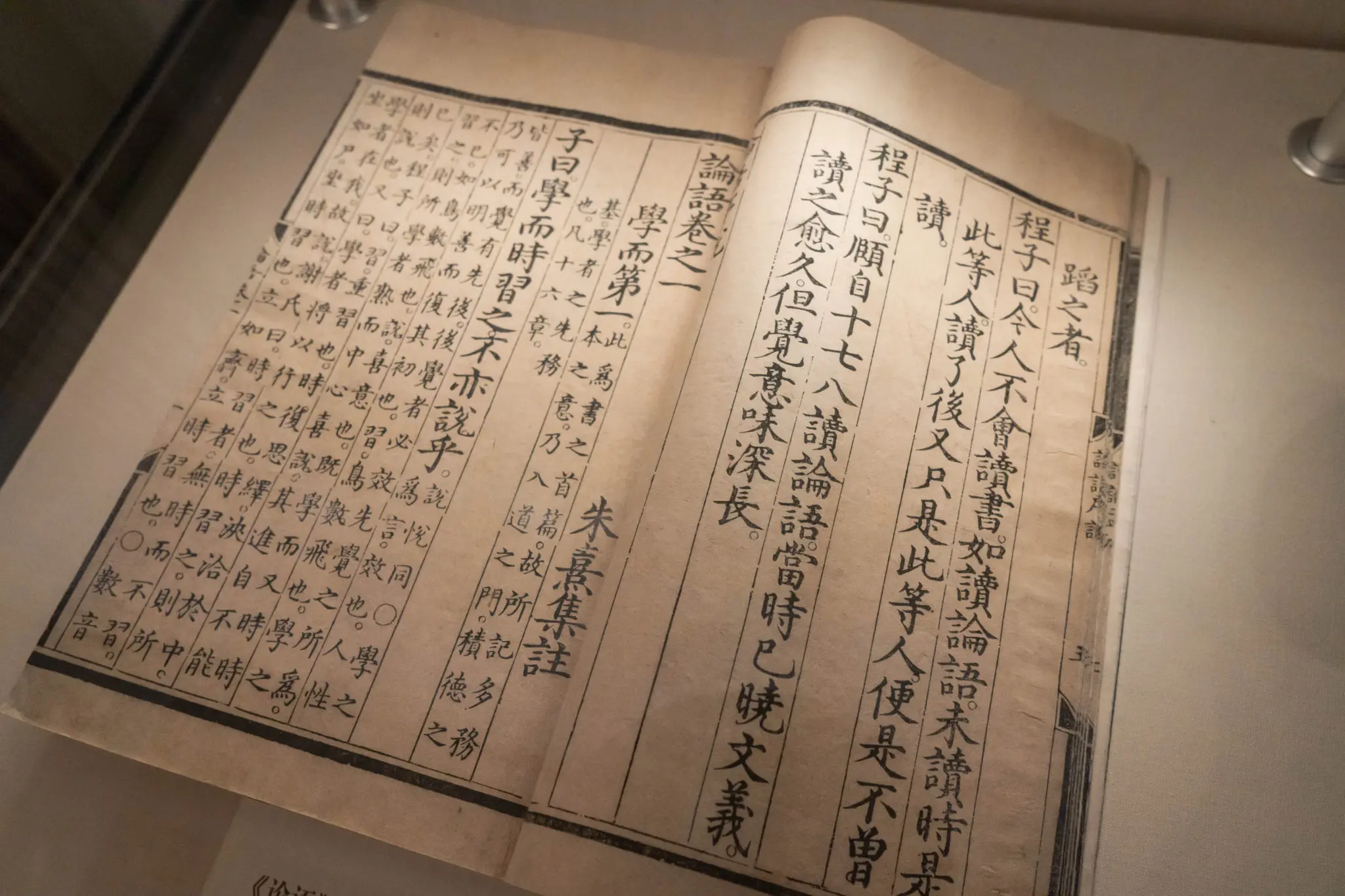
At first glance, Chinese characters can look like a set of random and confusing symbols. In reality, they are formed and used according to a well-documented set of rules known as 六书 (liùshū), or the “six types” of Chinese characters.
点击蓝色的中文词语或表格中的拼音,就可以听到发音。
无论你的目标是通过 HSK 考试,还是只想看懂餐厅菜单,了解汉字的构成方式都能加快你的进步。如果你的目标是在中国学中文,理解这六类汉字也能让你在真实对话练习的同时,更轻松地积累汉字知识。
01 什么是汉字?
汉字是表意文字。它不像字母文字那样用字母书写,而是用代表一个词的字符,也就是“图形”来表达。古埃及的象形文字就是遵循同一原理的典型例子。
如今,世界上大多数语言都用字母系统来书写。汉语,以及借用汉字书写系统的日语、韩语等其他东亚语言,是仍在使用表意文字的主要语言。
所有汉字都是象形字吗?
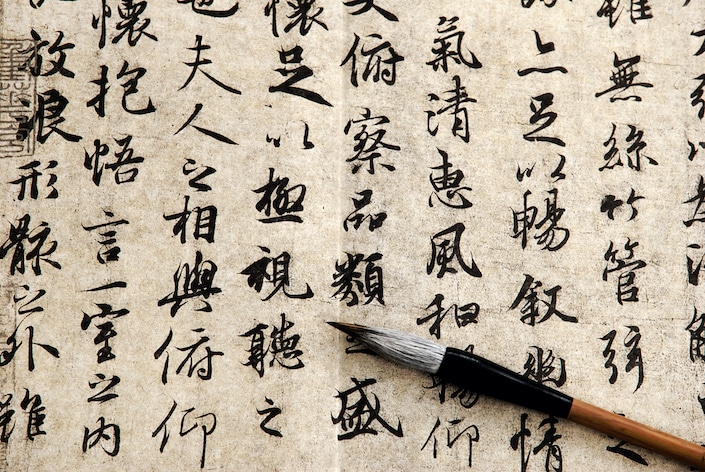
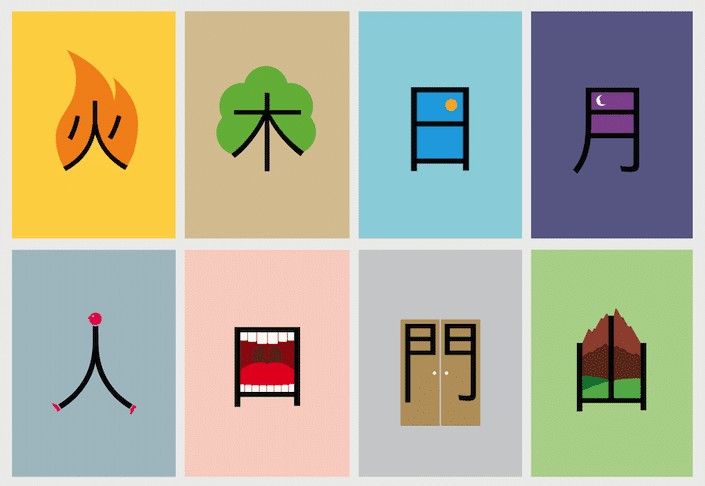
There is a widespread misconception that all Chinese characters are pictograms, meaning that every character visually resembles the word or meaning it represents. It’s common to see characters such as 木 (mù; wood or “tree”) and 山 (shān; mountain) used as examples of the “easy” nature of Chinese character composition.
有时人们会用这种说法向新学习者“推销”汉语,但这是一种误导。象形字有趣,也适合入门,但它们只占全部汉字的约 4%。实际上,汉字的构成要复杂得多,象形字只是六种不同类型中的一种。
02 汉字的六种类型(六书)
Chinese characters are split into six categories referred to as 六书 (liùshū). This framework was first developed by scholars who studied the composition and usage patterns of individual characters, and it’s still the standard way linguists describe how Chinese characters are formed.
第 1 类:象形字 象形字(xiàngxíngzì)
象形 (xiàngxíng) characters are pictograms. This method of forming characters is the easiest and most comprehensible for beginners to learn, since the characters are descriptive and resemble the object or phenomenon they represent.
Common pictographic characters include 日 (rì; sun), 雨 (yǔ; rain), 火 (huǒ; fire), and 口 (kǒu; mouth). Each of these 象形 characters visually echoes the concept it represents, but as mentioned above, they only make up about 4% of all Chinese characters.
第 2 类:形声字 形声字(xíngshēngzì)
形声 (xíngshēng) literally means to “form sound.” Over 80% of all Chinese characters fall into this category, making it by far the most common formation type.
形声的意思很简单:这类字的读音和意思,通常只要看字形就能推测出来。以汉语为母语的人都很清楚字中隐藏的声旁。
When they come across an unfamiliar character, they typically follow the rule of thumb 有边读边 (yǒu biān dú biān), which translates to “if it has a side, read the side.” This works because the phonetic component of a character usually appears on one of its sides.
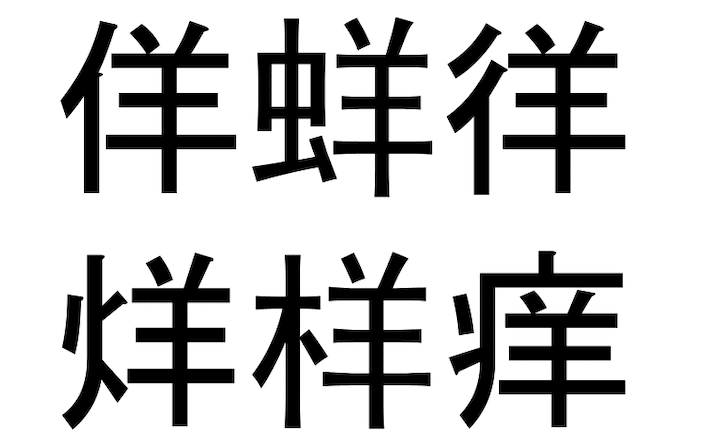
一般来说,字的声旁在右,形旁在左。不过,有些字也会把声旁放在上面、形旁放在下面,或者让两者一内一外相互包含。
表示意义的部分通常是部首,所以学好部首很有帮助。认识的部首越多,也越容易猜出汉字的读音,因为去掉部首后,剩下的通常就是声旁。
声旁相同的汉字
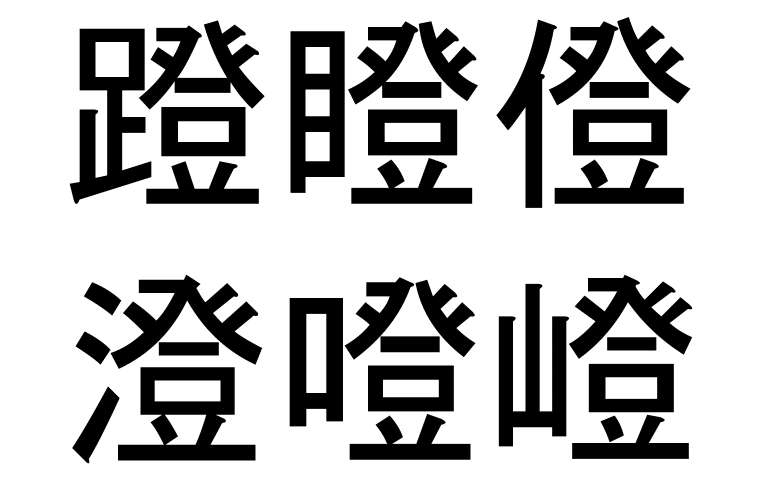
To see how a phonetic component can shape pronunciation across several characters, it helps to look at a few examples. The characters below all contain the phonetic component 登 (dēng; to ascend, to put on).
| 中文 | 拼音 | 含义 | 构成 |
|---|---|---|---|
| 蹬 | dēng | 踩 | 足(脚)+ 登 |
| 瞪 | dèng | 瞪眼看 | 目(眼睛)+ 登 |
| 僜 | dèng | 僜人(西藏) | 亻(人)+ 登 |
| 澄 | dèng | 沉淀,变清澈 | 氵(水)+ 登 |
| 噔 | dēng | 重物撞击的声音(拟声词) | 口(嘴)+ 登 |
| 嶝 | dèng | 山路 | 山(山)+ 登 |
The table below shows another pair of characters that both contain the phonetic component 反 (fǎn; contrary, in reverse).
小测试:扳
根据前面讲过的内容,你能猜出 扳 这个字的意思和读音吗?如果你熟悉汉字部首,就会发现它含有提手旁 扌,即 手(shǒu)作部首时的形式。
That means this character is probably related to the use of hands. We also know the sound component is usually on the right, and here that’s 反 (fǎn), so you might guess the whole character is pronounced “fan.”

其实,扳 读作 bān,意思是拉动或转动某物。你猜对了提手旁,但预期的读音并没有完全保留下来,这就引出了一个重要的话题:汉字的读音是如何演变的。
借助声旁来猜读音并不总是万无一失,因为汉字的读音在历史上不断变化。有些声旁相同的字,如今的读音仍然差别明显。
The characters below all contain the phonetic component 周 (zhōu). Most of them shifted toward an “iao” vowel sound over time, while only one kept the original “ou” ending.
留意这样的规律,即使声旁并不完全对应,也更容易猜出生字的读音。如果你想用更系统的方法梳理这些规律,可以按照系统的中文学习计划循序渐进地积累,而不是一下子全部掌握。
第 3 类:指事字 指事字(zhǐshìzì)
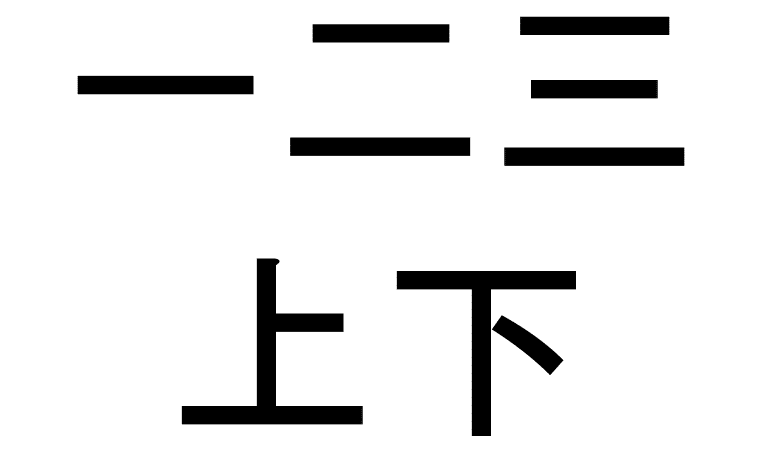
指事 (zhǐshì) literally translates as “pointing to matters.” Characters in this category are ideogramic: they express an abstract idea in an iconic form and are often called “self-explanatory” characters.
The characters 上 (shàng; up) and 下 (xià; down) are good examples. If the horizontal line represents the ground, the vertical stroke pointing upward conveys “up,” while the flipped version conveys “down.”

第 4 类:会意字 会意字(huìyìzì)
会意 (huìyì) characters are also fairly self-explanatory. They’re usually created by combining two or more pictograms or ideograms, resulting in a more abstract meaning.
This method “remedies” the limits of pure pictograms or simple ideograms, since combining elements makes it possible to express more abstract ideas. For example, the pictograph 木 (mù; wood) combines with the person radical 亻 (rén) to create 休 (xiū; to rest) — picture a person resting in the shade of a tree.

Other interesting compound ideograms include 看 (kàn; to look), a combination of 手 (shǒu; hand) and 目 (mù; eye), and 烦 (fán; to trouble, to feel vexed), which combines 火 (huǒ; fire) with the radical 页 (yè; page, leaf). A pile of burning pages certainly sounds stressful.
第 5 类:转注字 转注字(zhuǎnzhùzì)
转注字 (zhuǎnzhùzì) are characters whose meanings were influenced by other words, sometimes called “mutually explanatory” characters. Chinese linguistics recognizes three styles of transfer: form transference (形转; xíngzhuǎn), meaning transference (义转; yìzhuǎn), and sound transference (音转; yīnzhuǎn).
The characters 考 (kǎo; to test) and 老 (lǎo; old) are considered 转注 characters because they were once interchangeable before their meanings drifted apart over time. 窍 (qiào; hole) and 空 (kōng; emptiness) show a similar pattern of historically overlapping meanings that later diverged.
第 6 类:假借字 假借字(jiǎjièzì)
假借字 (jiǎjièzì) are “borrowed” or “loan” characters, used to write words that sound the same or similar to an existing character. Linguists refer to these as homophonous or near-homophonous morphemes.
Sometimes a borrowed character’s original meaning was later dropped entirely, and a brand-new character was created to preserve it. The character 乎 (hū) originally meant “to call out,” but it was also borrowed as a grammatical particle in classical Chinese to express a question.
Eventually, a new character, 呼 (hū), was created to write the verb “to call out” by adding a mouth radical to 乎. A similar story applies to 必 (bì; must), which originally meant “weapon handle” before its sound was borrowed for the more common meaning of “must,” prompting the creation of 柲 (bì) to preserve the original sense.
The common character 来 (lái) has a similar history. It originally meant “wheat,” but that meaning was gradually replaced as 来 came to mean “to arrive,” so a new character, 麦 (mài), was assigned to represent “wheat” instead.

03 为什么要学习不同类型的汉字?
汉字不是一堆随意的图画或符号。一旦你理解了六种造字方法,认字和记字就会明显轻松许多。
弄清部首与形声字之间的关系,还能帮你推测没见过的字的意思和读音。当你开始留意笔顺时,这些背景知识尤其有用,因为正确书写汉字能加深你对各个部件如何组合的理解。
另外别忘了,中国大陆现在使用的简体字,和繁体字一样,也是依据这六种造字原则形成的。如果你想知道汉字是如何演变成今天的样子,接下来可以顺势了解一下汉字字源,它与繁体字和古汉字的发展也息息相关。
当你熟悉了全部六种类型,你很可能会发现,学汉字不再是死记硬背,而更像是在识别规律。如果你想大致了解学习路上需要掌握多少个字,可以先看看我们的指南:你需要学多少个汉字。
想看看这些类型的实际应用,可以看看我们免费中文课程的第 4 课,里面展示了源自图画的汉字,以及由表意部分和表音部分组成的汉字,每个字都逐笔写出。
04 汉字类型词汇
下面这张速查表概括了六种汉字类型,每种都附有一两个例字。
| 中文 | 拼音 | 含义 | 例字 |
|---|---|---|---|
| 六书 | 汉字的六种类型 | — | |
| 象形字 | 象形字 | 日, 雨, 火 | |
| 形声字 | 形声字 | 蹬, 饭 | |
| 指事字 | 指事字 | 上, 下 | |
| 会意字 | 会意字 | 休, 看 | |
| 转注字 | 转注字 | 考, 老 | |
| 假借字 | 假借字 | 乎, 来 |
05 常见问题
六书是什么意思?
六书 (liùshū) literally means “six writings” and refers to the six traditional categories used to classify how Chinese characters are formed.
大多数汉字都是对所表示事物的图画吗?
不是。纯粹的象形字只占汉字的约 4%。超过 80% 是形声字,由表示意义的部首和表示读音的部分组合而成。
怎样猜出不认识的字怎么读?
Many characters follow the rule 有边读边, meaning the phonetic component on one side often hints at the pronunciation. This isn’t foolproof, since pronunciations have shifted over time.
汉字里的部首是什么?
部首通常是汉字的形旁,能为字义提供线索。认识常见部首,也能让你更容易找出剩下的声旁。
同一声旁的字读音都相同吗?
不一定。共用同一声旁的字读音往往相近,但经过几百年的语音演变,有些字的读音已明显不同,比如由周构成的那些字。