HSK 2 | 처음 타 본 고속철도

第一次坐高铁My First High-Speed Train Ride

HSK 2 수준의 이야기로, 273자 분량이며 여성·남성 음성 오디오가 있습니다. 작성: CLI 팀.

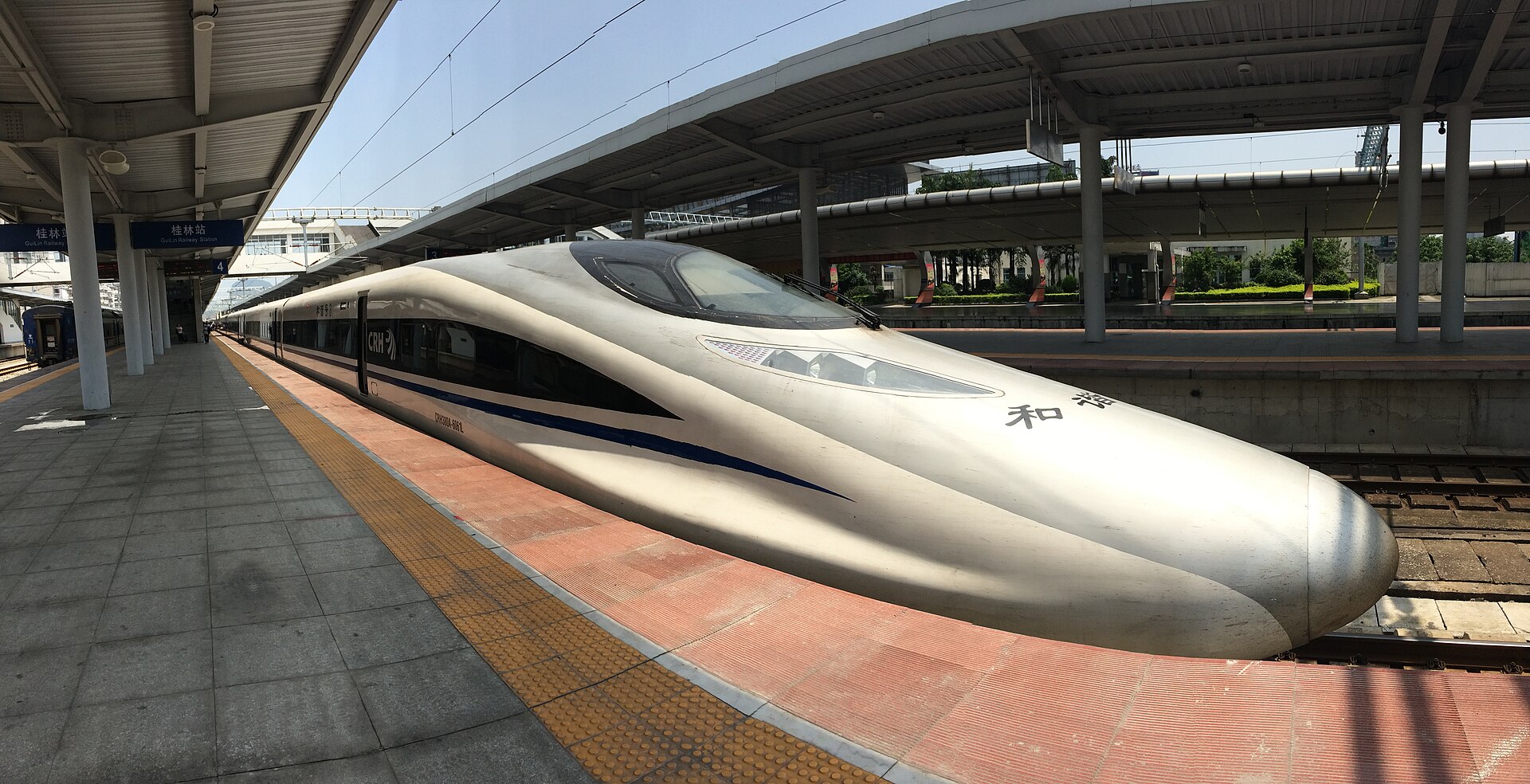
A white high-speed train with a long pointed nose waits beside a sunny station platform
Photo: Luoyandi, CC BY-SA 3.0, via Wikimedia Commons (license)

이야기를 듣고, 병음을 보고, 단어를 눌러 뜻을 확인하려면 JavaScript를 켜 주세요.

“我的护照呢?”那天早上六点,我在房间里找护照,找了十分钟。小李给我打电话:“快一点儿!火车八点开!”护照在我的衣服里!

"Where's my passport?" That day at six in the morning, I was in my room looking for my passport. I looked for ten minutes. Xiao Li called me: "Hurry up! The train leaves at eight!" The passport was in my clothes!

这是我第一次在中国坐火车。我和朋友小李要一起坐高铁去南宁。我们在手机上买了两张票。小李告诉我:“外国人买票、进站,都要有护照。”

It was my first time taking a train in China. My friend Xiao Li and I were taking the high-speed train to Nanning together. We bought two tickets on our phones. Xiao Li told me, "Foreigners need a passport to buy a ticket and to get into the station."

我们七点到了火车站。火车站很大,人也很多。我不知道去哪儿,小李说:“跟我走吧!”

We got to the station at seven. The station was huge, and there were lots of people. I didn't know where to go, and Xiao Li said, "Just follow me!"

火车开了。高铁开得非常快,坐着也很舒服。我旁边坐着一个小孩子。他看了我很长时间,问他妈妈:“妈妈,他是外国人吗?”我说:“是啊!你好!”孩子看着他妈妈:“妈妈,他会说汉语!”

The train started moving. The high-speed train went very fast, and it was comfortable to sit in. A little child was sitting next to me. He looked at me for a long time and asked his mom, "Mom, is he a foreigner?" I said, "Yes! Hello!" The child looked at his mom: "Mom, he can speak Chinese!"

外边有很多山,山下有小河,还有很多绿色的田。我看外边看了两个多小时,早饭都忘了吃!

Outside there were lots of hills, little rivers below the hills, and lots of green fields too. I looked outside for more than two hours and even forgot to eat breakfast!

十点多,我们到了南宁。南宁比桂林热。下车的时候,小李看着我:“你的护照呢?”我说:“在这儿!”

A little after ten, we arrived in Nanning. Nanning is hotter than Guilin. As we got off the train, Xiao Li looked at me: "Your passport?" I said, "Right here!"

生词 새 단어

이야기에서 밑줄이 그어진 단어입니다. 한자를 누르면 발음을 들을 수 있습니다.

名词명사

高铁gāotiěhigh-speed train
火车站huǒchēzhàntrain station
票piàoticket
护照hùzhàopassport
山shānhill, mountain
河hériver
田tiánfield (for crops)

动词동사

告诉gàosuto tell
忘wàngto forget
跟gēnto follow
找zhǎoto look for

形容词형용사

快kuàifast
舒服shūfucomfortable

副词Adverbs

一起yìqǐtogether

量词양사

张zhāng(for tickets, paper, tables)

介词Prepositions

比bǐthan (to compare)

语法点 문법

1. Verb + 了 + length of timesaying how long an action went on

To say how long you did something, put the length of time right after the verb and 了 (le). English puts "for" in front of the time; Chinese needs no extra word.

Subject + Verb + 了 + Length of time

我找了十分钟。
Wǒ zhǎo le shí fēnzhōng.
I looked for ten minutes.
他睡了八个小时。
Tā shuì le bā ge xiǎoshí.
그는 여덟 시간 동안 잤어요.

When the verb has an object, say the verb twice: first with the object, then with 了 and the time.

我看外边看了两个多小时。
Wǒ kàn wàibian kàn le liǎng ge duō xiǎoshí.
I looked outside for more than two hours.
她学汉语学了一年。
Tā xué Hànyǔ xué le yì nián.
She studied Chinese for a year.
2. A 比 B + AdjectiveA is more … than B

To compare two things, put 比 (bǐ) between them and the adjective at the end. Do not add 很 (hěn) before the adjective in this pattern.

A + 比 + B + Adjective

南宁比桂林热。
Nánníng bǐ Guìlín rè.
Nanning is hotter than Guilin.
坐高铁比坐汽车快。
Zuò gāotiě bǐ zuò qìchē kuài.
Taking the high-speed train is faster than taking the bus.
我的票比你的票便宜。
Wǒ de piào bǐ nǐ de piào piányi.
My ticket is cheaper than yours.
3. Verb + 得 (de) + Adjectivesaying how an action is done

To describe how someone or something does an action (fast, well, late), put 得 (de) right after the verb, then the description. The description usually has 很 or 非常 in front of it.

Subject + Verb + 得 + (很/非常) + Adjective

高铁开得非常快。
Gāotiě kāi de fēicháng kuài.
The high-speed train goes very fast.
小李说得很慢。
Xiǎo Lǐ shuō de hěn màn.
Xiao Li speaks slowly.

When the verb has an object, say the verb twice: once with the object, once with 得.

他说汉语说得很好。
Tā shuō Hànyǔ shuō de hěn hǎo.
He speaks Chinese very well.

测试 이해도 확인

이야기에 관한 5가지 질문입니다. 답을 고르면 맞는지 바로 확인할 수 있습니다.

1那天早上,我找护照找了多长时间?

2我的护照在哪儿?

3外国人买票、进站,都要有什么?

4在火车上,我忘了做什么?

5南宁比桂林怎么样?

更多故事 더 많은 이야기

위챗으로 메시지 보내기

위챗의 Chinese Language Institute QR 코드

휴대폰의 위챗에서 +를 누른 다음 스캔을 누르고, 이 코드를 비추세요.

이 코드를 스크린샷으로 저장하세요. 위챗에서 +를 누른 다음 스캔을 누르고 앨범에서 선택하세요.

코드를 길게 눌러 스캔 옵션을 선택하세요.

그런 다음 팔로우를 누르고 저희에게 메시지를 보내세요.

베이징 시간 기준 월요일부터 금요일, 오전 8시 30분부터 오후 6시까지 답변드립니다.