“你会用筷子吗?”上个星期,刘老师请我去她家吃饭,在电话里这样问我。我心里很得意:用筷子?没问题!我在家练了一年筷子,能用筷子夹一颗小小的花生。可是那天晚上我才知道,会用筷子和懂筷子的规矩,完全是两回事。
"Can you use chopsticks?" Teacher Liu asked me on the phone last week when she invited me to her home for dinner. I felt pretty proud of myself. Chopsticks? No problem! I had practiced with chopsticks at home for a whole year, and I could pick up a single little peanut. But that evening I learned that knowing how to use chopsticks and knowing chopstick etiquette are two completely different things.
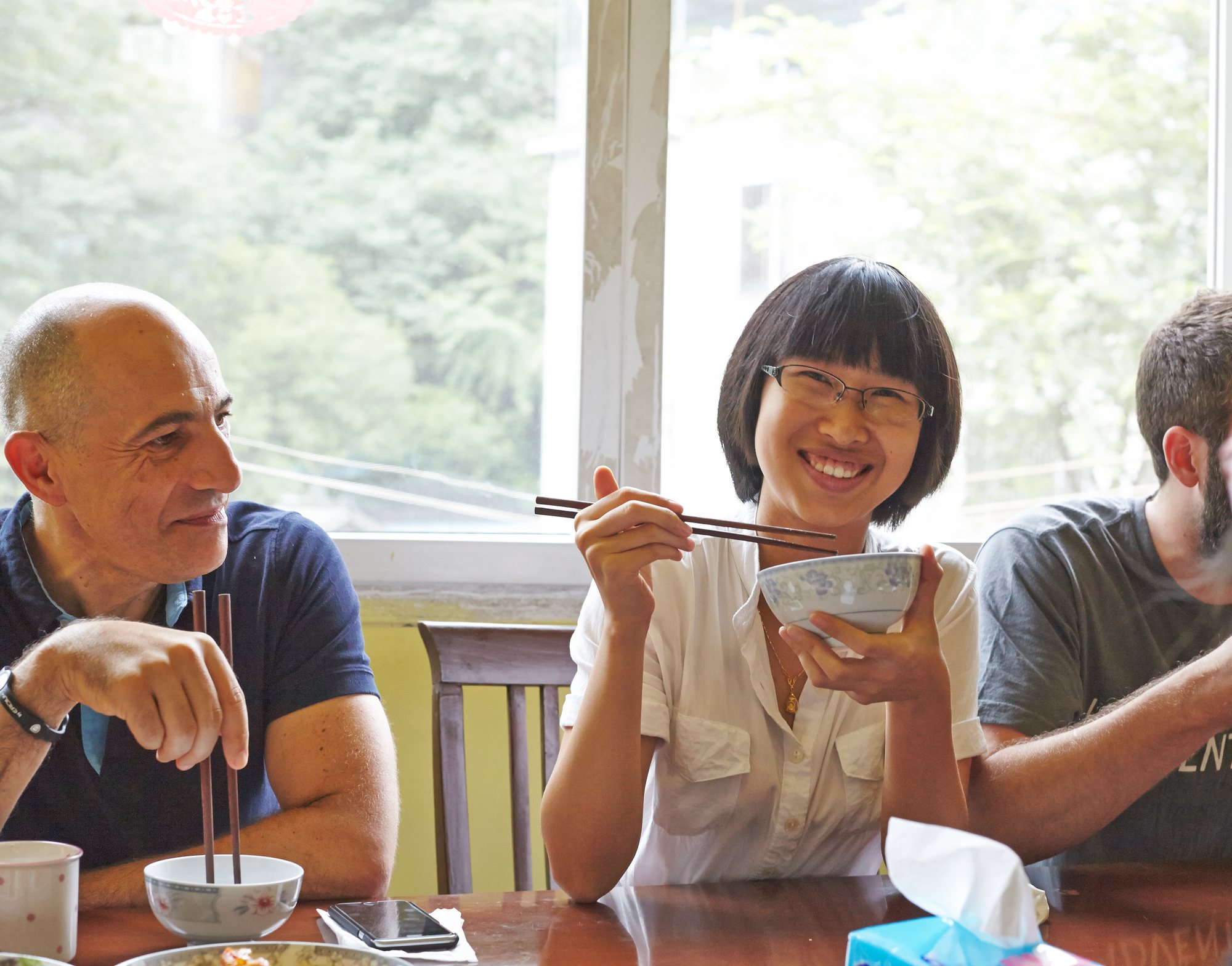
刘老师的丈夫陈叔叔做了一桌子菜,有芋头扣肉、炒青菜,还有一大碗汤。刘老师的妈妈也在,她八十多岁了,就坐在我旁边,一直笑着看我吃。吃到一半,我想用手机给芋头扣肉拍张照片,就顺手把筷子插在了米饭里。奶奶脸上的笑一下子不见了。
Teacher Liu's husband, Uncle Chen, had cooked a whole table of food: braised pork with taro, stir-fried greens and a big bowl of soup. Teacher Liu's mother was there too. She is over eighty, and she sat right next to me, smiling as she watched me eat. Halfway through the meal, I wanted to take a picture of the pork and taro with my phone, so without thinking I stuck my chopsticks into my rice. The smile on Grandma's face vanished at once.
刘老师轻轻地把我的筷子拿出来,放在碗上,小声对我说:“筷子可不能直直地插在米饭里。”她解释说,这样看起来像在给去世的人烧香,老人看到了心里会很不舒服。我的脸一下子红了,赶紧跟奶奶说对不起。奶奶拍拍我的手说:“没关系,你是客人,不知道很正常。”
Teacher Liu gently pulled my chopsticks out, laid them across my bowl and said quietly, "You really can't stand your chopsticks up in your rice." She explained that it looks like burning incense for someone who has died, and older people feel very uneasy when they see it. My face went red, and I quickly told Grandma I was sorry. Grandma patted my hand and said, "It's all right. You're a guest. Of course you didn't know."
过了一会儿,我想告诉陈叔叔,他的菜做得太好了。我一激动,就用筷子指着他说:“叔叔,您太厉害了!”陈叔叔哈哈大笑,刘老师却又笑着摇了摇头。原来,用筷子指别人,就像用手指指着别人的鼻子,是很不礼貌的。她还告诉我,吃饭的时候不要用筷子敲碗,因为以前只有要饭的人才会这样做;也不要拿着筷子在盘子里翻来翻去,挑自己最喜欢的那块。
A little later, I wanted to tell Uncle Chen that his cooking was amazing. I got so excited that I pointed my chopsticks at him and said, "Uncle, you're incredible!" Uncle Chen burst out laughing, but Teacher Liu smiled and shook her head again. It turns out that pointing your chopsticks at someone is just like pointing your finger right at their nose. It's very rude. She also told me not to tap my bowl with my chopsticks during a meal, because in the old days only beggars did that, and not to dig around in a dish with my chopsticks to pick out the piece I like best.
我一边听,一边在心里数:一晚上,我已经做错两件事了。不过,刘老师说,筷子的规矩不都是“不能”,也有“应该”。桌子上有一双公筷,是专门用来给别人夹菜的。现在很多家庭吃饭的时候都会用公筷,主人常常用它给客人夹菜,这是热情,也是尊重。那天晚上,我的碗一直是满的:刘老师夹一块肉,陈叔叔夹一些青菜,我怎么吃也吃不完。
As I listened, I counted in my head: in one evening I had already gotten two things wrong. But Teacher Liu said that chopstick etiquette isn't all "don'ts." There are also "dos." On the table there was a pair of serving chopsticks, used only for serving food to other people. These days many families use serving chopsticks at meals, and the host often uses them to put food in the guest's bowl. It's a way of showing warmth and respect. All evening my bowl was full: Teacher Liu added a piece of pork, Uncle Chen added some greens, and no matter how much I ate, I couldn't finish.
吃到最后,我拿起公筷,给奶奶夹了一块最软的芋头。奶奶高兴地说:“这孩子,学得真快!”说完,她也拿起公筷,给我夹了一大块肉。我看着又满了的碗,不知道该怎么办。
Near the end of the meal, I picked up the serving chopsticks and gave Grandma the softest piece of taro. Grandma said happily, "This child learns fast!" Then she picked up the serving chopsticks too and put a big piece of pork in my bowl. I looked at my bowl, full all over again, and had no idea what to do.