HSK 1 | 我的小猫

我的小猫My Little Cat

一篇 HSK 1 故事,共 150 个字,配有女声和男声两种音频。作者:CLI 团队。

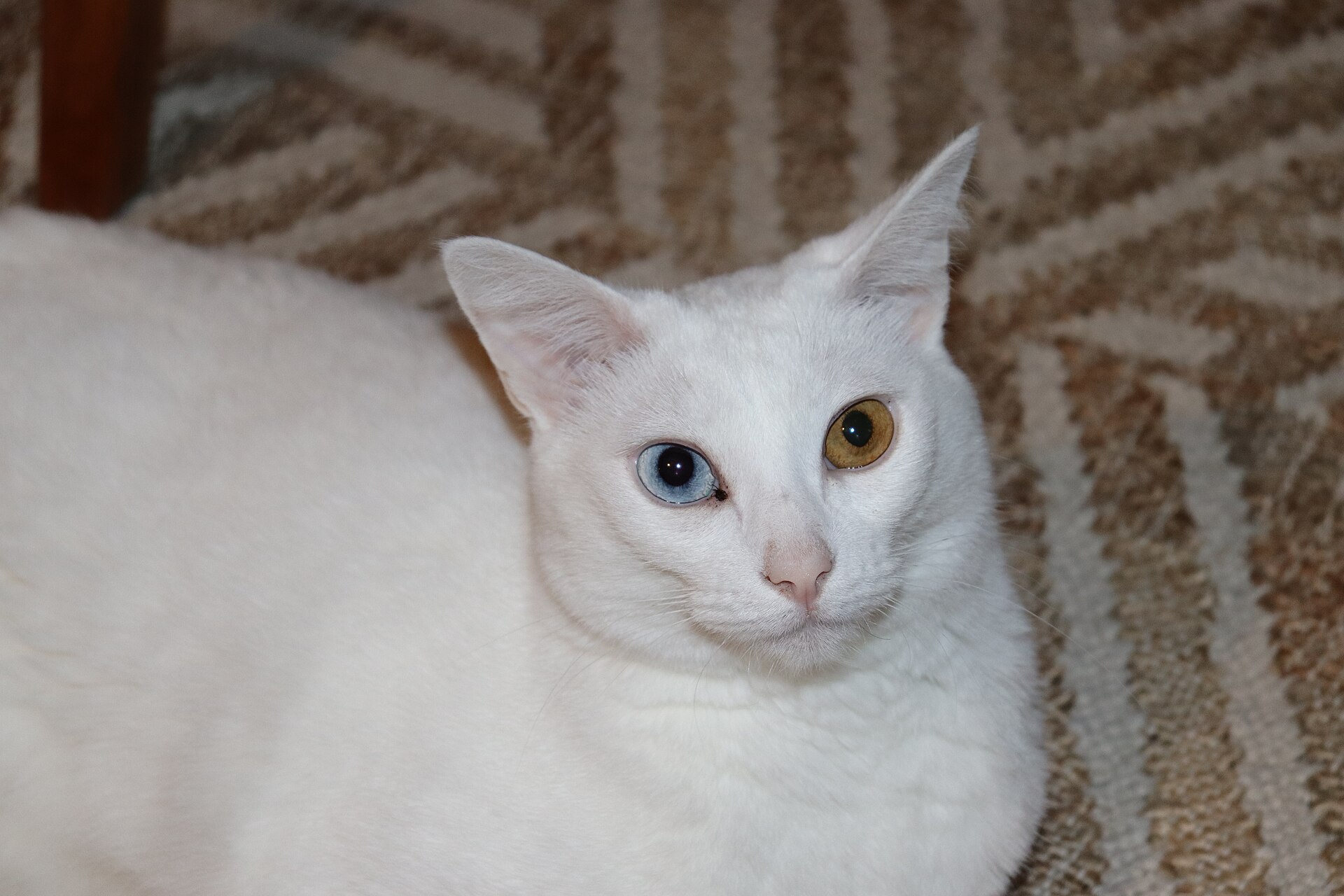
A white cat with one blue eye and one amber eye lies on a patterned rug and looks at the camera
Photo: Fernando Losada Rodríguez, CC BY-SA 4.0, via Wikimedia Commons (license)

请开启 JavaScript,才能听故事、查看拼音,并点击单词查看词义。

我家有一只小猫。它叫米米,是白色的,很漂亮。

My family has a little cat. Her name is Mimi. She's white, and she's very pretty.

米米爱吃鱼,也爱吃肉。我们吃晚饭的时候,它坐在椅子上,看我们的菜。

Mimi loves eating fish, and she loves eating meat too. When we eat dinner, she sits on a chair and looks at our food.

白天,米米睡觉。它在我的床上睡,在椅子上睡,还在爸爸的电脑上睡!爸爸说:“米米,我要工作!”米米不听。

In the daytime, Mimi sleeps. She sleeps on my bed, she sleeps on the chair, and she even sleeps on Dad's computer! Dad says, "Mimi, I need to work!" Mimi doesn't listen.

晚上,我们睡觉的时候,米米不睡觉。早上五点,它来我的房间叫我。妈妈起床了,爸爸起床了,我也起床了。米米很高兴,它要吃早饭了!我们家没有闹钟,我们有米米!

At night, when we sleep, Mimi doesn't. At five in the morning, she comes to my room and meows at me. Mom gets up, Dad gets up, and I get up too. Mimi is very happy: breakfast is coming! Our family has no alarm clock. We have Mimi!

生词 生词

这些词在故事中带有下划线。点击汉字可以听读音。

名词名词

猫māocat
鱼yúfish
肉ròumeat
椅子yǐzichair
床chuángbed
电脑diànnǎocomputer
房间fángjiānroom
早饭zǎofàn早餐
闹钟nàozhōngalarm clock

量词量词

只zhī(measure word for animals)

动词动词

睡觉shuìjiàoto sleep
起床qǐchuáng起床
听tīngto listen

形容词形容词

白色báisèwhite
漂亮piàoliangpretty
高兴gāoxìnghappy

语法点 语法

1. 在 + Place + Verb (zài)to do something at or in a place

In Chinese, the place comes before the action. First say where with 在, then say what happens there. English does it the other way around.

Subject + 在 + Place + Verb

它在我的床上睡。
Tā zài wǒ de chuáng shàng shuì.
She sleeps on my bed.
我在家吃早饭。
Wǒ zài jiā chī zǎofàn.
I eat breakfast at home.
爸爸在医院工作。
Bàba zài yīyuàn gōngzuò.
Dad works at a hospital.

With some verbs, like 坐 (zuò; to sit) and 住 (zhù; to live), 在 + place comes after the verb. Then it tells you where someone or something is: where the cat sits, where you live.

Subject + 坐 / 住 + 在 + Place

它坐在椅子上。
Tā zuò zài yǐzi shàng.
She sits on a chair.
我住在桂林。
Wǒ zhù zài Guìlín.
我住在桂林。
2. …的时候 (… de shíhou)when ..., while ...

Put 的时候 after an action to say "when" or "while" it happens. That part comes first, and the main part of the sentence follows.

Action + 的时候 , Main sentence

我们吃晚饭的时候,它坐在椅子上。
Wǒmen chī wǎnfàn de shíhou, tā zuò zài yǐzi shàng.
When we eat dinner, she sits on a chair.
我看电影的时候喜欢喝茶。
Wǒ kàn diànyǐng de shíhou xǐhuan hē chá.
I like drinking tea while I watch a movie.
下雨的时候,我不想去外边。
Xiàyǔ de shíhou, wǒ bù xiǎng qù wàibian.
When it rains, I don't want to go outside.
3. 要…了 (yào … le)about to, going to (soon)

Put 要 before a verb and 了 at the end to say that something is about to happen.

Subject + 要 + Verb + 了

它要吃早饭了!
Tā yào chī zǎofàn le!
She's about to have breakfast!
我要睡觉了。
Wǒ yào shuìjiào le.
I'm going to bed now.
要下雨了!
Yào xiàyǔ le!
It's about to rain!

测试 测一测你的理解程度

关于这个故事的 5 个问题。选一个答案,看看对不对。

1米米是白色的吗?

2米米爱吃什么?

3白天,米米做什么?

4米米早上几点叫“我”?

5我们家有闹钟吗?

更多故事 更多故事

通过微信给我们留言

喜爱中文(CLI)的微信二维码

在手机微信中,点击 + 号,然后点击 扫一扫,将摄像头对准这个二维码。

截取这个二维码的屏幕截图。在微信中,点击 + 然后点击 扫一扫,再从相册中选择该截图。

长按这个二维码,选择扫一扫的选项。

然后点击关注,给我们发送消息。

我们的回复时间为北京时间周一至周五上午 8:30 至下午 6:00。