
HSK 4 | 龙脊梯田

龙脊梯田The Longji Rice Terraces

Golden rice terraces curve below a mountain village

By the CLI Team

请开启 JavaScript,才能听故事、查看拼音,并点击单词查看词义。

“快到了!”司机说。汽车在山路上转来转去,我有点儿不舒服,差点儿请司机停车。那是十月的一个周末,我和朋友赵敏要去龙脊梯田。龙脊在桂林北边的龙胜,从桂林坐汽车大概要两个多小时。

"Almost there!" said the driver. The bus wound back and forth along the mountain road. I felt a bit sick and nearly asked the driver to stop. It was a weekend in October, and my friend Zhao Min and I were on our way to the Longji rice terraces. Longji is in Longsheng, north of Guilin, about two hours and a bit from Guilin by bus.

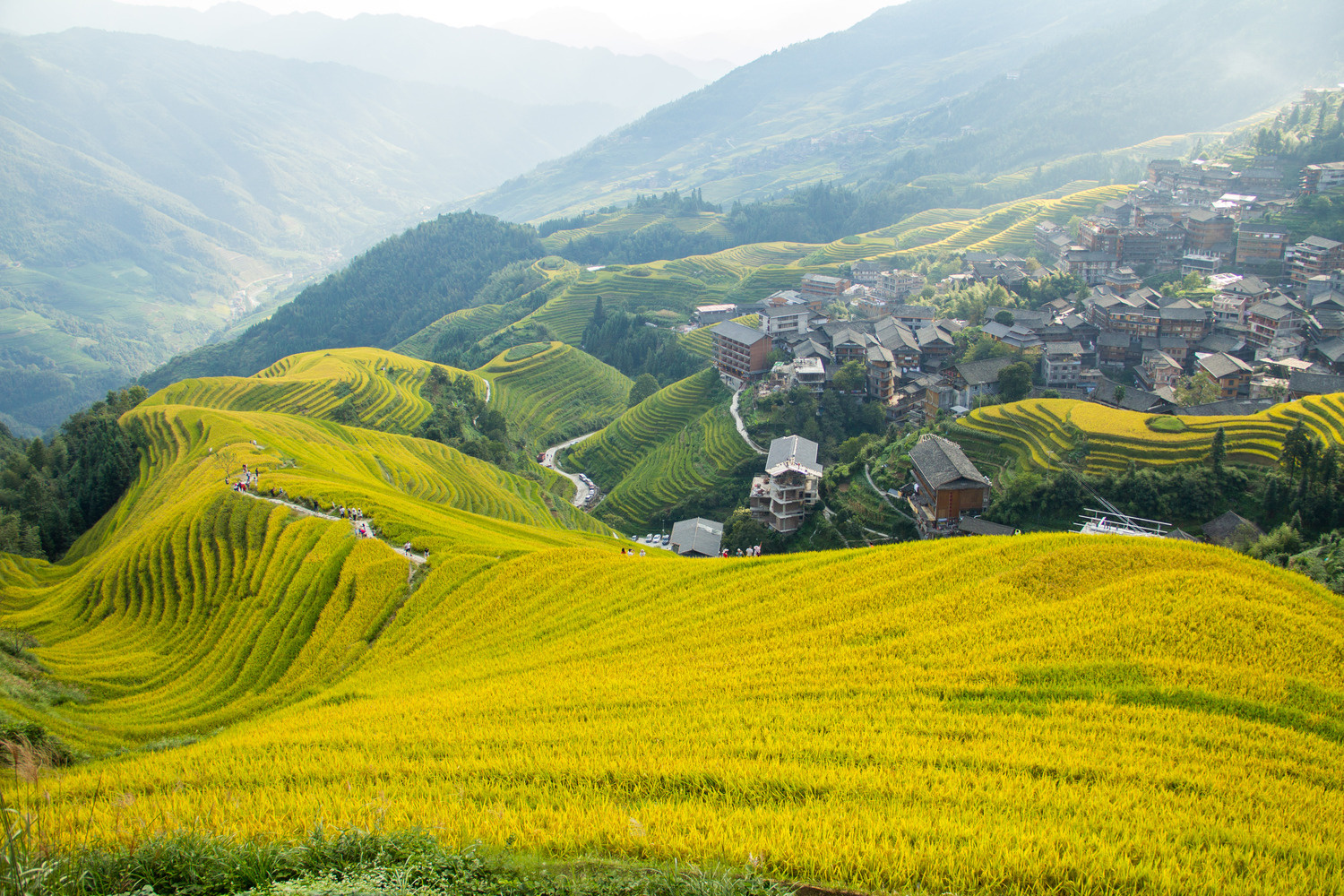
下了车,我们就开始爬山。赵敏告诉我,“龙脊”的意思是“龙的背”。从远一点儿的地方看,这里的山真的很像一条躺着的大龙。一层一层的梯田从山下一直到山上,好像一条条长长的楼梯,通到天上。

As soon as we got off the bus, we started climbing. Zhao Min told me that "Longji" means "dragon's back." From a distance, the mountains here really do look like a huge dragon lying down. Layer upon layer, the terraces run from the bottom of the mountain all the way to the top, like long staircases leading up into the sky.

这些梯田已经有几百年的历史了。很久以前,住在这里的人们找不到平的土地,只好在山上一点一点地修出梯田来种水稻。那时候没有机器,什么都要用手做。再往上,山上都是树,树林里的水流下来,一层一层地流进每一块梯田。站在山上,我真不敢相信,这么大的梯田都是人们一点一点做出来的。

These terraces are several hundred years old. Long ago, the people who lived here couldn't find any flat land, so they had no choice but to build terraces on the mountainsides, bit by bit, to grow rice. There were no machines back then; everything had to be done by hand. Farther up, the mountains are all forest, and water from the woods flows down, terrace by terrace, into every field. Standing on the mountain, I could hardly believe that people had built such huge terraces little by little.

赵敏拿出手机,给我看她春天来的时候拍的照片。照片上,梯田里放满了水,像镜子一样。她说,夏天,山上到处都是绿色;冬天,有时候还会下雪。可是我觉得,秋天一定是最美的:水稻熟了,眼前整座山都是黄色的,美得像一幅画。

Zhao Min took out her phone and showed me a photo she had taken when she came in spring. In the photo, the terraces were full of water and looked like mirrors. She said that in summer the mountains are green everywhere, and in winter it sometimes even snows. But I thought fall had to be the most beautiful: the rice was ripe, and the whole mountain in front of us was gold, as beautiful as a painting.

中午,我们走到了山上的一个瑶族村子,叫大寨。村子里的房子都是木头做的,很多已经很老了。我们在一家小饭馆吃了竹筒饭,就是把米放进竹子里做的饭,香极了。做饭的是一位瑶族阿姨,她穿着红色的衣服,头发长长的。她告诉我们,她的头发放下来,差不多和自己一样高!

At noon we reached a Yao village on the mountain called Dazhai. The houses in the village are all made of wood, and many are very old. At a small restaurant we had bamboo-tube rice, which is rice cooked inside a piece of bamboo. It smelled wonderful. The cook was a Yao woman in red clothes with very long hair. She told us that when she lets her hair down, it is almost as long as she is tall!

下午下山的时候,一位老奶奶从我们旁边走过去。她不仅背着很多东西,还走得比我们快多了。她回头对我们说:“慢慢走!”我们走到山下的时候,回头一看,太阳正照在梯田上,一层一层,都是黄色。

On the way down in the afternoon, an old woman walked past us. Not only was she carrying a big load on her back, she was also much faster than we were. She turned and called to us, "Take it slow!" When we reached the bottom of the mountain, we looked back. The sun was shining right on the terraces, layer upon layer, all gold.

生词 生词

这些词在故事中带有下划线。点击汉字可以听读音。

名词名词

梯田tītiánrice terraces, terraced fields
龙lóngdragon
水稻shuǐdàorice (the plant)
机器jīqìmachine
木头mùtouwood
竹子zhúzibamboo
镜子jìngzimirror
竹筒饭zhútǒngfànbamboo-tube rice

动词动词

修xiūto build
躺tǎngto lie down
流liúto flow
背着bēizhecarrying on one's back

形容词形容词

平píngflat, level
熟shúripe

副词副词

只好zhǐhǎoto have no choice but to
差点儿chàdiǎnralmost, nearly

语法点 语法

1. 只好 (zhǐhǎo)to have no choice but to; so (we) had to

只好 says that the other options are gone, so this is the one thing left to do. It goes before the verb, and the first half of the sentence usually explains the problem.

Problem, Subject + 只好 + Verb

人们找不到平的土地,只好在山上修出梯田来种水稻。
Rénmen zhǎo bu dào píng de tǔdì, zhǐhǎo zài shān shang xiū chū tītián lái zhòng shuǐdào.
People couldn't find flat land, so they had no choice but to build terraces on the mountainsides to grow rice.
最后一班车走了,我们只好走回去。
Zuìhòu yì bān chē zǒu le, wǒmen zhǐhǎo zǒu huíqu.
The last bus had left, so we had to walk back.
外面下大雨,我只好在家看书。
Wàimian xià dà yǔ, wǒ zhǐhǎo zài jiā kàn shū.
It was pouring outside, so I stayed home and read.
2. 差点儿 (chàdiǎnr)almost, nearly (but it did not happen)

差点儿 means something came very close to happening. Put it before the verb. When the thing is something you did not want, it means you were lucky: it did not happen in the end.

Subject + 差点儿 + Verb

我有点儿不舒服,差点儿请司机停车。
Wǒ yǒudiǎnr bù shūfu, chàdiǎnr qǐng sījī tíngchē.
I felt a bit sick and nearly asked the driver to stop.
我差点儿忘了带护照。
Wǒ chàdiǎnr wàng le dài hùzhào.
我差点忘了带护照。
路很滑,她差点儿摔倒。
Lù hěn huá, tā chàdiǎnr shuāidǎo.
The path was slippery, and she almost fell.
3. 不仅…还… (bùjǐn … hái …)not only …, but also …

Use 不仅 for the first thing and 还 (or 也) for the bigger or more surprising thing you add. Both halves usually share one subject, which comes before 不仅.

不仅 + A, 还 + B

她不仅背着很多东西,还走得比我们快多了。
Tā bùjǐn bēizhe hěn duō dōngxi, hái zǒu de bǐ wǒmen kuài duō le.
Not only was she carrying a big load, she was also much faster than we were.
这家饭馆不仅便宜,菜还特别好吃。
Zhè jiā fànguǎn bùjǐn piányi, cài hái tèbié hǎochī.
This restaurant isn't just cheap; the food is really good, too.
她不仅会说中文,还会写书法。
Tā bùjǐn huì shuō Zhōngwén, hái huì xiě shūfǎ.
She can not only speak Chinese, but also write calligraphy.

测试 测一测你的理解程度

关于这个故事的 5 个问题。选一个答案,看看对不对。

1从桂林坐汽车去龙脊,大概要多长时间?

2“龙脊”是什么意思?

3很久以前,人们为什么在山上修梯田?

4秋天的龙脊是什么样子?

5下山的时候,那位老奶奶怎么样?

更多故事 更多故事

发现错误,或者有好想法? 发现错误或有建议?

对这个故事的反馈 对这篇故事的反馈

总体来说,这个故事…… 整体来看,这篇故事…
哪里需要修改?哪里要改?

一个问题写一条。每个问题写一条。如果故事没问题,可以不填。如果可以直接用,这部分不用填。

小提示:打开这个表单之前,先点一下故事里的某个词,它所在的句子就会自动选好。先点故事里的词,再打开反馈,句子会自动选好。

CLI 的老师请留下你的姓名。本校老师请留下姓名。

如果希望我们回复你,请留下你的邮箱。如需回复,请留下邮箱。

通过微信给我们留言

喜爱中文(CLI)的微信二维码

在手机微信中,点击 + 号,然后点击 扫一扫,将摄像头对准这个二维码。

截取这个二维码的屏幕截图。在微信中,点击 + 然后点击 扫一扫,再从相册中选择该截图。

长按这个二维码,选择扫一扫的选项。

然后点击关注,给我们发送消息。

我们的回复时间为北京时间周一至周五上午 8:30 至下午 6:00。