
HSK 4 | The Trouble with Tones

声调闹的笑话The Trouble with Tones

一篇 HSK 4 故事,共 492 个字,配有女声和男声两种音频。作者:CLI 团队。

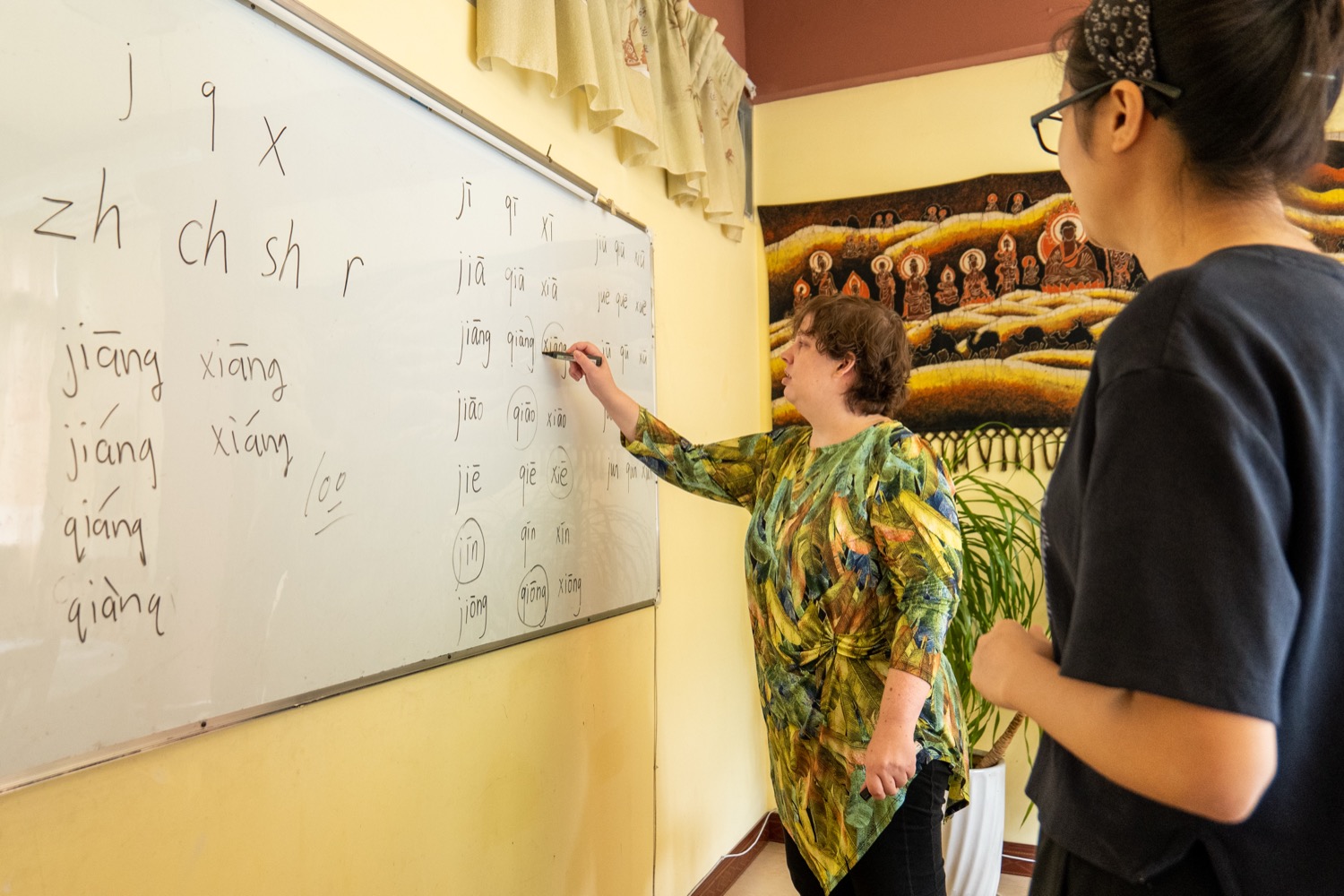
A student writes pinyin with tone marks on a whiteboard as a teacher watches

请开启 JavaScript,才能听故事、查看拼音,并点击单词查看词义。

学中文的时候,最让我头疼的不是汉字,而是声调。中文有四个声调,还有一个轻声。拼音一样,声调不一样,意思就完全不一样。学了三个月中文,我已经因为声调闹了不少笑话。

When it comes to learning Chinese, what gives me the biggest headache isn't the characters. It's the tones. Chinese has four tones, plus a neutral tone. If the pinyin is the same but the tone is different, the meaning is completely different. I've been studying Chinese for three months, and tones have already made me look silly quite a few times.

第一次去米粉店,我想多要一点儿汤,就大声说:“老板,请给我加一点儿糖!”老板看了我半天,然后真的往我的碗里放了一点儿糖。那碗米粉甜甜的,一点儿也不好吃。原来我想说一声的“汤”,说出来的却是二声的“糖”。

The first time I went to a rice noodle shop, I wanted a little more soup, so I called out, "Boss, please add a little sugar for me!" The owner looked at me for a long moment, and then he really did put some sugar in my bowl. That bowl of noodles was sweet, and it wasn't good at all. It turned out I had meant to say "soup," with a first tone, but what came out was "sugar," with a second tone.

还有一次,我和同学去饭馆吃饭。服务员问我想吃什么,我说:“我要睡觉。”服务员笑得停不下来。我想说的是“水饺”,可是说出来的是“睡觉”。那天,整个饭馆的人都知道了:有一个外国人想在饭馆里睡觉。

Another time, I went to a restaurant with a classmate. The server asked what I wanted to eat, and I said, "I want to sleep." The server couldn't stop laughing. I meant to say "dumplings," but what came out was "sleep." That day, everyone in the restaurant learned that a foreigner wanted to take a nap there.

最有意思的一次是在课上。我告诉王老师:“下个月我妈要来桂林。”可是我把“妈”说成了三声,听起来像“马”。王老师笑着问:“你的马坐飞机来吗?”

The funniest time was in class. I told Teacher Wang, "My mom is coming to Guilin next month." But I said "mom" with a third tone, so it sounded like "horse." Teacher Wang smiled and asked, "Is your horse coming by plane?"

王老师说,学声调没有什么好办法,只能多听、多说、多练。她教了我一个方法:说话的时候,用手在空中画出声调。一声是平的,二声往上,三声先往下再往上,四声往下。虽然看起来有点儿奇怪,但是真的有用。我还每天用手机录下自己的声音,和老师的录音比一比,看看哪里不对。

Teacher Wang says there's no magic trick for learning tones. You just have to listen a lot, speak a lot and practice a lot. She taught me one method: when you speak, draw the tones in the air with your hand. The first tone is flat, the second goes up, the third goes down and then up, and the fourth goes down. It looks a little strange, but it really works. Every day I also record my own voice on my phone and compare it with my teacher's recording to see where I go wrong.

一个月以后,我妈妈真的来桂林了。她想自己用中文点菜,我就教了她一句:“我要水饺。”可是在饭馆里,她很认真地对服务员说:“我要睡觉。”服务员又笑了。我马上用手在空中给妈妈画出“水饺”的声调。妈妈看了半天,小声问我:“你在画什么?马吗?”

A month later, my mom really did come to Guilin. She wanted to order in Chinese by herself, so I taught her one line: "I want dumplings." But at the restaurant, she said to the server very seriously, "I want to sleep." The server laughed again. Right away, I drew the tones of "dumplings" in the air for my mom. My mom watched for a long time, then whispered, "What are you drawing? A horse?"

生词 生词

这些词在故事中带有下划线。点击汉字可以听读音。

名词名词

声调shēngdiàotone (of a syllable)
拼音pīnyīnpinyin
录音lùyīnrecording
水饺shuǐjiǎoboiled dumplings
汤tāngsoup
糖tángsugar
米粉mǐfěn米粉
老板lǎobǎnowner (of a noodle shop)
妈māmom (short form)

动词动词

录lùto record
闹nàoto make (a scene); 闹笑话: to make a silly mistake
说成shuōchéngto say (A) as (B), to turn (A) into (B)

形容词形容词

头疼tóuténghaving a headache; hard to deal with
平píngflat, level

副词Adverbs

却quèbut, yet

语法点 语法

1. 不是A,而是B (bú shì A, ér shì B)not A, but B

Use this pattern to correct an idea the listener might have. The first half says what something is not; the second half, after 而是 (ér shì), gives the real answer.

Subject + 不是 + A,而是 + B

最让我头疼的不是汉字,而是声调。
Zuì ràng wǒ tóuténg de bú shì Hànzì, ér shì shēngdiào.
What gives me the biggest headache isn't the characters. It's the tones.

Many learners think characters are the hard part, so the narrator says "not that" first and then gives the surprise.

今天不是星期六,而是星期五。
Jīntiān bú shì xīngqīliù, ér shì xīngqīwǔ.
Today isn't Saturday. It's Friday.
我来中国不是为了工作,而是为了学中文。
Wǒ lái Zhōngguó bú shì wèile gōngzuò, ér shì wèile xué Zhōngwén.
I didn't come to China to work. I came to learn Chinese.
2. Verb + 得 + Description (… de …)how an action is done, or what it leads to

After a verb, 得 (de) introduces a comment on that action: how fast, how well, or how far it went. The comment can be a simple adjective or a longer phrase.

Subject + Verb + 得 + Adjective / Phrase

服务员笑得停不下来。
Fúwùyuán xiào de tíng bu xiàlái.
The server couldn't stop laughing.

If the verb has an object, say the verb twice: 他唱歌唱得很好.

他唱歌唱得不太好,可是他很喜欢唱。
Tā chànggē chàng de bú tài hǎo, kěshì tā hěn xǐhuan chàng.
He doesn't sing very well, but he loves to sing.
我妹妹跑得比我快。
Wǒ mèimei pǎo de bǐ wǒ kuài.
My little sister runs faster than I do.
3. 虽然…但是… (suīrán … dànshì …)although …, (still) …

虽然 (suīrán) admits a fact; 但是 (dànshì) or 可是 (kěshì) gives the other side. Chinese usually uses both words, which English does not allow.

虽然 + Fact,但是 + Other side

虽然看起来有点儿奇怪,但是真的有用。
Suīrán kàn qǐlai yǒudiǎnr qíguài, dànshì zhēn de yǒuyòng.
It looks a little strange, but it really works.
虽然汉字很难,但是我每天都写一个小时。
Suīrán Hànzì hěn nán, dànshì wǒ měitiān dōu xiě yí ge xiǎoshí.
Although characters are hard, I write for an hour every day.
虽然外面在下雨,但是我们还是去了菜市场。
Suīrán wàimian zài xià yǔ, dànshì wǒmen háishi qù le càishìchǎng.
Although it was raining, we still went to the market.

测试 测一测你的理解程度

关于这个故事的 5 个问题。选一个答案,看看对不对。

1在米粉店,“我”想要什么?

2在饭馆里,“我”想说的是什么?

3王老师为什么问“你的马坐飞机来吗”?

4王老师教了“我”一个什么方法?

5妈妈在饭馆里想说“我要水饺”,可是她说了什么?

更多故事 更多故事

通过微信给我们留言

喜爱中文(CLI)的微信二维码

在手机微信中,点击 + 号,然后点击 扫一扫,将摄像头对准这个二维码。

截取这个二维码的屏幕截图。在微信中,点击 + 然后点击 扫一扫,再从相册中选择该截图。

长按这个二维码,选择扫一扫的选项。

然后点击关注,给我们发送消息。

我们的回复时间为北京时间周一至周五上午 8:30 至下午 6:00。