Life in Guilin | Experience CLI | The Chinese Language Institute
相册xiàngcè
Leben in Guilin
Classes, meals, trips, and the friends you make here.
At CLI, we recognize the importance of cross-cultural learning, engagement, and understanding. Peer into the rhythm of life in Guilin, as seen through the lens of our learning community.
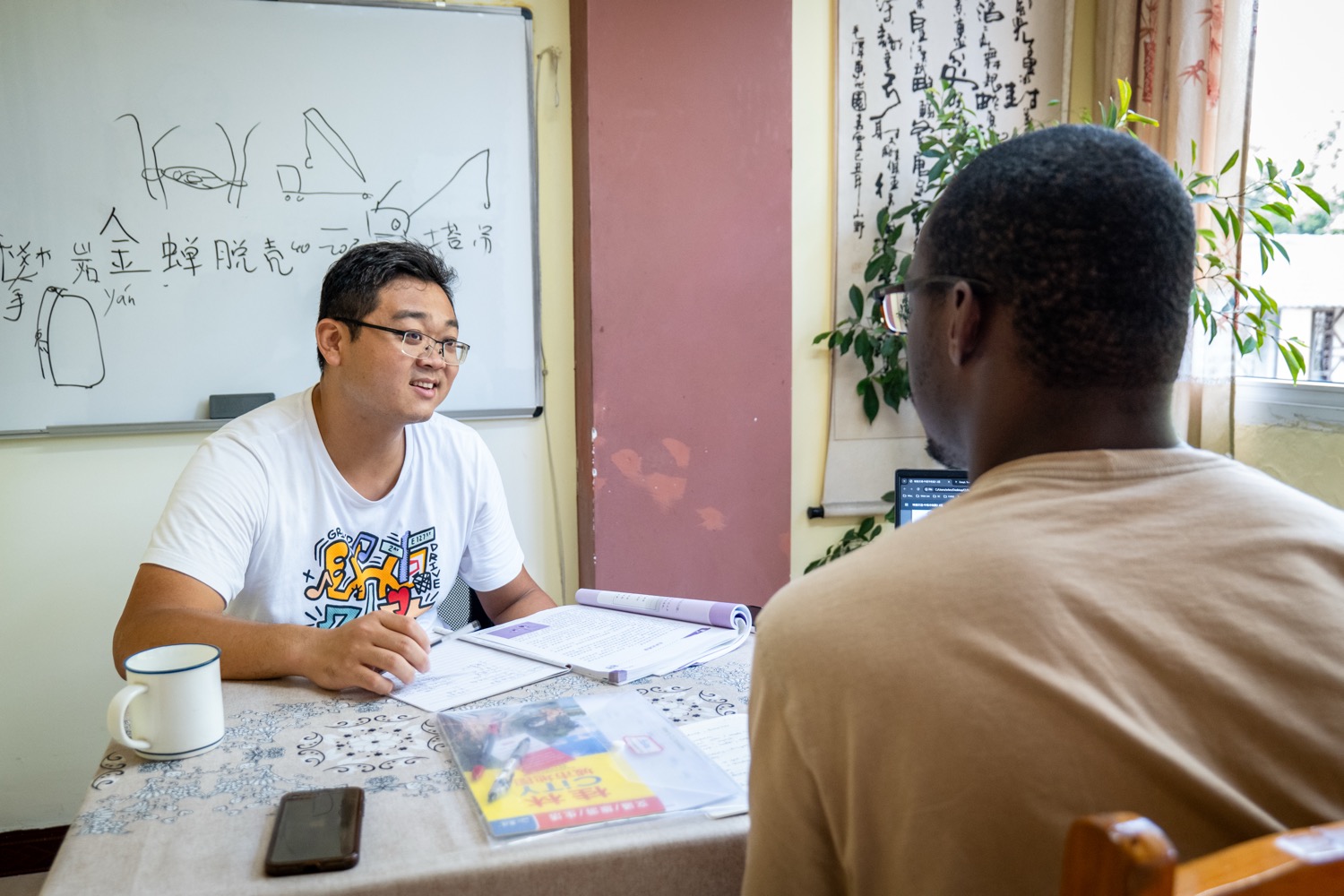
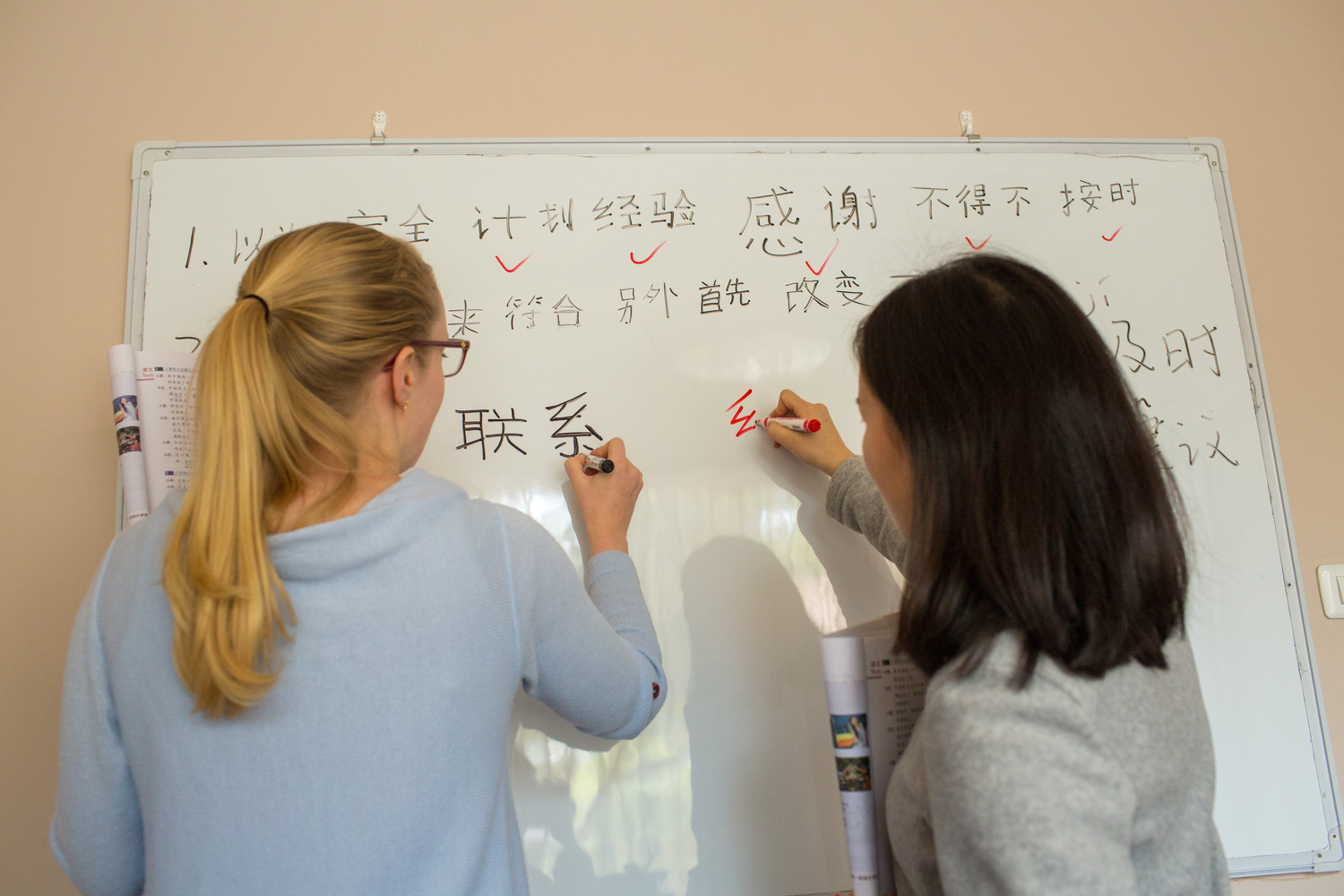
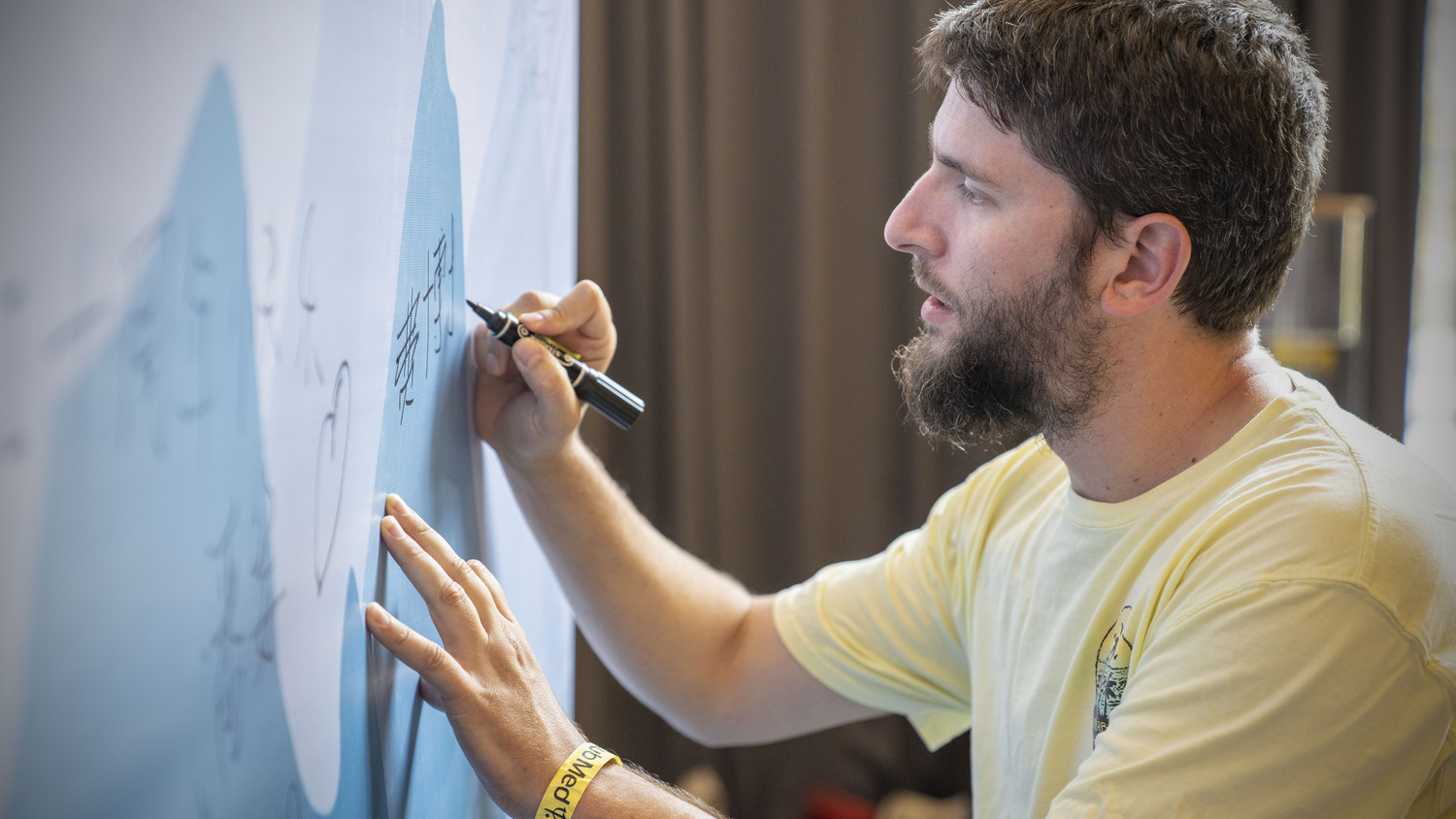
One-on-one lessons, small groups, and a lot of characters on whiteboards.
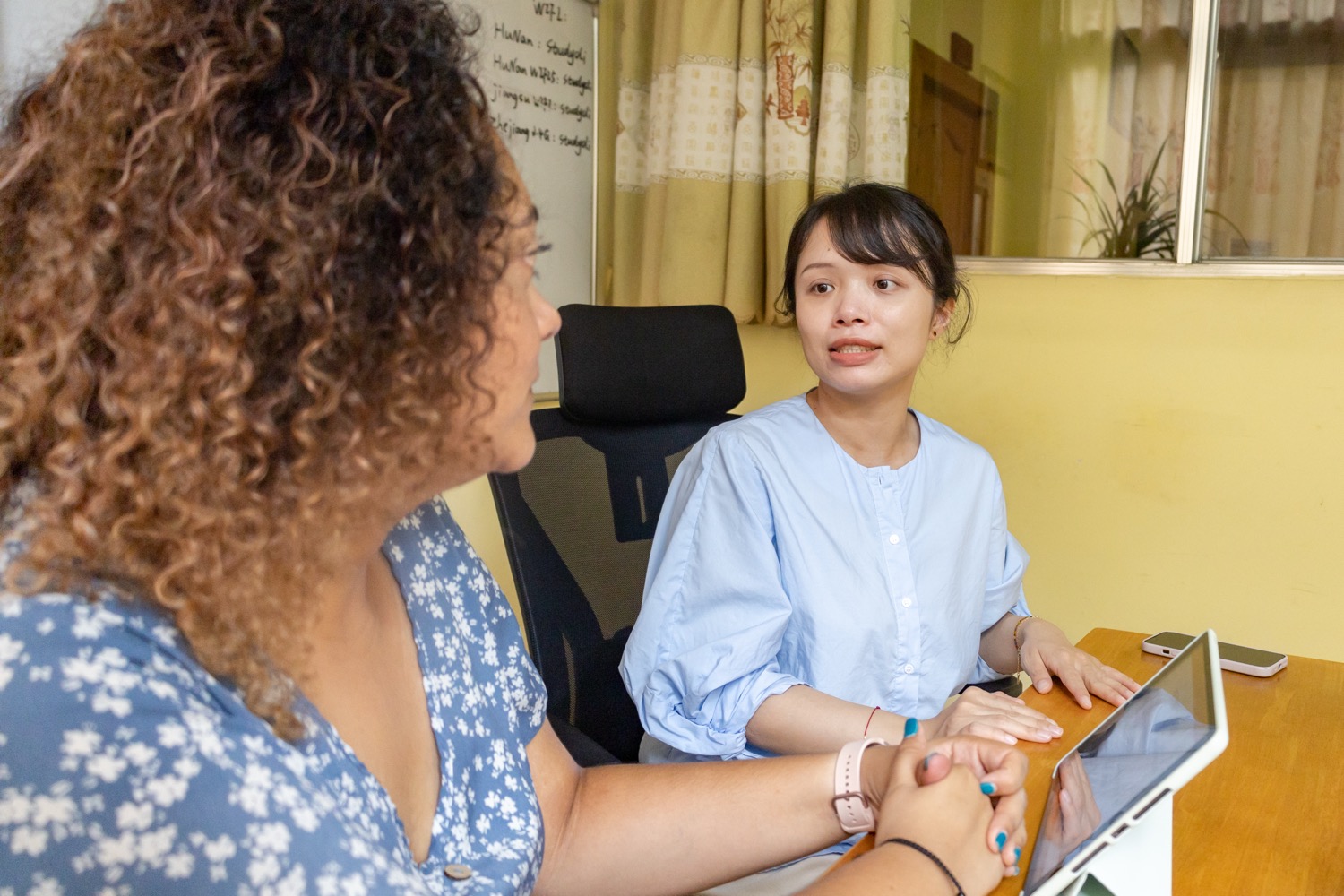
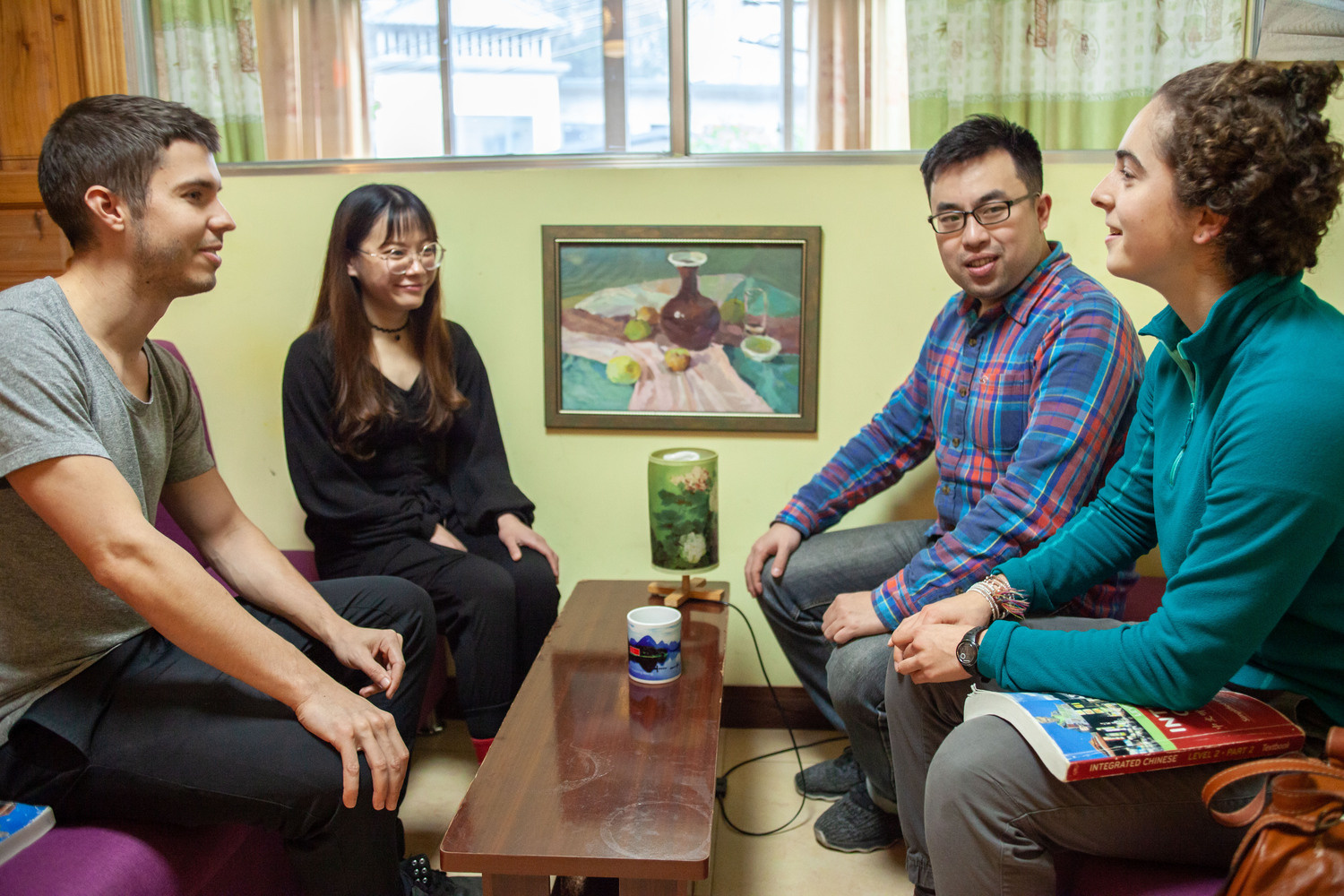
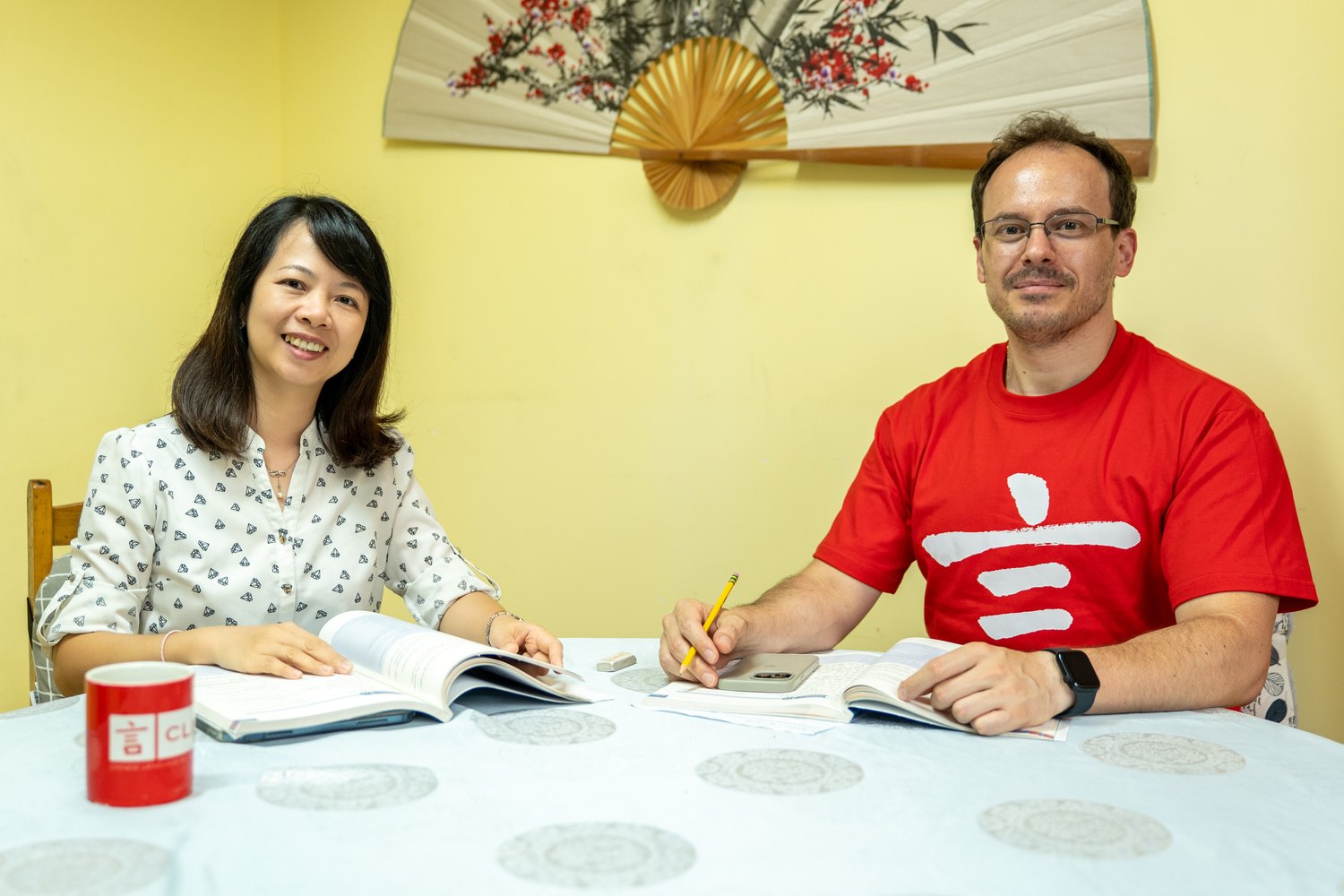
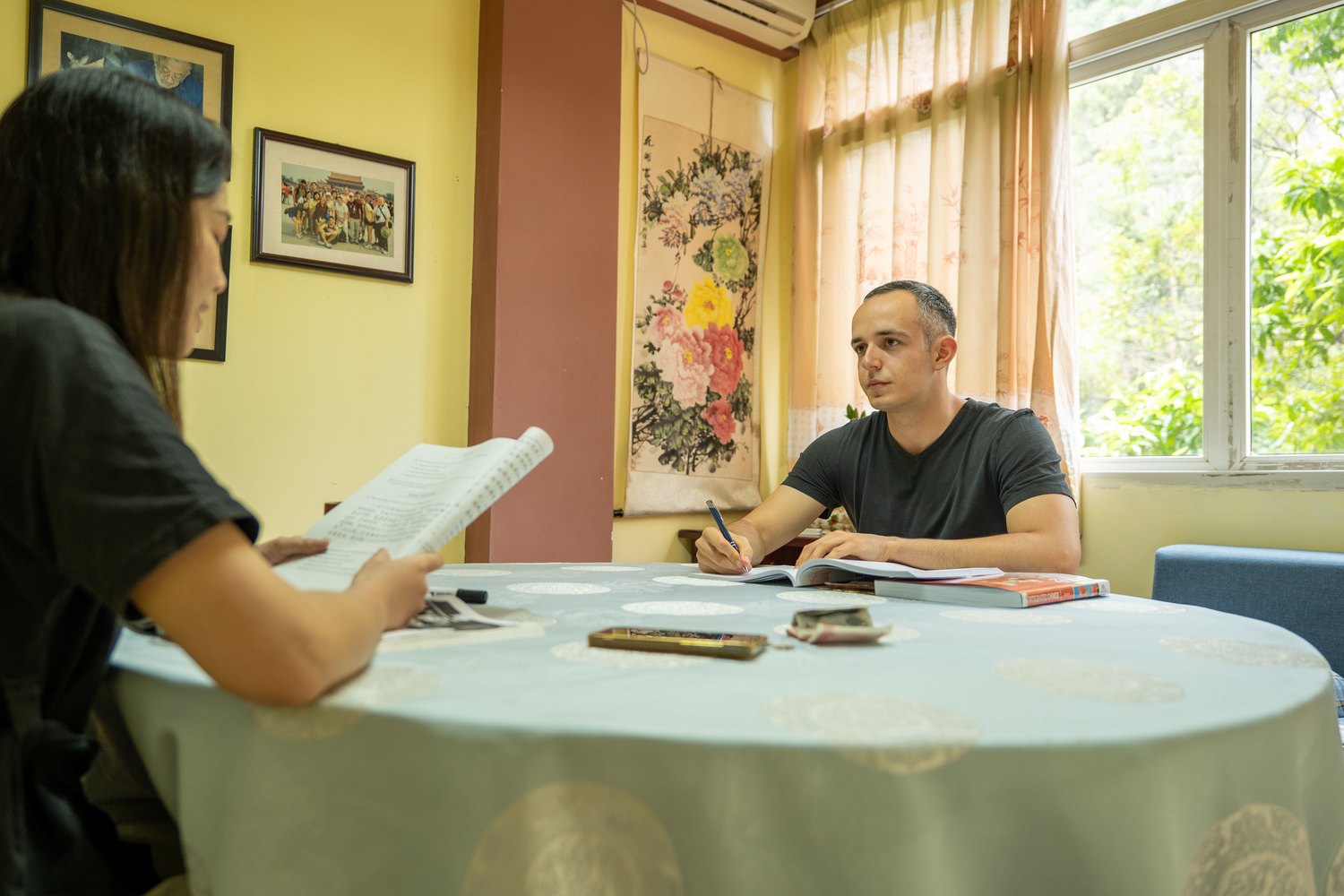
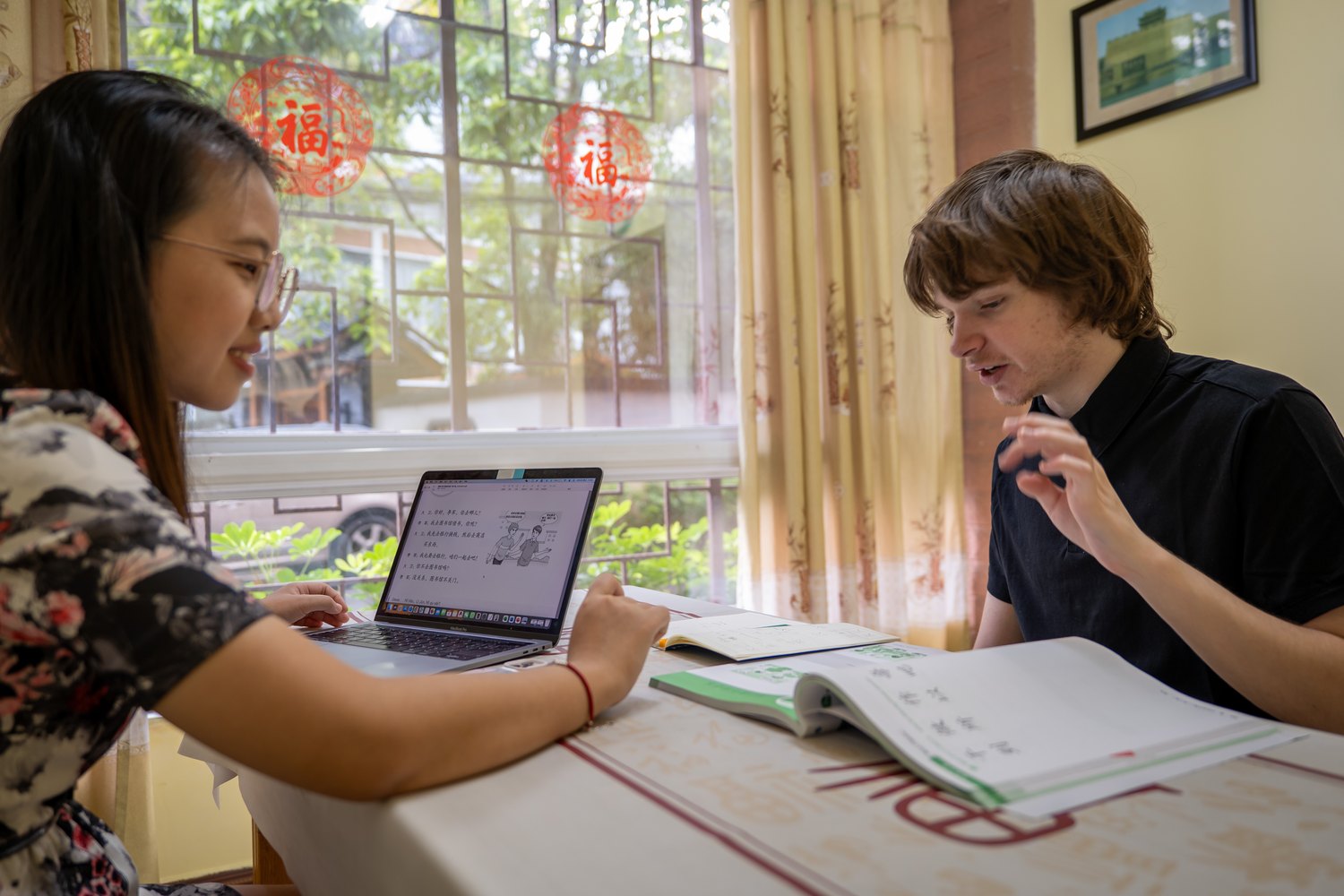
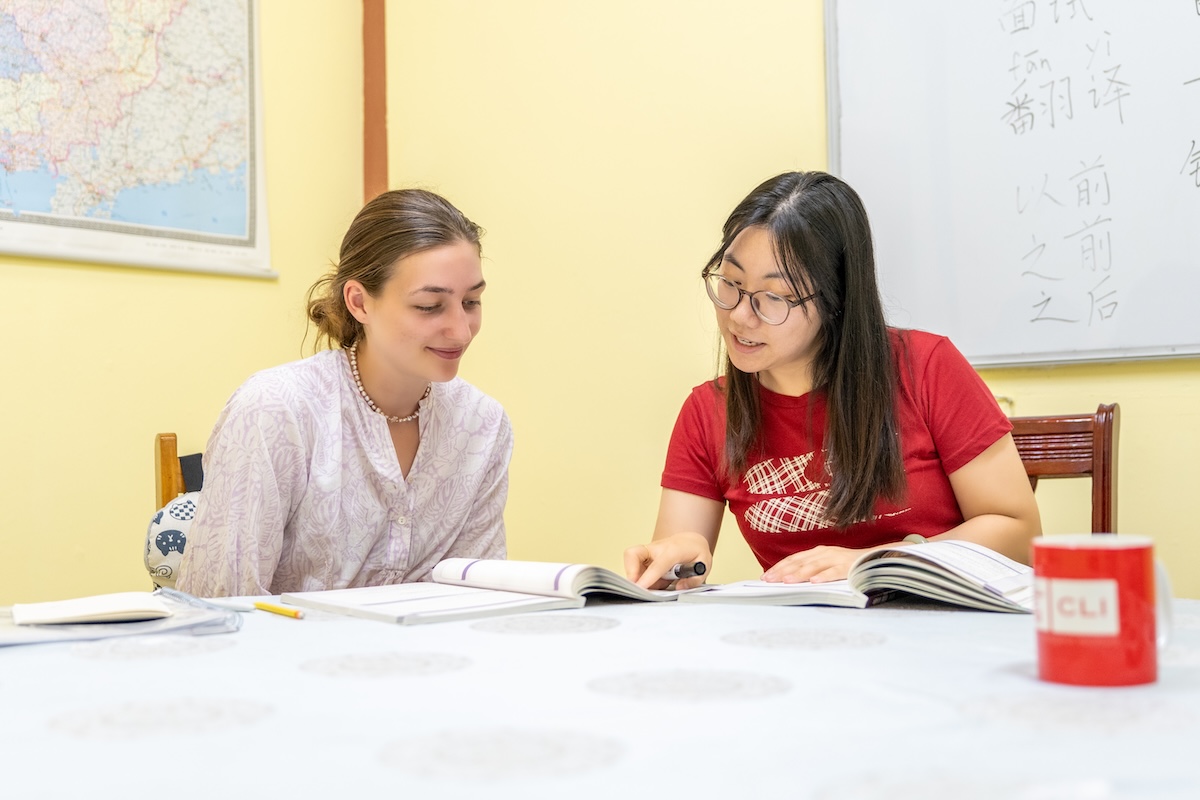
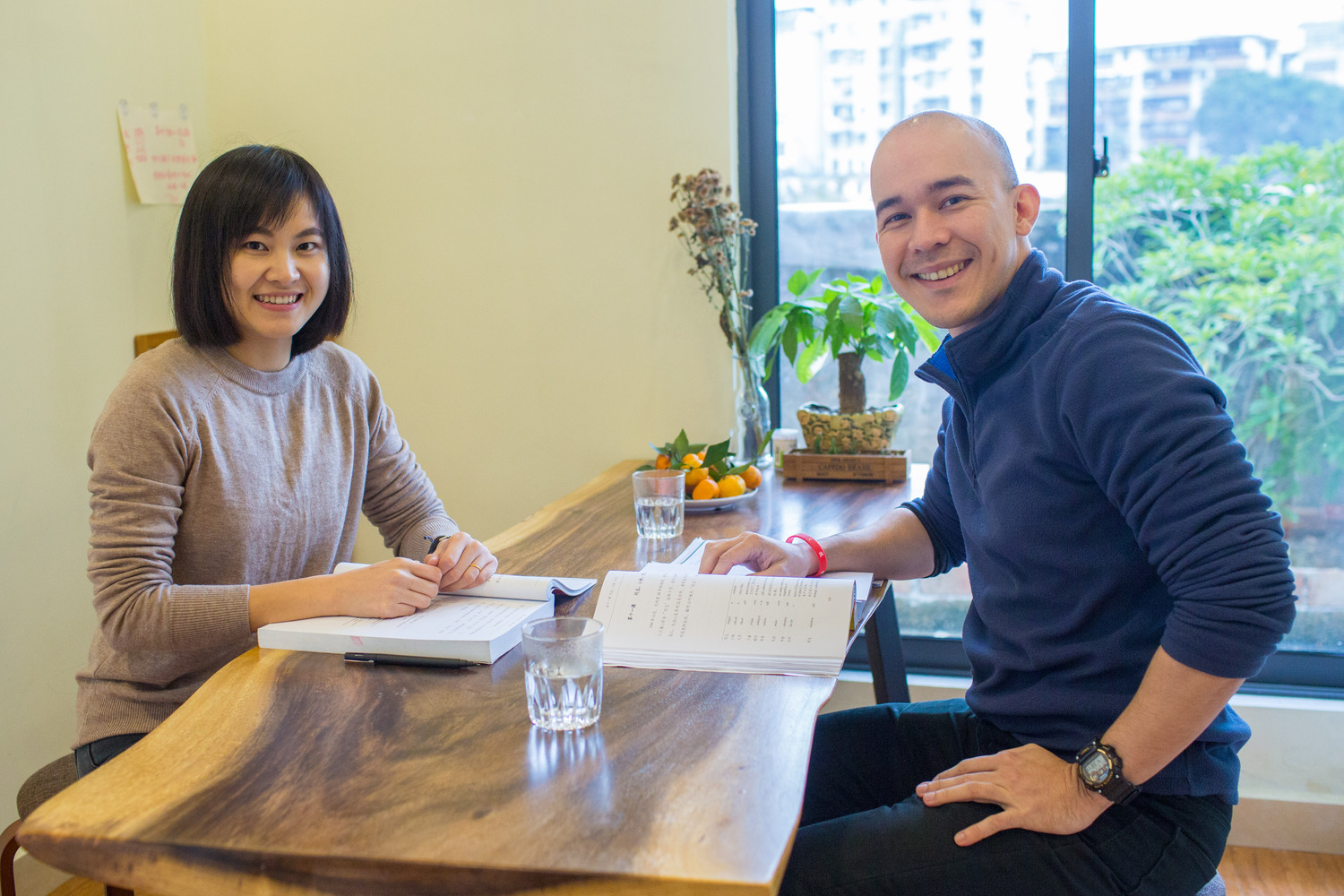
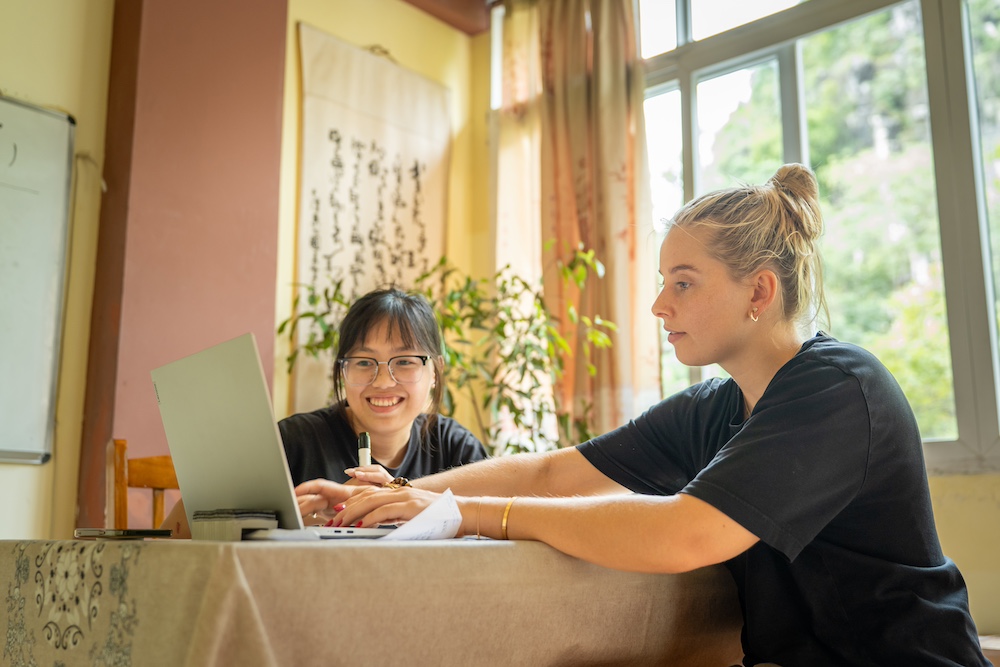
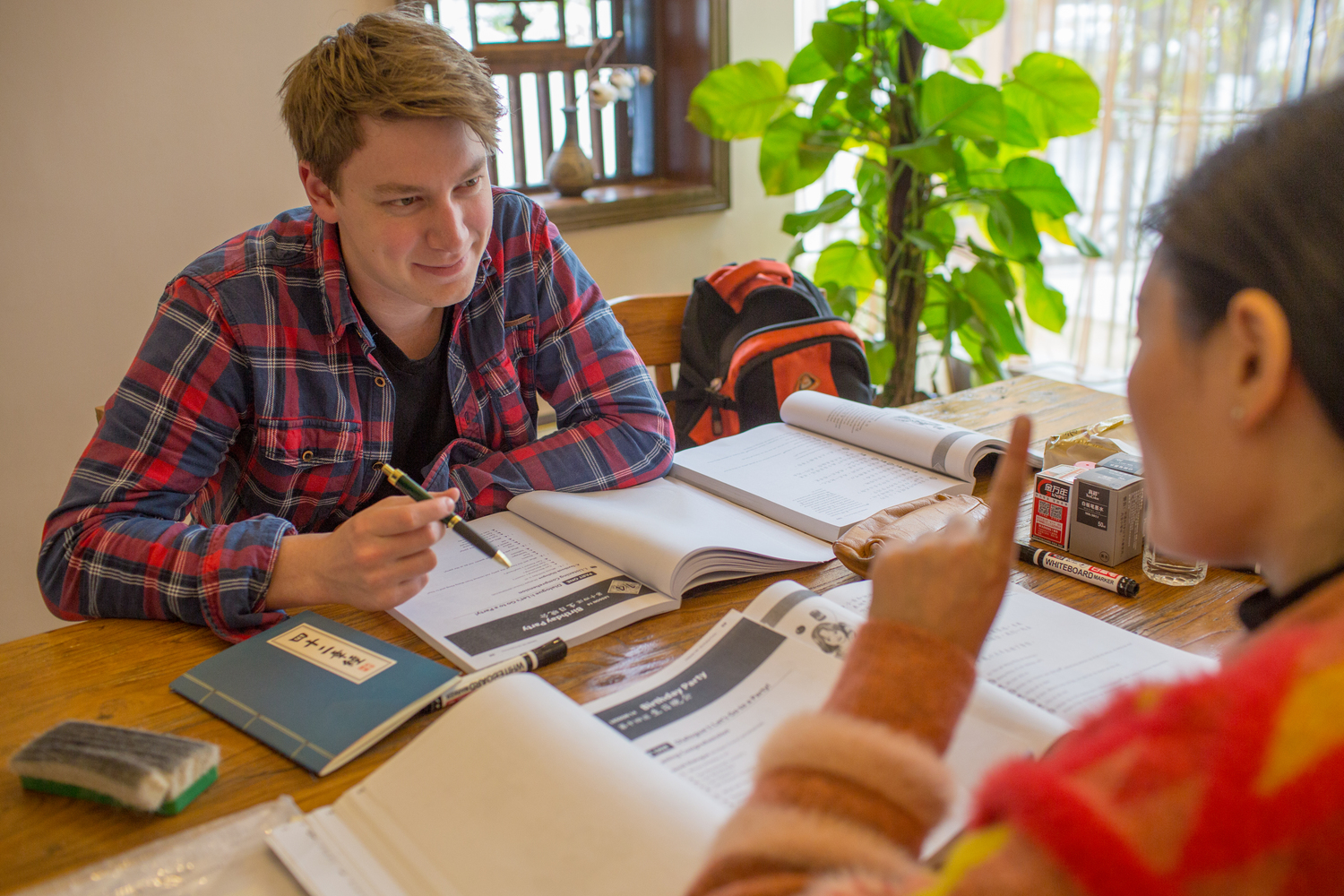
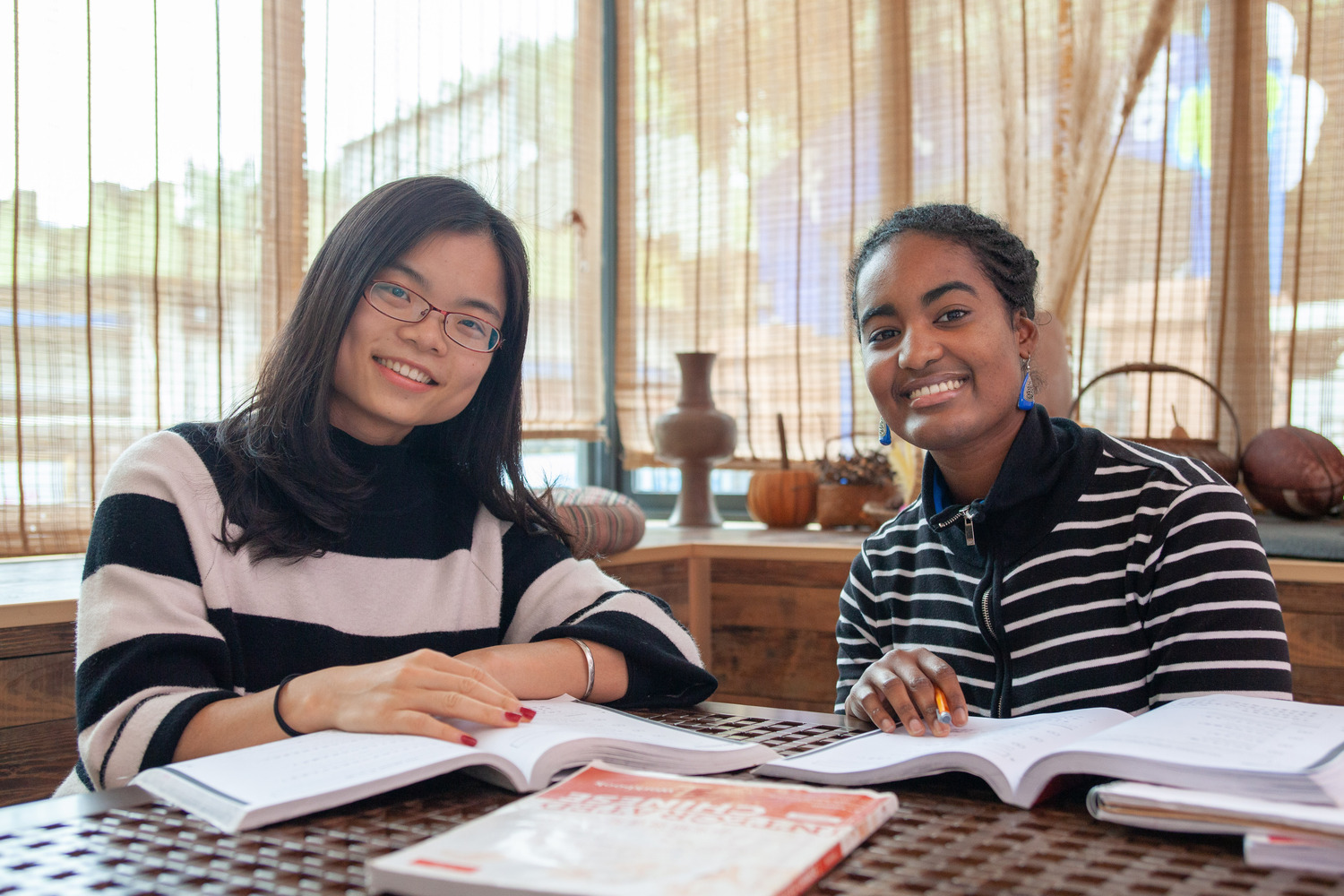
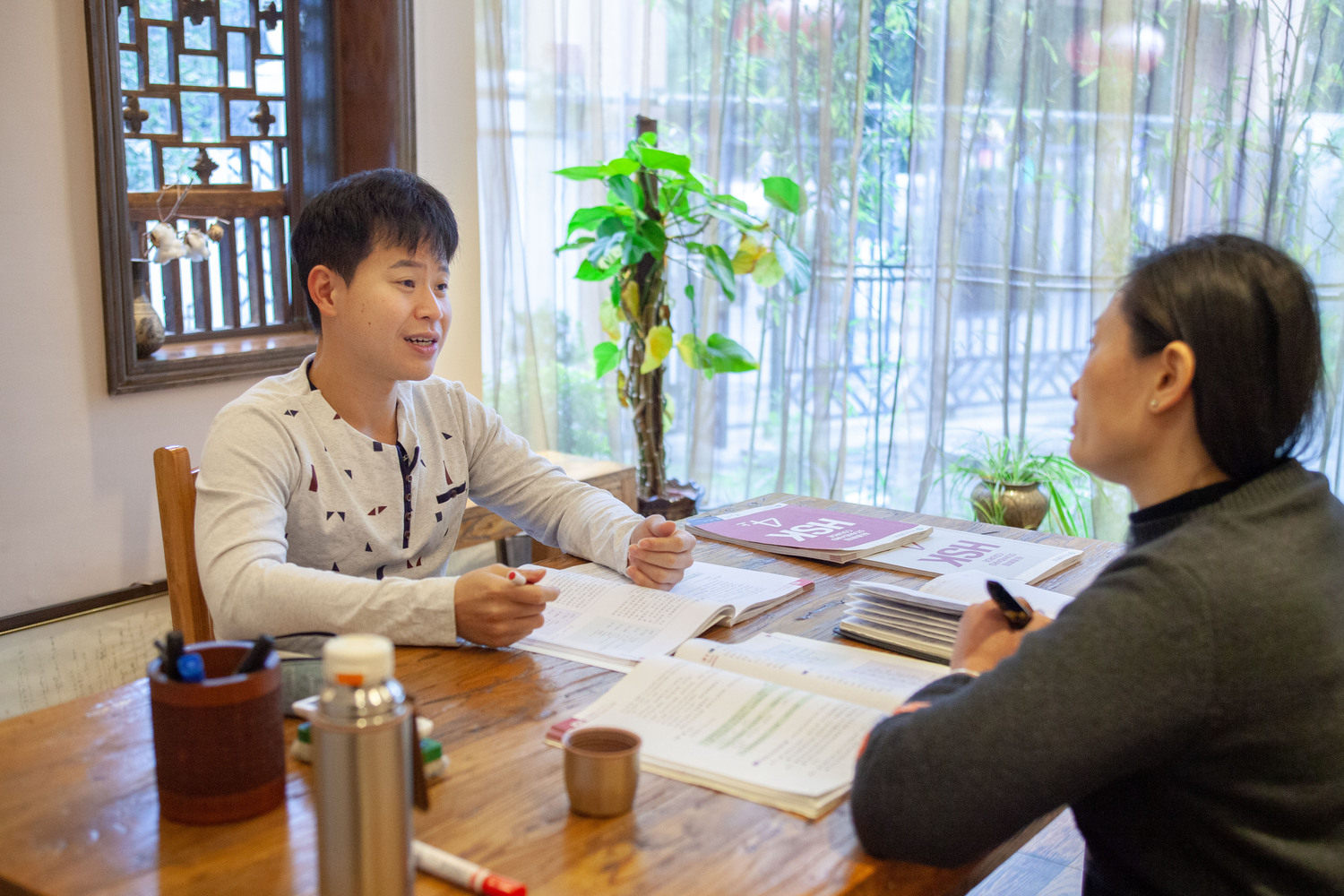
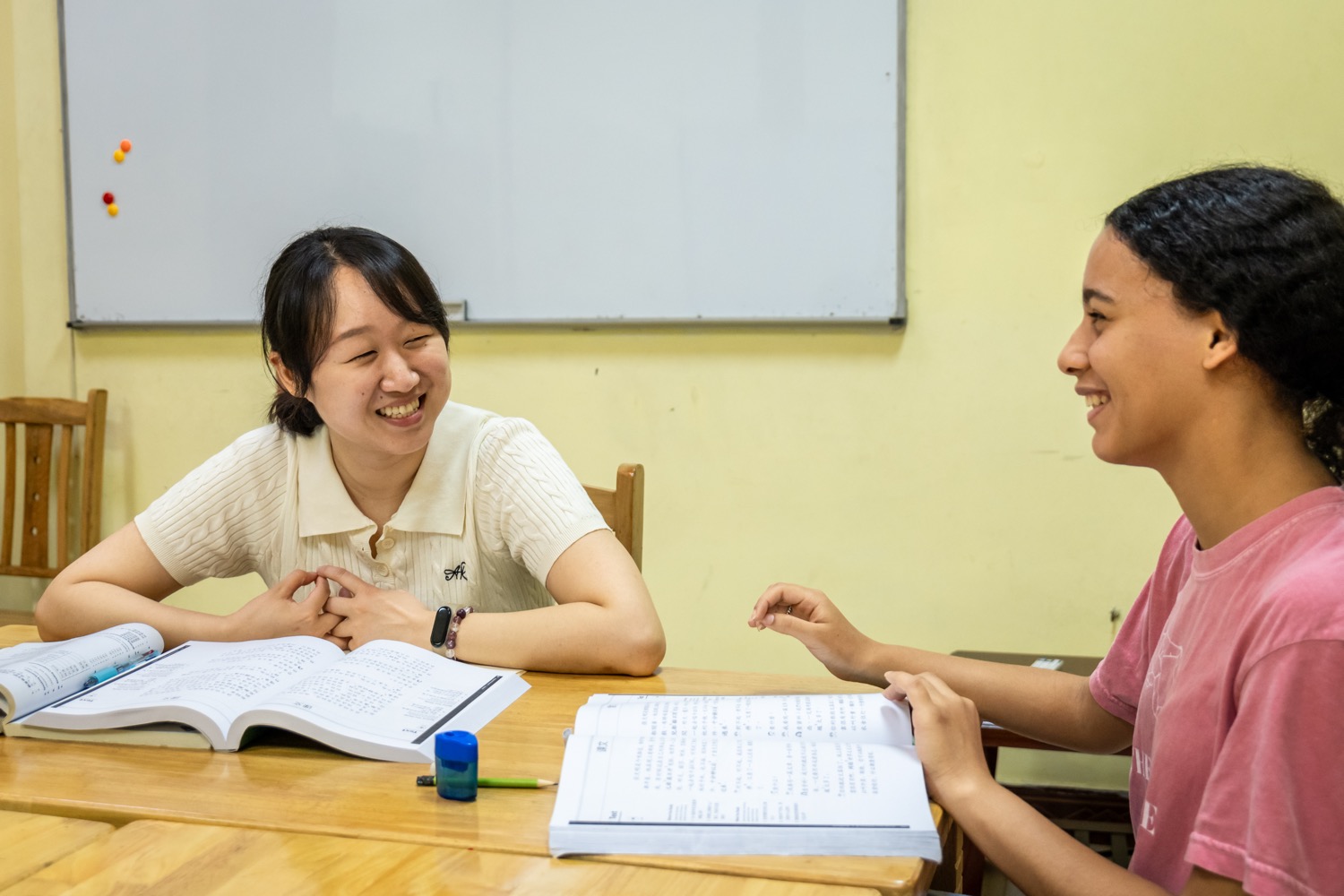
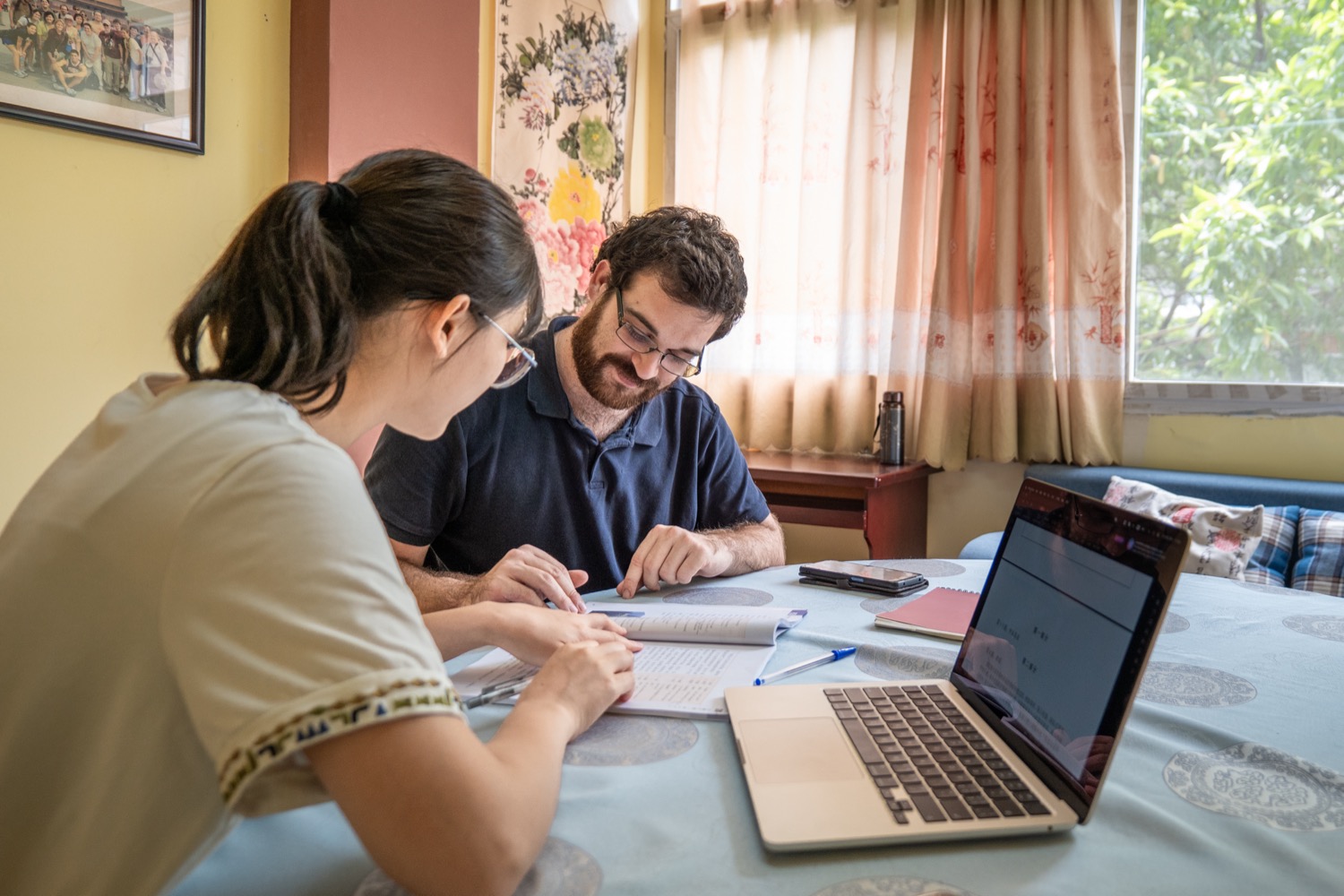
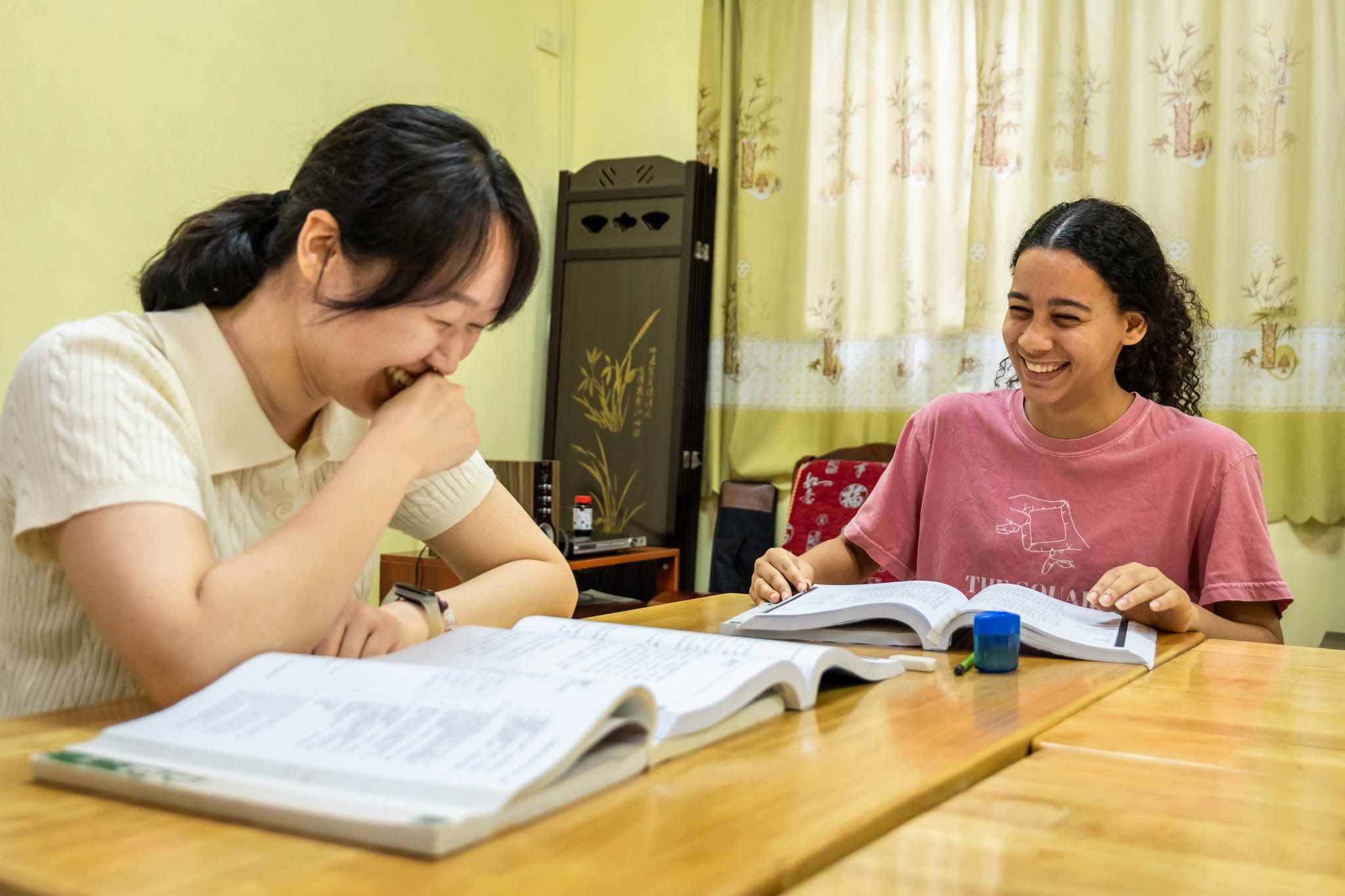
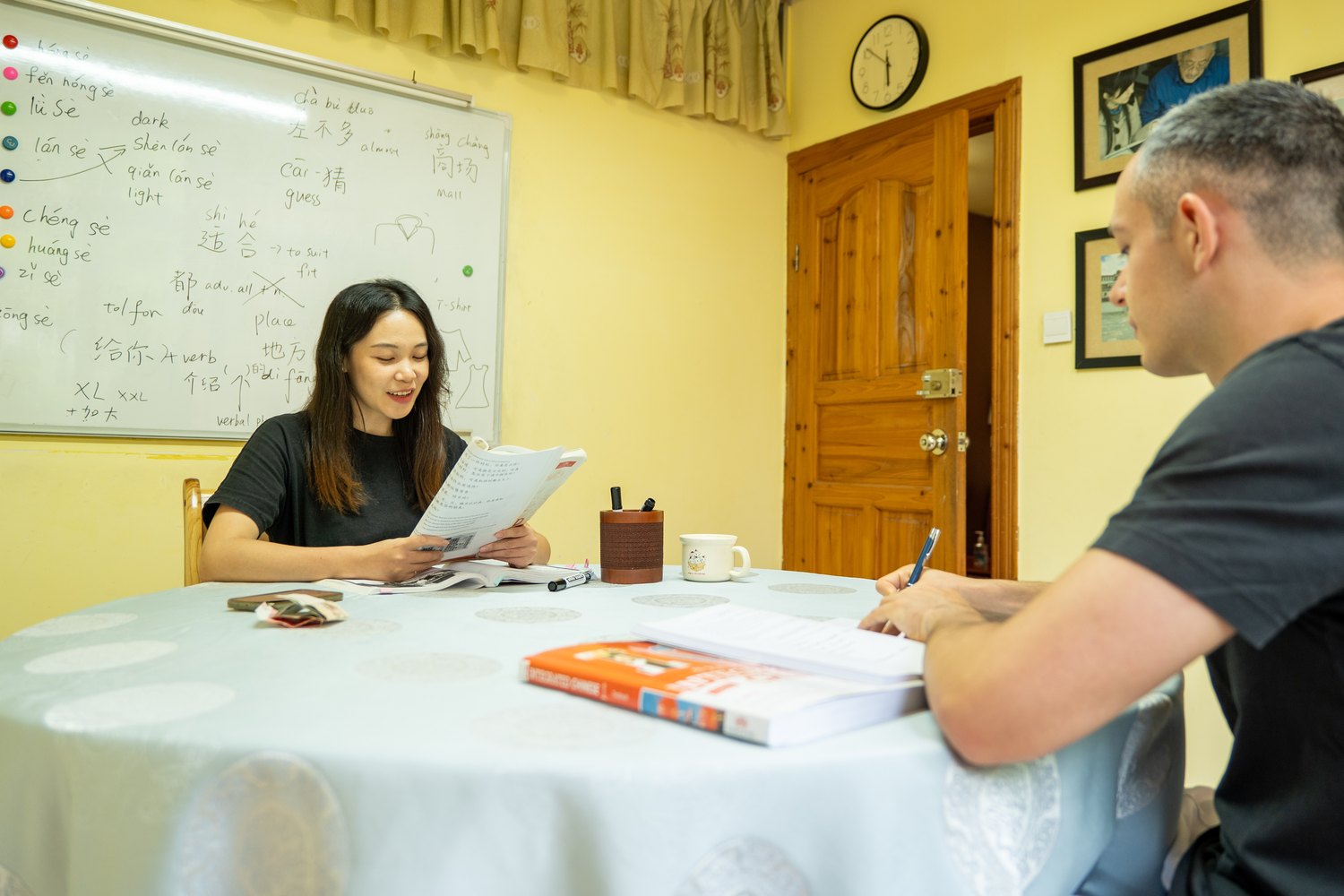
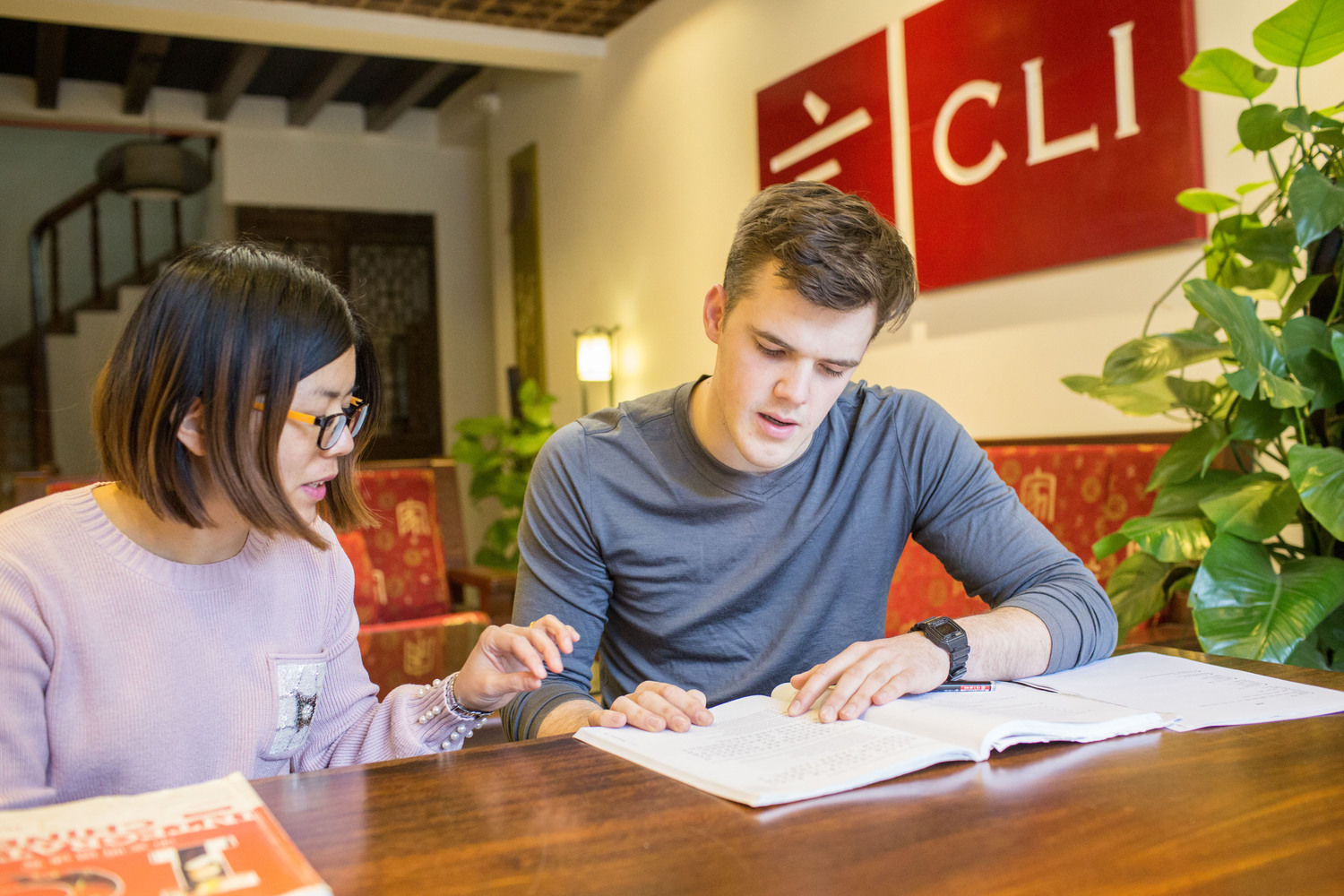
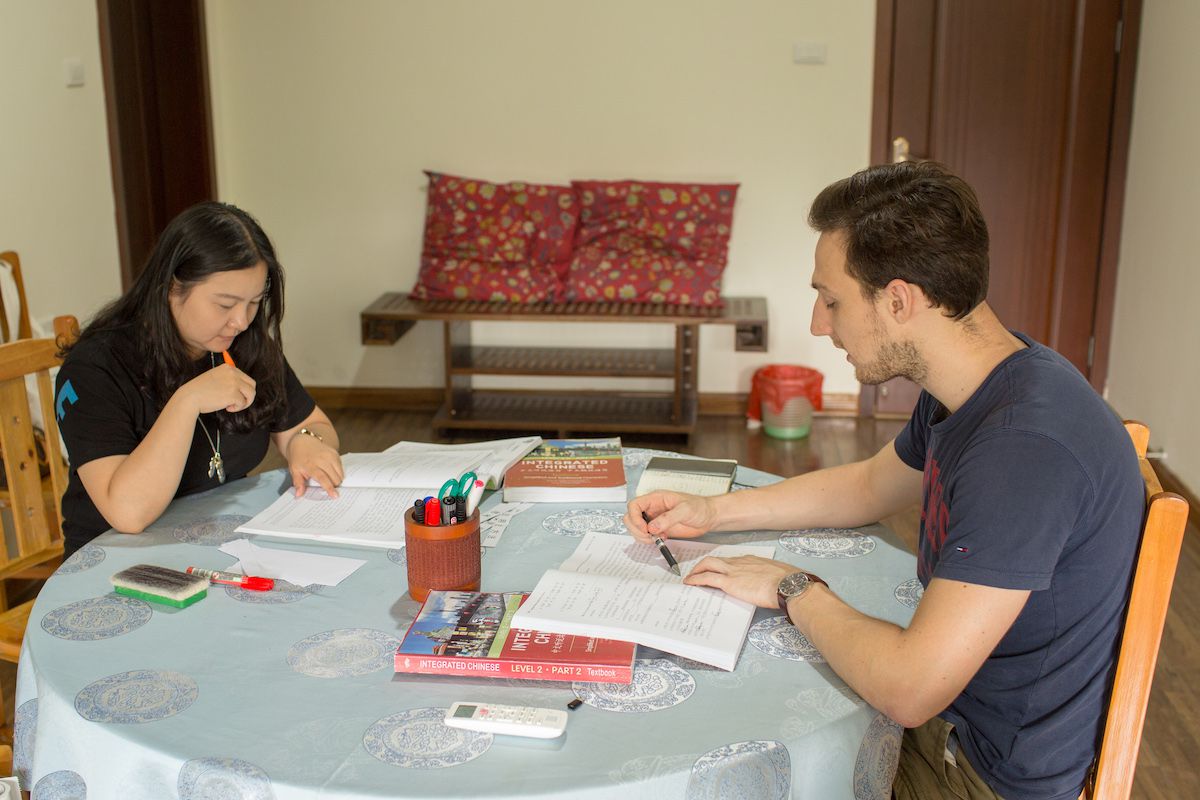
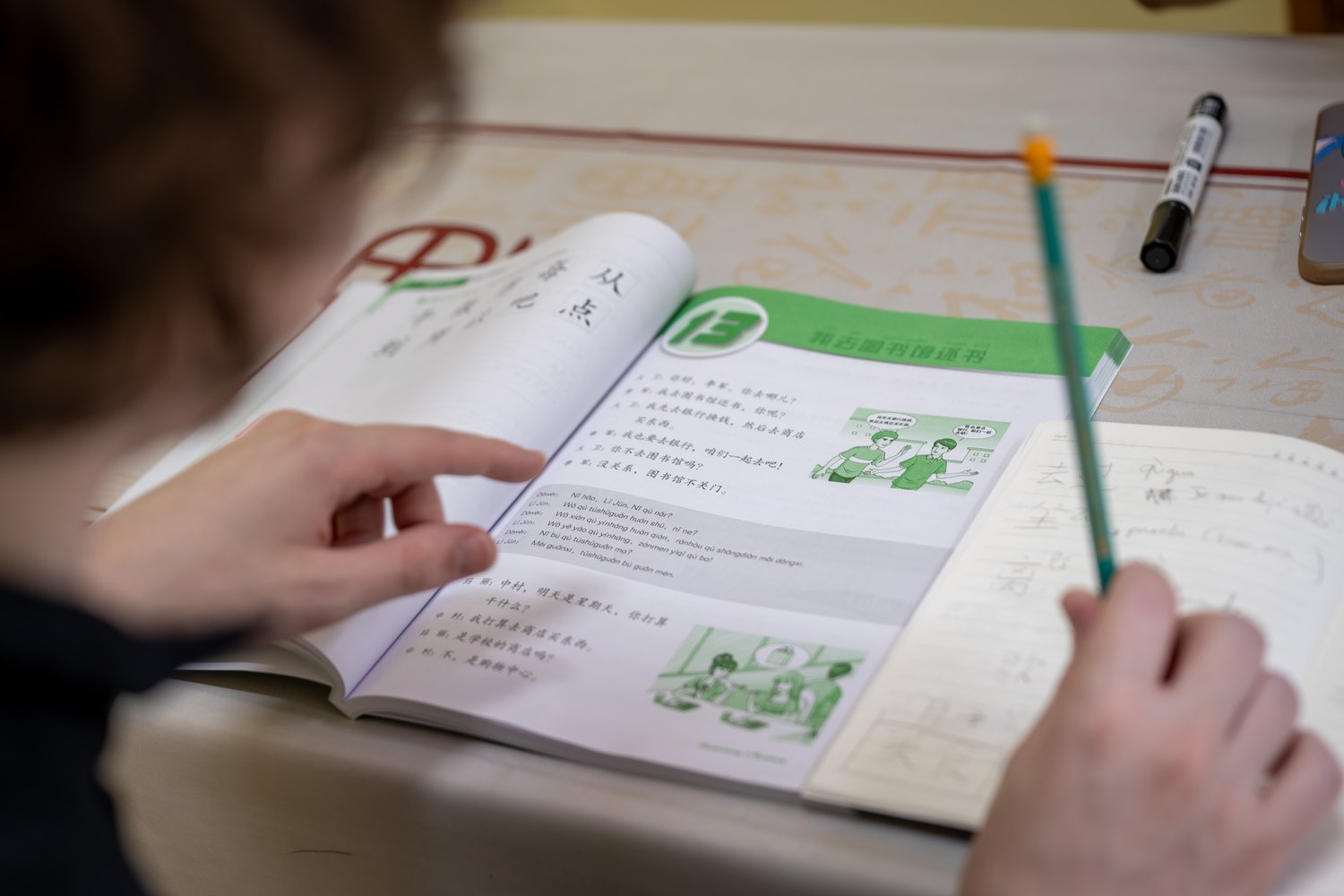
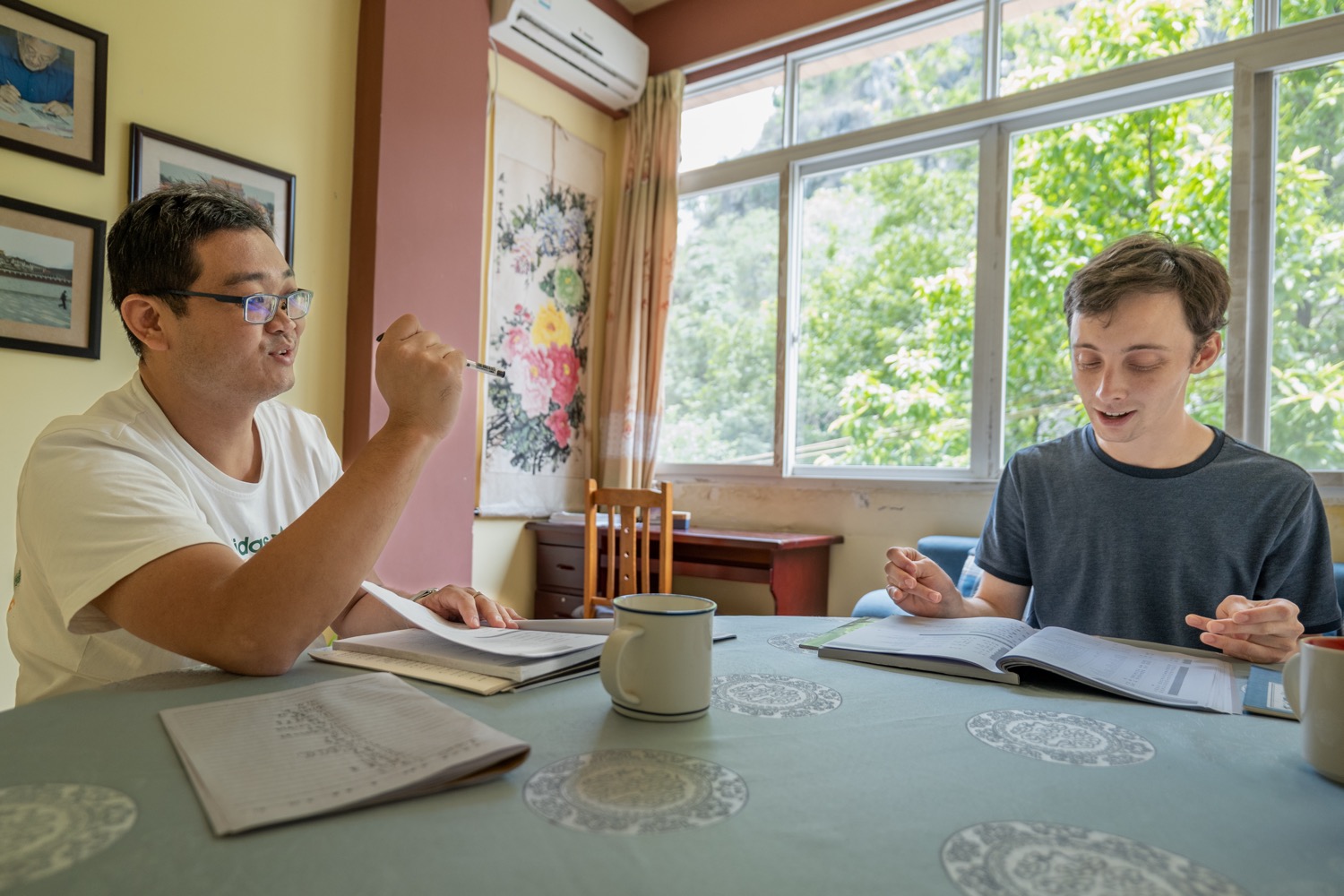
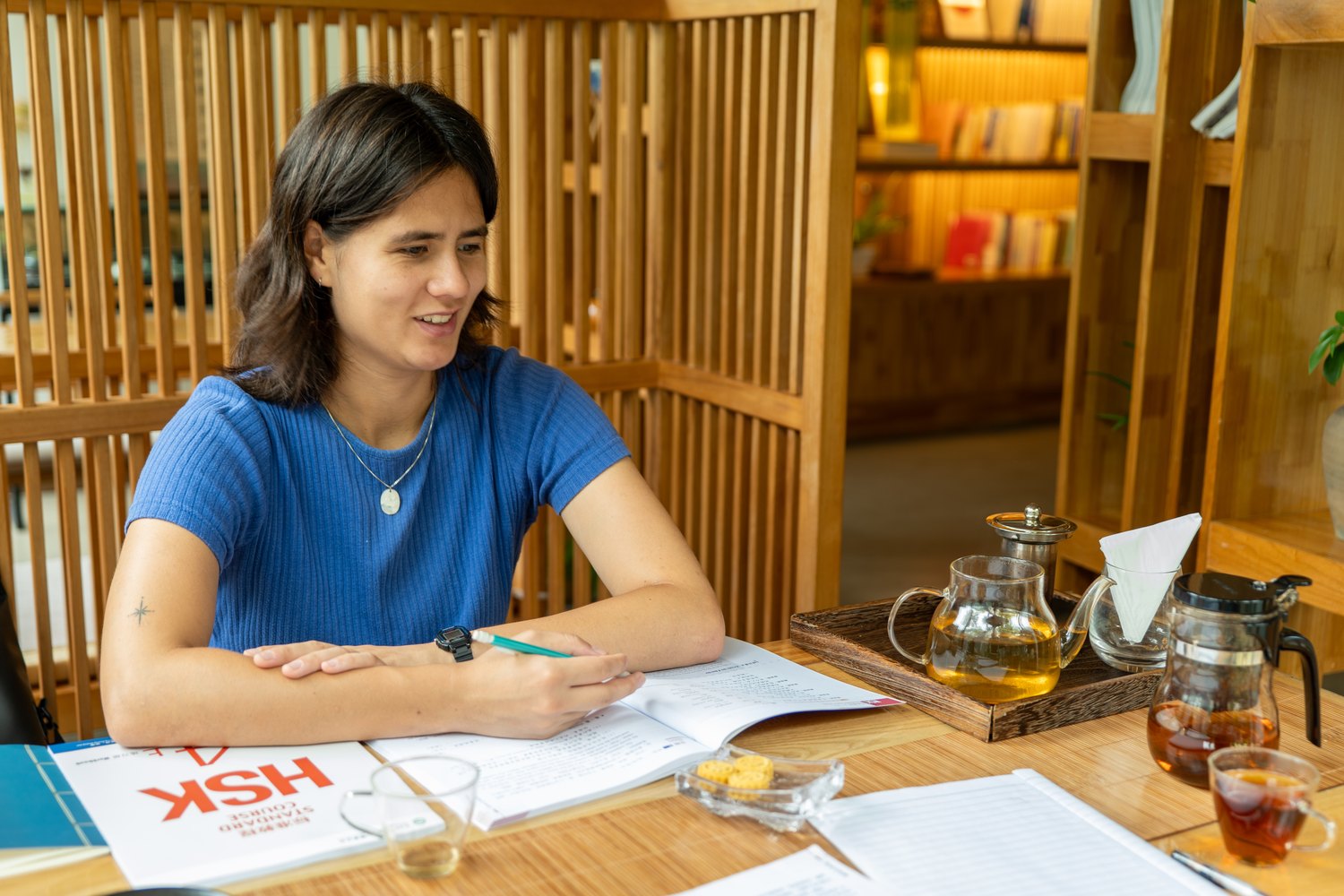
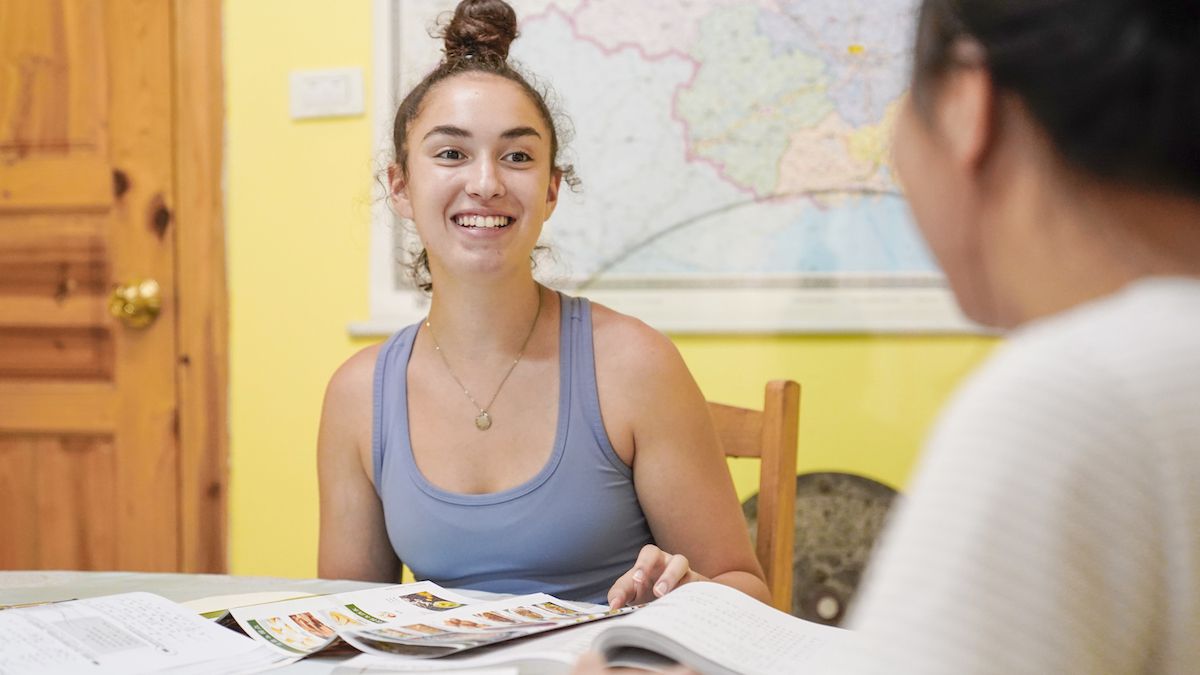
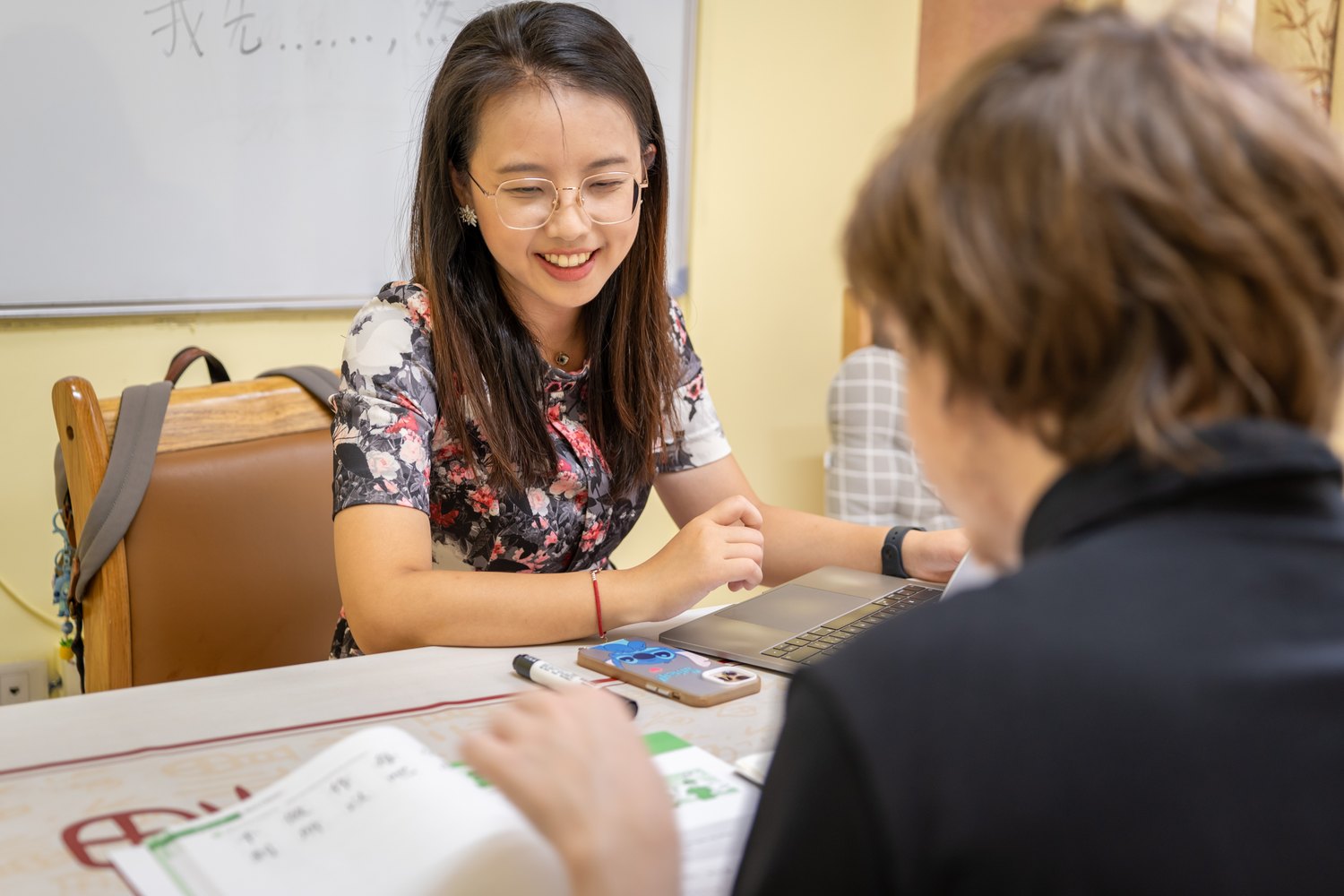
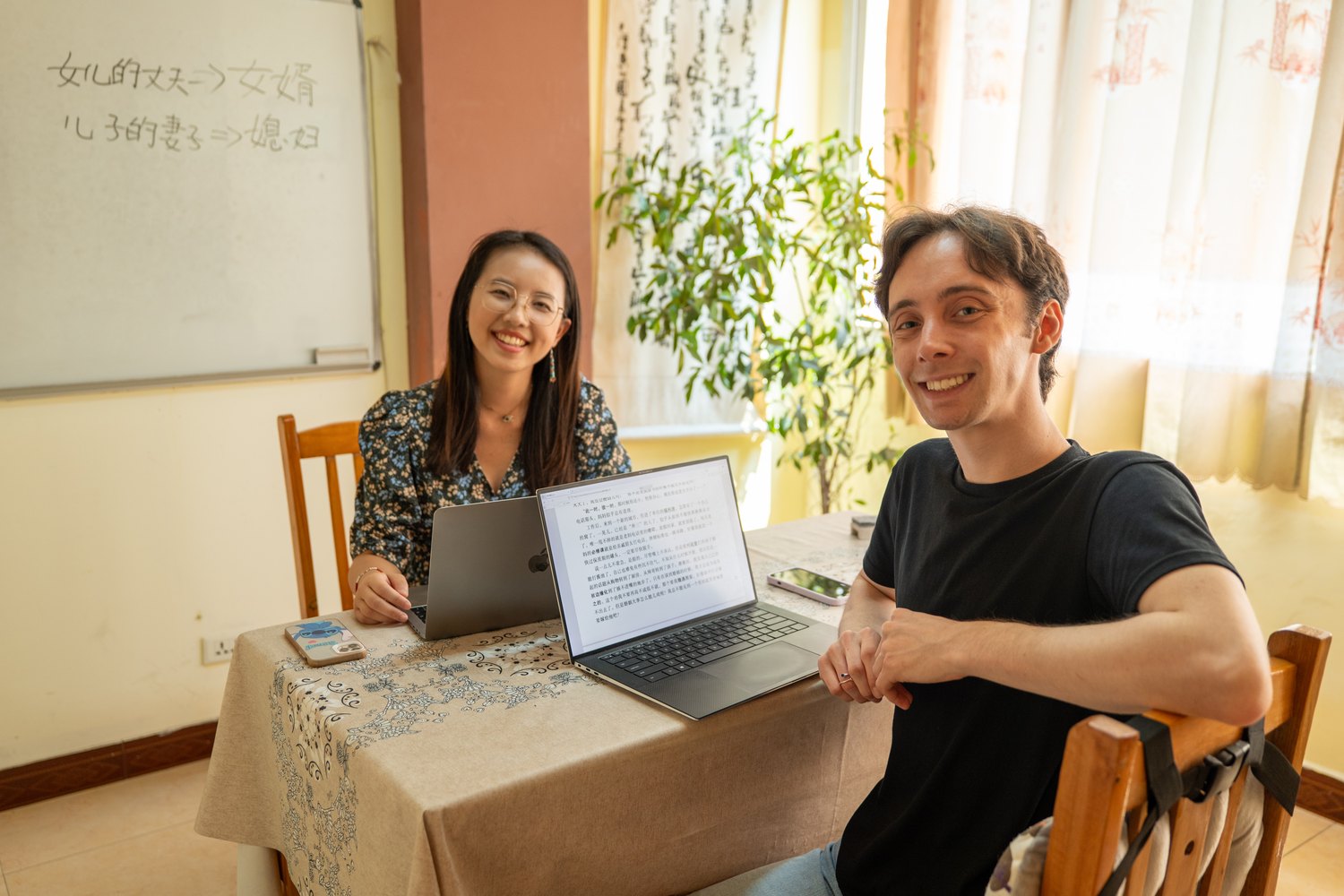
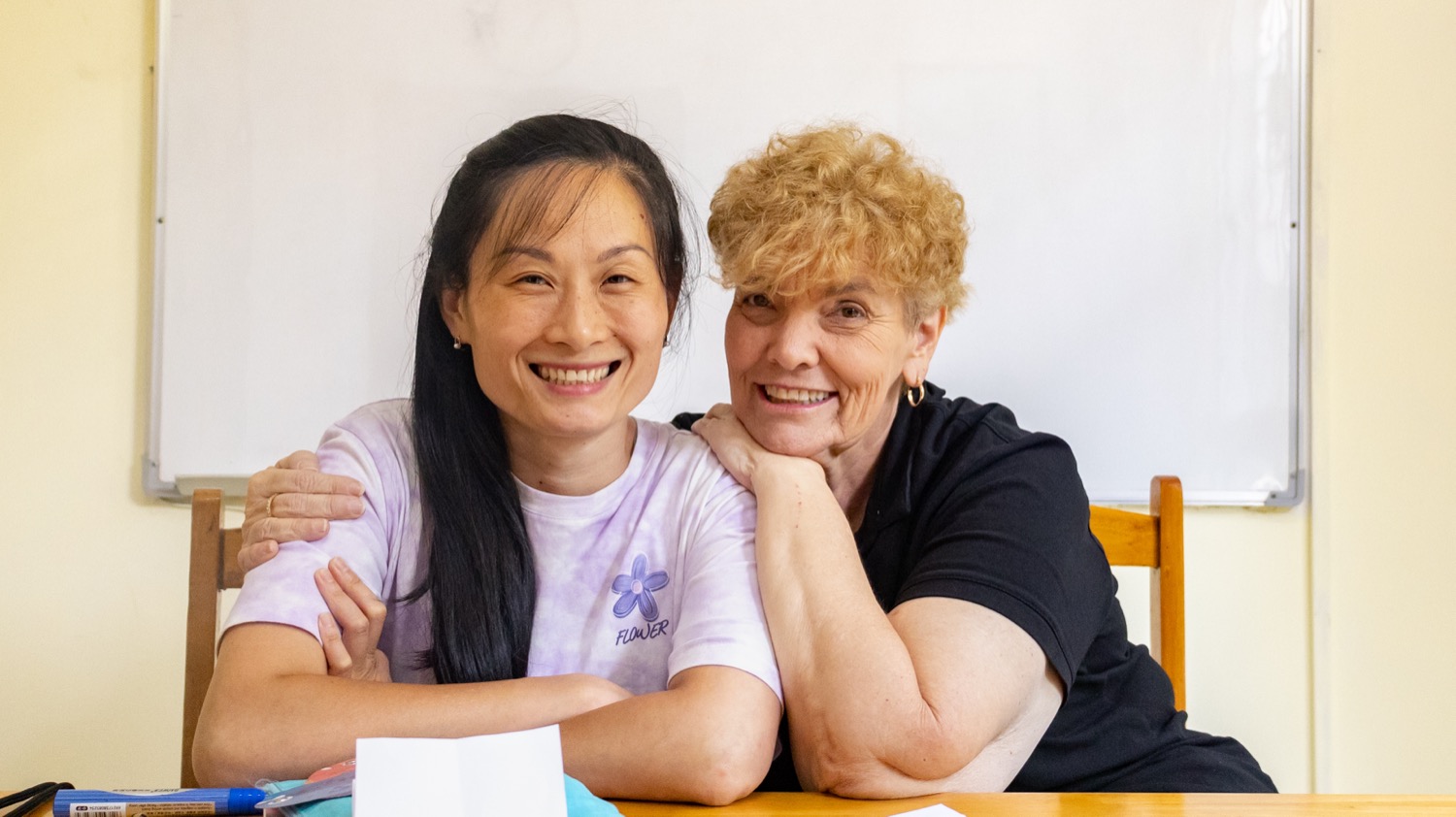
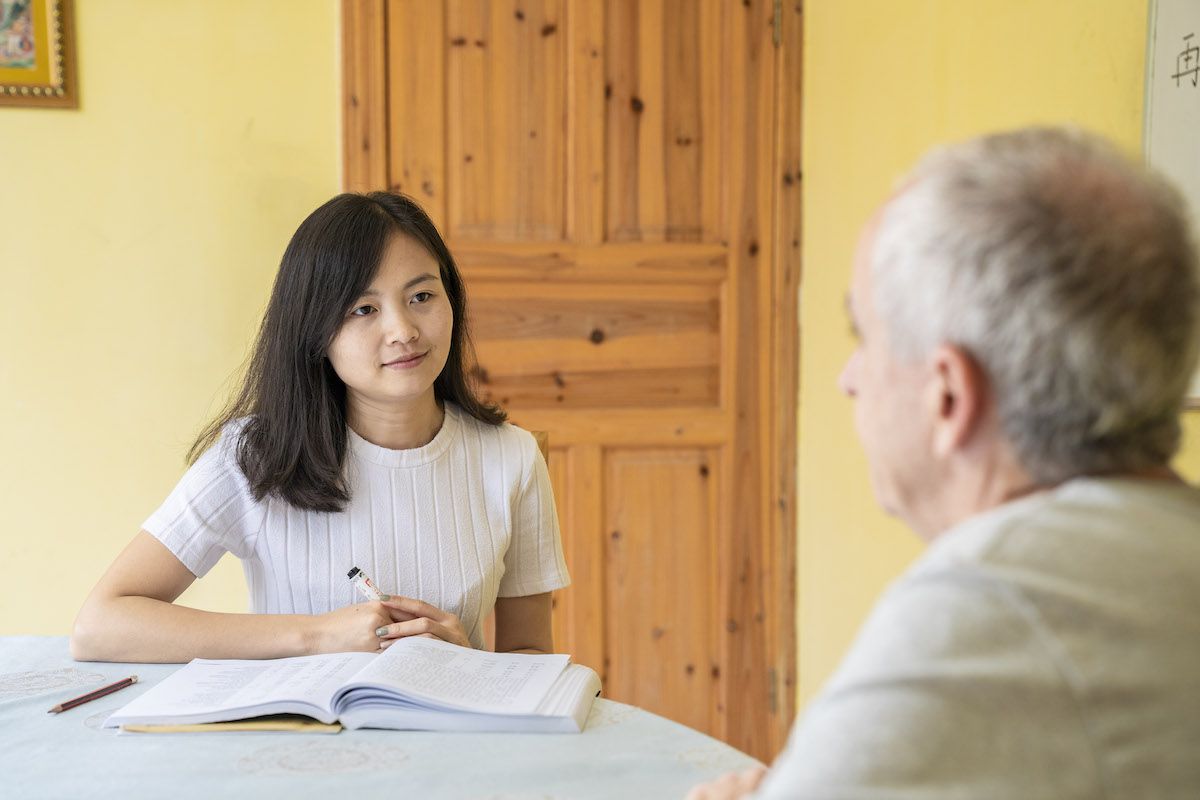
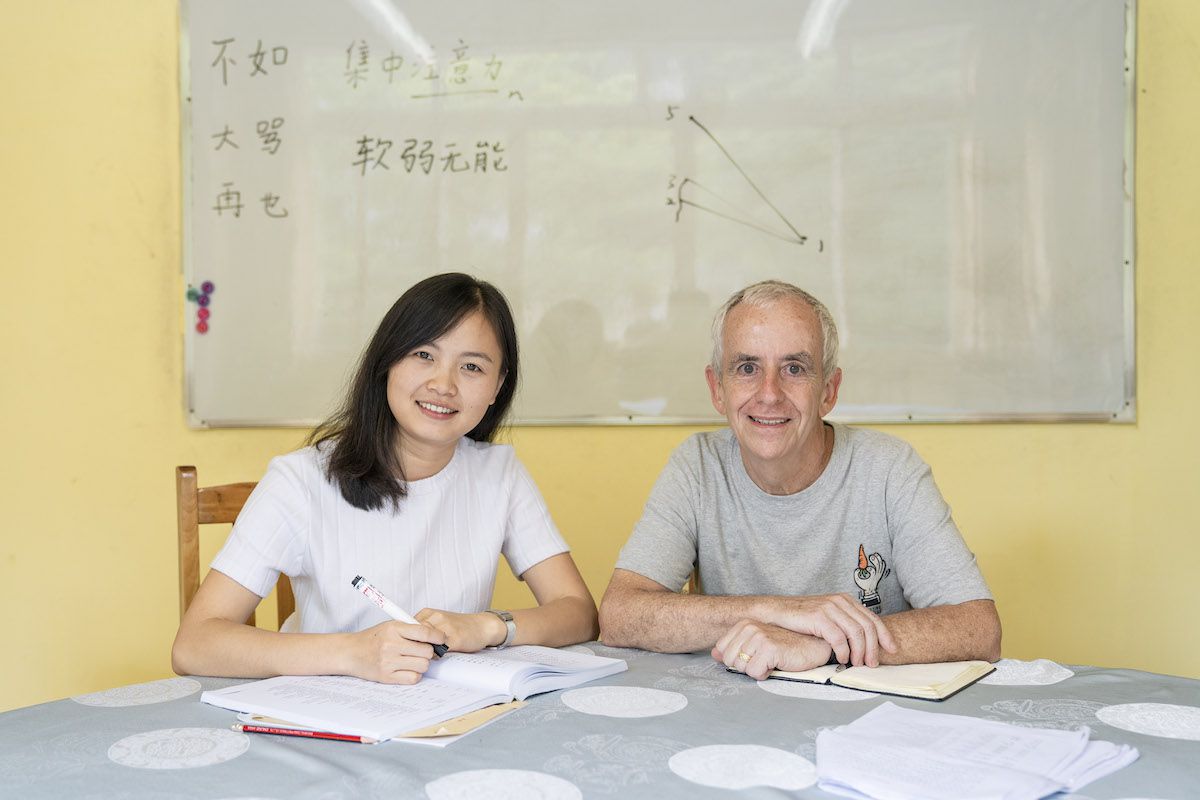
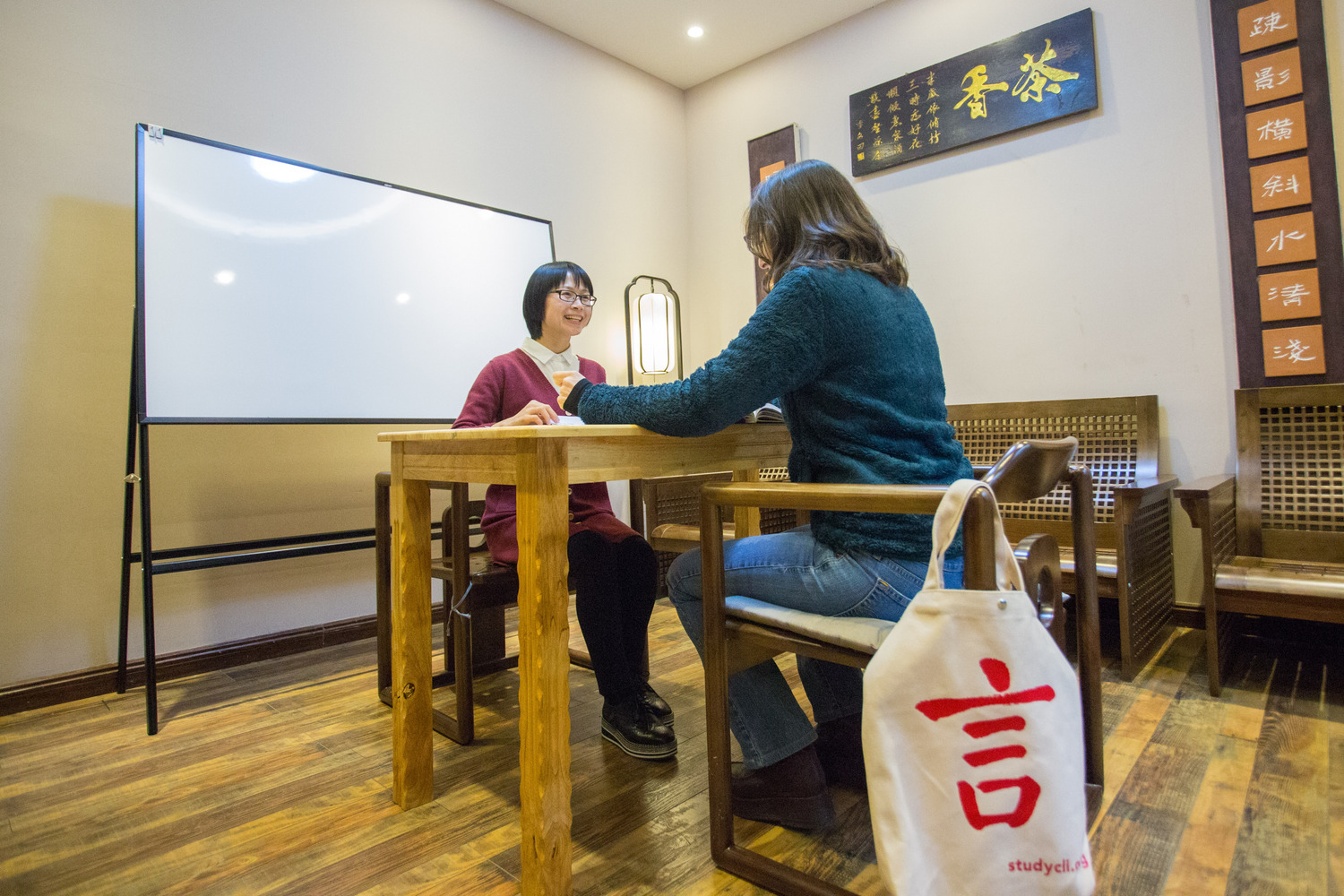
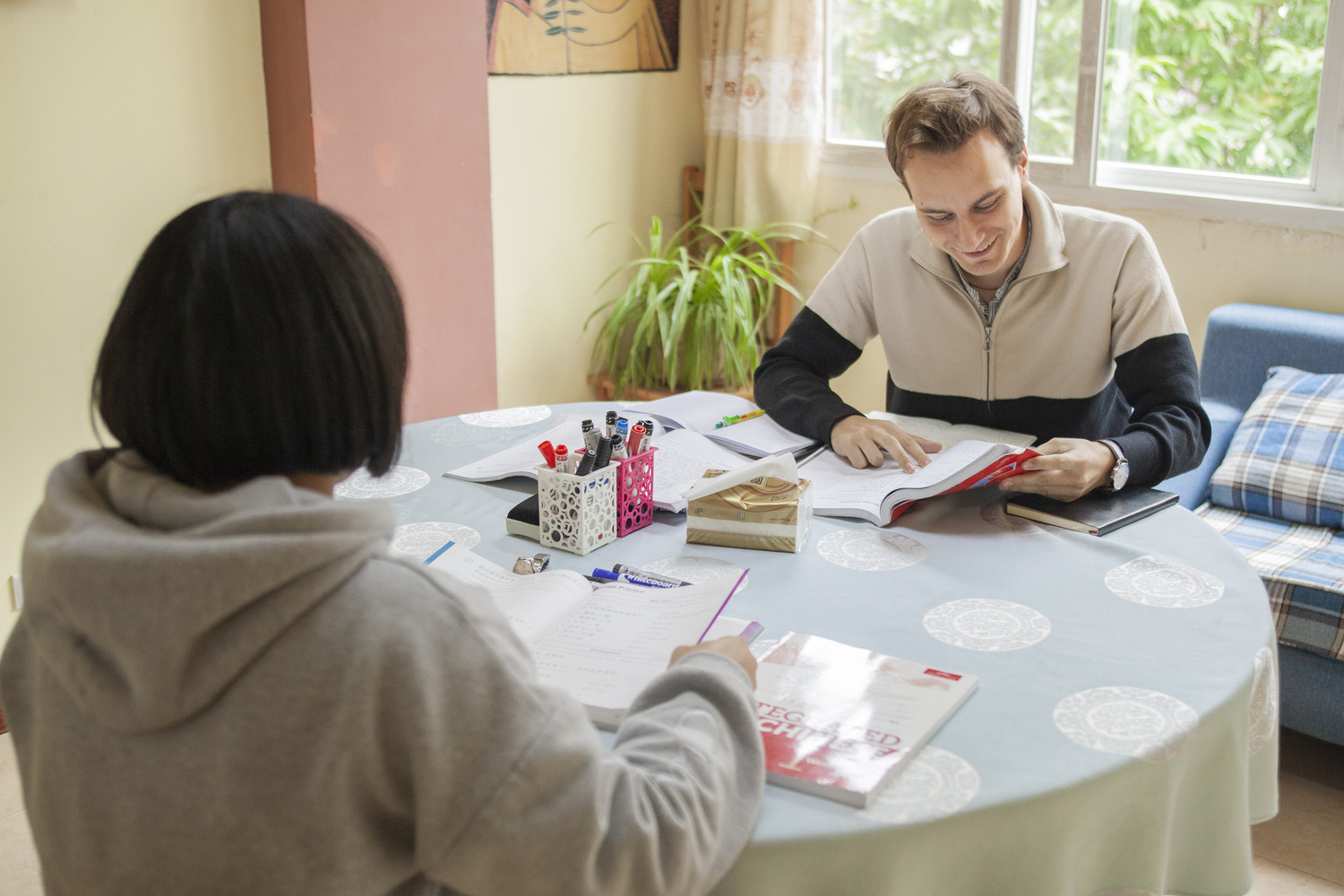
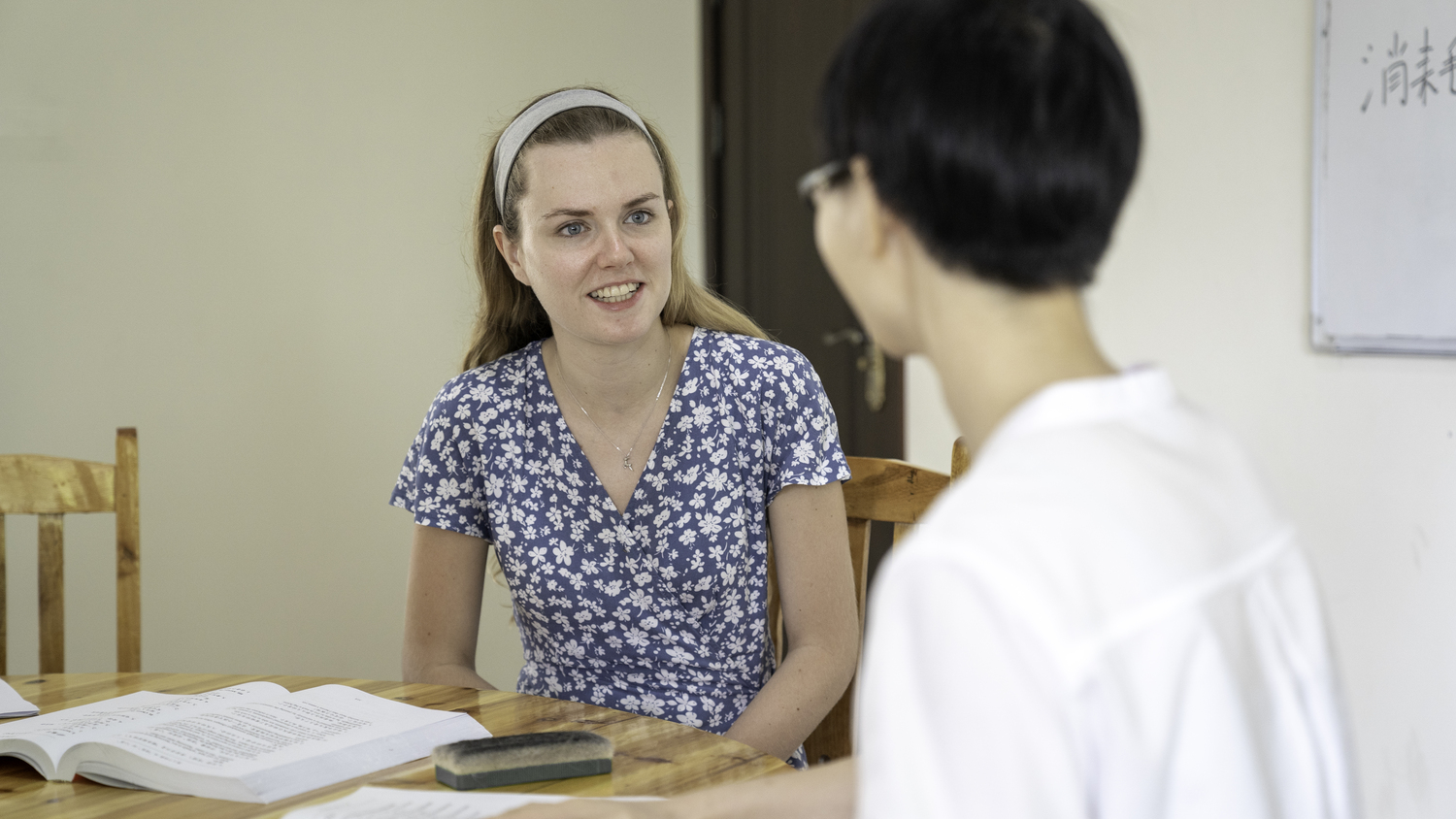
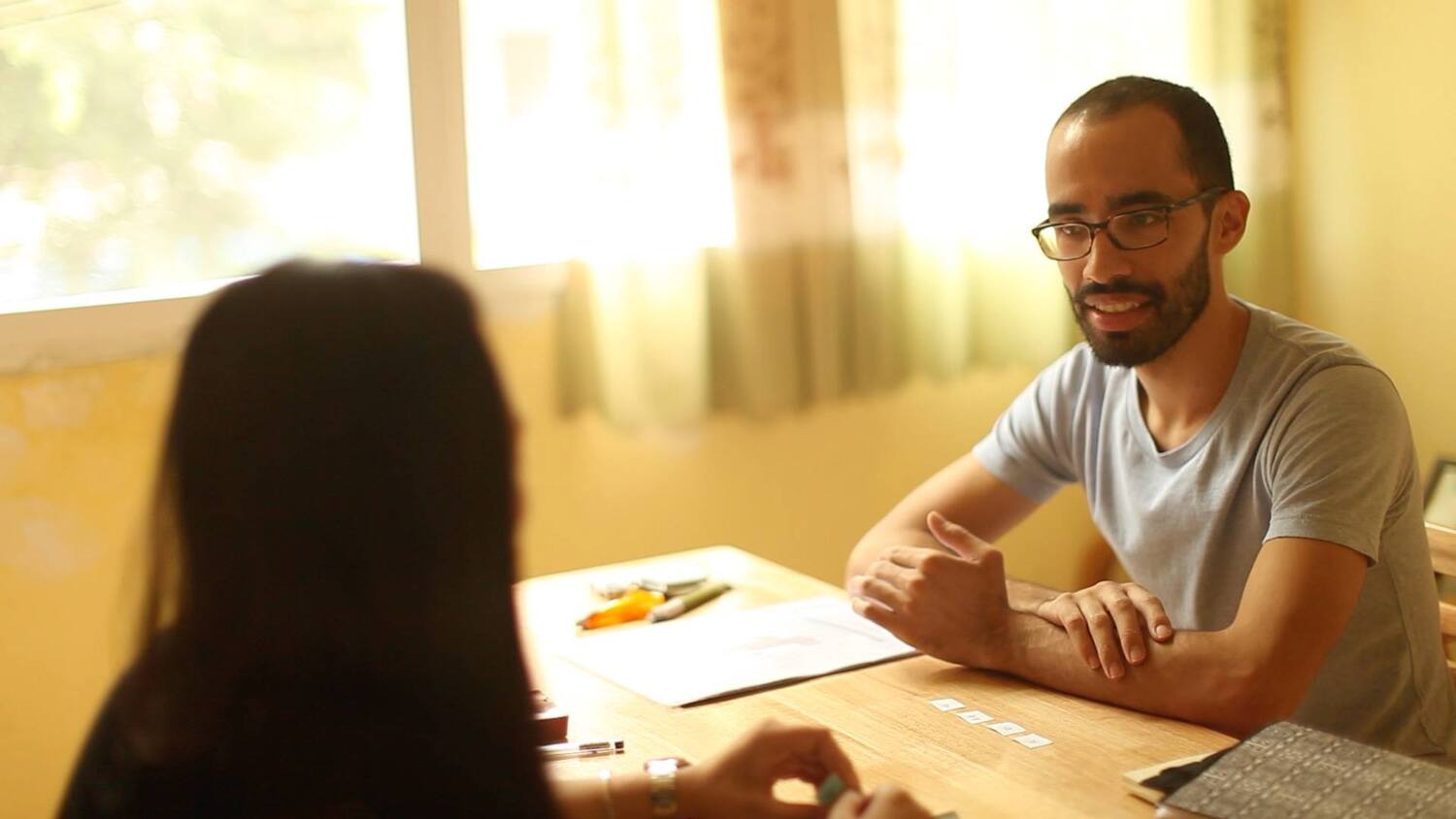
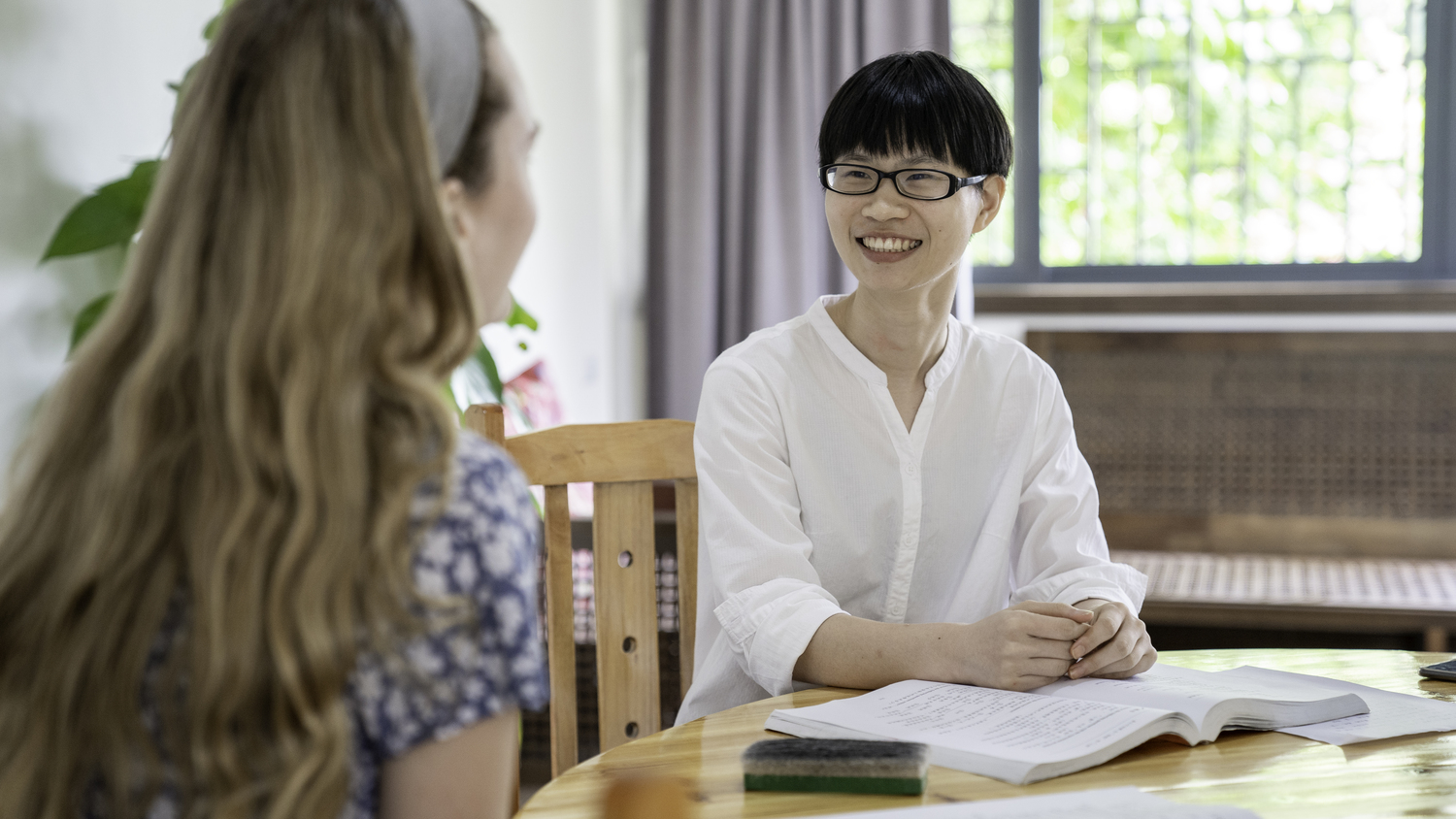
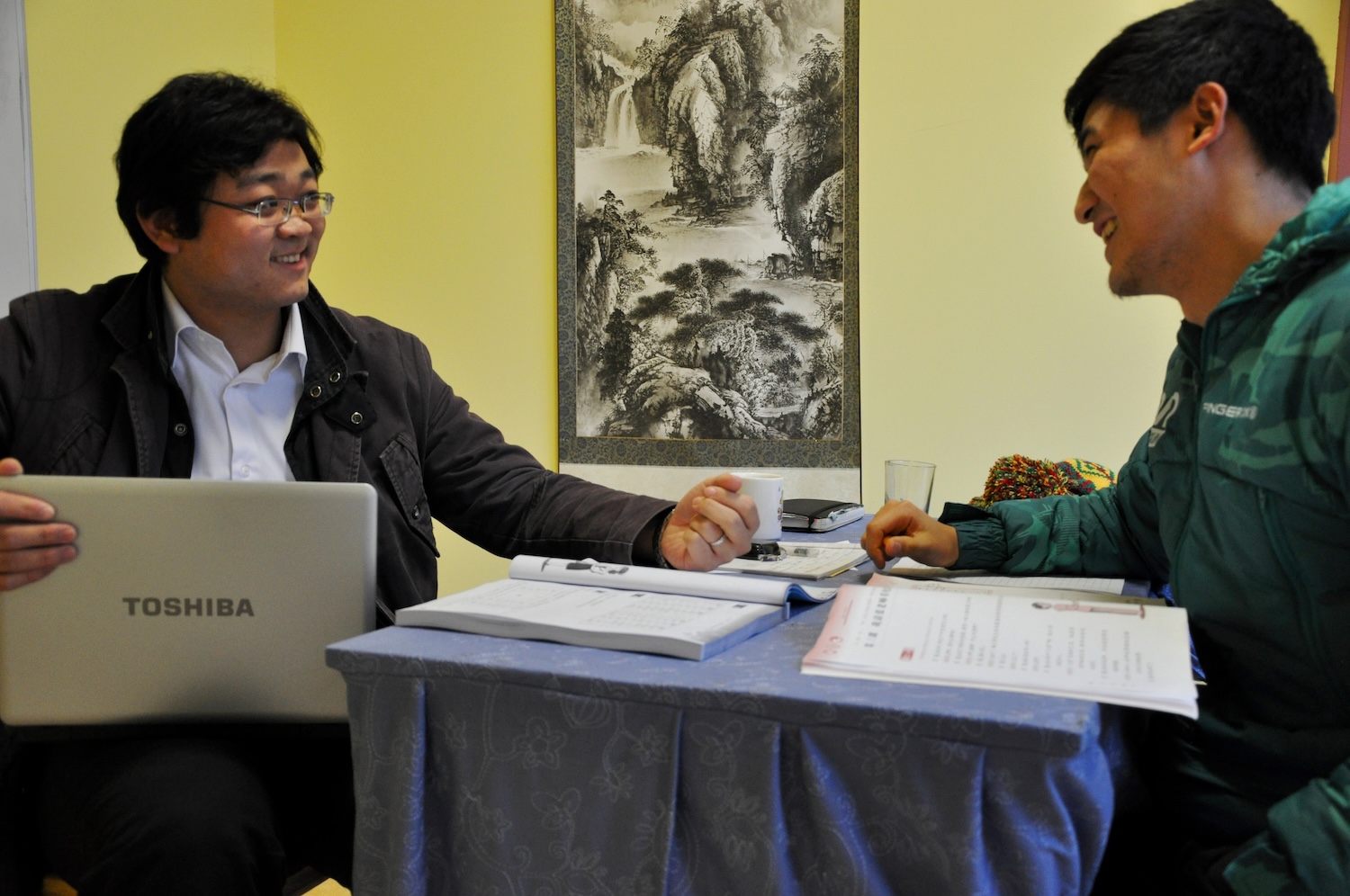
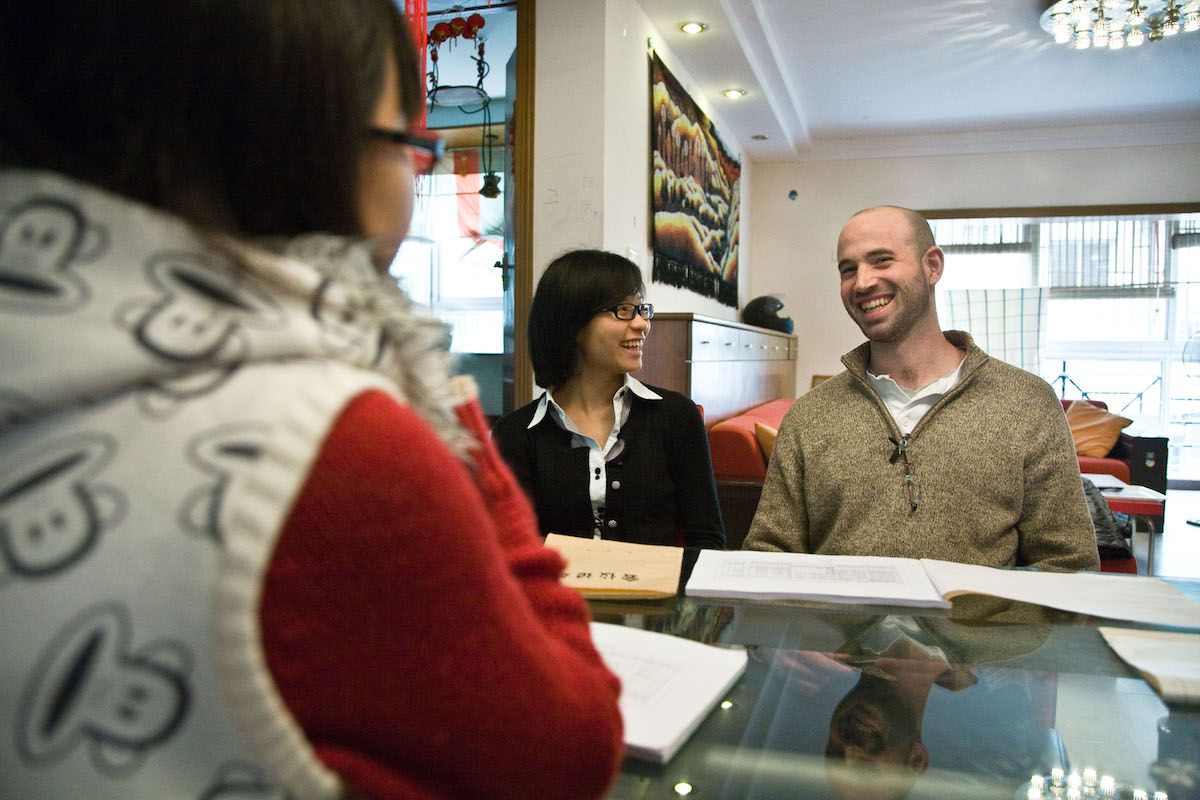
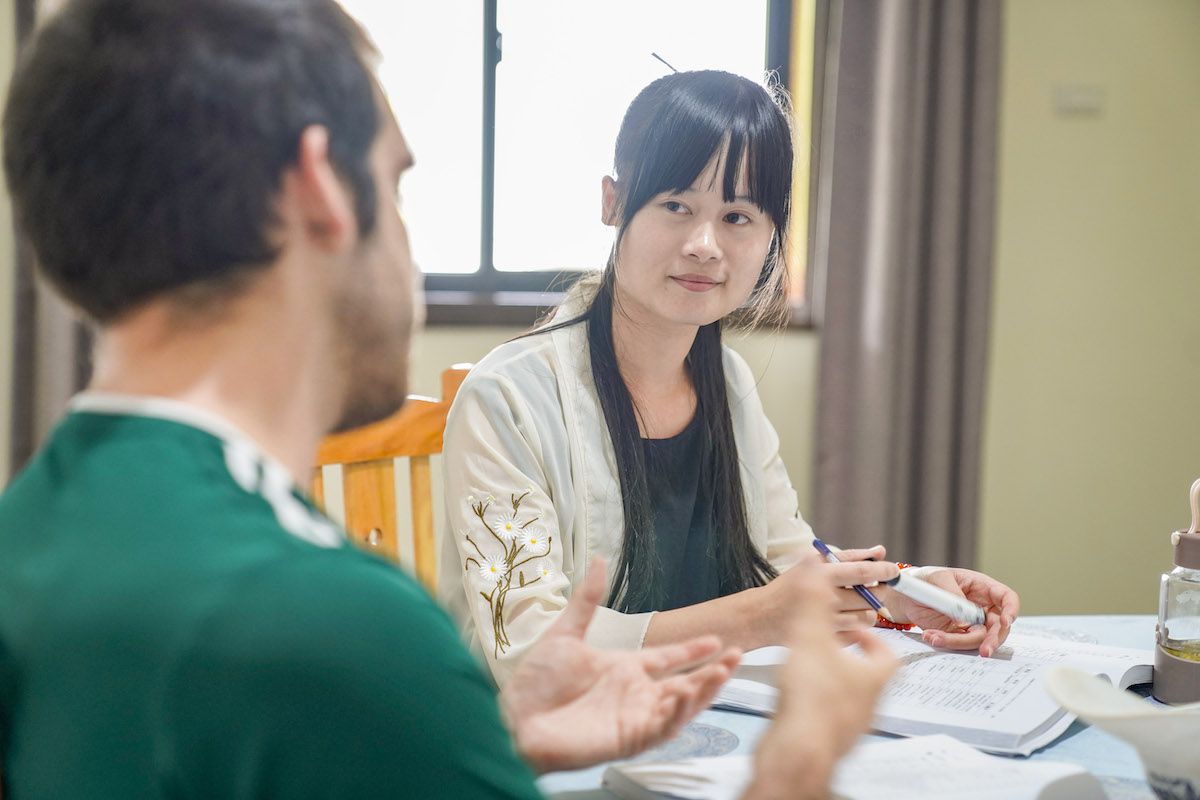
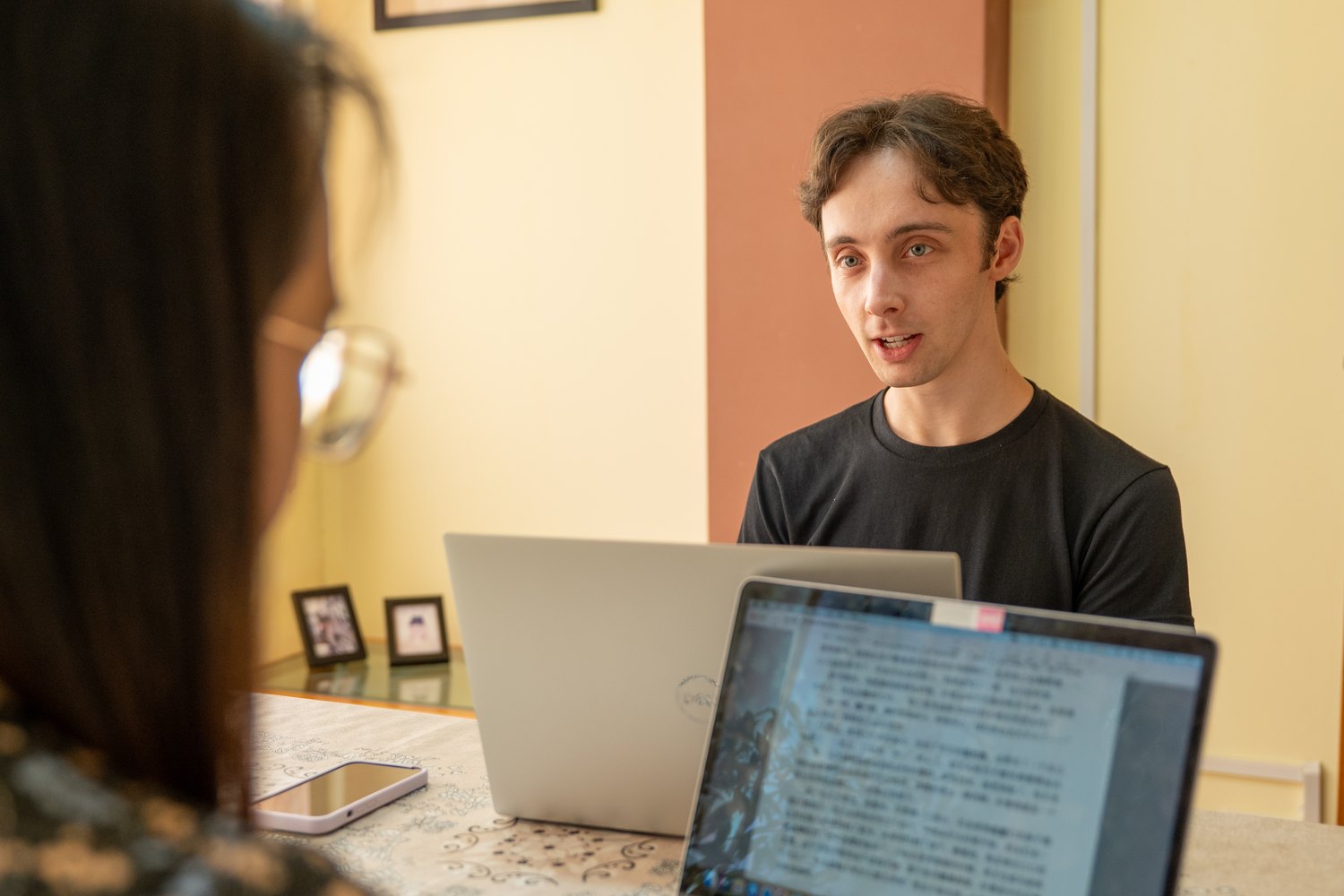
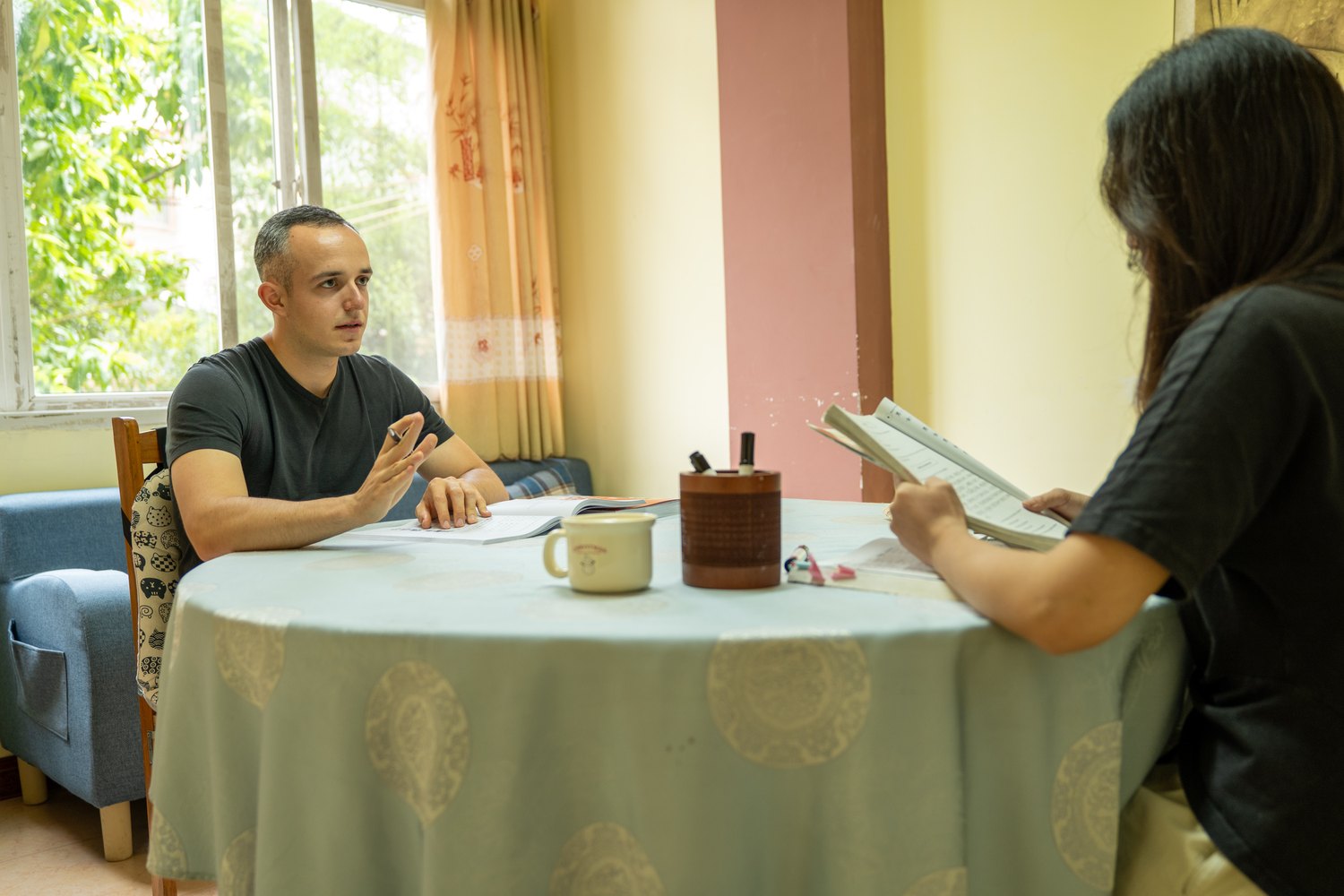
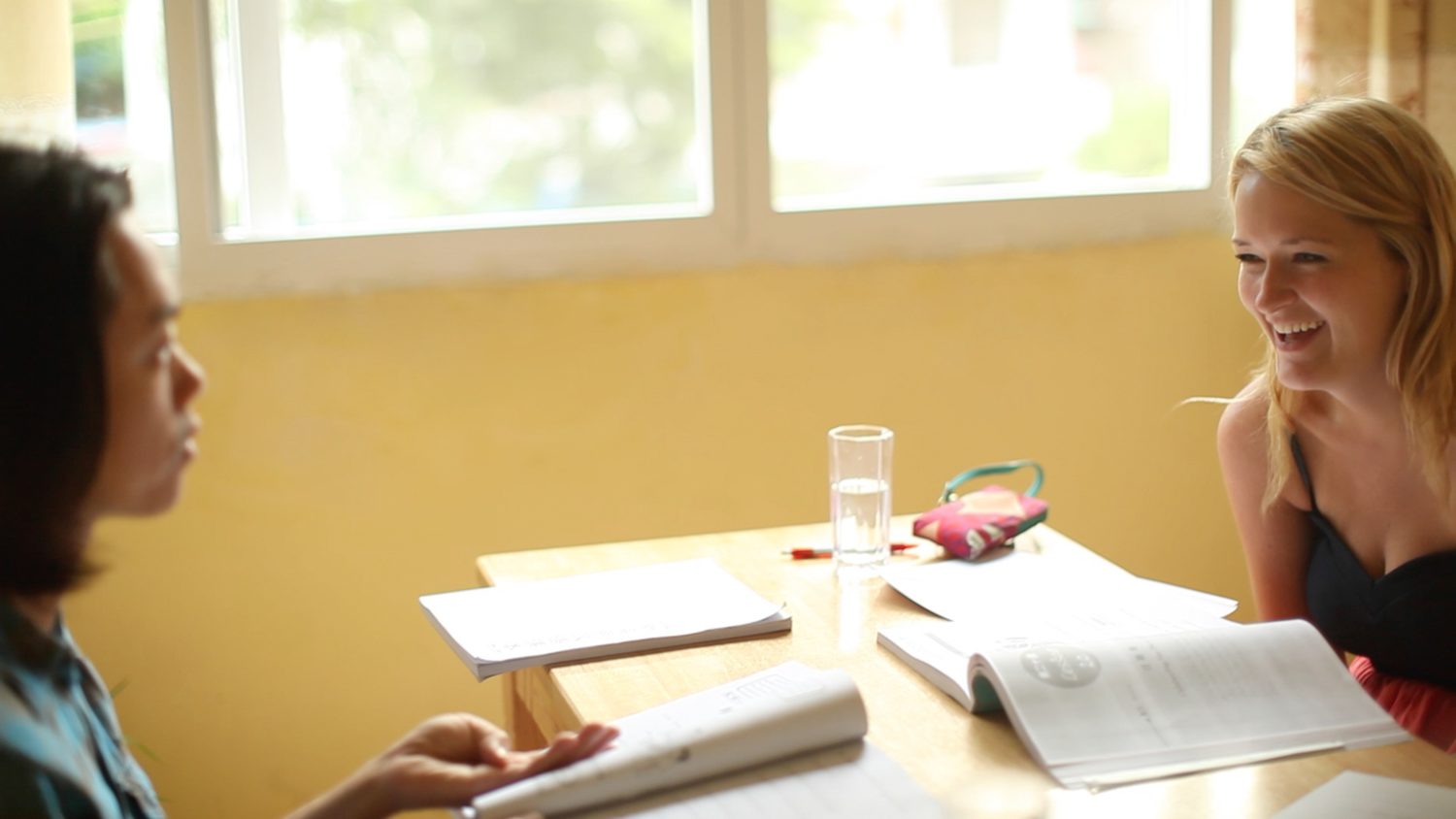
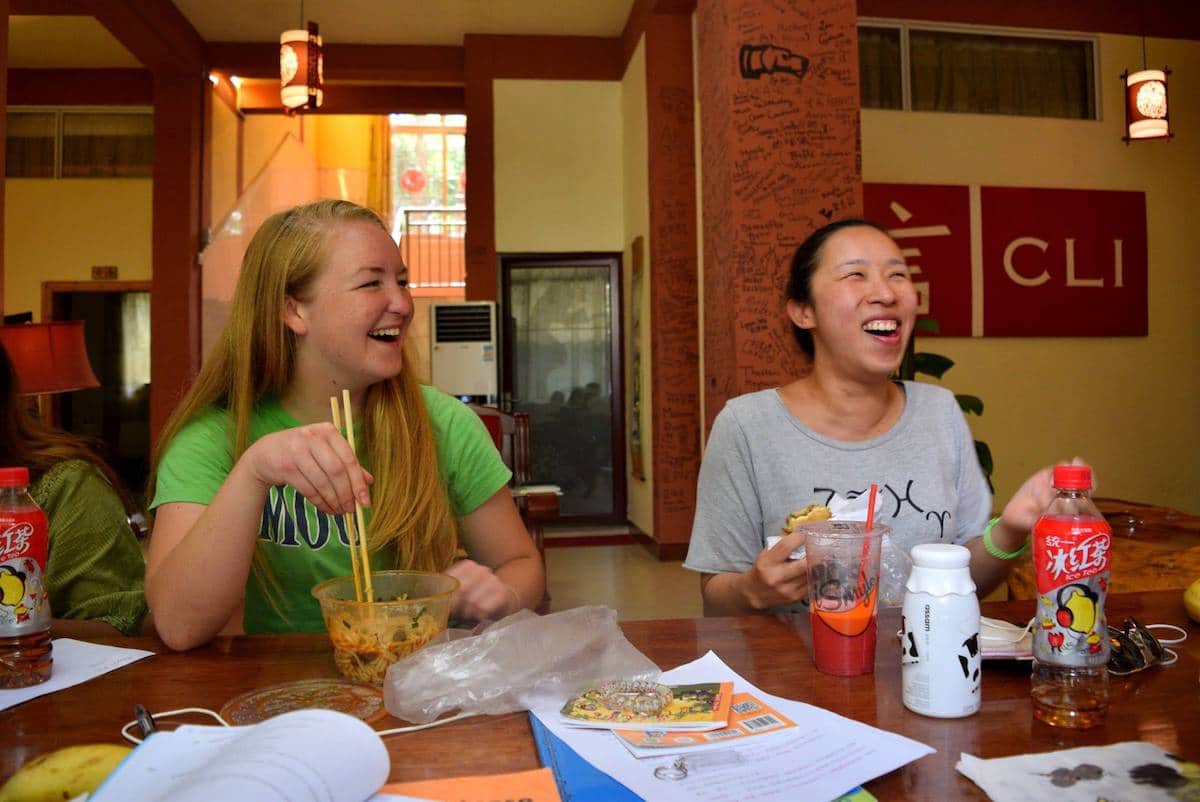
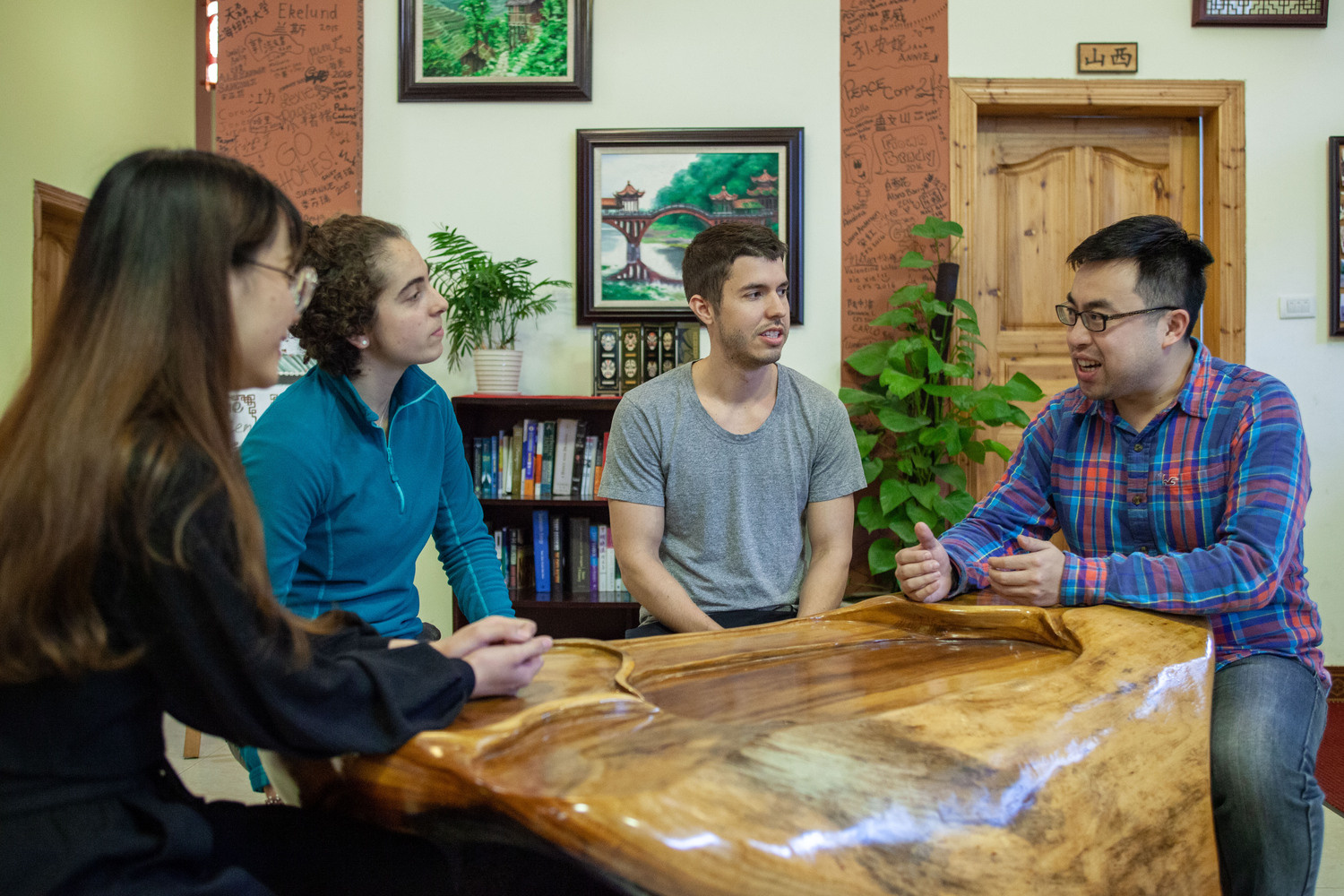
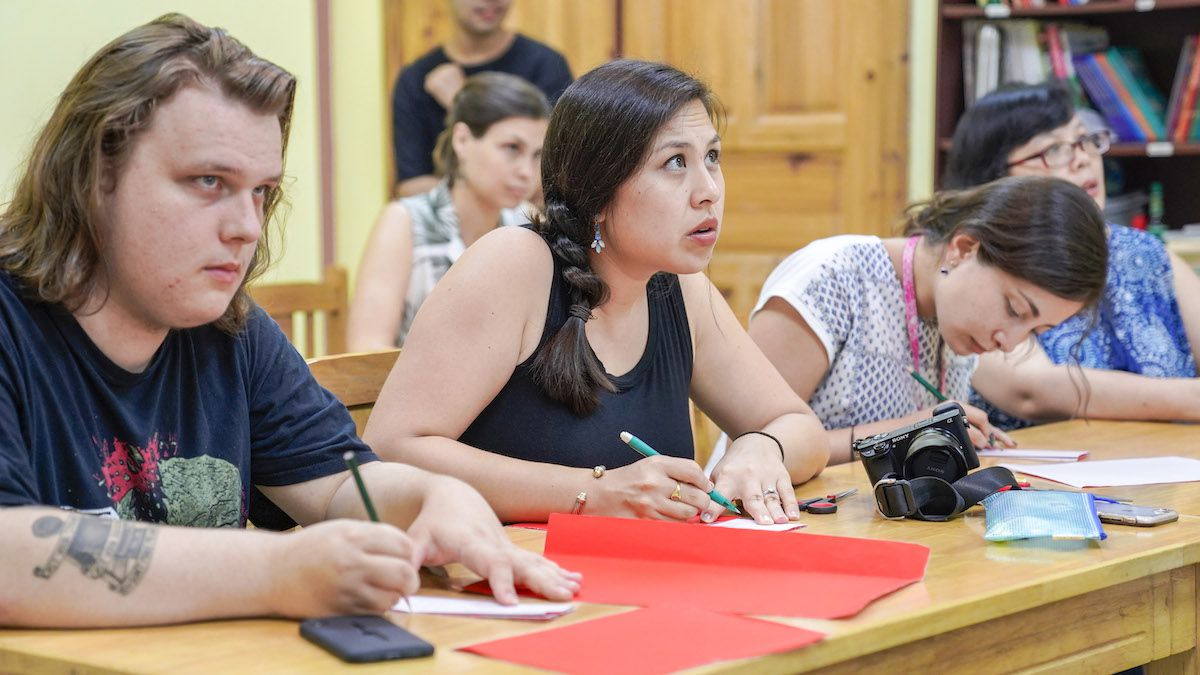
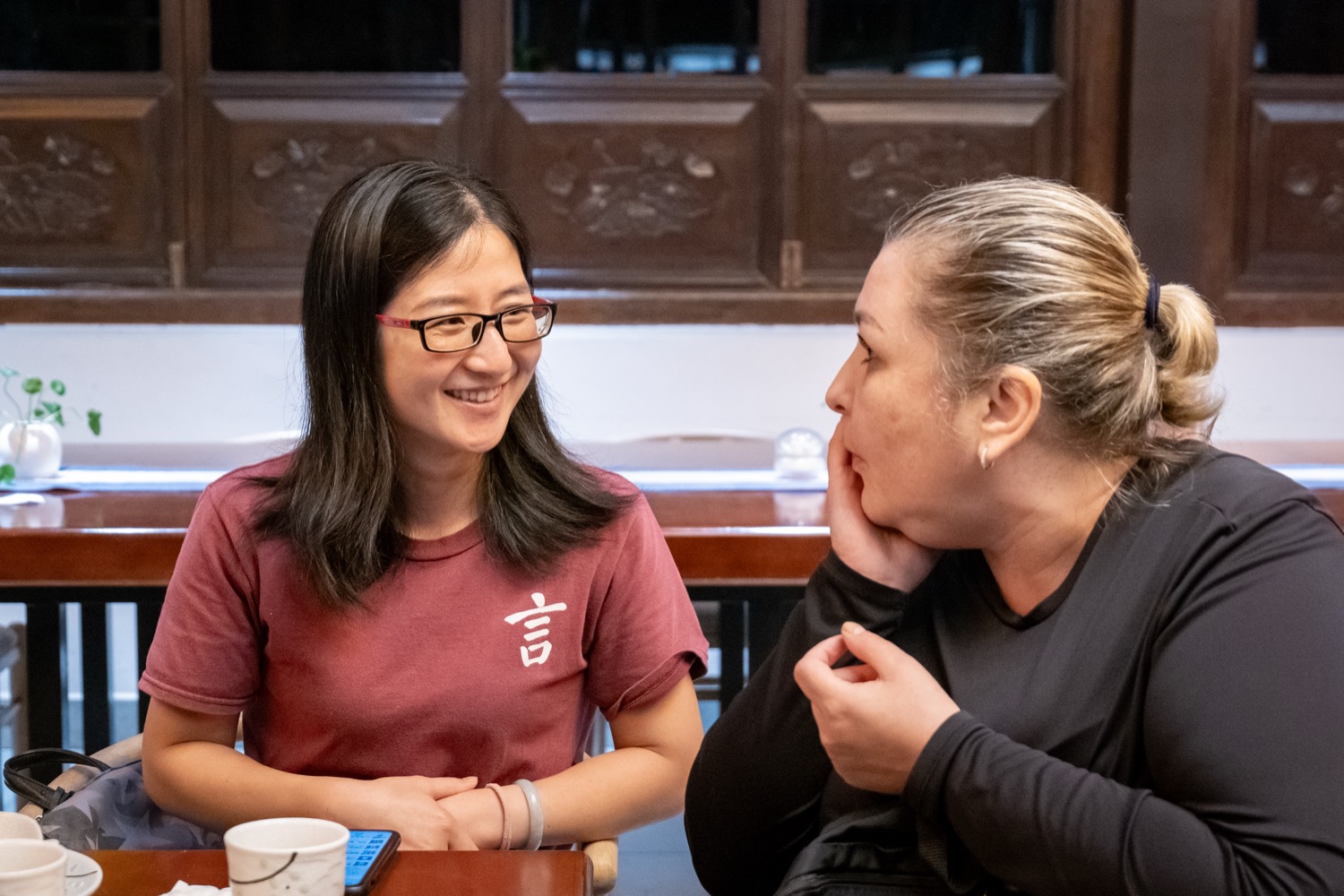
Classes at CLI are one-on-one, so each two-hour session is one teacher and one student, at a table like this one.
Classes have been taught at the CLI Center since 2012, and the building was renovated in 2026.
Orientation, usually on the first Monday, introduces new students to the CLI Center, their teachers and the class schedule.
After five days of class, weekends are for bigger outings, such as Li River trips or hiking in Longsheng and Yangshuo.
A student's three teachers each take one focus, and between them they cover reading, writing, listening, speaking and review.
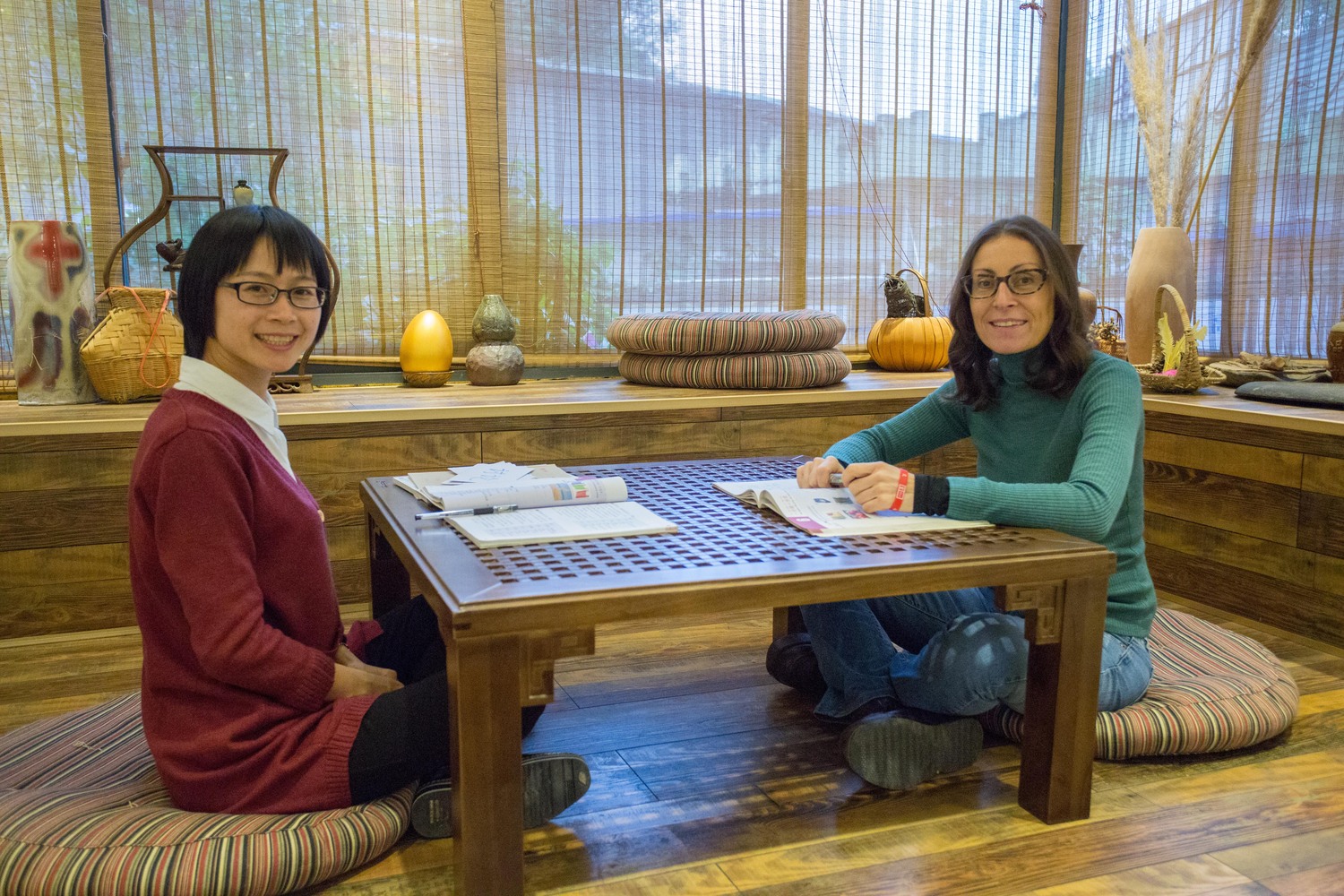
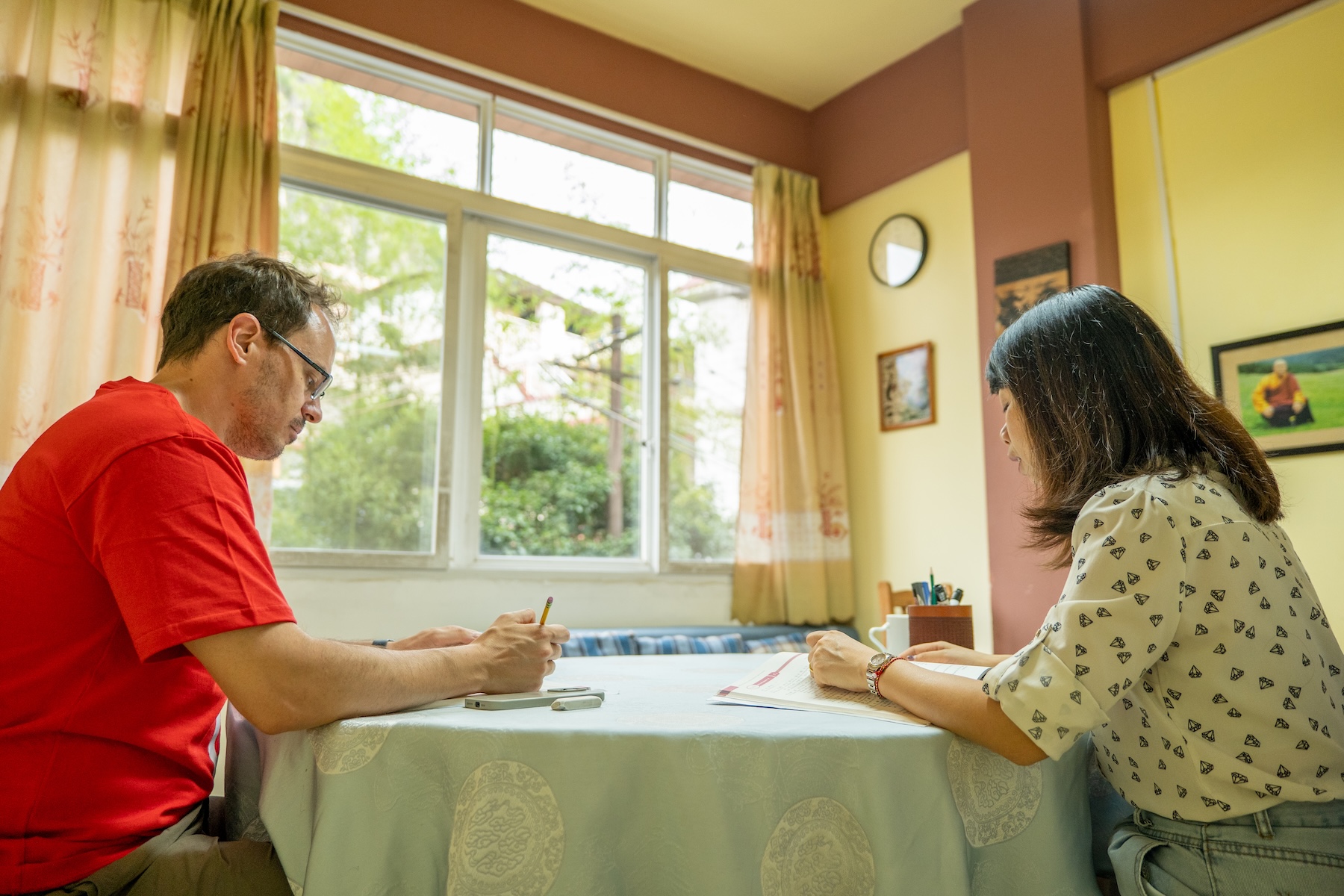
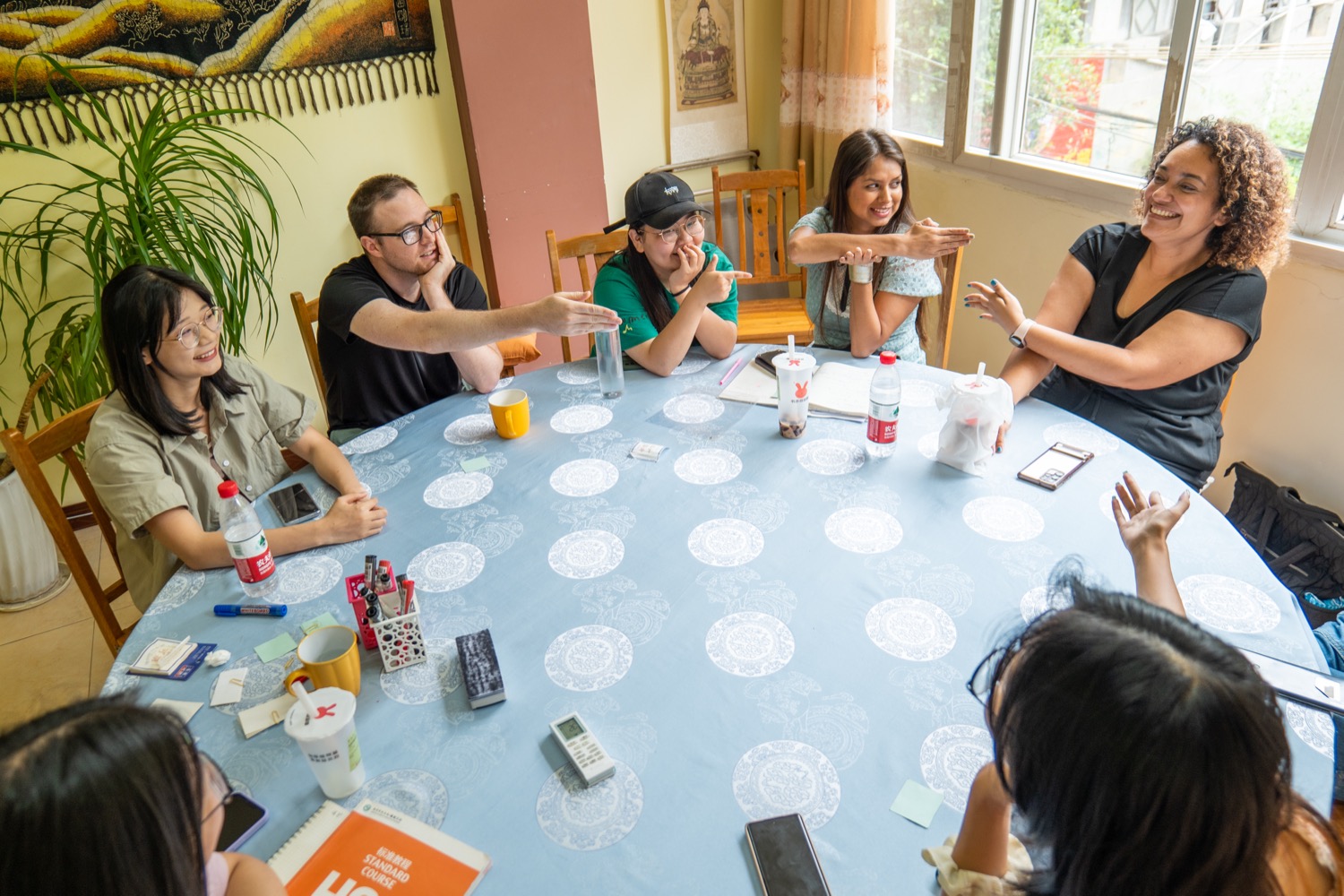
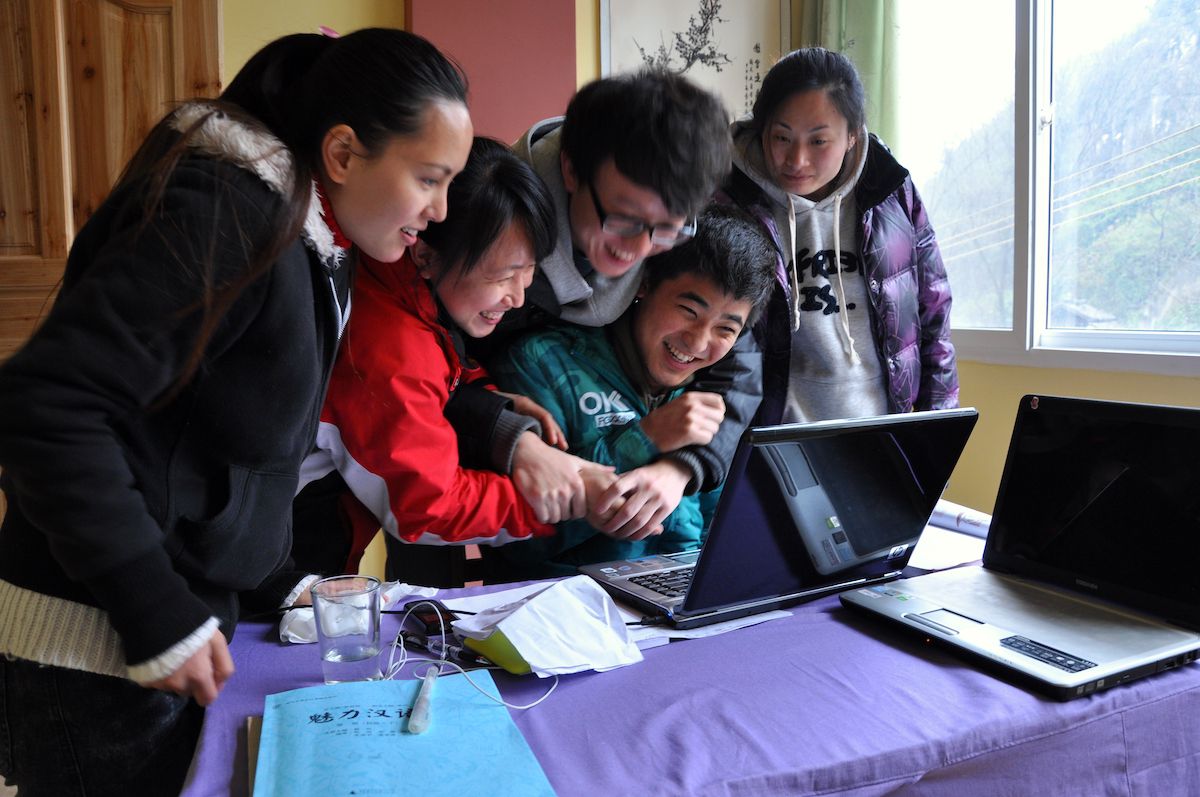
The textbook on this round table is one part of the week. CLI also runs weekly activities and monthly excursions outside class.
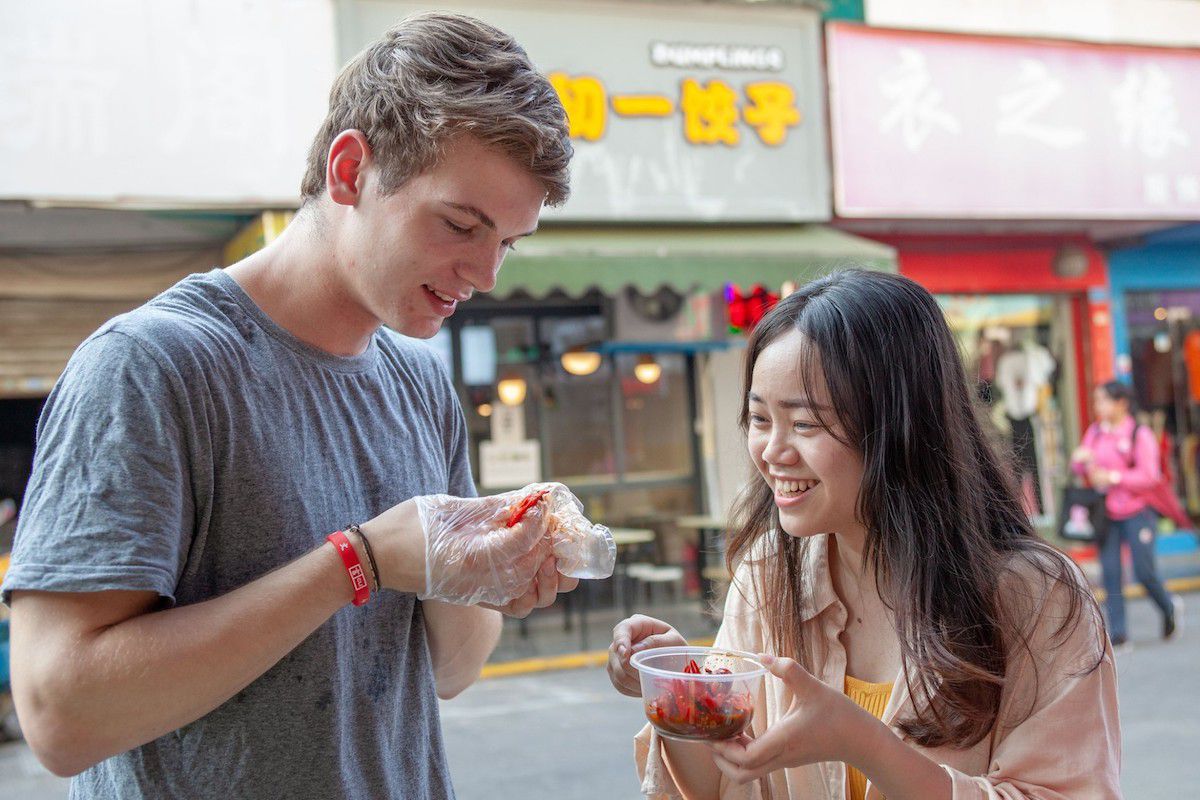
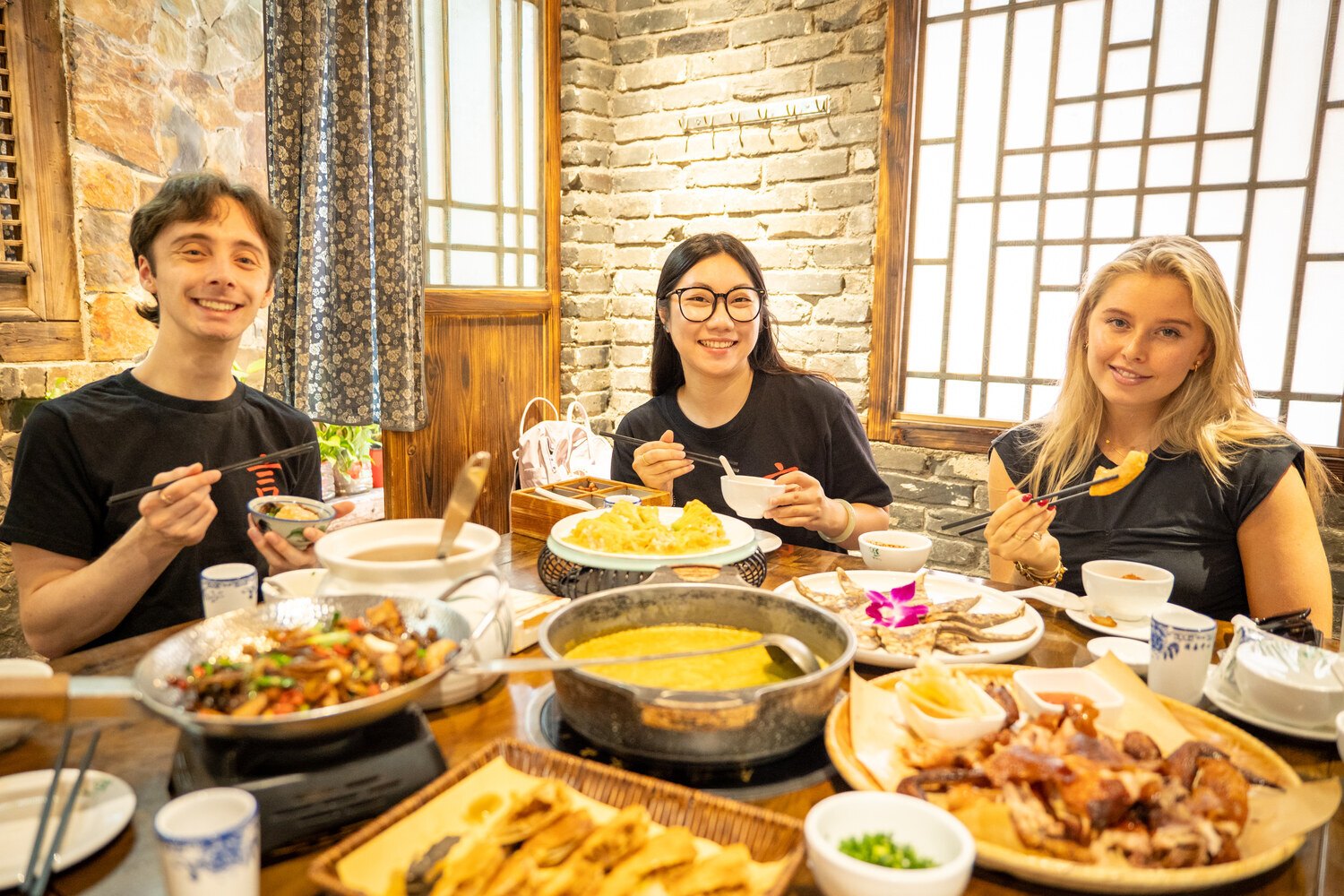
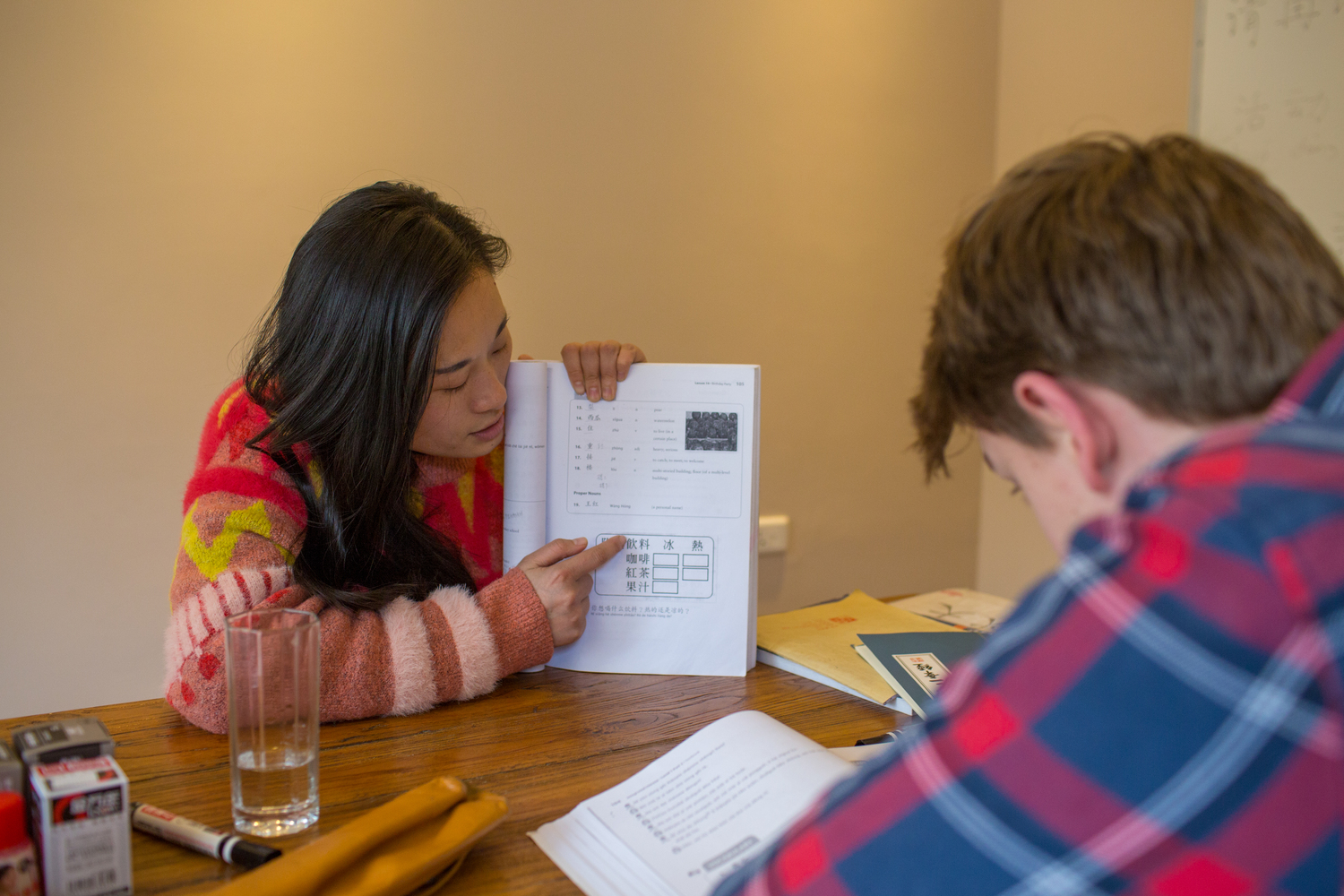
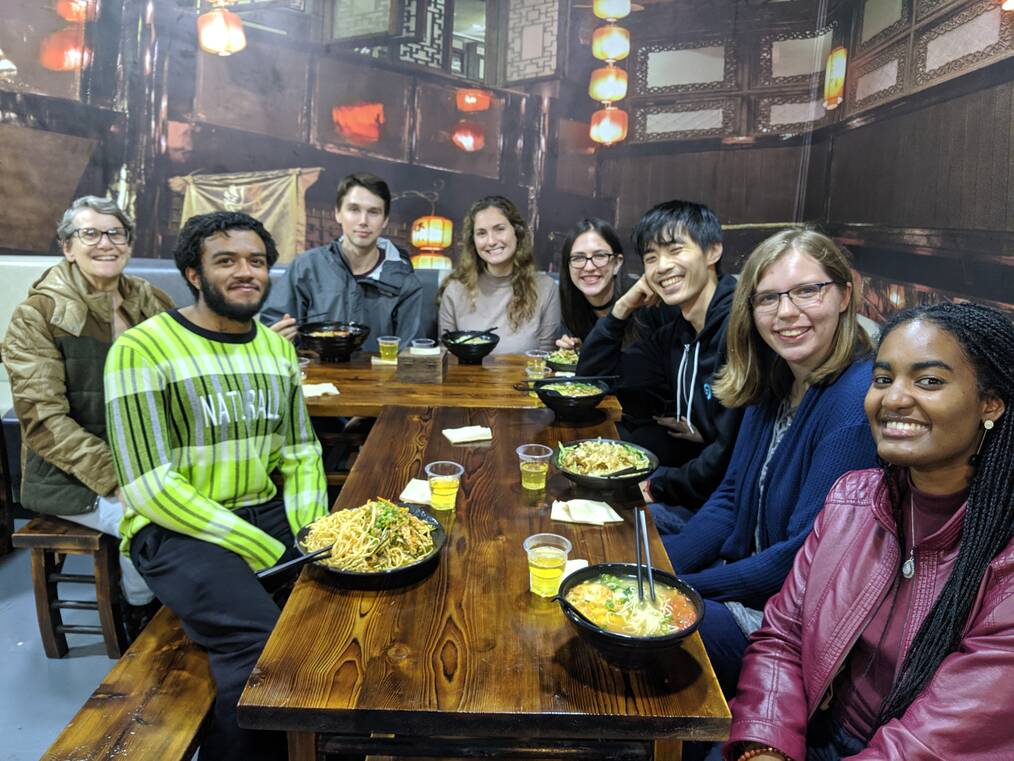
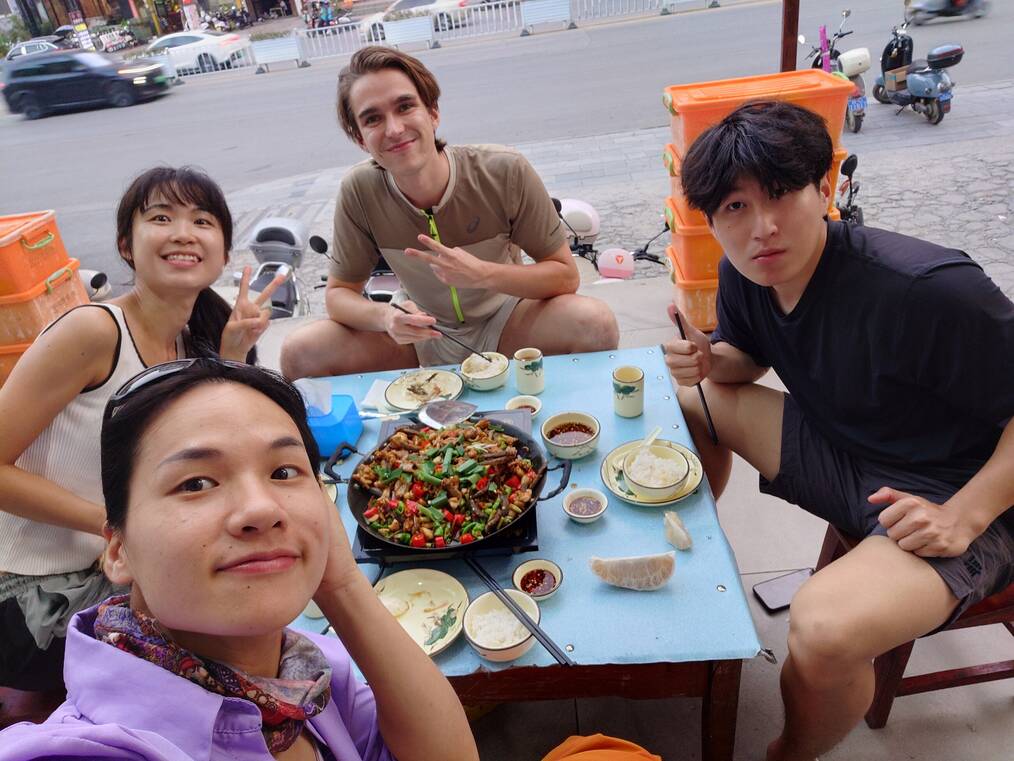
Ordering food in Mandarin is one of the first real-world skills students pick up in Guilin.
Students have come to CLI from more than 50 countries, and in class each one has a teacher to themselves.
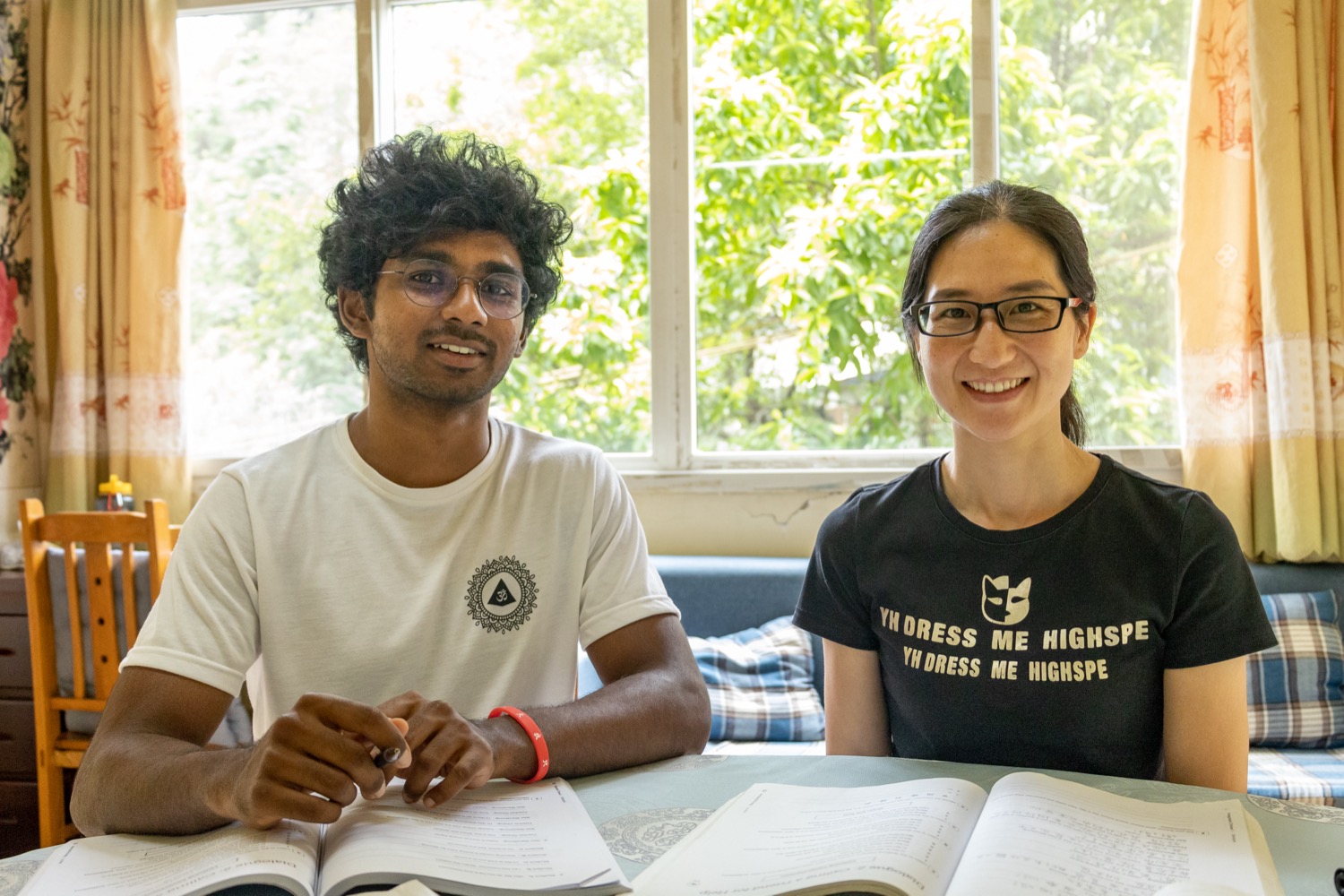
Homework needs a desk somewhere, and housing is included in tuition, from a private room at the CLI Center to a homestay with a Guilin family.
Homestay students keep practicing Chinese at home too, sharing dinners and weekend outings with their host family.
Words from reading class often turn up again in speaking class, because a student's three teachers coordinate their lessons.
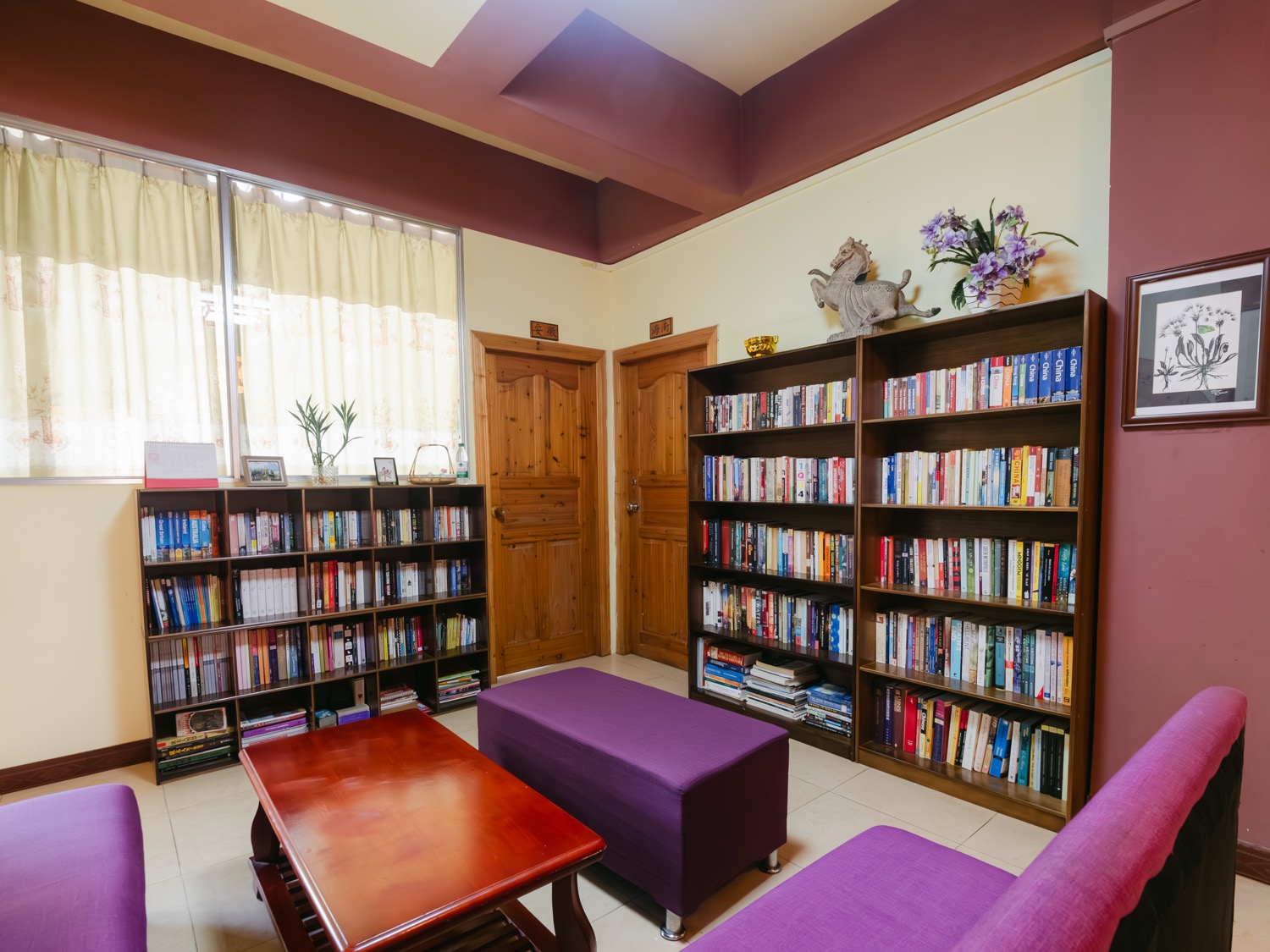
Between class sessions, students are welcome to keep studying at the CLI Center, in its study areas or the reading room.
There are no fixed semesters at CLI, so students start on any Monday of the year and stay from one week to a full year.
Afternoon sessions run 2:00 to 4:00 and 4:10 to 6:10, after lunch, which students on the meal plan eat at the CLI Center.
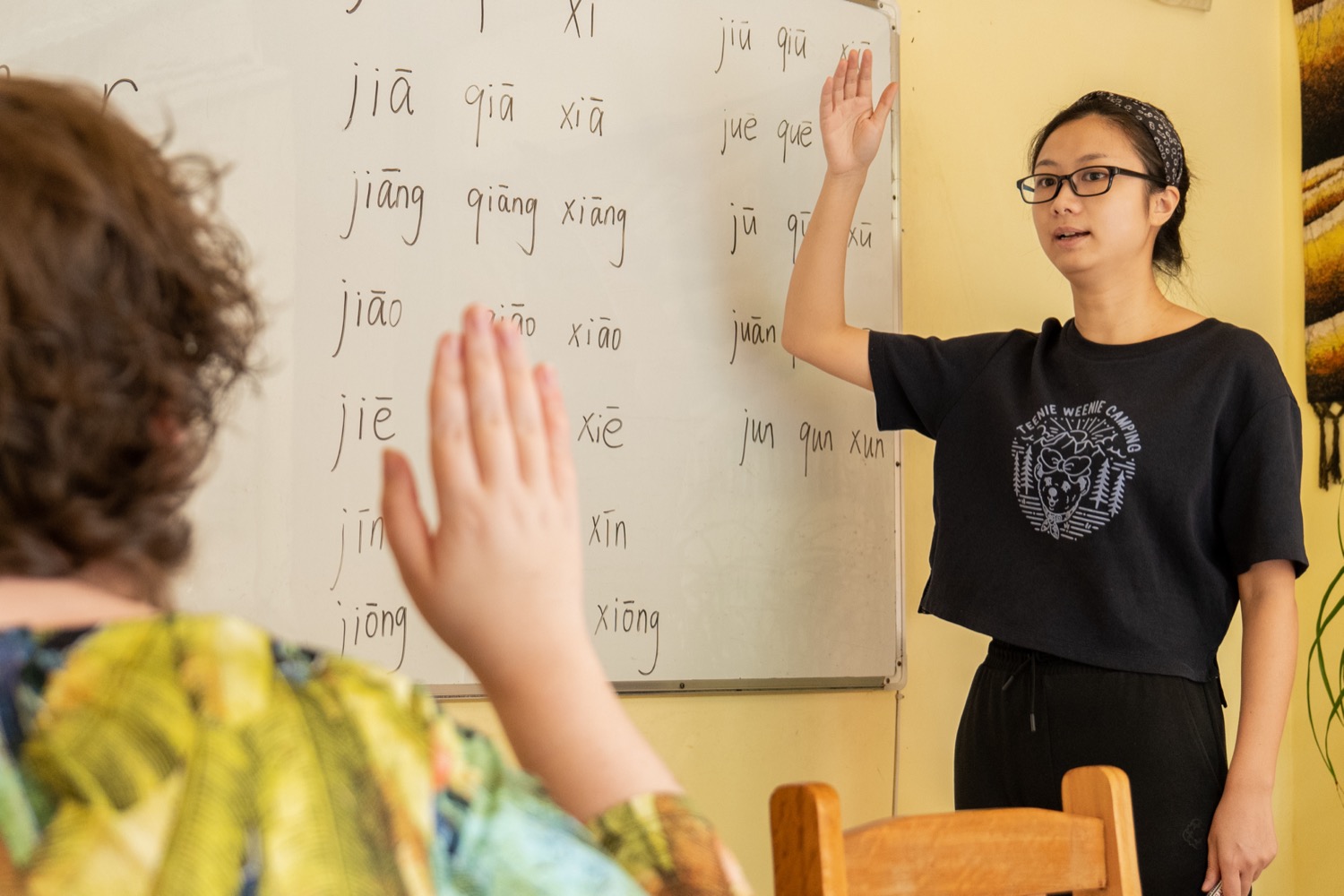
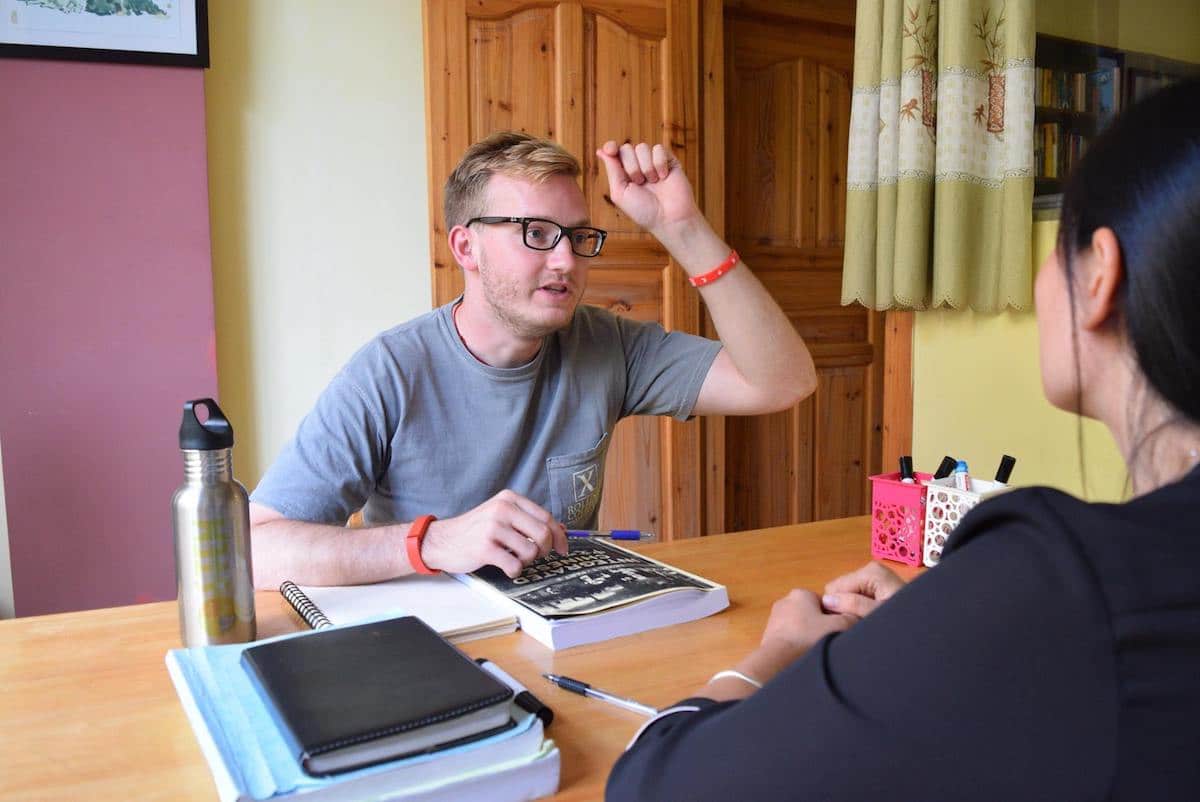
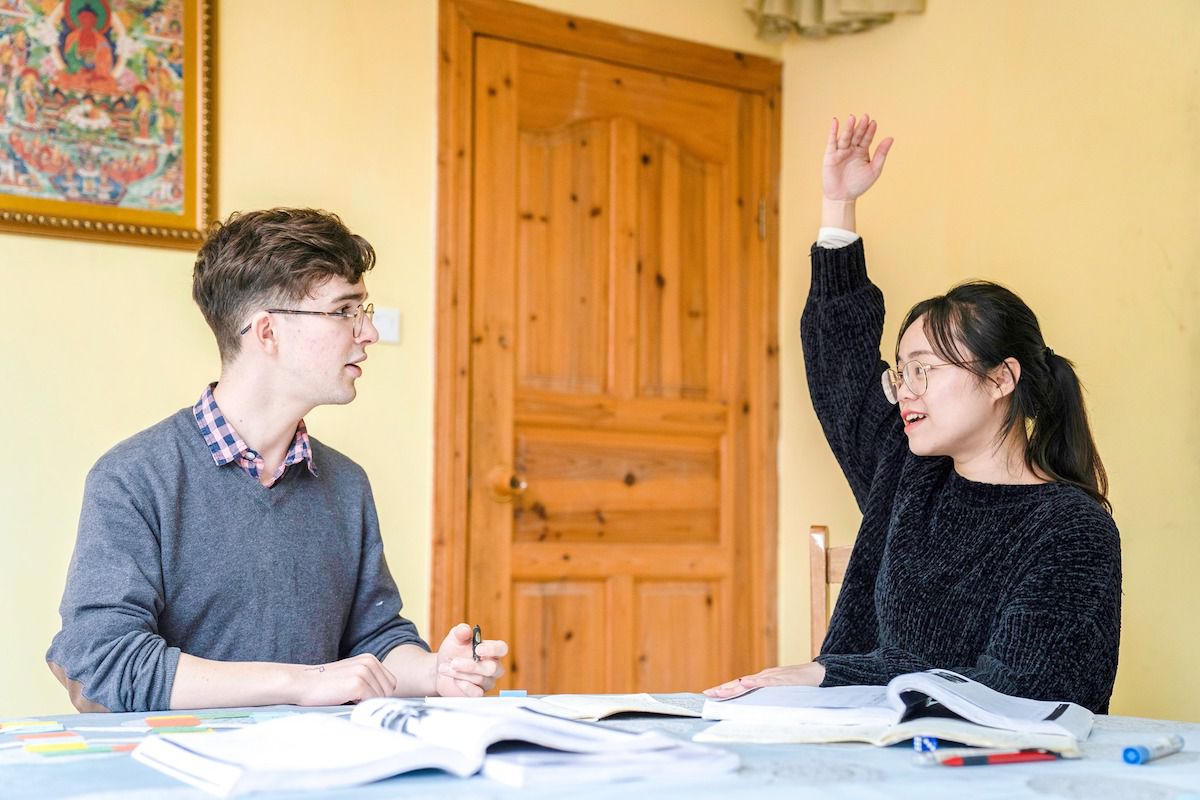
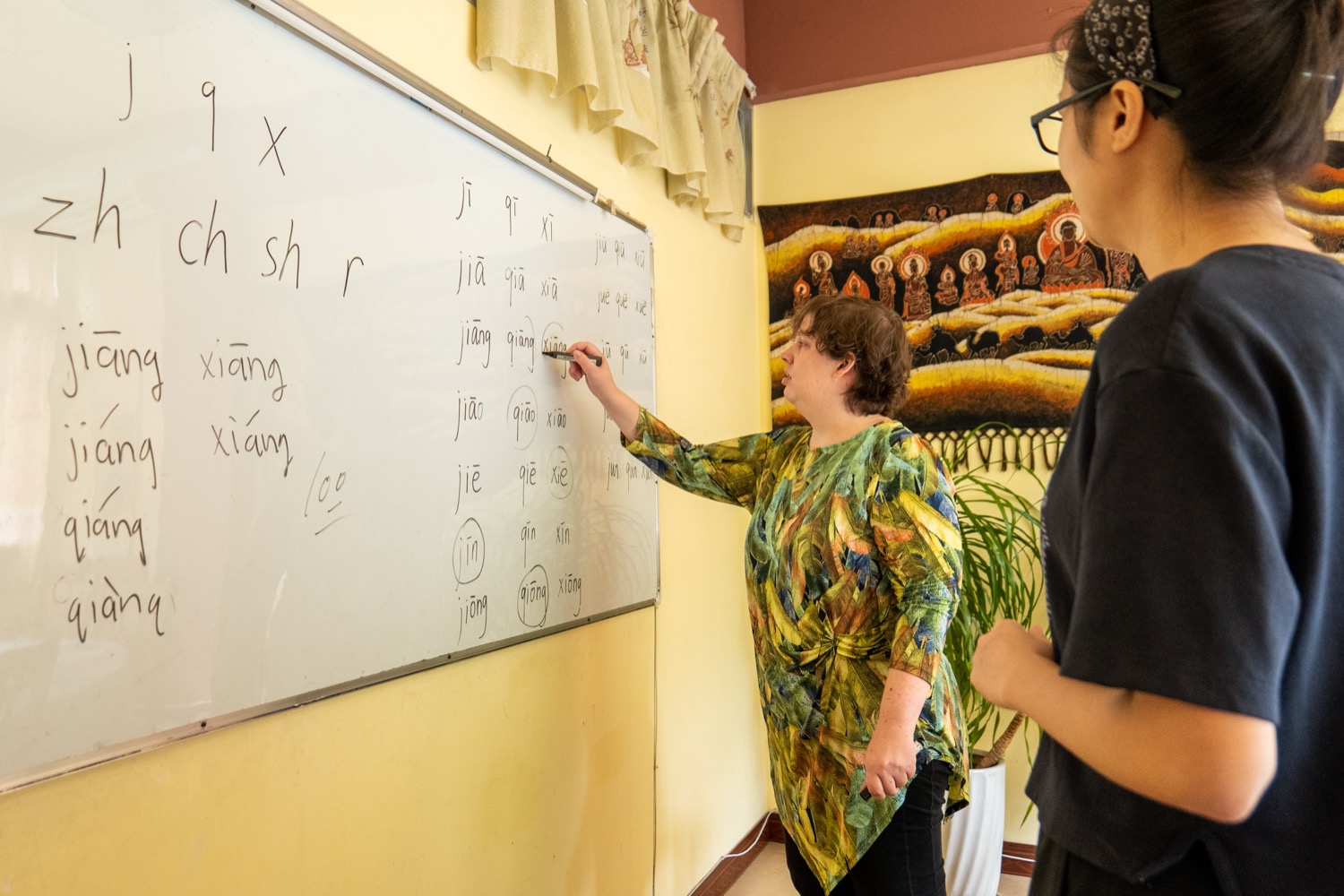
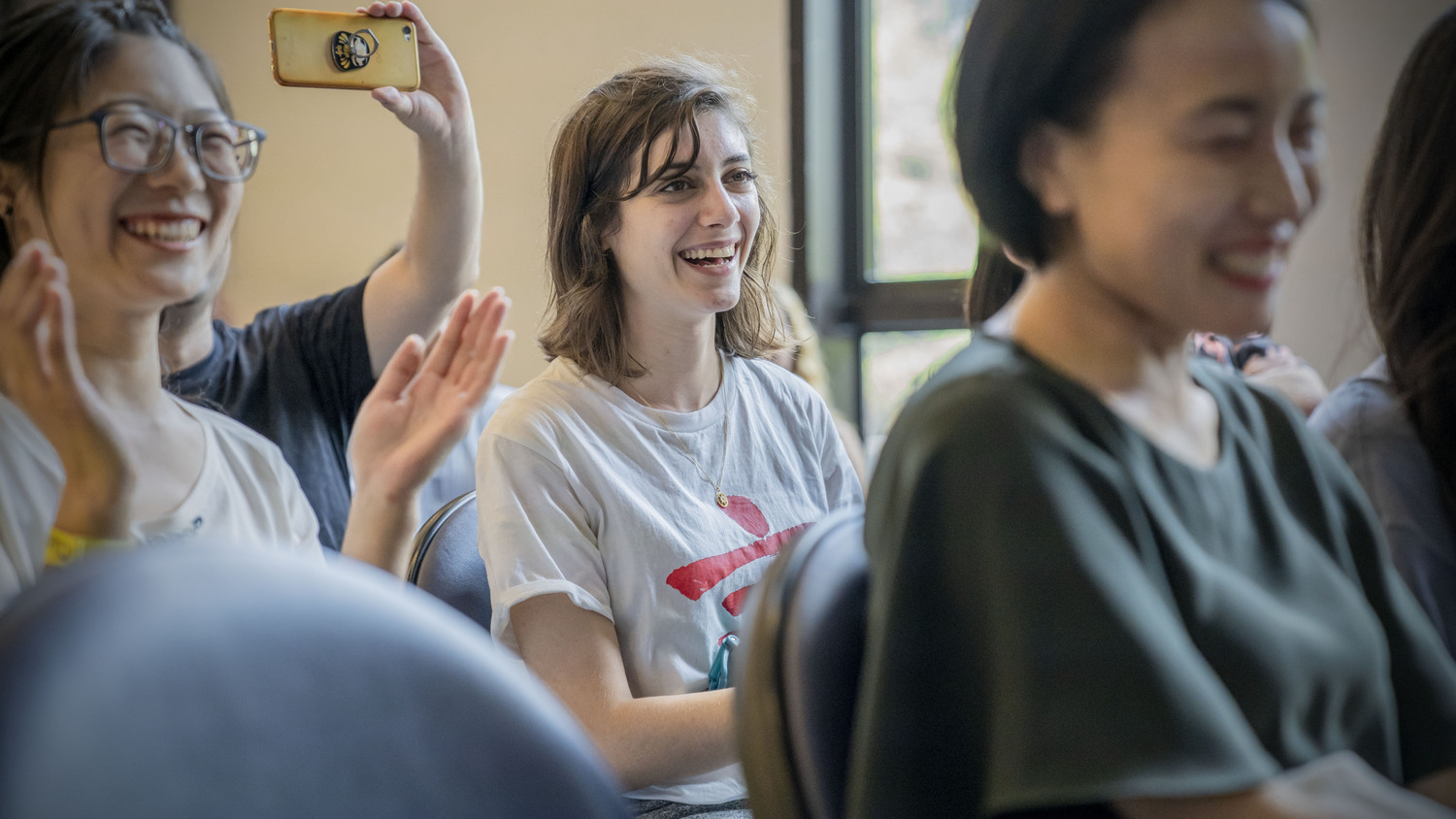
A raised hand during a pinyin drill. When levels and enrollment allow, small group classes of three to five students can sometimes be arranged.
Daily review of grammar and vocabulary is the job of a student's third teacher, who covers comprehensive review.
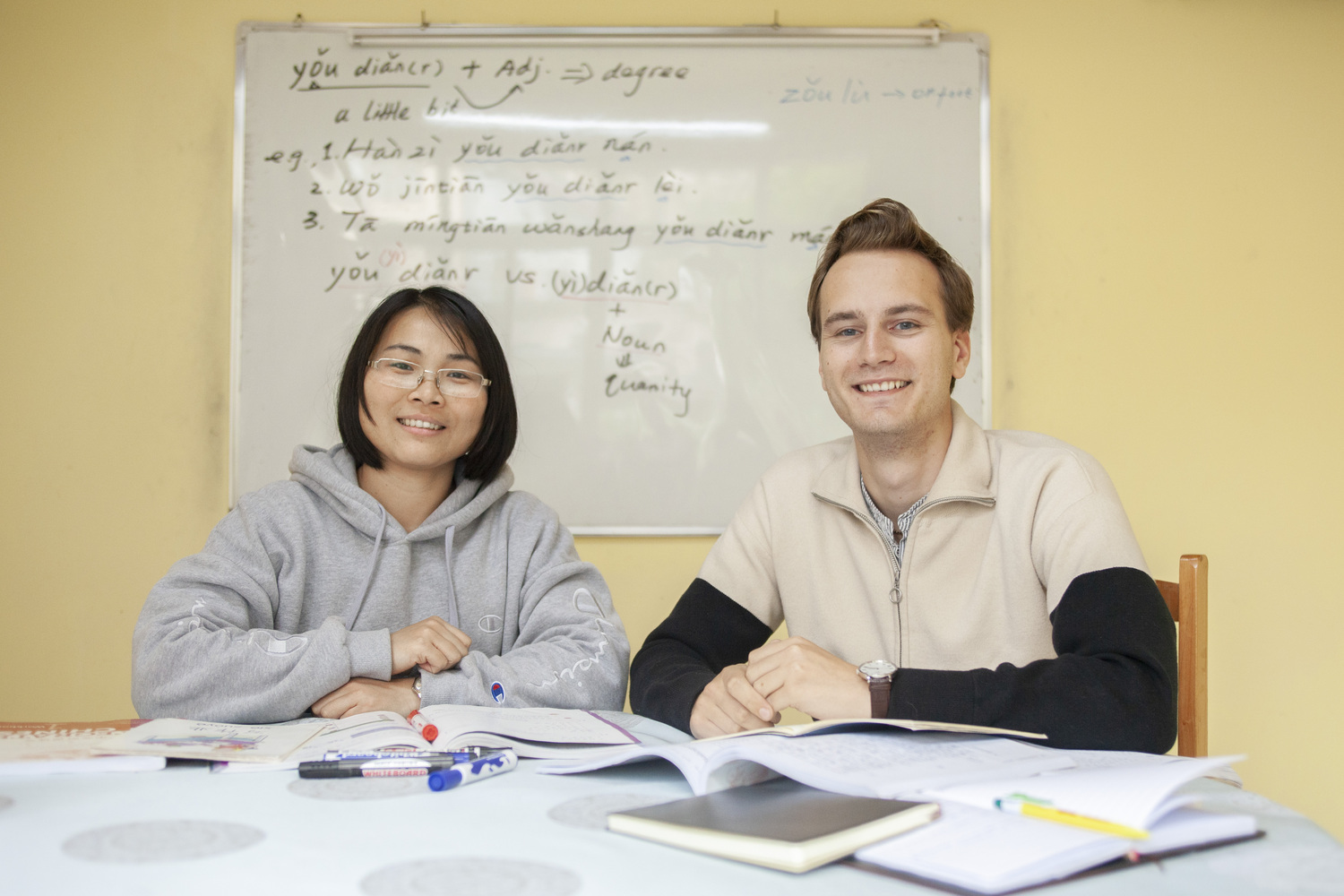
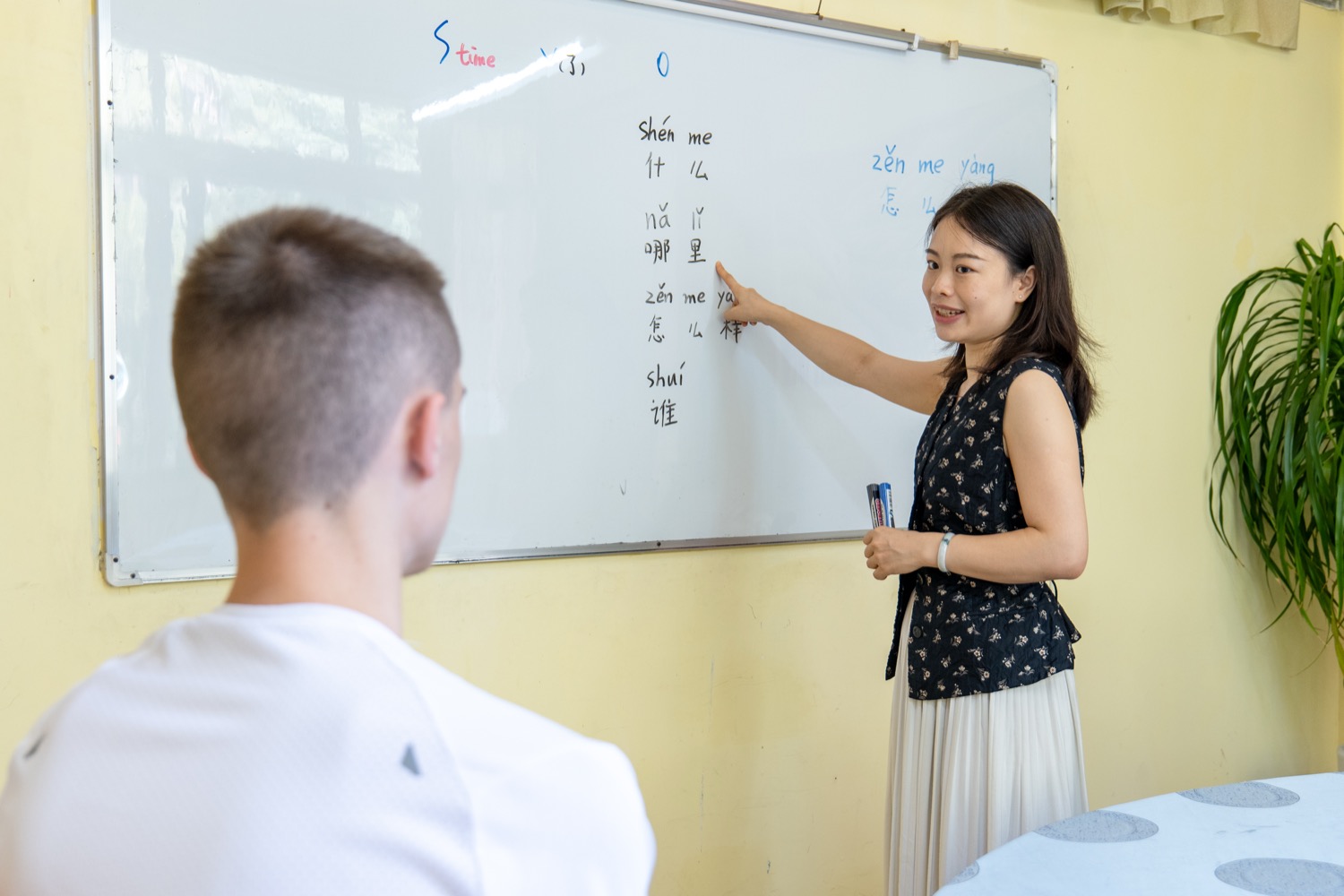
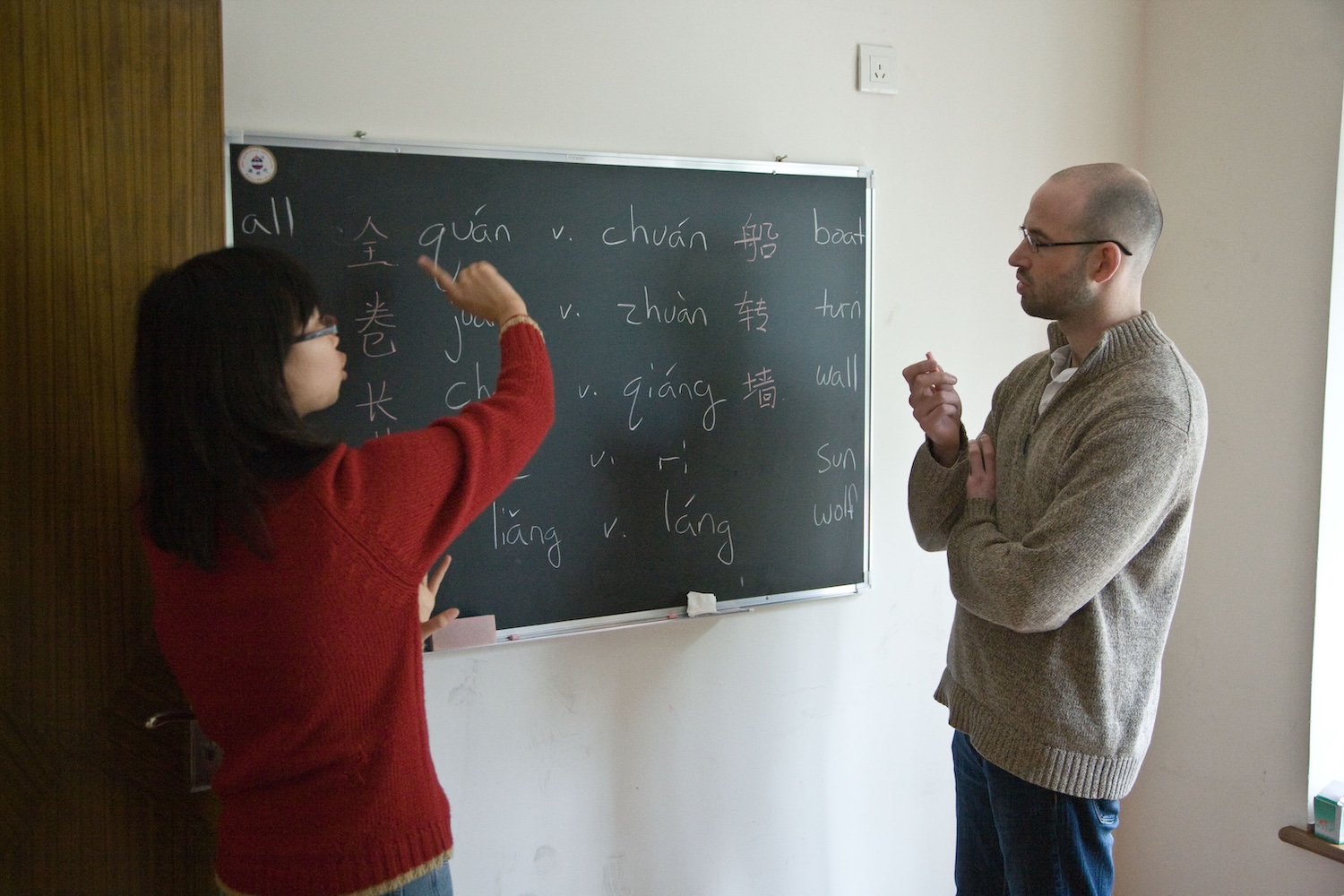
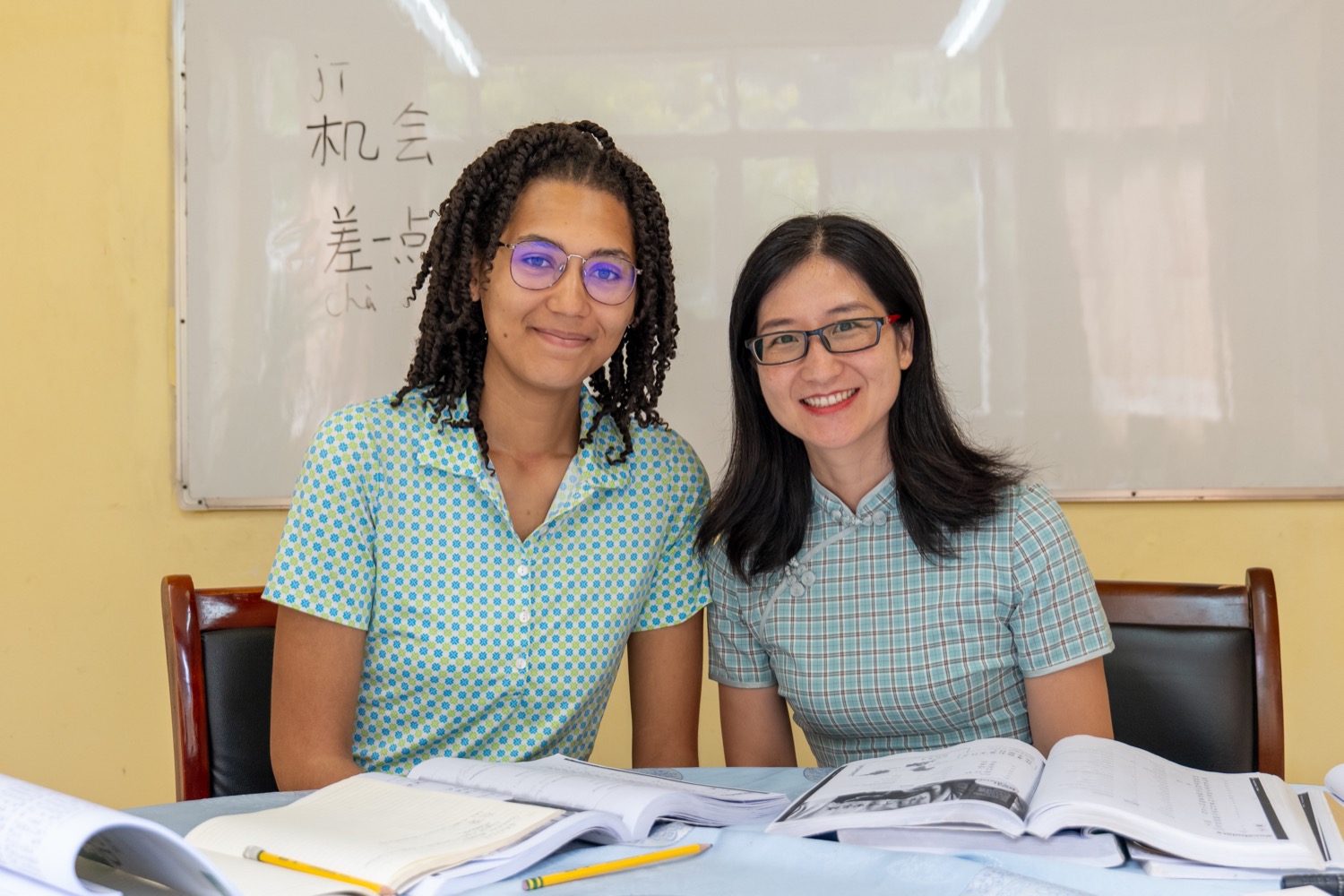
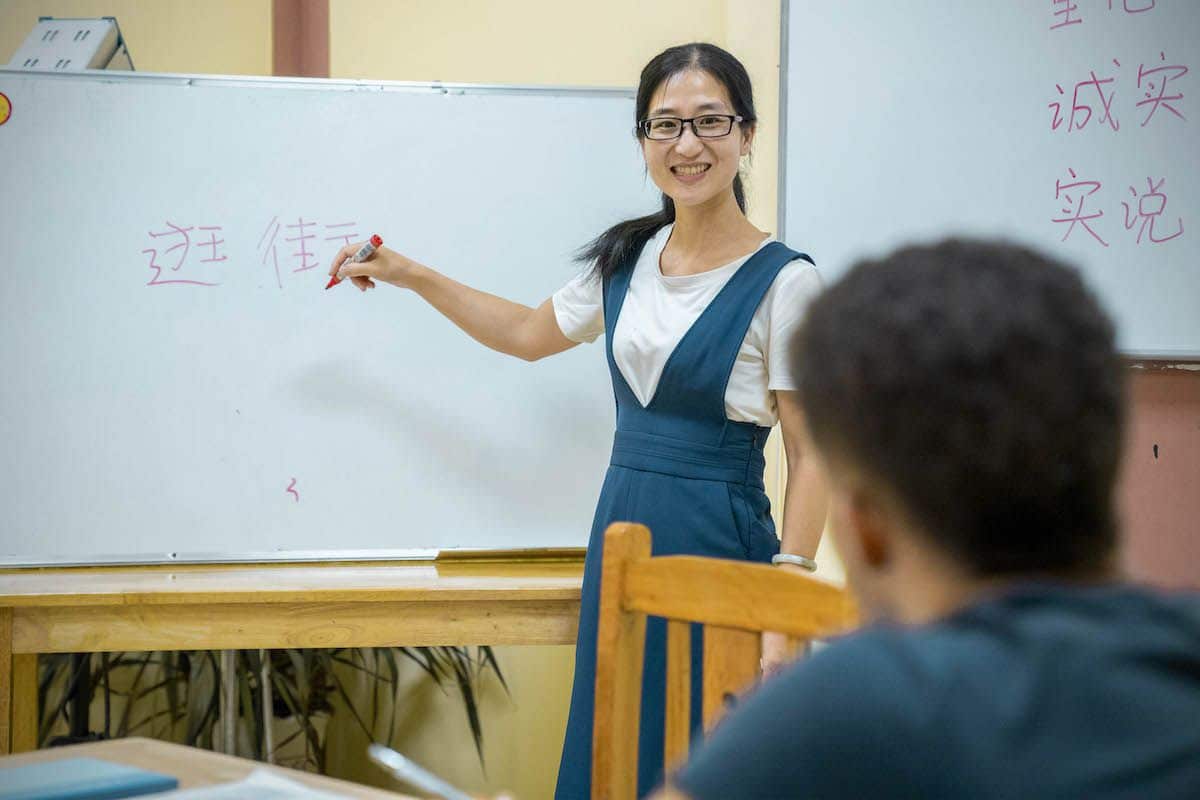
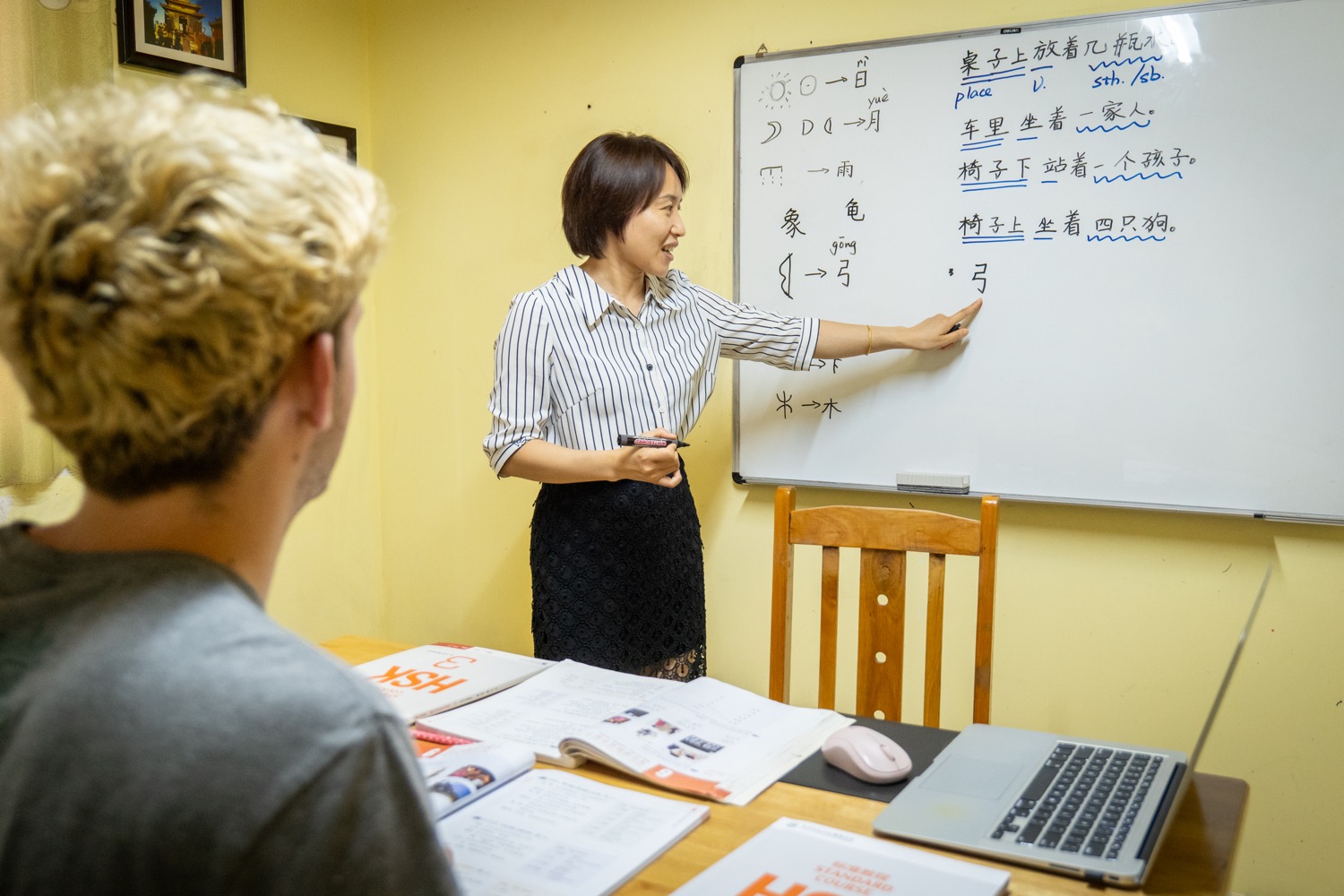
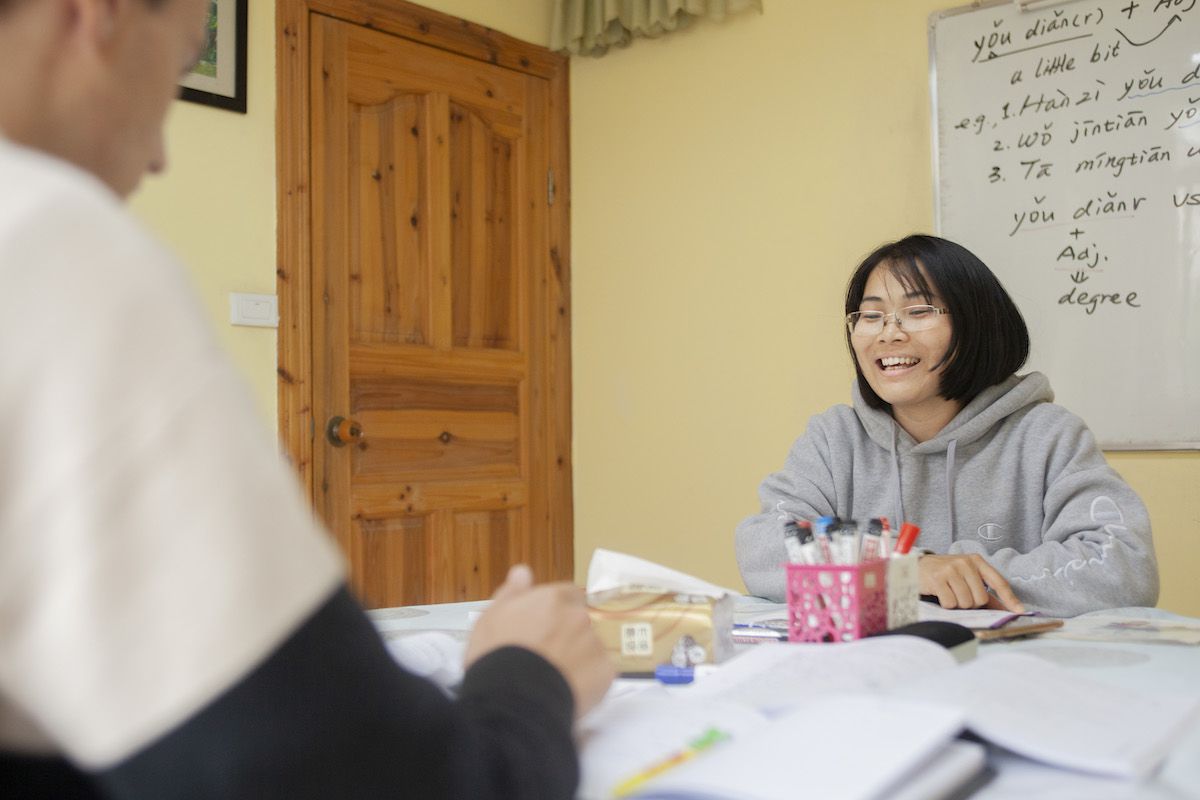
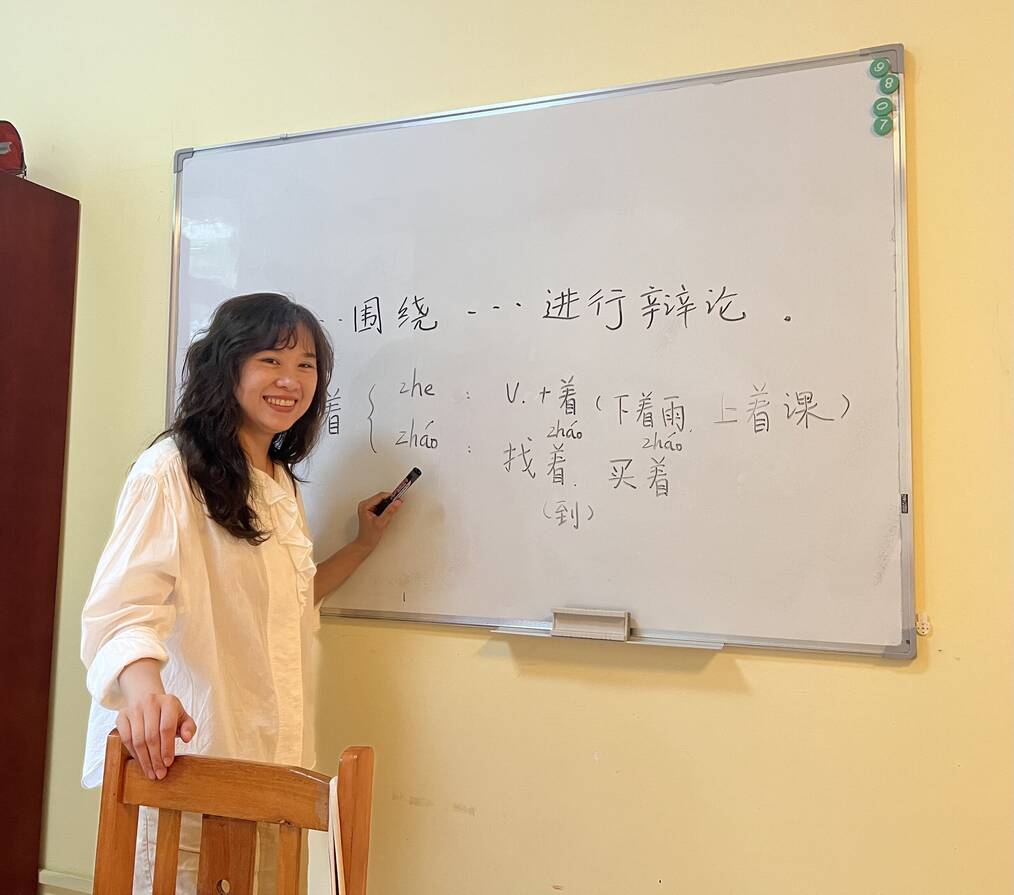
Grammar on the board, like 有一点儿 (yǒu yìdiǎnr), a little, may resurface later in the day, because a student's teachers coordinate.
Teachers can spend extra time on difficult material or move ahead faster, all within the structure of CLI's syllabi.
A week at CLI can be the whole stay or the first of many, since students choose anywhere from one week to a year.
The CLI Center has room to unwind between lessons too: its recreation room has an electric piano as well as ping pong and mahjong tables.
Teachers work from CLI's course syllabi, which give each student's classes the structure of a university course.
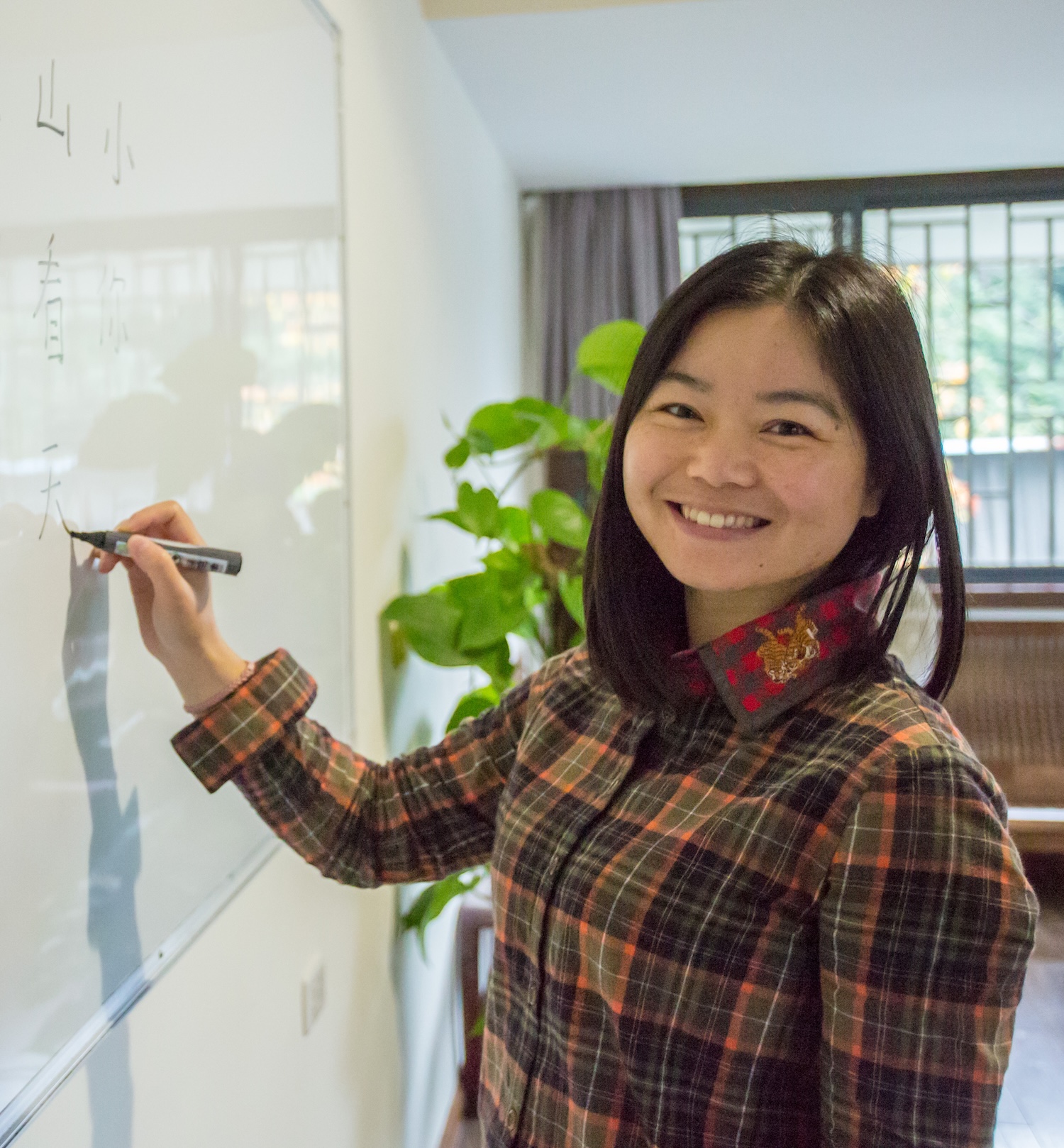
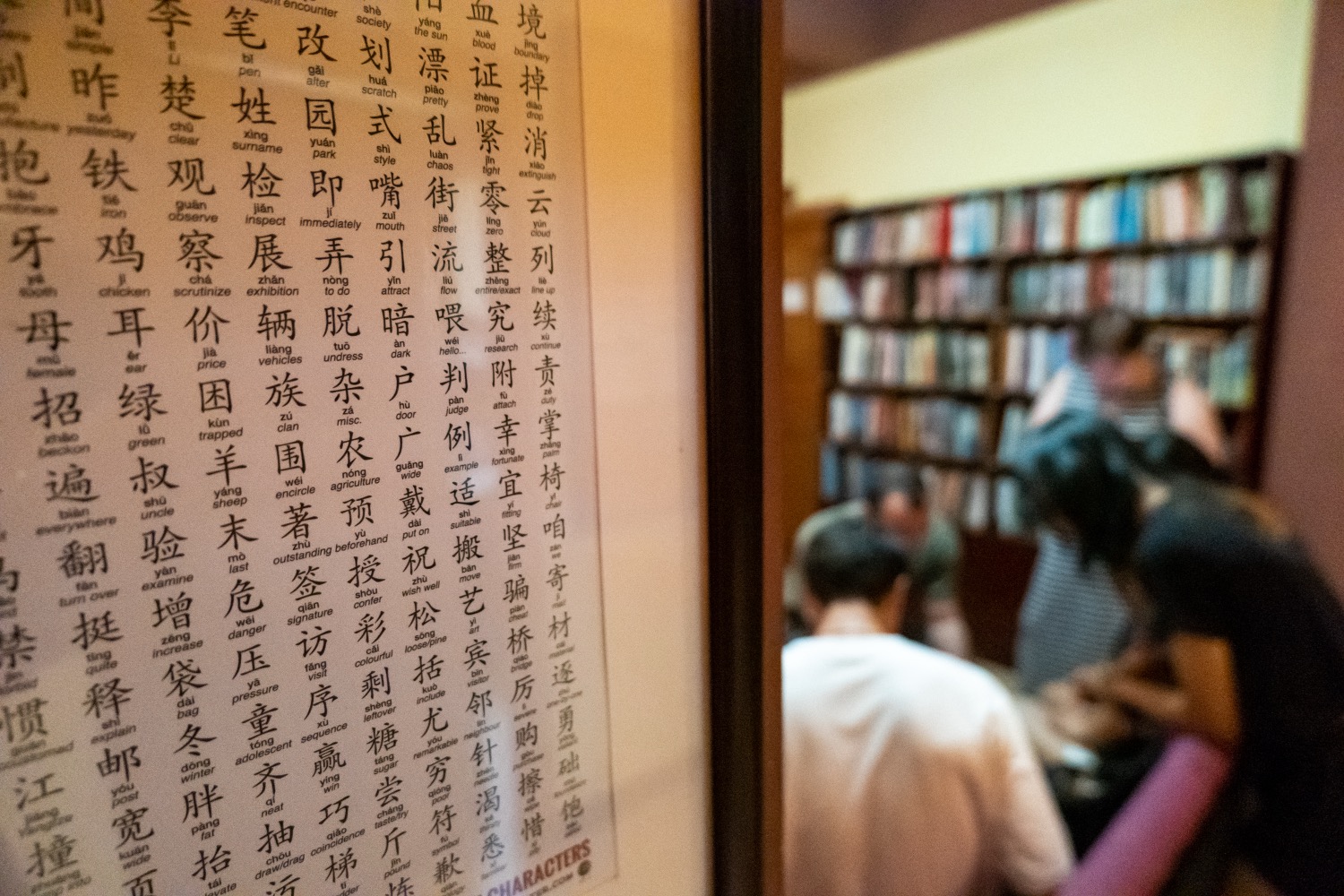
Writing characters by hand belongs to the reading and writing class, which covers stroke order and written composition.
Since classes are one-on-one, the classrooms are small, and the CLI Center has 18 of them on its first and second floors.
One of each student's three teachers focuses on listening and speaking, from tones and pronunciation to conversational fluency.
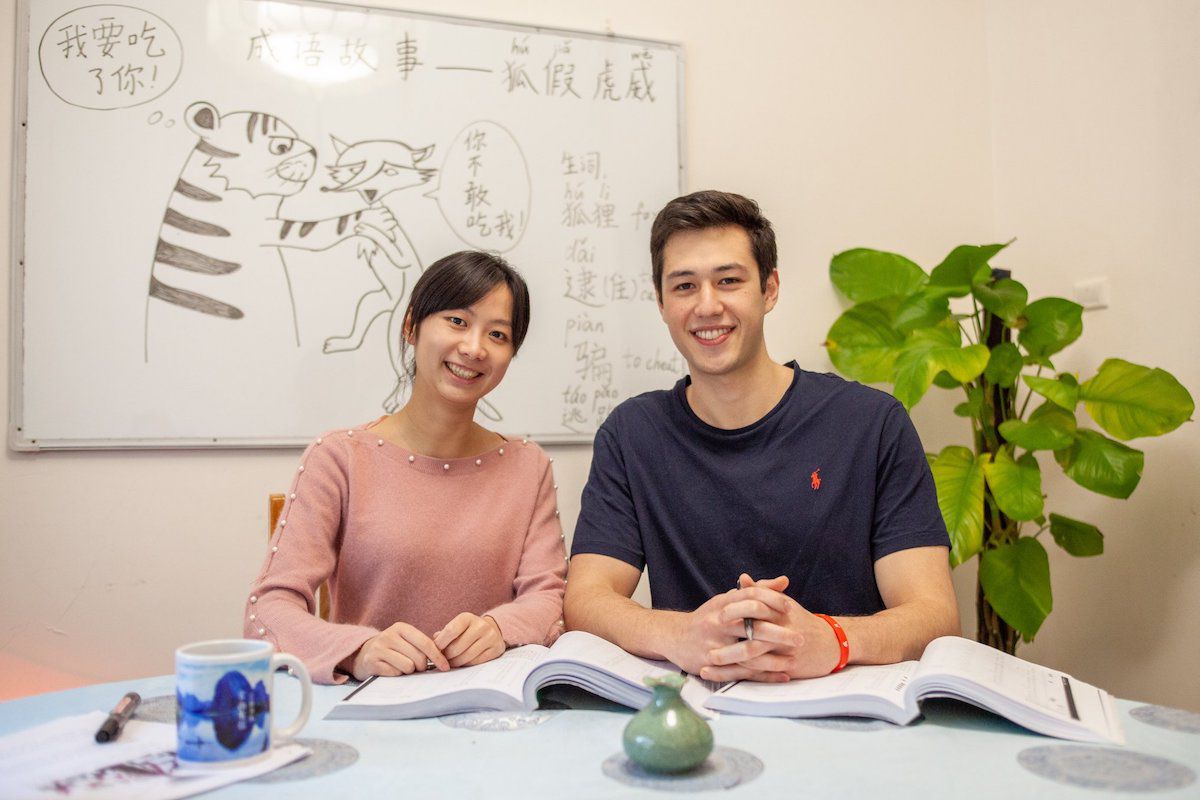
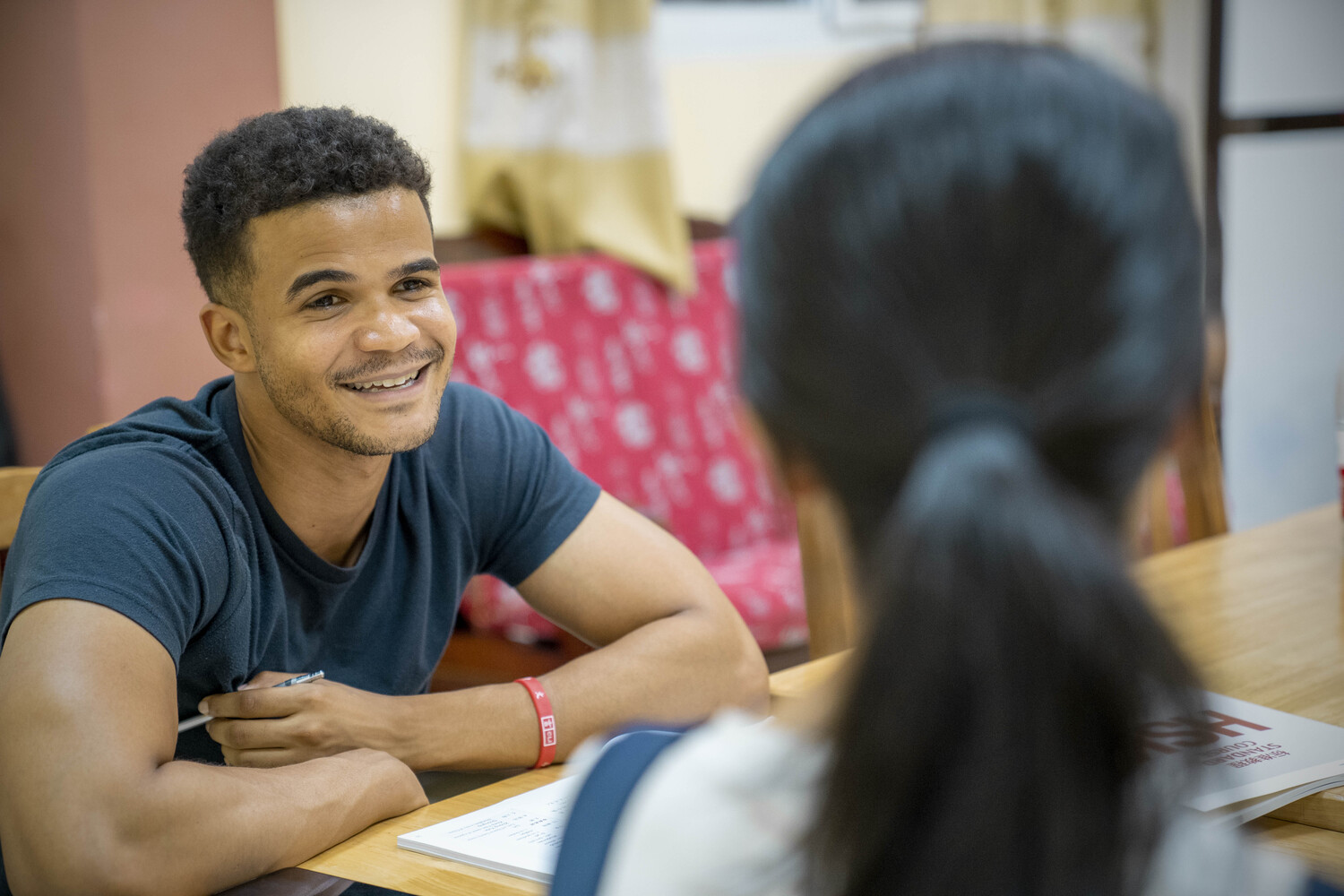
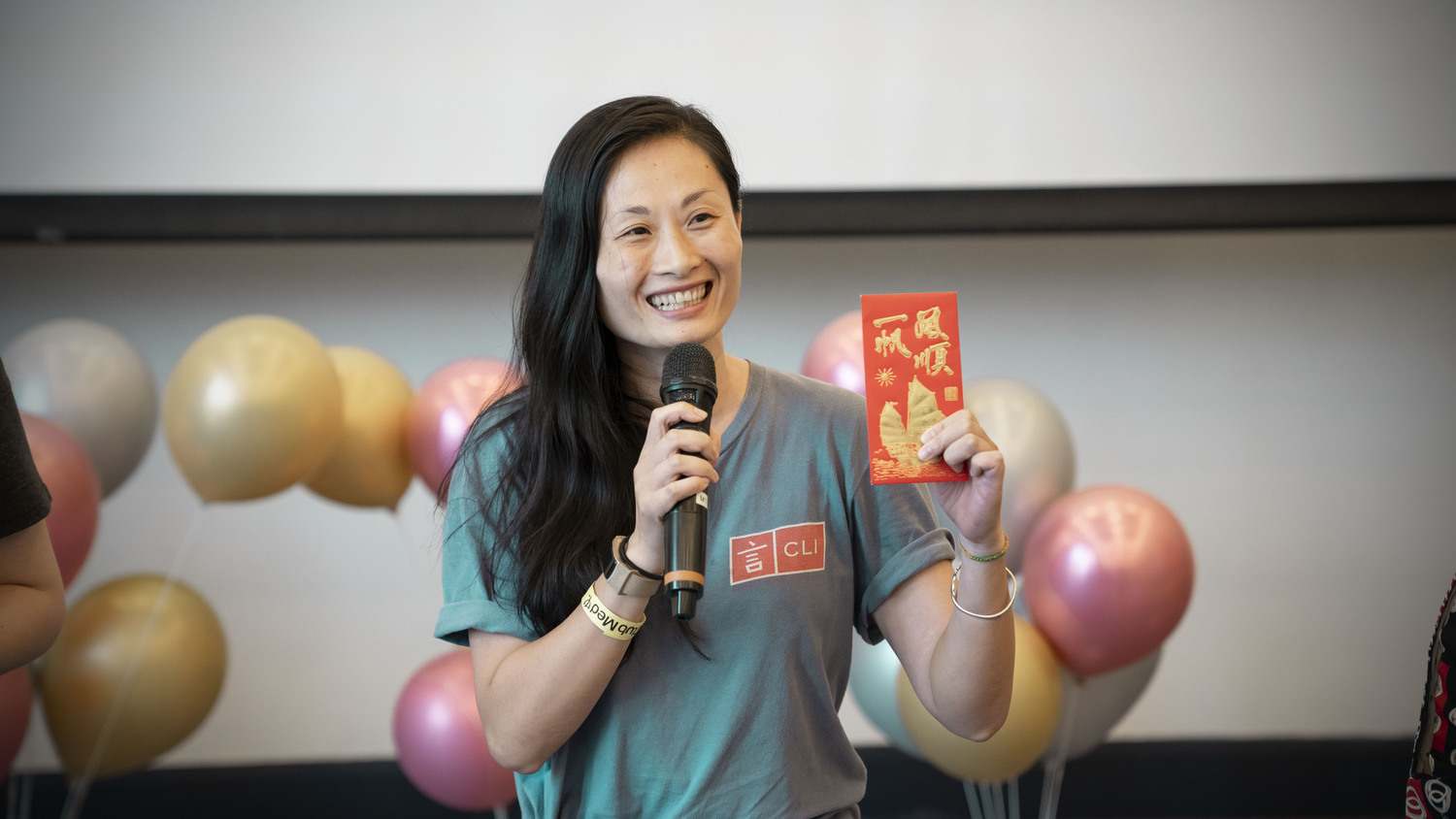
The red wristband is CLI's optional Language Pledge: while it is on, CLI team members speak only Chinese with the student wearing it.
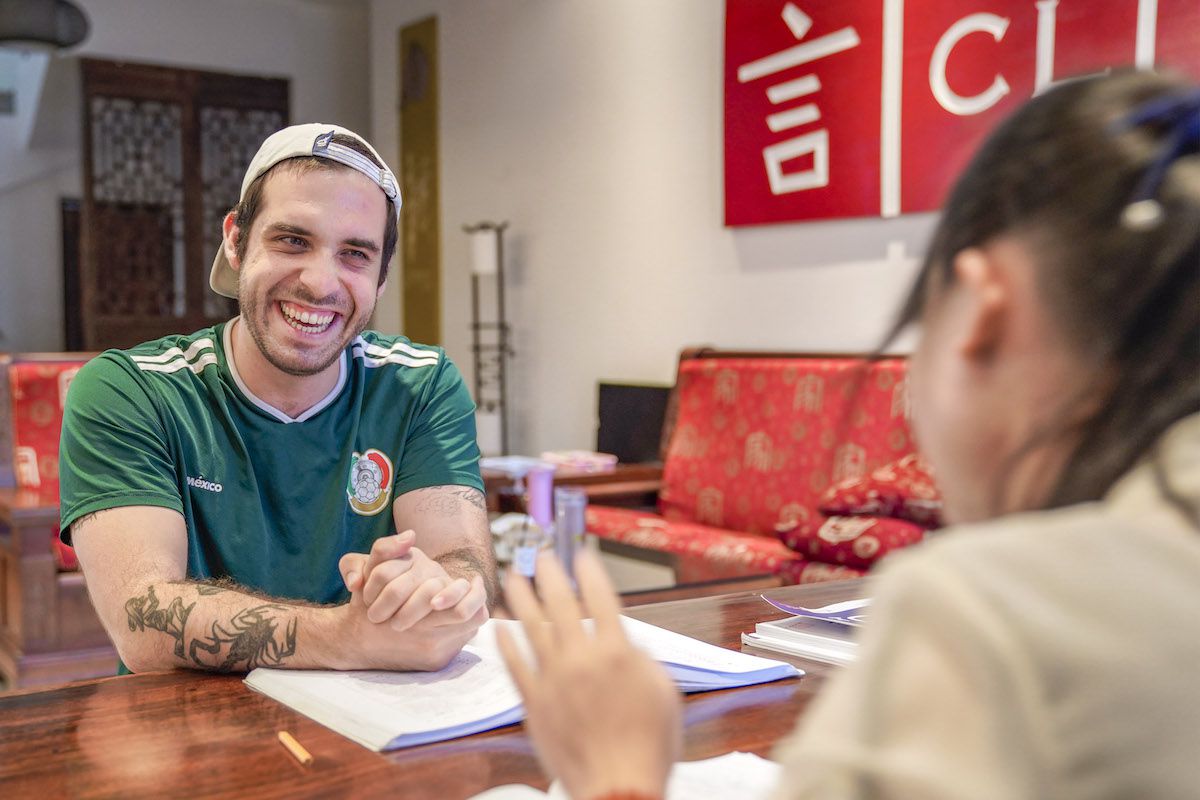
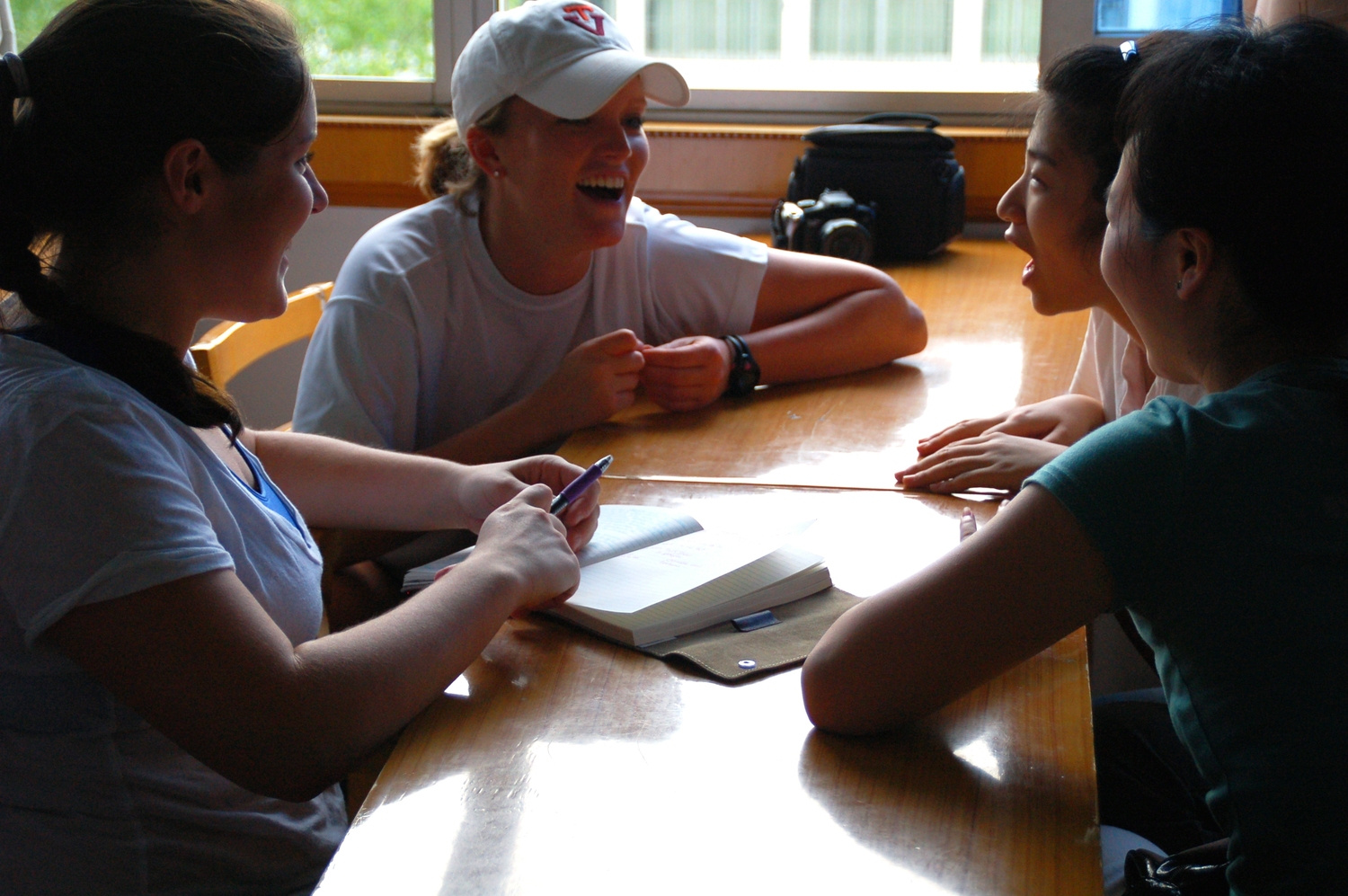
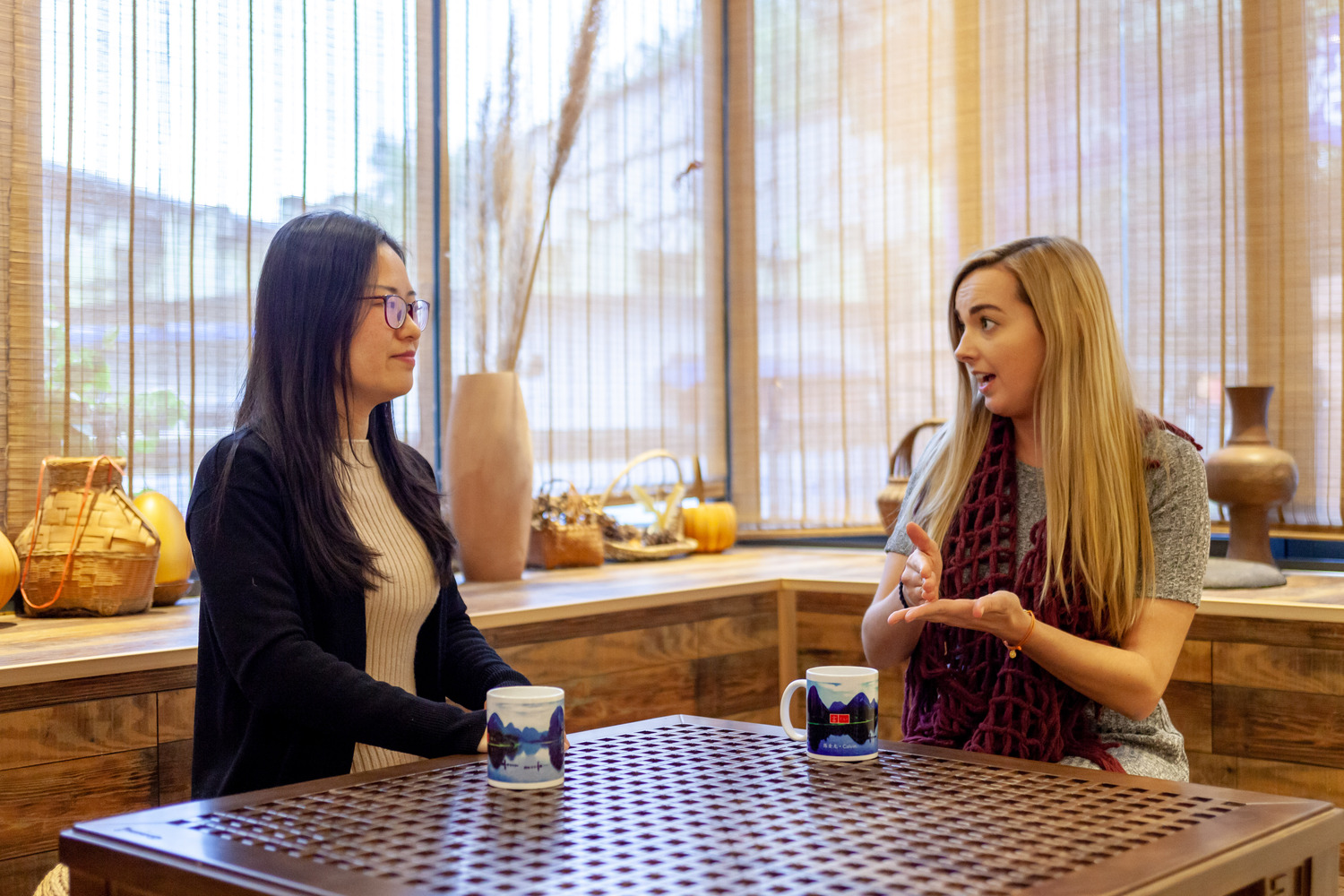
Talking with your hands is allowed. Lunch at the CLI Center has at least one Mandarin-only table, for anyone who wants more practice after class.
Tones and pronunciation belong to the listening and speaking teacher, and pinyin on the whiteboard is often where that work begins.
Students who need university credit can get an official transcript for their CLI coursework from Guangxi Normal University (GXNU).
Books stay behind on CLI's overnight trips, which go to places such as the Longji rice terraces and the Longsheng hot springs.
CLI teaches every level, from complete beginners to students who are already conversationally fluent.
A typical weekday is two class sessions and lunch, then time for homework, review, markets or a language exchange.
CLI was founded in Guilin in 2009, and more than 5,000 students have studied Chinese with it since then.
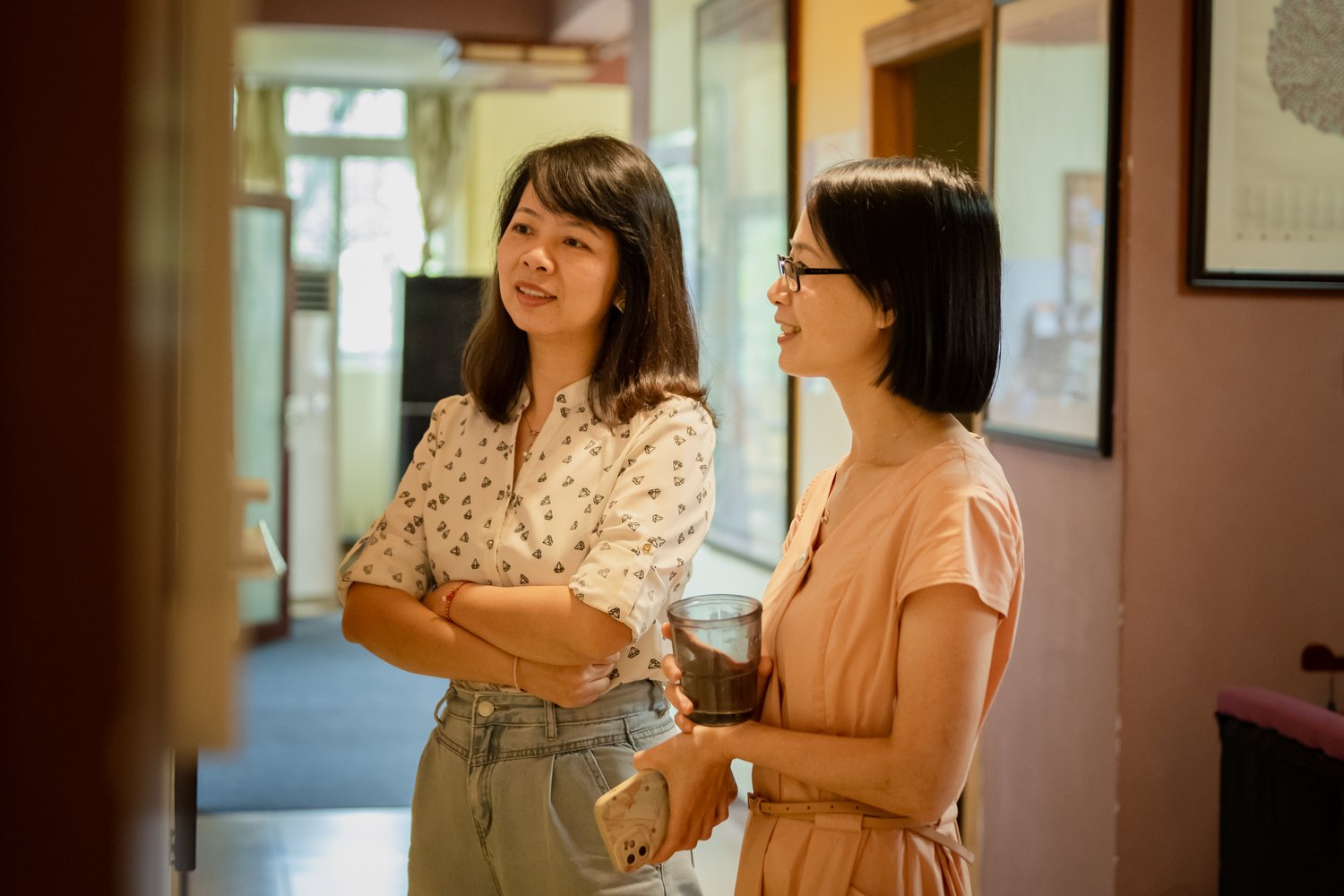
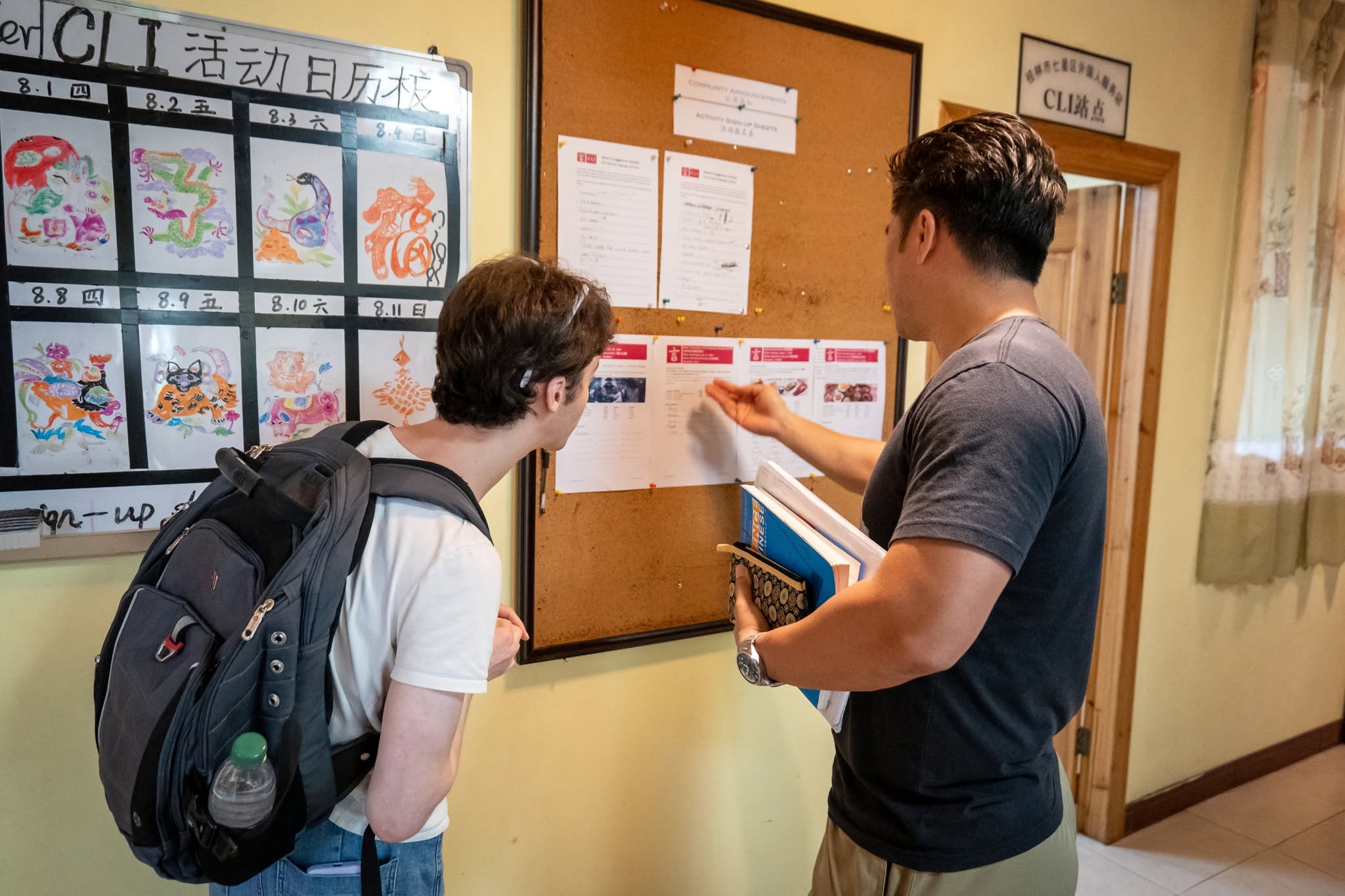
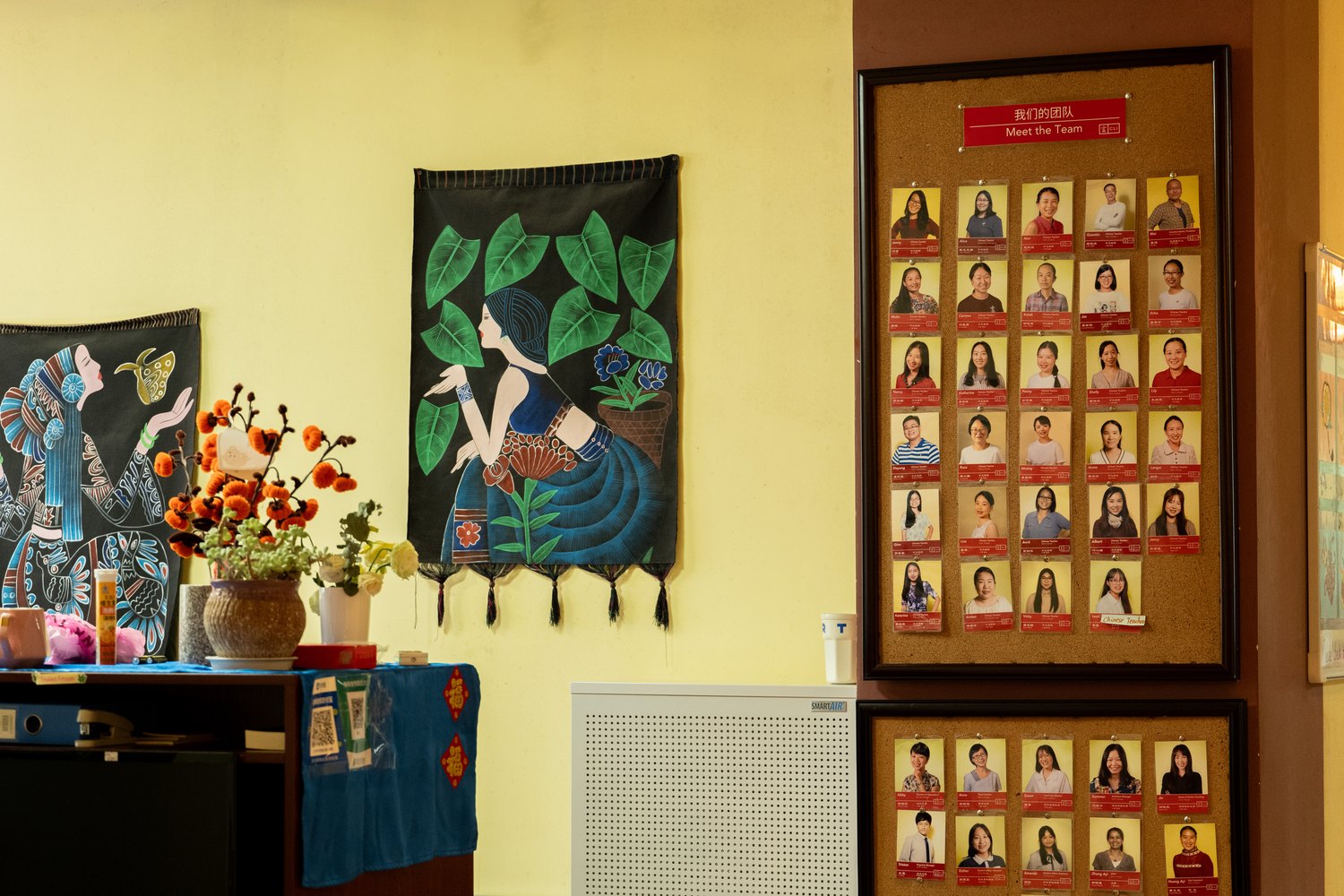
The teachers' office is on the CLI Center's second floor, along with lunch and the board that lists the week's activities.
That red band on the wrist is the CLI wristband: take the Language Pledge and the whole CLI team talks with you only in Chinese.
Each class session lasts two hours, and with two sessions a day there is time for real conversation as well as the textbook.
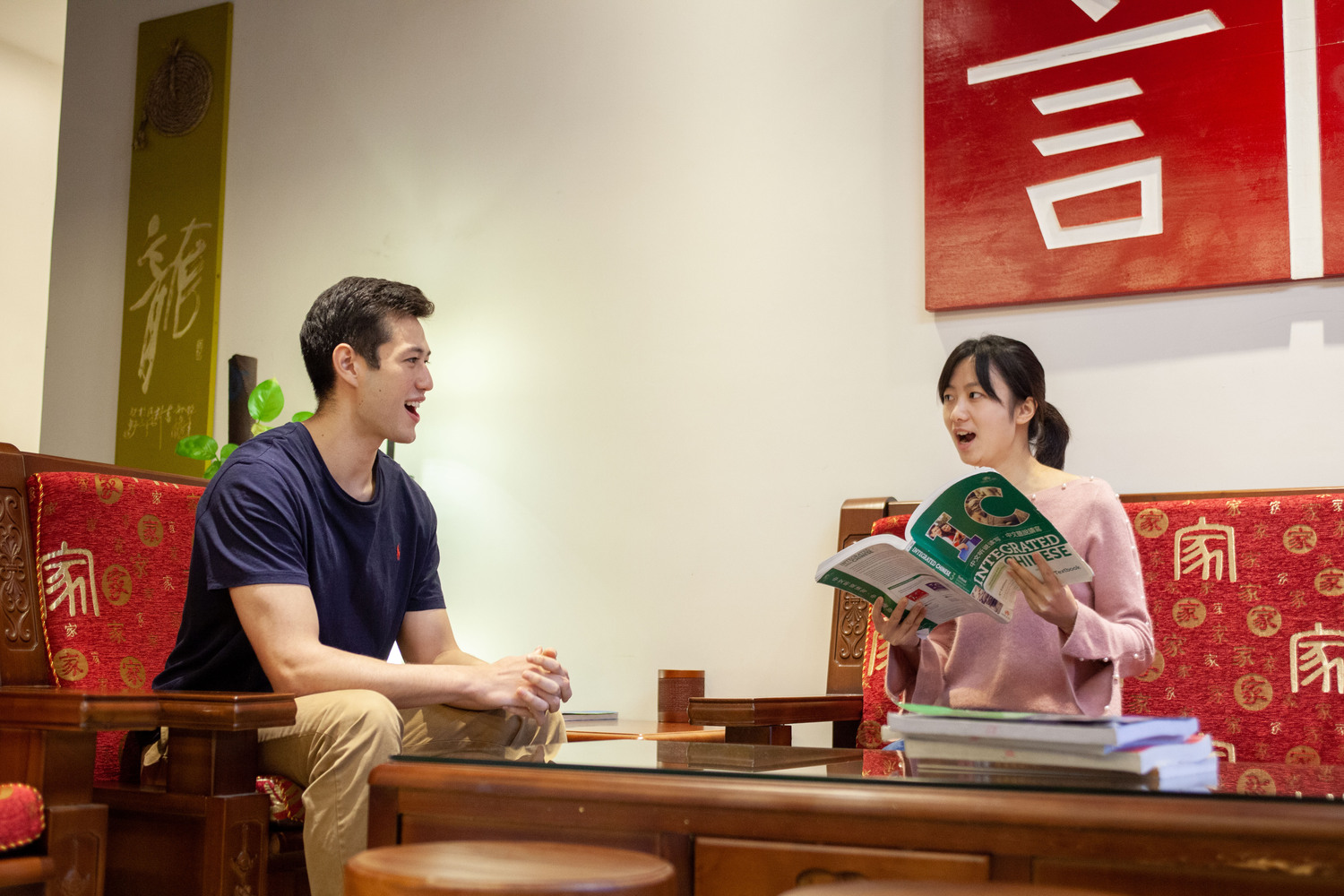
CLI teaches all levels, and a student who already talks this easily may spend class time on fluency and reading.
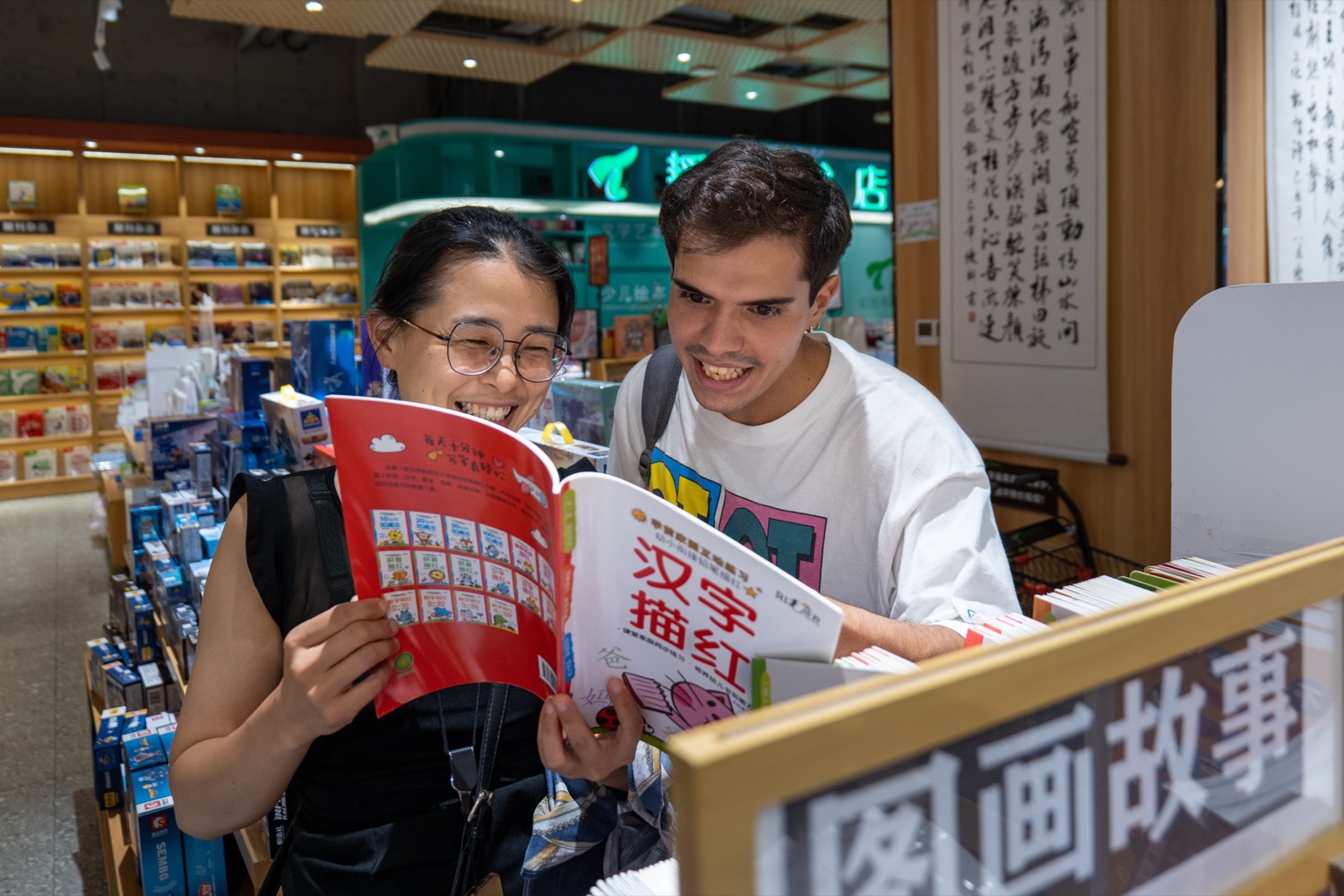
Teachers often join outings and encourage conversation in Chinese, and a bookstore visit counts as practice too.
Airport or train station pickup is included, so a new student meets the CLI team before the first class.
For a break from the books, the CLI Center's recreation room has a ping pong table and a mahjong table.
Class fills two of CLI's four daily sessions, and the free hours around them go to homework, review or a walk to the market.
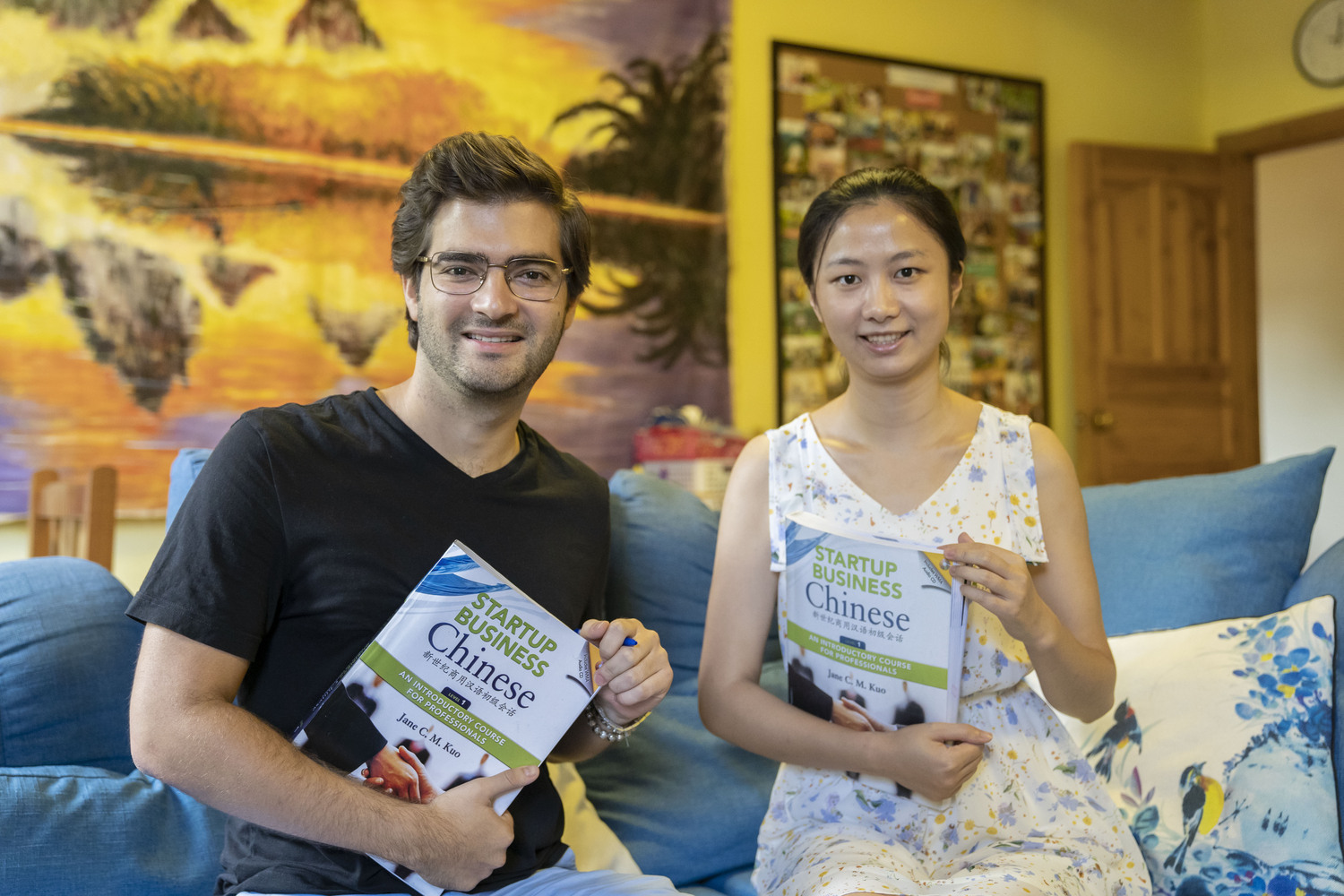
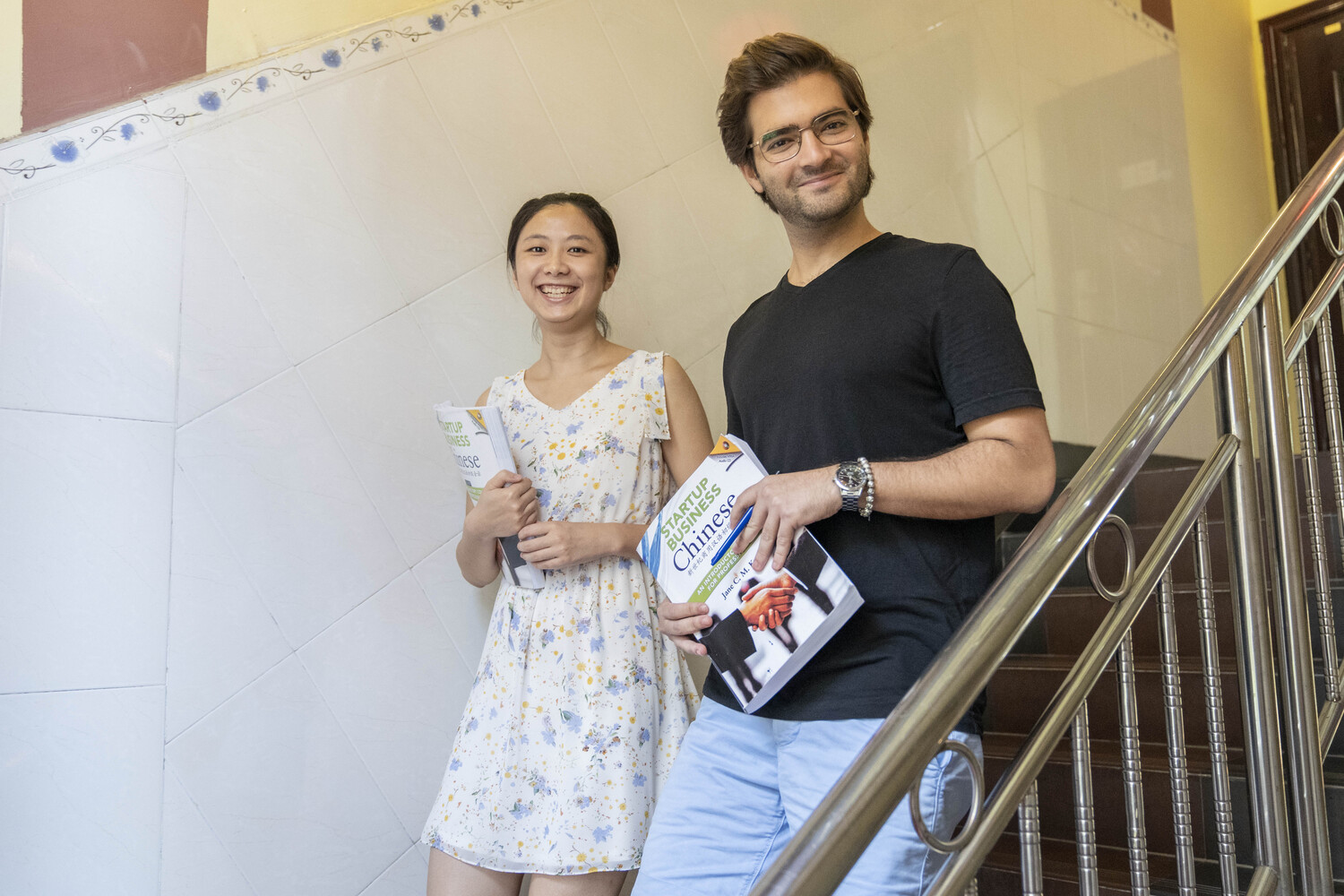
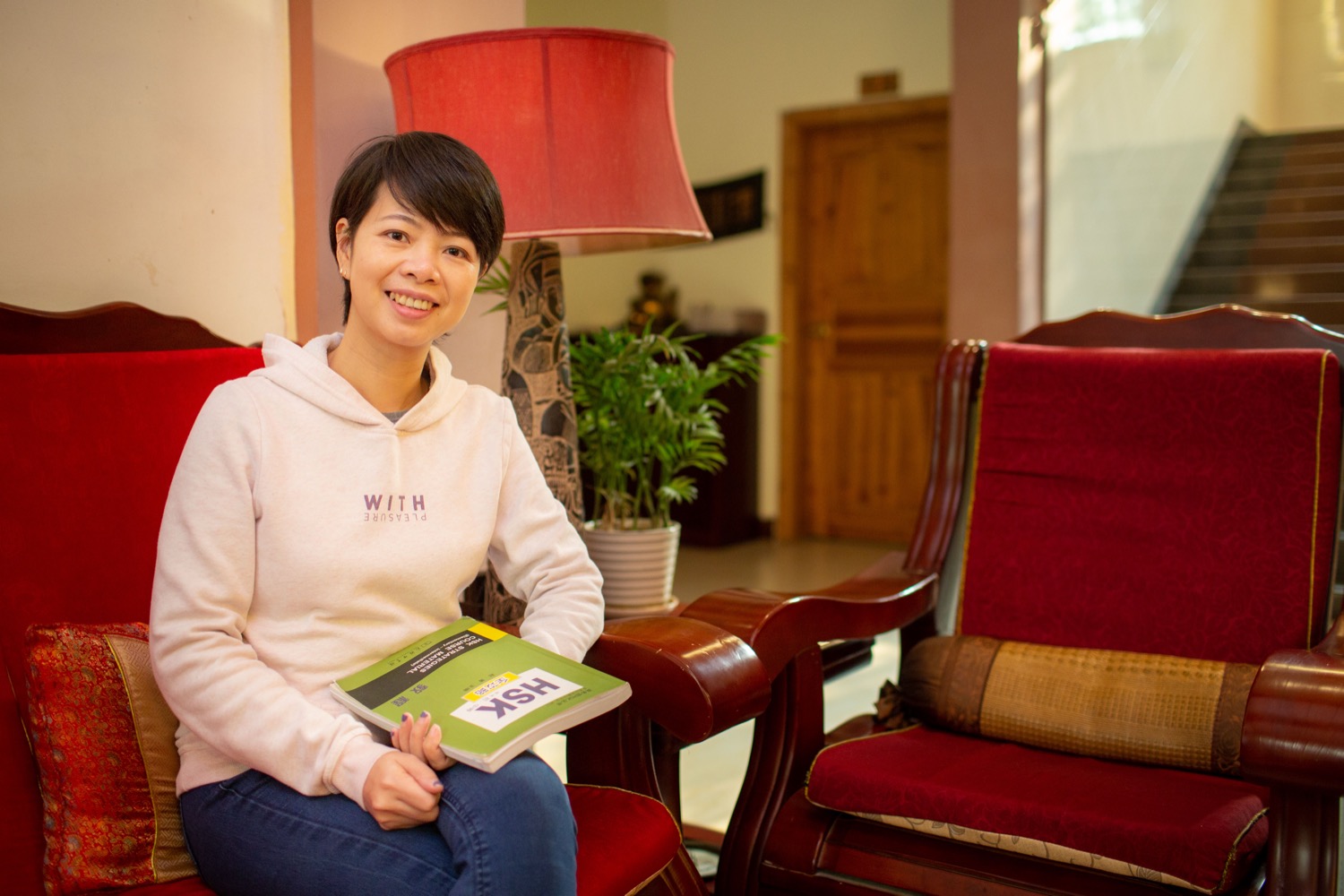
Startup Business Chinese in hand. Business Chinese is another focus open to advanced students, next to fluency and reading.
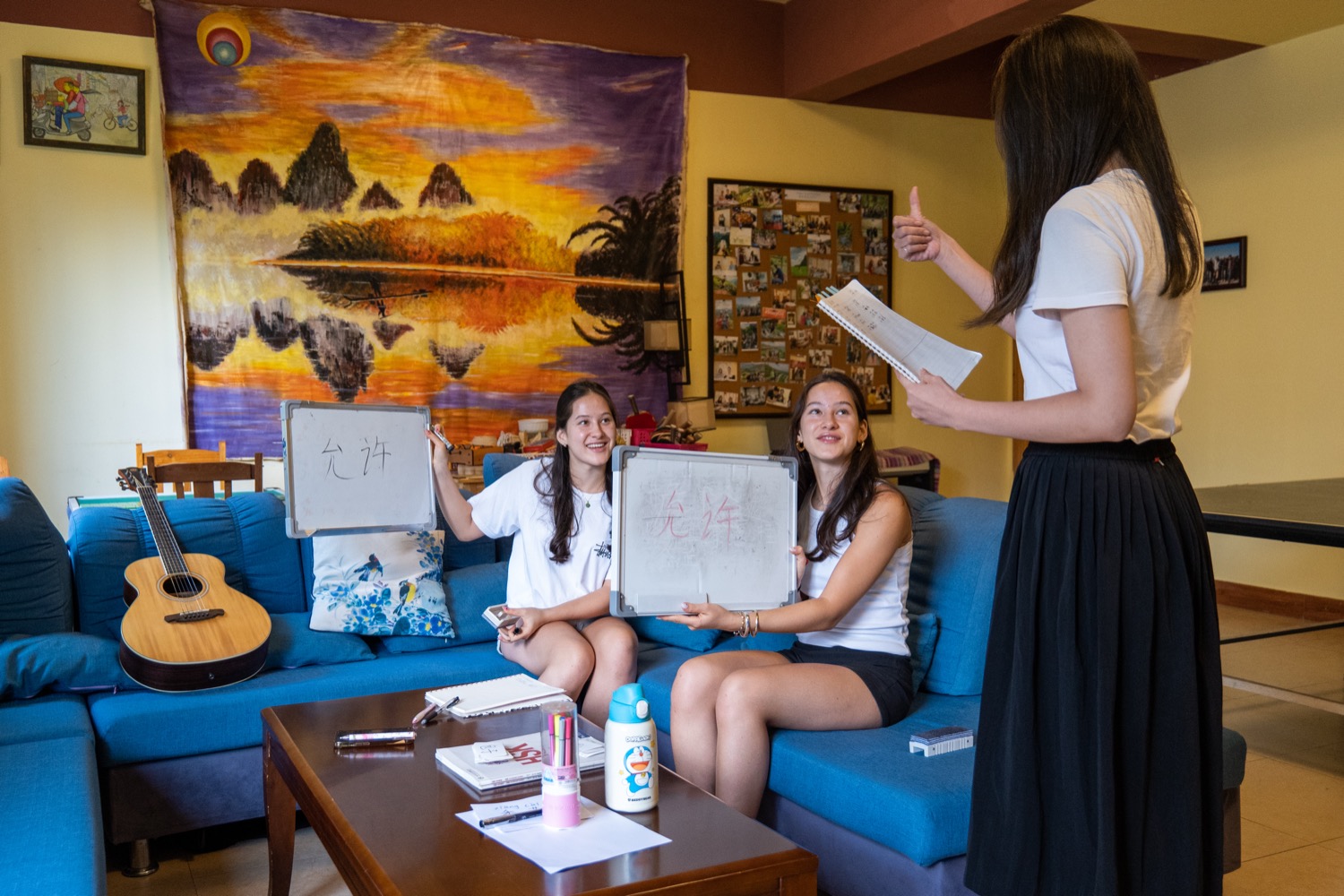
Small whiteboards come out for a word game in the lounge. Chinese games are one of CLI's activities, a lighter way to use the day's new words.
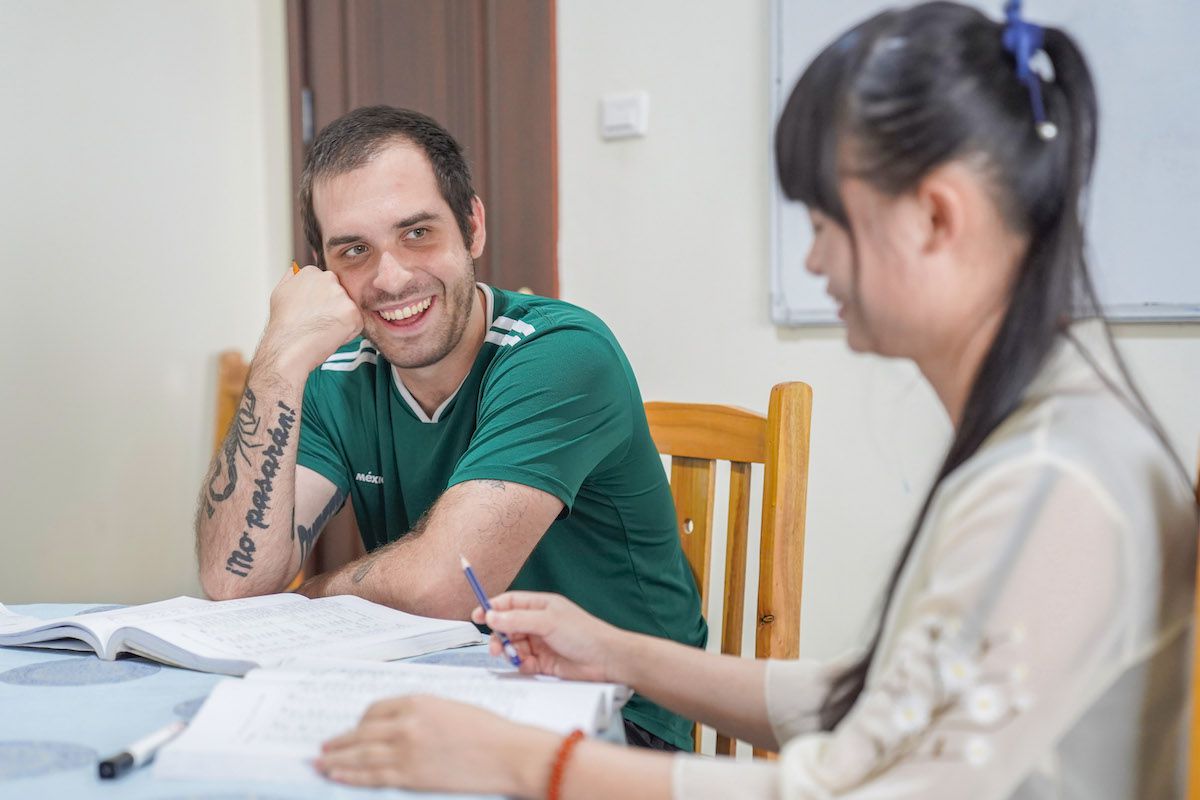
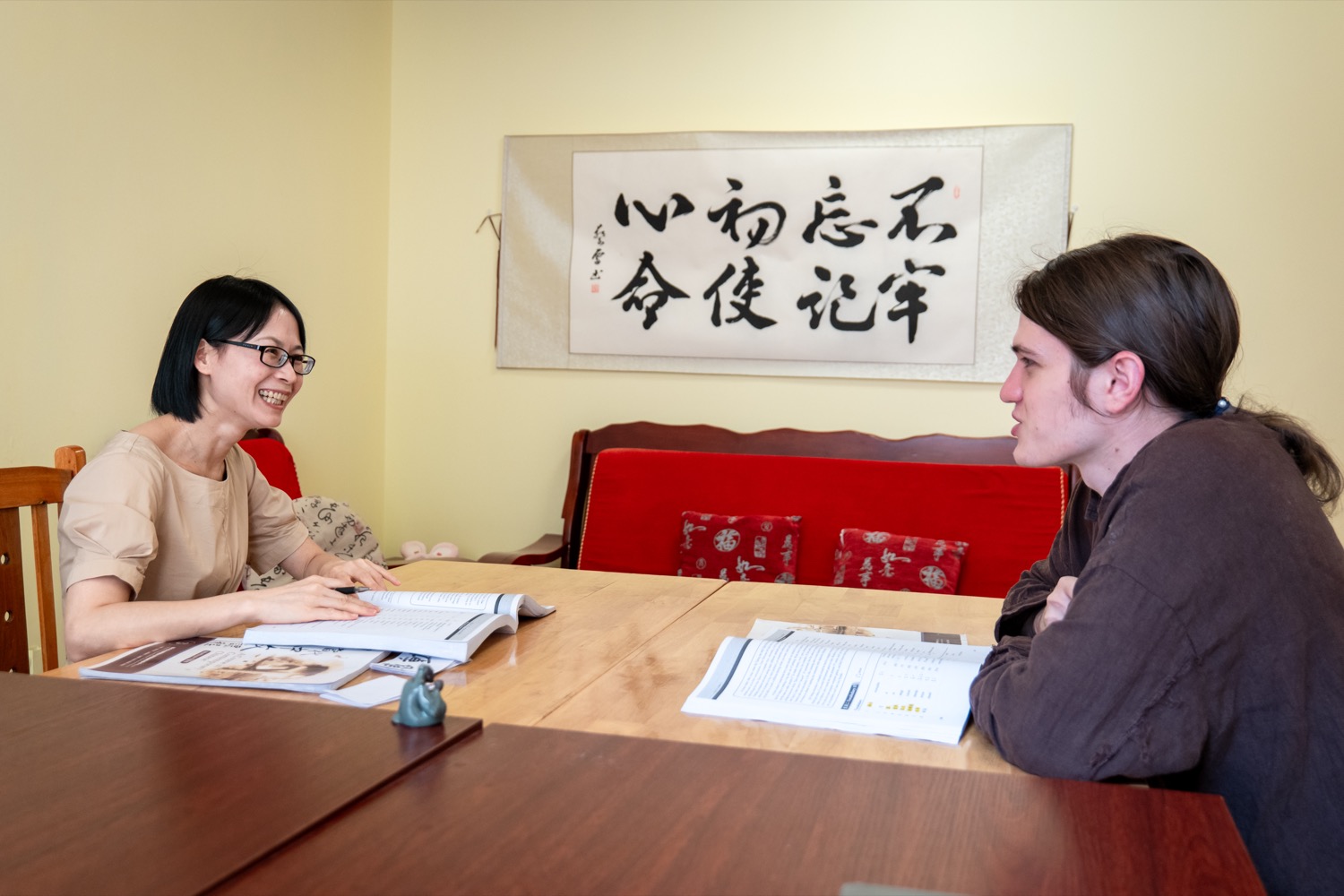
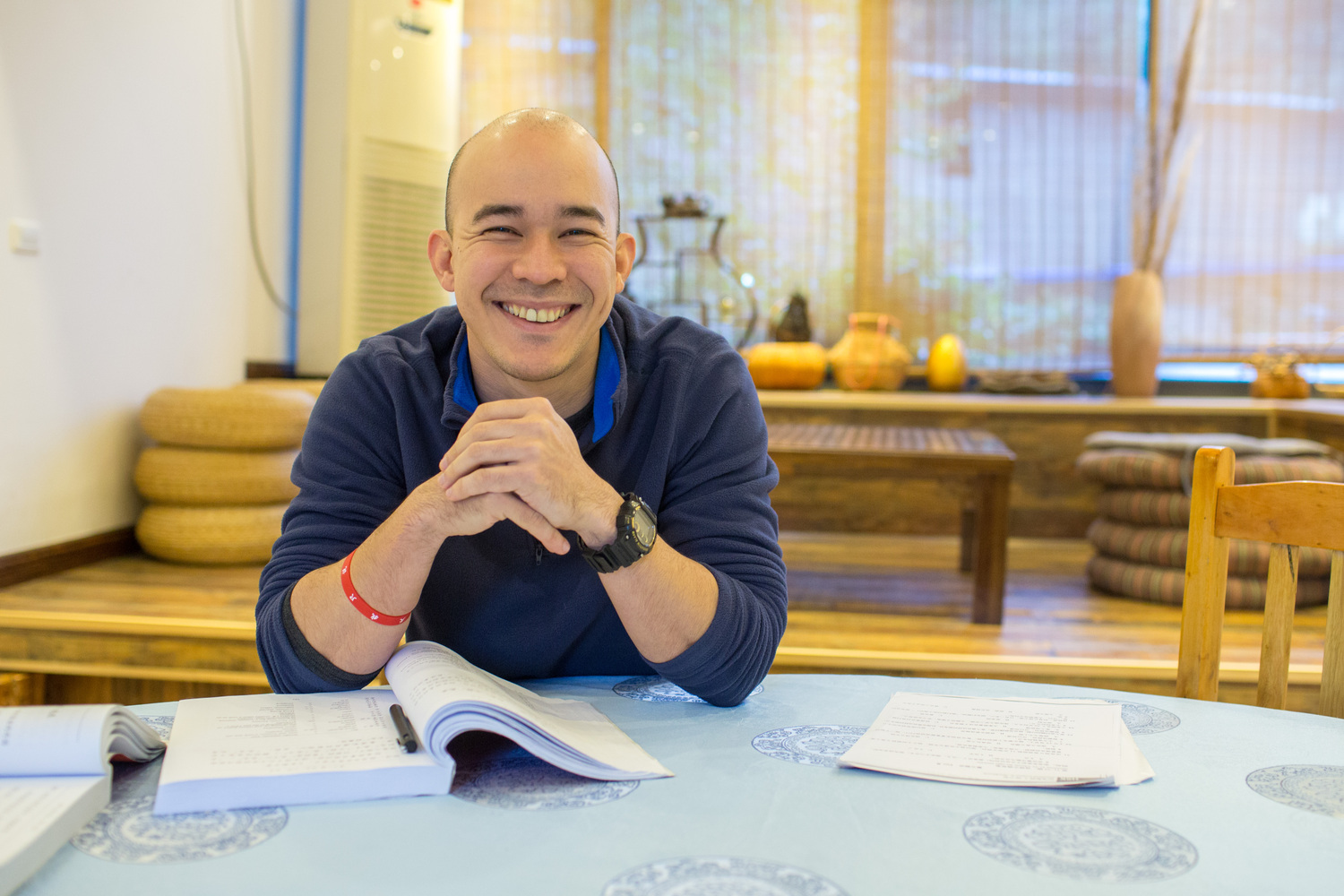
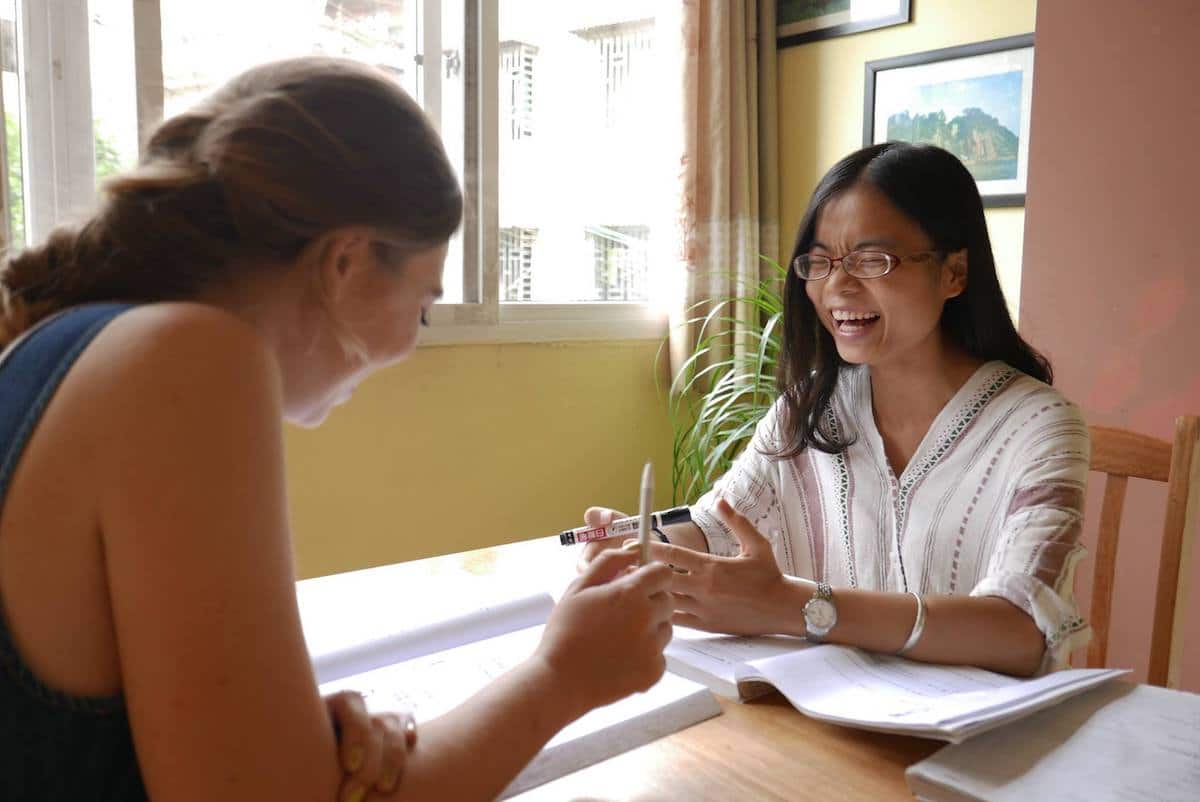
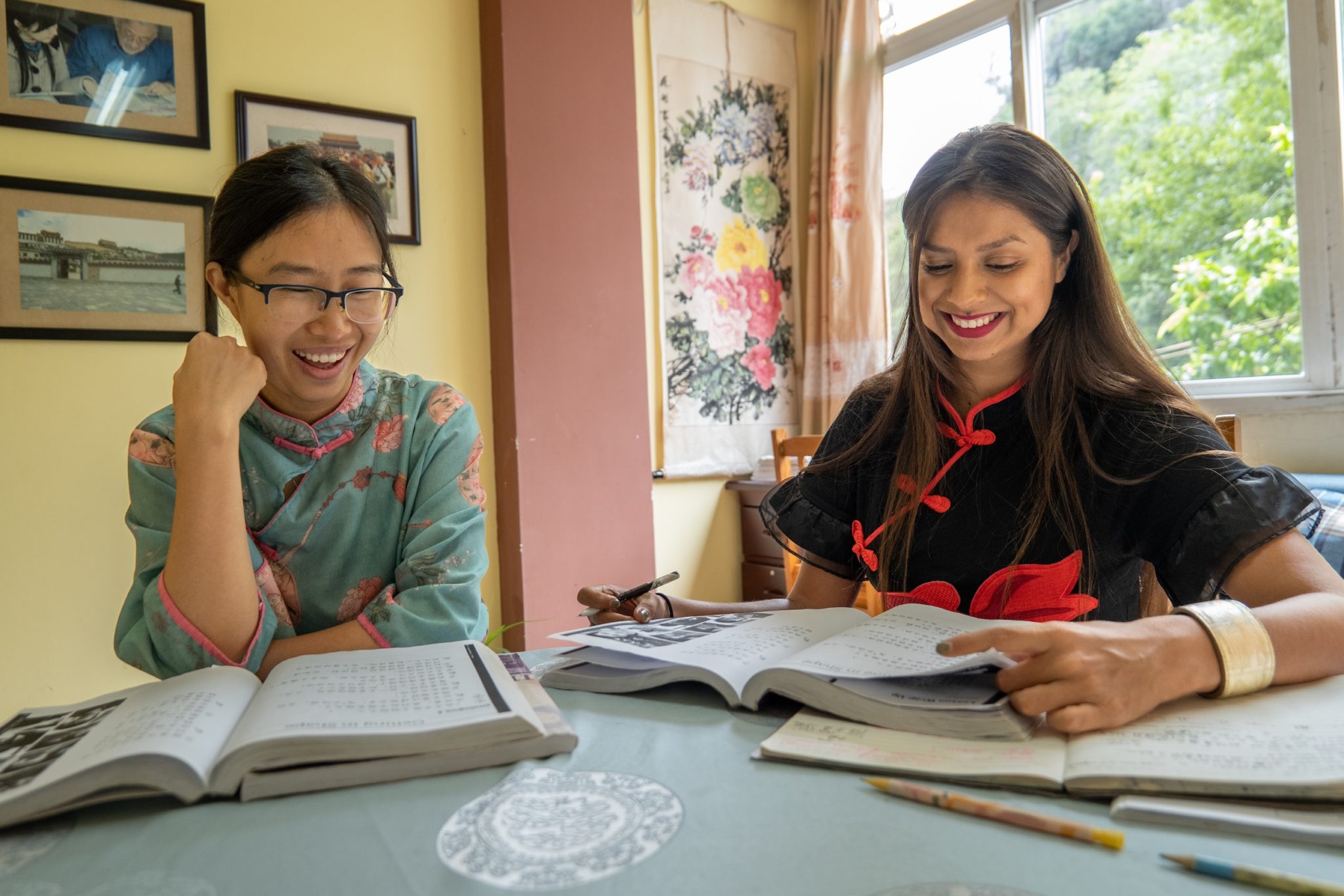
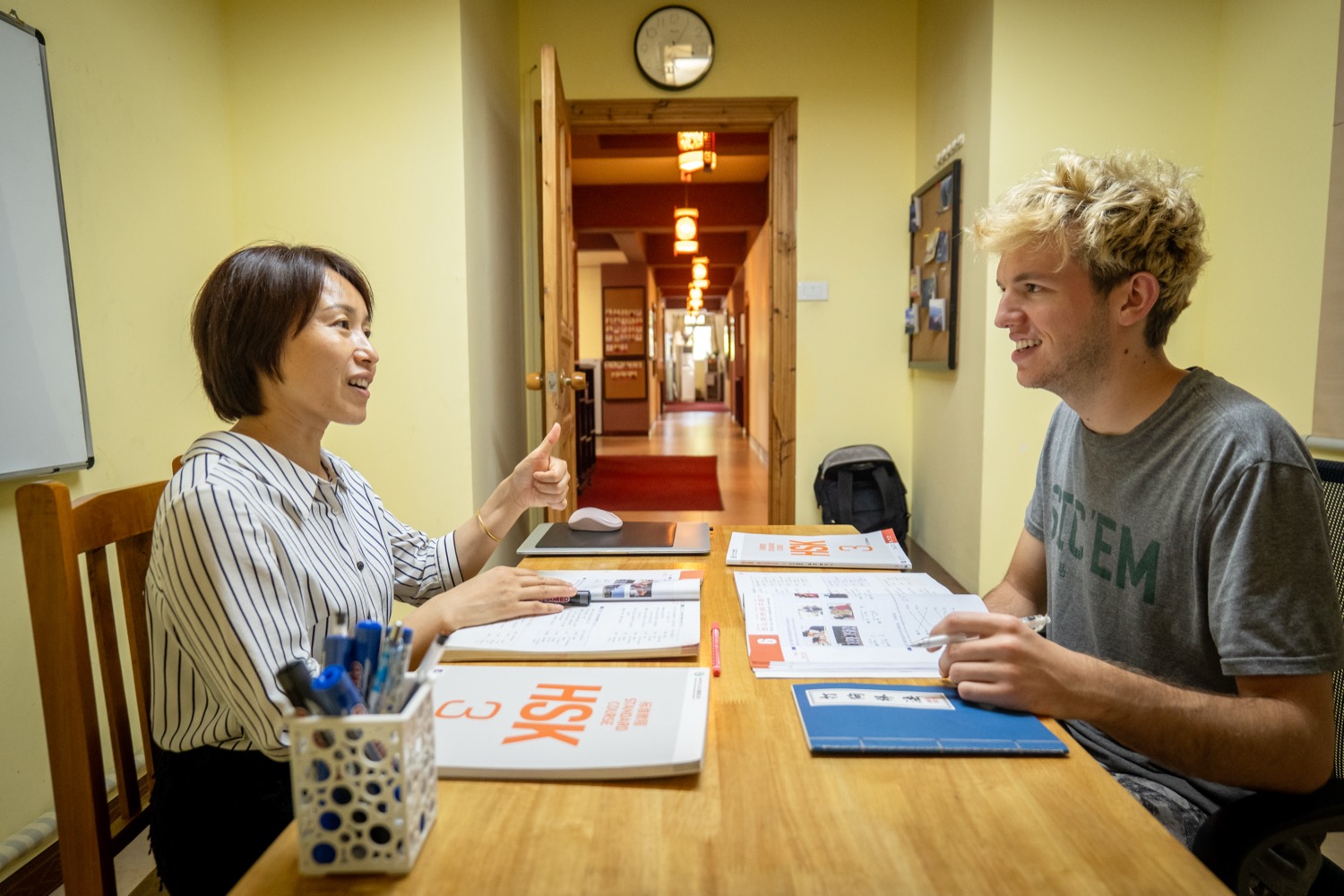
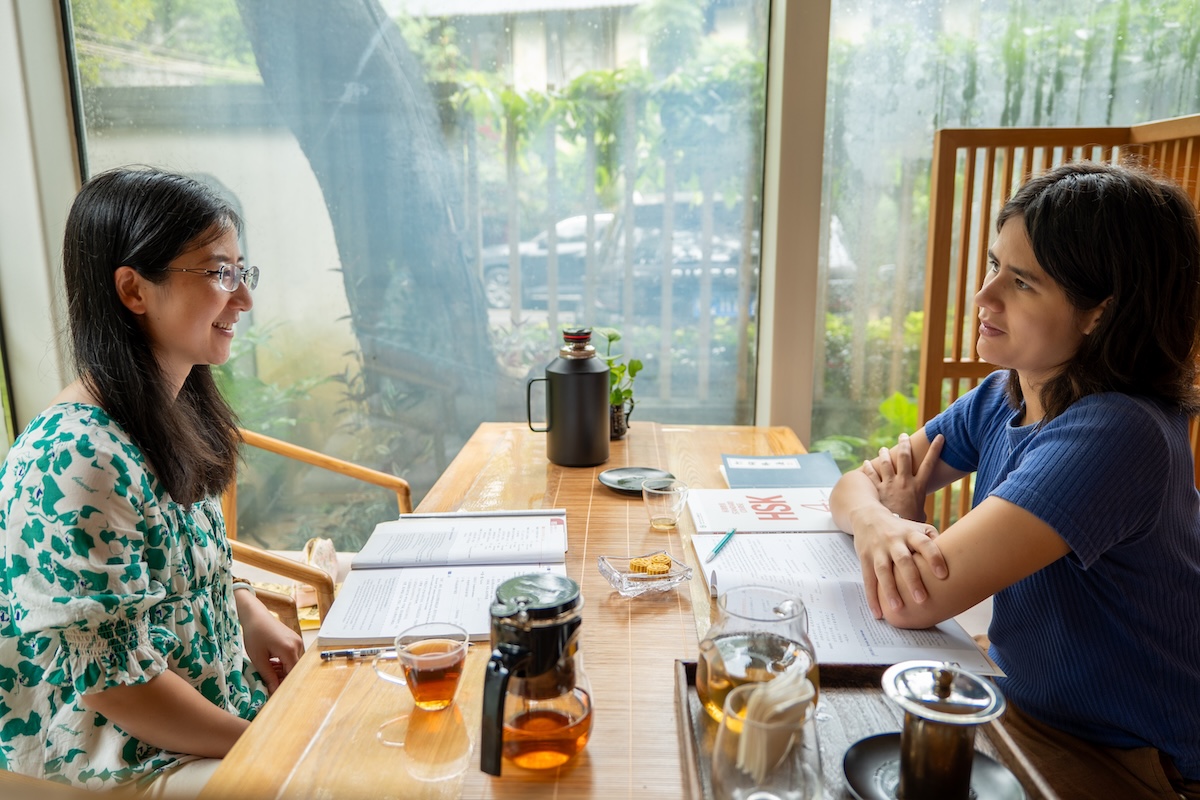
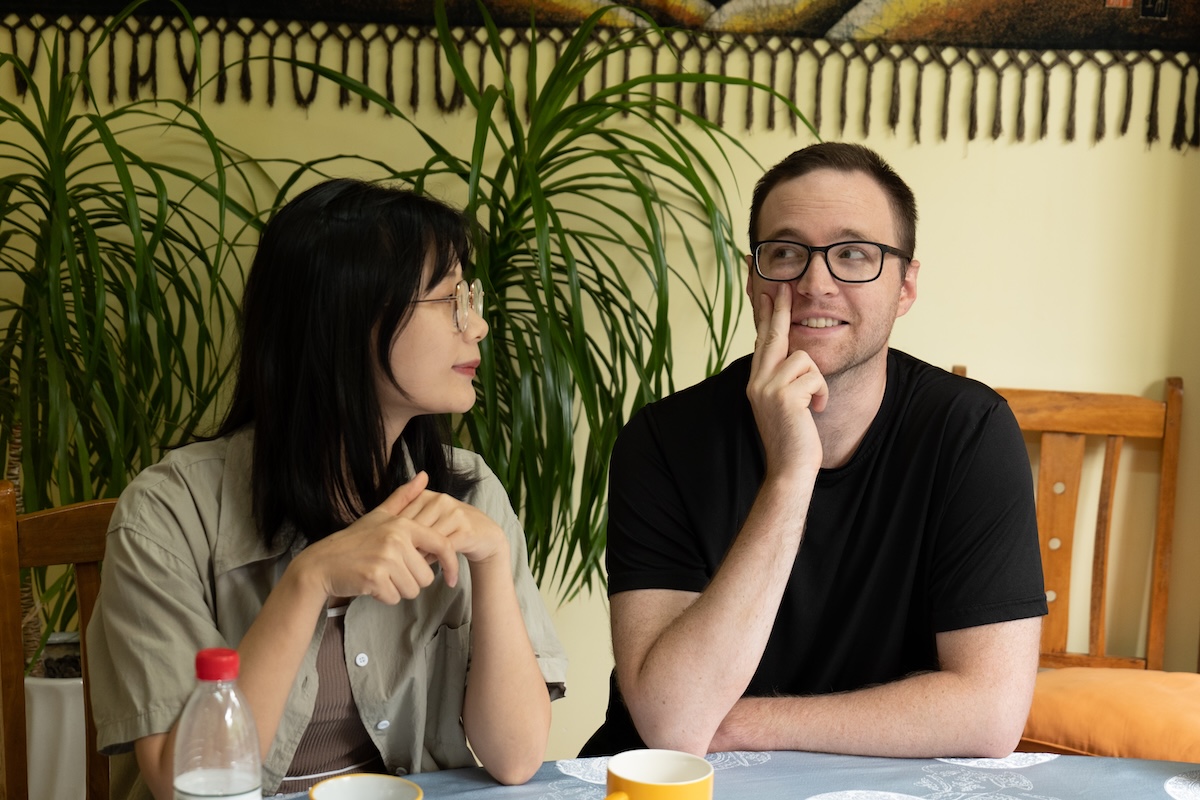
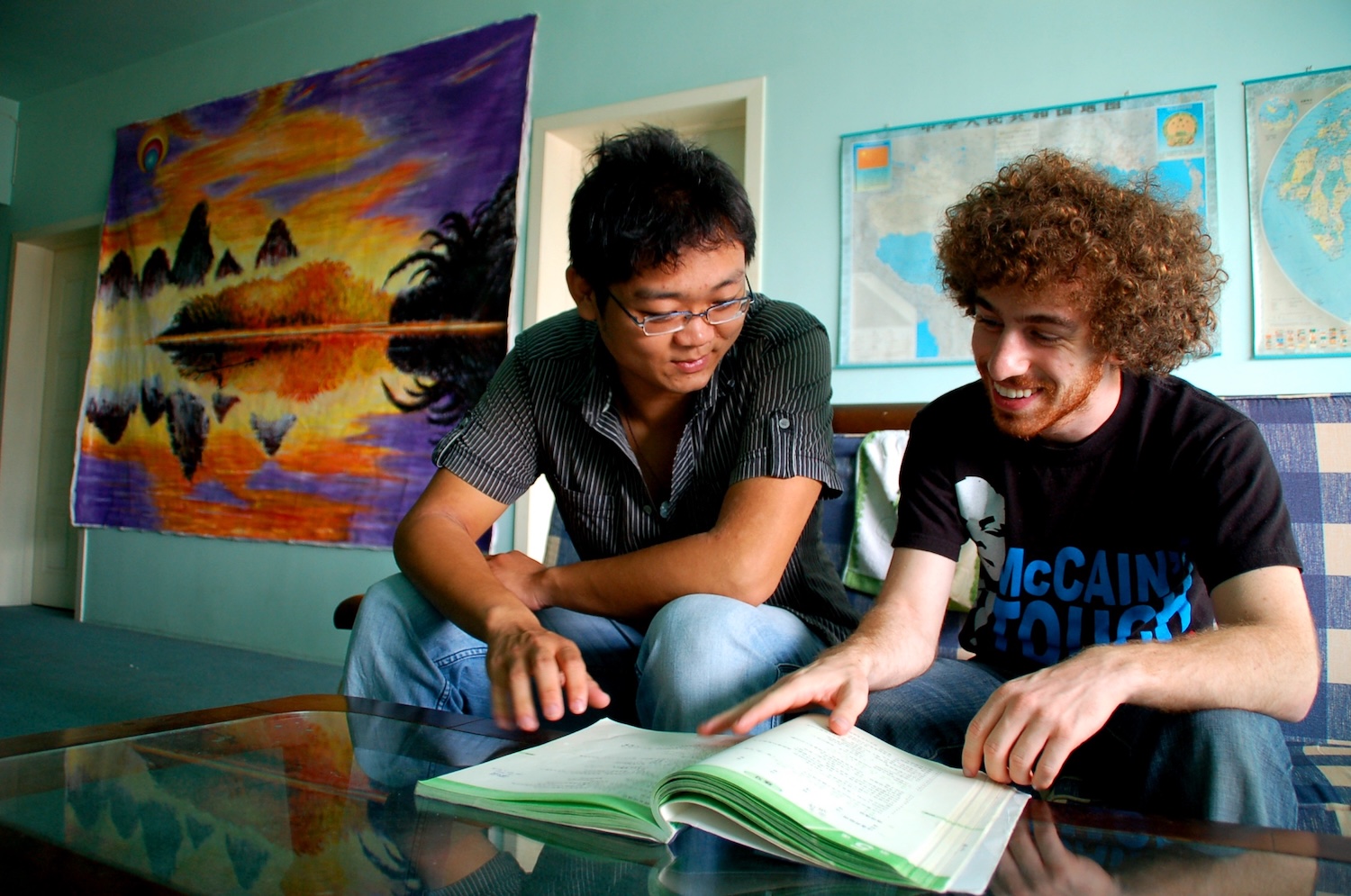
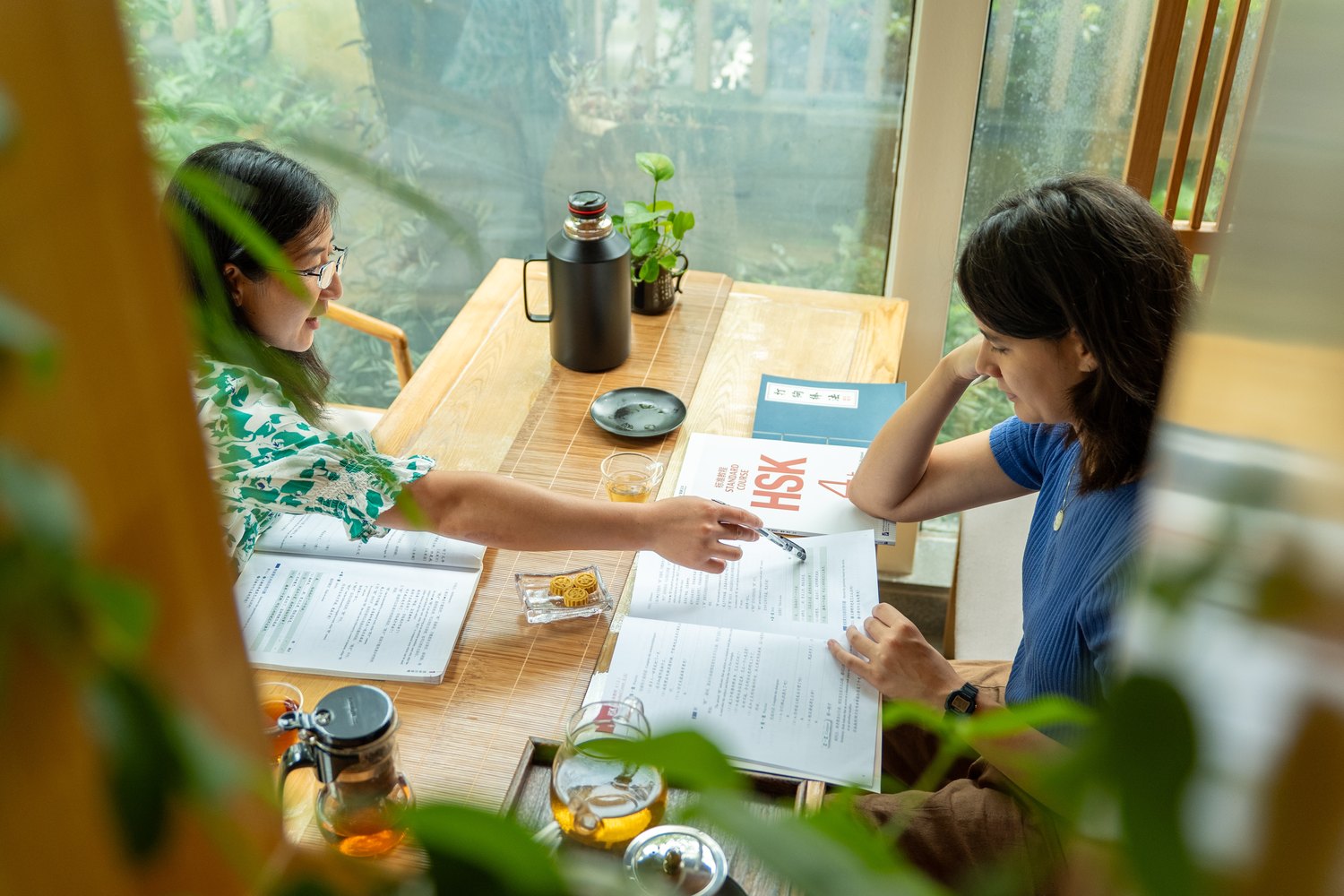
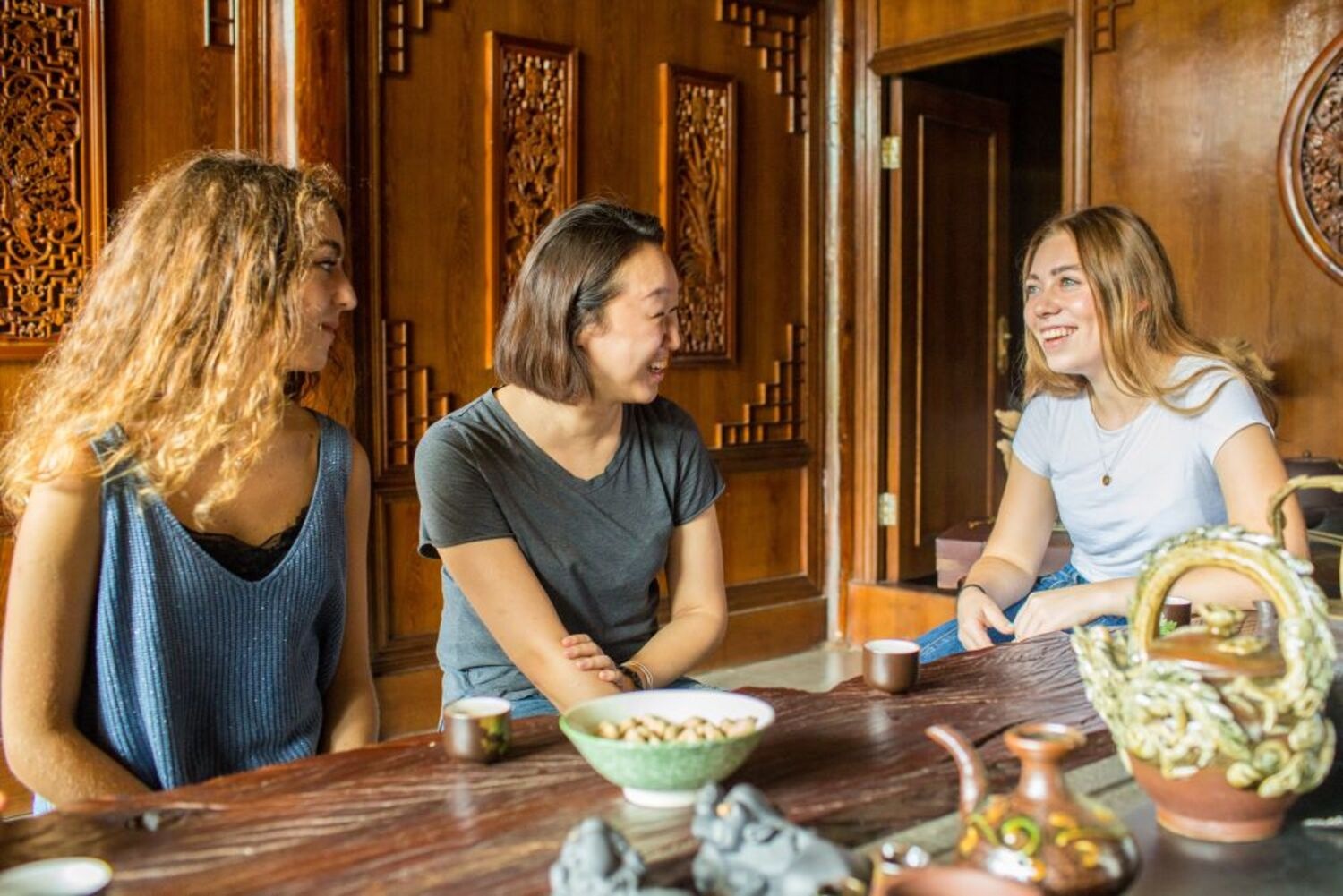
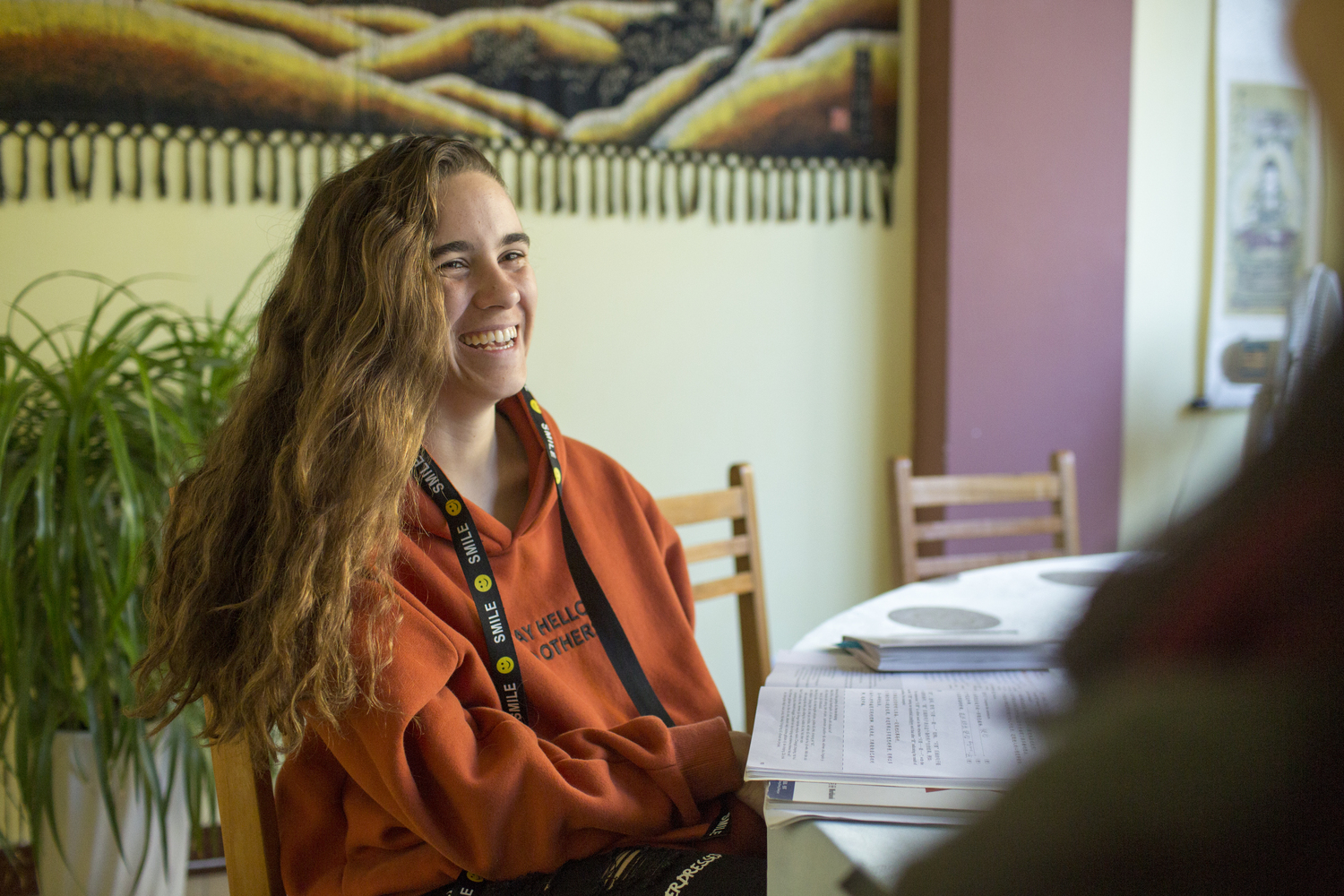
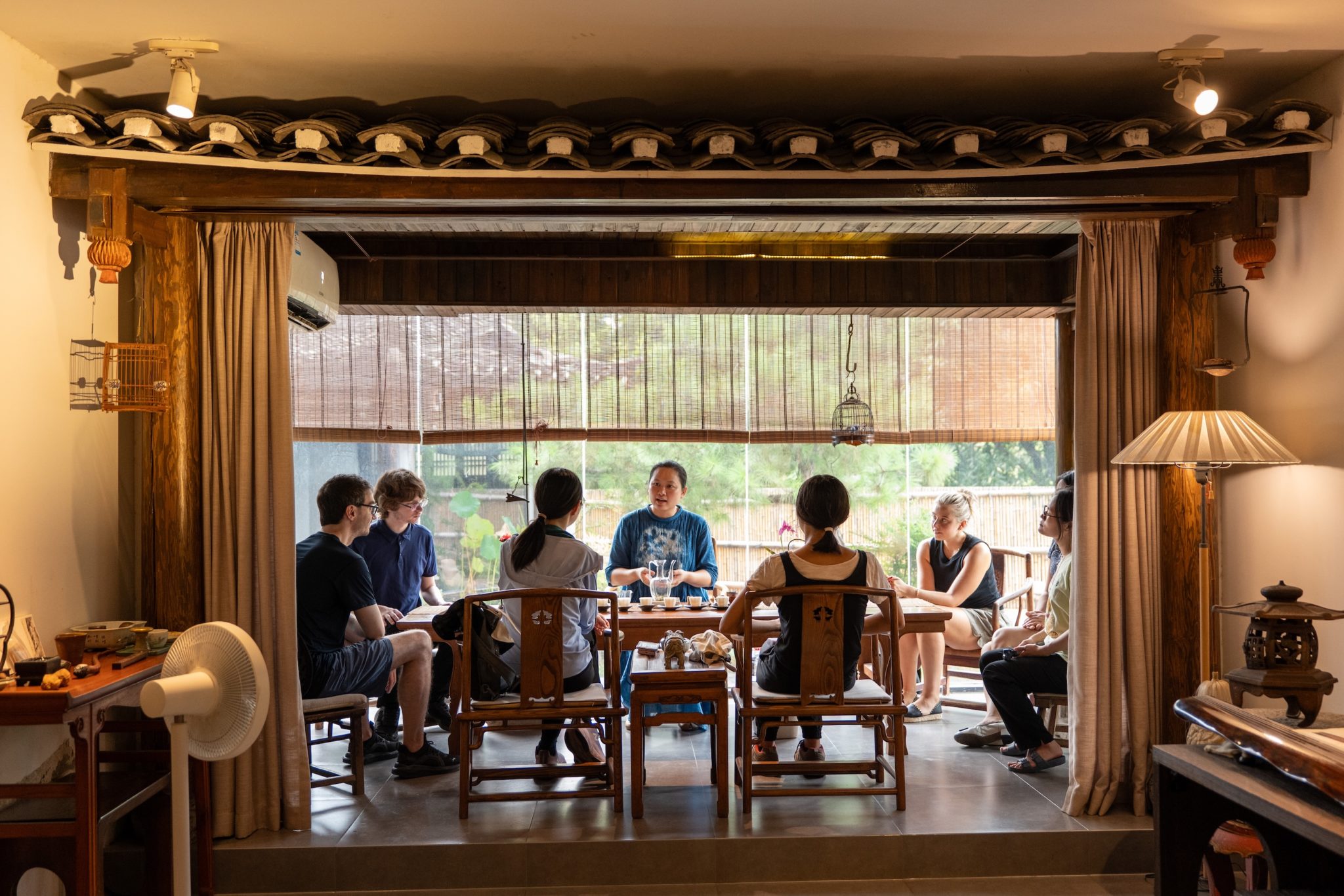
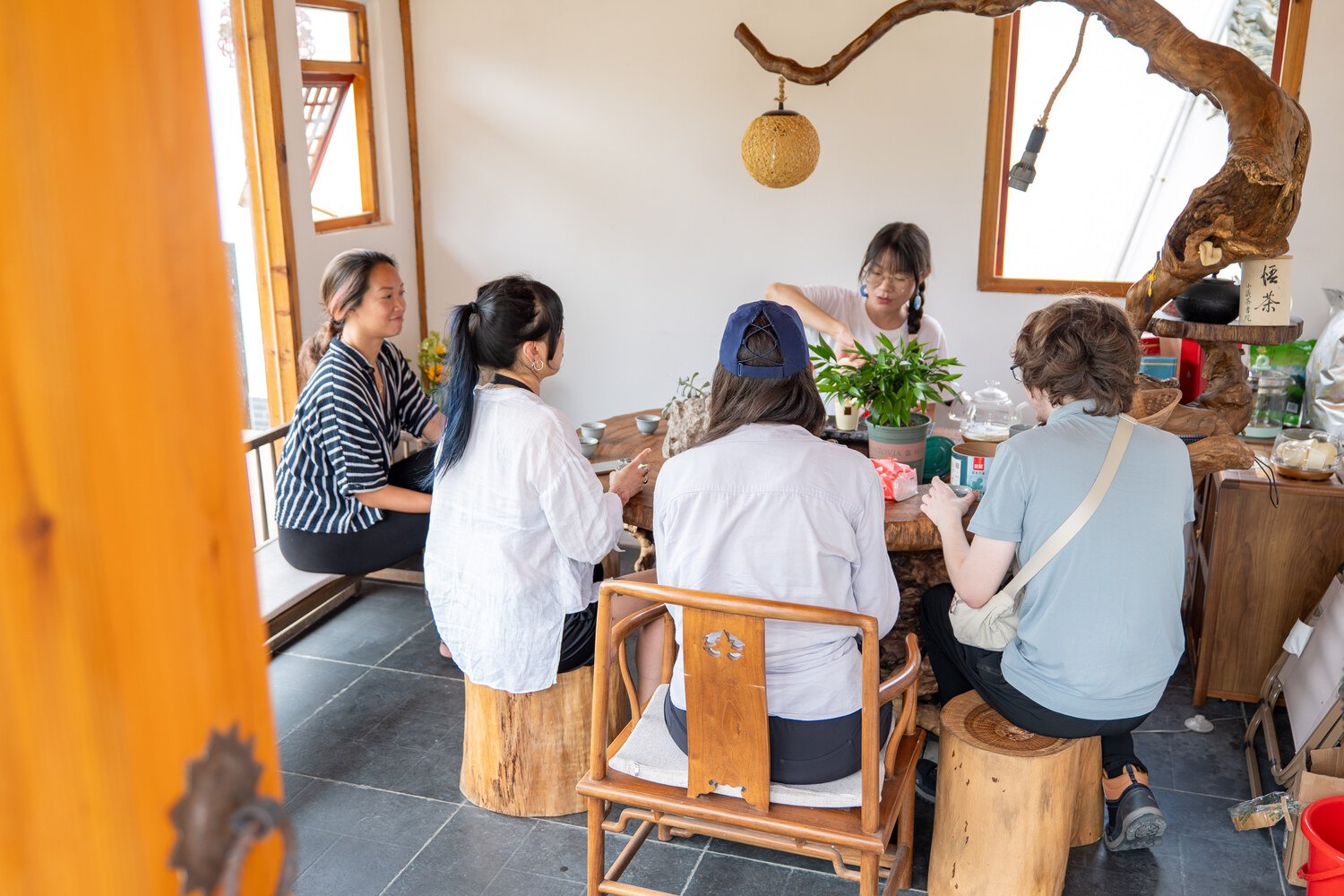
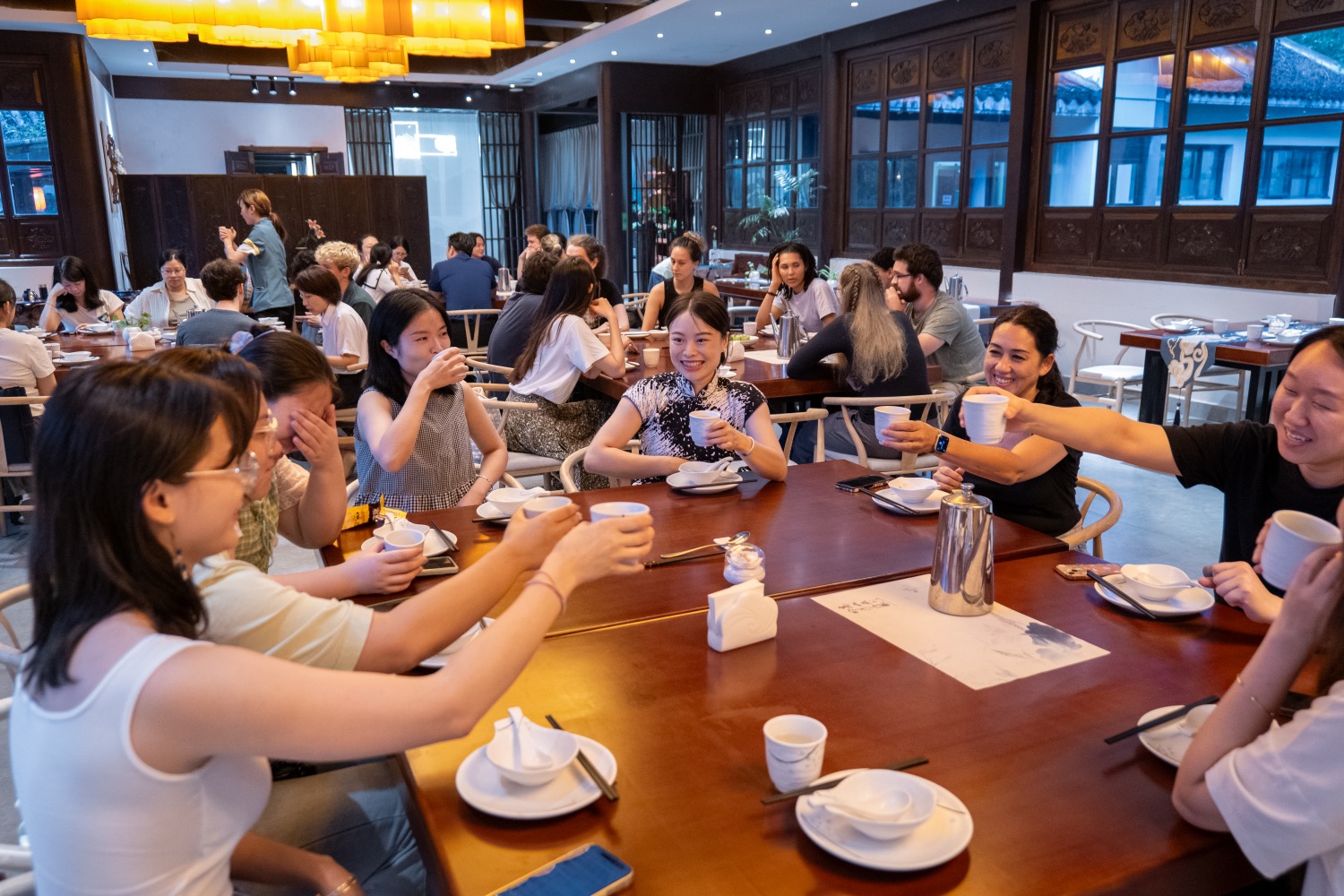
Two textbooks and a good laugh. Tea ceremonies and tea house visits are among CLI's activities, another unhurried setting for Chinese.
The board on the CLI Center's second floor lists the week's activities, from badminton to lantern making, for the hours after class.
Guilin's name means osmanthus forest, and the city has plenty of lakes, parks and green space to match the flowers in this photo.
Class is the center of the day, and CLI's activities, from tai chi to badminton, fill some of the hours around it.
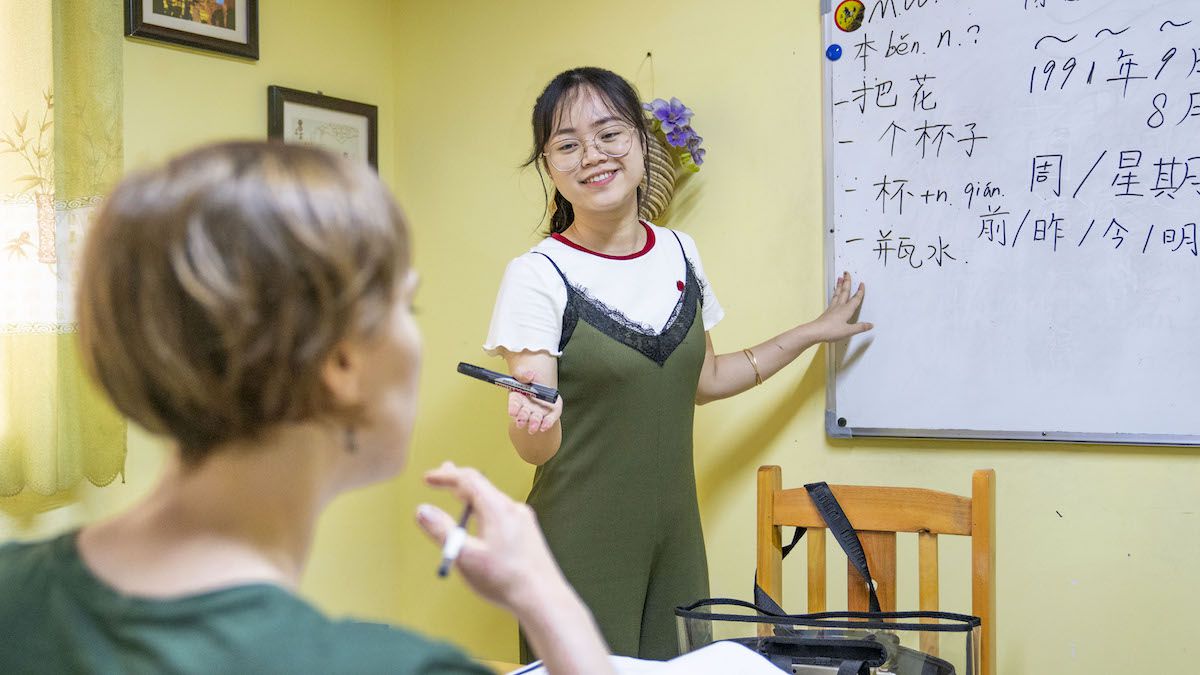
Dates and days of the week on the whiteboard are part of the daily communication that beginners often start with.
After a Chinese national holiday, missed class time can be made up with extra hours through CLI Online, and make-up classes are free.
Reading aloud while the teacher takes notes. Reading comprehension belongs to the reading and writing teacher, one of three each student has.
朋友 (péngyǒu) means friend, and the Pengyou Program's local university students join activities and share a meal with students each week.
Students at CLI range from high school students to retirees, and families sometimes study together.
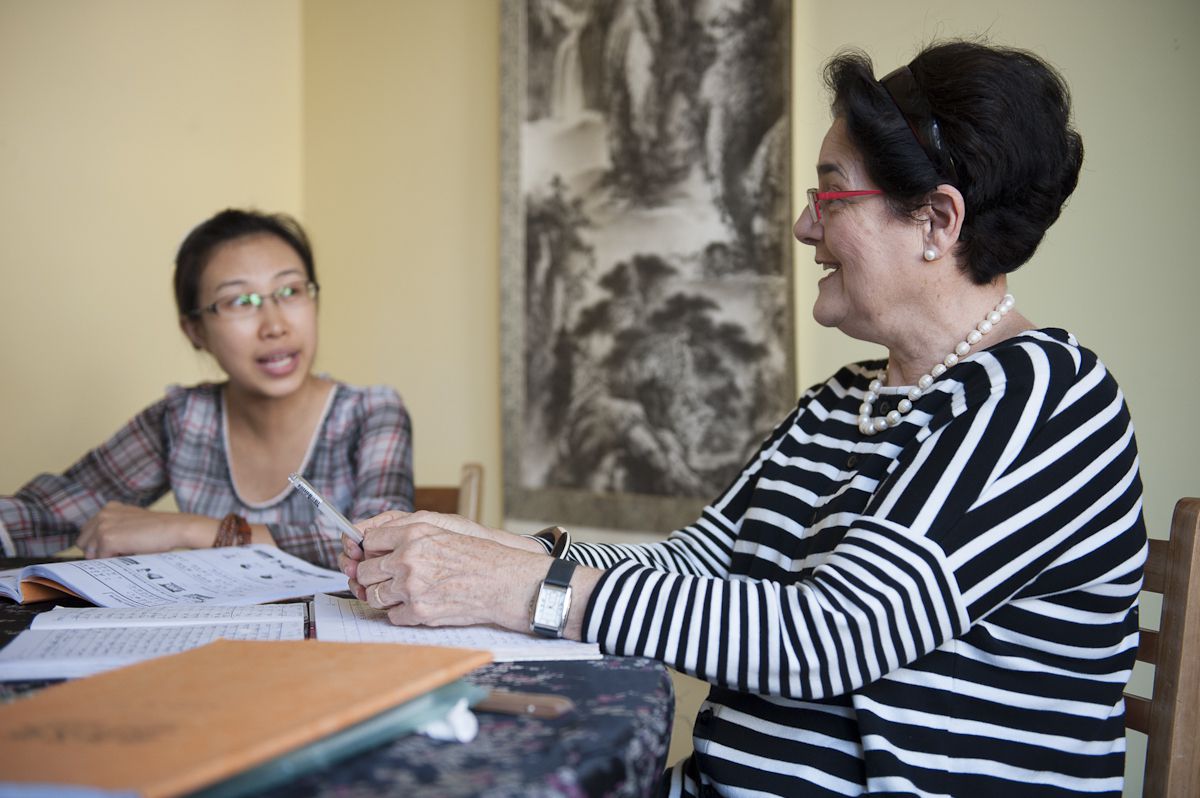
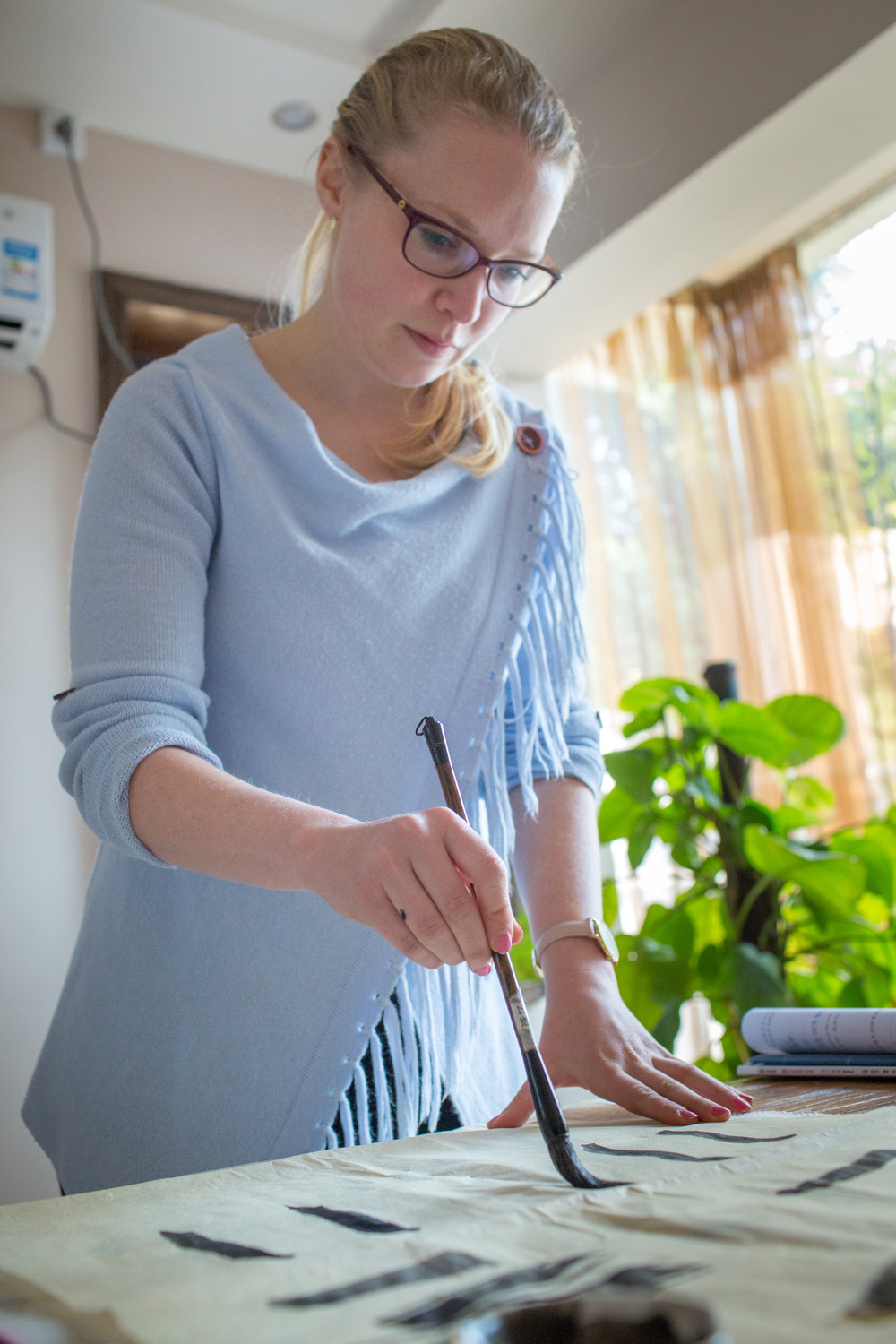
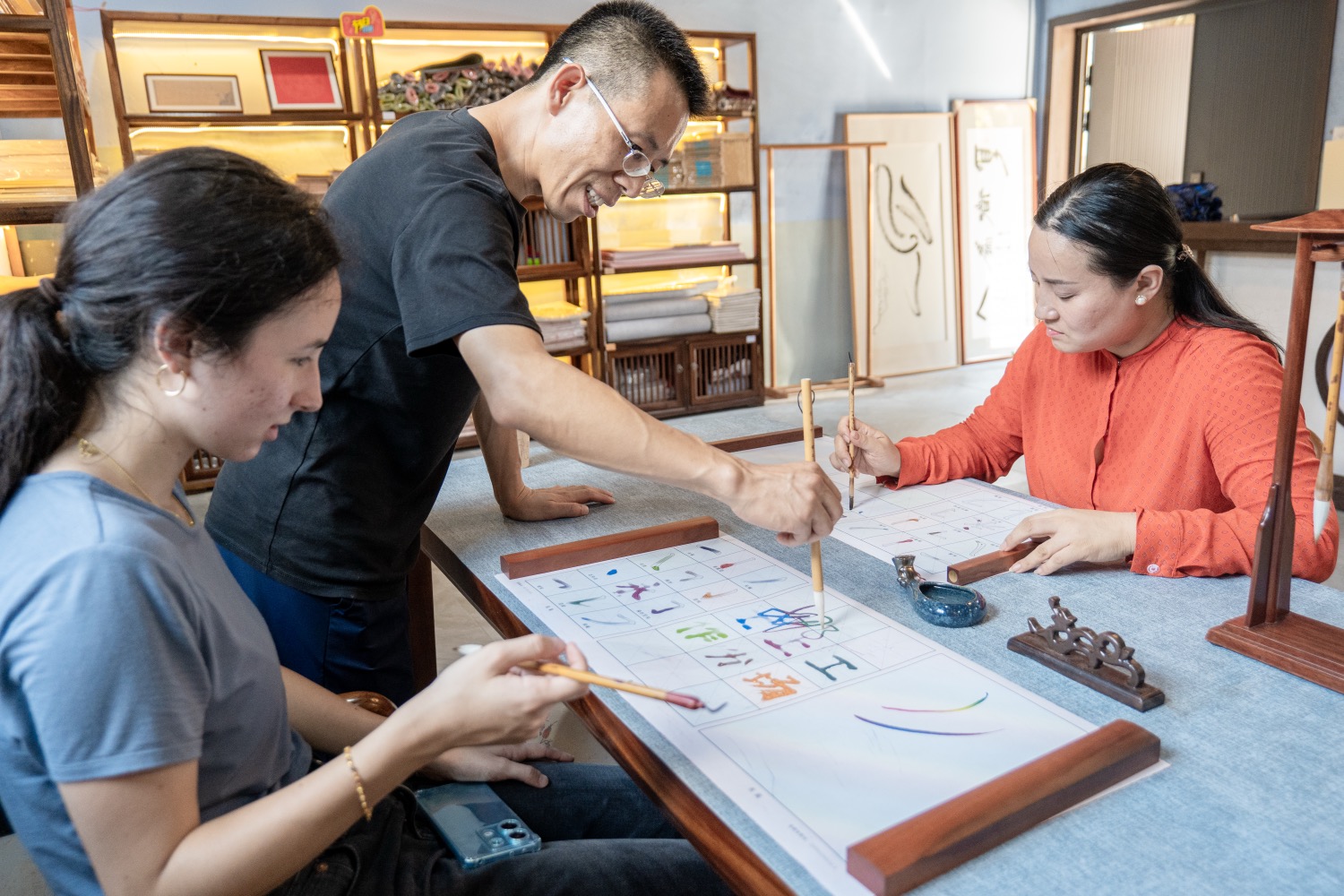
A calligraphy scroll hangs beside the whiteboard. Calligraphy is one of CLI's activities too, and the lighter evenings after class can include it.
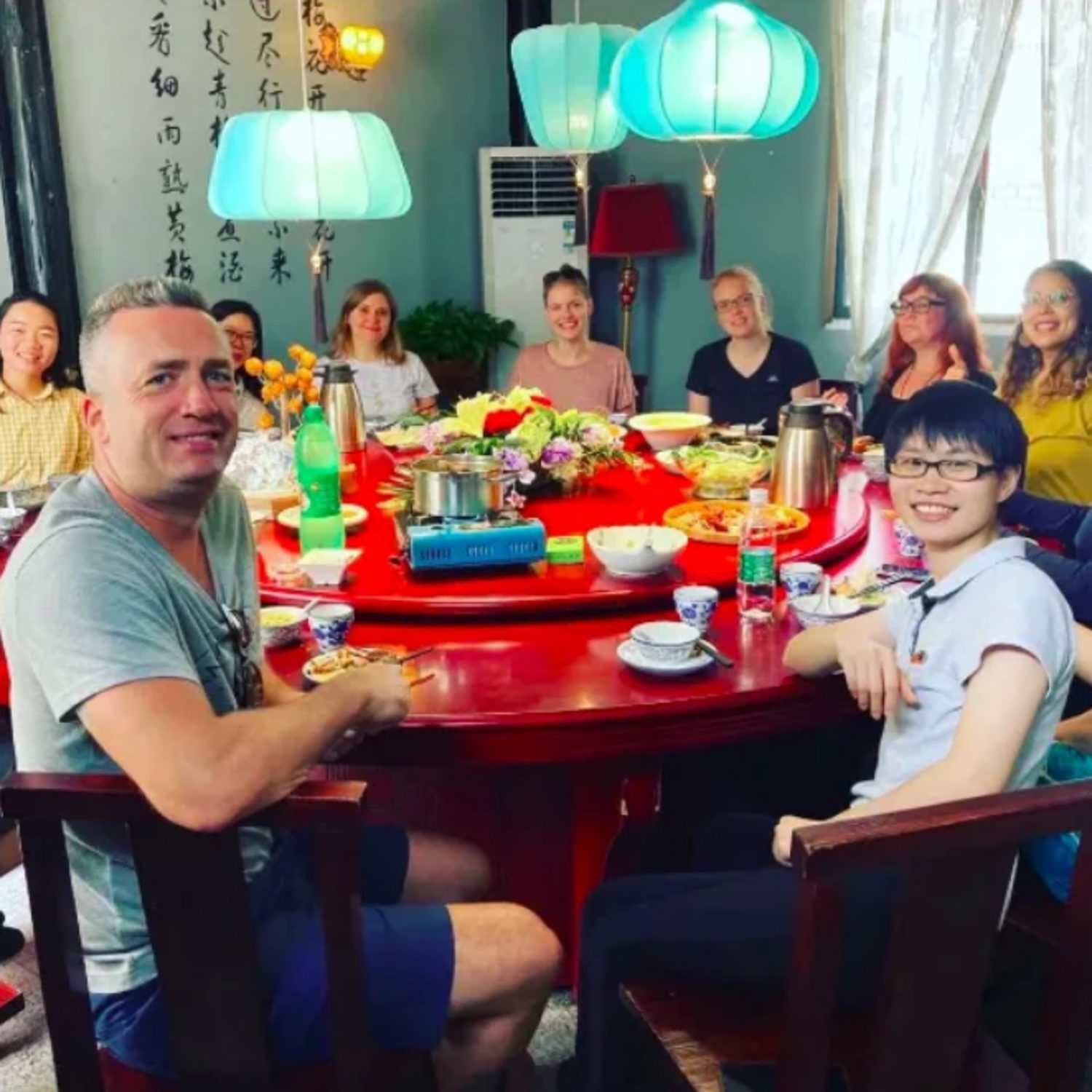
Lunch on the optional meal plan is home-cooked at the CLI Center and eaten family style, with at least one Mandarin-only table.
The morning sessions run 8:20 to 10:20 and 10:30 to 12:30, and each student takes two of CLI's four sessions a day.
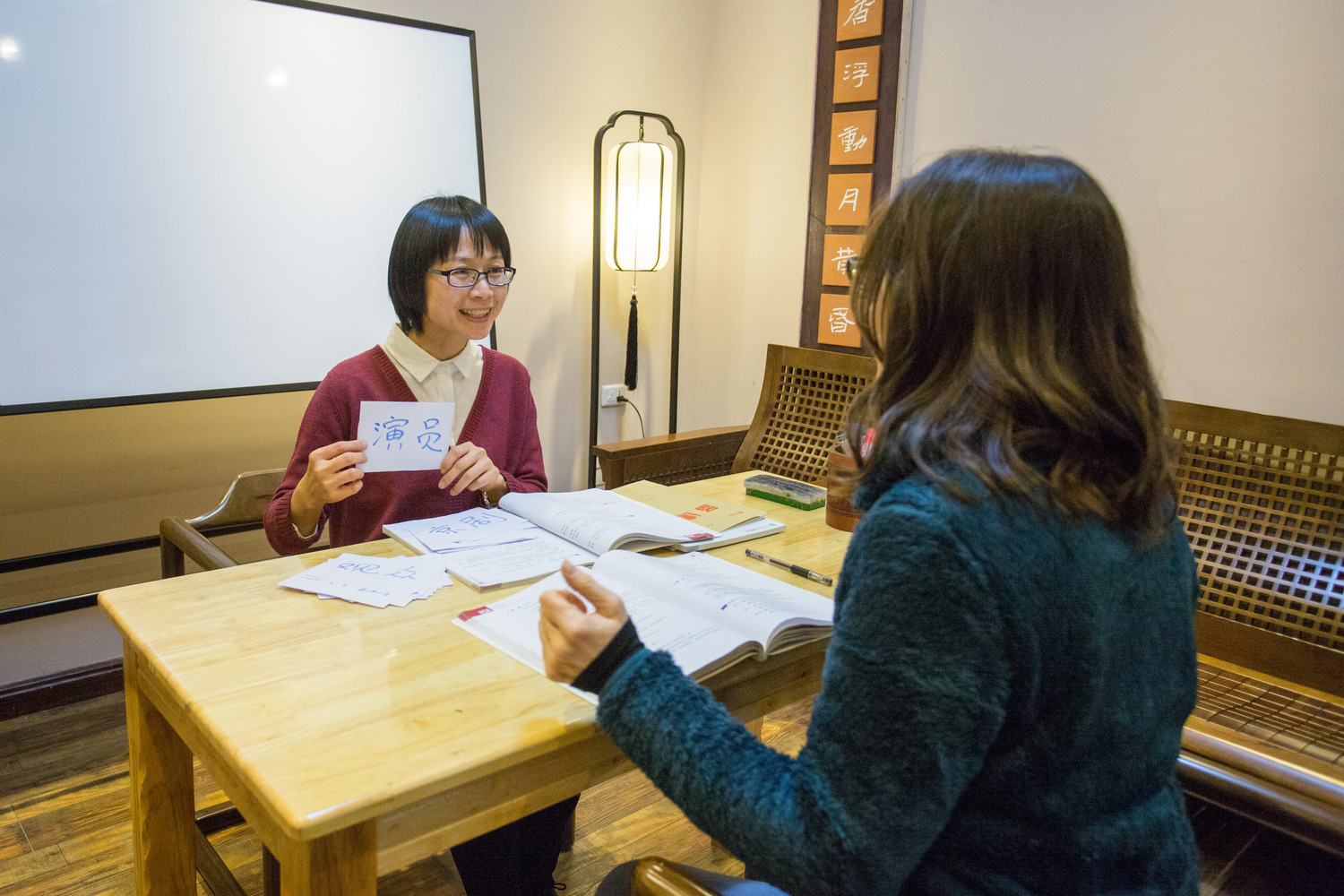
A flashcard is a quick check, and every two weeks a short evaluation covers vocabulary, grammar, reading, writing, listening and speaking.
Above the classrooms, the CLI Center has 36 private rooms, each with a full private bathroom and weekly cleaning included.
Homestay students come to the CLI Center for class on weekdays, and they typically share dinner with their host family in the evening.
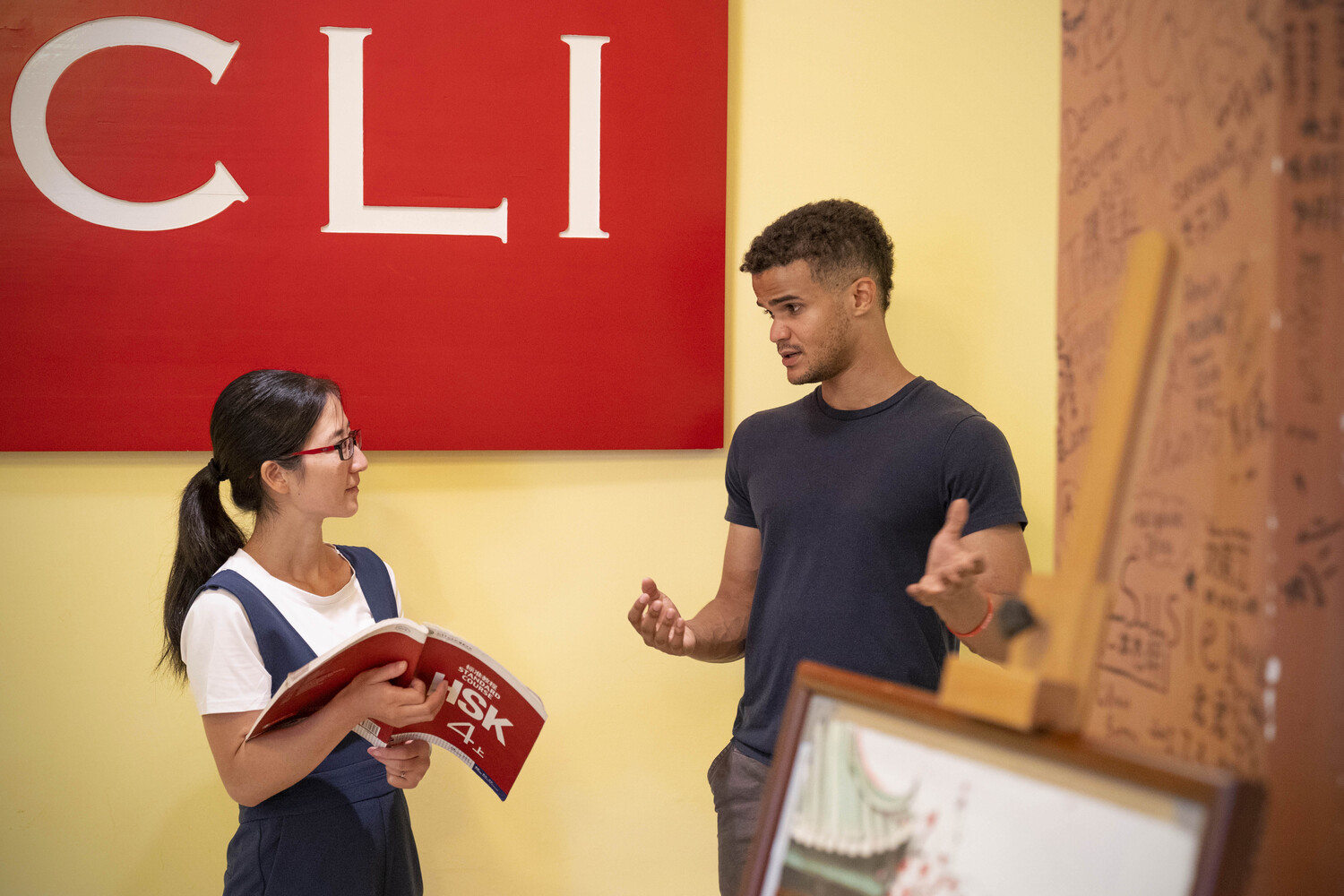
Zh, ch, sh and r on the whiteboard. CLI teaches every level, from complete beginners working on sounds like these to conversationally fluent speakers.
Lessons in a bright room like this one follow CLI's syllabi, at whatever pace suits the student.
Red marks on the whiteboard are corrections to a written sentence. Written composition grows out of the reading and writing lessons, word by word.
Guangxi Normal University is CLI's university affiliate, and its main gate is about seven minutes' walk from the CLI Center.
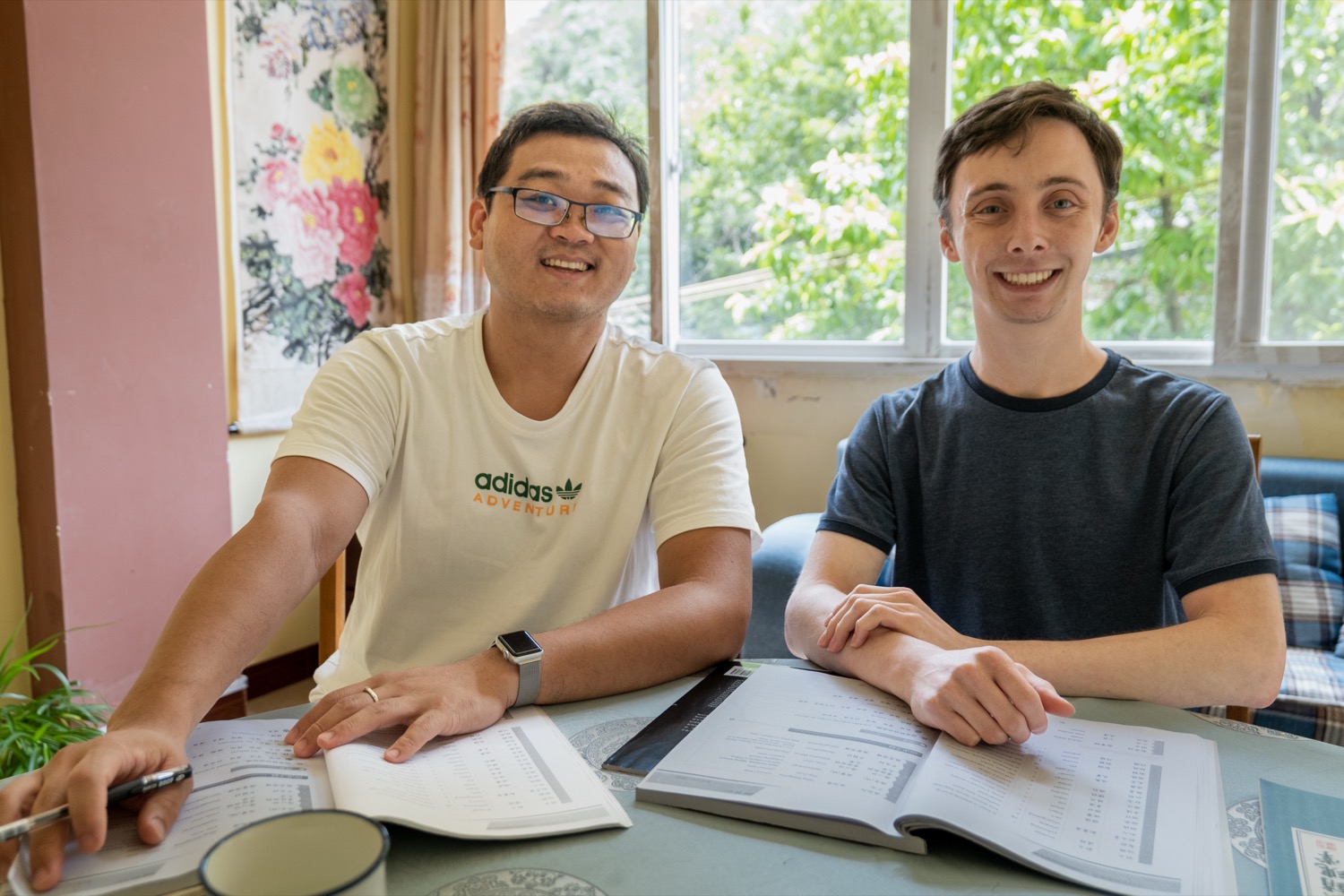
Studying alongside a classmate is easy at the CLI Center, and small group classes of three to five students can sometimes be arranged.
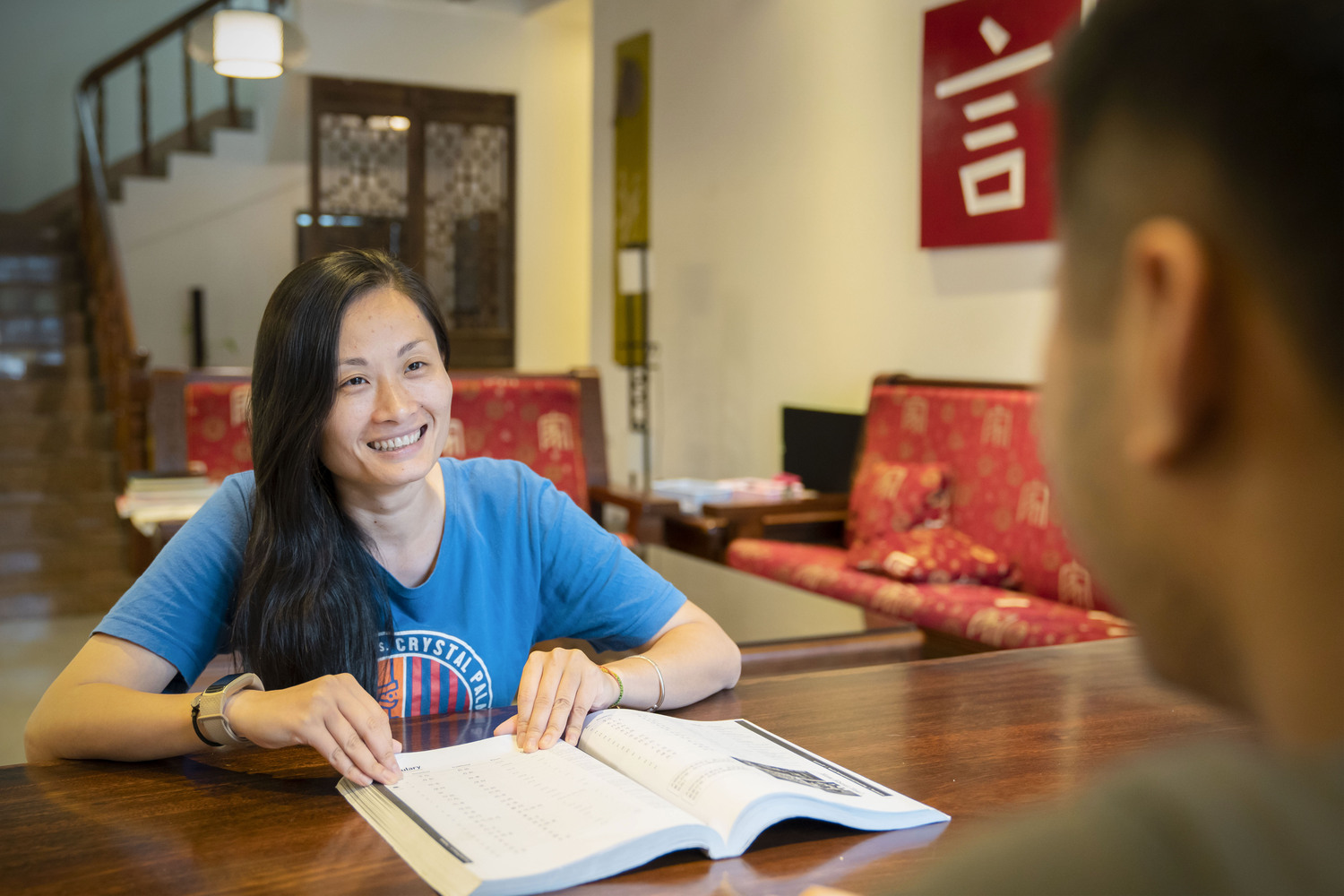
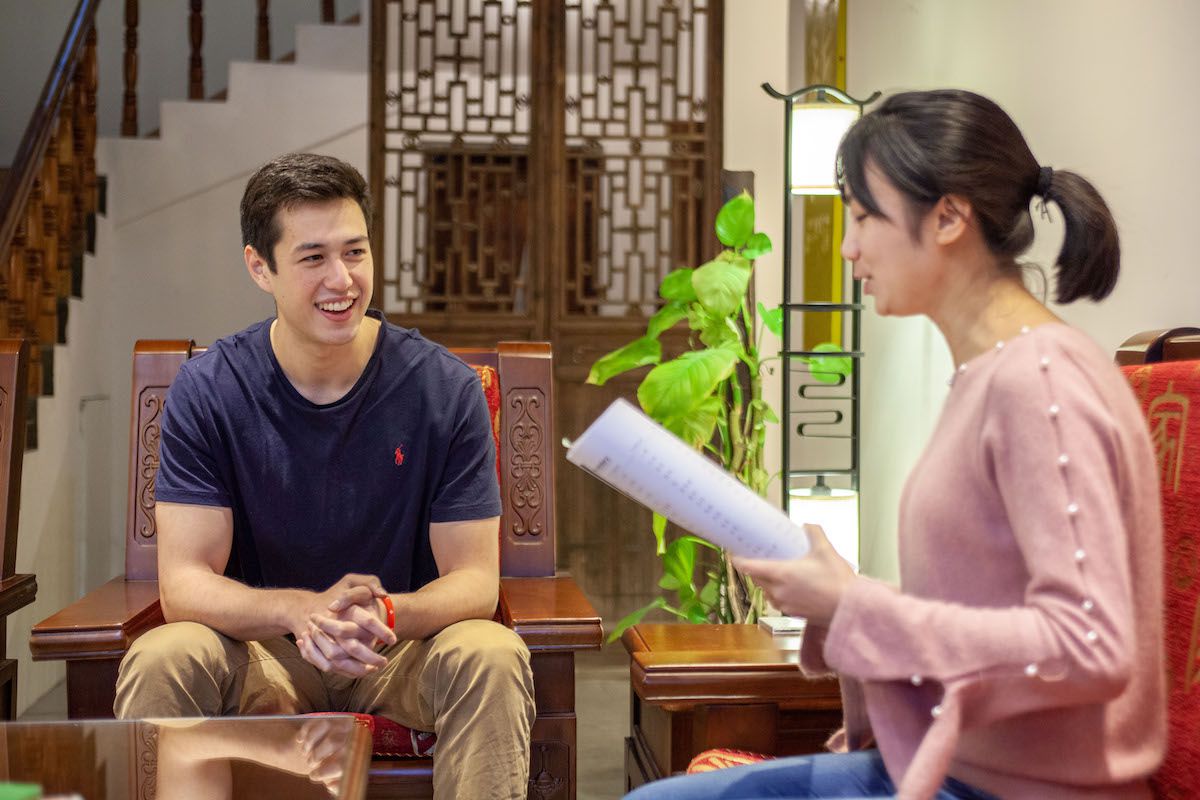
A lesson in the lobby, with the CLI team close by: several full-time team members live at the Center year-round.
Each weekday adds four more hours of one-on-one class, which comes to 20 hours of Chinese a week.
Grammar, vocabulary and daily review go to the comprehensive review teacher, so the week's material gets a second pass.
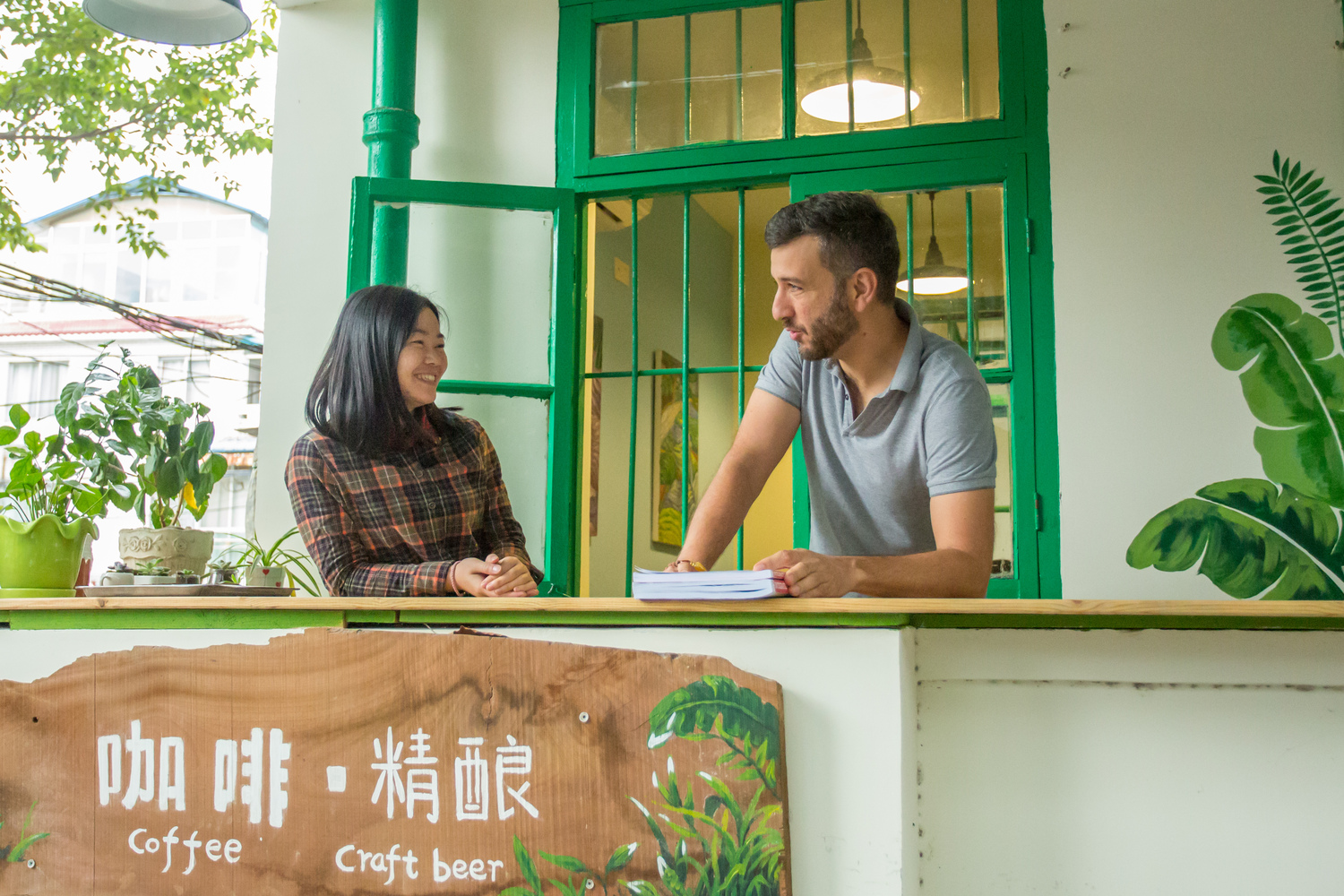
Cafés and noodle shops near CLI are an easy place to review after class or meet up for a language exchange.
Lesson planning is part of a teacher's day at CLI, and each student's three teachers coordinate their plans with one another.
Some of the people at the CLI Center also live there: at least a quarter of its 36 rooms are home to CLI teachers and pengyou.
Characters often have parts worth spotting: 朋 in 朋友 (péngyǒu, friend) is two 月 (yuè, moon) characters side by side.
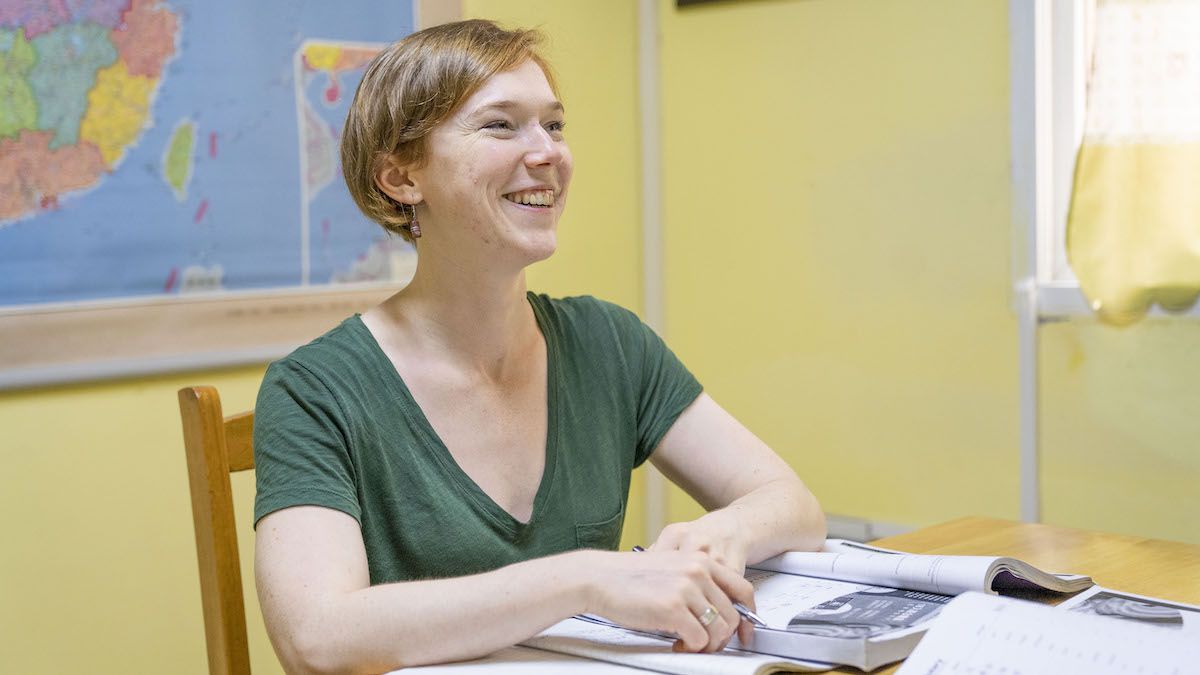
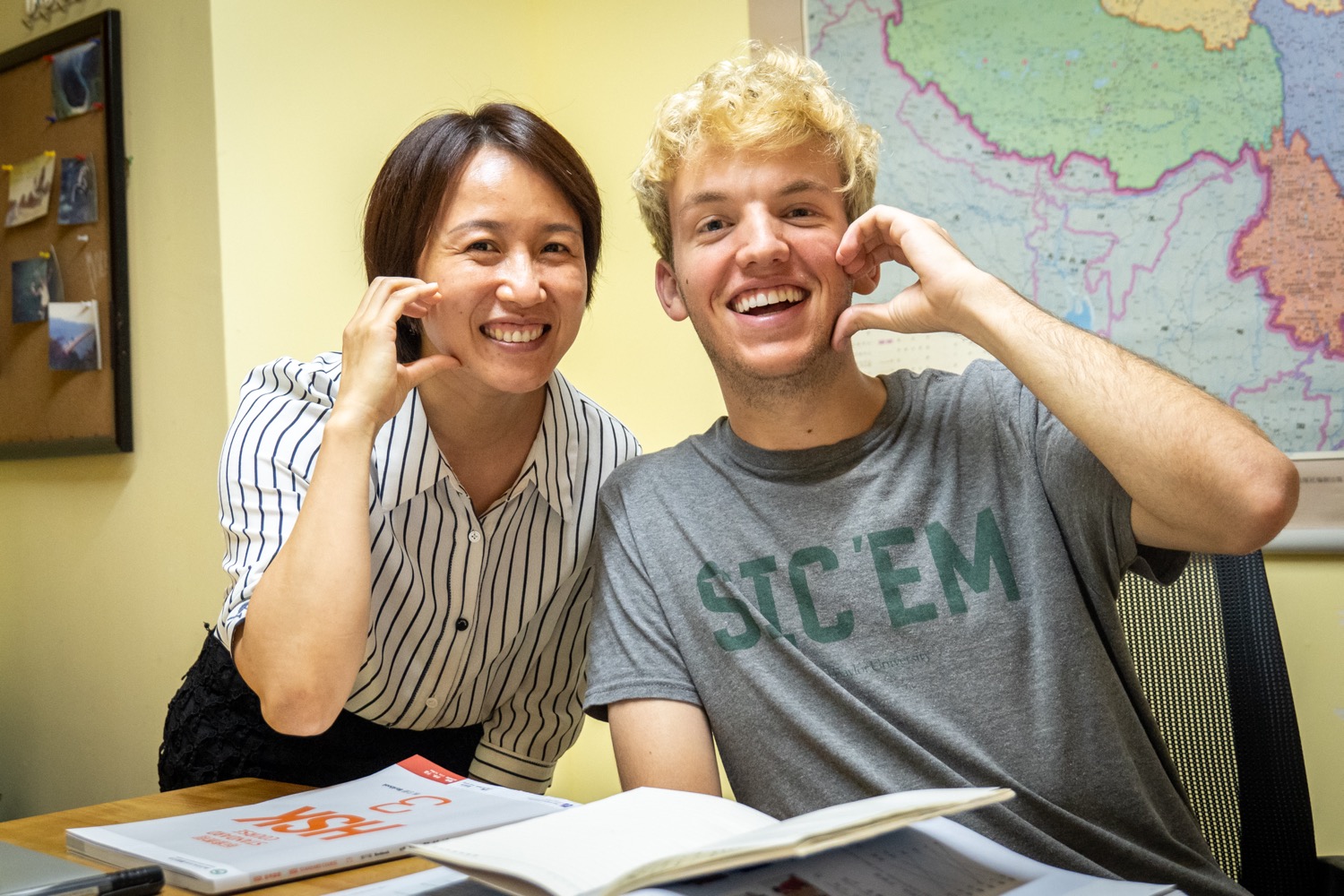
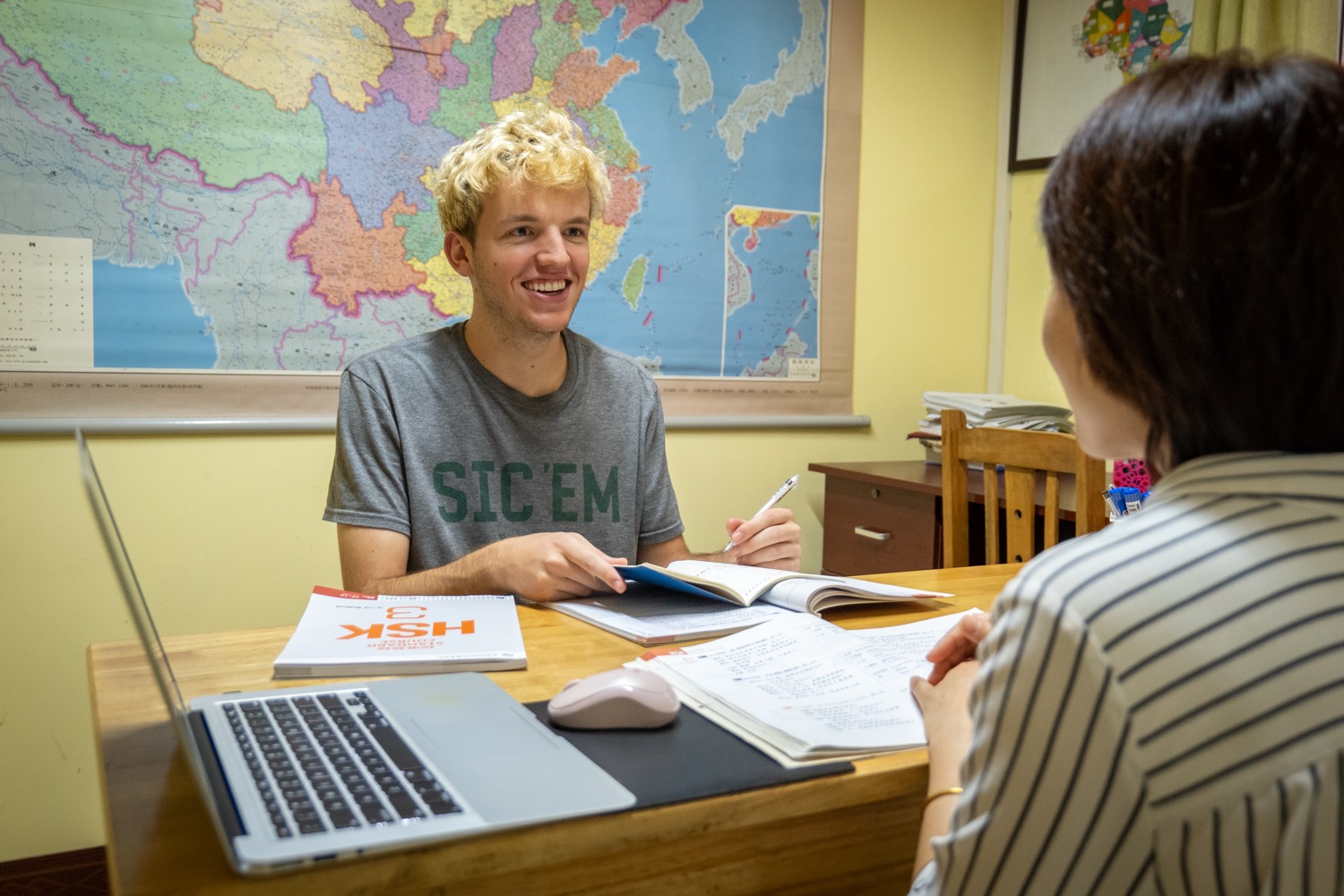
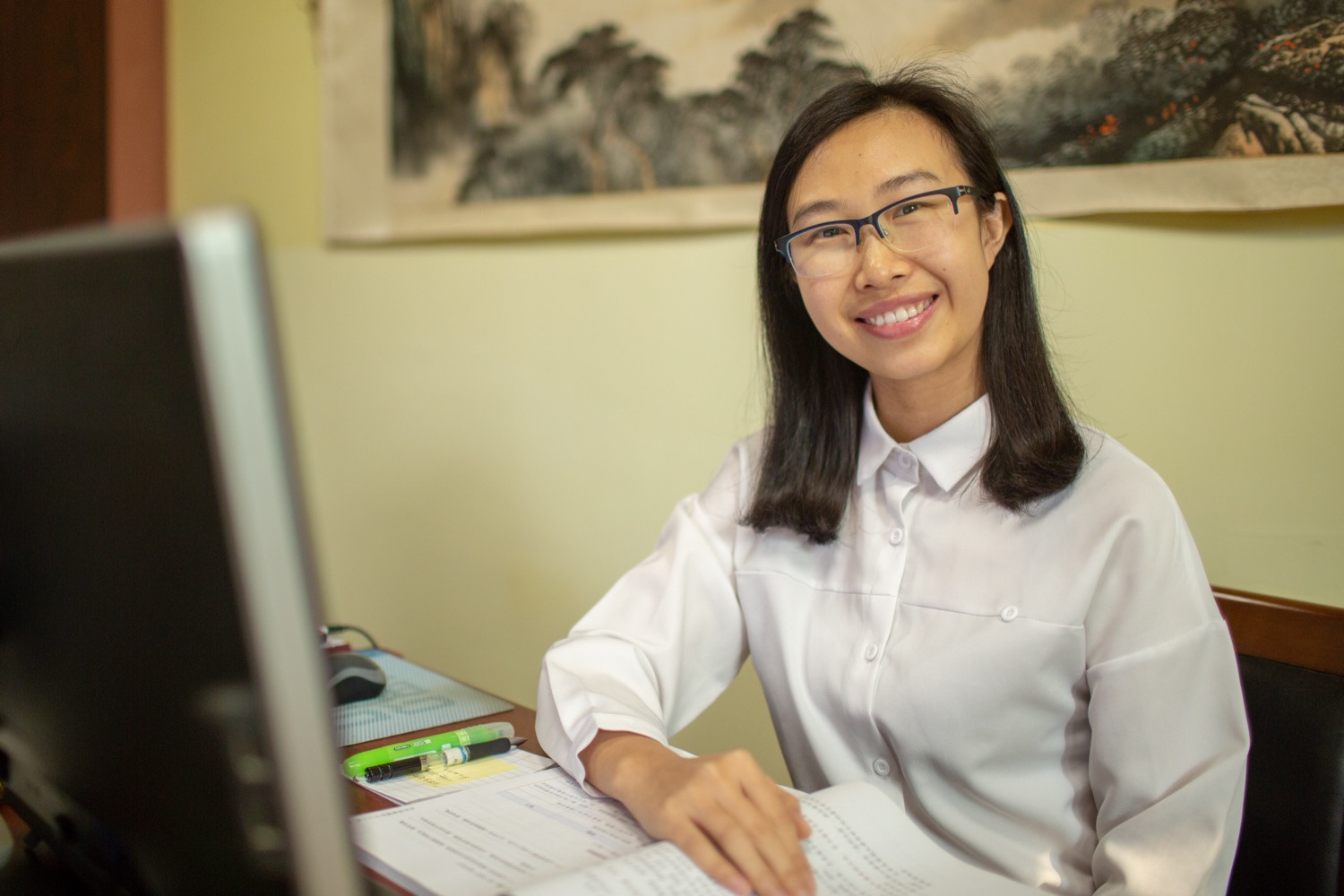
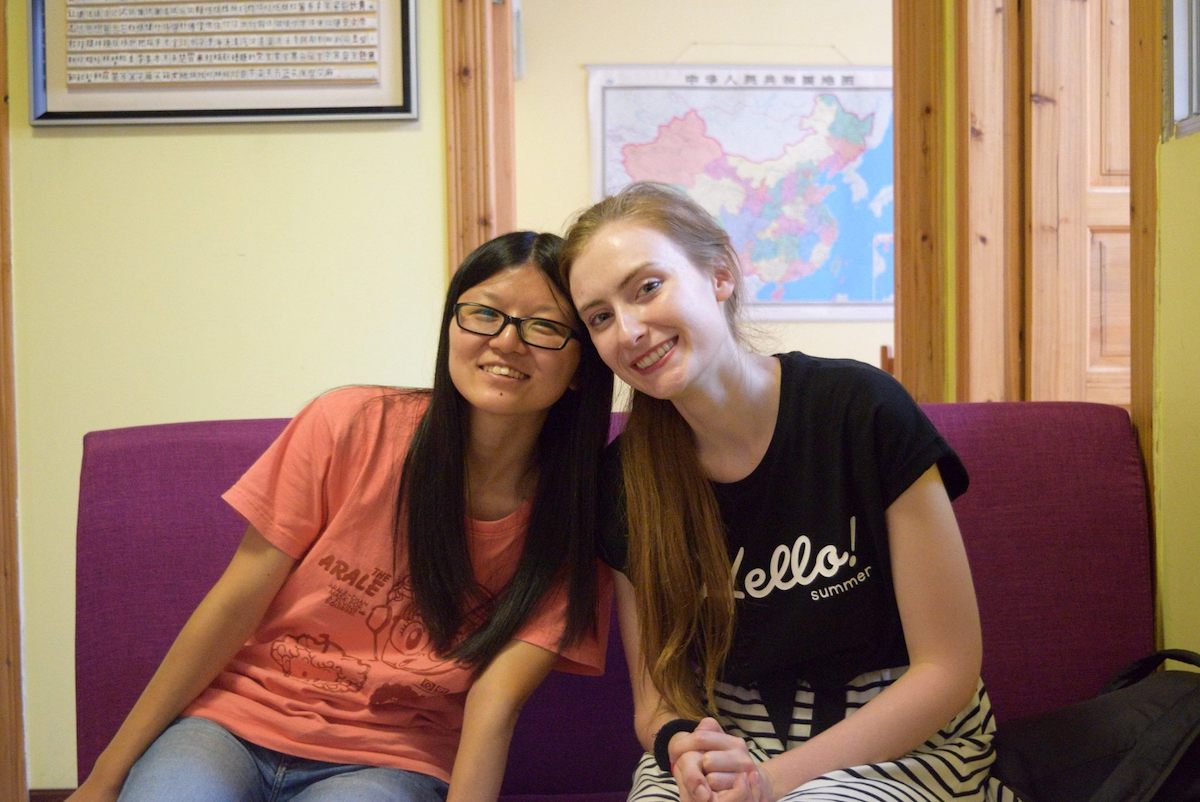
A map fills the wall behind the desk. Guilin sits on the Li River in Guangxi, and Yangshuo and Longsheng are each about an hour away.
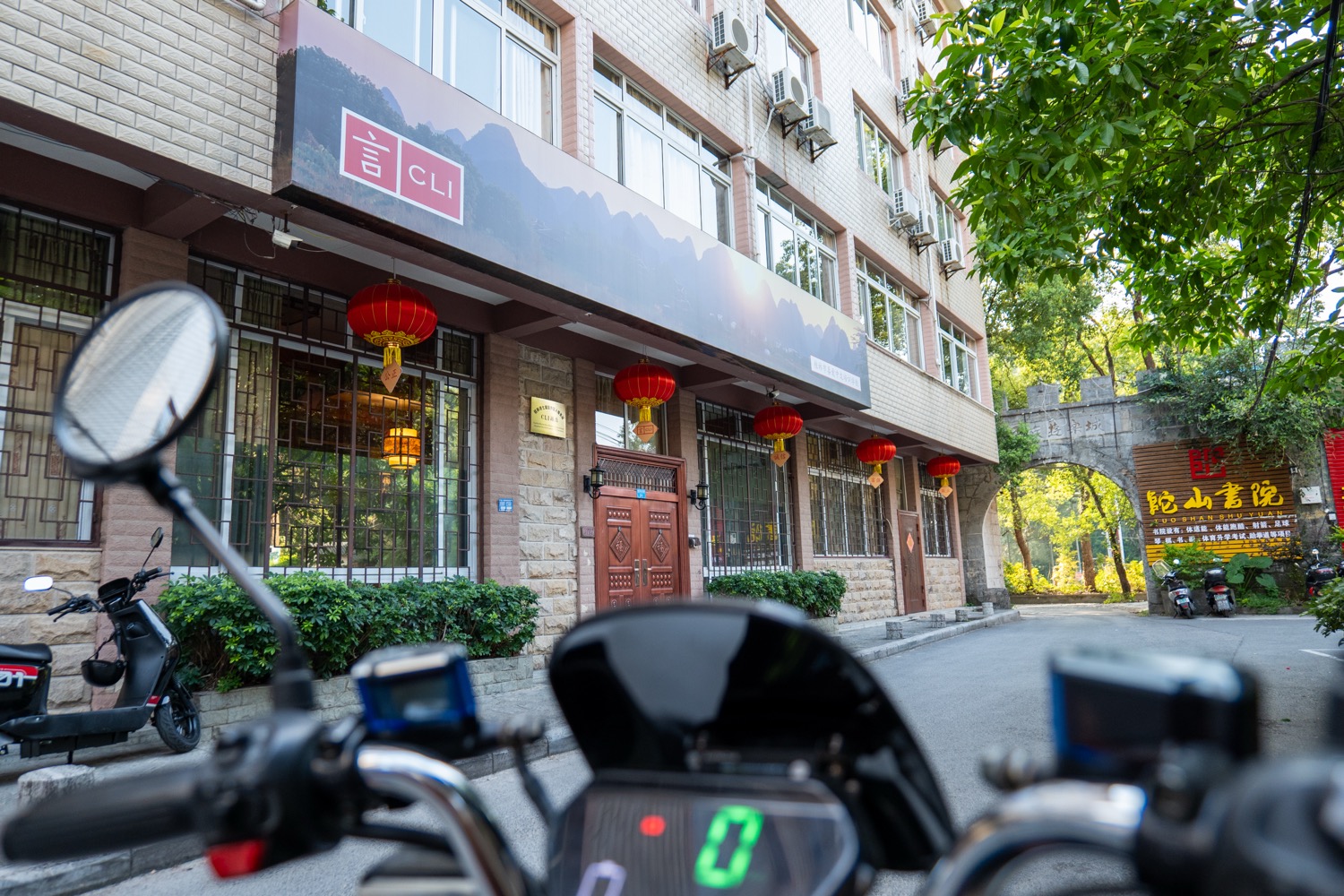
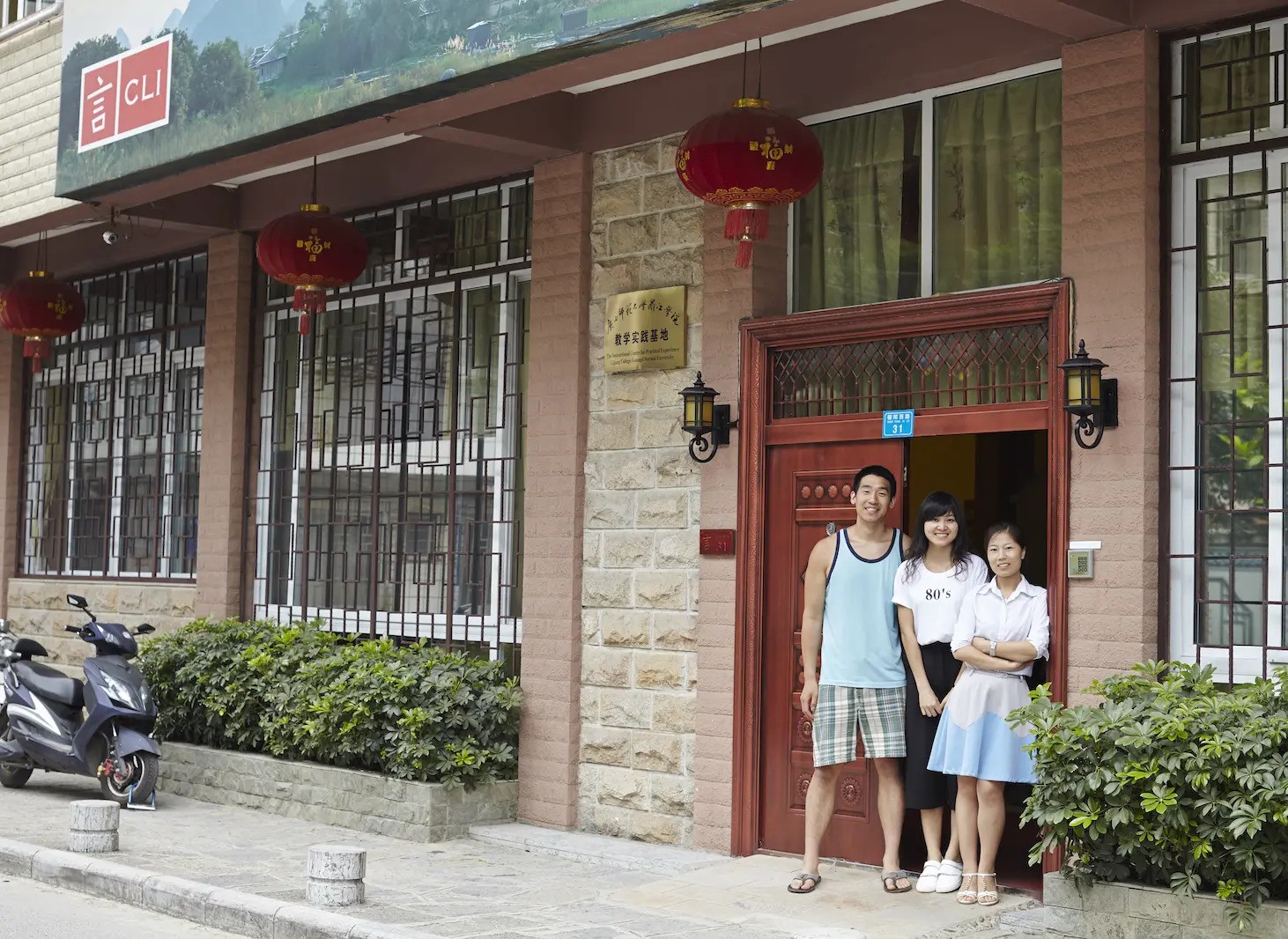
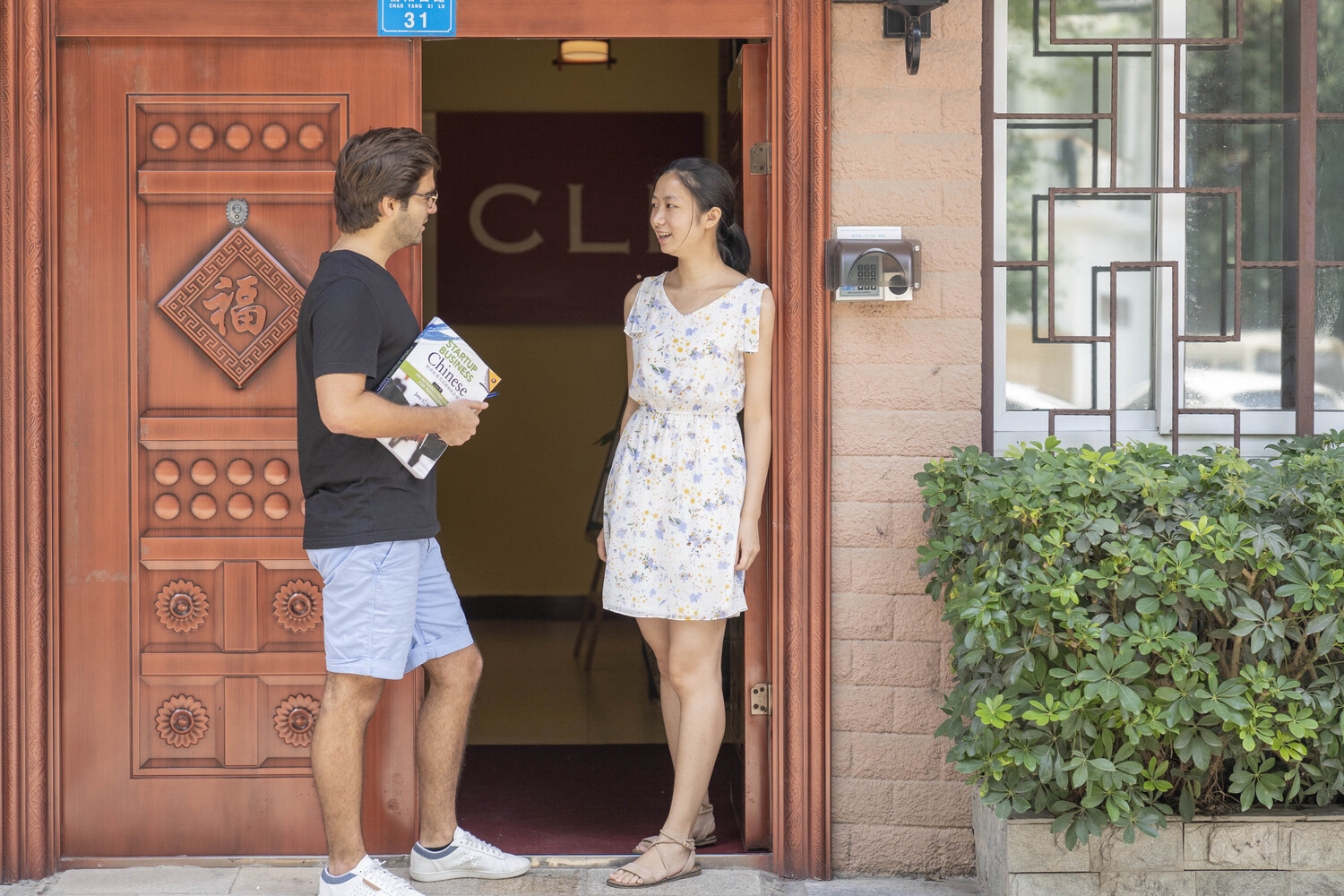
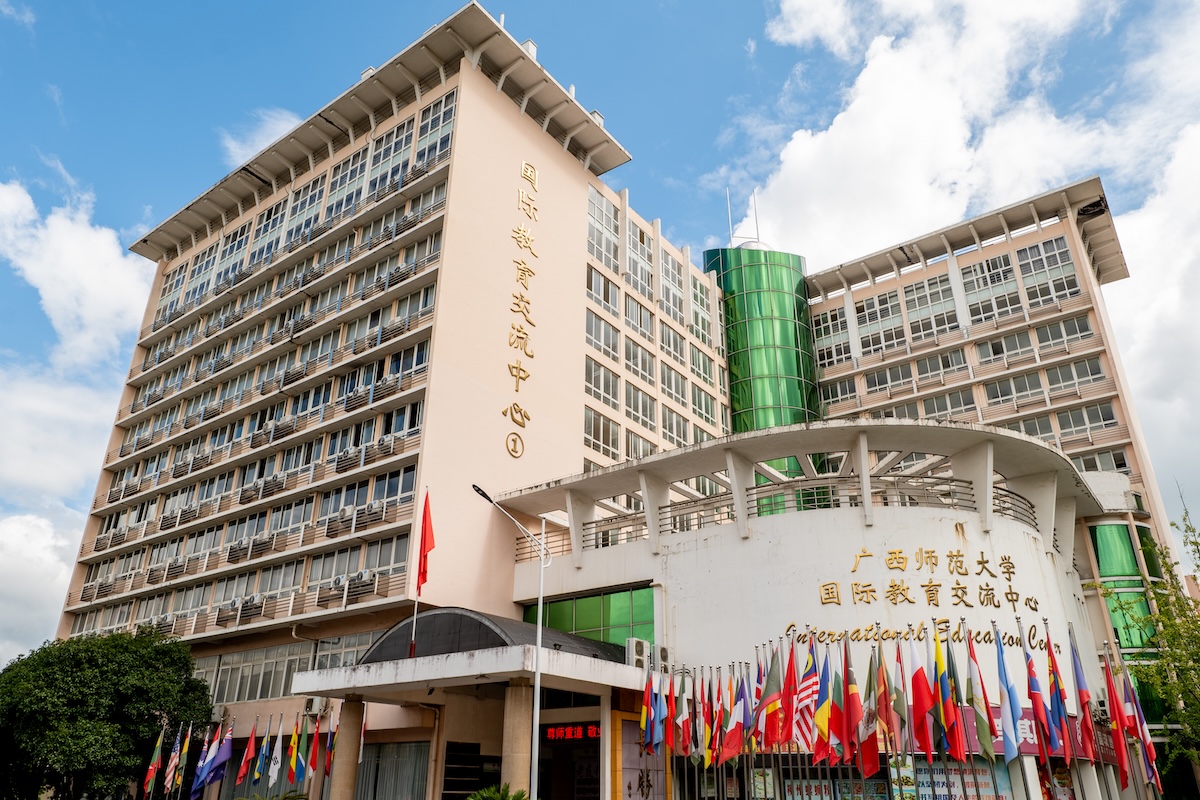
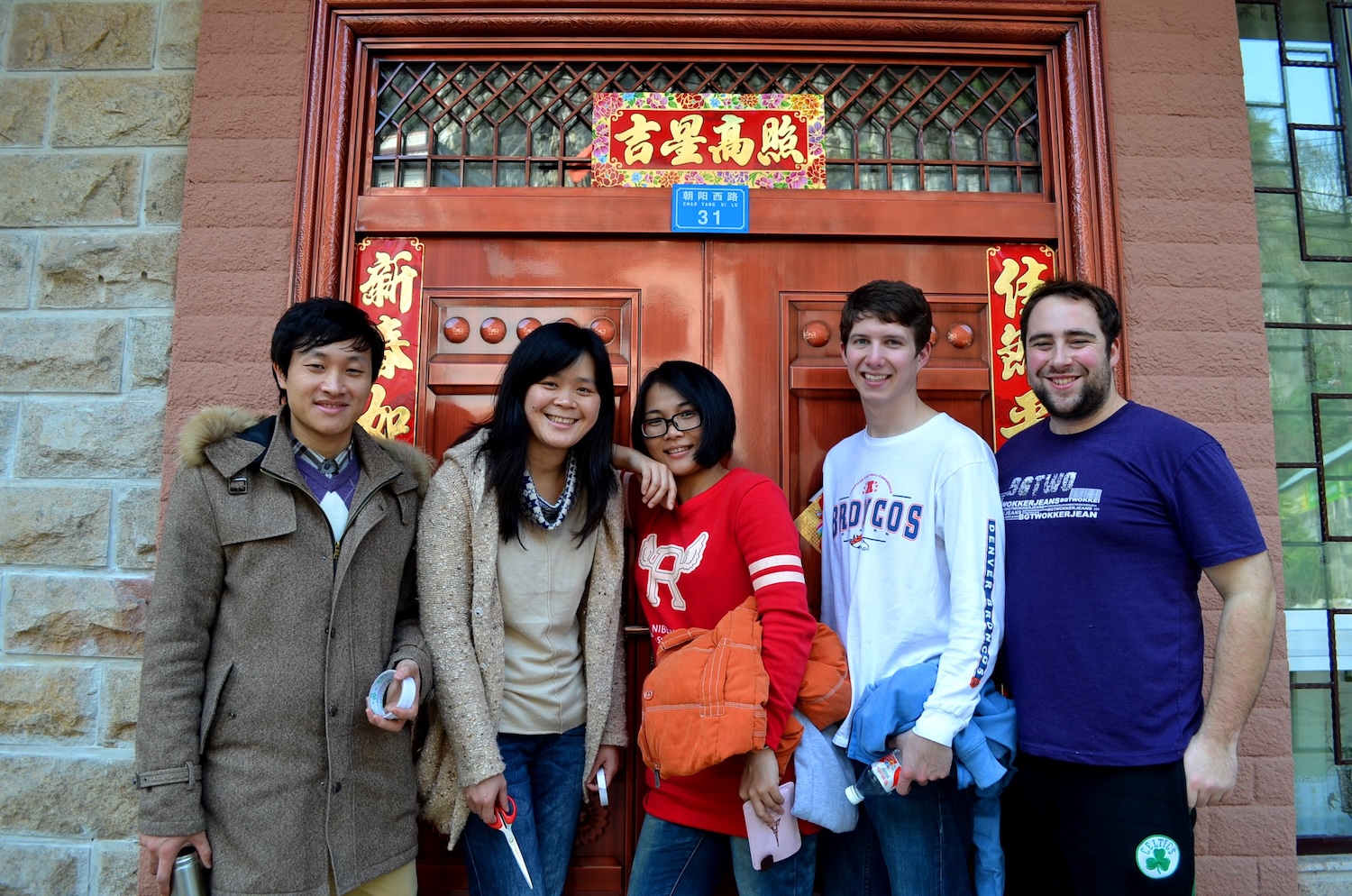
The CLI Center is at 31 Chaoyang Xilu, on a quiet road near Guangxi Normal University.
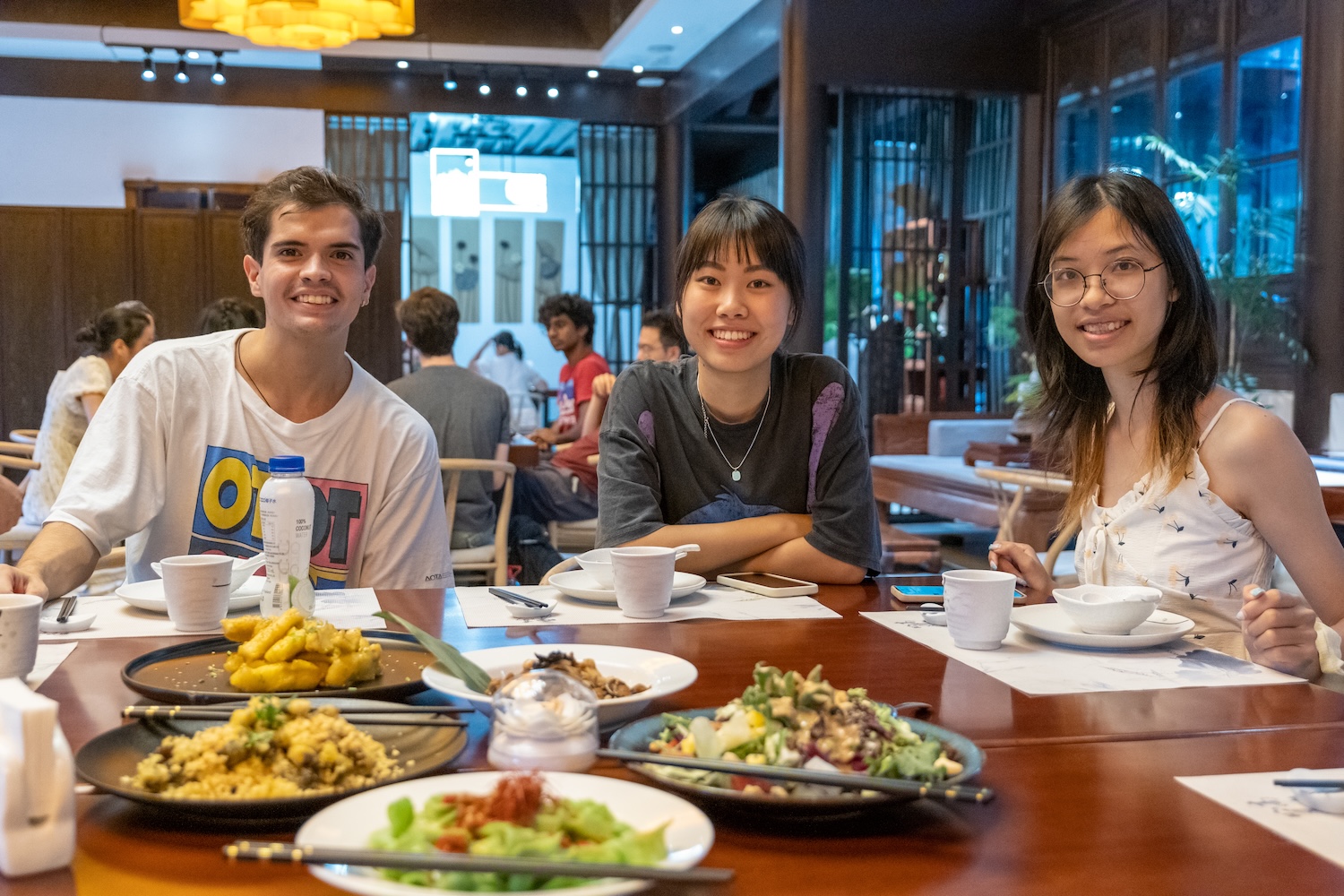
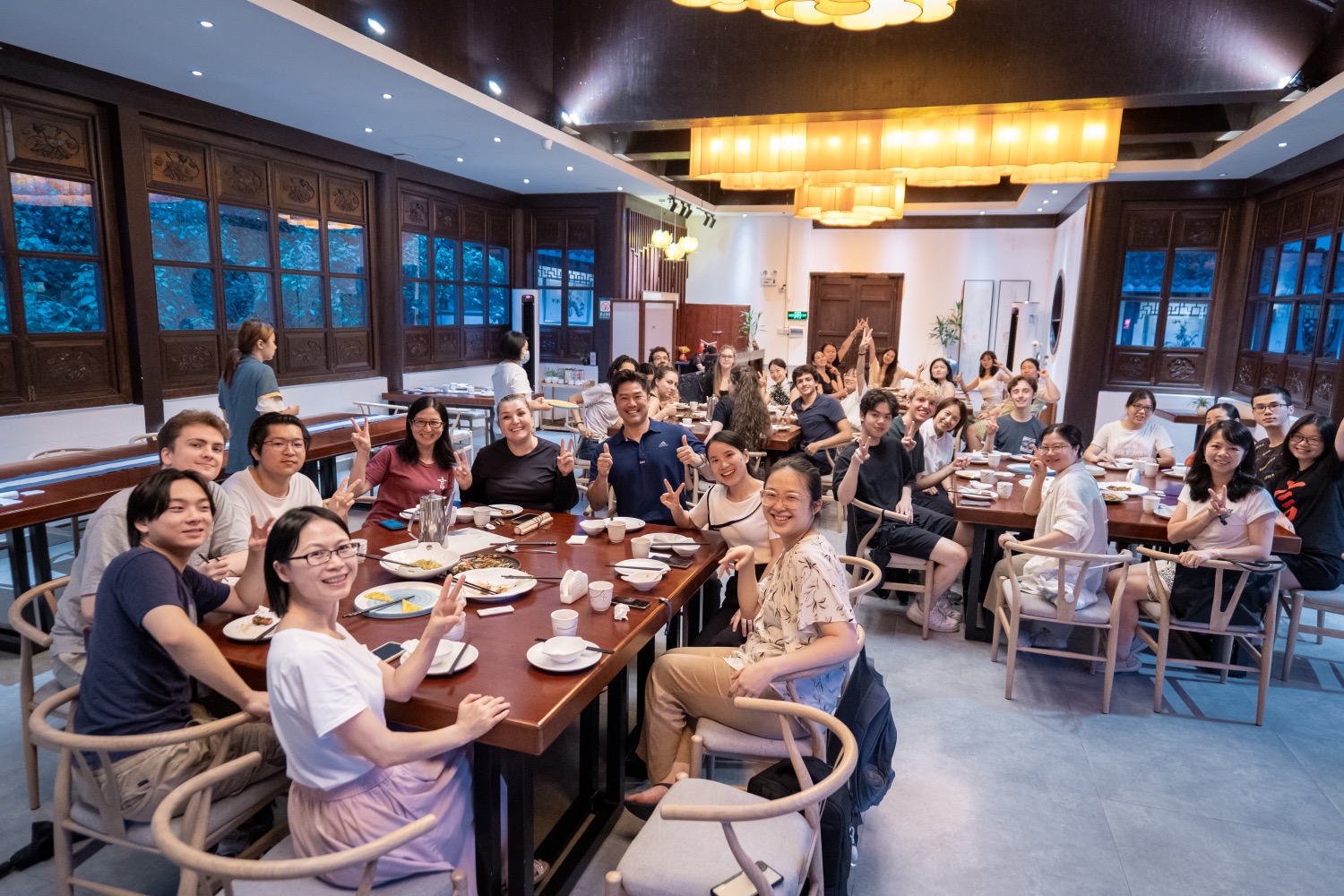
Welcome and farewell dinners are included in tuition, so every stay at CLI opens and closes around a shared table.
Test preparation is one focus advanced students choose, and others spend their class hours on classical Chinese or business Chinese.
The CLI Center has at least one native Chinese speaker for every language learner, so leaving class doesn't mean leaving Chinese.
Native Chinese speakers at the CLI Center at least match the number of language learners living and studying there.
CLI teachers work with learners from high school students to retirees, teaching one student at a time.
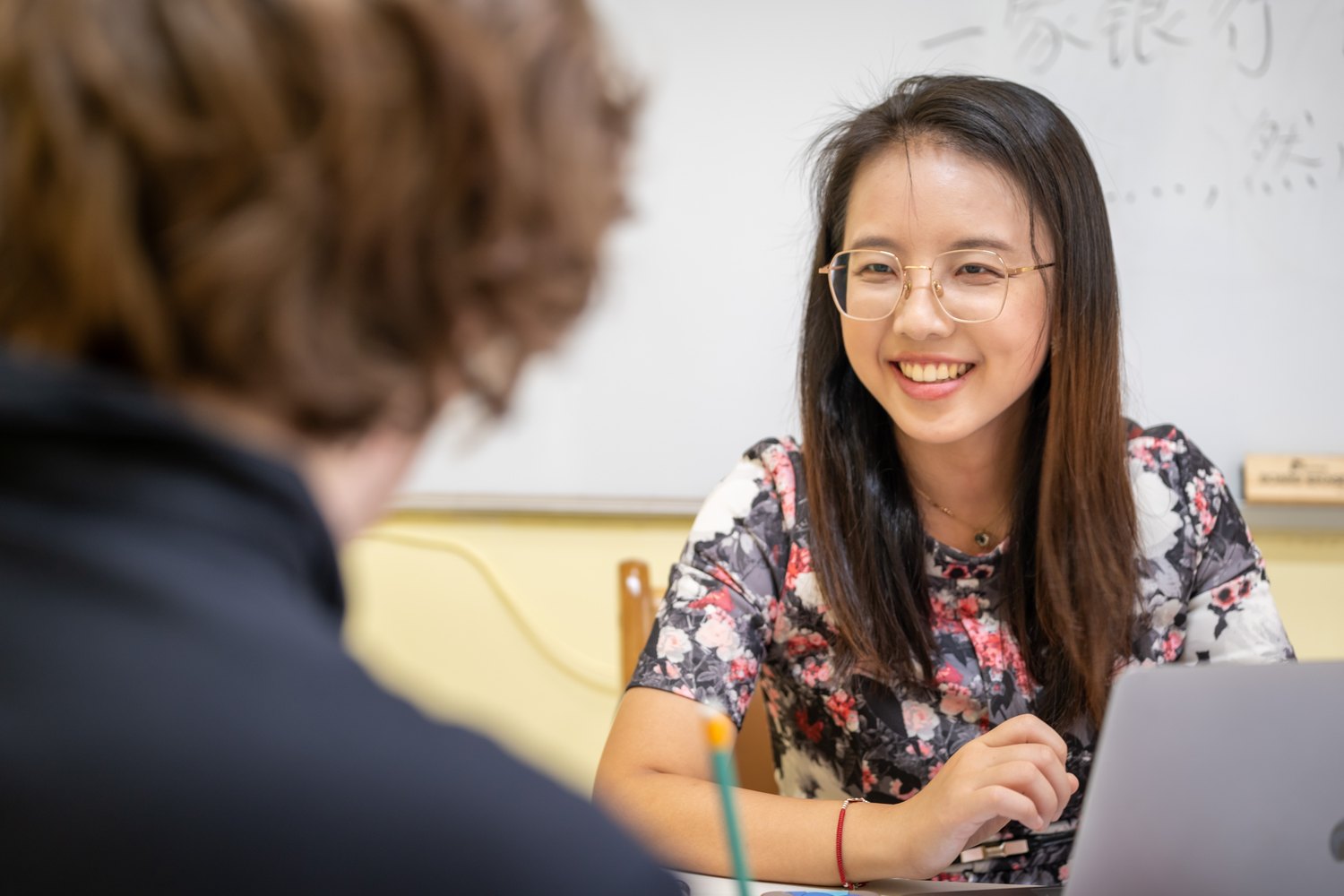
一家银行 (yì jiā yínháng), a bank, on the whiteboard: beginners often start with survival phrases for daily life in Guilin.
About once a month, CLI heads out of Guilin overnight, to places such as the Dong villages of Sanjiang or the old town of Xingping.
Character recognition and stroke order belong to the reading and writing teacher, one of the three teachers every student works with.
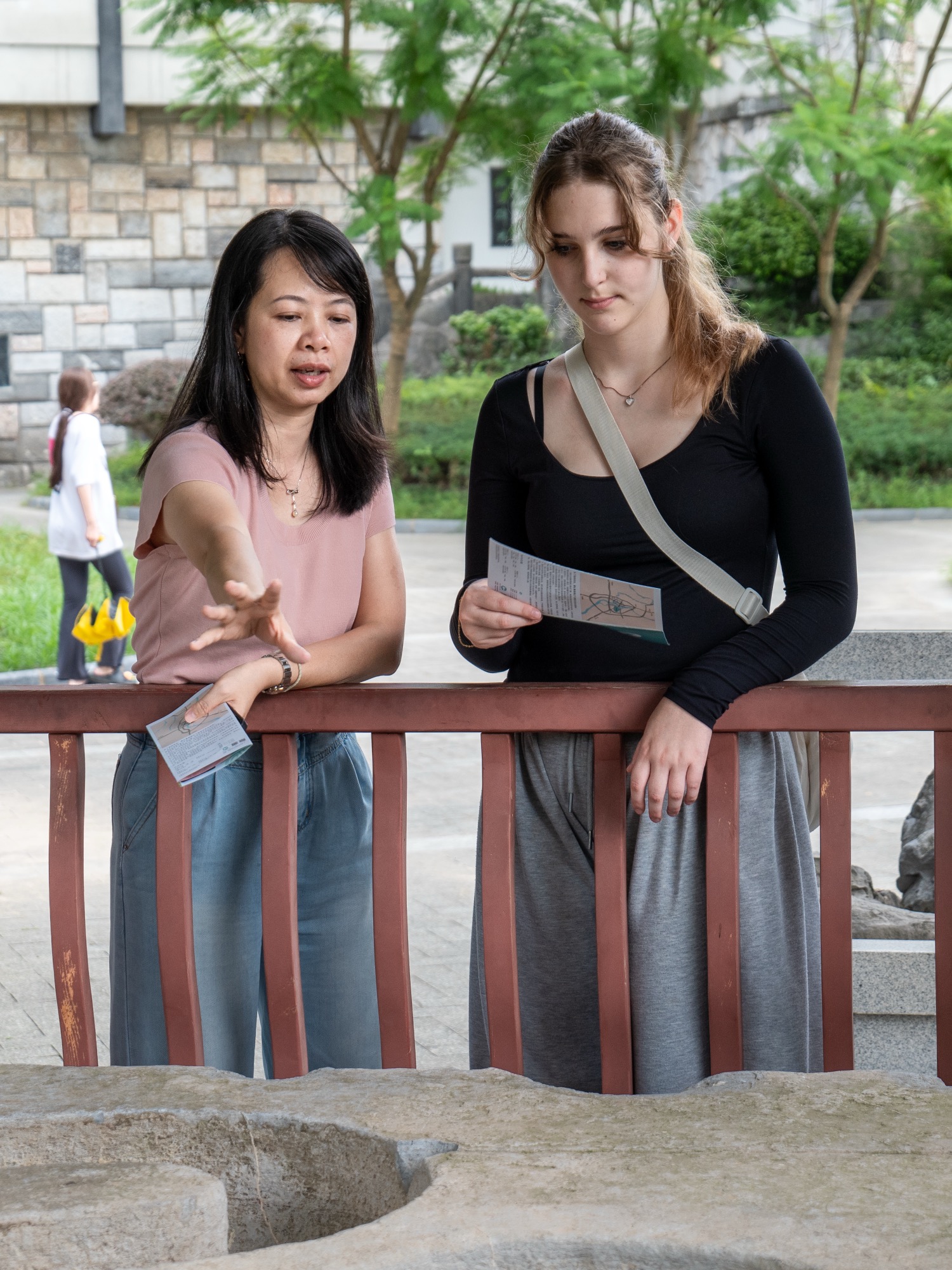
Outside class, the optional Pengyou Program pairs a student with a local university student for three hours of language support a week.
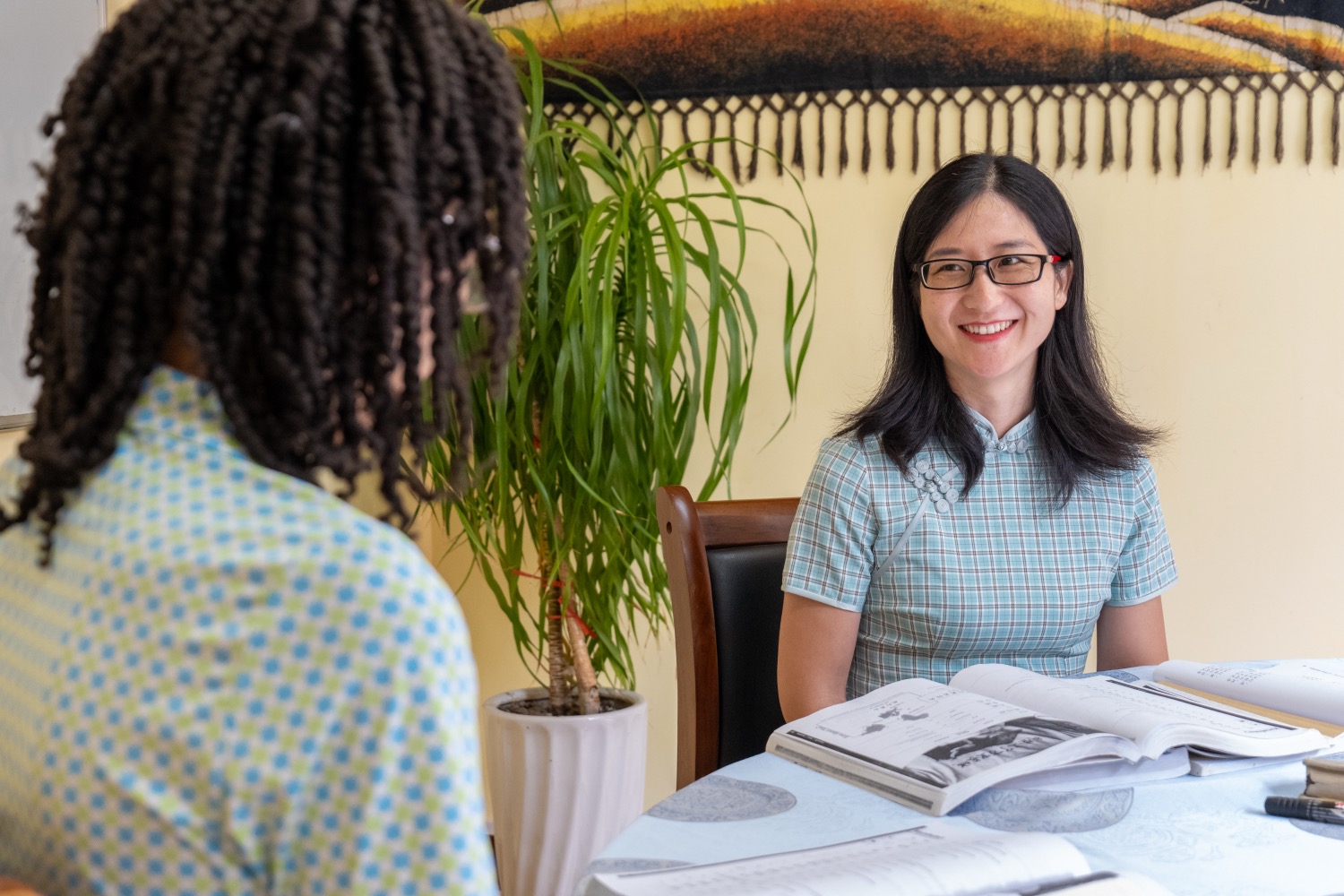
In a one-on-one lesson there is no back row, and each two-hour session moves at the pace of a single student.
Listening comprehension gets its own attention in listening and speaking class, alongside tones and pronunciation.
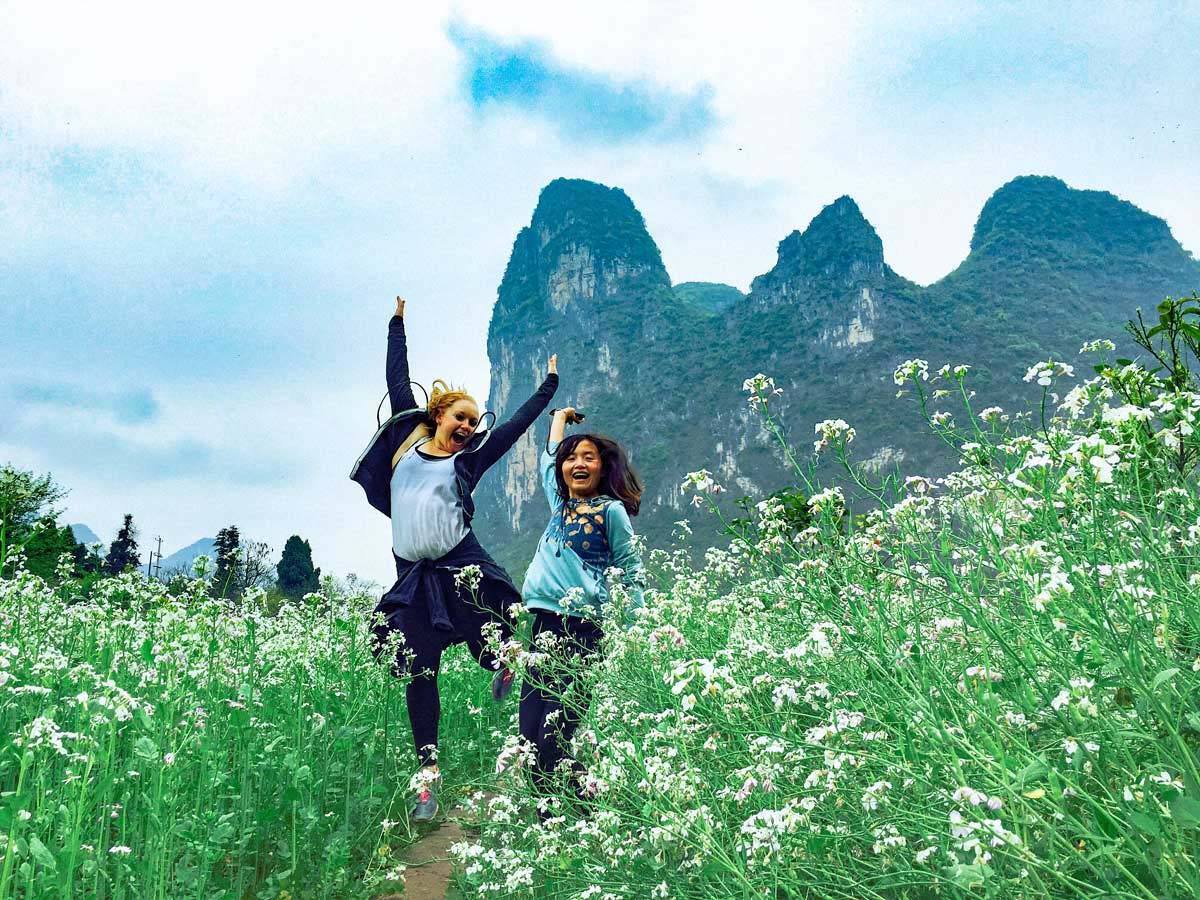
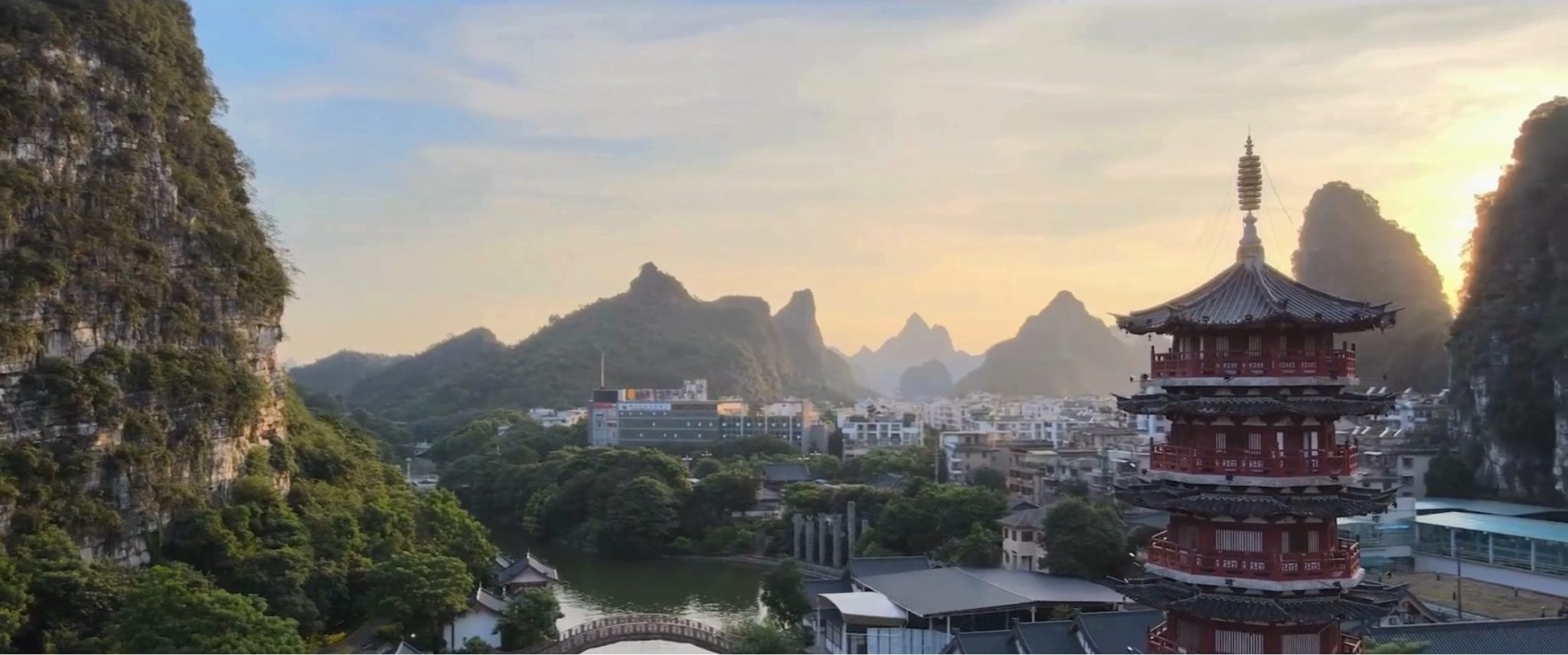
Guilin is ringed by limestone karst peaks, the same ones that appear in Chinese paintings and poetry.
Lessons break for lunch at midday, and vegetarian, halal and other dietary needs can be accommodated.
A student's three teachers each bring a different focus, and over a week their classes add up to 20 hours.
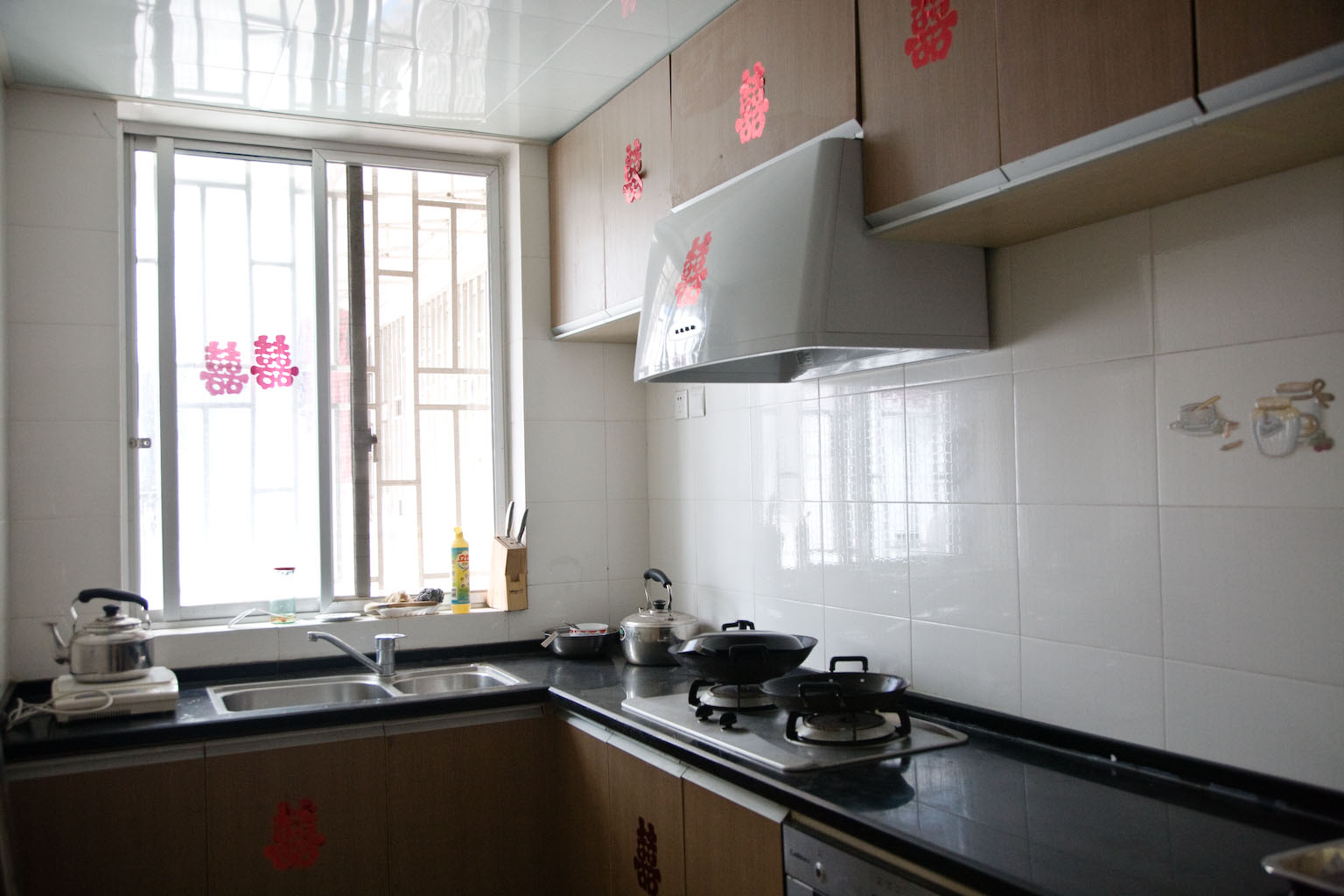
Beyond its classrooms, the CLI Center has a full kitchen and dining area, plus a rooftop with a view.
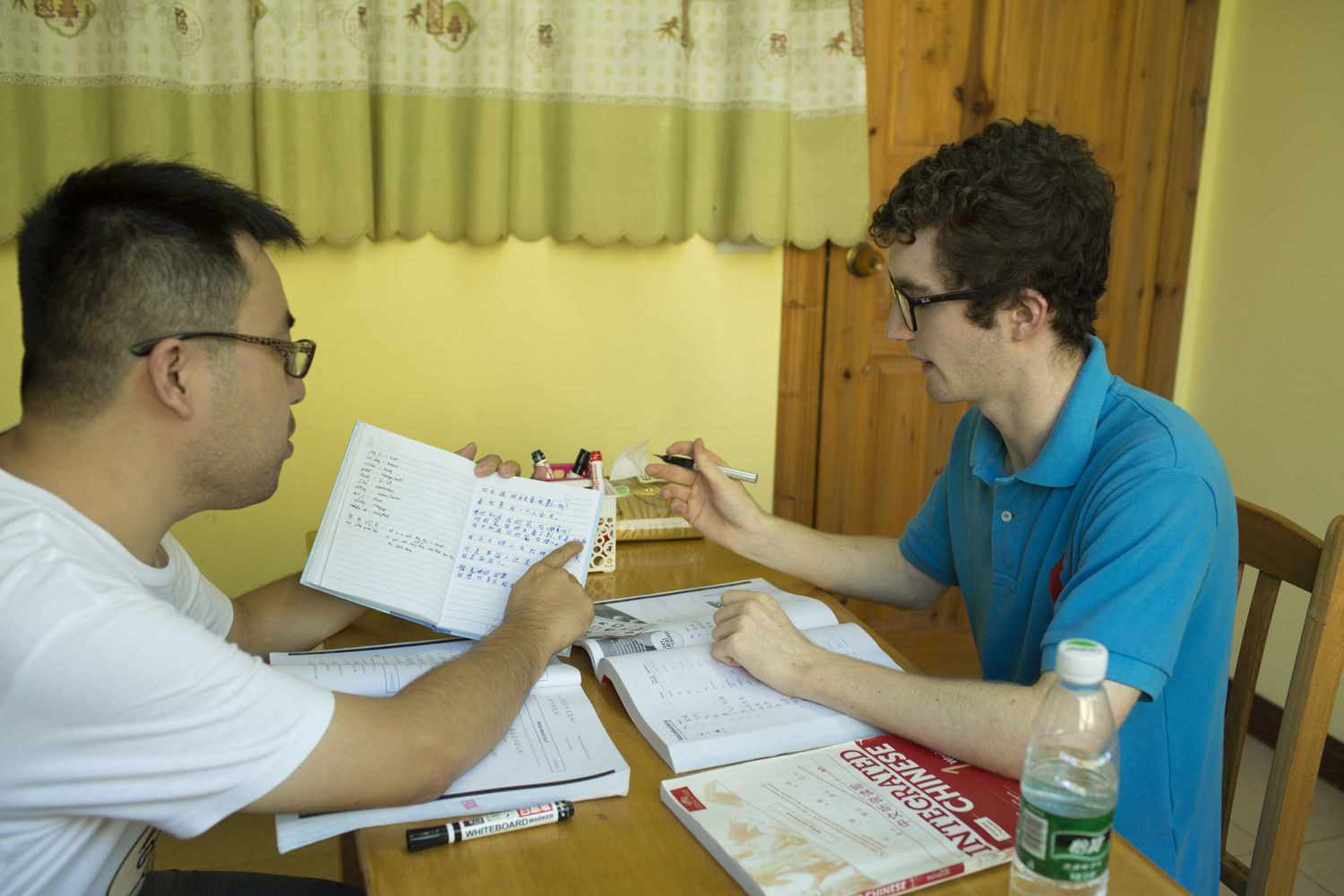
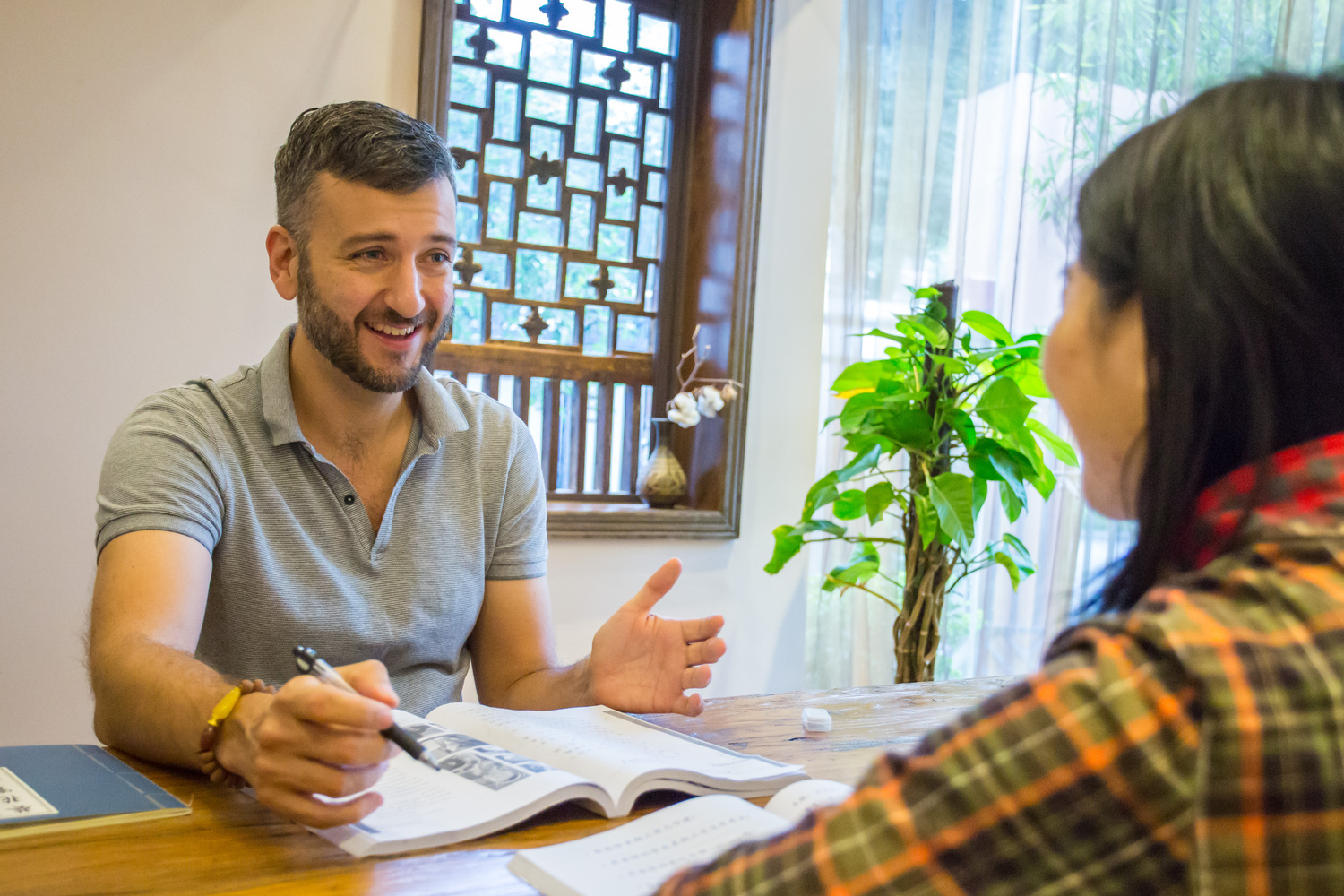
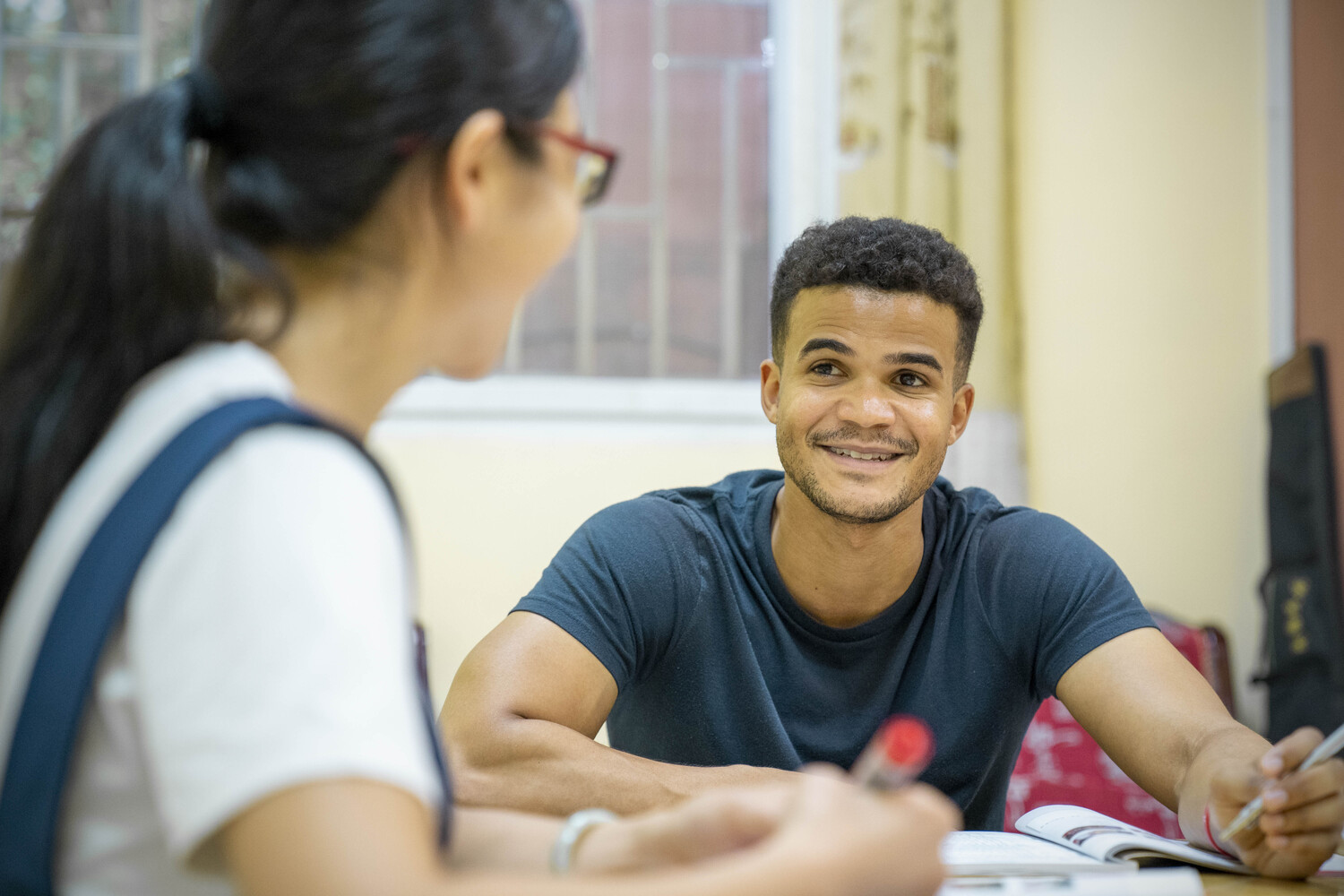
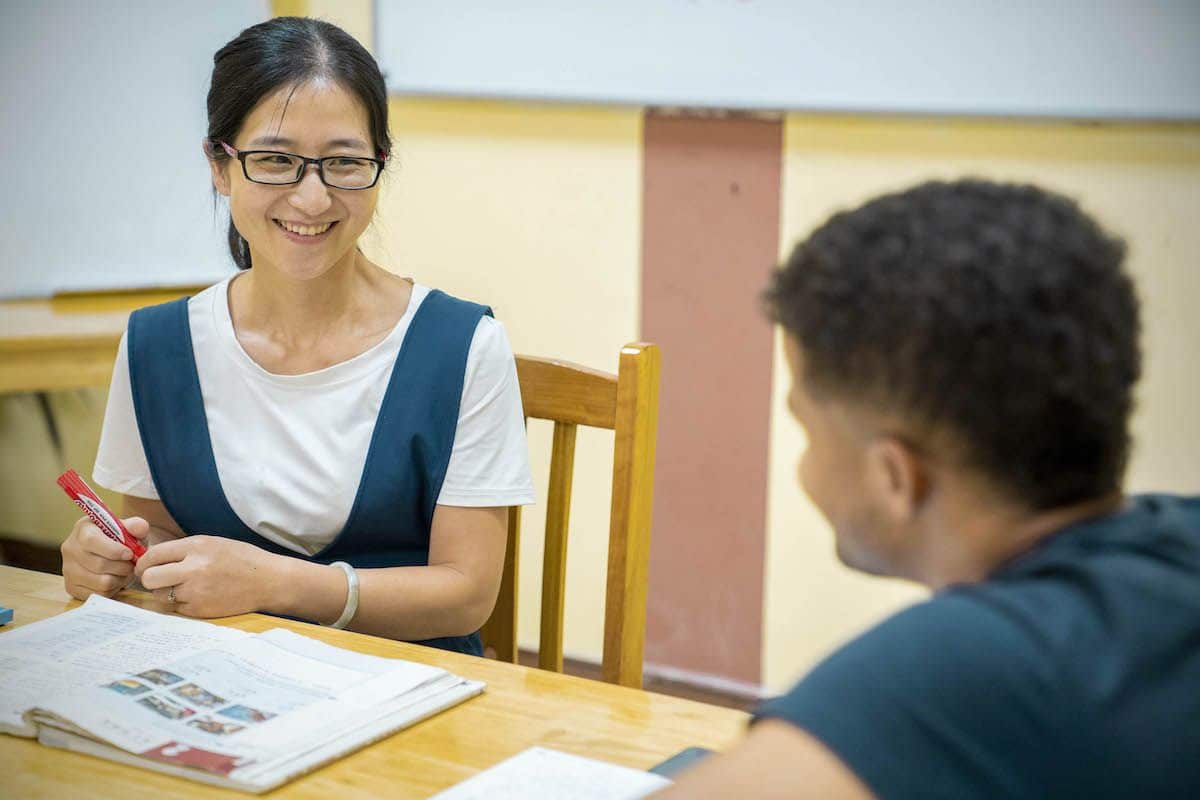
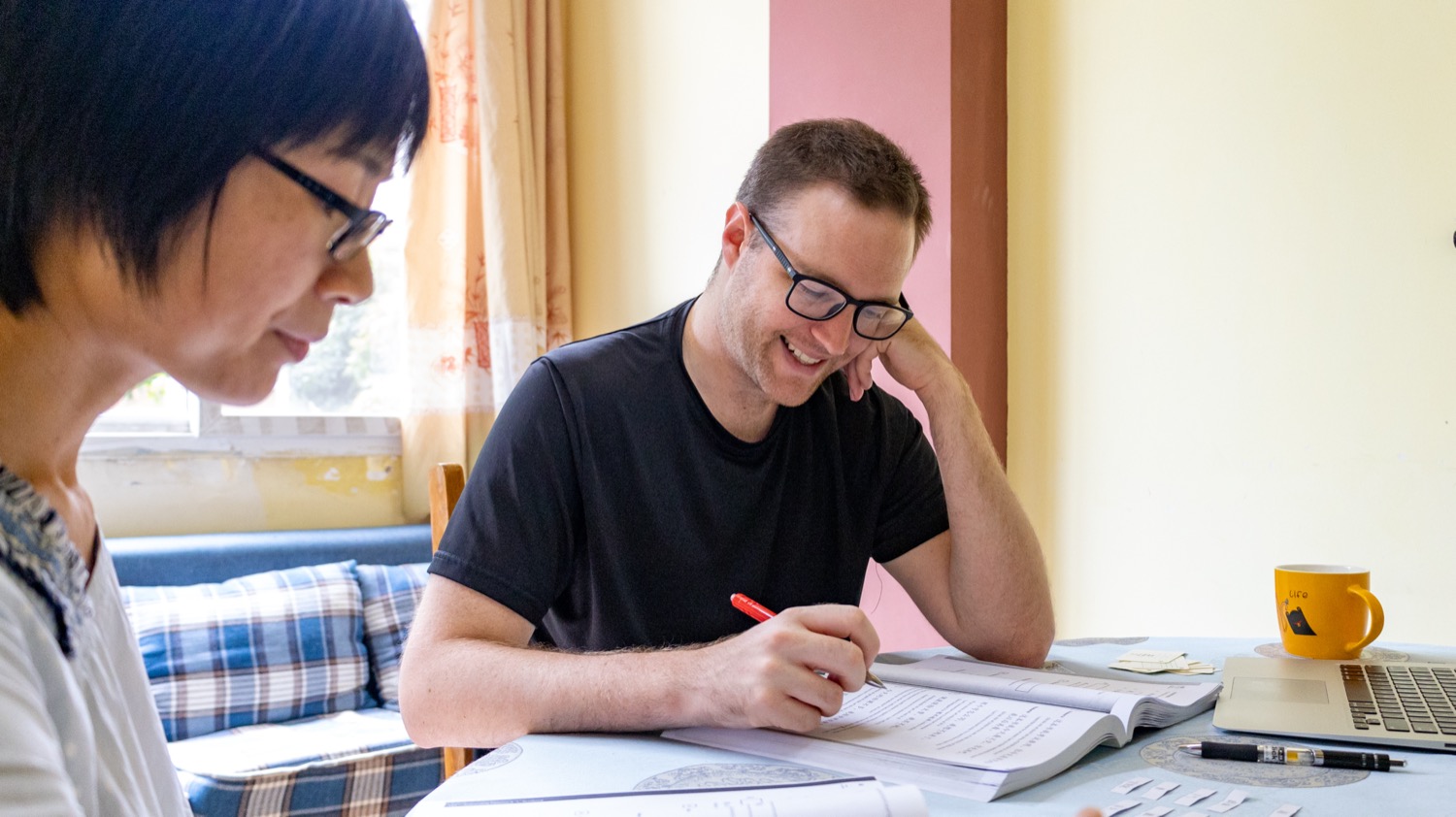
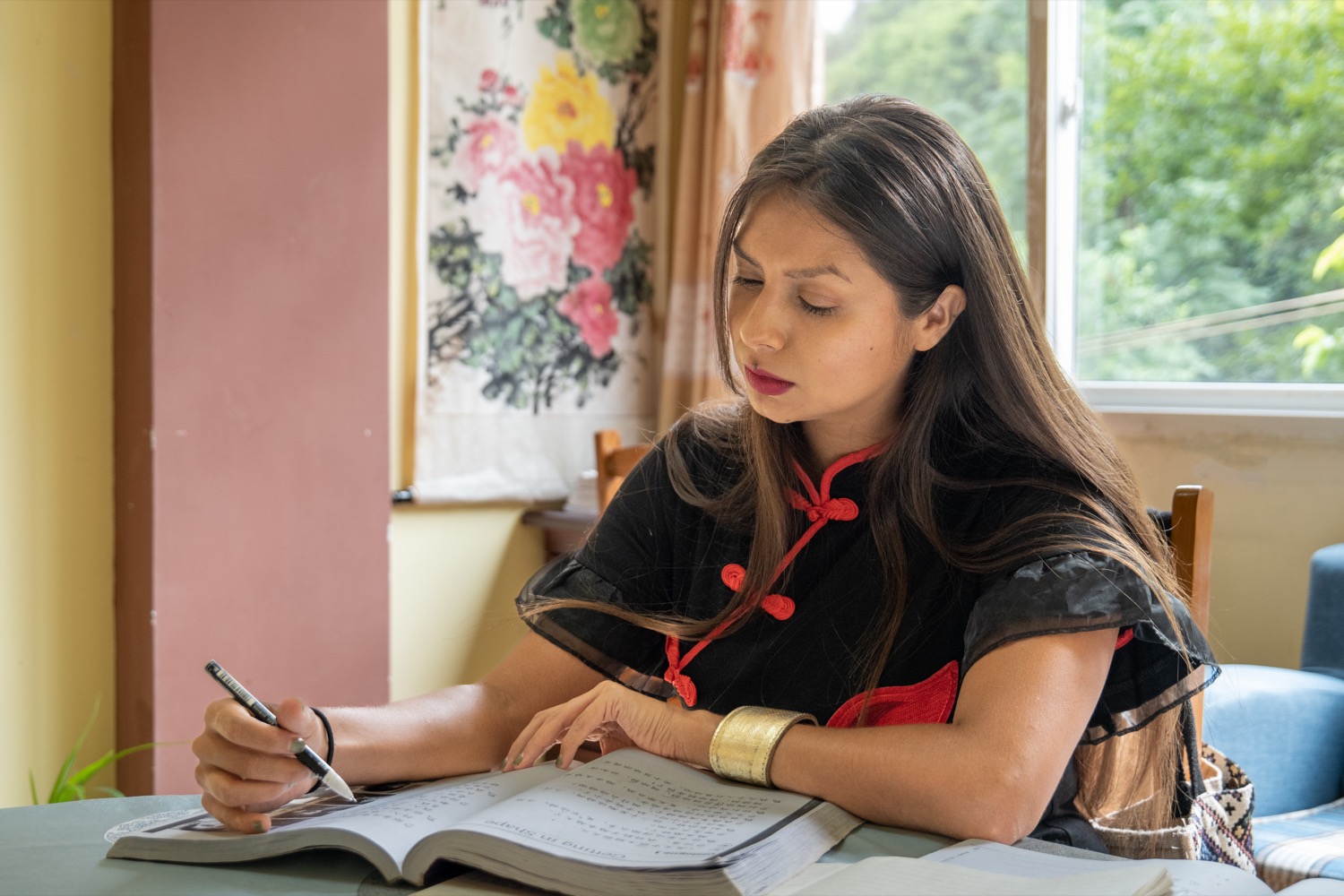
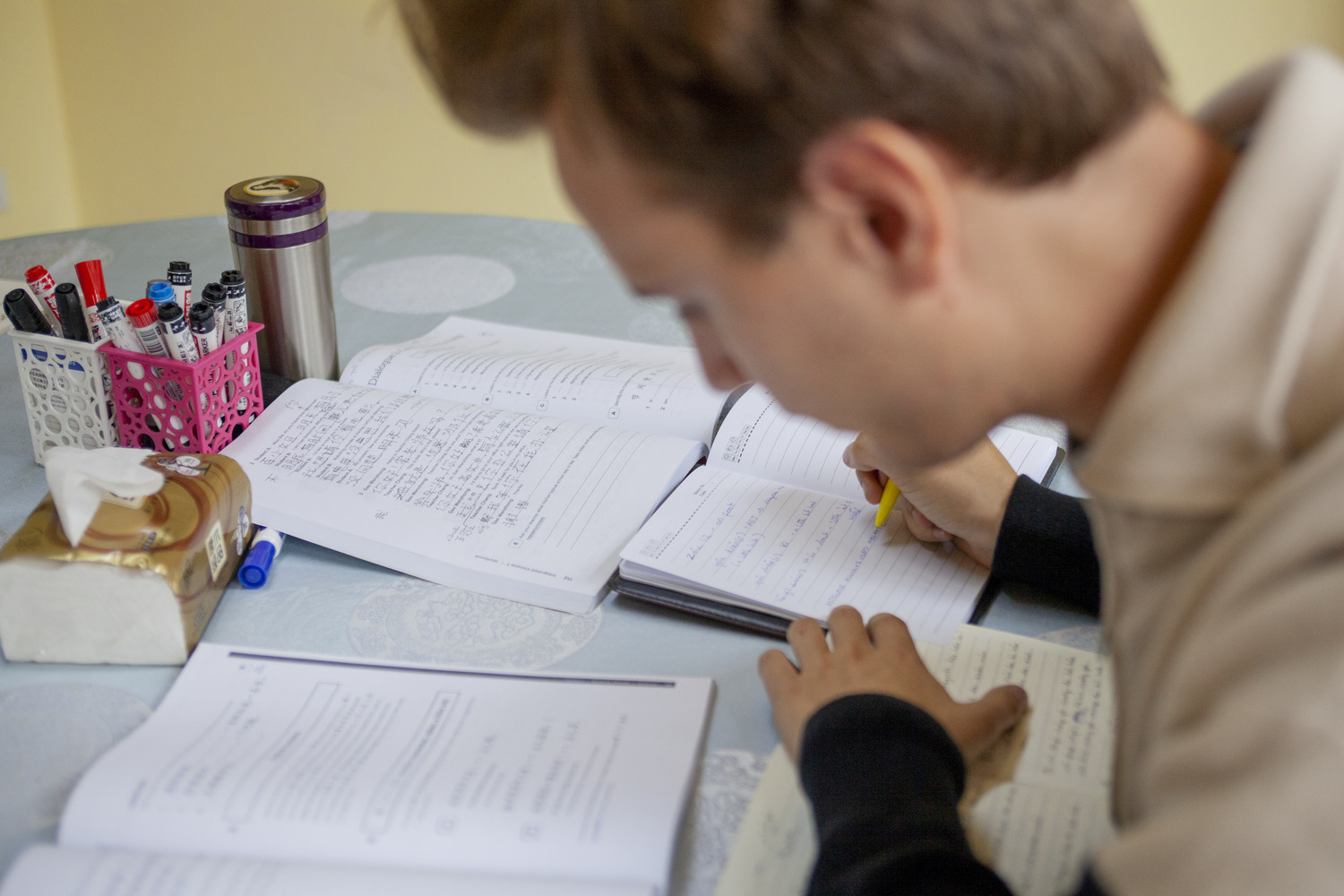
A red pen and a workbook. One-on-one class runs 20 hours a week, so there is time to slow down and get a sentence right.
Evenings are usually lighter, with dinner, review and some informal language practice after the day's two sessions.
Hikes up Guilin's karst mountains are among CLI's activities, often with teachers and pengyou along for the climb.
Outside class, festival celebrations are among CLI's activities, a chance to see Chinese holidays up close in Guilin.
Students and teachers get close over weeks of daily lessons, and teachers often come along on weekend trips and monthly excursions too.
The CLI Center has five floors, with classrooms on the lower two and private rooms on floors three to five.
Guilin is a full city, yet compact and walkable, and with little English spoken, Mandarin becomes part of daily life.
Morning books, then lunch. On the optional meal plan, a home-cooked Chinese lunch is served family style at the Center, Monday to Friday.
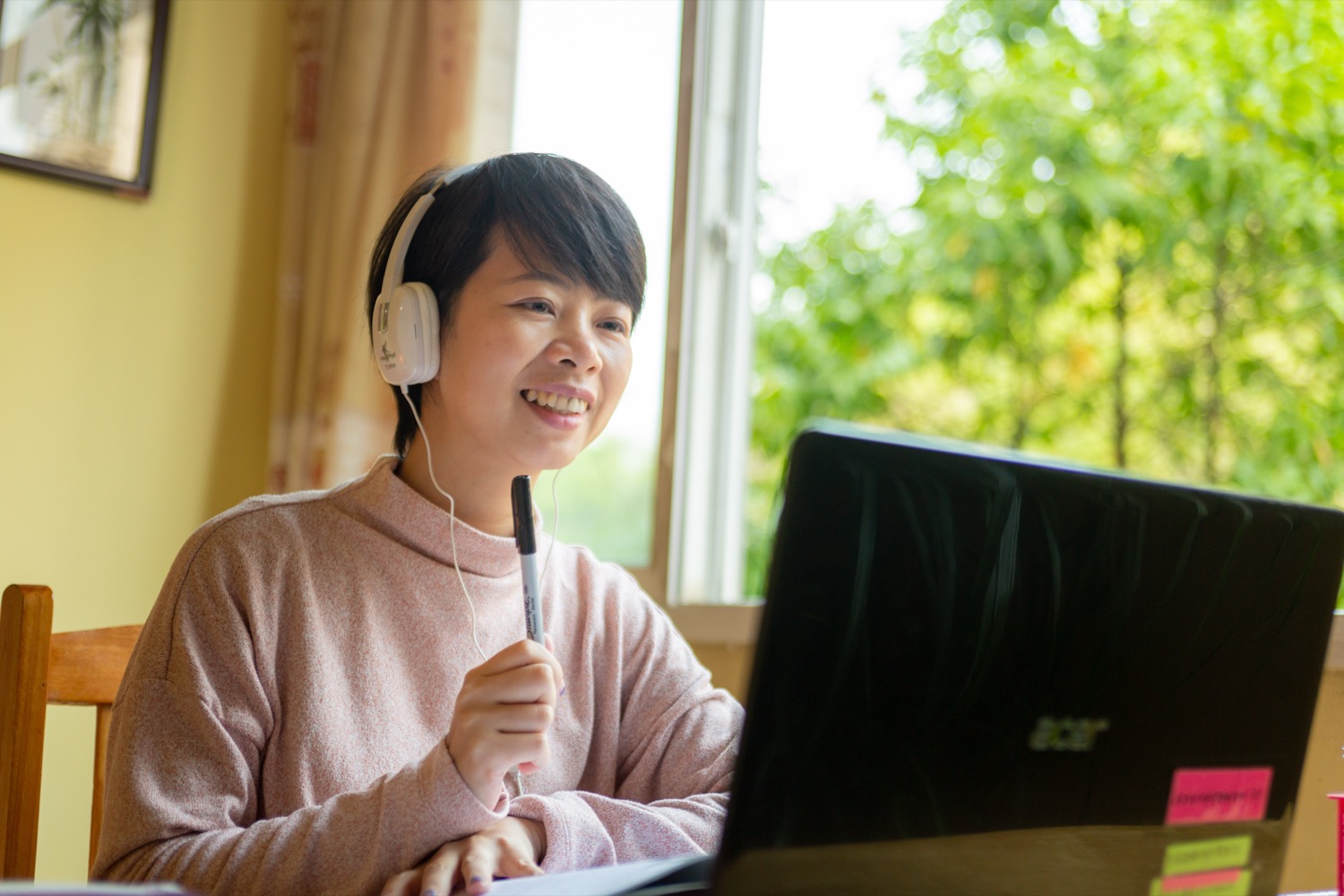
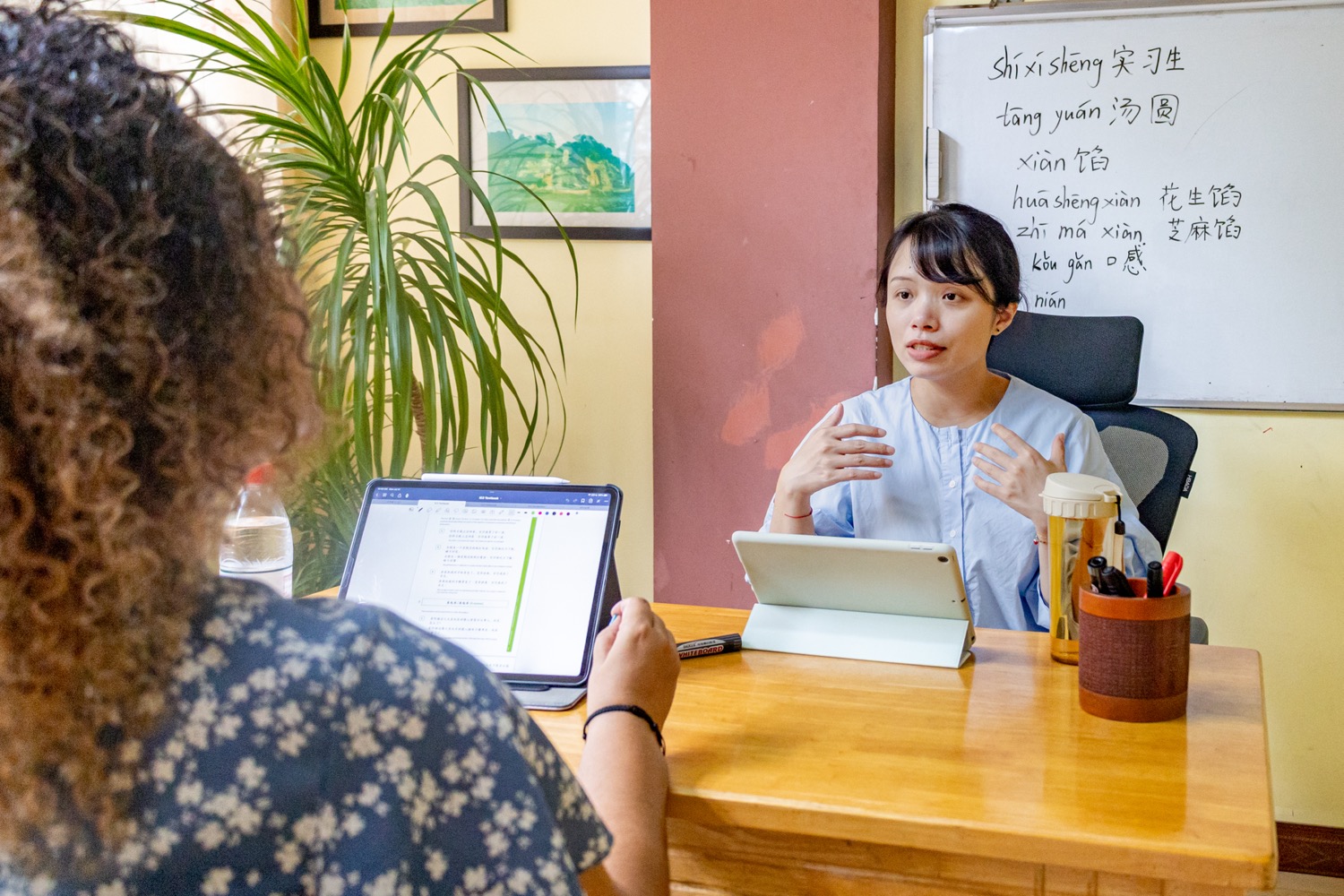
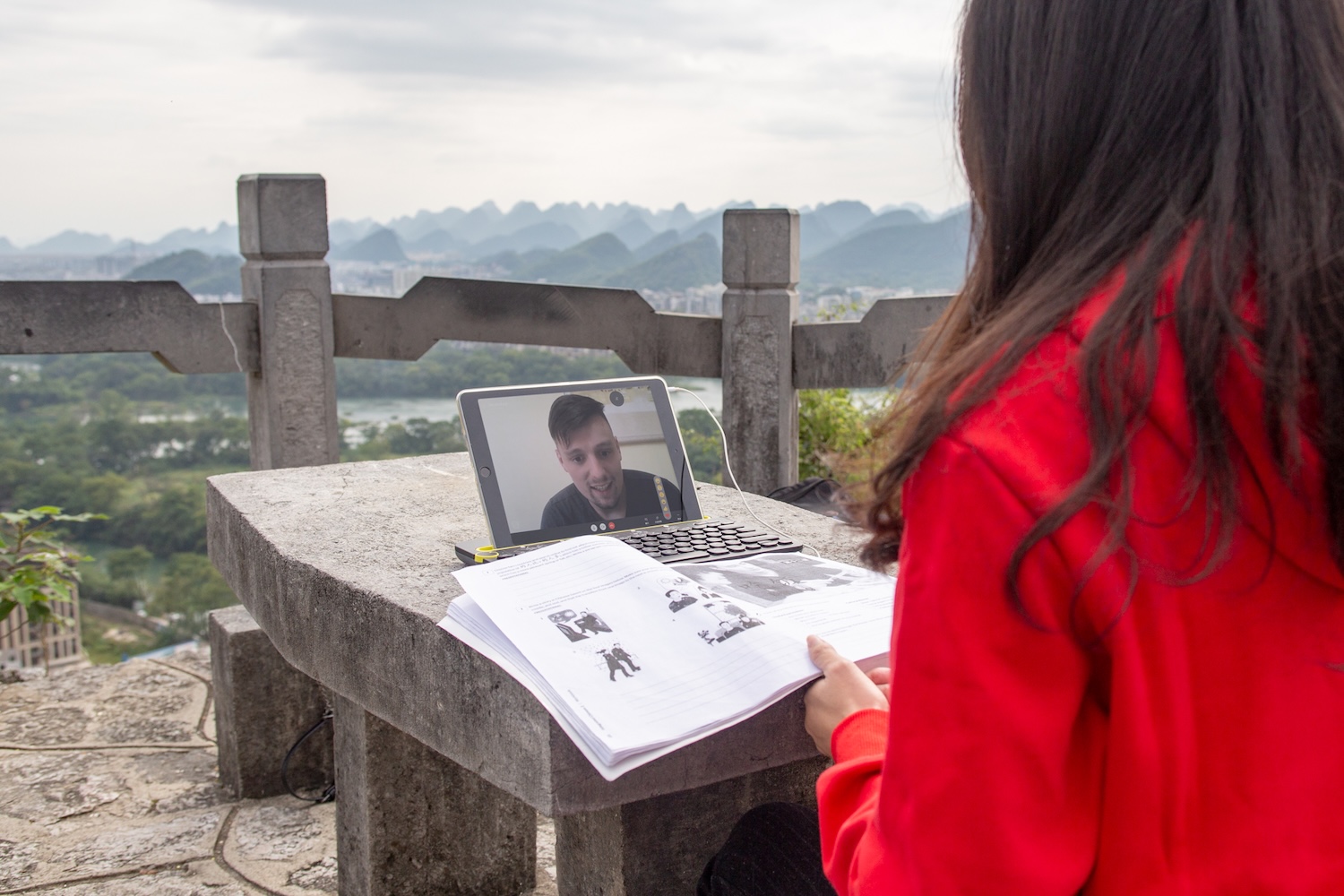
A one-on-one lesson can use whatever helps, from a tablet to a whiteboard, and teachers can slow down on hard material or move ahead.
Coursework at CLI can lead to an official transcript from Guangxi Normal University, CLI's university affiliate in Guilin.
Rice noodle tastings are one of CLI's activities, and Guilin rice noodles are a breakfast staple at neighborhood shops near the Center.
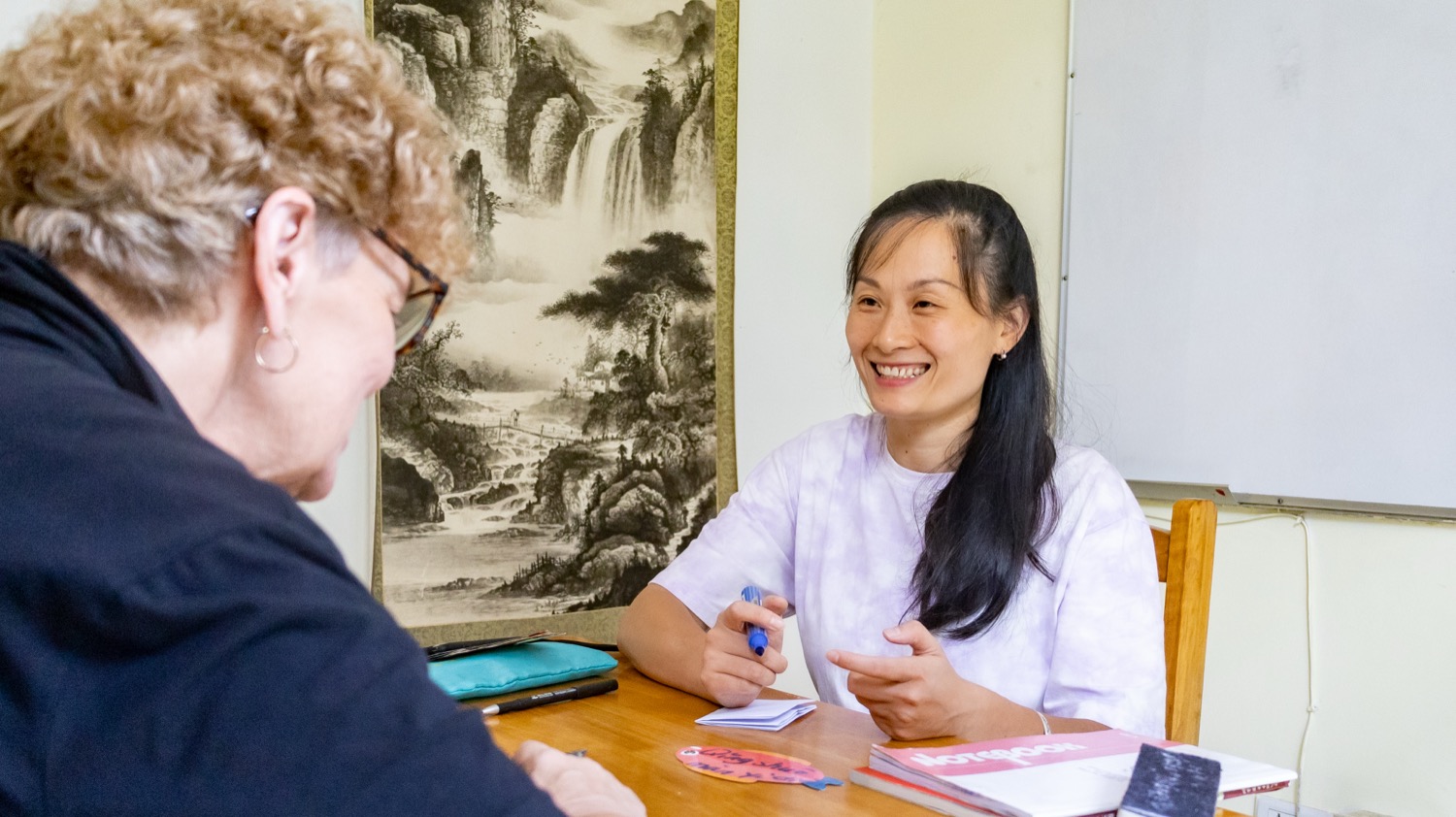
The scroll on the wall shows the kind of karst peaks that ring Guilin, the same mountains that appear in Chinese paintings and poetry.
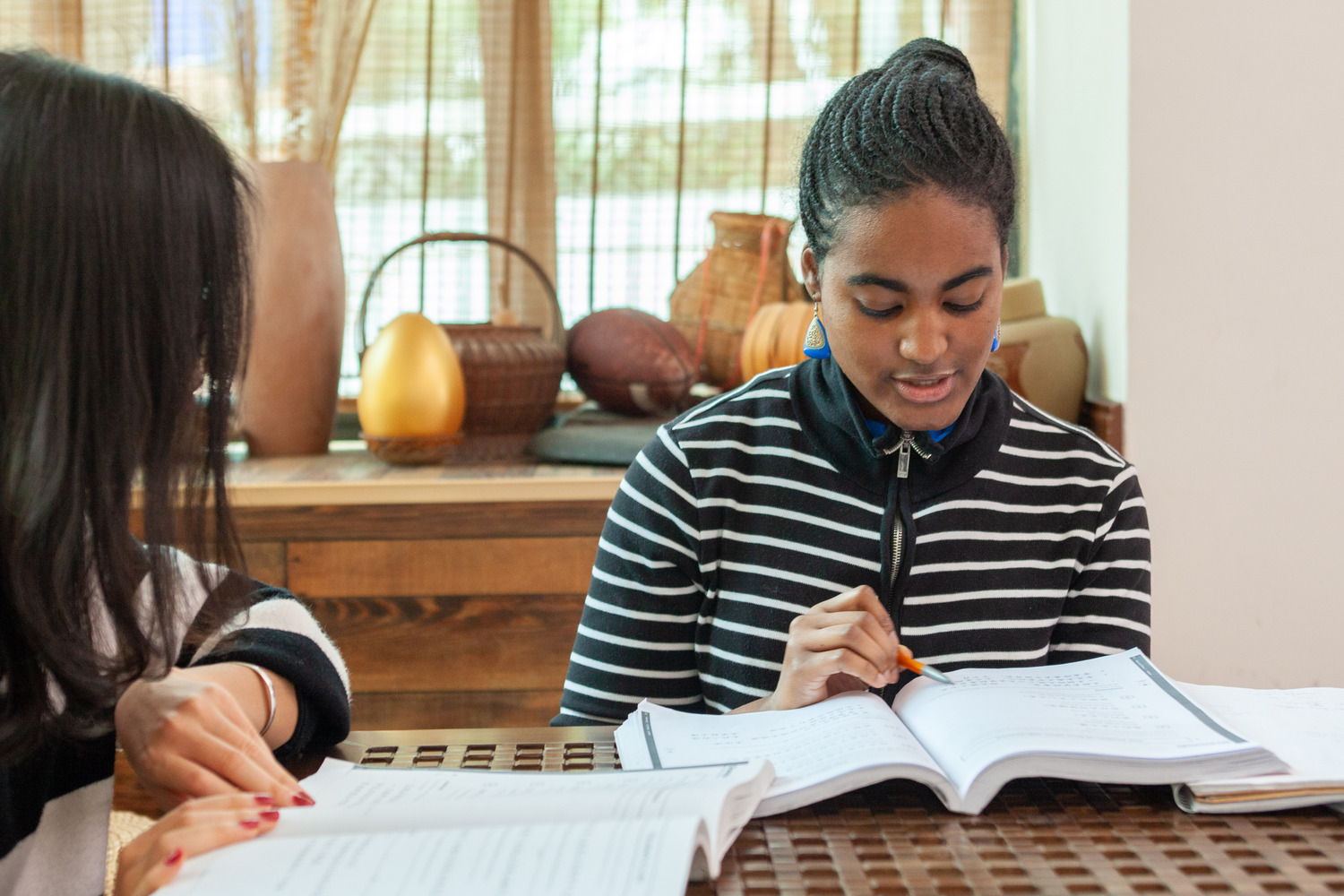
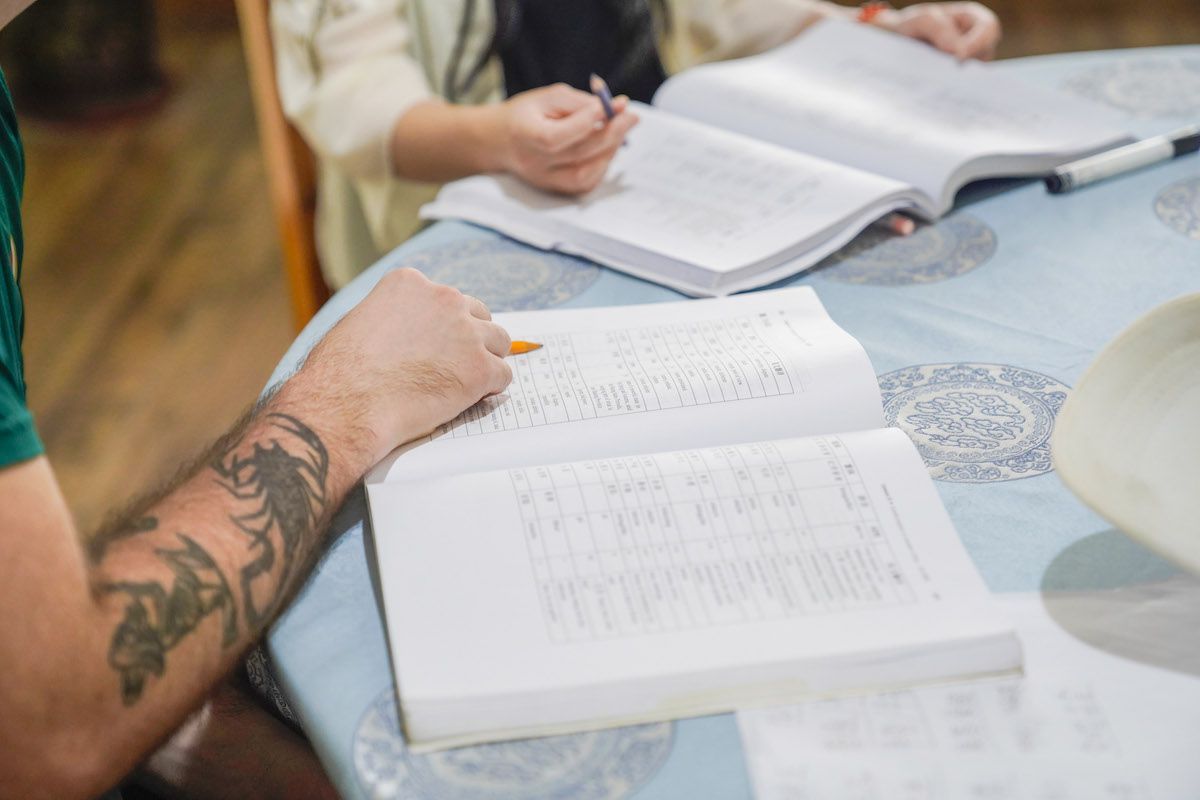
A workbook page in pen. Every two weeks, a short evaluation checks how new material is holding up, and teachers plan the next lessons from it.
Guilin has a famous line worth writing out: 桂林山水甲天下 (Guìlín shānshuǐ jiǎ tiānxià), Guilin's mountains and rivers are the best under heaven.
Since 2009, more than 5,000 students from over 50 countries and 400 institutions have come to Guilin to study Chinese with CLI.
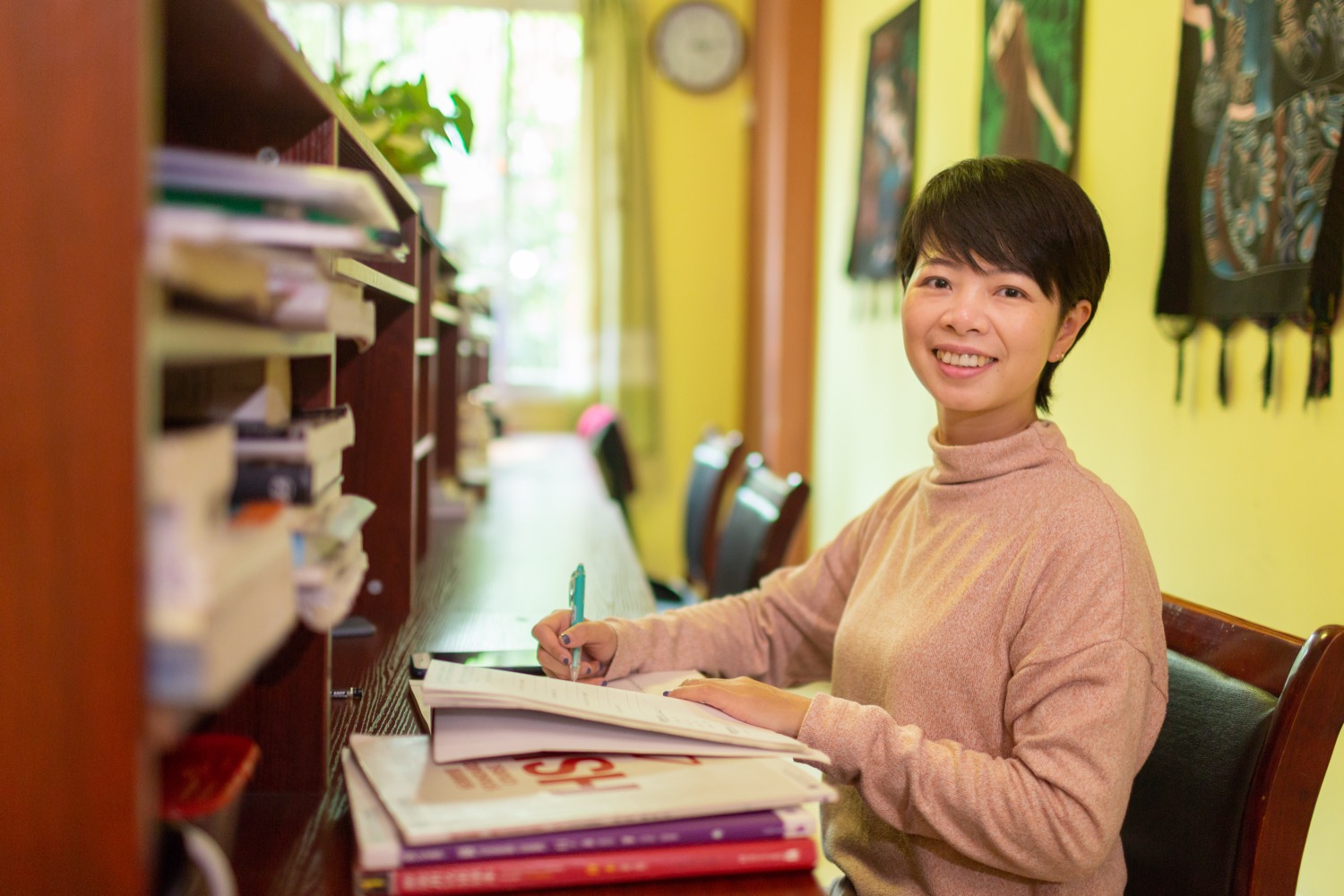
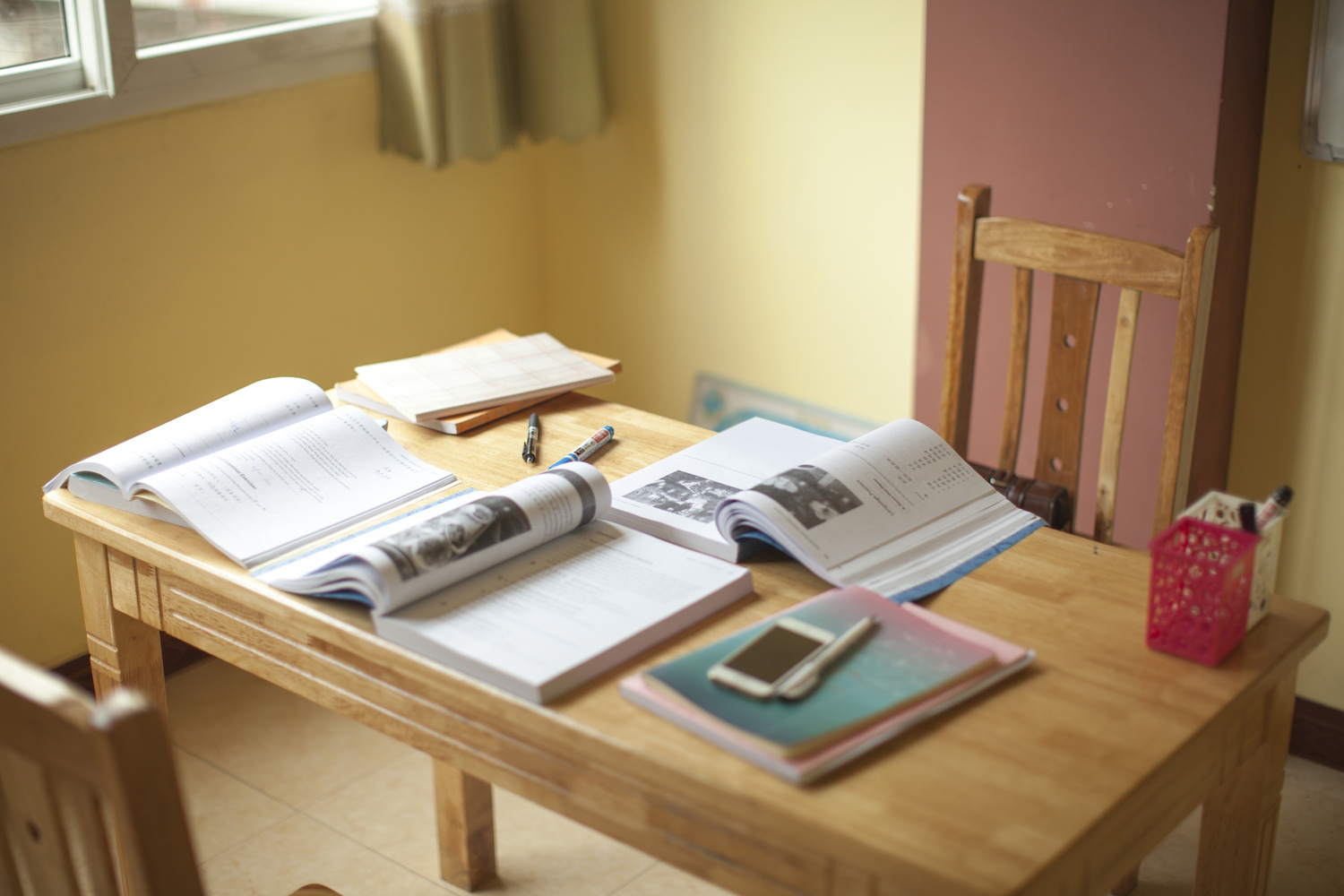
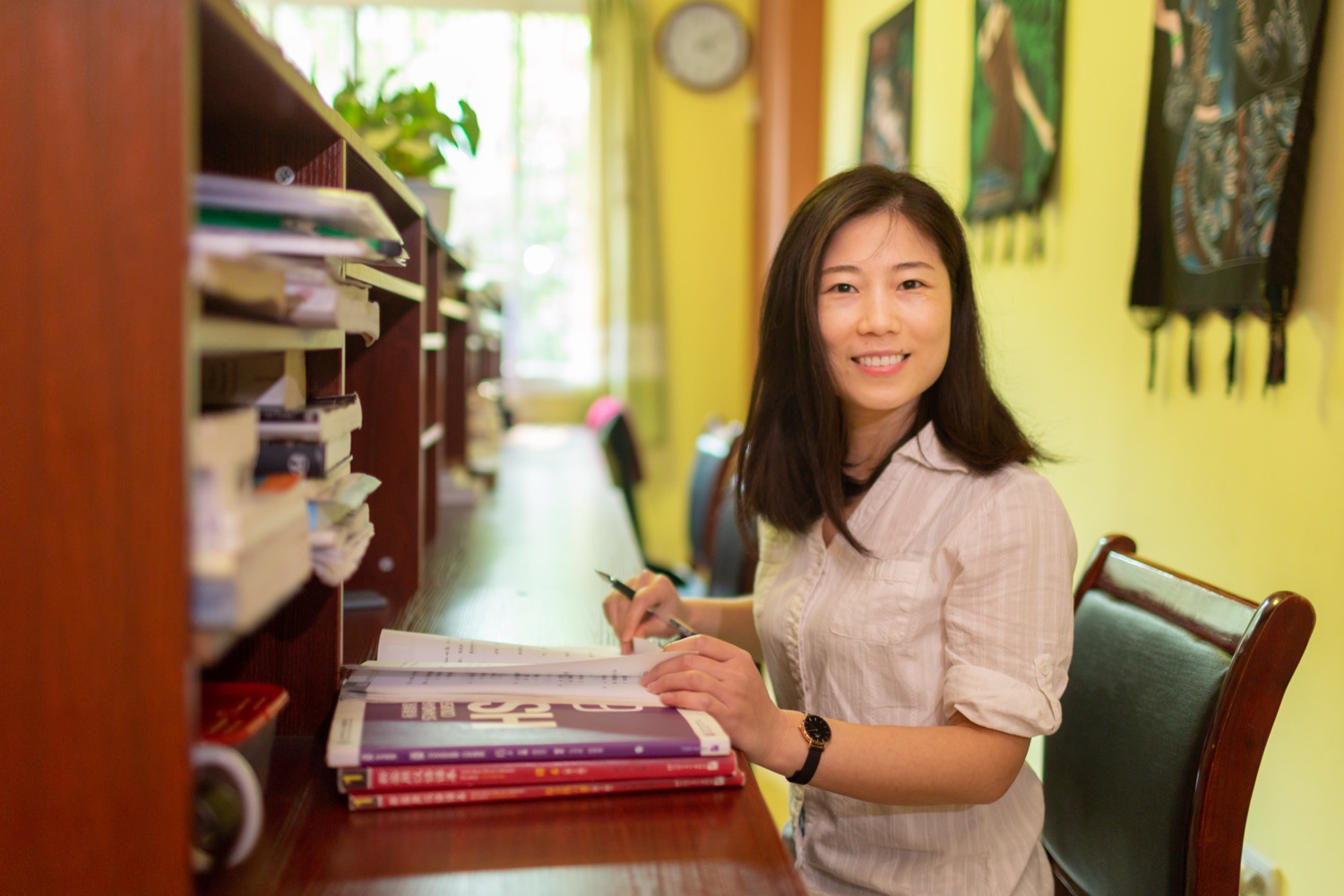
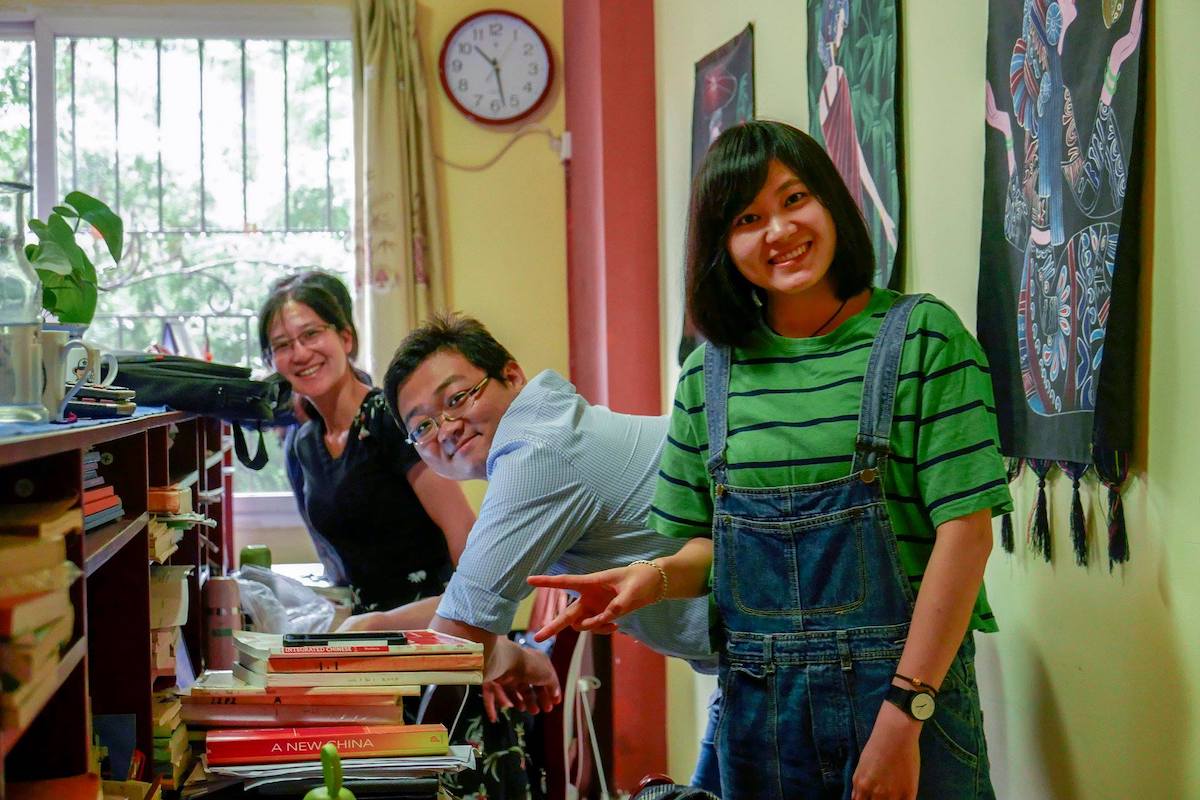
Bookshelves and a desk: the CLI Center has a reading room and study areas where students can keep working between class sessions.
Plans for the week go up on the activities board on the Center's second floor, with outings such as tea house visits or a rice terrace hike.
One-on-one classes need only a small room with a table and a whiteboard, and the CLI Center has 18 of them.
A new sentence pattern on the whiteboard. More than 5,000 students from over 400 institutions have studied Chinese with CLI.
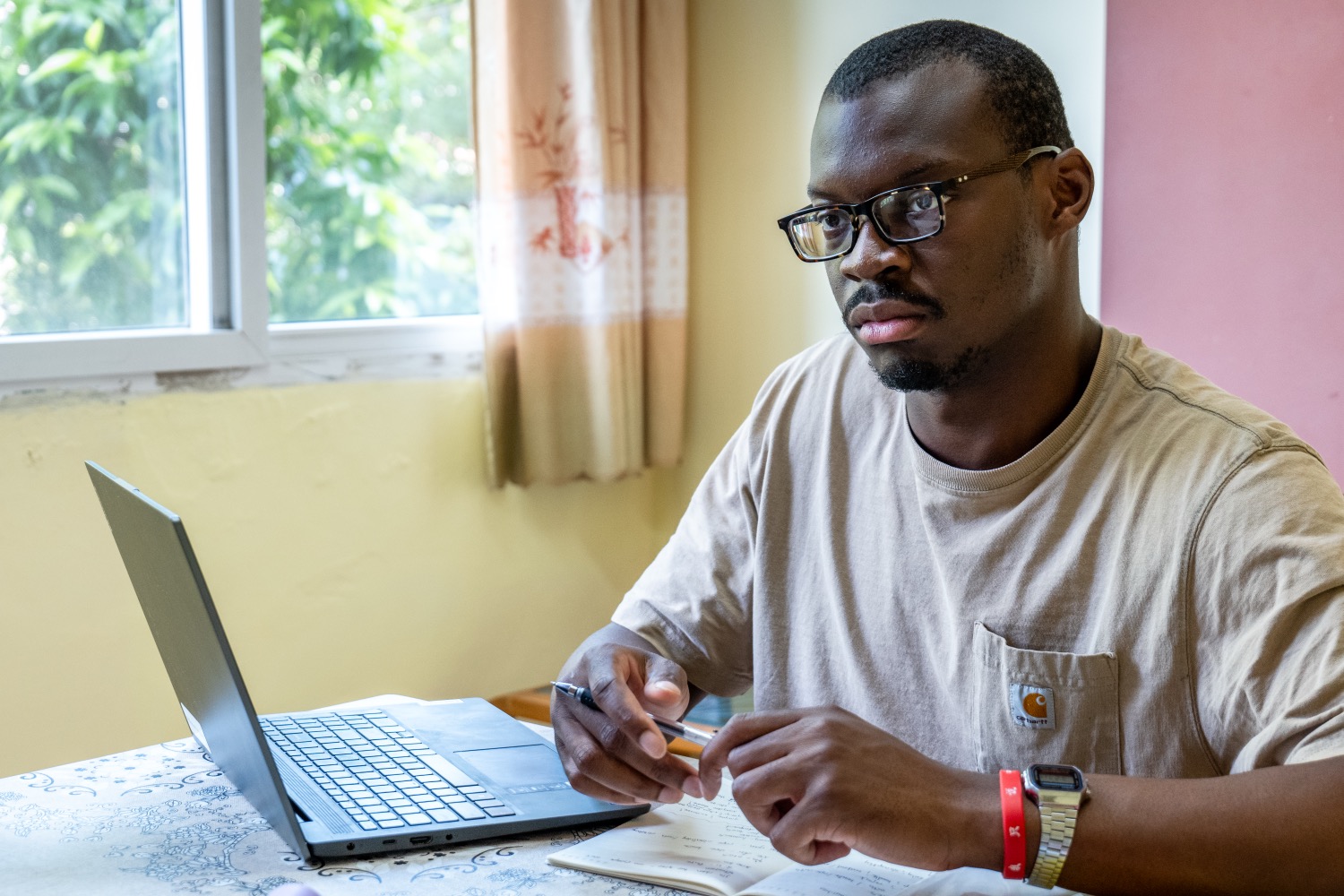
Taking notes is easier in a one-on-one class, since the teacher can pause and repeat whenever a student needs it.
Working out a reply takes a moment at first. Guilin has little English and no large expat bubble, so chances to practice come all day.
Homework is part of a typical weekday afternoon. The cafés and noodle shops near CLI are where the day's words get a real test.
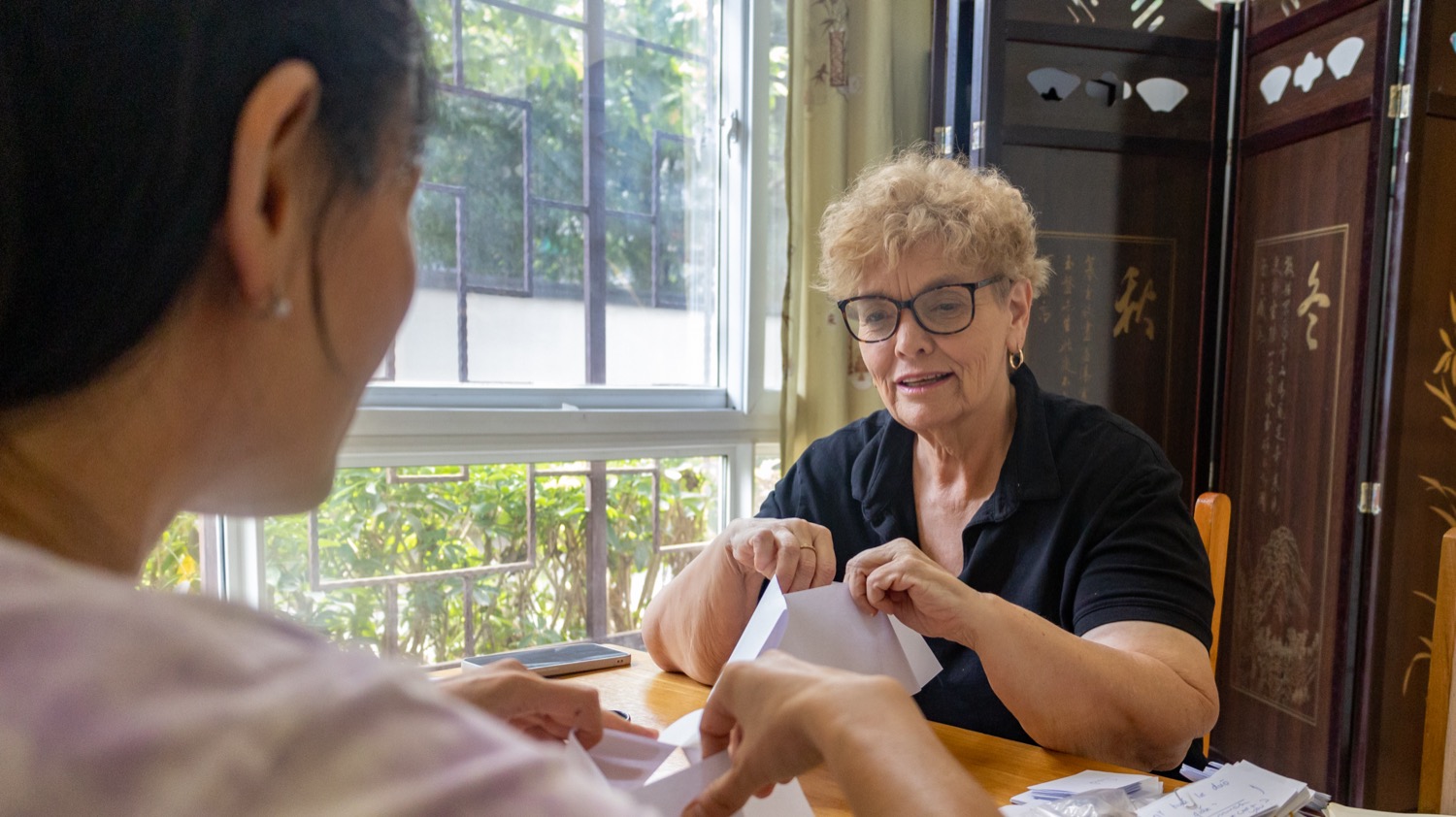
Folding paper makes a break from the textbook, and lantern making is one of the hands-on activities on CLI's list.
Weekdays are for class, and some weekends go to the Li River, which runs 83 km between Guilin and Yangshuo.
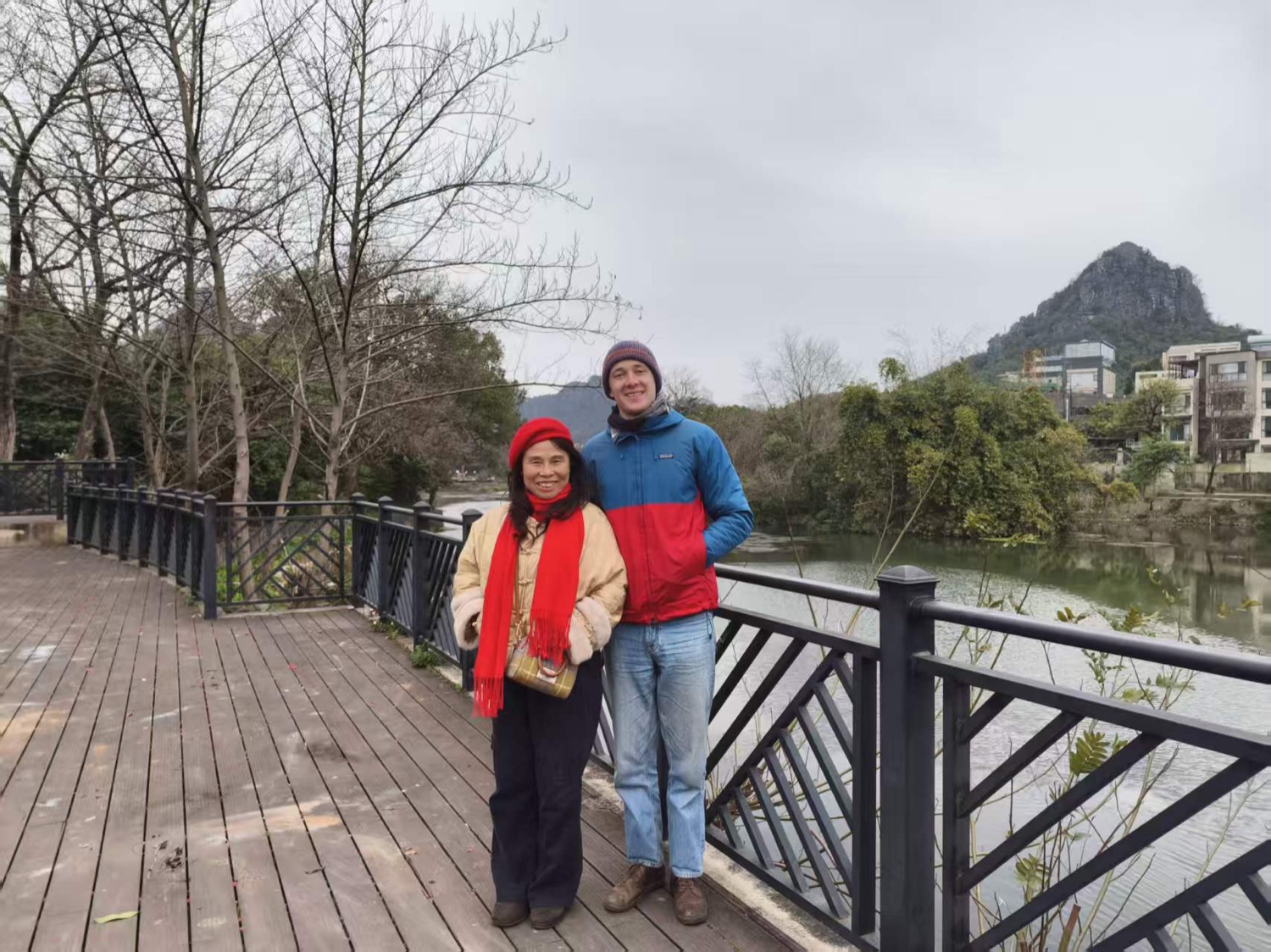
Scarves come out in Guilin's cool, damp winters, though it rarely drops below freezing. Summers are the opposite, hot and humid.
New words for food get put to use at CLI's dumpling making and cooking lessons with Chinese chefs.
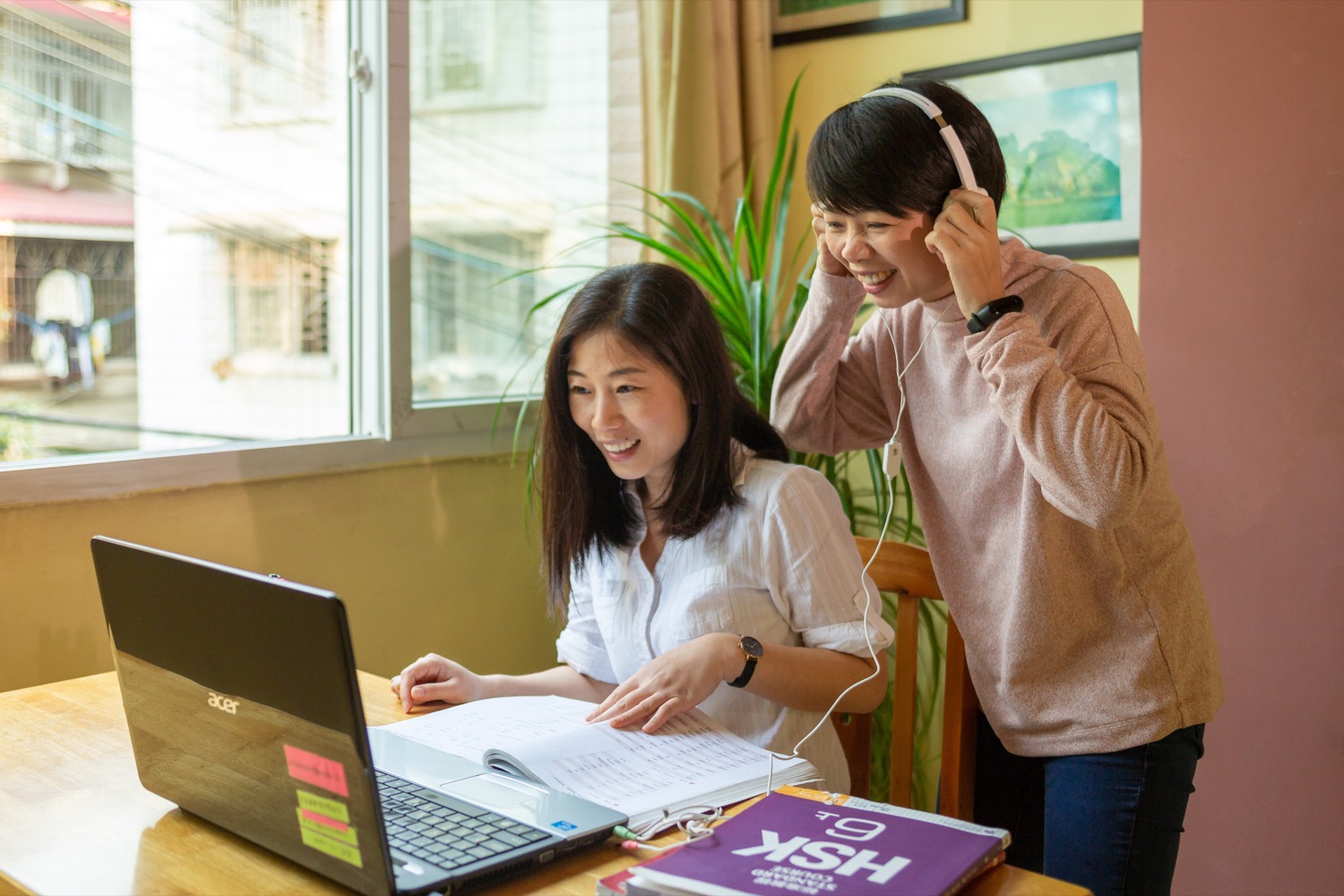
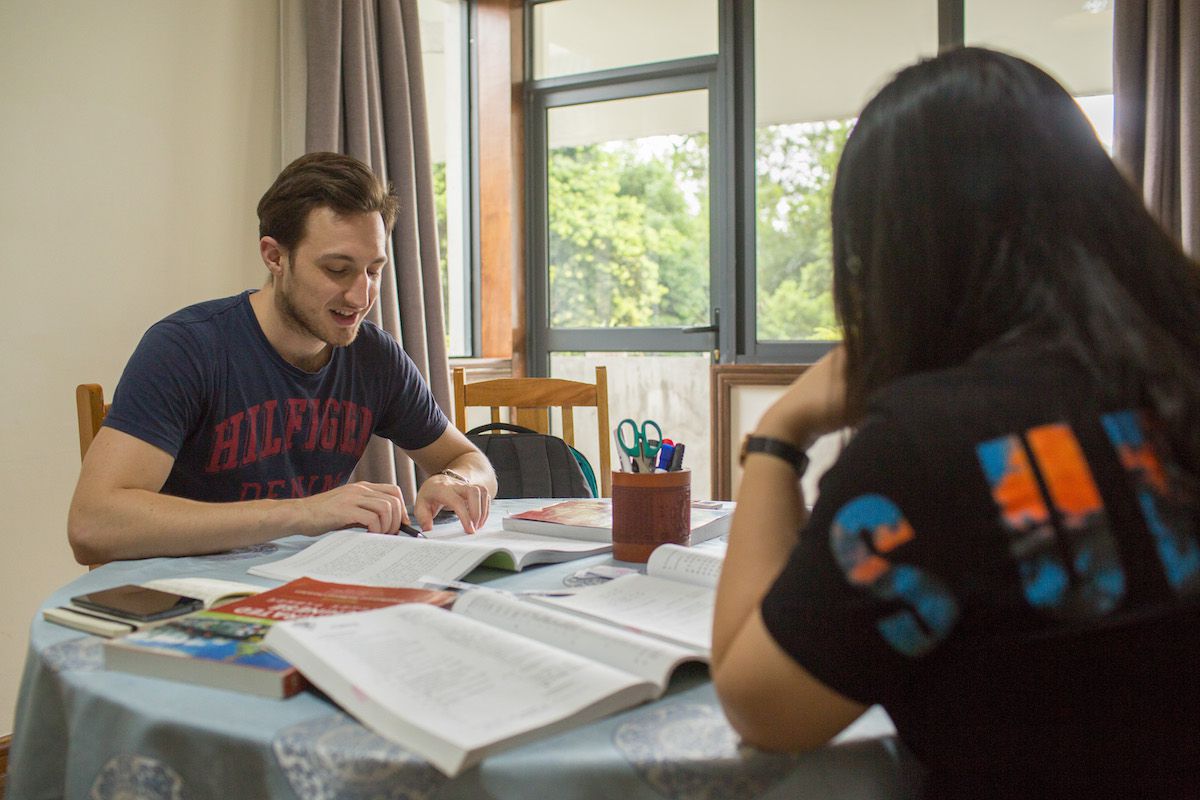
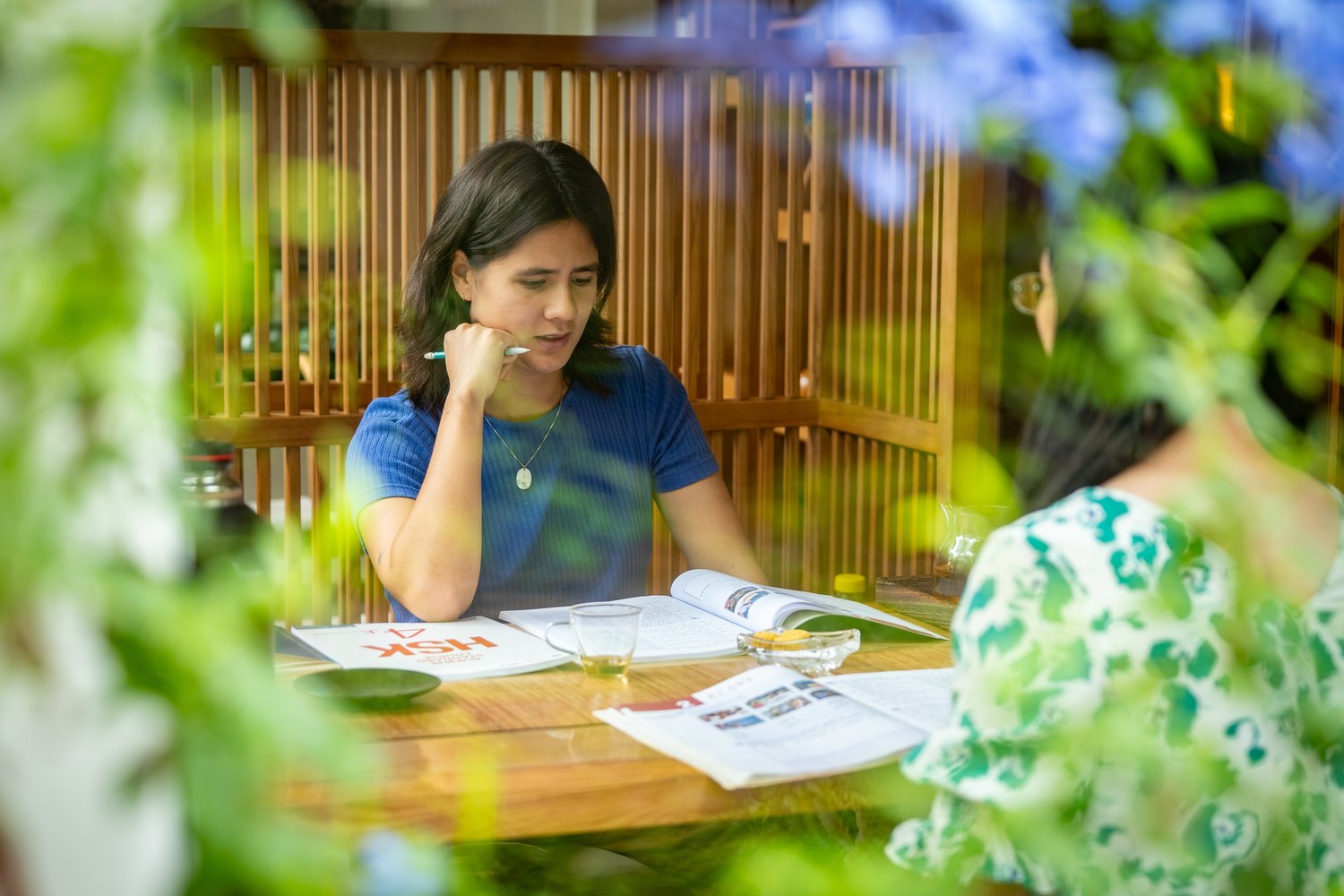
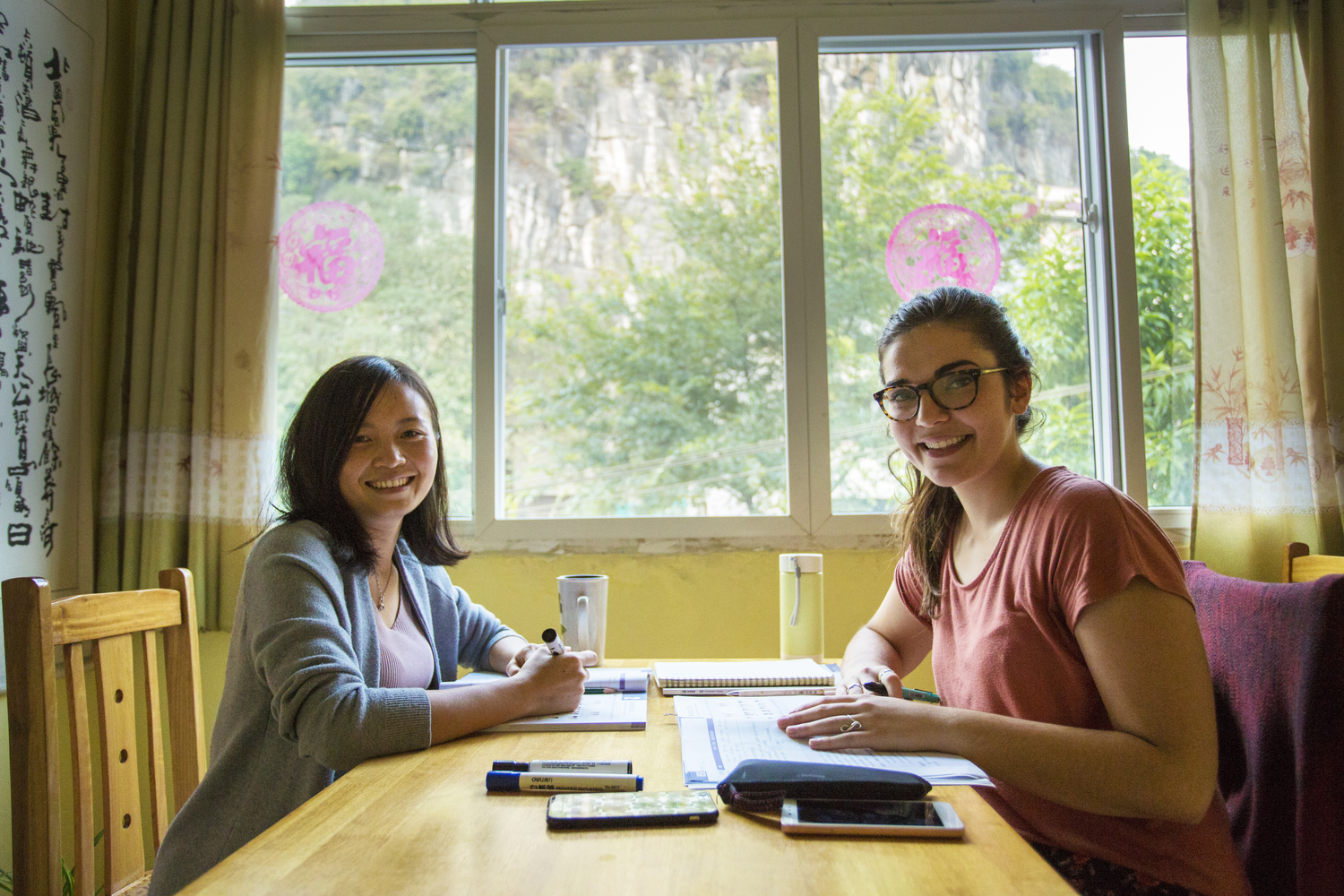
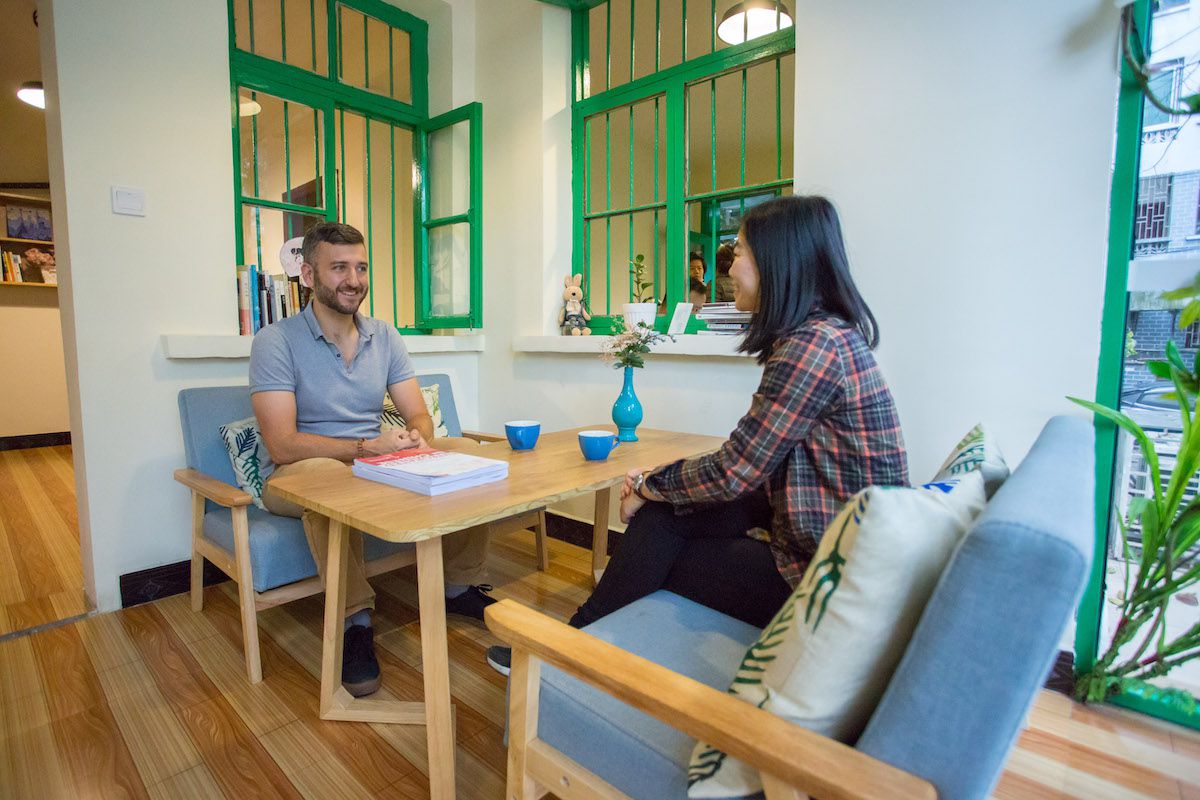
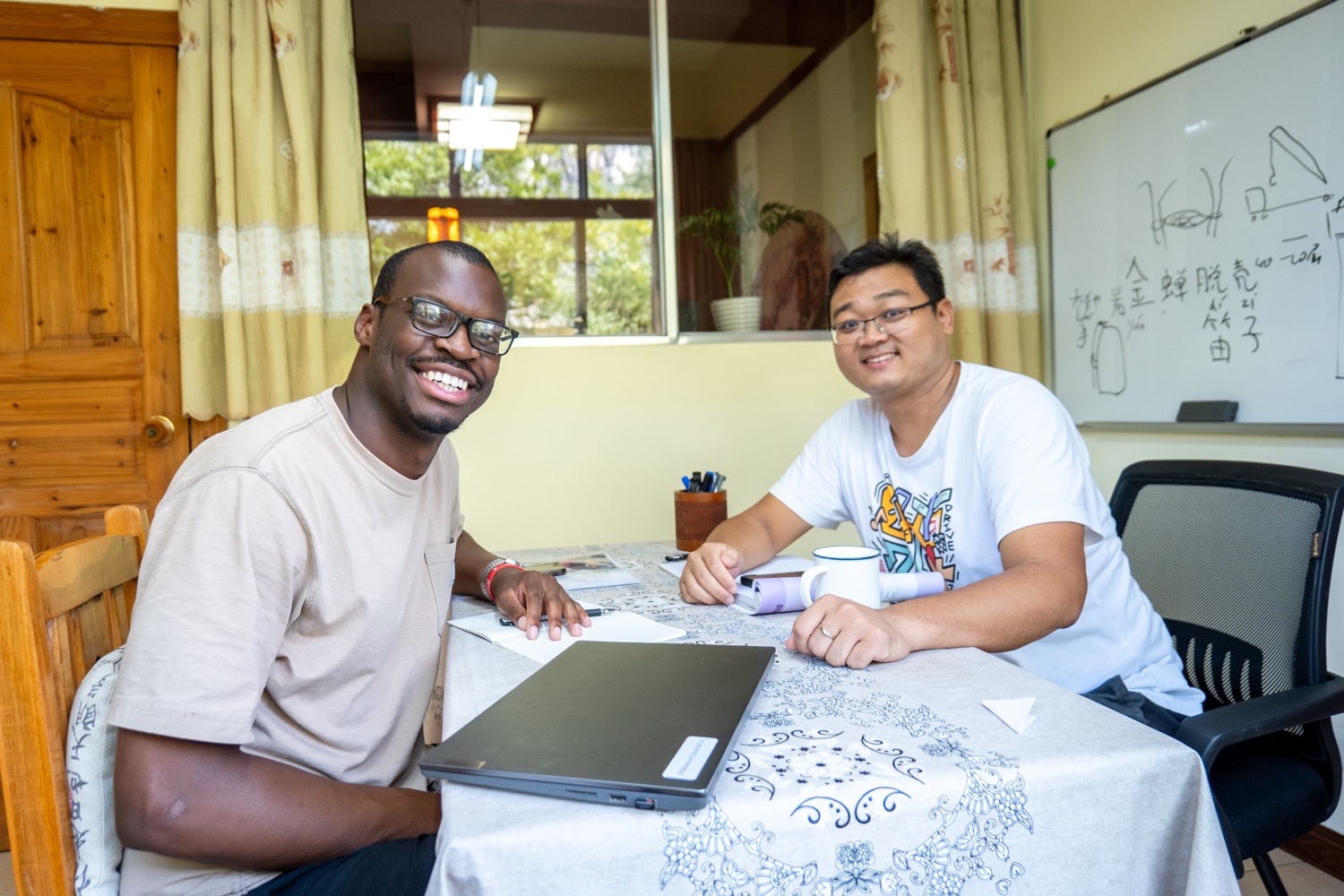
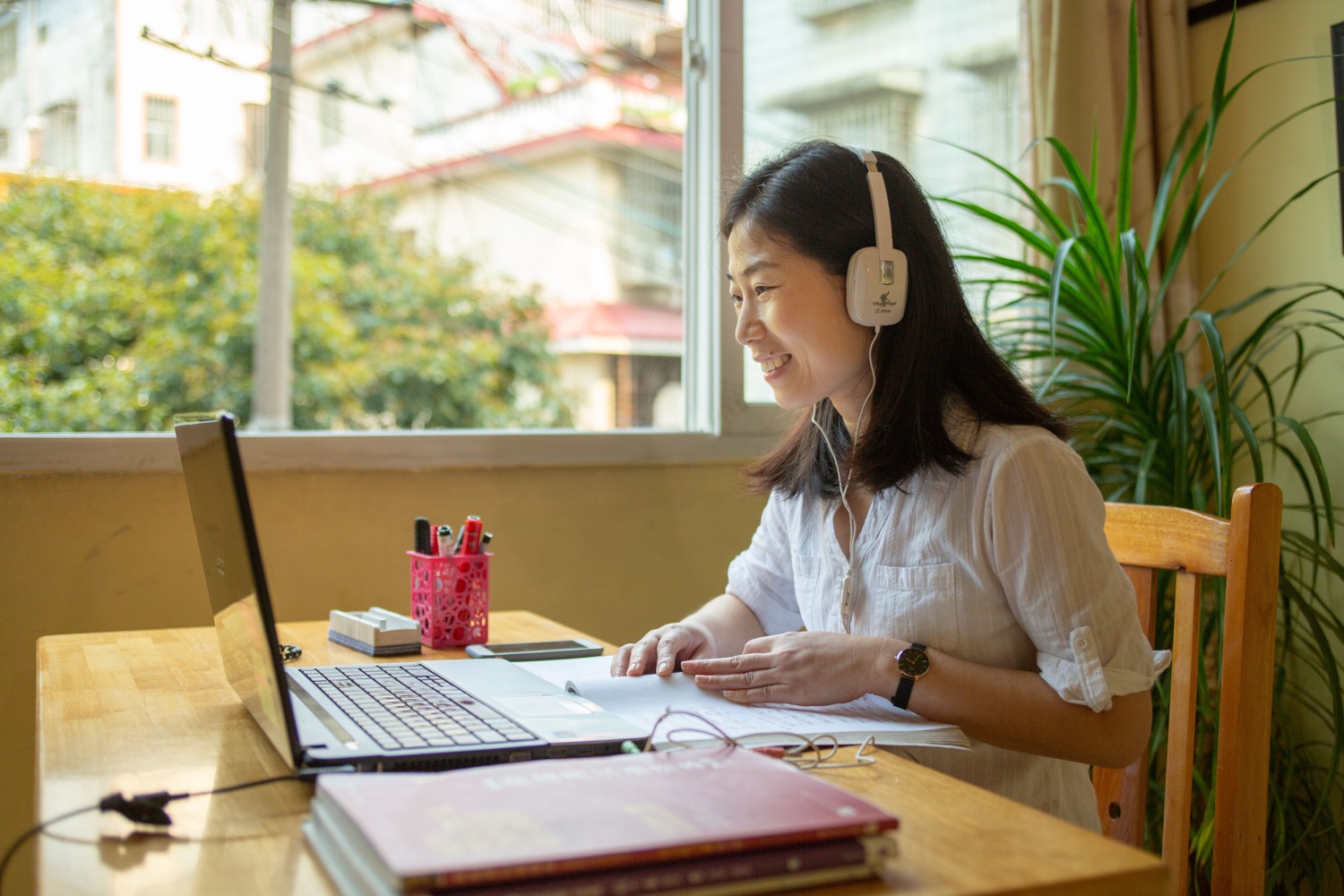
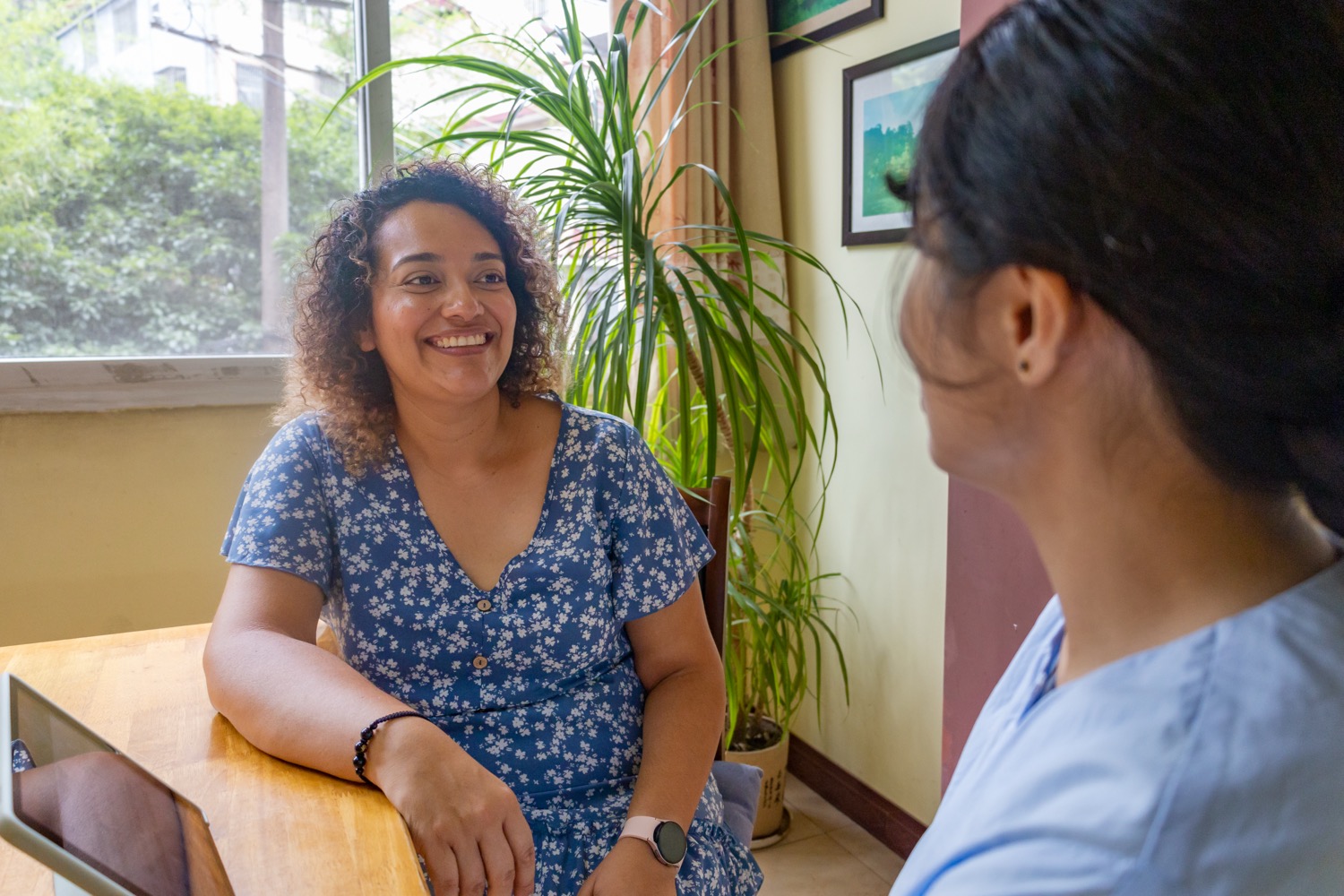
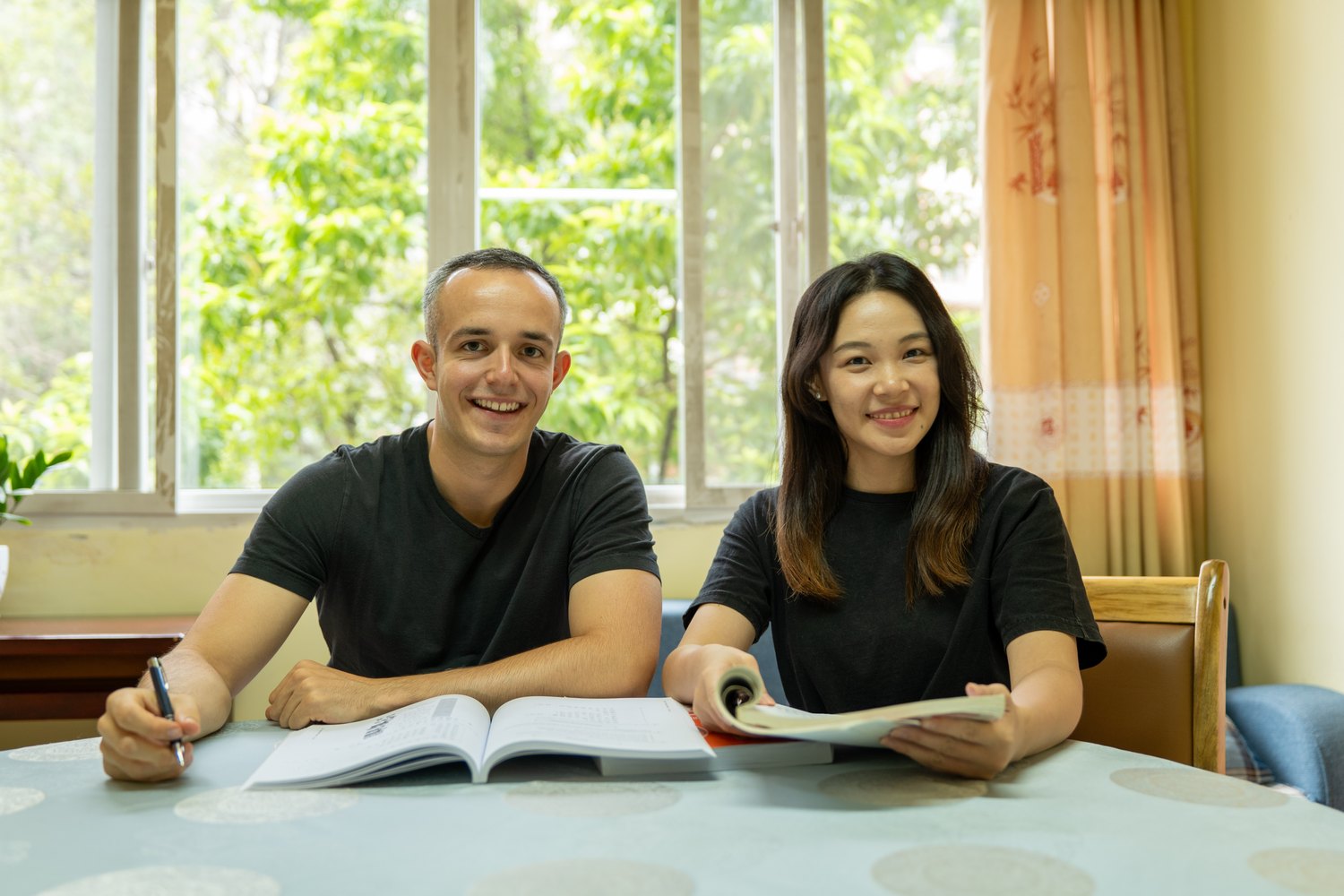
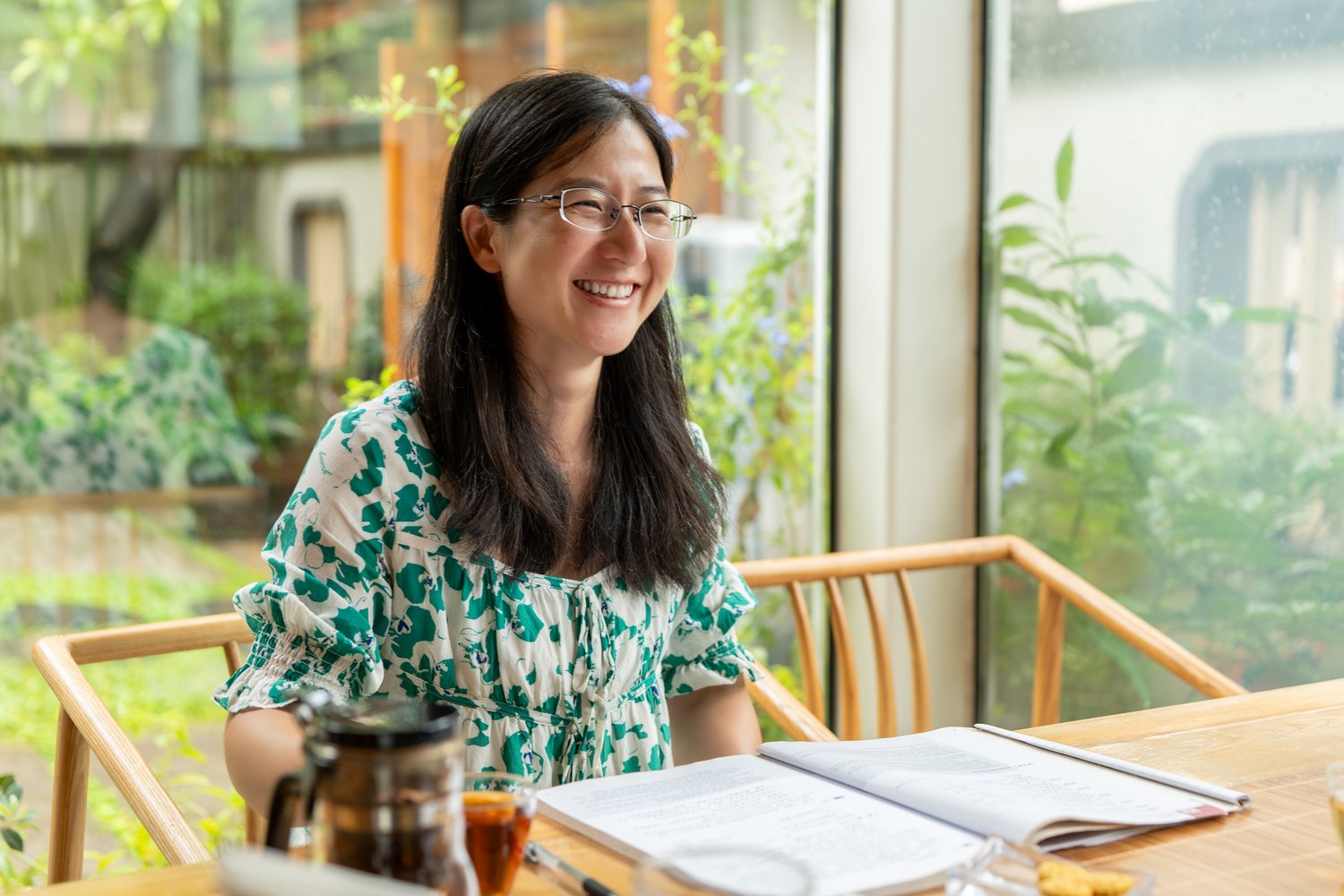
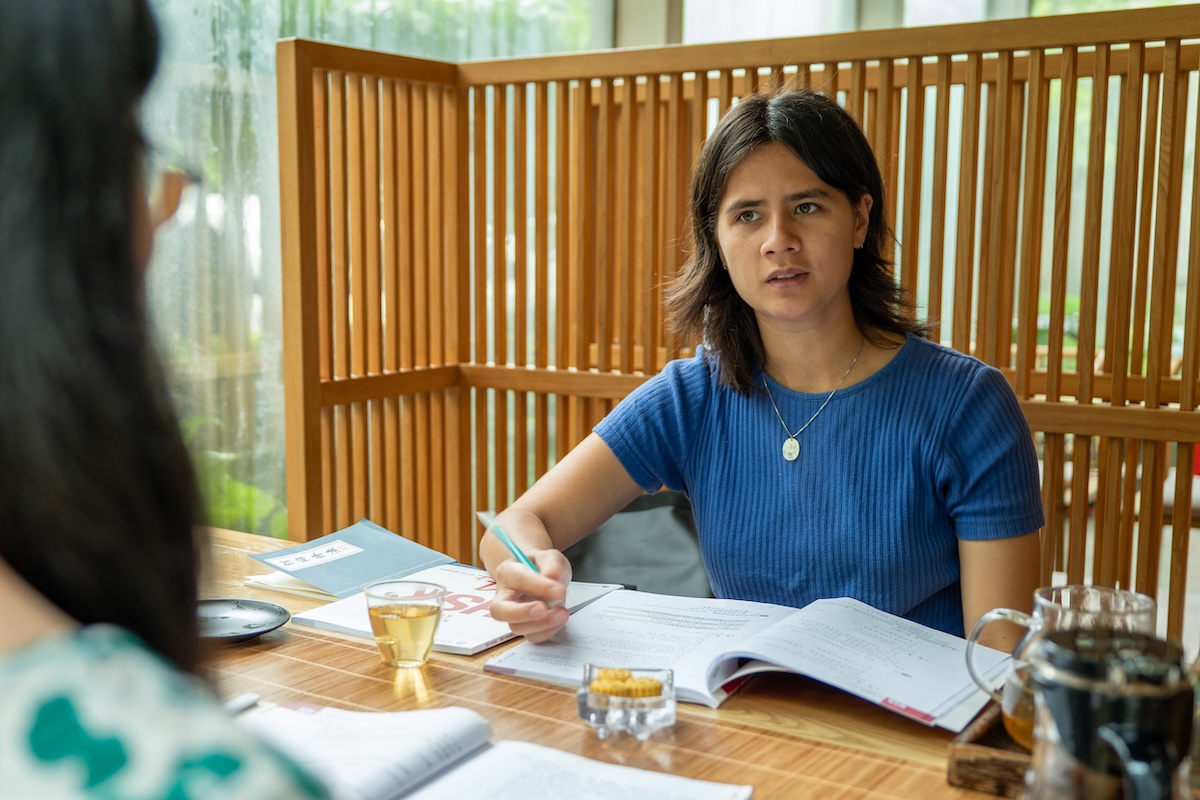
Students may keep studying at the CLI Center between sessions, whether at a window table like this one or in the reading room.
Speaking and listening both count in the short evaluation held every two weeks, so an easy conversation across the table is preparation too.
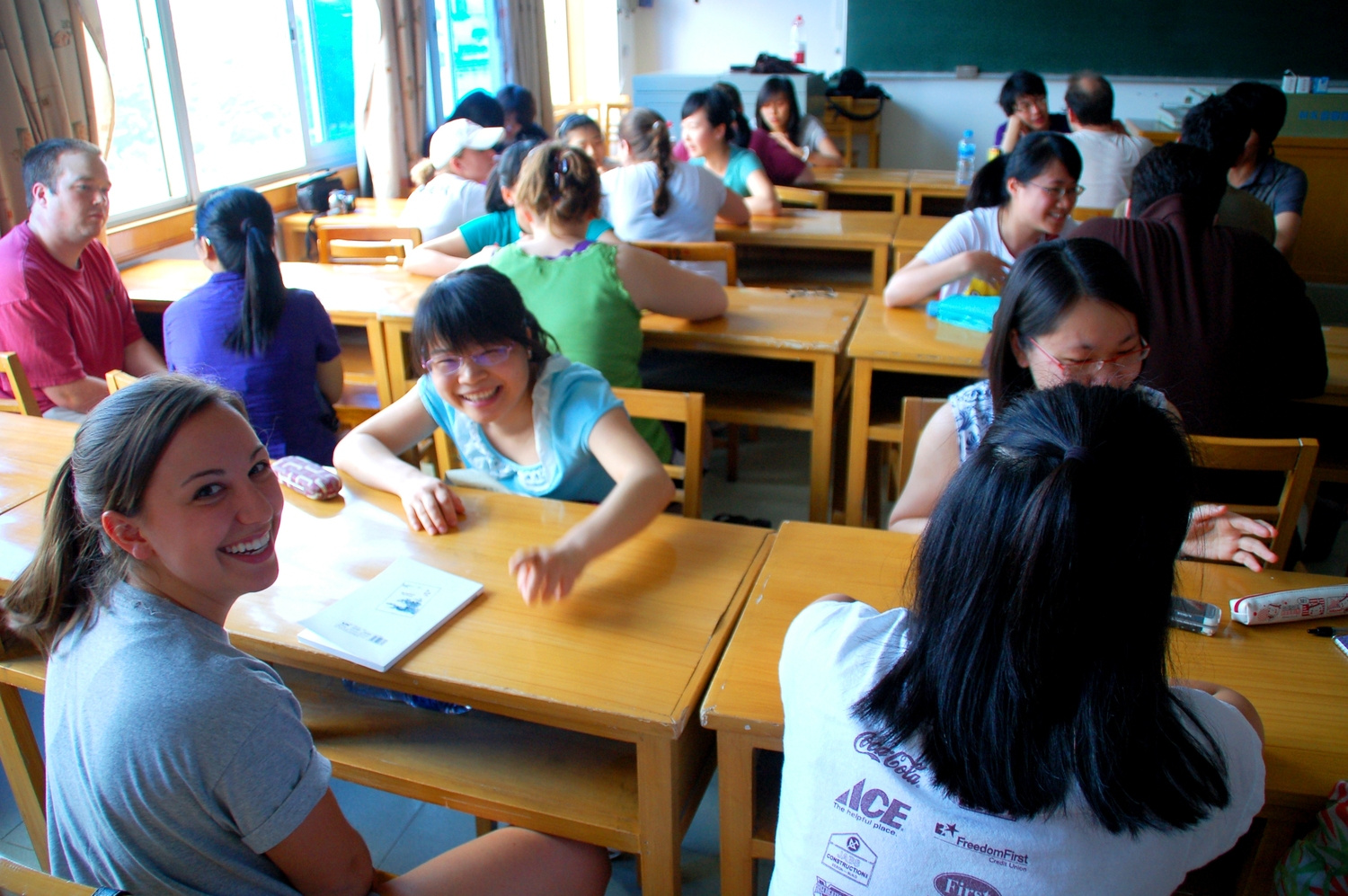
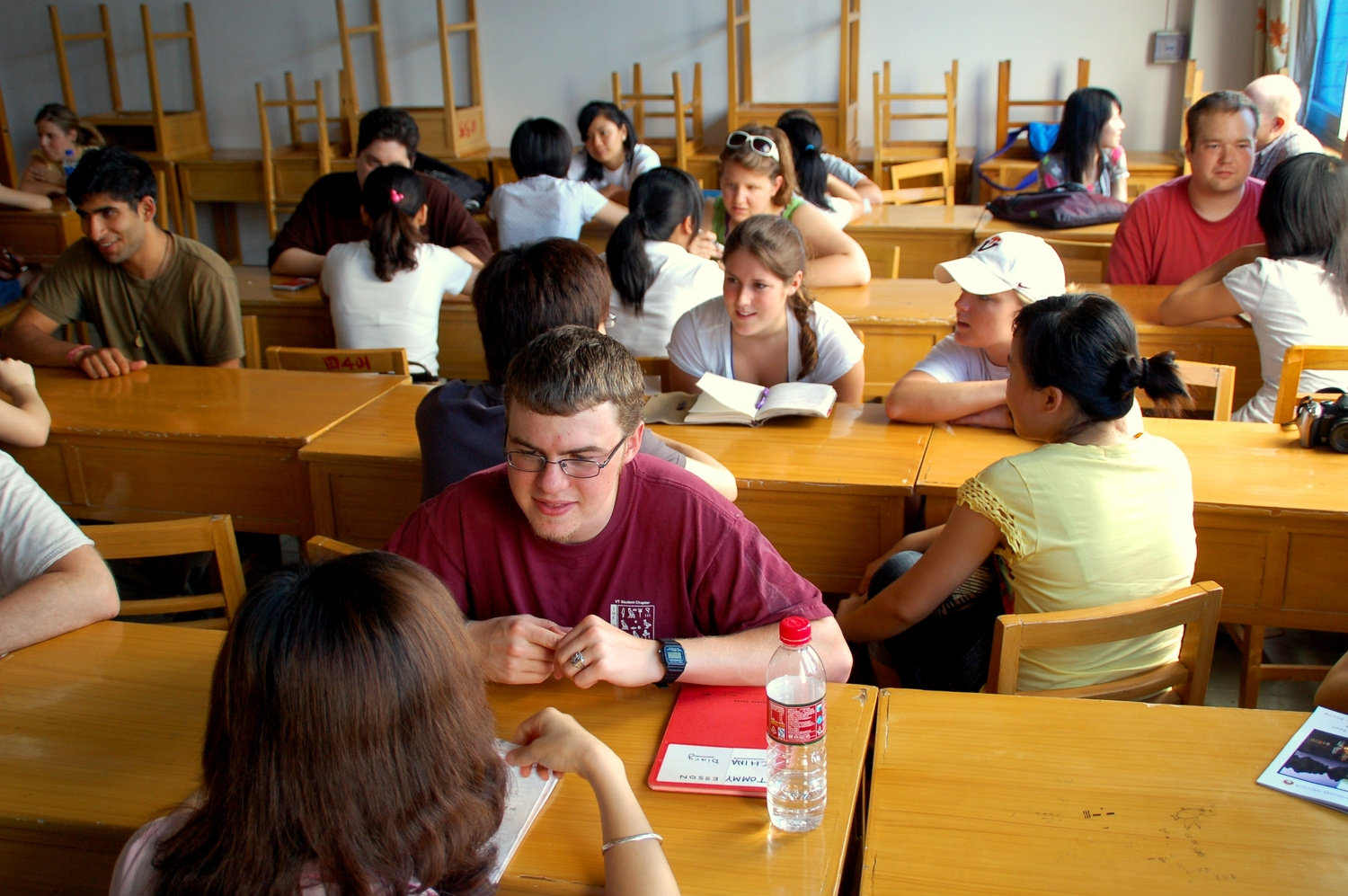
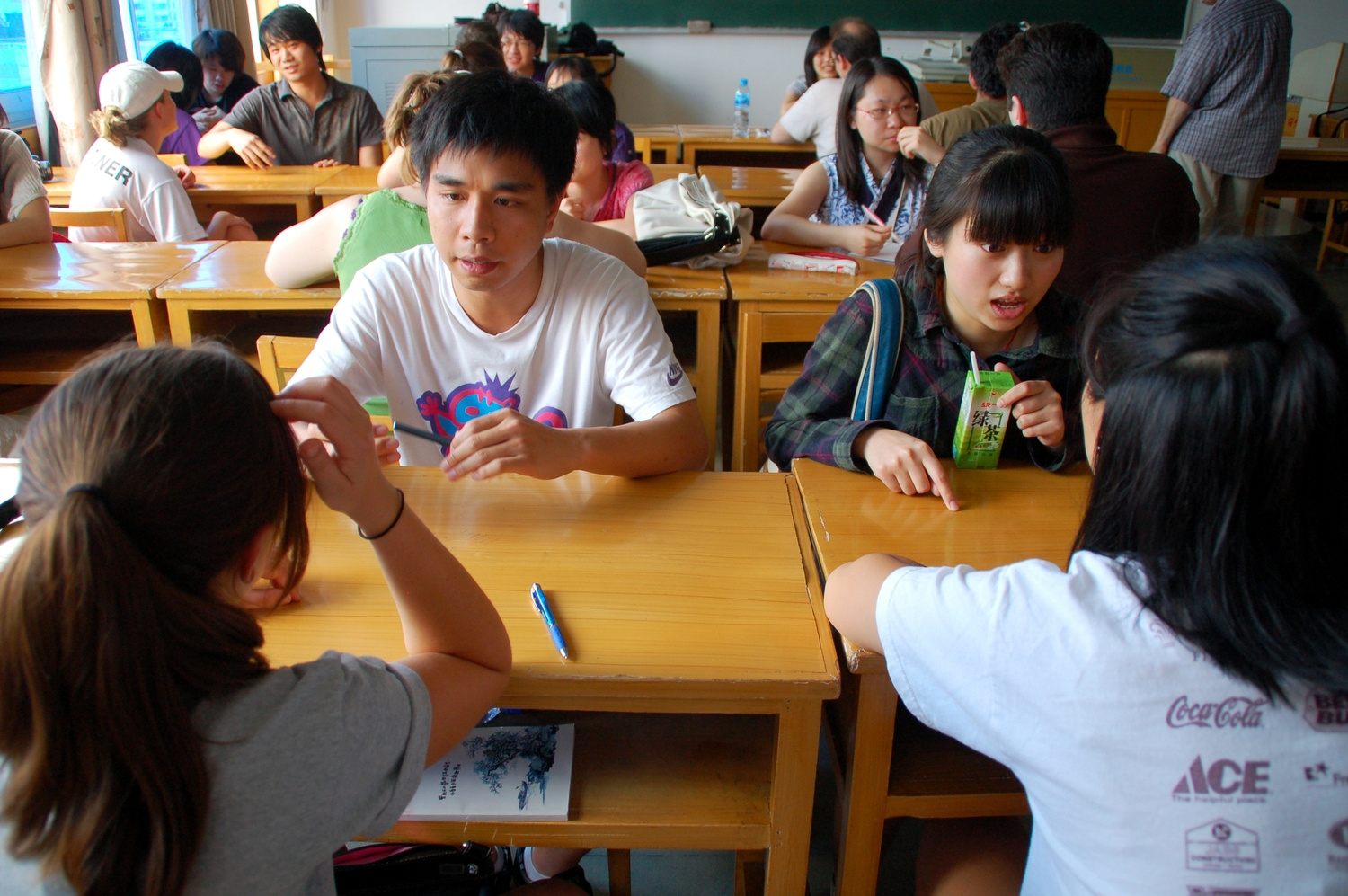
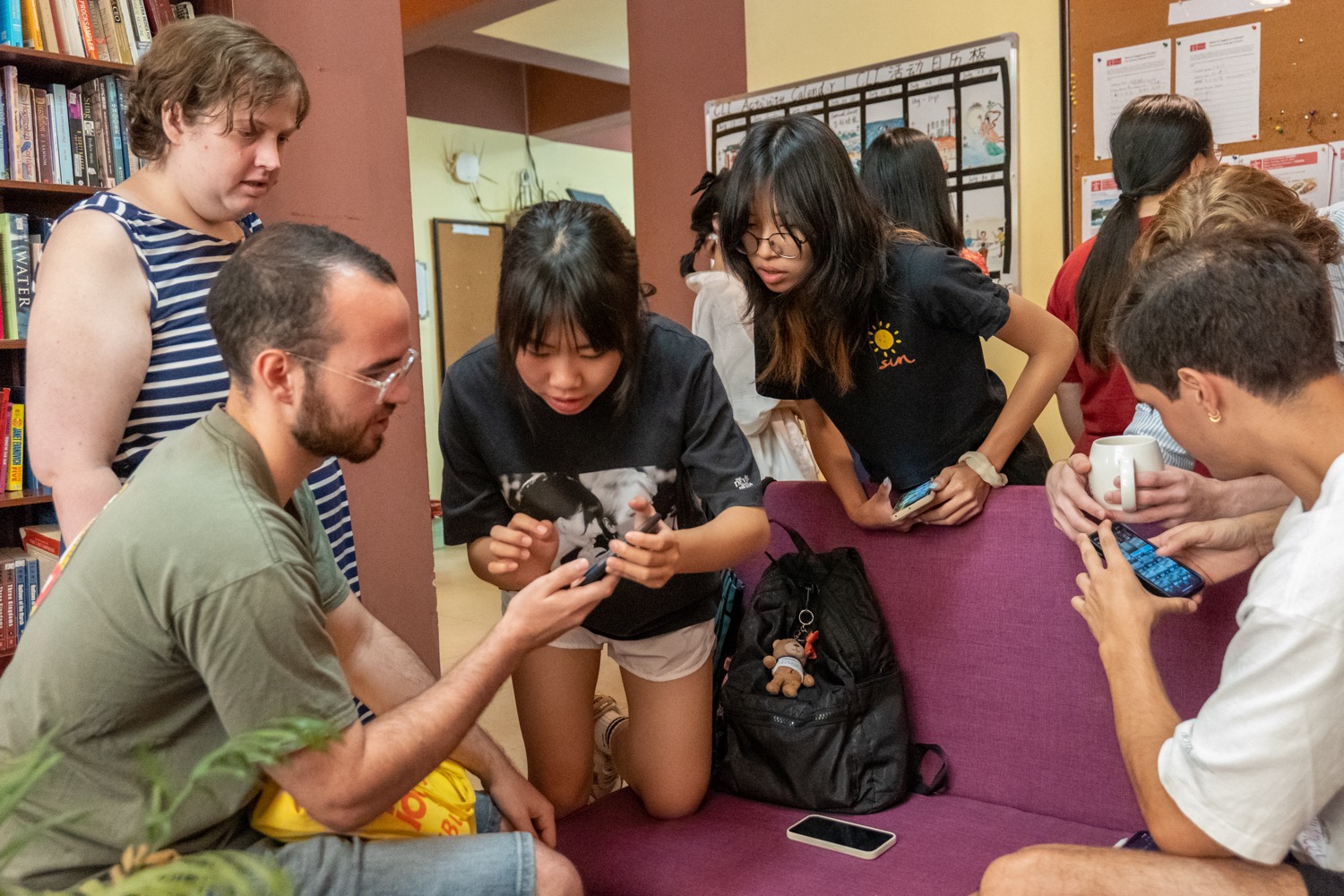
Most teaching at CLI is one-on-one, so students tend to meet each other at lunch and on the weekly activities.
The first session starts at 8:20 AM, and in Guilin, breakfast before it often means rice noodles from a neighborhood shop.
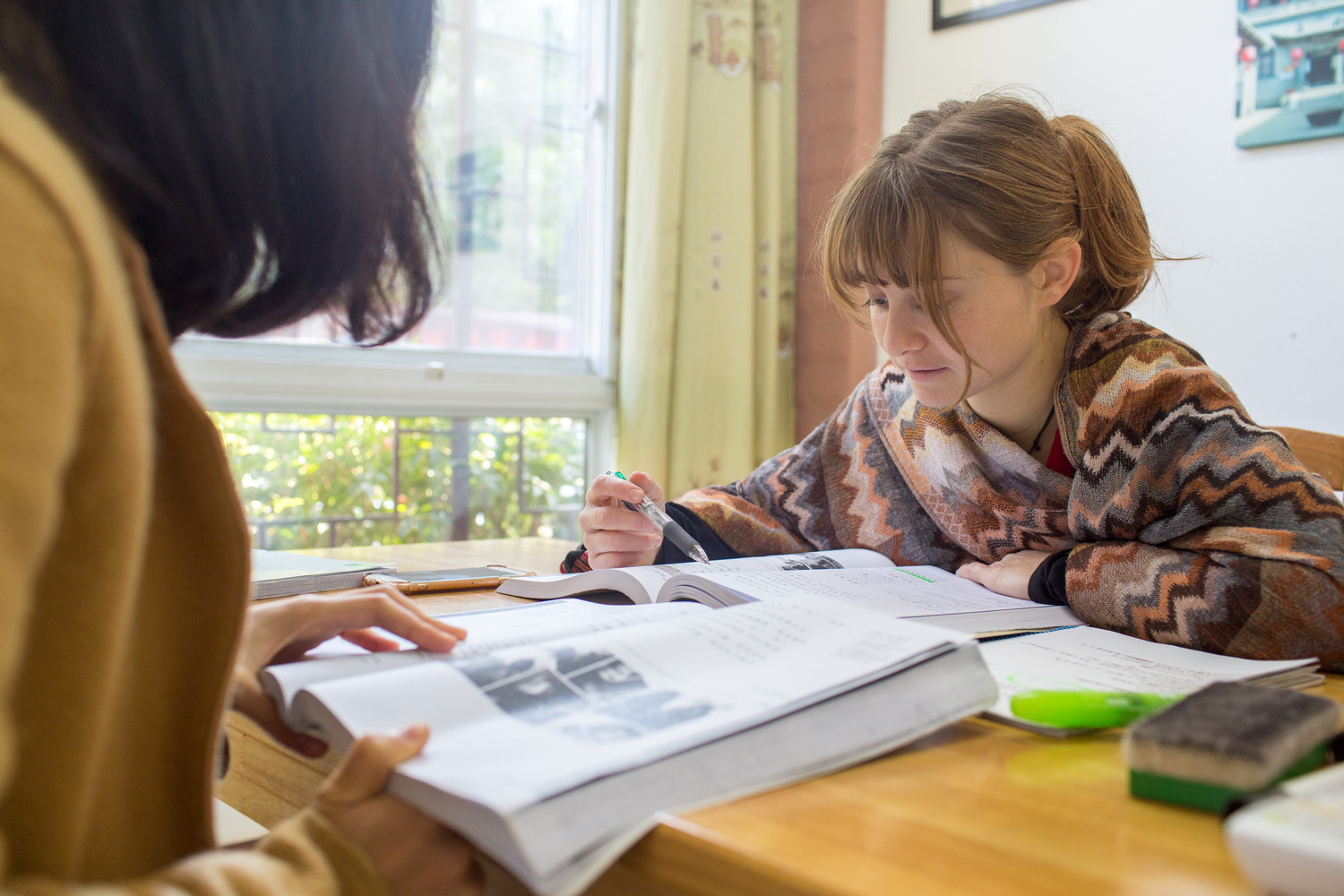
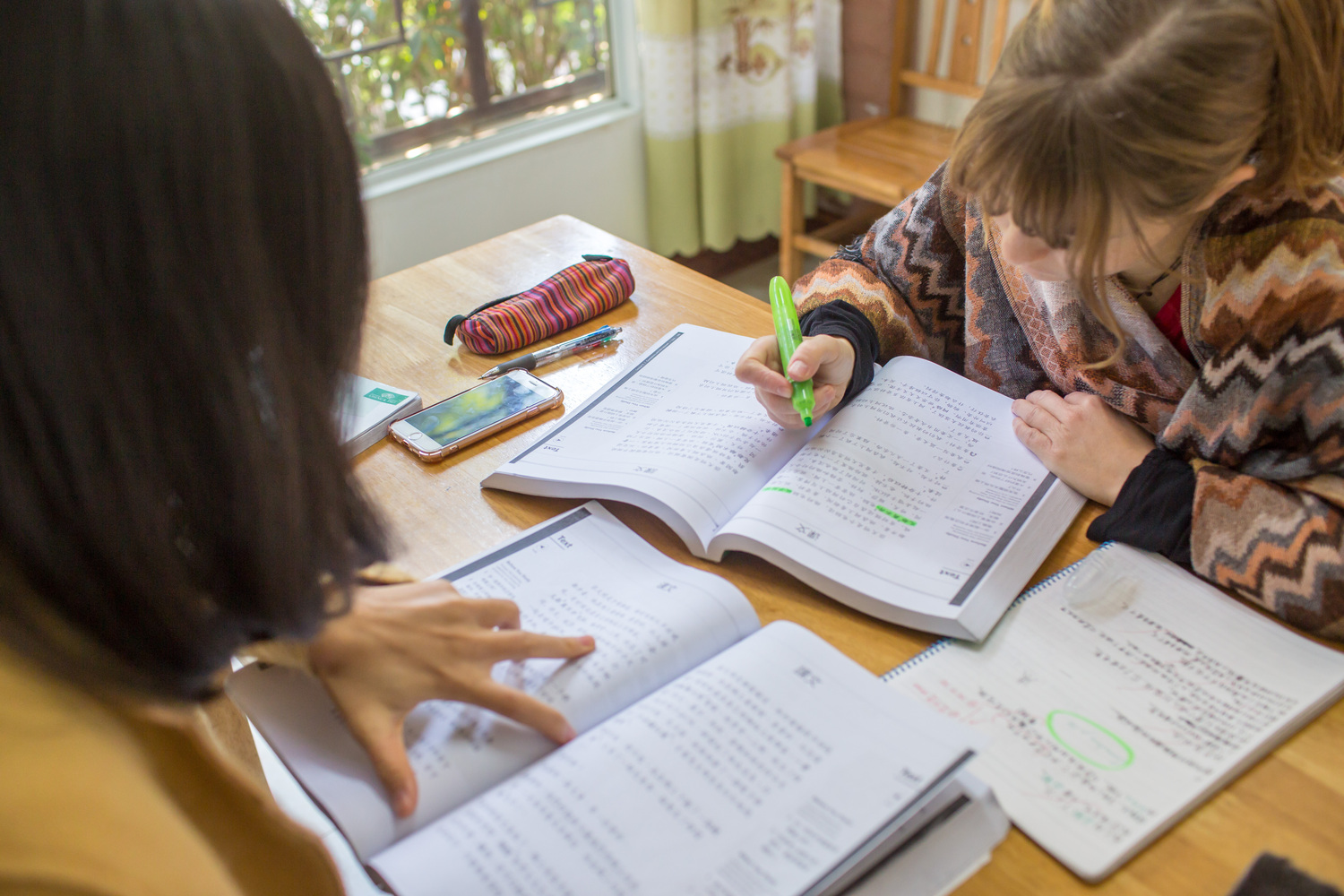
Highlighter out for the new words. Going back over vocabulary and grammar each day is the whole focus of one of a student's teachers.
The hills around Guilin are part of the South China Karst, a UNESCO World Heritage listing that Guilin's karst joined in 2014.
A world map on the wall suits a school whose students have come from more than 50 countries since CLI was founded in Guilin in 2009.
Advanced lessons can be shaped around fluency, reading, business Chinese or test preparation, depending on what a student needs.
For stays of six months or more, housing can also be a private apartment or an apartment with Chinese housemates from GXNU.
Hands fill in when words run out. Four hours of one-on-one class every weekday give a student plenty of chances to find the Chinese.
Group games mix students and teachers around one table. At the daily lunch, at least one table is Mandarin-only, so practice keeps going over food.
Laptops close when the last session ends at 6:10 PM, and an evening might bring a movie night or some calligraphy.
Words practiced here get used the same day. Guilin has little English, so ordering noodles or asking directions happens in Mandarin.
Talking it through together. Away from the desk, CLI's activity list runs from volleyball to photography excursions at the Longji Rice Terraces.
At least a quarter of the CLI Center's 36 rooms are home to CLI teachers and pengyou, so Chinese doesn't stop when class does.
Any Monday can be day one at CLI, and a stay can run from a single week to a full year of lessons like this one.
Pickup at the airport or train station is included, and so is the drop-off when the stay ends.
Immersion Program classes are quieter than this: they are one-on-one, unless a small group of three to five students can be arranged.
Notes on the first day are often practical. Orientation, usually on a student's first Monday, covers the Center, the teachers, the schedule and a tour of Guilin.
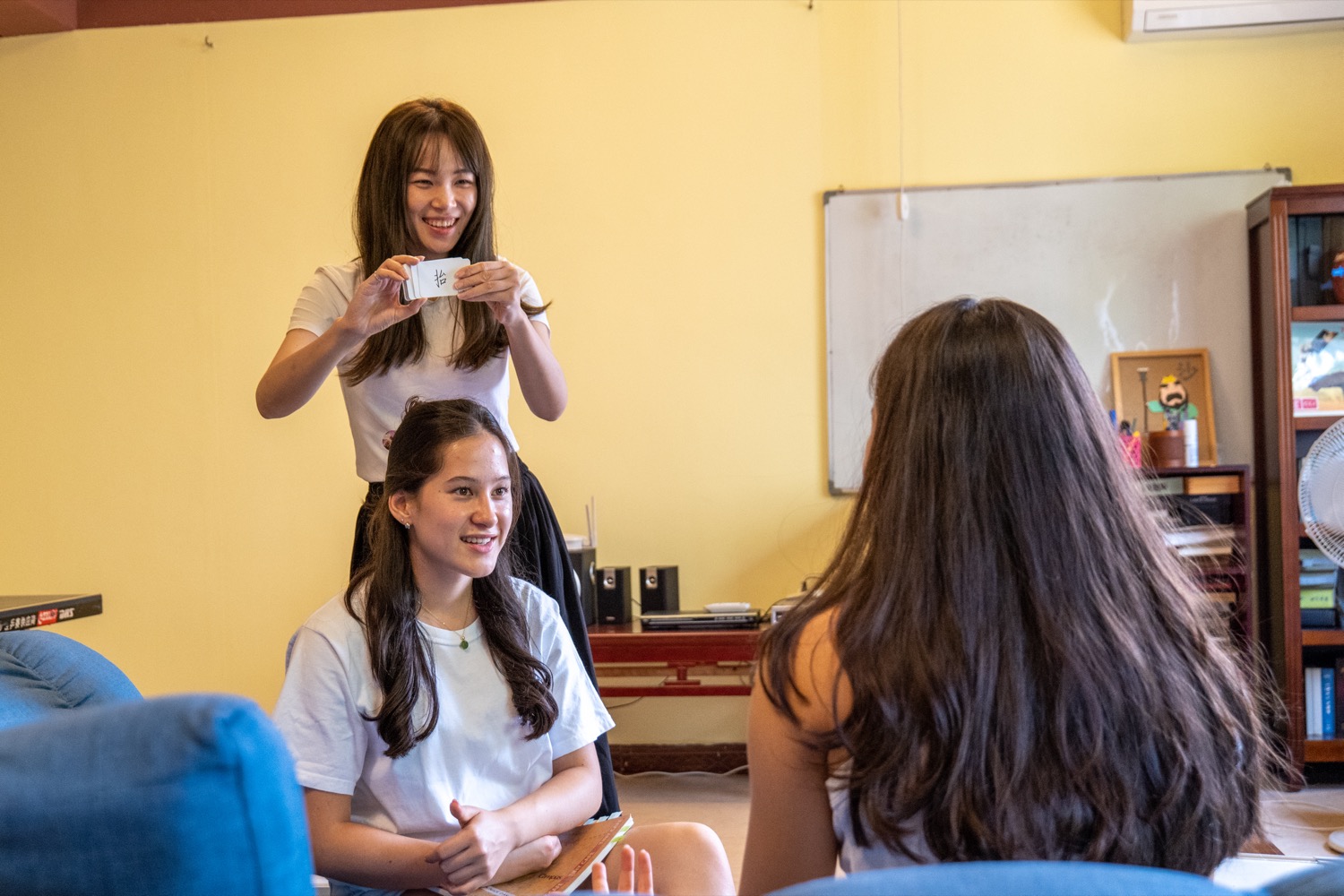
A card over the head and a word to guess in Chinese. Chinese games are among CLI's activities, along with movie nights and tai chi.
日常rìcháng
Everyday life at the CLI Center
Student rooms, the lounge, the lobby, and the people down the hall.
The Center keeps at least one native Chinese speaker for every language learner, so there is usually someone around to talk with in Chinese.
朋友 (péngyǒu) means friend. The optional, free Pengyou Program gives students three hours of language support a week from a local university student.
The Center is on a quiet road, 31 Chaoyang Xilu, about seven minutes' walk from the main gate of Guangxi Normal University.
The Center's reading room and study areas are open between class sessions, a quiet place for the day's review.
Life at CLI goes beyond class, and teachers and pengyou often come along on trips to encourage conversation in Chinese.
Breaks between classes can be playful. The free Pengyou Program adds a weekly meal with a local university student to the schedule.
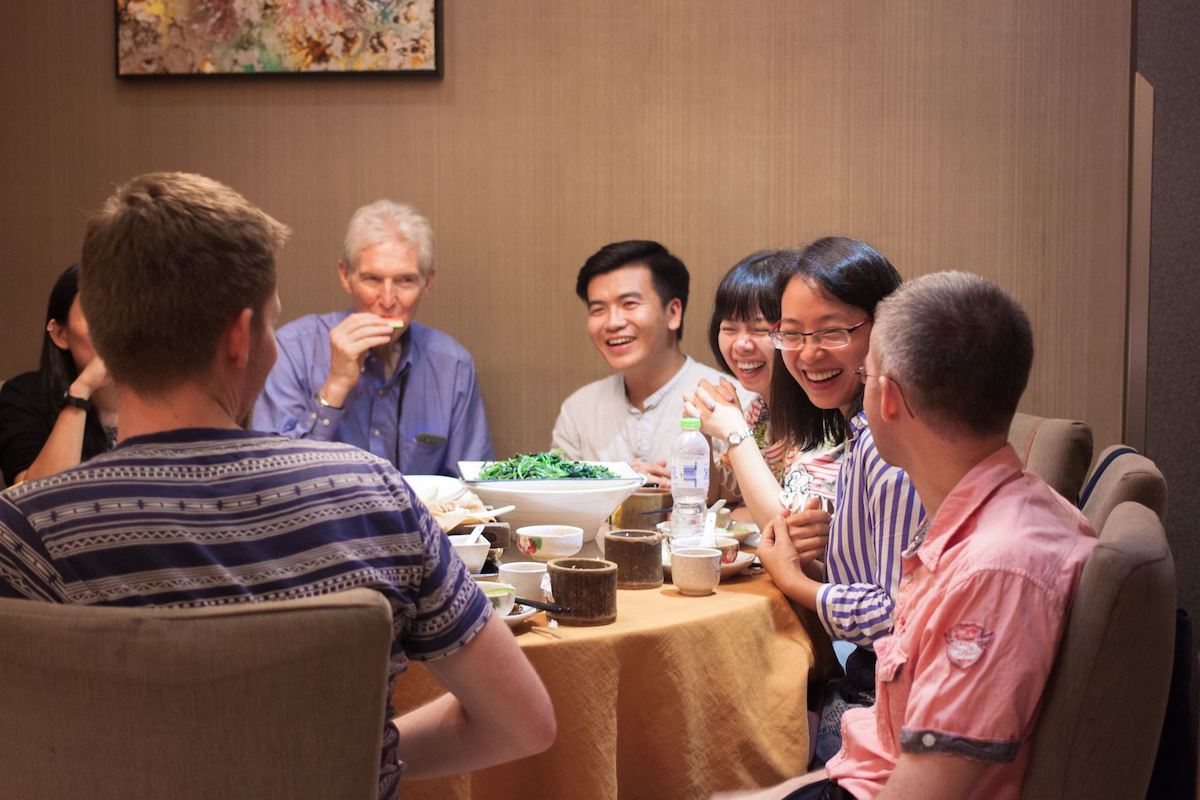
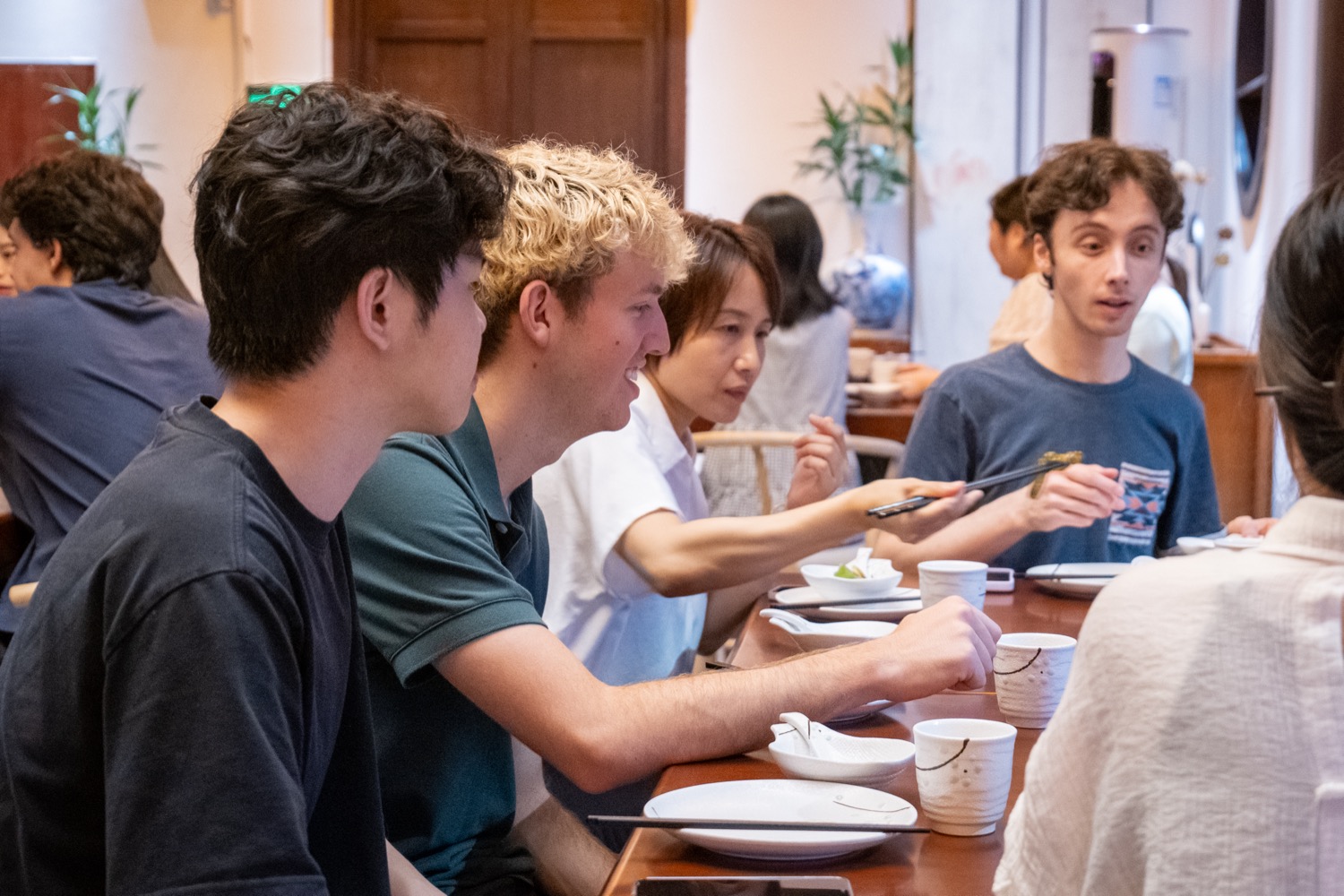
At lunch, teachers sit at the same table as students, family style, so conversation in Chinese carries on after class.
Pickup at the airport or train station is included on arrival and drop-off on departure, so the first and last trips of a stay are taken care of.
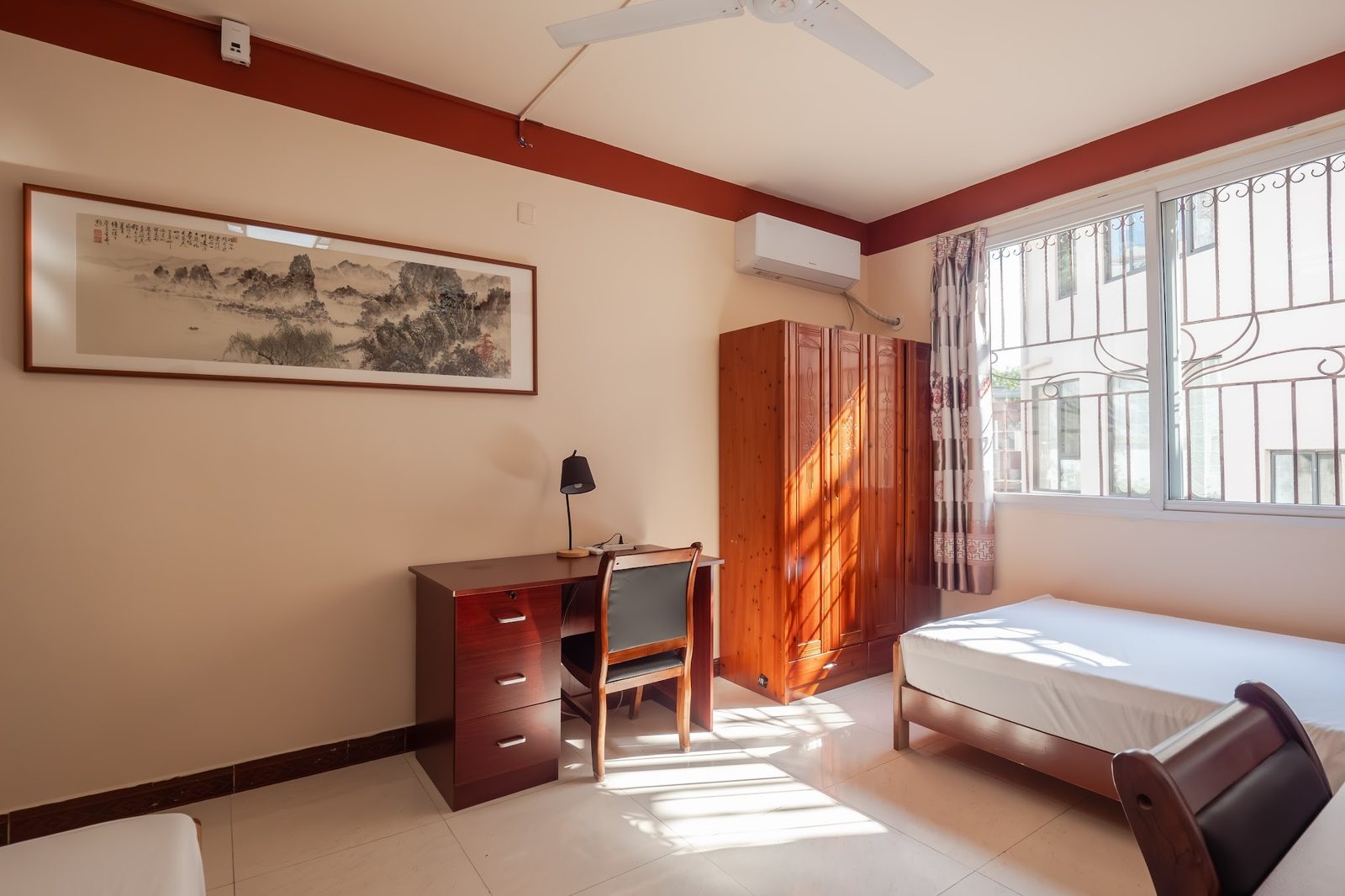
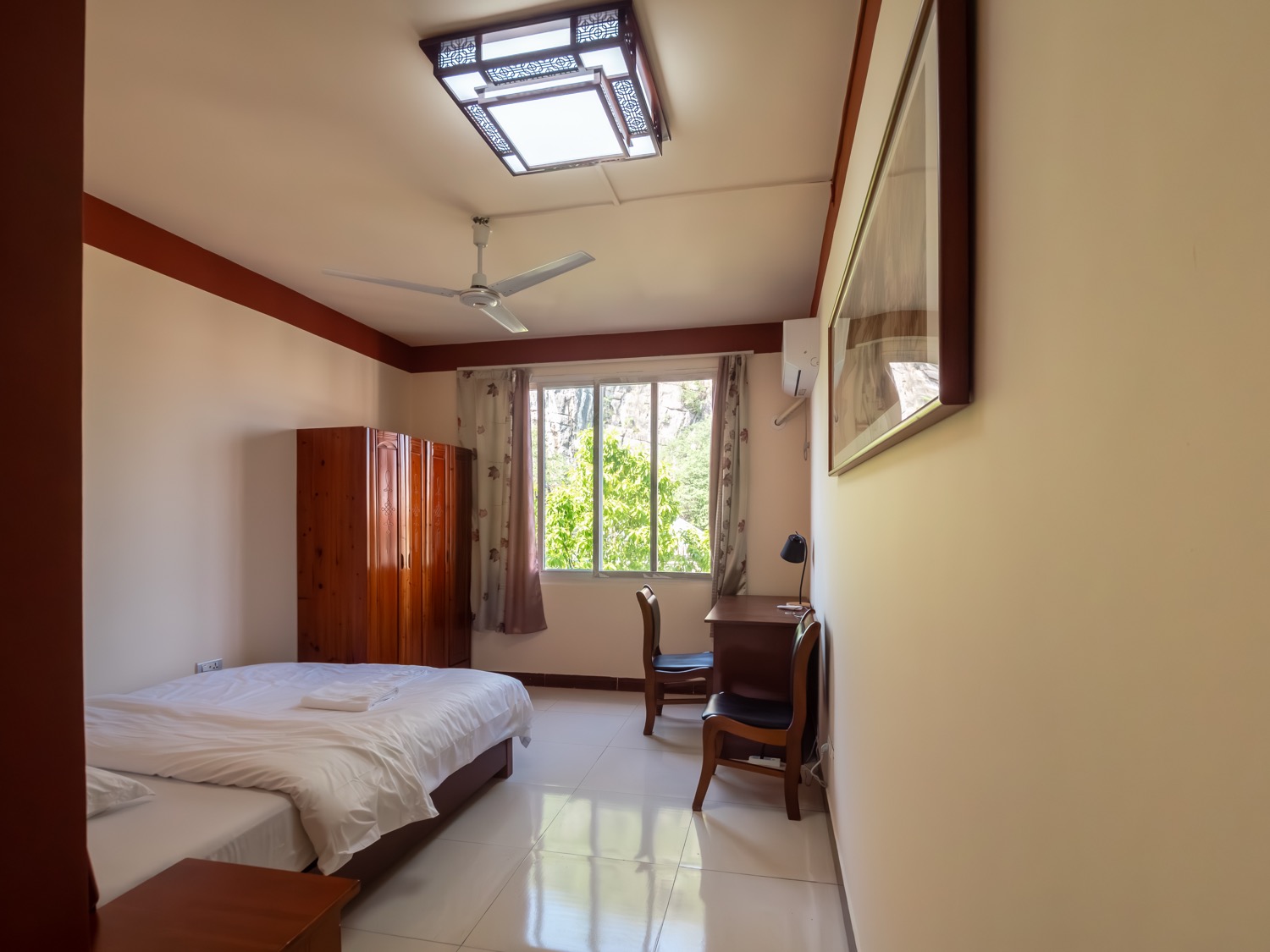
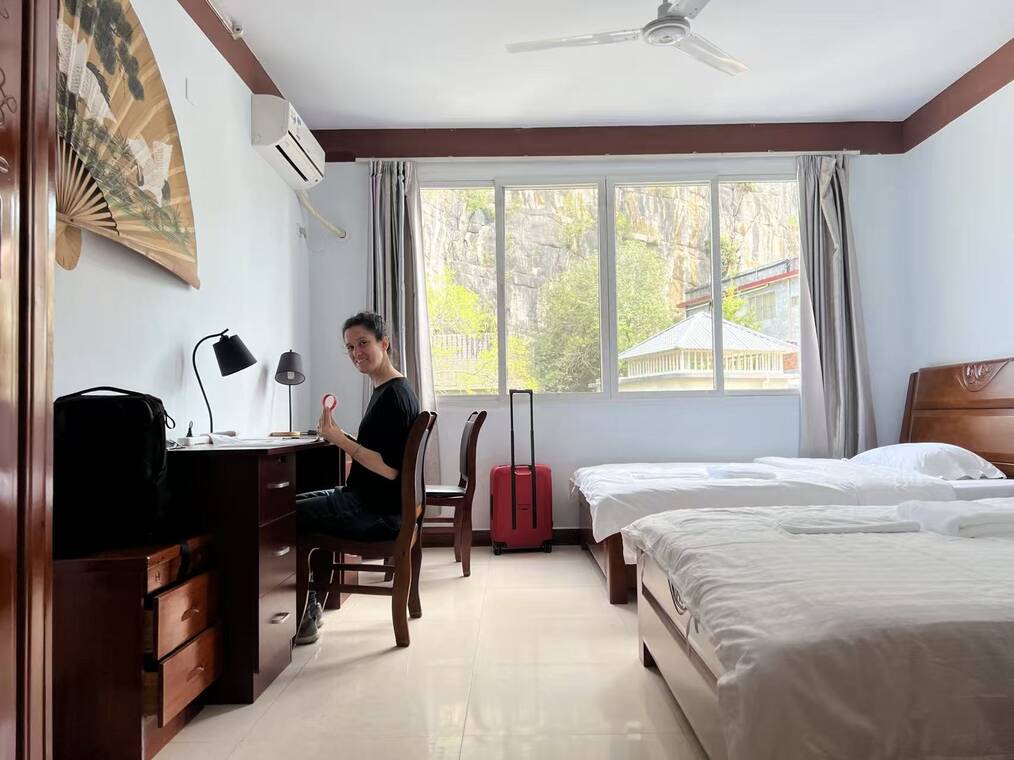
Housing is included in tuition. A room at the CLI Center is private, and weekly cleaning comes with it.
CLI was founded in Guilin in 2009 and has run its programs from the Center since 2012.
Students who choose a room at the Center live in the same building as their classes, with classrooms on the first and second floors and private rooms above.
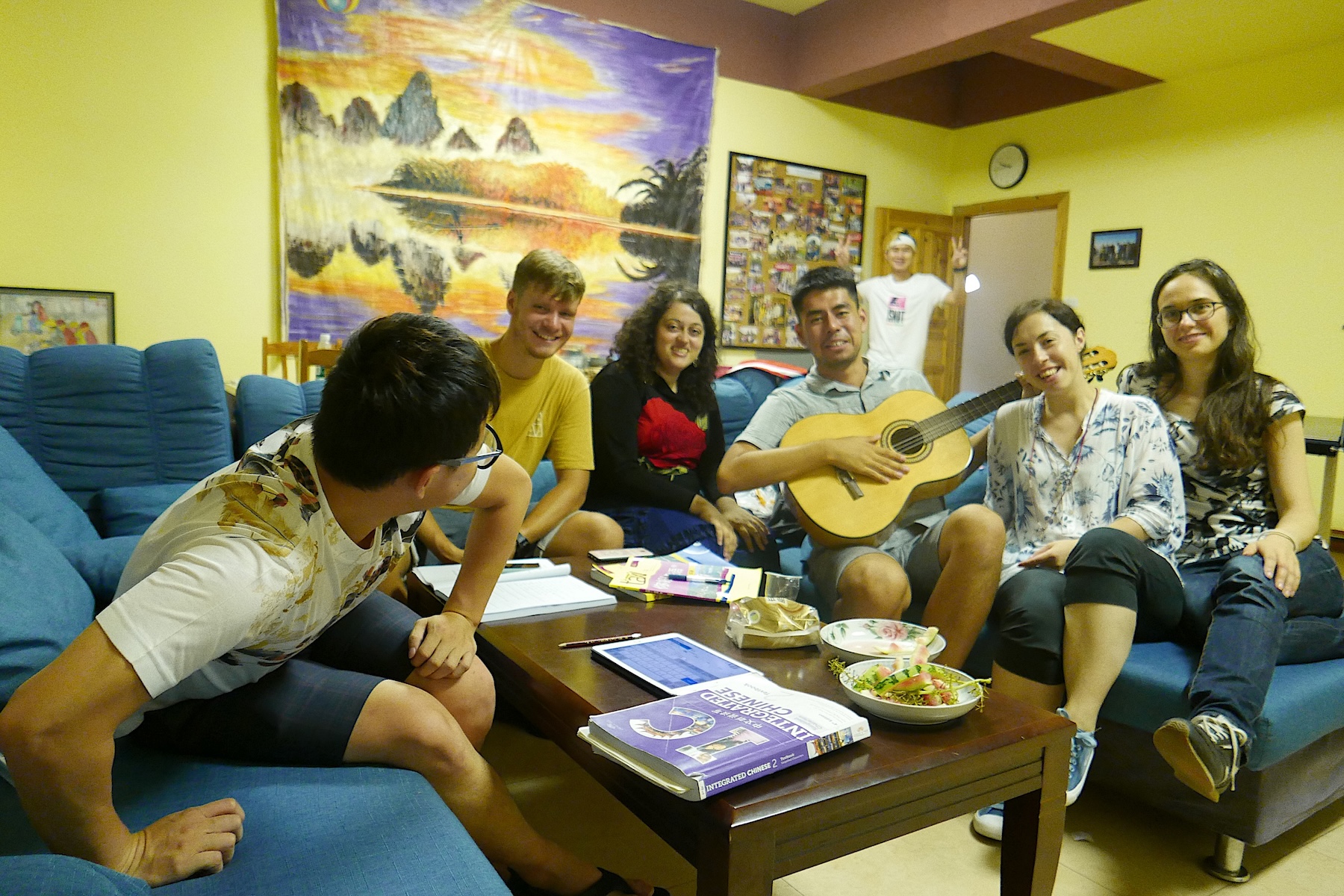
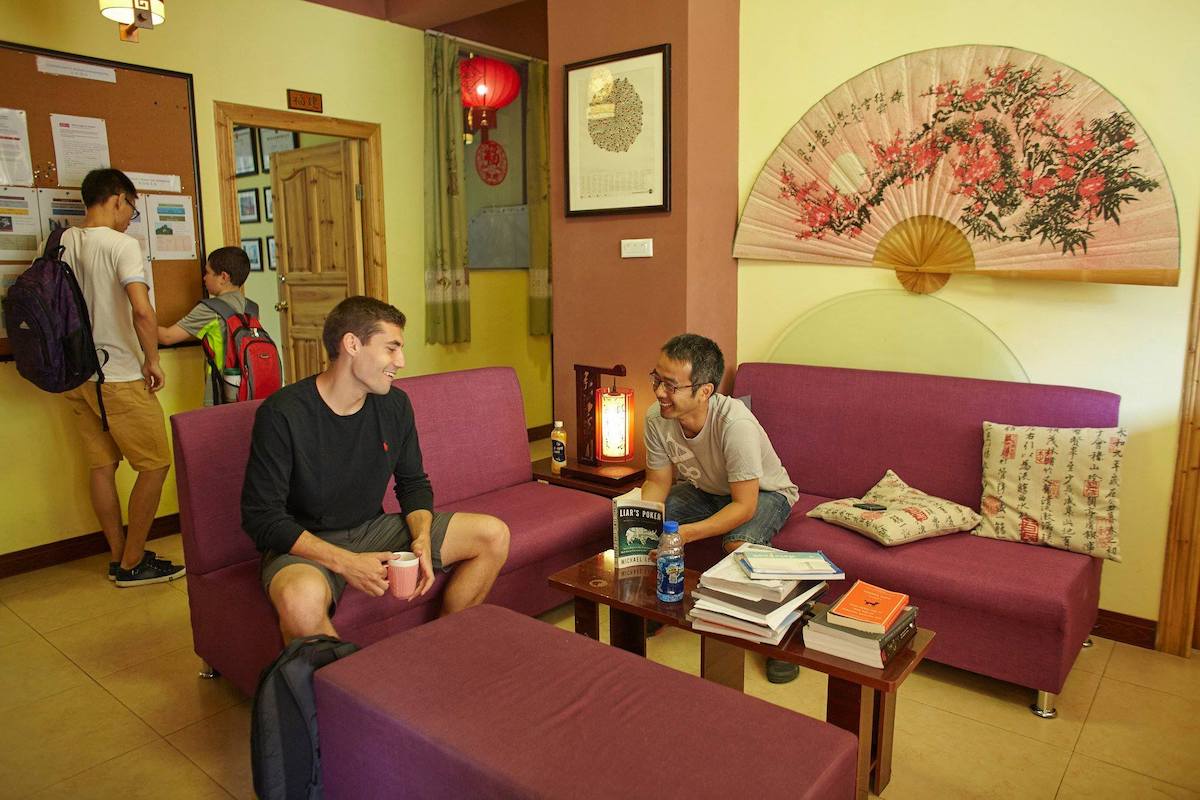
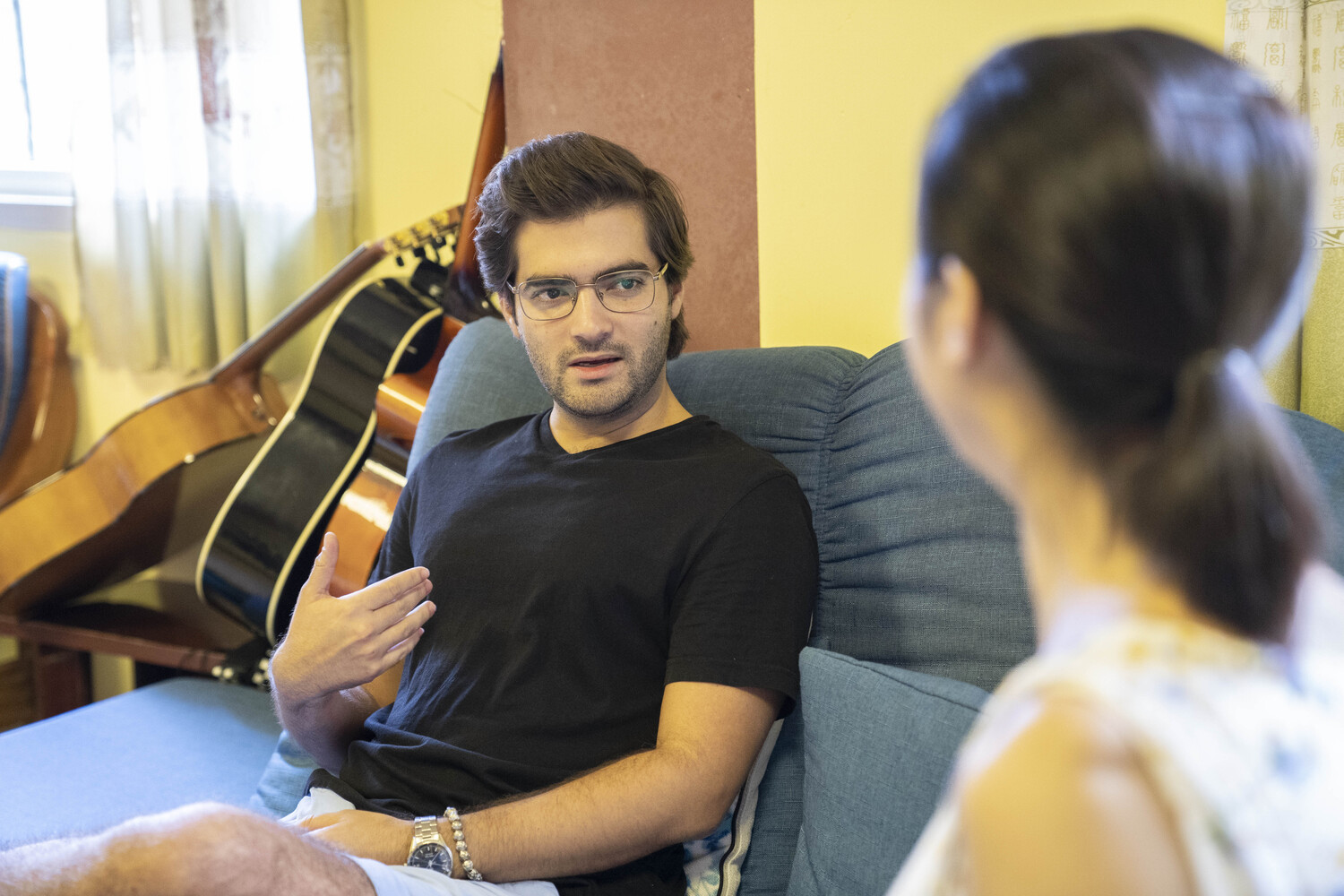
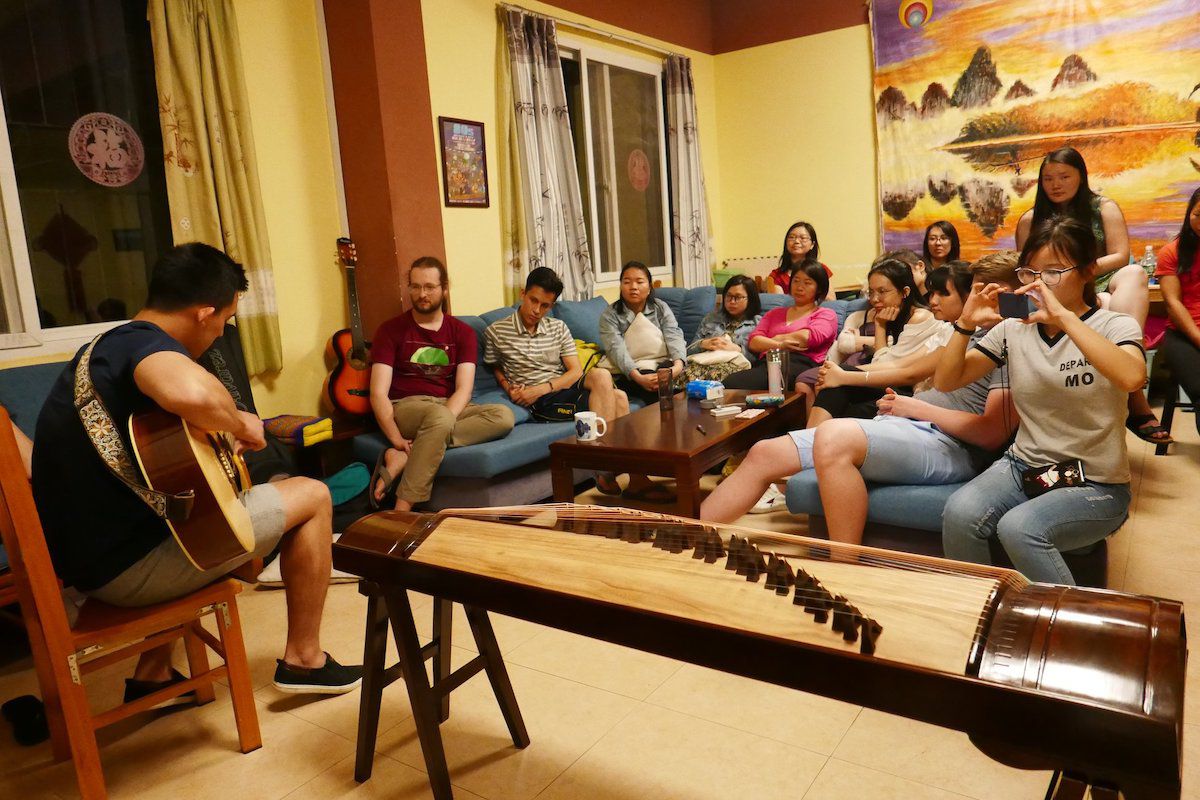
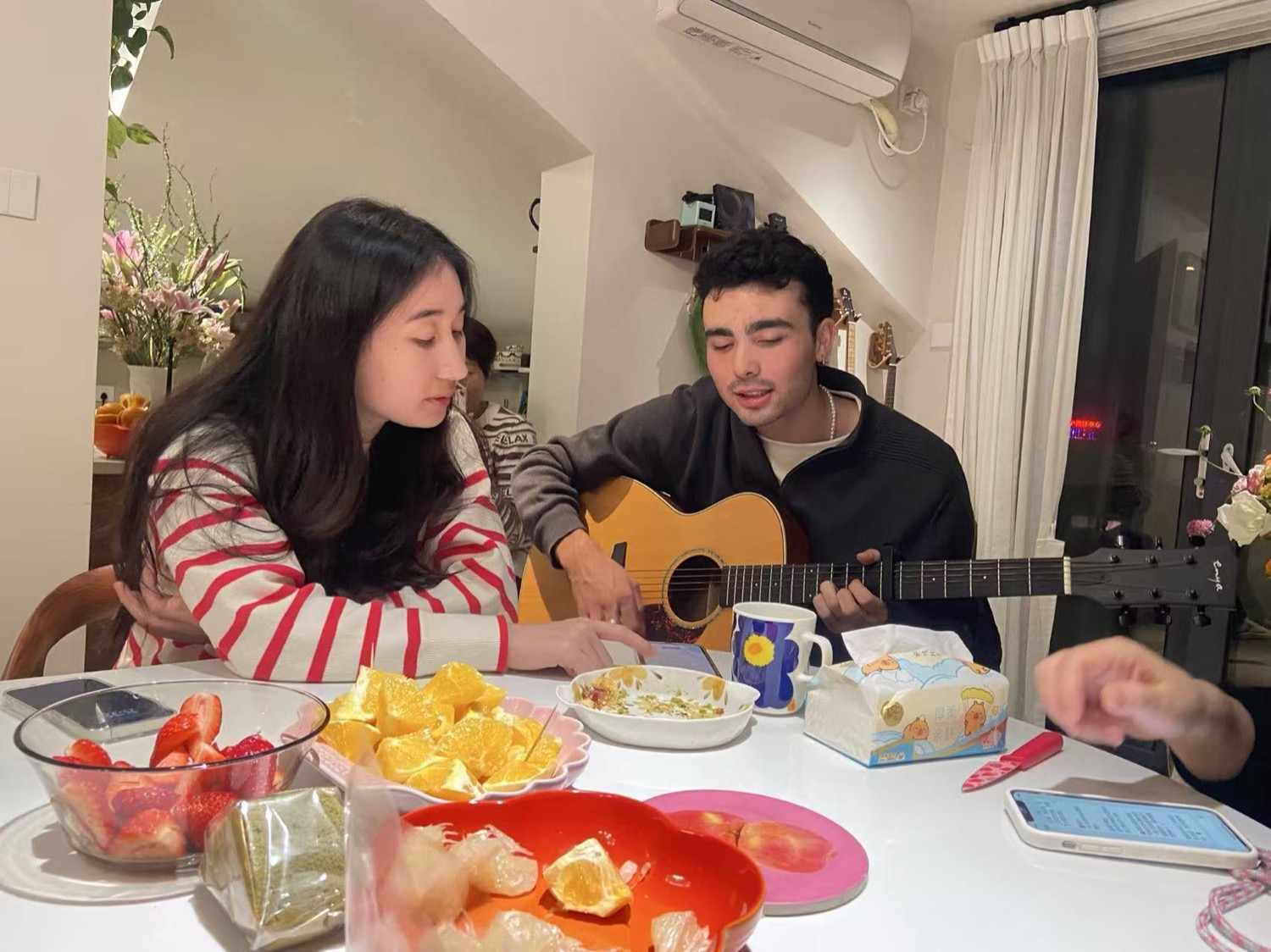
Some evenings at the Center are music and conversation on the sofa, which is informal language practice of the easiest kind.
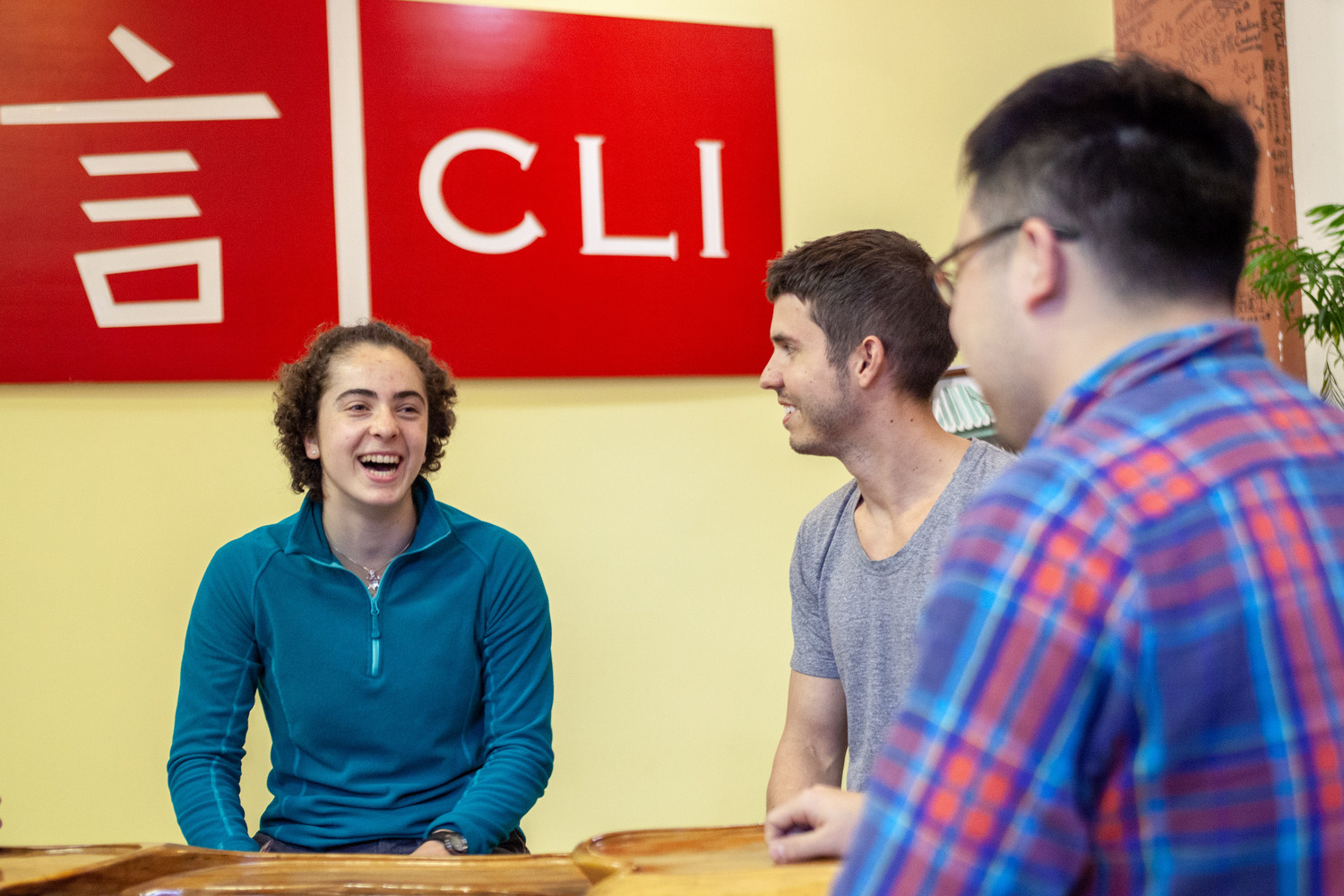
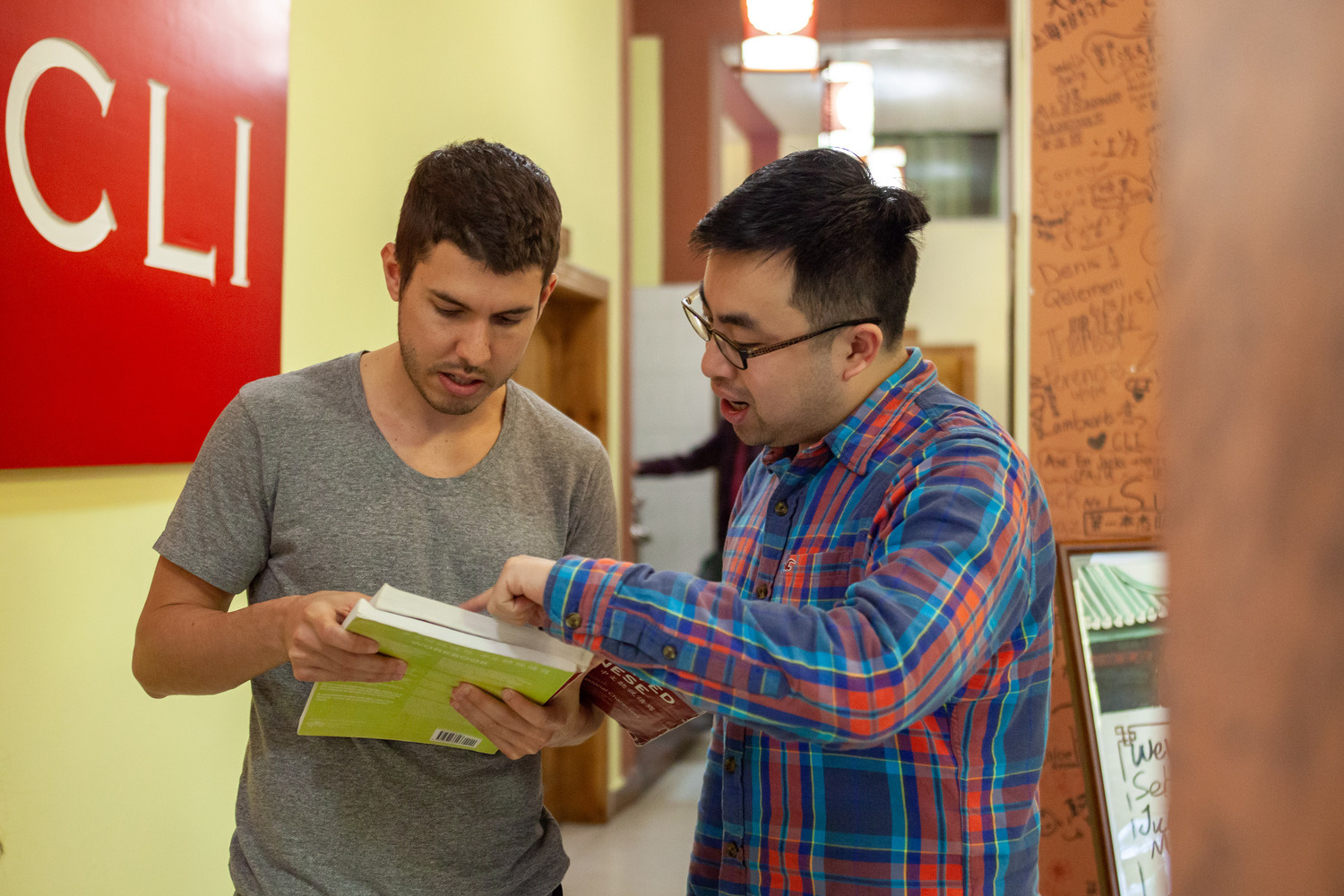
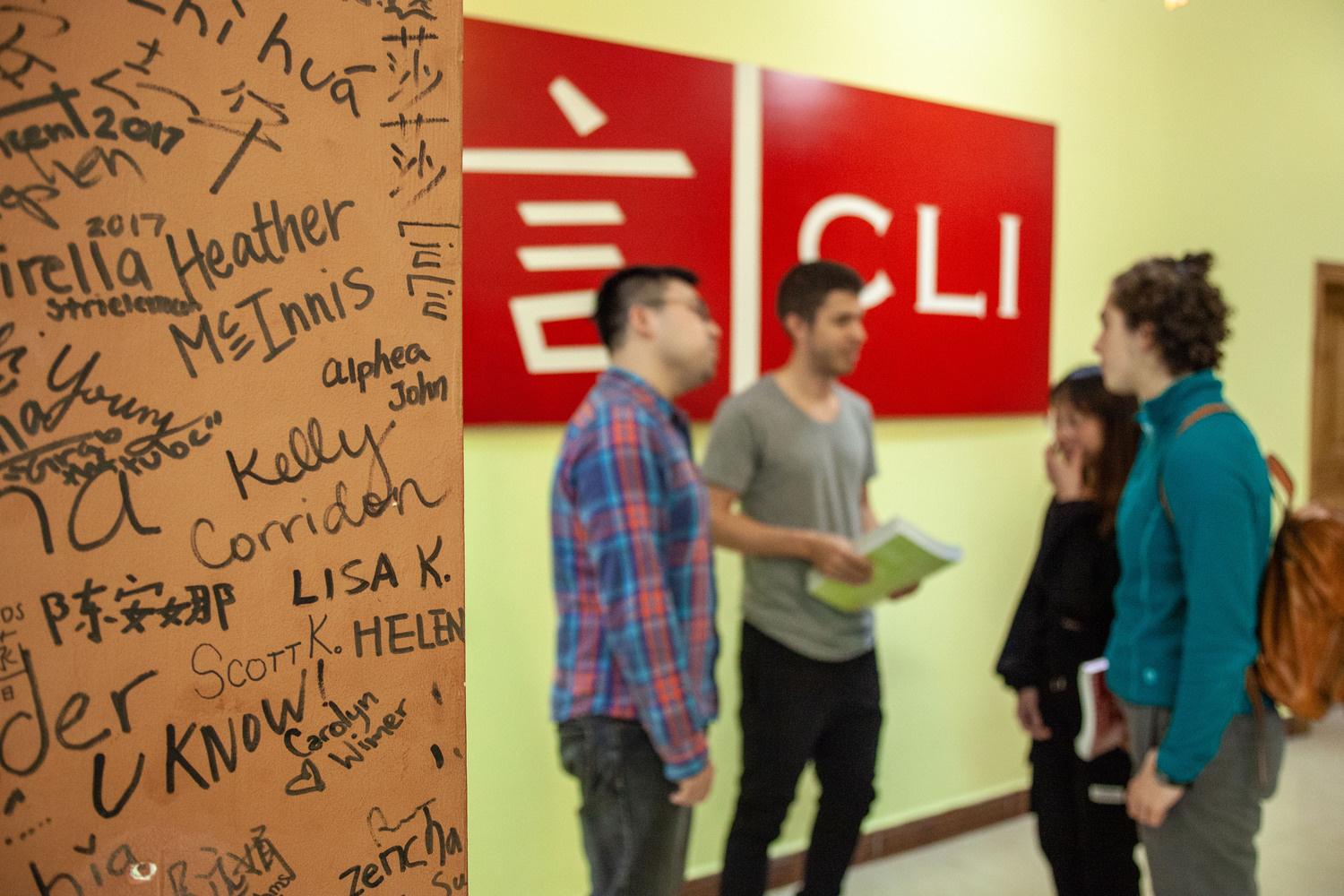
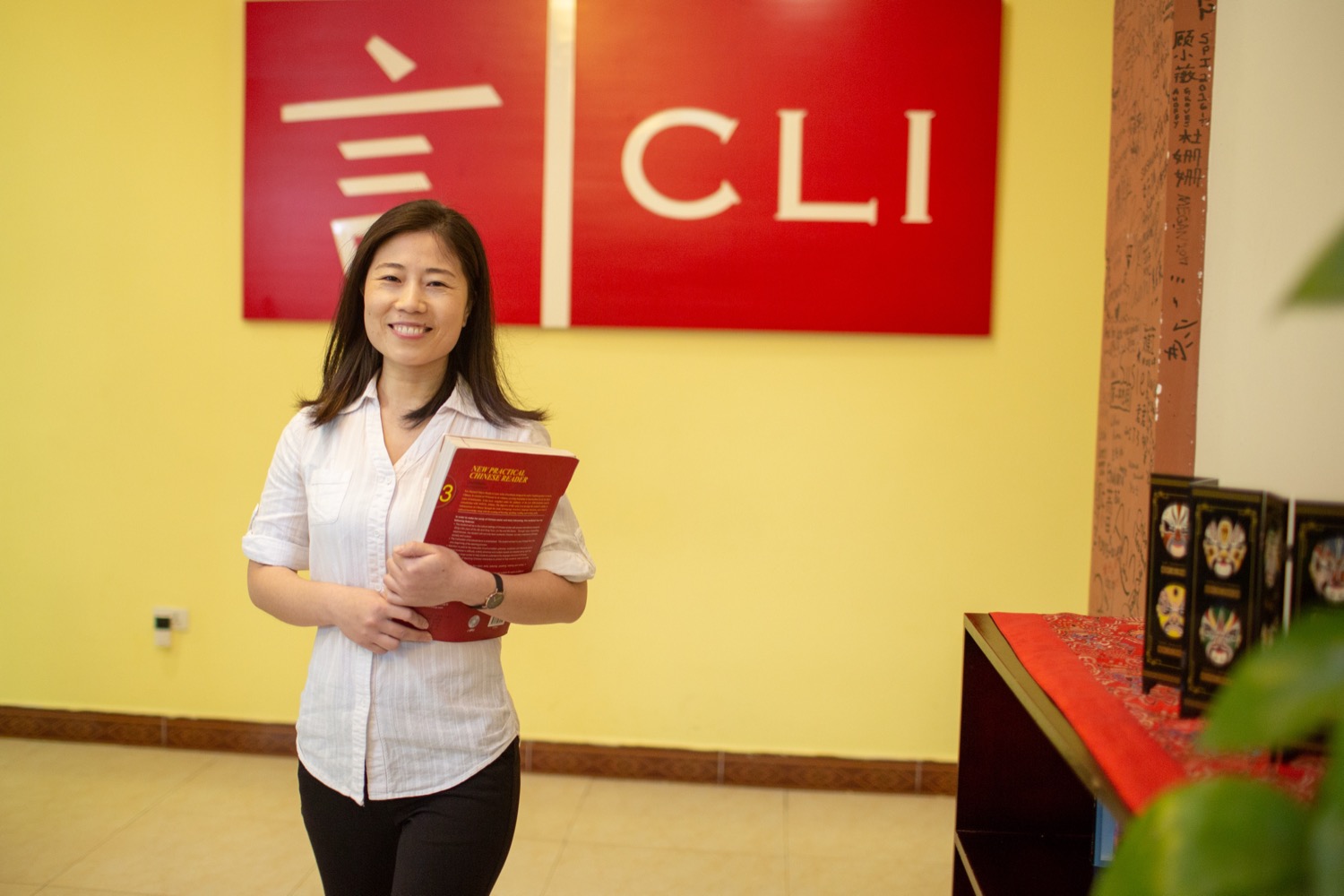
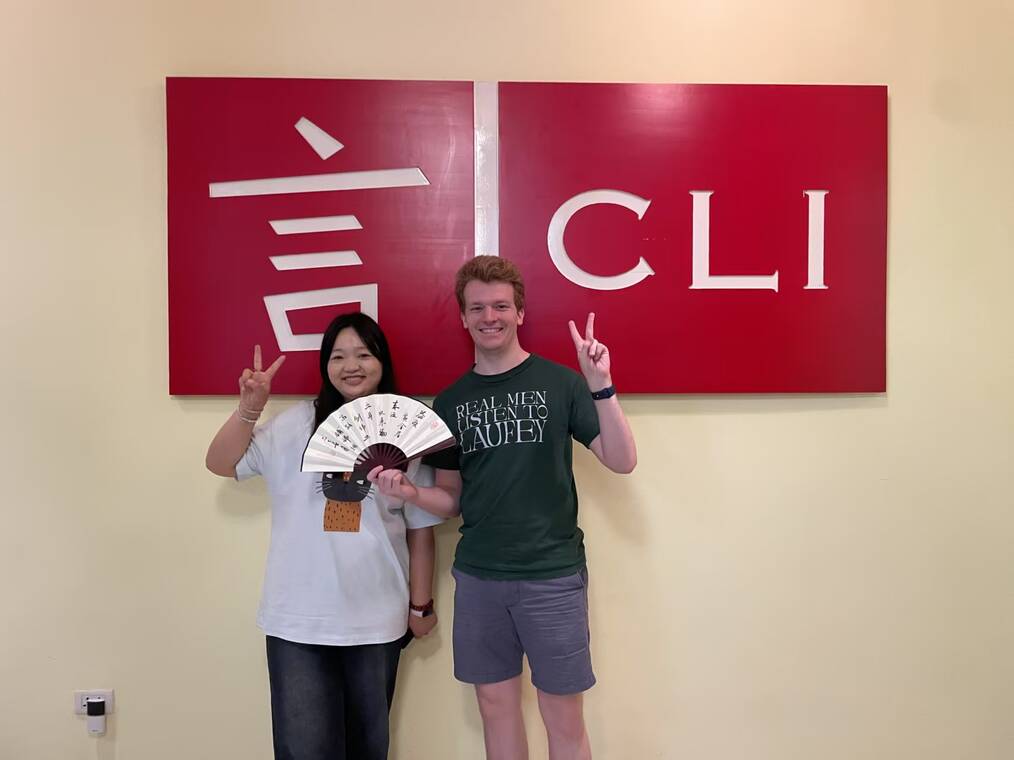
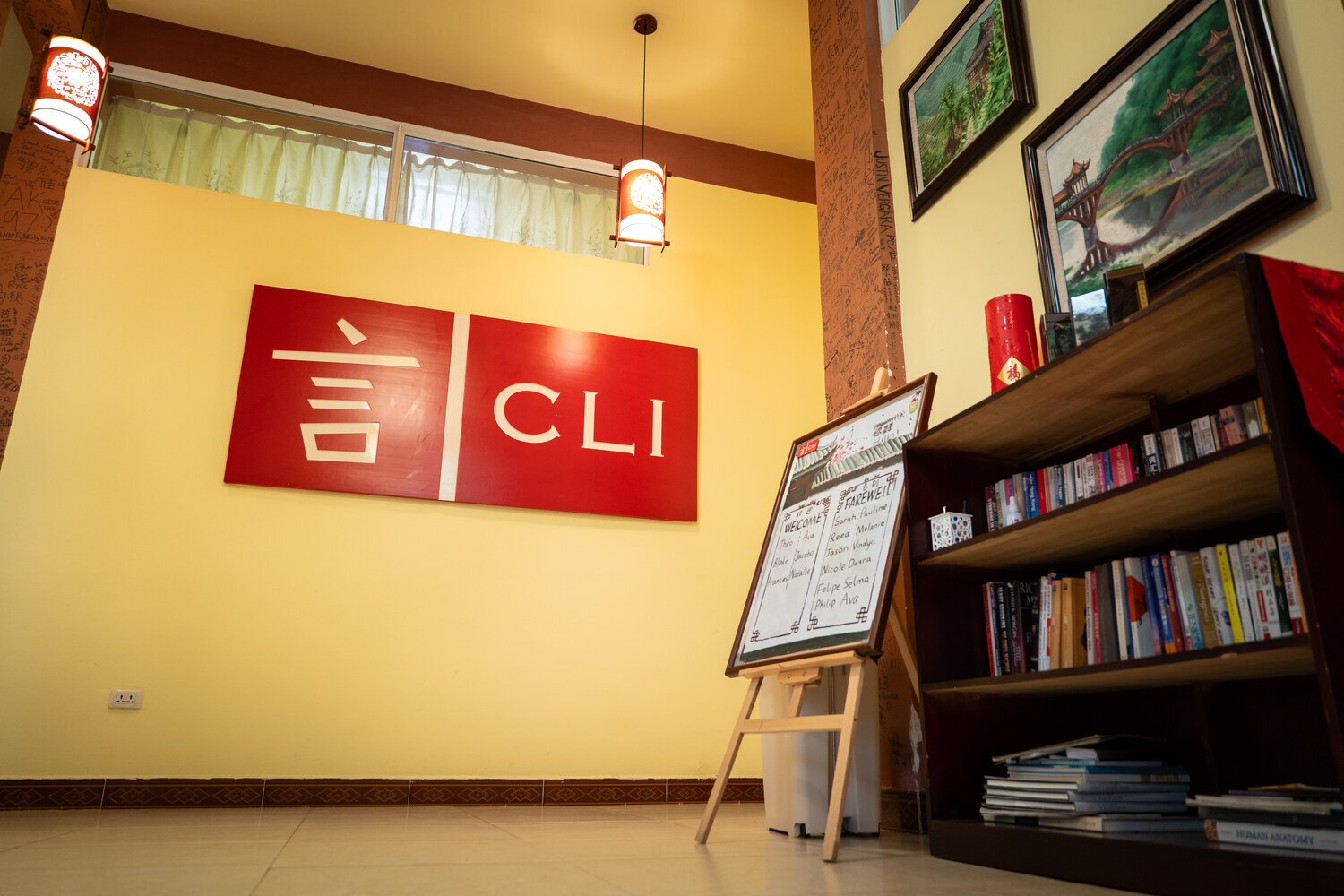
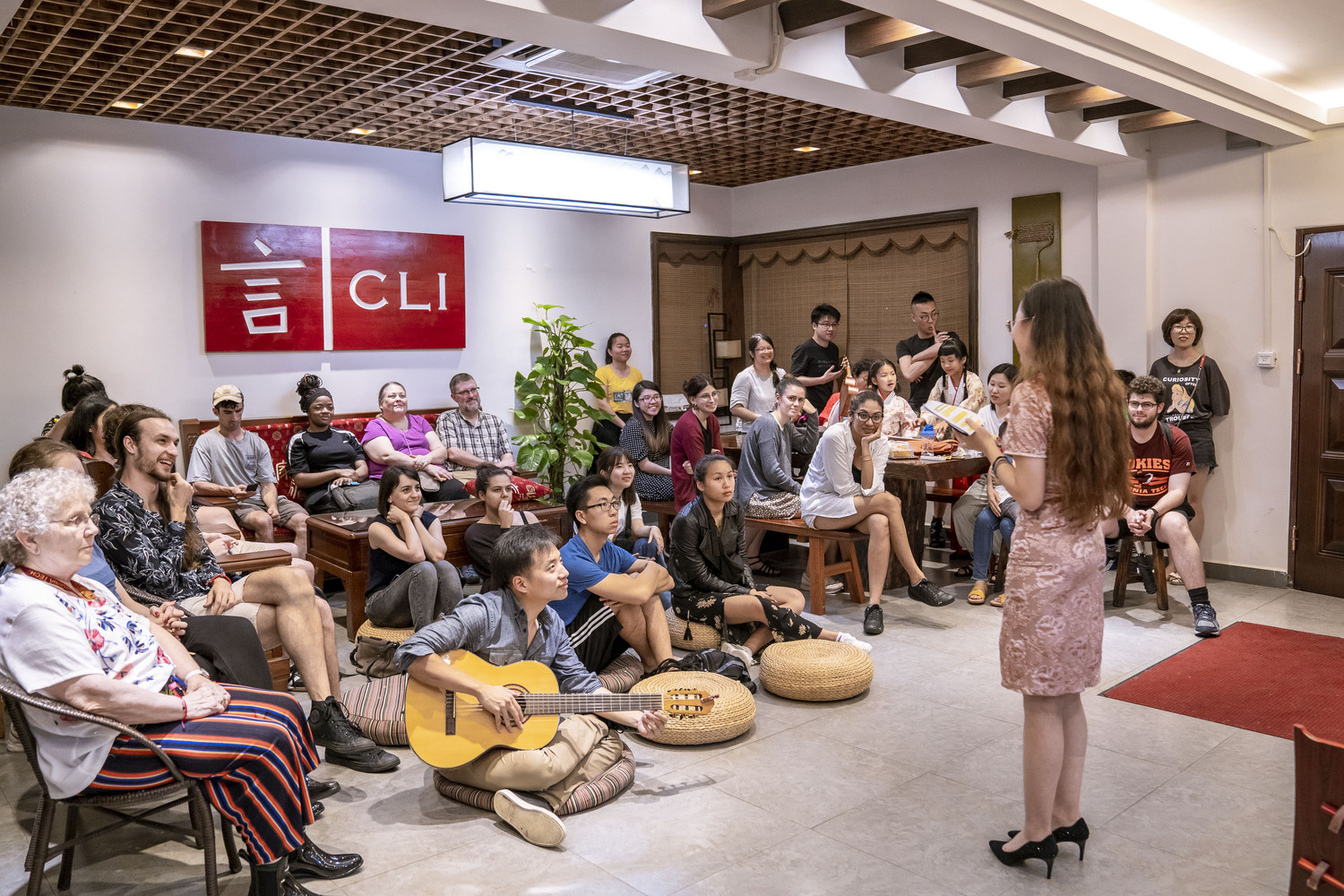
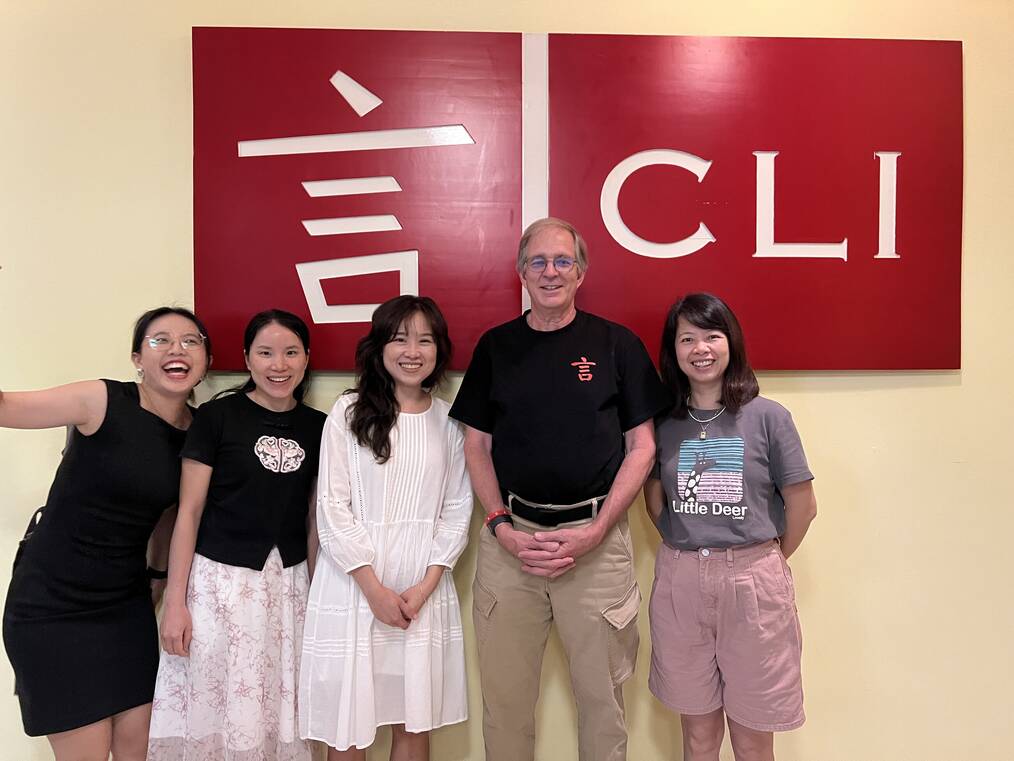
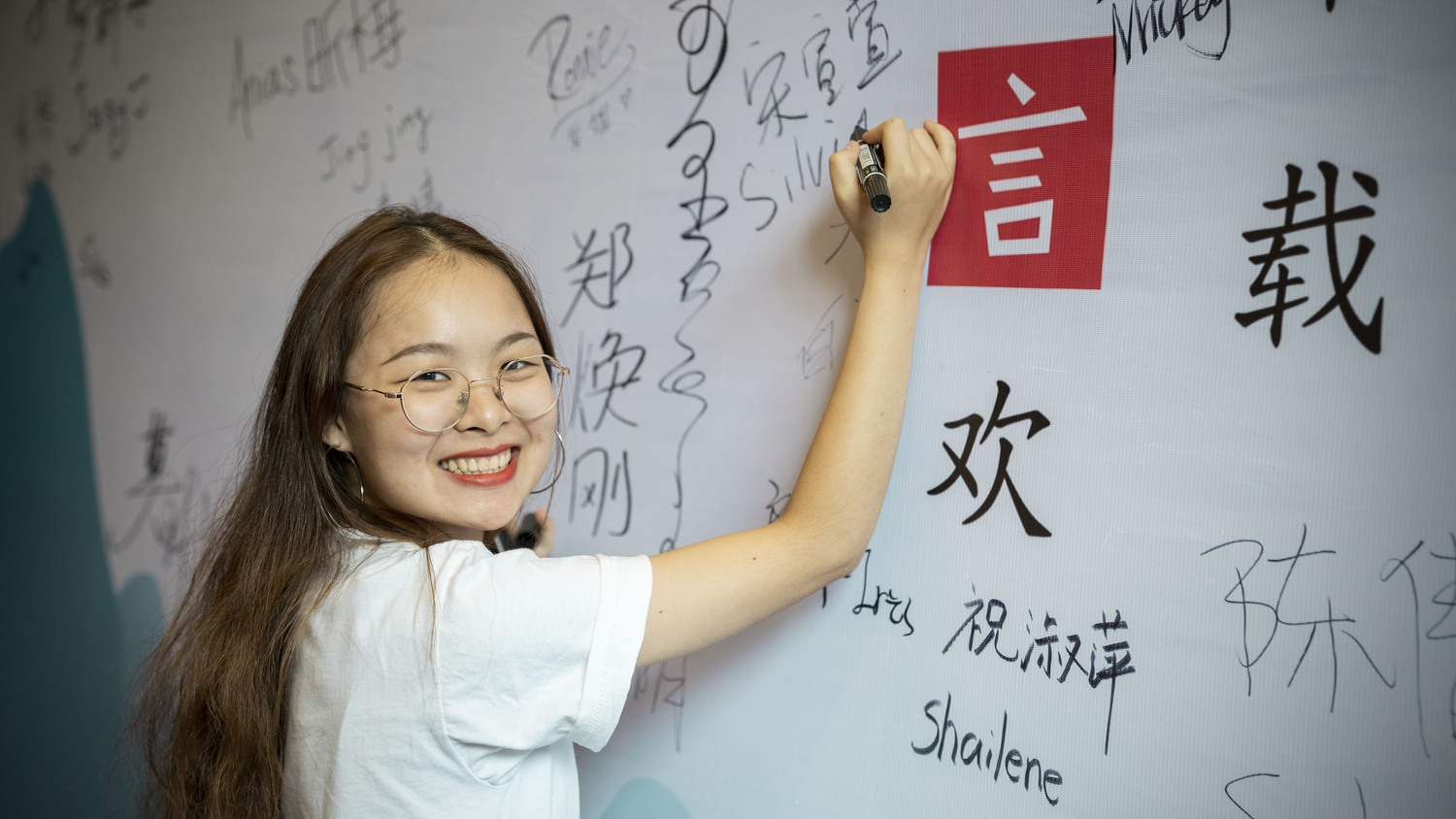
Names cover the wall beside the CLI sign. Since 2009, more than 5,000 students from over 50 countries and 400 institutions have studied with CLI.
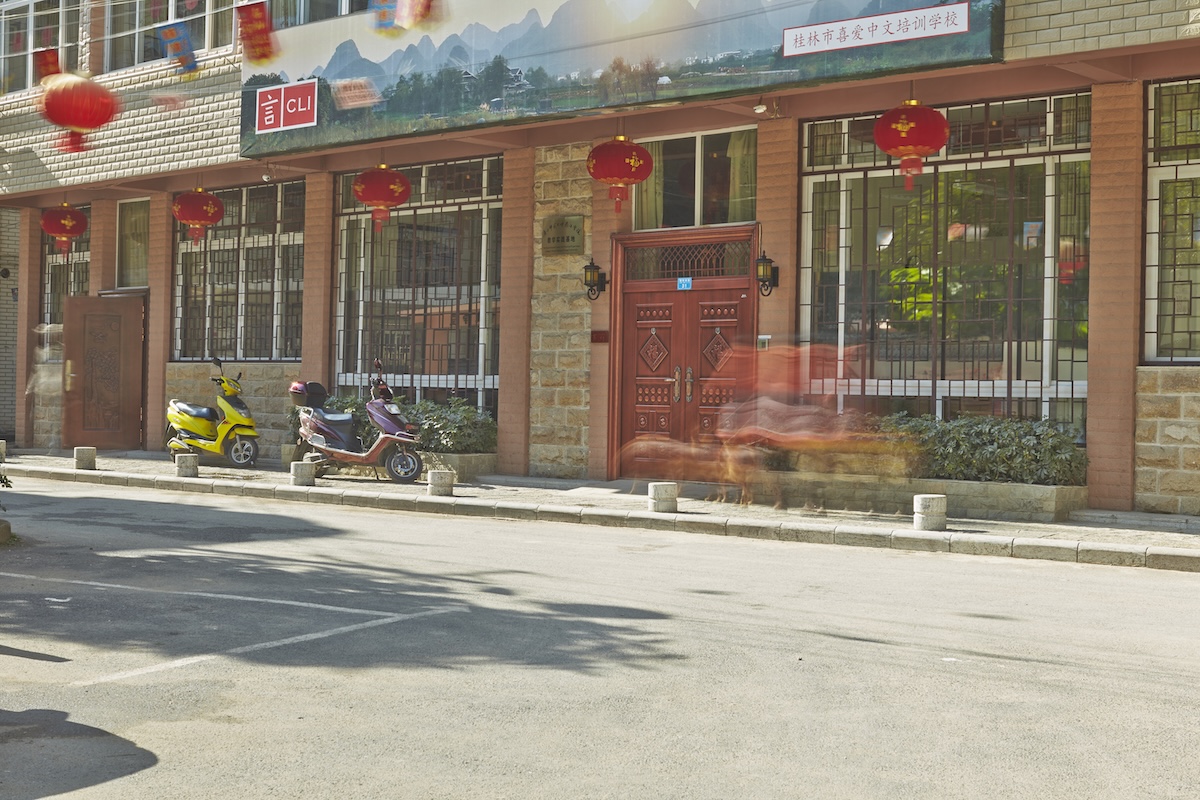
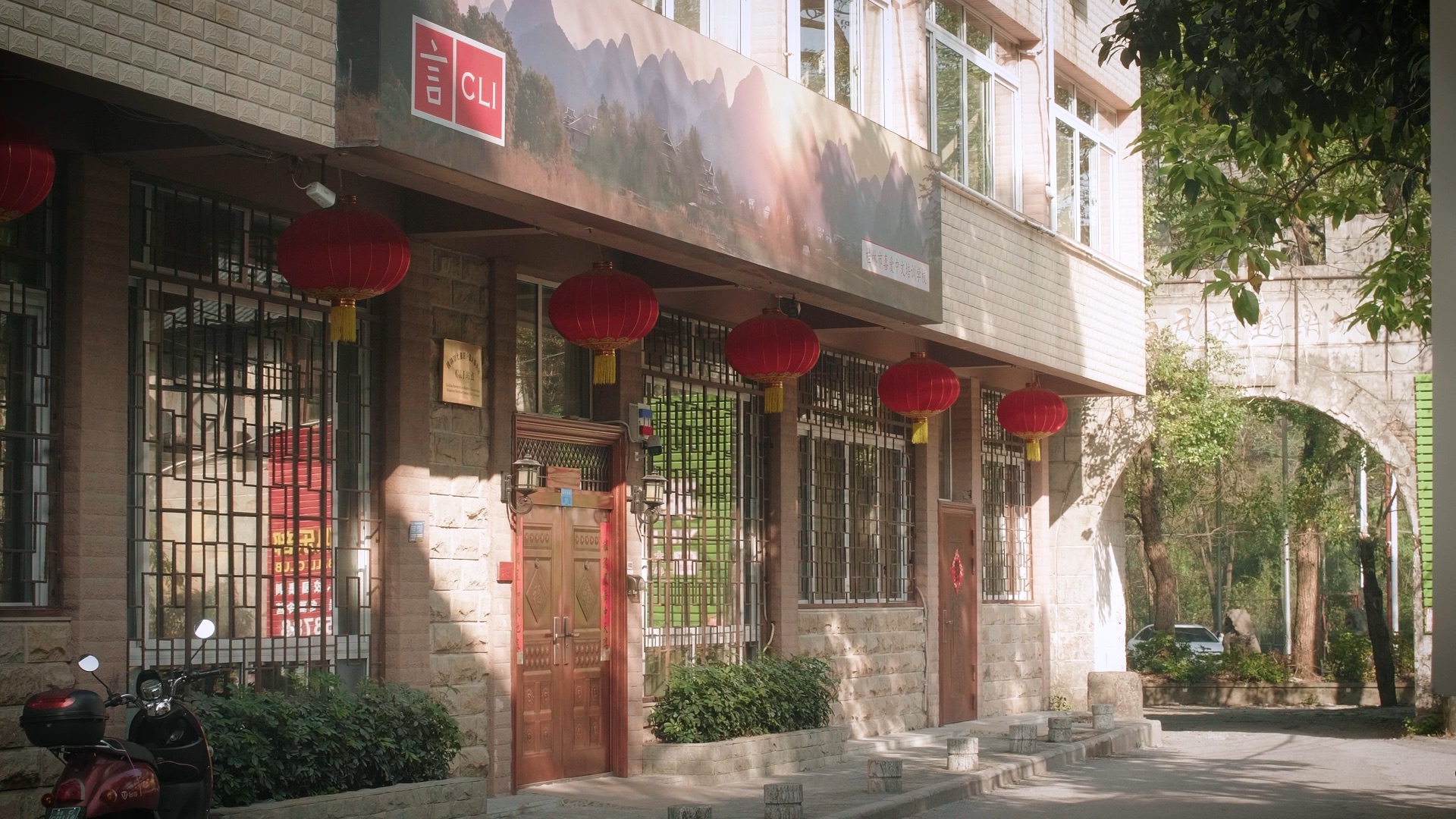
Red lanterns hang along the Center's front. Guangxi Normal University, CLI's university affiliate, can issue official transcripts for CLI coursework.
The activities board on the second floor lists the week's activities, which can include calligraphy, tea ceremonies, tai chi and dumpling making.
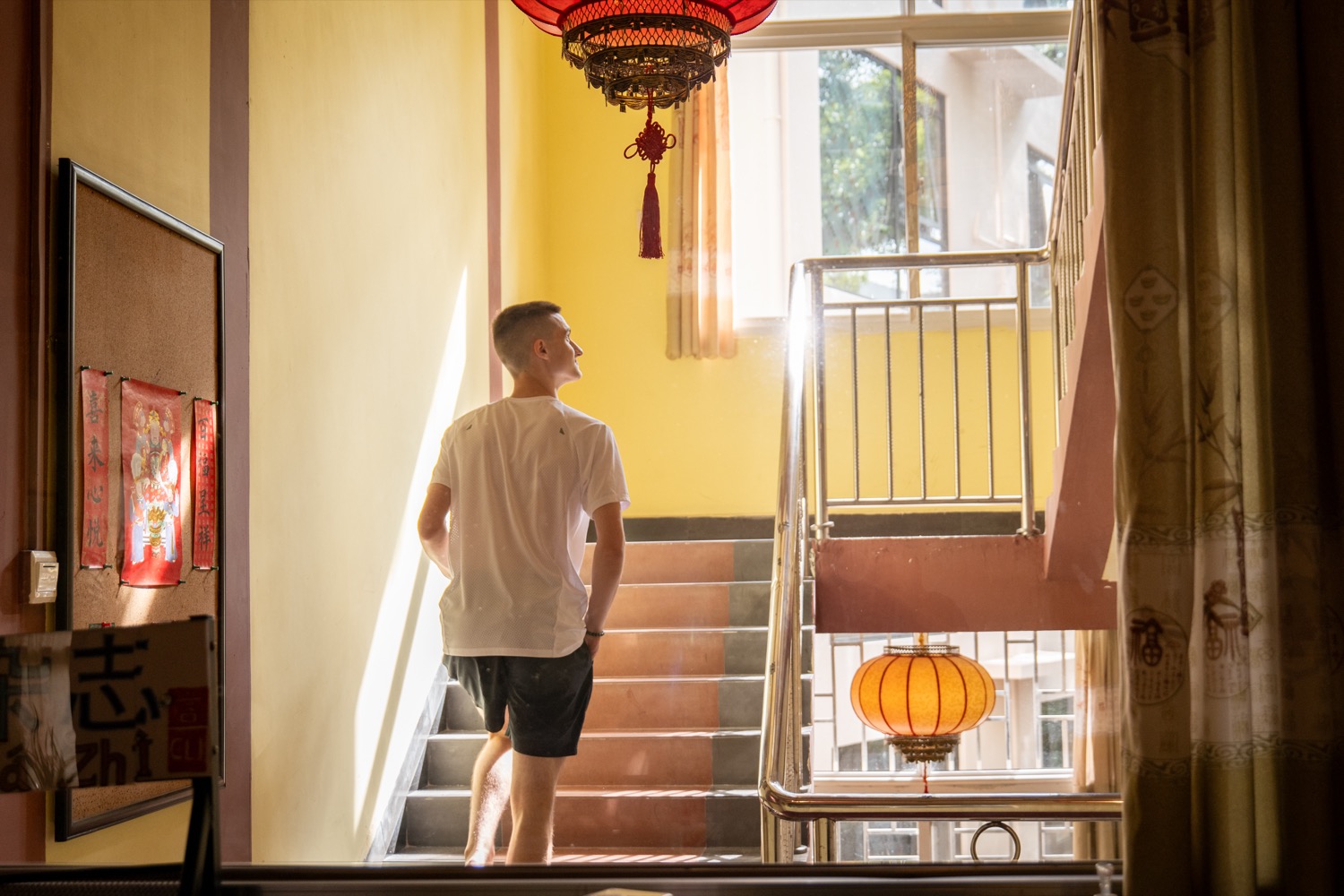
Rooms at the Center are on floors three to five, above the classrooms, so the walk to an 8:20 AM session is a few flights of stairs.
Teachers and pengyou live at the Center too, and they fill at least a quarter of its 36 private rooms.
Each two-hour class session is with one of a student's three teachers, and the hours around class belong to the student.
Errands are part of the program too. Markets, cafés and noodle shops are near CLI, and ordering in Mandarin is one of the first skills students pick up.
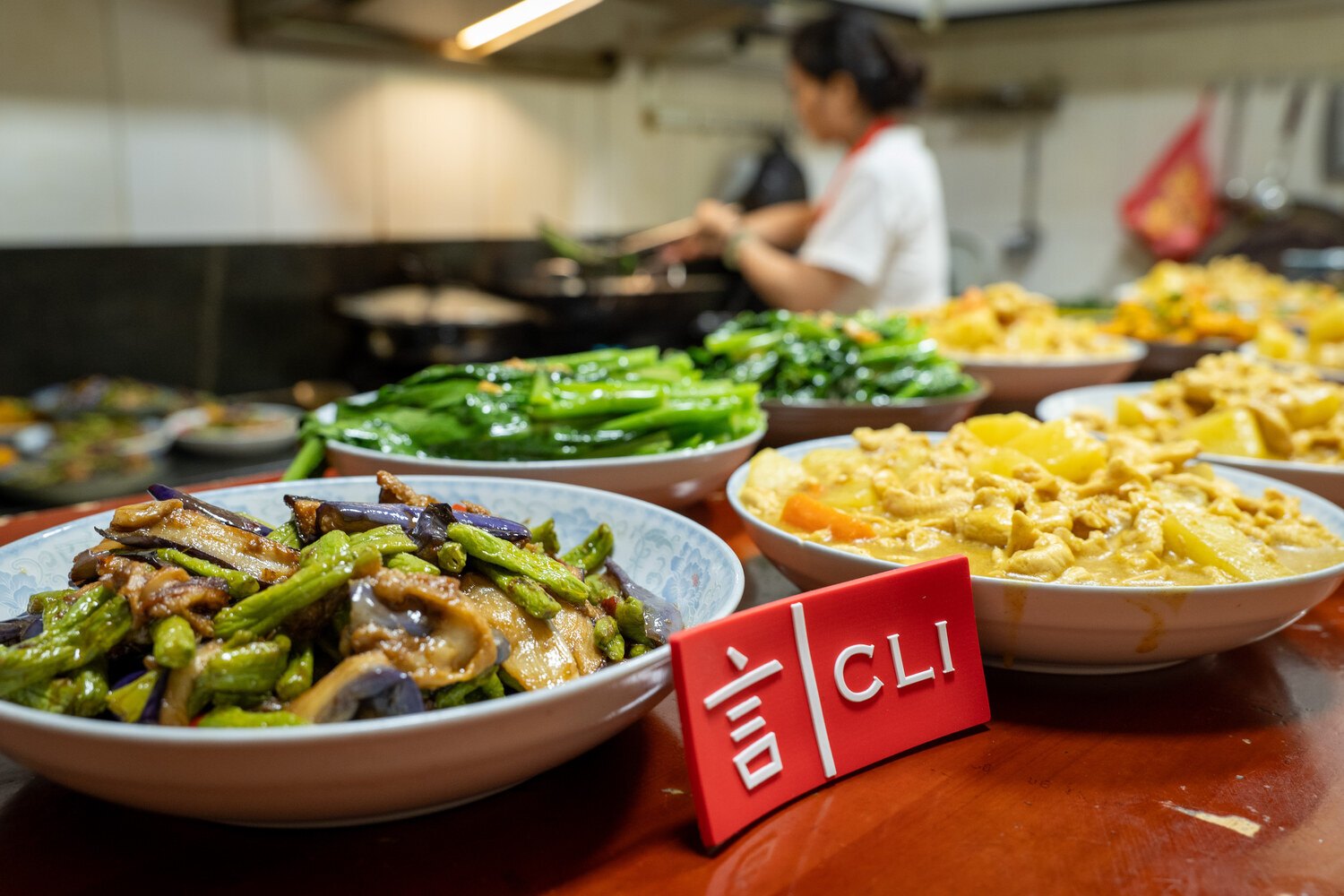
On the optional meal plan, weekday lunch at the Center is home-cooked and served family style. At least one table each day is Mandarin-only.
Twenty hours of one-on-one Chinese a week, four hours each weekday, is the core of the Immersion Program.
Because classes are one-on-one, teachers can slow down on hard material or move ahead, with CLI's syllabi giving the structure of a university course.
Every two weeks, a short evaluation covers vocabulary, grammar, reading, writing, listening and speaking, and teachers use it to plan what comes next.
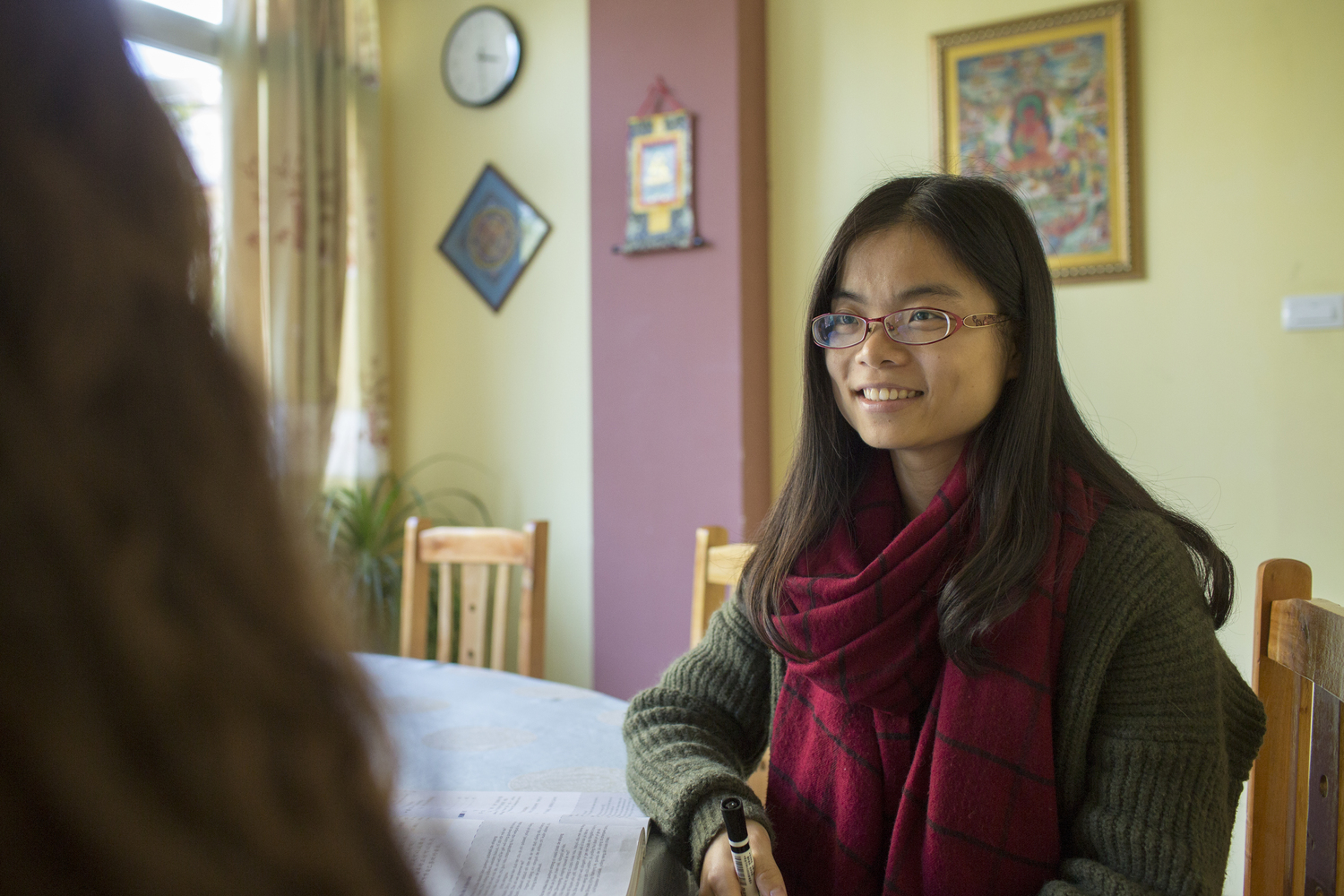
Speaking class works on pronunciation, tones and conversational fluency, and a lot of it is simply two people talking across a table.
Classes are one-on-one, 20 hours a week, and small groups of three to five can sometimes be arranged when levels and enrollment allow.
The stairs past the classrooms lead to three floors of private rooms and, at the very top, a rooftop with a view.
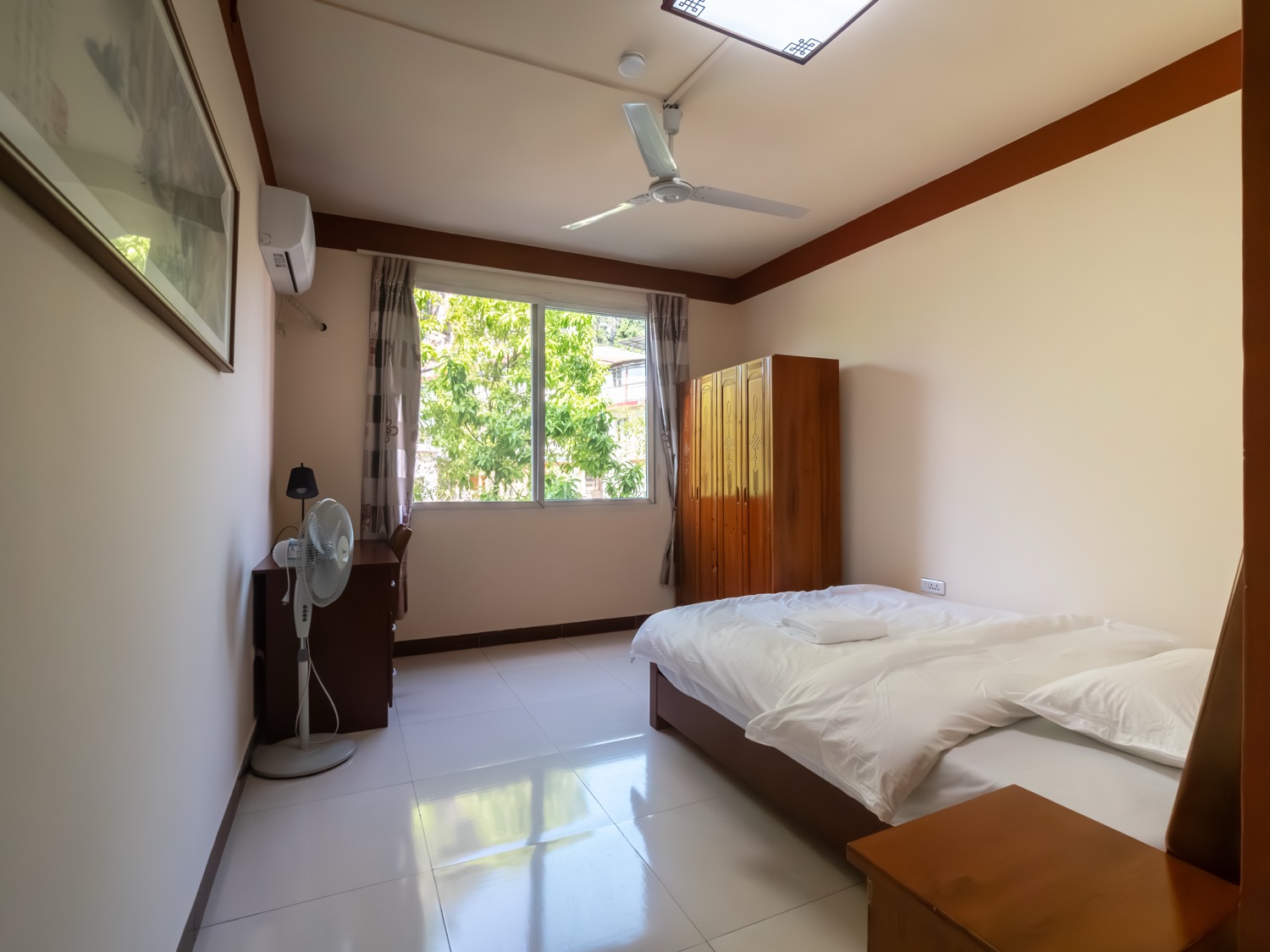
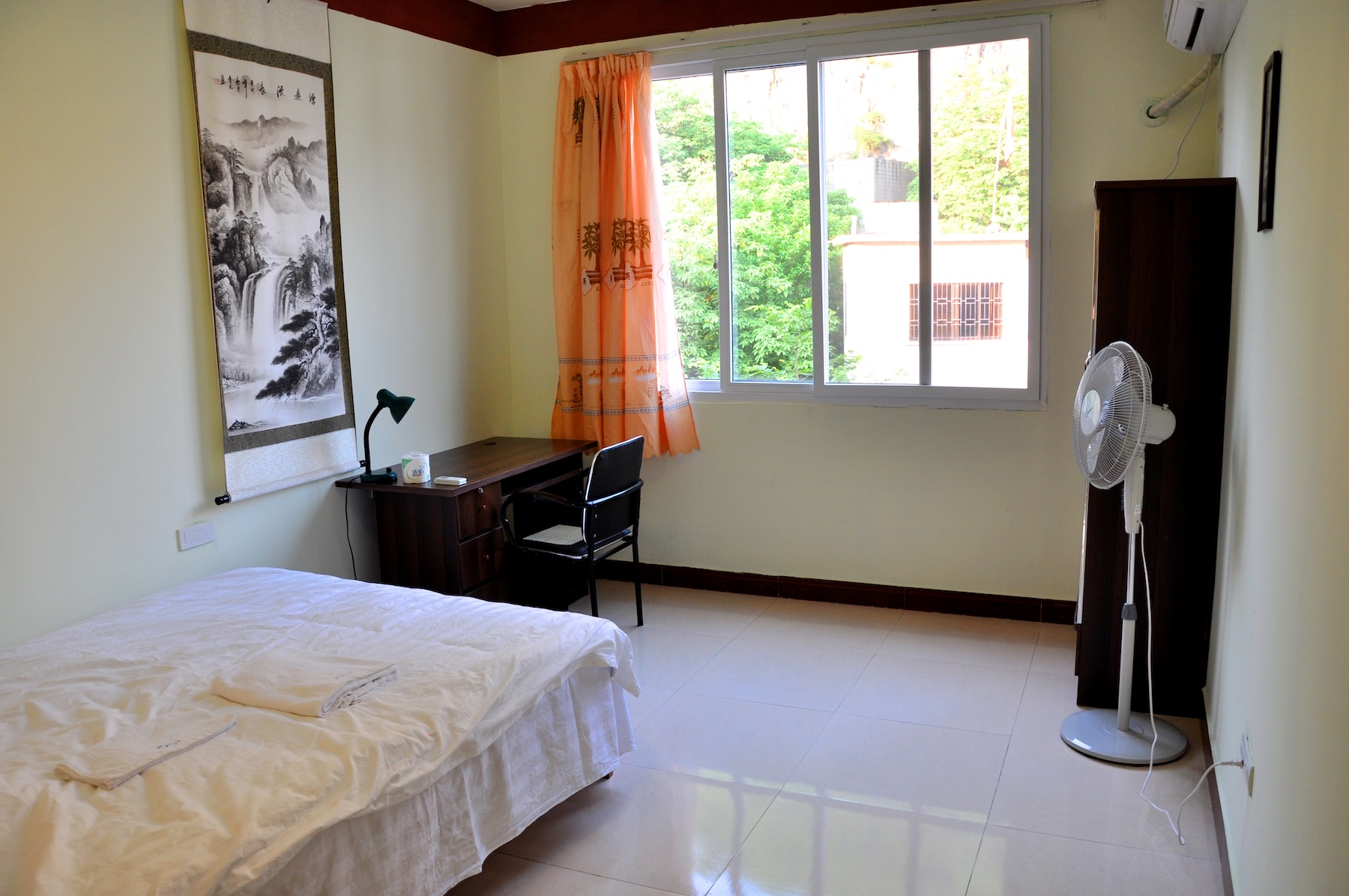
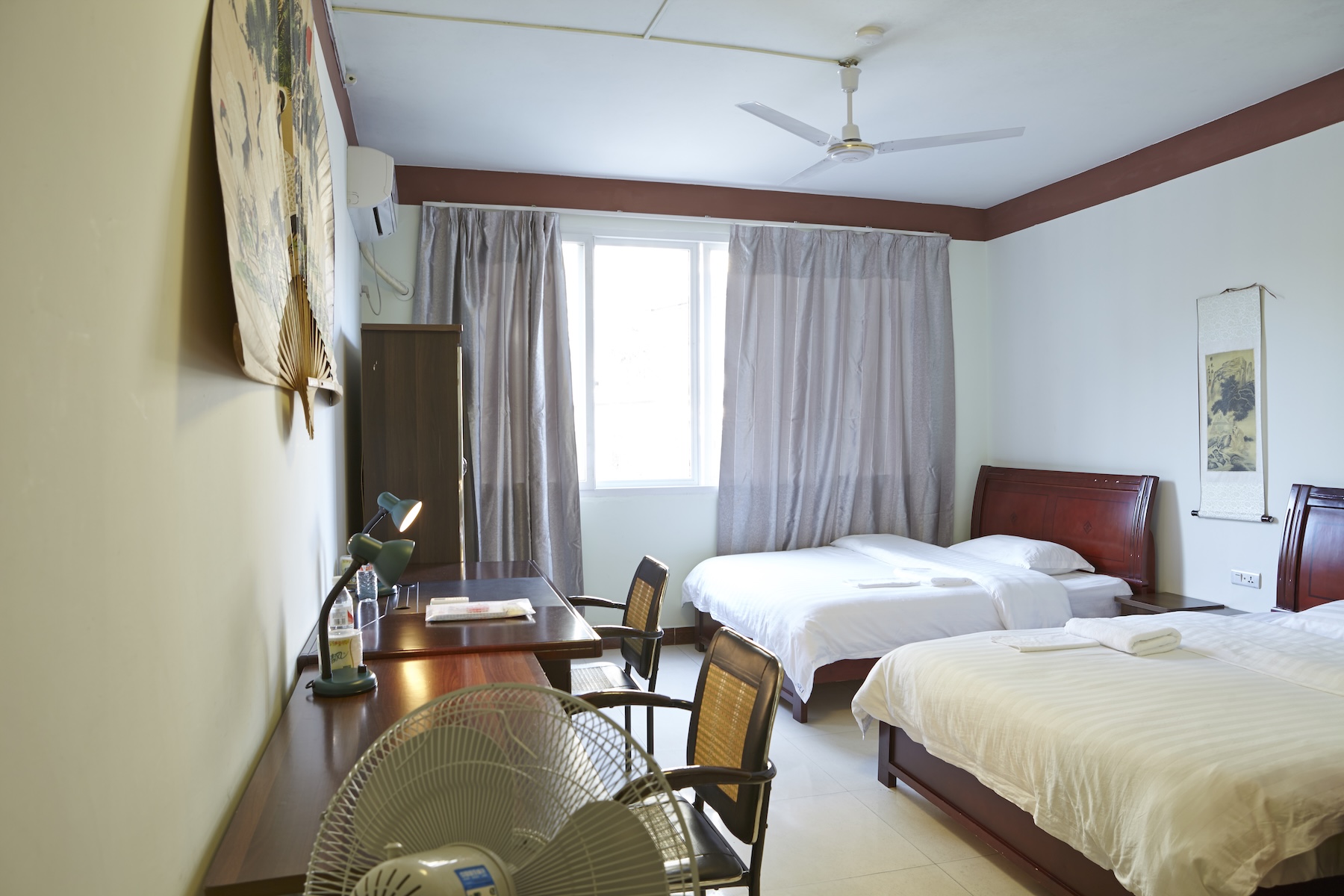
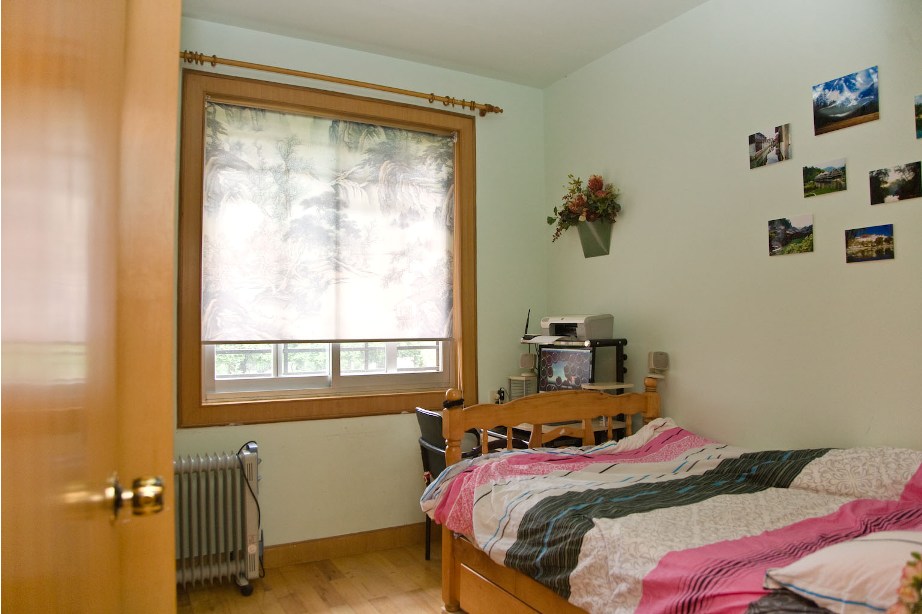
Students who live at the Center have a private room. The building was renovated in 2026, so today's rooms may look different from this one.
Students can start the Immersion Program any Monday of the year and stay from one week to a year, with no fixed semesters.
Weekday lunch is cooked in the Center's full kitchen and eaten in its dining area, and dietary needs such as vegetarian or halal can be accommodated.
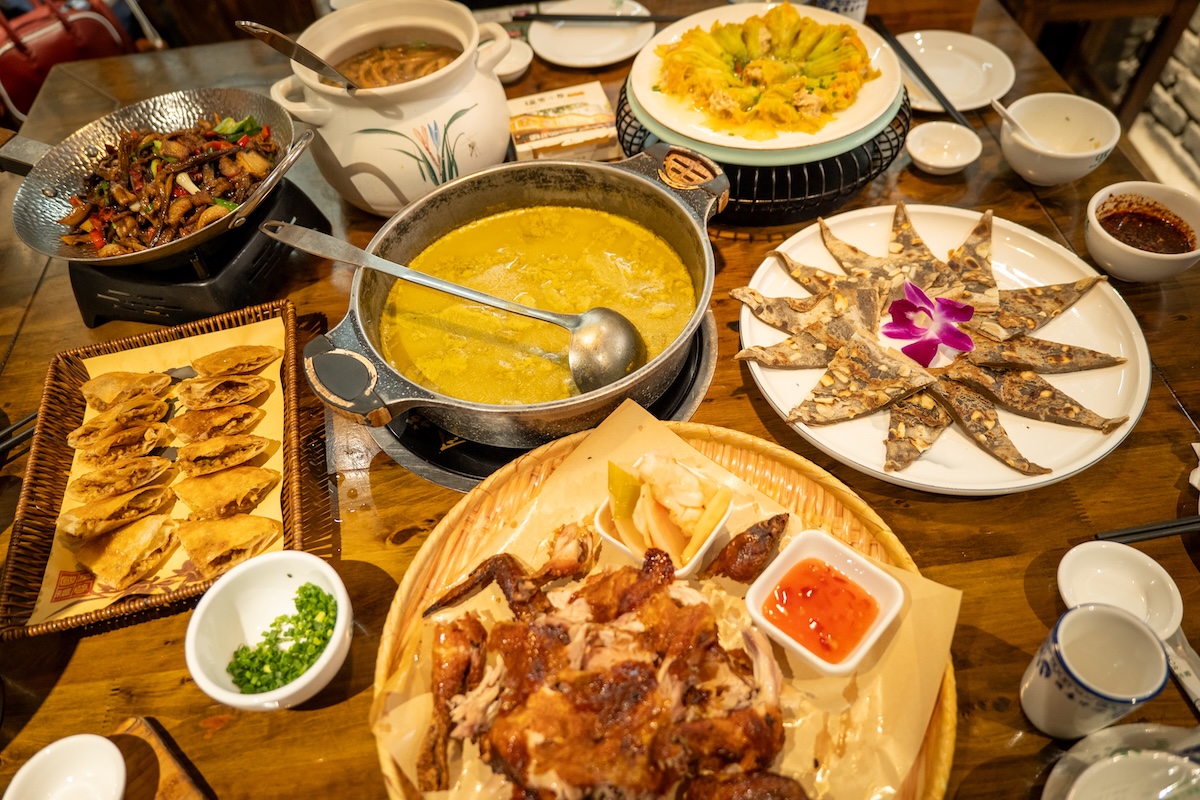
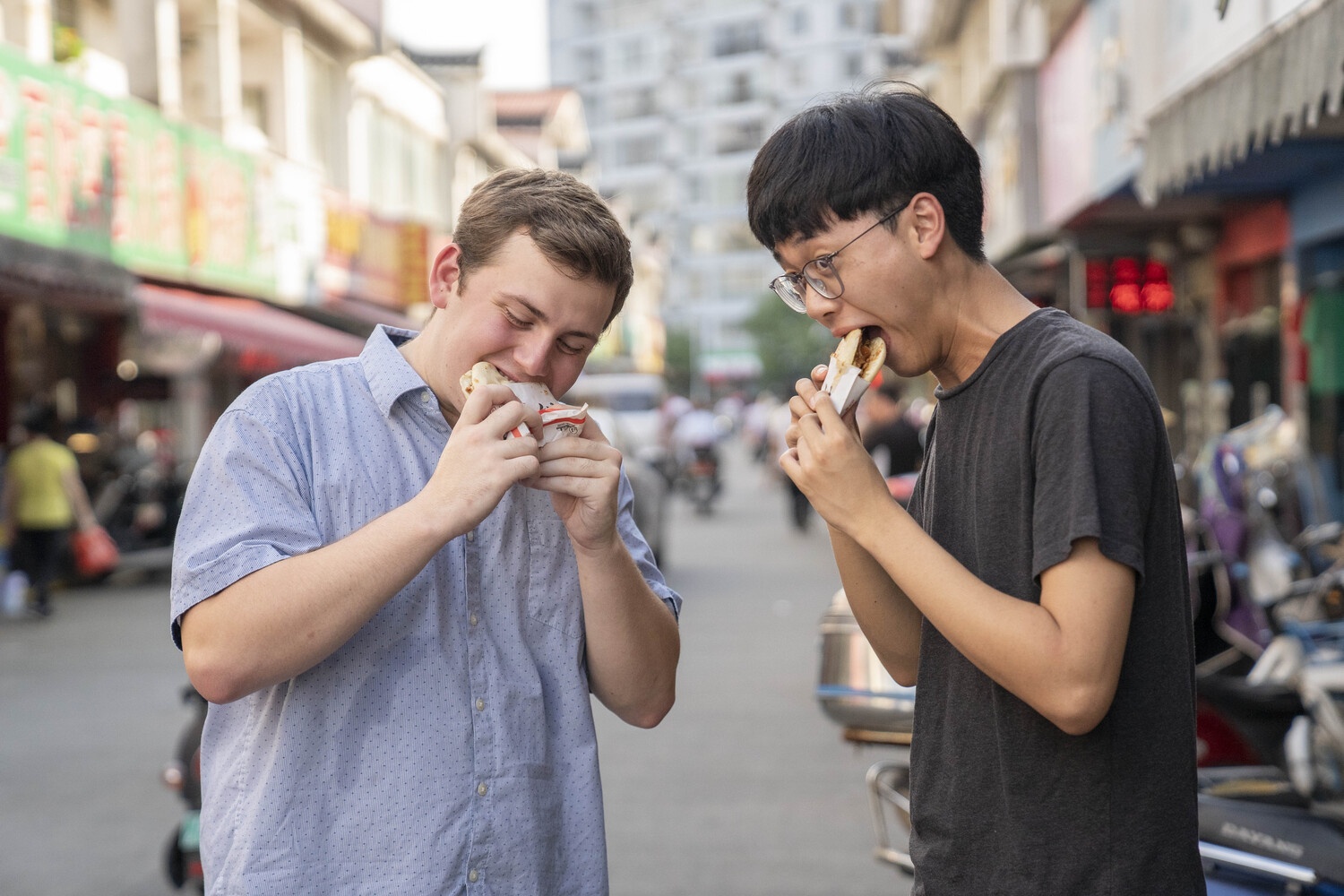
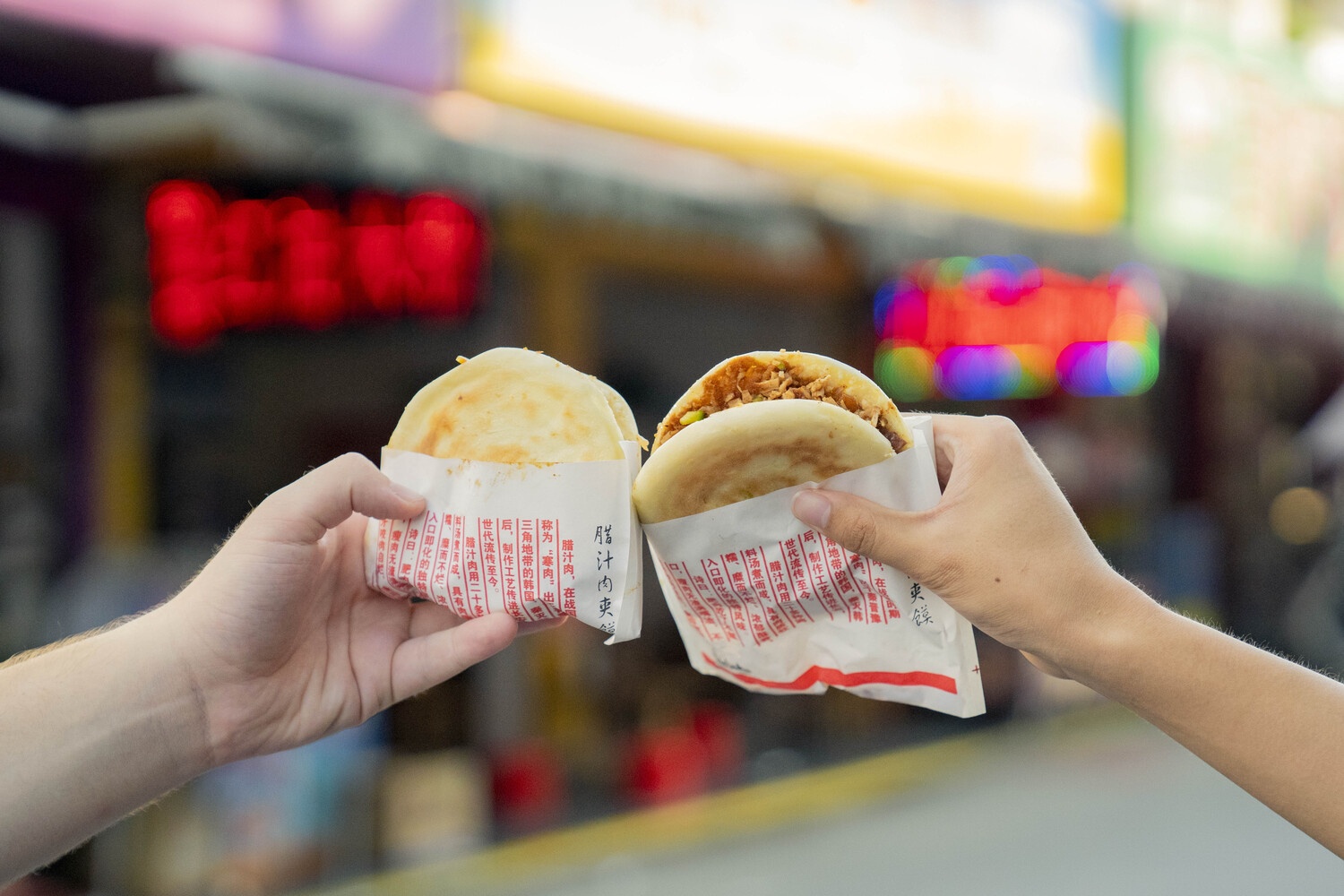
Guangxi food leans fresh, sour and lightly spicy, and snacks like these are an easy way into the vocabulary of eating in Chinese.
Tea ceremonies and visits to tea houses are among the program's activities, a slow way to practice Chinese over a few cups.
Teachers coordinate across a student's classes, so a word from reading class may come back that afternoon in speaking class.
Limestone karst peaks surround Guilin, the same hills that appear in Chinese paintings and poetry, and the Center's rooftop has a view.
One of each student's three teachers handles comprehensive review: grammar, vocabulary and a daily look back at what was covered.
About once a month, the program takes an overnight trip outside the city, to places such as the old town of Xingping or the Dong villages of Sanjiang.
Housing is included in tuition. Students choose a private room at the Center or a homestay, and apartments are an option for stays of six months or more.
Rooms at the Center come with weekly cleaning, which leaves more of the weekend for trips to the Li River, Yangshuo or Longsheng.
Teachers work from CLI's course syllabi, which give the structure of a university course, and adjust the pace for each student.
Guilin winters are cool and damp but rarely below freezing, and summers are hot and humid. The program runs all year, starting any Monday.
Homework and review fill part of most afternoons, after the day's two class sessions and lunch.
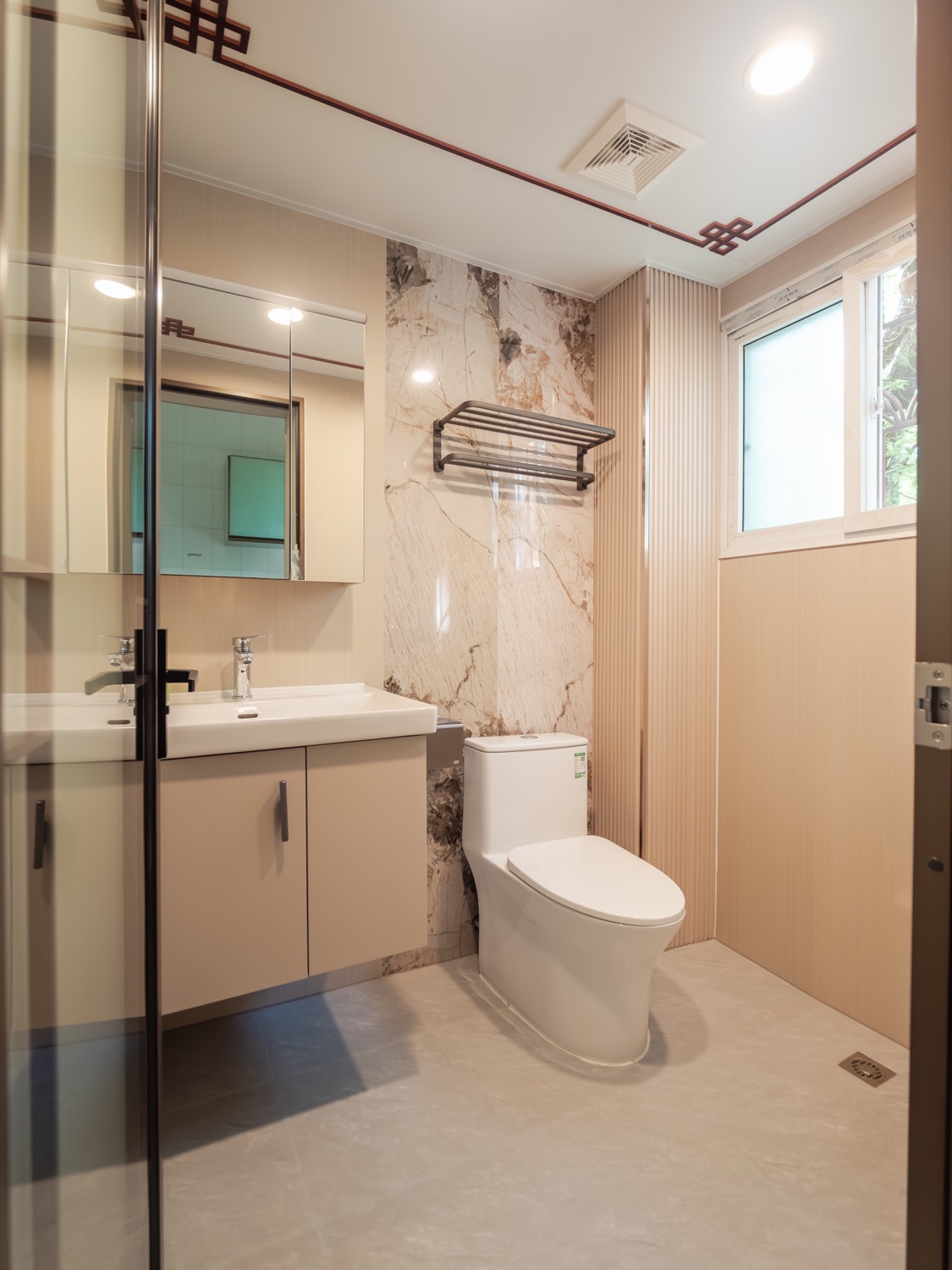
Each private room at the Center has its own full bathroom, so there is no sharing down the hall.
Evenings are usually lighter than the class day, often dinner and review, and some nights bring a movie or a calligraphy session.
Students range from high school students to retirees, and families sometimes come to study together.
Beginners often start with pronunciation and survival phrases, and advanced students may move on to business Chinese or classical Chinese.
Guilin (桂林, Guìlín) means "osmanthus forest." The city is compact and walkable, with lakes, parks and green space.
CLI runs four class sessions a day, from 8:20 AM to 6:10 PM, and each student is in two of them.
Welcome and farewell dinners are included in tuition, one to start a stay in Guilin and one to close it.
Festival celebrations and lantern making are both on CLI's activity list, and the week's plans go up on the board on the Center's second floor.
The Center has 18 private classrooms, and they are small because classes are one-on-one.
Cooking lessons with Chinese chefs and dumpling making are both on CLI's activity list, and the Center has a full kitchen.
With two class sessions a day, there is time left for homework, and the Center's study areas are open for it between classes.
Reading and writing class starts from character recognition and stroke order and builds toward reading comprehension and written composition.
Orientation, usually on the first Monday, covers the Center, the teachers and the schedule, with a Guilin tour and a welcome meal.
Each student studies with three teachers, one each for reading and writing, listening and speaking, and comprehensive review.
Weekends on the program are for larger outings, such as Li River trips or hiking in Longsheng and Yangshuo, plus independent travel.
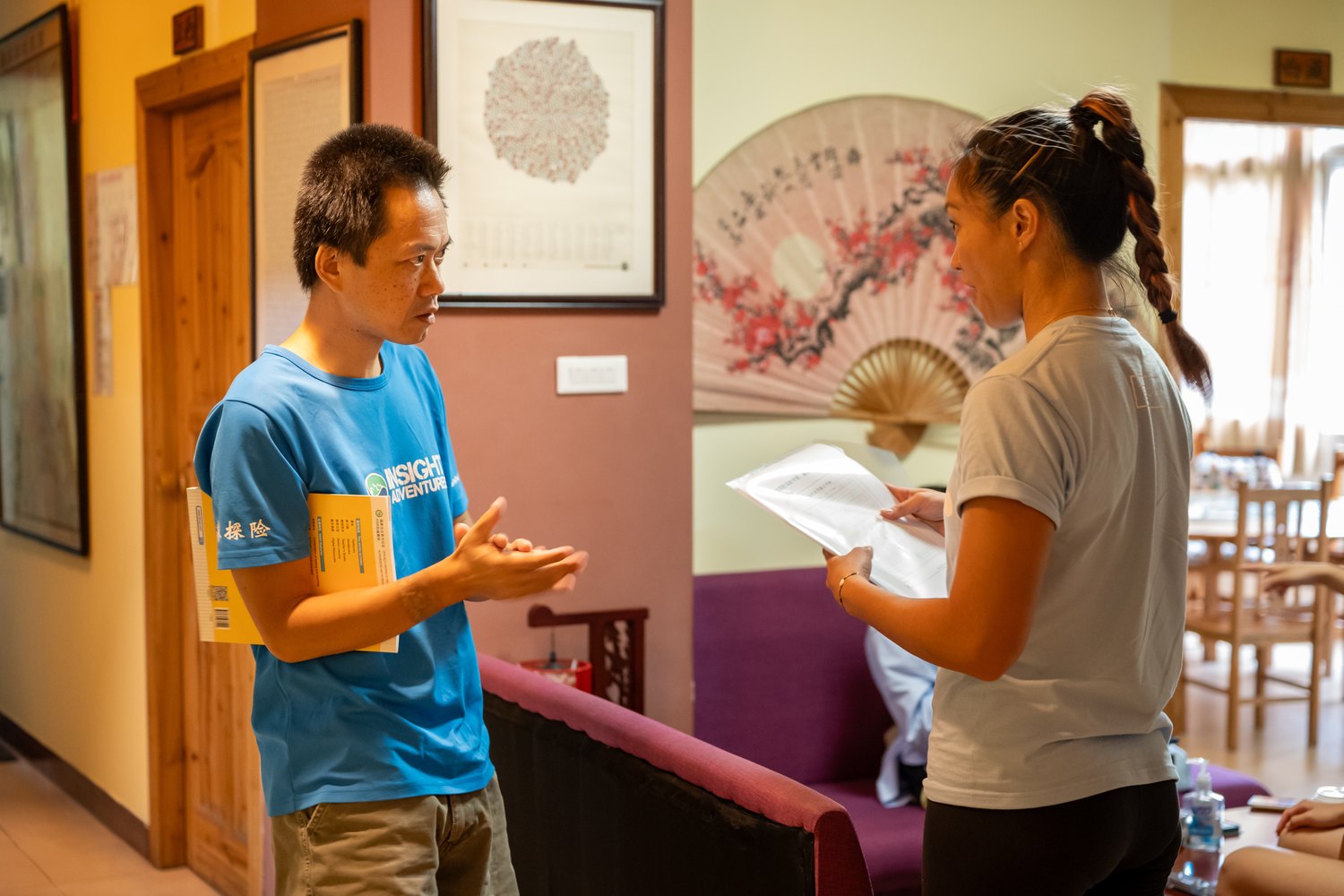
Teachers share an office at the Center, and they coordinate so a grammar point from the morning can resurface in the afternoon.
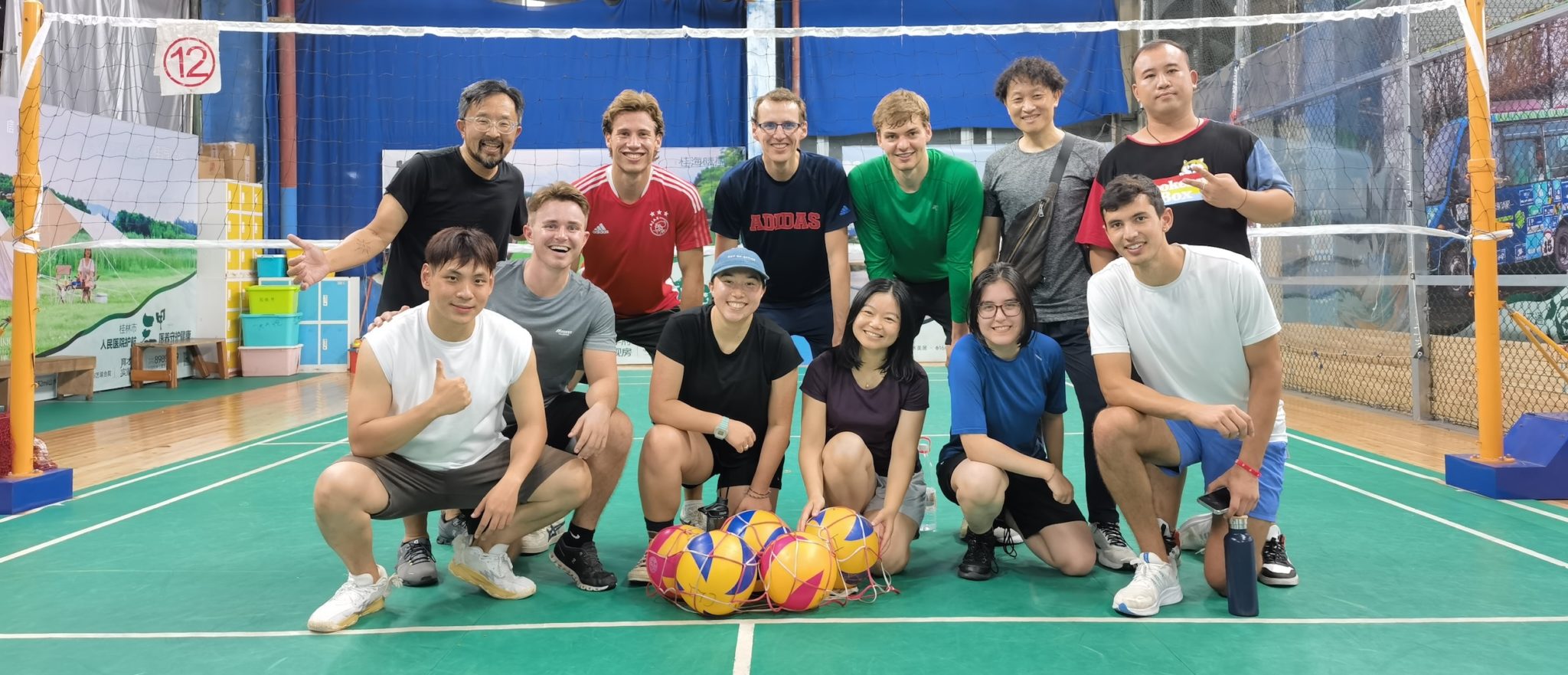
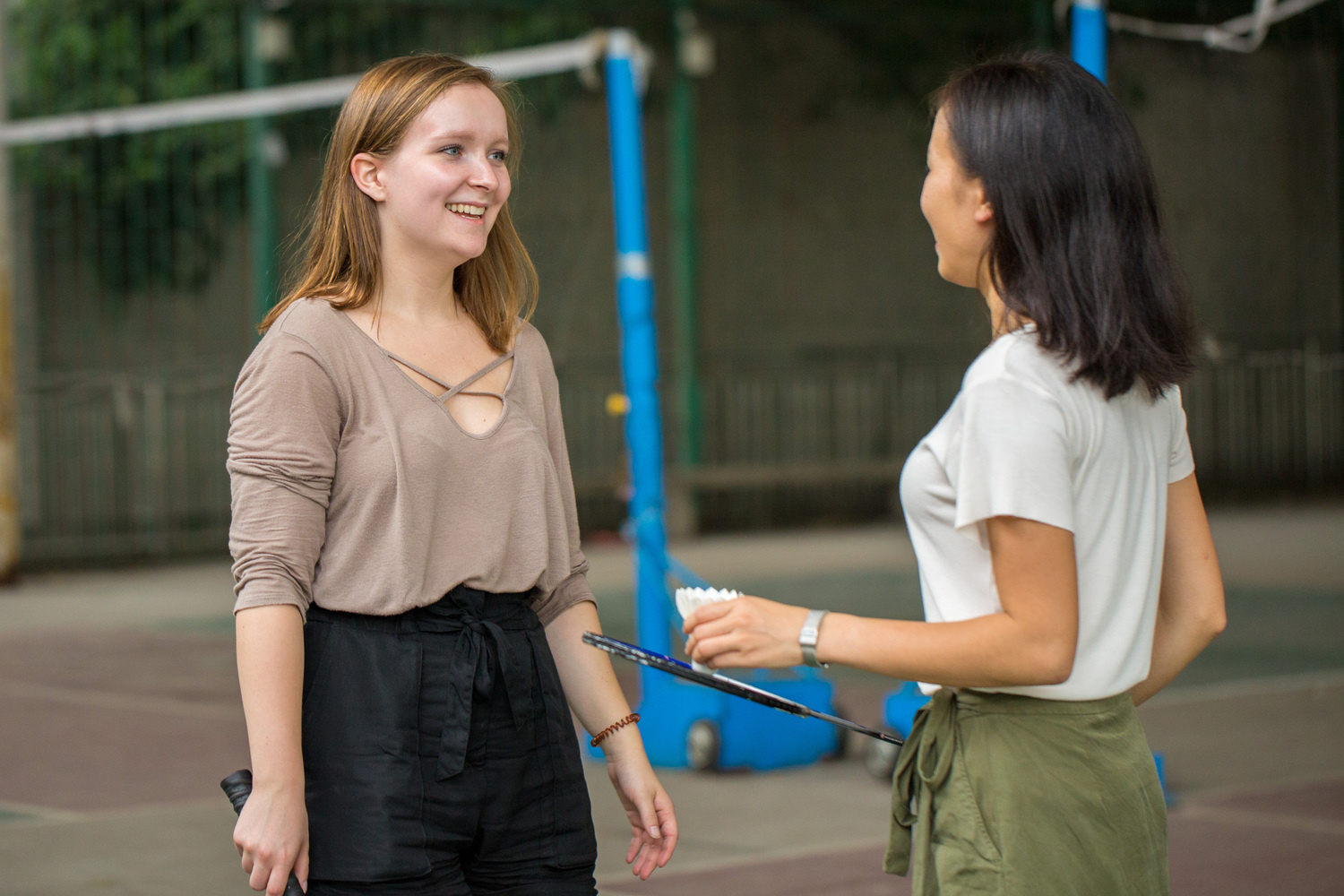
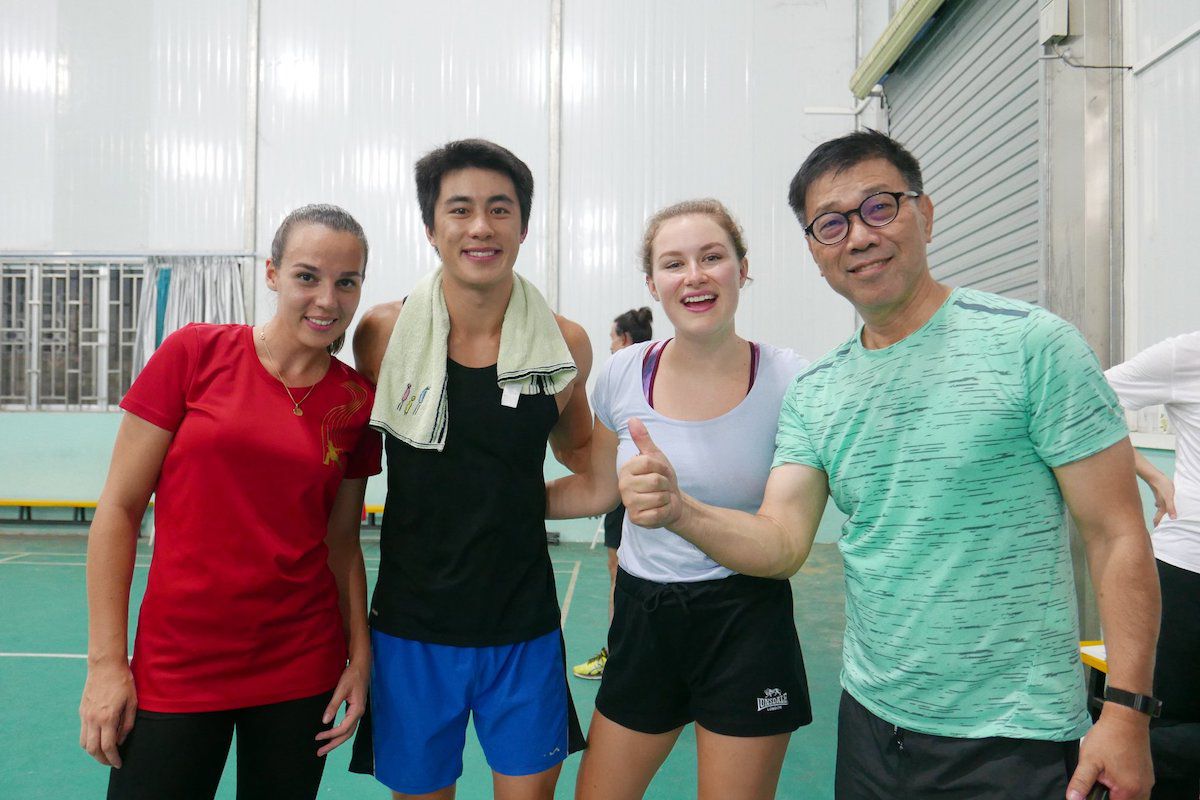
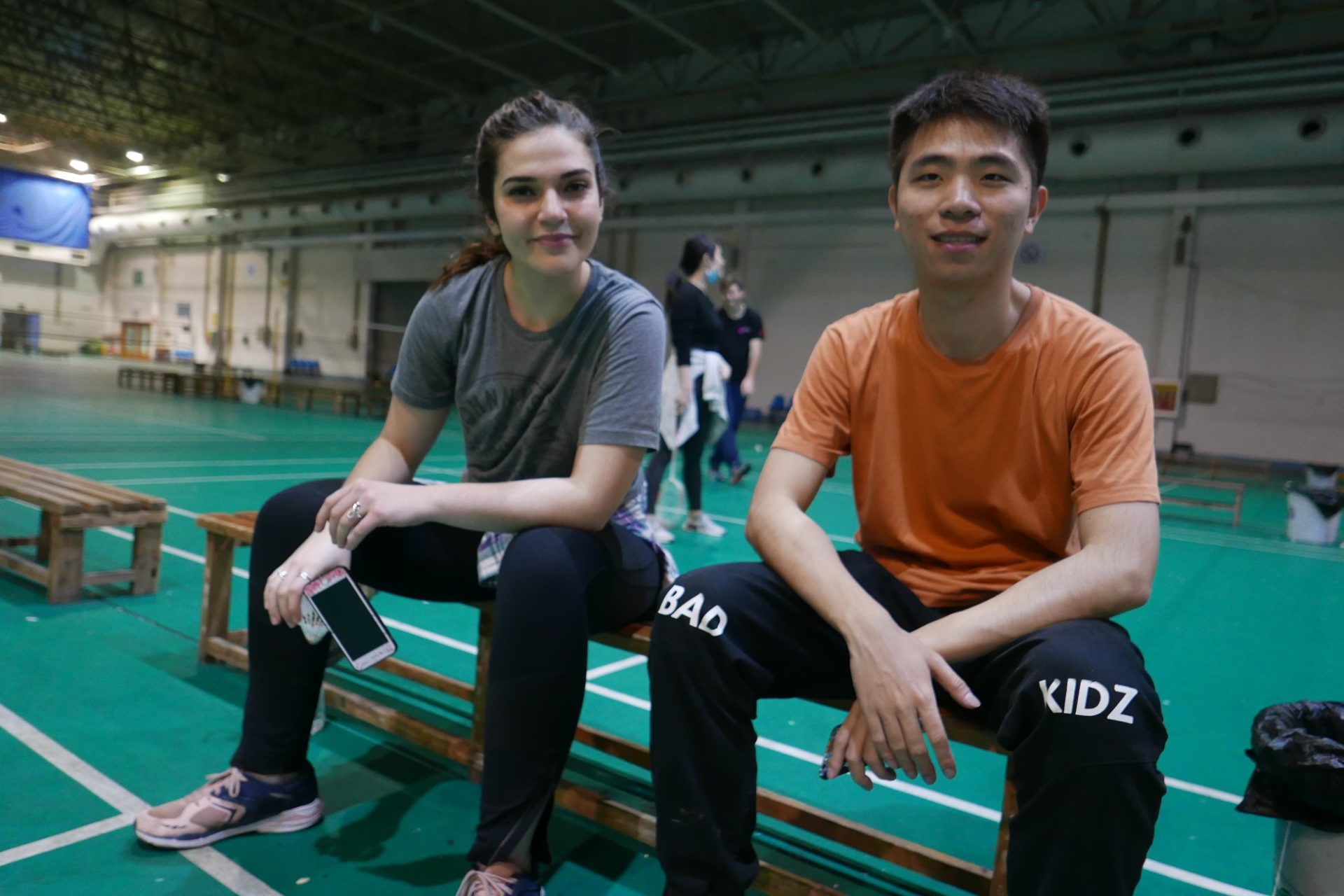
Badminton, volleyball and tai chi are among CLI's activities, a chance to use Chinese away from the desk.
Movie nights and Chinese games are on CLI's activity list, easy evenings that still count as Chinese practice.
The CLI team is available around the clock, and several full-time team members live at the Center year-round.
The Center was renovated in 2026, and all 36 private rooms there have a full bathroom.
Test preparation is one of the focuses open to advanced students, along with fluency, reading and business Chinese.
Students who want university credit can request an official transcript from Guangxi Normal University for their coursework at CLI.
Guilin has no large expat bubble and little English, so Mandarin becomes part of daily life soon after arrival.
Weekends leave room for independent travel, and Yangshuo, Longsheng and the Li River are each about an hour from Guilin.
Between classes there is time to unwind, and the recreation room on the Center's second floor has ping pong, an electric piano and mahjong.
文化wénhuà
Kultur
Calligraphy, paper cutting, tie-dye, tai chi, chess, tea, and music.
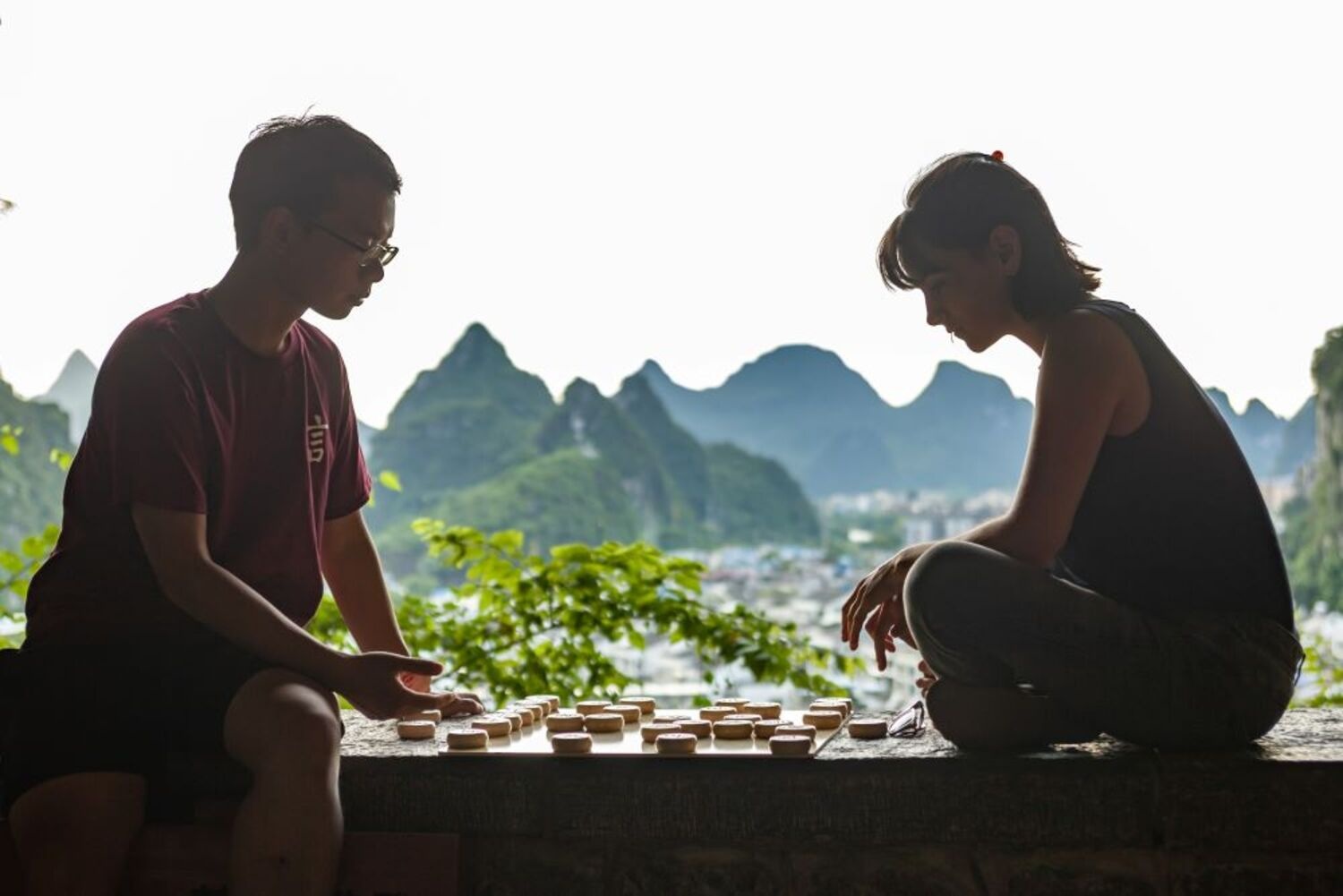
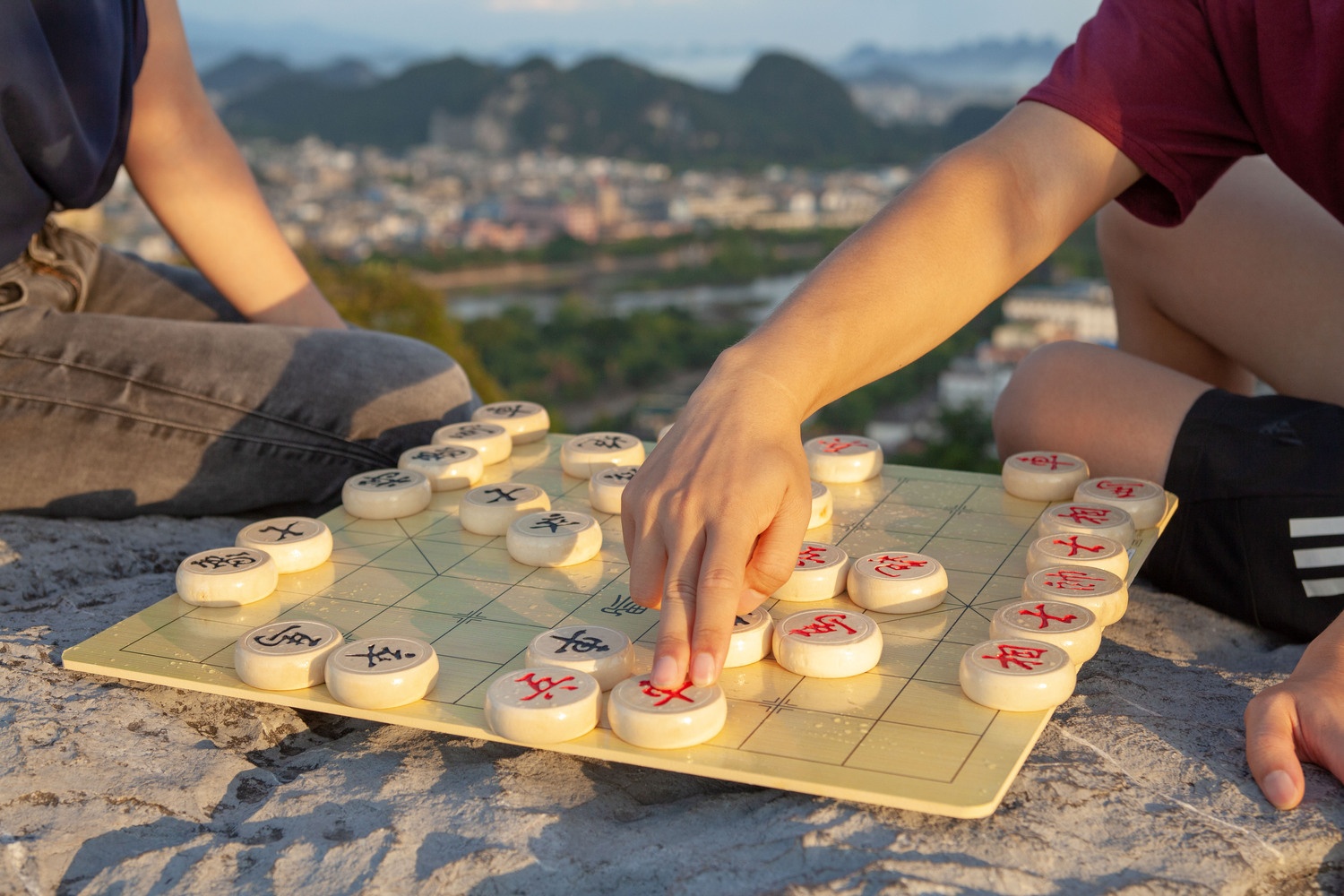
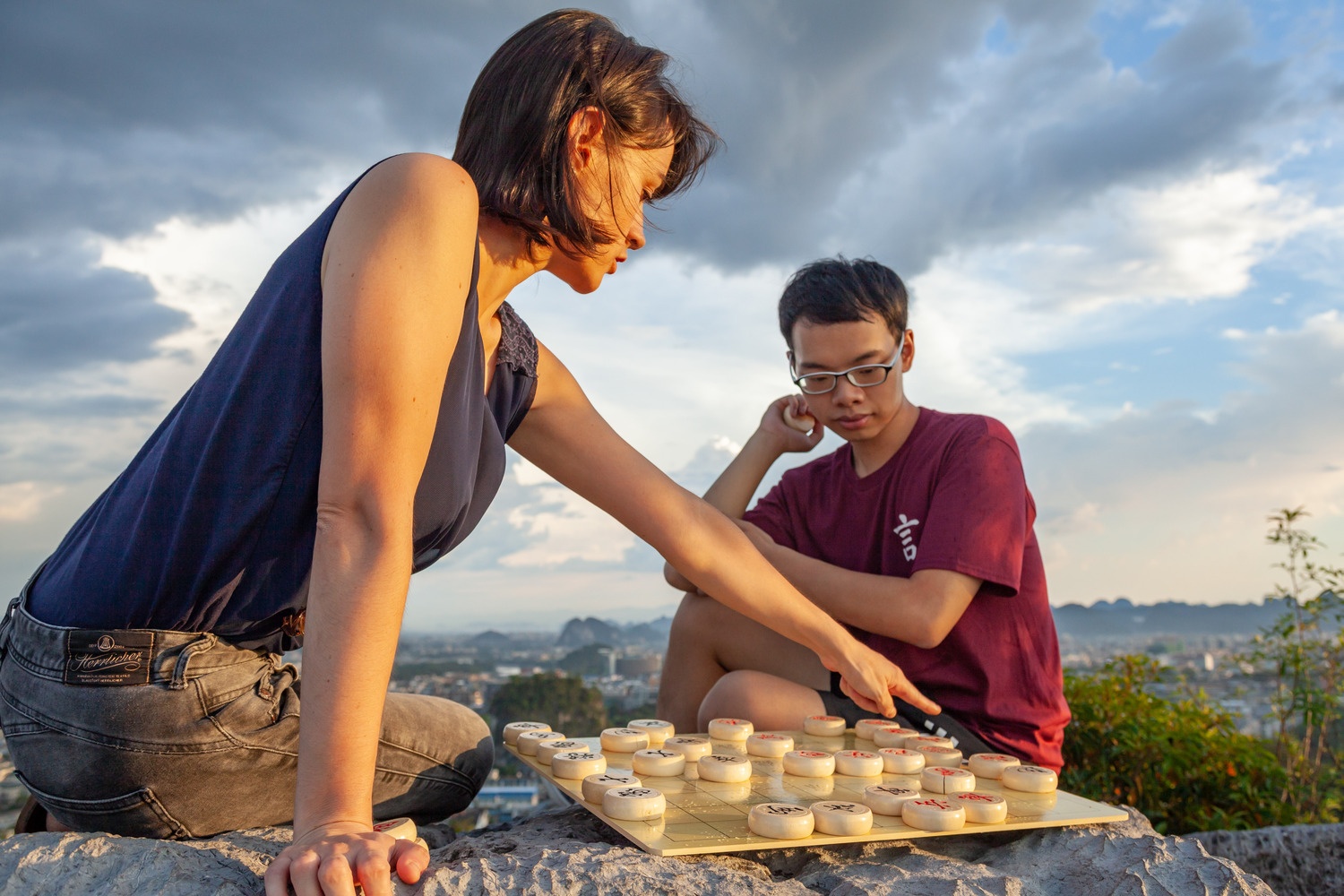
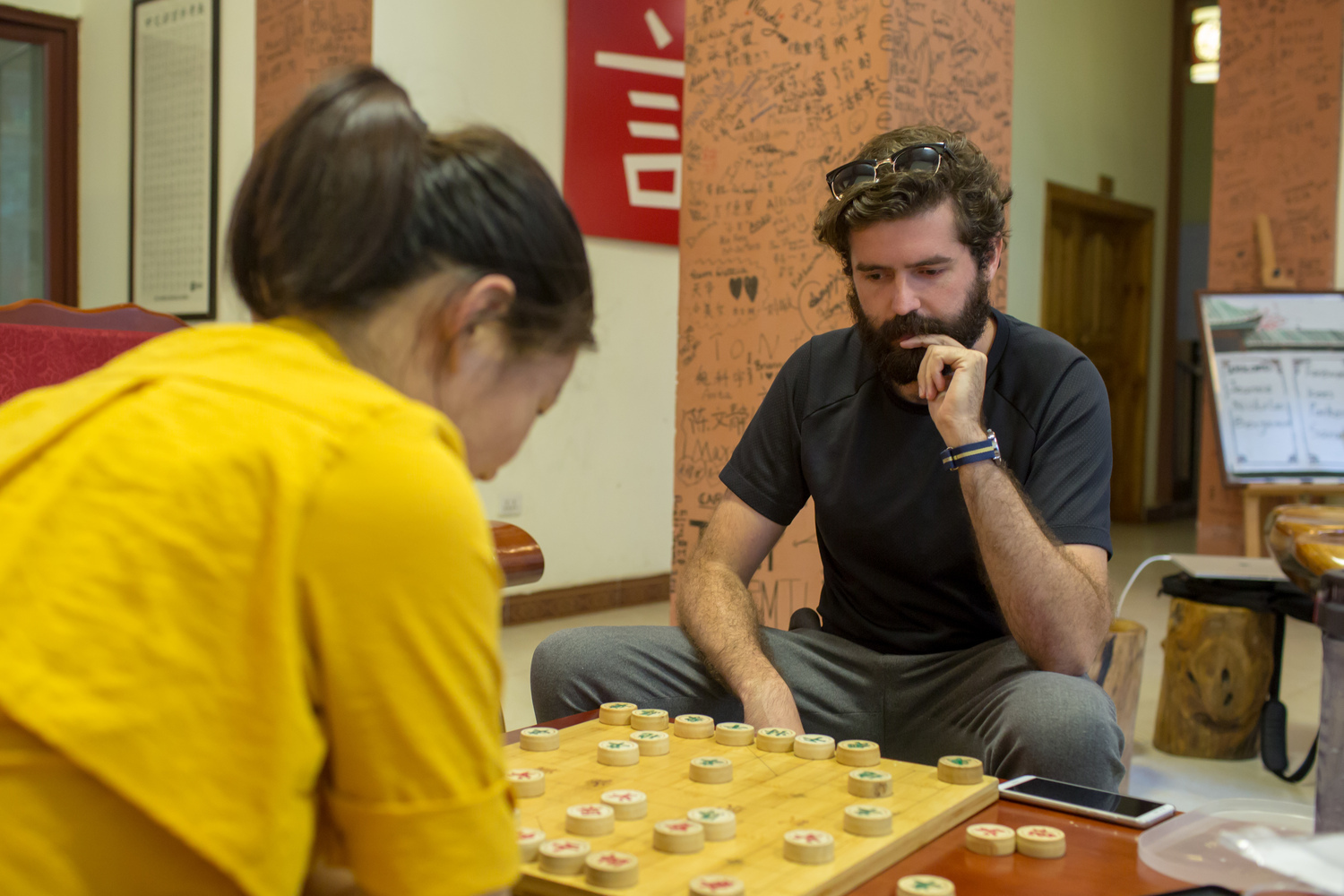
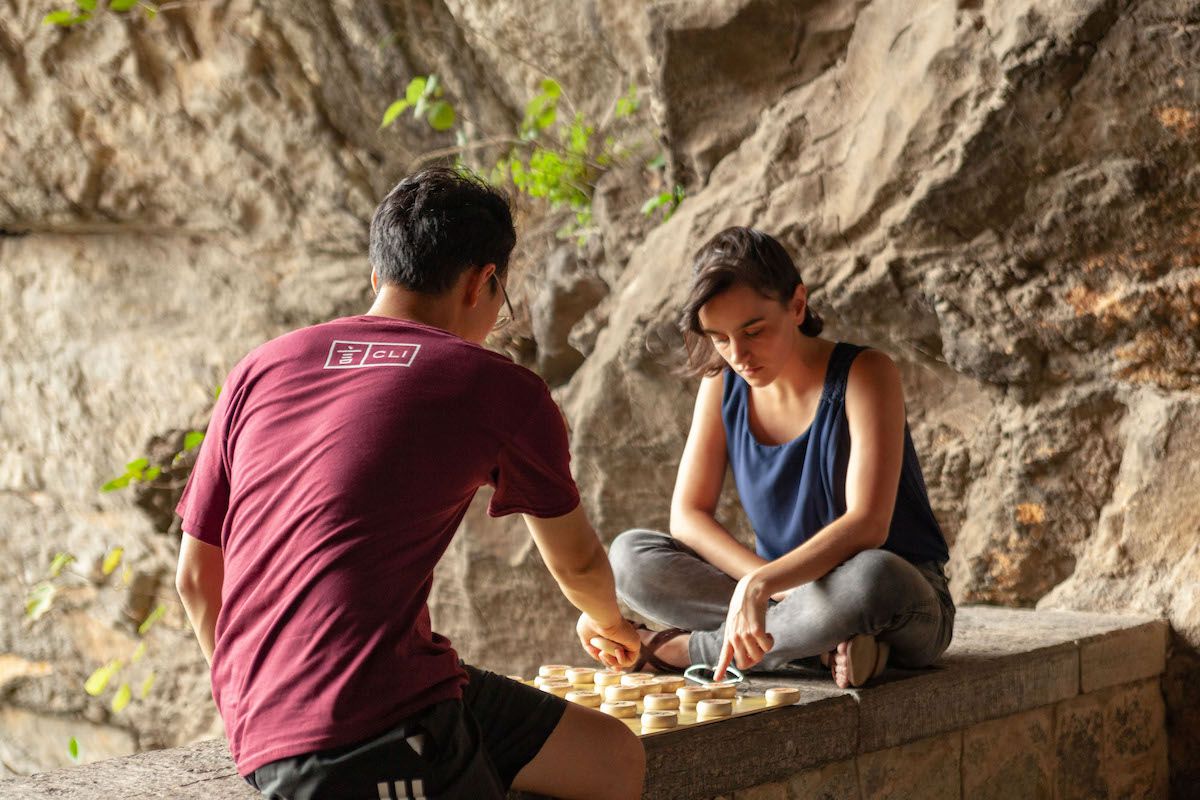
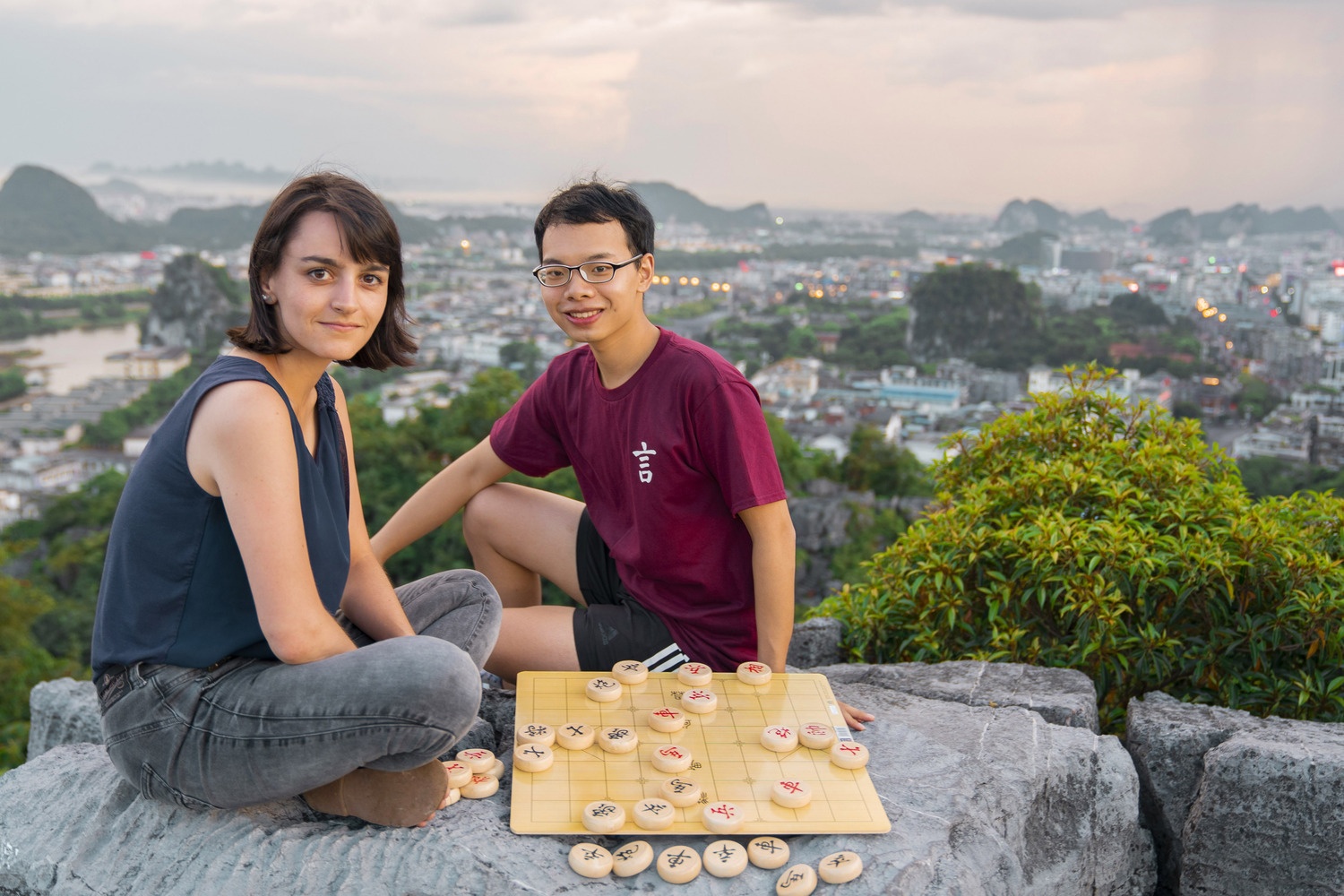
Chinese chess, 象棋 (xiàngqí), is one of the Chinese games students play, and Guilin's karst peaks make a fine backdrop for a slow match.
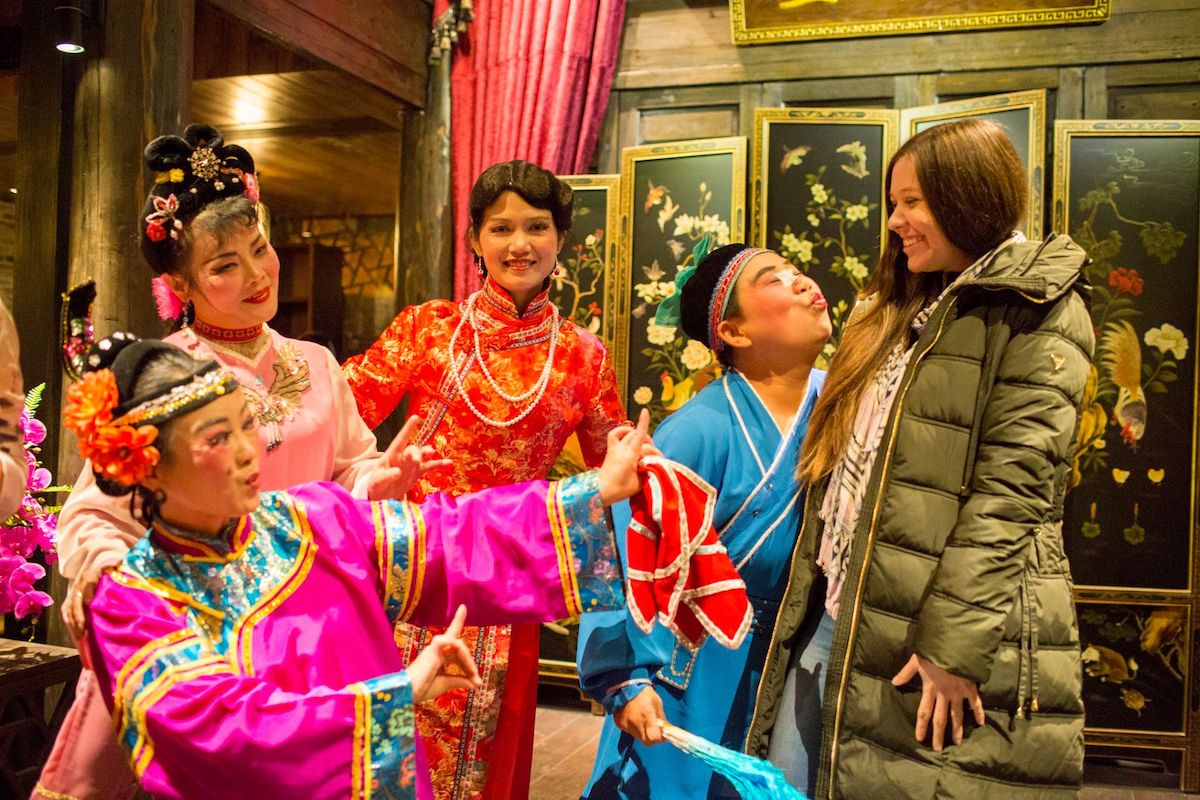
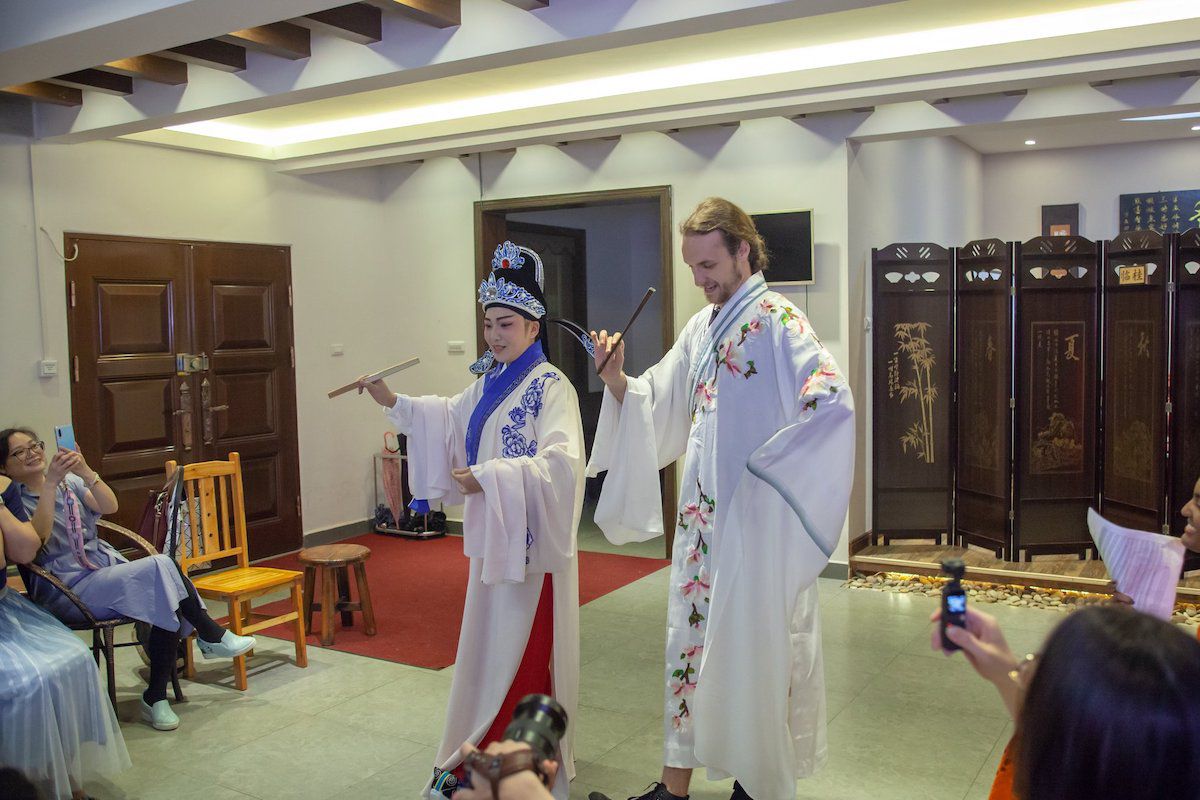
After a folk opera show, students have stayed to meet the cast in costume. Alongside classes, CLI runs activities each week and an excursion each month.
Cooking lessons with Chinese chefs are one of CLI's activities, and dietary needs such as vegetarian or halal can be accommodated.
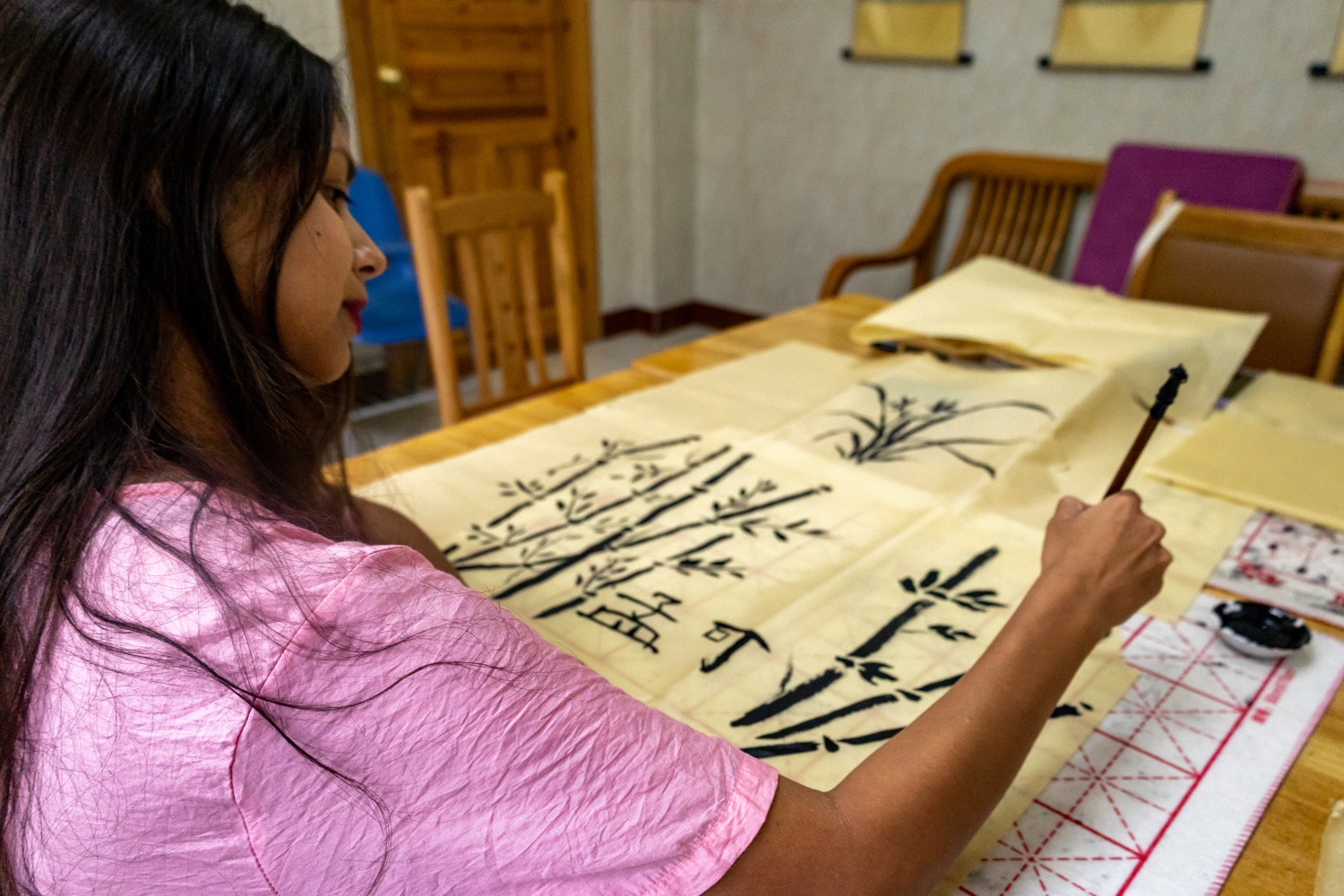
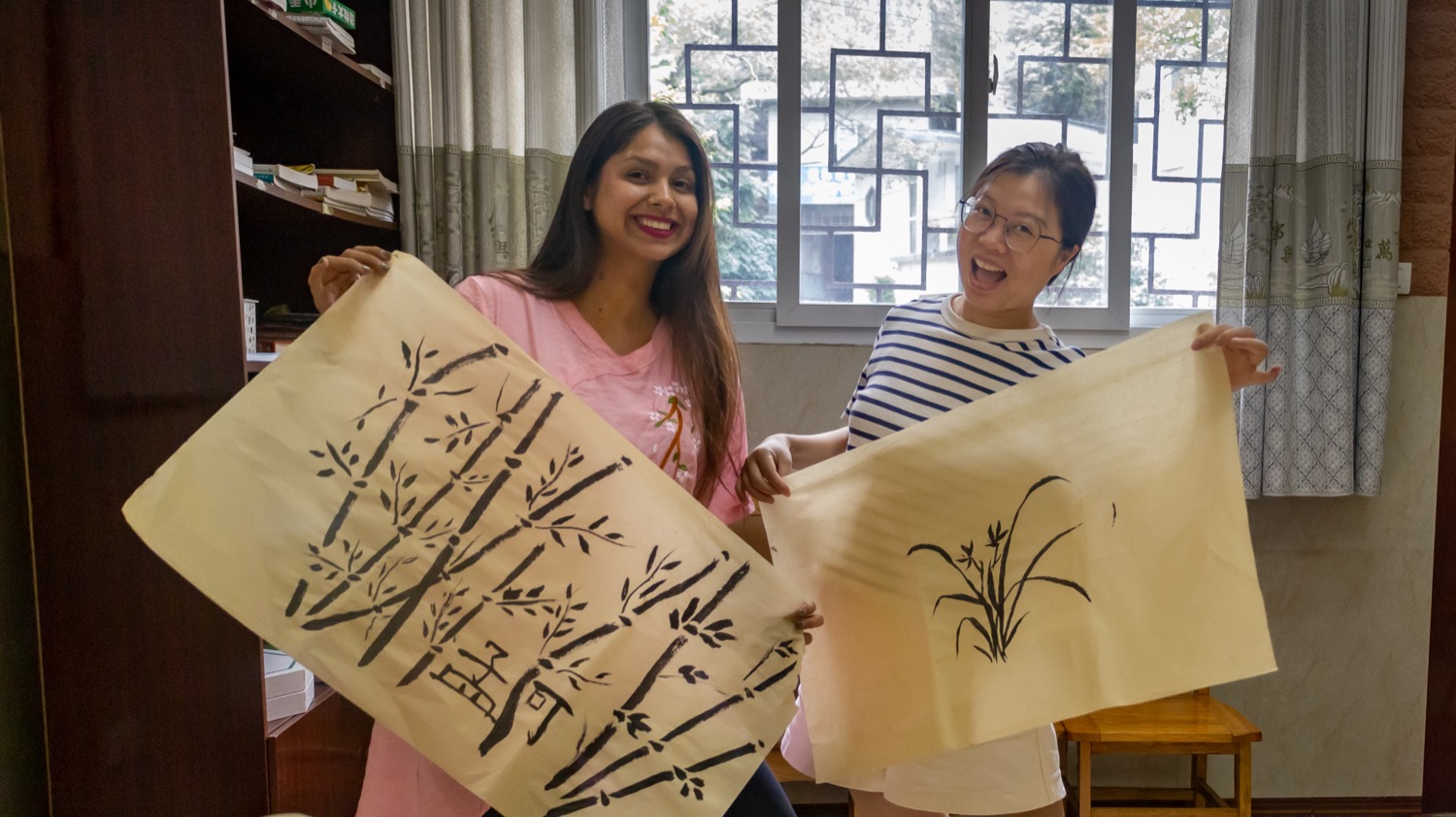
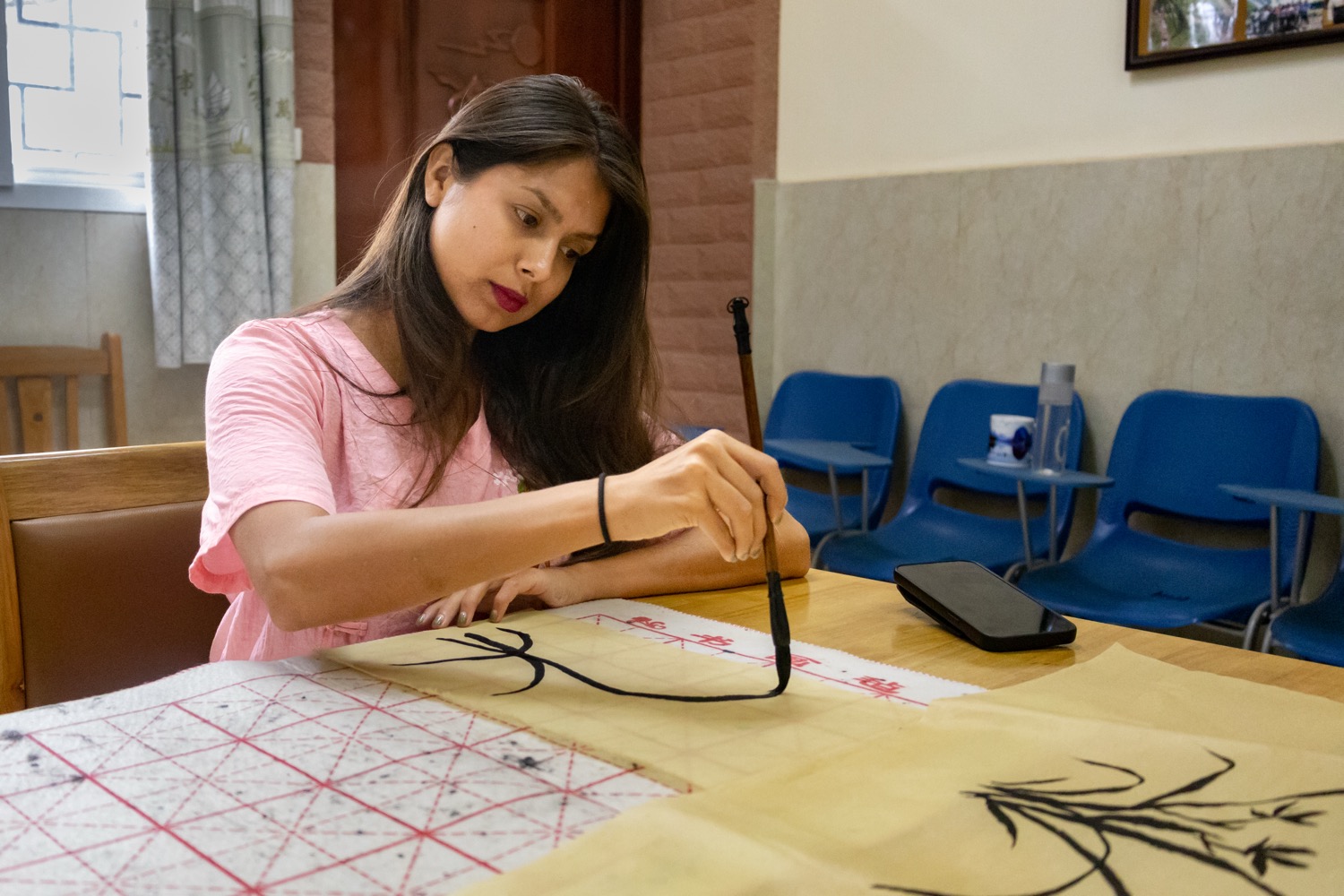
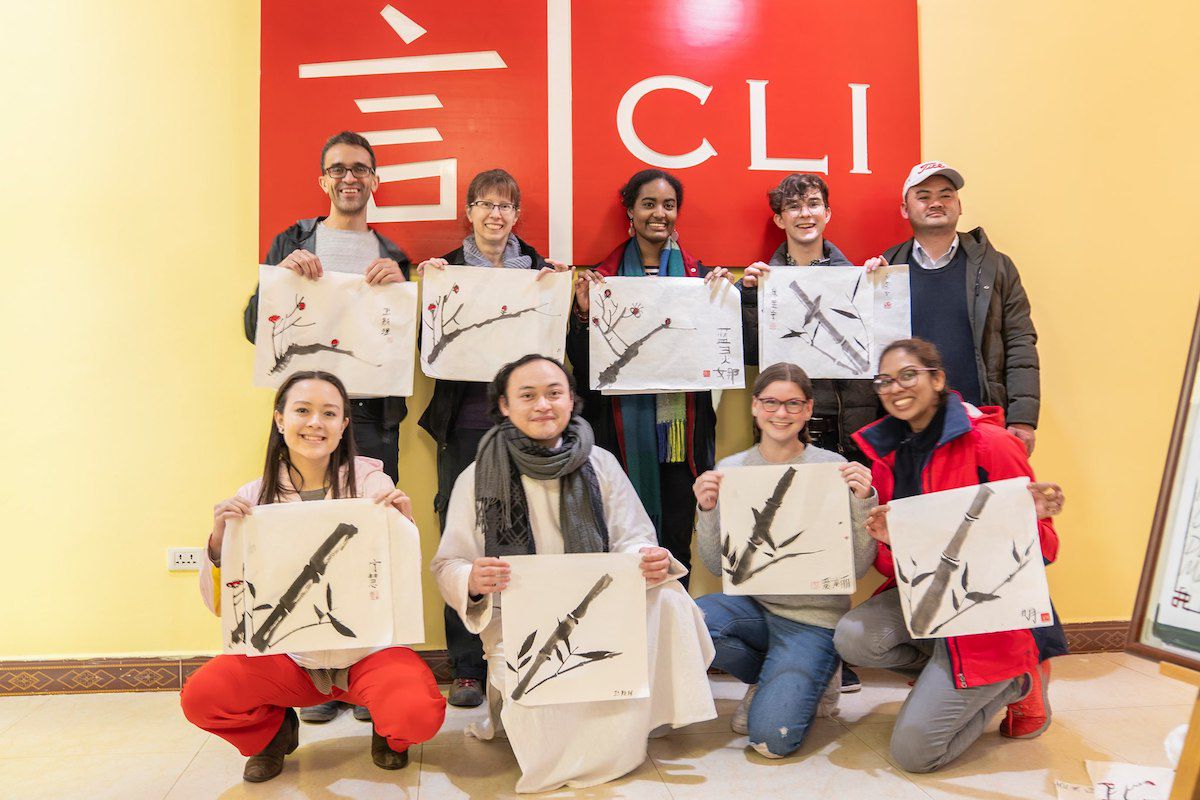
Brush painting of bamboo is something students have tried alongside calligraphy, using the same brush and ink for both.
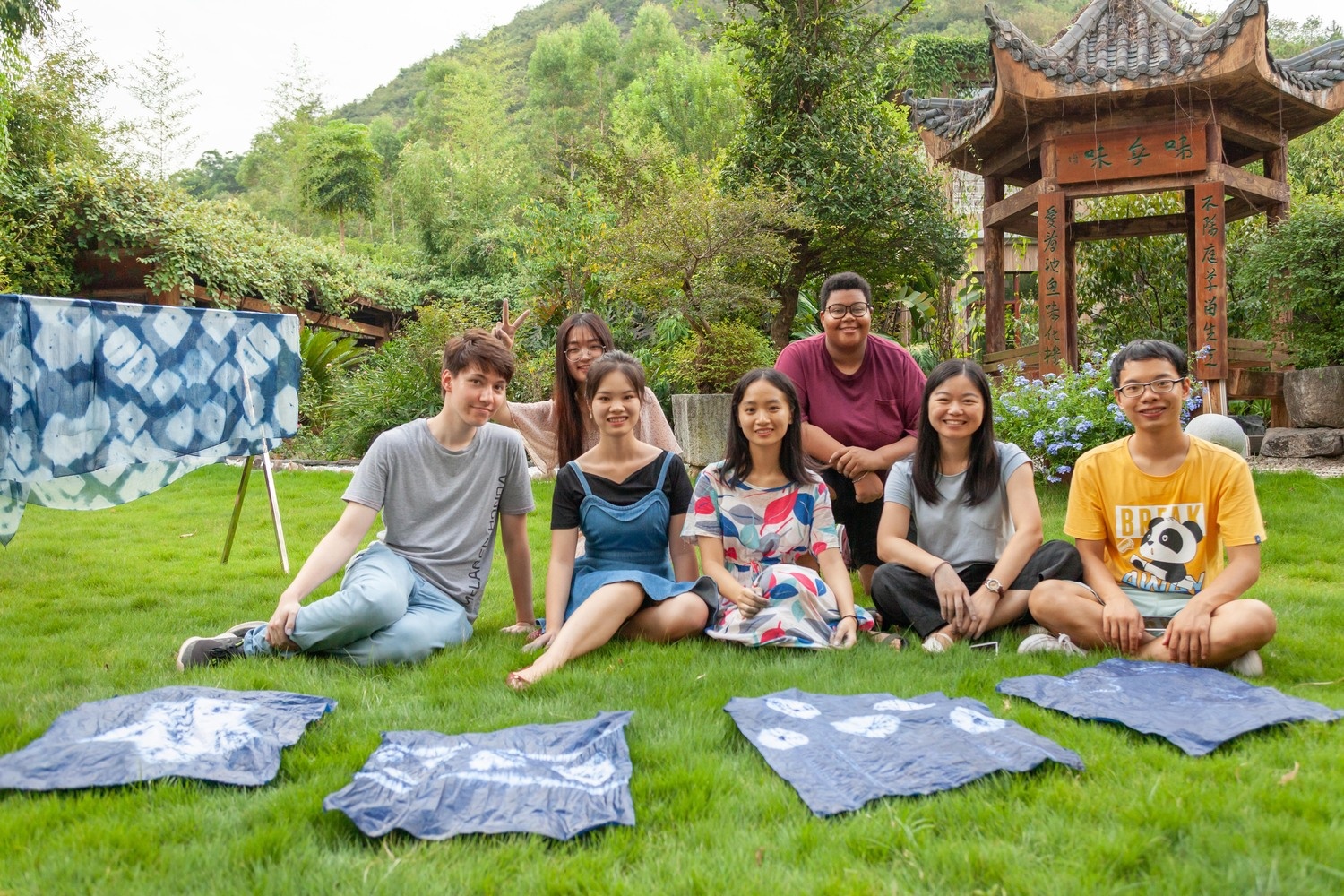
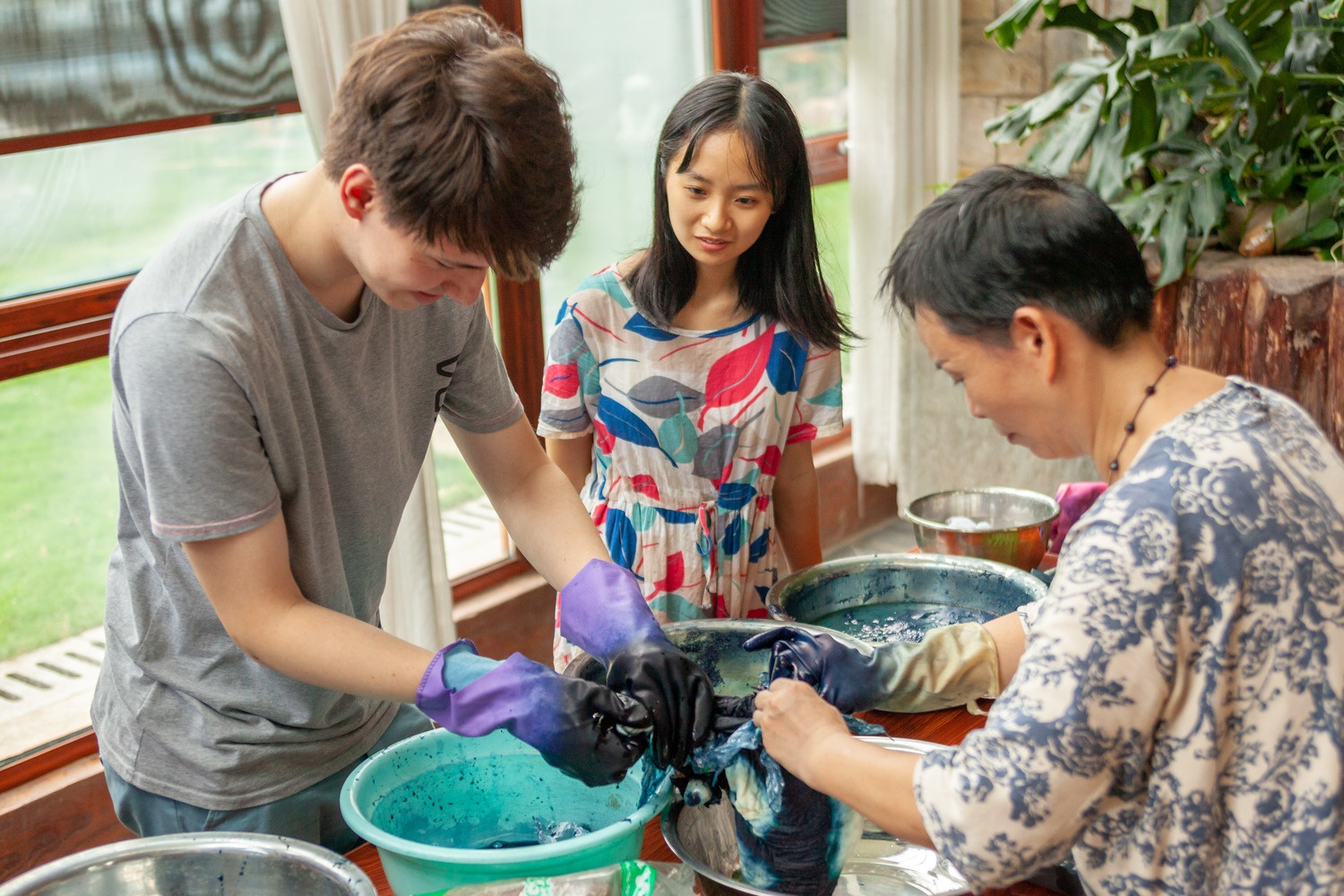
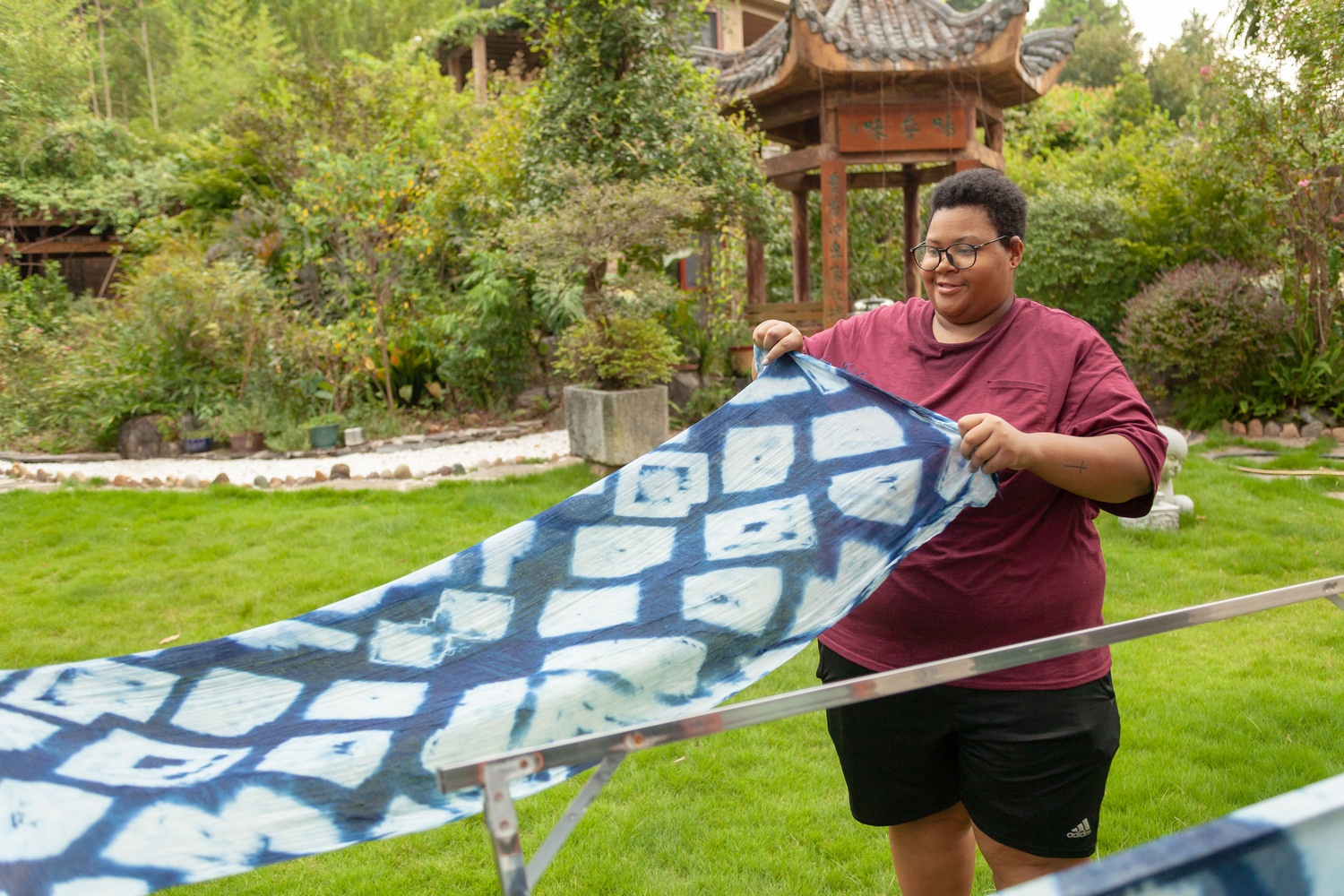
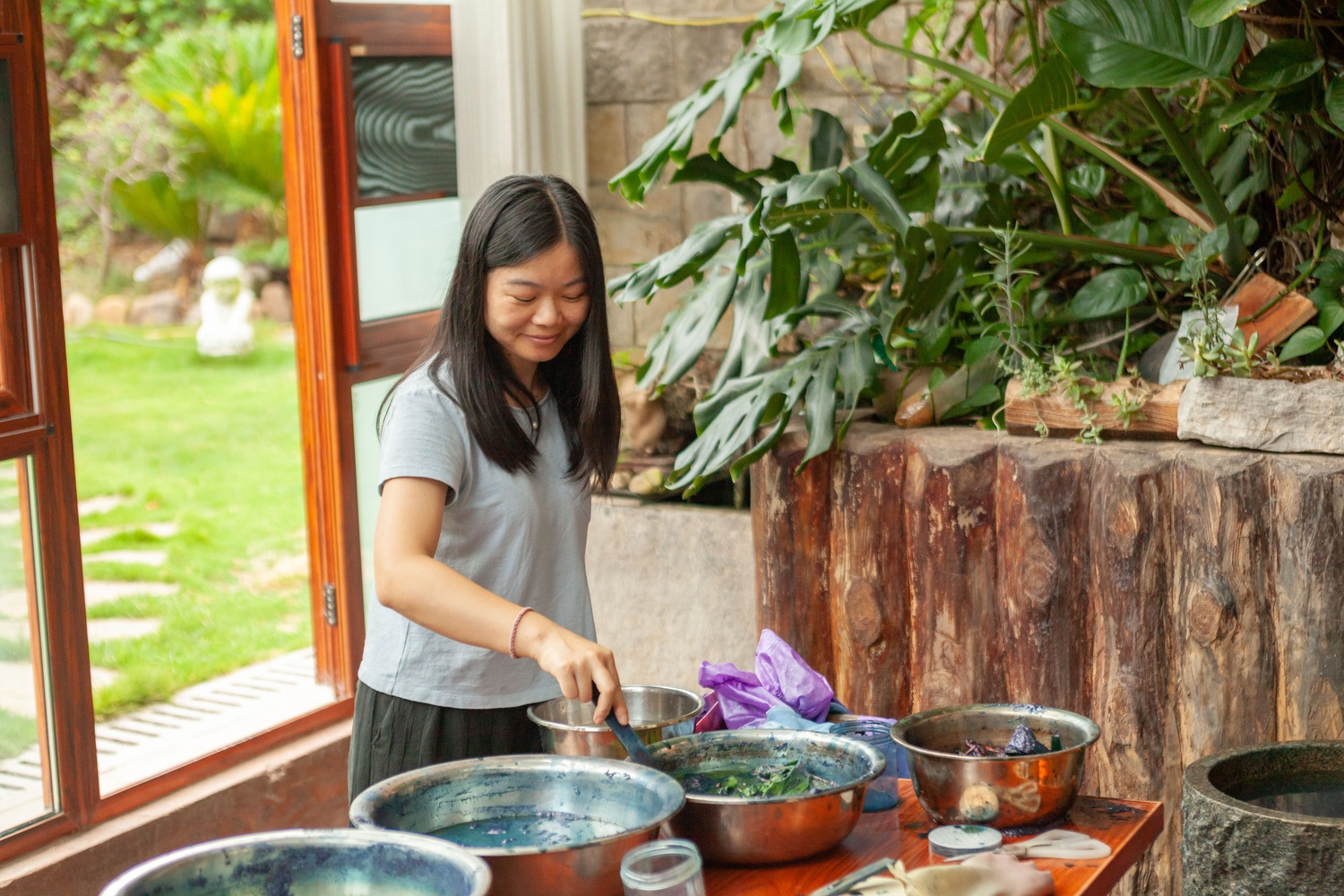
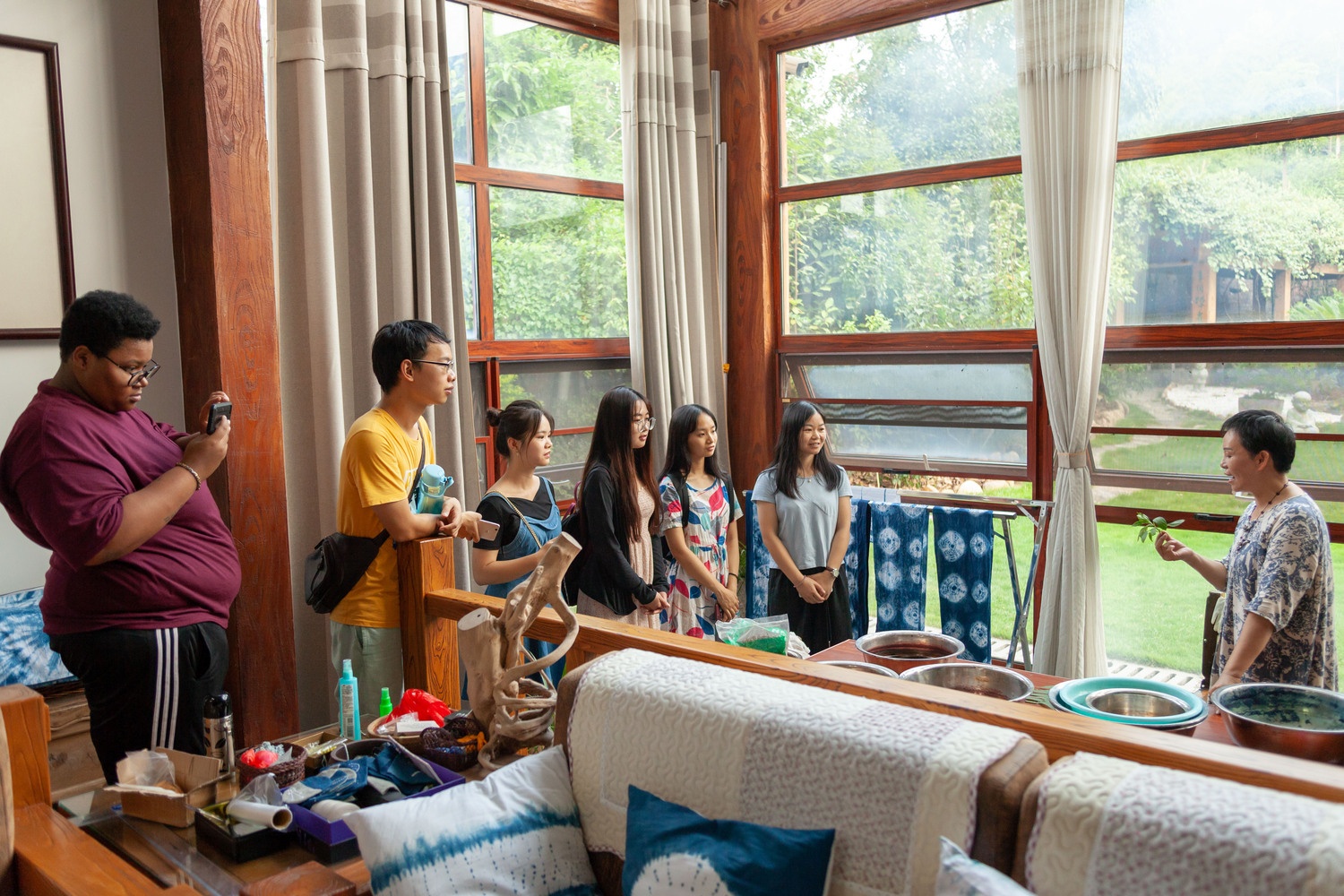
Students come to CLI from more than 50 countries, and craft afternoons like this tie-dye session have brought a few of them together on one lawn.
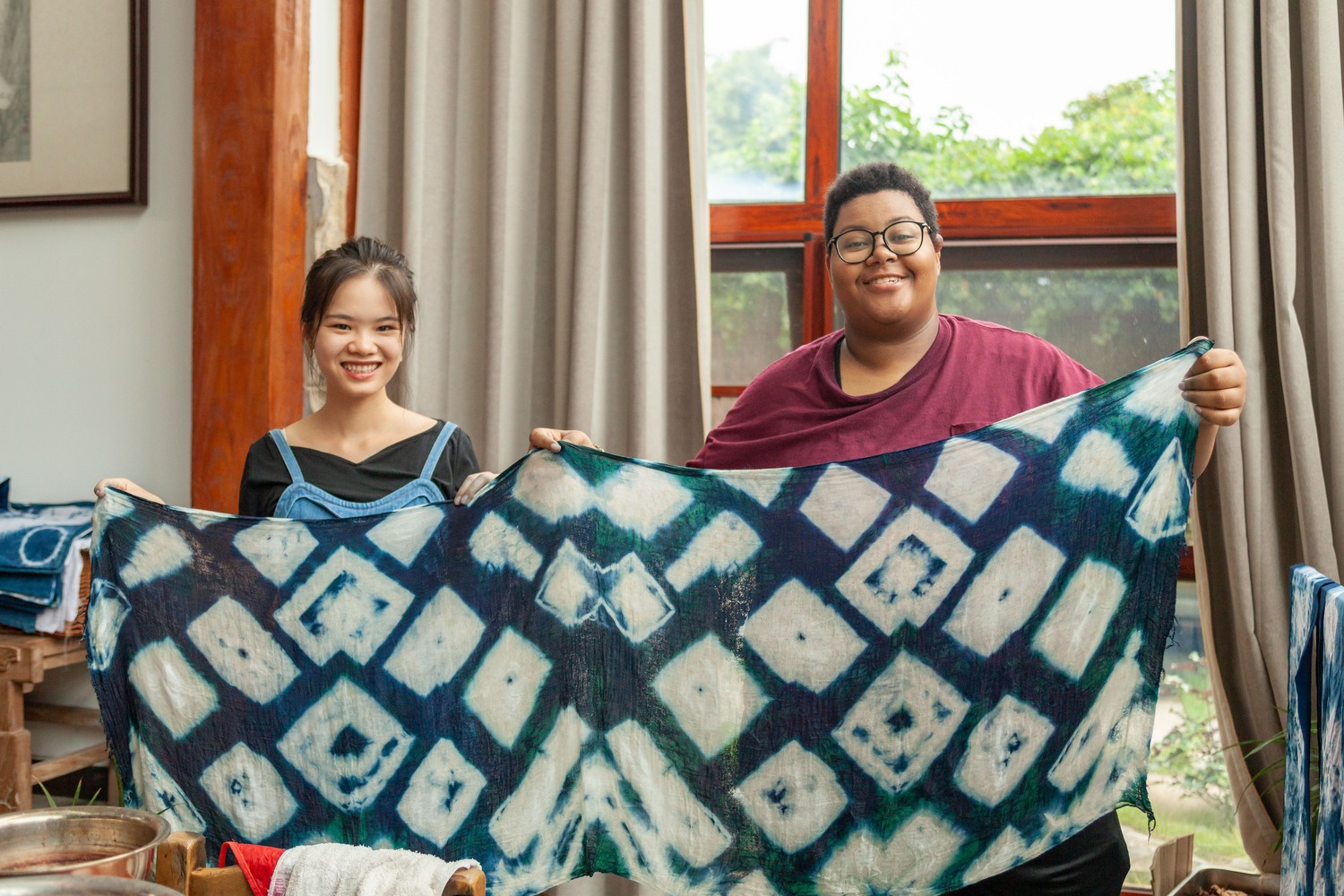
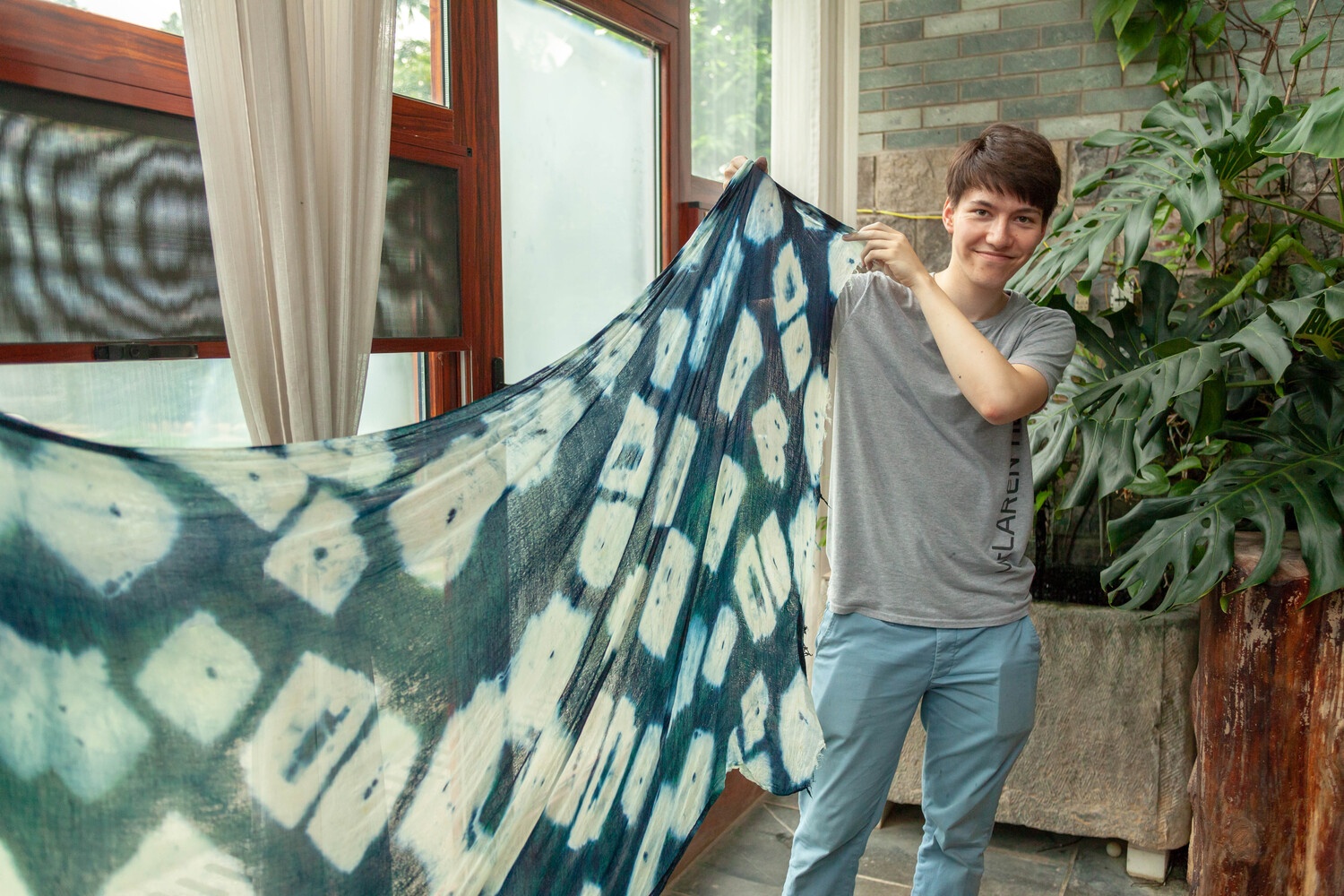
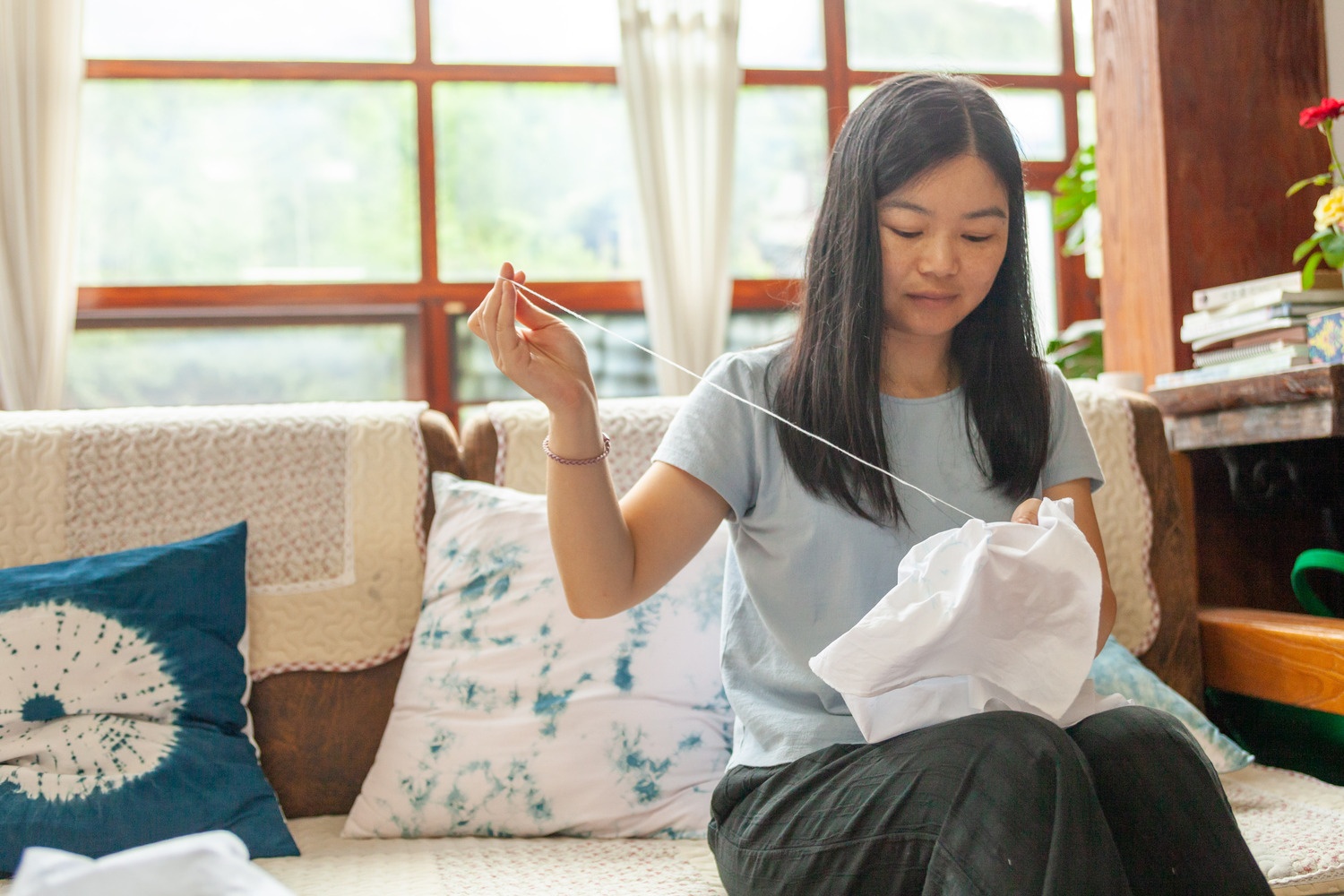
CLI runs weekly activities and monthly excursions, and some, like this tie-dye session, end with something to take home.
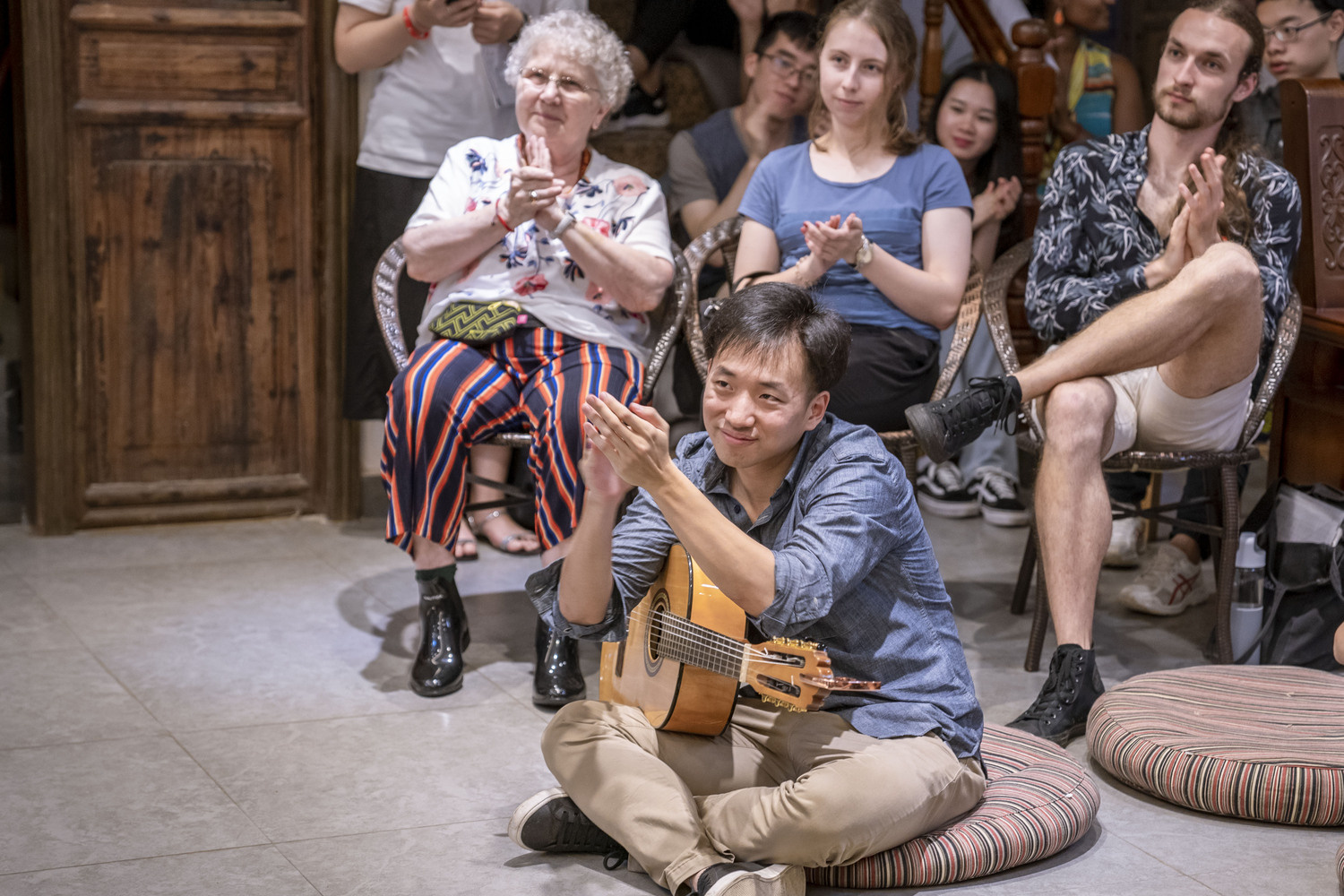
Evenings bring movie nights or calligraphy, and now and then a guitar comes out and the whole room claps along.
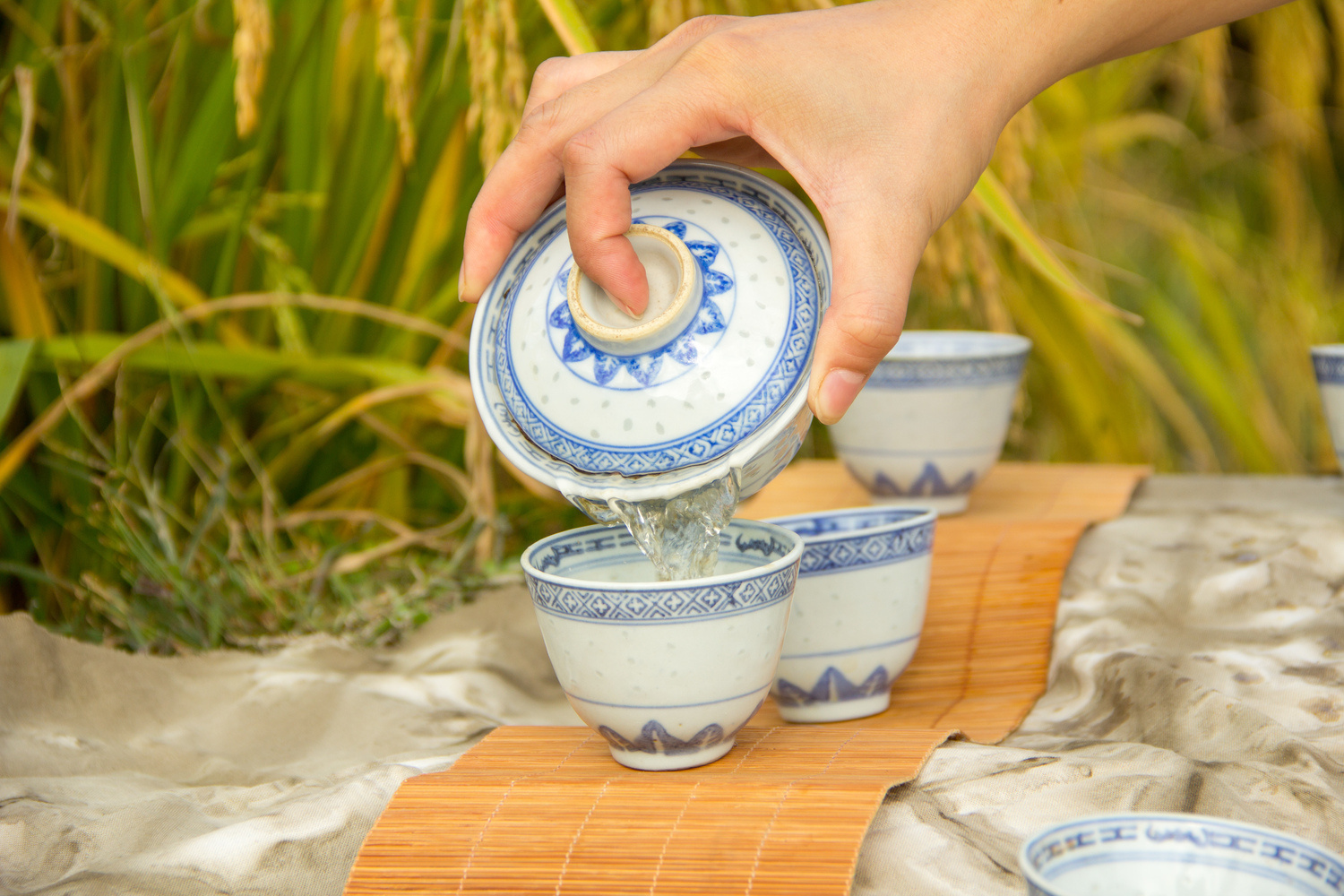
Rice stalks beside a tea set: rice terrace hikes and tea ceremonies are both on the activity list, and the Longji terraces are one place the monthly overnight trips can go.
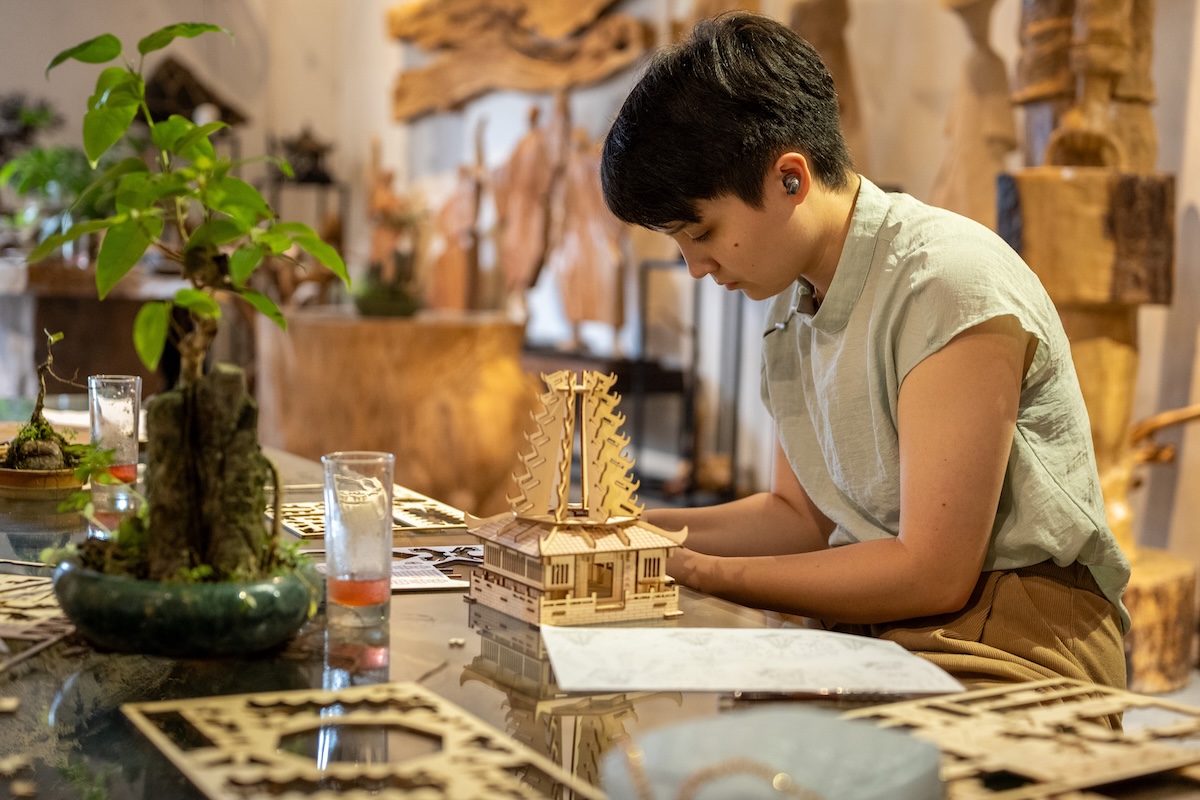
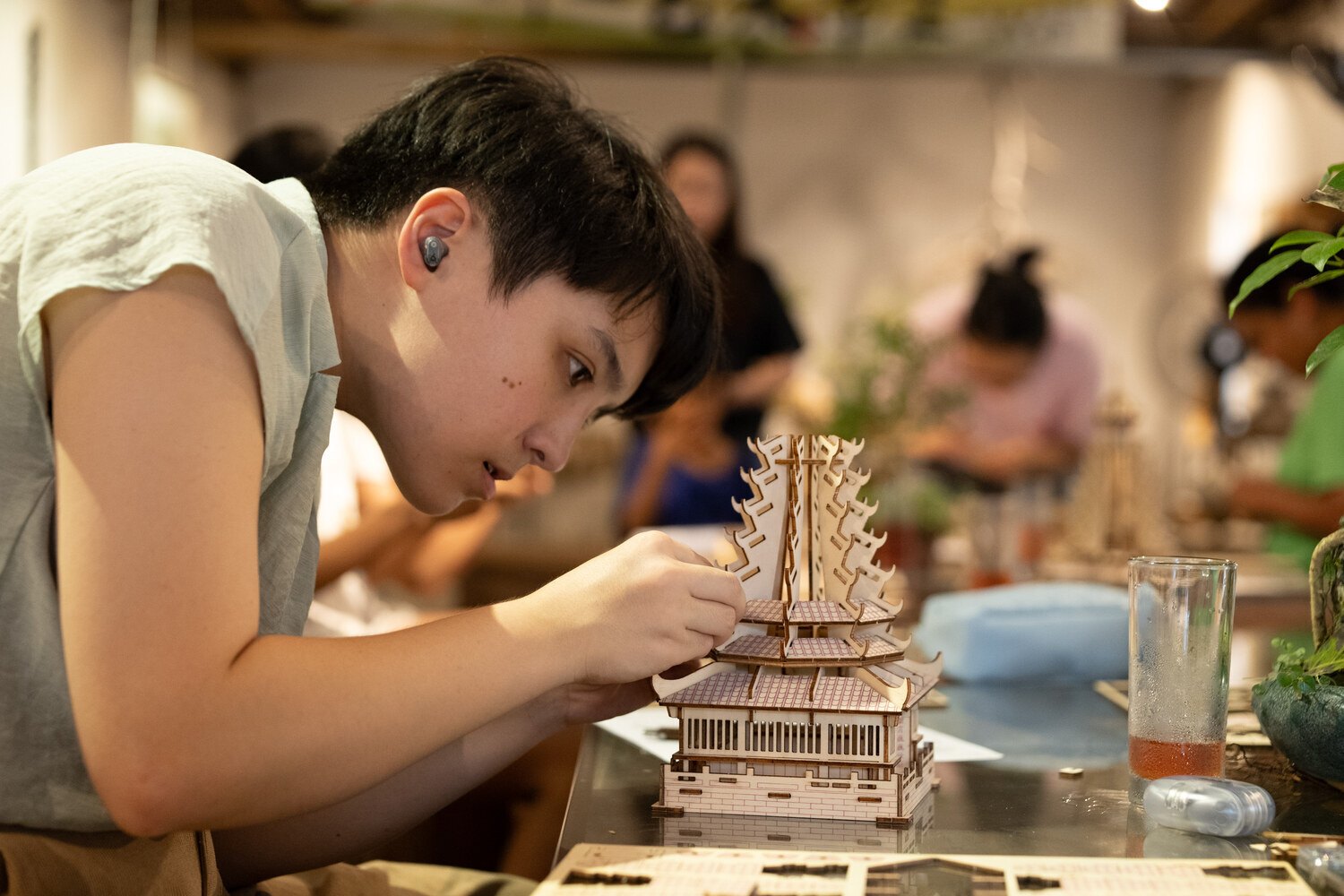
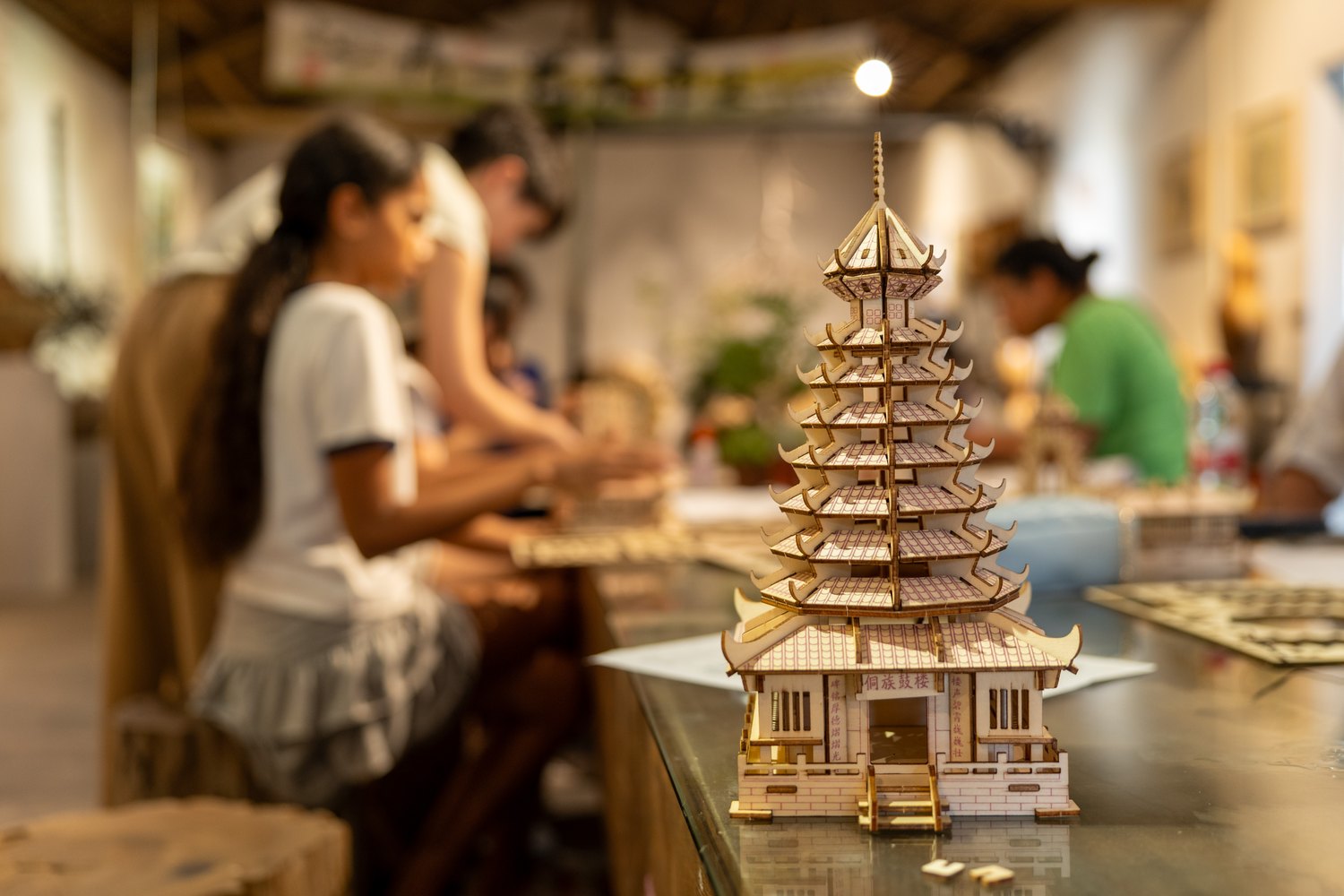
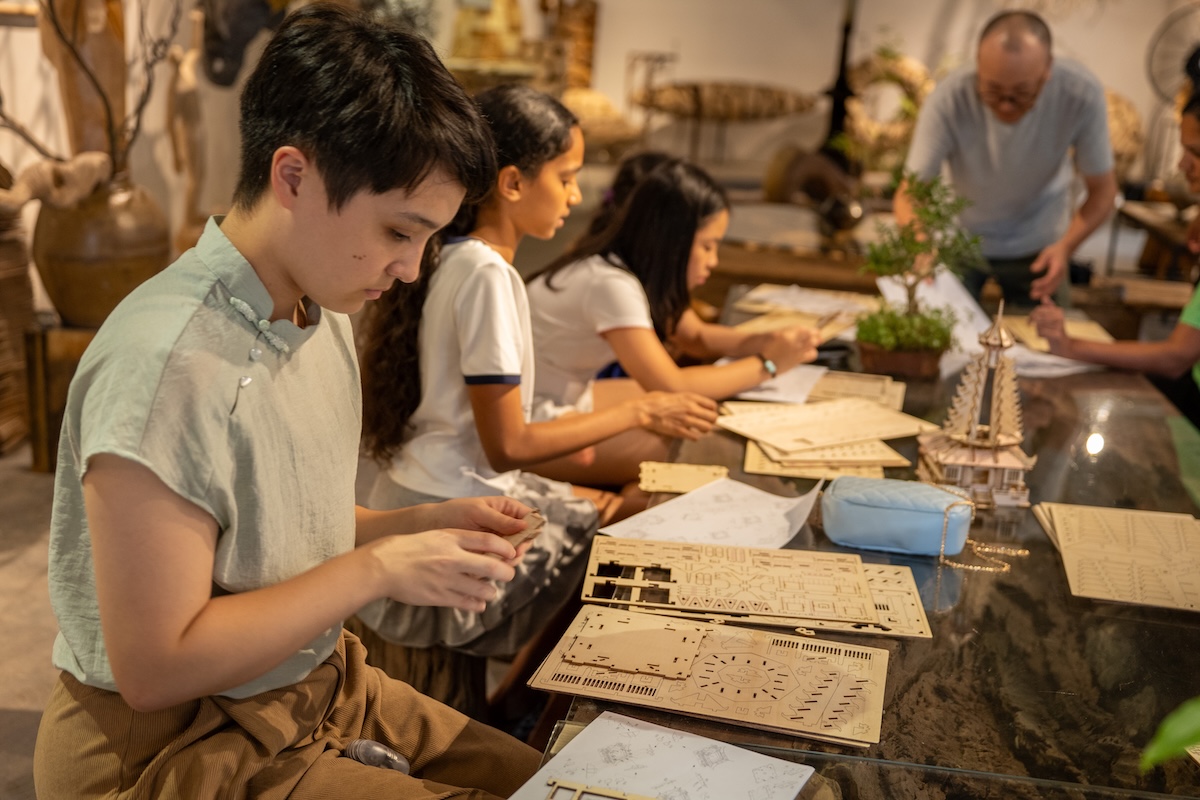
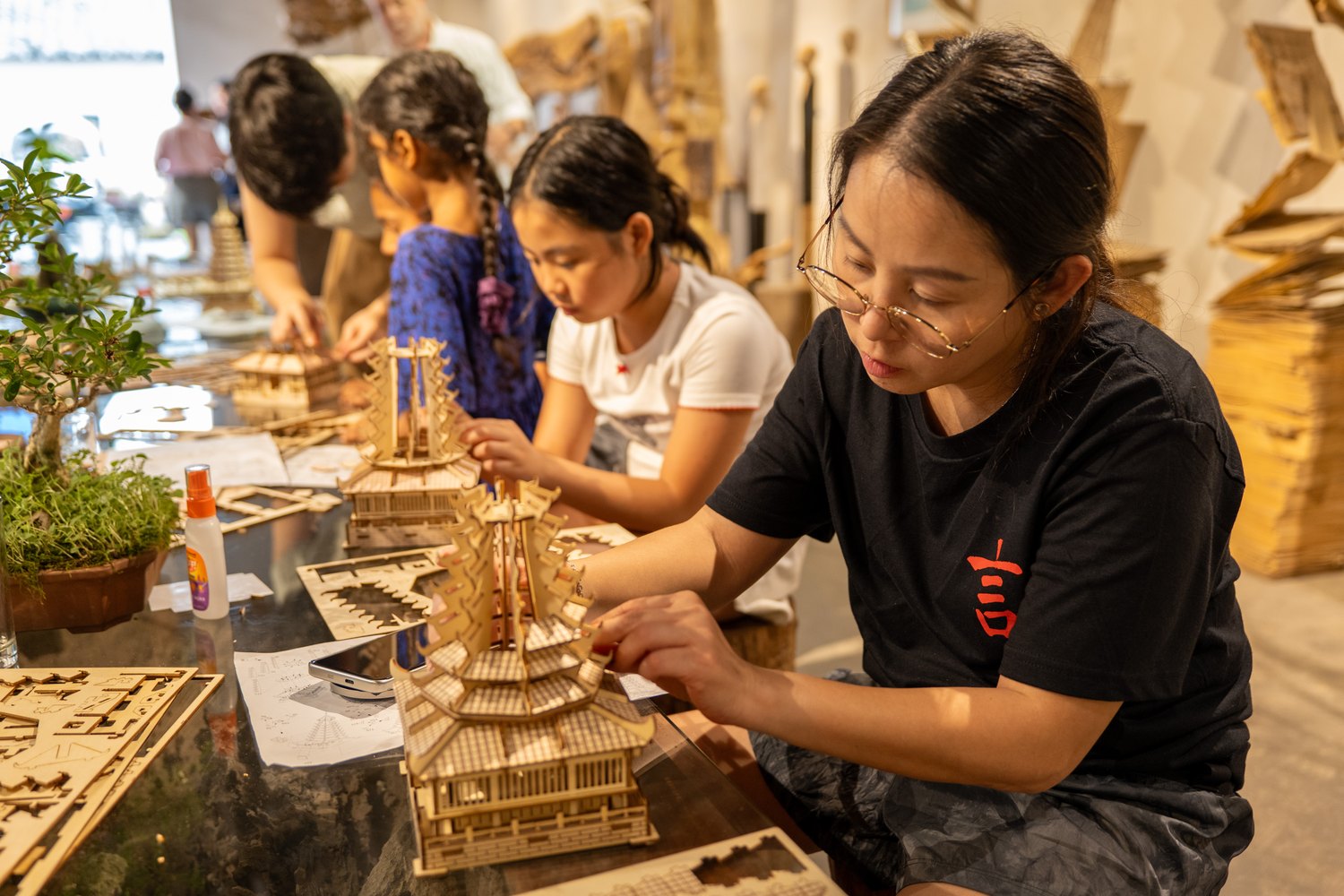
Weekday afternoons open up once the two class sessions and lunch are done, and a wooden pagoda kit can fill a few quiet hours.
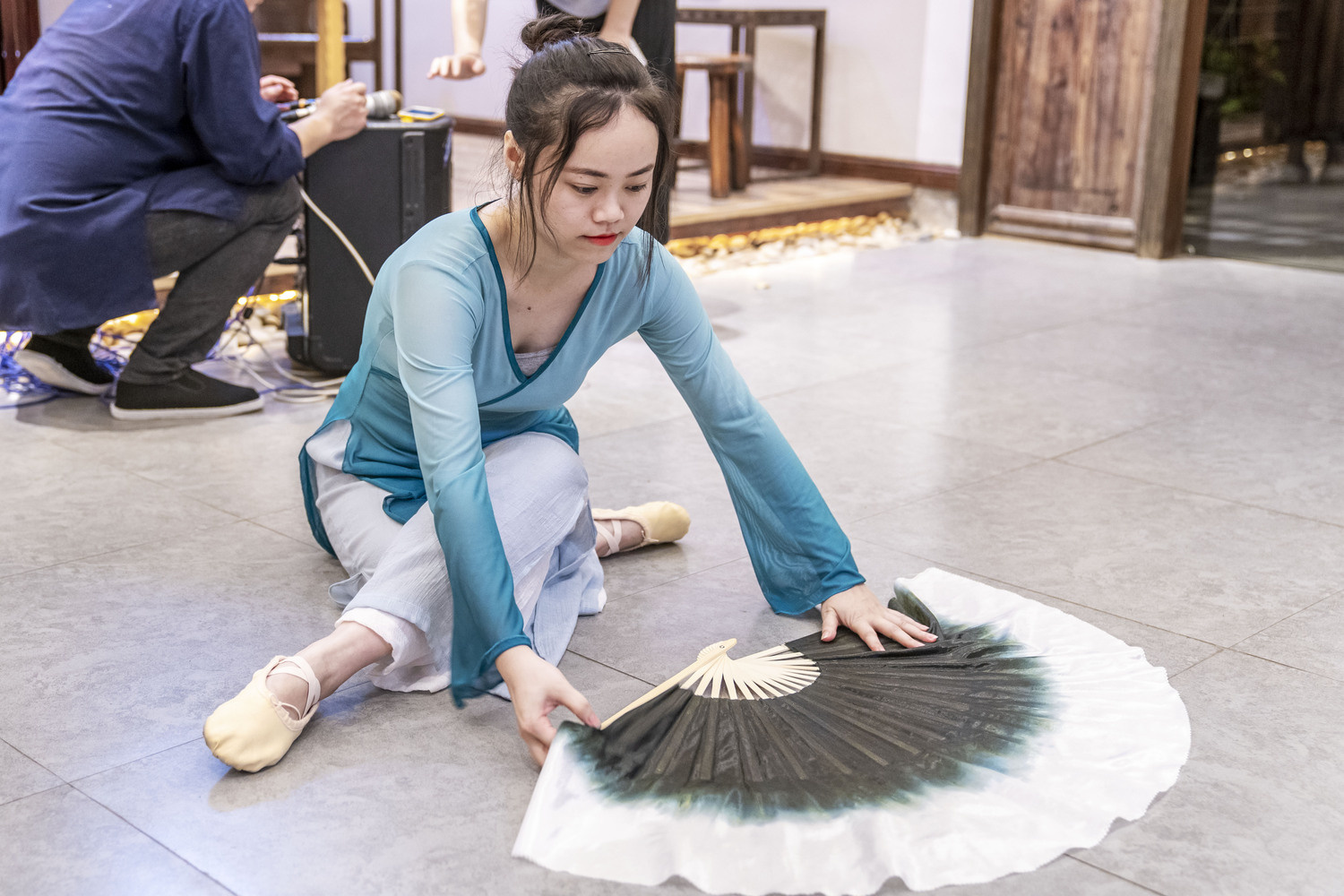
Guilin is a full city, compact and walkable, so a dance performance in town is never far from where students live and study.
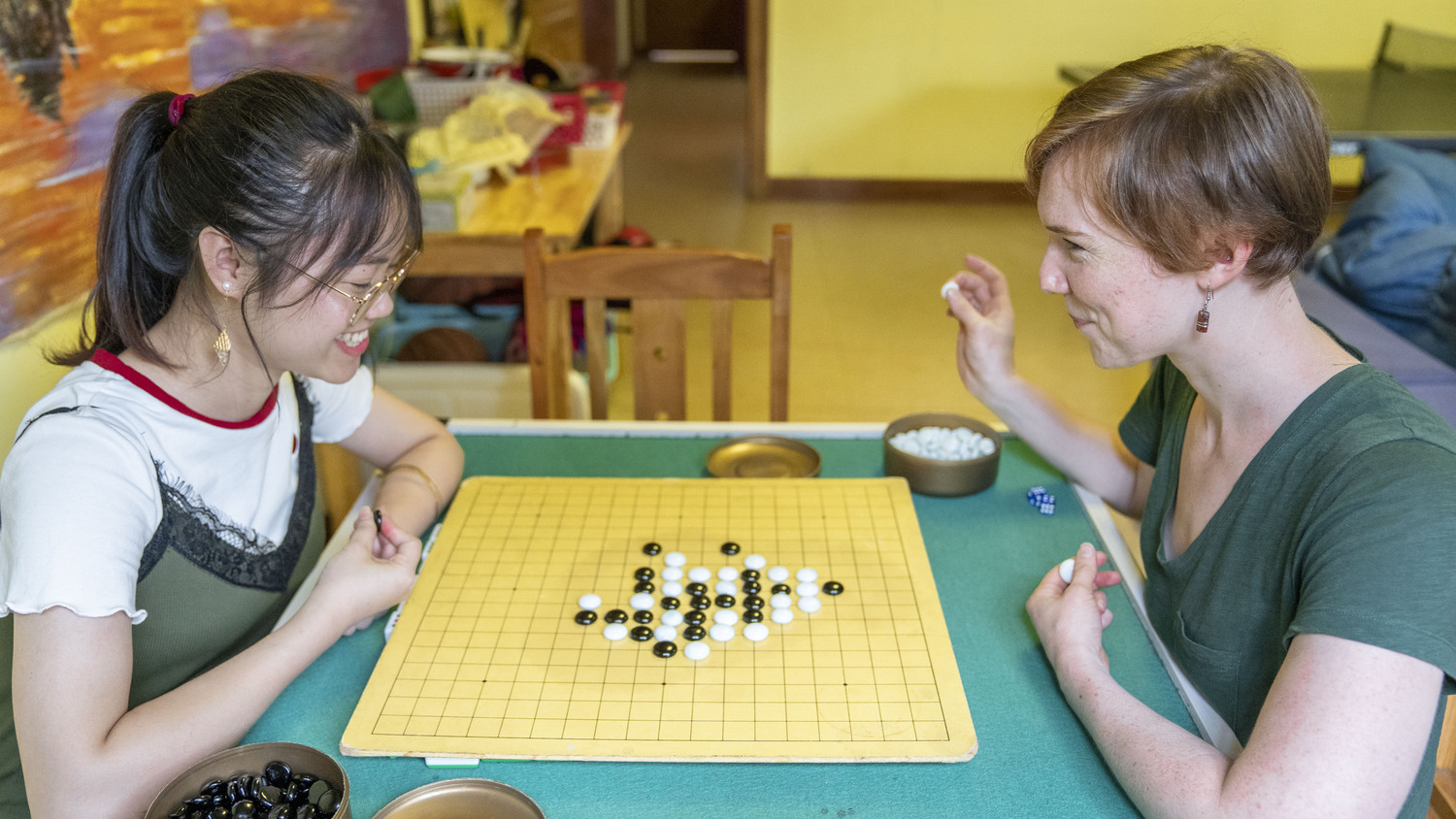
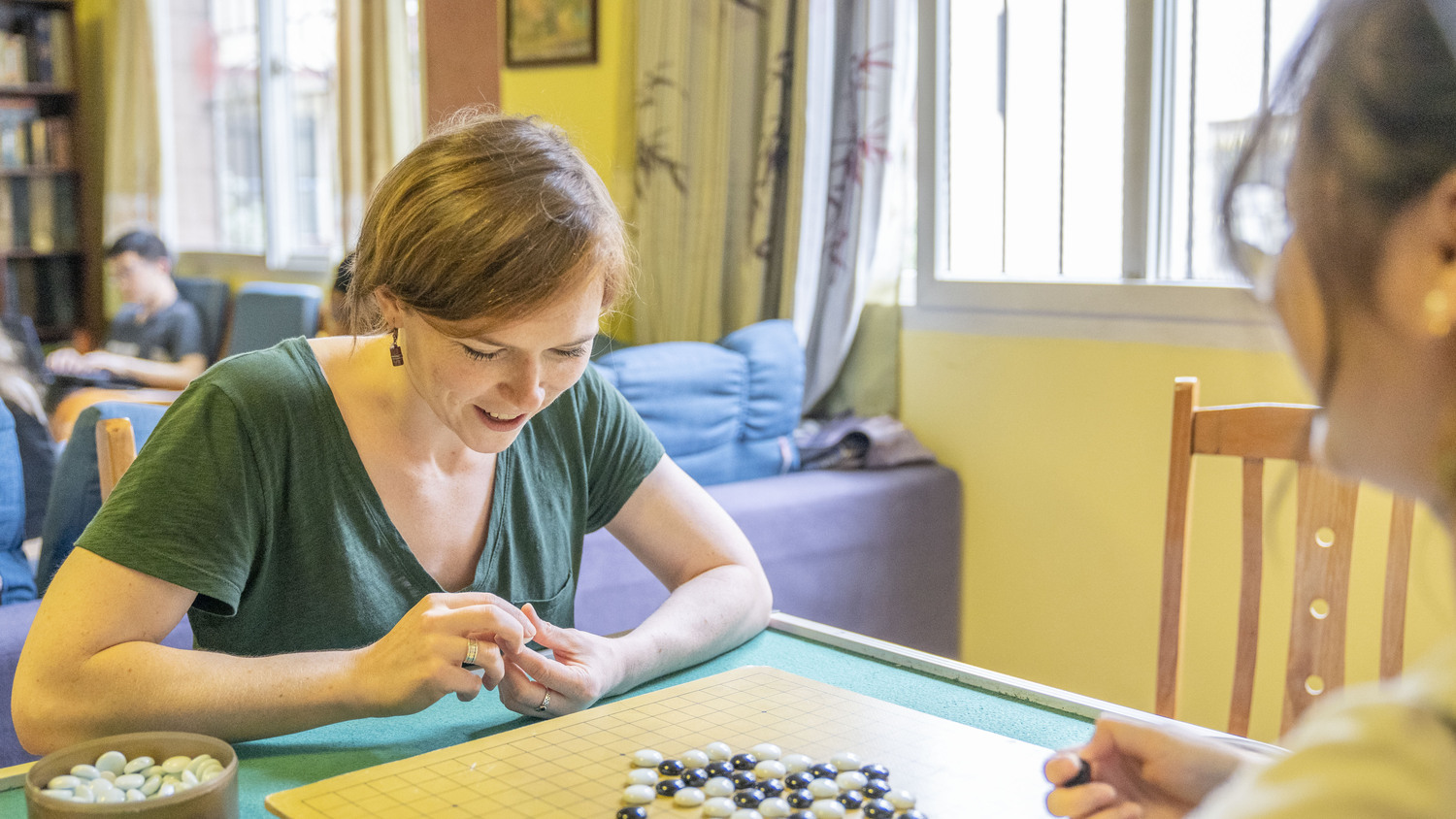
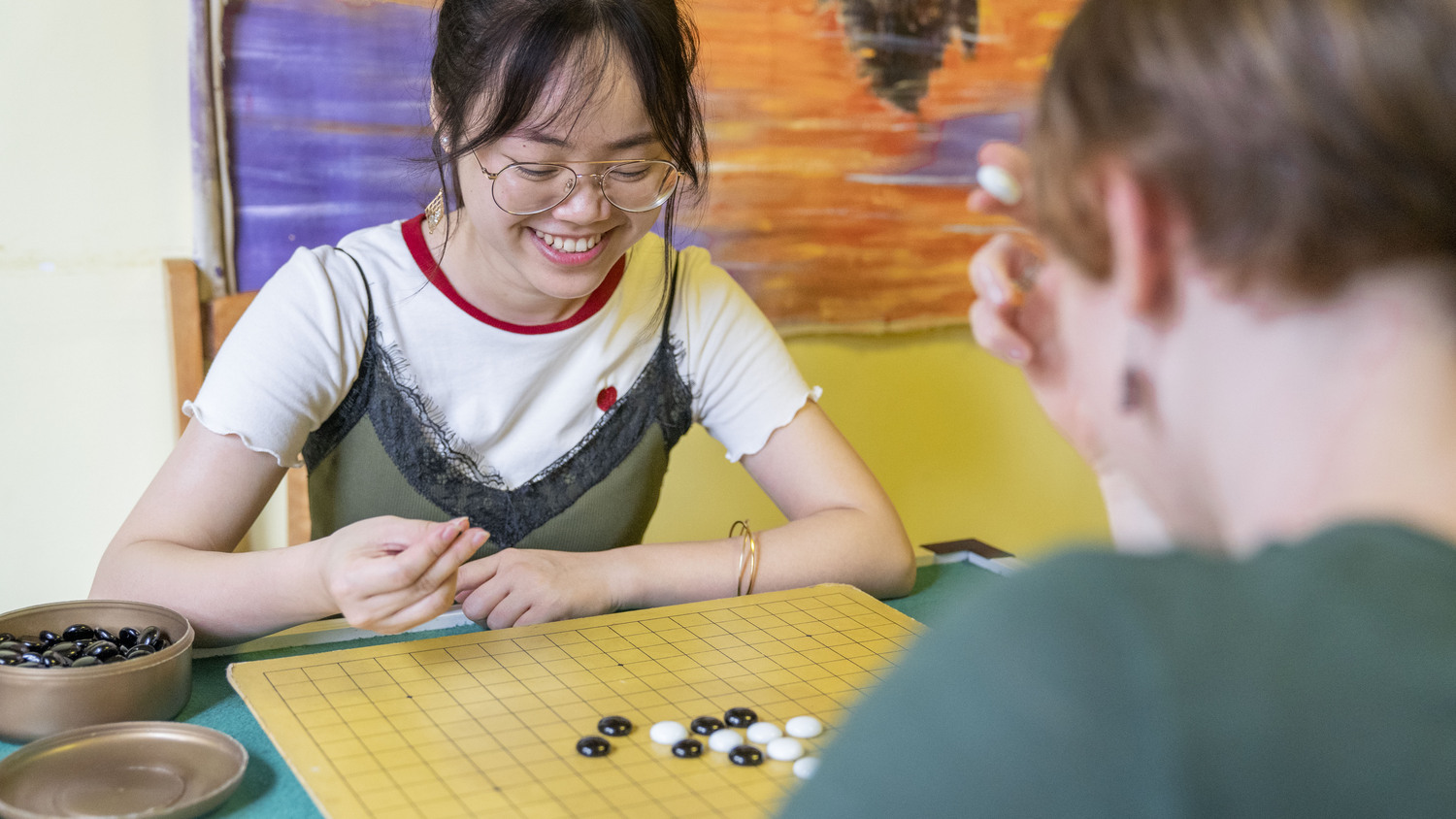
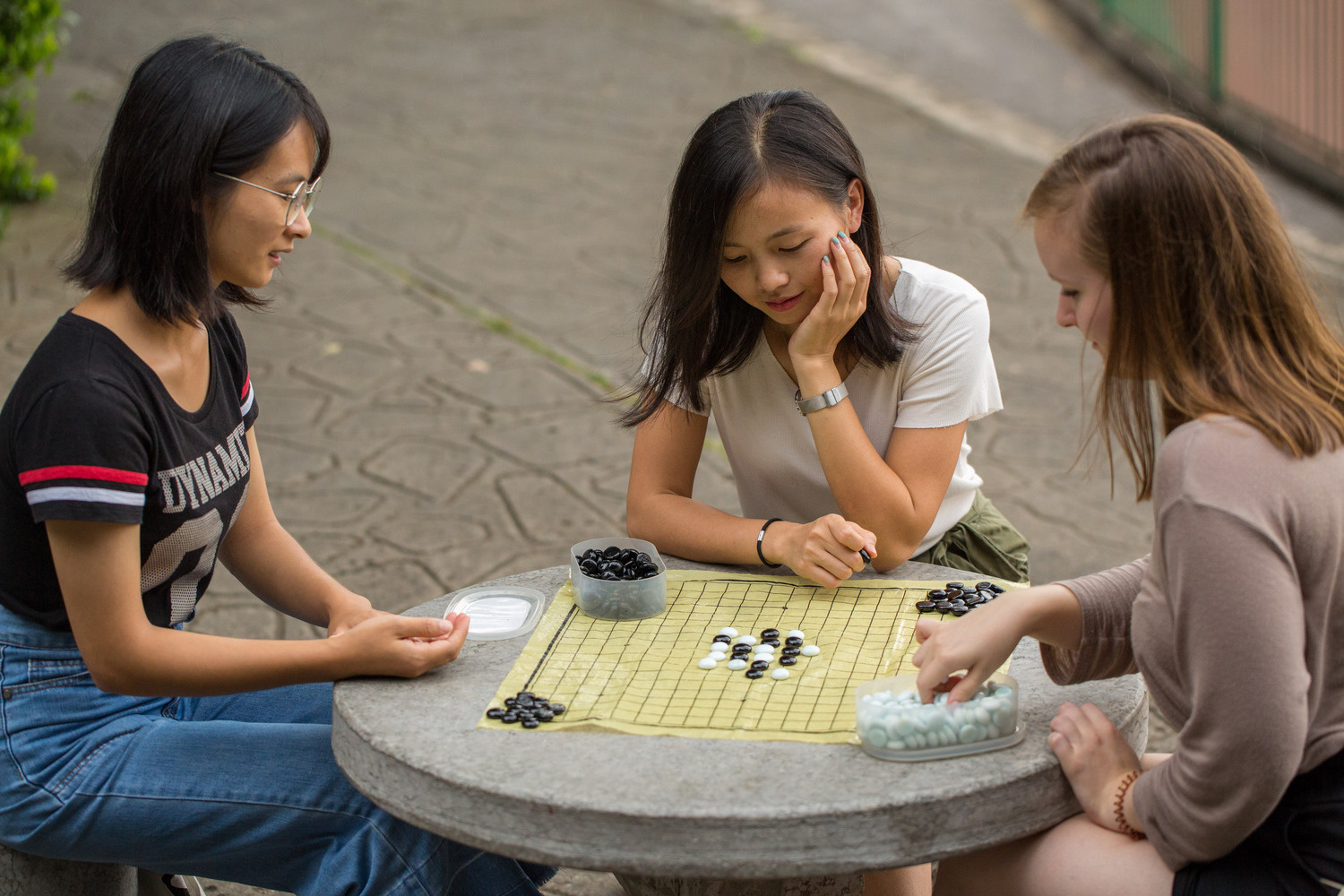
Chinese games like Go are on the activities list, and a slow game across the table leaves room for plenty of conversation in Chinese.
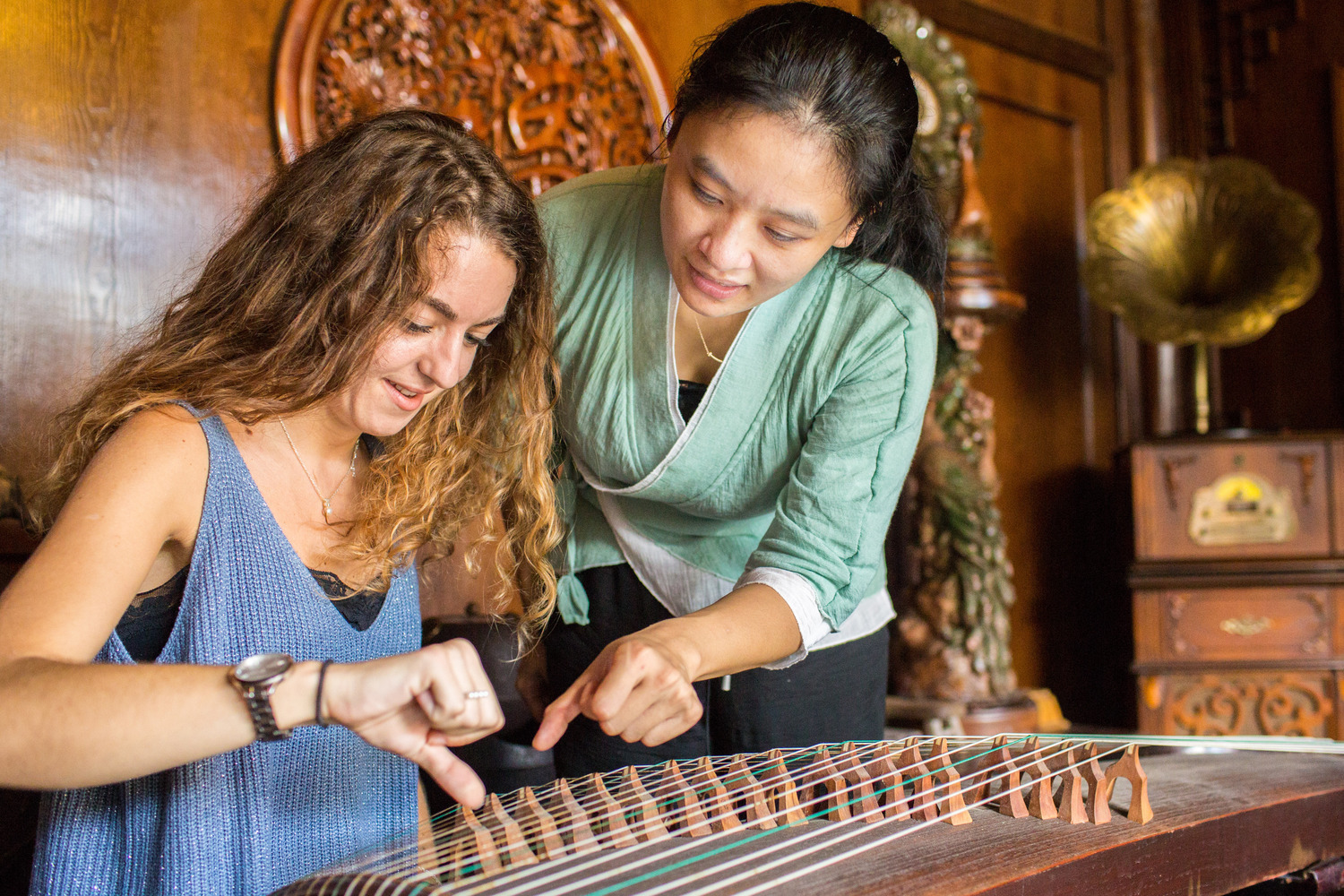
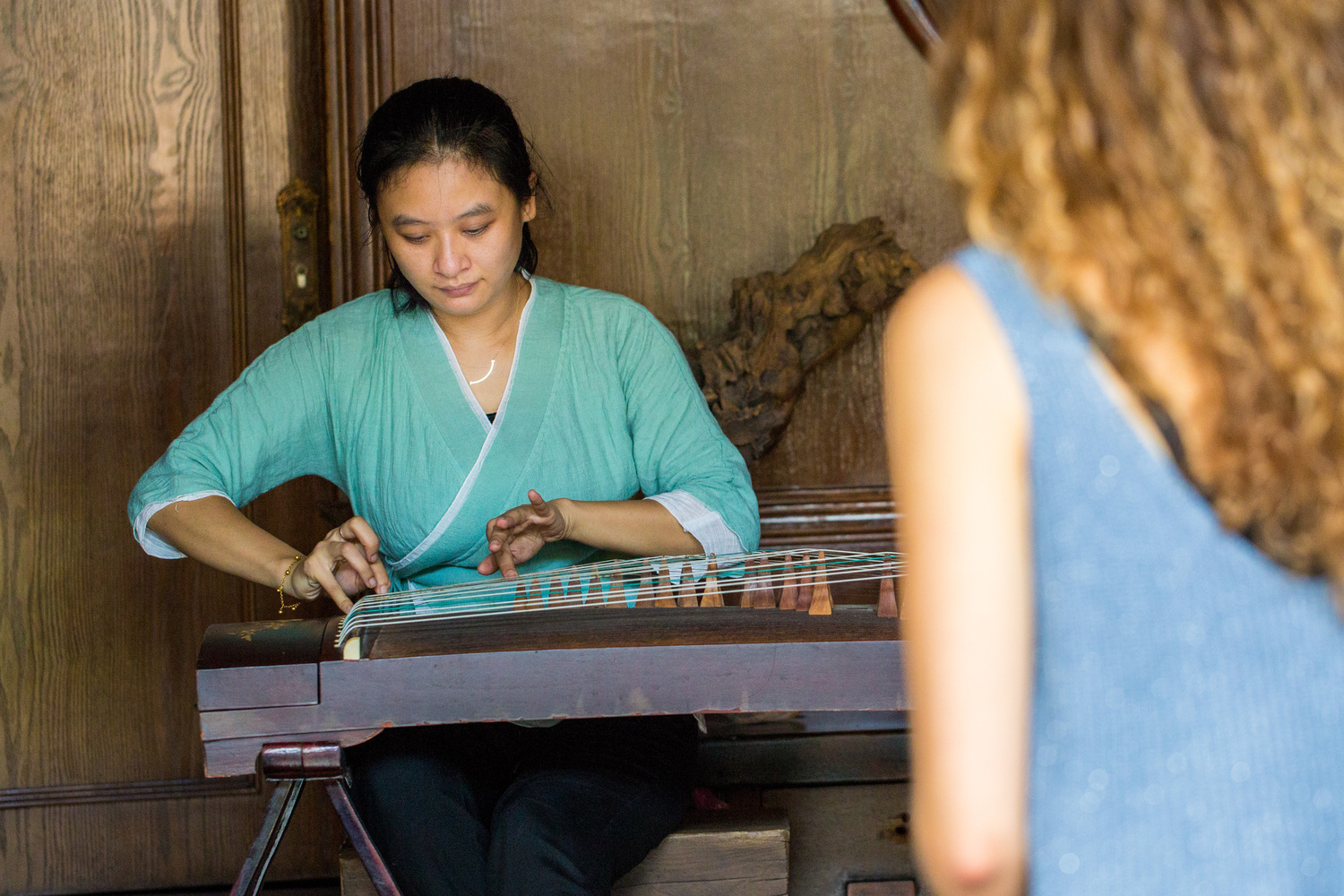
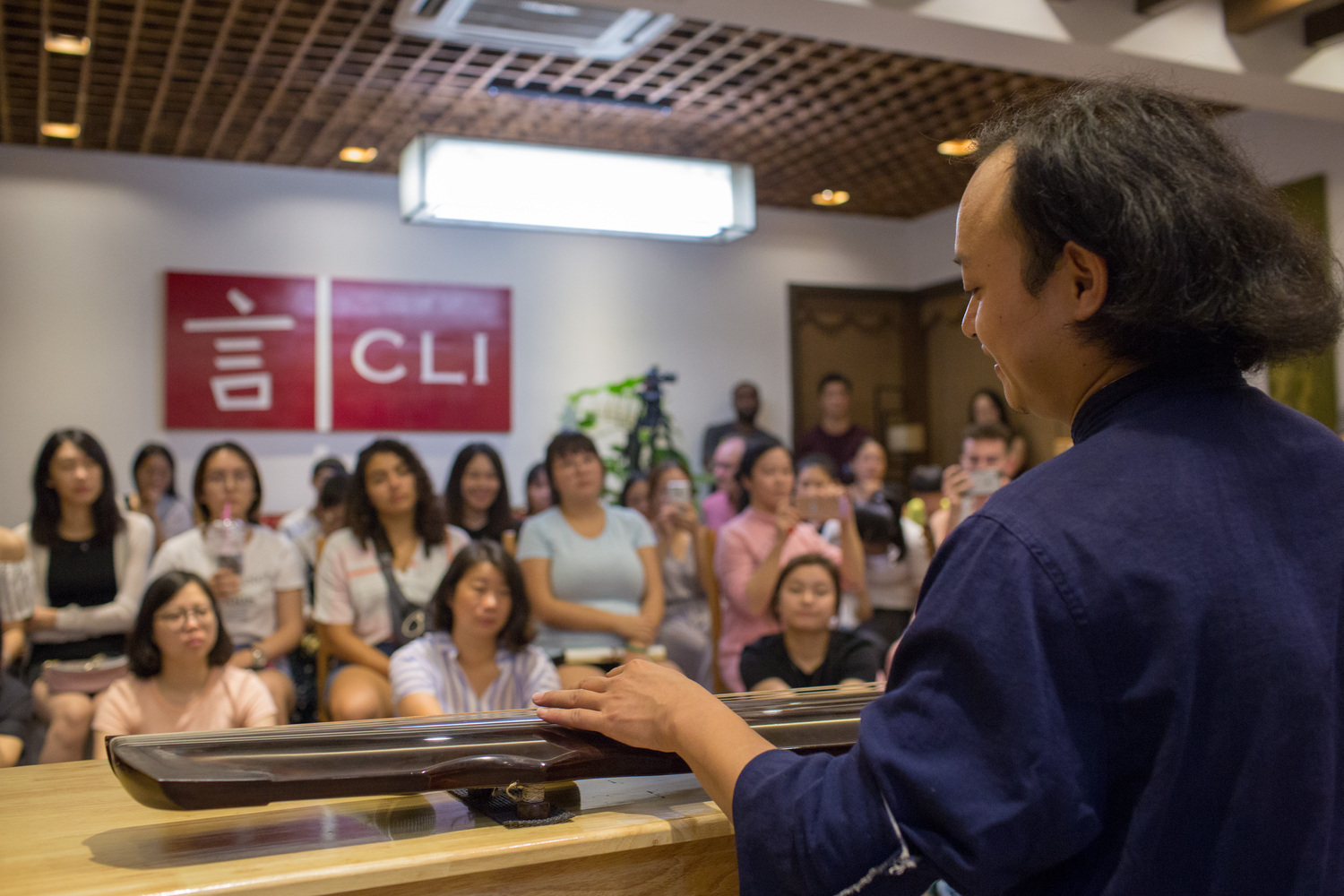
Students have heard the guzheng played from a few feet away, and teachers adjust each one-on-one class to the student, slowing down or moving ahead as needed.
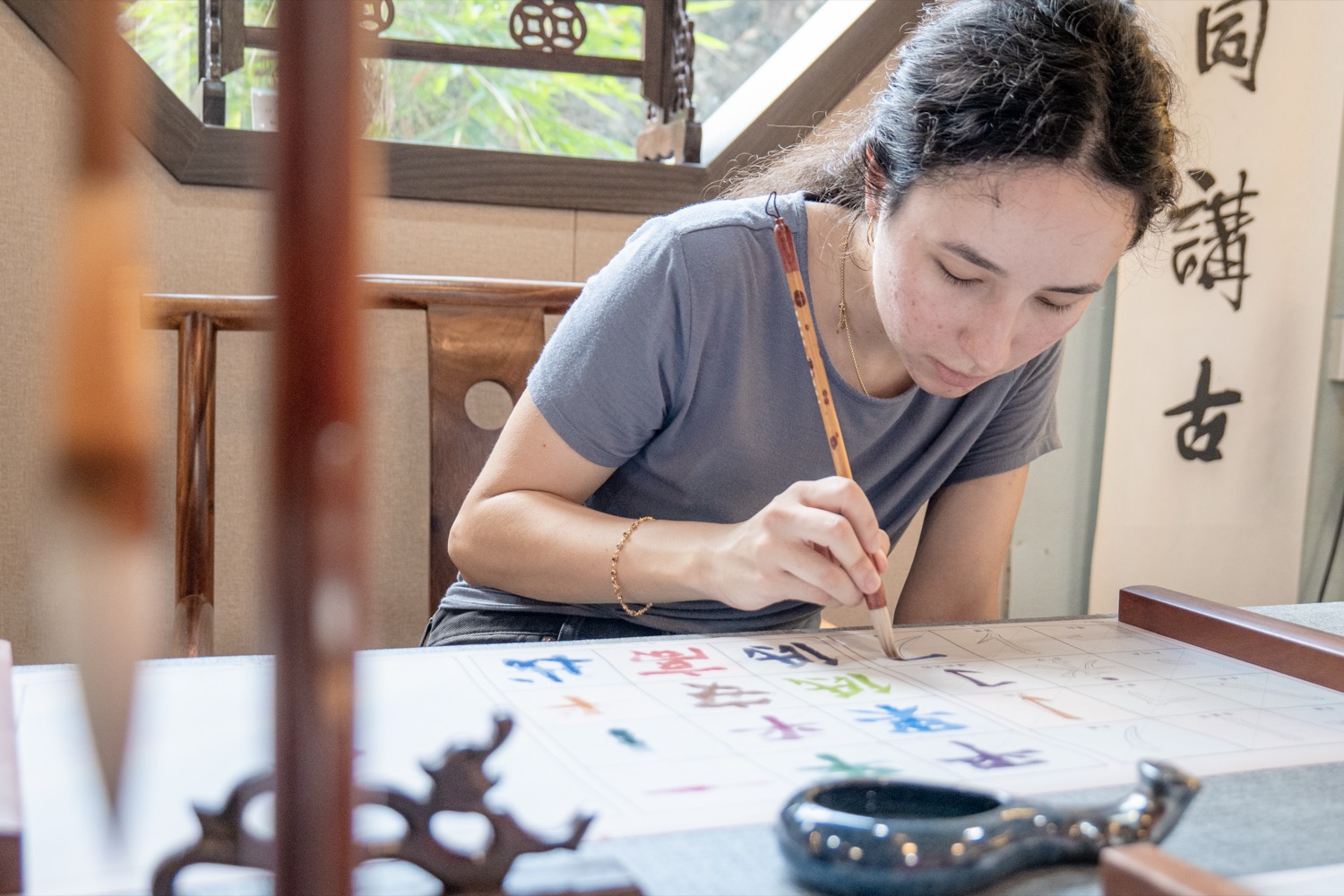
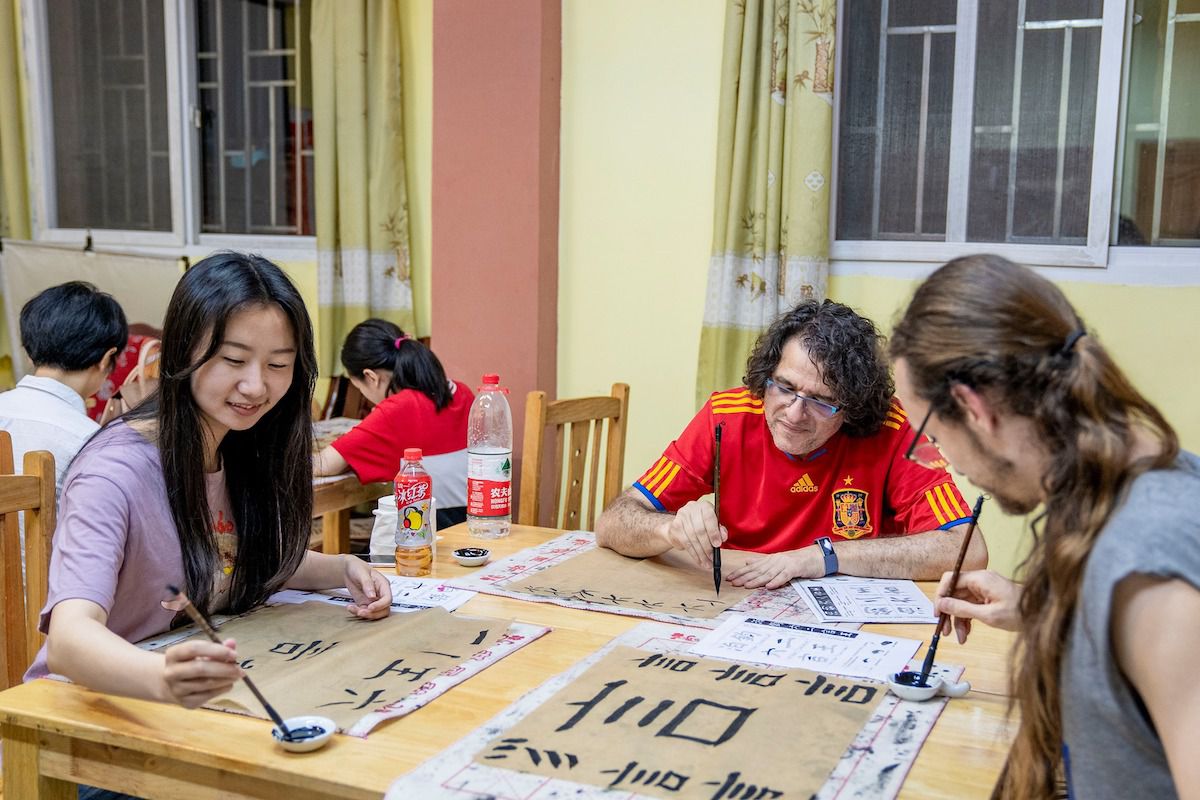
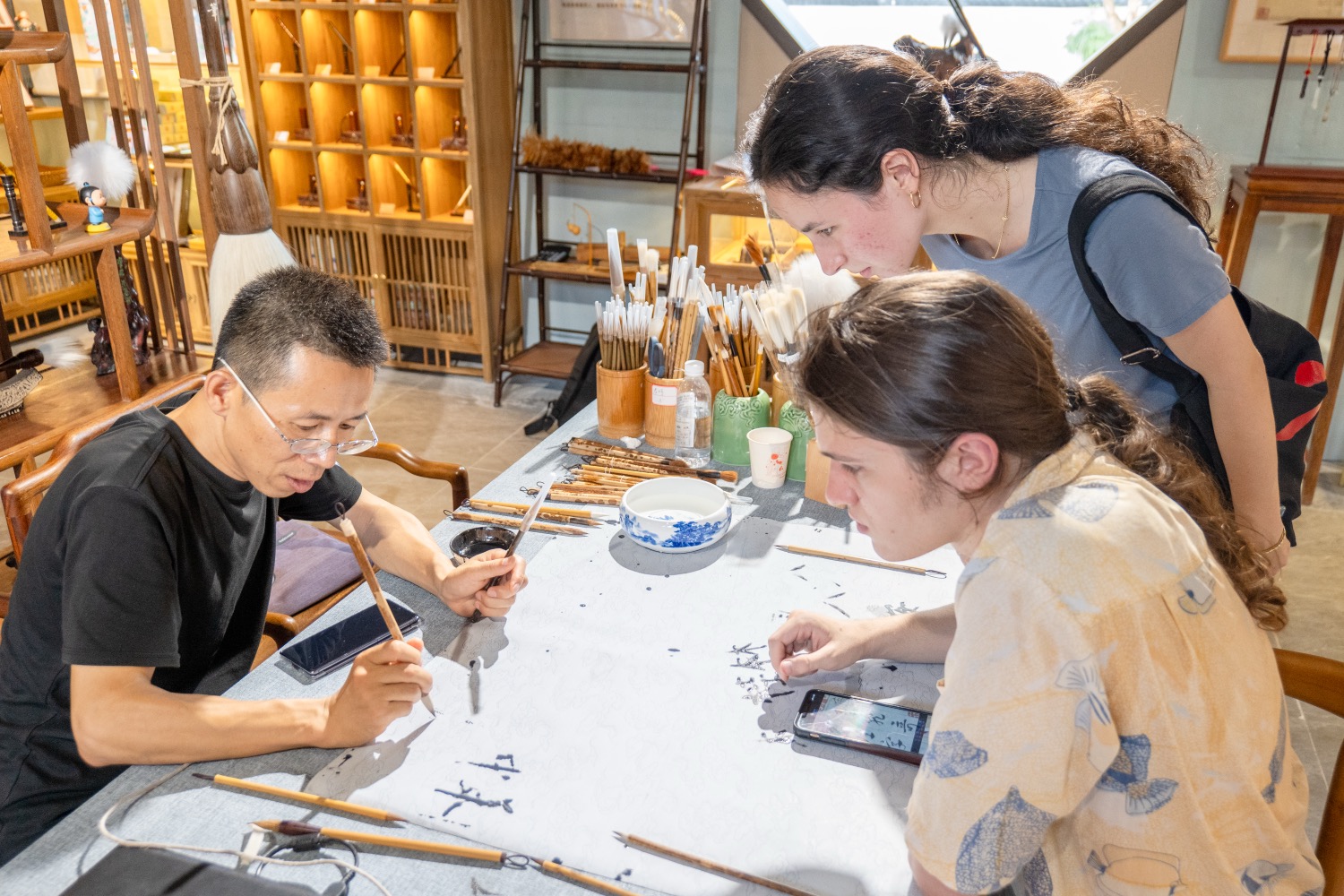
书法 (shūfǎ), calligraphy, is one of CLI's activities, and writing a character large with a brush shows how its strokes fit together.
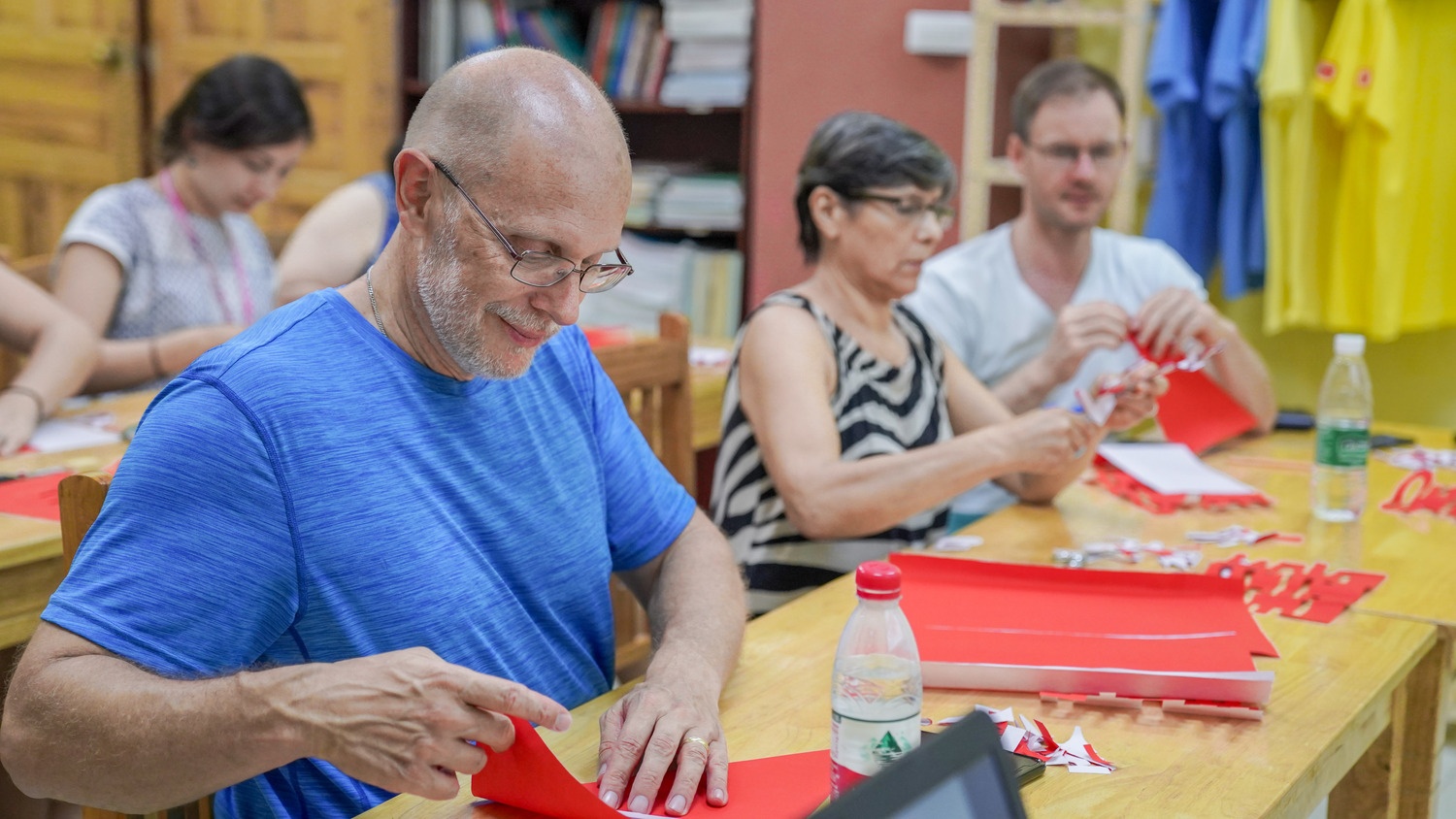
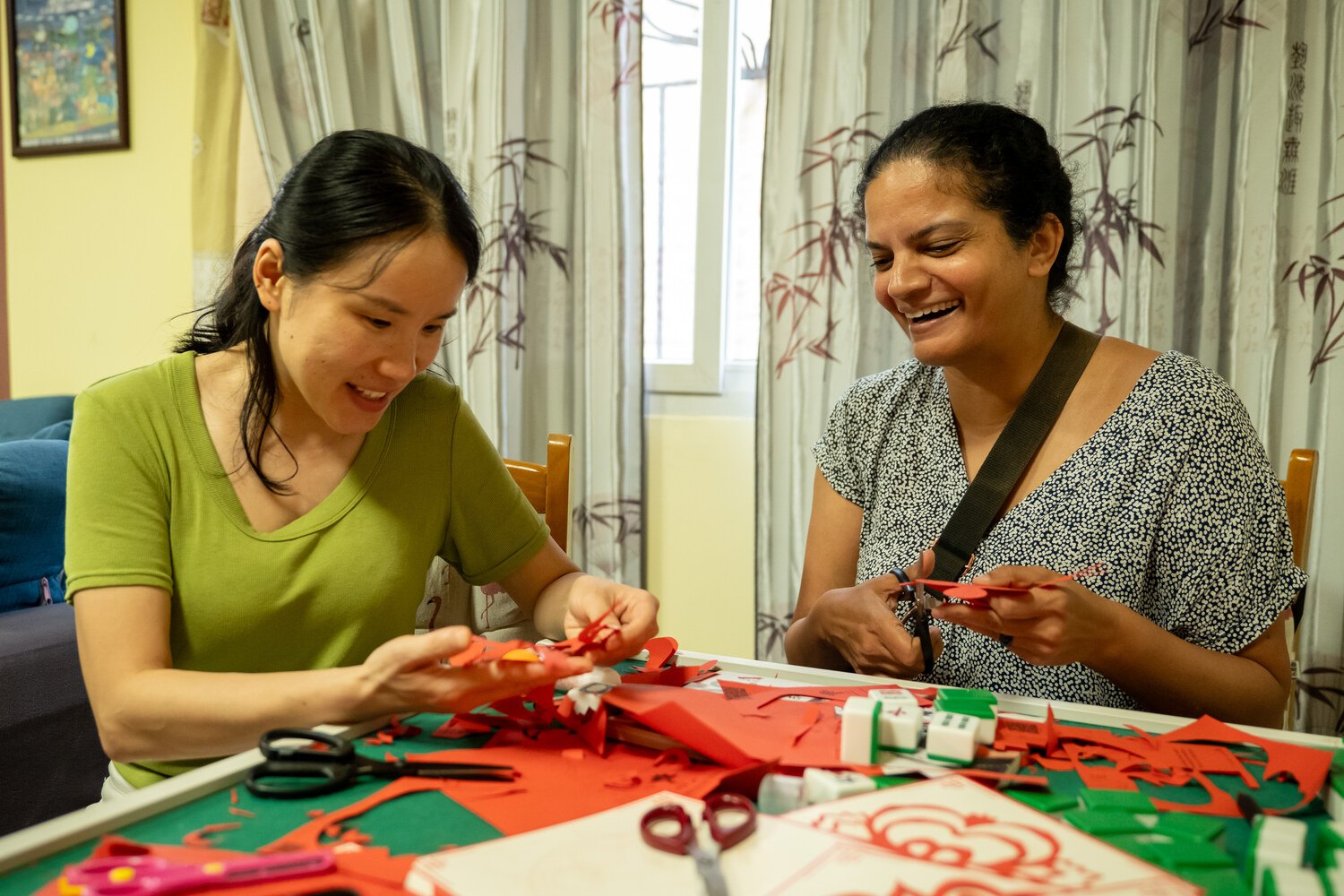
Paper cutting has drawn students of many ages to the same table. CLI's students range from high school students to retirees, and families sometimes study together.
A finished tie-dye cloth takes two people to hold up, and it gives plenty to talk about at the weekday lunches, where at least one table is Mandarin-only.
Stays at CLI run from one week to a year, and a longer stay leaves time for more of the activities and excursions, tie-dye afternoons included.
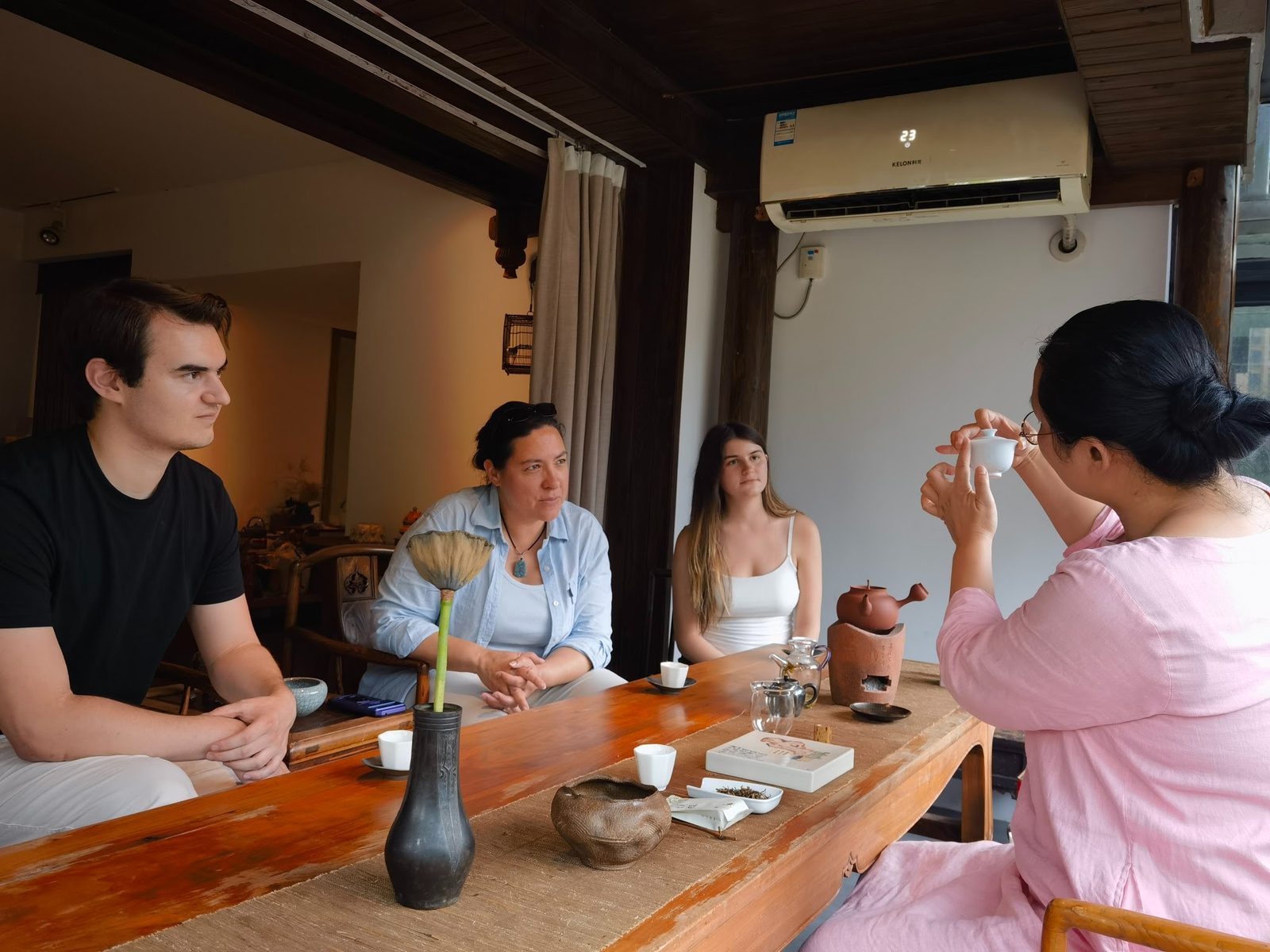
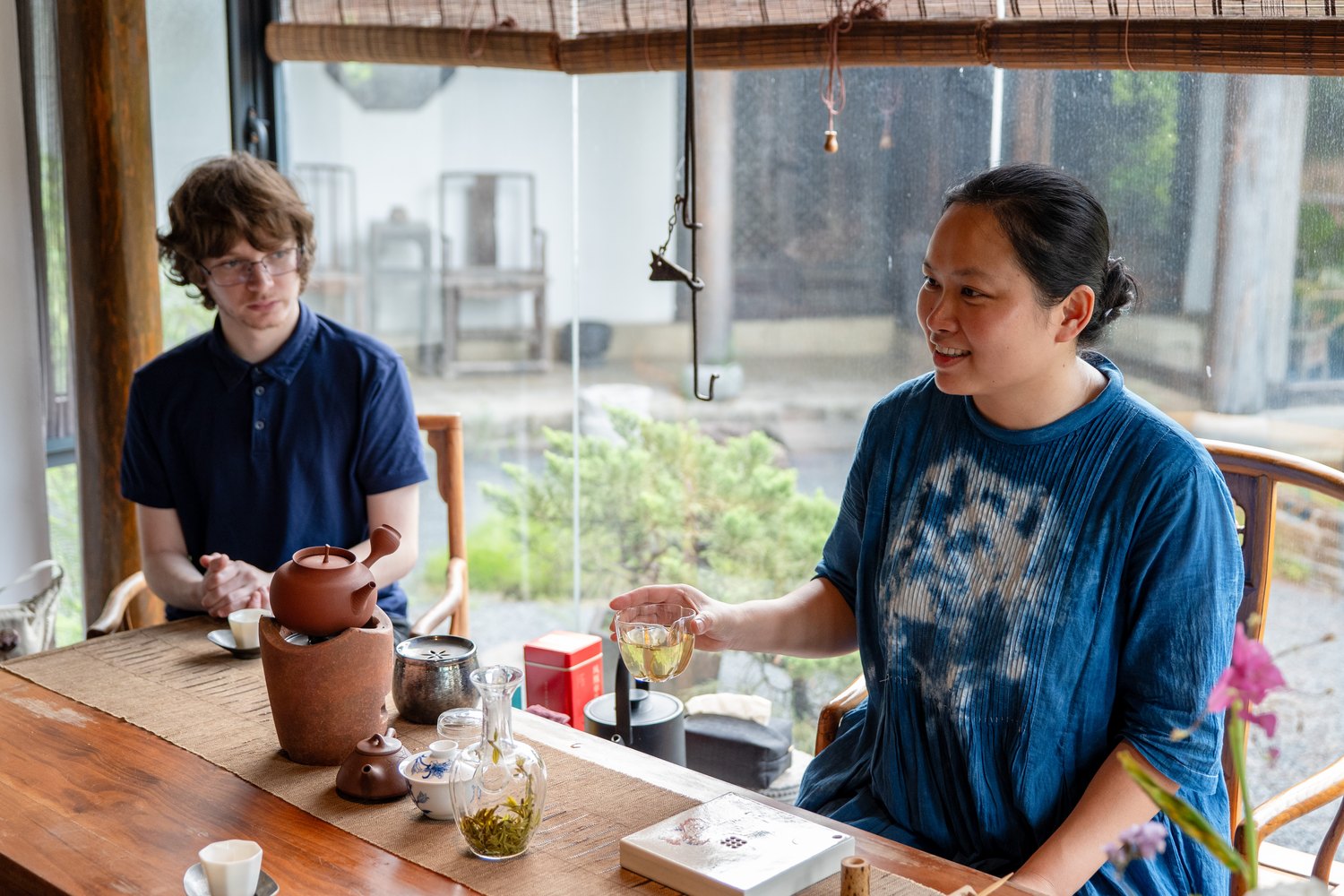
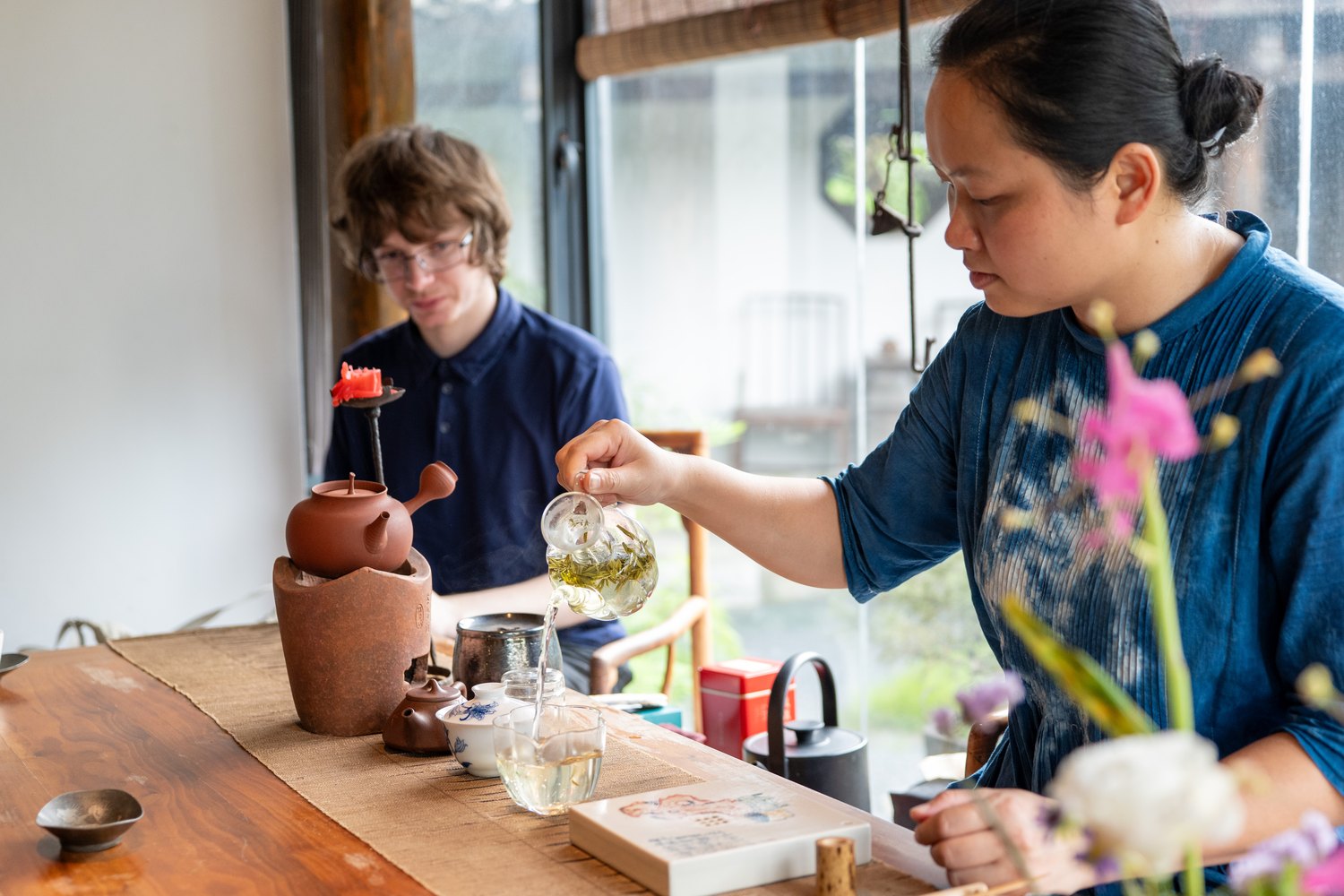
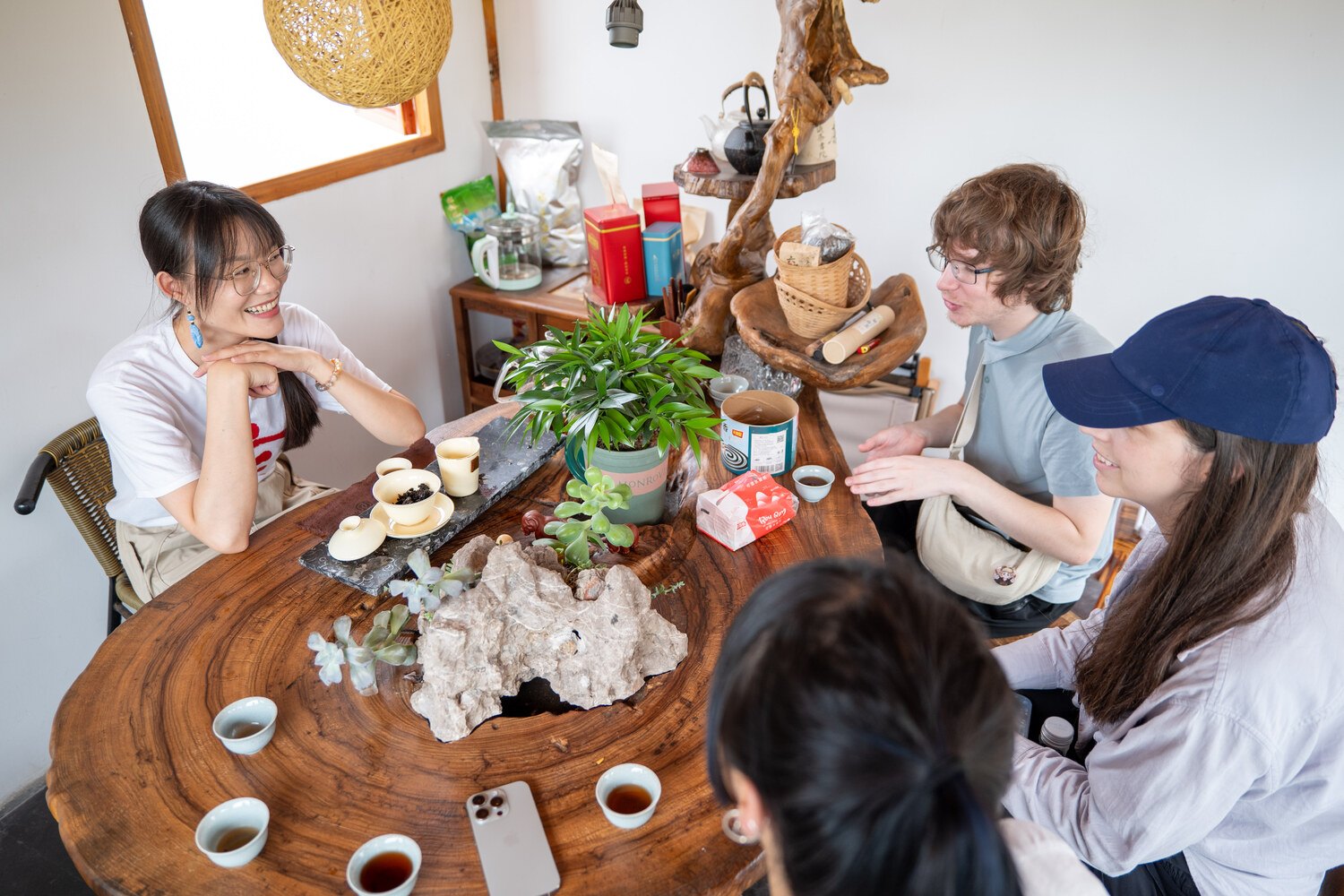
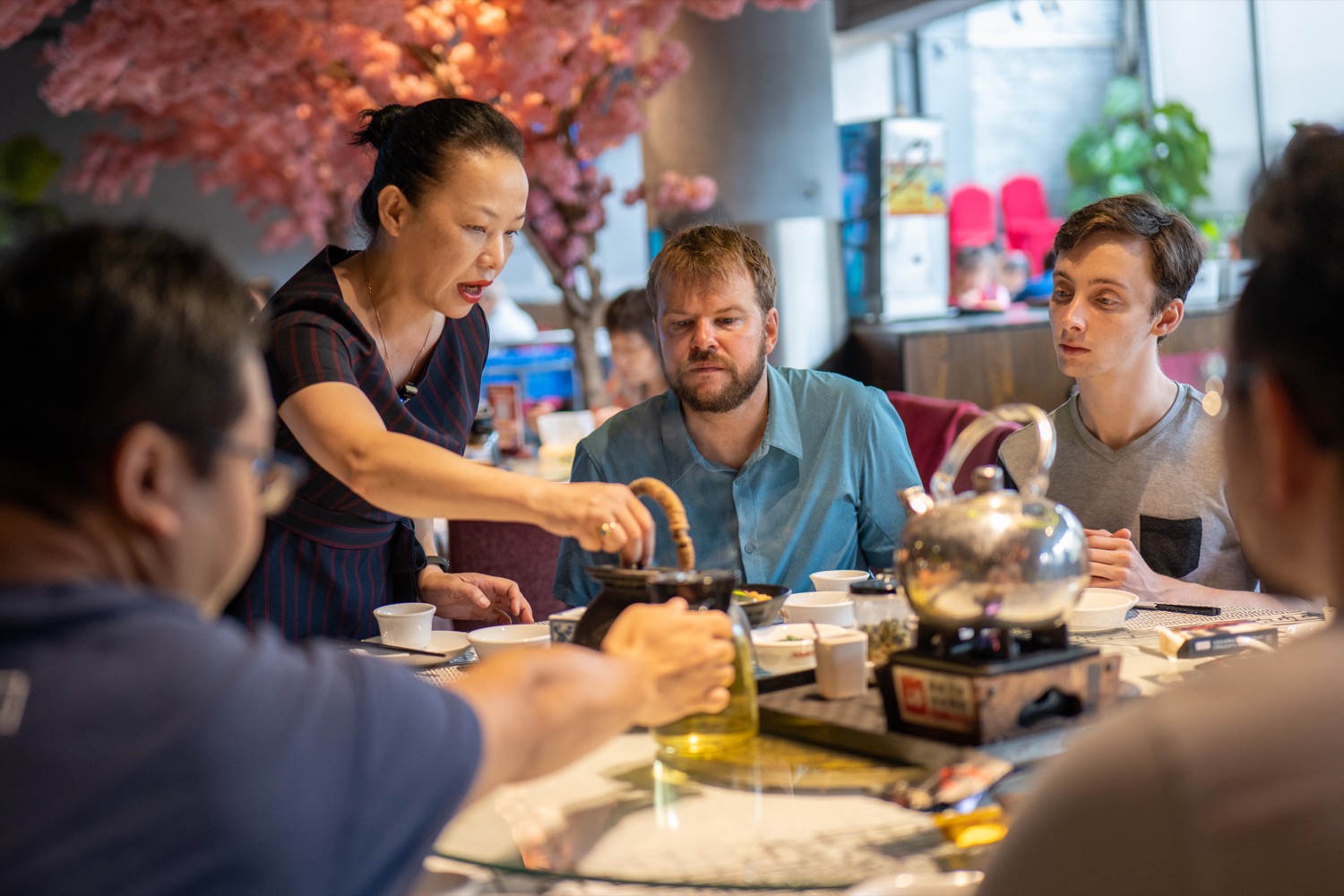
A tea host can walk a table through a whole ceremony in simple Mandarin, and in a city with little English, following along in Chinese soon feels normal.
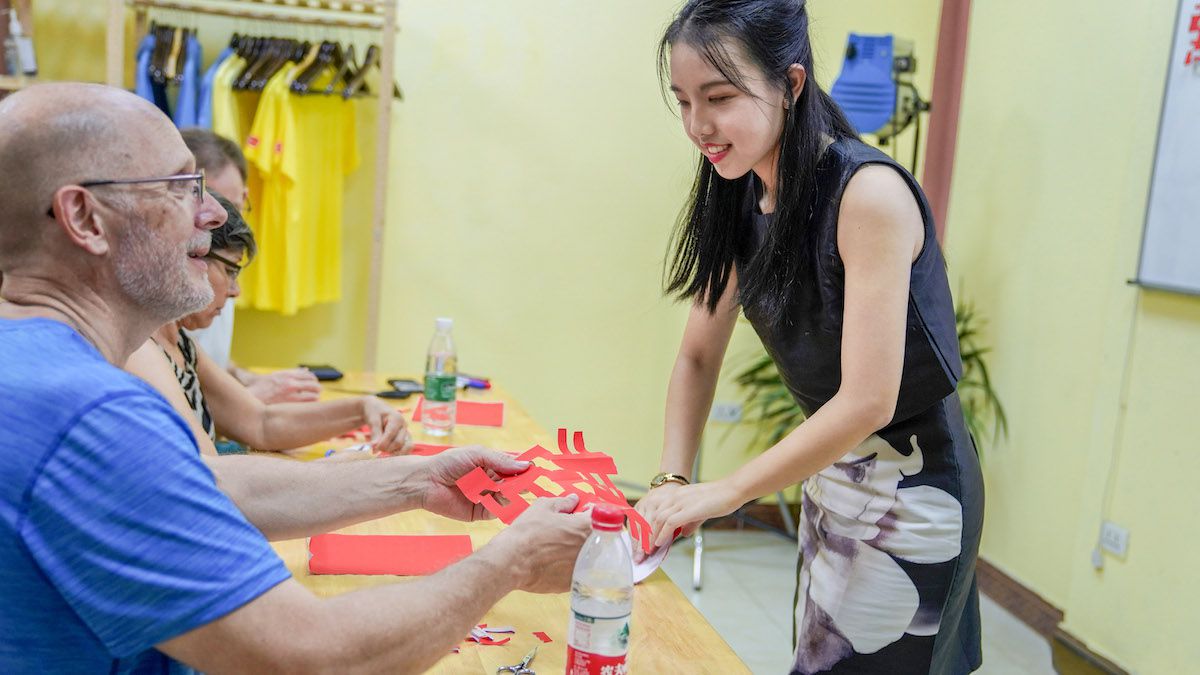
An instructor checks each paper cut at the table, and in Chinese class a short evaluation every two weeks does a similar job, helping teachers plan the next lessons.
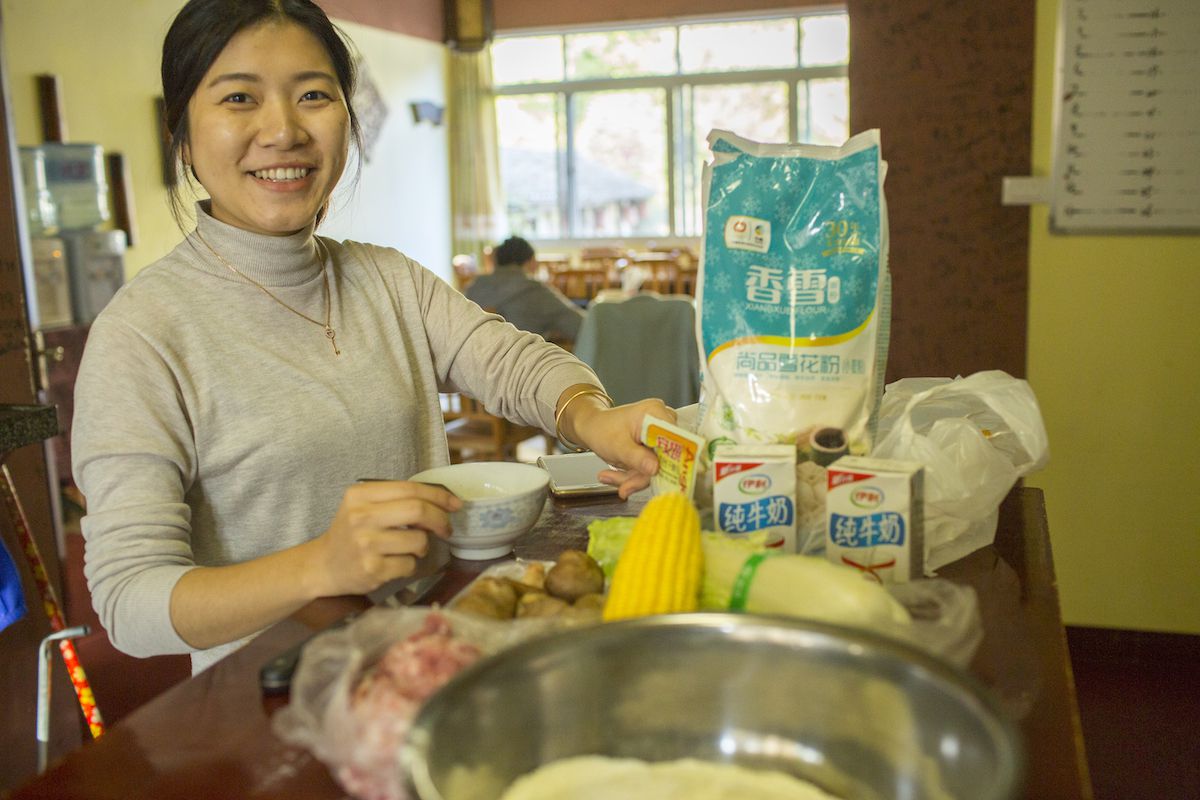
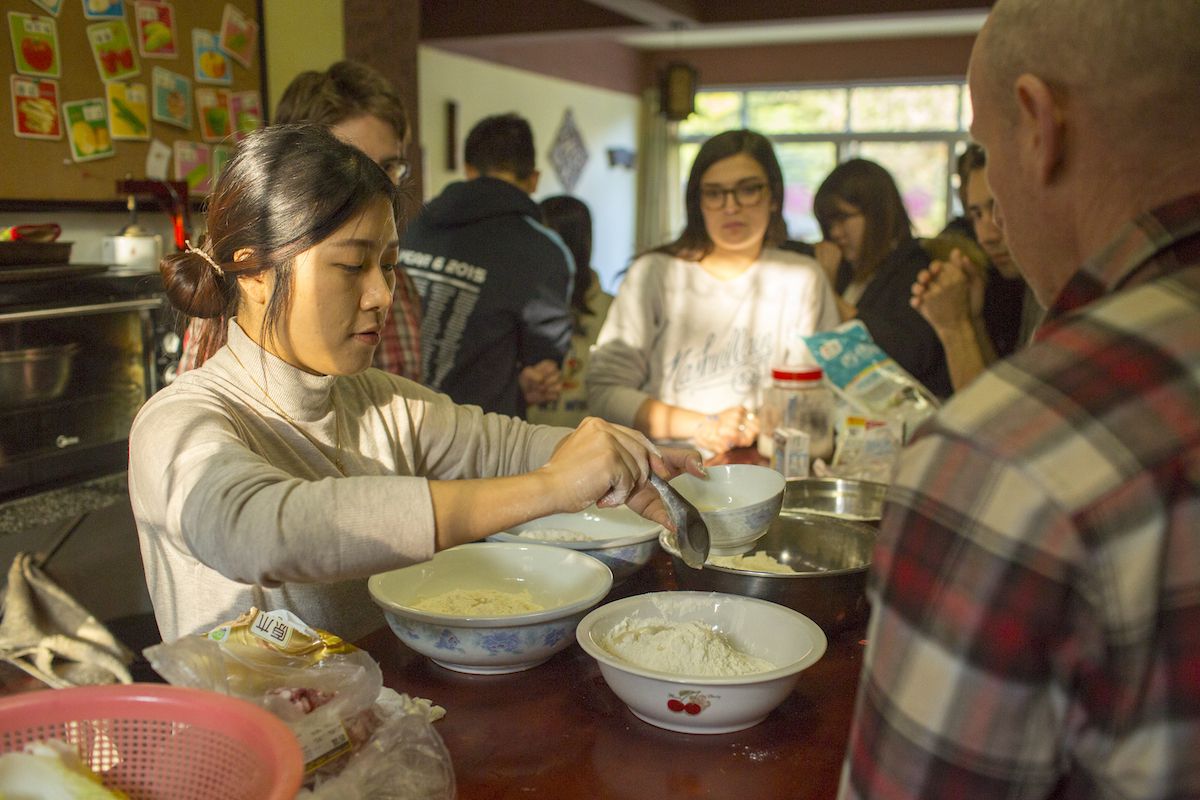
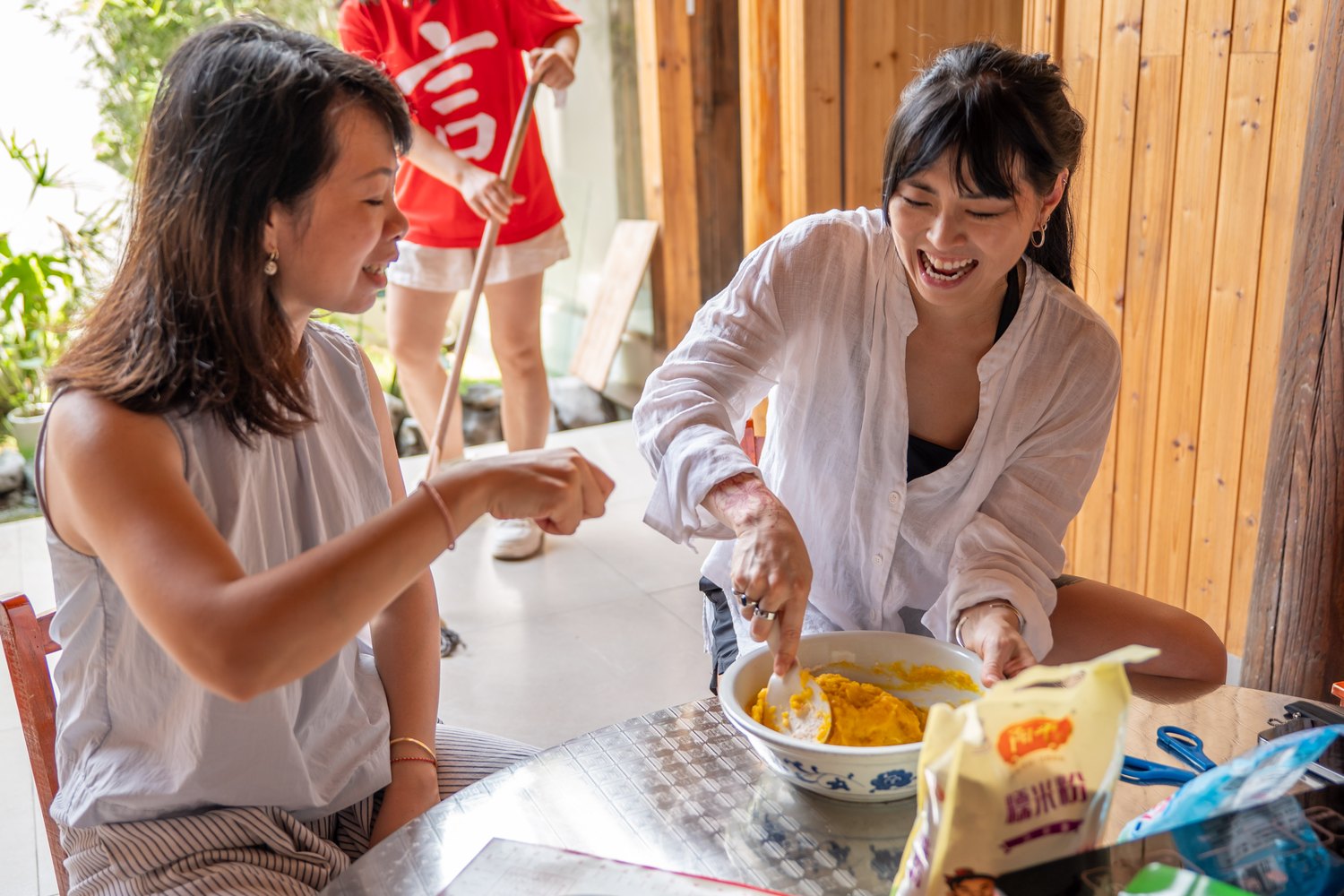
Flour, corn and a mixing bowl make a good vocabulary lesson, and the markets near CLI are where students put those food words to use.
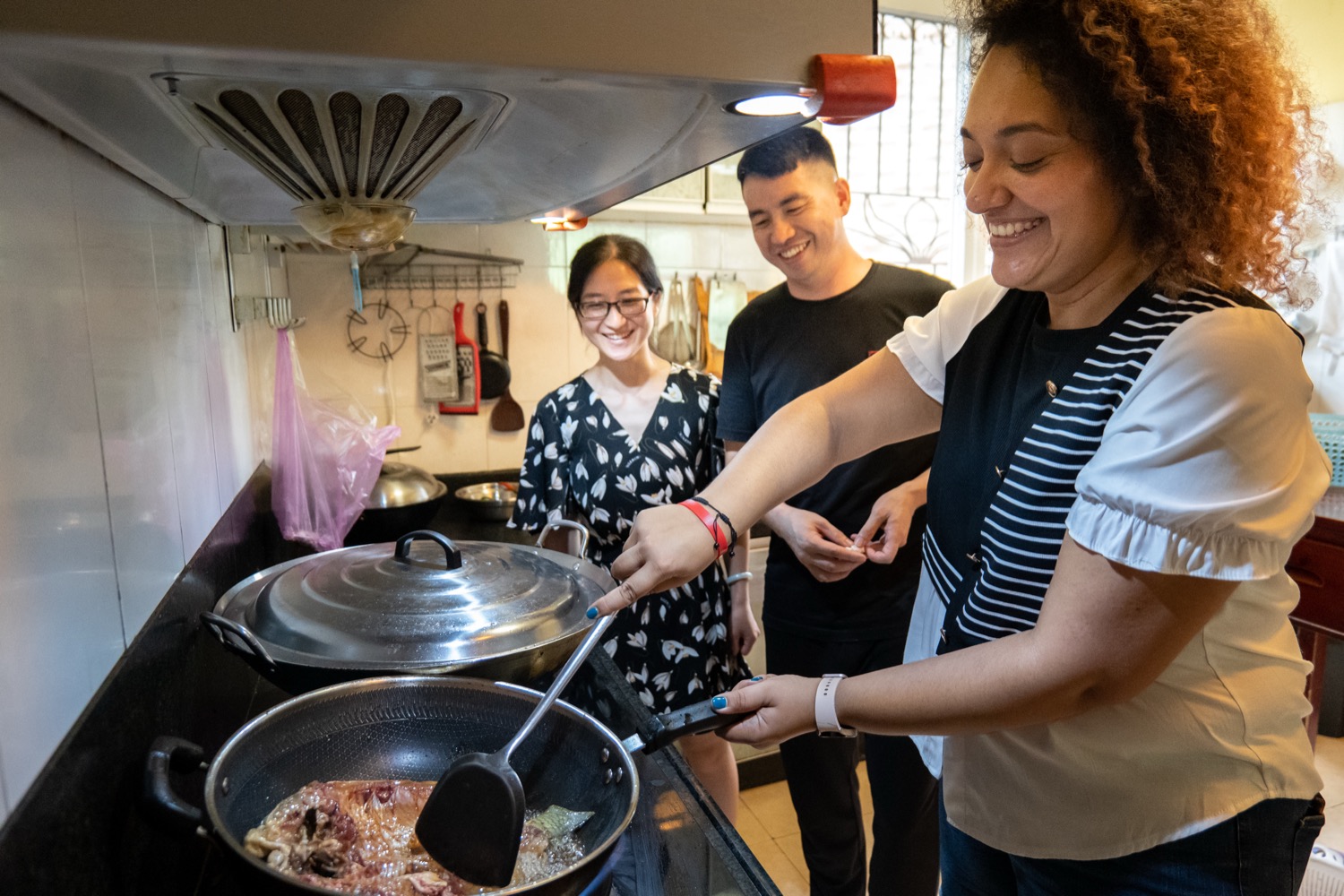
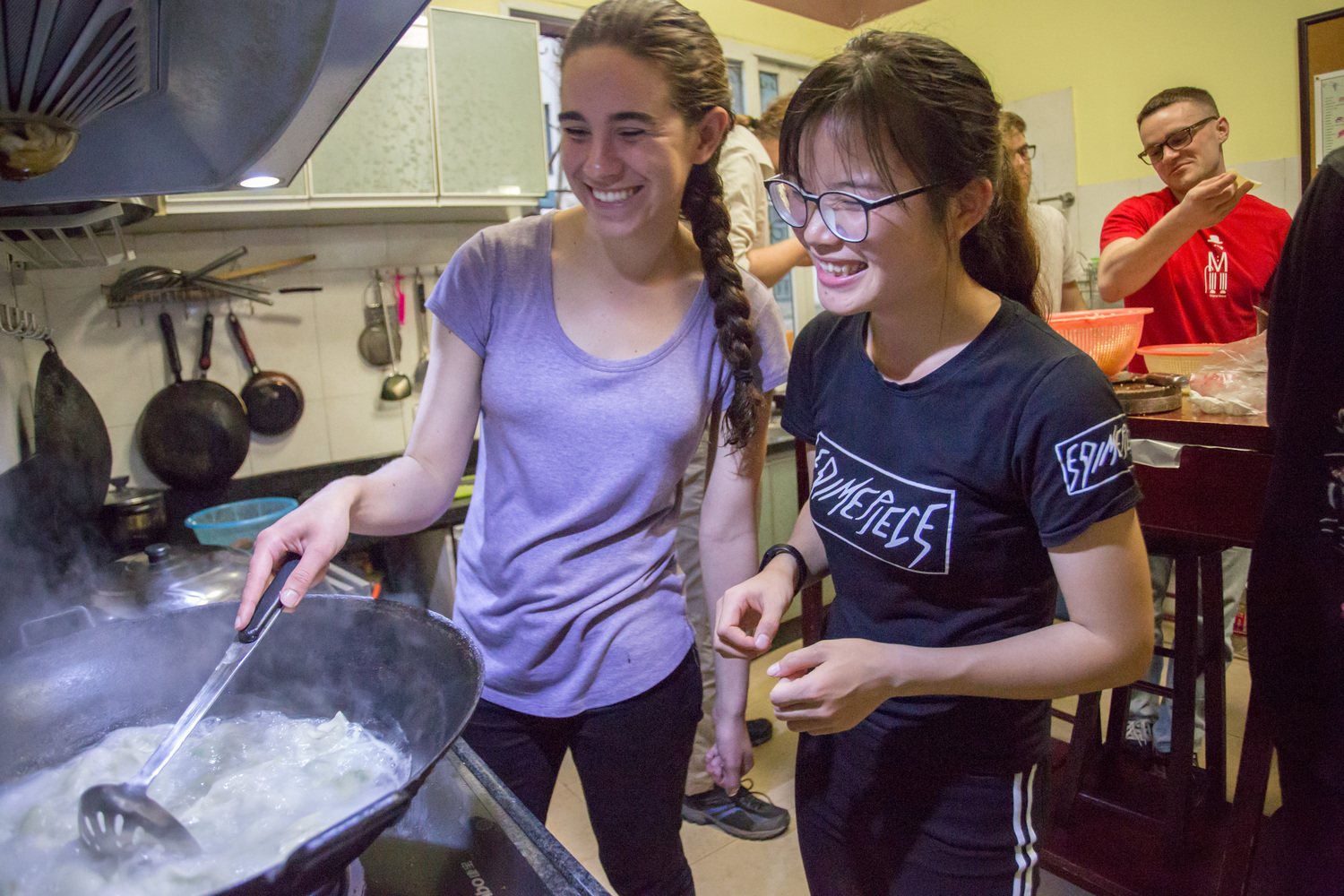
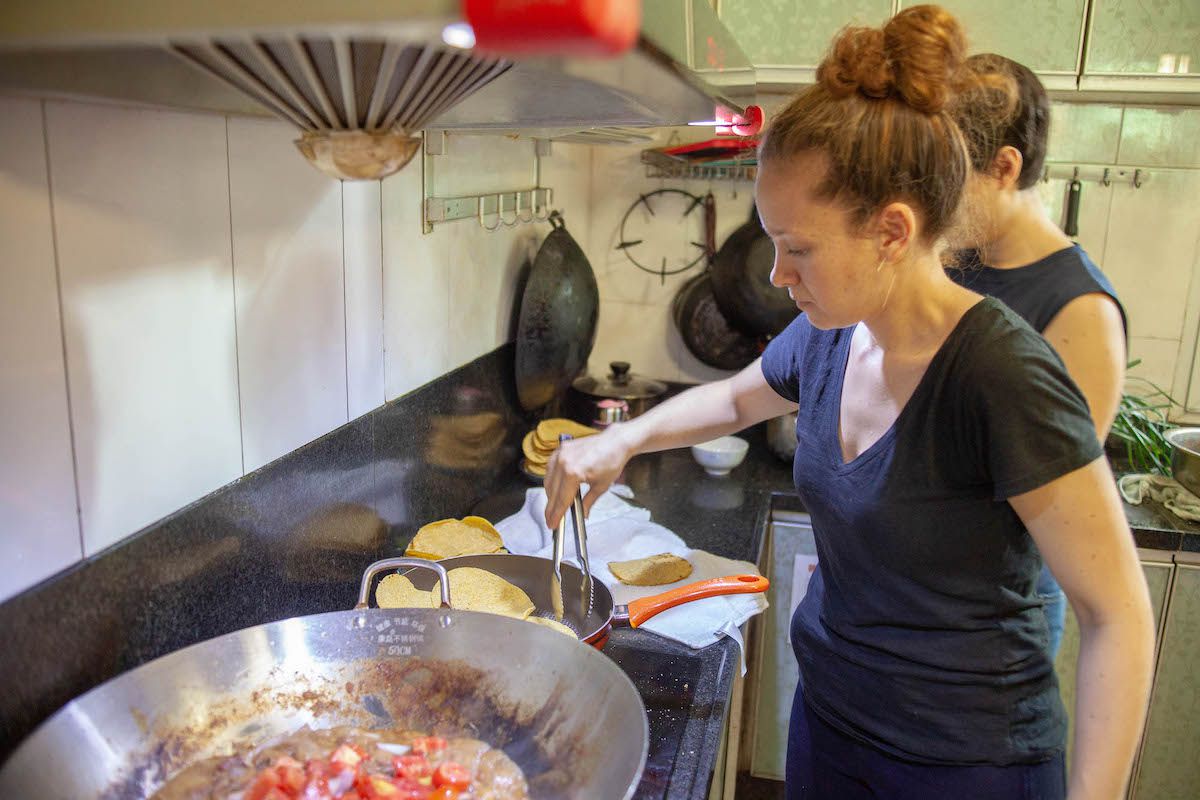
Stir-frying at a wok comes with its own words, and a cooking lesson with a Chinese chef, one of CLI's activities, is where students pick them up.
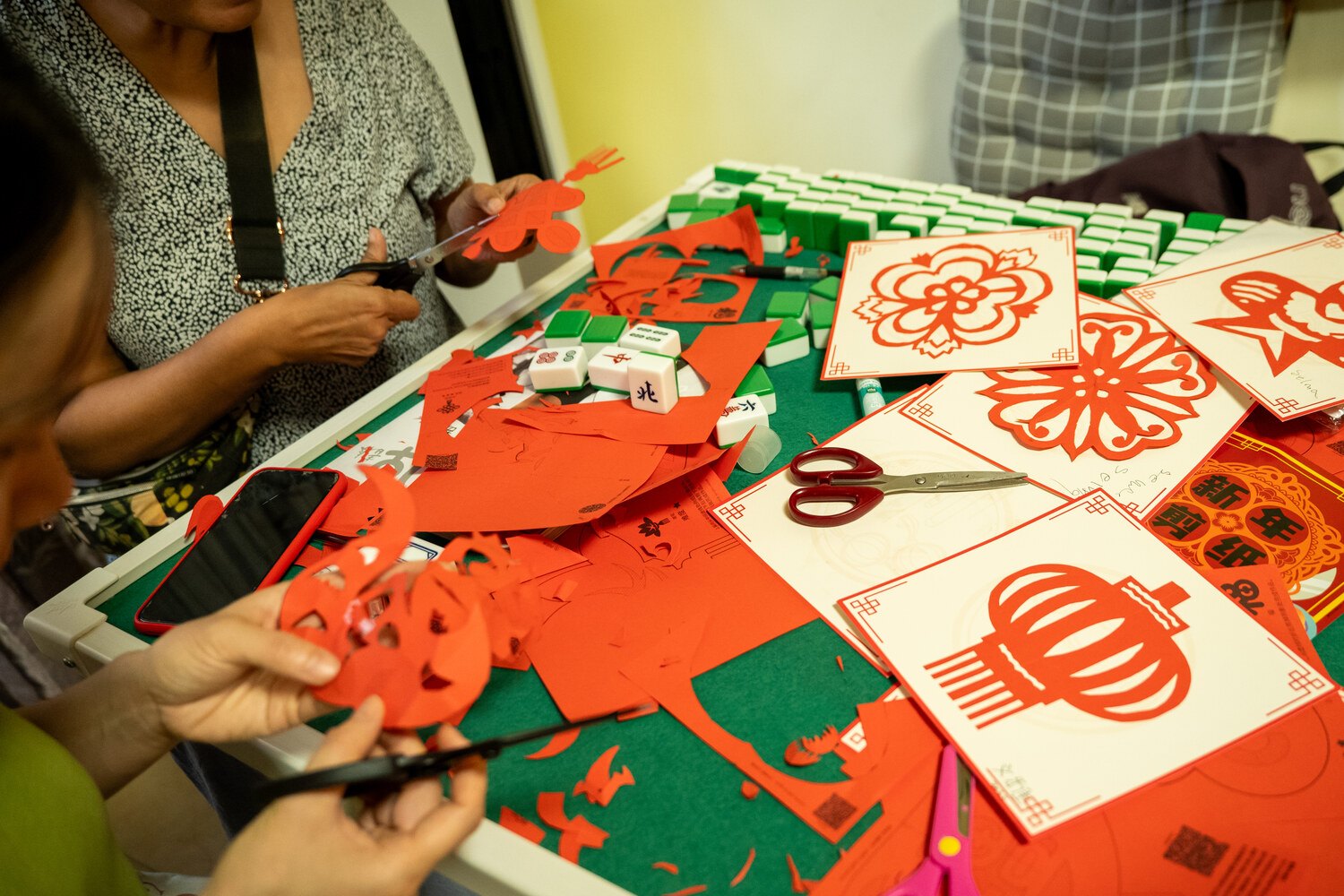
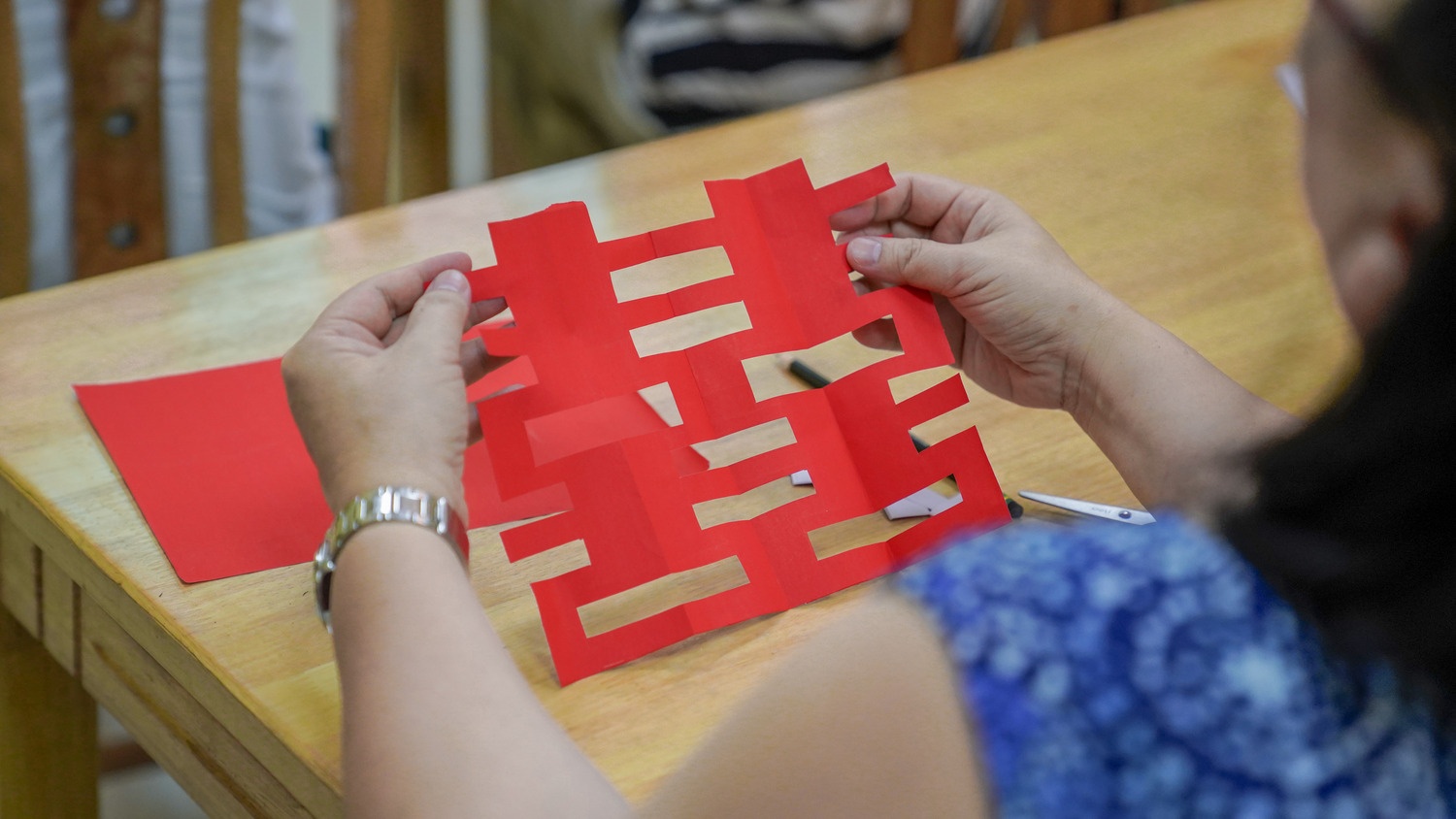
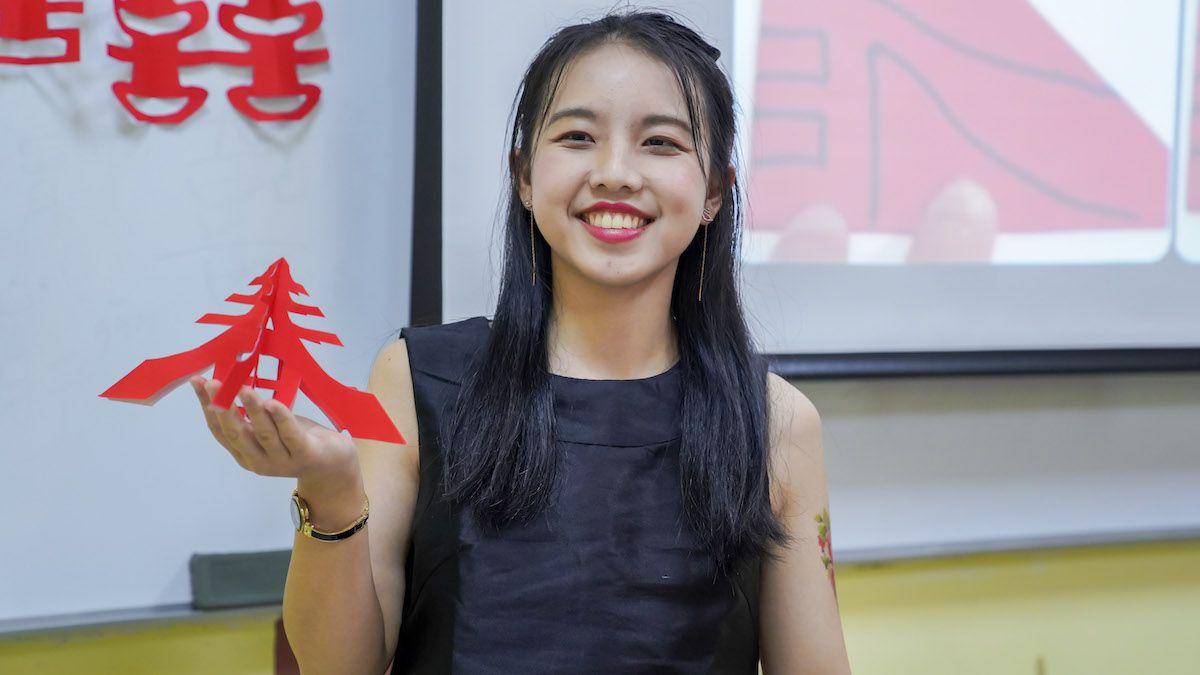
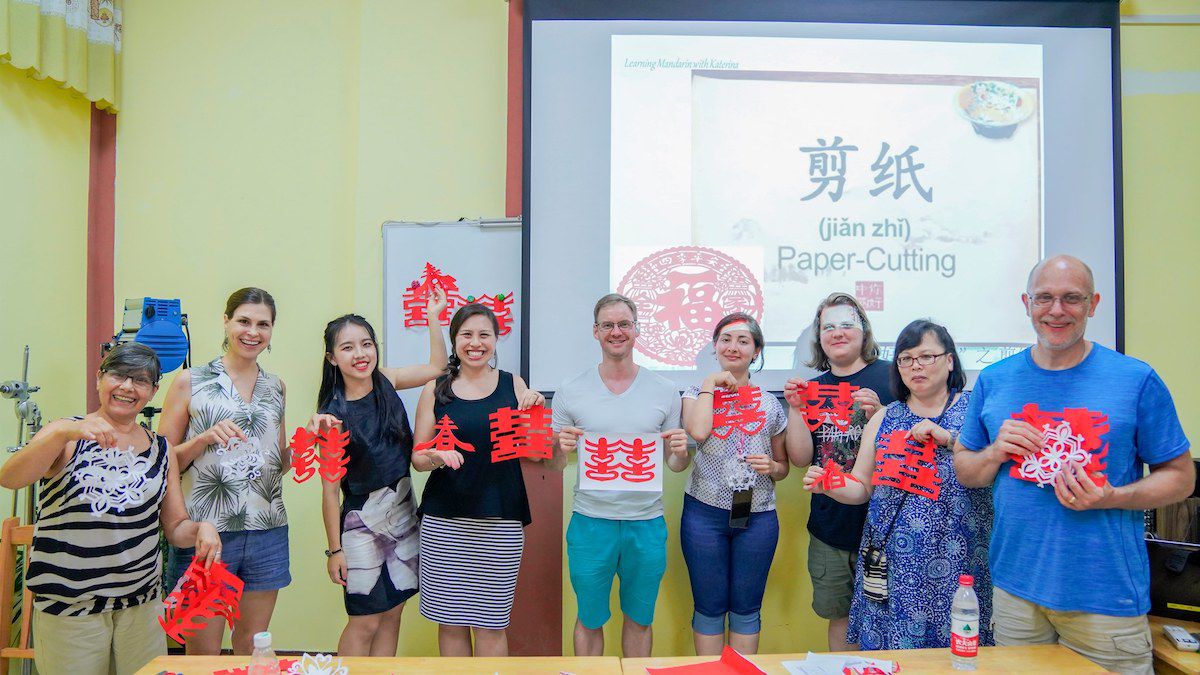
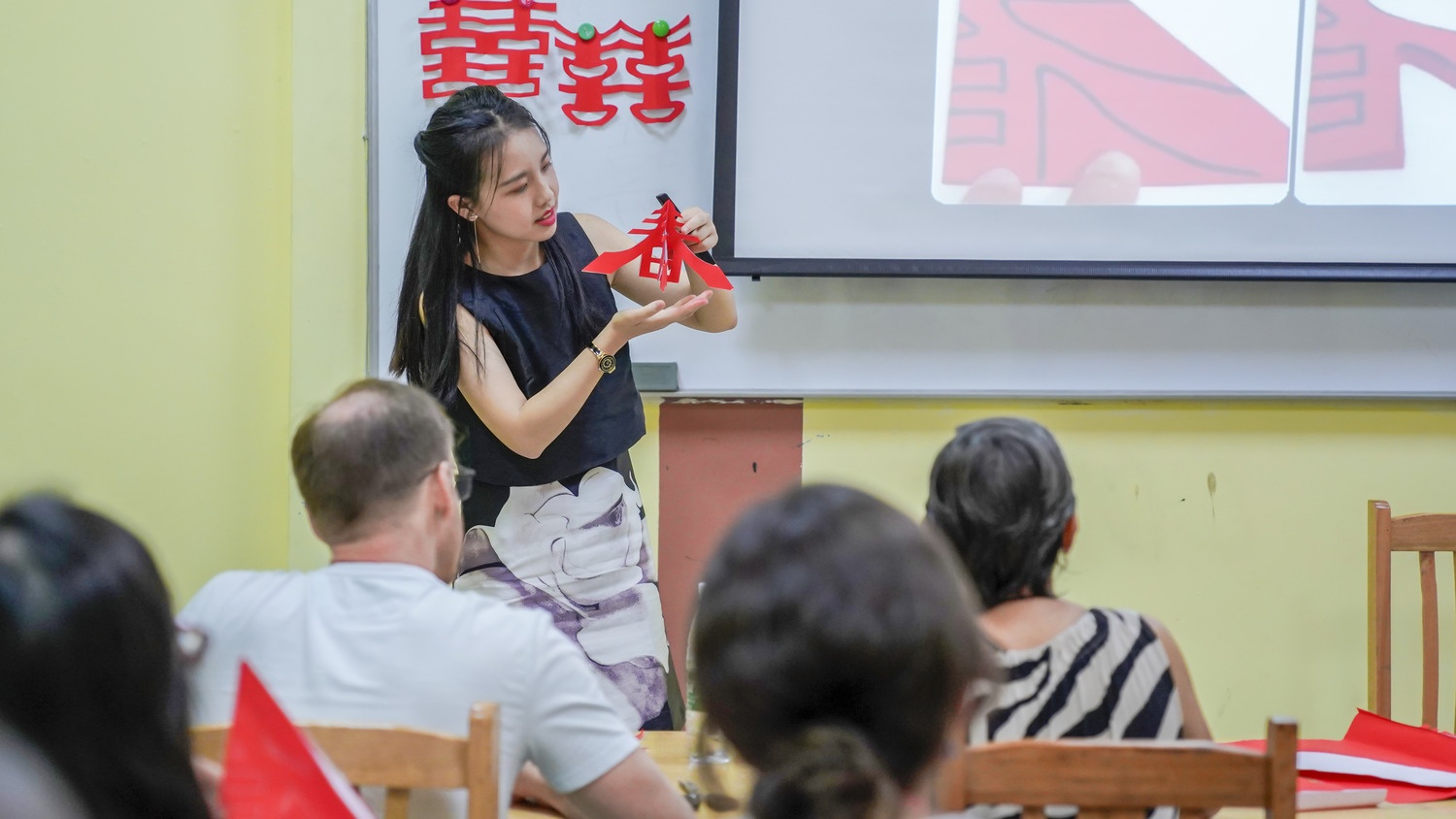
Paper cutting, 剪纸 (jiǎnzhǐ), is one of the crafts students have tried, and its lantern and flower shapes turn up again at festival time.
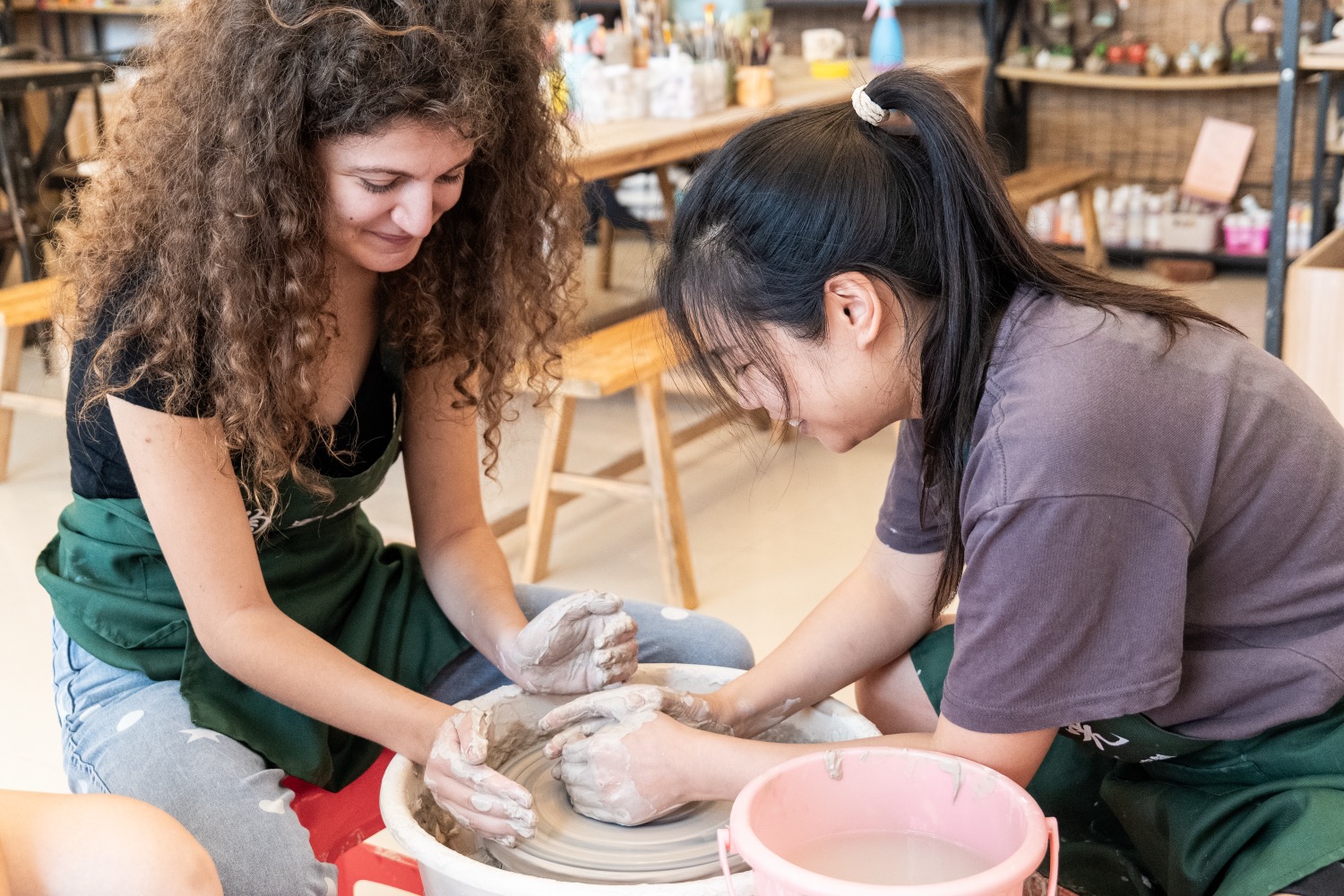
Pottery studios like this one are part of what a full city such as Guilin offers, and outings have taken students well beyond the CLI Center.
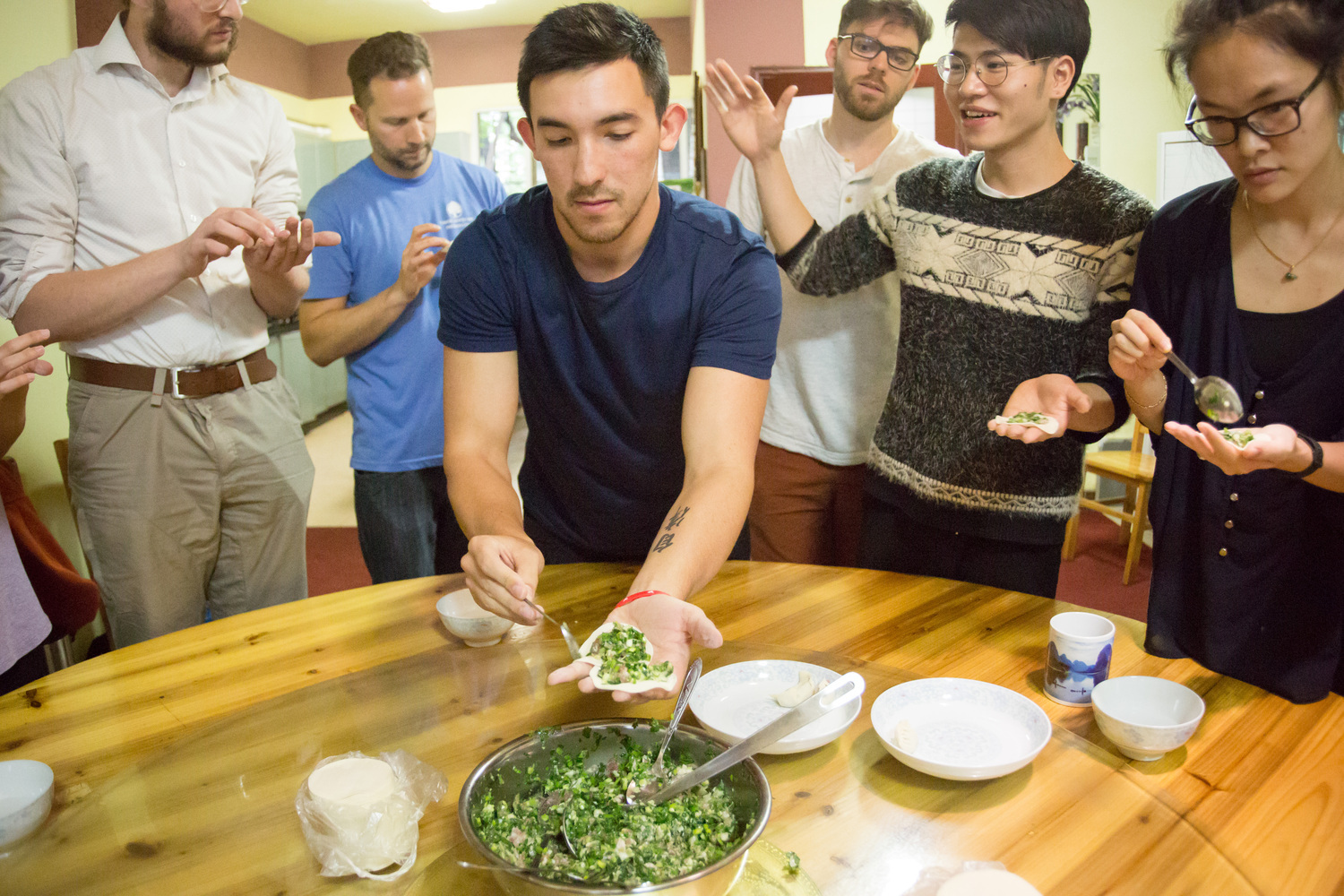
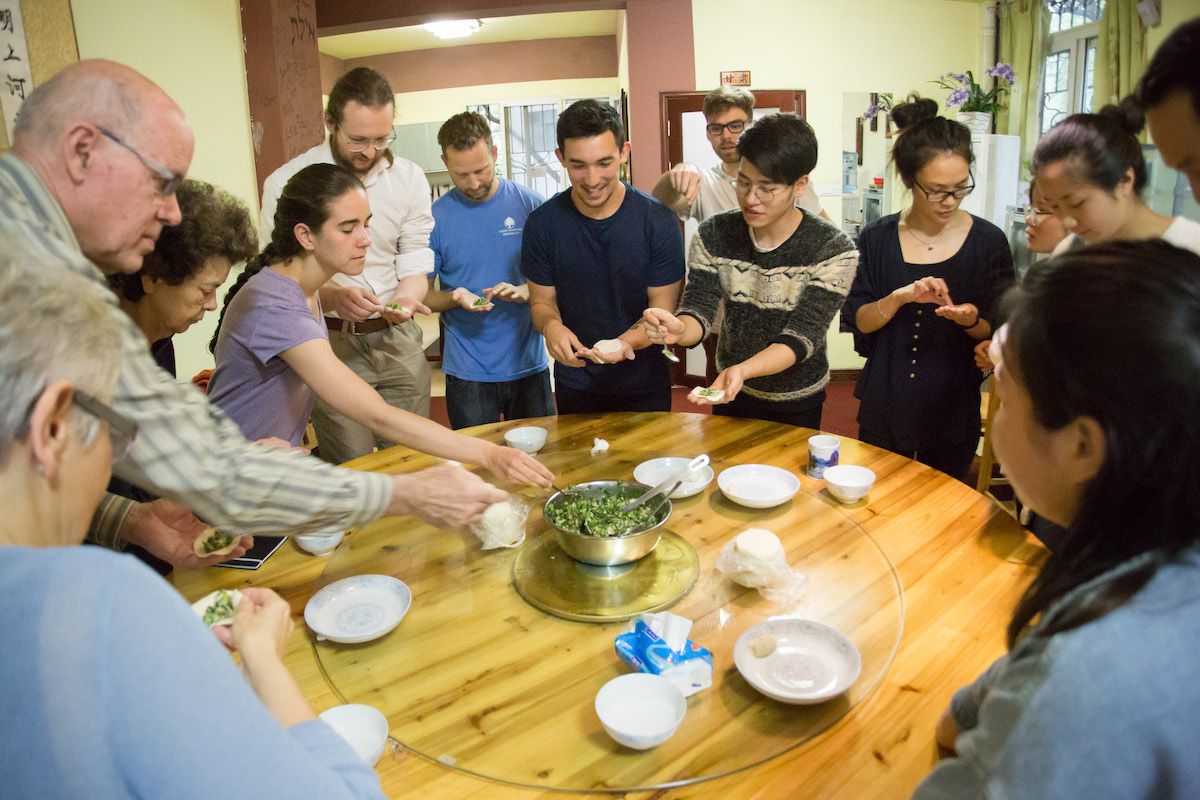
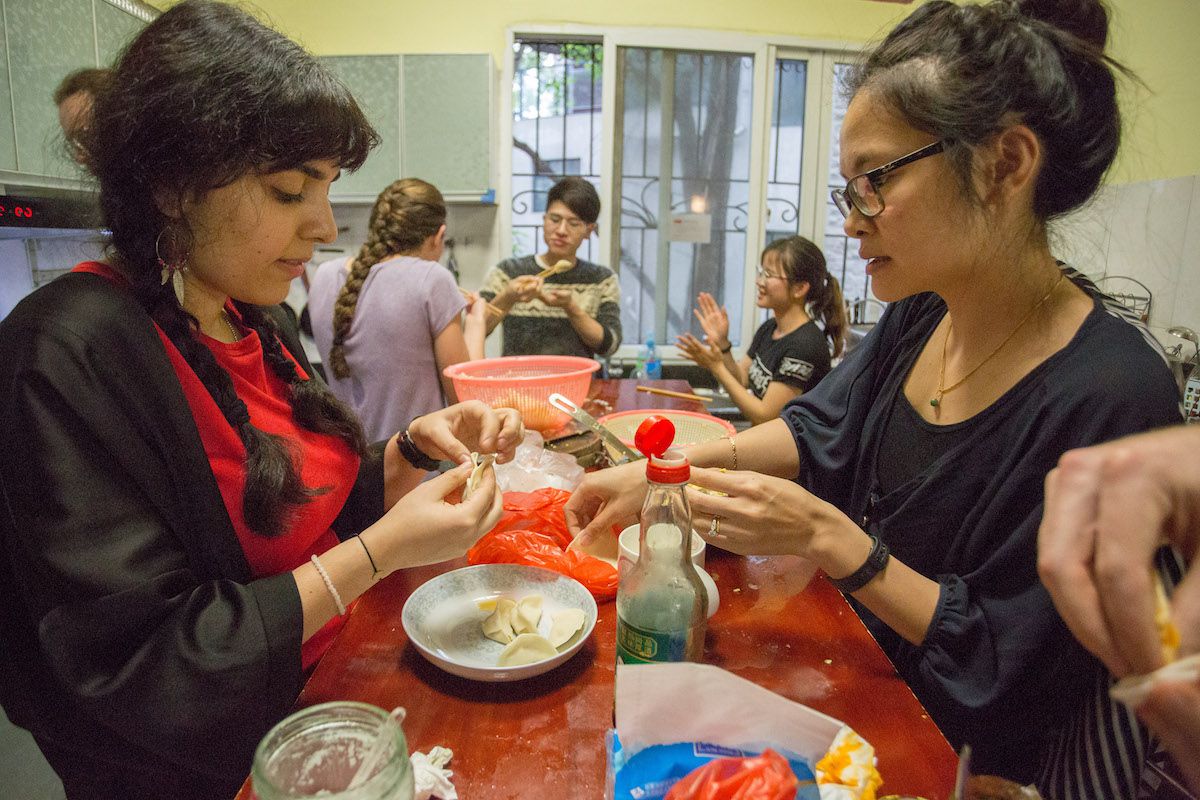
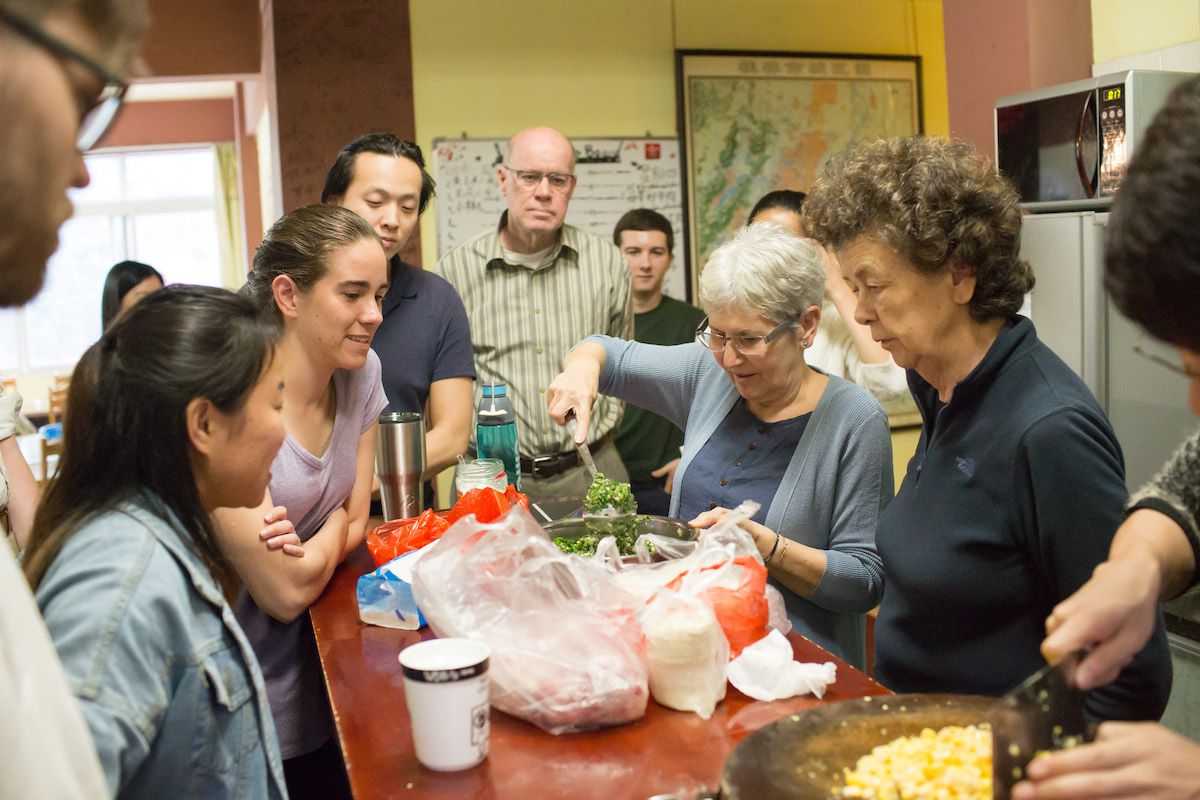
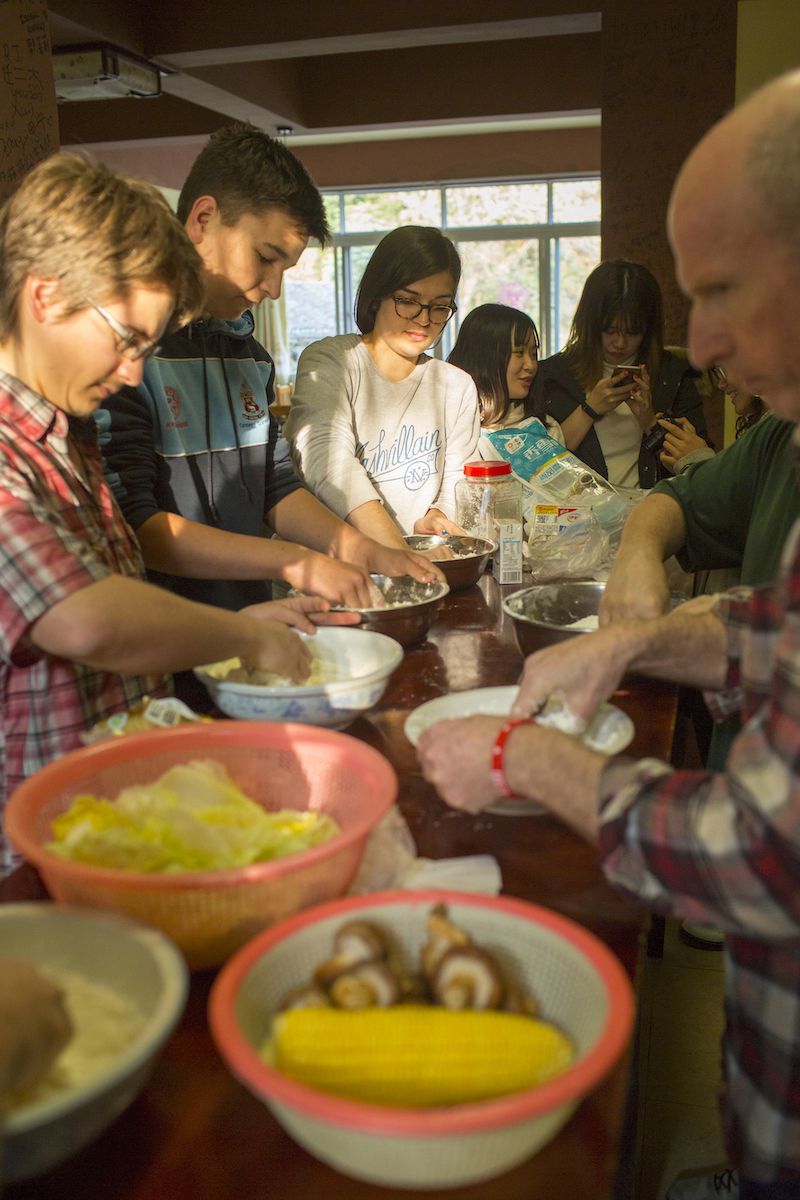
Every dumpling session starts like this, with the filling mixed by hand in big bowls, and each ingredient that goes in is a new word to learn in Chinese.
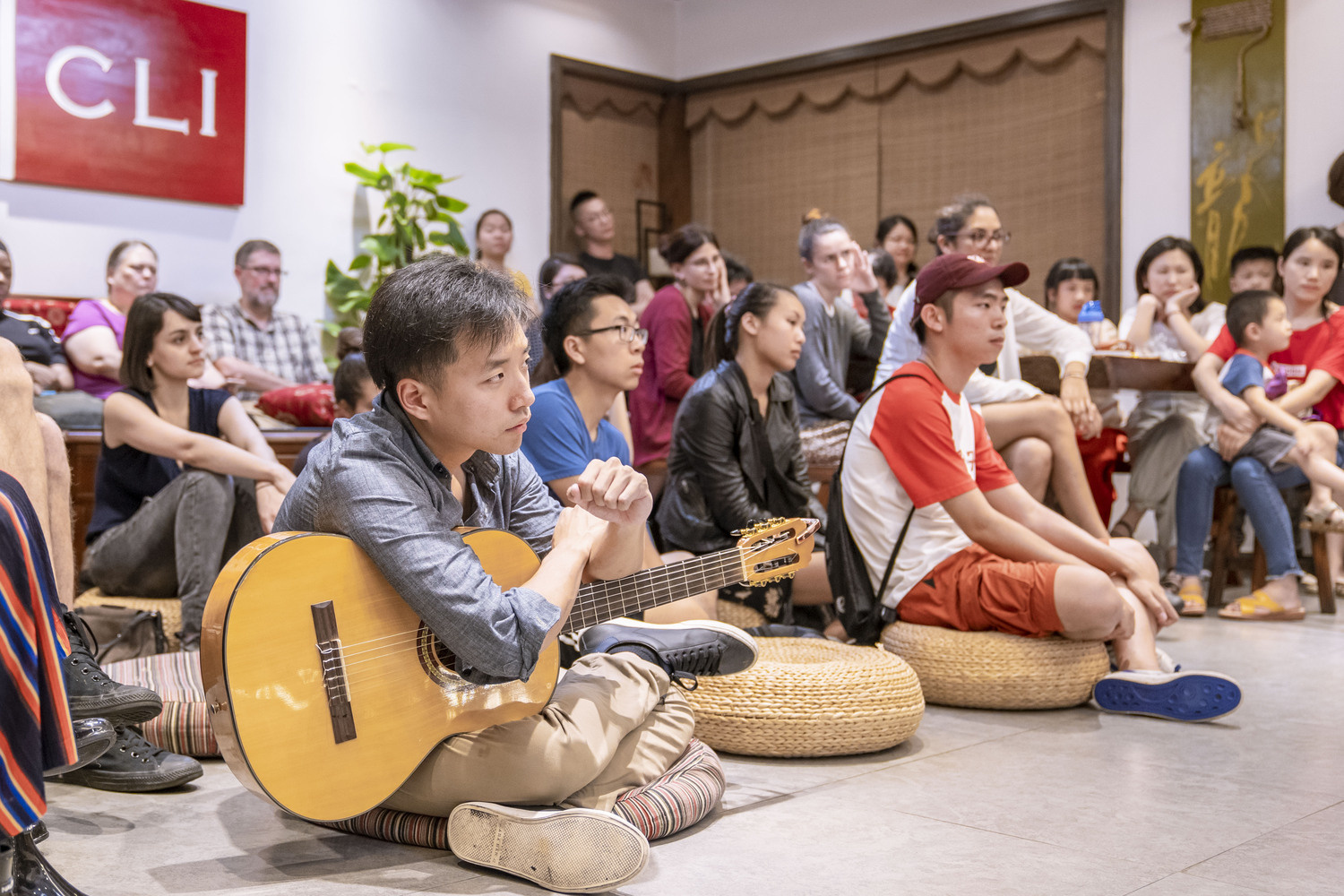
Evenings are usually lighter after a day of classes, and small concerts at the CLI Center are one of the ways students have spent them.
The free Pengyou Program pairs a student with a local university student for three hours of language support a week, and some of it can happen over a chessboard.
Hikes up Guilin's karst mountains are one of the activities, and some students carry a chessboard to the top for a game above the city.
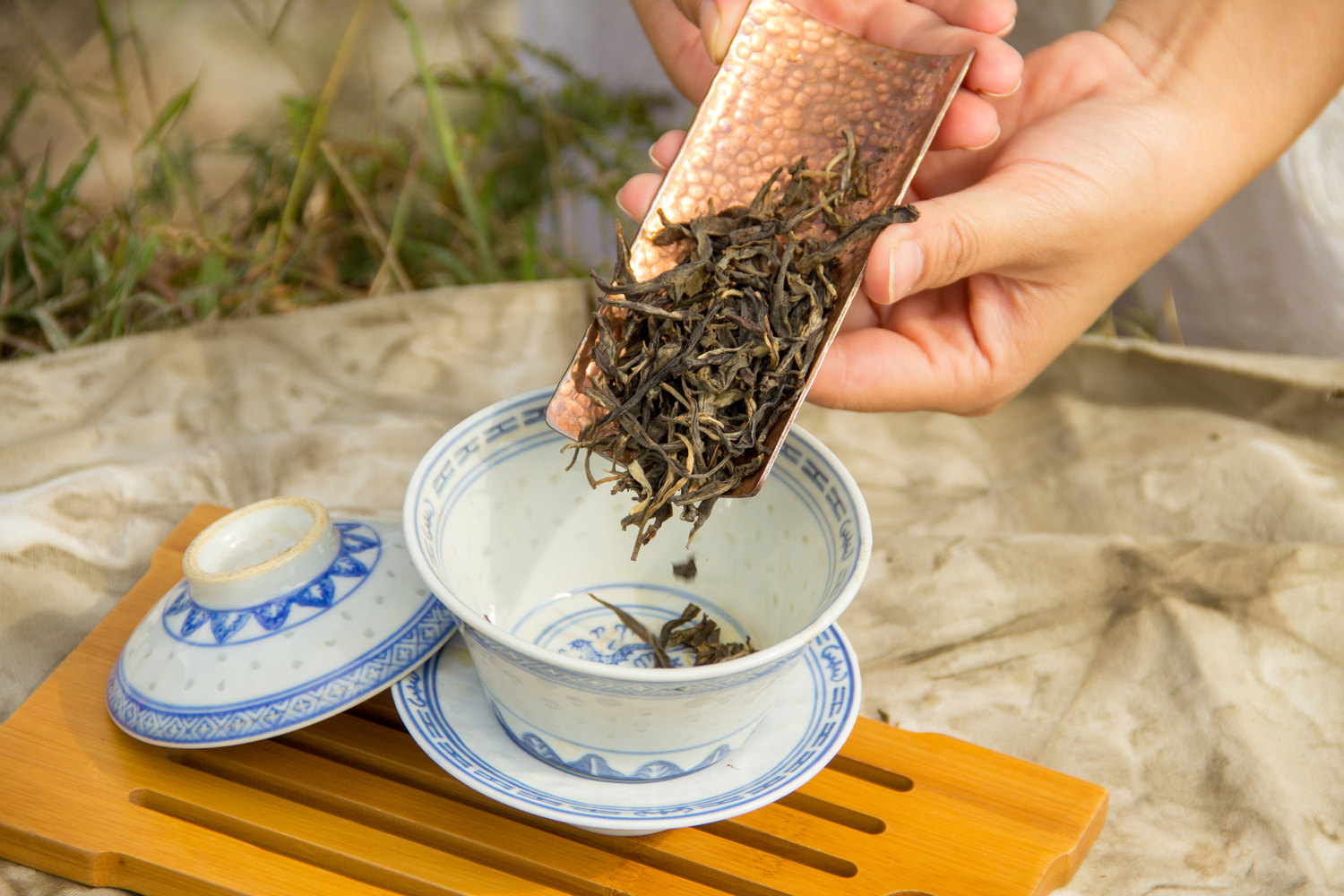
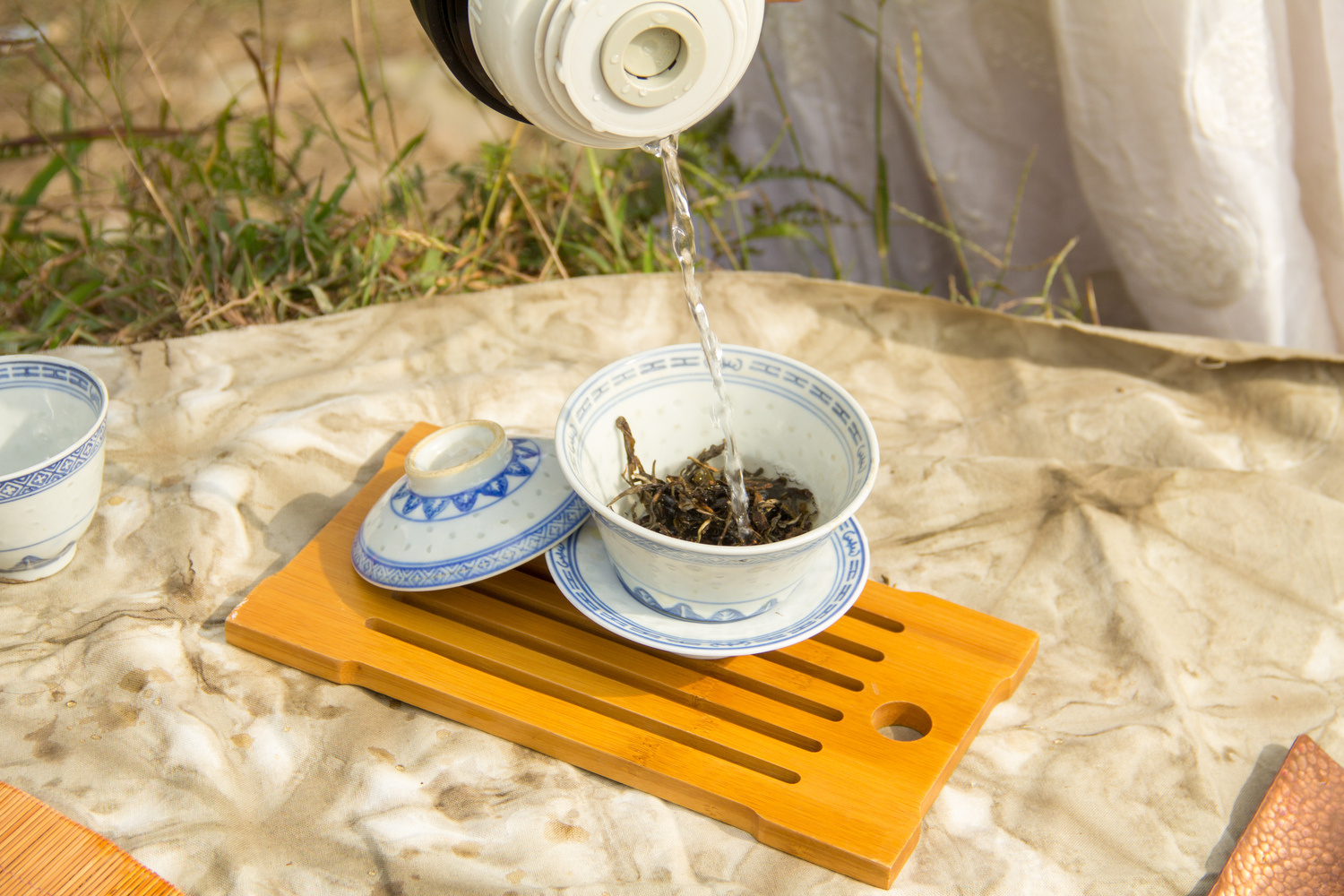
Tea ceremonies are one of the program's activities, and each step, from tipping the leaves into the bowl to pouring the tea, comes with its own words in Chinese.
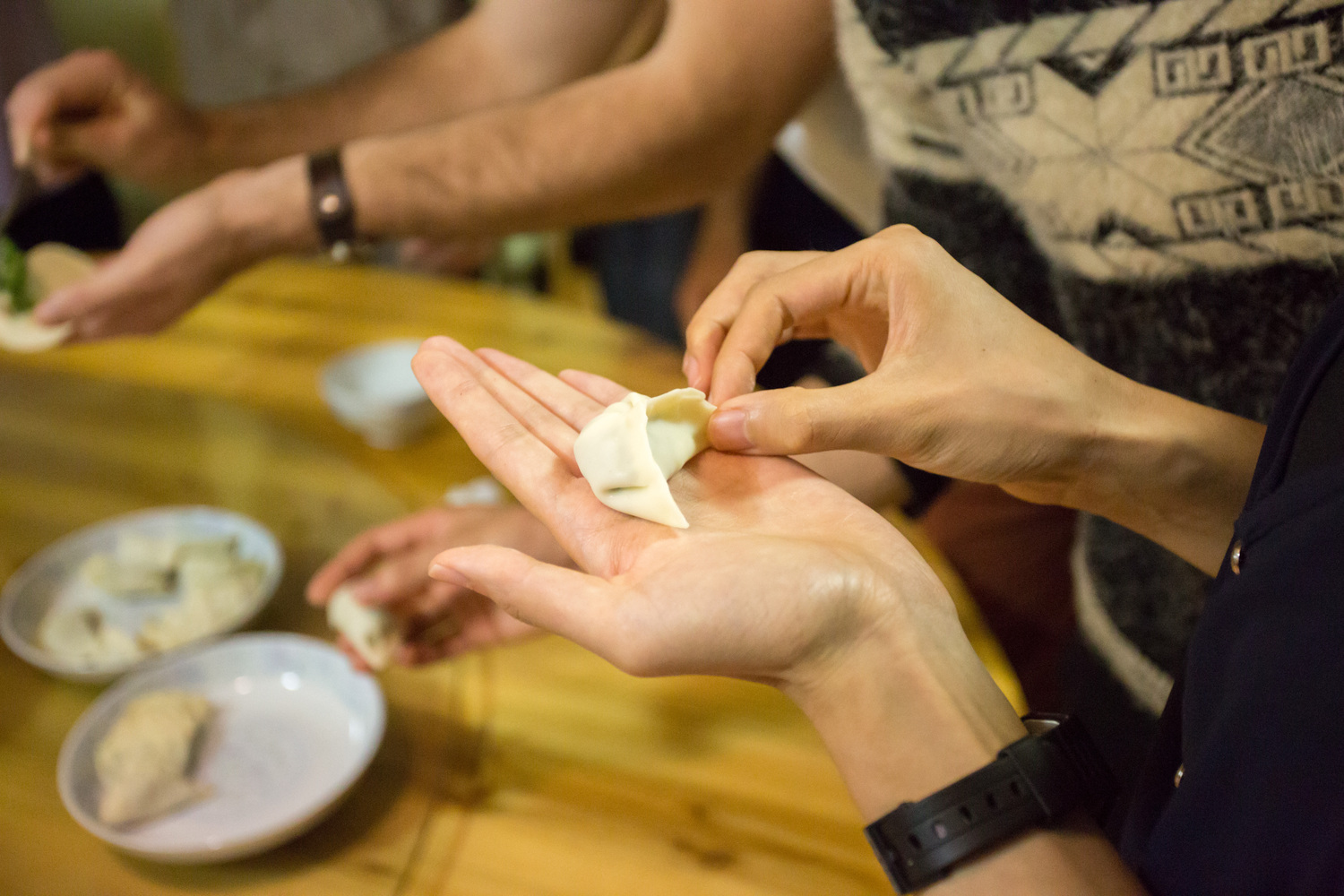
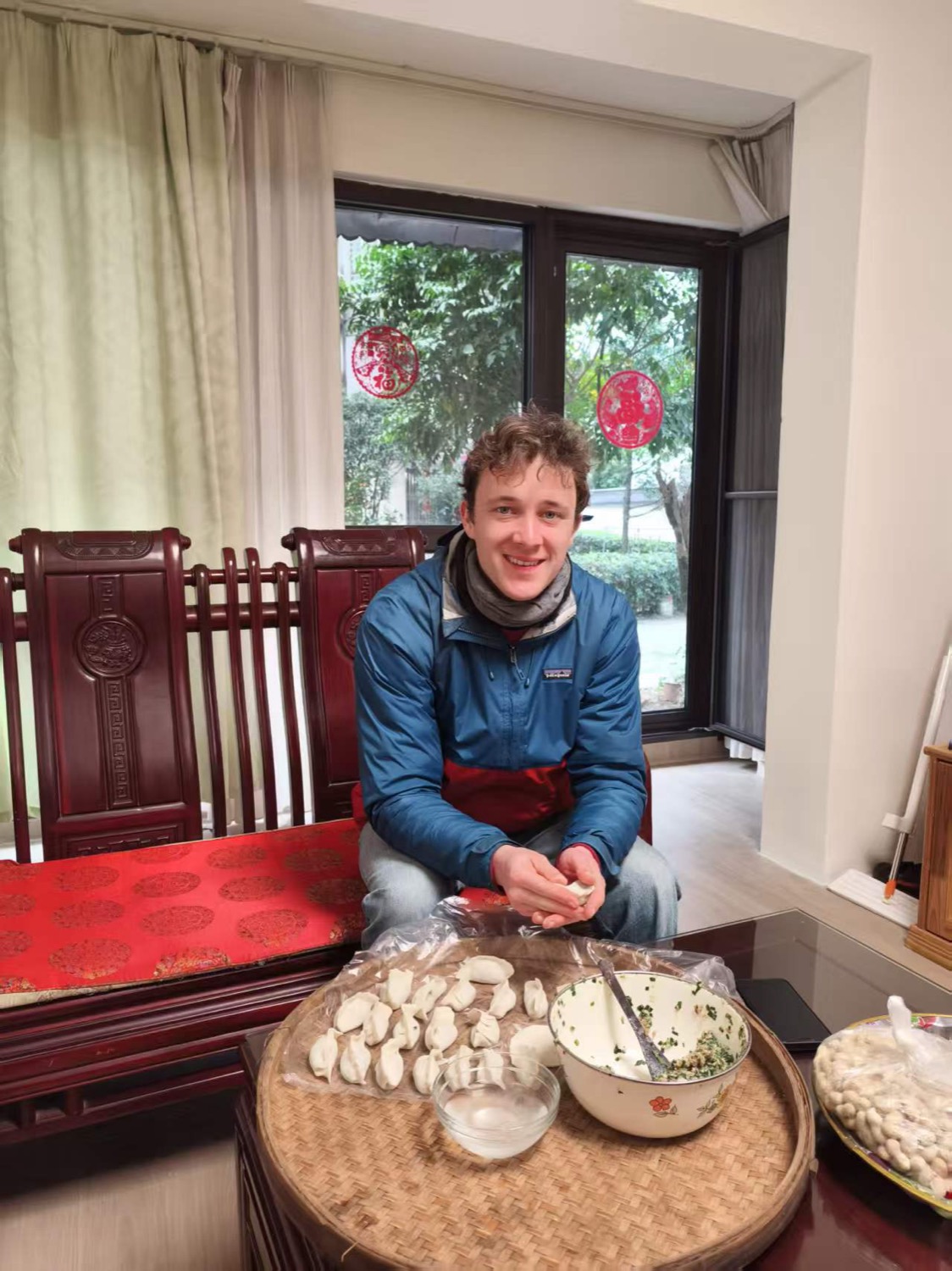
Dumpling making is on CLI's activity list, and folding 饺子 (jiǎozi) by hand at one big table takes a few tries for everyone.
Tie-dye is among the crafts students have tried. Some activities are included in tuition, and for optional ones CLI passes on its direct costs with no markup.
Pagoda kits like this one take patient work, piece by piece. Lessons can be patient too: teachers can slow the pace and spend more time on hard material.
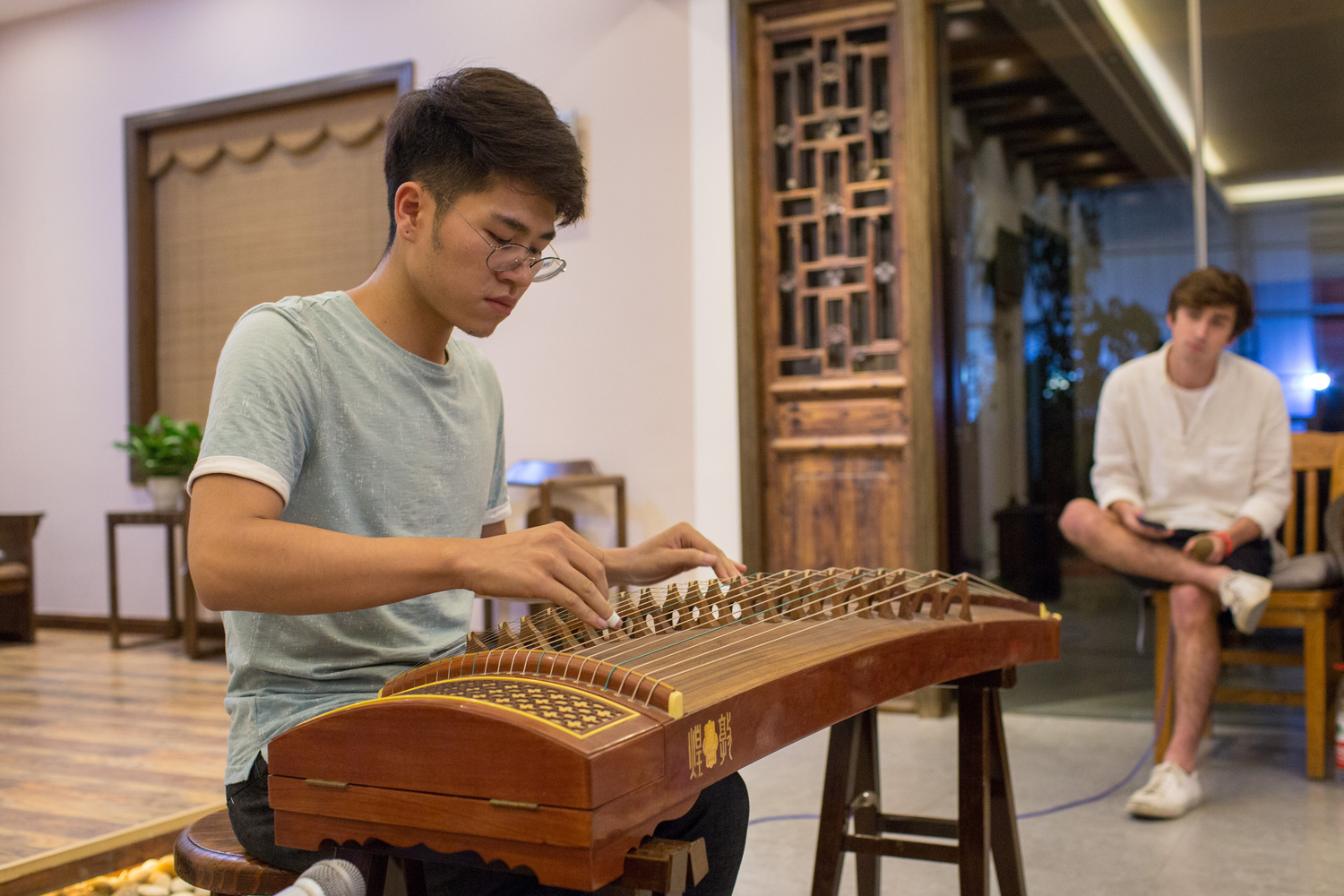
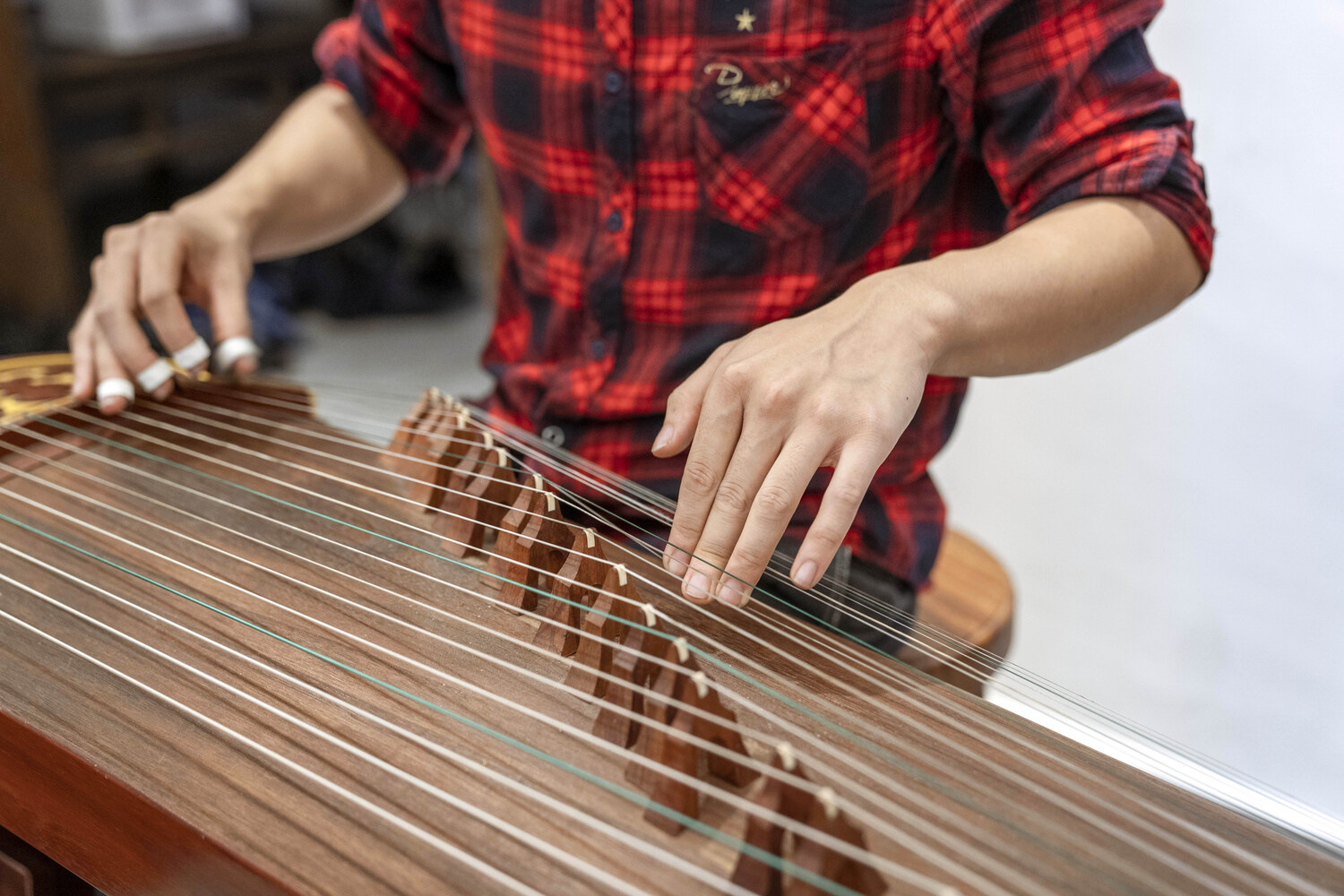
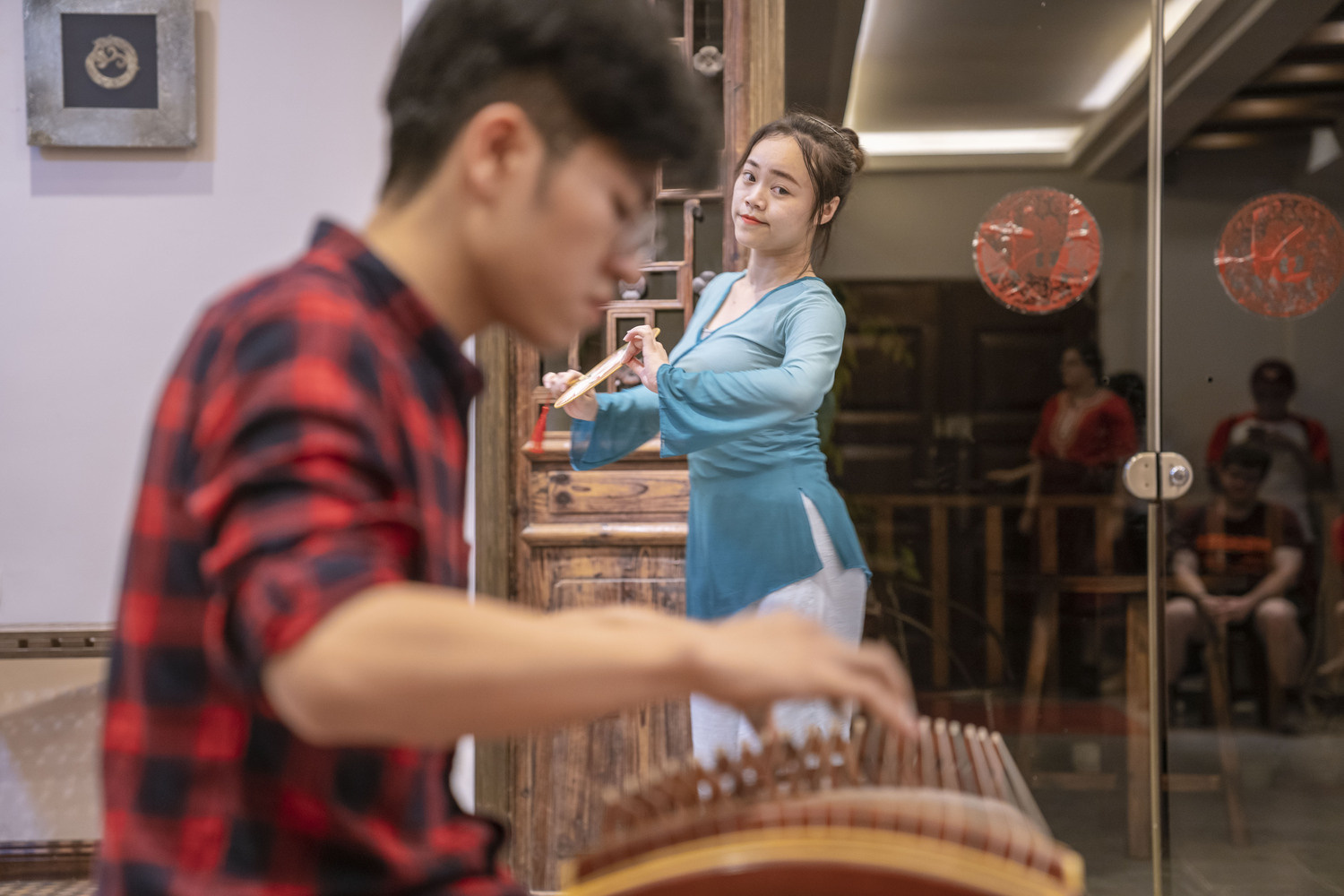
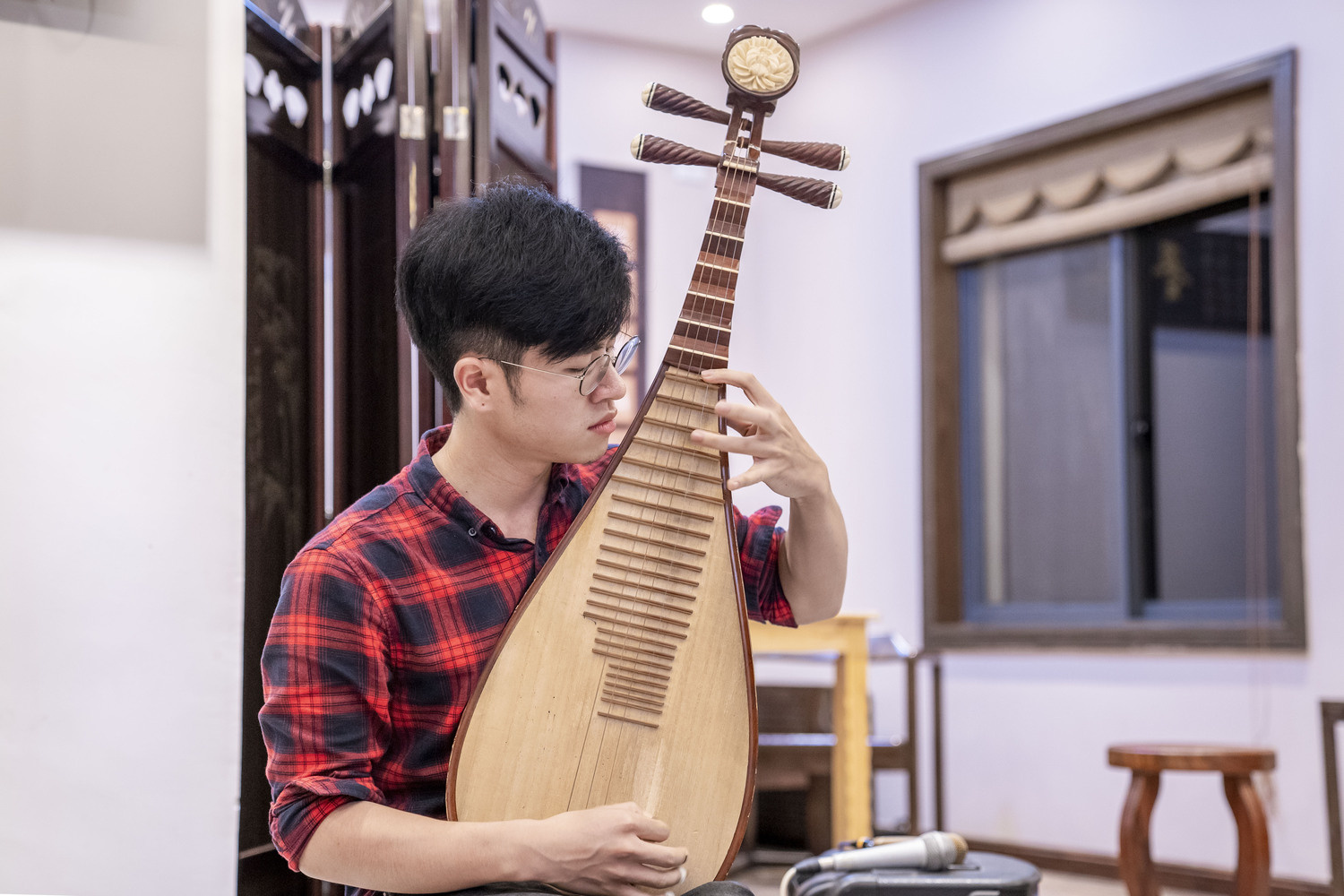
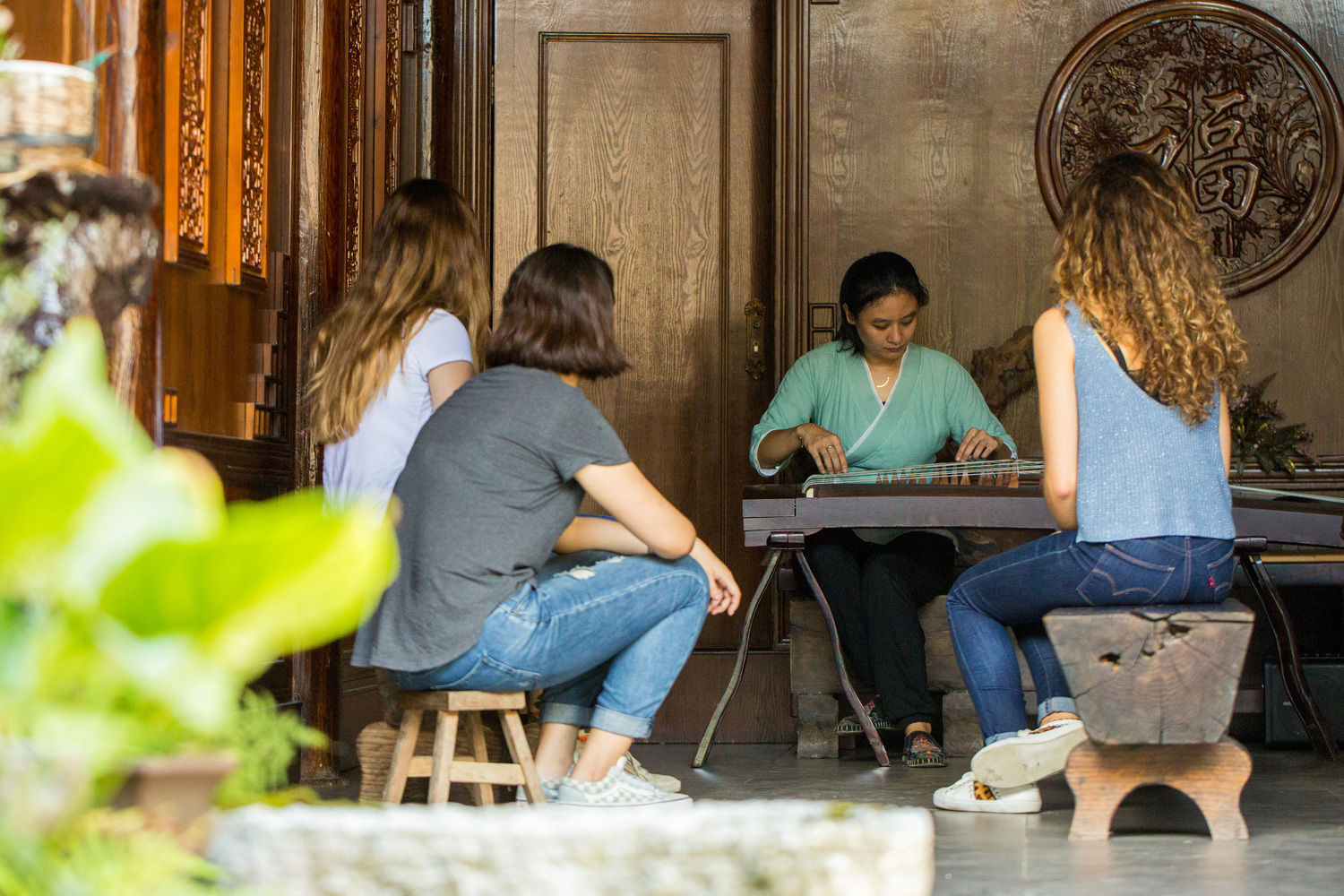
The guzheng is a Chinese plucked zither, and for students who play music at home, its parts and techniques come with a whole new set of words.
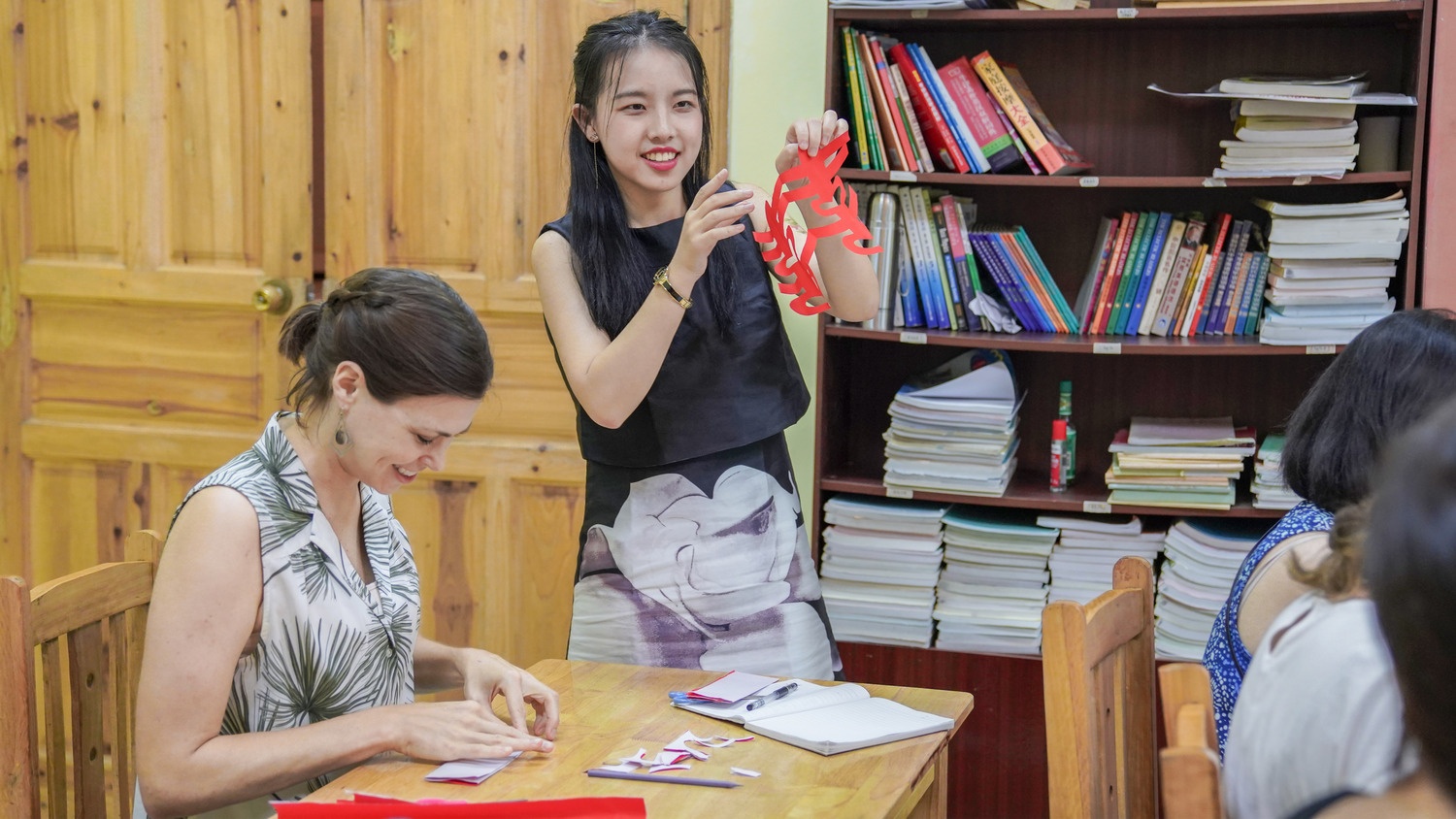
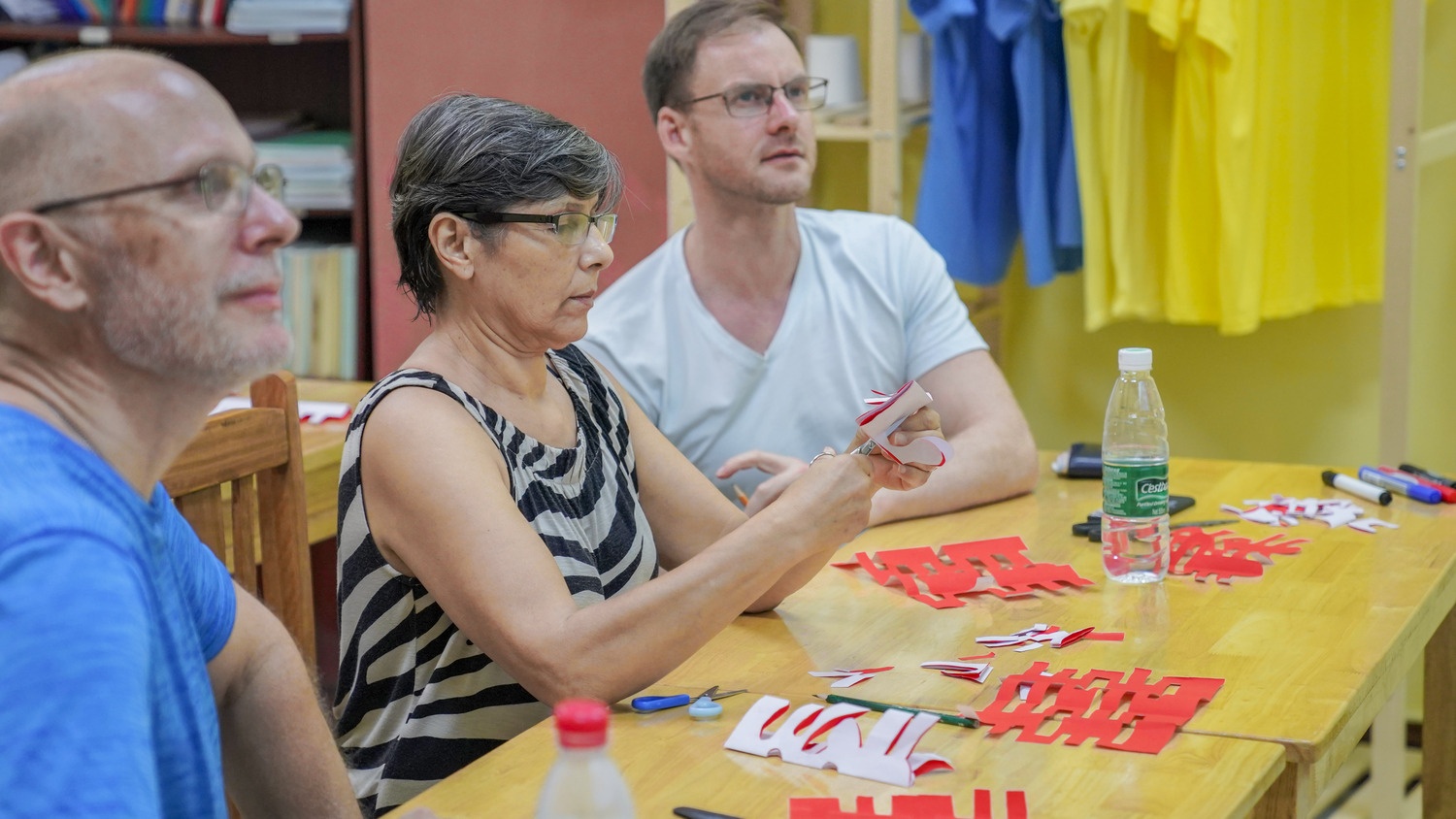
Workshops like this paper-cutting session fill some free hours, and between class sessions students can also study at the CLI Center in the study areas or the reading room.
Calligraphy practice by the window ties straight into class, where the reading and writing teacher covers character recognition and stroke order.
Learning a few notes on the guzheng is one of the things students have tried, and the patient correction of each note is a lot like work on tones in speaking class.
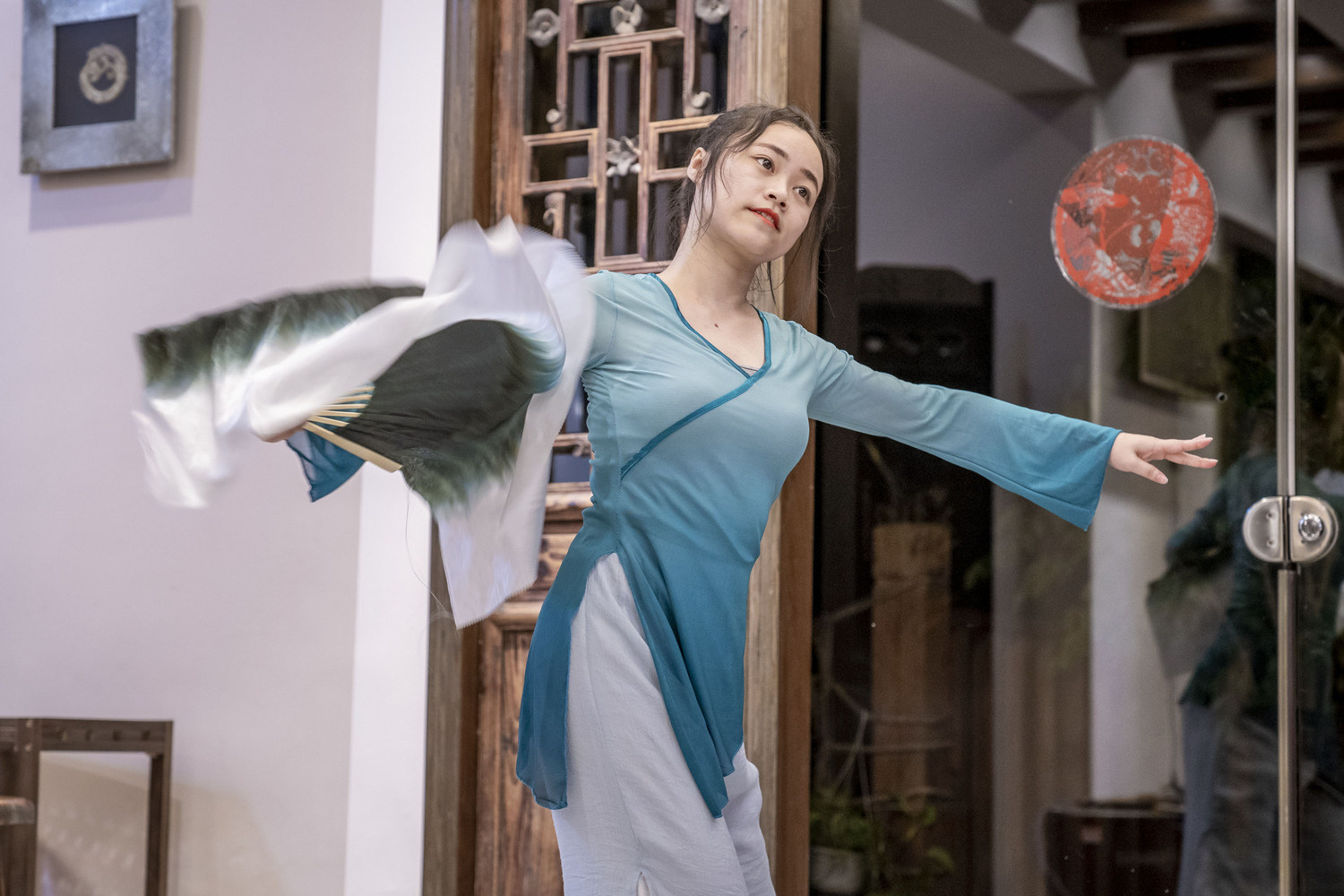
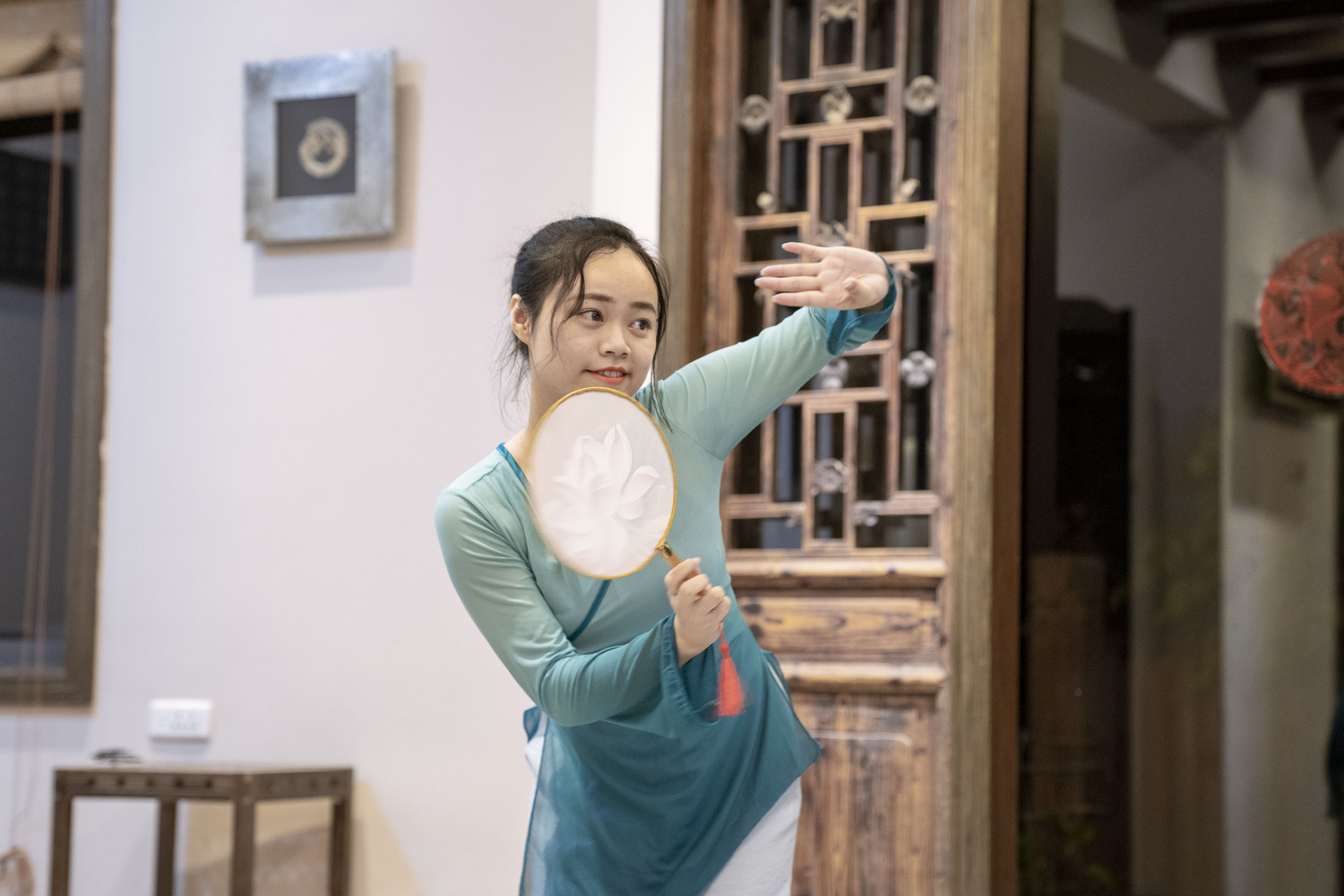
Chinese dance has a name for each pose and prop, from the round fan to the long sleeves, and the comprehensive review teacher, who covers vocabulary, helps new words stick.
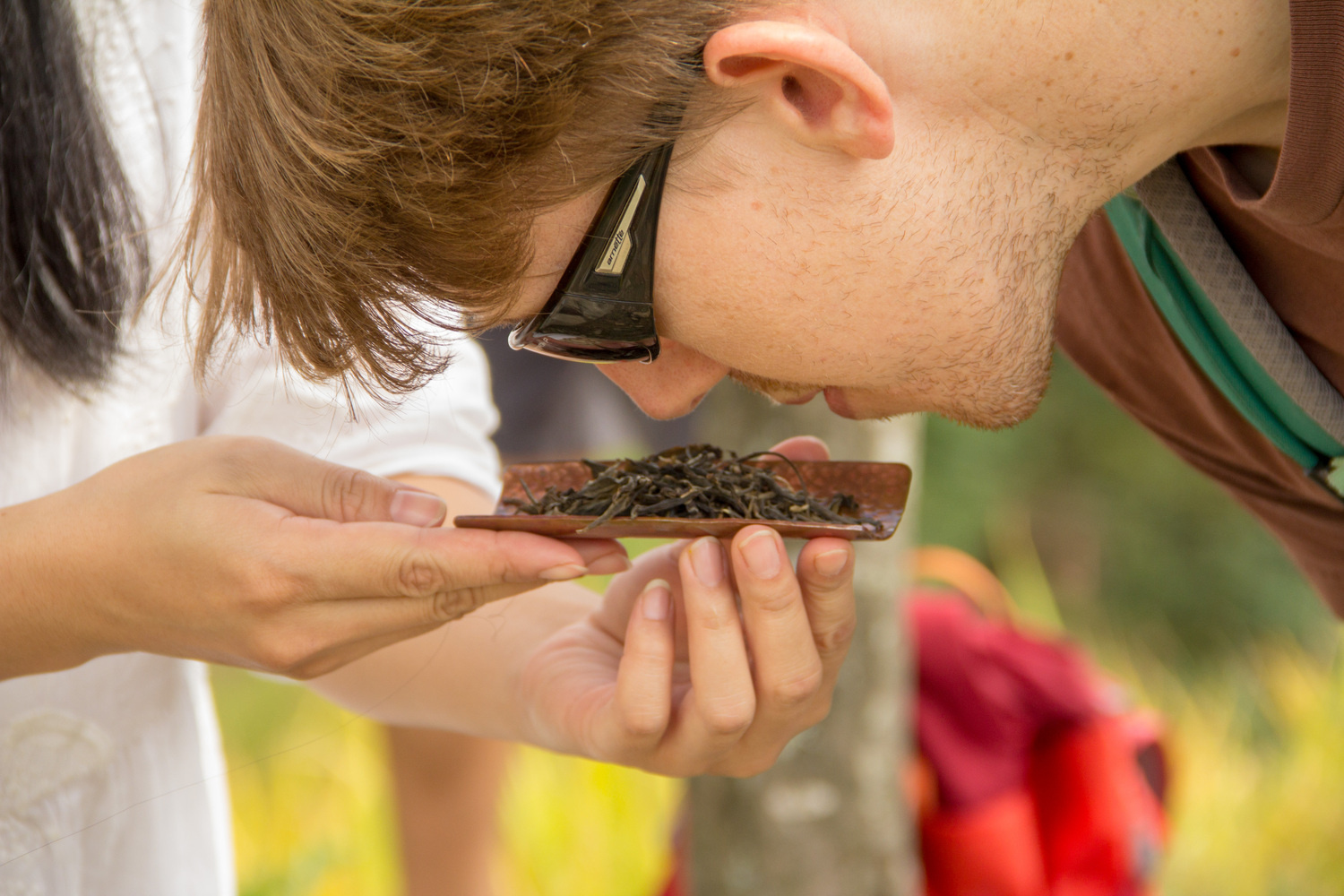
Smelling the dry leaves comes first at a tea tasting. Teachers and pengyou often come along on outings like this and encourage questions and answers in Chinese.
Pouring hot water over the leaves in a lidded bowl, a 盖碗 (gàiwǎn), is the central step of a Chinese tea ceremony, one of the activities on CLI's list.
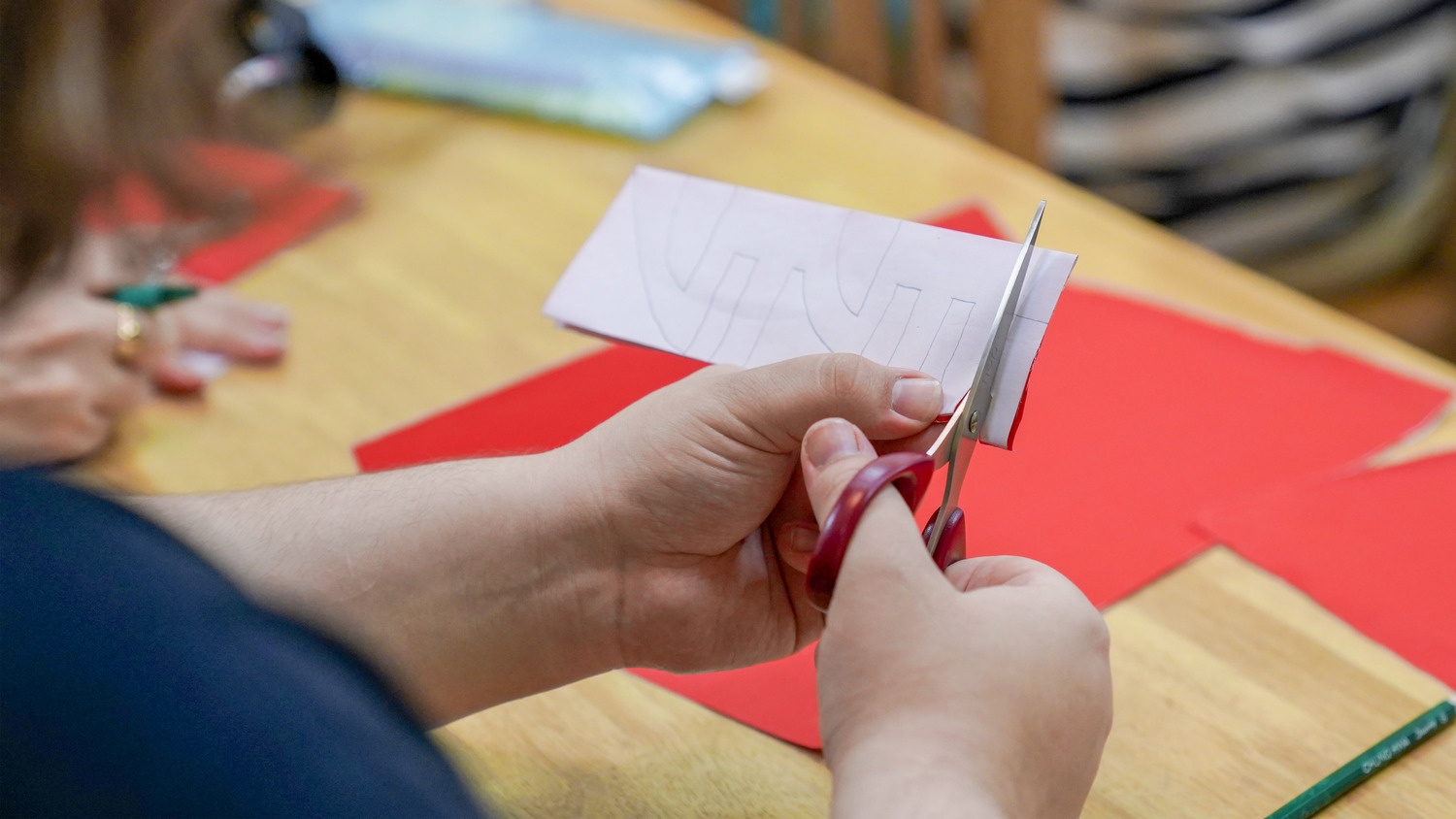
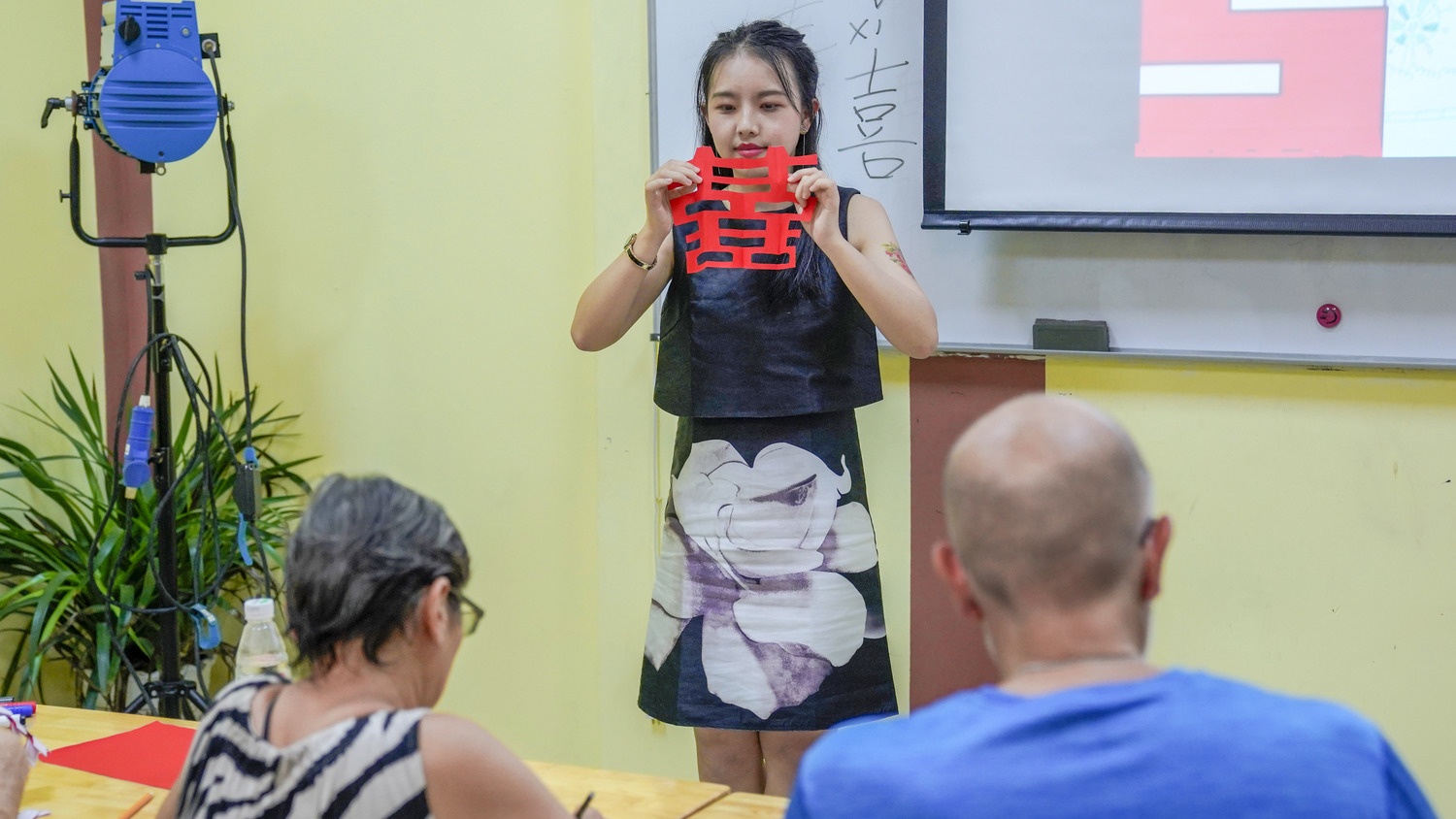
The red 囍 (shuāngxǐ), double happiness, is a classic paper cut students have tried, and making one shows how two characters can join into one shape.
Guilin's karst joined the South China Karst UNESCO World Heritage listing in 2014, and its peaks are close enough to the city for a sunset game of chess on top.
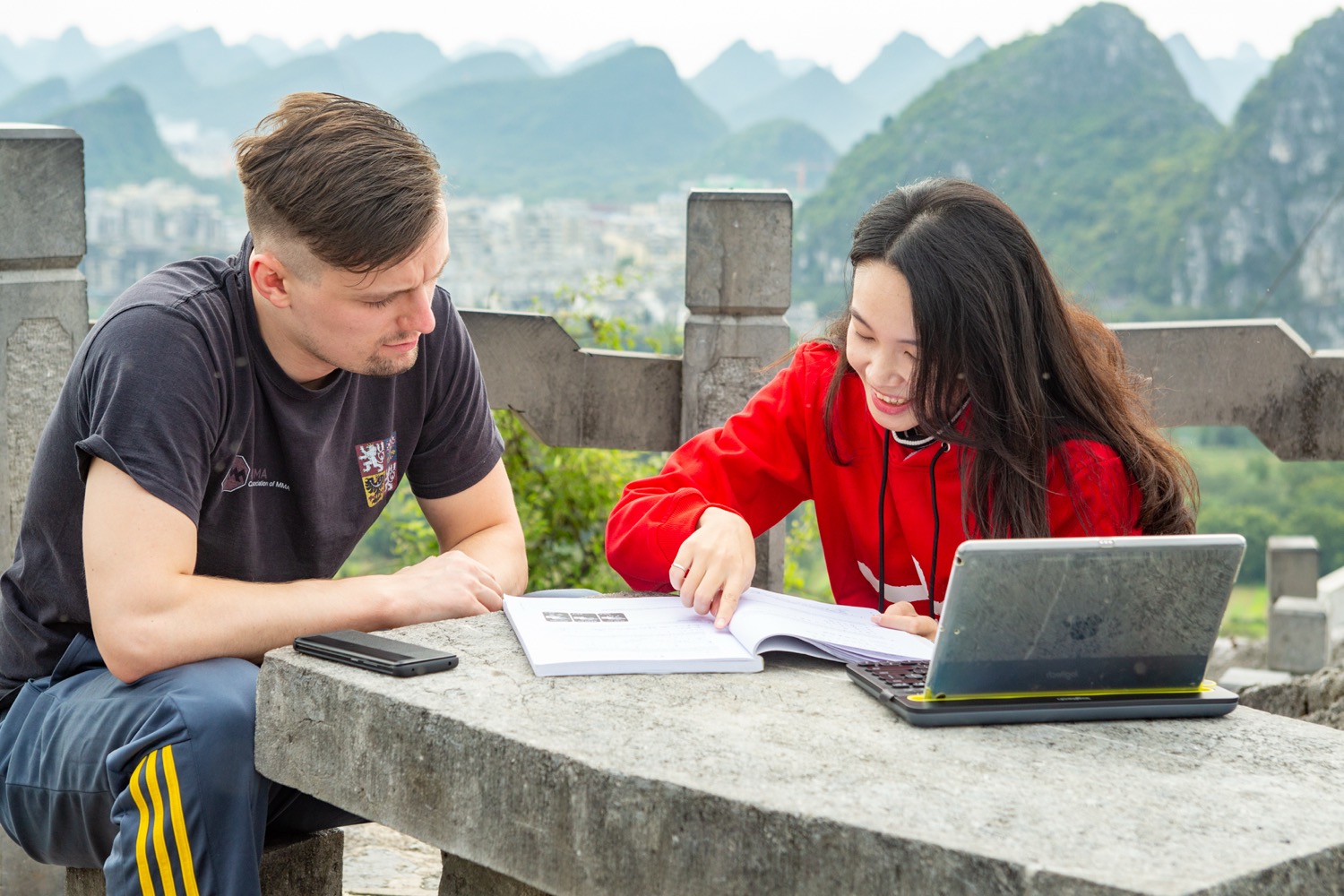
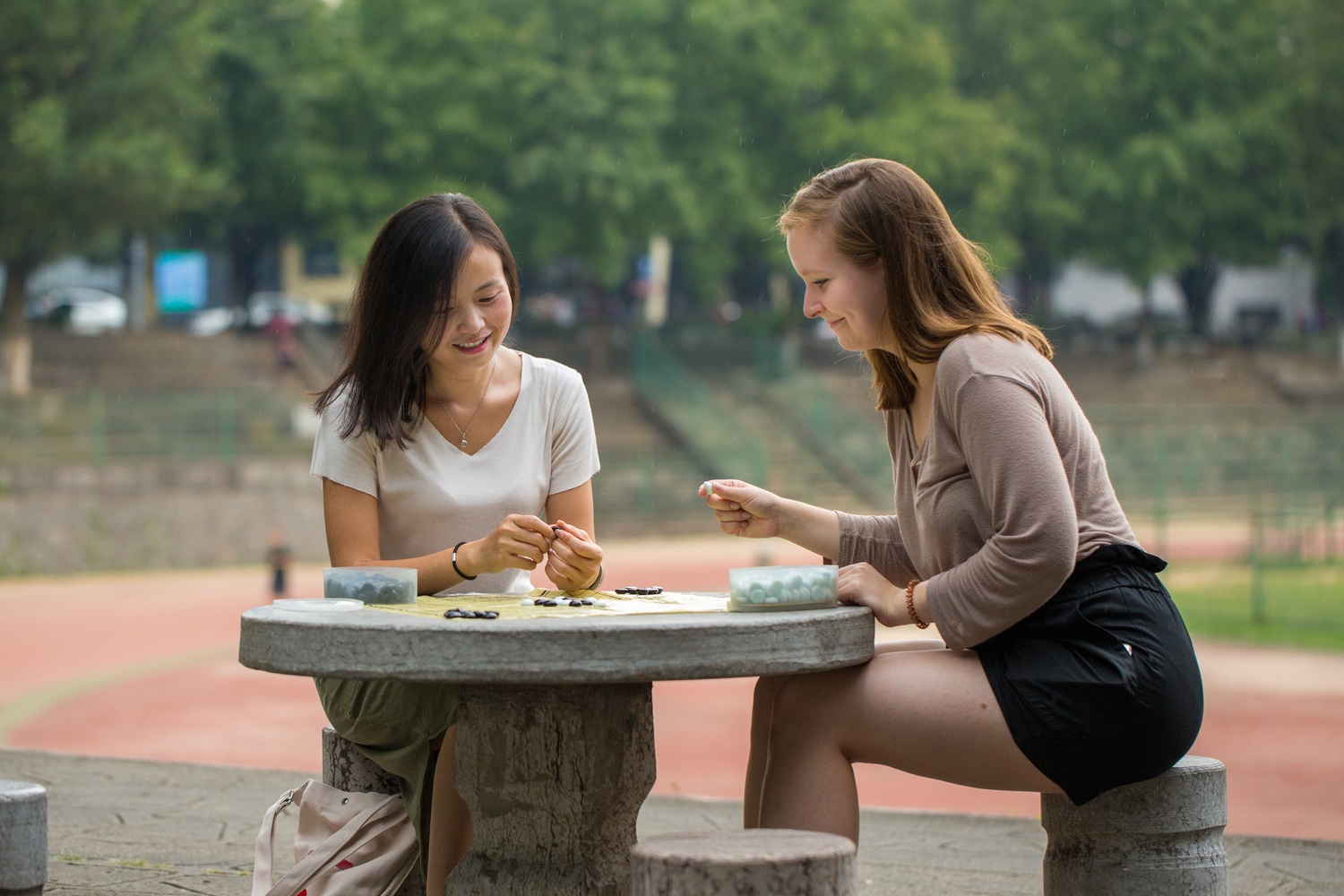
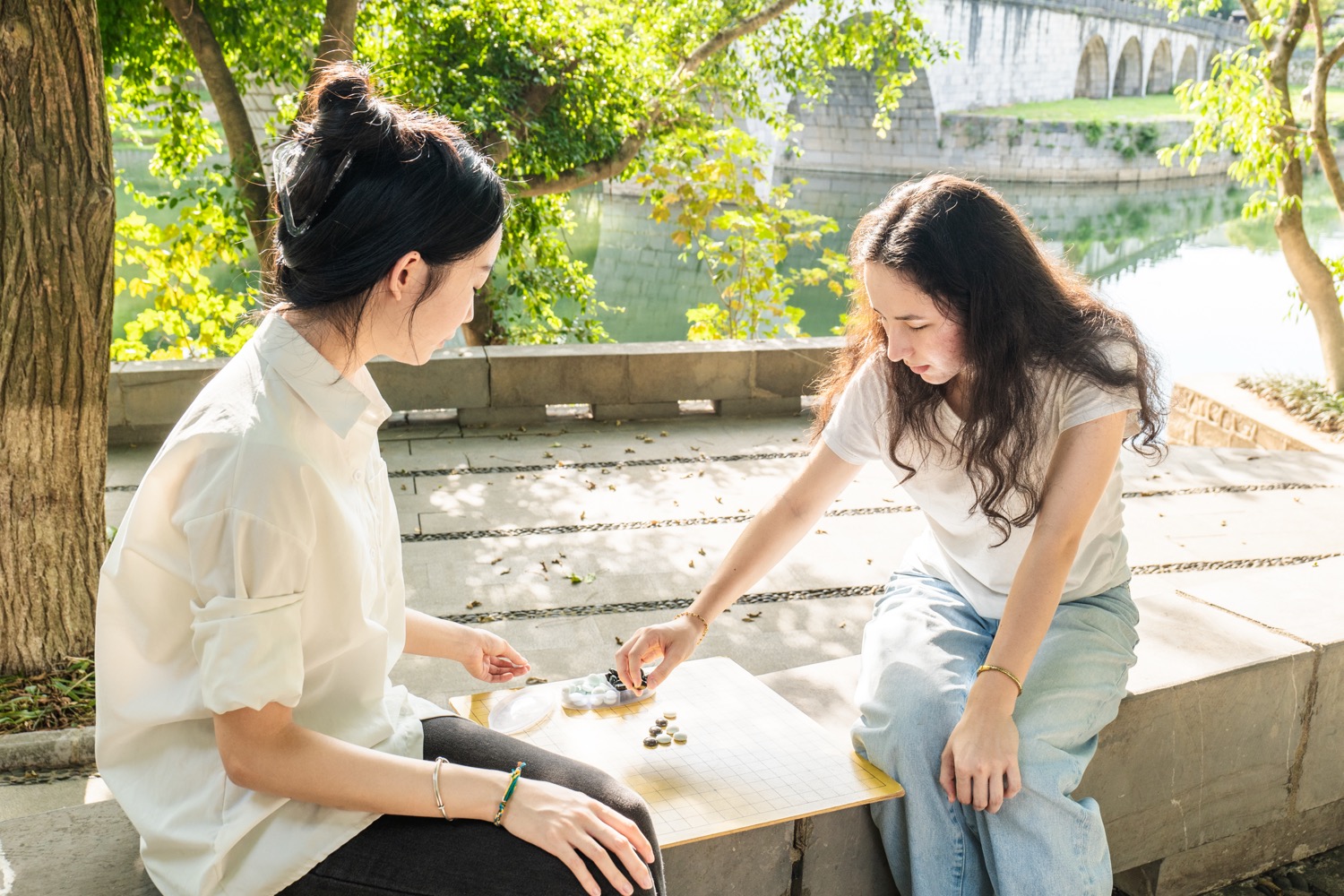
Guilin has lakes, parks and green space throughout the city, and an outdoor stone table is a fine place for a board game and some unhurried Chinese.
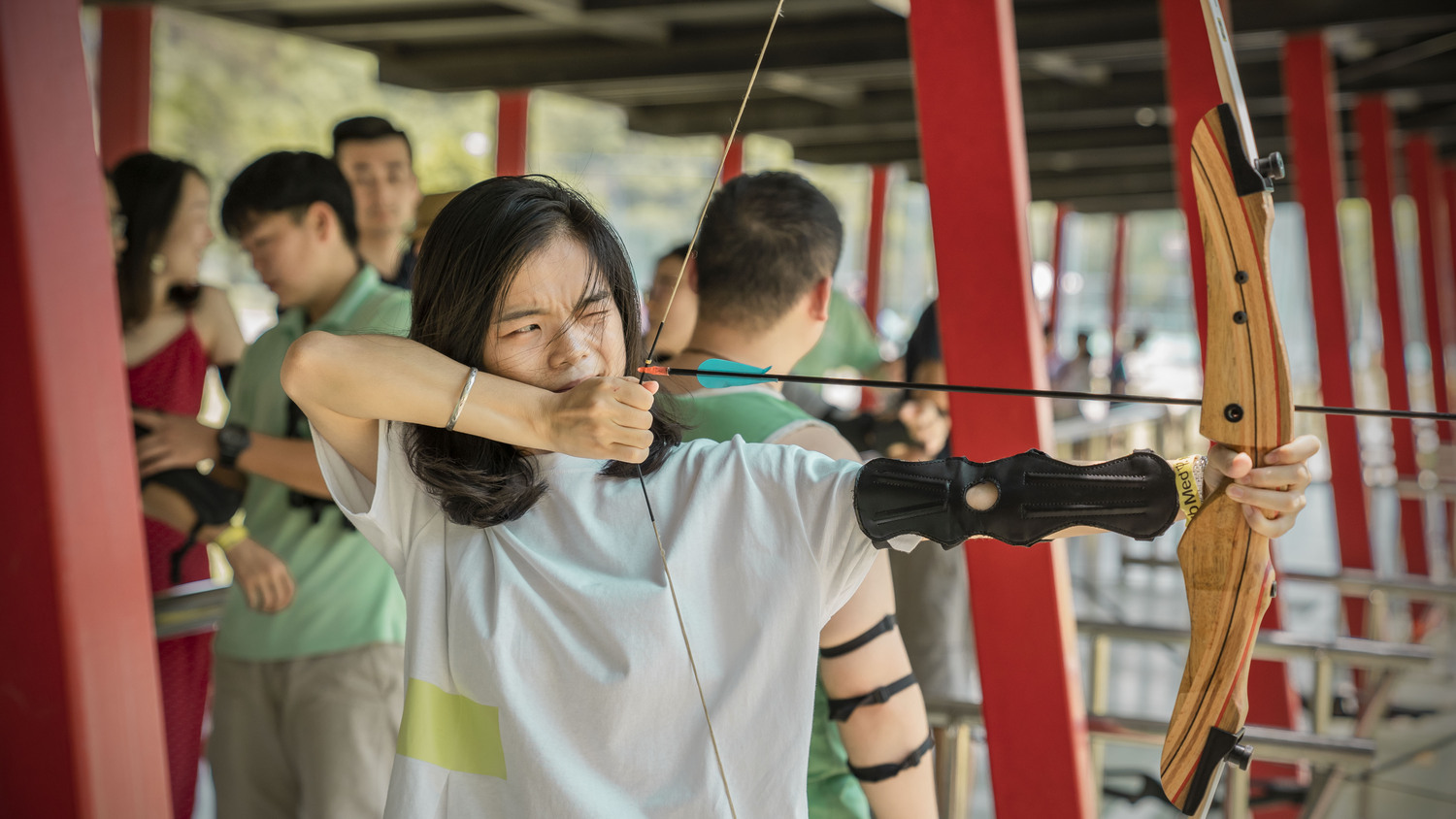
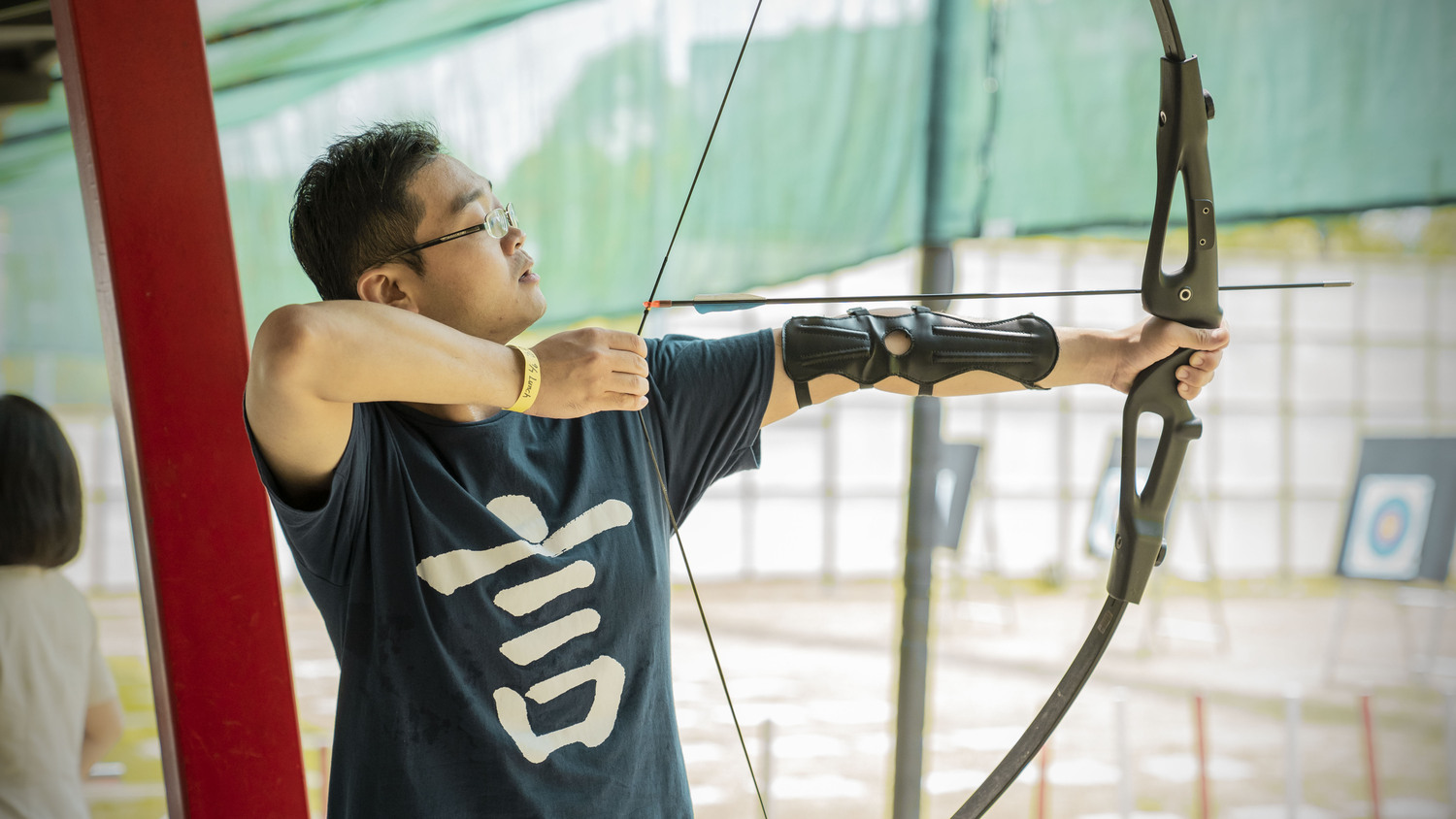
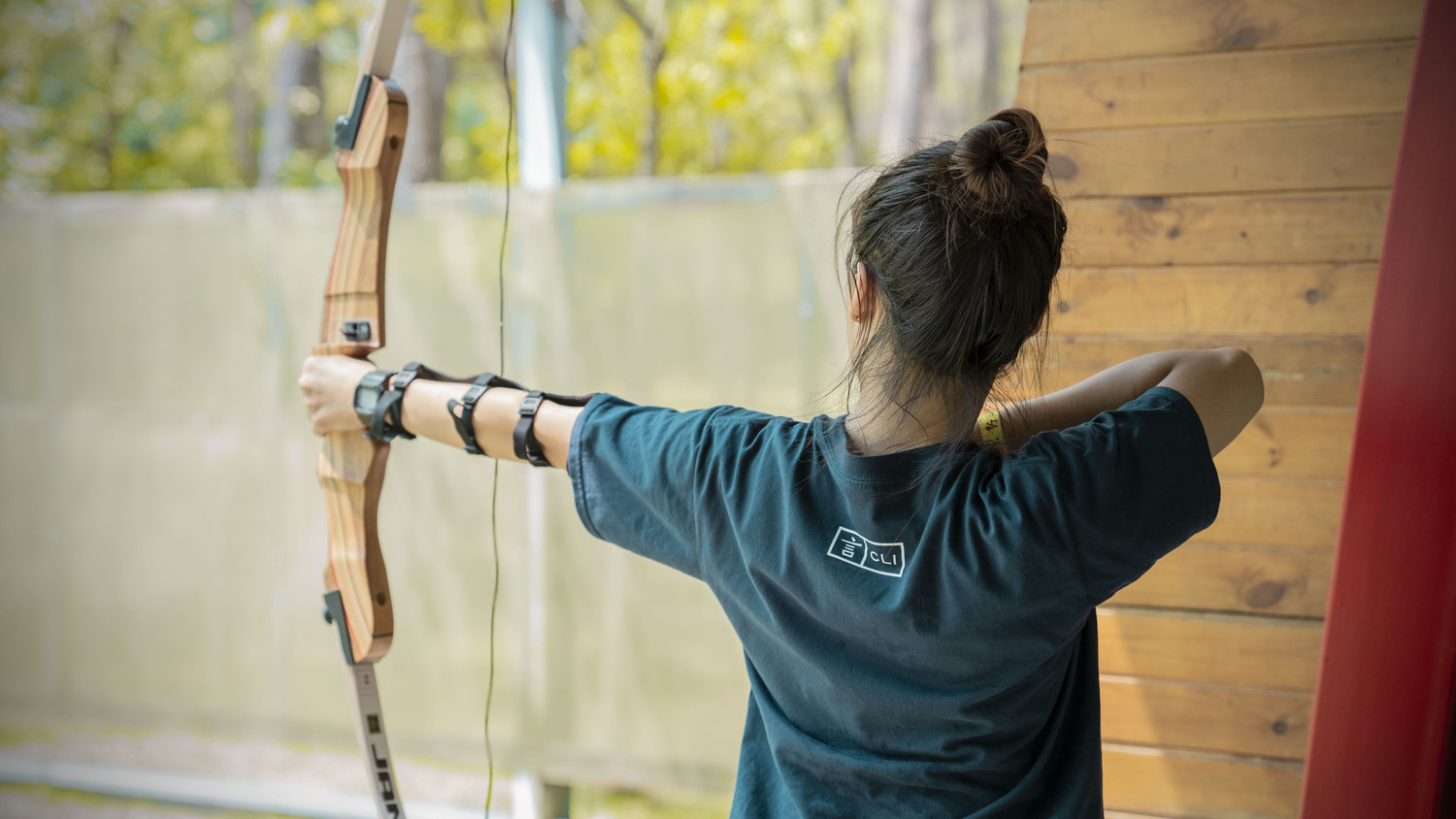
Archery has been one of the outings students have tried, and teachers and pengyou often come along on trips and encourage conversation in Chinese.
The Dong villages of Sanjiang are one of the places CLI's monthly overnight trips have gone, and a wooden tower model like this one is a craft students have tried.
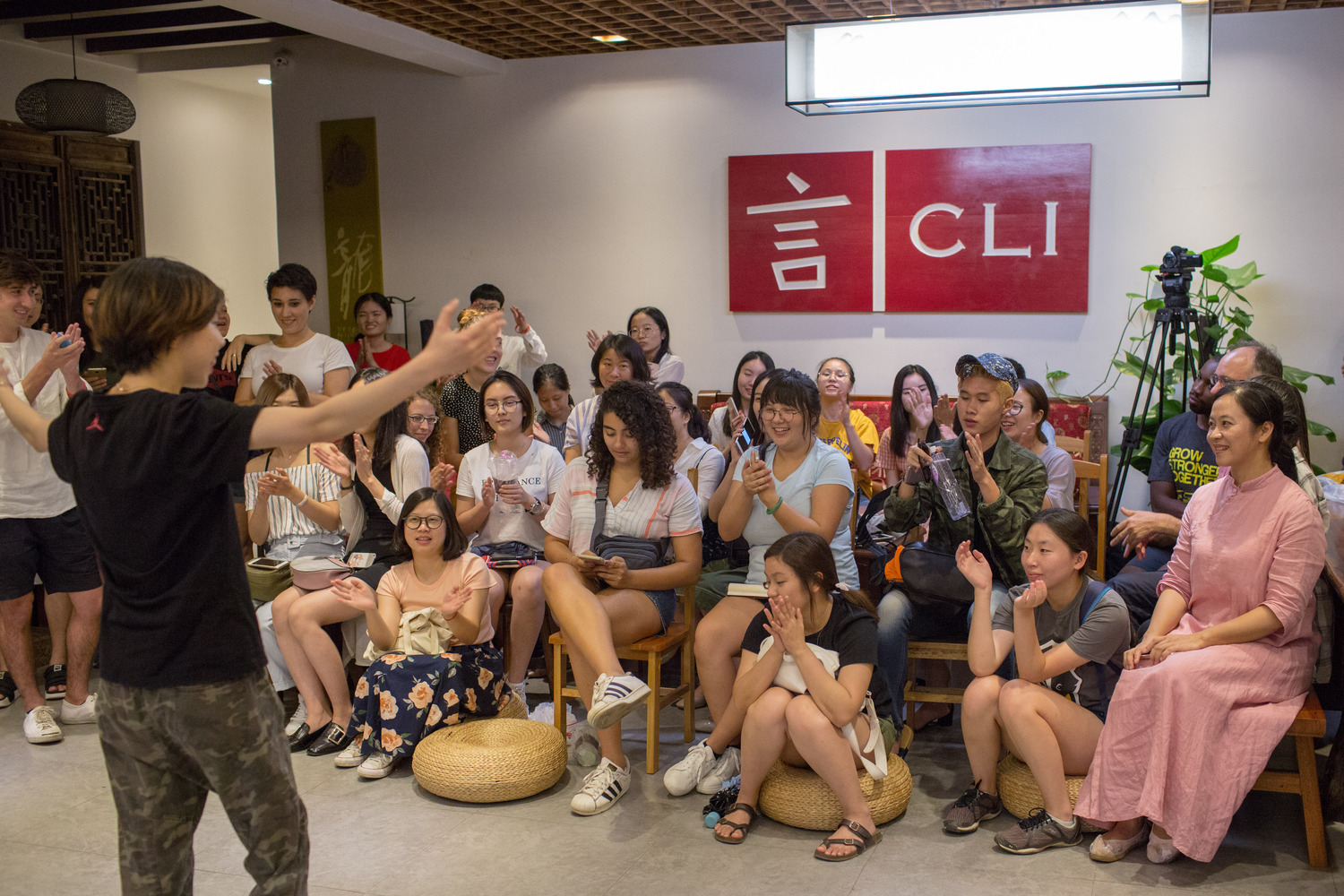
CLI was founded in Guilin in 2009, and over the years students have watched performances like this one, with live guzheng and dance.
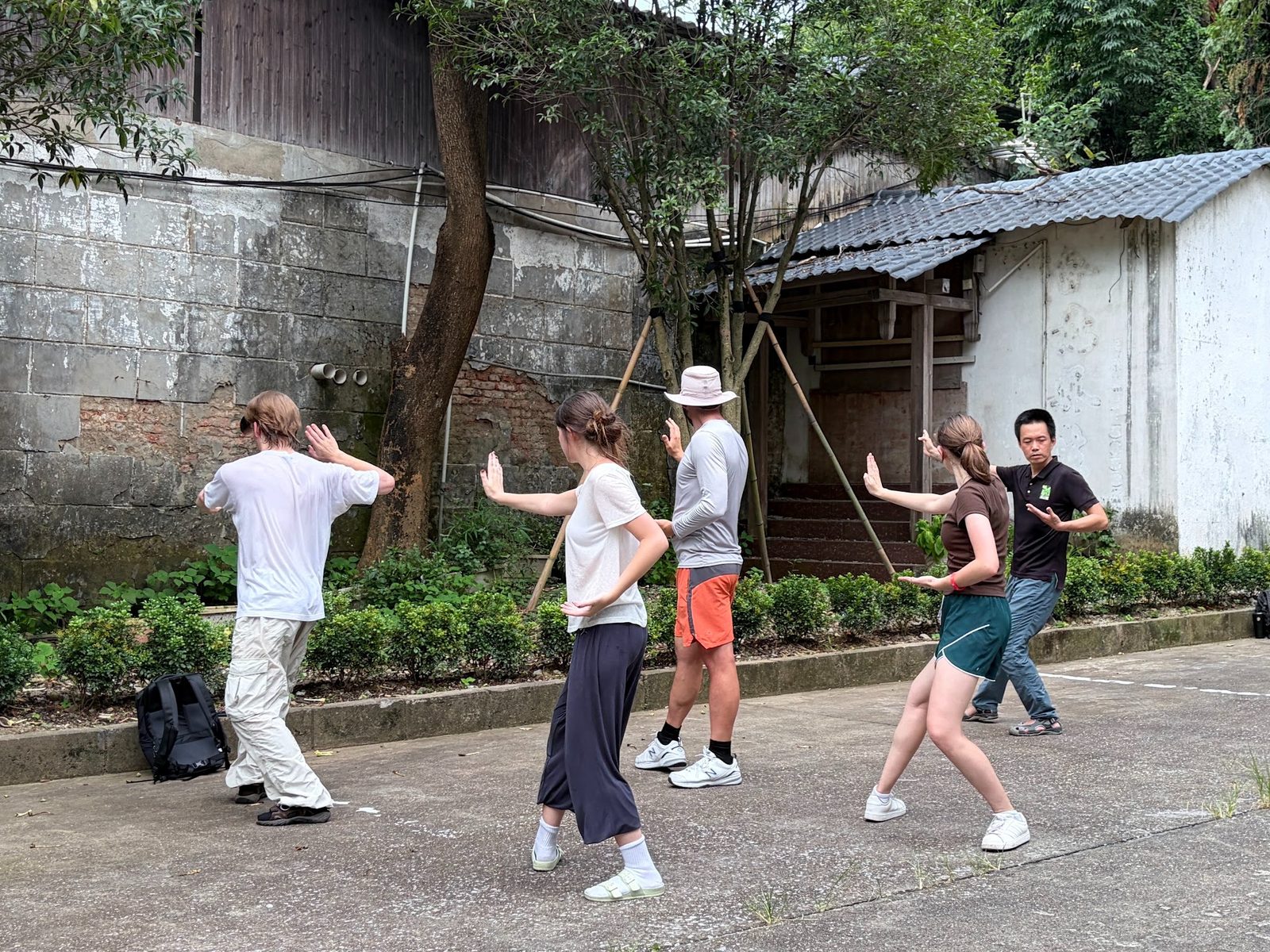
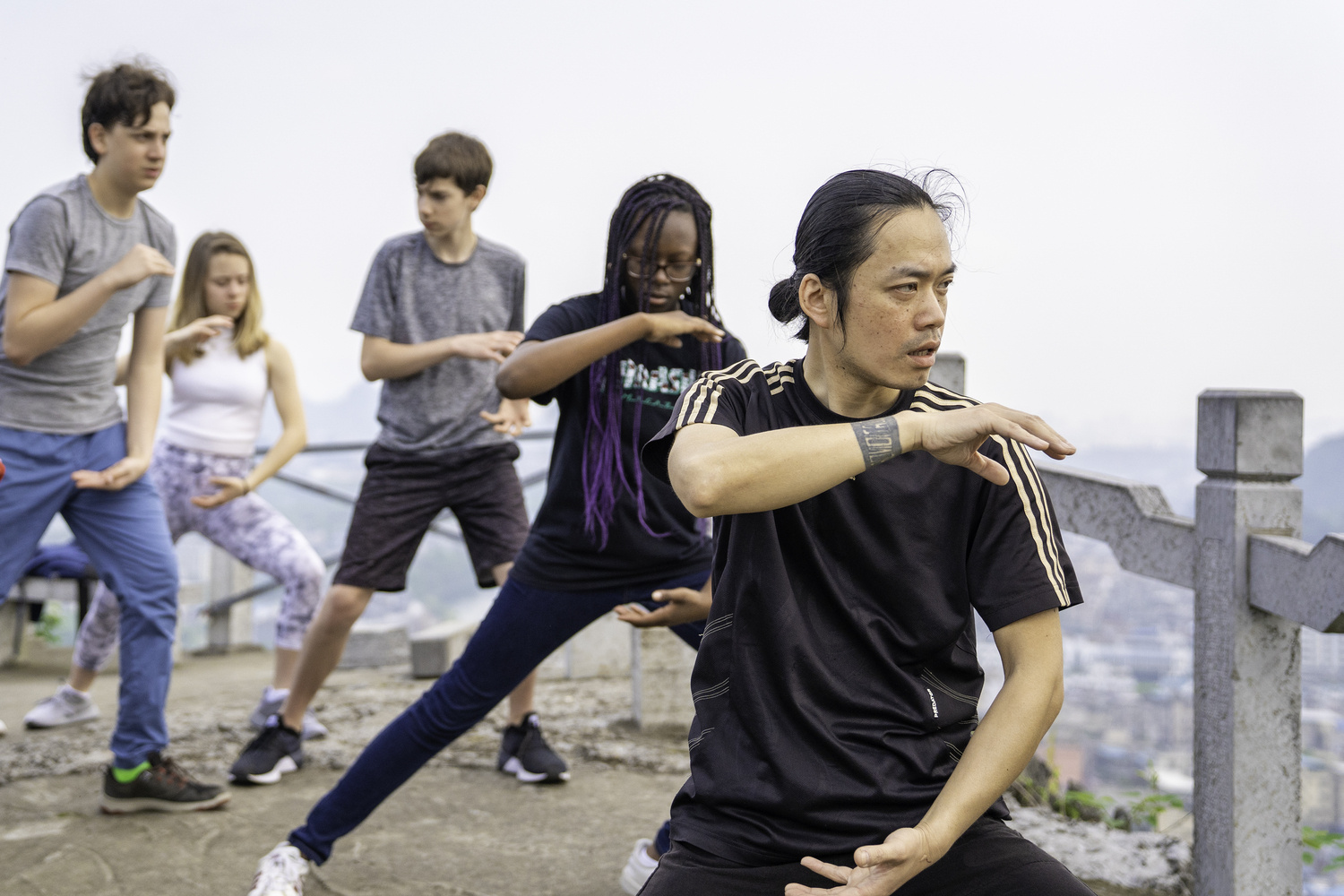
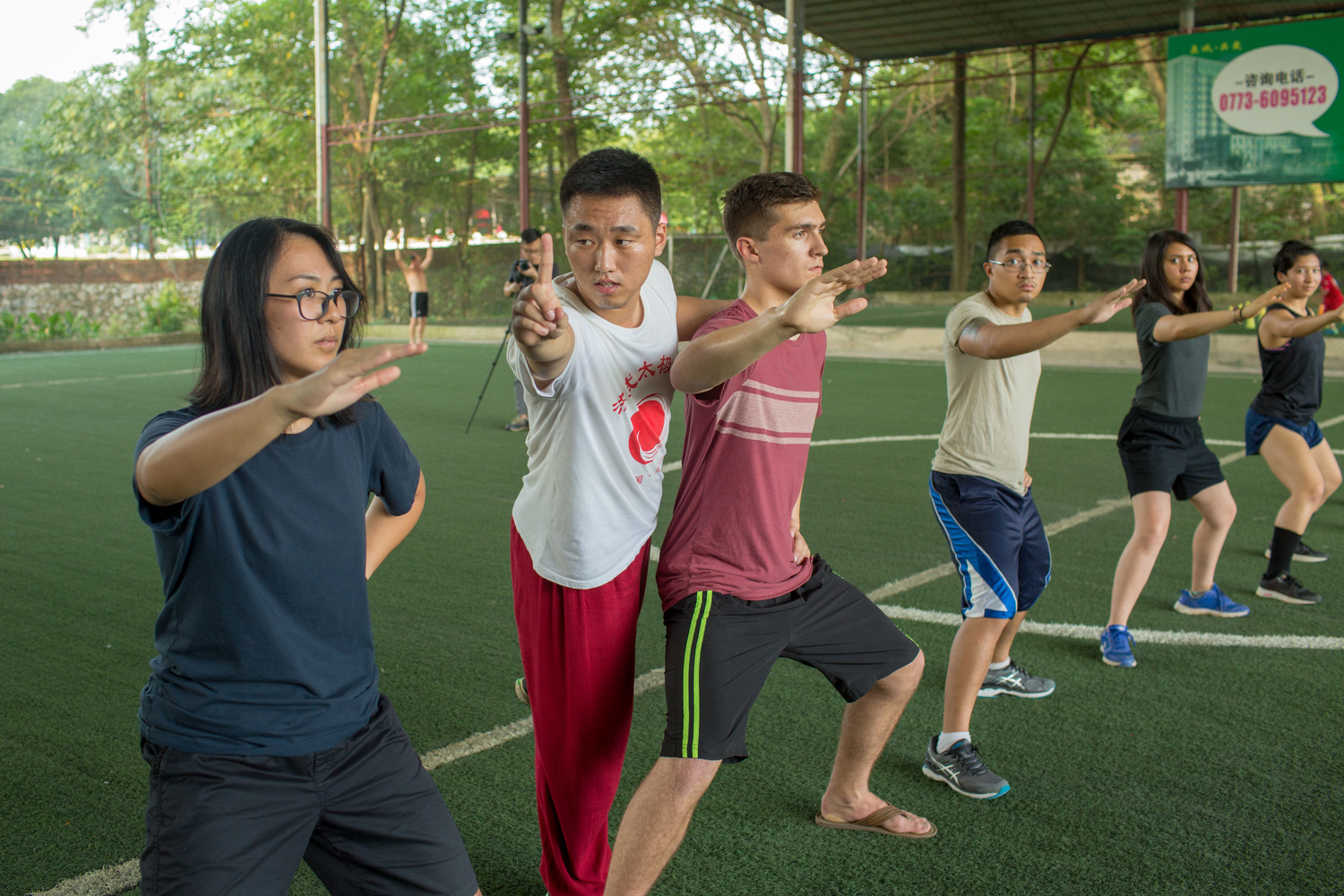
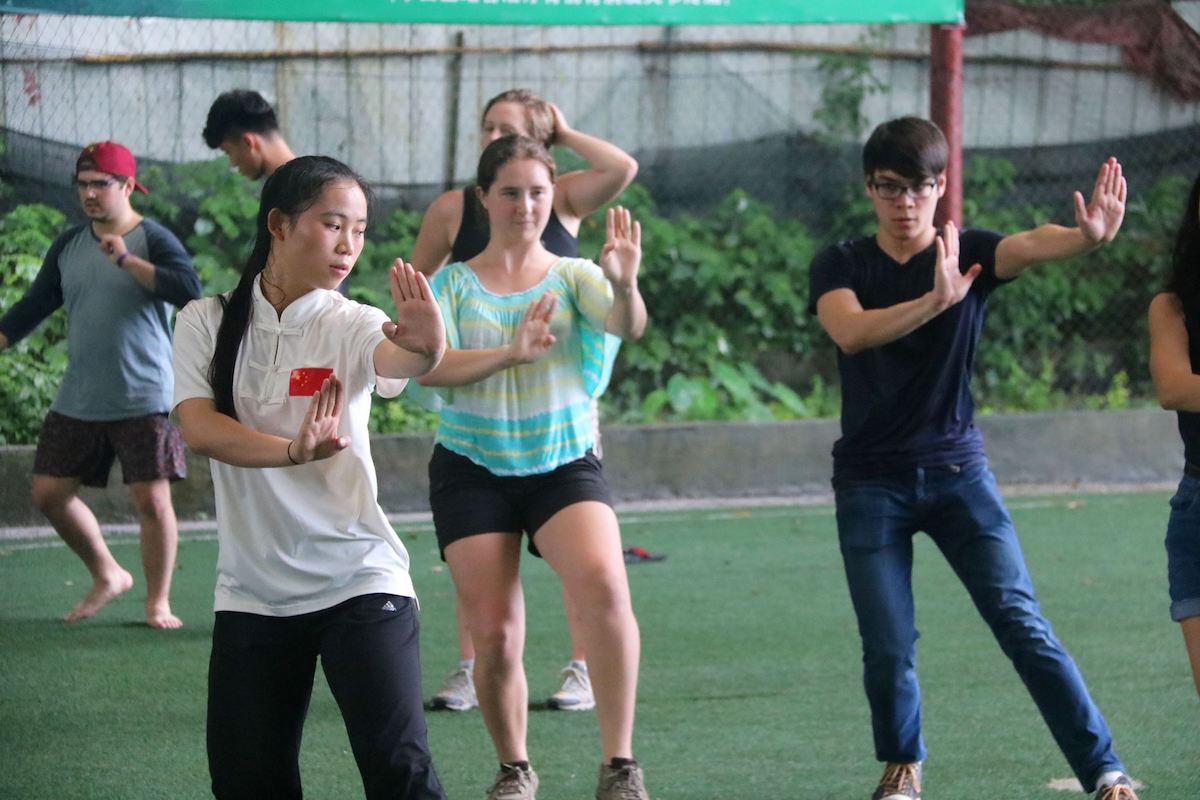
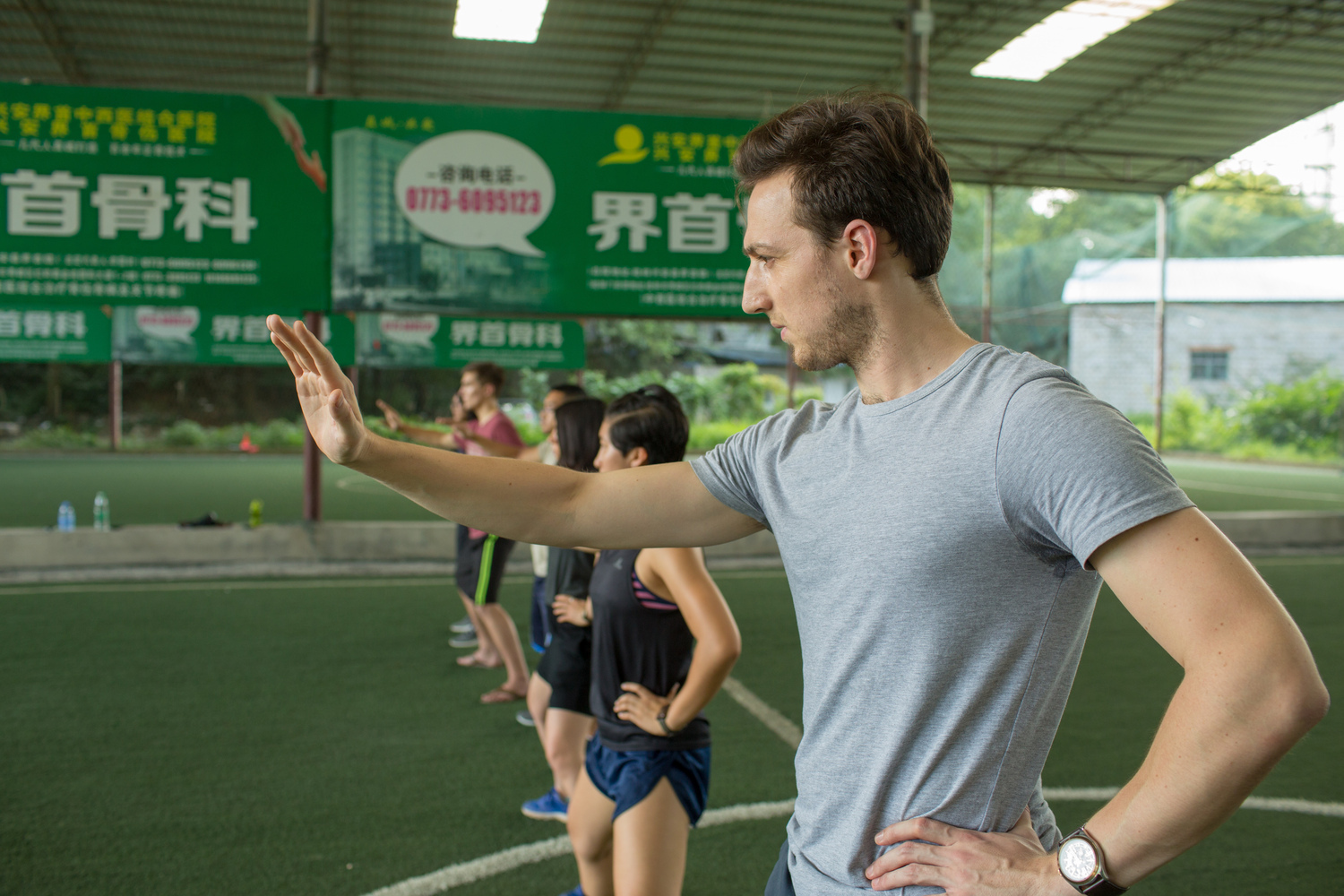
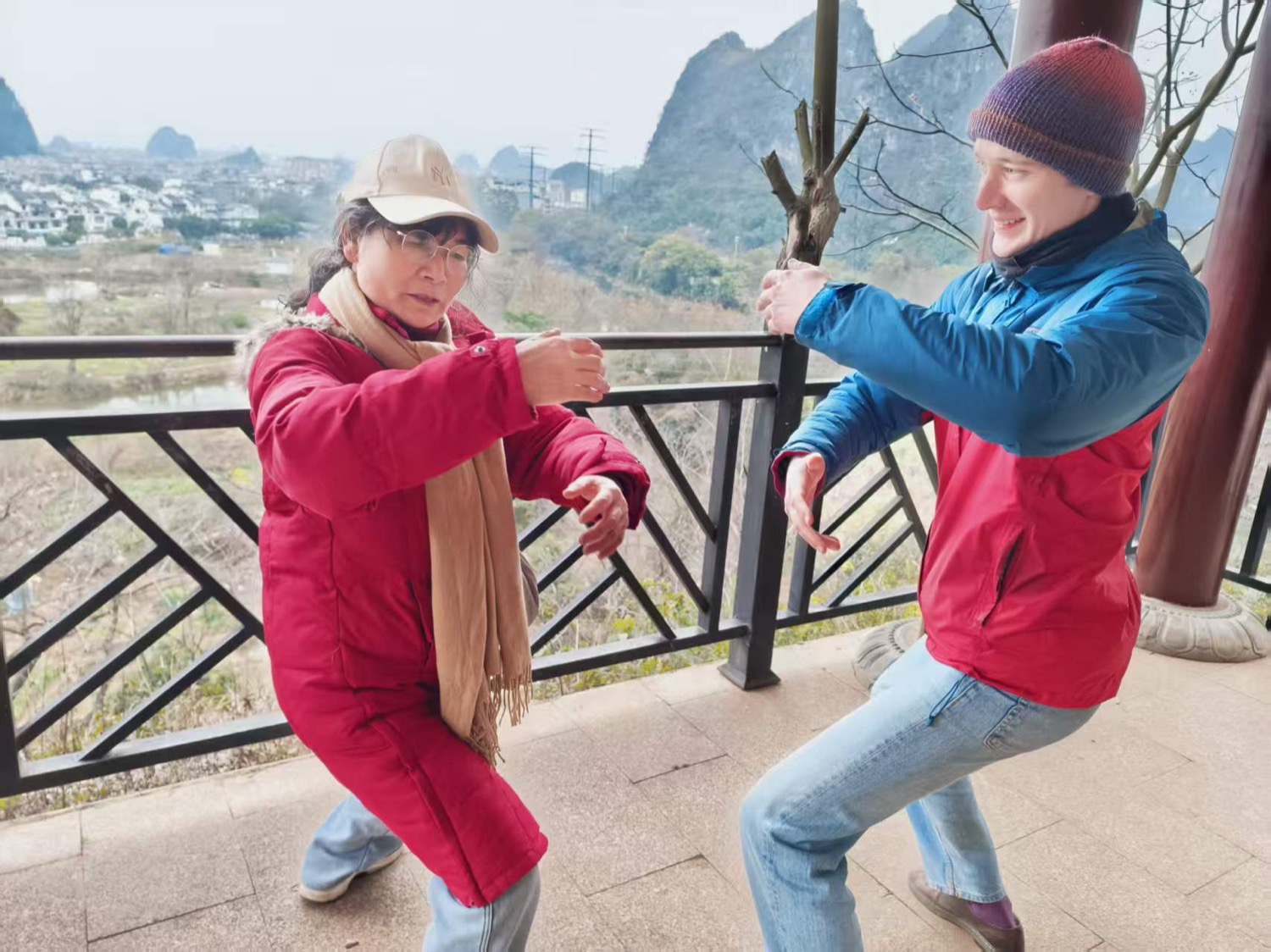
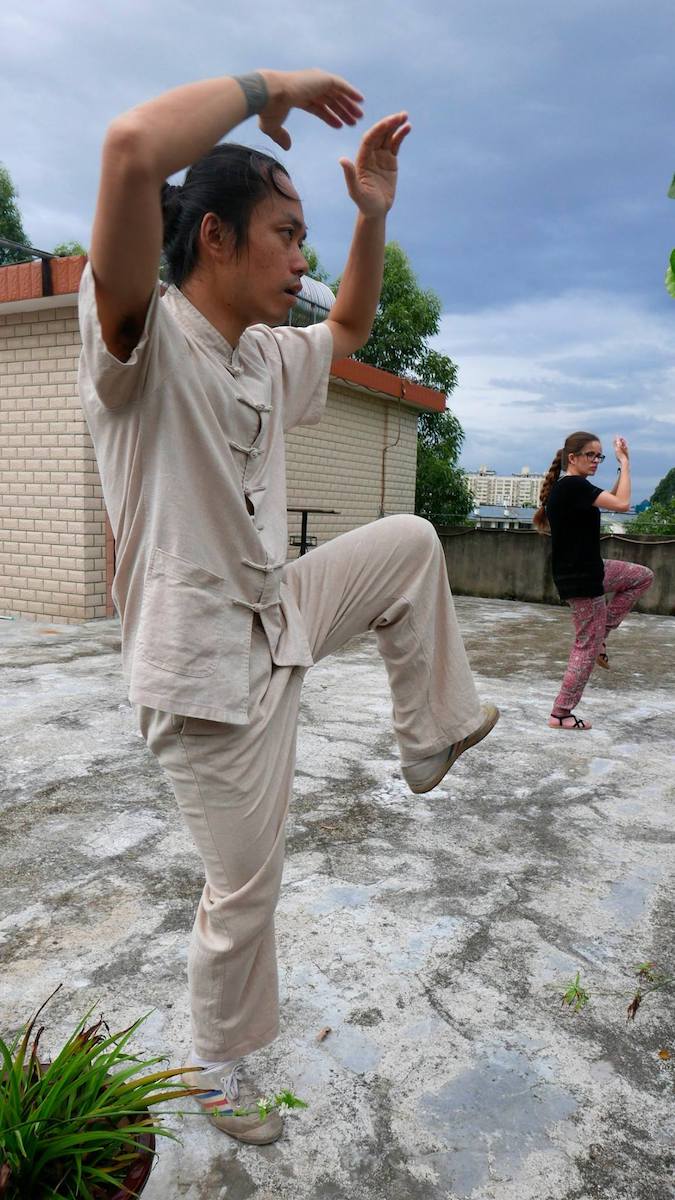
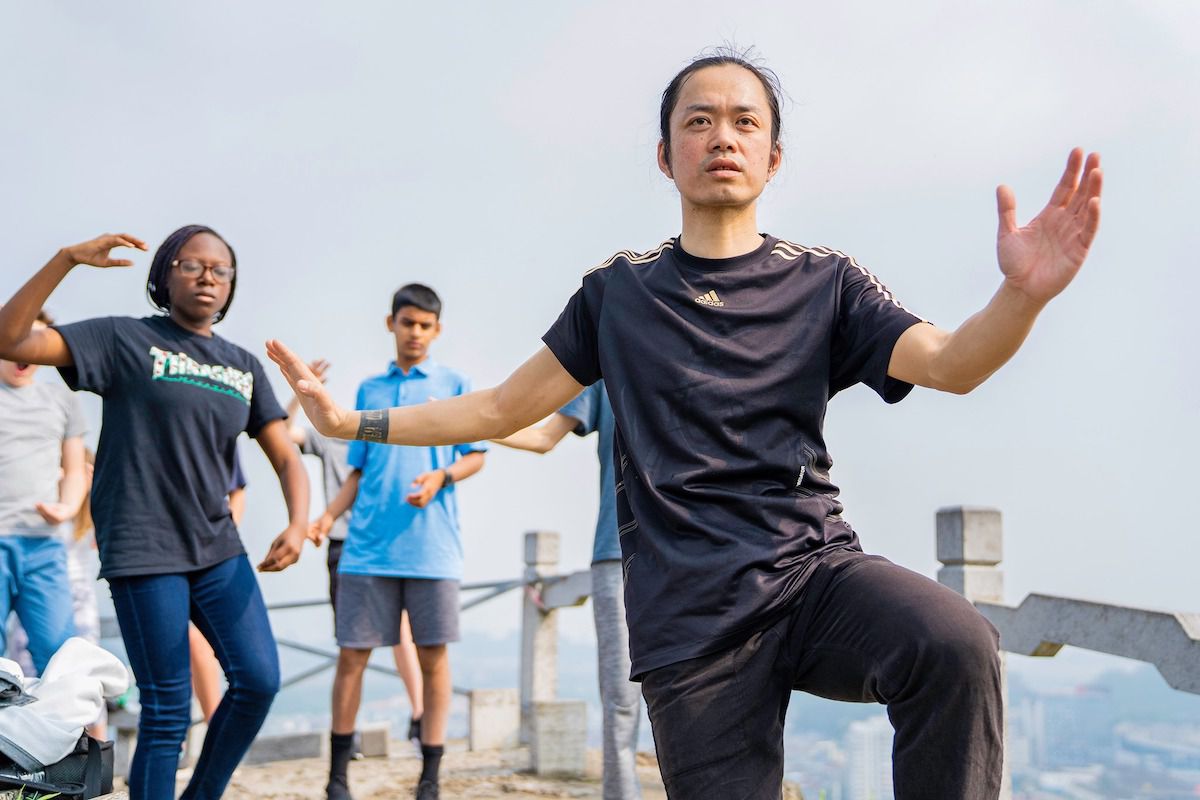
Tai chi is on the activity list, and following a teacher's movements is listening practice too, with the same few words for slow and turn heard again and again.
Calligraphy is often an evening activity after the day's classes, and practicing beside a teacher means each stroke can be corrected as it happens.
The Center's recreation room has a ping pong table, an electric piano and a mahjong table, and on some nights a guitar and a guzheng join in.
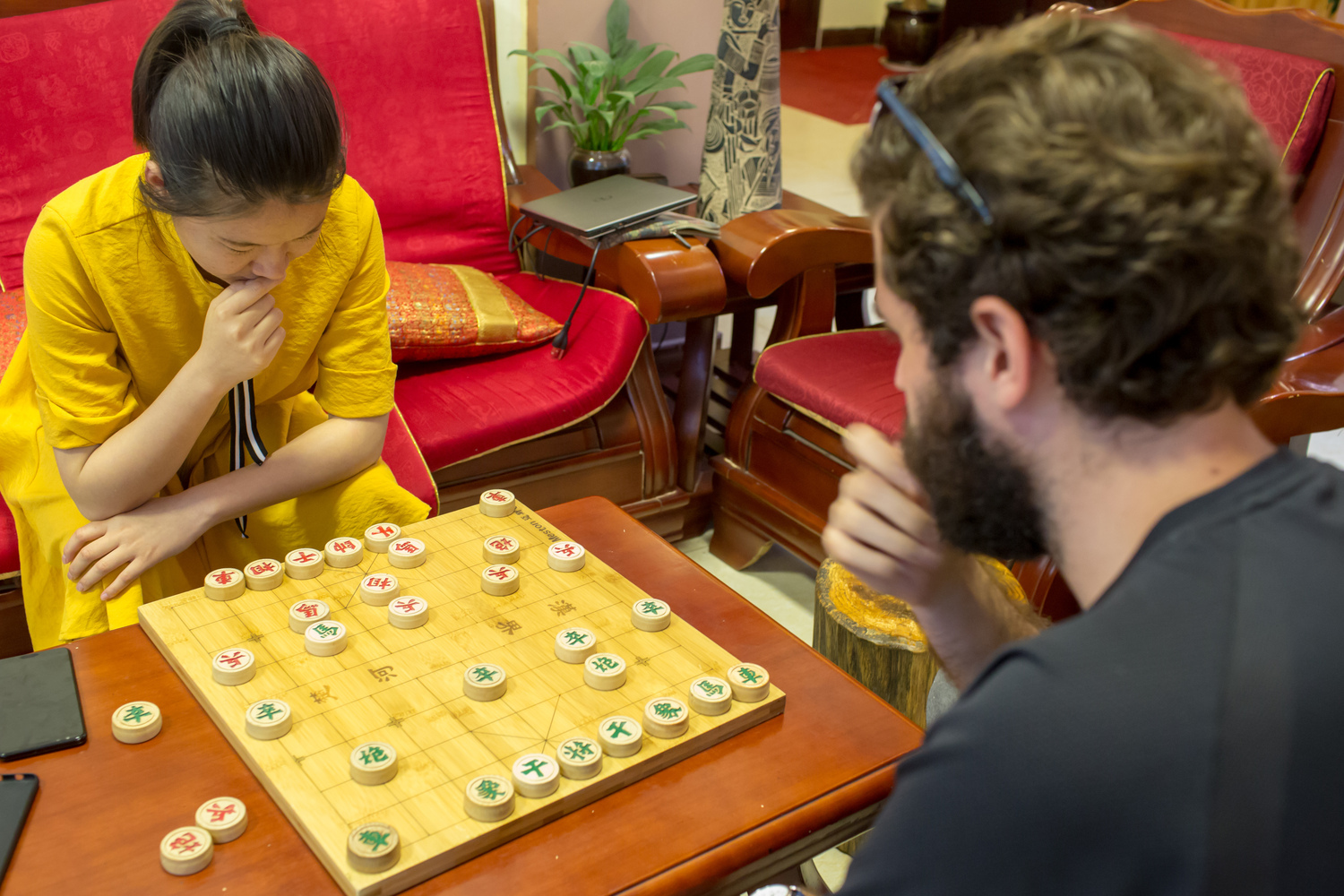
Each piece in Chinese chess carries a character, so learning the pieces is reading practice before the first move.
The CLI Center has at least one native Chinese speaker for every language learner, so its gatherings are a mix of the two.
Welcome and farewell dinners are included in tuition, and a cooking class ends with a meal too, with the group eating what it made.
Some evenings at the Center turn into informal performances, and singing in Chinese is a demanding way to practice tones.
Go is among the Chinese games students play at CLI. Like the language, it takes minutes to learn the rules and much longer to read the board well.
A game of Go can move outdoors to the water's edge in Guilin, a compact, walkable city with lakes and parks close at hand.
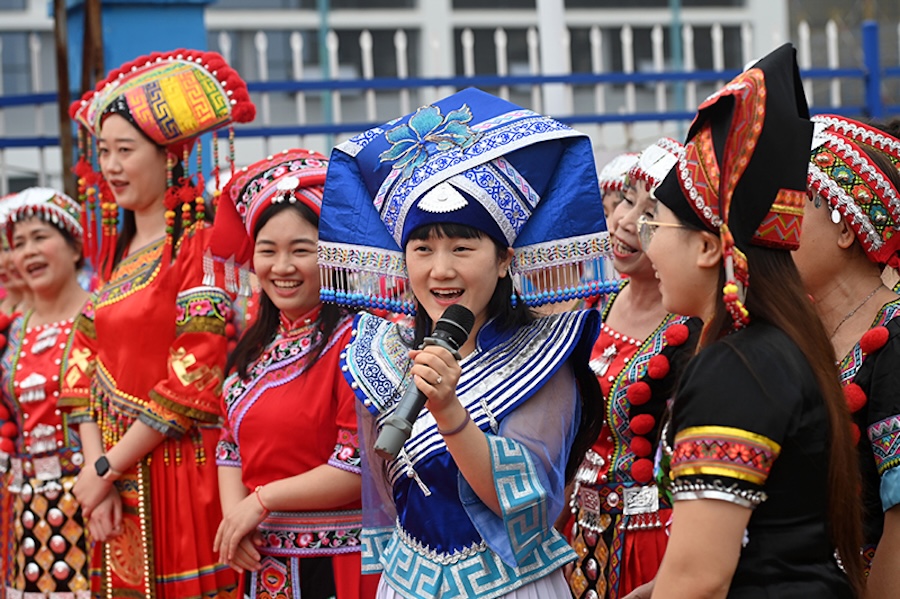
Singers in traditional dress and headdresses are one sight students have come across in Guangxi, where an overnight trip about once a month takes the program outside the city.
Guilin winters are cool and damp, rarely below freezing, and an indoor folk opera performance is one way students have spent a winter evening.
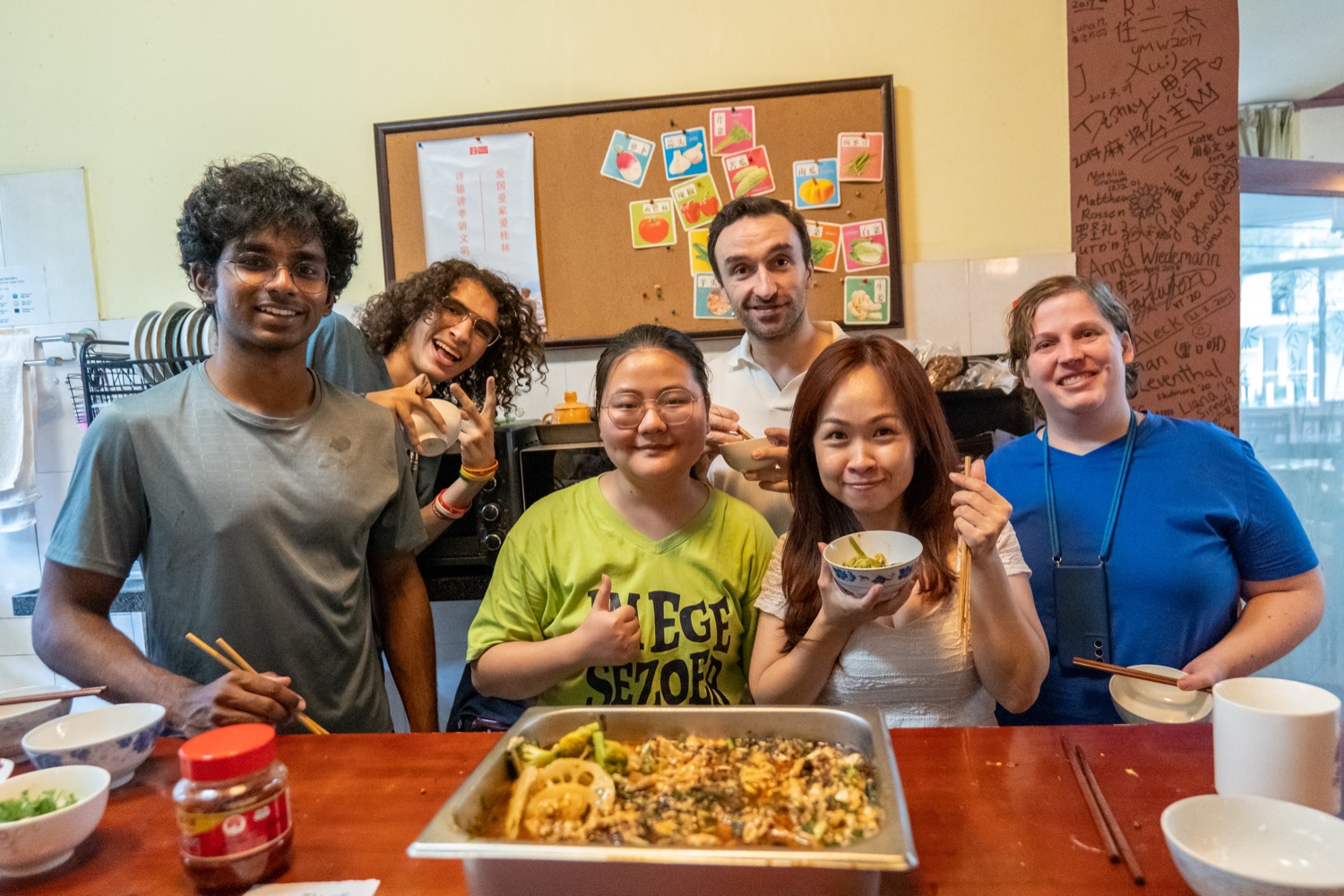
Dumplings folded around one big table: the optional meal plan works the same way, with a family-style lunch each weekday at the same table as teachers and classmates.
Bamboo and orchids are classic first subjects in ink painting, one of the brush arts students have tried alongside CLI's calligraphy sessions.
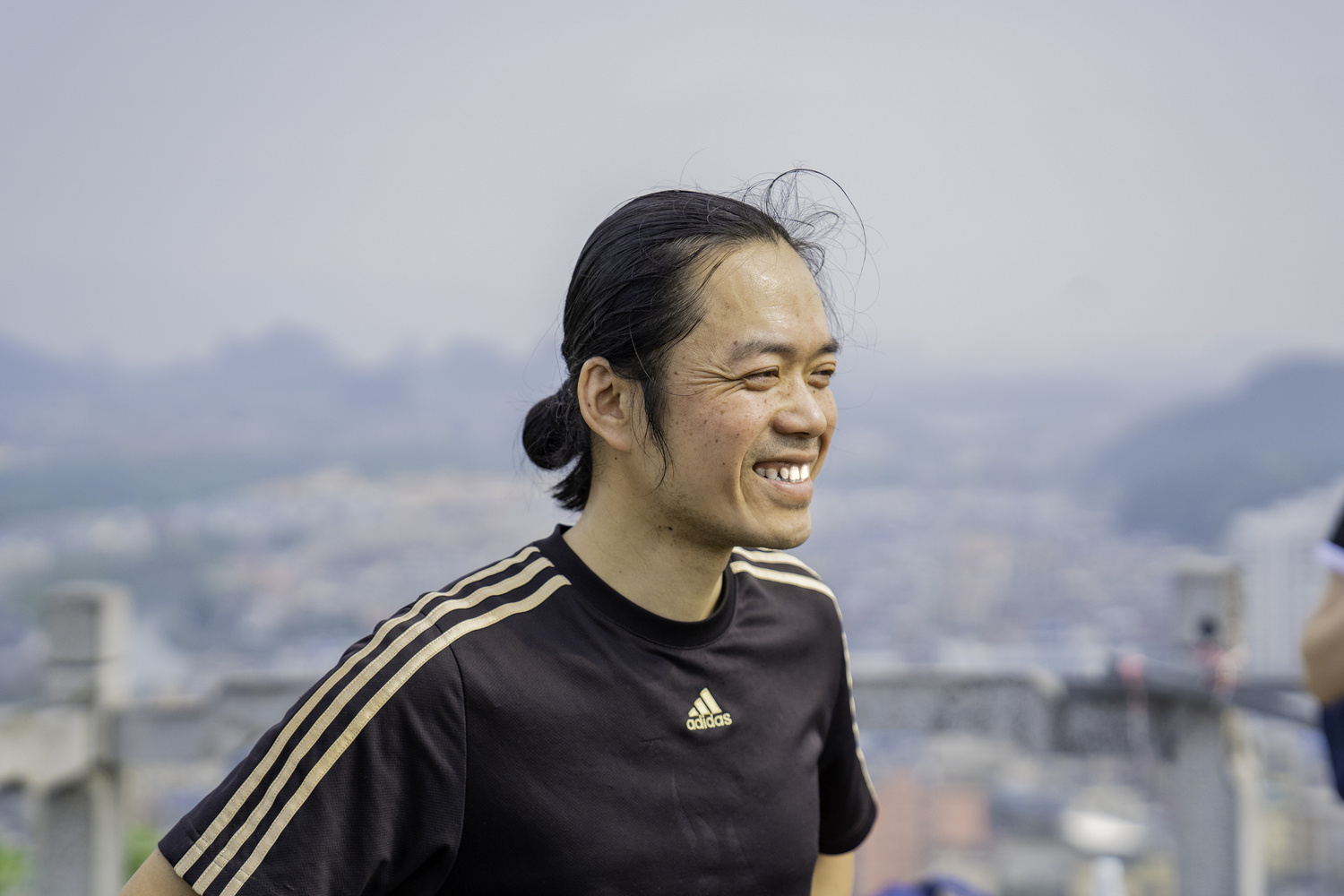
Tai chi and hikes up Guilin's karst hills are both on CLI's activity list, and here the two come together on an overlook above the city.
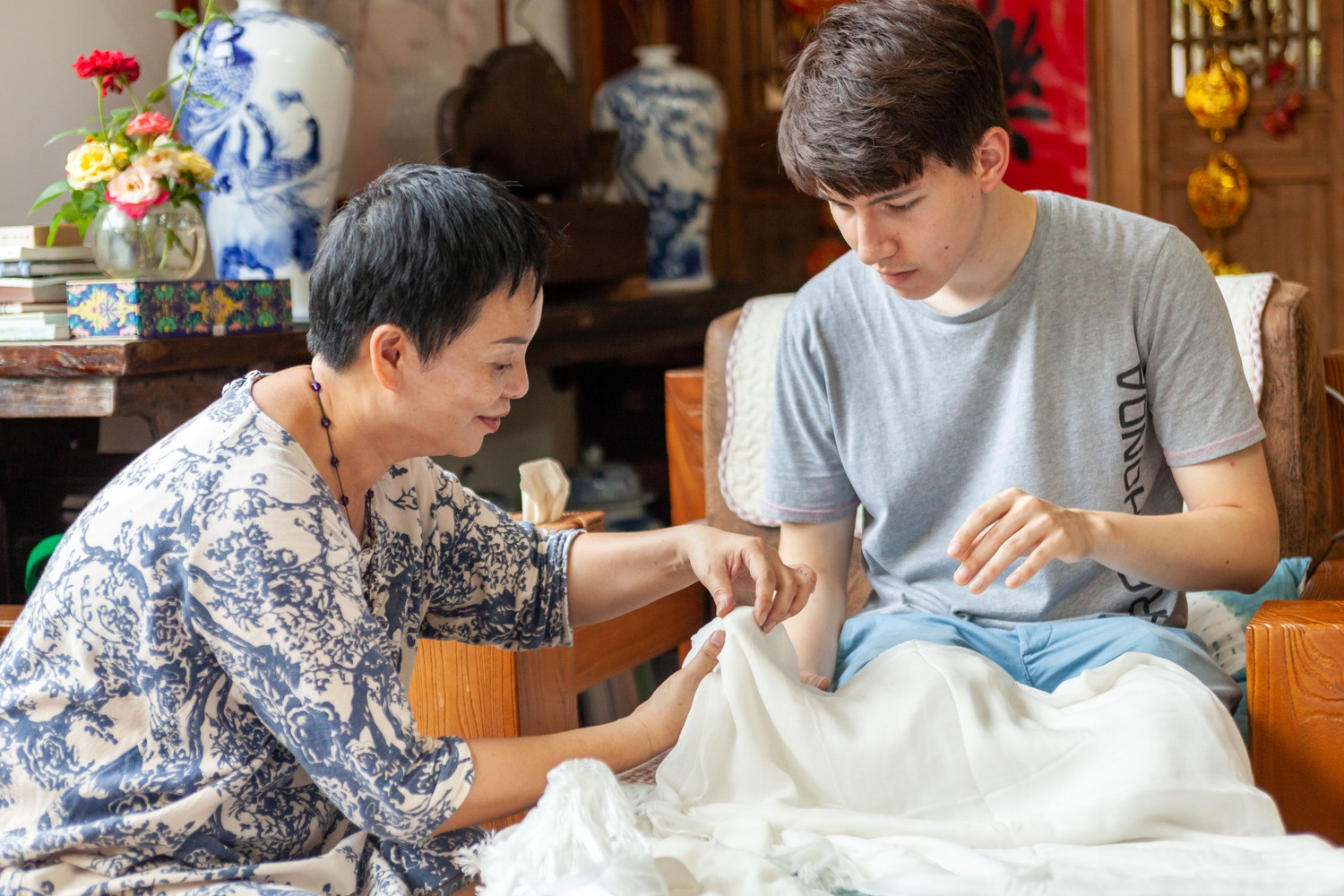
Before the dye comes the stitching: tie-dye patterns are sewn and bound by hand, a patient step that suits a free afternoon between homework and review.
Orientation, usually on a student's first Monday, covers the Center, the teachers and the schedule, and activities like this guzheng session follow soon after.
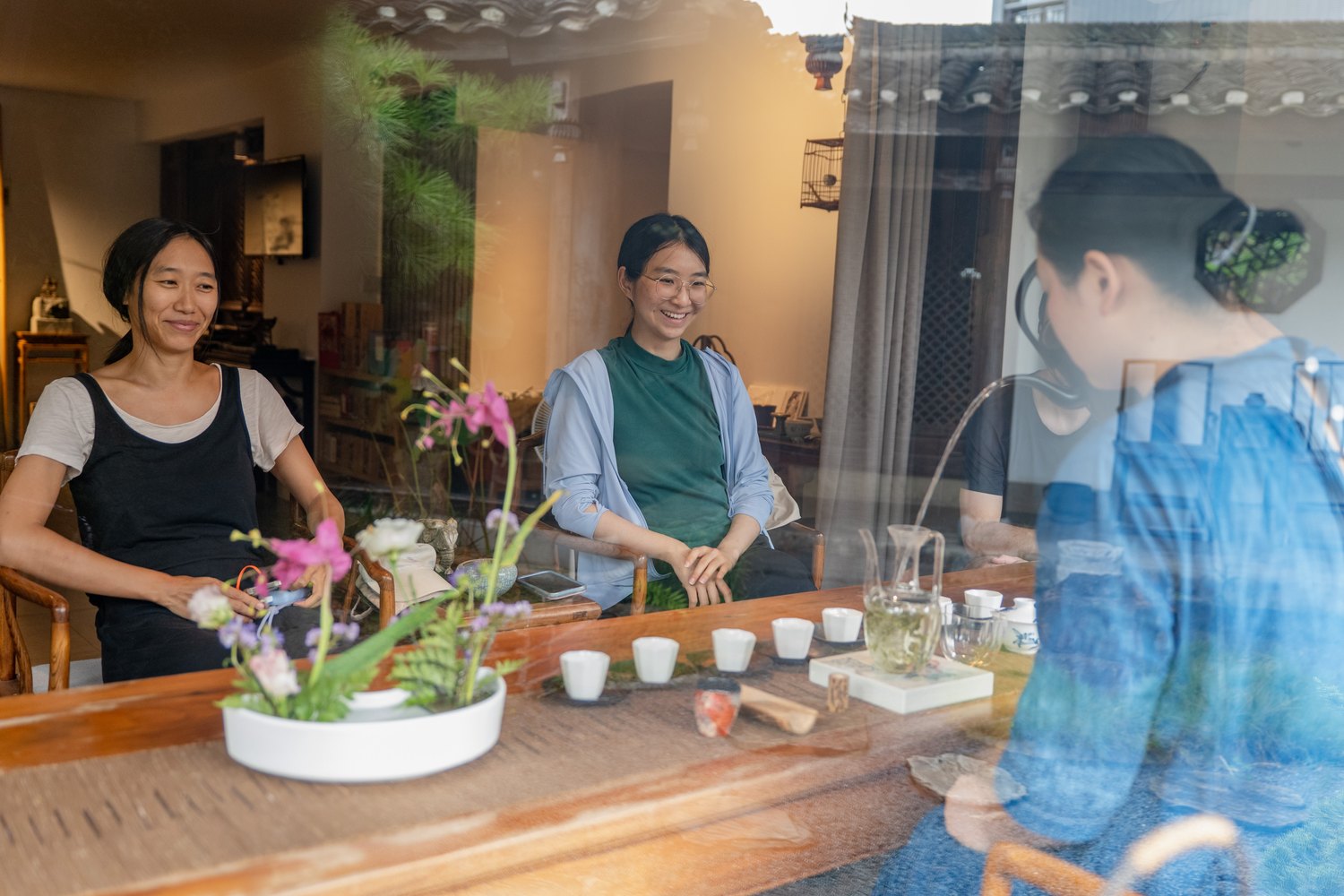
A quiet table by the window is an easy place to ask a tea host questions in Chinese, and tea house visits are one of CLI's activities.
Students plan their free hours around the activities board on the CLI Center's second floor, which shows what is on each week.
Each student has a teacher for listening and speaking, and a fan dance like this one gives plenty to describe in the next class.
Chinese games are among CLI's activities, and the recreation room at the Center adds a mahjong table and ping pong for downtime.
CLI has been based at the CLI Center since 2012, and over the years Chinese zither recitals like this have drawn a full room.
Brush painting at a long table is one of the quieter activities, and the CLI Center sits on a quiet road too, about seven minutes' walk from Guangxi Normal University.
Sports on CLI's activity list include badminton and volleyball, and some outings go further afield, like this indoor archery range.
With at least a one-to-one ratio of native Chinese speakers to learners at the CLI Center, finding a Go partner who speaks Chinese is rarely hard.
Families sometimes come to CLI to study together, and a slow craft like hand stitching for tie-dye works for every age at the table.
Tea house visits take students out of the Center, and a long table in a quiet teahouse is a good place to try out the morning's grammar point.
Red paper cuts are a Chinese New Year tradition, and festival celebrations are among CLI's activities, with crafts like this one among the things students have tried.
Folding dumplings keeps hands busy and conversation going, and the CLI Center has at least as many native Chinese speakers as learners to talk with.
Boiling the dumplings is the last and best step of a cooking session. On the optional meal plan, weekday lunch at the CLI Center is home-cooked Chinese food as well.
Craft sessions like this paper cutting are slow and social, which makes them a good setting for relaxed conversation with the Chinese speakers at the table.
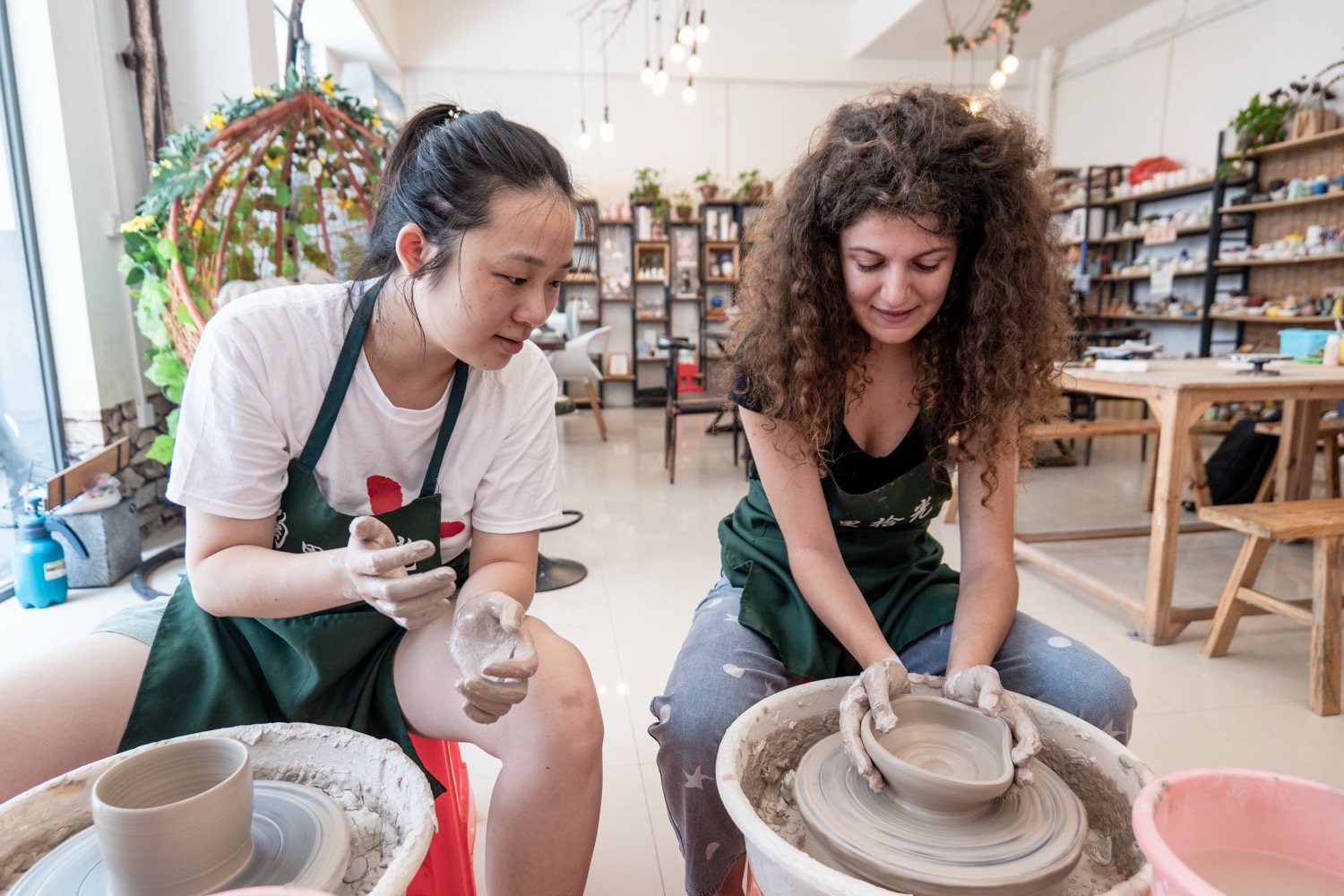
Clay on the wheel and a guiding pair of hands. With 20 hours of one-on-one Chinese a week, time at a potter's wheel gives the mind a break.
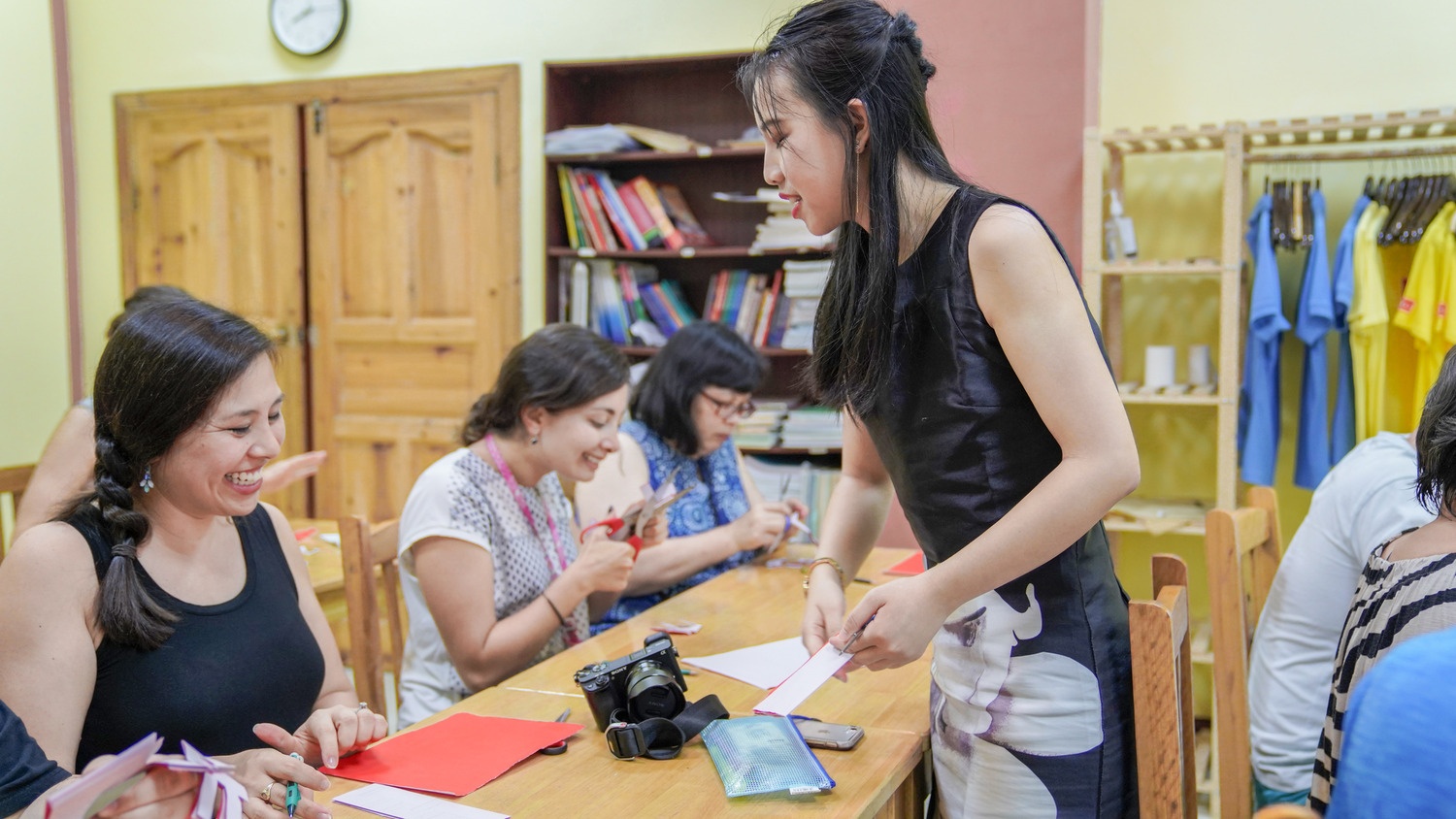
Classes at CLI are one-on-one, so group workshops like this paper-cutting session are where many students get to know each other.
Backstage before a traditional show: the weekly activities and monthly excursions have taken students to performances close enough to watch the makeup go on.
Stroke order is part of every student's reading and writing class, and an ink brush makes the direction of each stroke easy to feel.
Summers in Guilin are hot and humid, and the slow pace of tai chi suits a warm day, even out on an open sports field.
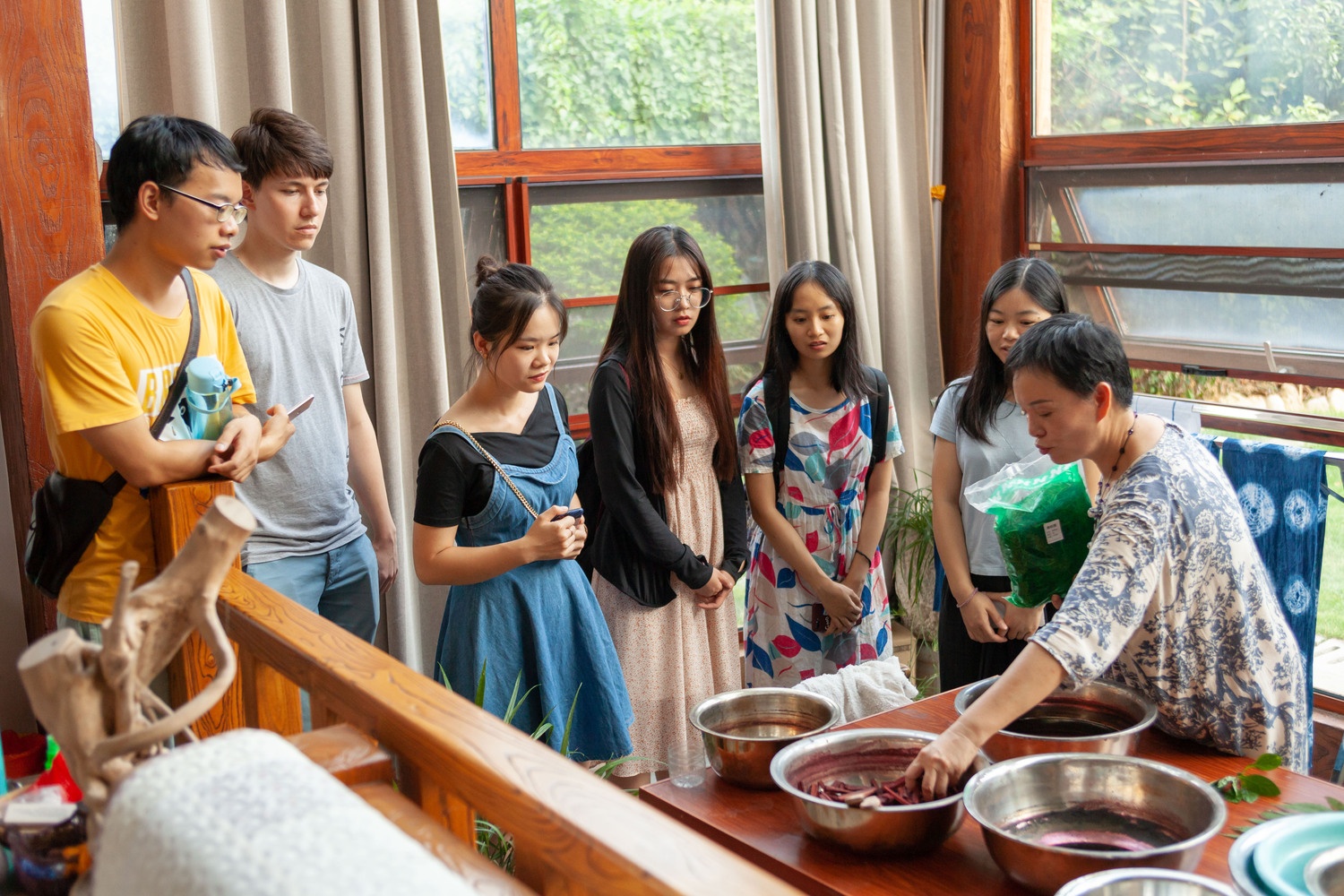
Pengyou, local university students in CLI's free Pengyou Program, join activities too, so a tie-dye session like this one is also a chance to talk in Chinese.
Pipa, the name of this Chinese lute, is the kind of word that travels: a student's three teachers coordinate, so vocabulary from reading class may come back in speaking class.
A tea demonstration works for every level, from complete beginners to fluent speakers, since so much of it is watching.
CLI has welcomed more than 5,000 students since 2009, and bamboo ink painting is one of the workshops that has sent them home with something they made.
Weekends are for larger outings such as hikes in Longsheng or Yangshuo, and a stone table under a karst cliff is a good spot to stop for a game.
A brush makes a character's parts easy to see: the 朋 in 朋友 (péngyǒu, friend) is two 月 (moon) characters side by side.
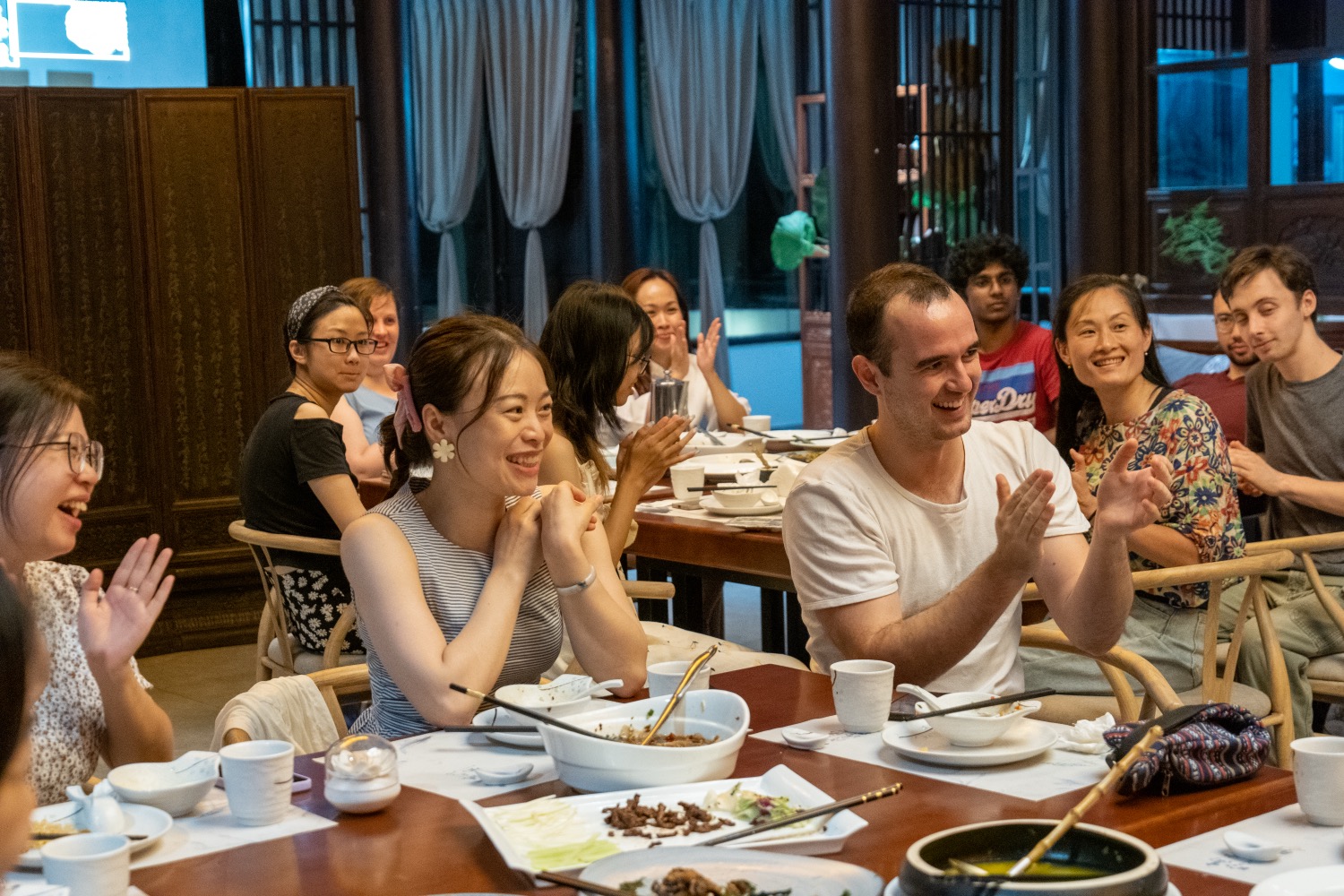
Orientation on a student's first Monday includes a welcome meal, the first of many shared tables like this one on the program.
A wooden pagoda kit is one of the crafts students have tried. For optional activities, CLI passes on its direct costs with no markup.
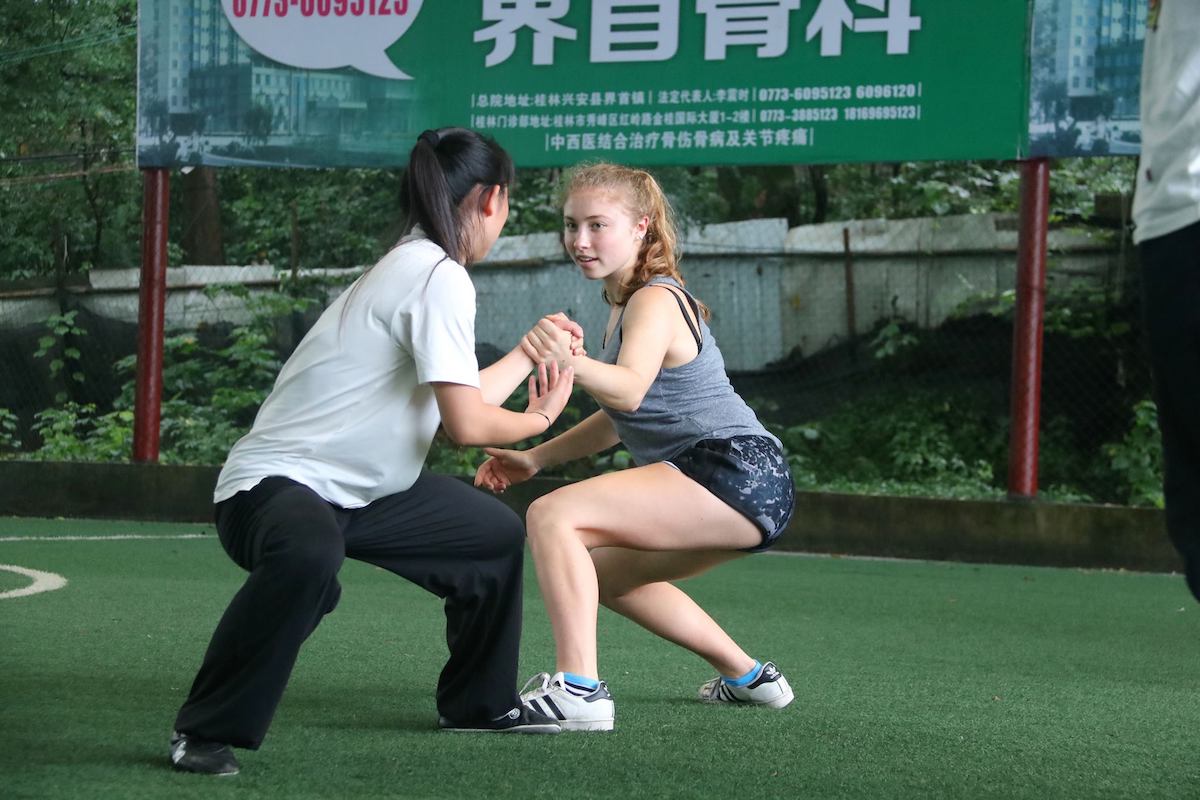
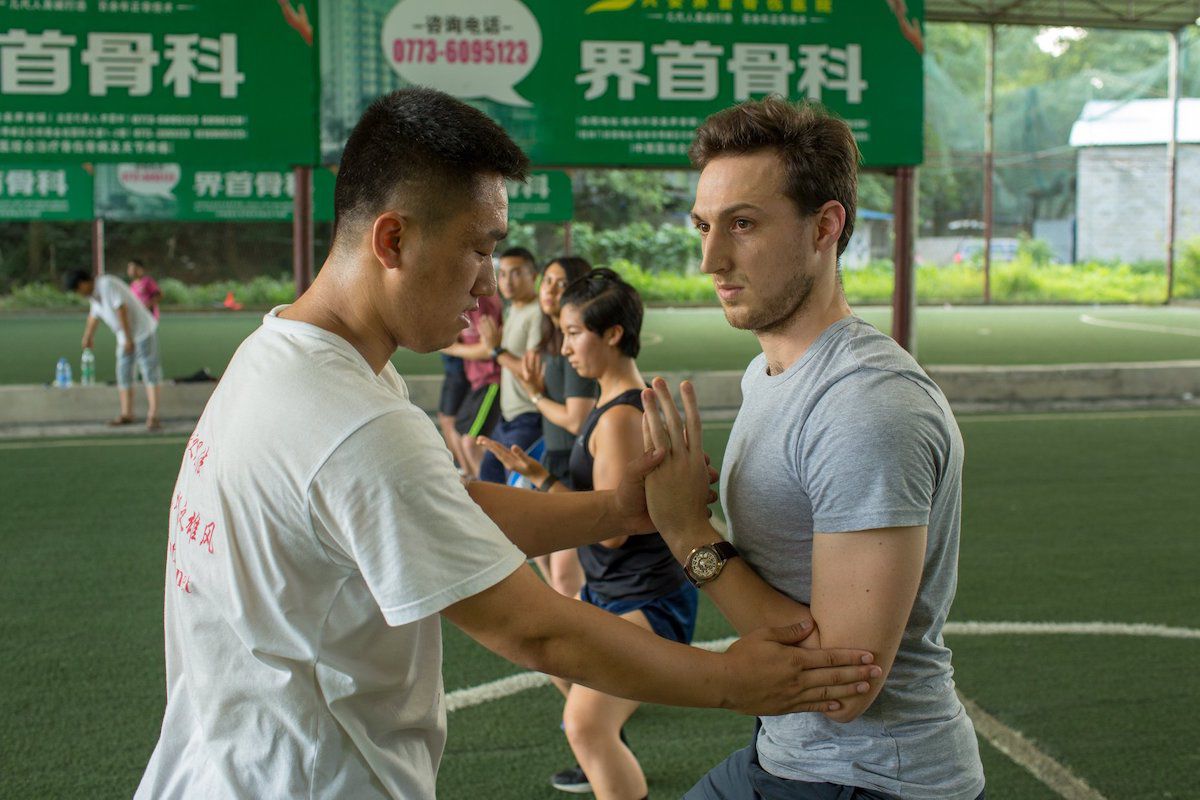
Martial arts practice takes a partner and close attention, and so does learning Chinese at CLI, where each student works with three teachers, each with a different focus.
Guangxi food leans fresh, sour and lightly spicy, and a cooking lesson at the wok, with every dish named in Chinese, is one of the activities on offer.
Students have come to CLI from more than 400 institutions, and a group martial arts session puts them side by side on the same field.
Chinese opera has a vocabulary all its own, from the costumes to the roles, and a performance this close makes it easy to ask about.
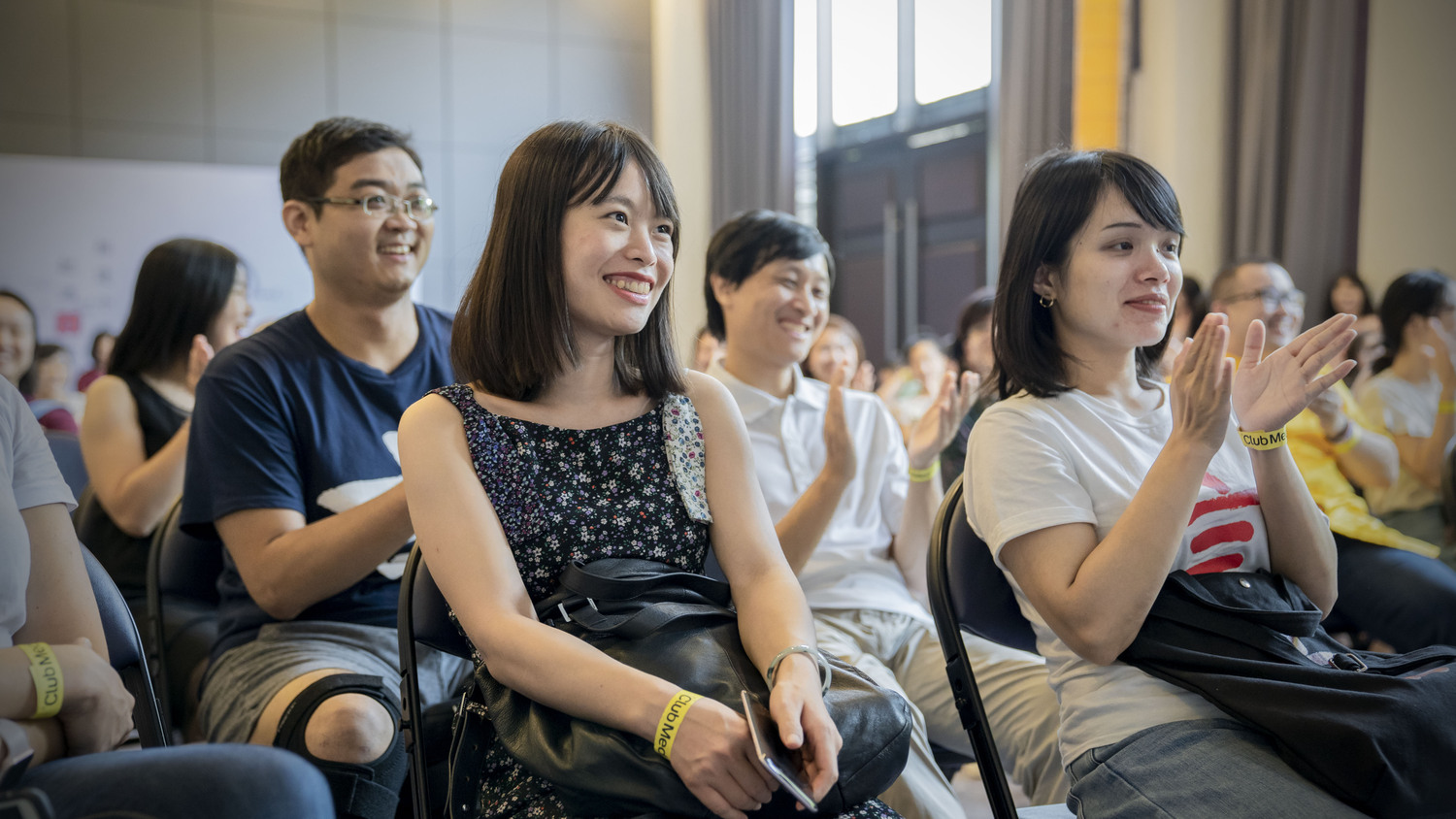
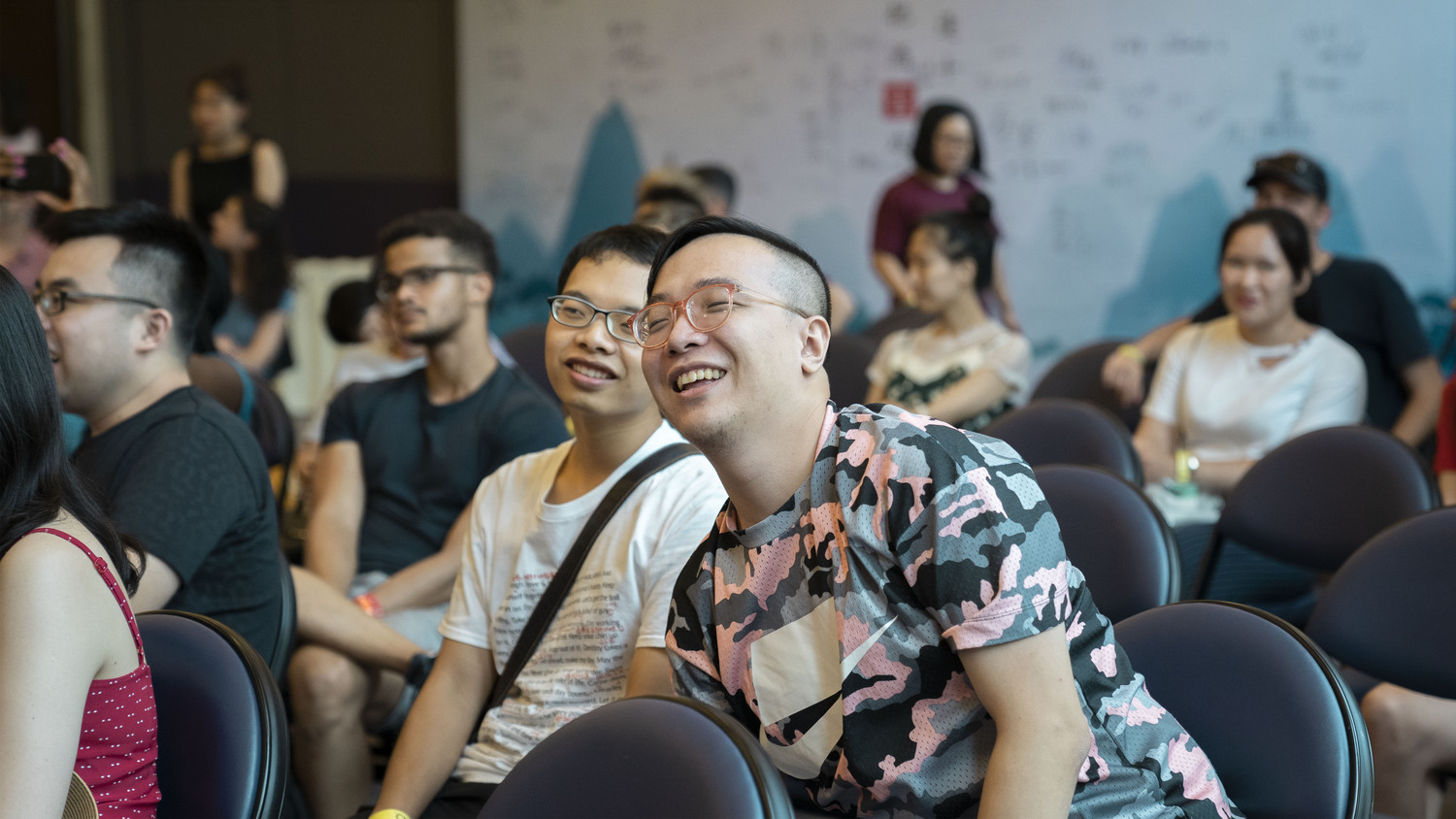
With more than 5,000 students from 50+ countries since 2009, an audience at a CLI event mixes many languages, with Chinese as the shared one.
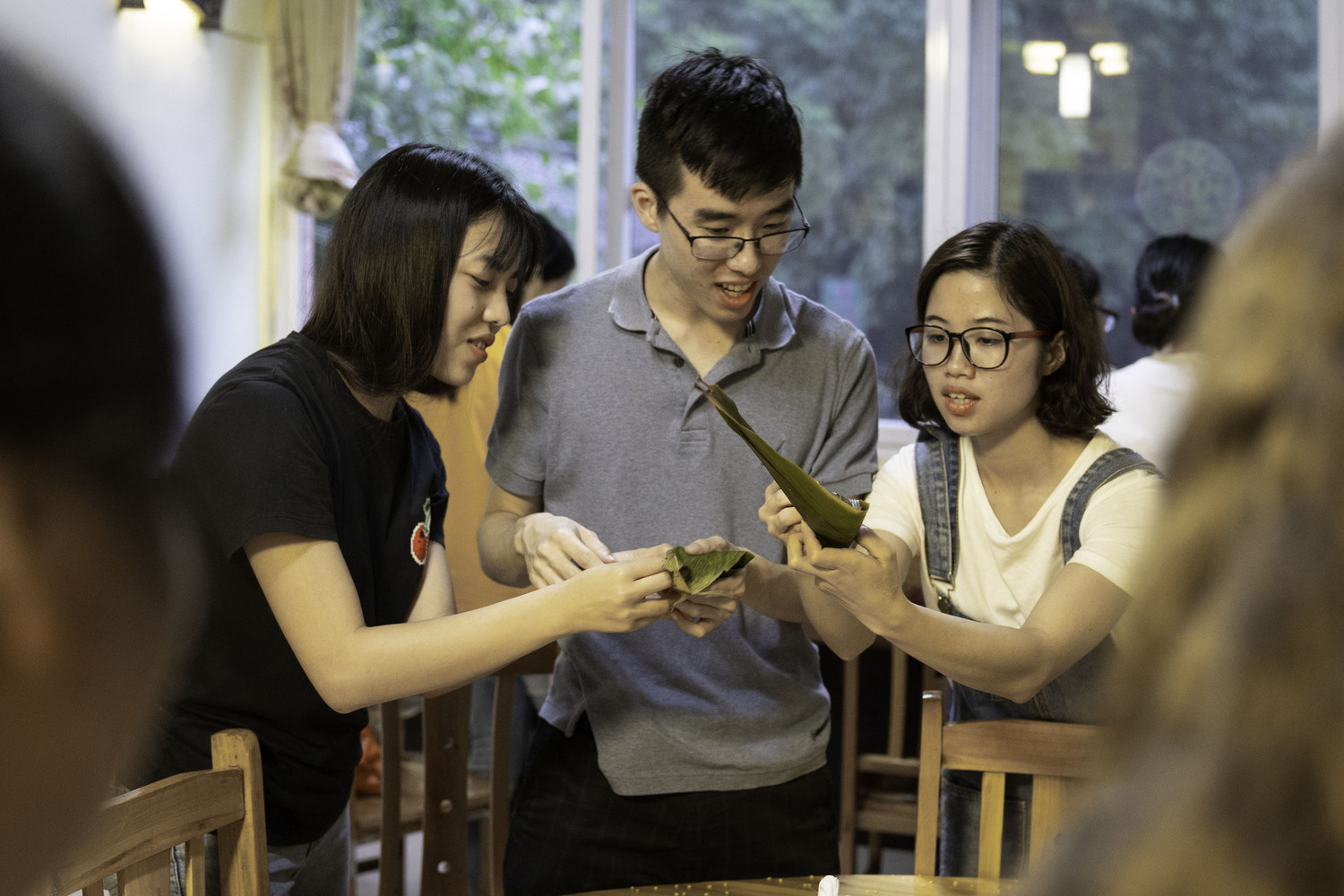
Wrapping zongzi, 粽子 (zòngzi), is a Dragon Boat Festival custom, and CLI marks festivals with celebrations of its own.
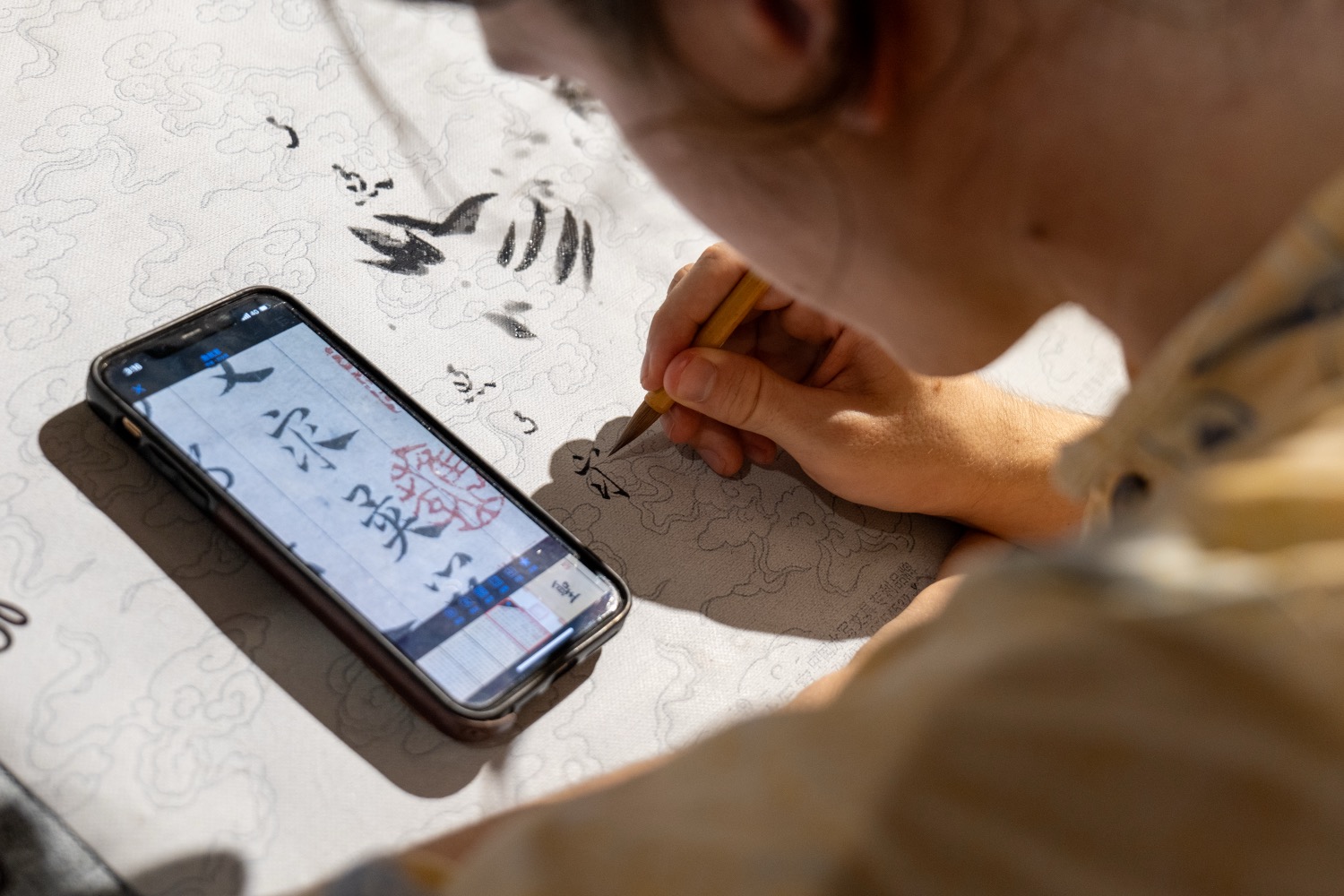
Copying from a reference is a common way to start a brush character, and character recognition is one focus of the reading and writing class.
Cooking sessions fill a table fast, and students in the free Pengyou Program also share a meal each week with their pengyou, a local university student.
Dough comes first in a dumpling lesson. The Center's full kitchen and dining area make it easy to cook as a group.
Craft afternoons fit around the class schedule: CLI runs four daily sessions between 8:20 AM and 6:10 PM, and each student has two of them.
Tastings are on CLI's activity list, including mǐfěn, the Guilin rice noodles that locals eat for breakfast at neighborhood shops.
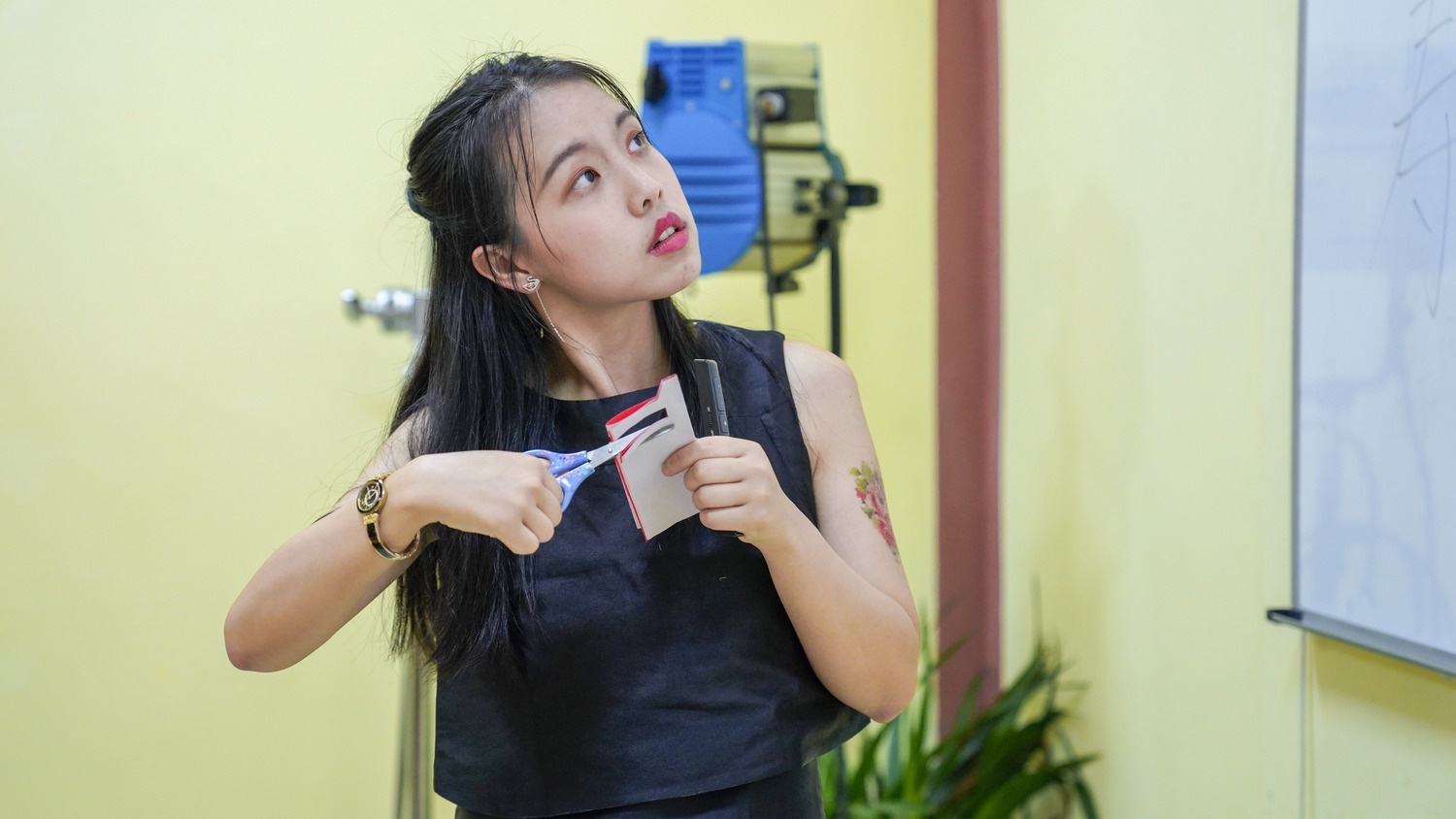
Fold first, then cut, and the pattern appears only when the paper opens, one of the small surprises of the weekly activities that run alongside classes.
CLI's activities include dumpling making, and folding the wrapper neatly is the step everyone wants to get right.
The guzheng, 古筝 (gǔzhēng), is a zither students have seen played up close, and its name is a neat drill in the third and first tones.
Group craft lessons are a change of pace, and small group Chinese classes of three to five students can sometimes be arranged when levels and enrollment allow.
Paper cuts like this one go up at festival time, and festival celebrations are on CLI's activity list along with lantern making.
Hilltops around Guilin give wide views over the city, and hikes up Guilin's karst mountains are among CLI's outings.
Tai chi starts slowly, and so can Chinese: CLI takes complete beginners, who often begin with pronunciation and survival phrases.
The activities board on the Center's second floor shows each week's activities, which over the years have included tie-dye classes like this one.
Free weekends are for group outings or independent travel, and some students find their way to an archery range.
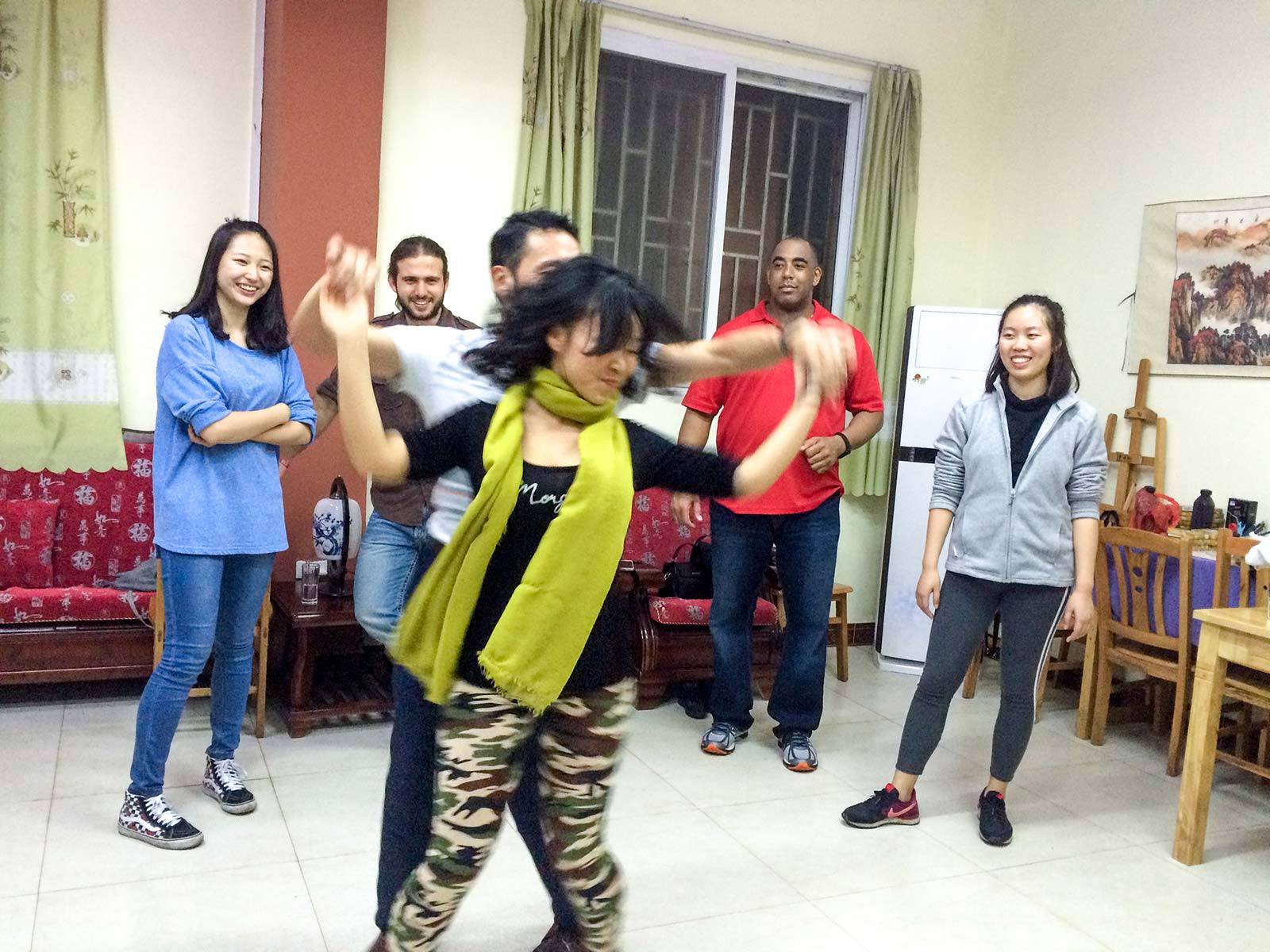
Winters in Guilin are cool and damp but rarely below freezing, so a warm jacket is enough for tai chi outdoors above the karst hills.
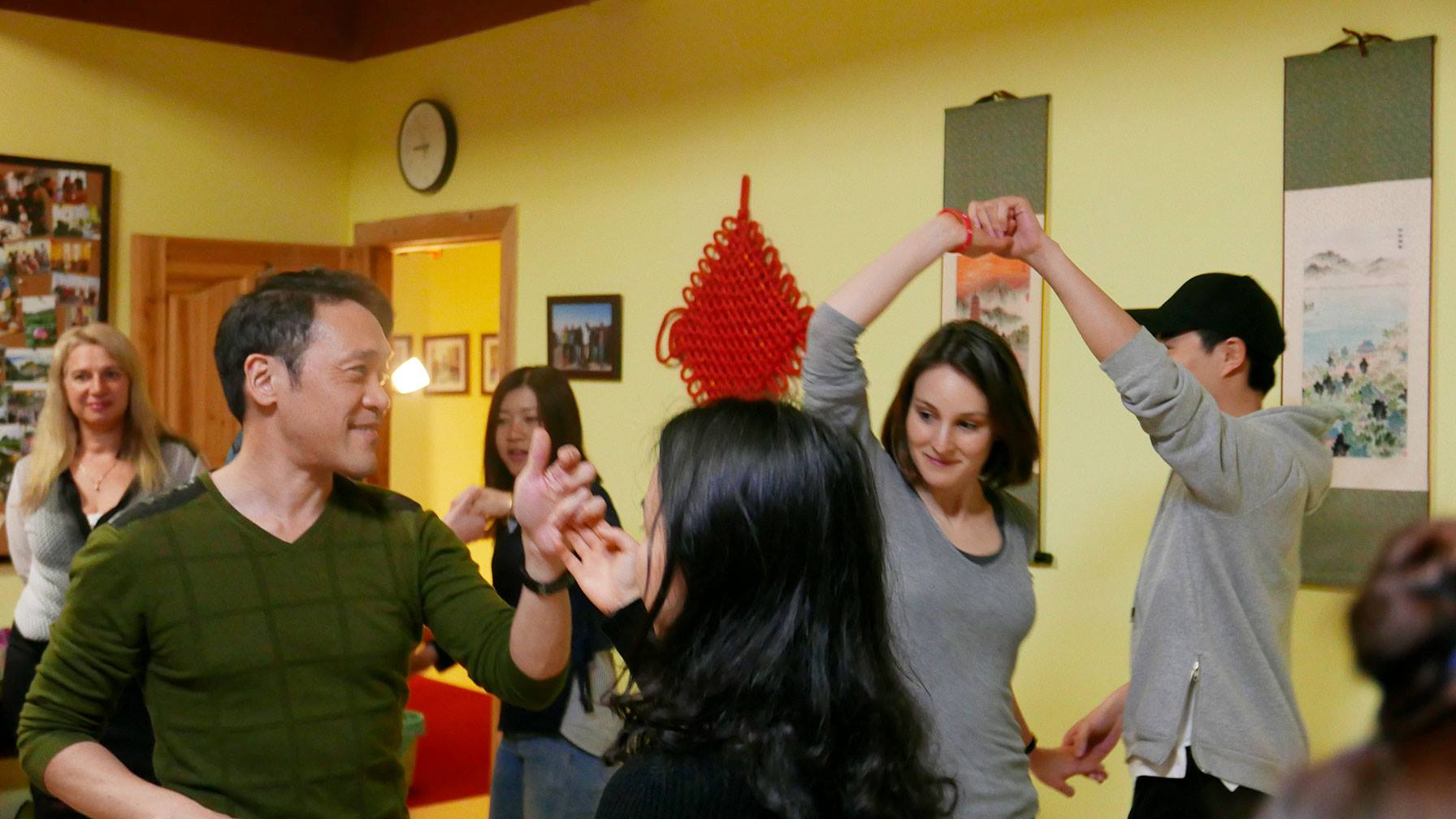
Students have danced at CLI gatherings too. The red knot on the wall is a good-luck decoration learners soon spot all over Guilin.
Cooking classes are a team effort at a big table, and the result is shared family style, the same way weekday lunch is served at the Center.
Students can start any Monday of the year, so a craft table can mix someone in their first week with someone in their sixth month.
Each student's listening and speaking teacher works on listening comprehension, and a step-by-step demonstration like this one puts it to use.
Showing the finished design first tells the class where the lesson is headed, and CLI's syllabi do the same for Chinese, with the structure of a university course.
The instructor comes around to each seat, and asking for help in Chinese is the kind of daily communication beginners work on first.
A pot of tea with Chinese speakers is language exchange at its easiest, and language exchange is part of a typical weekday once classes are done.
Rooftops make good practice spots in Guilin, and the CLI Center has a rooftop of its own with a view.
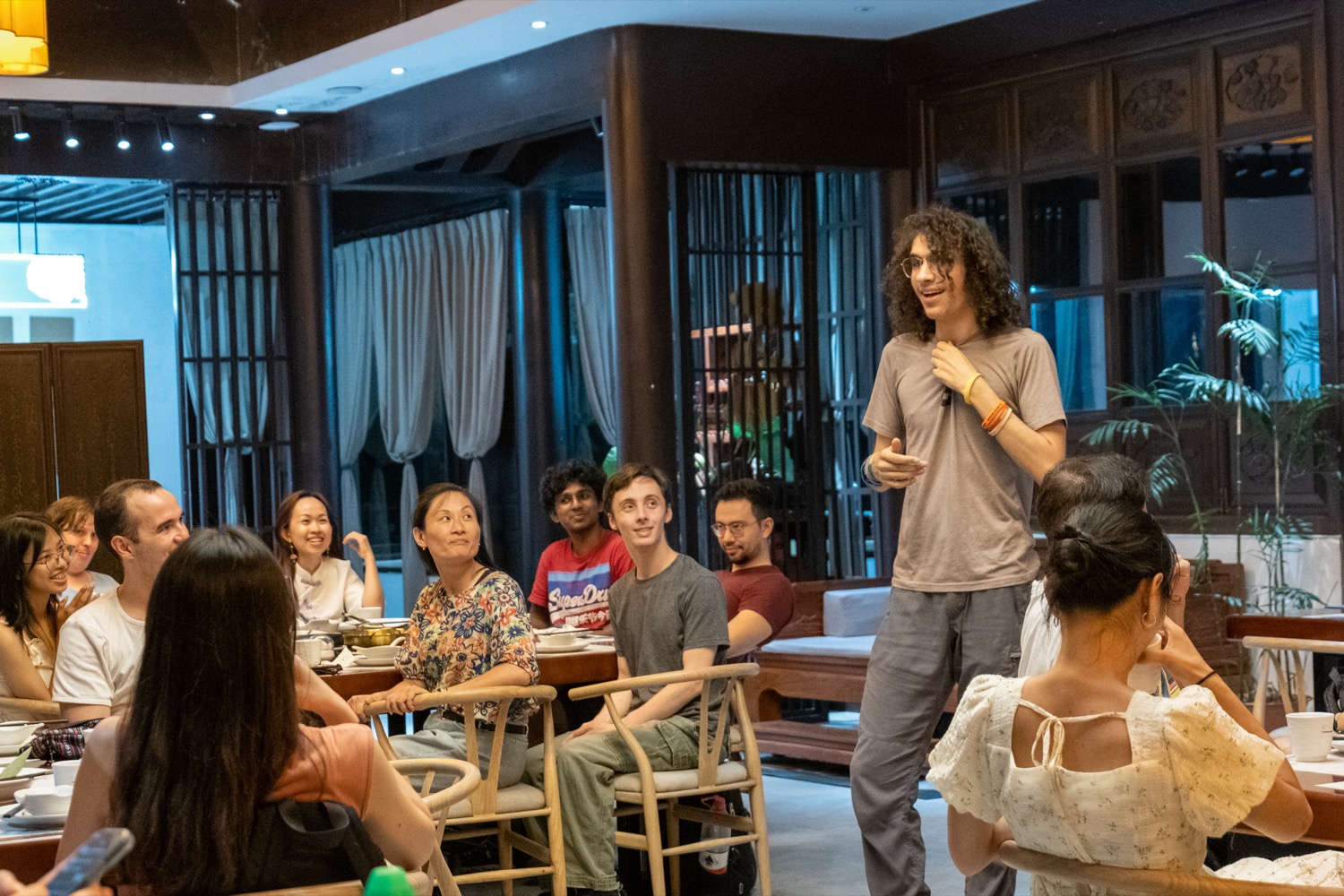
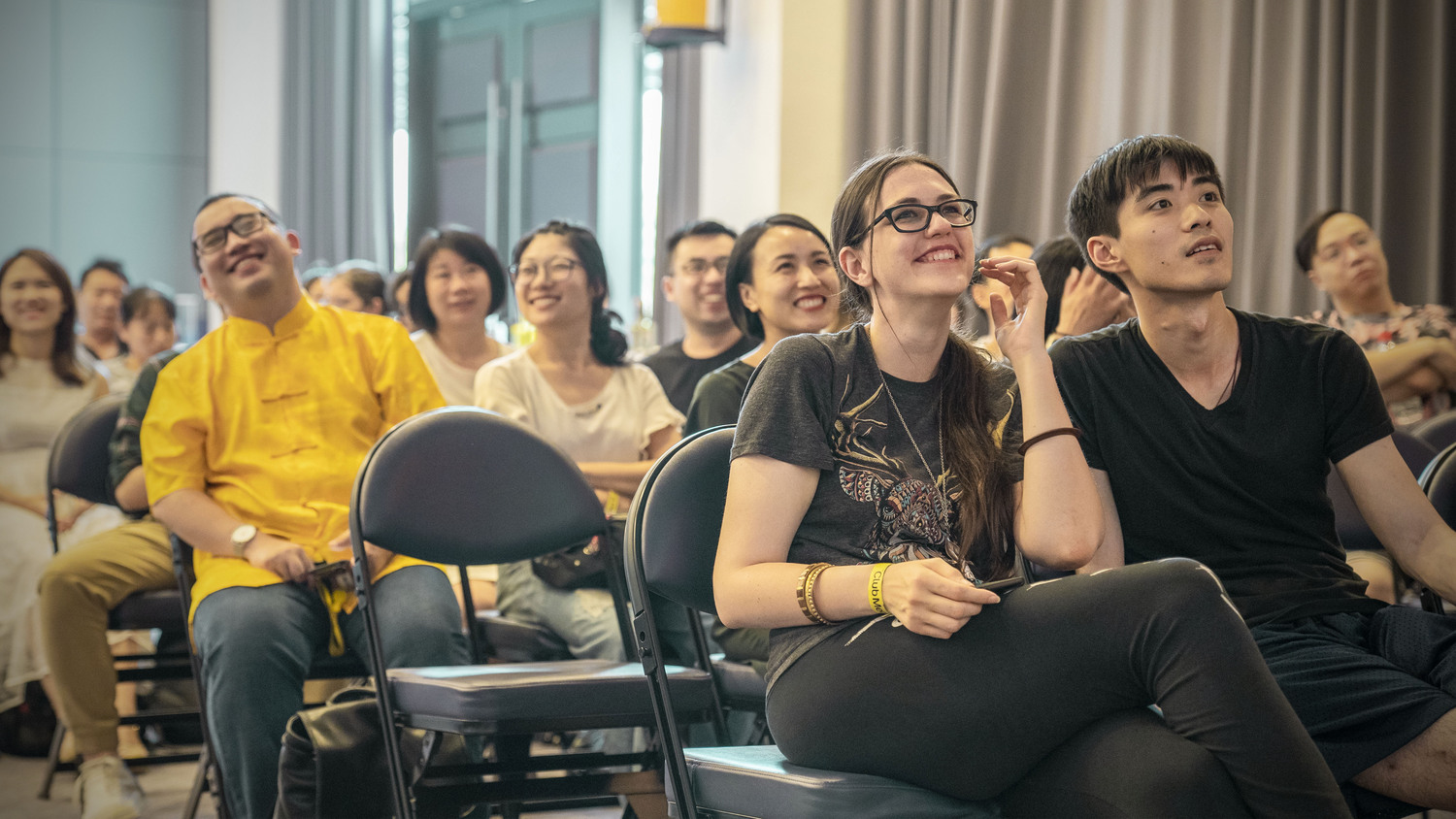
Catching the joke at a Chinese-language event is a real milestone. Listening comprehension is one focus of each student's listening and speaking teacher.
Students can earn university credit for coursework at CLI through Guangxi Normal University, and craft demonstrations like this tie-dye session are the hands-on side of the week.
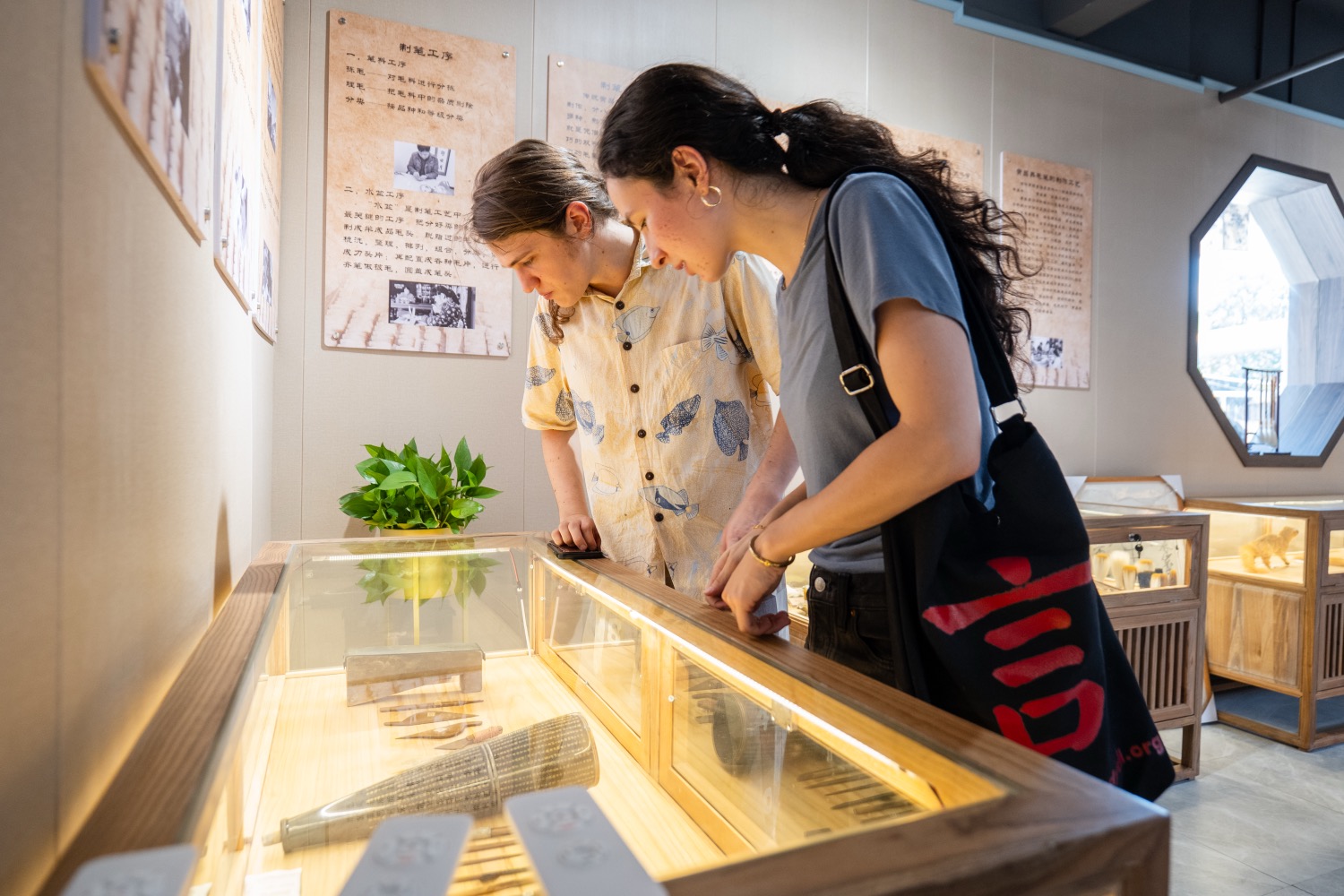
Exhibition labels make good reading practice, and reading is one of six skills checked in the short evaluation students take every two weeks.
CLI gatherings mix students from more than 50 countries with local teachers and pengyou, and someone usually ends up dancing.
Vegetarian, halal and other dietary needs can be accommodated at CLI, and cooking sessions are a good chance to learn dishes that suit them.
A hands-on correction like this mirrors CLI's one-on-one classes, where a teacher can stop and fix a tone the moment it slips.
Events like this one sit on top of a full timetable: 20 hours of one-on-one Chinese a week, four hours each weekday.
Workshops away from the Center are a change of scene, and teachers and pengyou often come along on outings to keep the conversation in Chinese.
Guilin's limestone peaks appear in Chinese painting and poetry, and the top of one is a good place for tai chi, one of the activities on CLI's list.
美食měishí
Essen
Street stalls, markets, hot pot, and lunch together.
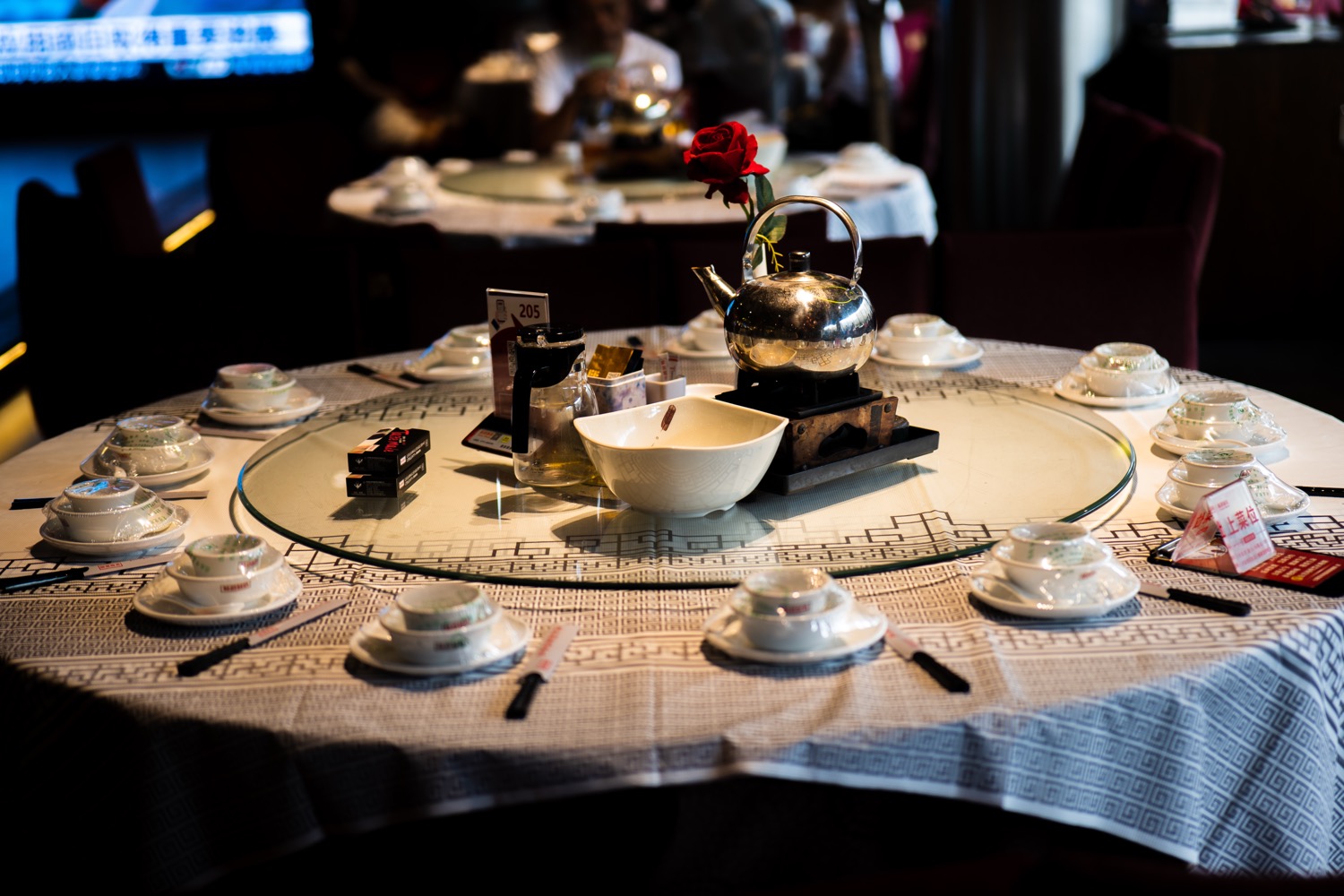
Vegetarian, halal and other dietary needs can be accommodated, which matters at meals where every dish is shared from the middle.
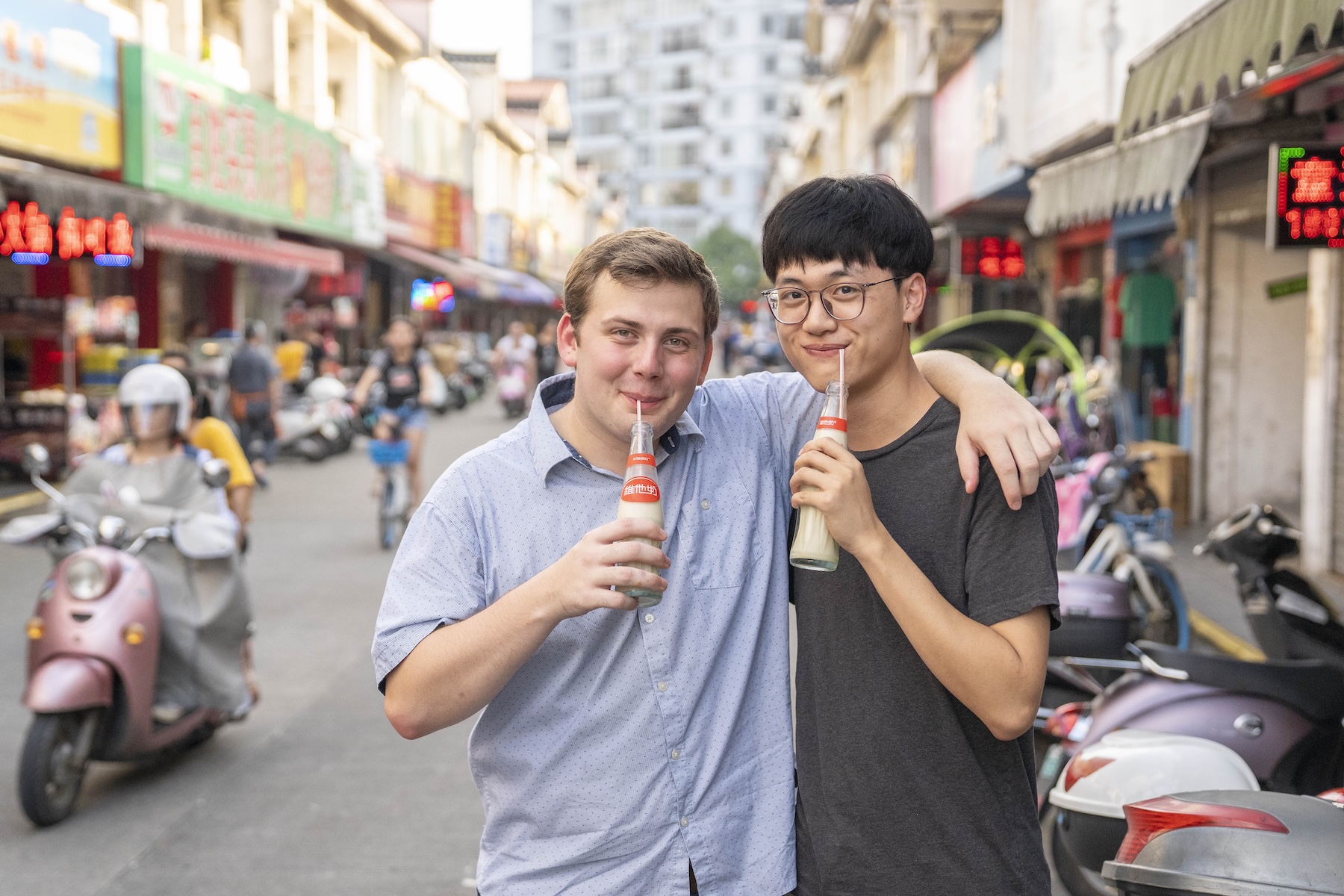
The red CLI wristband is the optional Language Pledge: while it is on, CLI team members speak only Chinese with the student, even over street food.
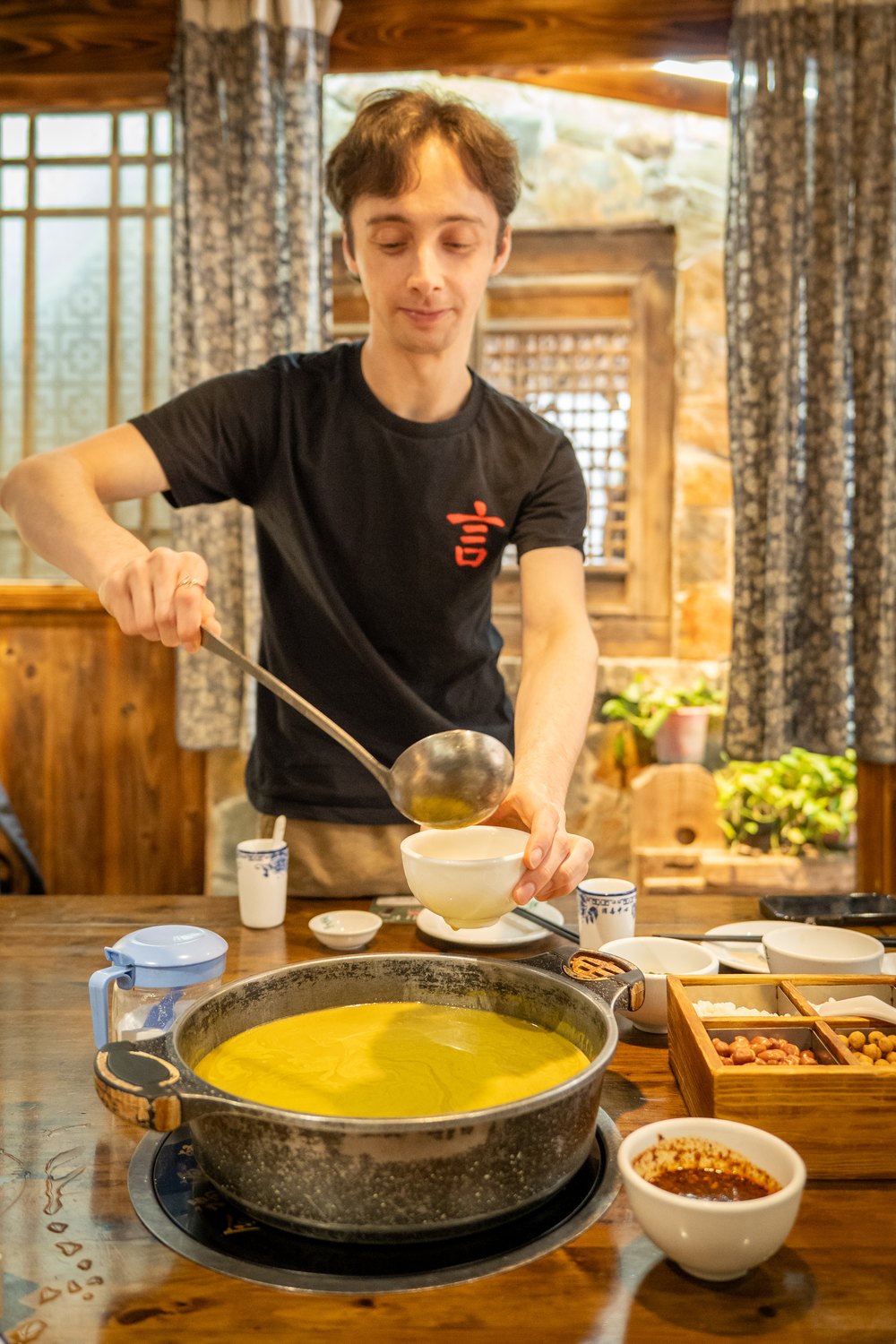
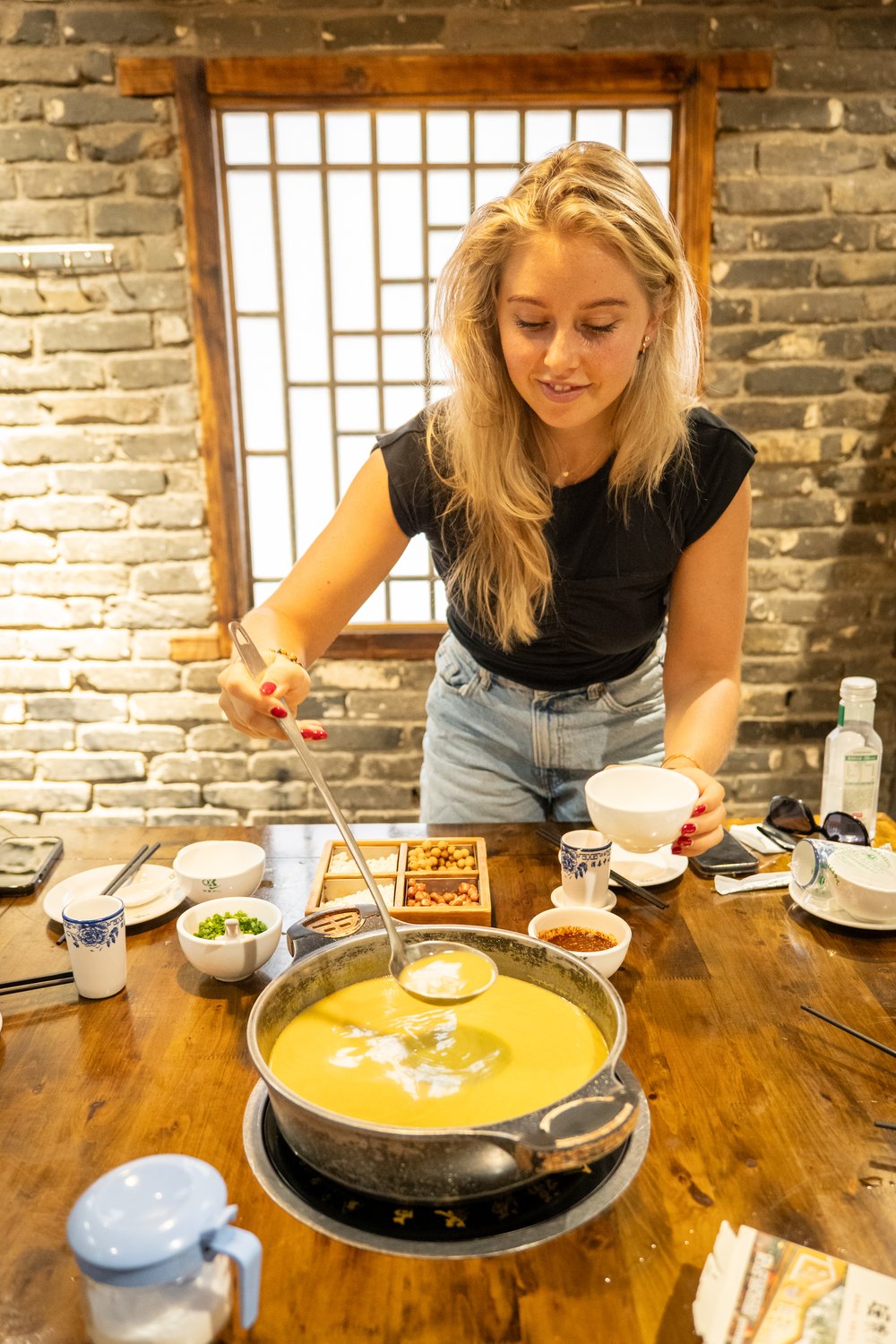
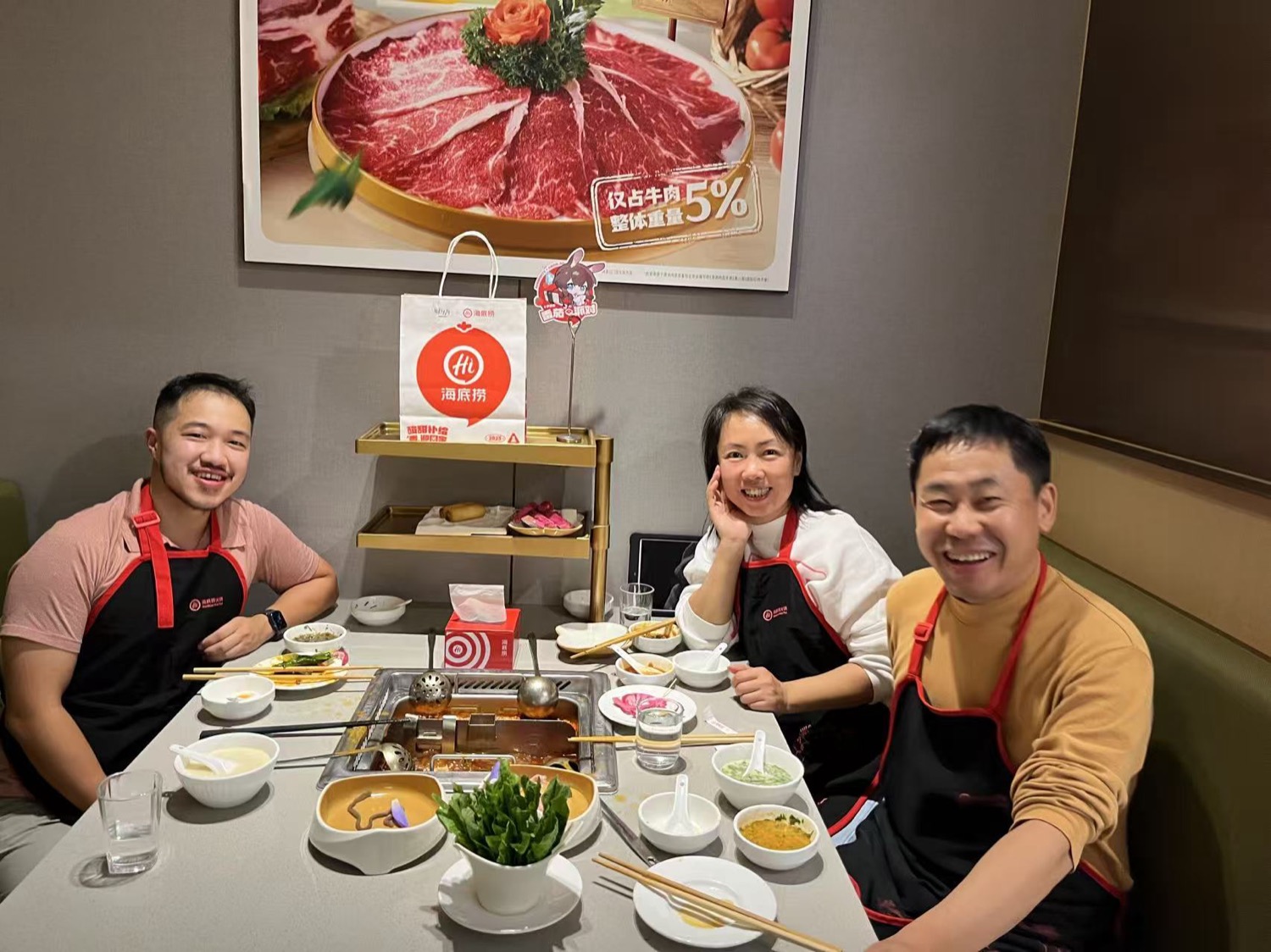
Hot pot is cooked at the table by everyone, and the menu is good reading practice for students working on characters.
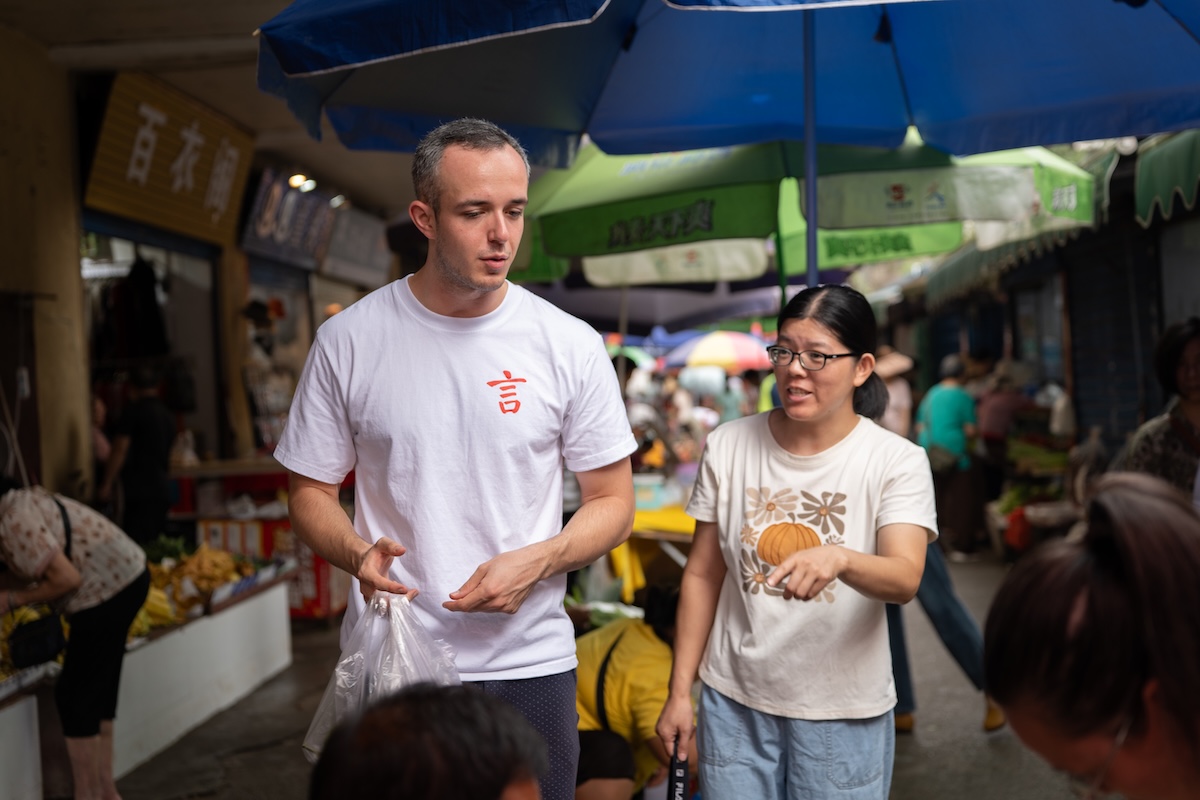
A typical weekday has two class sessions and lunch, and the rest of the afternoon often goes to errands at the markets near CLI.
CLI's welcome and farewell dinners are both included in tuition, and like most group meals in China, they are eaten from shared dishes in the middle of the table.
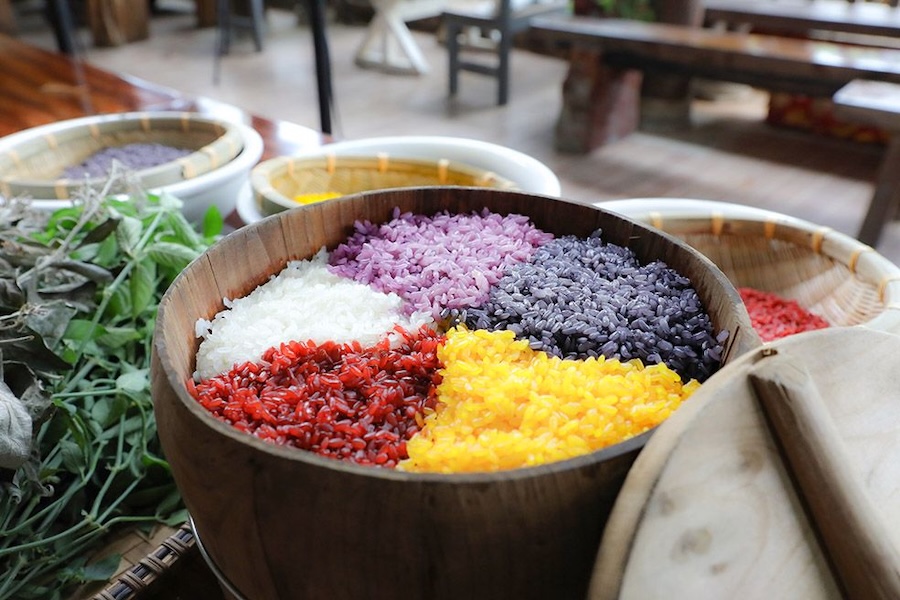
Five-colored sticky rice is a festive dish in Guangxi, where everyday cooking runs fresh and sour with a little heat.
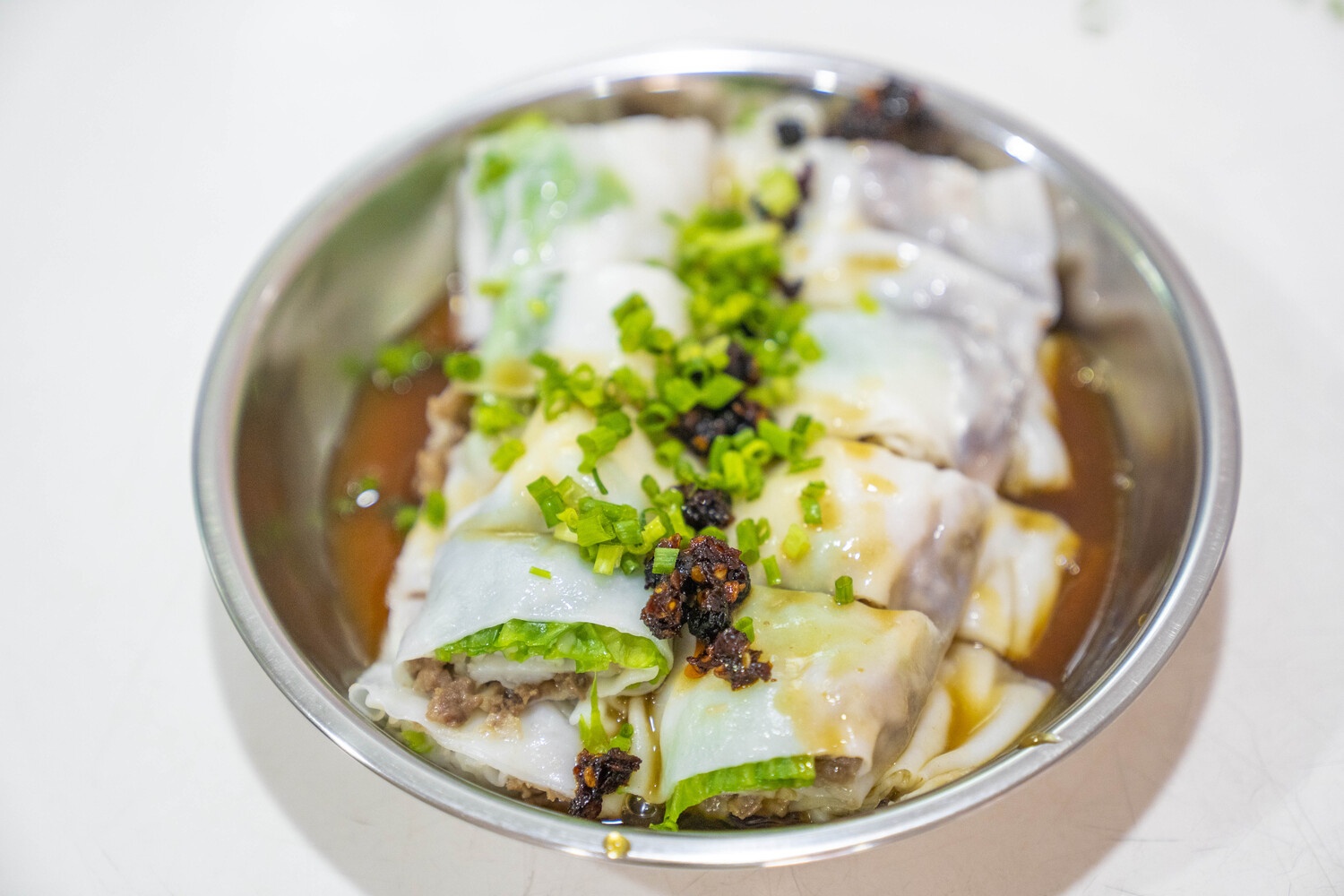
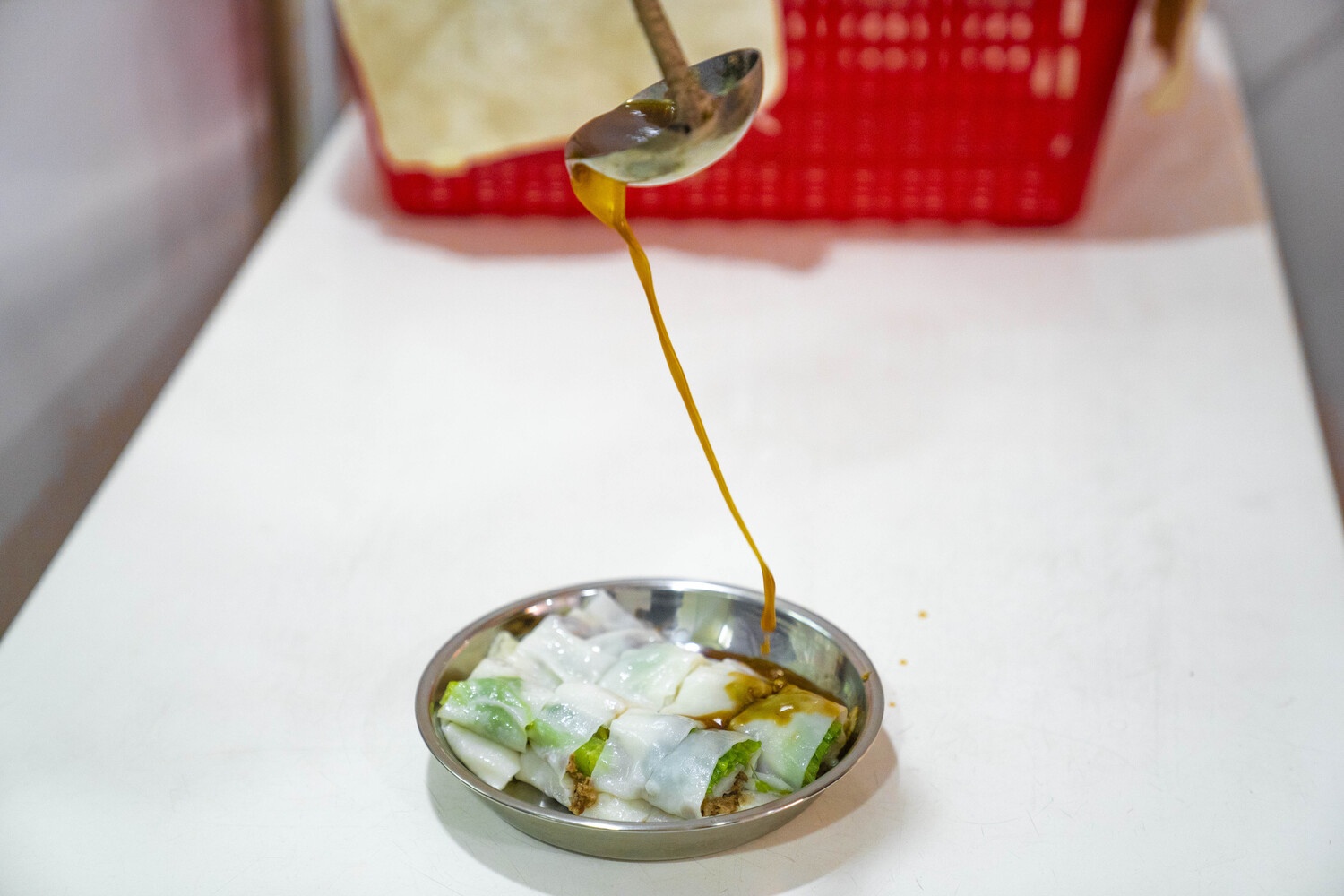
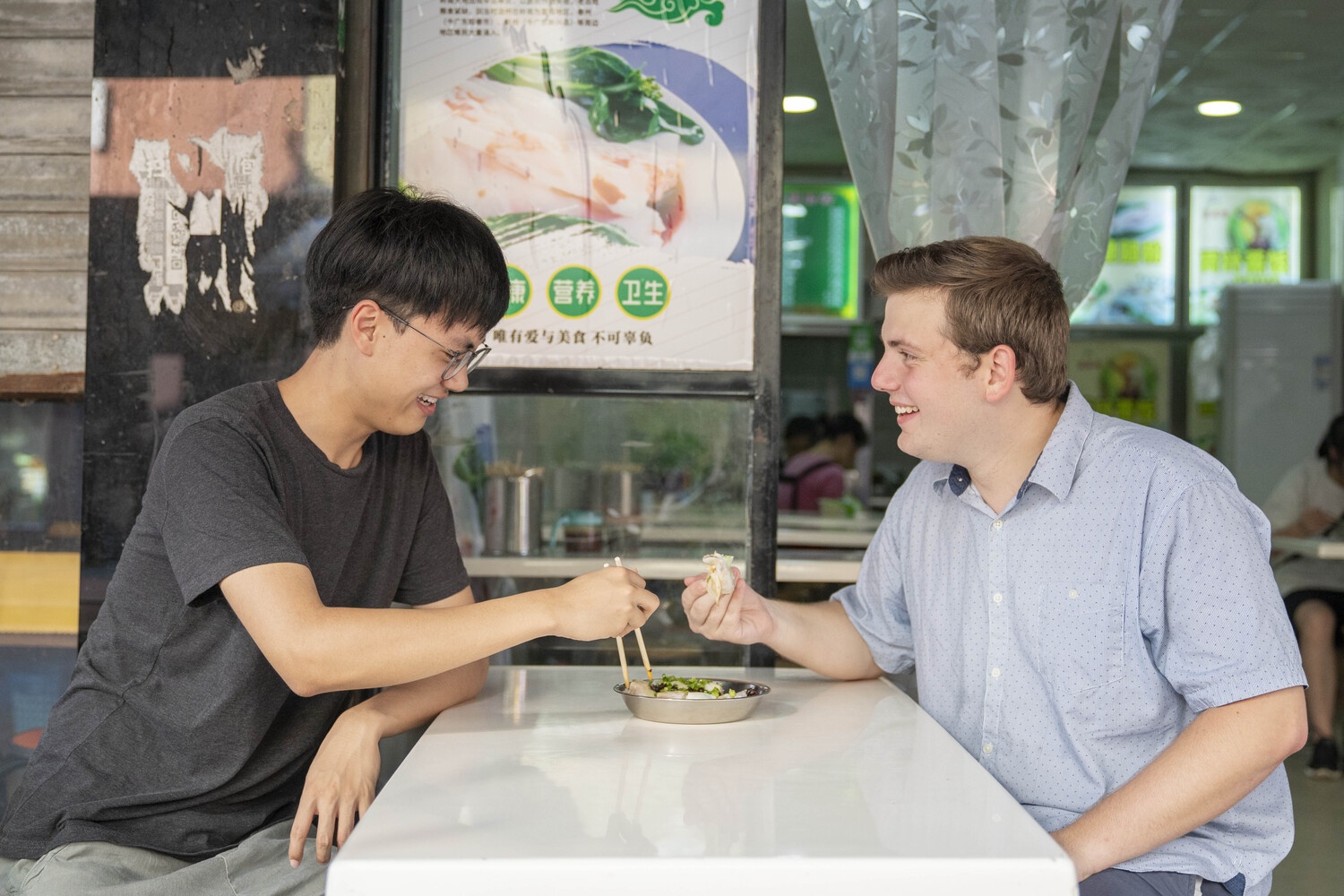
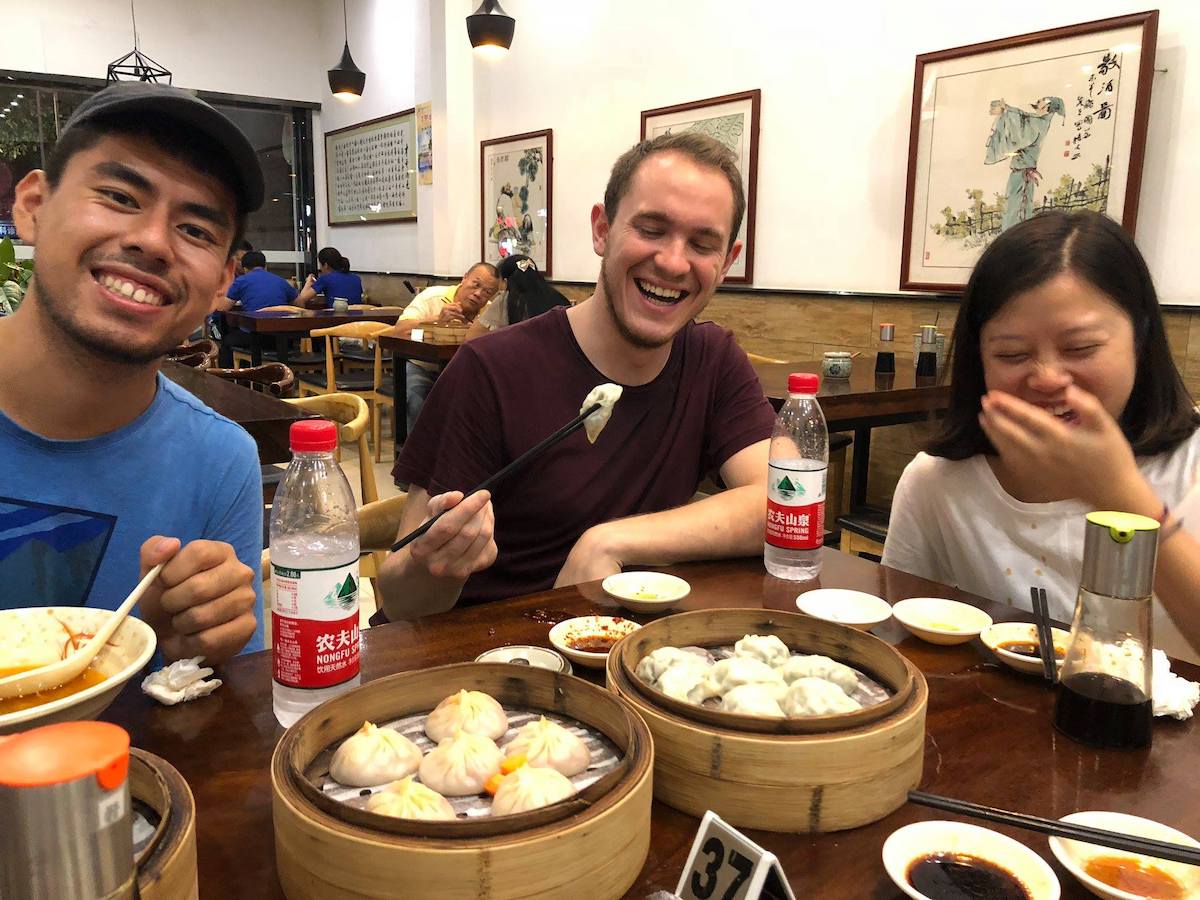
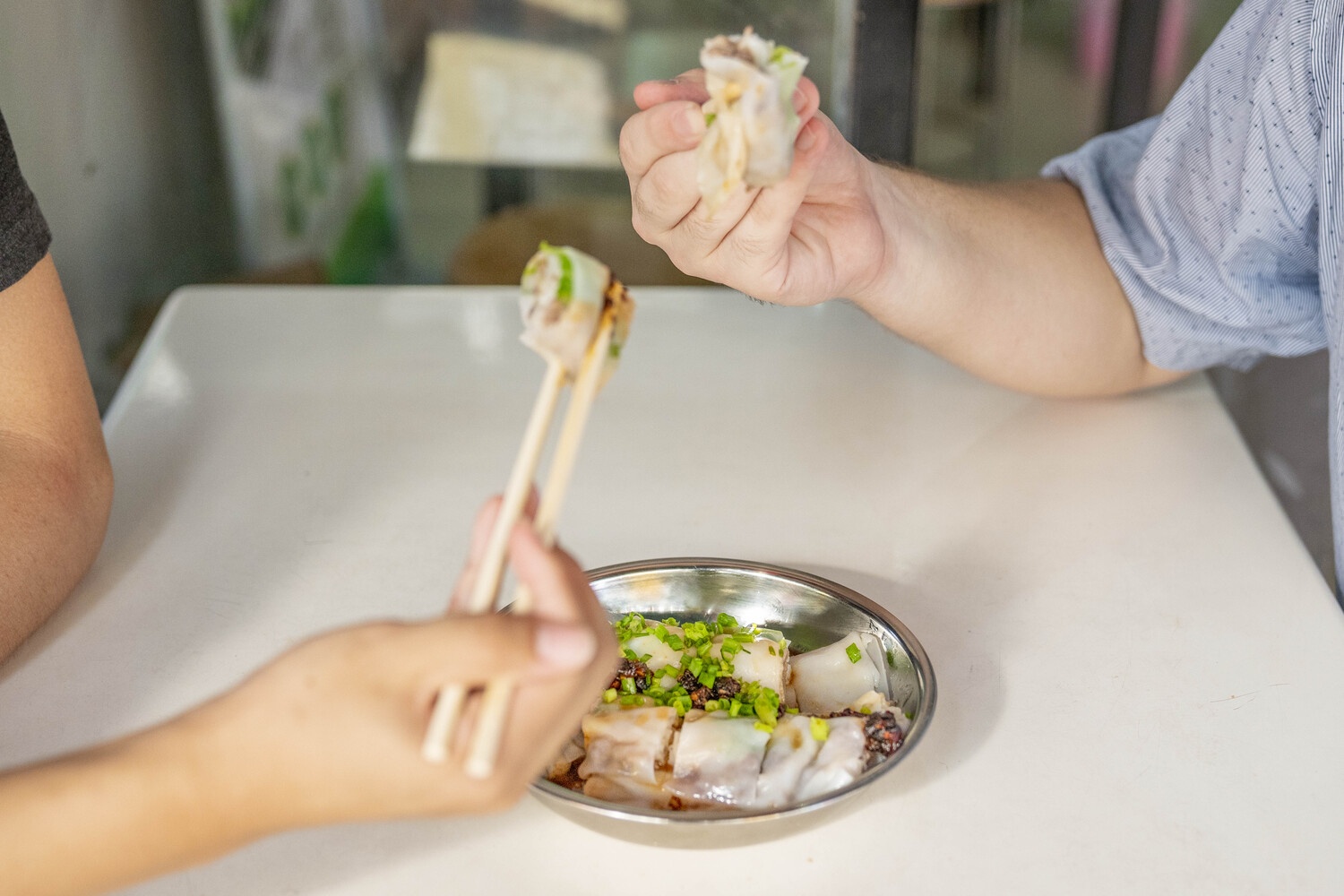
Ordering in Mandarin is one of the first skills students pick up, and a plate of rice noodle rolls is a good place to start.
Through the free, optional Pengyou Program, a student from CLI's local partner university gives three hours of language support a week.
CLI runs four class sessions a day and each student has two, which leaves time between them for a snack on the street.
Guilin is a full city but compact and walkable, so an evening snack is never far once the day's review is done.
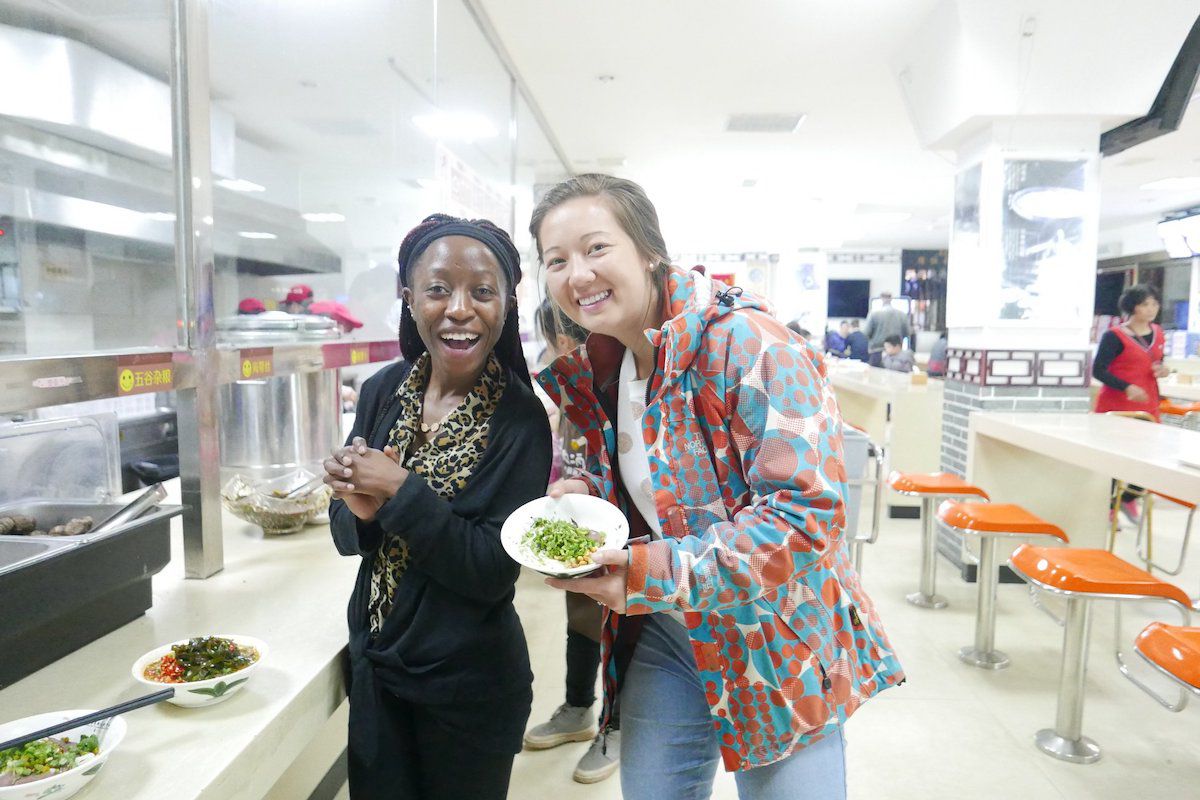
Many dishes get a ladle of sauce at the counter, and Guangxi cooking in general runs fresh and sour with a little heat.
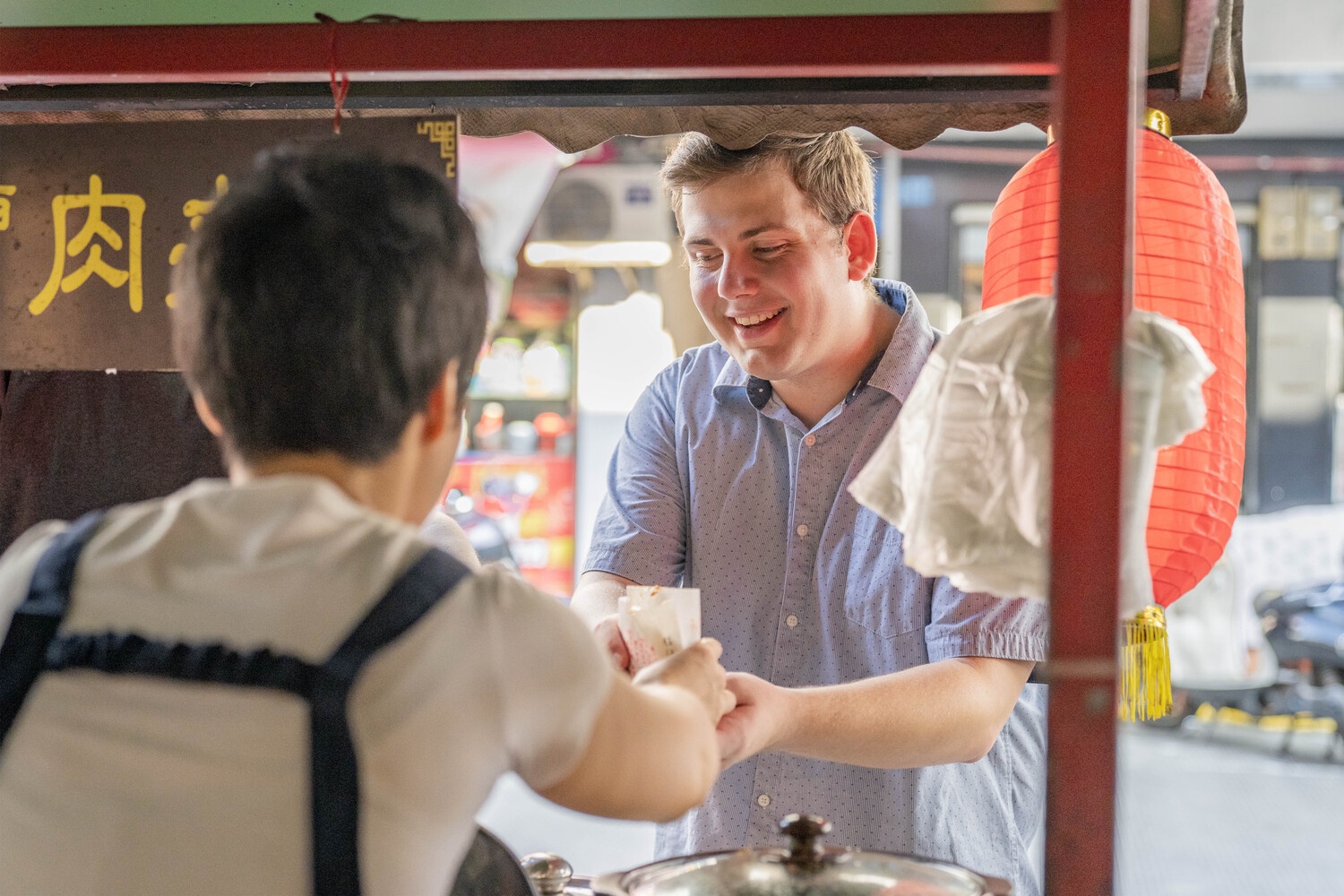
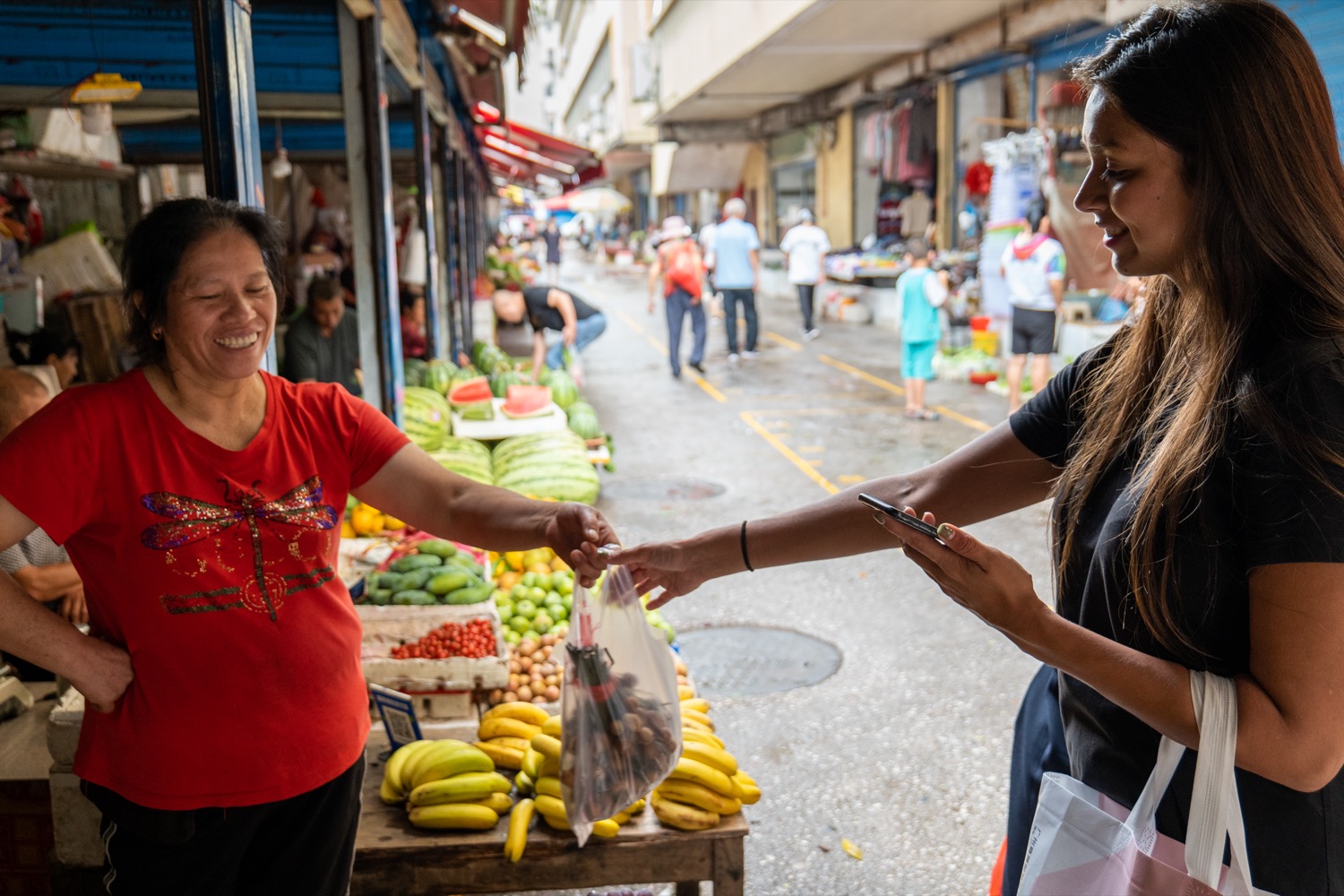
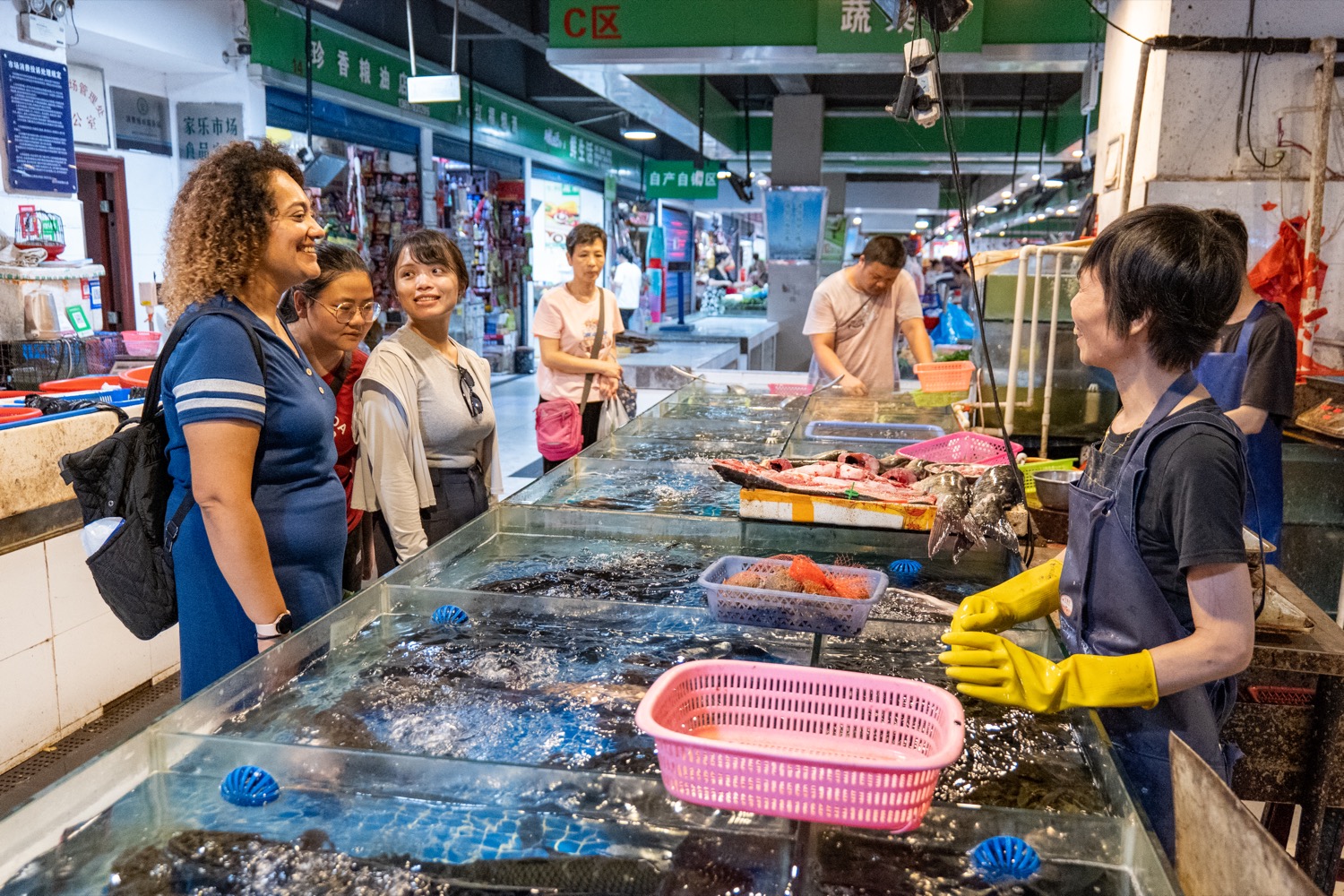
Few people in Guilin speak English, so buying a snack at a stall is a real conversation in Chinese from the first week.
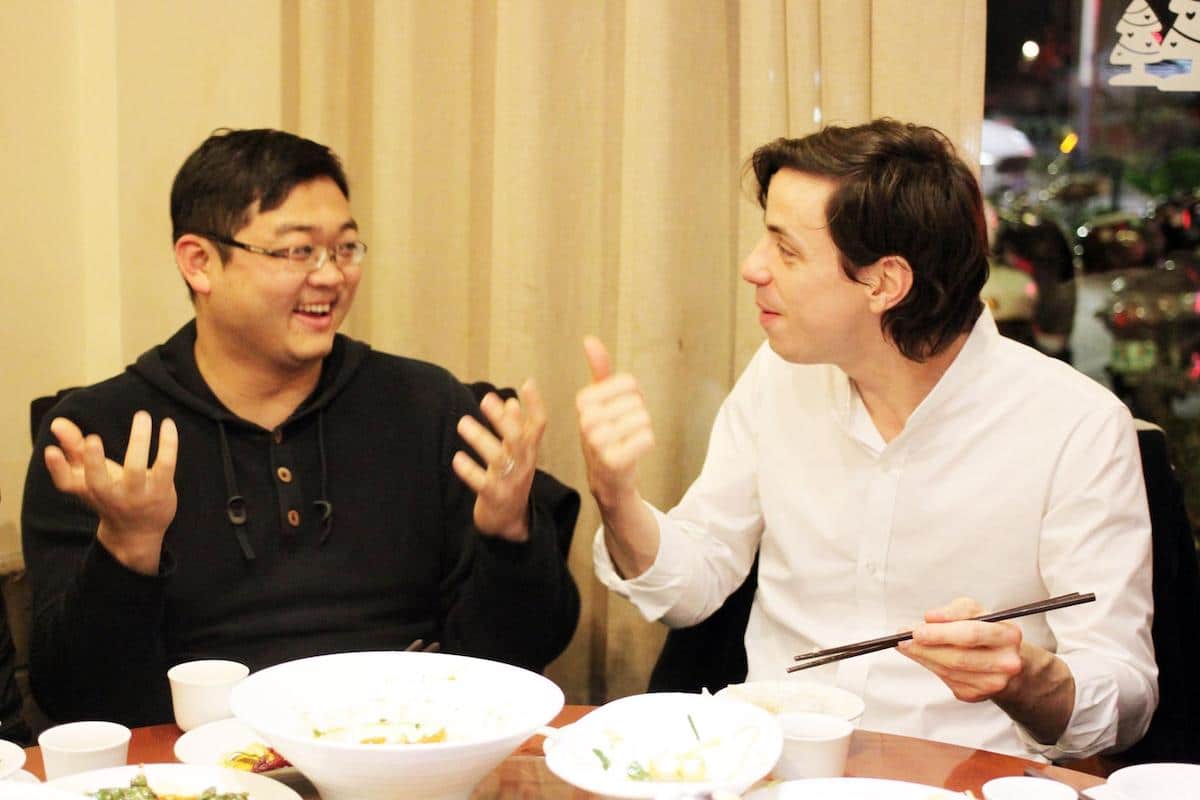
Language exchange is part of a typical weekday after class, and sharing a bowl of street food is one easy way to do it.
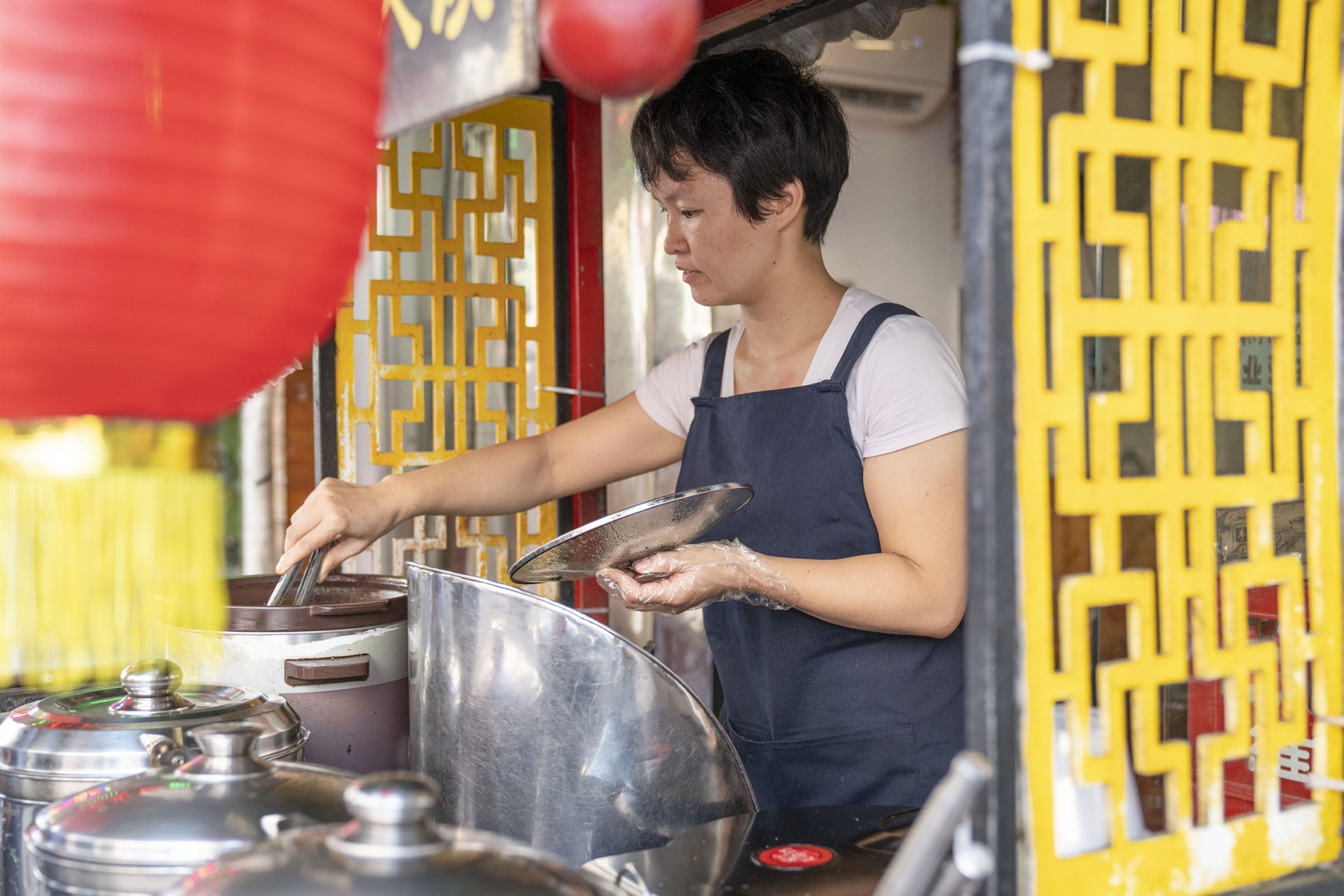
Street stalls cook to order, and catching the cook's quick questions is the kind of listening and daily communication beginners start with.
Noodles are everywhere in Guilin, and the local rice noodles, 桂林米粉 (guìlín mǐfěn), are a breakfast eaten at neighborhood shops.
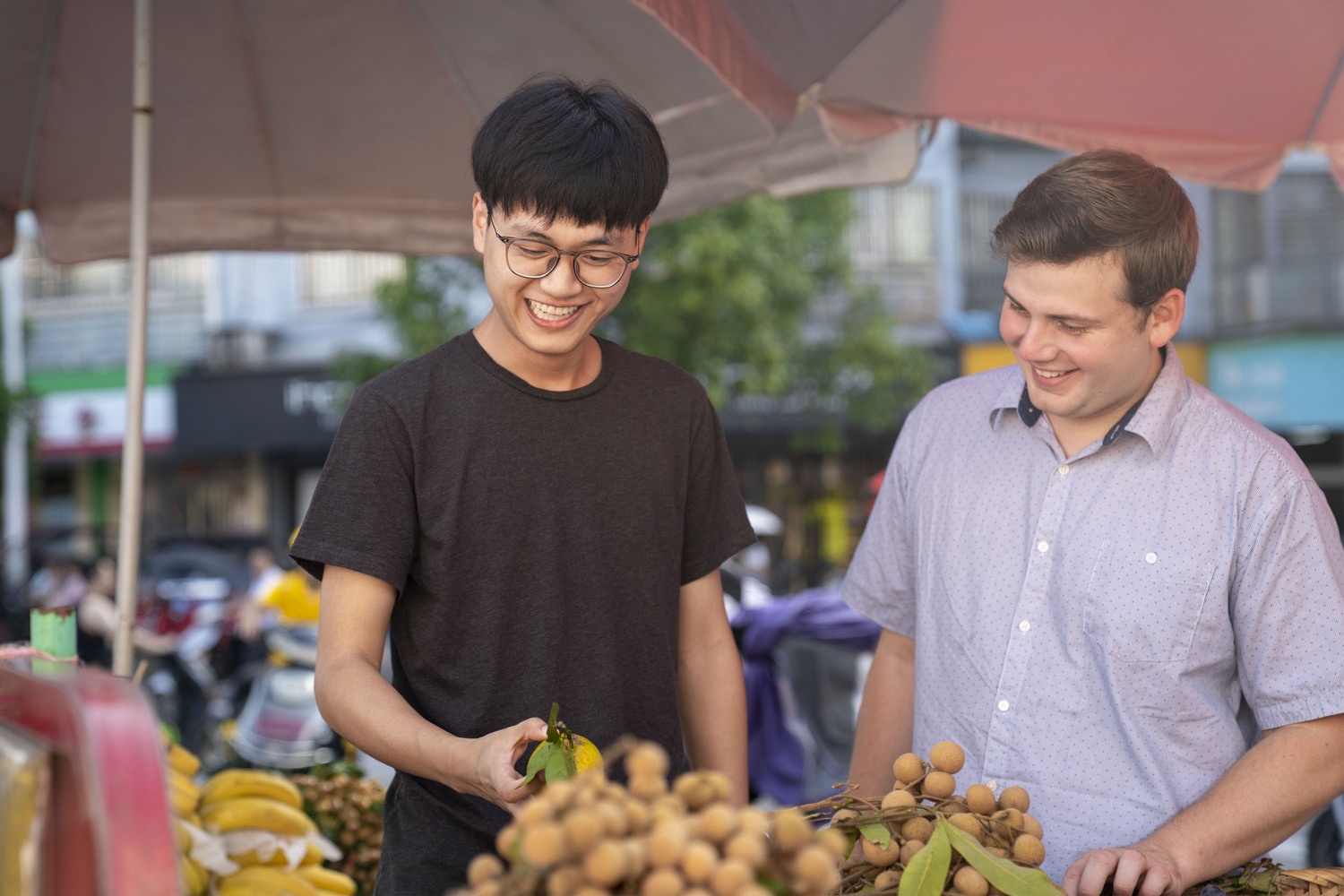
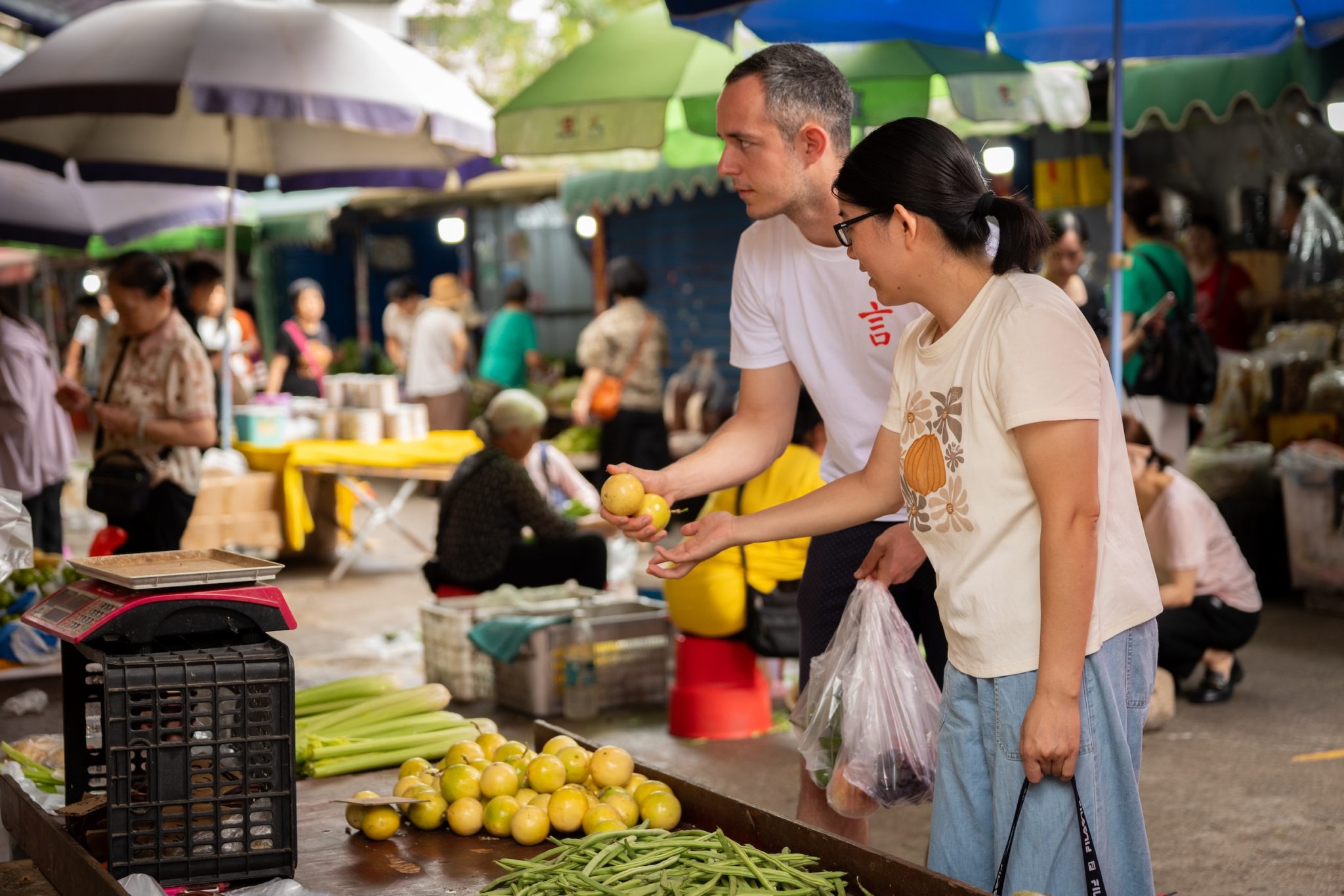
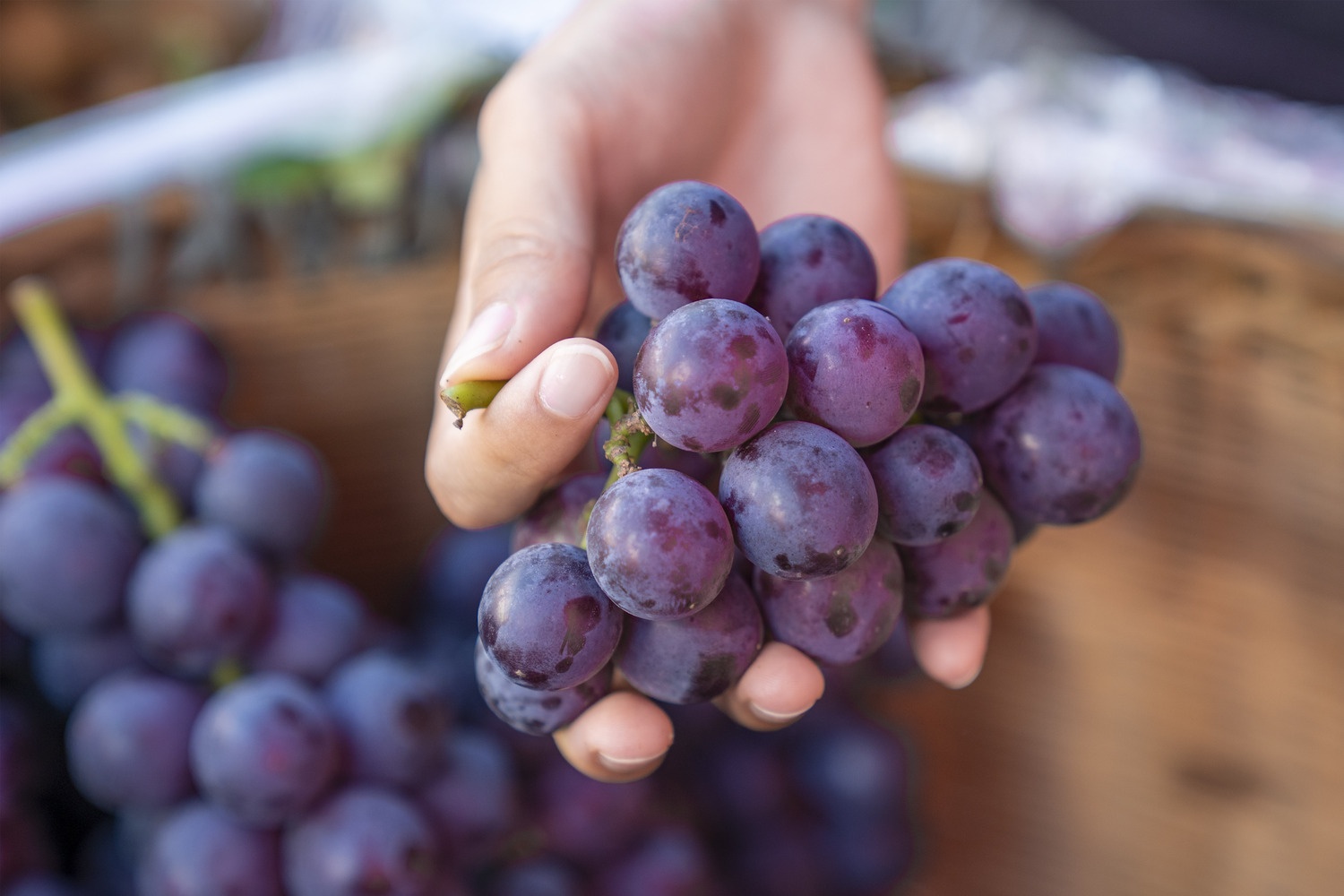
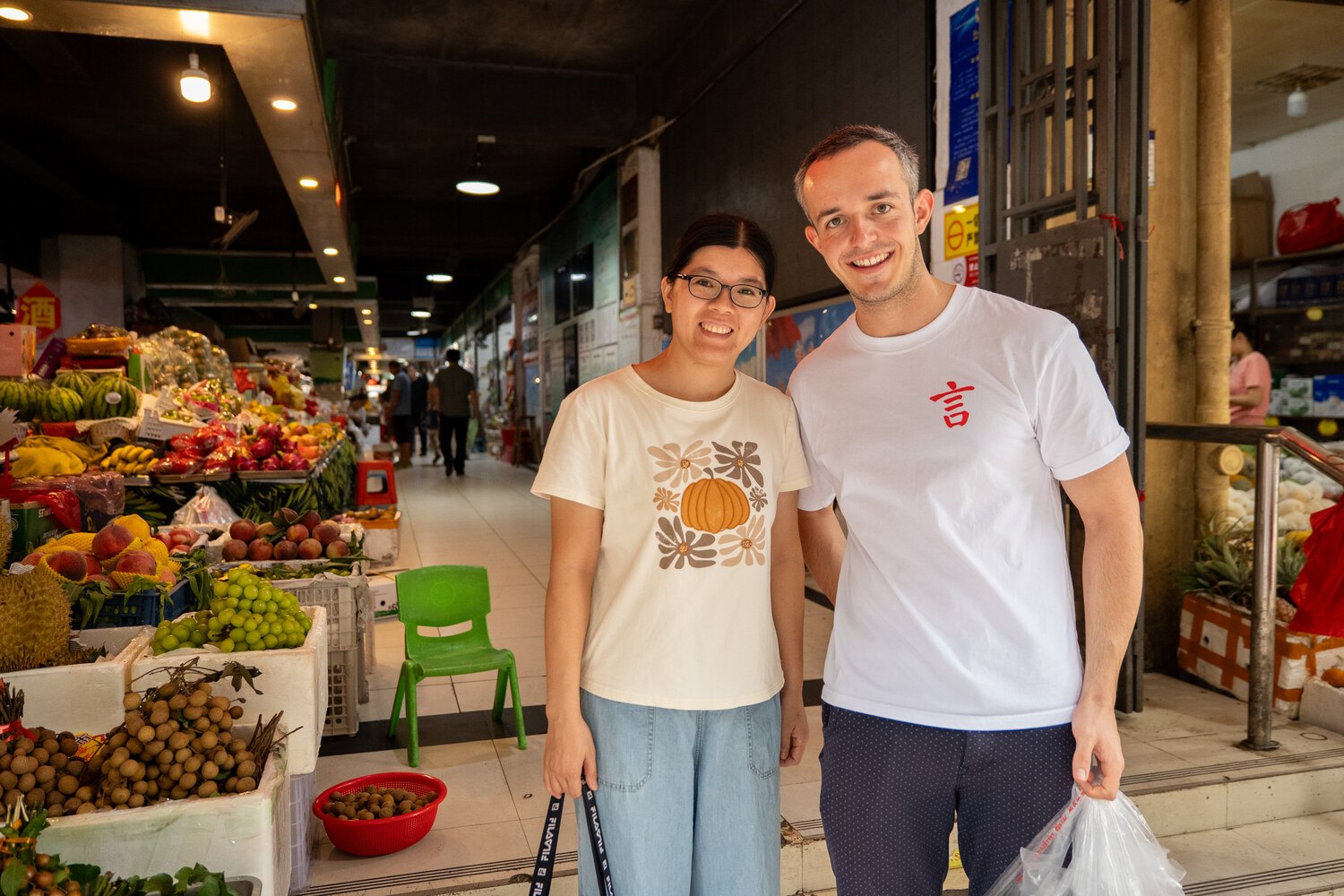
Students can start any Monday of the year, and from the first week a fruit market is a place to practice numbers and prices.
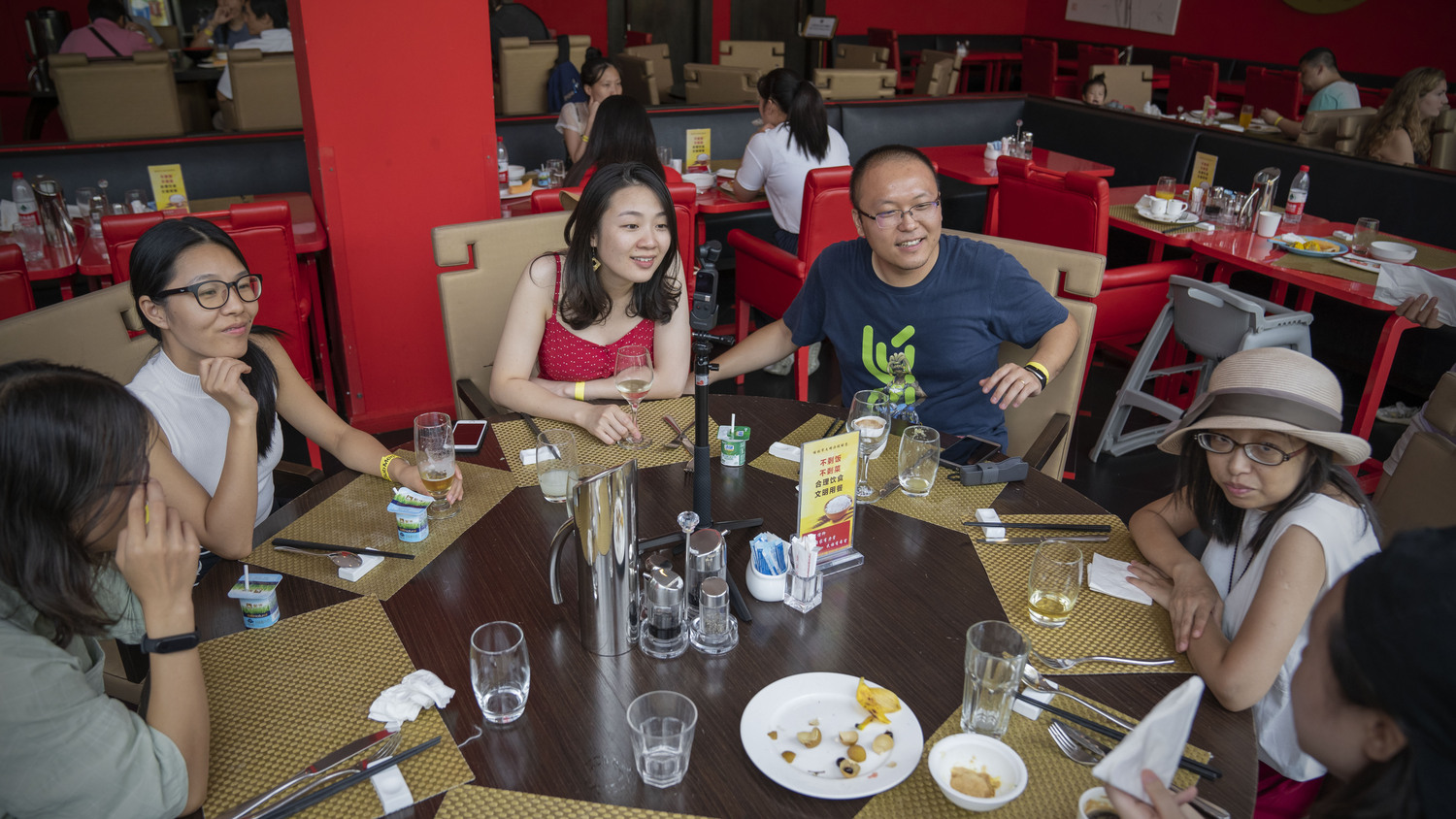
Weekday lunch on the optional meal plan is home-cooked and family style, at one table with teachers and classmates.
The CLI Center has a full kitchen, and every weekday lunch includes at least one Mandarin-only table.
Paying at a market stall means hearing numbers in Chinese at full speed, and listening comprehension is a focus of each student's listening and speaking teacher.
Dumpling making is one of CLI's activities, so students get to fold the kind of dumplings they order around town.
Evenings on the program are usually lighter, and dinner out with classmates is an easy way to keep using Chinese after class.
Reading class covers character recognition, and a supermarket aisle is a good place to test it on real labels.
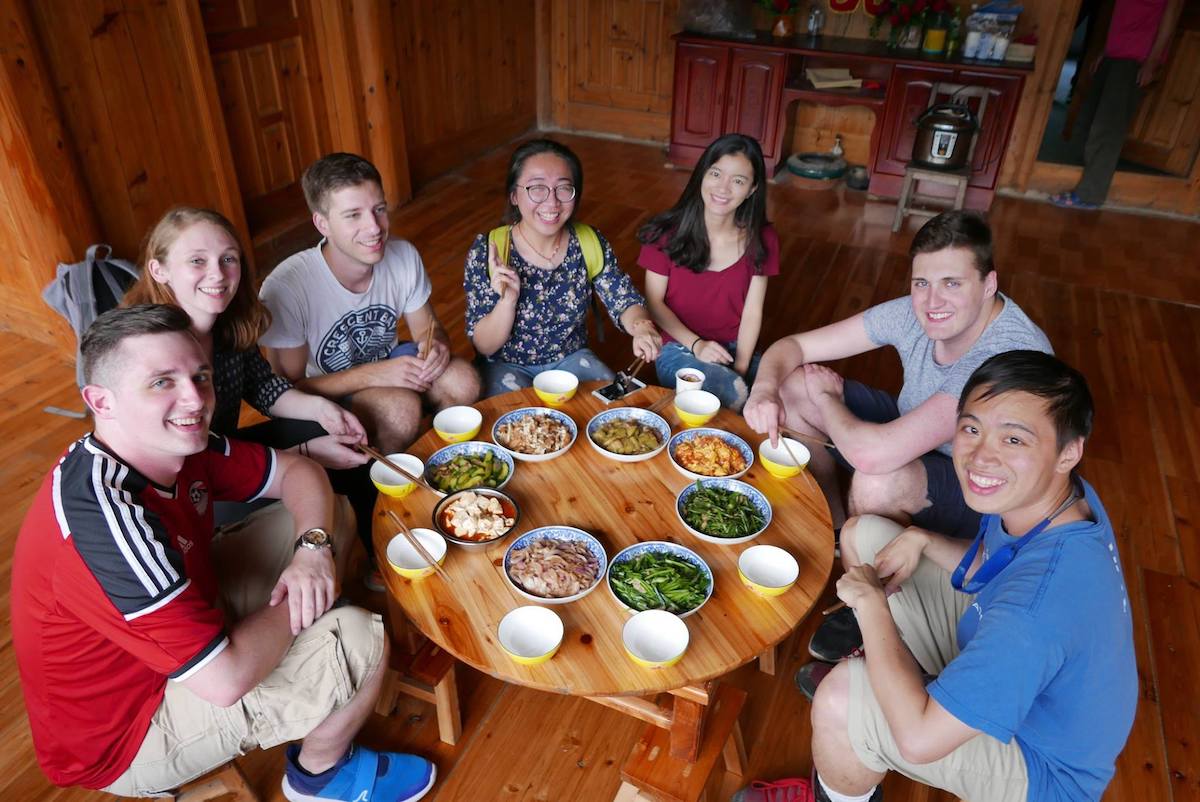
Homestay students typically eat dinner with their host family, and meals out with classmates can be as relaxed as a low table on the floor.
Rice noodle rolls are made fresh at small breakfast counters, and in a city with little English, ordering one is a daily exchange in Chinese.
Orientation, usually on the first Monday, includes a welcome meal with dishes shared around the table.
Students range from high school students to retirees, and families sometimes study together, so a dinner table can span generations.
Plates of greens are easy to find in Guilin, and vegetarian, halal and other dietary needs can be accommodated on the program.
At least one table at the daily lunches is Mandarin-only, so even the midday break keeps the language going.
朋友 (péngyǒu) means friend, and in the Pengyou Program each pengyou shares a meal with the student they support every week.
Cafés near CLI are where students often meet for language exchange or an afternoon of homework between class sessions.
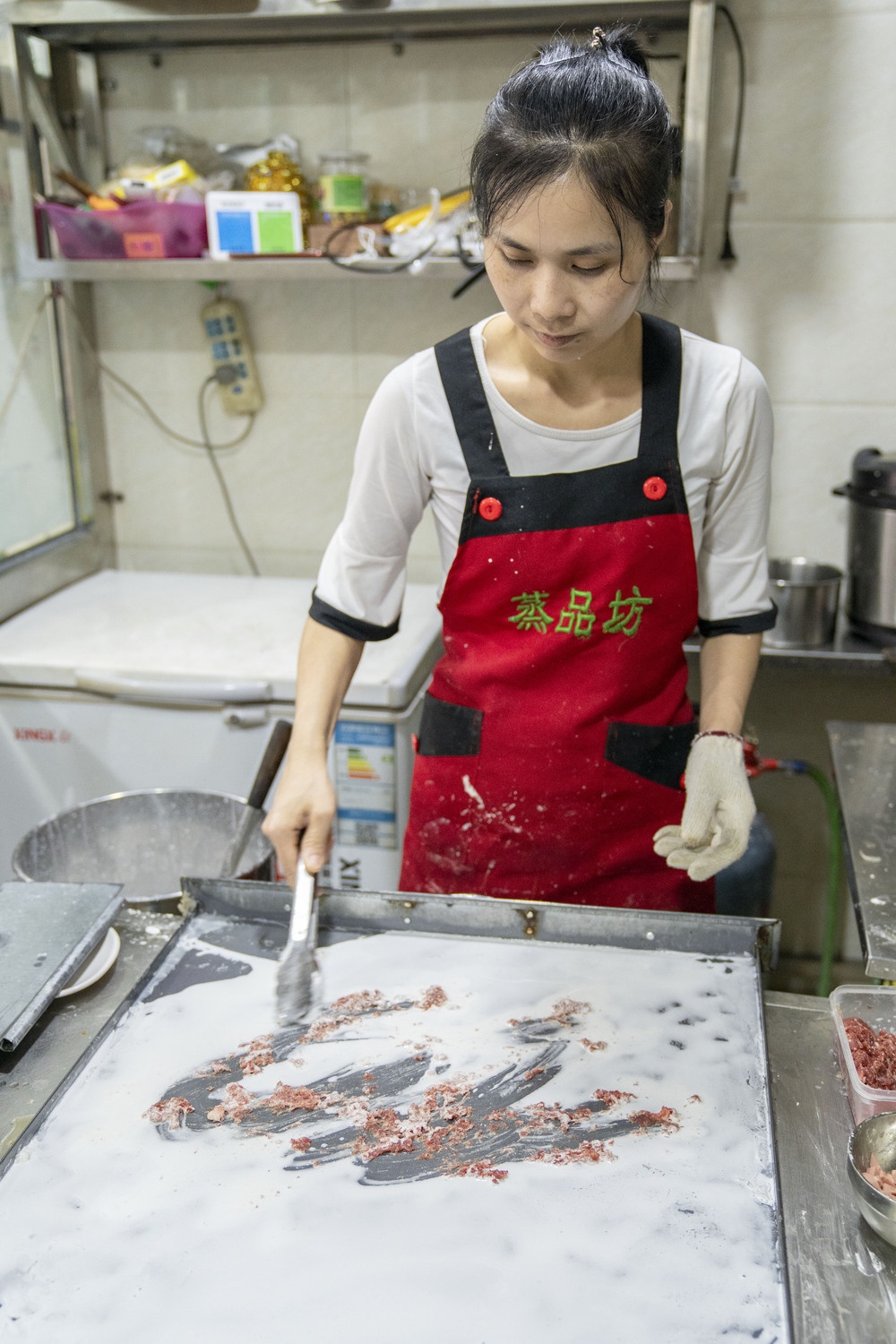
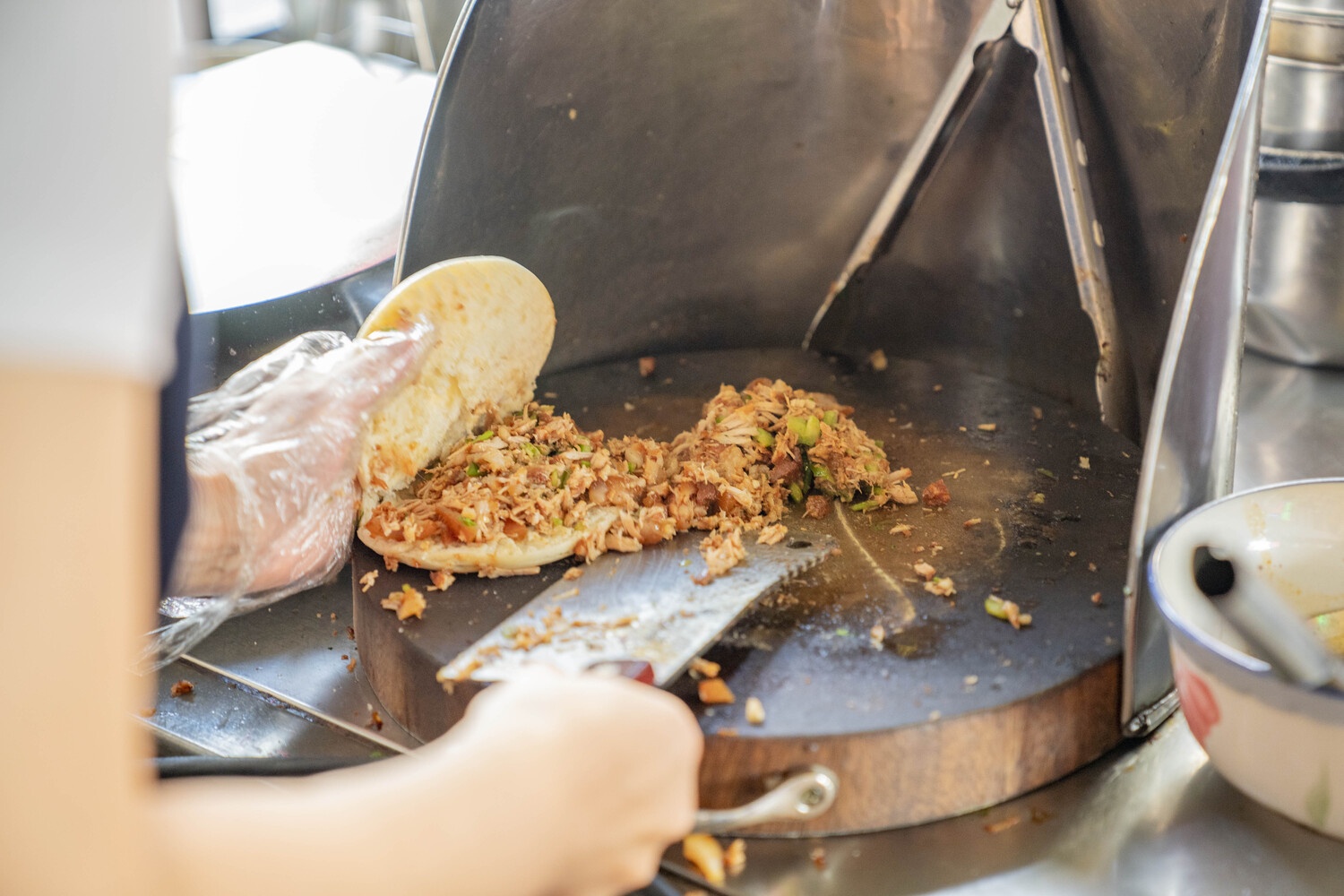
Between class sessions students can study in the Center's reading room, or step out for a snack from a griddle like this one.
Getting the tones right matters when ordering, and pronunciation and tones are part of what the listening and speaking teacher covers.
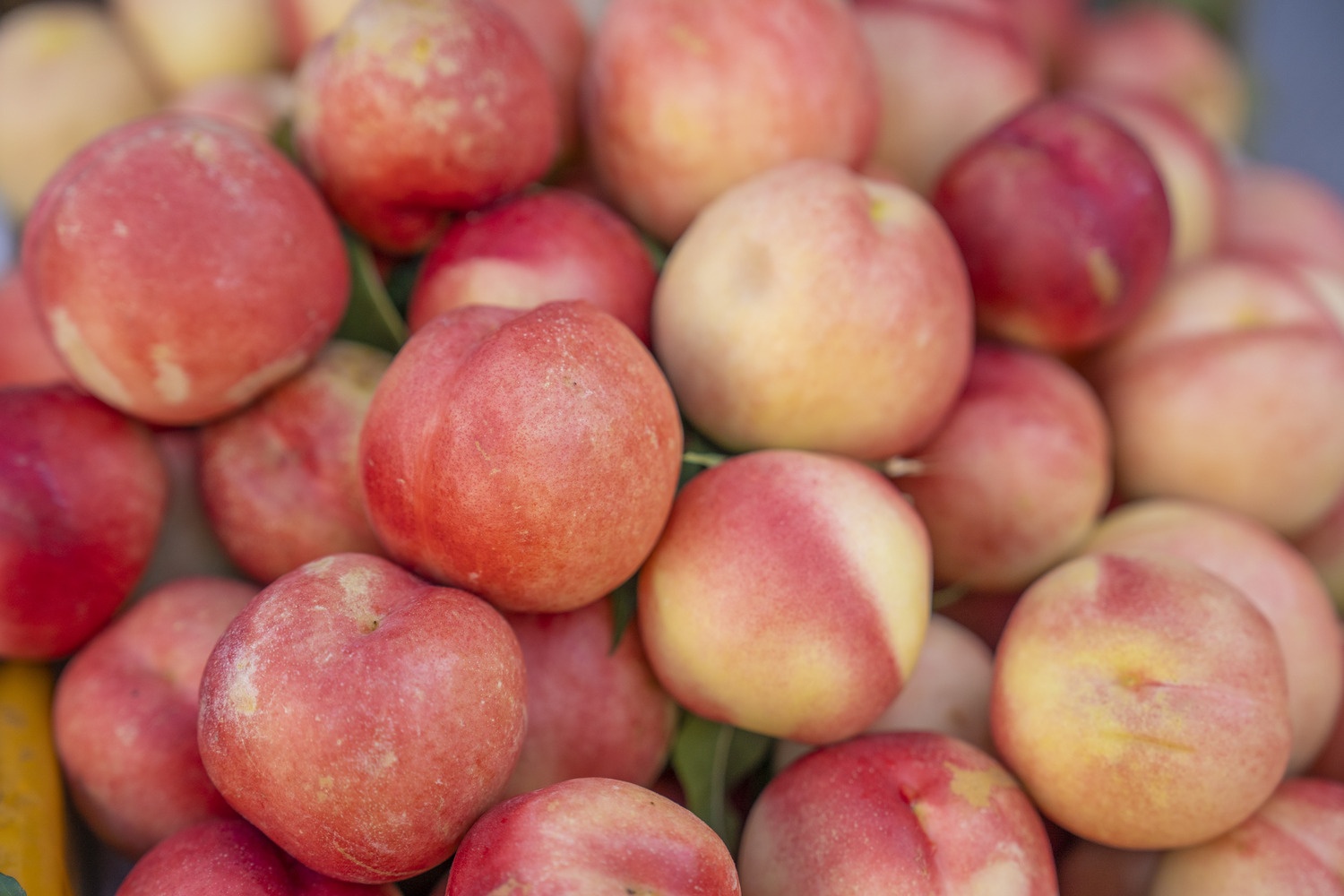
Summers in Guilin are hot and humid, and the markets near CLI are an easy walk for fruit like this.
Words for fruit come early, since beginners often start with survival phrases and the Chinese of daily life.
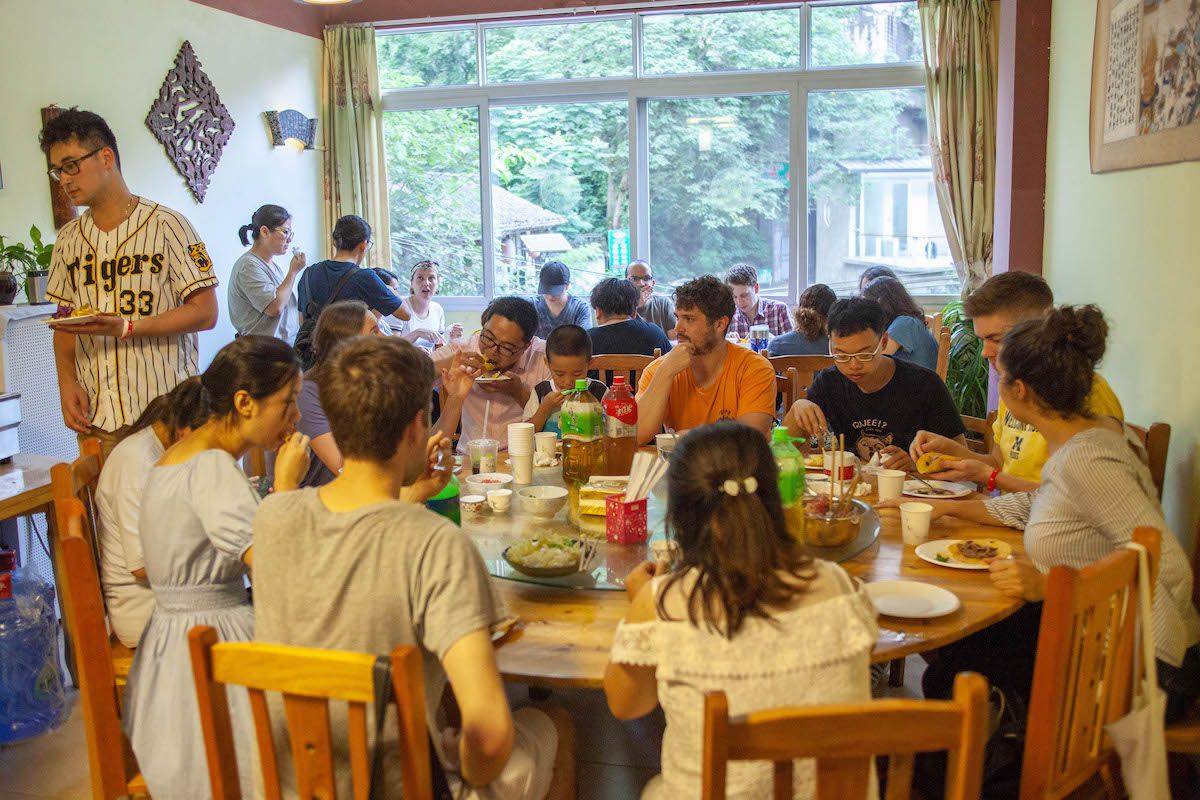
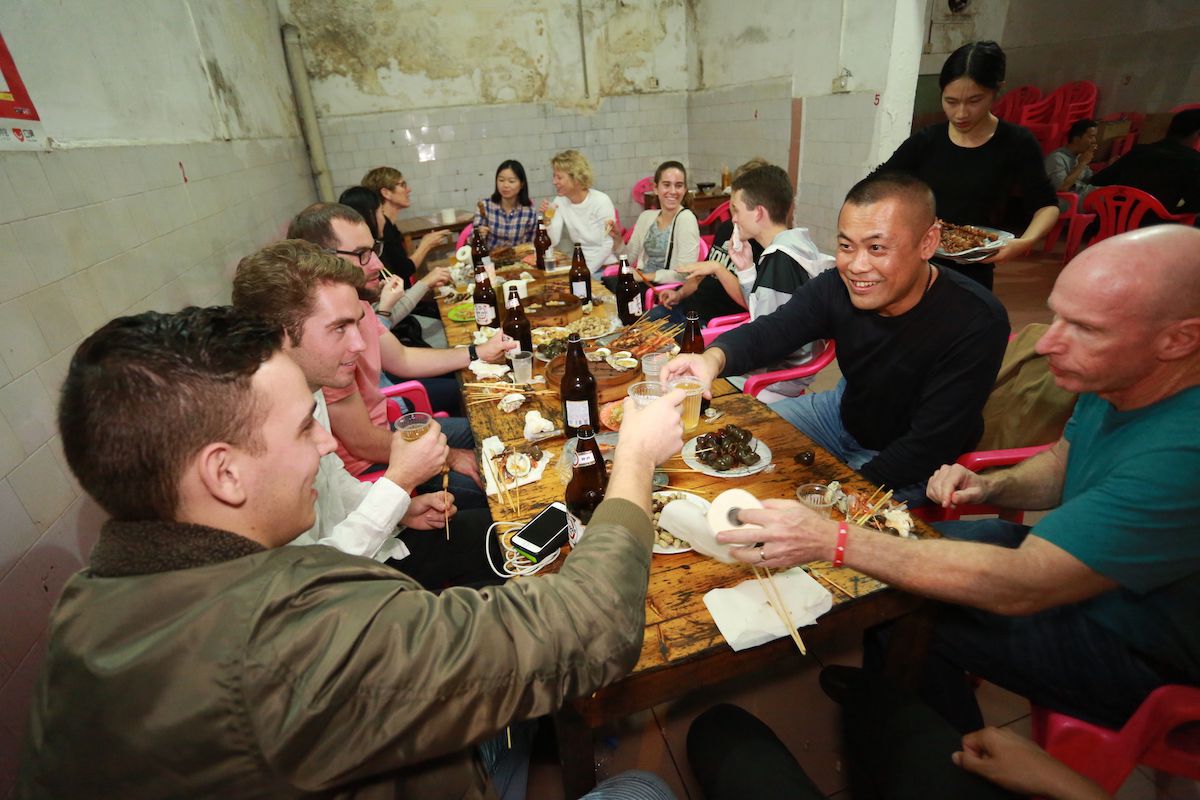
With students from more than 50 countries, a long dinner table on the program can hold many first languages, and Chinese is the one everyone is there to practice.
One of each student's three teachers focuses on grammar and vocabulary review, and a market visit supplies plenty of new words to bring to class.
Orientation includes a tour of Guilin, a first look at the streets and markets where students will shop and eat.
CLI runs weekly activities and monthly excursions, and plenty of shared meals happen around them, hot pot included.
Cooking together is easy Chinese practice, and with at least one native Chinese speaker for every learner at the CLI Center, there is usually someone to ask what goes in the bowl.
Tea ceremonies and tea house visits are among CLI's activities, and at many meals out tea is poured for the whole table.
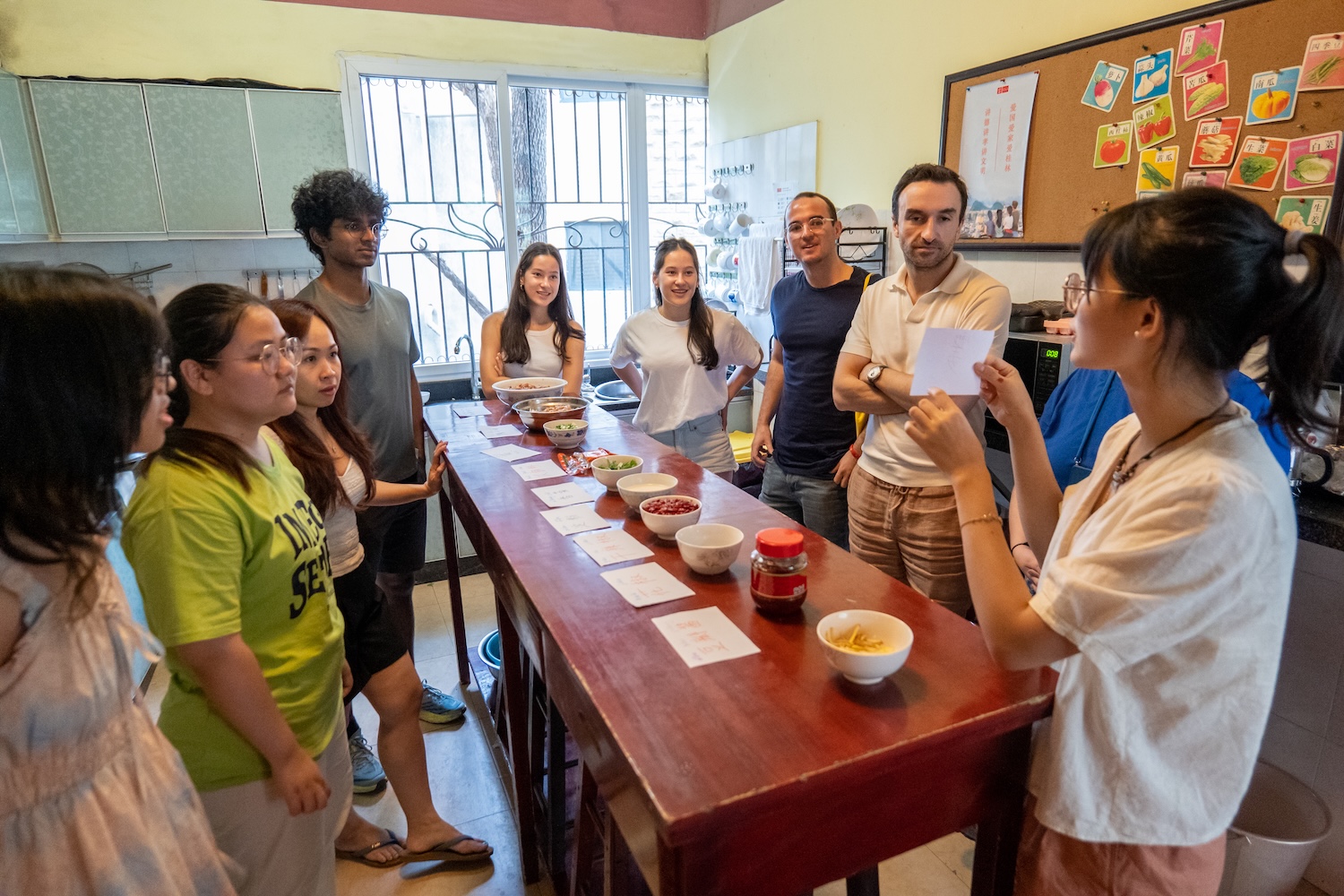
Cooking lessons with Chinese chefs are one of CLI's activities, and the prep work is done by hand around the table.
With the CLI wristband on, a student has taken the optional Language Pledge to speak only Chinese, and it can come off at any time.
A grammar point from a morning class may come back in the afternoon's conversation, and dinner is one more chance to use it.
旅行lǚxíng
Trips and outings
Yangshuo, the Longji rice terraces, caves, rivers, and hikes.
Hikes up Guilin's karst mountains are on CLI's list of activities, and from the rocky tops the peaks run on in every direction.
These limestone peaks are the ones found in Chinese paintings and poetry, and students on the program see them up close on outings from Guilin.
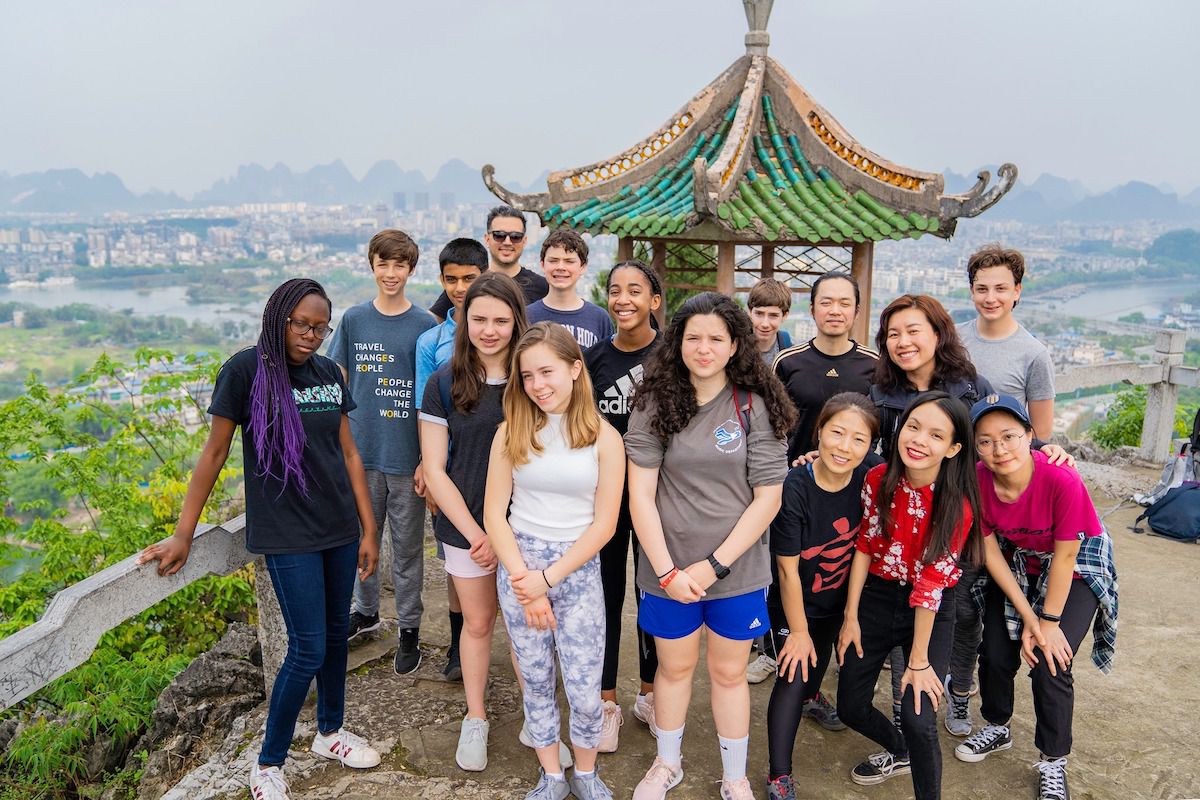
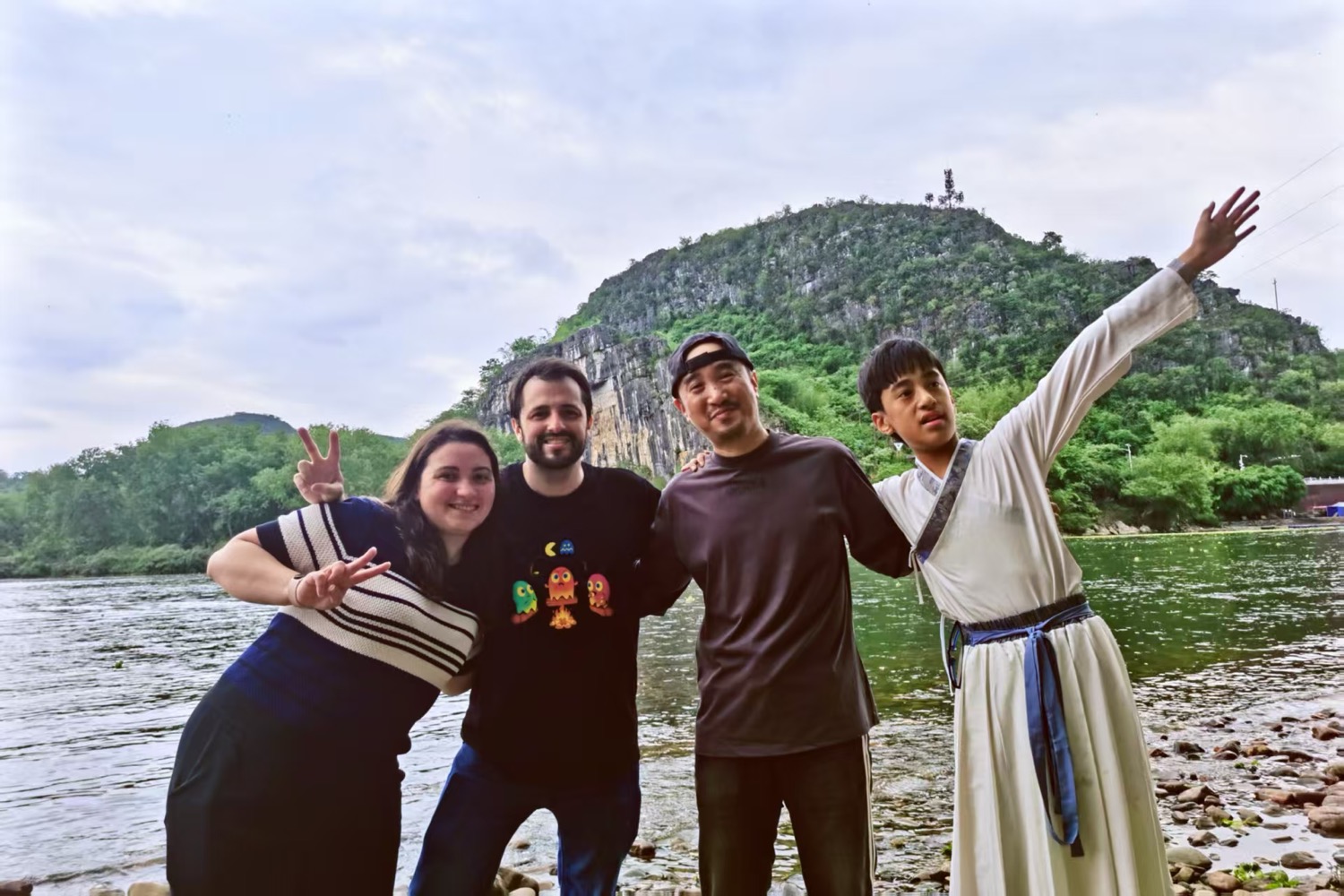
Classes at CLI are one-on-one, so group outings like this hilltop climb are where students get to know one another.
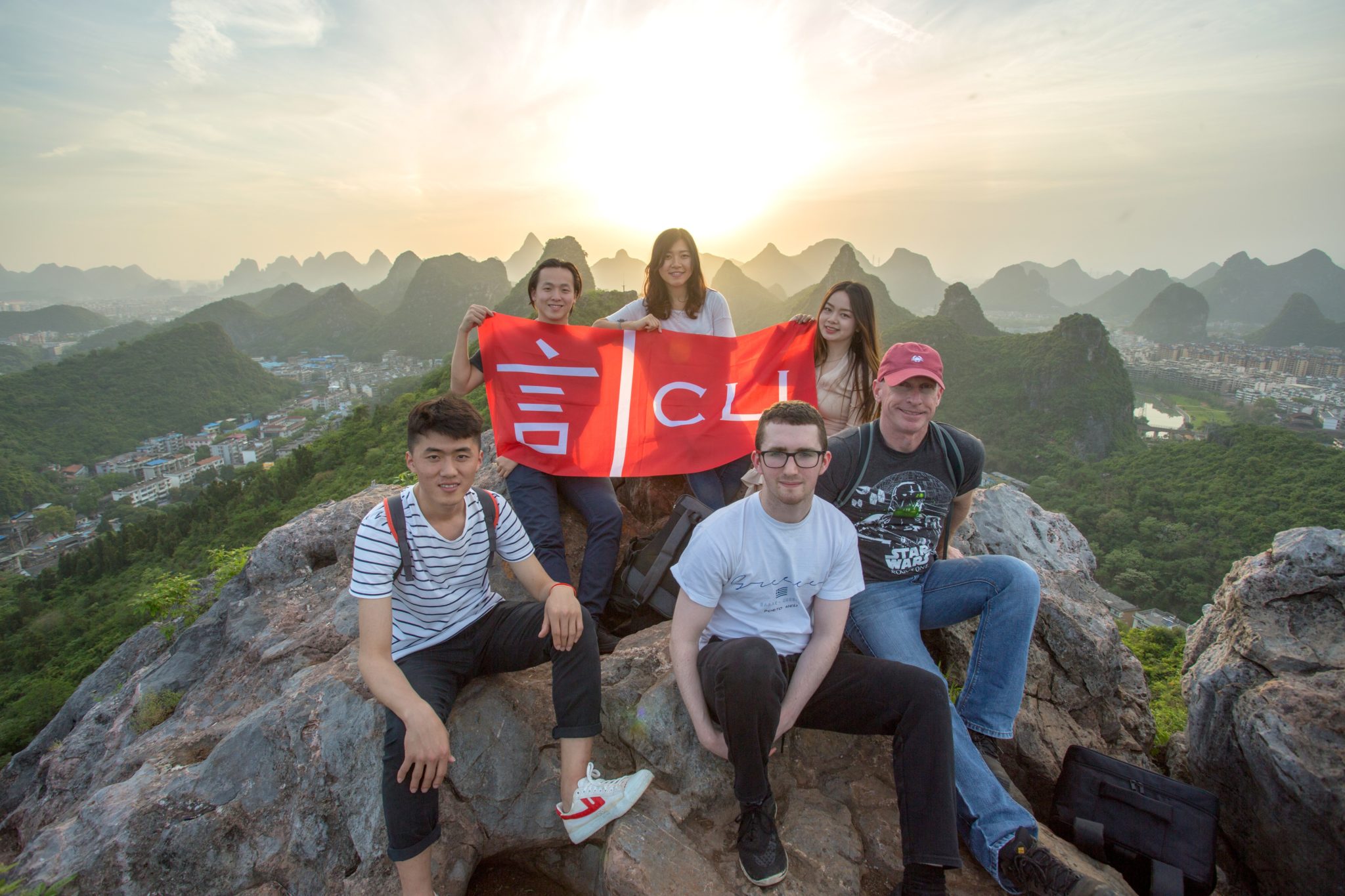
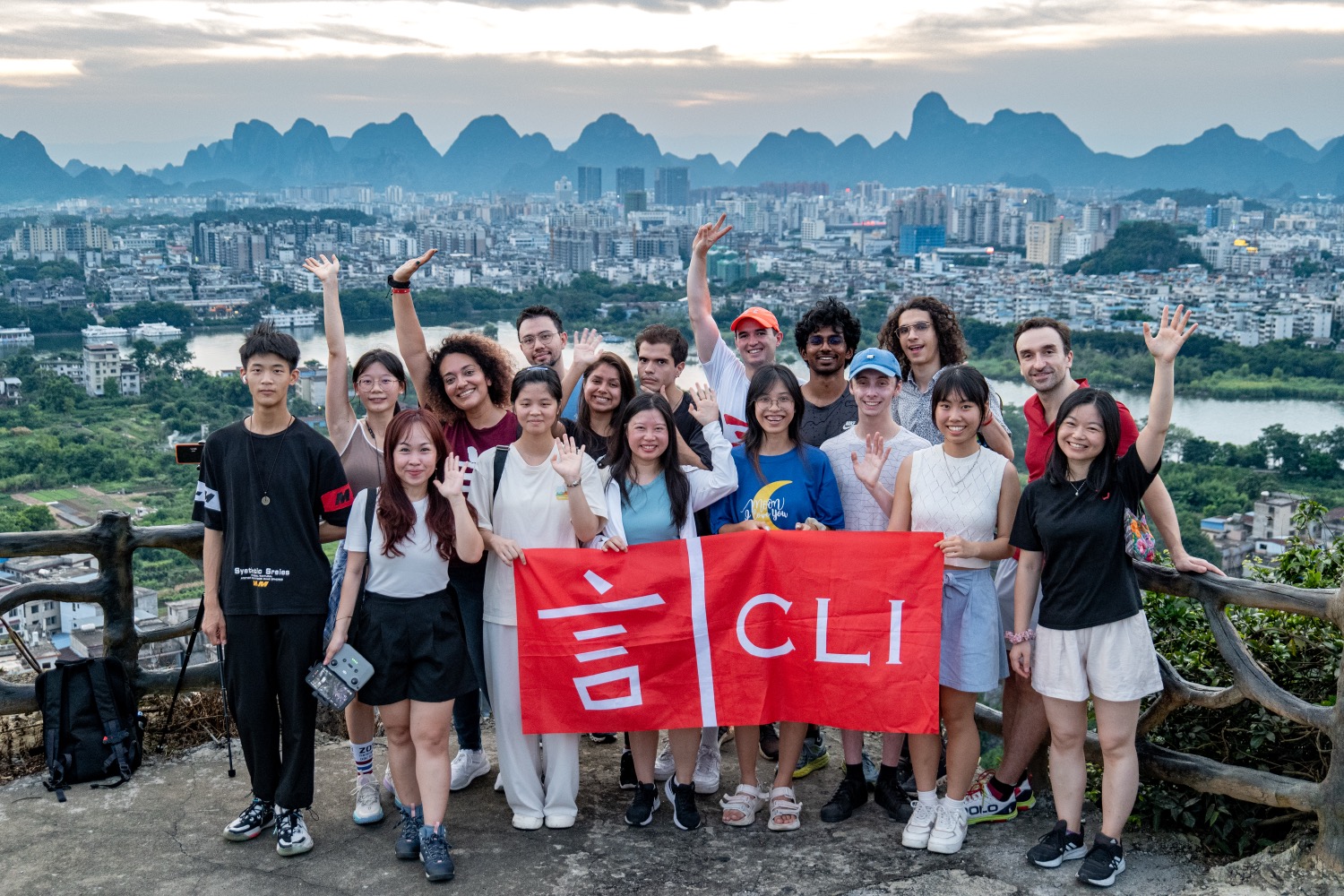
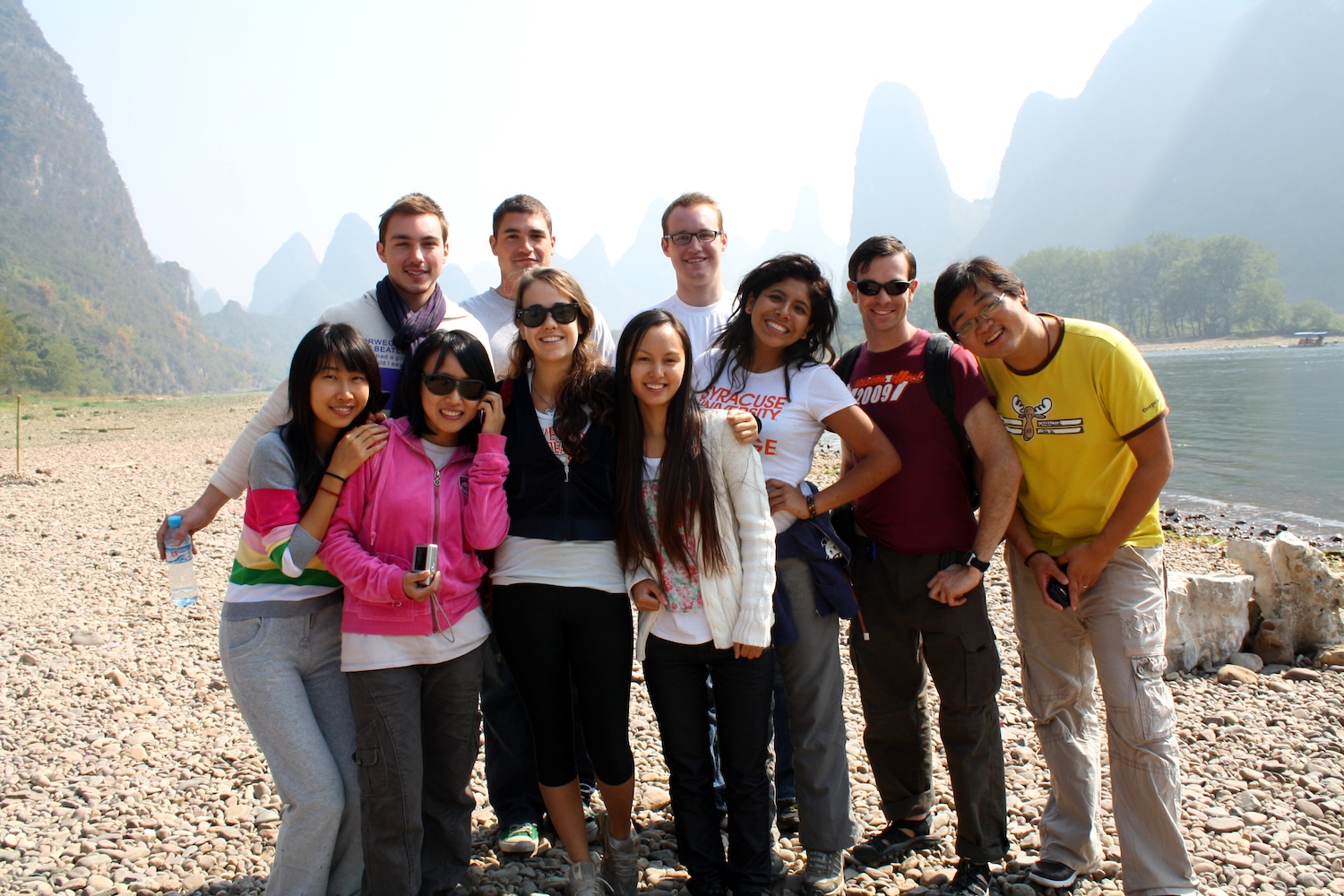
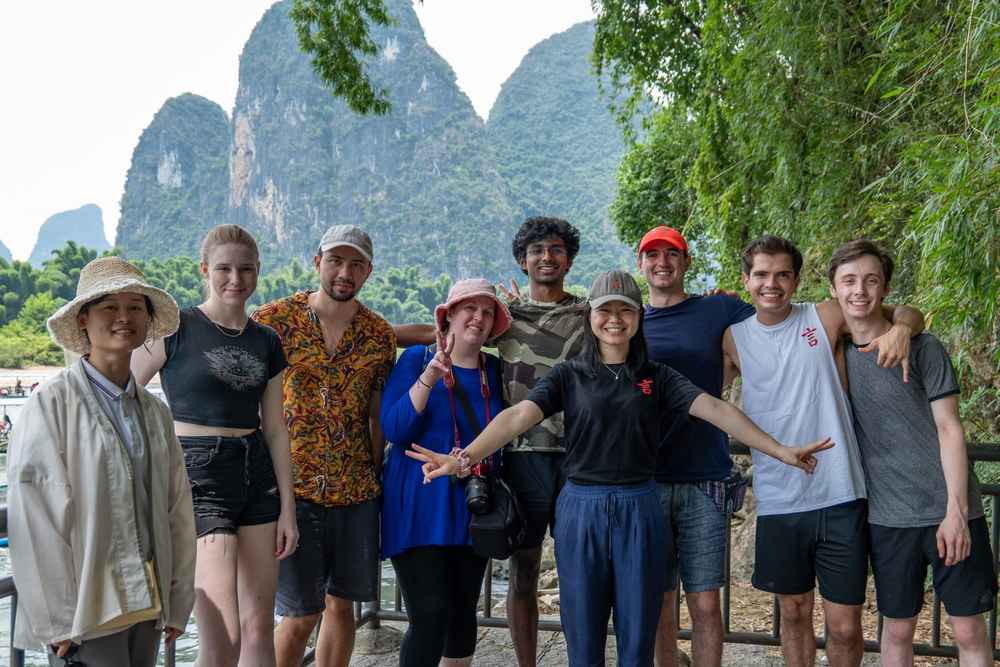
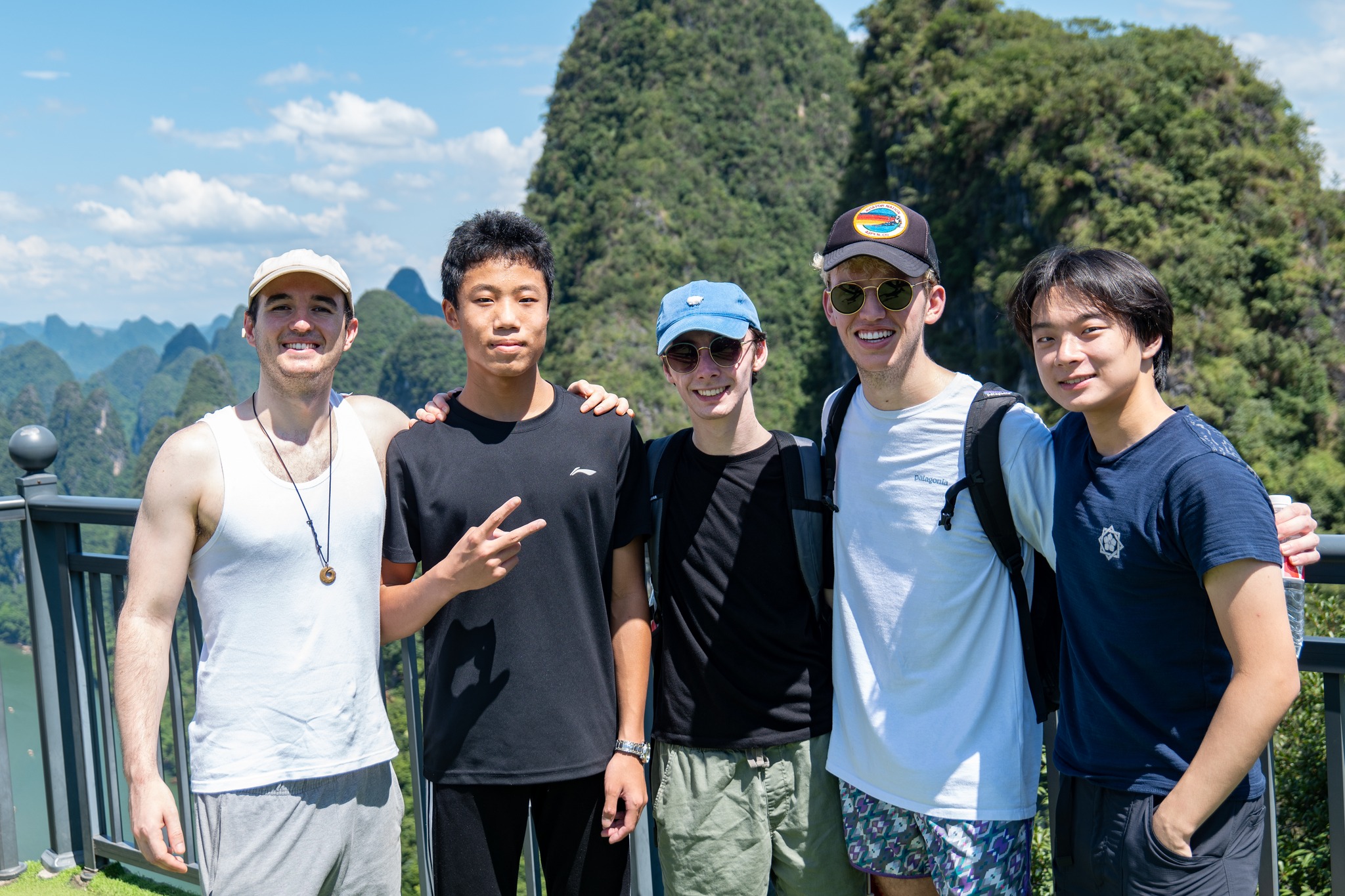
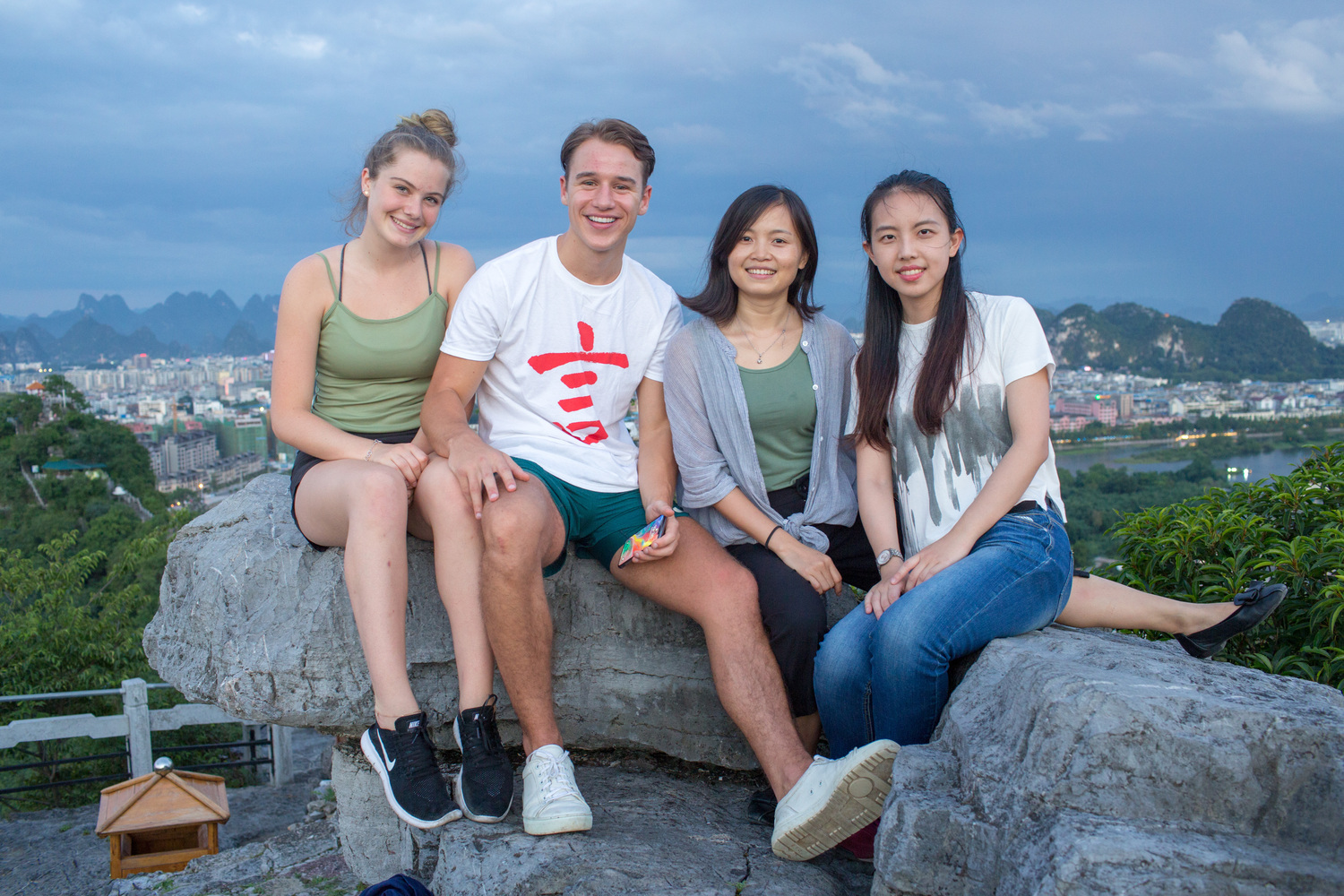
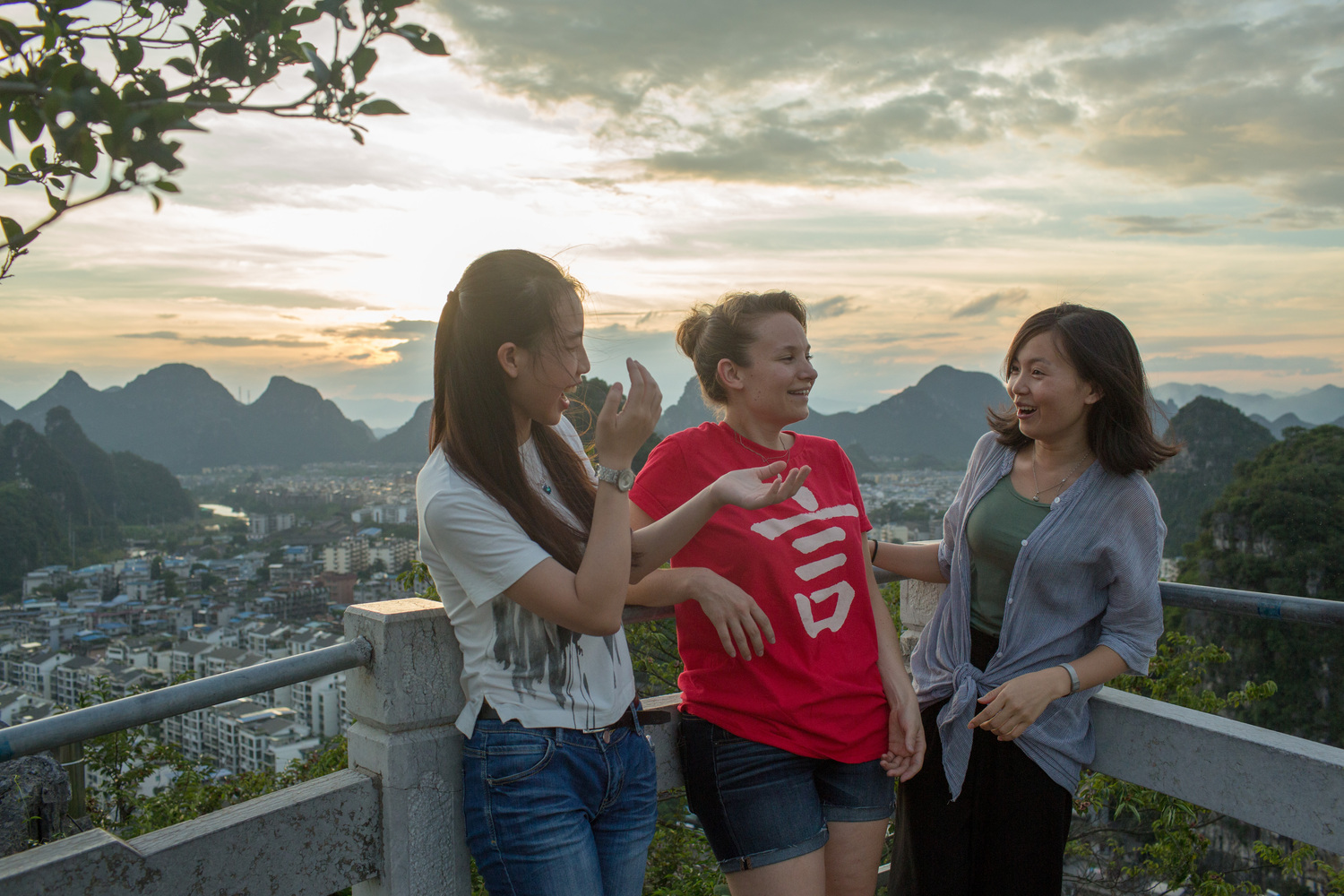
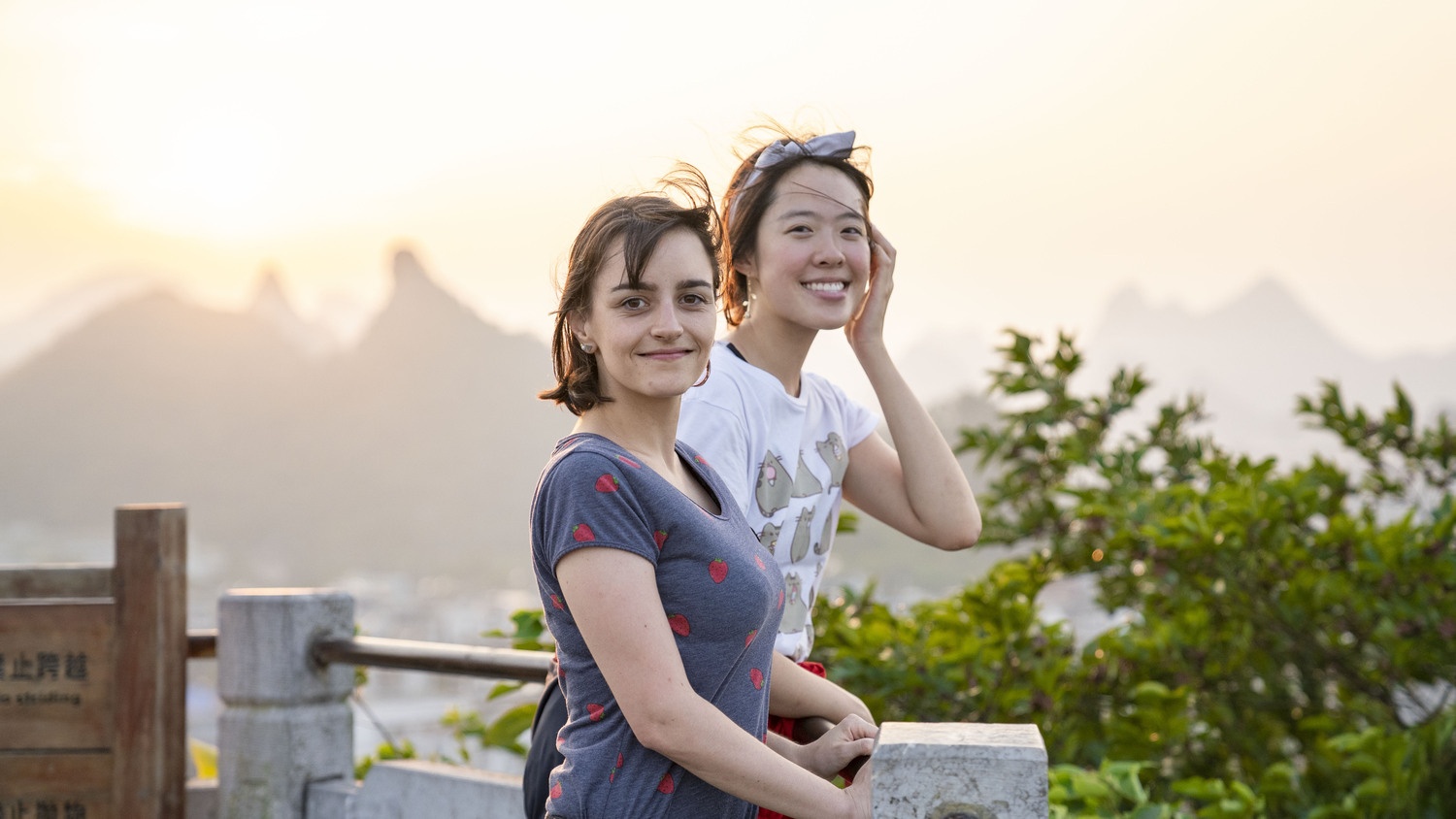
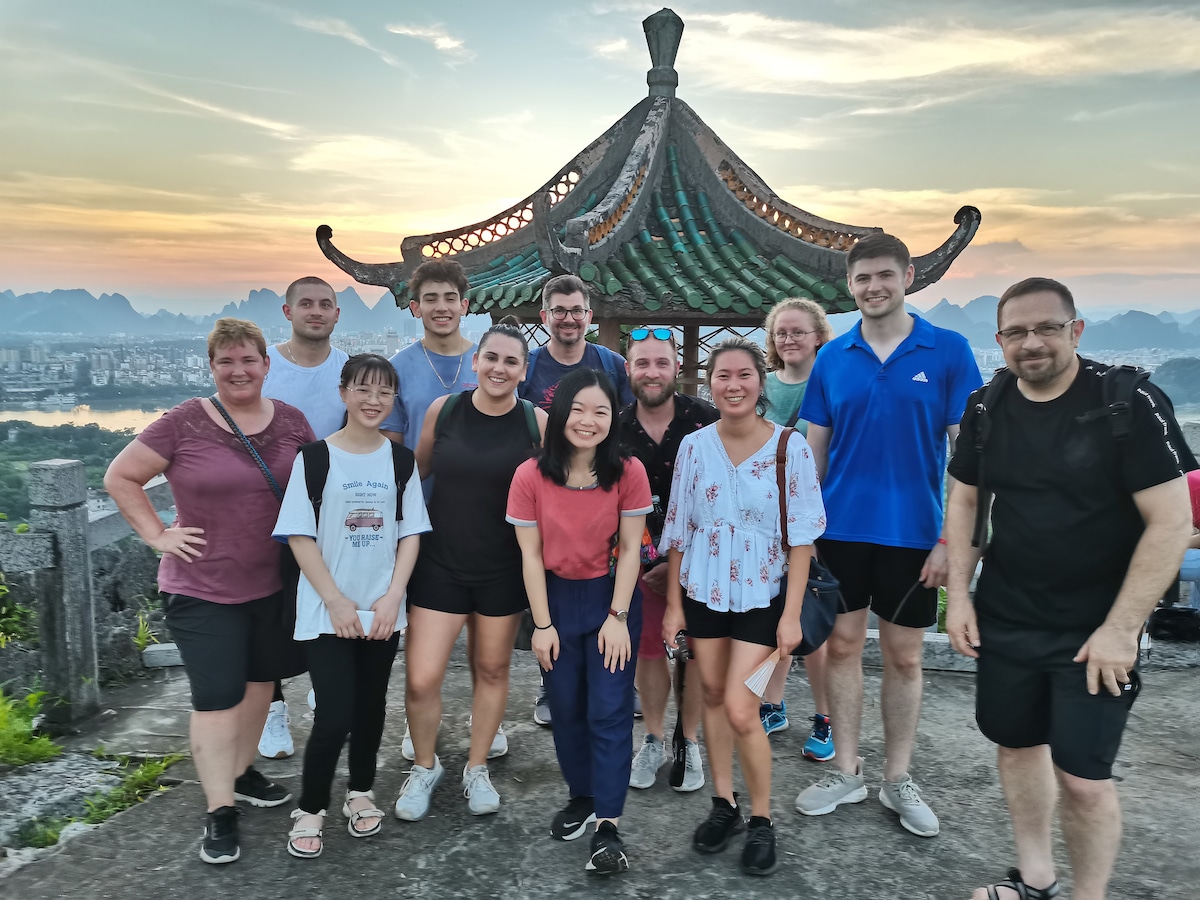
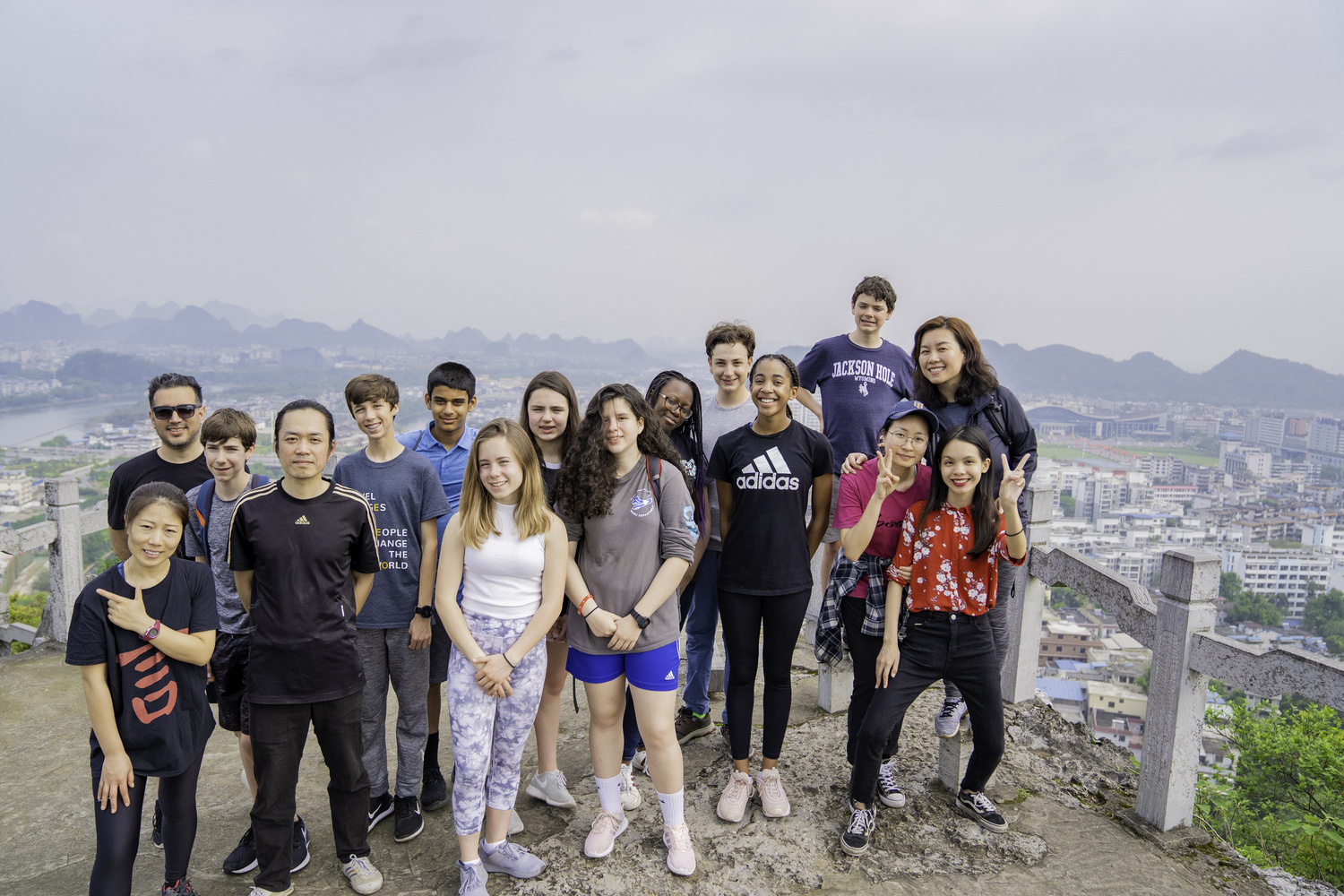
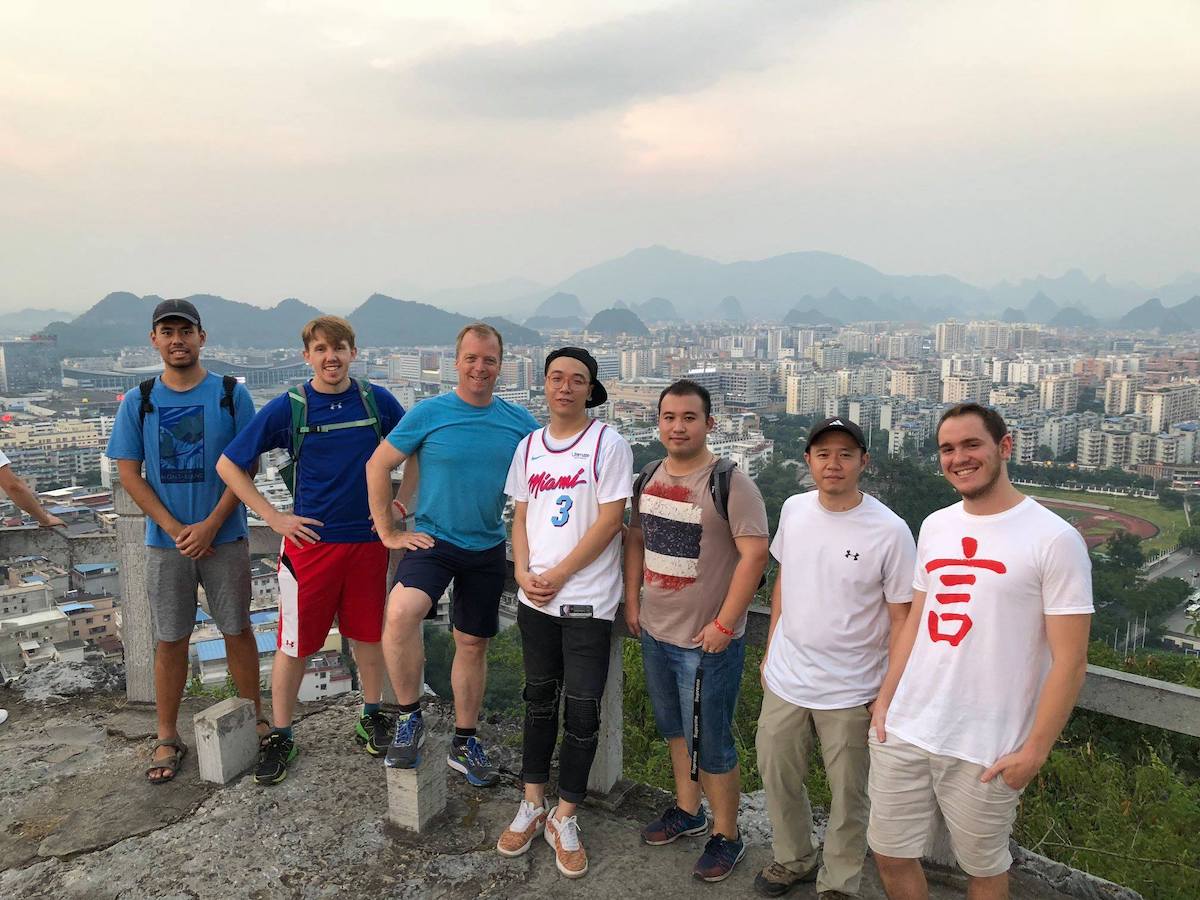
CLI has welcomed more than 5,000 students from 50+ countries since 2009, and Guilin's hilltops at sunset have seen a good share of its group photos.
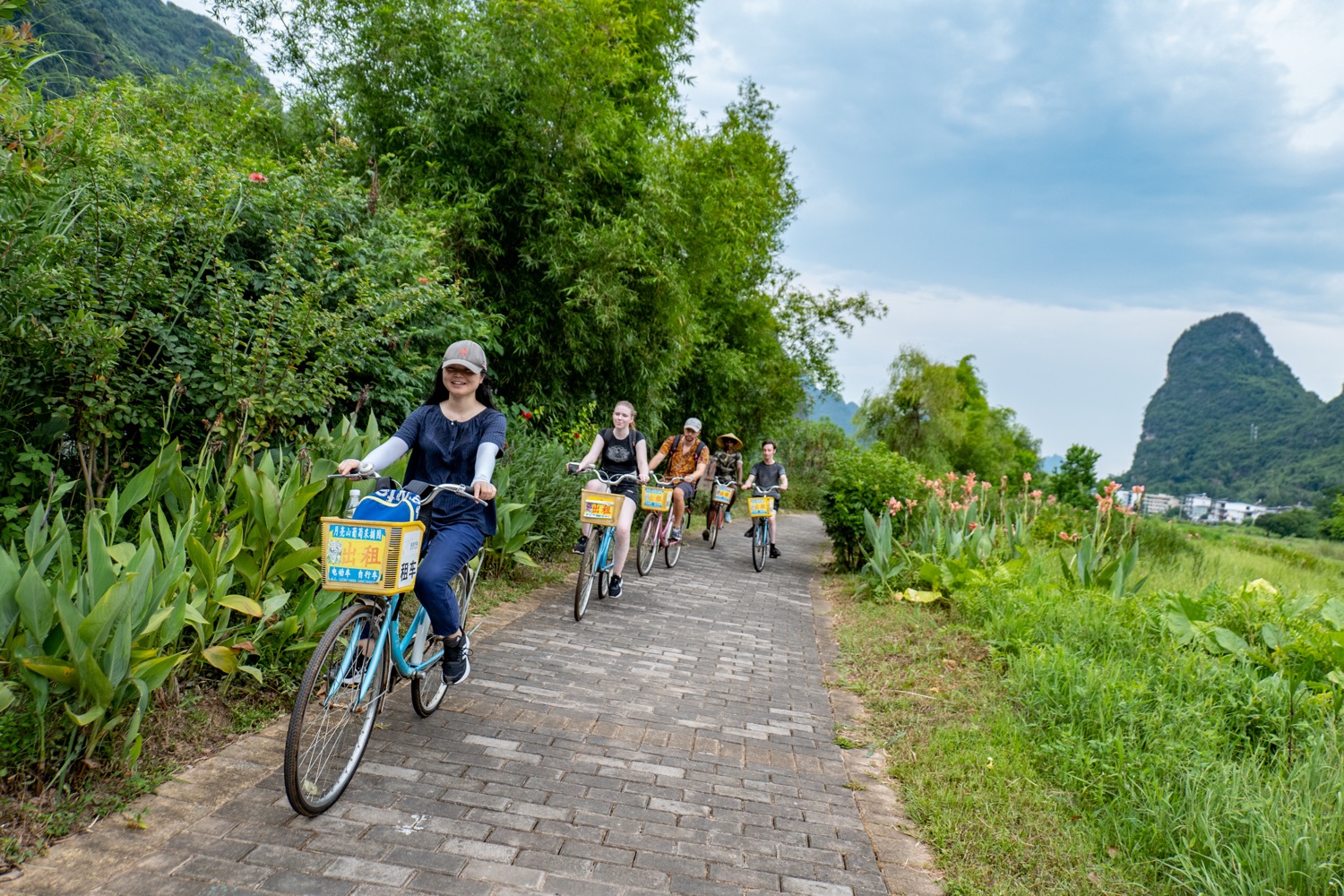
A bike ride along the river is an easy weekend outing from Guilin, and asking for directions in Chinese is part of the ride.
Weekends leave room for independent travel as well as group outings, and the karst country around Guilin is close enough for a day away.
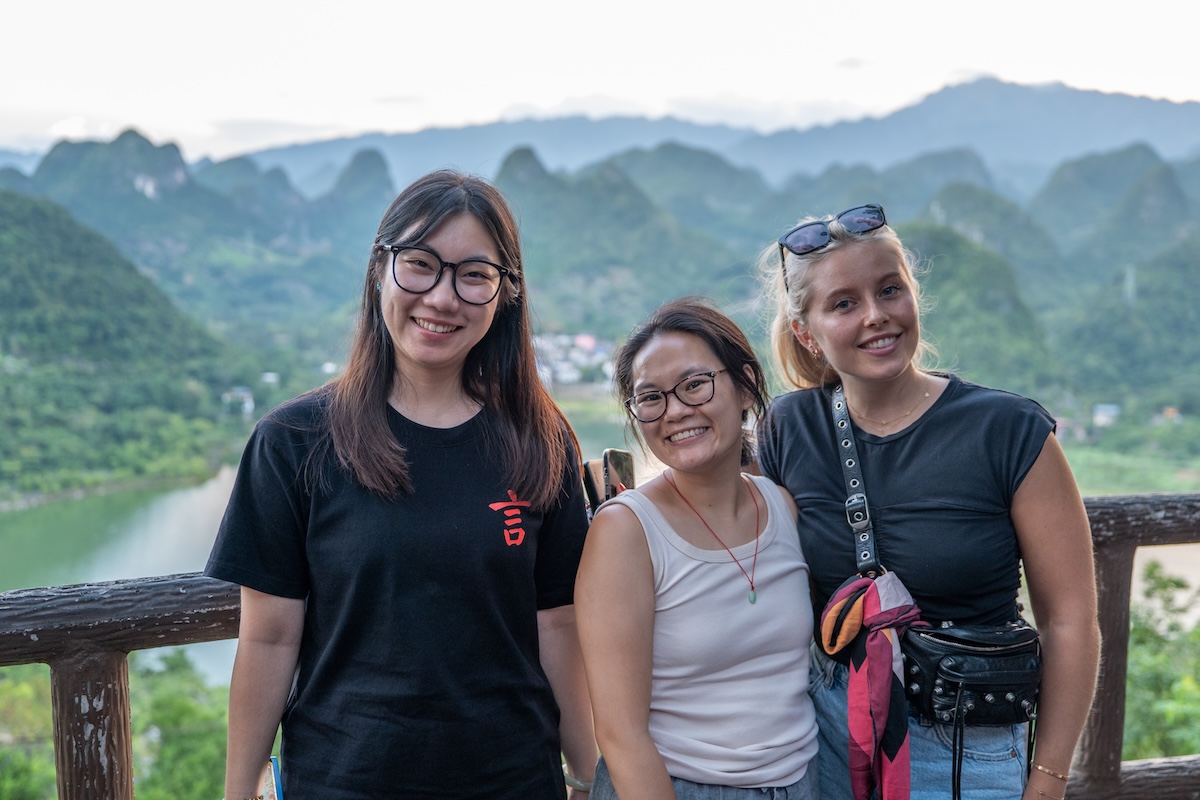
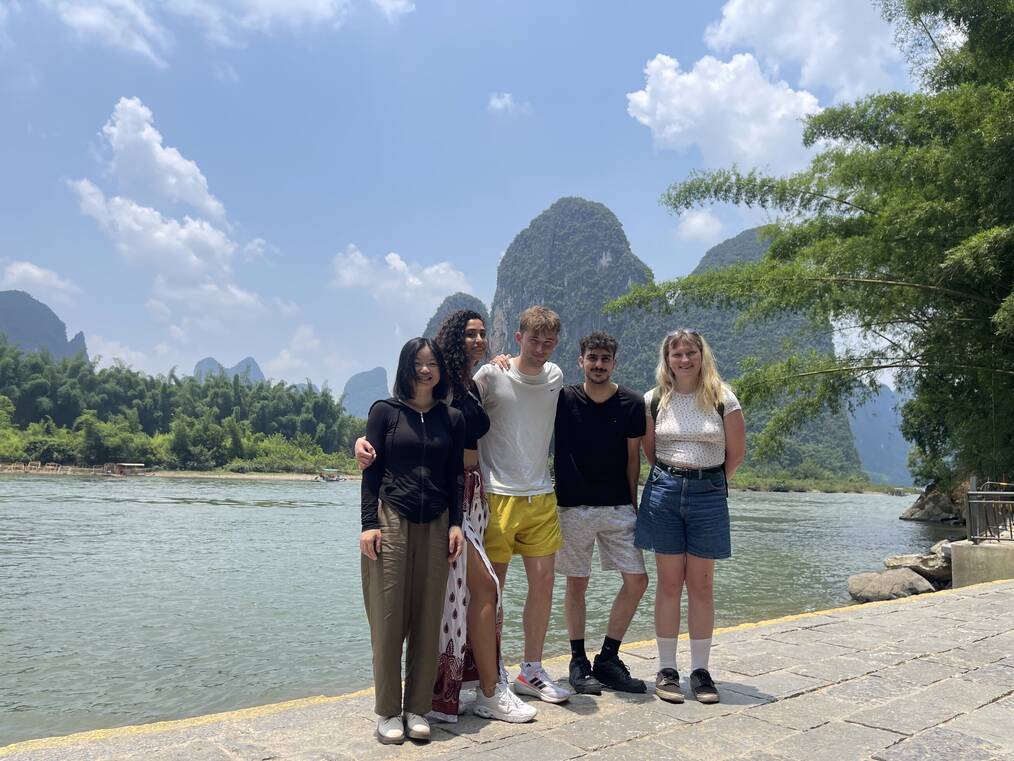
The Li River runs 83 km from Guilin to Yangshuo, and a lookout like this one takes in a whole bend of it from above.
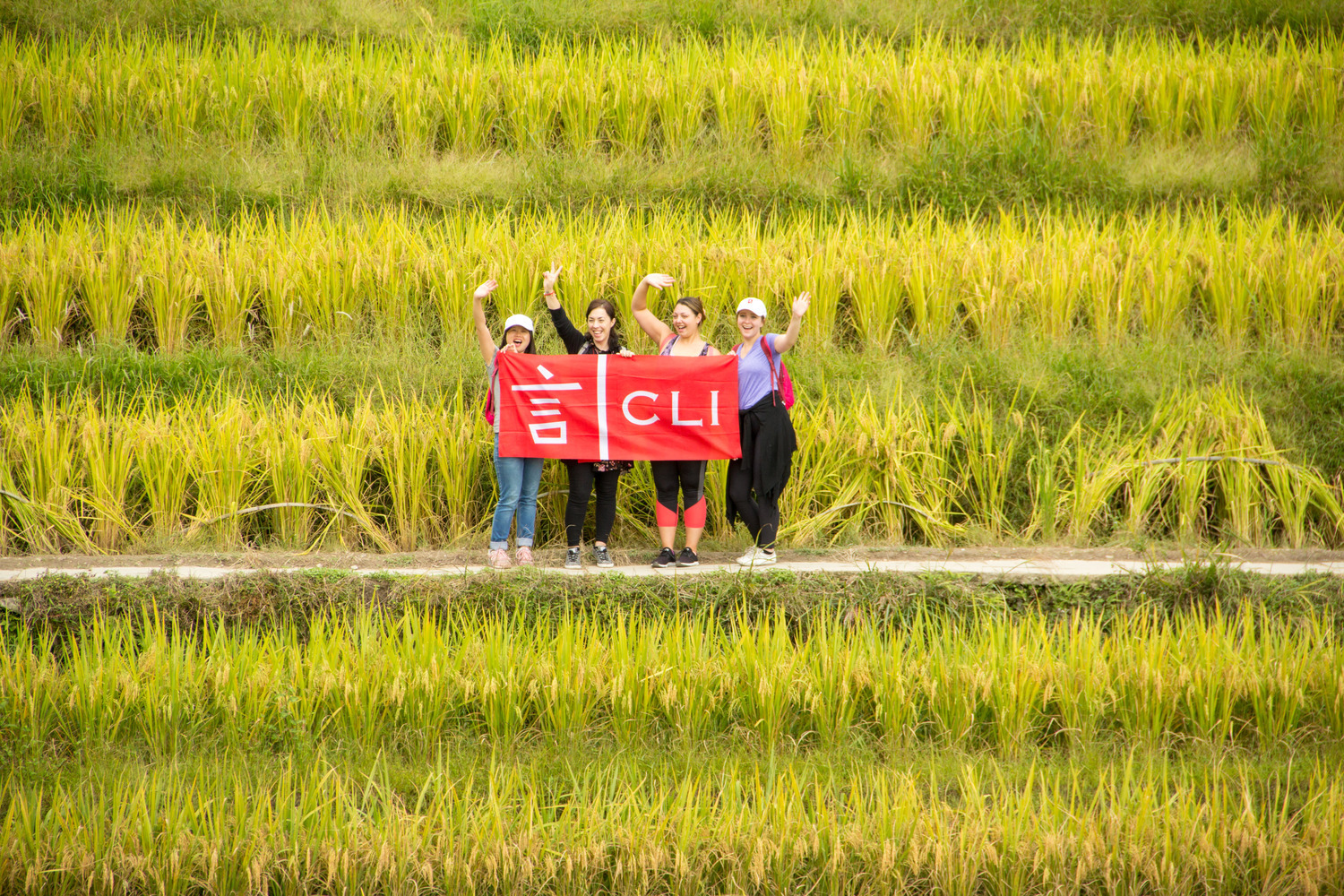
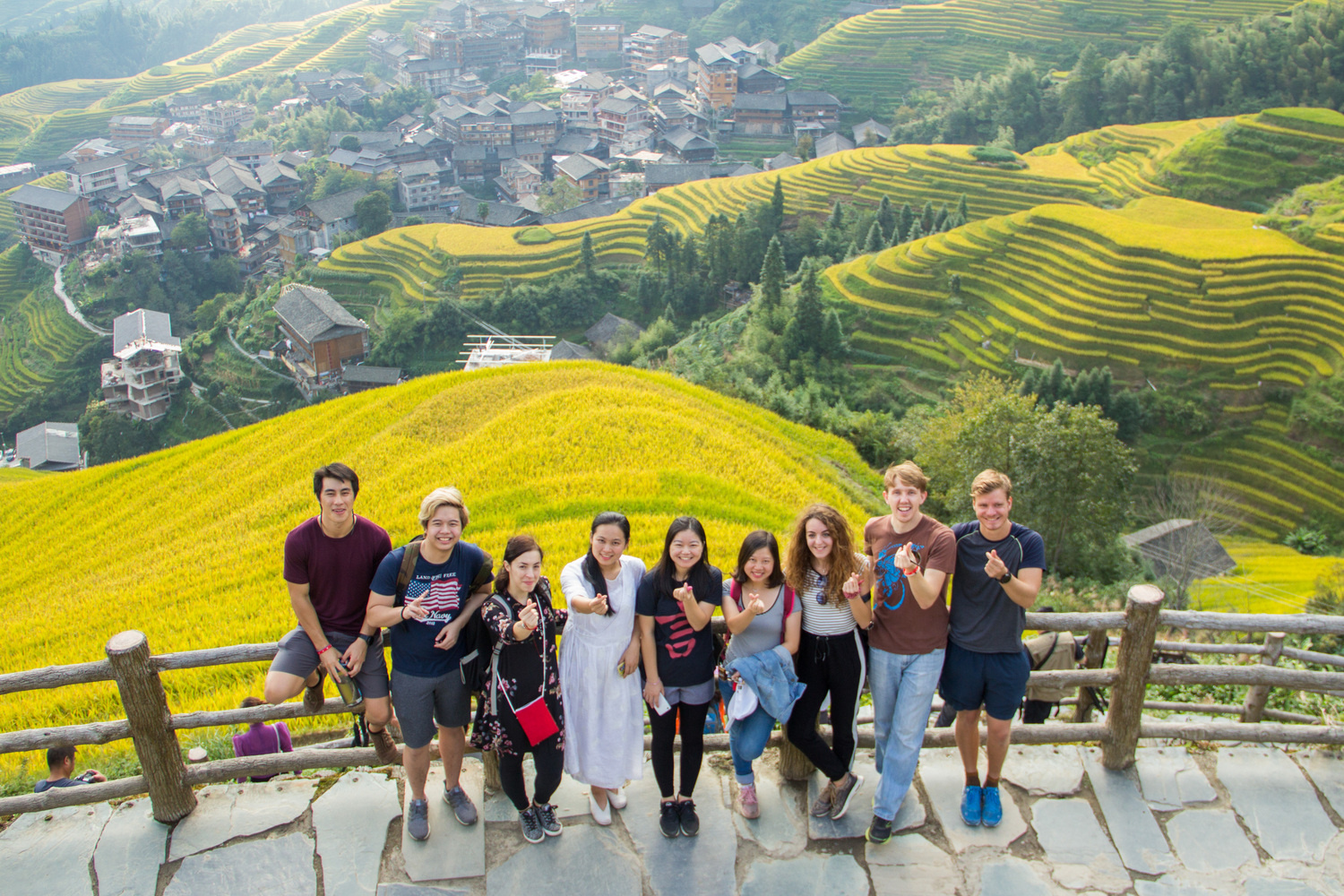
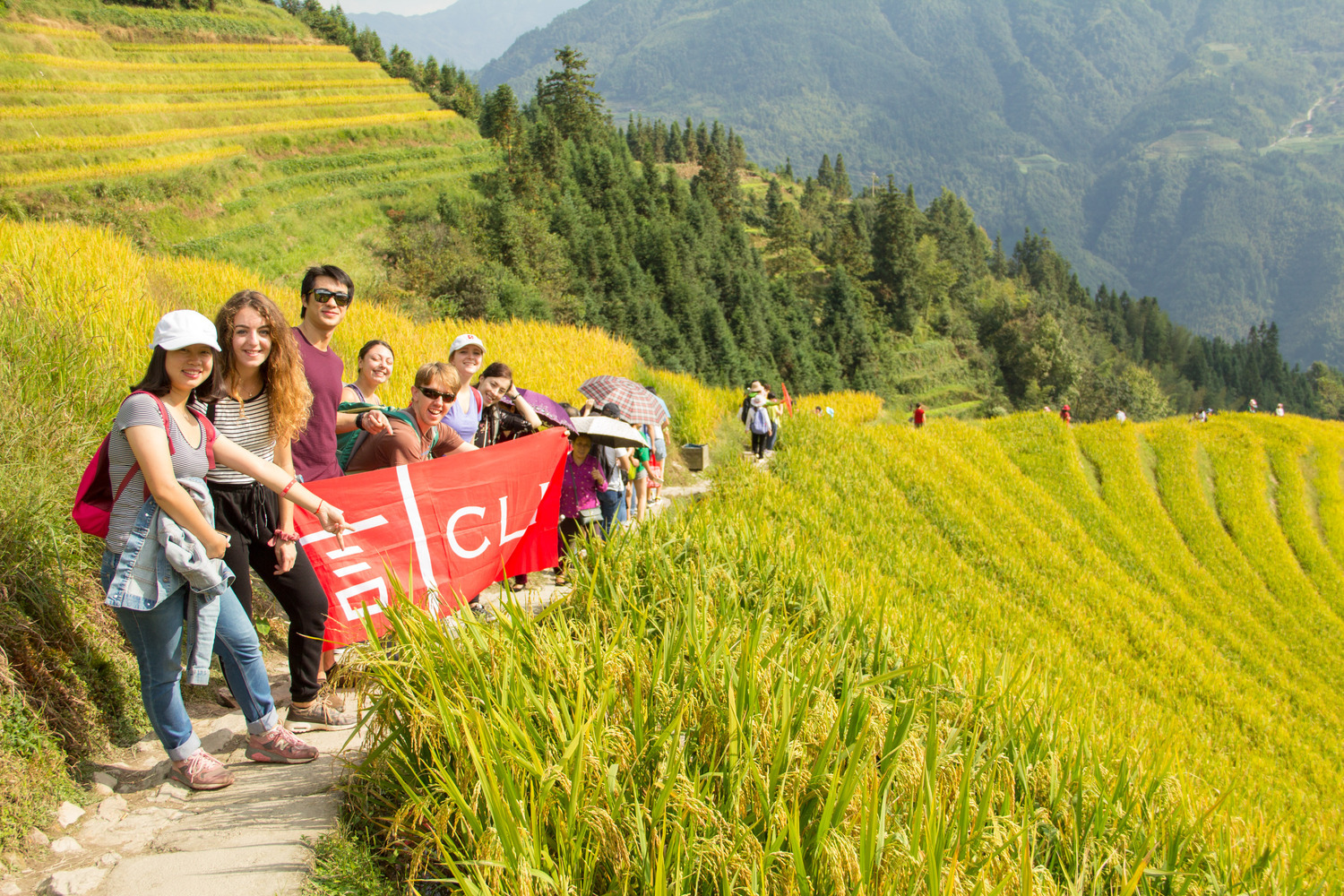
Photography excursions to the Longji Rice Terraces are on CLI's activity list, and a red banner stands out well against ripe rice.
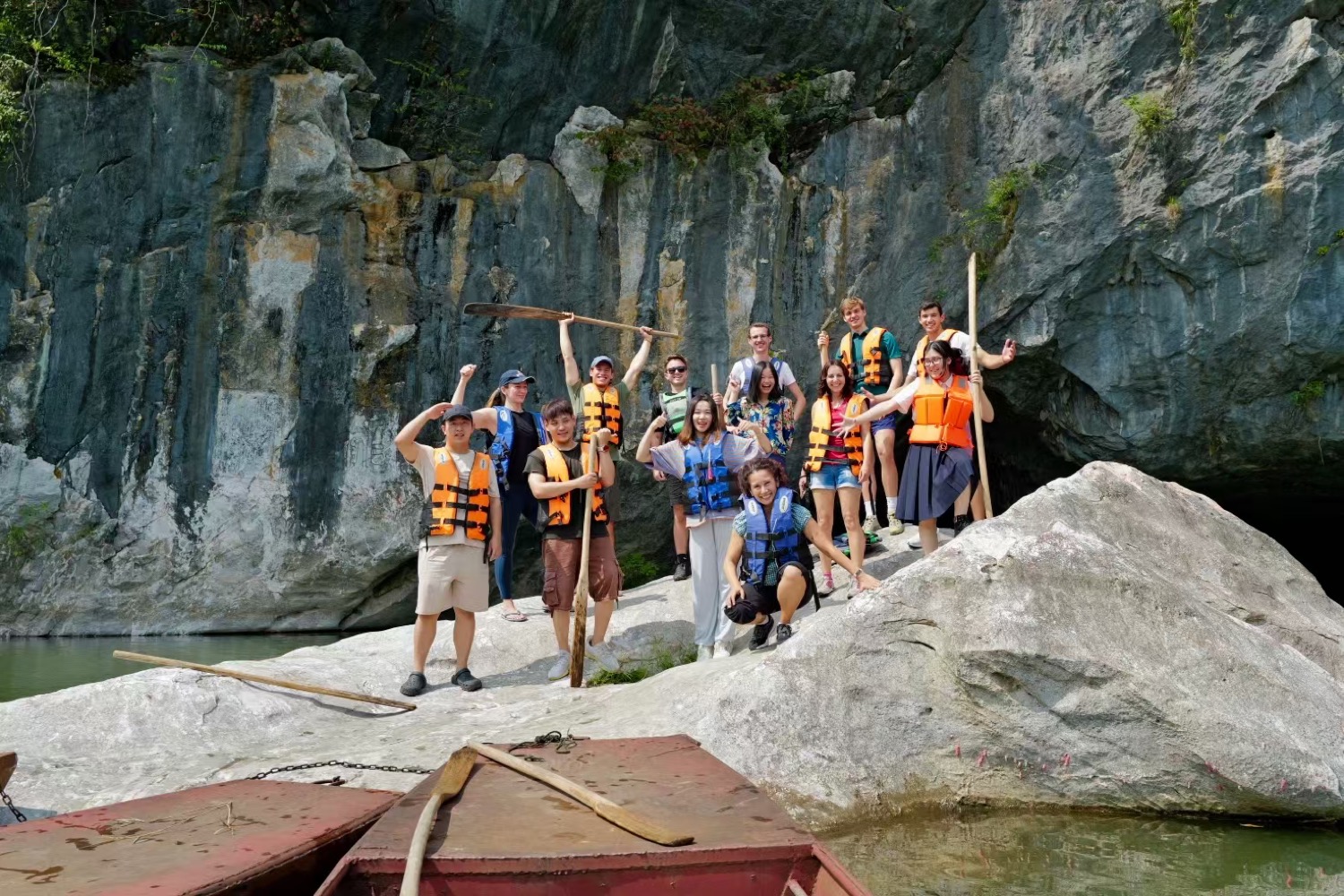
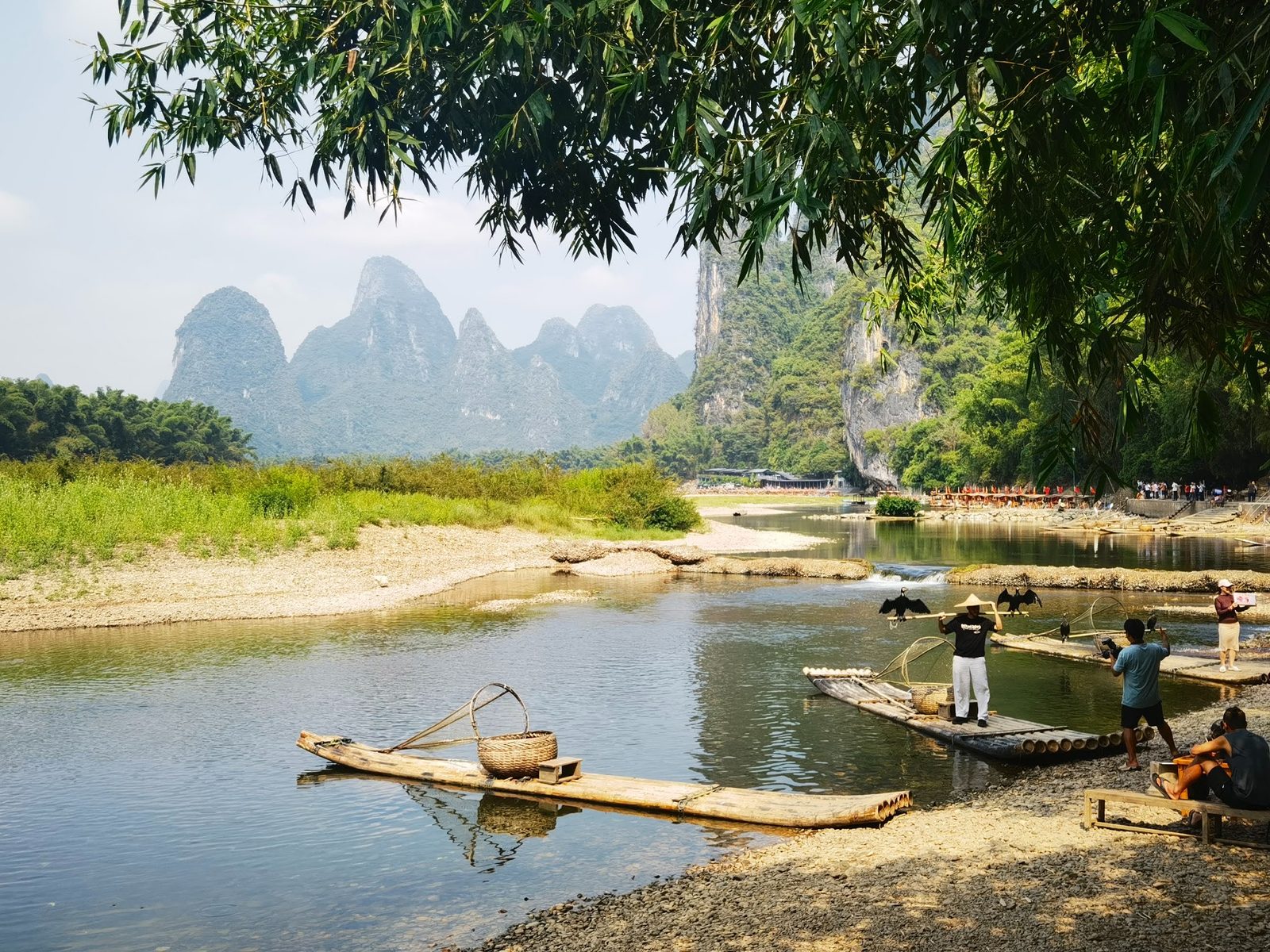
Bamboo boat rides on the Li River are one of CLI's activities, and 83 km of river run between Guilin and Yangshuo.
Markets and noodle shops are a short walk from the CLI Center, and old town streets on trips add stalls full of new words to read and ask about.
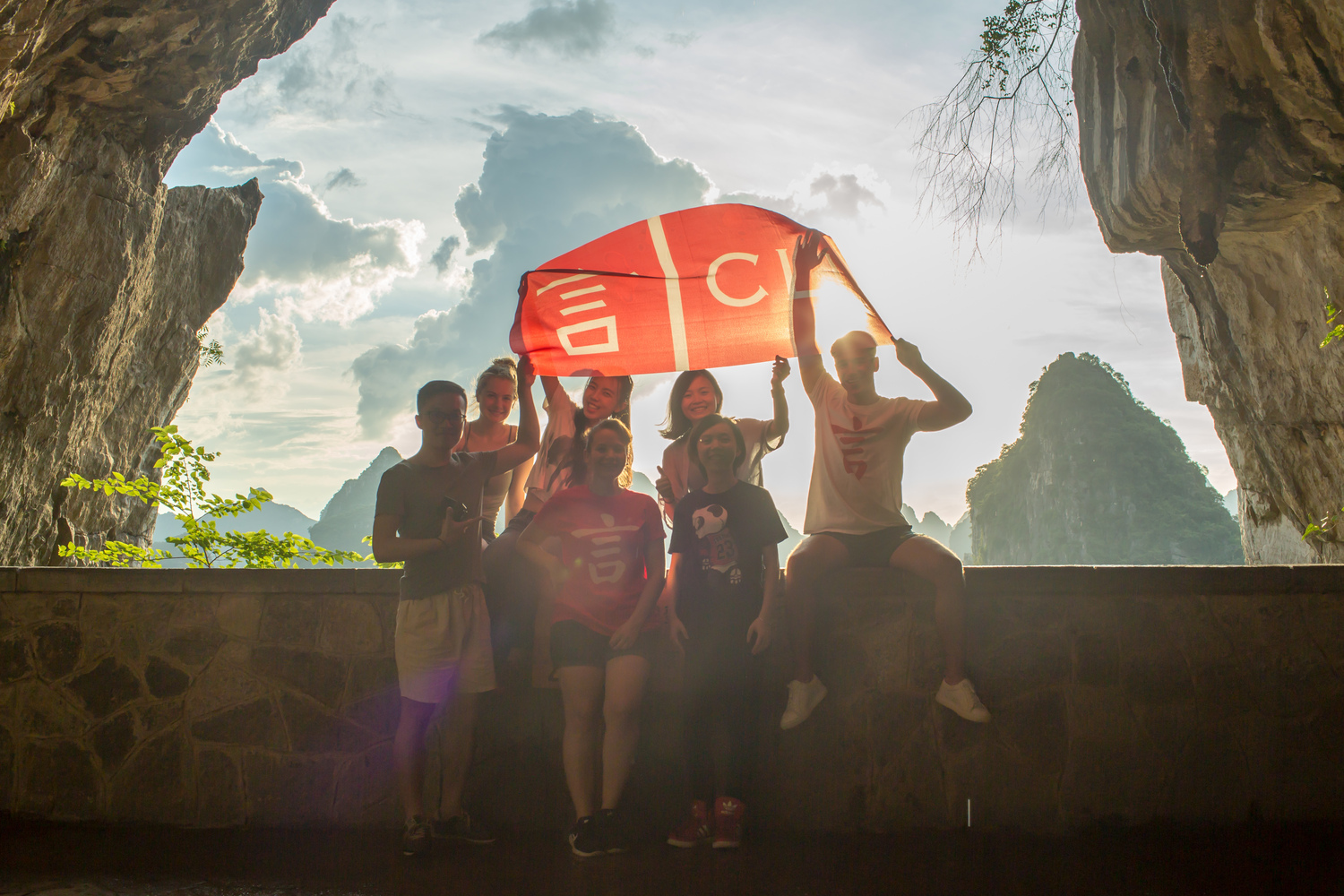
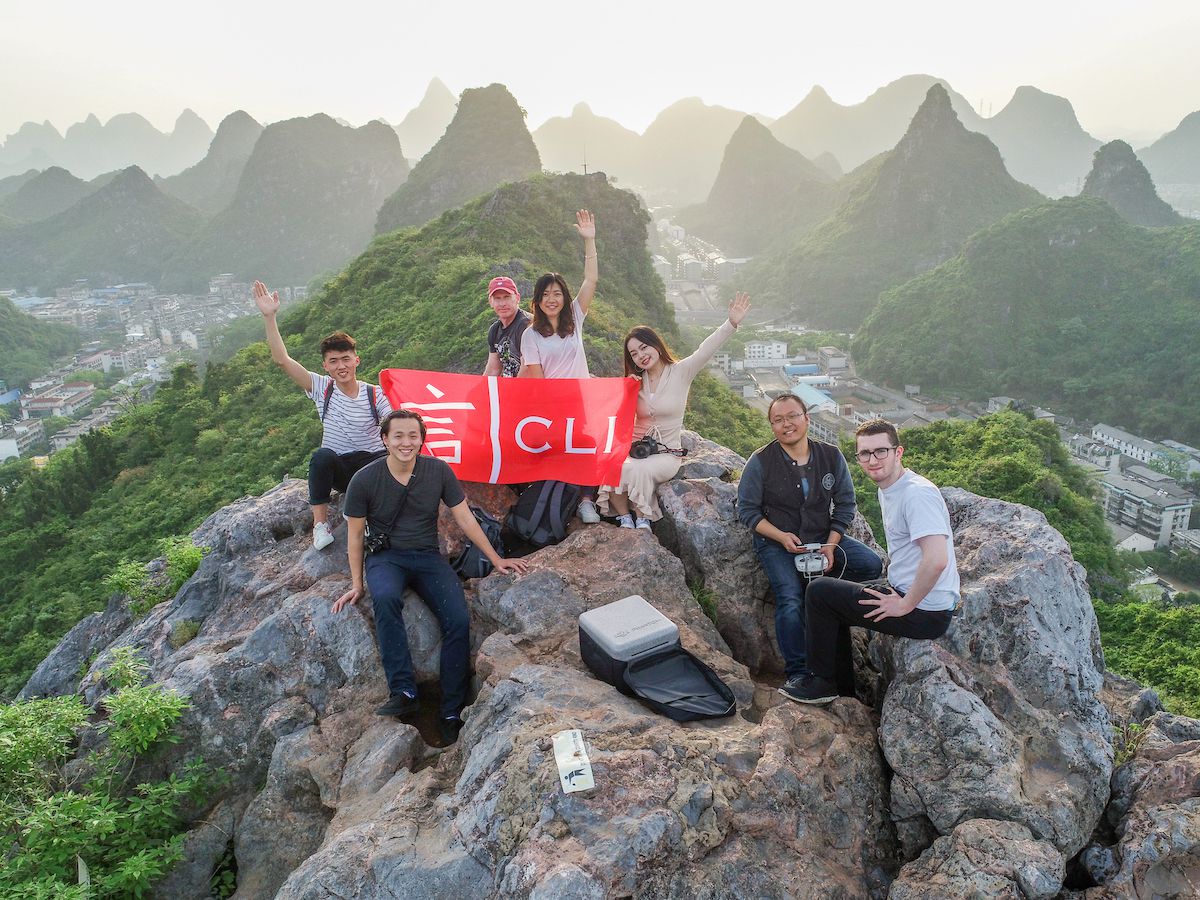
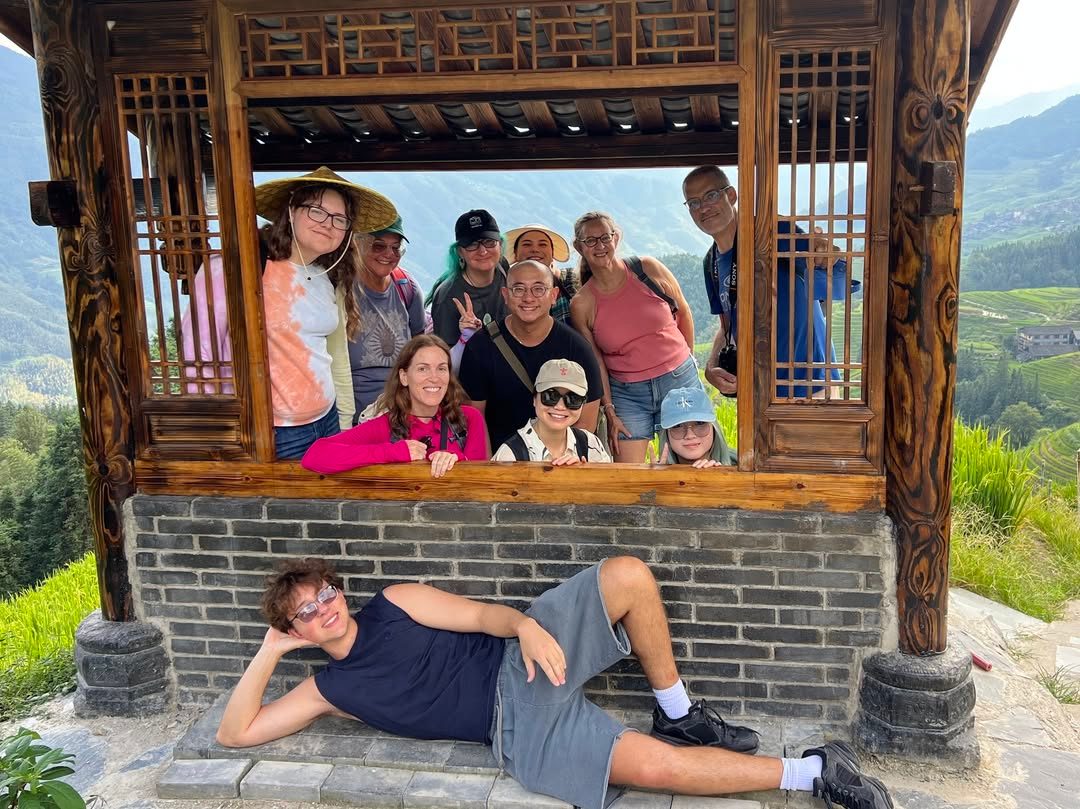
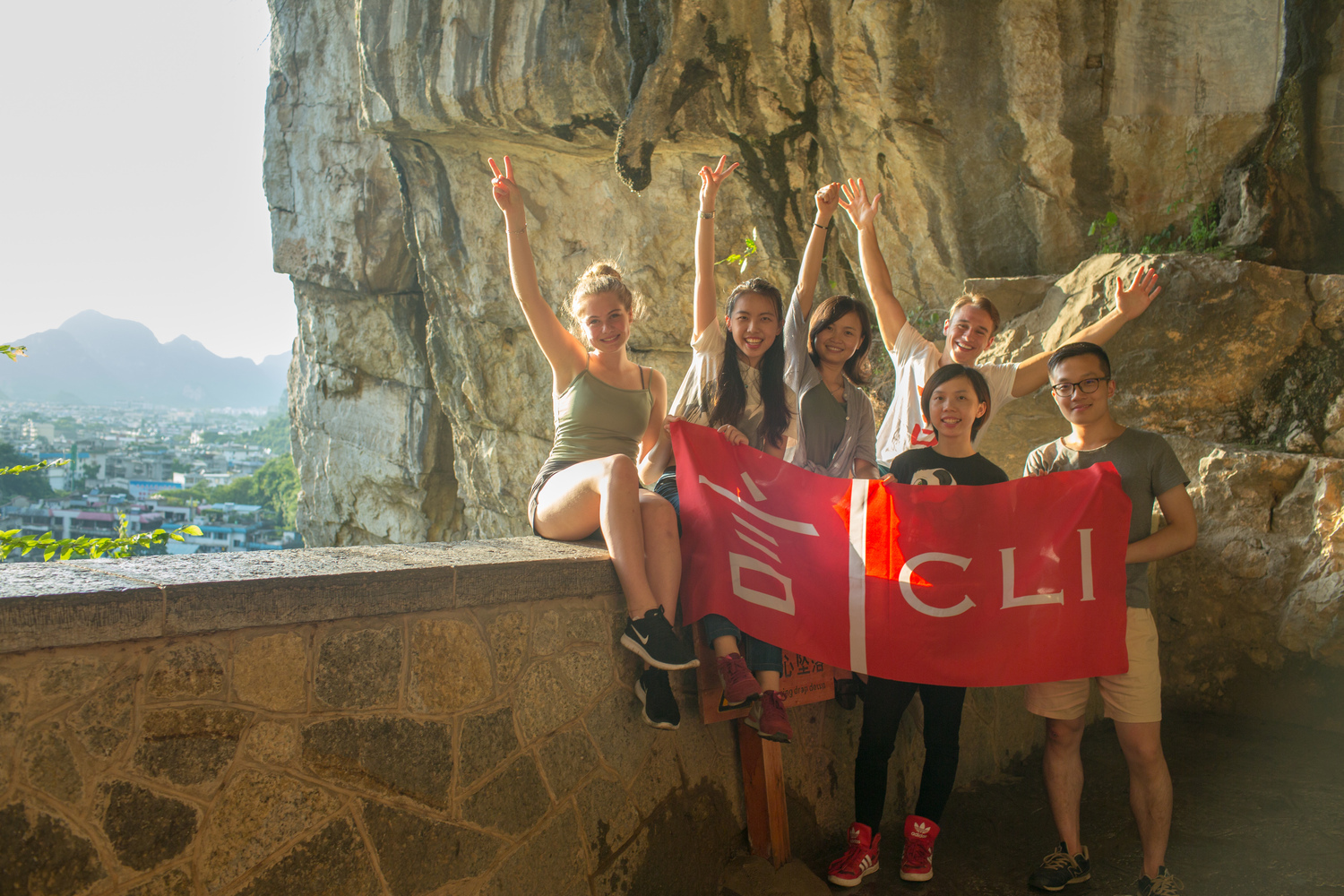
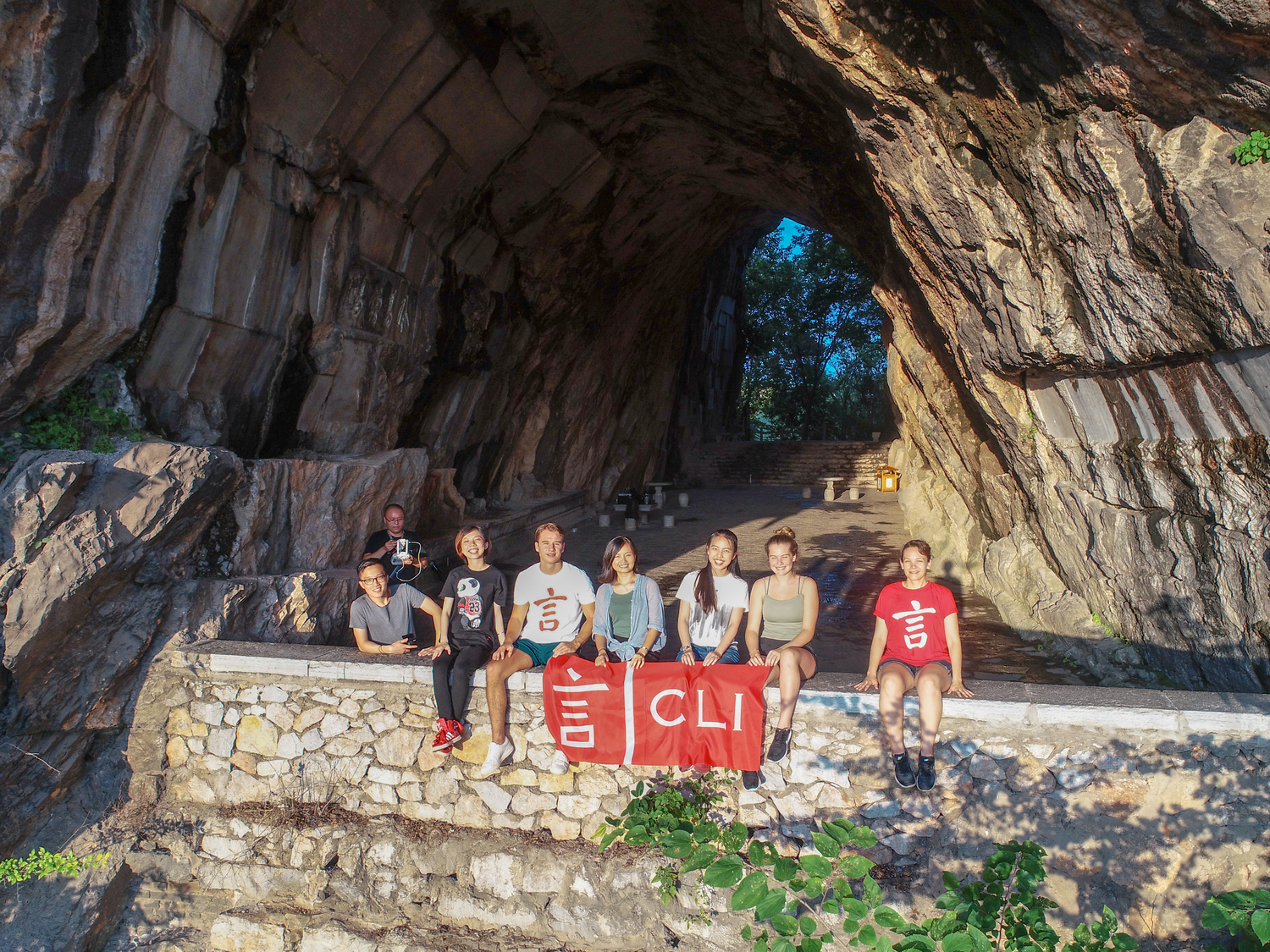
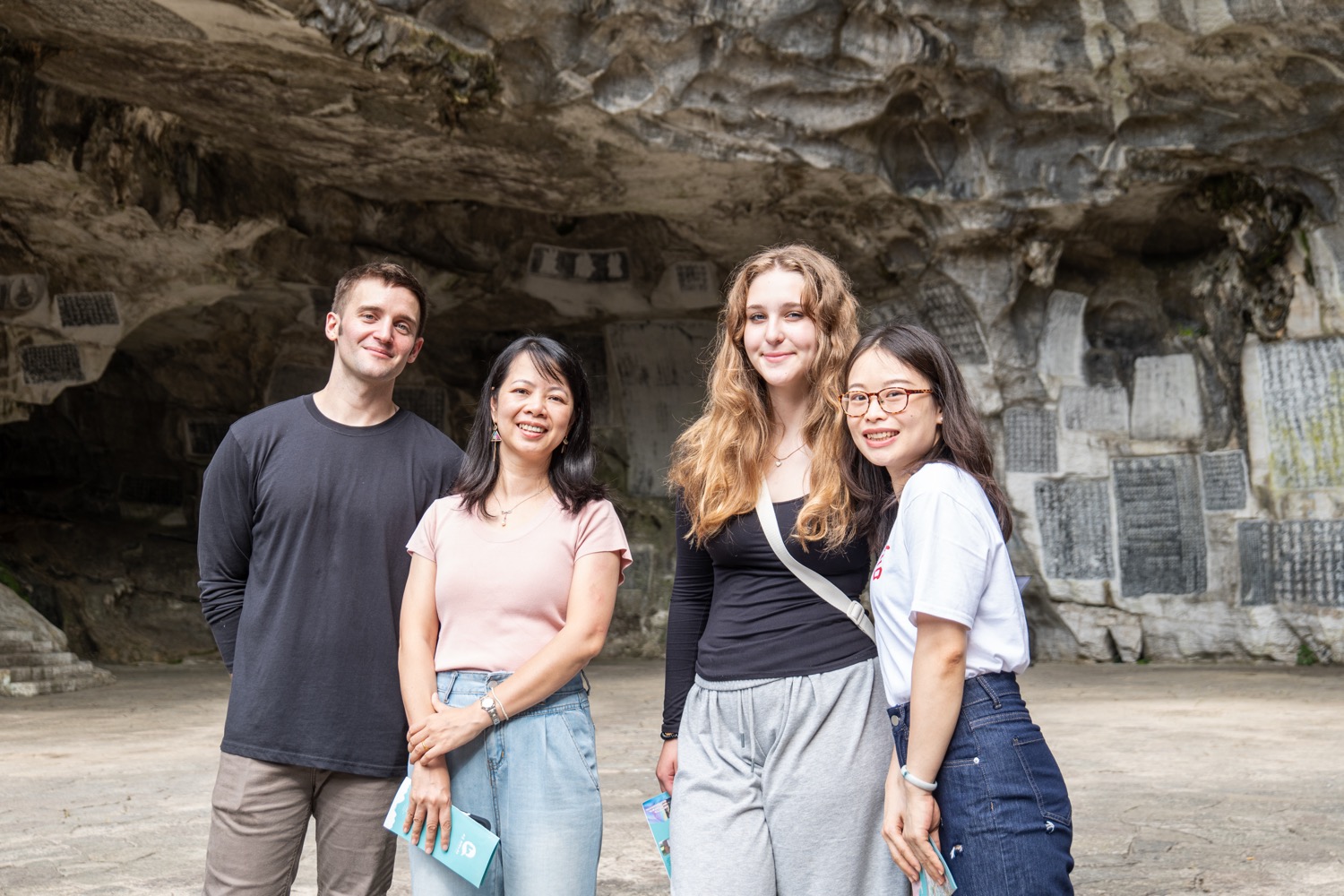
A cave opening in the karst makes a frame for the CLI banner, and weekly activities and monthly excursions keep groups moving around the region.
The Pengyou Program pairs a student with a local university student for three hours of language support and a shared meal each week.
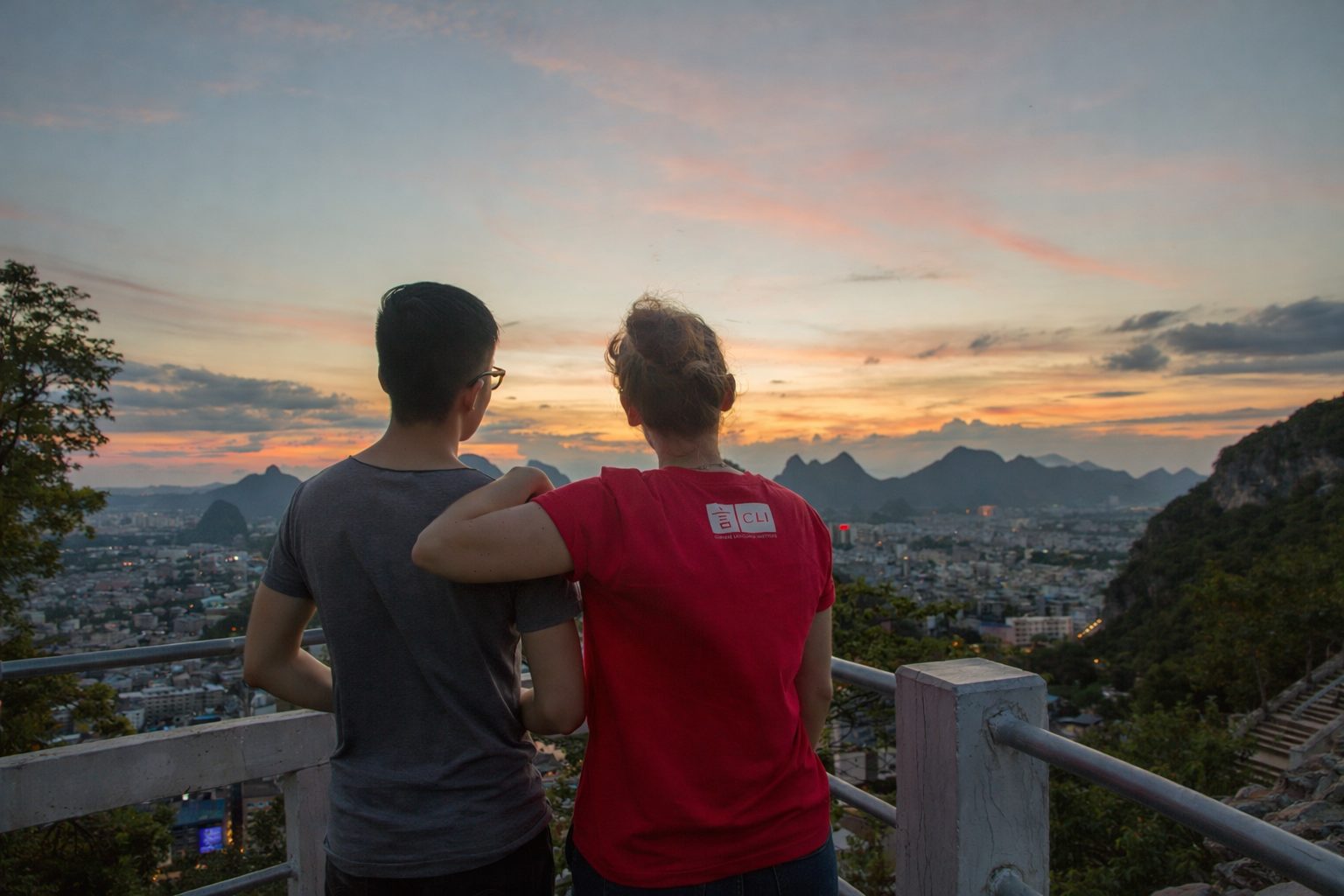
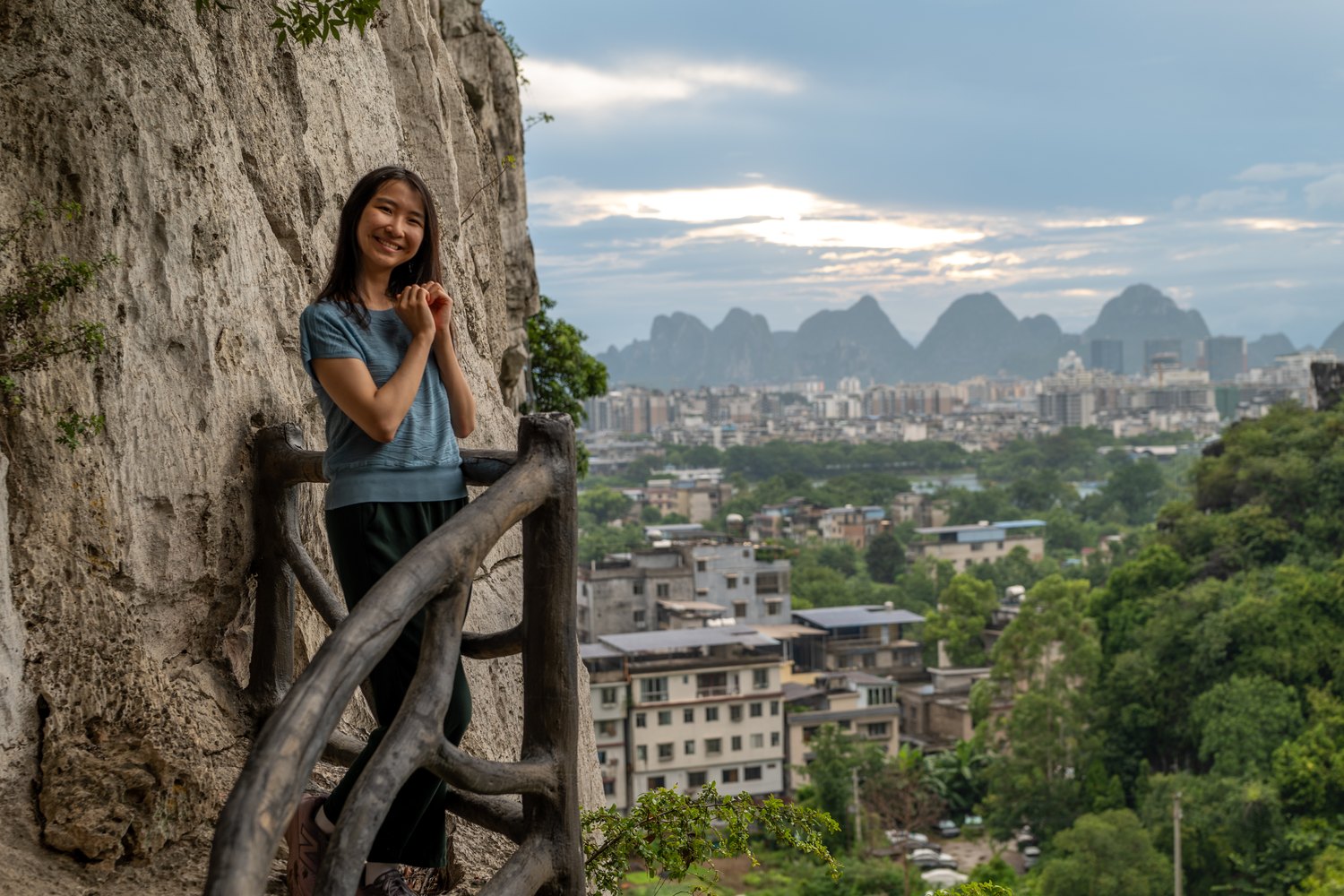
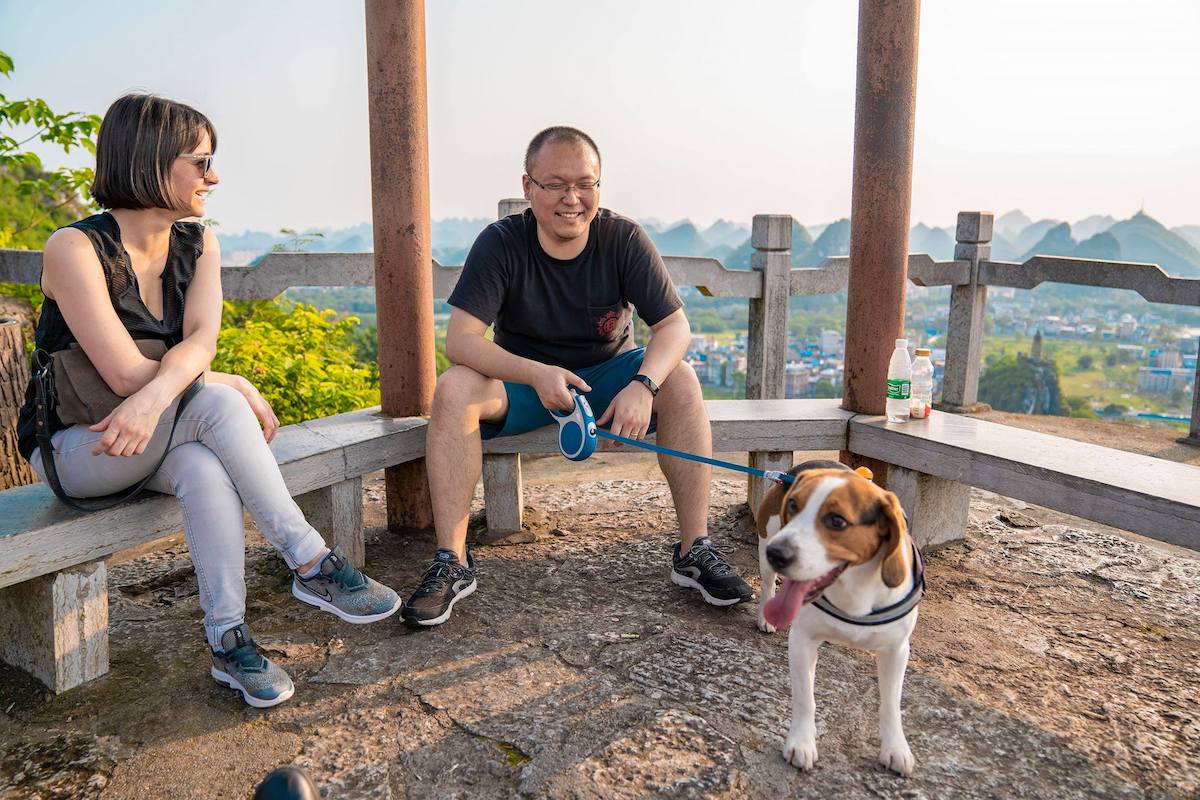
Up here the whole city spreads out below, and somewhere in it is the CLI Center, on a quiet road near Guangxi Normal University.
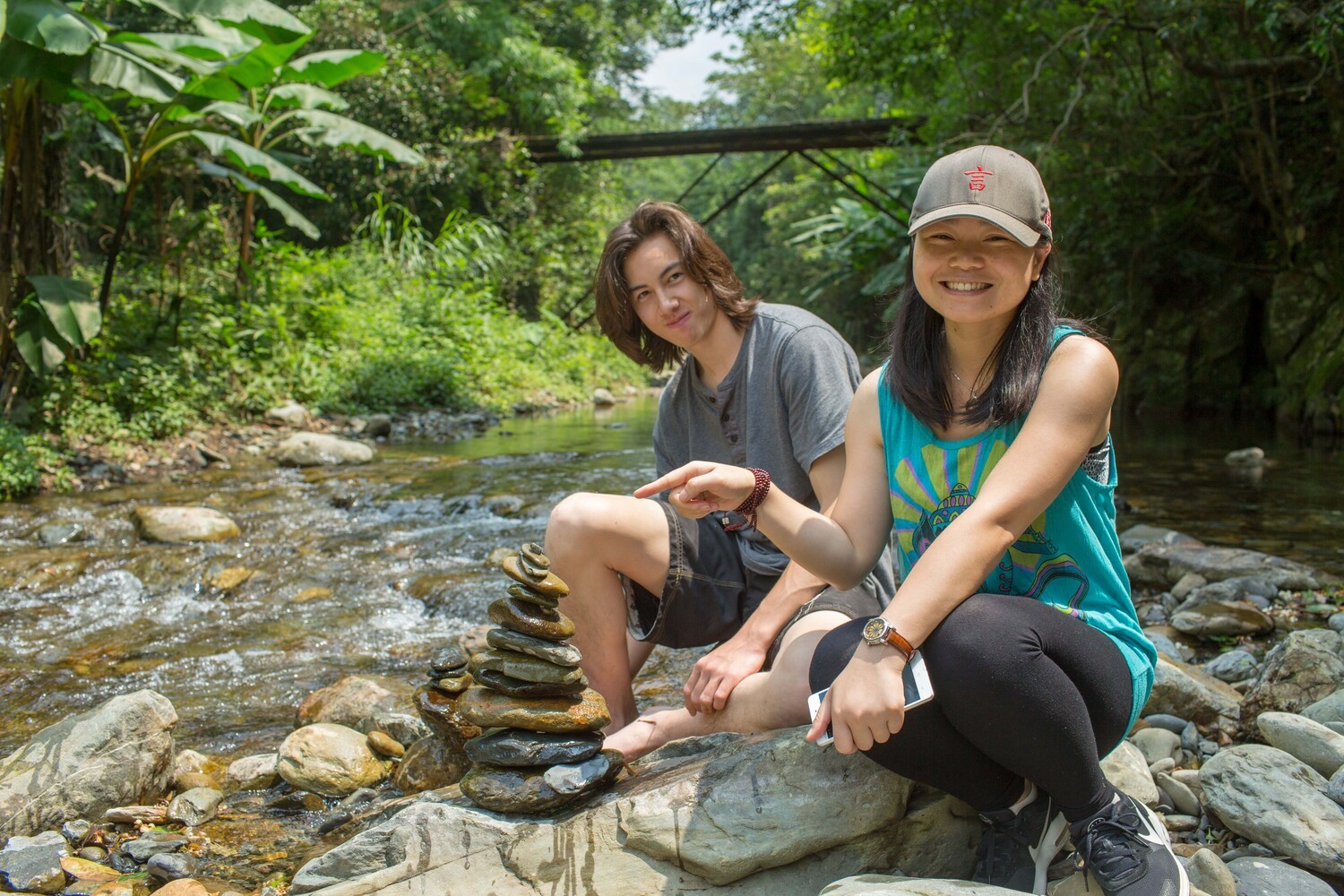
Weekdays hold homework and review after class, so weekends are when students get out to creeks and trails beyond the city.
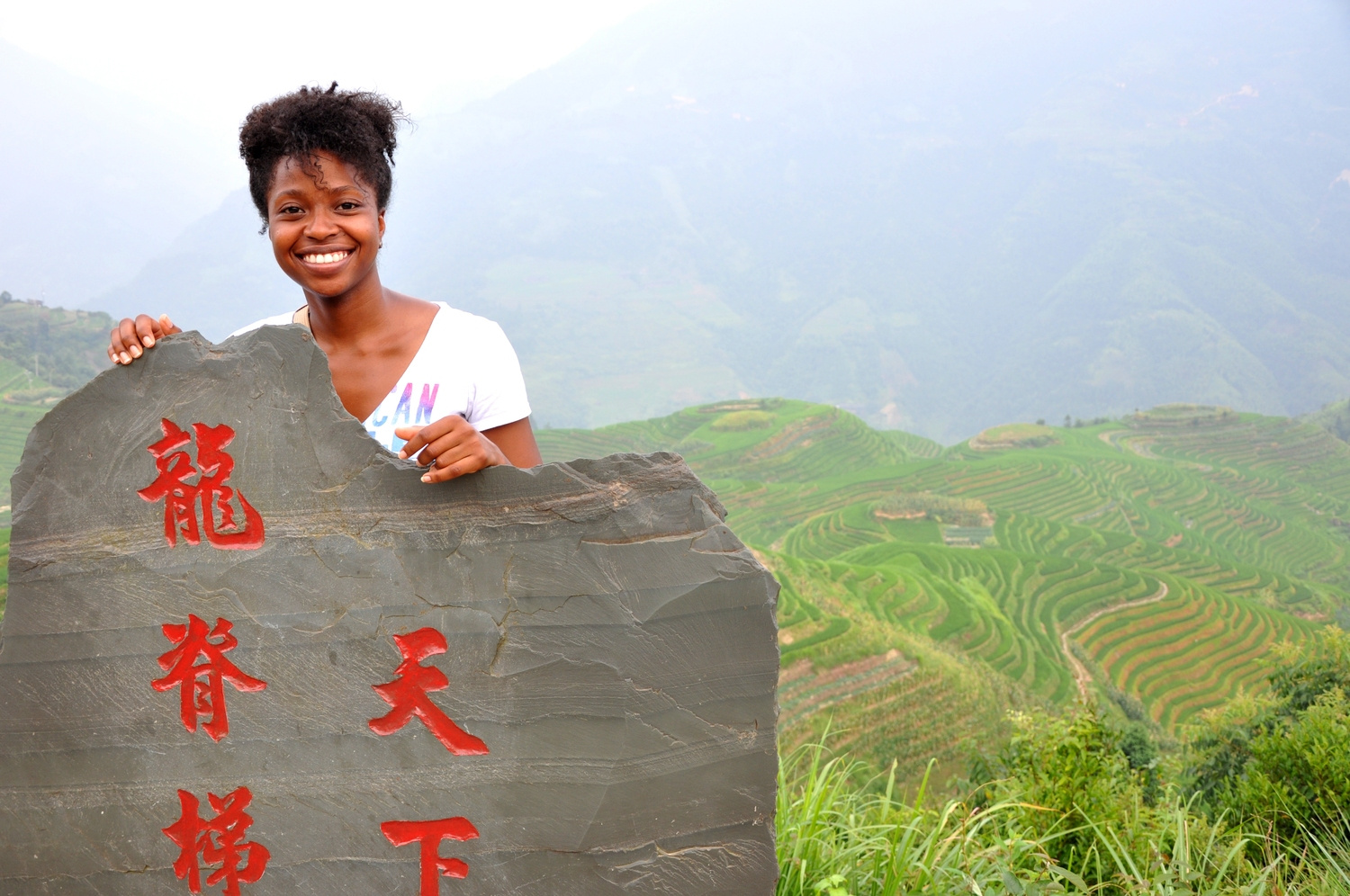
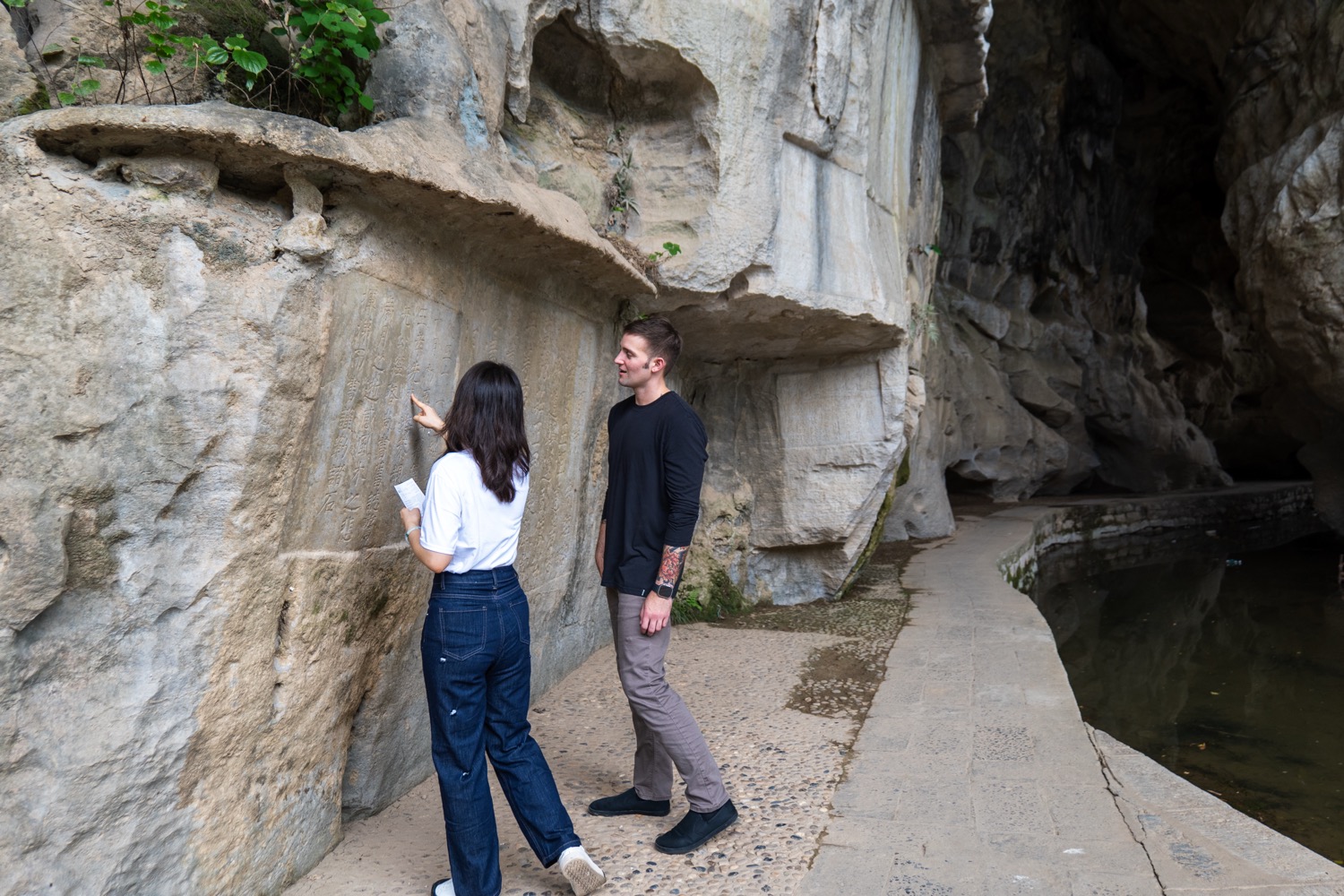
The carved stone marks the Longji Rice Terraces, where CLI runs photography excursions, and reading its characters is a small win for reading class.
With students from more than 50 countries, a trip group mixes many first languages, and Chinese becomes the one everyone shares.
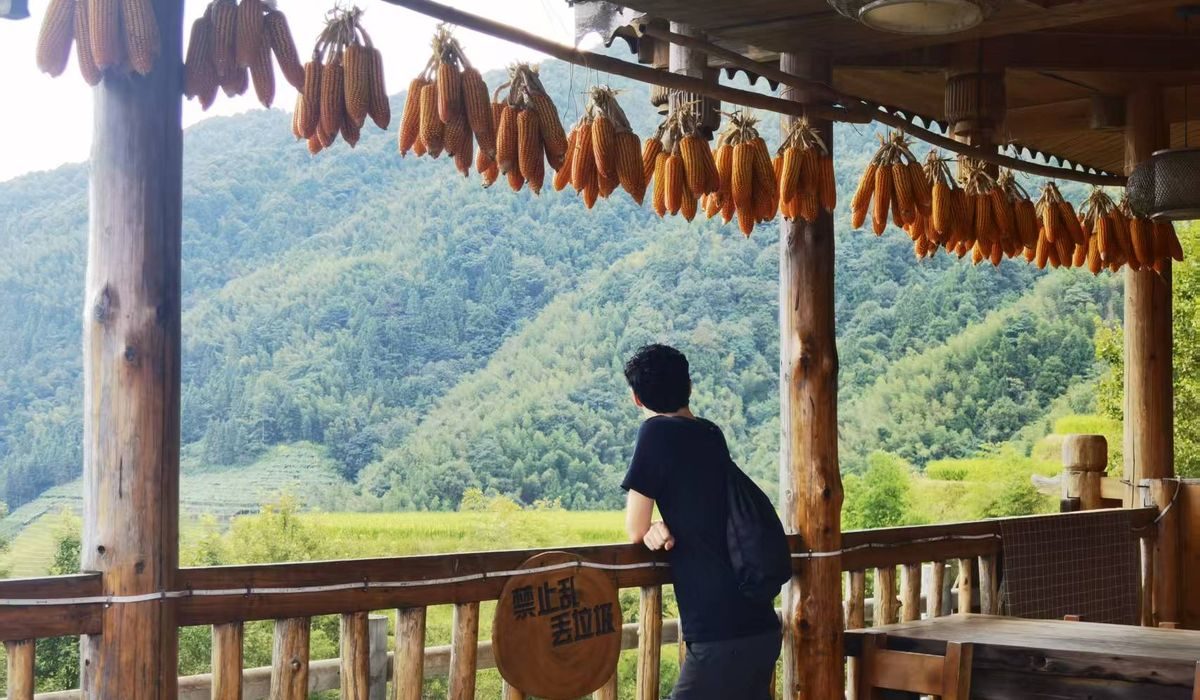
Corn hangs under the eaves to dry in the hills. Back in Guilin, home can be a private room at the CLI Center or a homestay with a local family.
Guilin has lakes, parks and green space all through the city, and the orientation on a student's first Monday includes a tour to get started.
Homestay students also go on weekend outings with their host family, a second way to see the countryside around Guilin in Chinese.
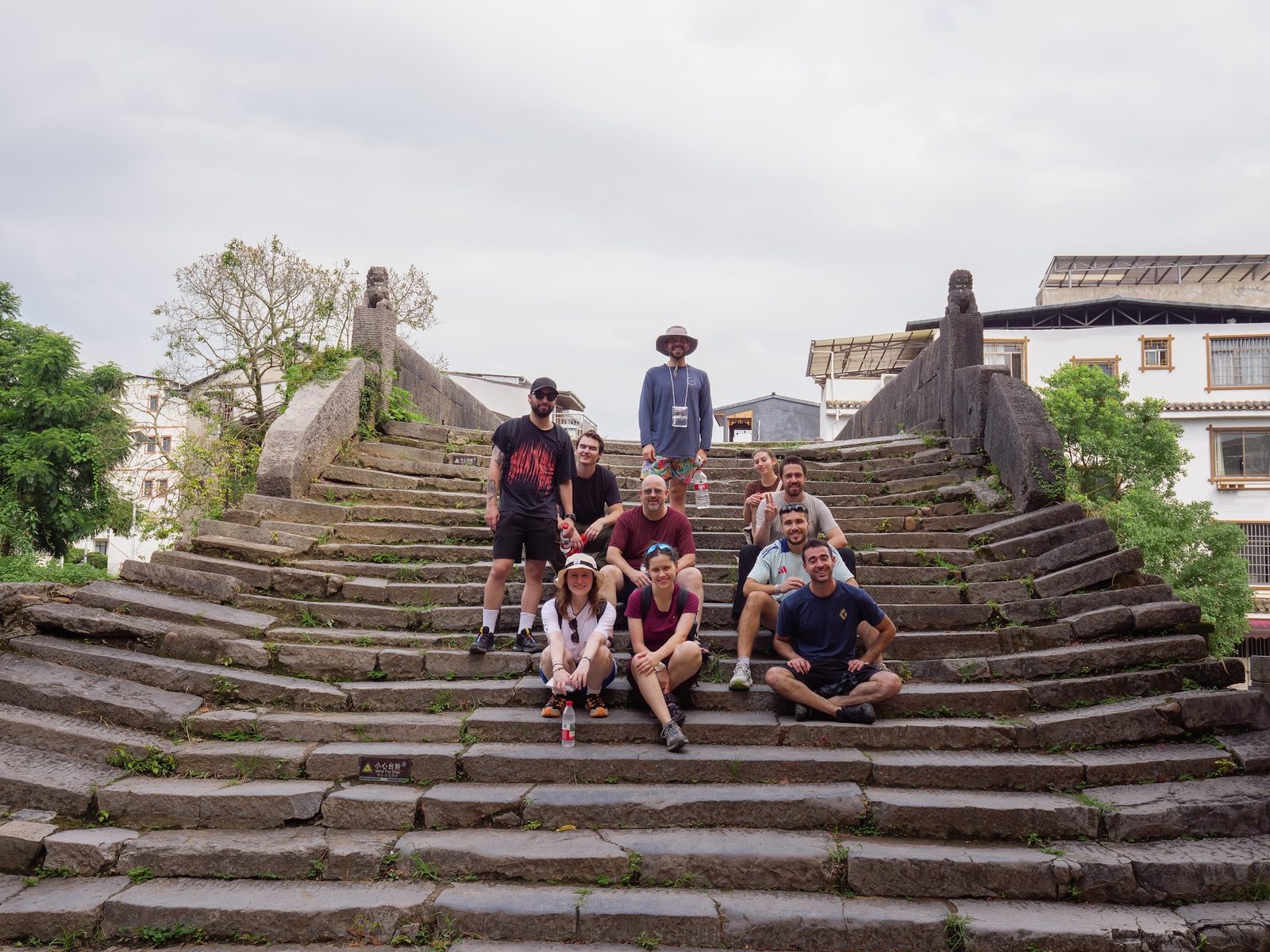
Weekend hiking in Longsheng or Yangshuo is one of the larger outings on the program, and stone steps like these do much of the climbing.
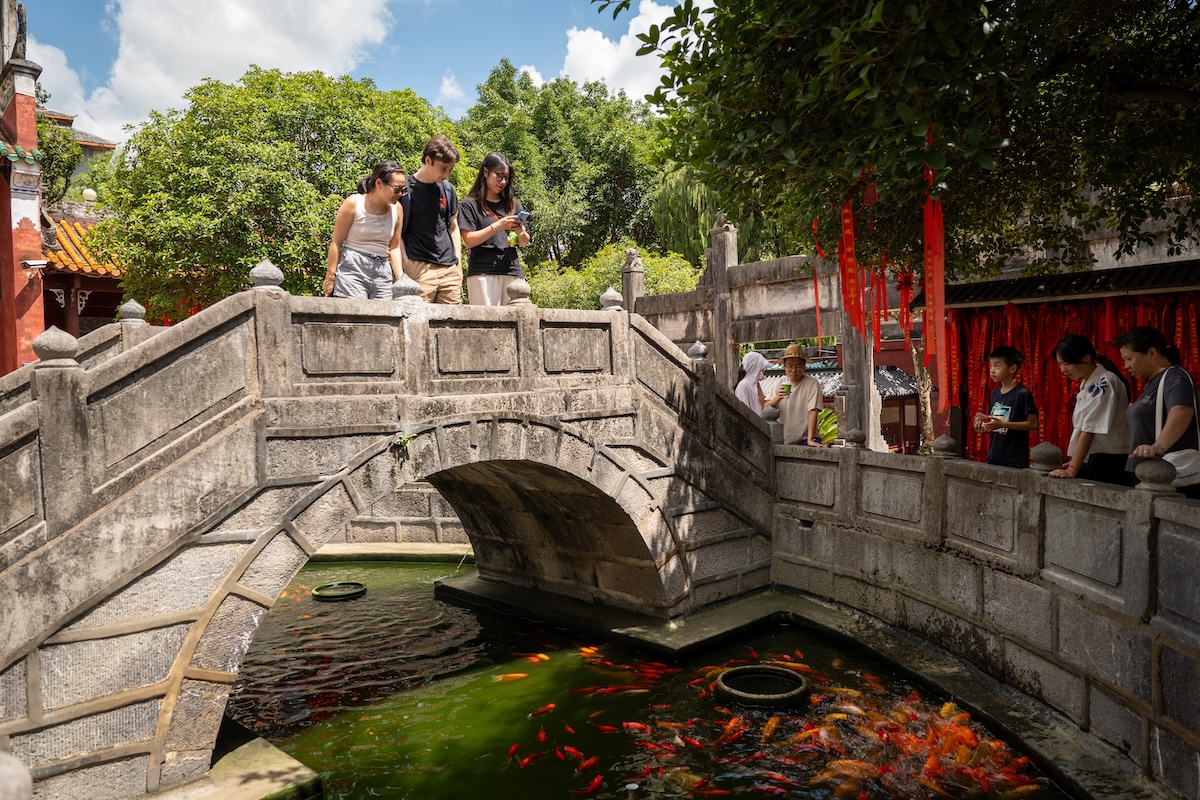
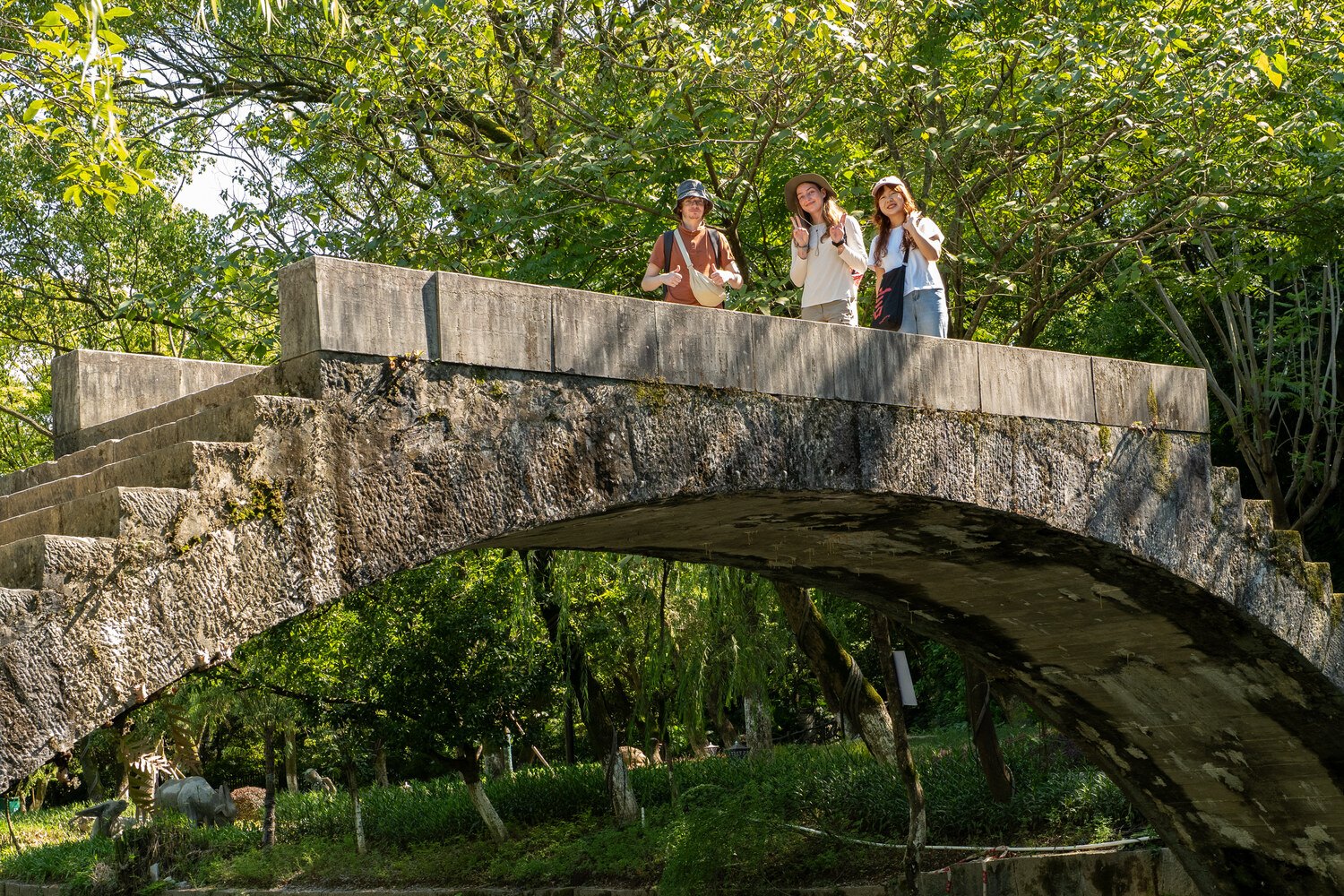
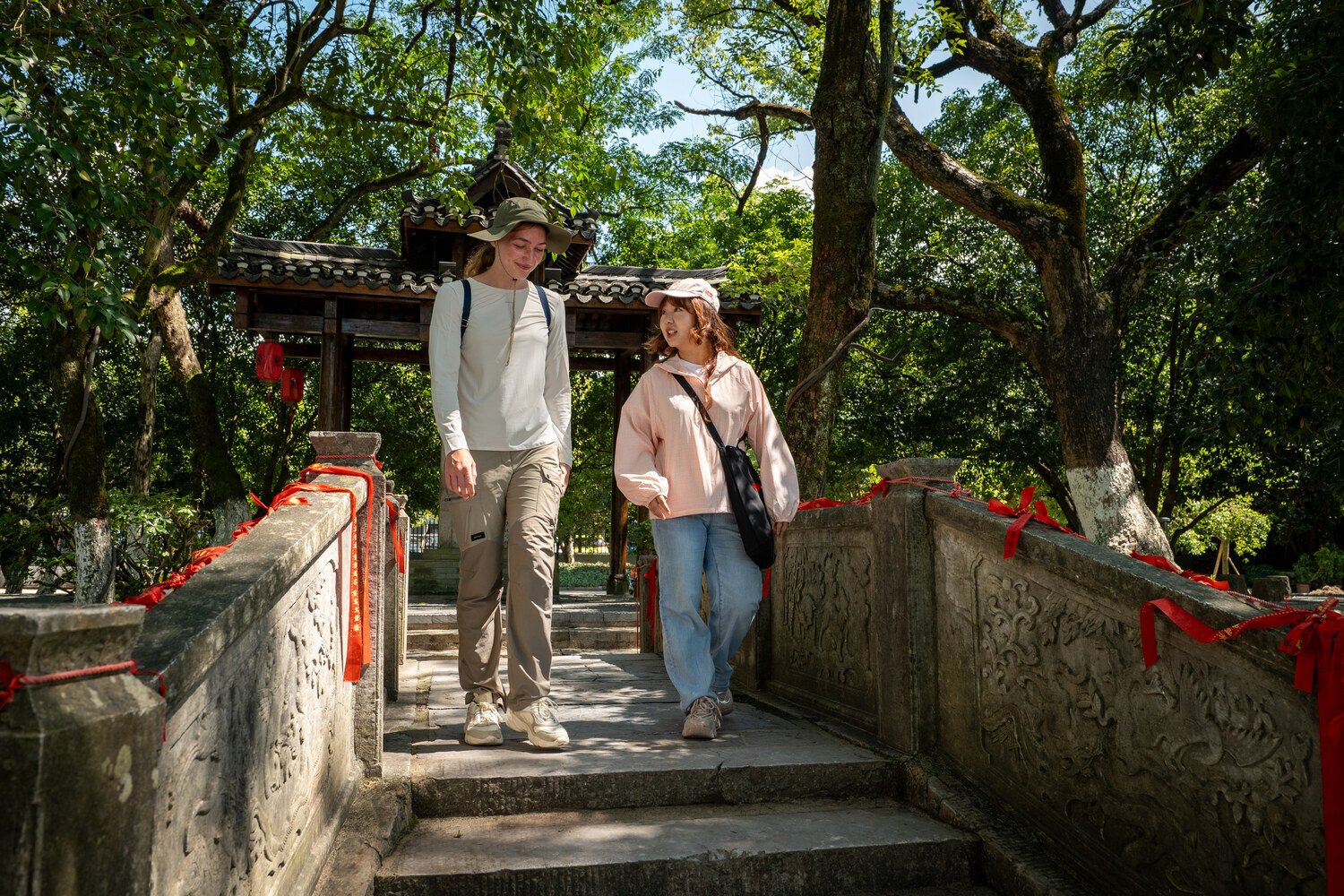
Every two weeks a short evaluation shows teachers what has stuck, including words picked up on outings like this walk over an old stone bridge.
When a Chinese national holiday falls on a class day, the missed hours can be made up later at no charge, which leaves the holiday free for sightseeing.
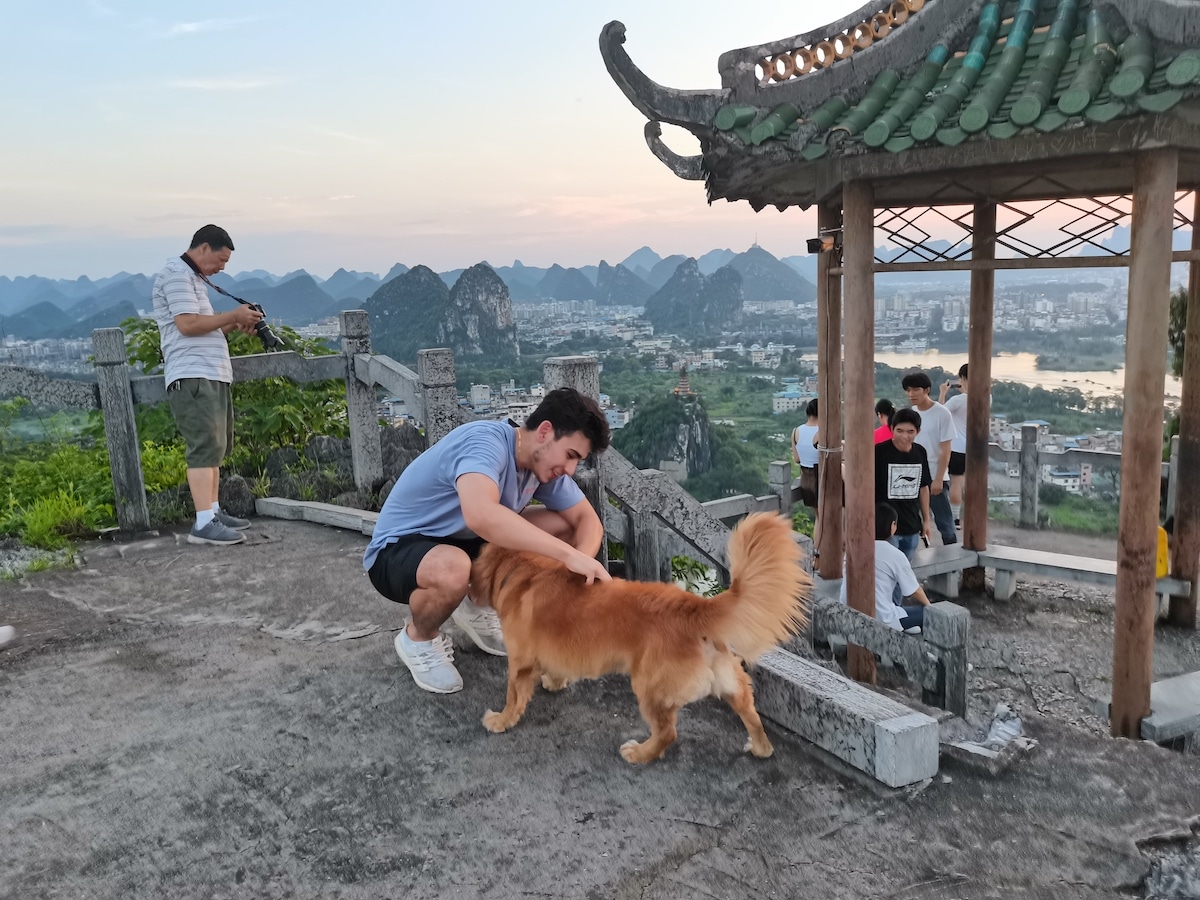
A typical weekday has two class sessions and then free time for errands, parks and markets, or a climb to a pavilion above the city.
Guilin sits on the Li River among limestone peaks, and its name, 桂林 (Guìlín), means osmanthus forest.
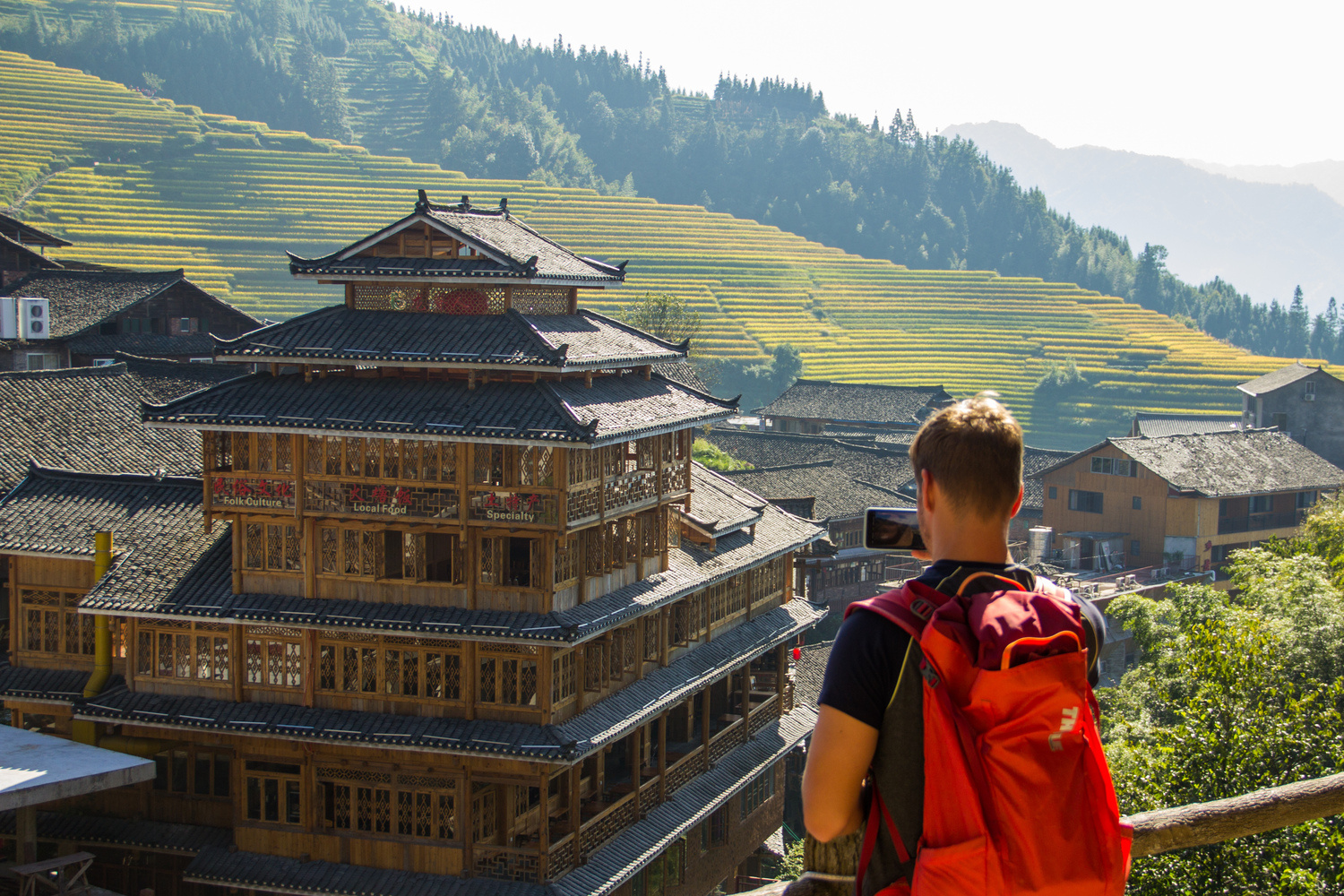
Trips out of the city lead to views like this one, with wooden towers above terraced hills. Back at the CLI Center, the rooftop has a view of its own.
Countryside outings bring up words for tools, plants and weather, and students can take them back to Monday's listening and speaking class.
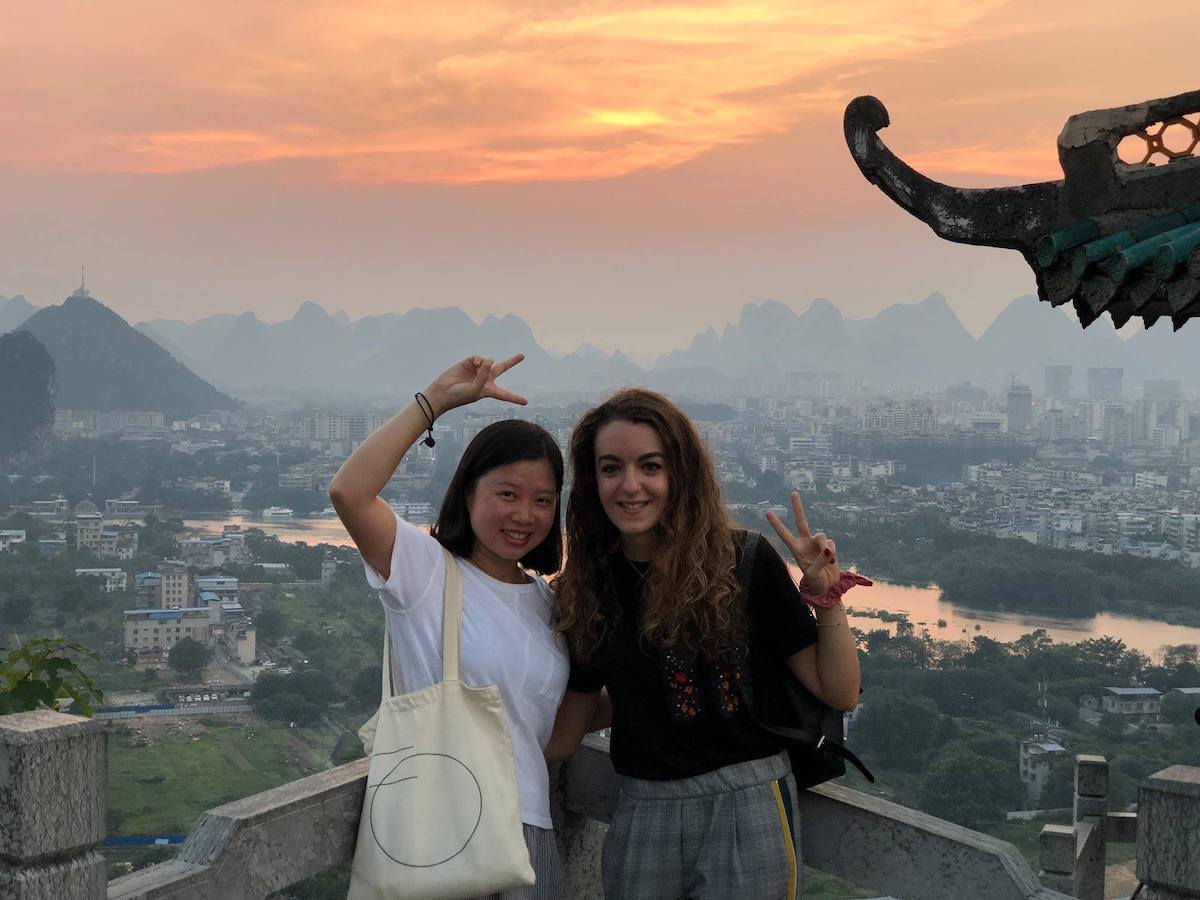
Evenings are usually lighter than the class day, and they leave room for dinner, review and a slow look over the city at sunset.
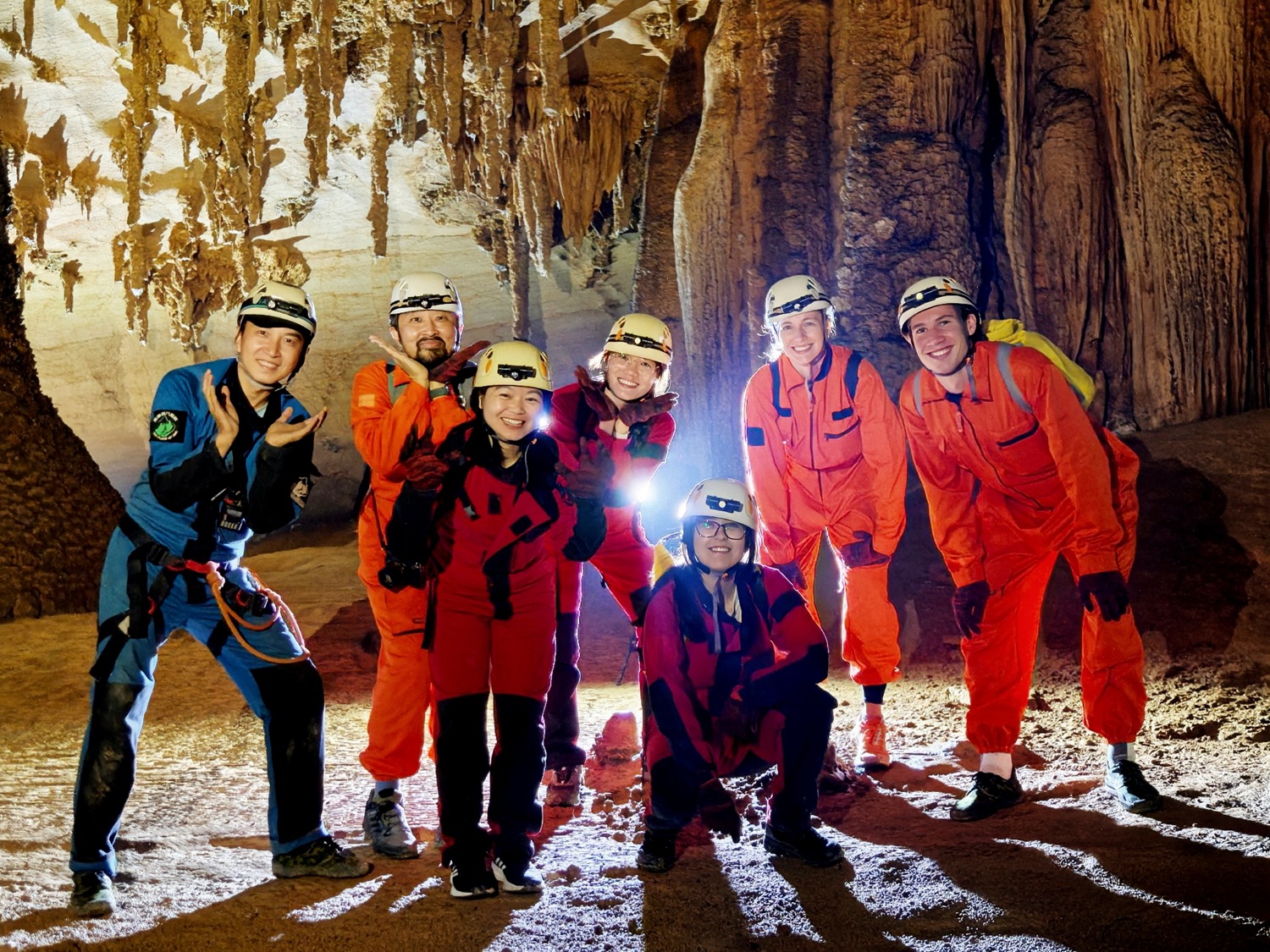
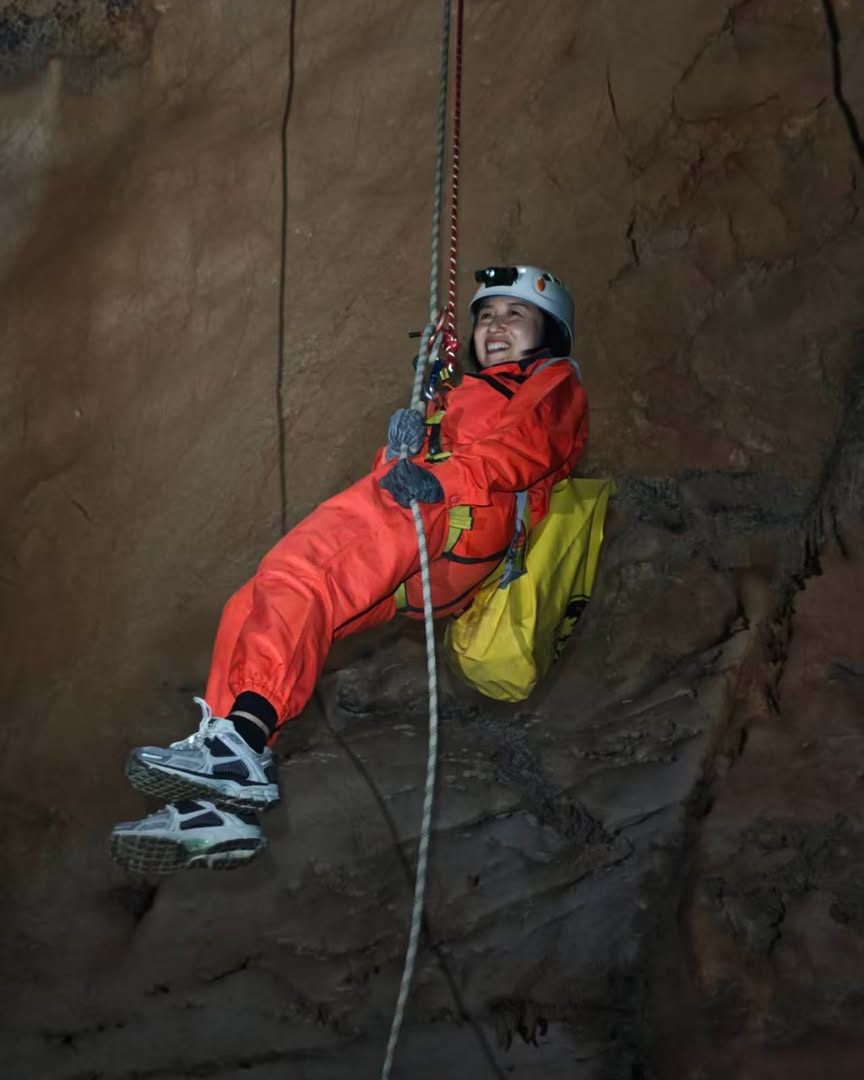
Helmets and caving suits on, deep inside a karst cave. A stay at CLI can begin on any Monday of the year, with no fixed semesters to plan around.
Longsheng, Yangshuo and the Li River are each about an hour from Guilin, which makes the city a practical base for weekends away.
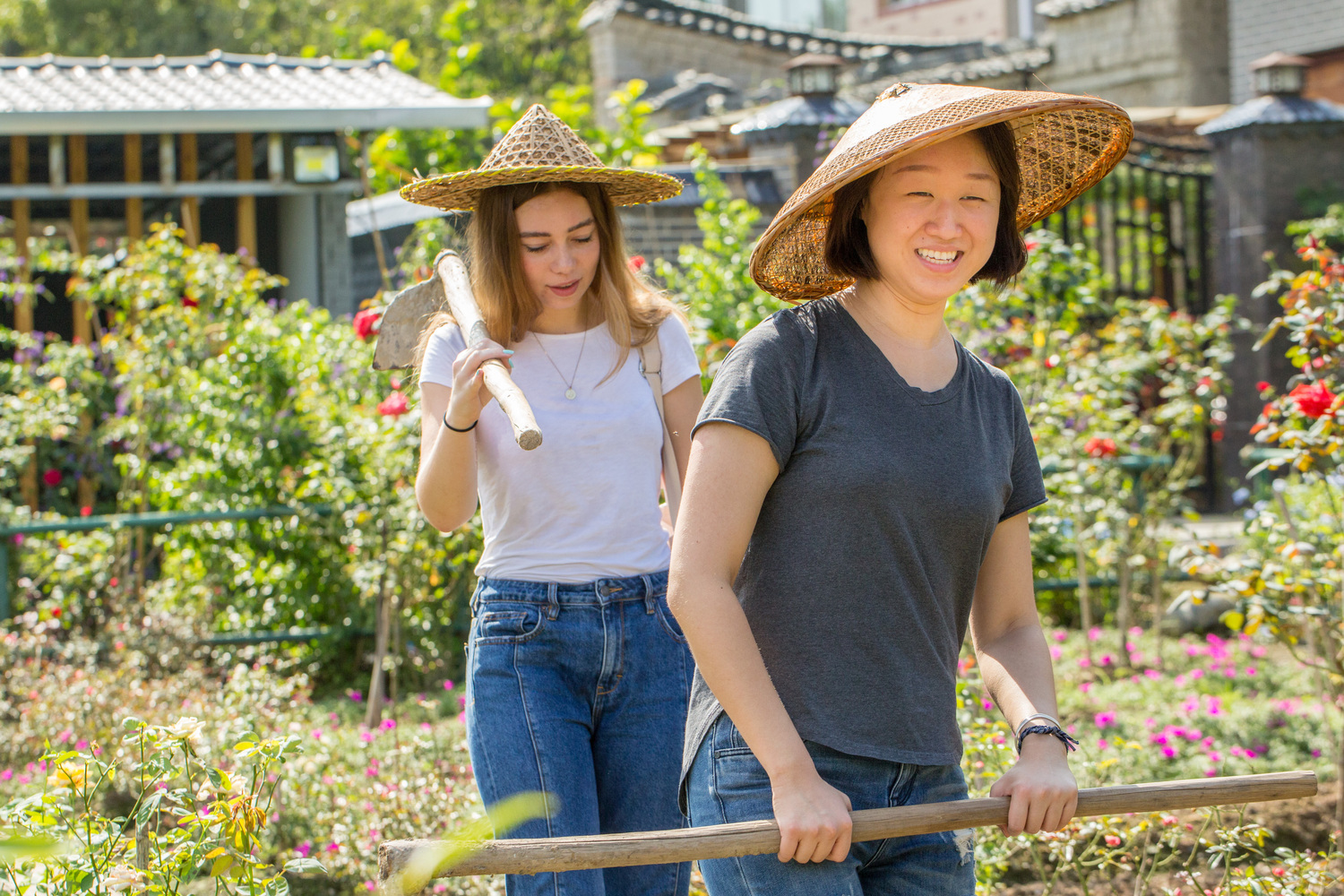
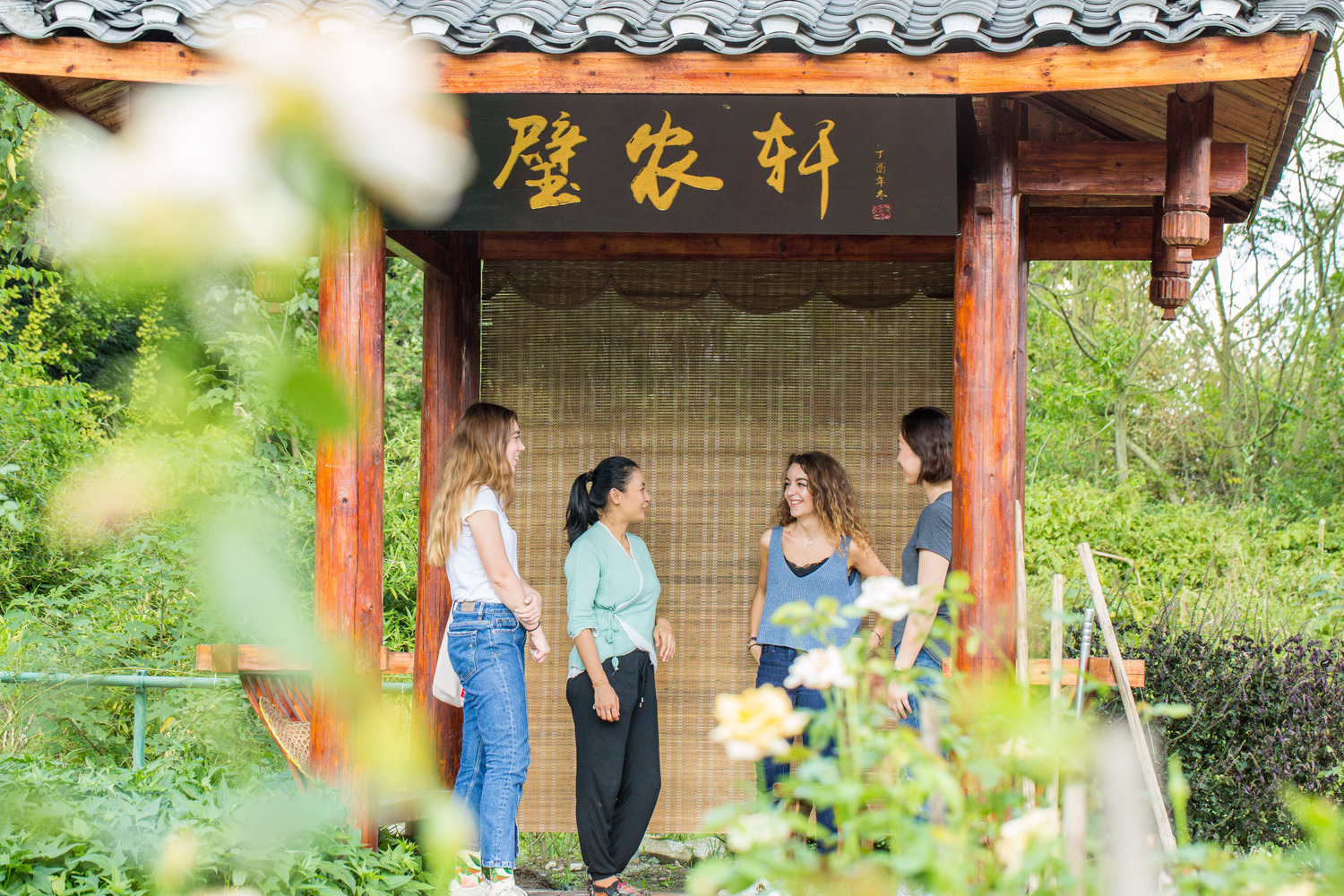
Complete beginners are welcome, and their first weeks often focus on survival phrases and daily communication, the kind a garden visit calls for.
Students can start any Monday and stay from one week to a year, and a longer stay means more weekends for trips out to the terraces.
New verbs from a day in the fields can go to the comprehensive review teacher, whose class covers grammar, vocabulary and daily review.
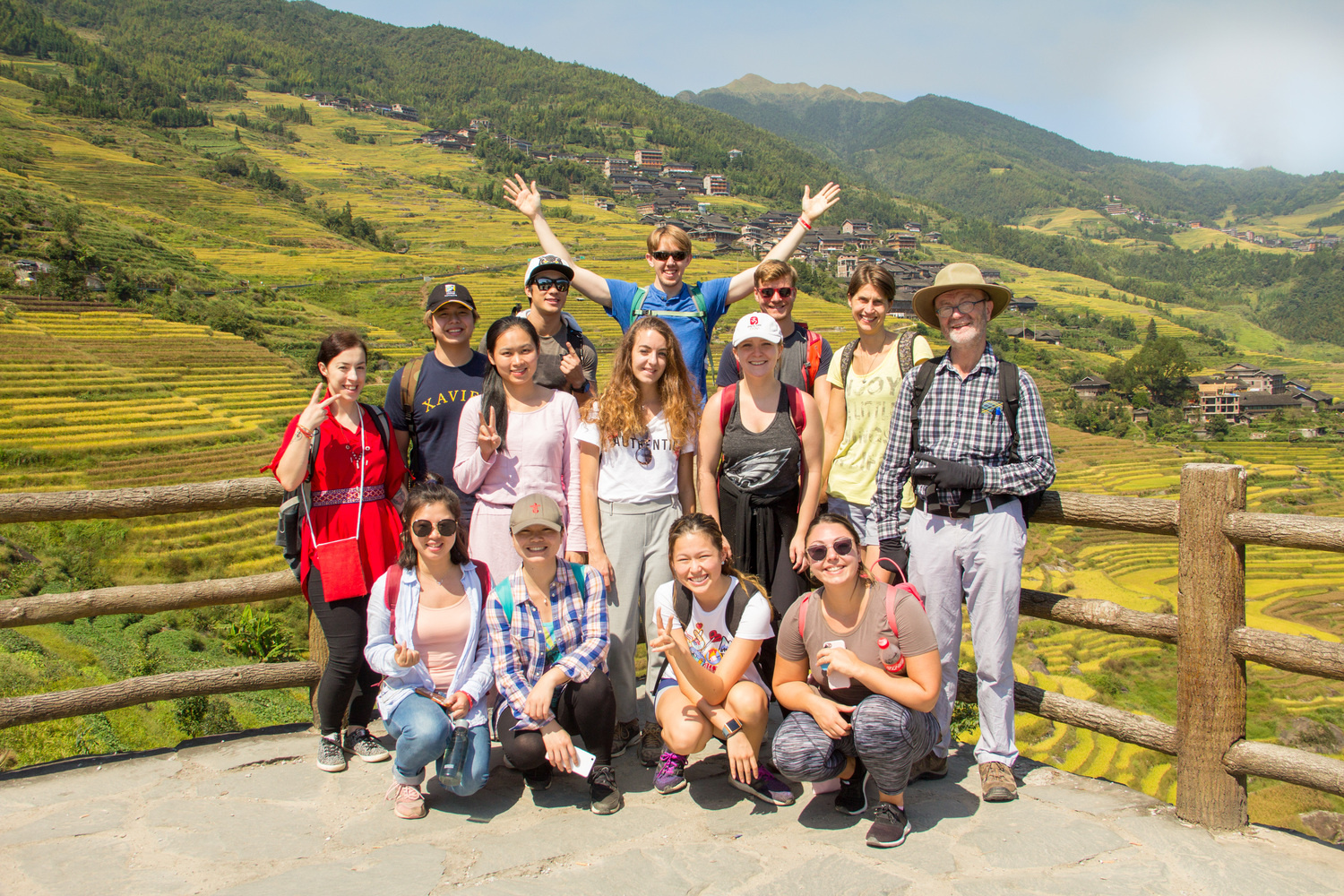
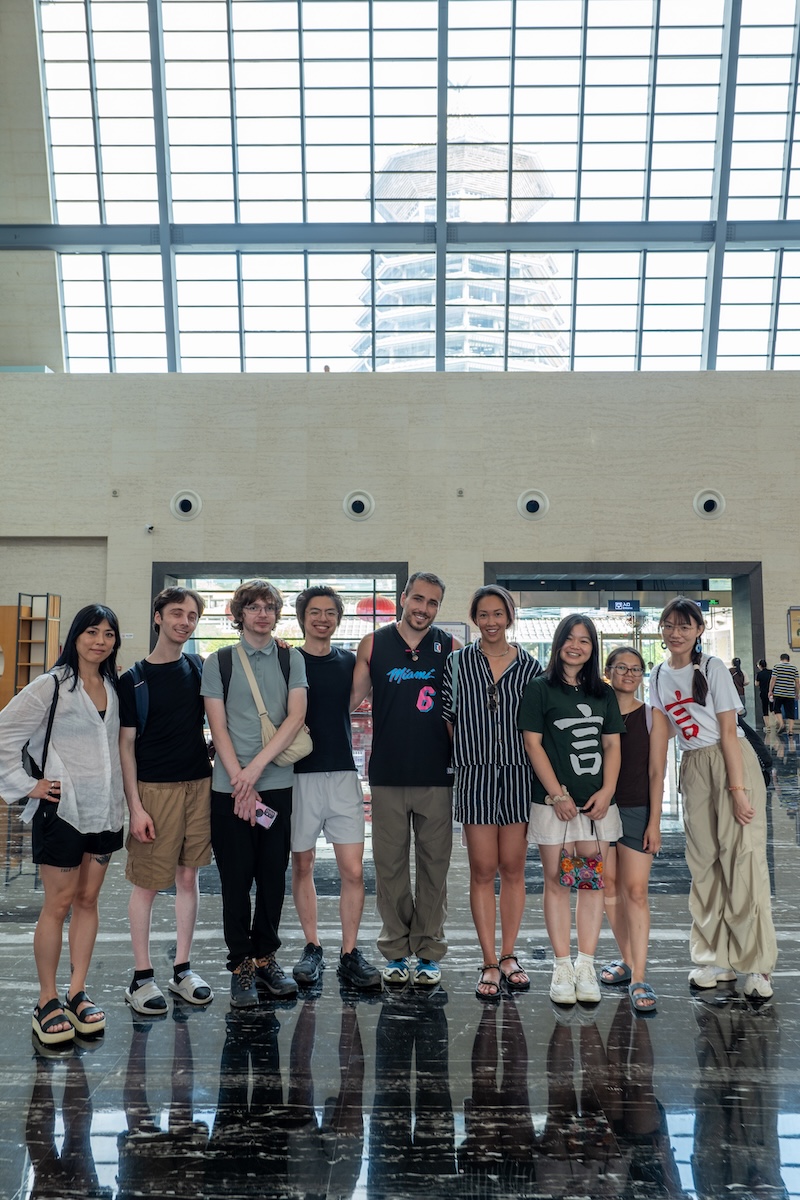
The program has weekly activities and monthly excursions, so over a stay of a few weeks a student can end up in more than one group photo like this.
Rice noodles are made from rice like this, and in Guilin they come to breakfast as 桂林米粉 (Guìlín mǐfěn), served at neighborhood shops.
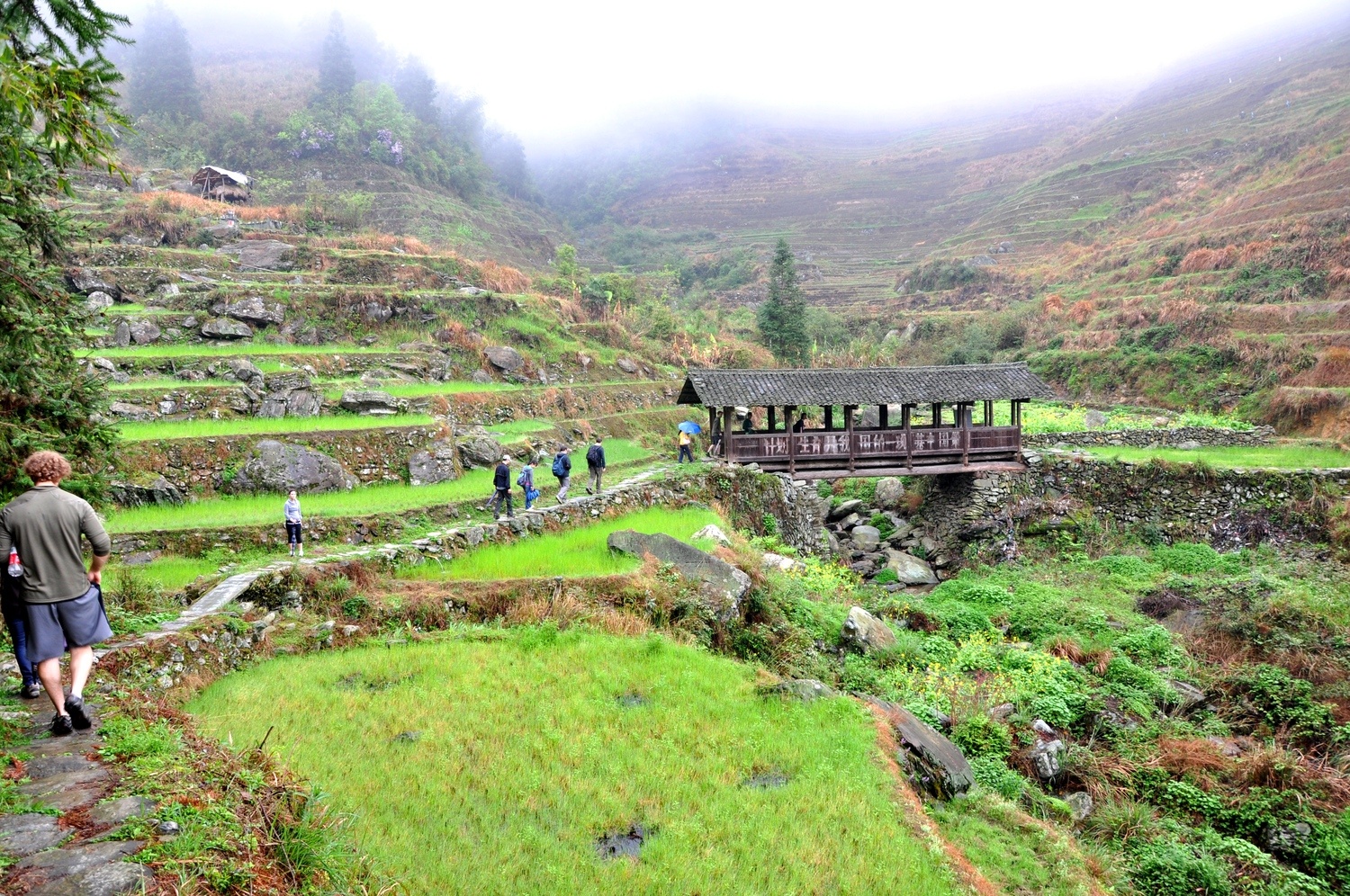
A misty trail across green terraces to a covered bridge is a world away from the CLI Center's 18 small private classrooms, where the weekdays are spent.
Trips can mix complete beginners with conversationally fluent students, and on a terrace hike each one speaks as much Chinese as they can manage.
After a weekend in the hills, Monday brings two class sessions again, and a weekend story is ready-made material for conversation practice.
Regional travel is part of what weekends are for, and a phone is all it takes to catch a view of terraced hills and a wooden village.
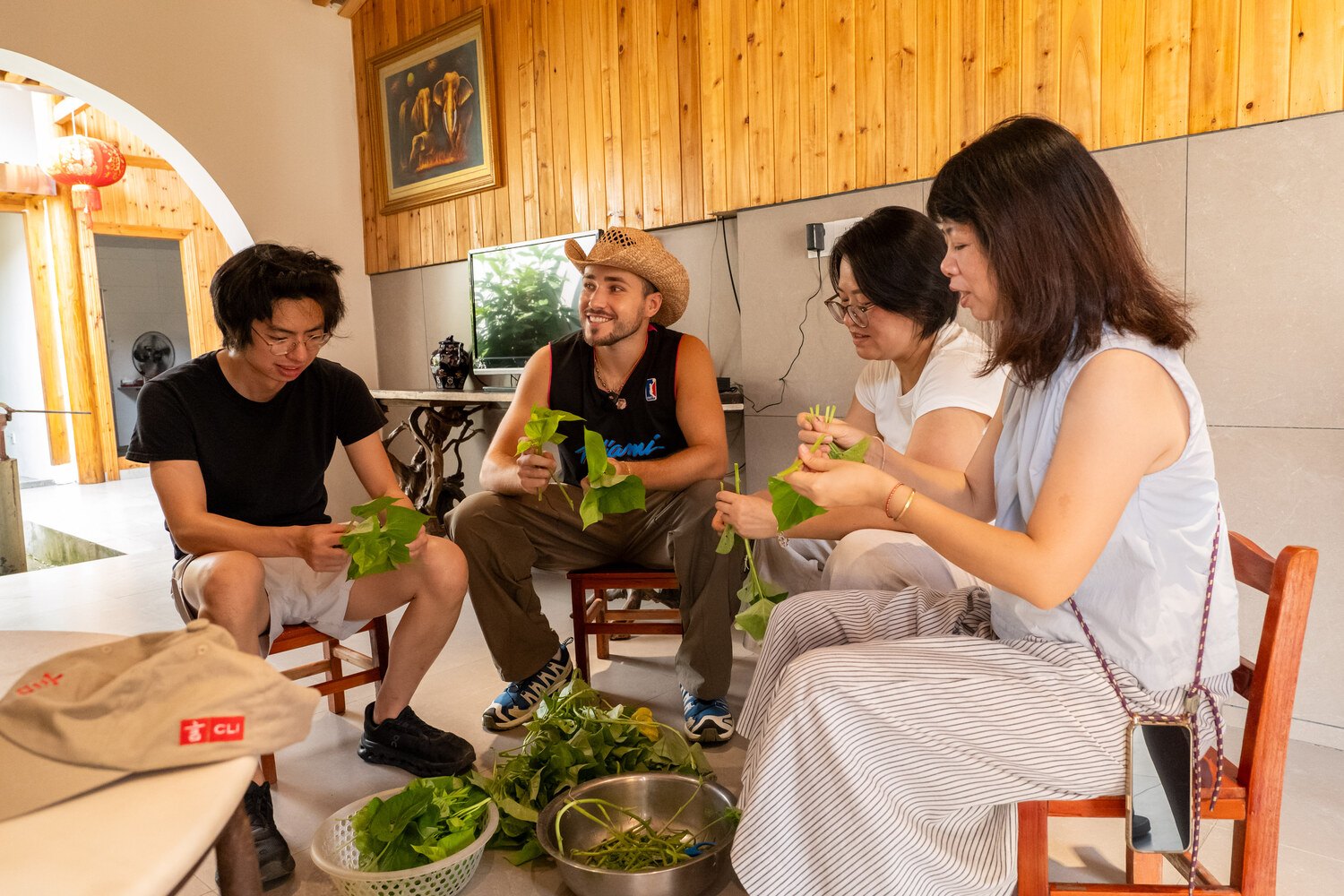
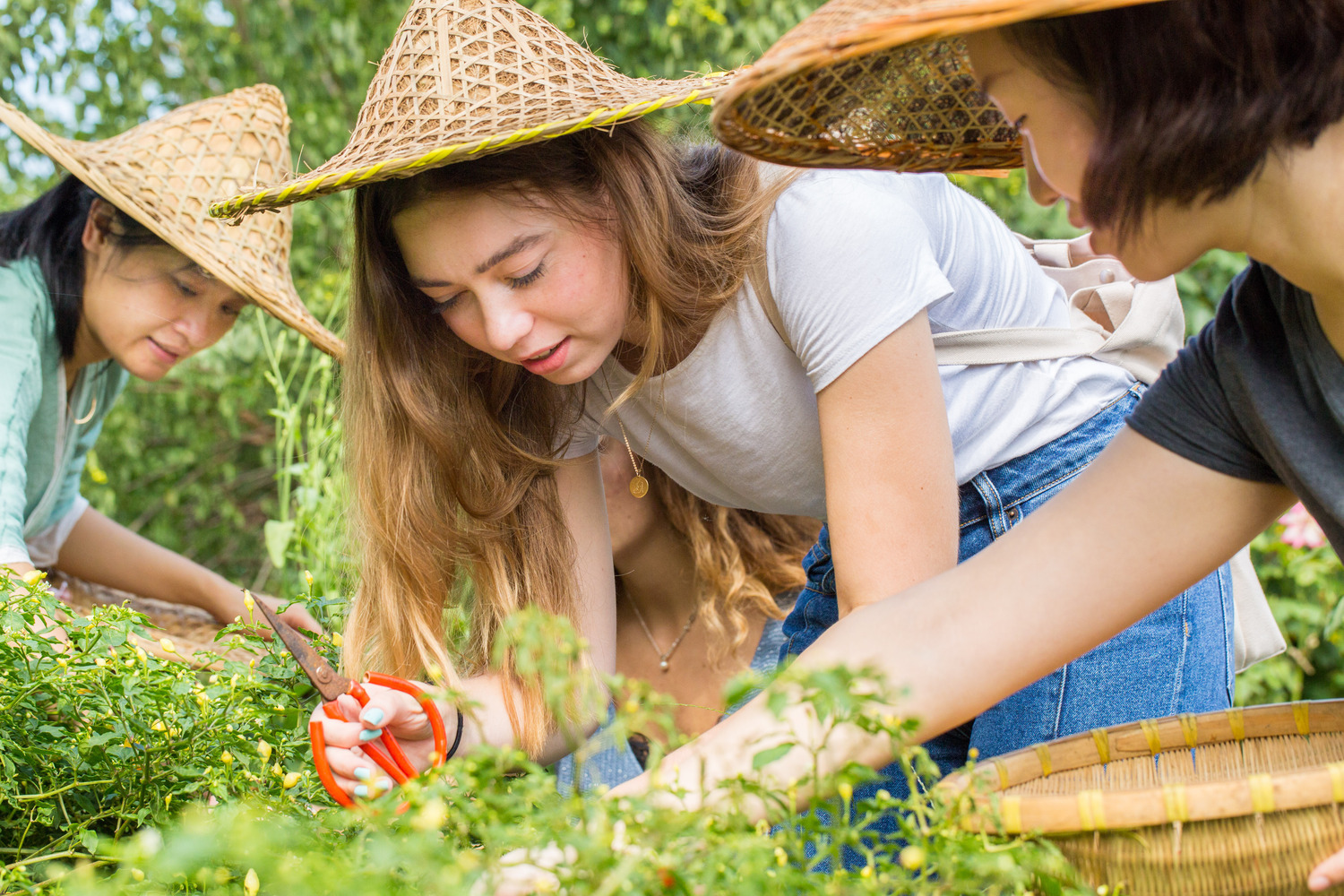
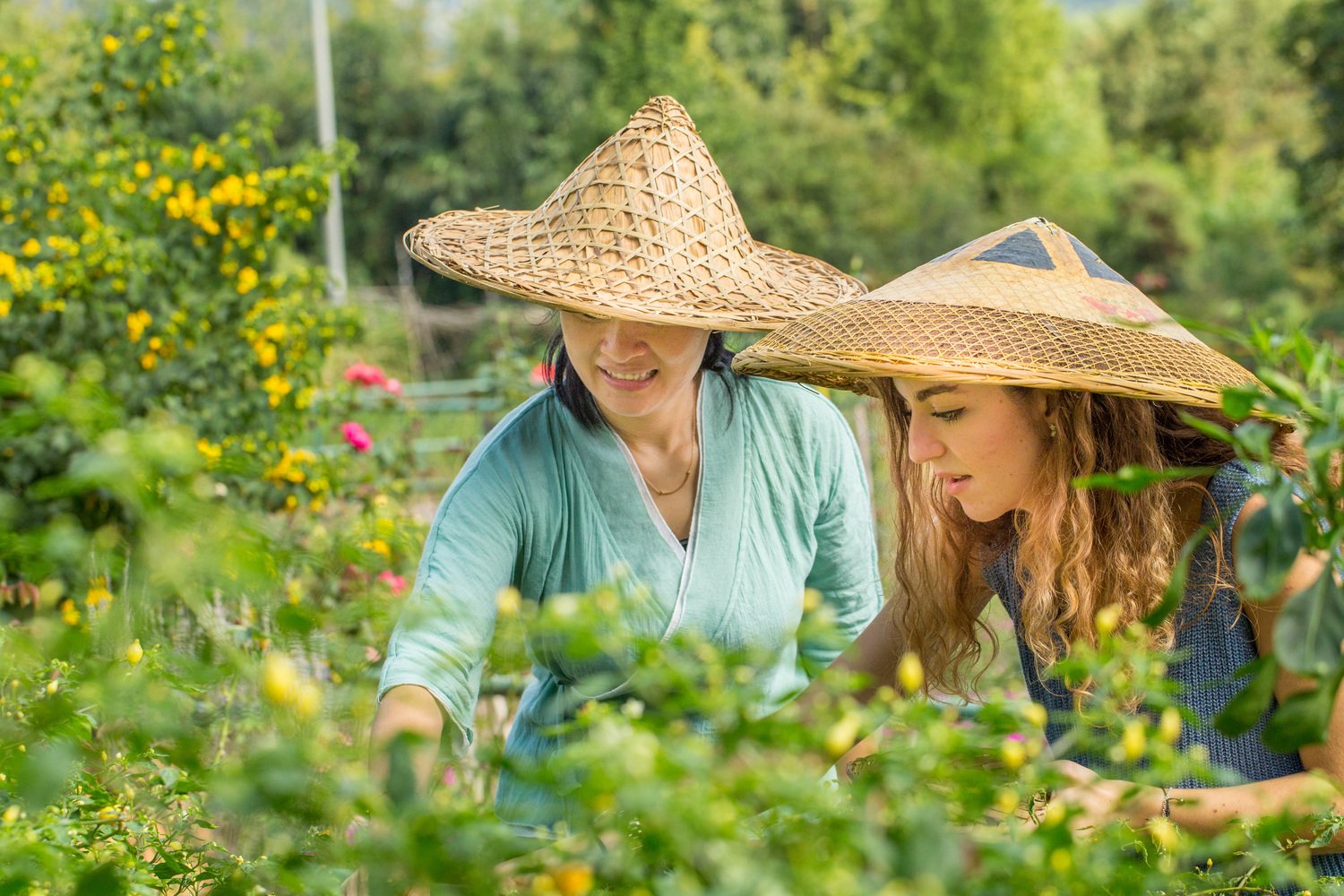
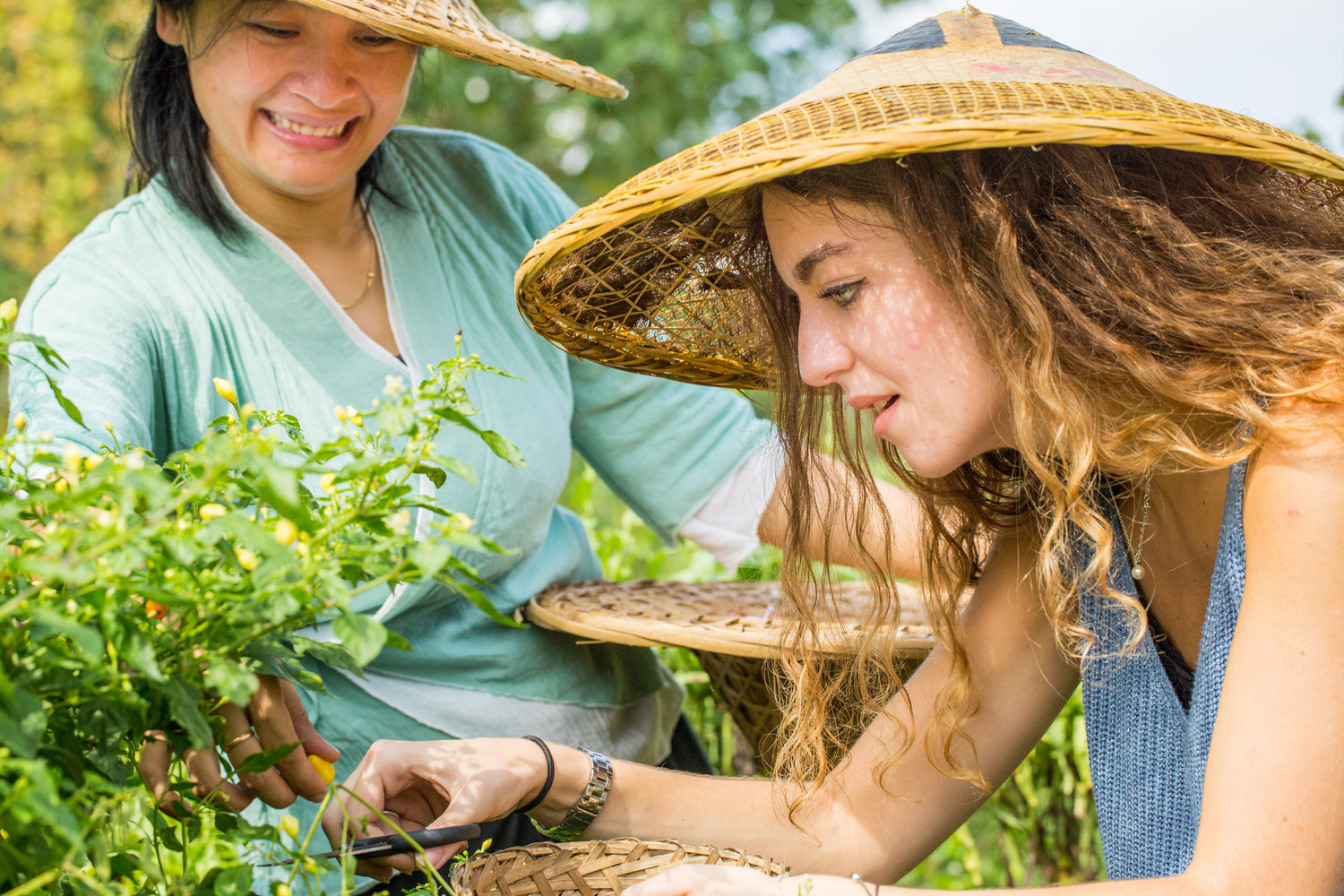
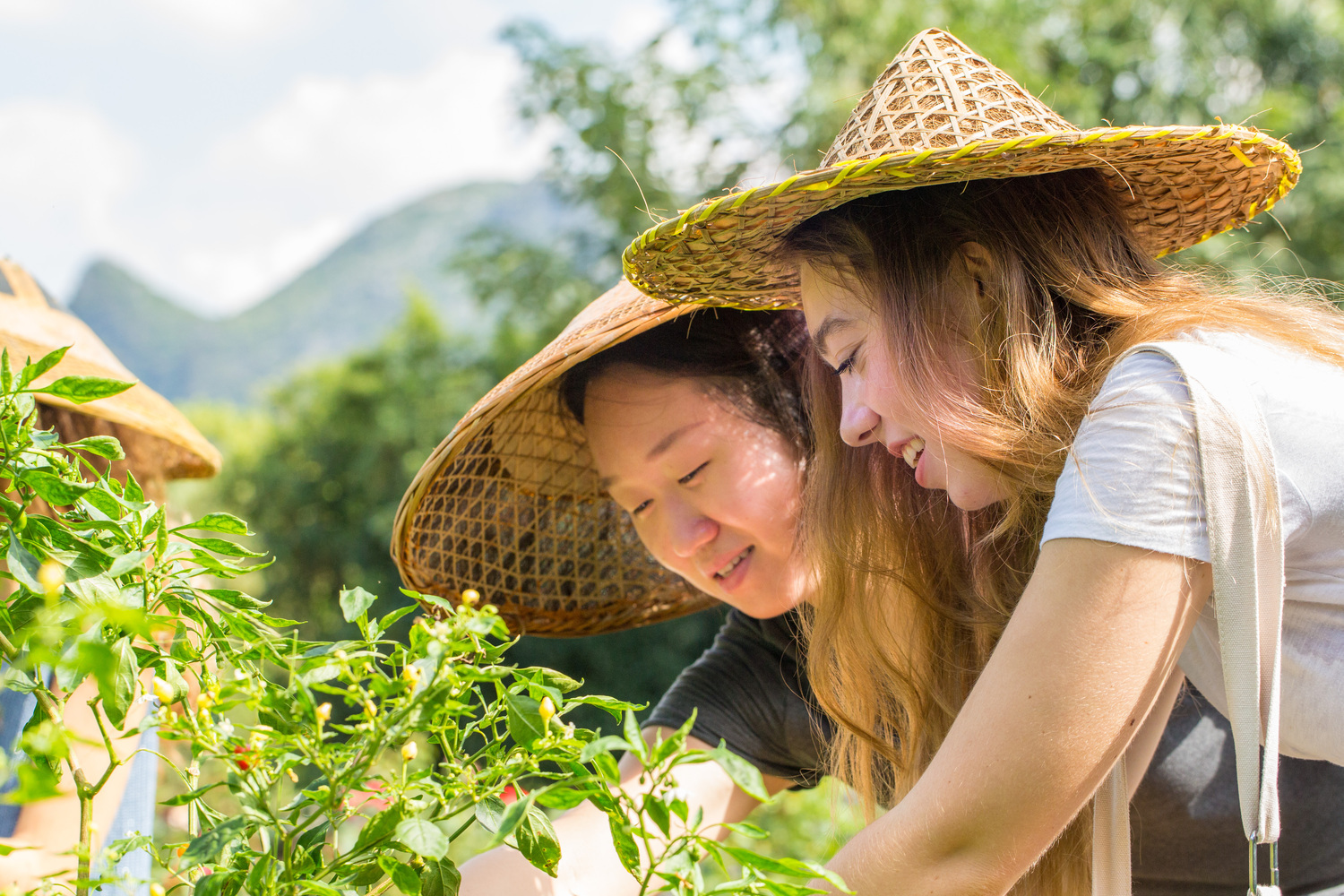
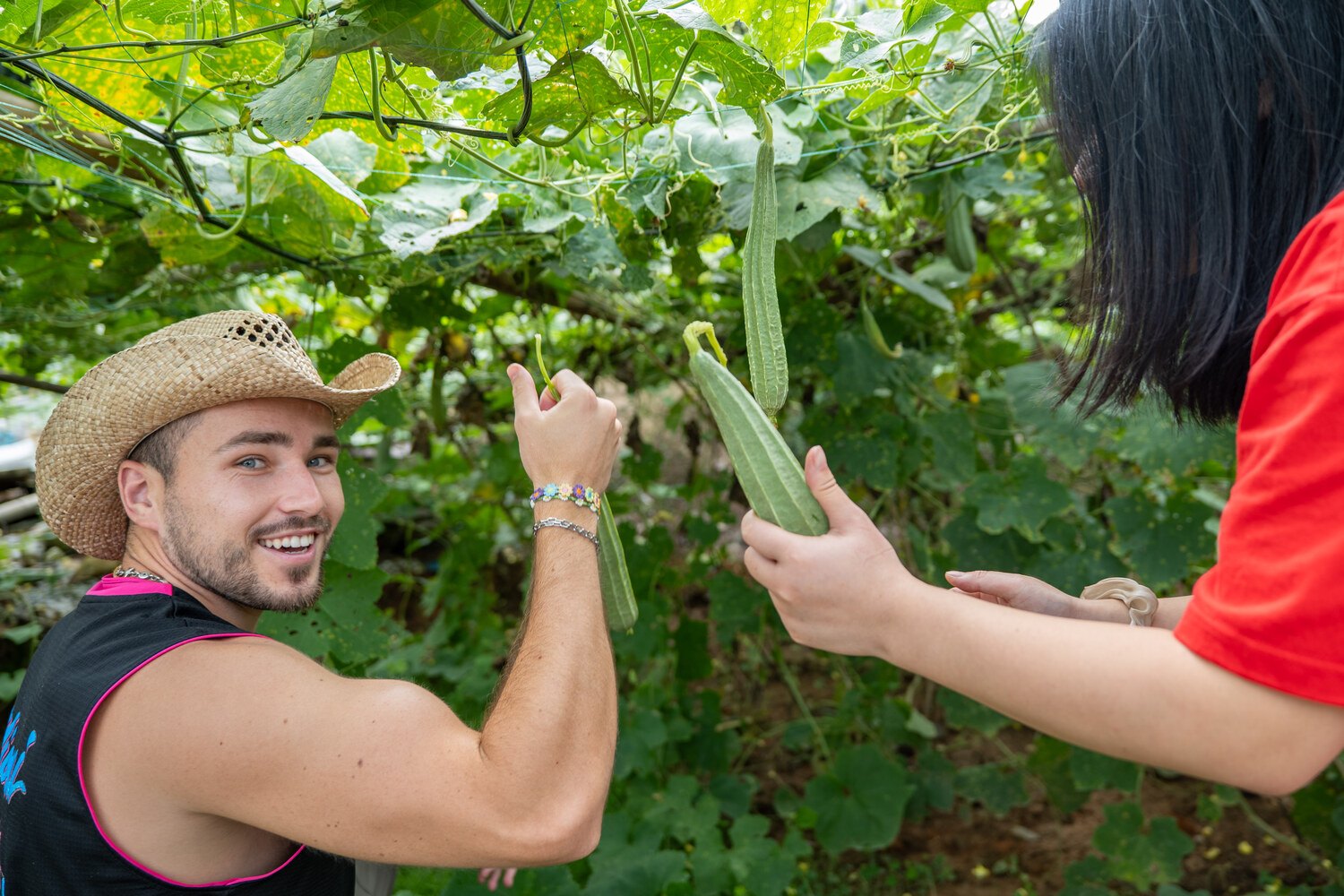
Cooking lessons with Chinese chefs are among CLI's activities, and picking fresh greens from a garden is one way to learn where a dish starts.
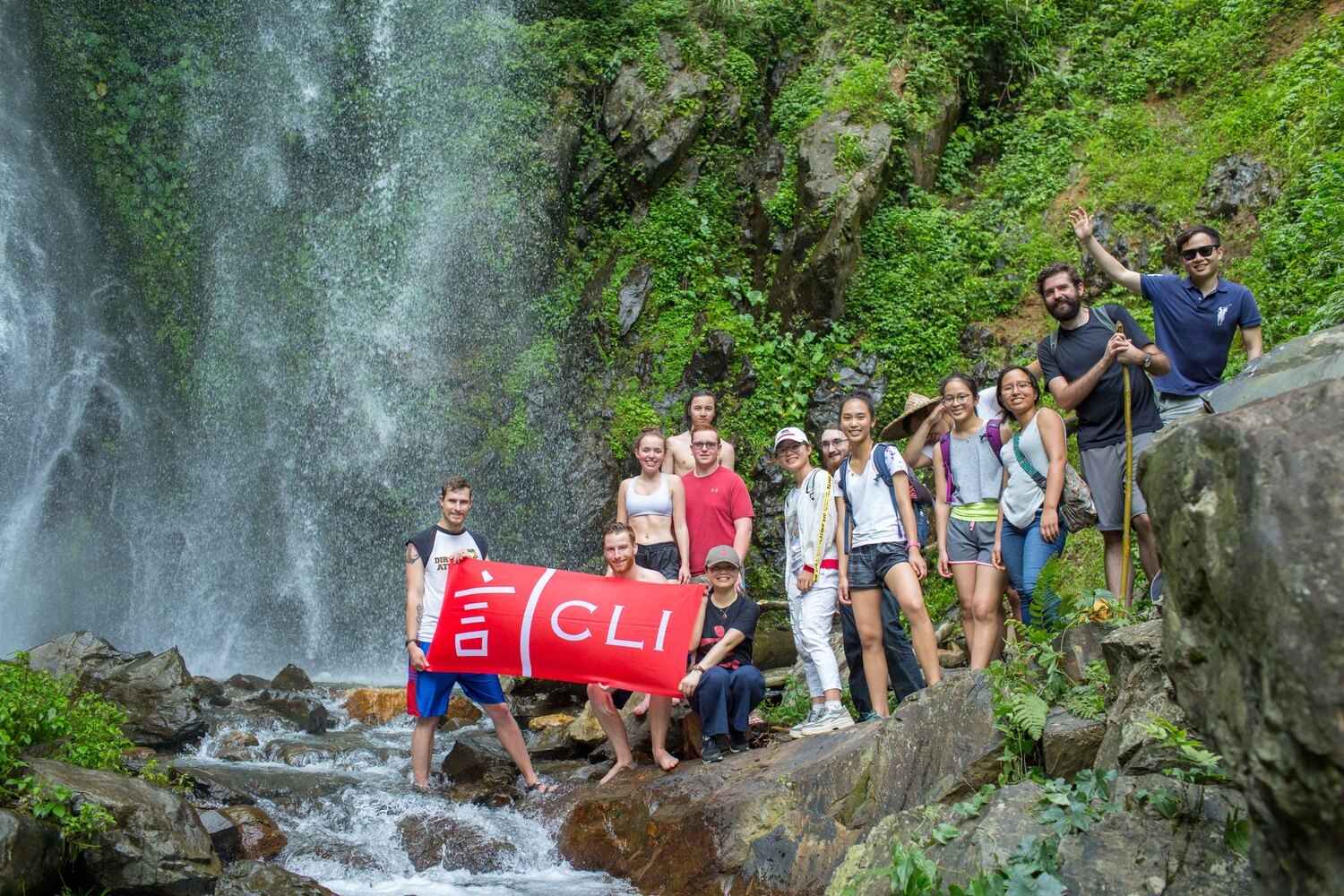
Guilin's summers are hot and humid, and a waterfall on a weekend hike is a good place to cool off with the group.
Welcome and farewell dinners, included in tuition, open and close each stay, and the weekends in between are often spent on trips like this one.
Ordering in Mandarin is one of the first skills students pick up, and a village stop like this is a good place to try it.
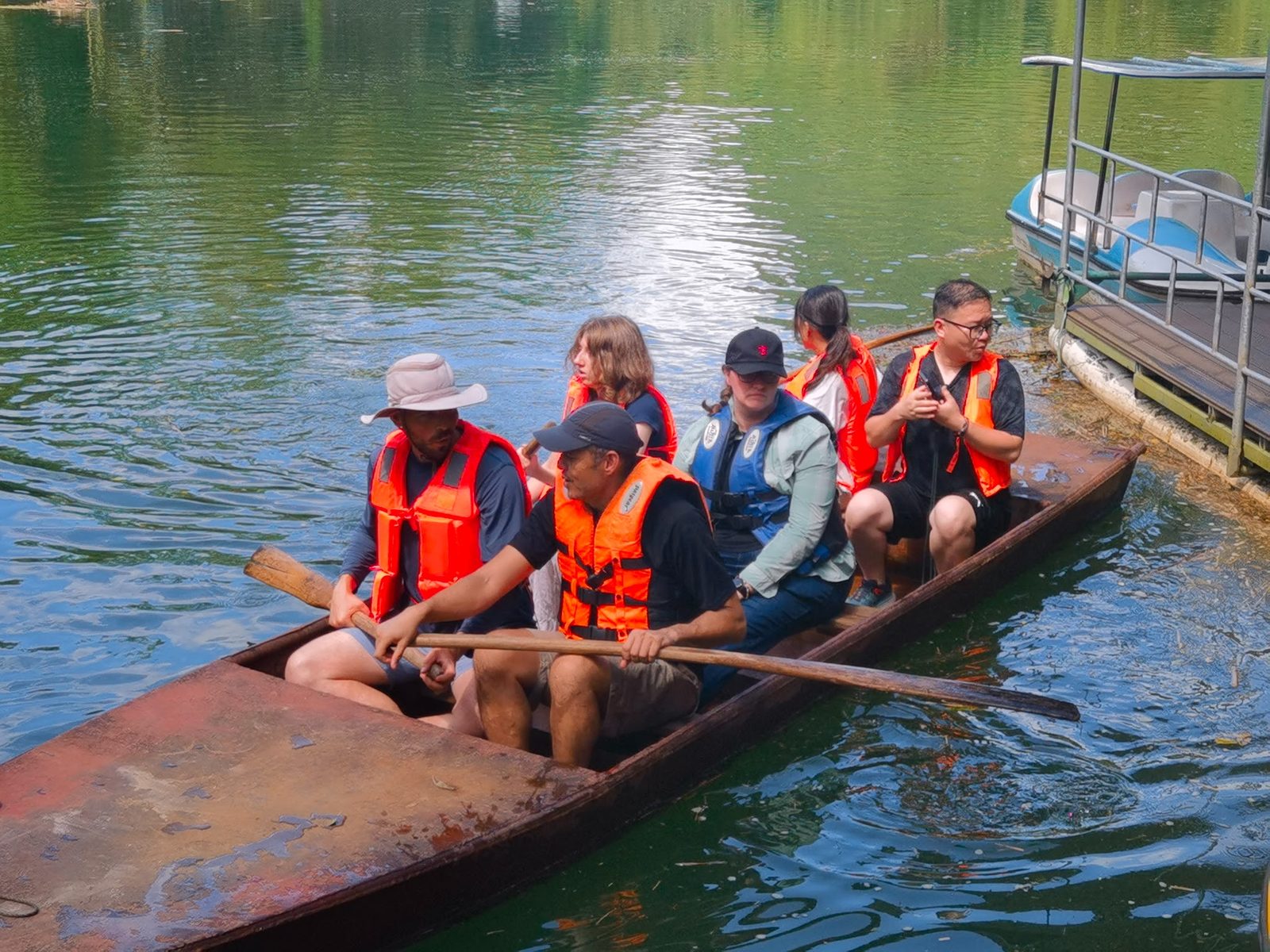
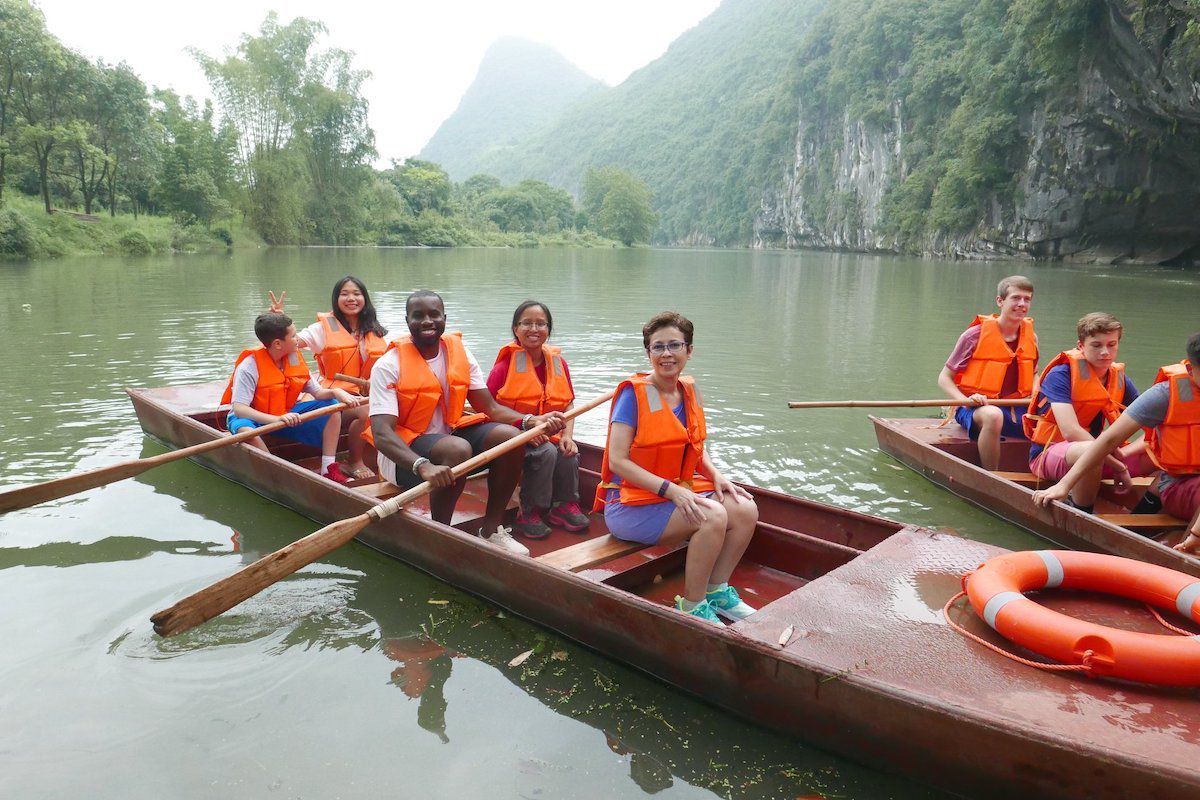
Life jackets on in a narrow wooden boat. Trips planned on your own are part of weekends too, and a quiet ride like this makes an easy one.
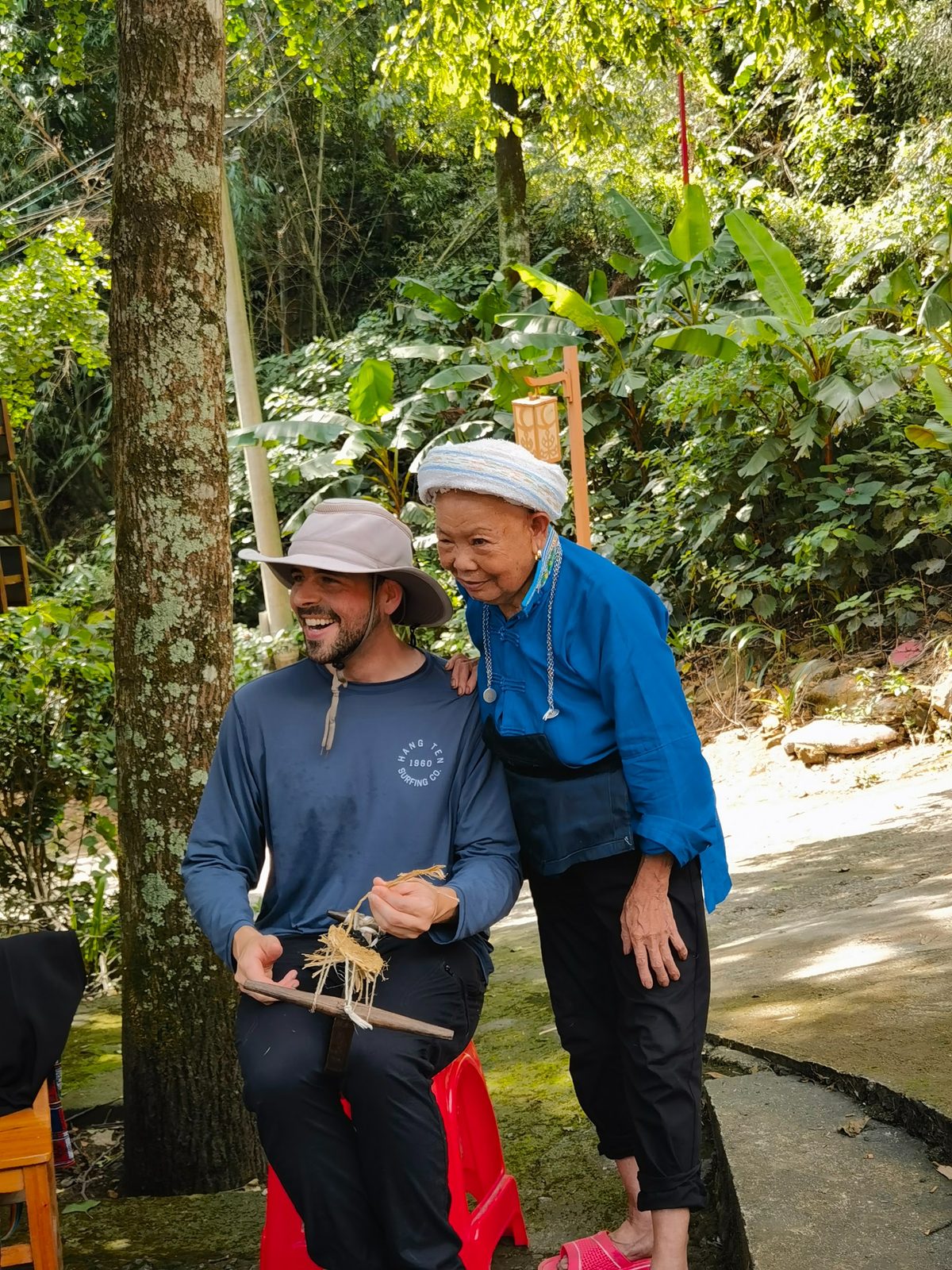
Villages outside Guilin are a good test of listening comprehension, and a demonstration like this one gives students plenty to ask about in Chinese.
A long way down a cave wall on a rope. For independent trips, the CLI team shares tips, and students book their own transport and lodging.
Climbing one of the karst peaks around Guilin is a CLI activity in its own right, and a flag at the top marks the group's arrival.
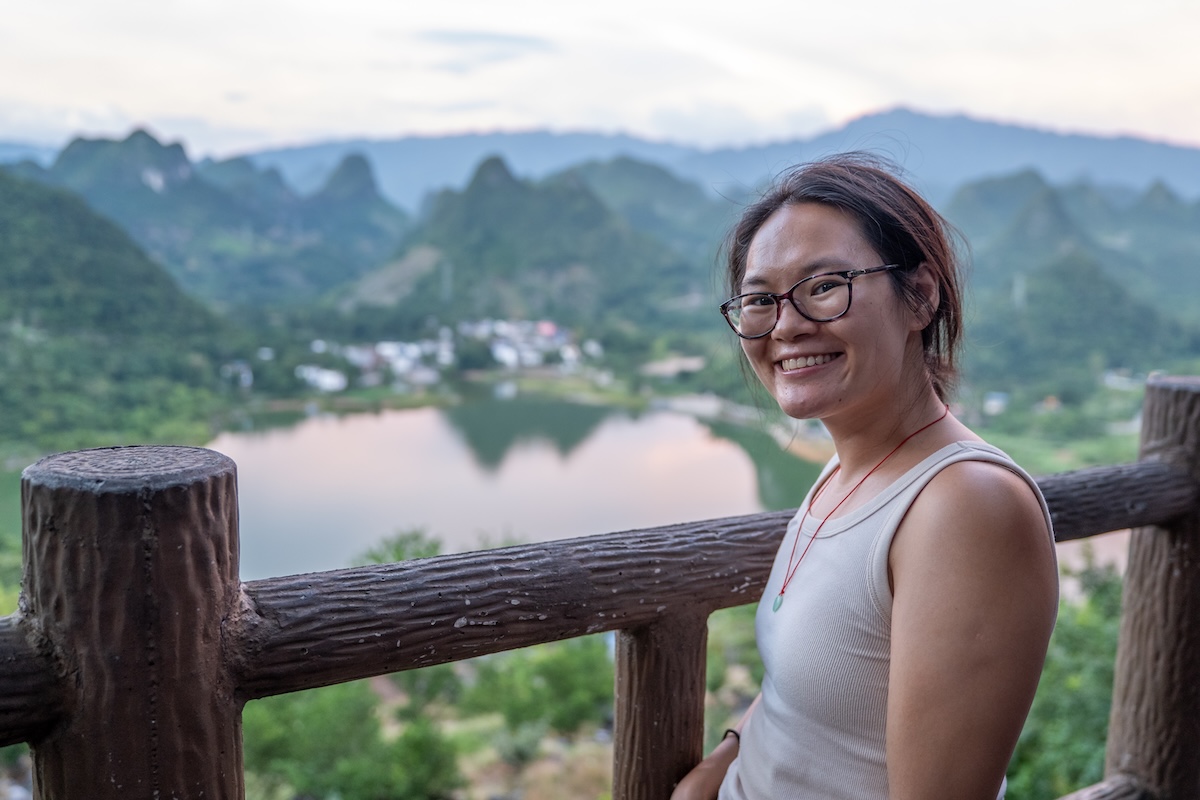
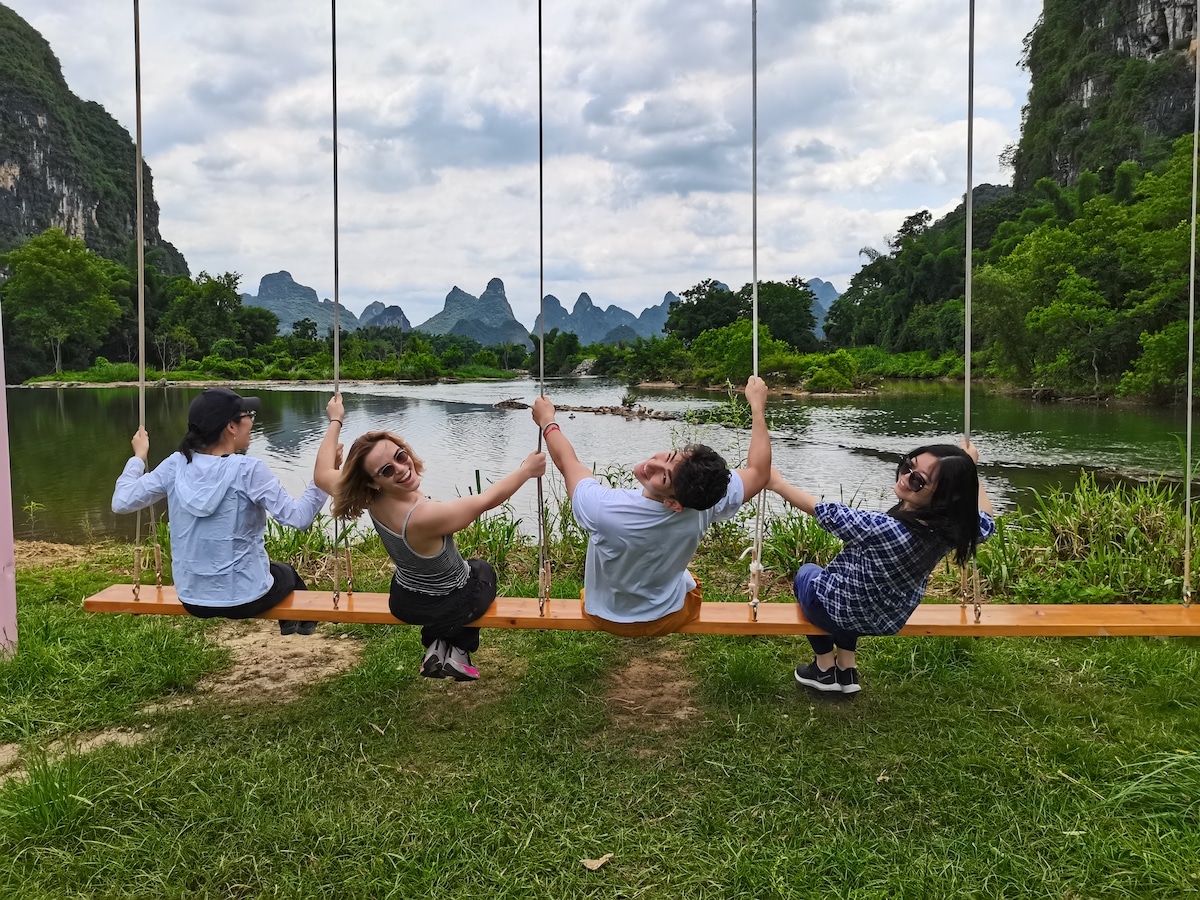
Weekends are for larger outings, and the countryside around Guilin has plenty of quiet corners like this lake beneath the karst peaks.
Guilin's karst landscape joined the South China Karst UNESCO World Heritage listing in 2014, and weekend outings lead right into it.
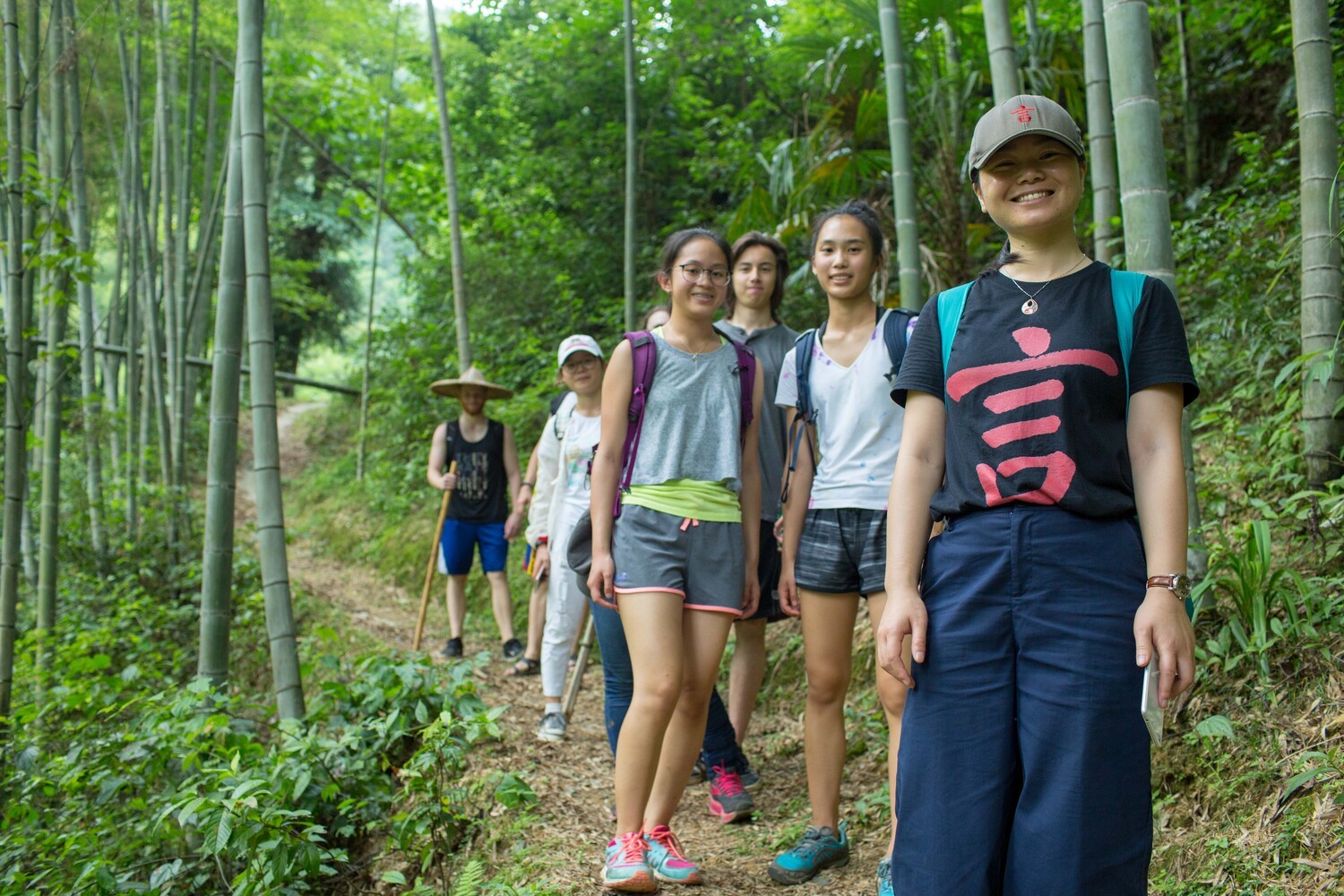
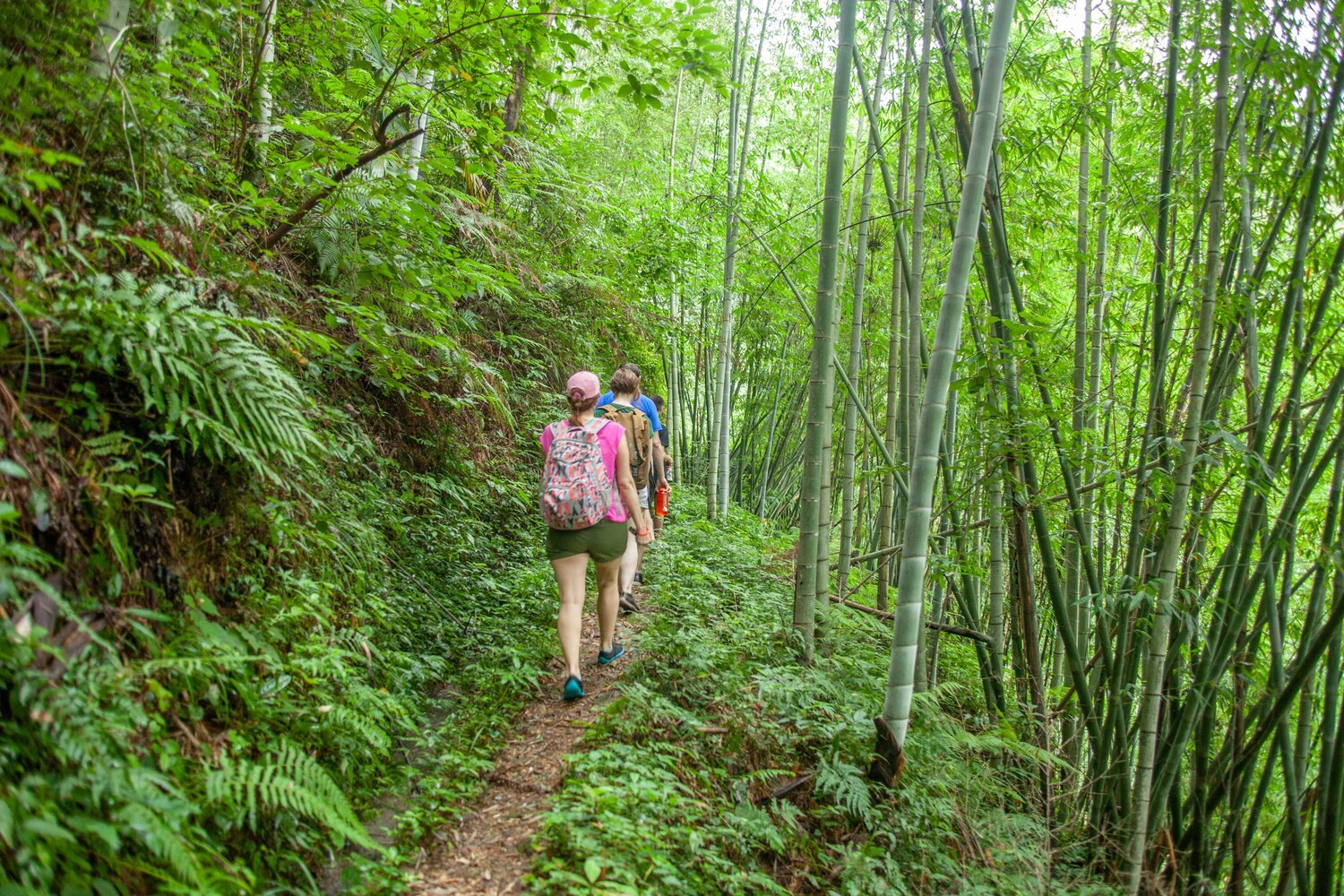
Bamboo closes in on both sides of this trail. The week's activities, hikes among them, are posted on the board on the CLI Center's second floor.
The CLI Center is about seven minutes' walk from the main gate of Guangxi Normal University, and from a lookout like this one the whole city lies below.
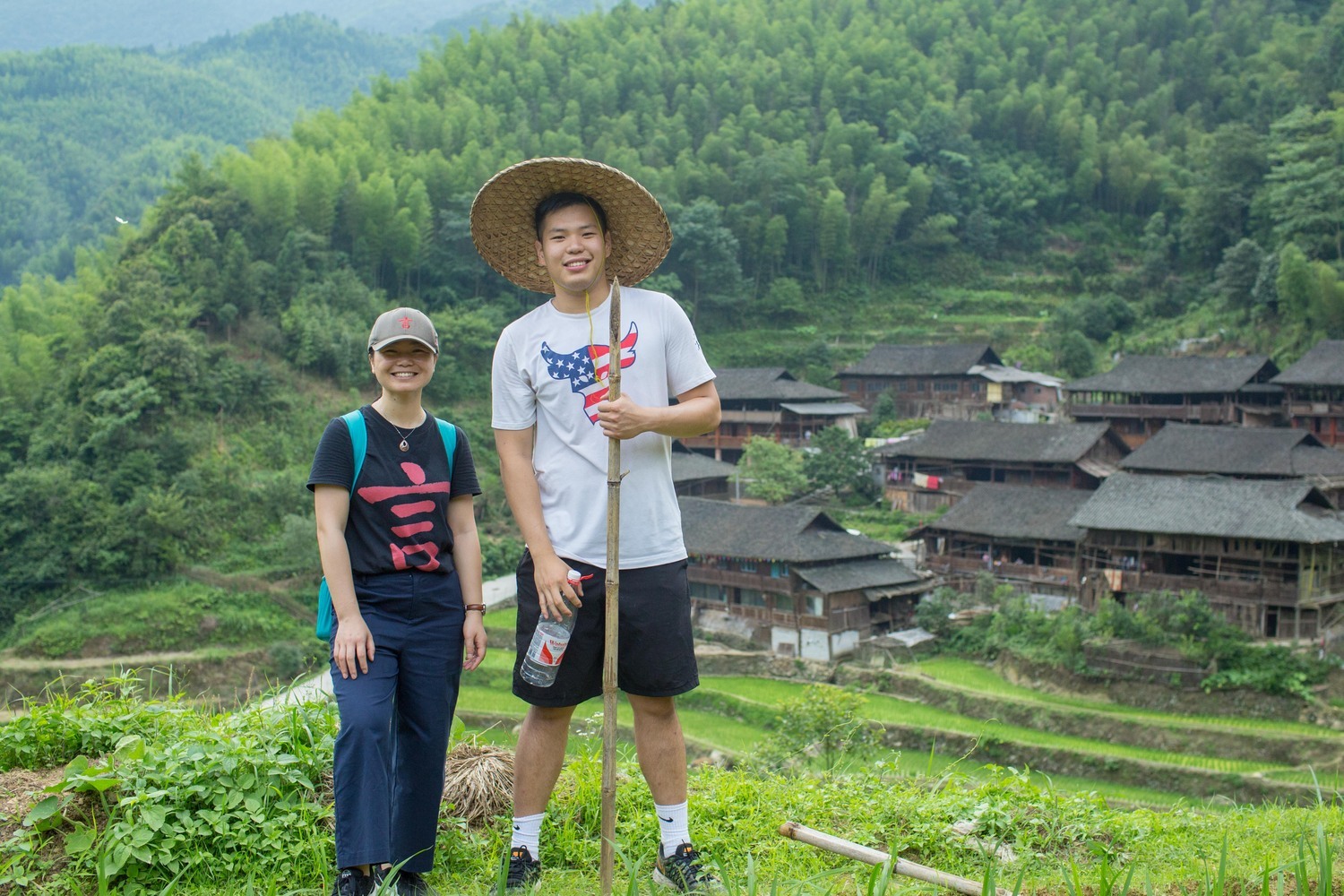
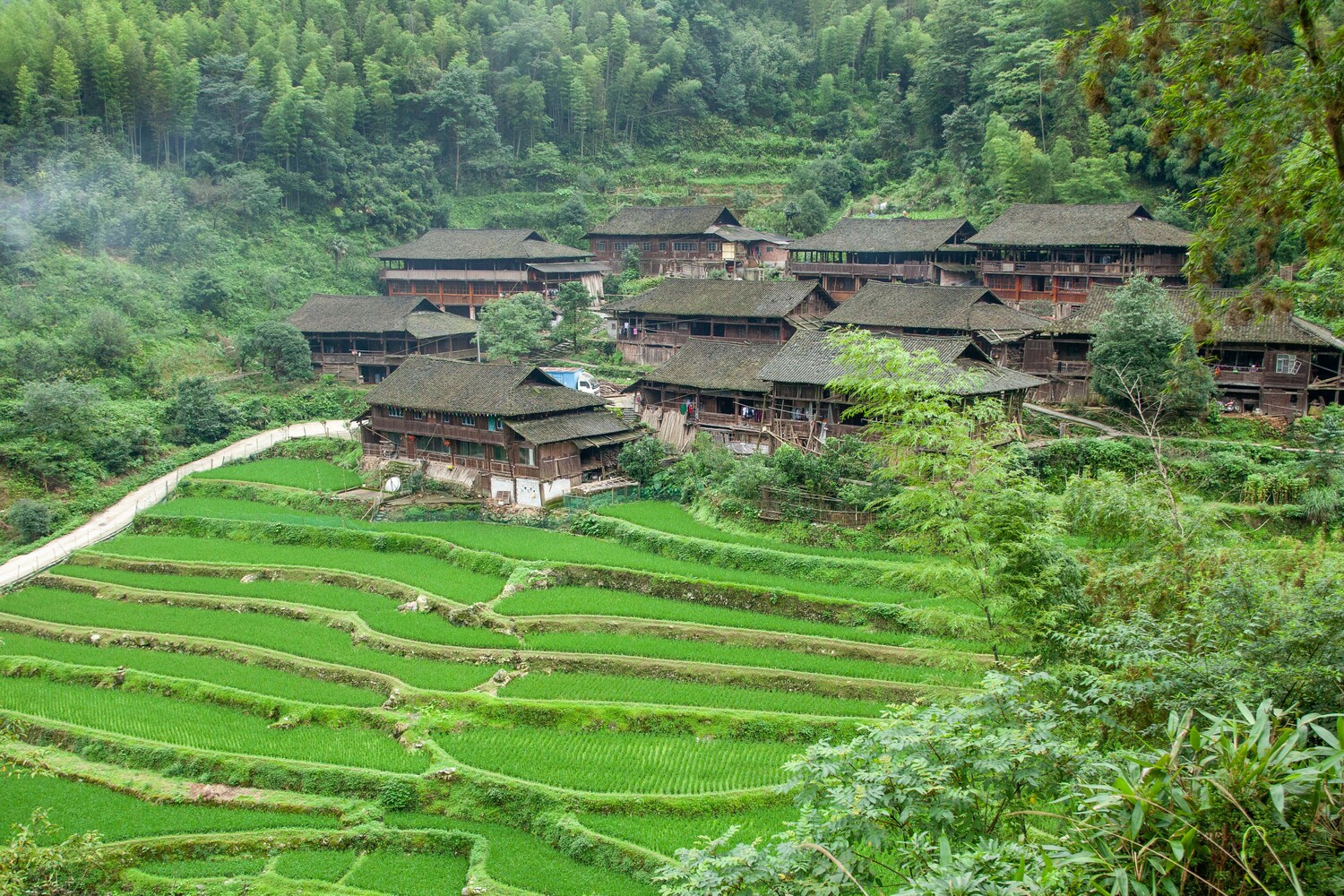
About once a month the program stays a night outside Guilin, with time to walk up through a hillside village of wooden houses like this one.
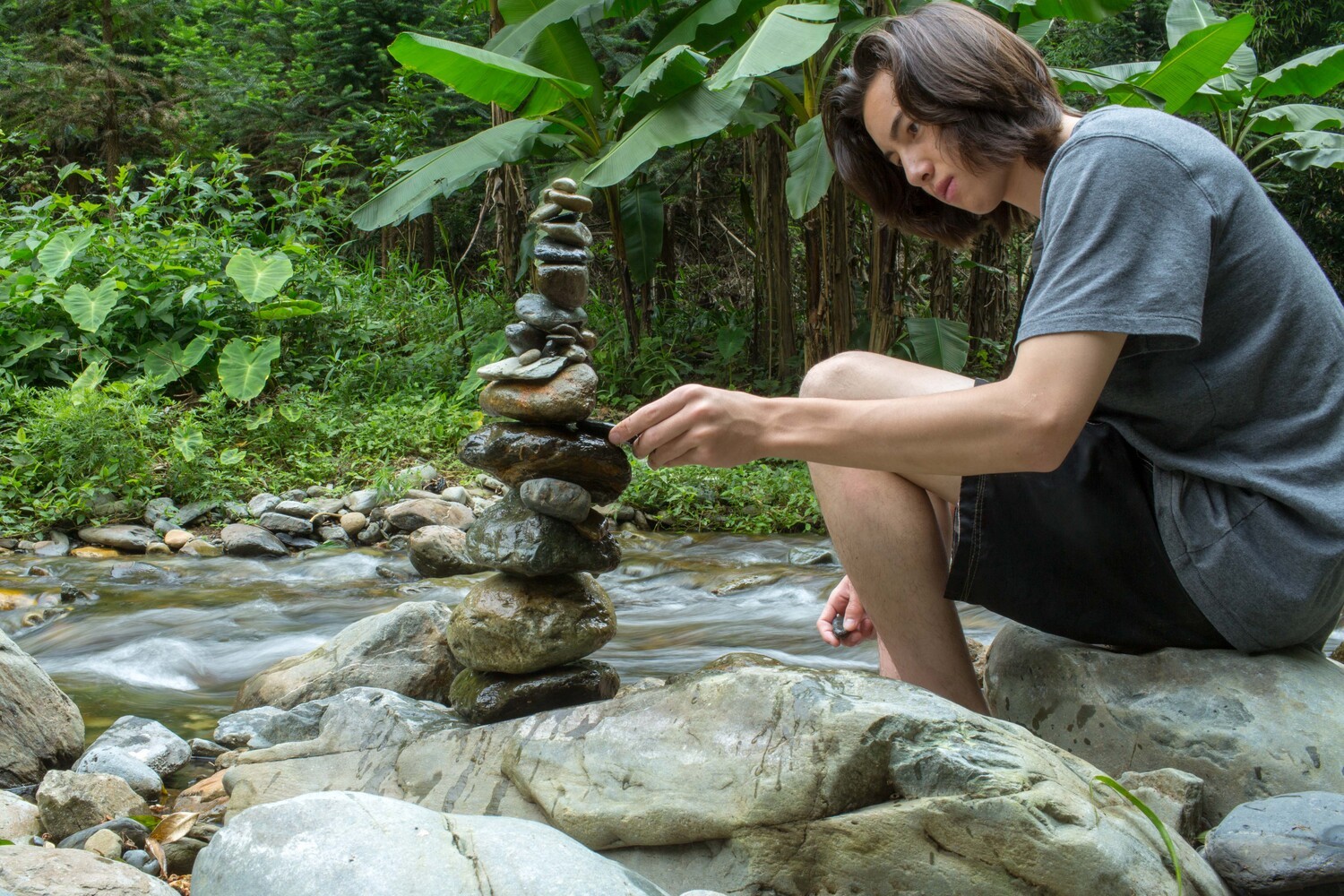
Twenty hours of one-on-one class a week is a full load, and a quiet afternoon by a mountain creek on the weekend clears the head before Monday.
Time with local friends, on a hilltop or anywhere else, is time in Mandarin, since Guilin has little English and no large expat bubble.
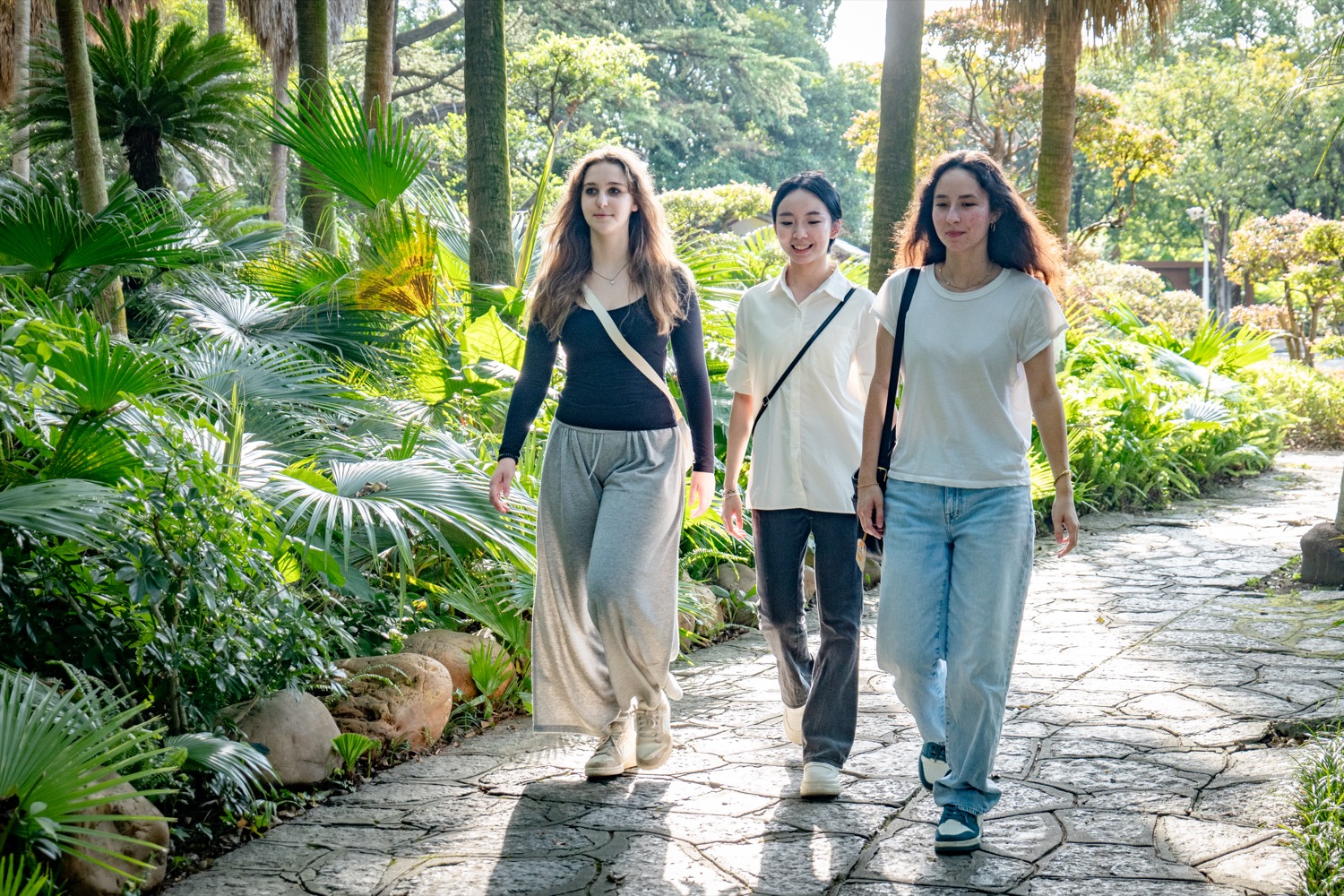
A garden walk is one way to spend a break between class sessions, and the CLI Center's study areas and reading room are another.
A short evaluation every two weeks checks listening and speaking among other skills, and conversations on the road show progress less formally.
Students come to CLI from more than 50 countries, and outings mix them with local friends who keep the conversation in Chinese.
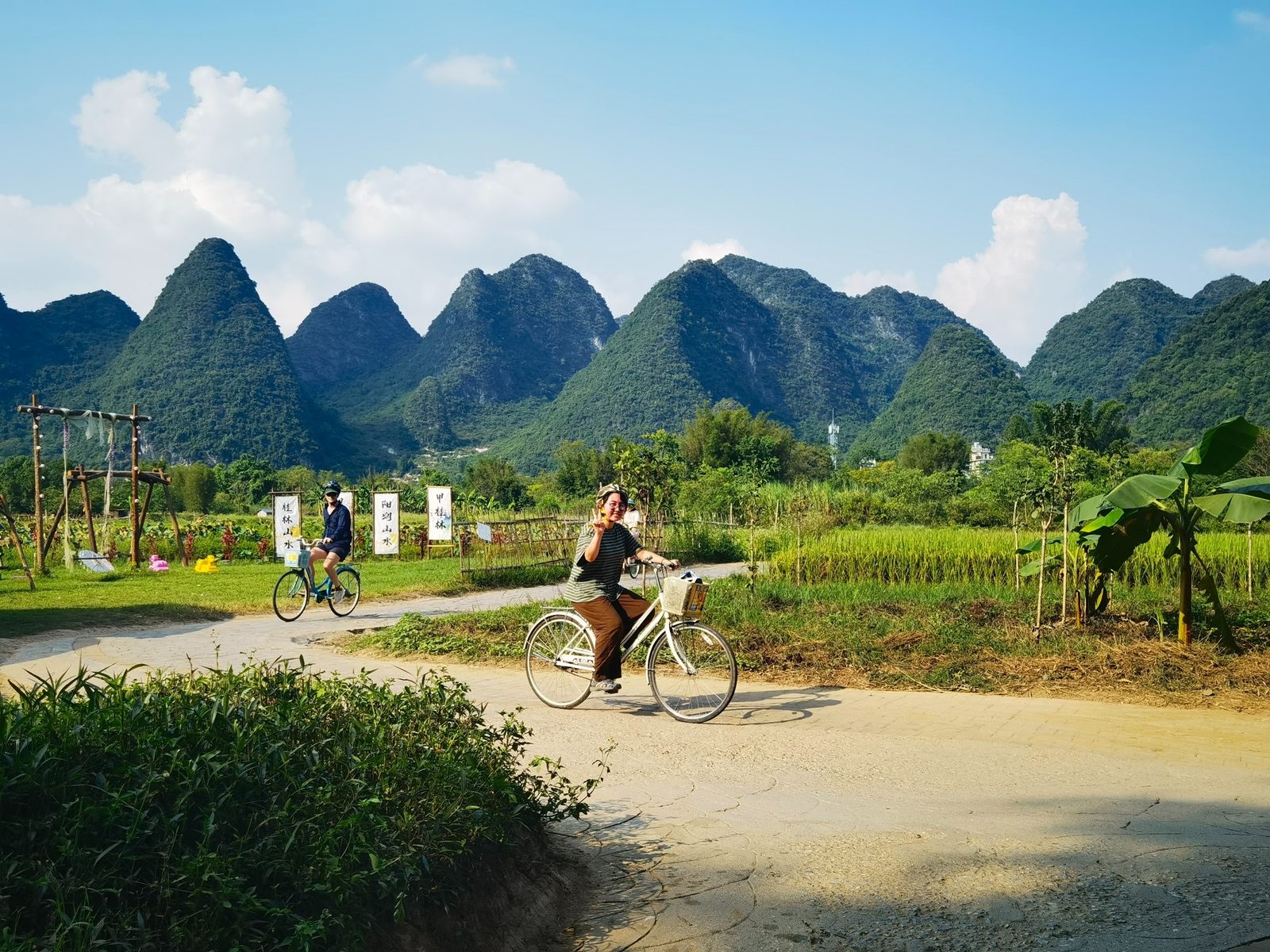
A weekend can mean a bike ride past karst hills, whether it is a group outing or a trip planned independently with classmates.
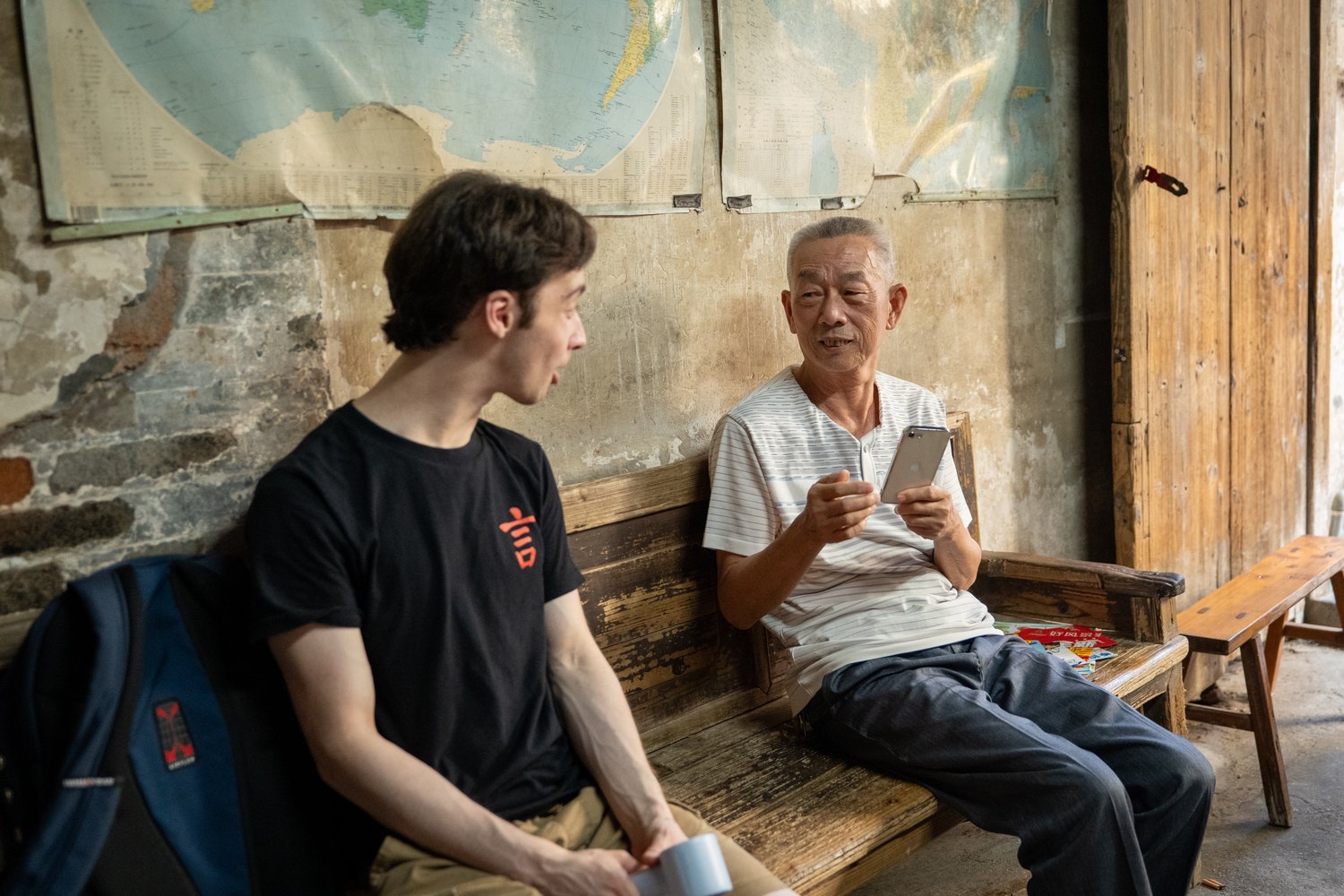
A chat on an old wooden bench. Each student's three teachers coordinate, so a grammar point from the morning may come up again in the afternoon's conversation.
CLI's four daily class sessions run from 8:20 AM to 6:10 PM and each student takes two, so longer village walks usually wait for the weekend.
A hilltop like this one fits into a free afternoon between homework and review, since Guilin is compact and walkable.
朋友 (péngyǒu) is the everyday Chinese word for friend, and it gives the free, optional Pengyou Program its name.
Li River boat rides are on the activity list, and the river is about an hour from the city, close enough for a day out on the weekend.
Guilin's karst joined the South China Karst UNESCO World Heritage listing in 2014, and students on the program live among it for their whole stay.
At least a quarter of the CLI Center's 36 rooms are home to teachers and pengyou, so a friend for an evening walk up the hill is usually close by.
With class sessions only on weekdays, weekends are free for trips like this one, out to the terraced hills beyond the city.
The larger outings happen on weekends, when there is time to reach the terraces and get back without missing a class session.
Coursework at CLI can count toward an official transcript from Guangxi Normal University, and weekends still leave time for fields and peaks like these.
Quiet farm roads below the karst peaks suit a slow bike ride, and a free weekend is the time to go looking for one.
At the CLI Center there is at least one native Chinese speaker for every language learner, and group trips tend to bring native speakers along too.
A Saturday viewpoint is a chance to use the week's new words, and on Monday the four hours of one-on-one class pick up again.
Guangxi food leans fresh, sour and lightly spicy, and a trip to the countryside shows where some of those vegetables grow.
Teachers and pengyou often join the trips, and on a long terrace path that means hours of Chinese conversation away from a desk.
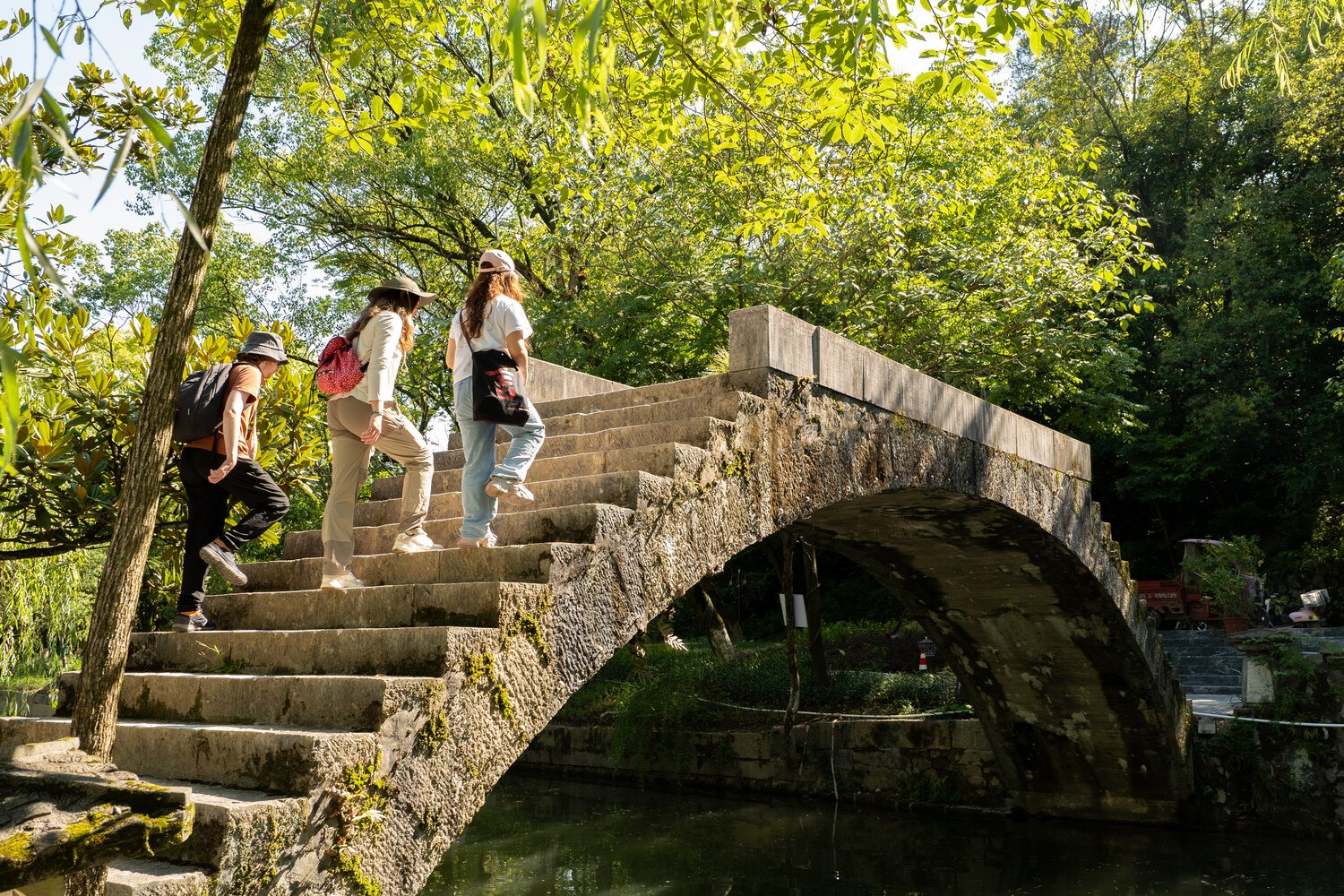
Weekends are free for independent travel as well as group outings, and an old stone bridge like this one rewards an unhurried walk.
Language exchange is part of many weekday afternoons on the program, and a lookout at sunset is an easy place to keep one going.
With no fixed semesters, the group on any given outing is a mix of new arrivals and students who have been in Guilin for months.
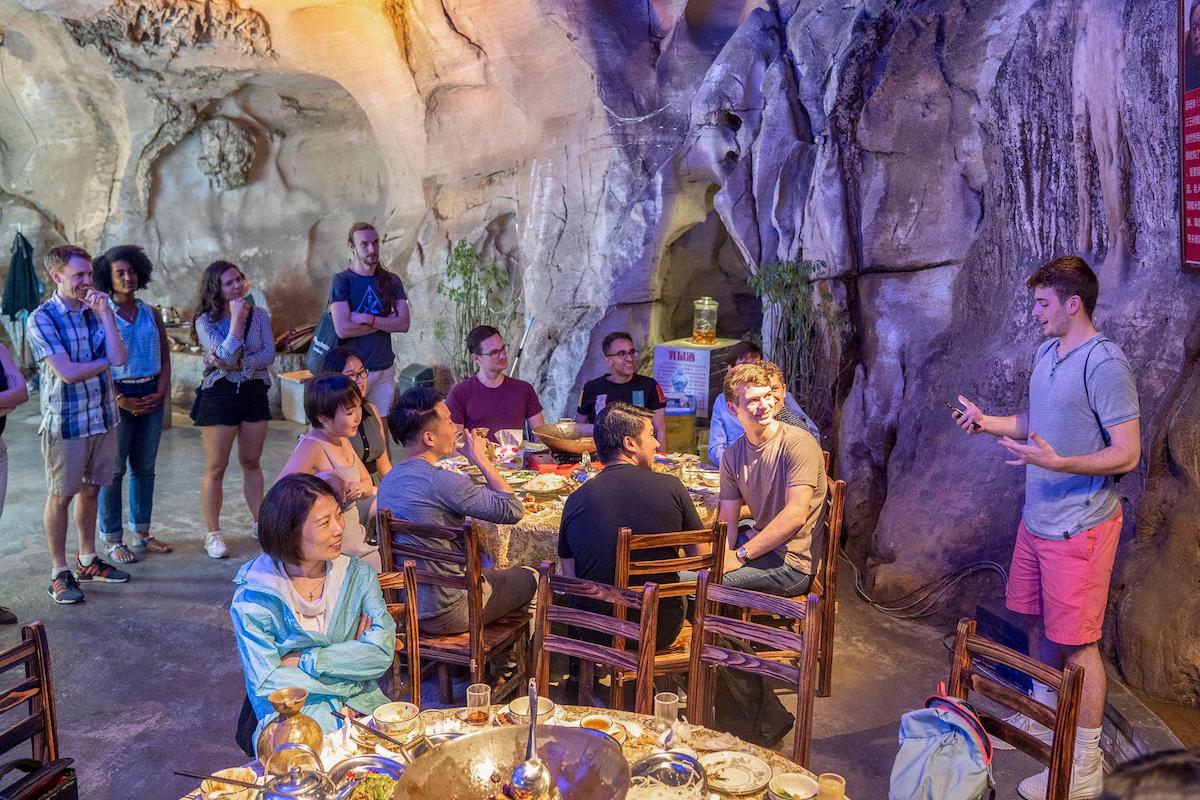
Guangxi cooking leans fresh, sour and lightly spicy, and trips are a chance to try it somewhere unusual, even inside a limestone cave.
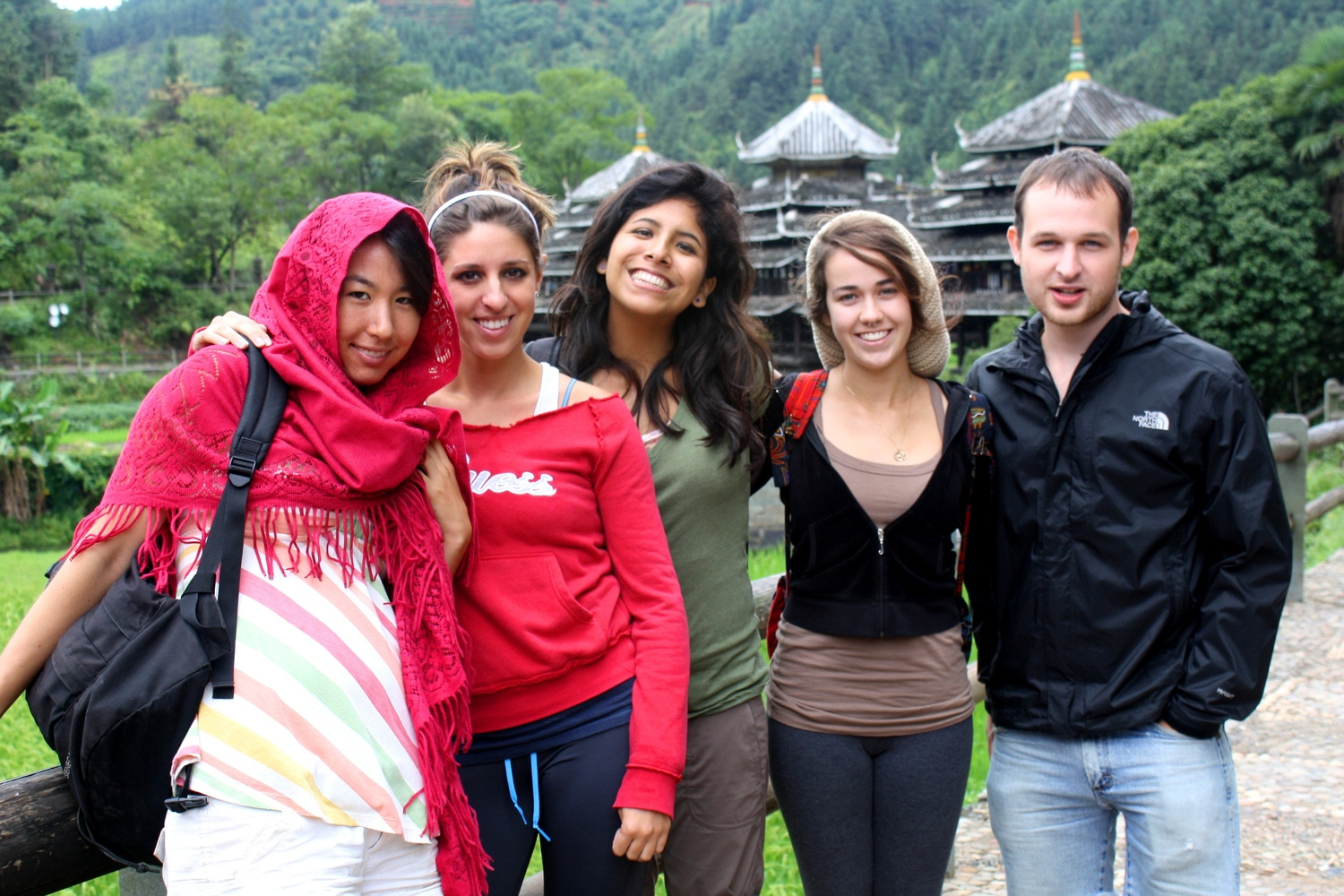
A village with a wooden drum tower is the kind of place the monthly overnight trip reaches, with Sanjiang's Dong villages among the destinations.
The saying 桂林山水甲天下 (Guìlín shānshuǐ jiǎ tiānxià) calls Guilin's mountains and rivers the best under heaven, and outings let students read old carvings up close.
Orientation on the first Monday includes a tour of Guilin, and later outings take groups up the hills for a wider look at the city.
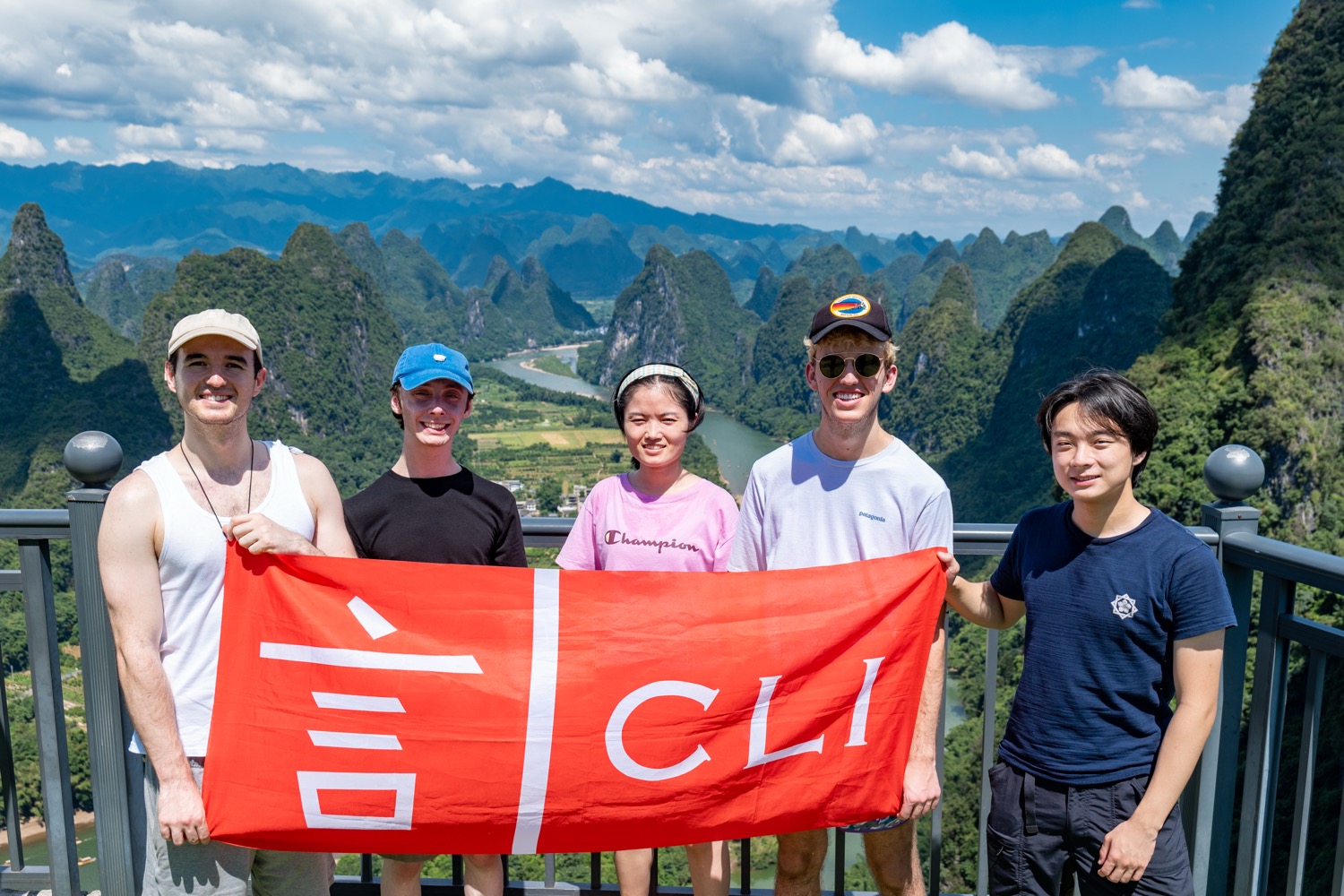
Arms up and the CLI banner out on a rocky ledge. Back at the CLI Center, a board on the second floor lists the week's activities.
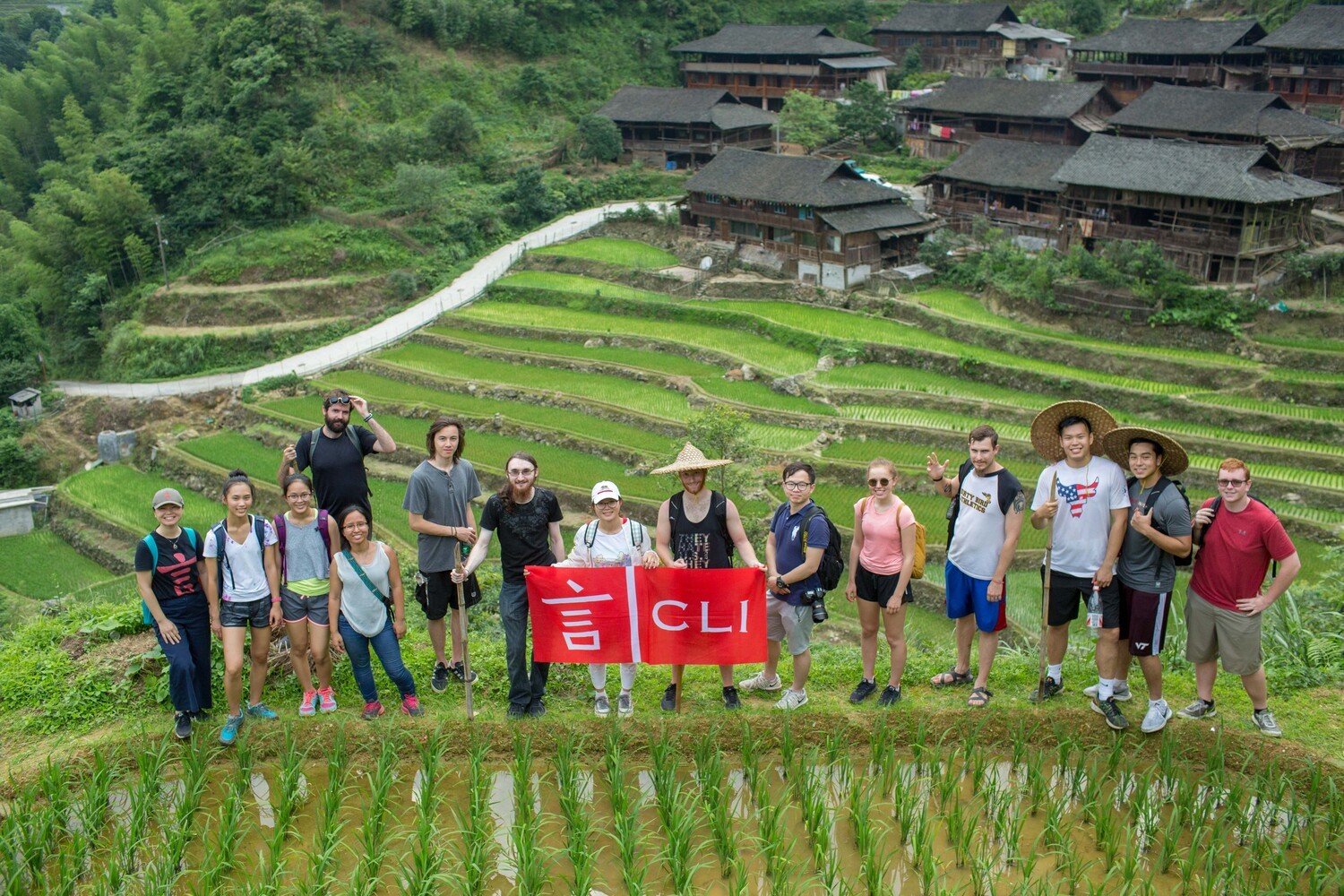
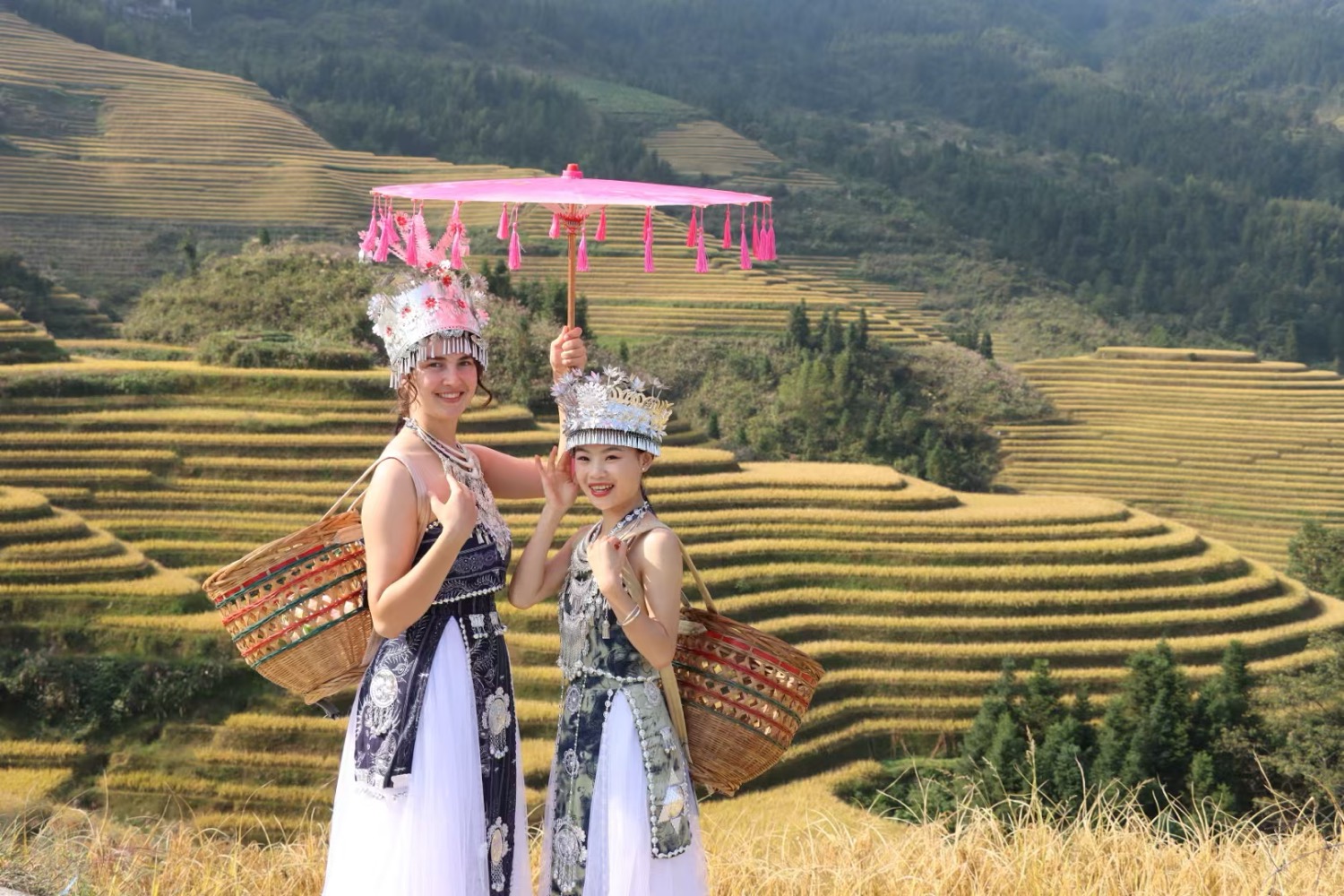
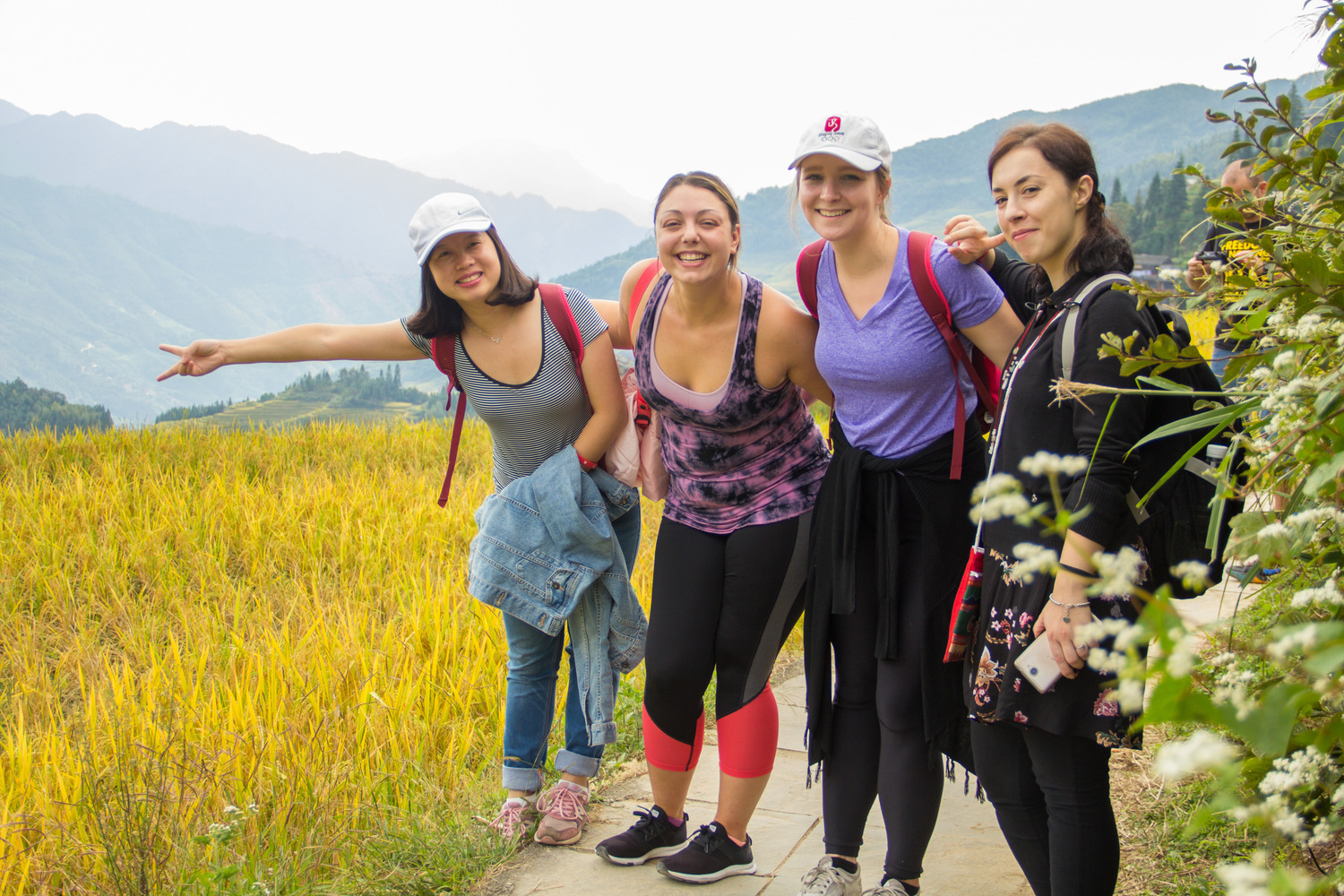
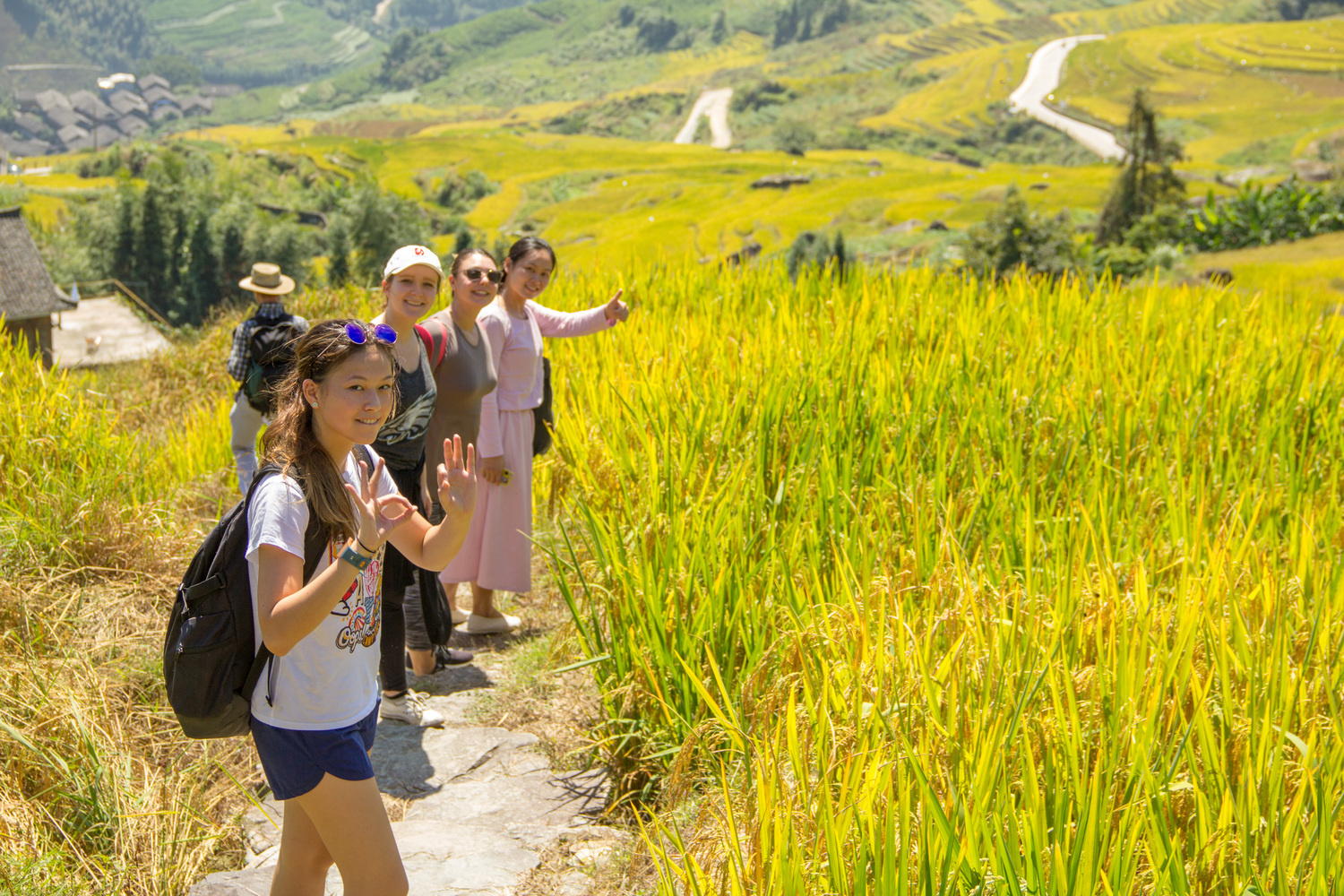
Late in the growing season the terraces turn gold, as they are here, and hikes through terraces like these are part of CLI's activities.
An old saying, 桂林山水甲天下 (Guìlín shānshuǐ jiǎ tiānxià), calls Guilin's mountains and rivers the best under heaven, and the hilltops show why.
Guilin has no large expat bubble, which is part of why Mandarin becomes daily life here, from noodle shops to hilltop paths.
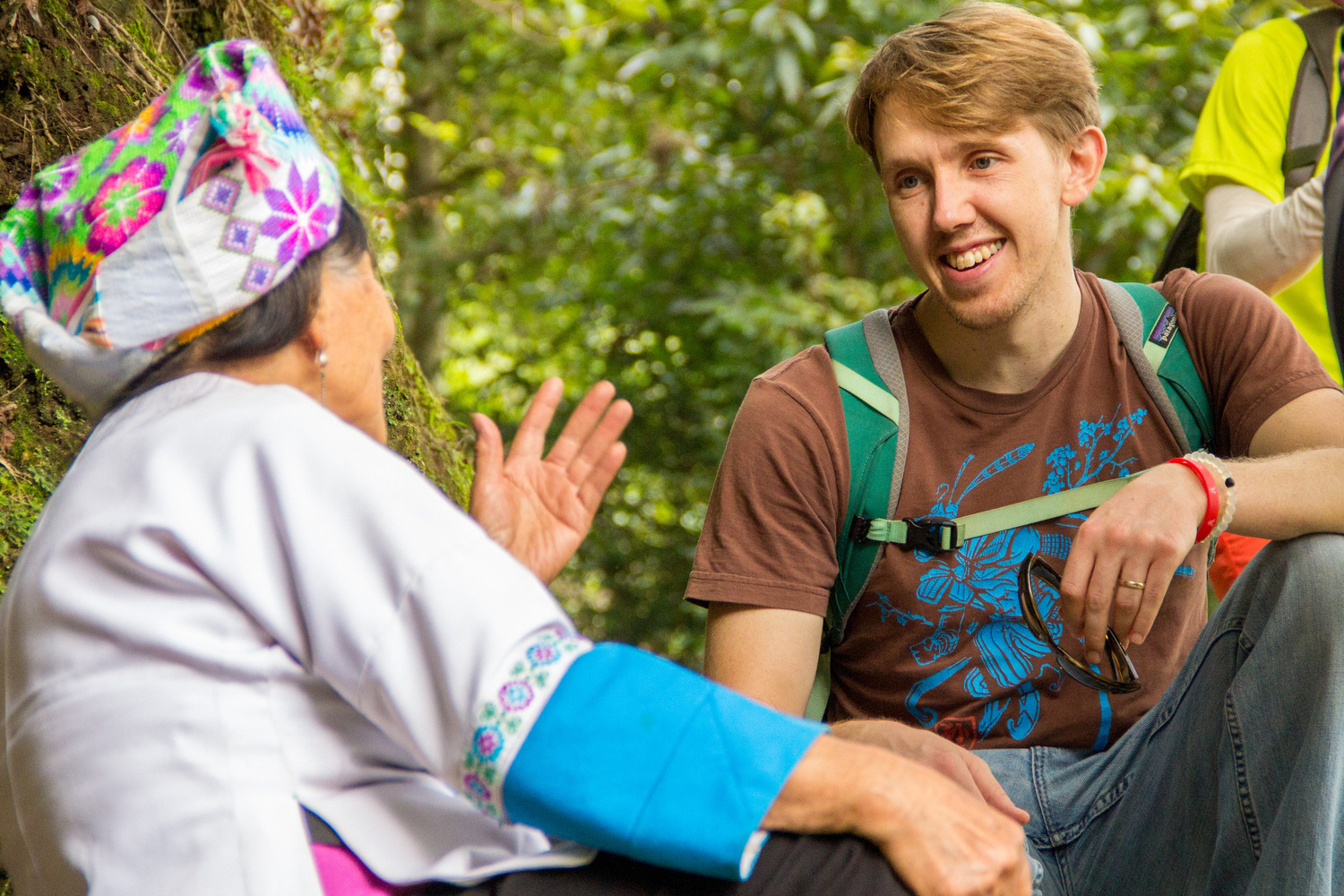
Guilin is in Guangxi, and trips into the hills show more of the region than the city alone, from terraced fields to embroidered dress and silver headdresses.
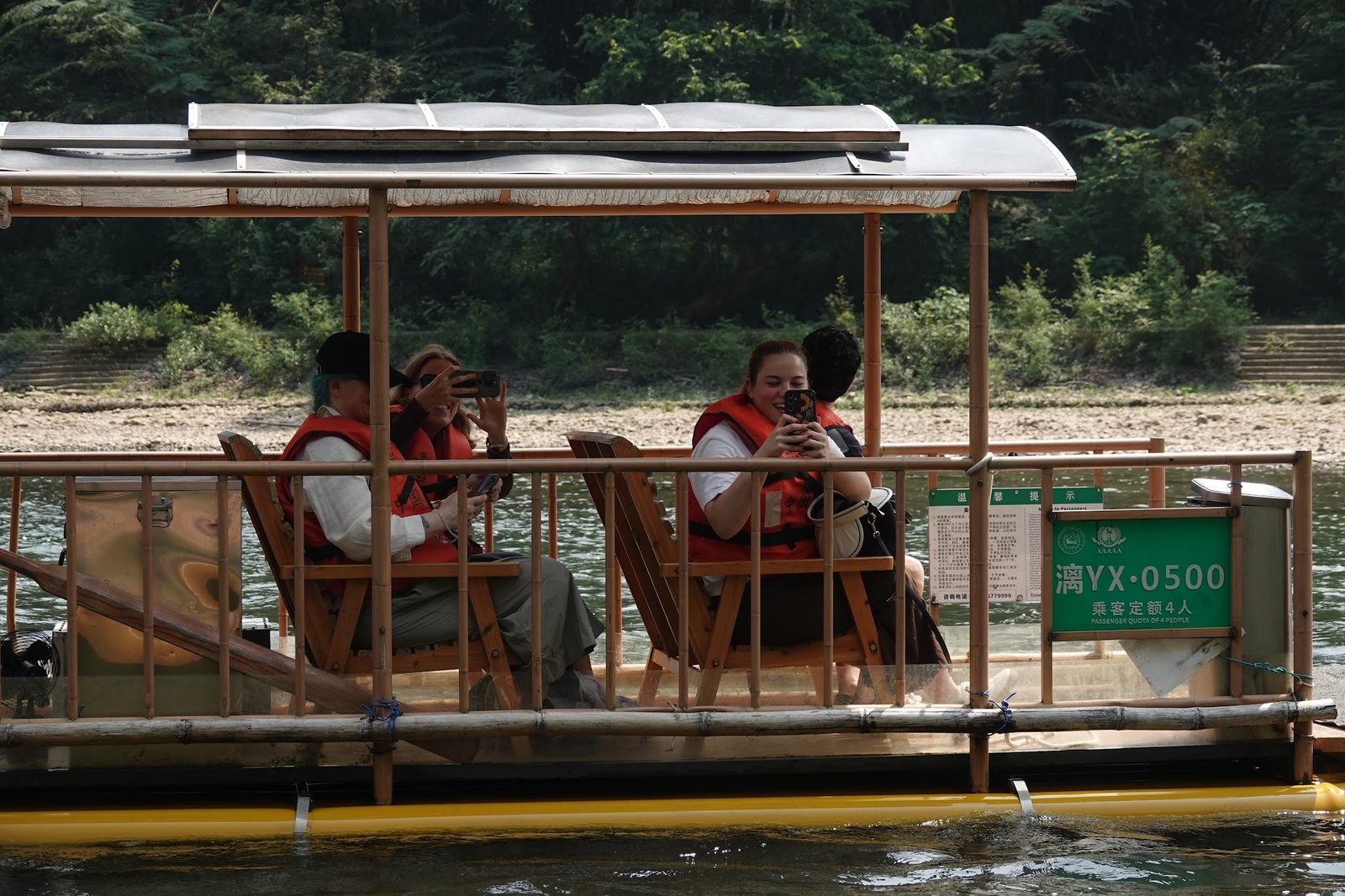
A covered bamboo raft leaves both hands free for photos, and bamboo boat rides are one of the activities CLI runs.
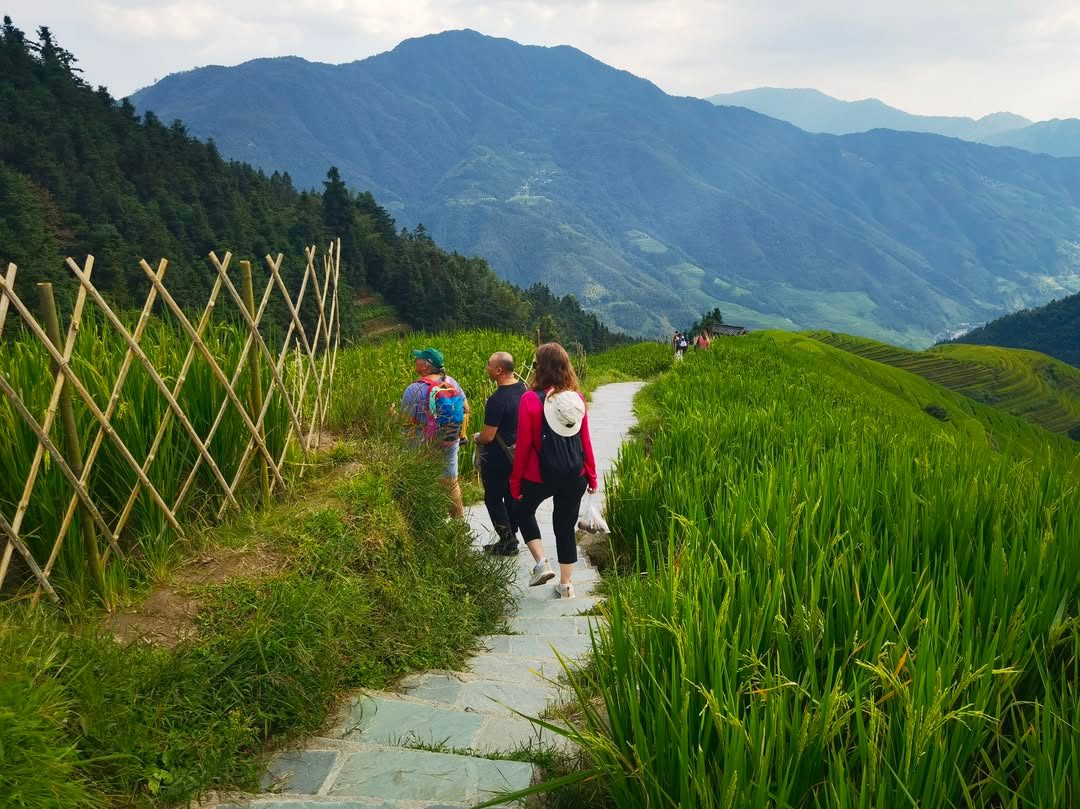
A single-file path between rice and bamboo is part of the terrace hikes, where the group stretches out and conversations happen two at a time.
Pickup from the airport or train station is included, and the orientation tour of Guilin soon puts names to the neighborhoods seen from up here.
Students at CLI range from high school students to retirees, and on a group hike they all climb the same steps.
Chinese games are among the weekly activities, and a board of 象棋 (xiàngqí) travels well, even to a lookout high above the city.
The day's last class session ends at 6:10 PM, and evenings are lighter, with time for an easy climb to watch the sun go down over the city.
Under the arch of a huge cave, a group sits behind the CLI banner. Some activities are included in tuition, and for optional ones CLI charges only its direct costs, with no markup.
Beginners often start with survival phrases and daily communication, and a day out on the terraces gives those phrases plenty of use.
A stay of a few months takes in several of CLI's monthly overnight trips, to villages and terraced fields like these.
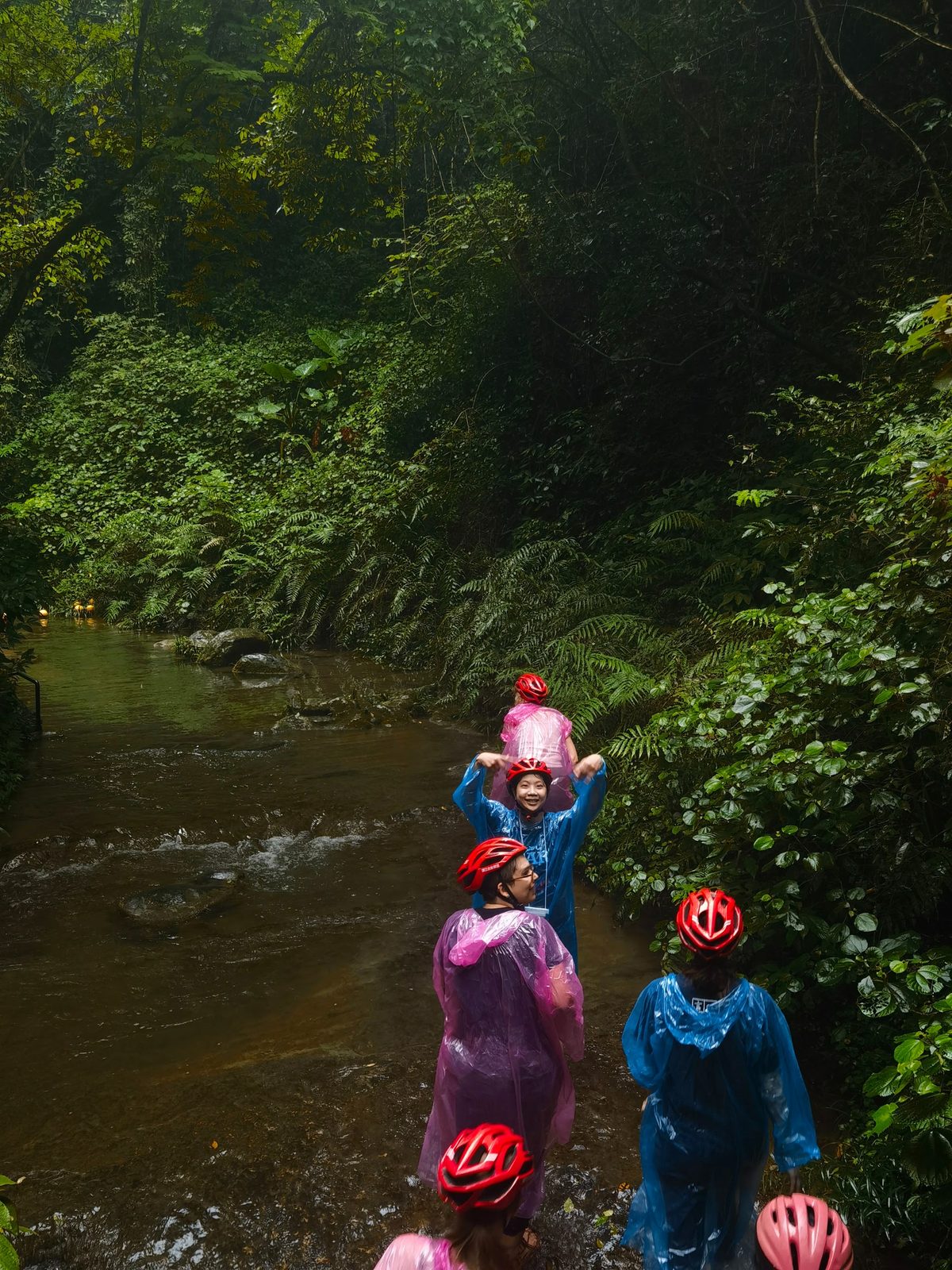
Hikers in helmets climb up through a rushing waterfall. Classes run on weekdays, so weekends leave room for a full day outdoors.
Rice terrace hikes are among CLI's activities, and the narrow paths along the terraces make for slow walking and plenty of talk.
Larger outings on weekends include river trips among the limestone cliffs, with life jackets on and the week's Chinese still in use.
Listening and speaking class trains the ear for tones and conversation, and a talk by a village hearth puts that training to the test.
Teachers follow CLI's course syllabi and can change the pace, so a student who wants more conversation for rides like this one can ask for it.
Each student has three teachers, and the one for reading and writing works on character recognition, which old carved inscriptions like these put to a hard test.
CLI was founded in Guilin in 2009, and the karst peaks along the river have been the backdrop to its outings from the start.
Dusk from a pavilion lookout, and then it's down the hill for dinner, which homestay students typically share with their host family.
Rowing a wooden boat as a group takes some calling out, and left and right are among the first words in Chinese to get real use on the water.
Weekend outings range from Li River trips to hikes through the hills, and a narrow trail through ripe rice keeps the group in single file.
Evenings on the program tend to be relaxed, and a short climb to a hilltop pavilion is an easy way to end a class day.
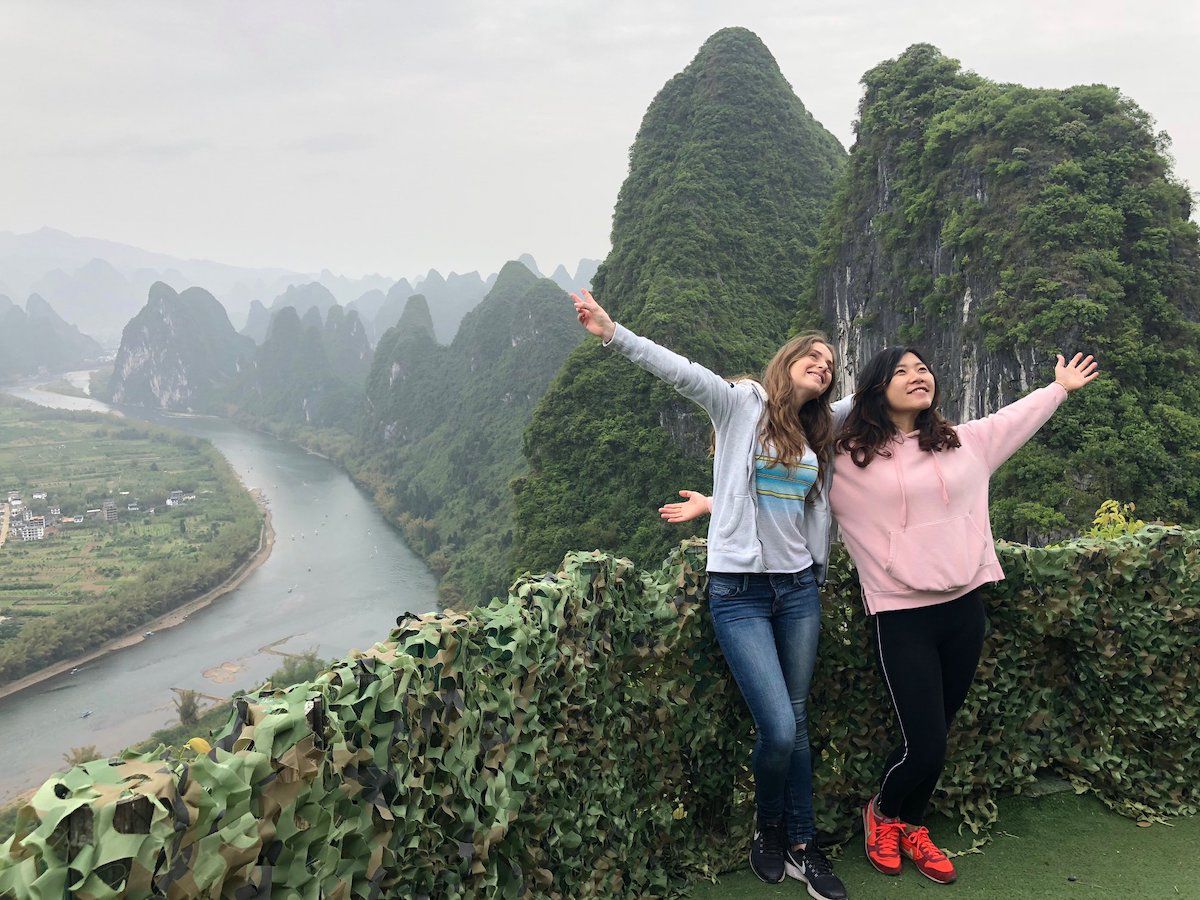
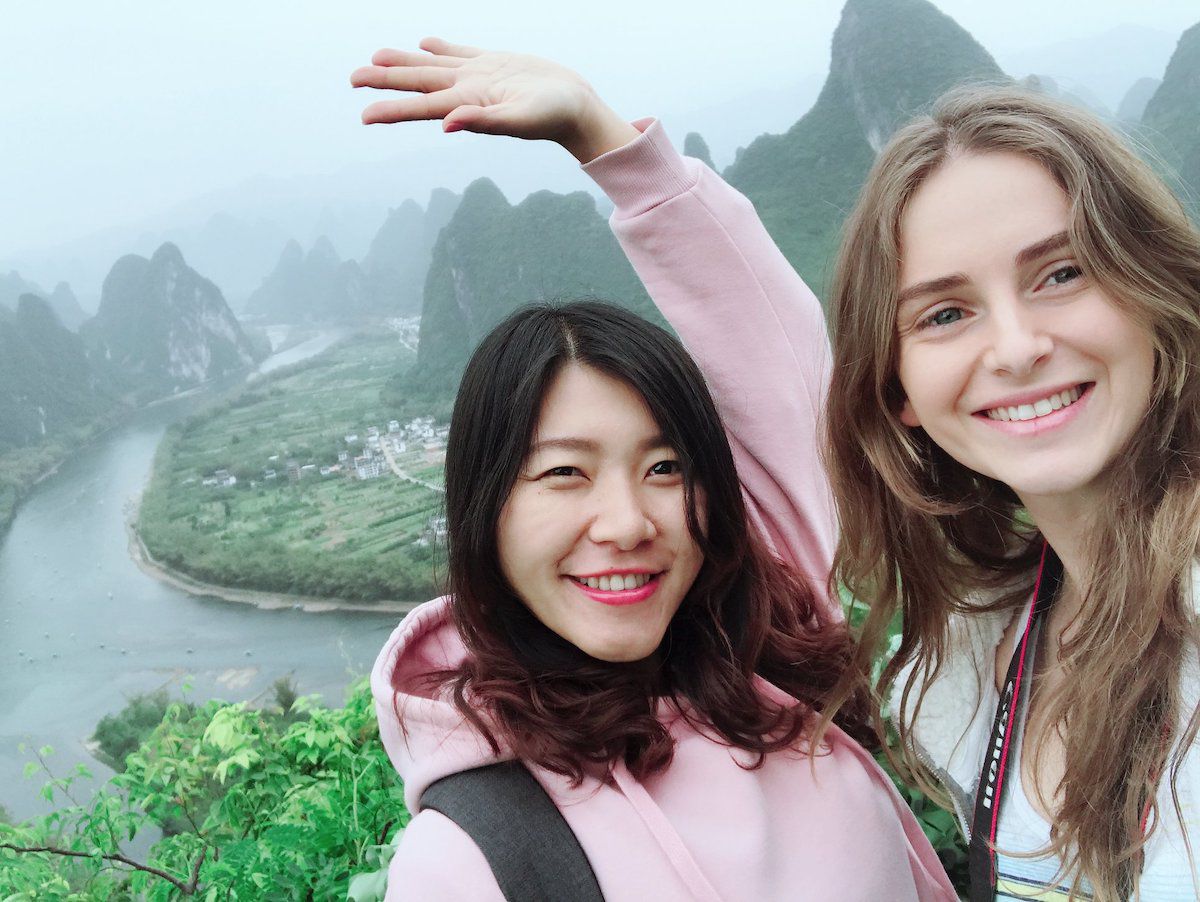
A selfie with a bend of the Li River behind, and a Yangshuo weekend trip on CLI's activity list for anyone who wants to see more of it.
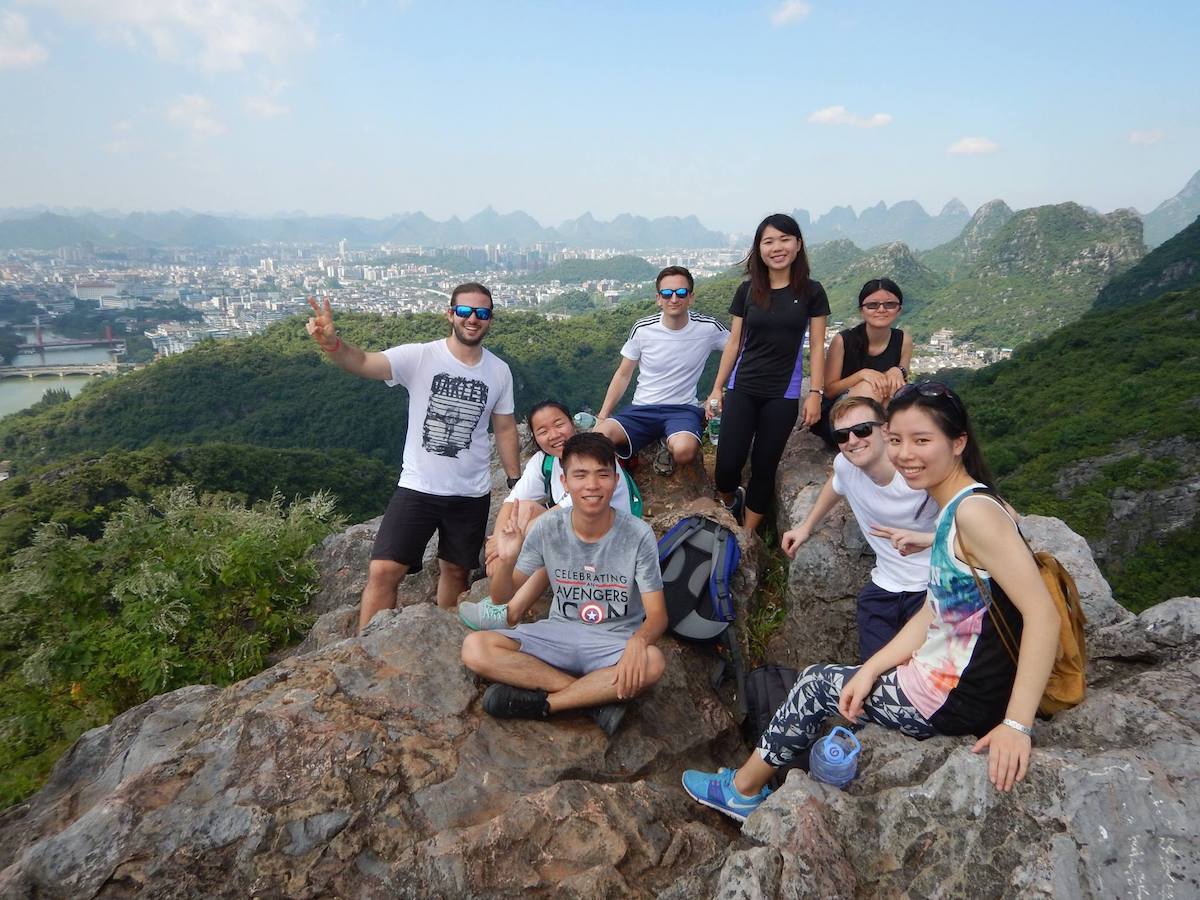
A rest on the rocks with the city below. Some of Guilin's karst peaks stand right in town, and hikes up them are part of CLI's activities.
A group outing can bring together people who would never have met at home, since CLI's students have come from more than 400 institutions.
Guilin is a full city, yet compact and walkable, and from a hilltop the whole of it fits into one view, with karst peaks on every side.
The view over the Longji Rice Terraces makes even a quick selfie look planned, and photography excursions there are on CLI's activity list.
Students on the program range from high school students to retirees, and a group day out can bring several generations onto one boardwalk.
A selfie on the boat needs no Chinese, but buying tickets and finding lunch on a trip day do, and ordering food is one of the first skills students pick up.
Students stay anywhere from one week to a year, and longer stays leave time to see the region well beyond the usual group outings.
Students arrive at every level, from complete beginners to fluent speakers, and an outing like this studio visit works for all of them.
Bare branches and warm coats mark the cooler months. Guilin's winters are cool and damp but rarely drop below freezing, so outings carry on.
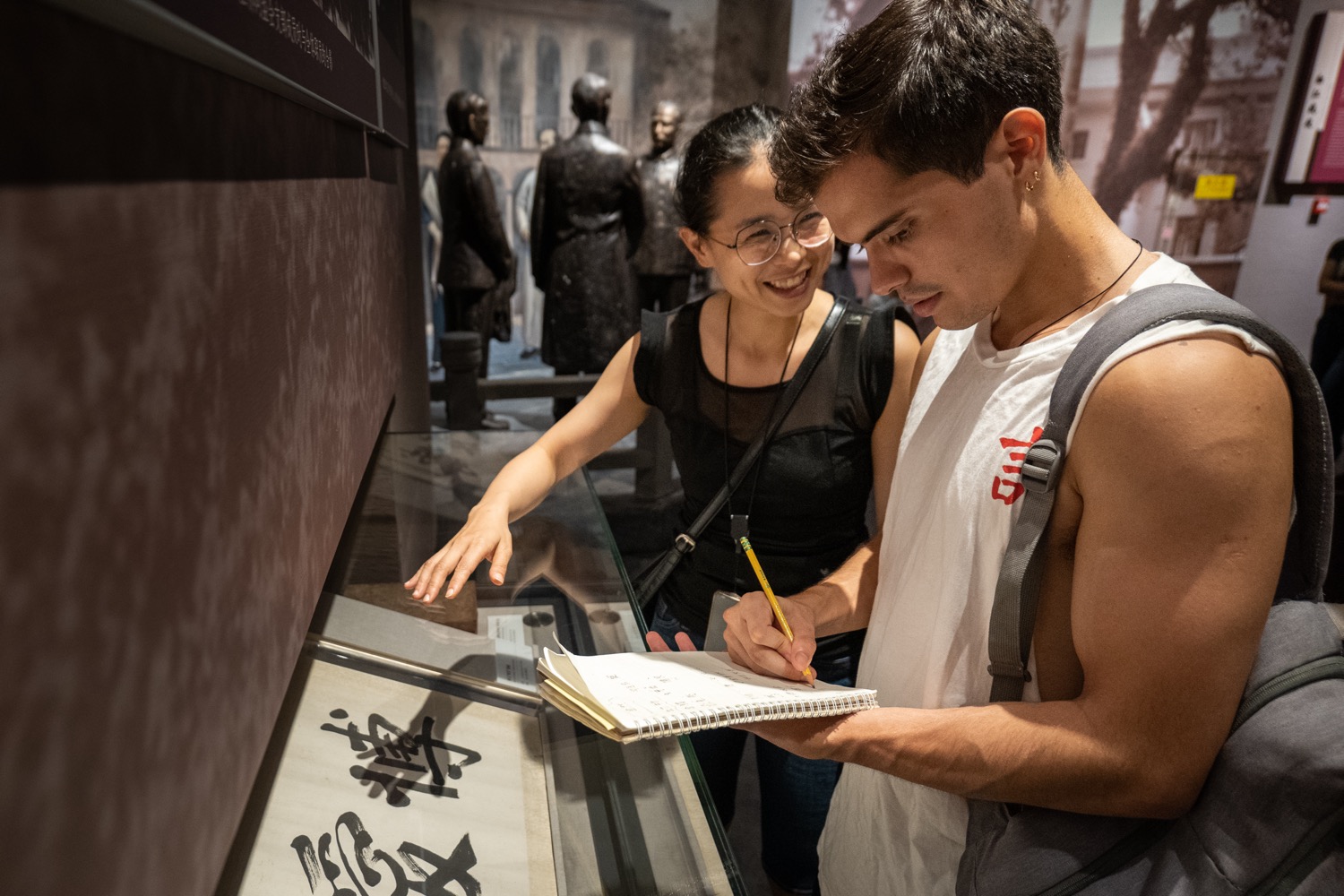
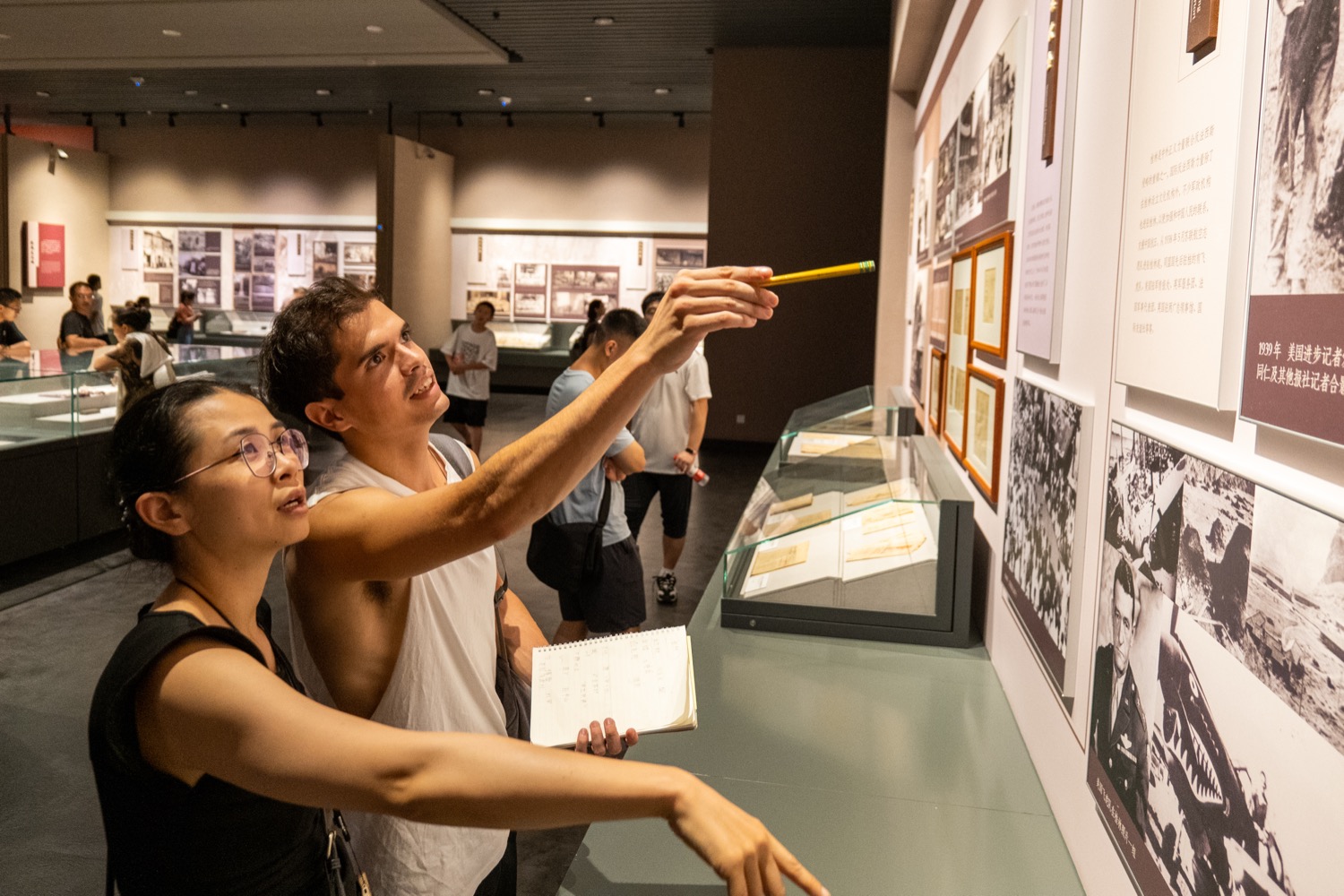
Calligraphy is one of the weekly activities, and a museum visit adds the history behind the brushstrokes, with a notebook ready for new characters.
The activities board on the second floor of the CLI Center shows what is planned for the week, from trips out of town to visits around Guilin itself.
Back from the mountains, students who live at the CLI Center have a private room with a full private bathroom to come home to.
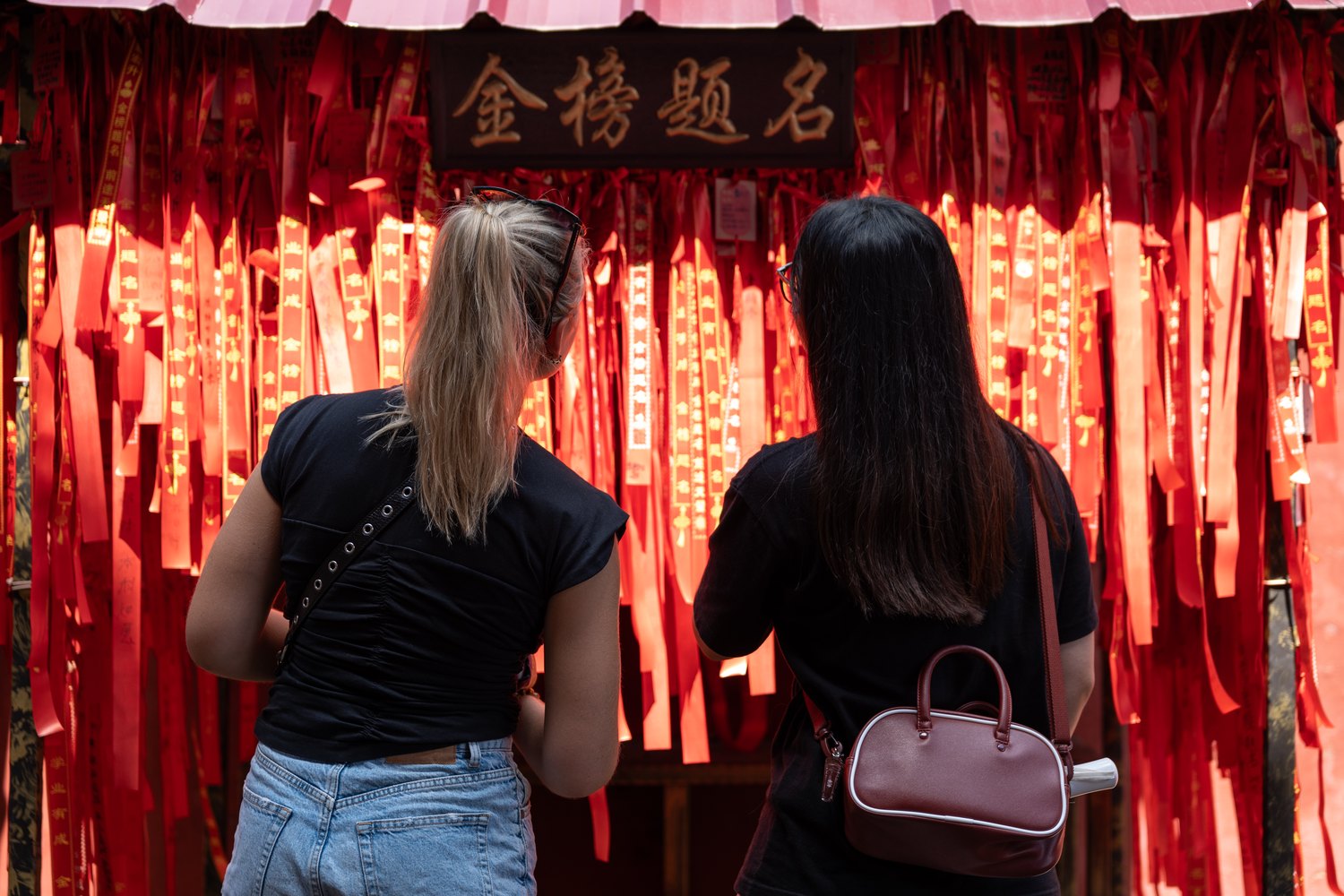
Red ribbons tied along old stone steps carry visitors' wishes, one of many customs students meet on outings and at CLI's festival celebrations.
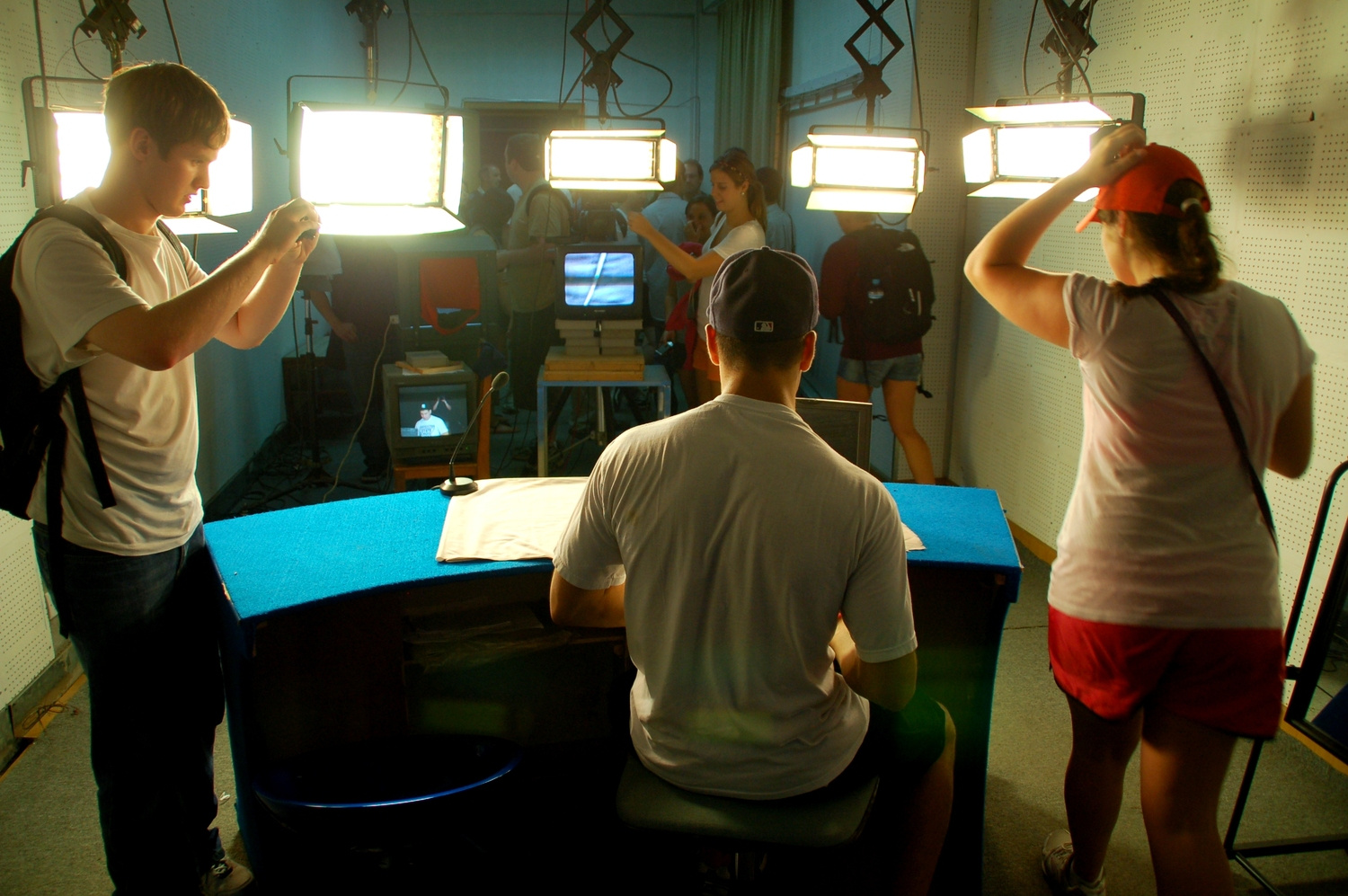
Behind the cameras at a television studio, every piece of equipment has a Chinese name to learn, and Guilin, a full city, has plenty of places like this to visit.
Signboards like the one over this pavilion are good practice for character recognition, one focus of the reading and writing teacher.
Single file into a bamboo forest. Guilin's summers are hot and humid, and the shade on a trail like this is welcome.
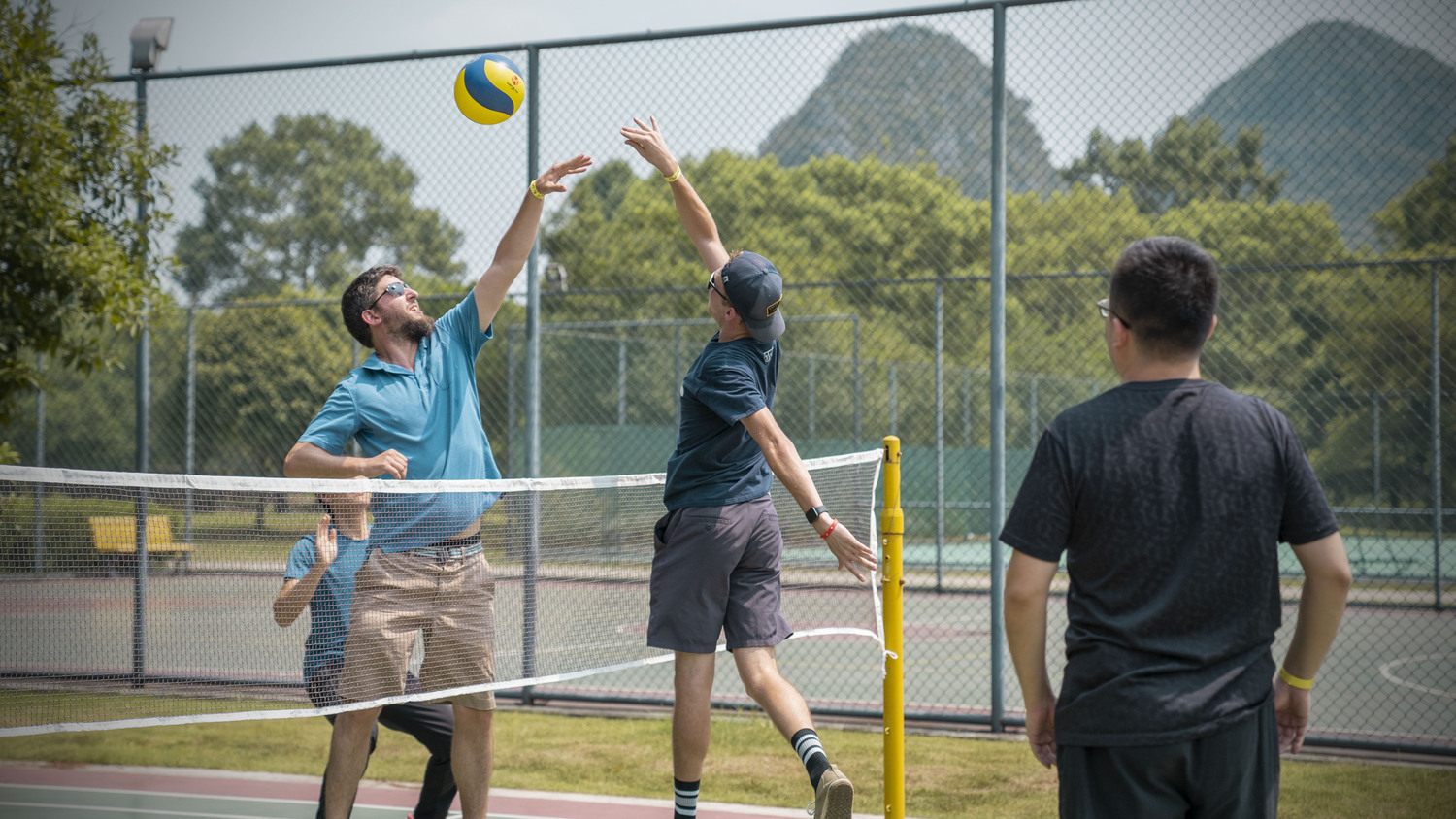
Volleyball is on the activity list along with badminton, and keeping score in Chinese is a quick way to get the numbers down.
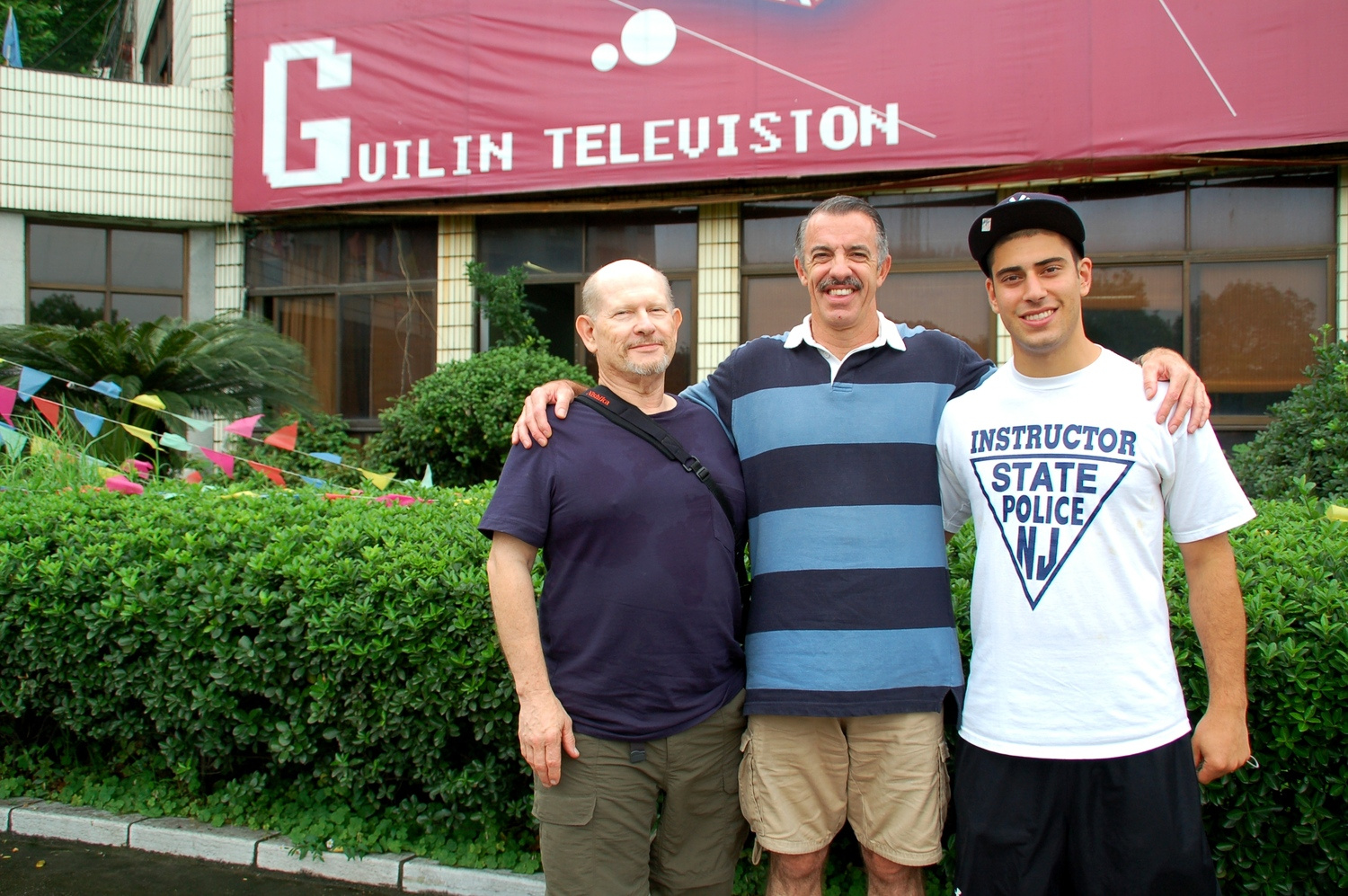
Outings have gone well beyond the sights over the years, to places like Guilin Television. CLI was founded in the city in 2009.
The sign reads 金榜题名 (jīnbǎng tímíng), an old wish for exam success, a fitting stop for students who take an evaluation every two weeks.
Riverside paths run below the karst peaks outside Guilin, and a weekend trip is a good time to walk one and trade stories from the week's classes.
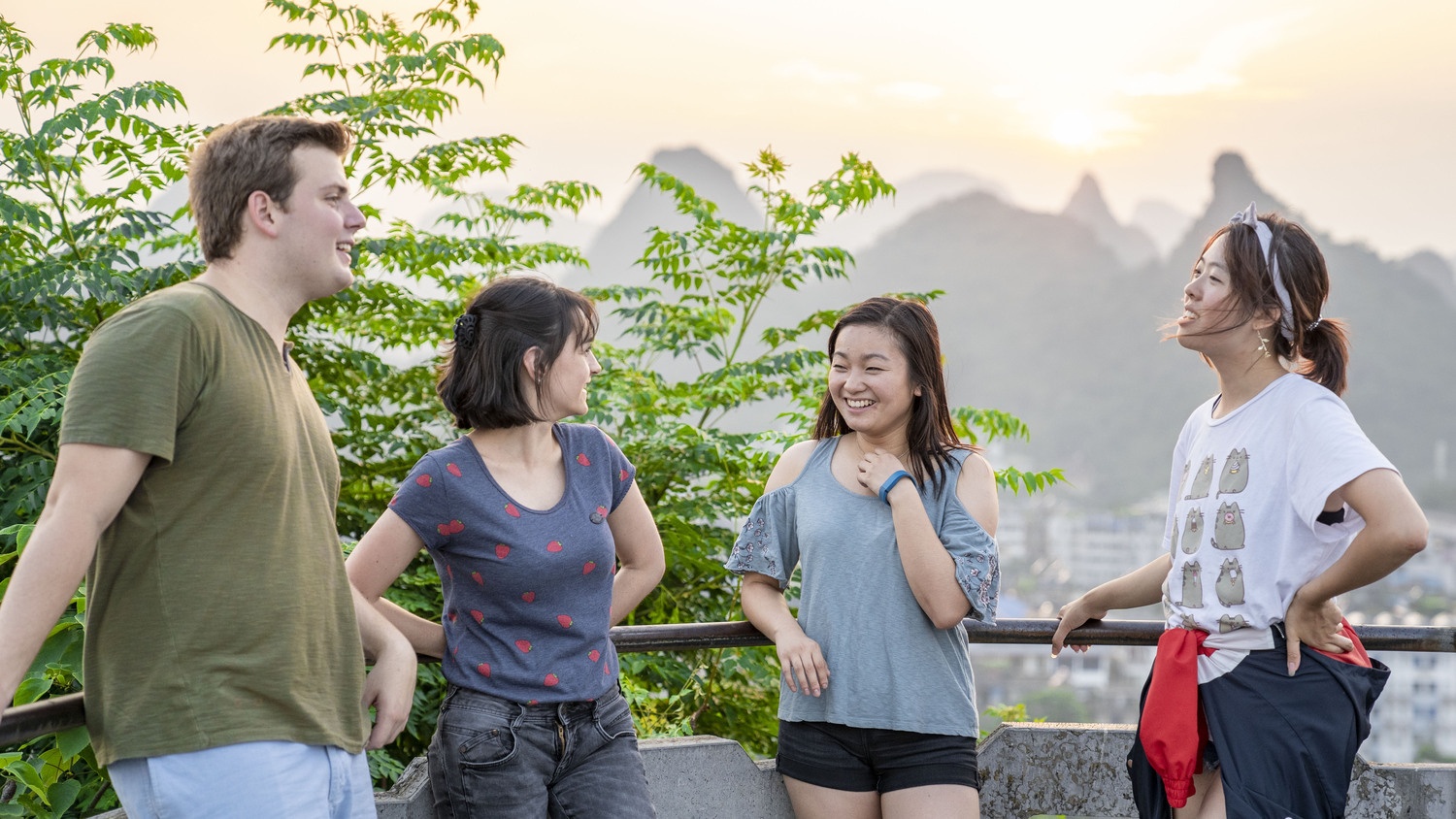
Four people take in the city and the karst peaks beyond. For stays of six months or more, home in Guilin can also be an apartment, private or shared with GXNU housemates.
Weekend outings can be wet ones, and a stream hike in ponchos and helmets gives the day's Chinese some very practical vocabulary.
Ridge paths on a rice terrace hike give a view of the curving fields from above, with time to talk on the long walk back down.
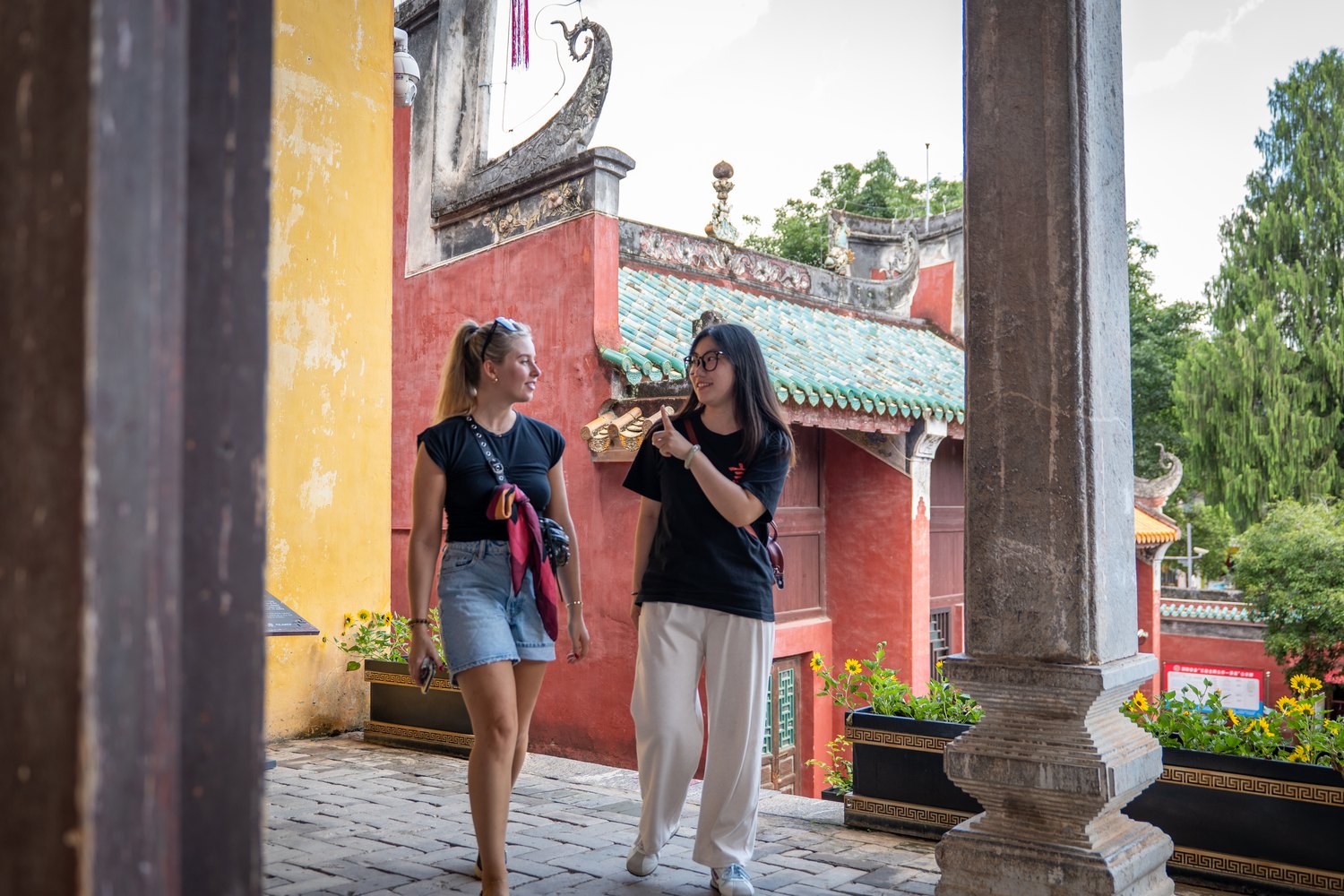
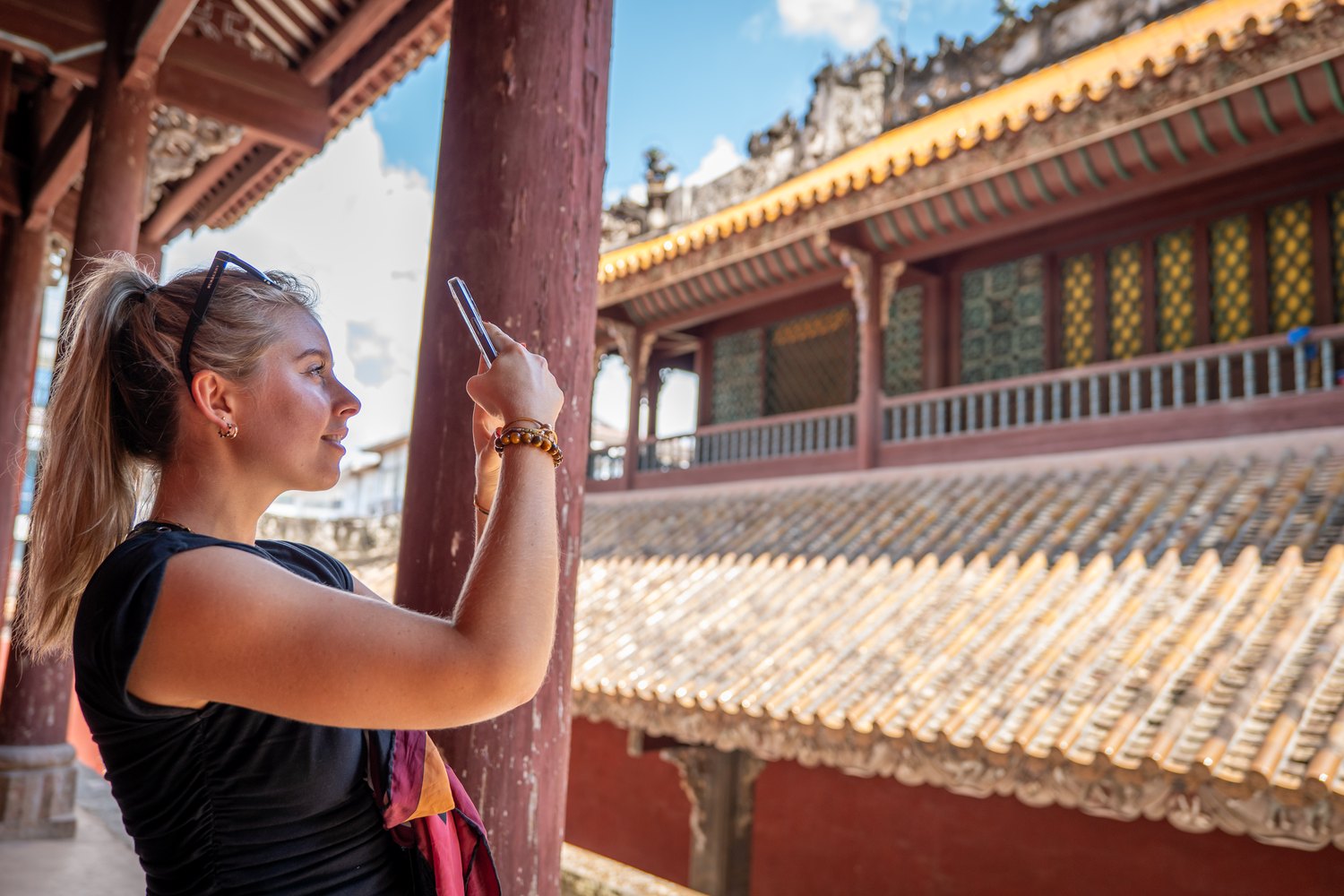
Painted eaves and old roof tiles from a temple balcony. For anyone drawn to traditional China, CLI also runs tea ceremonies and tea house visits.
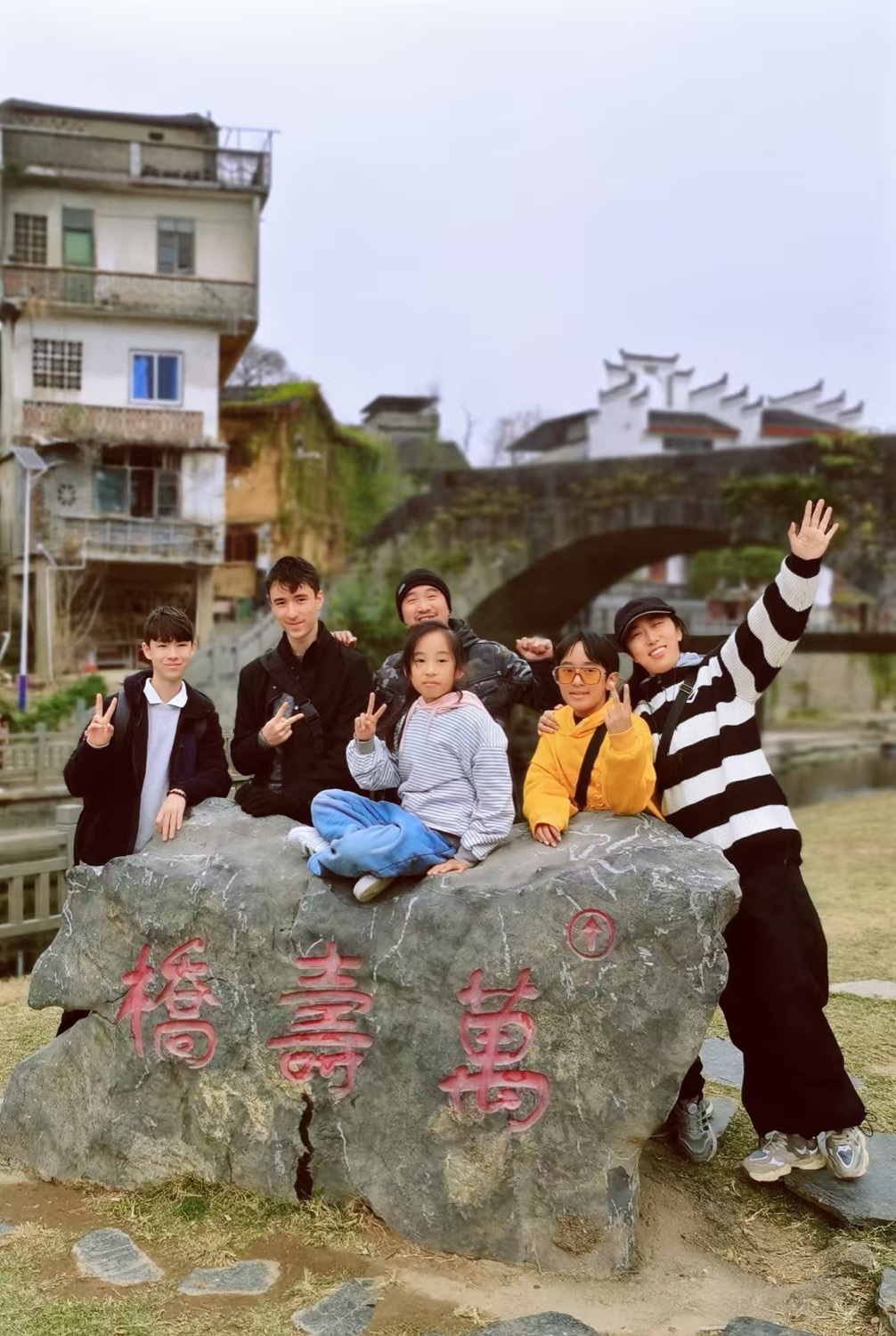
A carved stone by an old village bridge makes a good seat for a group photo, and Yangshuo, Longsheng and the Li River are all about an hour from Guilin.
Language exchange, markets and parks fill weekday afternoons, and weekends open up the countryside, with its fields and karst peaks.
Green karst peaks run to the horizon. Guilin's summers are hot and humid, so on a day out like this a cap is a good idea.
Weekday lunch at the CLI Center is home-cooked and family style, and village trips show where some of what reaches the table is grown.
Hiking up Guilin's karst hills is one of the activities on offer, and the stone steps on the way up are a good place to catch your breath.
A museum visit can feed straight into class, since CLI's teachers coordinate and new vocabulary from one lesson may come up in the next.
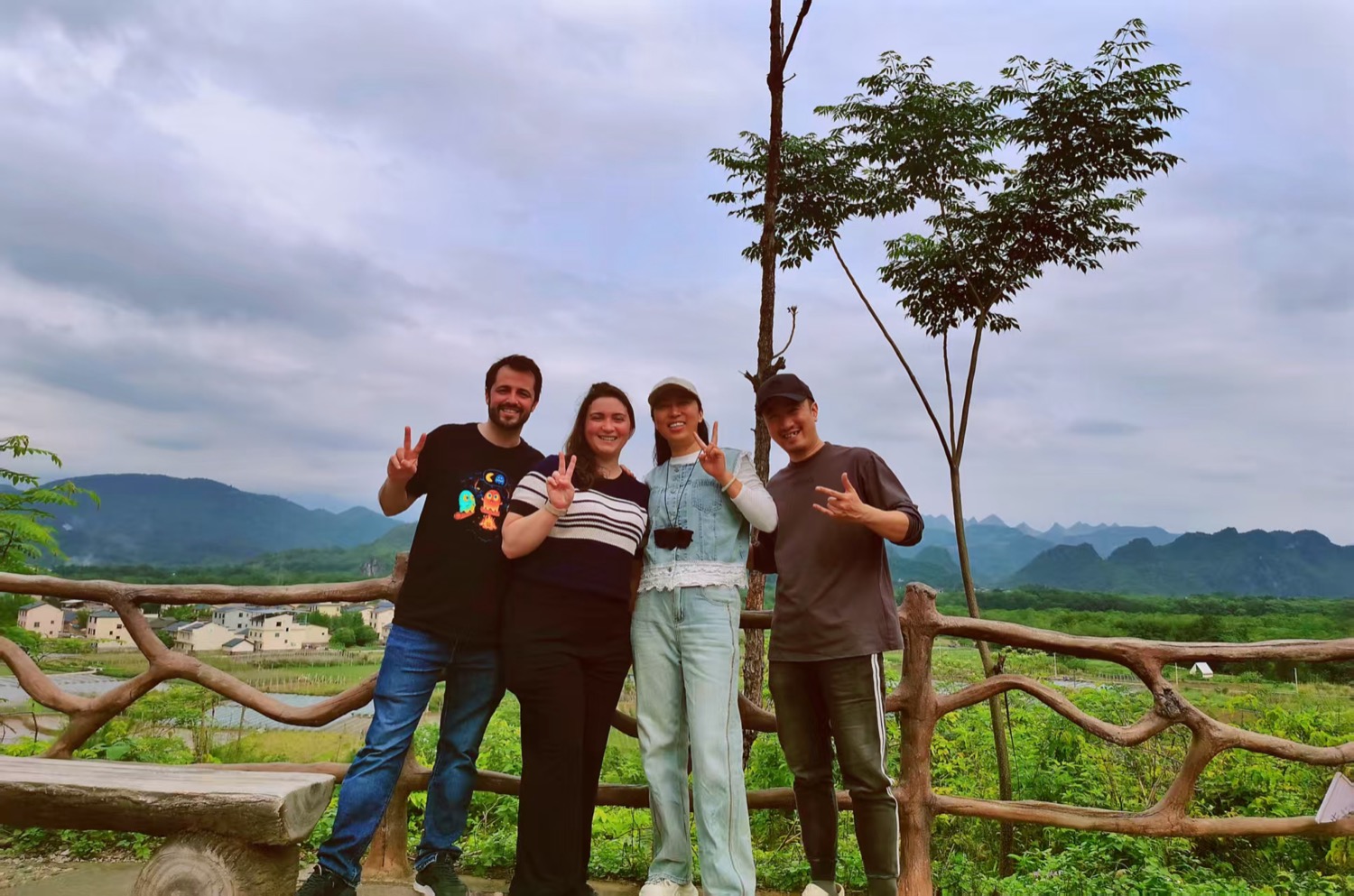
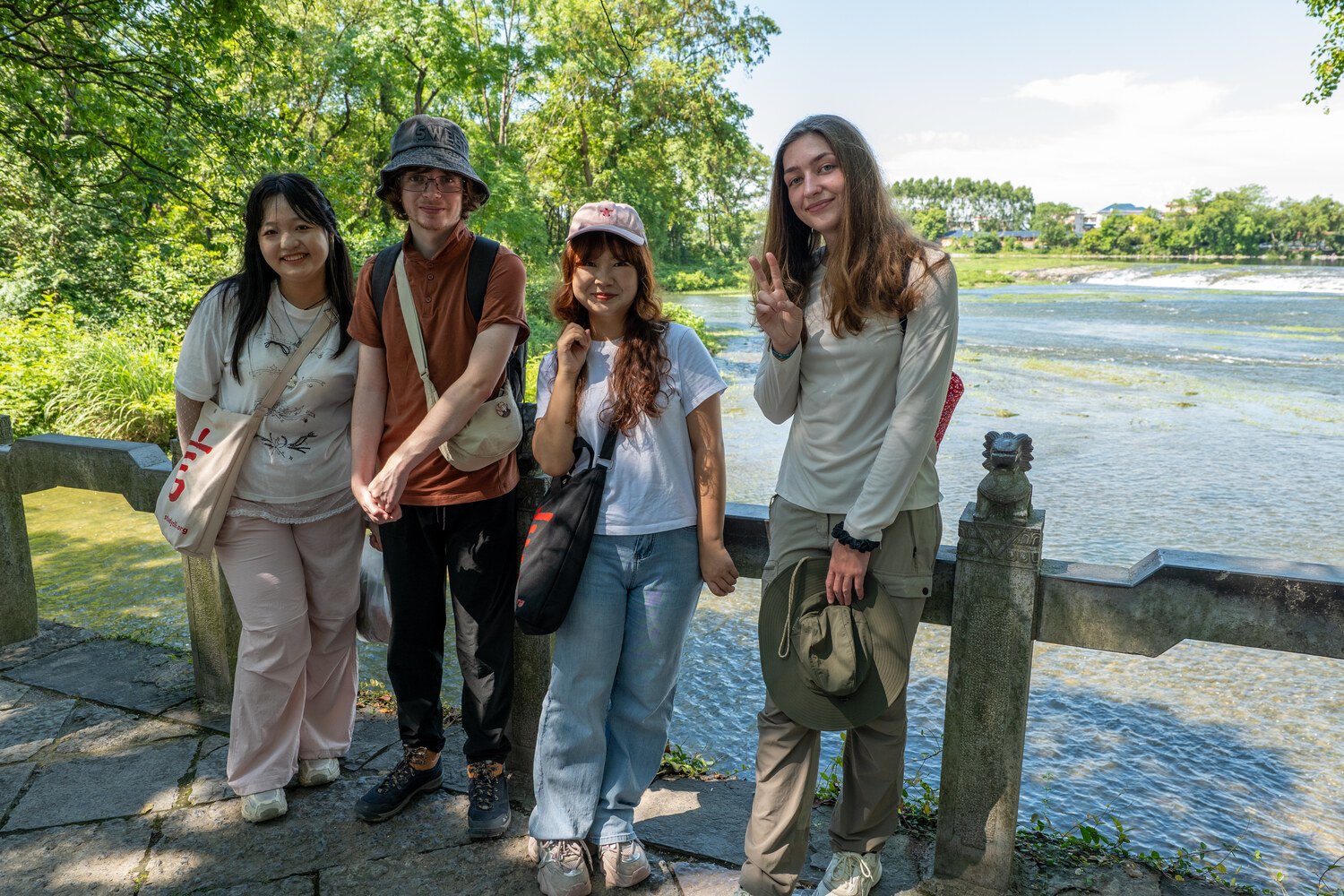
Four people pose at a fence above green farmland. Small group classes of three to five students can sometimes be arranged, when levels and enrollment allow.
Pickup and drop-off at the airport or train station are included, and on a group outing the ride is where the day's first conversation happens.
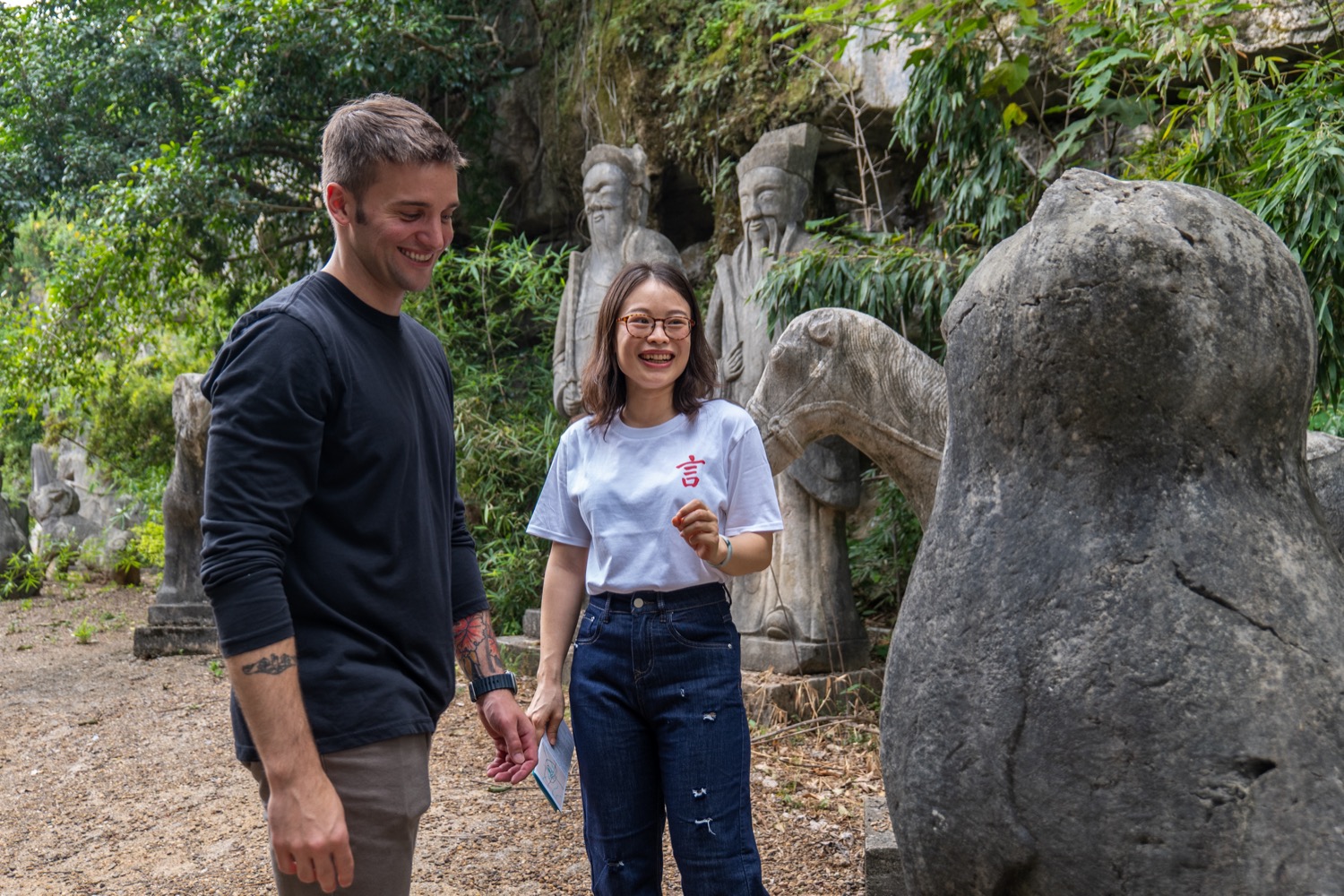
Advanced students may focus on classical Chinese, and an afternoon among old stone carvings gives that study a setting outside class.
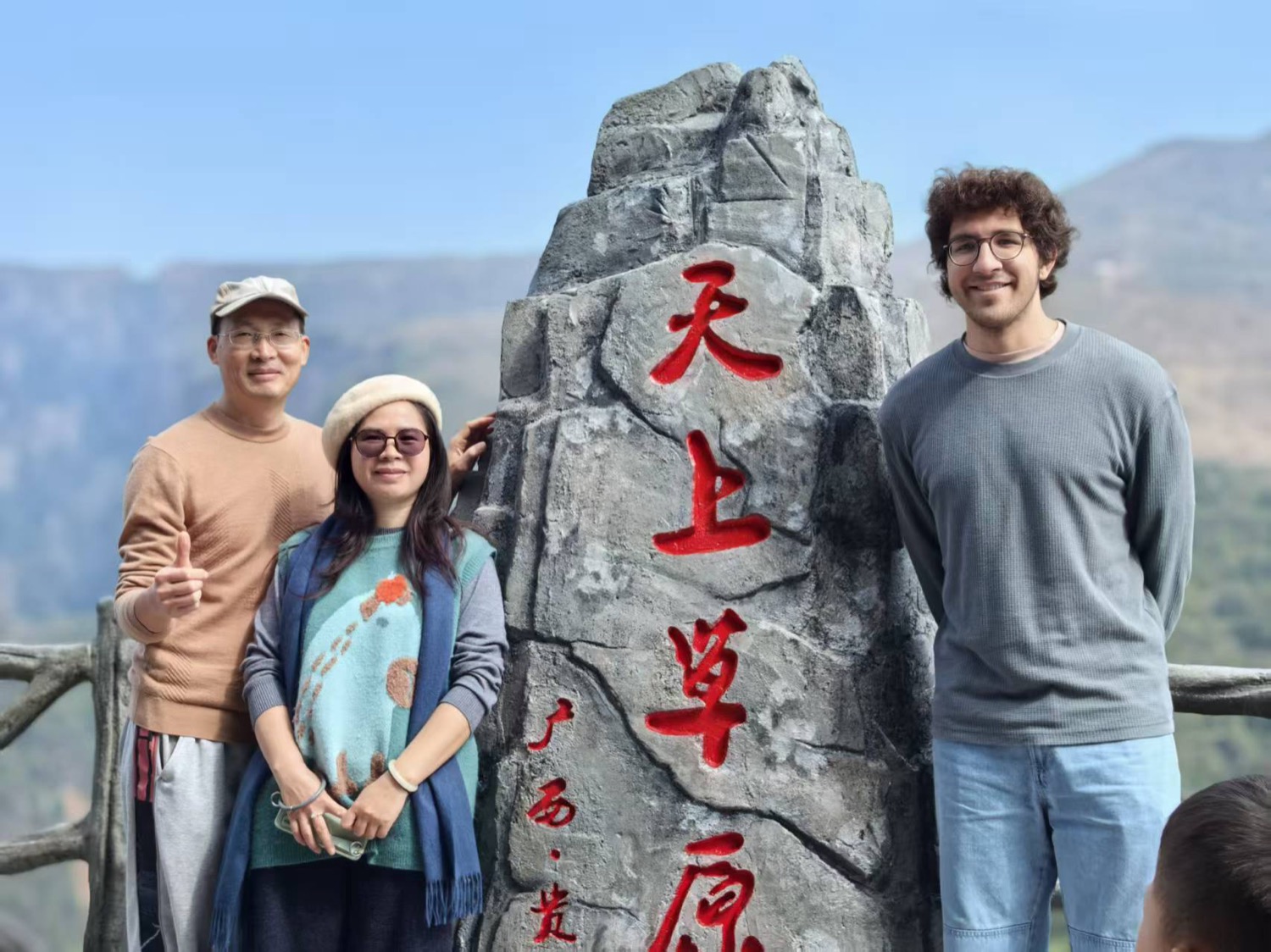
The stone reads 天上草原 (tiānshàng cǎoyuán), grassland in the sky, and sounding out signs like it is how trips double as reading practice.
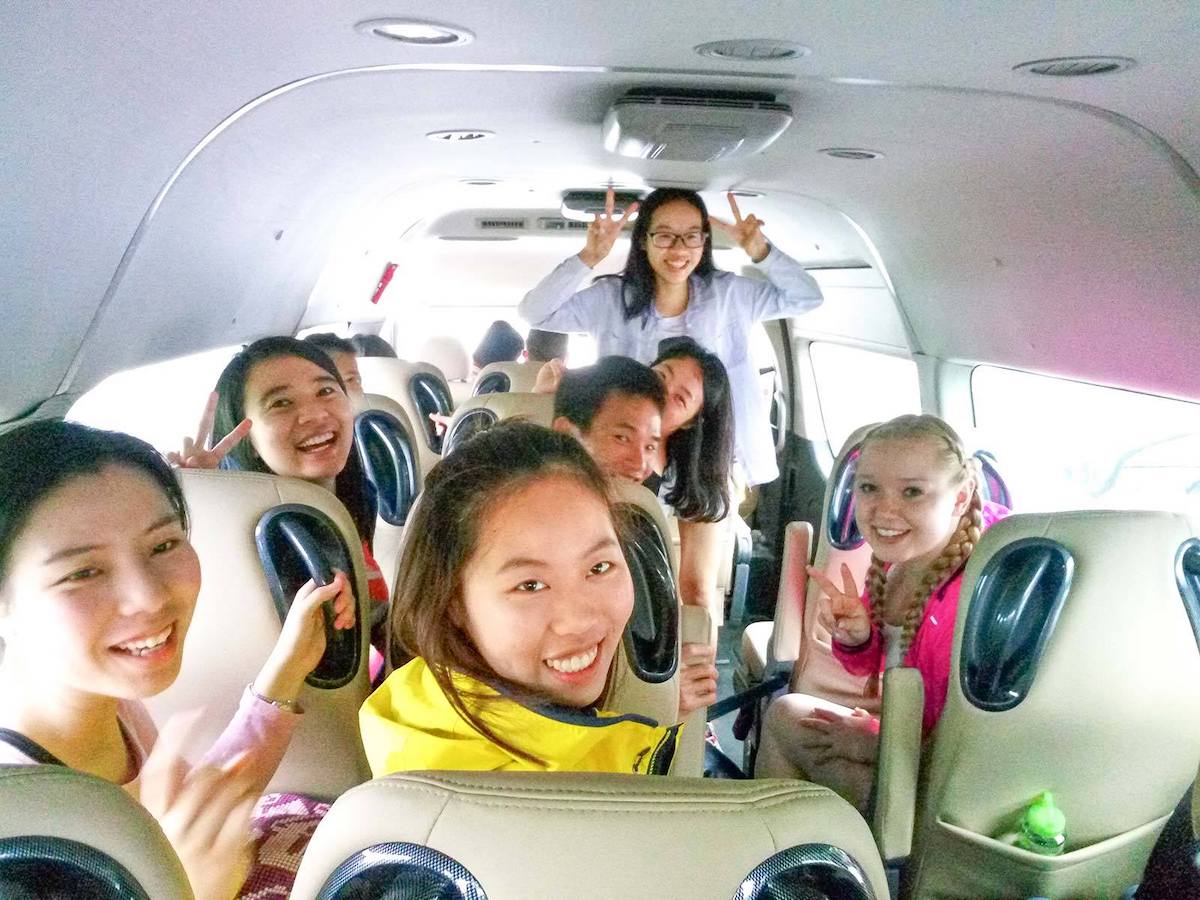
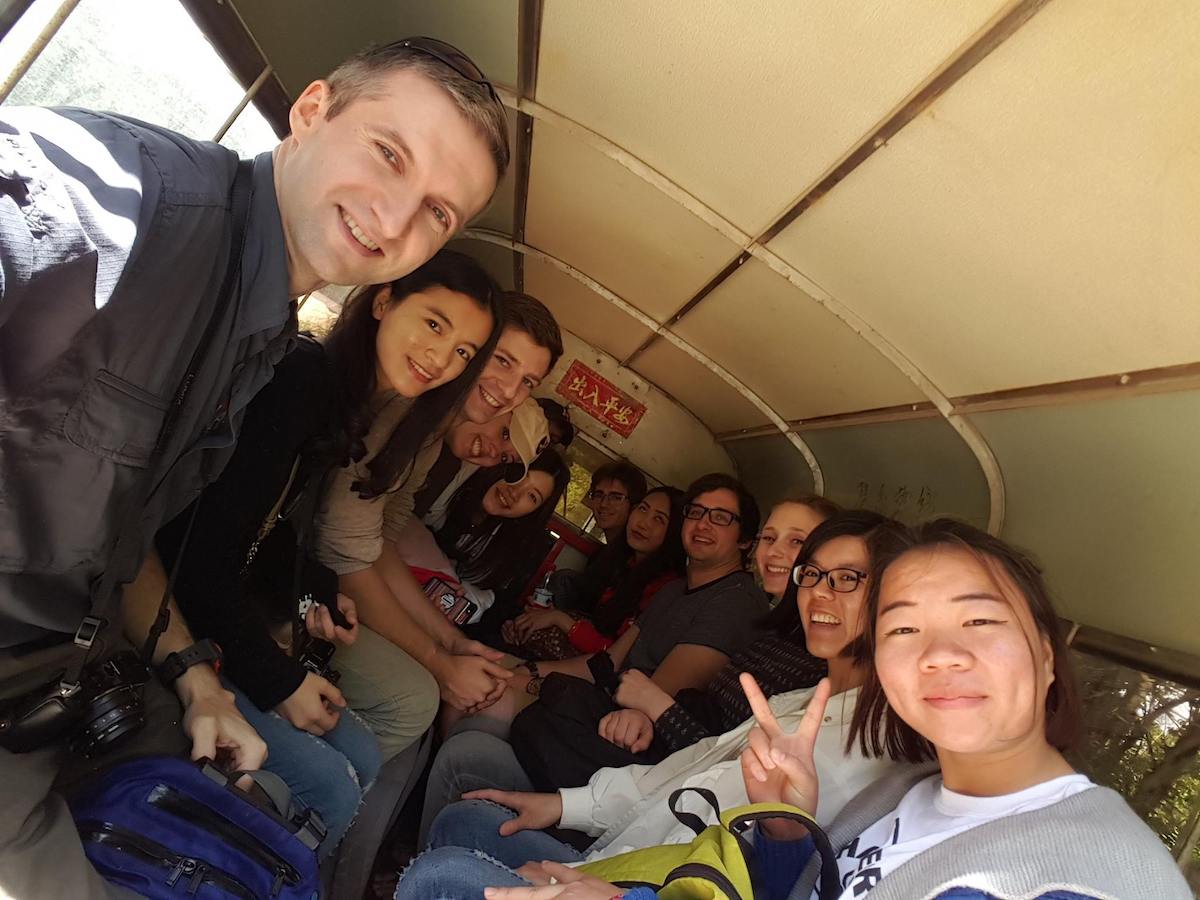
Packed in shoulder to shoulder on the way to an outing. With teachers and pengyou often along for the trip, the ride is good Chinese practice too.
The 朋 in 朋友 (péngyǒu, friend) is two 月 (moon) characters side by side, a small lesson in character structure for a day out with friends.
桂林Guìlín
Guilin
Karst peaks, rivers, rice terraces, and quiet city streets.
About once a month, an overnight trip leaves the city for places such as the Longji rice terraces or the Longsheng hot springs.
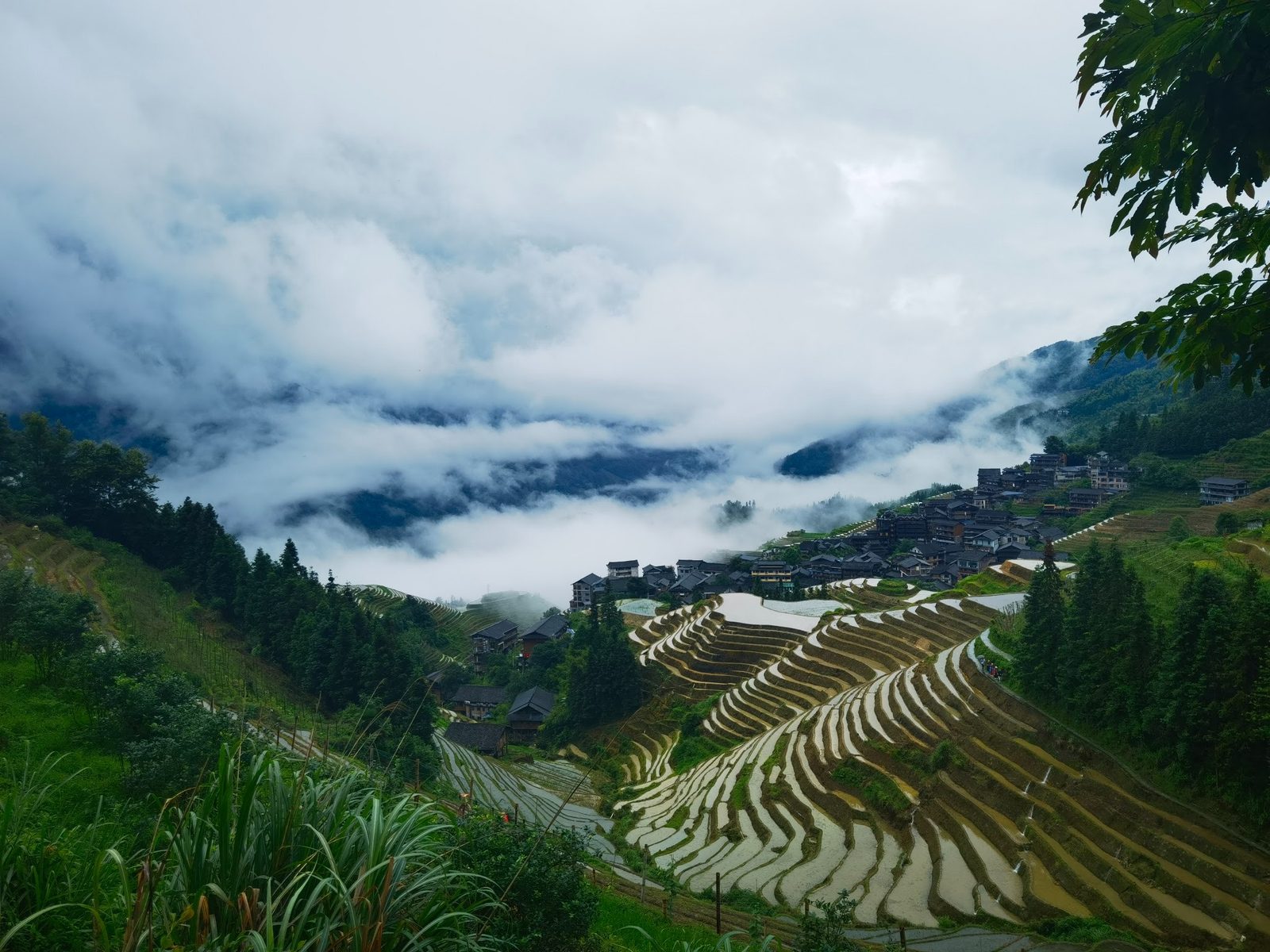
Rice terrace hikes are among CLI's excursions, and at harvest time the hillsides turn gold like this.
CLI runs photography excursions to the Longji Rice Terraces, one of several mountain trips on the activity list.
Weekends are for larger outings, and hiking in Longsheng is one of them, about an hour from Guilin.
Lakes, parks and green space run through Guilin, and karst peaks rise right behind the city's buildings.
Guilin's weather runs from hot, humid summers to cool, damp winters that rarely drop below freezing, and the mountains change with it.
Rides on bamboo boats are one of CLI's outings, a slow way to see the karst peaks from the water.
Guangxi Normal University (GXNU) is CLI's university affiliate, and students can get an official GXNU transcript for their coursework at CLI.
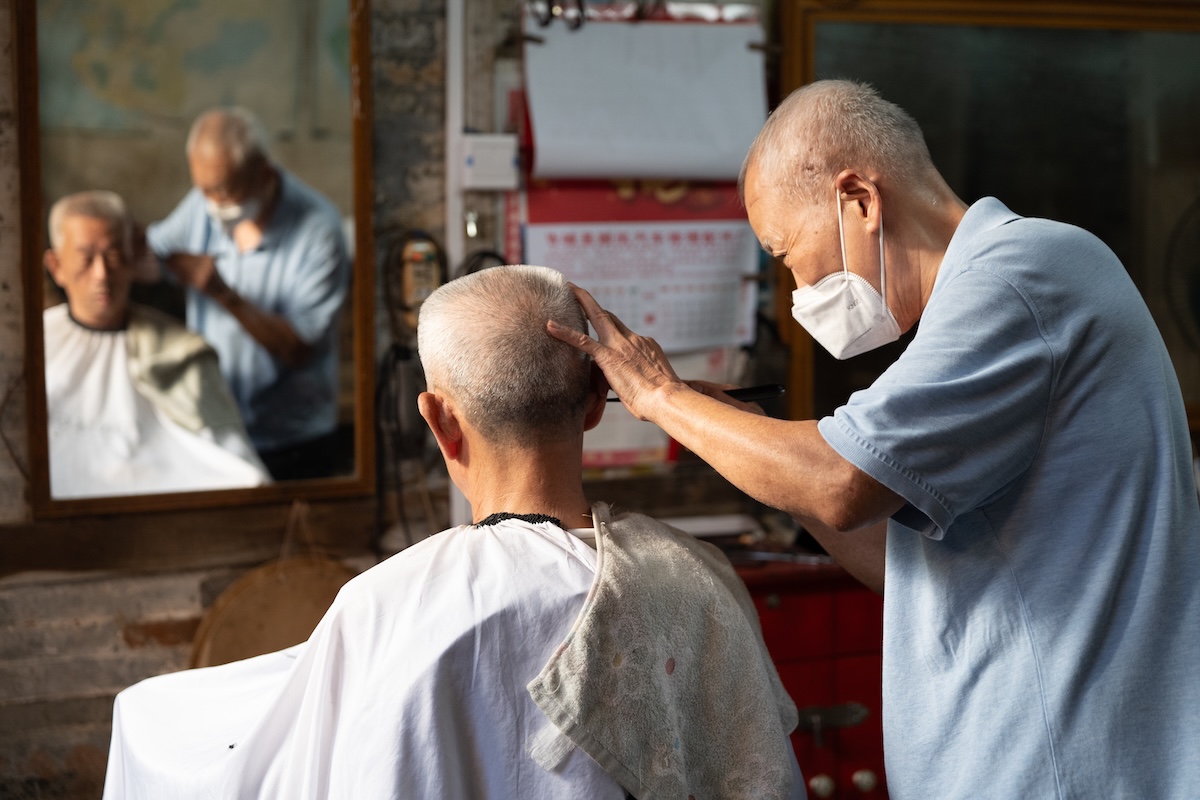
With little English spoken in Guilin, even a haircut becomes a conversation in Mandarin.
Guilin sits on the Li River in Guangxi, ringed by the limestone karst peaks that appear in Chinese painting and poetry.
Some students use free weekends for independent travel, and terraced hills and villages like these are within reach of Guilin.
Yangshuo, Longsheng and the Li River are about an hour from Guilin, so a free Saturday is enough for a trip into the hills.
桂林山水甲天下 (Guìlín shānshuǐ jiǎ tiānxià): Guilin's mountains and rivers are said to be the best under heaven.
Stays run from one week to a year, so some students see the countryside around Guilin change through several seasons.
Teachers and pengyou often come along on terrace hikes and other trips, so the conversation on the trail can stay in Chinese.
Wooden villages above terraced fields are part of the countryside beyond Guilin, and CLI's monthly overnight trip is a chance to see places like this.
The Li River runs 83 km from Guilin to Yangshuo, and Guilin's karst joined the South China Karst UNESCO World Heritage listing in 2014.
Guilin is a full city but compact and relaxed, with the shops students need for daily life within walking distance.
The CLI Center is on a quiet road about seven minutes' walk from the main gate of Guangxi Normal University.
Hikes up Guilin's karst mountains are among CLI's activities, and the city's hills rise straight up between its streets.
Still water and green plants are never far away in Guilin, a city with lakes, parks and green space between its streets.
Guilin's name, 桂林 (guìlín), means osmanthus forest, and quiet gardens and parks are never far away in the city.
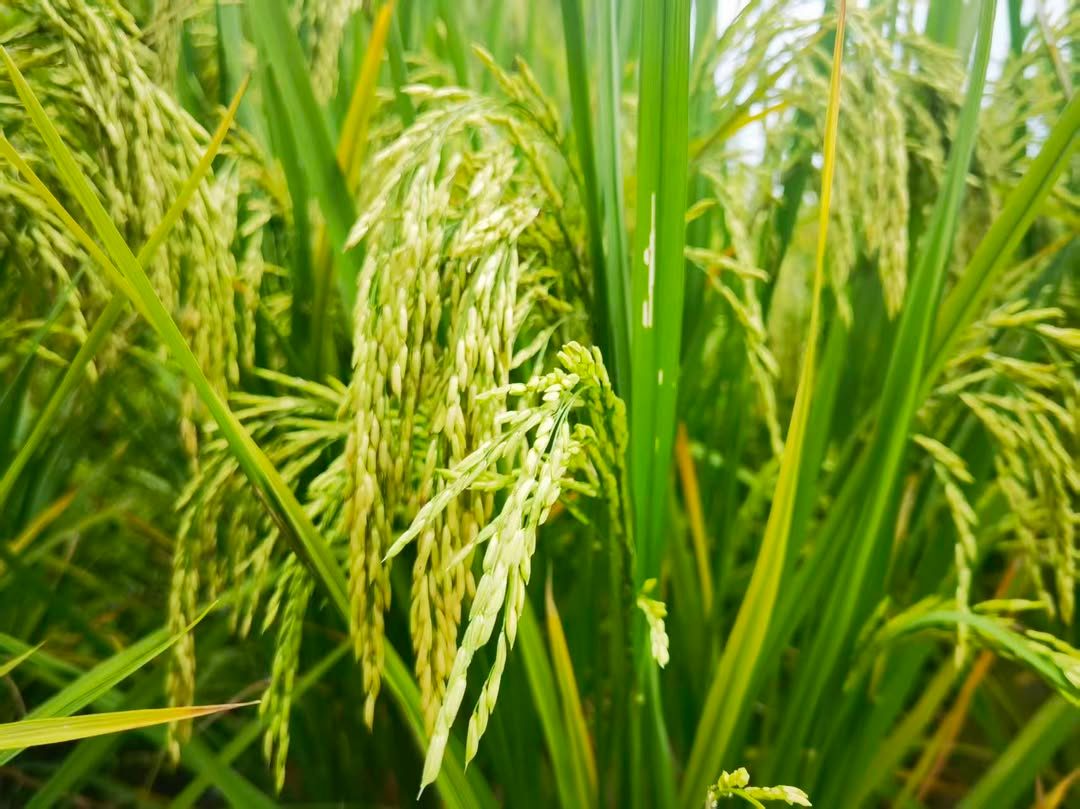
Rice grows across the hills around Guilin and ends up in the city's rice noodles, eaten for breakfast at neighborhood shops.
寄宿家庭jìsù jiātíng
Homestays
Daily life with a host family.
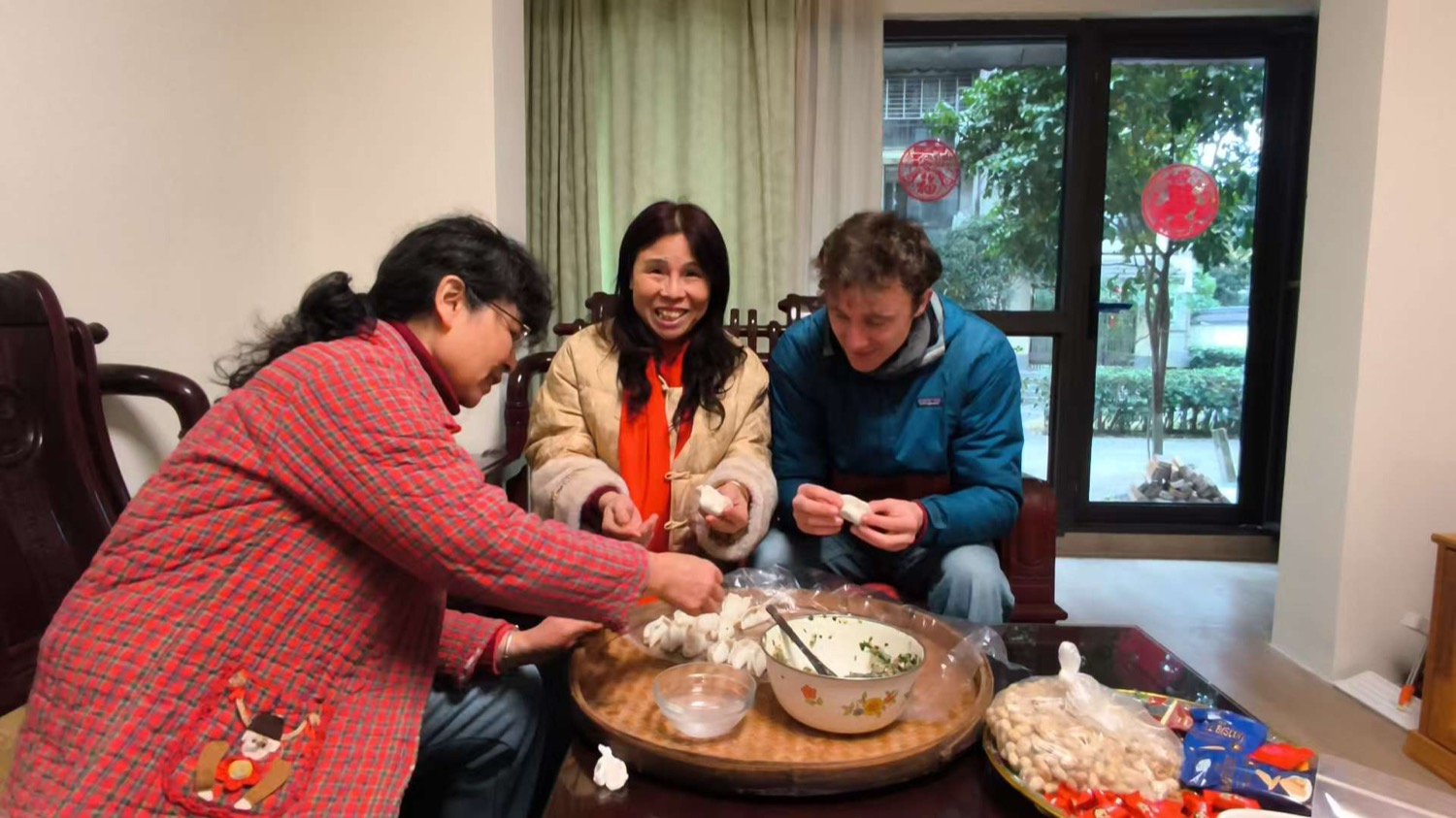
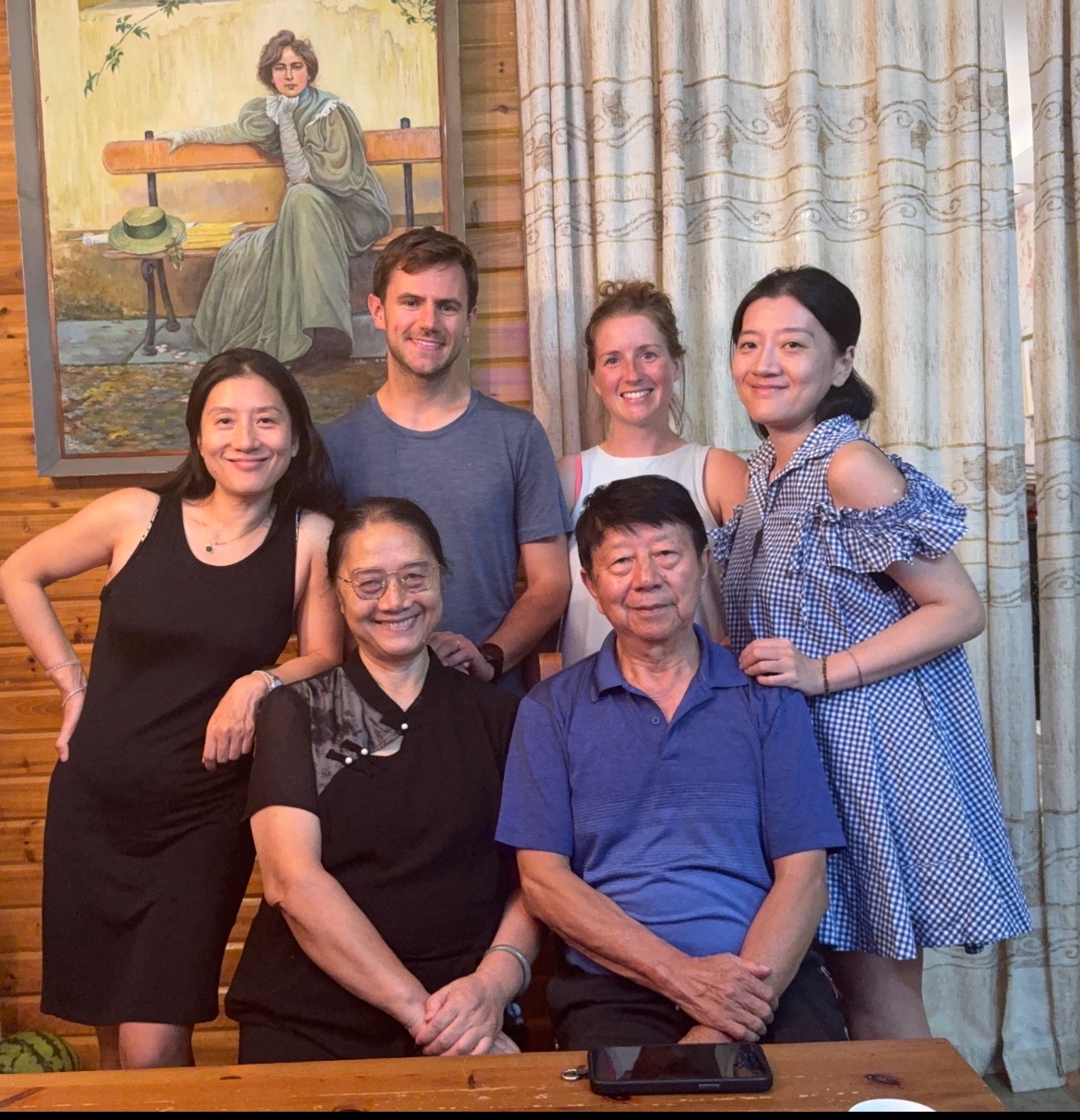
Homestay students share home-cooked dinners with their host family, and folding dumplings together is Chinese practice with dinner at the end.
Weekend outings with the host family are part of a homestay, and Guilin's lakes and parks are close at hand.
Dinners in a homestay are home-cooked by the family, and weekday lunch can be at the CLI Center between class sessions.
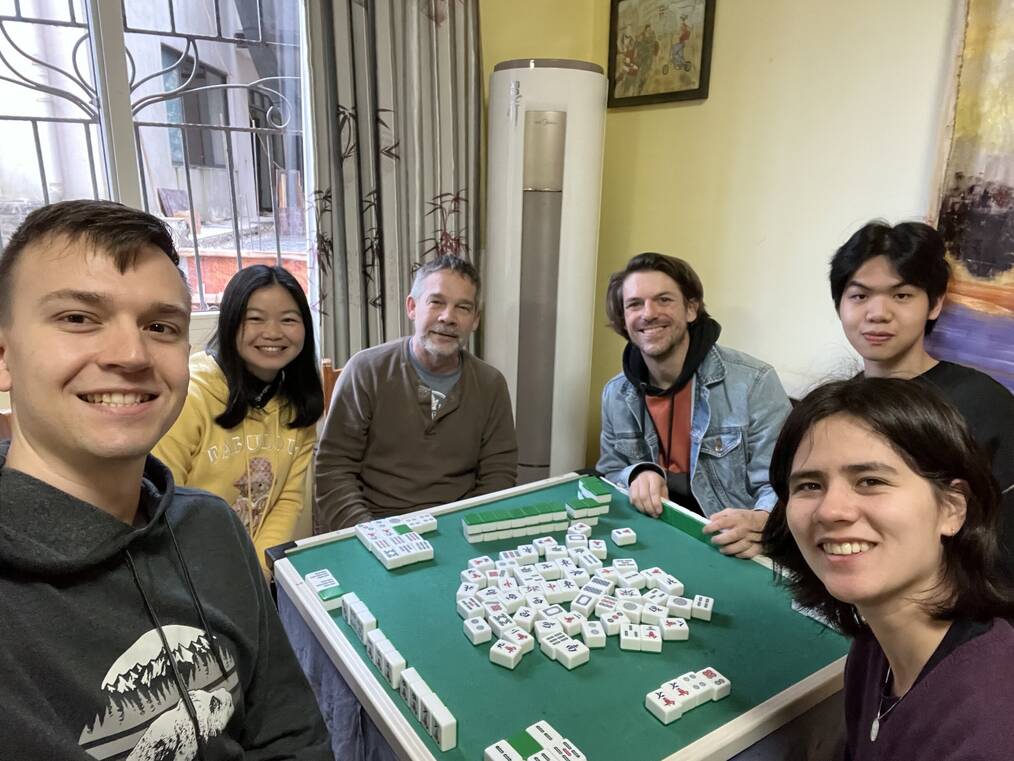
Mahjong with the host family is Chinese practice too. Back at the Center, the recreation room has its own mahjong table.
A homestay with a local Guilin family is one of the housing options included in tuition, alongside a private room at the CLI Center.
A homestay comes with a private bedroom in the family's home, and the class day happens at the CLI Center.
Evenings on the program are usually lighter, and in a homestay that can mean a guitar at the table and informal Chinese practice at home.
Living with a Guilin family keeps Chinese practice going after class, through dinner conversation and daily routines at home.
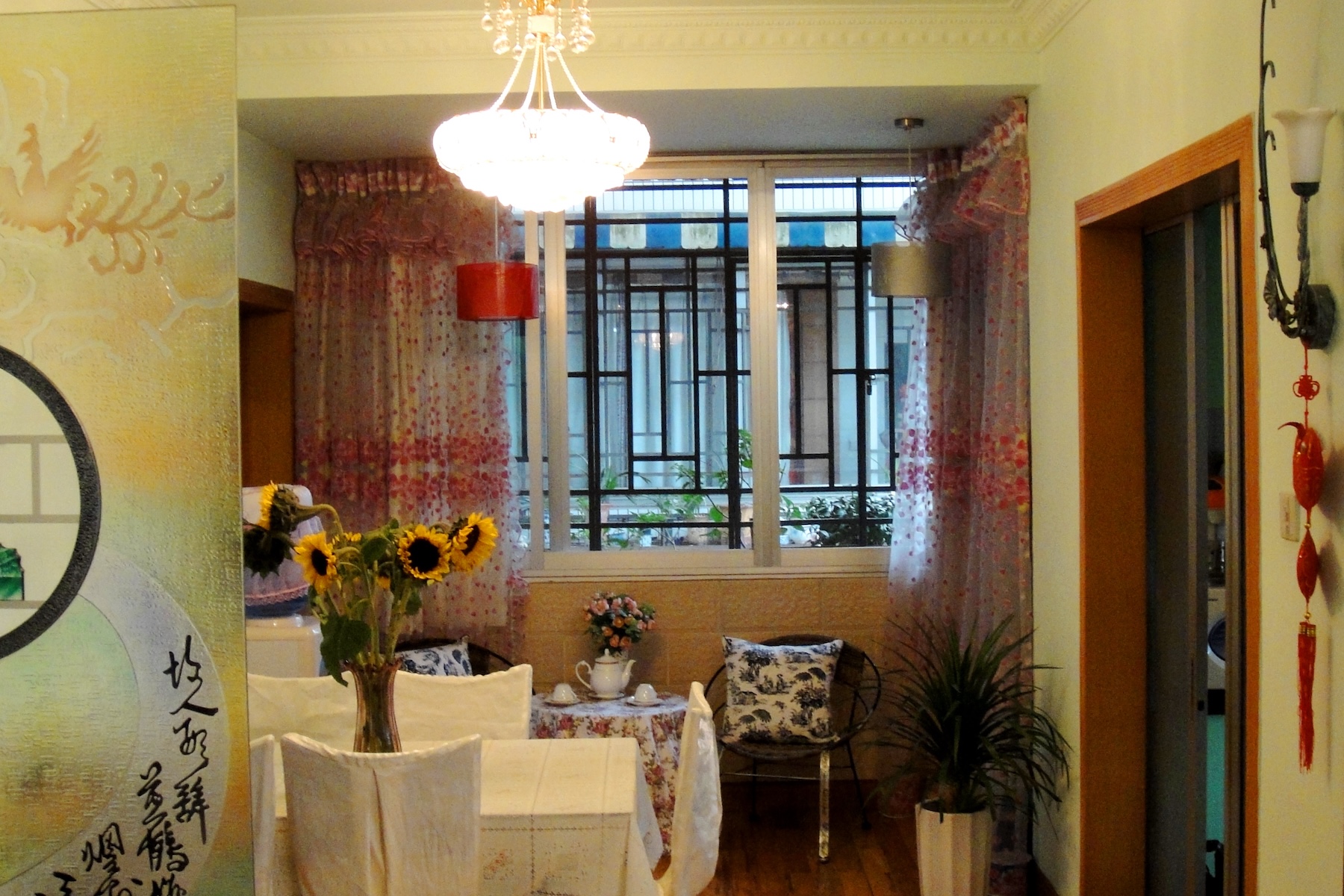
A homestay means constant Chinese practice, and a full family table is a good place for it, with the everyday words people use at home.
Guangxi food leans fresh, sour and lightly spicy, and a homestay is a good way to eat it the way local families cook it.
Guilin has little English and no large expat bubble, and a homestay puts students even closer to how local families live and talk.
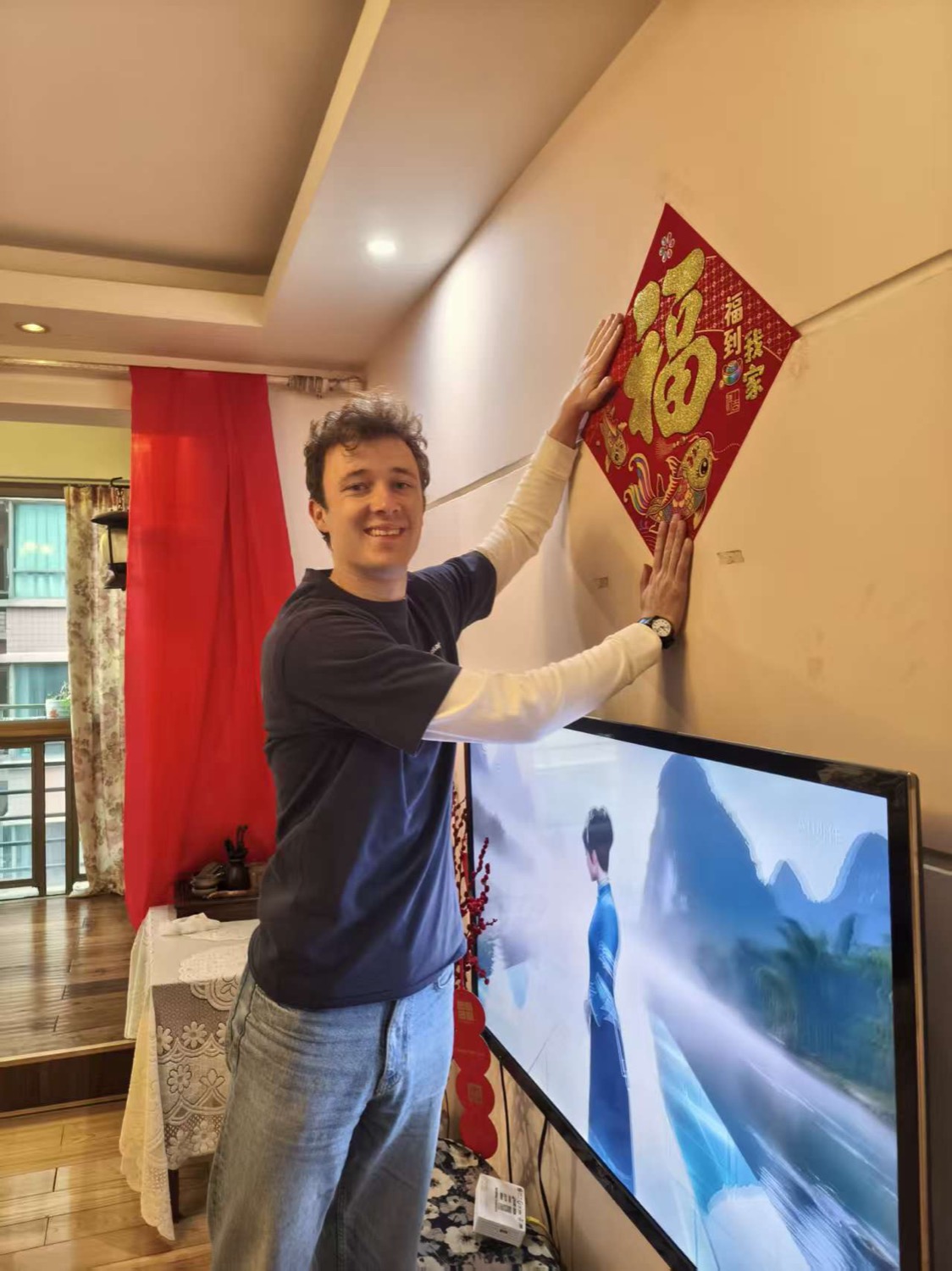
Hanging a 福 (fú, good fortune) character is a holiday custom. Homestay students see festivals from inside a Guilin family's home.
朋友péngyou
Friends and celebrations
Holidays, farewell dinners, anniversary parties, and time together.
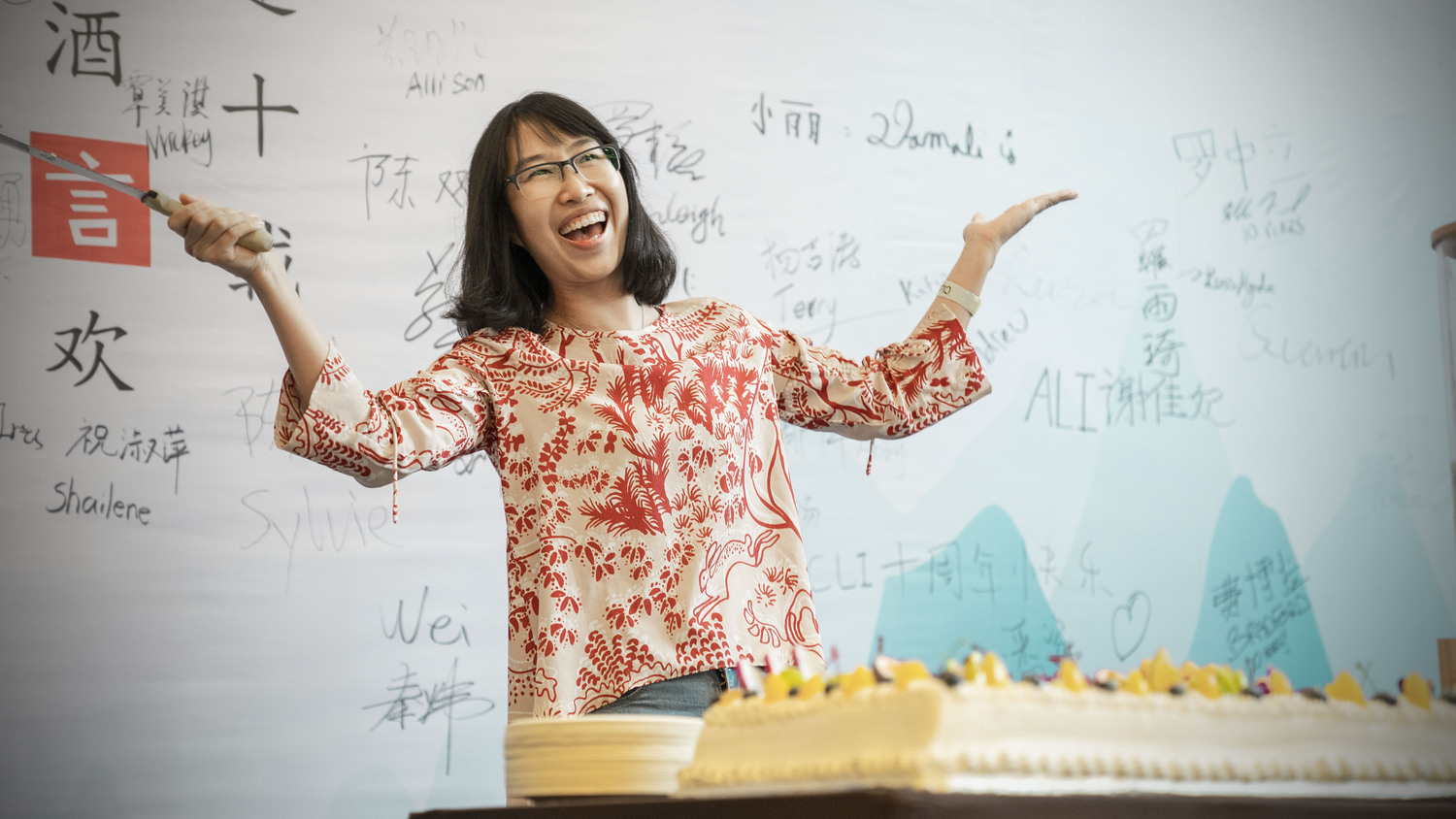
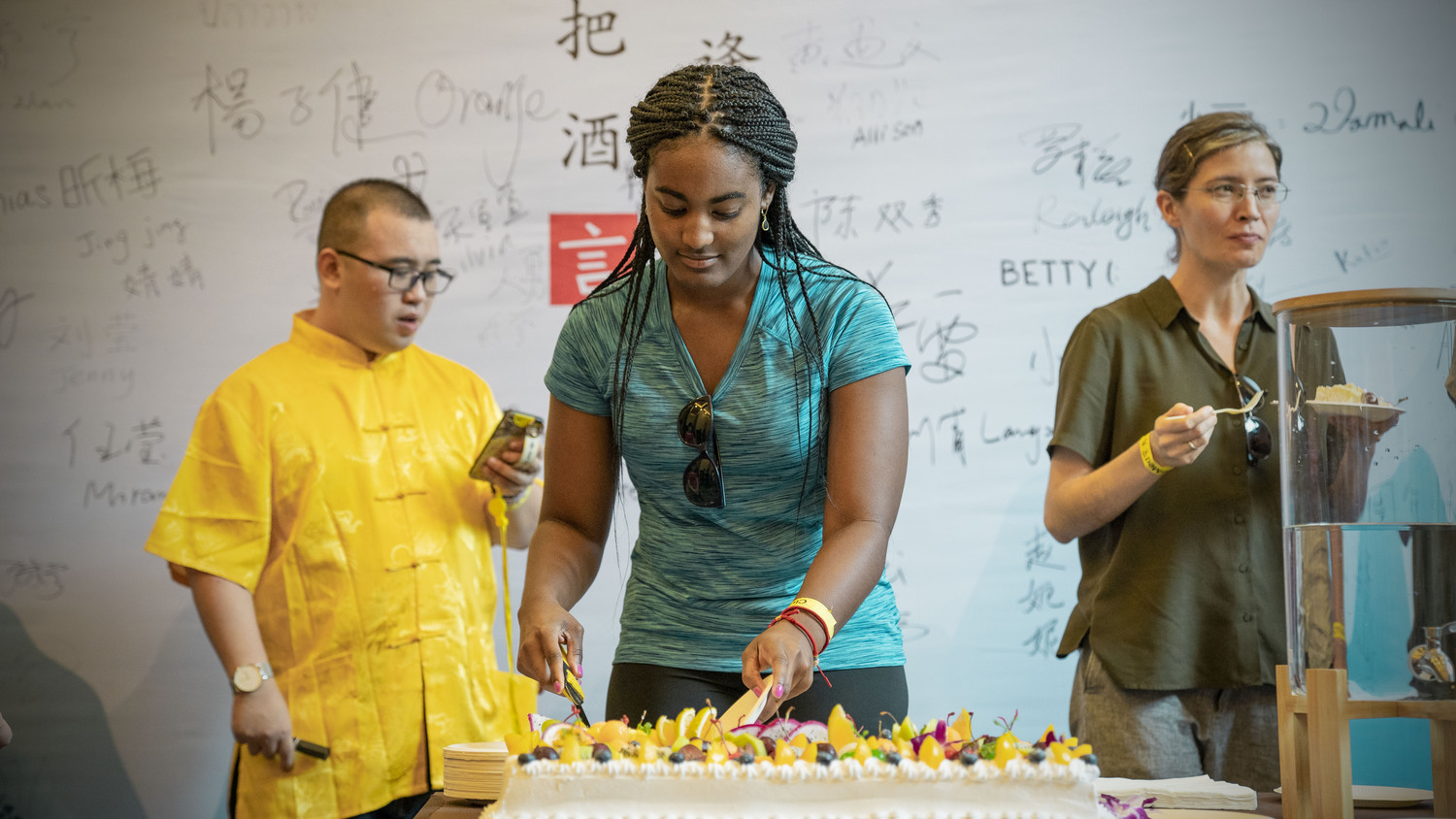
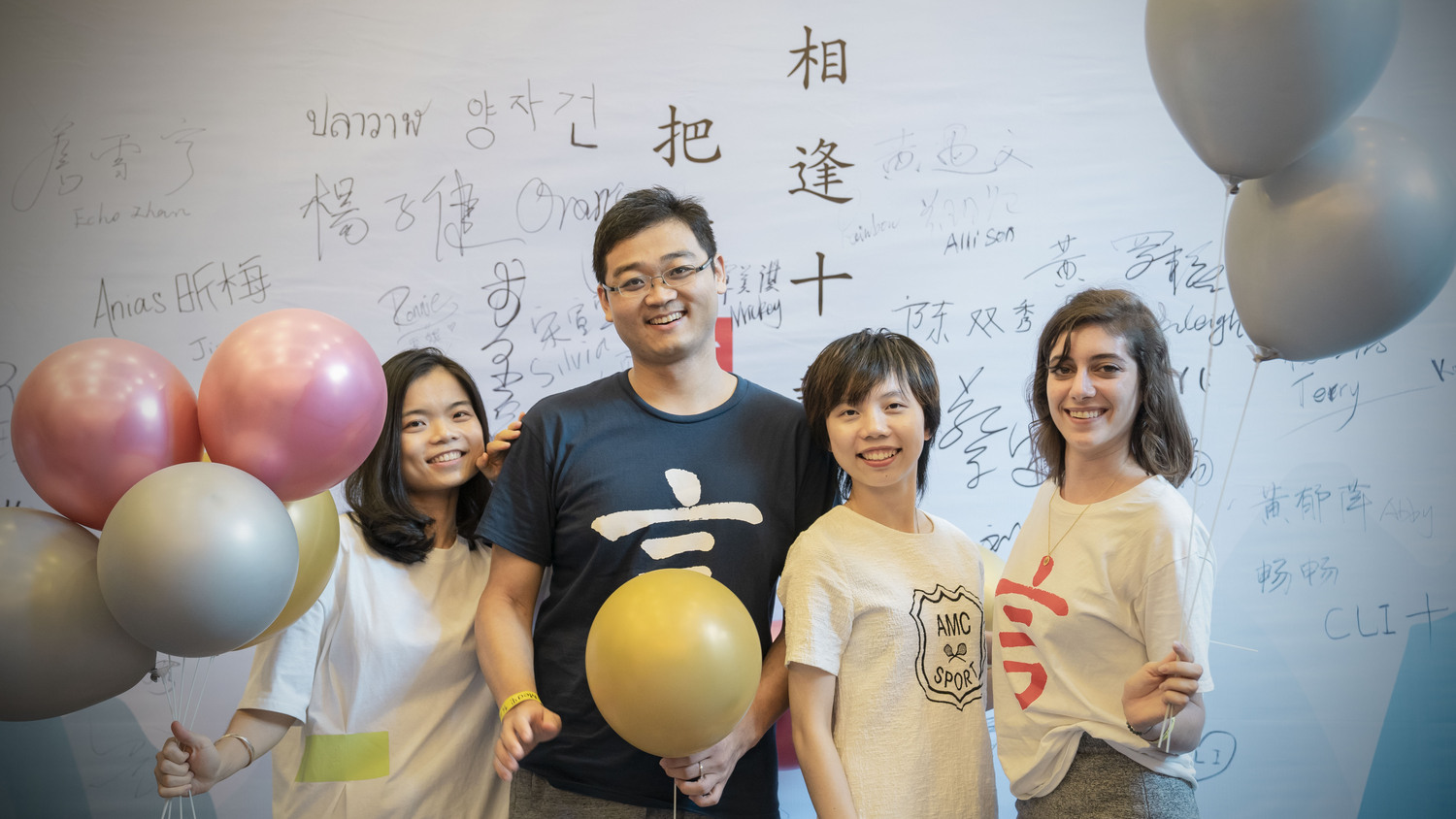
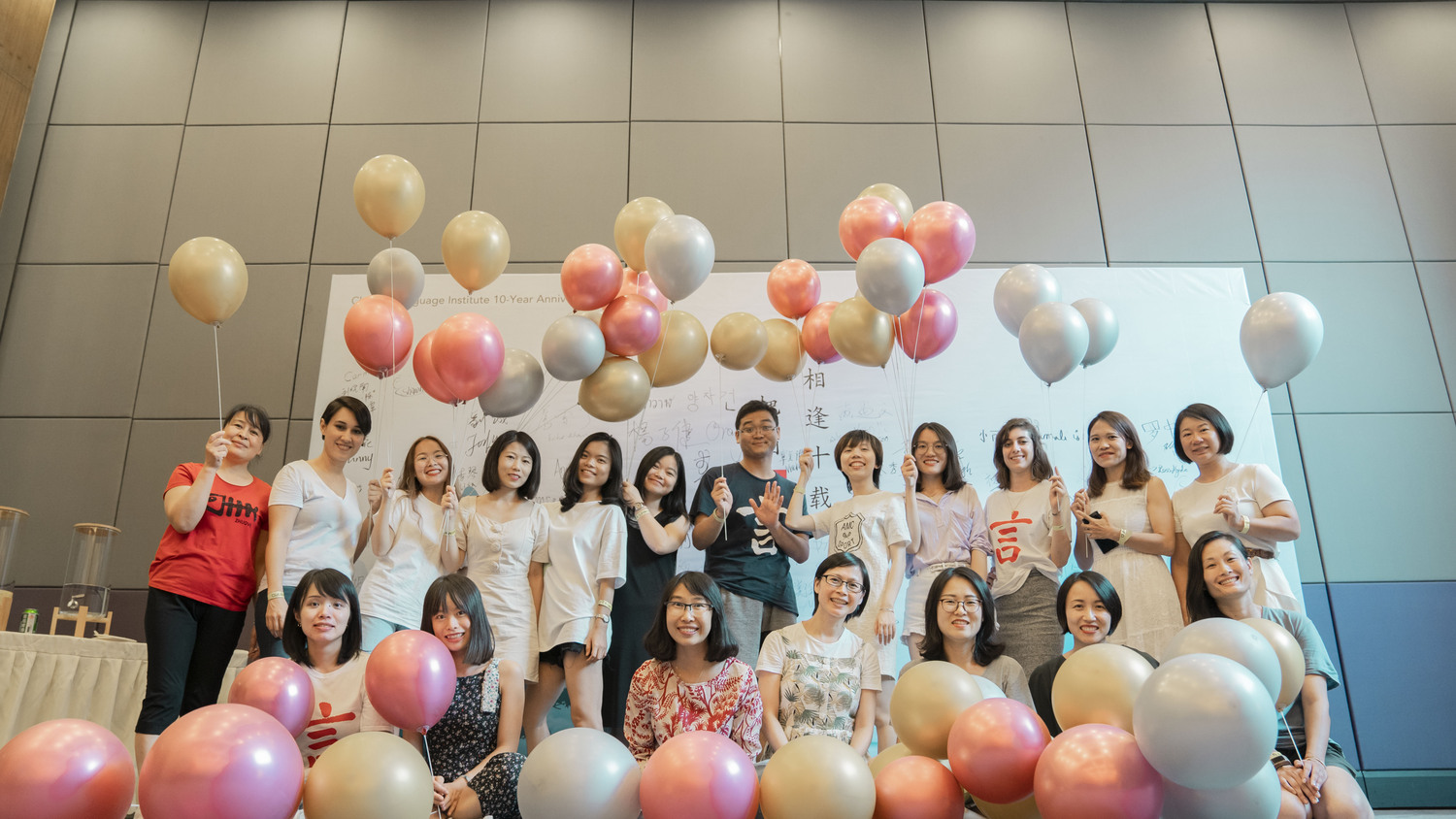
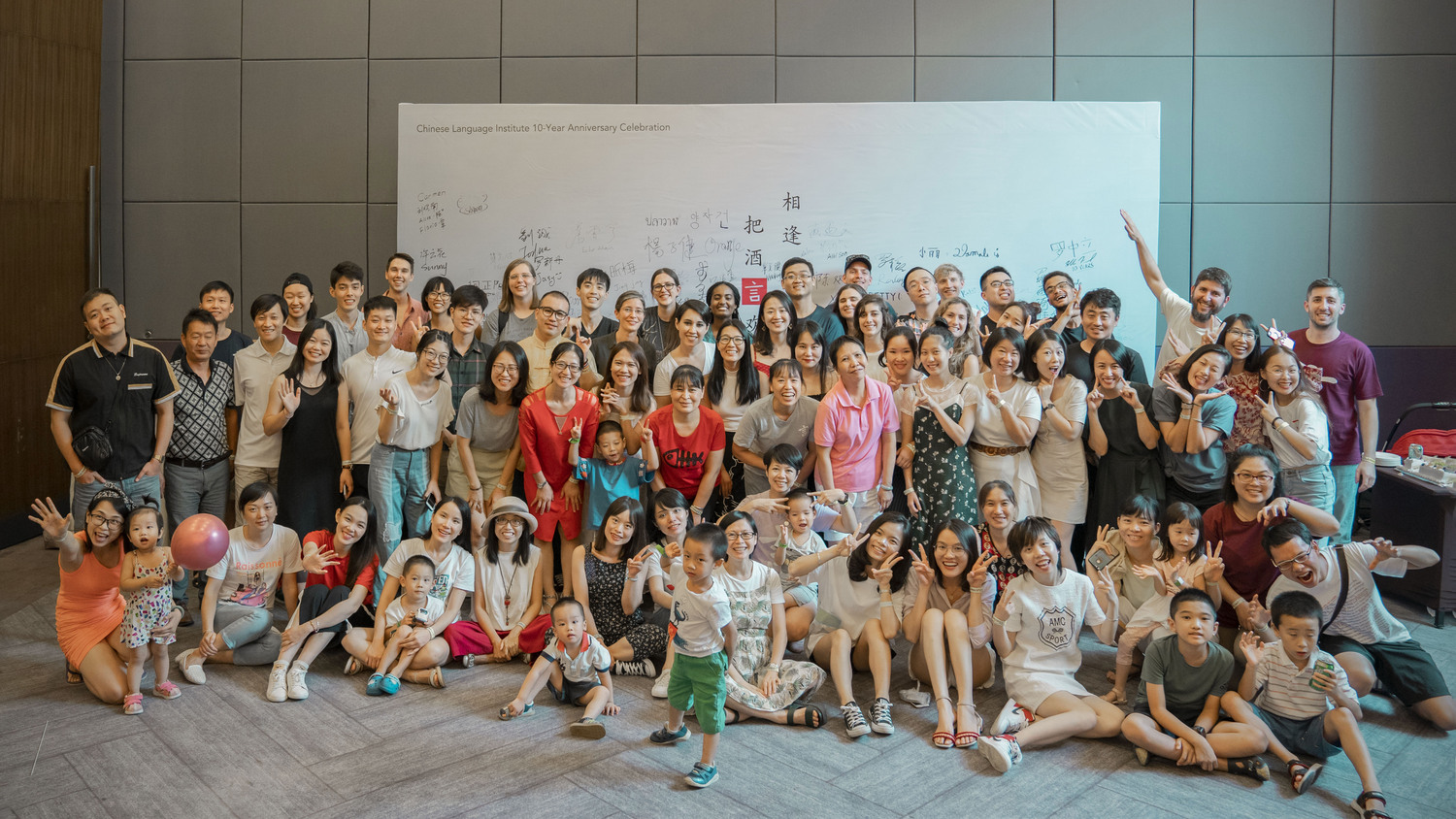
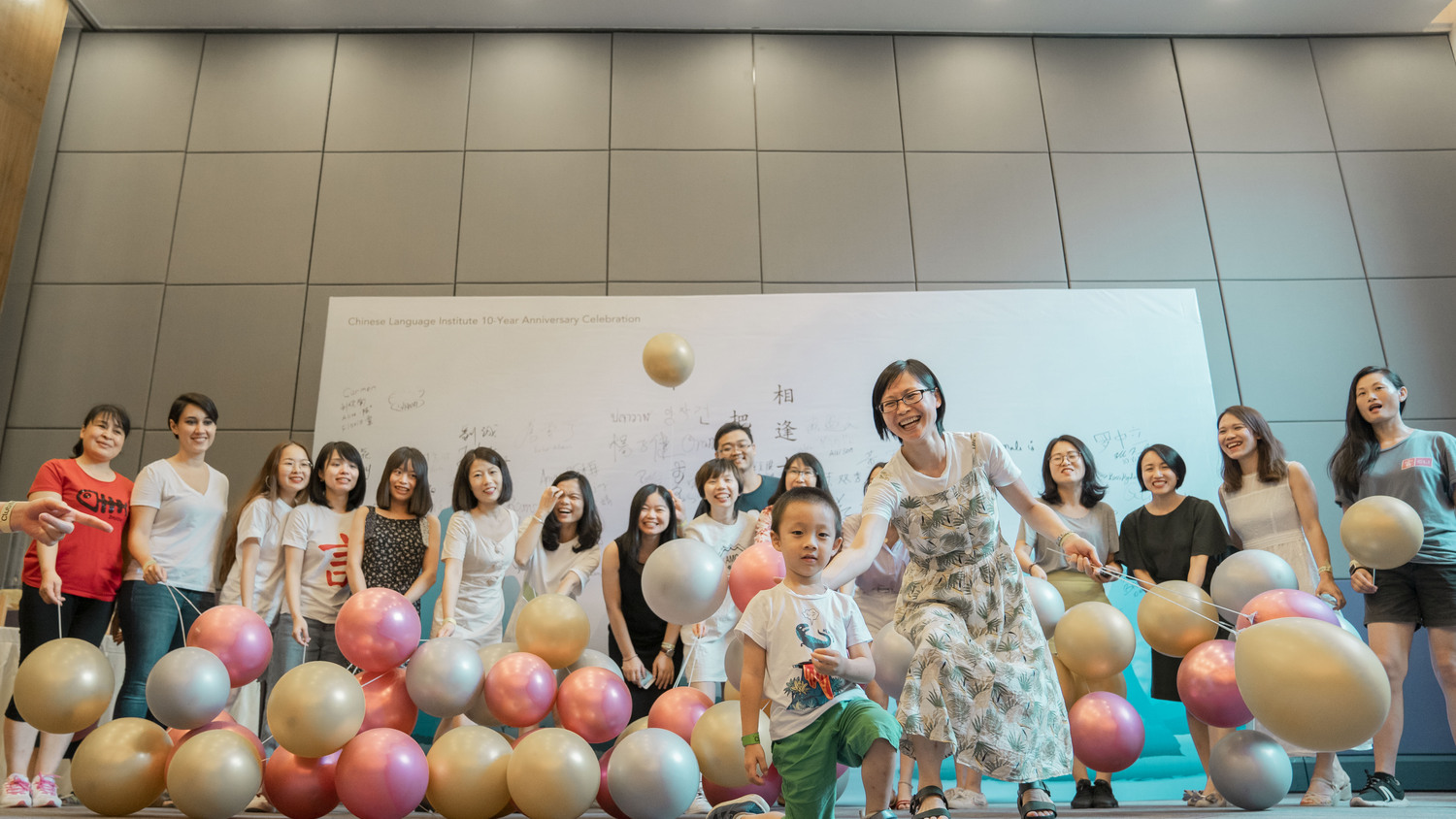
CLI was founded in Guilin in 2009, and this anniversary party, cake and signing wall included, marked the years since.
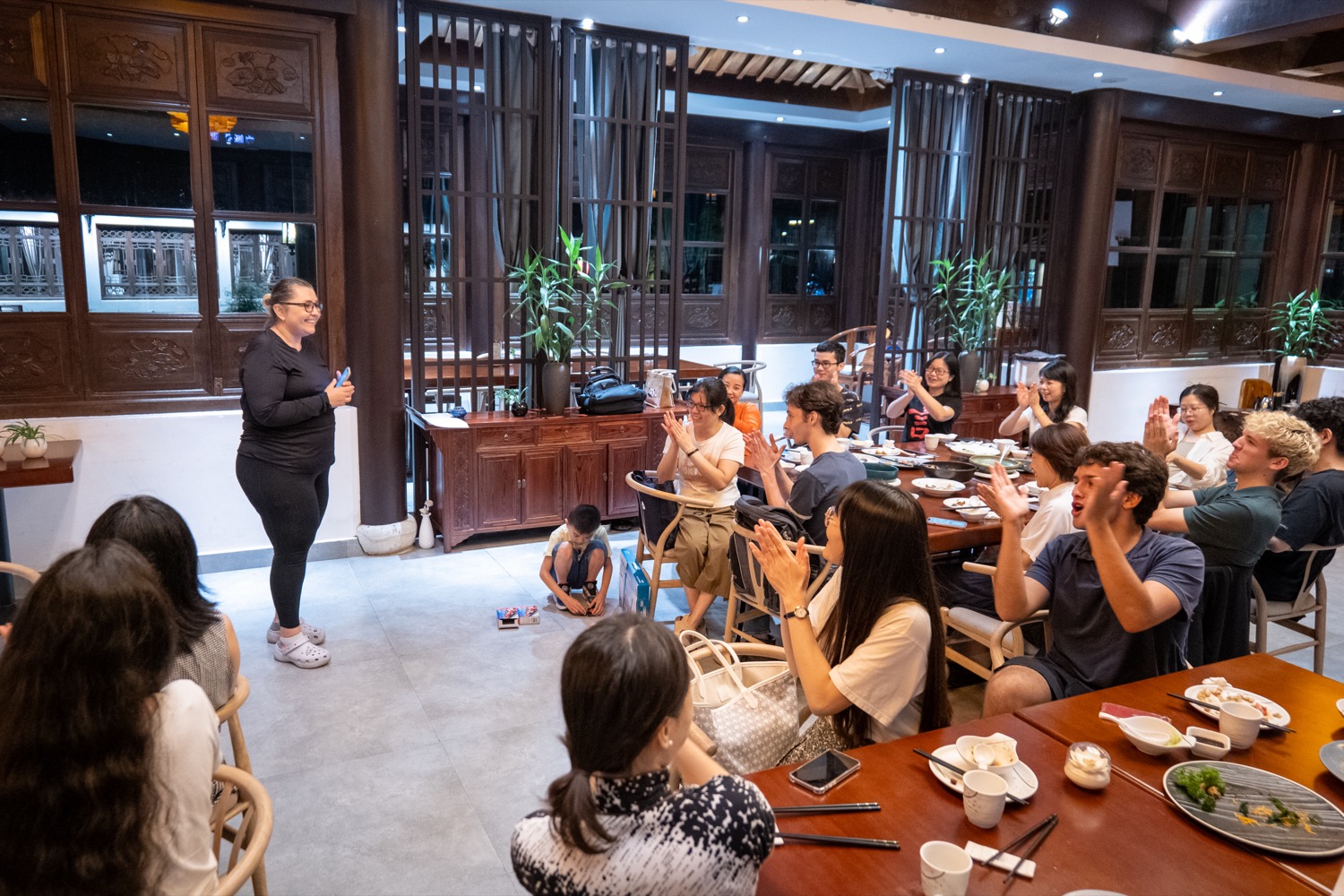
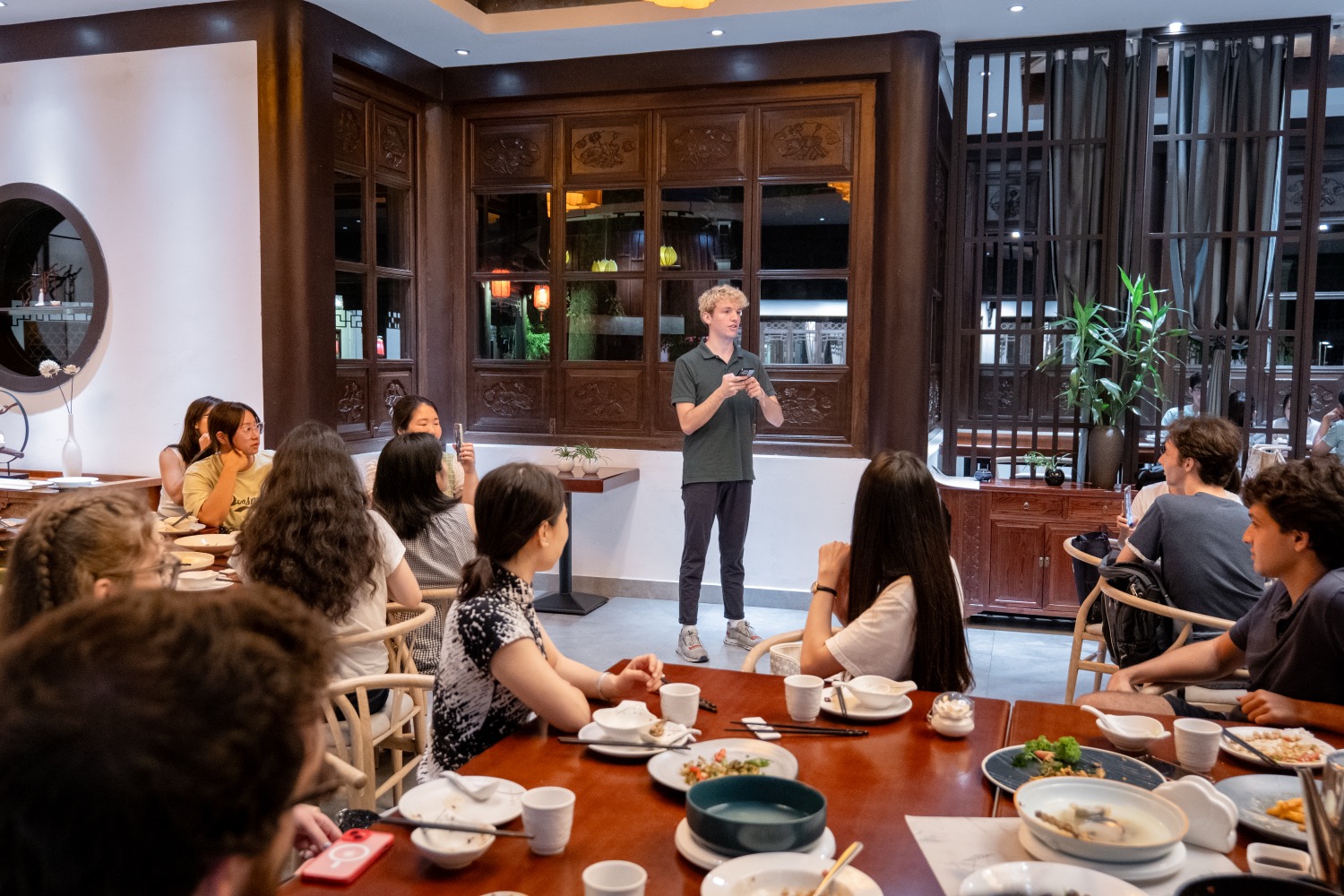
Farewell dinners come with the program, and a few words to the room, in Chinese if you can manage it, are a good way to thank the people at each table.
A fruit-topped cake gets its first cut while friends look on. Dumpling making is another CLI activity where everyone gathers around the food.
Between class sessions, students can study in the Center's study areas or reading room, and review goes faster with someone there to quiz you.
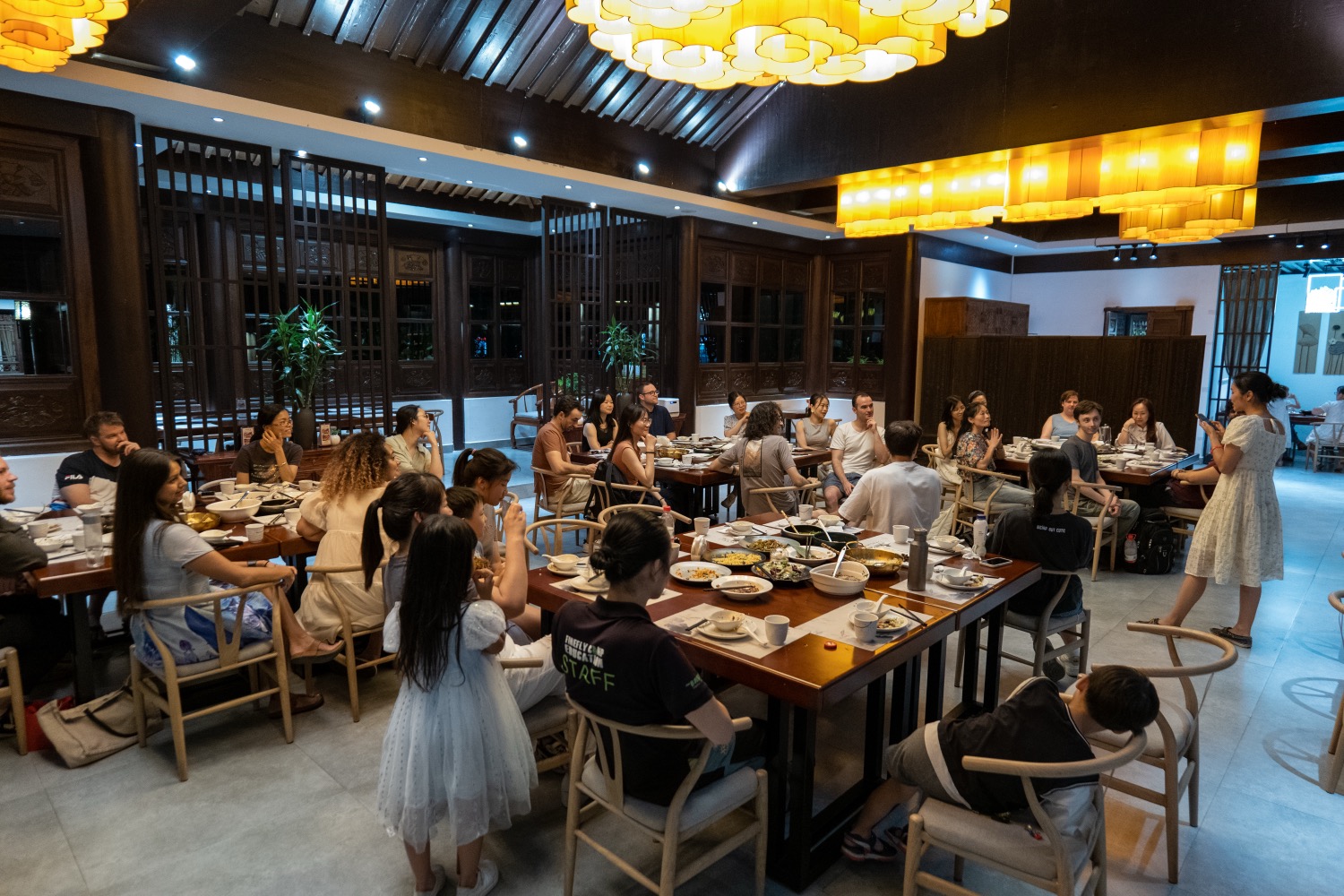
Cooking lessons with Chinese chefs are among CLI's activities, a good way to learn the names of the dishes served in a restaurant like this one.
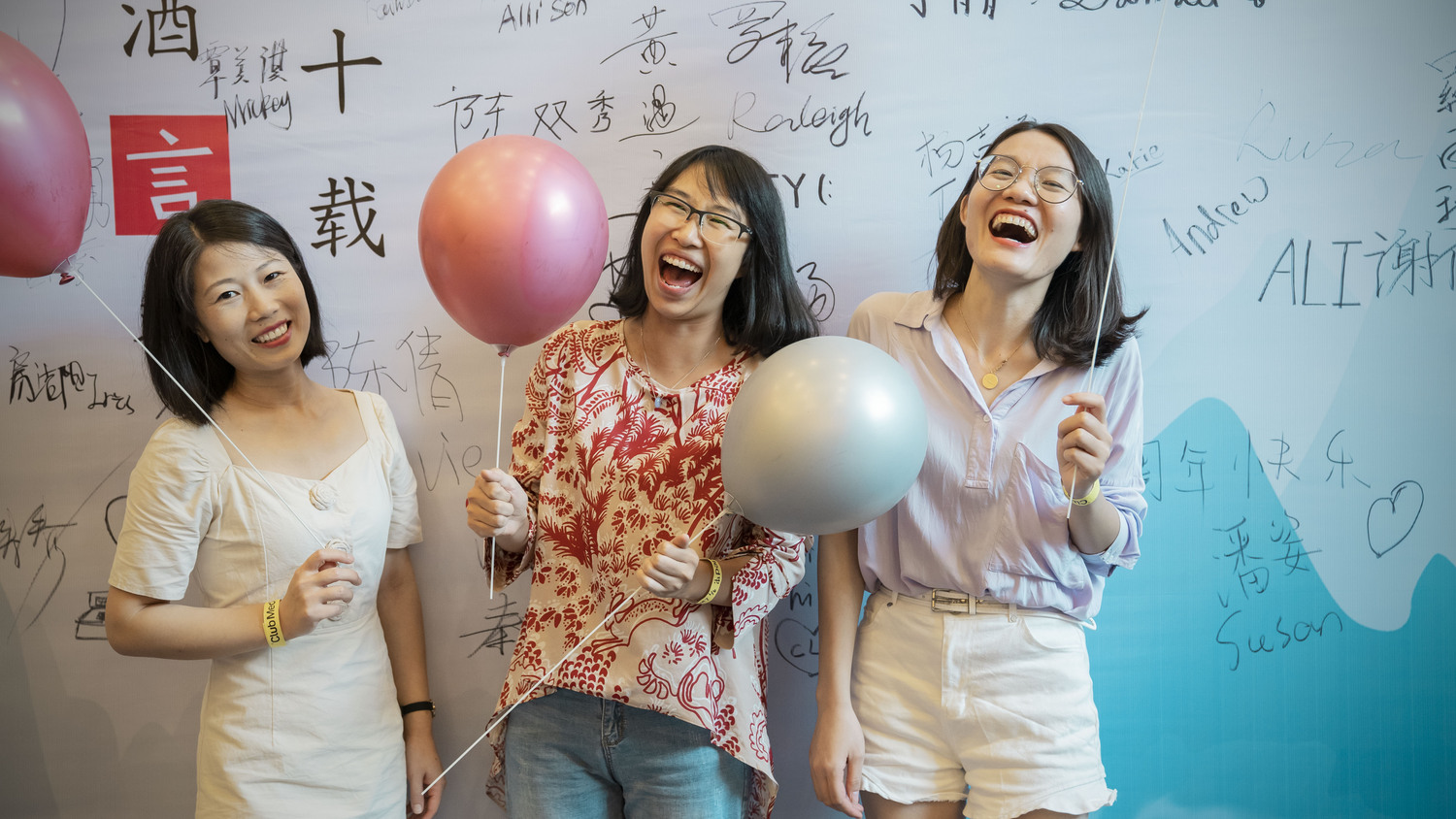
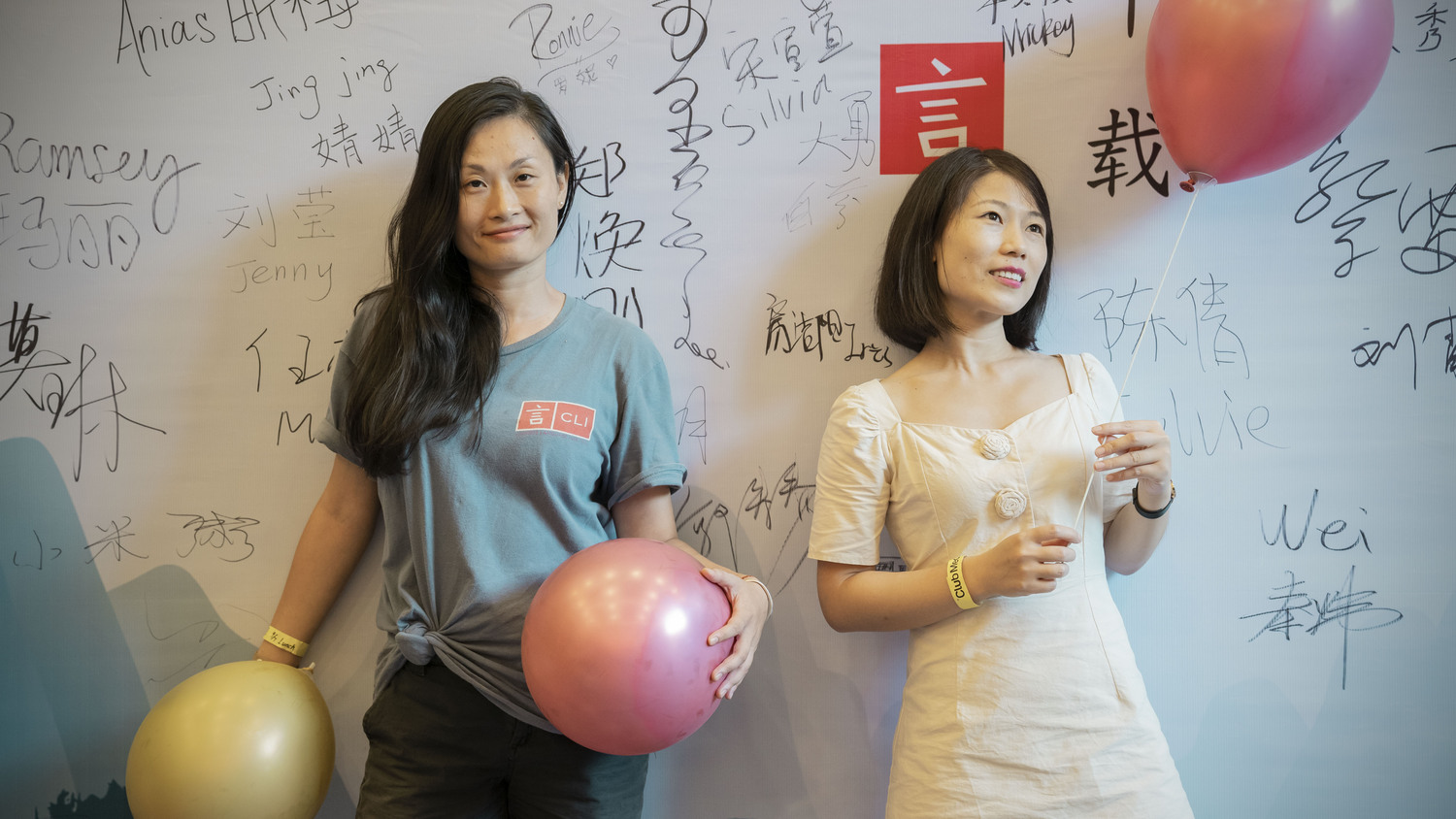
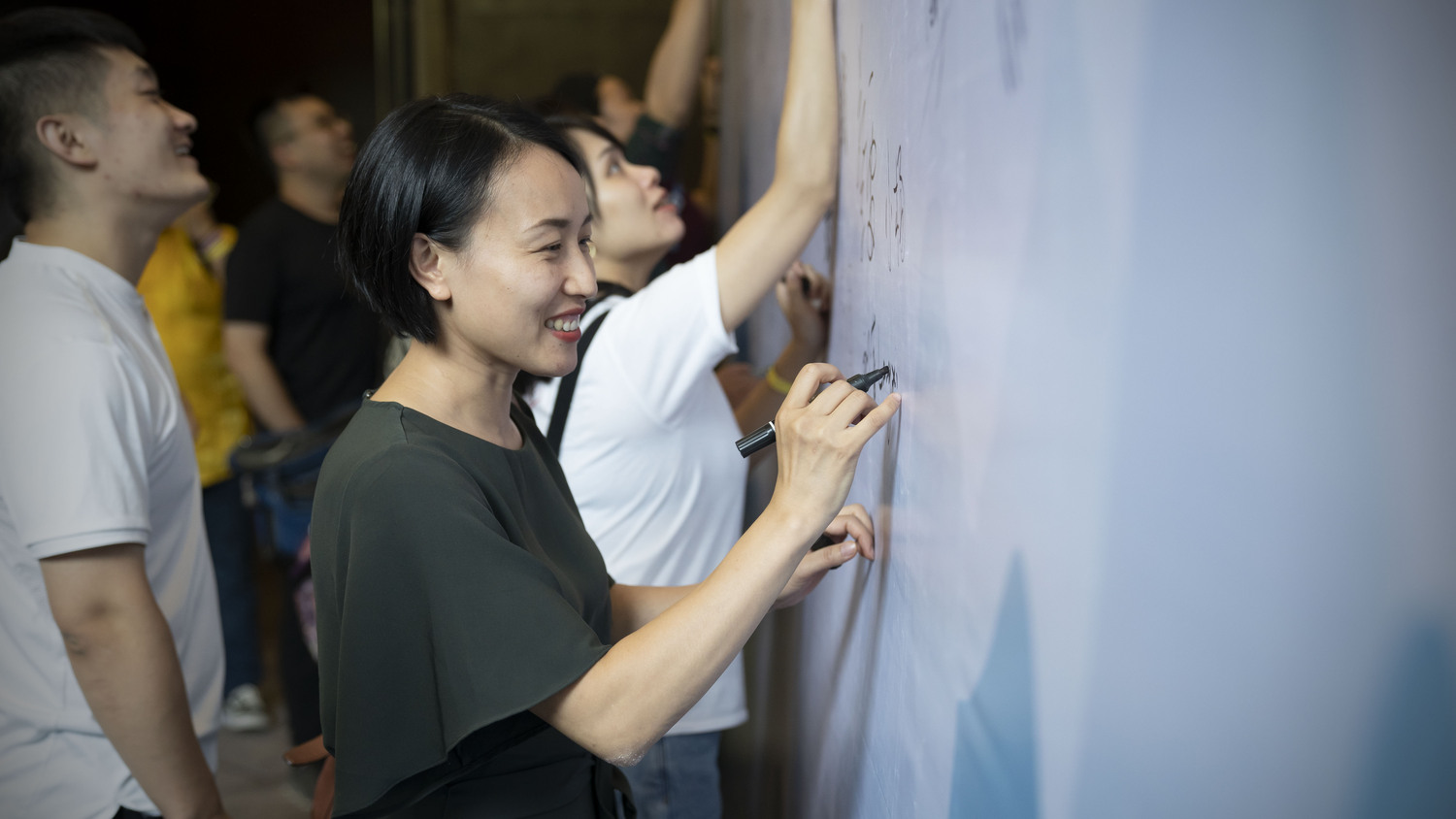
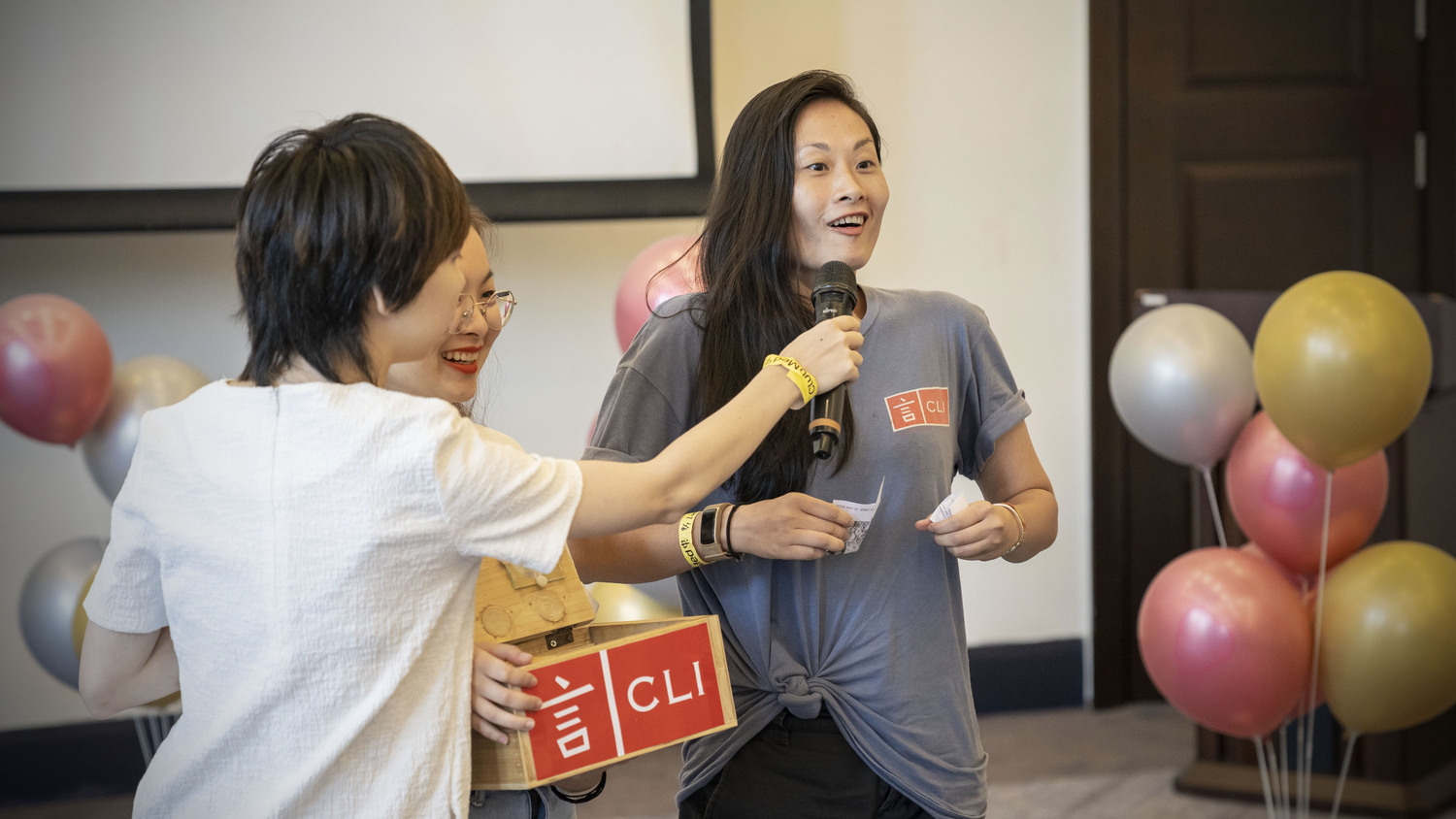
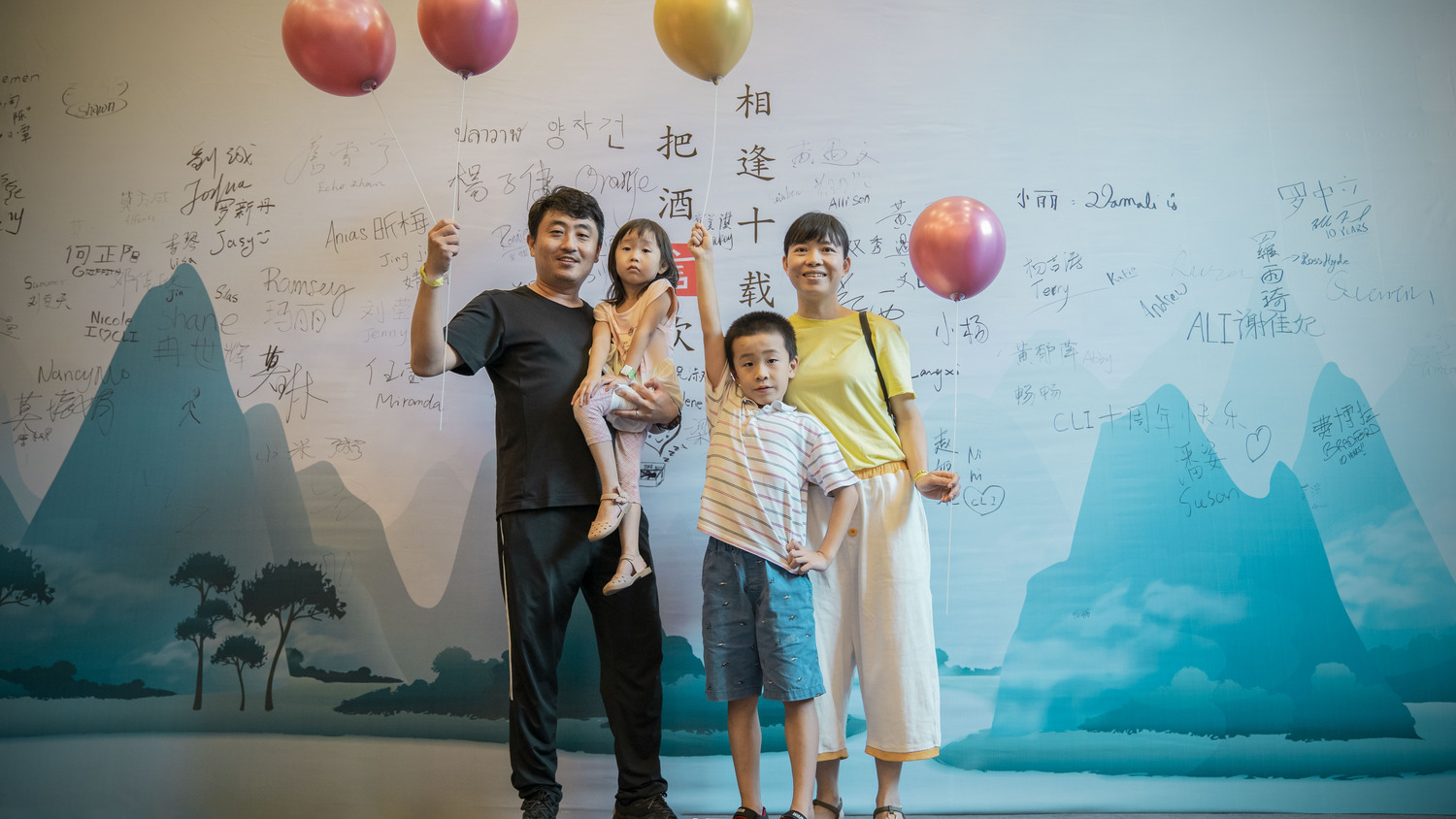
Balloons and a wall full of signatures mark a CLI celebration. Welcome and farewell dinners are included in tuition, so every stay starts and ends with one.
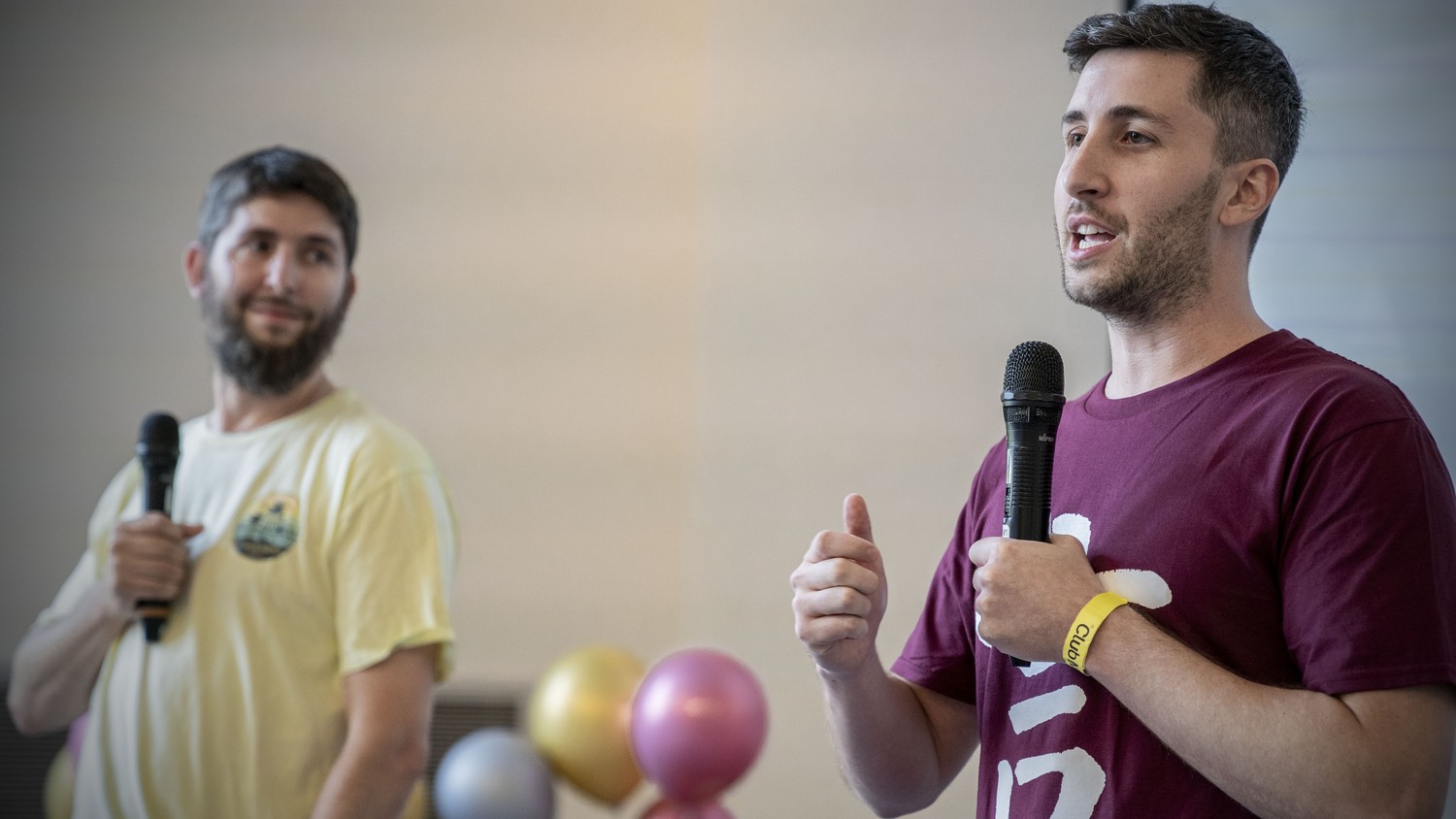
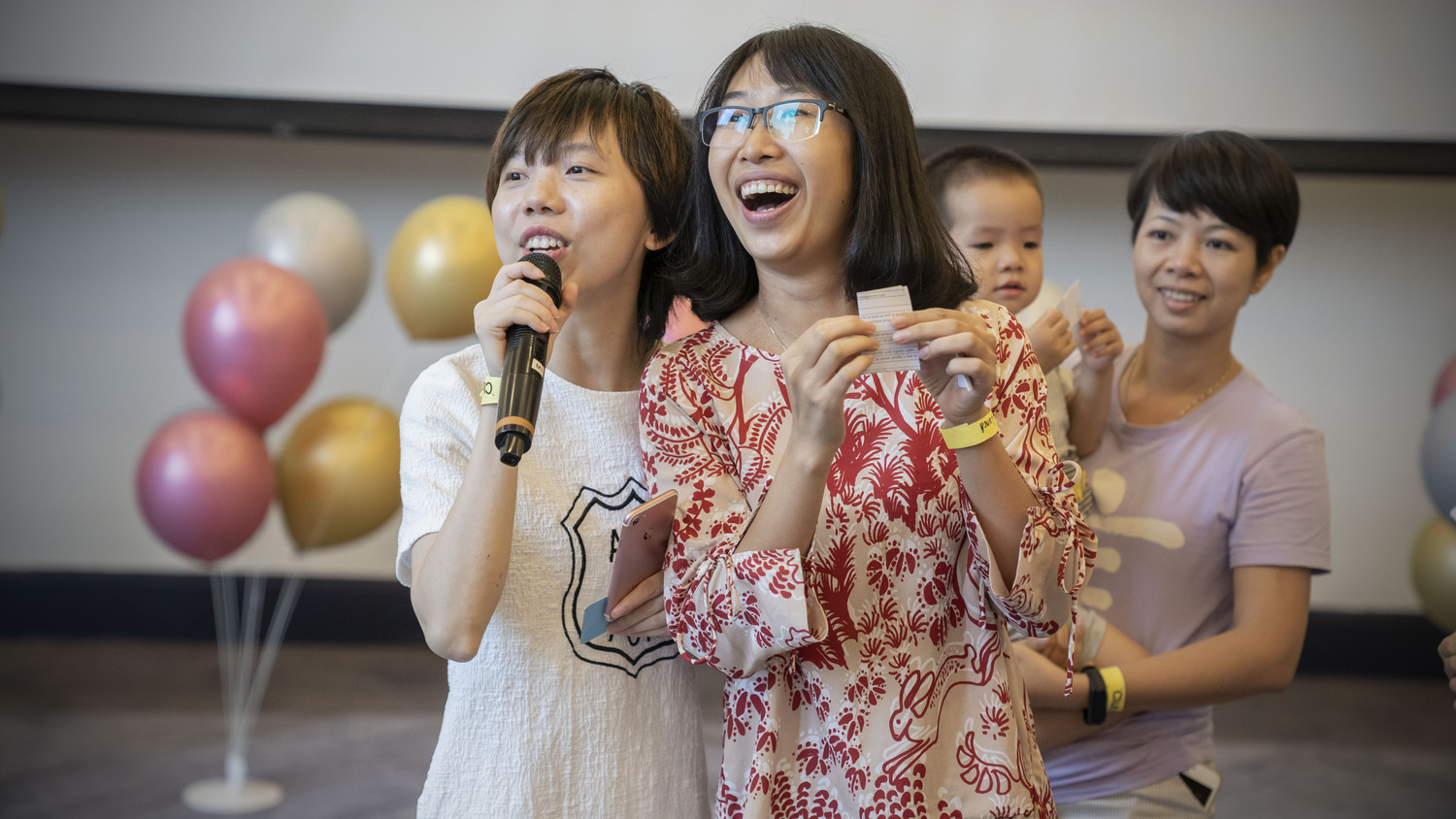
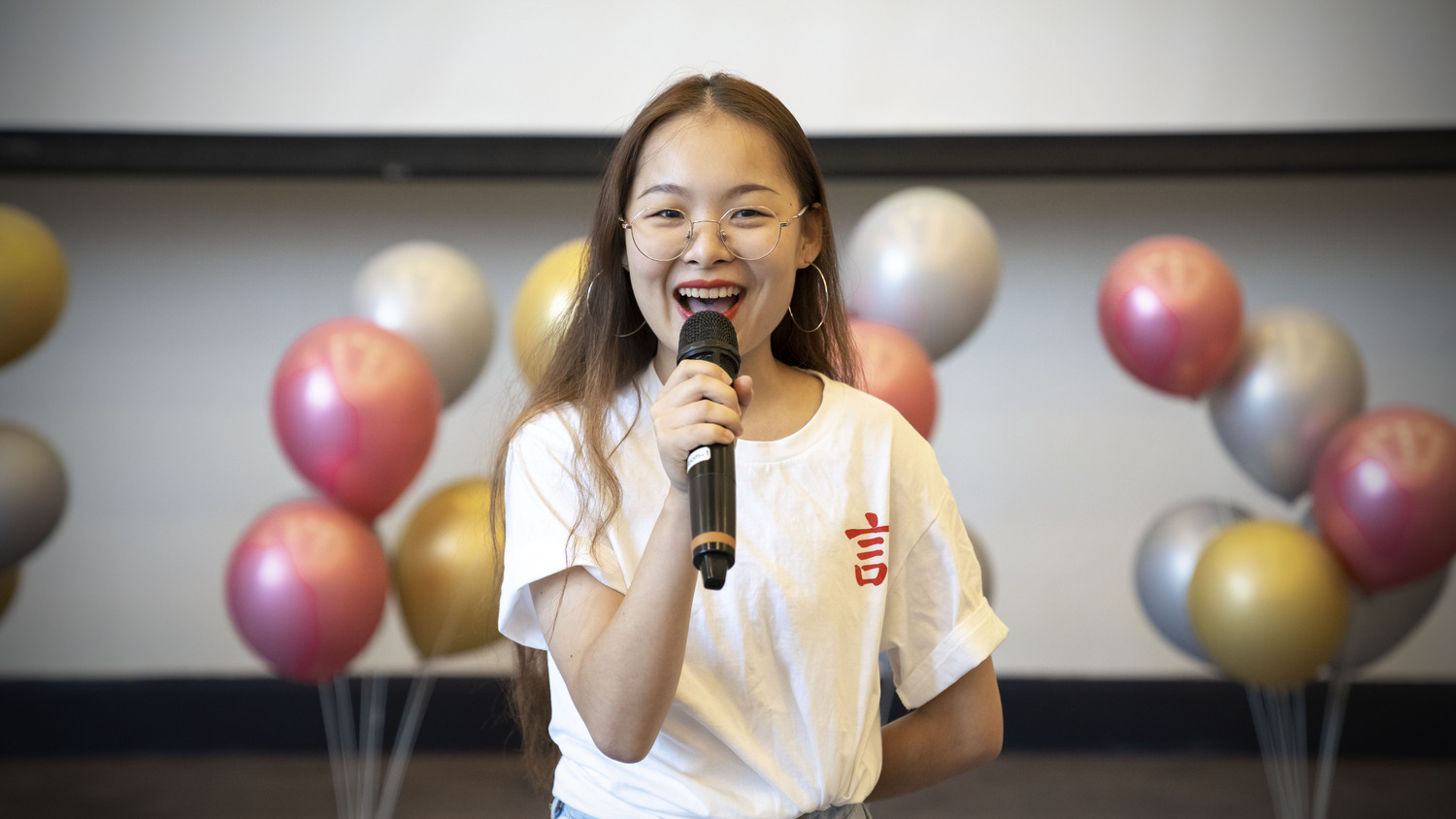
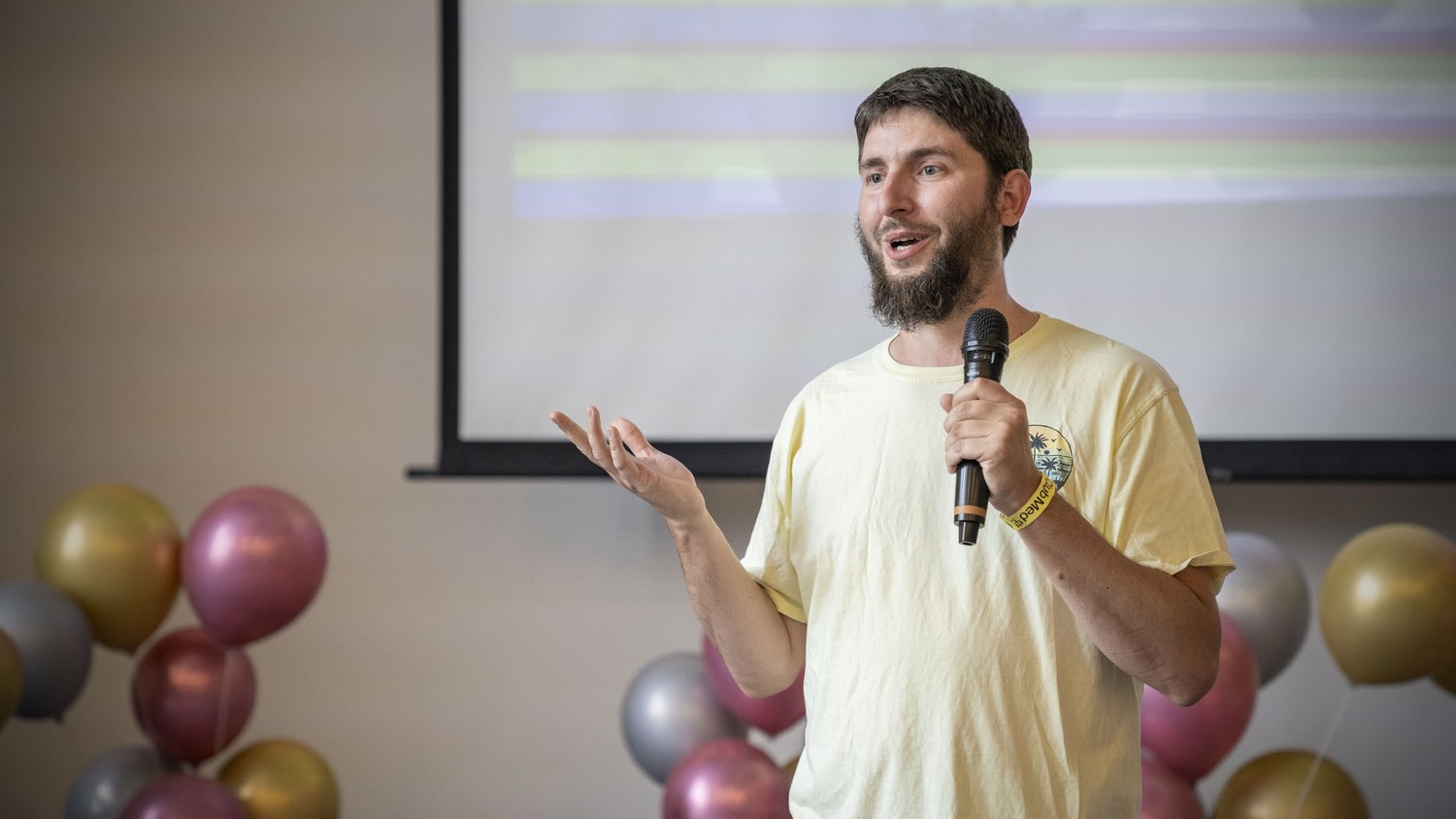
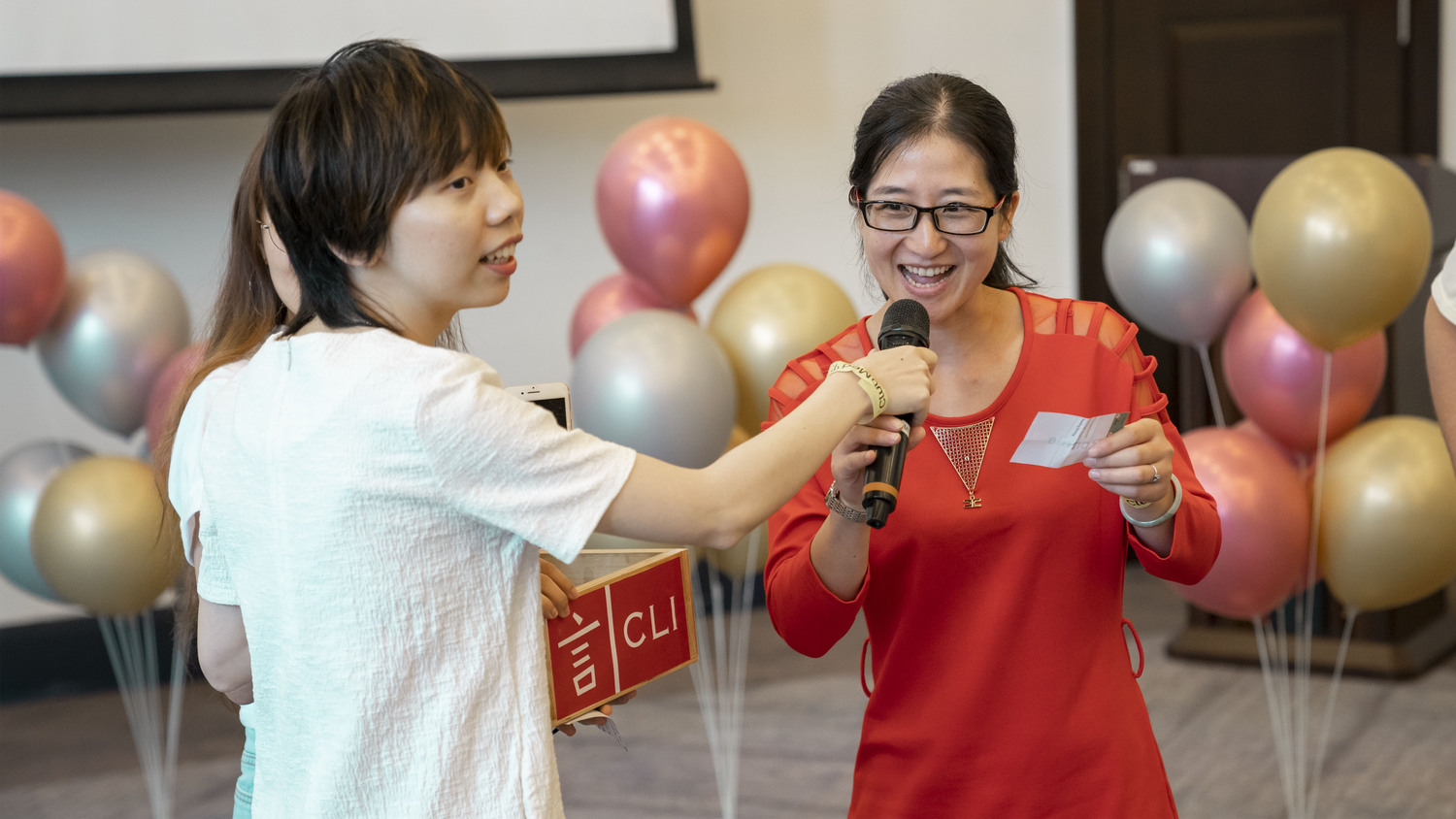
Evenings on the program are usually lighter, with dinner, review and informal practice, and once in a while a party with a microphone or two.
Weekends are for bigger outings, from Li River trips to hikes in Longsheng or Yangshuo, and teachers and pengyou often come along.
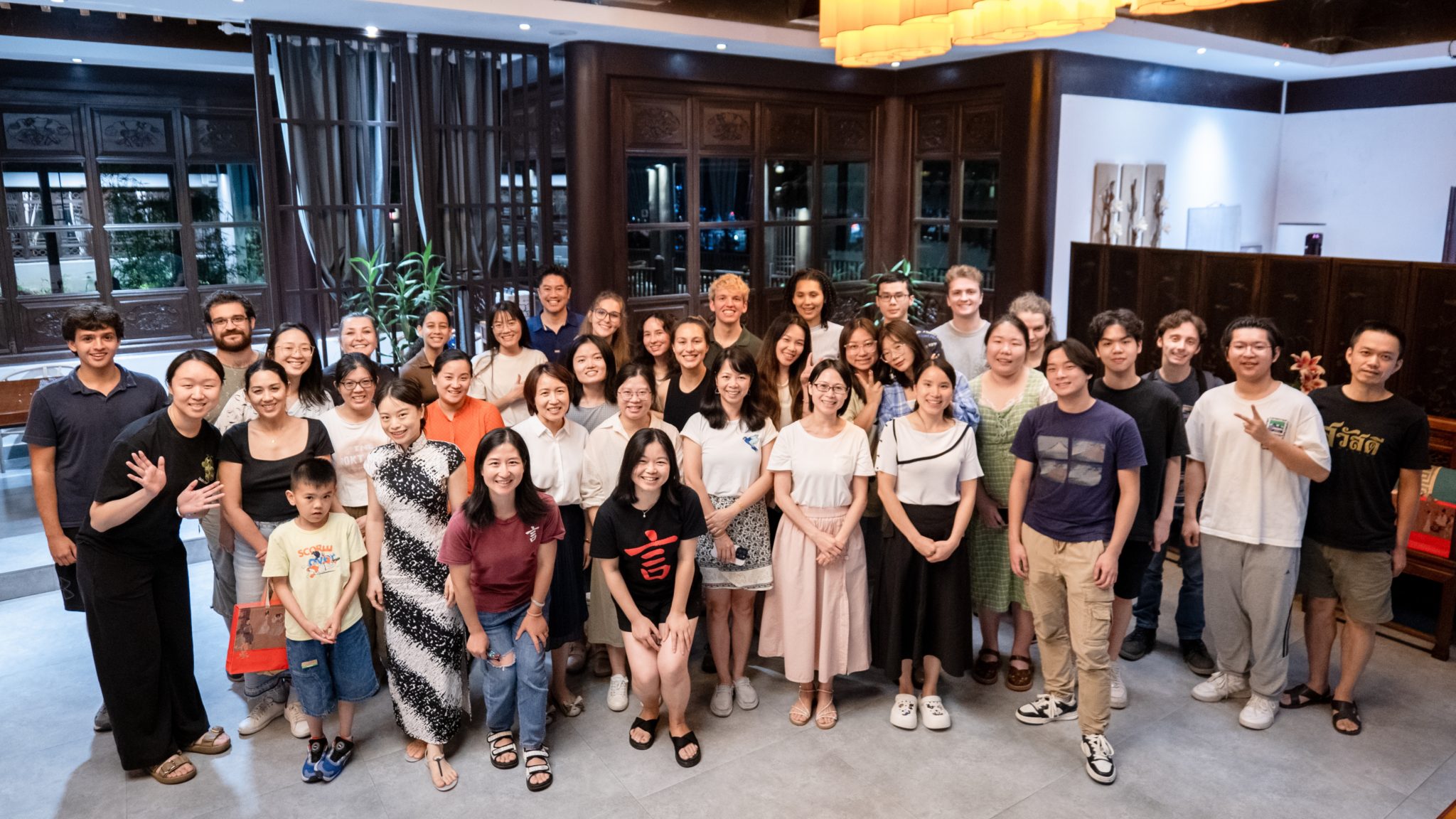
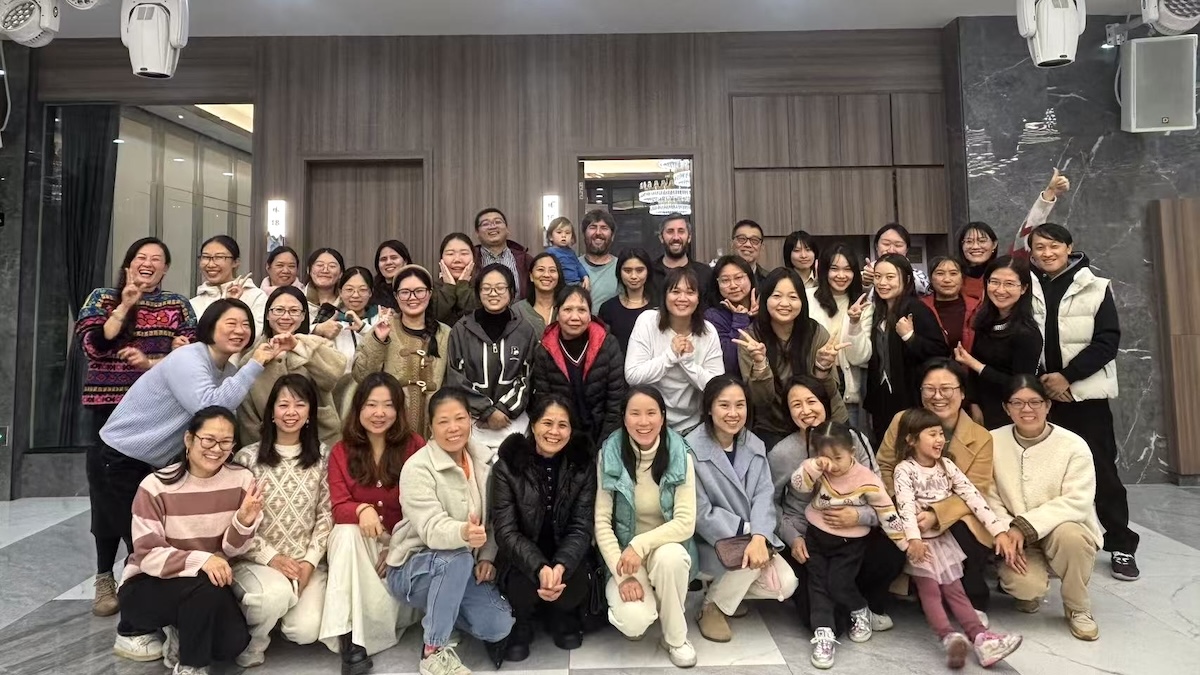
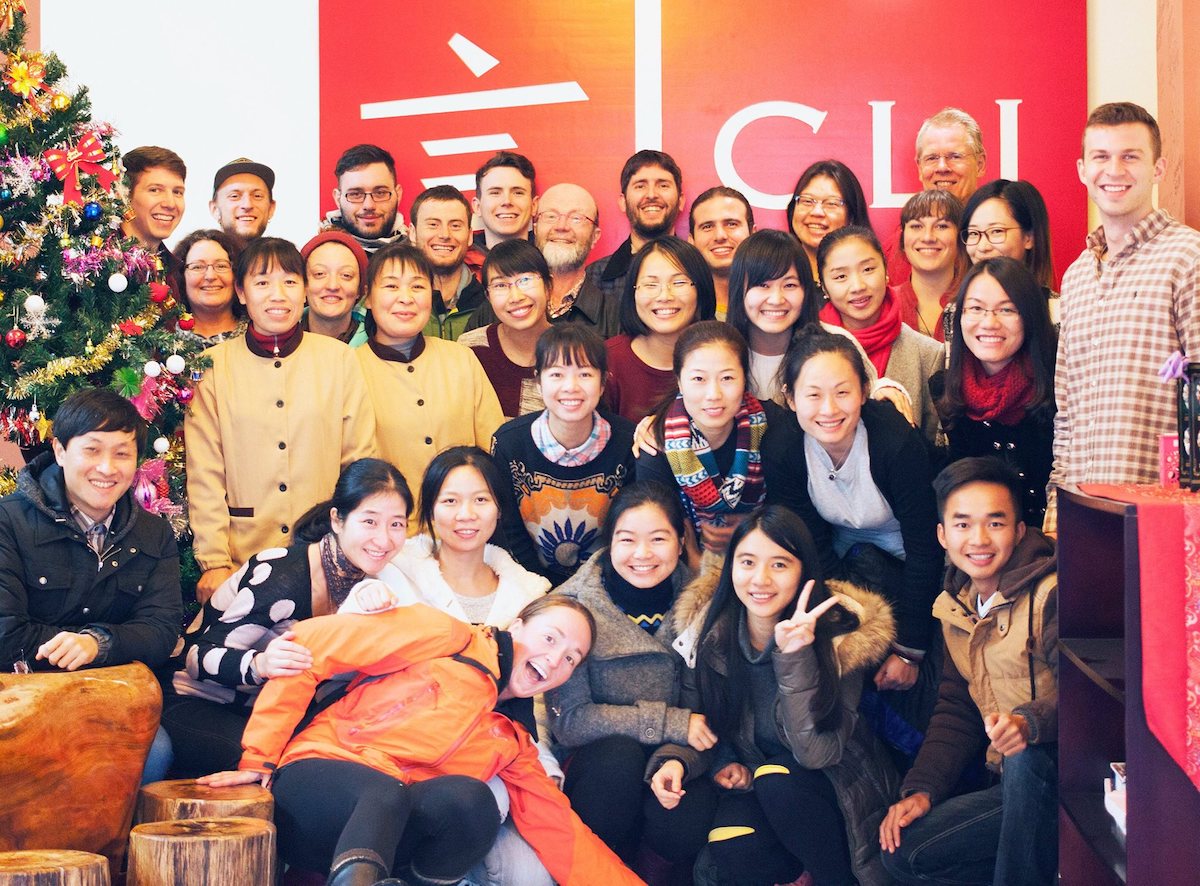
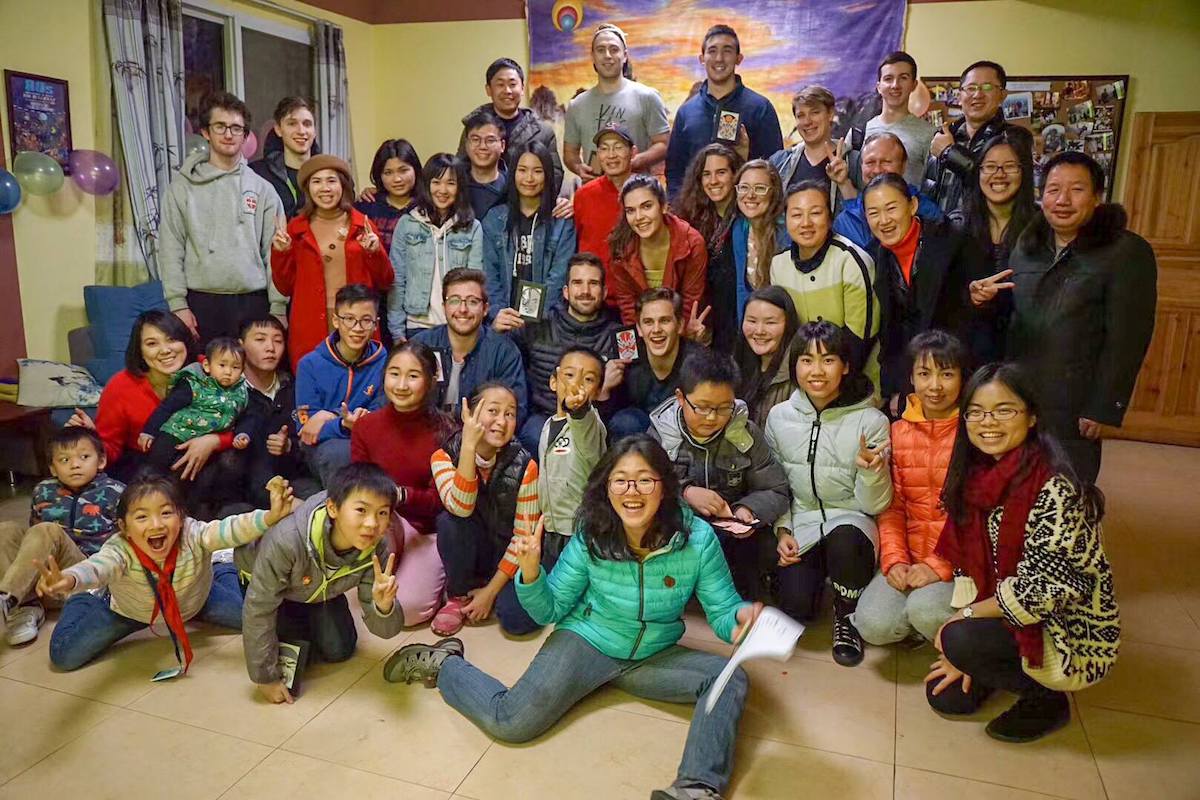
A big group fills a wood-paneled lobby for one photo, and the photographer's call is a phrase worth learning: 大家看这里 (dàjiā kàn zhèlǐ), everyone look here.
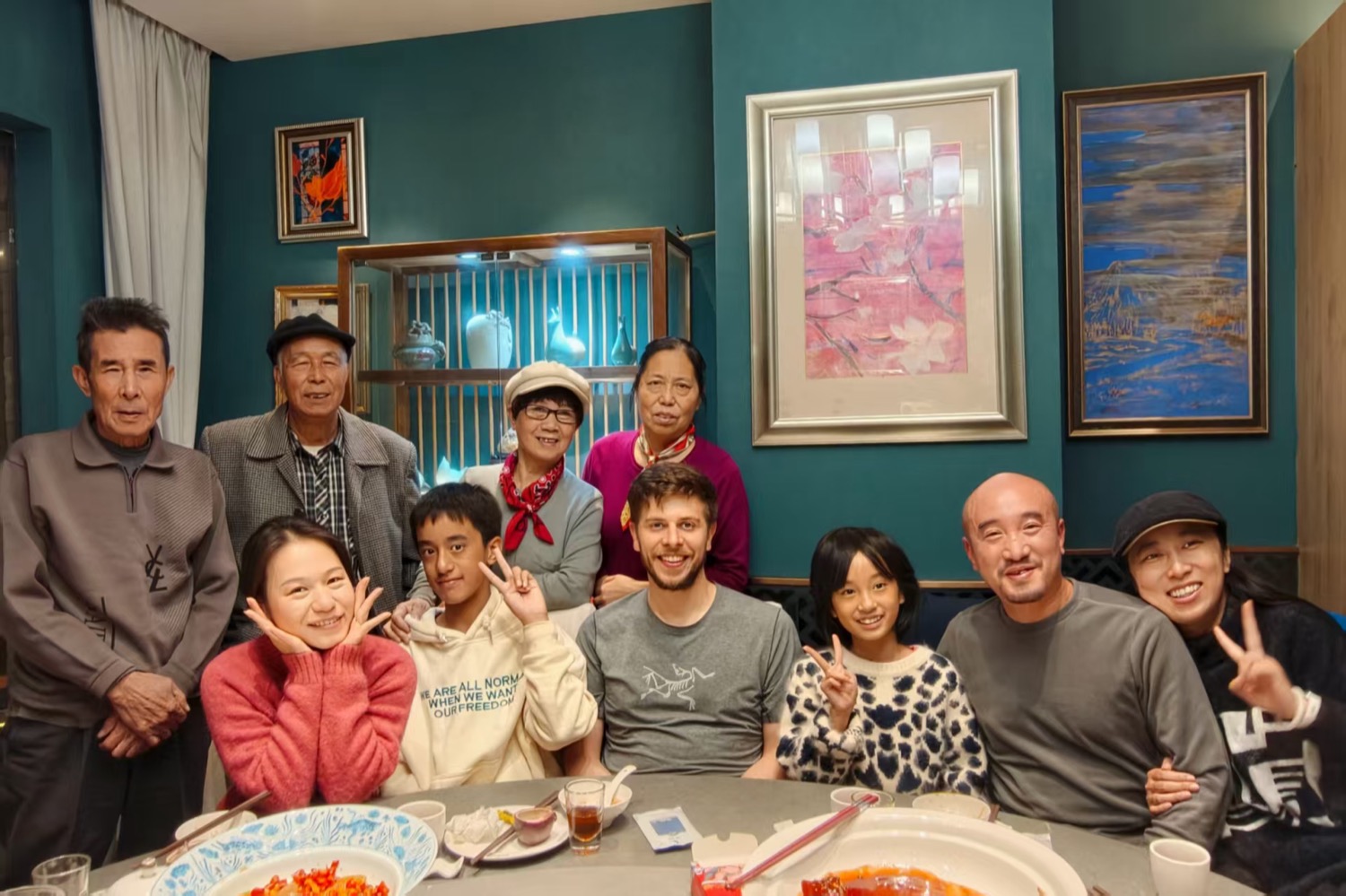
Families sometimes study at CLI together, and students range from high school students to retirees, so one round table can hold a wide range of ages.
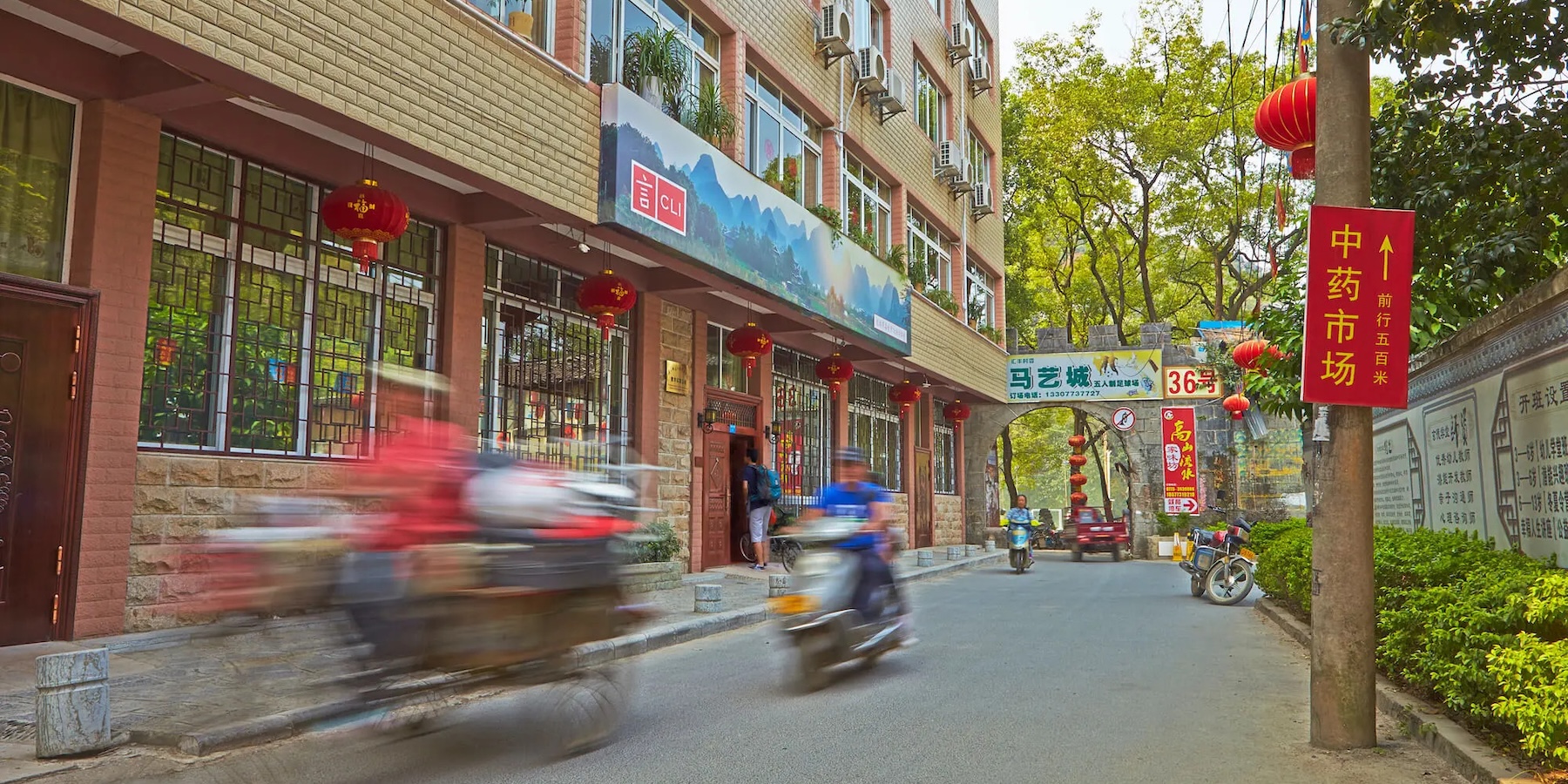
Scooters and shopfronts line a street like this one, and markets, cafés and noodle shops are all close to CLI.
With teachers and pengyou living alongside students, the CLI Center keeps at least a one-to-one ratio of native Chinese speakers to language learners.
The CLI Center has five floors, with classrooms on the first two and private rooms above, so friends often live and study in one building.
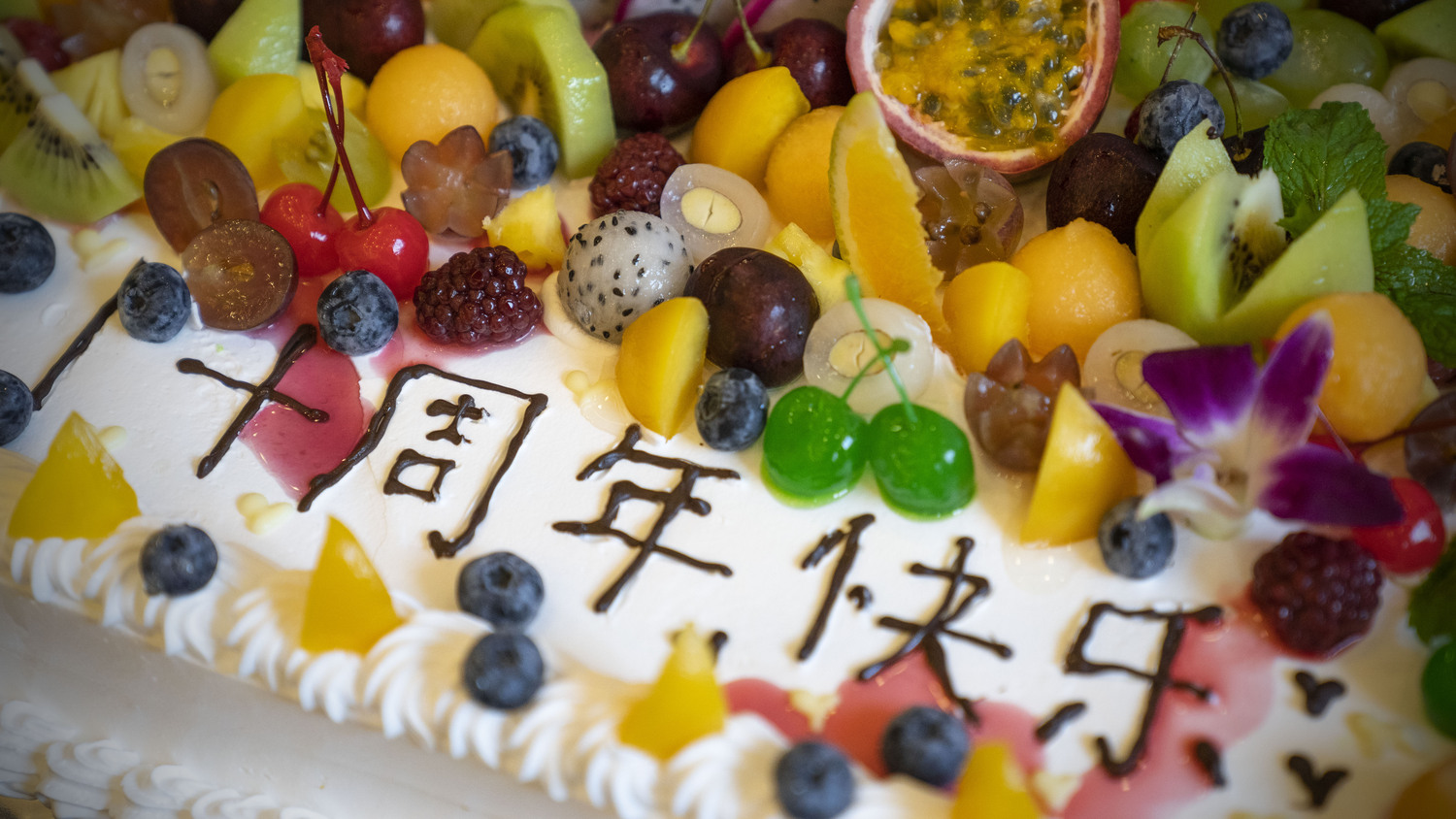
The wishes on this fruit-covered cake are piped in Chinese characters, and reading them aloud tests both tones and character recognition.
Guests at this CLI anniversary party signed a big wall, many in Chinese characters, where stroke-order practice with the reading and writing teacher pays off.
A crowd this size needs a bigger room than a classroom. The CLI Center has 18 private classrooms, each small enough for one student and one teacher.
Students can start any Monday and stay from one week to a year, so a party can mix people in their first week with people in their eighth month.
Listening comprehension and tones are the focus of the listening and speaking teacher, and both come in handy when a prize draw is announced in Chinese.
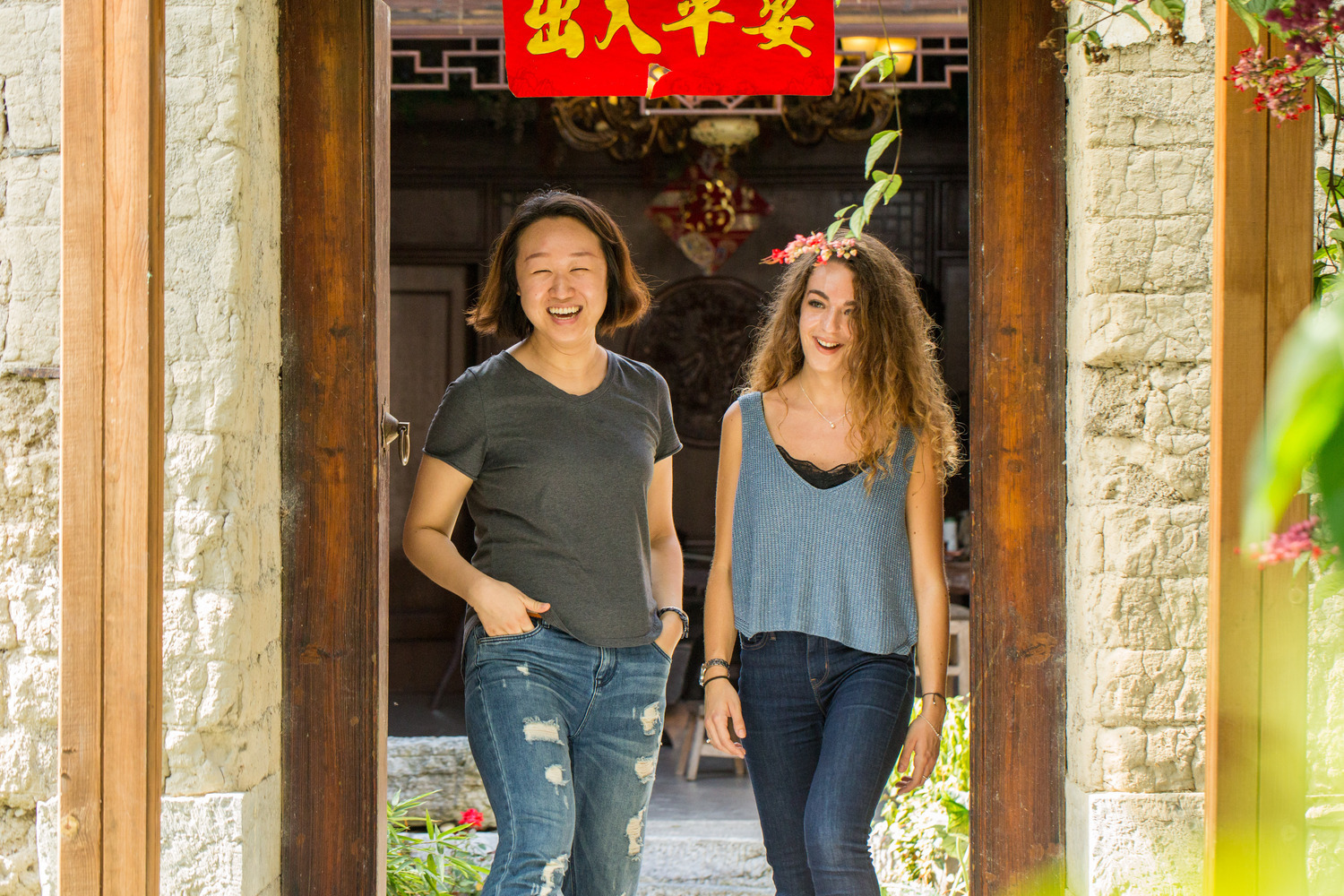
The red banner over this doorway reads 出入平安 (chūrù píng'ān), a wish for safe comings and goings, the kind of sign students learn to read in reading class.
CLI teaches every level, from complete beginners learning survival phrases to conversationally fluent speakers, and at a party they all share one room.
Airport or train station pickup is included, so new students meet someone from CLI as soon as they arrive in Guilin.
Spring Festival couplets, 春联 (chūnlián), frame this red door, and festival celebrations are part of CLI's activities through the year.
Volleyball and badminton are both on CLI's activity list, and a mixed team is a good place to learn how to call the score in Chinese.
Tea house visits are among CLI's activities, and a table of teacups is a good place for a long conversation in Chinese.
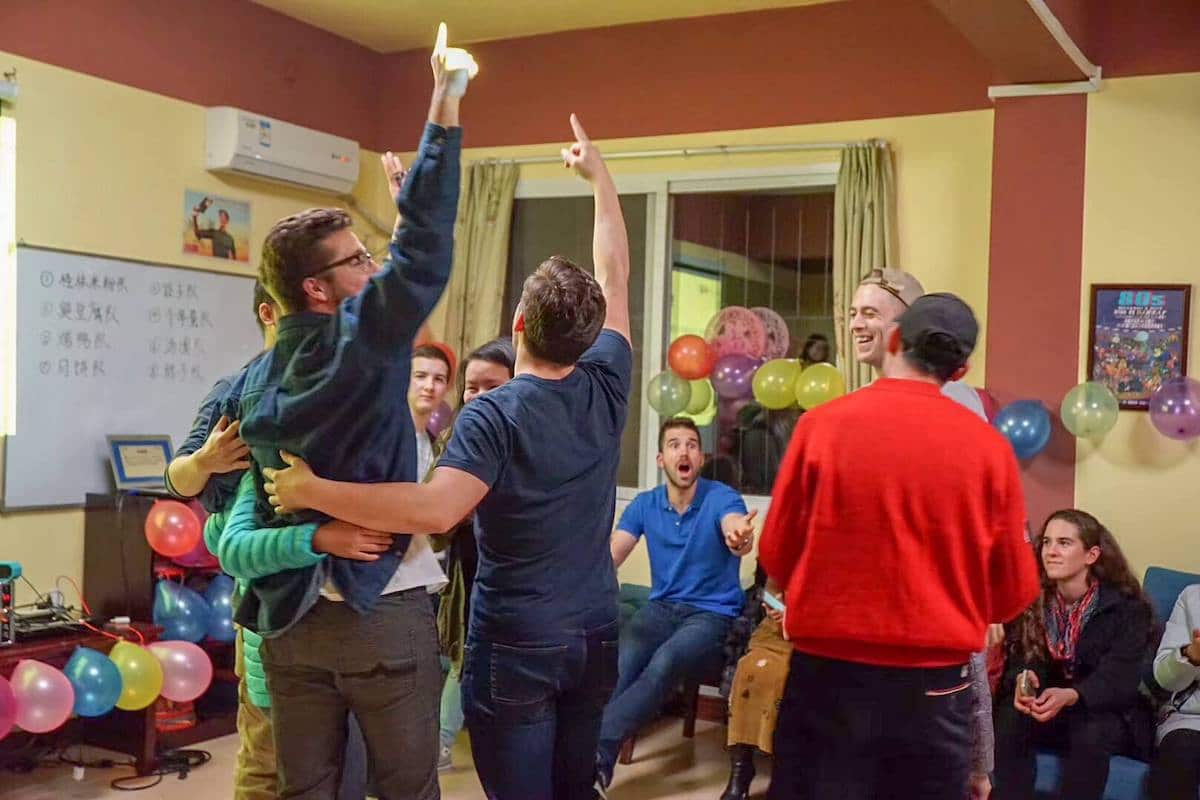
Someone points at the ceiling and the room cheers. Weekly activities run alongside the class day, and some of them get as loud as this.
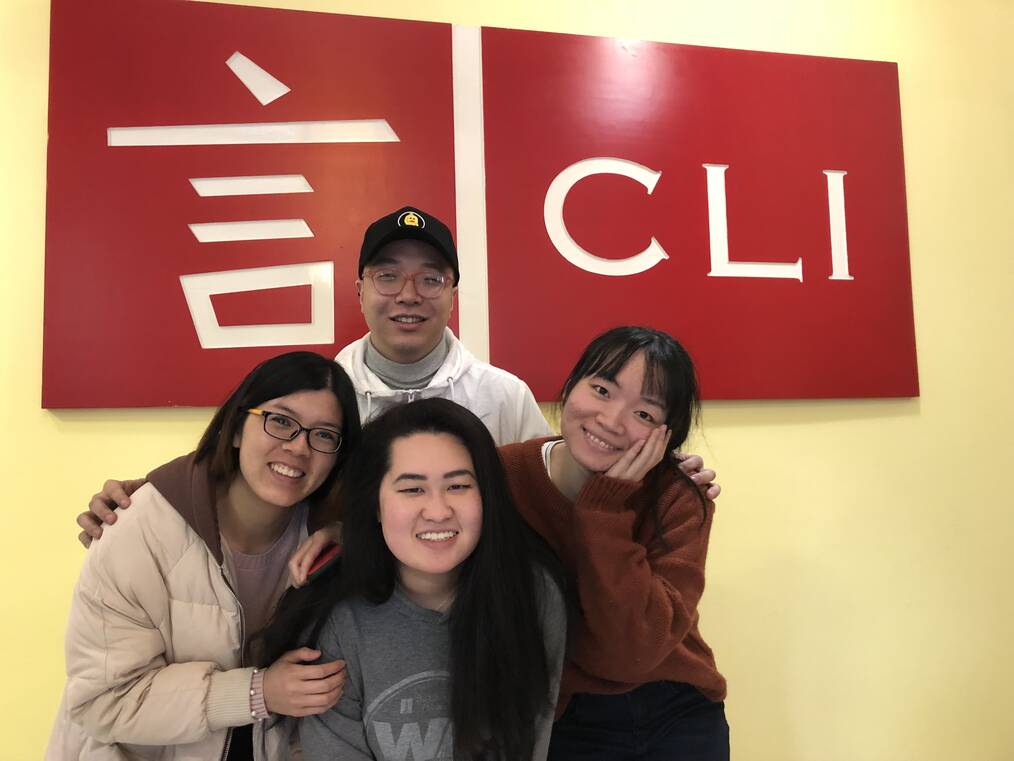
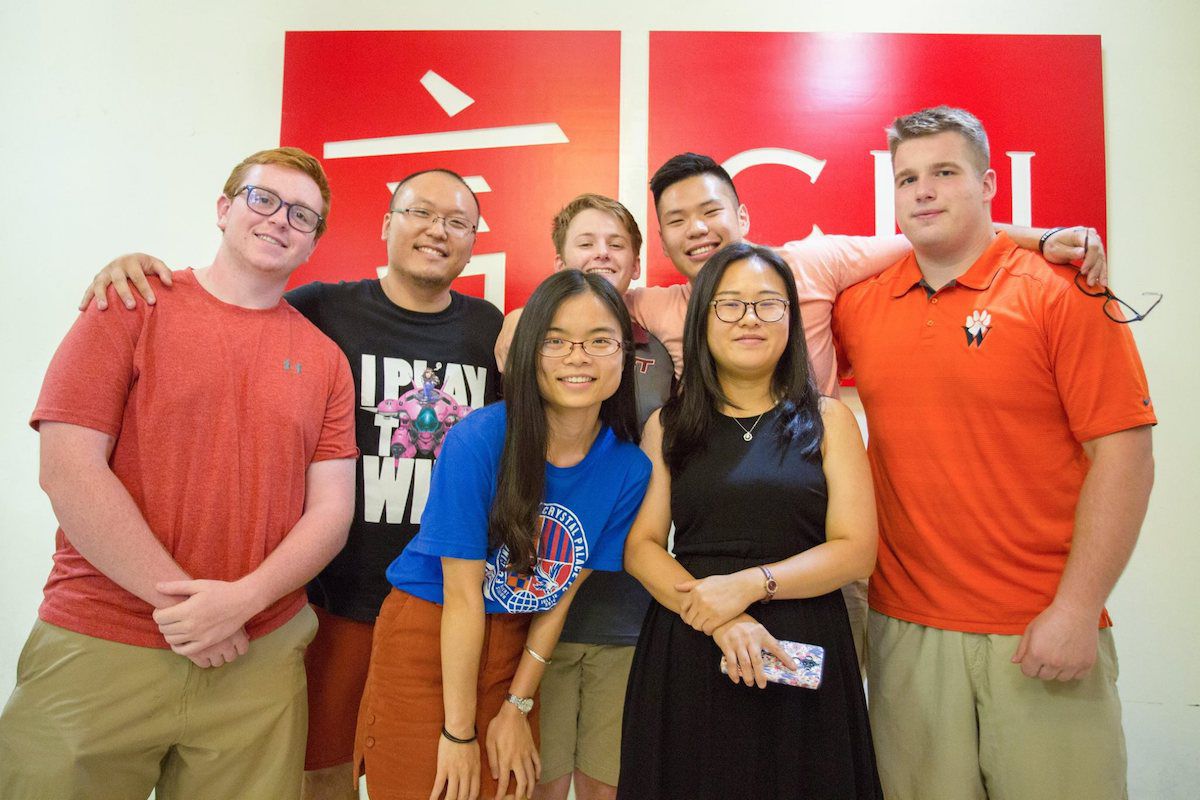
More than 5,000 students from over 400 institutions have studied at CLI since 2009, and the red CLI sign has turned up in a great many of their photos.
The CLI Center's recreation room has a ping pong table and a mahjong table, and downtime with friends there often slips into Chinese.
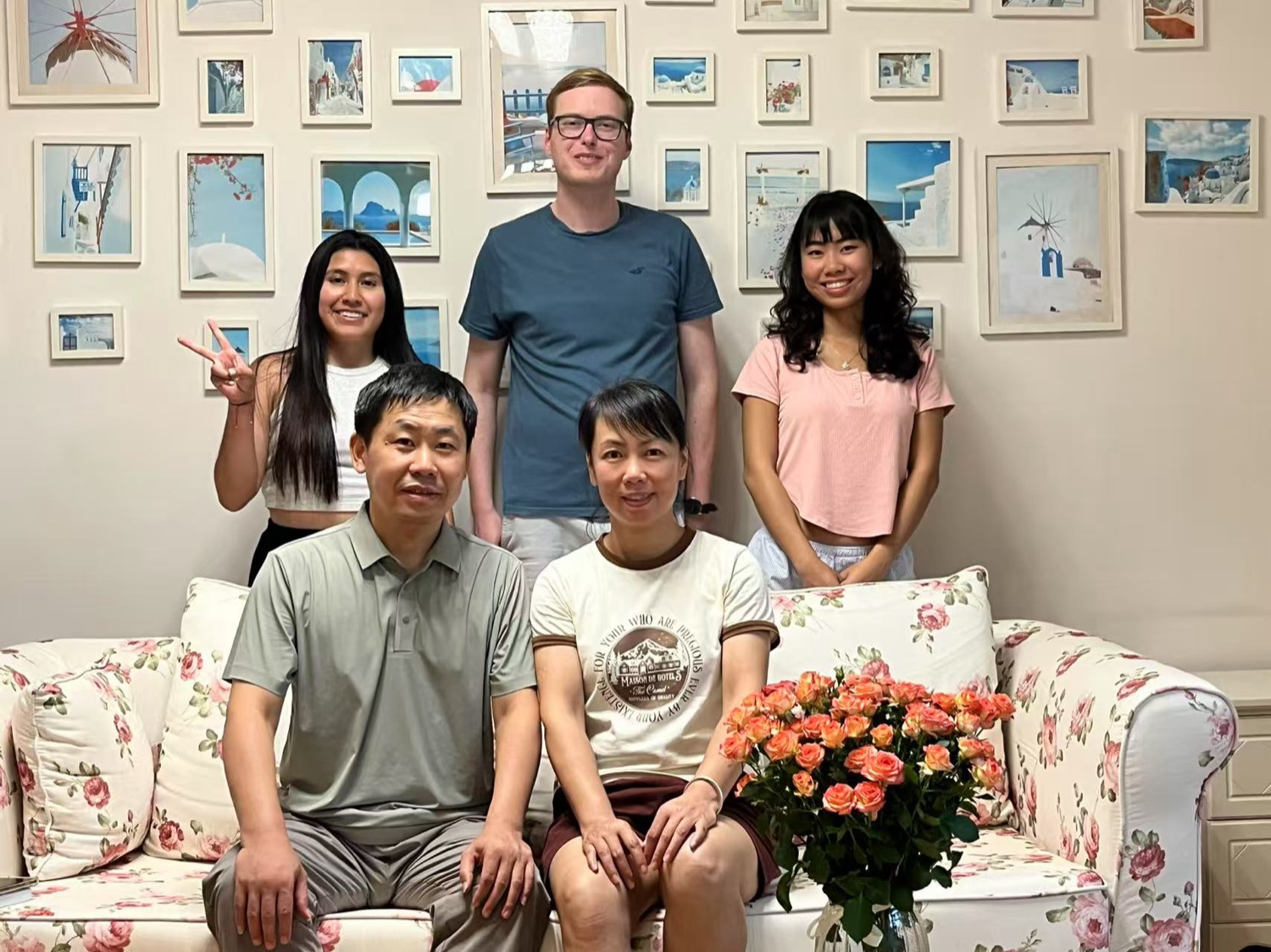
A homestay with a local Guilin family is one of the housing options, with home-cooked dinners and weekend outings that keep the Chinese going.
The week's activities go up on the board on the Center's second floor, and some, like this one, need only a table and a group of friends.
Rows of guests line up at the signing wall. The CLI Center, on a quiet road near Guangxi Normal University, has been CLI's home since 2012.
Orientation, usually on the first Monday, includes a welcome meal along with a tour of Guilin and an introduction to your teachers and schedule.
A red envelope comes out as a prize at this party, one more Chinese custom students pick up between festival celebrations and weekly activities.
Guilin winters are cool and damp but rarely drop below freezing, so days out with friends carry on through the colder months.
Ordering in Mandarin is one of the first skills students pick up, and a meal out with a friend is an easy place to practice it.
The free, optional Pengyou Program brings in students from CLI's local partner university, and they join activities as well as weekly language sessions.
One-on-one class means you do a lot of the talking every day, so by the time a party comes around, speaking Chinese in front of others feels easier.
A Christmas tree by the CLI sign and a crowd in winter coats. Students can start any Monday of the year, December included.
Lantern lights over a full dining hall. Homestay students typically eat dinner with their host family, so a big group dinner like this one makes a change.
Prizes come out at CLI parties, and so does plenty of Chinese, with at least one native speaker for every learner at the Center.
Several full-time CLI team members live at the Center year-round, so friendships with students carry on well after the school day ends.
Chinese meals are usually shared, and weekday lunch at the CLI Center is family style too, with at least one table where only Mandarin is spoken.
Students at CLI have come from more than 50 countries, and a signing wall at a party collects their names in many languages, Chinese among them.
Weekends are free for independent travel as well as group outings, and a garden like this one is an easy day out with friends.
Chinese games are one of the activities on the program, and a turn at the microphone during a party game makes for good speaking practice.
The Pengyou Program matches students with a student from CLI's local partner university for three hours of language support and a meal together each week.
Writing on an event wall in characters is a good test, and the two-week evaluations check writing along with reading, listening and speaking.
Guilin has lakes, parks and green space across the city, good places to spend a free afternoon talking with a friend in Chinese.
Welcome dinners are included in tuition, and they put new students at a table full of shared dishes with the people they will see every day.
The character 朋 (péng), from 朋友 (péngyǒu), friend, is two 月 (moon) characters side by side, a fitting picture of two friends posing as one.
Guangxi food leans fresh, sour and lightly spicy, and a big shared dinner is the quickest way to try a dozen dishes of it at once.
Guilin is a full city but compact and walkable, so friends can get from the Center to a park or a café with very little planning.
Guilin's name means osmanthus forest, and its gardens and ponds make a calm spot for an afternoon off with a friend from class.
Diners clap for the speaker at a group meal. About once a month, CLI also runs an overnight trip outside the city, to places such as Yangshuo or Xingping.
Housing is included in tuition, with a choice of a private room at the CLI Center, a homestay with a local Guilin family or, for six months or more, an apartment.
Four friends crowd into a carved wooden pavilion strung with red lanterns, and lantern making is one of CLI's activities for anyone who wants to make their own.
Three smiles at a restaurant table. Each two-hour class session is with one teacher, and meals like this are where students talk with everyone else.
There are no fixed semesters at CLI, so a dinner or celebration brings together whoever happens to be studying in Guilin at the time.
Twenty hours of one-on-one Chinese a week gives students plenty to say, and a chat outdoors with friends is where they try it out.
A slice of cake at a CLI party. The everyday shared meal is more modest: an optional home-cooked lunch at the CLI Center, Monday to Friday.
Parties like this one sit alongside the weekly activities and monthly excursions on CLI's calendar.
The CLI team is available around the clock, from the airport pickup on arrival day to evenings out like this one.
Some of CLI's activities happen outdoors, from tai chi to hikes up Guilin's karst mountains, and a sunny day under the trees suits them.
Balloons fill the floor for a CLI celebration. Calmer days bring calligraphy and tea ceremonies, two more of CLI's activities.
Photos in this gallery span many years. The CLI Center, home to CLI since 2012, was renovated in 2026, and its rooms look different now.
Carved wooden chairs and lattice windows make a classic Chinese setting. Tea ceremonies are one of CLI's activities, and a room like this suits one.
Writing a message on the party wall. In class, CLI's teachers work from course syllabi with the structure of a university course, and adjust the pace to each student.
Applause and a phone held high to catch the moment. Festival celebrations are part of life at CLI, and rooms like this one fill up for them.
A red lazy Susan keeps the dishes moving, and their names make good material for the comprehensive review teacher, whose class covers vocabulary and grammar.
Language exchange fills some afternoons once the day's two class sessions are done, and a chat outdoors with a local friend counts.
Listening comprehension is part of the listening and speaking teacher's focus, and following a talk in a full room is where that work shows.
Two speakers take the microphones beside a hanging lantern. Speaking is one of the skills in the short evaluation every two weeks, and a party is a gentler test.
A group gathers under the trees. Students can get an official transcript from Guangxi Normal University, CLI's university affiliate, for their coursework.
Rows of folding chairs fill for a talk. Guangxi Normal University, CLI's university affiliate, is about seven minutes' walk from the CLI Center.
The Sun and Moon Pagodas light up at night on one of Guilin's city lakes, and the city's lakes and parks are good places for an evening out with friends.
Peace signs all around in a wood-paneled room. Friendships at CLI cross ages, with students ranging from high school students to retirees.
The 言 (yán) on the CLI wall means speech or words, a fitting sign for 20 hours a week of one-on-one Chinese.
Red envelopes, 红包 (hóngbāo), come out for festival celebrations at CLI, one of the times the whole community crowds in for a photo.
Guilin's summers are hot and humid, so shady gardens and ponds like this one are a good place to cool off with friends.
A long table at a restaurant after dark. The last of CLI's four daily class sessions ends at 6:10 PM, which leaves the evening for dinner with friends.
Teams named after foods, 饺子队 (jiǎozi duì, team dumpling) among them, are on the whiteboard for a party game. Chinese games are one of CLI's activities.
CLI runs four class sessions a day and each student takes two, so the rest of the day is open for review and meals with friends.
The 中文 (Zhōngwén) on this T-shirt means Chinese, and ordering at a local shop in Mandarin is a skill students pick up early.
Afternoons after class go to homework, errands, markets and parks, and a walk with friends down a long covered corridor fits right in.
A short evaluation every two weeks keeps the coursework on track, and gatherings like this one give everyone an evening off from review.
Friends squeeze in close at a CLI event. Small group classes of three to five students can sometimes be arranged, when levels and enrollment allow.
Small talk at an event is a chance to try out the week's vocabulary, which the three teachers pass between reading, speaking and review classes.
Prizes and a microphone come out at a CLI party, and tai chi and dumpling making are on the same activity calendar.
Several full-time team members live at the CLI Center year-round, part of what keeps the community close between parties like this one.
Vegetarian, halal and other dietary needs can be accommodated on the Immersion Program, so everyone can join the dinner table.
Classes are one-on-one, so evenings and weekends are when classmates really get to know each other.
A guitar comes out in front of the CLI sign while friends film. Movie nights and other relaxed activities fill some evenings, and now and then someone brings a song.
Yangshuo, Longsheng and the Li River are about an hour from Guilin, close enough for a weekend outing with friends.
好好学习,天天向上 (hǎohǎo xuéxí, tiāntiān xiàngshàng) means study hard and improve every day, which is roughly the plan with 20 hours of one-on-one class a week.
Volleyball is one of CLI's activities, and the court is also where friends catch up in Chinese between games.
At a party with a prize box and a microphone, speaking up in Chinese gets rewarded, and Chinese games are part of CLI's activities.
A speech at dinner is a chance to hear more formal Chinese, a step up from the survival phrases beginners often start with.
Children and adults crowd into one photo at a CLI party, a mix that fits a school where some families come to study together.
A selfie on a crowded street. With little English and no large expat bubble in Guilin, Mandarin becomes part of any day out with friends.
The anniversary party backdrop is a mural of mountains like the limestone peaks that surround Guilin and appear in Chinese paintings and poetry.
A talk over dinner, with every table listening. Students come from more than 400 institutions, so a dinner like this one mixes schools as well as countries.
Five friends at a window table. Students who live at the CLI Center have a private room with a full private bathroom, cleaned weekly.
Pengyou in CLI's Pengyou Program join activities as well as sharing a weekly meal, so a game on the court often has a local friend in it.
A selfie at the mountain mural, and a saying to go with it: 桂林山水甲天下 (Guìlín shānshuǐ jiǎ tiānxià), Guilin's mountains and rivers are the best under heaven.
In Guilin the day often starts with 桂林米粉 (Guìlín mǐfěn), rice noodles from a neighborhood shop, and it can end at a busy table like this one.
Badminton is one of CLI's activities, and a bench in the sports hall is a good place to catch your breath and talk.
Welcome and farewell dinners are included in tuition and fill long tables like these, with the whole group passing the same dishes.
Wir freuen uns darauf, Sie in Guilin willkommen zu heißen.
Begin your Immersion Program on almost any Monday of the year. Plan to arrive the weekend before your first class, and we’ll pick you up at the airport or train station.