HSK 1 | Obst kaufen

买水果Buying Fruit

Eine HSK-1-Geschichte mit 155 Schriftzeichen und Audio in weiblicher und männlicher Stimme. Vom CLI-Team.

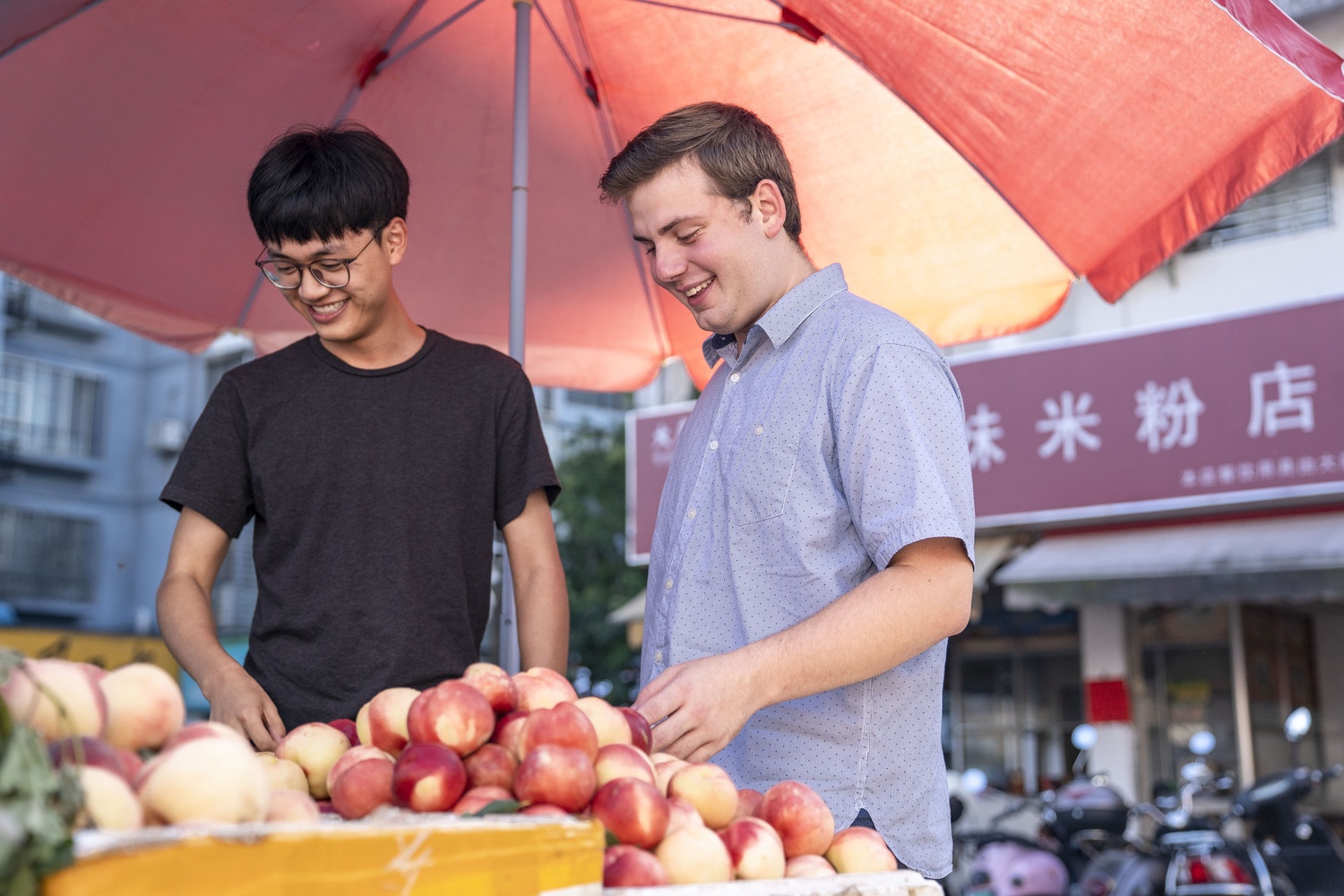
Two young men smile as they pick peaches from a pile at a street fruit stand

Aktivieren Sie JavaScript, um die Geschichte zu hören, Pinyin einzublenden und per Antippen die Bedeutung von Wörtern zu sehen.

我很喜欢吃水果。我天天都吃一个苹果。今天下午,我去我家外边的水果店买水果。

I really like eating fruit. I eat an apple every day. This afternoon, I went to the fruit shop just outside my home to buy some.

店里有很多水果,有苹果,也有香蕉。我问:“苹果多少钱一斤?”卖水果的叔叔说:“八块一斤。”“香蕉呢?”“很便宜,五块。”我说:“我要两斤苹果,一斤香蕉。”

The shop had lots of fruit: there were apples, and there were bananas too. I asked, "How much are the apples per jin?" The man who sells the fruit said, "Eight yuan a jin." "What about the bananas?" "They're cheap. Five yuan." I said, "I'd like two jin of apples and one jin of bananas."

他说:“一共二十一块。”我给了他三十块钱,他找了我九块。

He said, "That's twenty-one yuan in all." I gave him thirty yuan, and he gave me nine yuan in change.

他还给了我一个小苹果:“这个不要钱!”我说:“谢谢叔叔!”我回到家,吃了那个小苹果,真好吃!明天,我还想去那个水果店!

Then he gave me one more little apple: "This one is free!" I said, "Thank you, sir!" When I got home, I ate that little apple. It was really good! Tomorrow I want to go to that fruit shop again.

生词 Neue Wörter

Diese Wörter sind in der Geschichte unterstrichen. Tippen Sie auf die Schriftzeichen, um sie zu hören.

名词Nomen

水果shuǐguǒfruit
苹果píngguǒapple
香蕉xiāngjiāobanana
钱qiánGeld
叔叔shūshuuncle (polite word for an older man)

量词Zählwörter

斤jīnjin (half a kilo)
块kuàiYuan (chinesische Währung)

动词Verben

买mǎito buy
卖màito sell
找zhǎoto give change

形容词Adjektive

便宜piányibillig, günstig

副词Adverbs

一共yígòngin all, altogether

短语Wendungen

多少duōshaohow much, how many (多少钱: how much money)

语法点 Grammatik

1. 多少钱 (duōshao qián)how much (money)?

To ask a price, say the thing and then 多少钱. In a market, people often add the unit at the end: 一斤 (per jin), 一个 (each).

Thing + 多少钱 (+ 一 + Measure word)?

苹果多少钱一斤?
Píngguǒ duōshao qián yì jīn?
How much are the apples per jin?
这个多少钱?
Zhège duōshao qián?
How much is this one?
这本书多少钱?
Zhè běn shū duōshao qián?
Wie viel kostet dieses Buch?

The answer often drops 钱, too: 八块一斤 (eight yuan a jin). A 斤 (jīn) is half a kilo, a little more than a pound.

2. …呢?(… ne?)what about ...? and ...?

After talking about one thing, put 呢 after another thing to ask the same question about it. It saves you from saying the whole question again.

Noun + 呢?

香蕉呢?
Xiāngjiāo ne?
What about the bananas?
我很好,你呢?
Wǒ hěn hǎo, nǐ ne?
I'm fine. And you?
我喝茶,你呢?
Wǒ hē chá, nǐ ne?
I'm having tea. How about you?
3. 两 (liǎng) and 二 (èr)two

Both words mean "two." Use 两 before a measure word, when you are counting things. Use 二 when you count out loud, in 第二 (second), and in the tens and ones of a number, like 十二 (12) and 二十一 (21).

两 + Measure word + Noun

我要两斤苹果。
Wǒ yào liǎng jīn píngguǒ.
I'd like two jin of apples.
我有两个妹妹。
Wǒ yǒu liǎng ge mèimei.
I have two younger sisters.
一共二十二块。
Yígòng èrshí'èr kuài.
That's twenty-two yuan in all.

测试 Testen Sie Ihr Verständnis

5 Fragen zur Geschichte. Wählen Sie eine Antwort, um zu sehen, ob sie richtig ist.

1苹果多少钱一斤?

2“我”买了几斤苹果?

3香蕉贵吗?

4叔叔找了“我”多少钱?

5叔叔还给了“我”什么?

更多故事 Weitere Geschichten

Schreiben Sie uns auf WeChat

QR-Code für das Chinese Language Institute auf WeChat

Tippen Sie in WeChat auf Ihrem Handy auf +, dann auf Scannen, und richten Sie es auf diesen Code.

Machen Sie einen Screenshot von diesem Code. Tippen Sie in WeChat auf +, dann auf Scannen, und wählen Sie ihn aus Ihrem Album.

Halten Sie den Code gedrückt und wählen Sie die Option, ihn zu scannen.

Tippen Sie dann auf Folgen und senden Sie uns eine Nachricht.

Wir antworten von Montag bis Freitag, 8:30 Uhr bis 18:00 Uhr Pekinger Zeit.