
HSK 3 | Platztanz

广场舞Square Dancing

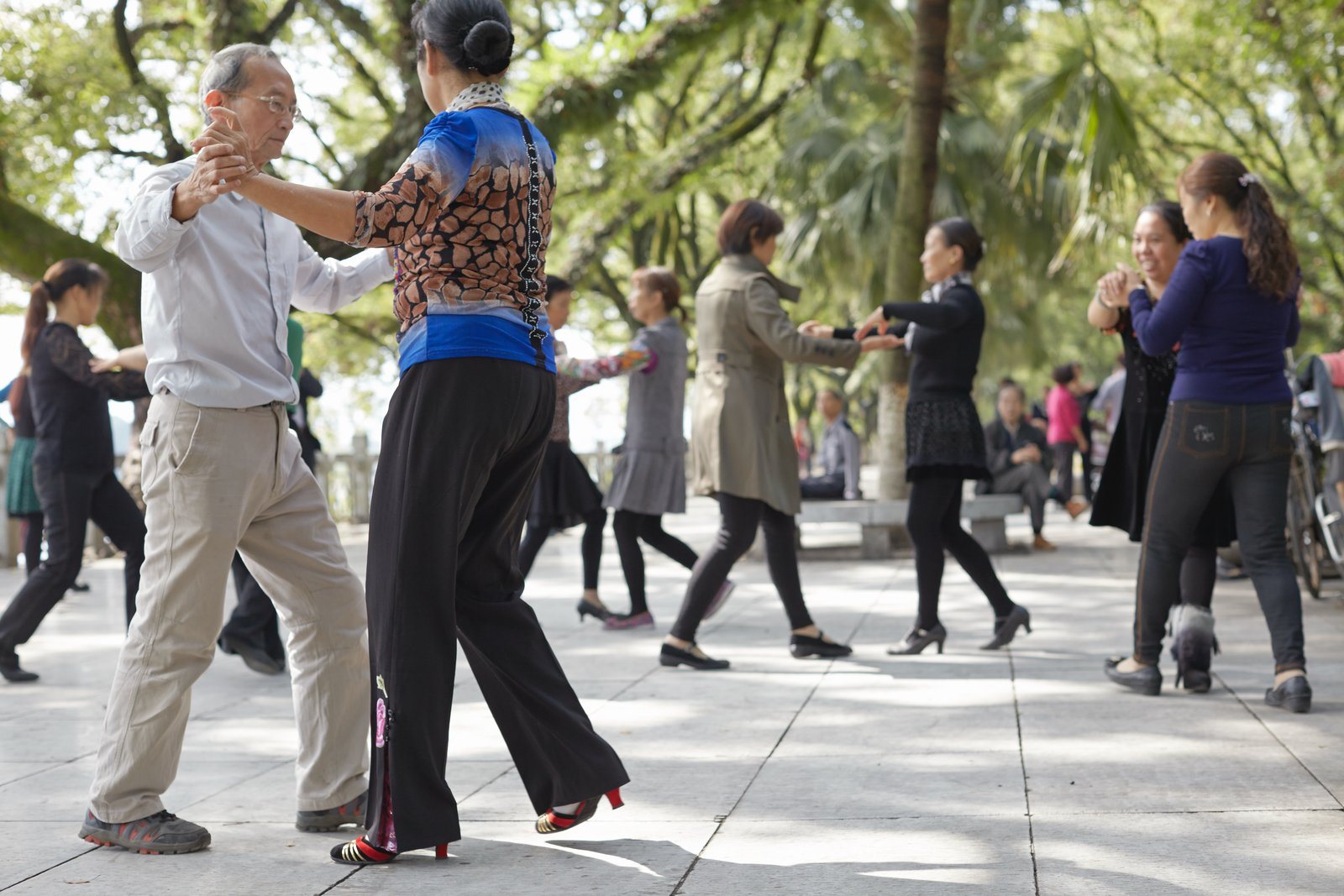
Couples dance together on a paved path under big shady trees

By the CLI Team

Aktivieren Sie JavaScript, um die Geschichte zu hören, Pinyin einzublenden und per Antippen die Bedeutung von Wörtern zu sehen.

晚上七点左右,广场上的音乐又响起来了。卢卡斯住的地方旁边有一个小广场,每天这个时候,很多阿姨都会来这里跳舞。中国人叫它“广场舞”。

At around seven in the evening, the music in the square started up again. Next to where Lucas lives there is a small square, and every day at this time lots of aunties come there to dance. Chinese people call it "square dancing."

卢卡斯第一次看到的时候,觉得很奇怪:为什么这么多人在外面跳舞?后来他才知道,来跳舞的人,很多都是已经不上班的阿姨。她们吃完晚饭就来这里跳一个小时,又能运动,又能和朋友聊天。

The first time Lucas saw it, he thought it was strange: why were so many people dancing outside? Later he found out that many of the dancers are aunties who have stopped working. After dinner they come here and dance for an hour, so they get exercise and a chat with friends at the same time.

有一天晚上,卢卡斯站在旁边看,一个穿红色衣服的阿姨走过来,拉着他的手说:“小伙子,来,一起跳吧!”卢卡斯说:“我不会跳。”阿姨说:“没关系,很简单,跟着我做就行!”

One evening, Lucas was standing off to the side watching when an auntie in red came over, took his hand and said, "Young man, come on, dance with us!" Lucas said, "I can't dance." She said, "Doesn't matter, it's easy. Just follow me!"

卢卡斯站在最后面,跟着前面的阿姨们跳。可是她们跳得太快了,他一点儿也跟不上。大家往左的时候,他往右;大家往前的时候,他往后。一首歌跳完,旁边的一个阿姨说:“小伙子,你在跳你自己的舞吧?”卢卡斯有点儿不好意思。

Lucas stood at the very back and copied the aunties in front of him. But they danced so fast that he couldn't keep up at all. When everyone went left, he went right; when everyone went forward, he went back. When the song ended, an auntie next to him said, "Young man, you're dancing your own dance, aren't you?" Lucas was a little embarrassed.

跳完以后,那个穿红色衣服的阿姨告诉他,她姓张,今年六十五岁了。张阿姨说:“你跳得不错!明天再来吧!”第二天早上起床的时候,卢卡斯的腿非常疼。他想:张阿姨六十五岁,跳了一个小时,一点儿也不累;我才二十岁,怎么这么累呢?

After the dancing, the auntie in red told him her family name was Zhang and that she was sixty-five. Auntie Zhang said, "You dance pretty well! Come again tomorrow!" The next morning when he got up, Lucas's legs were really sore. He thought: Auntie Zhang is sixty-five, she danced for an hour and wasn't tired at all. I'm only twenty, so why am I so tired?

现在,卢卡斯每天晚上都去广场跳舞。他还是跳得不太好,但是已经认识了很多阿姨。她们常常问他:“你妈妈知道你在这儿跳舞吗?”有时候,她们还给他带水果。除了跳舞,他还在广场上学到了很多中文。张阿姨说,卢卡斯是广场上最年轻的“阿姨”。

Now Lucas goes dancing in the square every evening. He still doesn't dance very well, but he has gotten to know lots of the aunties. They often ask him, "Does your mom know you dance here?" Sometimes they even bring him fruit. Besides dancing, he has picked up lots of Chinese in the square. Auntie Zhang says Lucas is the youngest "auntie" in the square.

生词 Neue Wörter

Diese Wörter sind in der Geschichte unterstrichen. Tippen Sie auf die Schriftzeichen, um sie zu hören.

名词Nomen

广场guǎngchǎngpublic square, plaza
广场舞guǎngchǎngwǔsquare dancing
舞wǔdance
阿姨āyíauntie (a woman of one's parents' age)
小伙子xiǎohuǒziyoung man
腿tuǐleg

动词Verben

拉lāto pull, to take (someone's hand)
响xiǎngto sound, to start playing
跳舞tiàowǔto dance
跟不上gēn bu shàngcan't keep up

形容词Adjektive

奇怪qíguàistrange
简单jiǎndānsimple, easy
疼téngsore, painful
年轻niánqīngyoung

量词Zählwörter

首shǒu(measure word for songs)

介词Präpositionen

往wǎngtoward

语法点 Grammatik

1. Verb + 得 + Descriptionsaying how well, how fast or how much someone does something

To comment on how an action is done, put 得 right after the verb, then the description. This is how Chinese says “dances well” or “runs fast.” To say “not well,” put 不 after 得, not before the verb.

Subject + Verb + 得 + (很 / 太 / 不) + Adjective

她们跳得太快了。
Tāmen tiào de tài kuài le.
They danced way too fast.
他还是跳得不太好。
Tā háishi tiào de bú tài hǎo.
He still doesn't dance very well.
我的同学说中文说得很好。
Wǒ de tóngxué shuō Zhōngwén shuō de hěn hǎo.
My classmate speaks Chinese really well.
2. 又…又… (yòu … yòu …)both … and …

Put 又 in front of each of two verbs or adjectives to say that both are true at once. The two things usually point the same way: two good things, or two bad things.

Subject + 又 + Verb or Adjective + 又 + Verb or Adjective

她们又能运动,又能和朋友聊天。
Tāmen yòu néng yùndòng, yòu néng hé péngyou liáotiān.
They get exercise and a chat with friends at the same time.
这个广场又大又干净。
Zhège guǎngchǎng yòu dà yòu gānjìng.
This square is big and clean.
今天又冷又下雨。
Jīntiān yòu lěng yòu xià yǔ.
Today it's cold and rainy.
3. 除了…还… (chúle … hái …)besides …, also …

Use 除了 to name one thing, then 还 to add another thing on top of it. 还 goes after the subject of the second half, before the verb.

除了 + A, Subject + 还 + Verb + B

除了跳舞,他还在广场上学到了很多中文。
Chúle tiàowǔ, tā hái zài guǎngchǎng shang xuédào le hěn duō Zhōngwén.
Besides dancing, he has picked up lots of Chinese in the square.
除了水果,阿姨还给我带了茶。
Chúle shuǐguǒ, āyí hái gěi wǒ dài le chá.
Besides fruit, the auntie also brought me tea.
除了中文,他还会说法语。
Chúle Zhōngwén, tā hái huì shuō Fǎyǔ.
Besides Chinese, he also speaks French.

测试 Testen Sie Ihr Verständnis

5 Fragen zur Geschichte. Wählen Sie eine Antwort, um zu sehen, ob sie richtig ist.

1阿姨们每天晚上几点左右来广场跳舞?

2来跳舞的人,很多是谁?

3第一次跳的时候,卢卡斯跳得怎么样?

4张阿姨今年多大了?

5第二天早上,卢卡斯怎么了?

更多故事 Weitere Geschichten

Fehler entdeckt oder eine Idee? 发现错误或有建议?

Feedback zu dieser Geschichte 对这篇故事的反馈

Insgesamt ist diese Geschichte … 整体来看,这篇故事…
Was sollte geändert werden? 哪里要改?

Eine Notiz pro Problem. 每个问题写一条。 Überspringen Sie diesen Schritt, wenn die Geschichte in Ordnung ist. 如果可以直接用,这部分不用填。

Tipp: Tippen Sie ein Wort in der Geschichte an, bevor Sie dieses Formular öffnen, dann wird der zugehörige Satz automatisch für Sie ausgewählt. 先点故事里的词,再打开反馈,句子会自动选好。

CLI-Lehrkräfte: Bitte geben Sie Ihren Namen an. 本校老师请留下姓名。

Geben Sie Ihre E-Mail-Adresse an, wenn wir Ihnen antworten dürfen. 如需回复,请留下邮箱。

Schreiben Sie uns auf WeChat

QR-Code für das Chinese Language Institute auf WeChat

Tippen Sie in WeChat auf Ihrem Handy auf +, dann auf Scannen, und richten Sie es auf diesen Code.

Machen Sie einen Screenshot von diesem Code. Tippen Sie in WeChat auf +, dann auf Scannen, und wählen Sie ihn aus Ihrem Album.

Halten Sie den Code gedrückt und wählen Sie die Option, ihn zu scannen.

Tippen Sie dann auf Folgen und senden Sie uns eine Nachricht.

Wir antworten von Montag bis Freitag, 8:30 Uhr bis 18:00 Uhr Pekinger Zeit.