
HSK 3 | Der Elefantenrüsselhügel

象鼻山Elephant Trunk Hill

Eine HSK-3-Geschichte mit 520 Schriftzeichen und Audio in weiblicher und männlicher Stimme. Vom CLI-Team.

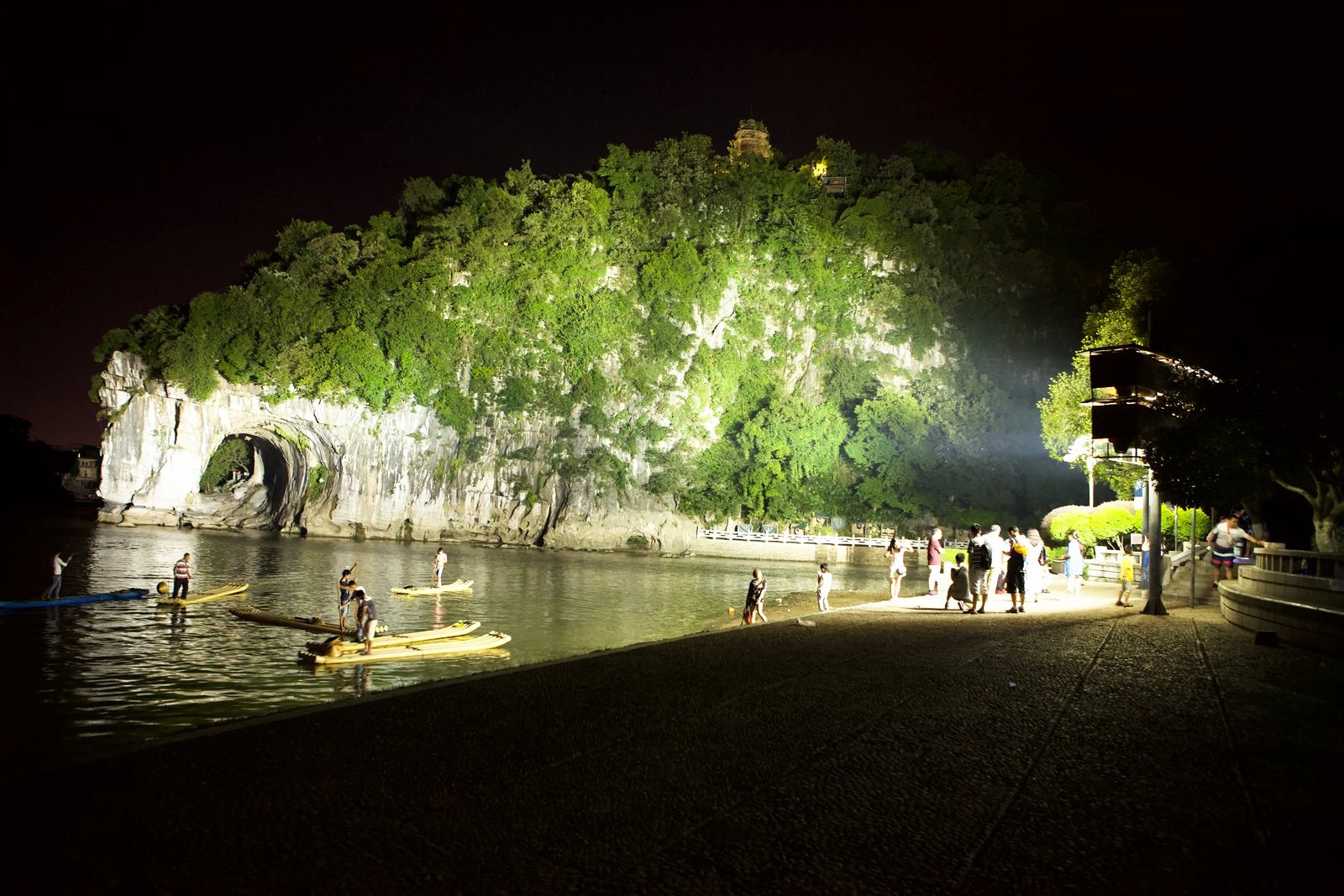
Elephant Trunk Hill lit up at night over the river, with rafts and people along the bank

Aktivieren Sie JavaScript, um die Geschichte zu hören, Pinyin einzublenden und per Antippen die Bedeutung von Wörtern zu sehen.

“快看,大象在喝水!”我们刚到河边,小王就大声地说。我马上就明白了,这座山为什么叫象鼻山。它真的很像一只大象:站在河边,把长长的鼻子放进水里,好像在喝水。

"Look, the elephant's drinking!" The moment we reached the river, Xiao Wang called out. Right away I understood why this hill is called Elephant Trunk Hill. It really does look like an elephant: it stands by the river and puts its long trunk into the water, as if it were drinking.

那天是星期六下午。象鼻山就在漓江边上,离我们学校不远,我们骑自行车来,只用了二十分钟。我在网上看过它的照片,可是没想到它这么像大象。鼻子和身体中间有一个很大的洞,下面就是漓江的河水。小王说,这个洞叫水月洞,因为洞和它在水里的影子在一起,就像一个大大的月亮。

It was a Saturday afternoon. Elephant Trunk Hill is right on the bank of the Li River, not far from our school, and the bike ride took only twenty minutes. I had seen photos of it online, but I never thought it would look so much like an elephant. Between the trunk and the body there is a big hole, and right under it is the water of the Li River. Xiao Wang said the hole is called Water Moon Cave, because the cave and its reflection in the water together look like a big, round moon.

小王还给我讲了一个传说。很久以前,天上的玉帝有一只大象。有一次,大象跟着玉帝来到桂林,可是它生病了,走不动了。玉帝没有等它,自己回天上去了。桂林的老百姓照顾了它很长时间,给它吃的,给它喝的。大象的病好了以后,非常喜欢这里,也喜欢这里的人,所以不想回天上了。它每天帮他们种地。

Xiao Wang also told me a legend. Long, long ago, the Jade Emperor in heaven had an elephant. Once, the elephant came to Guilin with the Jade Emperor, but it got sick and could not walk any farther. The Jade Emperor didn't wait for it and went back to heaven alone. The people of Guilin looked after the elephant for a long time and gave it food and water. When it was well again, it loved this place and its people so much that it didn't want to go back. Every day, it helped them work in the fields.

玉帝知道了以后,非常生气。有一天,大象正在漓江边喝水,玉帝让一个天兵从天上下来,从后面把剑刺进了它的背。大象就这样变成了一座山,到今天还站在河边喝水。人们说,山上的那个小塔,就是那把剑变的。

When the Jade Emperor found out, he was furious. One day, while the elephant was drinking at the edge of the Li River, the Jade Emperor sent a soldier down from heaven, who drove a sword into its back from behind. And so the elephant turned into a hill. It still stands by the river today, still drinking. People say the little pagoda on top of the hill is what the sword turned into.

听完这个故事,我有点儿难过,但是更喜欢这只大象了。我们在河边坐着,一直等到太阳下山。太阳下山的时候,天和水都变成了红色和黄色,水里的象鼻山也看得很清楚。我拍了一百多张照片。小王说:“你今天拍的照片,比我十年拍的还多!”

When the story was over, I felt a bit sad, but I liked the elephant even more. We sat by the river and waited until sunset. As the sun went down, the sky and the water turned red and yellow, and we could see the hill clearly in the water. I took more than a hundred photos. Xiao Wang said, "You took more photos today than I have in ten years!"

骑车回学校的时候,我回头一看:太阳已经下山了,那只大象还站在河边,鼻子放在水里,好像还在喝水。

When we rode back to school, I turned around for a look. The sun had already set, but the elephant was still standing by the river with its trunk in the water, as if it were still drinking.

生词 Neue Wörter

Diese Wörter sind in der Geschichte unterstrichen. Tippen Sie auf die Schriftzeichen, um sie zu hören.

名词Nomen

大象dàxiàngelephant
鼻子bízinose; (an elephant's) trunk
洞dònghole, cave
影子yǐngzireflection, shadow
传说chuánshuōlegend
天兵tiānbīngsoldier from heaven
剑jiànsword
背bèiback (of the body)
塔tǎpagoda, tower
太阳tàiyángsun

动词Verben

刺cìto stab
拍pāito take (a photo)
照顾zhàogùto take care of
变成biànchéngto turn into

形容词Adjektive

生气shēngqìangry

量词Zählwörter

座zuò(measure word for hills, buildings)

语法点 Grammatik

1. 把 (bǎ)a word that puts the object before the verb, to say what happens to it

Normally a Chinese sentence goes subject, verb, object. With 把, the object moves up in front of the verb, and the sentence tells you what is done to that thing and where it ends up. The verb never stands alone after 把: something follows it, such as a place (进水里) or 了.

Subject + 把 + Object + Verb + Result or Place

它把长长的鼻子放进水里。
Tā bǎ chángcháng de bízi fàng jìn shuǐ li.
It puts its long trunk into the water.
请把手机放在桌子上。
Qǐng bǎ shǒujī fàng zài zhuōzi shang.
Please put your phone on the table.
我把这个故事告诉了妈妈。
Wǒ bǎ zhège gùshi gàosu le māma.
I told my mom this story.
2. 好像 (hǎoxiàng)seems, looks as if

Use 好像 when something looks a certain way, or when you are not completely sure. It goes before the verb or adjective. In the story, the hill is not really drinking, it only looks that way.

Subject + 好像 + Verb or Adjective

它站在河边,好像在喝水。
Tā zhàn zài hébiān, hǎoxiàng zài hē shuǐ.
It stands by the river as if it were drinking.
外面好像下雨了。
Wàimian hǎoxiàng xià yǔ le.
It looks like it's started raining outside.
老师今天好像有点儿累。
Lǎoshī jīntiān hǎoxiàng yǒudiǎnr lèi.
The teacher seems a little tired today.
3. 比…还… (bǐ … hái …)even more … than

A plain 比 sentence compares two things: A is bigger than B. Put 还 before the adjective and you add surprise: B is already big, and A is even bigger. It is a favorite way to joke or exaggerate.

A + 比 + B + 还 + Adjective

你今天拍的照片,比我十年拍的还多!
Nǐ jīntiān pāi de zhàopiàn, bǐ wǒ shí nián pāi de hái duō!
You took more photos today than I have in ten years!
桂林的夏天比我老家的夏天还热。
Guìlín de xiàtiān bǐ wǒ lǎojiā de xiàtiān hái rè.
Summer in Guilin is even hotter than summer back home.
我的猫比我还爱睡觉。
Wǒ de māo bǐ wǒ hái ài shuìjiào.
My cat loves sleeping even more than I do.

测试 Testen Sie Ihr Verständnis

5 Fragen zur Geschichte. Wählen Sie eine Antwort, um zu sehen, ob sie richtig ist.

1小王说,这个洞为什么叫水月洞?

2水月洞在哪儿?

3大象为什么不想回天上了?

4人们说,山上的小塔是什么变的?

5太阳下山的时候,天和水变成了什么颜色?

更多故事 Weitere Geschichten

Schreiben Sie uns auf WeChat

QR-Code für das Chinese Language Institute auf WeChat

Tippen Sie in WeChat auf Ihrem Handy auf +, dann auf Scannen, und richten Sie es auf diesen Code.

Machen Sie einen Screenshot von diesem Code. Tippen Sie in WeChat auf +, dann auf Scannen, und wählen Sie ihn aus Ihrem Album.

Halten Sie den Code gedrückt und wählen Sie die Option, ihn zu scannen.

Tippen Sie dann auf Folgen und senden Sie uns eine Nachricht.

Wir antworten von Montag bis Freitag, 8:30 Uhr bis 18:00 Uhr Pekinger Zeit.