
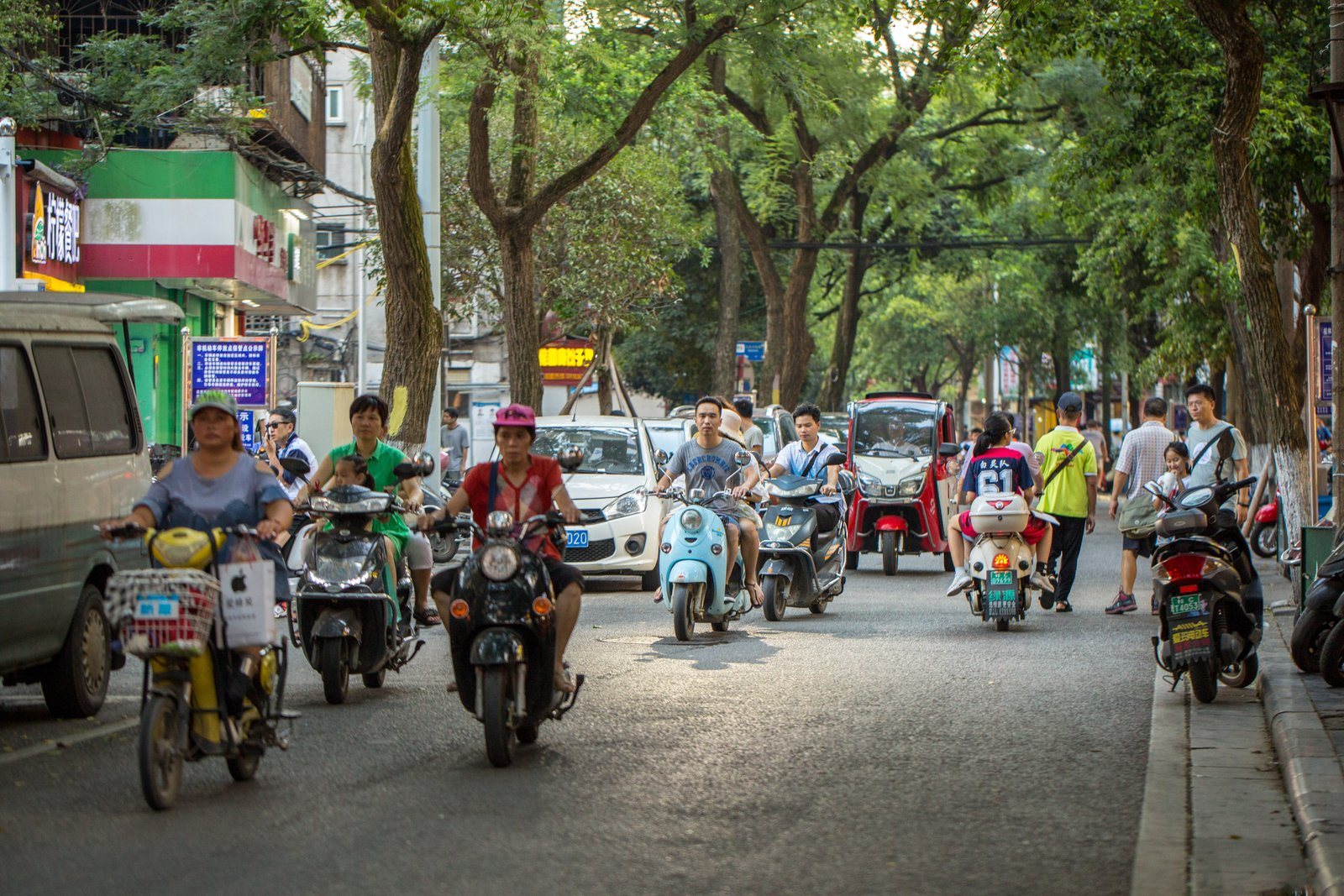
“还有八分钟!”老周看了一眼手机,把车骑得更快了。路口的红灯亮了,他停了下来,看着手机上的倒计时一秒一秒地减少。灯一变,他就又冲了出去。中午十二点,是外卖骑手最忙的时候。他的电动车后面放着一个大箱子,里面有三份米粉和两份炒饭,要送到三个不同的地方。手机上的软件一直在倒计时。每一单都有时间要求,晚一分钟,就可能被扣钱,还可能收到差评。
"Eight minutes left!" Lao Zhou glanced at his phone and rode even faster. At the intersection the light turned red. He stopped and watched the countdown on his phone drop second by second. As soon as the light changed, he shot off again. Twelve noon is the busiest time for food delivery riders. Behind the seat of his electric scooter sat a big box holding three bowls of rice noodles and two fried rices, all going to three different places. The app on his phone kept counting down. Every order has a time limit: one minute late, and he may have money docked or get a bad review.
老周今年三十八岁,老家在桂林附近的一个小村子。以前他在工厂上班,后来工厂关门了,他就开始送外卖。他每天早上九点出门,晚上十点多才回家,一天要送四五十单。出门以前,他总是先看一眼天气。今天的天气预报说:下午有大雨。一块电池跑不了一整天,中午他还得再换一次。他的女儿今年上三年级,每天晚上都等他回家。有人问他累不累,他说:“累是累,可是这份工作自由,干多少,拿多少。”不过,他也常说:“干我们这一行,永远在和时间赛跑。”
Lao Zhou is thirty-eight this year, and his hometown is a small village near Guilin. He used to work in a factory; when the factory closed, he started delivering food. He leaves home at nine every morning and doesn't get back until after ten at night, delivering forty or fifty orders a day. Before he leaves, he always checks the weather first. Today's forecast said: heavy rain in the afternoon. One battery doesn't last the whole day, so at noon he has to swap it for another. His daughter is in third grade, and every night she waits for him to come home. When people ask whether he's tired, he says: "Tired, sure, but the job gives me freedom: the more you do, the more you earn." But he often adds: "In our line of work, you're always racing against the clock."
送外卖并不只是骑车那么简单。他得记住哪个小区的门难进,哪栋楼的电梯常常坏,哪家店做菜慢。有一次,一家店做菜特别慢,他等了二十分钟,送到的时候已经晚了。客人很生气,在电话里大声骂他。老周一句也没解释,只是不停地说“对不起”。他心里明白,跟客人解释也没有用,客人要的是饭,不是理由。
Delivering food isn't nearly as simple as riding a scooter. He has to remember which housing compound's gate is hard to get through, which building's elevator often breaks down, and which restaurant is slow to cook. Once a restaurant was so slow that he waited twenty minutes, and the food arrived late. The customer was furious and shouted at him over the phone. Lao Zhou didn't explain at all; he just kept saying "sorry." He knew explaining wouldn't help: what the customer wanted was food, not reasons.
还有一次,一个老小区没有电梯,他提着两大包东西,一口气爬到了七楼,到门口的时候,腿都软了。开门的是一位老奶奶,她见他满头大汗,非要给他倒一碗凉茶。她还说:“我孙子也在外地打工,你们都不容易。”老周说,那碗凉茶他记了很久。
Another time, in an old compound with no elevator, he carried two big bags all the way up to the seventh floor in one go, and by the time he reached the door his legs had gone weak. The door was opened by an elderly woman. Seeing him dripping with sweat, she insisted on pouring him a bowl of cooling herbal tea. She also said: "My grandson works far from home too. None of you have it easy." Lao Zhou says he remembered that bowl of tea for a long time.
今天下午三点,天突然黑了下来,接着就下起了大雨。下雨天,点外卖的人更多,路却更难走。老周的雨衣早就破了,没过多久,衣服就全湿了,手机也差点进水。雨水顺着头发流进眼睛里,他几乎看不清前面的路,可是他咬着牙,一单接一单地送。他把一碗汤面送到一个大学生手里,那个学生二话没说,转身回到房间里,拿了一把伞出来给他。“师傅,这把伞您拿着,不用还了。”后来,他在软件上看到,那个学生给了他一个好评,还写了一句:“雨这么大,辛苦了,慢点骑。”老周把这条好评看了两遍,才把手机放回口袋里。
Today, at three in the afternoon, the sky suddenly went dark, and then heavy rain began to pour down. On rainy days more people order food, yet the roads are harder to ride. Lao Zhou's raincoat had torn long ago; before long his clothes were soaked through, and his phone nearly got water in it. Rain ran from his hair into his eyes and he could barely see the road ahead, but he gritted his teeth and kept delivering, one order after another. He handed a bowl of noodle soup to a college student, who didn't hesitate: he went straight back into the room and came out with an umbrella for him. "Sir, take this umbrella. You don't need to give it back." Later he saw in the app that the student had given him a good review and written: "Such heavy rain. Thank you for your hard work. Ride slowly." Lao Zhou read the review twice before he put his phone back in his pocket.
晚上九点以后,雨停了,单子也慢慢少了。桂林的街上安静了下来,只有路边的米粉店还亮着灯。老周把车停在路边,买了一碗米粉,坐在台阶上吃。这是他今天的第一顿热饭。他吃得很快,眼睛还看着手机,怕错过新的单子。他给女儿发了一条语音:“作业写完了吗?爸爸马上回来。”女儿很快回了一句:“写完了。爸爸,今天下雨了,你有没有淋湿?”老周看着手机,半天没说话。他摸了摸还没干的衣服,回了一句:“没有,爸爸有伞。”然后,他又低头吃了一大口米粉。
After nine at night the rain stopped, and the orders slowly thinned out too. The streets of Guilin grew quiet; only the rice noodle shops by the road still had their lights on. Lao Zhou parked his scooter by the road, bought a bowl of rice noodles, and sat on the steps to eat. It was his first hot meal of the day. He ate quickly, one eye on his phone, afraid of missing a new order. He sent his daughter a voice message: "Have you finished your homework? Dad will be home soon." His daughter quickly replied: "Finished. Dad, it rained today. Did you get wet?" Lao Zhou looked at his phone and said nothing for a long while. He felt his clothes, still not dry, and replied: "No. Dad had an umbrella." Then he lowered his head and took a big mouthful of noodles.


