HSK 2 | 餃子作り

包饺子Making Dumplings

HSK2レベルの物語(全245字)。女性と男性の2種類の音声付き。作者:CLIチーム。

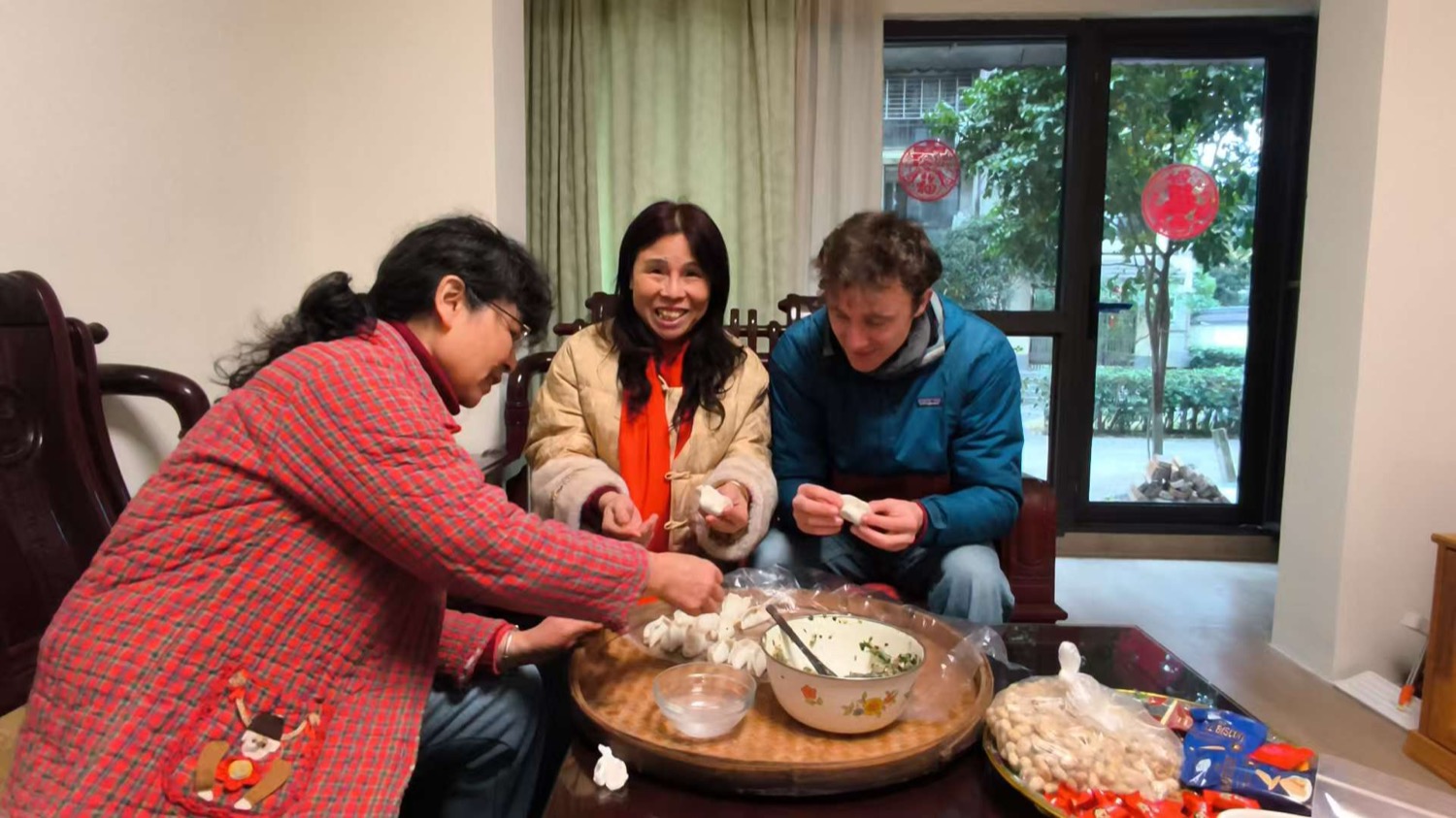
Three people fold dumplings around a round table in a home

物語の音声を聞いたり、ピンインを表示したり、単語をタップして意味を見たりするには、JavaScriptをオンにしてください。

王妈妈家的桌子上有很多肉和菜。我在桂林学习汉语,住在她家。星期六下午,王妈妈说:“安娜,今天我们一起包饺子吧!”

The table at Mama Wang's home was covered with meat and vegetables. I study Chinese in Guilin, and I live at her home. On Saturday afternoon, Mama Wang said, "Anna, let's make dumplings together today!"

我非常高兴,因为我很爱吃饺子,但是我还没有包过饺子。我只在超市买过饺子。

I was really happy, because I love eating dumplings, but I hadn't made them before. I had only ever bought them at the supermarket.

王爸爸也来帮忙。王妈妈包了一个饺子给我看。她包得很快,饺子也很好看。“你看,就这样!”她说。

Papa Wang came to help too. Mama Wang made one dumpling to show me. She was very fast, and her dumpling looked great. "Look, just like this!" she said.

我也开始包了。我的饺子有的很大,有的很小,还有一个里面没有肉!王爸爸拿着那个没有肉的,问:“安娜,这是饺子还是包子?”王妈妈说:“包子里面也有肉啊!”

Then I started making them too. Some of my dumplings were very big, some were very small, and one had no meat inside at all! Papa Wang held up the one with no meat and asked, "Anna, is this a dumpling or a steamed bun?" Mama Wang said, "Steamed buns have meat inside too!"

晚上,我们一起吃饺子。我吃了一个我自己包的饺子。它不好看,但是非常好吃!王妈妈说:“第一次包,已经很好了!”

In the evening, we ate the dumplings together. I ate one that I had made myself. It didn't look good, but it was really tasty! Mama Wang said, "For your first time, that's already very good!"

我说:“下星期我还想包饺子!”王爸爸说:“好啊!下次你包,我们吃。”

I said, "Next week I want to make dumplings again!" Papa Wang said, "Sure! Next time, you make them and we'll do the eating."

生词 新出単語

これらの単語は物語の中で下線が引かれています。漢字をタップすると音声が聞けます。

名词名詞

饺子jiǎozidumpling
肉ròumeat
包子bāozisteamed bun
超市chāoshìsupermarket
星期六xīngqīliùSaturday

动词動詞

包bāoto wrap, to make (dumplings)
帮忙bāngmángto help
开始kāishǐto start
问wènto ask

形容词形容詞

好看hǎokàngood-looking
好吃hǎochītasty, delicious

短语フレーズ

第一次dì-yī cìthe first time
下次xià cìnext time

语法点 文法

1. Verb + 过 (guo)Says that something has (or has never) happened at some time before now.

Put 过 right after a verb to talk about experience: something you have done at least once. To say you have never done it, put 没(有) before the verb and keep 过 after it. With 还 (hái) in front, 还没有…过 means "not yet, so far": it hasn't happened, but it might.

Subject + Verb + 过 + Object

Subject + (还) 没有 + Verb + 过 + Object

我还没有包过饺子。
Wǒ hái méiyǒu bāo guo jiǎozi.
I hadn't made dumplings before (not yet).
你去过桂林吗?
Nǐ qù guo Guìlín ma?
Have you ever been to Guilin?
我妈妈吃过包子,但是没吃过饺子。
Wǒ māma chī guo bāozi, dànshì méi chī guo jiǎozi.
My mom has had steamed buns, but she has never had dumplings.
2. 有的…有的… (yǒude … yǒude …)"Some … (and) some …": splits one group into different kinds.

Use 有的 before each part of a group to say how the parts differ. The group comes first, then 有的 + description, 有的 + description.

Group + 有的 + Description, 有的 + Description

我的饺子有的很大,有的很小。
Wǒ de jiǎozi yǒude hěn dà, yǒude hěn xiǎo.
Some of my dumplings were very big, and some were very small.
我的同学有的喜欢喝茶,有的喜欢喝咖啡。
Wǒ de tóngxué yǒude xǐhuan hē chá, yǒude xǐhuan hē kāfēi.
Some of my classmates like tea, and some like coffee.
这些菜有的很便宜,有的很贵。
Zhèxiē cài yǒude hěn piányi, yǒude hěn guì.
Some of these vegetables are cheap, and some are expensive.
3. A 还是 B? (háishi)"A or B?" in a question that asks someone to choose.

In a question, put 还是 between two choices. The question needs no 吗 at the end. (In a statement, "or" is usually 或者, not 还是.)

A + 还是 + B?

这是饺子还是包子?
Zhè shì jiǎozi háishi bāozi?
Is this a dumpling or a steamed bun?
你想喝茶还是喝水?
Nǐ xiǎng hē chá háishi hē shuǐ?
Do you want tea or water?
我们今天吃米饭还是吃饺子?
Wǒmen jīntiān chī mǐfàn háishi chī jiǎozi?
Are we having rice or dumplings today?

测试 理解度チェック

物語に関する5問です。答えを選ぶと、正解かどうかがわかります。

1安娜下星期想做什么?

2以前,安娜在哪儿买过饺子?

3王爸爸来做什么?

4安娜的一个饺子里面没有什么?

5安娜自己包的饺子怎么样?

更多故事 ほかの物語

WeChatでメッセージを送る

WeChat上のChinese Language Institute (CLI)のQRコード

スマートフォンのWeChatで+をタップし、スキャンを選んで、このコードにカメラを向けてください。

このコードのスクリーンショットを撮ってください。WeChatで+をタップしスキャンを選んで、アルバムから選択してください。

コードを長押しして、スキャンするオプションを選んでください。

次にフォローをタップして、メッセージを送ってください。

北京時間の月曜日から金曜日、午前8時30分から午後6時までの間にご返信いたします。