
HSK 3 | David's Homestay Mom

大卫的中国妈妈David's Homestay Mom

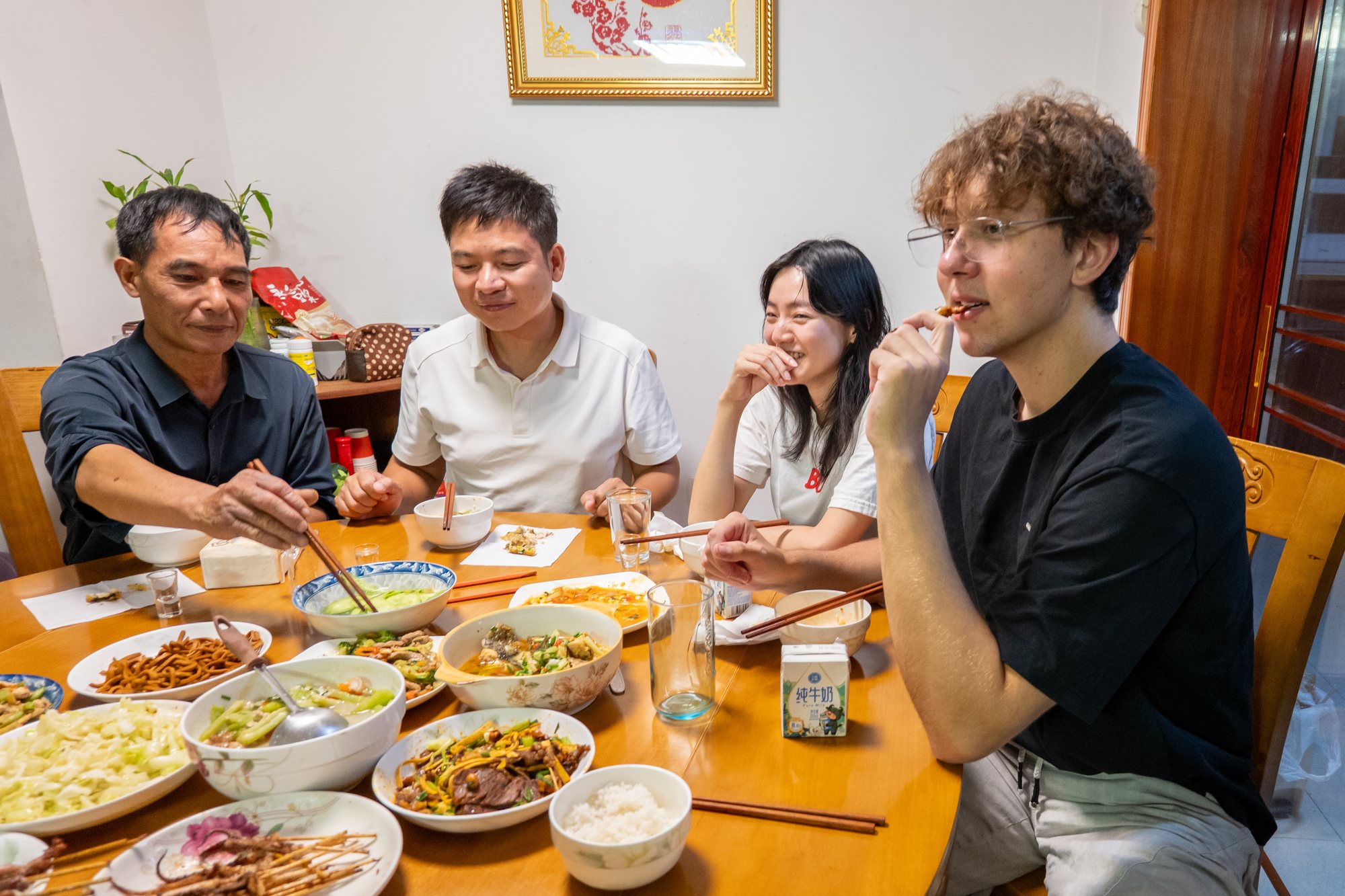
Four people share a meal of many dishes around a round table in a home

By the CLI Team

物語の音声を聞いたり、ピンインを表示したり、単語をタップして意味を見たりするには、JavaScriptをオンにしてください。

每天晚上六点,厨房里都有西红柿炒鸡蛋的味道。那是我妈妈给大卫哥哥做的菜,他最喜欢吃。大卫是从外国来桂林学中文的学生,住在我们家。妈妈总是说,大卫是她的“外国儿子”。

Every evening at six, the kitchen smells of tomato and scrambled eggs. My mom makes that dish for Big Brother David, because it's his favorite. David is a student who came from abroad to study Chinese in Guilin, and he lives with us. Mom always says David is her "foreign son."

吃饭的时候,妈妈总是一边往大卫的碗里放菜,一边说:“多吃一点儿!你太瘦了!”大卫来了两个月,已经胖了三斤,可是妈妈还是说他太瘦。

At dinner, Mom keeps putting food in David's bowl, saying, "Eat more! You're too thin!" David has been here two months and has already put on three jin, but Mom still says he's too thin.

妈妈也特别爱说话。大卫出门的时候,她说:“多穿一点儿!外面冷!”大卫回家的时候,她问:“吃饱了吗?今天学了什么?”有时候她还问:“你有女朋友了吗?”大卫每次都只是笑。

Mom loves to talk, too. When David goes out, she says, "Put on more clothes! It's cold out!" When he comes home, she asks, "Have you eaten enough? What did you learn today?" Sometimes she even asks, "Do you have a girlfriend yet?" Every time, David just laughs.

晚上大卫做作业的时候,妈妈常常坐在他旁边。大卫读课文,妈妈听;他的声调不对,妈妈就马上告诉他。可是妈妈着急的时候会说桂林话,那时候大卫就更听不懂了。他看着我,我就慢慢地再说一遍。

In the evenings, when David does his homework, Mom often sits next to him. David reads his lesson aloud and Mom listens, and if he gets a tone wrong, she tells him right away. But when Mom gets worked up, she switches to Guilin dialect, and then David understands even less. He looks at me, and I say it again for him, slowly.

有一天晚上,大卫和朋友去看电影,忘了告诉妈妈。九点、十点,他都还没有回来。妈妈给他打电话,他一直没有接。她不看电视,也不睡觉,一直坐在桌子旁边等。桌子上的菜,她热了三次。大卫十一点多才回来。门一开,妈妈就站了起来。她没有生气,只是说:“你没事就好。下次晚回来,一定要给我打个电话。”

One evening, David went to a movie with friends and forgot to tell Mom. Nine o'clock, ten o'clock, and he still wasn't back. Mom called him, but he never picked up. She didn't watch TV and didn't go to bed. She just sat at the table and waited. She heated up the food on the table three times. David didn't get home until after eleven. As soon as the door opened, Mom stood up. She wasn't angry. She just said, "As long as you're all right. Next time you're going to be late, you have to call me."

现在,大卫每次晚回家,都先给妈妈发一条短信。昨天他的短信是这样写的:“妈妈,我九点回家。我吃饱了!”

Now, whenever David is going to be home late, he sends Mom a text first. Yesterday his text said, "Mom, I'll be home at nine. I've eaten enough!"

生词 新出単語

これらの単語は物語の中で下線が引かれています。漢字をタップすると音声が聞けます。

名词名詞

厨房chúfángkitchen
味道wèidaosmell, taste
声调shēngdiàotone (of a syllable)
课文kèwéntext (of a lesson)
短信duǎnxìntext message

动词動詞

吃饱chībǎoto eat one's fill
胖pàngto put on weight; fat
接jiēto answer (the phone)
生气shēngqìangry

形容词形容詞

瘦shòu薄い
着急zháojíanxious, worked up

副词副詞

总是zǒngshìalways
更gèngeven more

量词量詞

斤jīn斤(500グラム)

短语フレーズ

西红柿炒鸡蛋xīhóngshì chǎo jīdàntomato and scrambled eggs
桂林话GuìlínhuàGuilin dialect

语法点 文法

1. 一…就… (yī … jiù …)as soon as …, (then) …

Use 一 before the first action and 就 before the second to show that the second follows right away. Each one sits right before its verb. Remember that 一 changes its tone with the syllable after it.

(Subject) + 一 + Verb 1, (Subject) + 就 + Verb 2

门一开,妈妈就站了起来。
Mén yì kāi, māma jiù zhàn le qilai.
As soon as the door opened, Mom stood up.
我一到家就给你打电话。
Wǒ yí dào jiā jiù gěi nǐ dǎ diànhuà.
I'll call you as soon as I get home.
妹妹一看见小猫就笑。
Mèimei yí kànjiàn xiǎo māo jiù xiào.
My little sister smiles the moment she sees a kitten.
2. 才 (cái)not until; later than expected

Put 才 before the verb to show that something happened later, or took longer, than it should have. Don't add 了 at the end: 才 already carries the feeling.

Subject + time + 才 + Verb

大卫十一点多才回来。
Dàwèi shíyī diǎn duō cái huílai.
David didn't get back until after eleven.
九点上课,他九点半才到。
Jiǔ diǎn shàngkè, tā jiǔ diǎn bàn cái dào.
Class starts at nine, but he didn't get there until nine thirty.
我学了三个月,才会写自己的名字。
Wǒ xué le sān ge yuè, cái huì xiě zìjǐ de míngzi.
It took me three months of study before I could write my own name.
3. 总是 (zǒngshì)always; every time

总是 goes before the verb or adjective to say that something happens every time, often with a feeling of "again!" It can sound fond or a little tired, depending on the sentence.

Subject + 总是 + Verb / Adjective

妈妈总是说,大卫是她的“外国儿子”。
Māma zǒngshì shuō, Dàwèi shì tā de “wàiguó érzi”.
Mom always says David is her "foreign son."
他总是第一个到教室。
Tā zǒngshì dì-yī ge dào jiàoshì.
He's always the first one in the classroom.
桂林的夏天总是很热。
Guìlín de xiàtiān zǒngshì hěn rè.
Summers in Guilin are always hot.

测试 理解度チェック

物語に関する5問です。答えを選ぶと、正解かどうかがわかります。

1大卫最喜欢吃什么菜?

2那天晚上大卫十一点多回来,妈妈说了什么?

3妈妈说桂林话的时候,大卫怎么了?

4那天晚上,大卫几点才回来?

5那天晚上,妈妈把桌子上的菜热了几次?

更多故事 ほかの物語

間違いを見つけましたか? ご意見はありますか? 发现错误或有建议?

この物語についてのフィードバック 对这篇故事的反馈

この物語は全体として… 整体来看,这篇故事…
何を直すべきですか? 哪里要改?

問題ごとに1件ずつ書いてください。 每个问题写一条。 ストーリーに問題がなければ、この欄は空のままで構いません。 如果可以直接用,这部分不用填。

ヒント:このフォームを開く前にストーリー内の単語をタップすると、その単語を含む文が自動的に選ばれます。 先点故事里的词,再打开反馈,句子会自动选好。

CLIの先生方は、お名前をご記入ください。 本校老师请留下姓名。

返信をご希望の場合は、メールアドレスをご記入ください。 如需回复,请留下邮箱。

WeChatでメッセージを送る

WeChat上のChinese Language Institute (CLI)のQRコード

スマートフォンのWeChatで+をタップし、スキャンを選んで、このコードにカメラを向けてください。

このコードのスクリーンショットを撮ってください。WeChatで+をタップしスキャンを選んで、アルバムから選択してください。

コードを長押しして、スキャンするオプションを選んでください。

次にフォローをタップして、メッセージを送ってください。

北京時間の月曜日から金曜日、午前8時30分から午後6時までの間にご返信いたします。