HSK 2 | Tai chi junto al río

漓江边的太极拳Tai Chi by the River

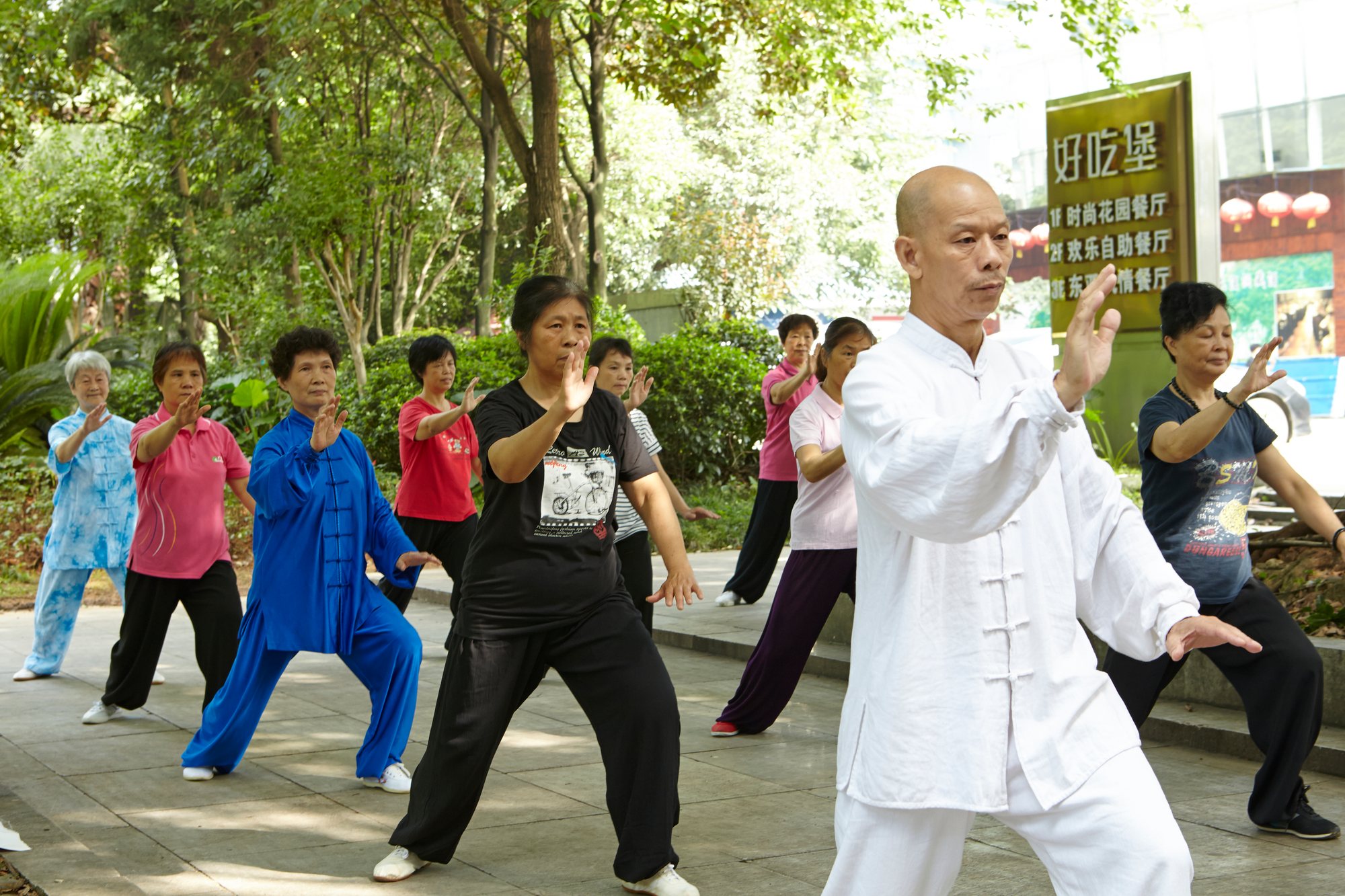
A man in white leads a group practicing tai chi on a tree-lined plaza

By the CLI Team

Activa JavaScript para escuchar la historia, ver el pinyin y tocar las palabras para ver su significado.

我家离漓江很近。冬天,每天早上六点半,太阳还没出来,漓江边就有很多爷爷奶奶在打太极拳。教他们的是王爷爷。王爷爷今年七十五岁了,但是他身体非常好。

My home is very close to the Li River. In winter, every morning at six thirty, before the sun is up, lots of grandpas and grandmas are already doing tai chi by the river. The one who teaches them is Grandpa Wang. Grandpa Wang is seventy-five this year, but he's in great health.

有一天早上,我在漓江边跑步。王爷爷看见我,说:“你也来打吧!”我想:“太极拳很慢,我也会!”我就和他们一起打。

One morning, I was jogging by the river. Grandpa Wang saw me and said, "You come and do it too!" I thought, "Tai chi is slow. I can do that!" So I joined them.

但是我错了。王爷爷的手动了,我的手还不知道去哪儿。王爷爷的脚动了,我还在看他的手。爷爷奶奶们都打得很好,我比他们慢很多。

But I was wrong. When Grandpa Wang's hands moved, my hands still didn't know where to go. When Grandpa Wang's feet moved, I was still watching his hands. The grandpas and grandmas all did it very well, and I was much slower than them.

王爷爷对我说:“不要看我的手,看我的脚。”他教我做“白鹤亮翅”。他说:“两只手慢慢打开,像一只大鸟。”王爷爷做一个“白鹤亮翅”,要一分钟!我的手打开了,但是我的脚不知道去哪儿了!

Grandpa Wang said to me, "Don't watch my hands. Watch my feet." Then he taught me a move called White Crane Spreads Its Wings. "Open your two hands slowly, like a big bird," he said. When Grandpa Wang does one White Crane Spreads Its Wings, it takes a whole minute! My hands opened, but now my feet didn't know where to go!

现在,我已经学了一个月了。打完太极拳,我觉得身体很舒服。昨天王爷爷对我说:“你打得好一点儿了!明天你站在前面吧。”前面?我想:“那我的手要知道去哪儿了!”

Now I've been learning for a month. After tai chi, my body feels really good. Yesterday Grandpa Wang said to me, "You're doing a little better! Tomorrow, stand at the front." At the front? I thought, "Then my hands will have to know where to go!"


生词 Palabras nuevas

Estas palabras están subrayadas en la historia. Toca los caracteres para escucharlos.

名词Sustantivos

太极拳tàijíquántai chi
冬天dōngtiānwinter
太阳tàiyangthe sun
爷爷yéyegrandpa; a polite word for an old man
奶奶nǎinaigrandma; a polite word for an old woman
身体shēntǐcuerpo, salud
手shǒuhand
脚jiǎofoot

动词Verbos

教jiāoenseñar
跑步pǎobùcorrer, hacer jogging
动dòngto move
像xiàngto look like, to be like

形容词Adjetivos

近jìnnear, close
慢mànlento
舒服shūfucomfortable, feeling good

短语Frases

白鹤亮翅báihè liàngchìWhite Crane Spreads Its Wings (a tai chi move)

介词Preposiciones

离lífrom (to say how far)

语法点 Gramática

1. A 离 B 很近/很远saying how near or far one place is from another

To say that one place is near to or far from another, put 离 (lí) between the two places, then 近 (jìn; near) or 远 (yuǎn; far).

A + 离 + B + 很近 / 很远

我家离漓江很近。
Wǒ jiā lí Lí Jiāng hěn jìn.
My home is very close to the Li River.
学校离火车站很远。
Xuéxiào lí huǒchēzhàn hěn yuǎn.
The school is far from the train station.
你家离这儿远吗?
Nǐ jiā lí zhèr yuǎn ma?
Is your home far from here?
2. 在 (zài) + Verban action in progress (-ing)

Put 在 (zài) before a verb to say that the action is going on right then. It is like "-ing" in English. Add 还 (hái; still) in front to say the action has not stopped yet.

Subject + (还) + 在 + Verb (+ Object)

我还在看他的手。
Wǒ hái zài kàn tā de shǒu.
I was still watching his hands.
妈妈在做饭。
Māma zài zuò fàn.
Mamá está cocinando.
你在做什么?
Nǐ zài zuò shénme?
¿Qué estás haciendo?
3. Verb + 完 (wán)to finish doing something

完 (wán) means "to finish." Put it right after another verb to say that the action is over. The two verbs act as one: 吃完 (finish eating), 看完 (finish reading or watching).

Verb + 完 (+ Object)

打完太极拳,我觉得身体很舒服。
Dǎ wán tàijíquán, wǒ juéde shēntǐ hěn shūfu.
After tai chi, my body feels really good.
我吃完早饭了。
Wǒ chī wán zǎofàn le.
I've finished breakfast.
这个电影你看完了吗?
Zhège diànyǐng nǐ kàn wán le ma?
Have you finished watching this movie?

测试 Comprueba lo que entendiste

5 preguntas sobre la historia. Elige una respuesta para ver si es correcta.

1爷爷奶奶们每天早上几点打太极拳?

2王爷爷做一个“白鹤亮翅”,要多长时间?

3我第一次打太极拳,打得怎么样?

4王爷爷对我说什么?

5王爷爷说,明天我要站在哪儿?

更多故事 Más historias

¿Encontraste un error o tienes una idea? 发现错误或有建议?

Comentarios sobre esta historia 对这篇故事的反馈

En general, esta historia es… 整体来看,这篇故事…
¿Qué debería cambiar? 哪里要改?

Una nota por problema. 每个问题写一条。 Omite esto si la historia está lista. 如果可以直接用,这部分不用填。

Consejo: toca una palabra de la historia antes de abrir este formulario y se elegirá su oración automáticamente. 先点故事里的词,再打开反馈,句子会自动选好。

Profesores de CLI: por favor, agrega tu nombre. 本校老师请留下姓名。

Agrega tu correo electrónico si quieres que podamos responderte. 如需回复,请留下邮箱。

Envíanos un mensaje por WeChat

Código QR del Chinese Language Institute (CLI) en WeChat

En WeChat en tu teléfono, toca + y luego Escanear, y apúntalo a este código.

Toma una captura de pantalla de este código. En WeChat, toca + y luego Escanear y elígelo desde tu álbum.

Mantén presionado el código y elige la opción para escanearlo.

Luego toca Seguir y envíanos un mensaje.

Respondemos de lunes a viernes, de 8:30 a.m. a 6:00 p.m., hora de Beijing.