Life in Guilin | Experience CLI | The Chinese Language Institute
相册xiàngcèphoto album
Life in Guilin
Classes, meals, trips, and the friends you make here.
At CLI, we recognize the importance of cross-cultural learning, engagement, and understanding. Peer into the rhythm of life in Guilin, as seen through the lens of our learning community.
One-on-one lessons, small groups, and a lot of characters on whiteboards.
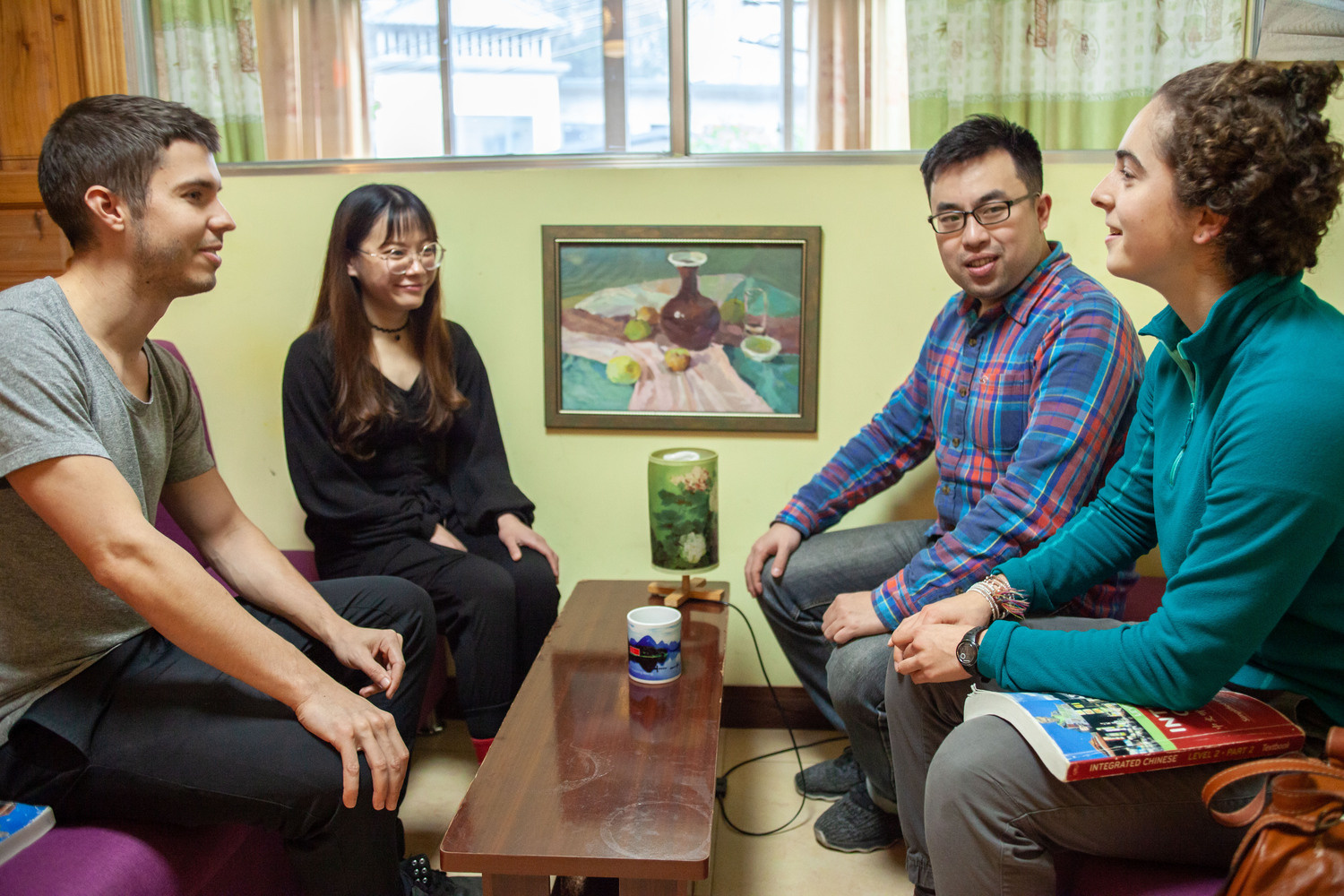
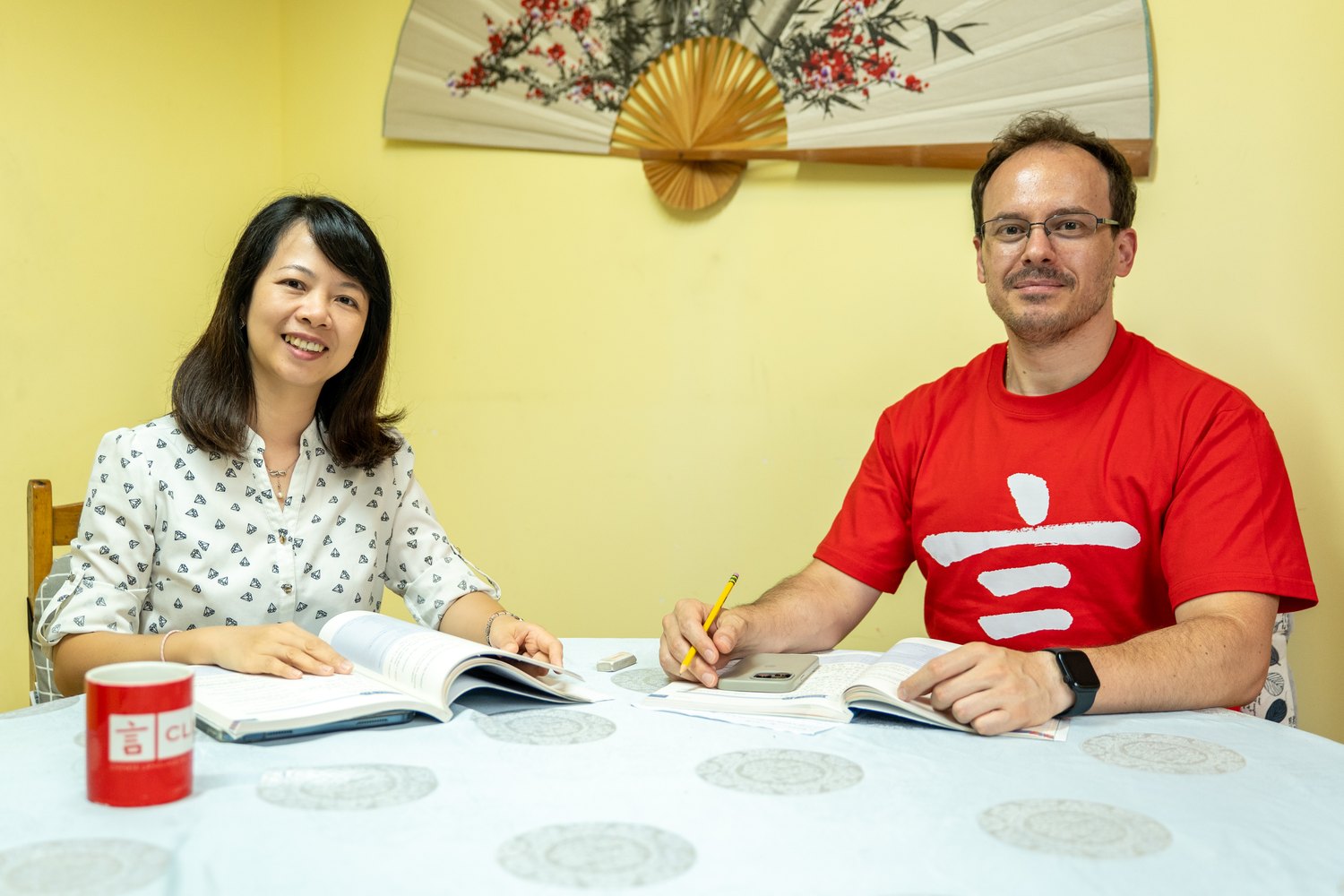
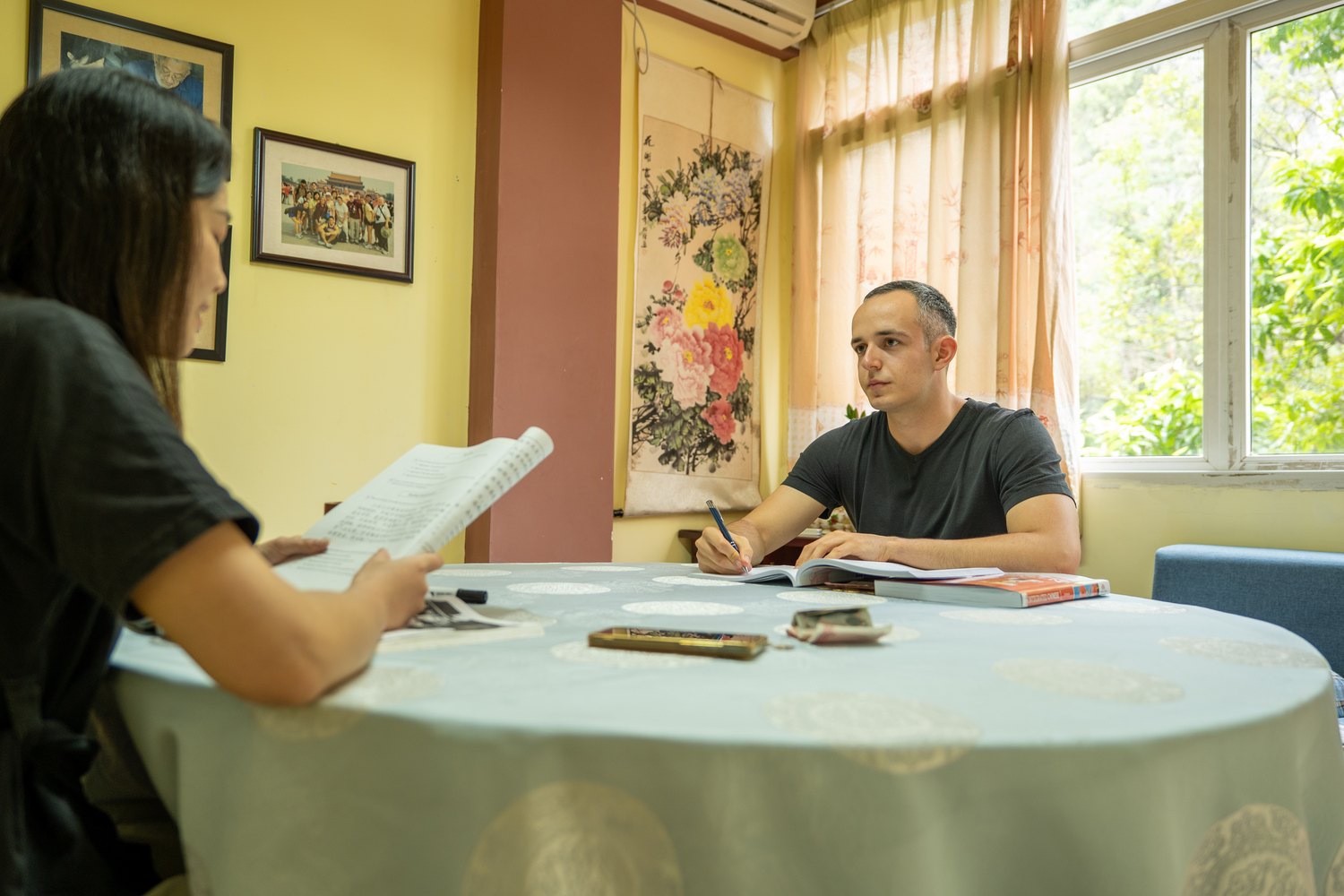
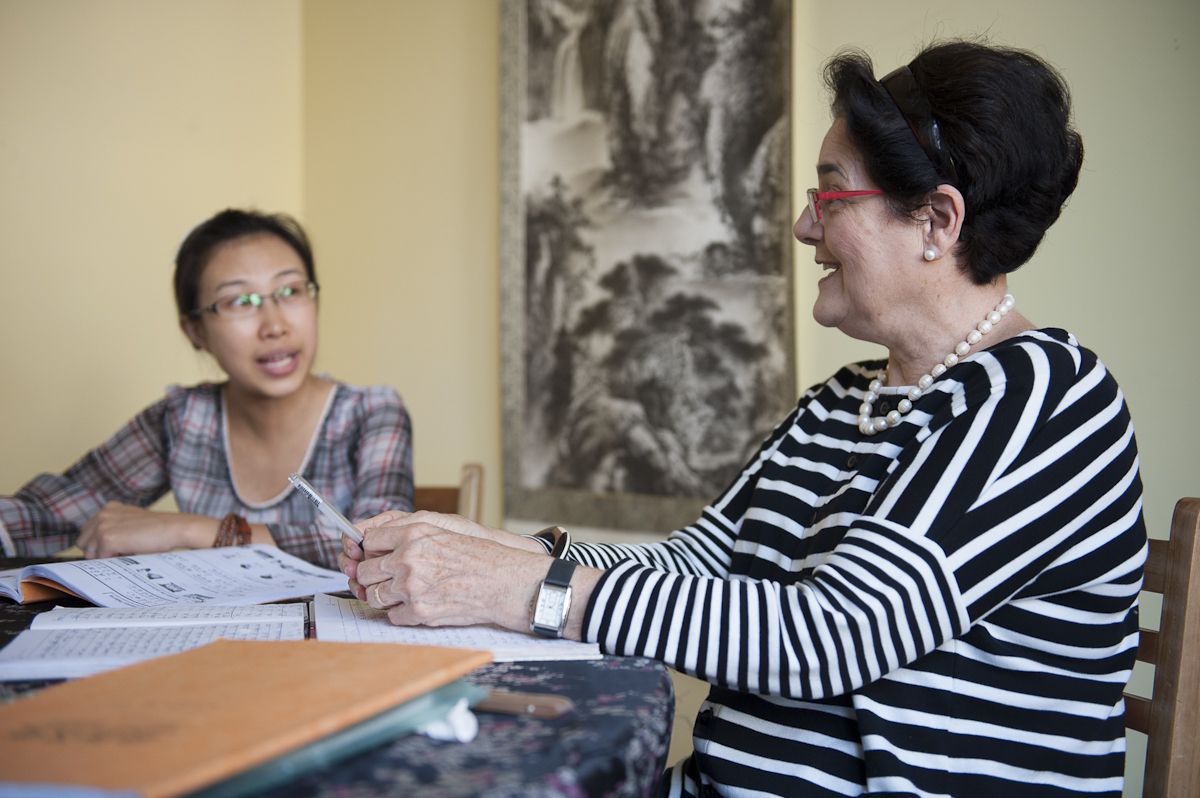
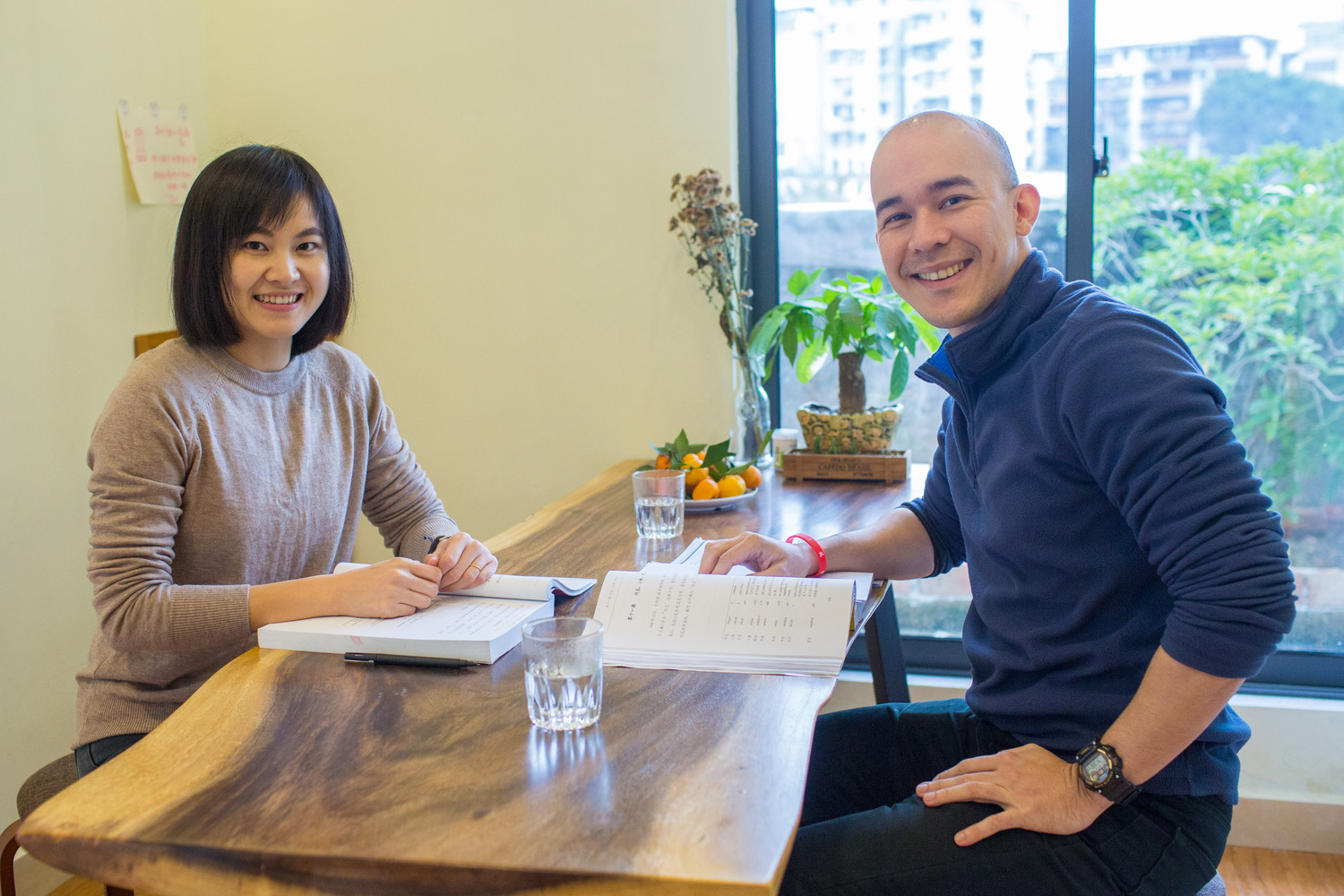
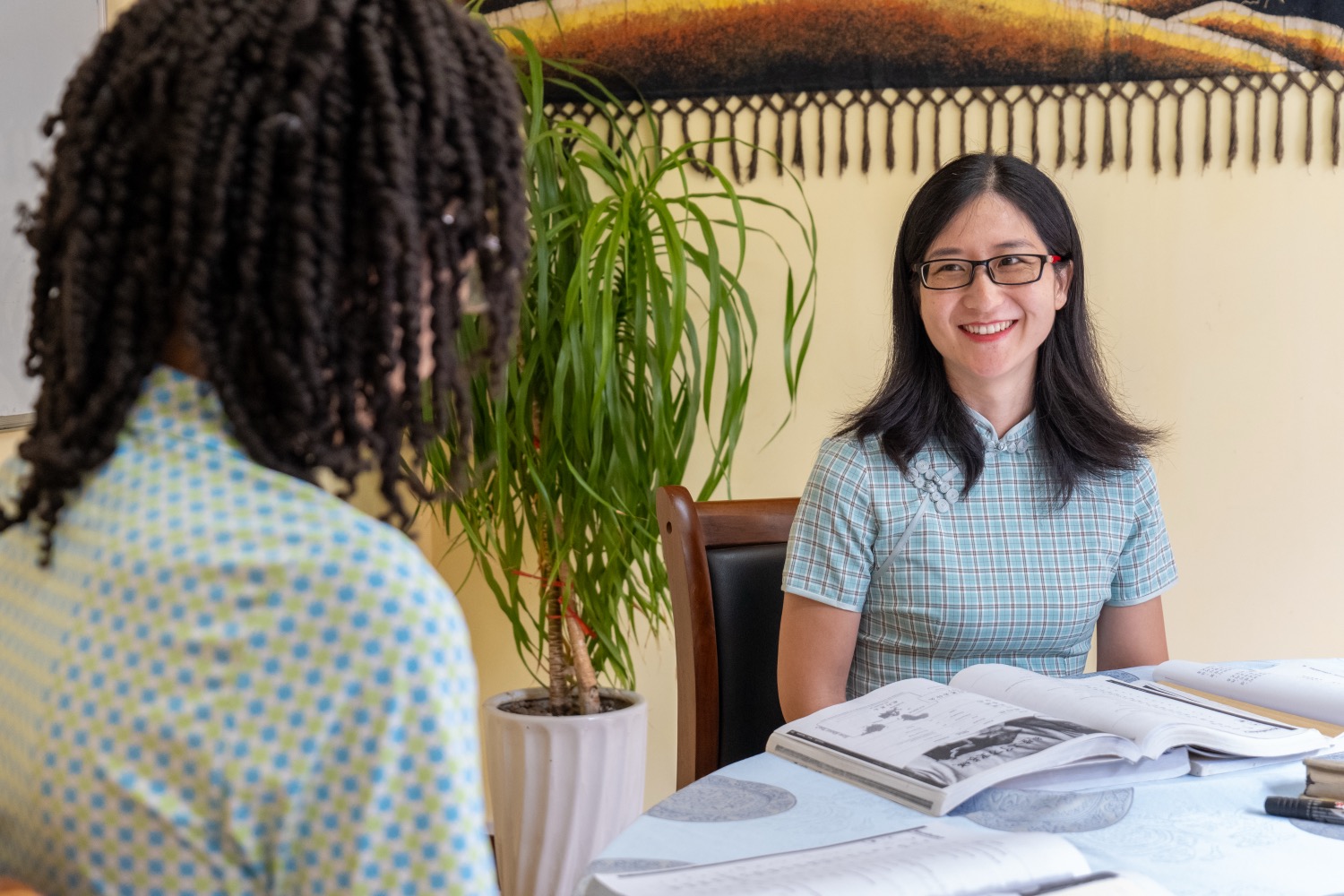
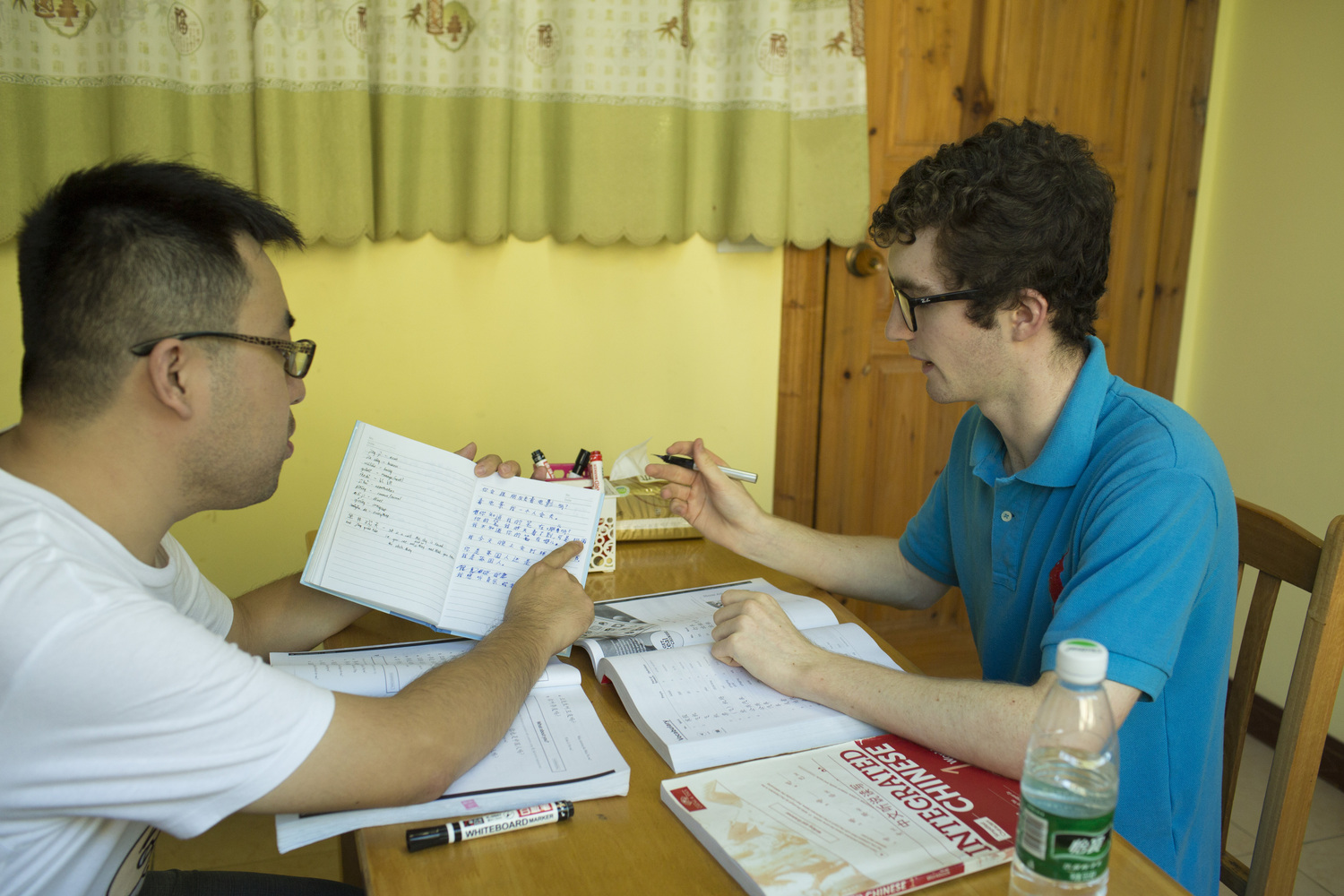
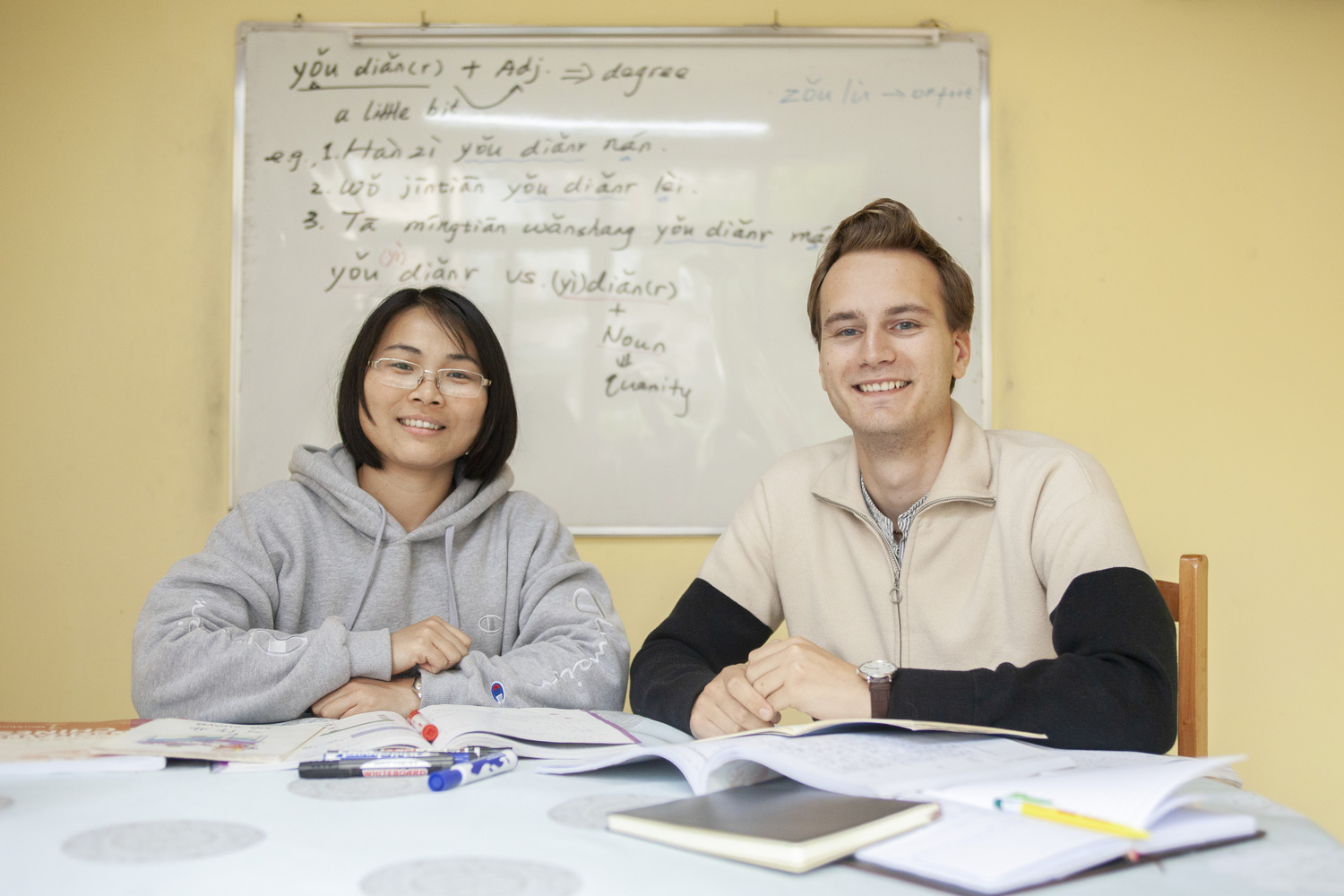
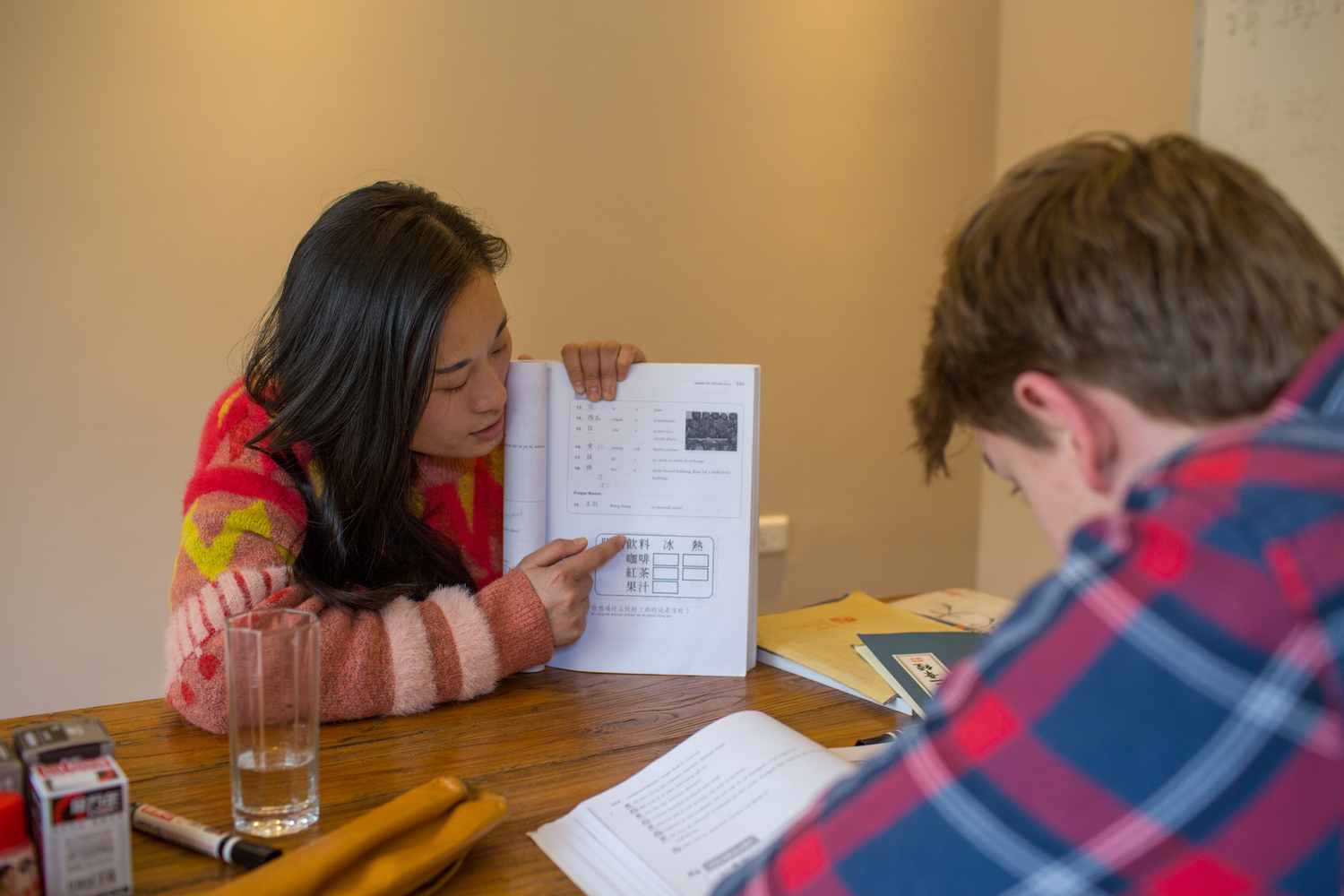
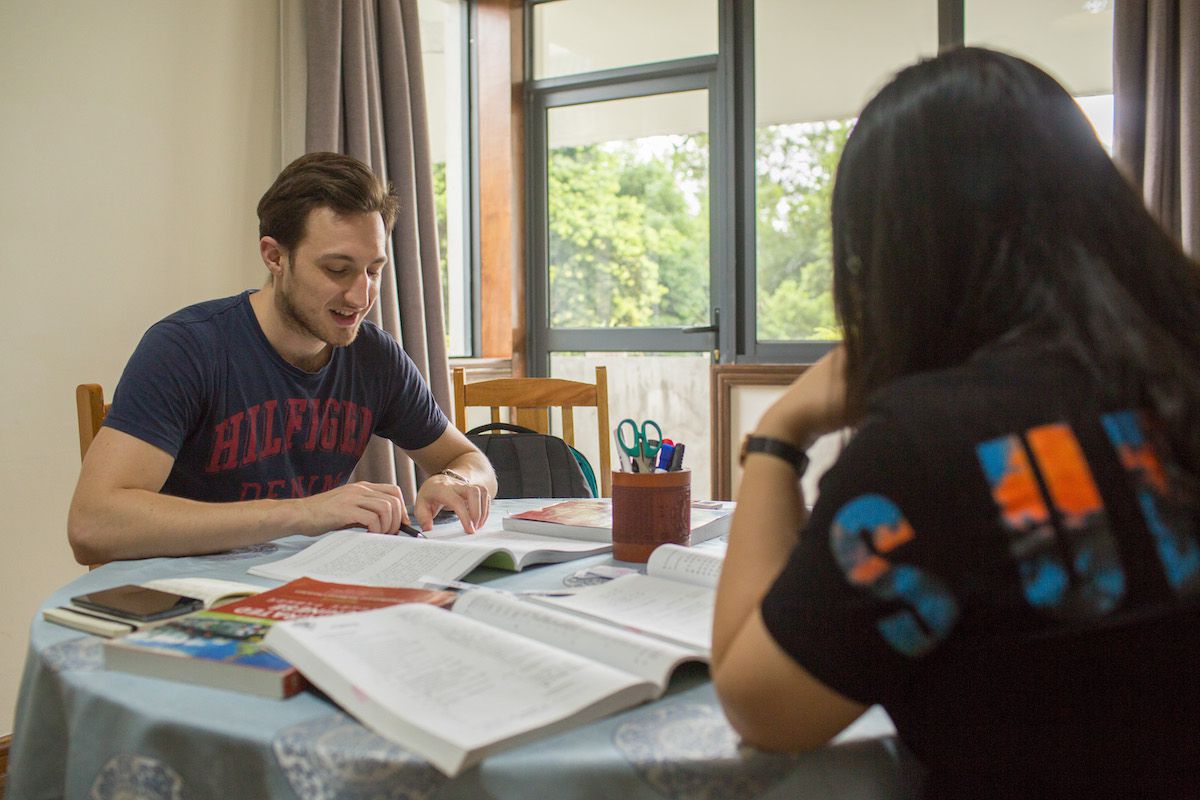
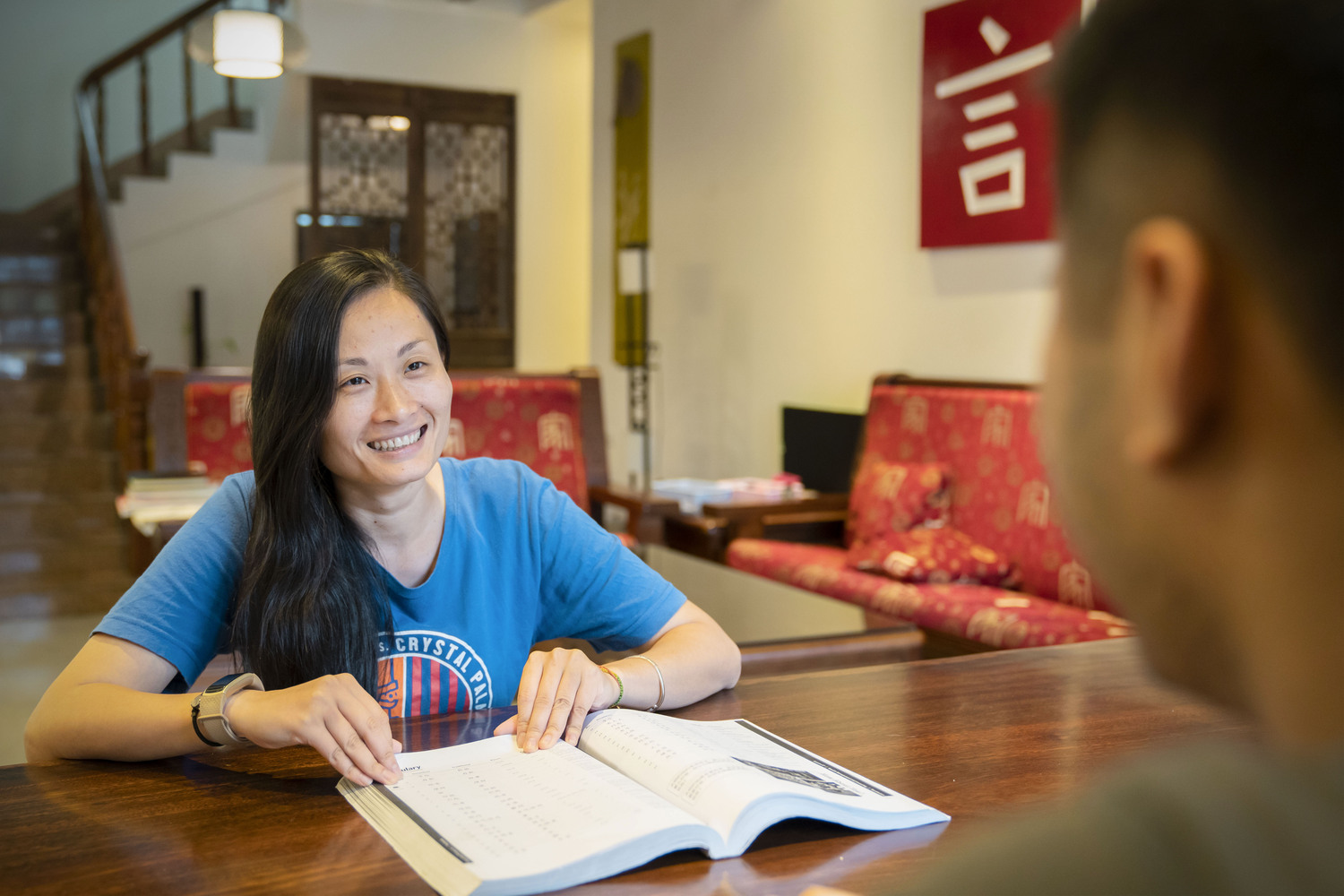
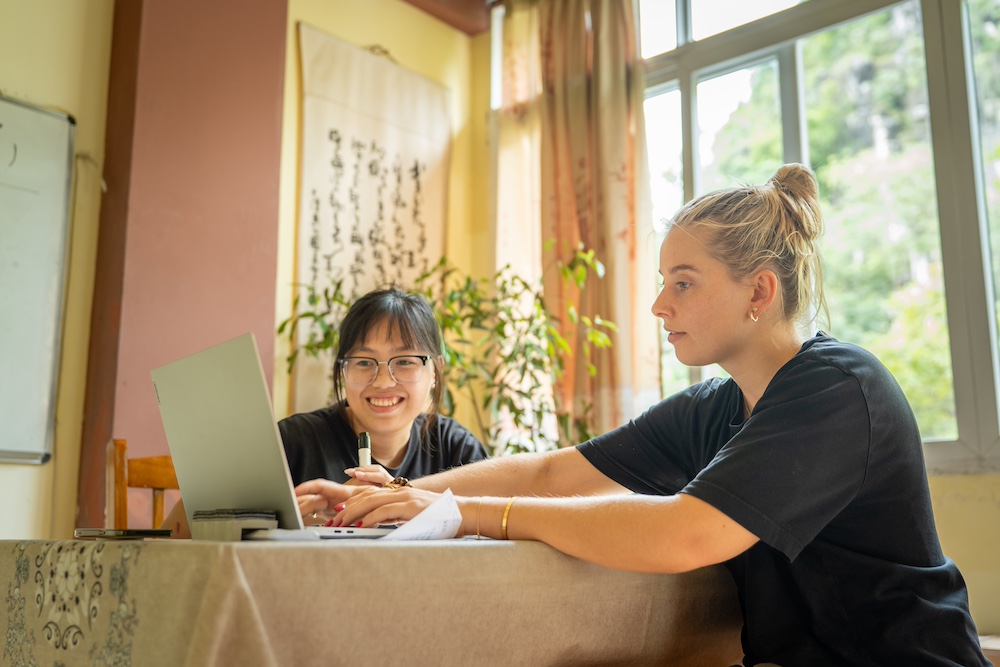
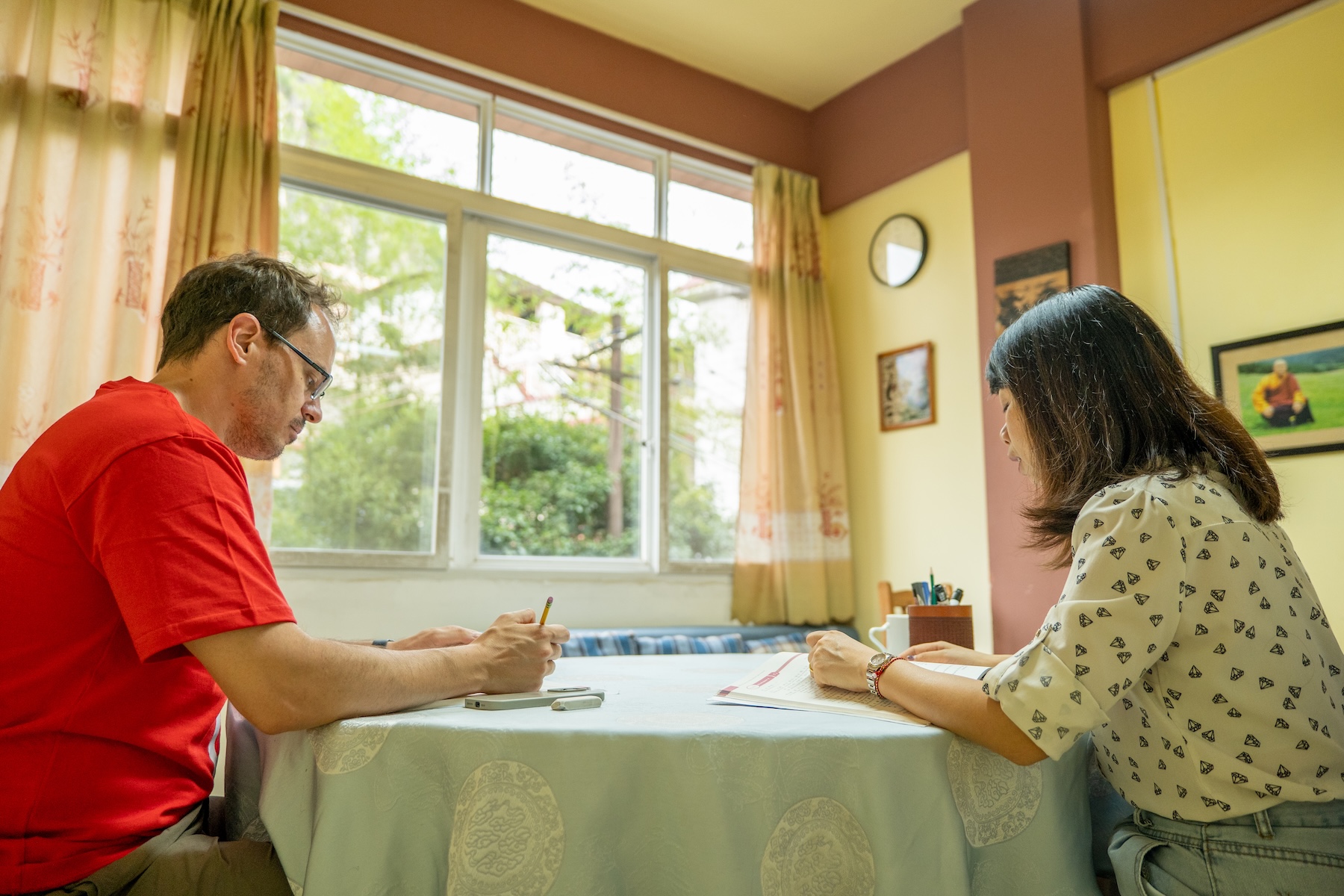
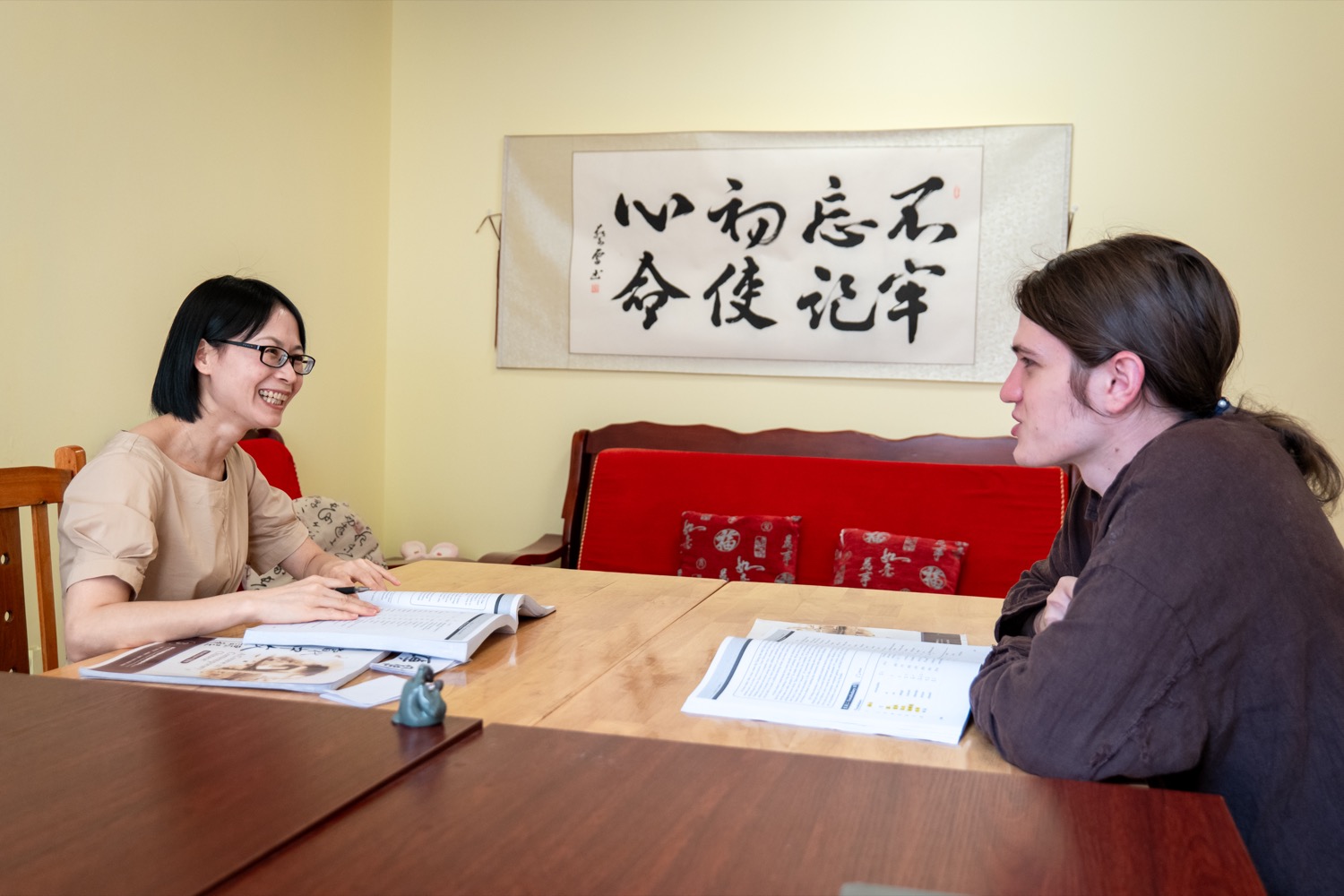
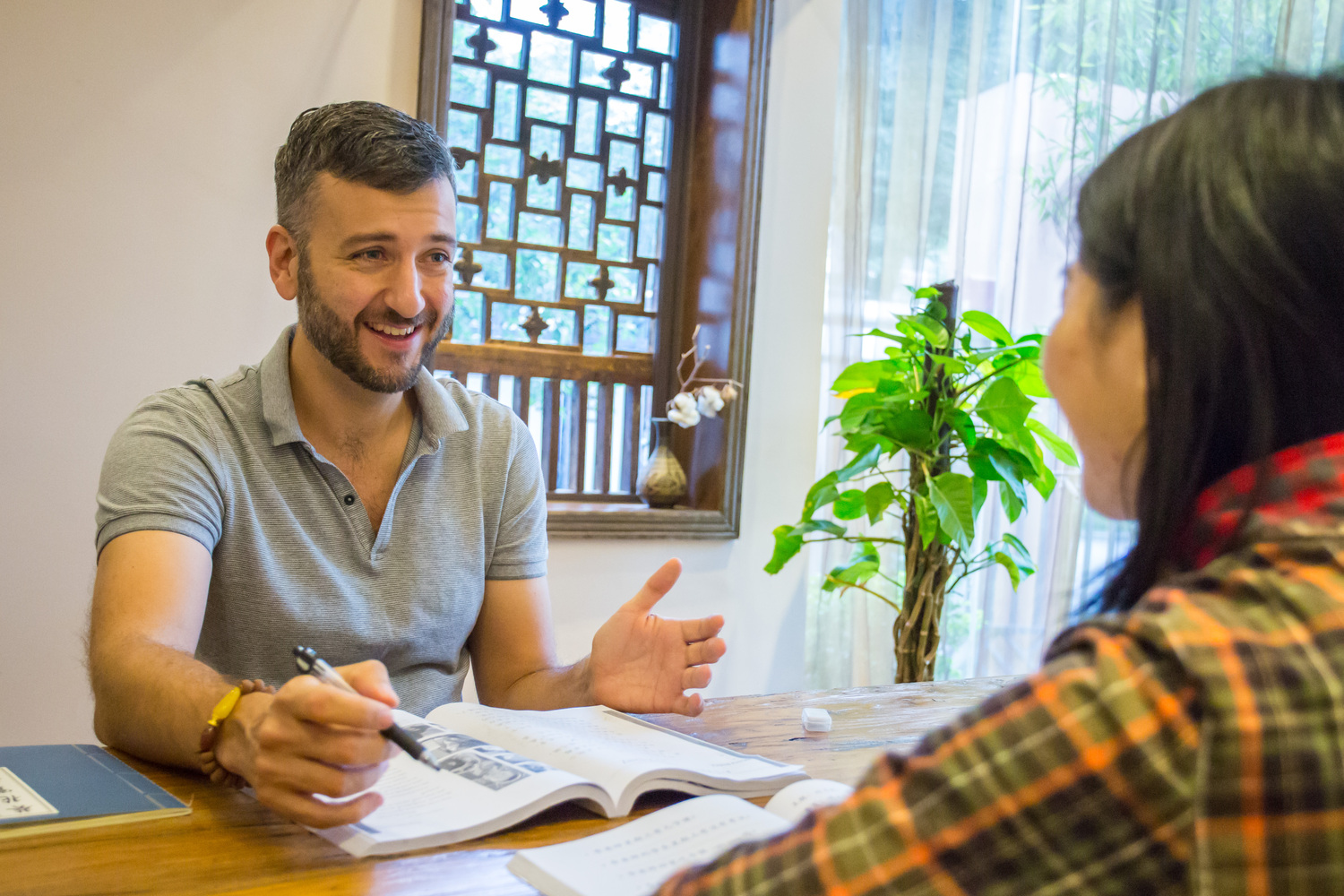
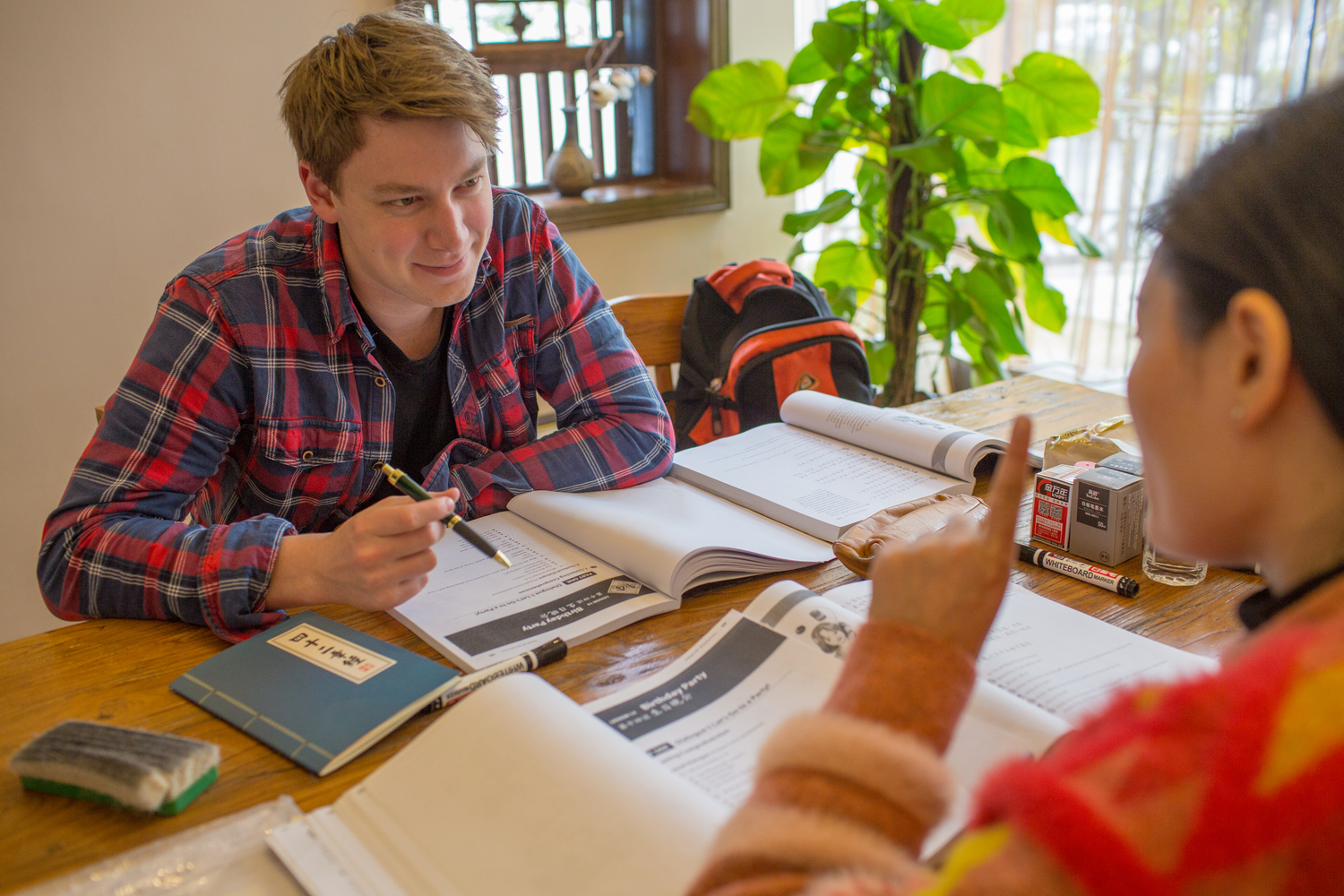
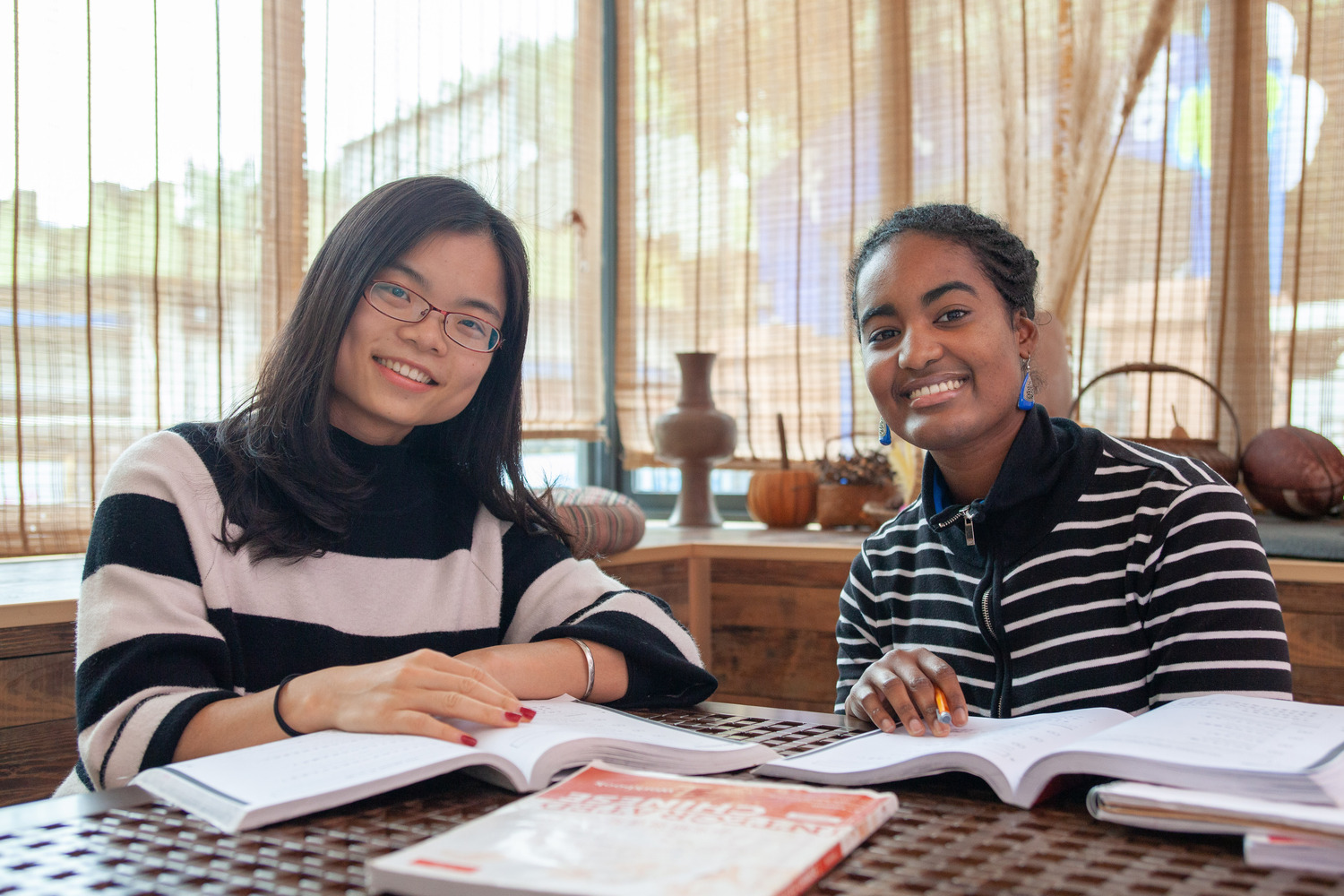
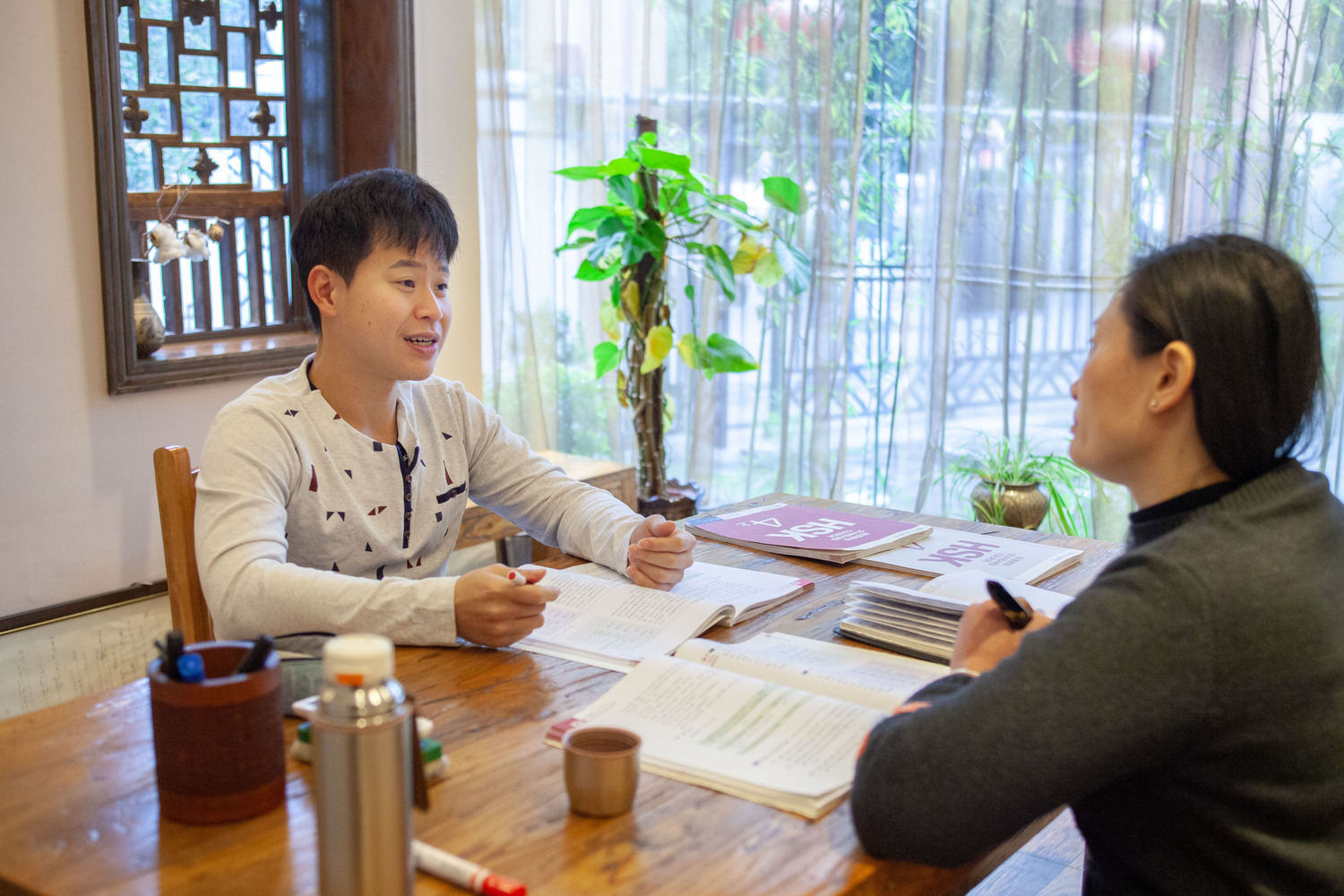
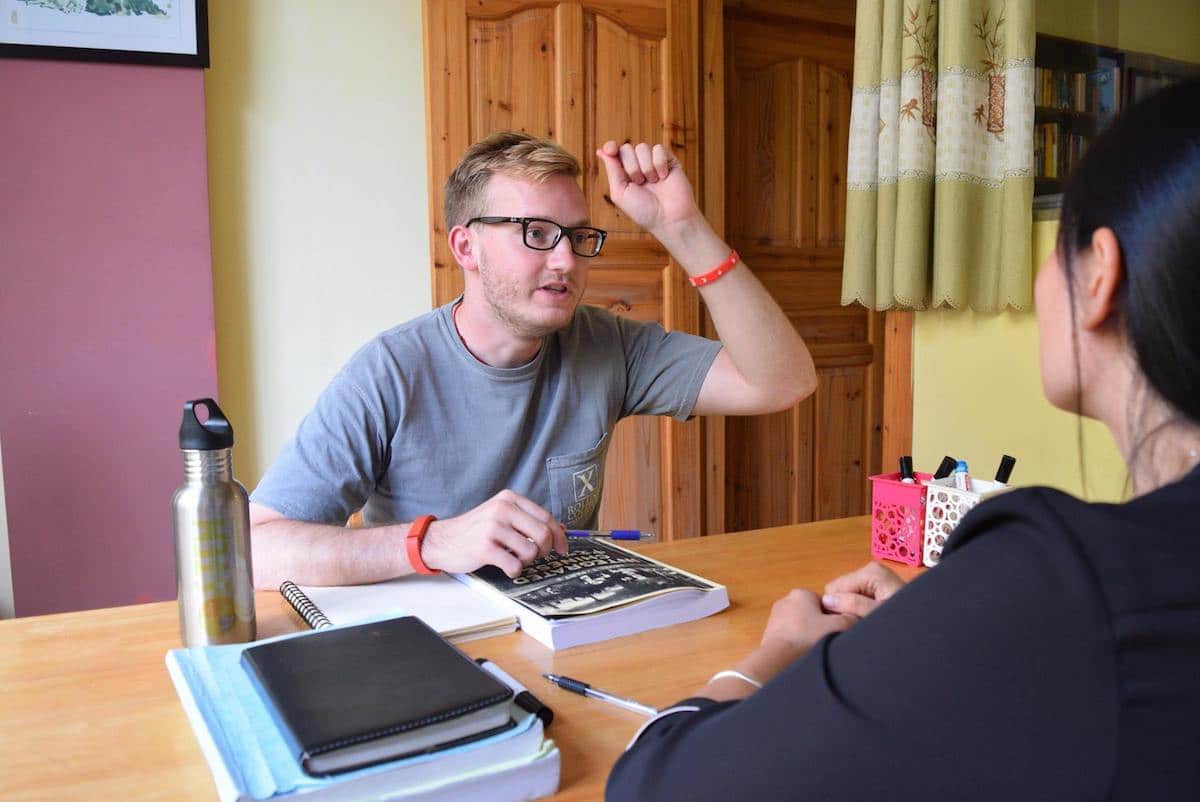
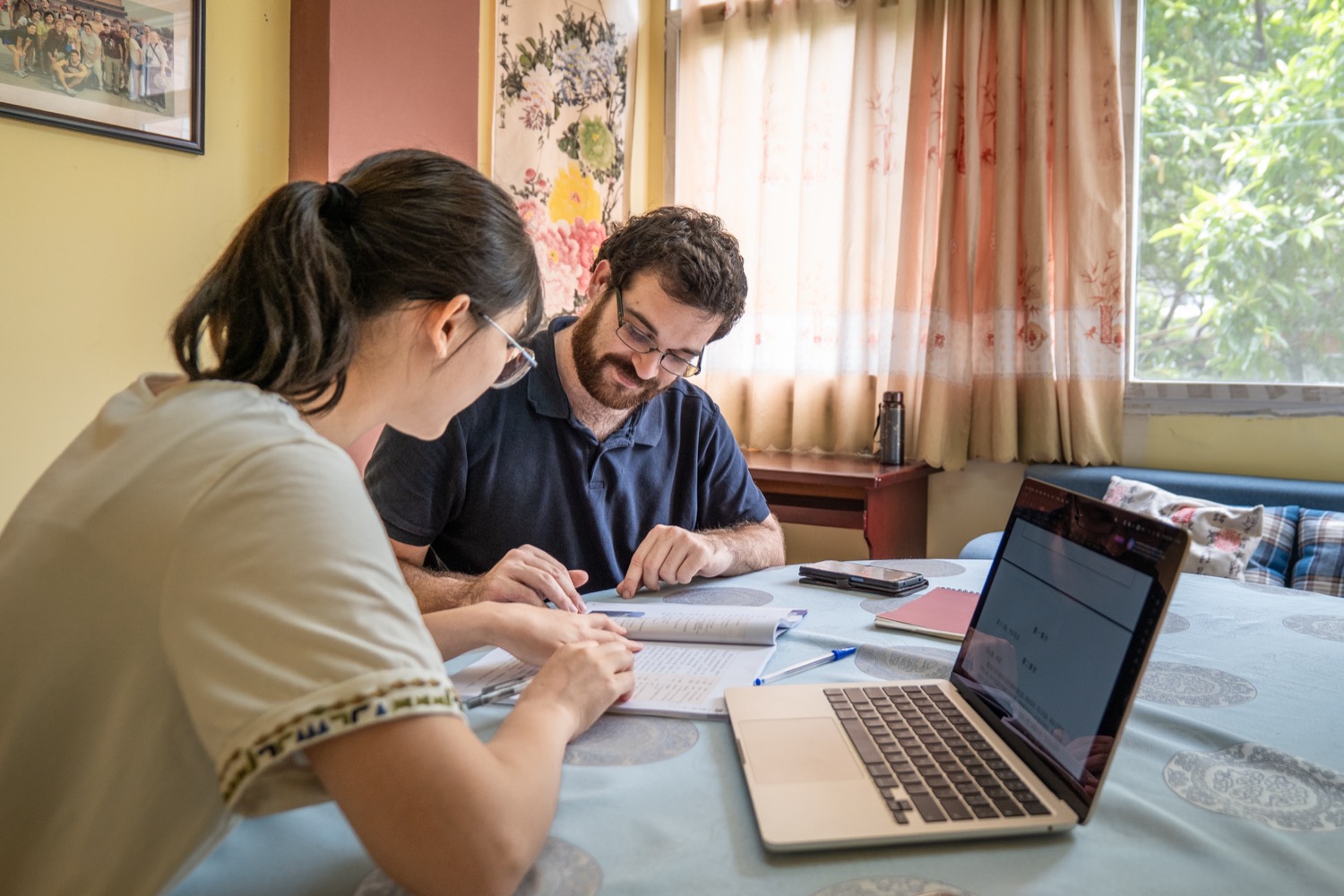
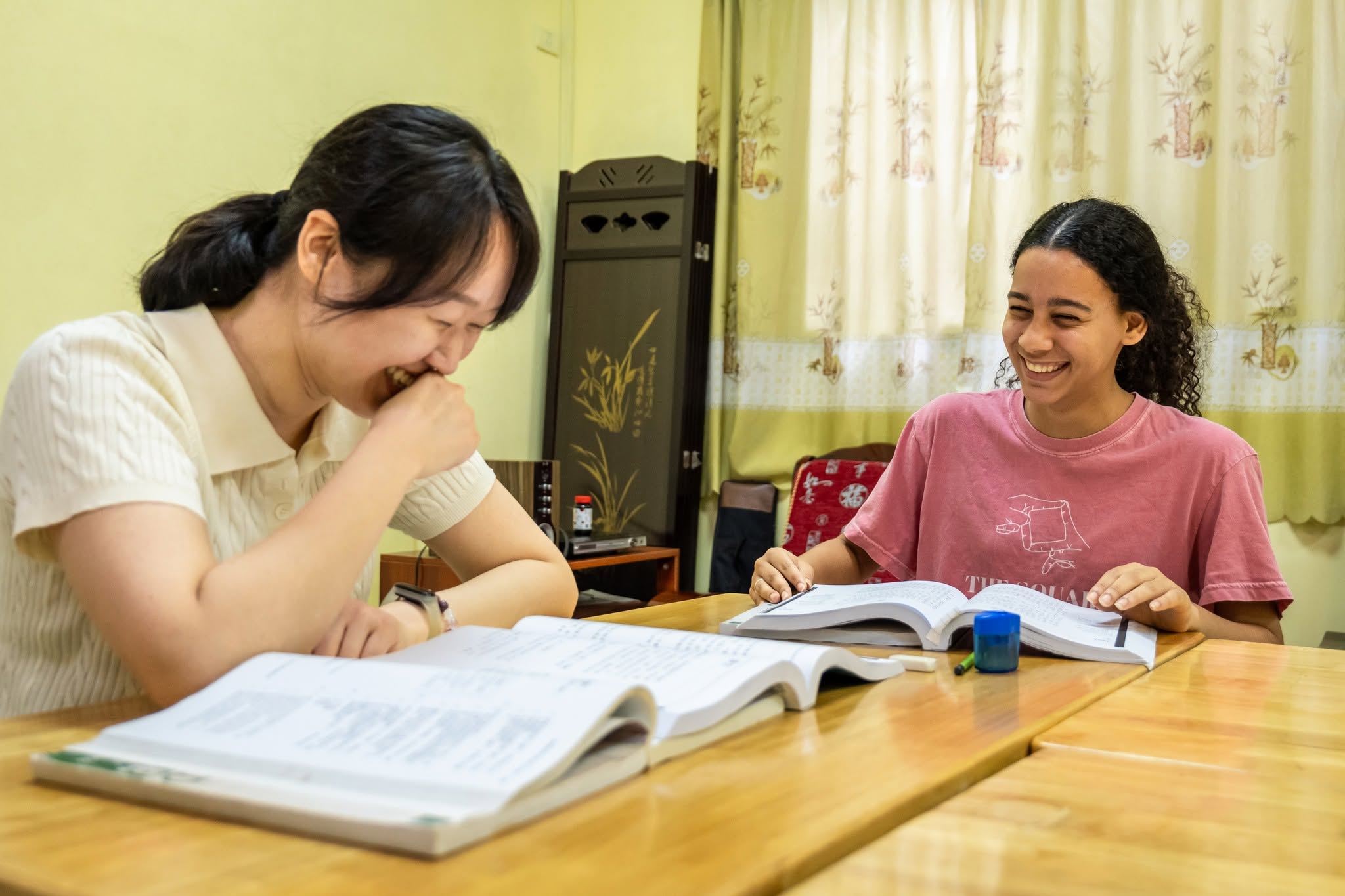
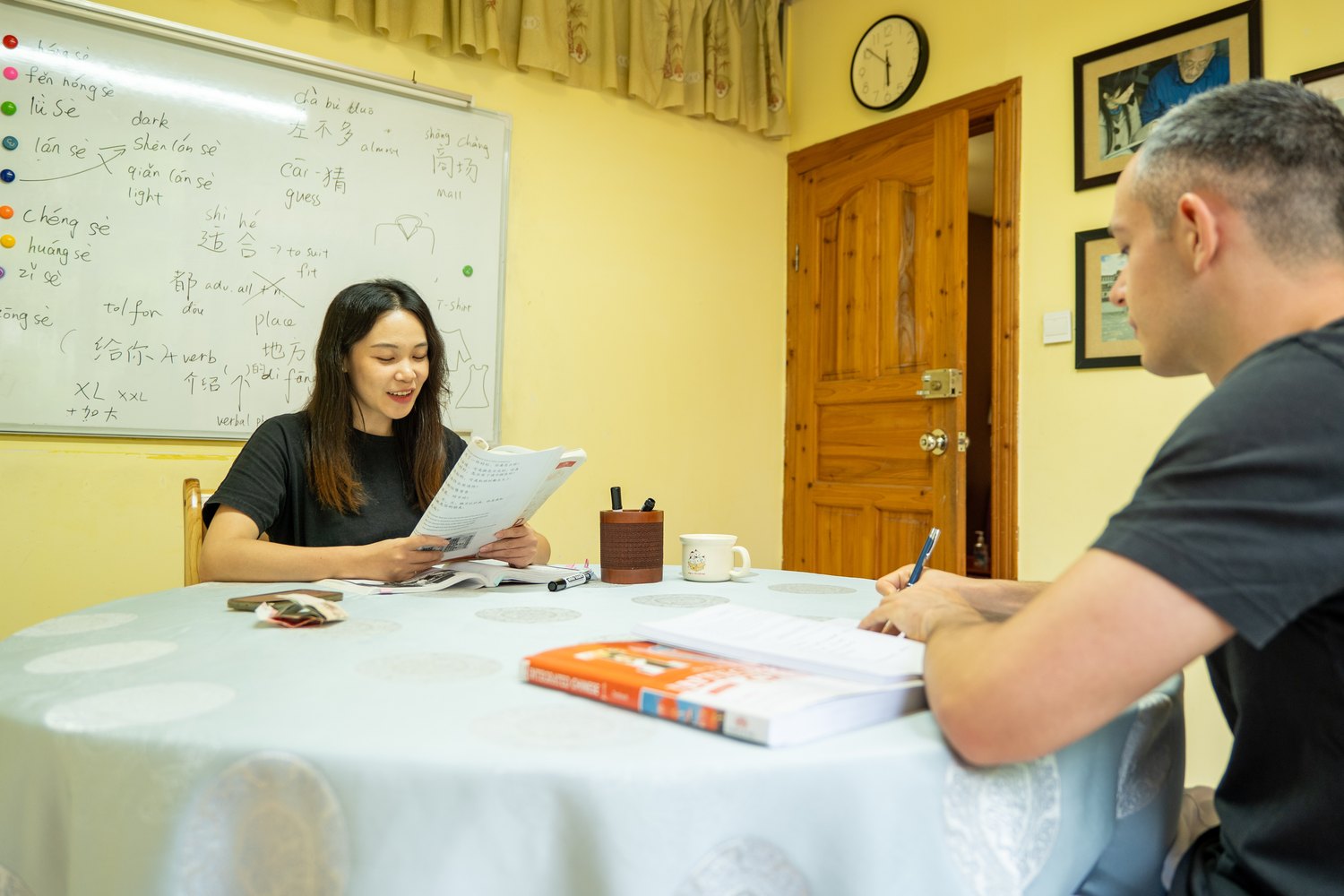
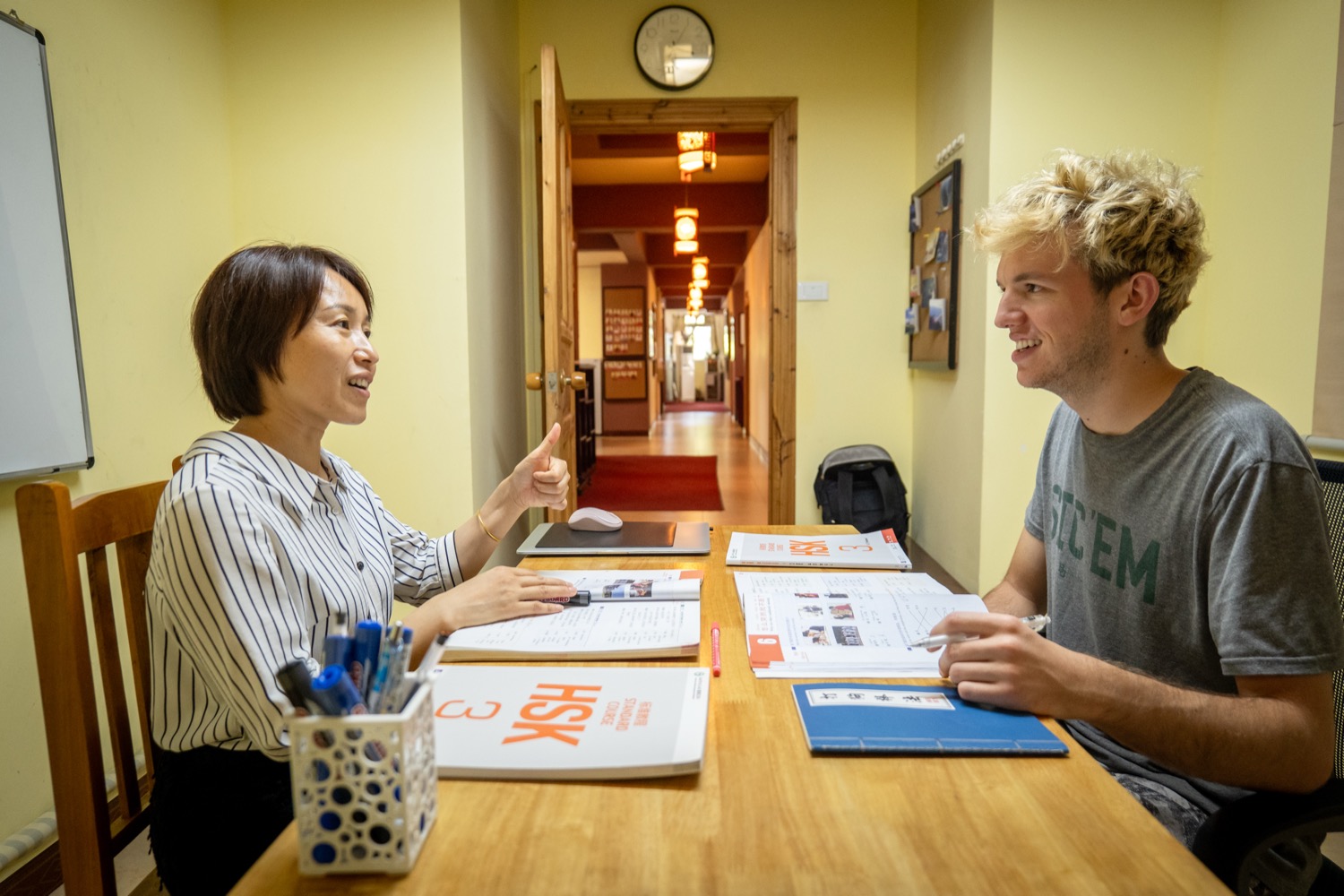
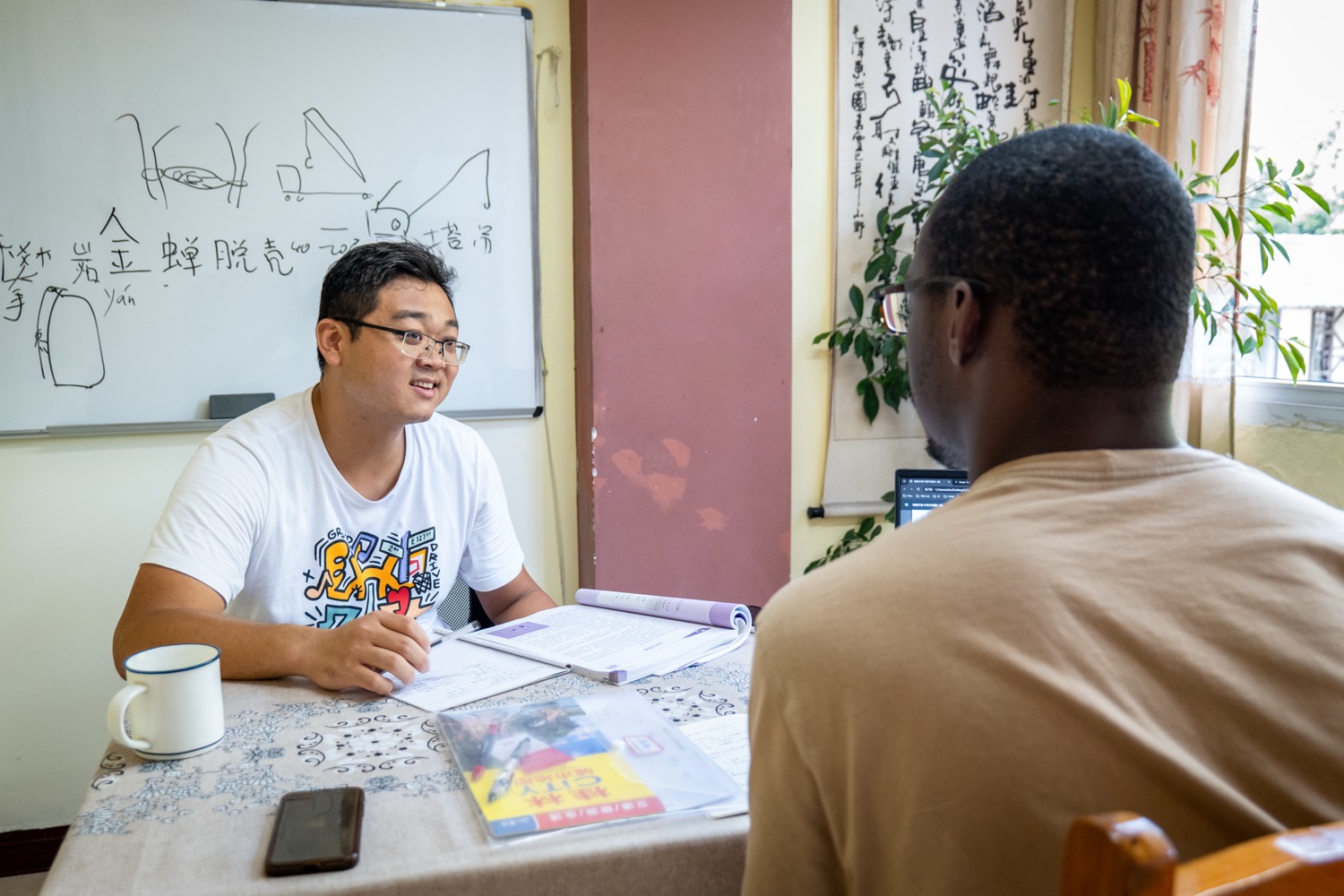
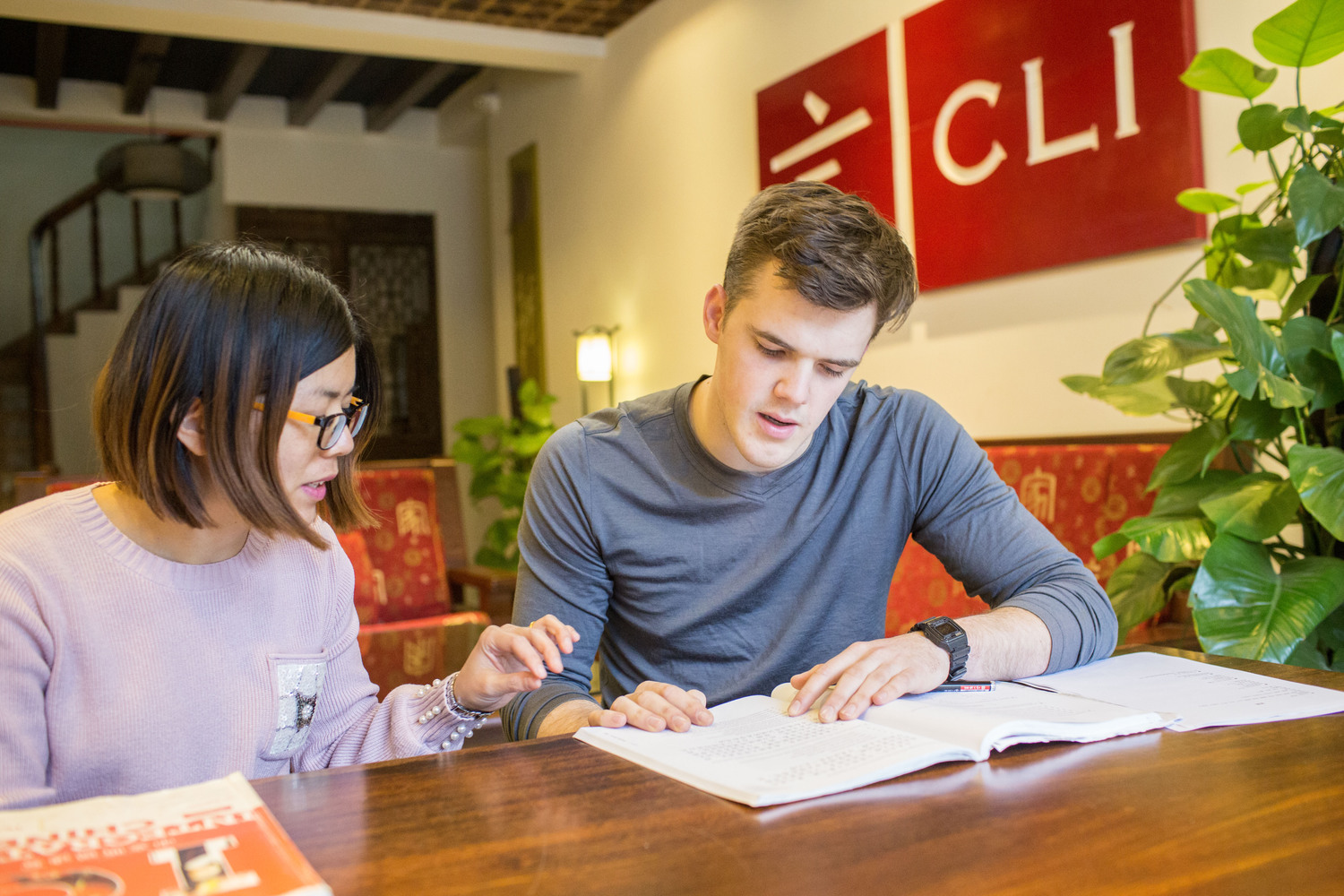
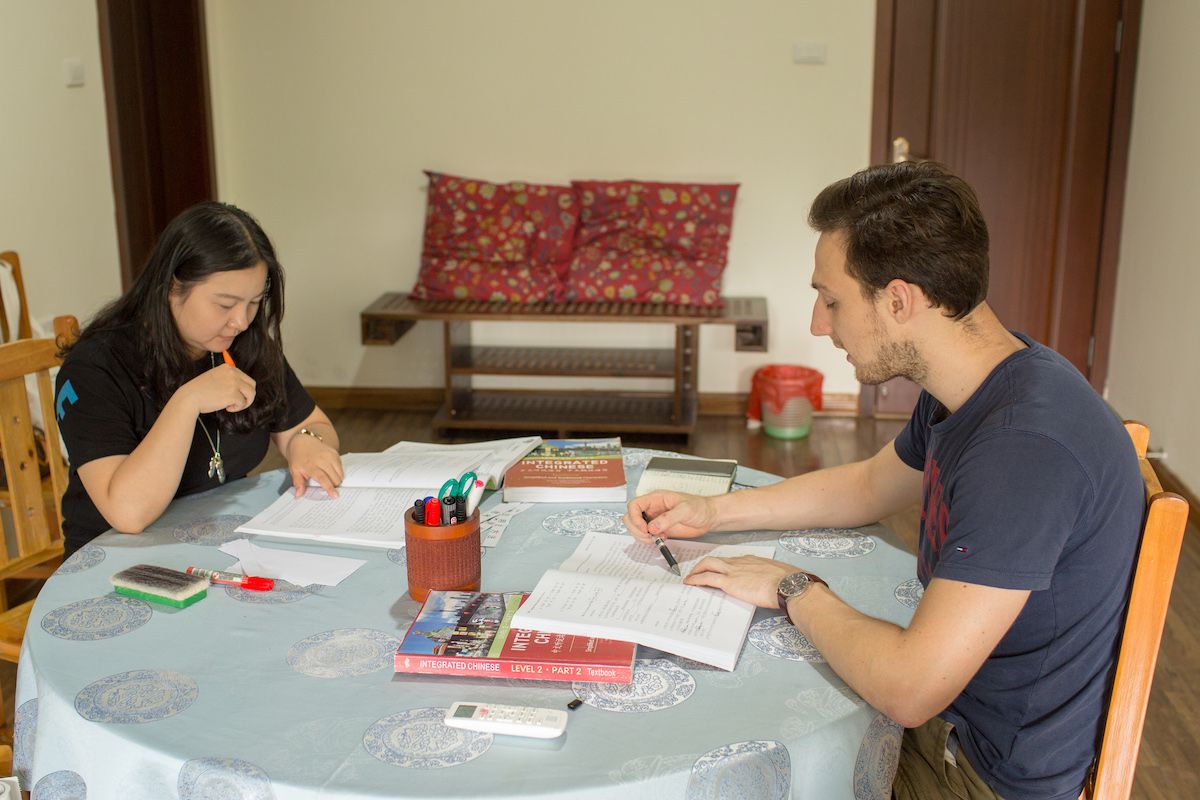
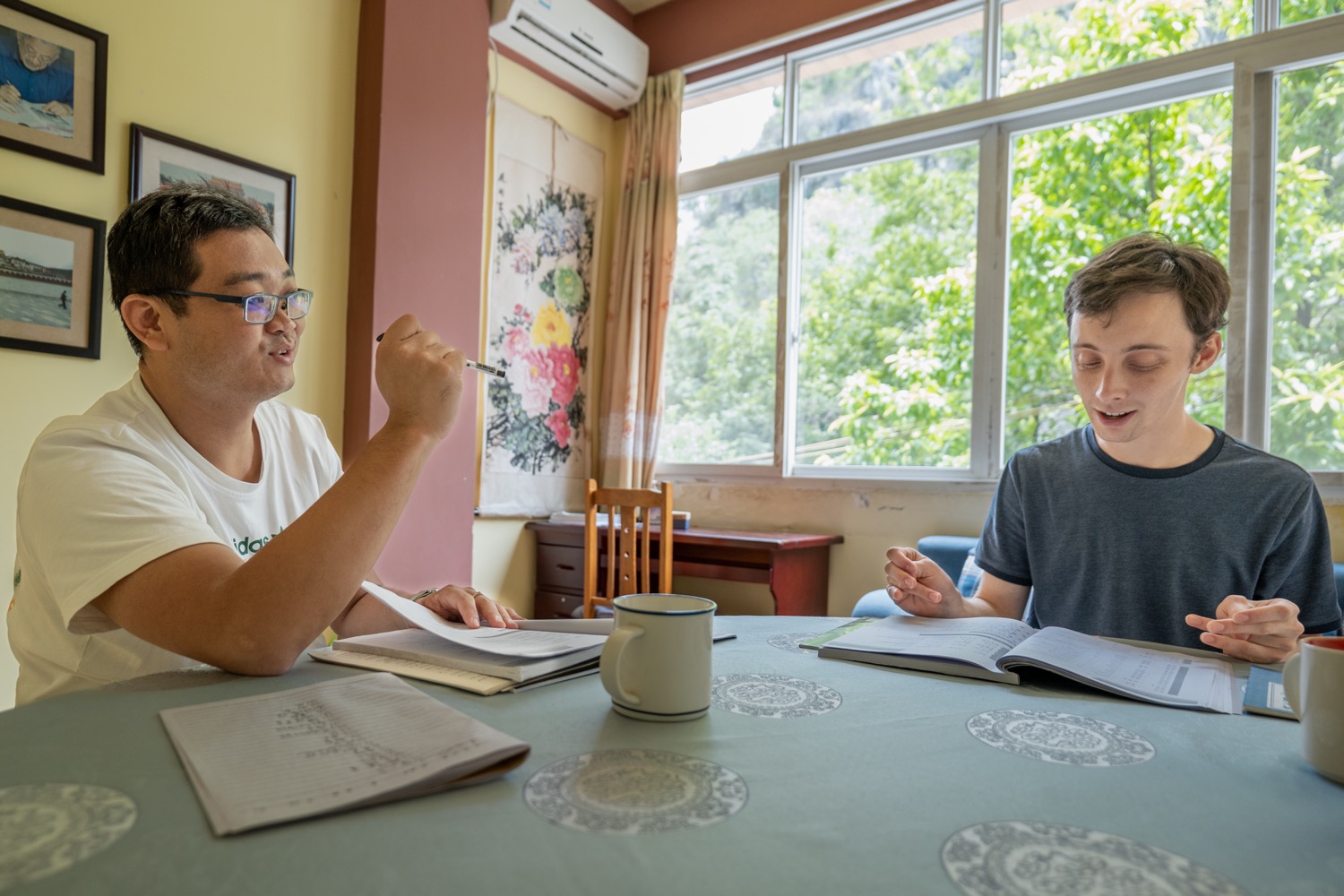
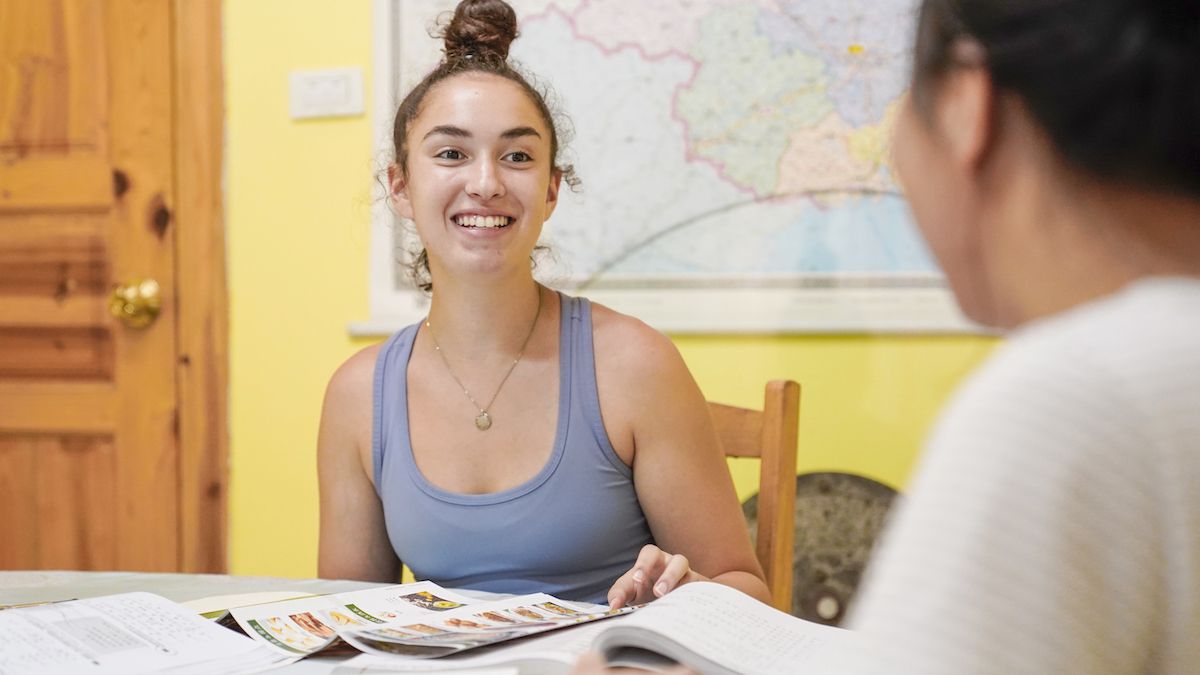
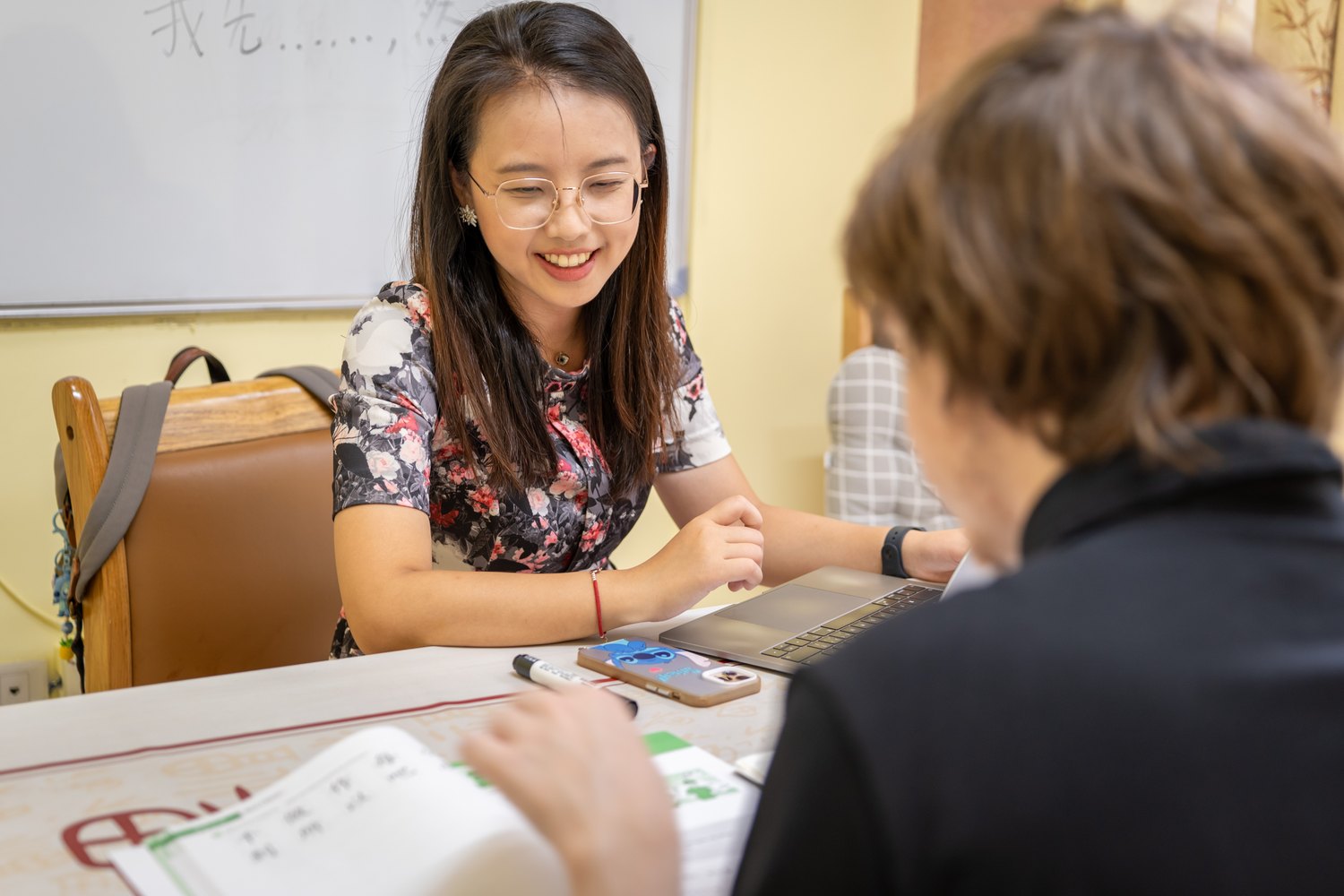
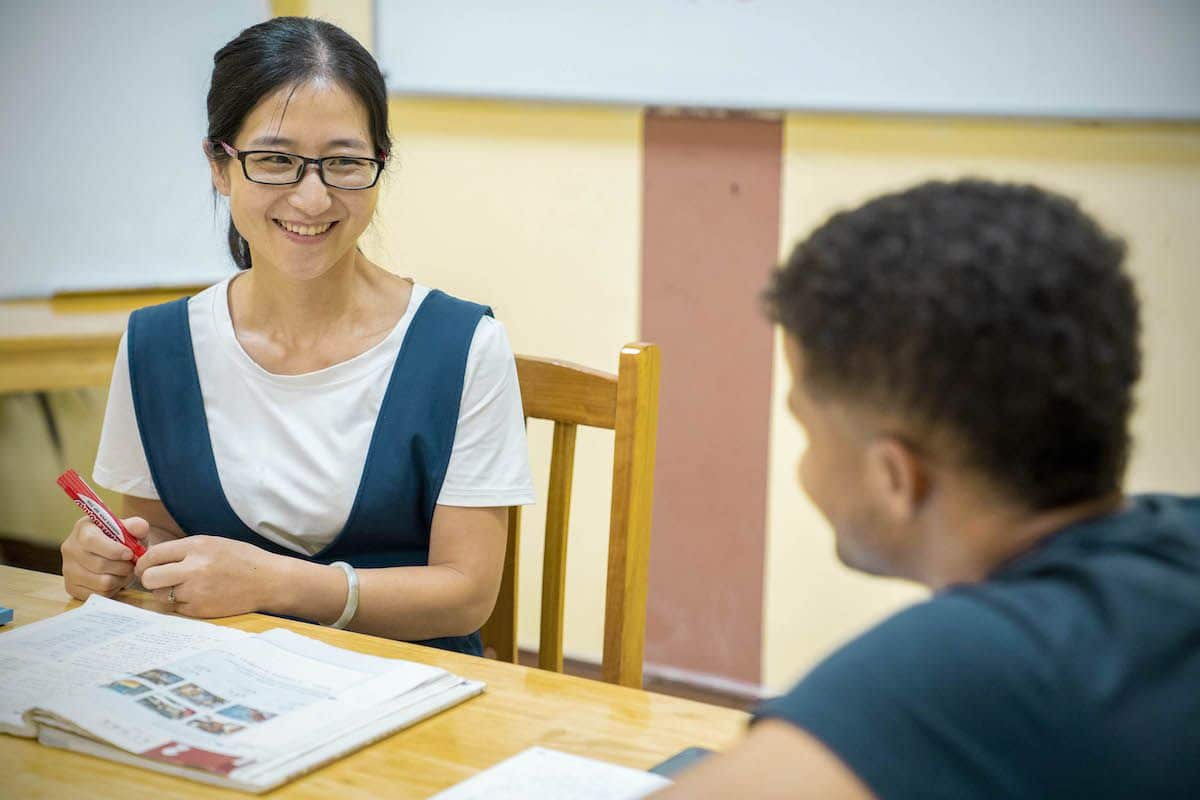
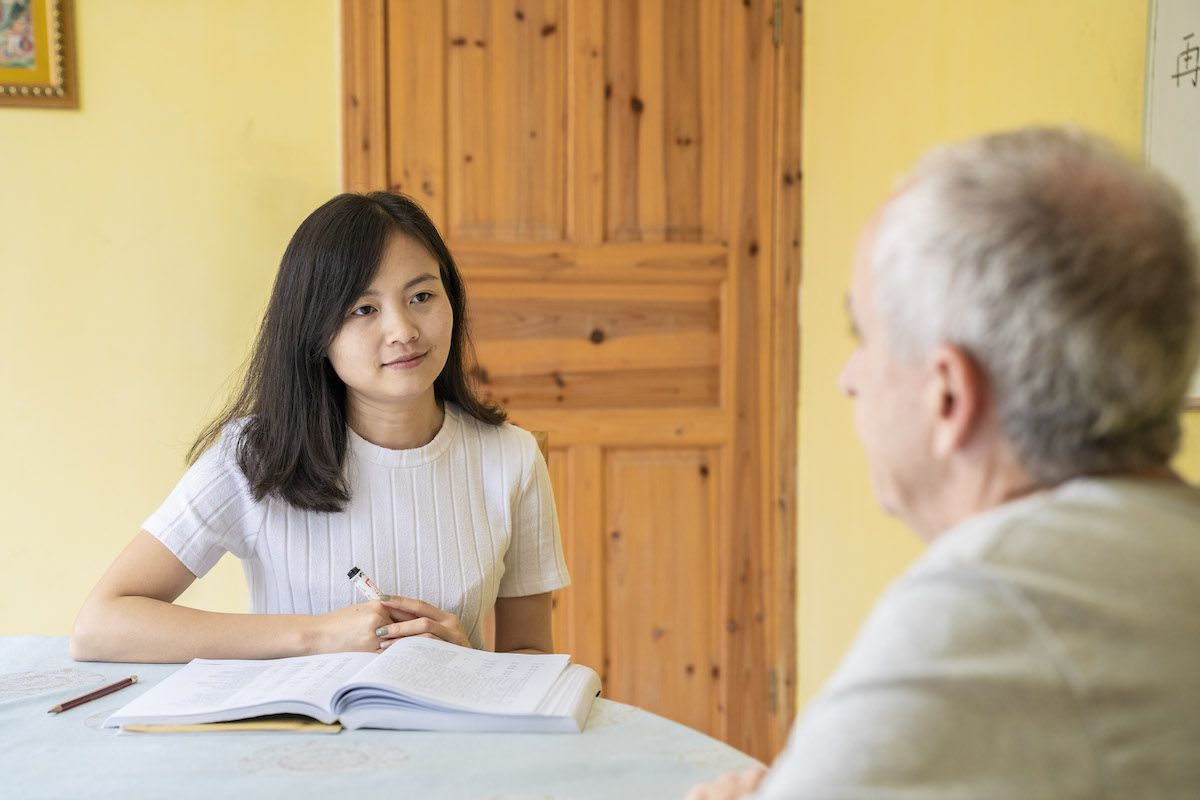
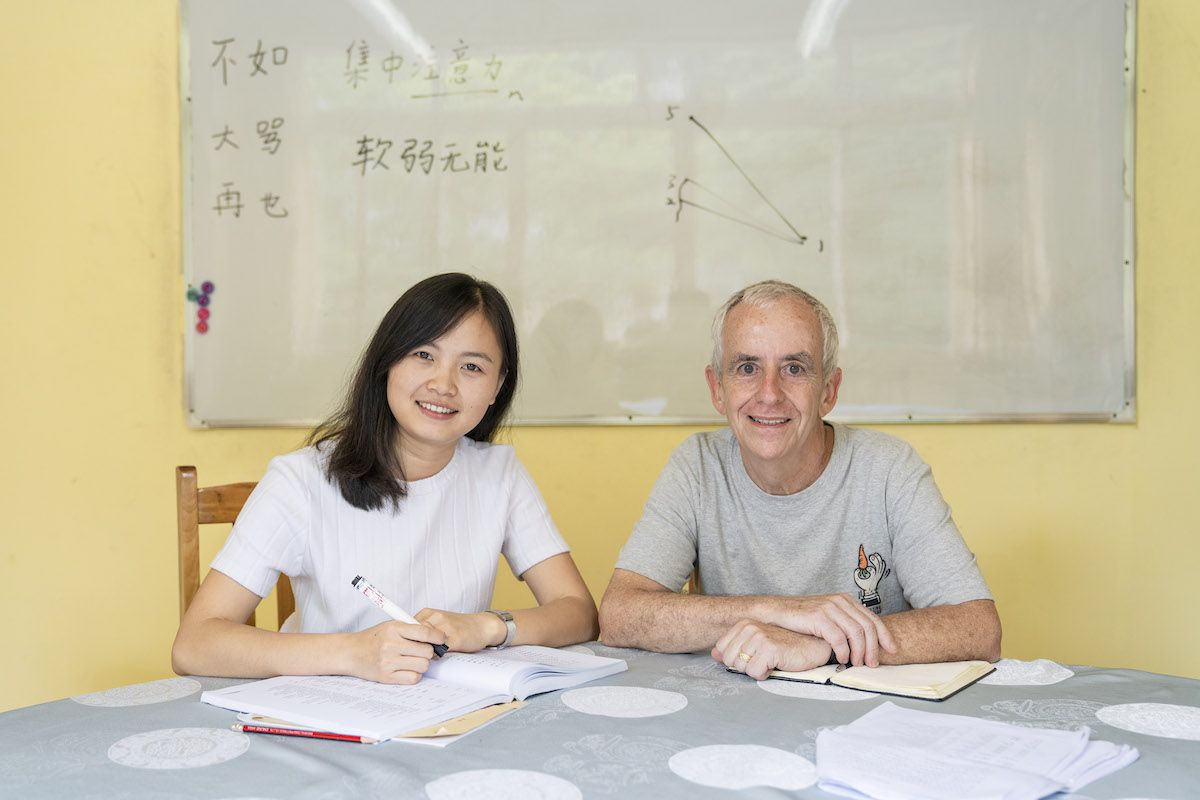
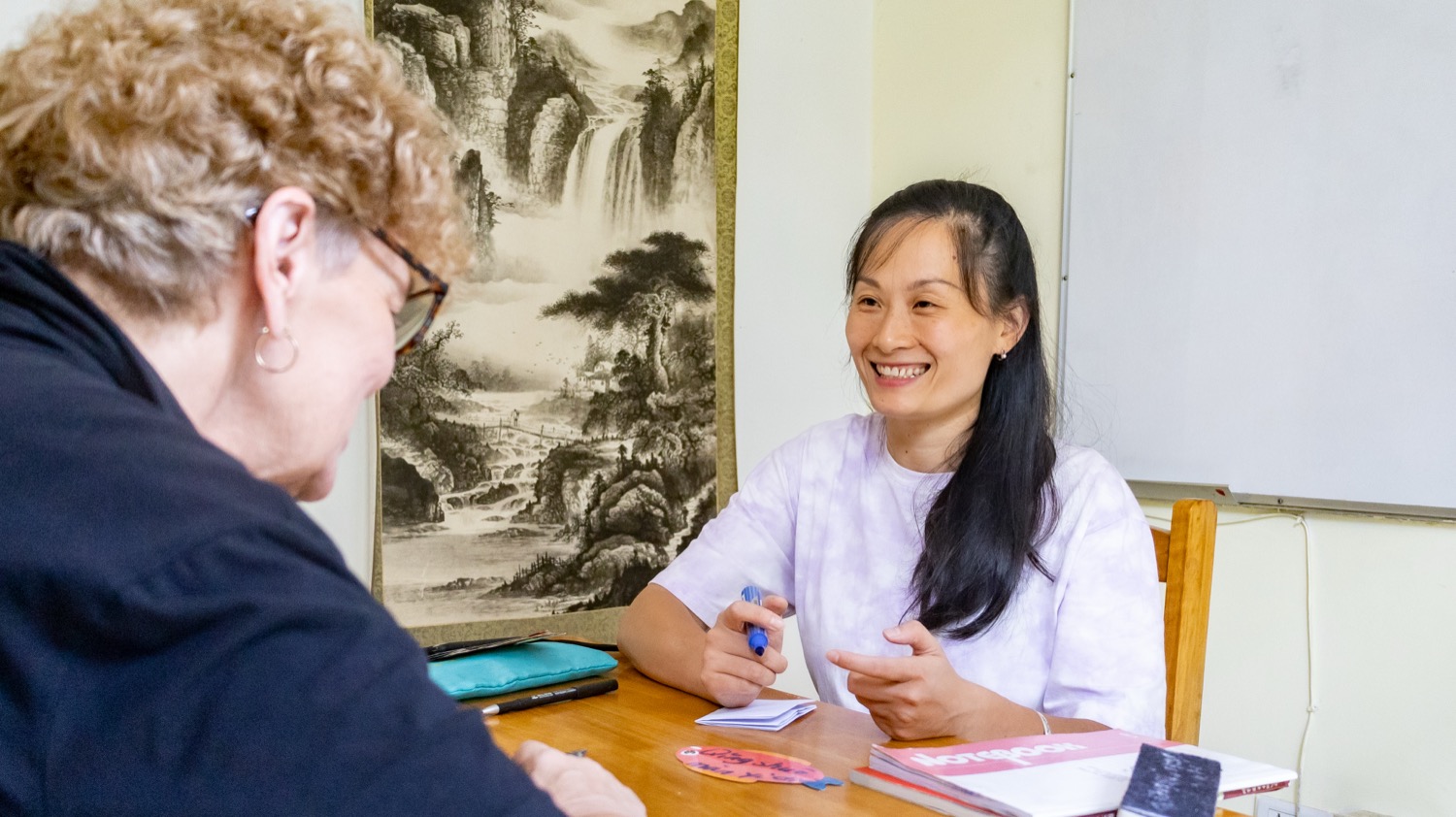
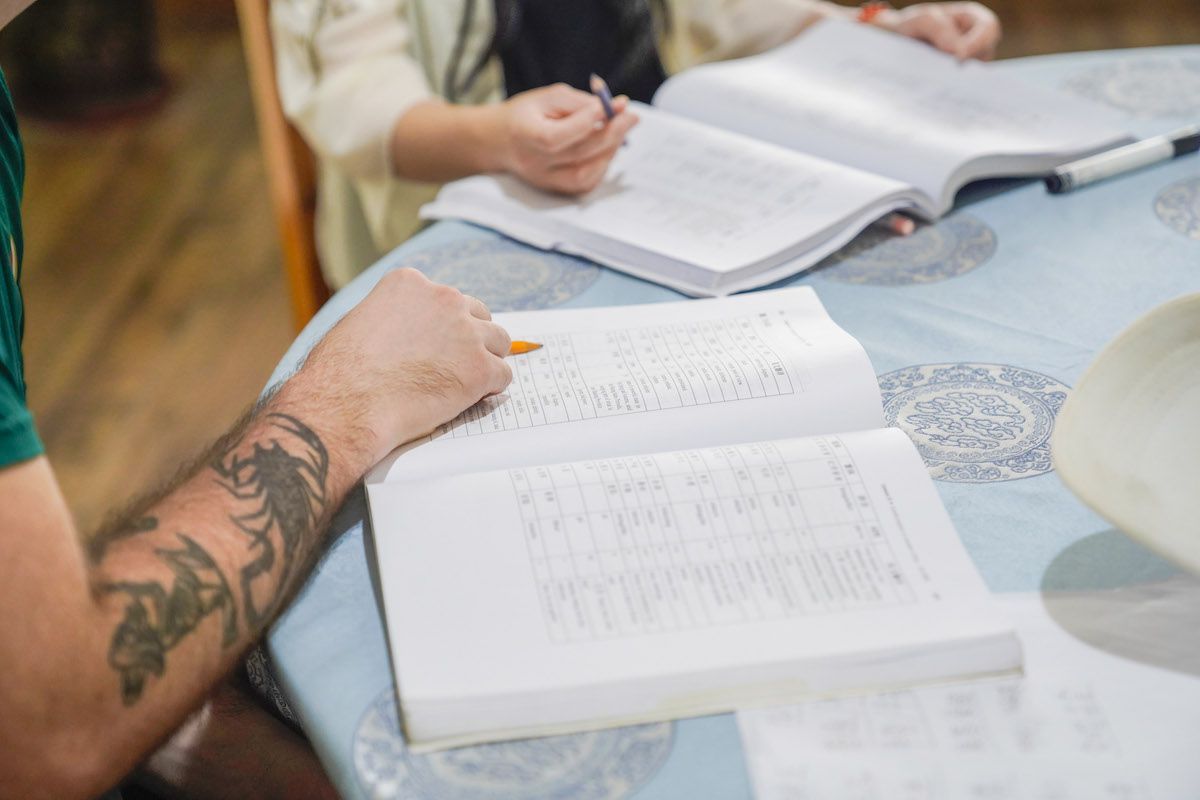
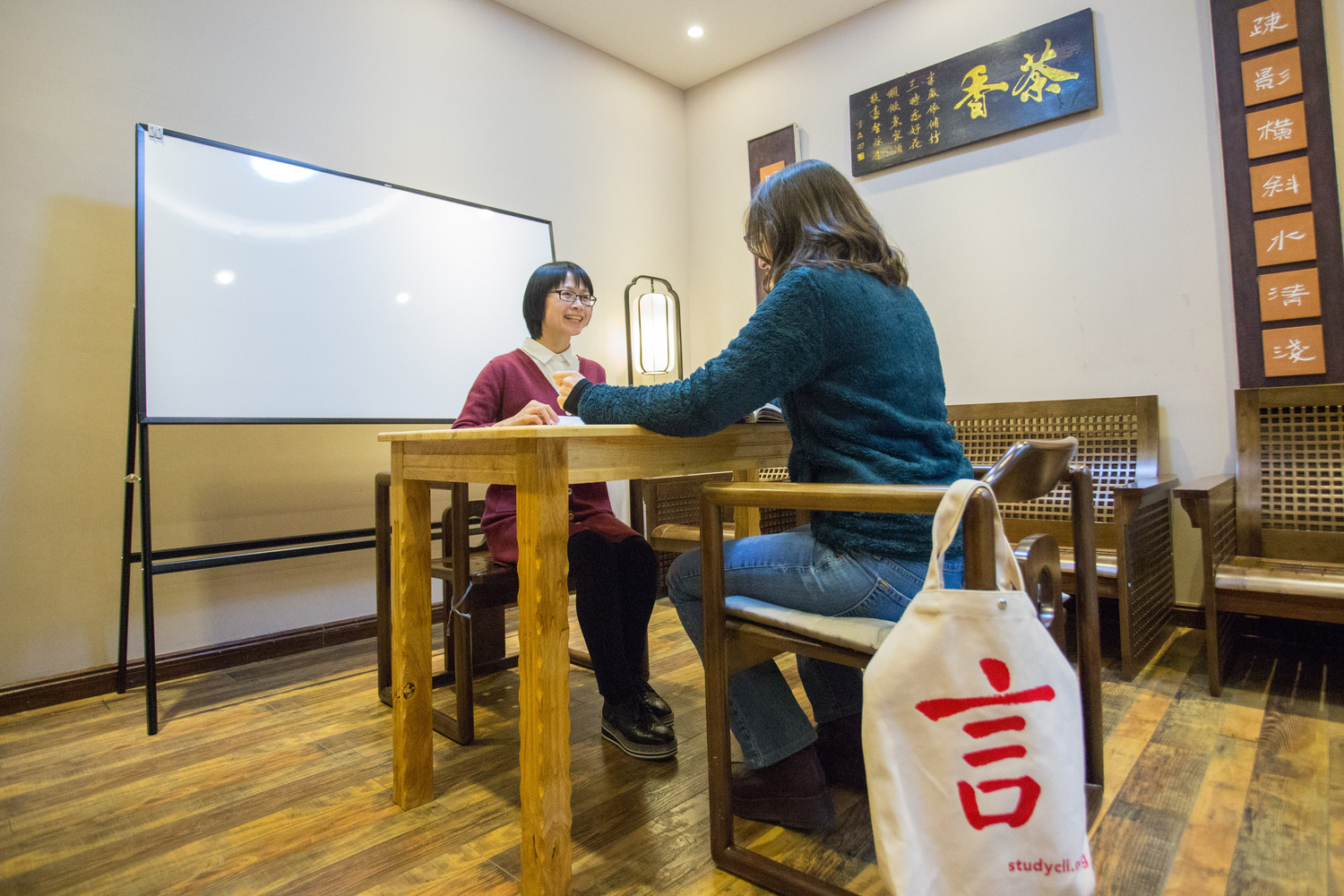
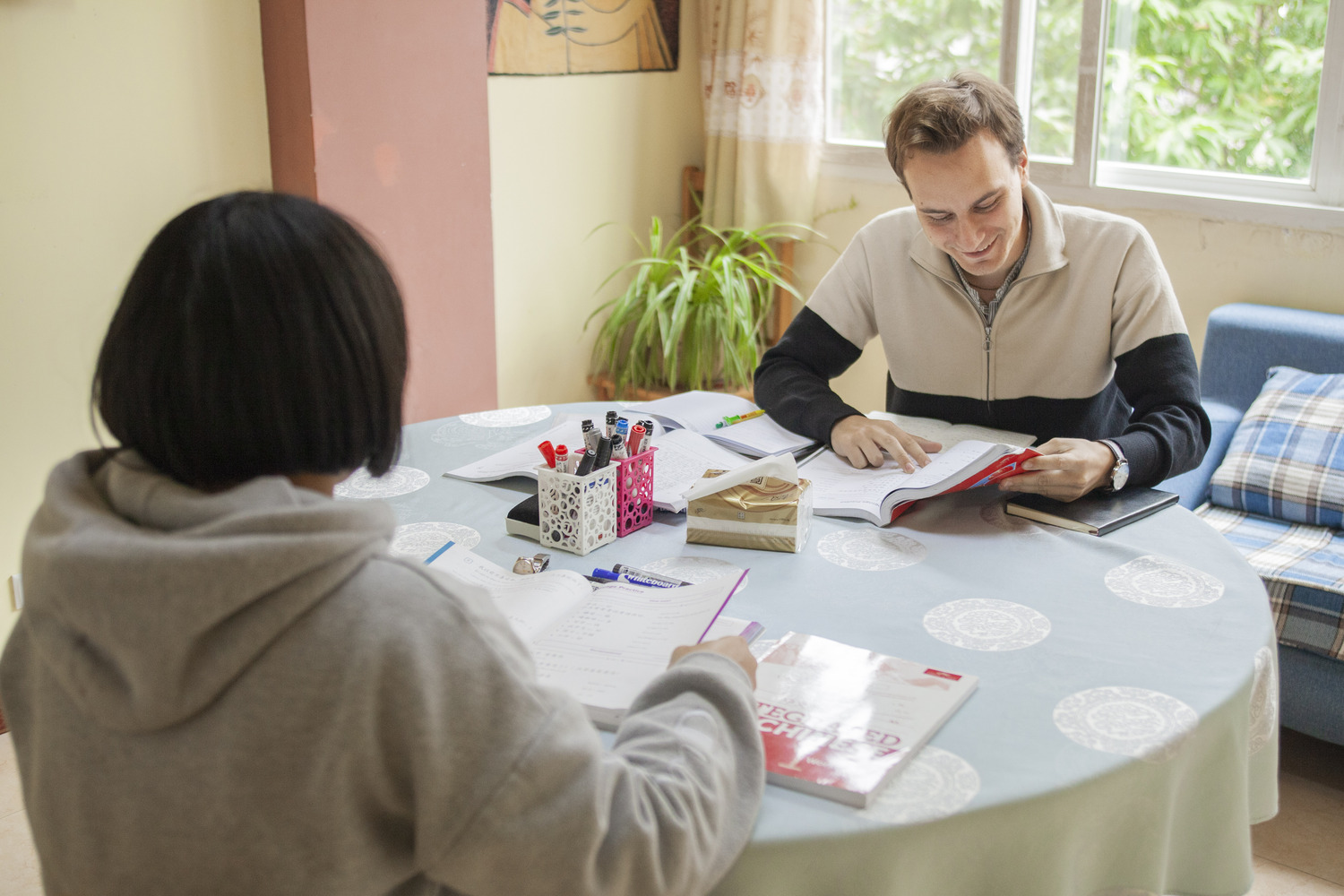
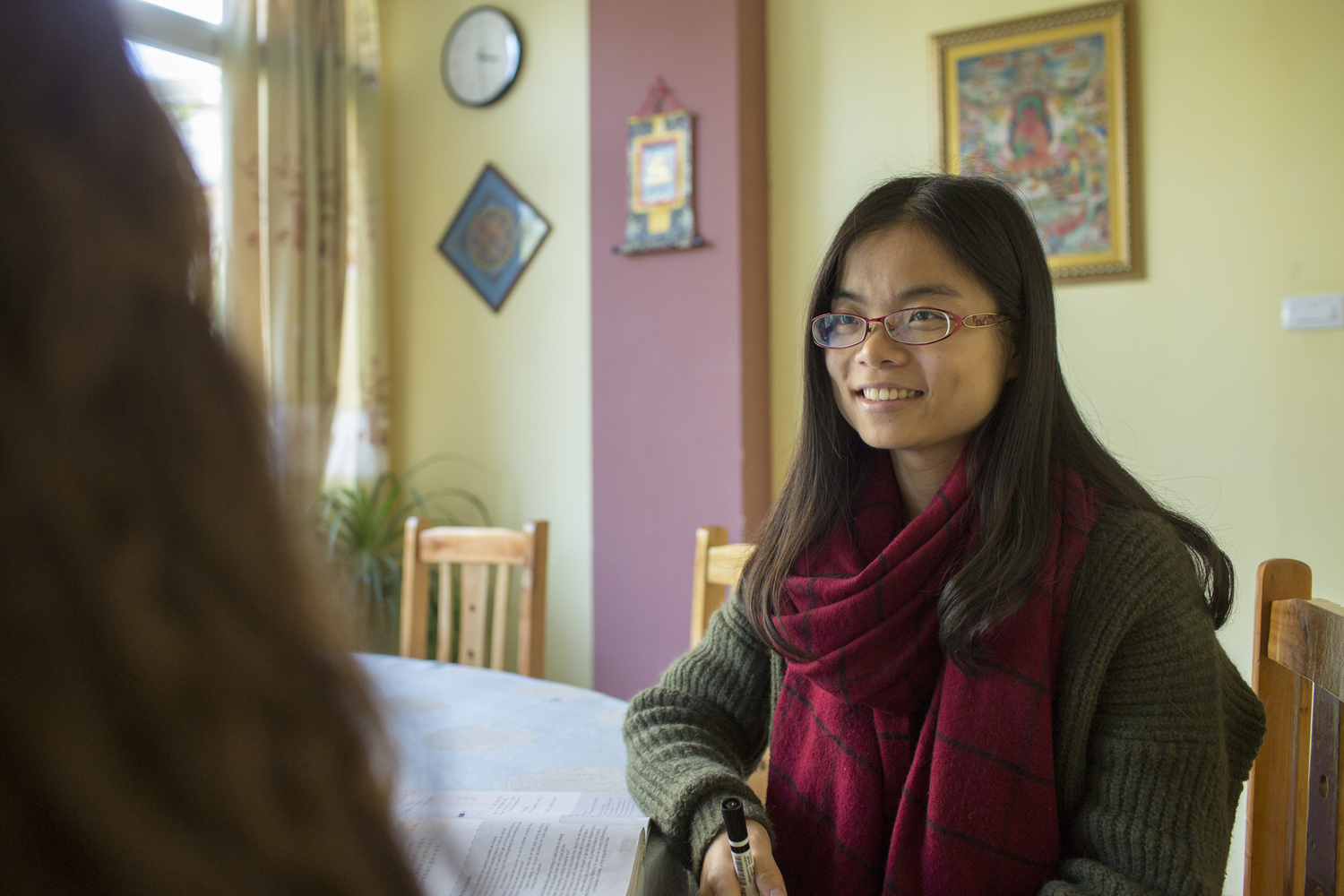
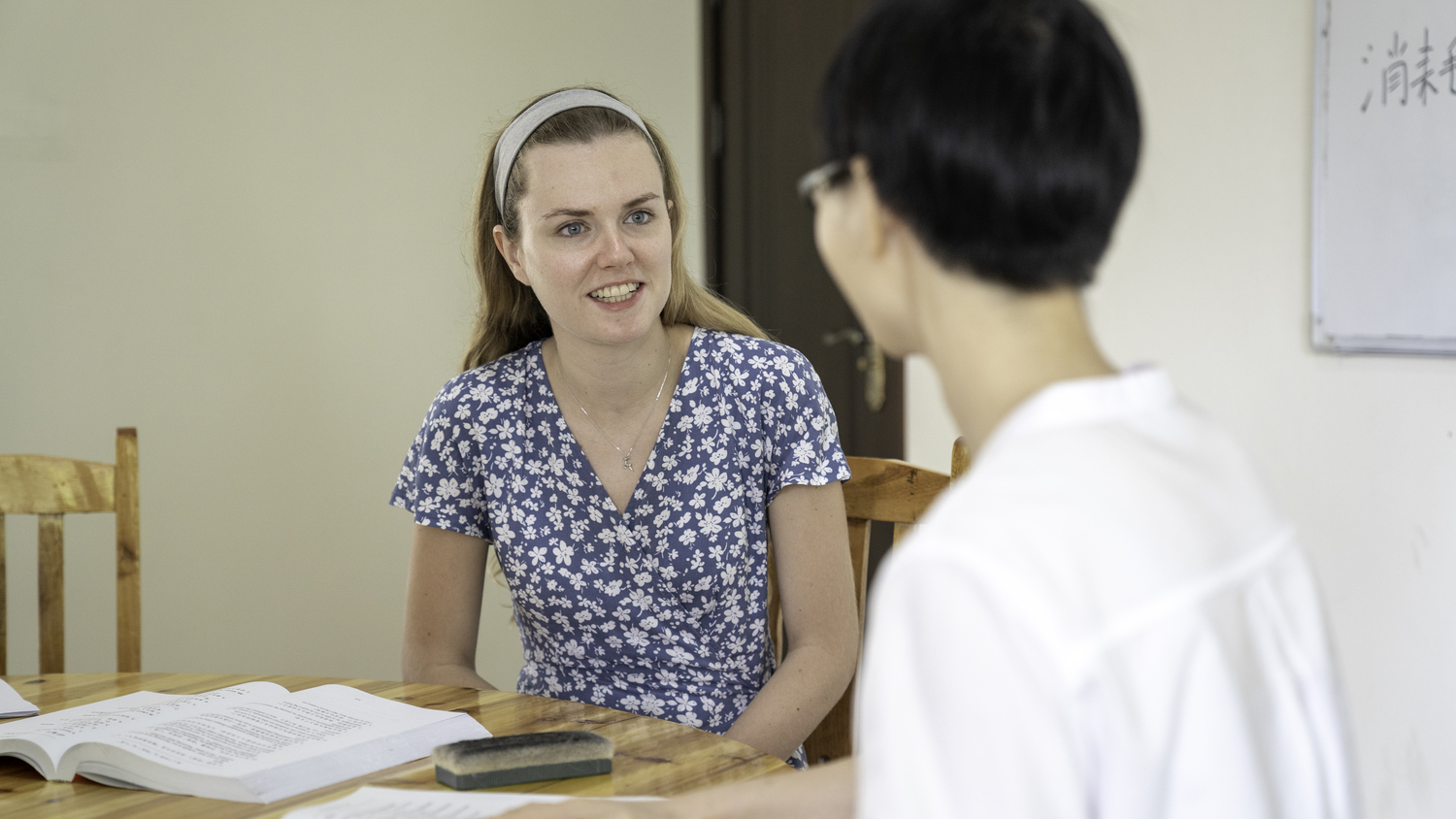
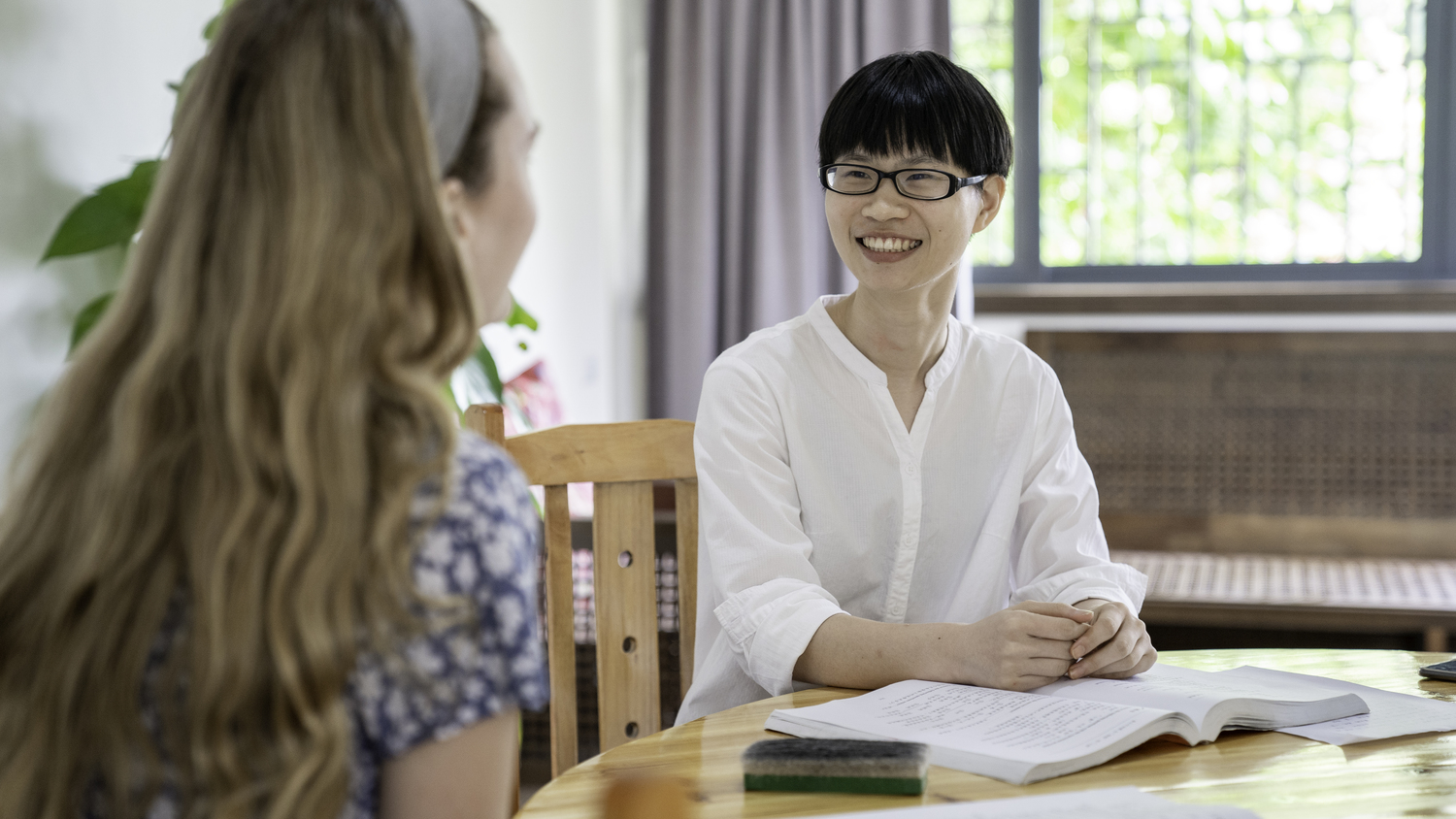
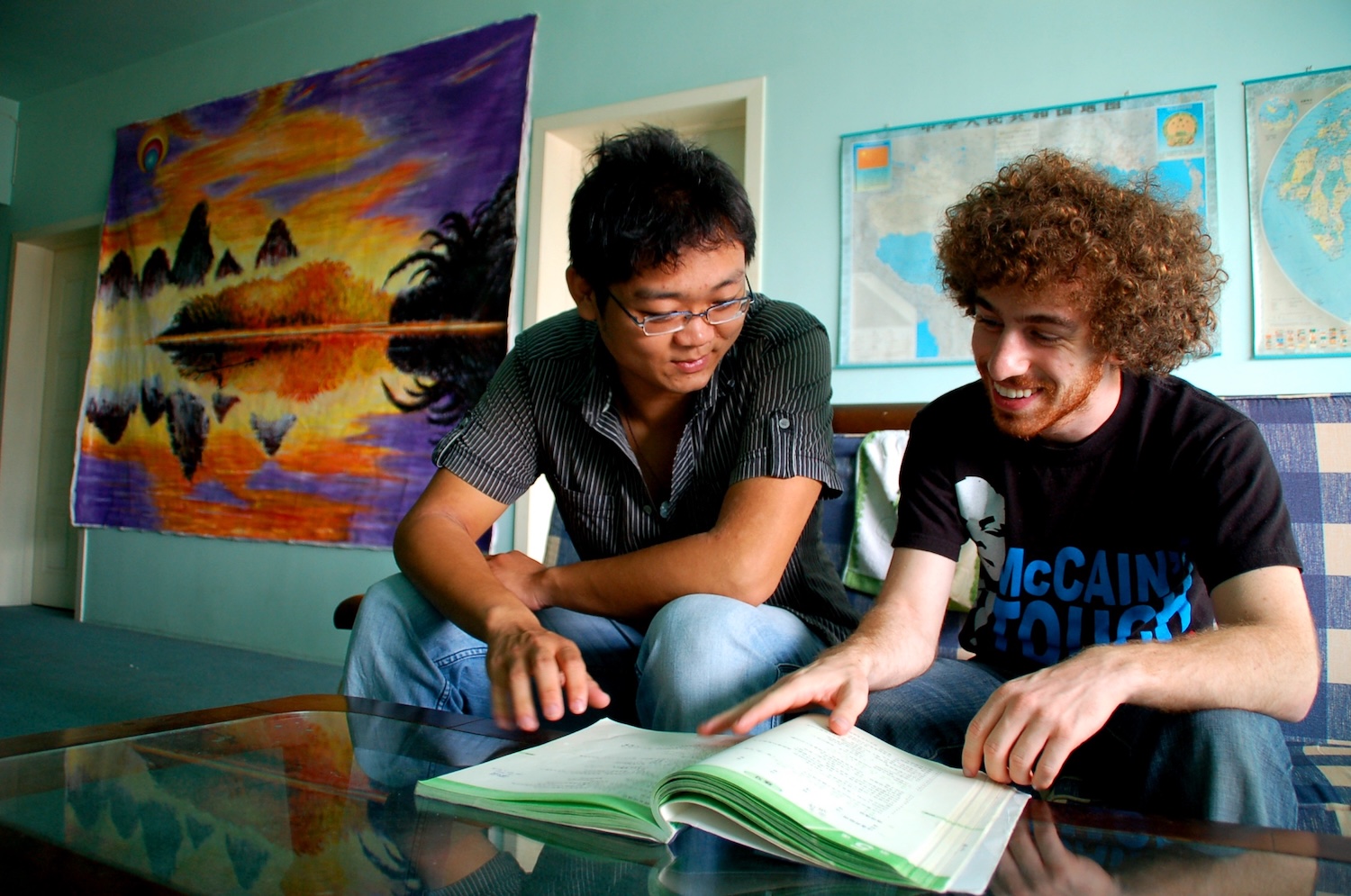
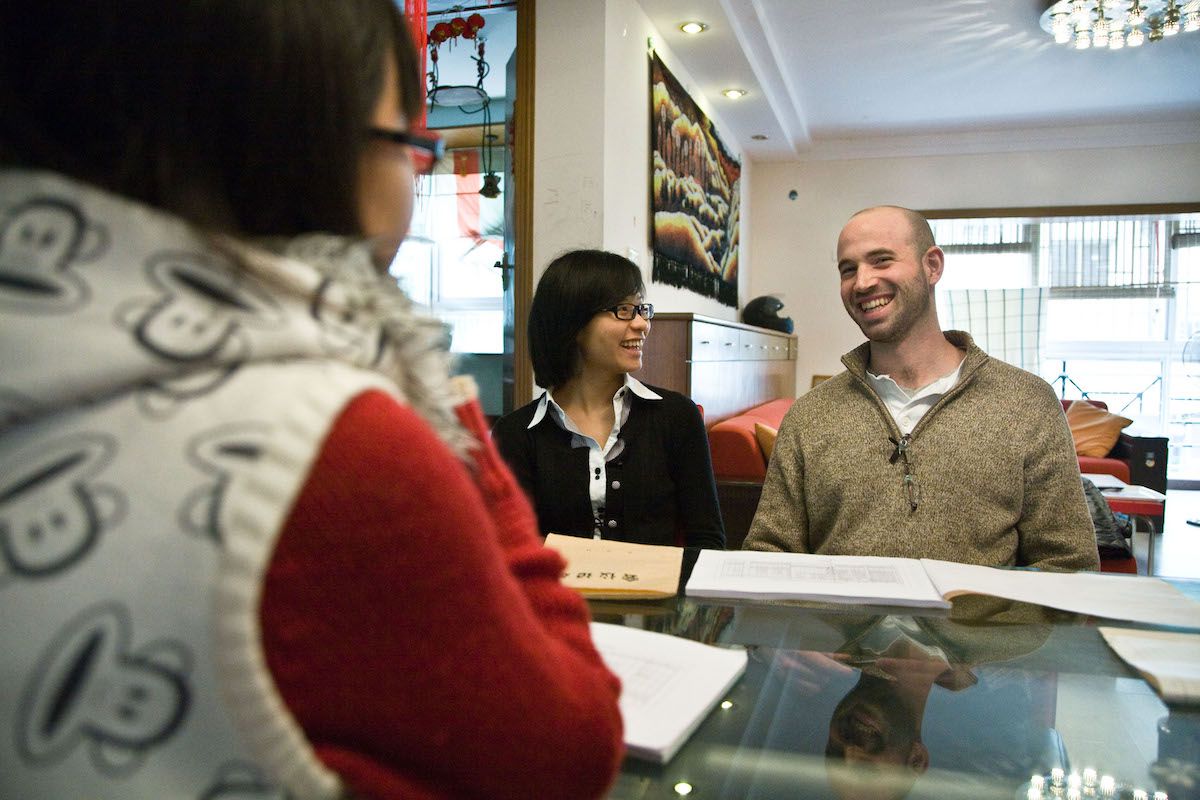
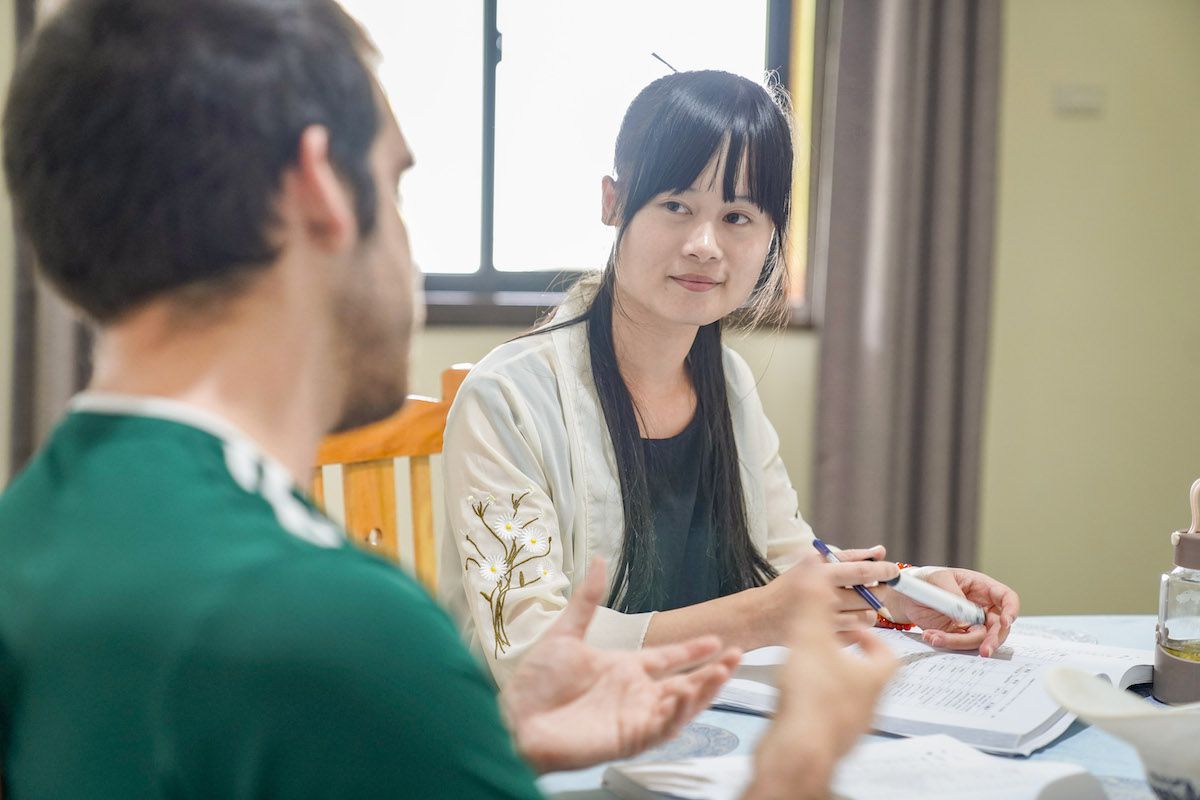
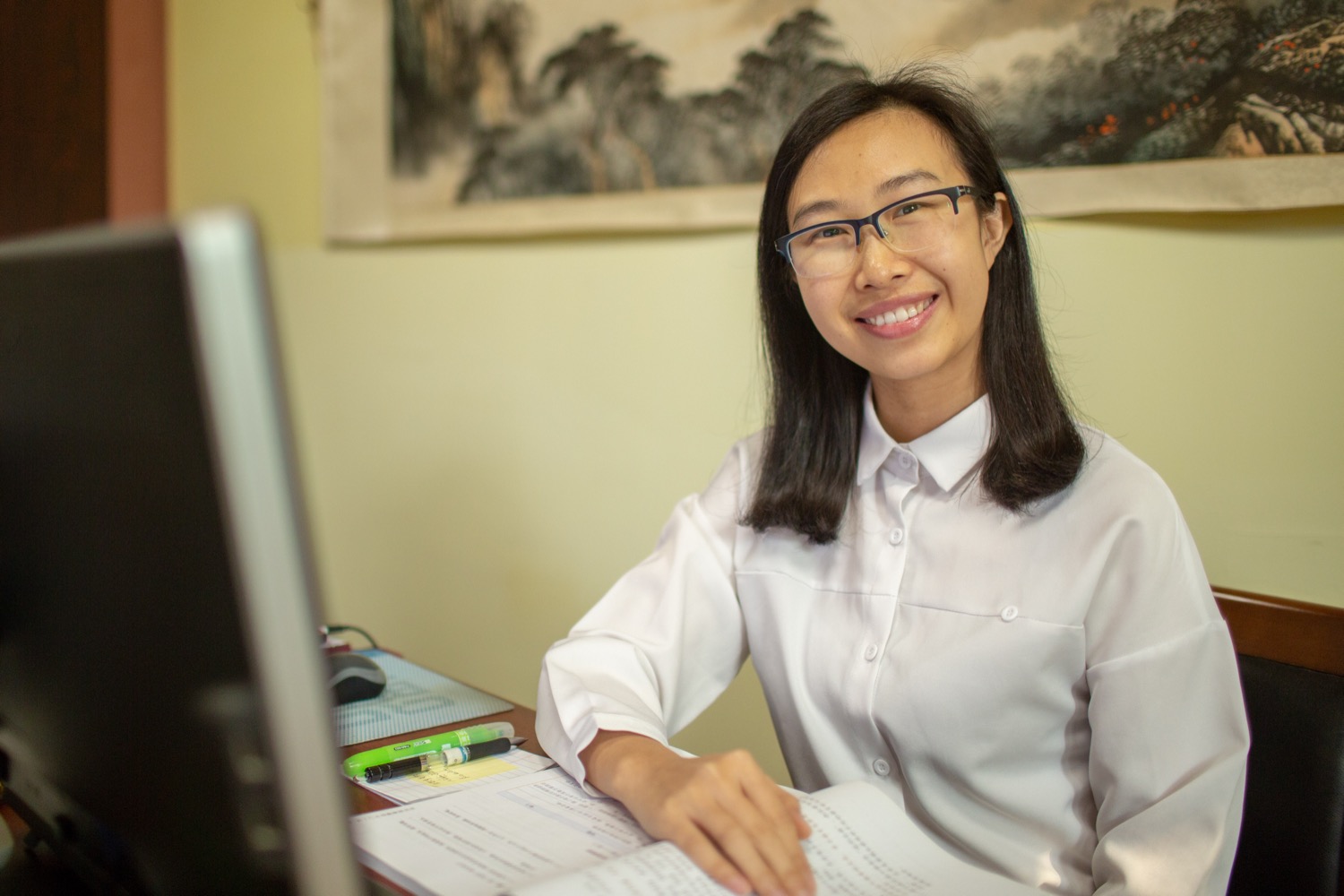
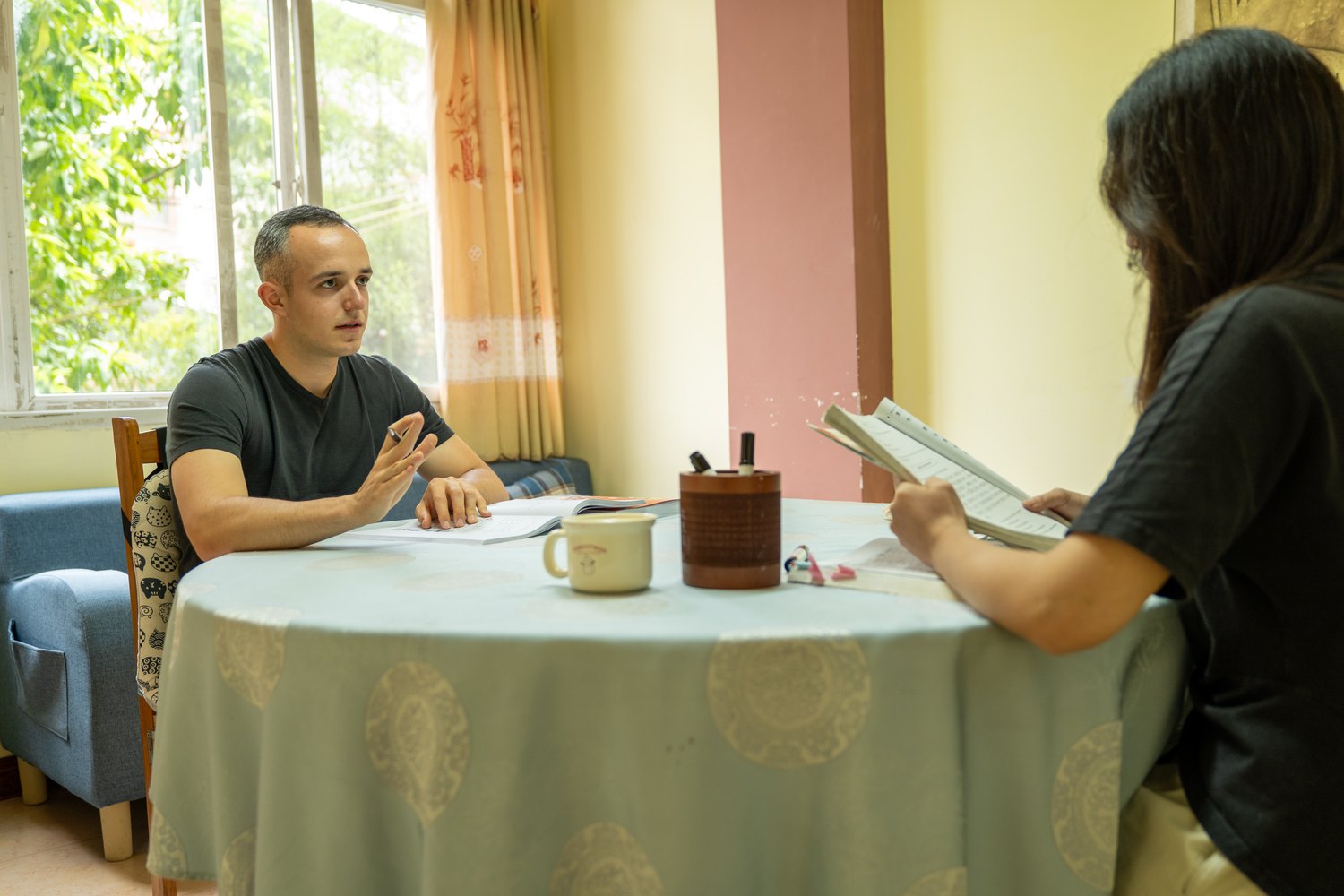
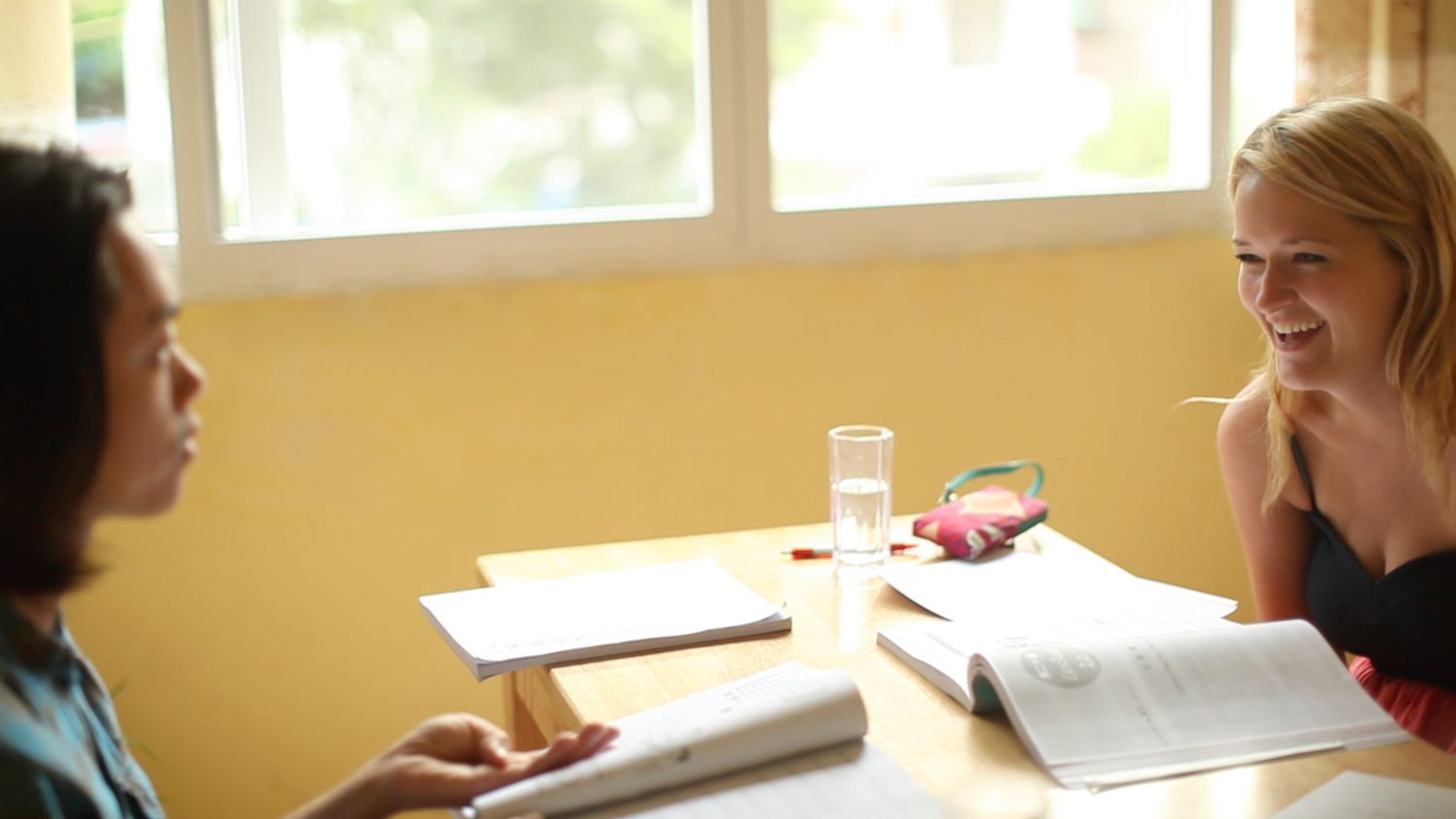
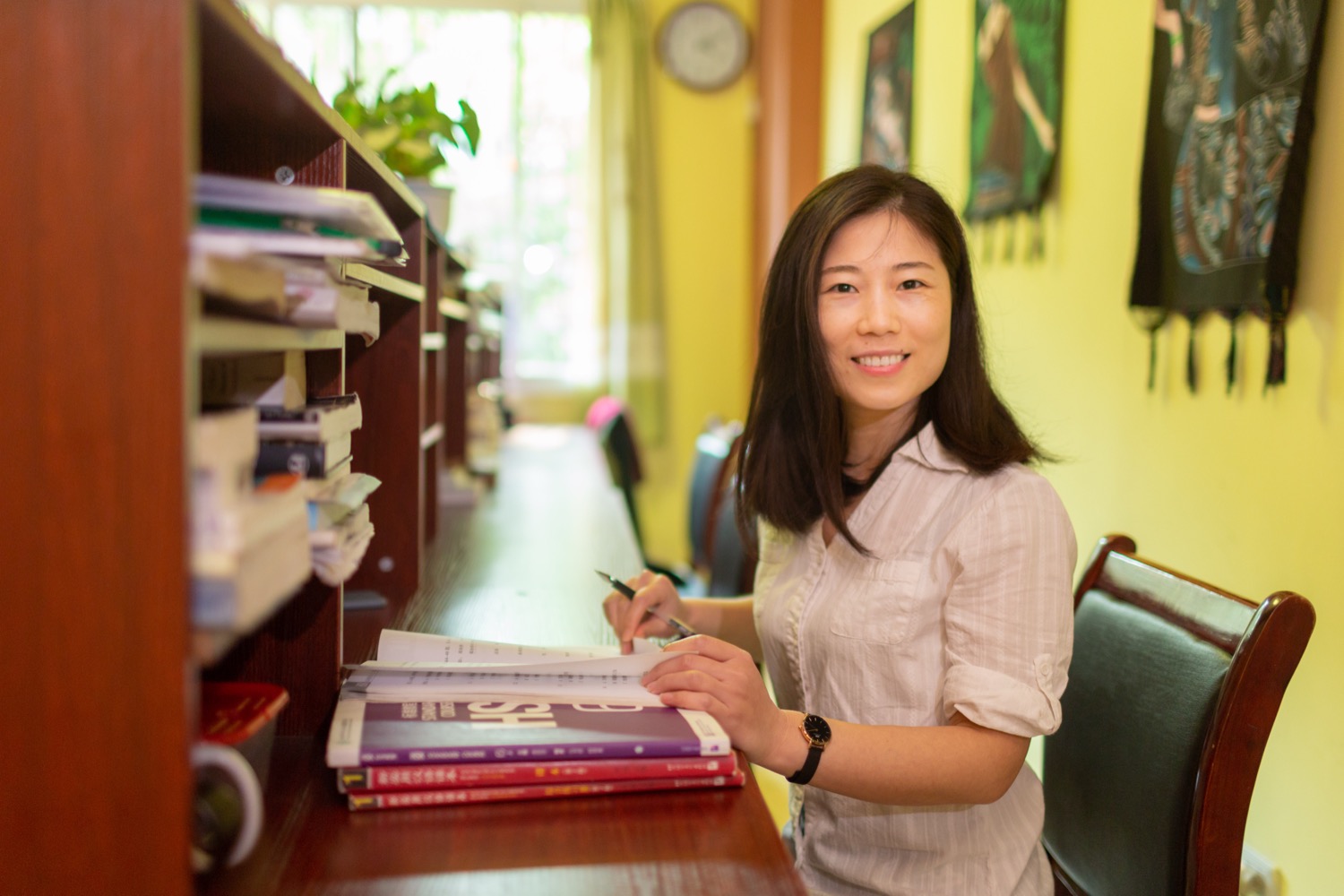
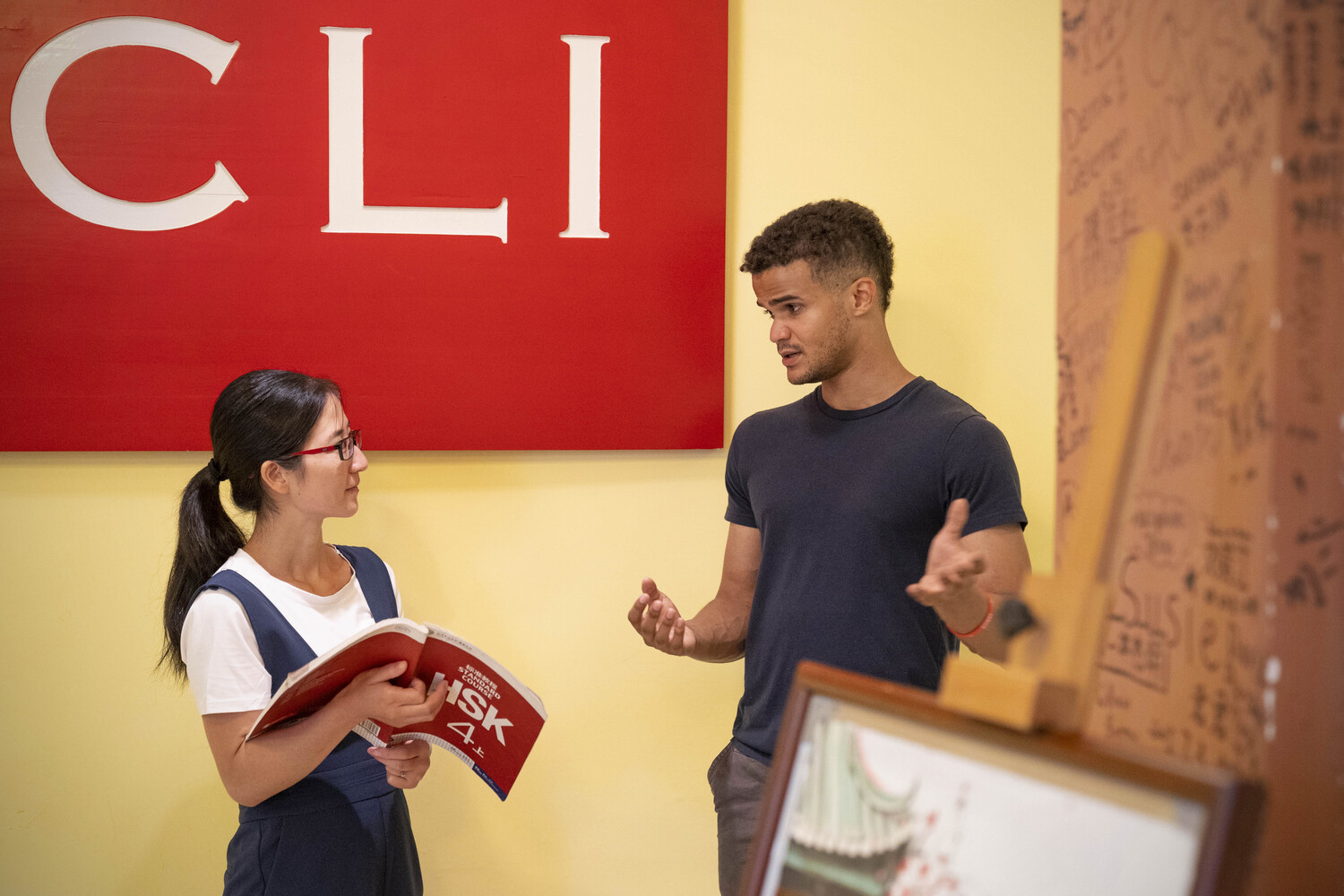
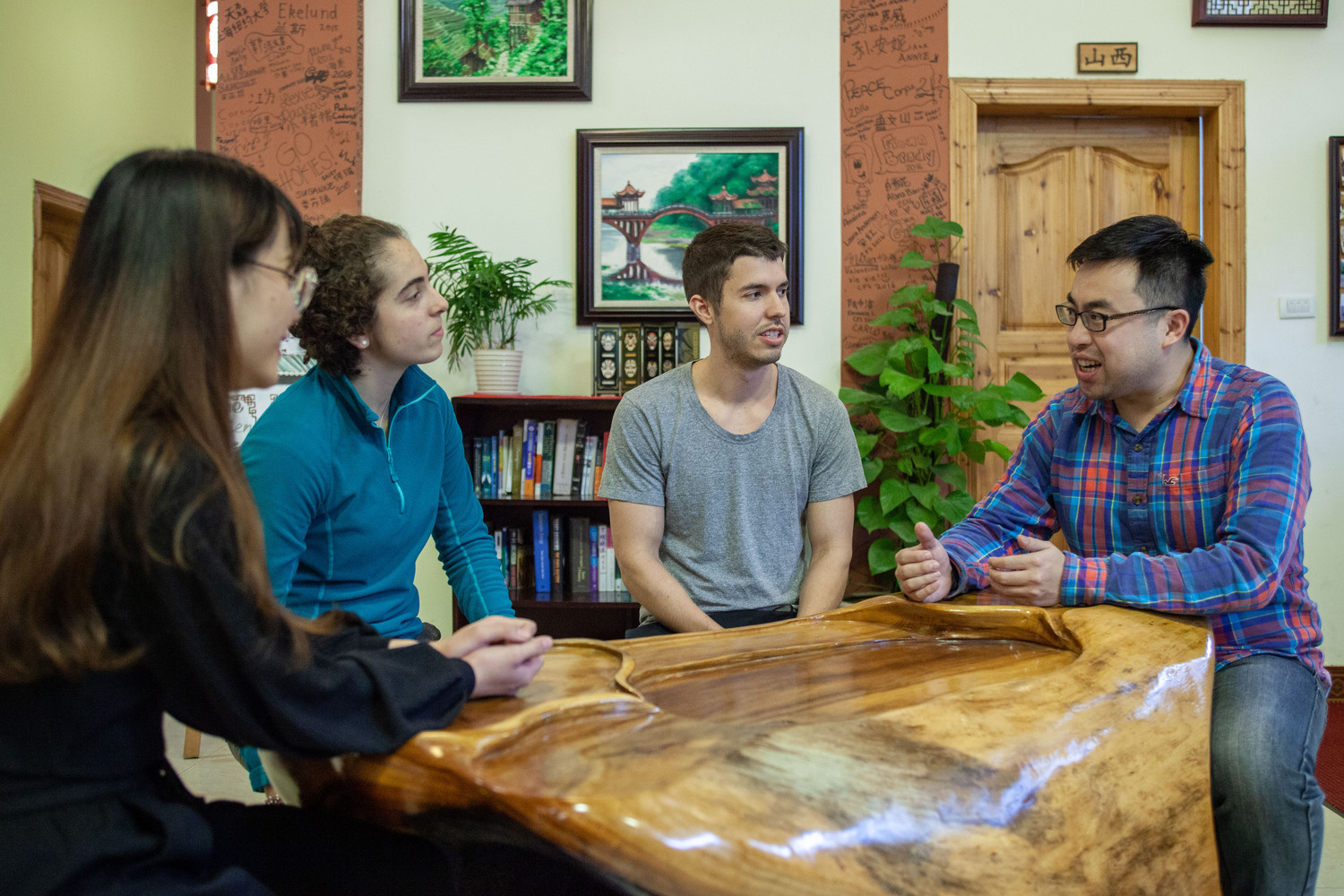
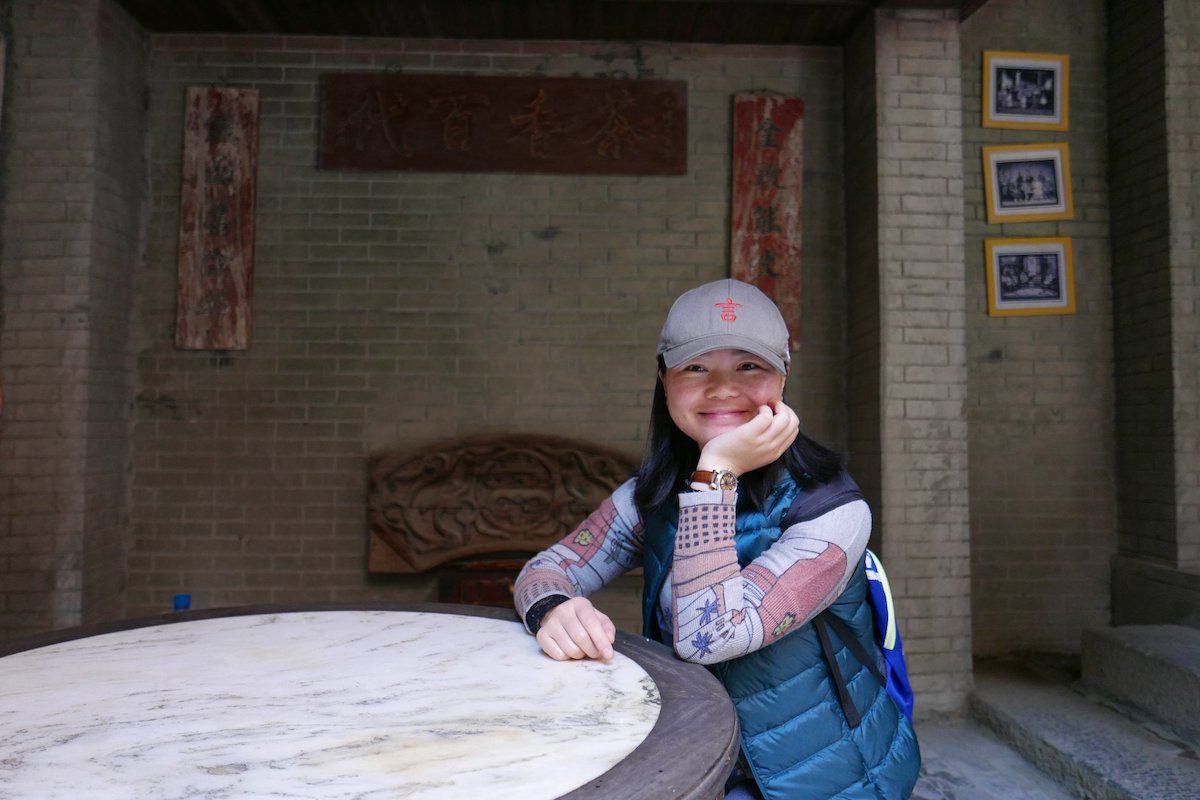
Classes at CLI are one-on-one, so each two-hour session is one teacher and one student, at a table like this one.
New vocabulary and grammar are introduced in class, then reviewed and revisited through games and assignments in later lessons.
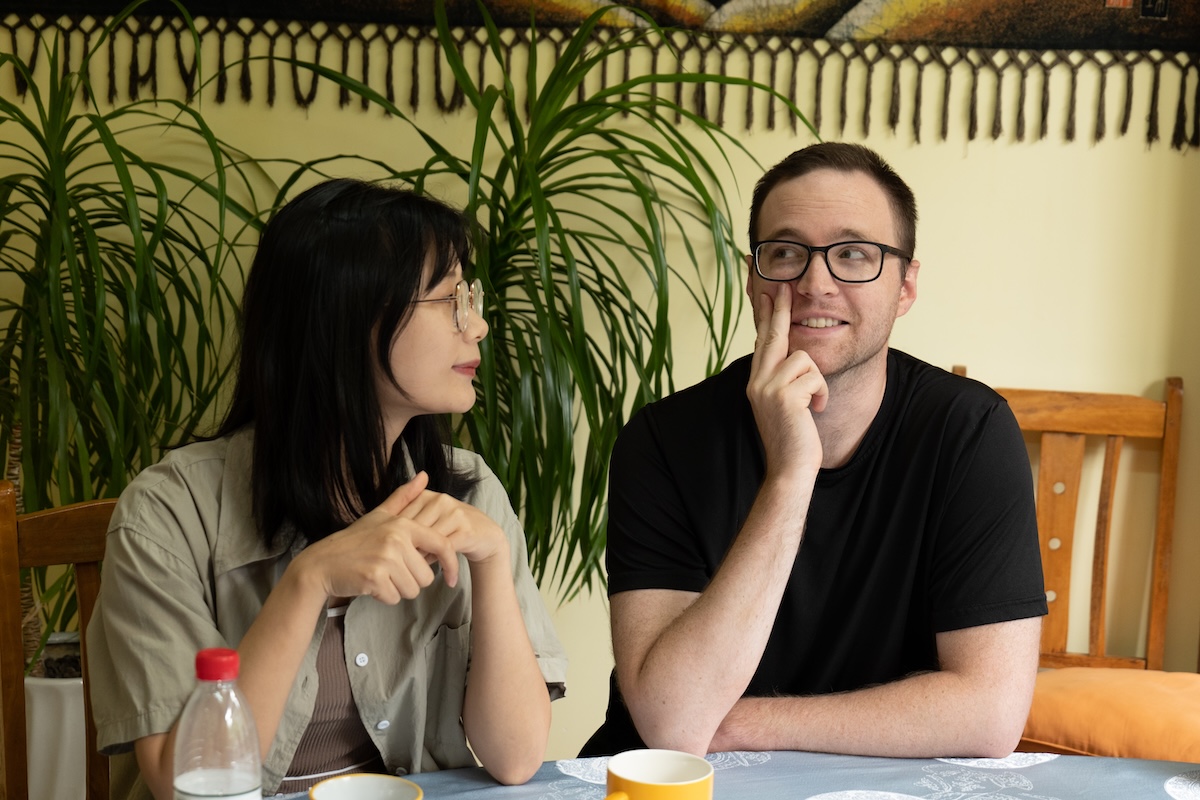
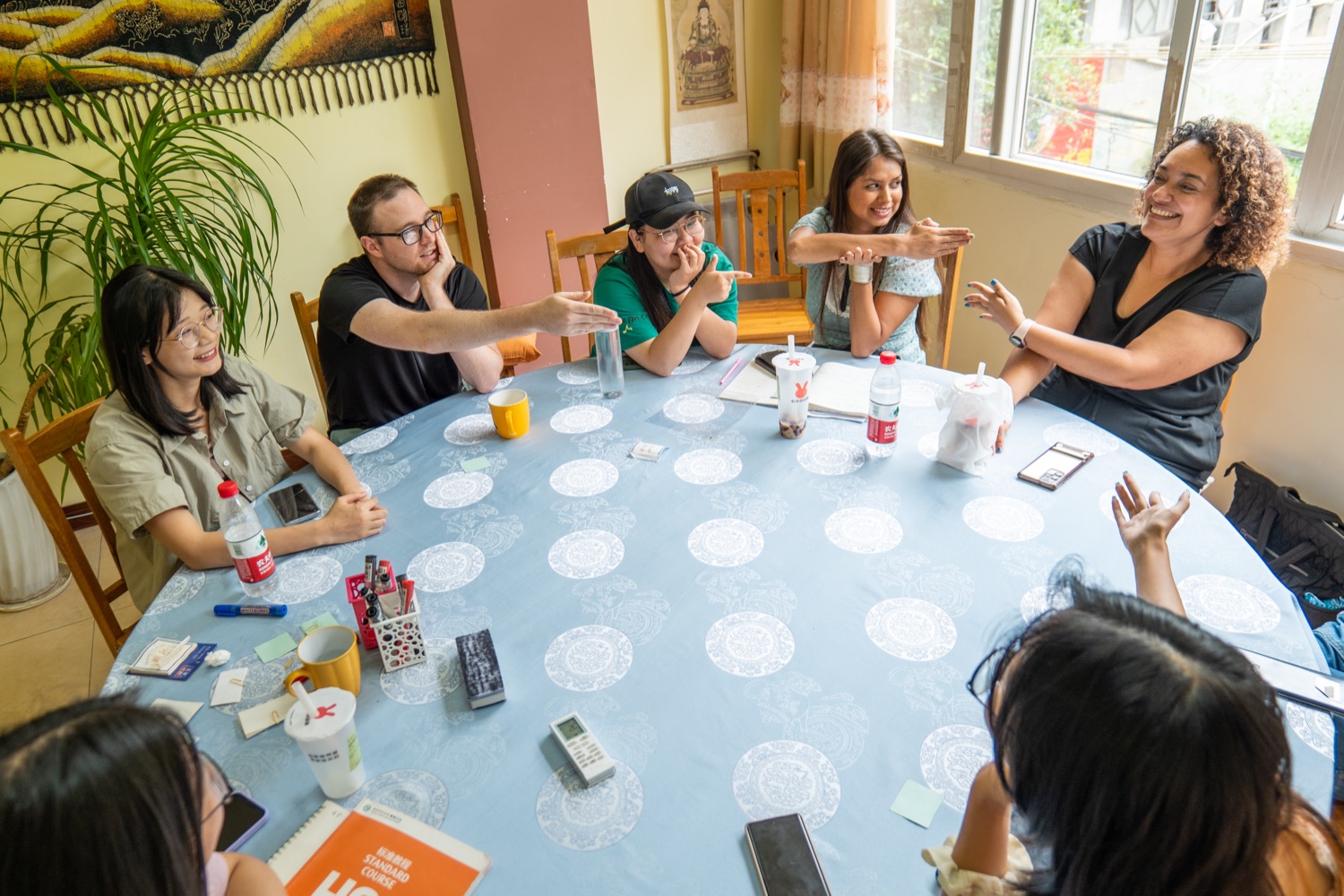
Conversation across the table is a big part of listening and speaking class, which works on fluency and listening comprehension along with tones.
The first goals at the elementary level are practical ones, like handling basic daily situations and introducing yourself in Chinese.
Lesson plans at CLI are shared work: your teachers keep each other up to date on your progress, so a word from one class can turn up again in the next.
Your 20 weekly hours are divided according to your learning needs, so a student who needs more reading practice can get more of it.
Your teachers start from what you already know, so class time goes to the gaps in your Chinese.
Each lesson is customized around your level and your goals, with the textbook as a guide and you setting the pace.
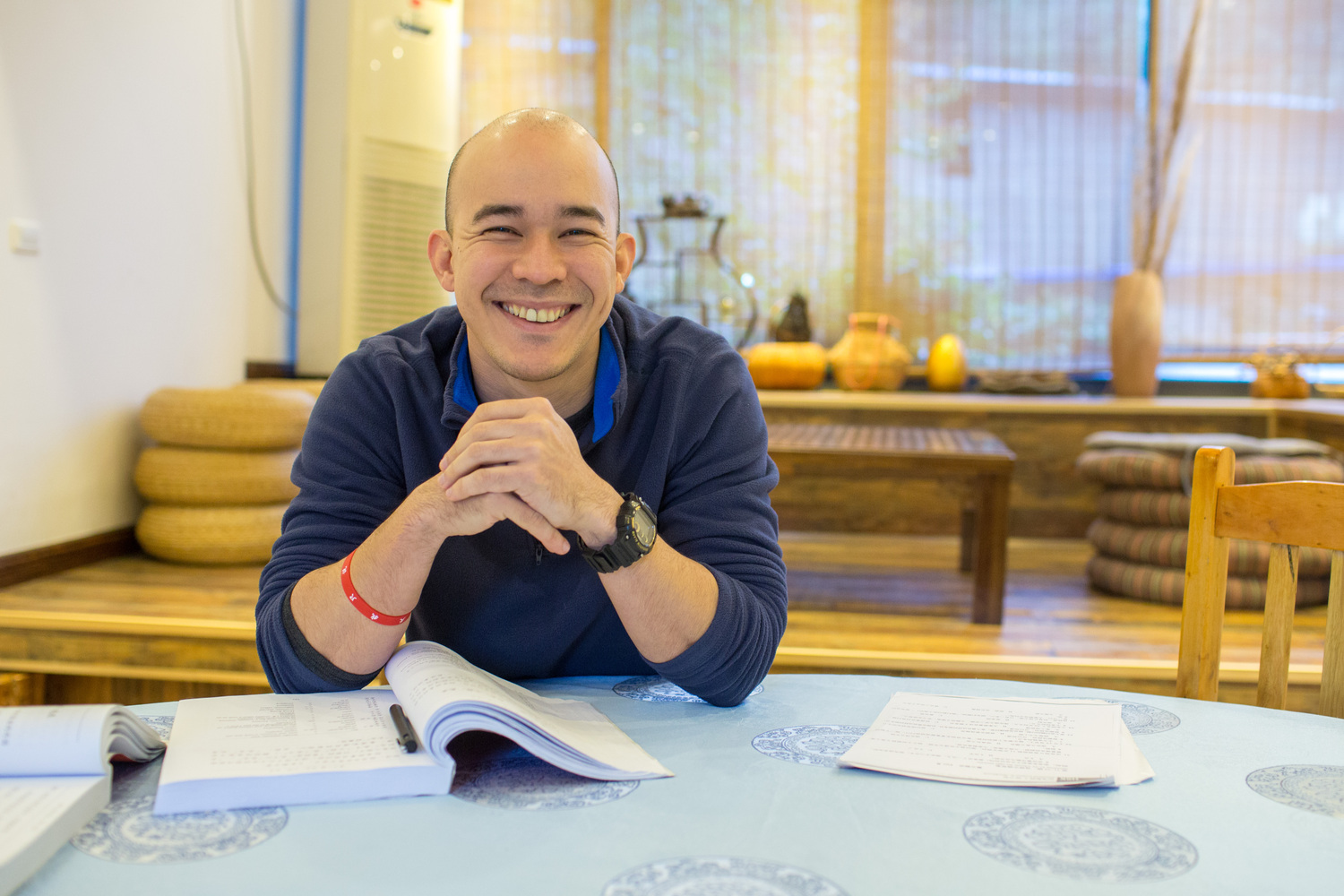
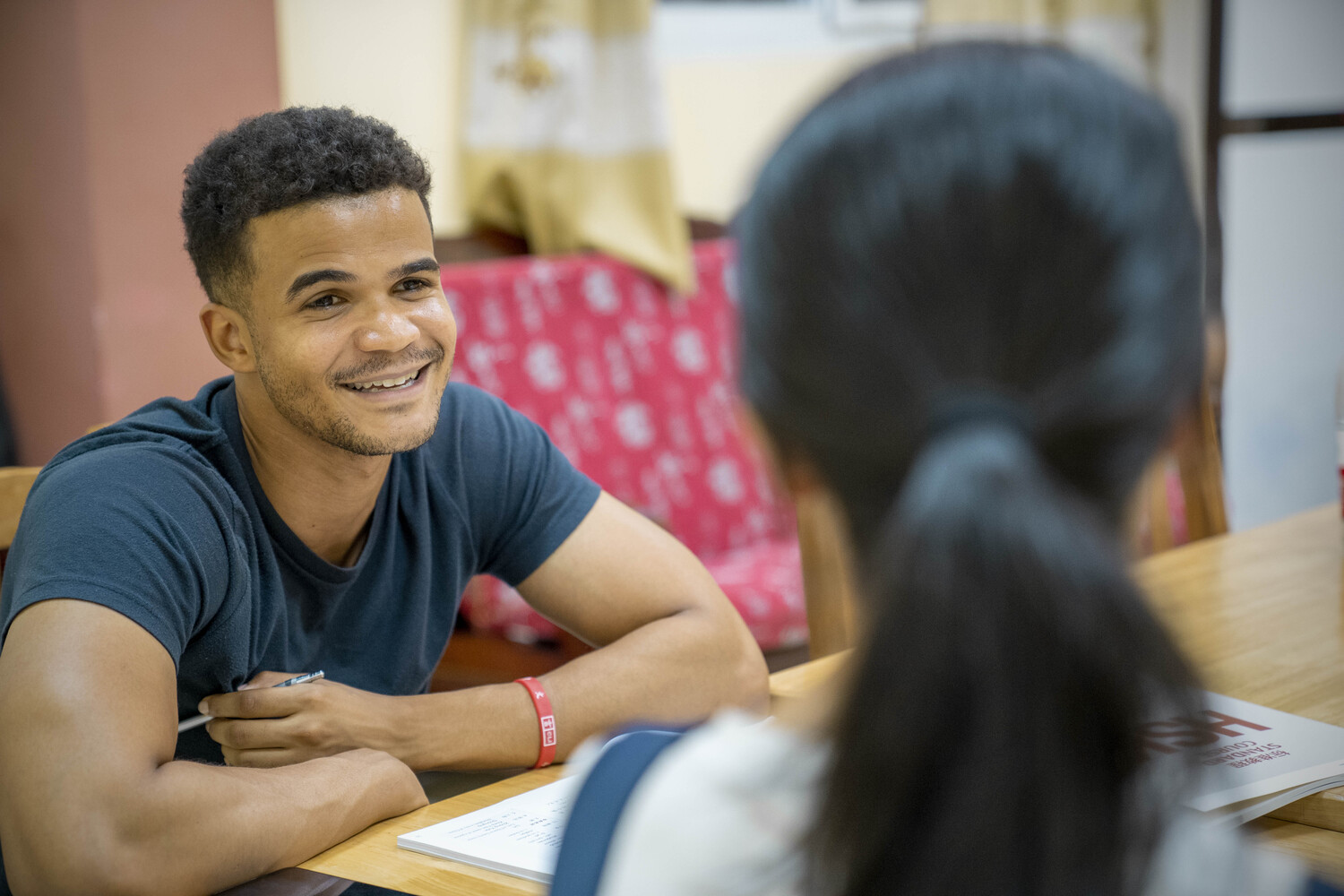
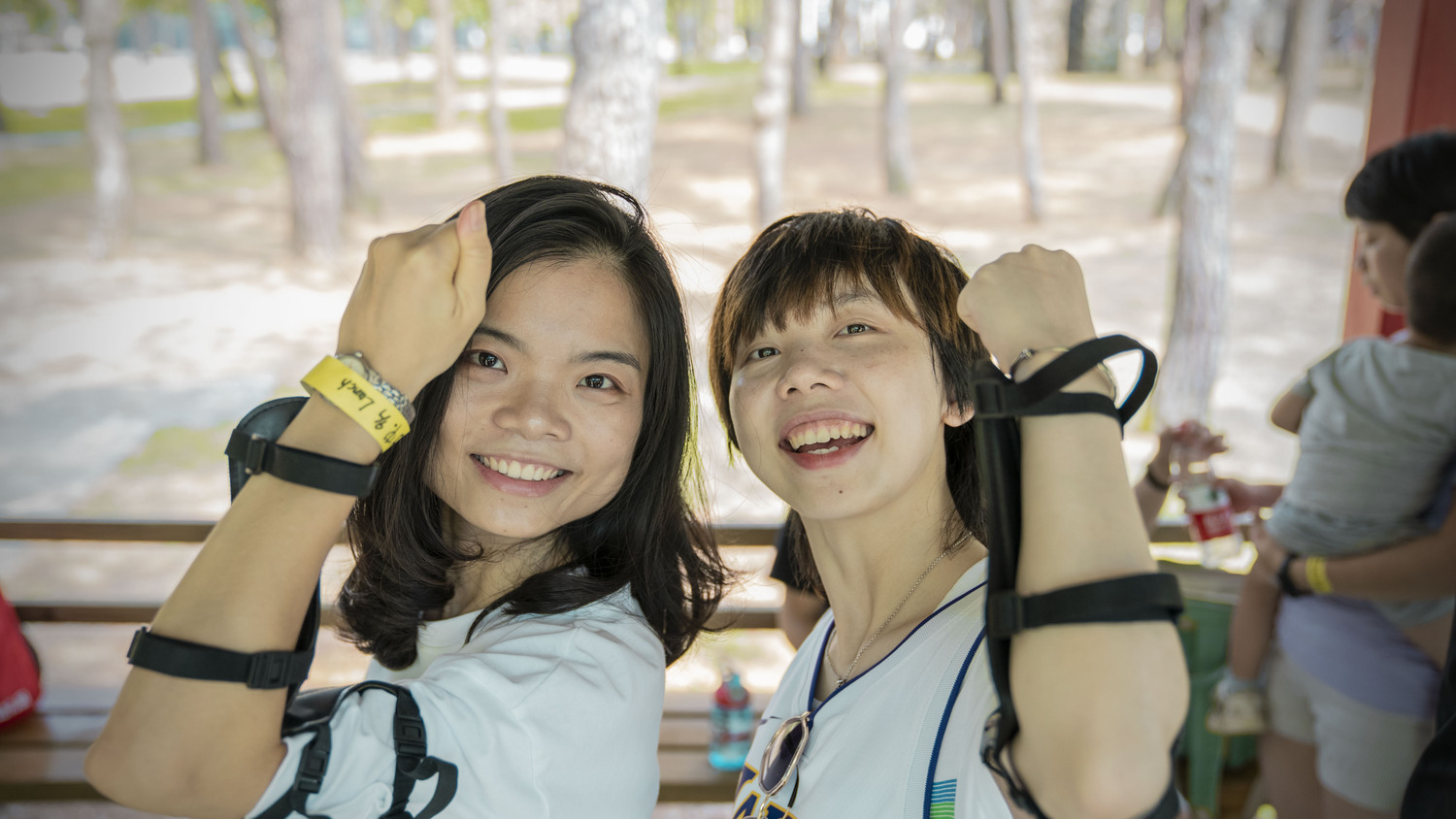
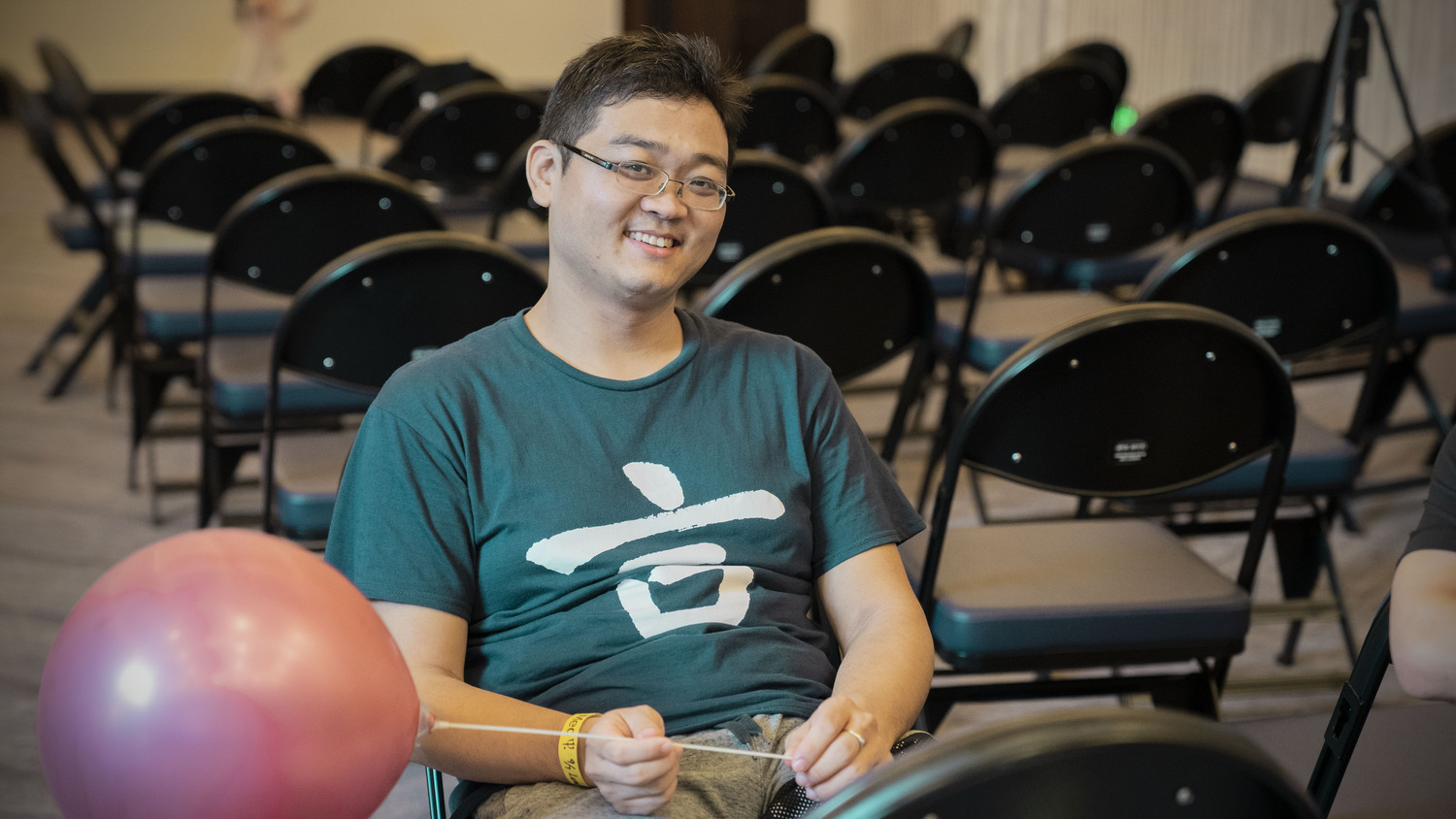
A red CLI wristband means the Language Pledge is on. We encourage students at every level to try it, because it adds more Chinese practice to the day.
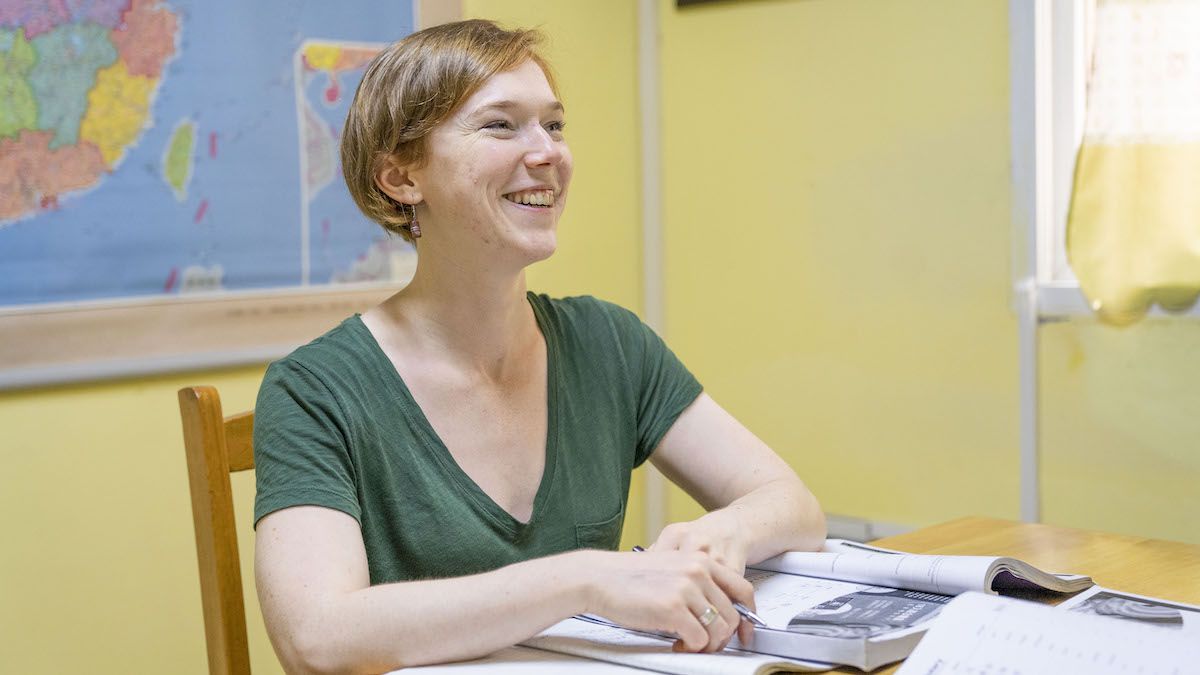
Students at CLI range from high schoolers to retirees, and since every class is one-on-one, each lesson moves at the pace of the person in it.
Words from reading class often turn up again in speaking class, because a student's three teachers coordinate their lessons.
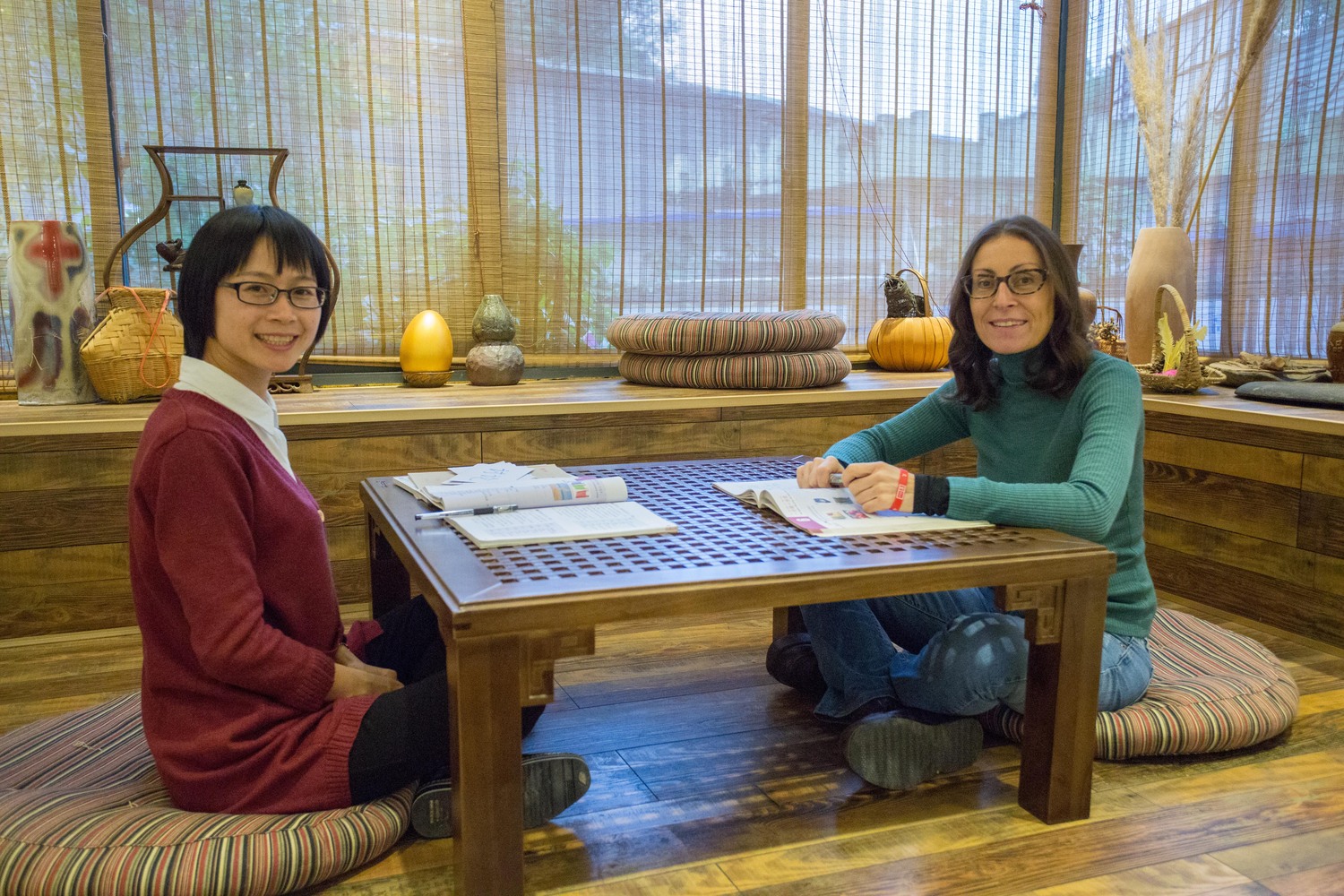
A class on floor cushions at a low table is still one-on-one, so the lesson can stay with what is hard and move ahead once it clicks.
There are no fixed semesters at CLI, so you can start any Monday (except in February, for Chinese New Year) and stay from one week to a year.
Two of CLI's four daily sessions are in the afternoon, from 2:00 to 4:00 and 4:10 to 6:10, and each student has two sessions a day.
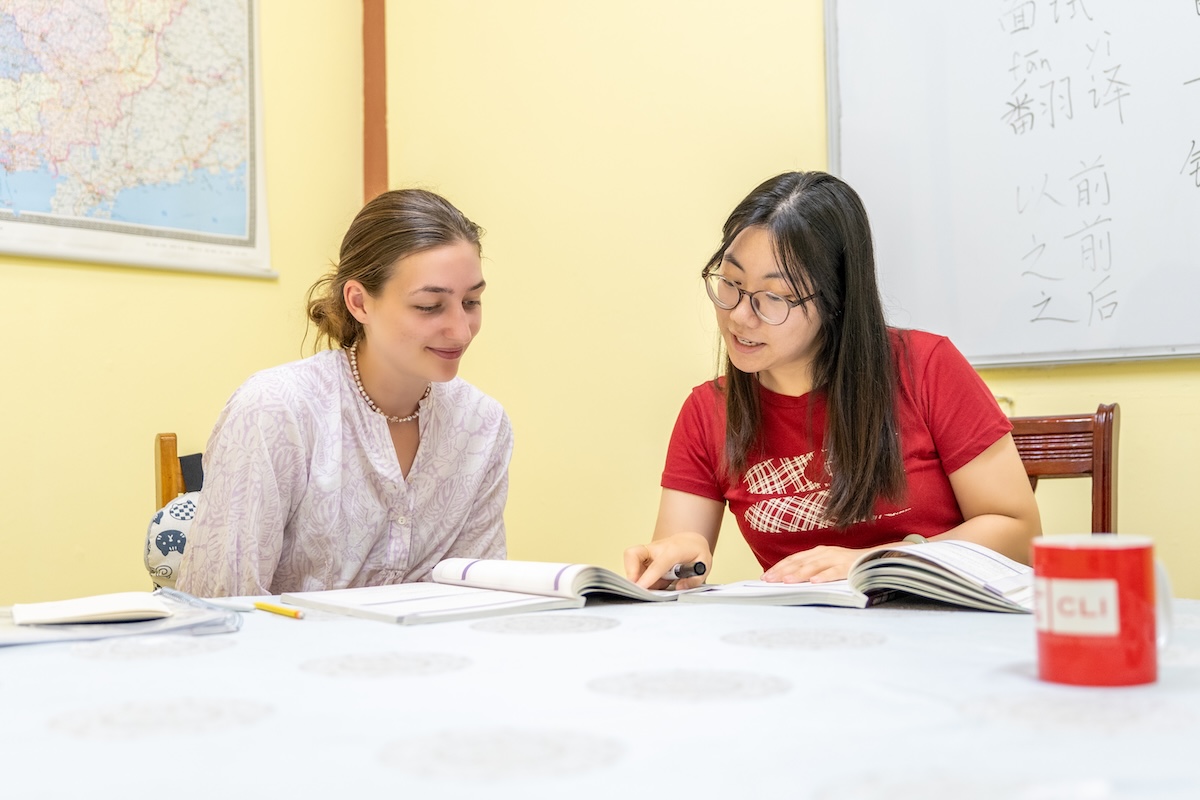
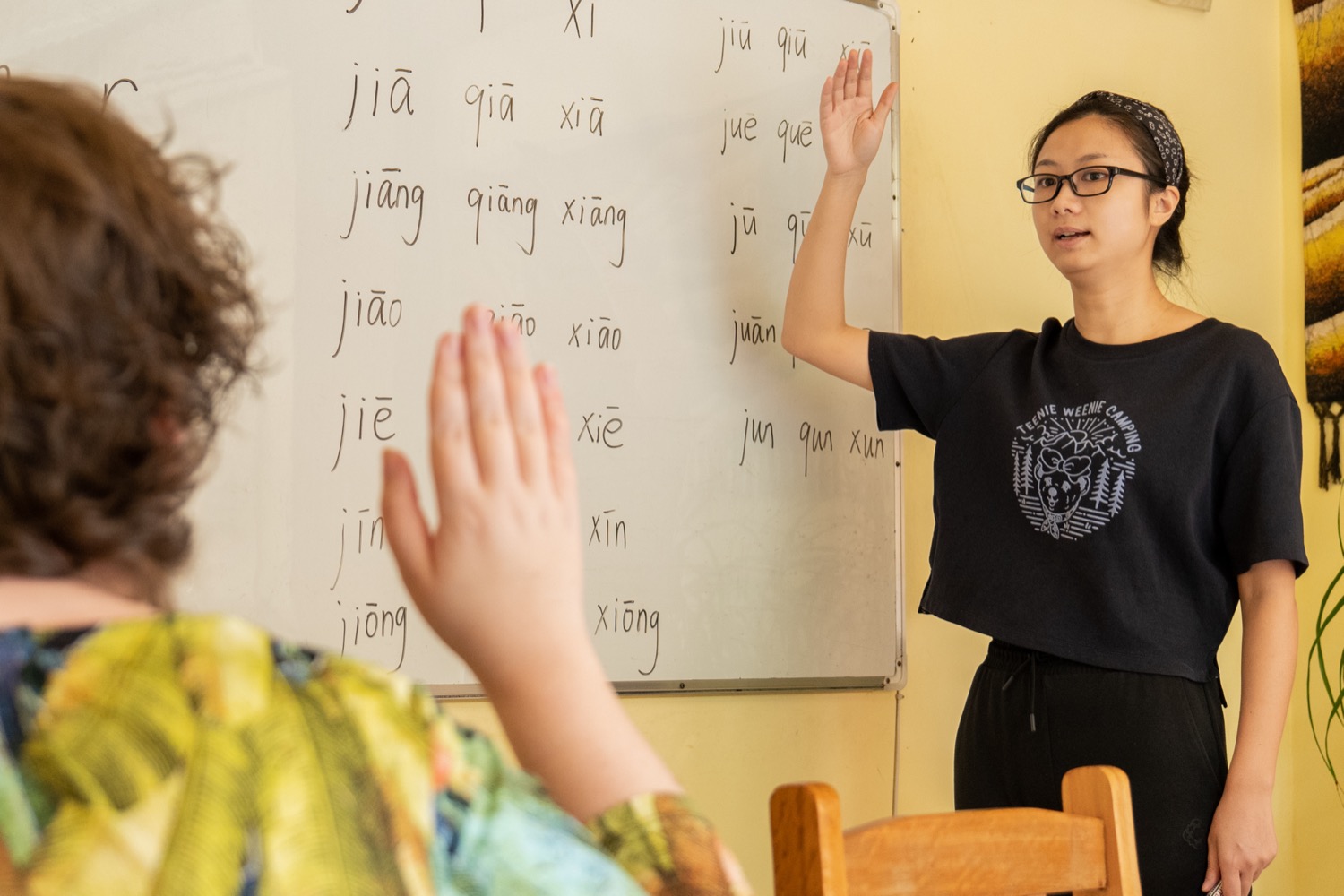
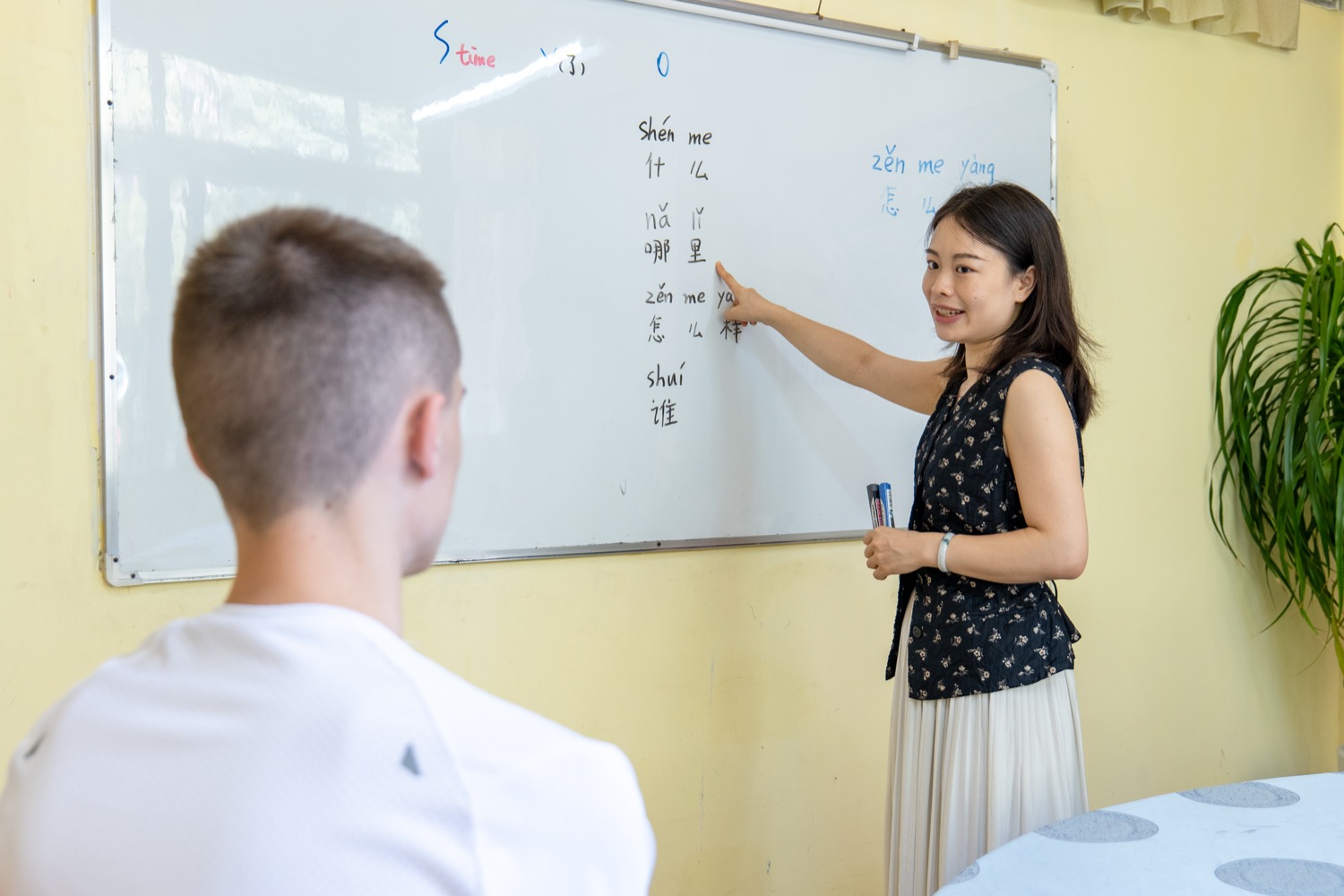
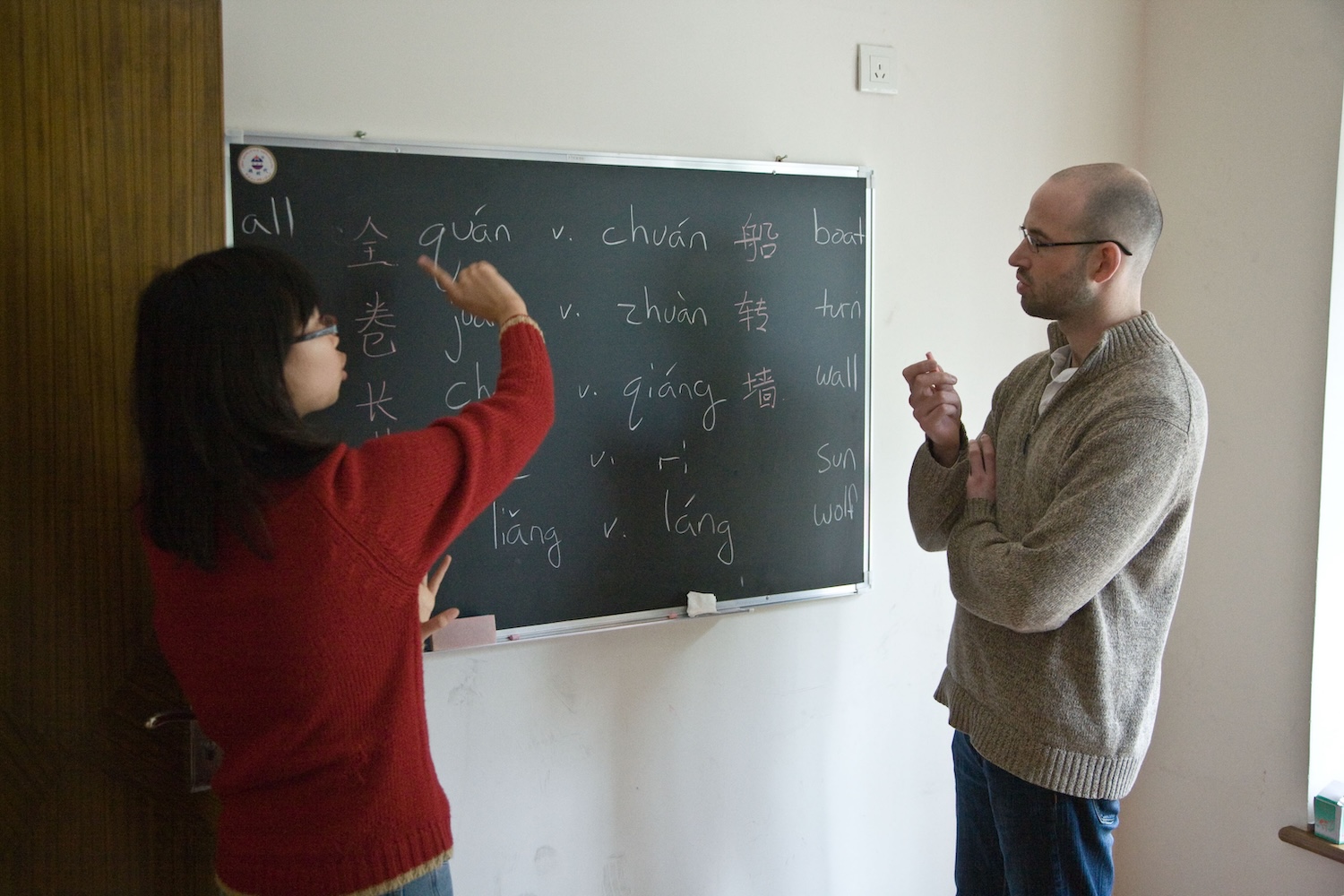
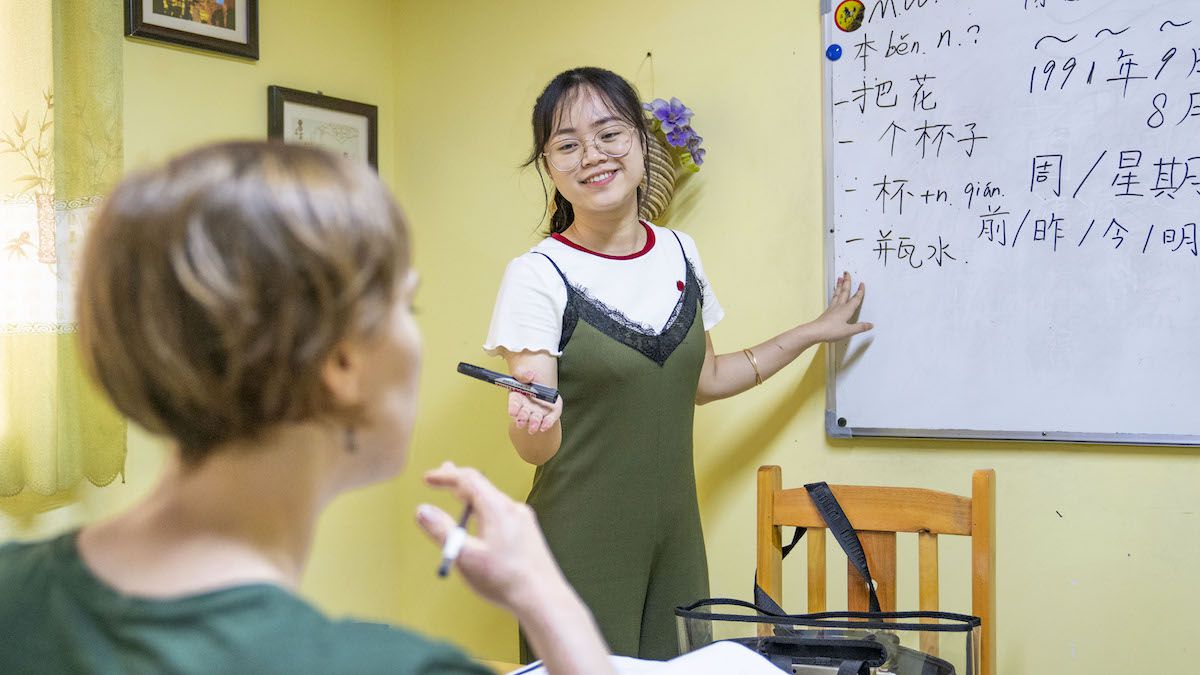
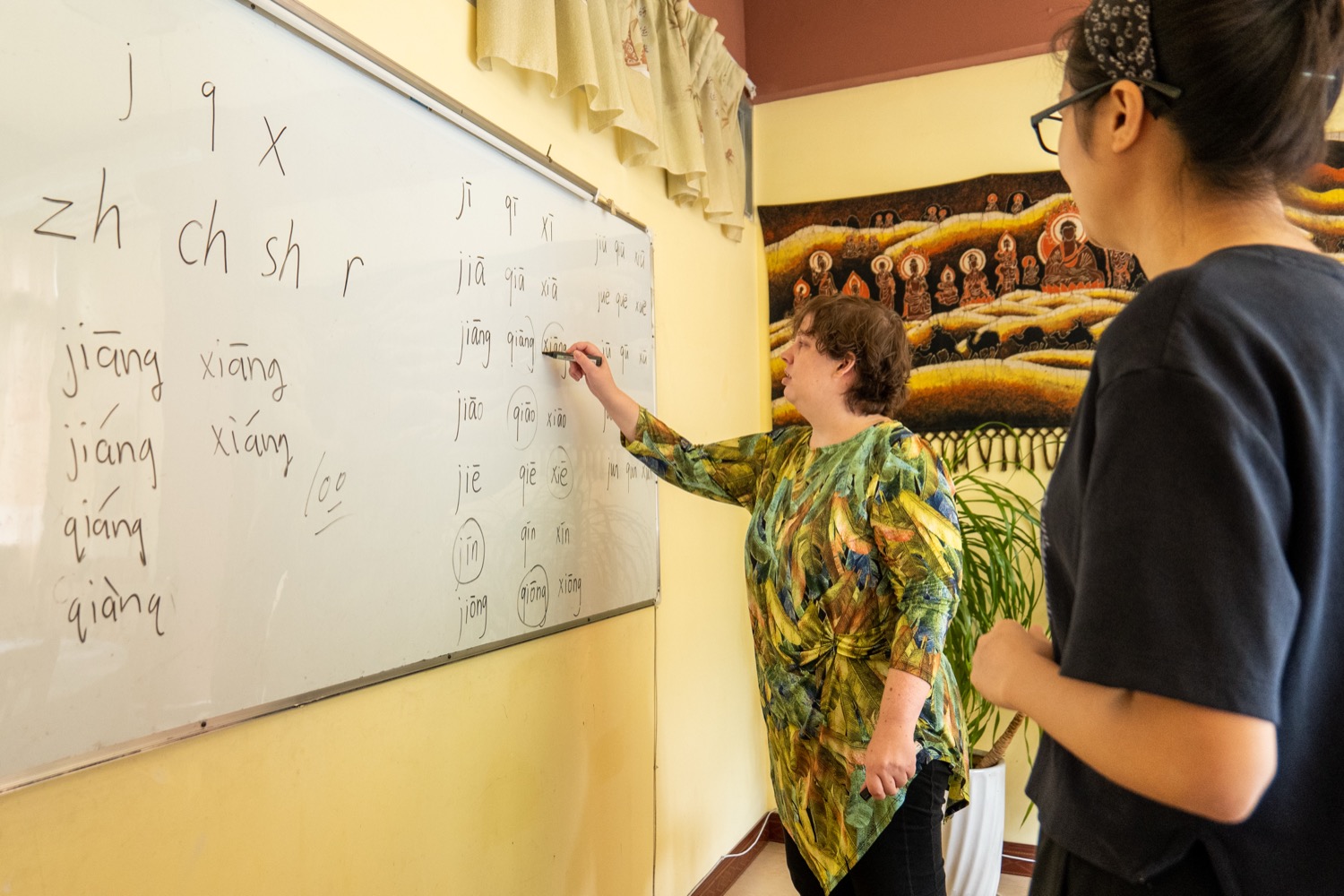
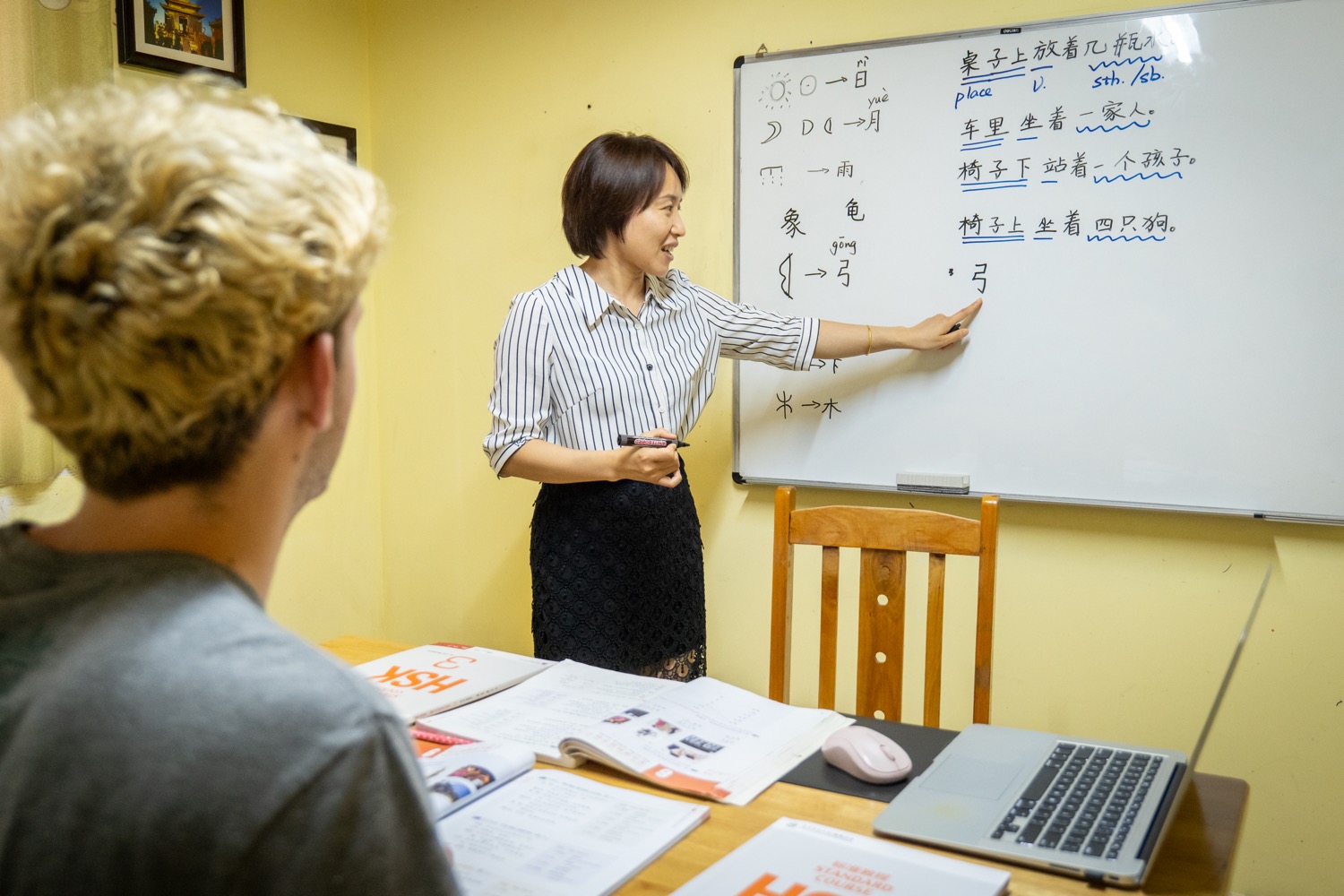
The j, q and x sounds fill this board, from jiā, qiā, xiā on down. Pronunciation takes repetition, and in a class of one you can say each sound until it is right.
Daily review of grammar and vocabulary is the job of a student's third teacher, who covers comprehensive review.
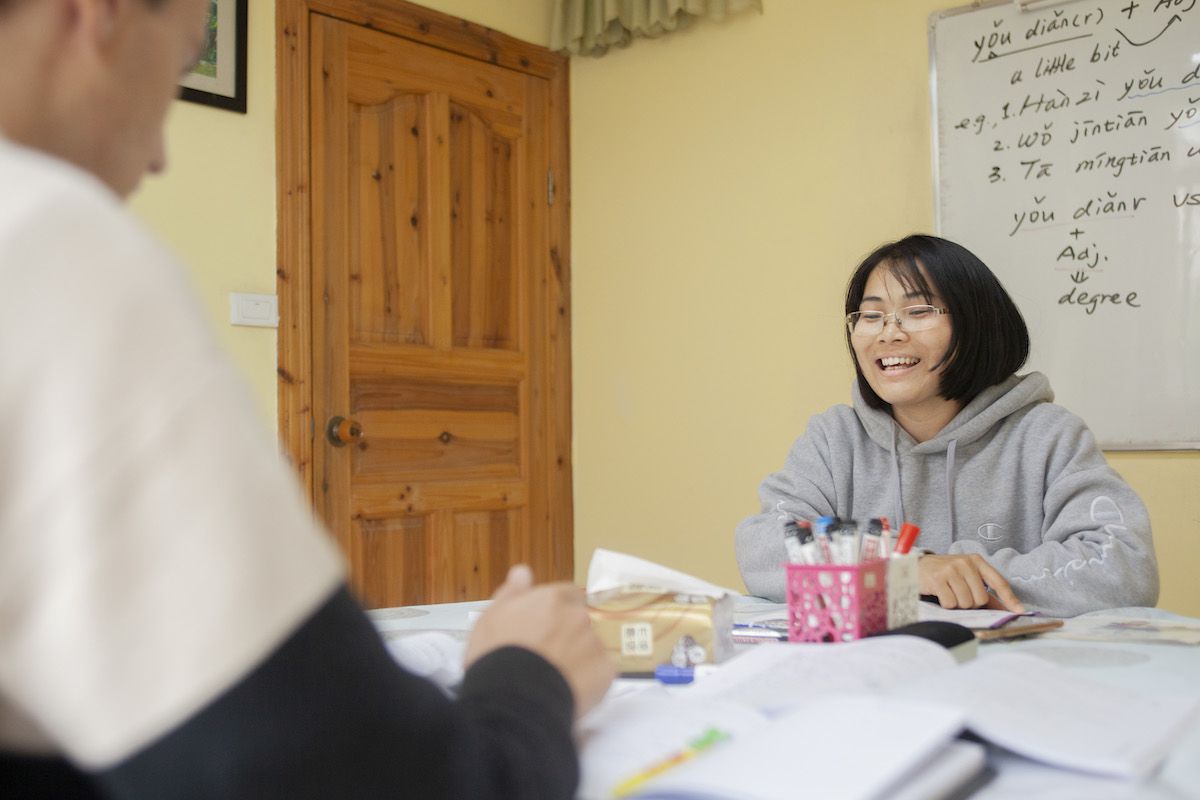
有点儿 (yǒudiǎnr) goes before an adjective to say a little tired or a little busy, and simple sentence patterns like this are part of the Elementary level.
Teachers can spend extra time on difficult material or move ahead faster, all within the structure of CLI's syllabi.
A week at CLI can be the whole stay or the first of many, since students choose anywhere from one week to a year.
Your lessons focus on the areas where you need more practice, and they move at a pace that suits you.
Teachers work from CLI's course syllabi, which give each student's classes the structure of a university course.
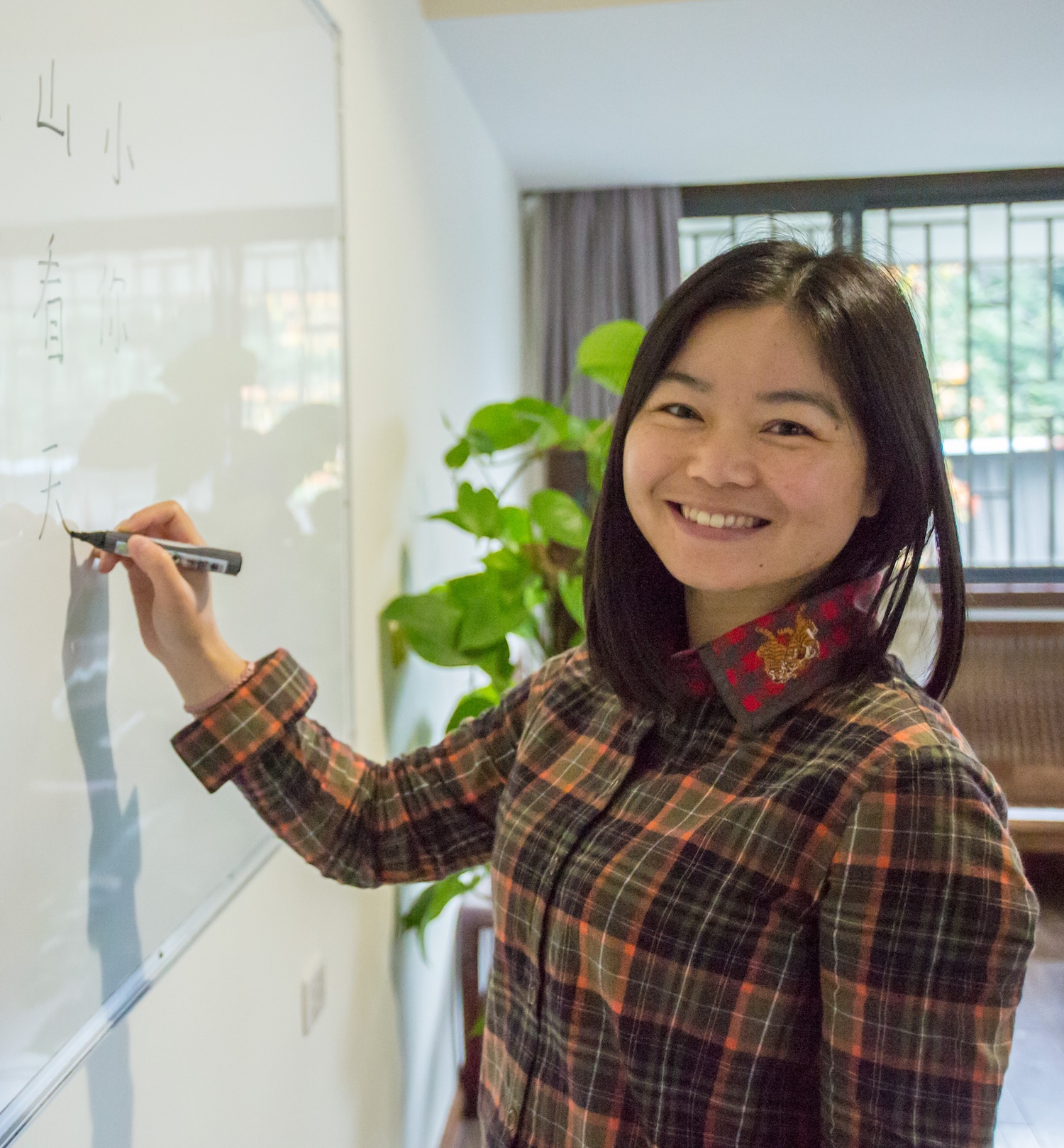
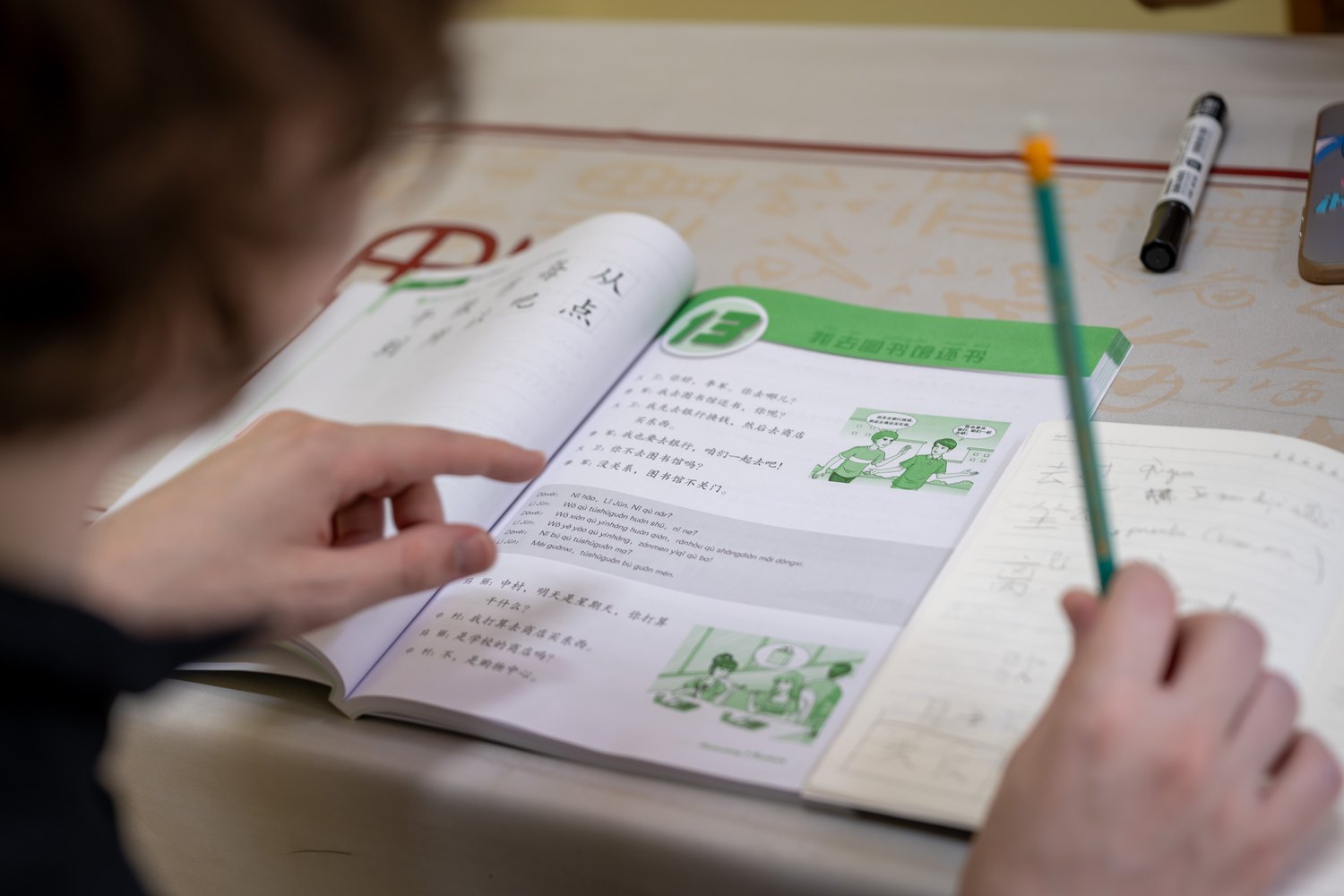
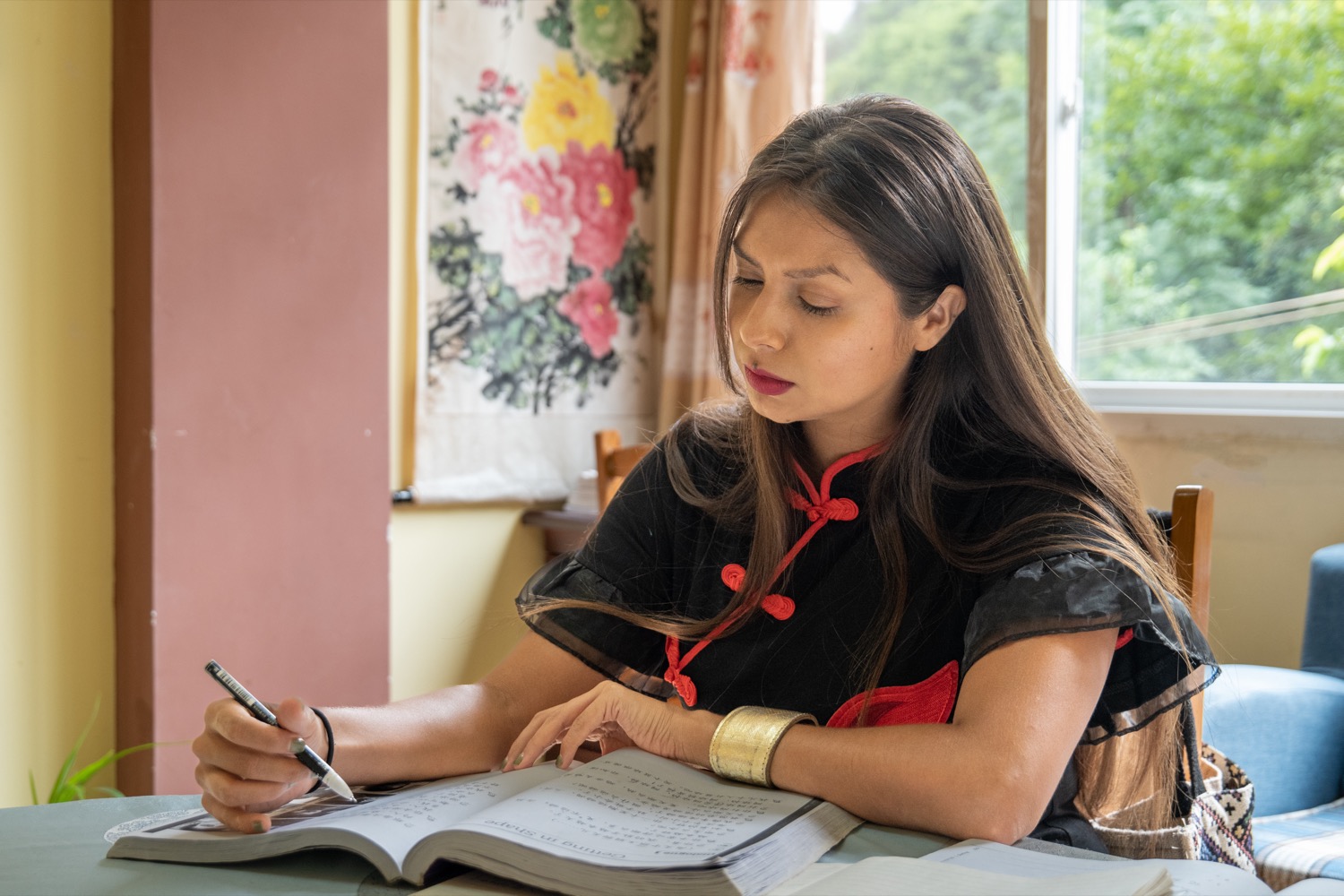
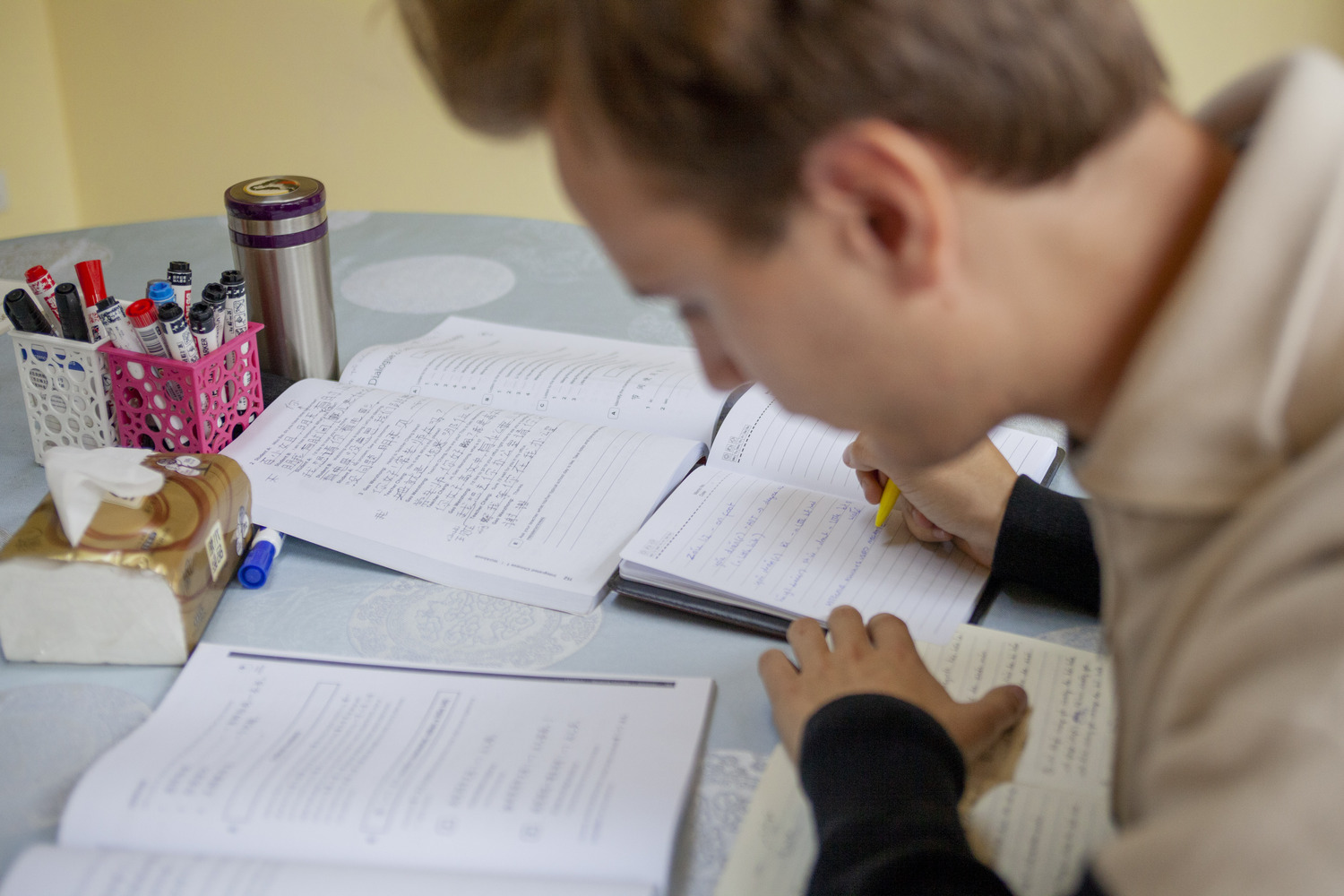
Writing characters by hand belongs to the reading and writing class, which covers stroke order and written composition.
Since classes are one-on-one, the classrooms are small, and the CLI Center has 18 of them on its first and second floors.
One of each student's three teachers focuses on listening and speaking, from tones and pronunciation to conversational fluency.
The Language Pledge is optional: put on the red CLI wristband and our team members switch to Chinese only with you, then take it off whenever you want to stop.
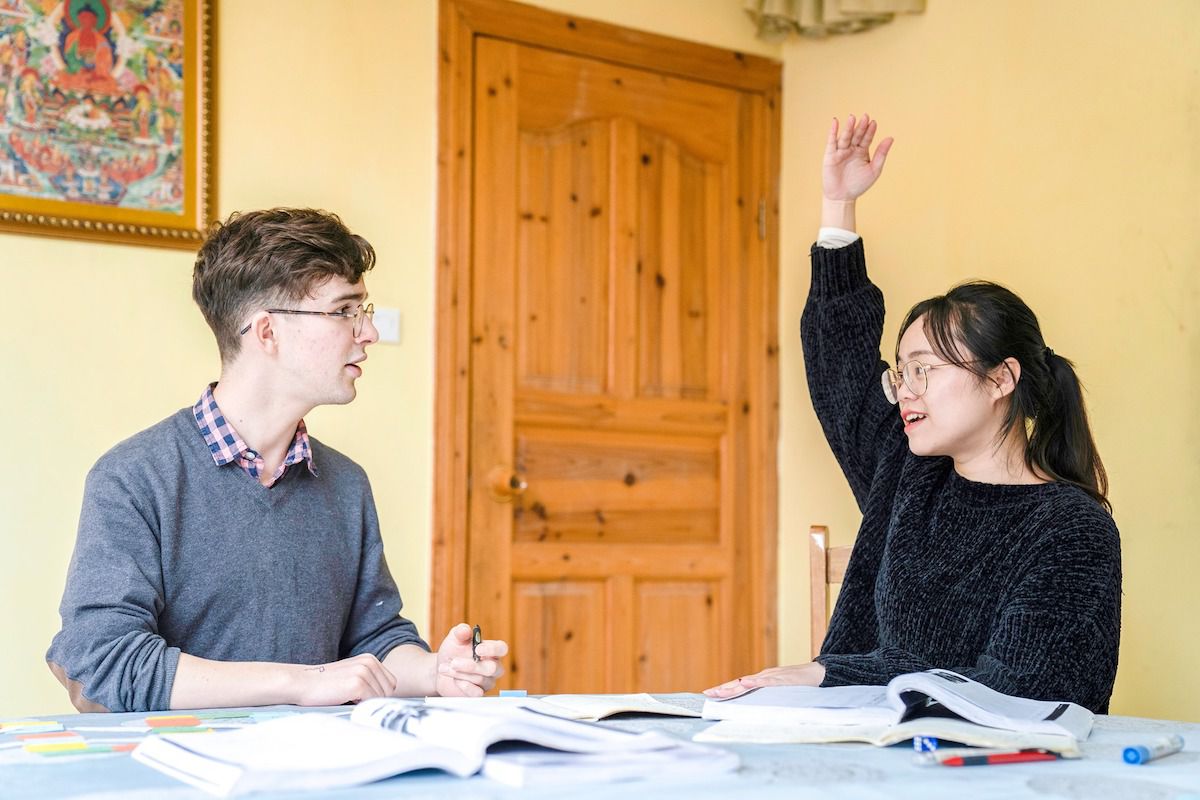
Hands help when a word won't come, and one-on-one classes give you the time to practice speaking and to use each day's new words and ideas.
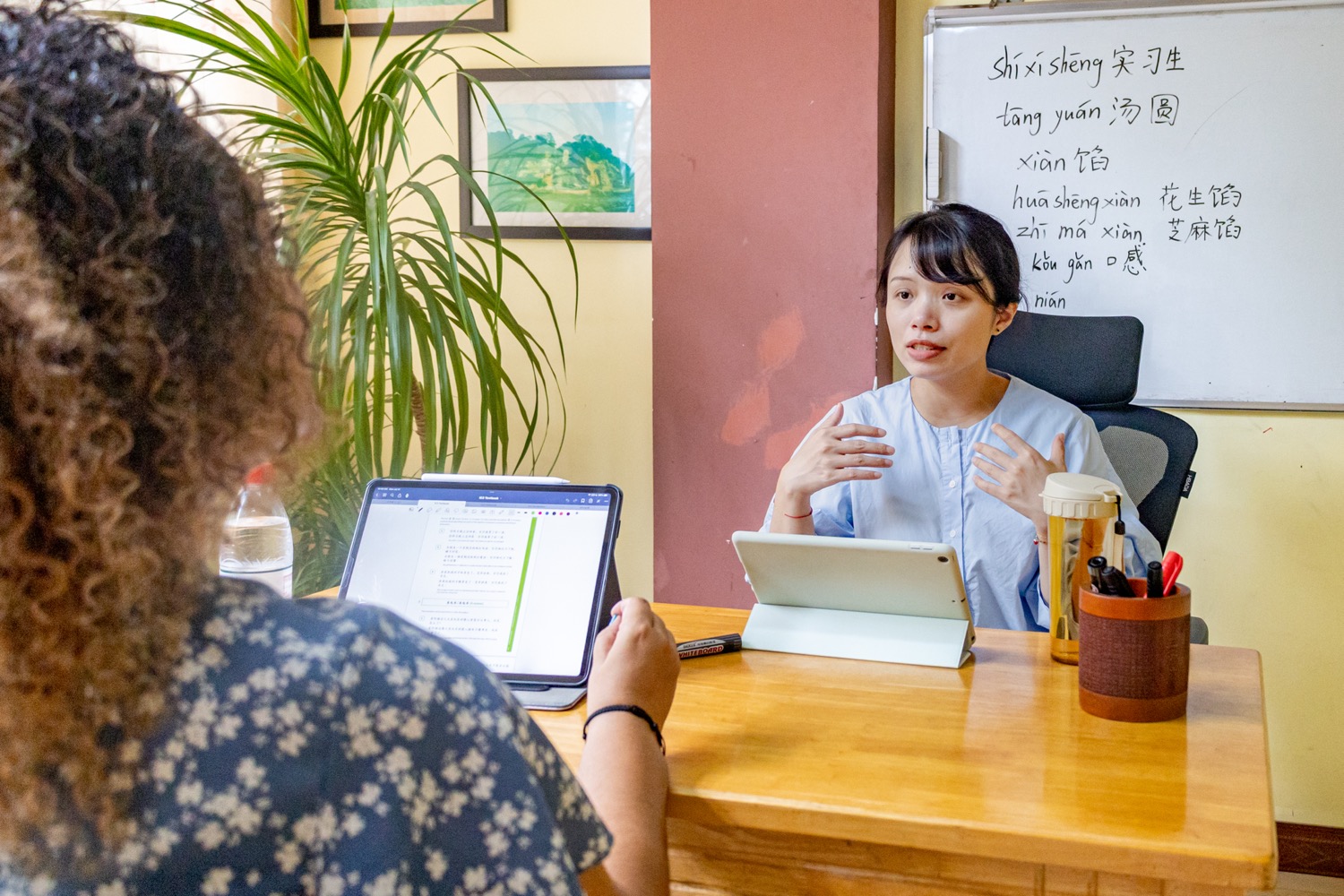
Tones and pronunciation belong to the listening and speaking teacher, and pinyin on the whiteboard is often where that work begins.
If you need university credit for lessons like this one, CLI's university affiliate, Guangxi Normal University (GXNU), can issue an official transcript for your coursework.
Reading grows with your level: elementary classes start from basic characters, and intermediate classes move on to longer readings and short articles.
CLI teaches every level, from complete beginners to students who are already conversationally fluent.
Two sessions of two hours make up each class day, which leaves the rest of the day for homework and review.
Pairs like quán and chuán, side by side on the chalkboard, help with sounds that are easy to mix up. Pronunciation is one focus of your listening and speaking teacher.
Whatever goes up on the whiteboard goes up for one student, because each lesson is shaped around your goals and the way you learn.
That red band on the wrist is the CLI wristband: take the Language Pledge and the whole CLI team talks with you only in Chinese.
Each class session lasts two hours, and with two sessions a day there is time for real conversation as well as the textbook.
When the lesson is yours alone, there is time to make your point in Chinese, and the class can center on your questions and your pronunciation.
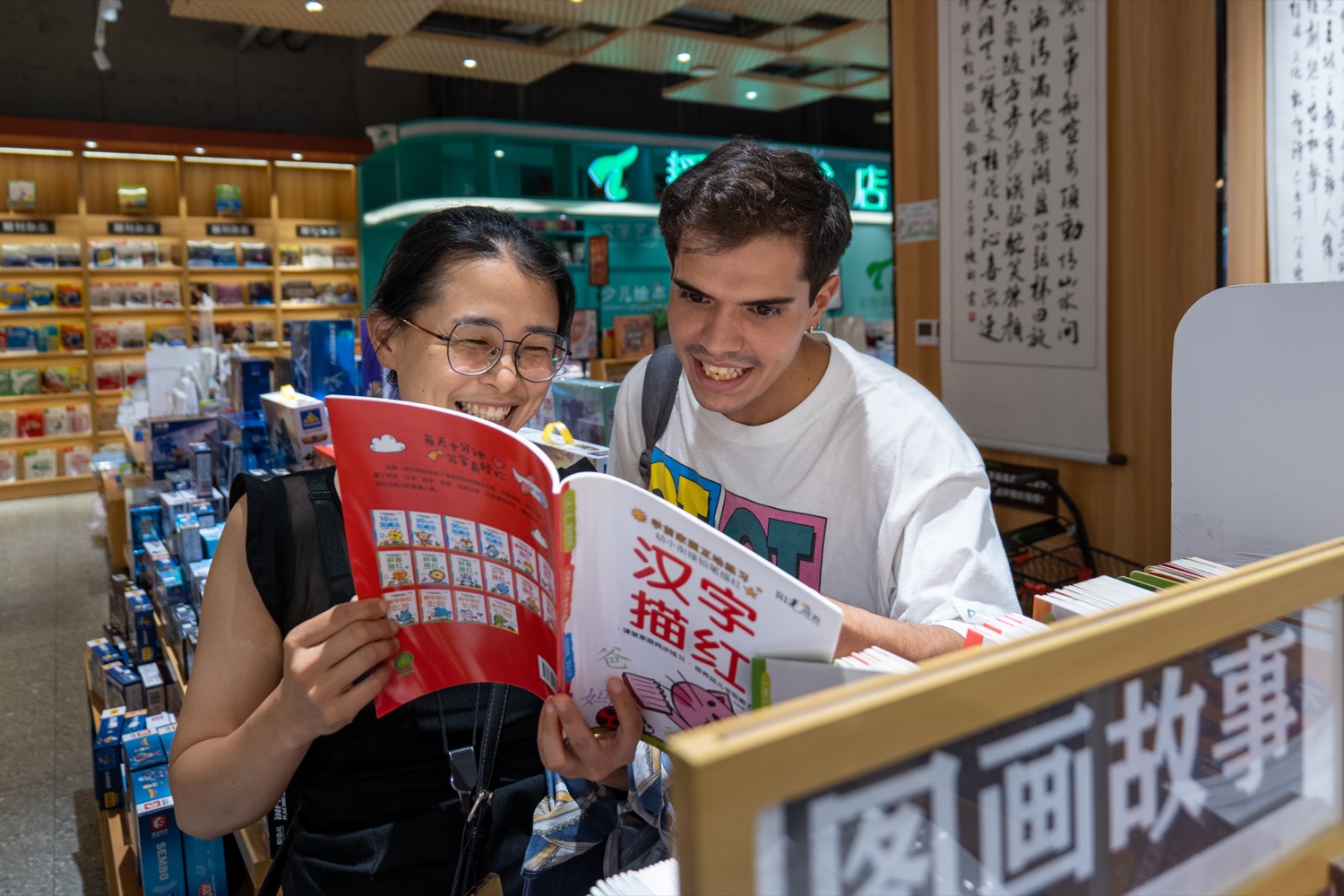
You can use each day's vocabulary around Guilin, and a bookstore shelf of character workbooks is a fair test of your reading.
Your classes begin at your current level, whether that is your first word of Chinese or years of study behind you.
Class content and teaching style are tailored to your needs, which is easier when the teacher across the table is teaching only you.
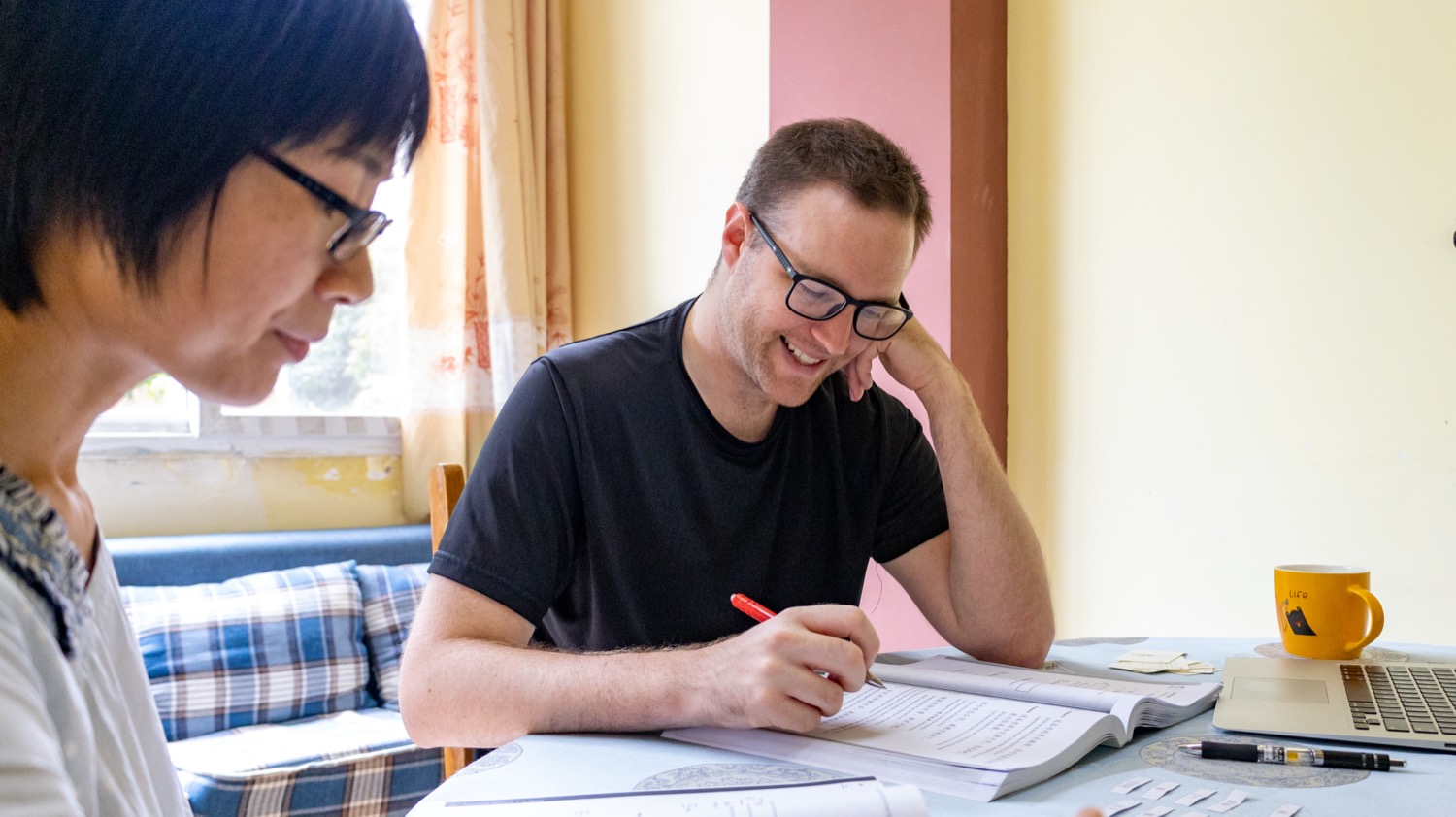
Your questions set the direction of a one-on-one lesson, so the two of you can work through a page one sentence at a time.
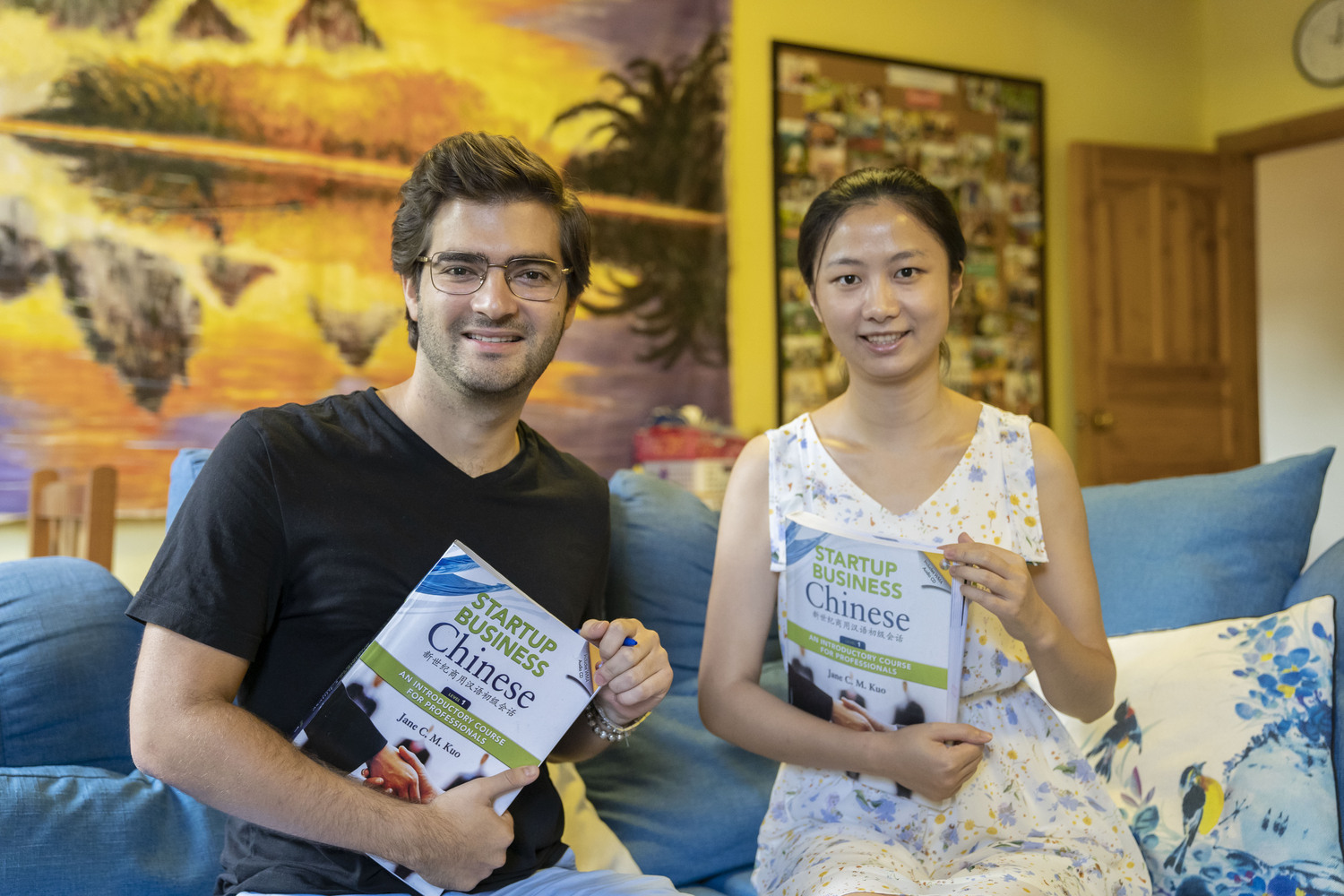
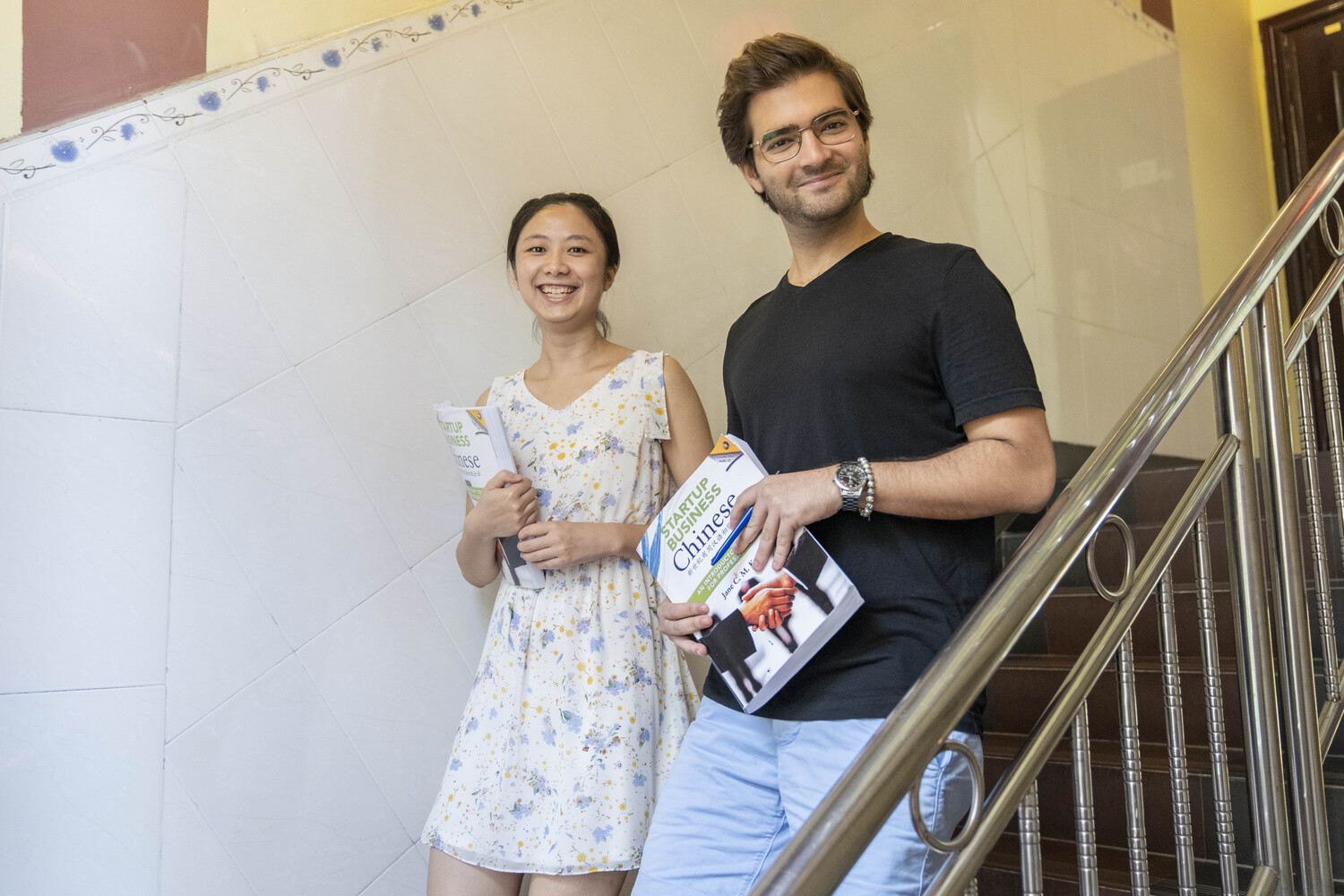
The textbook here is Startup Business Chinese, and business Chinese is one of the focuses advanced students can choose.
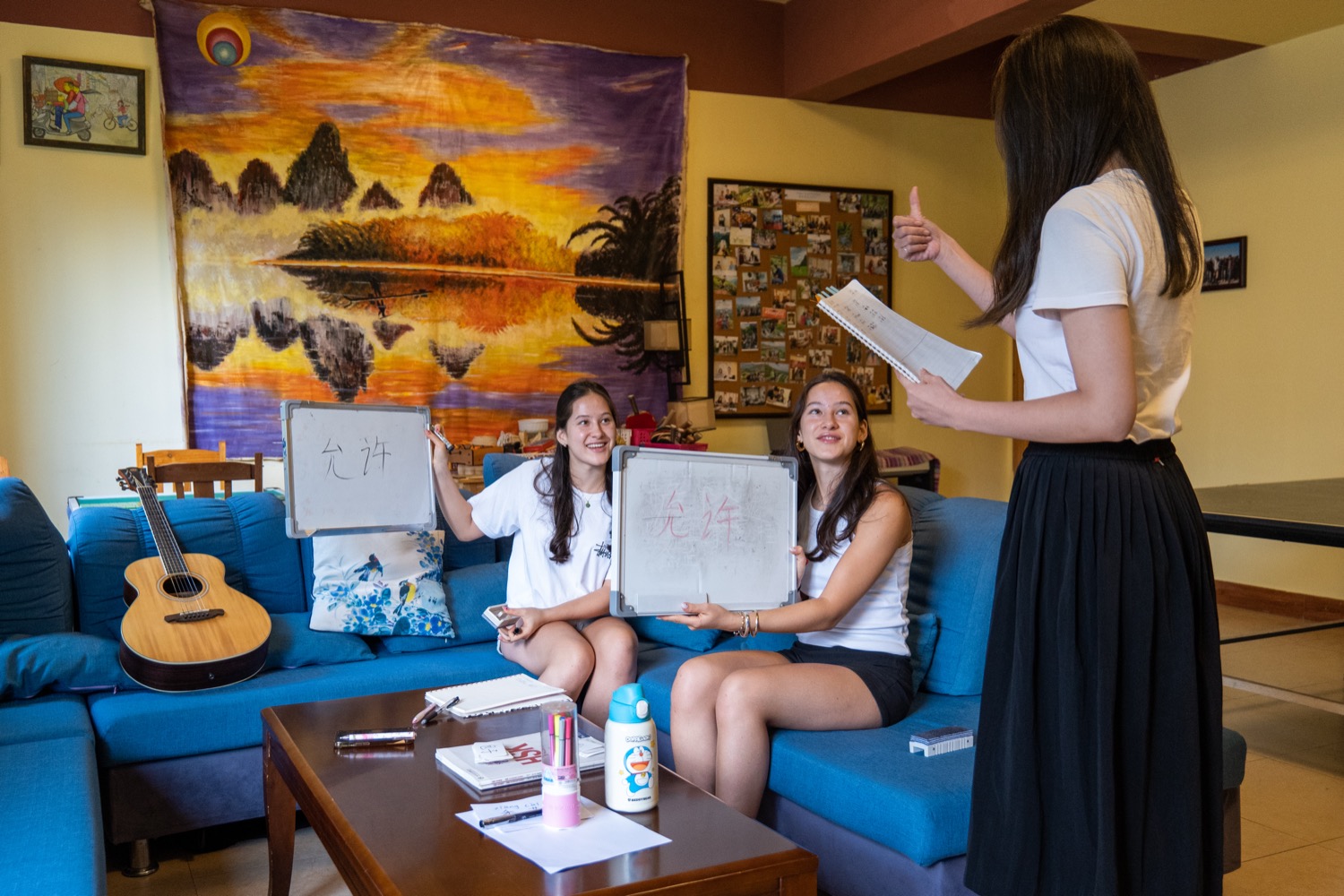
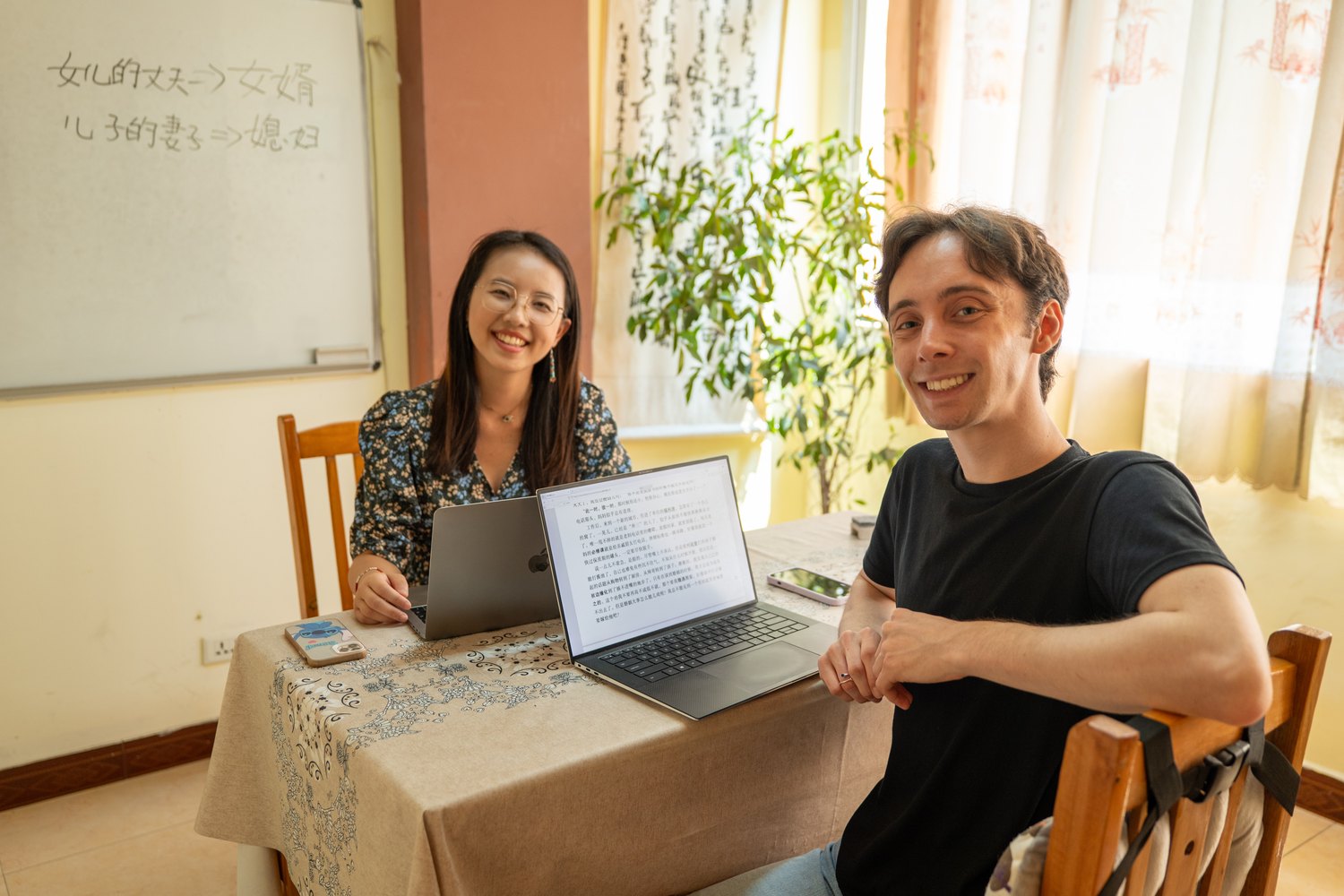
Both players wrote 允许 (yǔnxǔ, to allow) on their whiteboards, and writing a word by hand like this is practice for the stroke order taught in reading and writing class.
Asking the same question twice is easy when the class is yours alone, and the lesson can stay on a tricky point as long as you need.
Your teachers share notes on your progress and plan lessons that connect, so a grammar point from the morning may come back in the afternoon's conversation.
Your three teachers share notes on how you are doing, so a grammar point that keeps tripping you up can come back in all three of their classes.
At the intermediate level you start sharing opinions and telling what happened in your own words, and the readings get longer.
Dates and days of the week on the whiteboard are everyday Chinese, the kind of daily communication many beginners learn first.
After a Chinese national holiday, missed class time can be made up with extra hours through CLI Online, and make-up classes are free.
In reading and writing class, your teacher may listen and take notes while you read a page aloud, then go back over the parts that tripped you up.
All three of your teachers teach you one-on-one, and each of them adapts their teaching style to you.
Before you arrive, a short questionnaire about your Chinese story helps your teachers plan the first lessons, so class starts at your level.
A quick sketch on the whiteboard can explain a new word, and in a one-on-one class you have the time to ask about it and try it out loud.
In a one-on-one class there is nobody else to wait for, so your questions get answered as soon as you ask them.
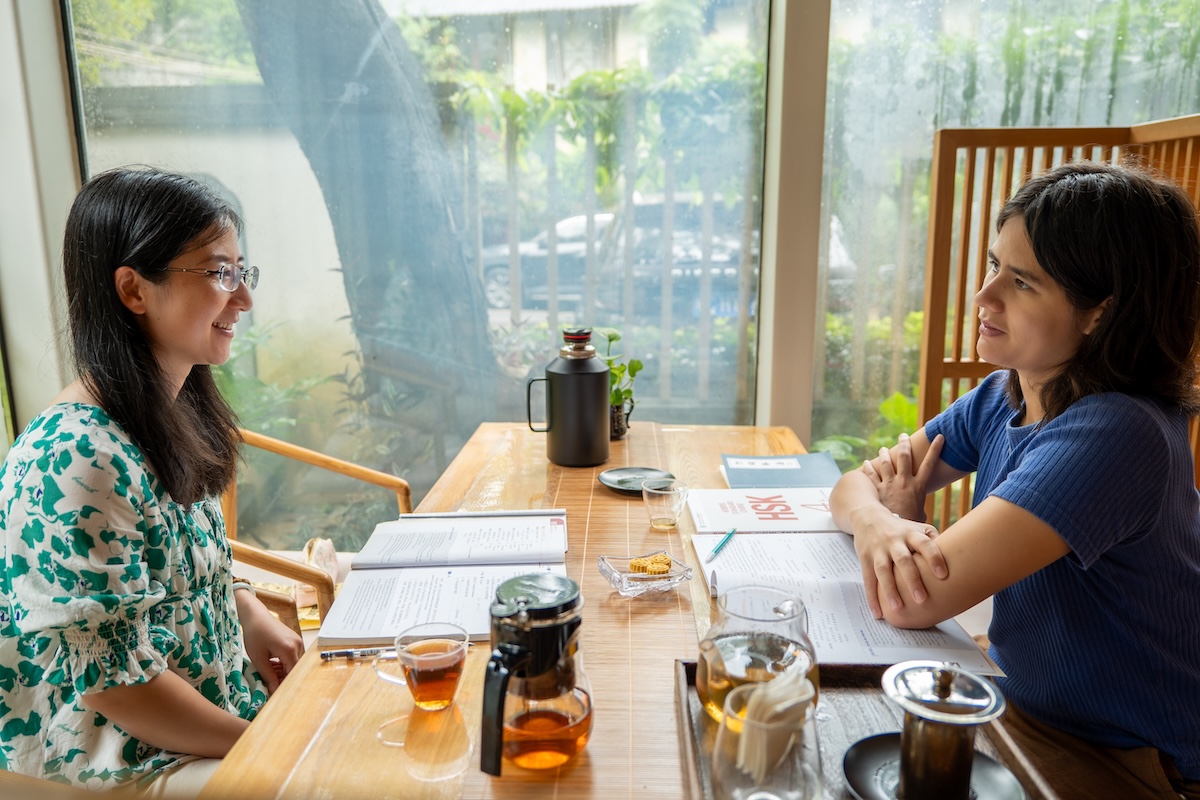
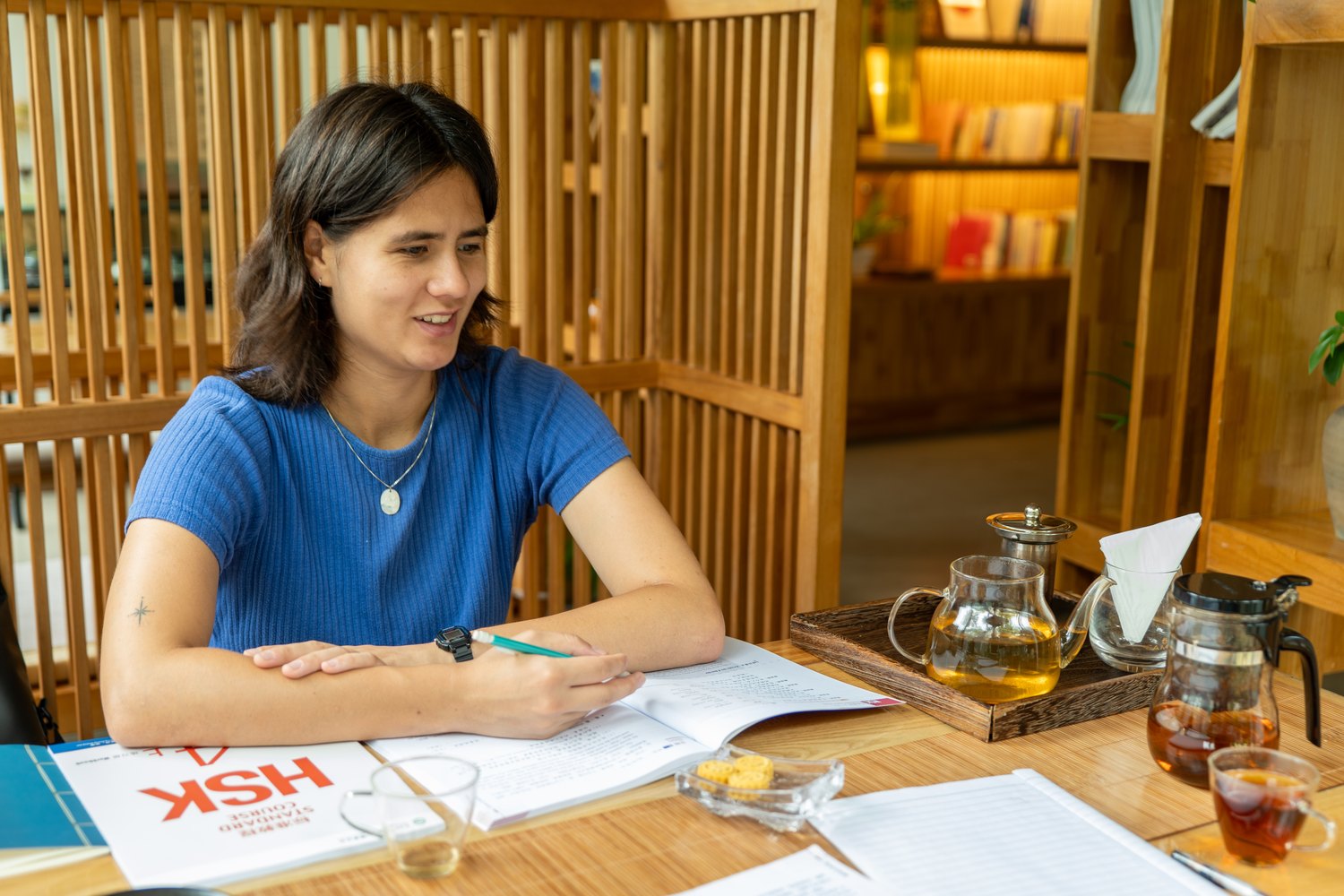
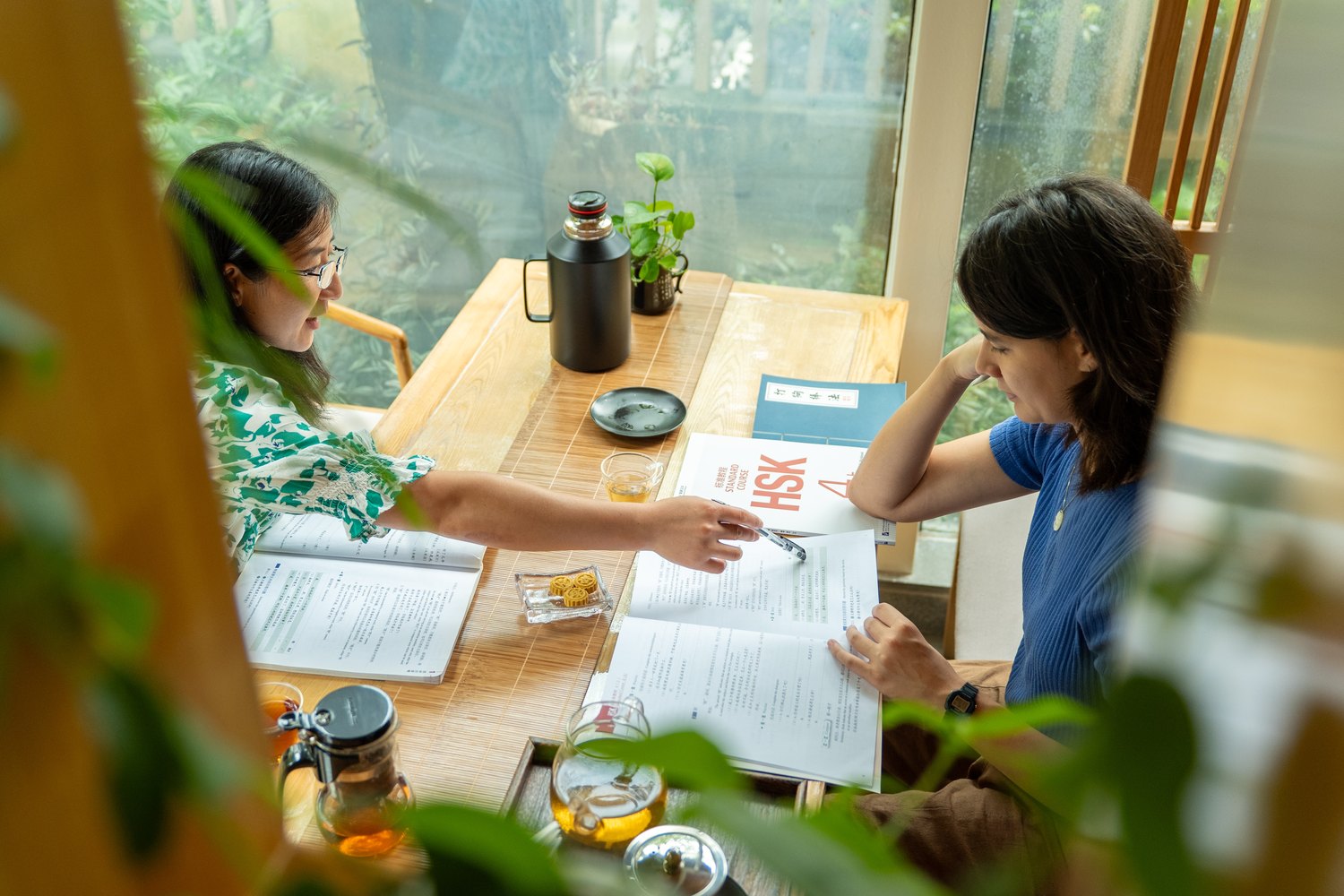
The two morning sessions run from 8:20 to 10:20 and from 10:30 to 12:30, and two hours at a table like this is long enough to work through a few pages over tea.
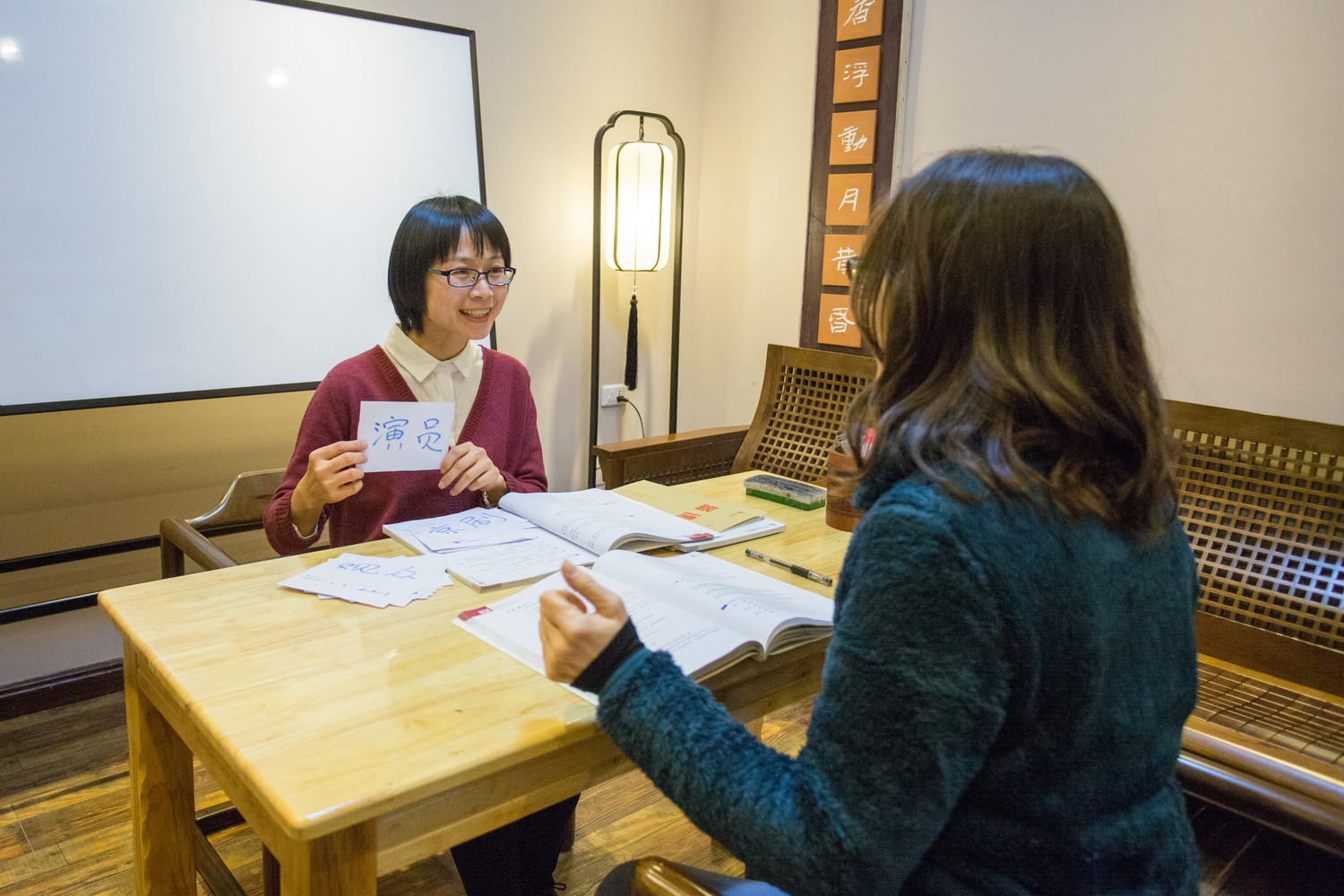
A flashcard is a quick check, and every two weeks a short evaluation covers vocabulary, grammar, reading, writing, listening and speaking.
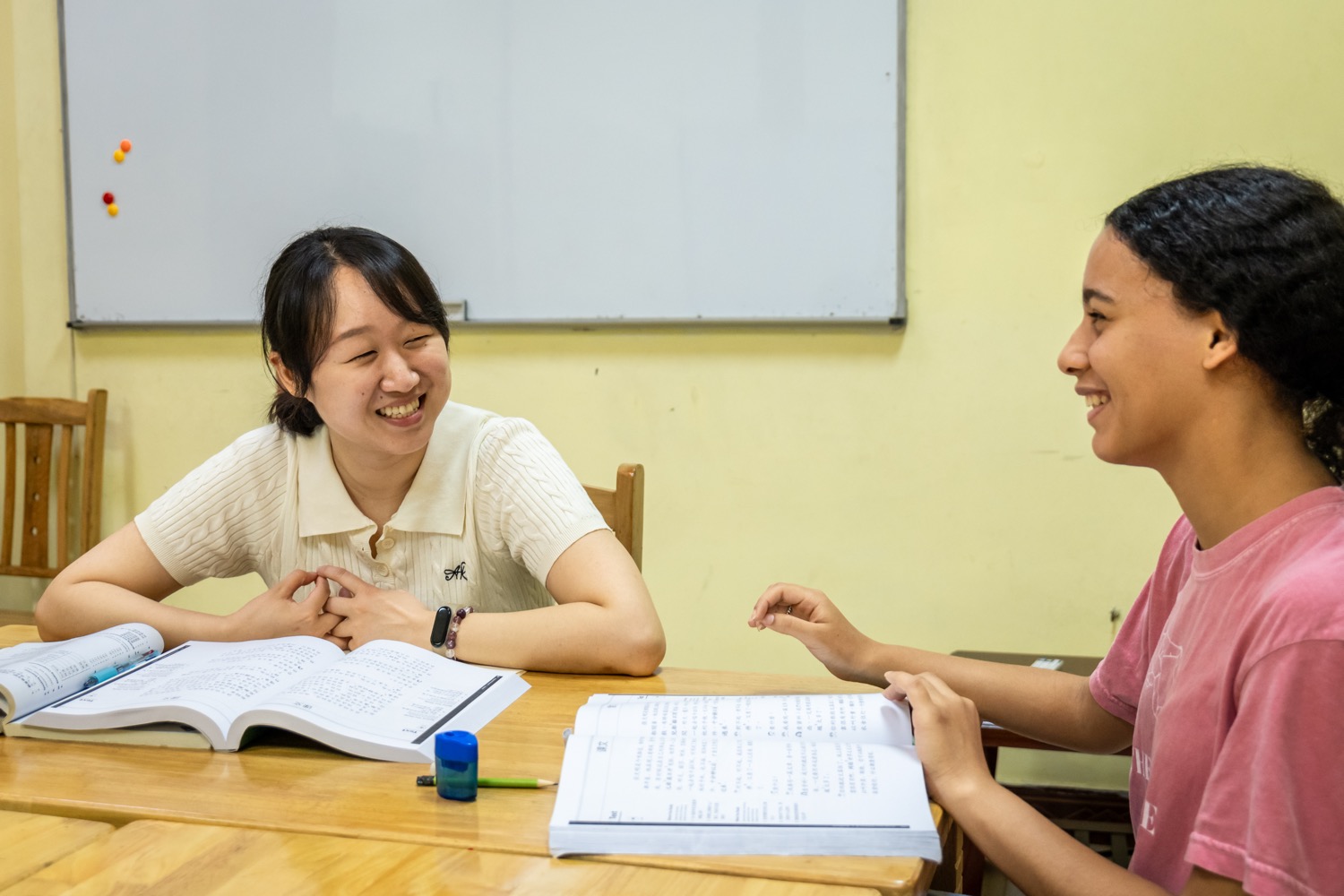
Every class at CLI is one-on-one, so a lesson like this one can stay with your own questions and the words you still need to practice.
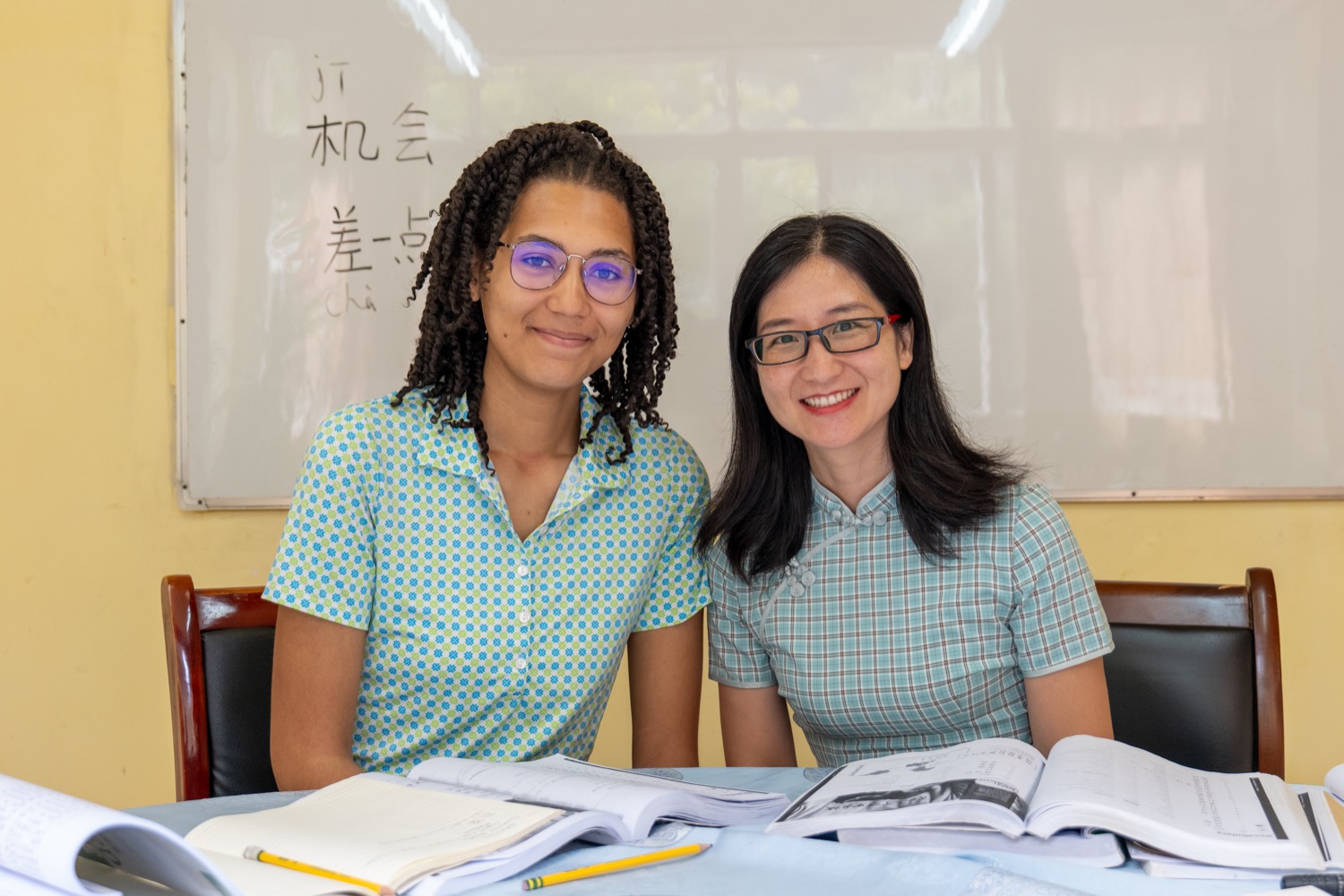
机会 (jīhuì, chance) and 差一点 (chà yìdiǎn, almost) from the board may come up again in tomorrow's speaking class, since your teachers plan together.
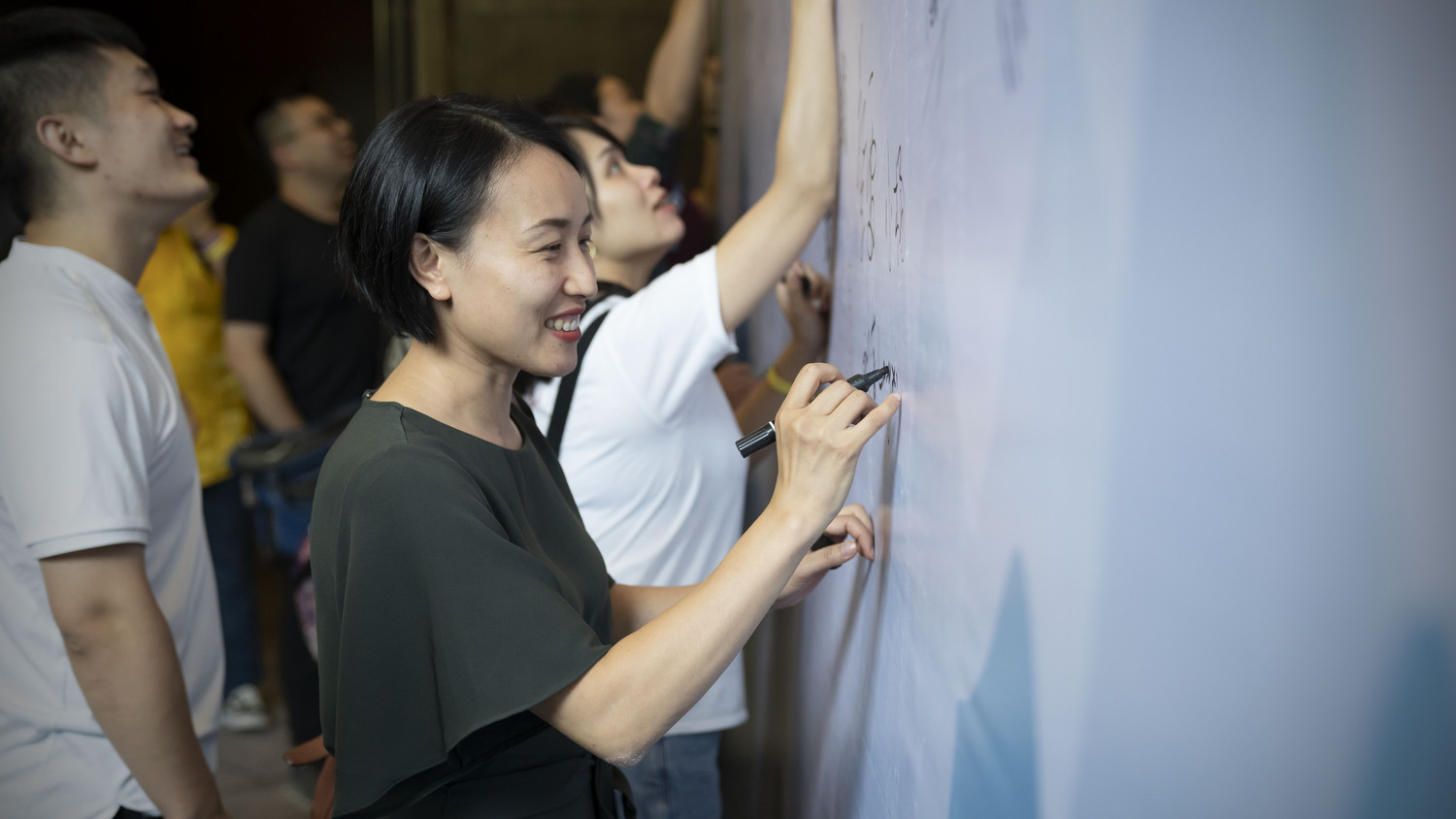
J, q and x sit above zh, ch, sh and r on this board. Taking a turn at the marker means writing each syllable and saying it aloud so your teacher can check the tone.
CLI's syllabi set out what each level covers, and your teachers decide with you how fast to go through it.
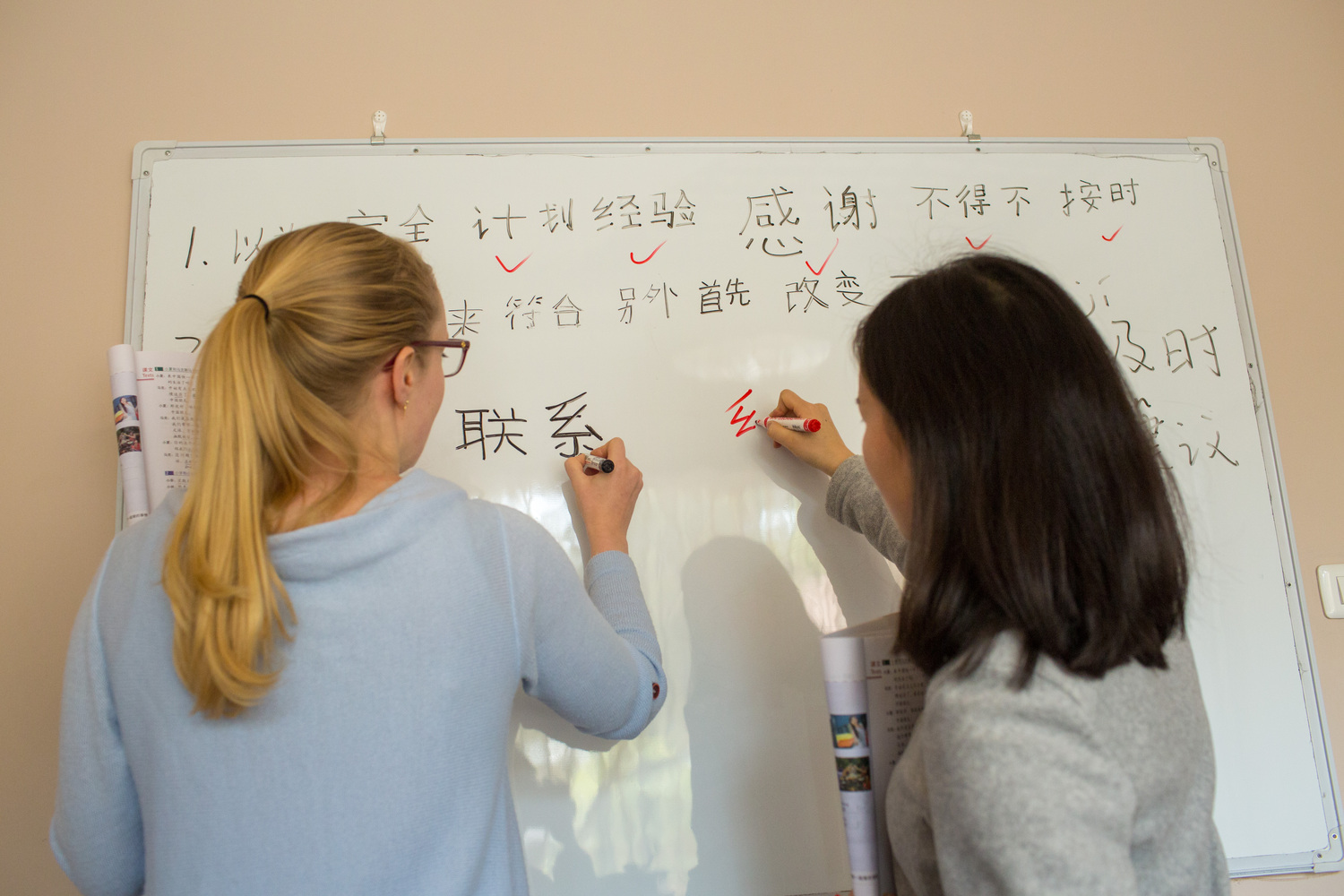
感谢 (gǎnxiè, to thank) and 联系 (liánxì, to contact) are up on the whiteboard, checked in red. Writing characters and using them in sentences is reading and writing class.
Intermediate classes bring longer readings and extended conversations, and the goal is speaking without rehearsed phrases.
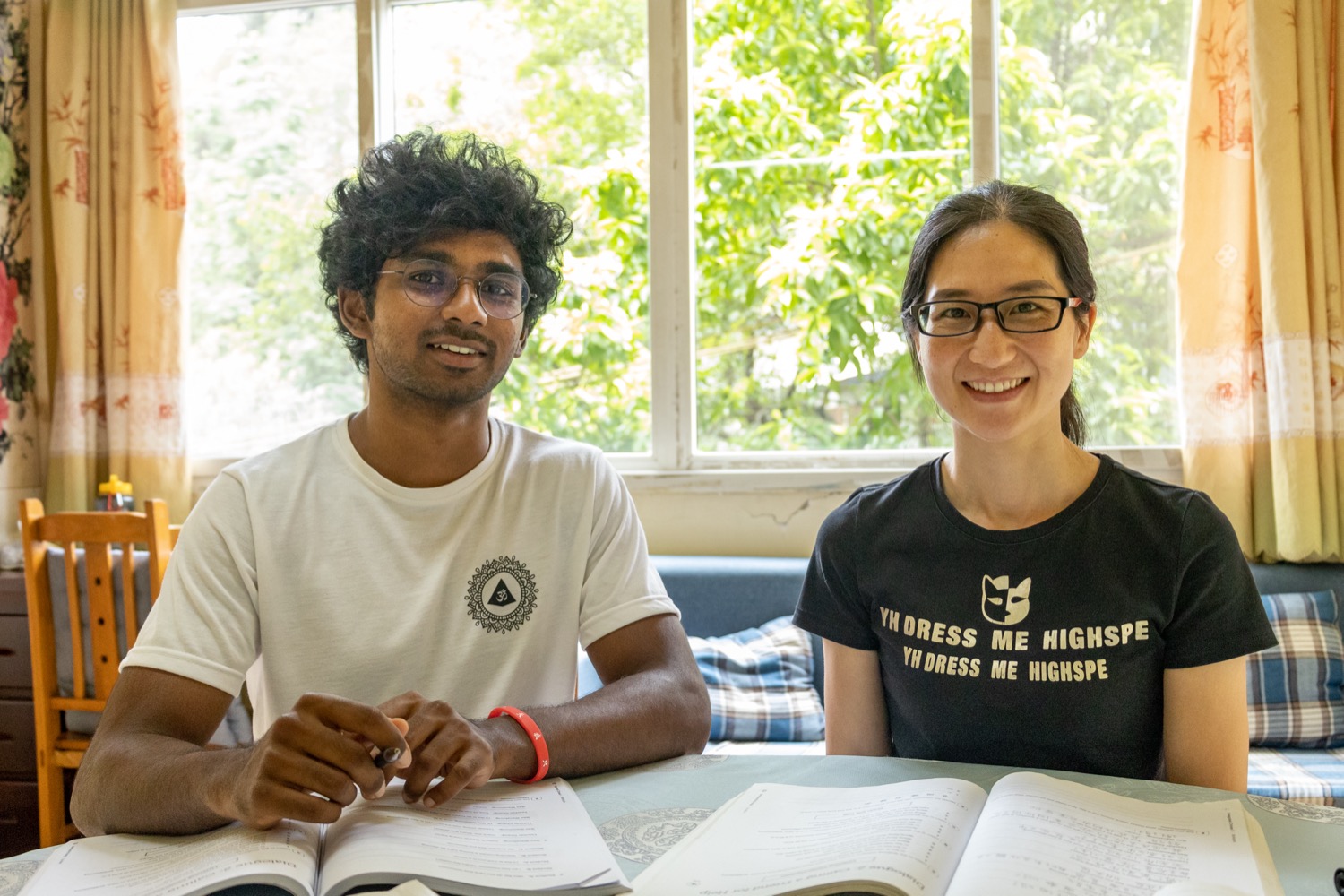
Studying next to a classmate is easy at the CLI Center, and if your levels match and enrollment allows, a small group class can sometimes be arranged.
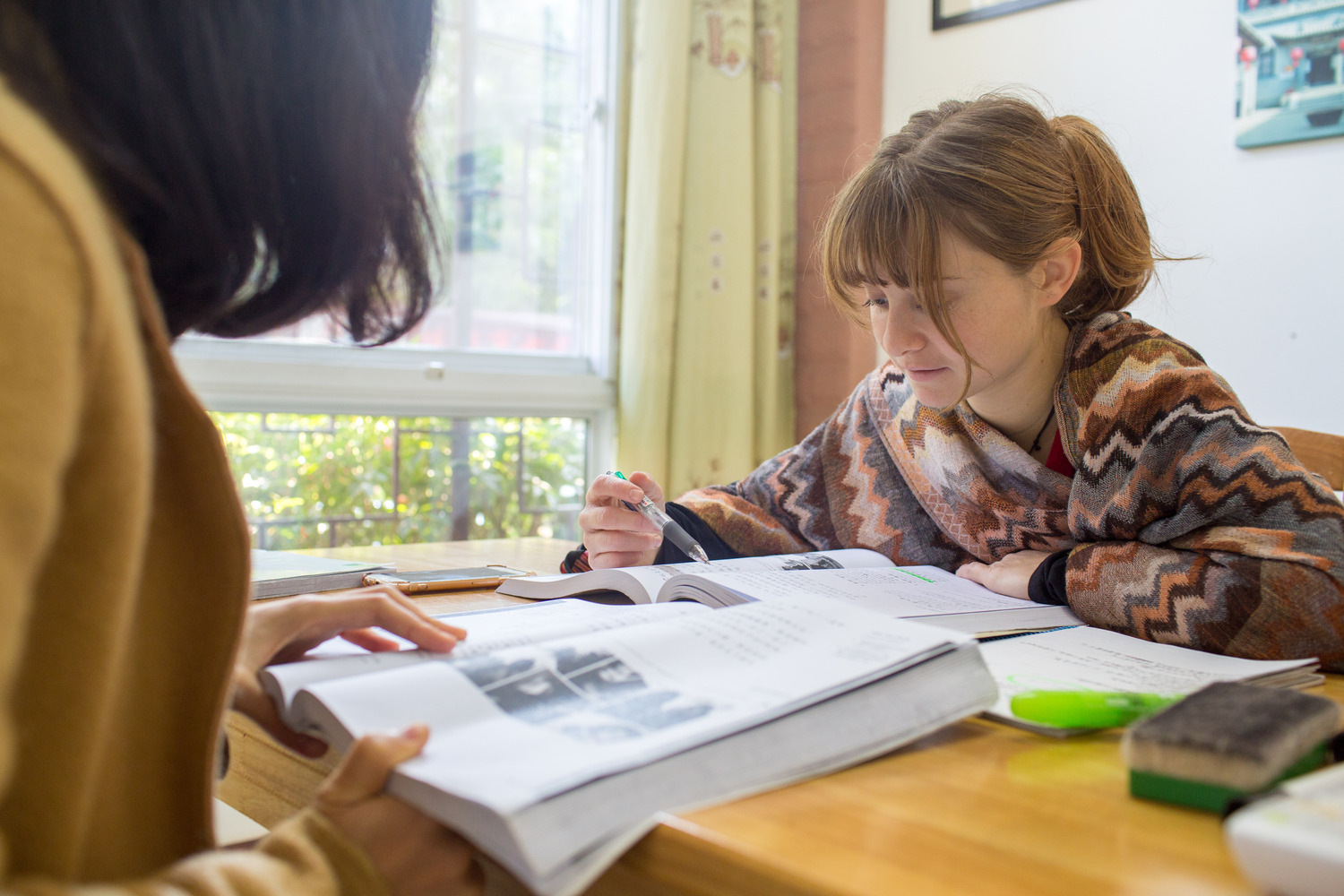
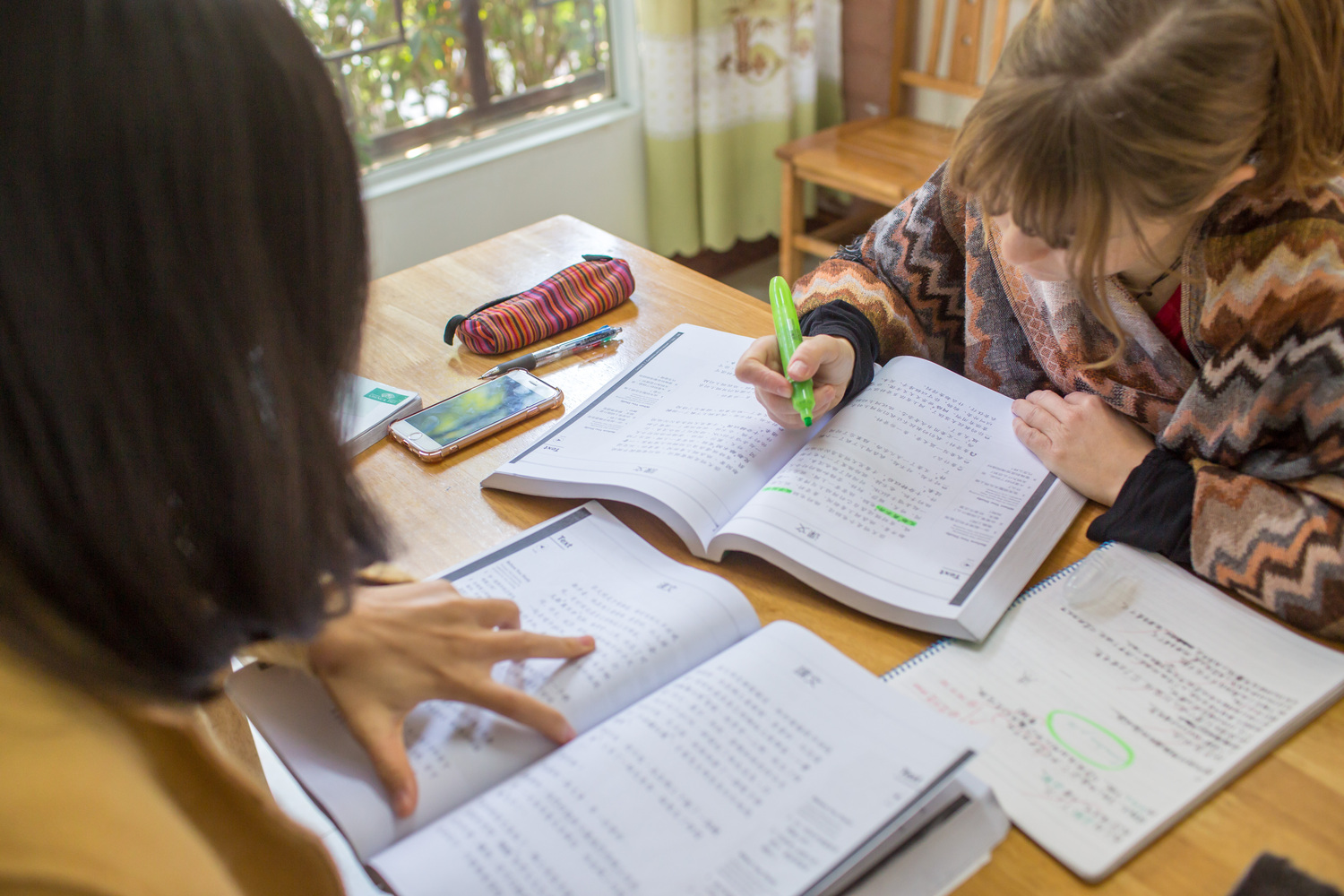
Reading comprehension belongs to your reading and writing teacher, and in a one-on-one class you can talk through each page together.
Each weekday adds four more hours of one-on-one class, which comes to 20 hours of Chinese a week.
Grammar, vocabulary and daily review go to the comprehensive review teacher, so each day's material gets a second pass.
Tests are only one part of assessment, since your teachers also watch how well you use new material in class and in everyday conversation.
Regular evaluations track your progress in ways you can measure, and together with structured review they help you hold on to what you learn.
With a teacher to yourself, there is time to stop and ask about any word on the page, and your teacher can answer it then and there.
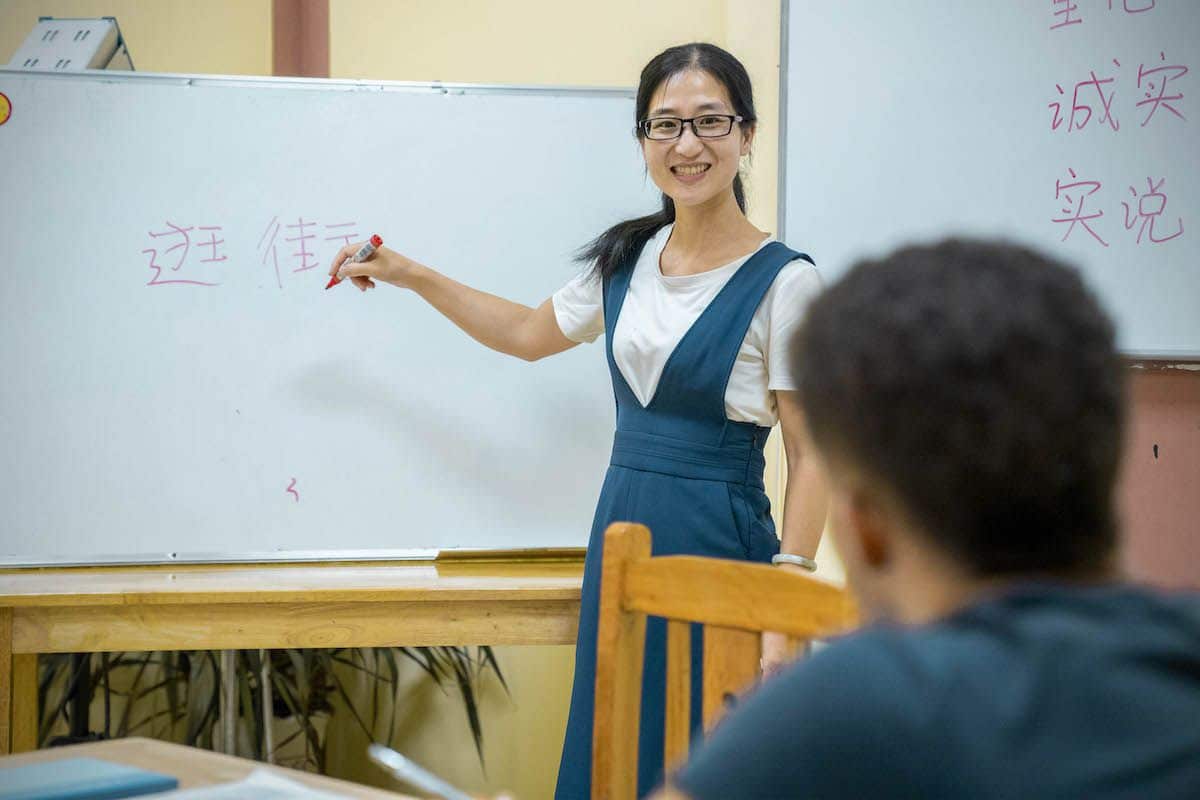
逛街 (guàngjiē), to go window-shopping, on the board: a word from class is one you can use around Guilin that same day.
Writing at the intermediate level builds up to compositions several paragraphs long, a big step from the simple sentences of the elementary level.
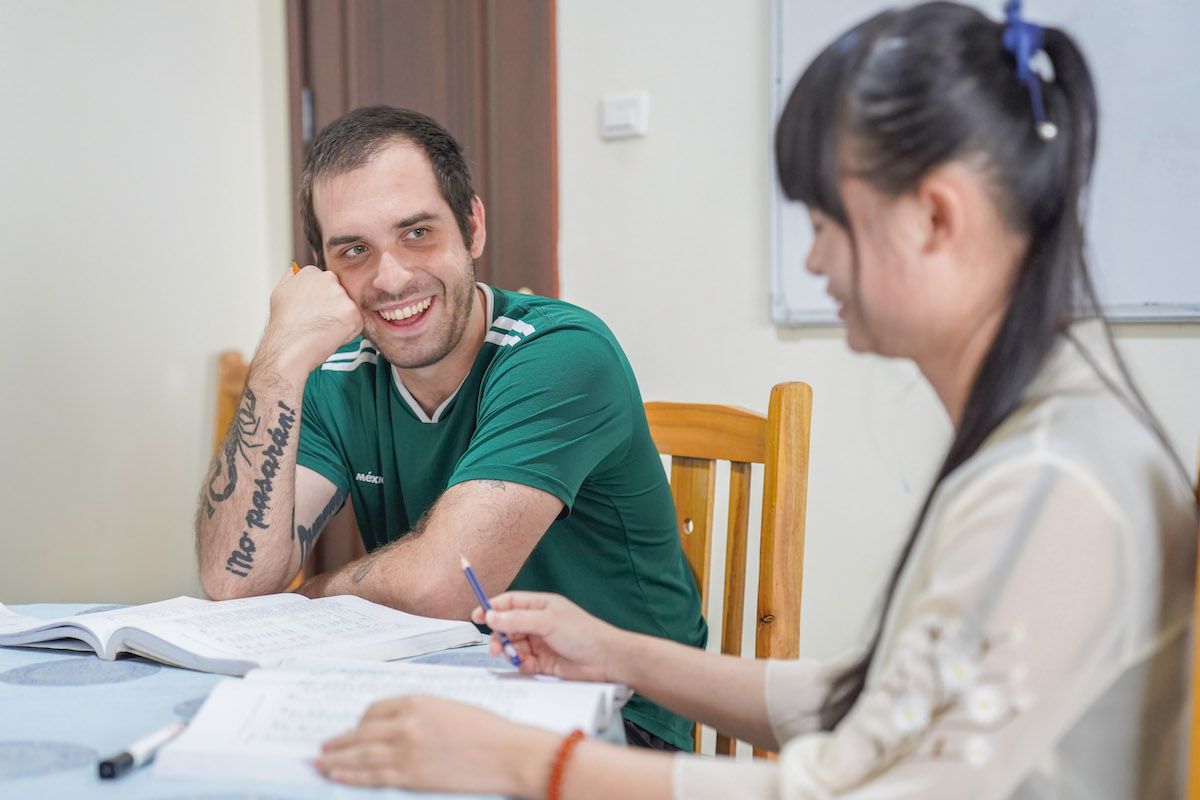
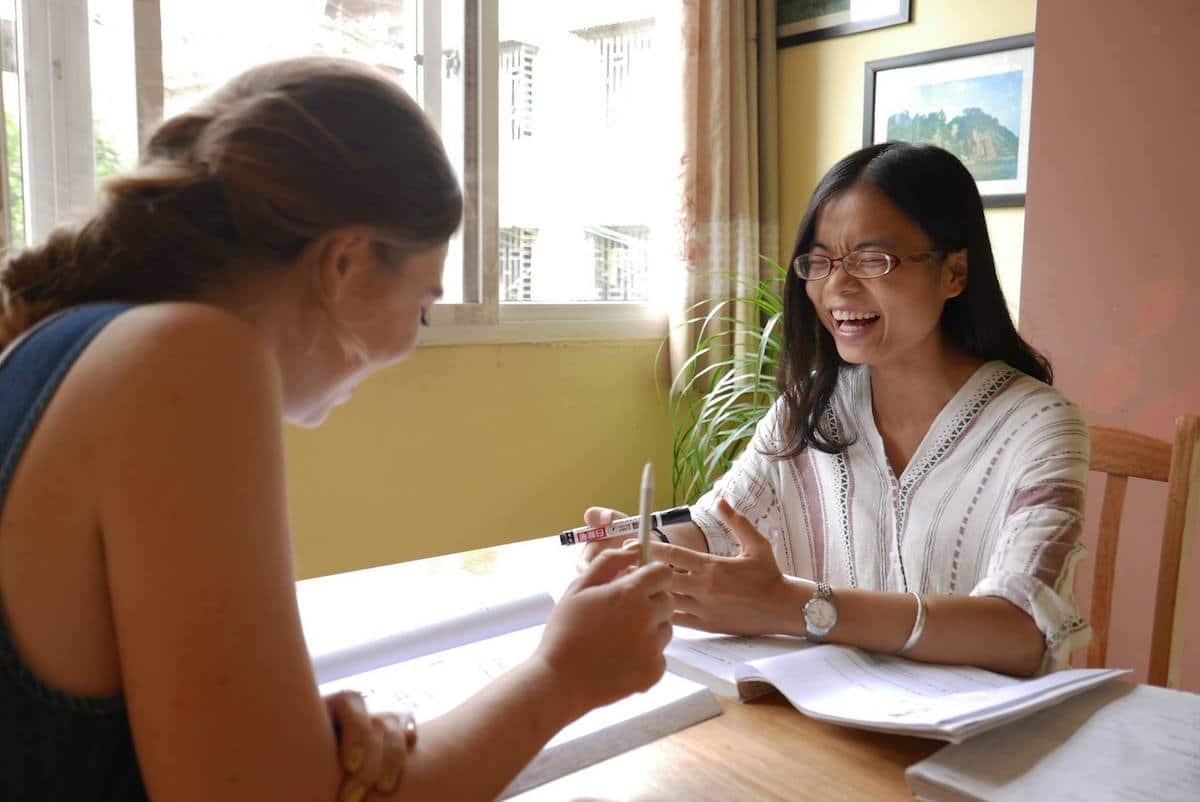
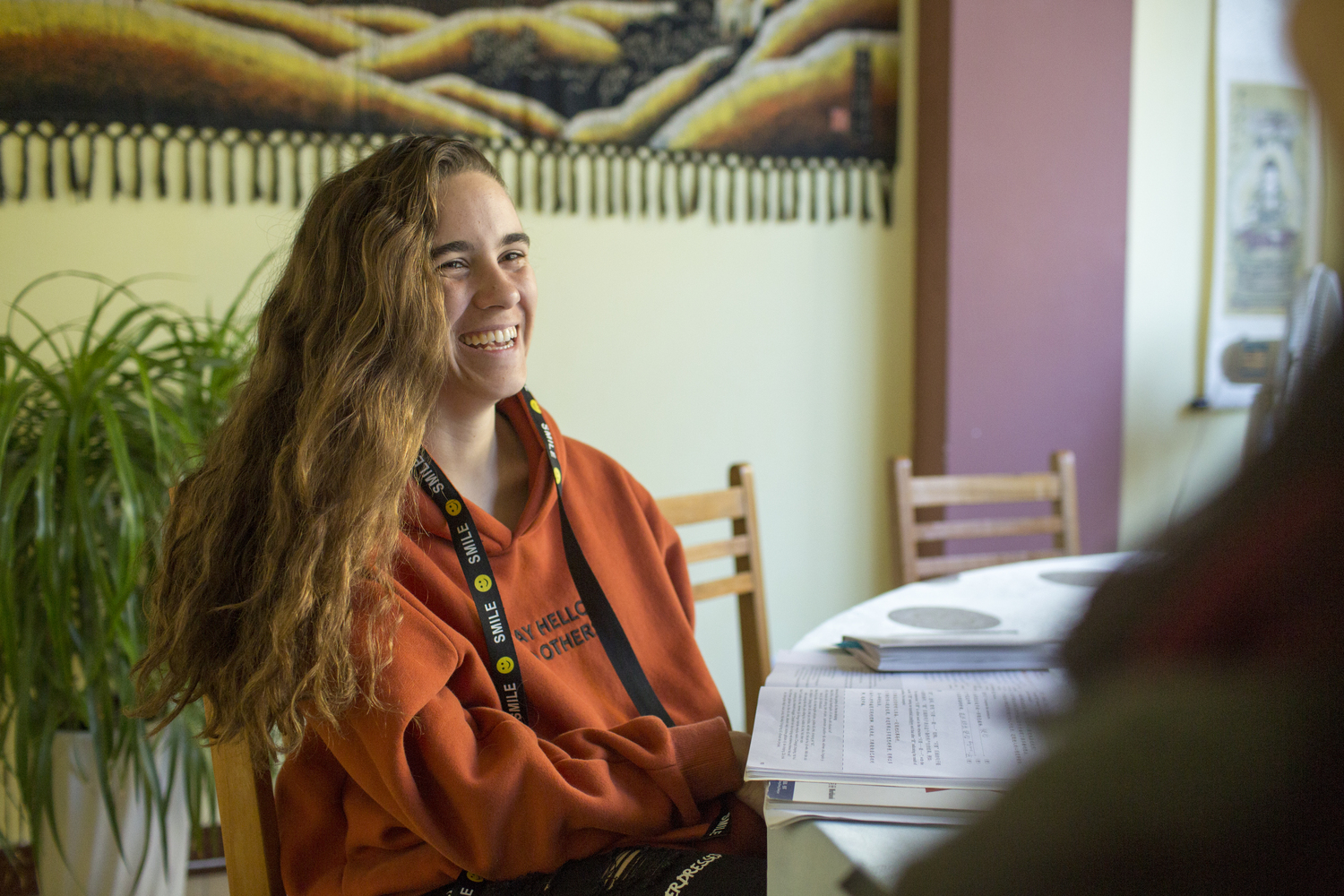
A one-on-one lesson has room for a joke and plenty of questions, because the whole two-hour session goes to one student's Chinese.
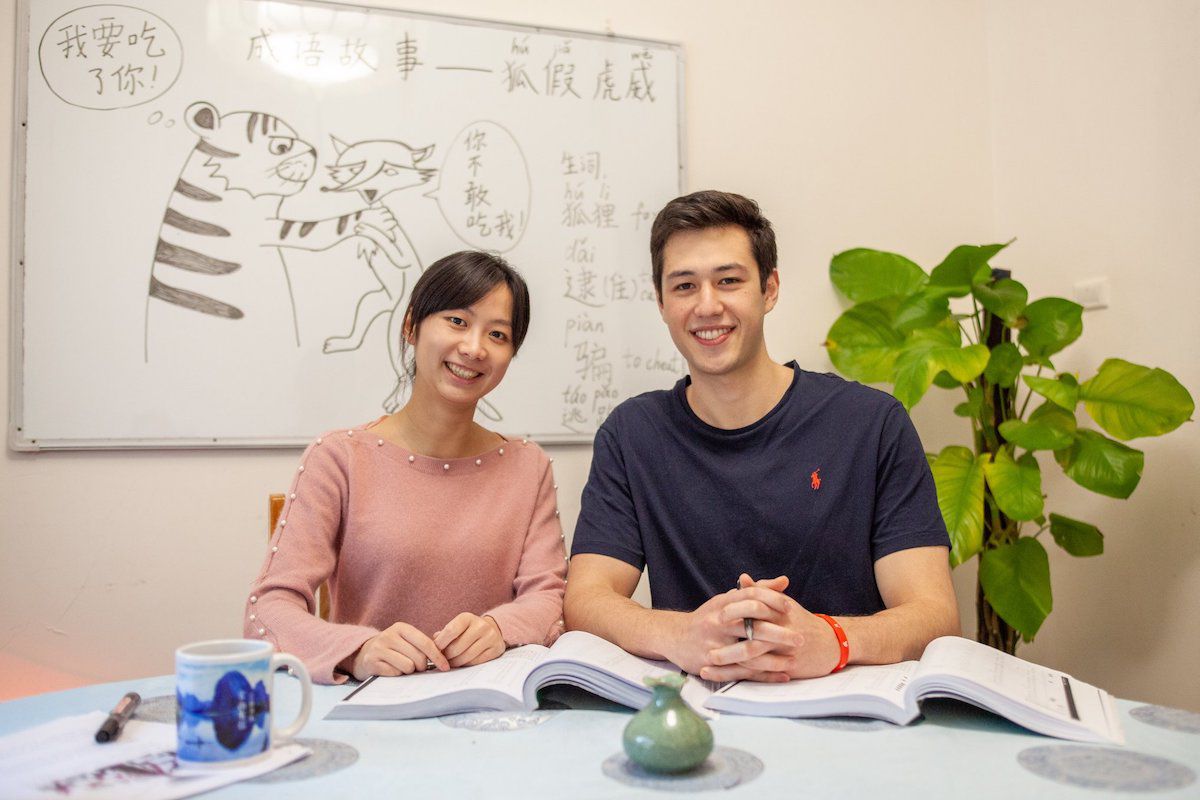
An idiom story on the board, 狐假虎威 (hú jiǎ hǔ wēi): idioms are part of CLI's advanced level, along with formal writing.
Test preparation is one focus advanced students choose, and others spend their class hours on classical Chinese or business Chinese.
One-on-one is the main way CLI teaches, and it is why students progress so quickly: every lesson is built around your own questions.
Lessons change with your results: if an evaluation shows your listening needs more work, your listening and speaking teacher adjusts the next lessons.
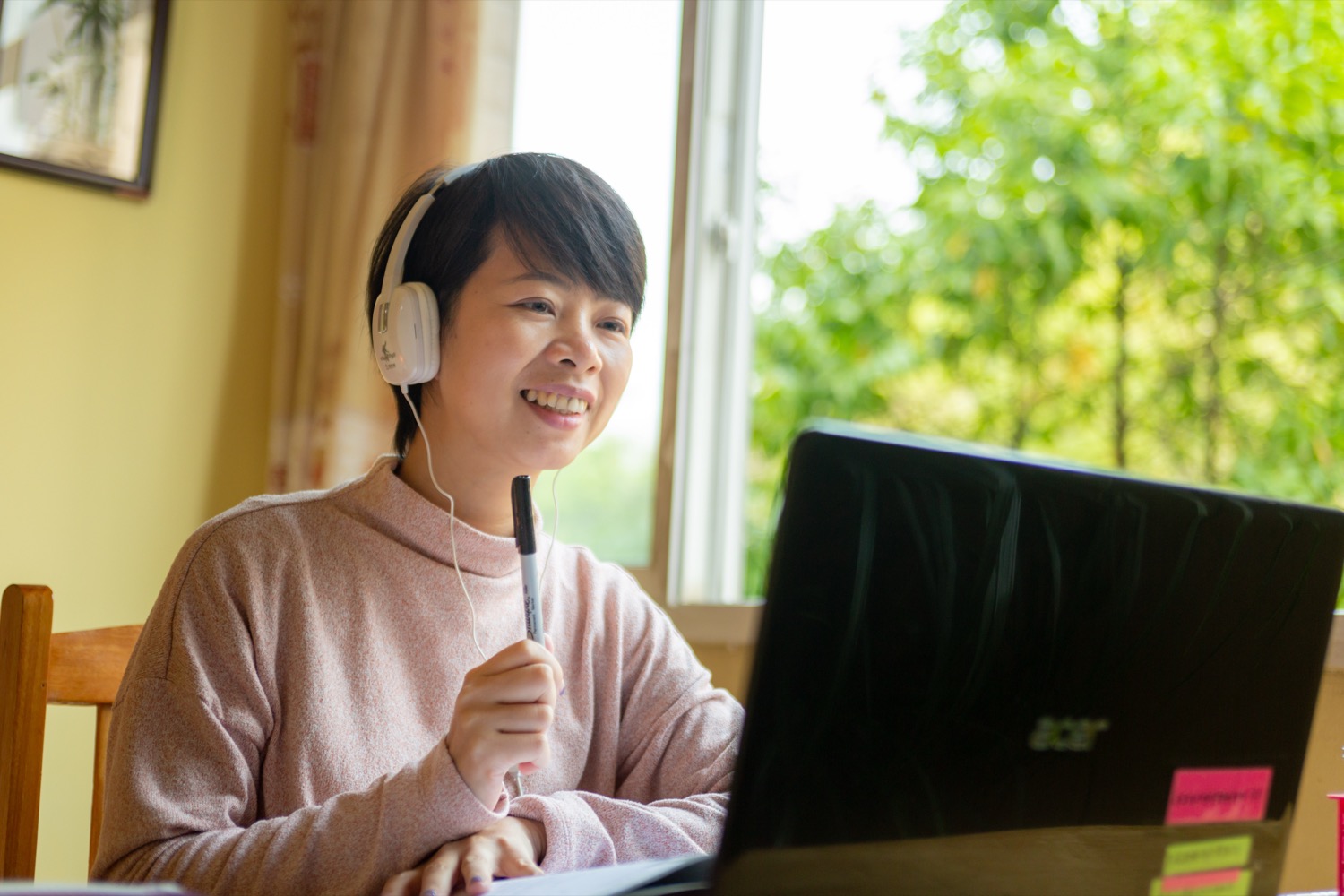
Online or across a table, a one-on-one lesson moves at your pace, and your teachers shape the plan around your goals.
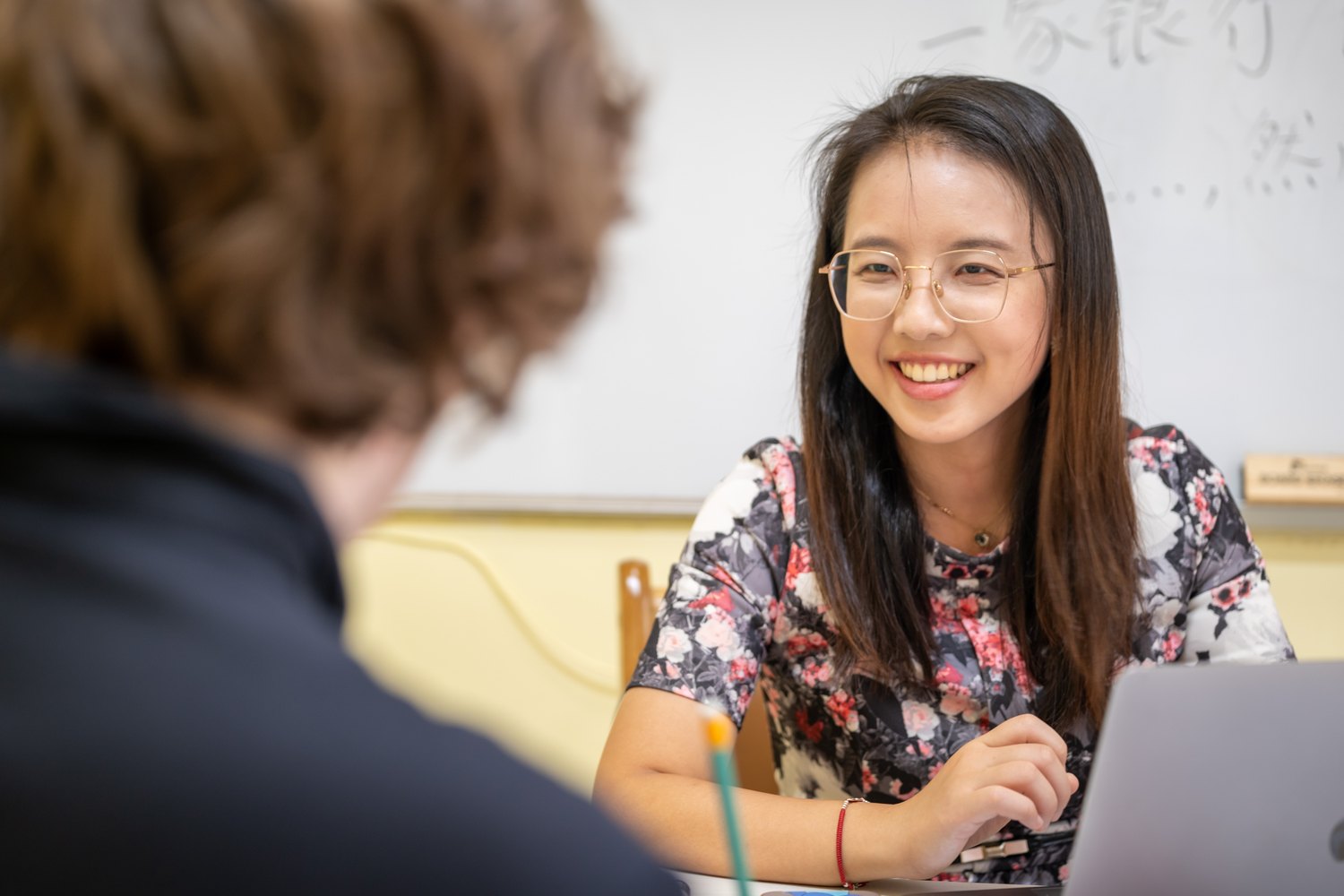
一家银行 (yì jiā yínháng), a bank, on the whiteboard: beginners often start with survival phrases for daily life in Guilin.
Your teachers plan around your goals and use CLI's syllabi as guides, so you don't need to work through each one in a fixed order.
Recognizing characters and writing them in the right stroke order are the work of your reading and writing teacher, one of your three.
One student wrote that the teachers understand how to simplify sentences to your level of vocabulary, but they keep you talking and practicing.
In a one-on-one lesson there is no back row, and each two-hour session moves at the pace of a single student.
Listening comprehension gets its own attention in listening and speaking class, alongside tones and pronunciation.
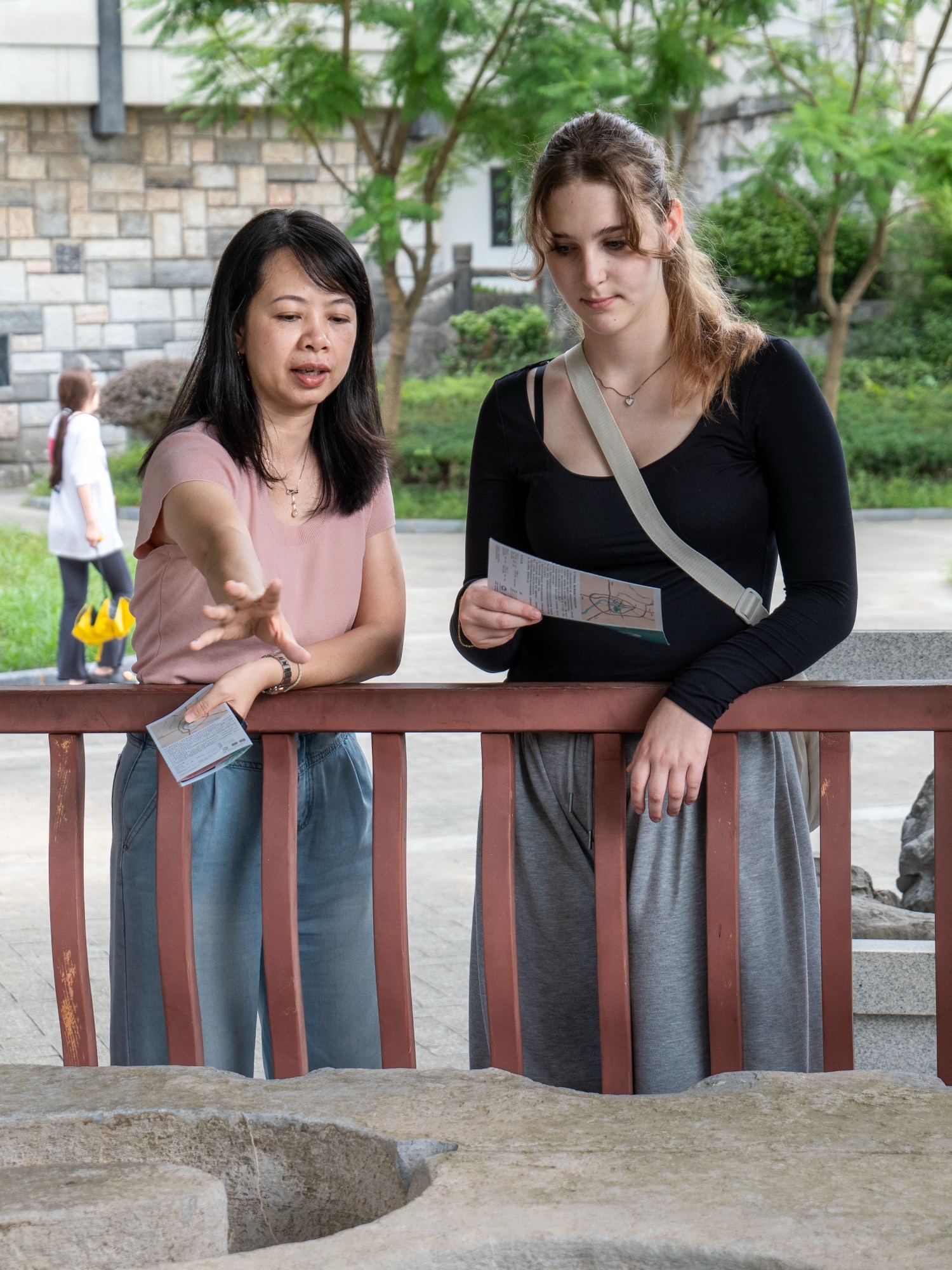
Outdoors at a stone table, the lesson works the way it does indoors: your teacher starts from what you already know and works on the gaps.
Some students begin with pronunciation and tones, and more advanced students may spend their hours on fluency or reading.
A student's three teachers each bring a different focus, and over a week their classes add up to 20 hours.
Our teachers follow CLI's course syllabi, which are built like a university course, and set the pace with you as you go.
With 20 hours of one-on-one class a week, there is time to slow down and get a sentence right before moving on.
Class exercises and conversation games are part of daily practice, and your teachers review them along with your homework.
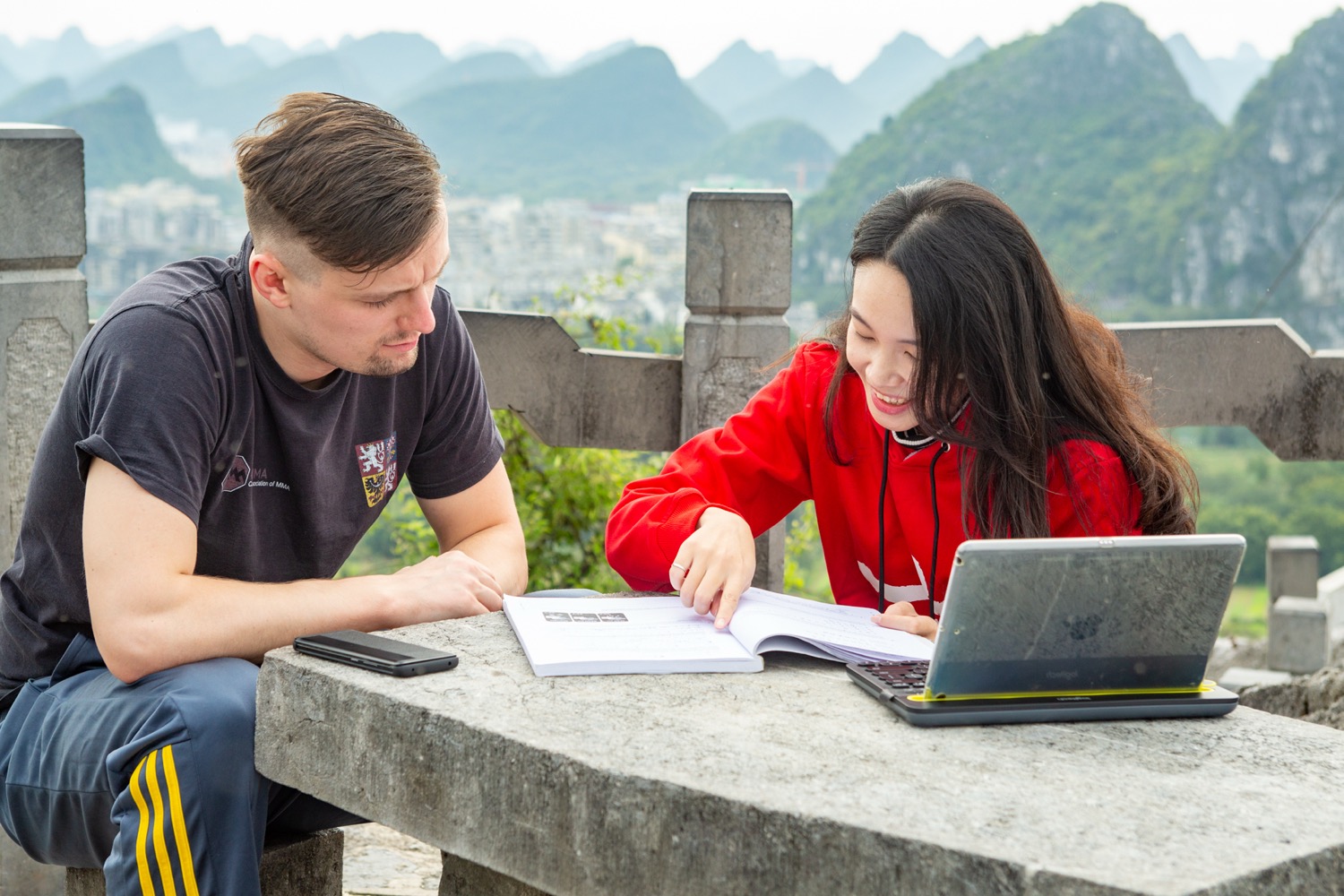
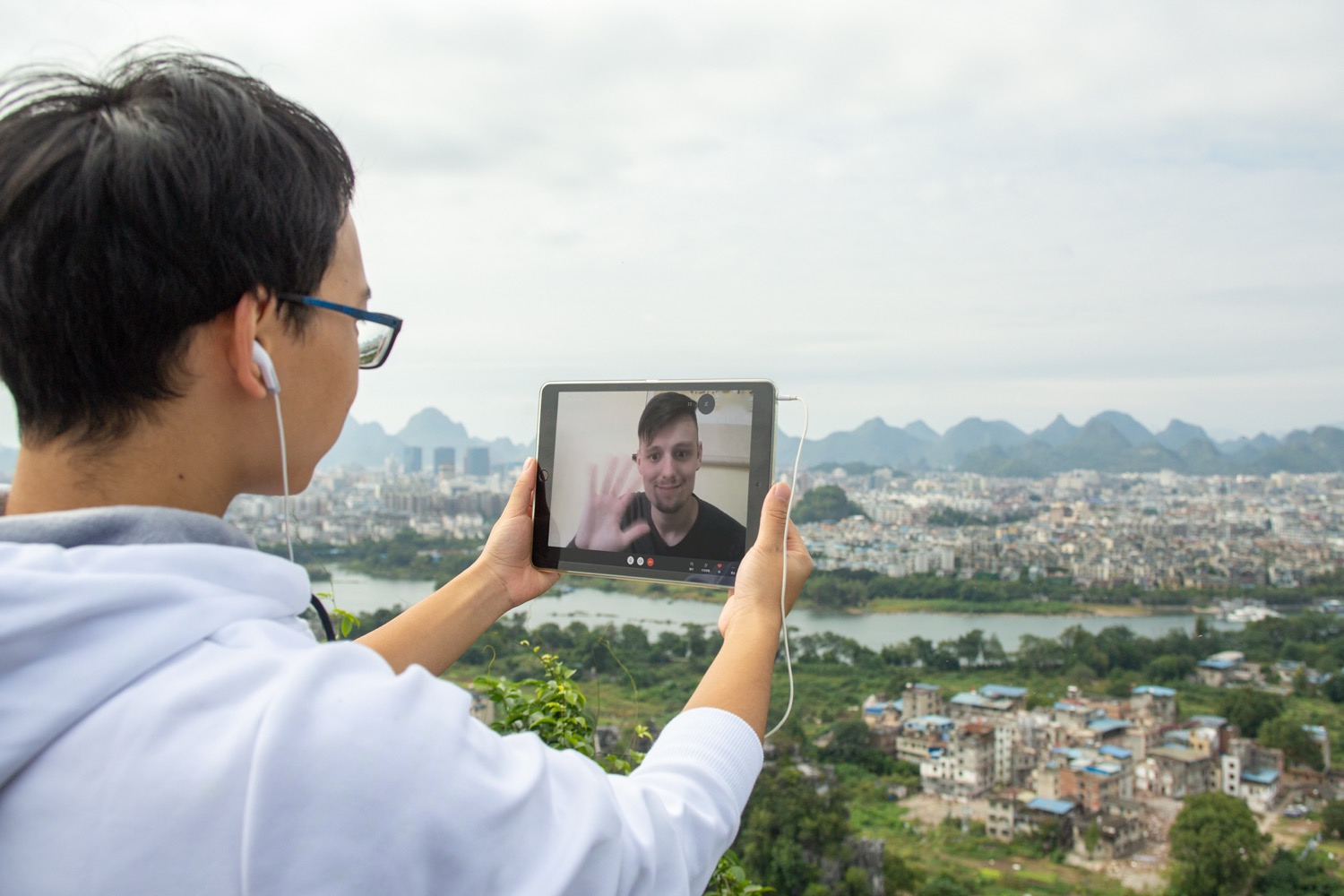
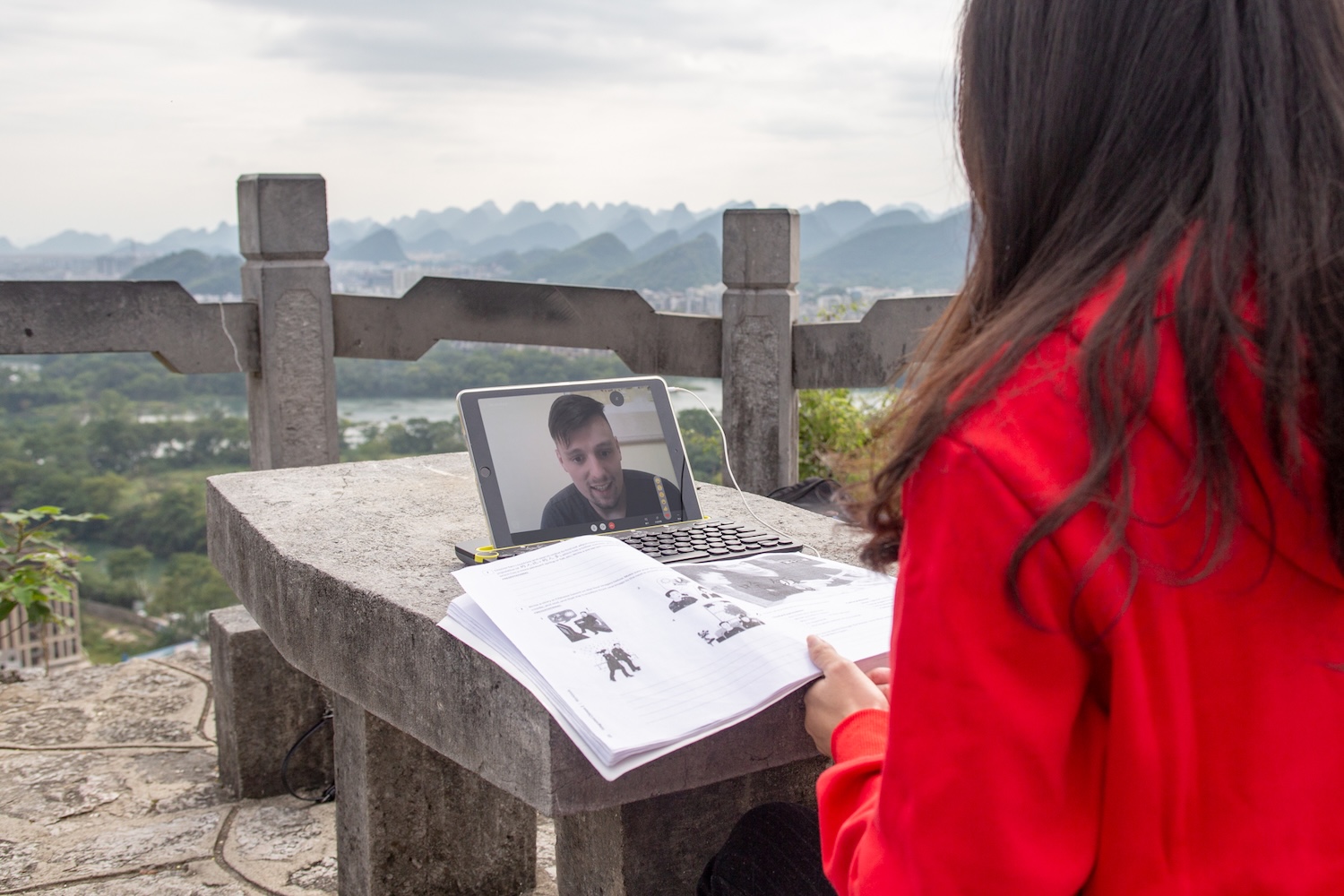
Our teachers also teach online, here from a hilltop, and if a Chinese national holiday falls during your stay, missed class hours can be made up free through CLI Online.
Each student has two of CLI's four daily class sessions, which run between 8:20 AM and 6:10 PM, so class takes four hours of the day.
Daily one-on-one lessons add up, and your teachers come to know your Chinese well enough to begin each class exactly where you are.
Upper intermediate classes work on grammatical accuracy and subject-specific vocabulary, with practice in debating and explaining abstract ideas.
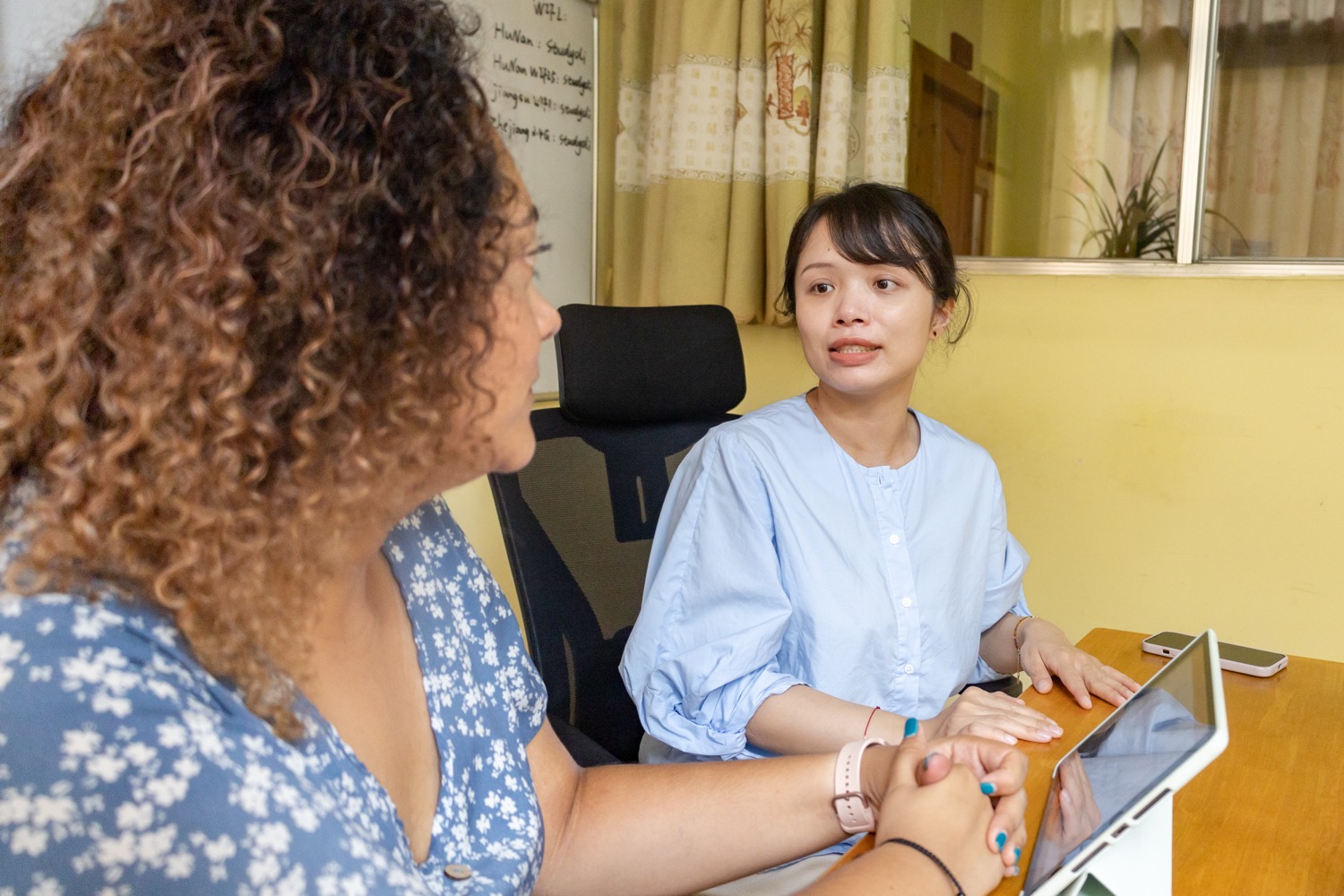
Class on a tablet is still one-on-one, with your teacher's attention on your pronunciation and the areas where you need more practice.
CLI's Advanced level has three tiers of its own, and it works up to full-length essays, formal compositions and idiomatic speech.
A one-on-one lesson can use whatever helps, from a tablet to a whiteboard, and teachers can slow down on hard material or move ahead.
One student wrote that your teachers can really work with you and find out what your goals are and which teaching methods seem to work best.
With the red wristband on, the Language Pledge is on too: you speak only Chinese, and so does every CLI team member you talk to. Take it off to stop.
Tell your teachers why you are learning Chinese, whether it is for work, family or travel, and they will shape the plan around it.
Every two weeks a short evaluation checks how the new material is sticking, and your teachers use the results to plan the next lessons.
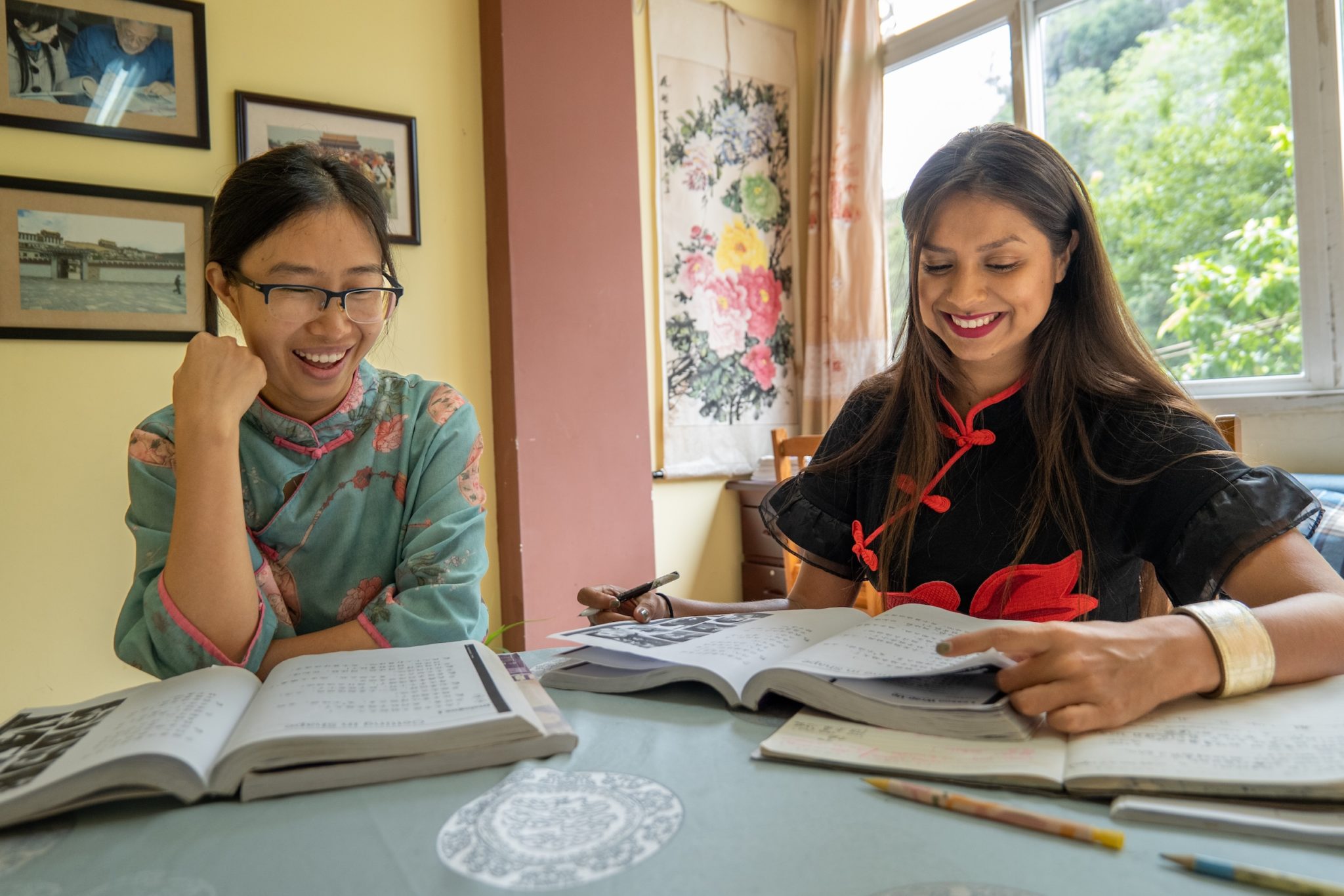
Your reading and writing teacher covers both sides of the page: writing characters like these by hand, and understanding what you read.
On the Immersion Program, language exchange is part of a typical weekday besides your two class sessions, and it puts you across a desk from a Chinese speaker.
Each day brings new vocabulary, grammar, pronunciation and cultural concepts, and later lessons come back to them so they stay with you.
Upper intermediate lessons may bring in Chinese news, short stories and podcasts, and then you put what you read or heard into your own words.
One-on-one classes need only a small room with a table and a whiteboard, and the CLI Center has 18 of them.
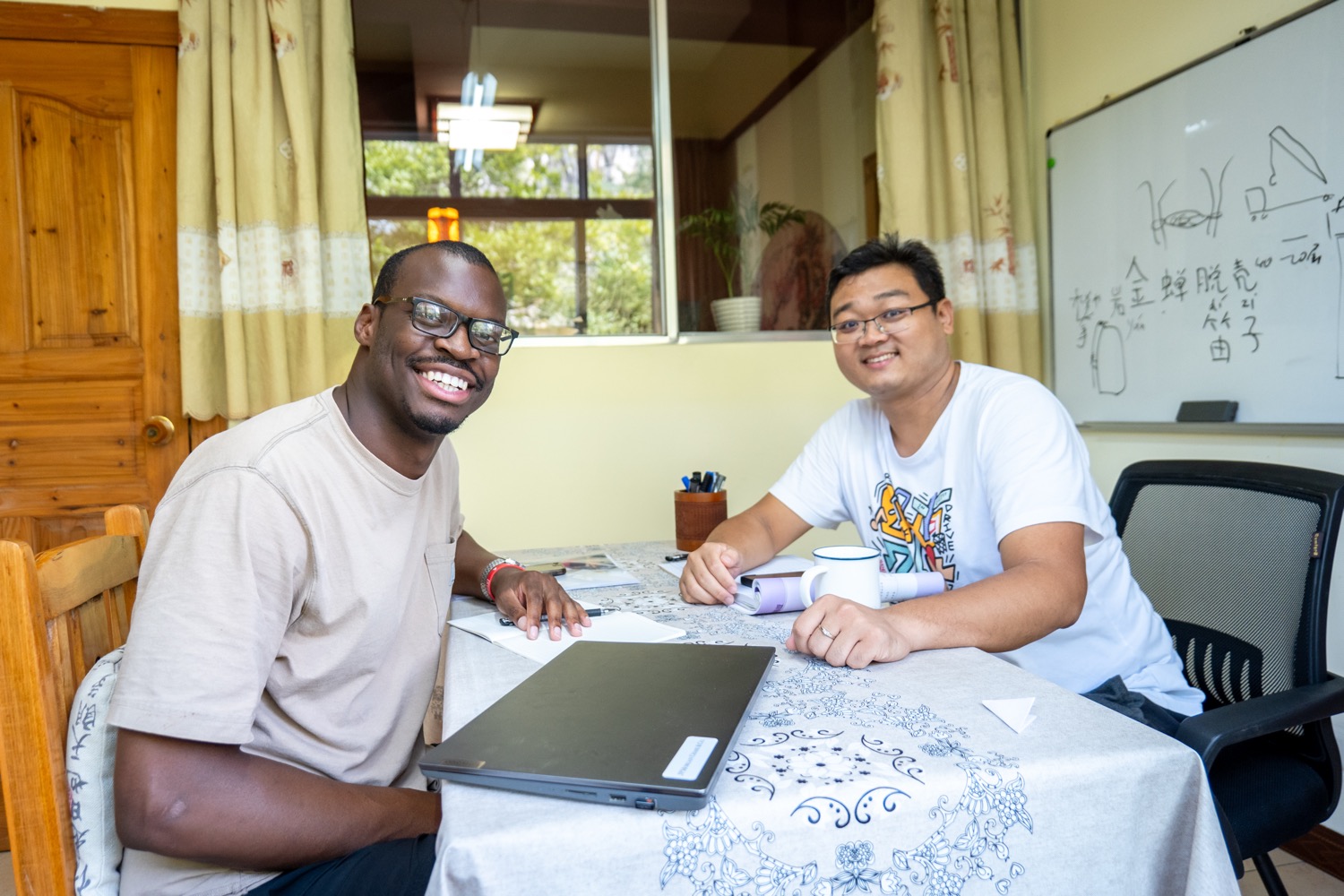
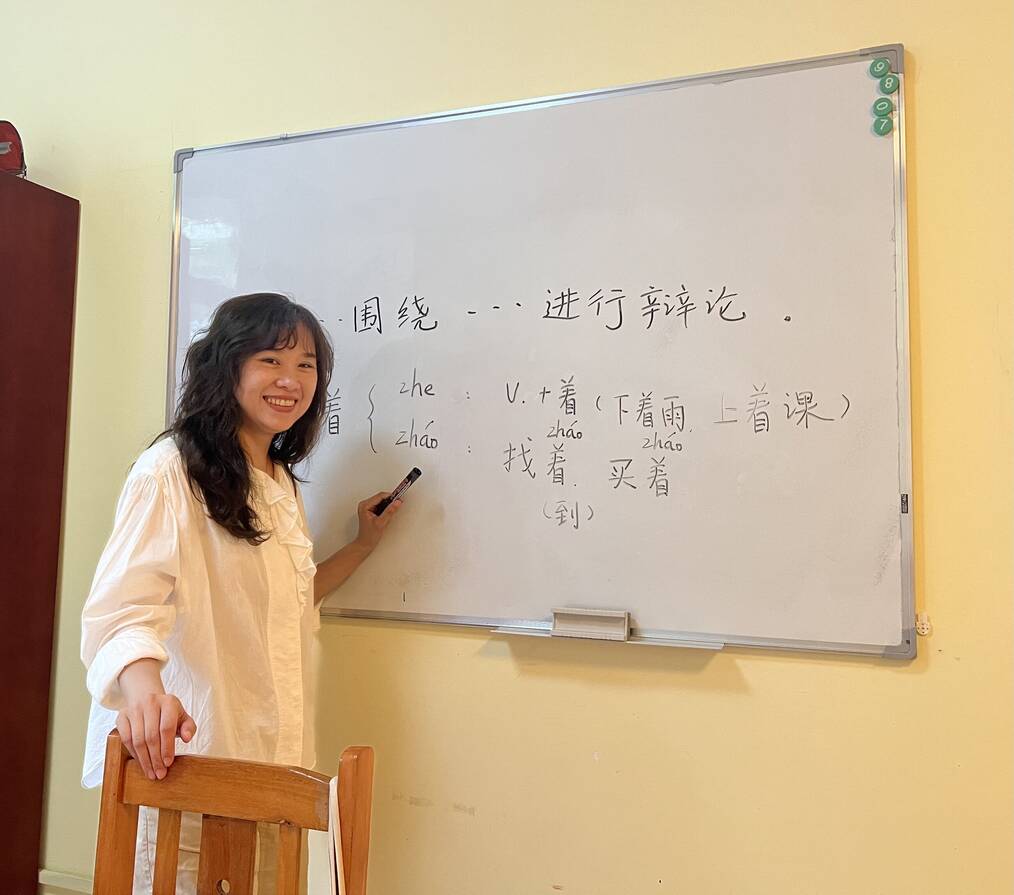
The board sets out both readings of 着, zhe after a verb and zháo in 找着 (zhǎozháo, to find), and one-on-one you can ask about each use until it is clear.
Taking notes is easier in a one-on-one class, since the teacher can pause and repeat whenever a student needs it.
Finding the right word can take a moment, and one-on-one there is time to think it through and to ask about anything unclear before you answer.
Homework and review fill part of a typical weekday, between or after classes, and your teachers go over that work with you in class.
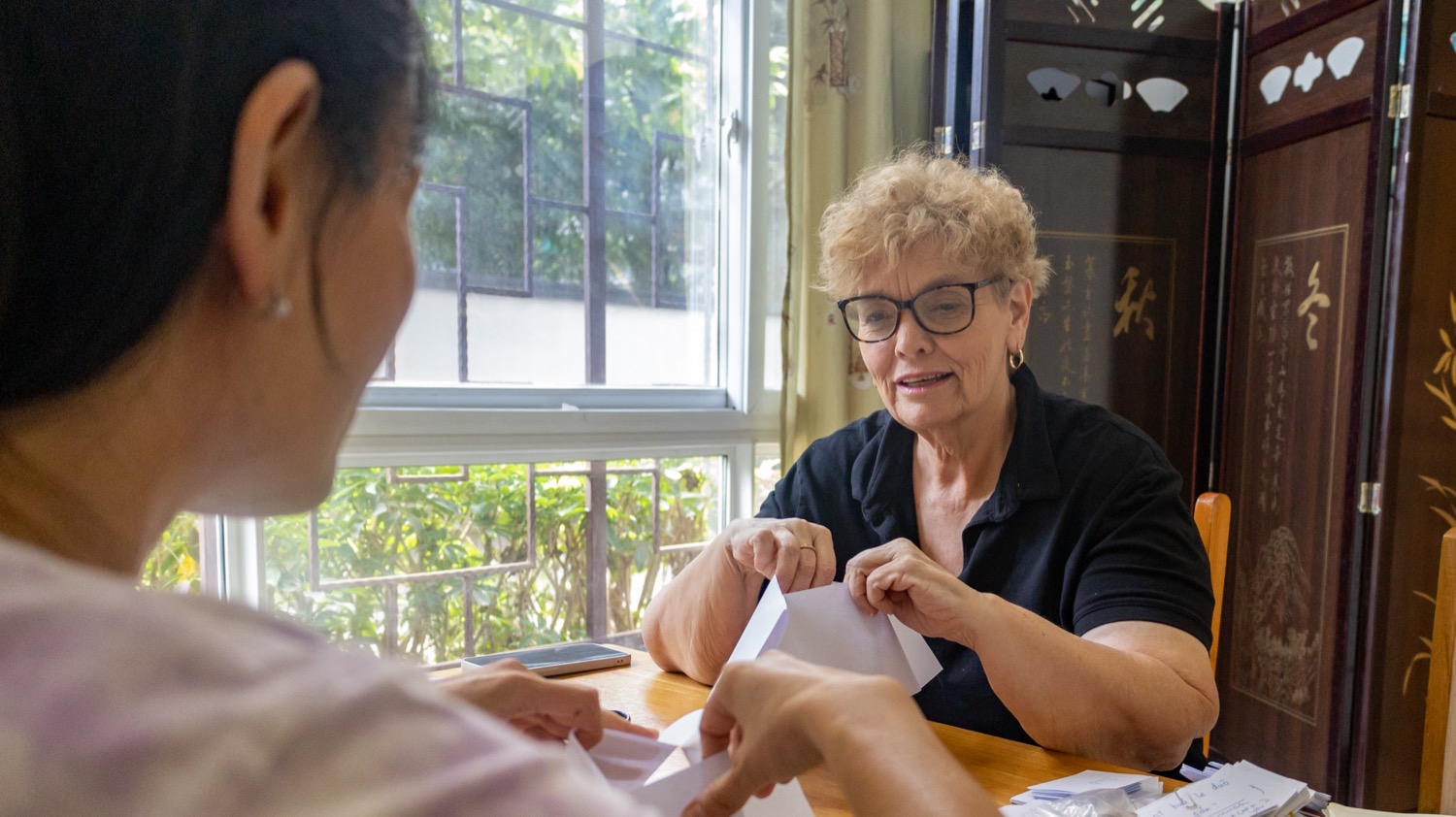
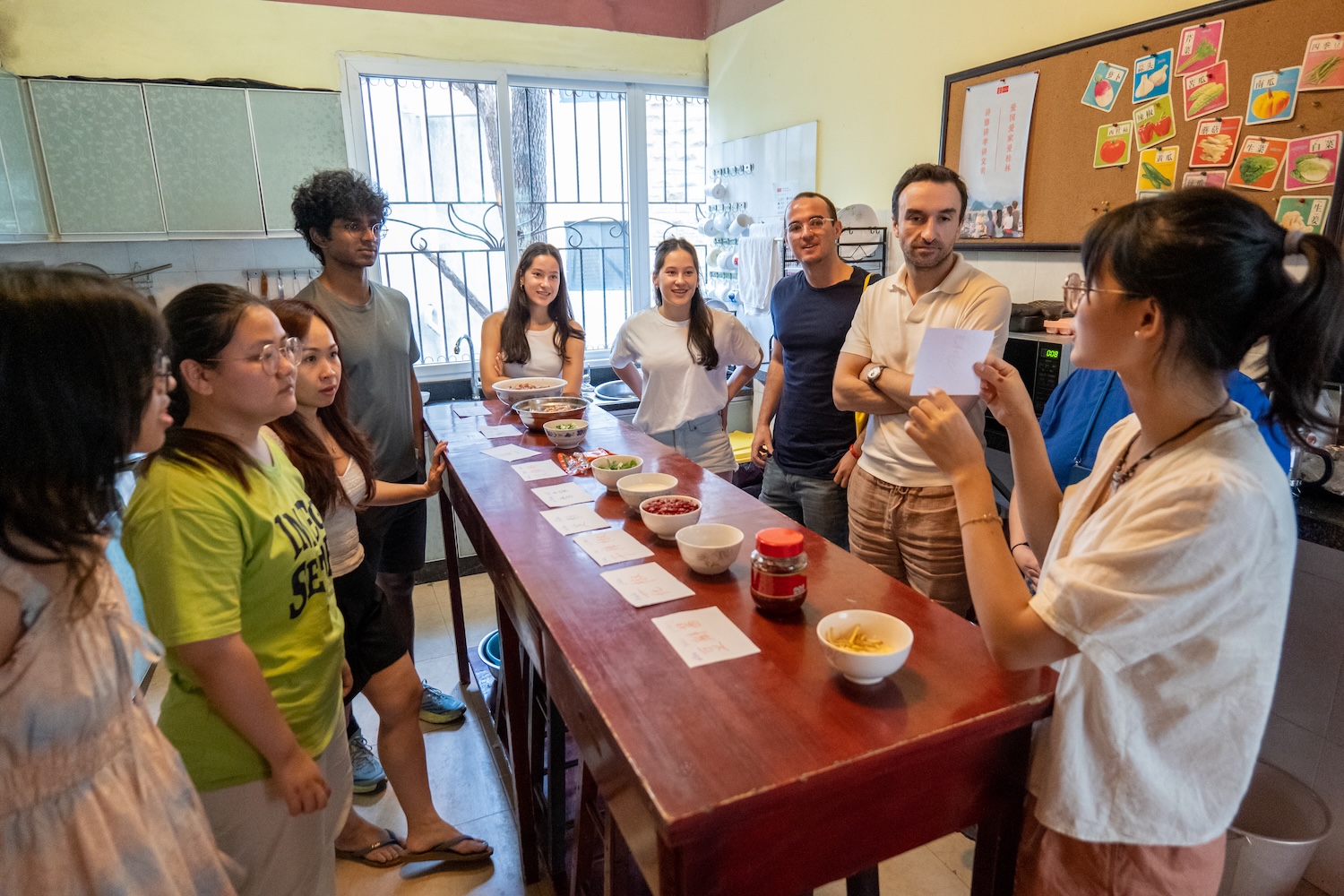
Folding paper to make flashcards. New words are introduced in class, then revisited through questions and assignments in the lessons that follow.
Syllabi are a guide at CLI, so your teachers can move ahead when you are ready or slow down on a hard grammar point.
Your teachers begin exactly where you are, and the short evaluation every two weeks helps them plan what comes next.
Your listening and speaking teacher is the one who works with you on tones and pronunciation, and on keeping a conversation going.
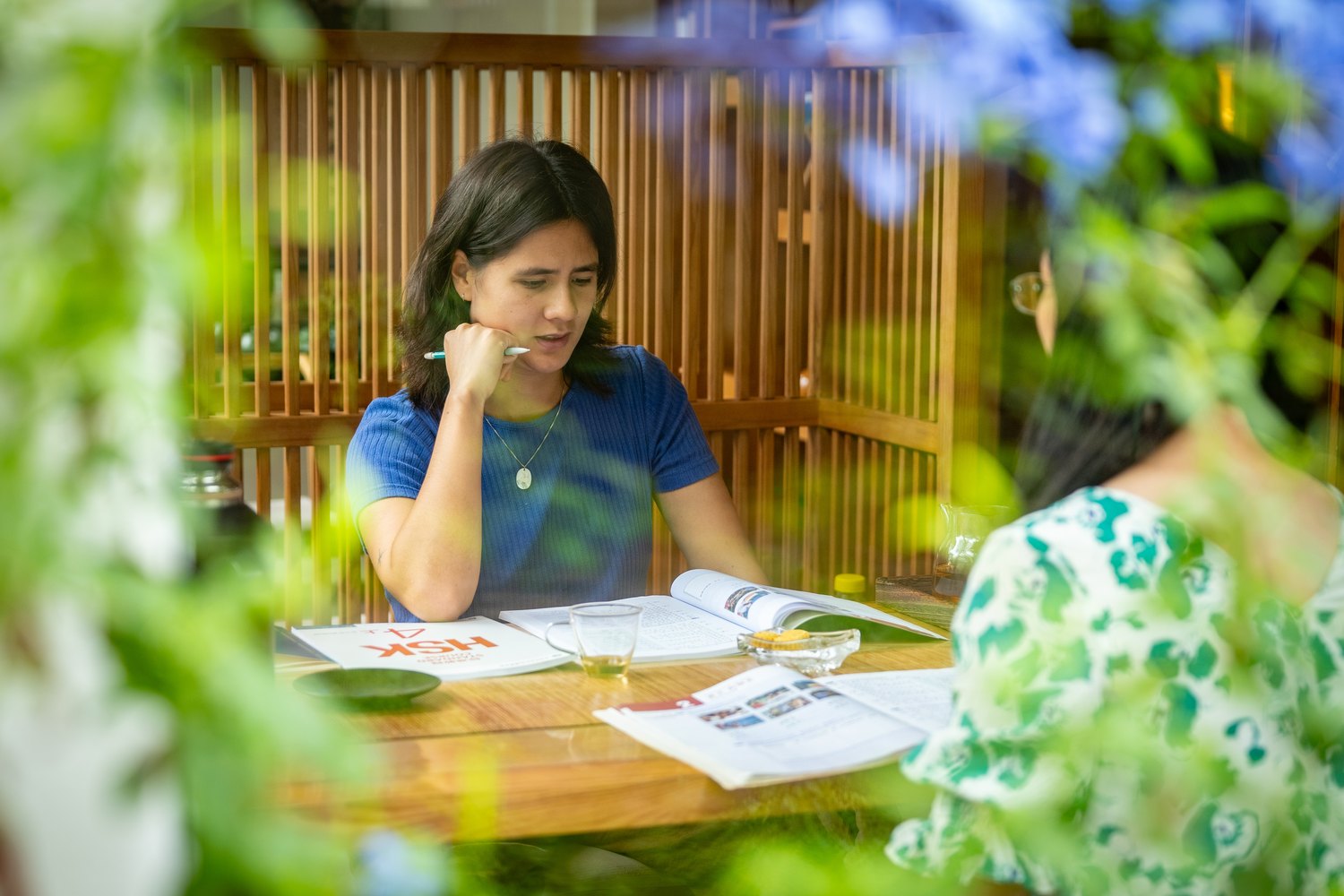
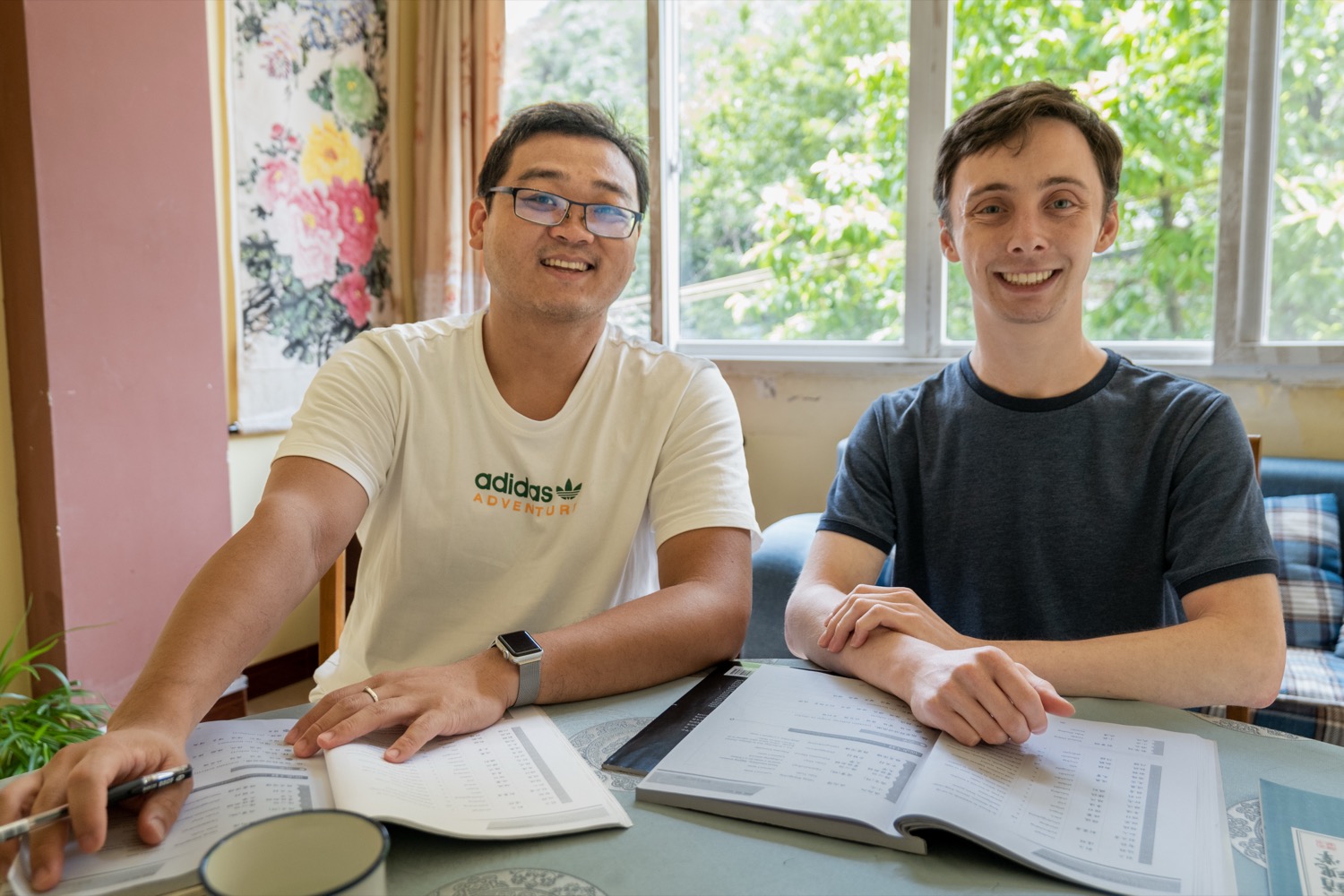
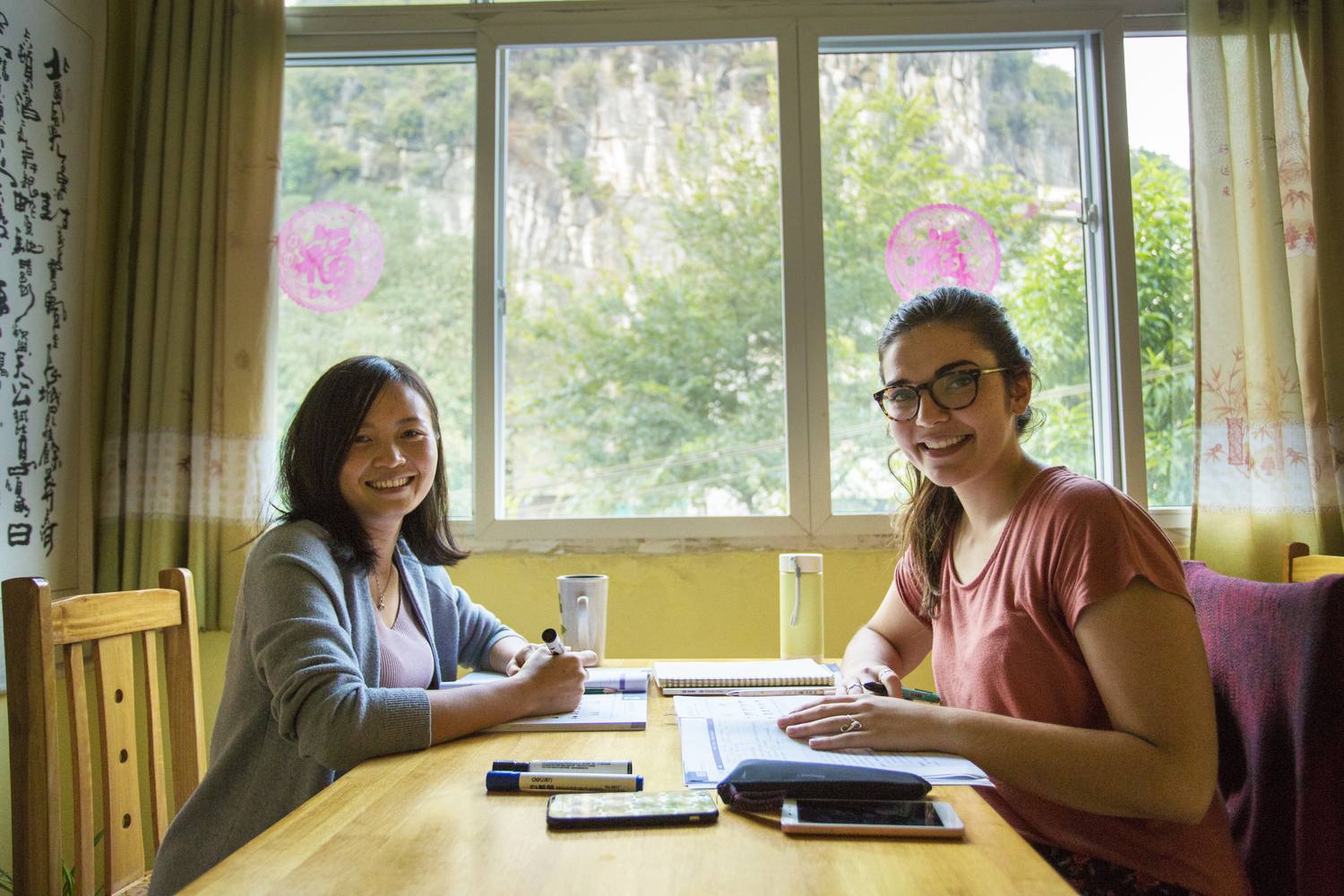
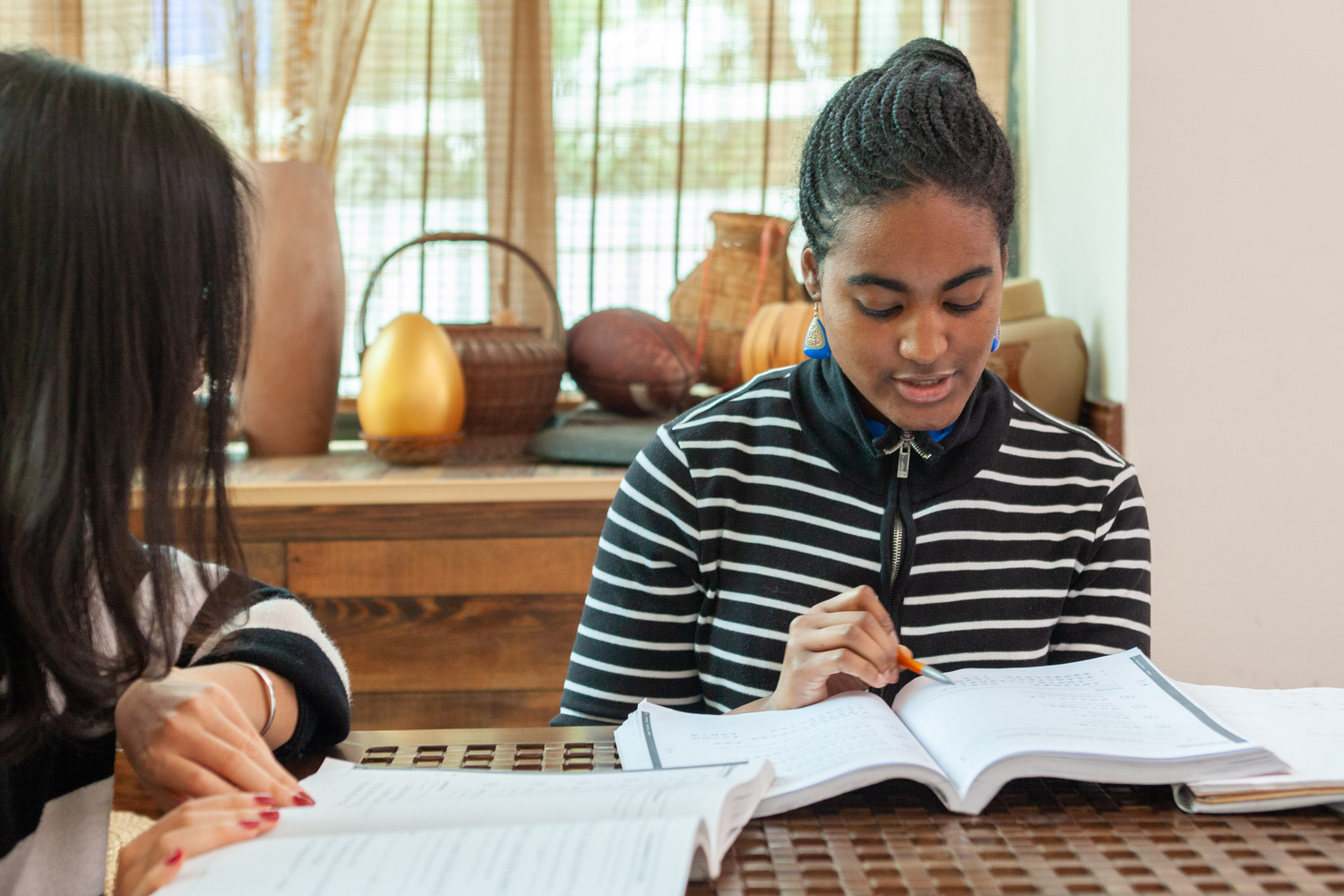
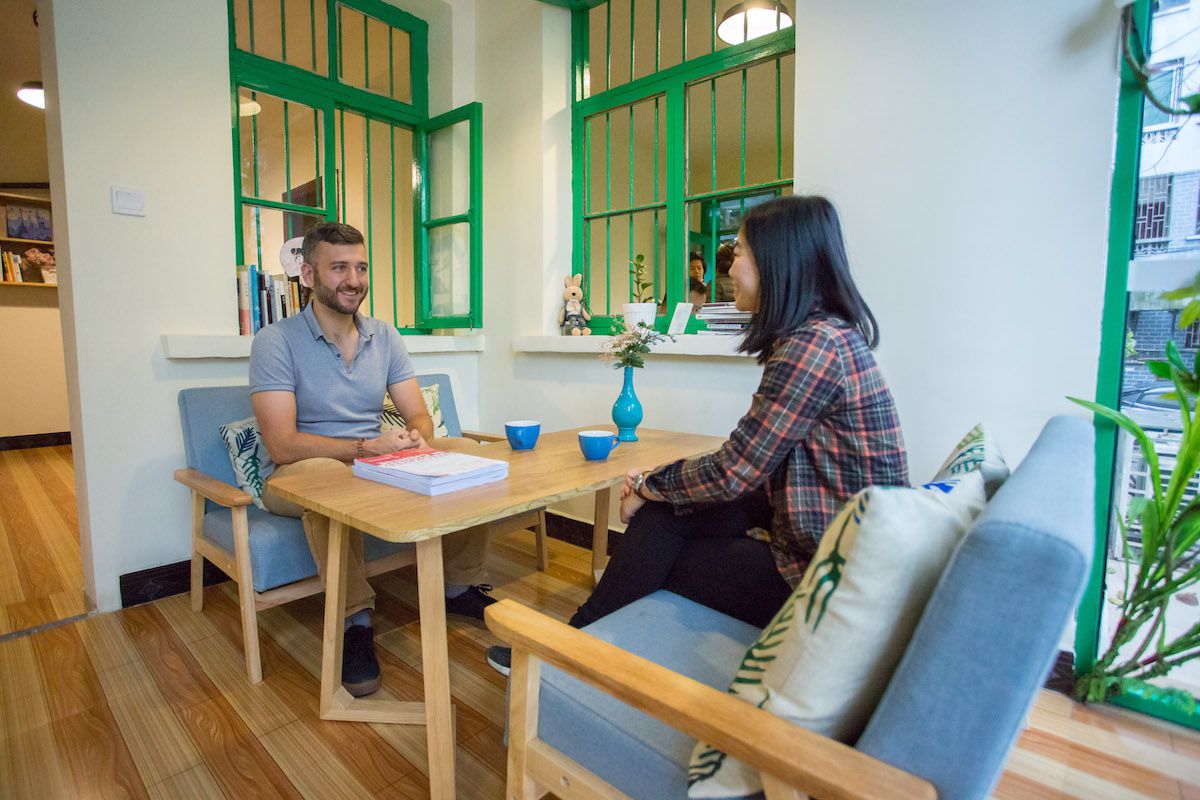
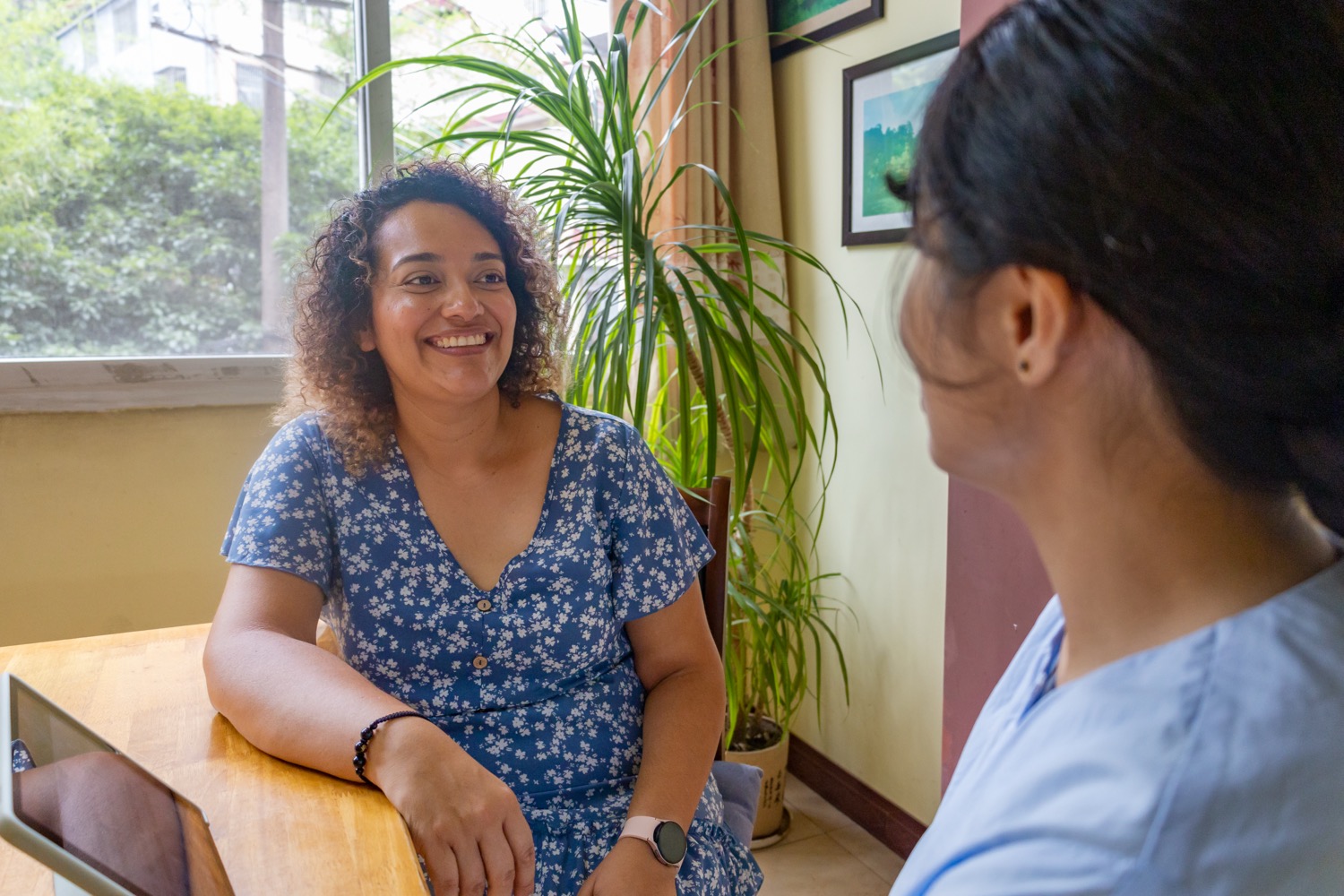
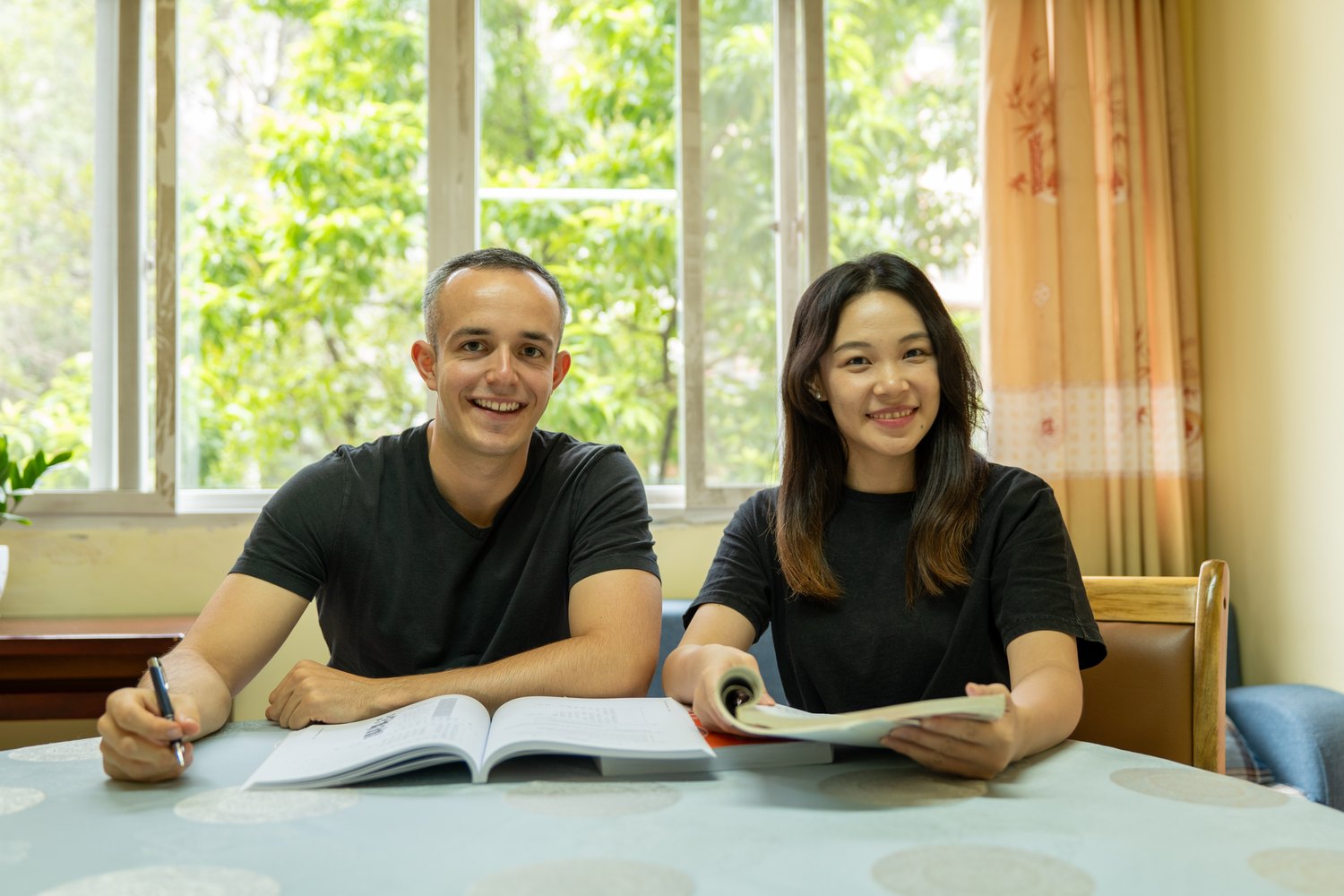
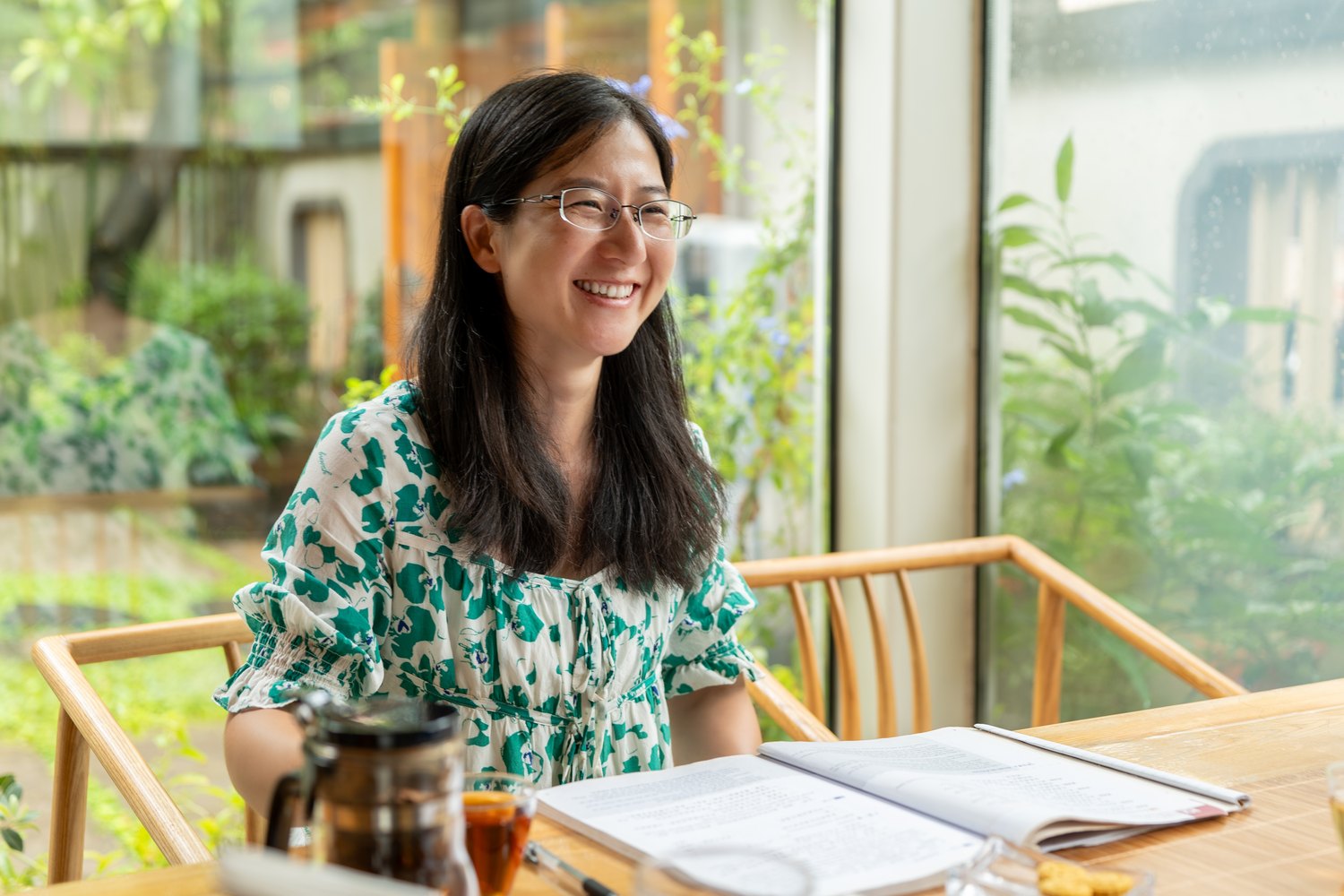
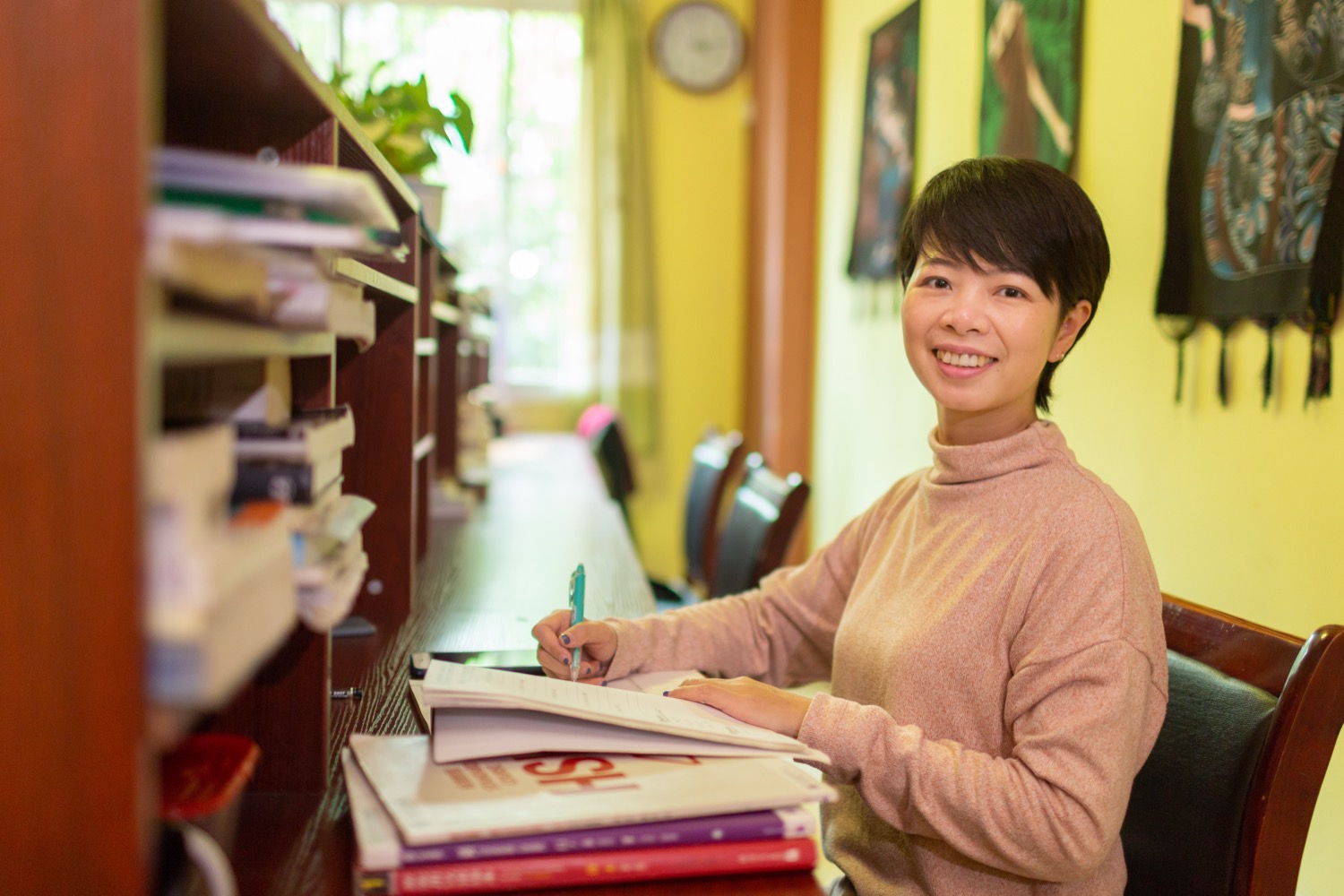
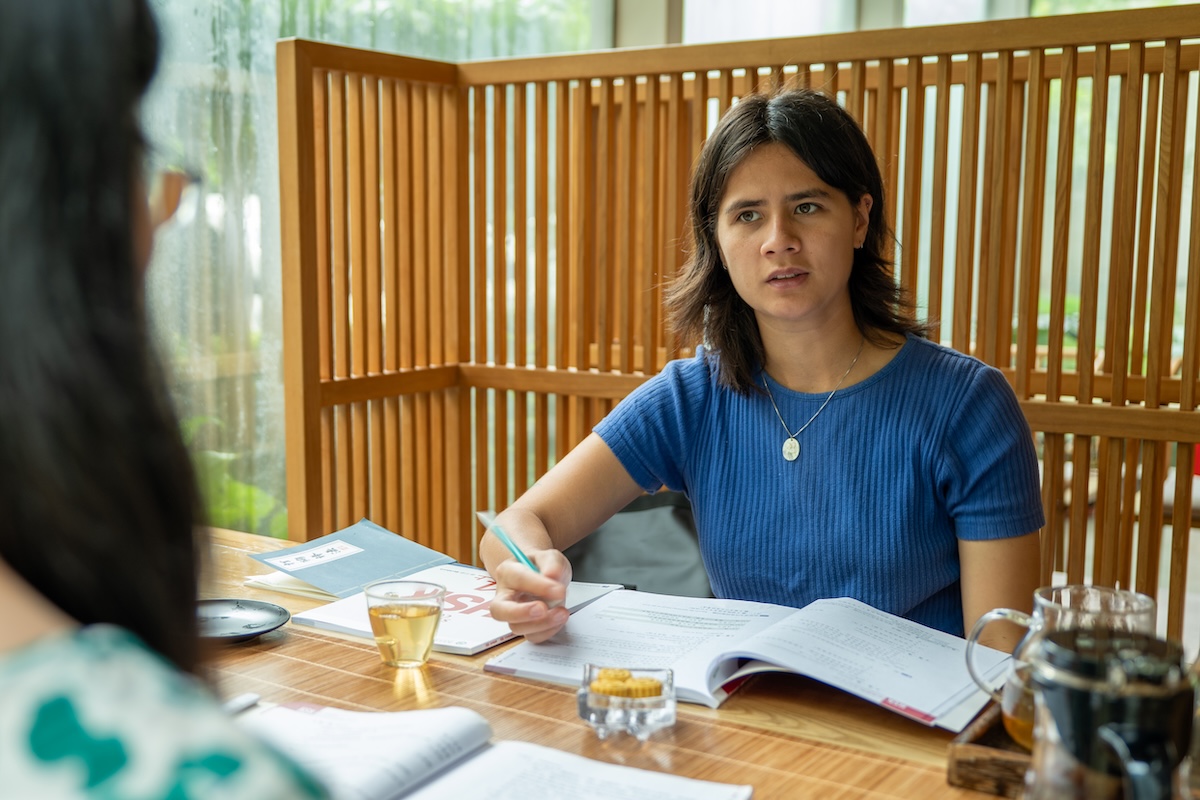
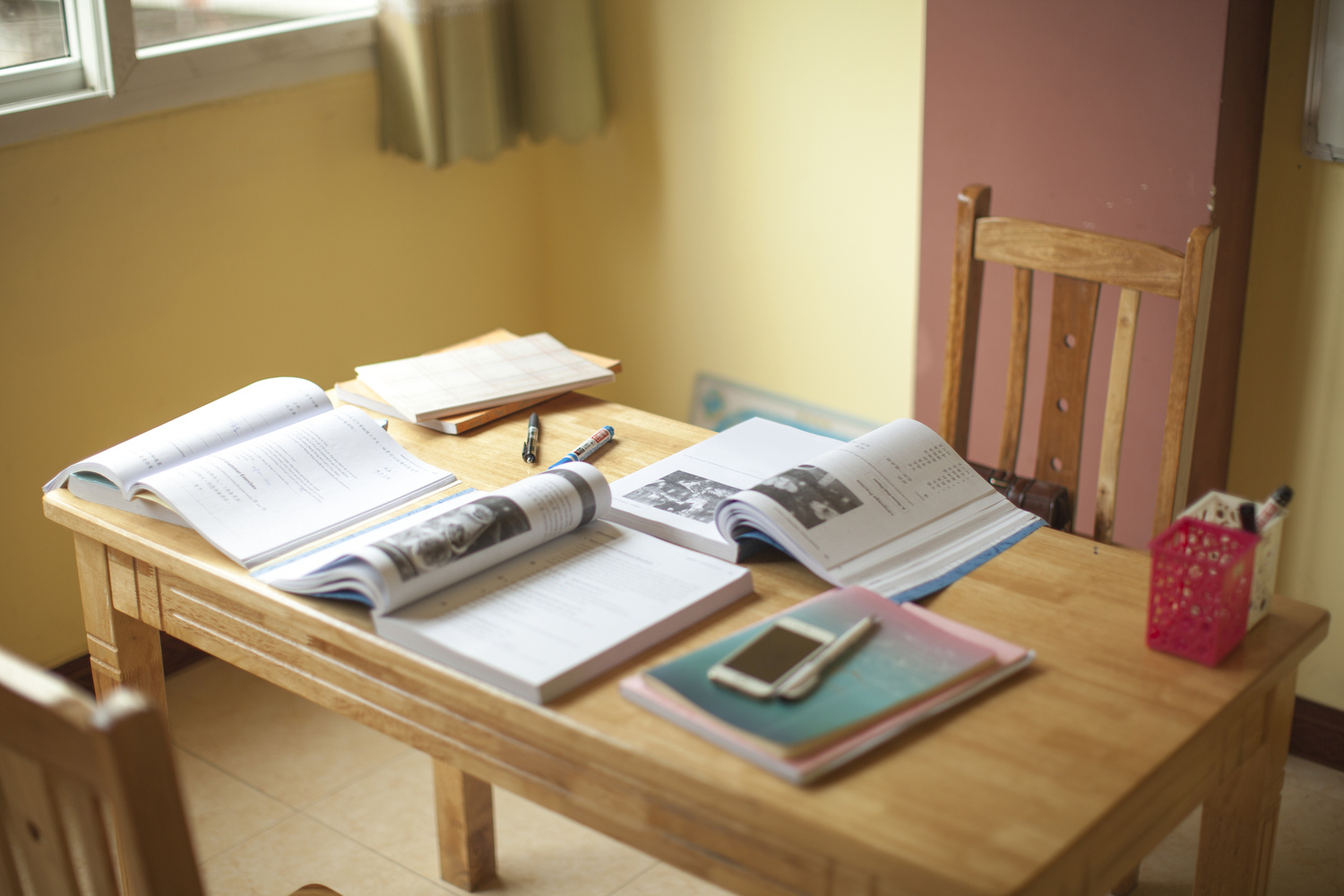
Students may keep studying at the CLI Center between sessions, whether at a window table like this one or in the reading room.
Speaking is assessed along with everything else in the evaluation every two weeks, so your teachers hear how your conversation is coming along.
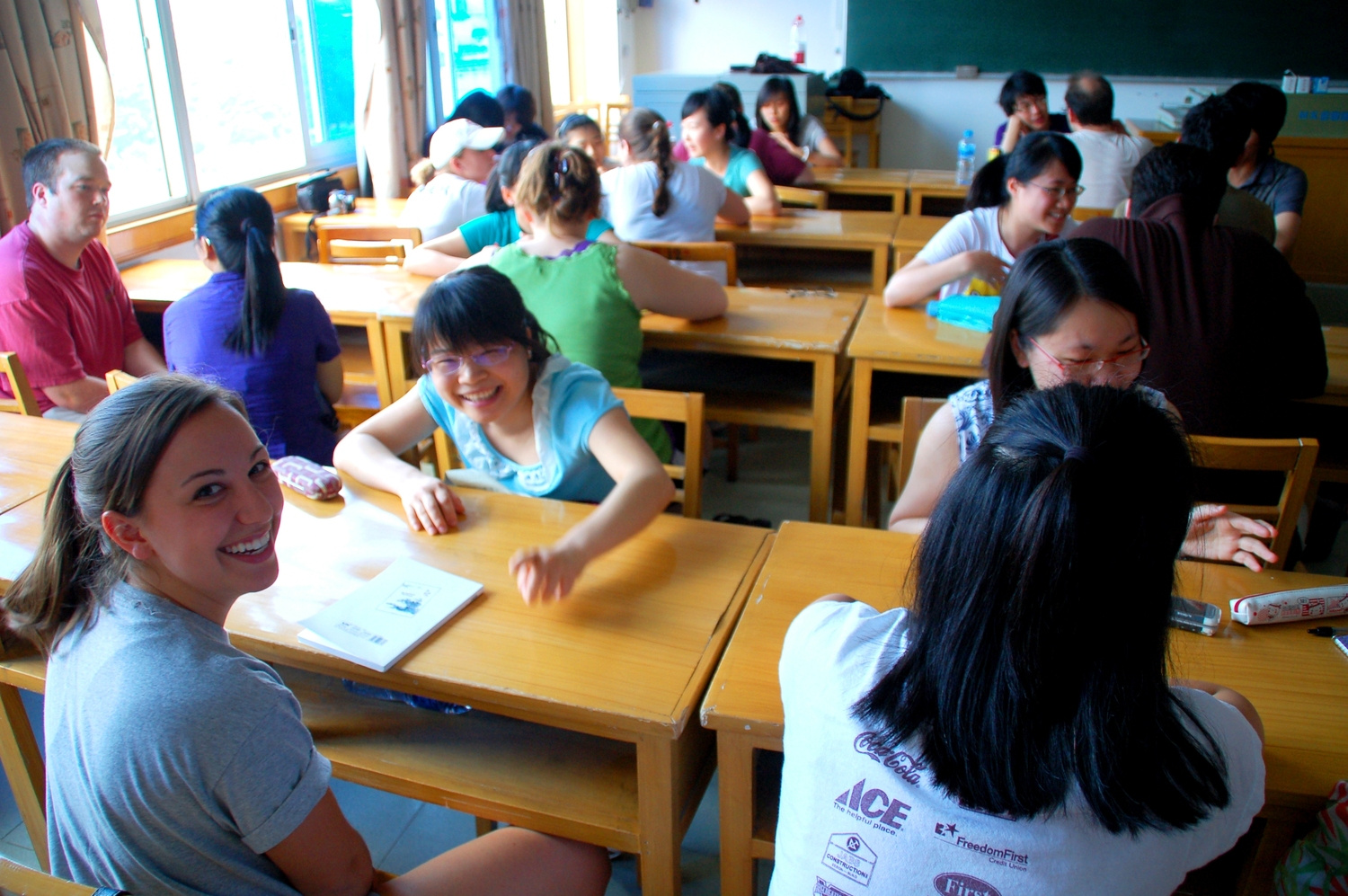
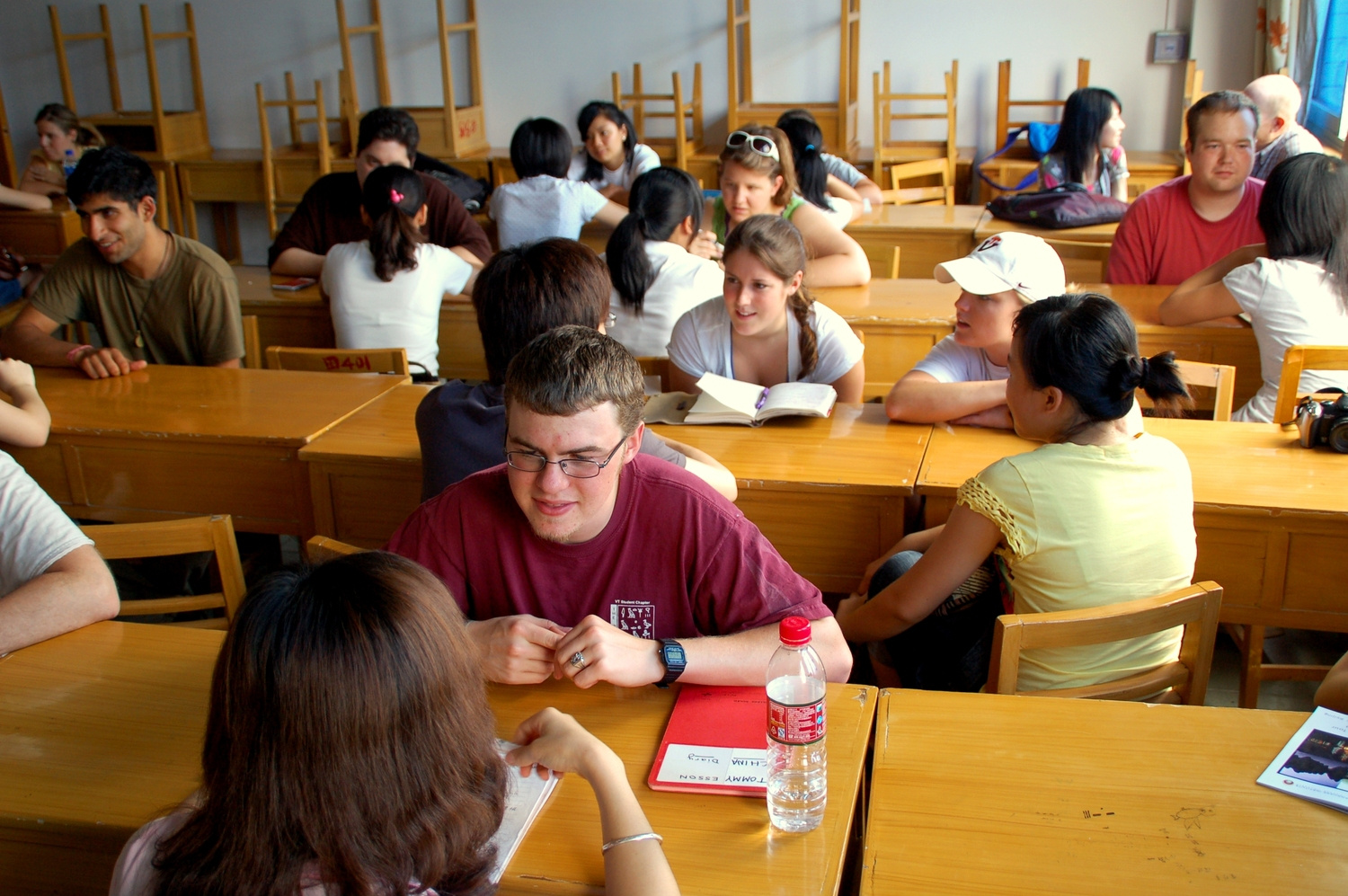
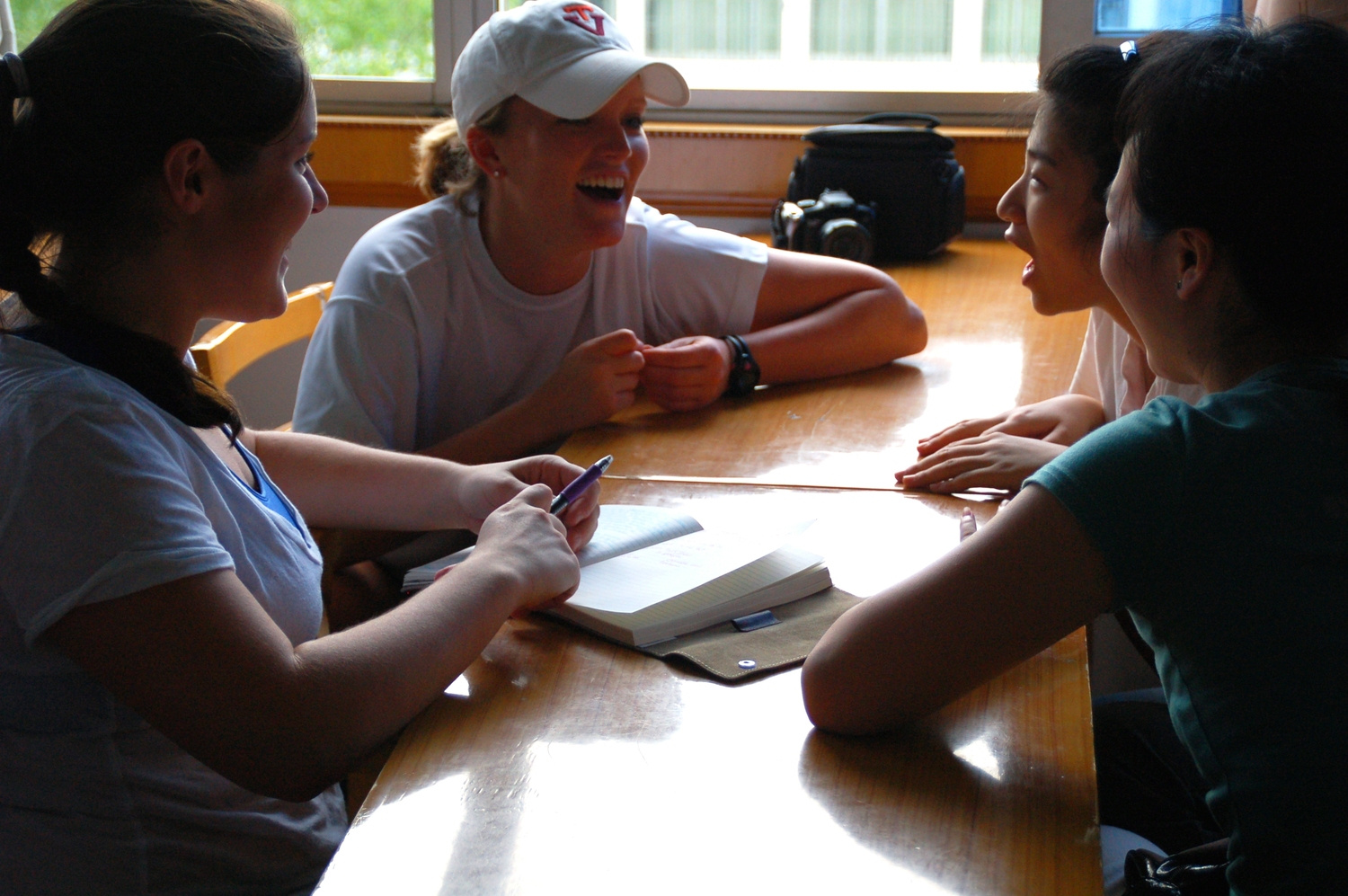
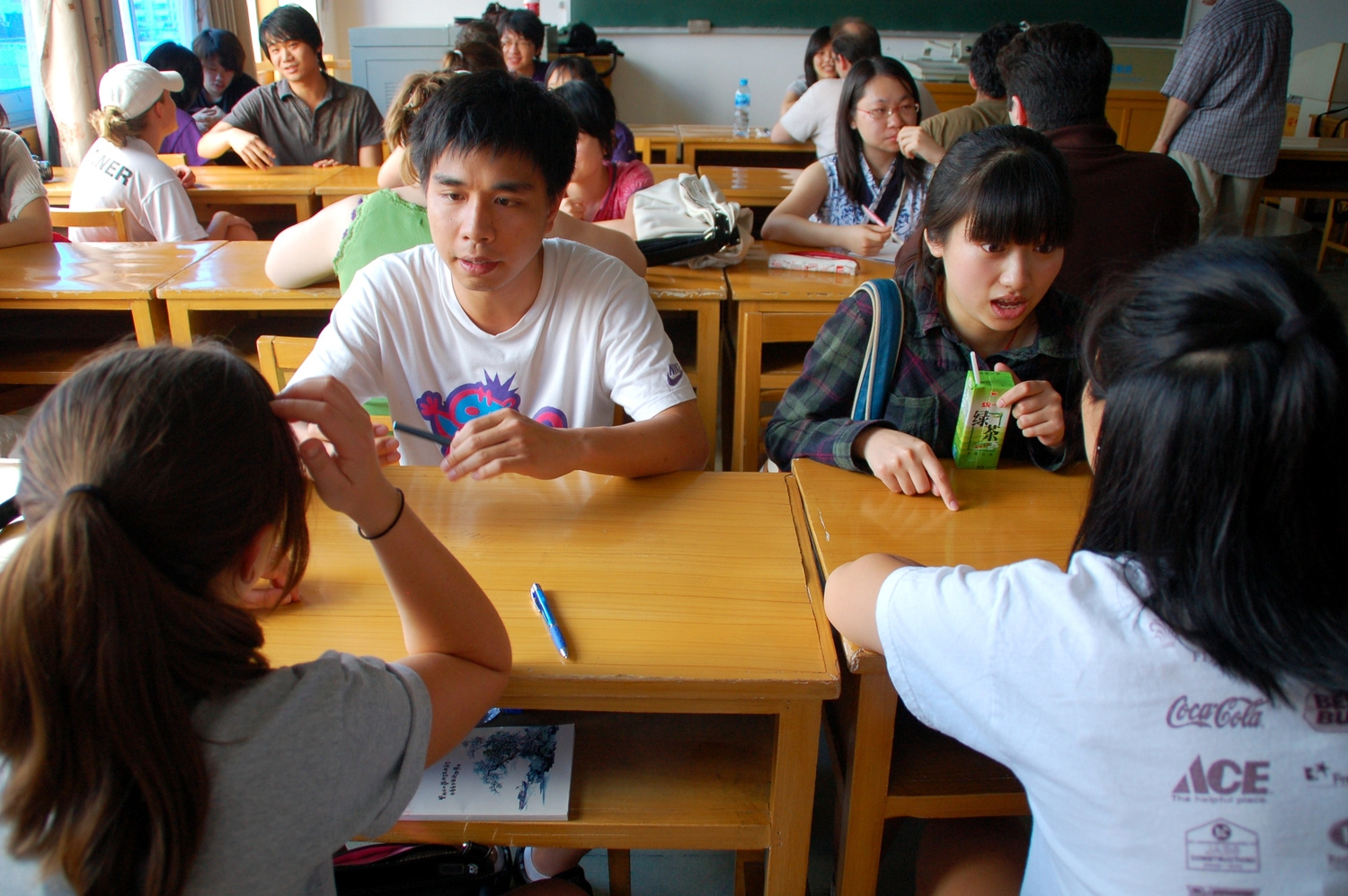
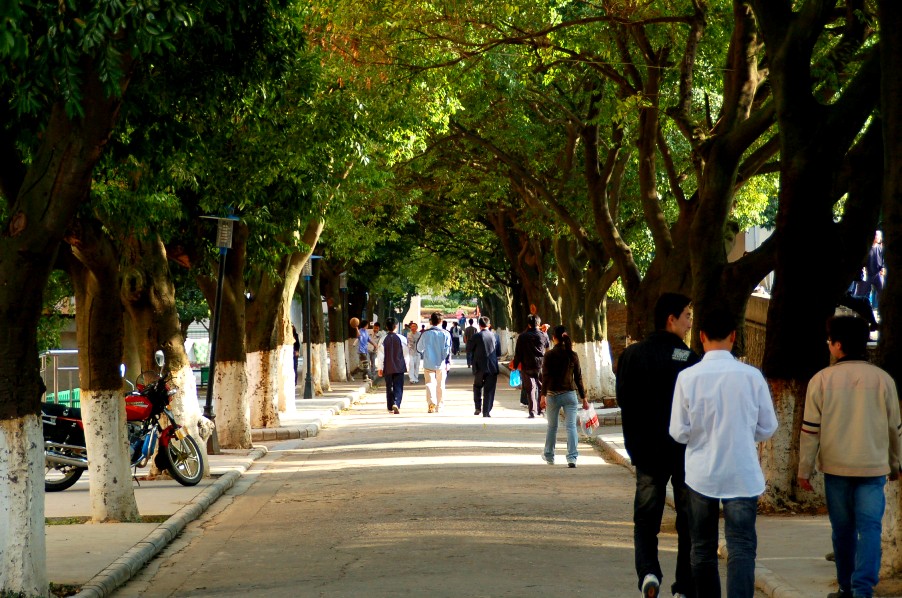
Group discussion fills this university classroom, while CLI's own classes are one-on-one, so each lesson can focus on your questions and your pronunciation.
Your teacher pays attention to how you learn best, and your lessons are customized around your learning style as well as your level.
New words get marked, then reviewed: one of your three teachers spends class on comprehensive review of grammar, vocabulary and the day's work.
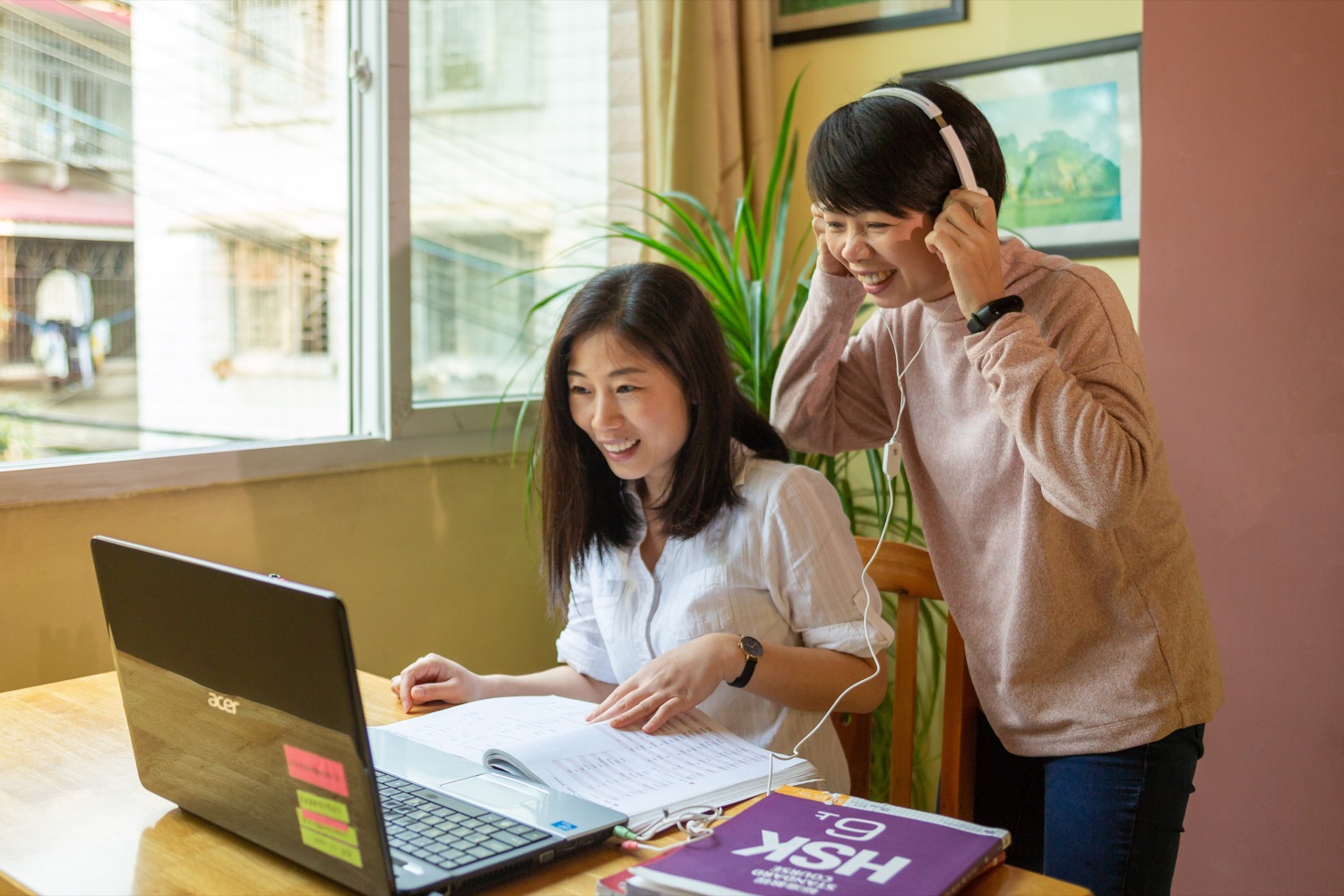
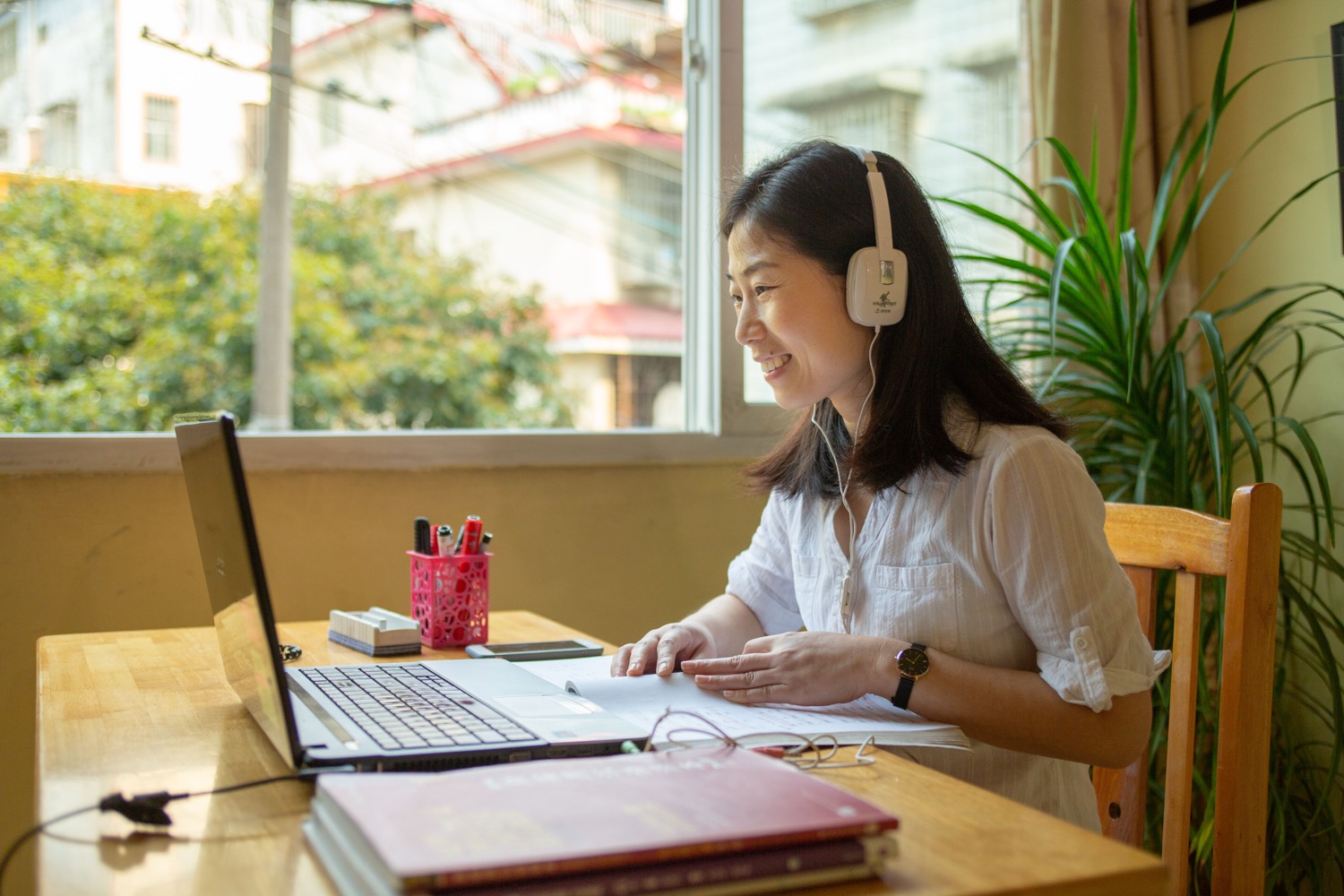
On a video call the class still belongs to one student, so there is time to speak and to ask about anything in the workbook.
Wherever you are with Chinese is where your first class picks up, whether you are on page one of the textbook or halfway through it.
Advanced lessons can be shaped around fluency, reading, business Chinese or test preparation, depending on what a student needs.
With three teachers you get used to more than one voice and more than one teaching style, and each of them covers a different skill.
Working out how to say what you mean takes practice, and four hours of one-on-one class each weekday gives you plenty of it.
Our teachers join in language games like this one, which bring the week's new words and grammar back for another try.
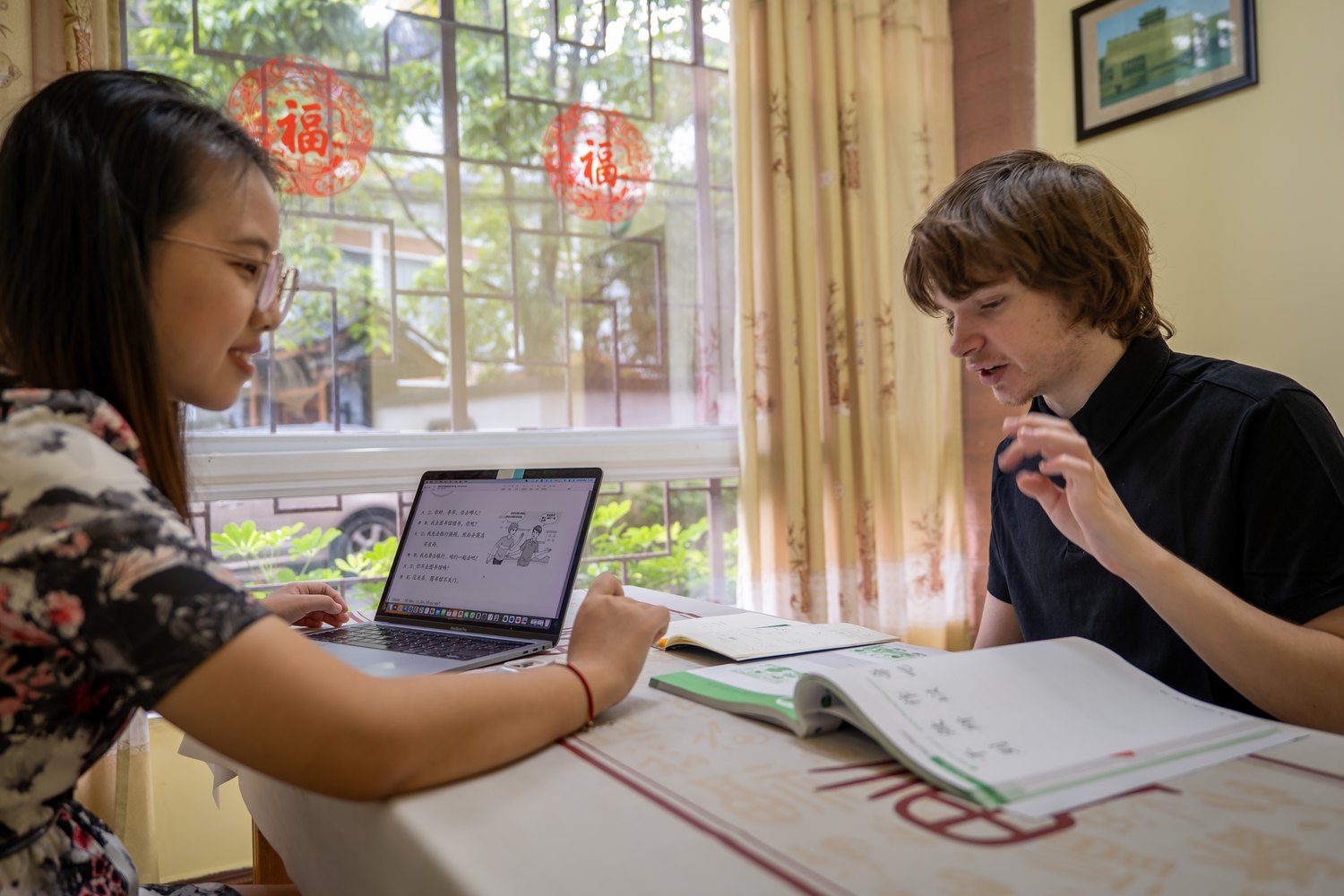
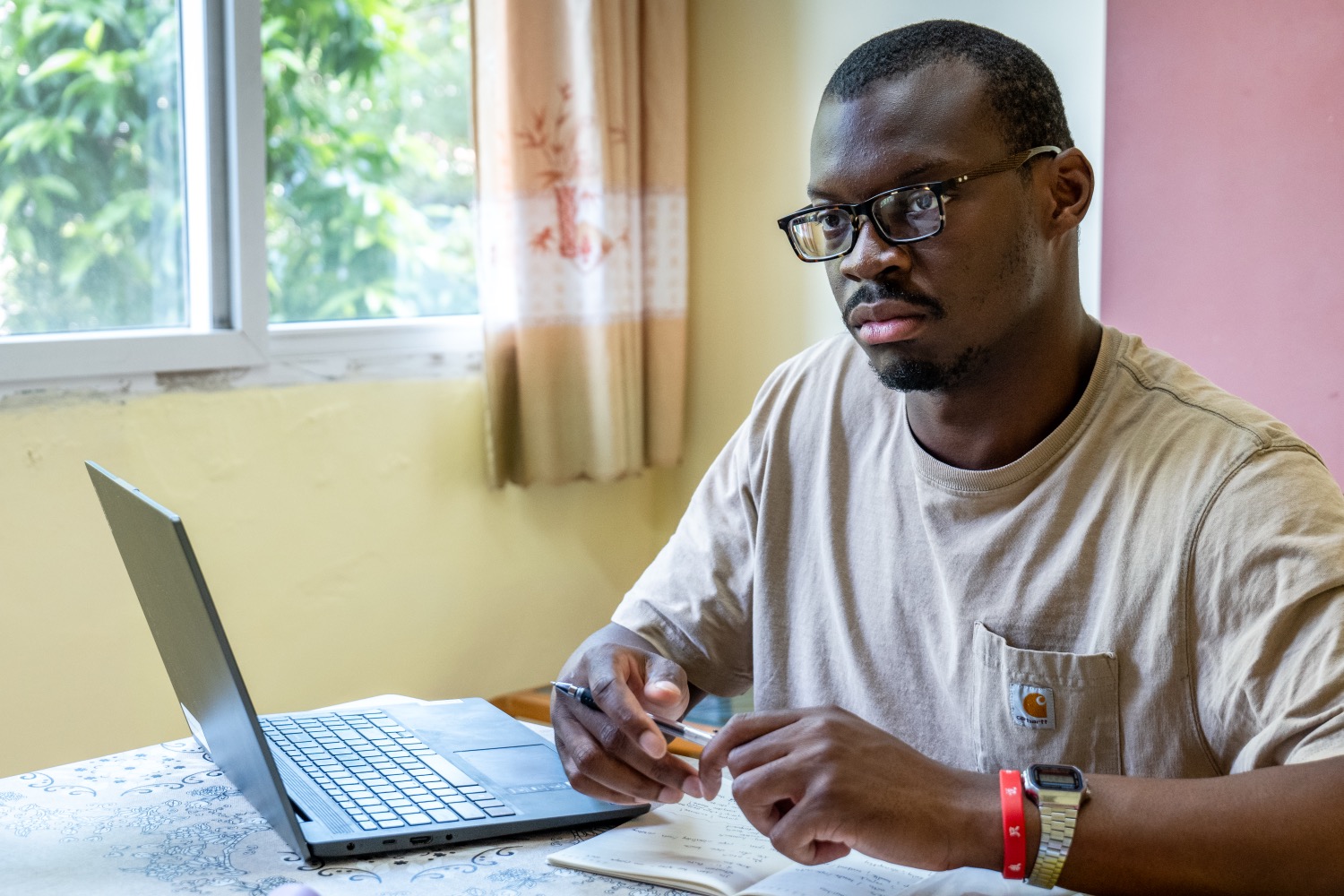
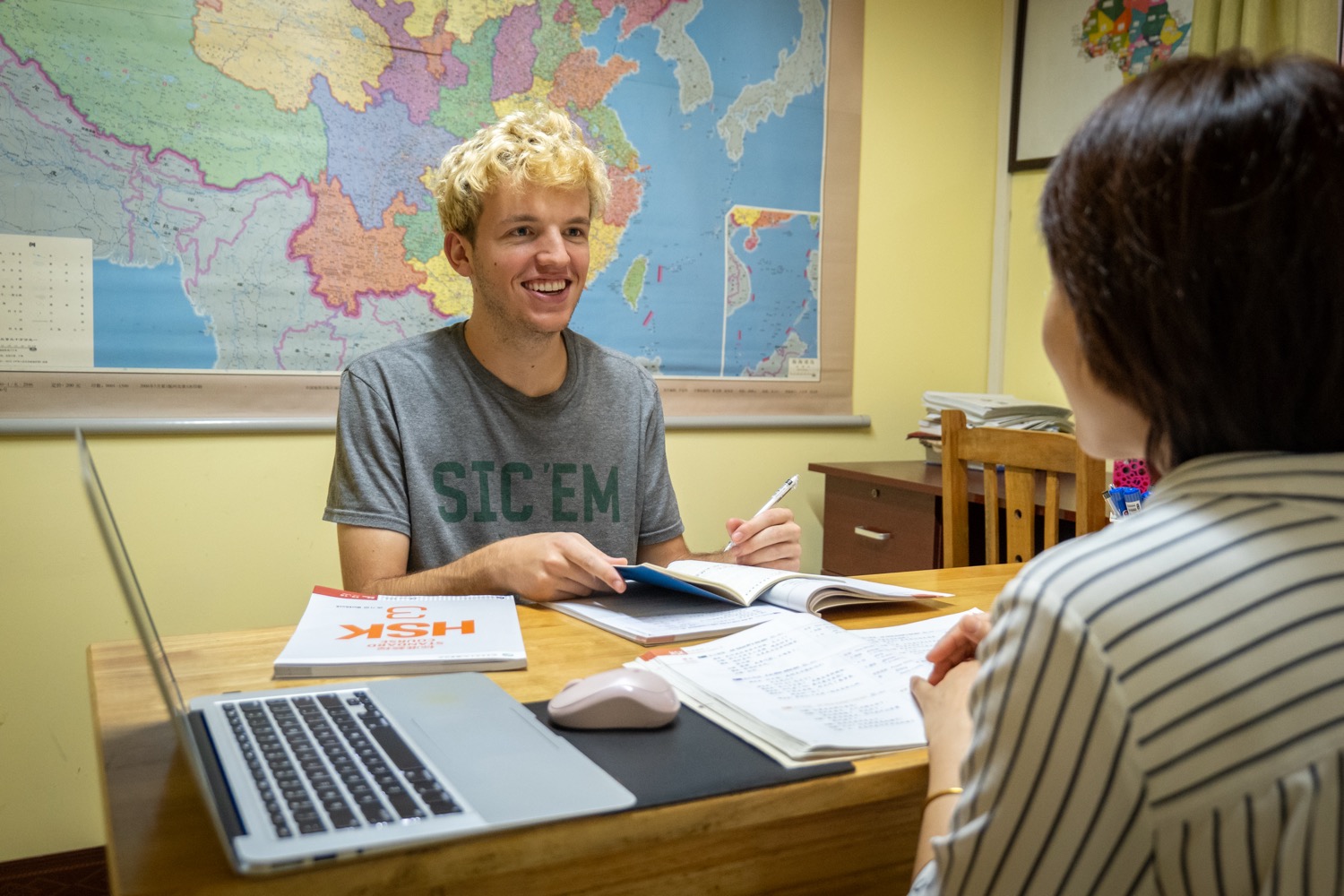
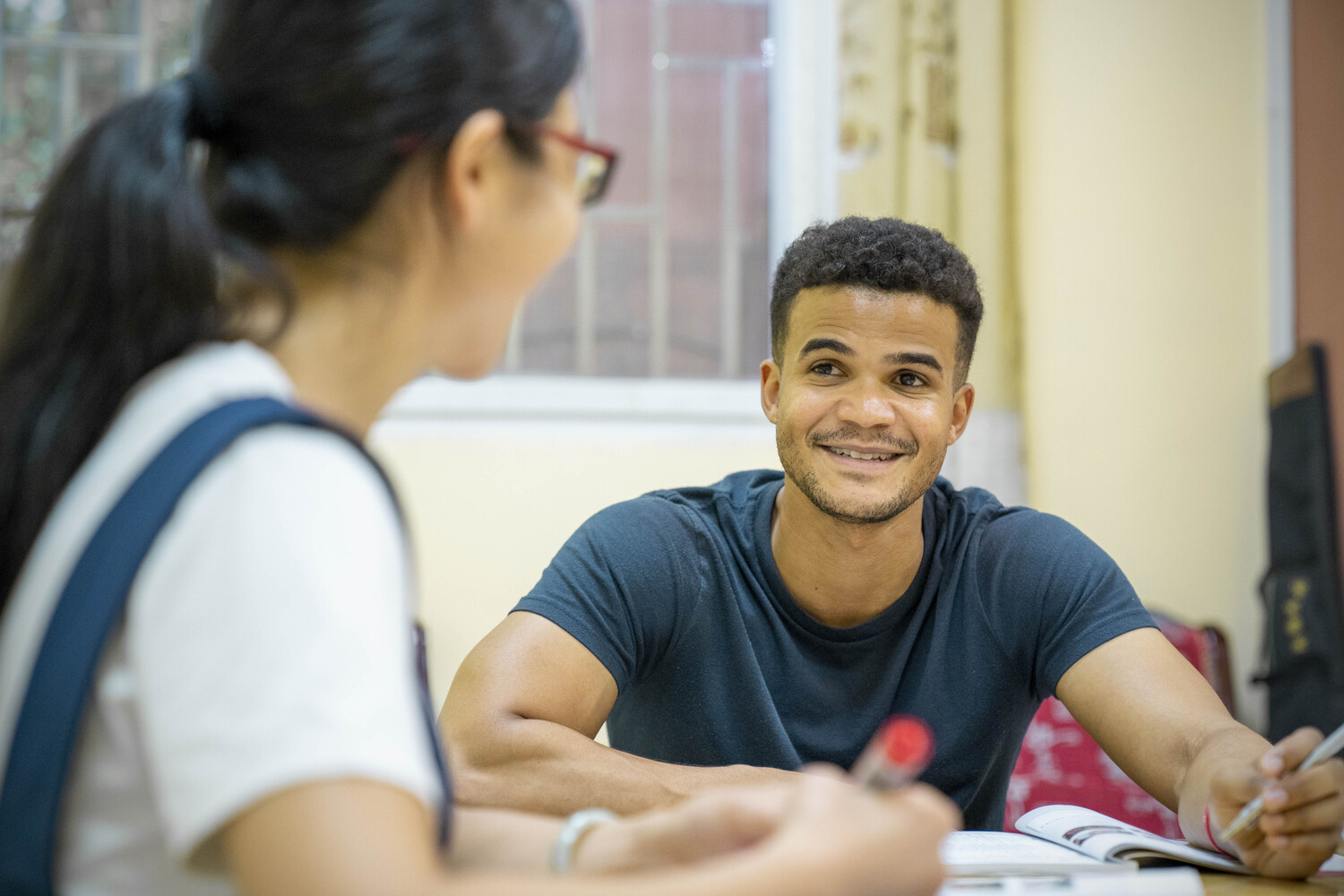
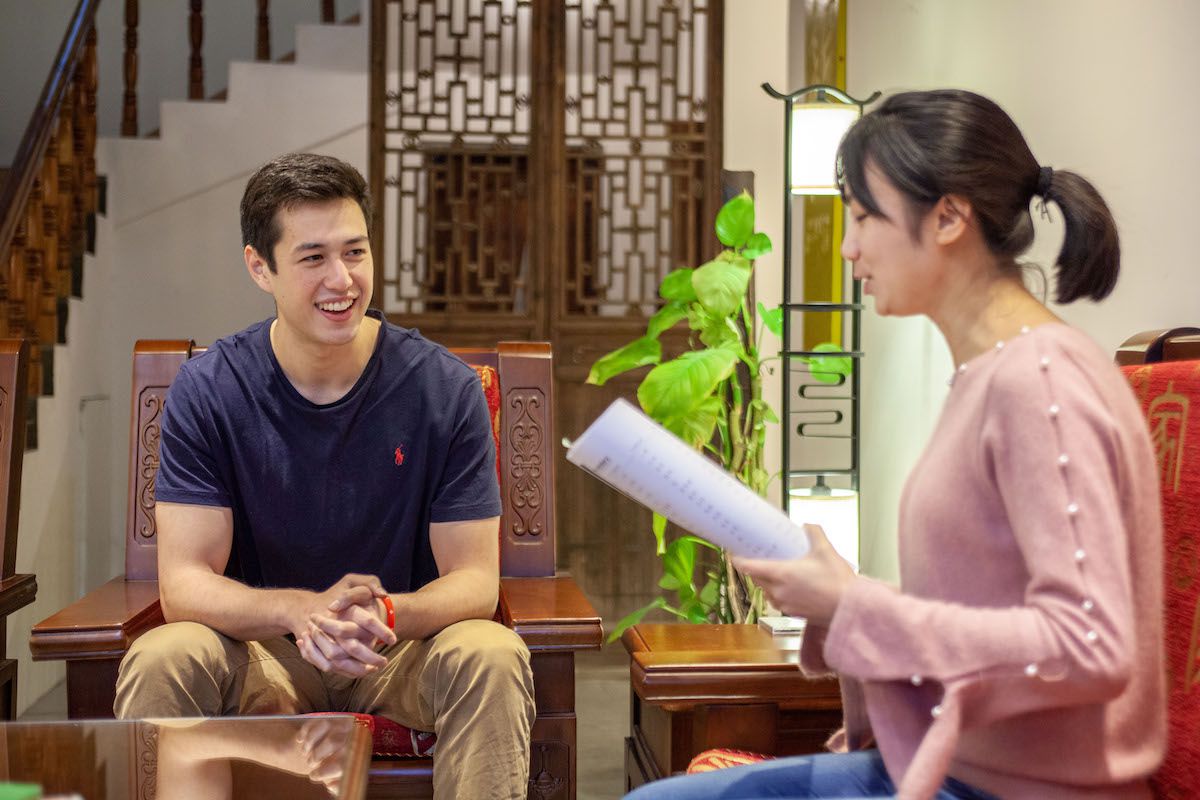
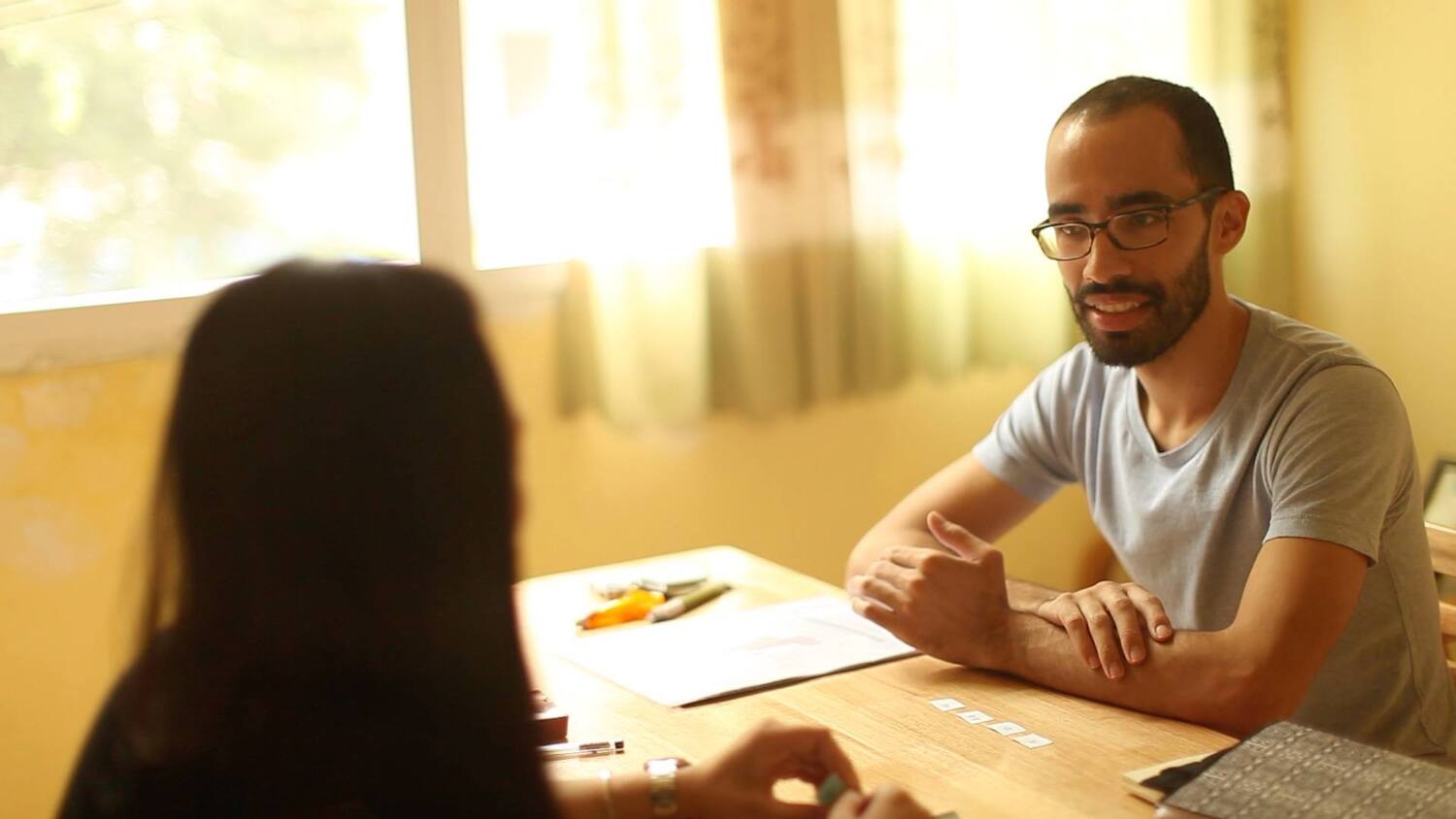
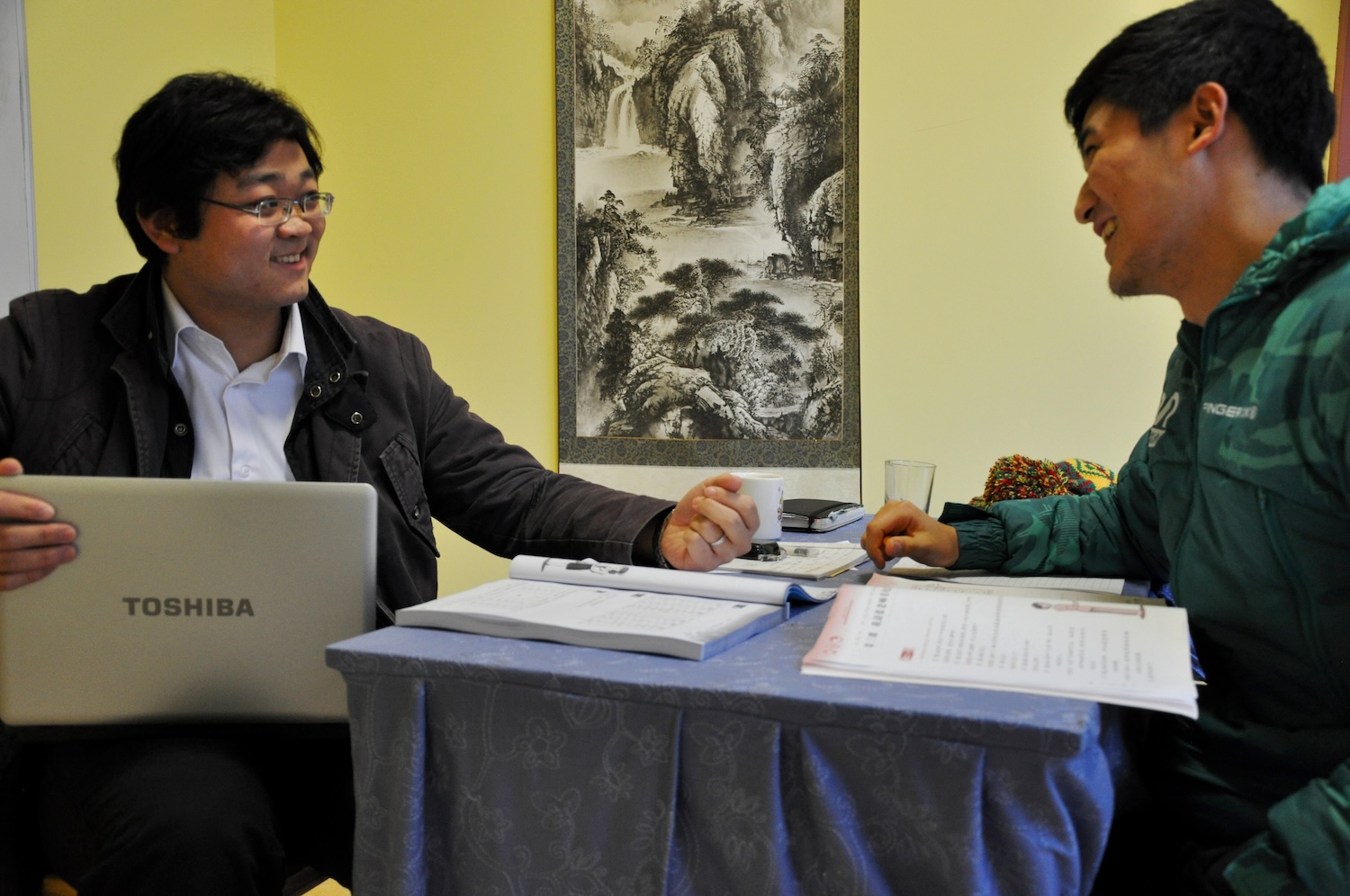
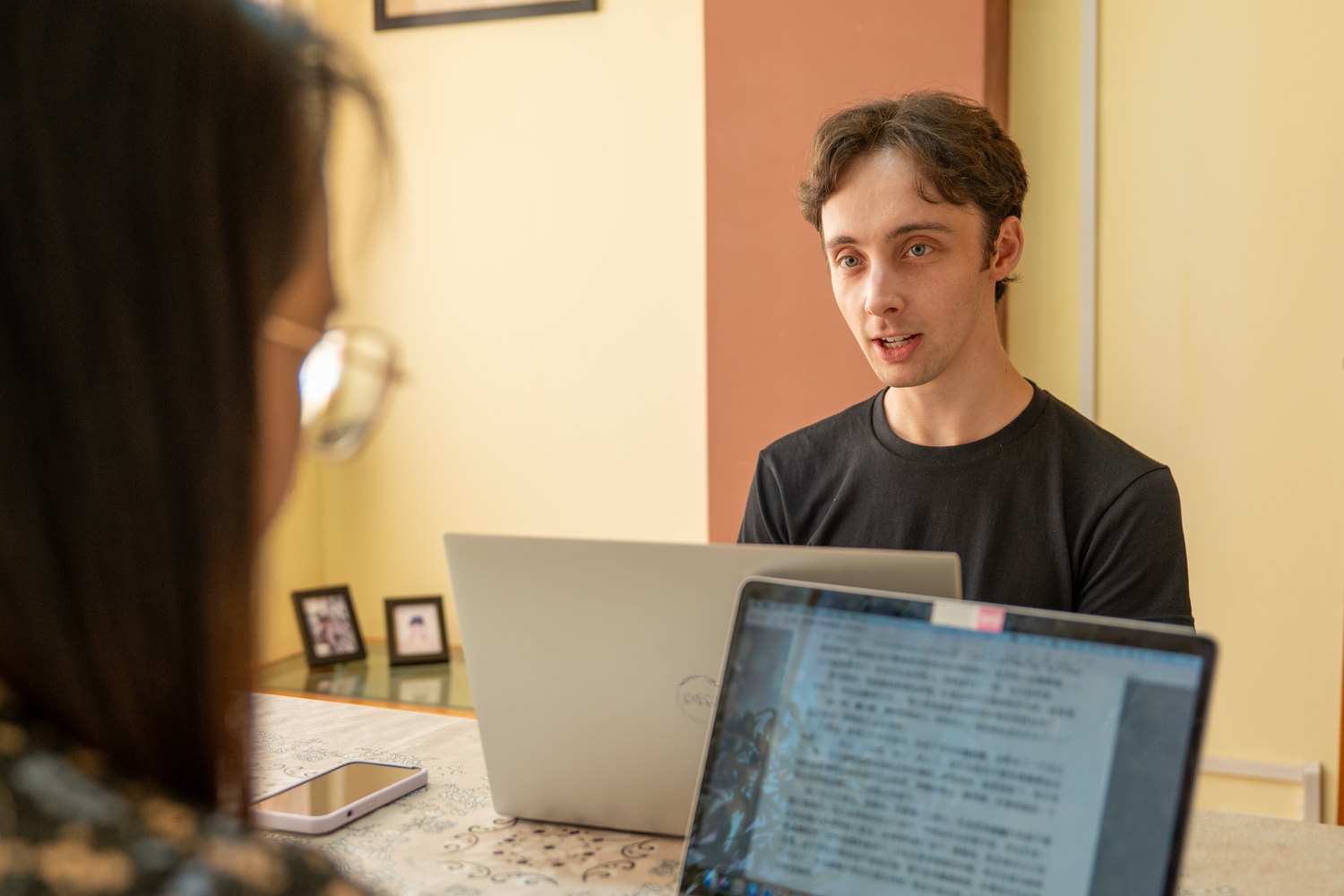
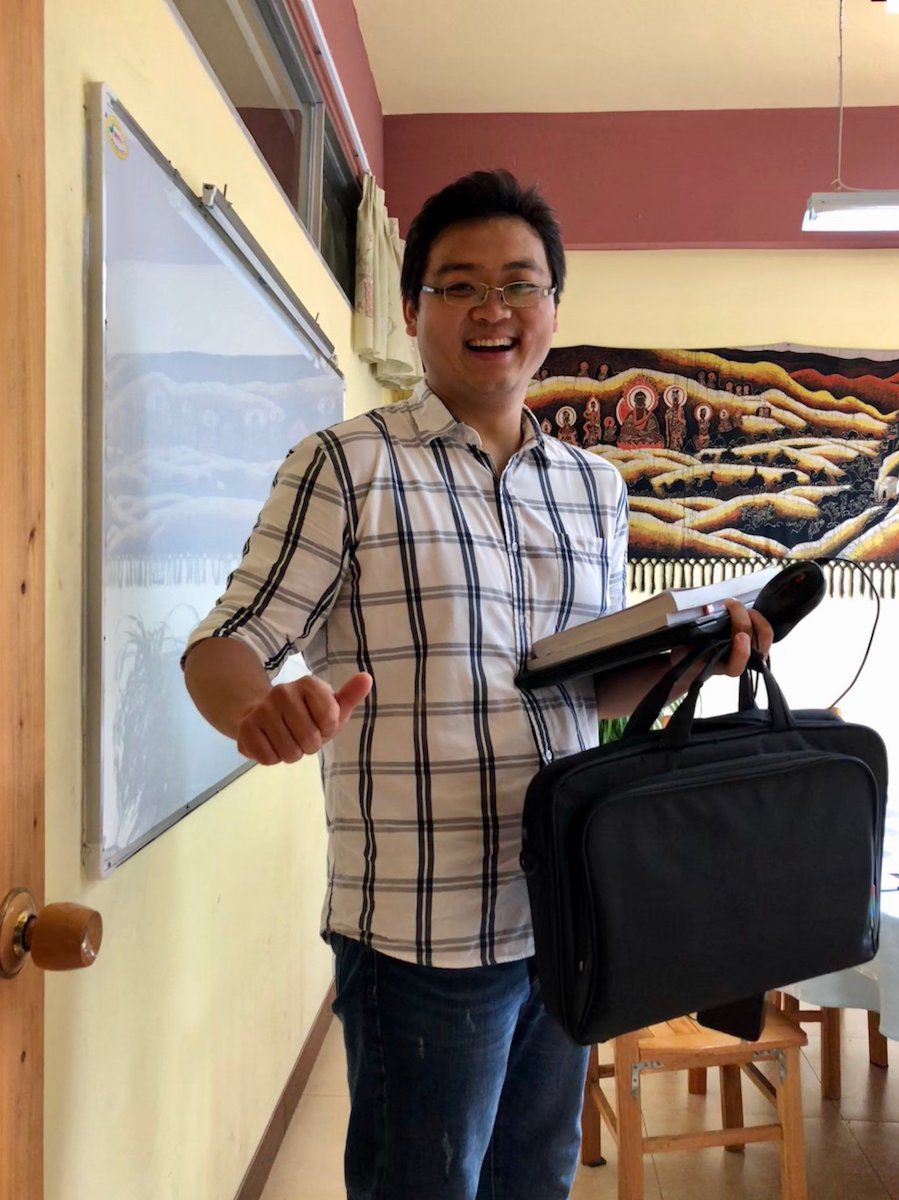
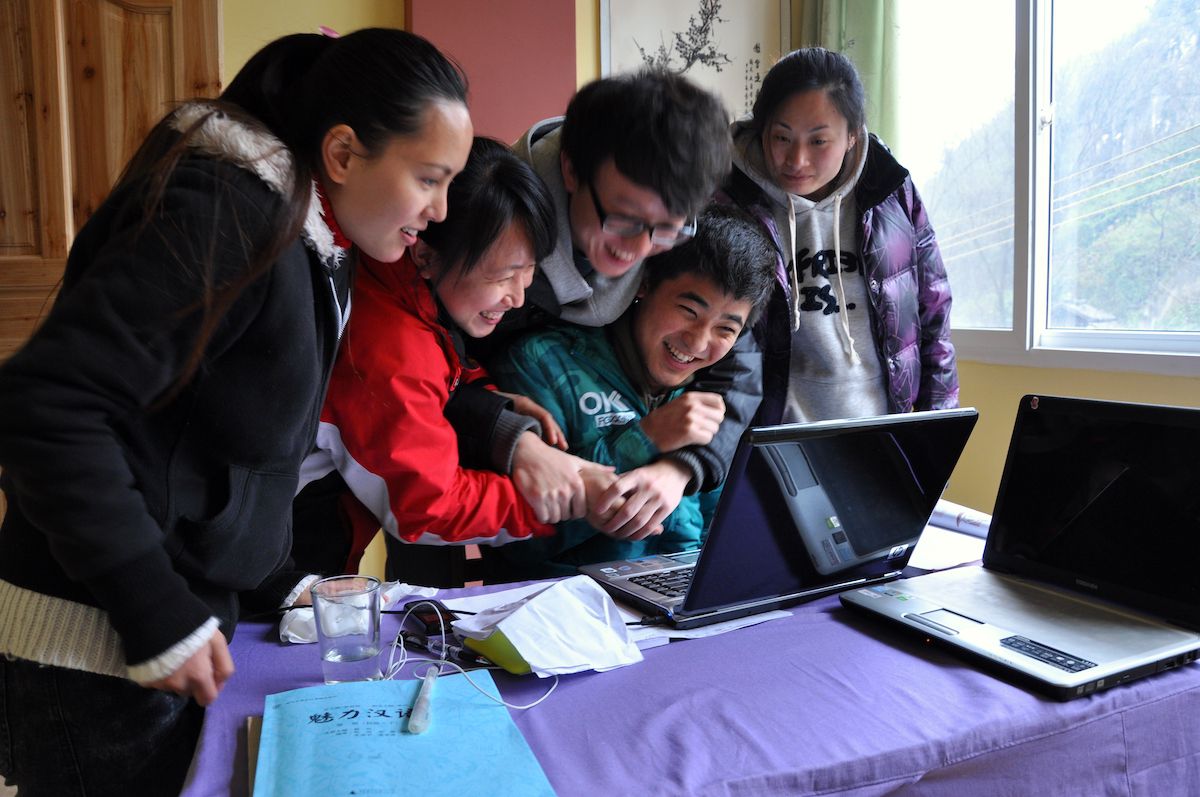
A one-on-one lesson leaves plenty of room for speaking, and here the student has the floor while his teacher follows a Chinese text on her laptop.
Lessons can be built around HSK preparation, and the day's vocabulary and grammar are yours to use around Guilin once class is over.
Classes at CLI are one-on-one by default, and a group of three to five students at the same level can sometimes be arranged.
When a grammar point is giving you trouble, it can be reviewed with all three of your teachers, each from their own skill area.
Getting an idea across in Chinese takes practice, and conversational fluency is one focus of the teacher who covers listening and speaking.
When it is just you and your teacher, there is time to speak Chinese and to use each new word as soon as you learn it.
For practice in pairs like these outside class, we can match you with a student from CLI's local partner university for three hours of free language support a week.
CLI's course levels run from Elementary, with pinyin, tones and basic characters, up to Advanced, with formal writing and academic reading.
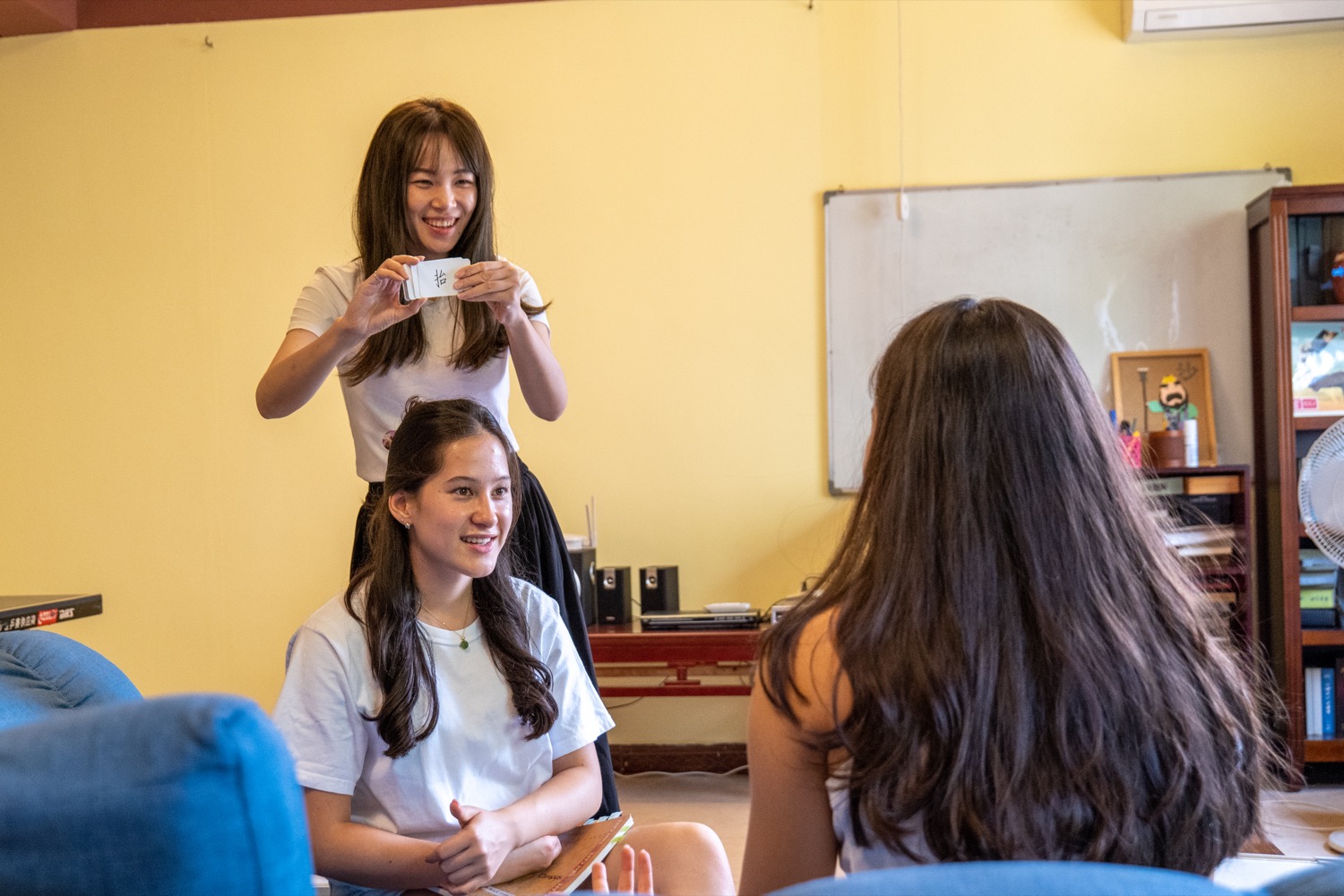
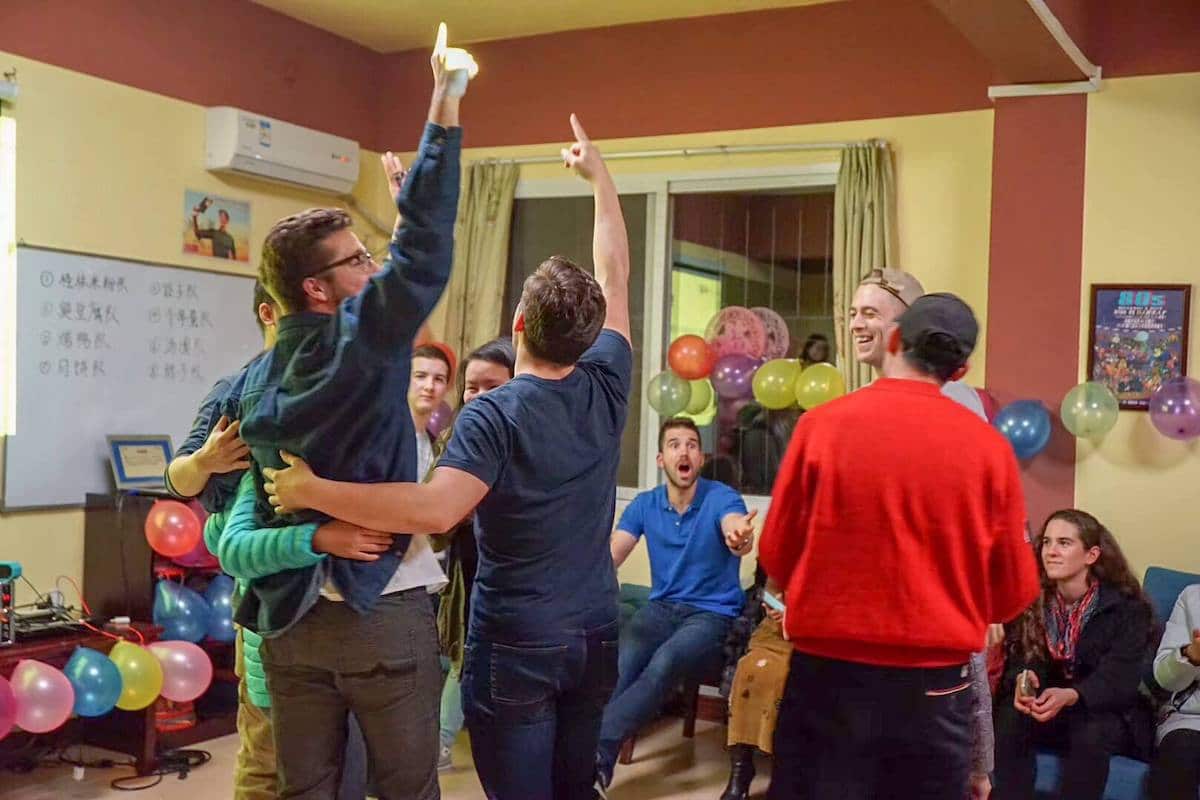
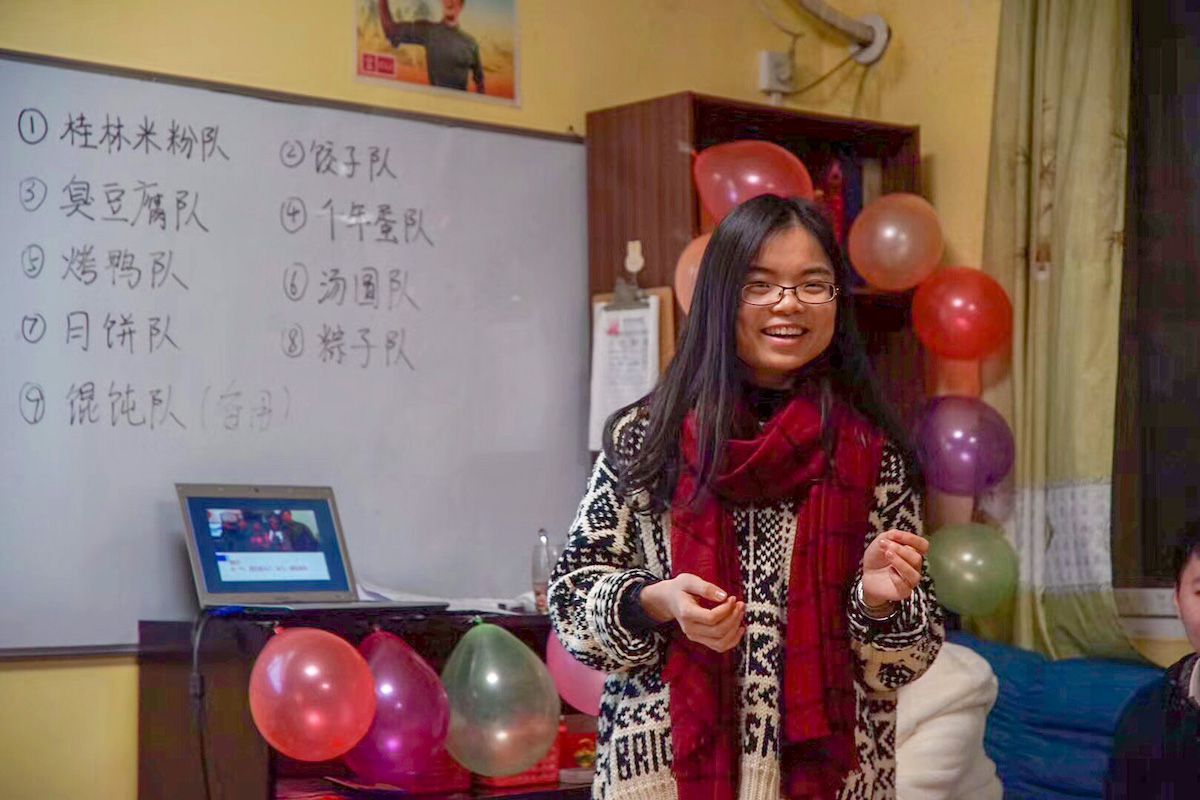
Guessing the word on a card held overhead takes plenty of questions and clues in Chinese, and our teachers use conversation games like this one to review vocabulary.
日常rìcháng
Everyday life at the CLI Center
Student rooms, the lounge, the lobby, and the people down the hall.
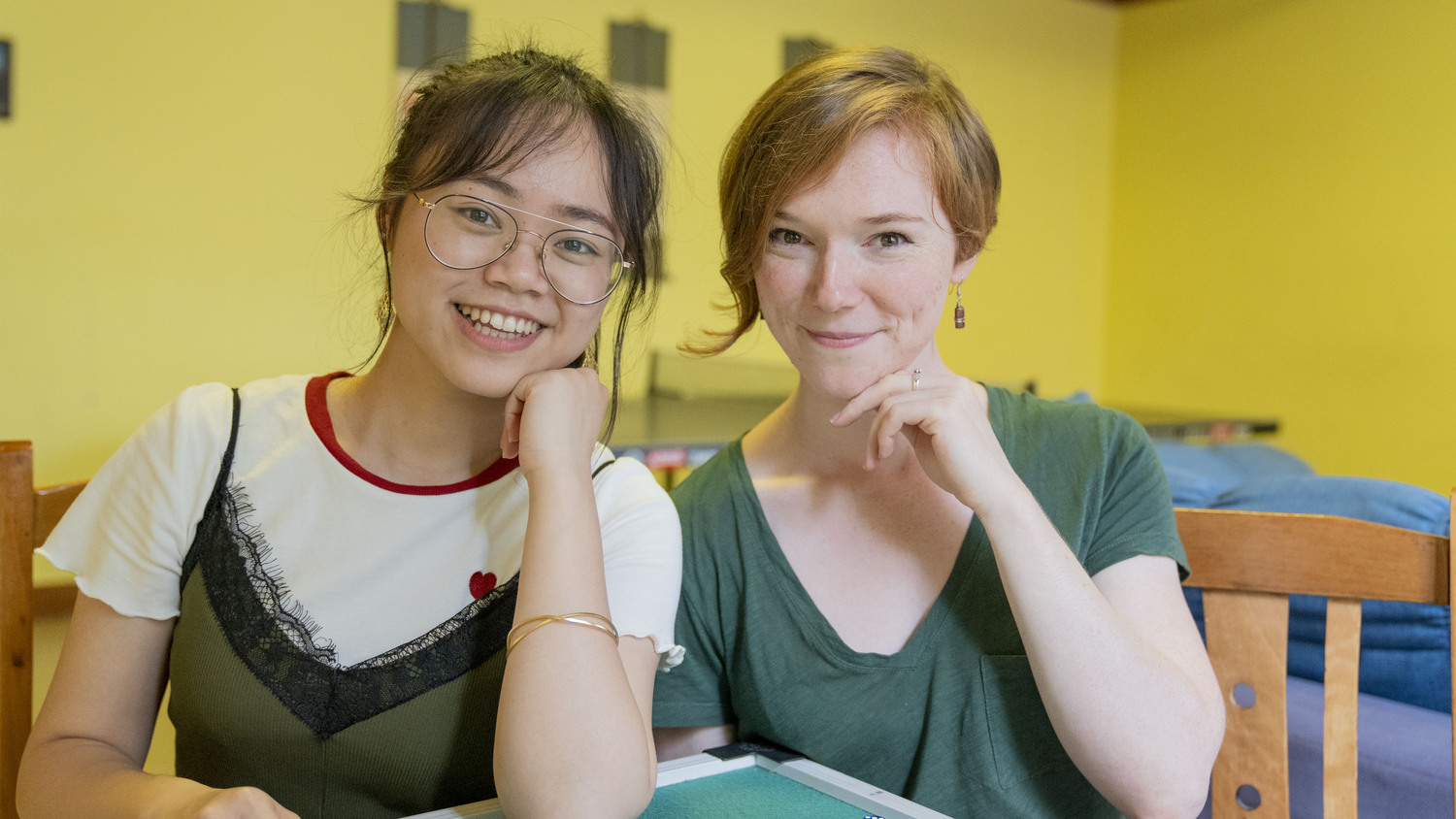
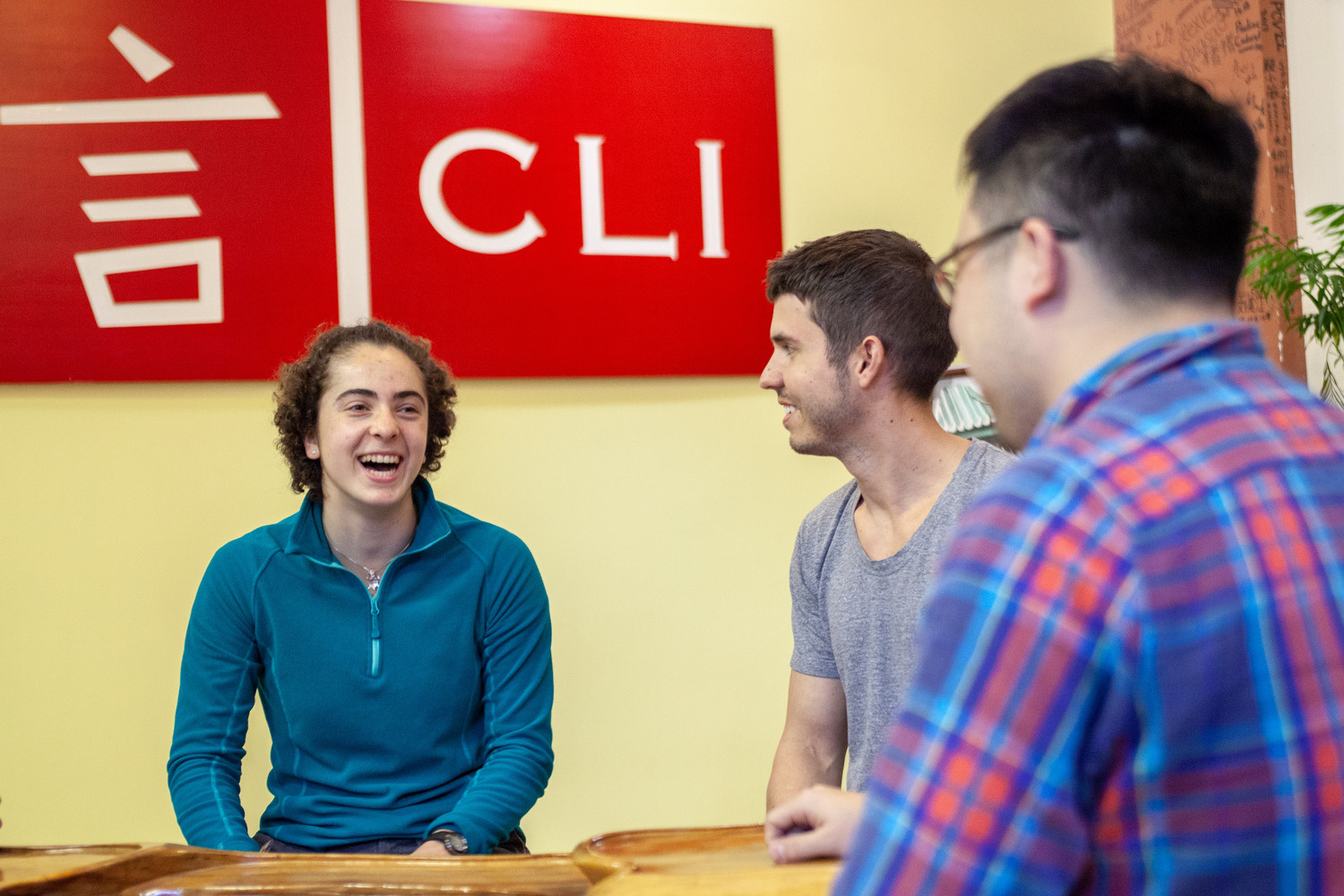
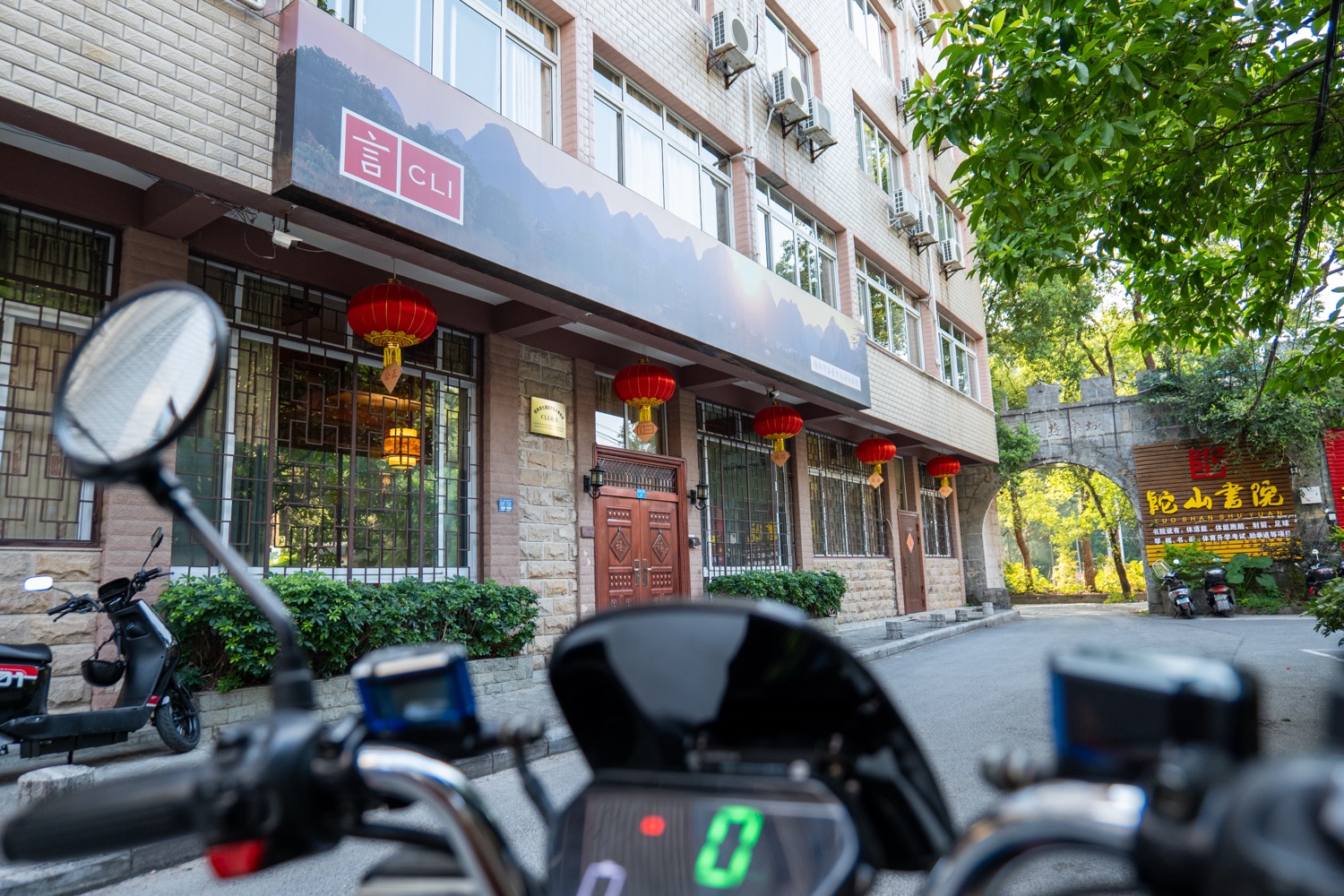
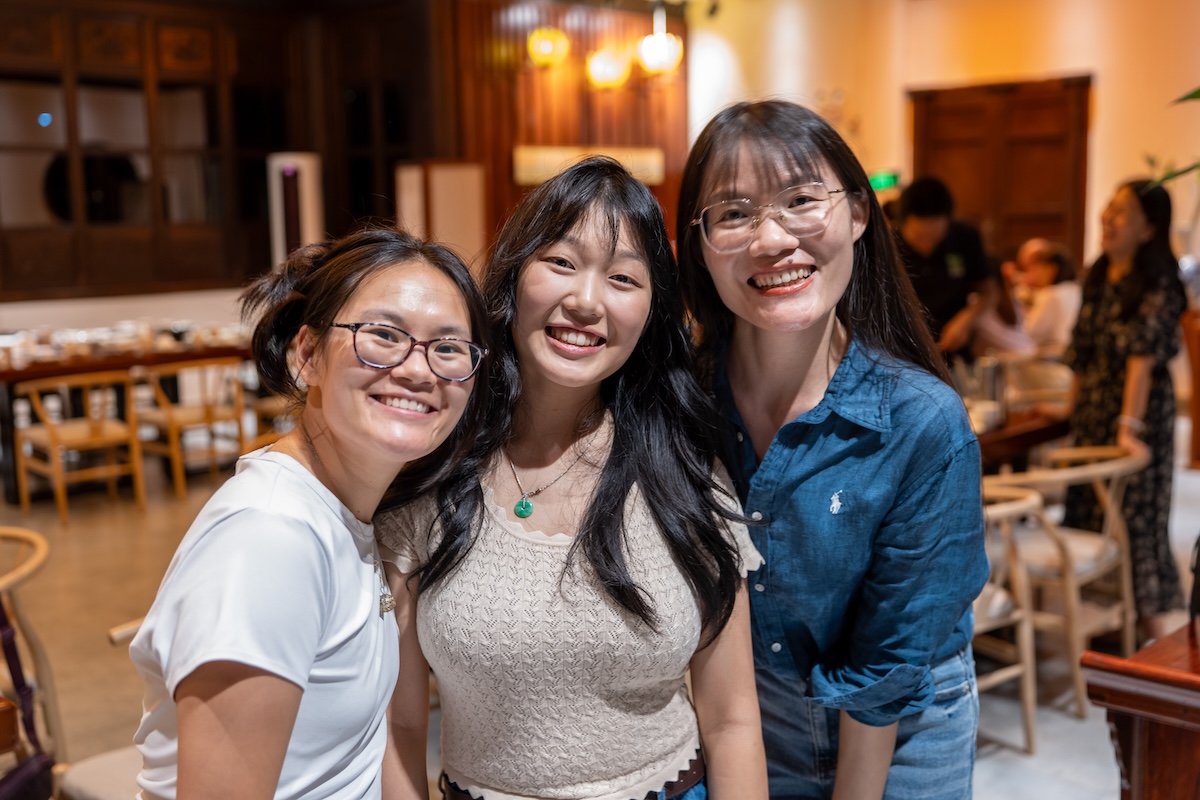
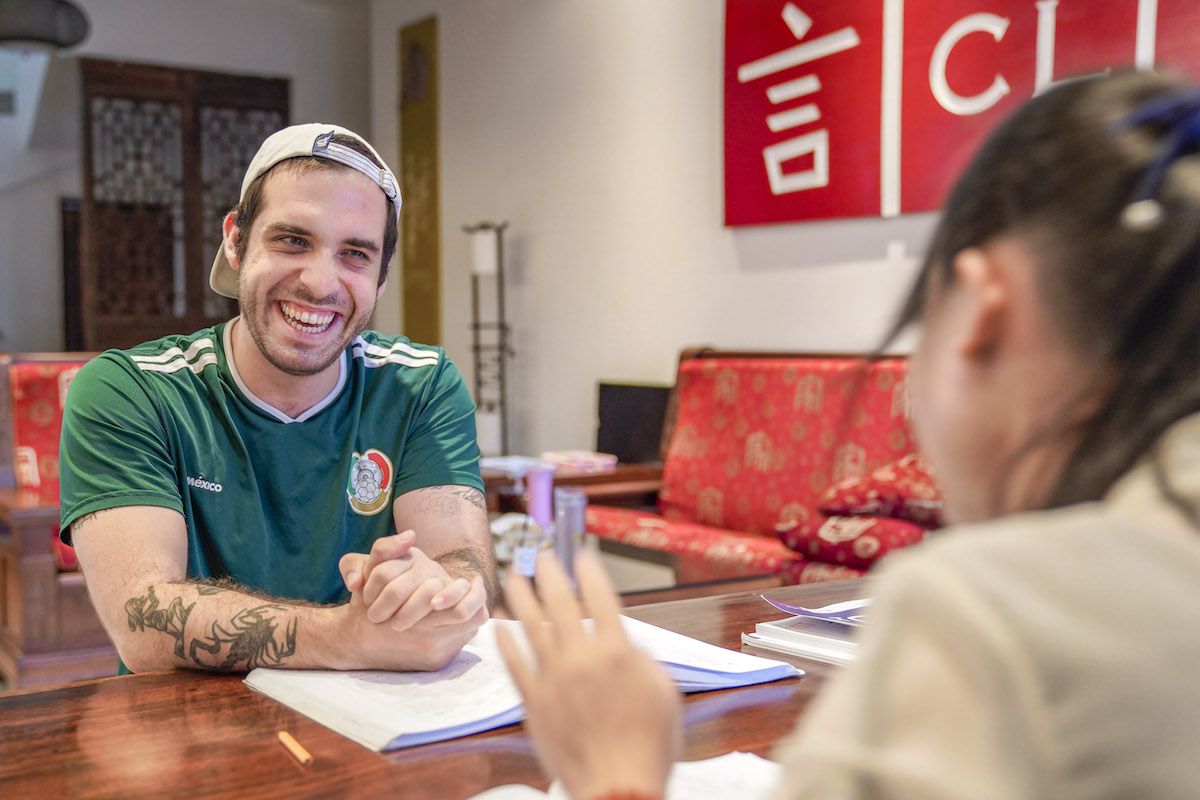
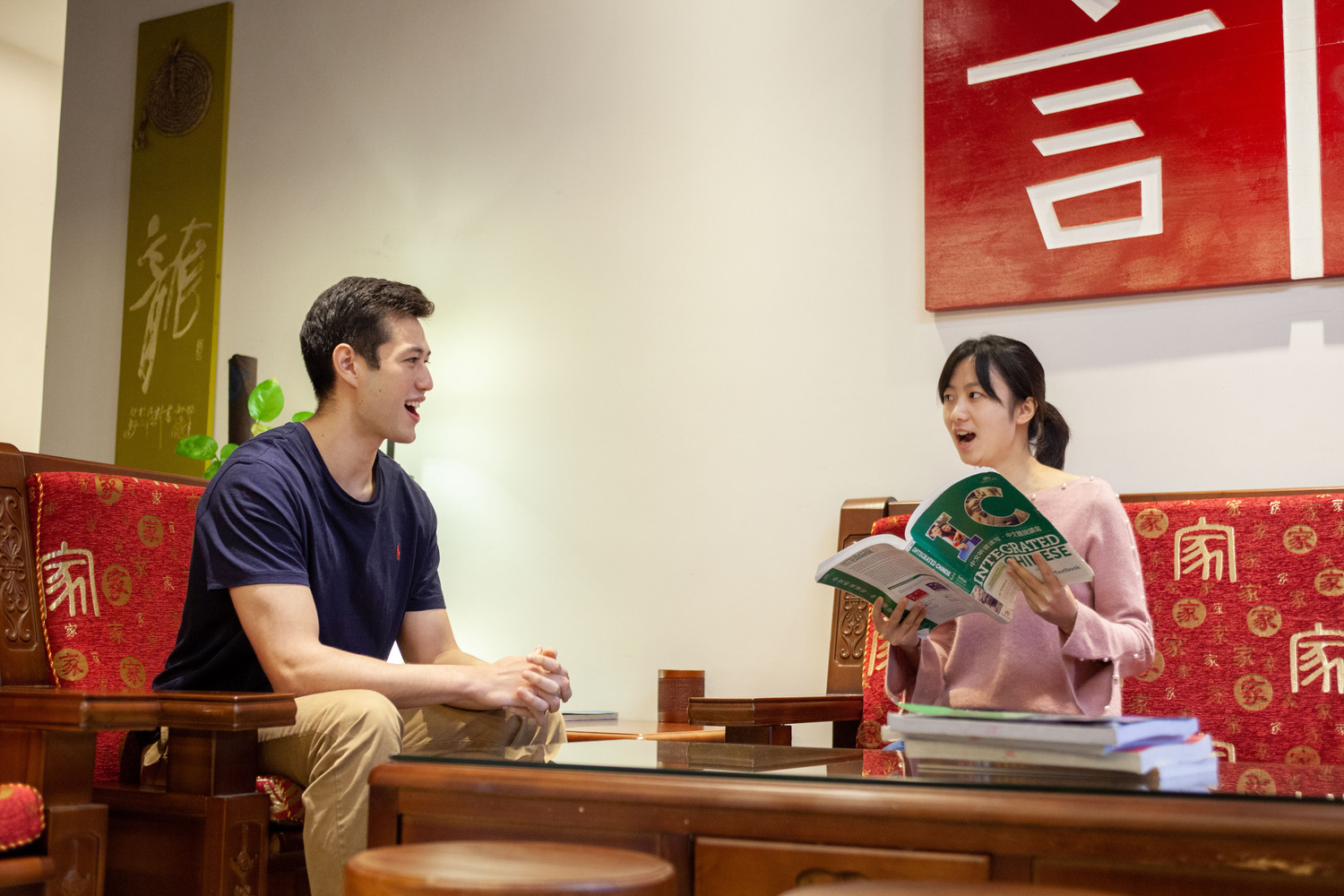
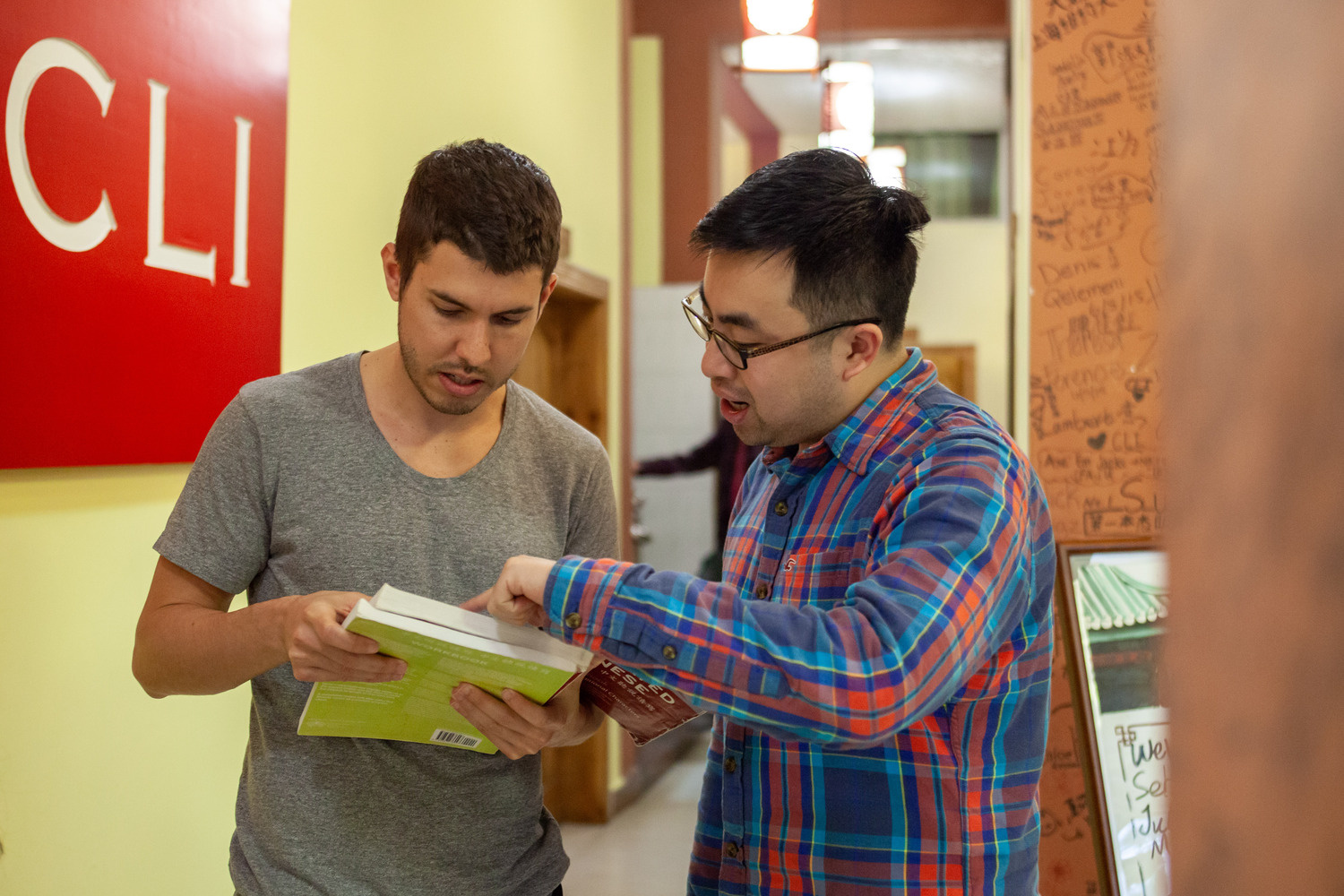
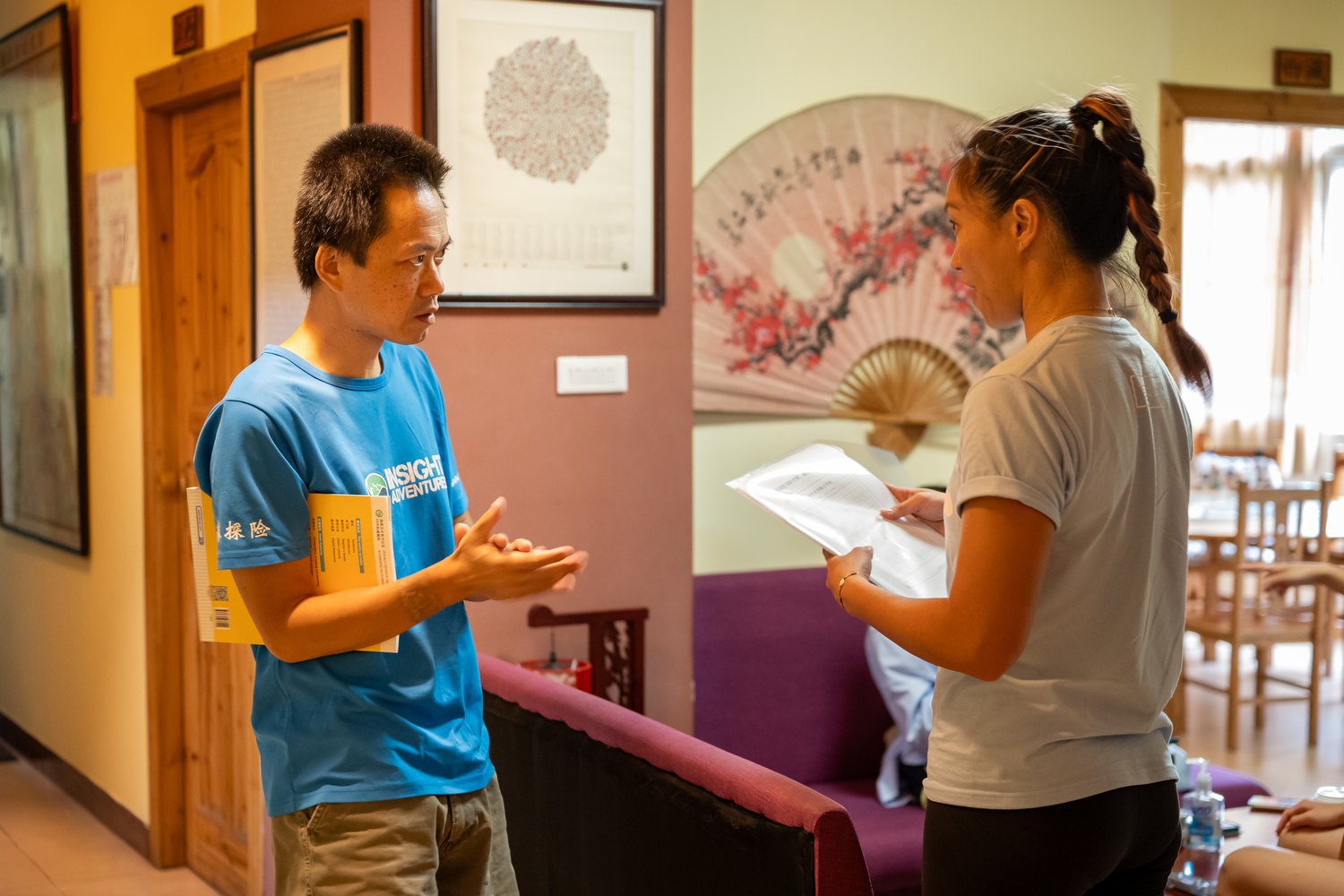
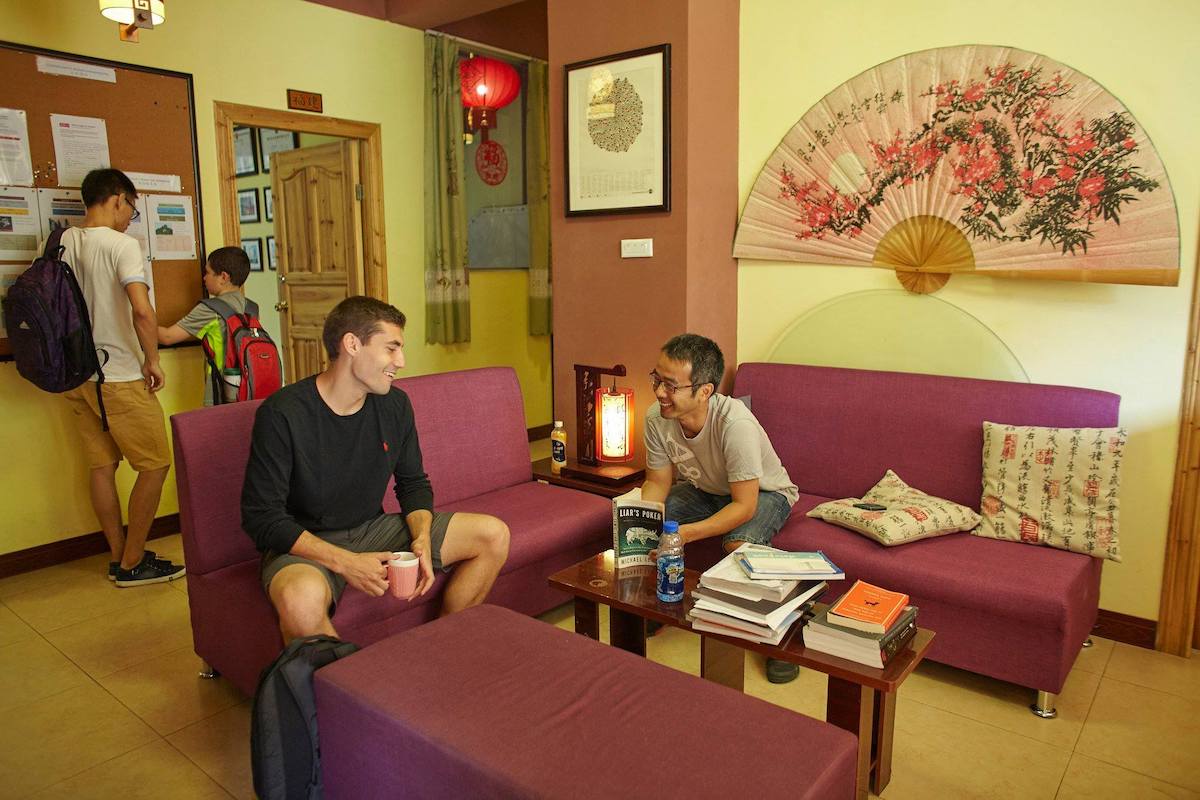
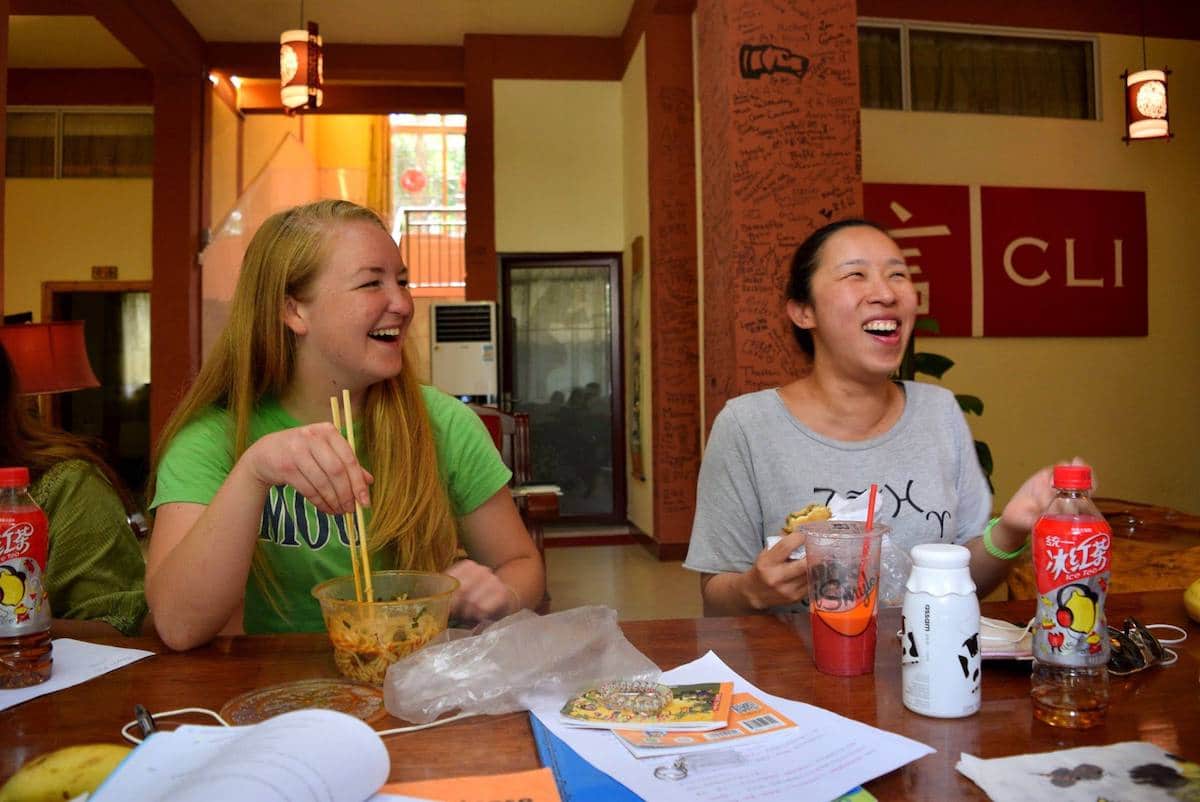
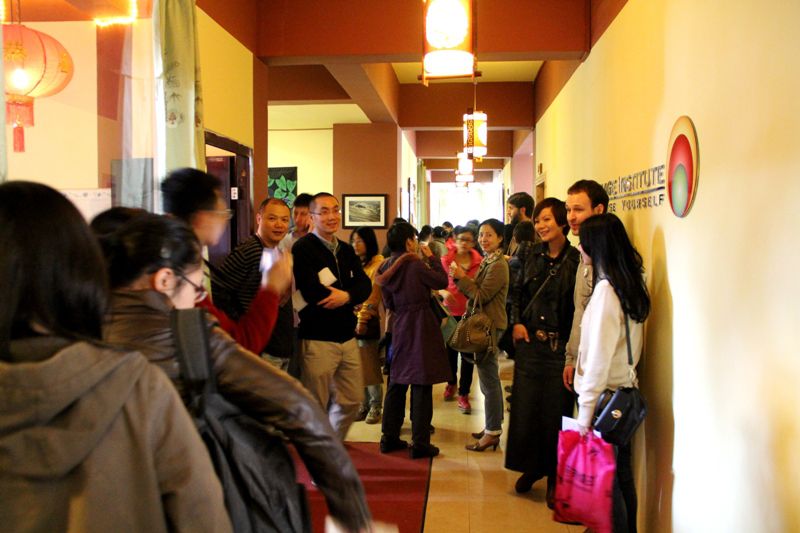
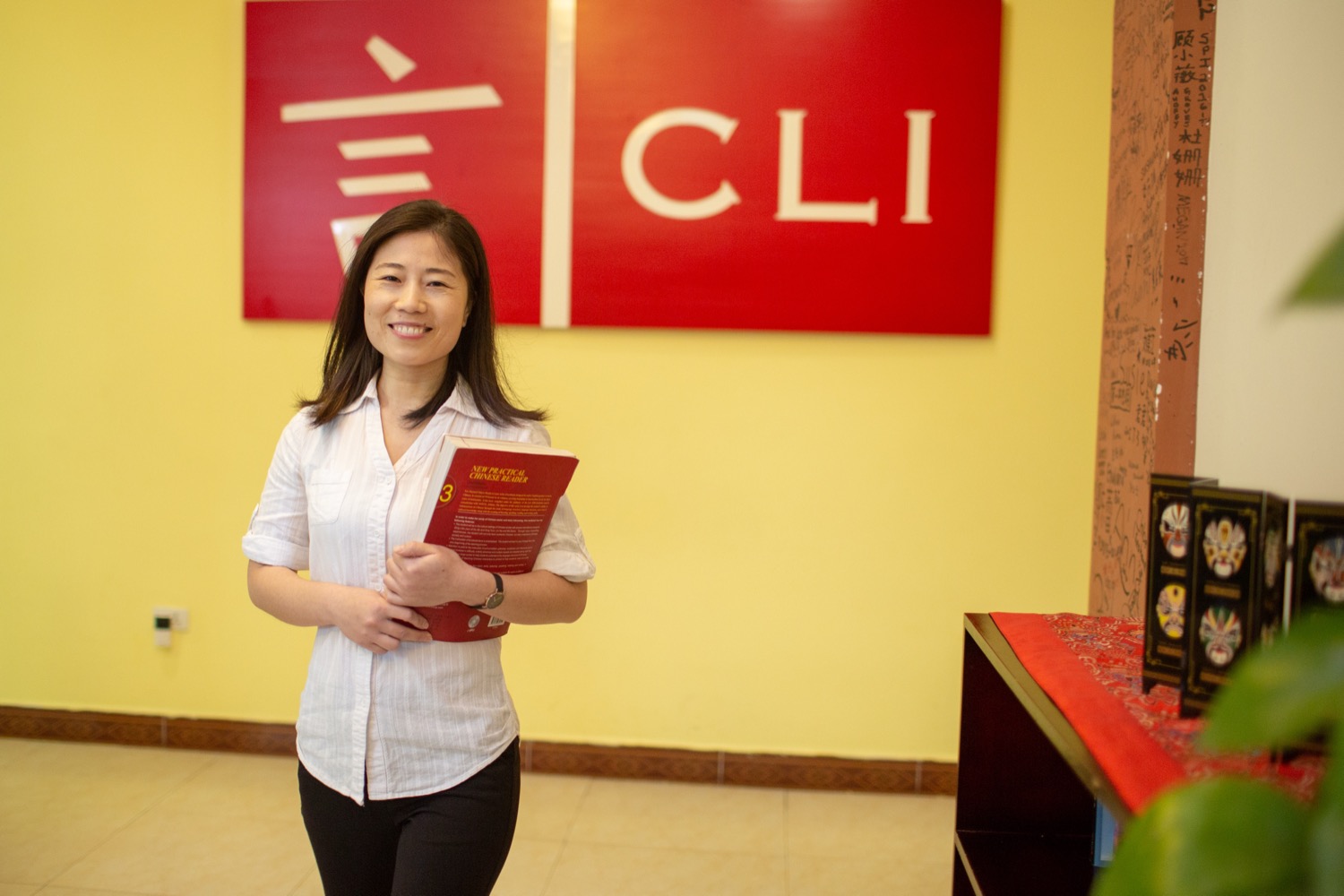
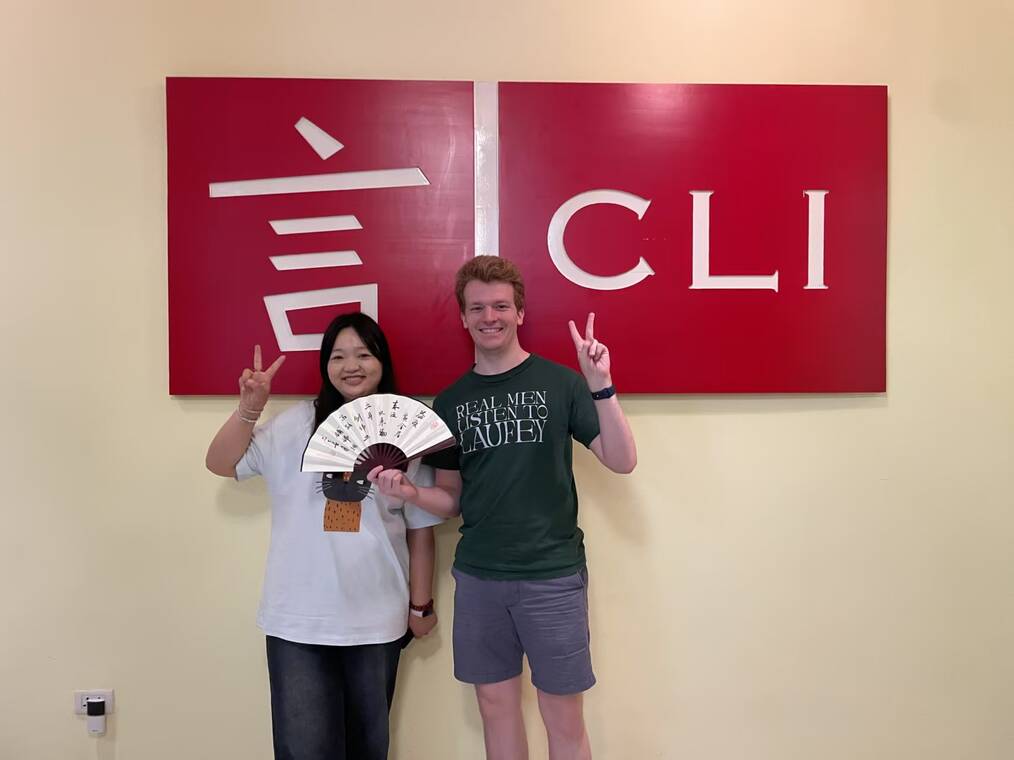
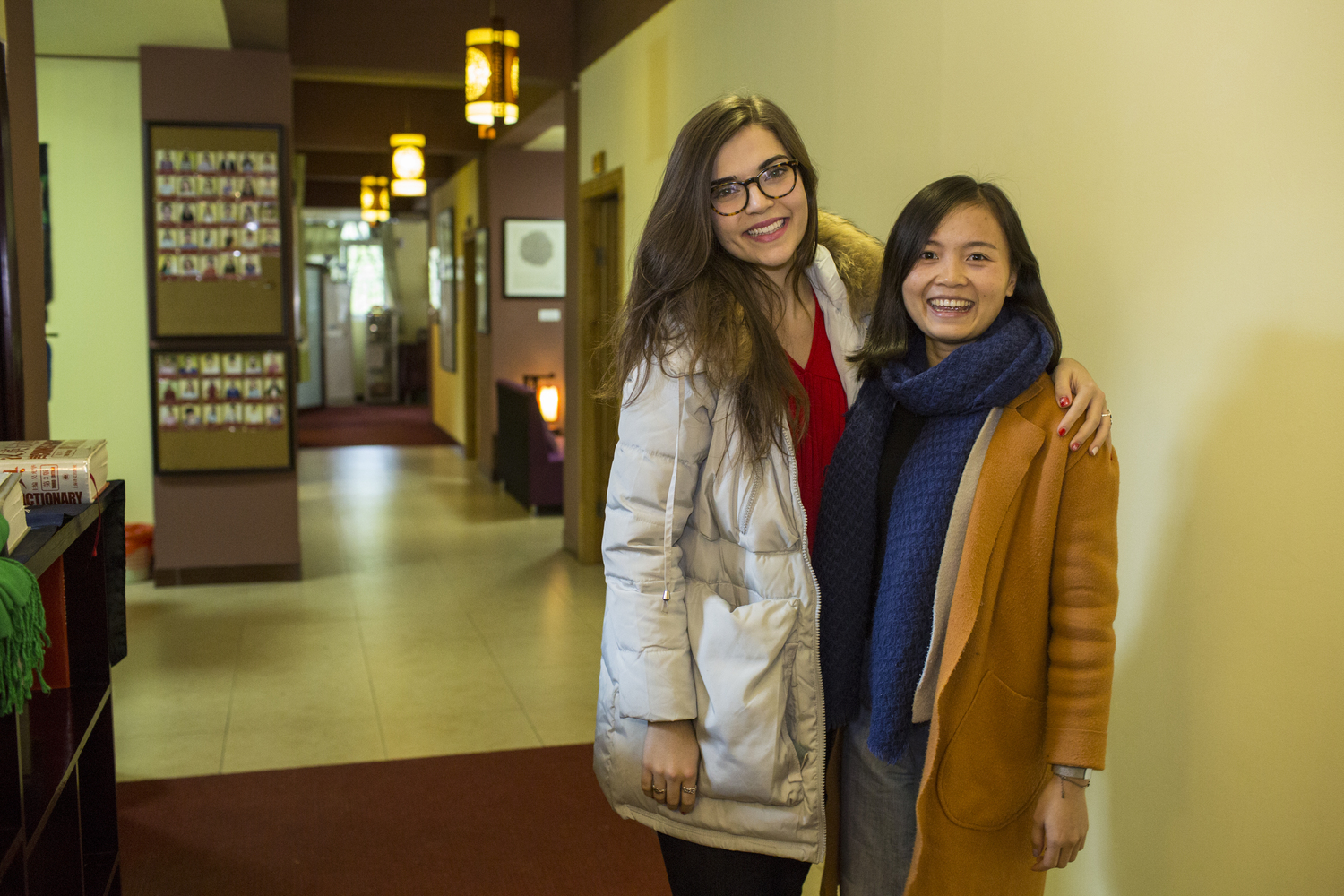
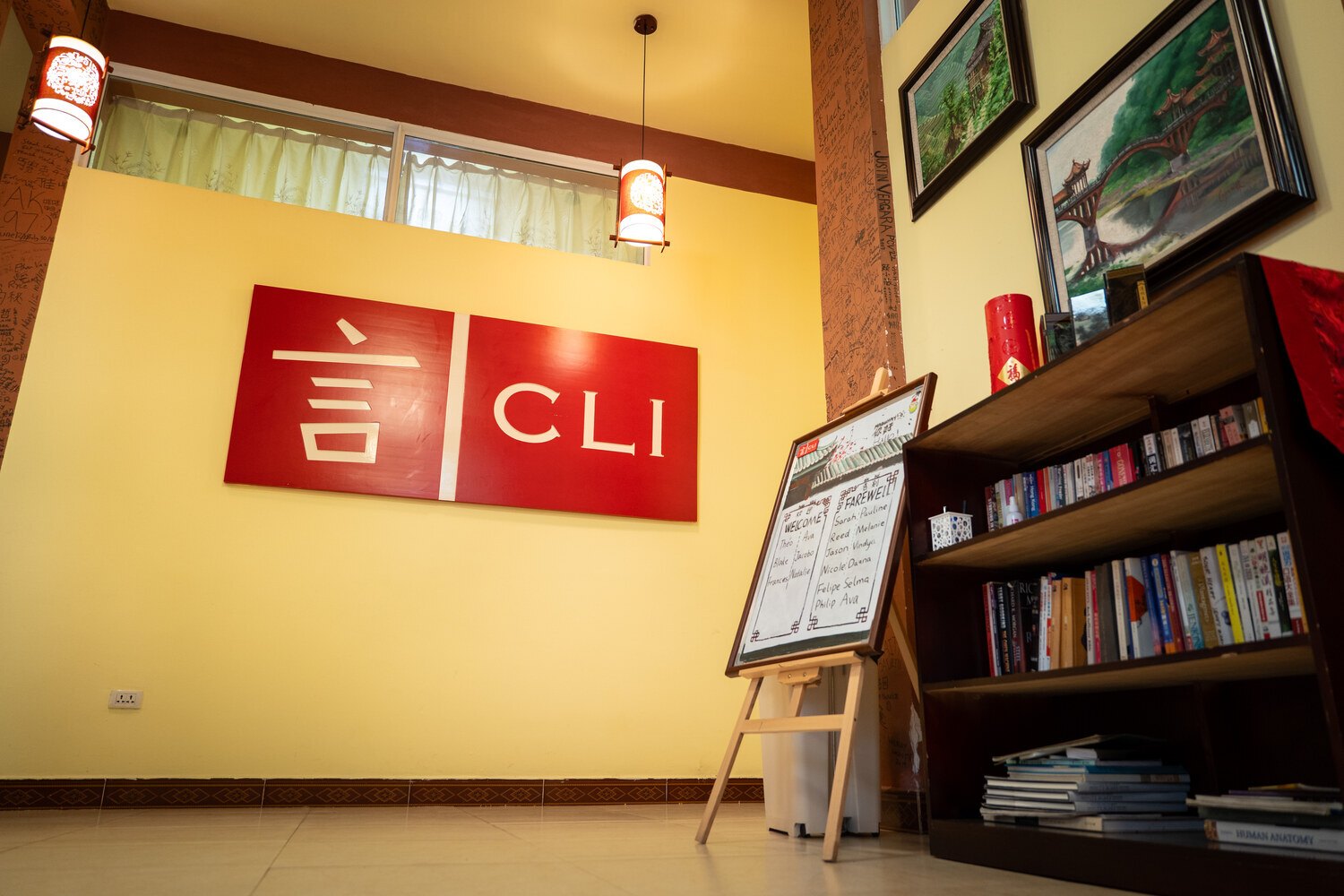
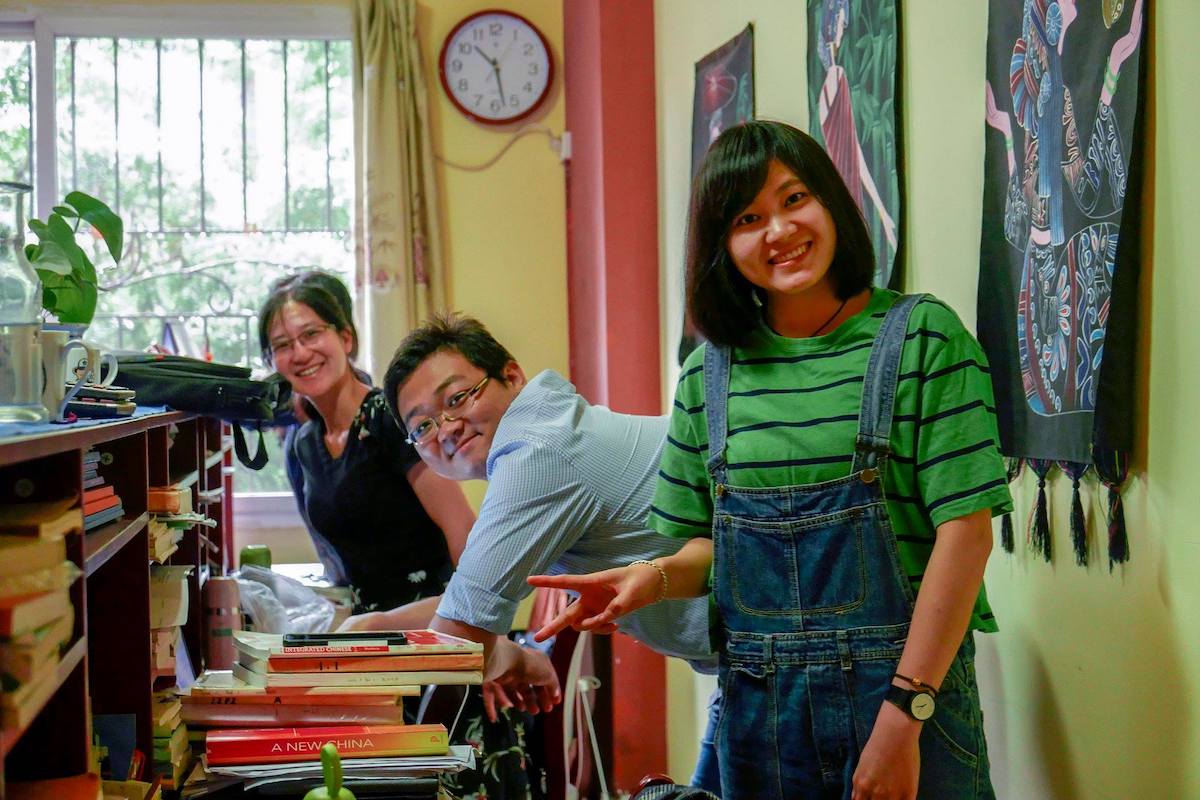
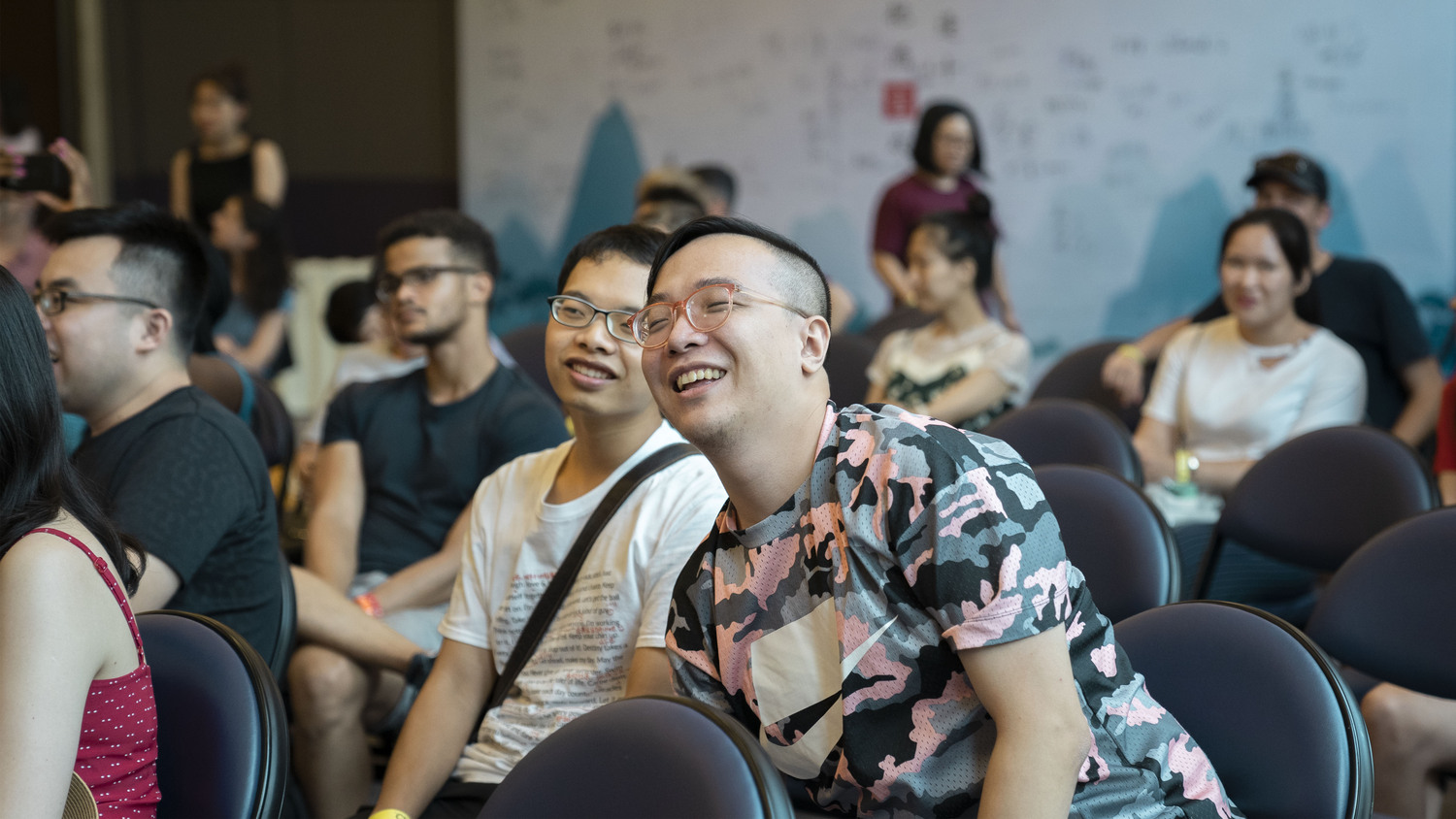
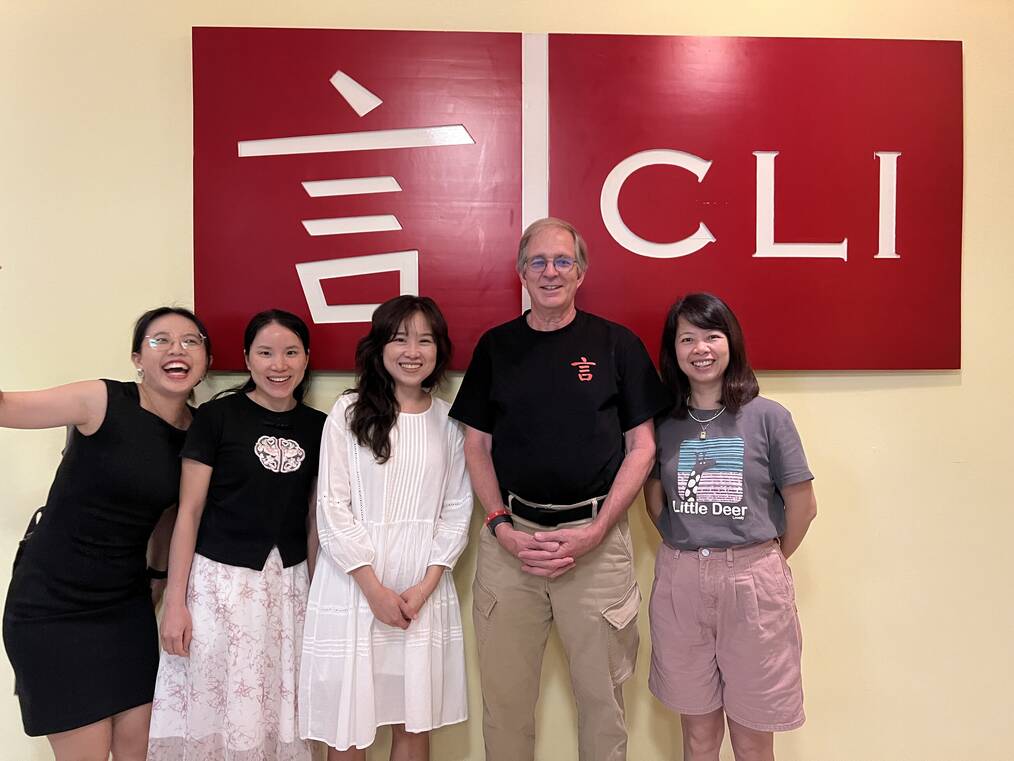
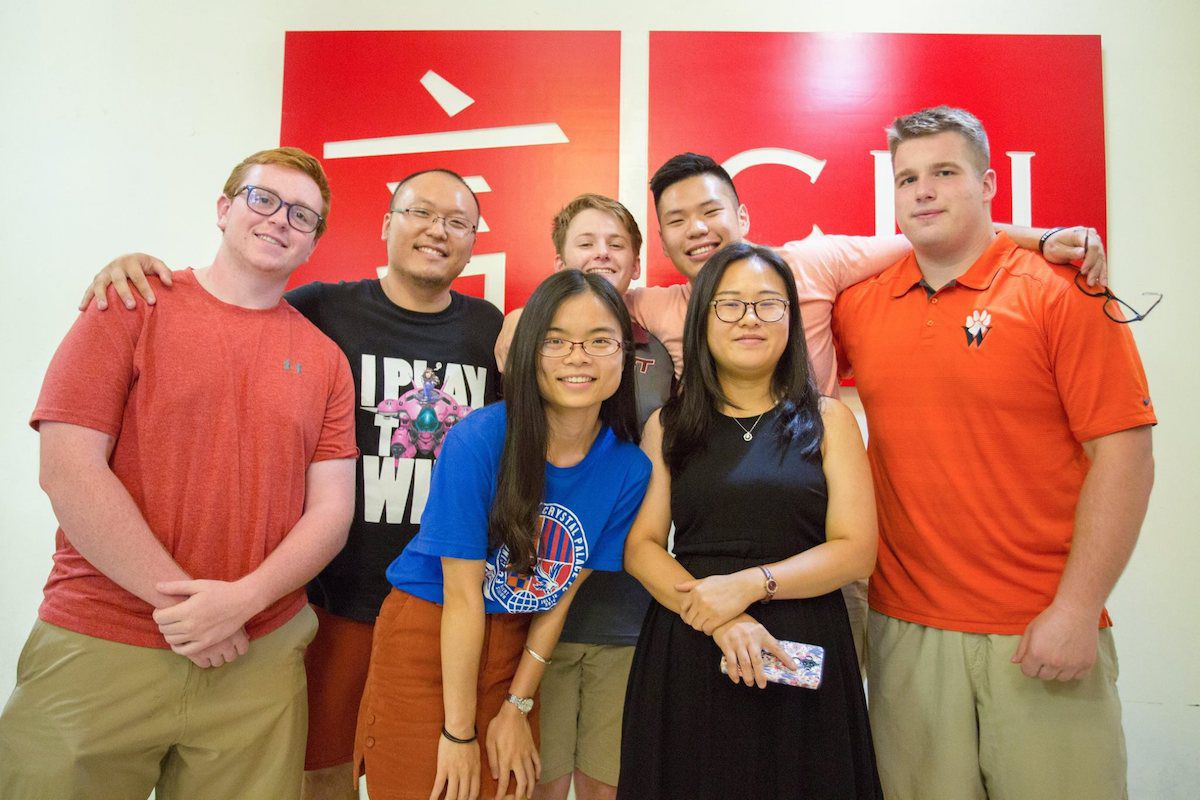
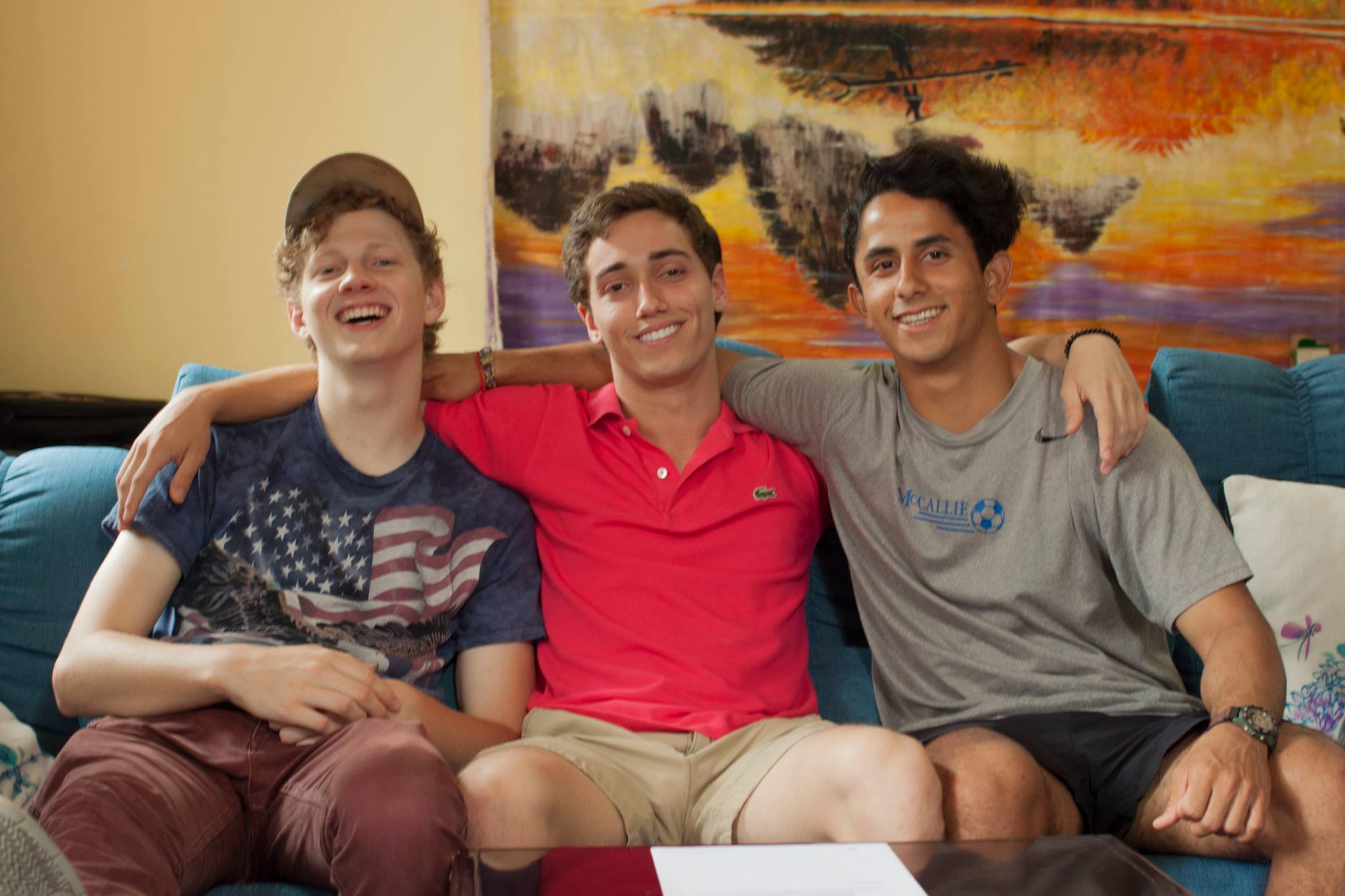
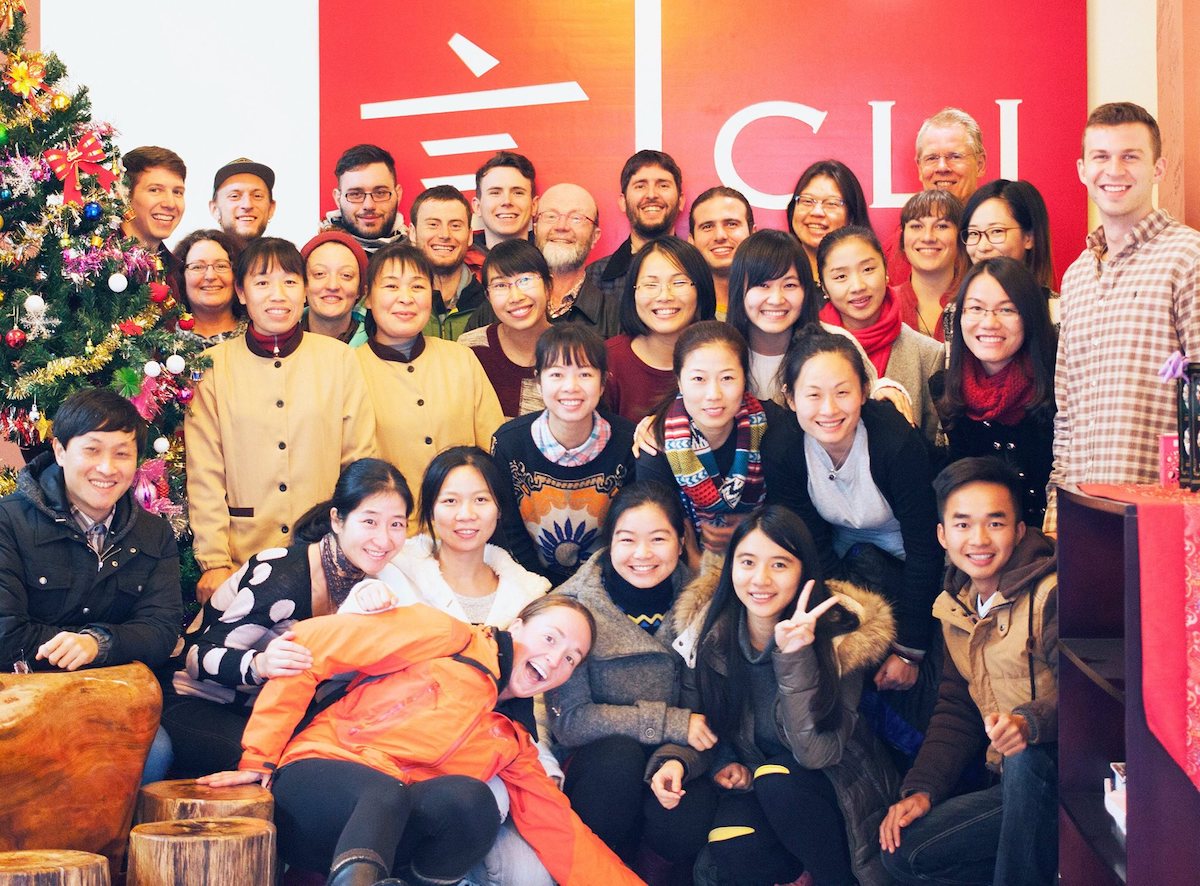
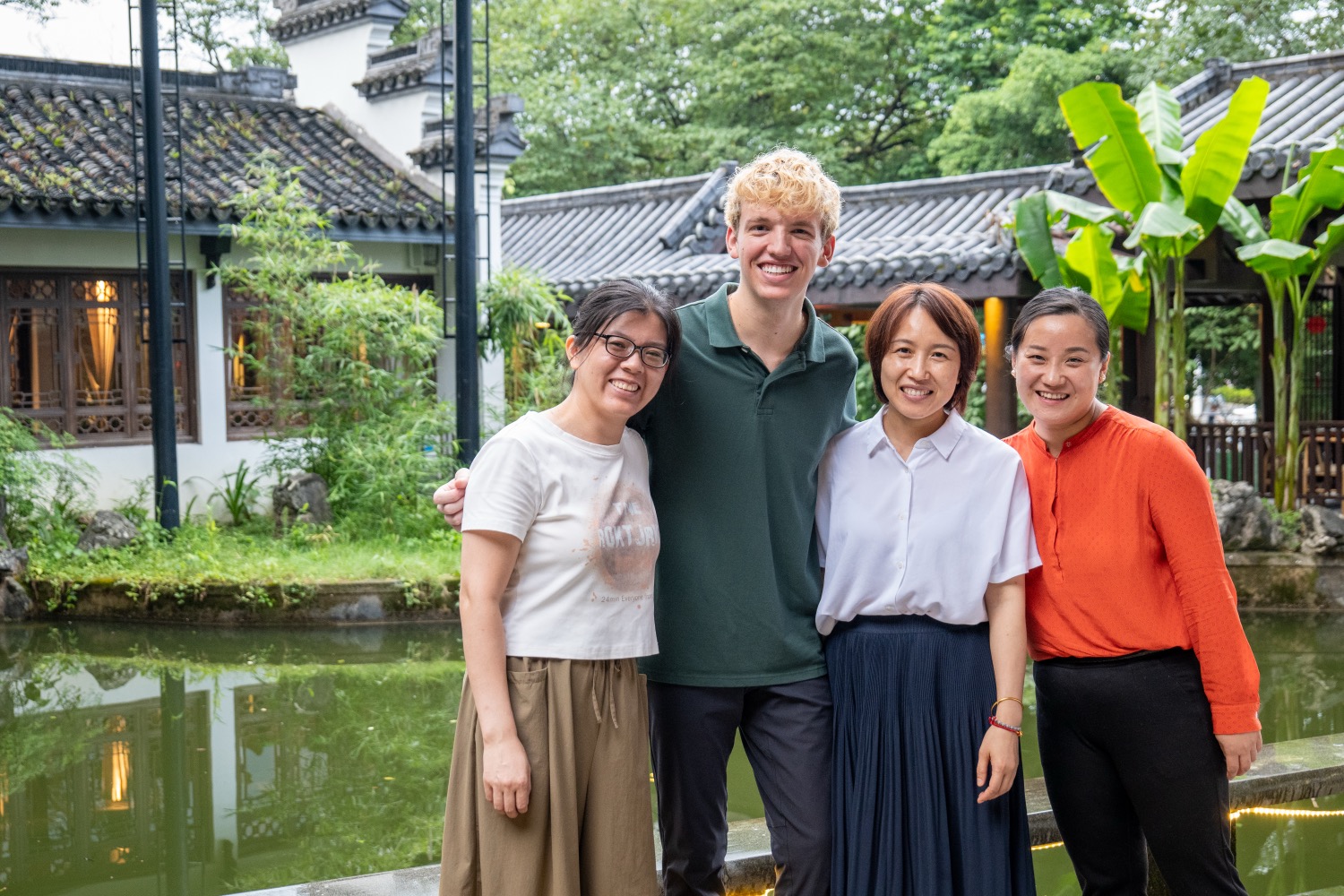
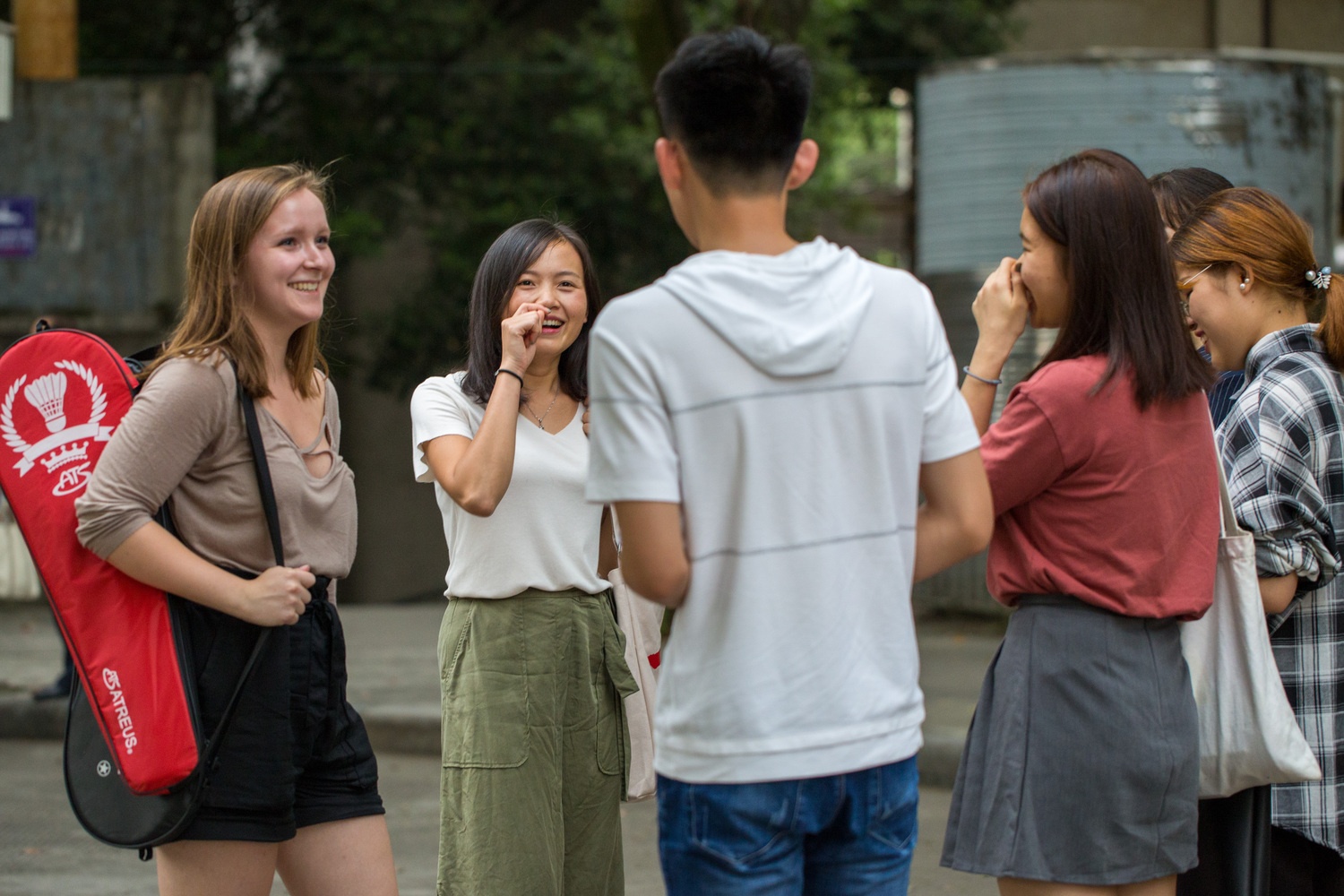
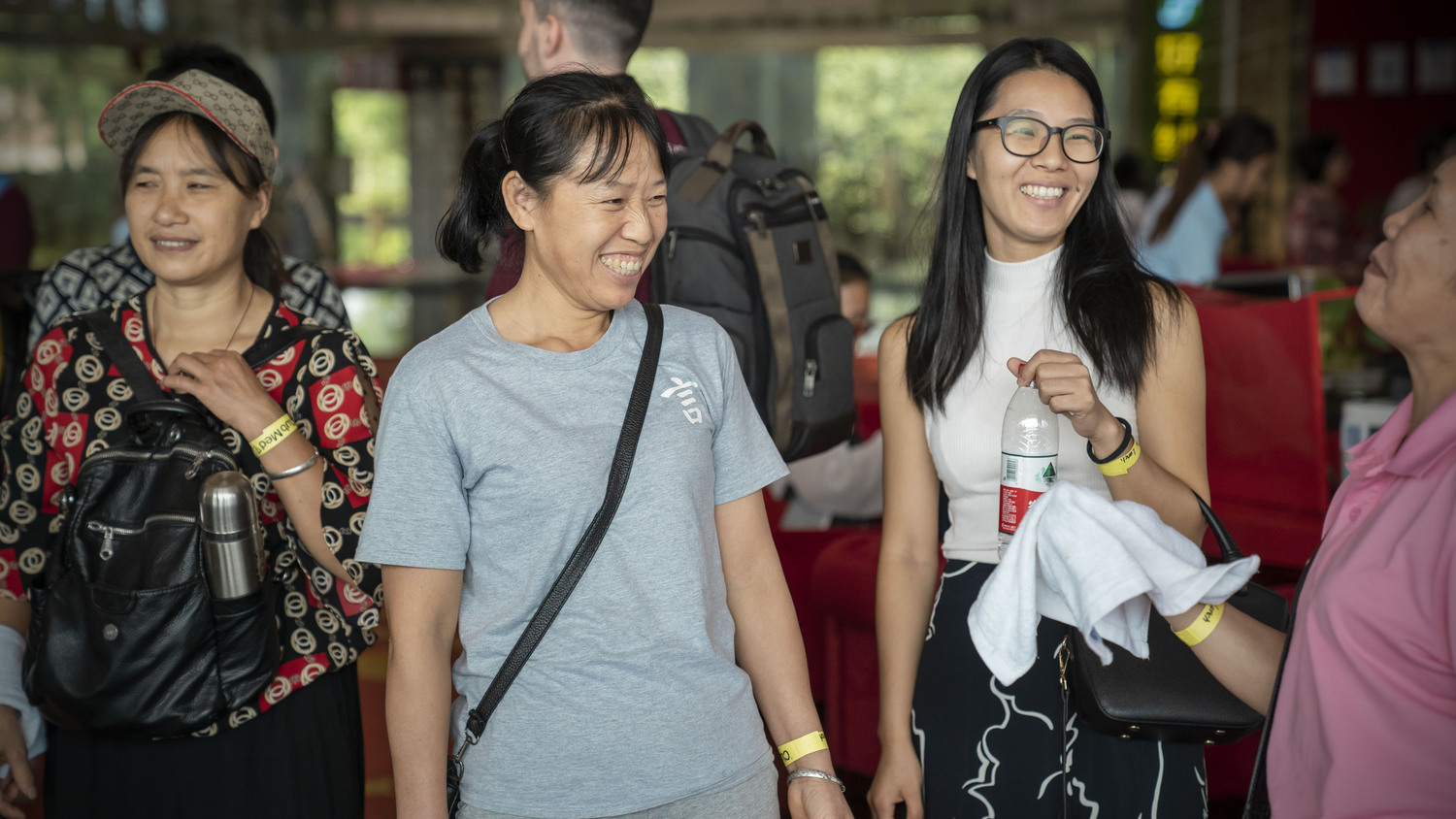
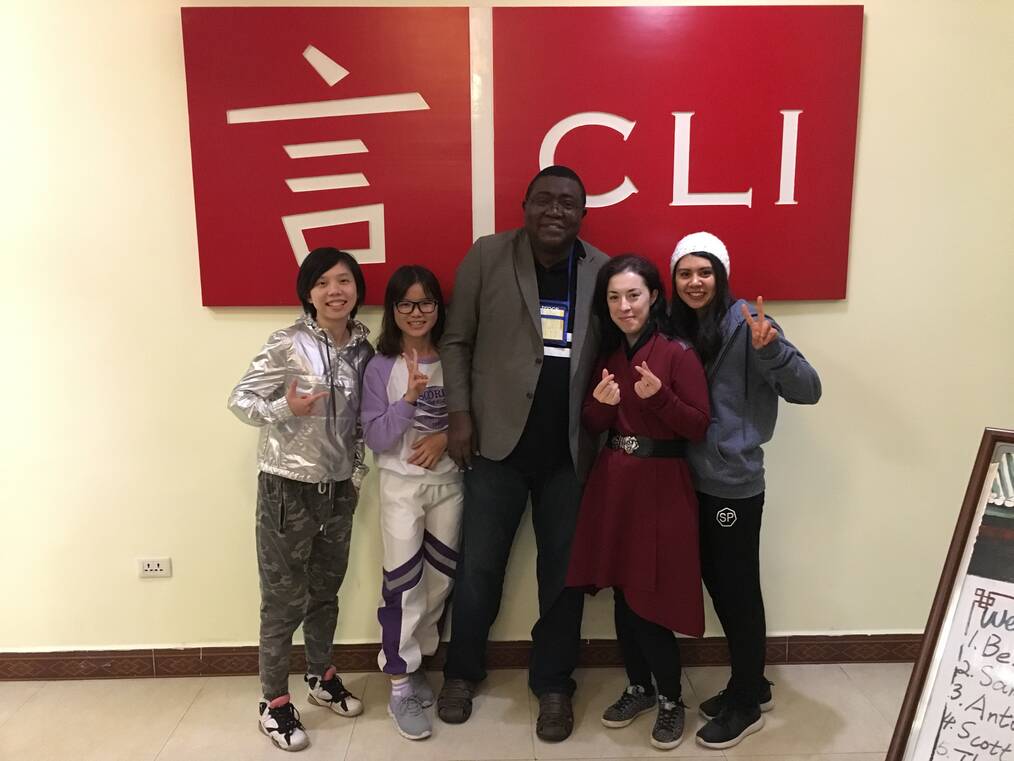
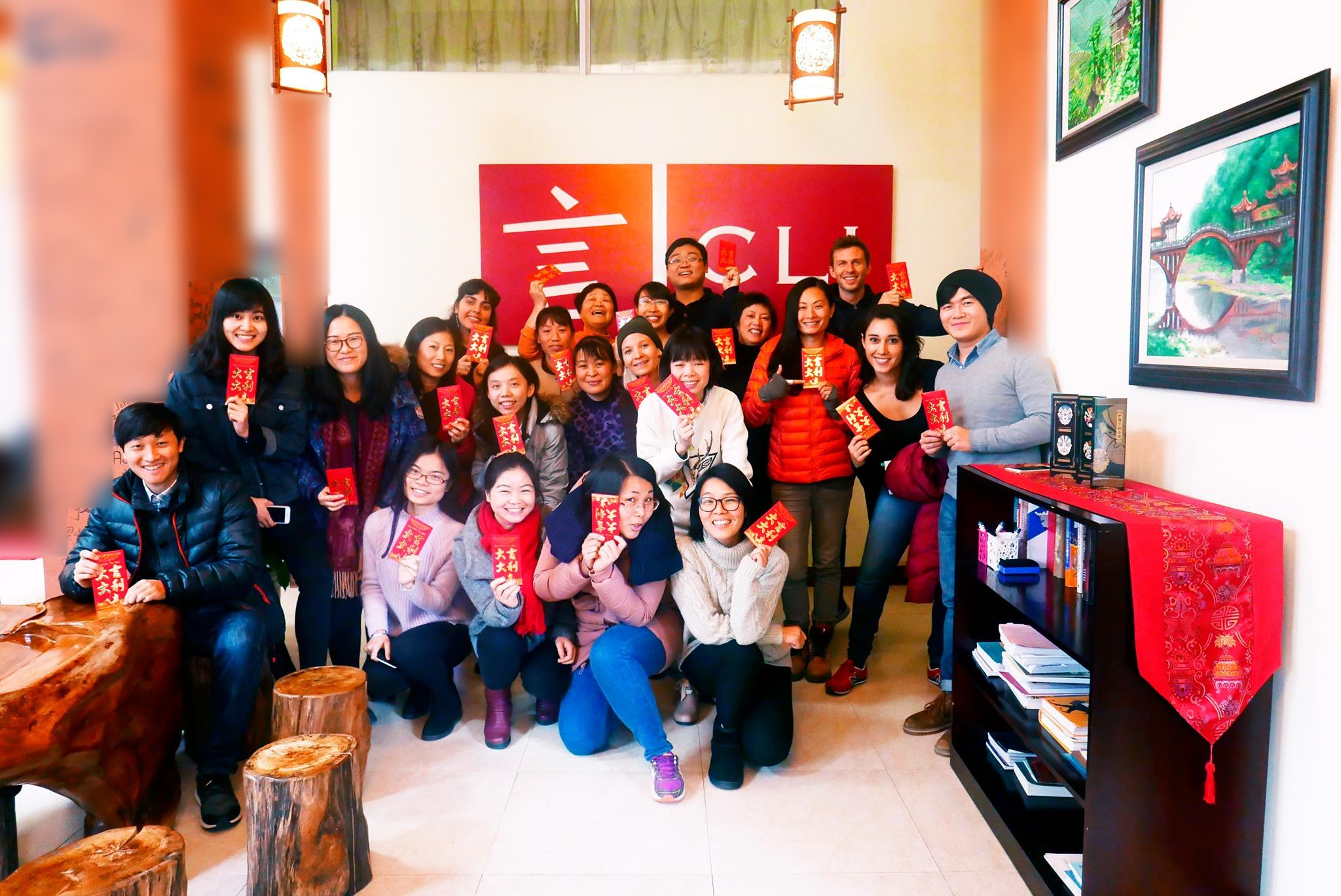
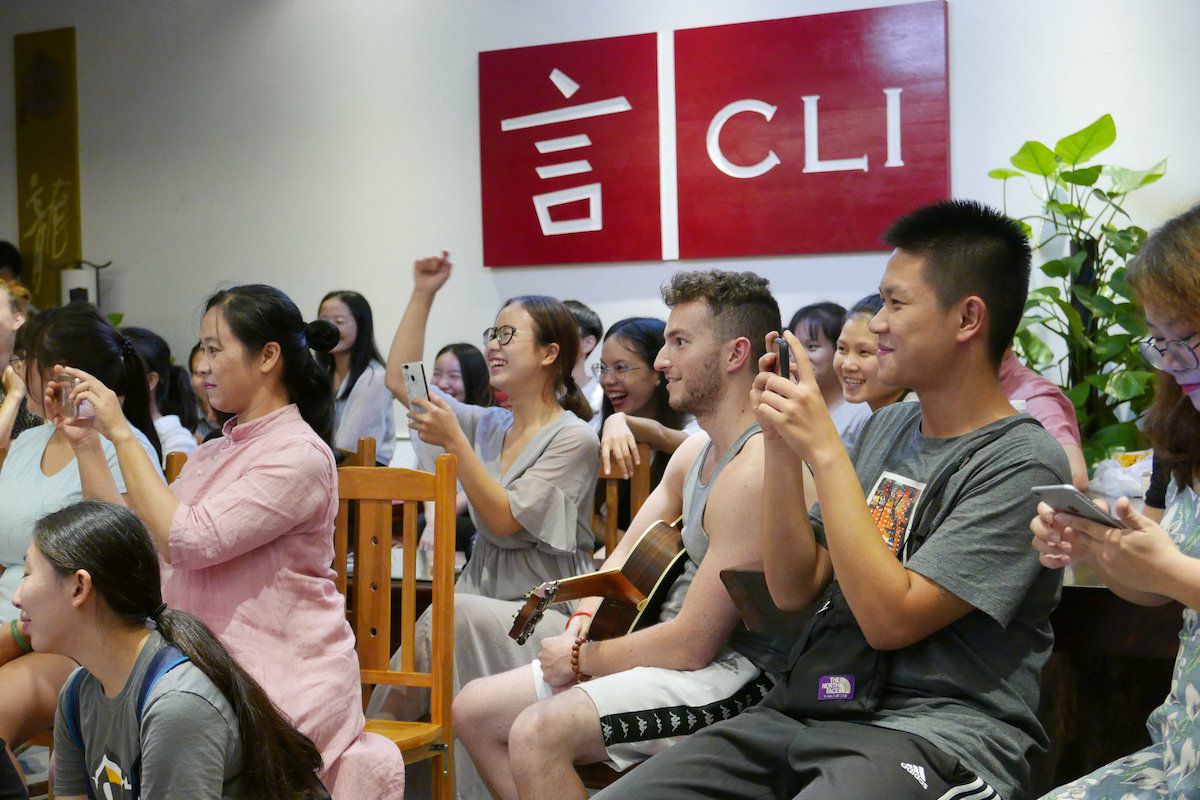
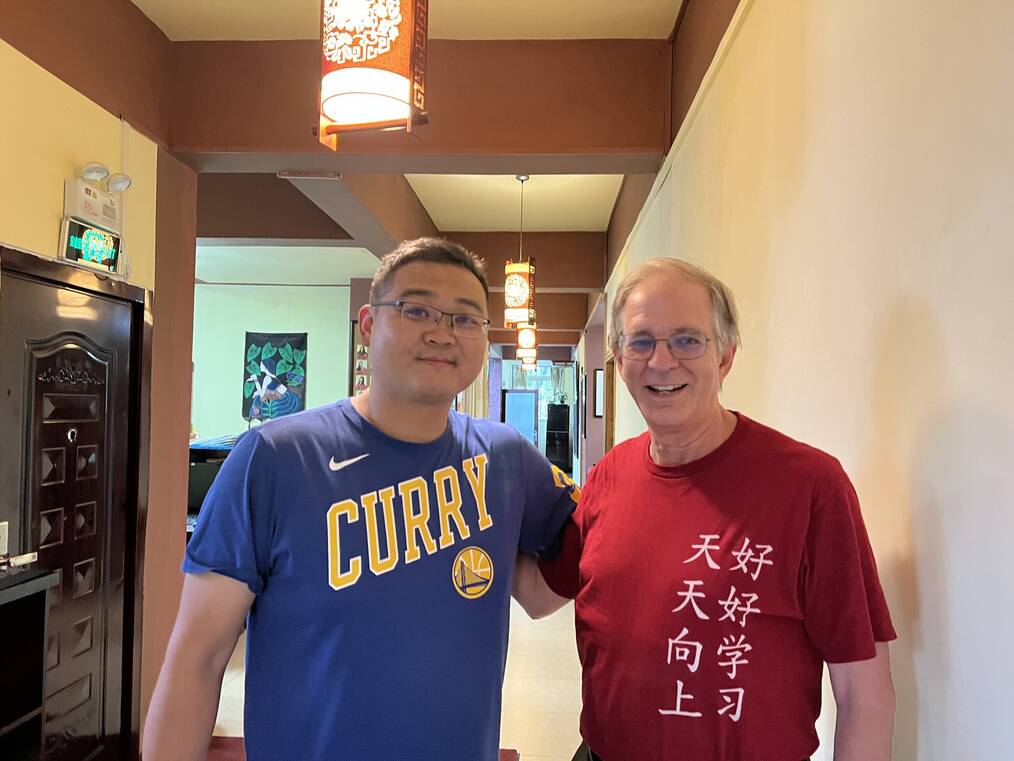
A laugh under the red CLI sign. The Center has at least one native Chinese speaker for every language learner, so a chat like this can be Chinese practice too.
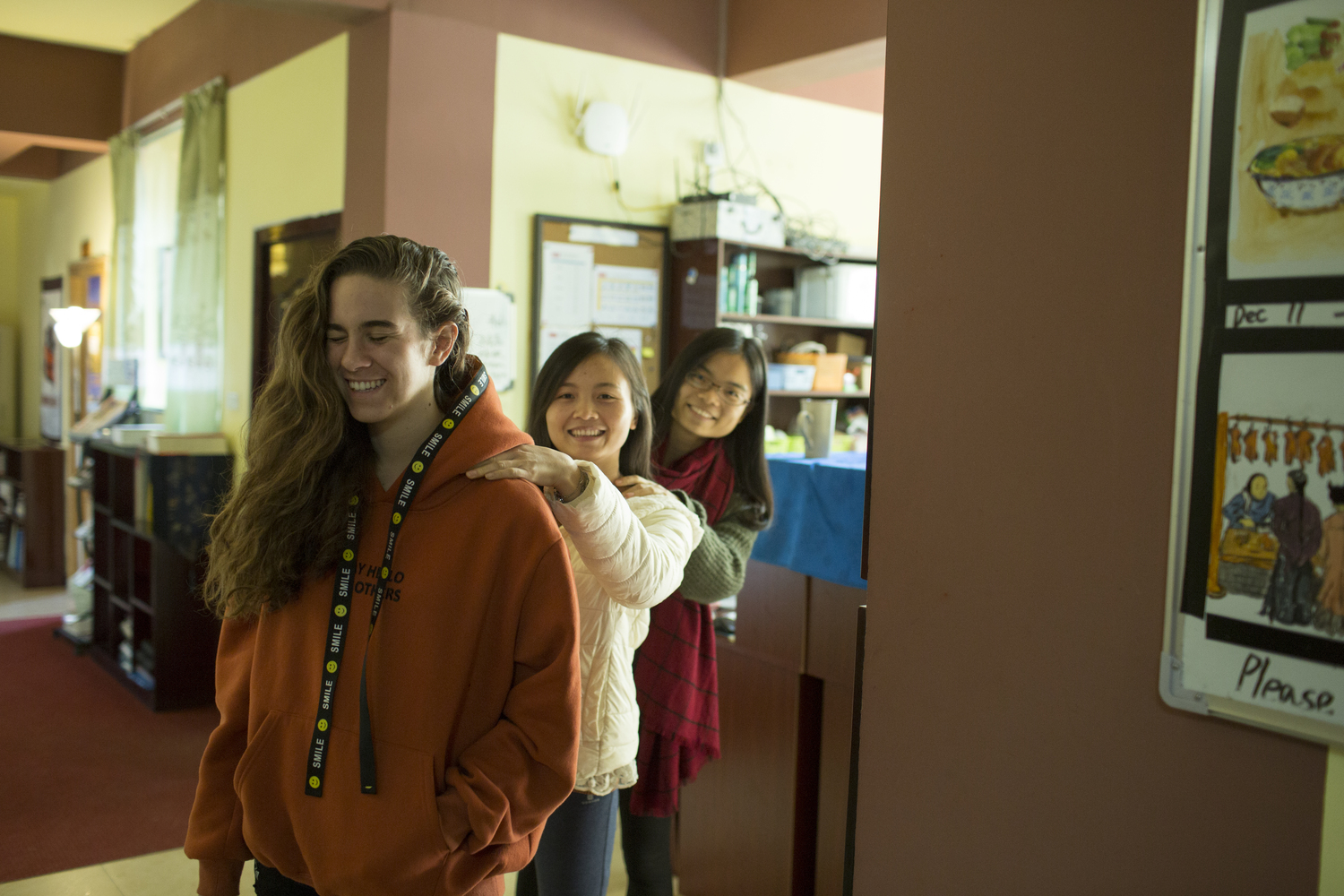
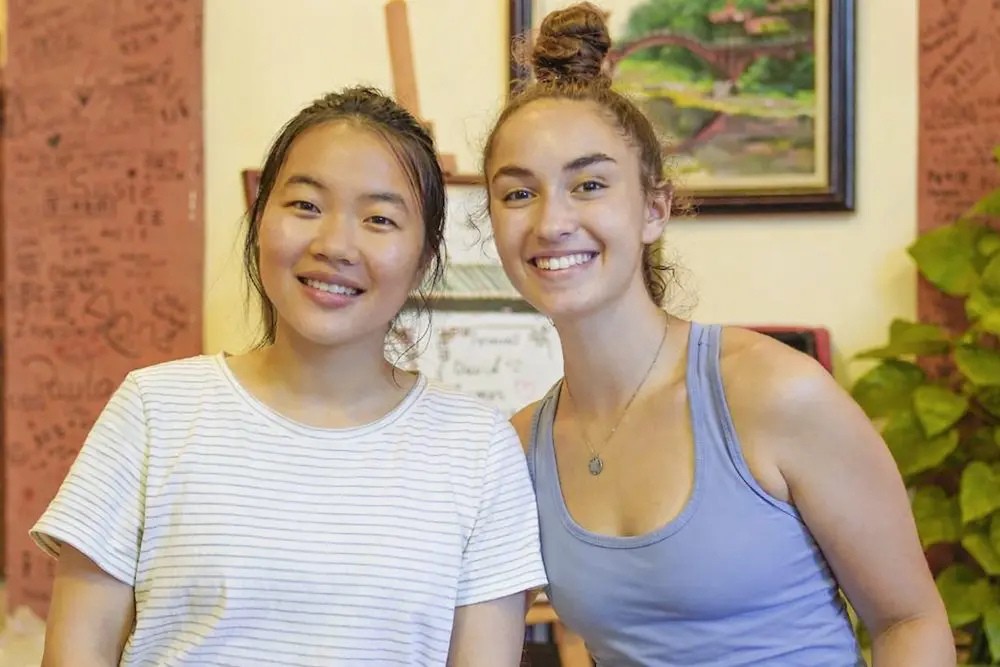
Pengyou are local university students who give three hours of language support a week through the free Pengyou Program, and some of them live at the Center.
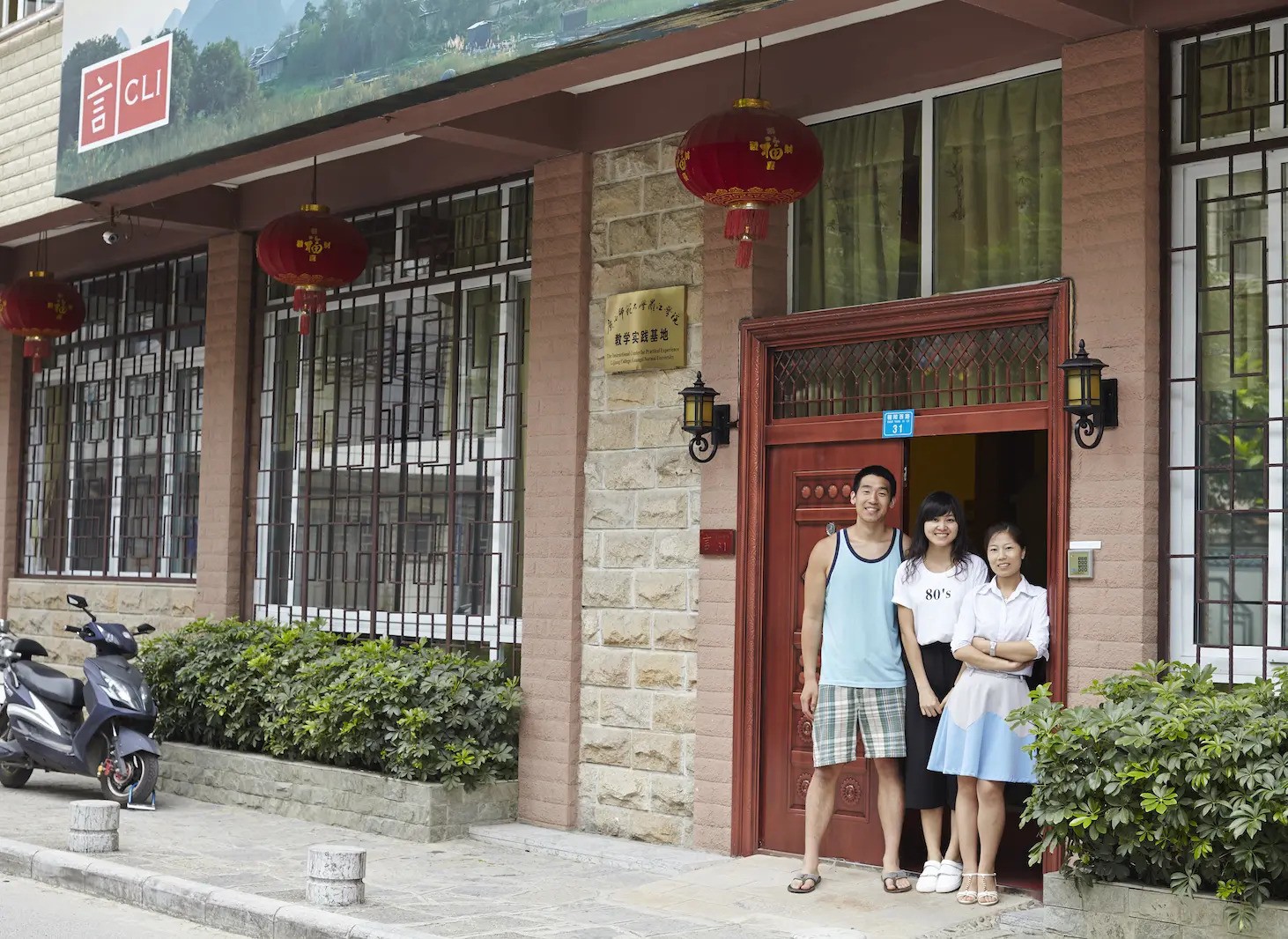
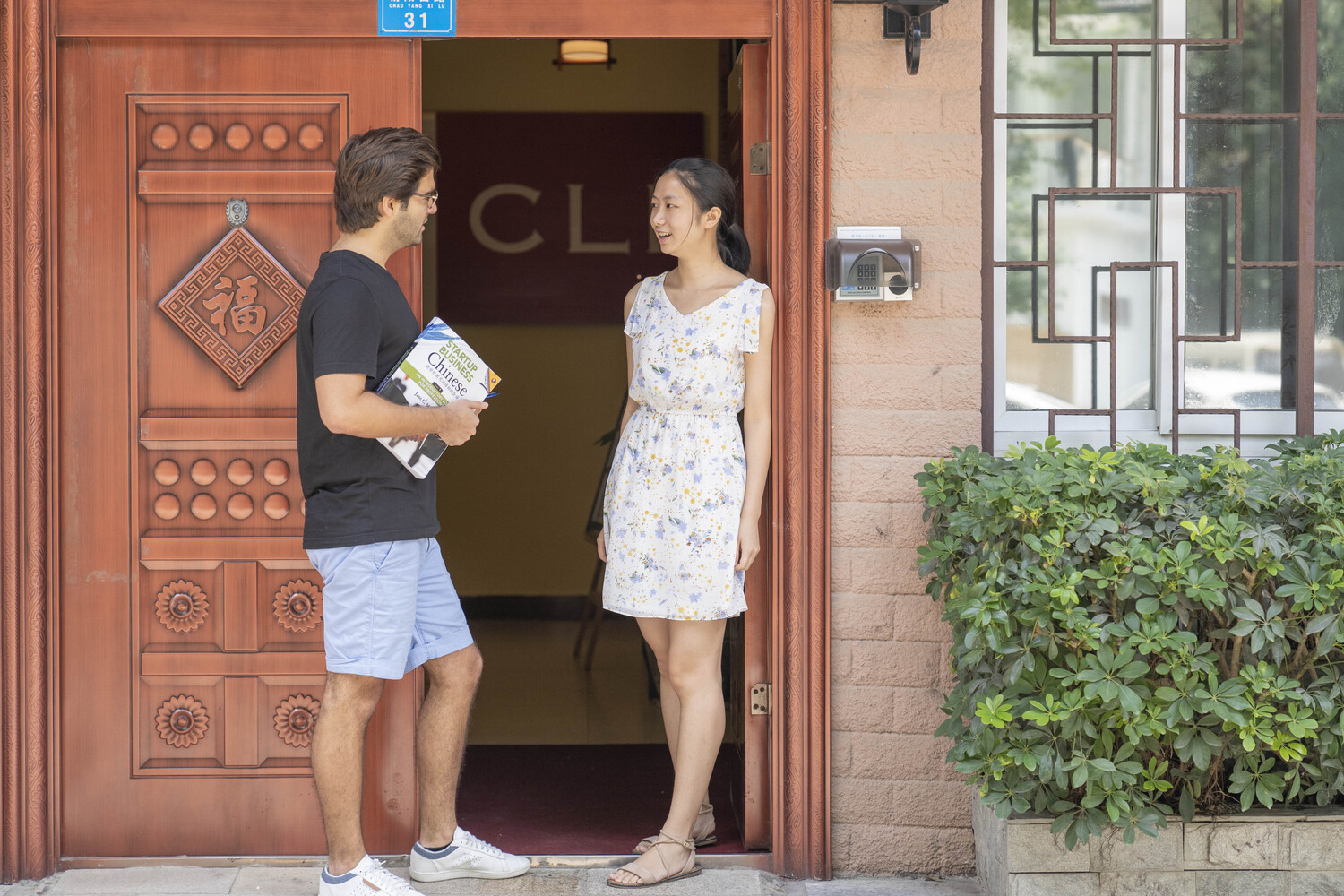
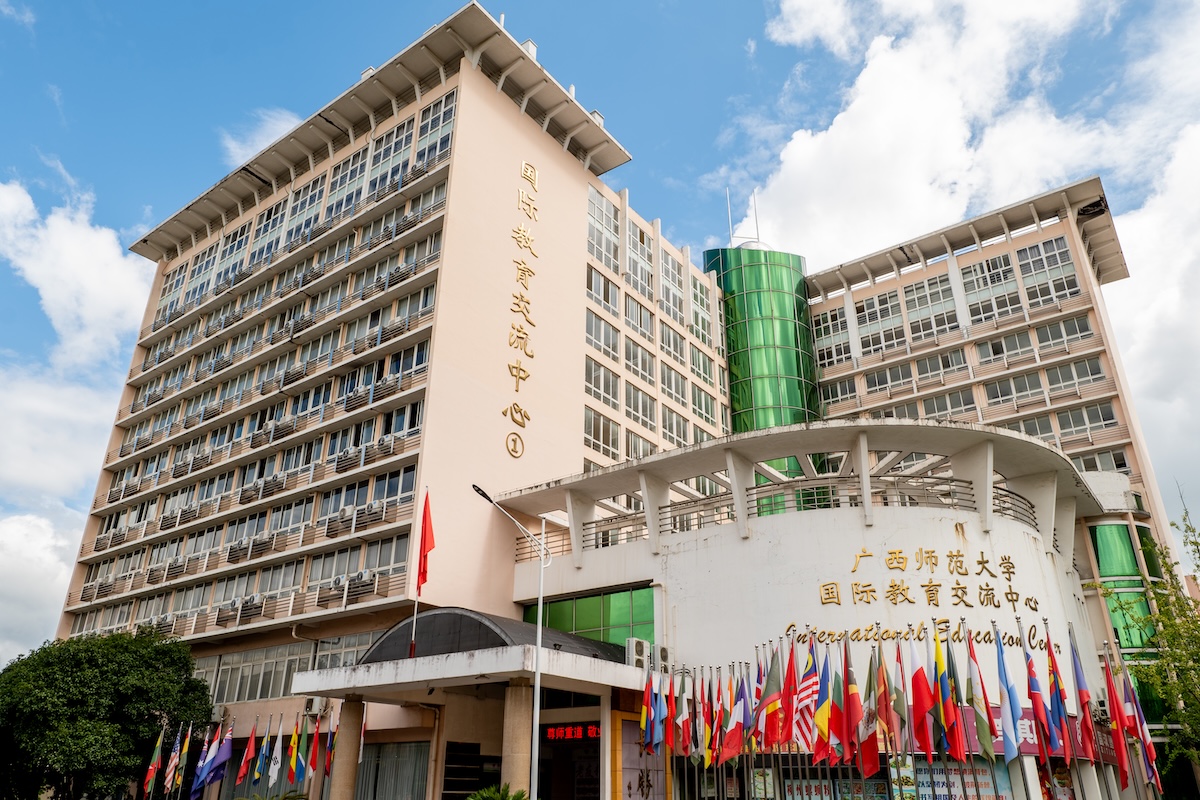
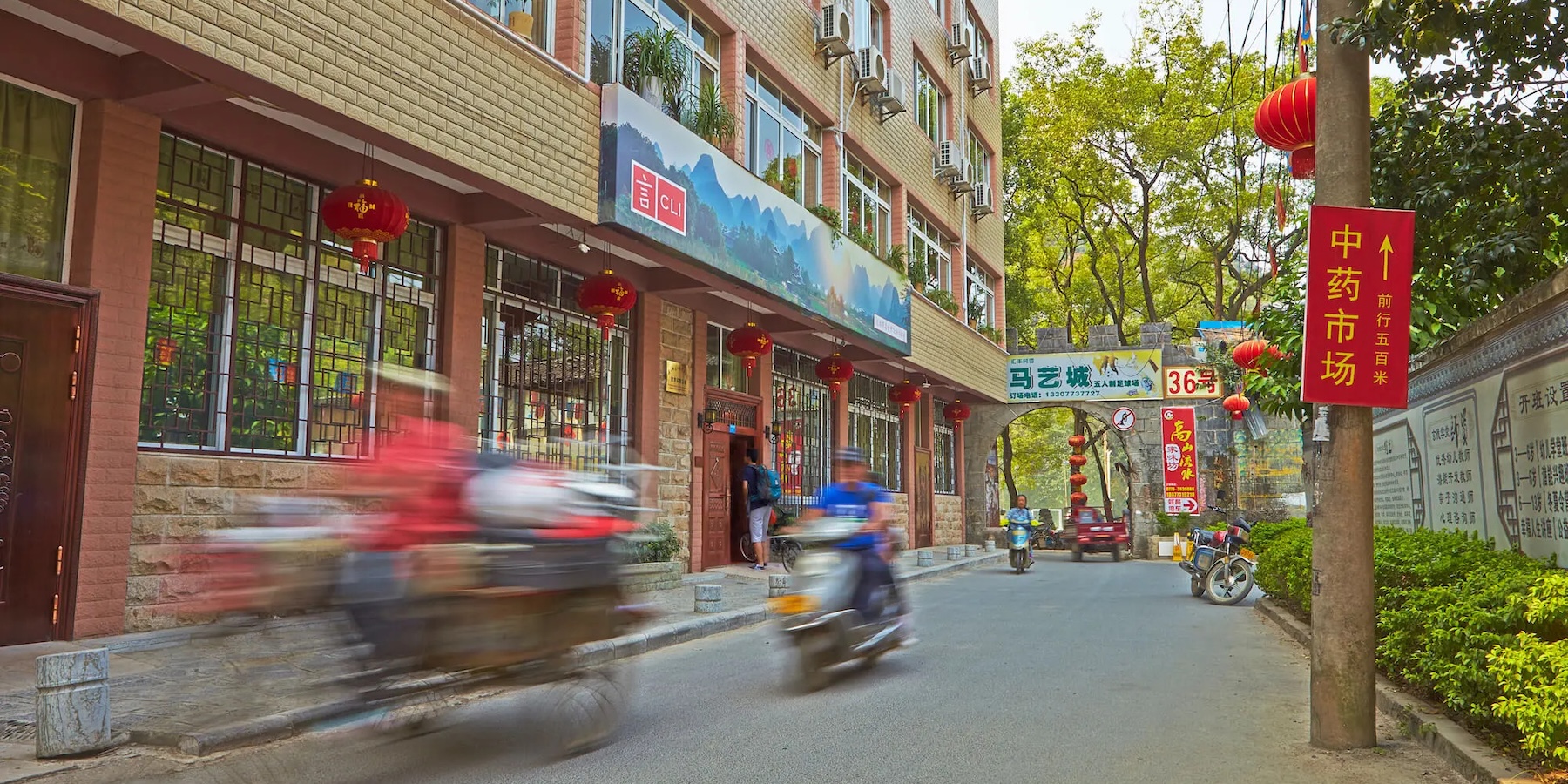
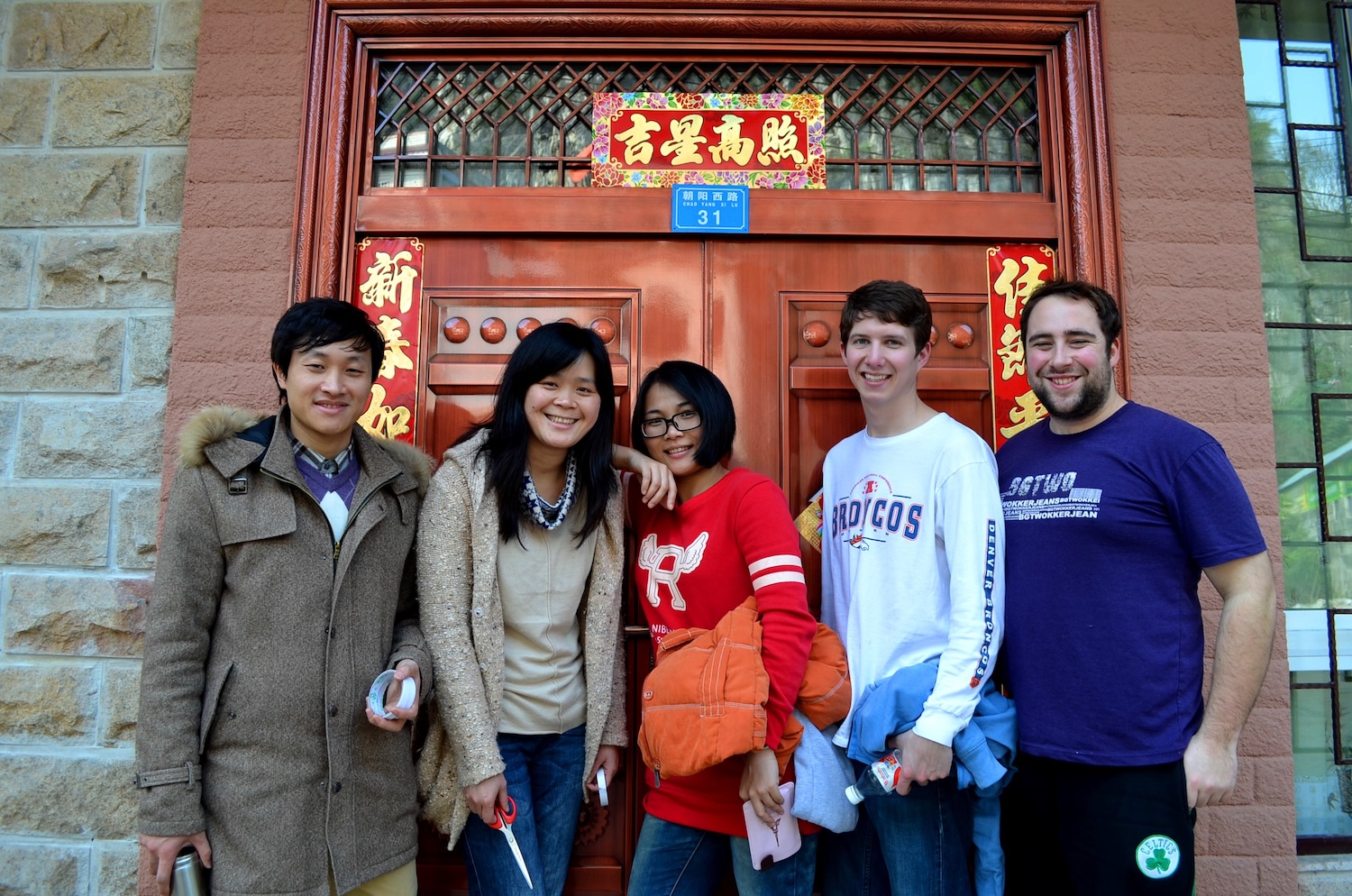
The Center is on a quiet road, 31 Chaoyang Xilu, about seven minutes' walk from the main gate of Guangxi Normal University.
The Center's reading room and study areas are open between class sessions, and they are quiet enough for the day's review.
Several full-time team members live at the Center year-round, alongside the students, teachers and pengyou who have rooms there.
Outside your four hours of class each weekday, the time is your own, for homework, errands or some downtime at the Center.
Most of the Center's shared spaces are on the second floor: the teachers' office, the lunch tables, the activities board and the recreation room.
Classes, weekday lunch and, for students who choose it, a private room upstairs all share one building at the Center, so much of the day happens under one roof.
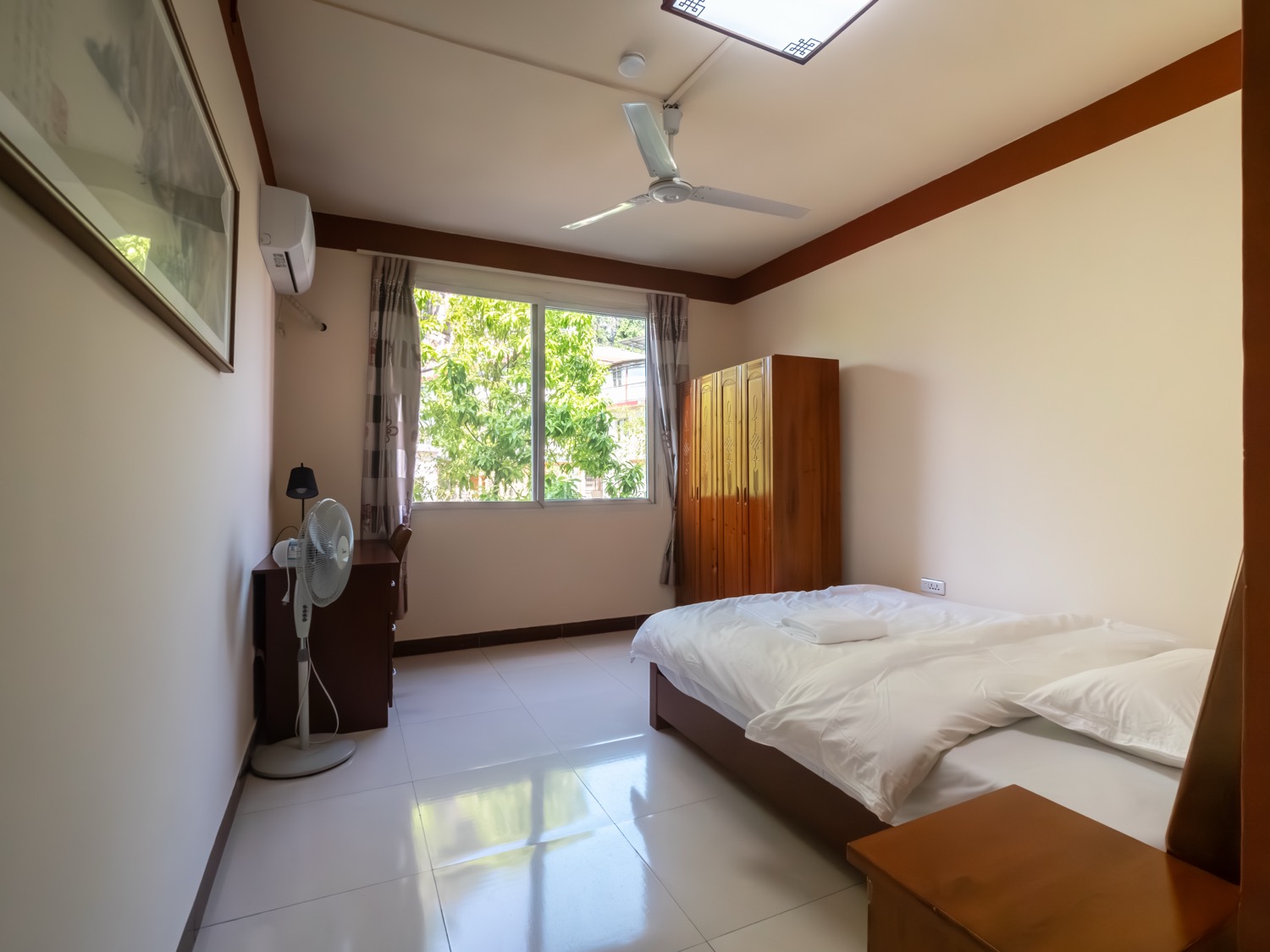
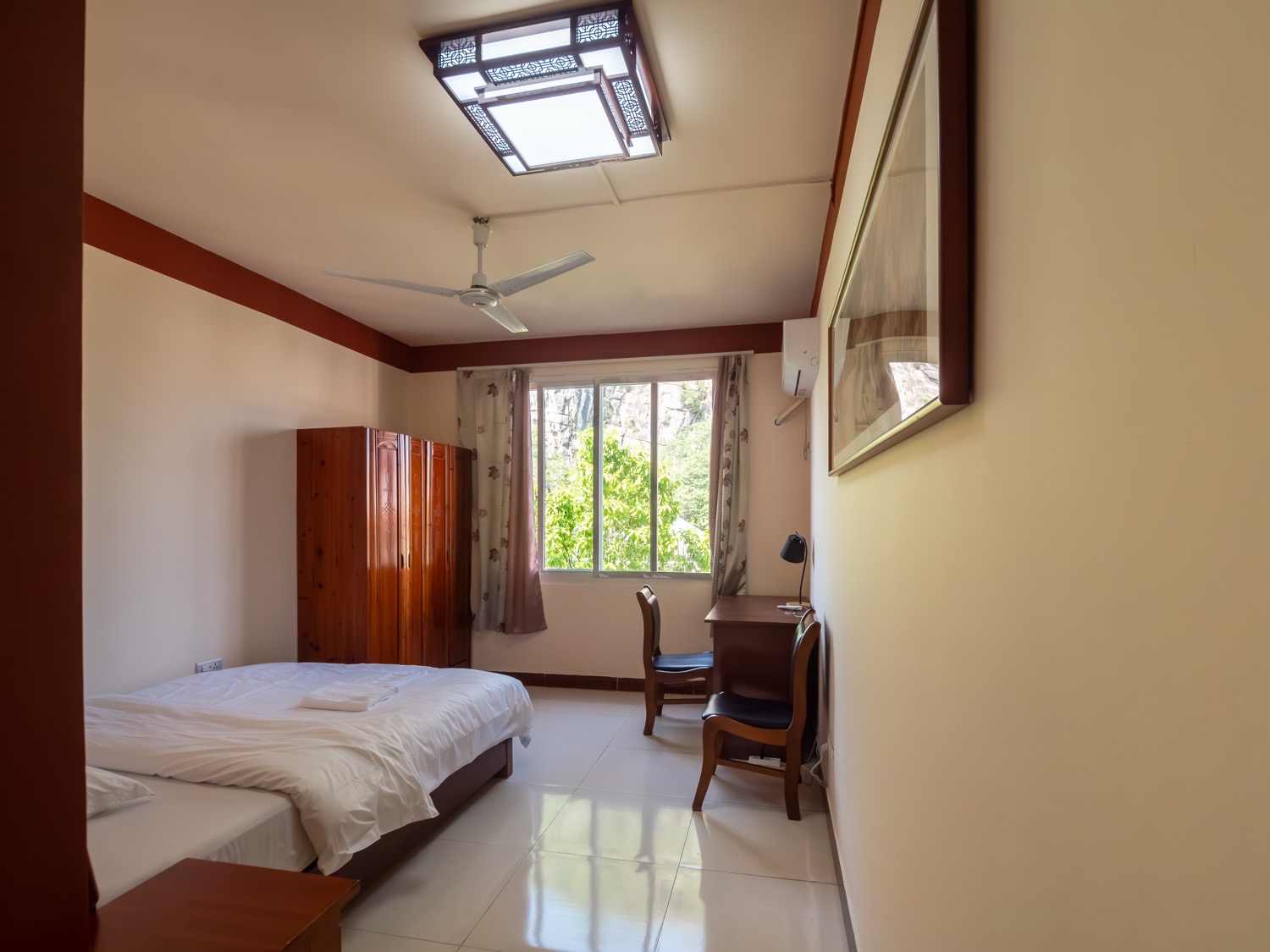
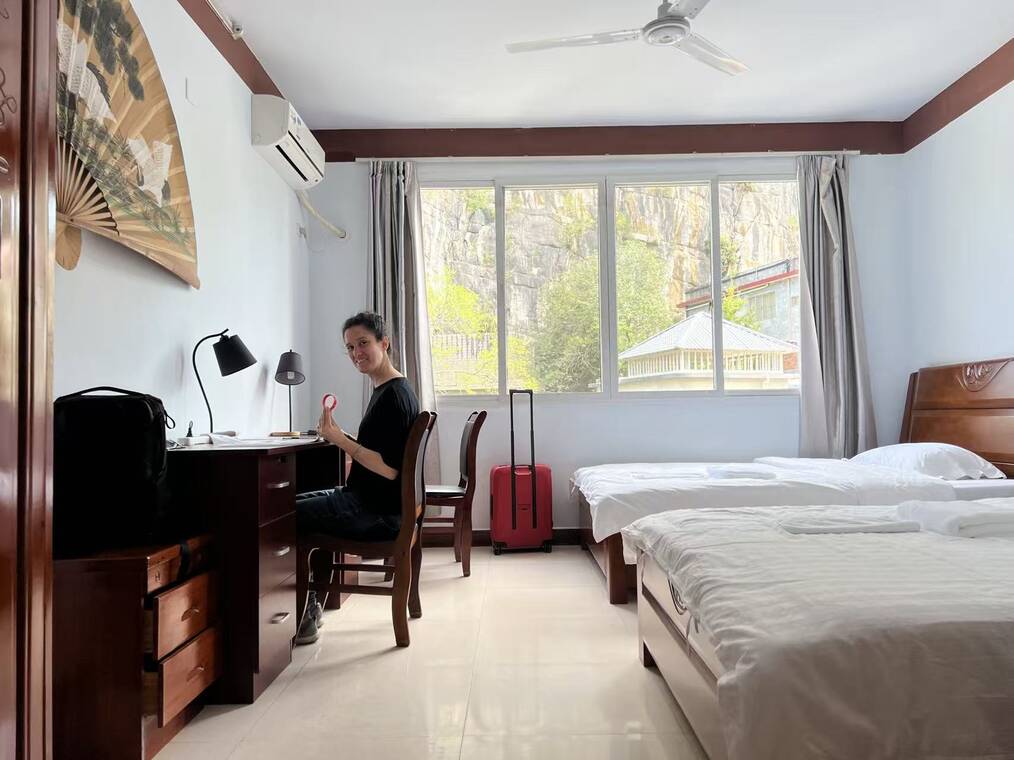
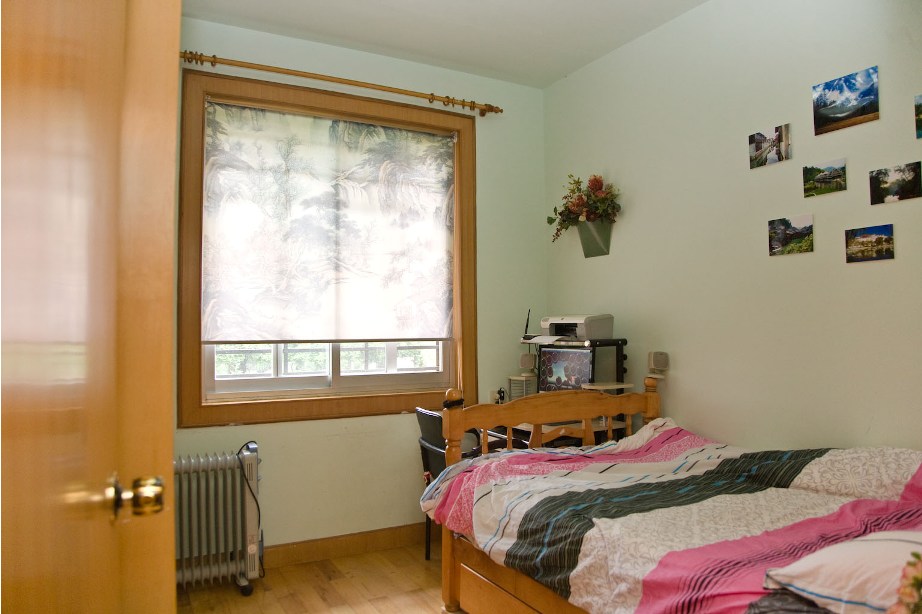
Housing is included in tuition. A room at the CLI Center is private, and weekly cleaning comes with it.
CLI was founded in Guilin in 2009 and has run its programs from the Center since 2012.
Students who choose a room at the Center live in the same building as their classes, with classrooms on the first and second floors and private rooms above.
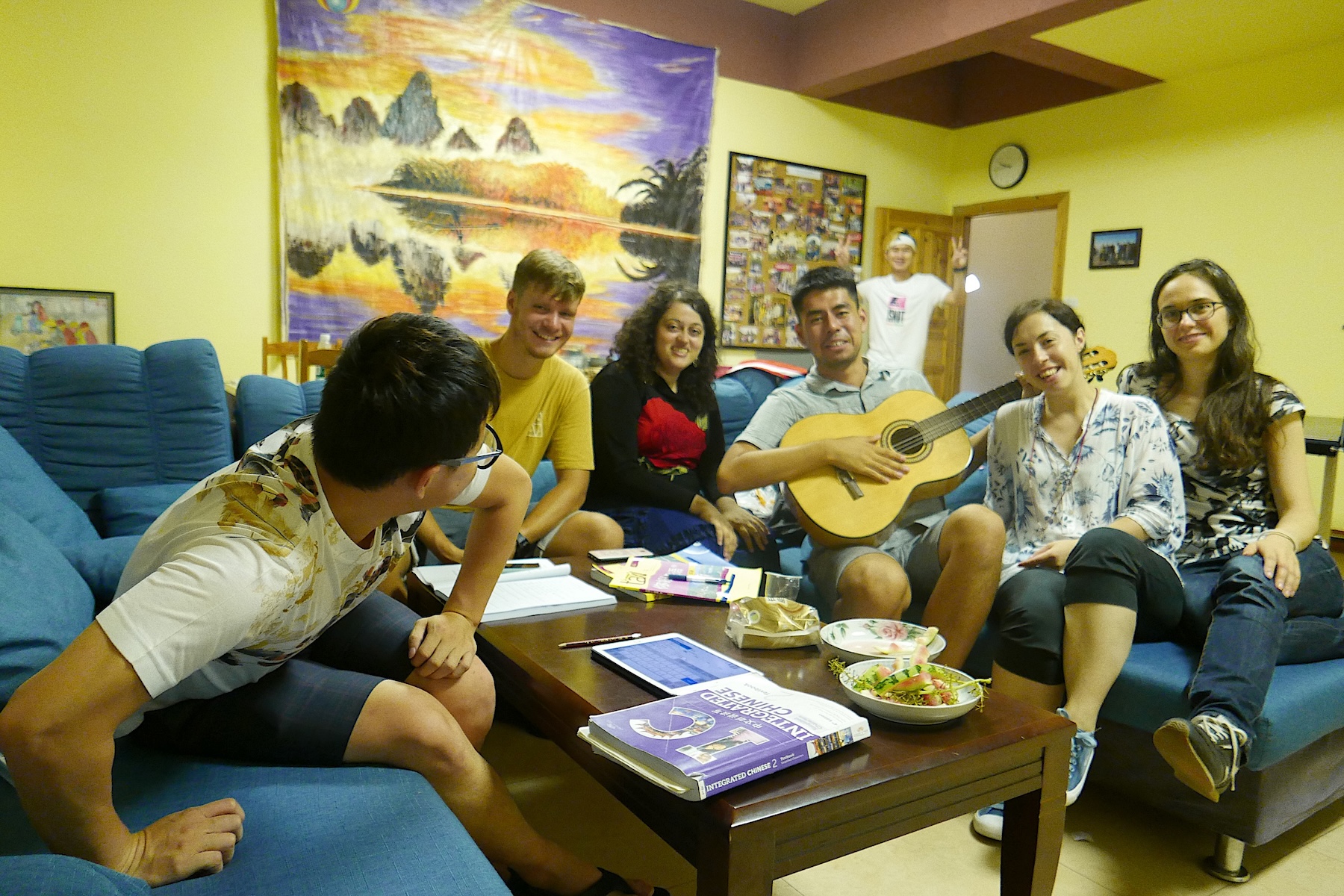
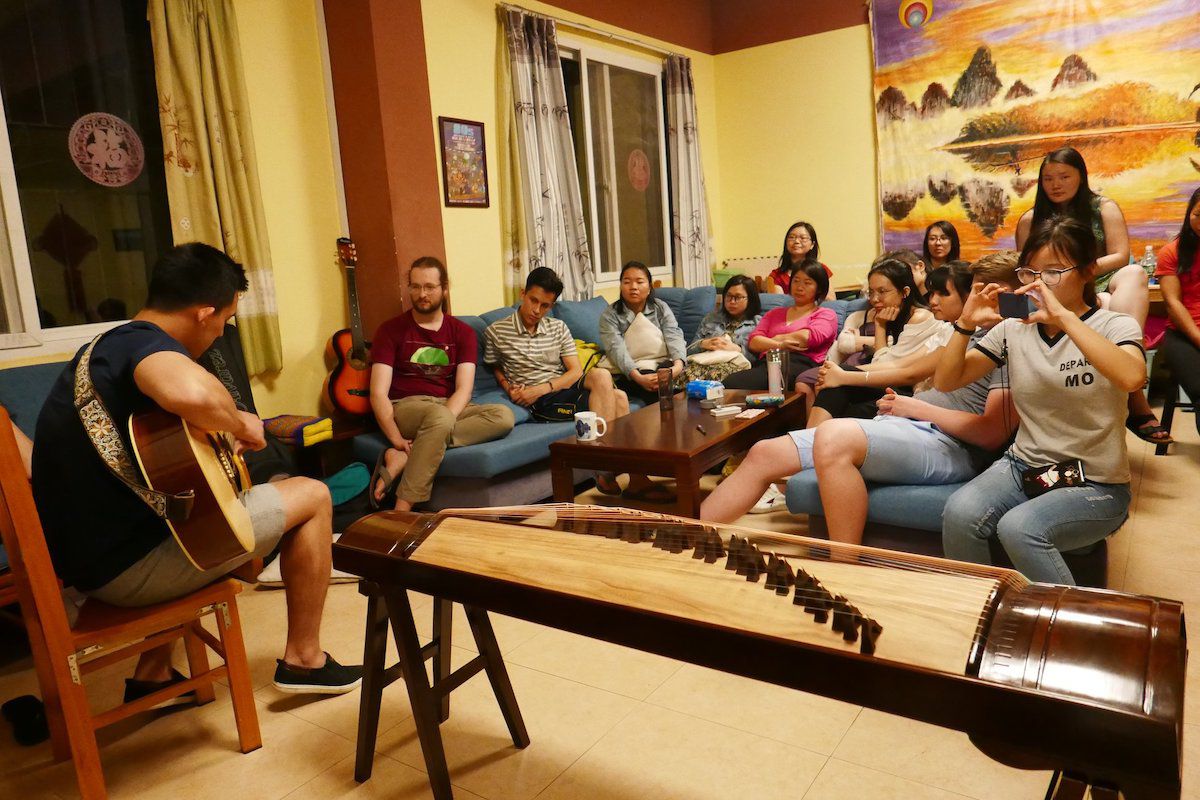
Evenings are usually lighter than the class day, and at the Center that can mean a guitar on the sofa and informal Chinese practice with whoever is around.
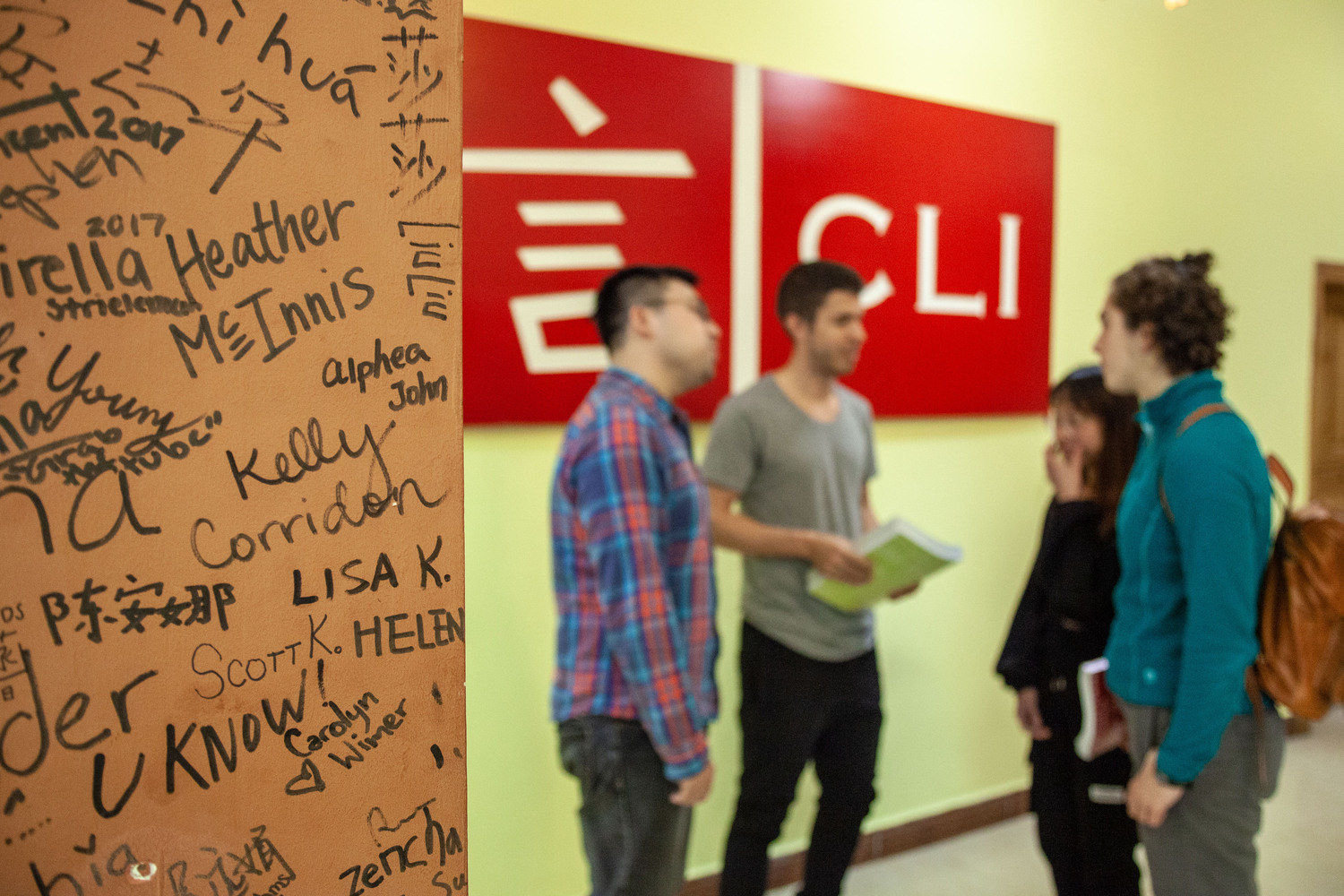
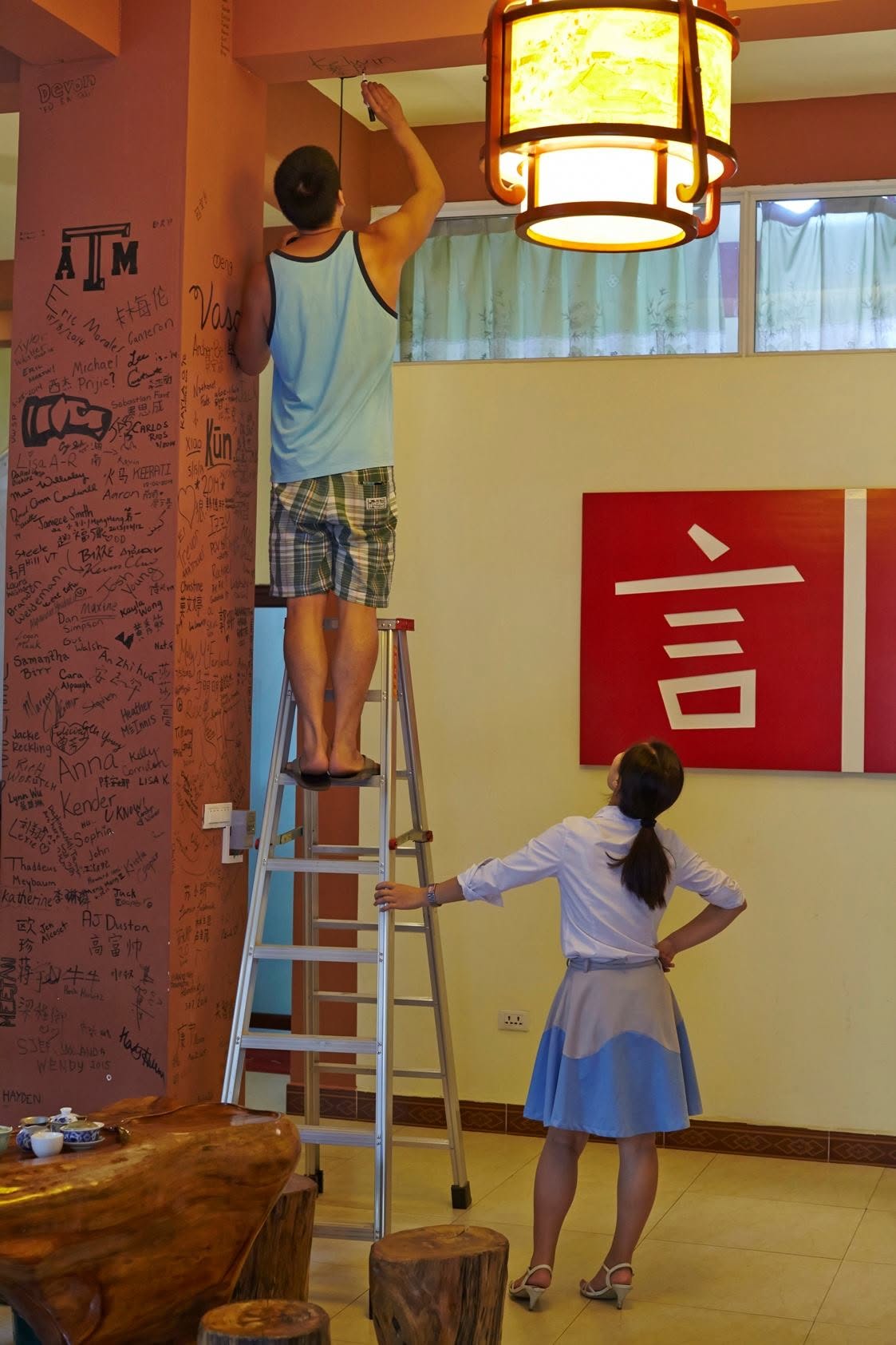
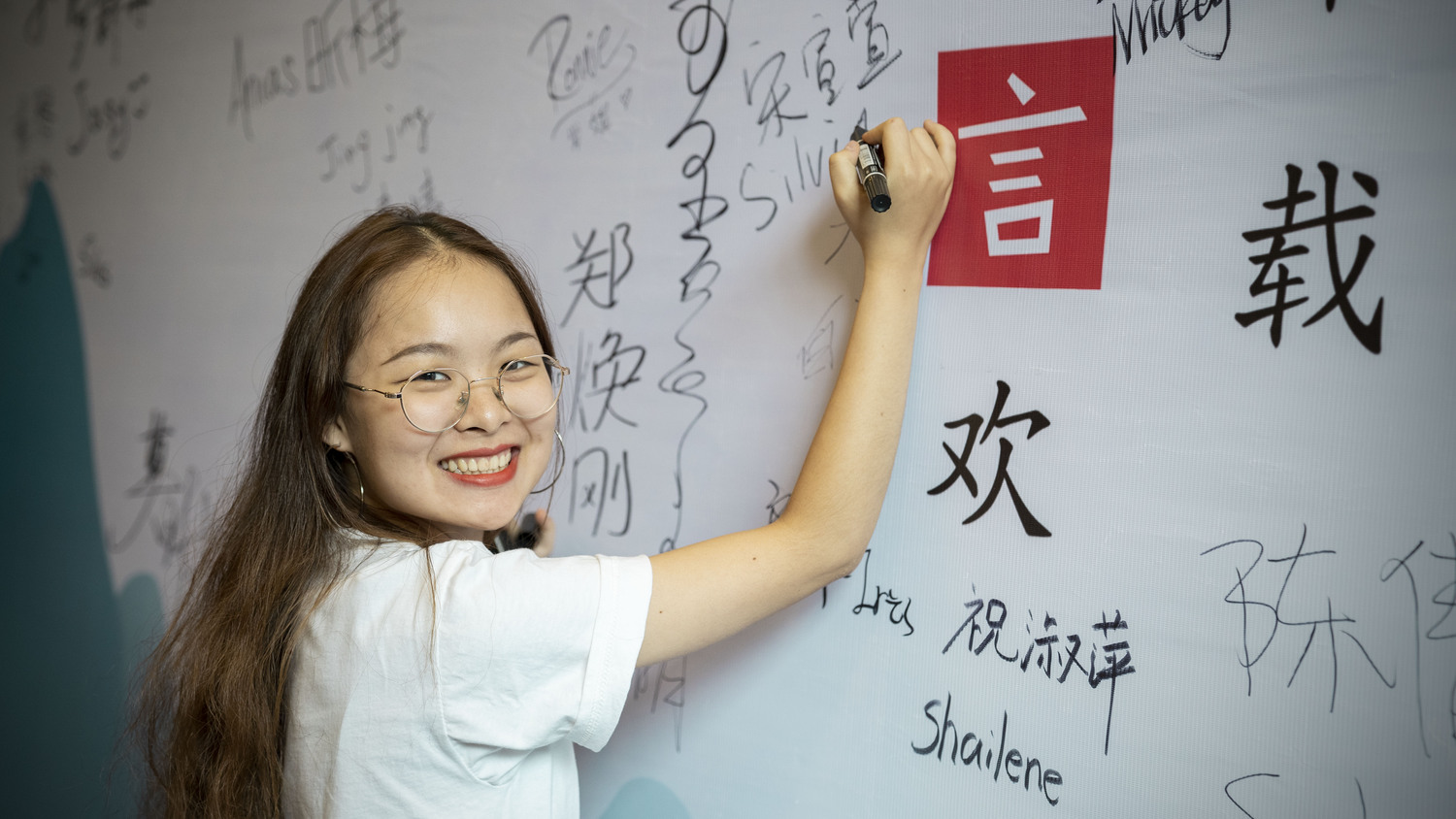
Names cover the wall beside the CLI sign. Since 2009, more than 5,000 students from over 50 countries and 400 institutions have studied with CLI.
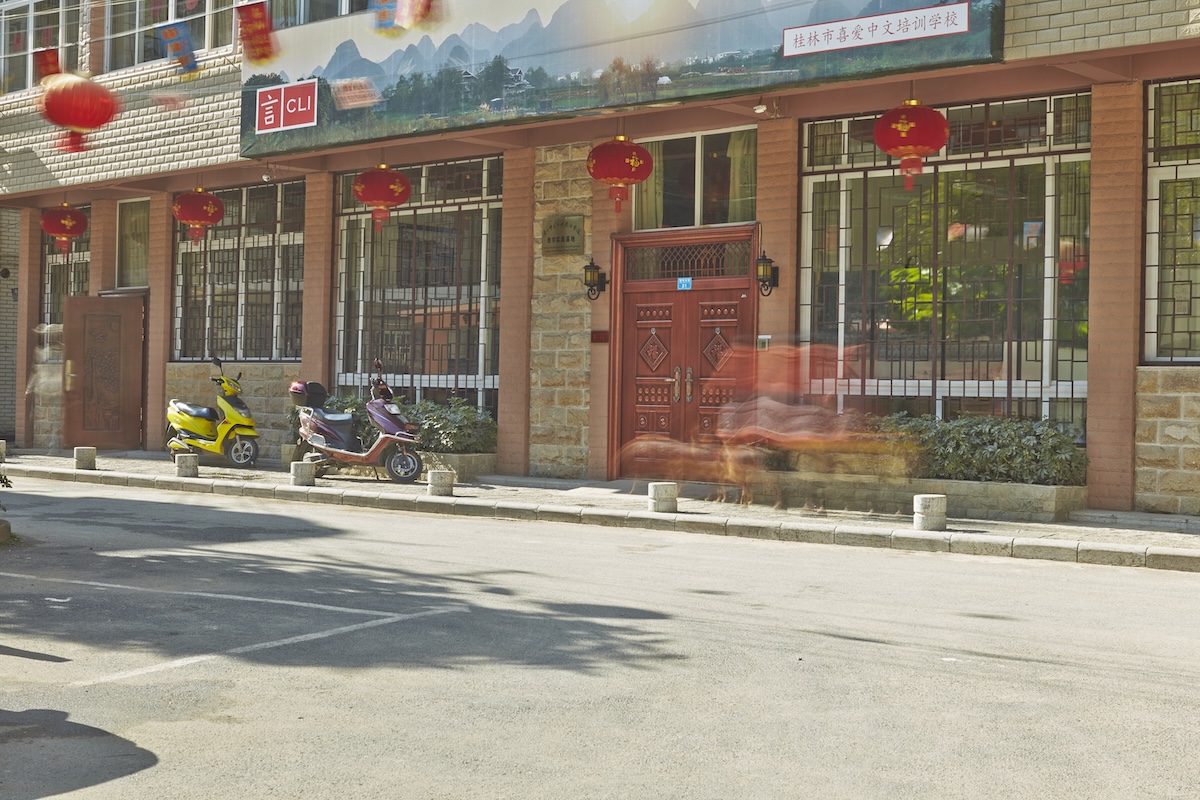
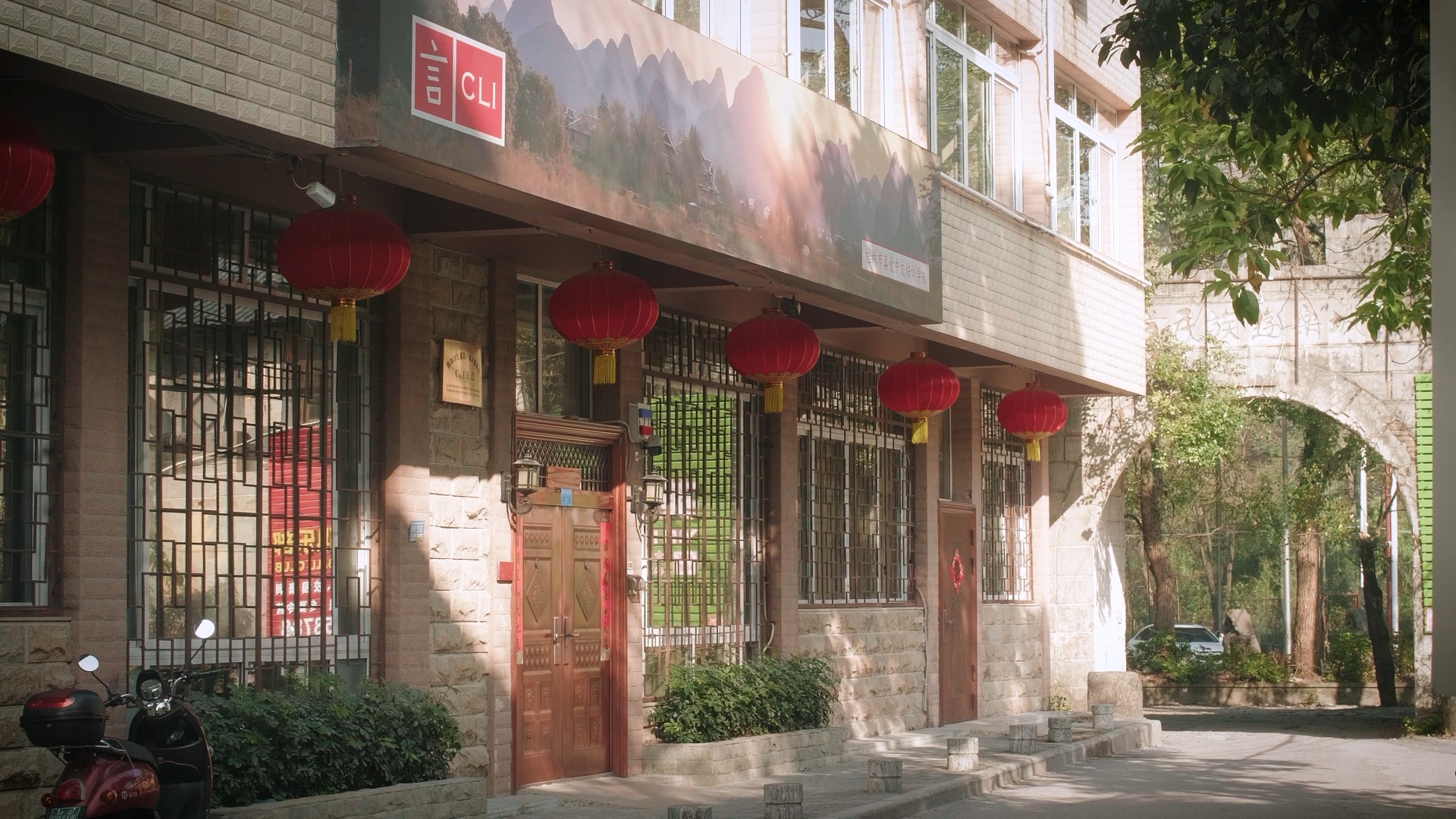
Red lanterns hang along the Center's front. Inside are 18 classrooms, 36 private rooms, a full kitchen and a rooftop with a view.
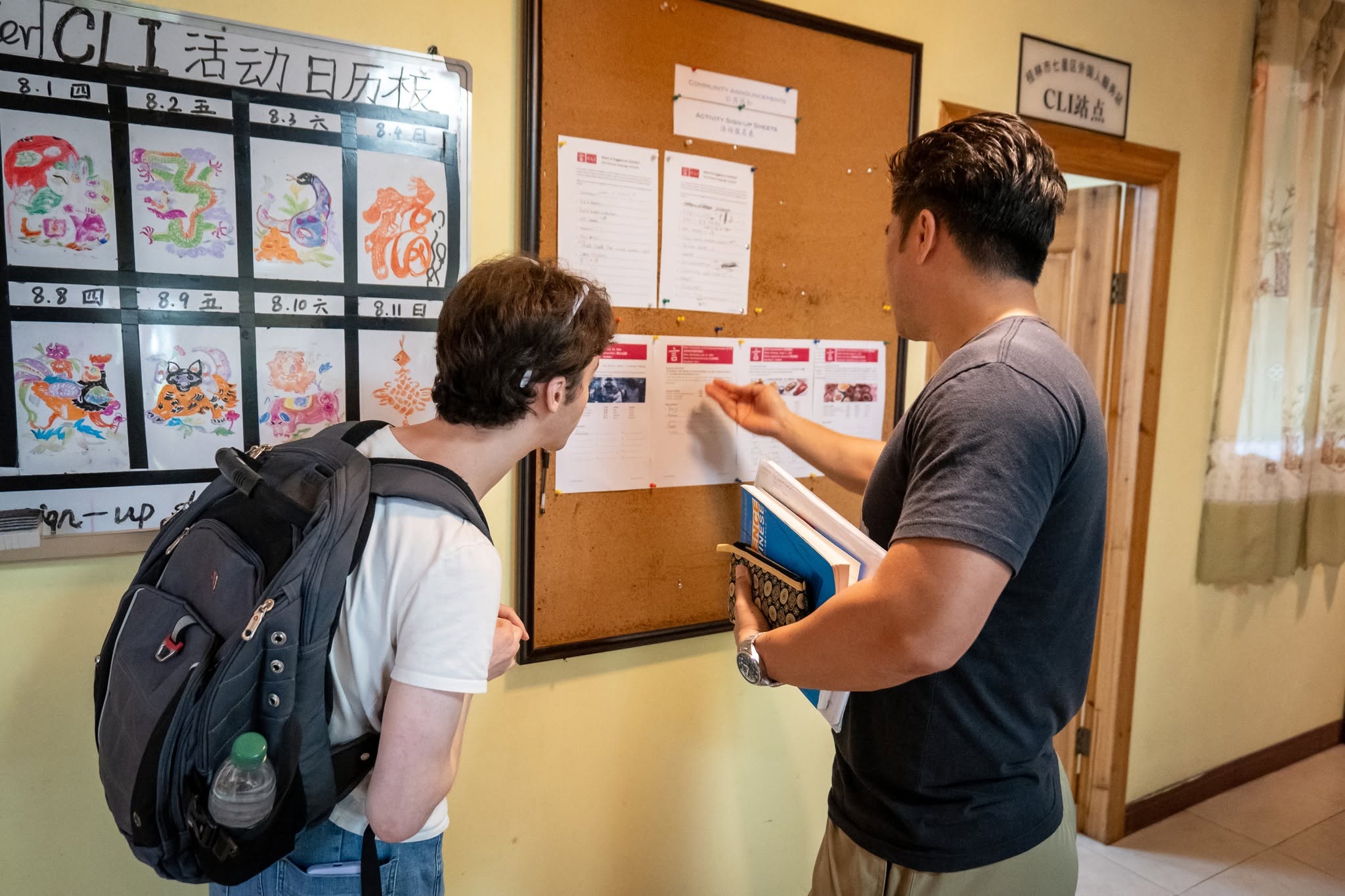
The activities board on the second floor lists the week's activities, which can include calligraphy, tea ceremonies, tai chi and dumpling making.
Rooms at the Center are on floors three to five, above the classrooms, so the walk to an 8:20 AM session is a few flights of stairs.
Teachers and pengyou live at the Center too, and they fill at least a quarter of its 36 private rooms.
The Center is home as well as school, with classrooms on the first two floors and private rooms for students, teachers and pengyou on floors three to five.
Markets, cafés and noodle shops are close to the Center, so errands after class are a chance to use the day's vocabulary.
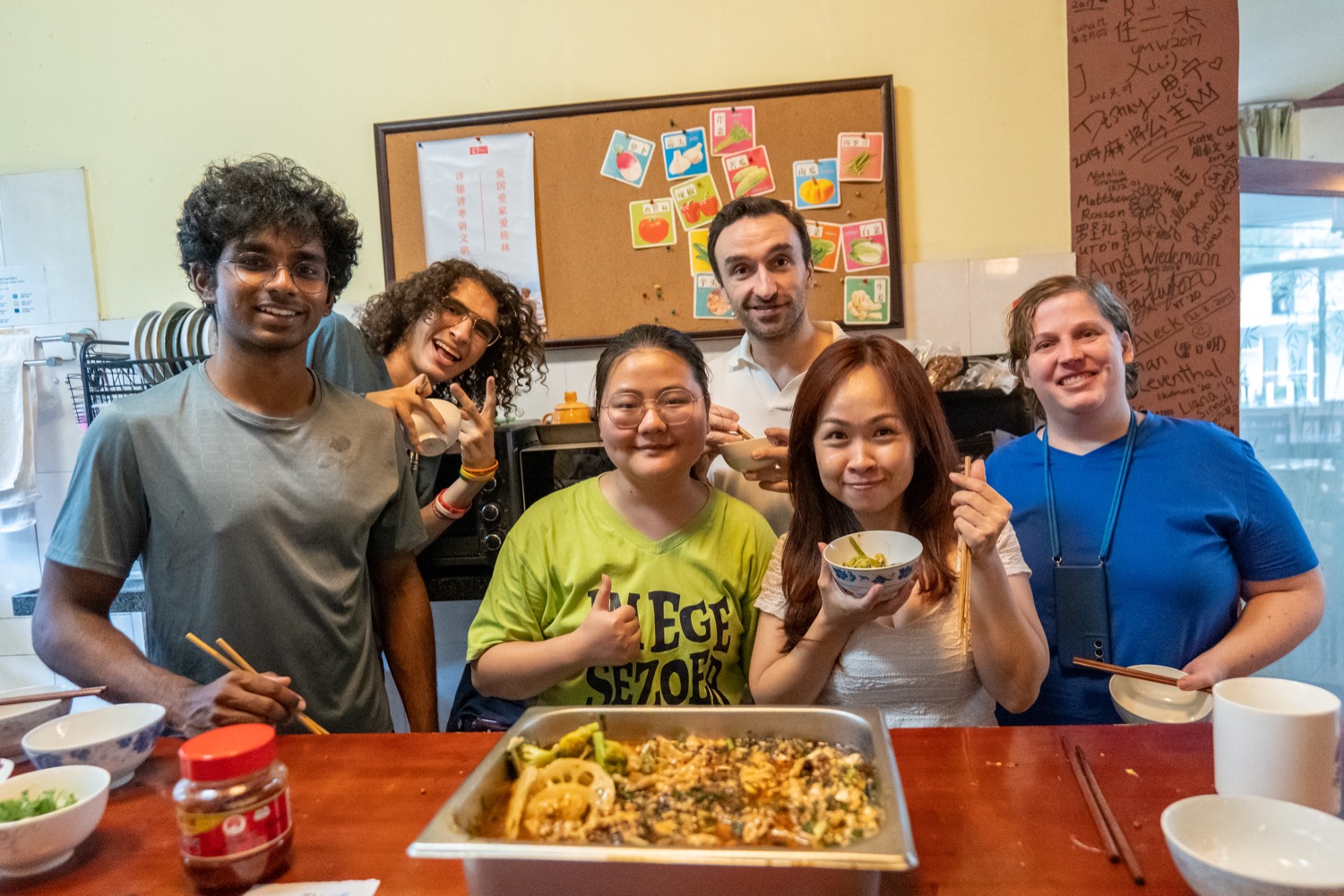
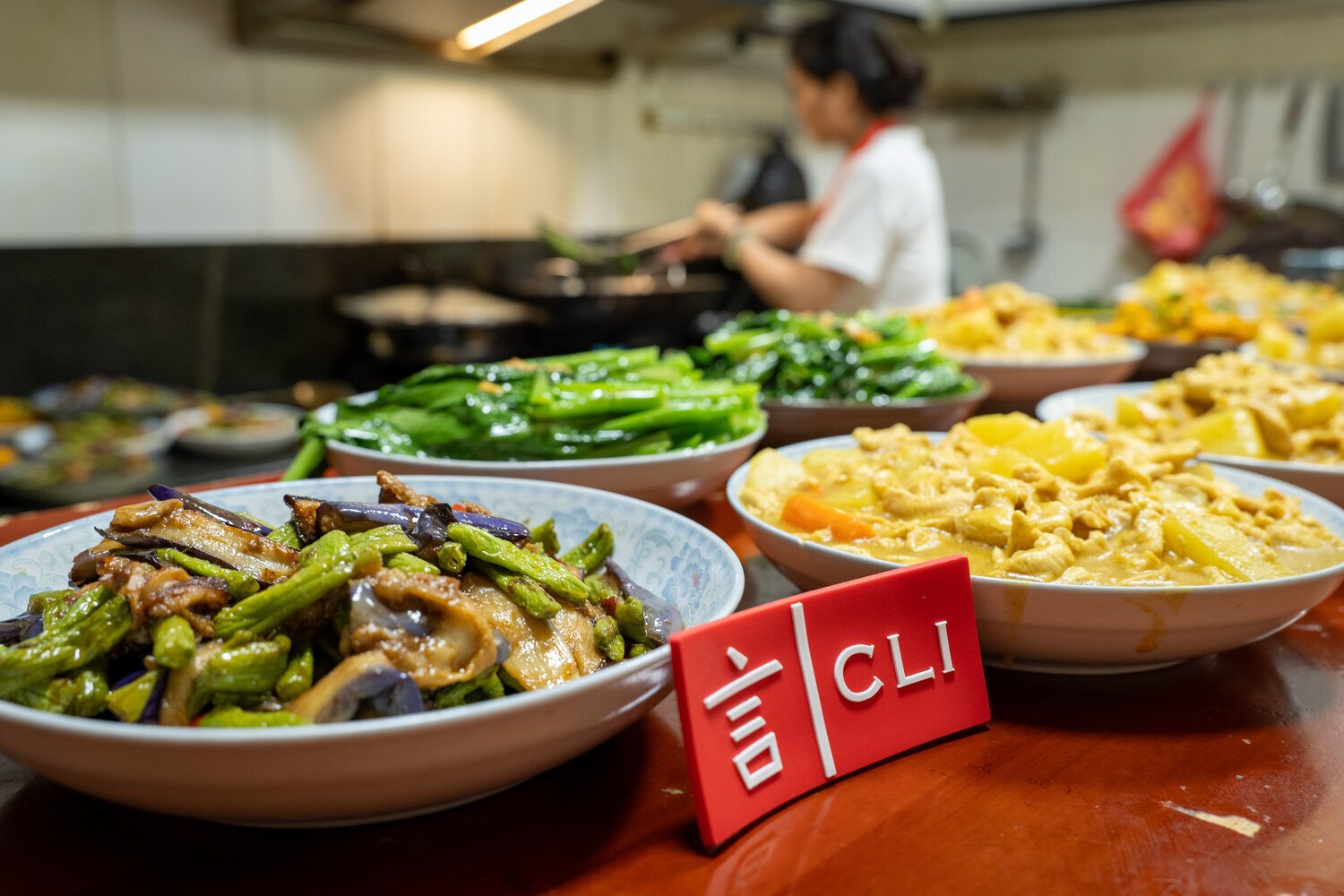
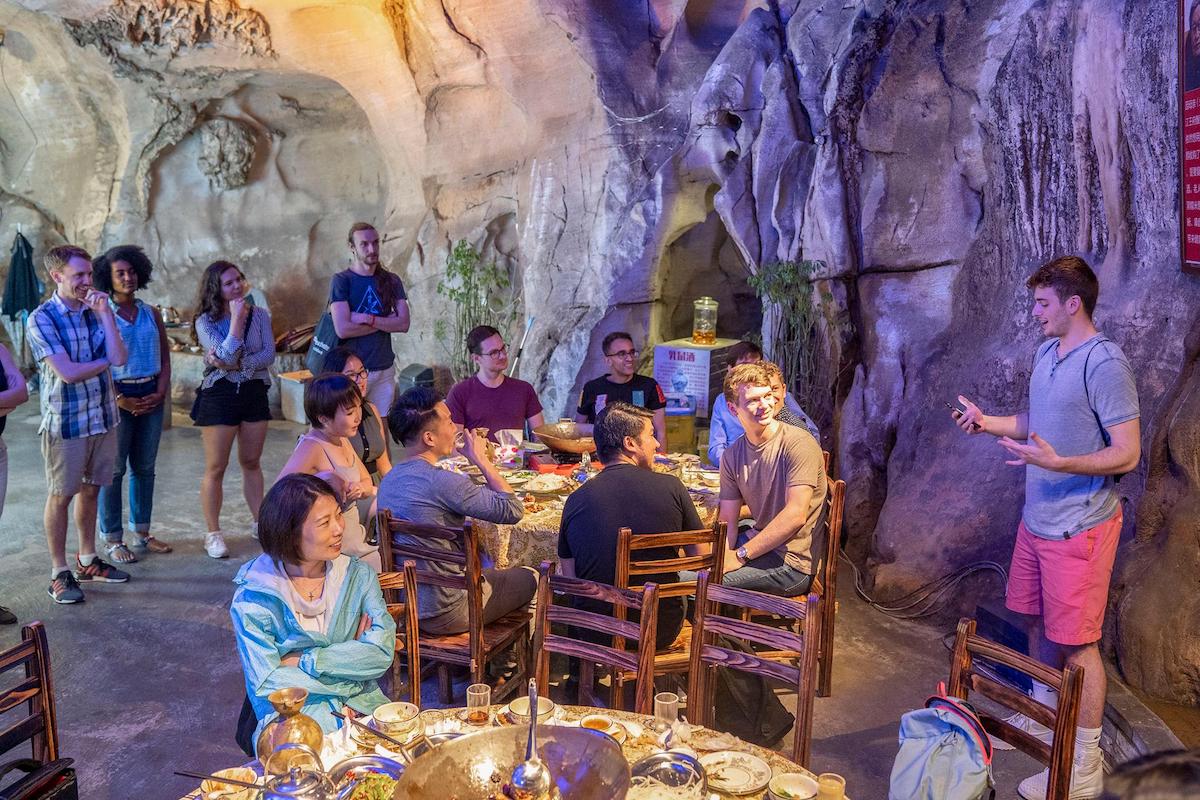
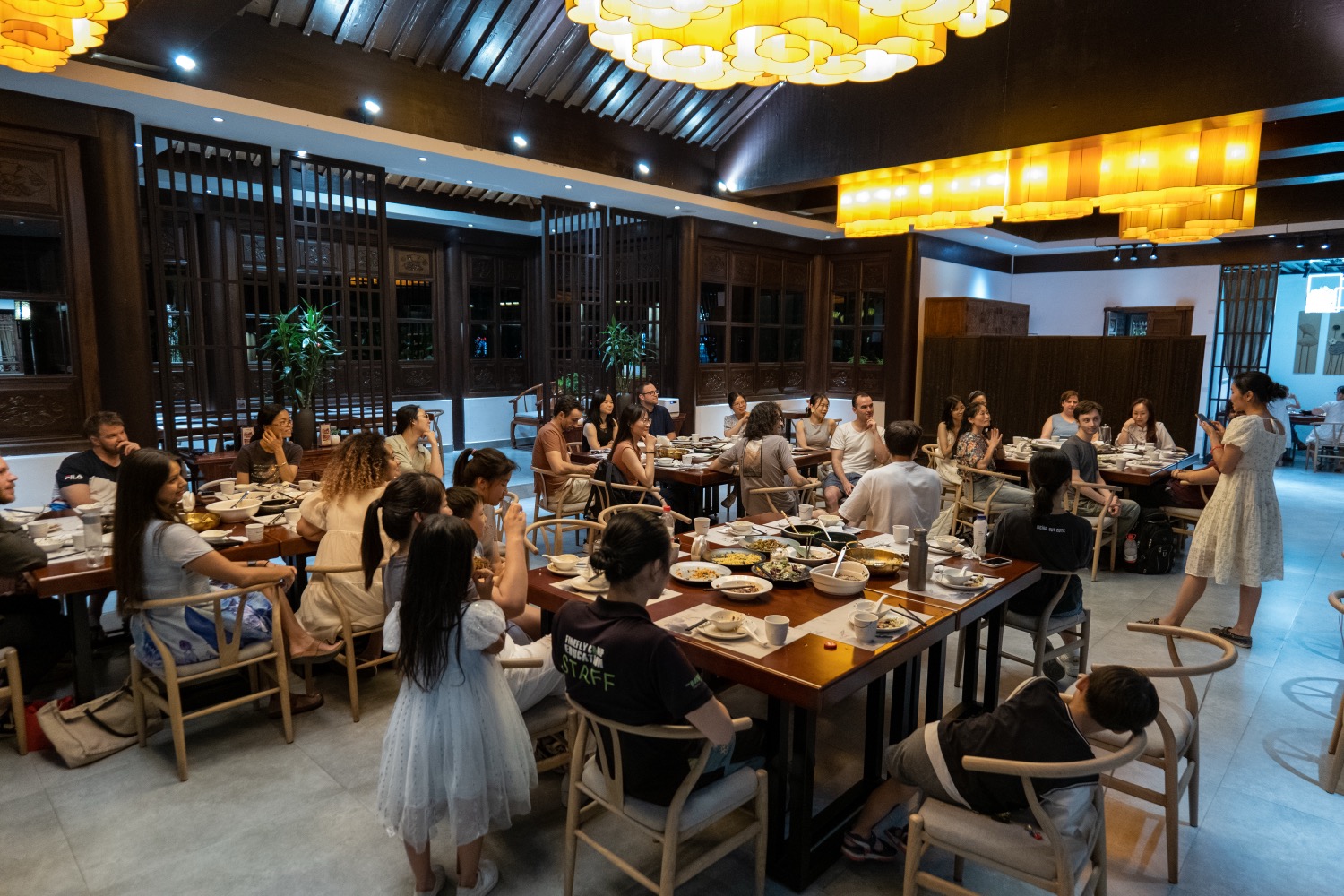
On the optional meal plan, weekday lunch at the Center is home-cooked and served family style. At least one table each day is Mandarin-only.
Morning sessions end at 12:30 and afternoon sessions begin at 2:00, so there is time in between for lunch at the Center and a chat out front.
The lobby under the CLI sign is where students, teachers and pengyou cross paths between class sessions, whether they live upstairs or come in for the day.
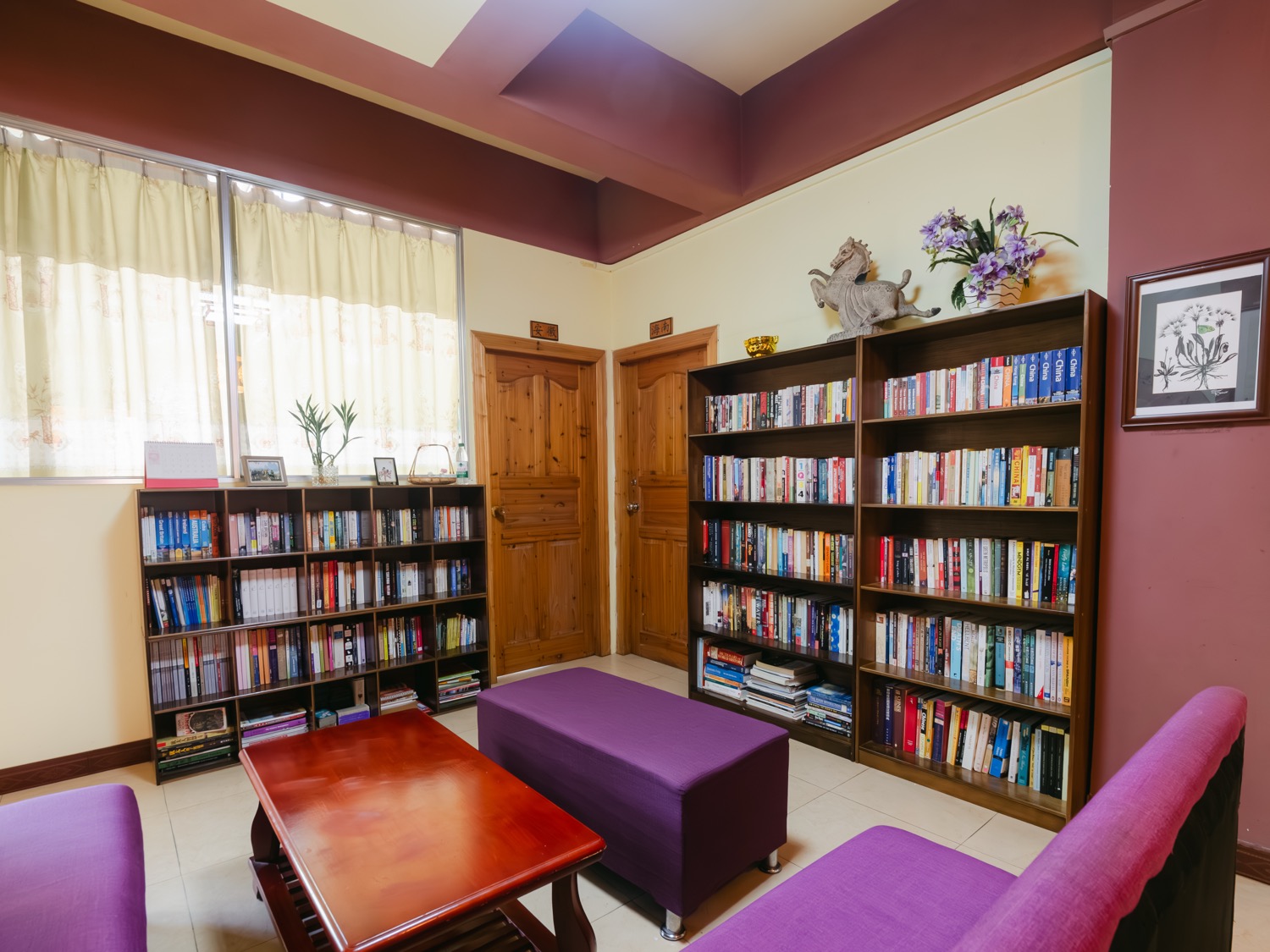
Besides its 18 classrooms, the Center has study areas and a reading room, so books can come out between sessions as well as in class.
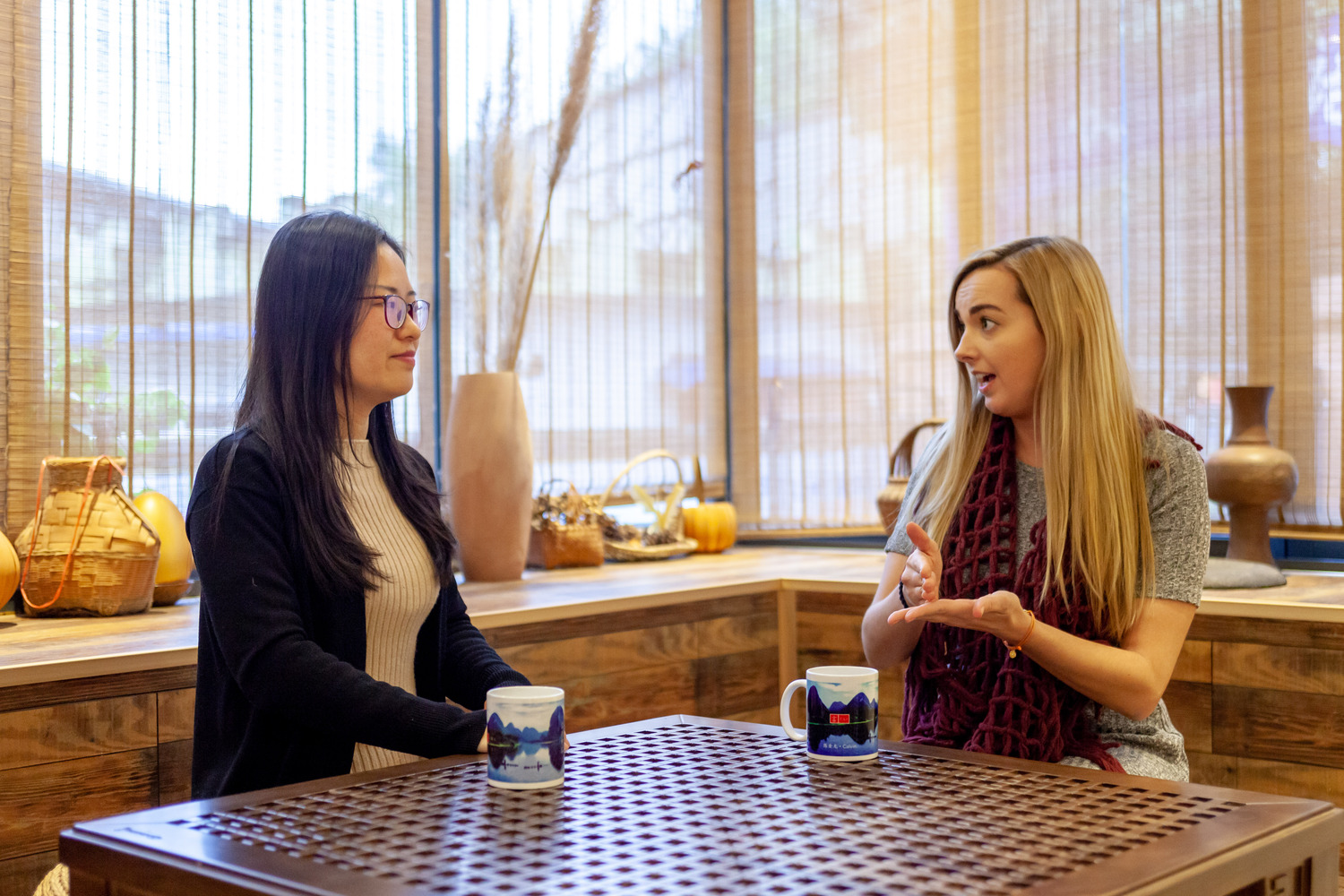
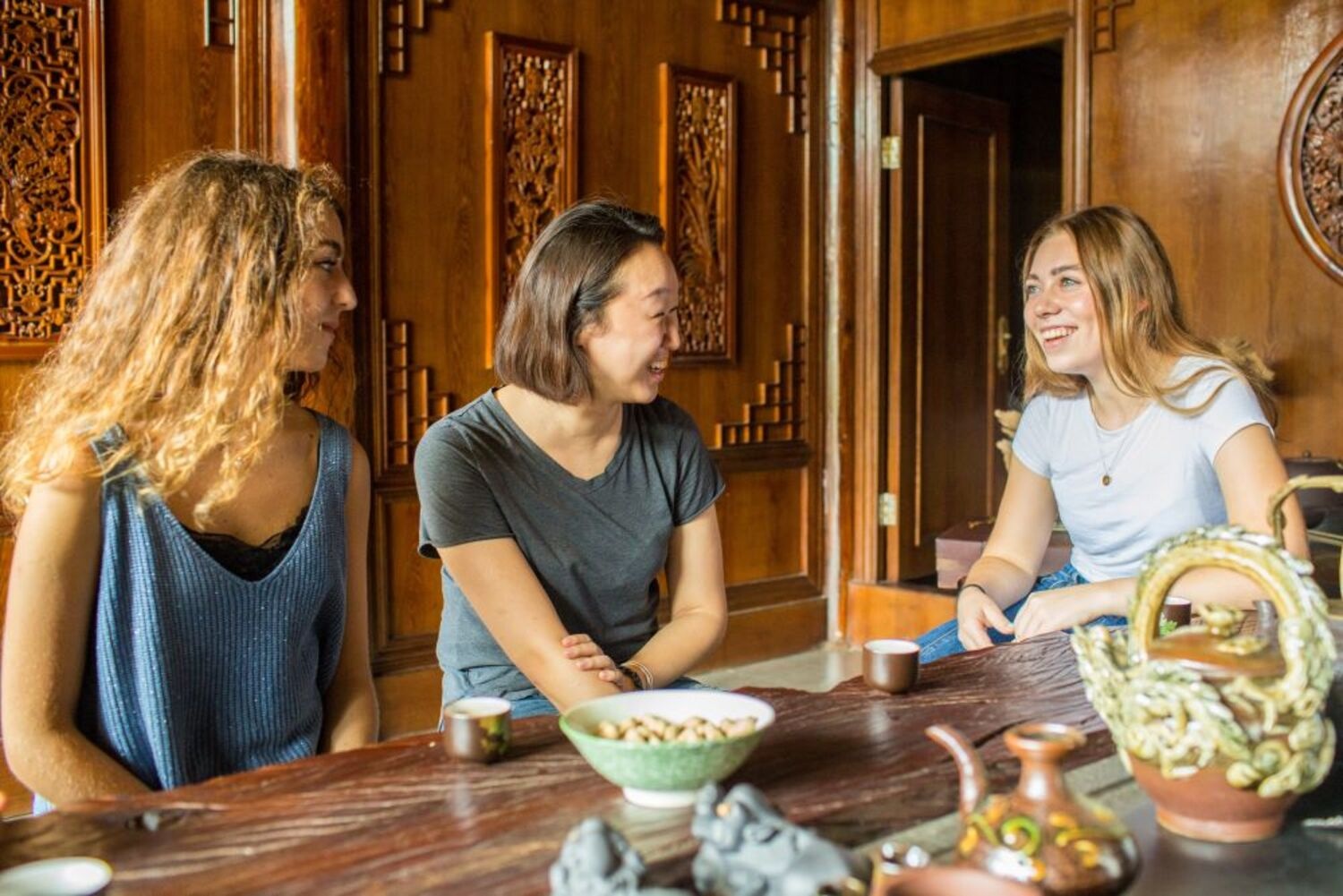
Language exchange is one way to spend the hours after class, and the Center has quiet tables like this one for an hour of conversation over tea.
Native Chinese speakers at the Center at least match the learners in number, which makes a table in the lobby a good place to keep a conversation going in Chinese.
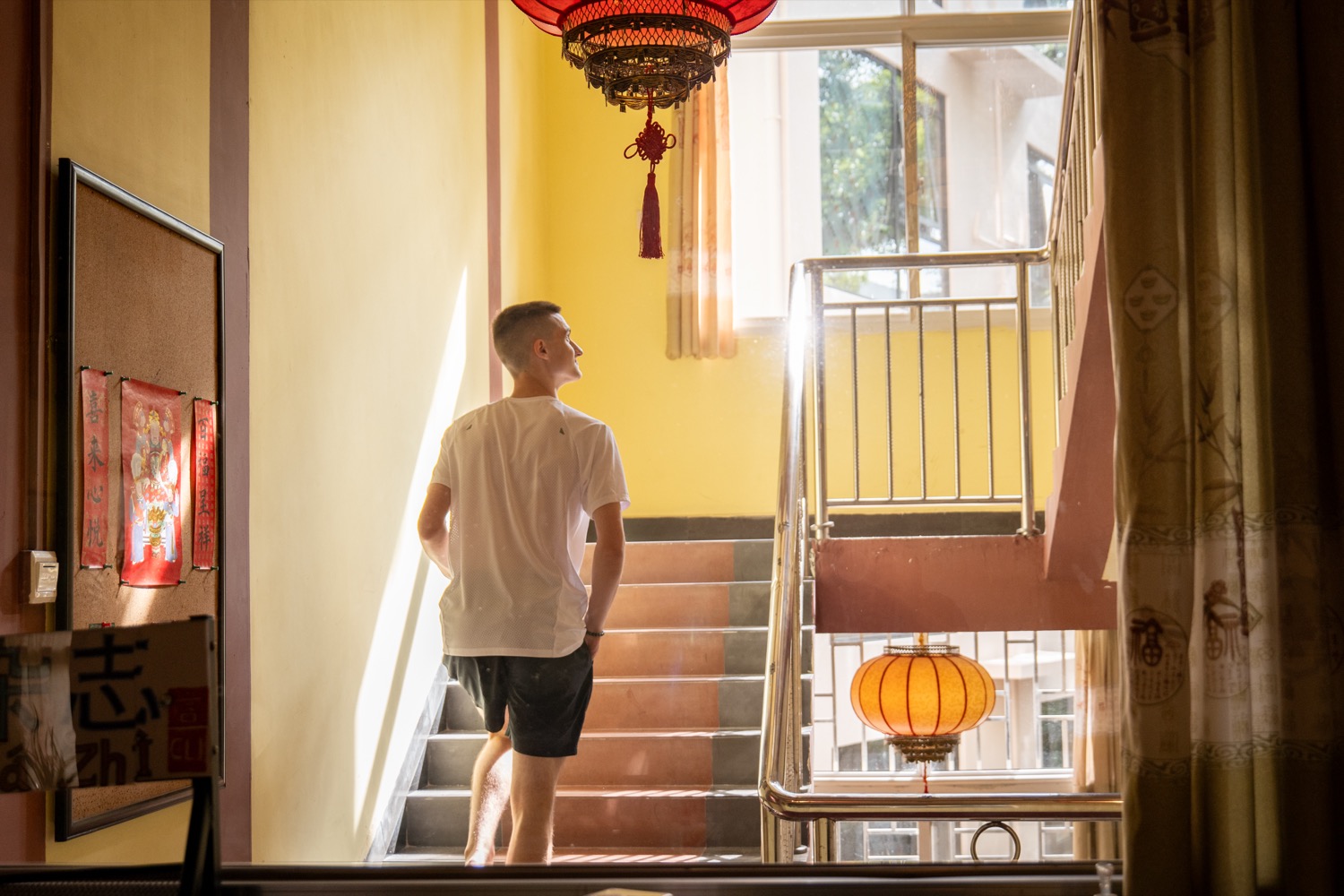
The stairs past the classrooms lead to three floors of private rooms and, at the very top, a rooftop with a view.
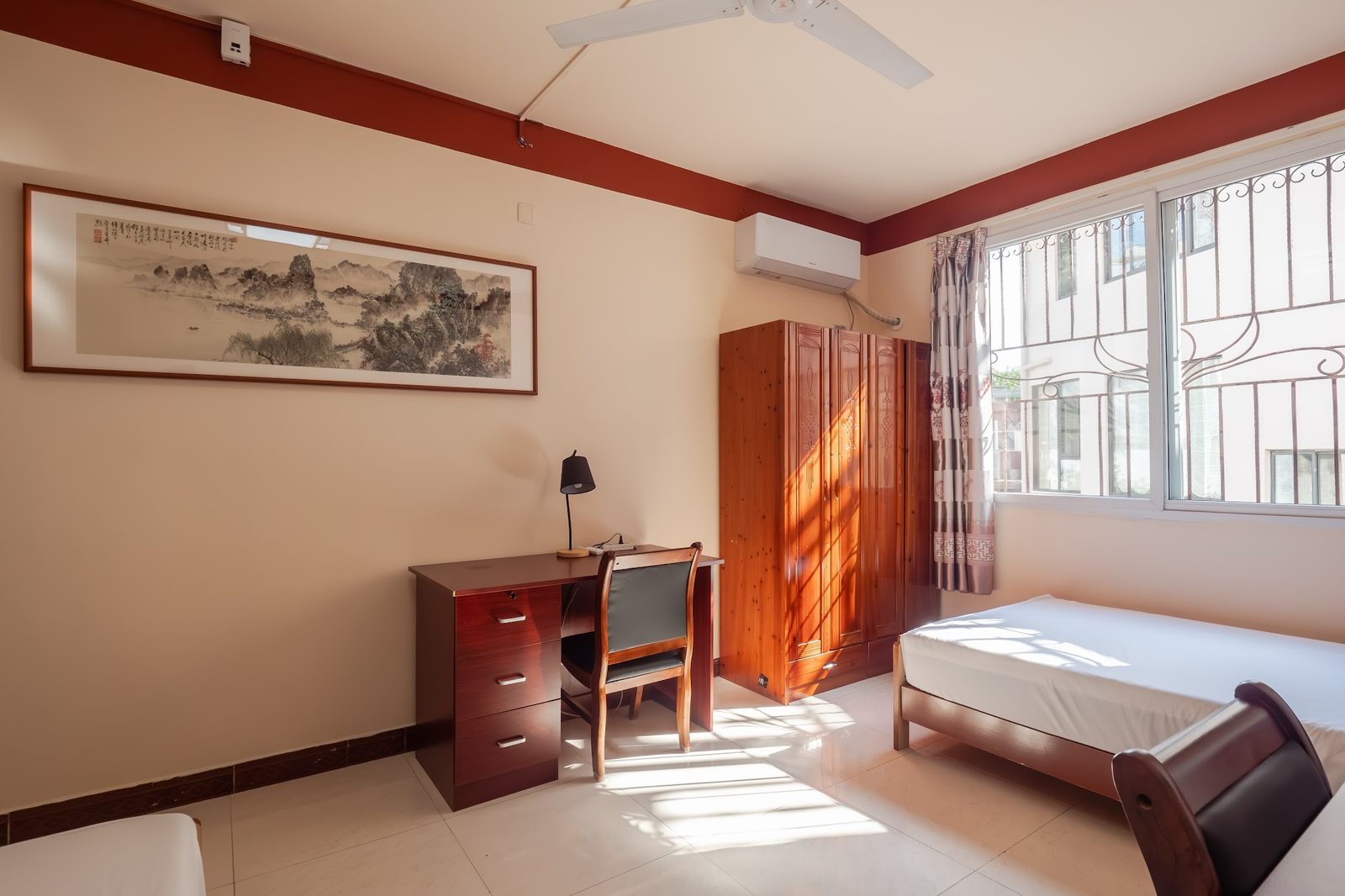
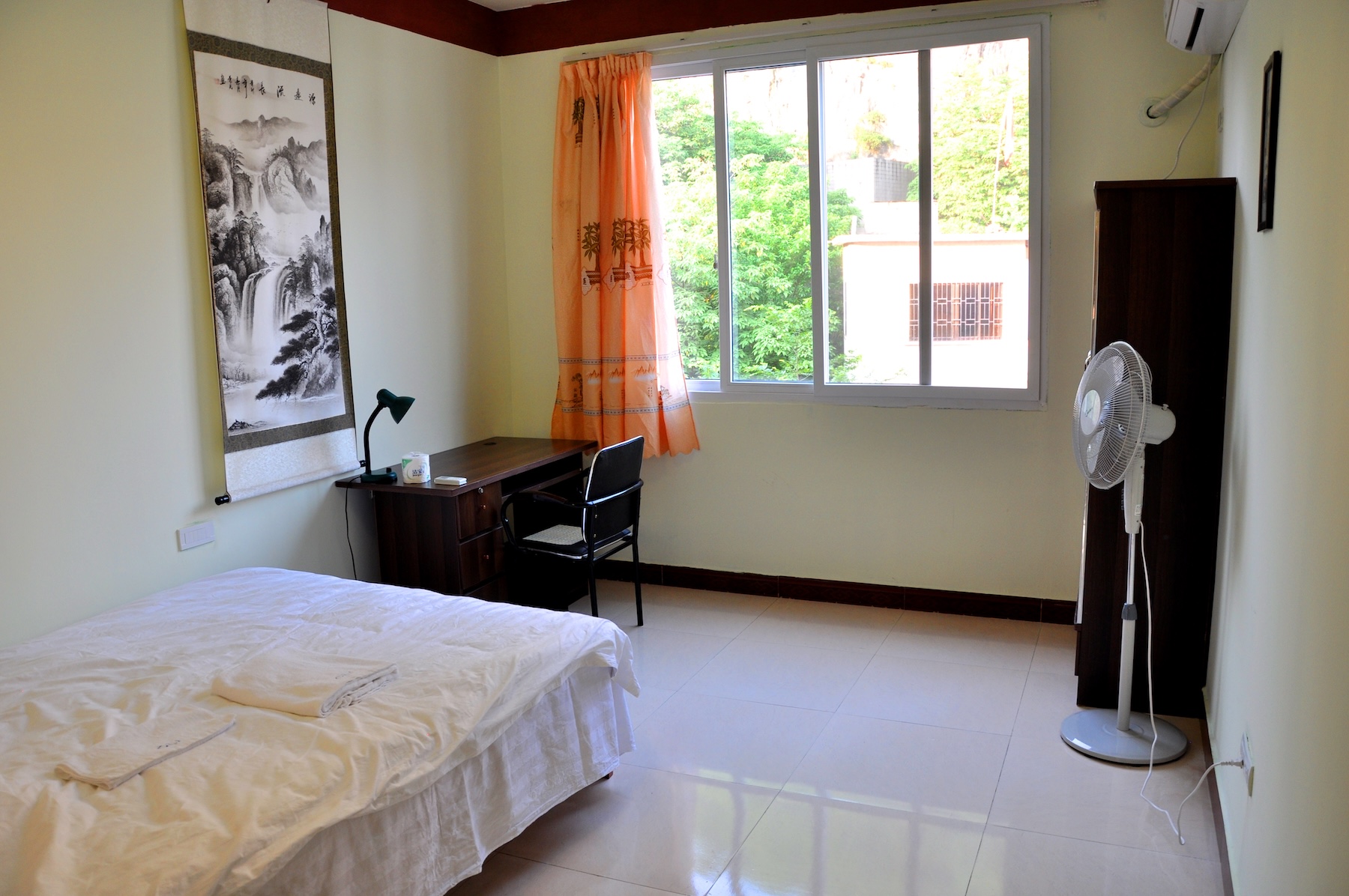
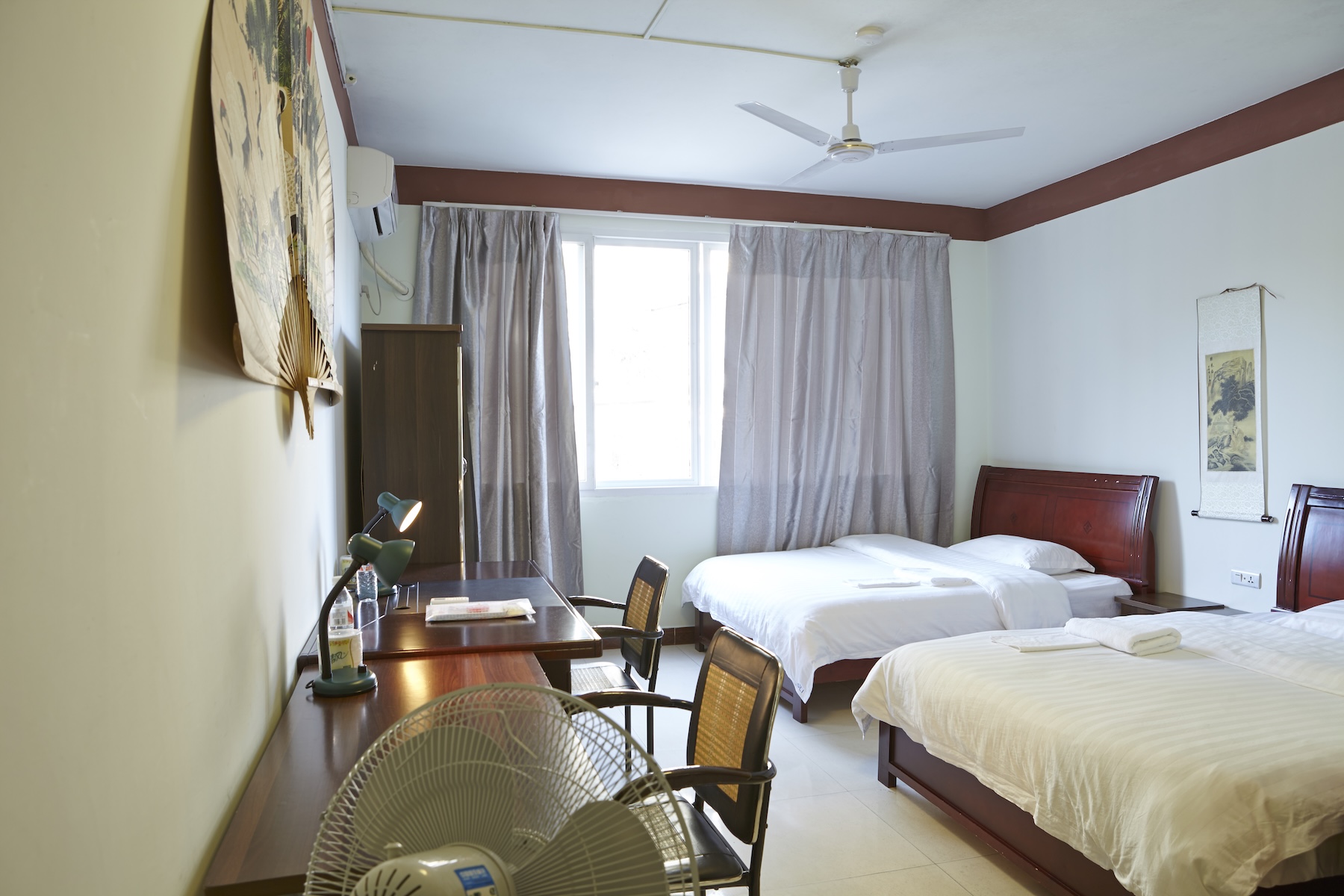
Students who live at the Center have a private room. The building was renovated in 2026, so today's rooms may look different from this one.
Above the lobby and its red CLI sign are four more floors, and the building ends in a rooftop with a view.
Weekday lunch is cooked in the Center's full kitchen and eaten in its dining area, and dietary needs such as vegetarian or halal can be accommodated.
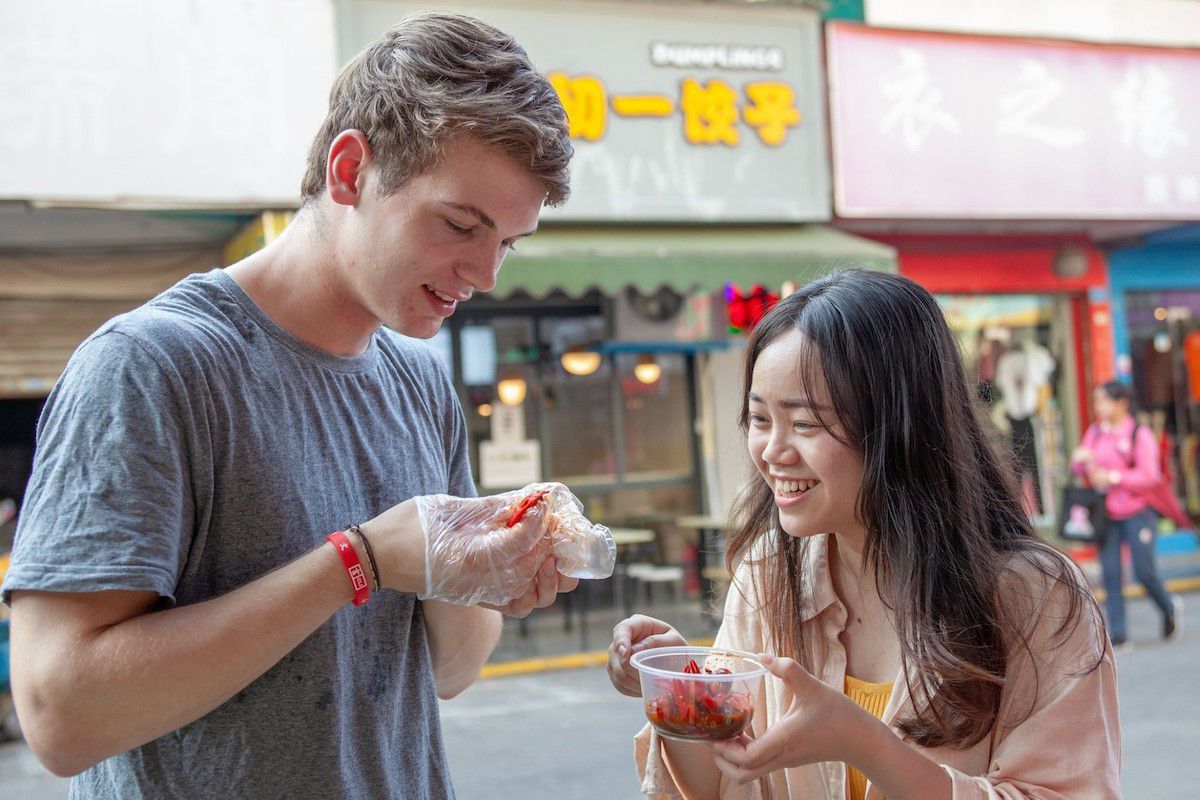
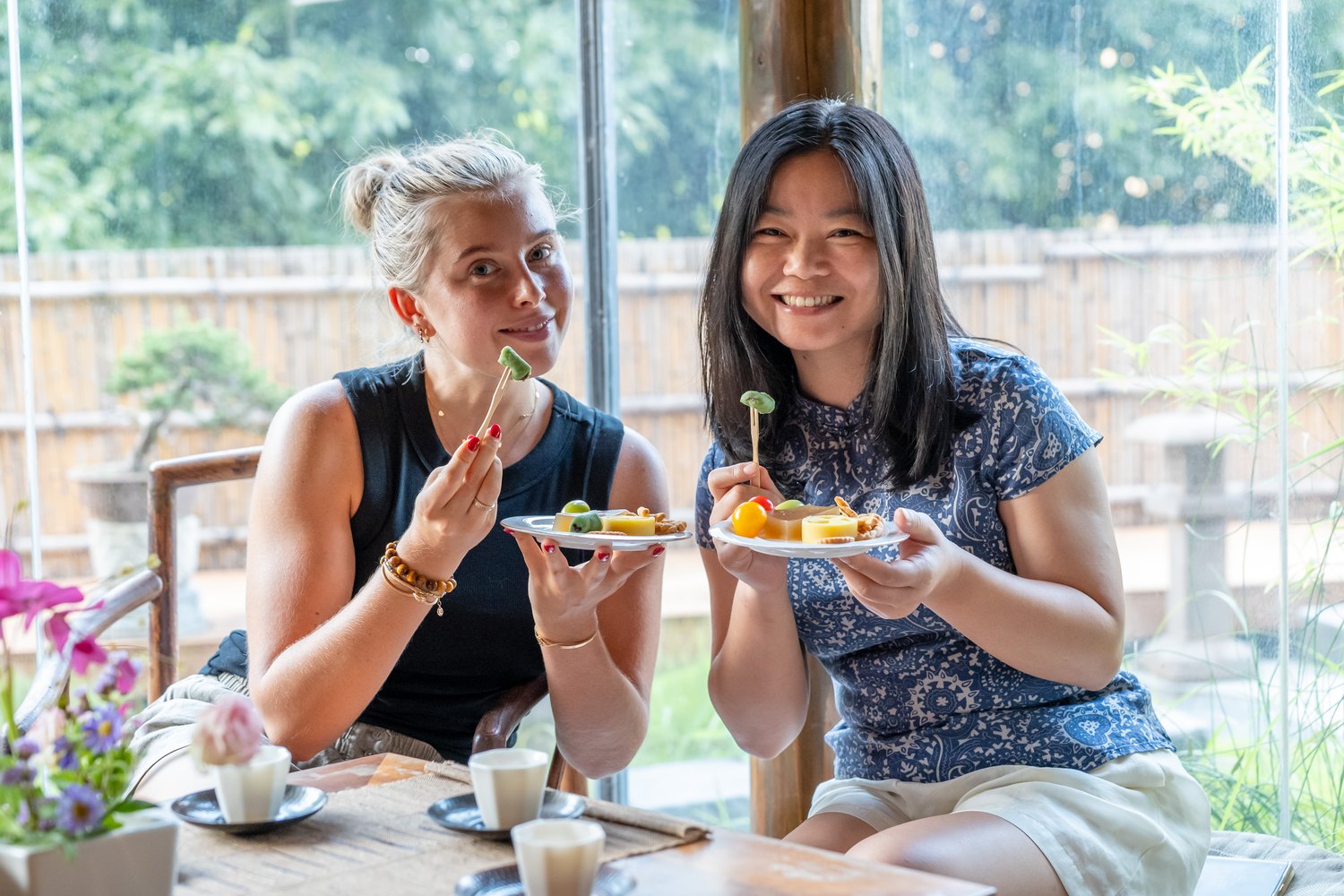
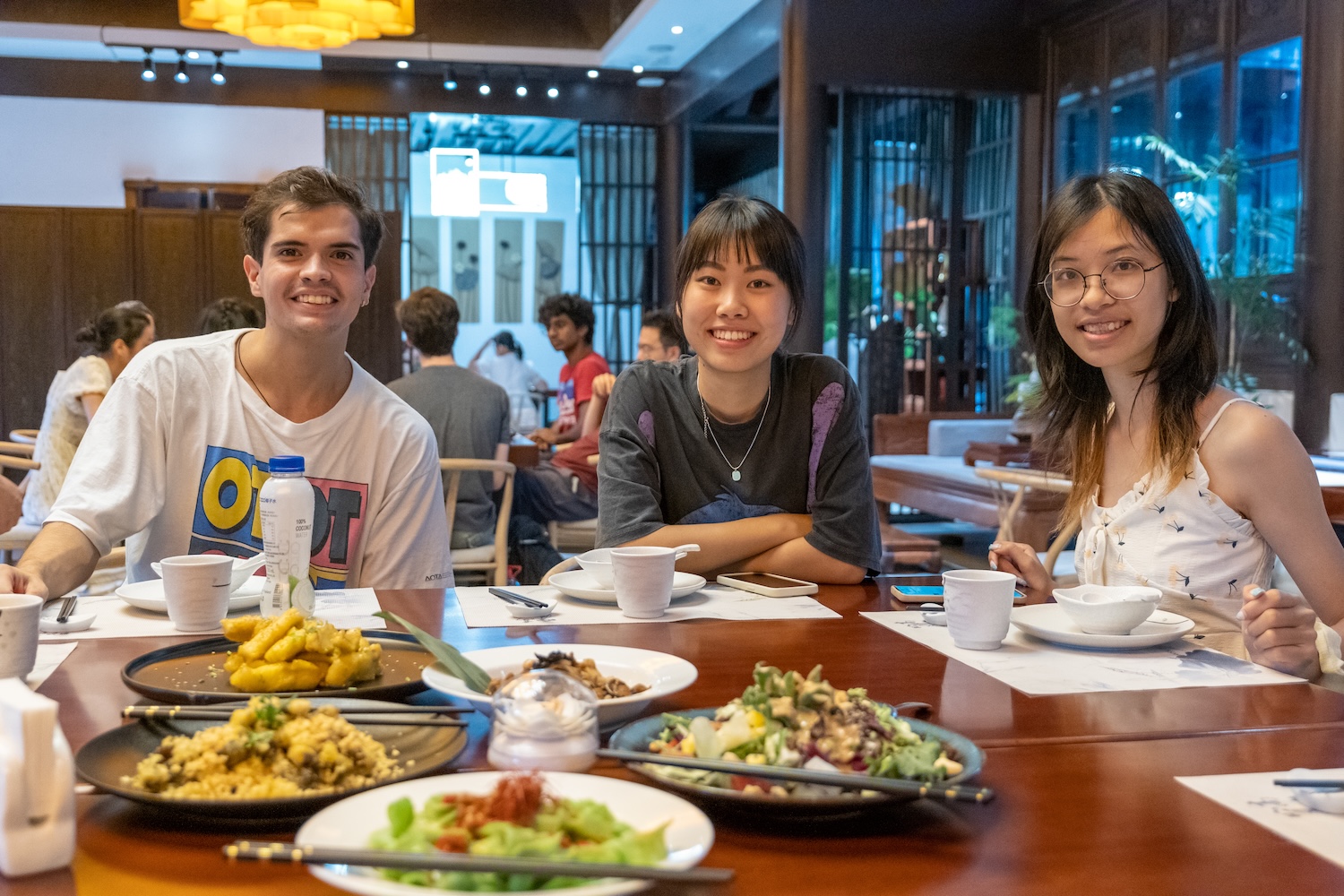
Ordering food in Mandarin is one of the first skills students pick up, and a plate of snacks like these comes with a few new words of its own.
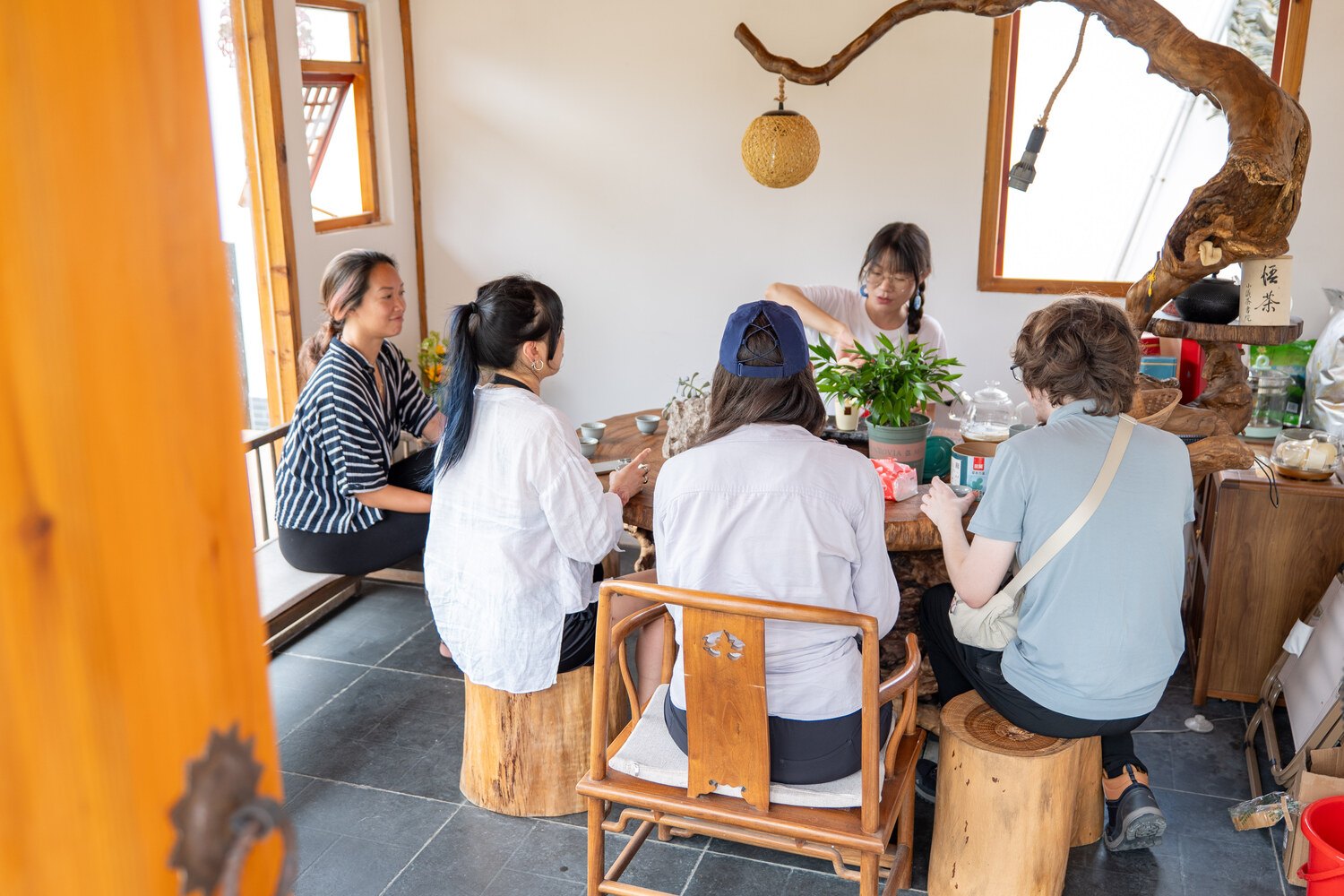
Tea ceremonies and tea house visits are among the program's activities, and conversation over a few cups goes slowly enough to keep up in Chinese.
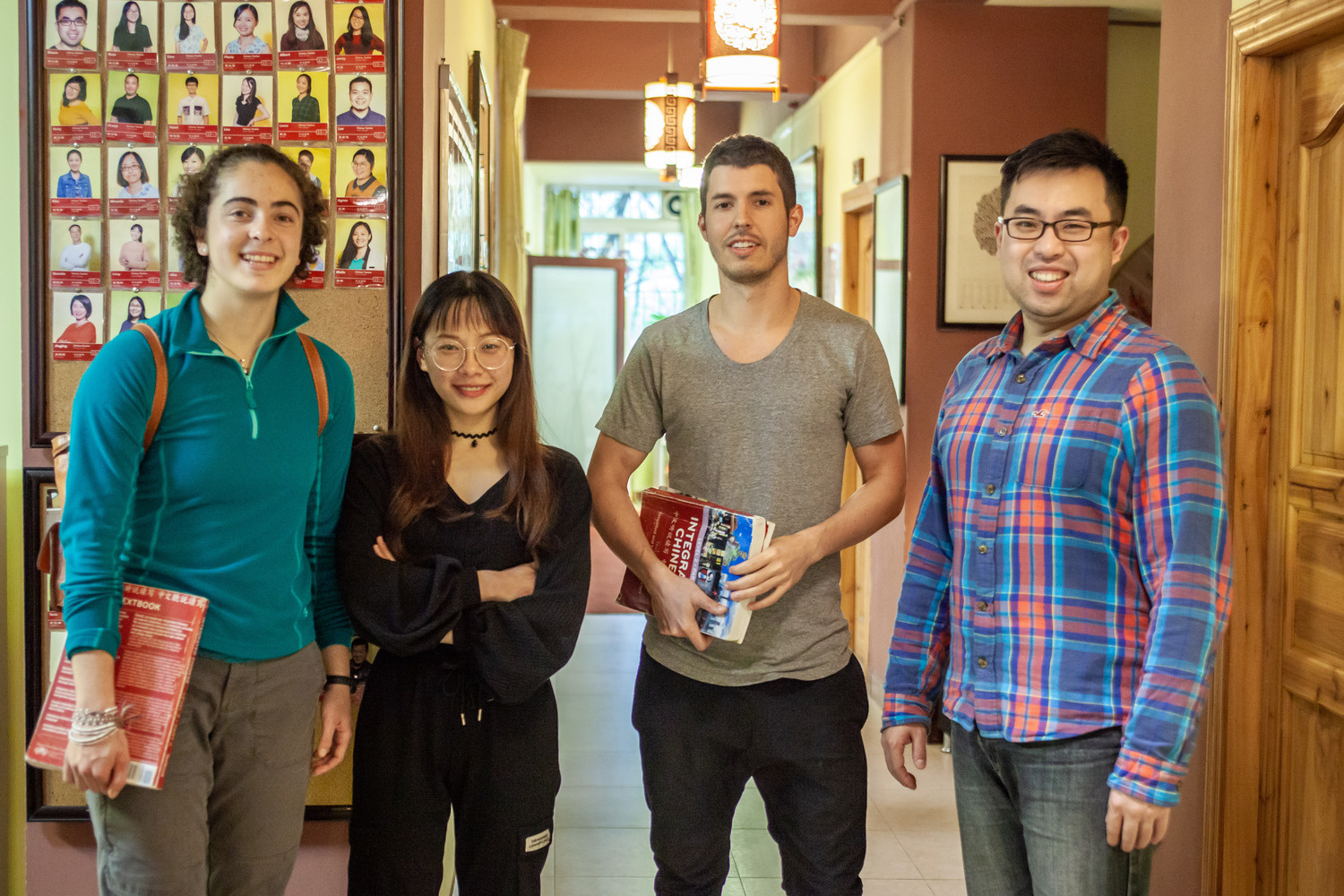
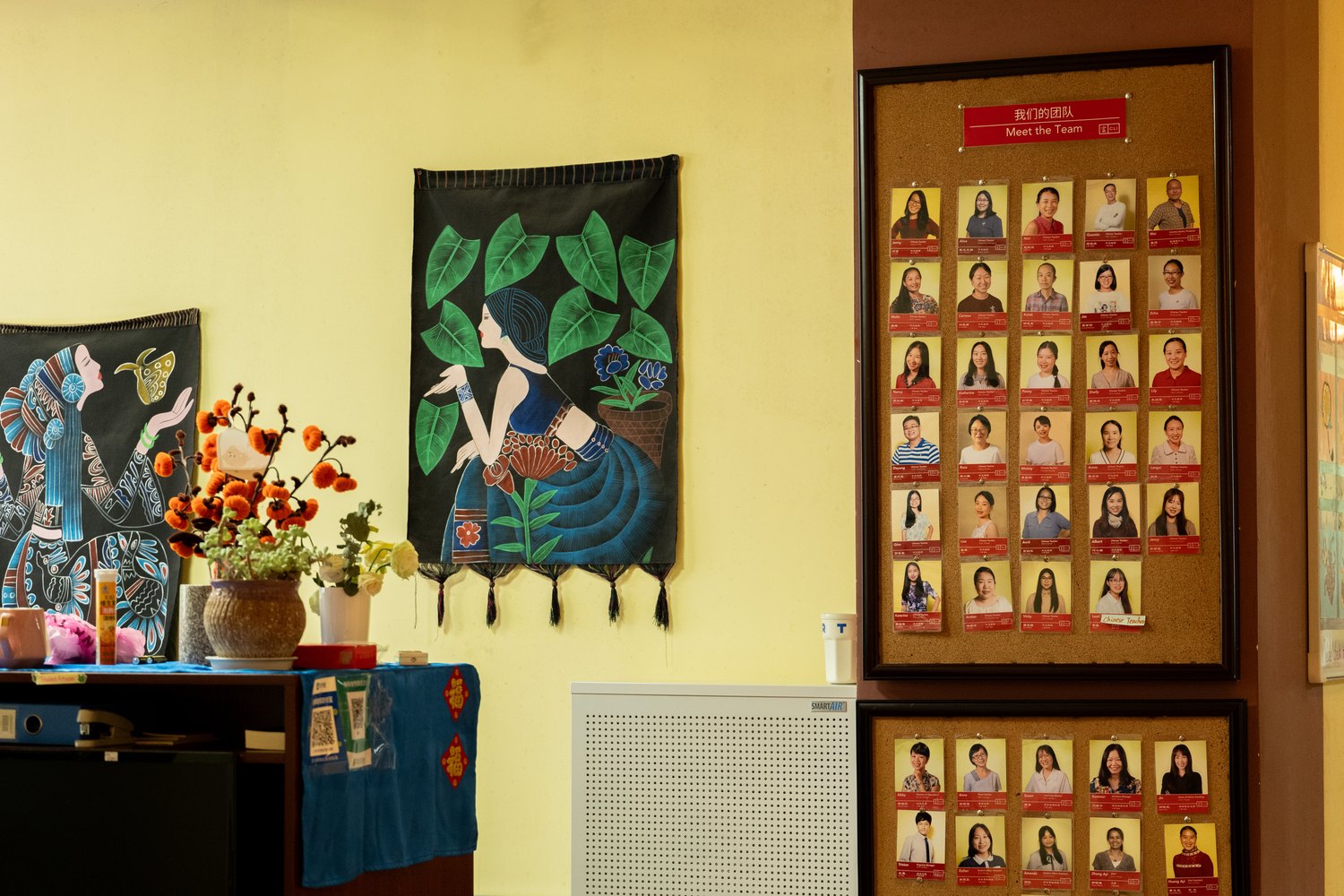
The board of photos behind the group shows CLI's teachers, whose office is on the second floor of the Center, close to the classrooms.
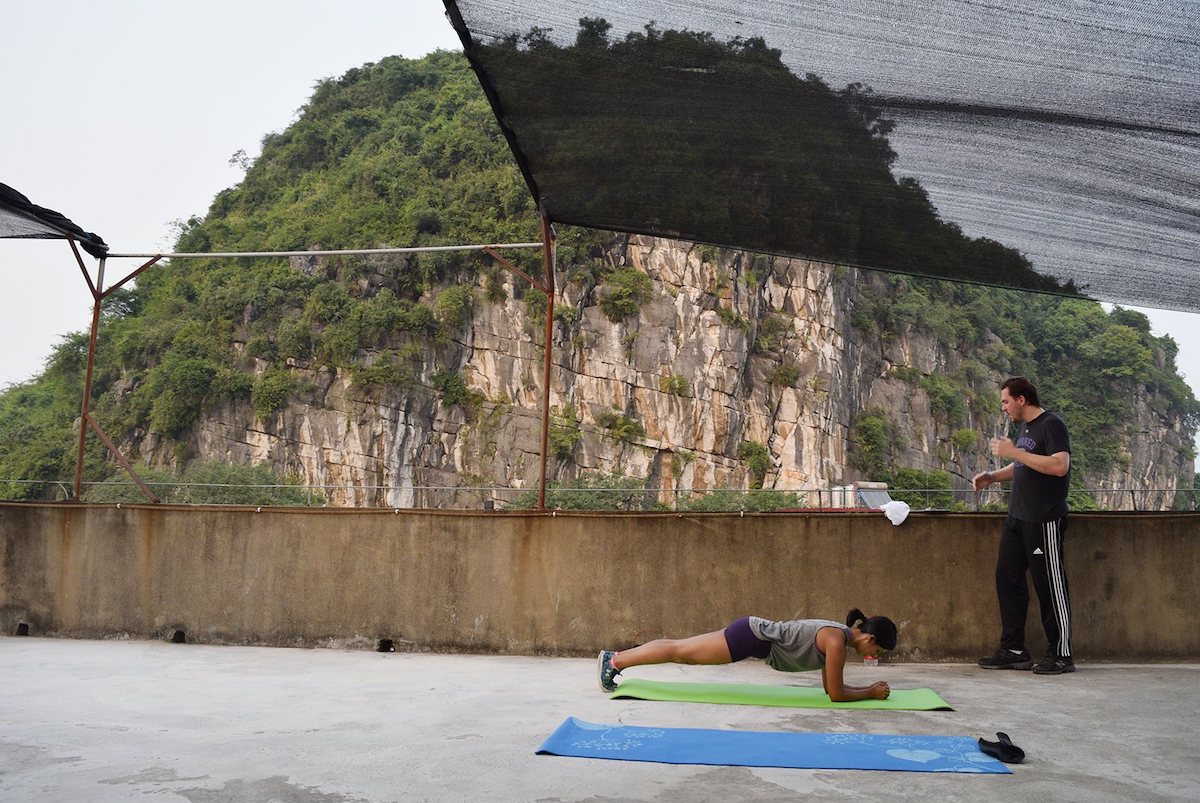
Two class sessions a day leave time for a workout, and the CLI Center has a rooftop of its own for anyone who wants some open air.
Of the Center's 36 private rooms, at least a quarter are home to teachers and pengyou, so a neighbor down the hall may well be a native speaker.
There is room for a crowd at the Center, which holds 18 small classrooms and 36 private rooms across its five floors.
Students choose where to live, and housing is included either way: a private room at the Center, a homestay, or an apartment for stays of six months or more.
Weekly cleaning is included with a room at the Center, so the hours after class are free for review and getting to know Guilin.
Your first Monday usually starts with orientation at the Center, where you meet your teachers and go over the practical details of your stay.
Since you can start any Monday and stay anywhere from one week to a year, there are often a few new faces in the Center's hallways.
For students who live at the CLI Center, a desk by the window upstairs is a quiet place for the day's homework and review.
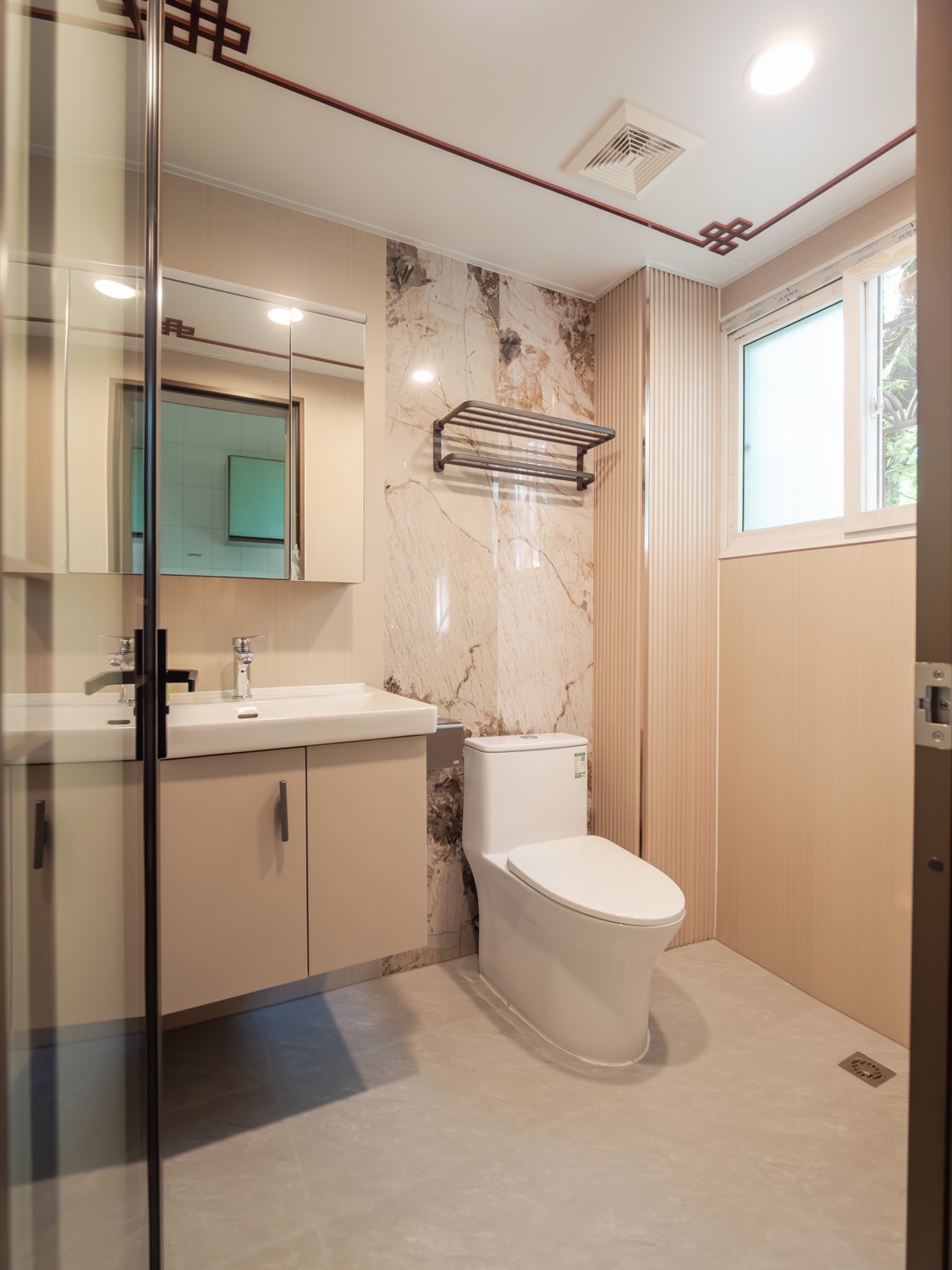
A full bathroom comes with every private room at the Center, so there is no sharing down the hall.
After dinner, evenings usually turn to review, and students who live at the Center can do theirs at the desk in their own room.
Students of all ages come through the Center's doors, from high school students to retirees, and families sometimes study together.
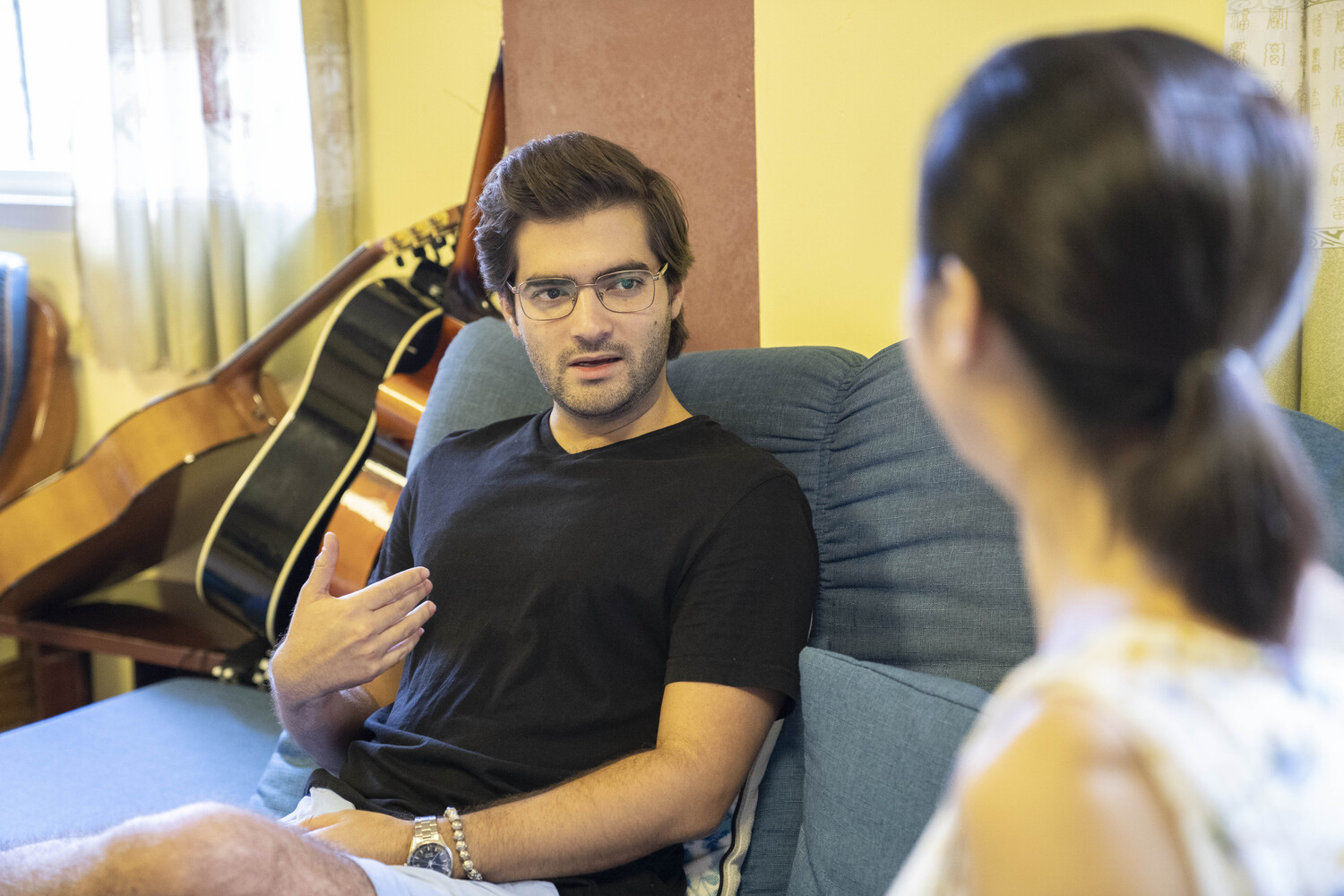
Conversations on a sofa are part of life at the Center, which has been CLI's home since 2012 and was renovated in 2026.
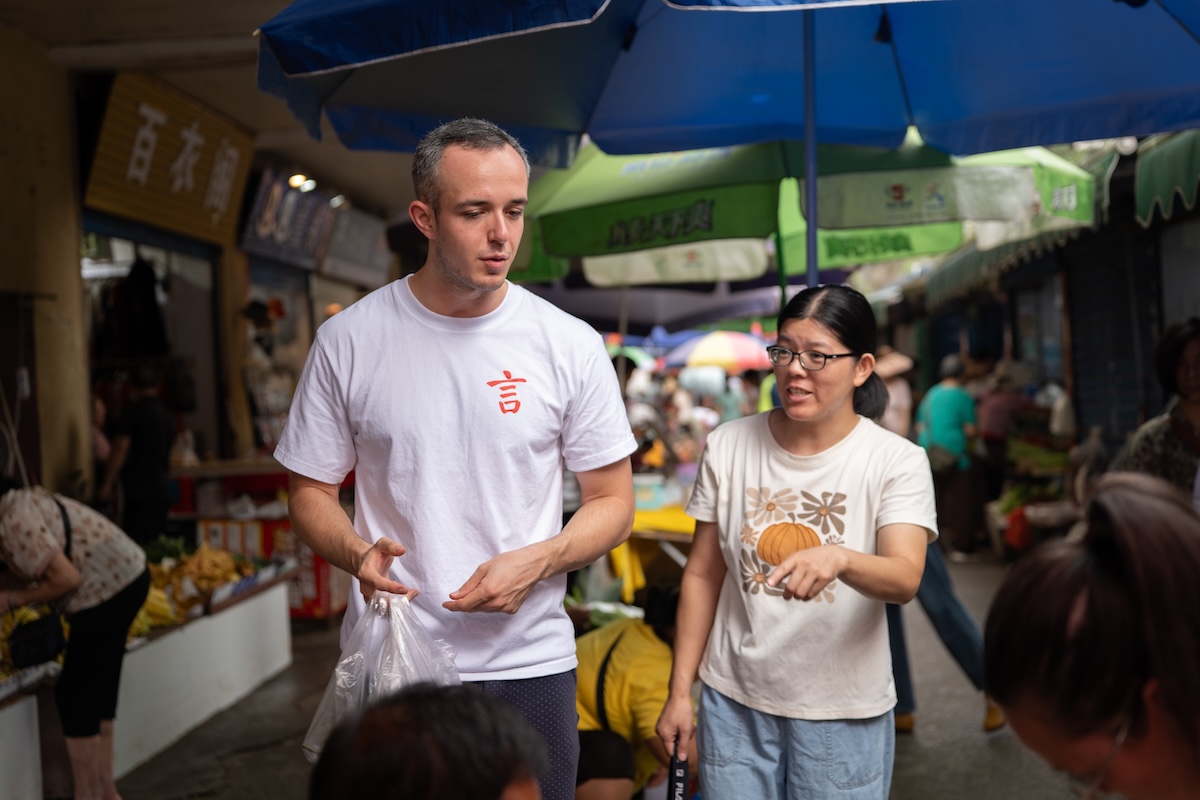
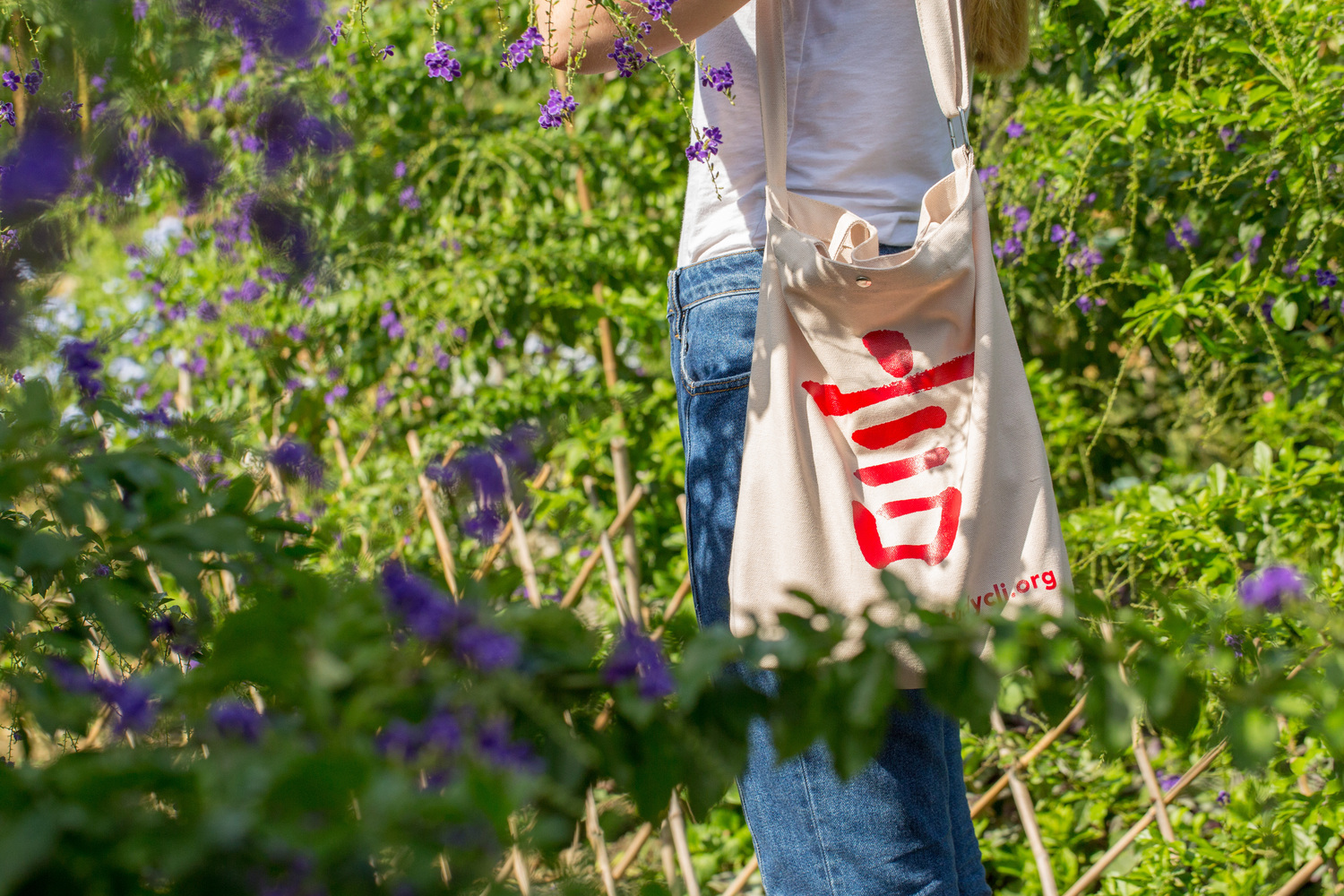
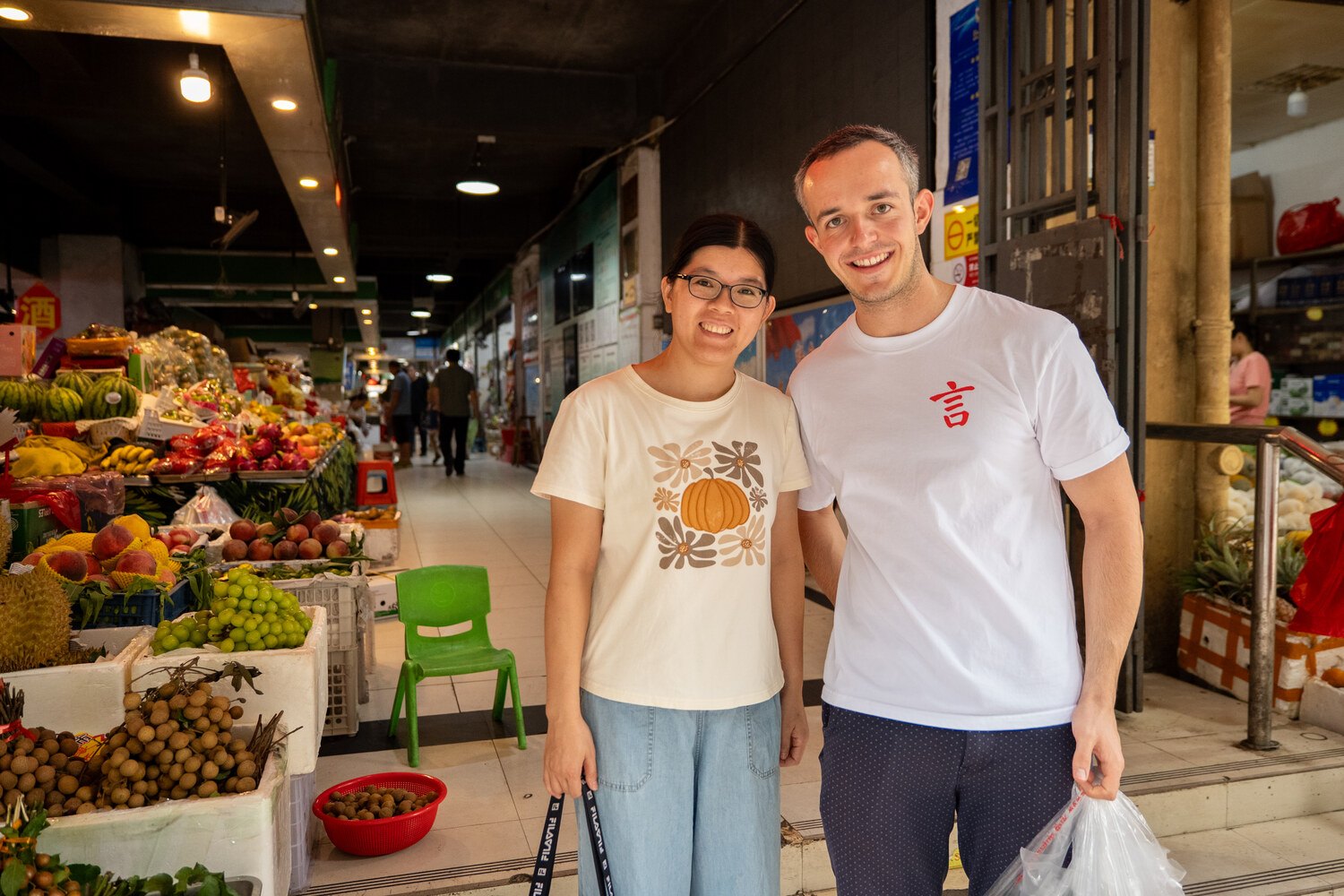
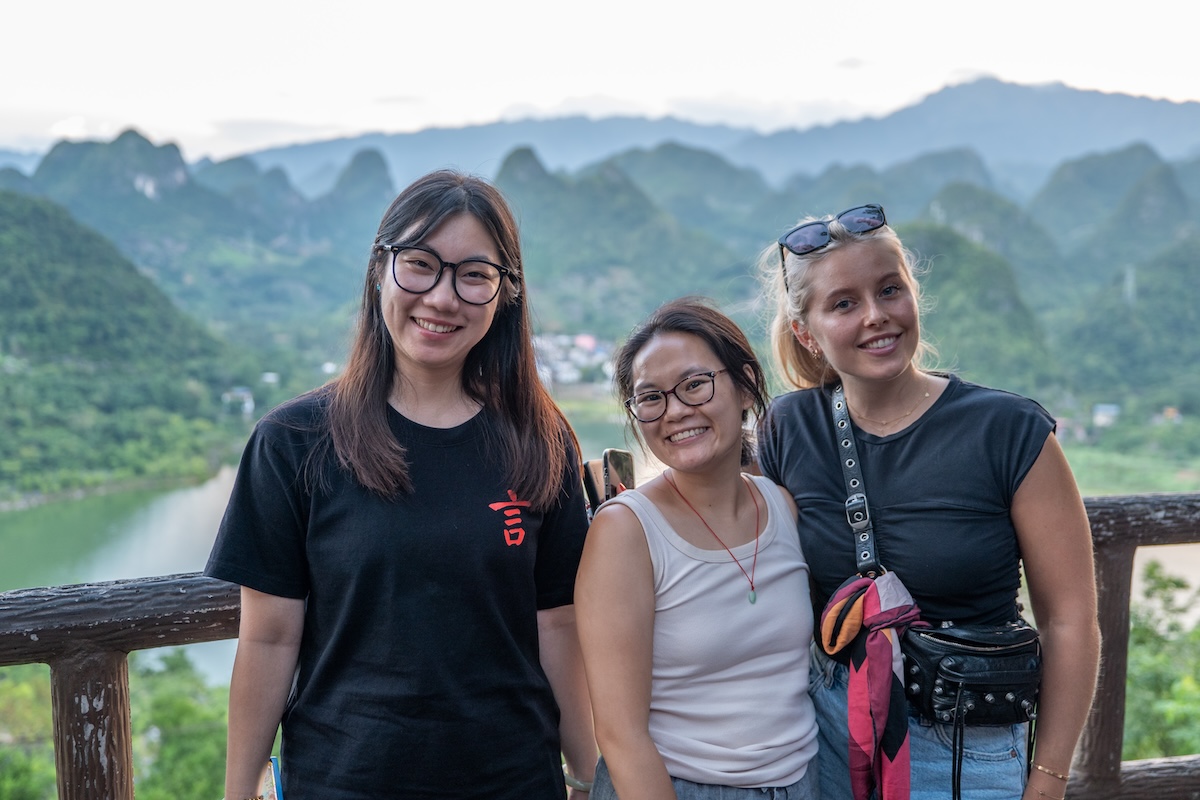
The red 言 (yán) on this bag is CLI's logo, the same one that hangs in the lobby of the Center, our home in Guilin since 2012.
Class sessions at the Center run from 8:20 AM to 6:10 PM, so the front door at 31 Chaoyang Xilu sees students coming and going most of the day.
The CLI team is available around the clock, and with some of us living at the Center, help is usually just down the hall.
Festival celebrations and lantern making are both on CLI's activity list, and the week's plans go up on the board on the Center's second floor.
The Center has 18 private classrooms, and they are small because classes are one-on-one.
CLI's activities include cooking lessons with Chinese chefs and dumpling making, and the Center has a full kitchen.
With two class sessions a day, there is time left for homework, and the Center's study areas are open for it between classes.
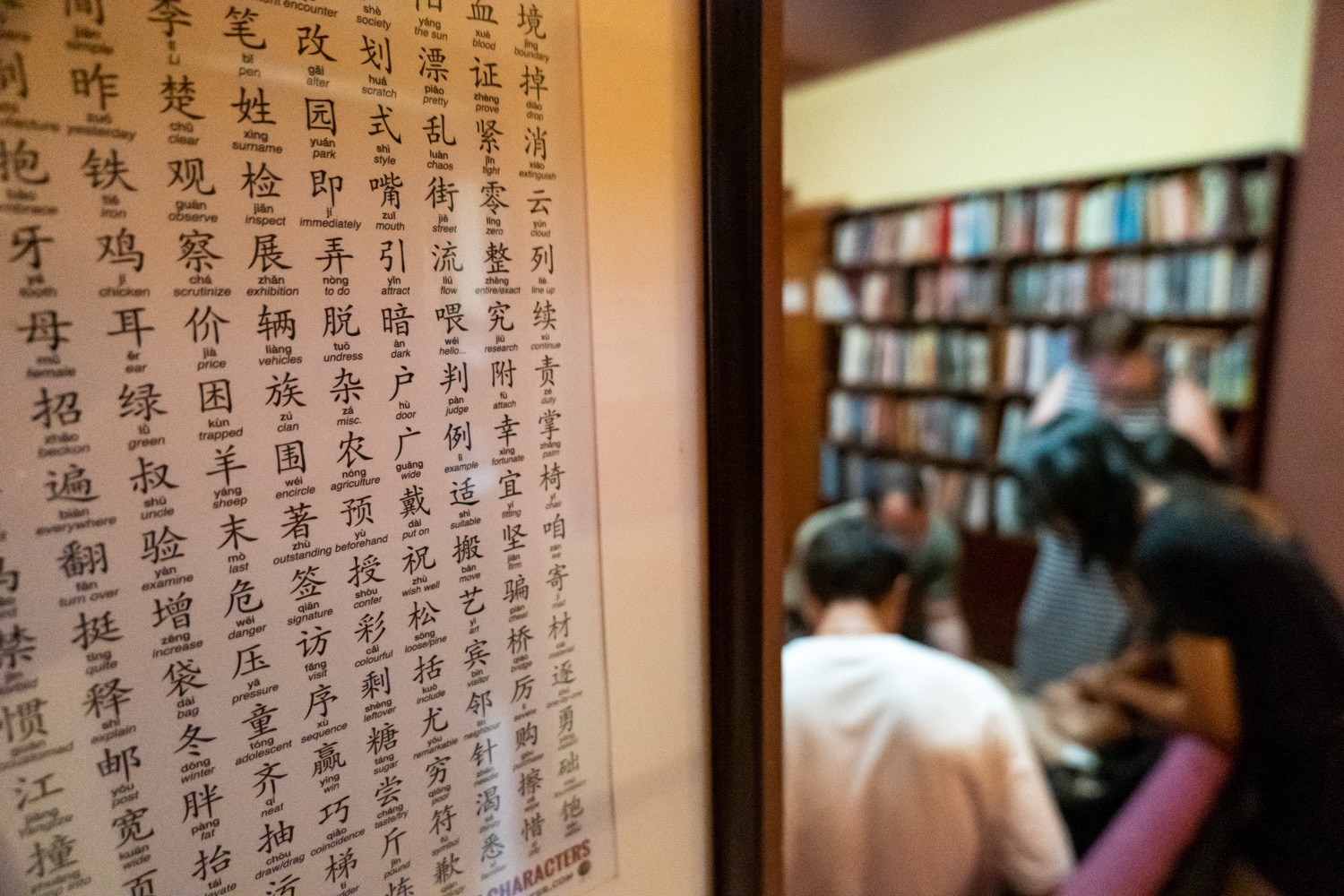
A chart of characters hangs by the Center's reading room, where students can settle in with a book when they are not in class.
Orientation, usually on the first Monday, covers the Center, the teachers and the schedule, with a Guilin tour and a welcome meal.
Photos of all of CLI's teachers hang in the teachers' office area at the Center, and each student studies with three of them.
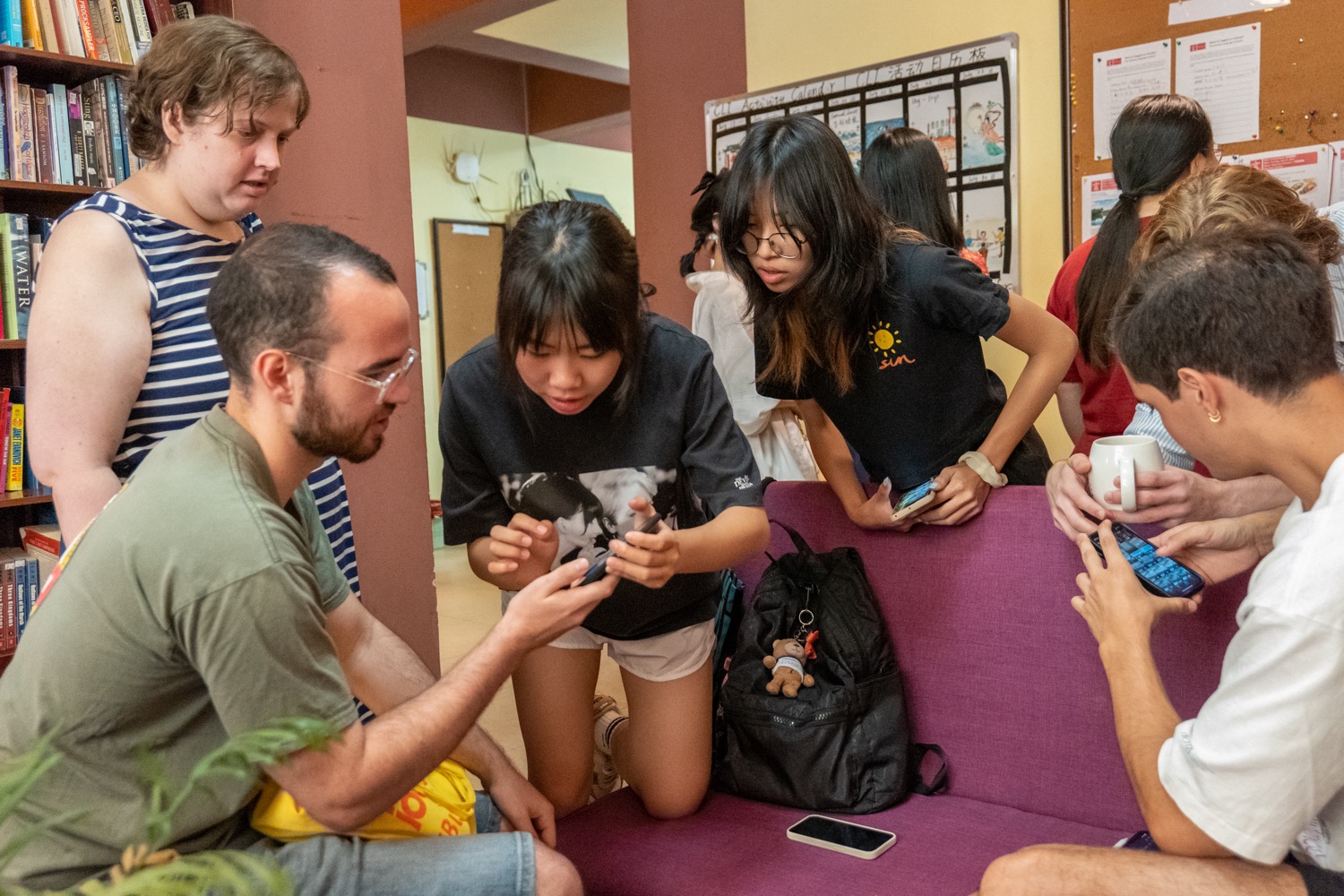
The activities board on the Center's second floor shows the week's plans, and the sofas nearby are a natural place to talk them over.
Teachers share an office at the Center, and they coordinate so a grammar point from the morning can resurface in the afternoon.
CLI runs activities every week, and a few of them get you up and moving, a good change after a few hours at a desk.
Movie nights and Chinese games are both on CLI's activity list, easy evenings with some language practice mixed in.
A room at the Center puts you a few floors above the classrooms and the second-floor lunch tables, and like all housing at CLI, it is included in tuition.
The Center was renovated in 2026, and all 36 private rooms there have a full bathroom.
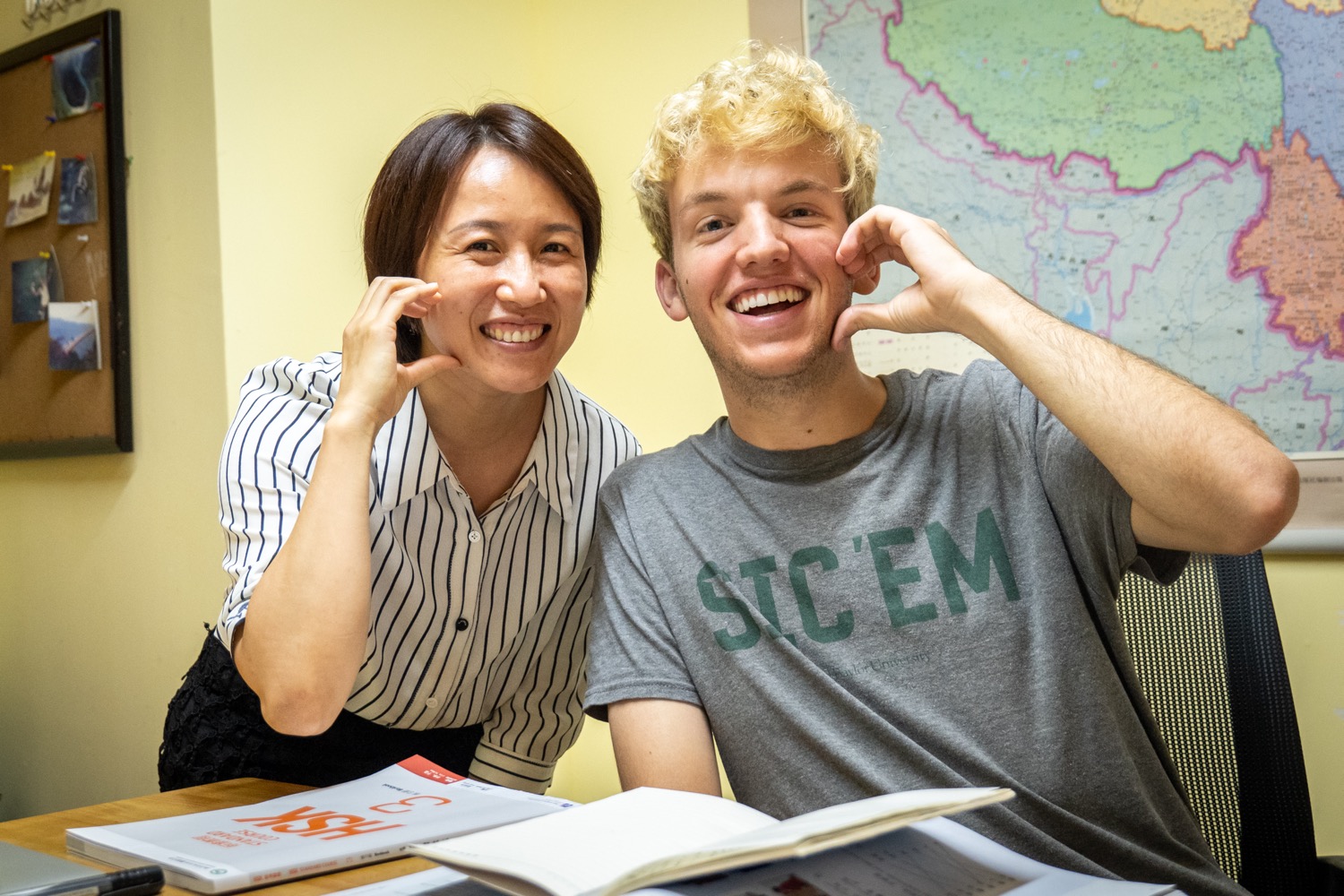
HSK preparation is one of the goals more advanced students often bring to class, along with fluency, reading and business Chinese.
A table at the Center is as good a place as any for homework, and you can stay on after a session to work through your notes.
With at least as many native Chinese speakers as learners living and working at the Center, conversation partners are easy to find.
Homework and review can go wherever it is quiet, whether that is the Center's reading room or a stone table outdoors.
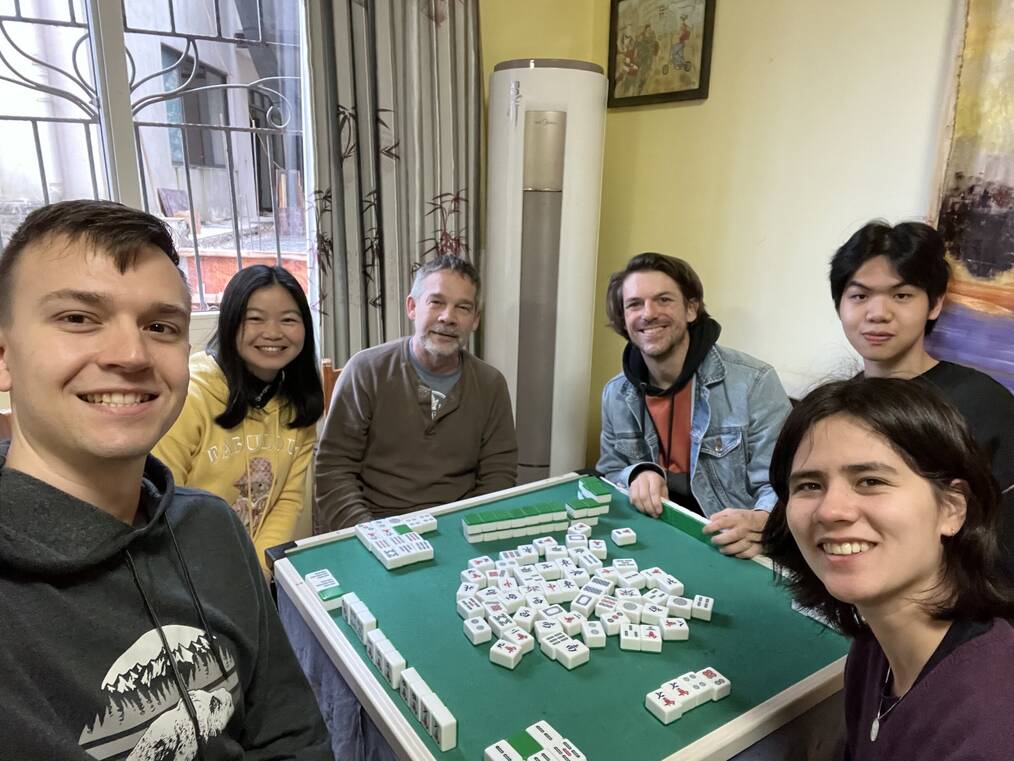
Between classes there is time to unwind, and the recreation room on the Center's second floor has ping pong, an electric piano and mahjong.
文化wénhuà
Culture
Calligraphy, paper cutting, tie-dye, tai chi, chess, tea, and music.
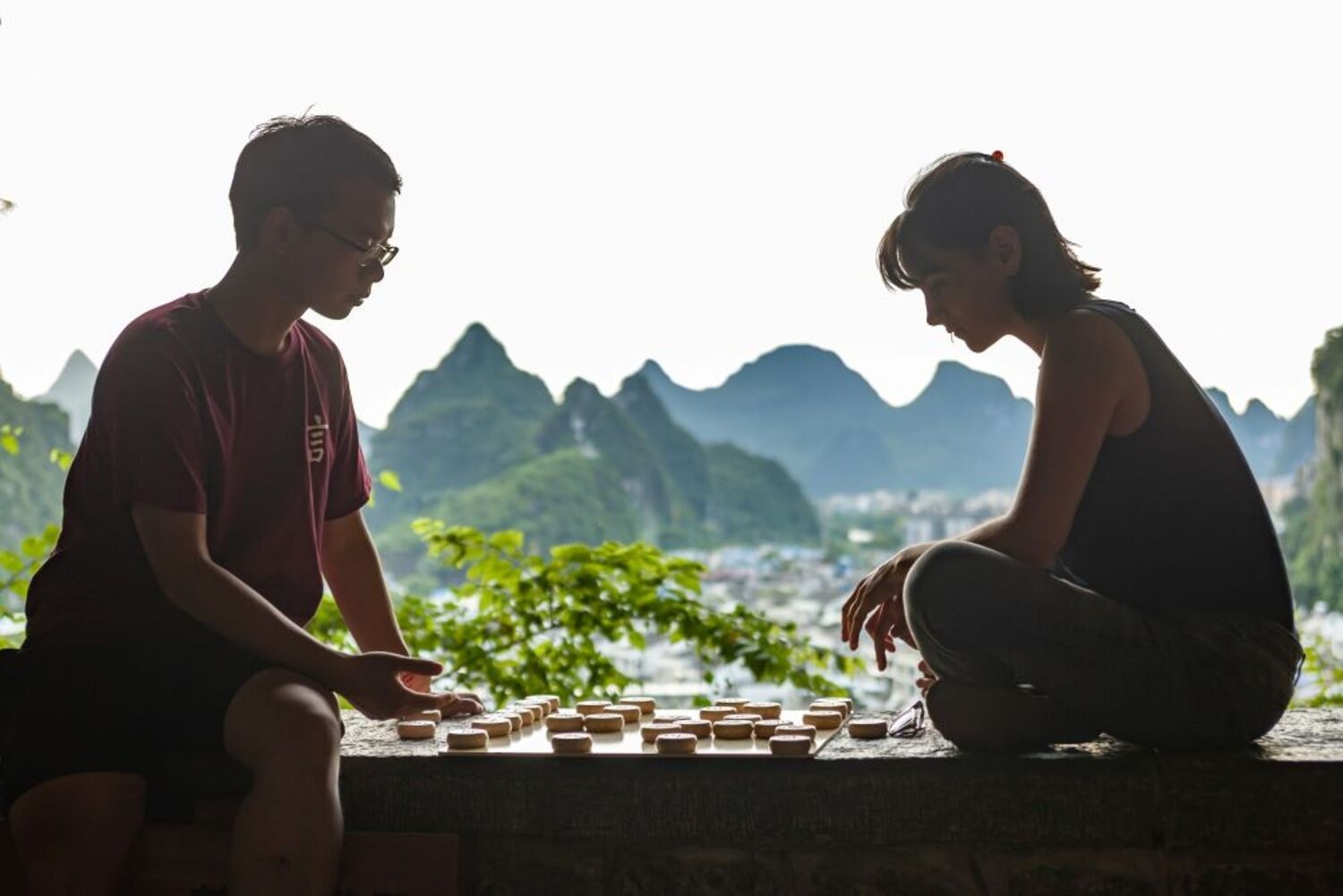
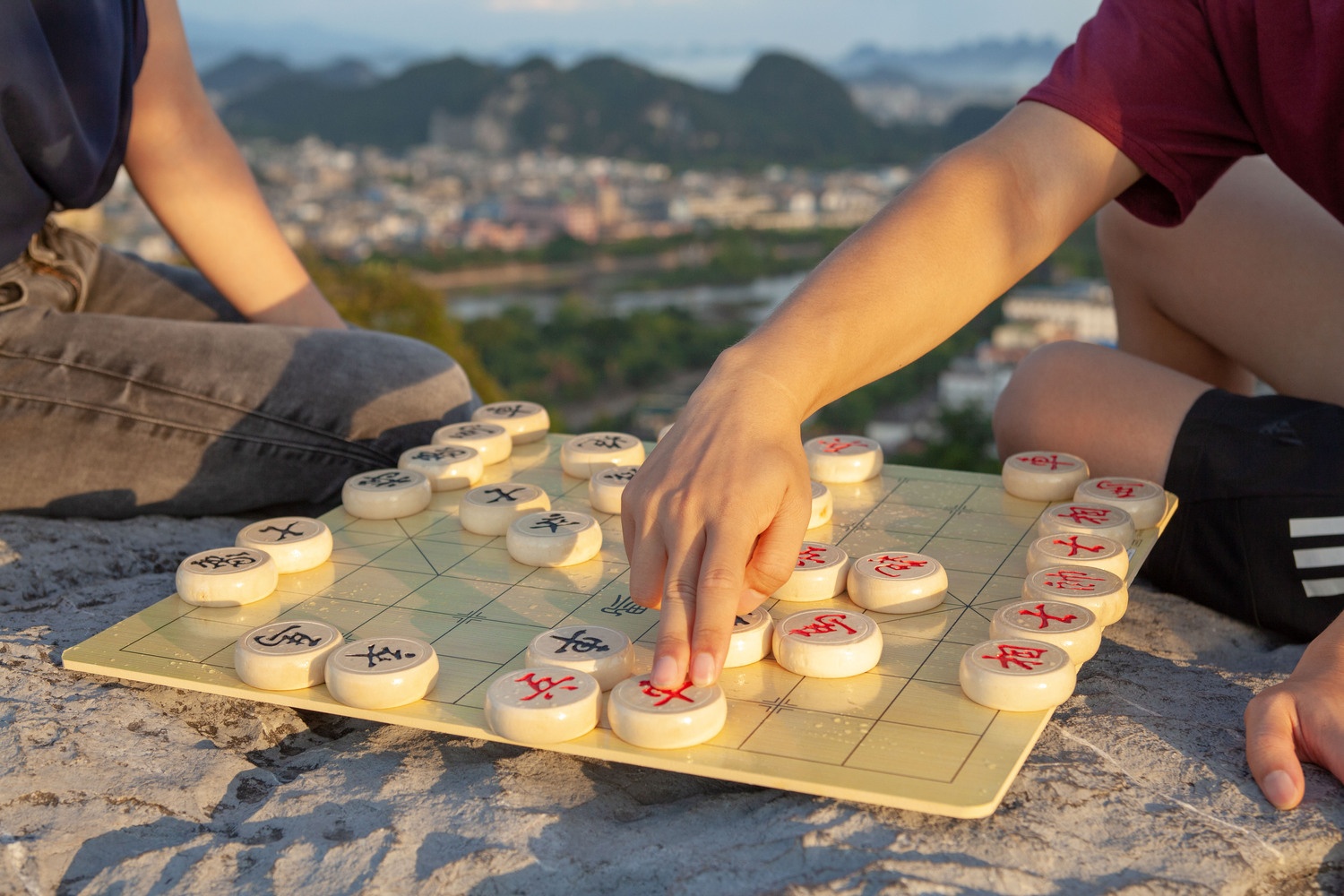
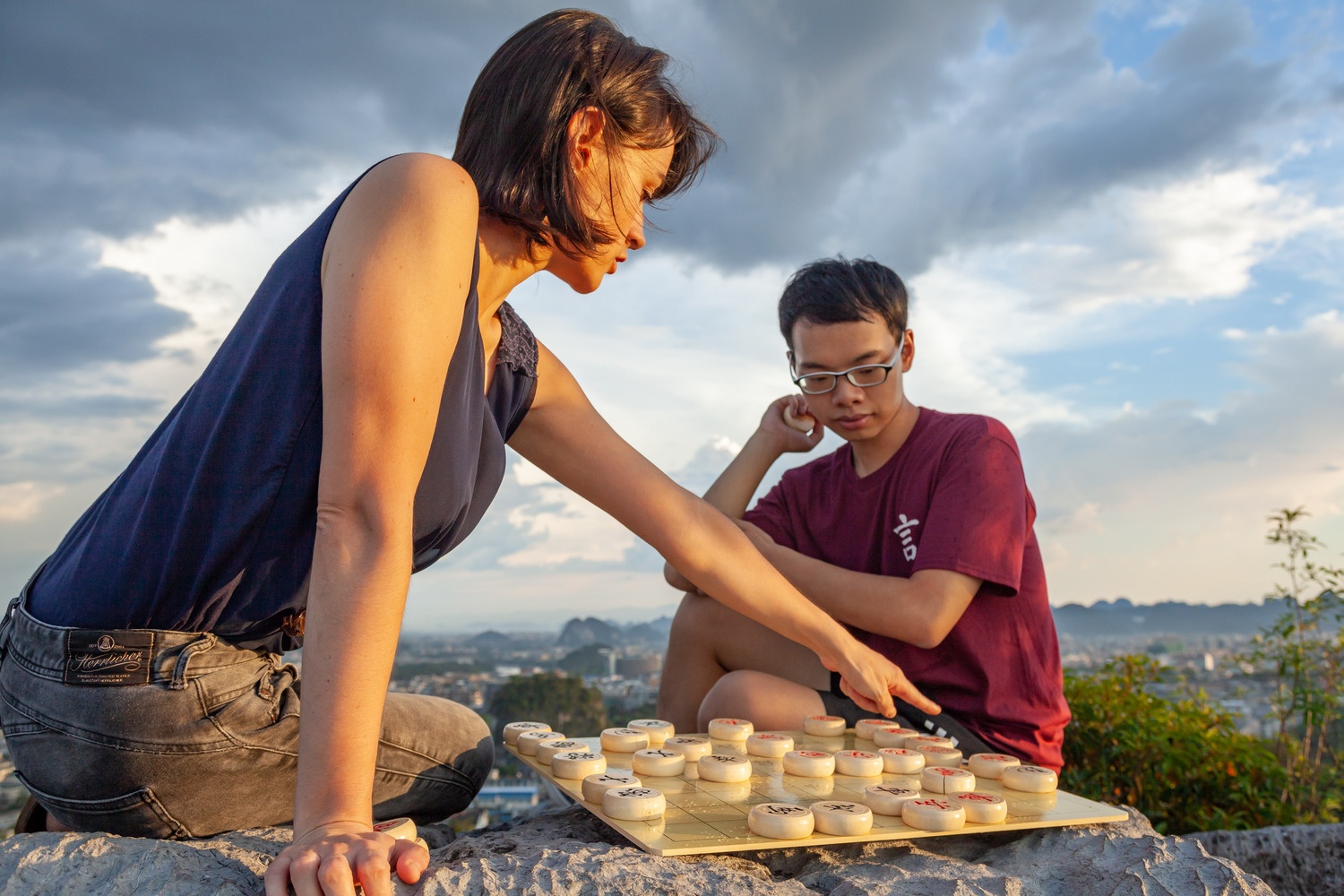
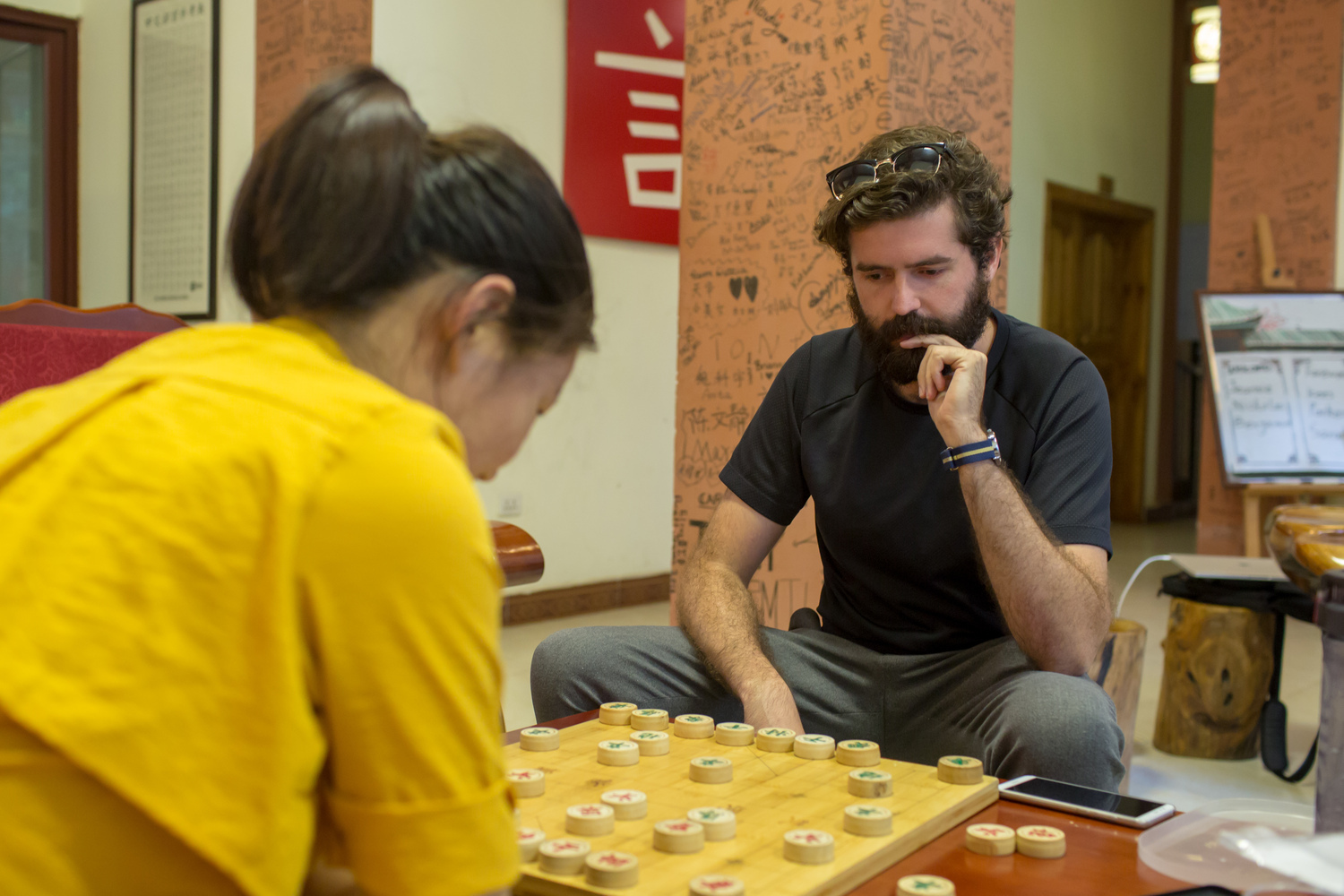
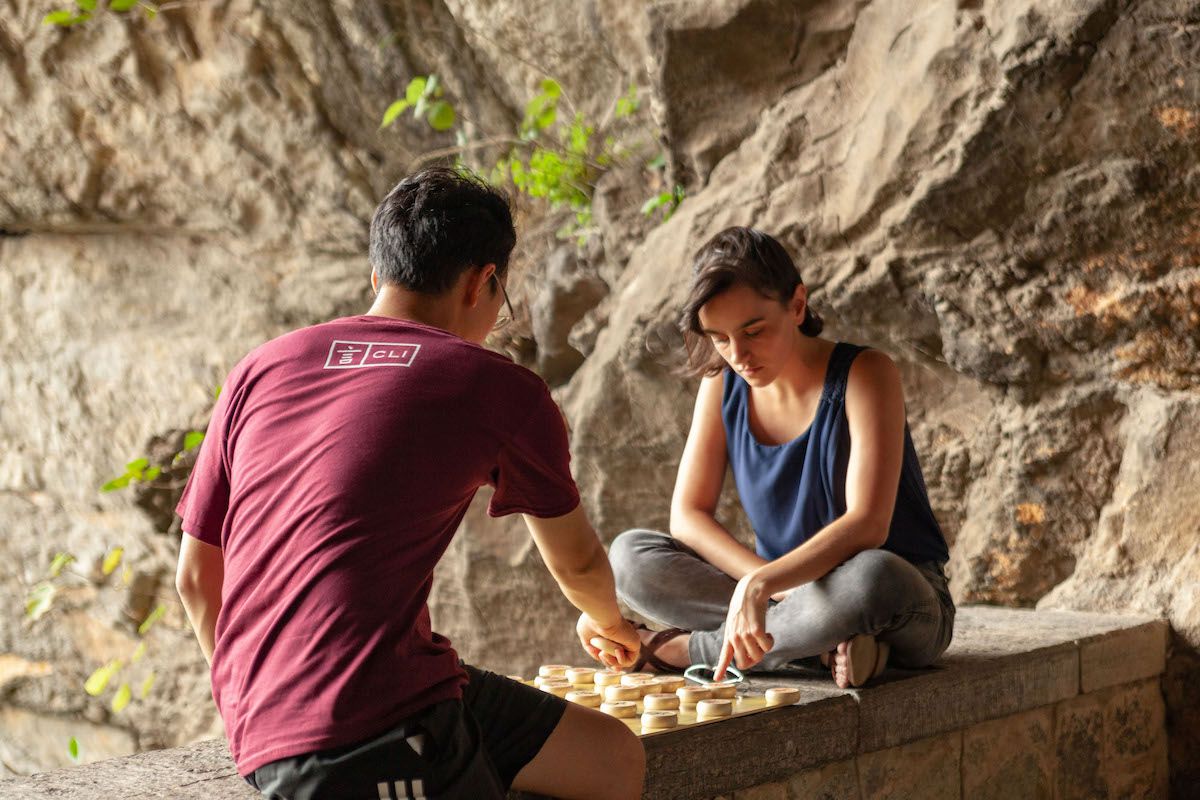
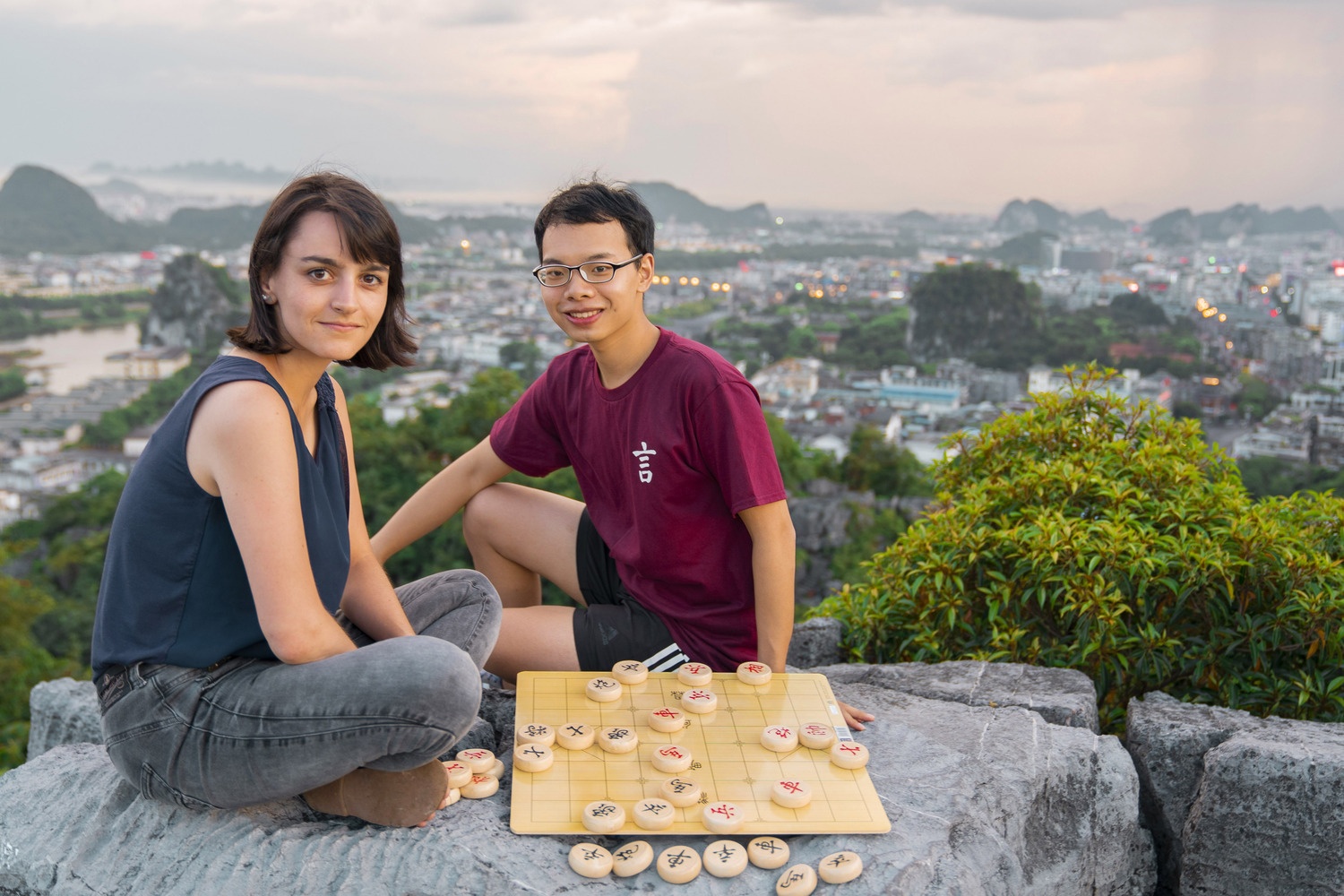
Chinese chess, 象棋 (xiàngqí), is one of the Chinese games students play, and Guilin's karst peaks make a fine backdrop for a slow match.
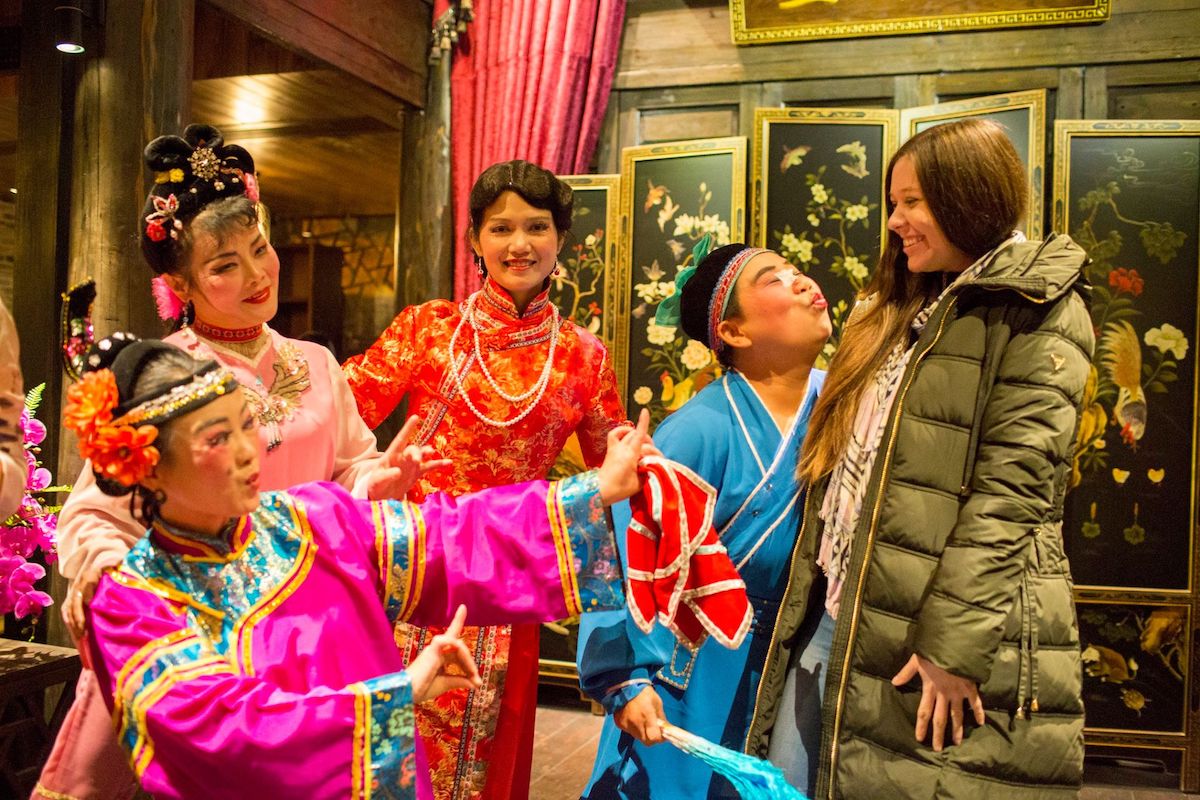
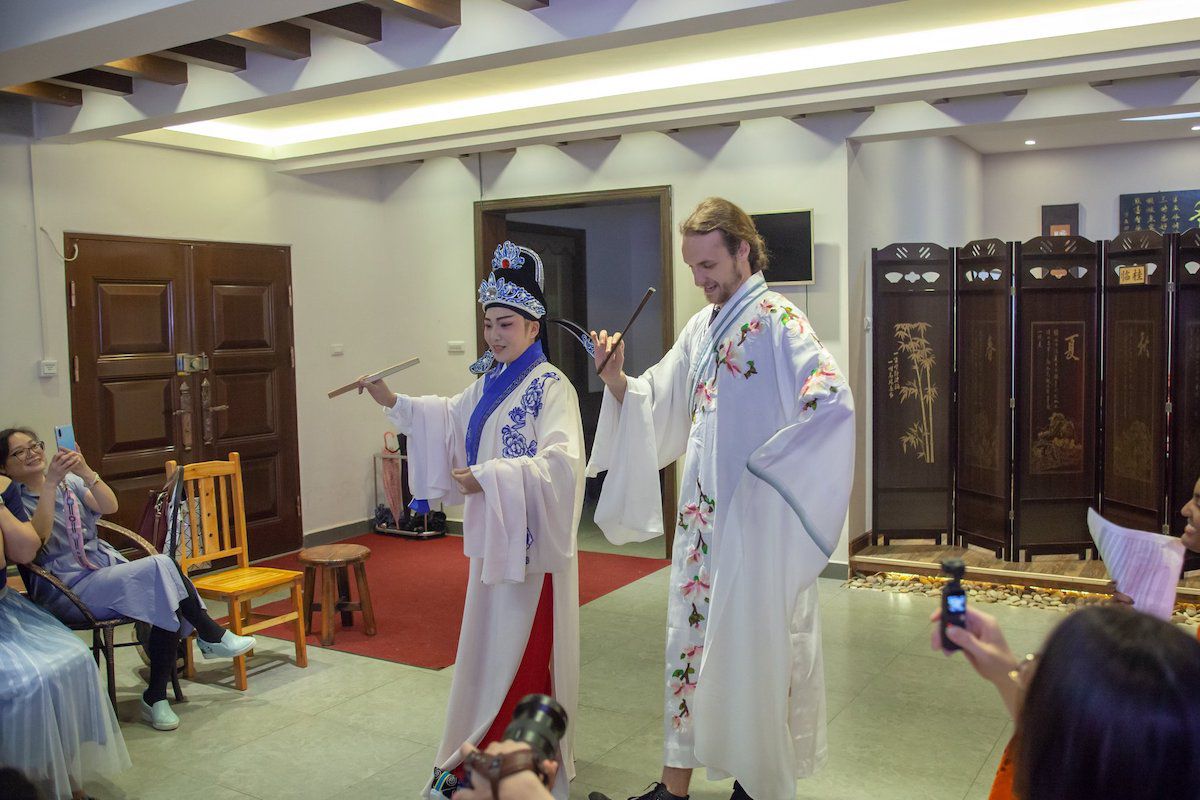
Cast and audience crowd in for one photo after a folk opera show. On top of classes, CLI plans activities every week and an excursion every month.
CLI's activities include cooking lessons with Chinese chefs, and dietary needs such as vegetarian or halal can be accommodated.
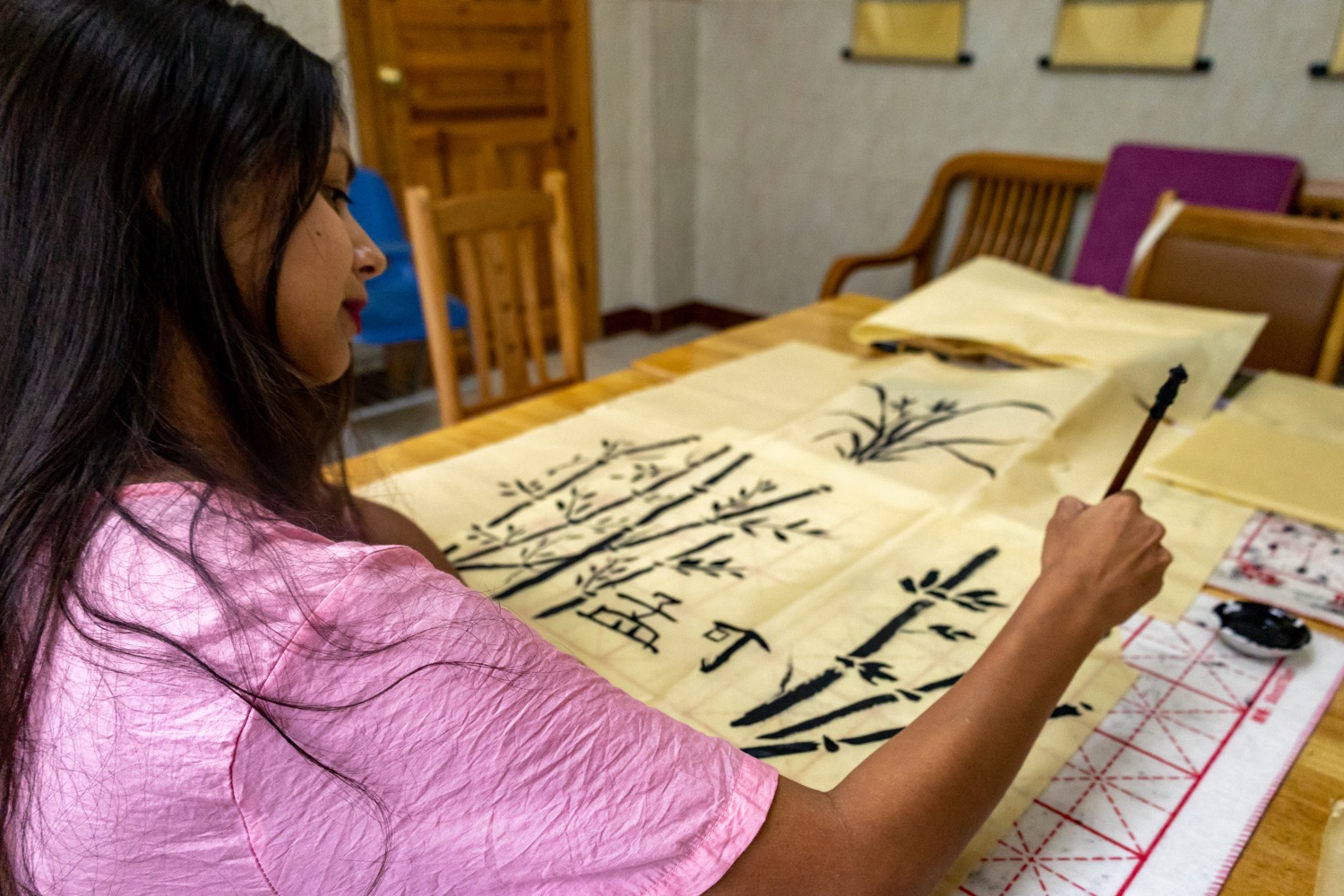
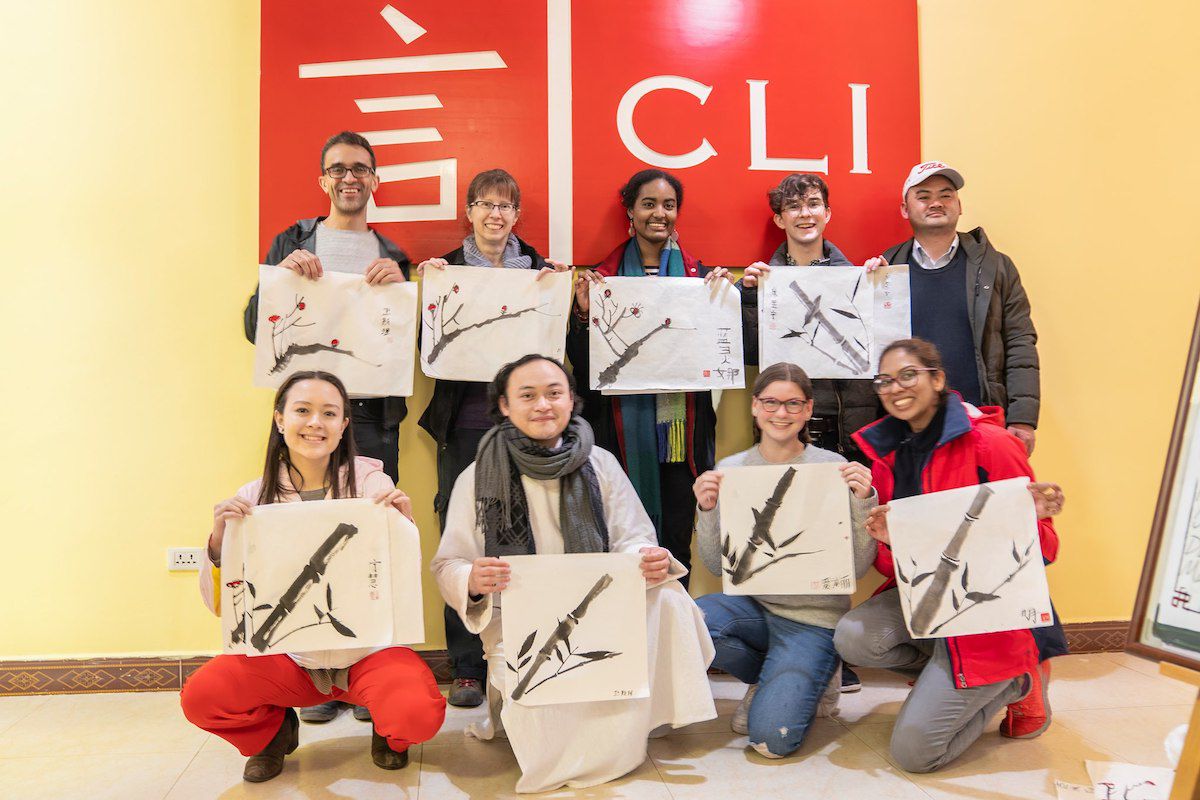
Brush painting of bamboo is something students have tried alongside calligraphy, using the same brush and ink for both.
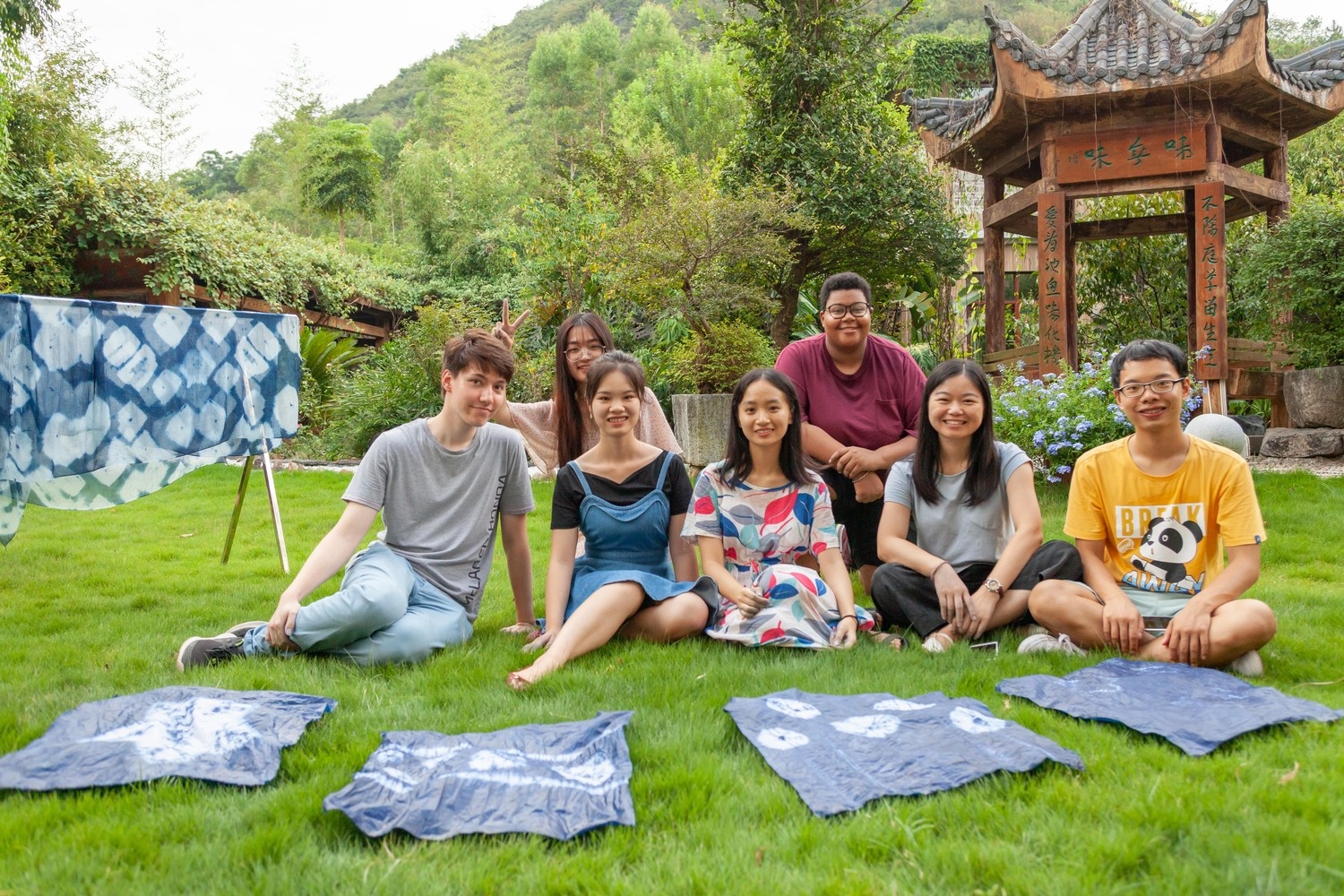
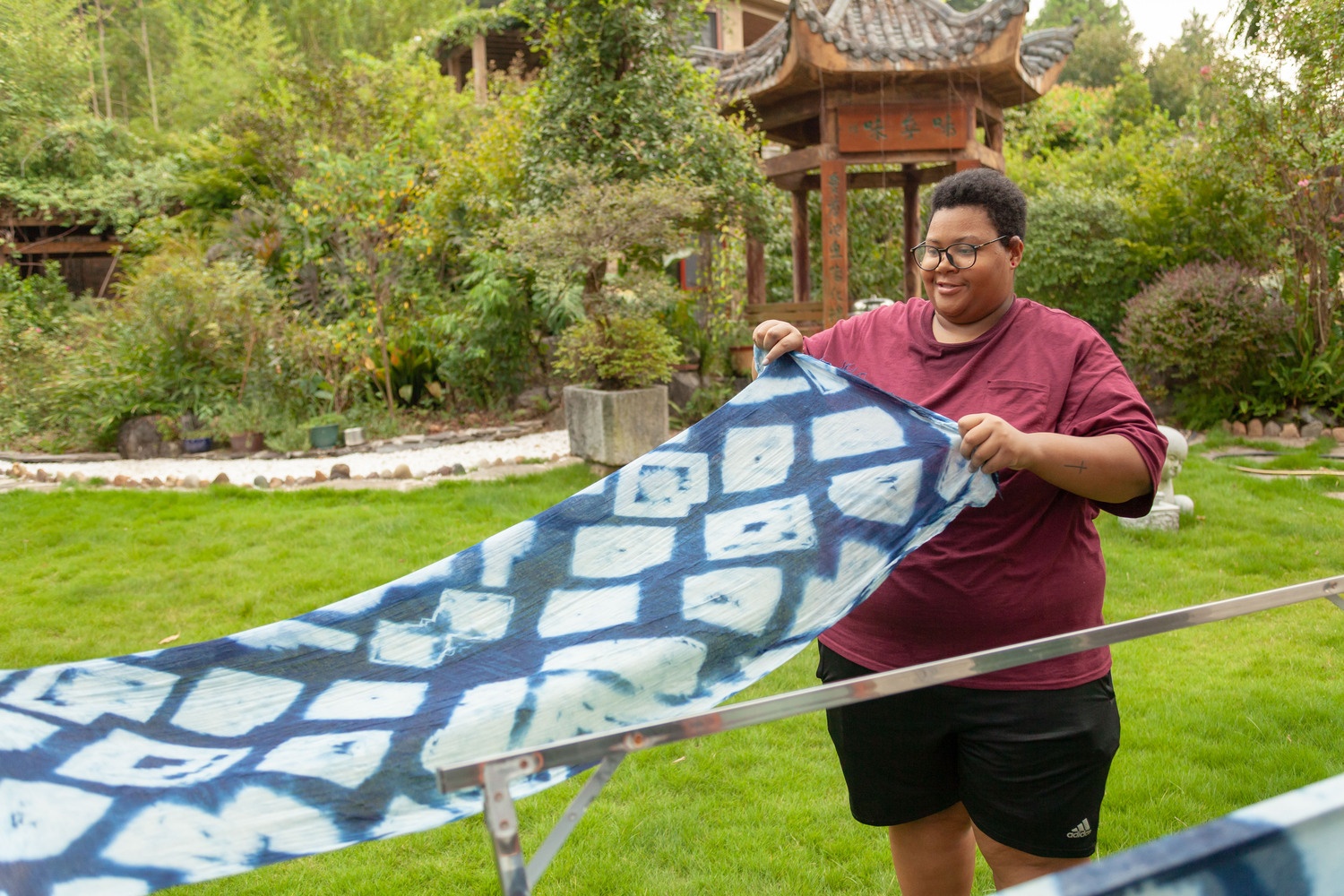
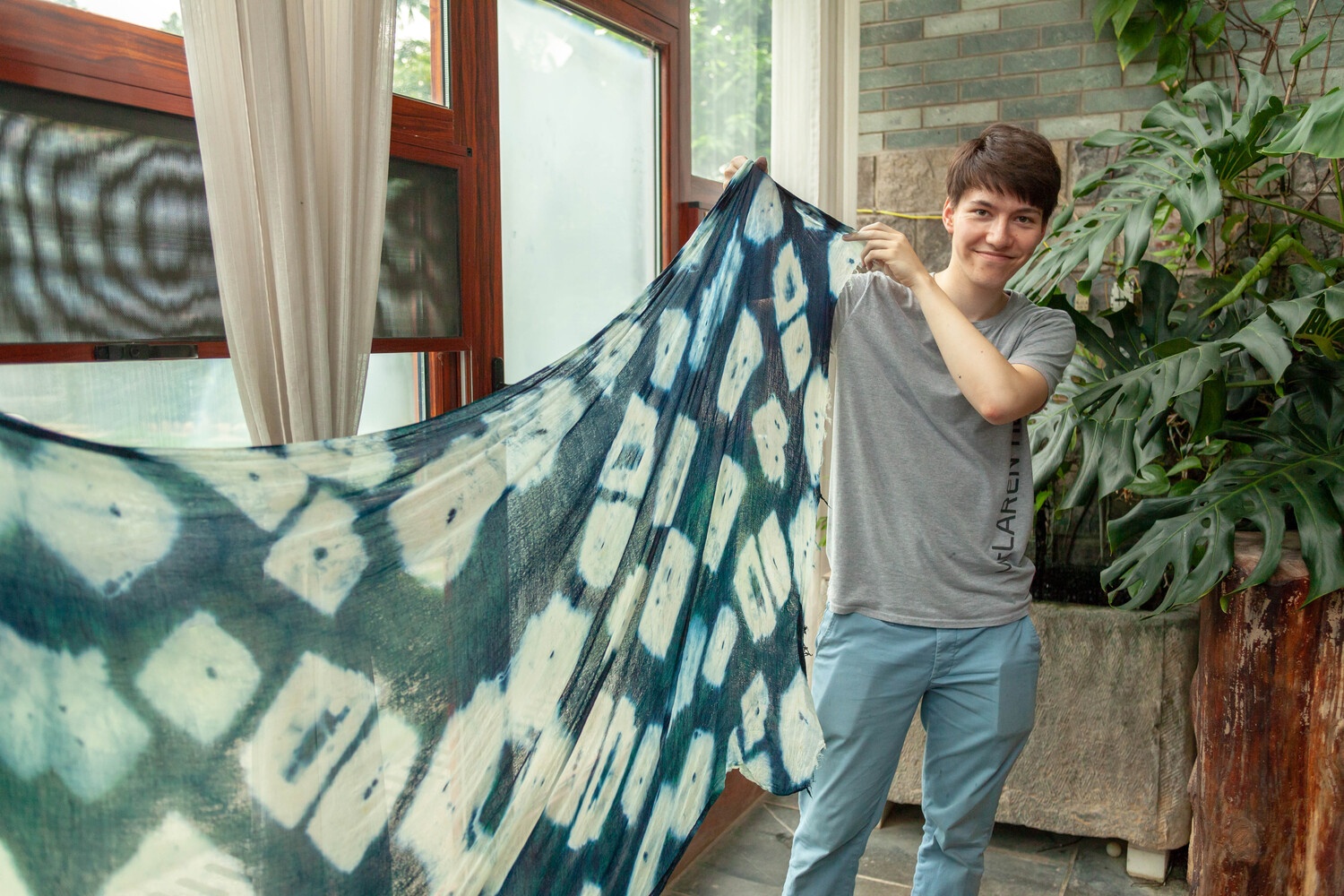
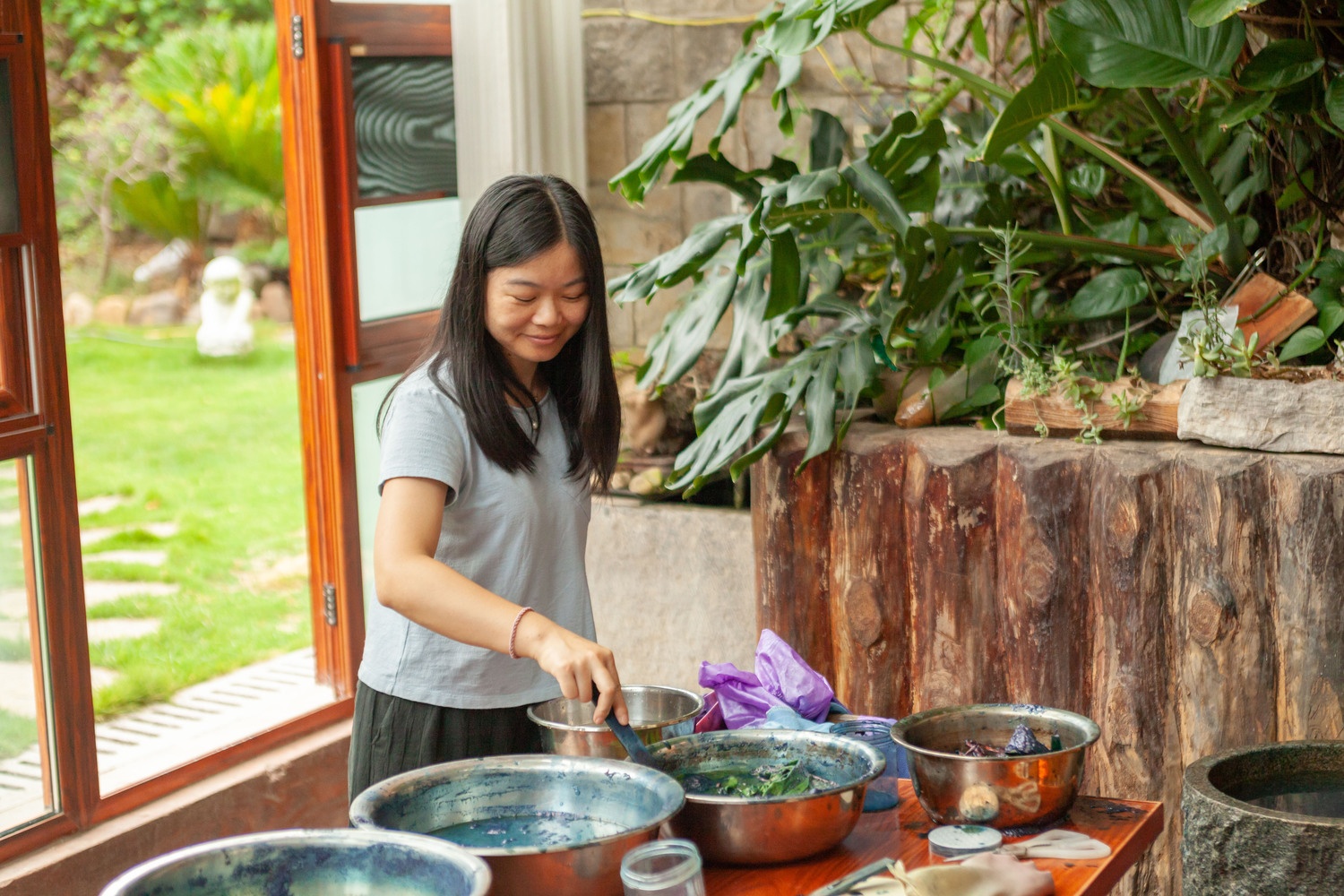
Tie-dye cloths dry on the lawn after an outdoor craft session, one of the hands-on afternoons students have spent with CLI over the years.
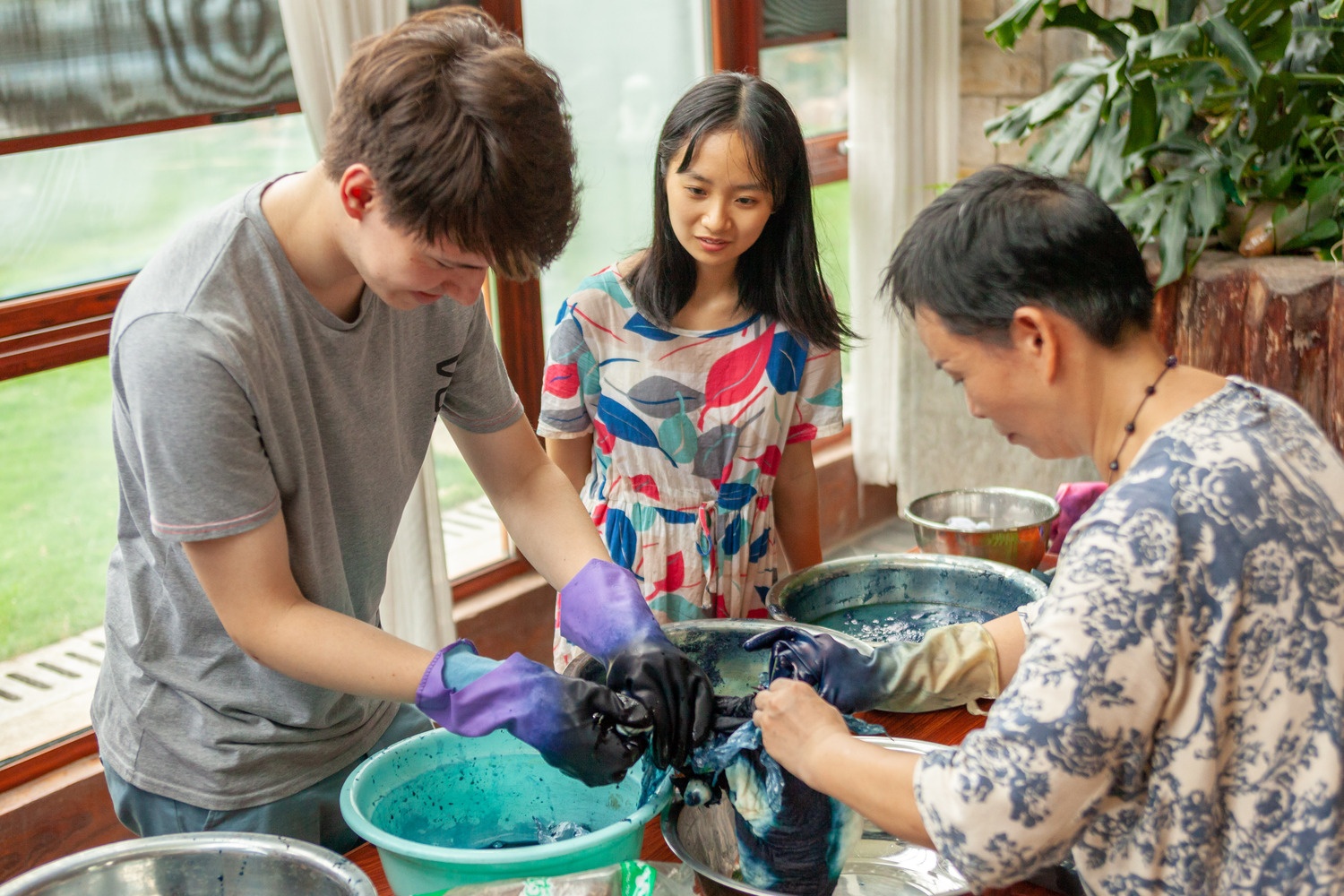
Gloves go on for the dye bucket, with an instructor close by to help. Some CLI students have spent an afternoon on tie-dye and gone home with the cloth.
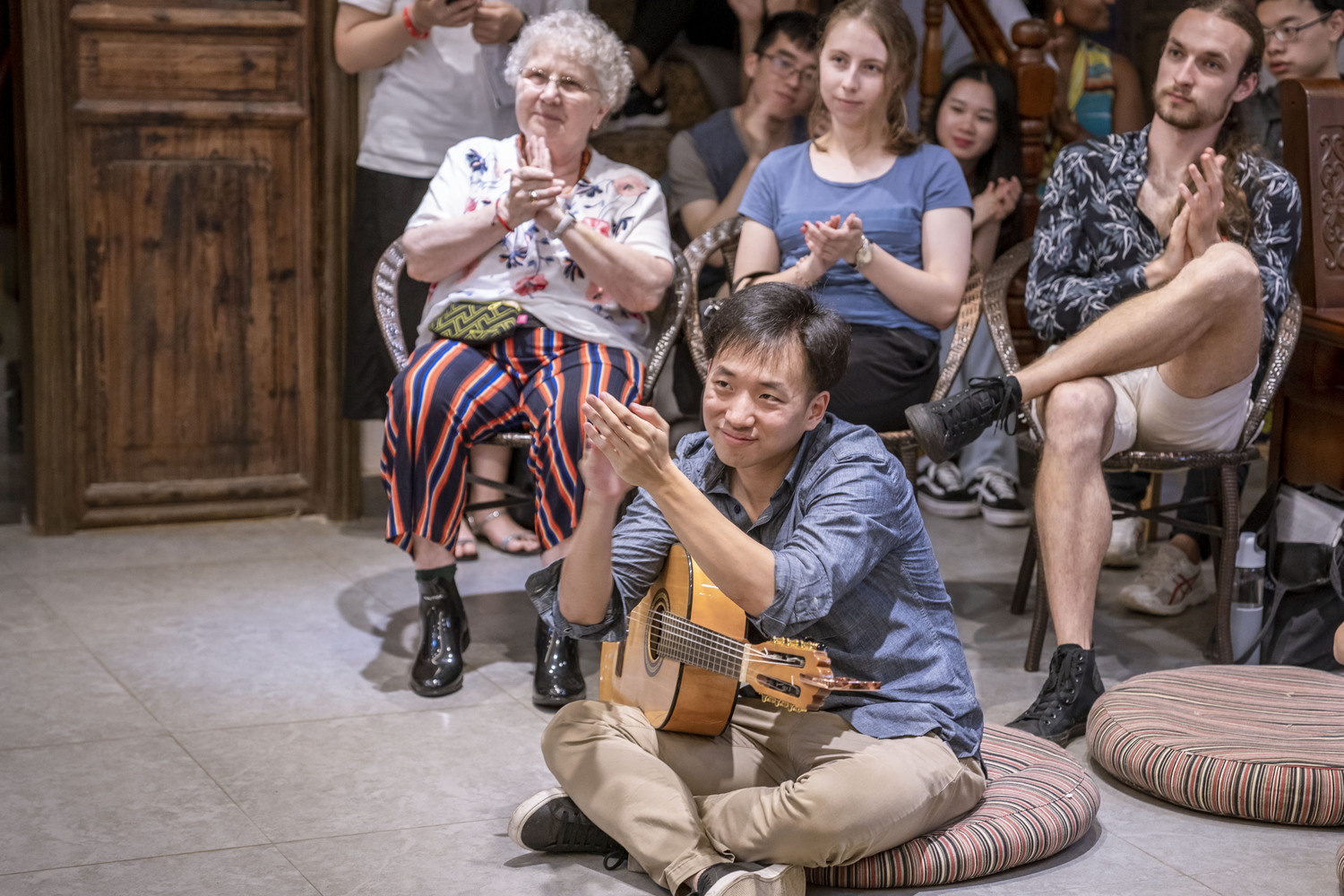
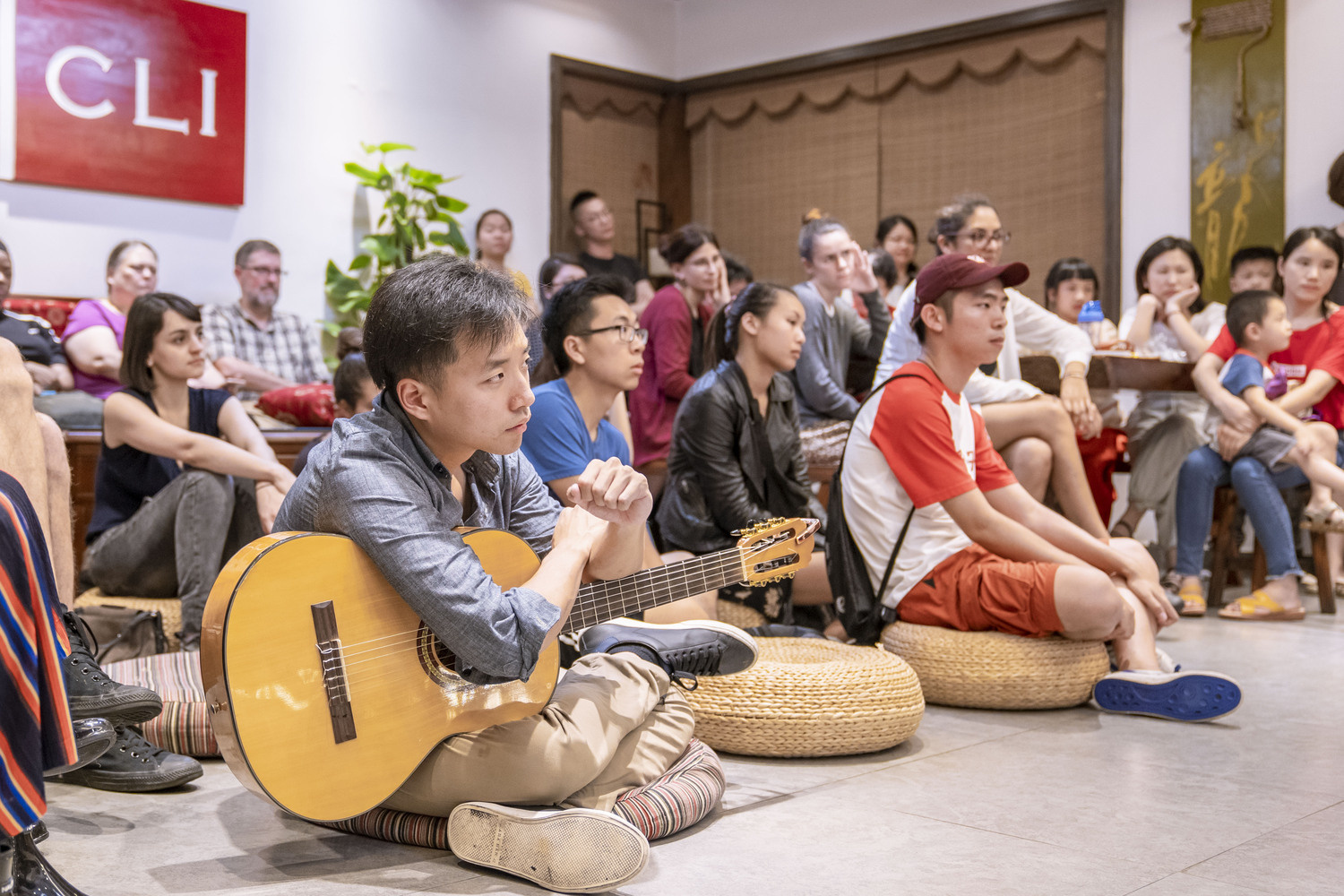
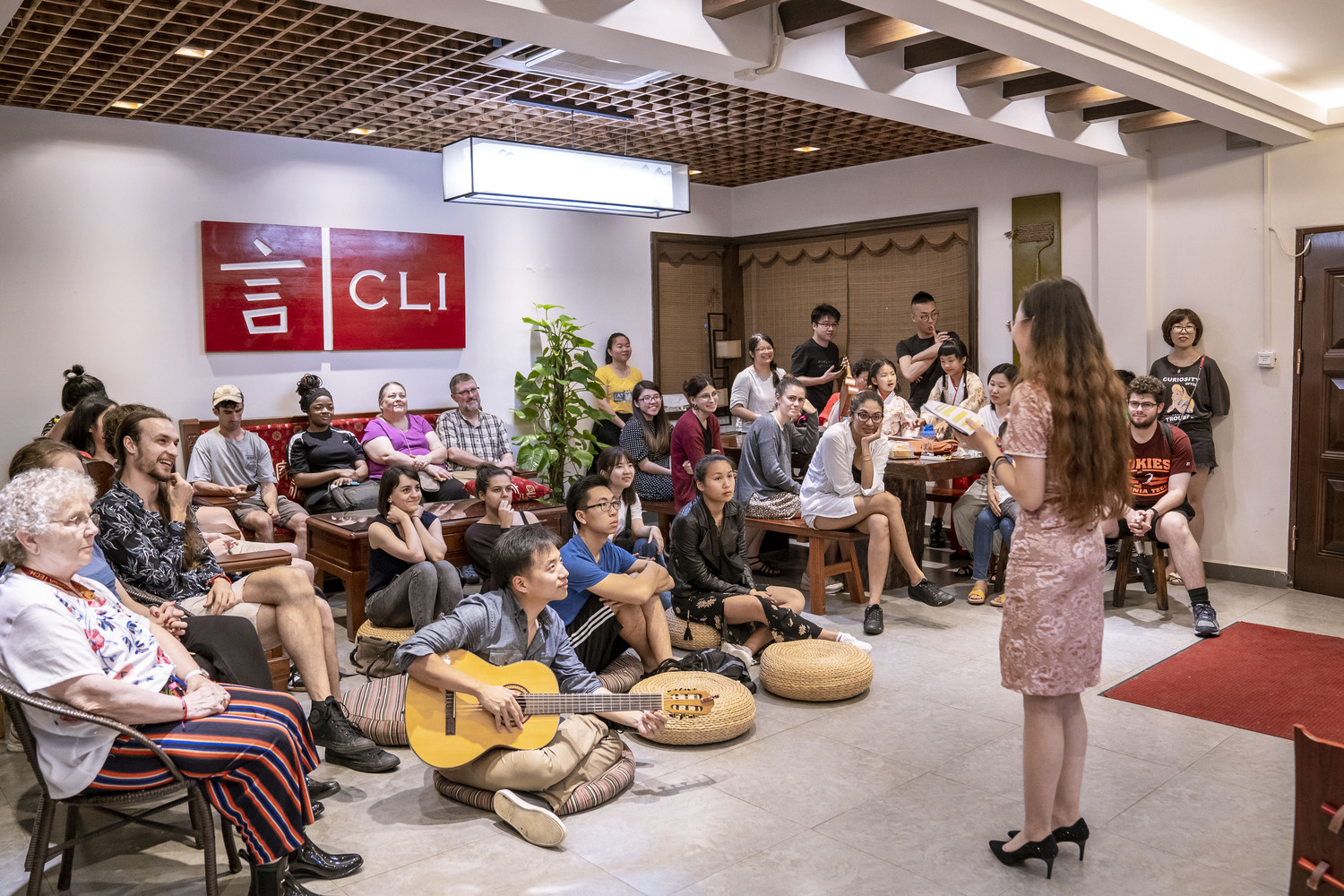
A guitarist on a floor cushion gets the front row clapping along. Movie nights and festival celebrations are part of CLI's activities too, for evenings when the books can wait.
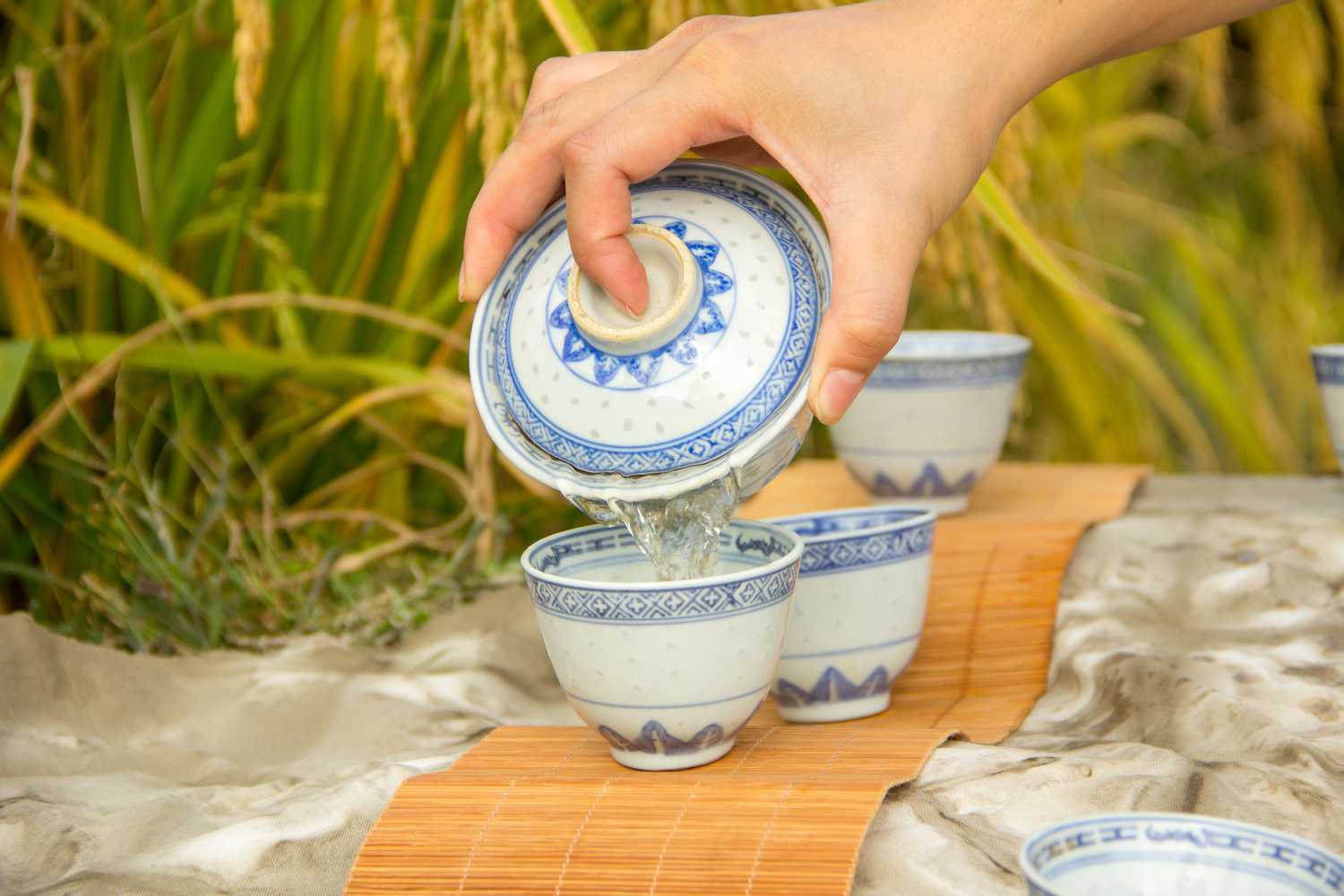
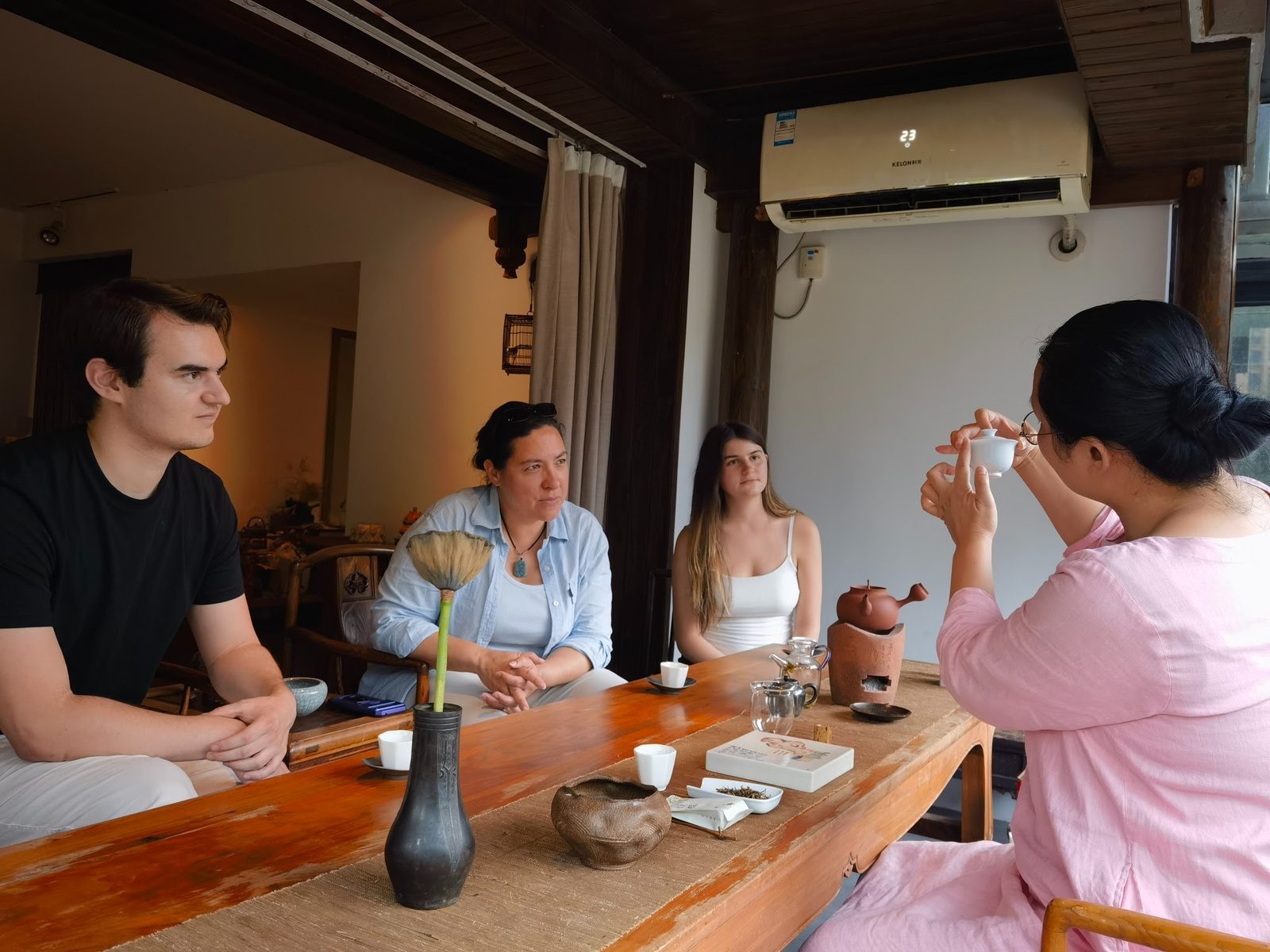
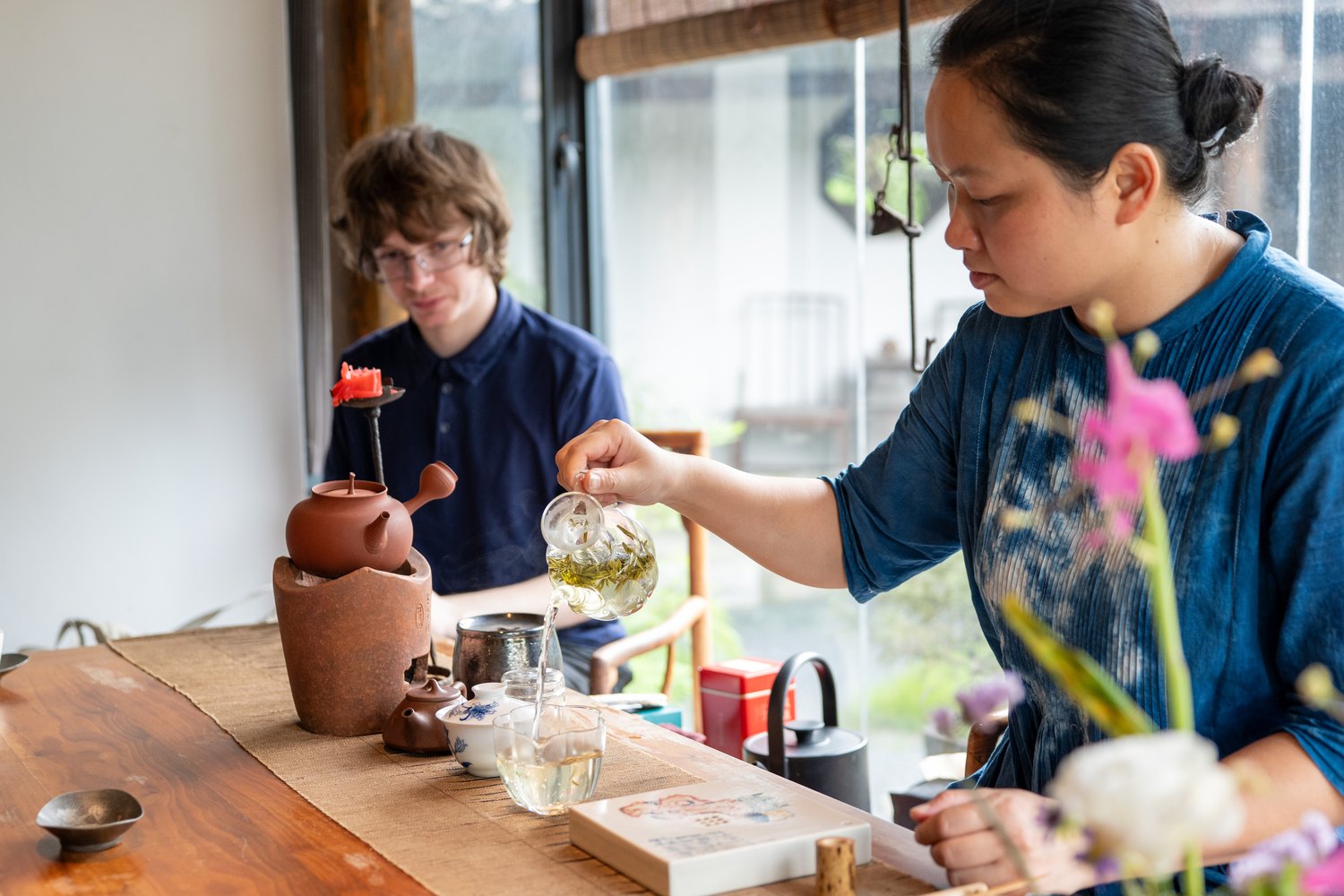
Small cups filled one after another close out a tea ceremony, which is one of the activities students can join at CLI.
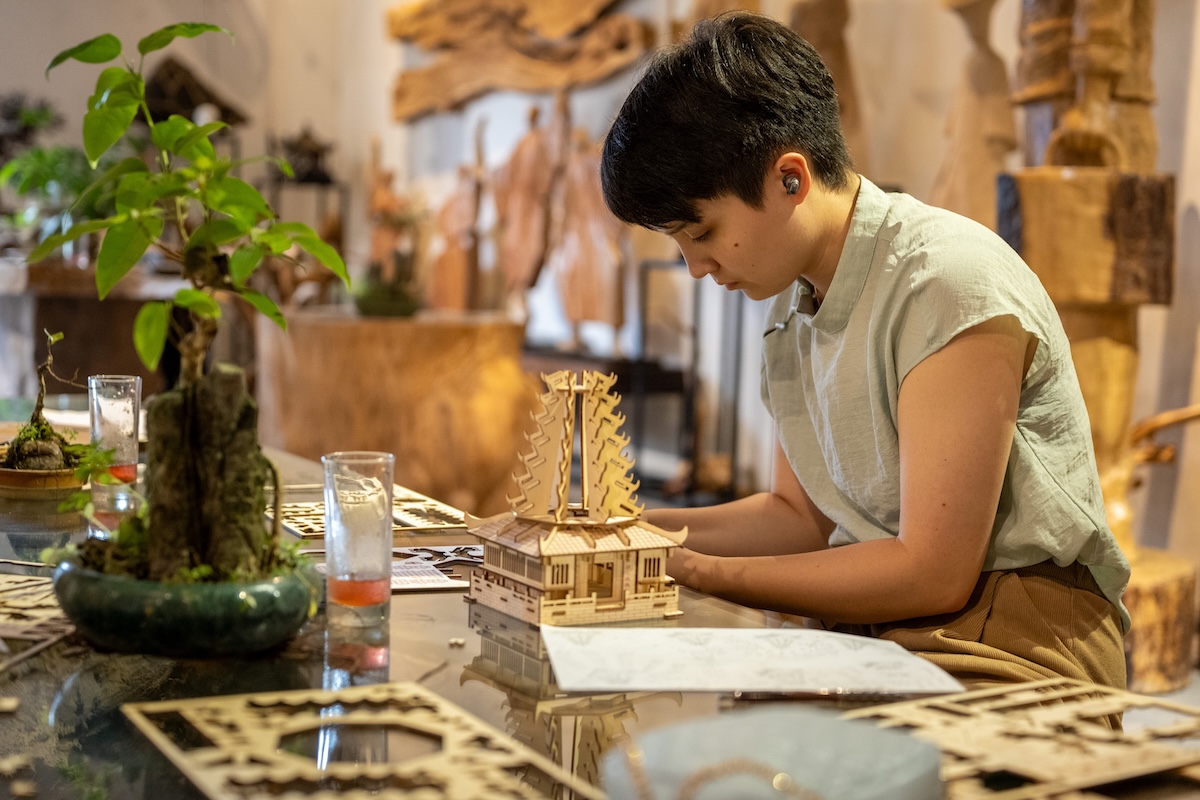
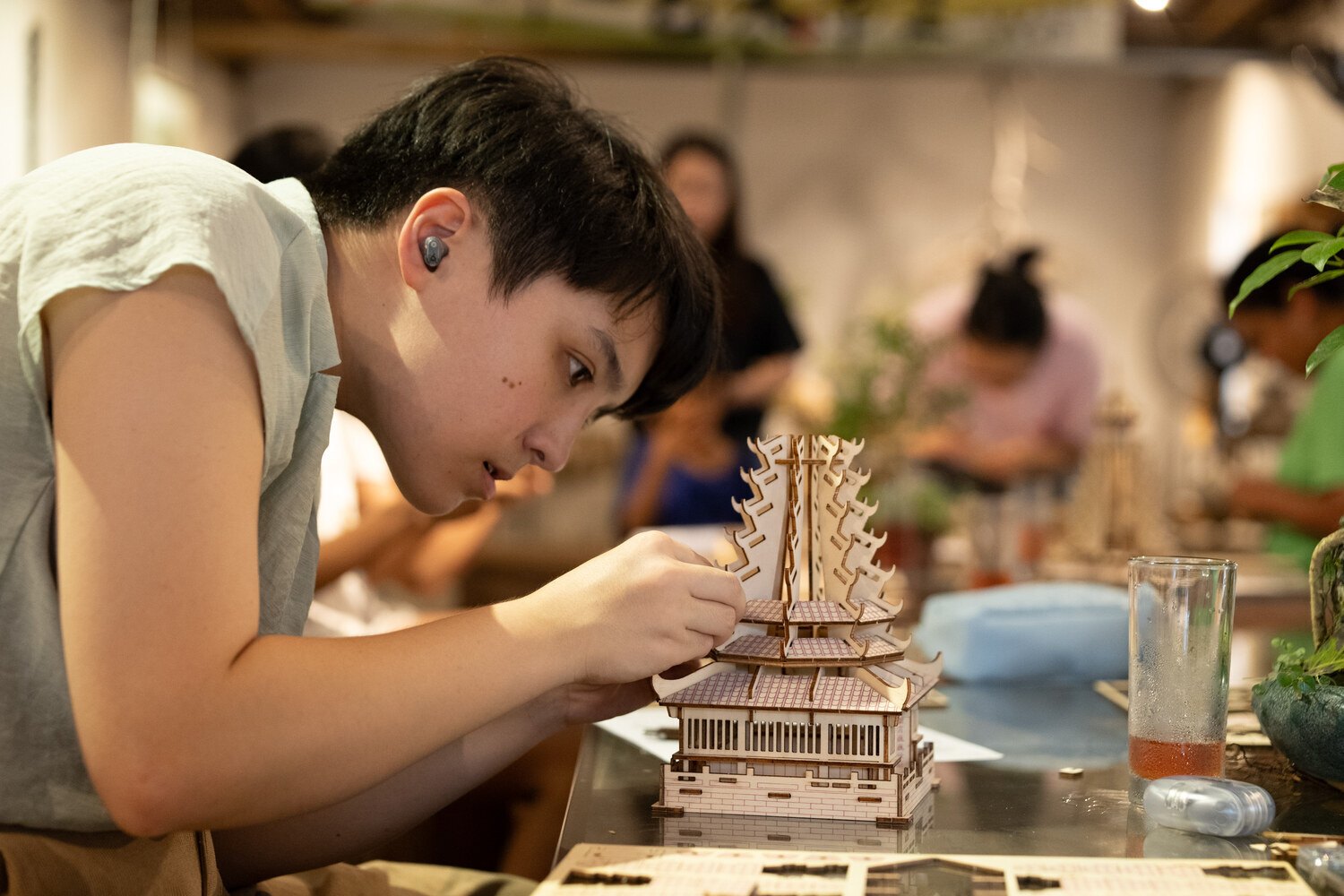
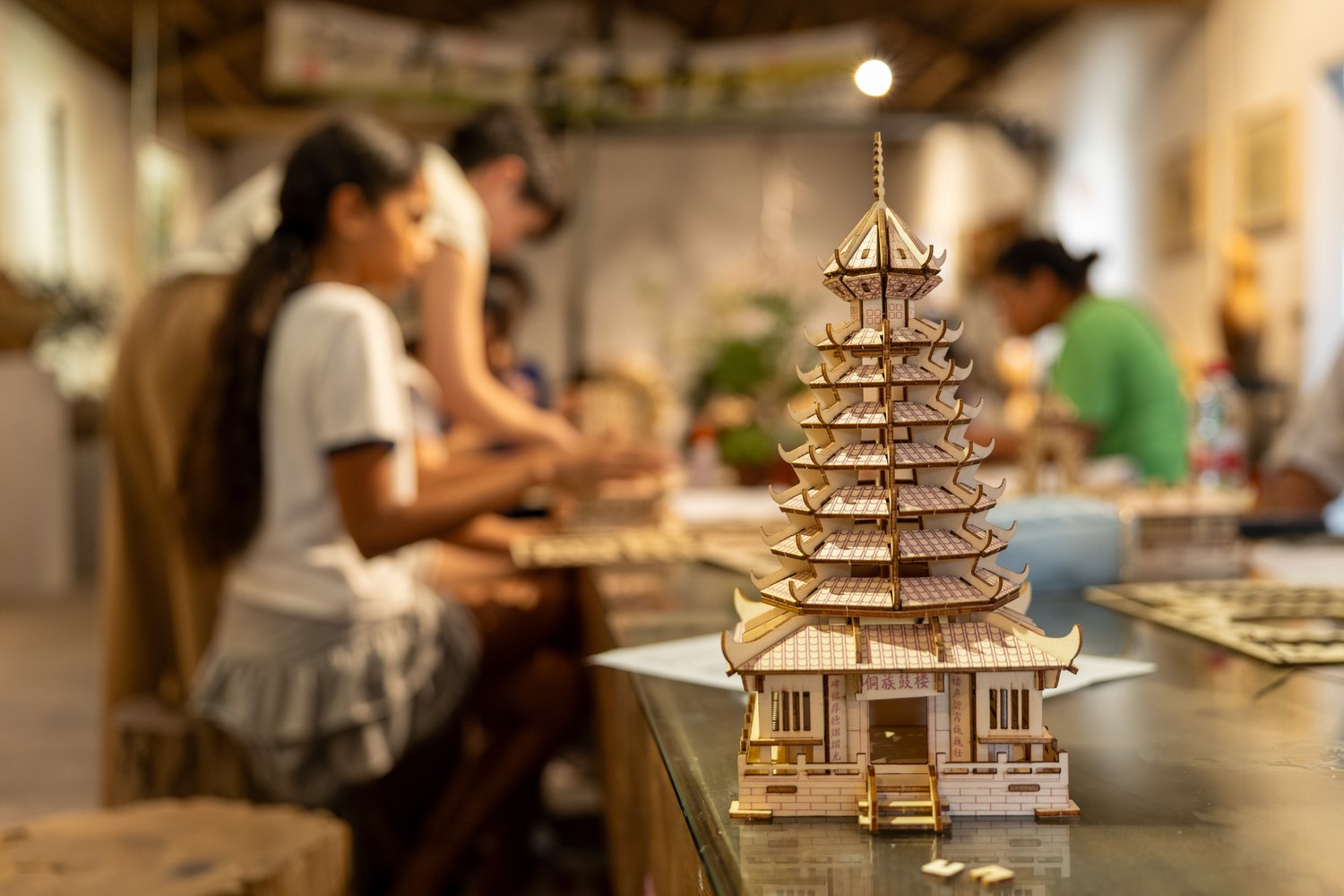
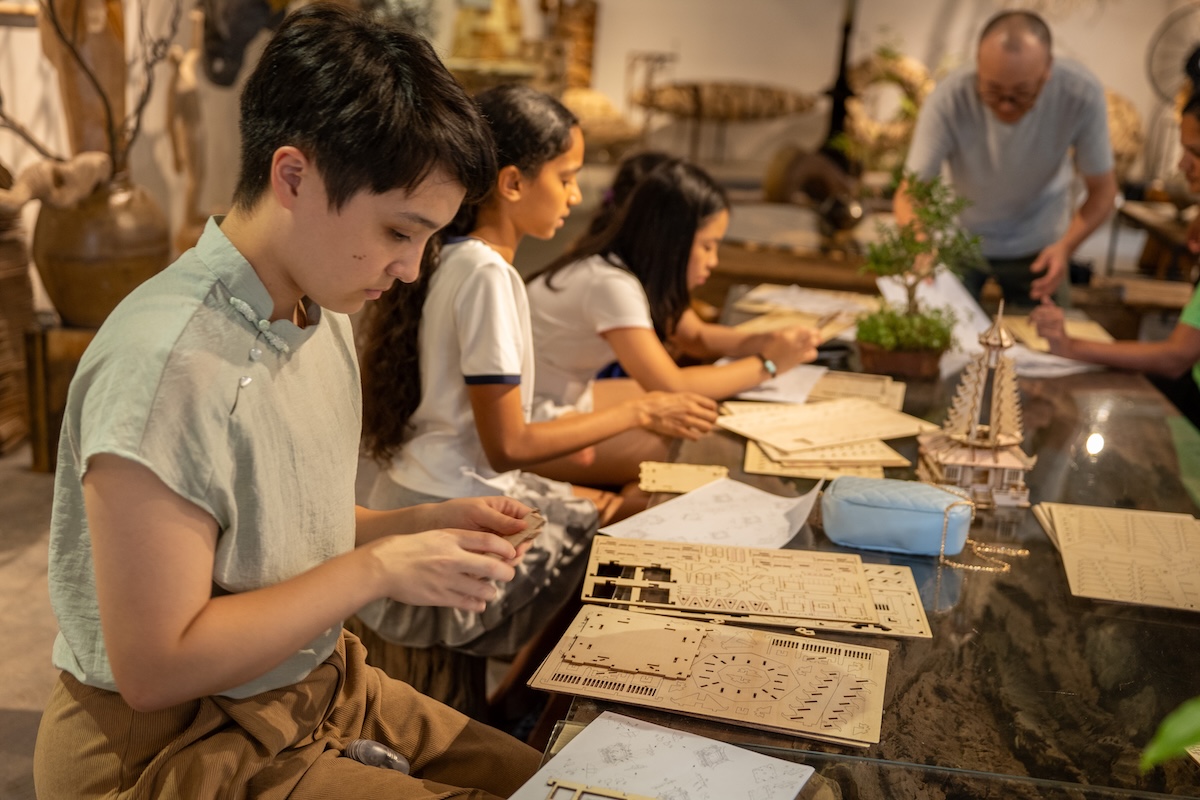
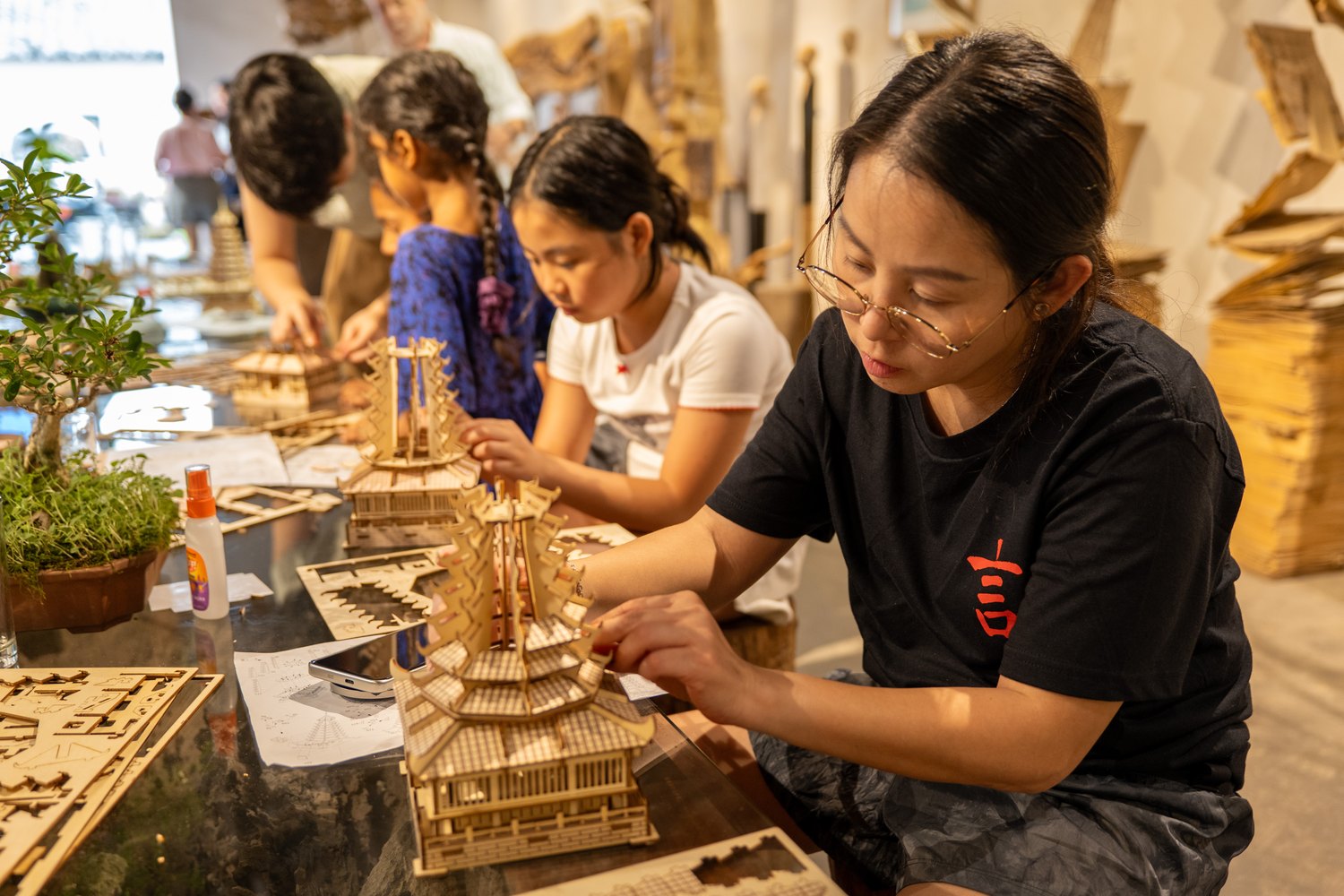
Building a wooden pagoda piece by piece is slow, careful work, and this joinery session was one of the weekly activities CLI runs outside class.
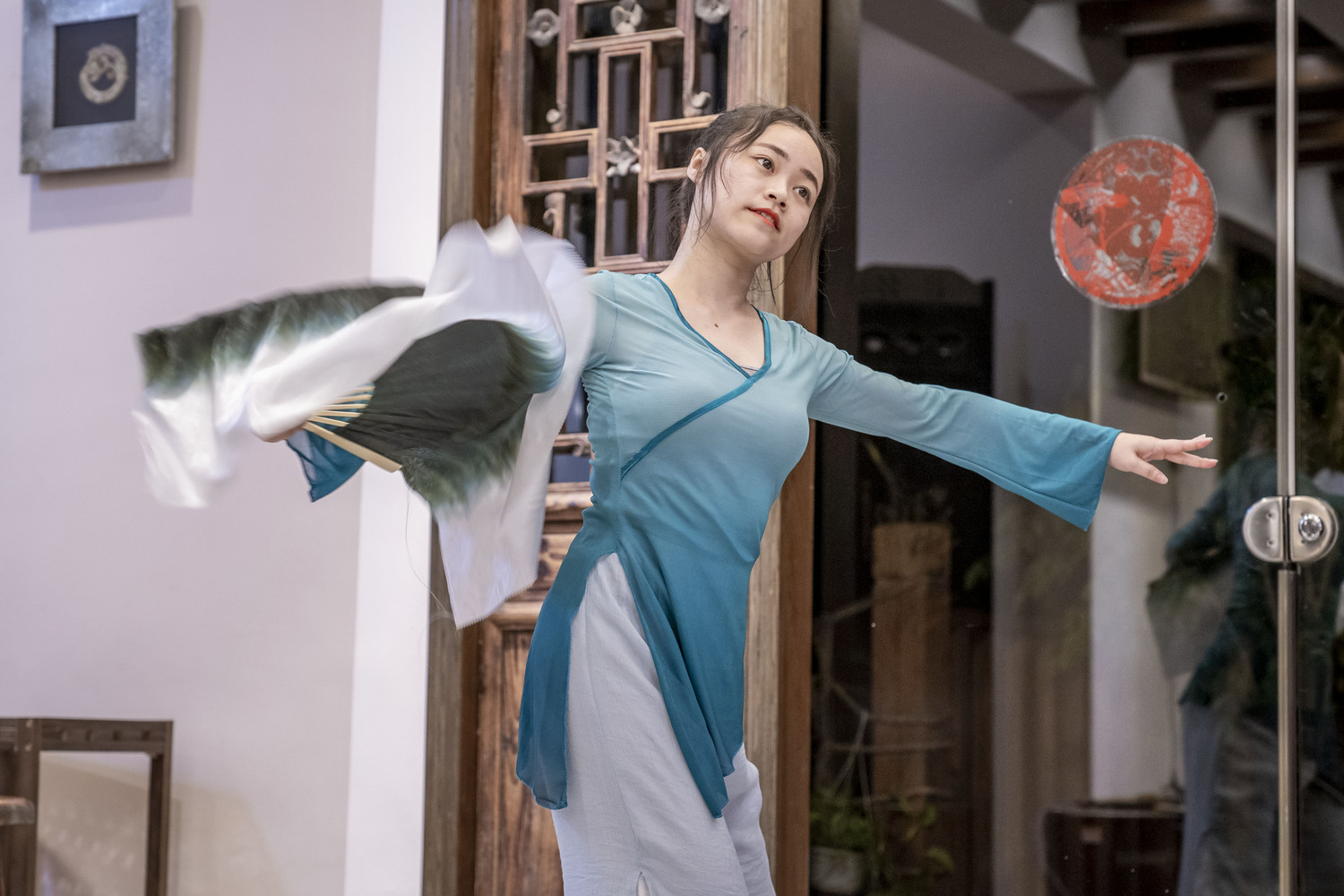
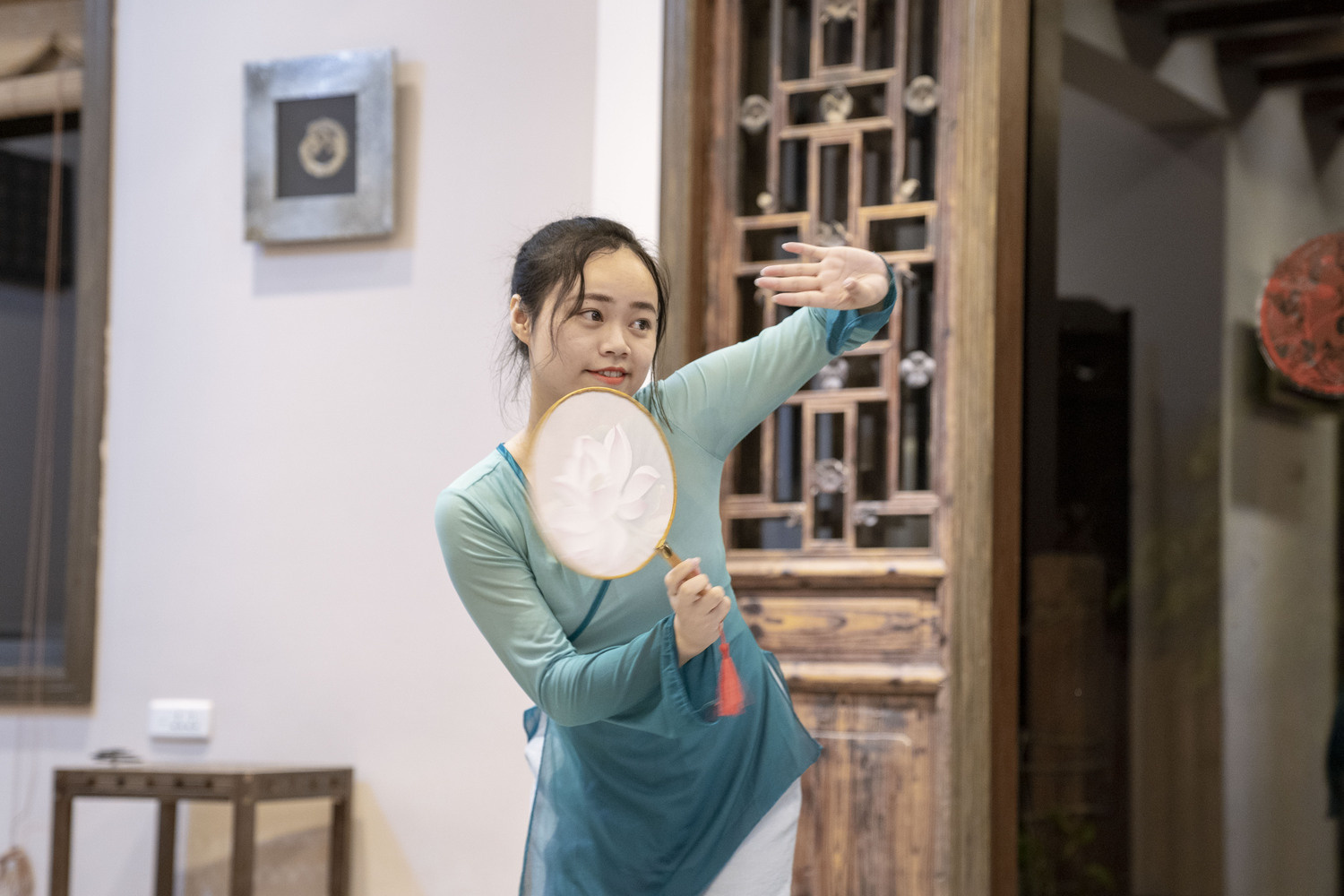
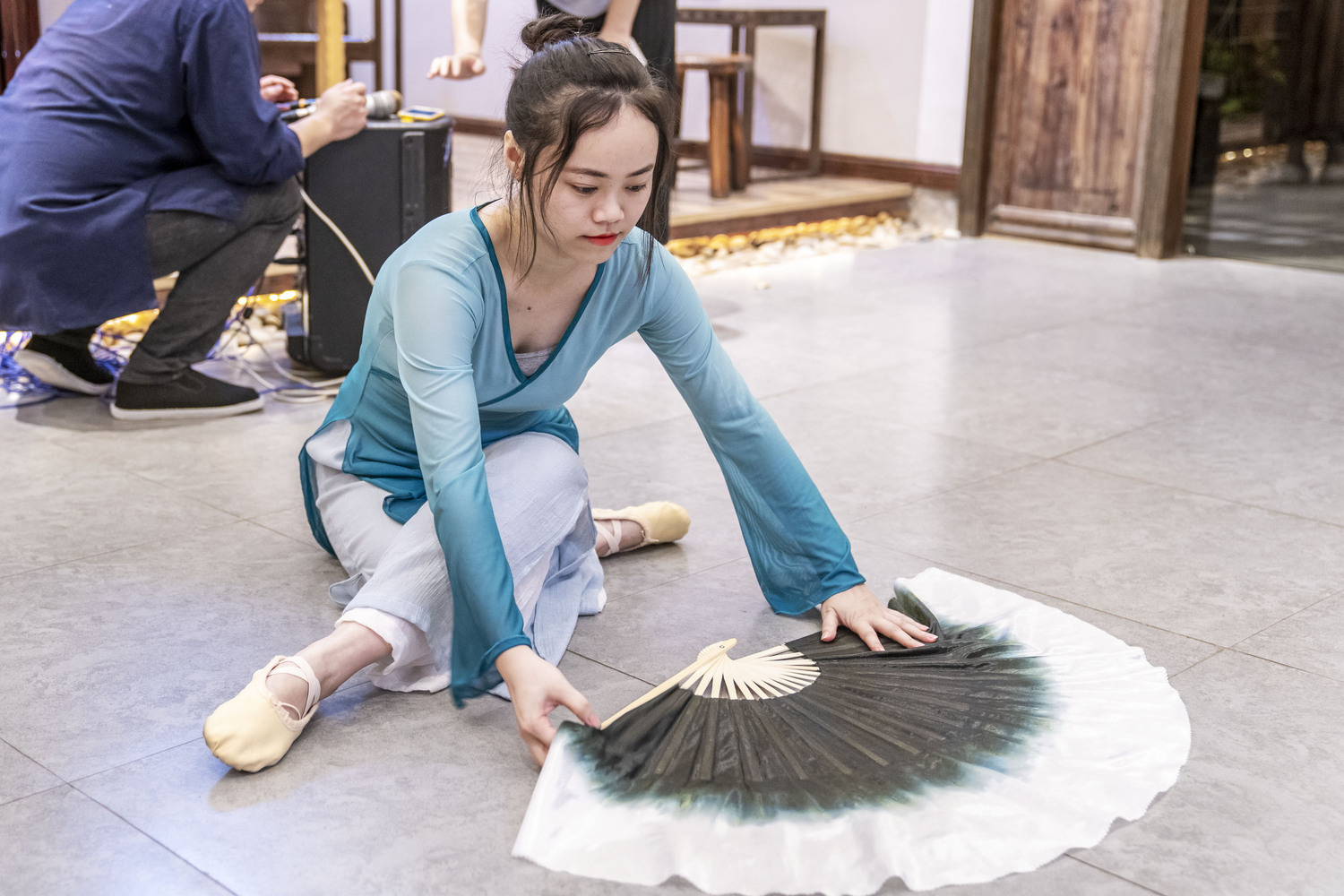
Long sleeves and a silk fan trail through every turn of this dance, and watching a performer this close is one of the cultural experiences students have had with CLI.
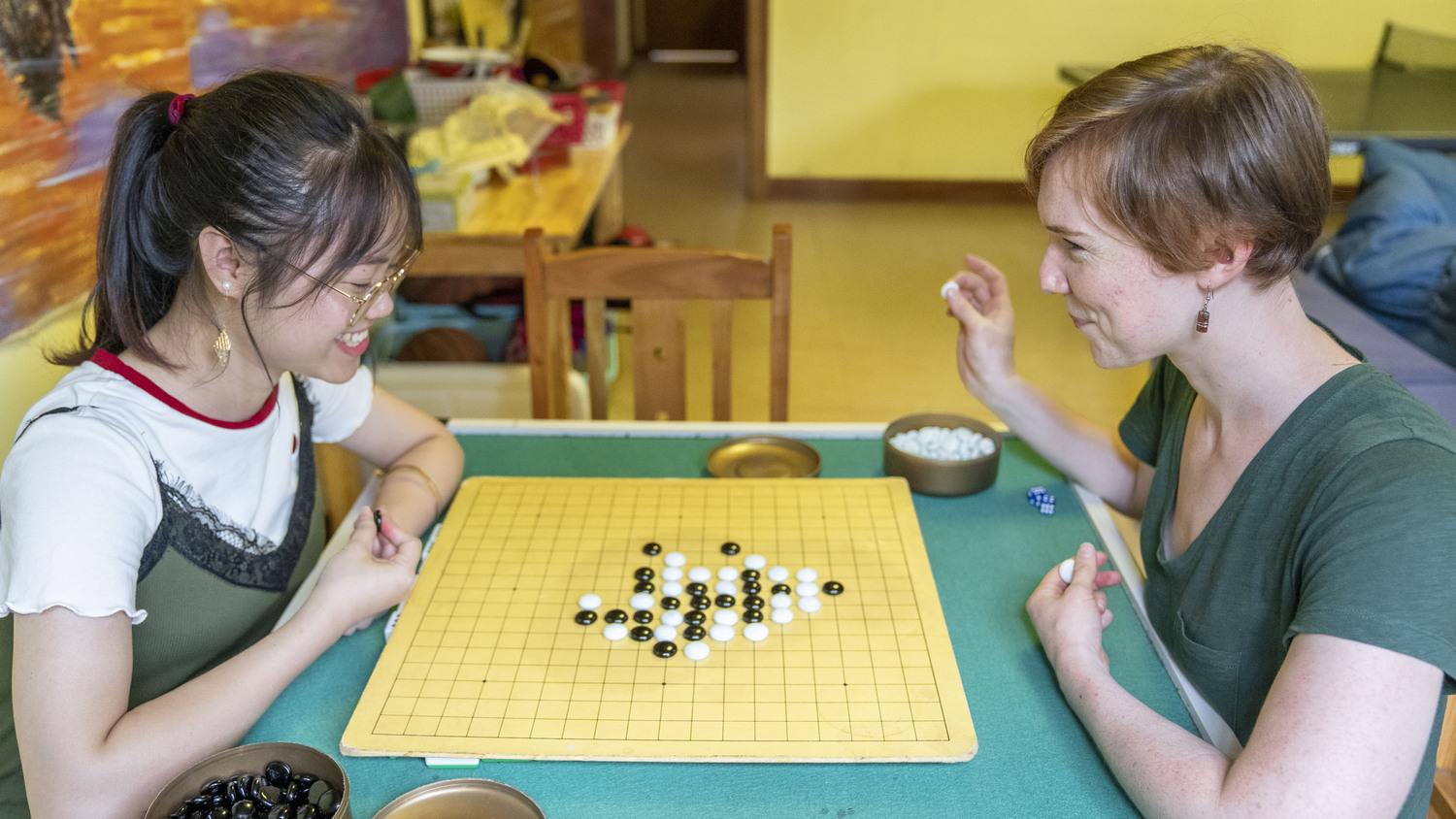
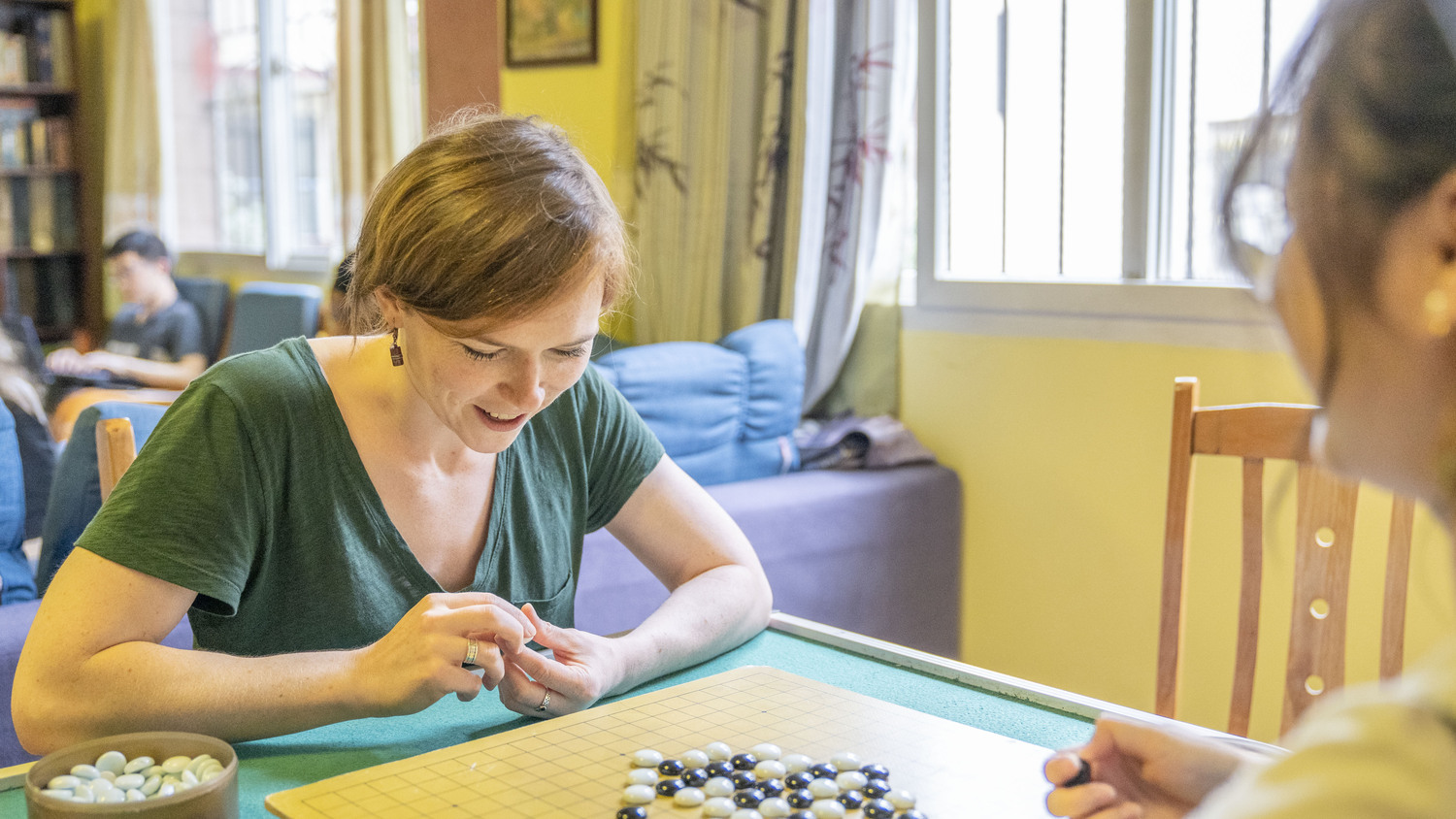
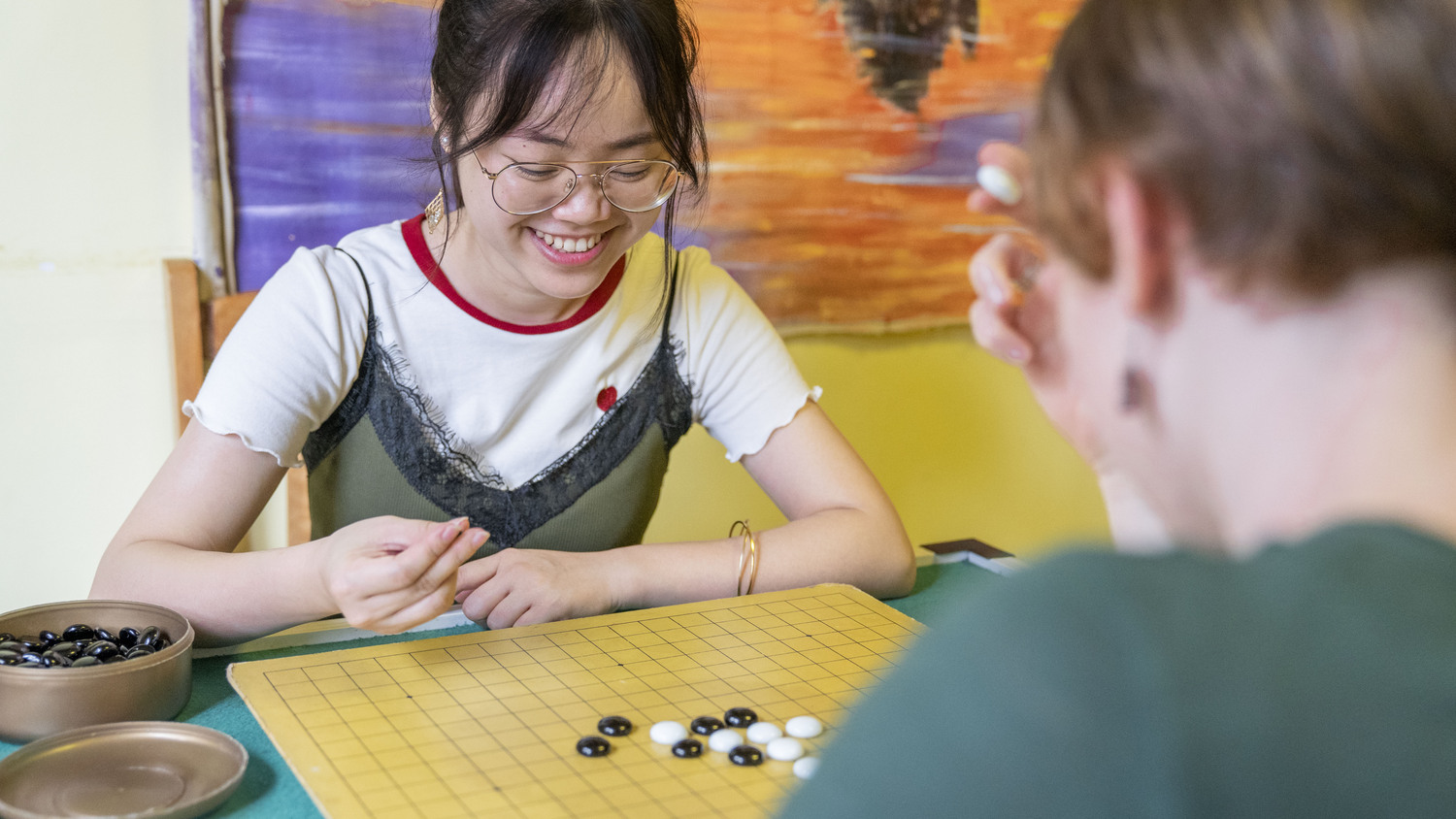
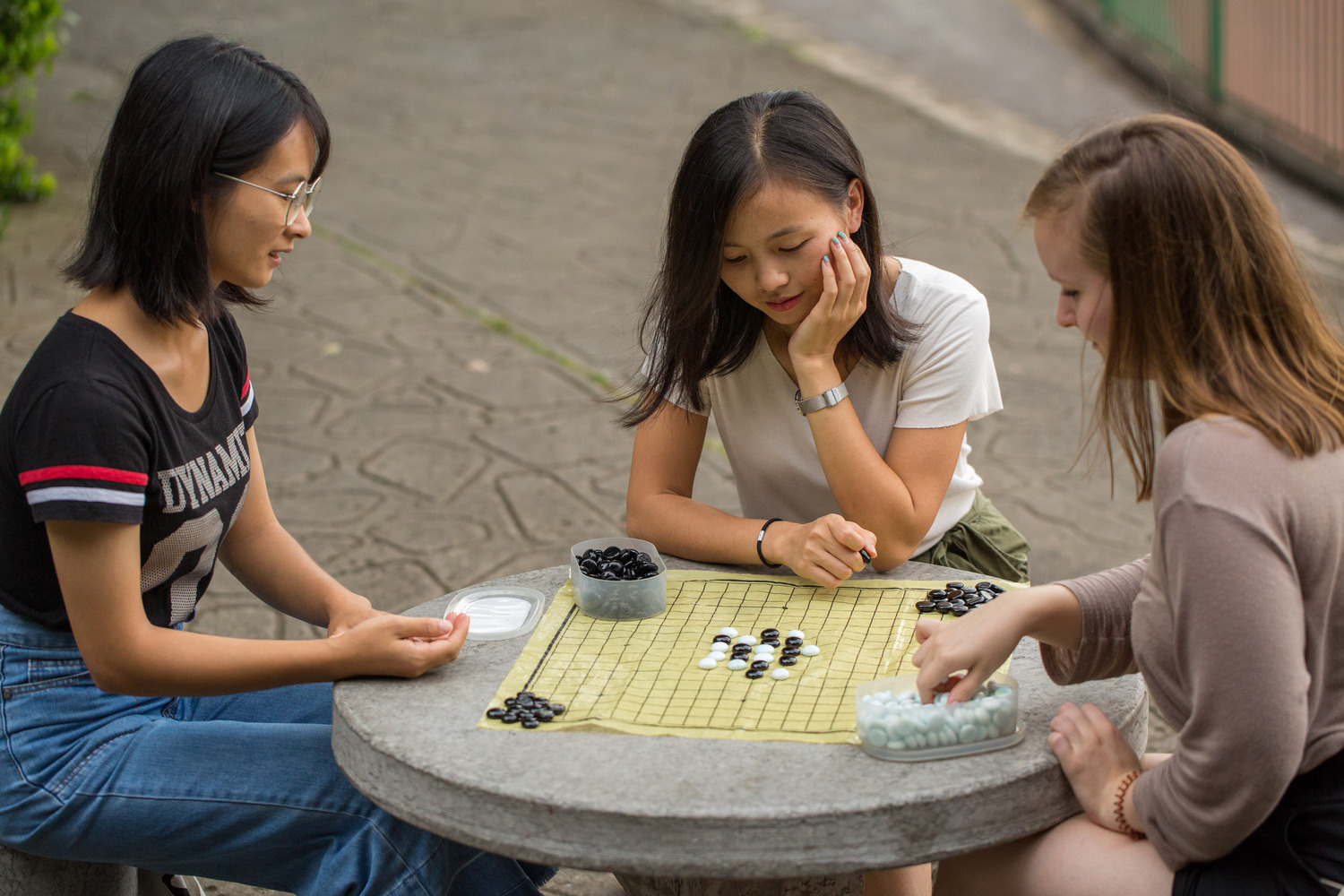
Chinese games like Go are on the activities list, and a slow game across the table leaves room for plenty of conversation in Chinese.
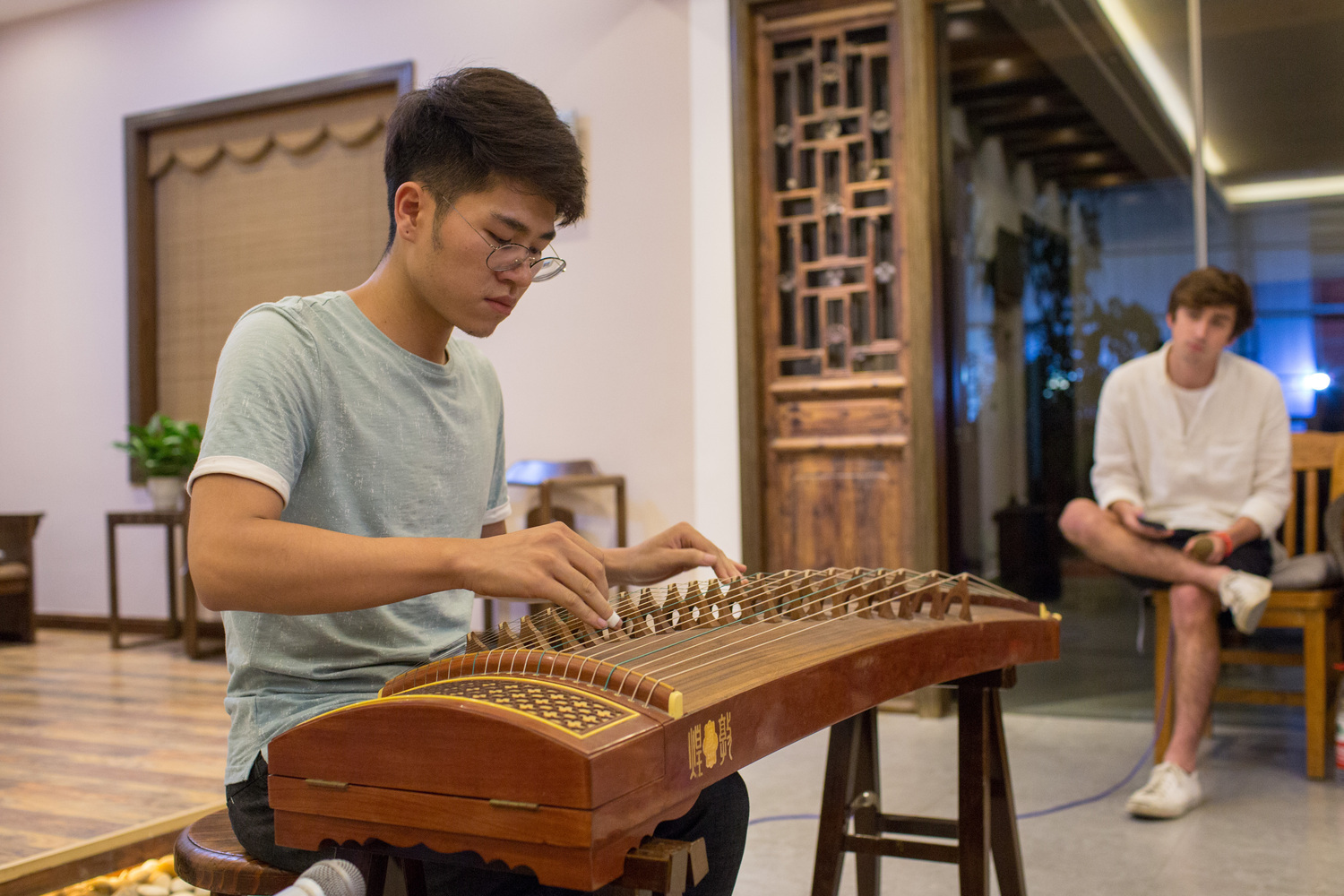
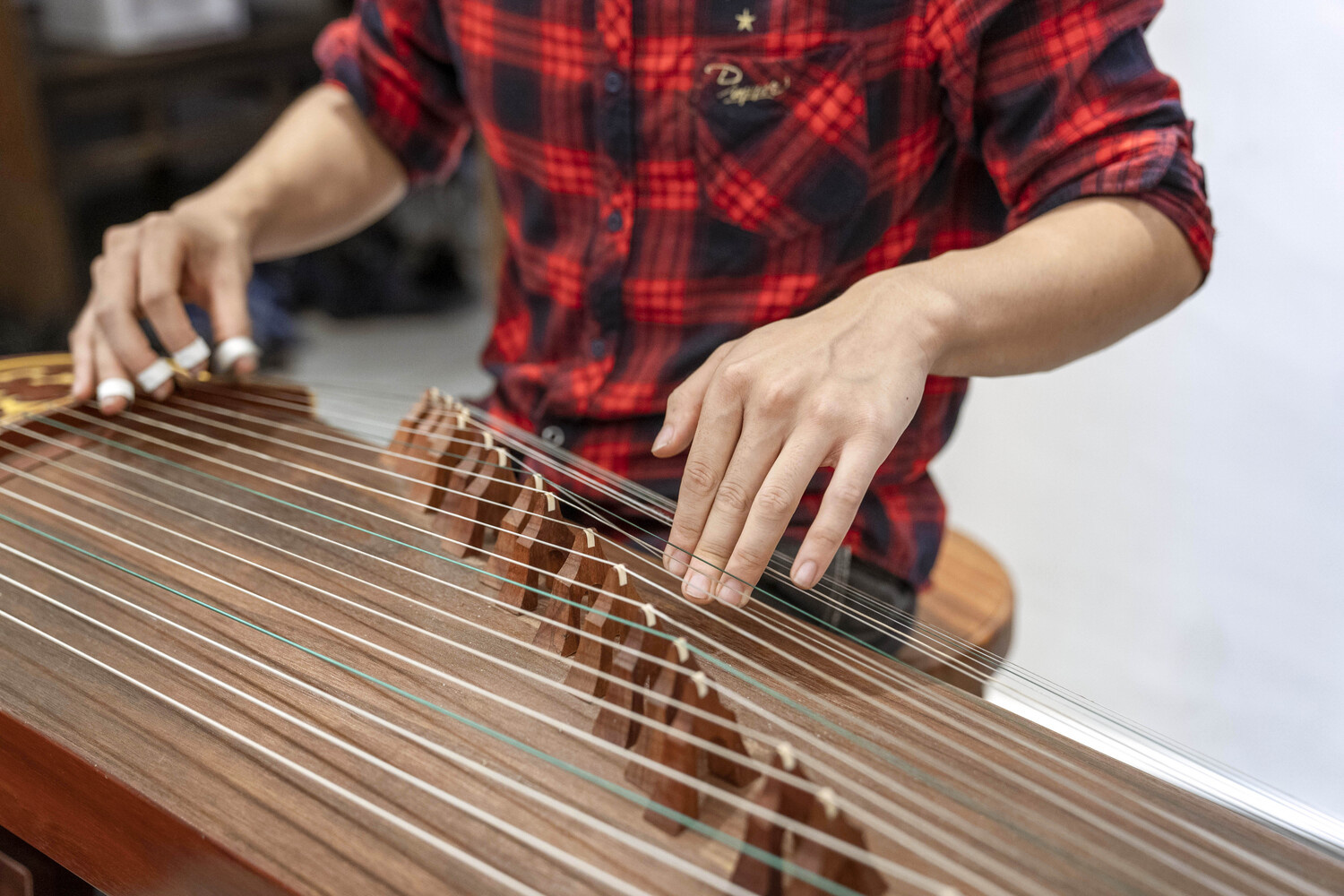
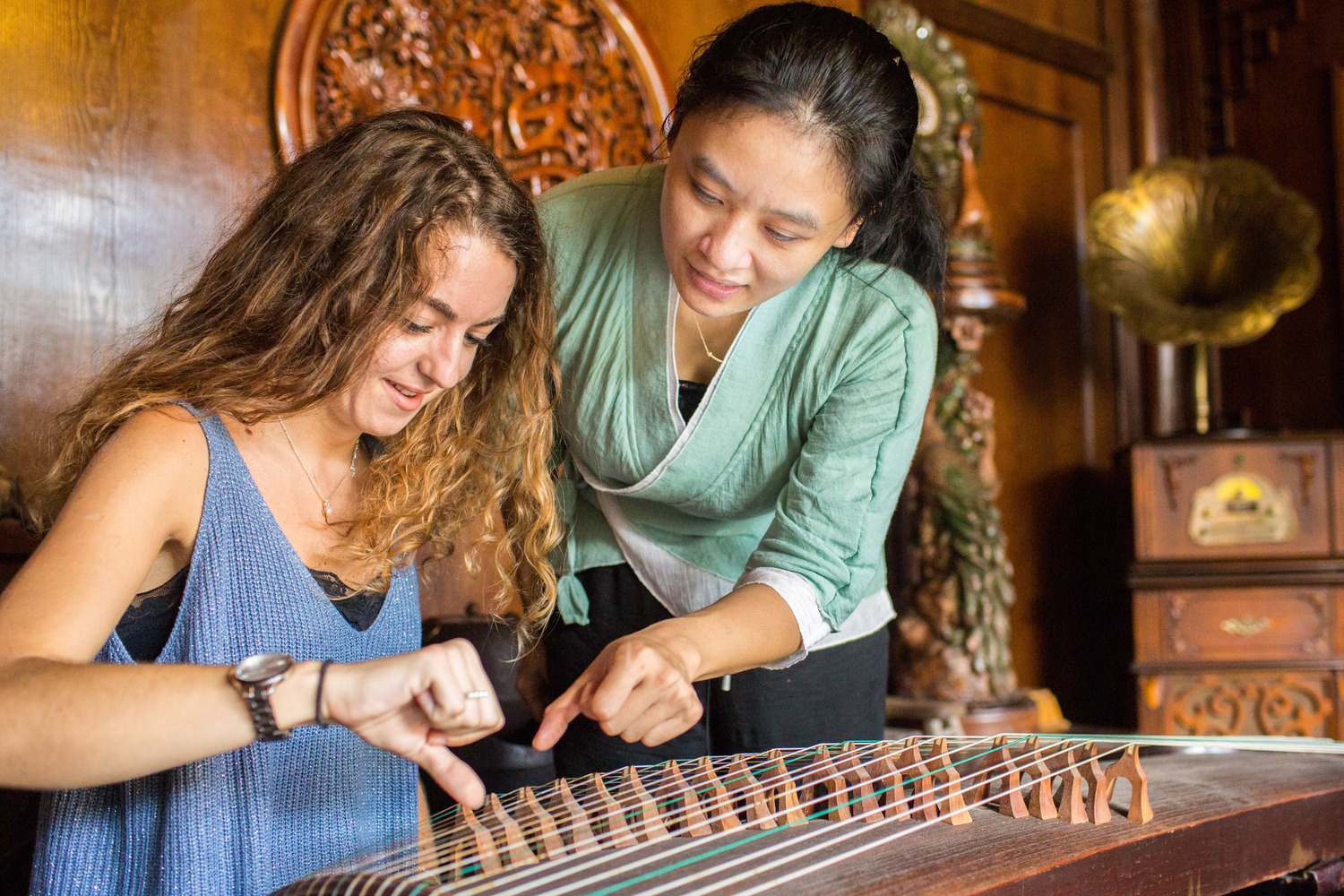
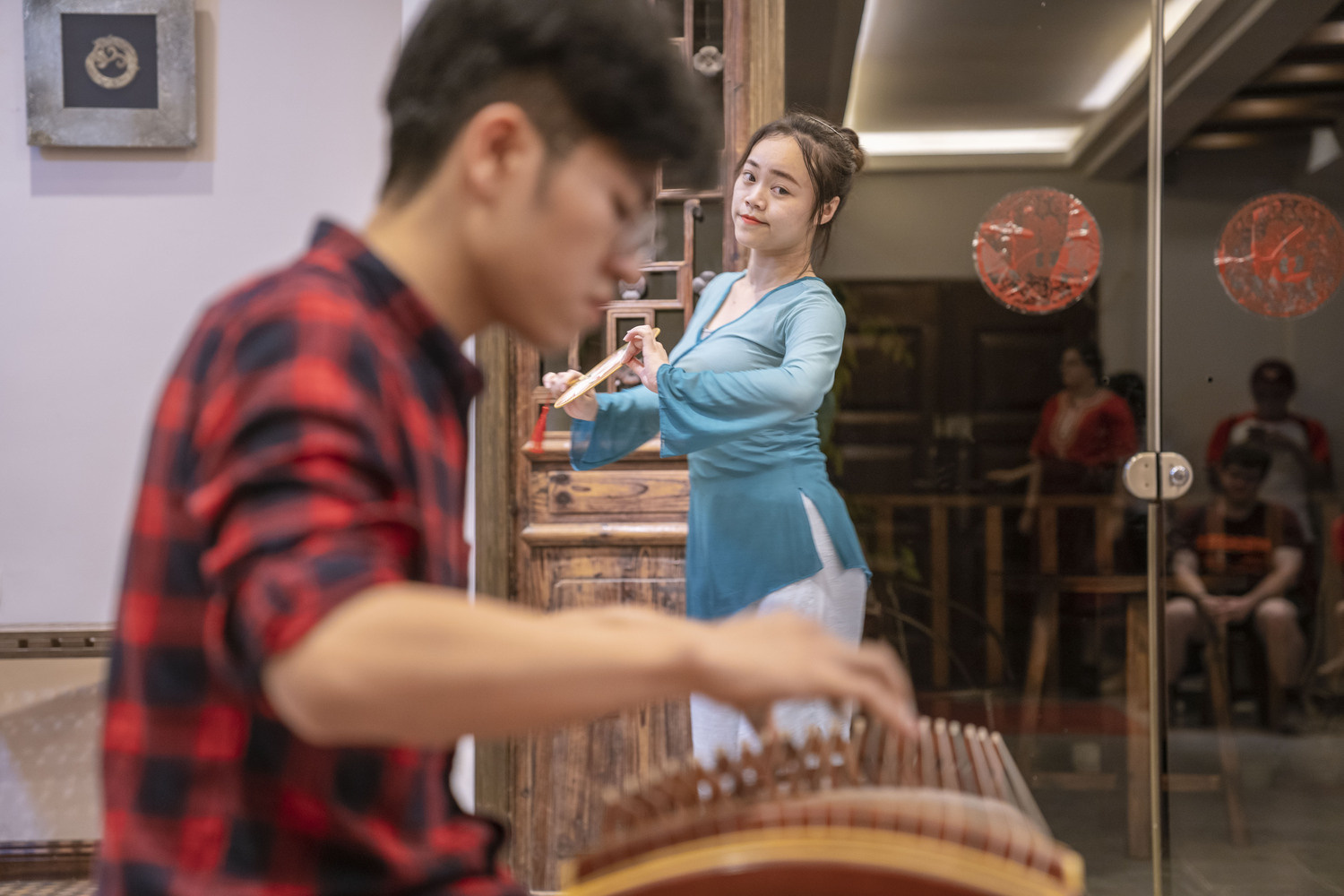
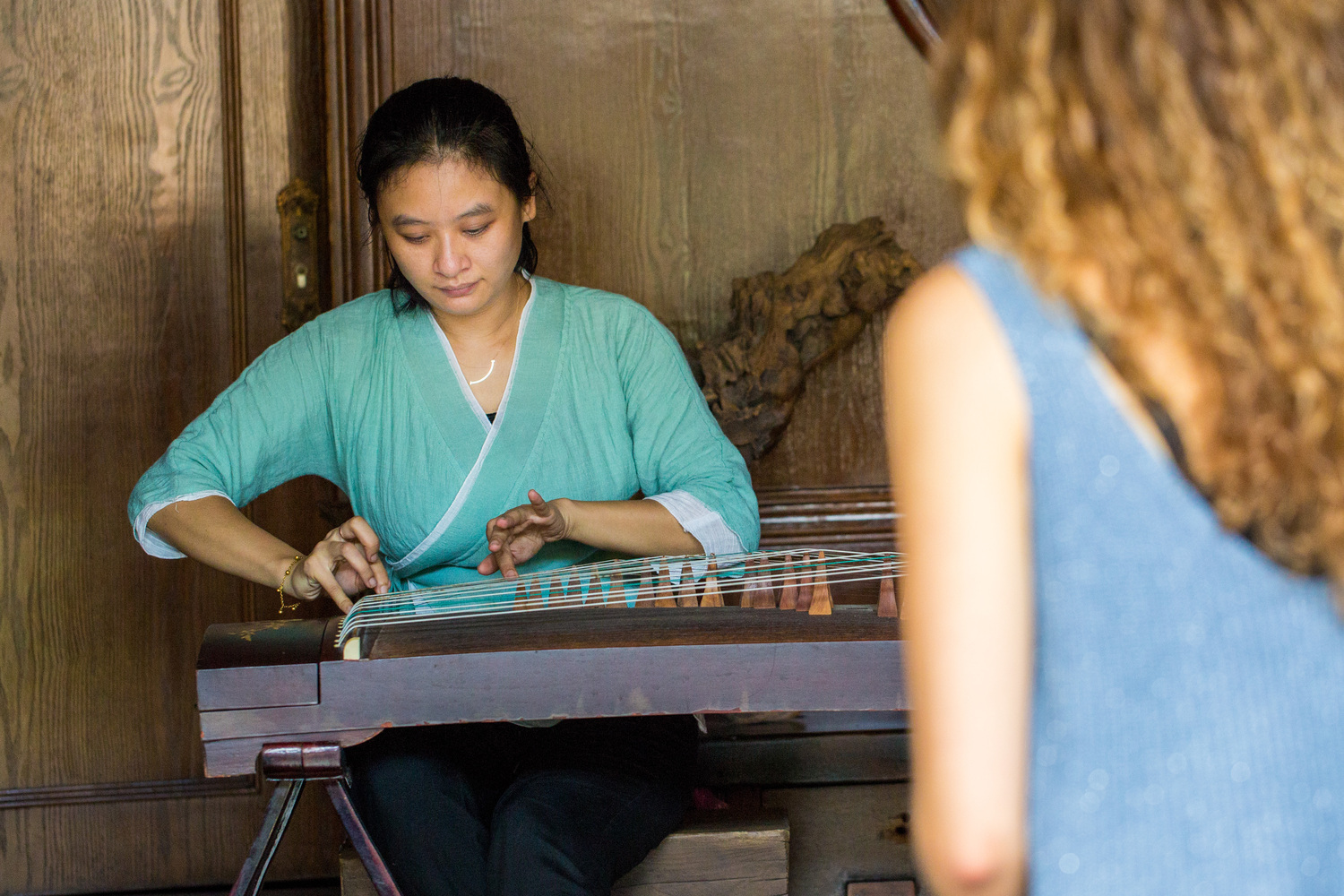
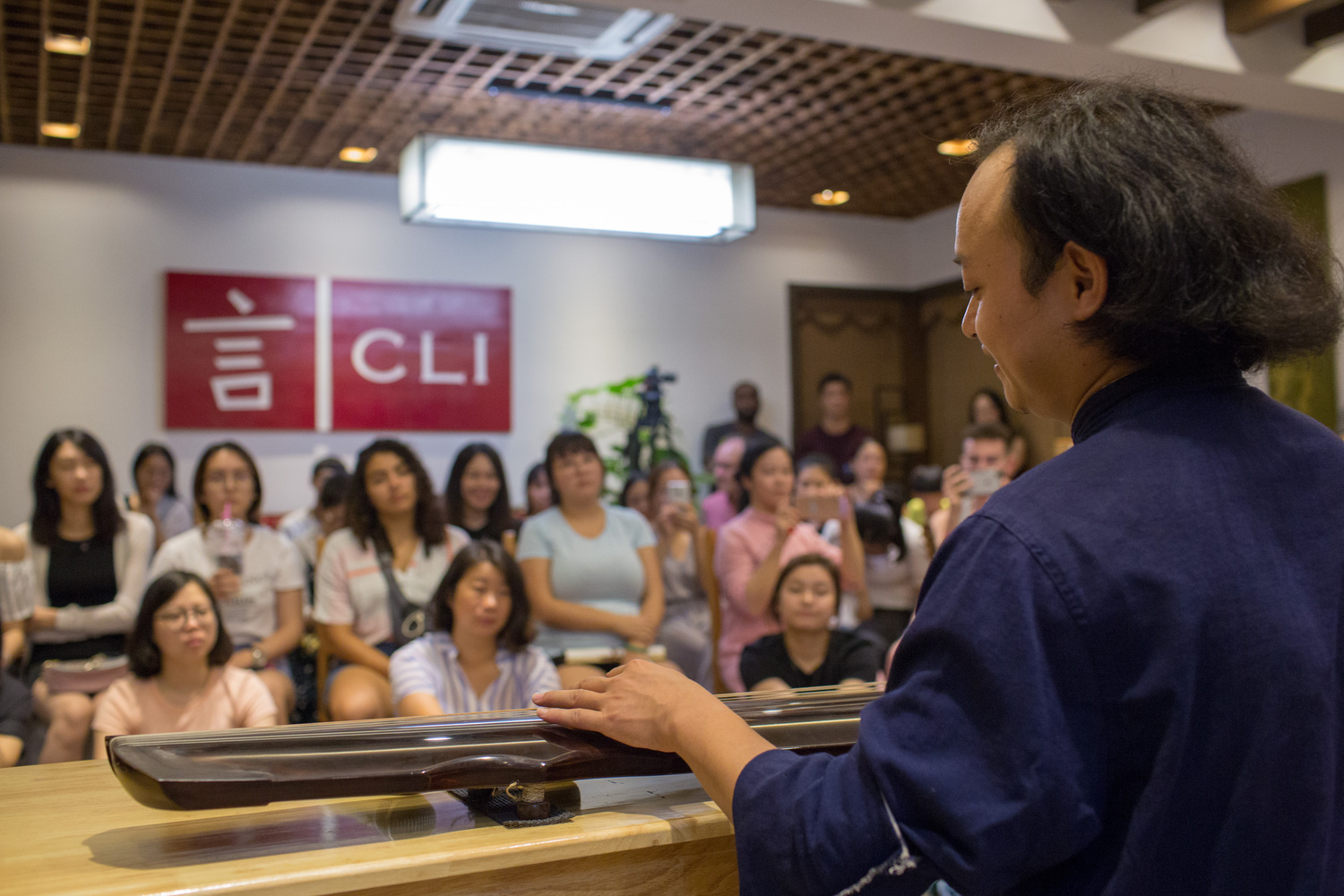
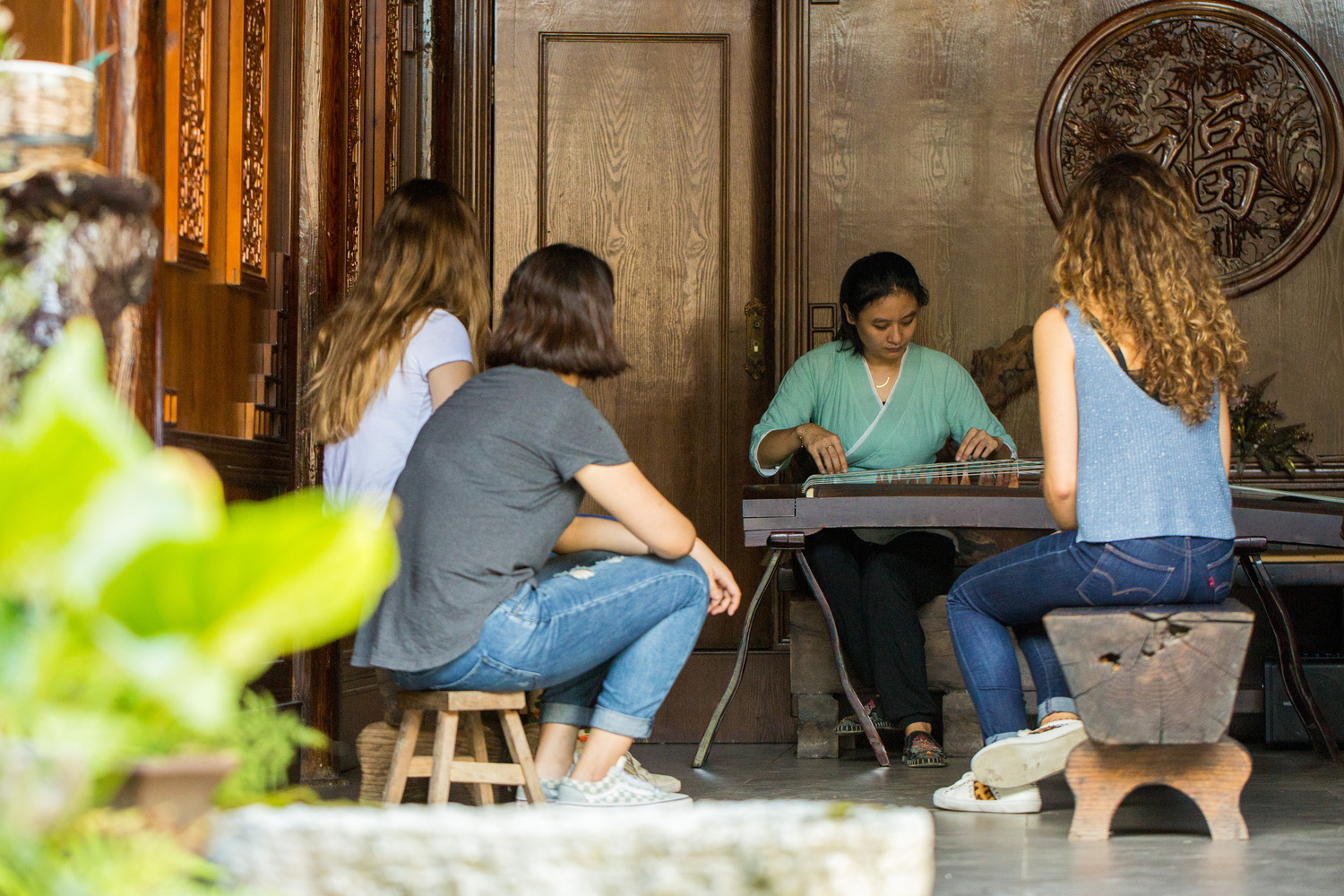
Each guzheng string sits on its own movable bridge, and from this close you can watch a note being bent. Students who play can find an electric piano in the Center's recreation room.
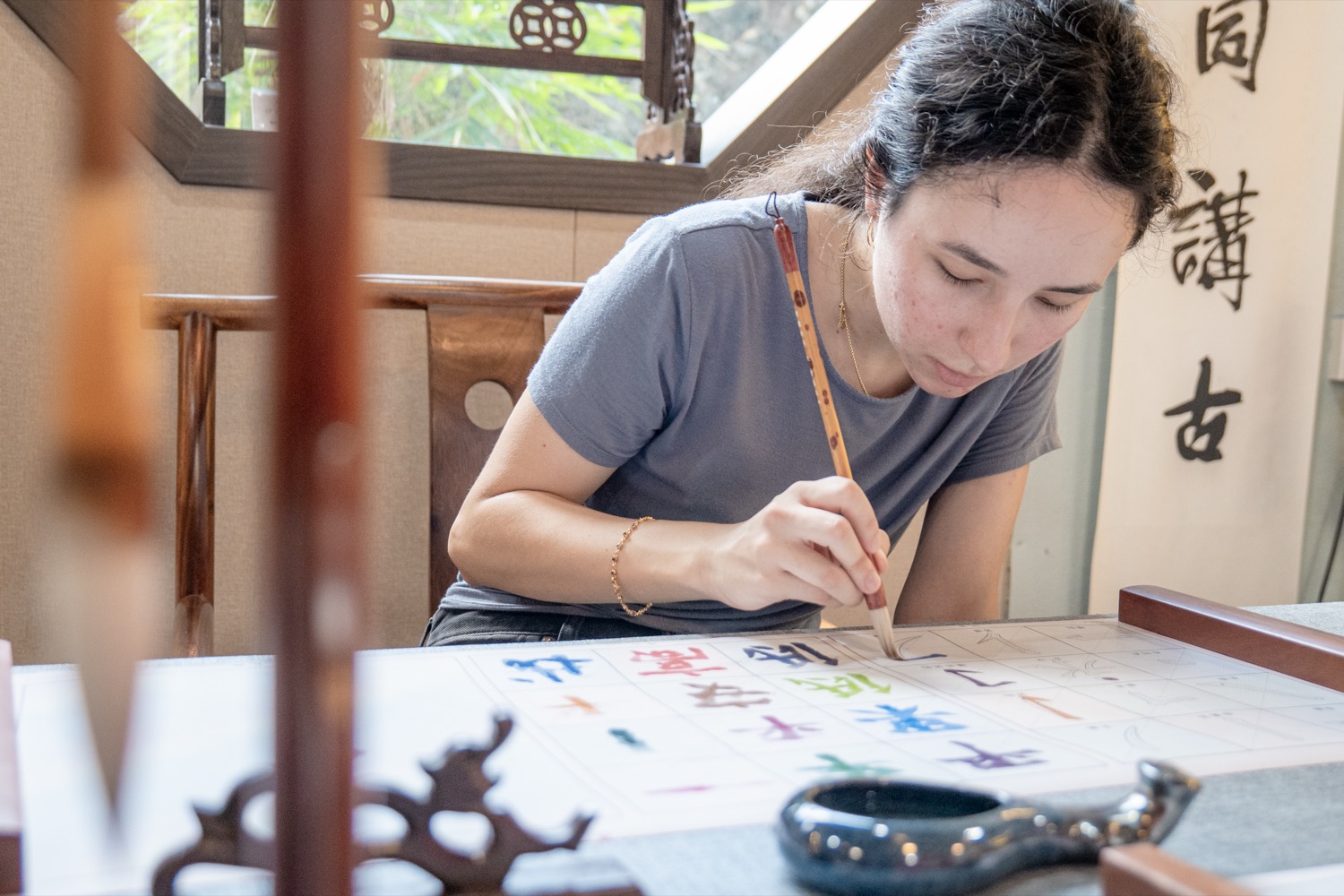
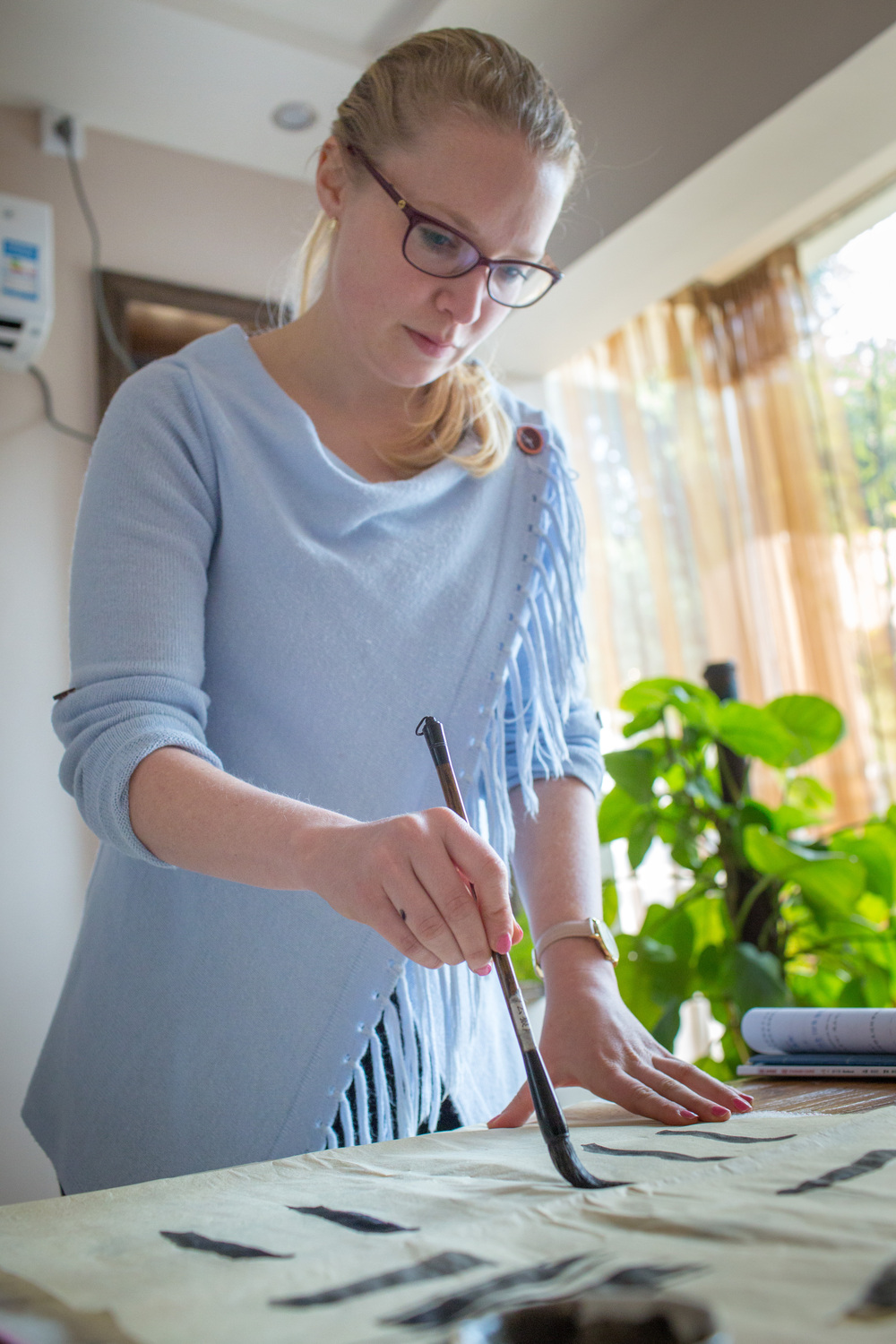
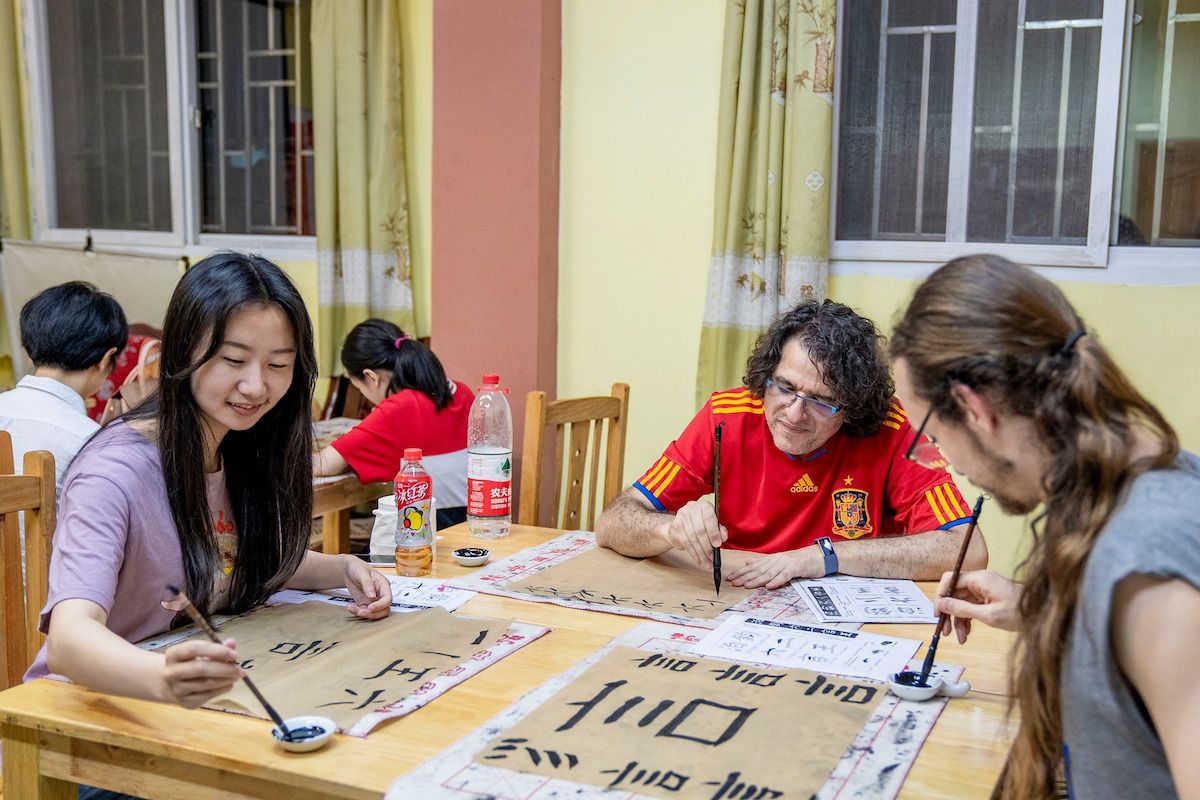
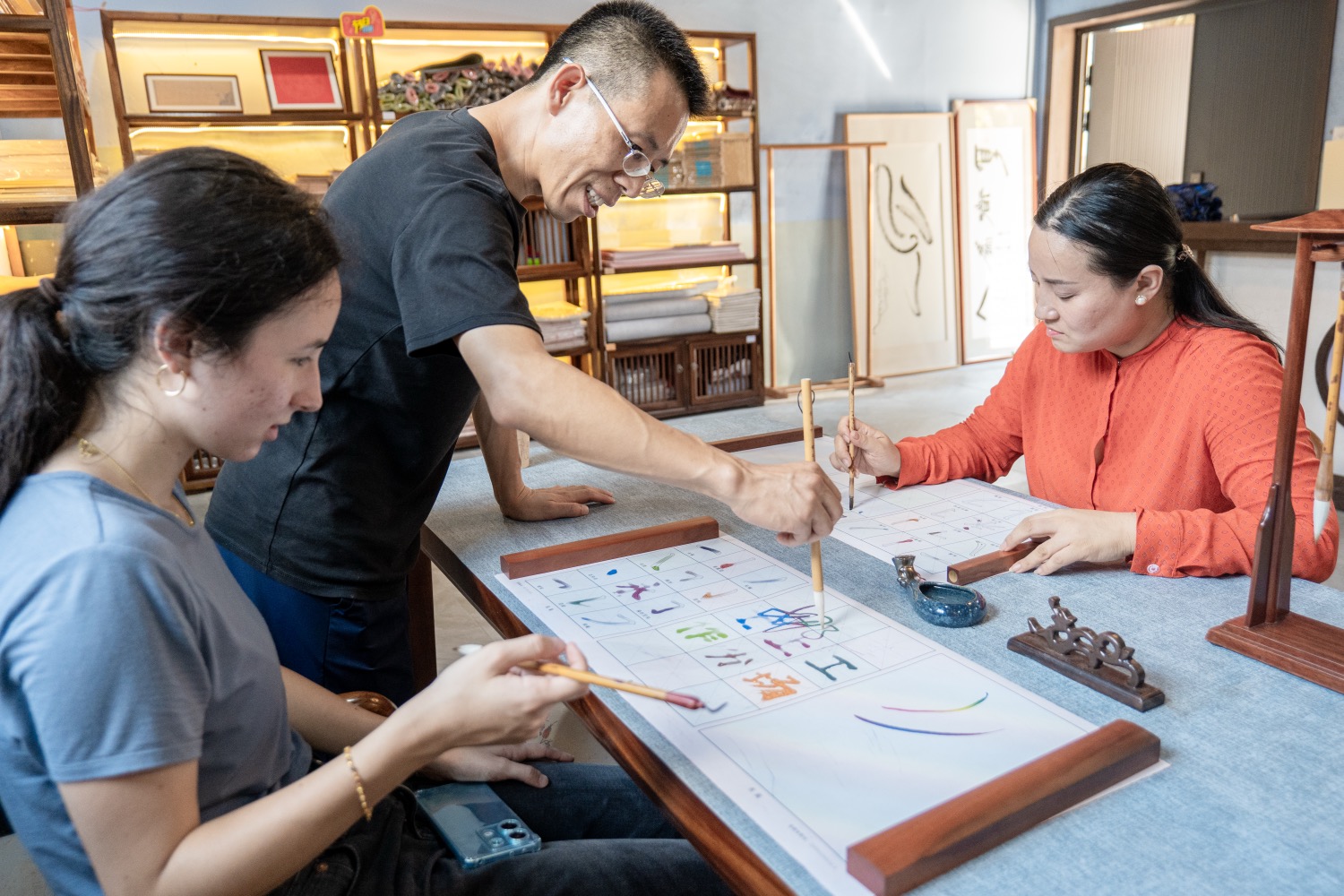
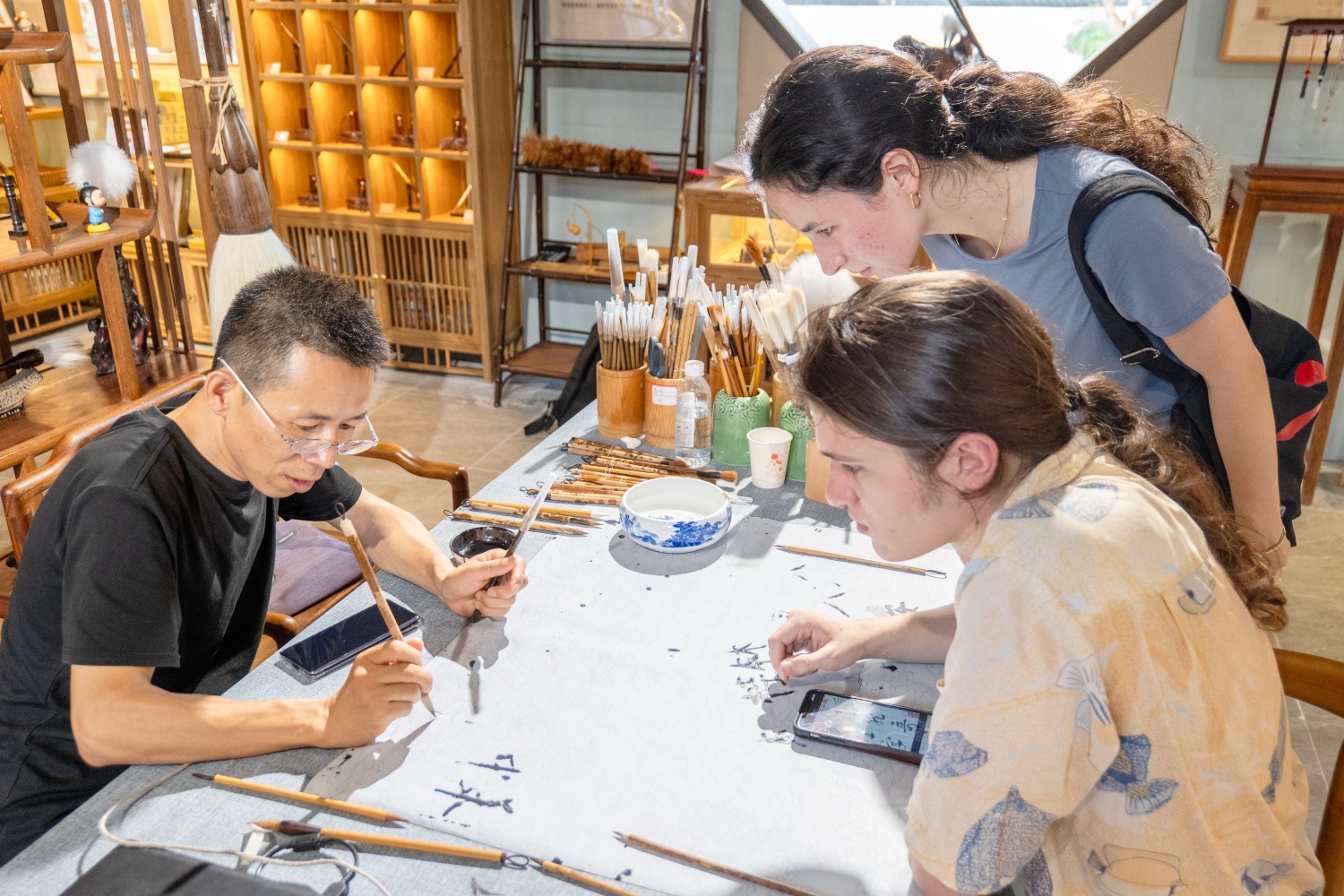
书法 (shūfǎ), calligraphy, is part of CLI's activities, and writing a character large with a brush shows how its strokes fit together.
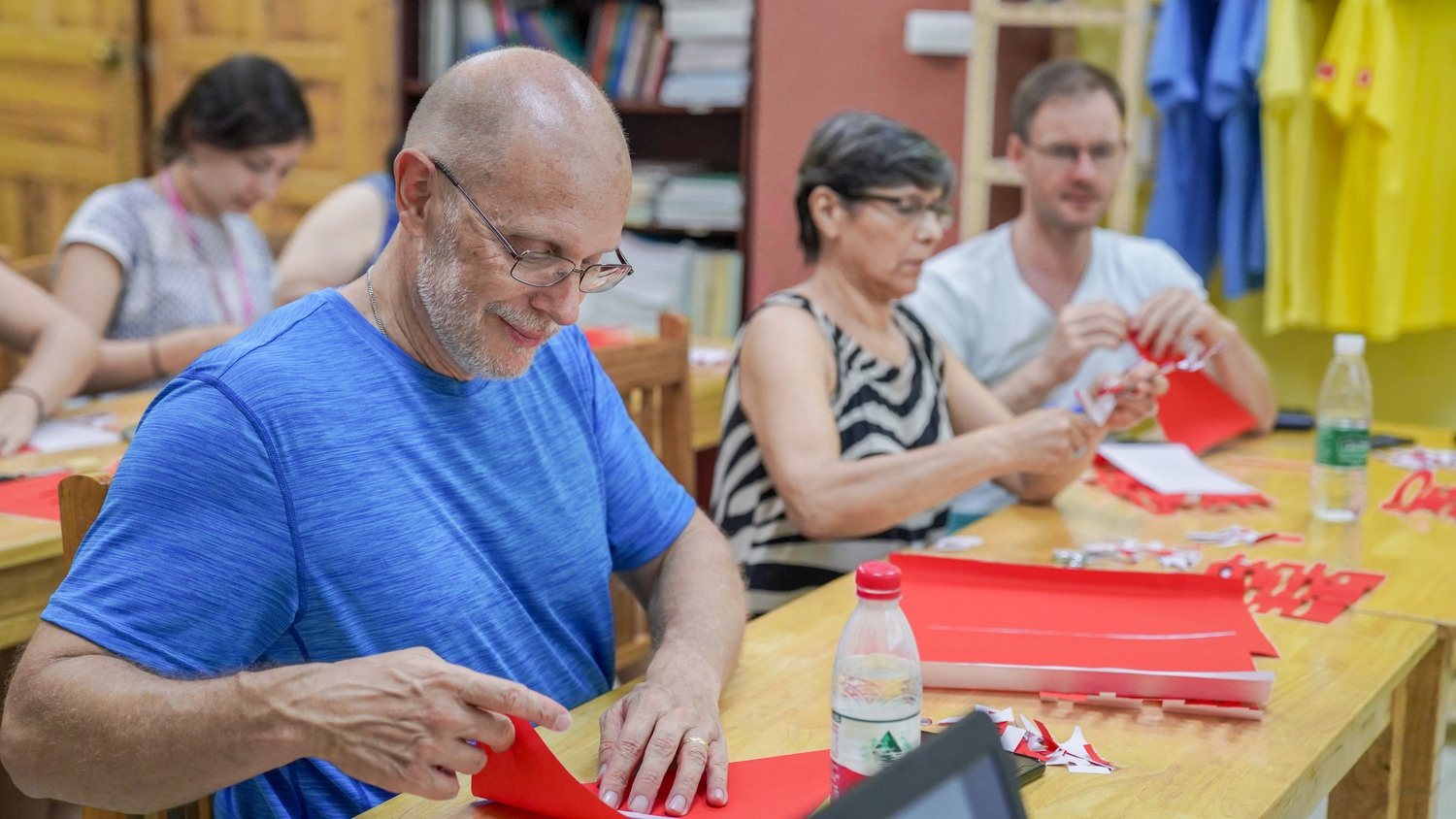
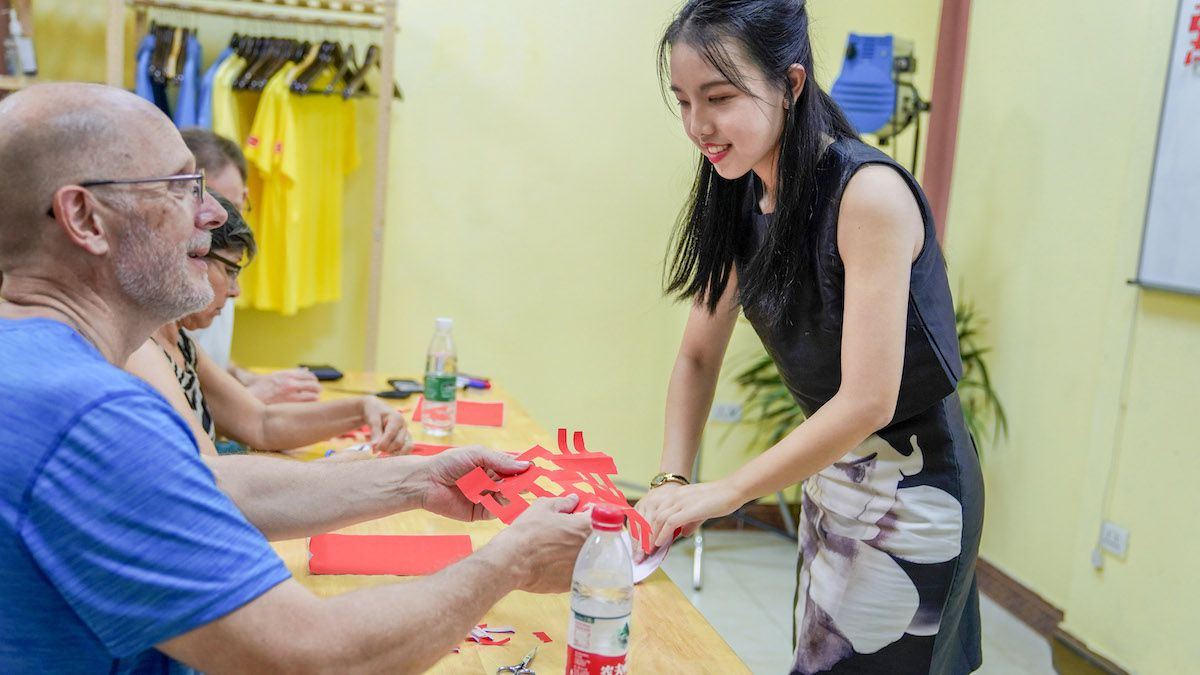
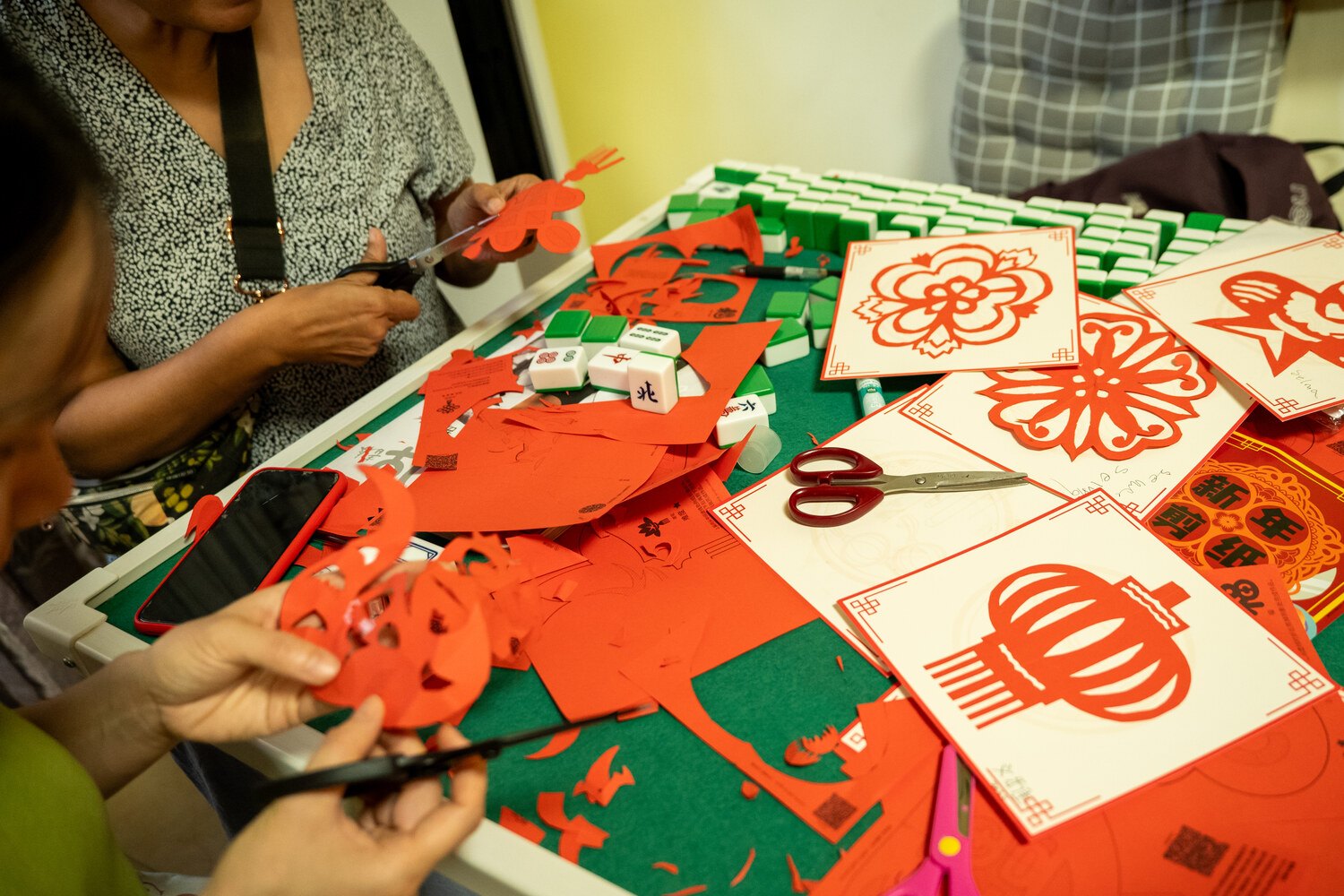
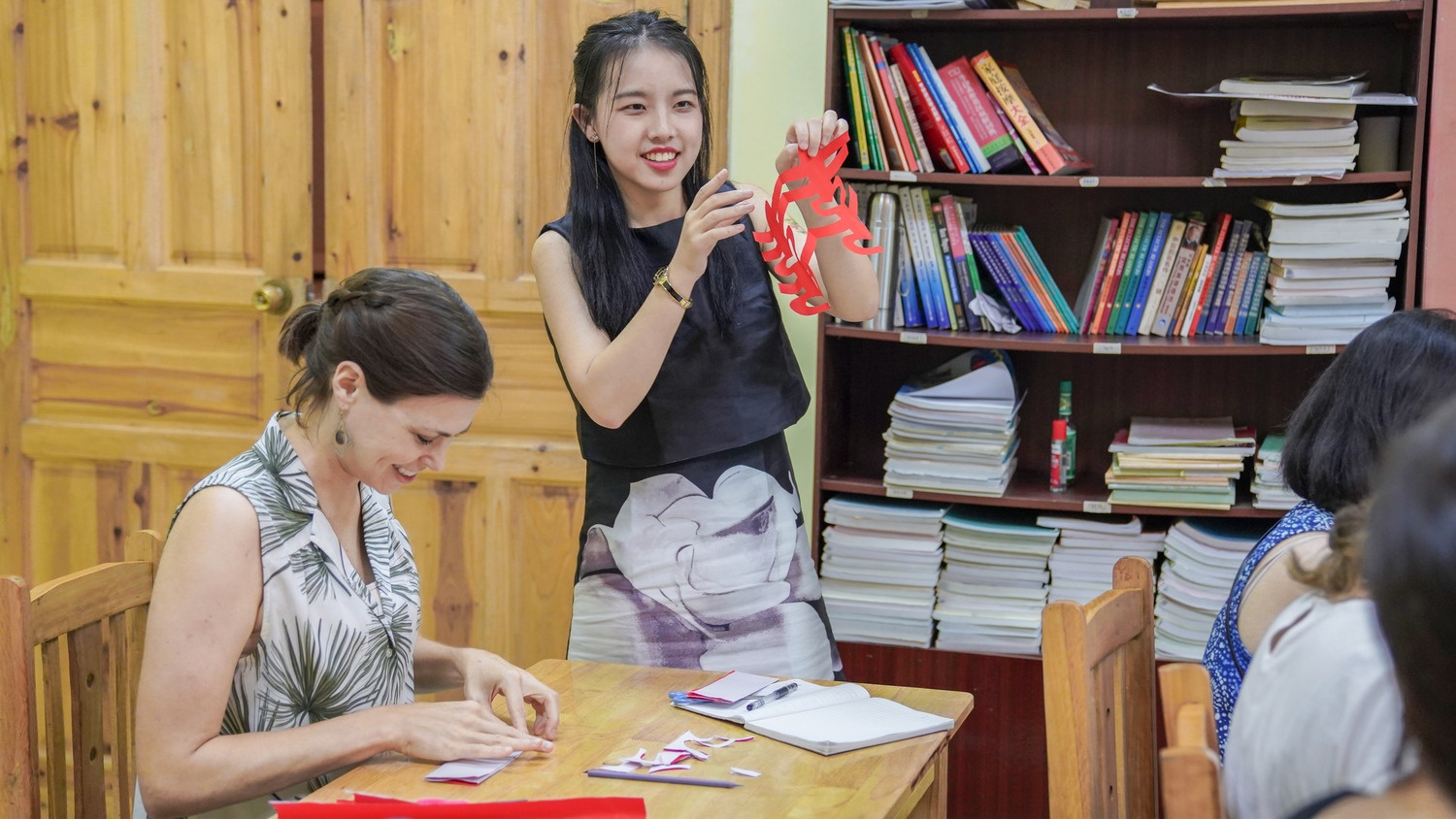
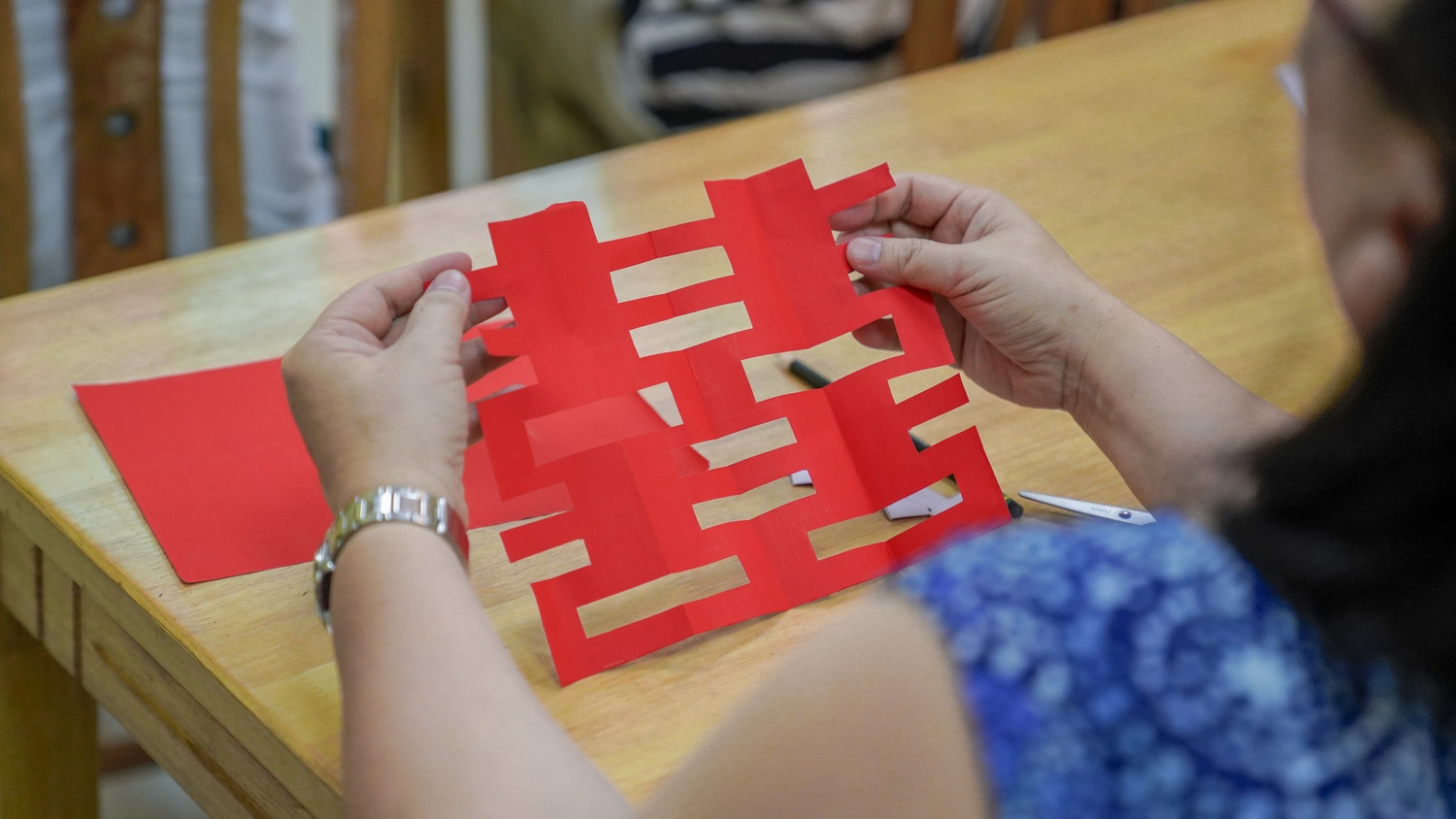
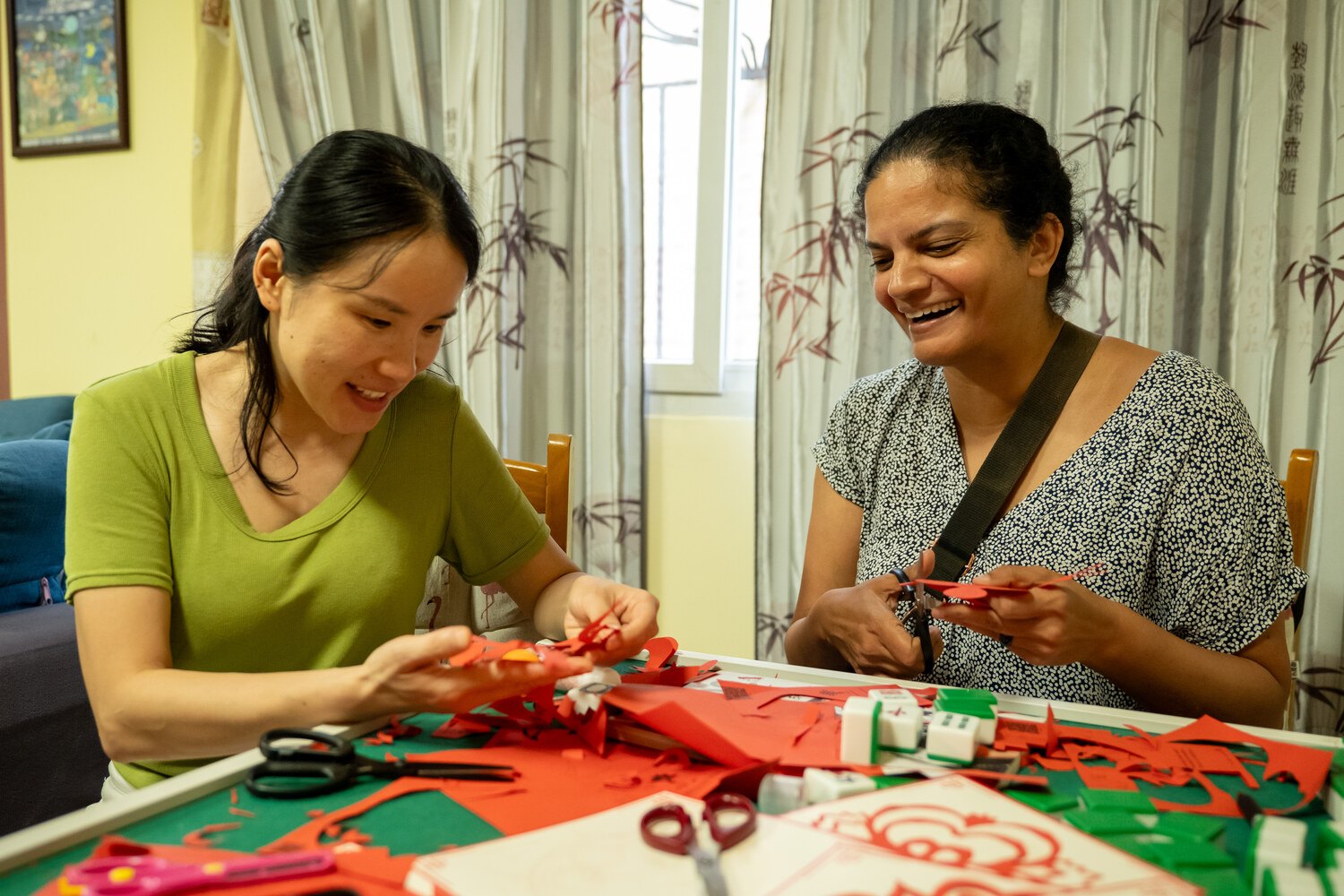
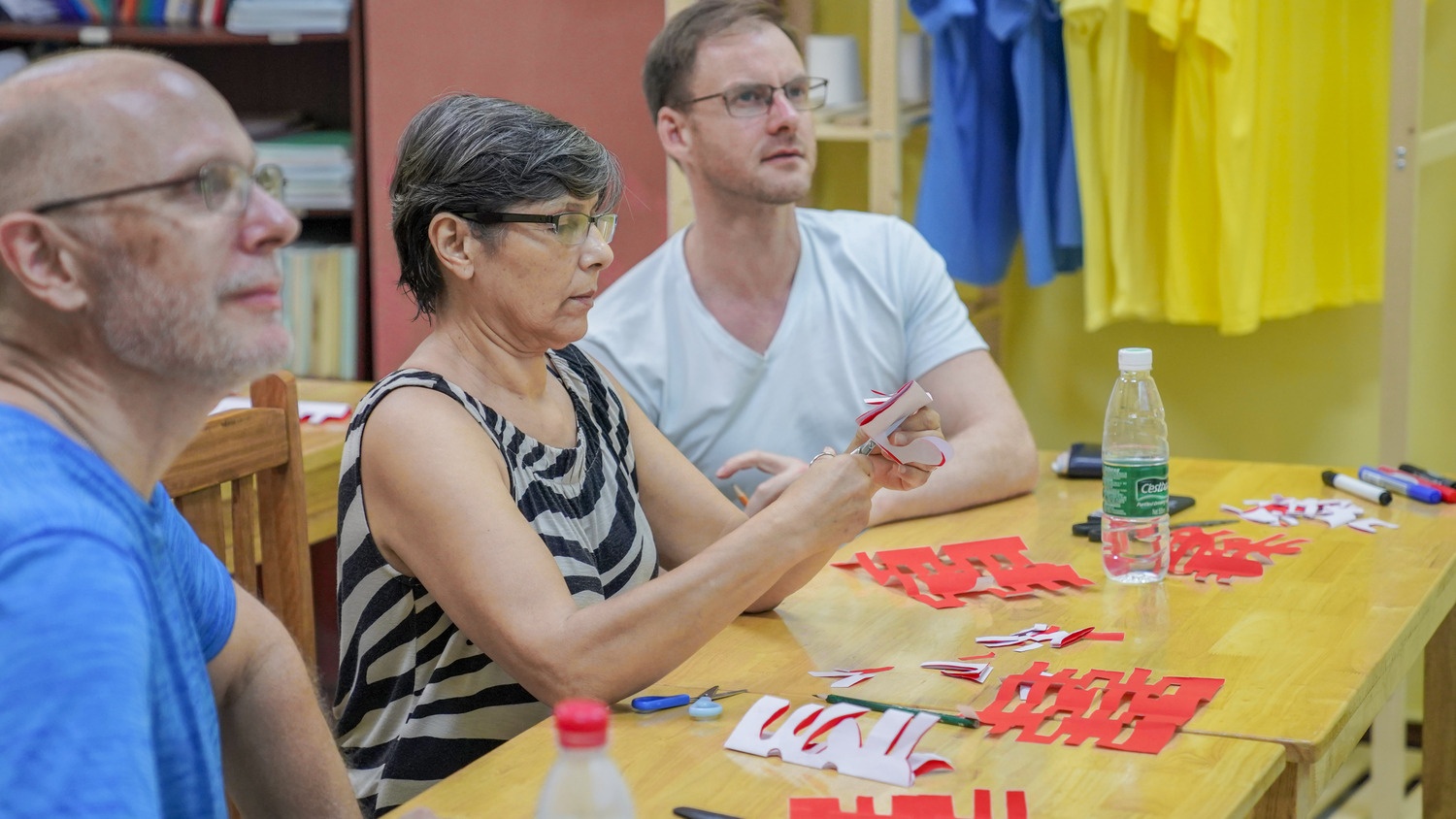
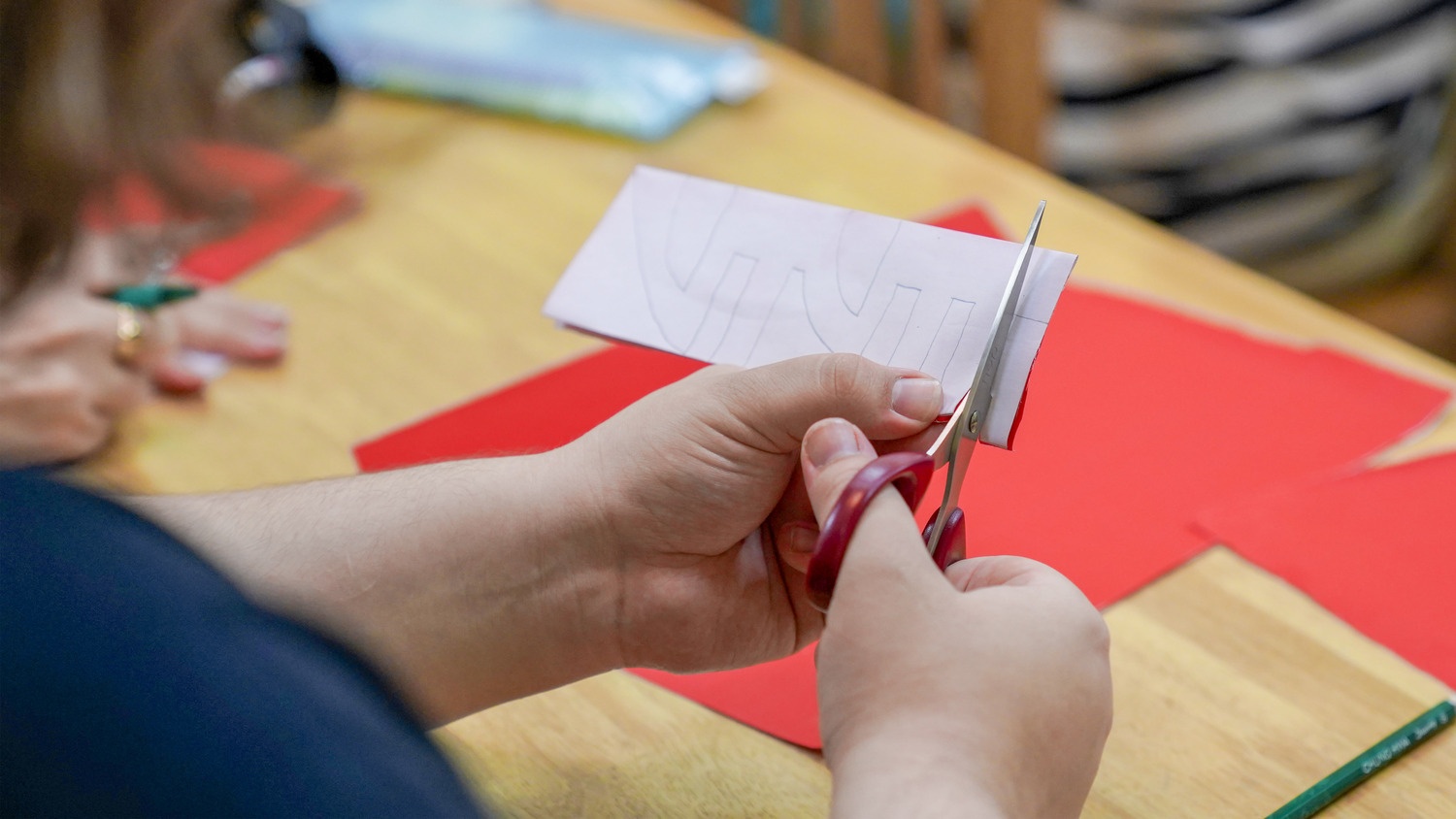
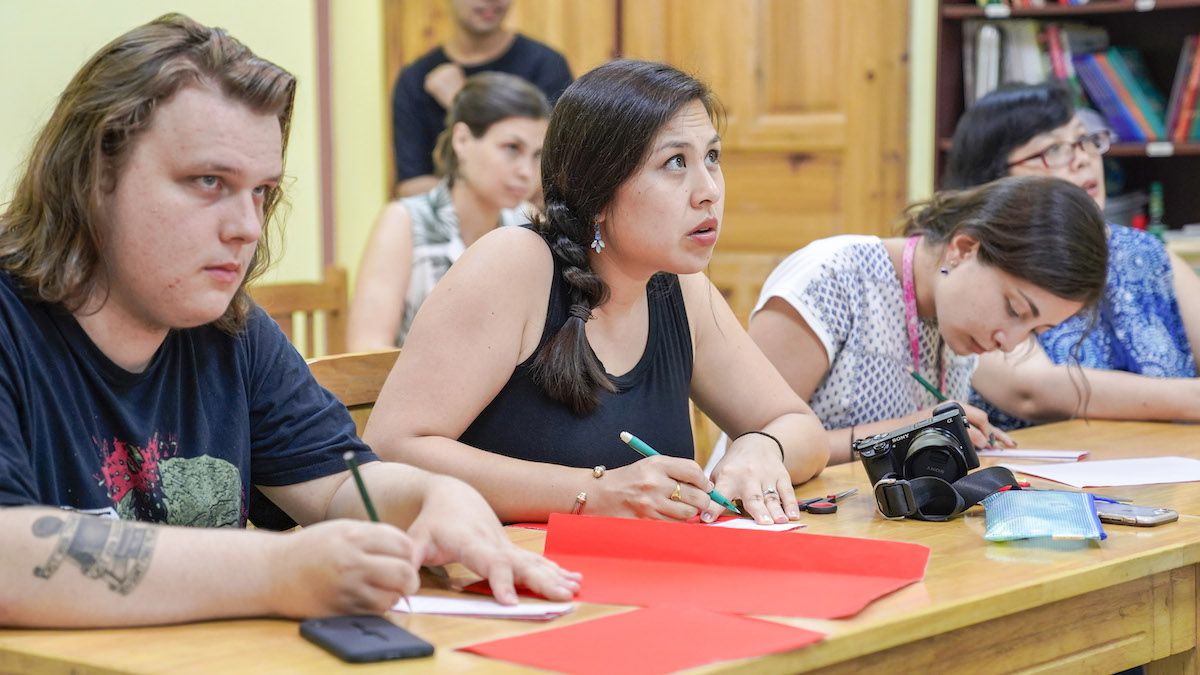
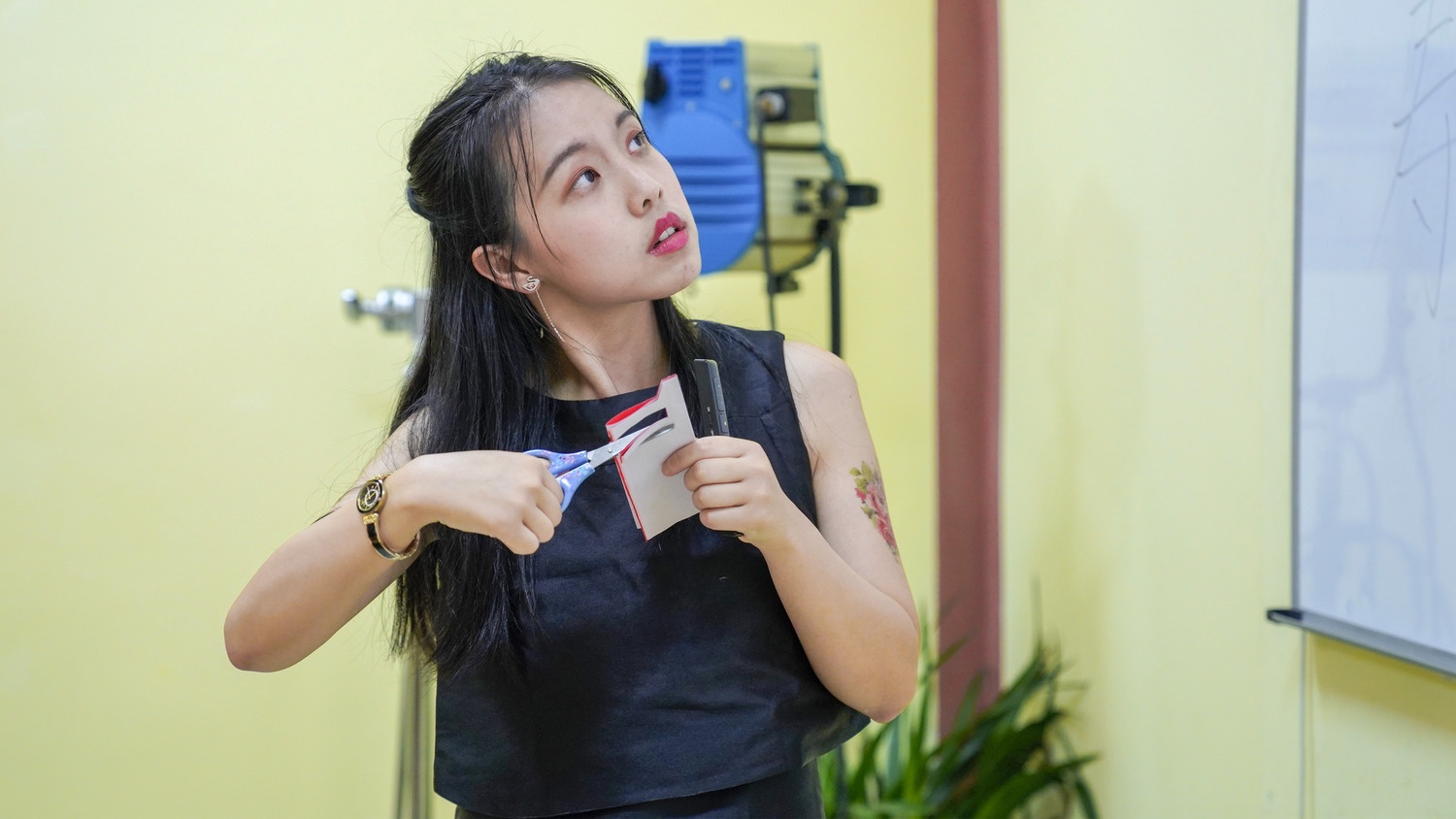
Red paper, a fold and small scissors are all a paper cut needs, and workshops like this one have brought students of many ages to the same table.
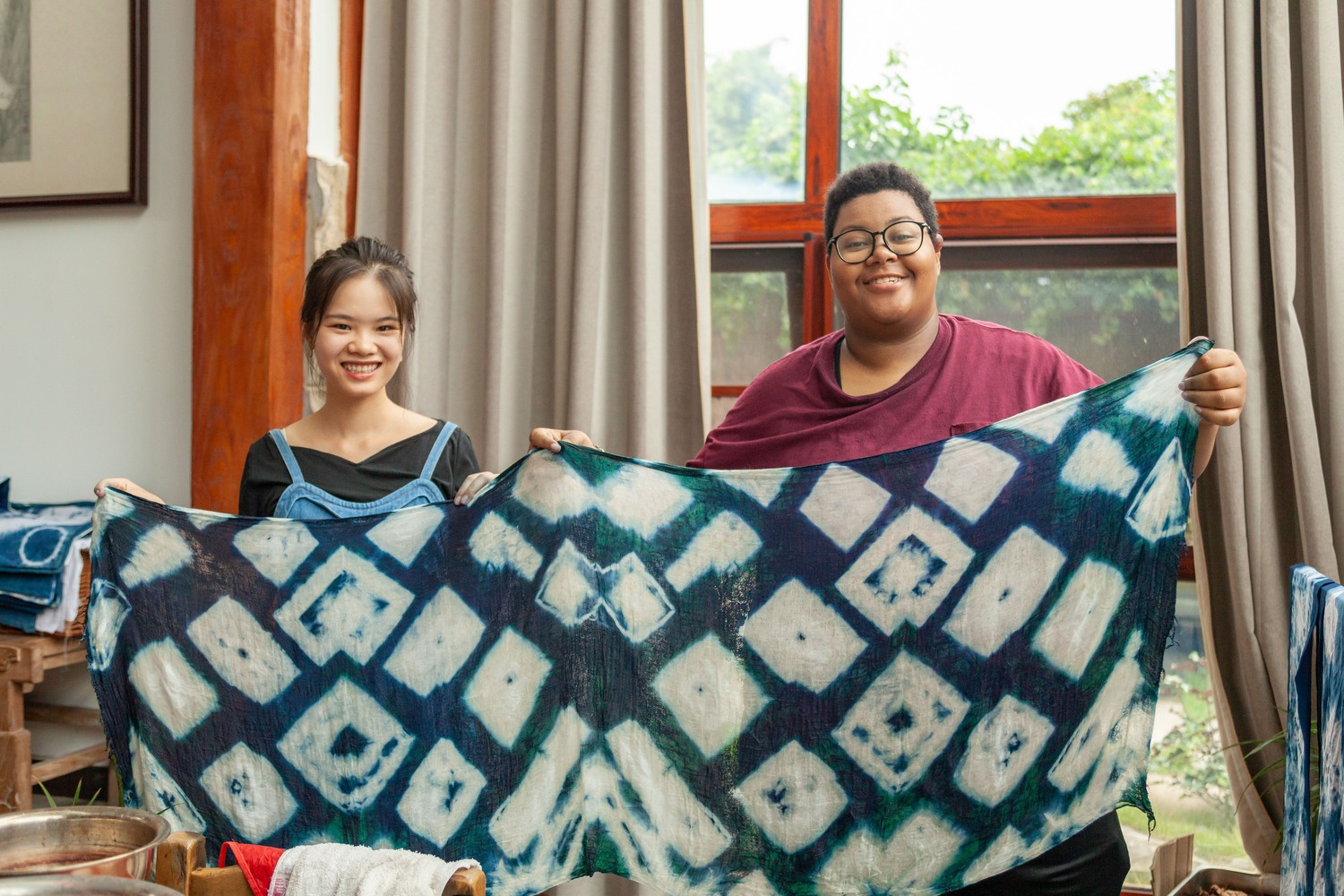
Tie-dye is a craft some students have tried with CLI, and a finished cloth this size takes two people to hold up.
The last step of a tie-dye afternoon is hanging the cloth to dry in the garden, where the pattern finally shows in full.
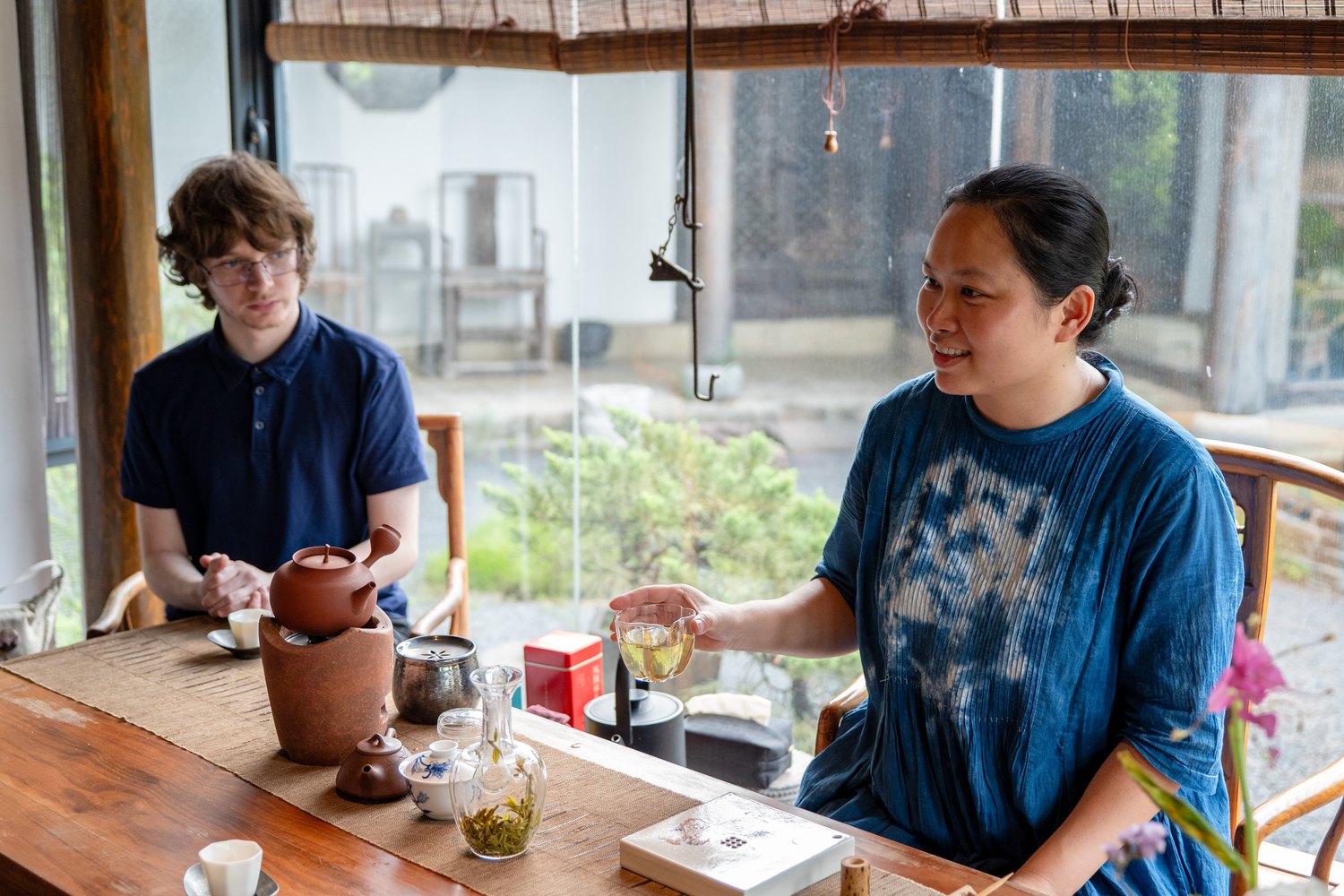
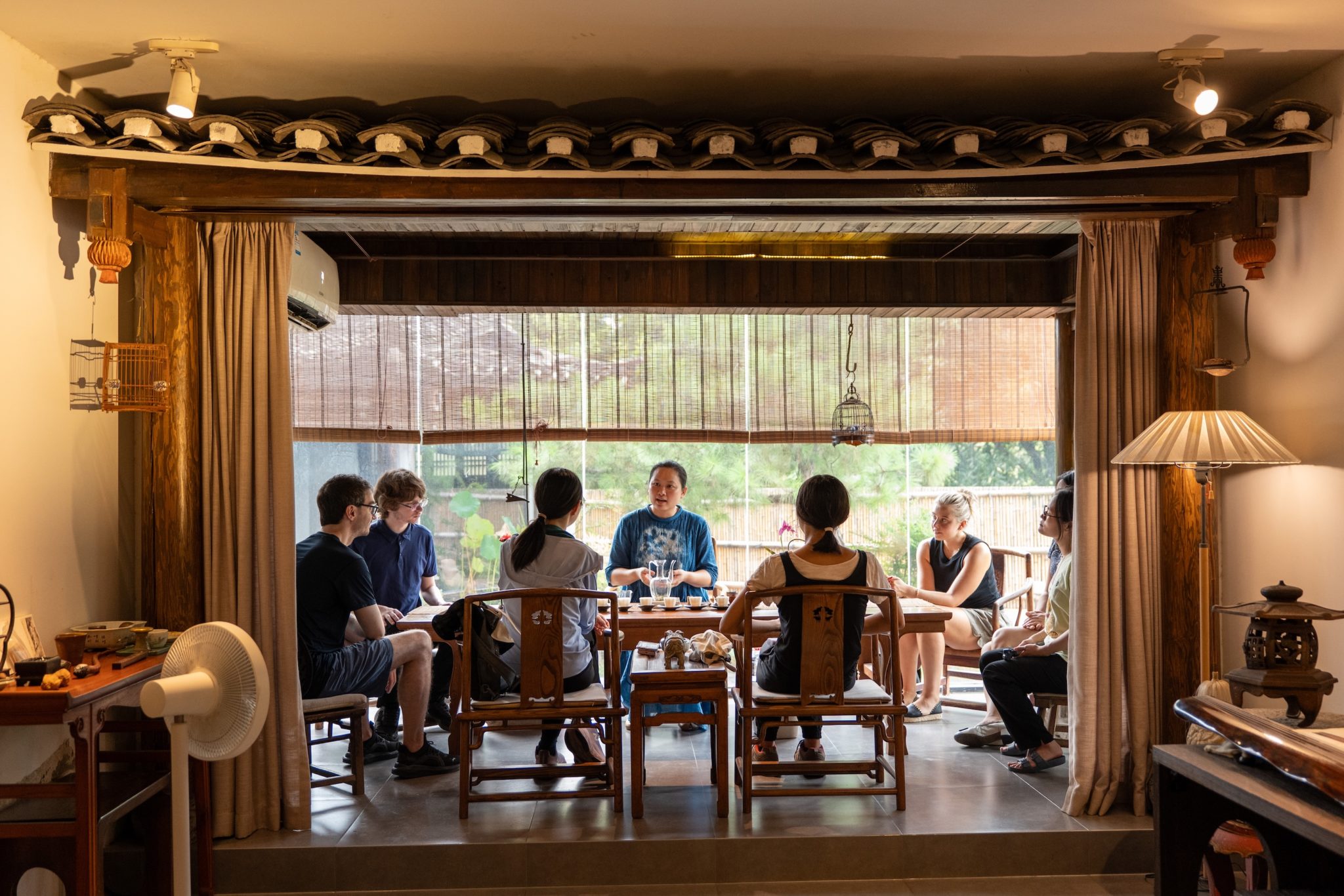
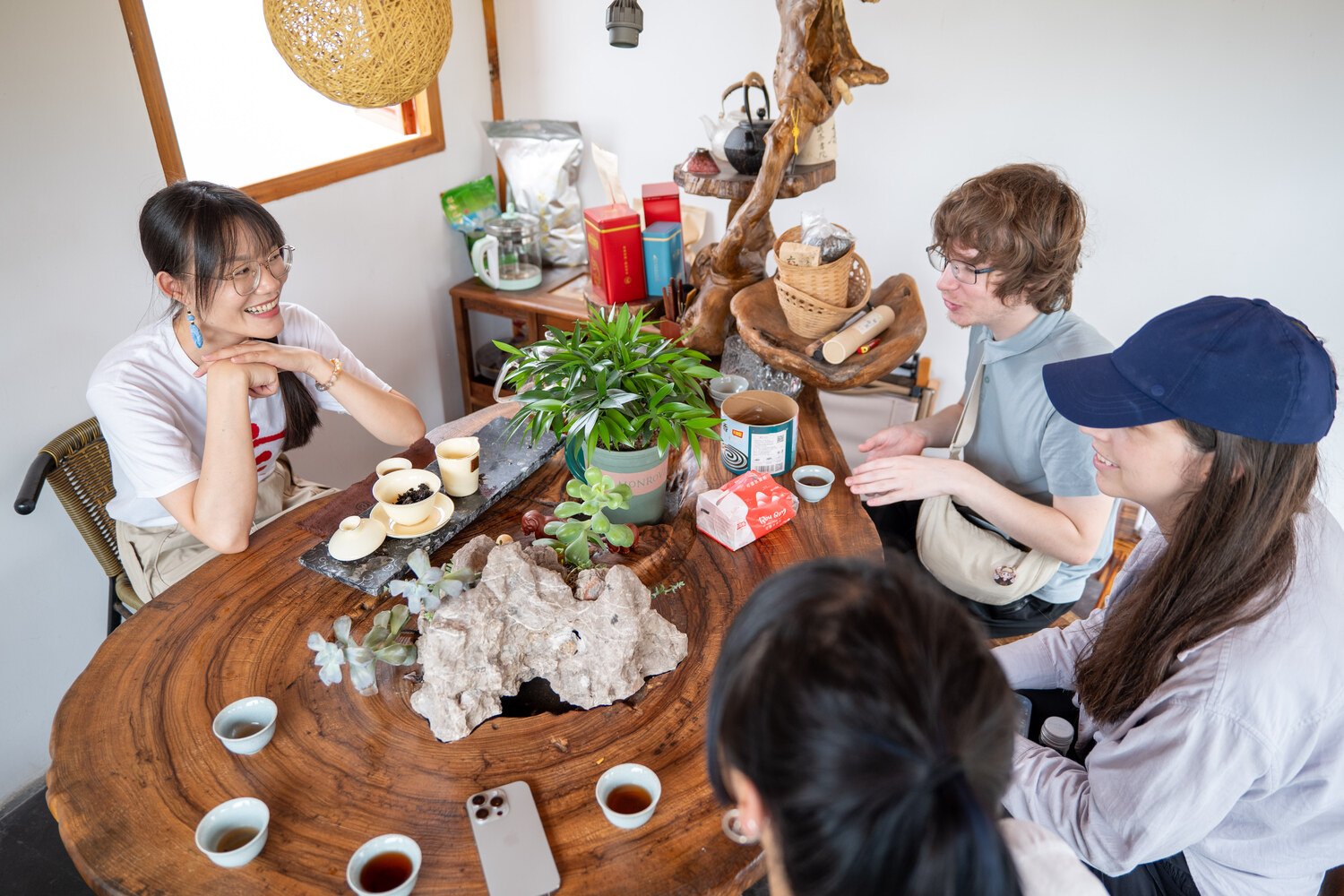
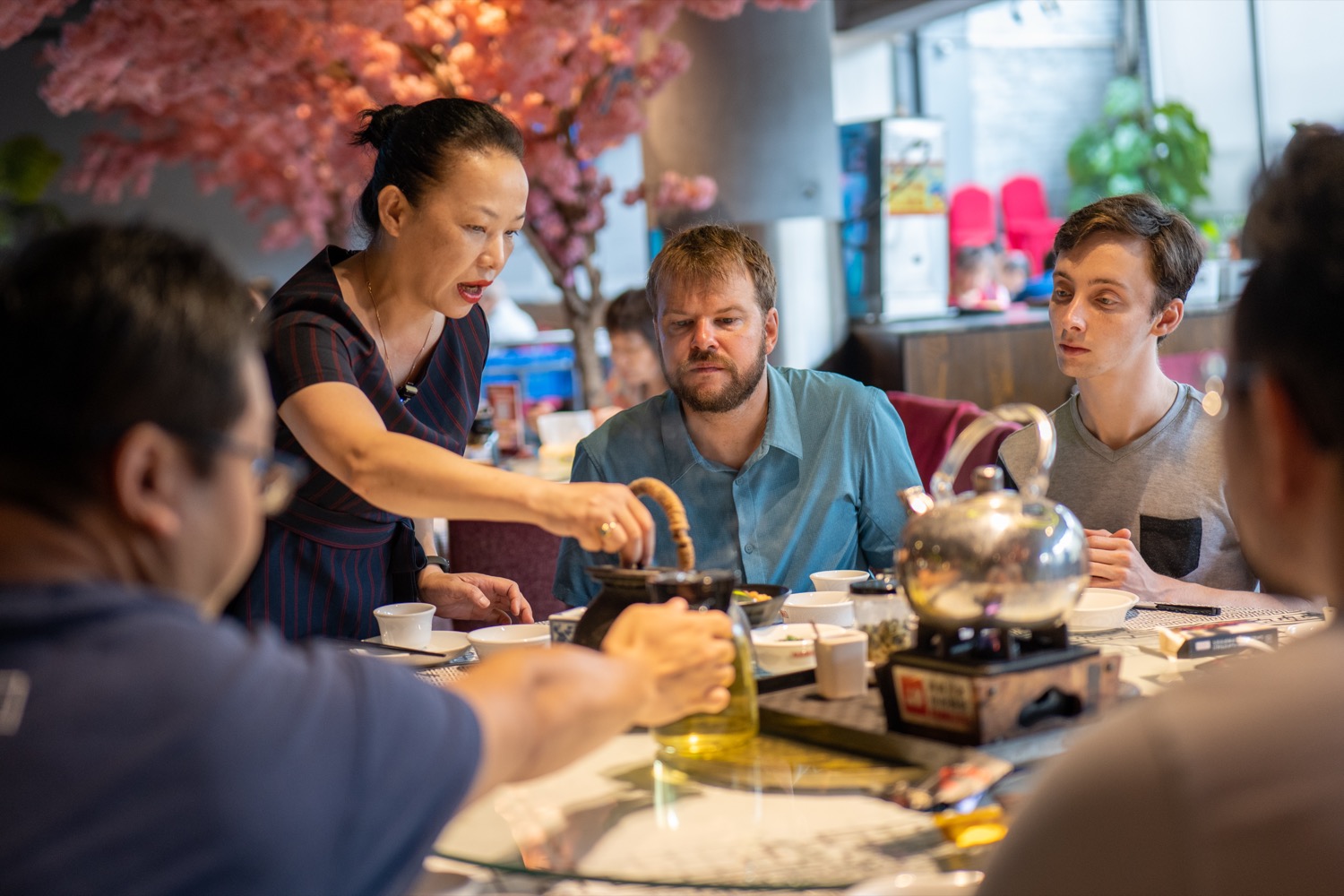
A tea host can walk a whole table through a ceremony in simple Mandarin, and following along cup by cup is some of the easiest Chinese practice of the week.
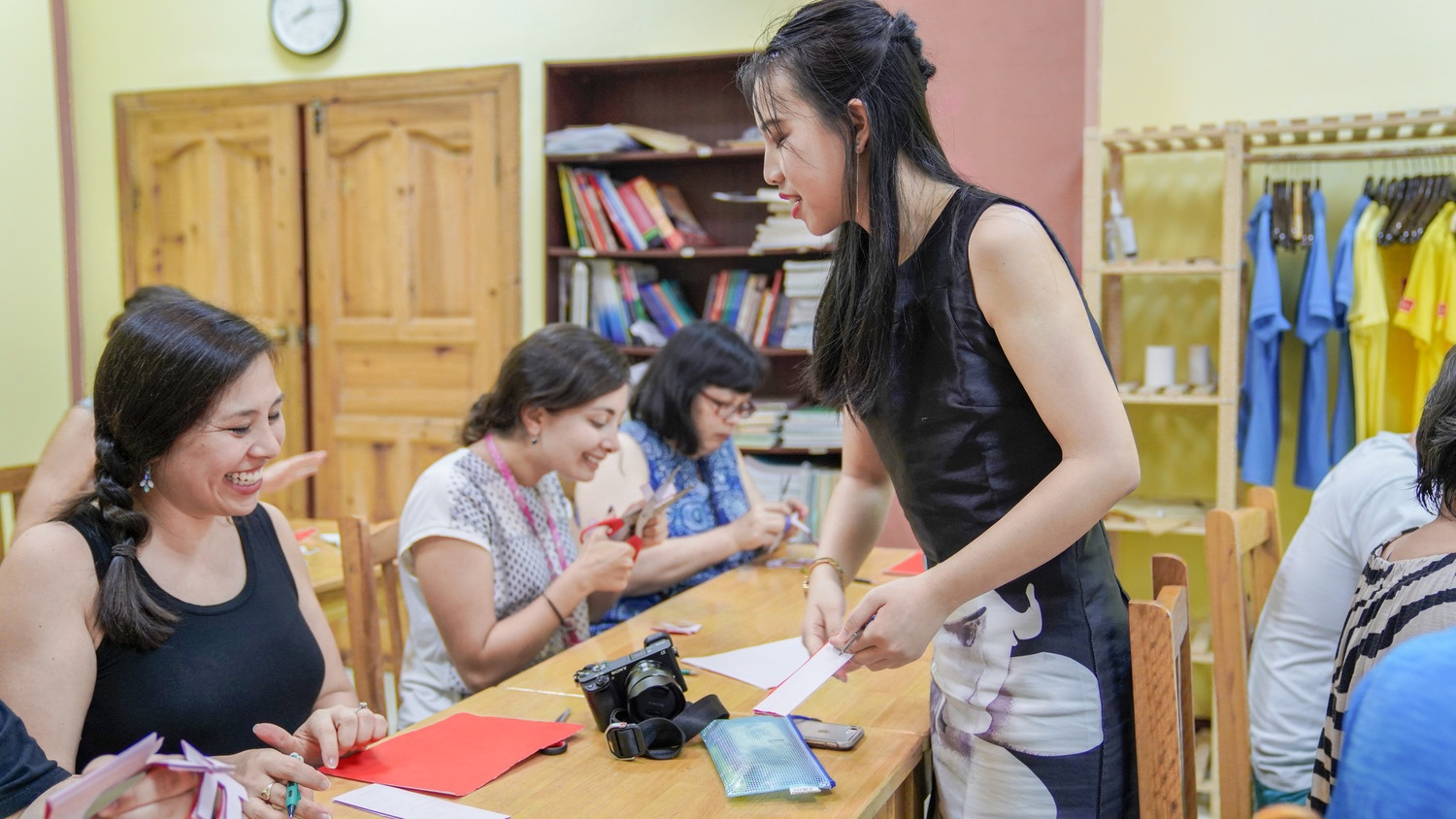
An instructor stops at each seat to look over the paper cuts, and a small workshop like this one leaves time for everyone at the table to get help.
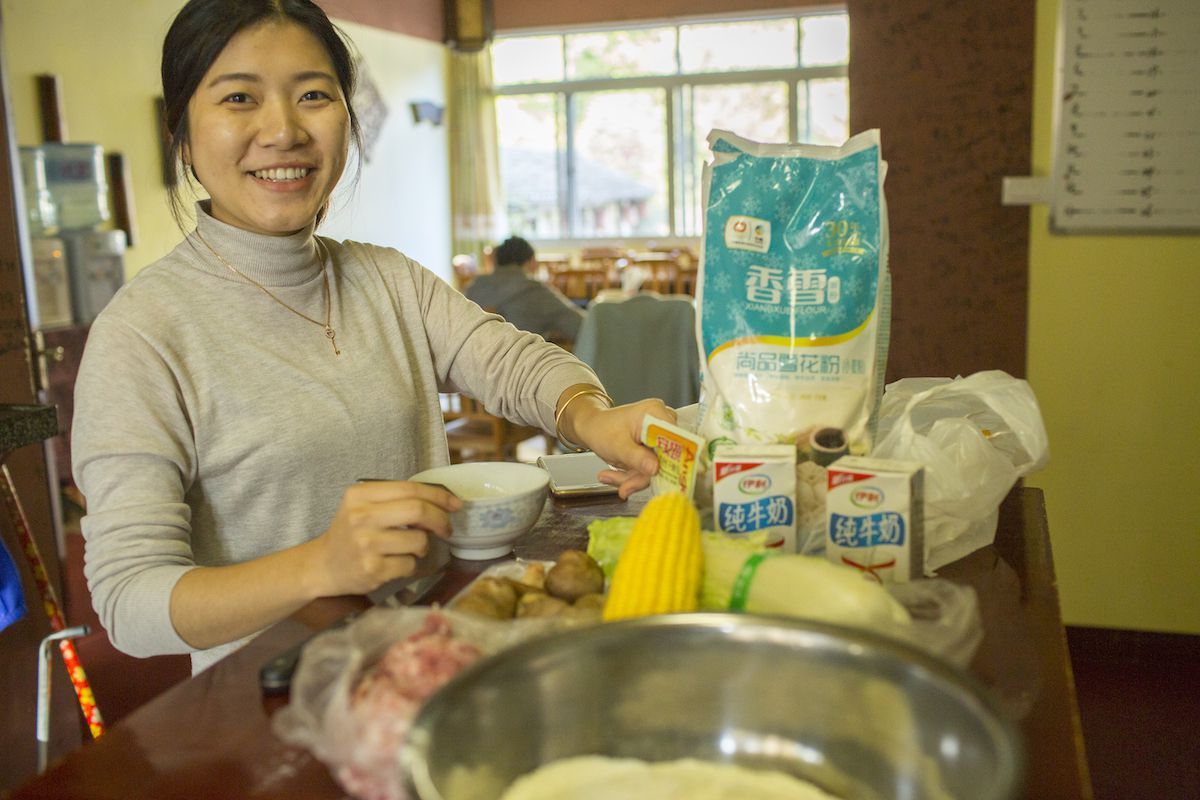
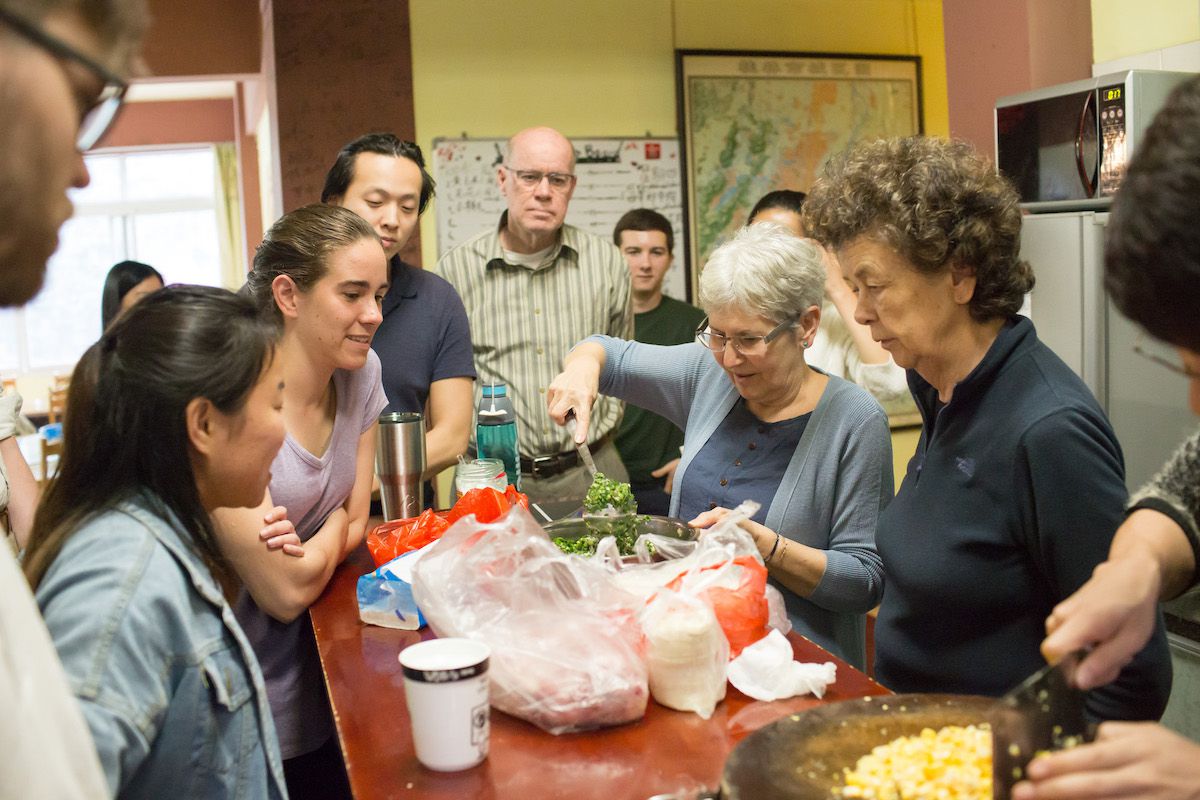
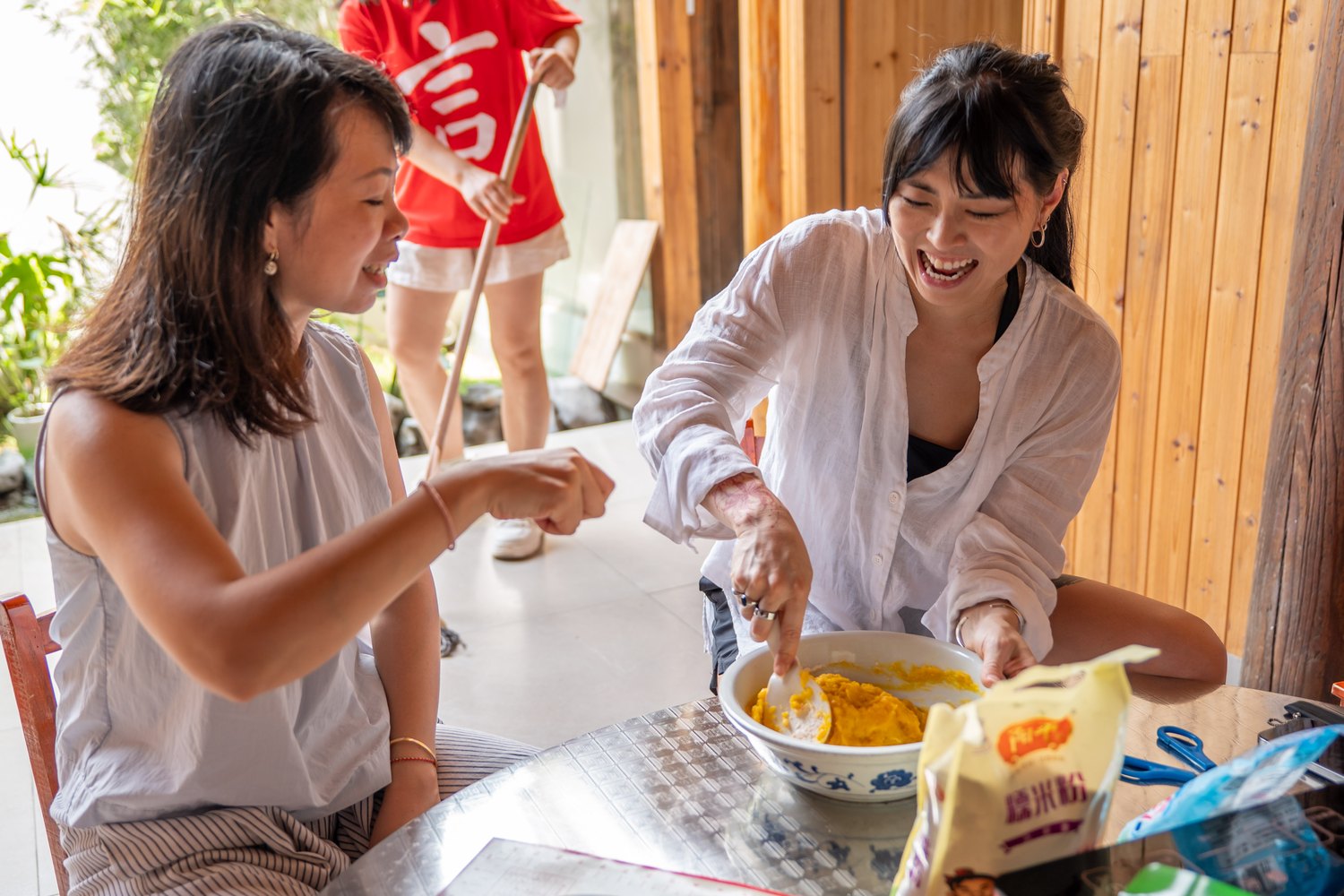
Corn, flour and a big mixing bowl mean a cooking session is about to start, and the first job is learning what everything on the table is called in Chinese.
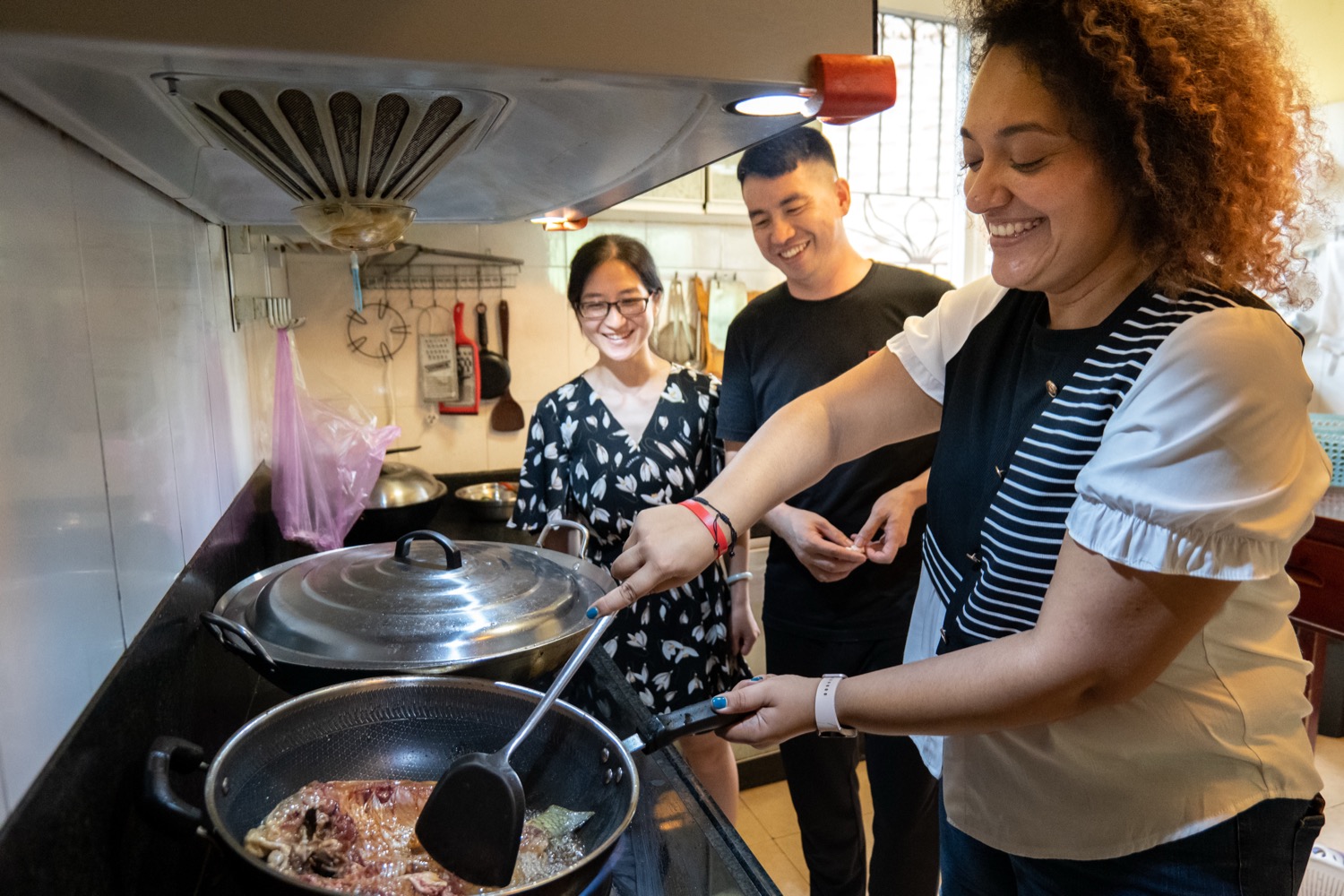
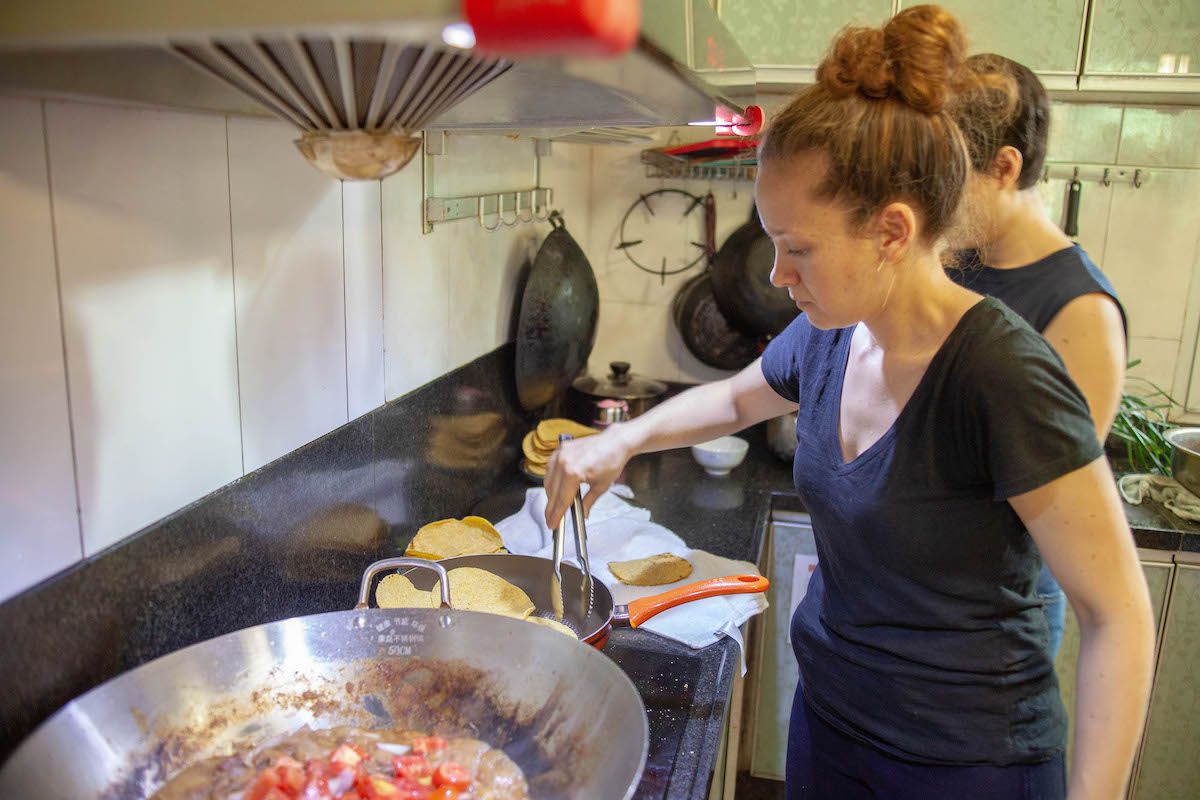
Stir-frying comes with its own vocabulary for heat and timing, and a cooking lesson at the wok is where students hear those words used for real.
Flowers and a lantern design lie among the red scraps on this craft table, and lantern making is one of the activities CLI runs.
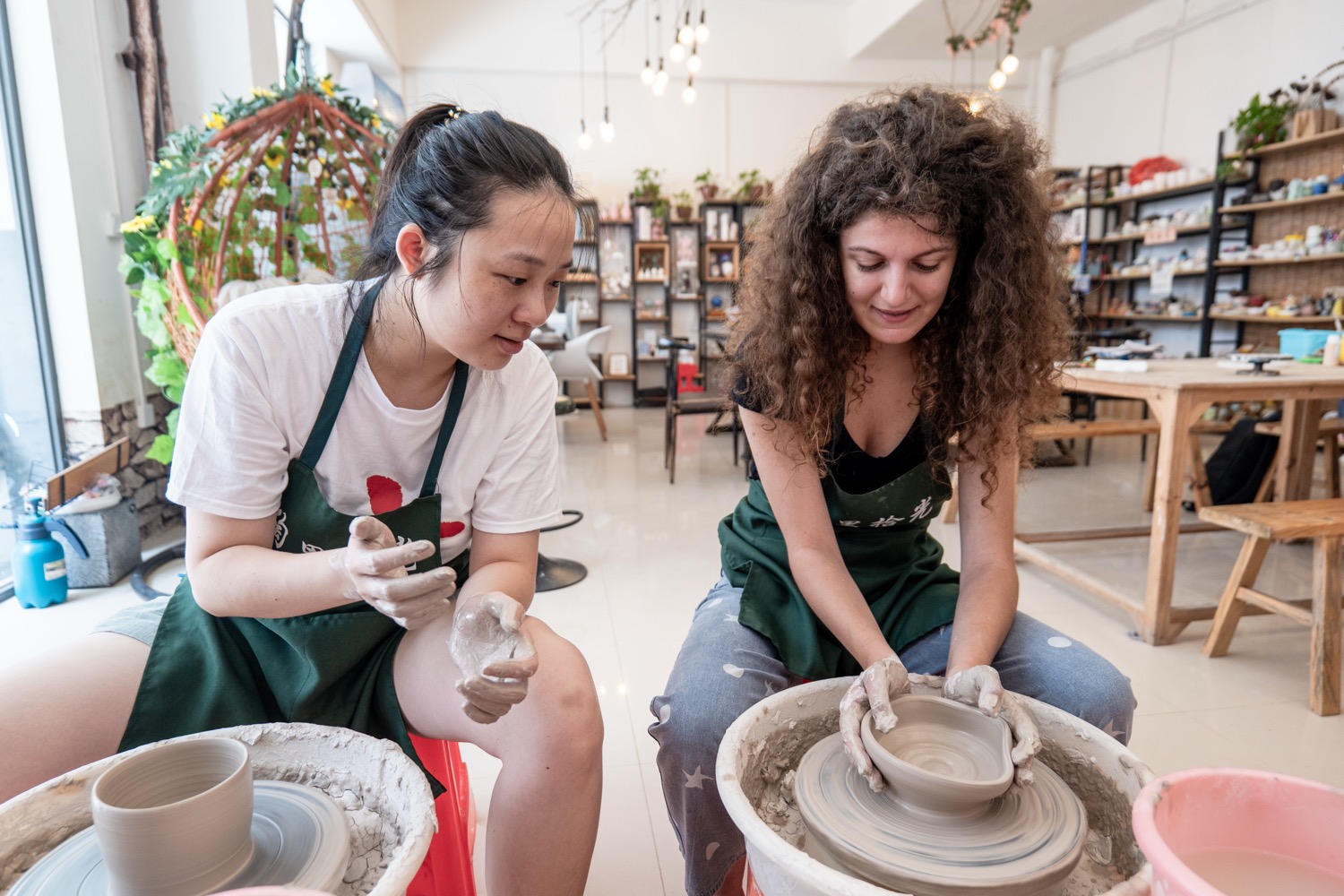
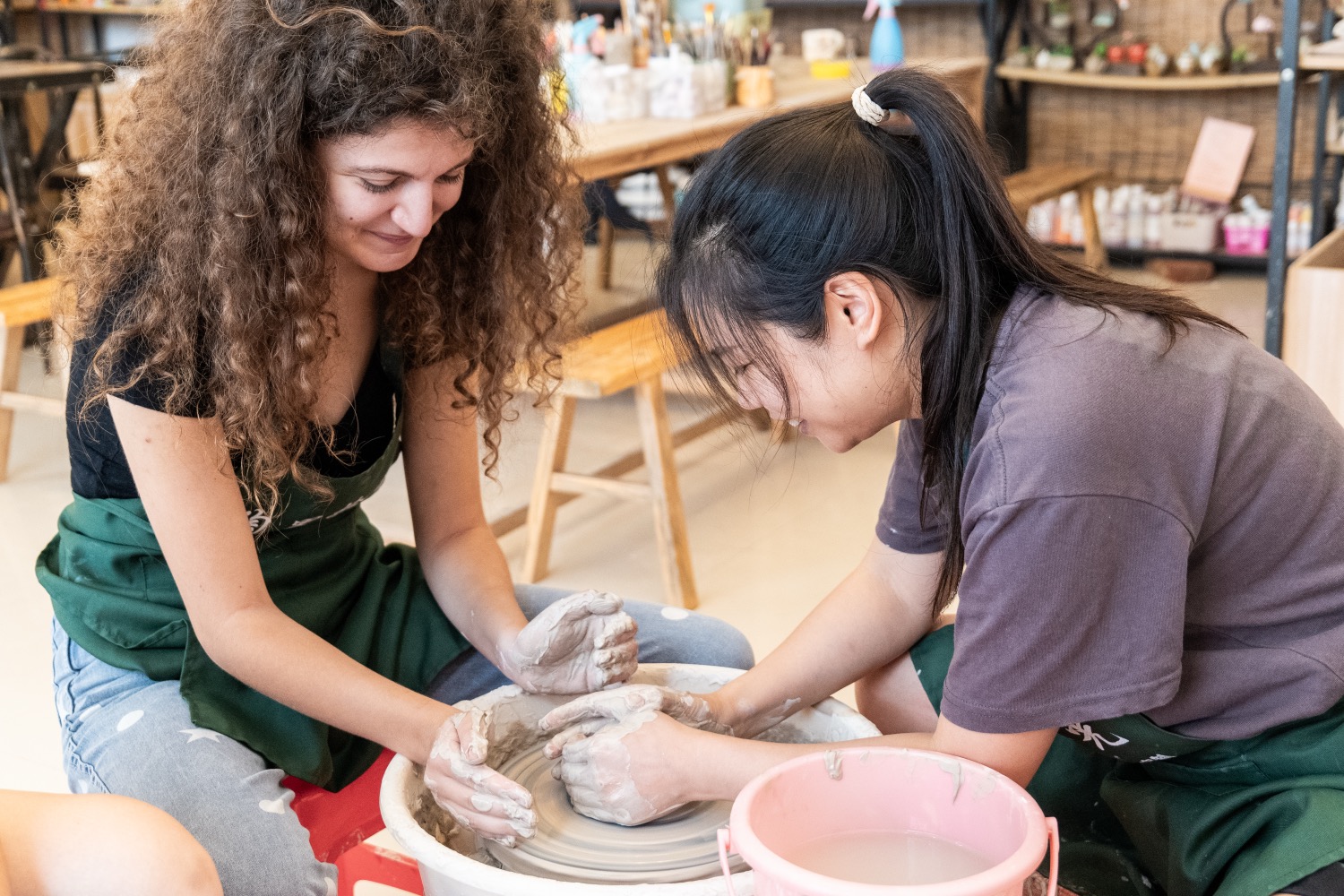
On days when both your classes are in the morning, the afternoon is open for something like this pottery workshop, with an instructor at the next wheel.
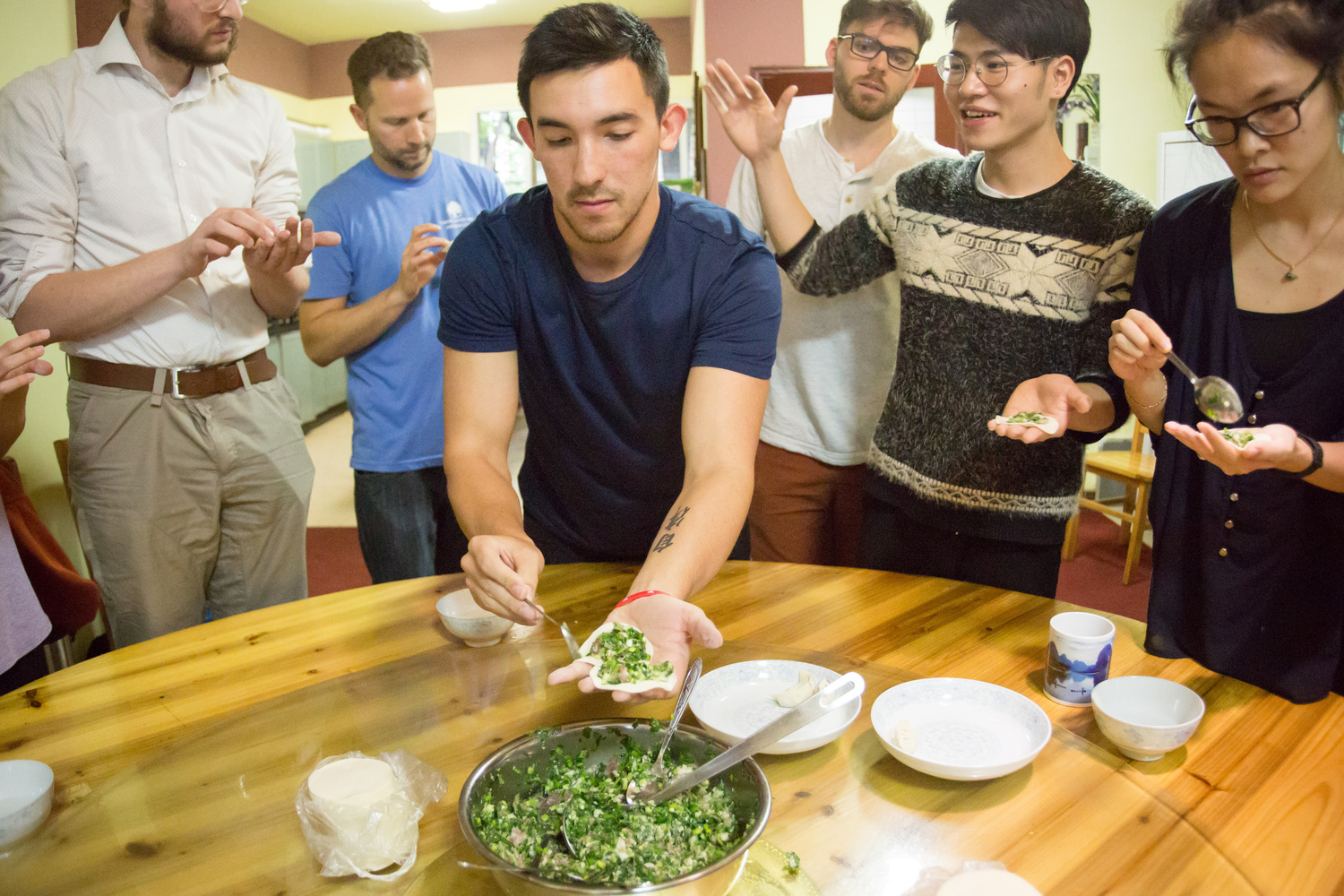
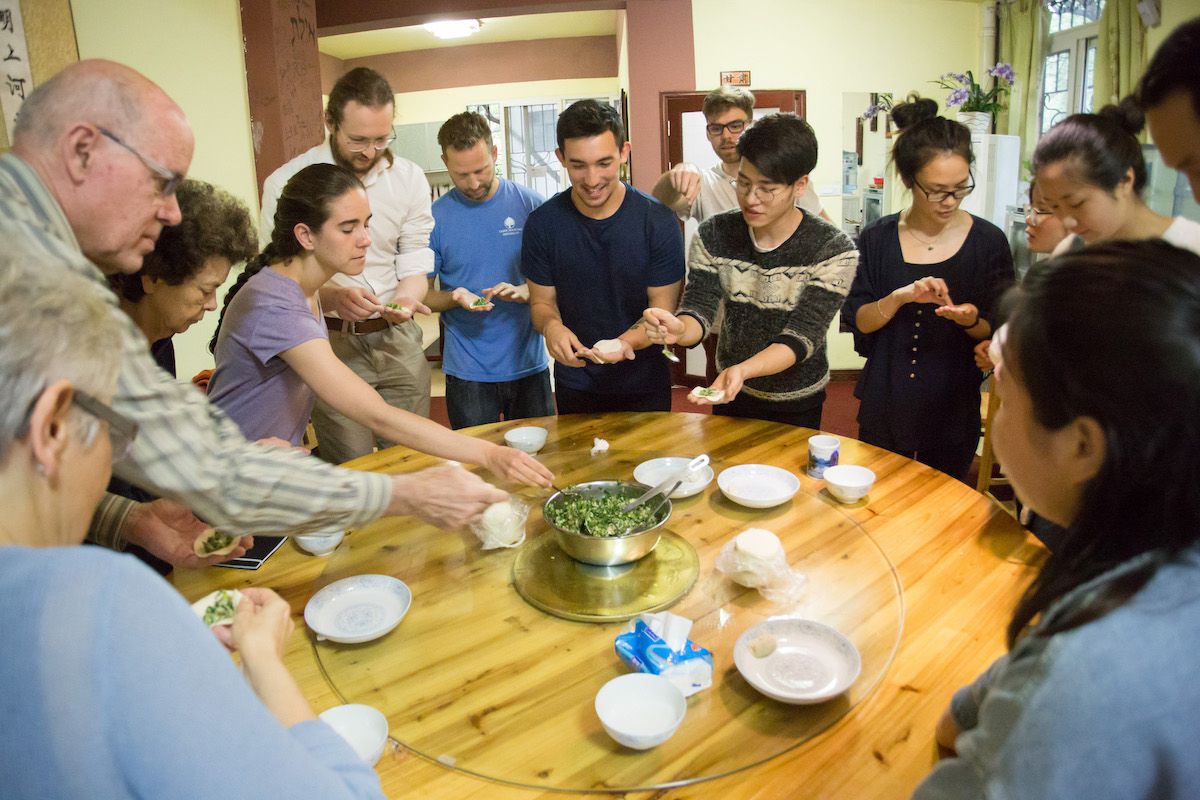
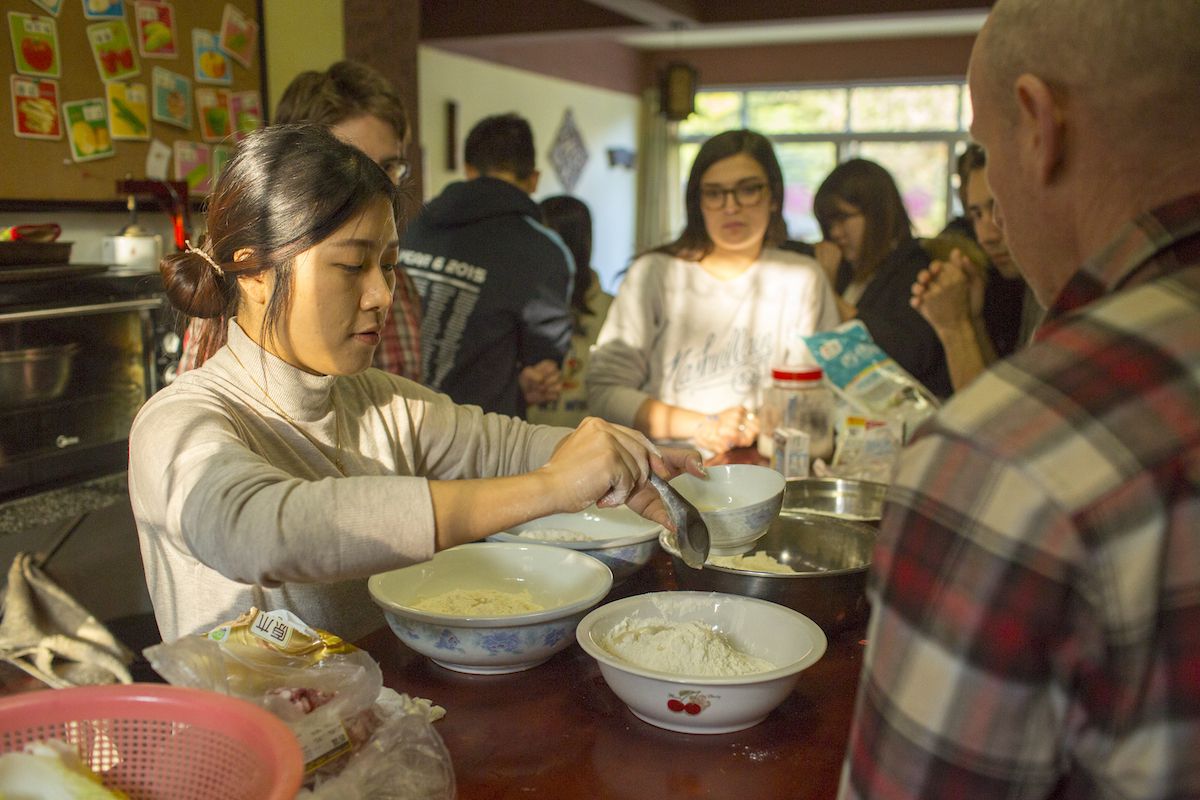
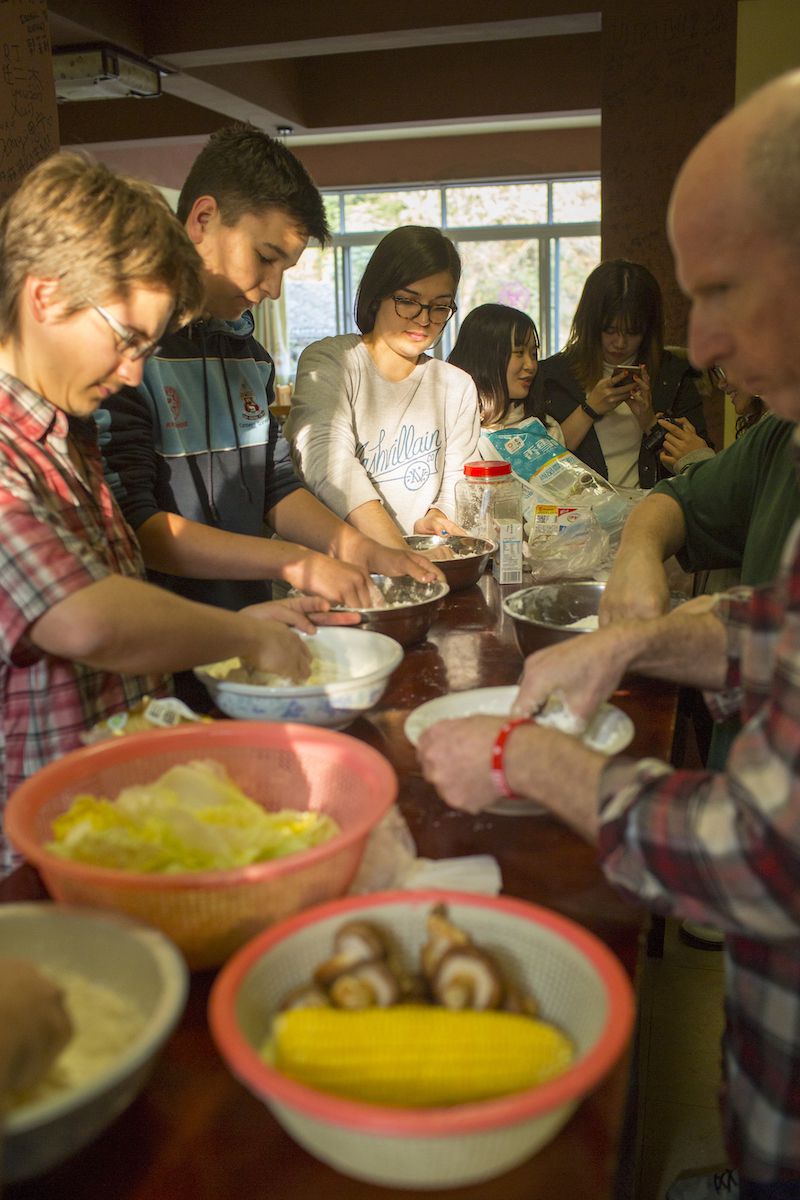
A CLI dumpling-making session starts like this, with the filling mixed by hand in big bowls, and every ingredient that goes in is one more word to learn in Chinese.
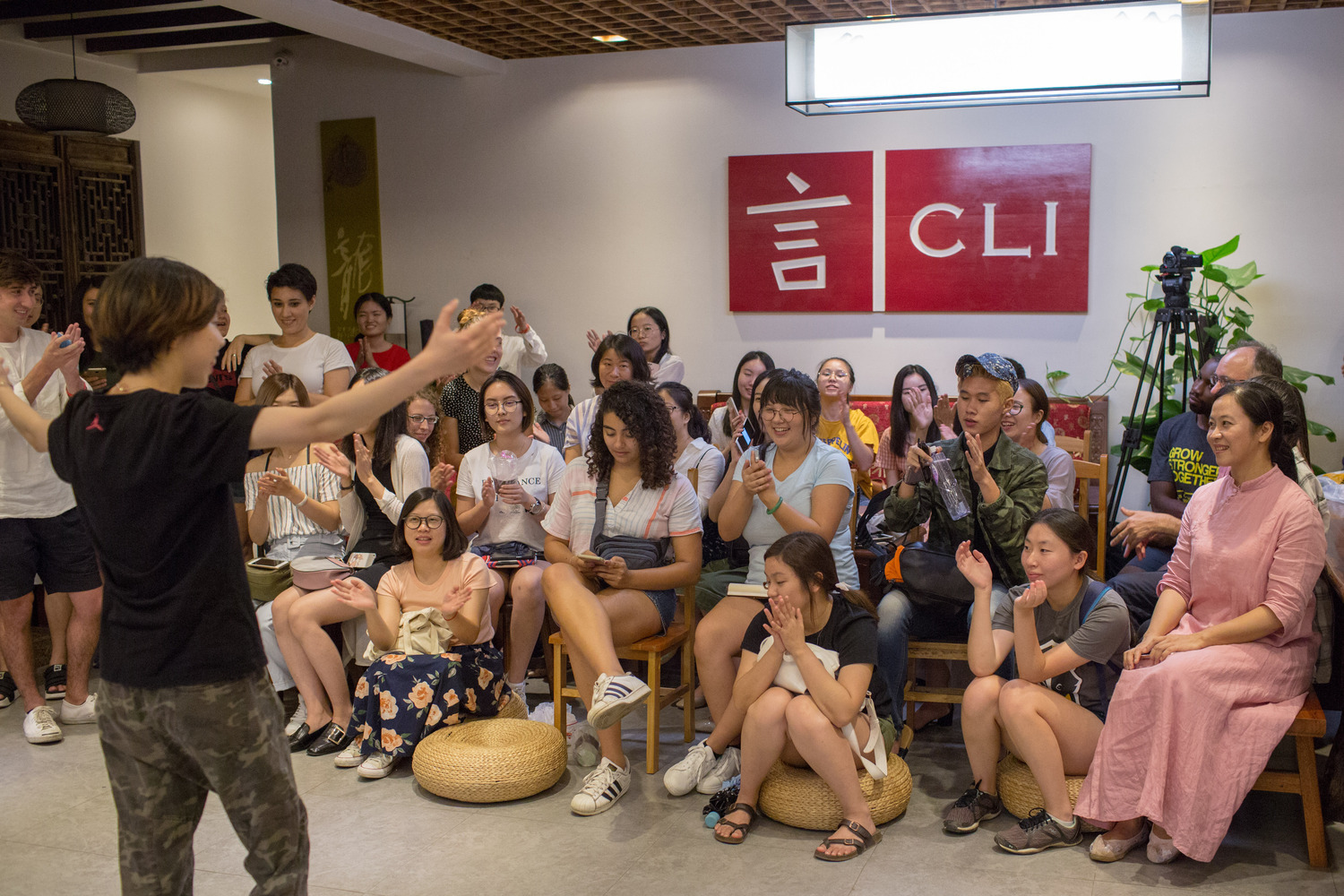
No stage needed: the guitarist takes a floor cushion and the room under the CLI sign fills in around him. Pengyou join CLI's activities too, so a crowd like this can include native speakers.
A pengyou from our local partner university spends three hours a week helping you with your Chinese, and some of that time can happen over a chessboard.
Below this game of Chinese chess lies Guilin, a full city but a compact, walkable one, with karst hills close enough to climb with a board under your arm.
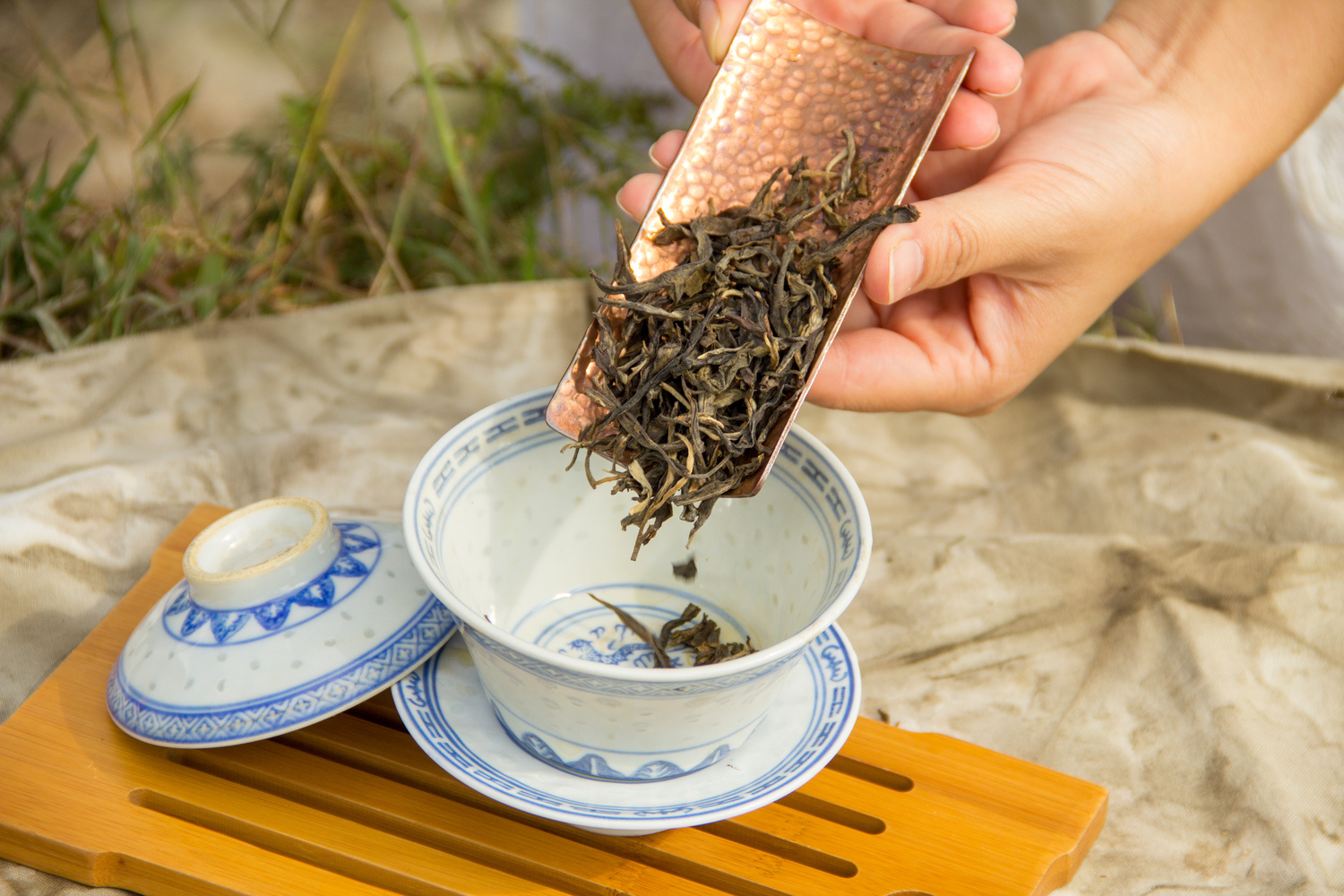
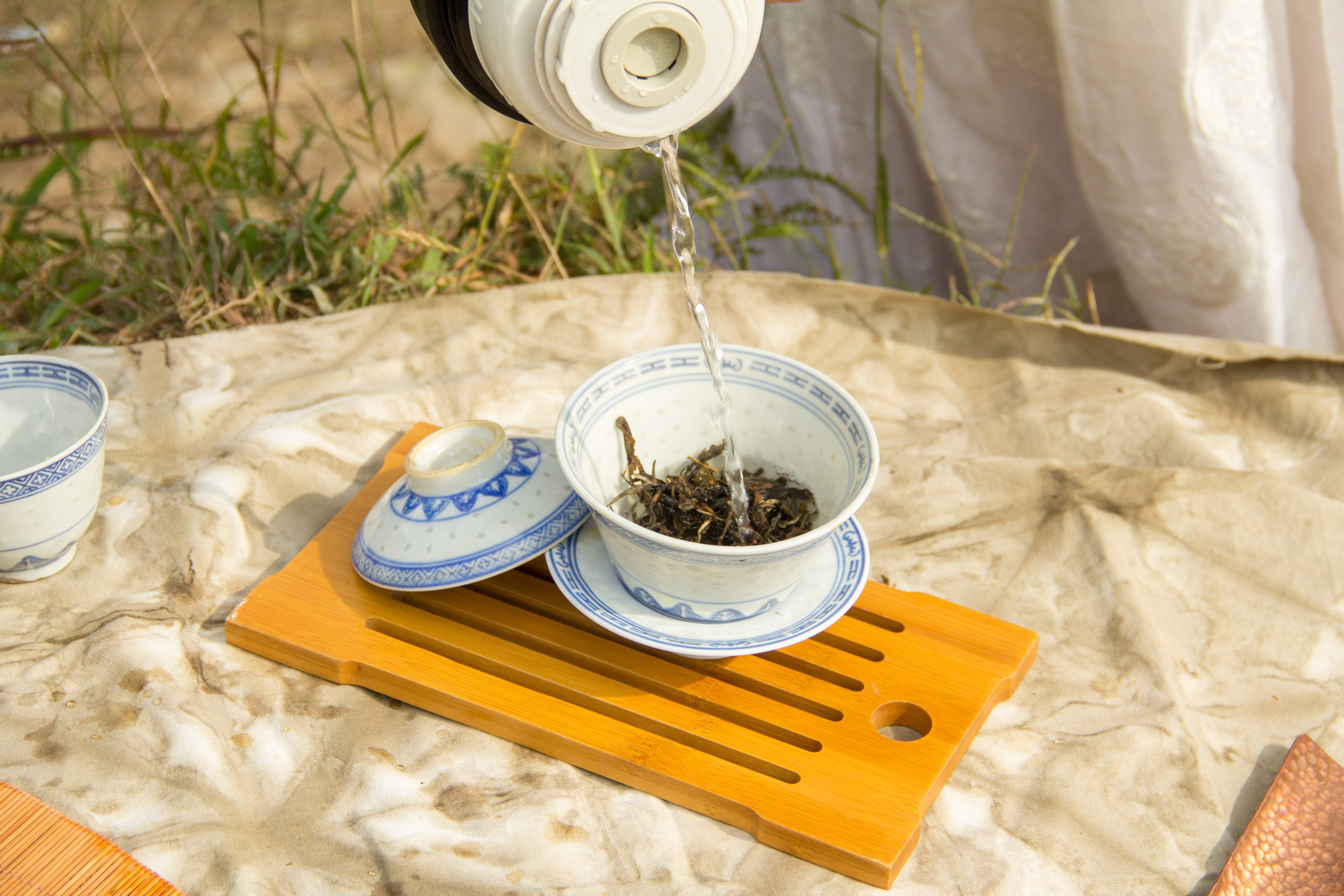
Tea ceremonies are one of the program's activities, and each step, from tipping the leaves into the bowl to pouring the tea, comes with its own words in Chinese.
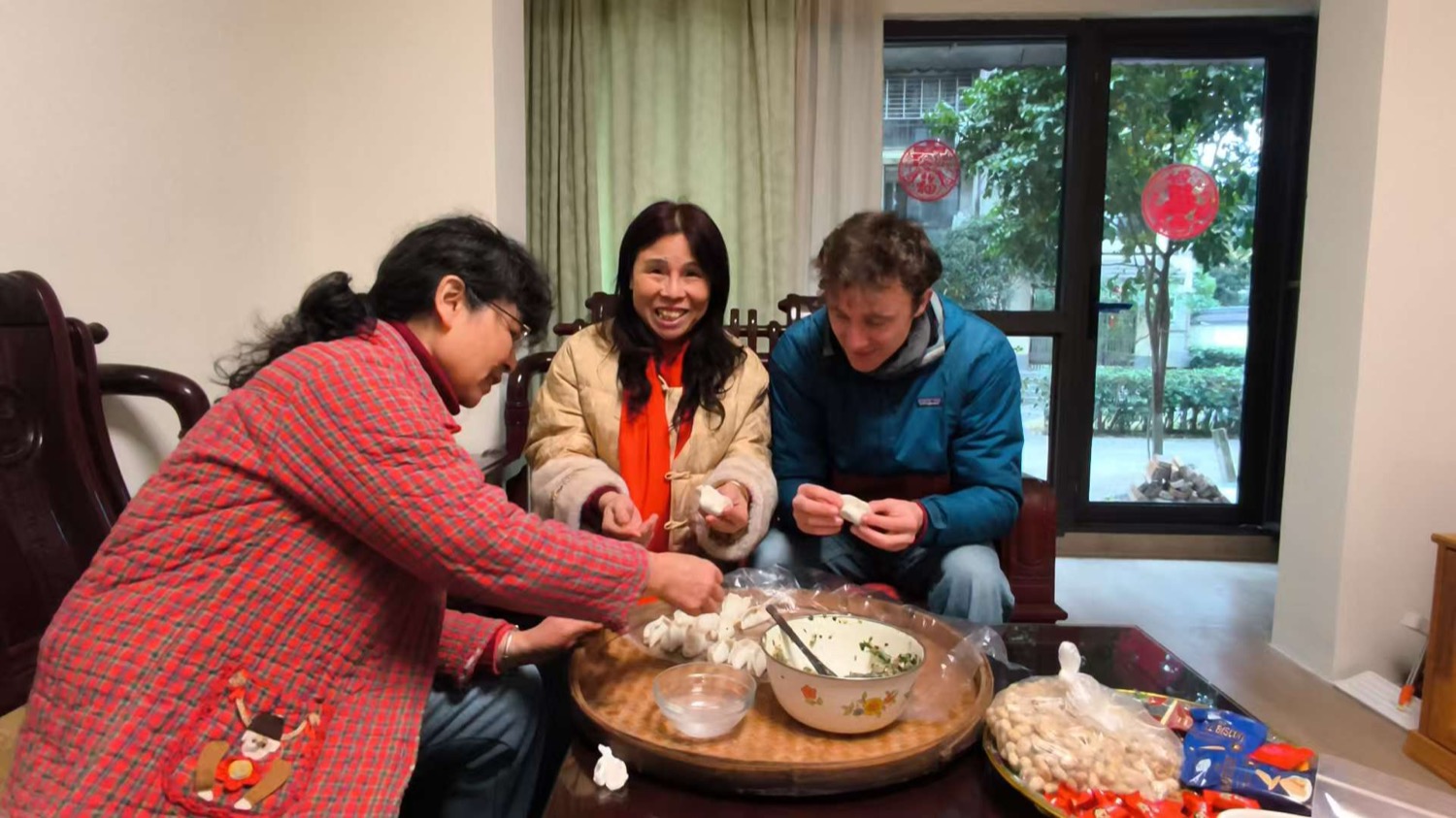
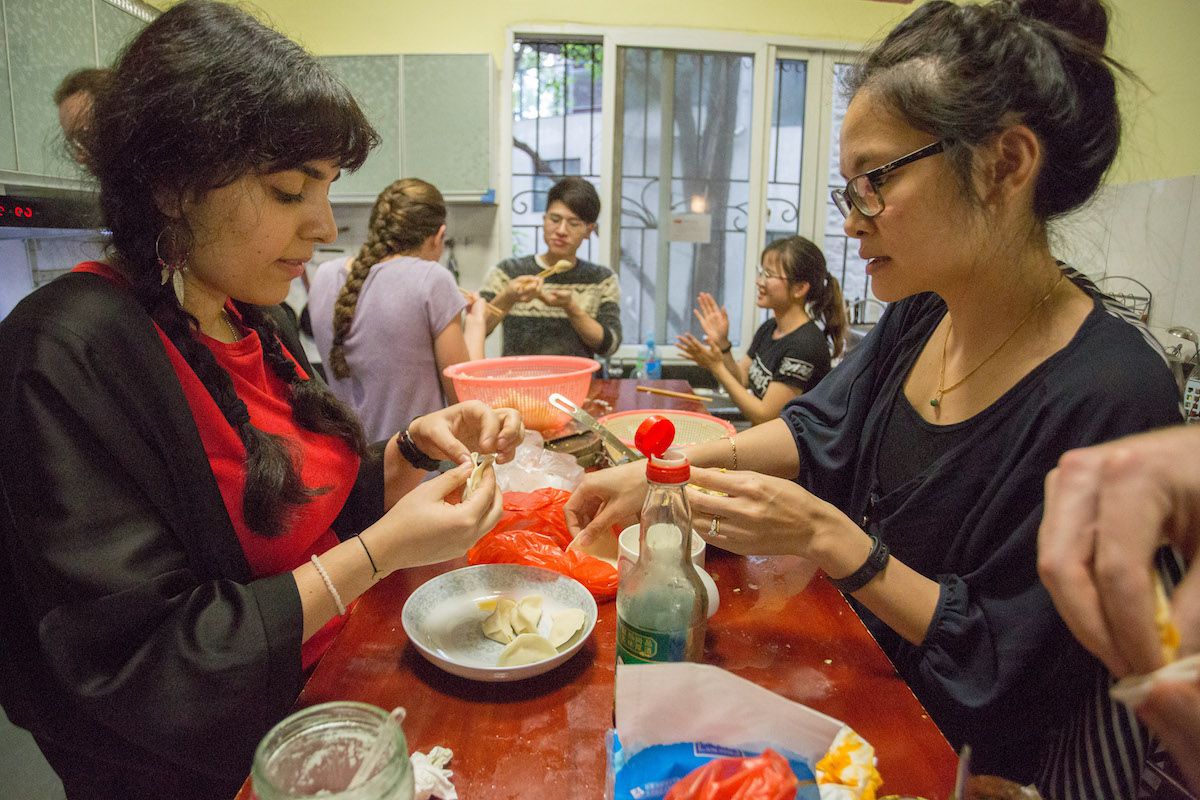
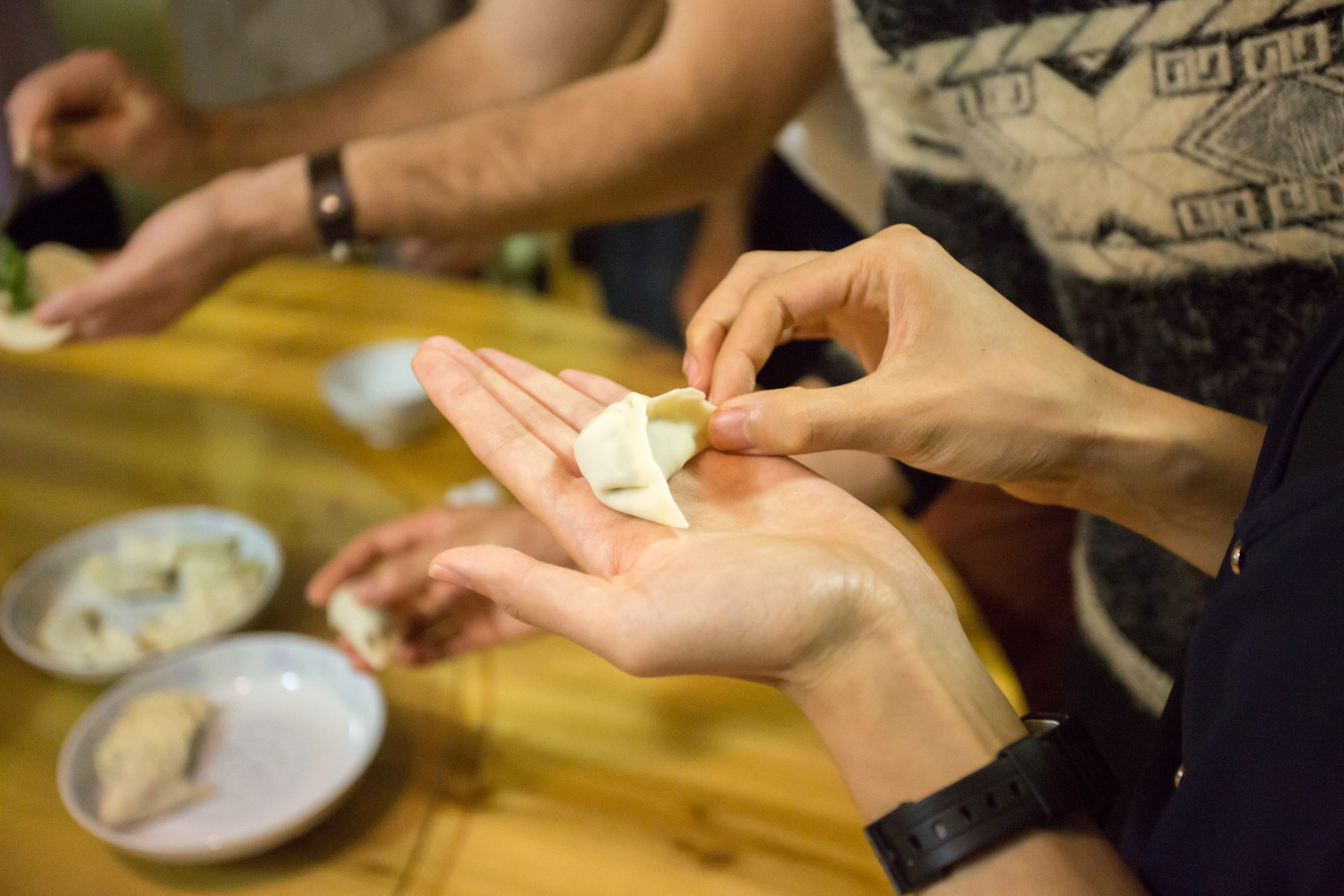
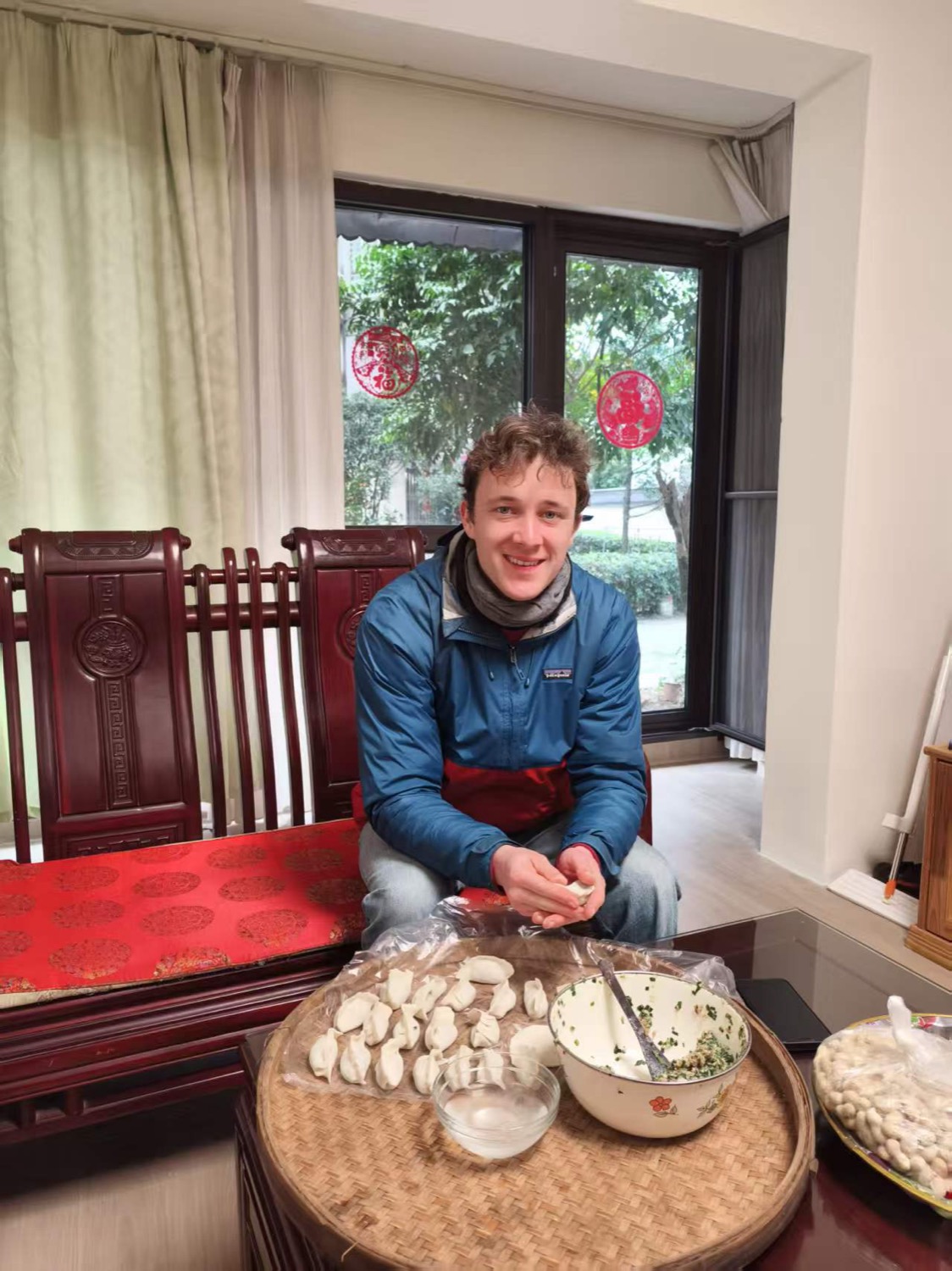
Folding 饺子 (jiǎozi) by hand takes everyone a few tries, and at a CLI dumpling-making session the whole group works around one big table.
Unfolding the finished cloth is the best part of a tie-dye session, and with activities every week, the next one might be a tea ceremony.
Earbuds in and eyes on the eaves, he fits one more piece onto a wooden pagoda. Calligraphy at CLI asks for the same steady hands.
The guzheng is a Chinese plucked zither, and for students who play music at home, its parts and techniques come with a whole new set of words.
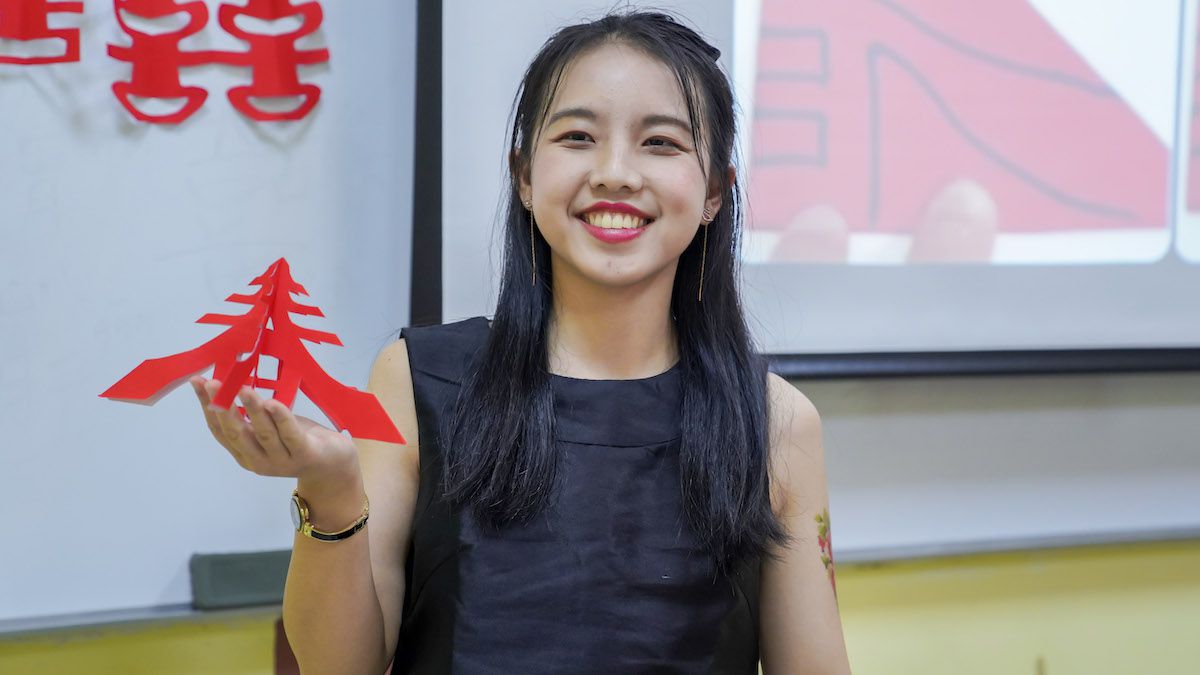
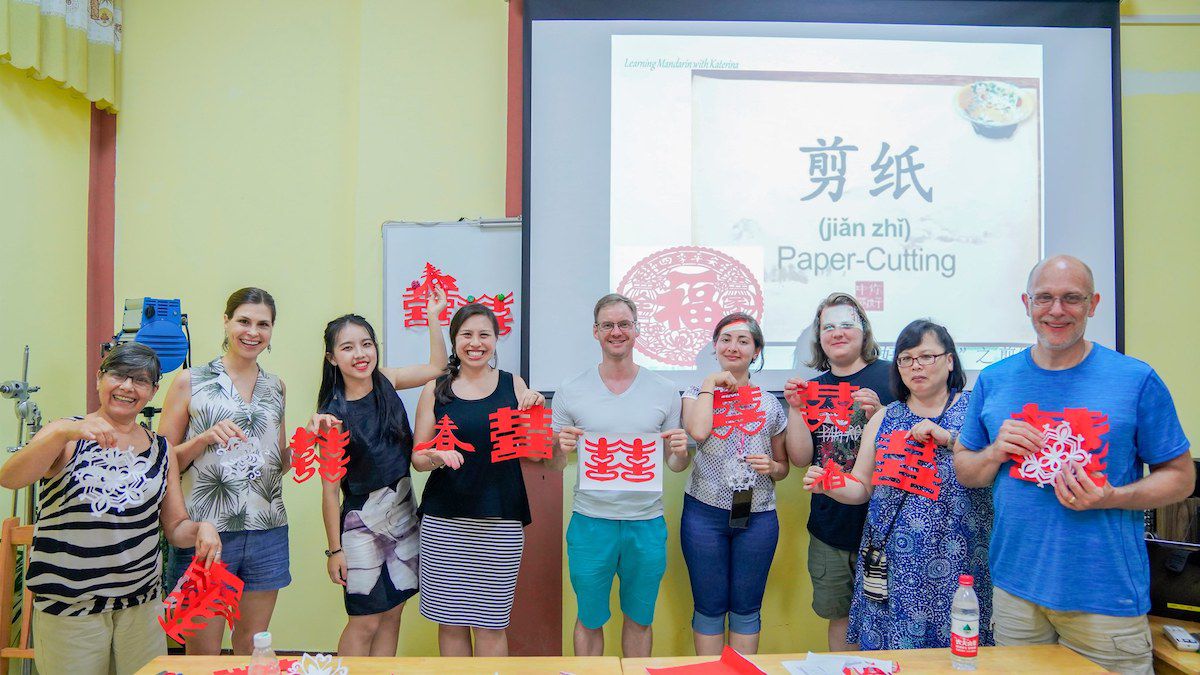
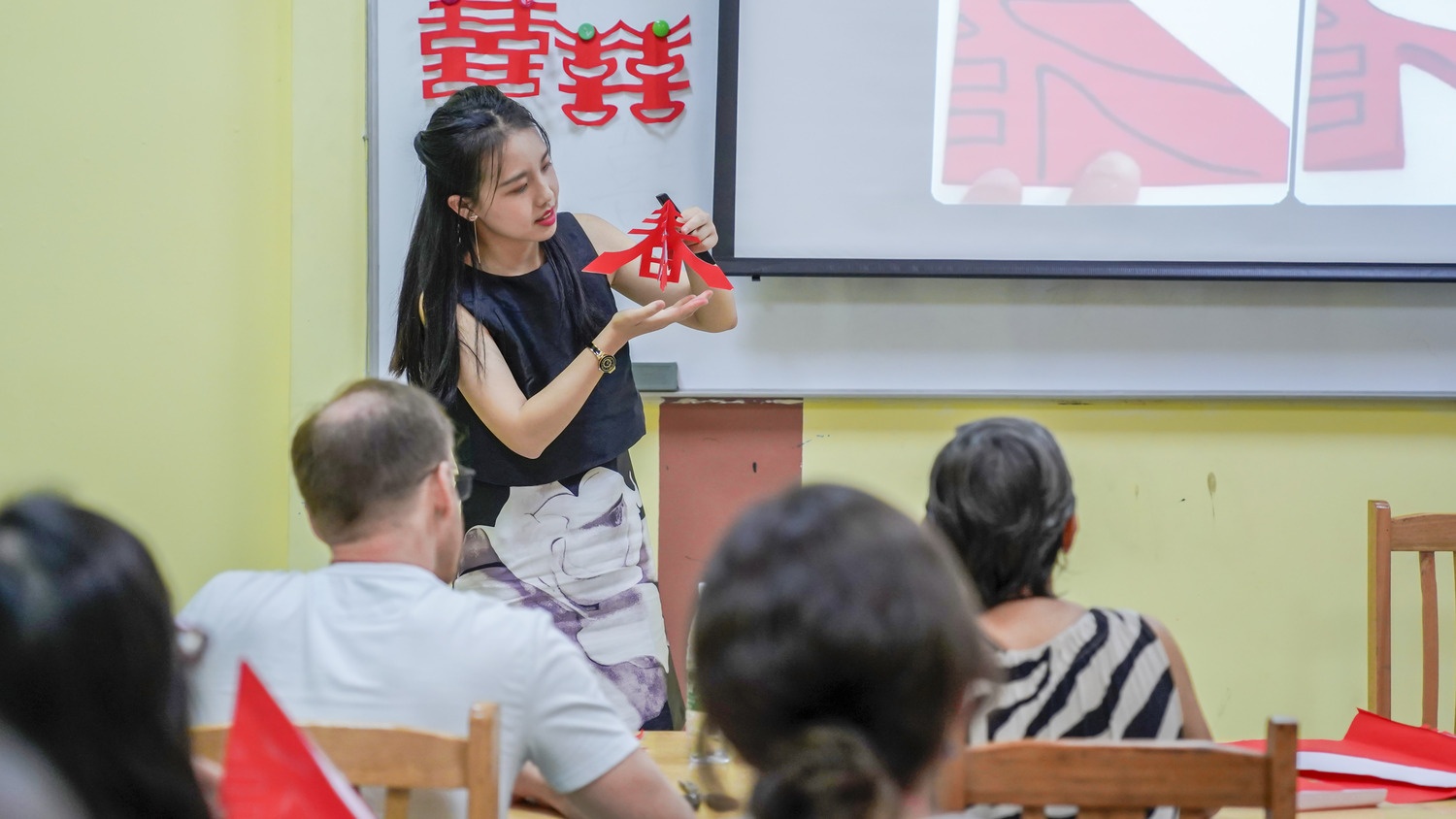
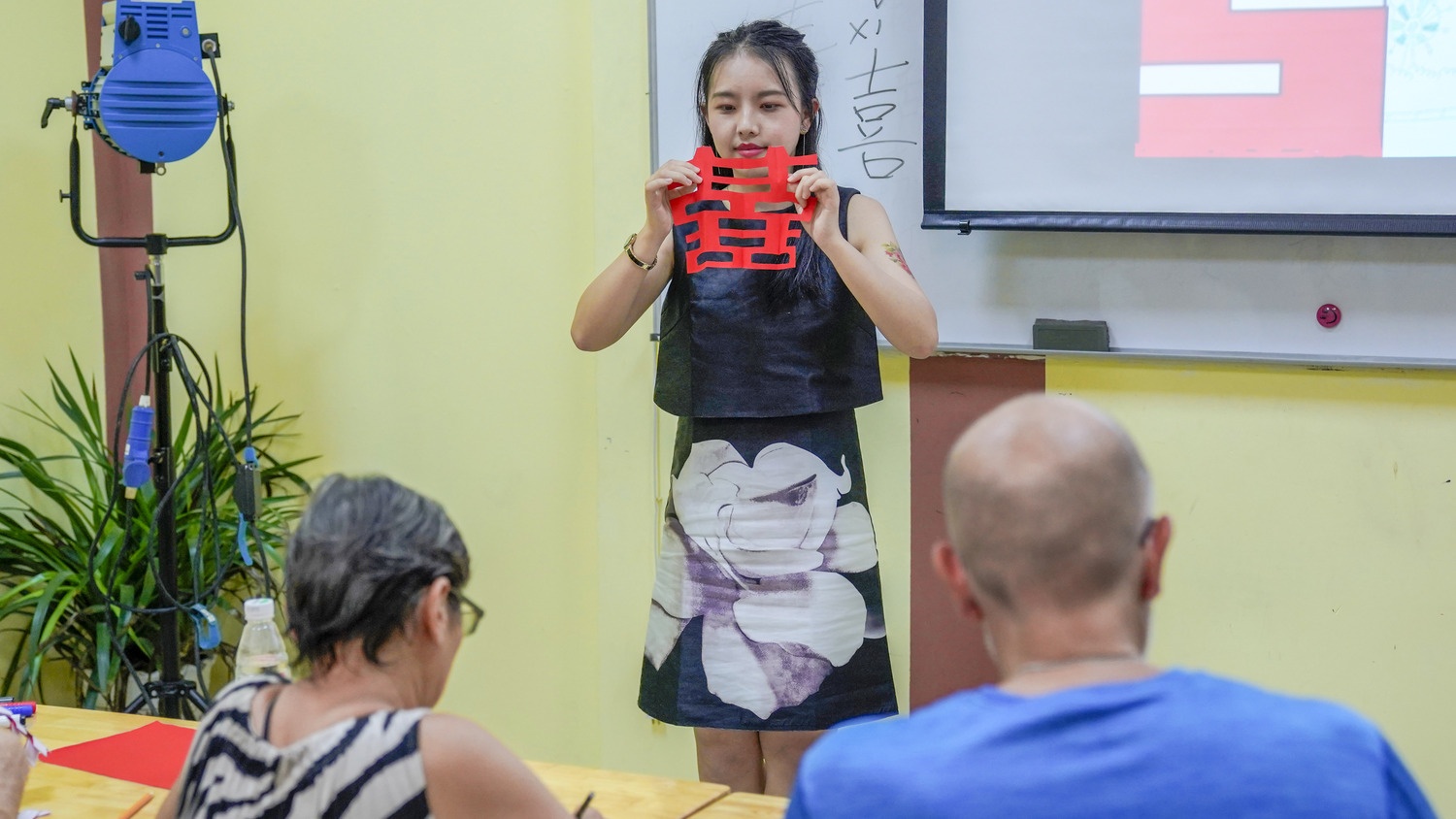
An instructor holds up a finished red paper cut so the table can see the pattern, at one of the paper-cutting workshops CLI students have joined.
We run calligraphy as an activity, and a quiet table by the window is a good place to practice one stroke slowly, again and again.
Some CLI students have had a first guzheng lesson like this one, with an instructor at their side pointing out each string.
The round fan is a classic prop in Chinese dance, and CLI students have watched dancers like this one perform in person.
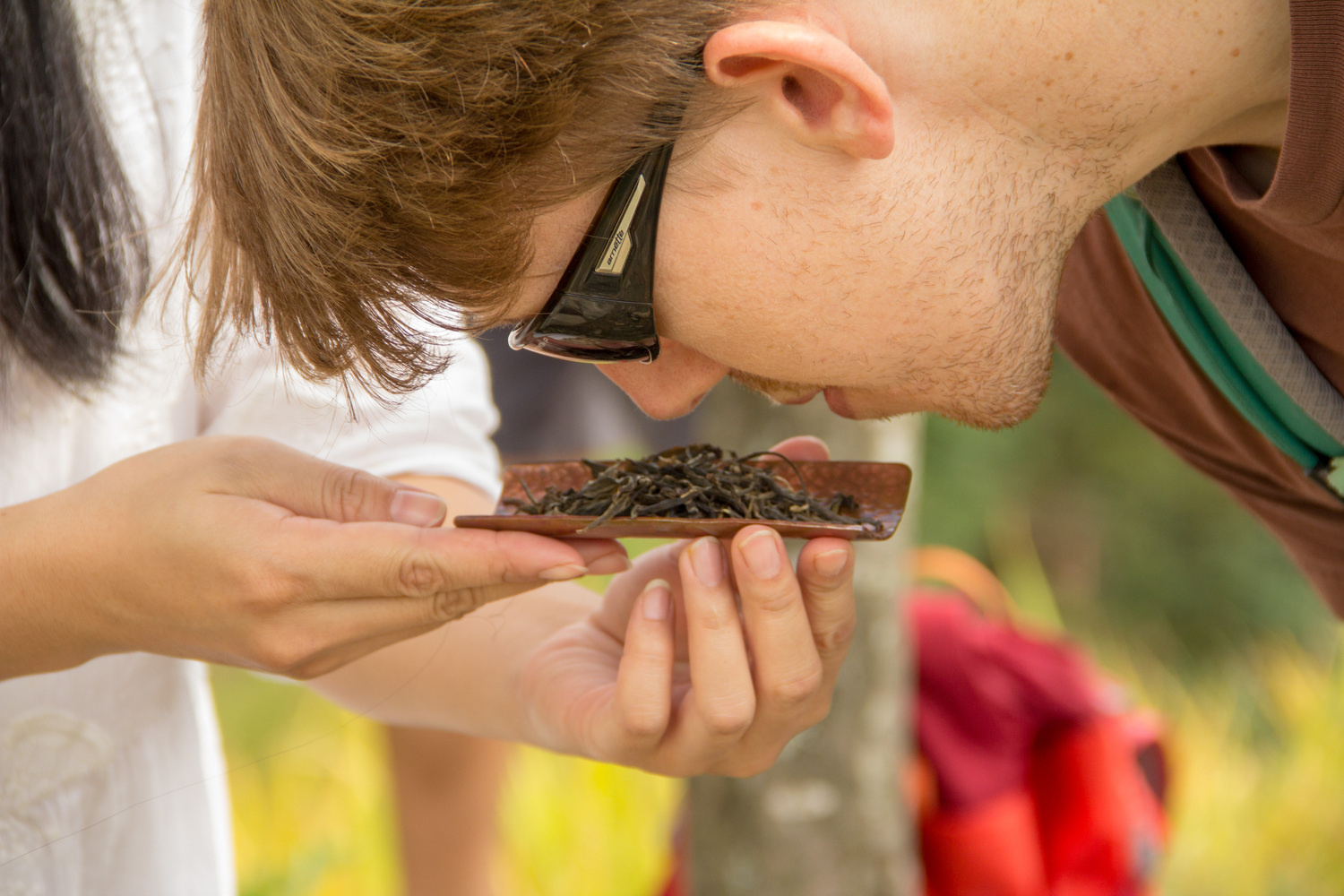
Smelling the dry leaves comes first at a tea tasting. Pengyou join CLI's activities too, so a native speaker may be close by to tell you what each tea is called.
Pouring hot water over the leaves in a lidded bowl, a 盖碗 (gàiwǎn), is the central step of a Chinese tea ceremony, and tea ceremonies are among the activities we run at CLI.
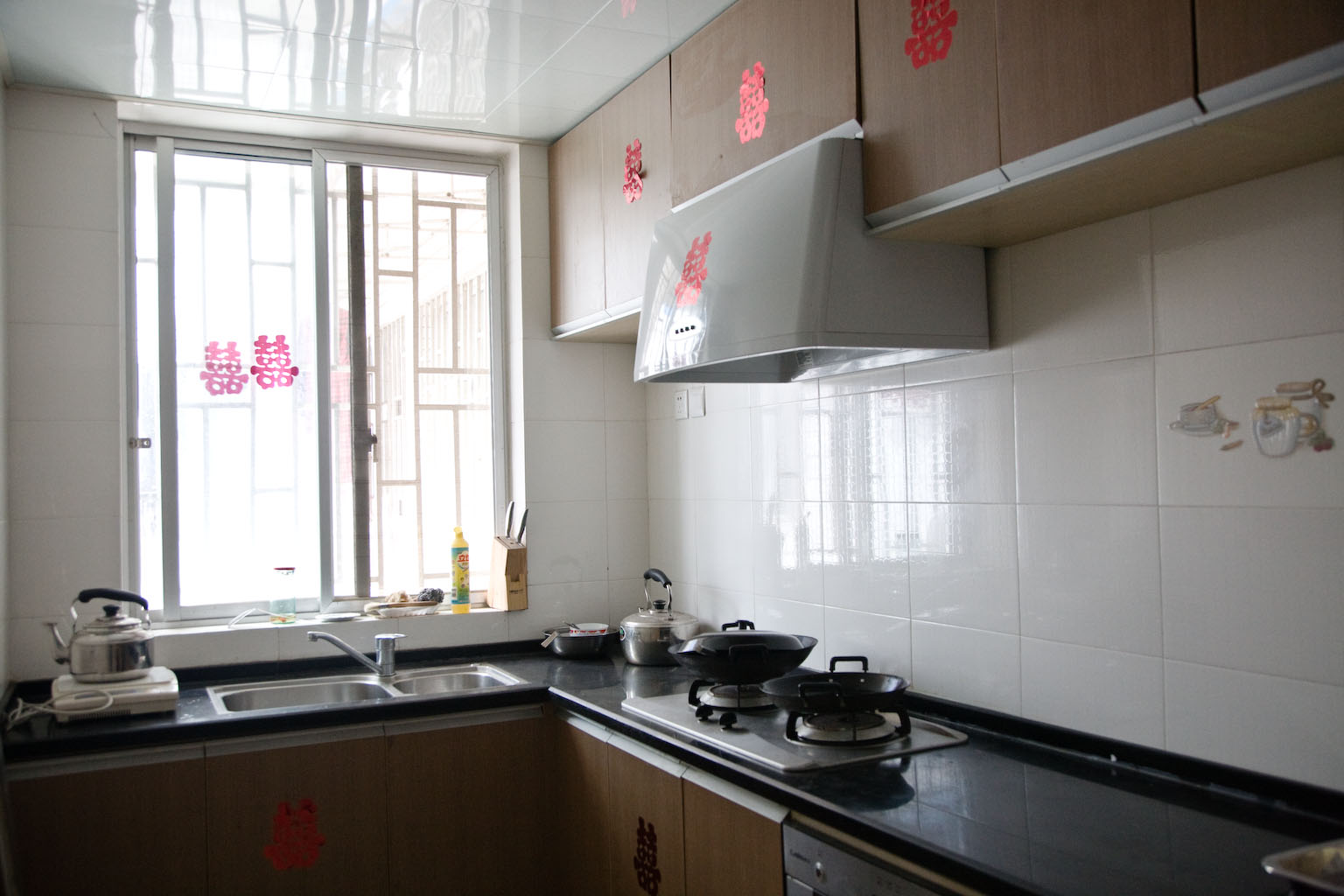
The red 囍 (shuāngxǐ), double happiness, is a classic paper cut, and cutting one yourself shows how two characters can join into one shape.
Chinese chess at sunset on a hilltop above the city is a fine reward for the climb, and hiking Guilin's karst hills is part of the program.
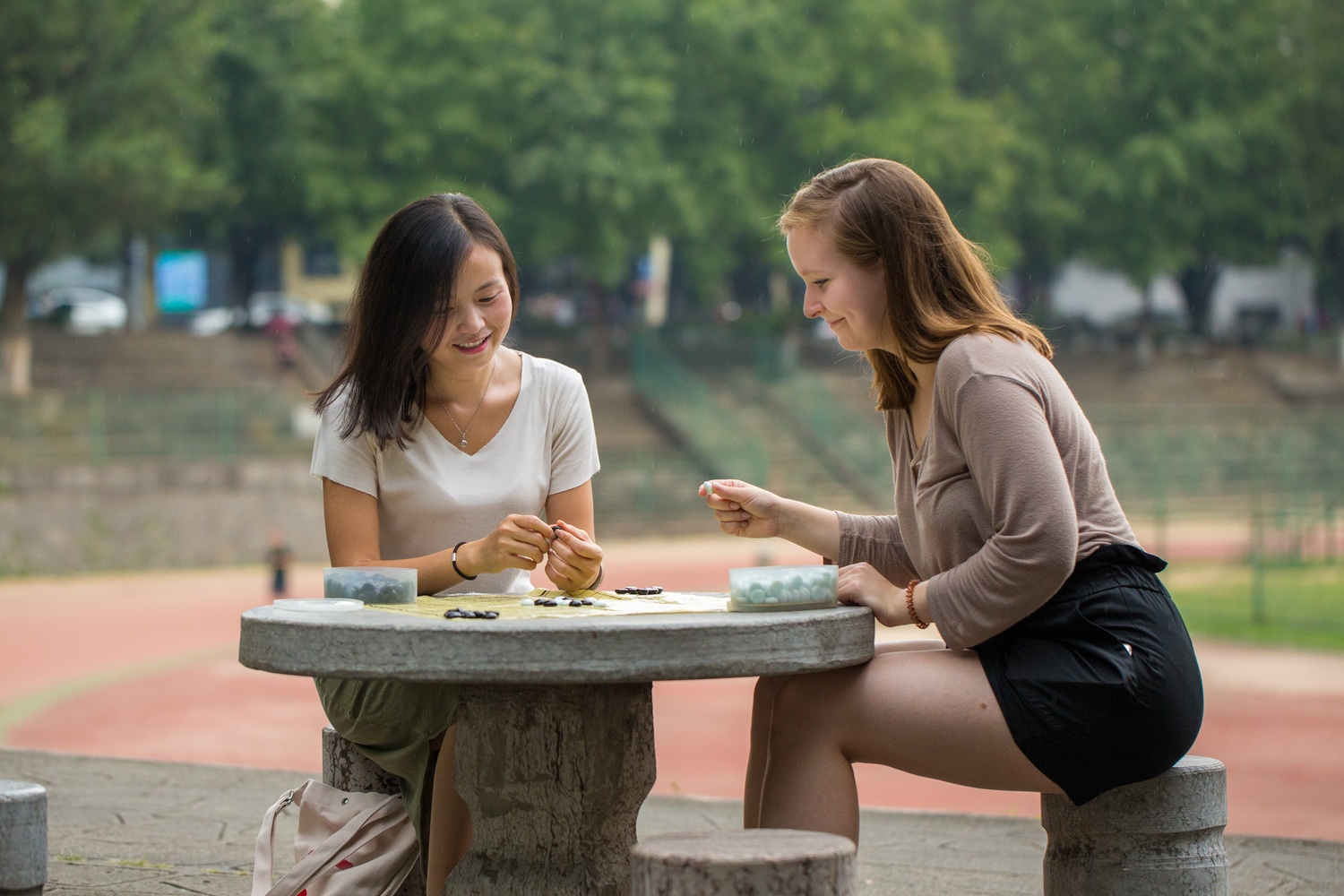
Go is won by surrounding territory, and a stone table beside a sports field suits a long, quiet match. CLI's activities include Chinese games like this.
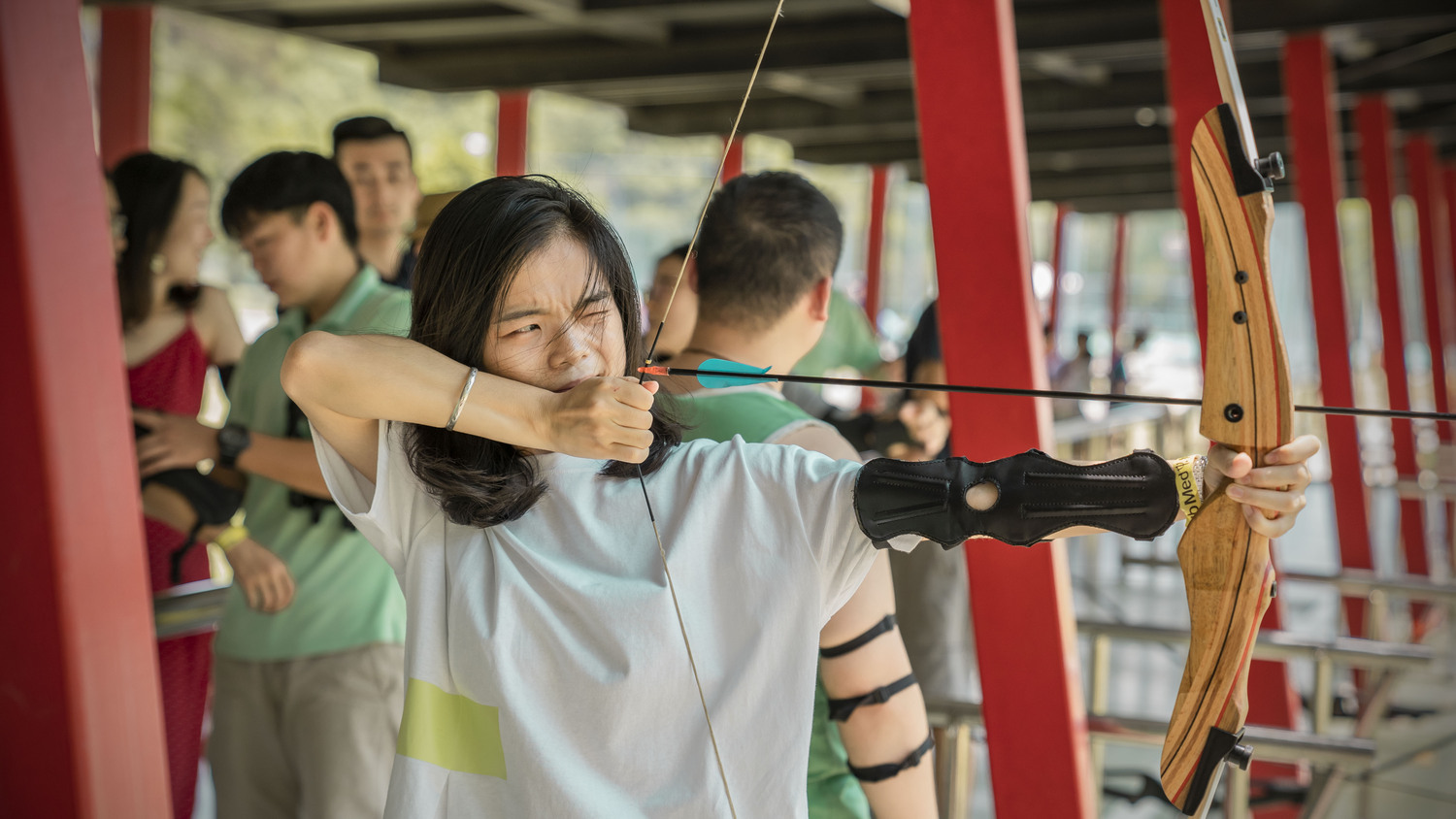
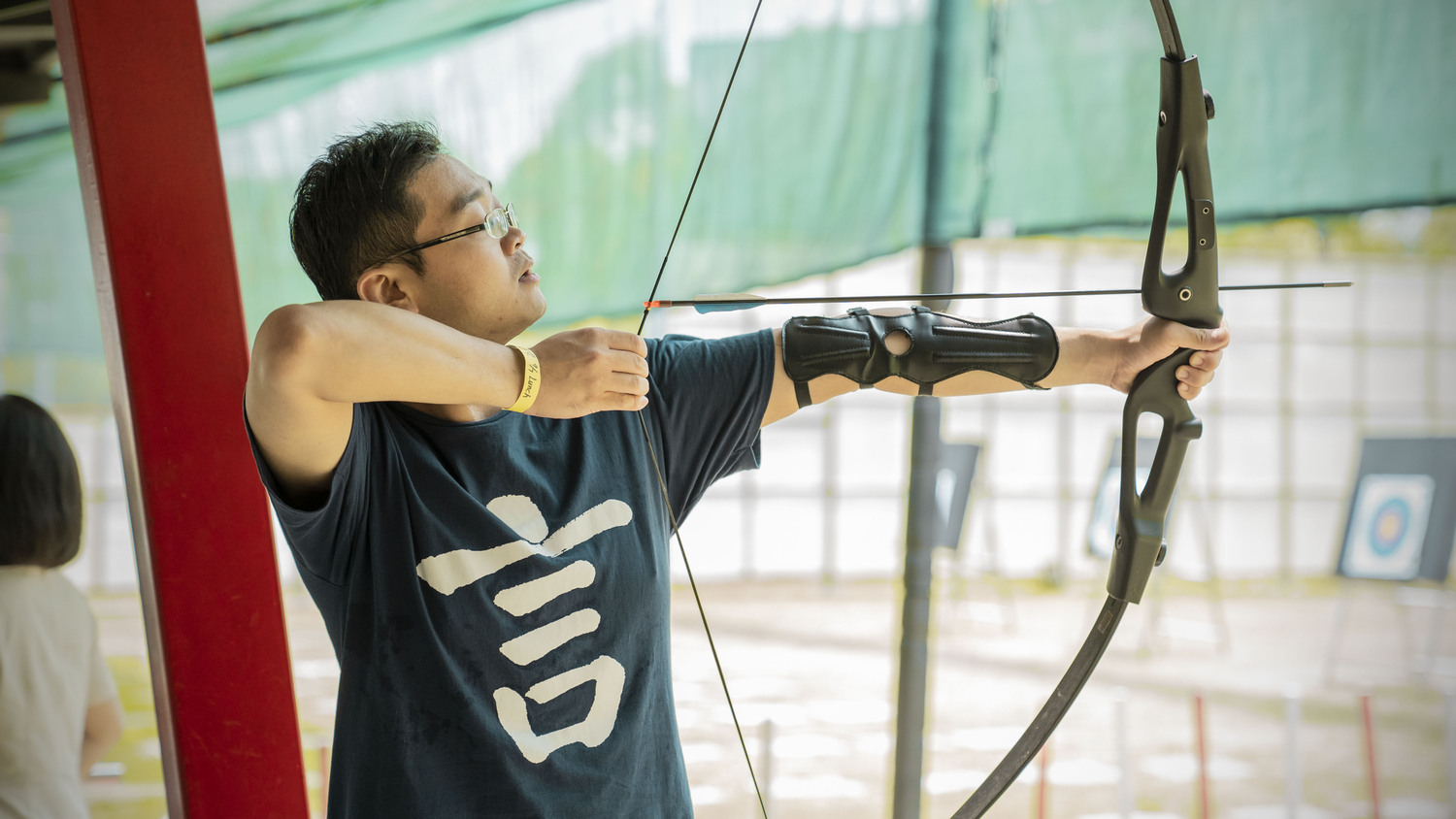
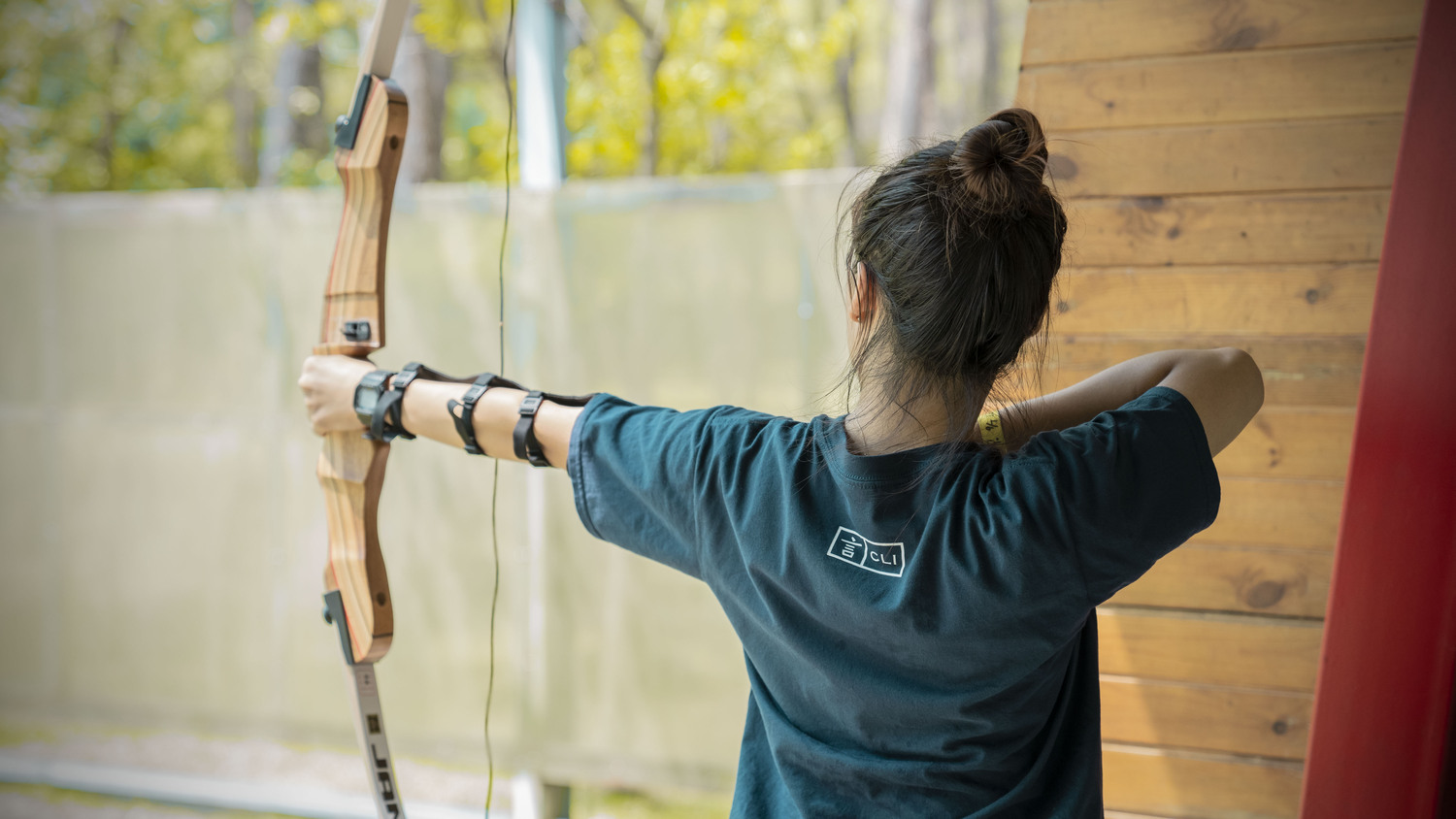
Eyes narrowed and arrow level, she holds the draw at a covered range. Following an instructor's calls in Chinese is listening practice, and the target shows how well it went.
A finished wooden pagoda stands at the end of the workshop table. Little English is spoken in Guilin, so a workshop like this is a chance to learn the Chinese for eaves and beams.
A guzheng player with a dancer moving behind him: performances like this have let students hear Chinese music and see the dance that goes with it, side by side.
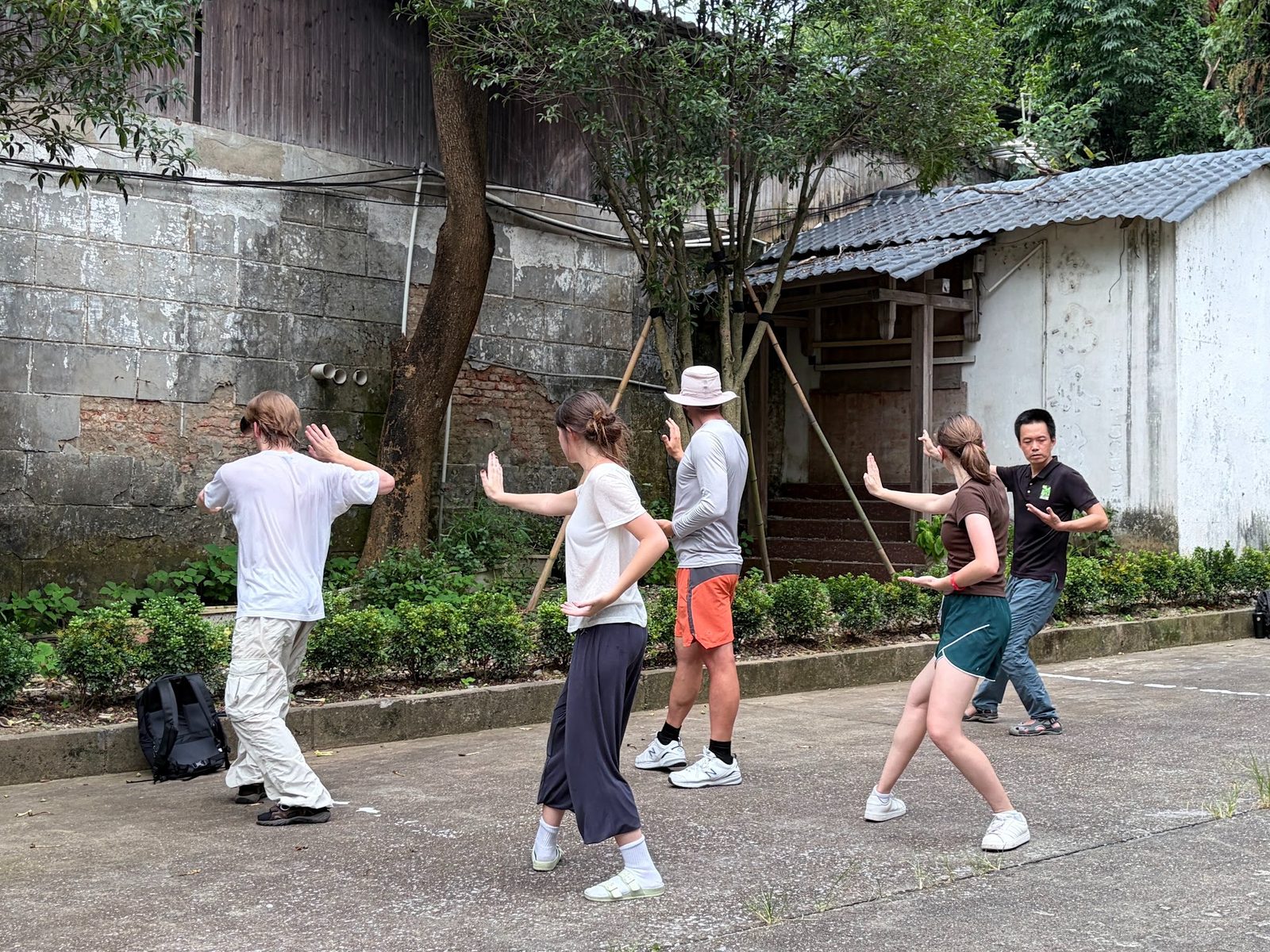
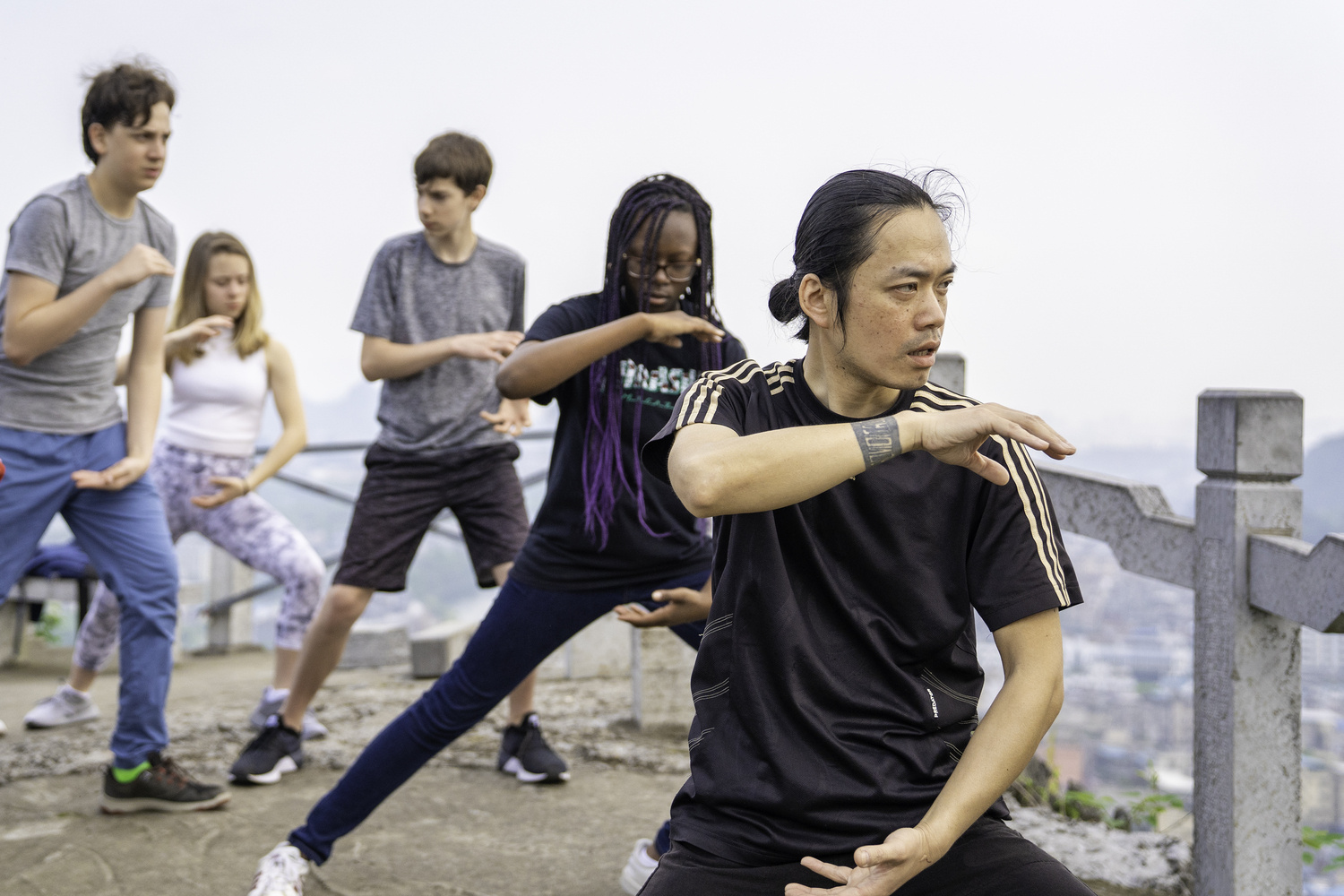
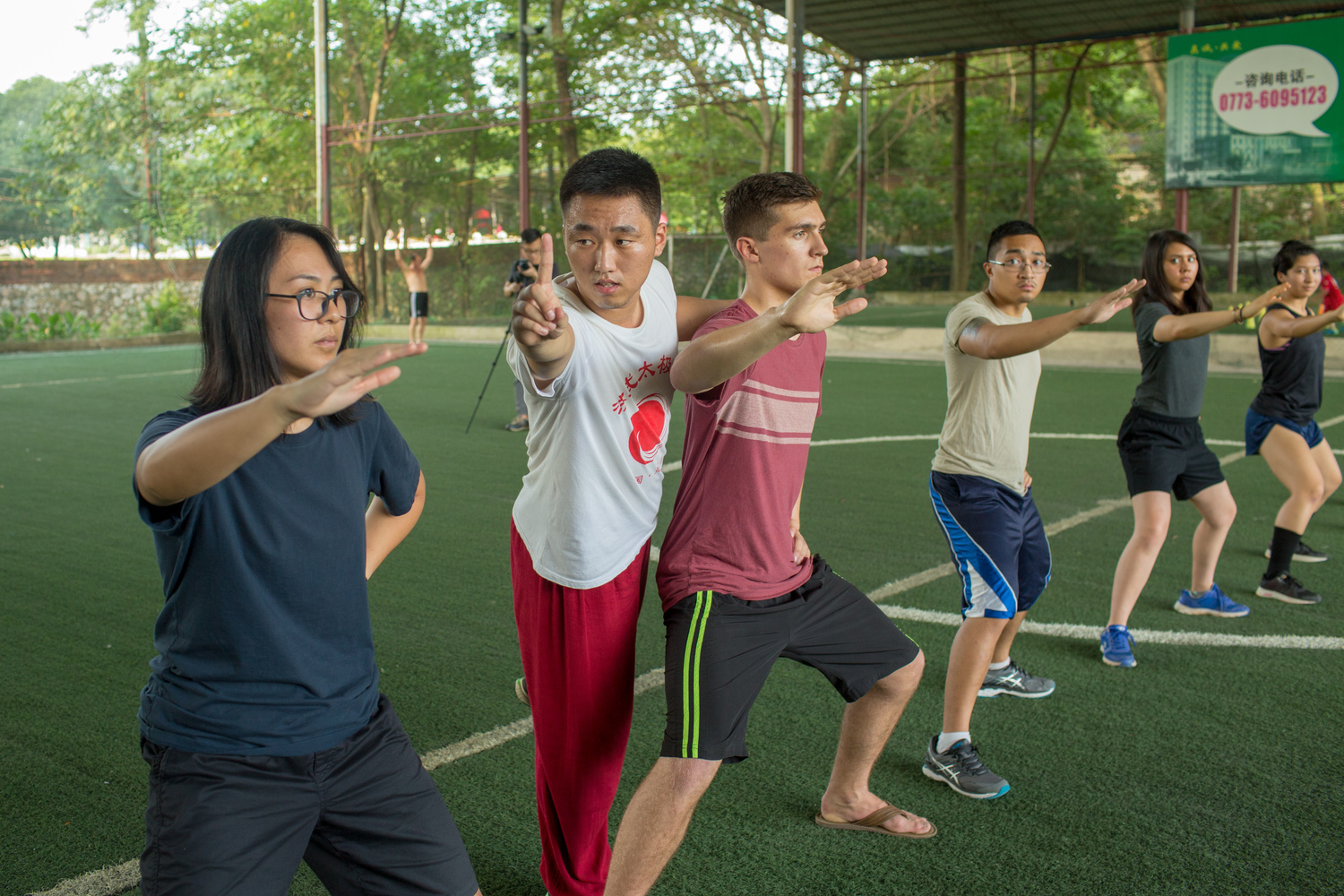
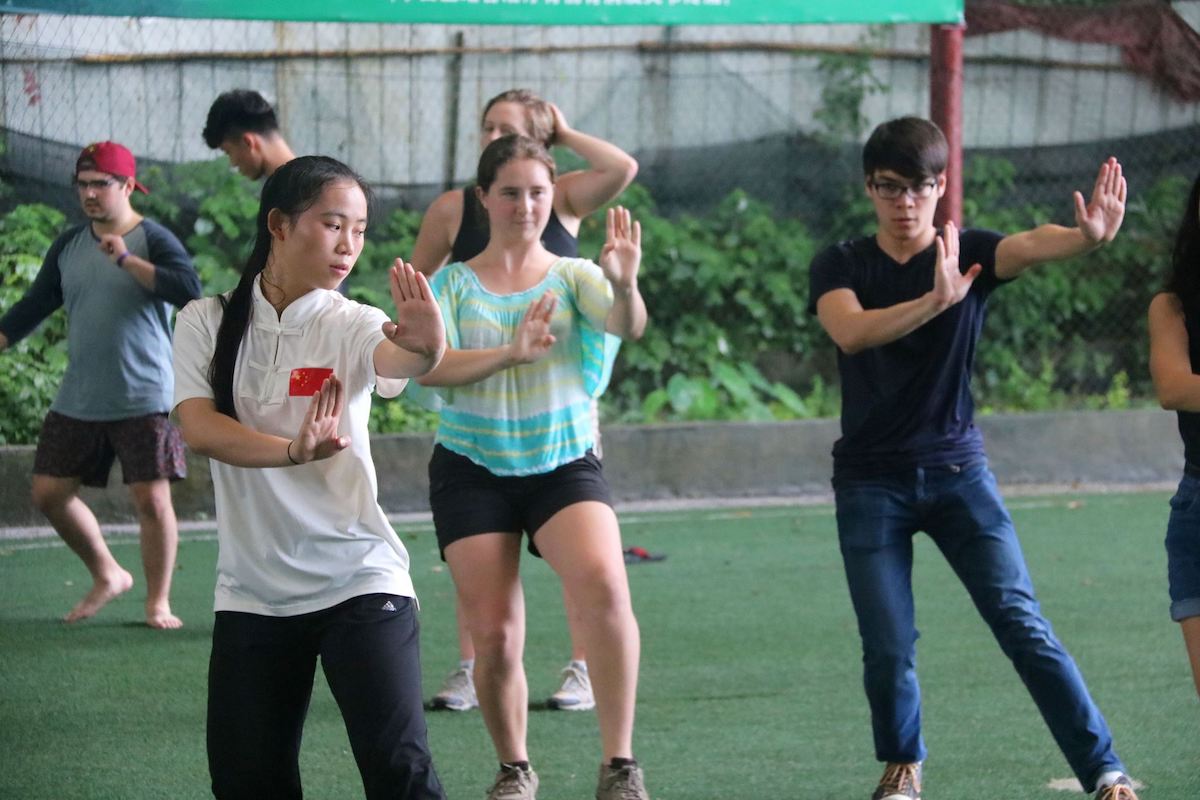
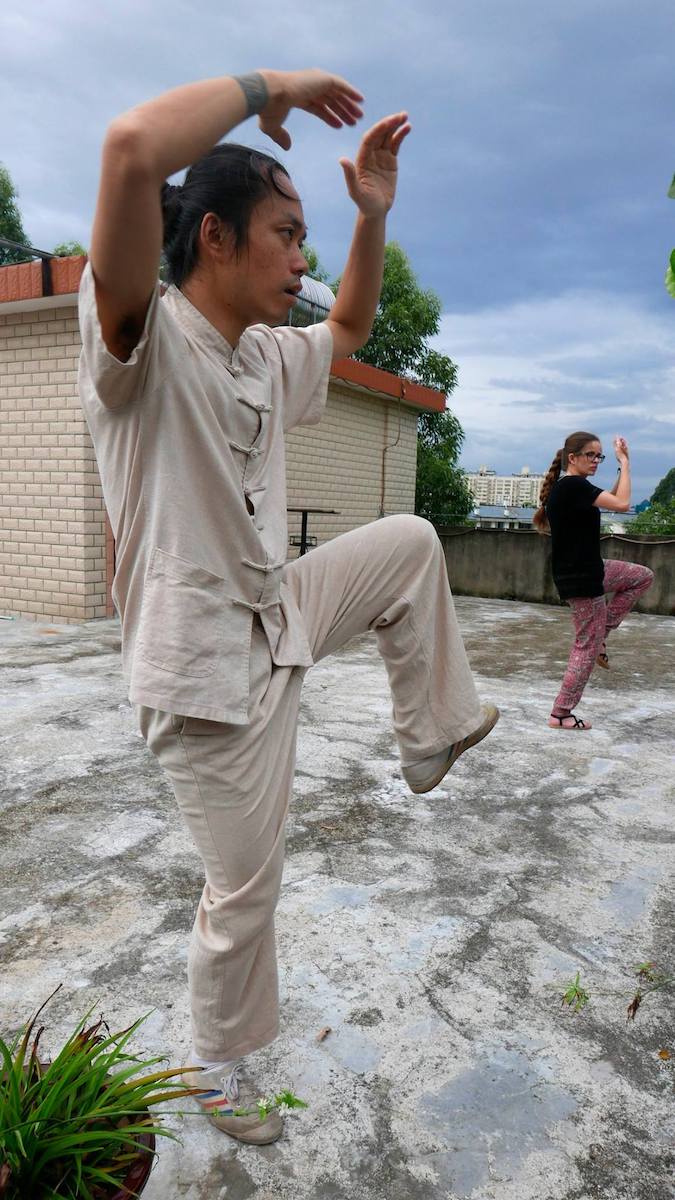
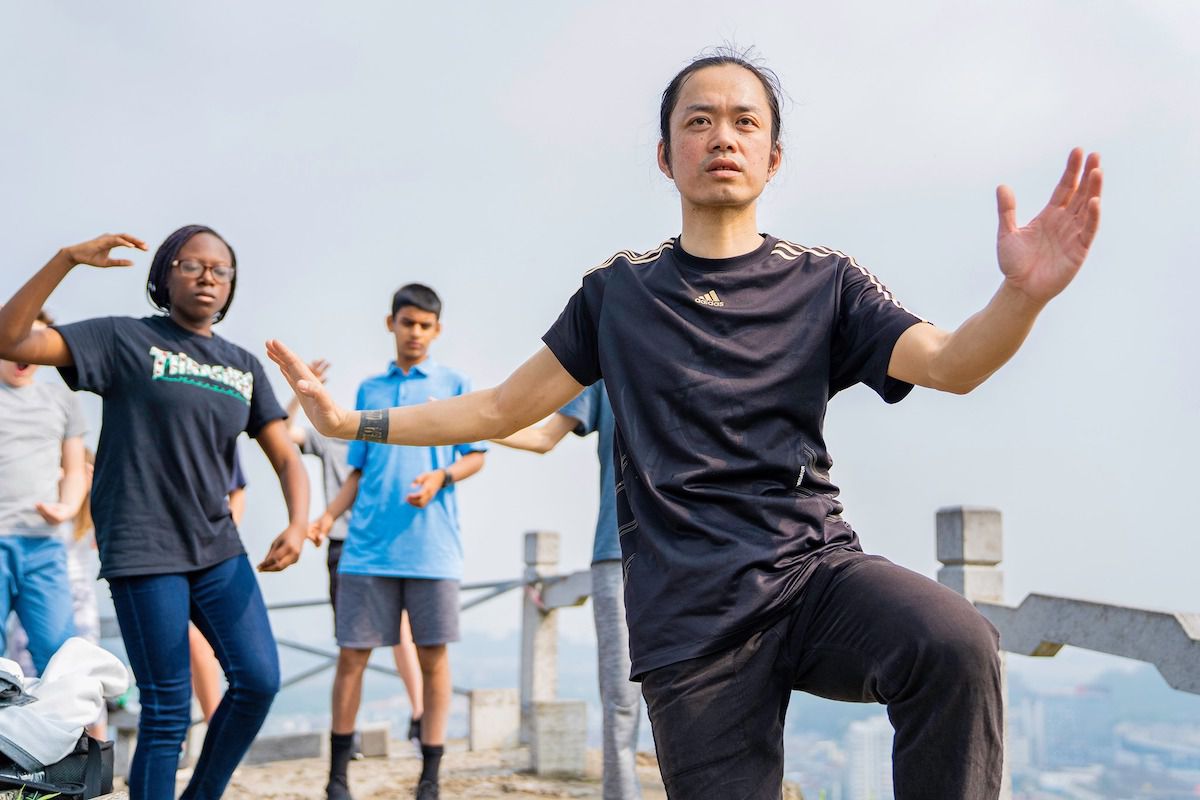
We run tai chi sessions, and following a teacher's movements is listening practice too, with the same few words for slow and turn heard again and again.
Calligraphy is often an evening activity after the day's classes, and practicing beside a teacher means each stroke can be corrected as it happens.
A guitar plays while a guzheng stands ready in the lounge, and an informal music session like this is an easy way to get to know the other students at CLI.
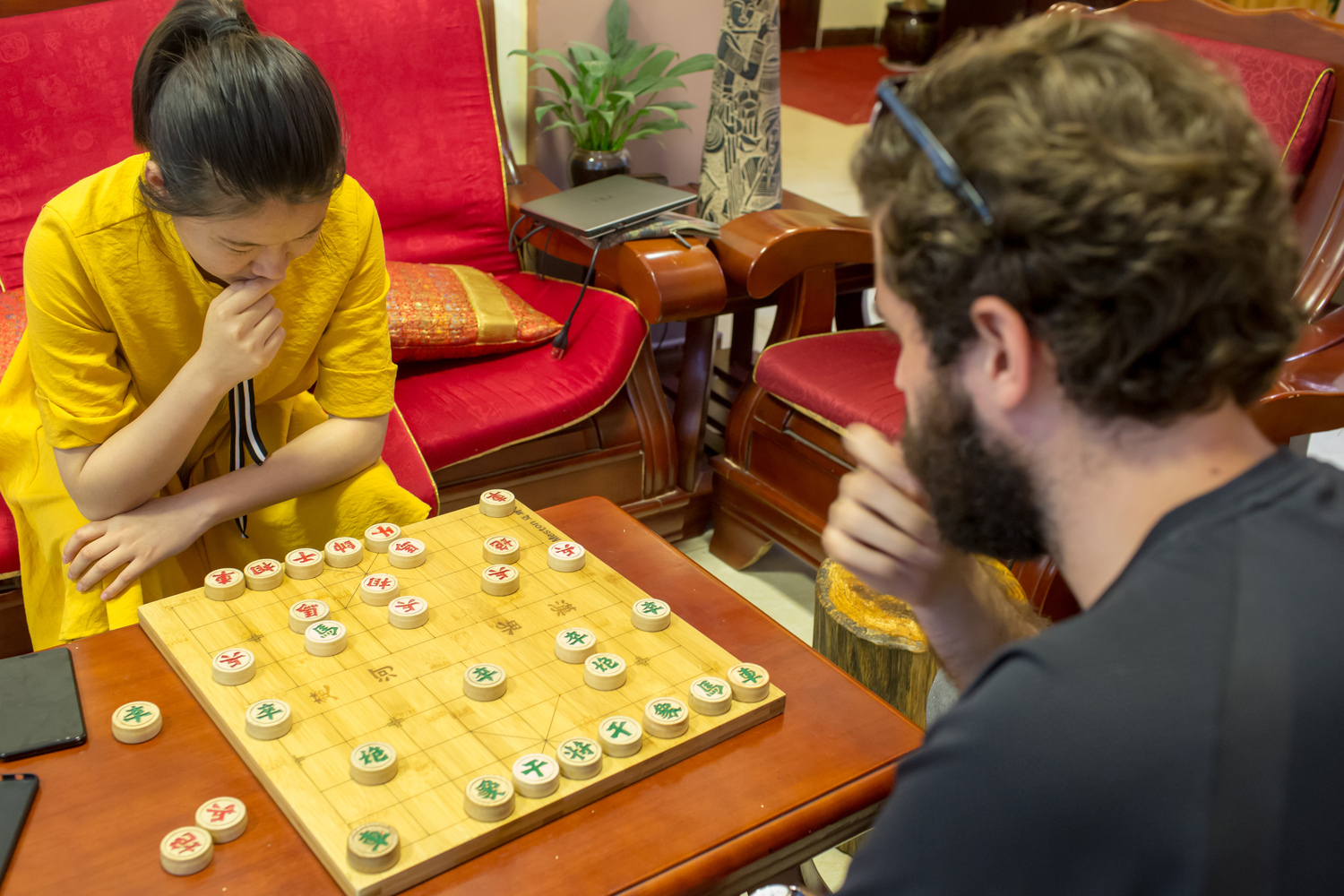
Each piece in Chinese chess carries a character, so learning the pieces is reading practice before the first move.
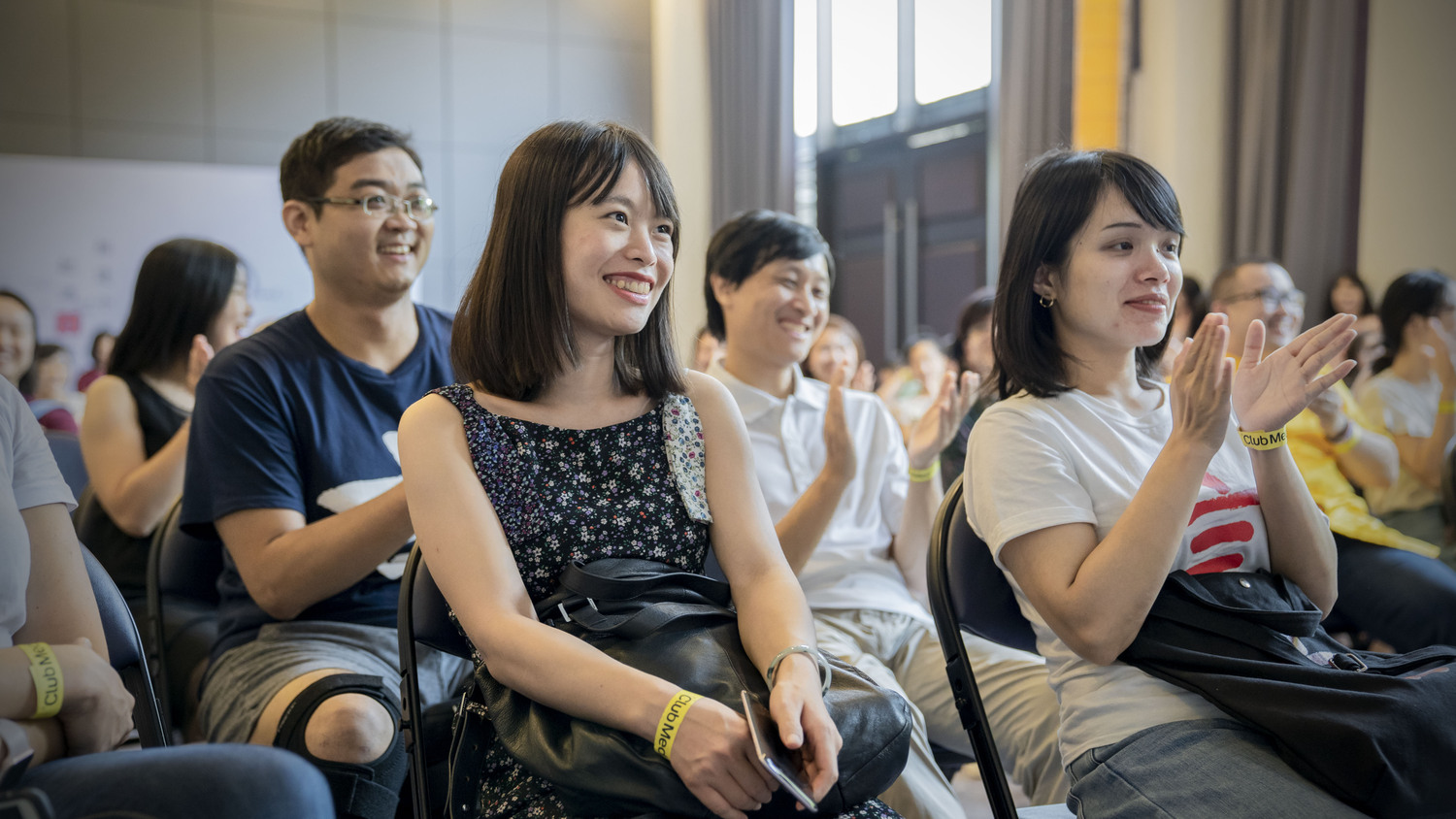
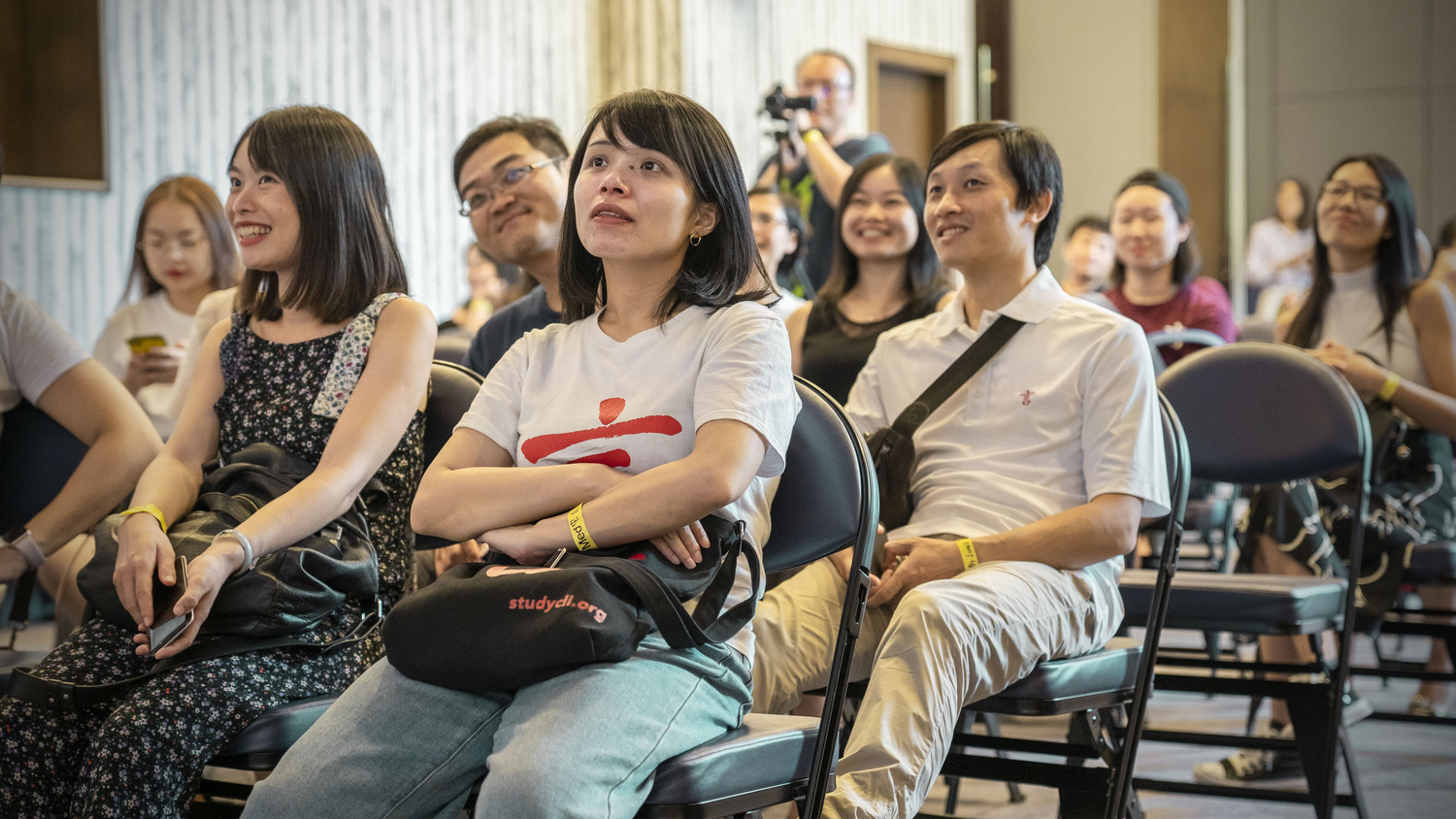
Every chair and floor cushion is taken under the CLI sign. Students at CLI range from high schoolers to retirees, so an audience like this spans a lot of ages.
Cooking lessons end at the table with the group eating what it made, and CLI's activities have included lessons with Chinese chefs.
Some evenings at the Center turn into informal performances, and singing in Chinese is a demanding way to practice tones.
Go is among the Chinese games students play at CLI. Like the language, it takes minutes to learn the rules and much longer to read the board well.
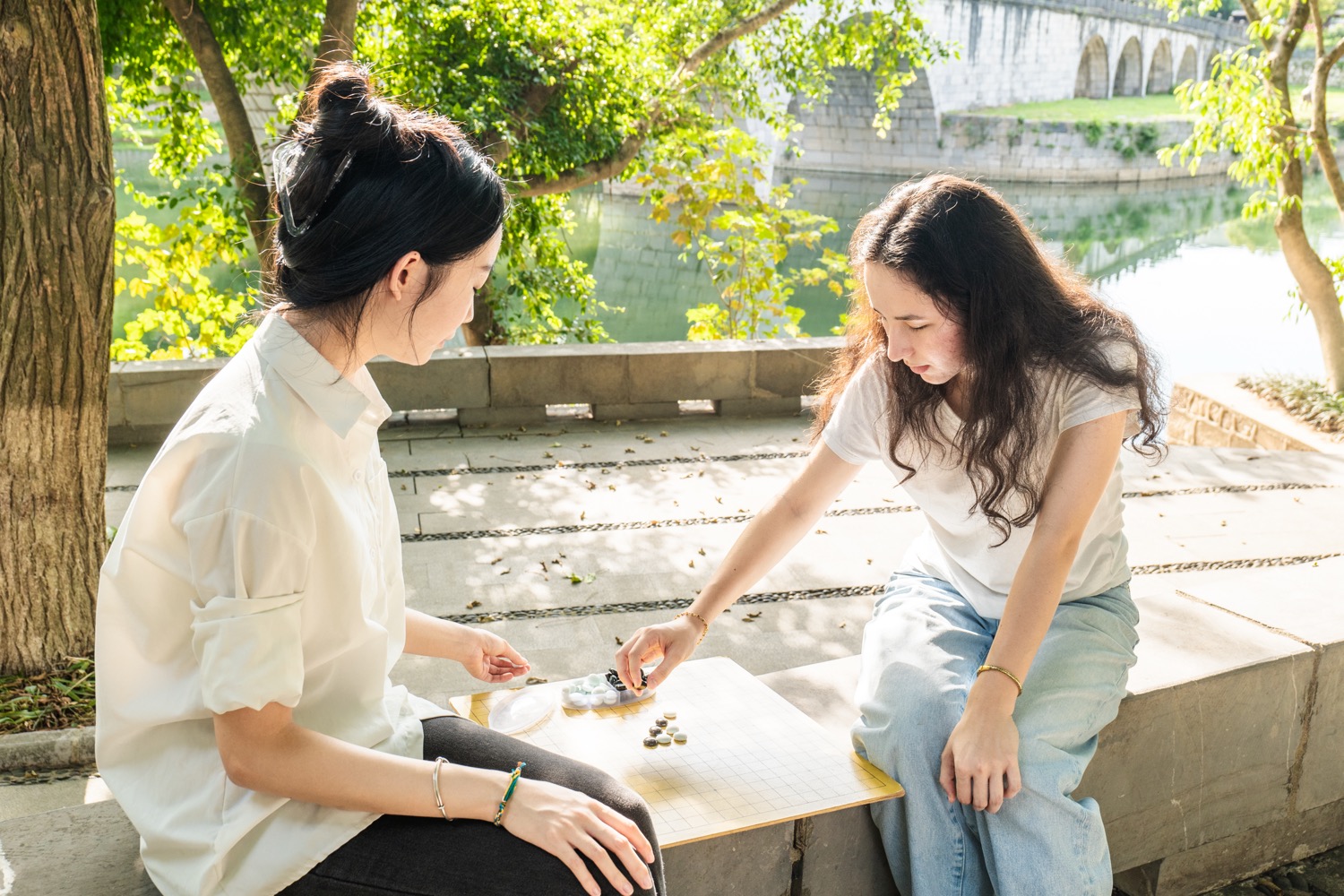
A Go board travels well, and a riverside ledge below an arched bridge makes as good a table as any for a slow game and an easy chat in Chinese.
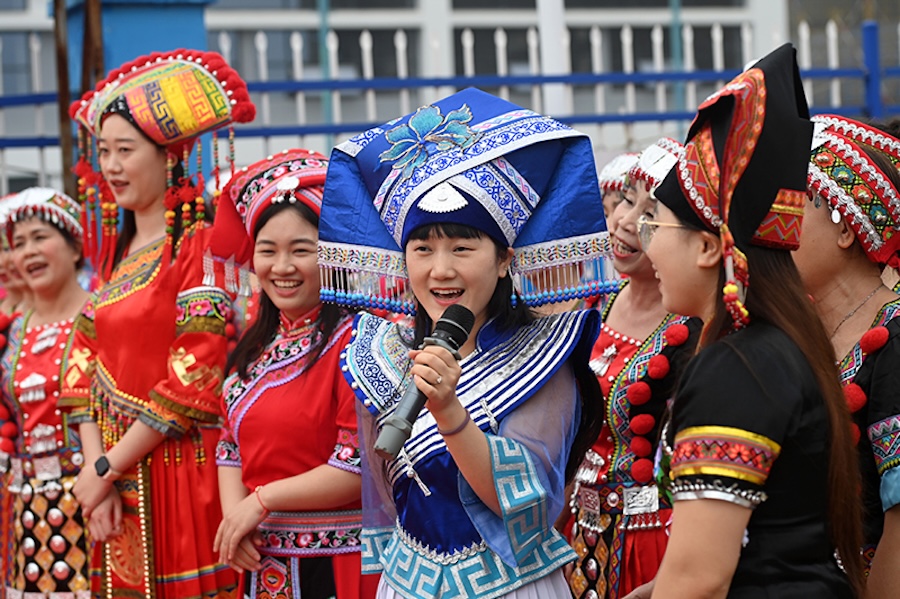
Singers in bright traditional dress and tall headdresses take the microphone. Festival celebrations are among CLI's activities, and a pengyou at your side can explain the songs.
Folk opera costumes look even brighter up close, and meeting the performers after a show is a good moment to try out a few words of Chinese.
Dumplings go faster with more hands, and a full round table like this one makes dumpling making one of the most social activities we run.
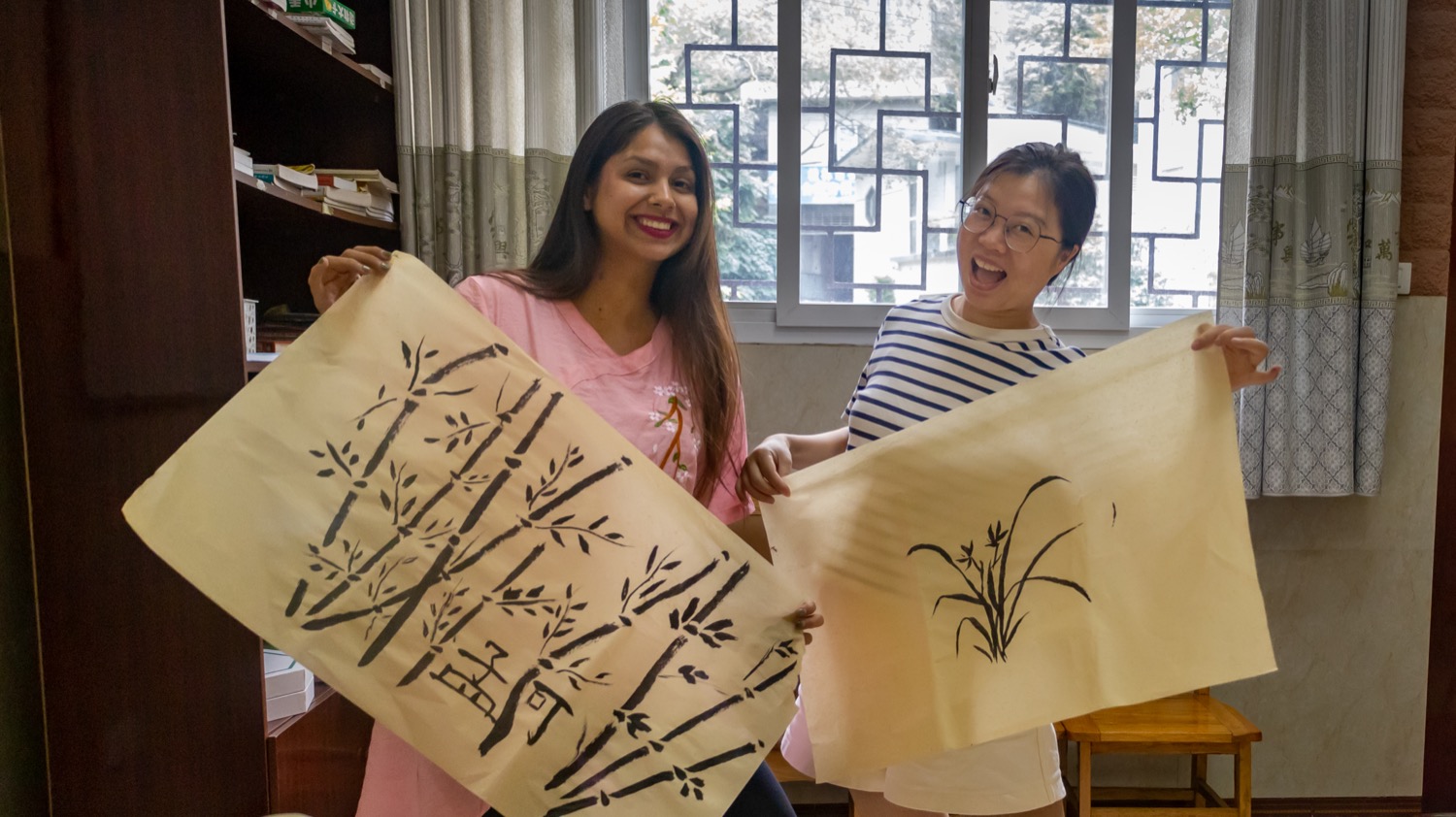
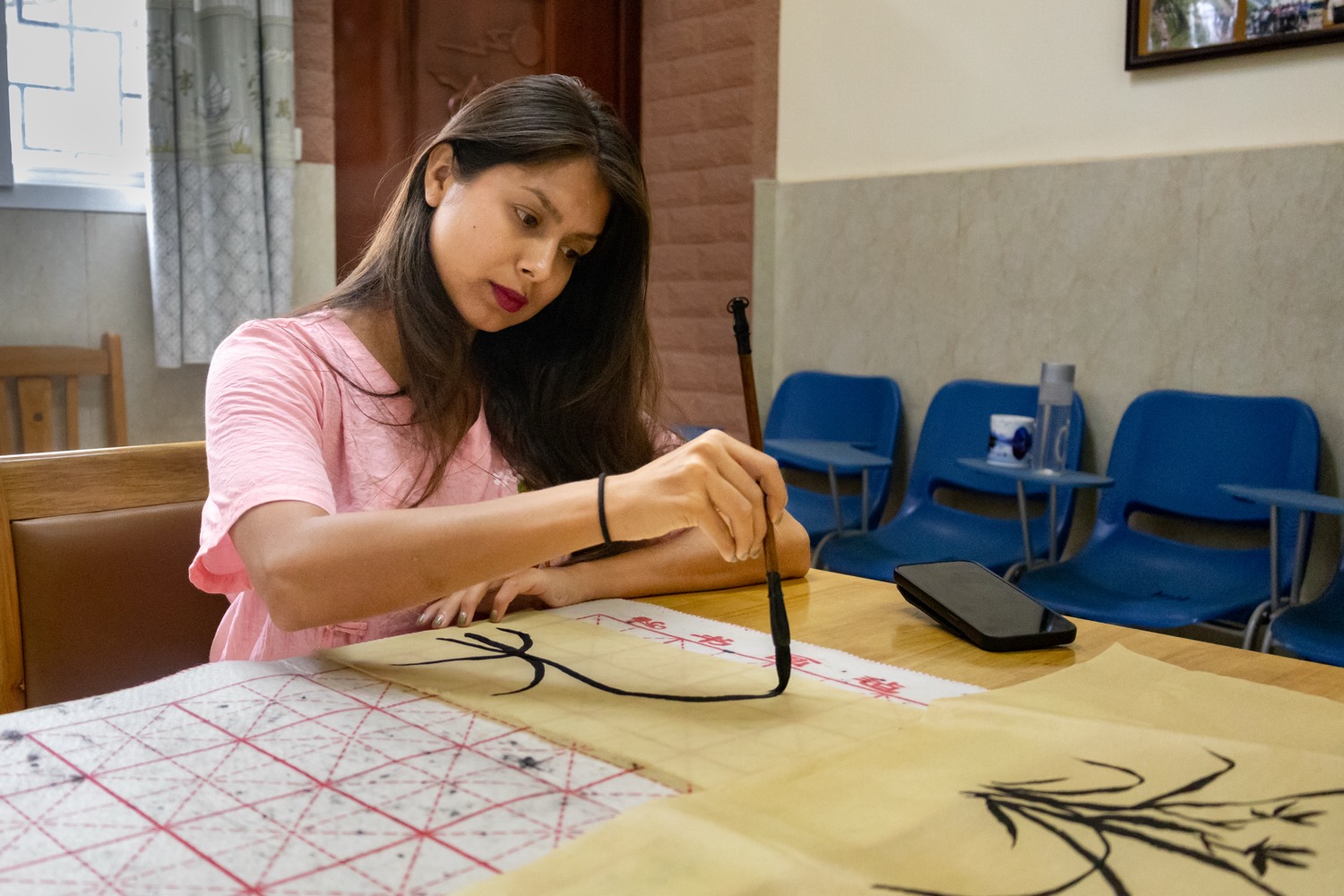
Bamboo on one sheet and orchids on the other show what a brush can do besides writing characters, and calligraphy is one of CLI's activities.
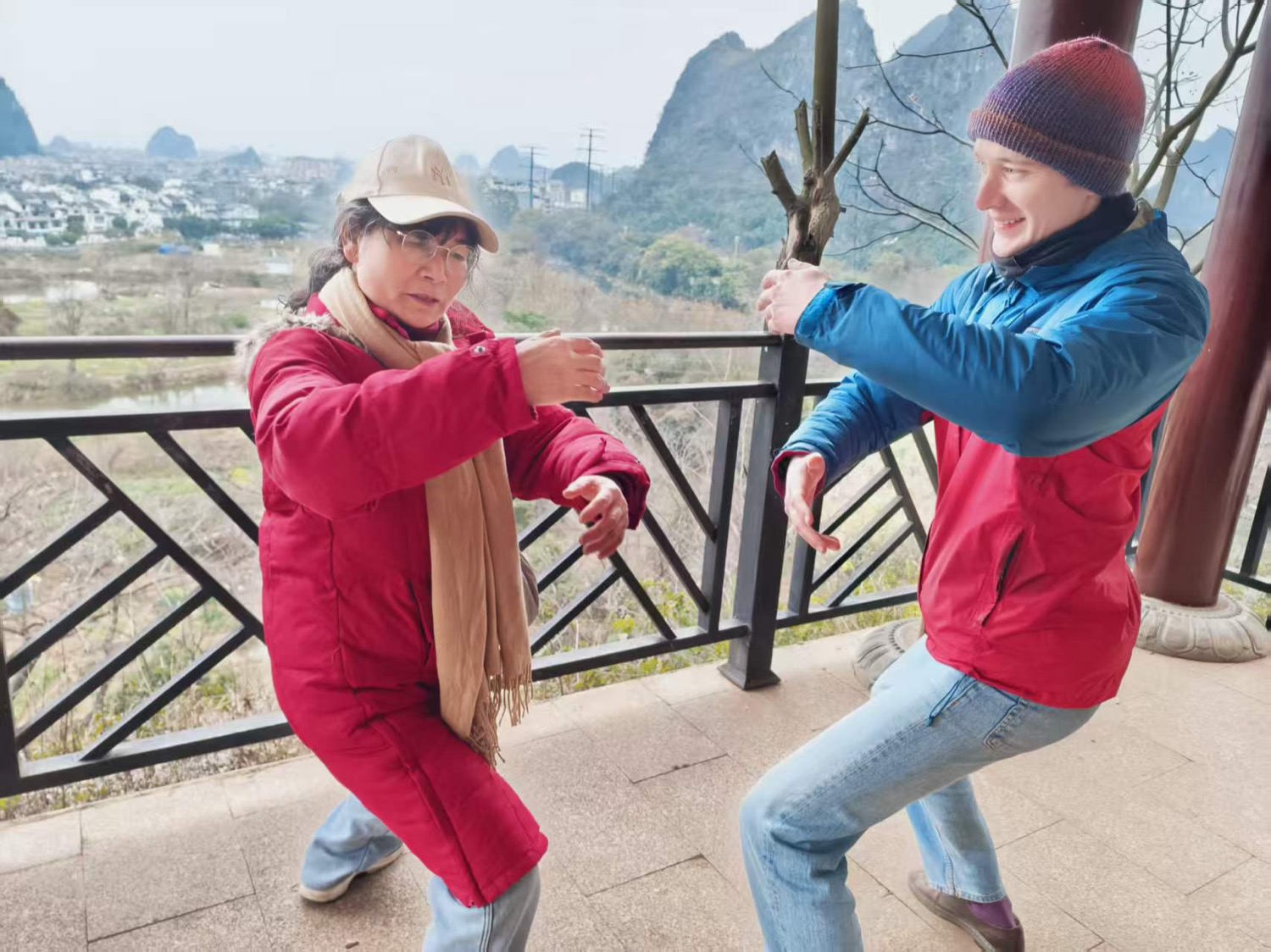
Tai chi on a hilltop overlook brings together two things CLI students do, the hike up one of Guilin's karst hills and the slow moves at the top.
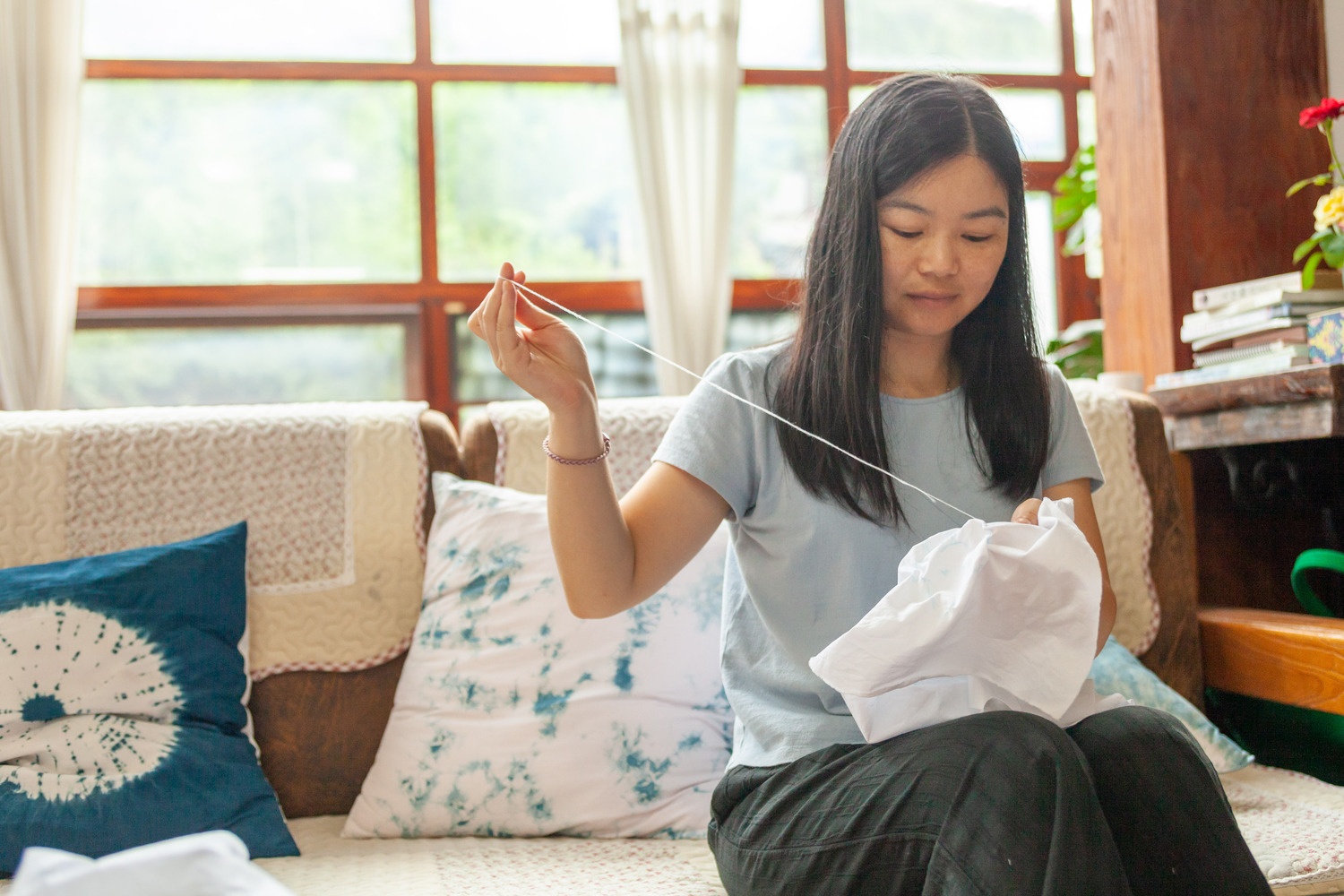
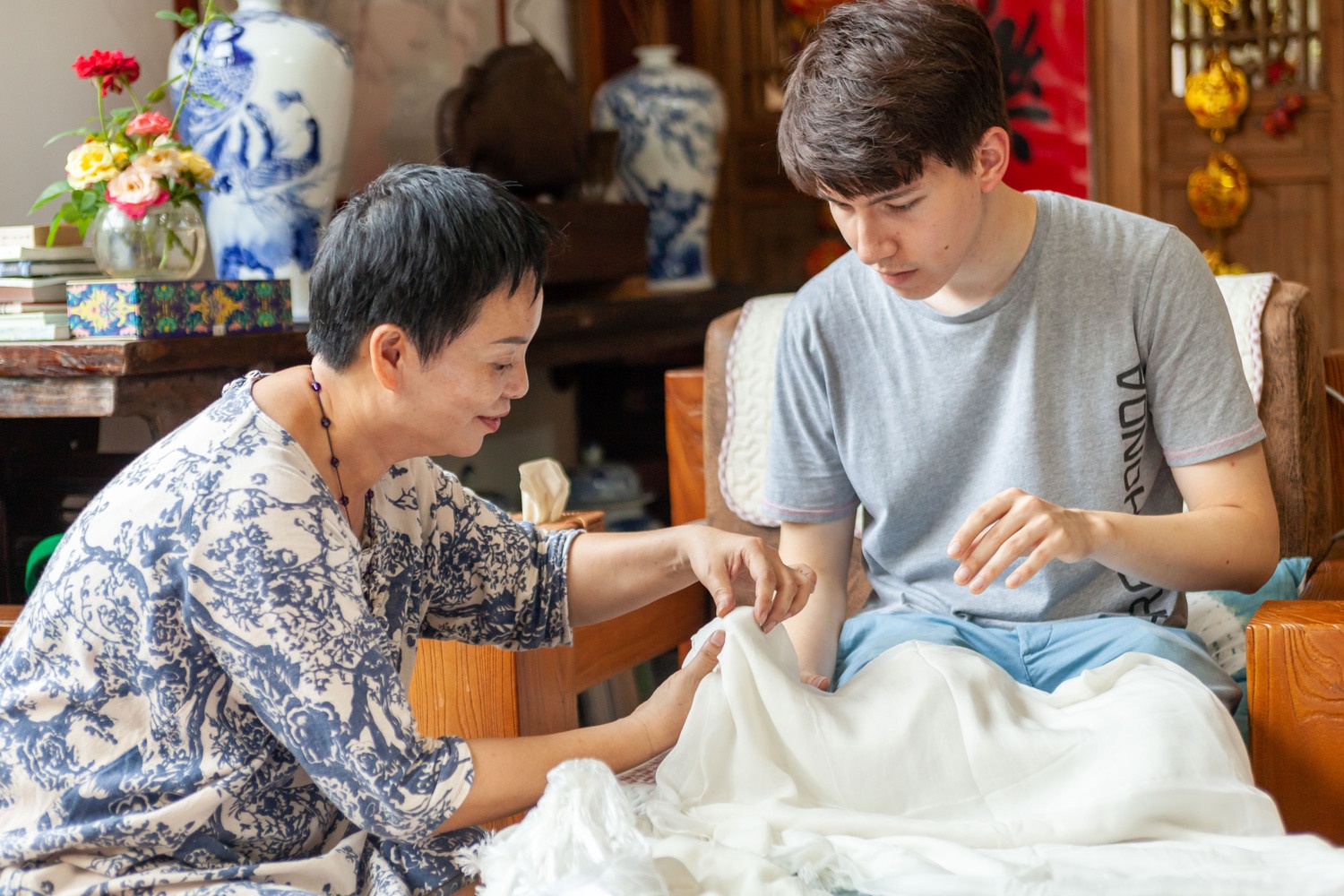
Before any dye goes on, the pattern is stitched by hand, which is slow, patient work for a quiet hour after the day's classes.
Evenings on the program are usually lighter, which leaves room for relaxed activities like live guzheng music in a quiet wooden room.
A quiet table by the window is an easy place to ask a tea host questions in Chinese, and we visit tea houses like this as part of our activities.
Wooden model kits fill a long table at this workshop, and the activities board on the CLI Center's second floor is where students see what is on each week.
This dancer finishes low to the floor with her fan open, and 扇子 (shànzi), the word for fan, is the sort of Chinese students pick up on the spot at a performance.
A Go board comes out for a quiet game, and the Center's recreation room keeps a mahjong table and a ping pong table for the hours after class.
A Chinese zither recital has drawn a full room at CLI, and an instrument this old comes with plenty of vocabulary for anyone who stays to ask about it.
Each calligraphy stroke has a Chinese name, such as dot or hook, and an instructor leaning in to guide your brush uses those names as you write.
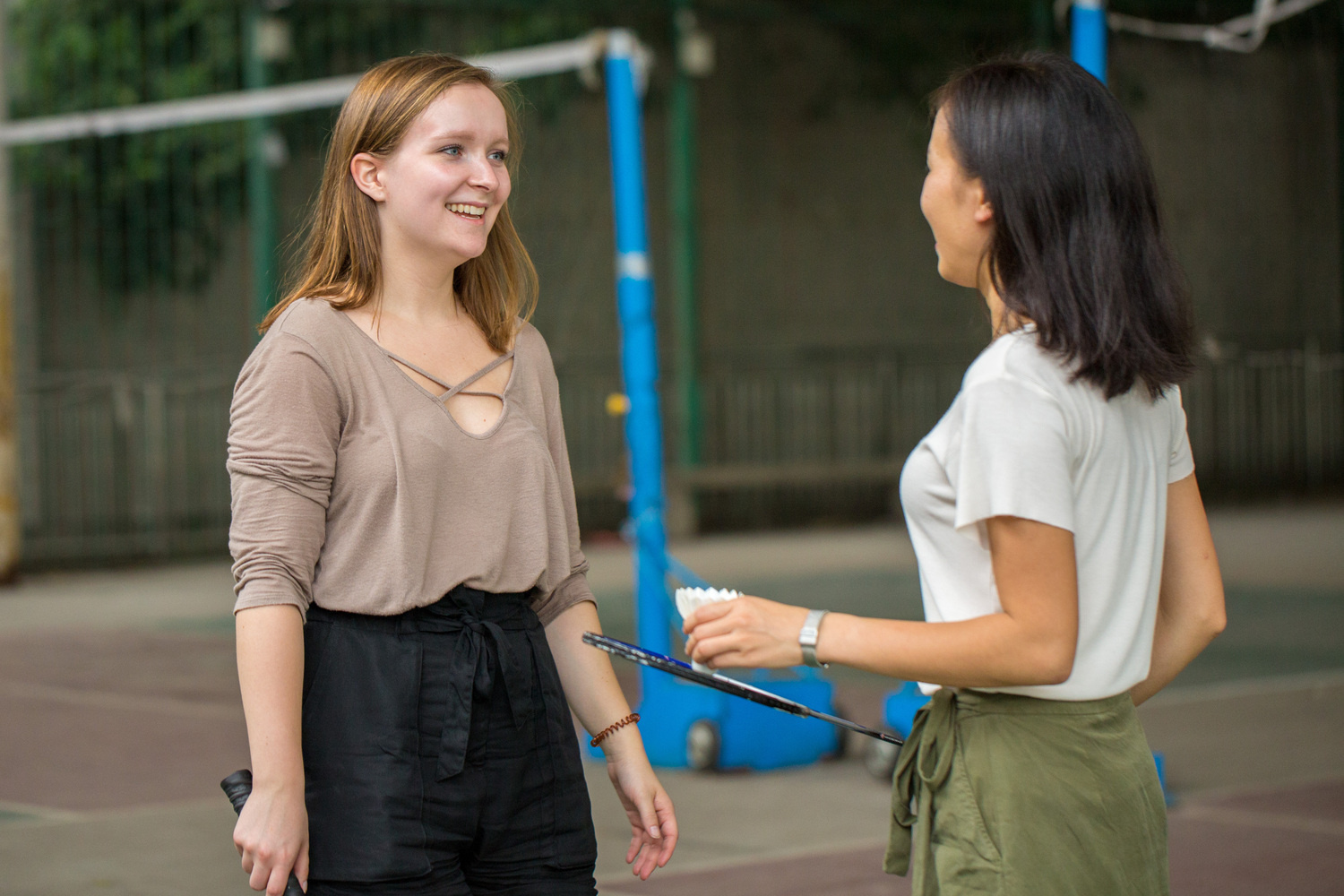
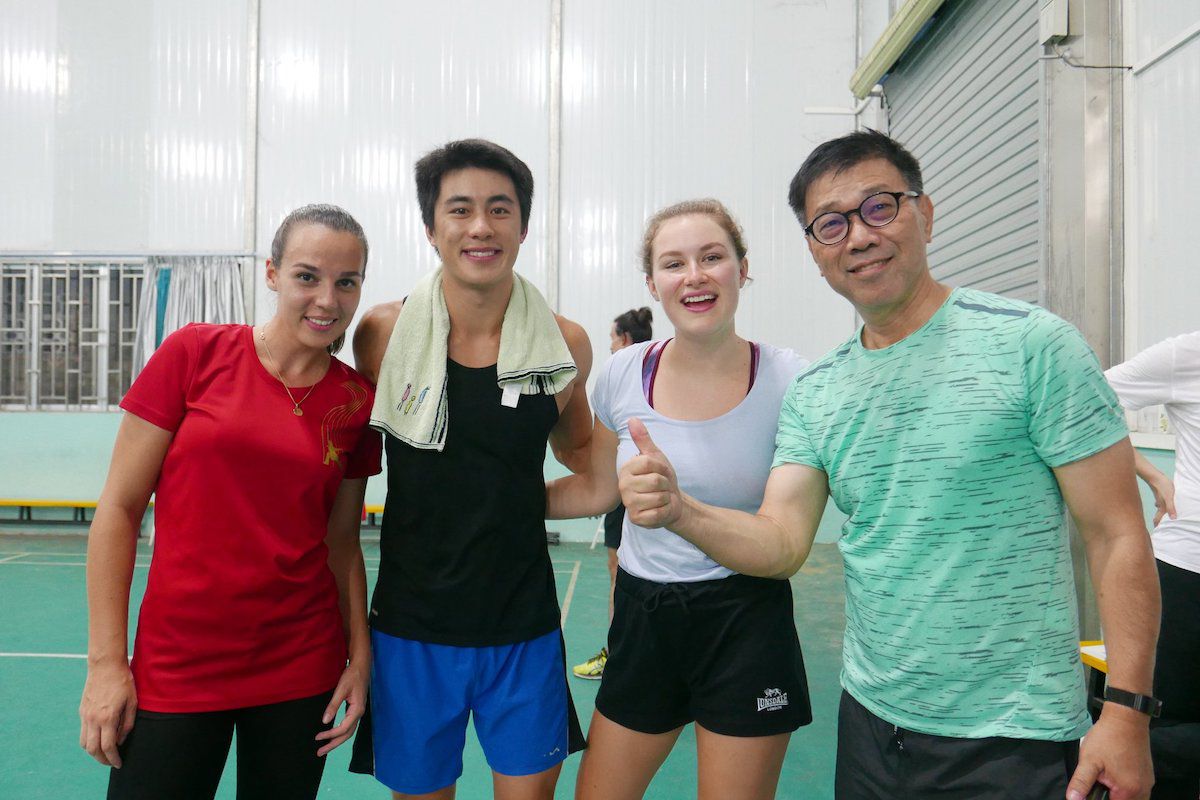
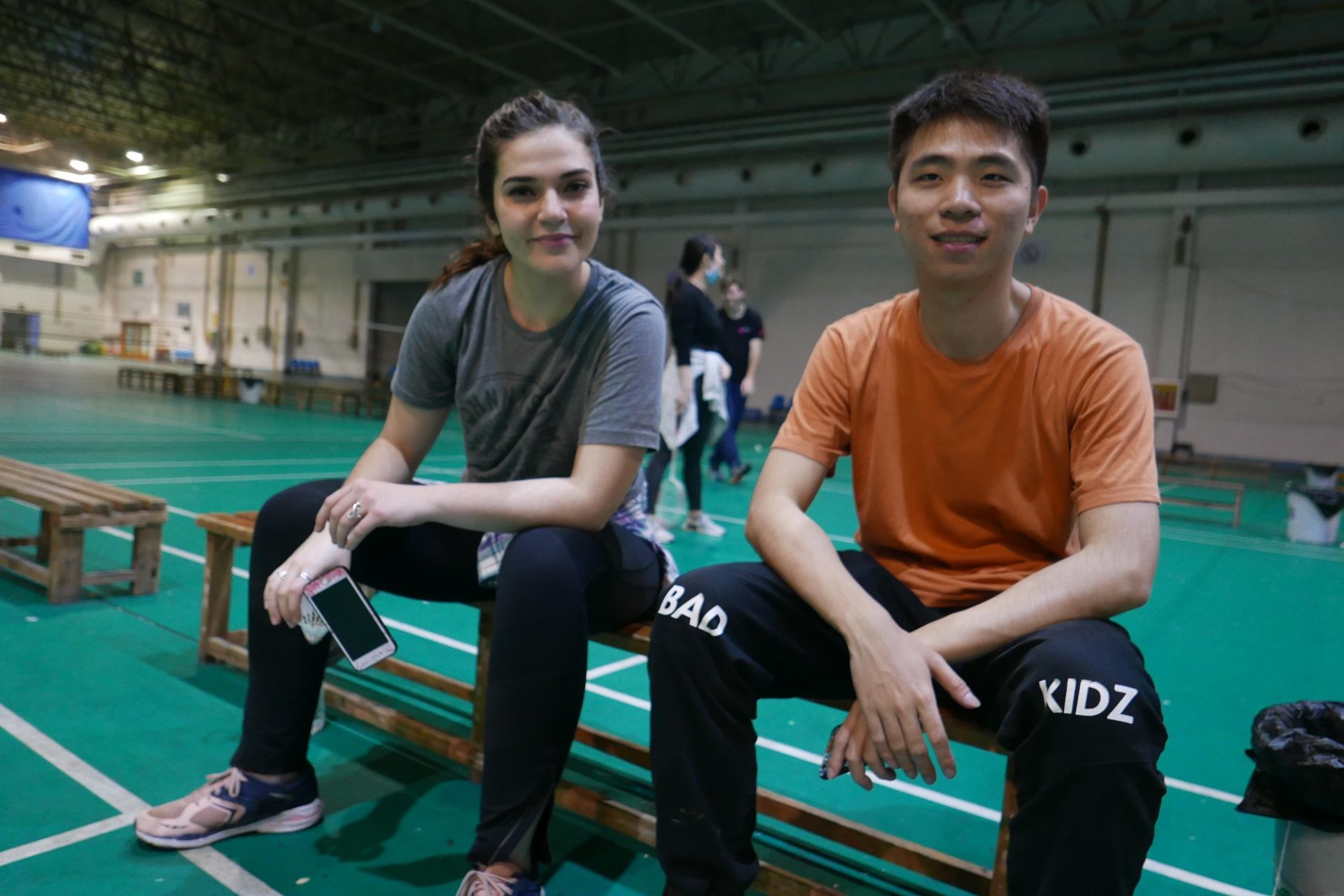
A drawn bow takes a steady arm and a still breath, and so does a good badminton serve, one of the sports on CLI's activity list.
Go, 围棋 (wéiqí), is as much fun to watch over a friend's shoulder as it is to play, and students at CLI can learn both the game and its words in Chinese.
Tie-dye starts with hand stitching on white cloth, and in the workshops students have joined, an instructor is close by to show how tight to pull each thread.
Tea house visits take students out of the Center, and a long table in a quiet teahouse is a good place to put the day's new words to use.
The character 春 (chūn), spring, is a favorite for red paper cuts at Chinese New Year, and festival celebrations are part of what CLI runs through the year.
Folding dumplings keeps hands busy and conversation going, so a dumpling session is relaxed Chinese practice for beginners and fluent speakers alike.
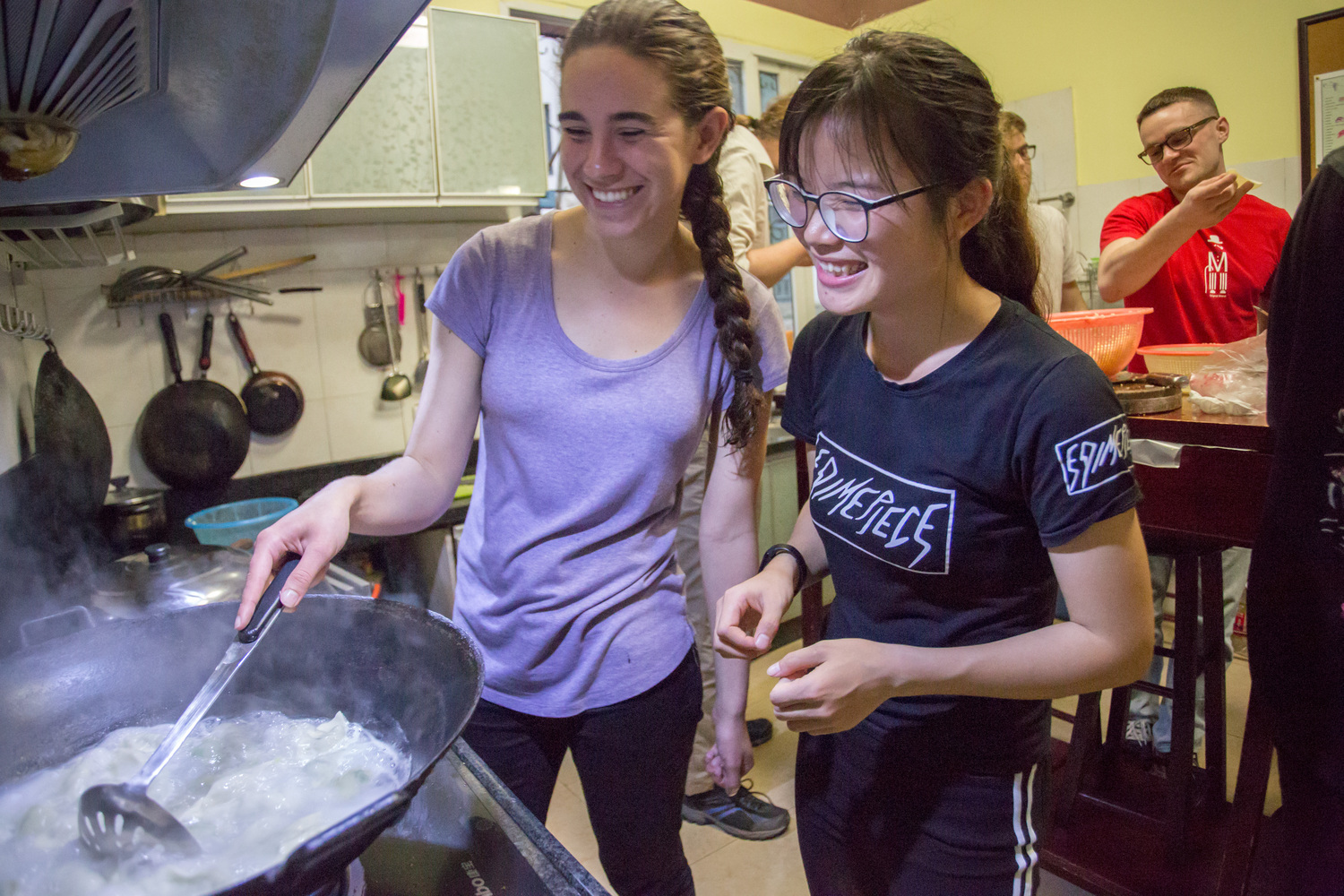
Boiling is the last and best step of dumpling making at CLI, when the cooks gather at the wok to see whose dumplings held together.
Paper cutting is slow, social work, and since pengyou in CLI's free Pengyou Program join activities too, the chat at a craft table can stay in Chinese.
An instructor's hands steady the clay while the wheel turns, and a workshop like this one teaches a few new Chinese words along with the craft.
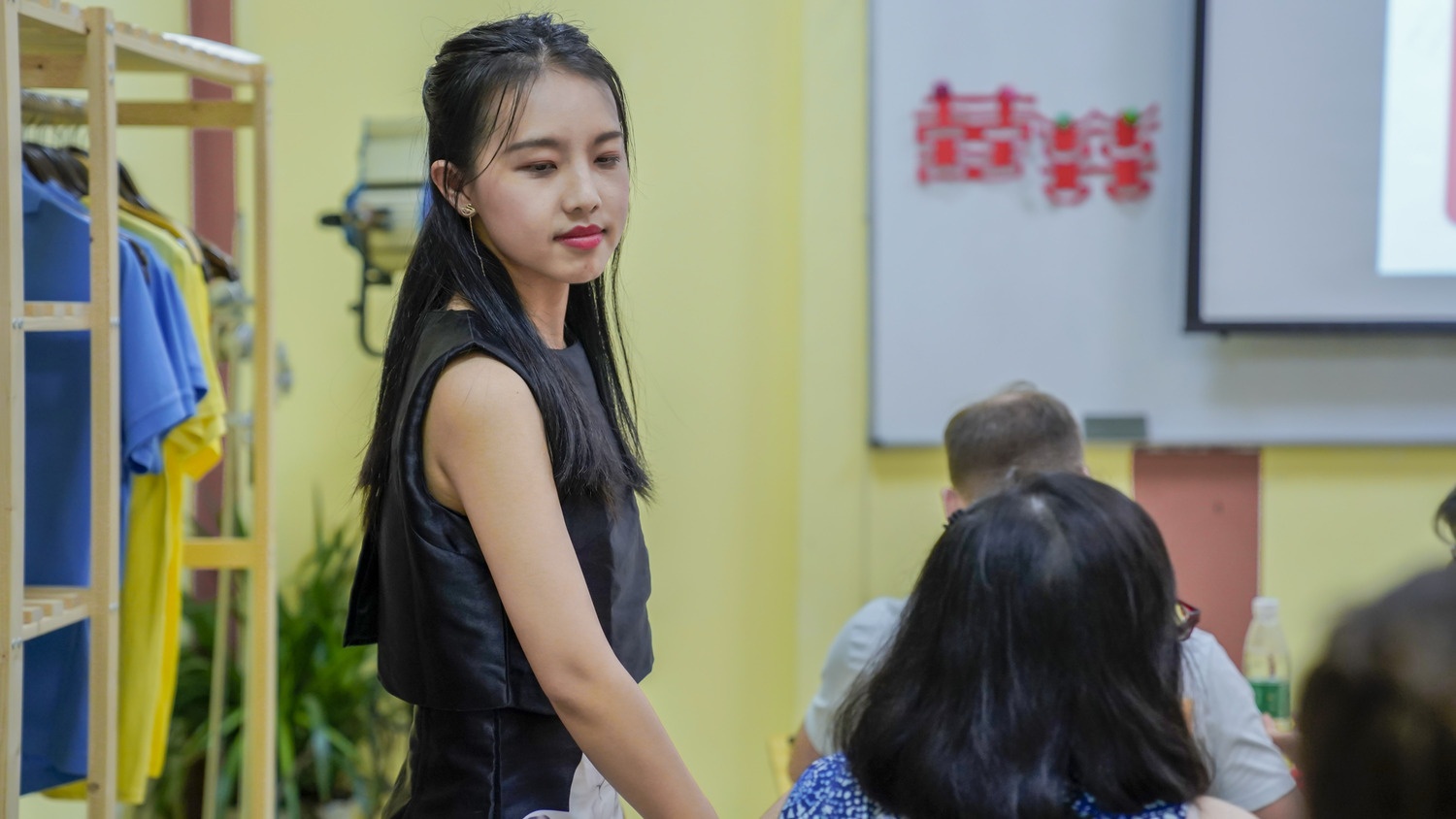
剪纸 (jiǎnzhǐ), paper cutting, is up on the screen and red cuts are in every hand, and group workshops like this are where many students get to know each other.
Stage makeup goes on backstage before a traditional show, and some students have had the chance to watch the whole process up close.
A practice grid sits beside the ink bamboo here, and calligraphy gives the characters you know a slower, steadier second look.
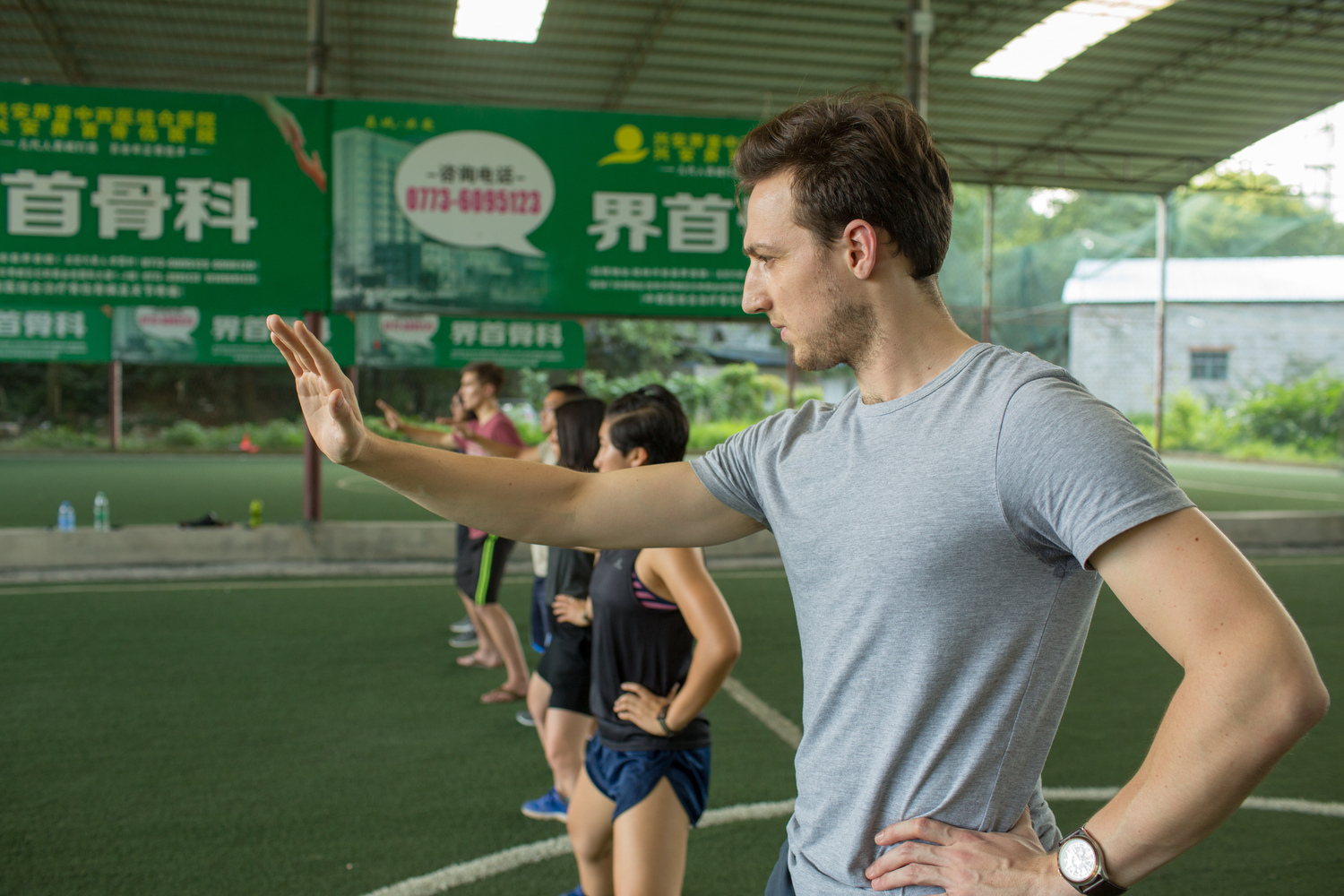
A tai chi session at CLI can move outdoors onto an open field, where the whole group has room to spread out and follow the same slow moves.
Pengyou, local university students in CLI's free Pengyou Program, join activities too, so a tie-dye session like this one is also a chance to talk in Chinese.
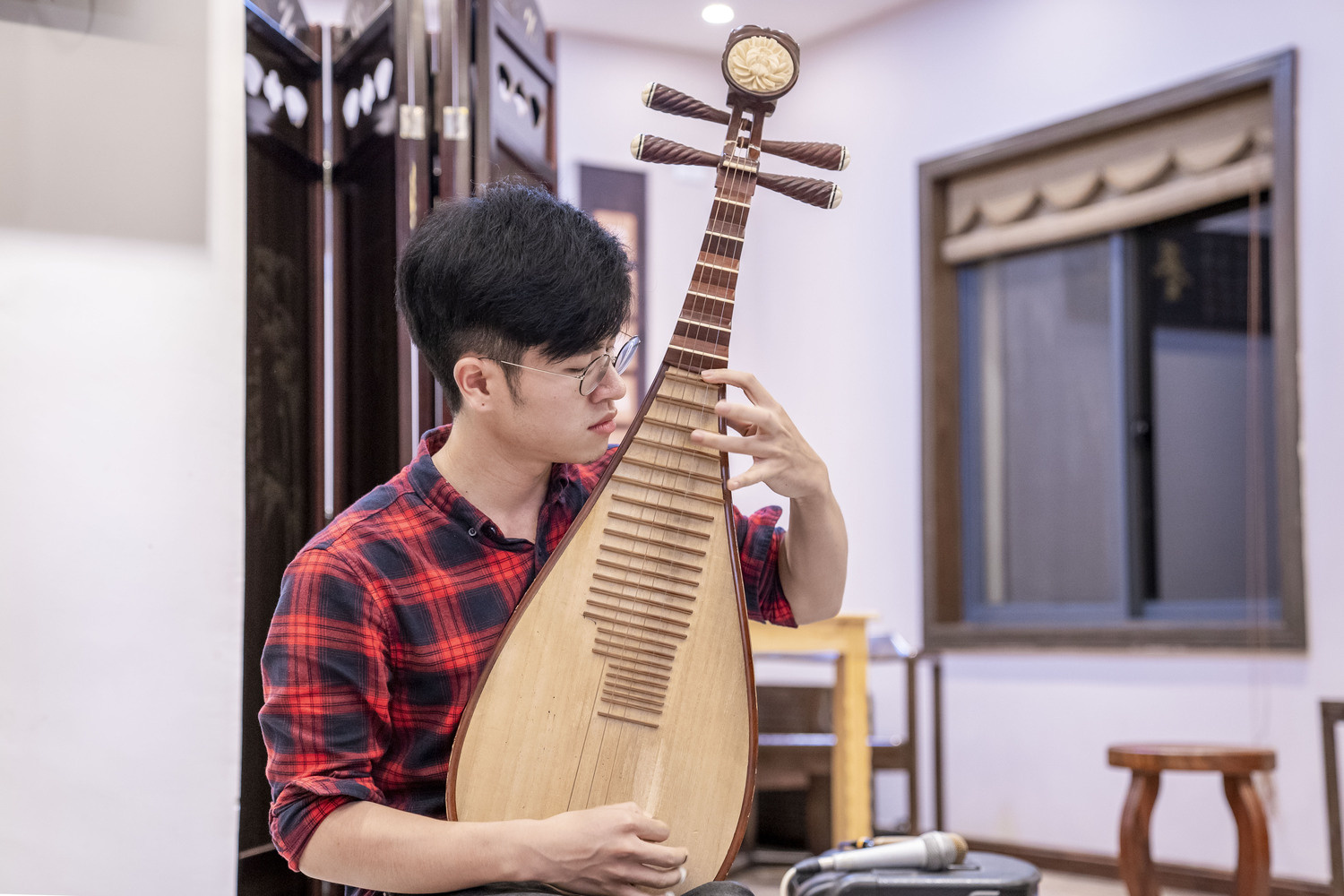
The pipa, a Chinese lute held upright on the knee, is one of the traditional instruments students have heard played live at CLI.
A tea demonstration is easy to follow at any level, since so much of it is watching, and CLI's activities include tea ceremonies as well as tea house visits.
A bamboo ink painting workshop ends with everyone holding up their work by the CLI sign, and the painting goes home with each of them.
A flat stone ledge in the shade of a cliff is all a game of Chinese chess needs, and Chinese games like this one are on the list of activities students can join at CLI.
A brush makes a character's parts easy to see: the 朋 in 朋友 (péngyǒu, friend) is two 月 (moon) characters side by side.
CLI's tea ceremonies go at the pace of the pot, with small cups refilled around a wooden table and plenty of time to talk in between.
A wooden pagoda goes together one small tab at a time, and building it at a shared table means plenty of asking which piece goes where, in Chinese.
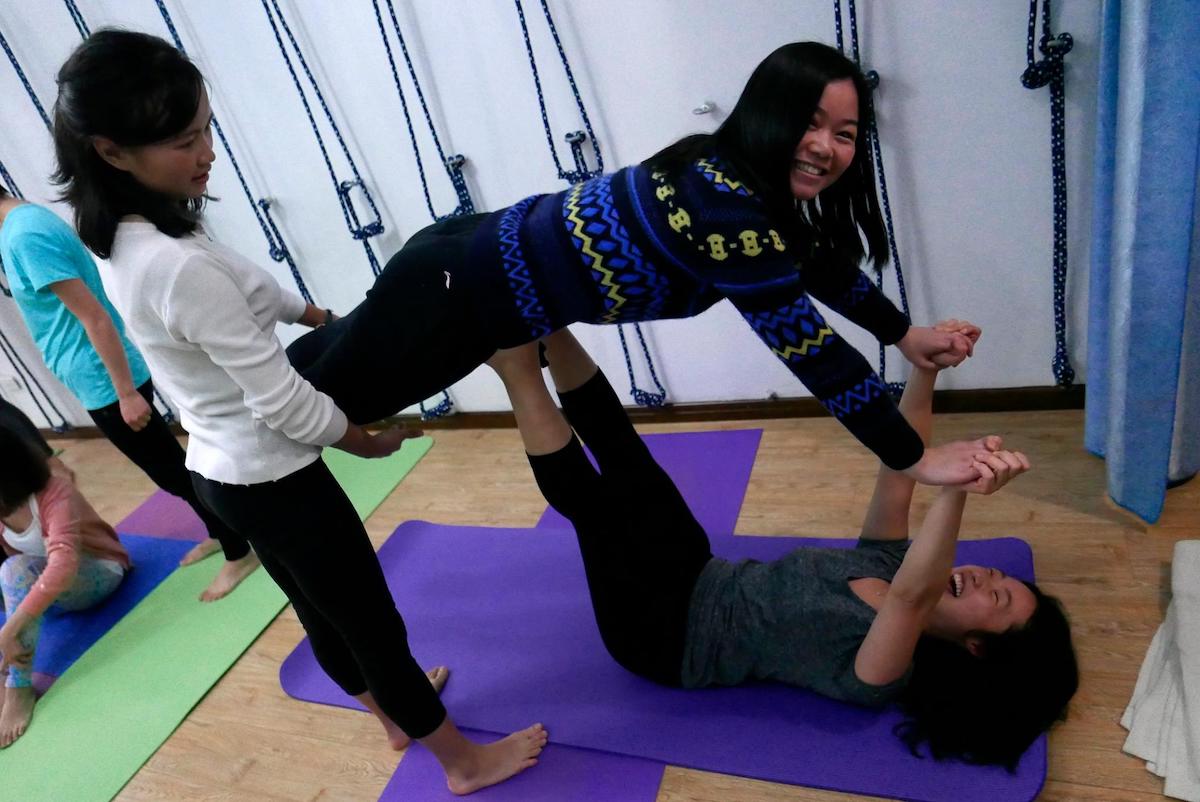
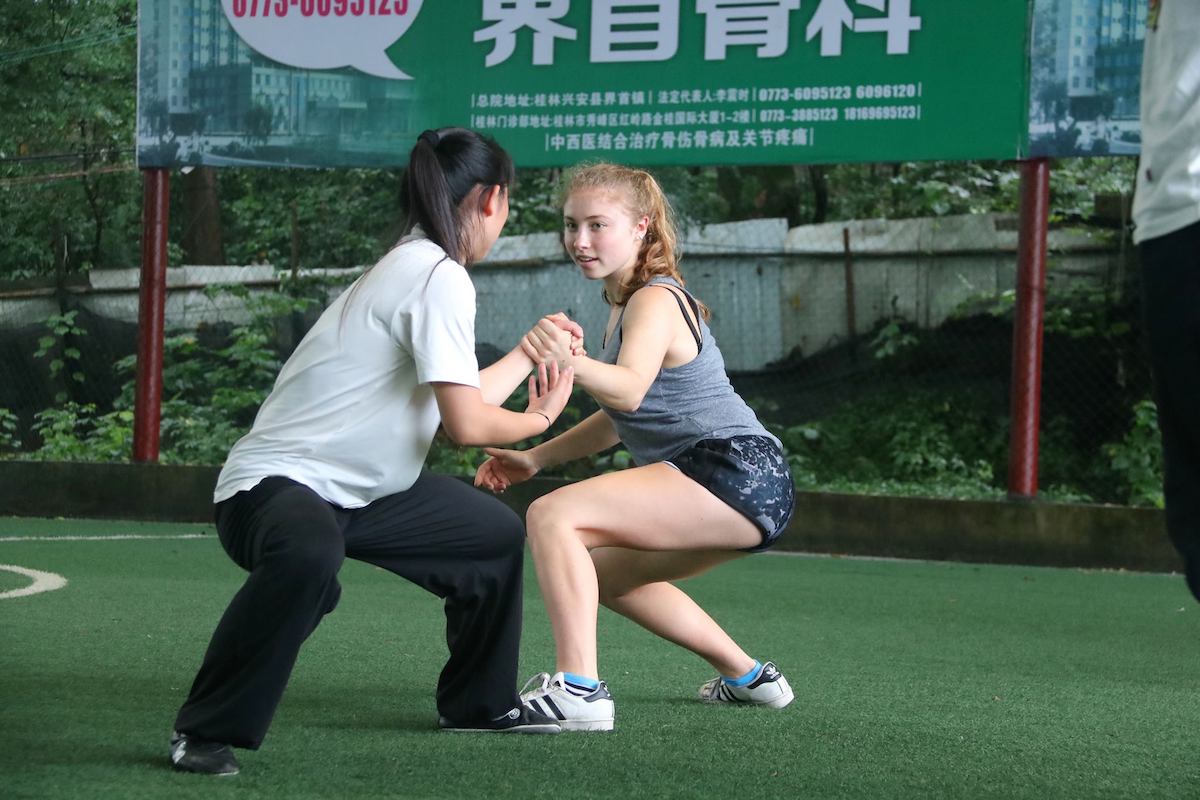
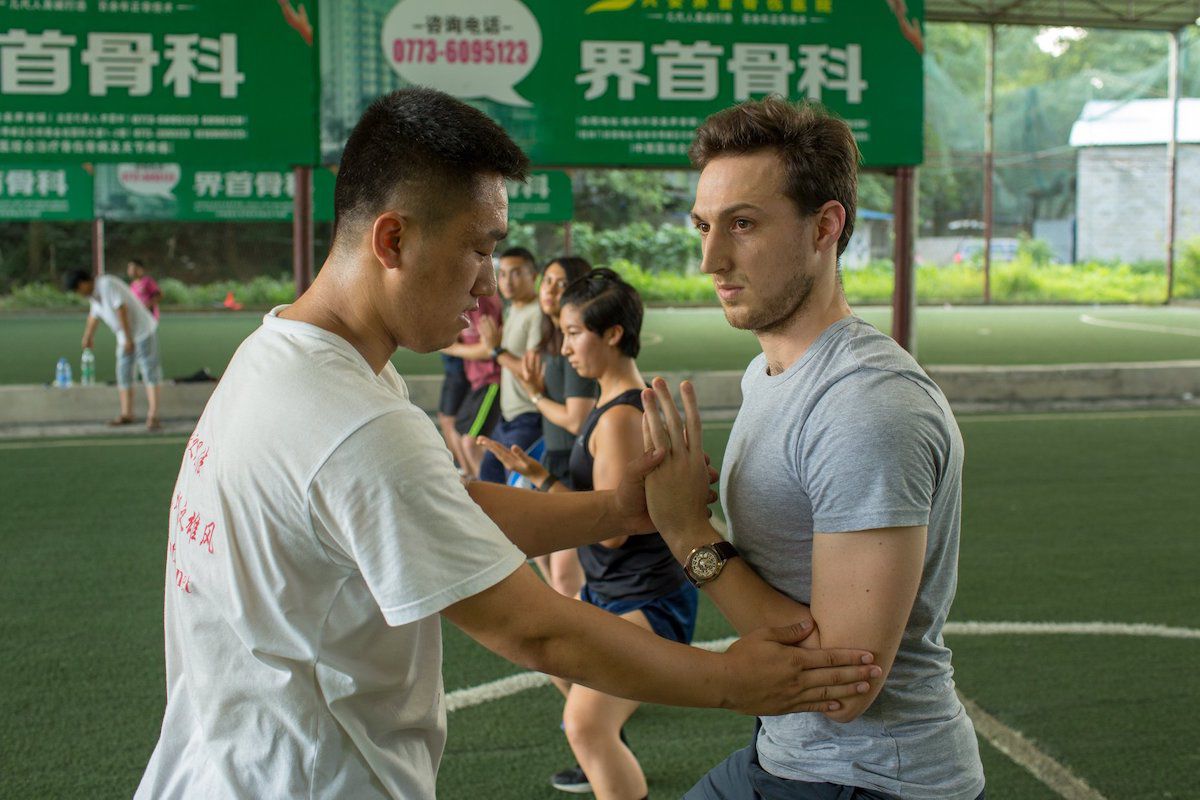
A partner stance like this takes balance and trust, and for students who want something more active, CLI's activities include tai chi and badminton.
Guangxi food leans fresh, sour and lightly spicy, and in a CLI cooking lesson at the wok, every dish and ingredient gets its Chinese name.
A group martial arts session puts everyone side by side on one field, and tai chi, one of CLI's activities, is learned the same way, by watching and copying.
Chinese opera has a vocabulary all its own, from the costumes to the roles, and a performance this close makes it easy to ask about.
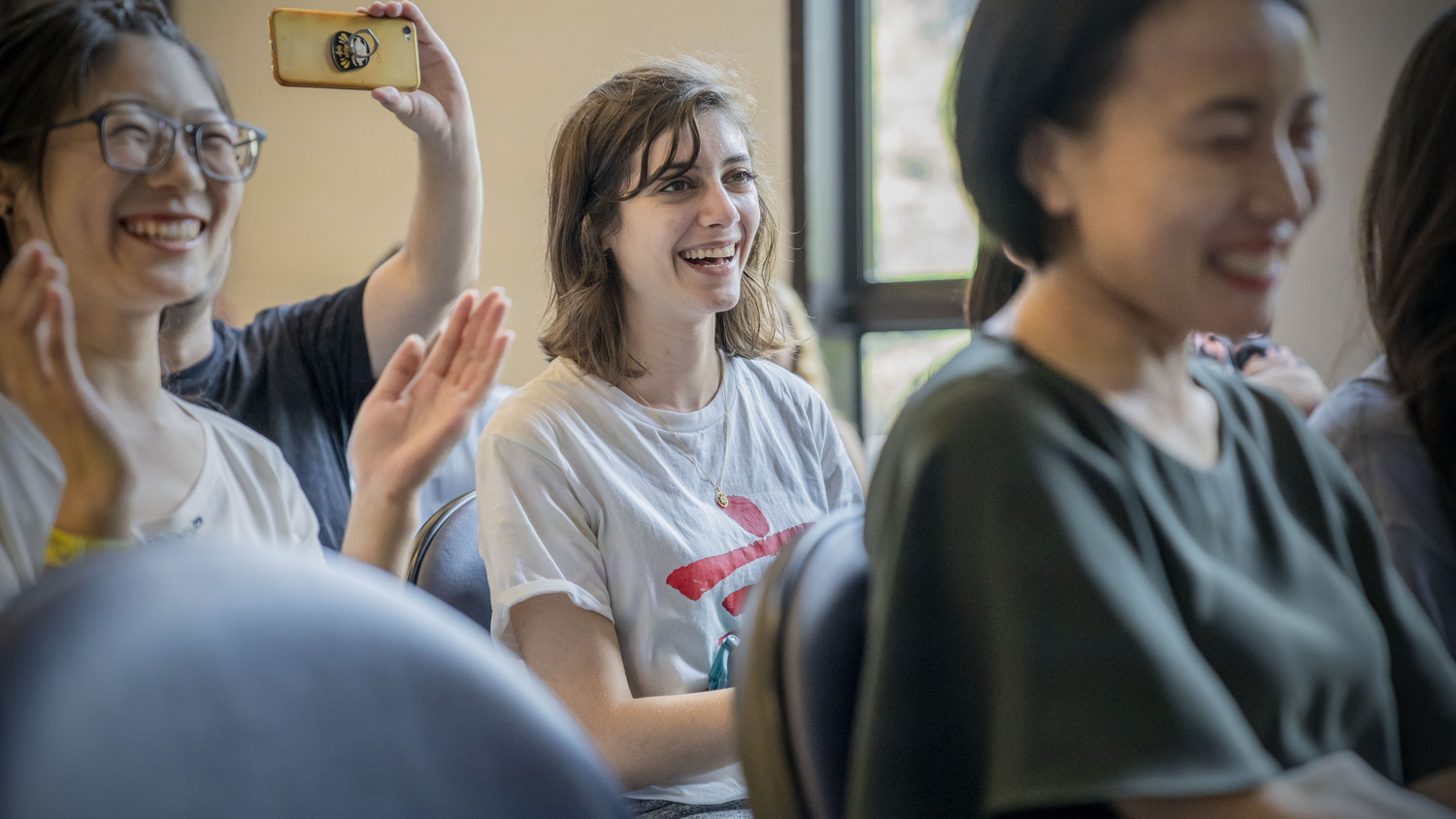
Applause needs no translation, so a performance is an easy CLI event to enjoy in your first week, whatever your level of Chinese.
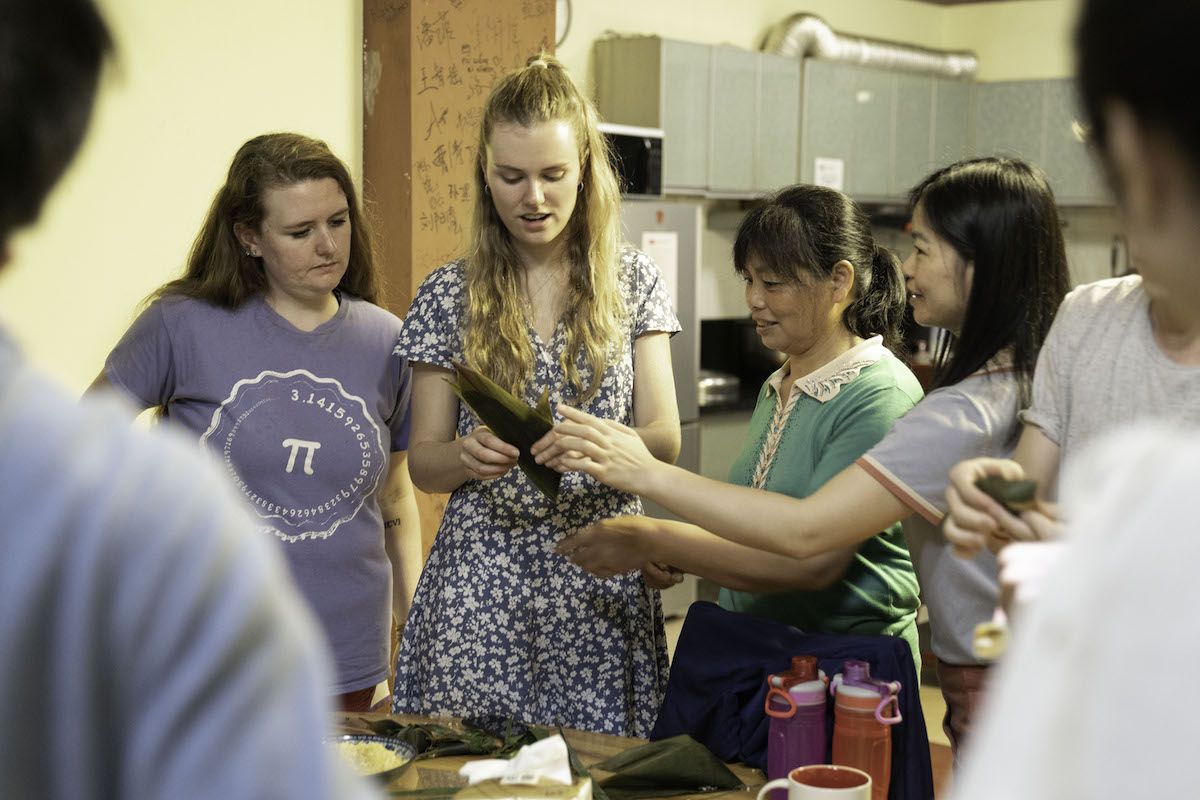
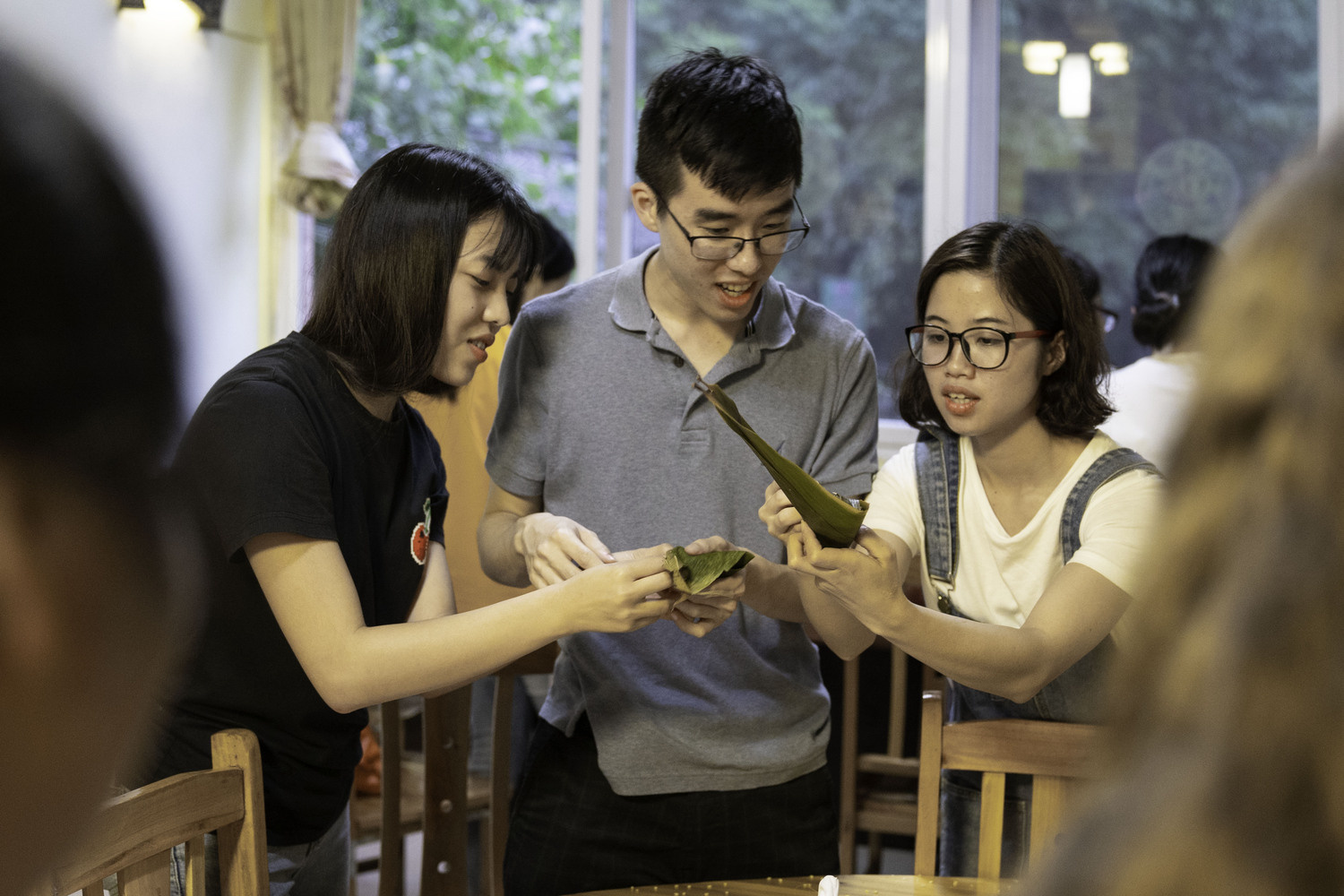
Wrapping zongzi, 粽子 (zòngzi), is a Dragon Boat Festival custom, and CLI marks festivals with celebrations of its own.
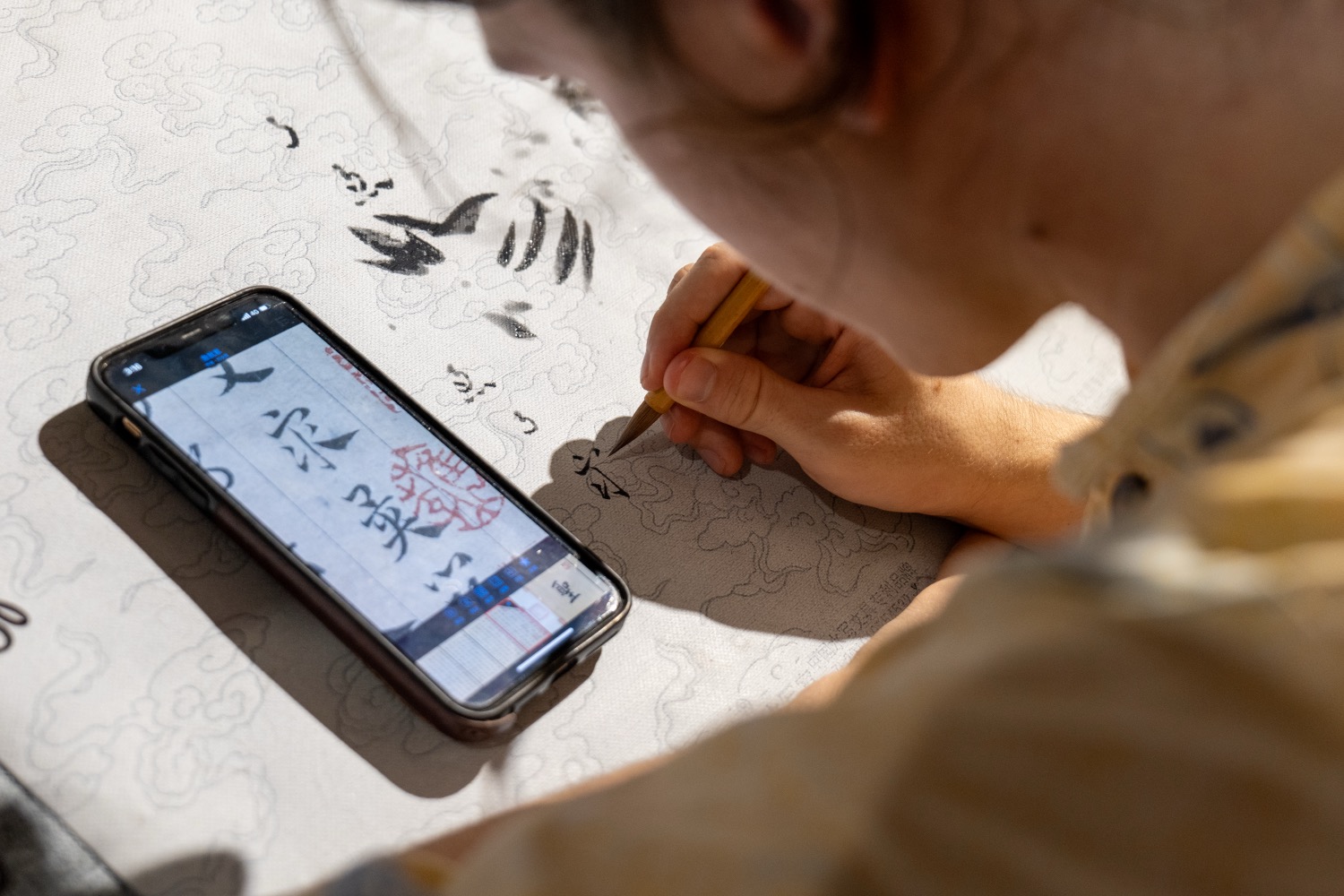
With the model character on a phone beside the paper, a CLI calligraphy session can start on characters you don't know by heart yet.
Corn comes off the cob while the rest of the table looks on, and cooking together leaves plenty of room to ask for a bowl or a knife in Chinese.
Dough comes first in a dumpling lesson. The Center's full kitchen and dining area make it easy to cook as a group.
Paper cutting takes a steady hand and some patience, and getting a red design to open out in one piece is satisfying at any age.
Tastings are on CLI's activity list, including mǐfěn, the Guilin rice noodles that locals eat for breakfast at neighborhood shops.
Fold first, then cut, and the pattern appears only when the paper opens, a small reveal at the end of a CLI craft session.
CLI's activities include dumpling making, and folding the wrapper neatly is the step everyone wants to get right.
The guzheng, 古筝 (gǔzhēng), is a zither students have seen played up close, and its name is a neat drill in the third and first tones.
Before the scissors come out, the instructor talks the room through the design, and words like fold and cut stick fast when you watch them happen.
Red stands for luck and celebration in China, so a paper cut like this one is nearly always red. You will see plenty of it at the festival celebrations CLI holds through the year.
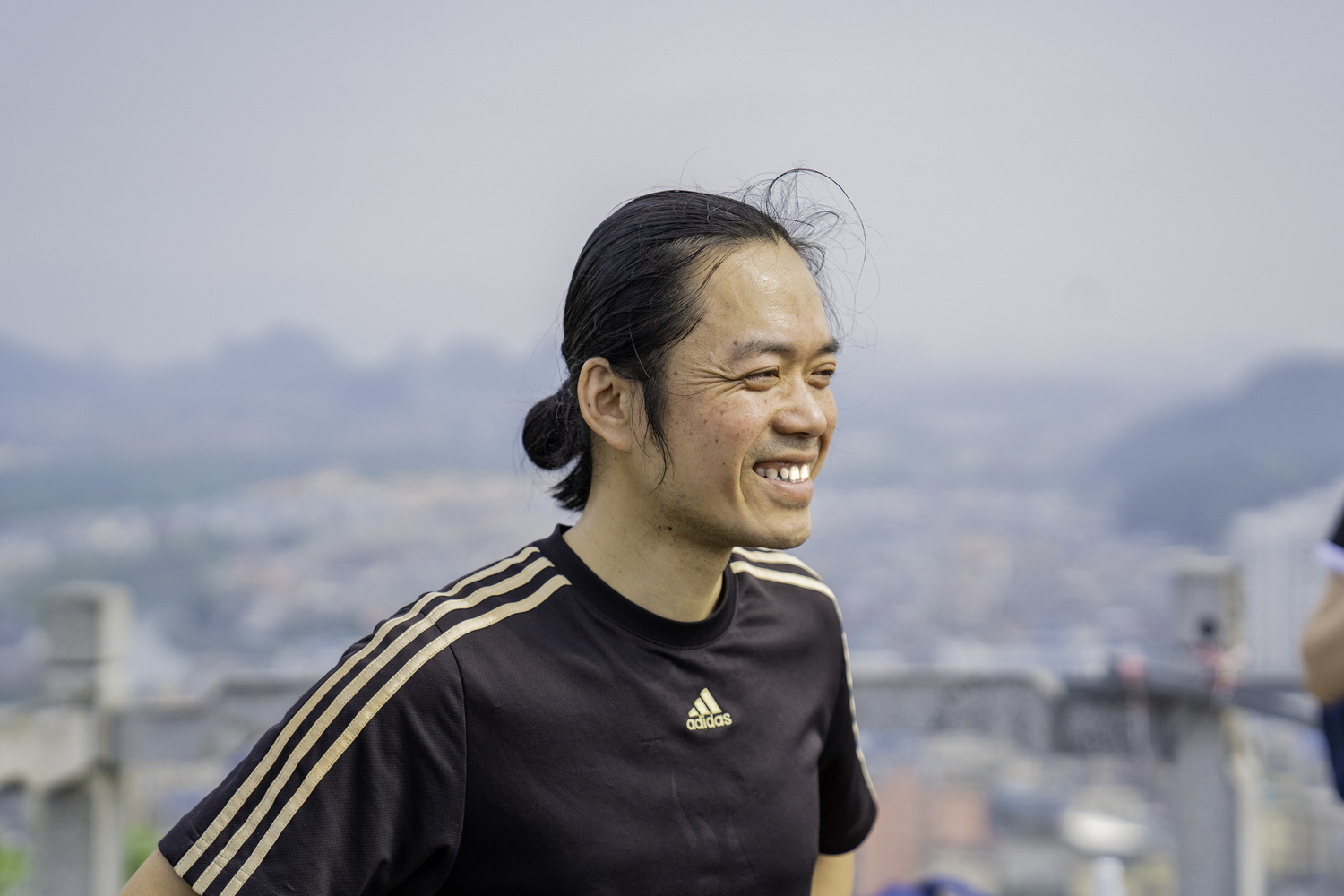
Hilltops around Guilin give wide views over the city, and hikes up Guilin's karst mountains are among CLI's outings.
Tai chi at CLI is taught one move at a time, which leaves room to ask about each one in Chinese before the whole line tries it.
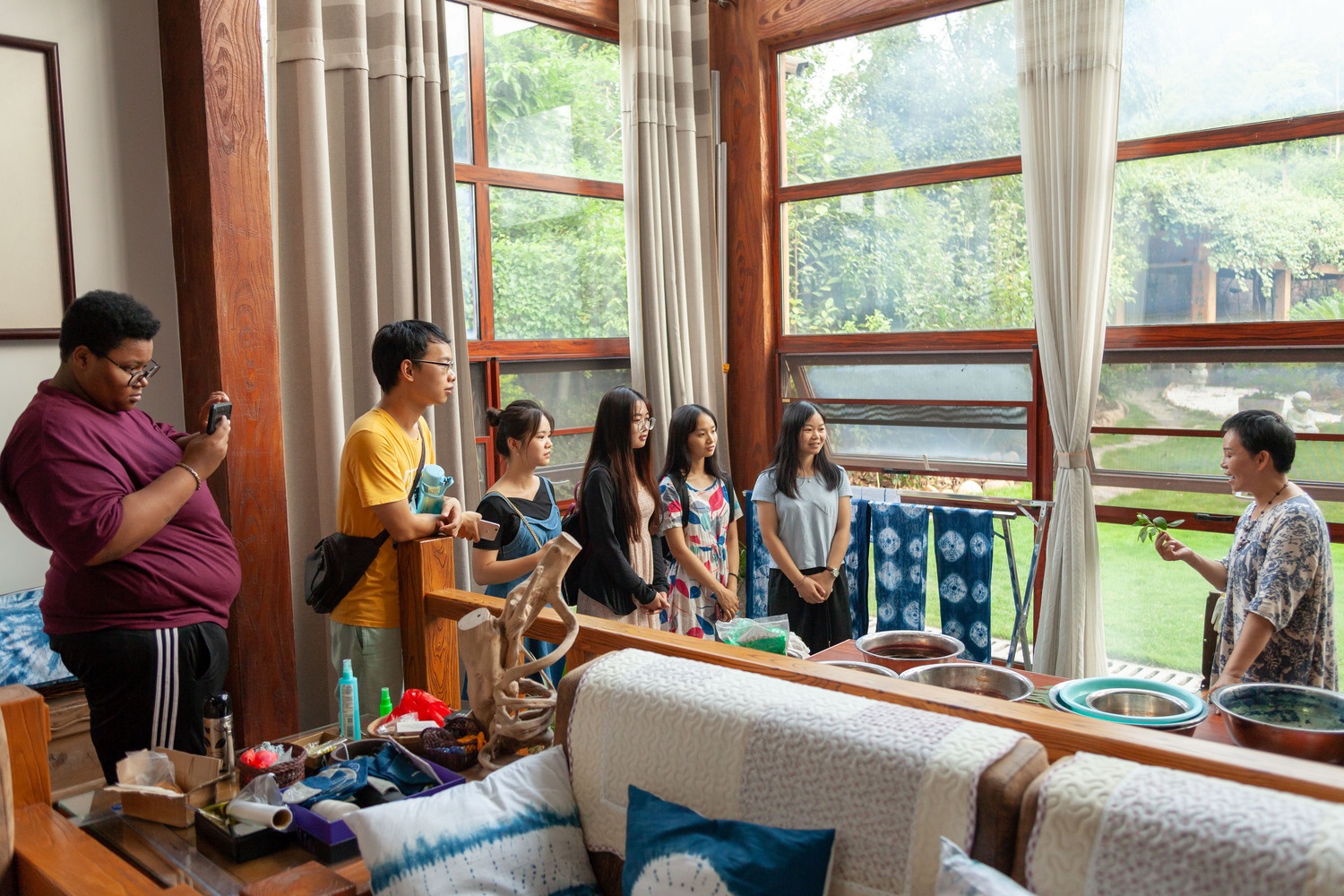
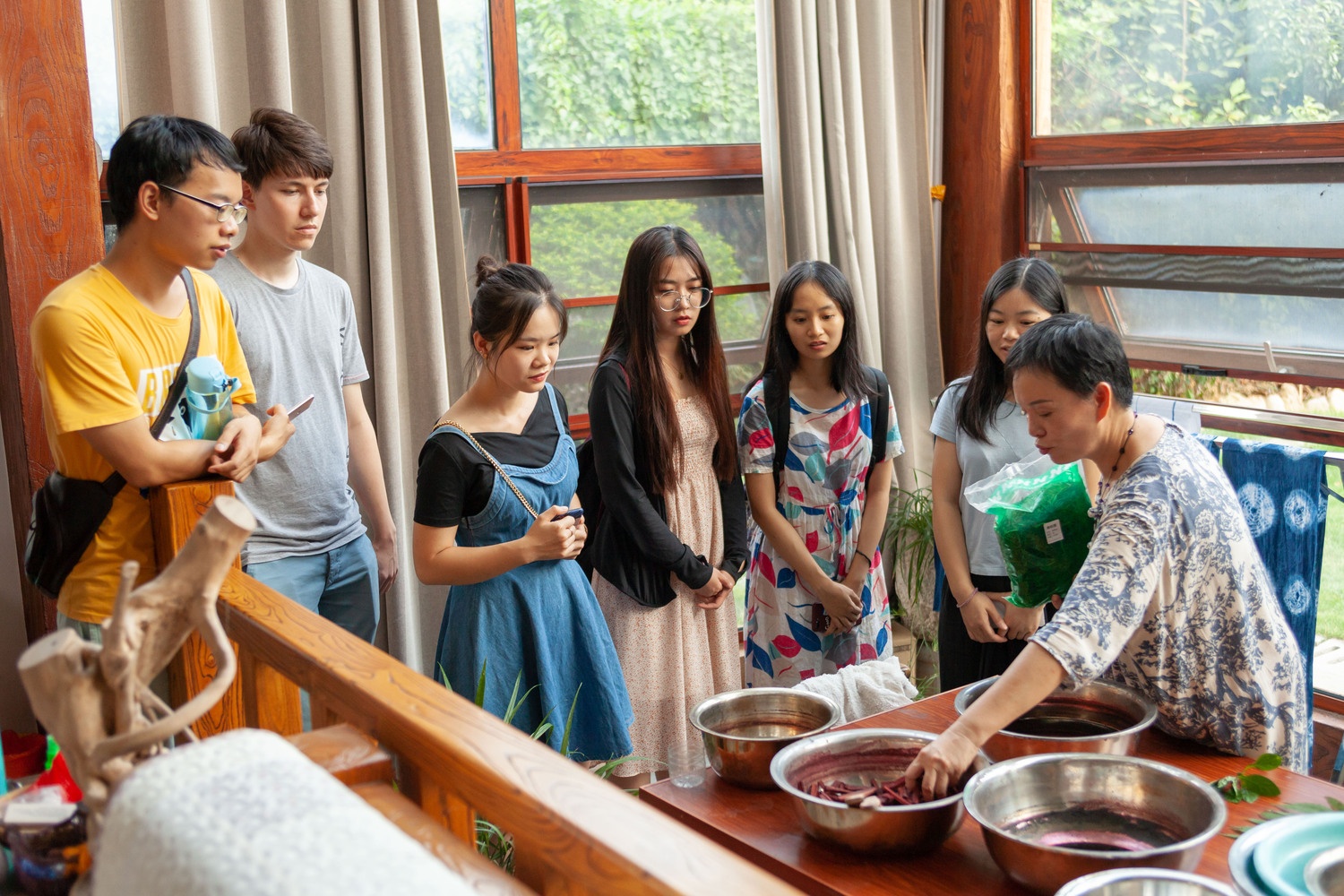
Everyone gathers by the window as a tie-dye session begins, and the first demonstration is the moment to catch the Chinese words for tying and dyeing.
Archery is 射箭 (shèjiàn), from 射, to shoot, and 箭, arrow. Words like these come up fast in Guilin, where little English is spoken and Mandarin is part of daily life.
Side by side on a terrace above the hills, a tai chi stance is easiest to copy, and a slow form like this works fine in a warm jacket.
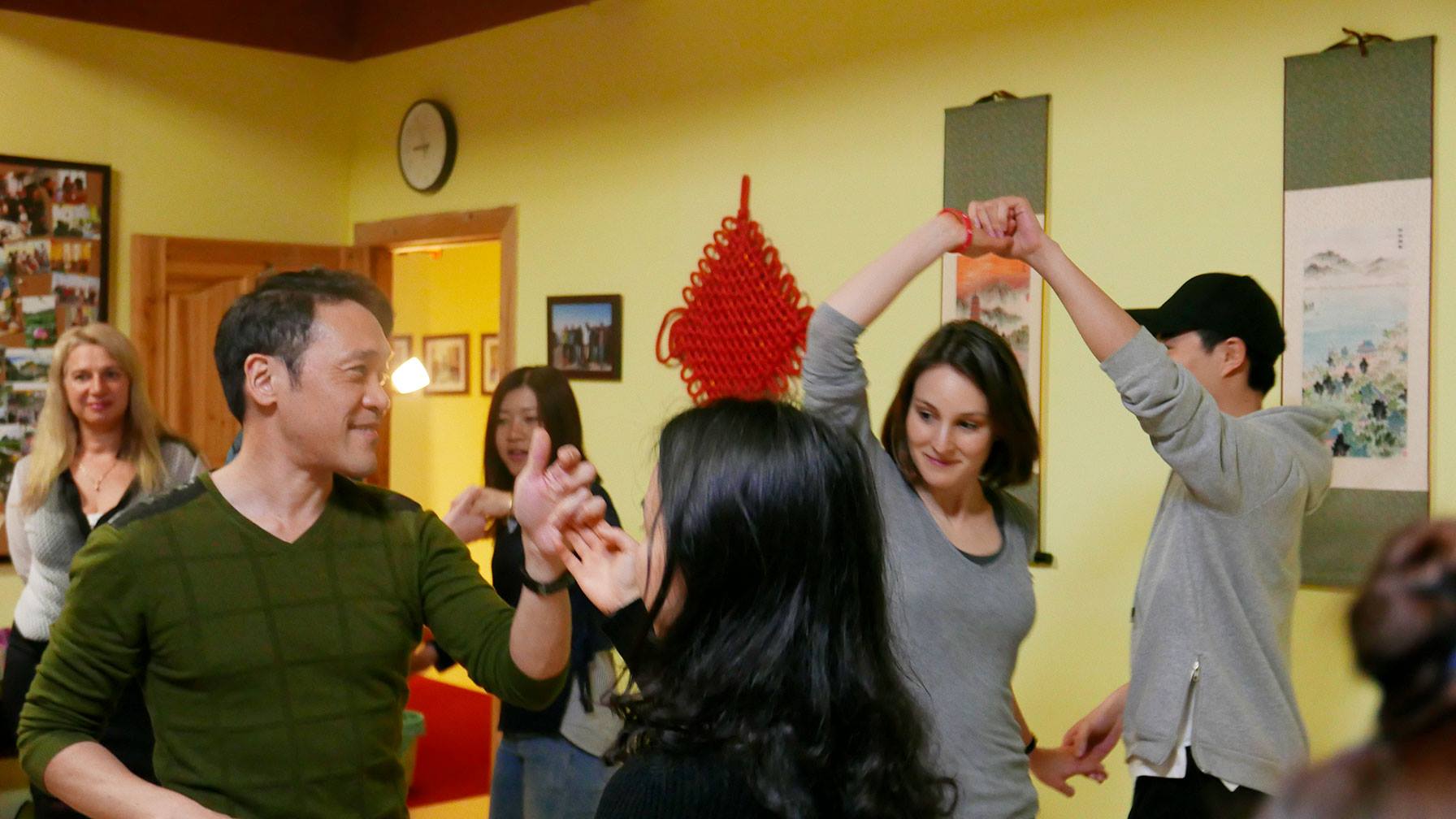
Students have danced at CLI gatherings too. The red knot on the wall is a good-luck decoration learners soon spot all over Guilin.
Cooking classes are a team effort at a big table, and the result is shared family style, the same way weekday lunch is served at the Center.
A paper-cut design is sketched in pencil before any cutting starts, and the Chinese names of the shapes come up while everyone draws.
The instructor talks through each fold and cut, and following a demonstration like this in Chinese is listening practice with something to show for it at the end.
Holding up the finished design first shows the room where the lesson is headed, before everyone at the CLI craft table tries one of their own.
The instructor comes around to each seat, so a craft lesson is also a chance to ask questions in Chinese and hear the answer up close.
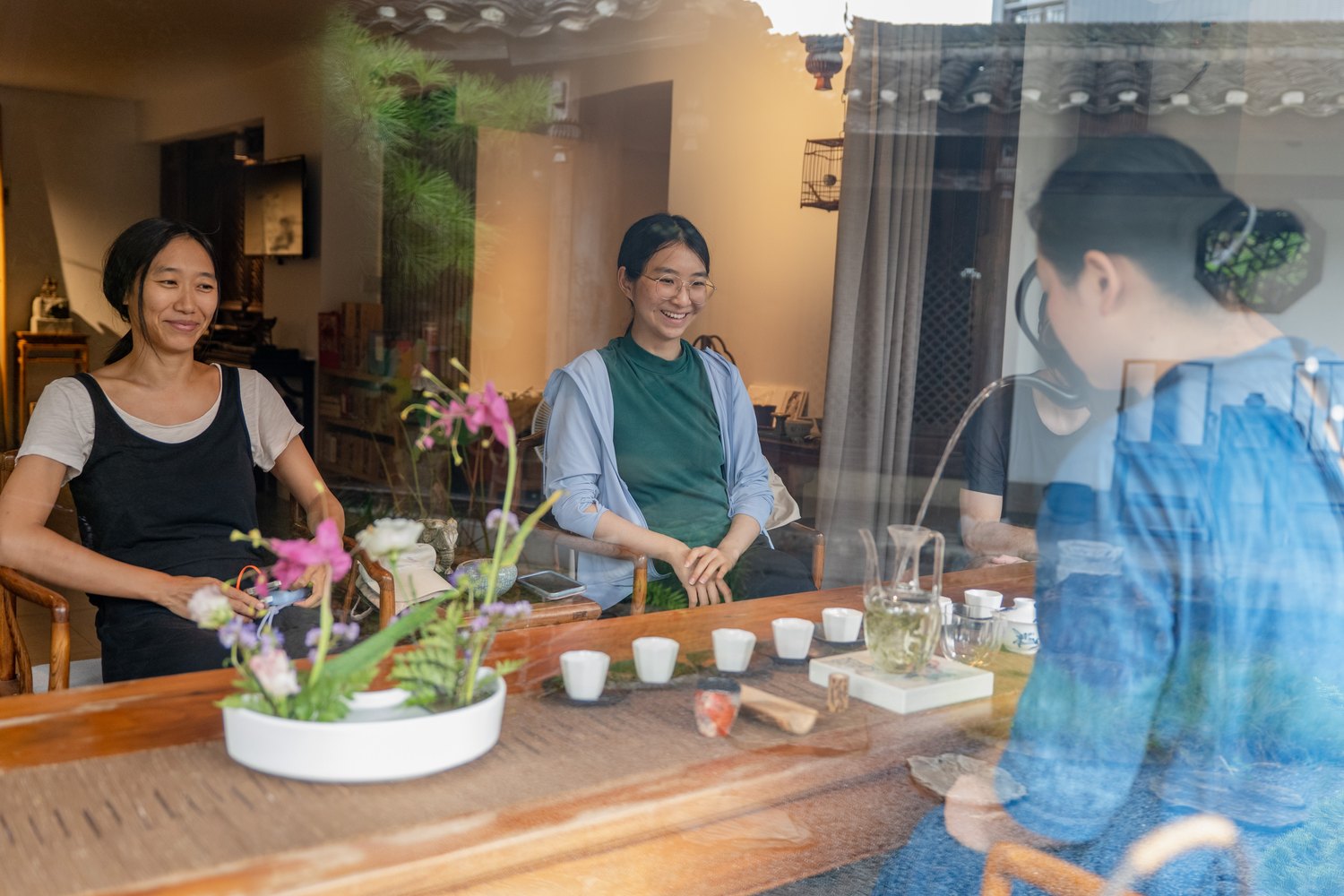
Small cups and fresh flowers line a long tea table, seen through the glass, and CLI's tea house visits leave plenty of time to sit and talk in Chinese.
A one-legged stance on a rooftop takes balance and patience, the same slow control that tai chi sessions at CLI work on.
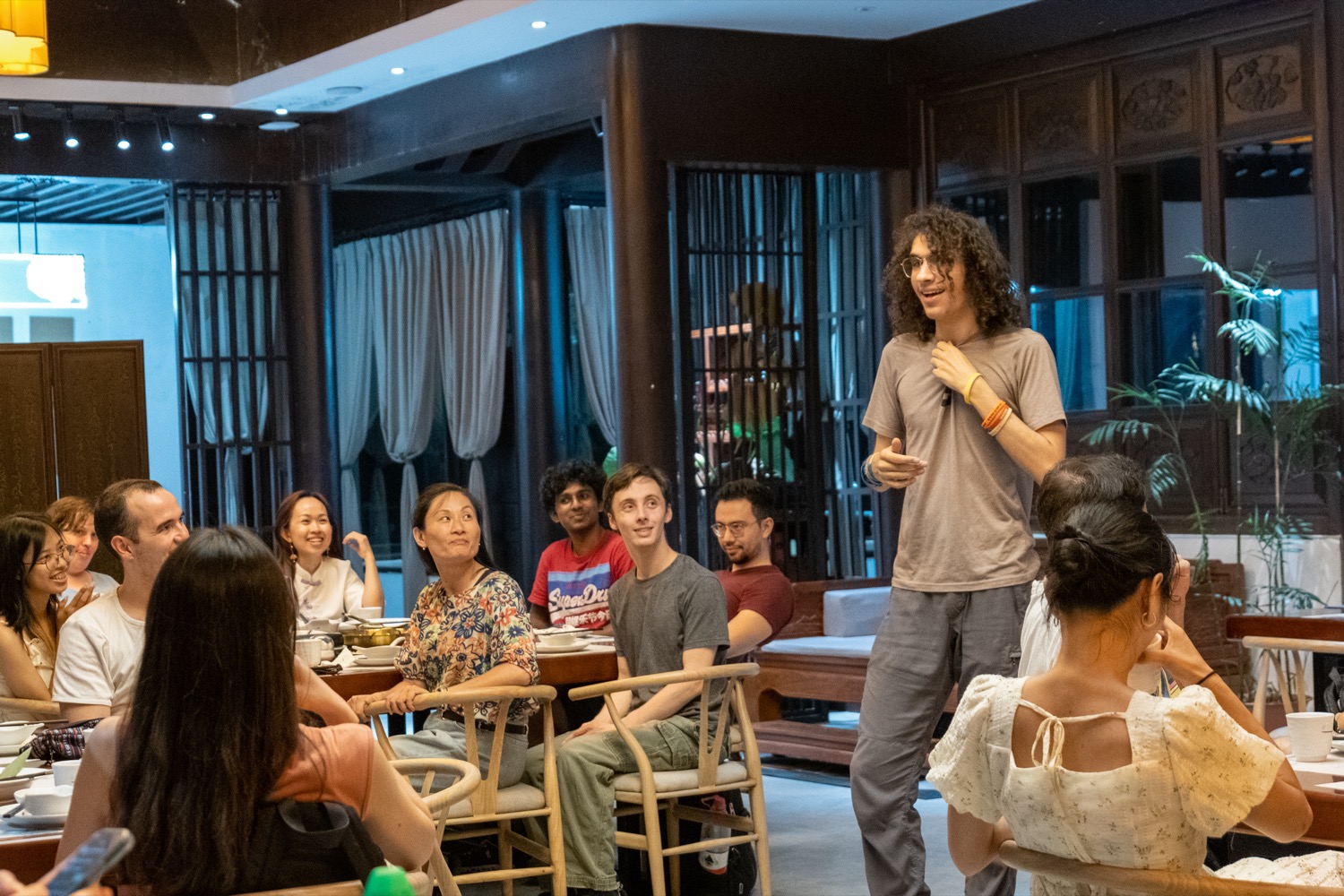
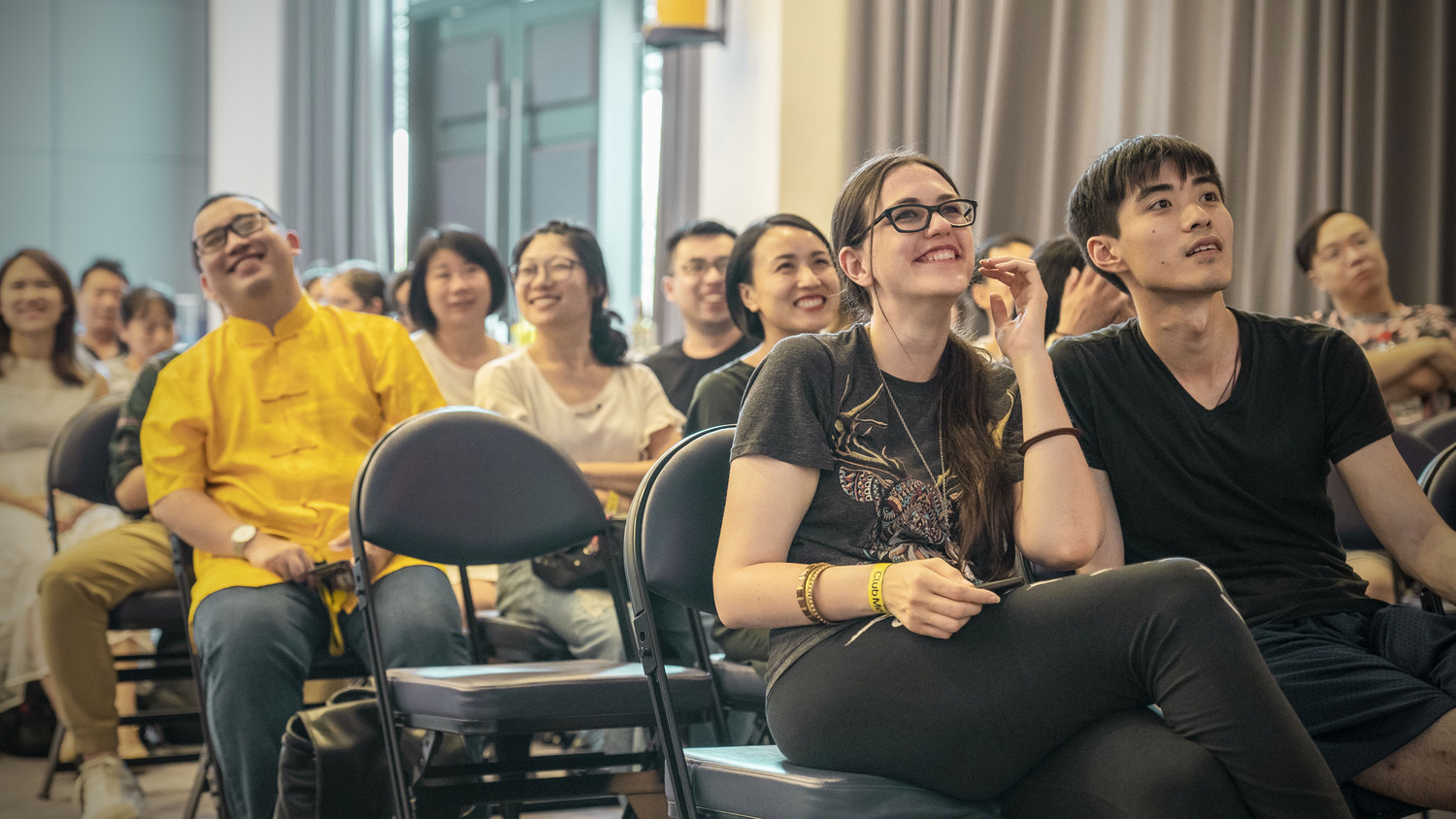
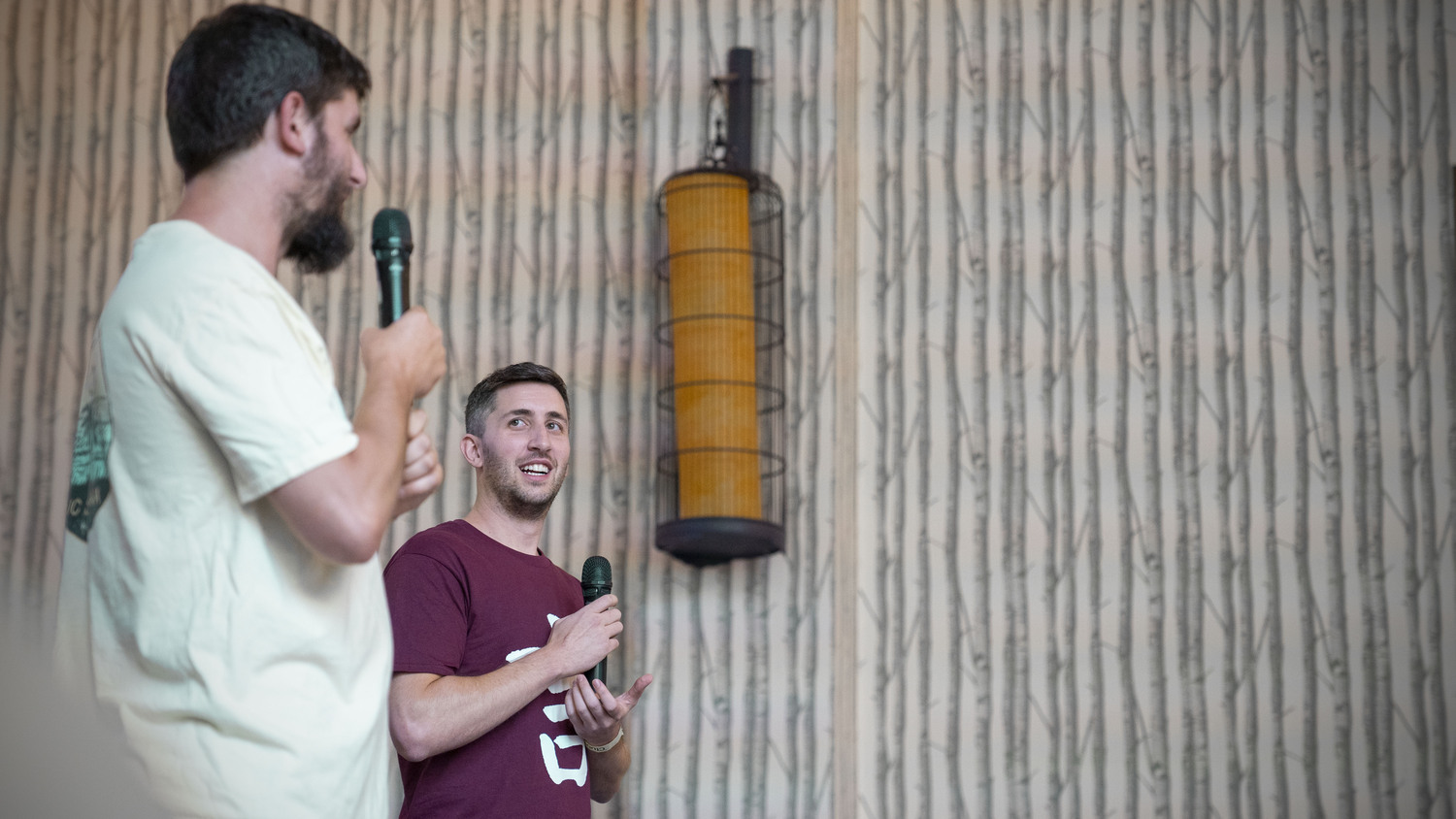
Catching the joke at a Chinese-language event is a real milestone, and gatherings like this one are some of the easiest places to test your listening.
Bowls of dye line the table while the group watches how each cloth is bound, the step that sets the pattern. Each week's activities go up on the board on the Center's second floor.
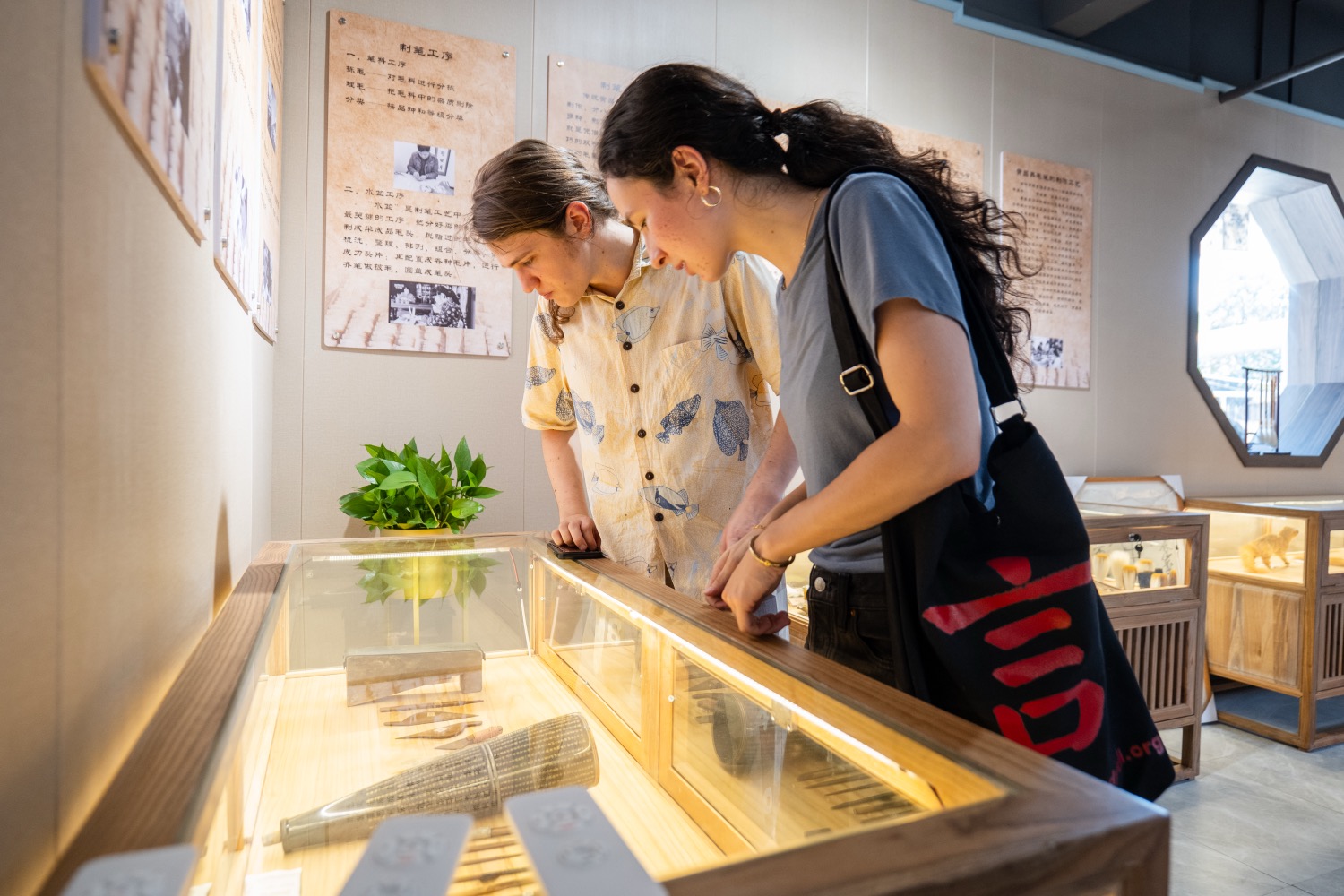
Exhibition labels are good reading practice, and between weekly activities and a monthly excursion, there are plenty of chances to try your characters outside class.
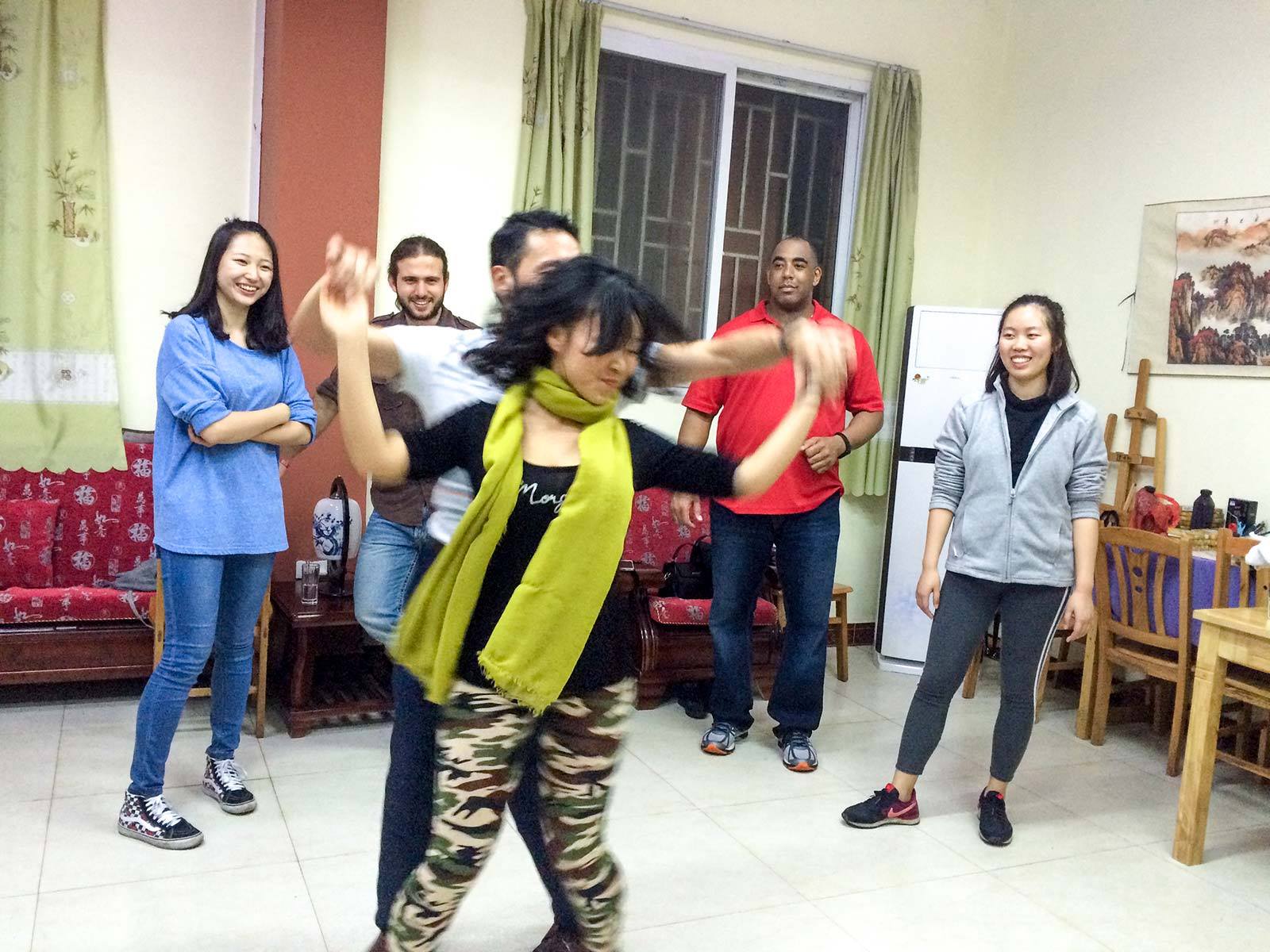
A green scarf and a cleared space make a dance floor out of a lounge, one of the livelier moments at CLI gatherings over the years.
Bowls of corn and mushrooms wait on a crowded table, and in a cooking session this busy, everyone gets a job and a few new words to go with it.
The instructor corrects each stance by hand, and the Chinese words for each part of the body come up fast at an outdoor activity like this one.
More than 5,000 students from over 50 countries have studied at CLI since 2009, and an event like this one puts a good mix of people in the same front rows.
Some of CLI's weekly activities happen away from the Center, and a workshop around a wooden table in a rustic room makes a change of scene from the classroom.
A leader out front and the group copying from behind: tai chi, one of CLI's activities, works as well on a hilltop as it does on a sports field.
美食měishí
Food
Street stalls, markets, hot pot, and lunch together.
Vegetarian, halal and other dietary needs can be accommodated, which matters at meals where every dish is shared from the middle.
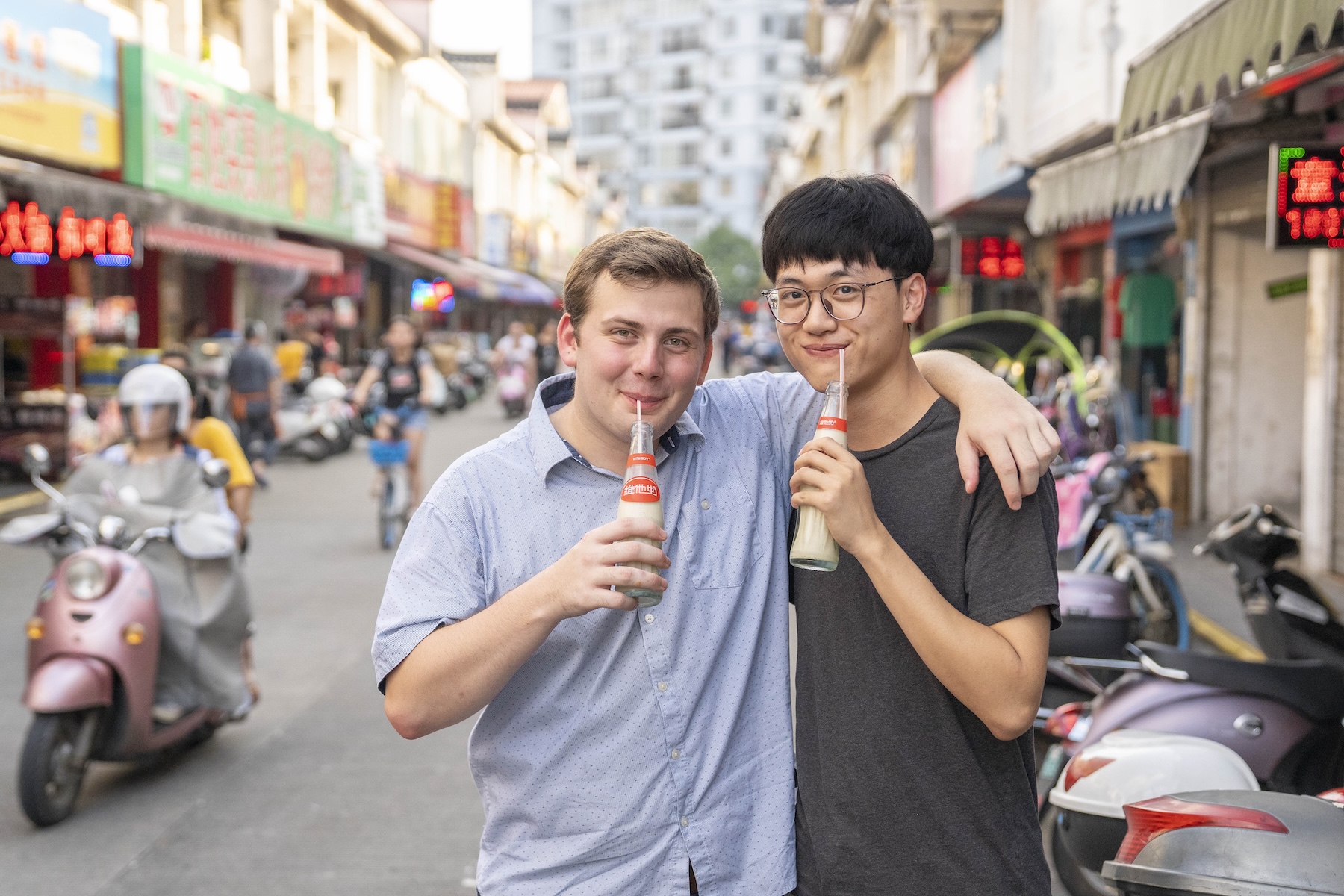
The red CLI wristband is the optional Language Pledge: while it is on, CLI team members speak only Chinese with the student, even over street food.
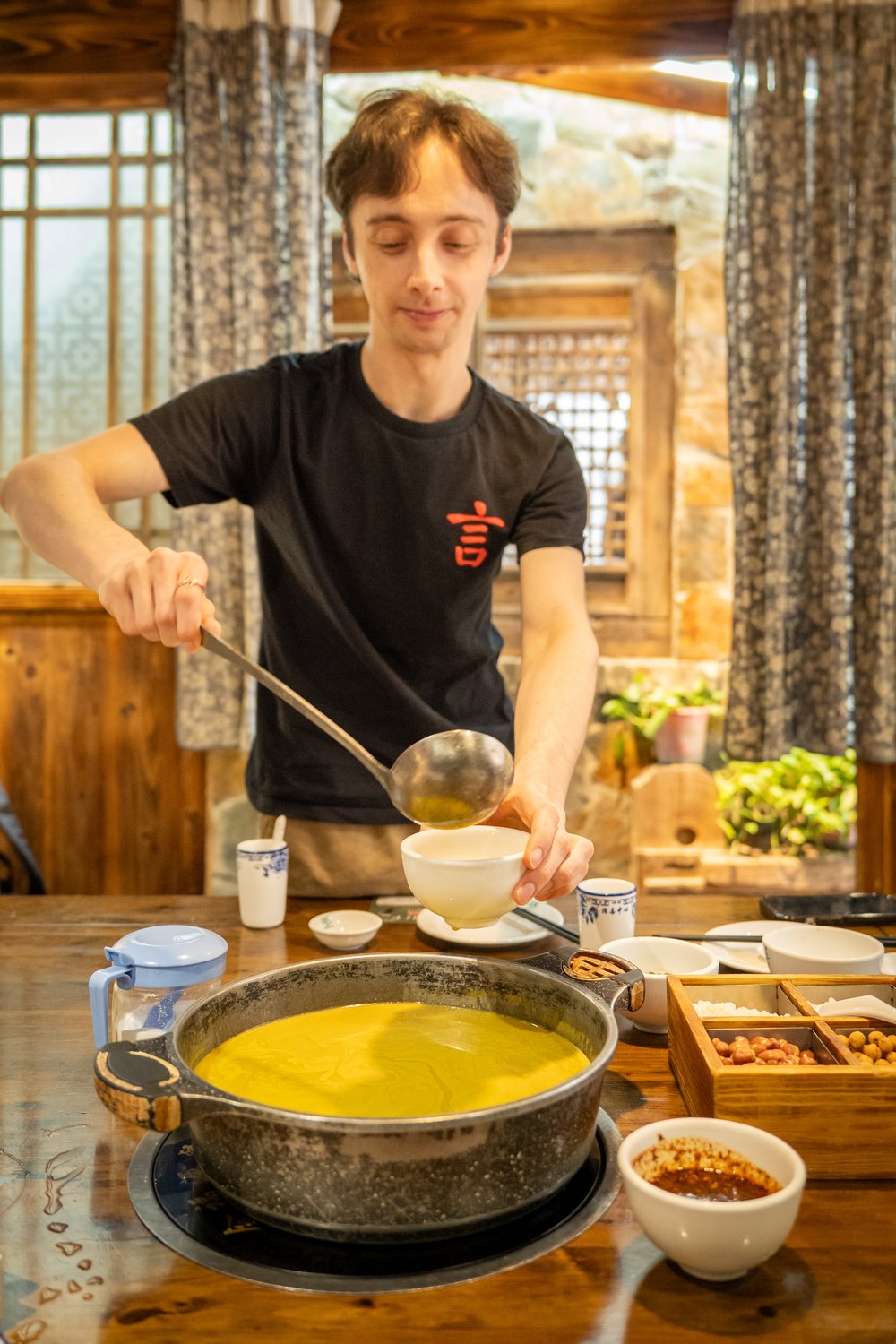
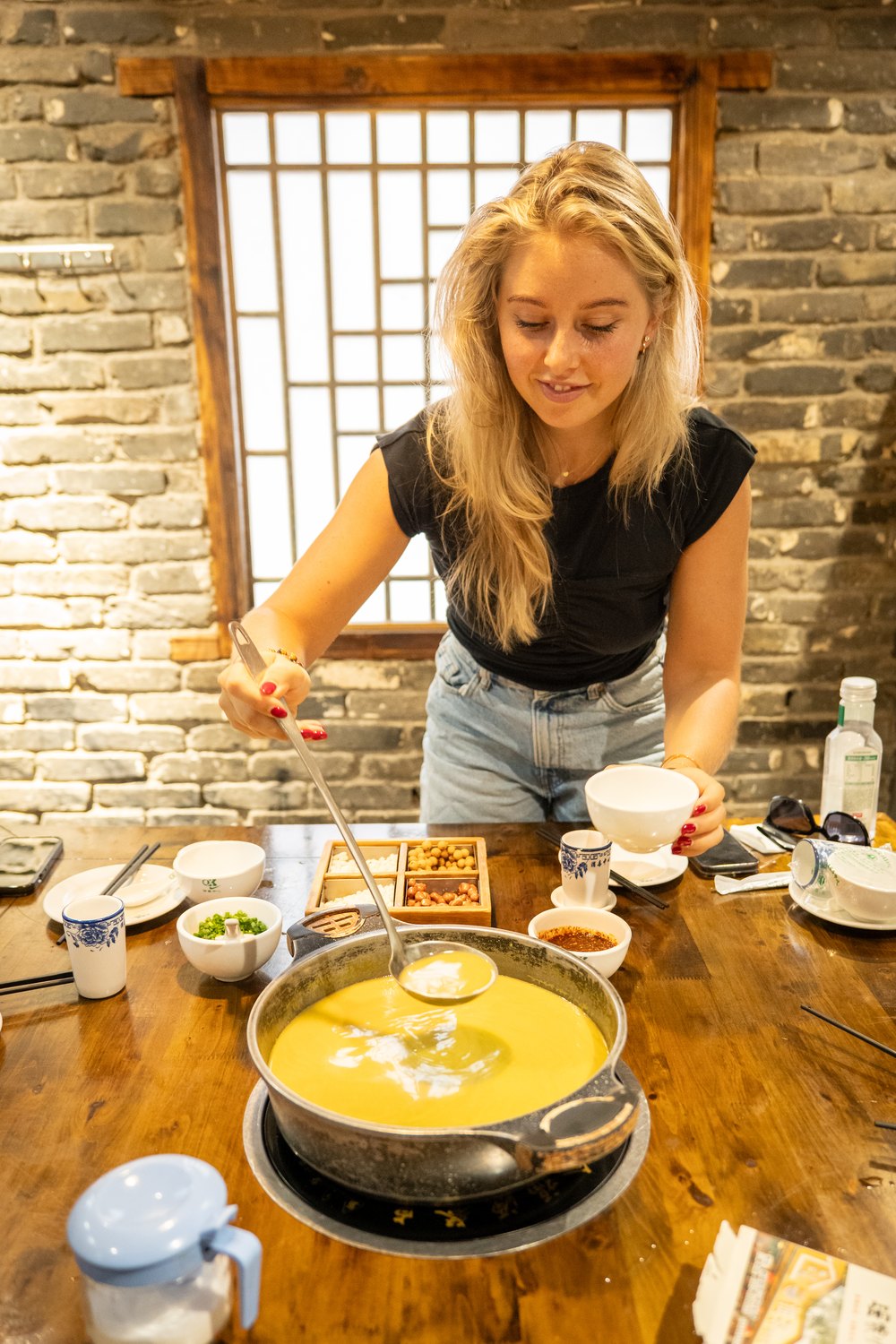
Everyone cooks their own food at a hot pot table, and the menu is good reading practice for students working on characters.
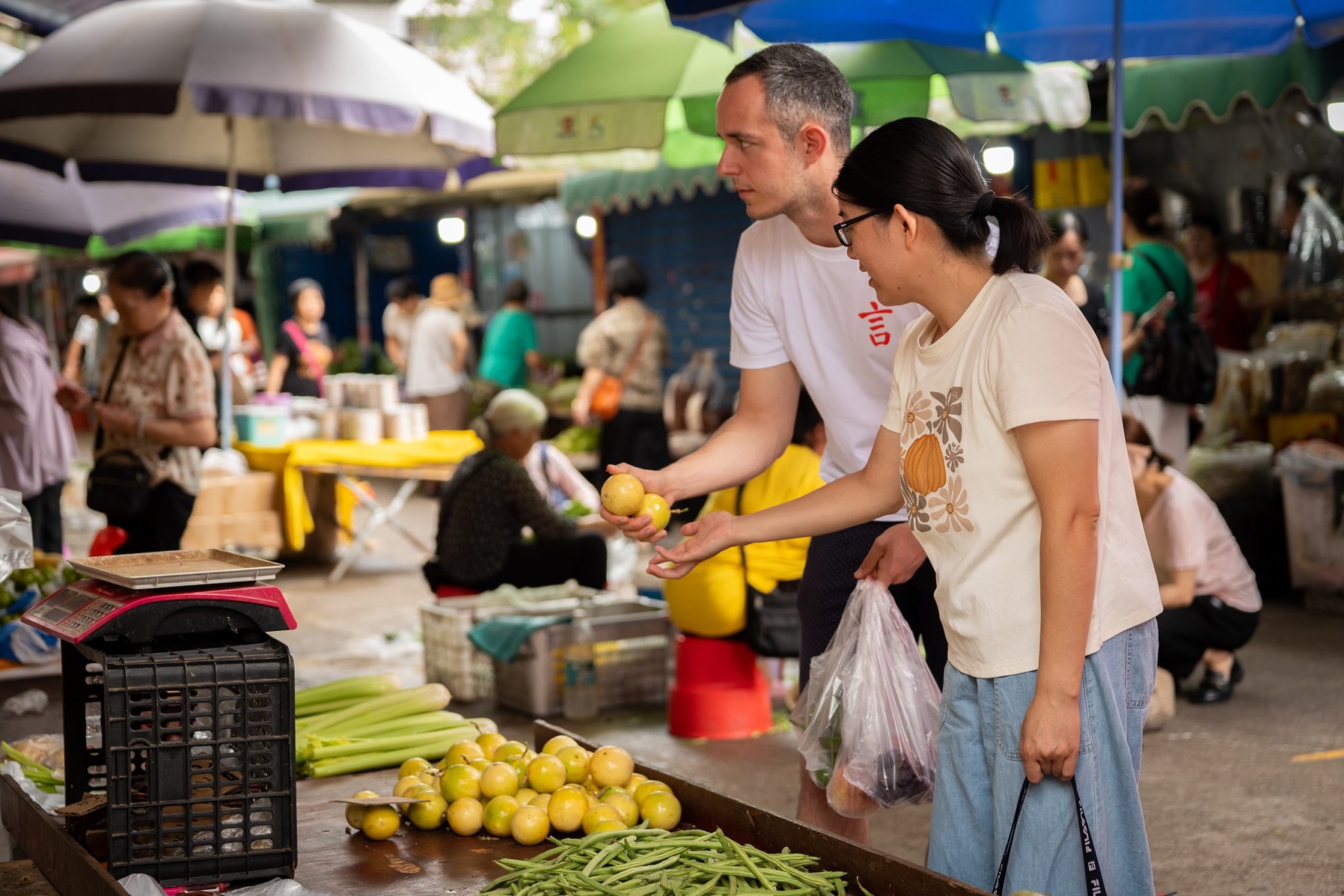
After class, a walk through the markets near CLI is a chance to use the day's vocabulary and pick up the Chinese names for everything on sale.
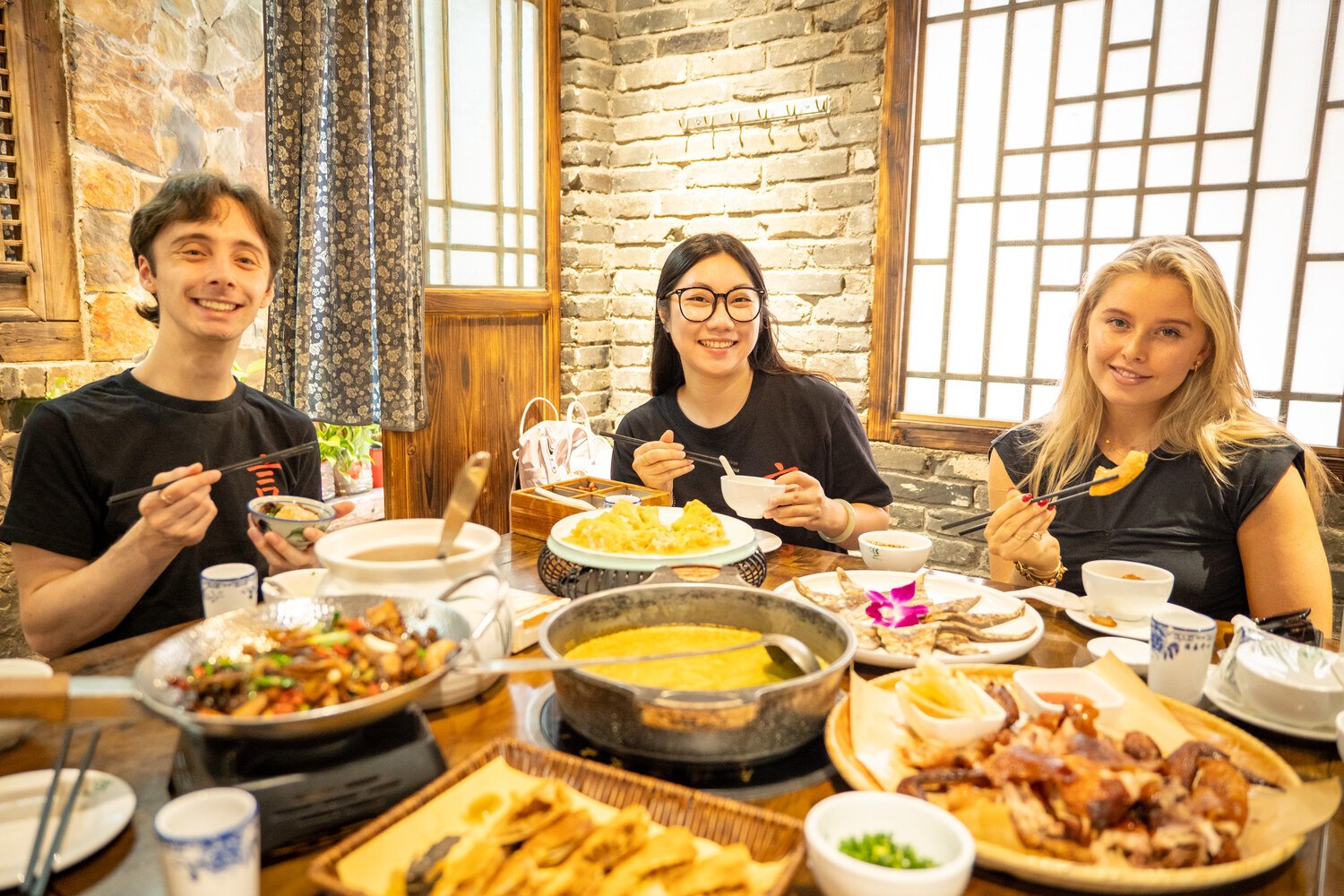
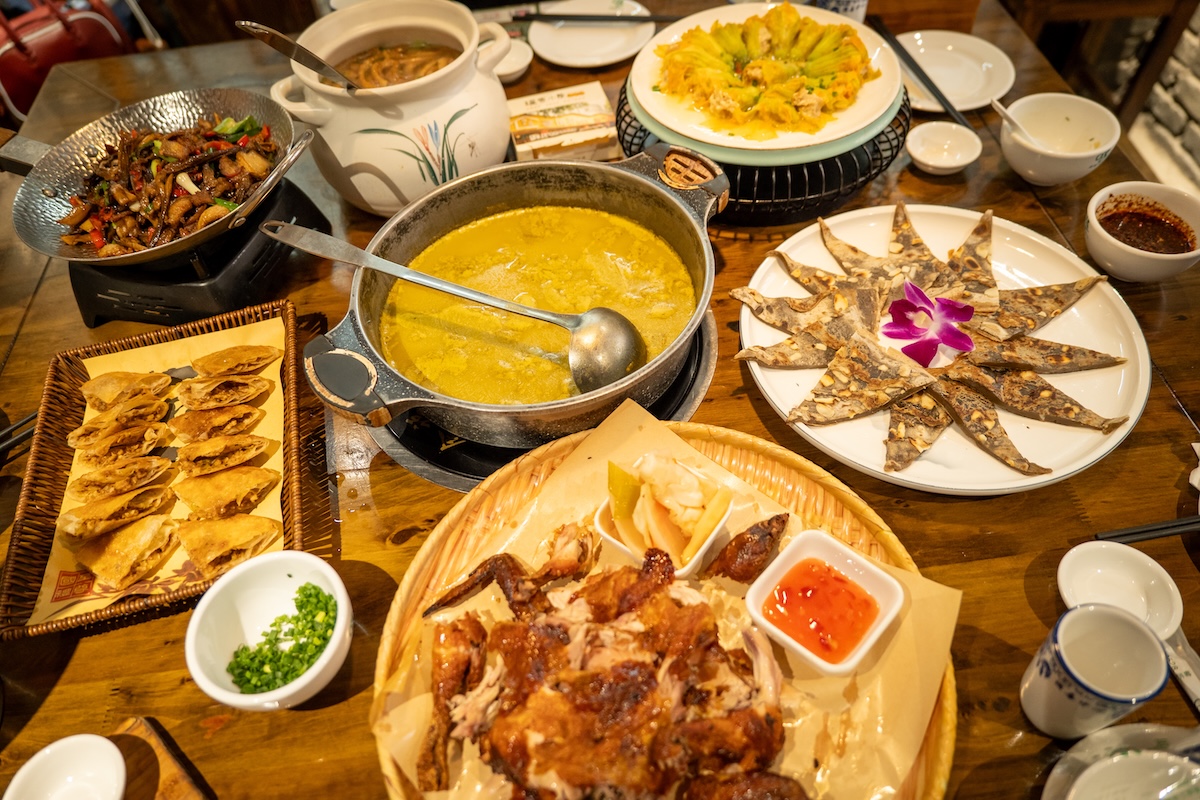
Roast duck, dumplings and soup fill the middle of this table, and CLI's welcome and farewell dinners are both included in tuition.
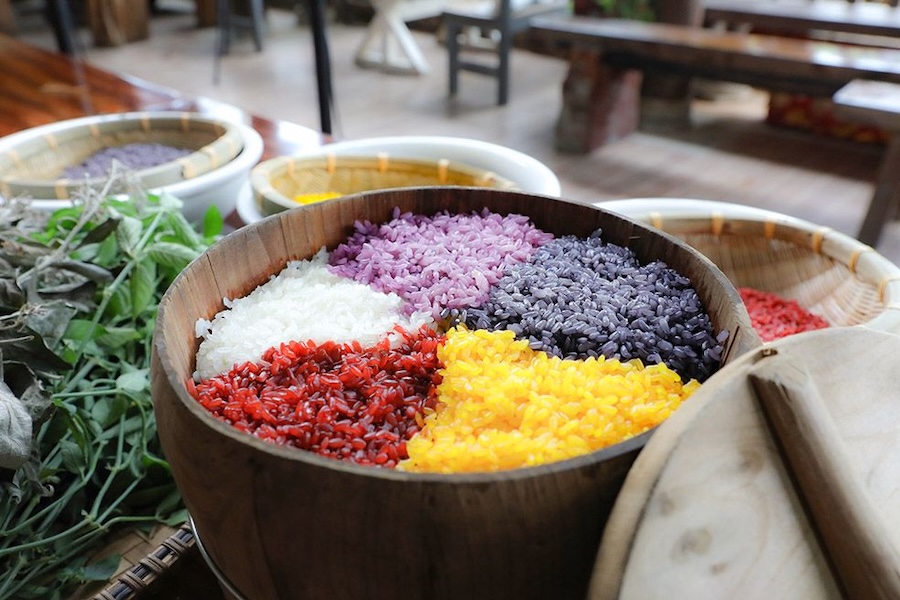
Five-colored sticky rice sits beside fresh herbs and spice bowls here, and food across Guangxi leans fresh, sour and lightly spicy.
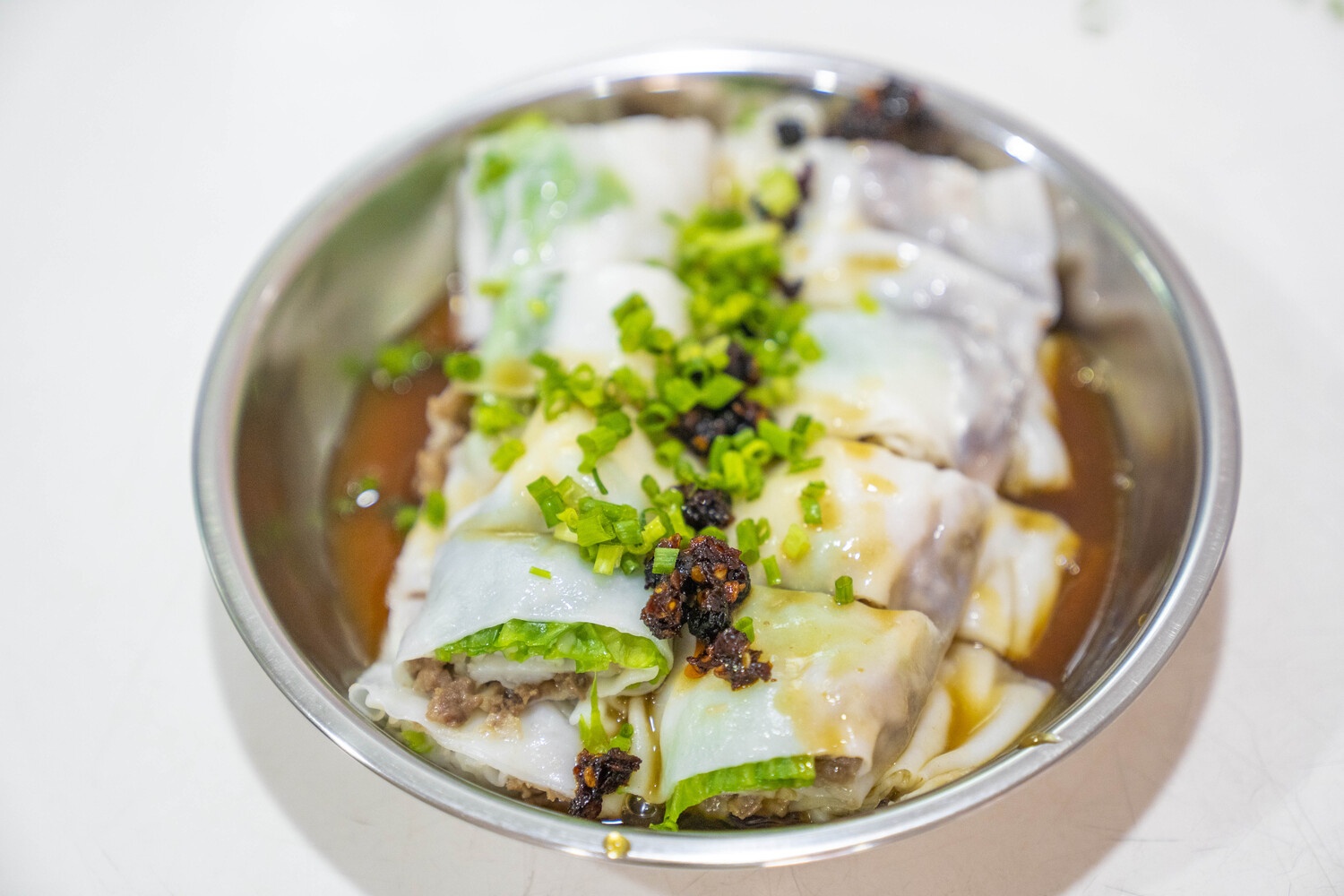
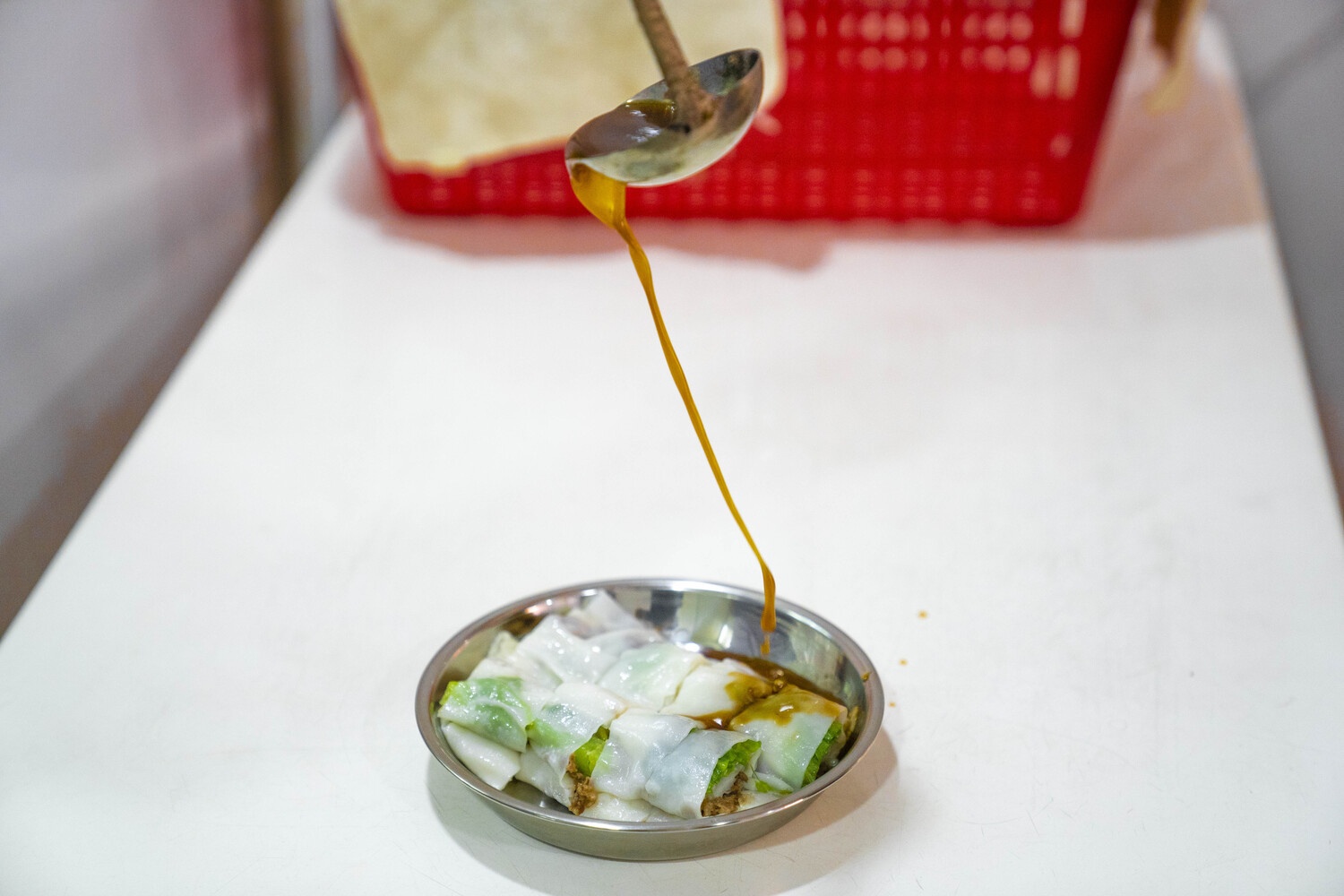
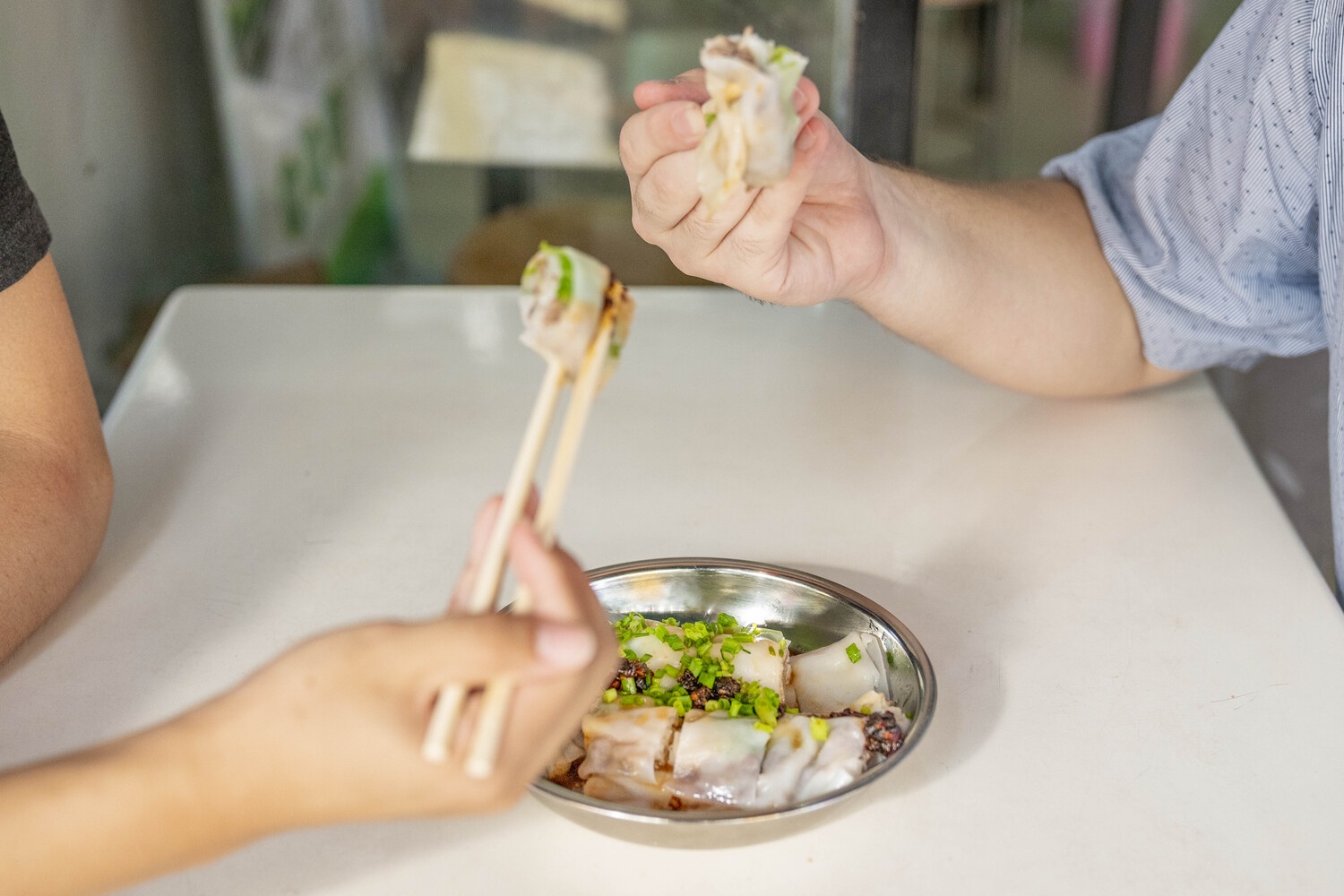
On the optional meal plan, weekday lunch is home-cooked at the CLI Center, and meals out are when you try plates like these rice noodle rolls.
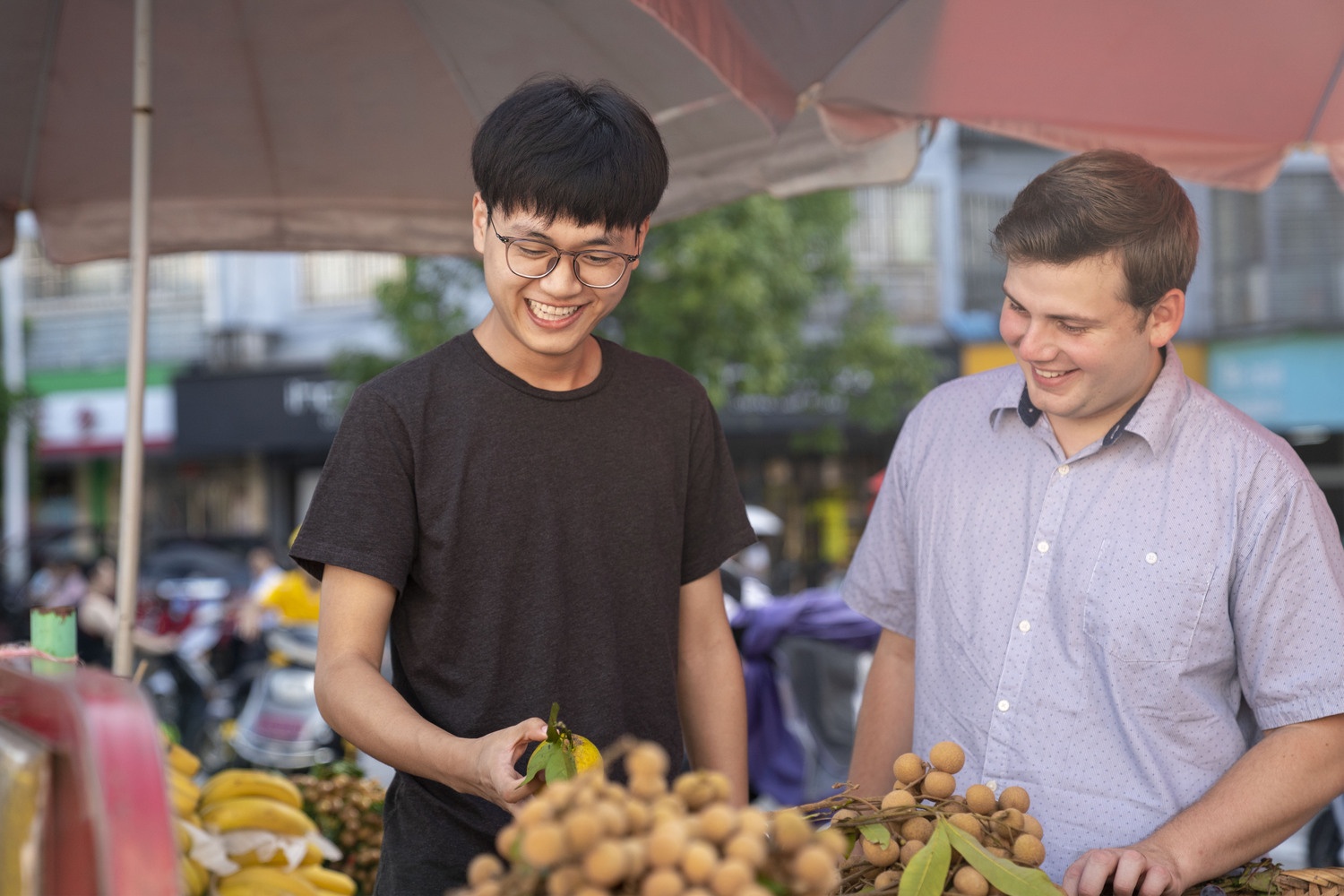
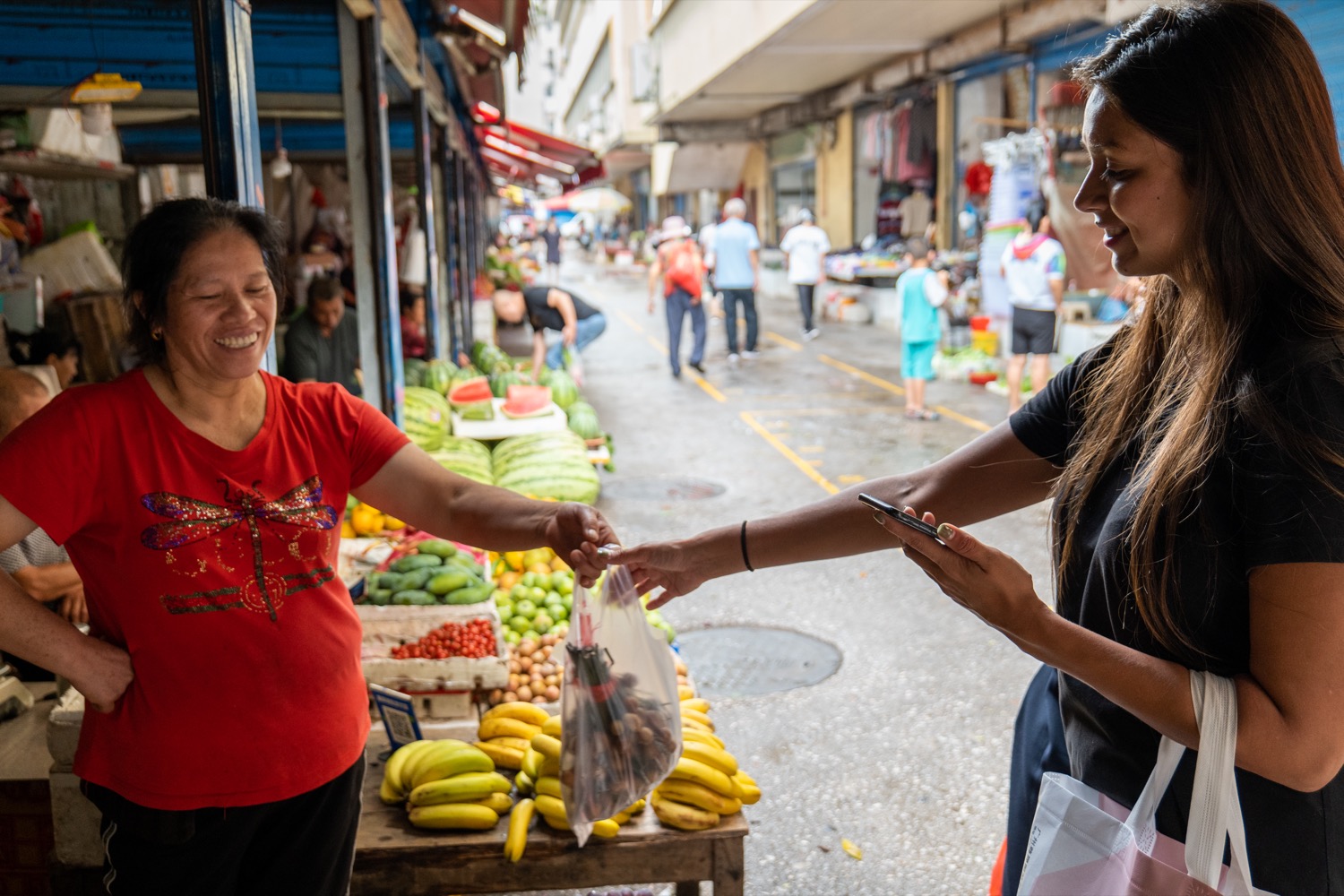
Longans come by the branch at fruit stands like this, and buying a bag is the sort of everyday Chinese students use from their first week.
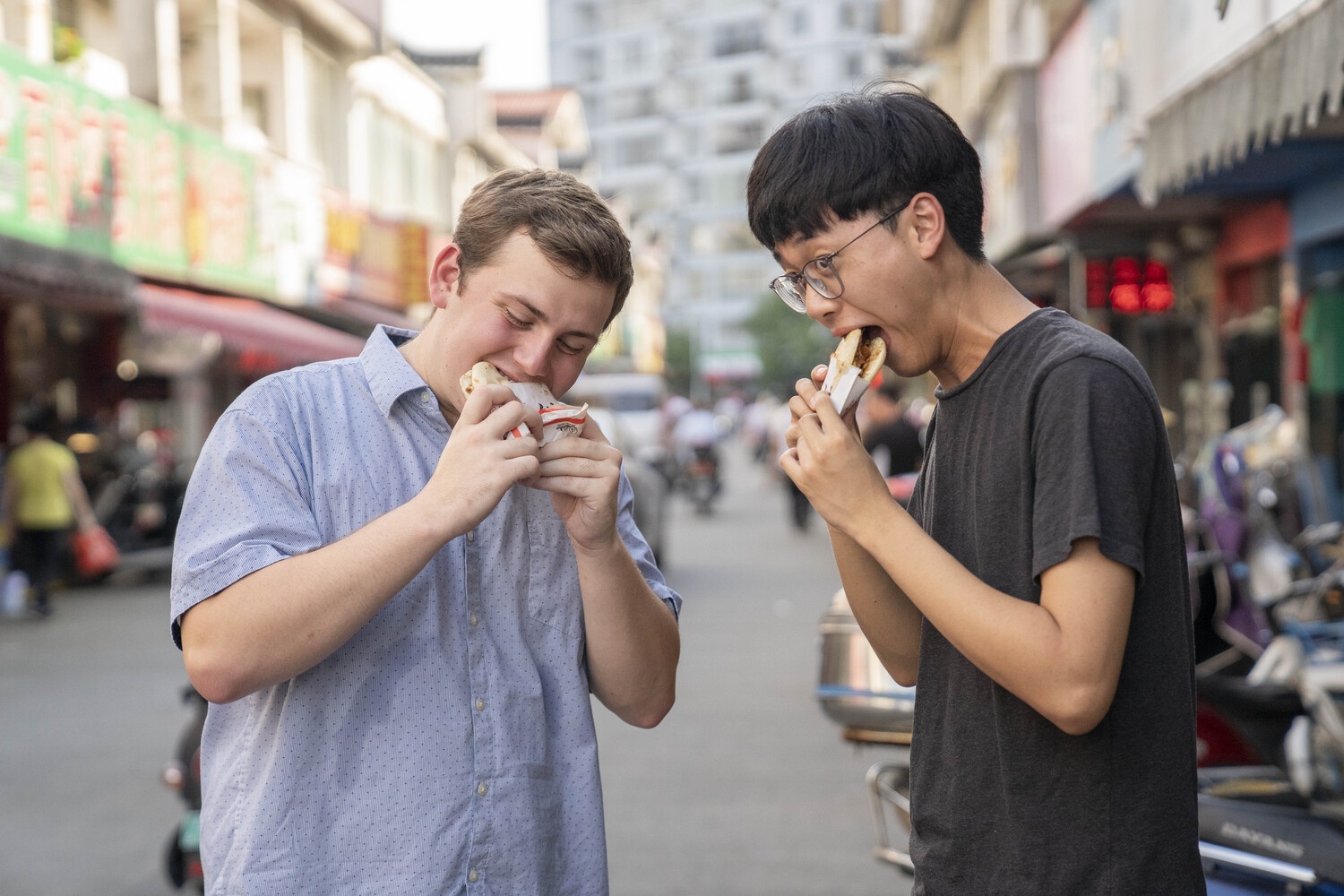
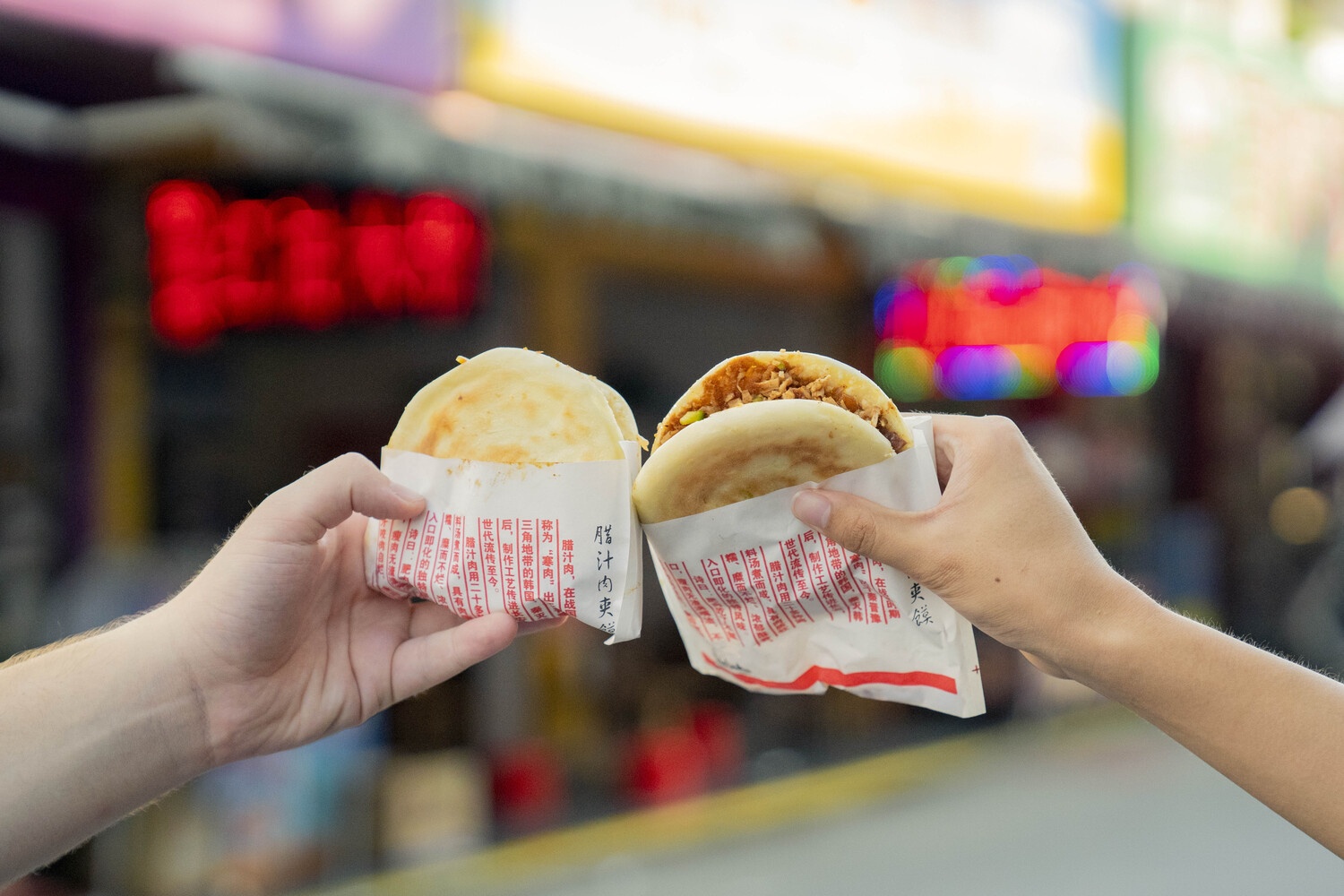
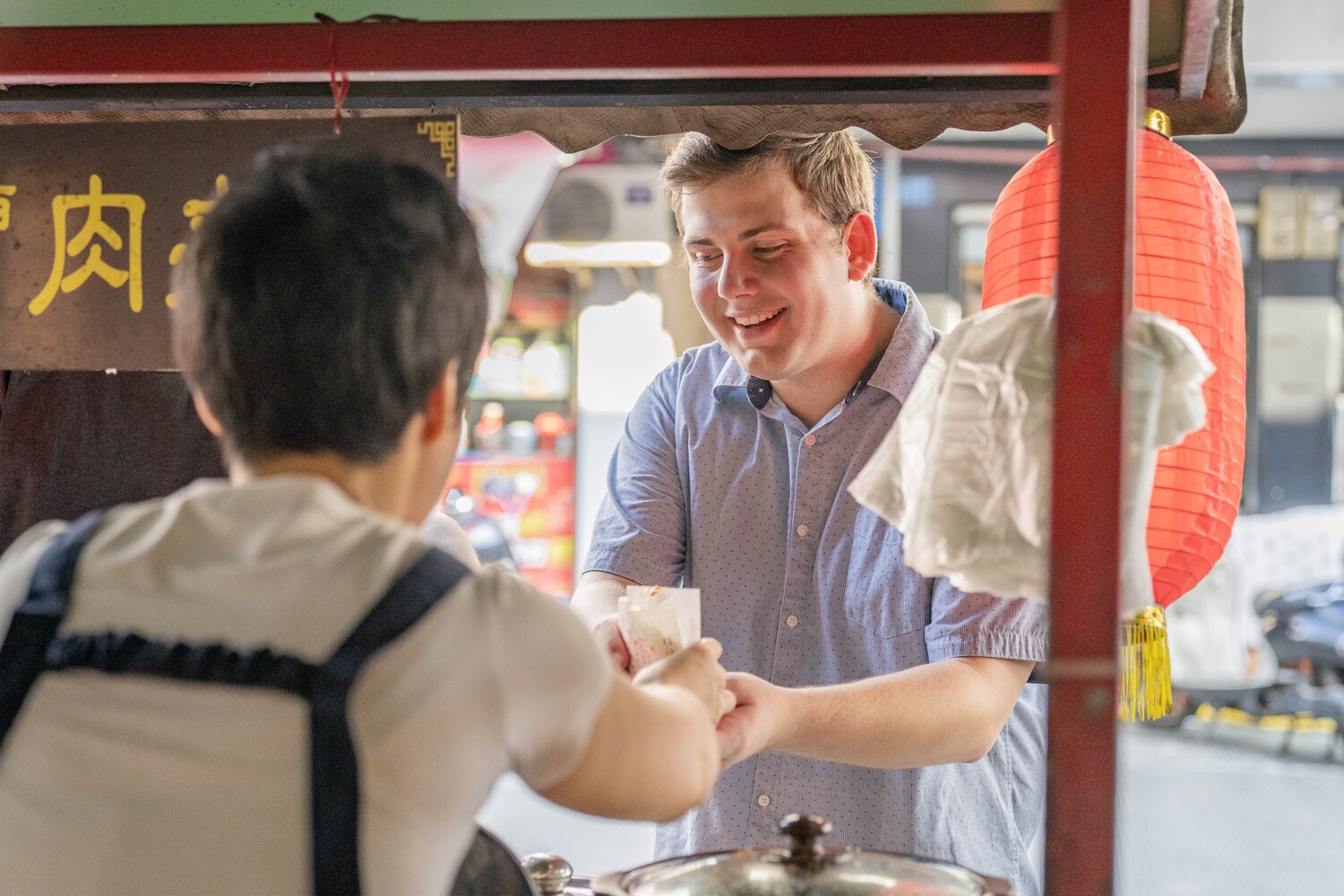
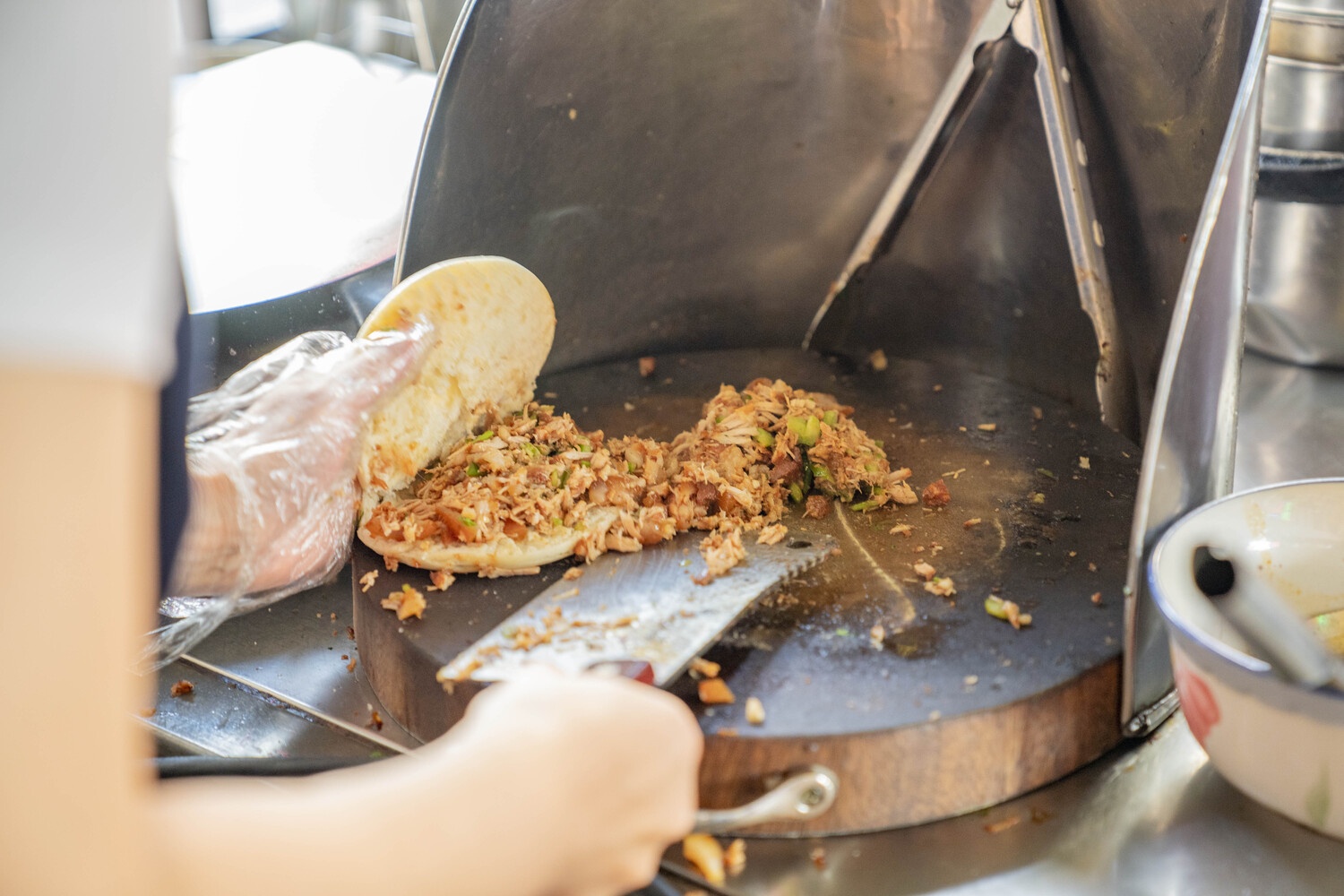
Buns from a street stall taste best eaten on the spot, and with markets, cafés and noodle shops close to CLI, a snack like this is never far away.
Street buns come wrapped in paper to eat on the go, an easy evening snack once the day's review is done.
Many street snacks get a ladle of sauce at the counter, and asking what is in it is a good use of the day's Chinese.
Few people in Guilin speak English, so buying a snack at a stall is a real conversation in Chinese from the first week.
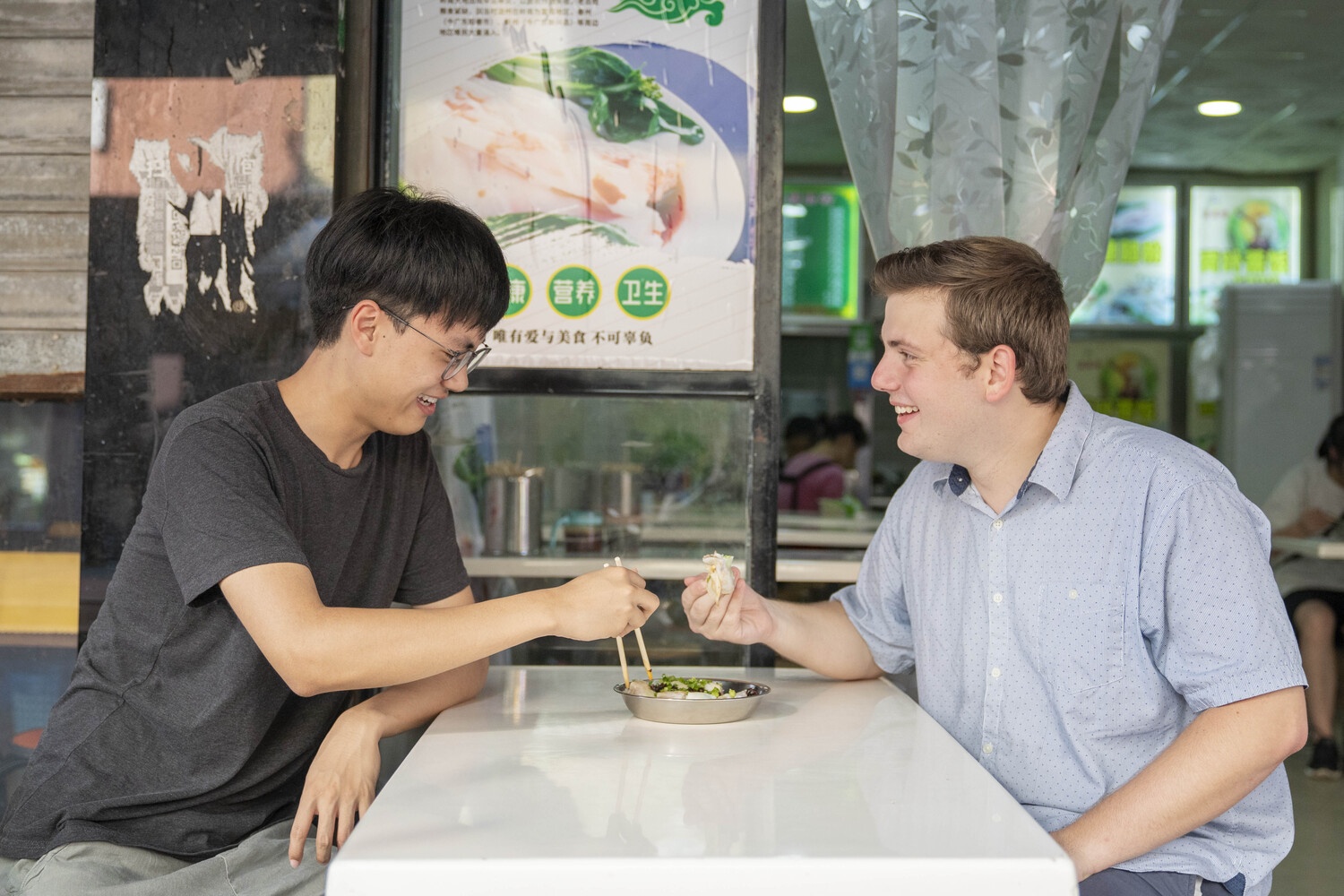
Language exchange is part of a typical weekday after class, and sharing a bowl of street food is one easy way to do it.
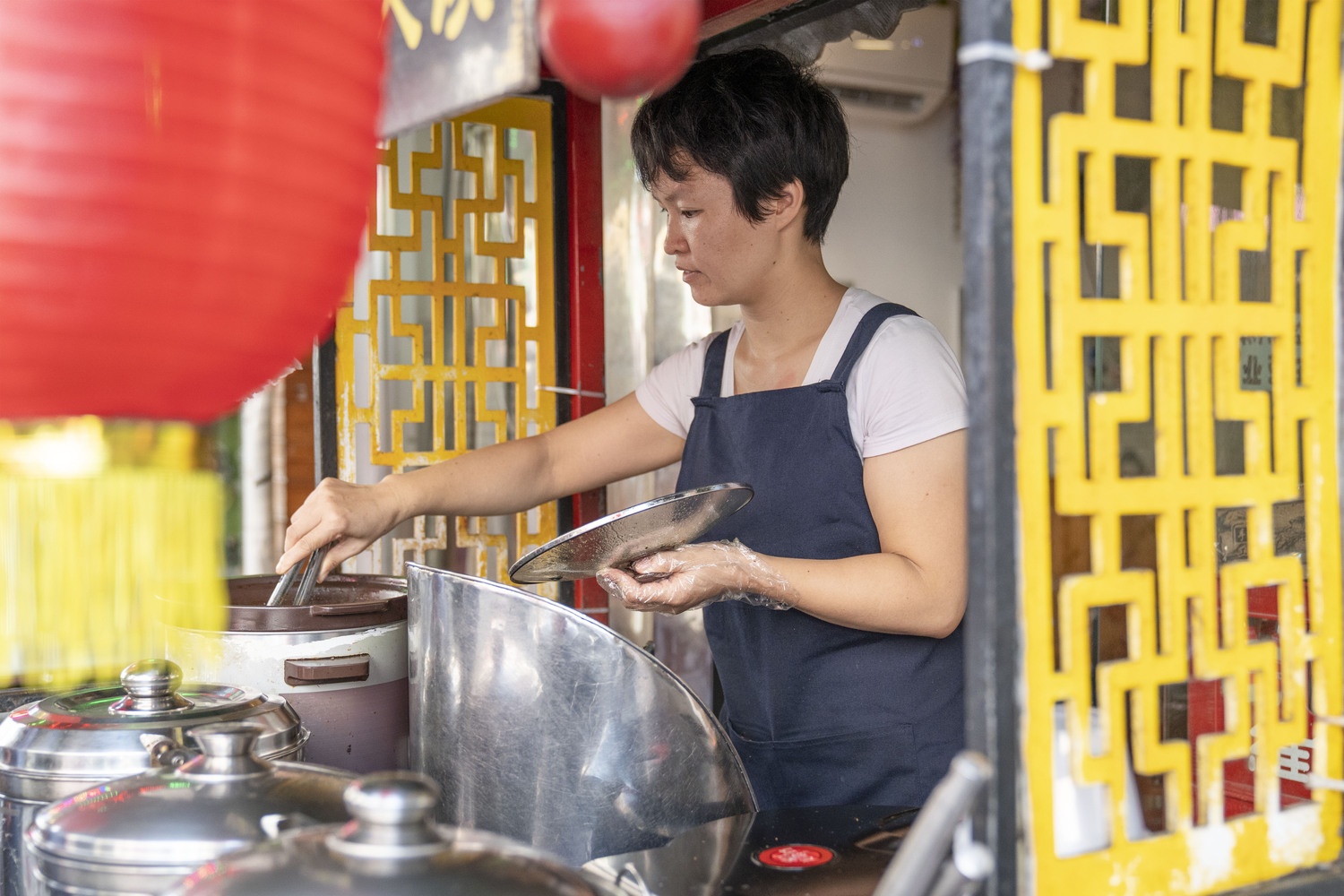
Stalls like this one cook to order, and telling the cook how spicy you want it is Mandarin you end up using almost every day.
Noodles are everywhere in Guilin, and the local rice noodles, 桂林米粉 (guìlín mǐfěn), are a breakfast eaten at neighborhood shops.
Fruit and vegetables are weighed out at the stall, and asking for some by weight is a good early test of your numbers in Chinese.
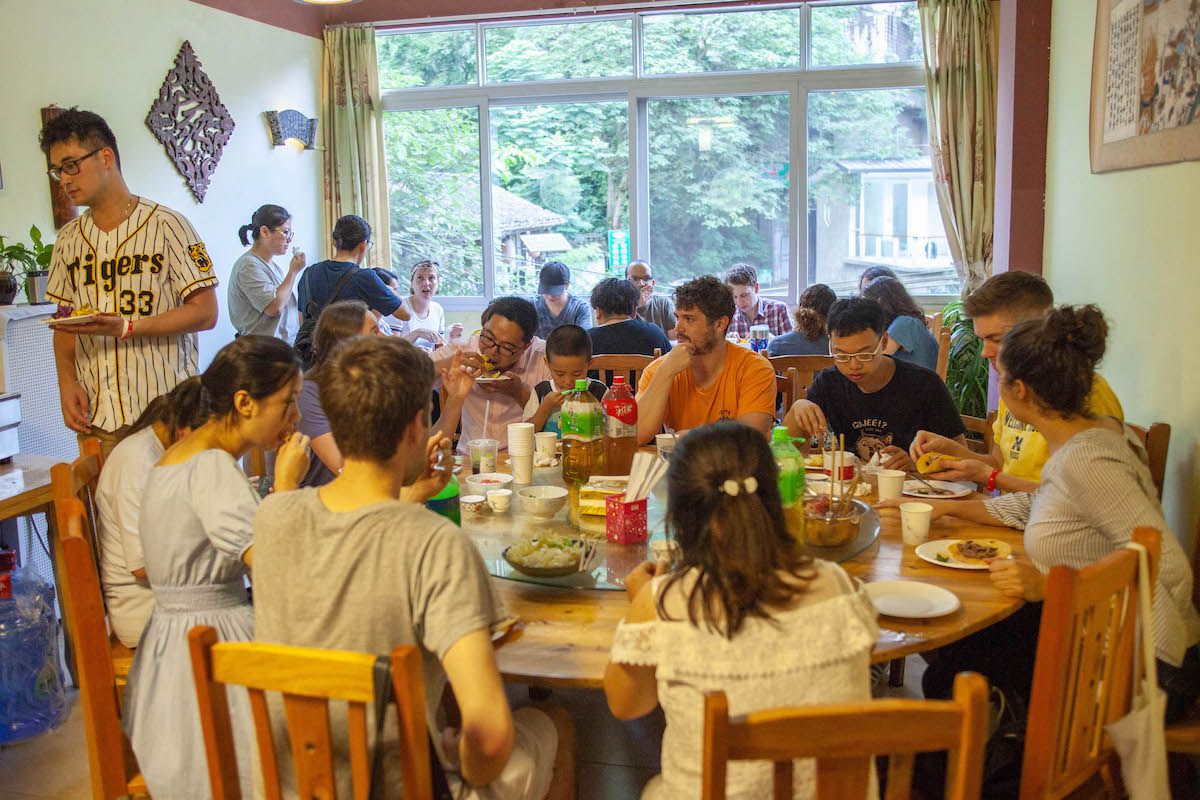
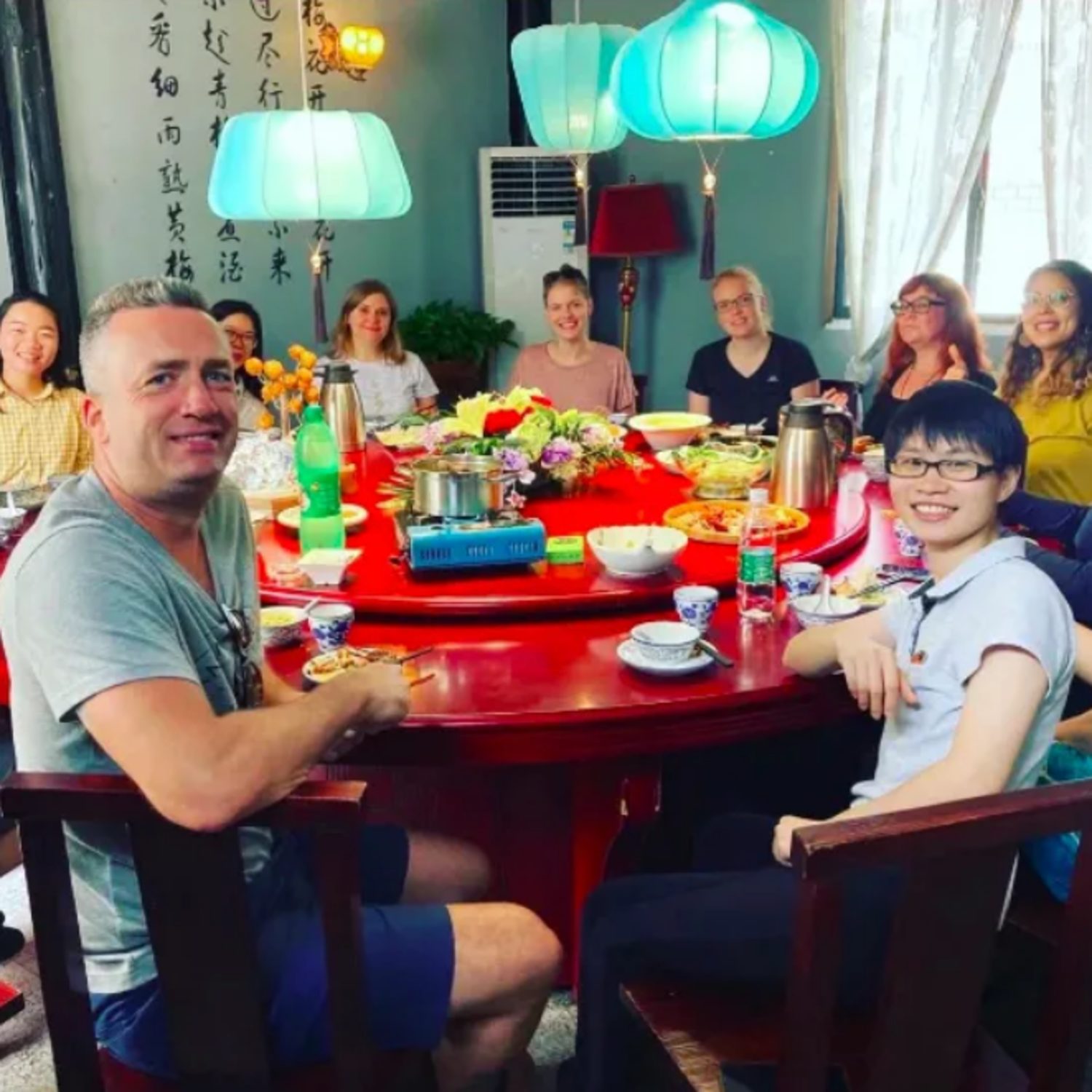
Weekday lunch on the optional meal plan is home-cooked and family style, at one table with teachers and classmates.
The CLI Center has a full kitchen, and every weekday lunch includes at least one Mandarin-only table.
Paying at a market stall means catching prices in Chinese at full speed, which gets easier with every trip for fruit.
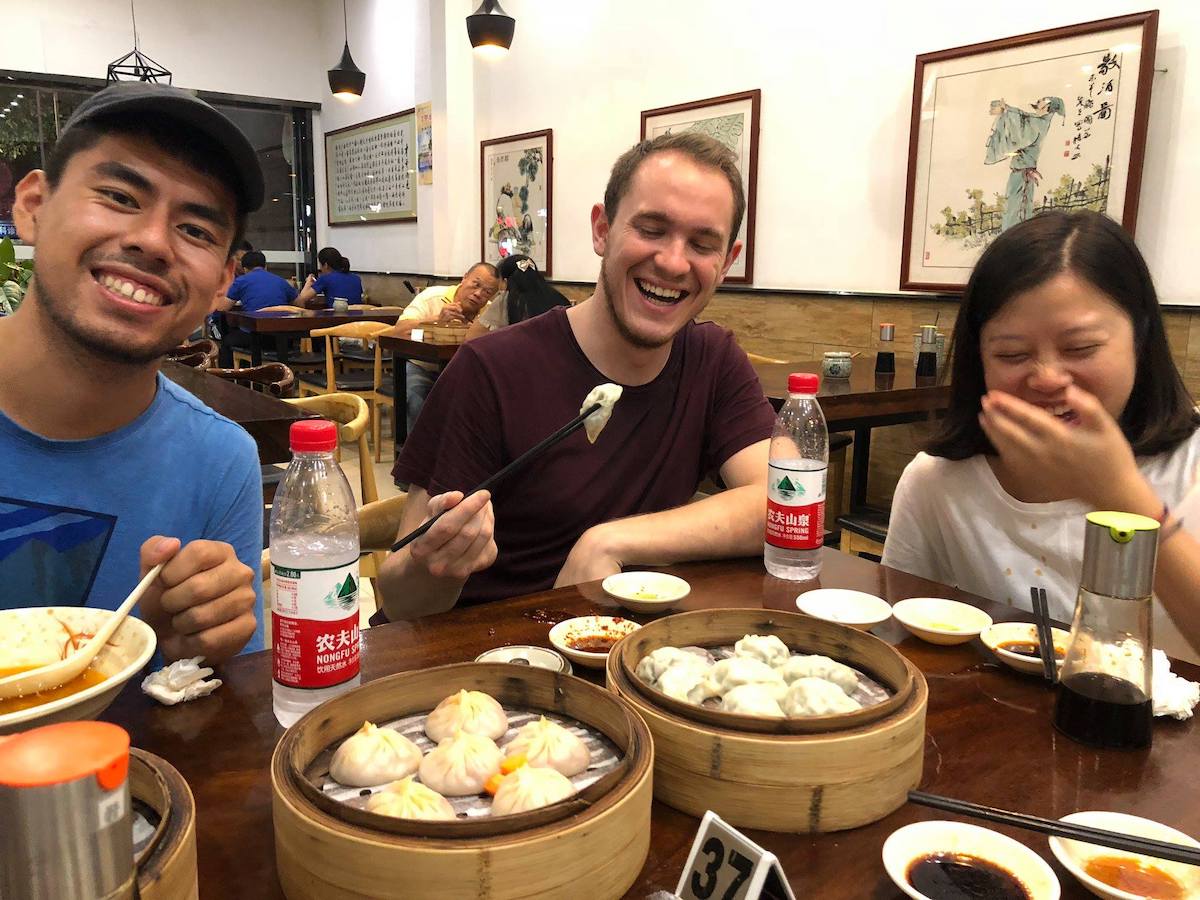
Steamer baskets of dumplings go in the middle of the table, and naming the ones you want is good practice for ordering in Chinese.
Evenings on the program are usually lighter, and dinner out with classmates is an easy way to keep using Chinese after class.
Supermarket labels are all in Chinese, so a weekday snack run is reading practice too.
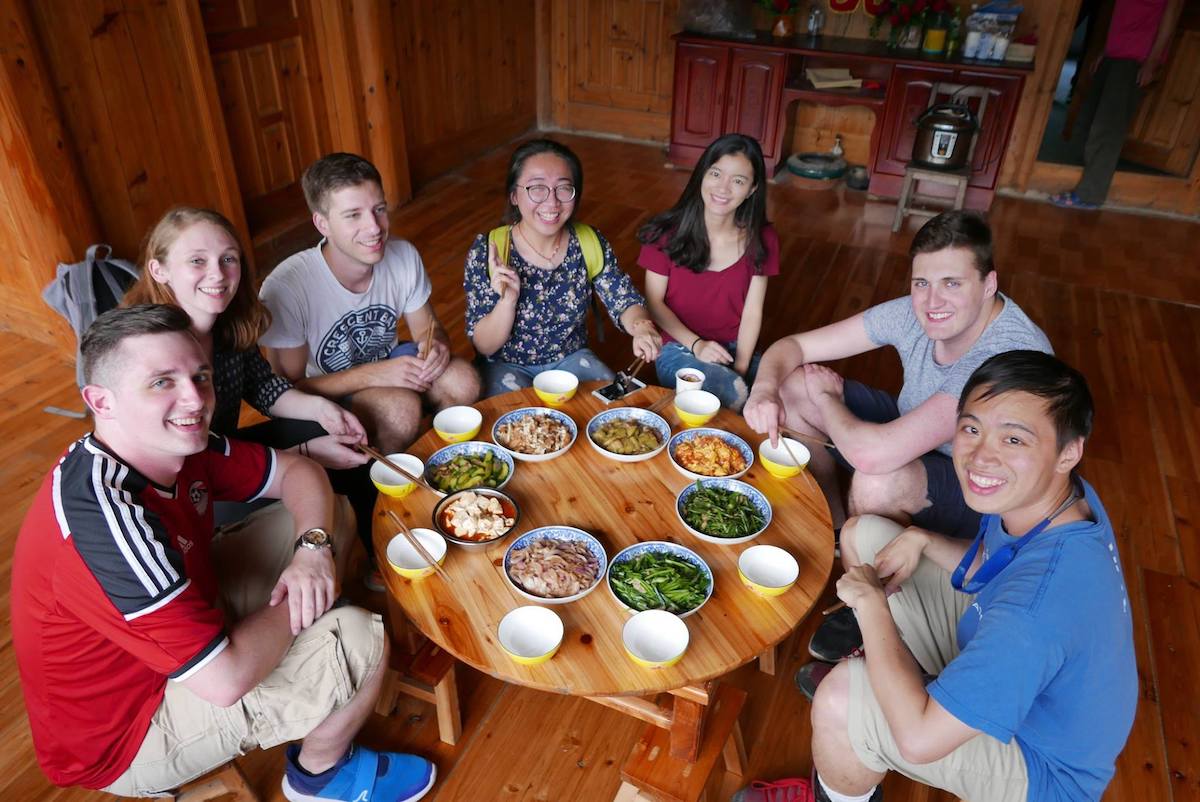
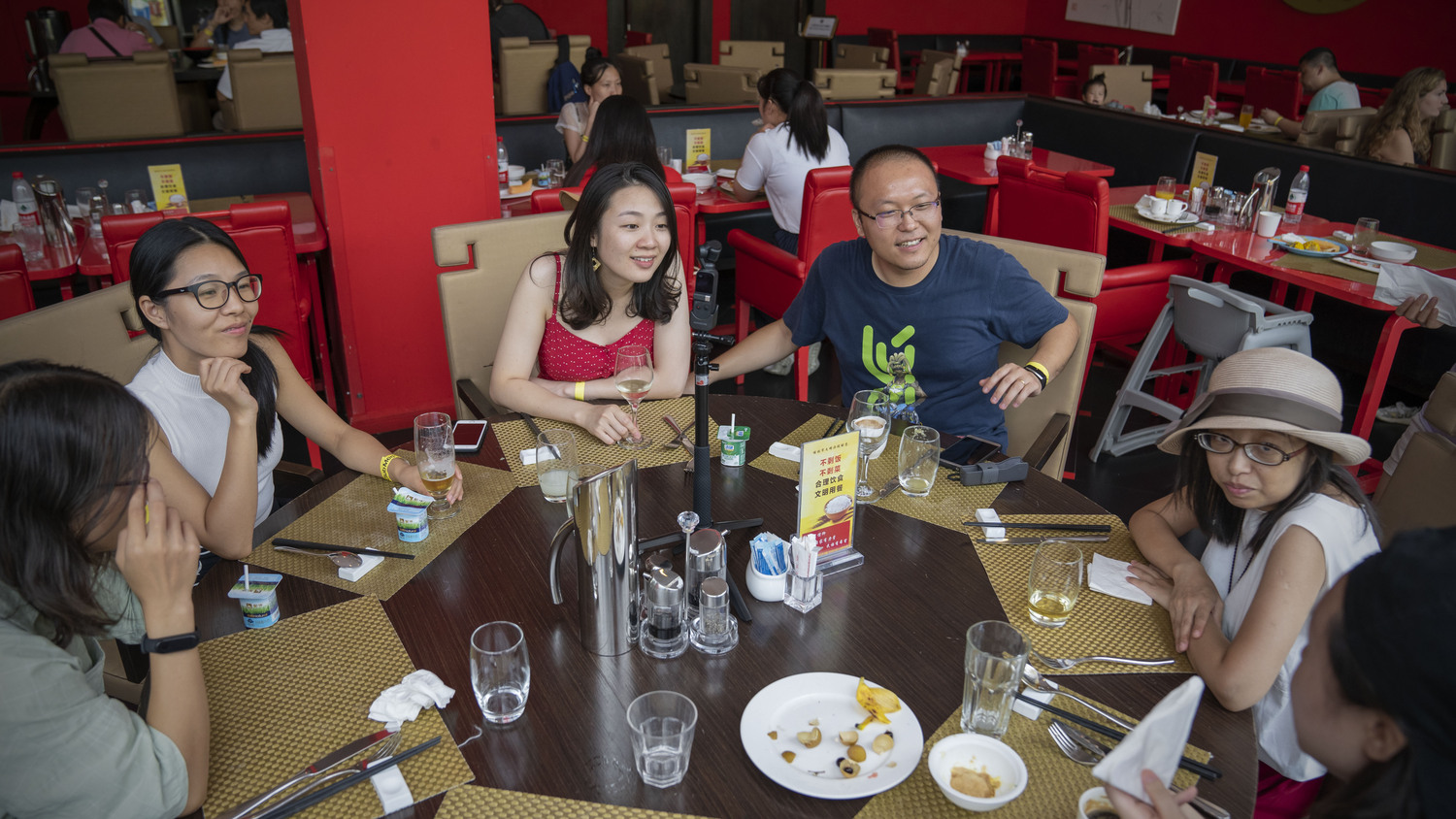
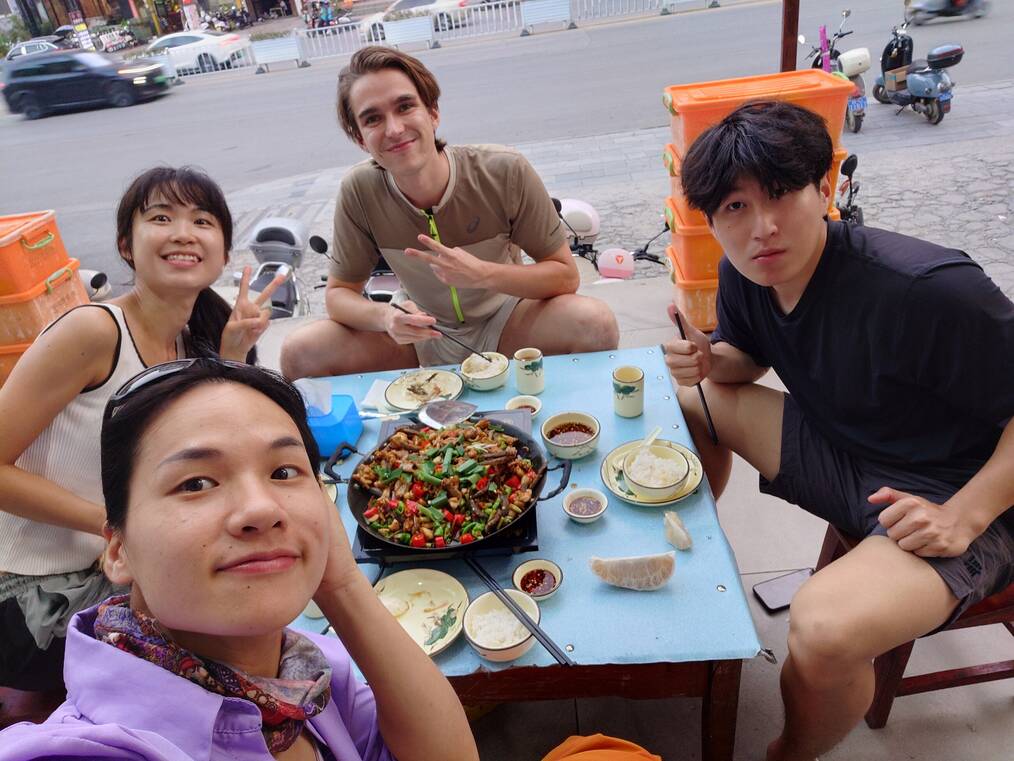
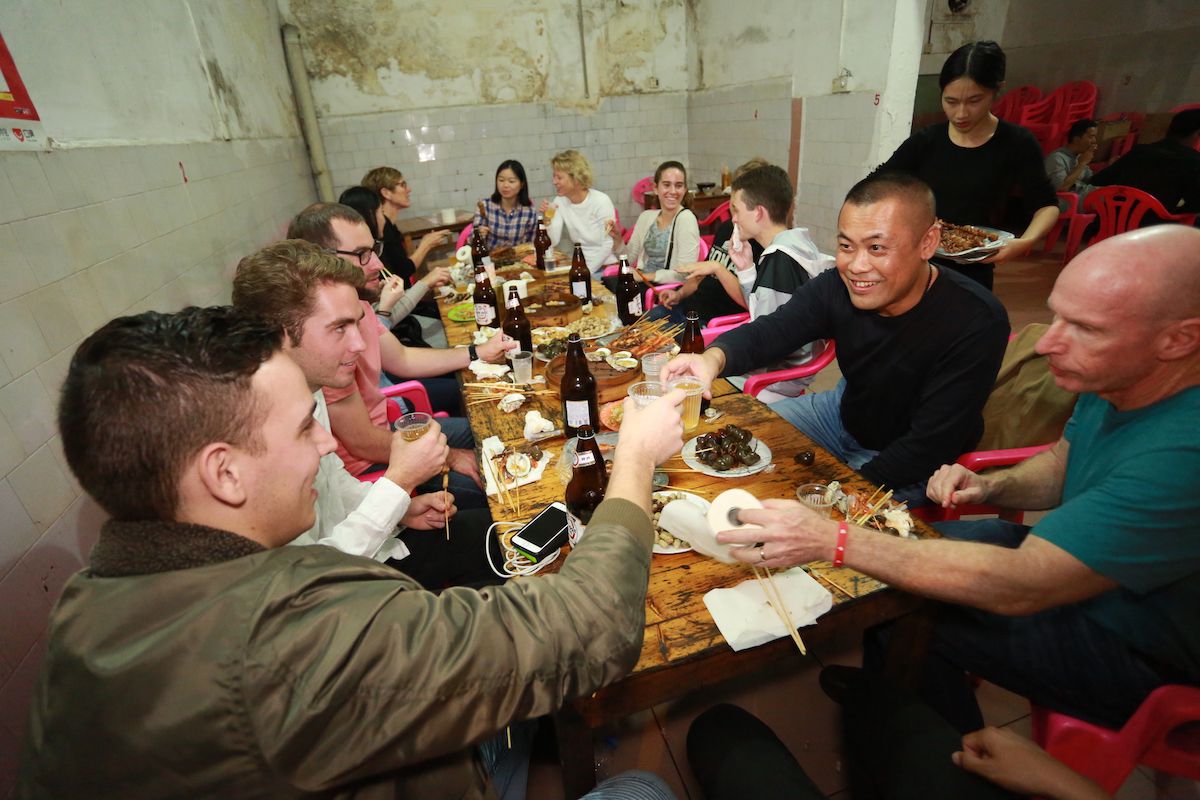
Meals in Guilin are shared from dishes set in the middle of the table, and lunch on CLI's optional meal plan is served the same family-style way.
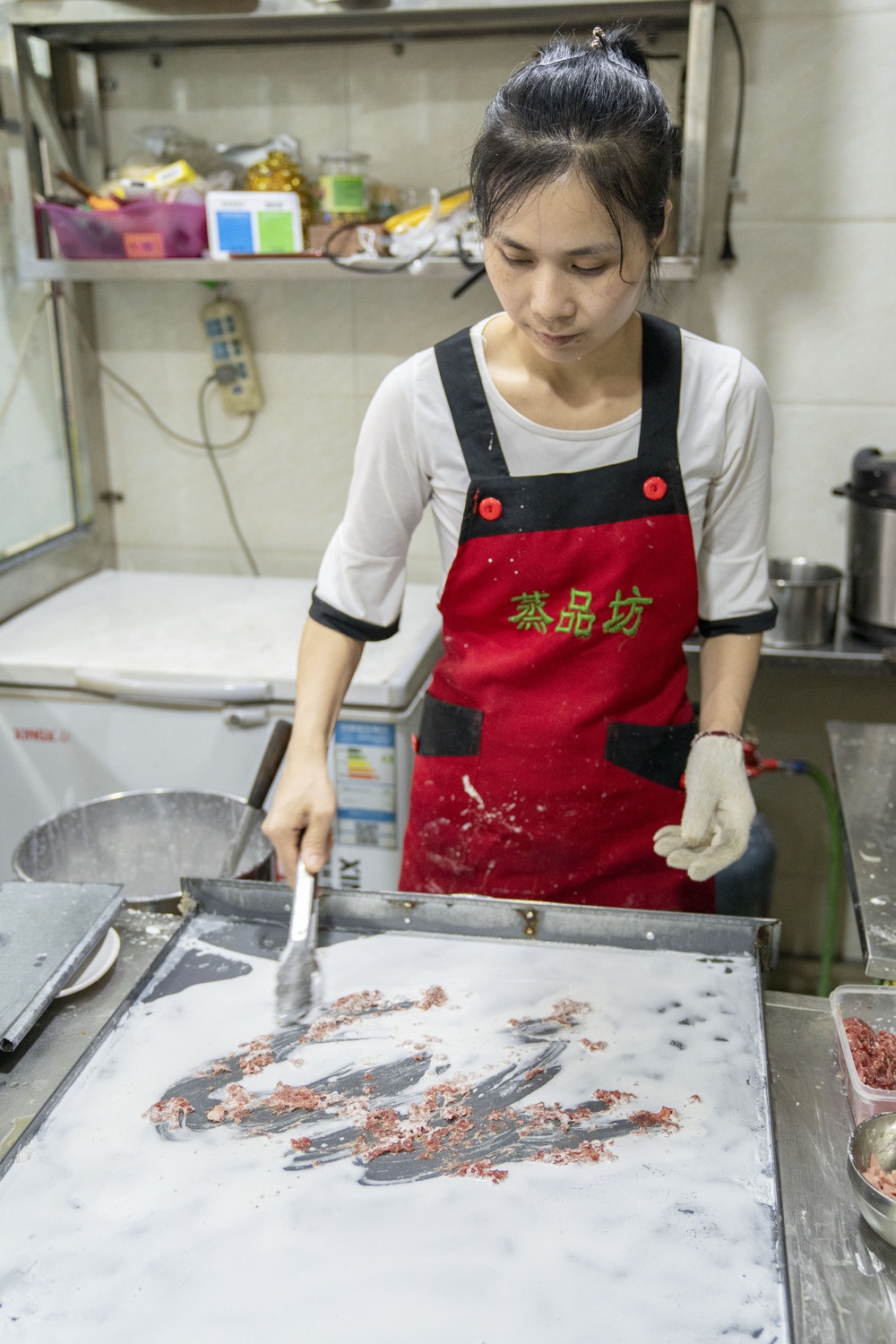
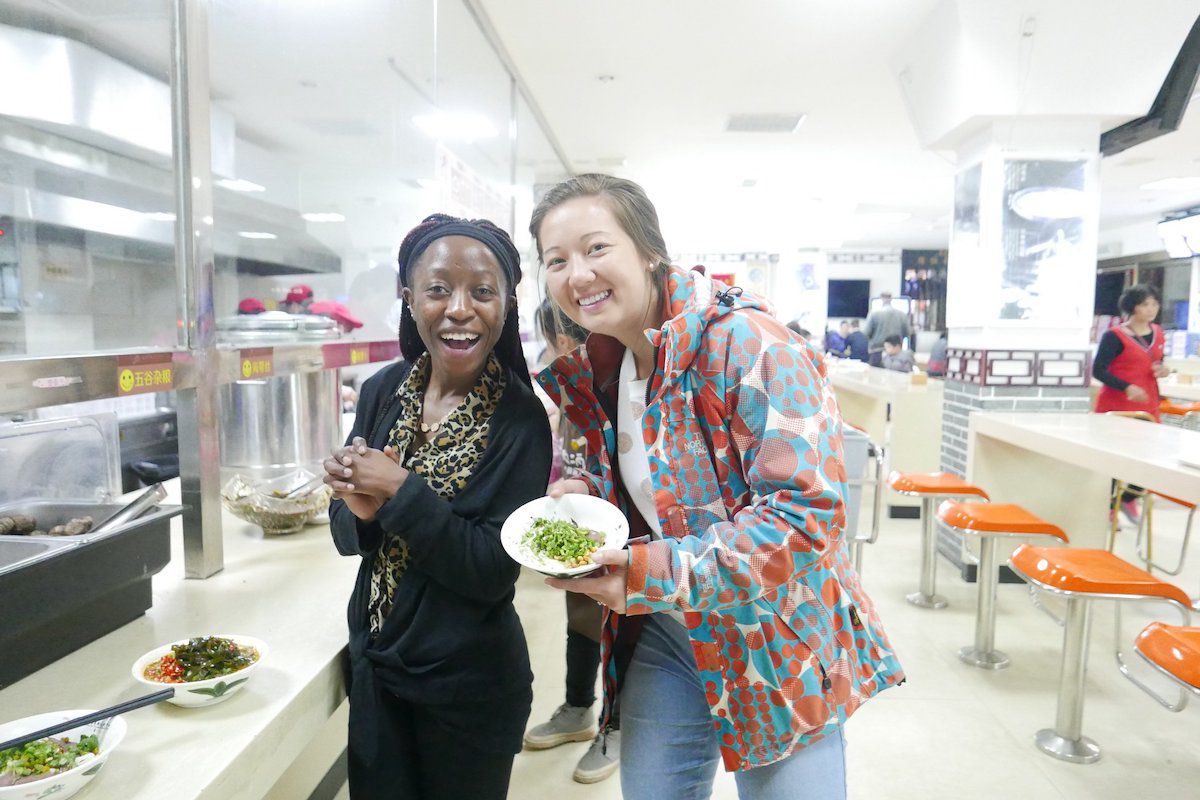
Rice noodle rolls are made to order at counters like this one, and ordering in Mandarin is one of the first skills students pick up in Guilin.
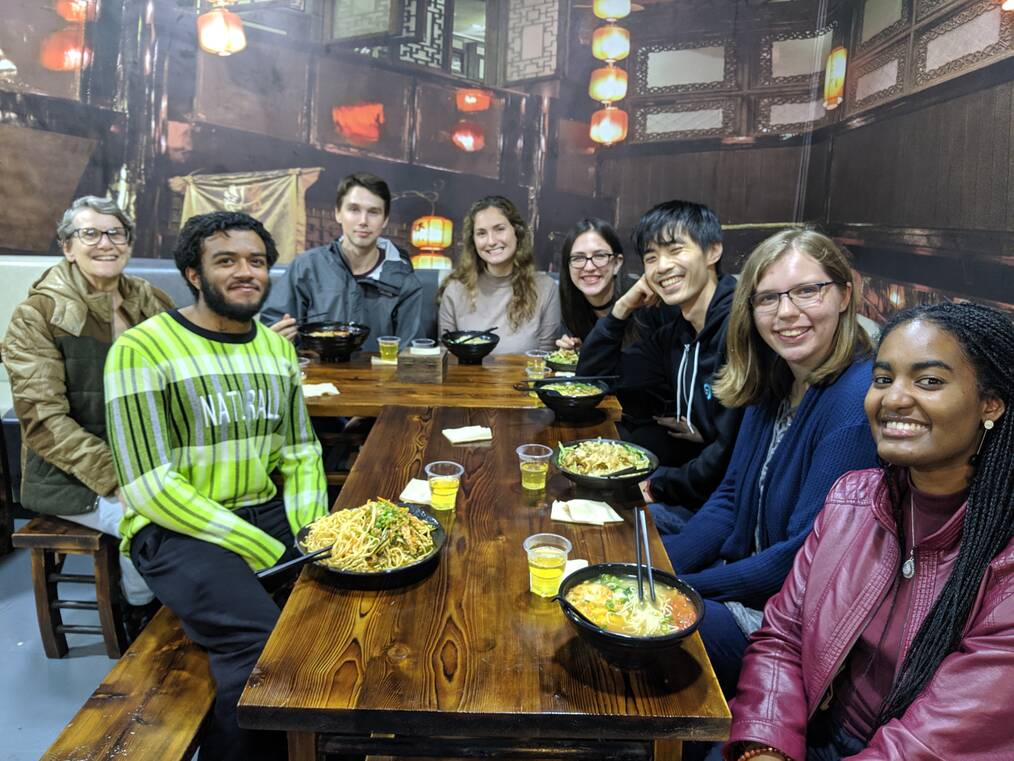
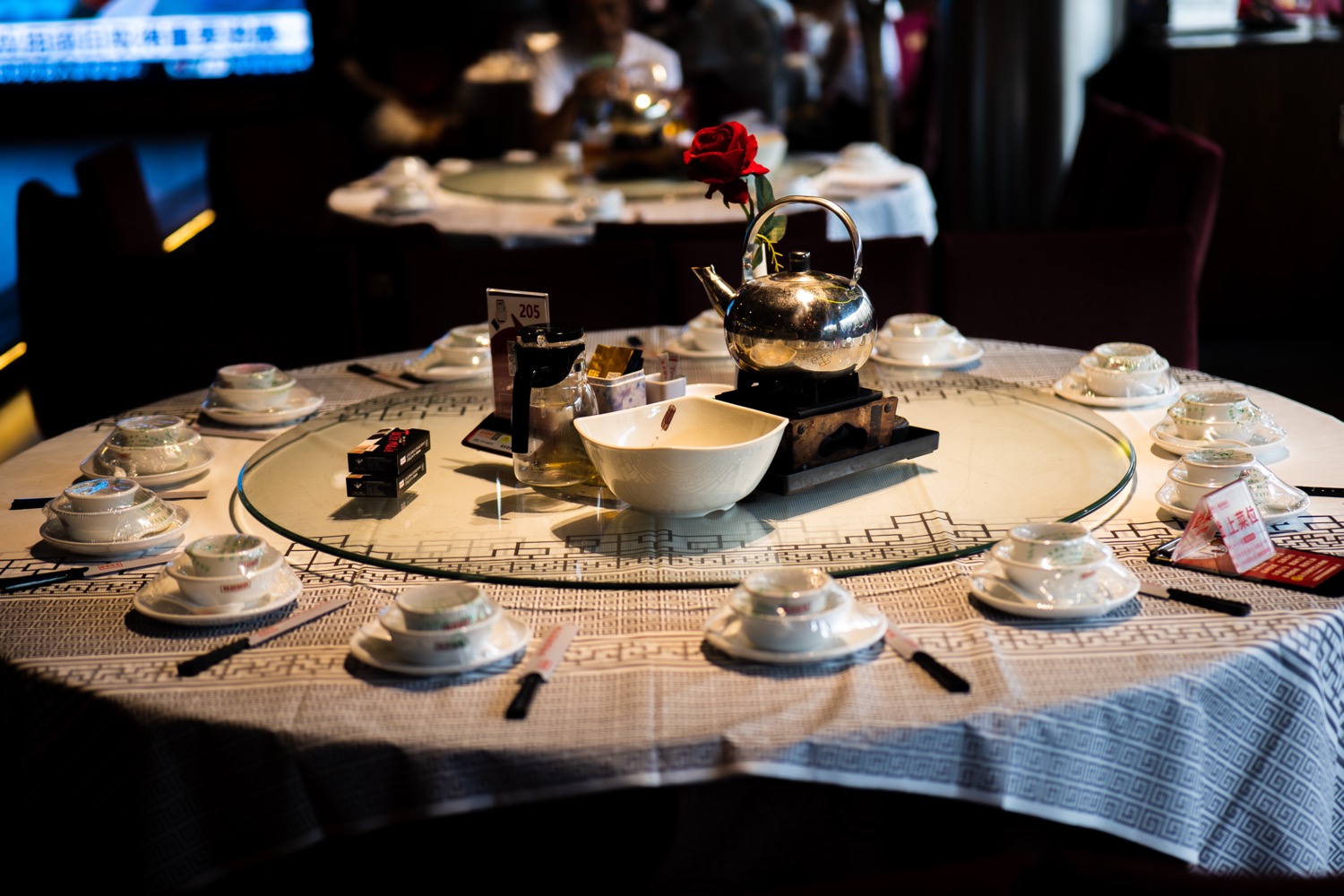
A lazy Susan sits ready for shared dishes at tables like this, and orientation, usually on the first Monday, includes a welcome meal.
Students range from high school students to retirees, and families sometimes study together, so a dinner table can span generations.
Plates of greens are easy to find in Guilin, and vegetarian, halal and other dietary needs can be accommodated on the program.
At least one table at the daily lunches is Mandarin-only, so even the midday break keeps the language going.
朋友 (péngyǒu) means friend, and in the Pengyou Program each pengyou shares a meal with the student they support every week.
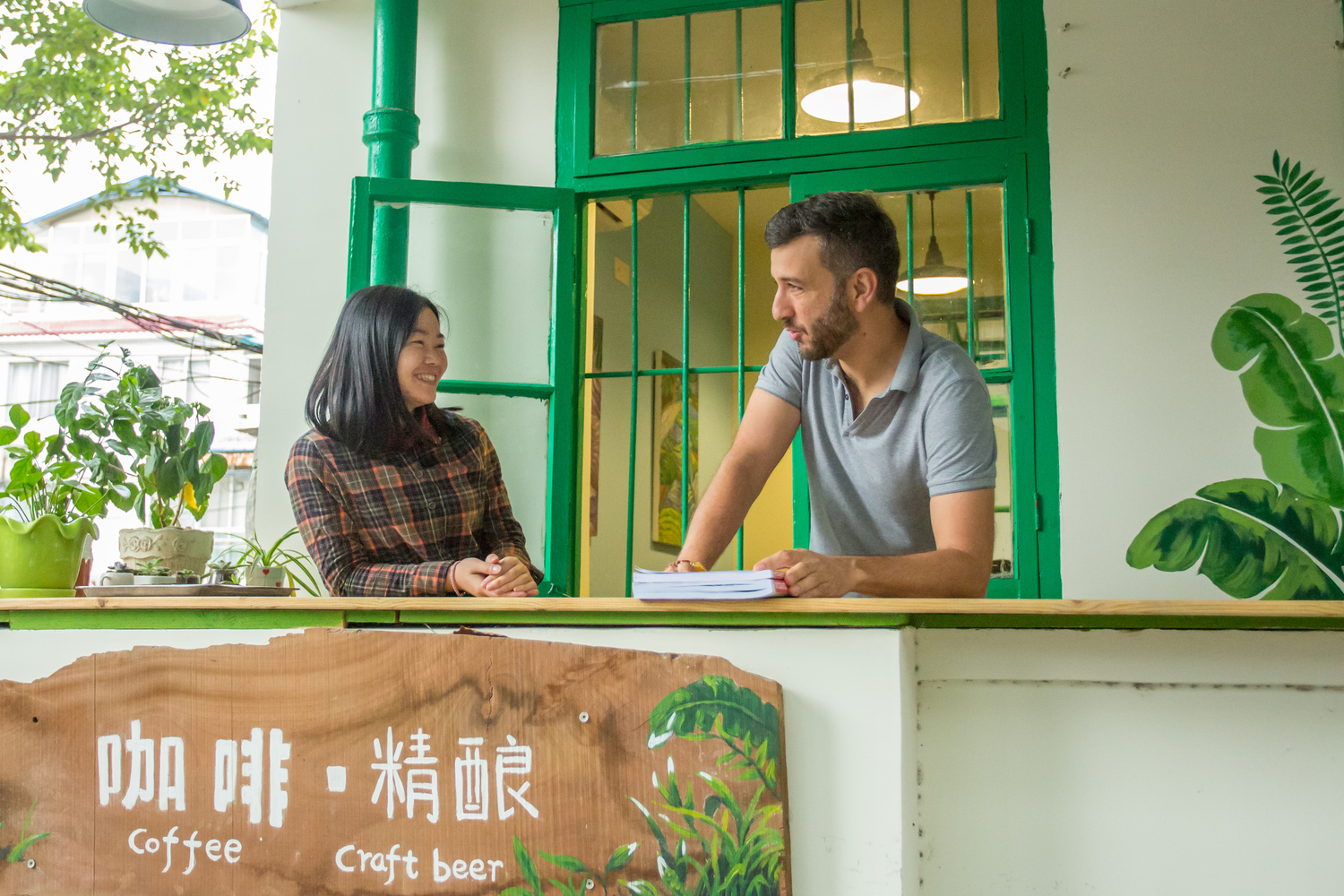
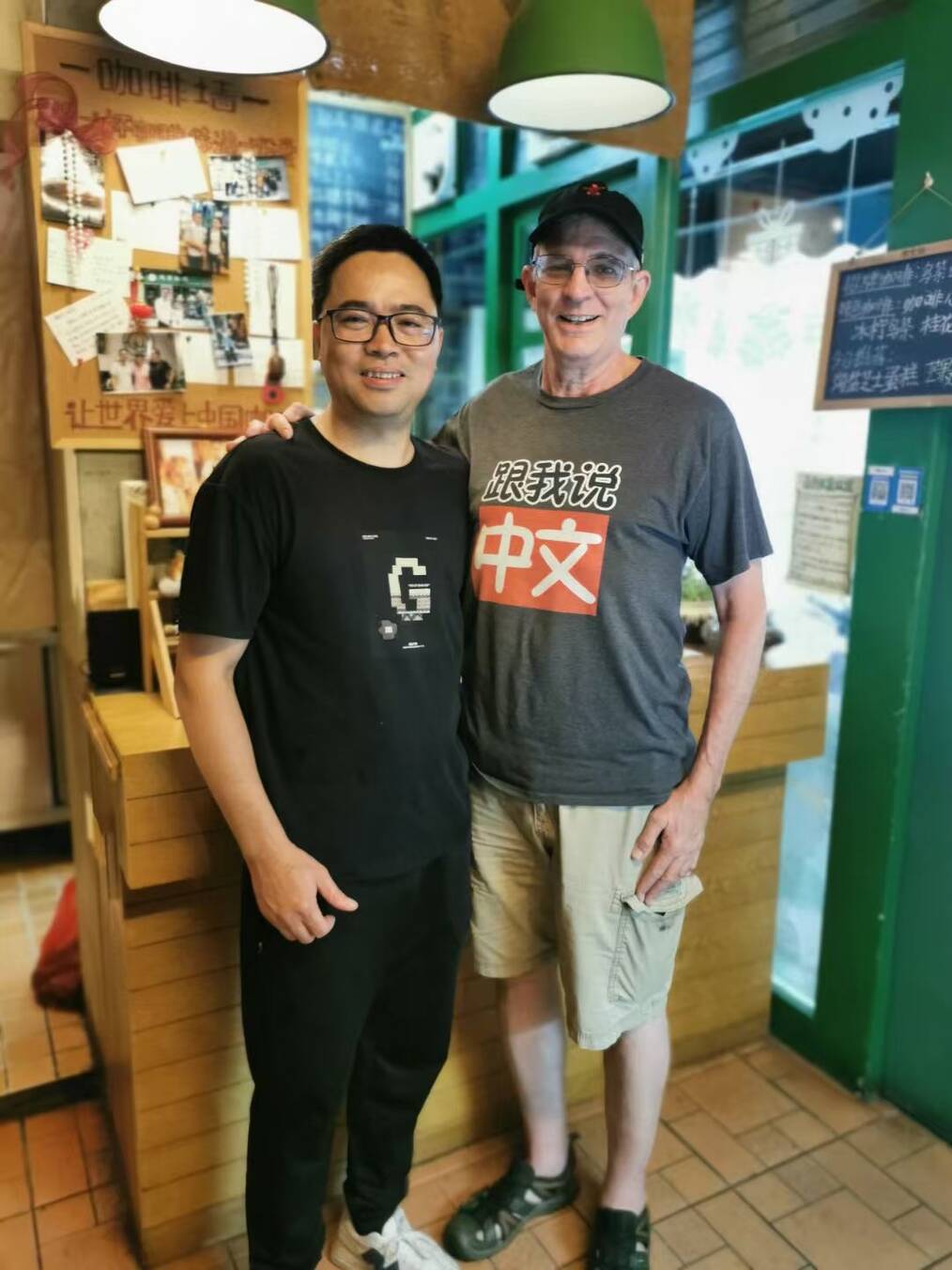
The sign says 咖啡 (kāfēi), coffee, and cafés near CLI are an easy place for a language exchange between or after classes.
Buns are filled straight off the griddle at stalls like this, and they are an easy snack to pick up between errands.
Rice noodle rolls are passed around with chopsticks, and a shared plate between friends is a natural time to try out the day's new words.
Peaches pile up at Guilin's fruit stalls in season, and a fruit run fits easily between other errands.
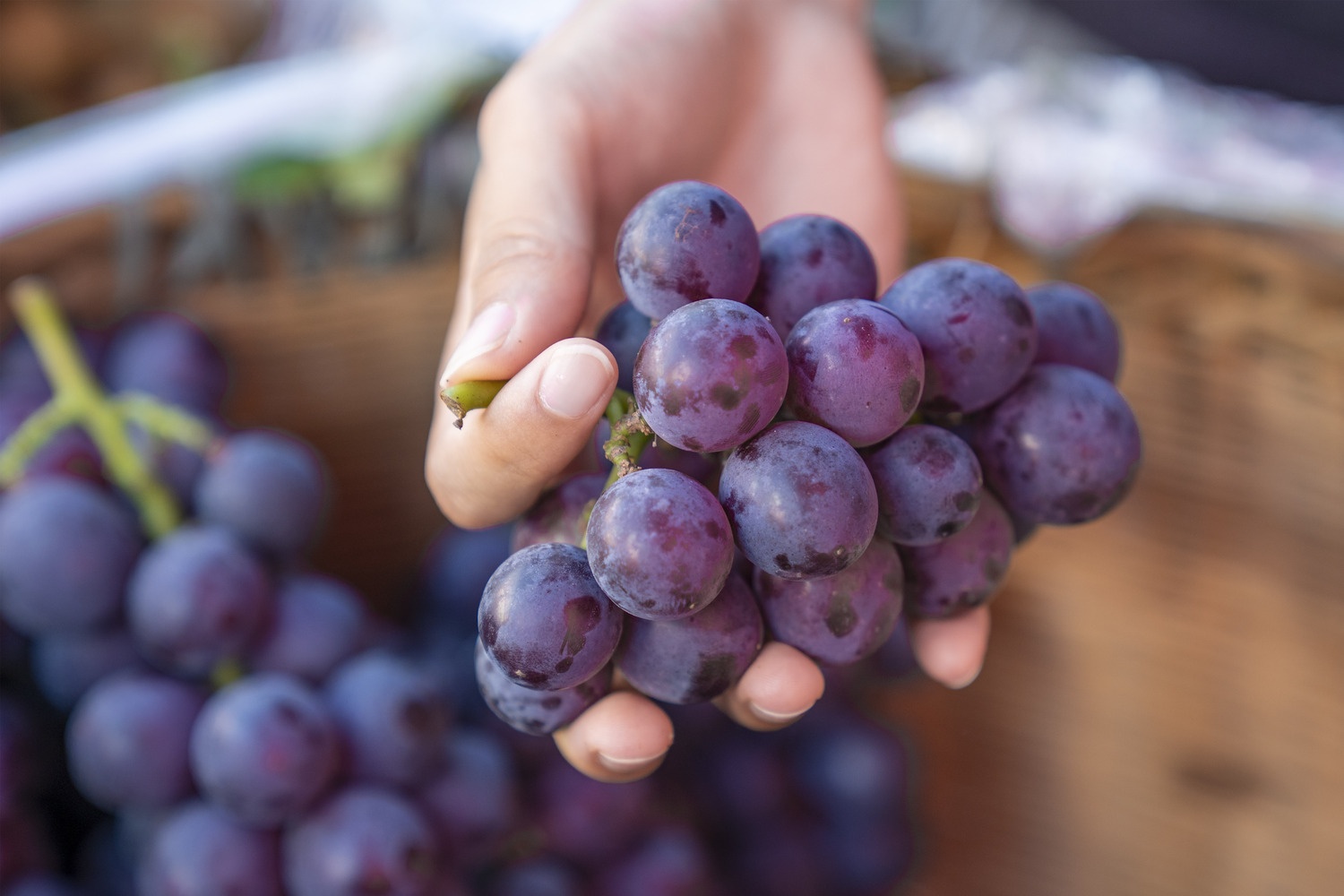
Grapes are sold by the bunch at Guilin's fruit stalls, and the names of fruits are some of the first words that come in handy outside class.
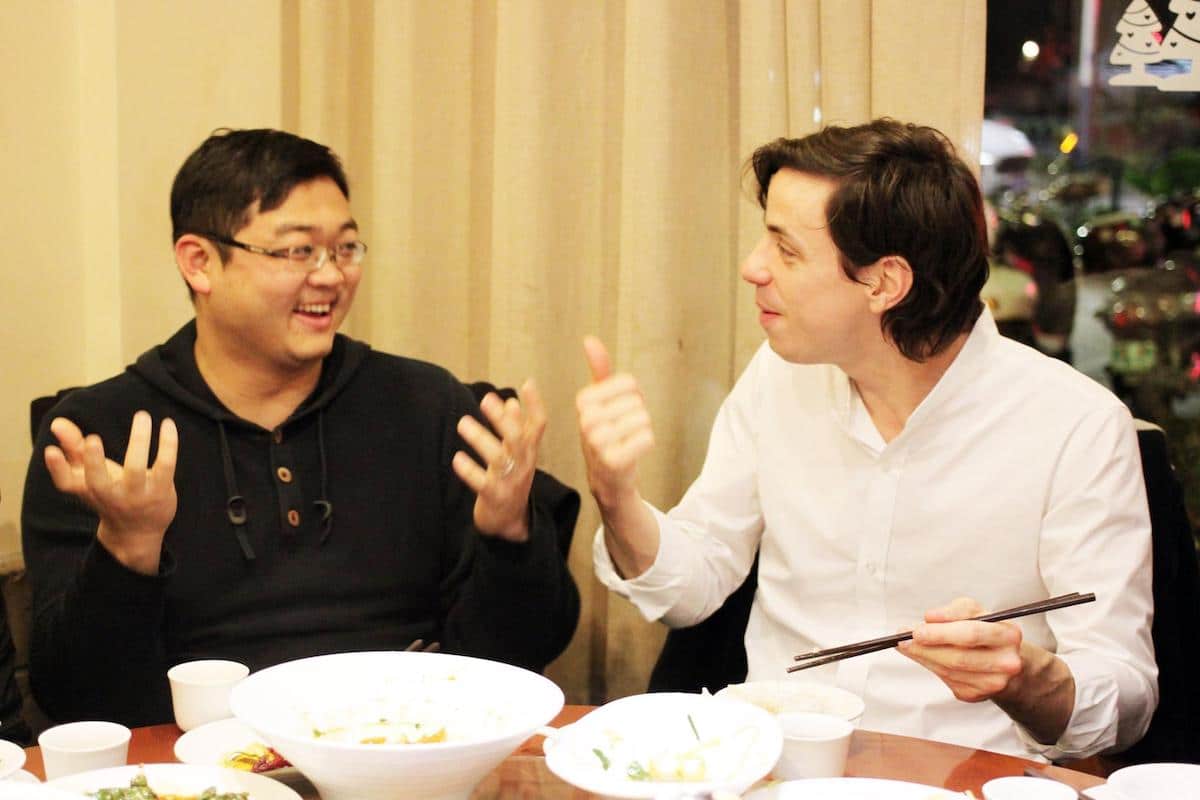
With students from more than 50 countries, a long dinner table on the program can hold many first languages, and Chinese is the one they share.
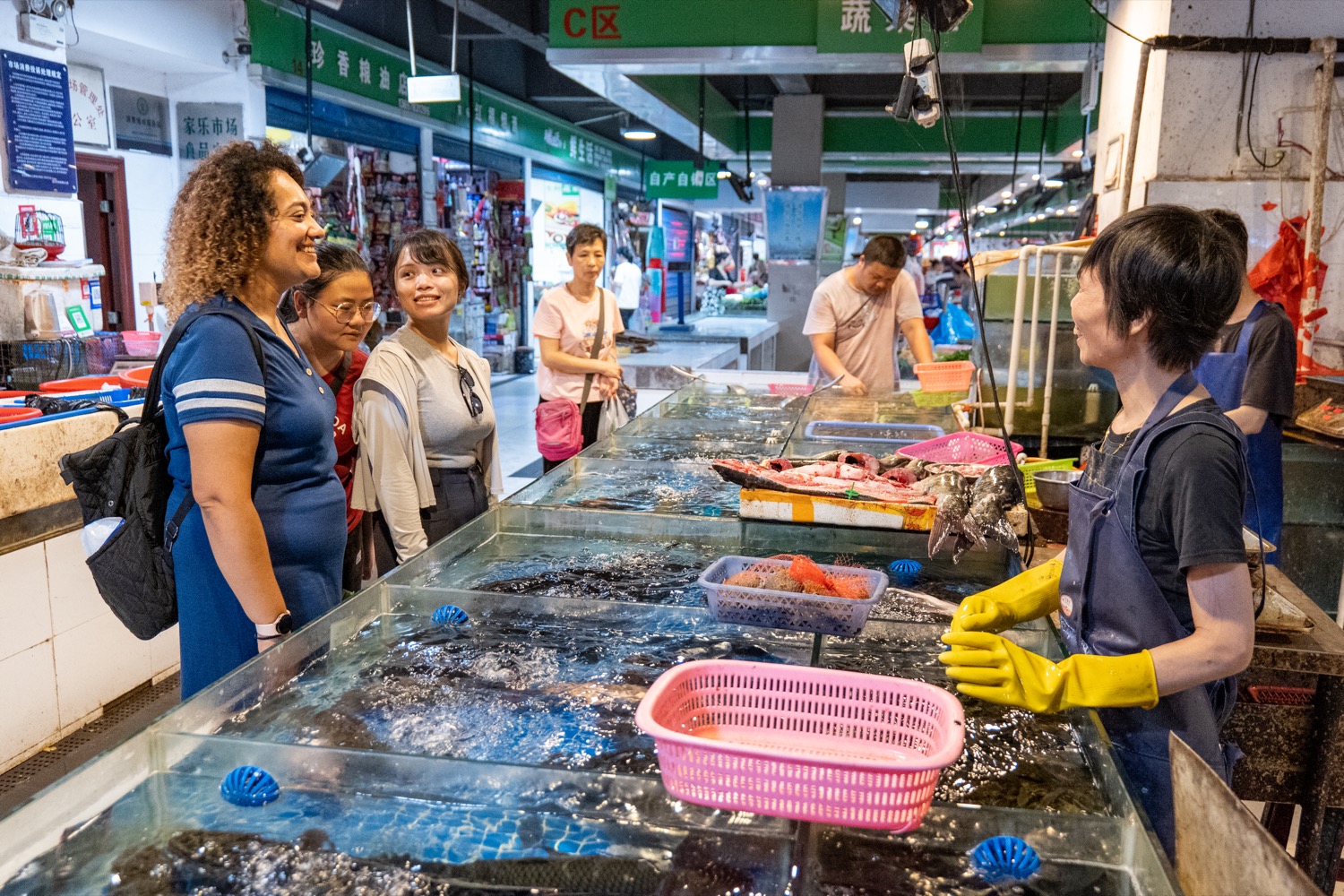
Fish are sold live from tanks at indoor markets like this one, and a market visit after the day's two sessions brings plenty of new words to ask the vendor about.
Guilin has no large expat bubble, so market errands like this one happen in Mandarin, which turns every fruit stall into a small lesson.
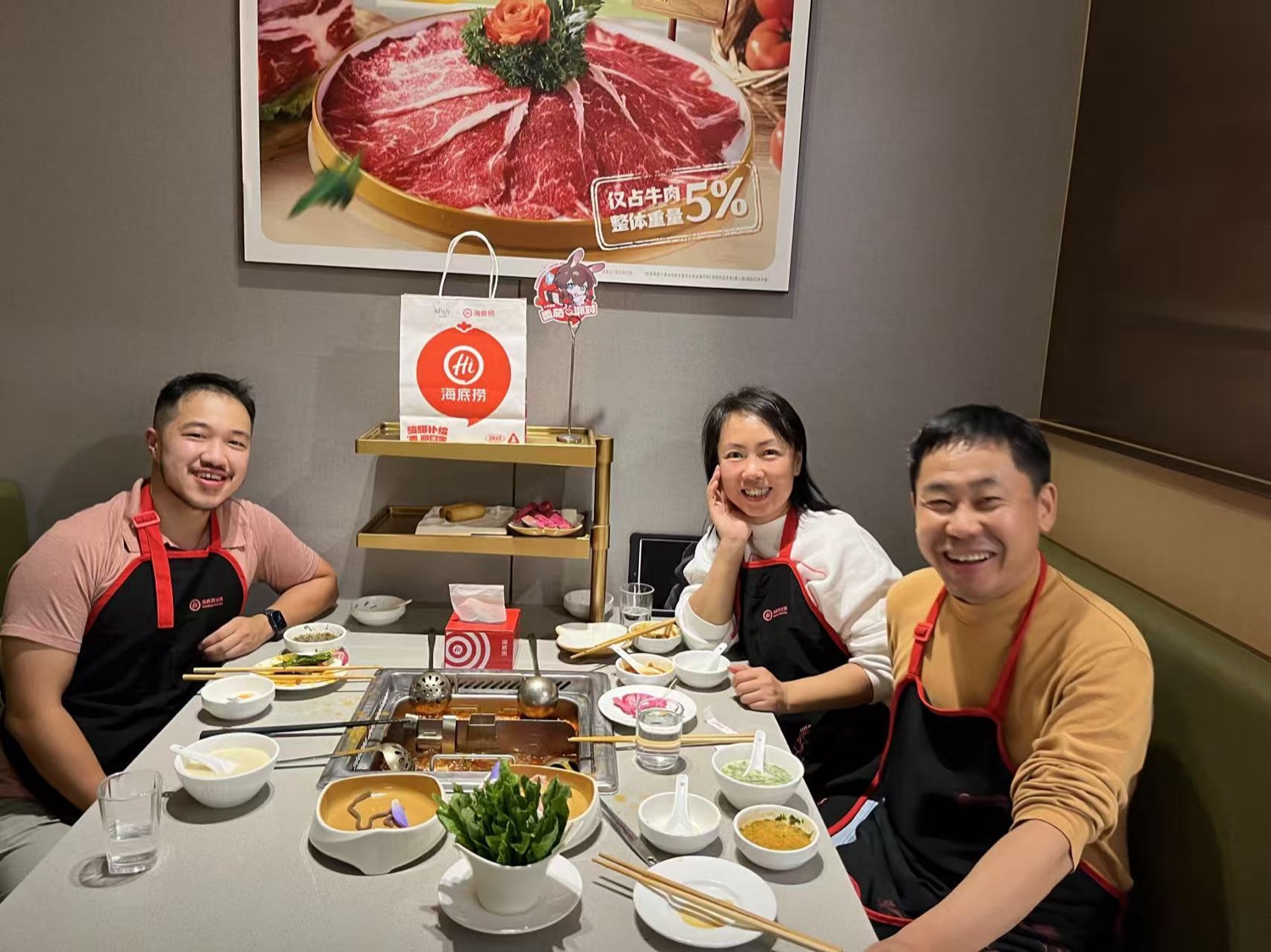
Hot pot comes with aprons and a long menu of things to cook at the table, so there is plenty to order in Mandarin.
Cooking together is easy Chinese practice, and at CLI's family-style weekday lunches there is always someone at the table to ask what is in the bowl.
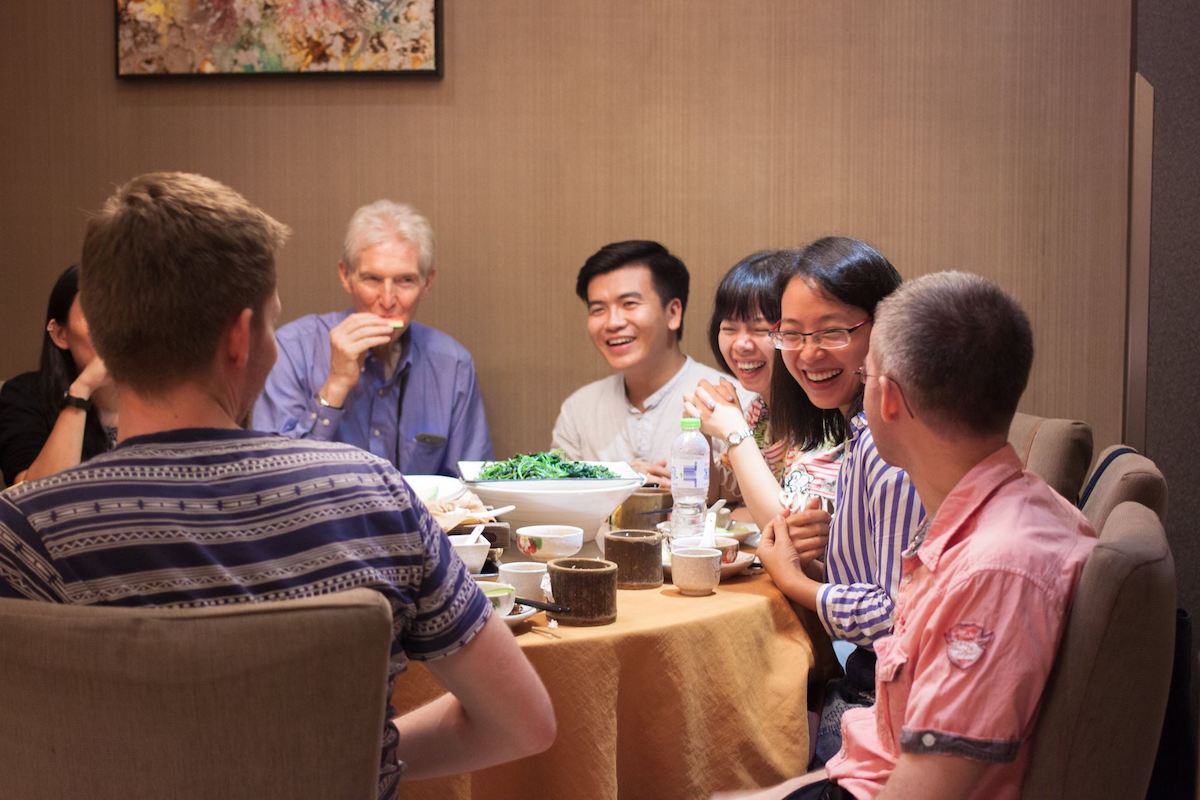
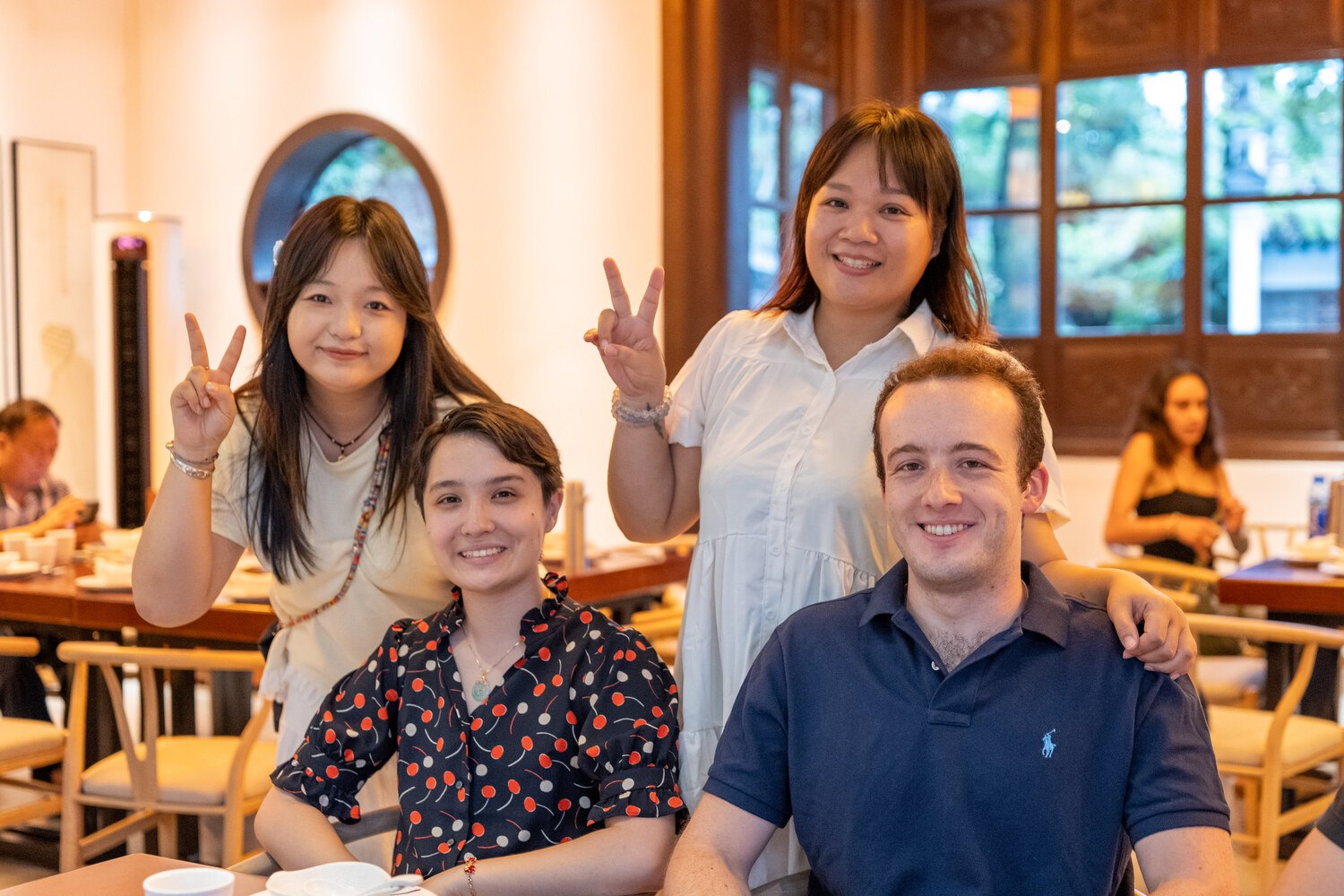
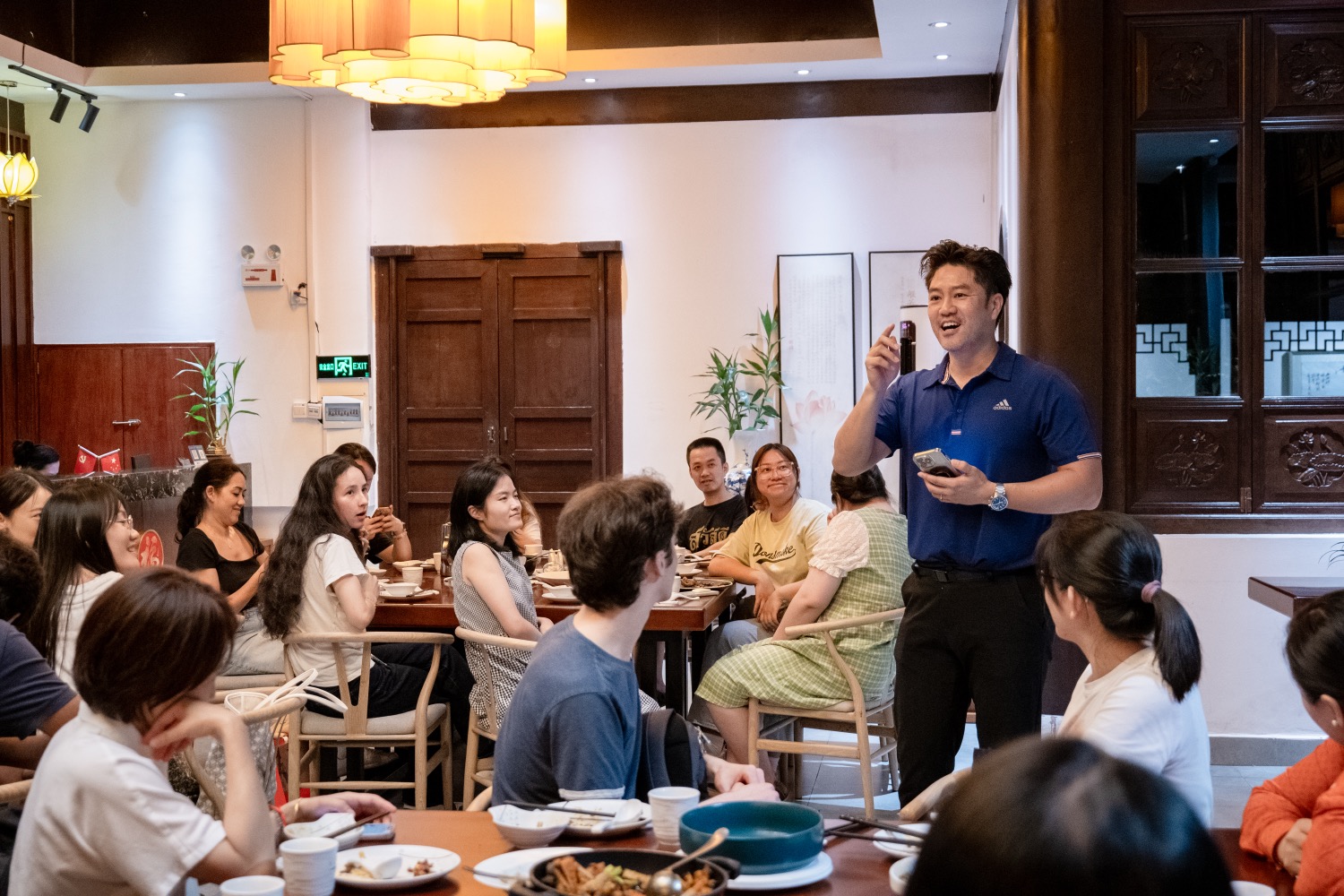
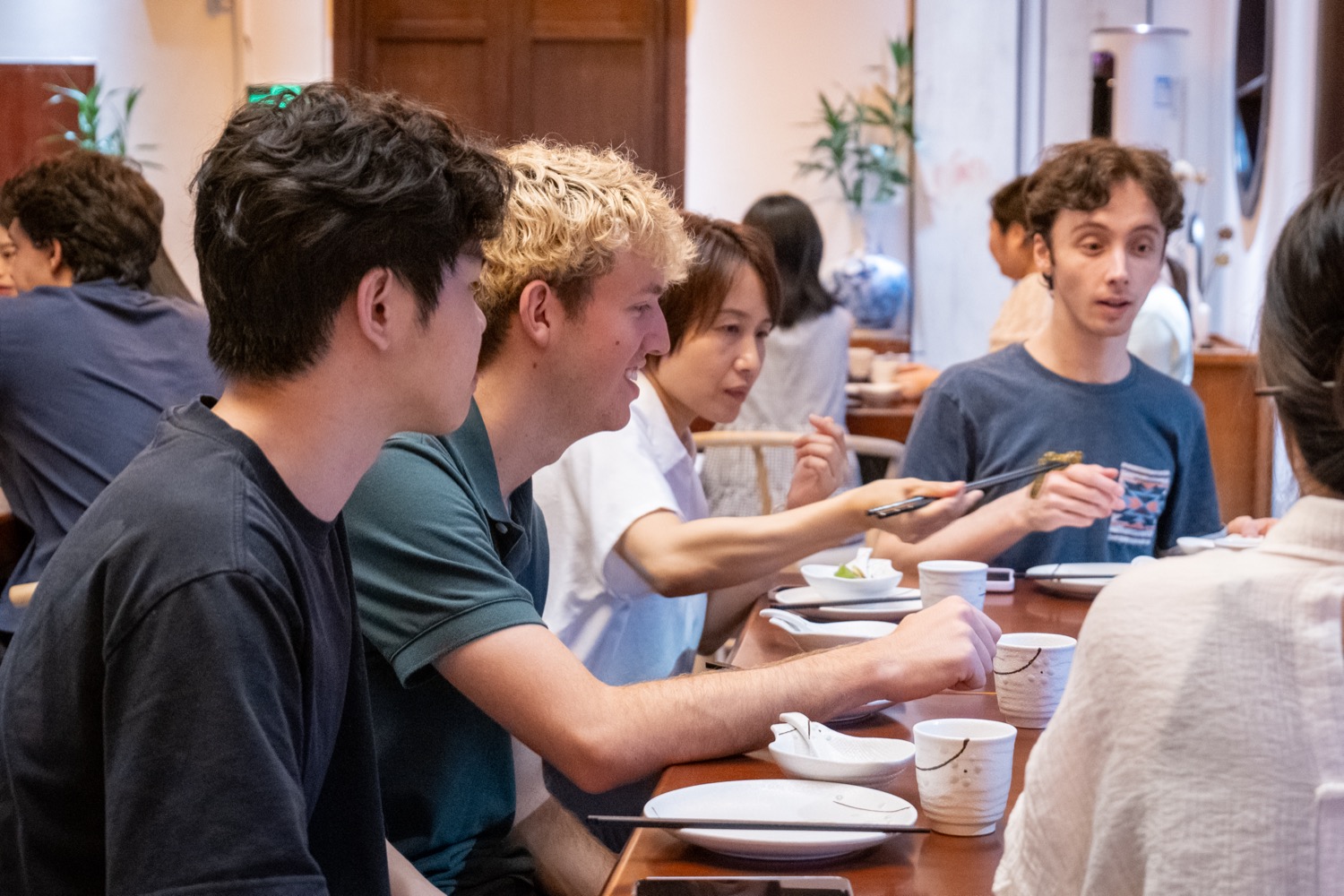
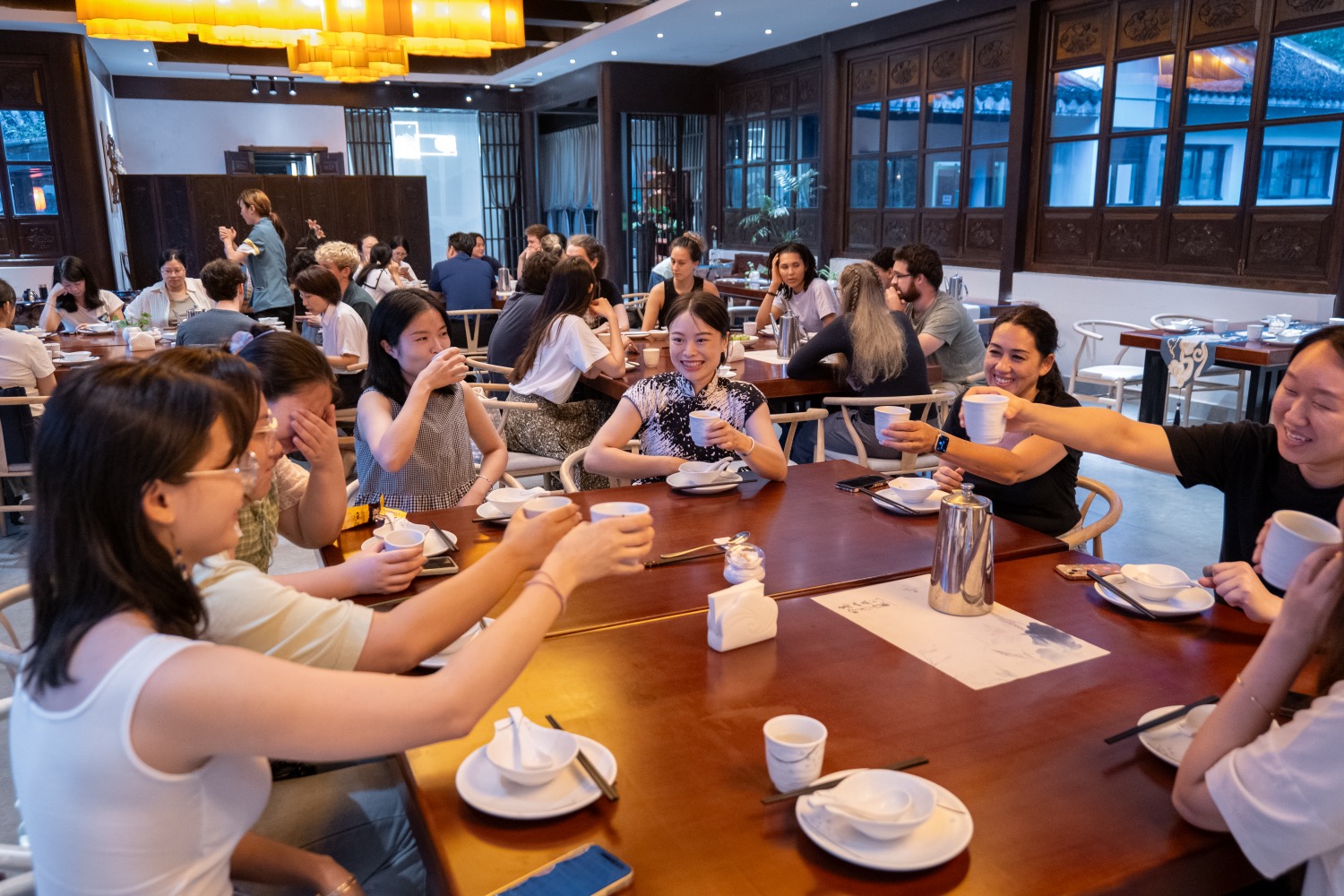
Tea goes around the whole table on this dim sum outing, and a long, shared meal like this one leaves plenty of time to talk in Chinese.
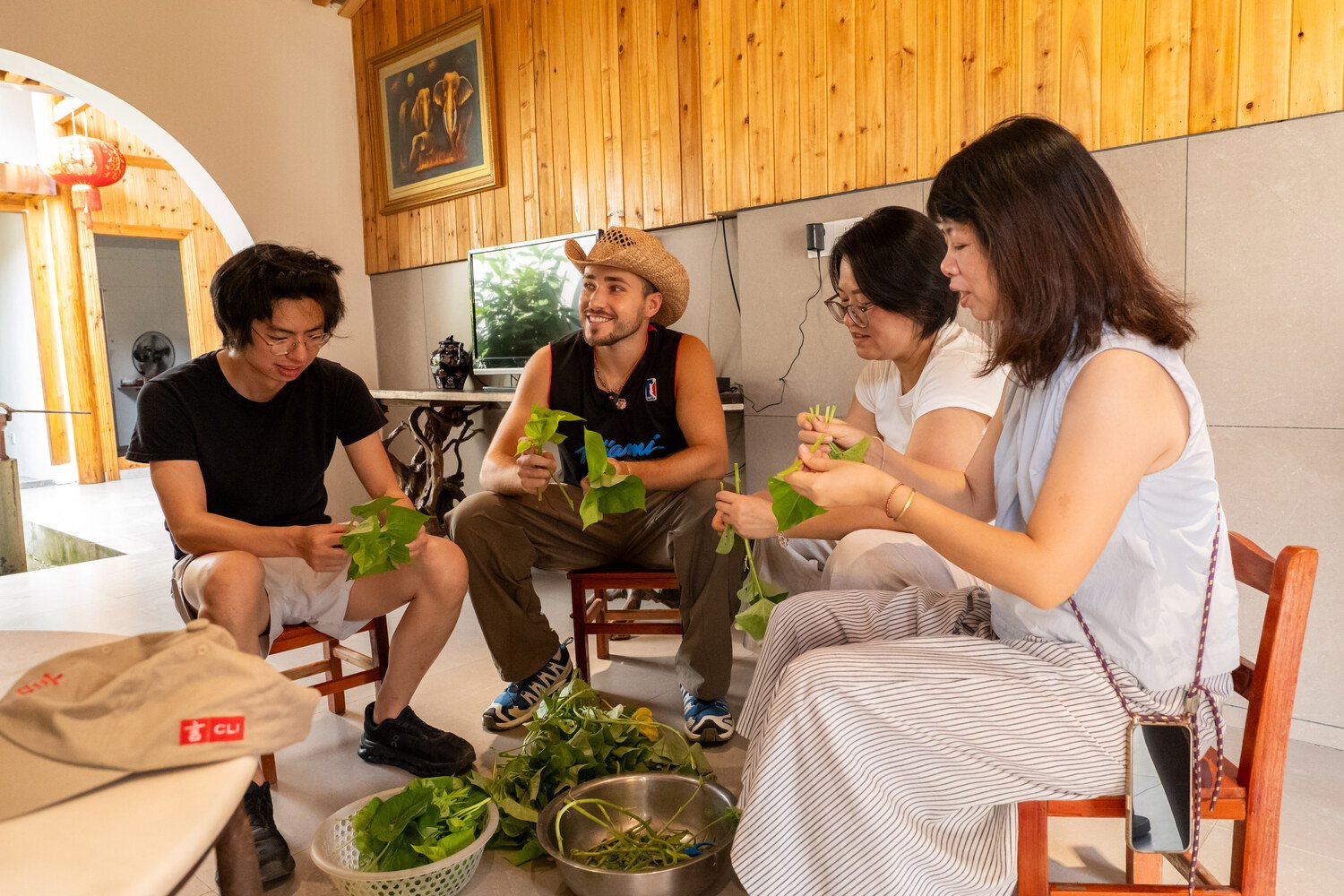
Prep starts with picking over the greens by hand, and cooking lessons with Chinese chefs are among CLI's activities.
With the CLI wristband on, a student has taken the optional Language Pledge to speak only Chinese, and it can come off at any time.
Long conversations over dinner are where a day's Chinese gets put to use, and evenings on the program are usually light enough to allow for them.
旅行lǚxíng
Trips and outings
Yangshuo, the Longji rice terraces, caves, rivers, and hikes.
Hikes up Guilin's karst mountains are on CLI's list of activities, and from the rocky tops the peaks run on in every direction.
These limestone peaks are the ones found in Chinese paintings and poetry, and students on the program see them up close on outings from Guilin.
With little English spoken around Guilin, Mandarin comes along on every outing, from asking the way up to finding someone to take the photo at the top.
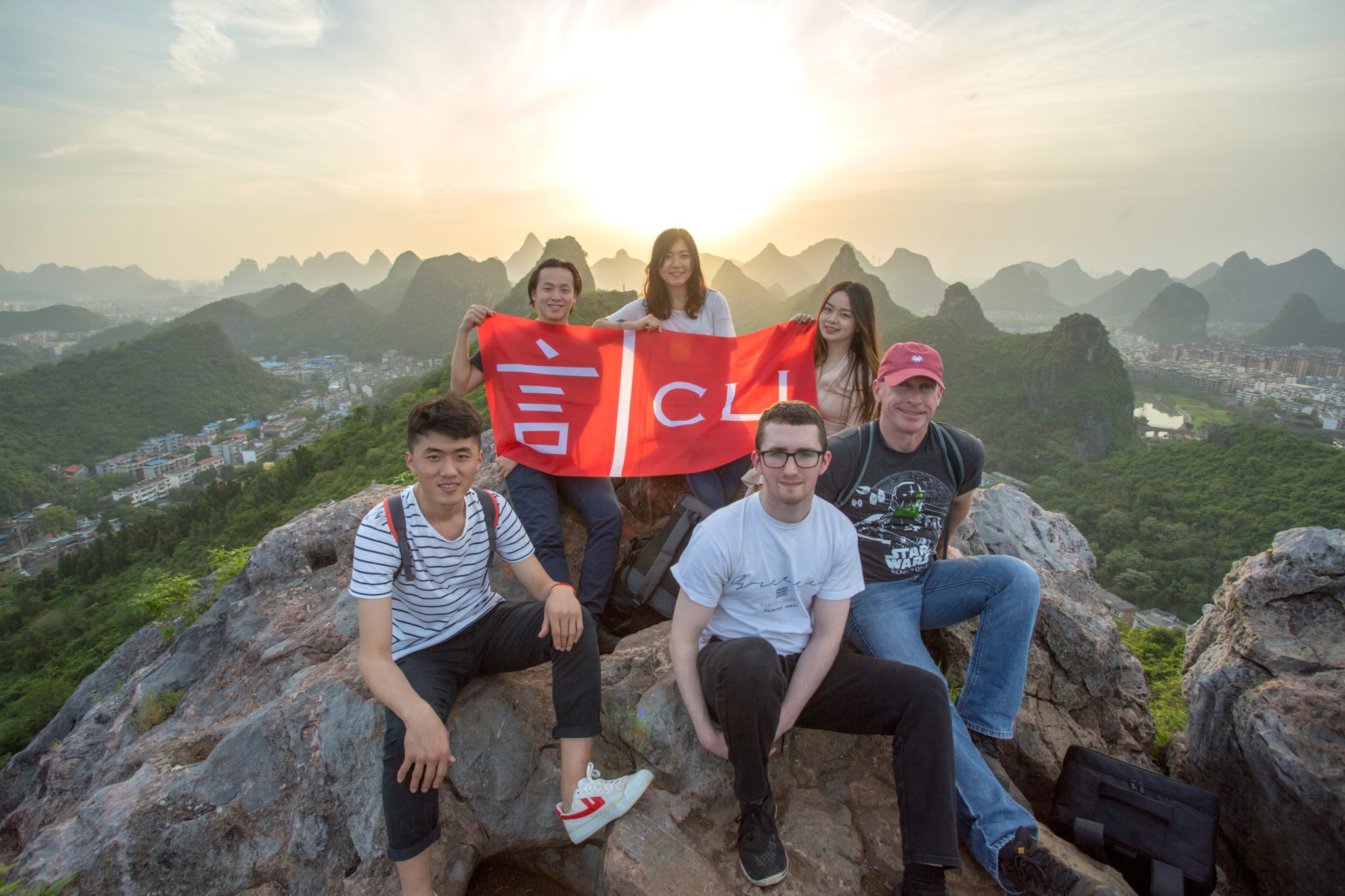
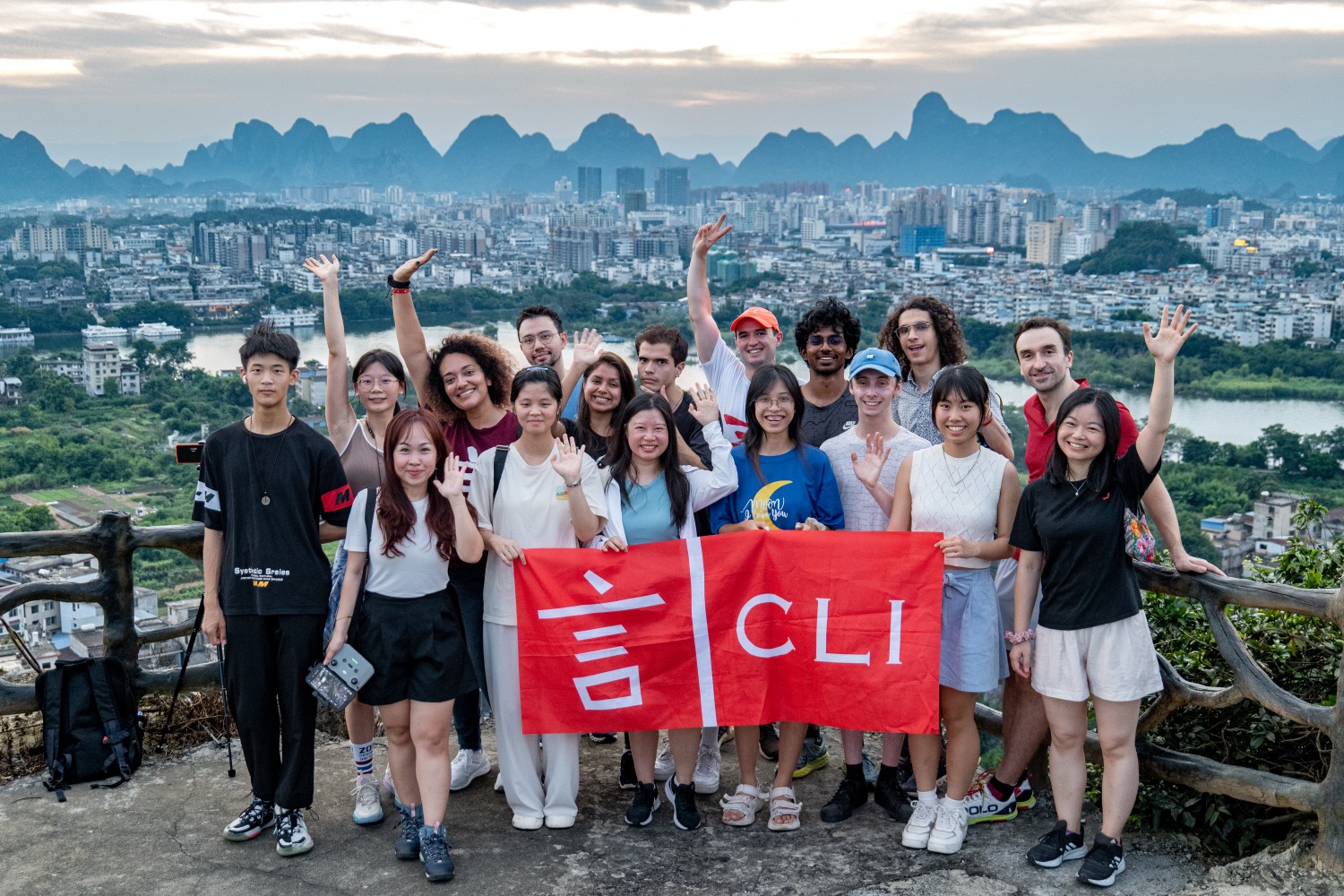
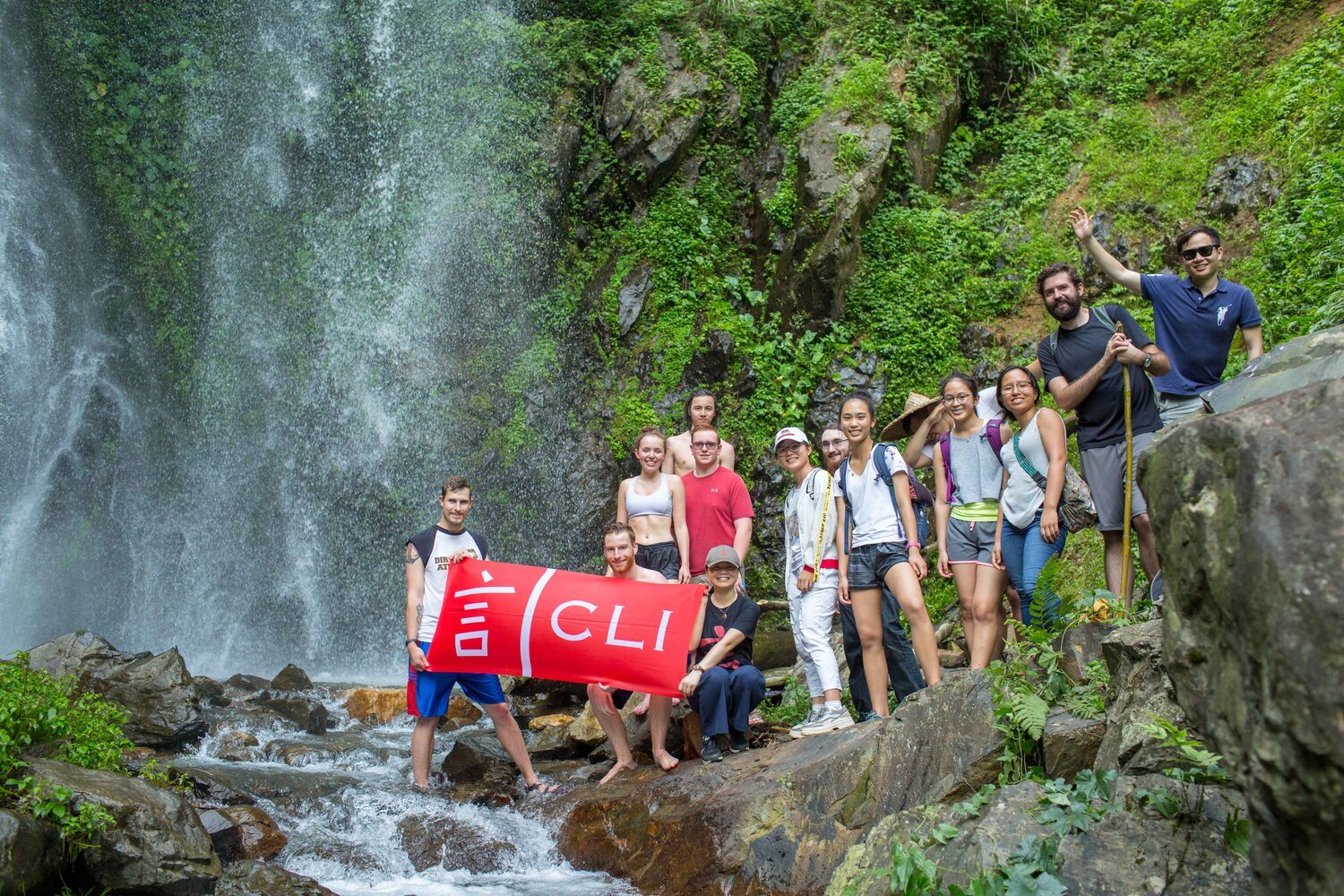
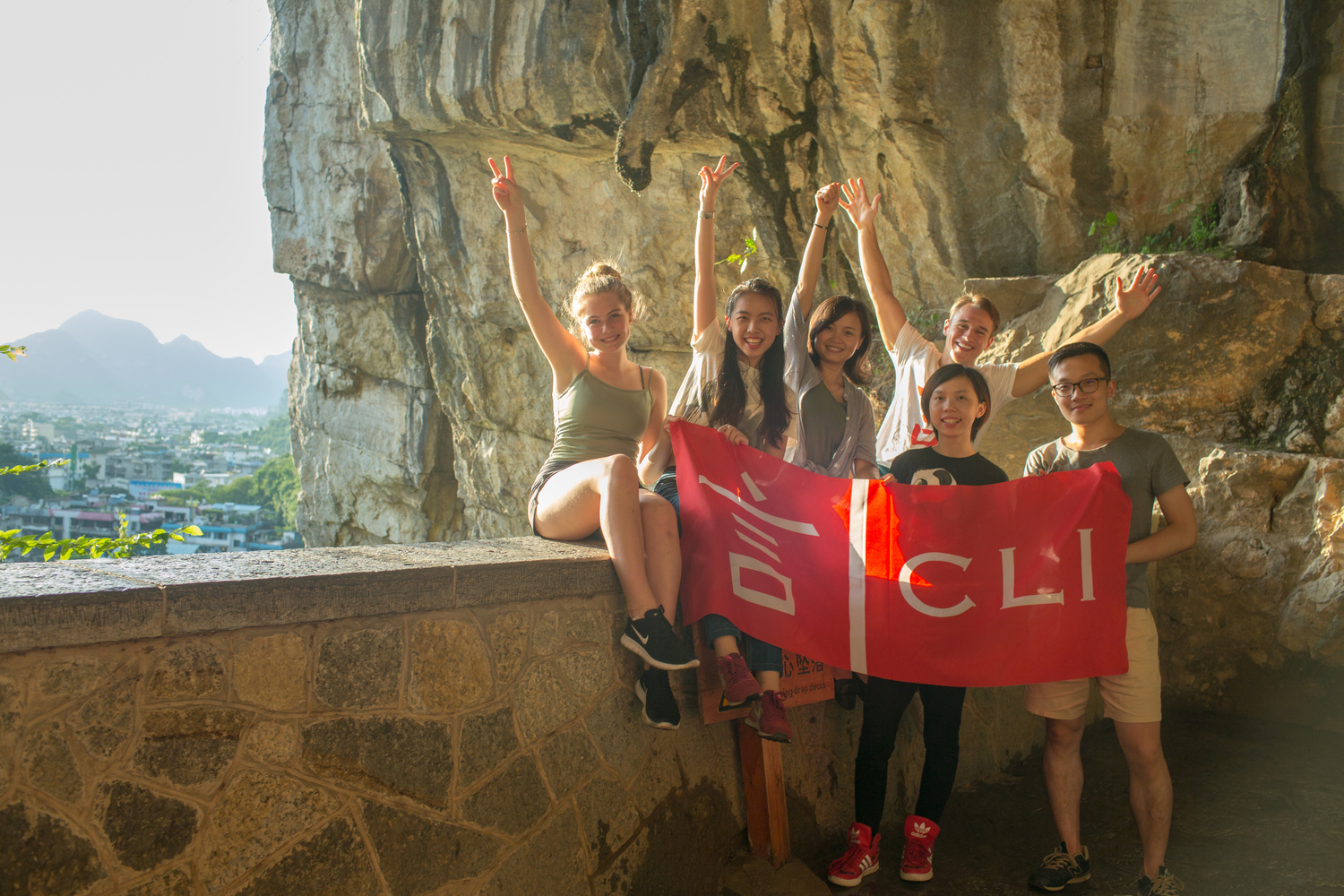
The whole group made it up in time for sunset, banner and all. CLI's activities include hikes up the karst hills around Guilin.
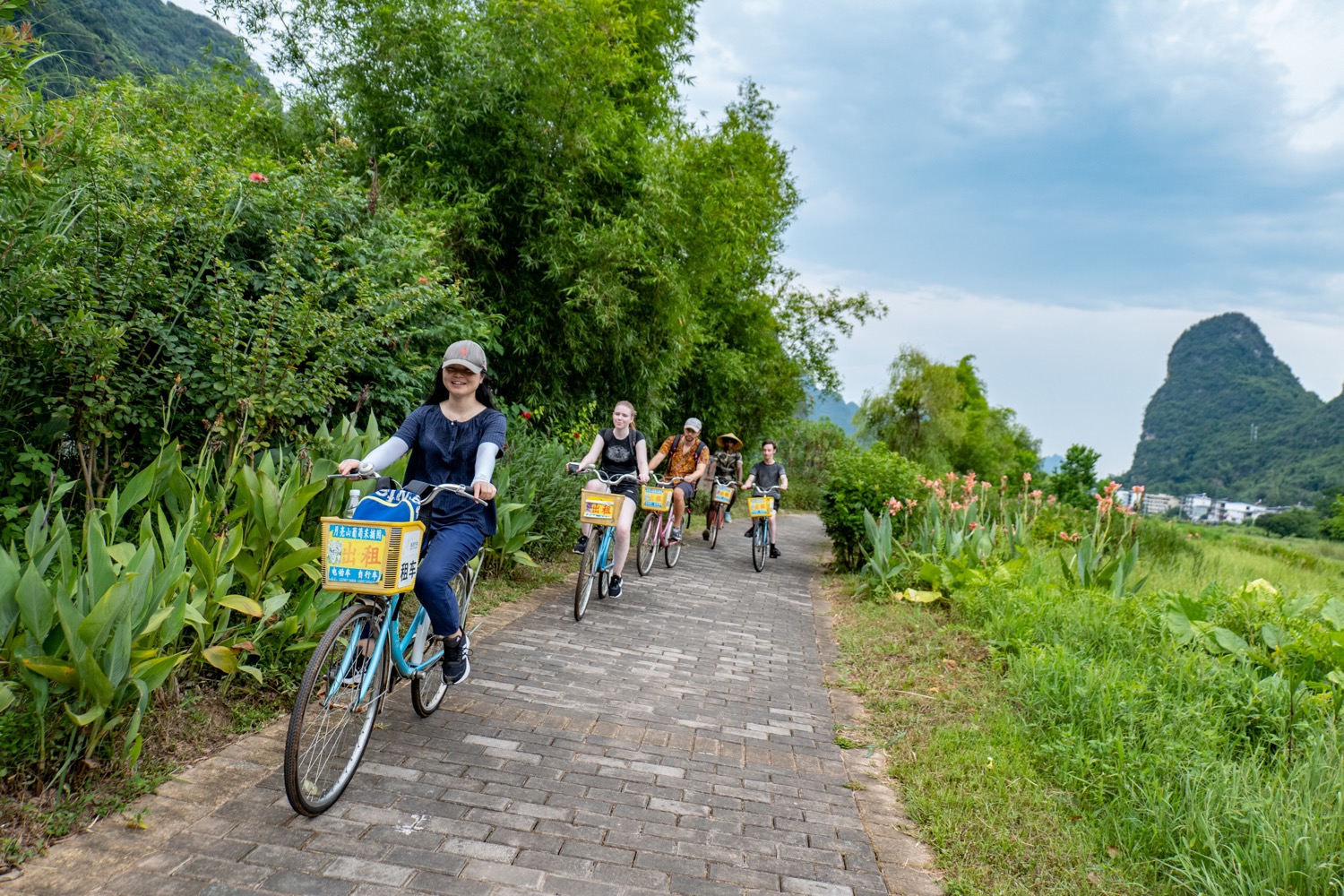
A bike ride along the river is an easy weekend outing from Guilin, and asking for directions in Chinese is part of the ride.
Weekends leave room for independent travel as well as group outings, and the karst country around Guilin is close enough for a day away.
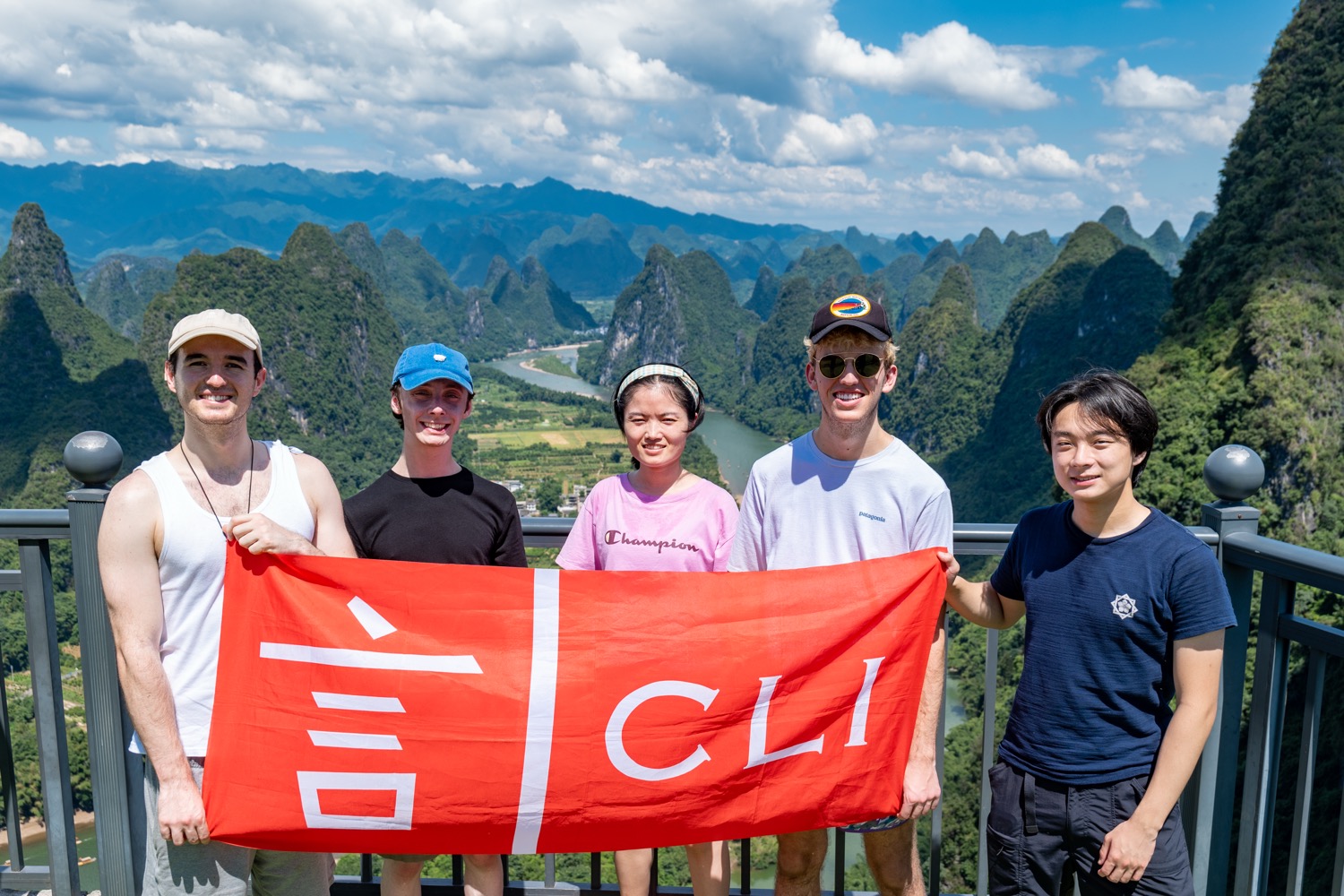
The Li River runs 83 km from Guilin to Yangshuo, and a lookout like this one takes in a whole bend of it from above.
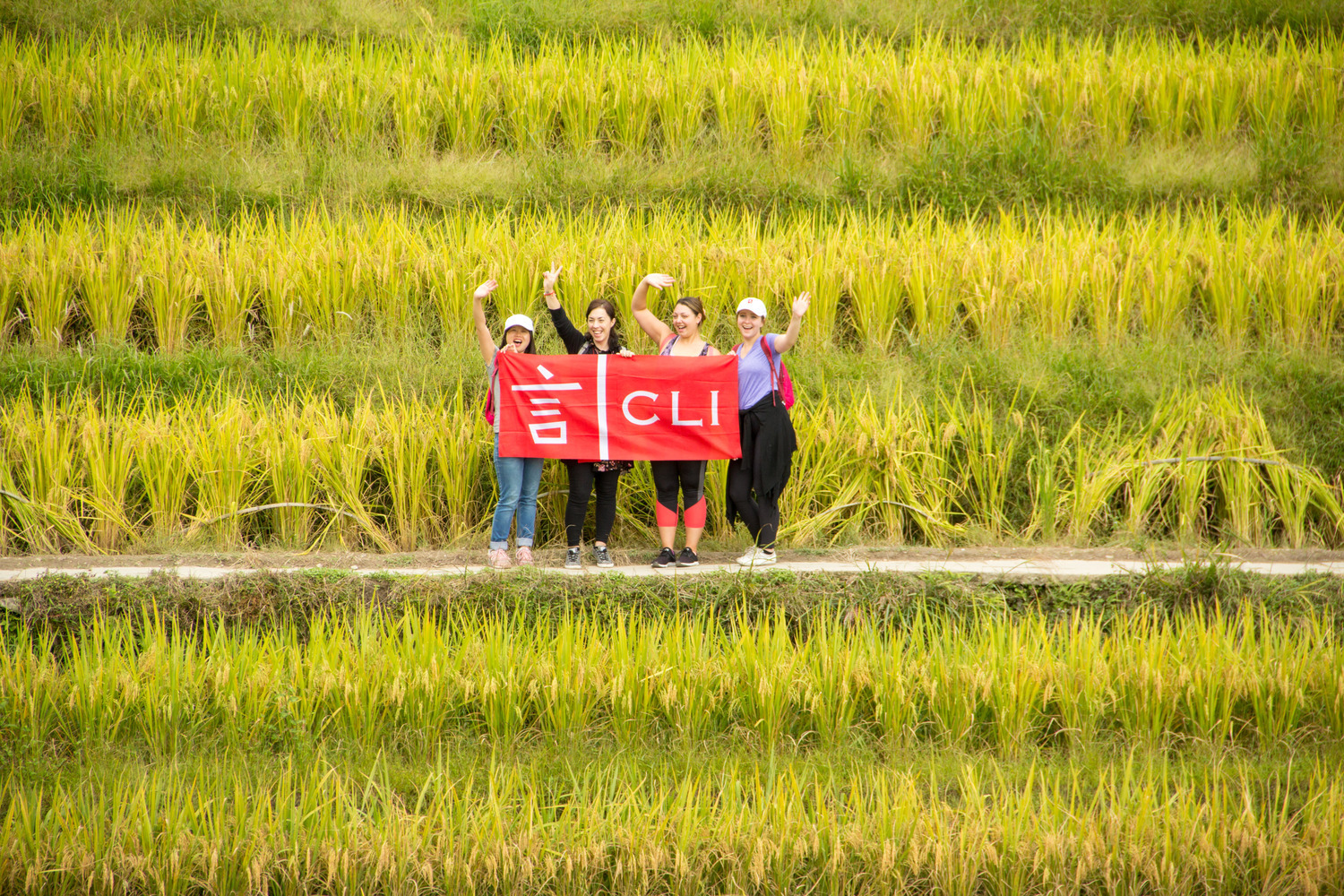
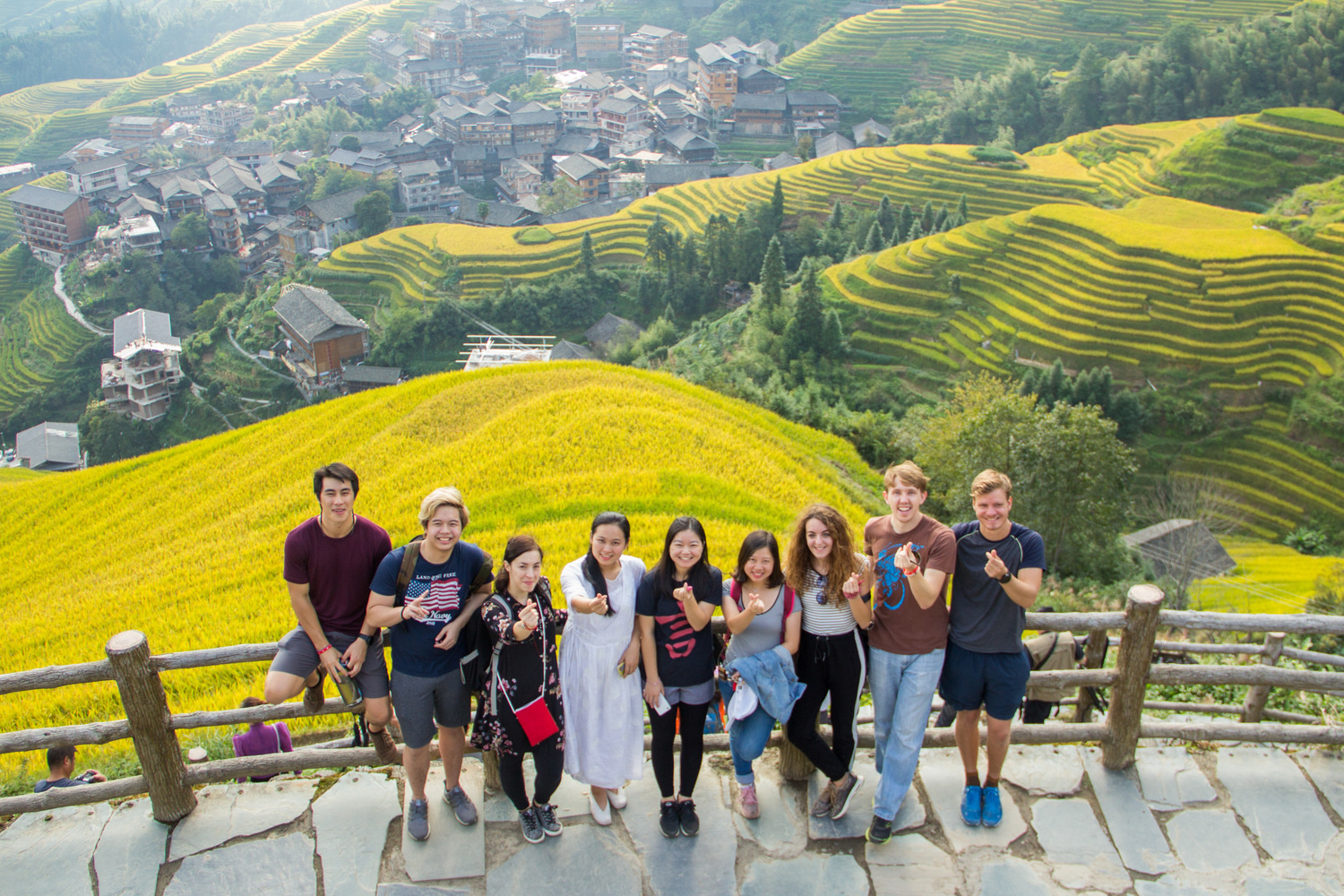
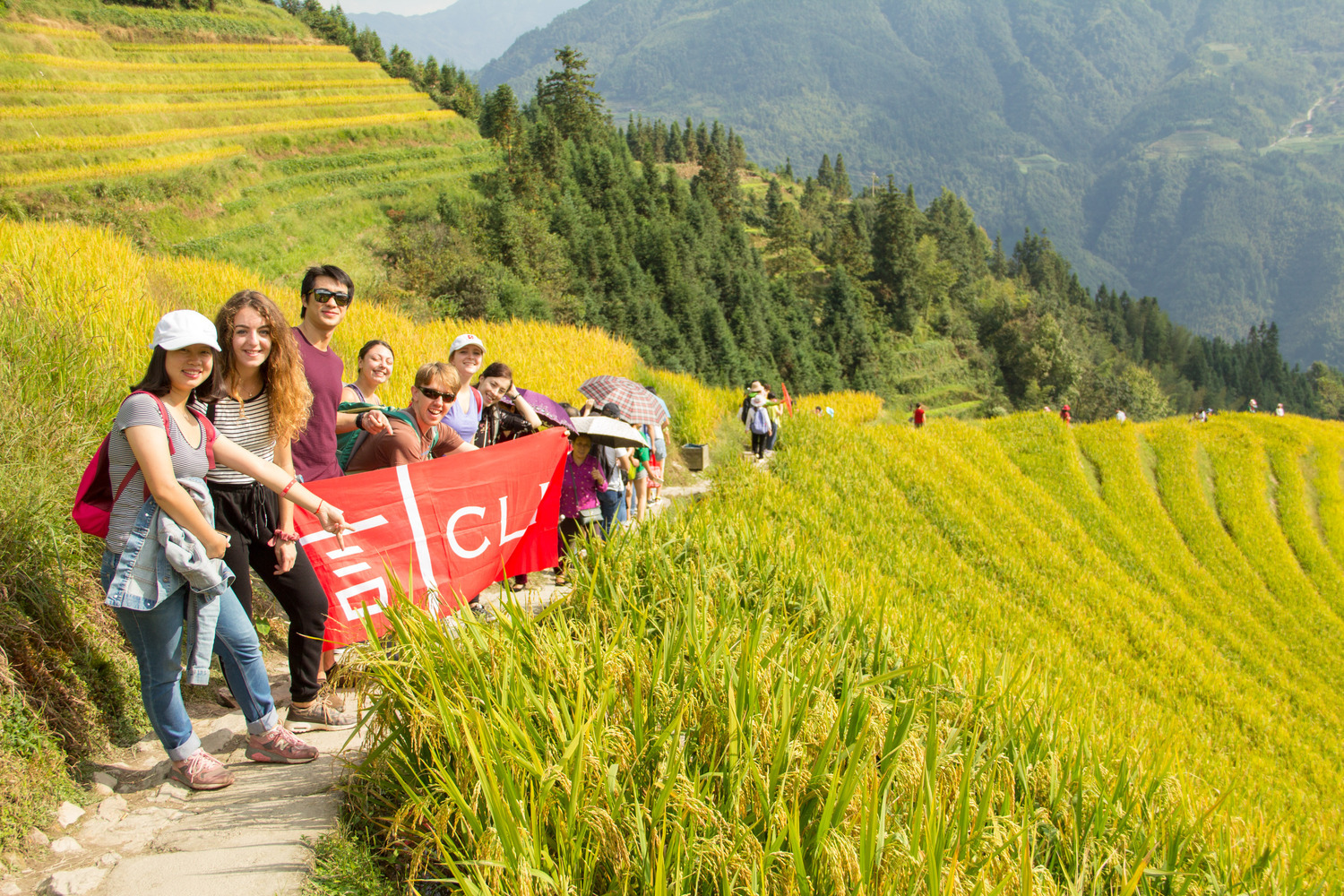
Photography excursions to the Longji Rice Terraces are on CLI's activity list, and a red banner stands out well against ripe rice.
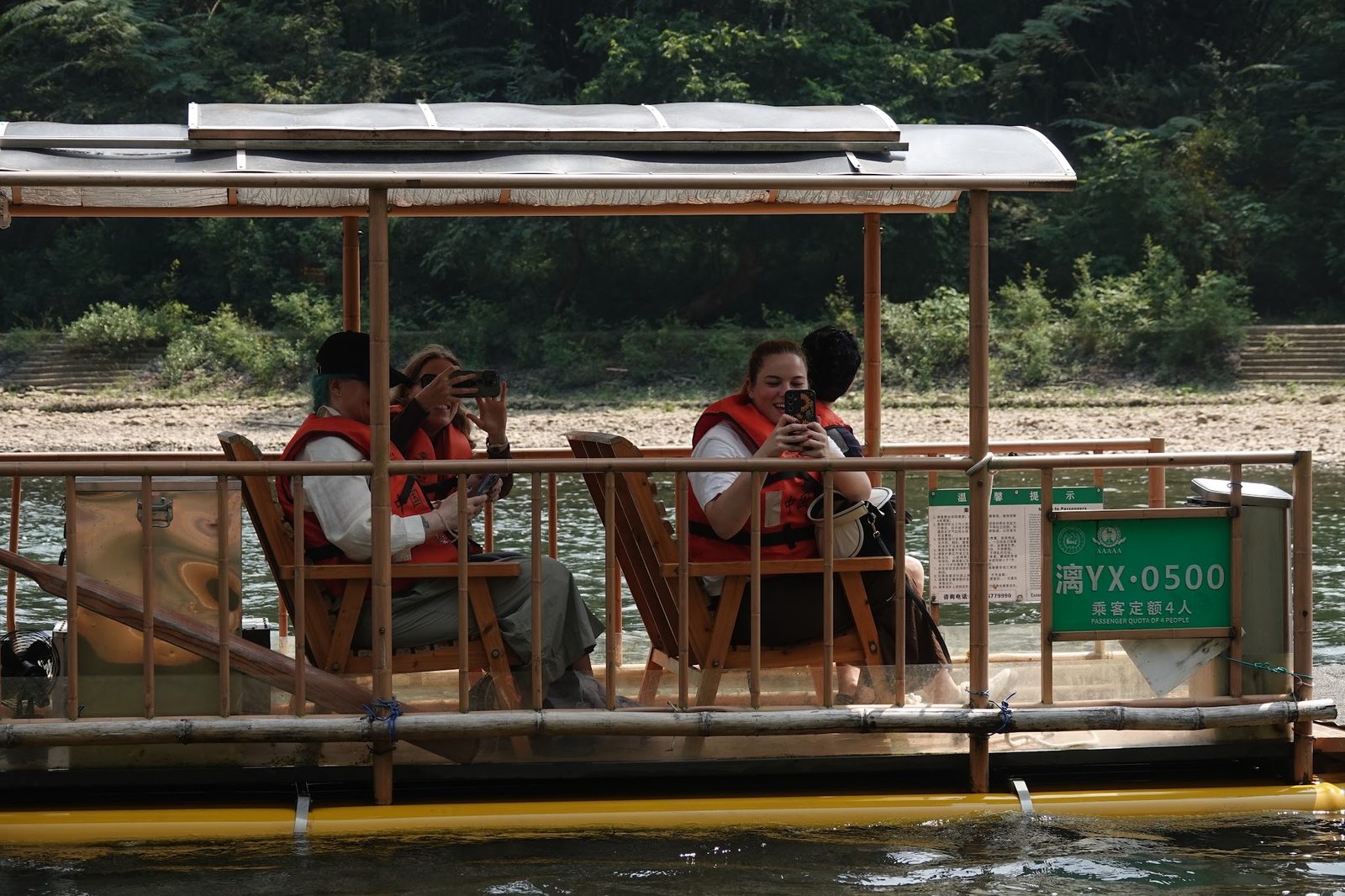
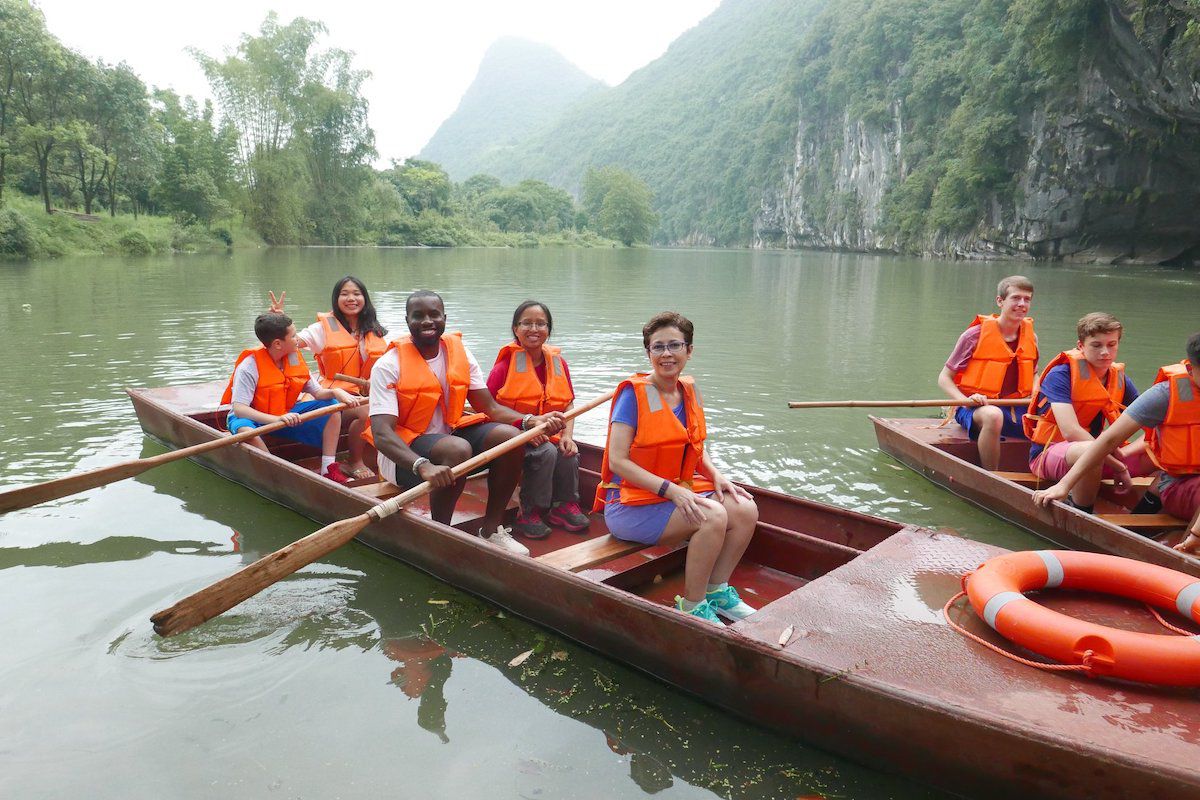
Bamboo boat rides on the Li River are one of CLI's activities, and 83 km of river run between Guilin and Yangshuo.
An old town street lined with stalls can fill half a weekend away, with something new to ask about in Chinese at every table.
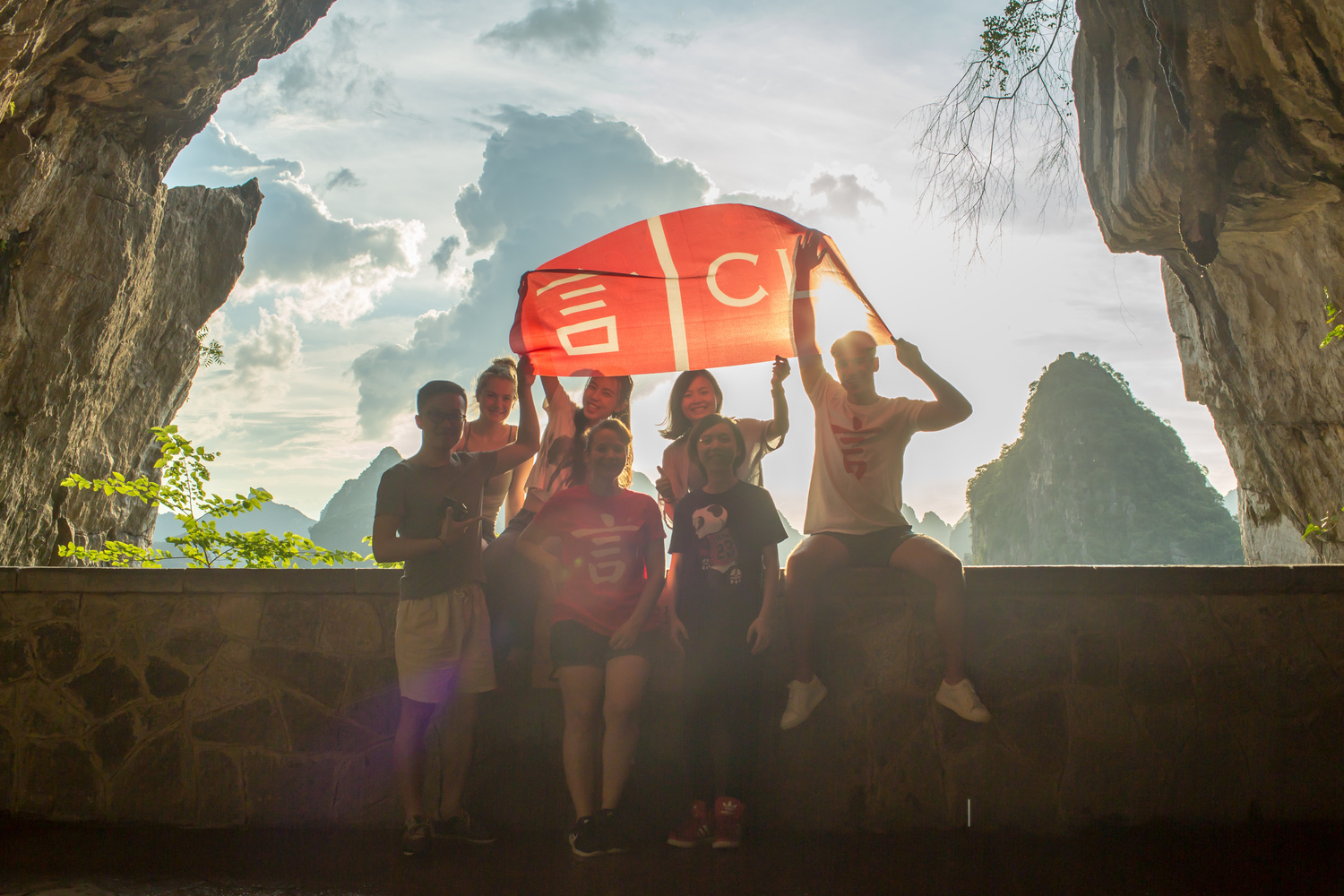
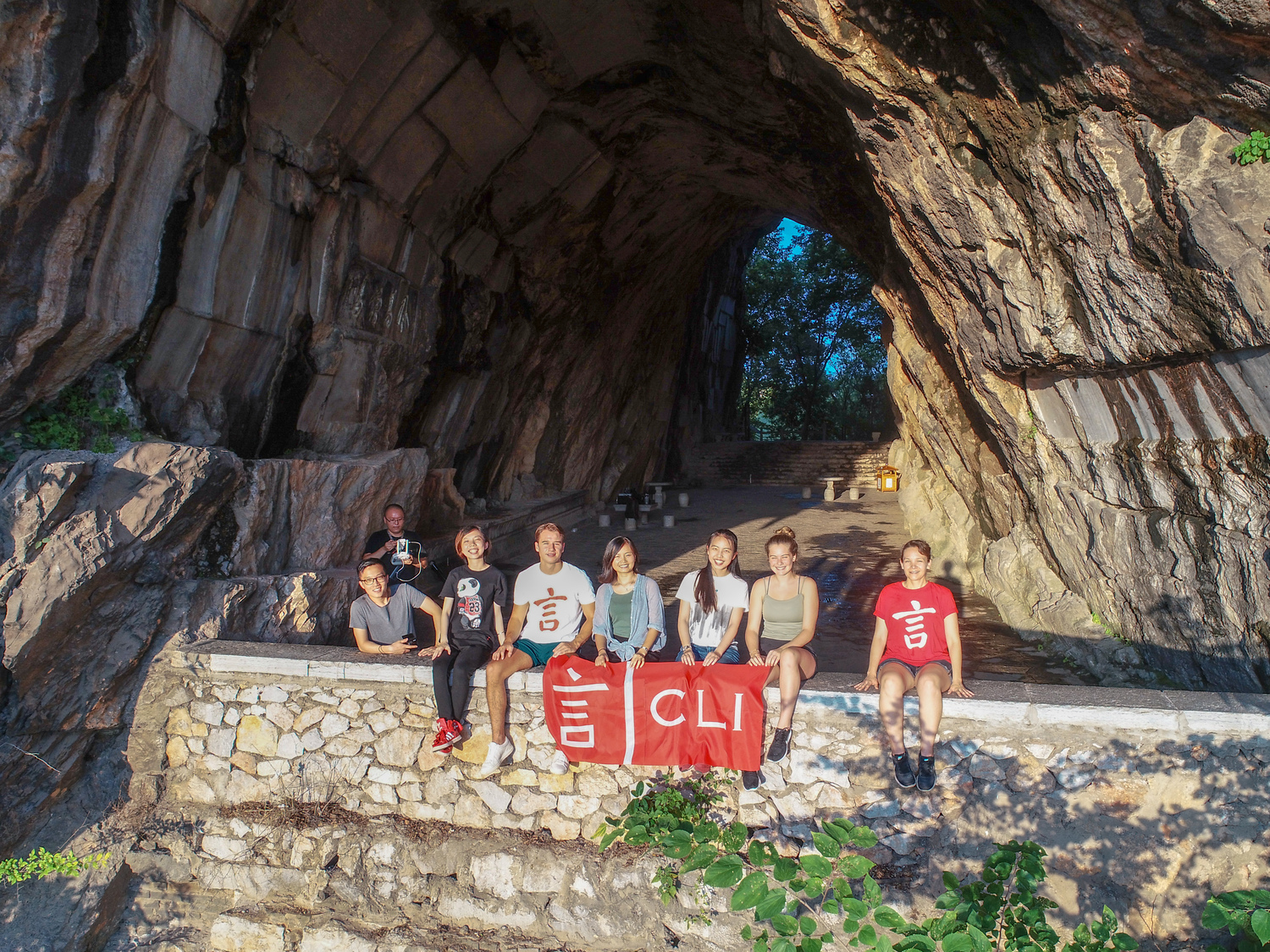
A cave opening in the karst makes a frame for the CLI banner, and the monthly excursions bring groups out to sights like this one around Guilin.
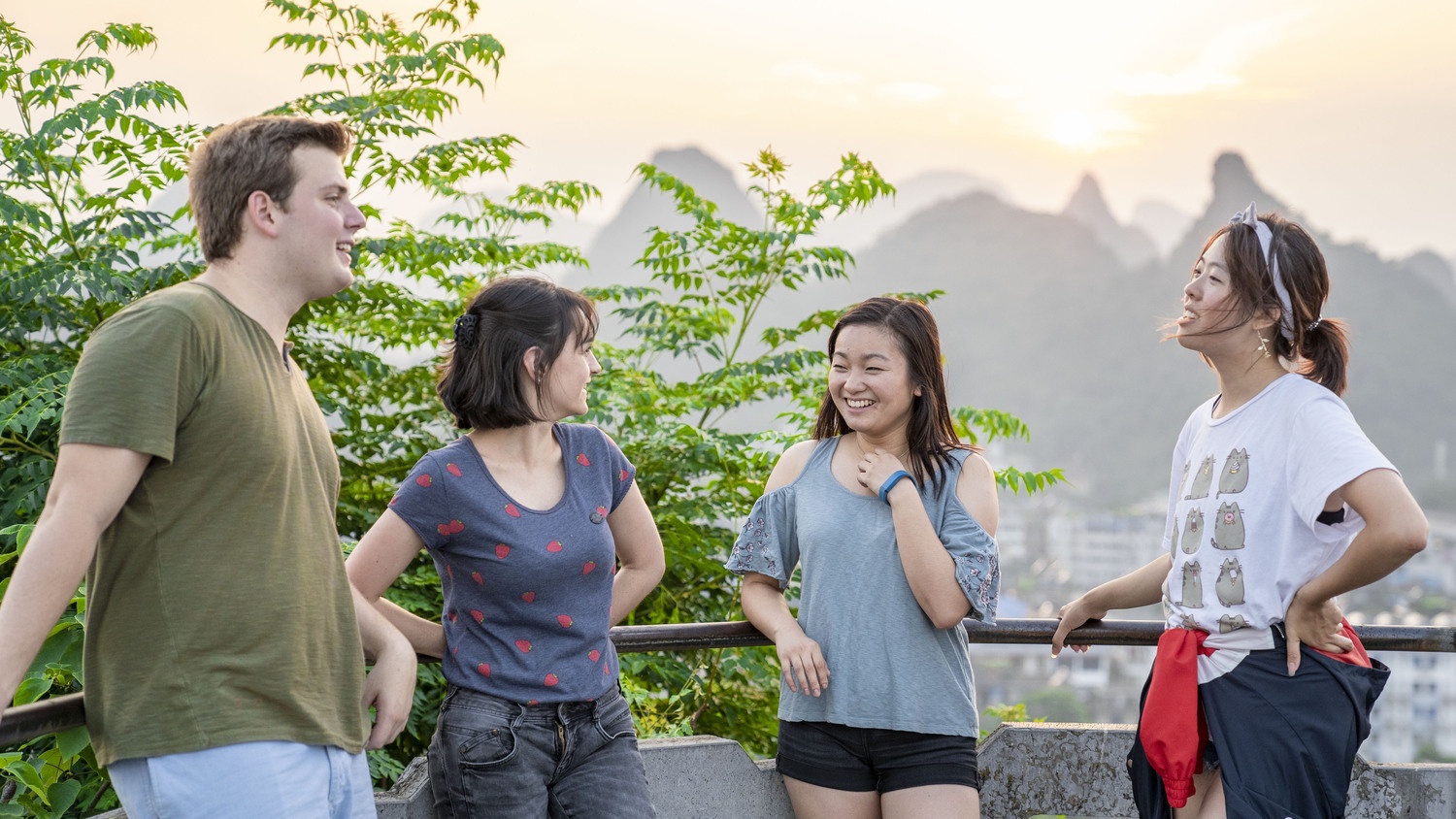
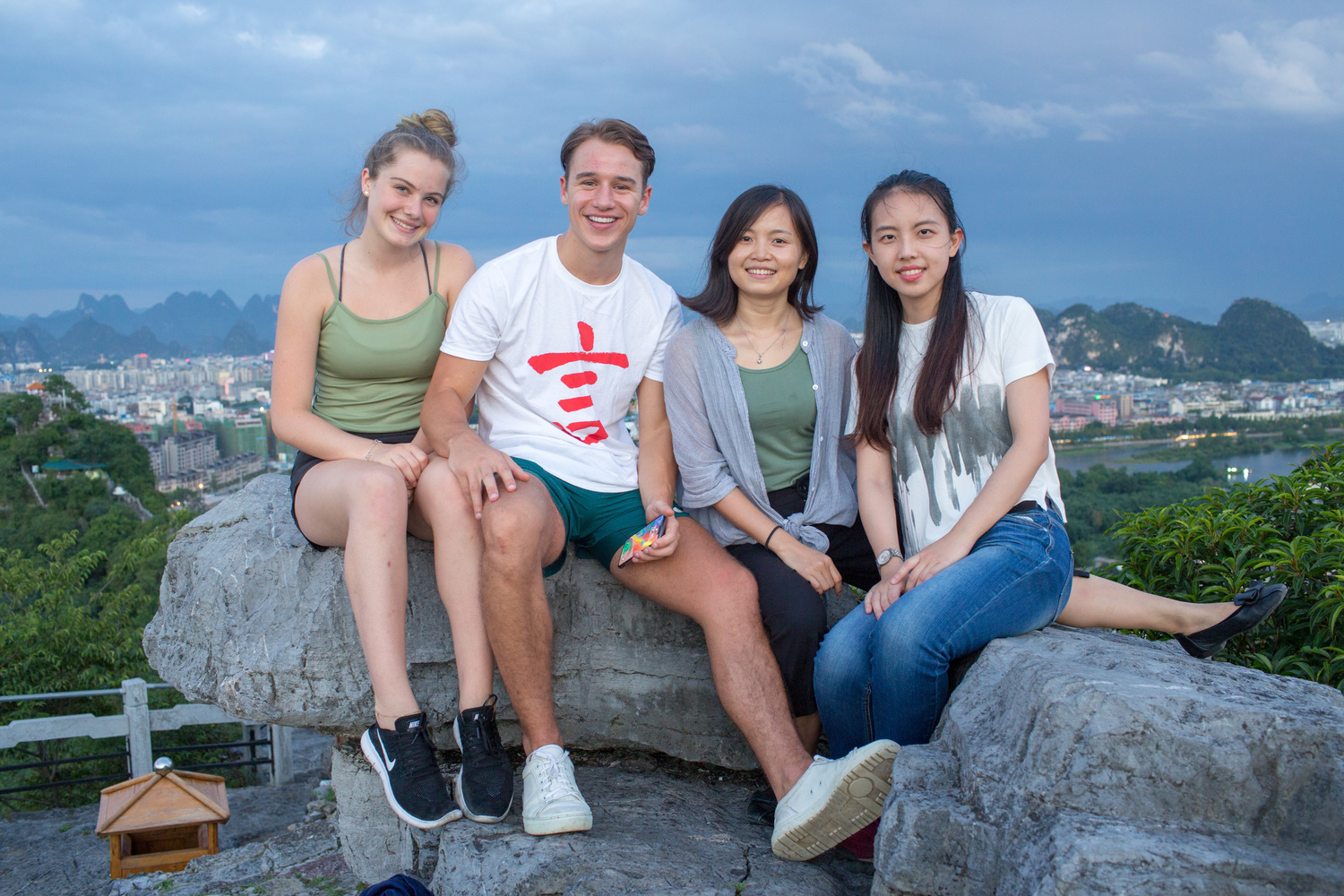
Evenings are usually lighter, with time for informal language practice, and a lookout above the city at sunset is a good place for it.
Guilin is a full city but a relaxed one, and from up here you can see how close the karst hills come to its streets.
Weekdays hold homework and review after class, so weekends are when students get out to creeks and trails beyond the city.
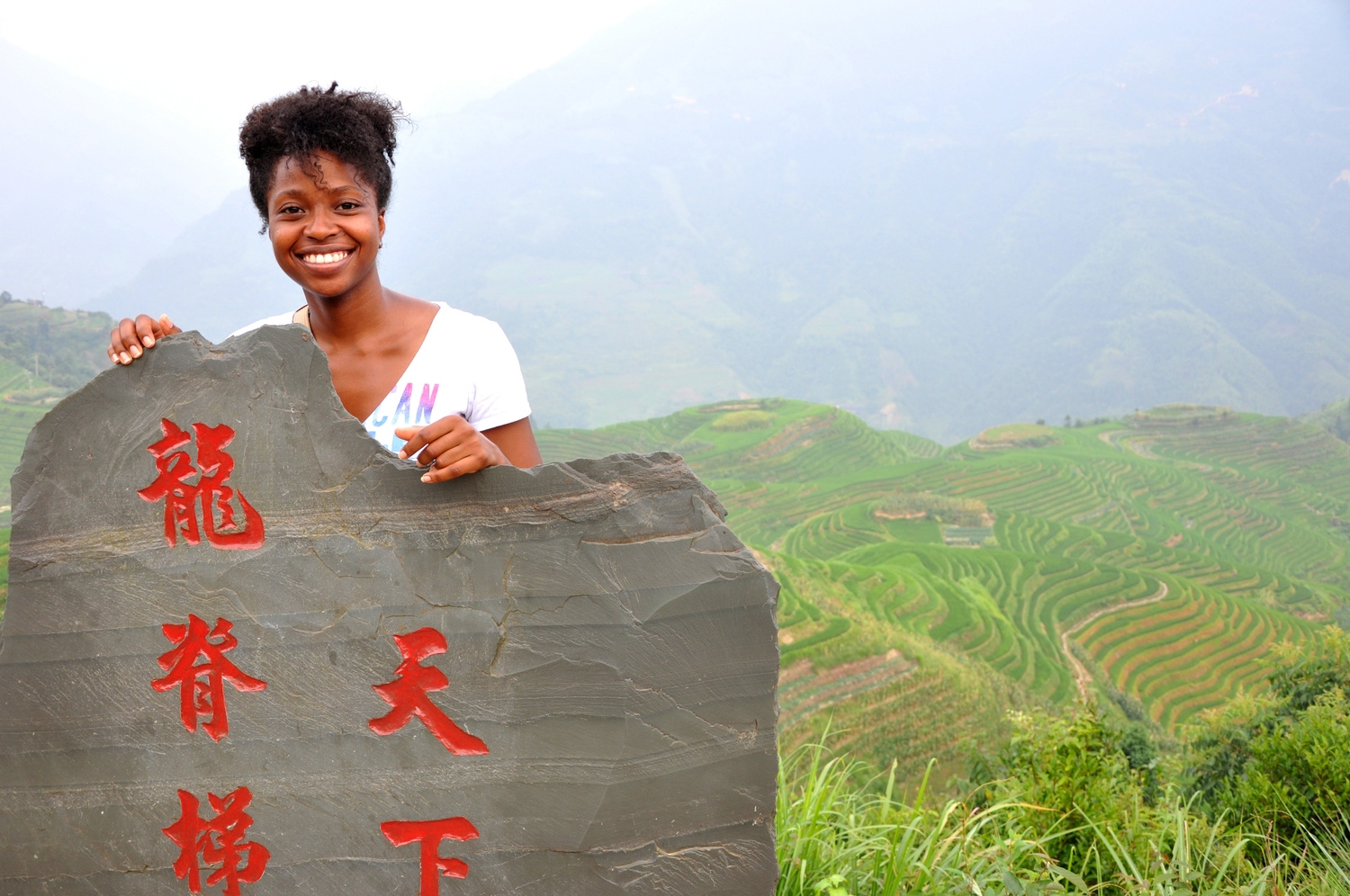
The carved stone marks the Longji Rice Terraces, where CLI runs photography excursions, and reading the big red characters on it is a small win of its own.
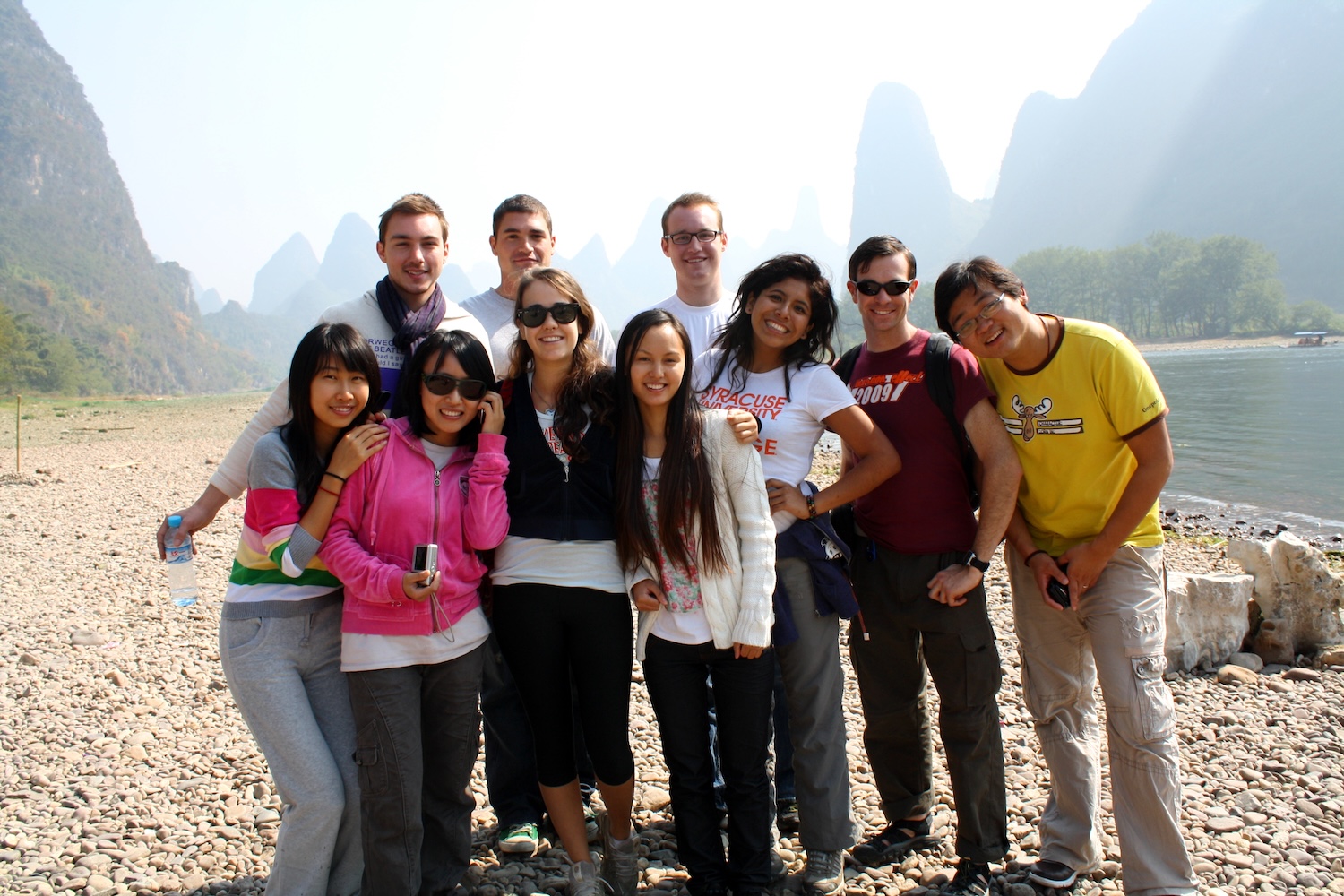
A pebble beach below misty karst peaks makes a good stop on a day out by the river, the kind of trip that fills a weekend away from the city.
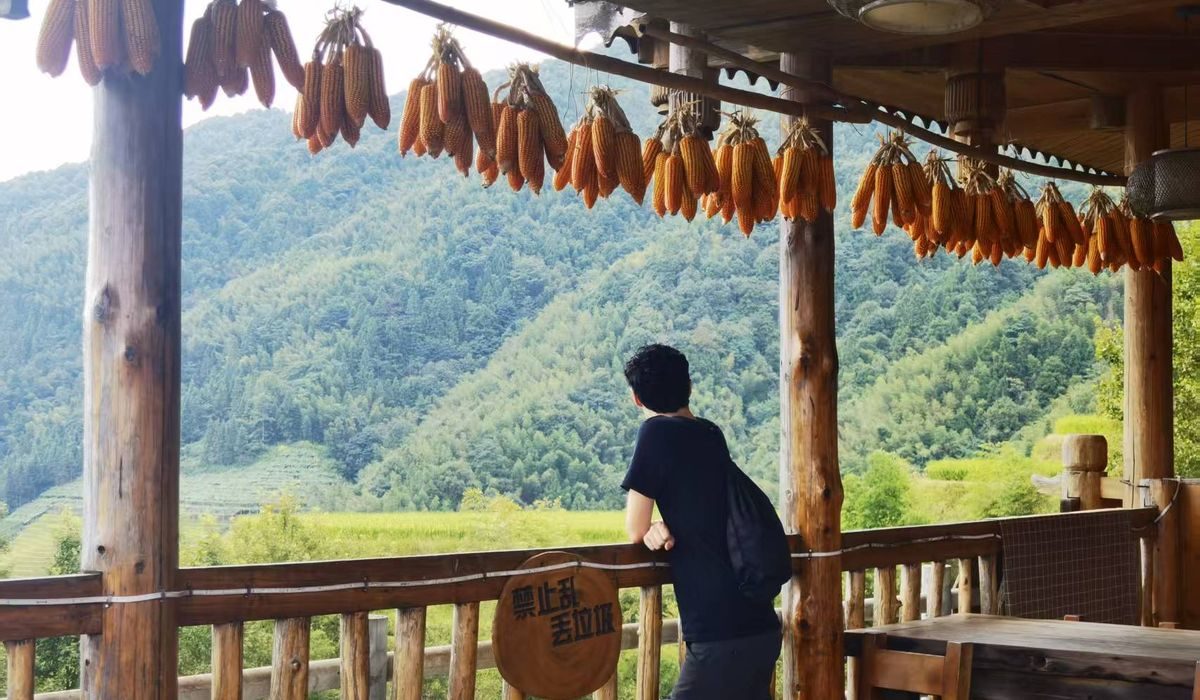
Monthly excursions head out to the countryside around Guilin, where corn still hangs under the eaves to dry above green hills.
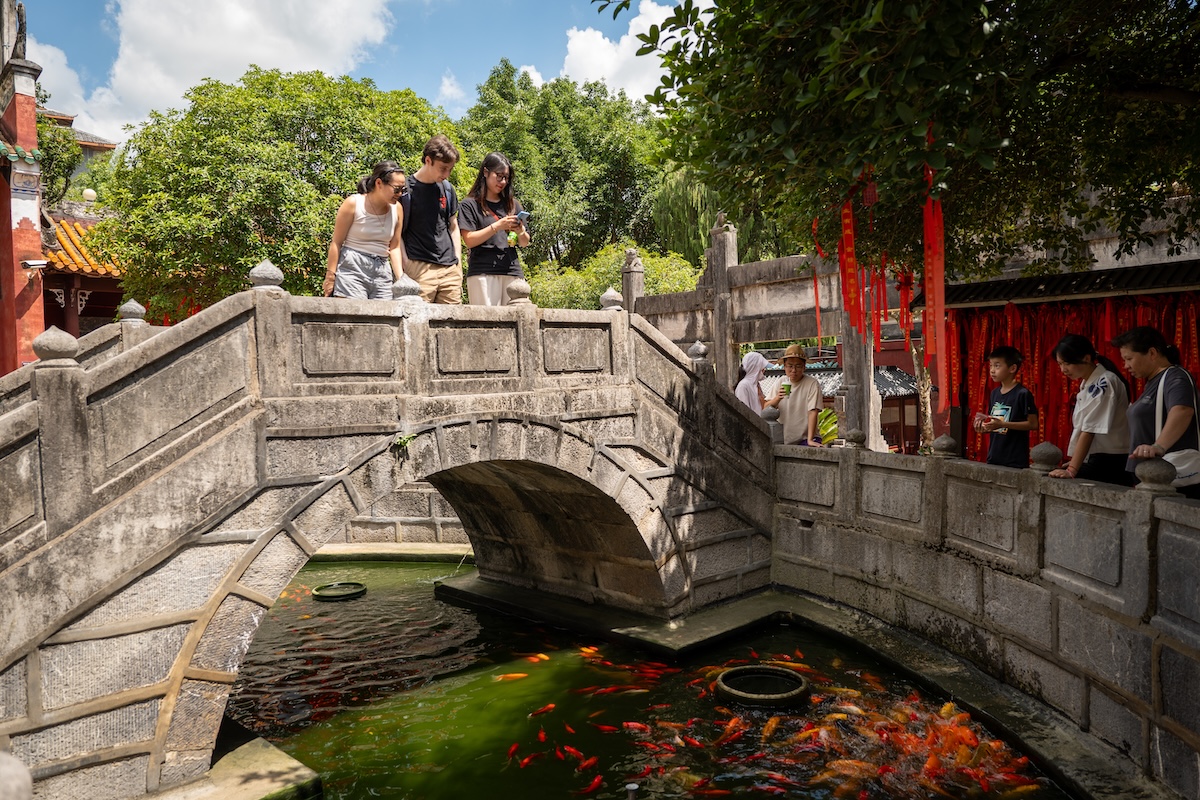
A stone bridge over a pond of koi is a quiet stop, and for days out on your own, the CLI team is glad to share tips on where to go.
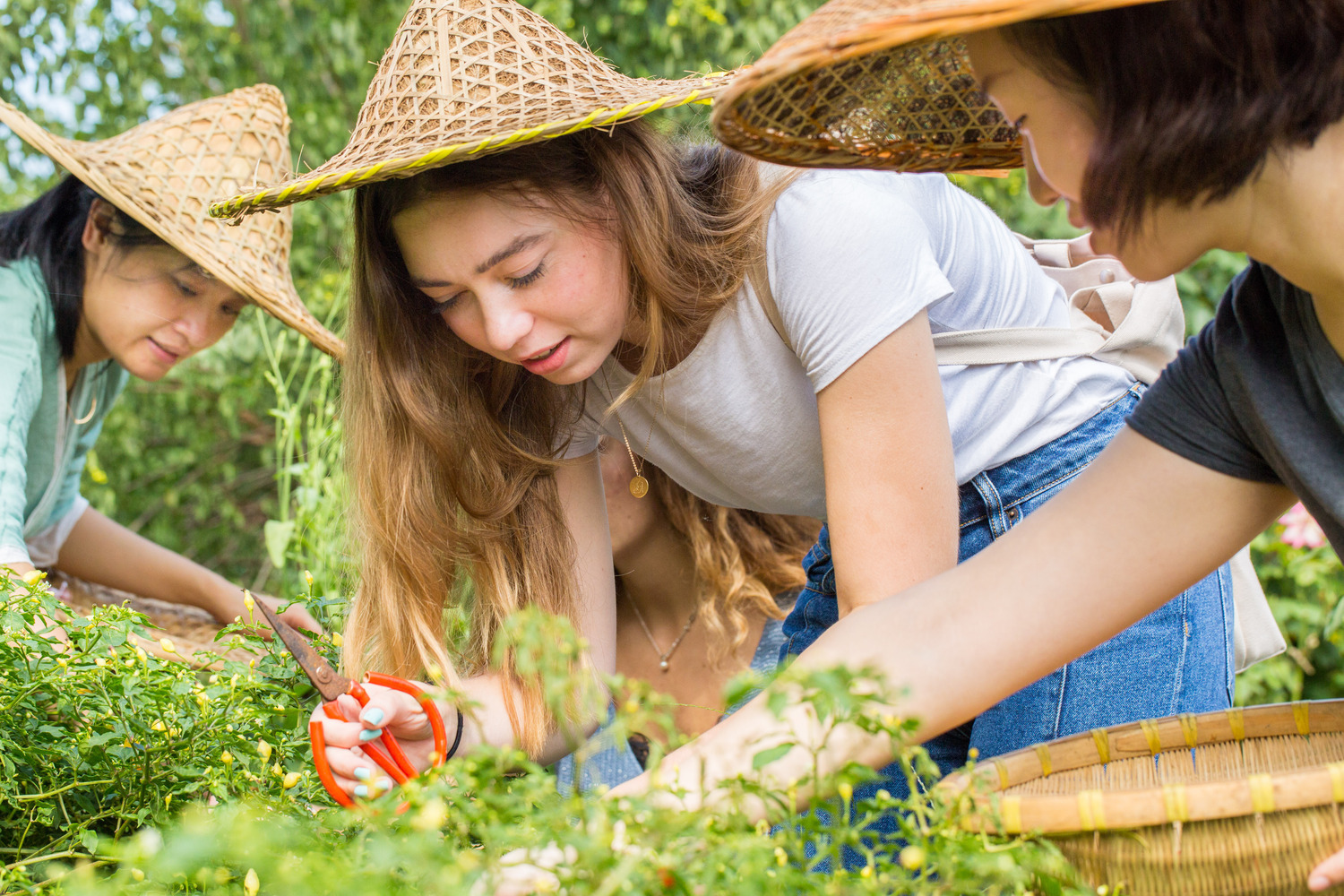
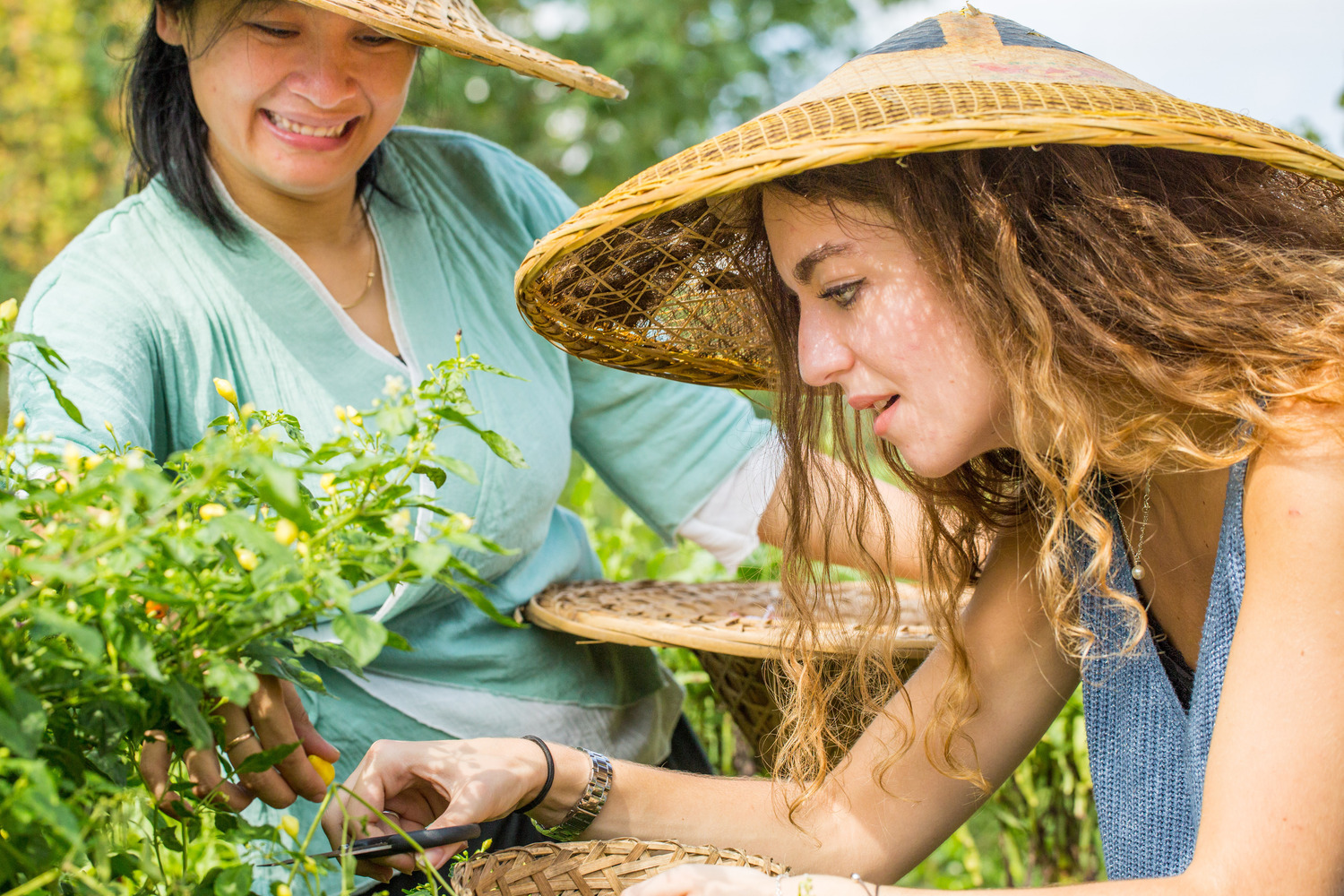
Snipping greens into a basket is slow, careful work. The week's activities go up on the board on the CLI Center's second floor, so you can see what is planned.
Weekend hiking in Longsheng or Yangshuo is one of the larger outings on the program, and stone steps like these do much of the climbing.
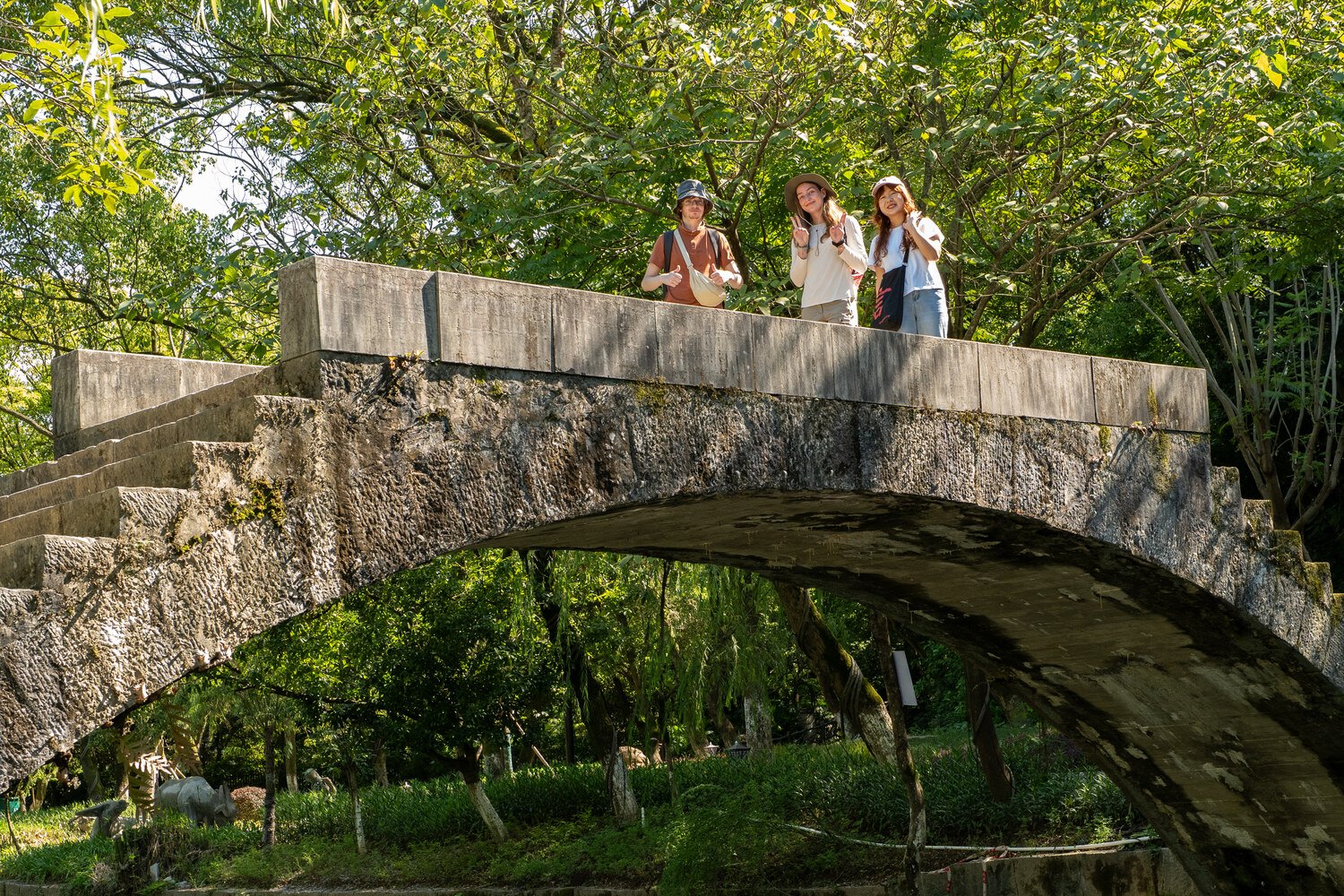
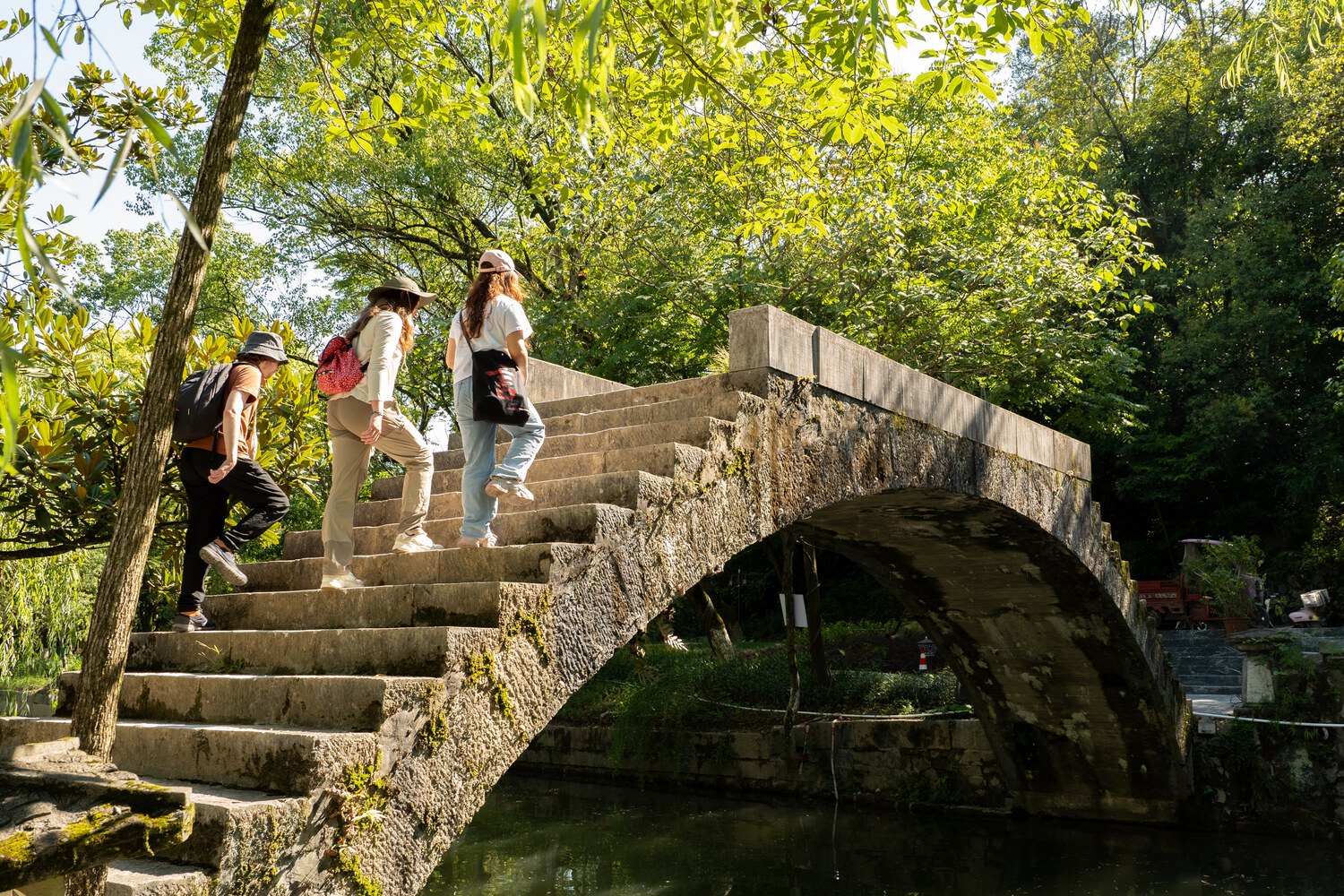
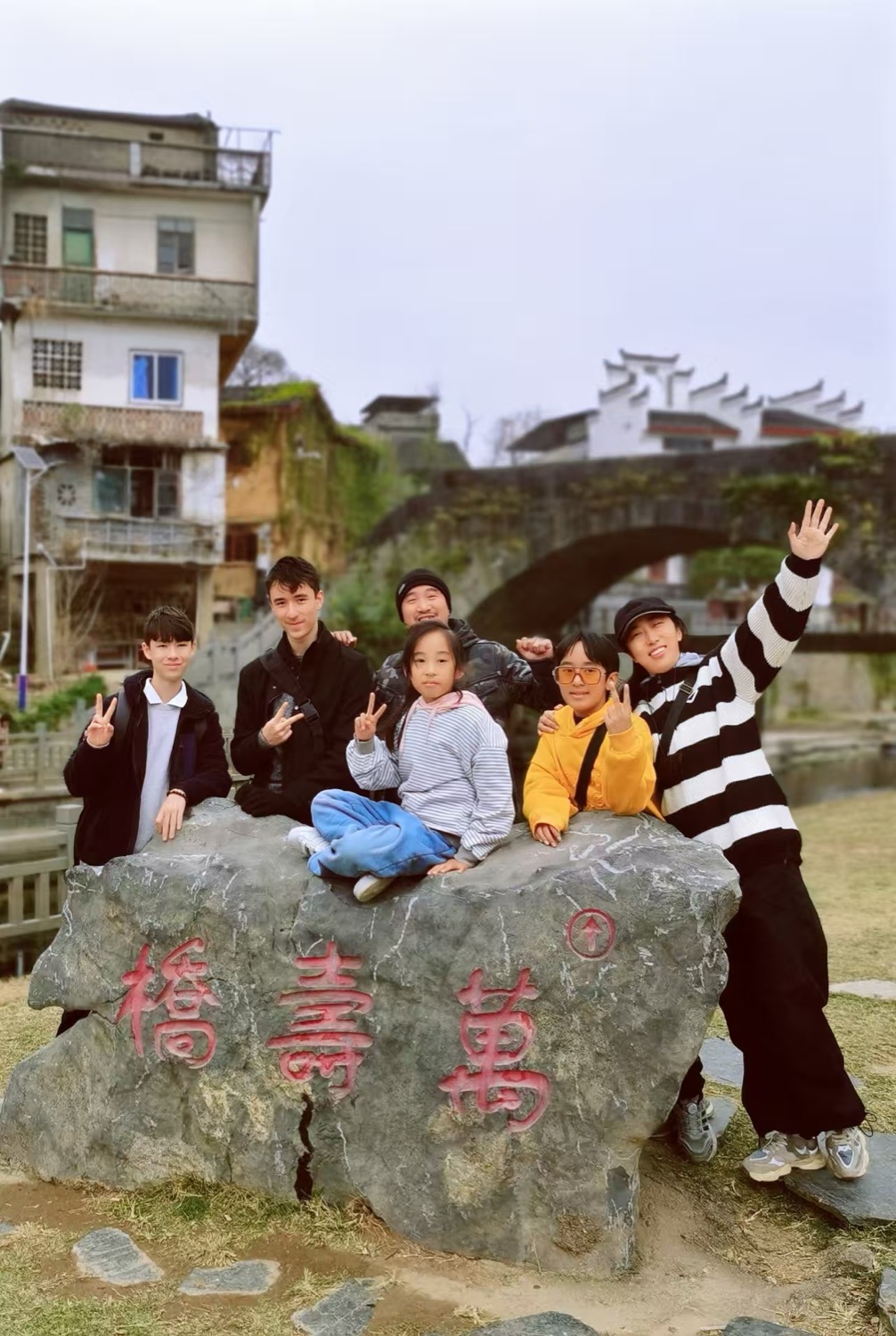
An old stone bridge half hidden in the trees is the sort of find a free Saturday can bring, out with the group or on a trip of your own.
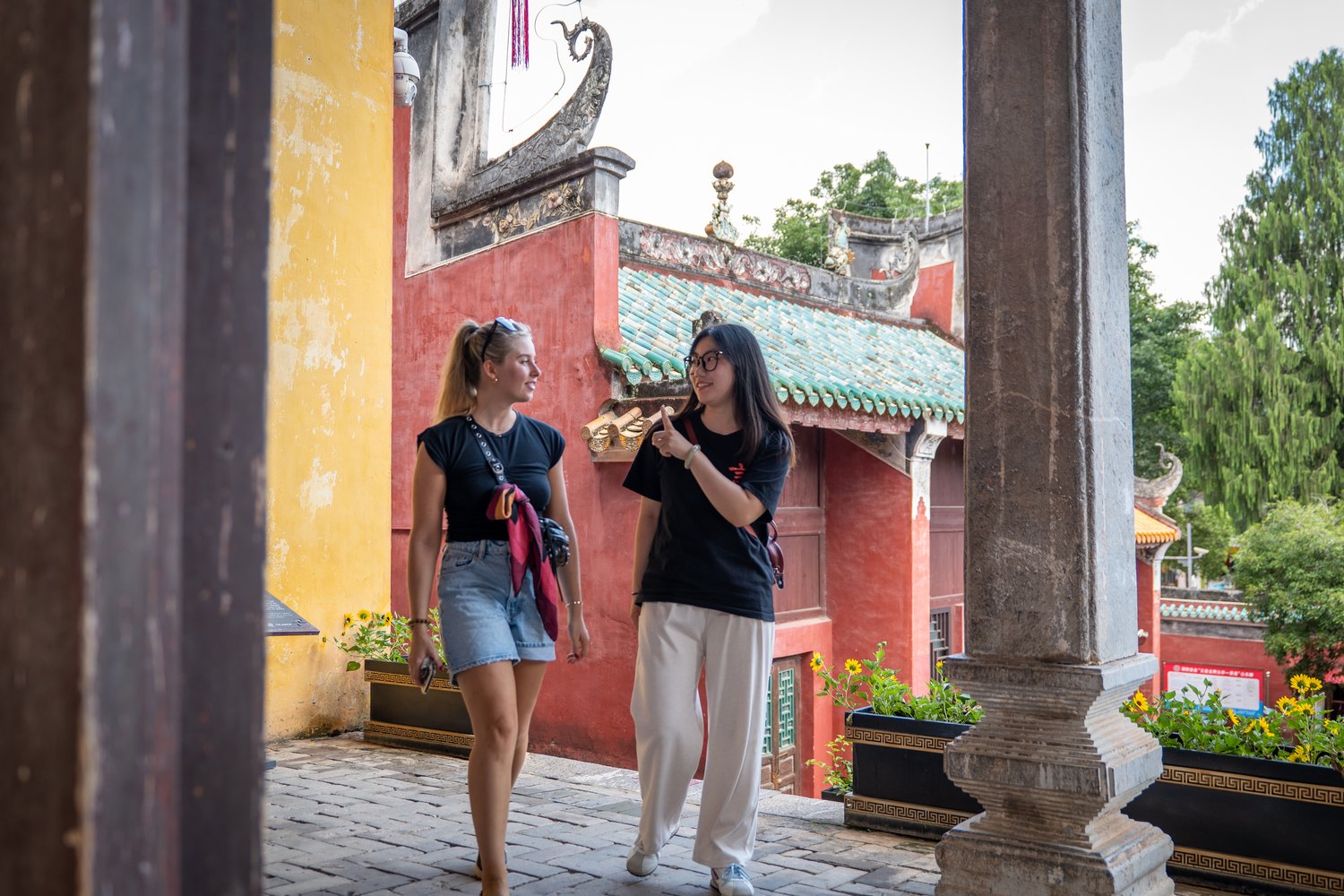
Regional travel on weekends takes in more than mountains, and old temple courtyards with red walls and stone pillars are part of what there is to see.
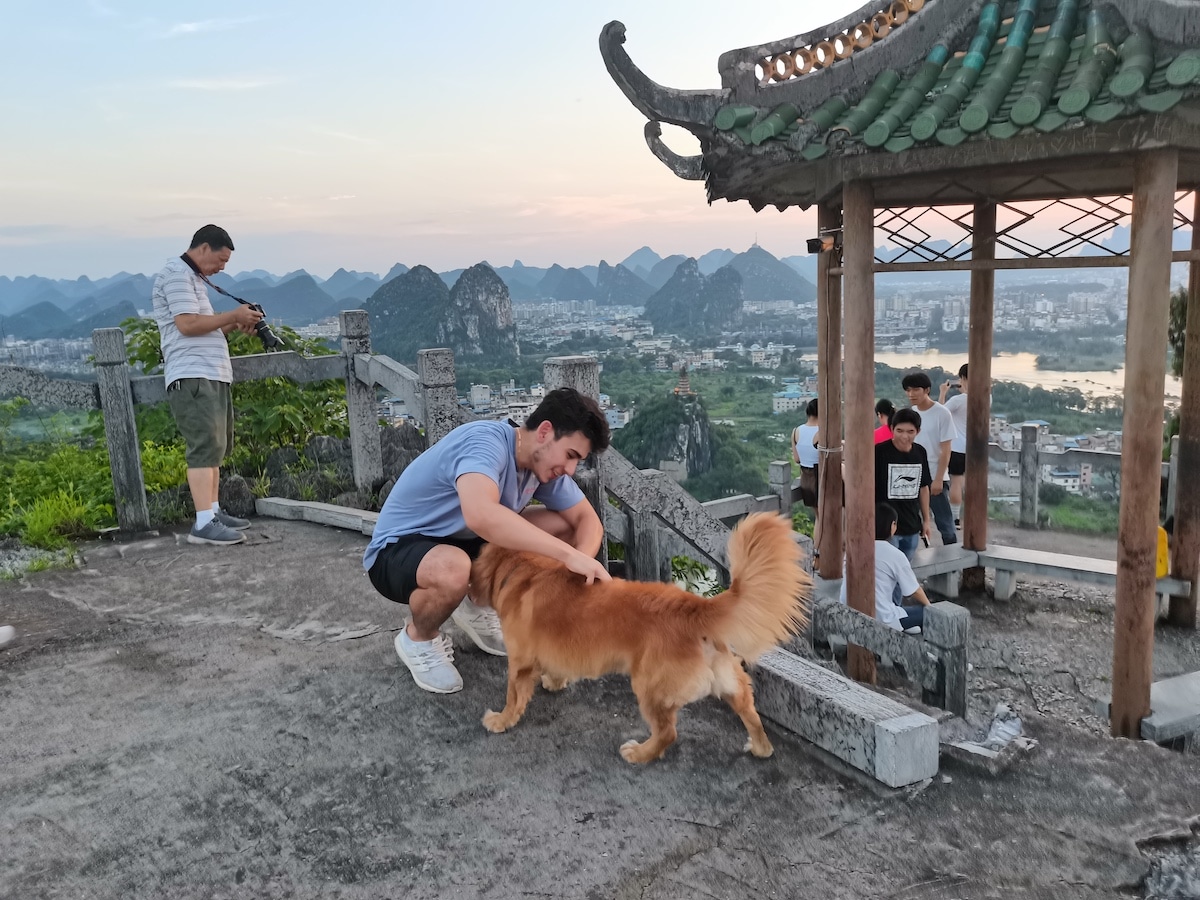
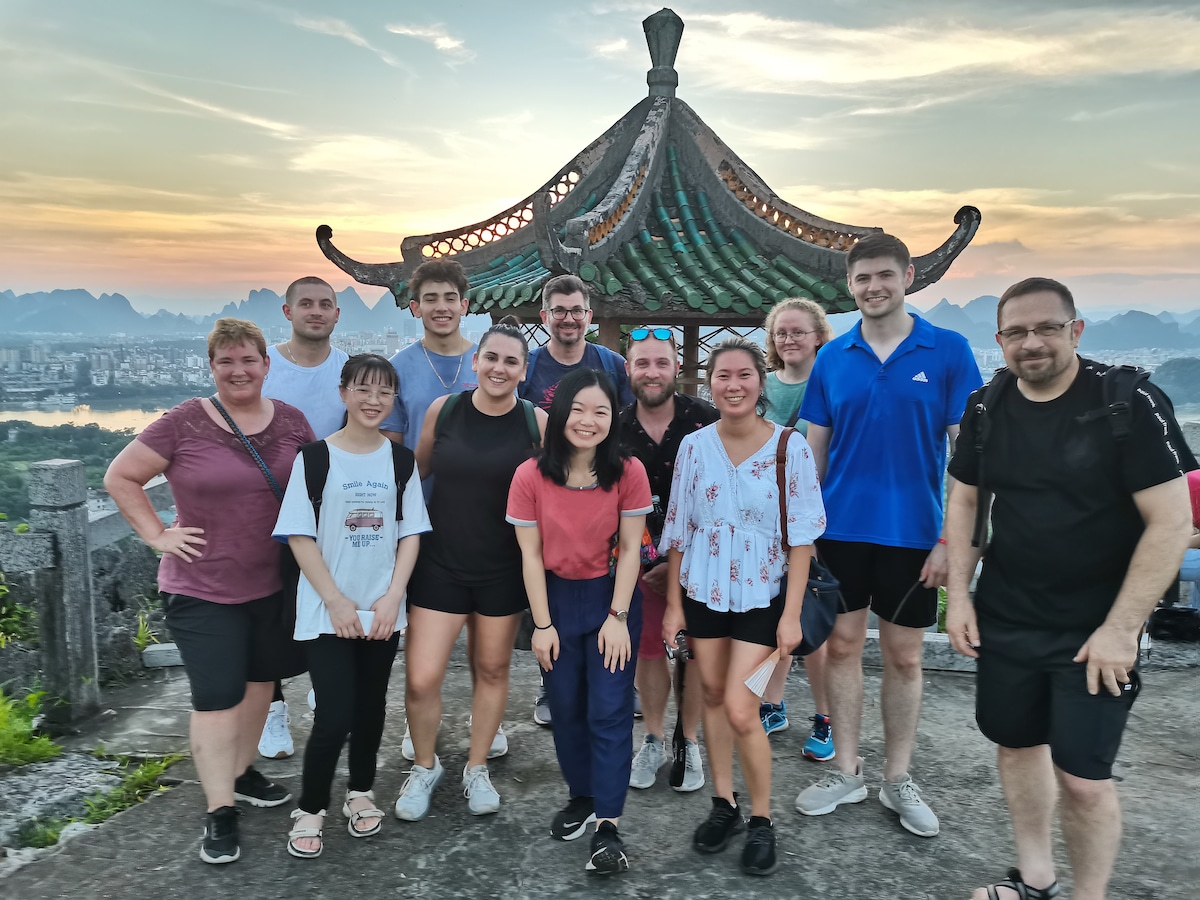
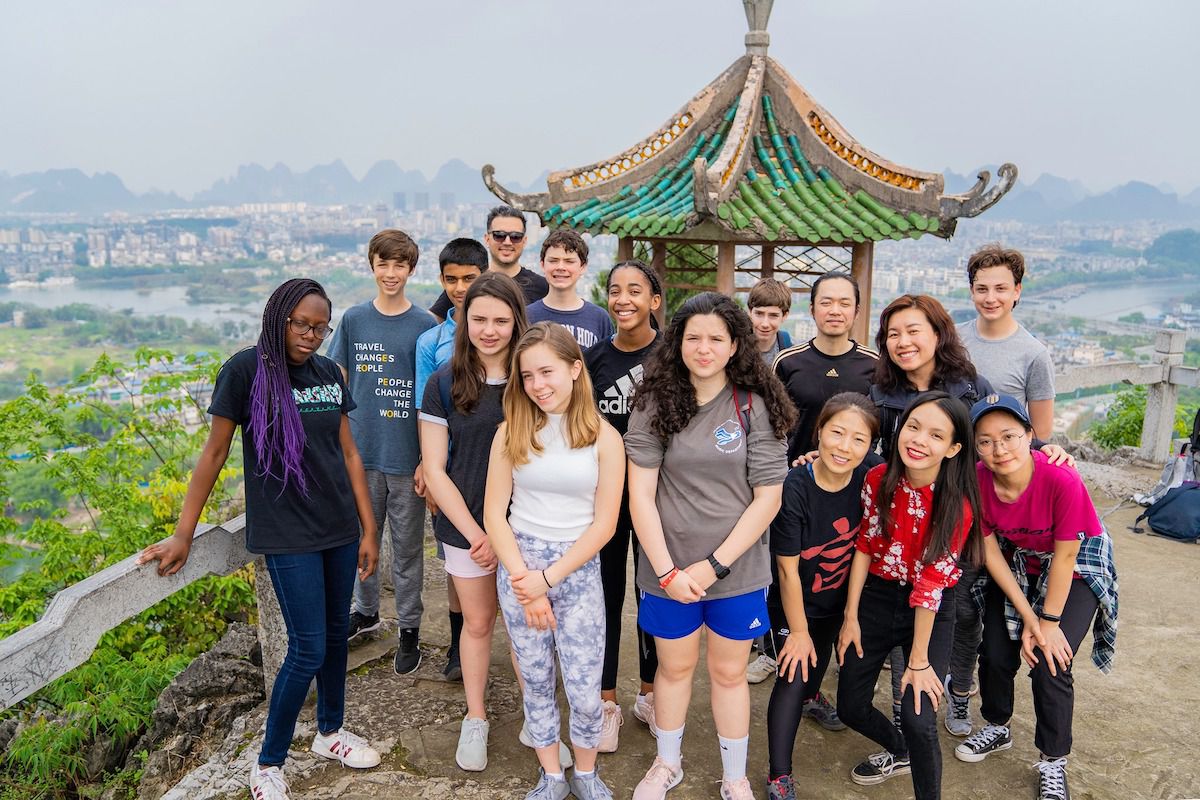
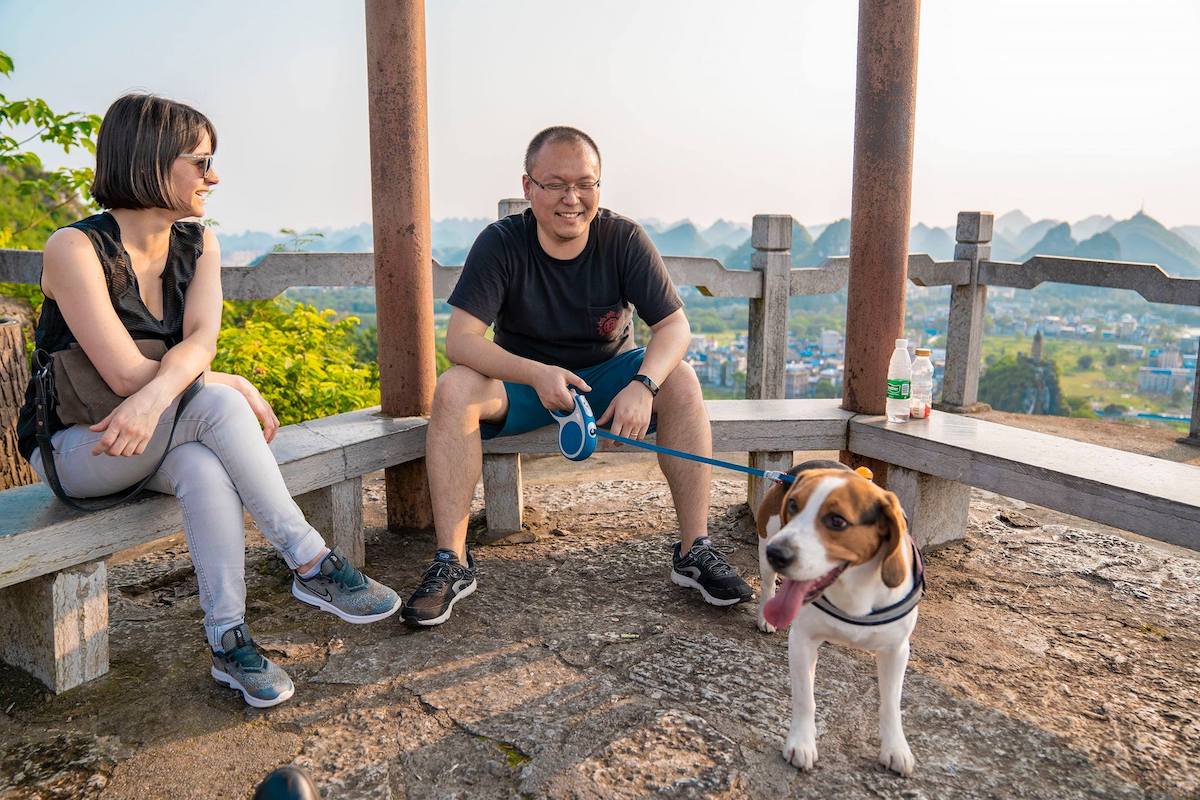
Climbs to hilltop pavilions like this one are among the shorter outings, with karst peaks and the city spread out below.
Guilin sits on the Li River among limestone peaks, and its name, 桂林 (Guìlín), means osmanthus forest.
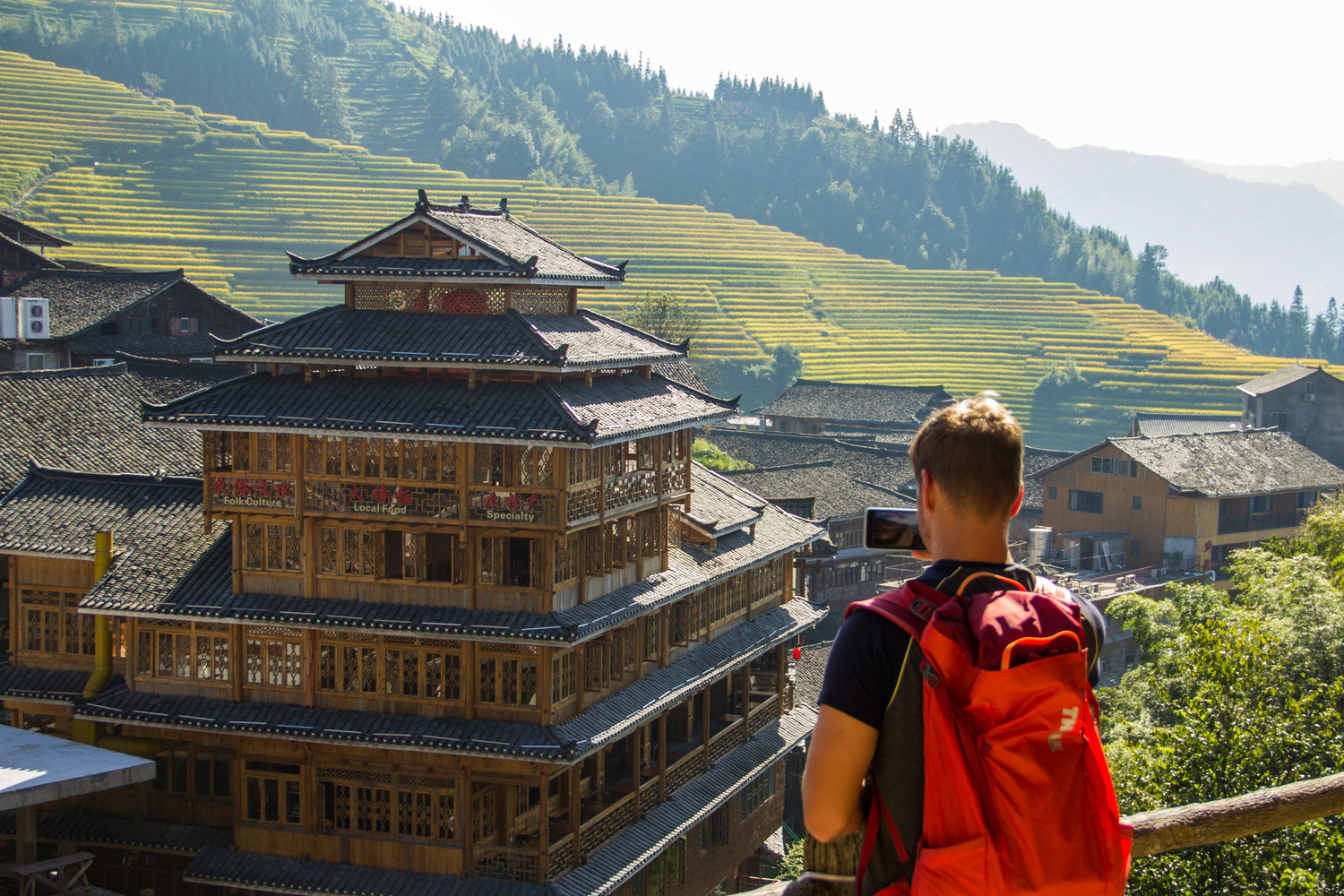
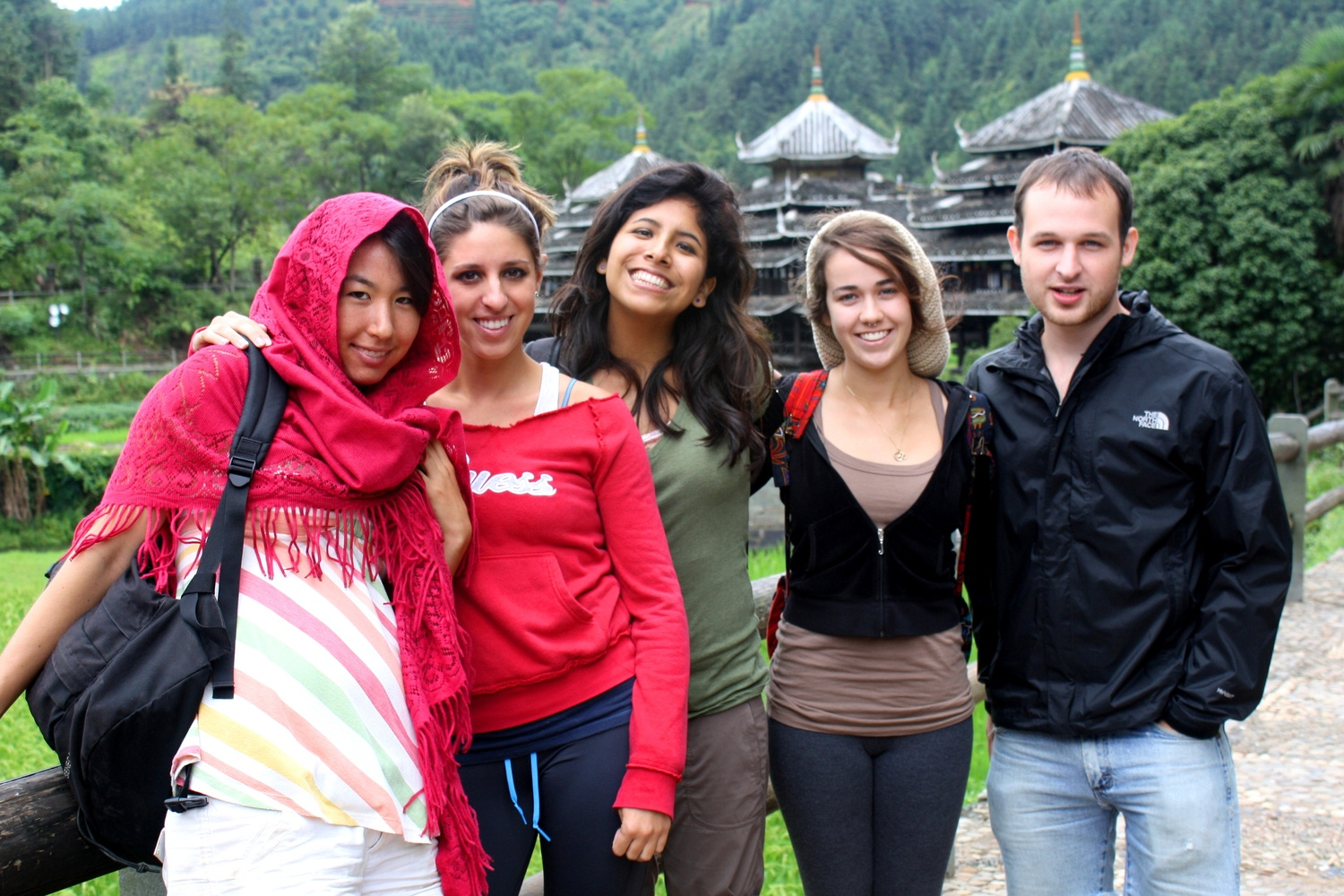
A wooden drum tower rises above a mountain village and its terraced hills, and weekends give you time to travel this far from city streets.
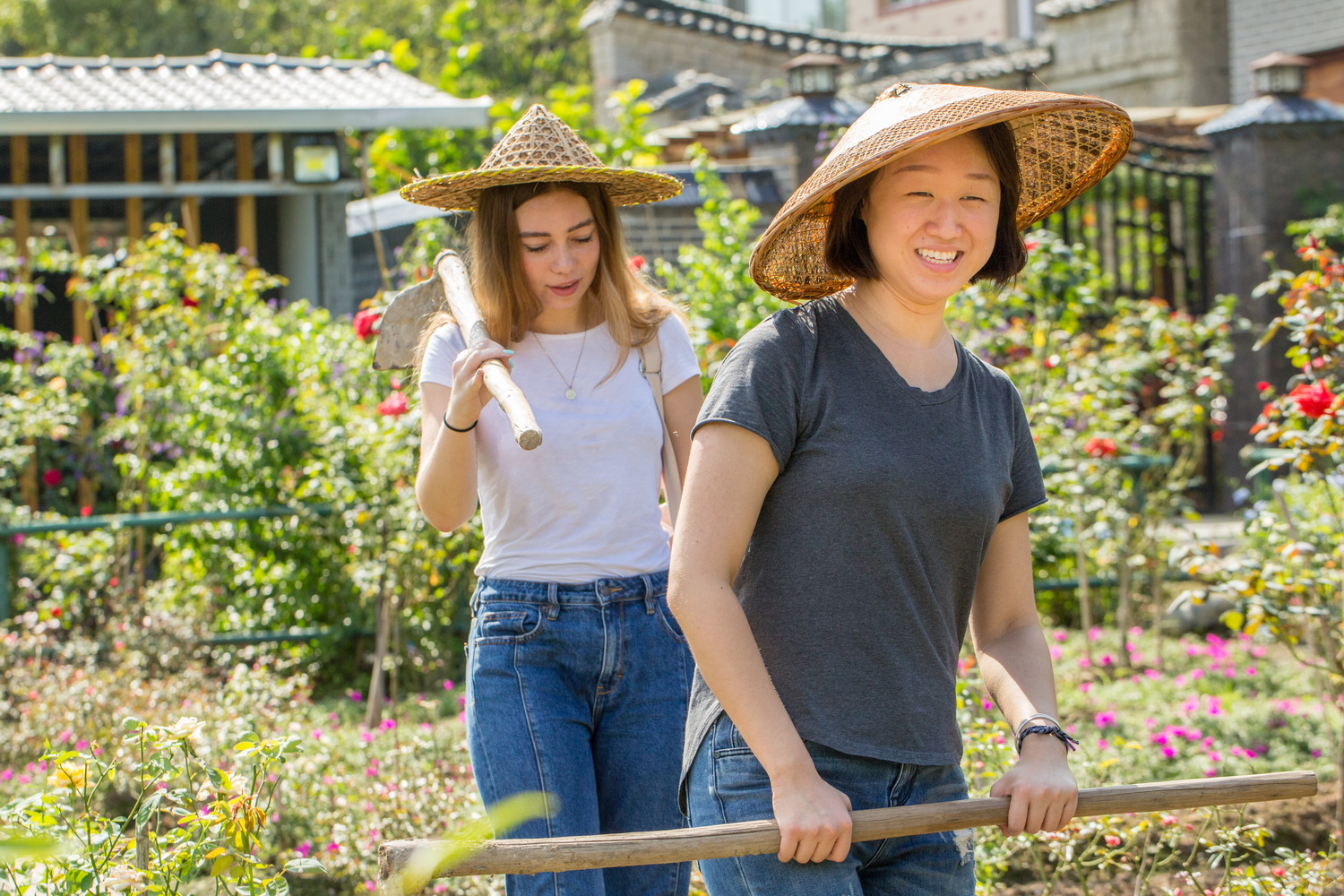
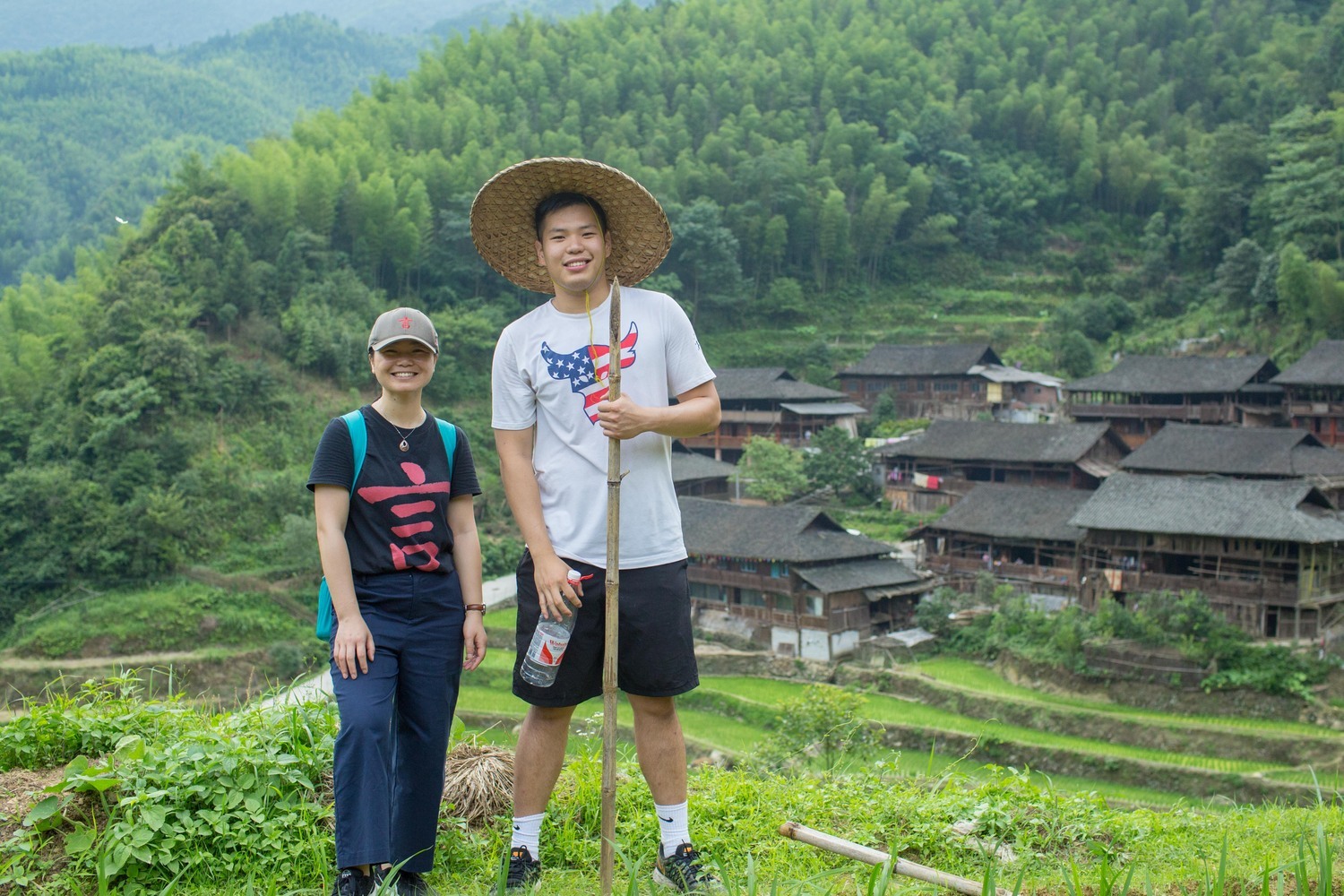
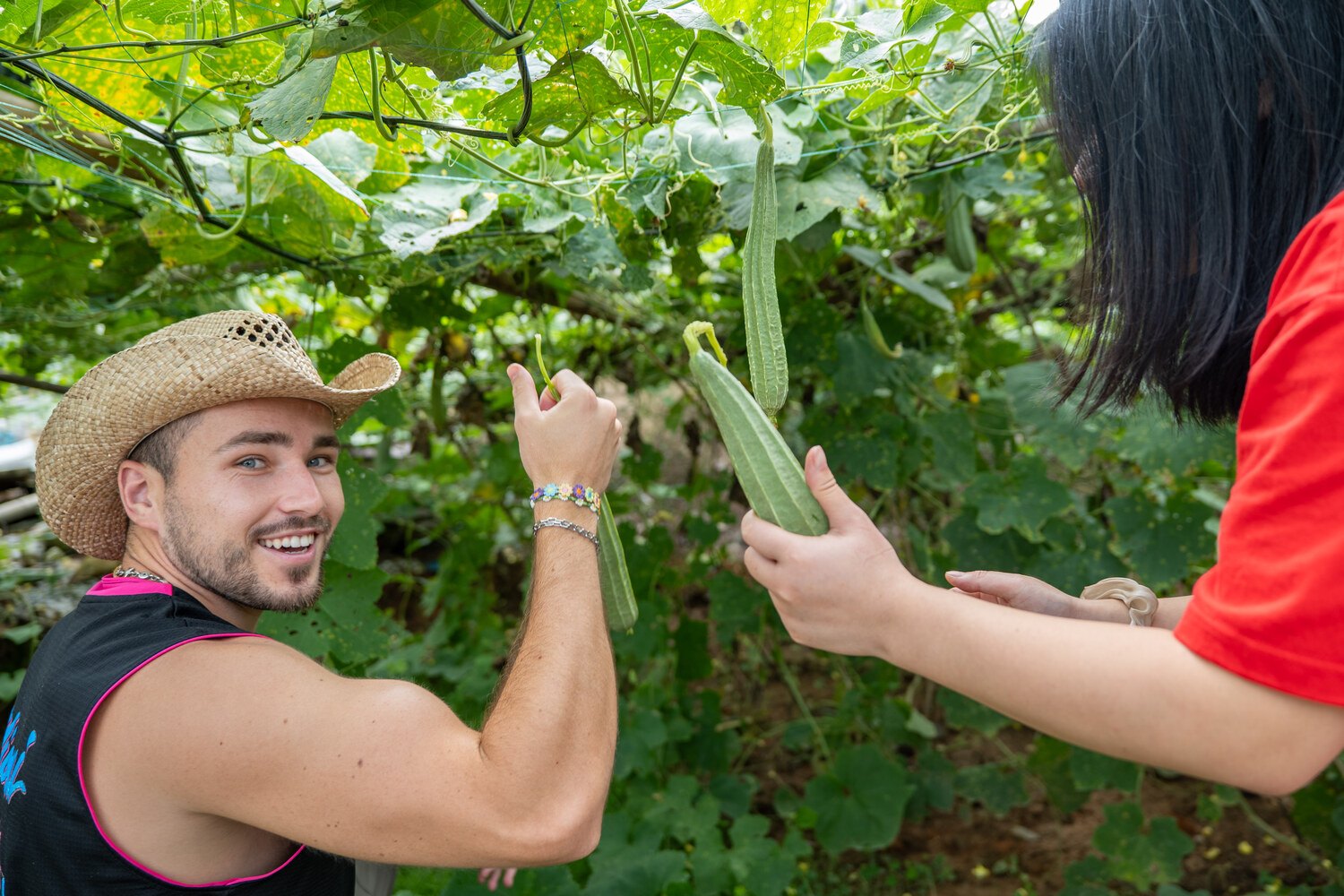
A countryside day like this one, with hoes over the shoulder and a garden to work in, is the kind of thing CLI's monthly excursions can include.
Guilin is compact and walkable, so a city lookout like this one is close enough for a short climb on a free evening.
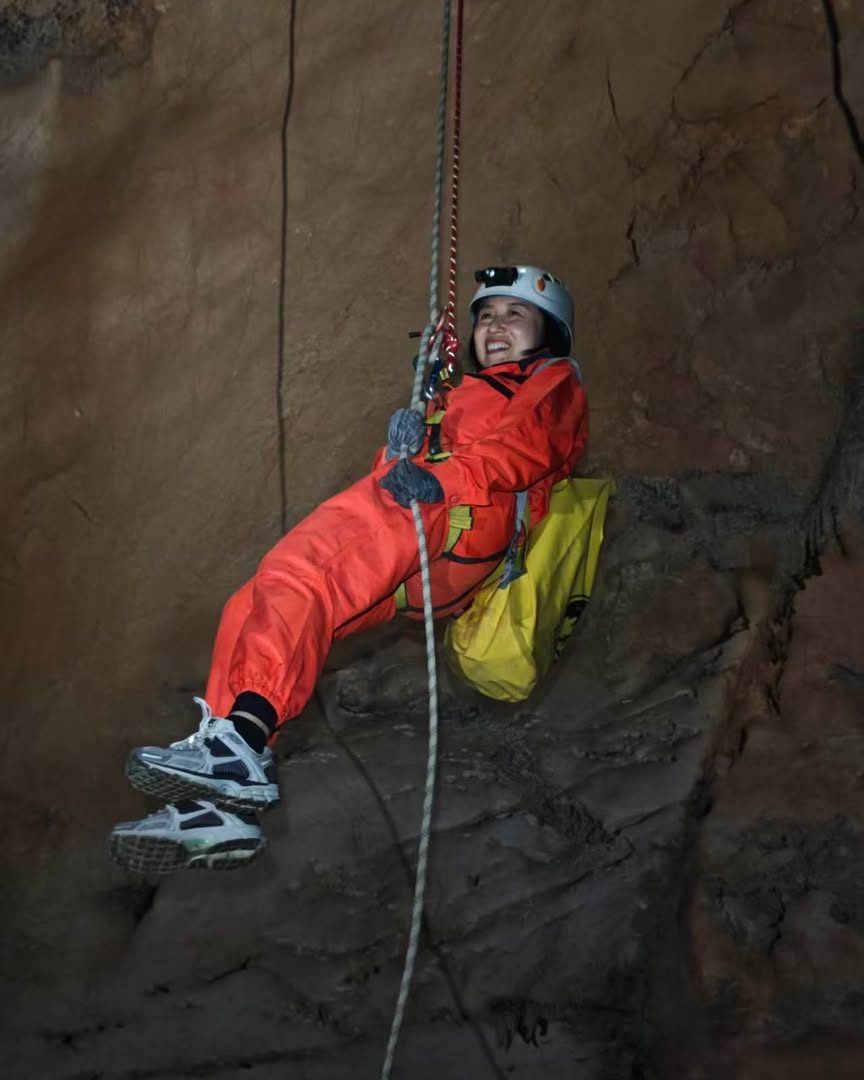
Helmets and caving suits on, deep inside a karst cave, on one of the more adventurous weekends a stay in Guilin can hold.
Longsheng, Yangshuo and the Li River are each about an hour from Guilin, which makes the city a practical base for weekends away.
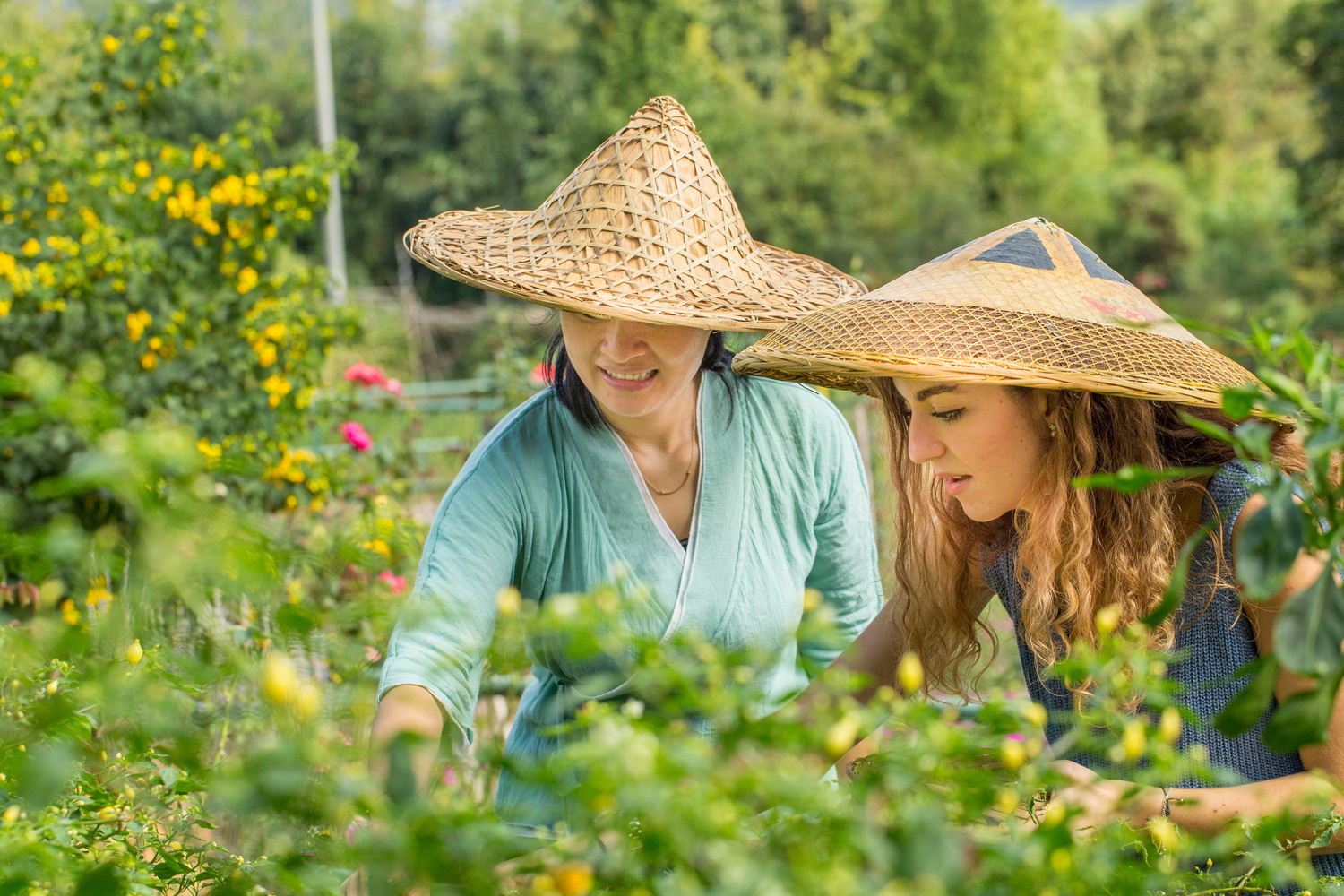
A slow hour picking greens in a country garden makes for one of the quieter outings, and there are activities every week and an excursion each month.
Weekend outings reach the rice terraces outside Guilin, and the trails above them leave room for a handstand with a whole village below.
Pengyou, students from our local partner university, join activities too, so there is a native speaker close by to ask what you are picking.
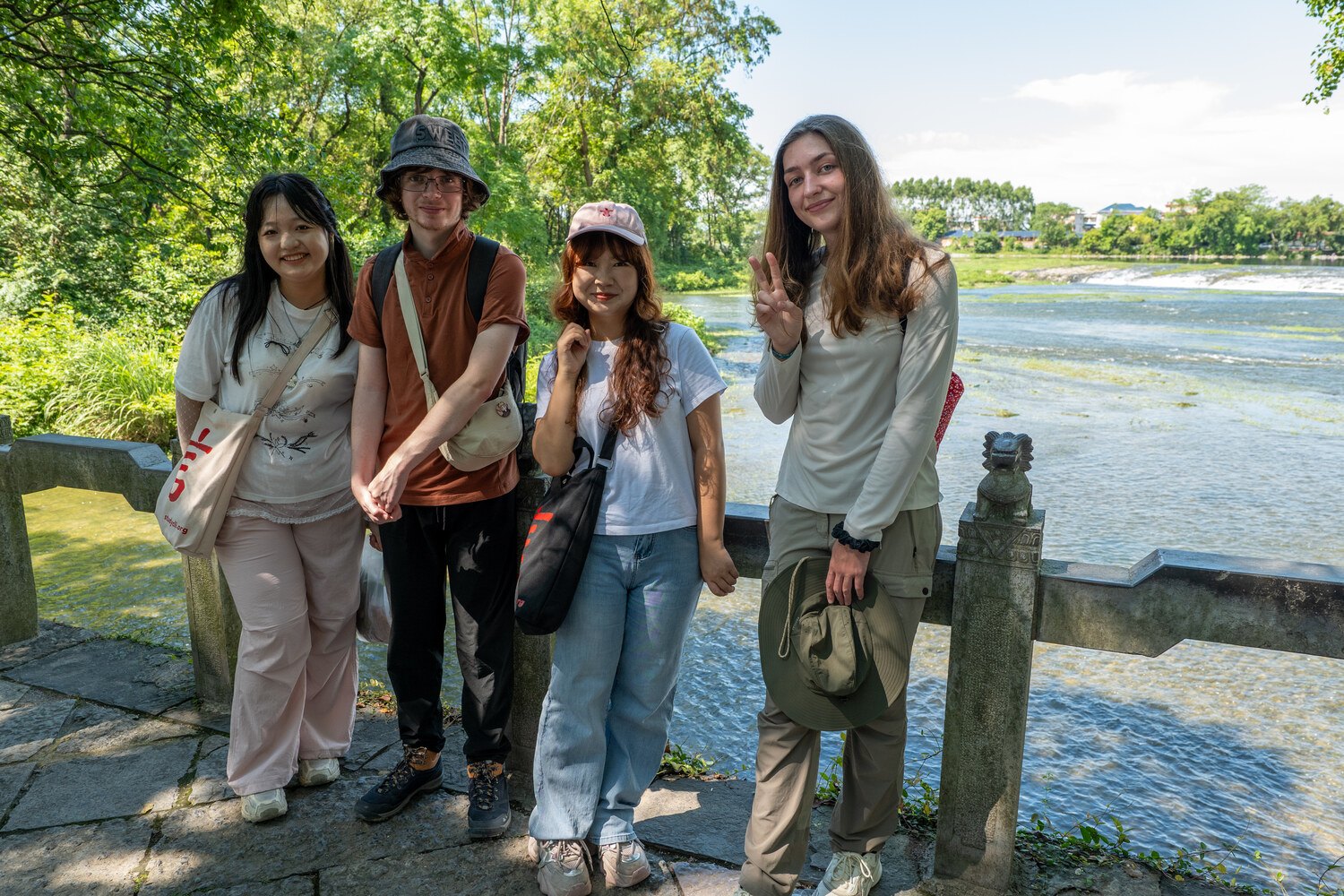
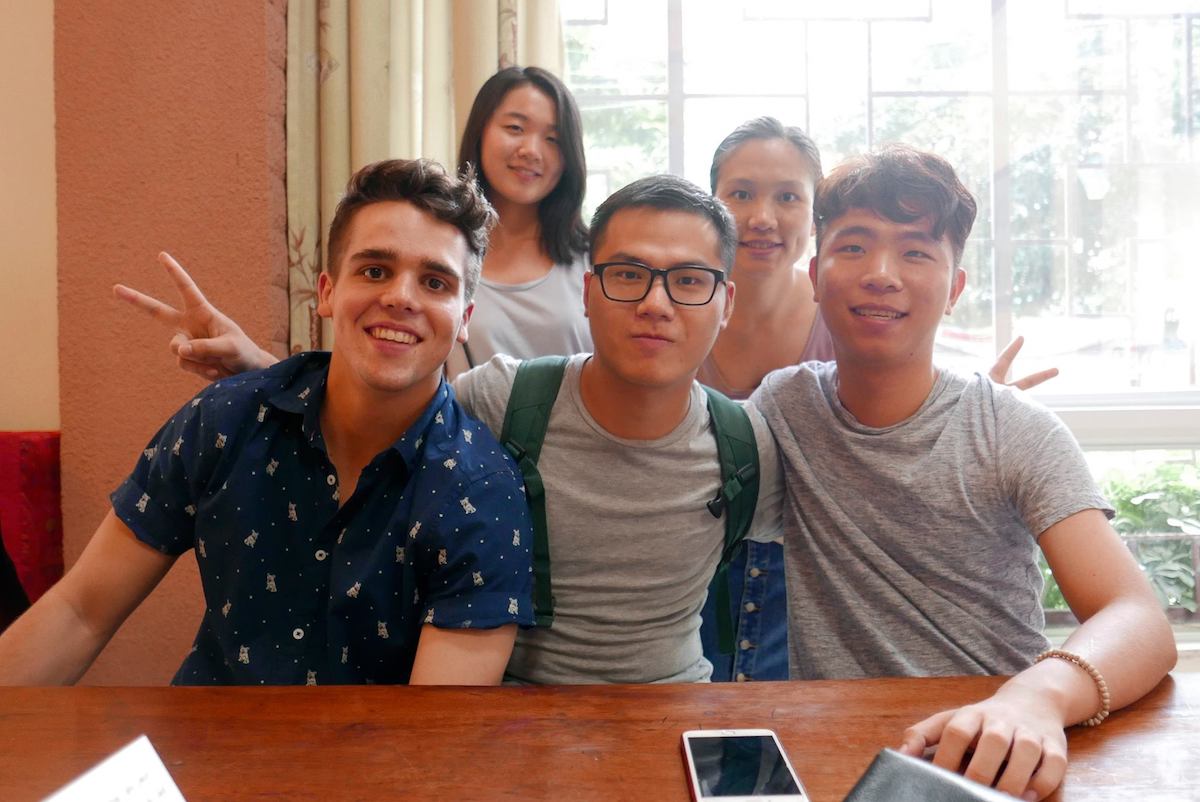
Over a stay of a few weeks you can end up in quite a few group photos like this one, between the weekly activities and the monthly excursion.
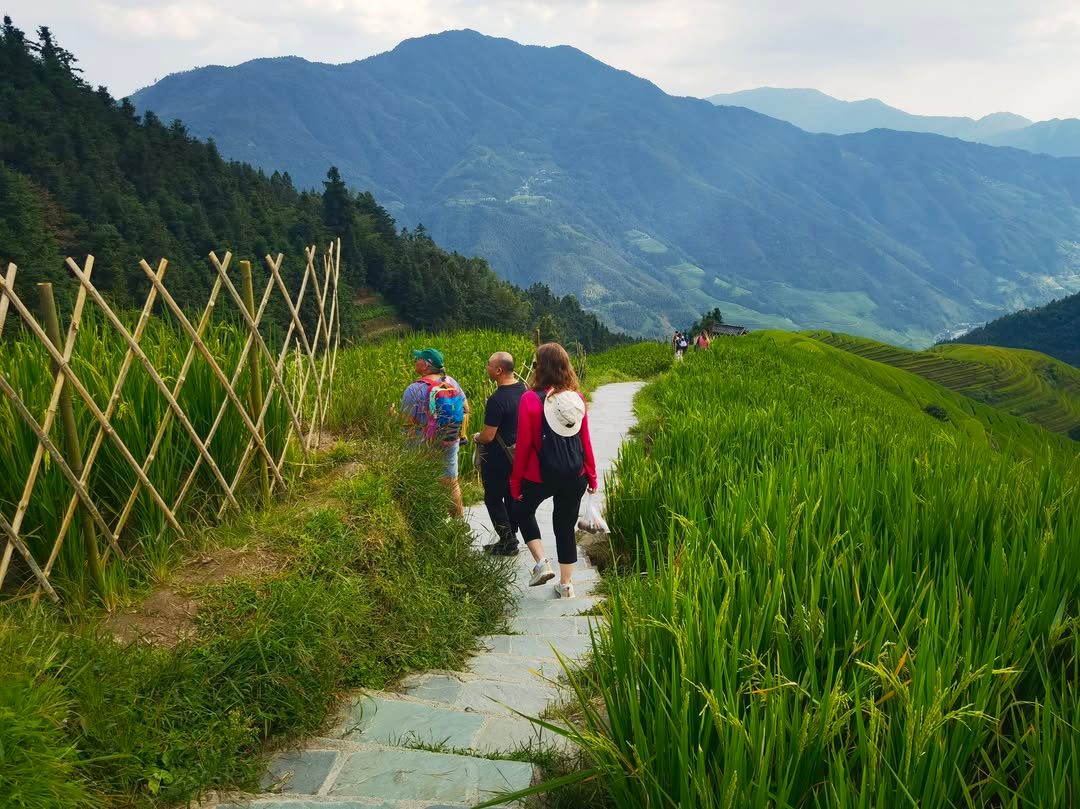
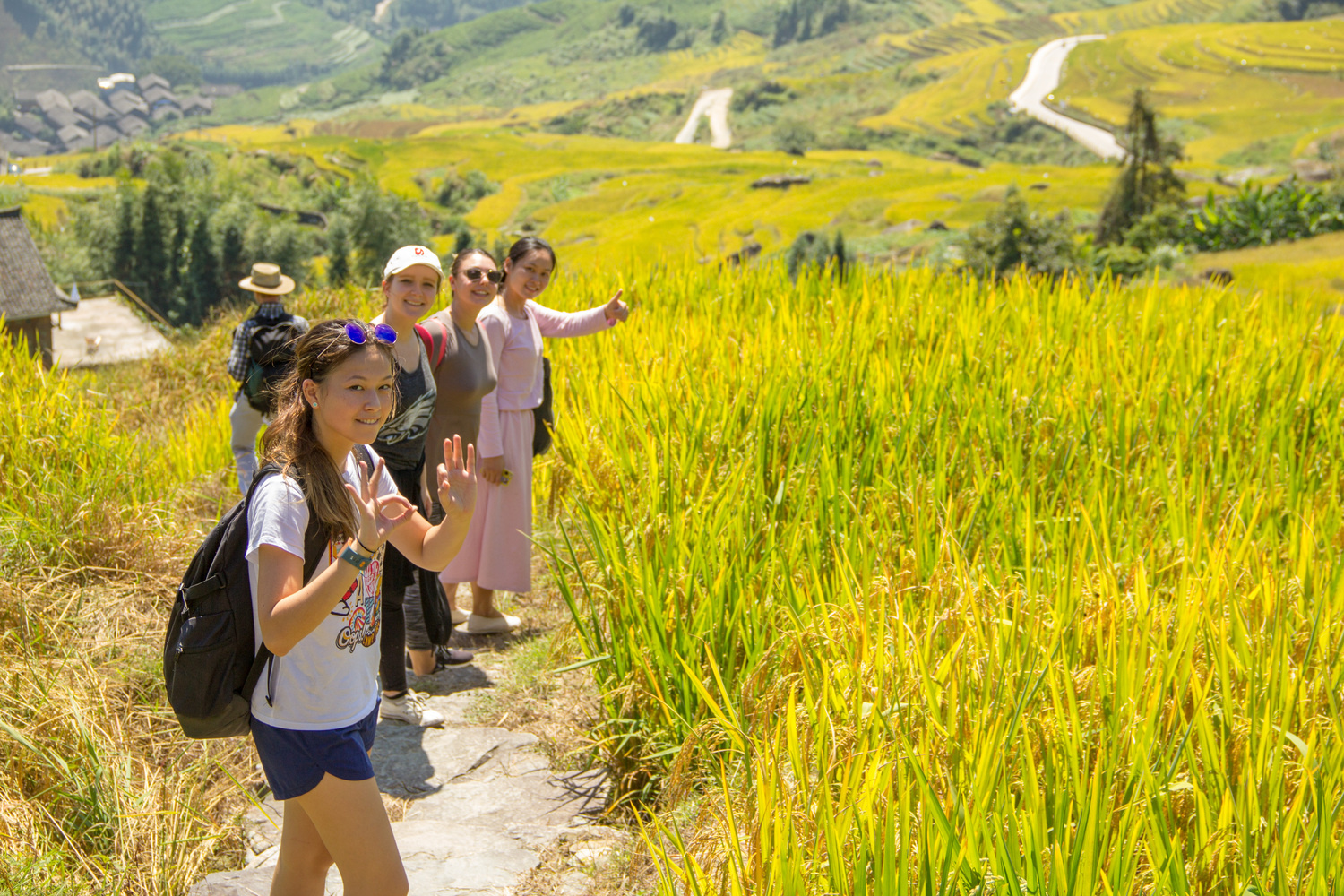
Ripening rice comes right up to the edge of the path, and CLI's rice terrace hikes walk straight through fields like these.
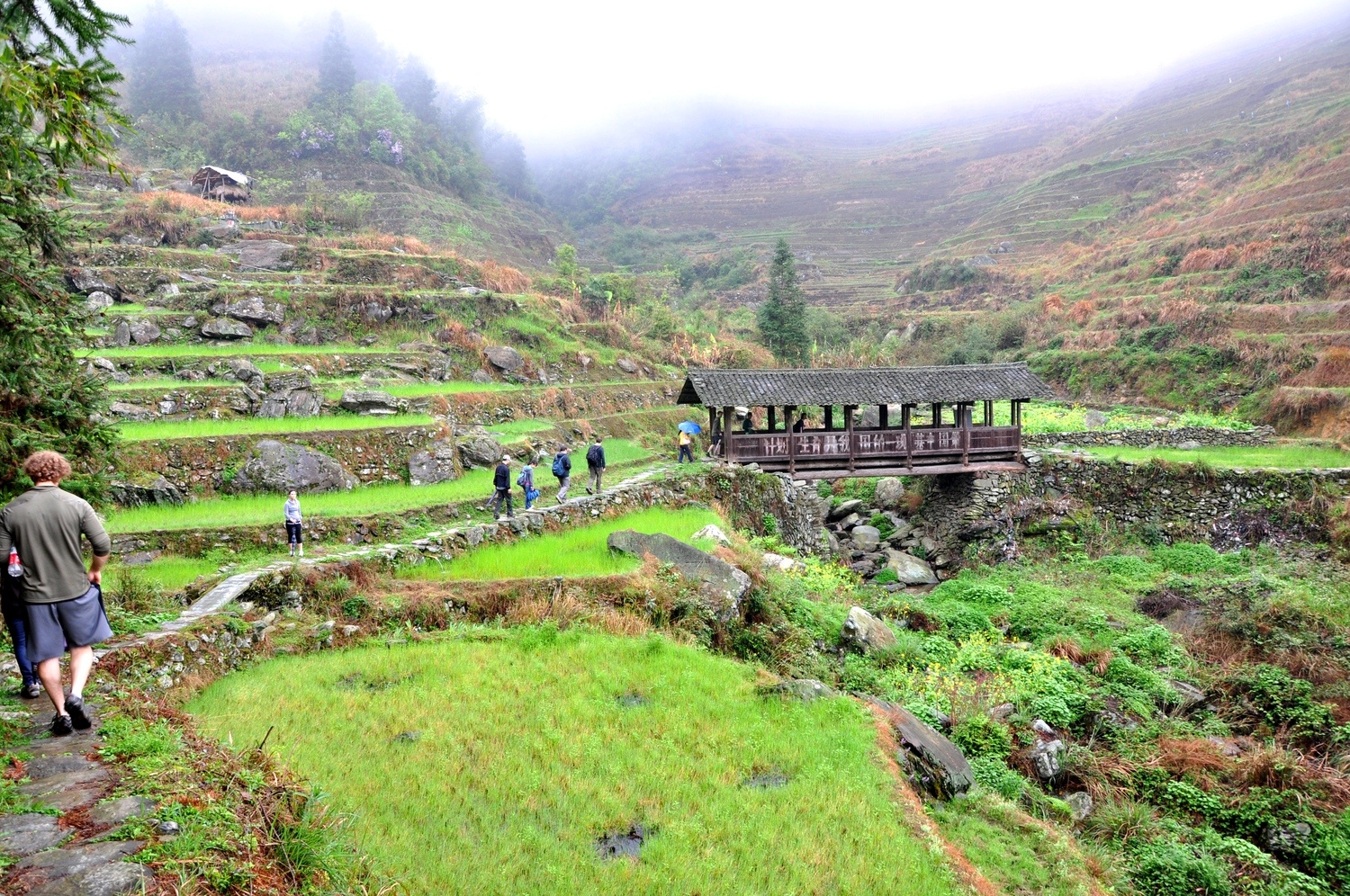
Mist hangs over the green terraces on the way to a covered bridge, out in the hill country where weekend trips from Guilin go.
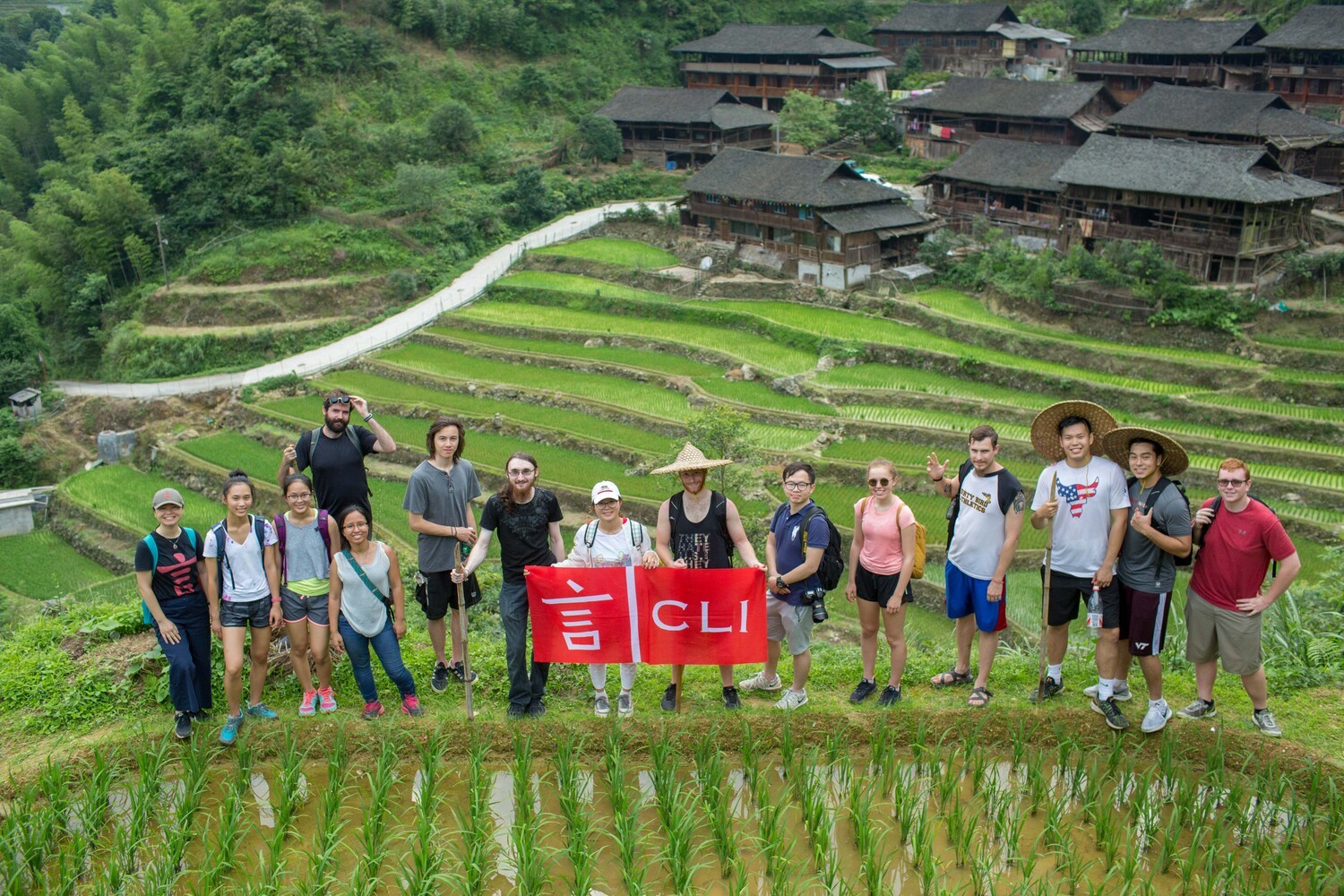
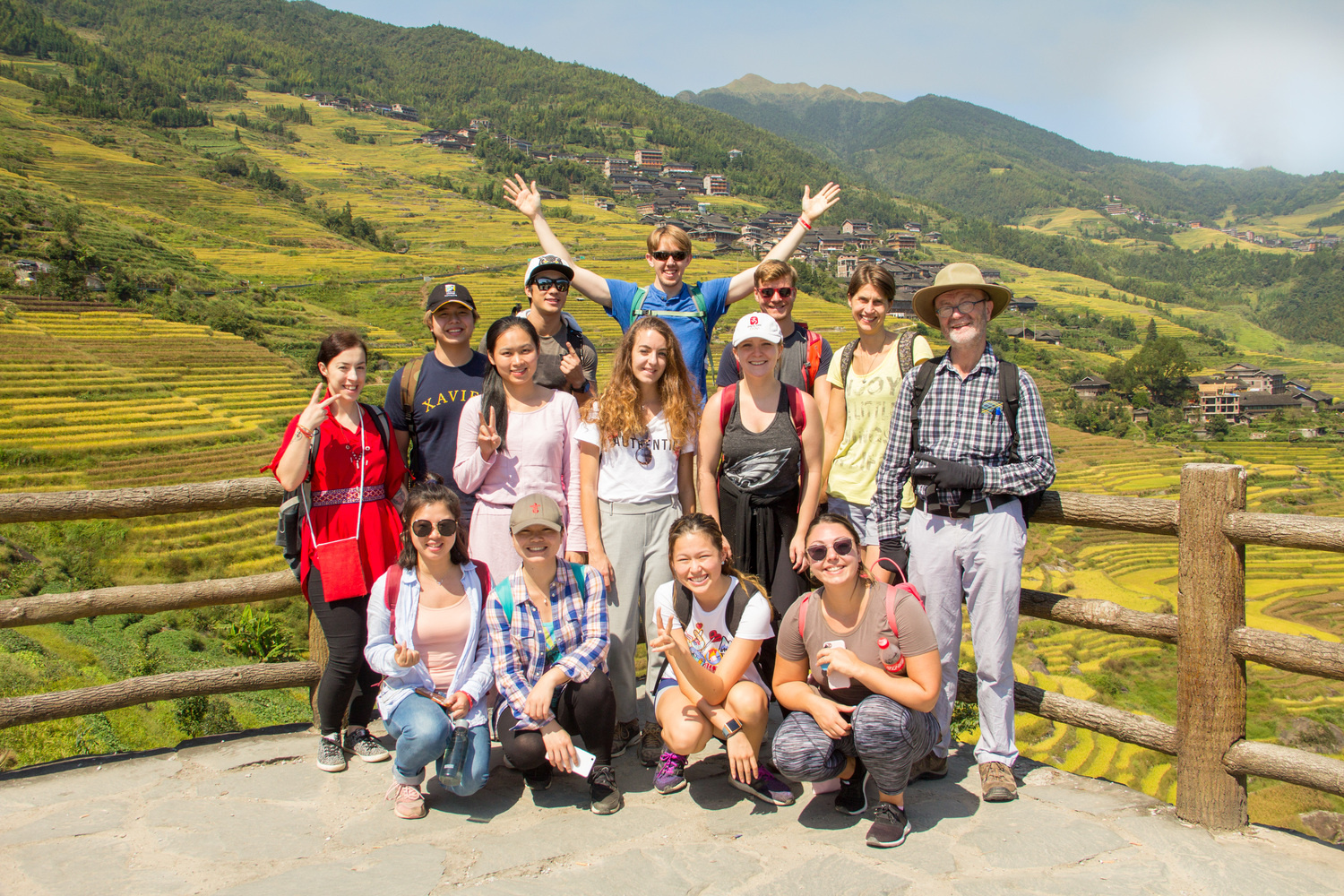
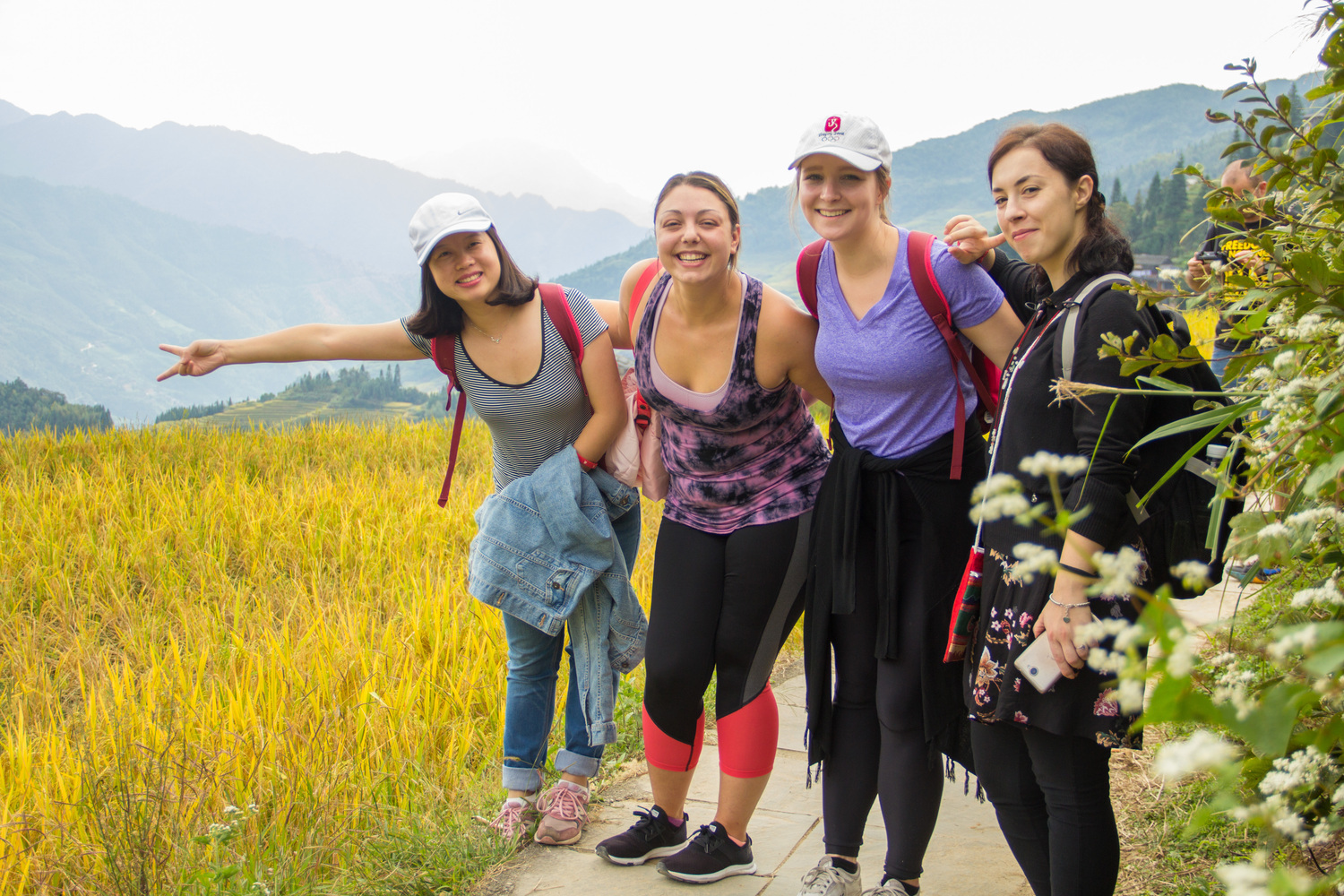
Hikes through the rice terraces are one of CLI's activities, and with a group this size there is always someone to talk to in Chinese on the way up.
A stone wall above the terraced hillsides is a fine spot for a rest on a weekend hike well outside Guilin.
Regional travel is part of what weekends are for, and a view of terraced hills and a wooden village is worth a phone photo.
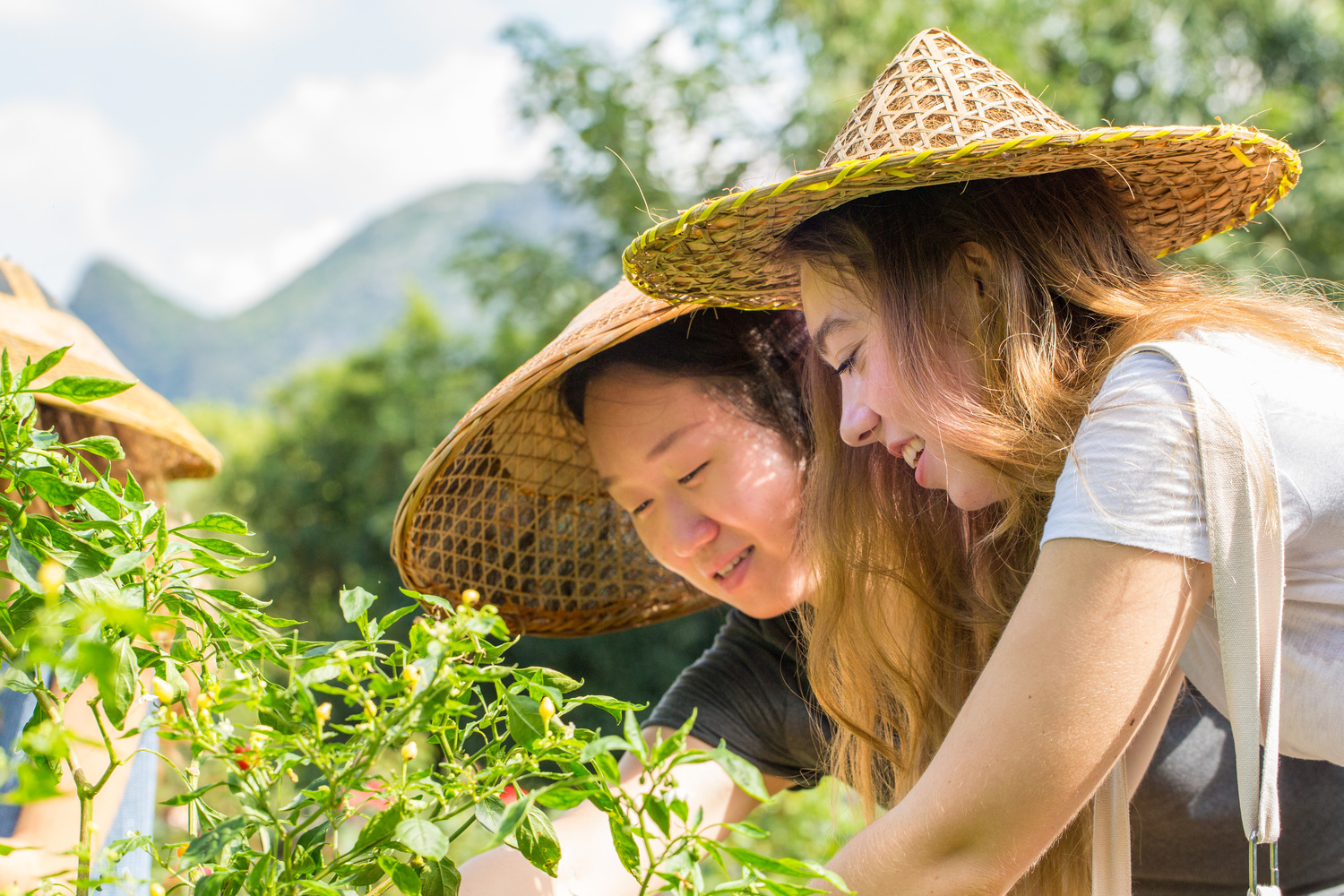
Guilin's summers are hot and humid, so woven hats come out for a morning in the fields.
A waterfall at the end of the trail and a CLI banner to show the group got there. A longer stay means more weekends, and more trails like this one.
With the wind behind it, a CLI banner makes a good cape above the golden terraces, and rice terrace hikes are on CLI's list of activities.
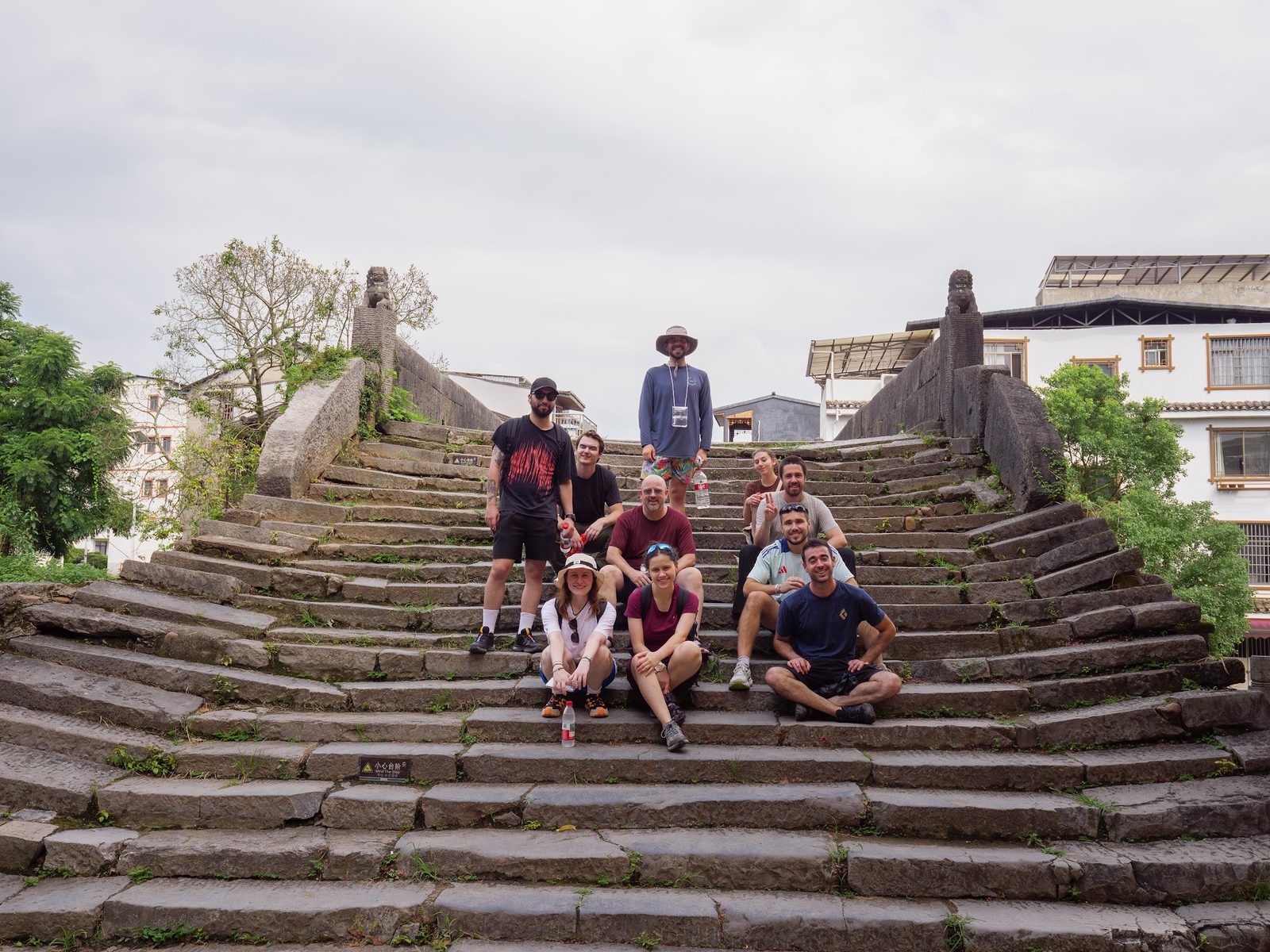
Wide old stone steps hold the whole group. Old towns and villages are among the places the monthly overnight trip reaches.
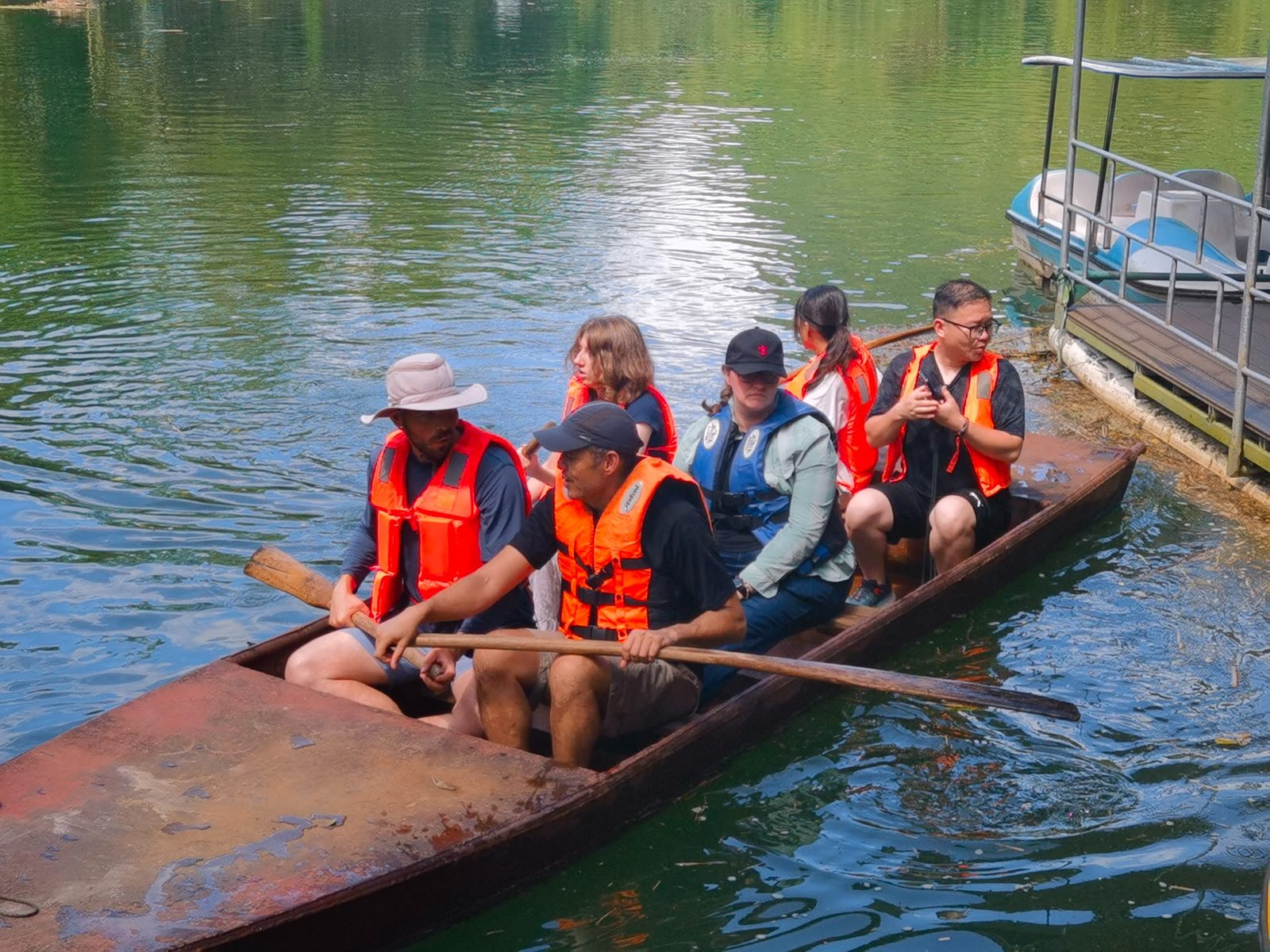
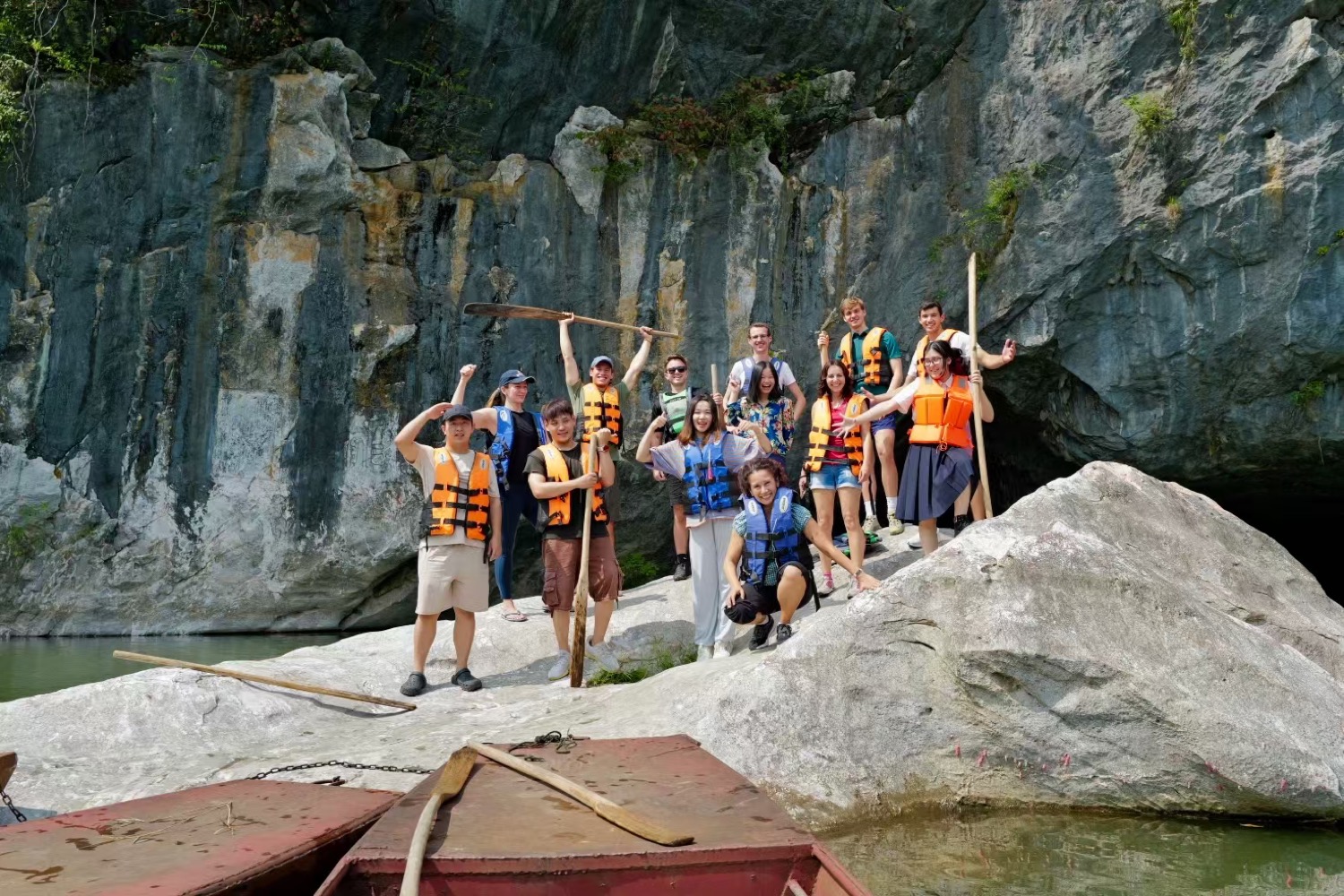
Life jackets on for a slow ride in a narrow wooden boat, and river trips are one of the ways to spend a weekend outside the city.
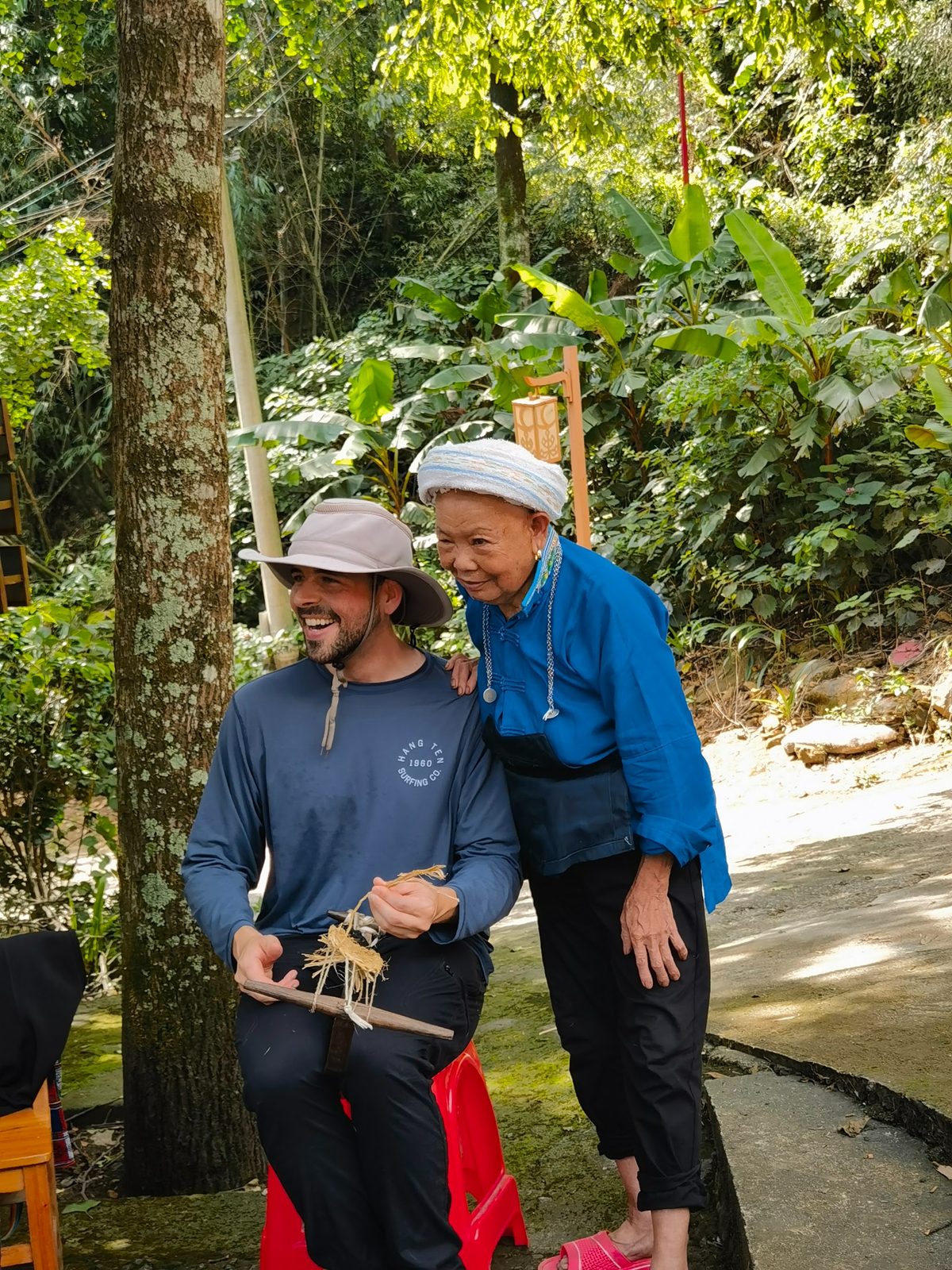
Twisting straw by hand takes a few tries. The monthly overnight trips reach villages outside Guilin, where there is plenty like this to ask about in Chinese.
Rappelling down a cave wall is one way to spend a weekend, and for trips you plan on your own, our team can share tips on where to go.
Climbing one of the karst peaks around Guilin is a CLI activity in its own right, and a flag at the top marks the group's arrival.
Weekends are for larger outings, and the countryside around Guilin has plenty of quiet corners like this lake beneath the karst peaks.
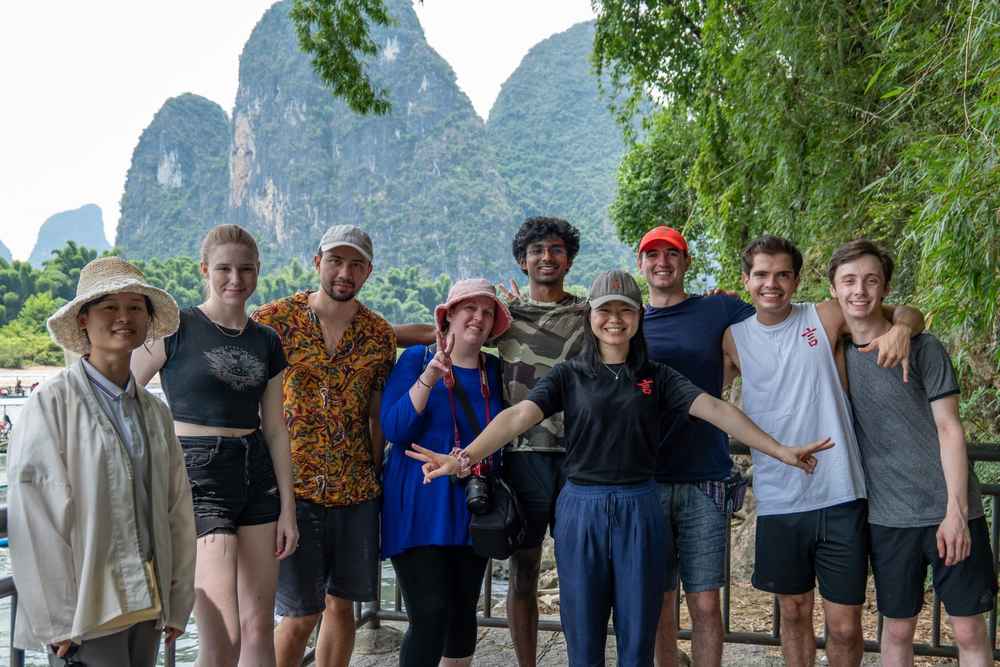
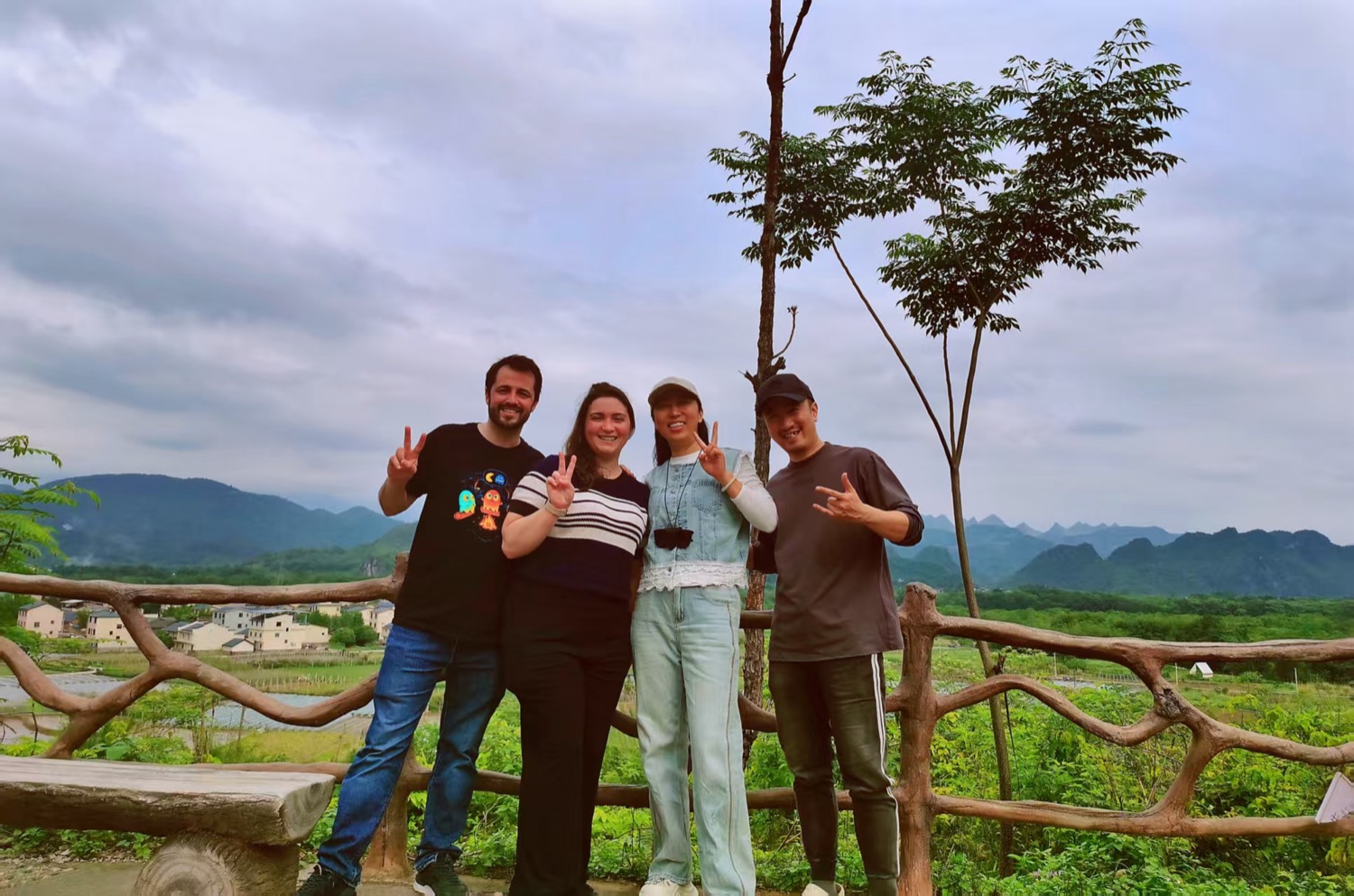
Peaks like these stand behind most group photos from the karst country around Guilin, where many weekend outings head.
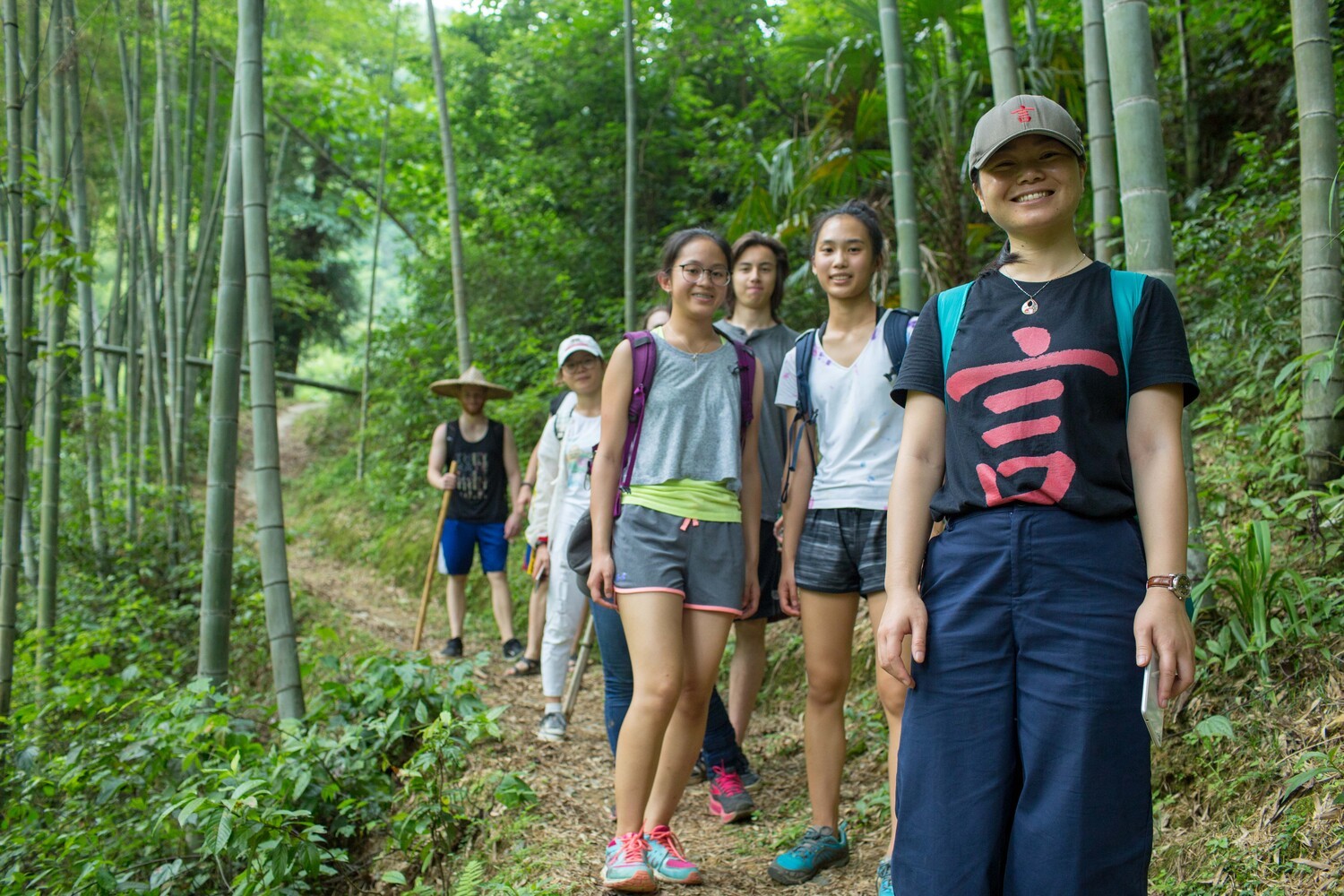
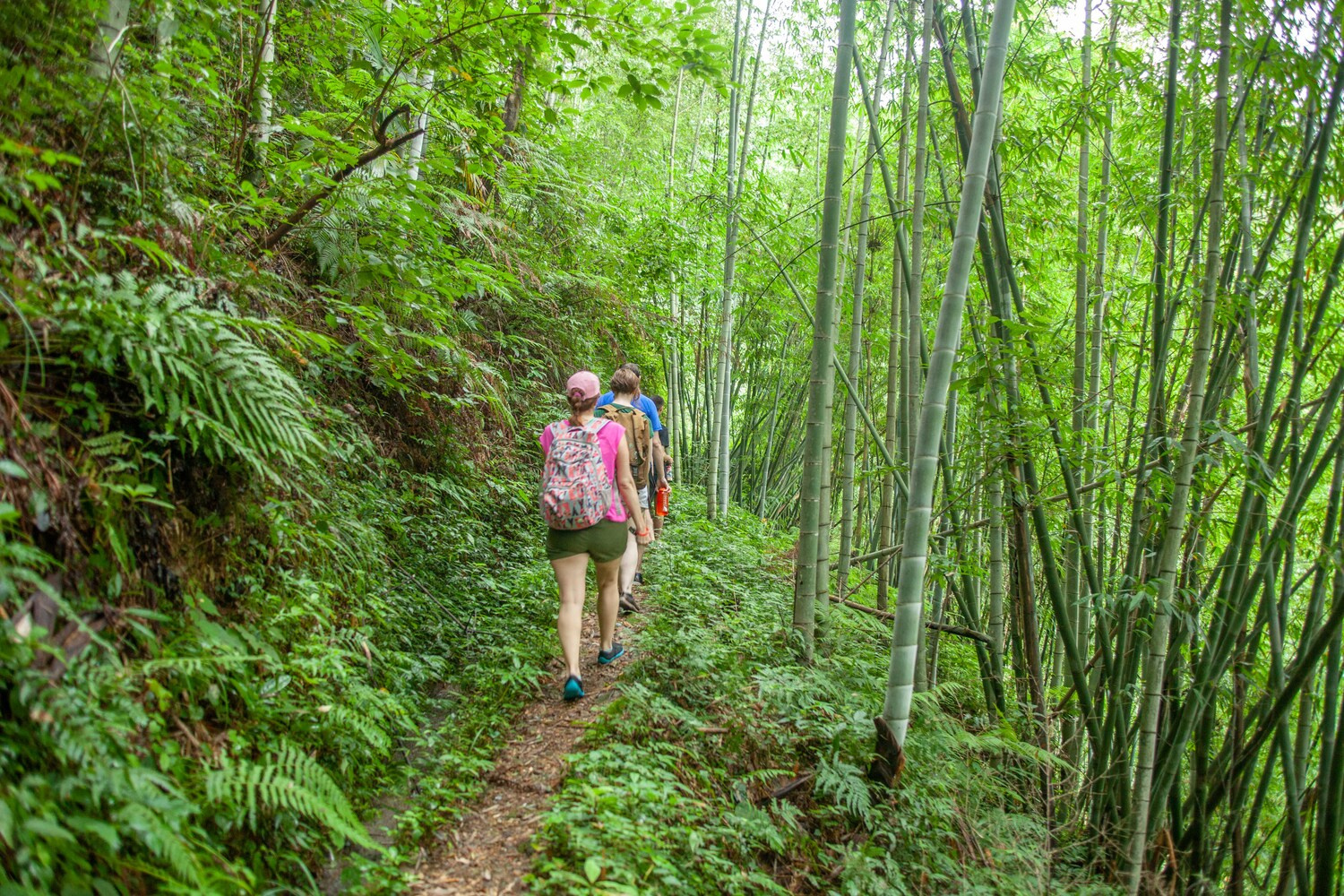
Hiking in the hills is one of the weekend outings, and a bamboo forest trail is a quiet stretch to walk and talk.
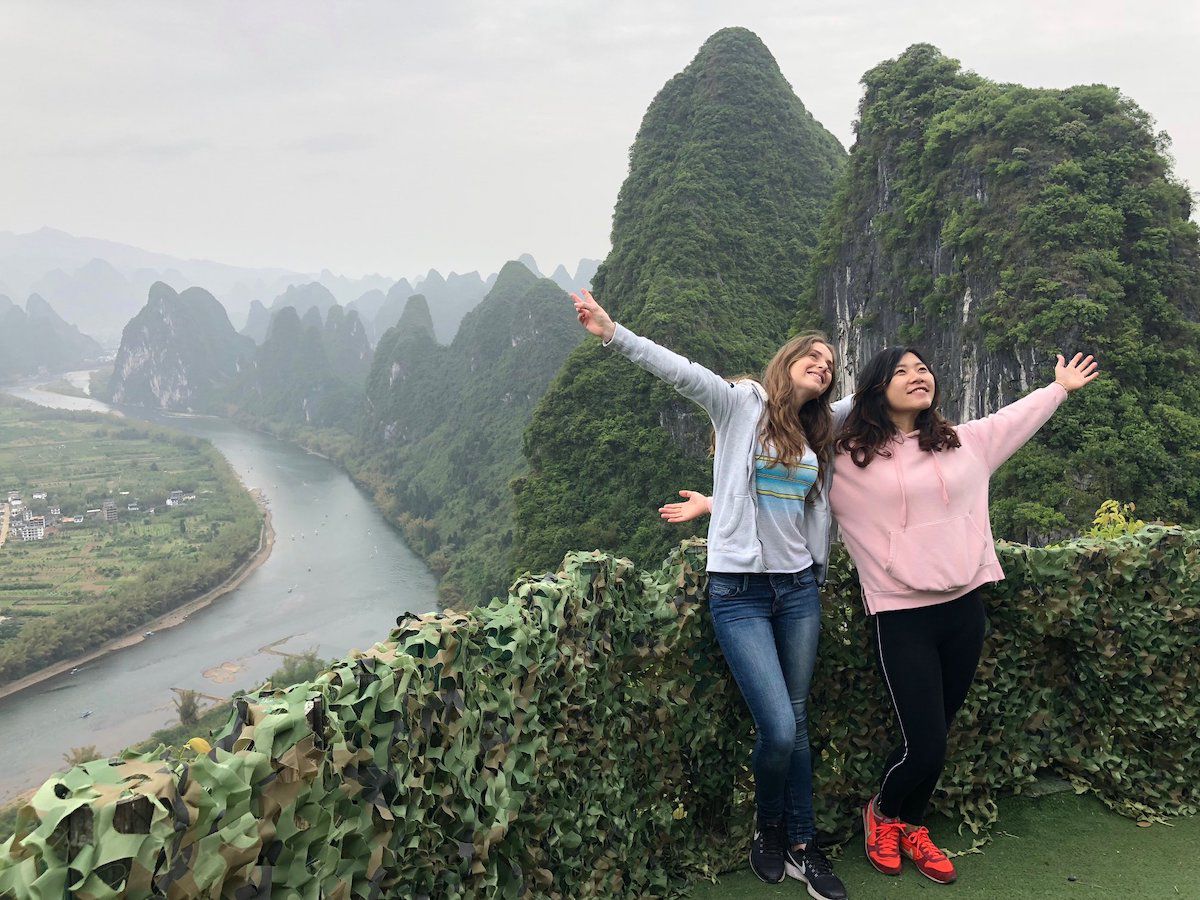
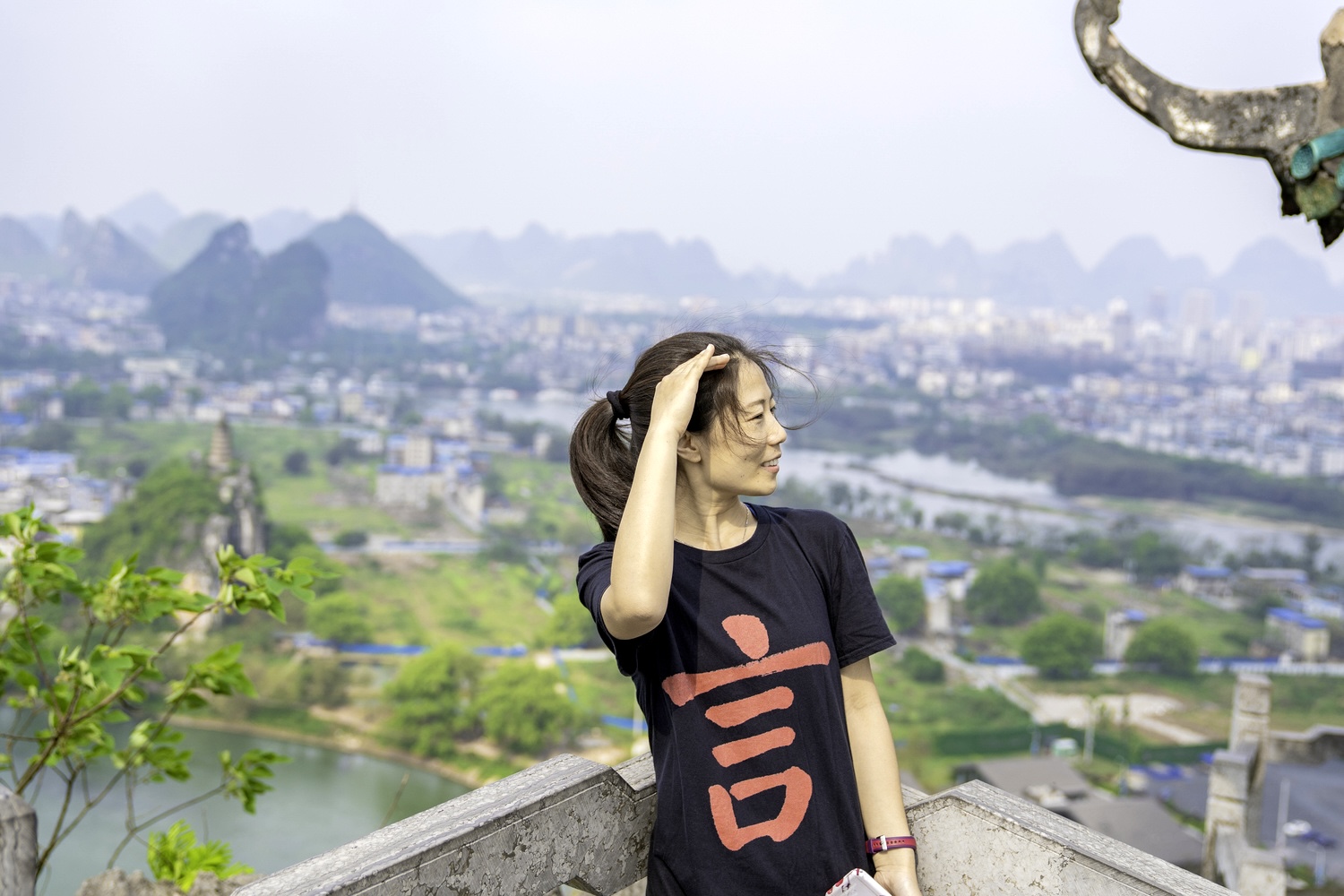
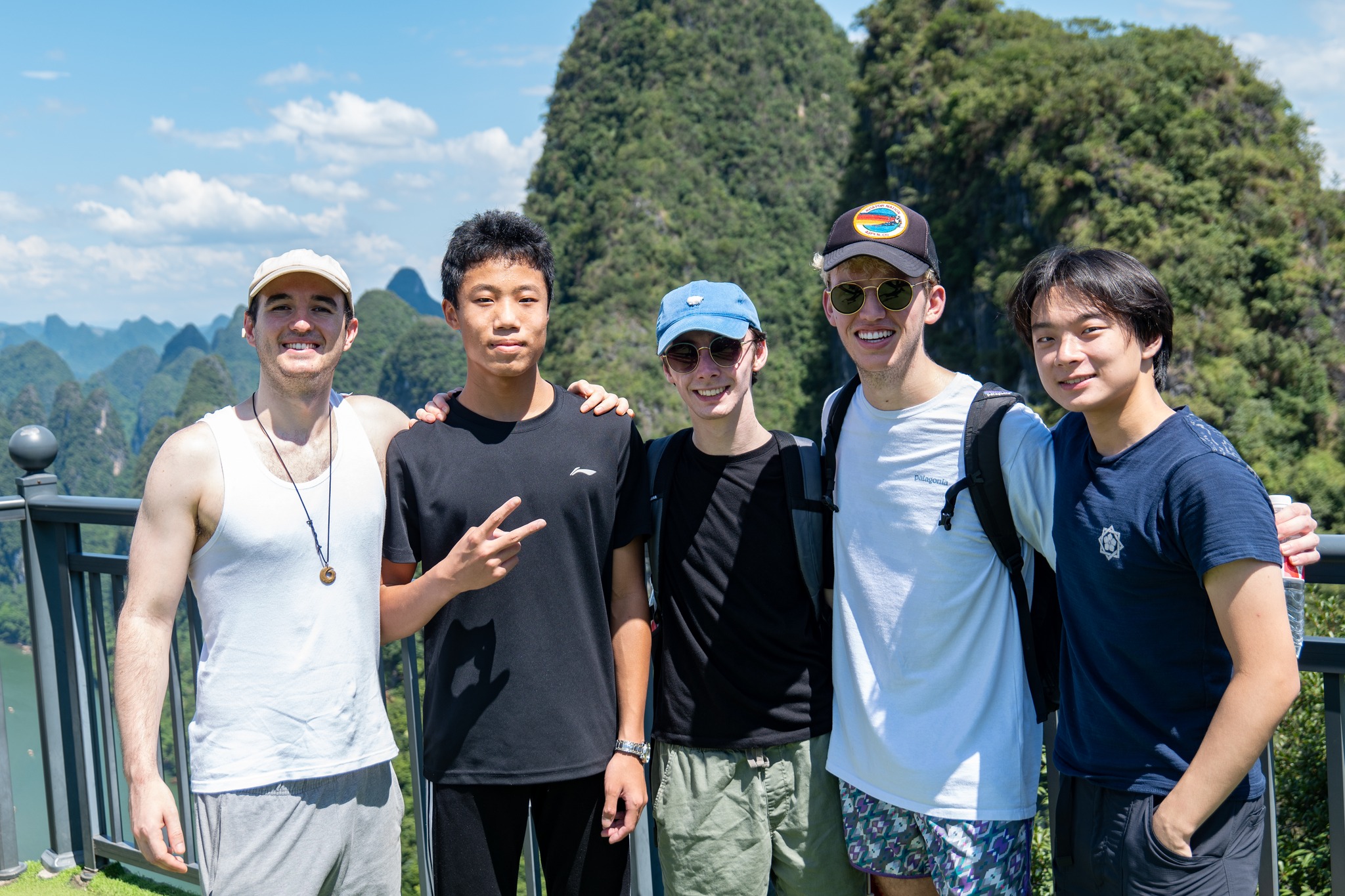
A quick portrait at the railing as the light goes, with the karst hills lined up beyond the city. Hikes up those hills are among the activities CLI runs.
An overnight trip outside Guilin leaves time to walk up through a hillside village of wooden houses like this one, above the terraced fields.
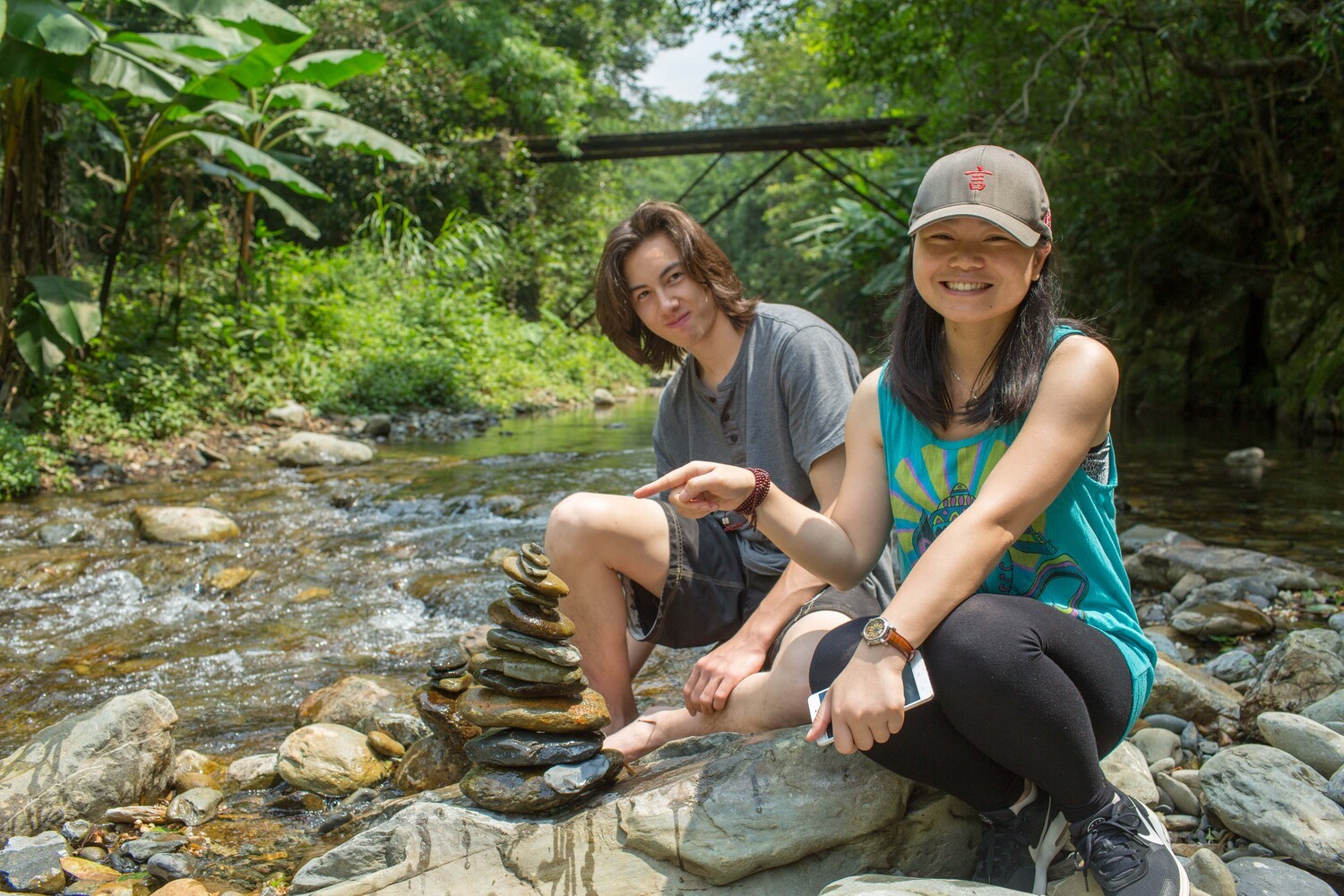
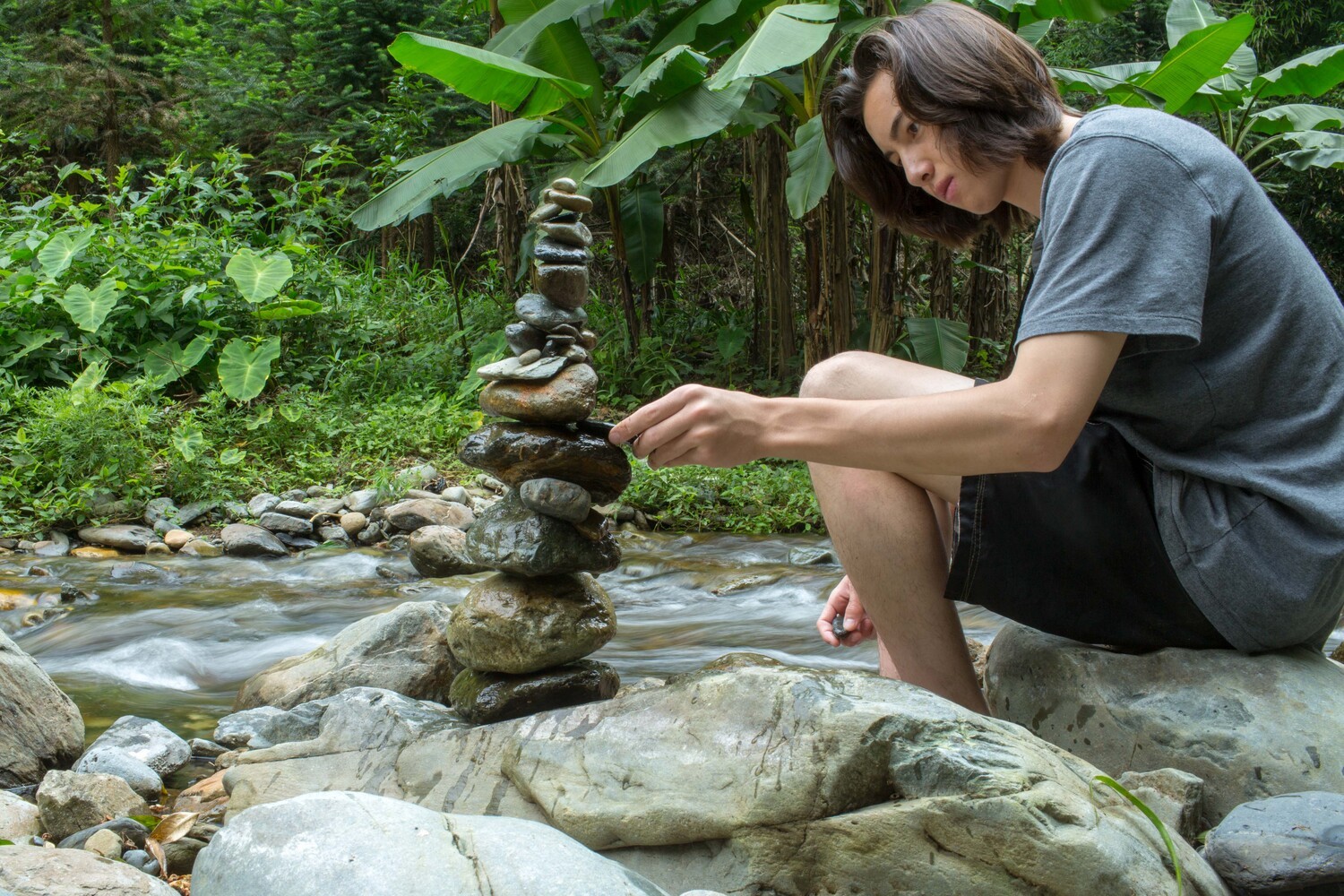
A weekend hike in the hills can include a quiet break by a creek like this one, with time to sit before the walk back.
In CLI's free Pengyou Program, a local university student joins activities like this sunset climb and gives you three hours of language support a week.
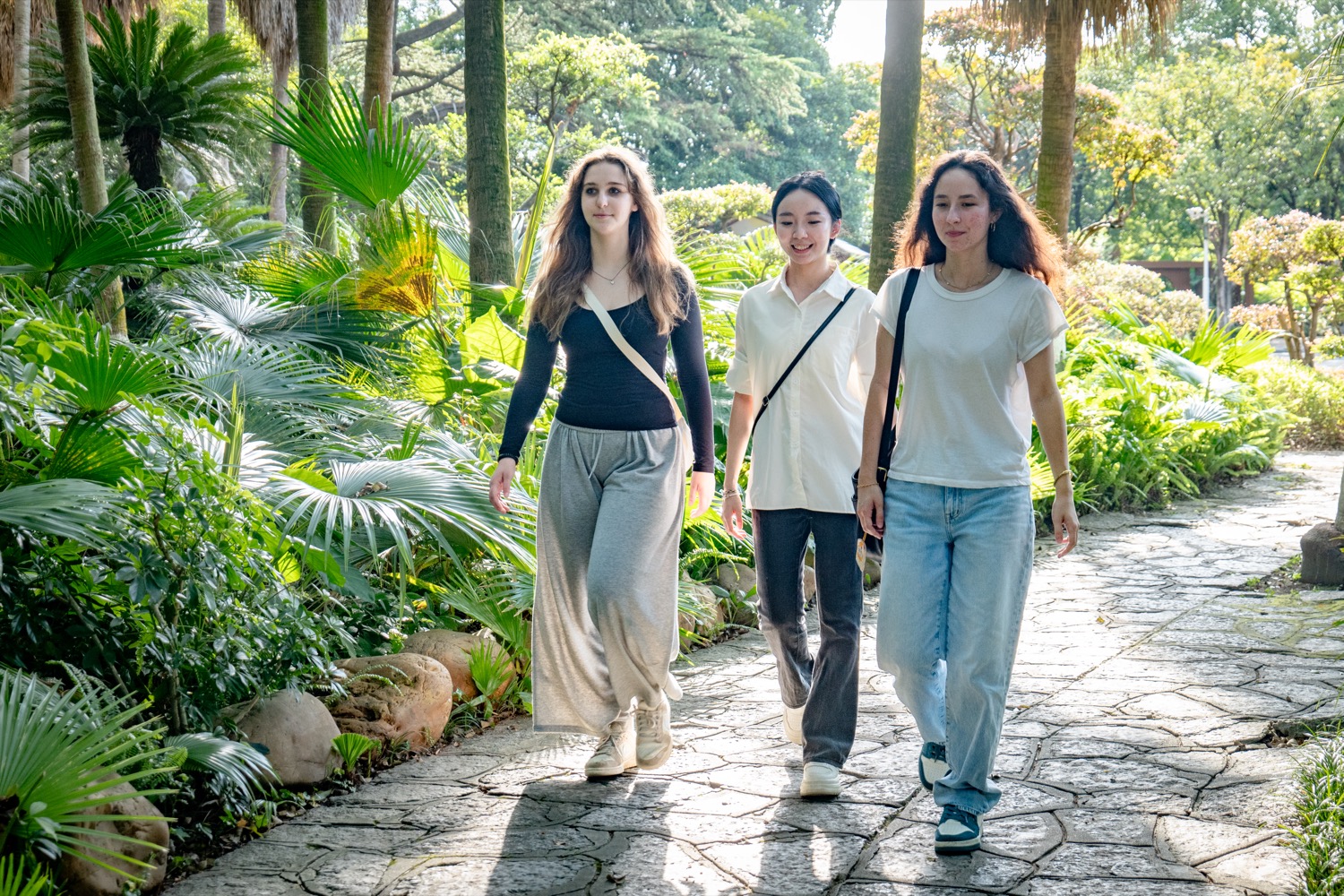
Guilin has lakes, parks and green space inside the city, so a garden walk like this needs no long trip.
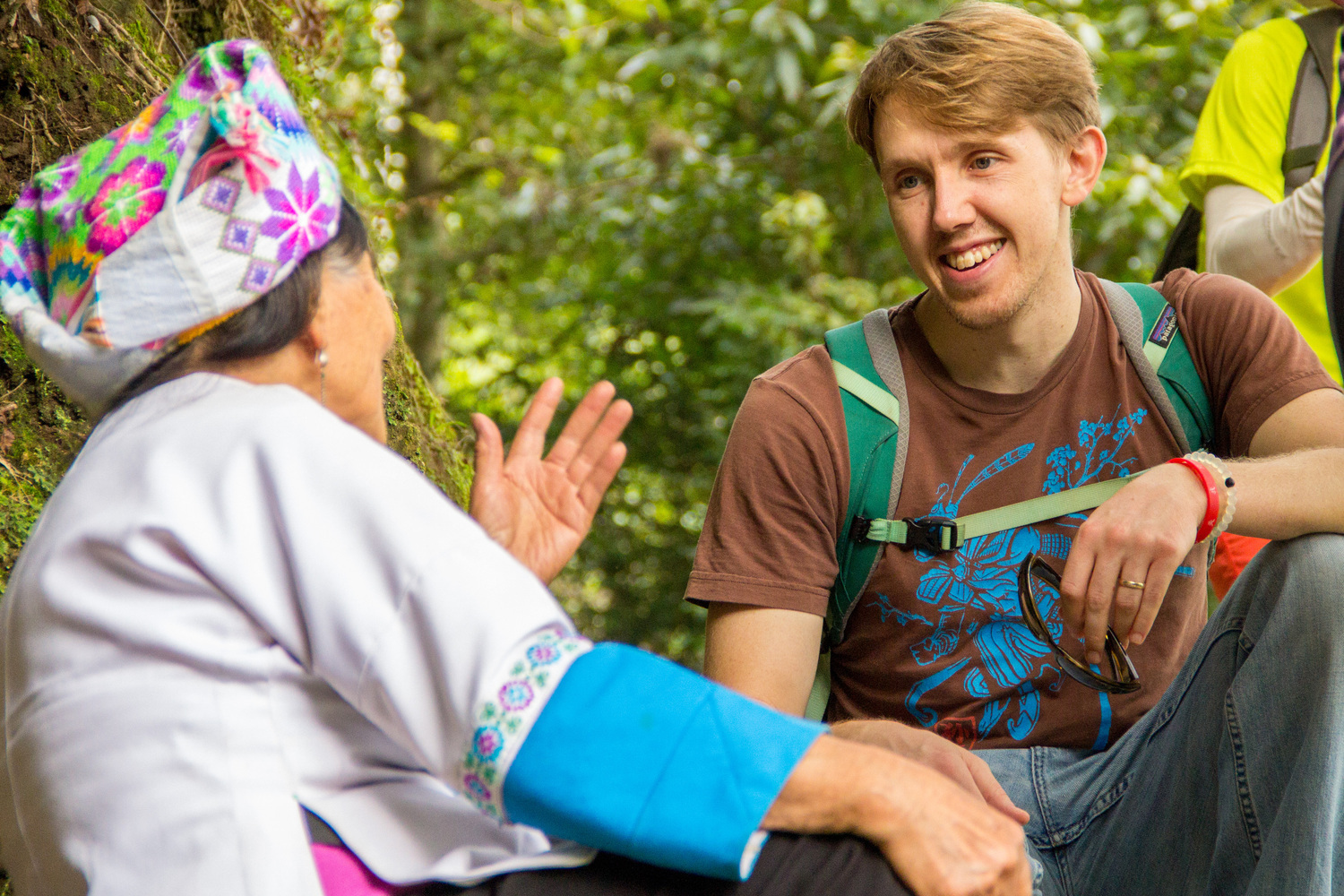
A long conversation on a day out, with hands filling in for the words that haven't come yet. Trips like this put the week's Chinese to work.
Teachers and pengyou often join CLI's trips and encourage Chinese conversation, and a break like this one, cups in hand, is a good time for it.
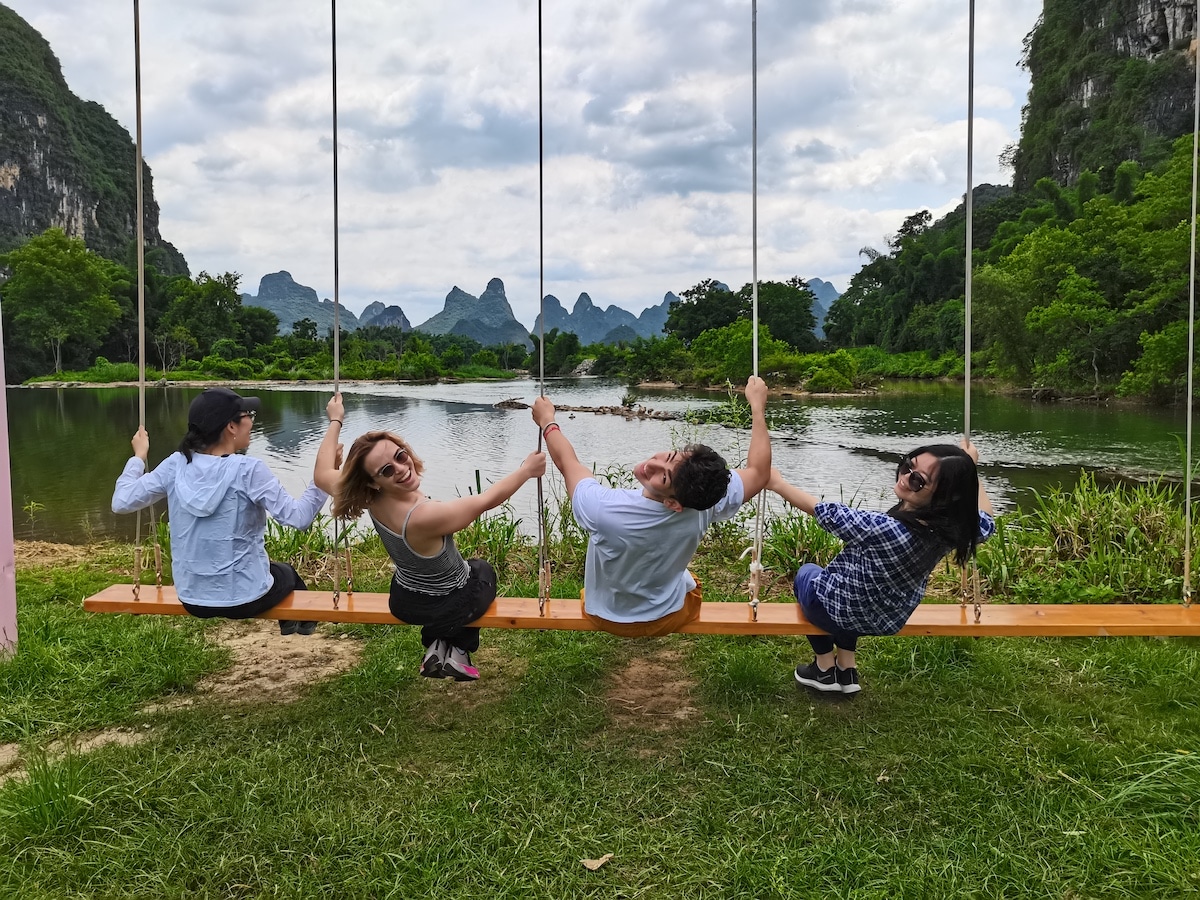
A weekend can mean a bike ride past karst hills, whether it is a group outing or a trip planned independently with classmates.
Little English is spoken in Guilin, so a chat on an old wooden bench like this one is a chat in Mandarin.
Old brick lanes like this one wind through villages outside Guilin, and a weekend trip leaves time to walk them slowly with a camera.
A hilltop viewpoint like this one is inside the city, so on a day when your classes are in the morning, it fits in around homework and review.
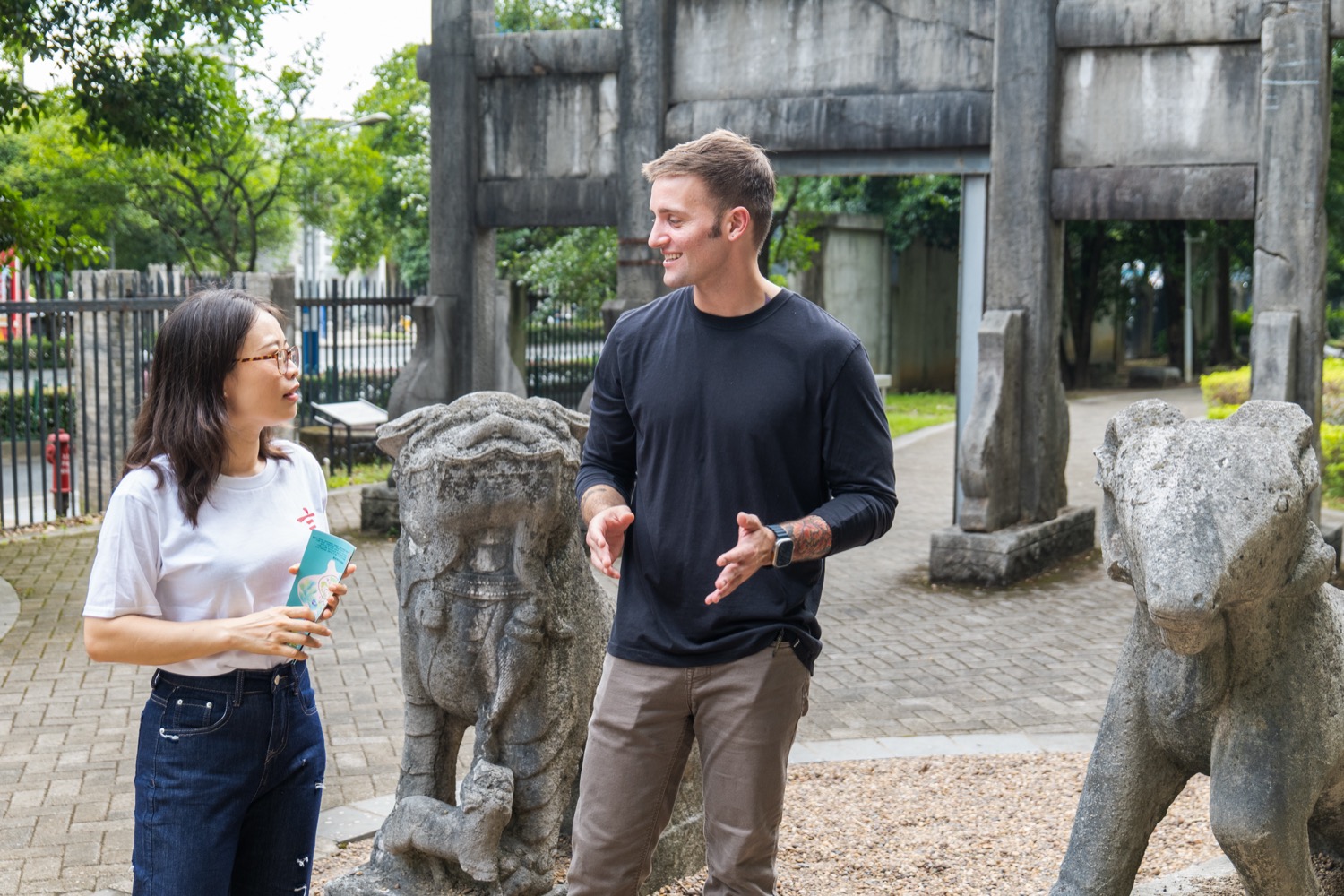
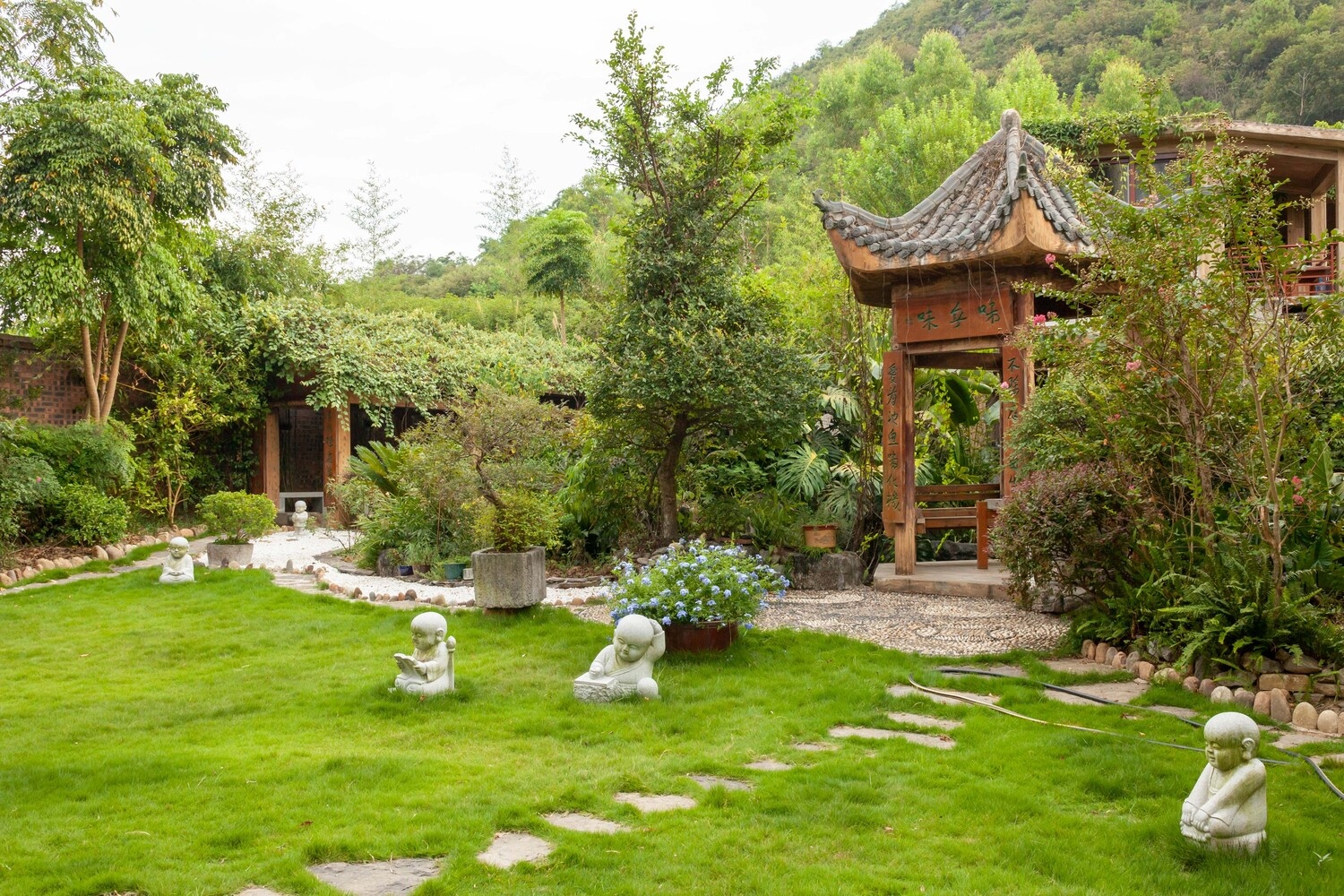
Parks are part of a typical weekday outside class, and a garden like this one, with old stone statues along the paths, is a quiet place to talk.
Li River boat rides are on the activity list, and the river is about an hour from the city, close enough for a day out on the weekend.
Guilin's karst joined the South China Karst UNESCO World Heritage listing in 2014, and students on the program live among it for their whole stay.
An overlook above the city at sunset is a good reason to start a hike up one of Guilin's karst hills late in the day.
Bright rice terraces fill the hillside below the railing, and a weekend in the hills beyond Guilin leaves time to stop and take them in.
Rice terraces are among the places the monthly overnight trip can reach, and a fenced viewpoint like this is where the group photo happens.
Farm fields run right up to the karst peaks outside Guilin, and a weekend of independent travel is enough to see plenty of them.
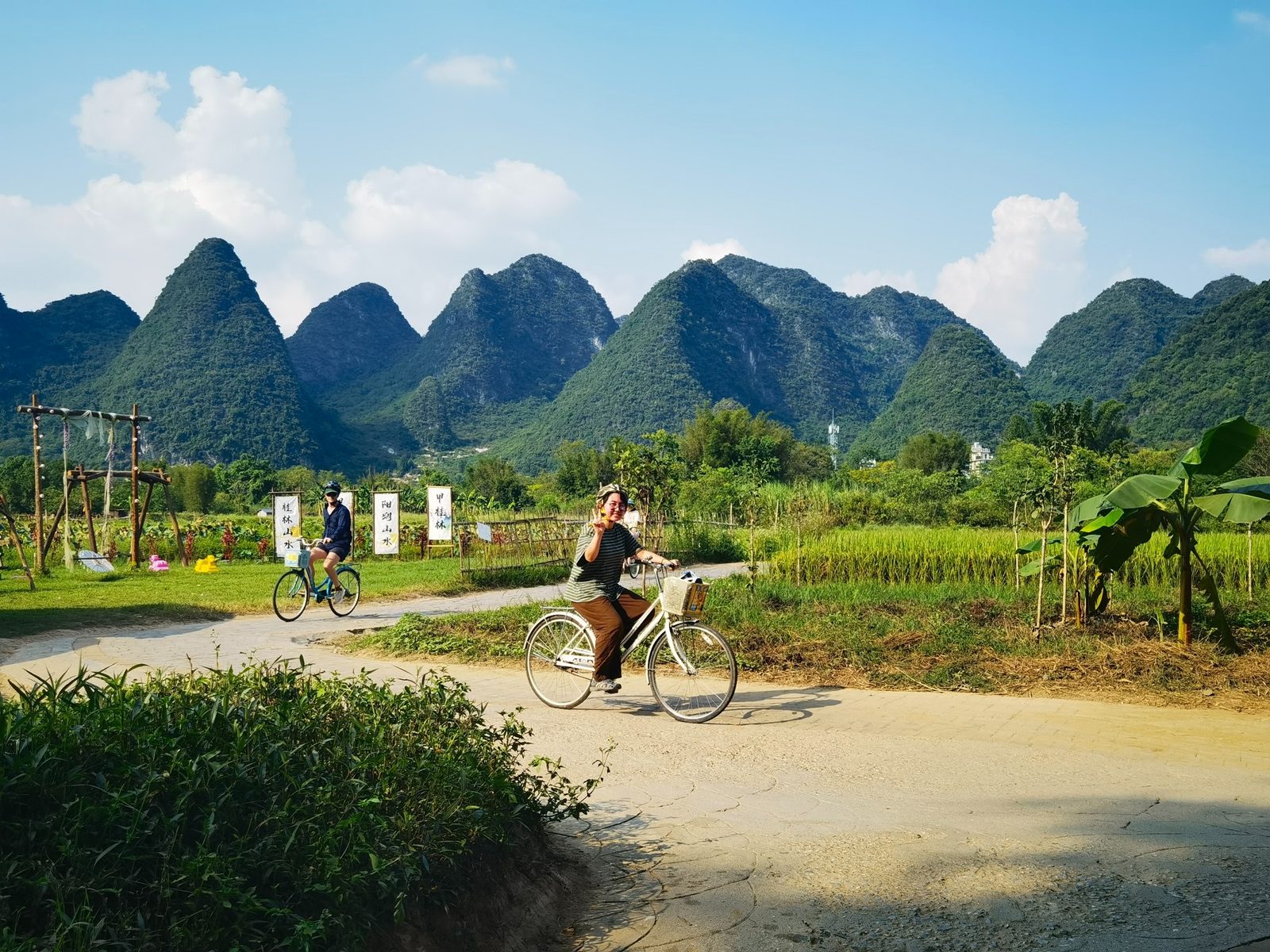
Quiet farm roads below the karst peaks suit a slow bike ride, and a free weekend is the time to go looking for one.
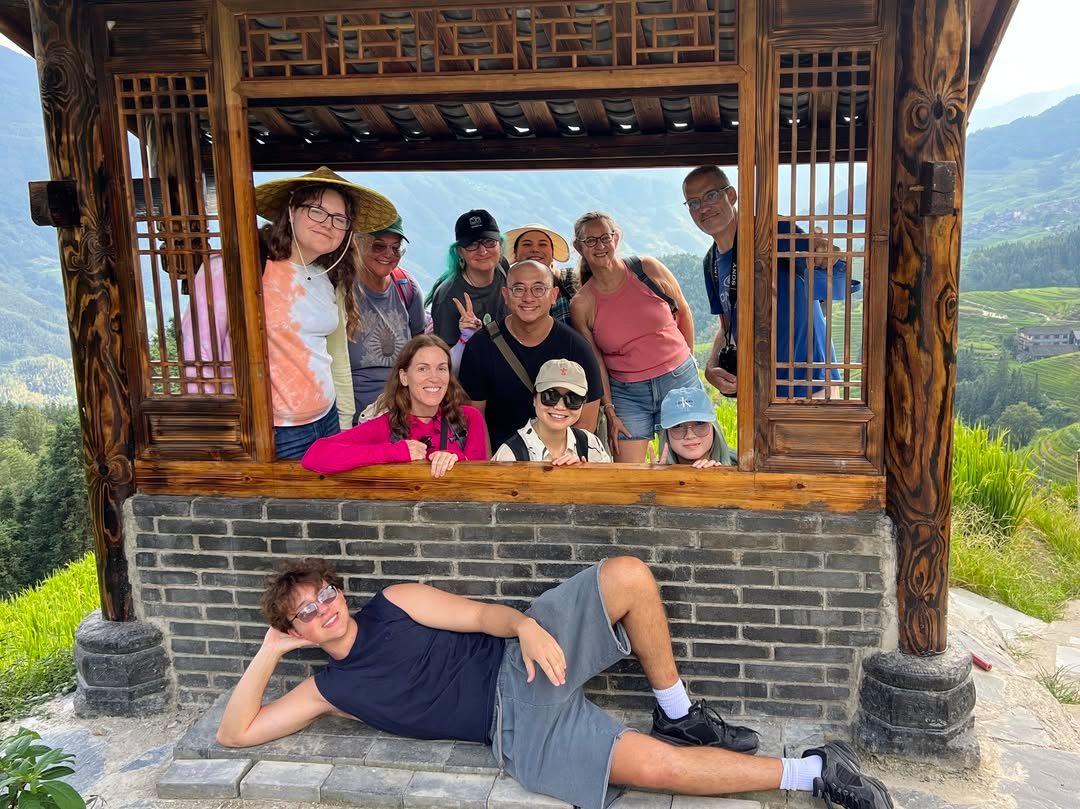
A carved wooden window frame at a mountain lookout fits a whole group, more or less. Rice terrace hikes come with stops like this along the way.
With the river and karst hills below the railing, a trip like this one is good Chinese practice, since teachers and pengyou often come along and encourage it.
A trip to the countryside comes with new vocabulary, such as 丝瓜 (sīguā), the loofah, learned with one in your hand.
Teachers and pengyou often join the trips, and on a long terrace path that means hours of Chinese conversation away from a desk.
Old arched bridges take a steep climb up one side and down the other, and they turn up often on weekend walks outside the city.
The words from each day's classes are meant to be used around Guilin, and describing a sunset over the karst hills to a friend is a fine test of them.
A pavilion at the top of a karst hill is where this group stopped for the sunset photo, and climbs like this one are part of CLI's activities.
Guangxi cooking leans fresh, sour and lightly spicy, and trips are a chance to try it somewhere unusual, even inside a limestone cave.
A village with a wooden drum tower is the kind of place the monthly overnight trip reaches, with Sanjiang's Dong villages among the destinations.
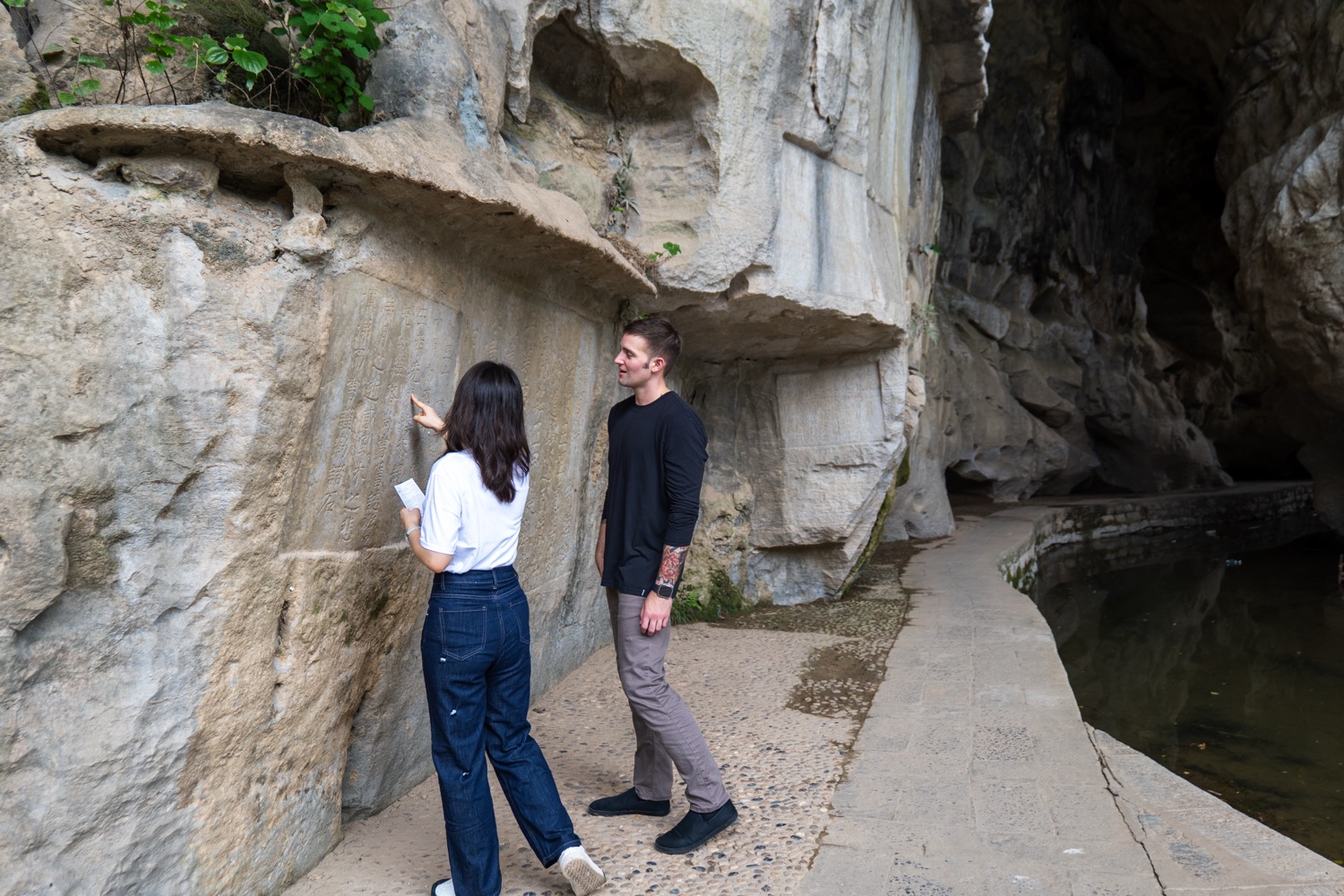
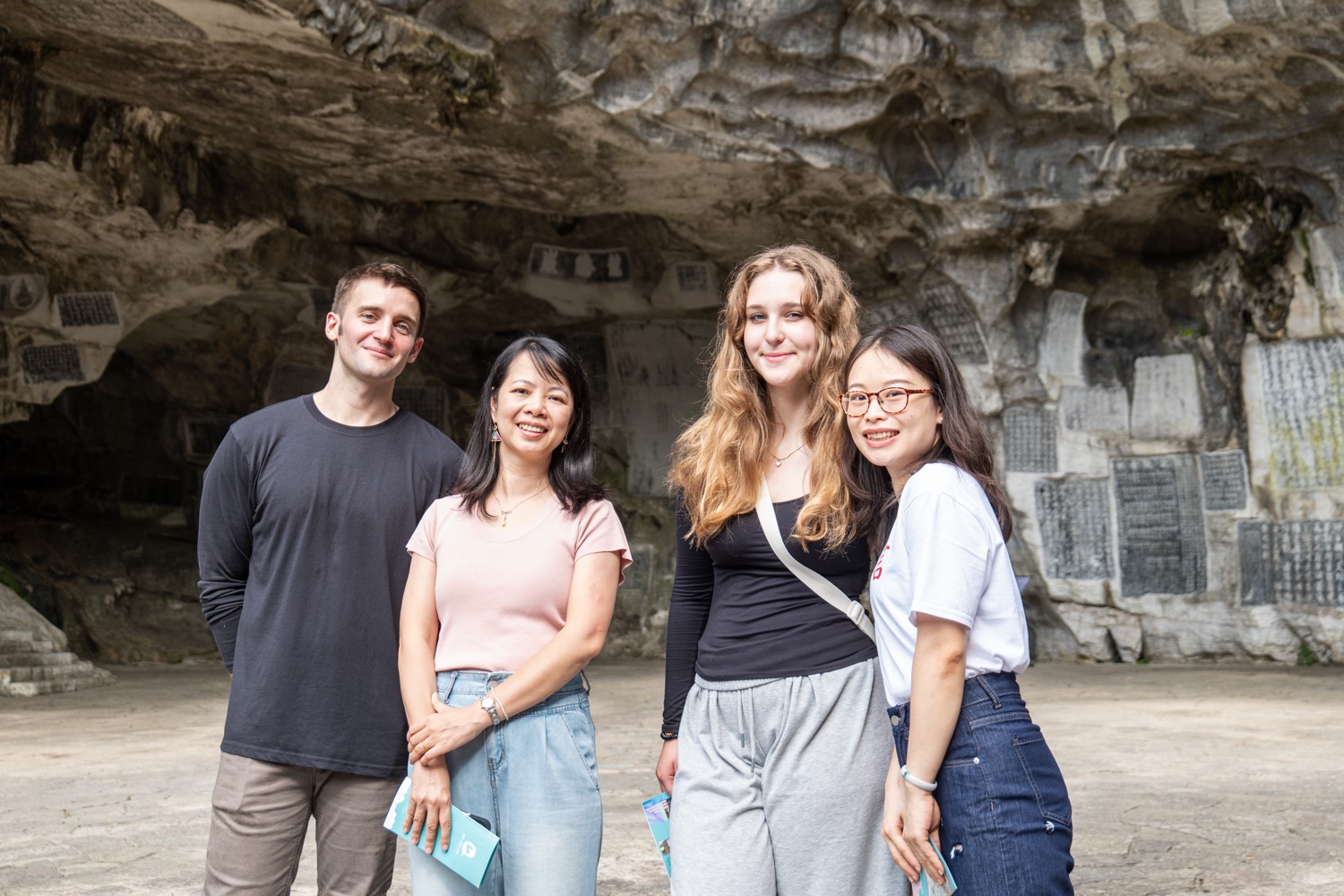
Inscriptions cut into the cliff beside a cave entrance are worth a slow look, and pengyou and teachers, who often join trips, can help with the older characters.
Orientation, usually on your first Monday, includes a tour of Guilin, and later outings take groups up the hills for a wider look at the city.
The CLI banner comes along on hikes up Guilin's karst mountains, and a ledge partway up is a good place to hold it high.
Late in the growing season the terraces turn gold, as they are here, and hikes through terraces like these are part of CLI's activities.
An old saying, 桂林山水甲天下 (Guìlín shānshuǐ jiǎ tiānxià), calls Guilin's mountains and rivers the best under heaven, and the hilltops show why.
Guilin has no large expat bubble, so Mandarin becomes part of daily life, on hilltop paths as much as in noodle shops.
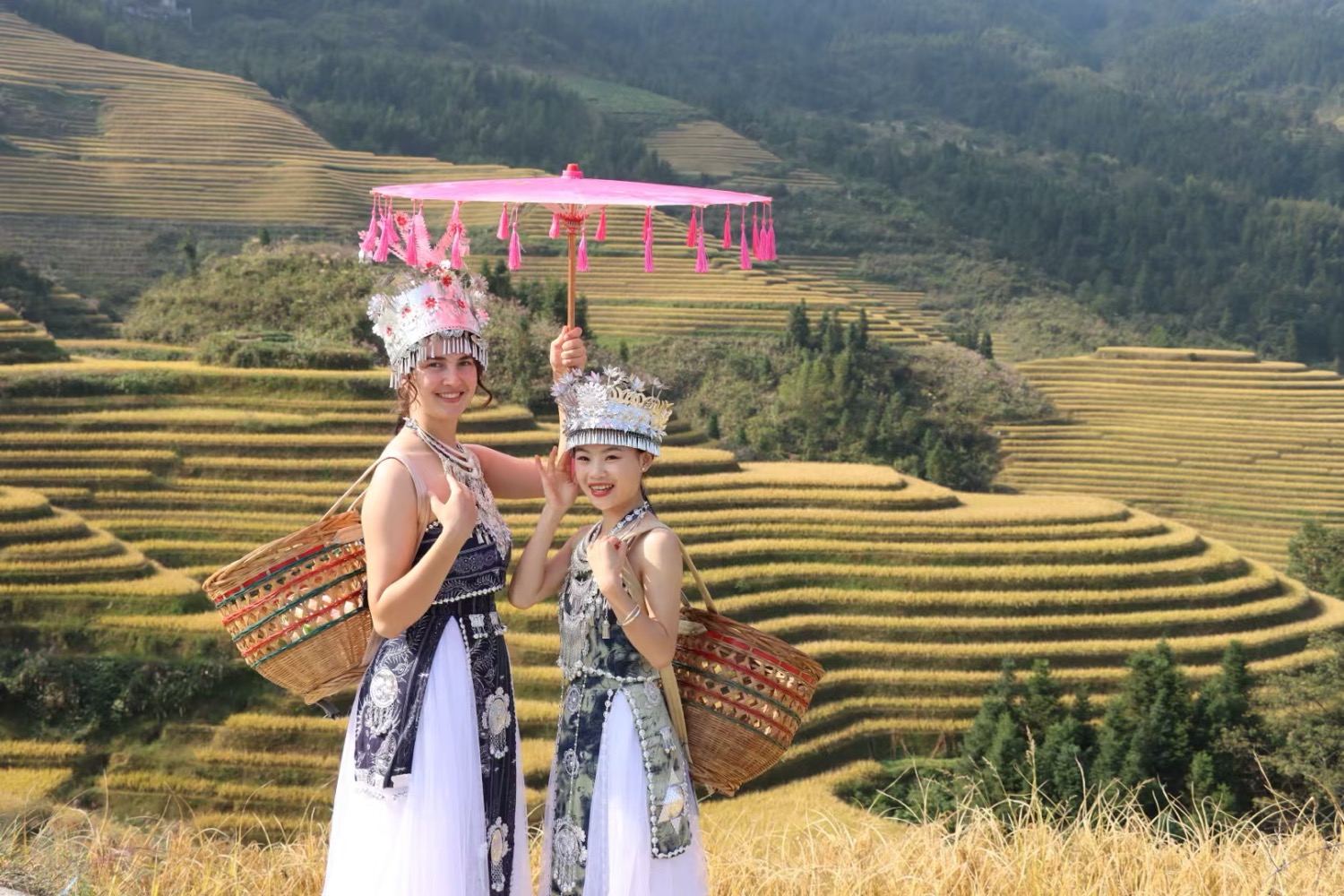
Guilin is in Guangxi, and trips into the hills show more of the region than the city alone, from terraced fields to embroidered dress and silver headdresses.
A covered bamboo raft leaves both hands free for photos, and bamboo boat rides are one of the activities CLI runs.
A single-file path between rice and bamboo is part of the terrace hikes, where the group stretches out and conversations happen two at a time.
Lakes, parks and green space break up the city below, and the karst hills around Guilin are close enough to climb after class.
Students at CLI range from high school students to retirees, and on a group hike they all climb the same steps.
CLI's activities include Chinese games, and a 象棋 (xiàngqí) board packs small enough to bring along to a lookout high above the city.
Evenings on the program are usually lighter, and some end like this, watching the sun set over Guilin's karst peaks from a pavilion.
Everyone fits on the wall at the mouth of this huge cave, CLI banner and all, on an outing into the karst hills around Guilin.
On a rice terrace hike, the group stops wherever the view opens up, and the golden fields fall away below the path.
A stay of a few months takes in several of CLI's monthly overnight trips, to villages and terraced fields like these.
Climbing straight up through a waterfall takes helmets and a firm grip, and weekends on the program are when larger outings like this head out of the city.
Rice terrace hikes are among CLI's activities, and the narrow paths along the terraces make for slow walking and plenty of talk.
River trips among the limestone cliffs make a full weekend day, with life jackets on and the week's Chinese still in use.
Trips outside the city lead to scenes like this one, an open hearth with a wood fire going, and plenty of new words to look up afterward.
Bicycles make easy work of the quiet roads among the karst hills, and the CLI team shares tips for weekends planned on your own.
Carved characters cover the cave wall behind the group, and picking out the few you can read is a good test of how far your Chinese has come.
Karst peaks line up along the river below the railing, the view at the end of a weekend climb with the CLI banner along.
The river winds through Guilin below this pavilion, and the karst hills on the horizon are the kind that appear in Chinese paintings and poetry.
Rowing a wooden boat as a group takes some calling out, and left and right are among the first words in Chinese to get real use on the water.
Weekend outings range from Li River trips to hikes through the hills, and a narrow trail through ripe rice keeps the group in single file.
A hilltop pavilion is a short climb from the city, so it fits into a relaxed evening after class.
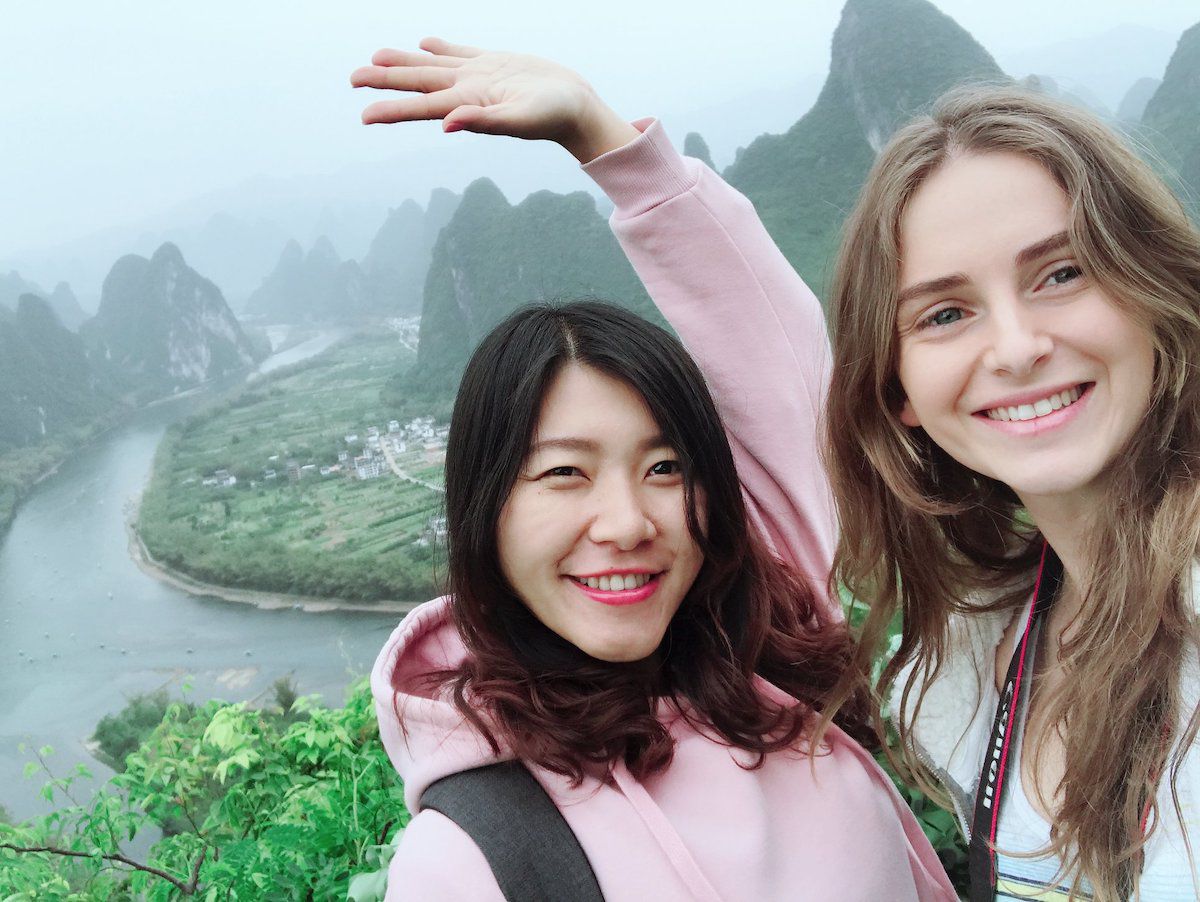
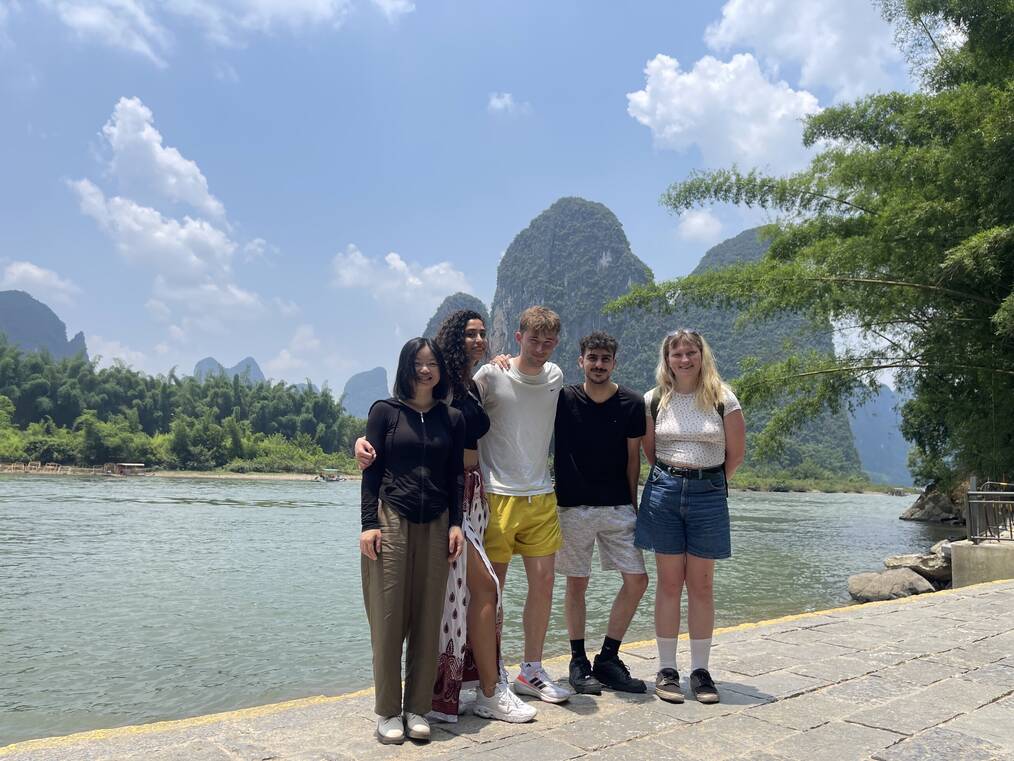
The Li River curls through the valley behind this selfie, and the same river runs down to Yangshuo, where one of CLI's weekend trips goes.
Some of Guilin's karst peaks stand right in town, and hikes up them are part of CLI's activities, with a rest on the rocks at the top.
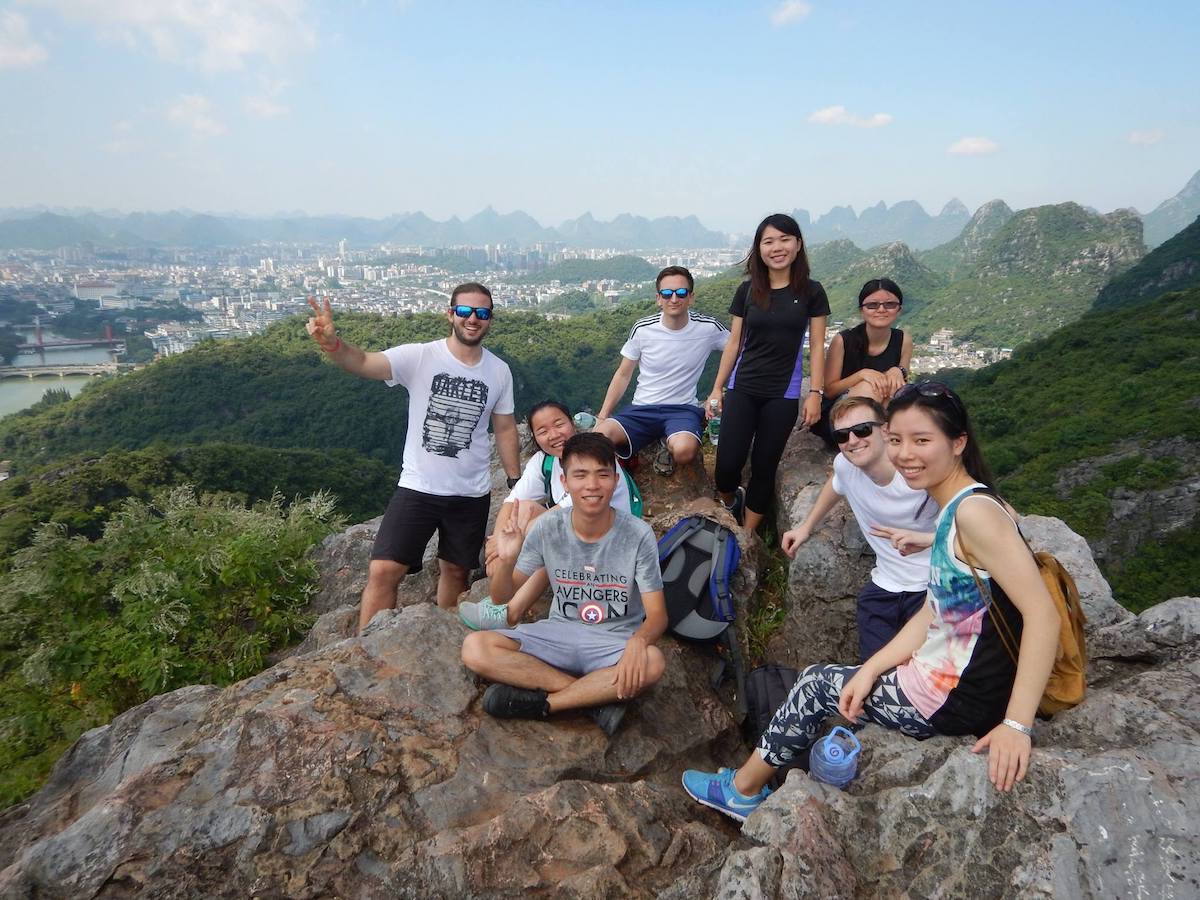
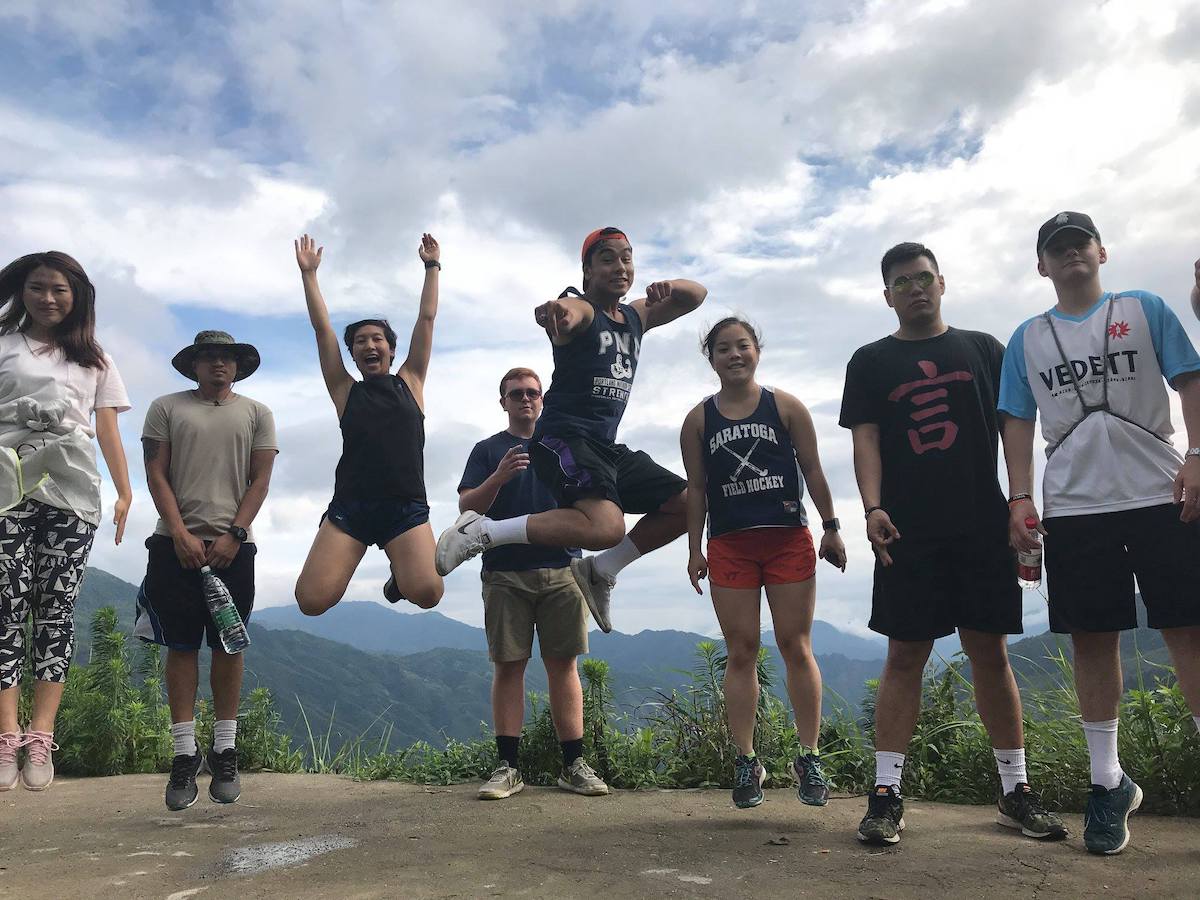
Reaching the top of one of Guilin's karst hills calls for a group photo, jumpers included, and hikes like this one are among CLI's activities.
From a hilltop, most of Guilin fits into one view with karst peaks on every side, and the city is just as easy to get around on foot.
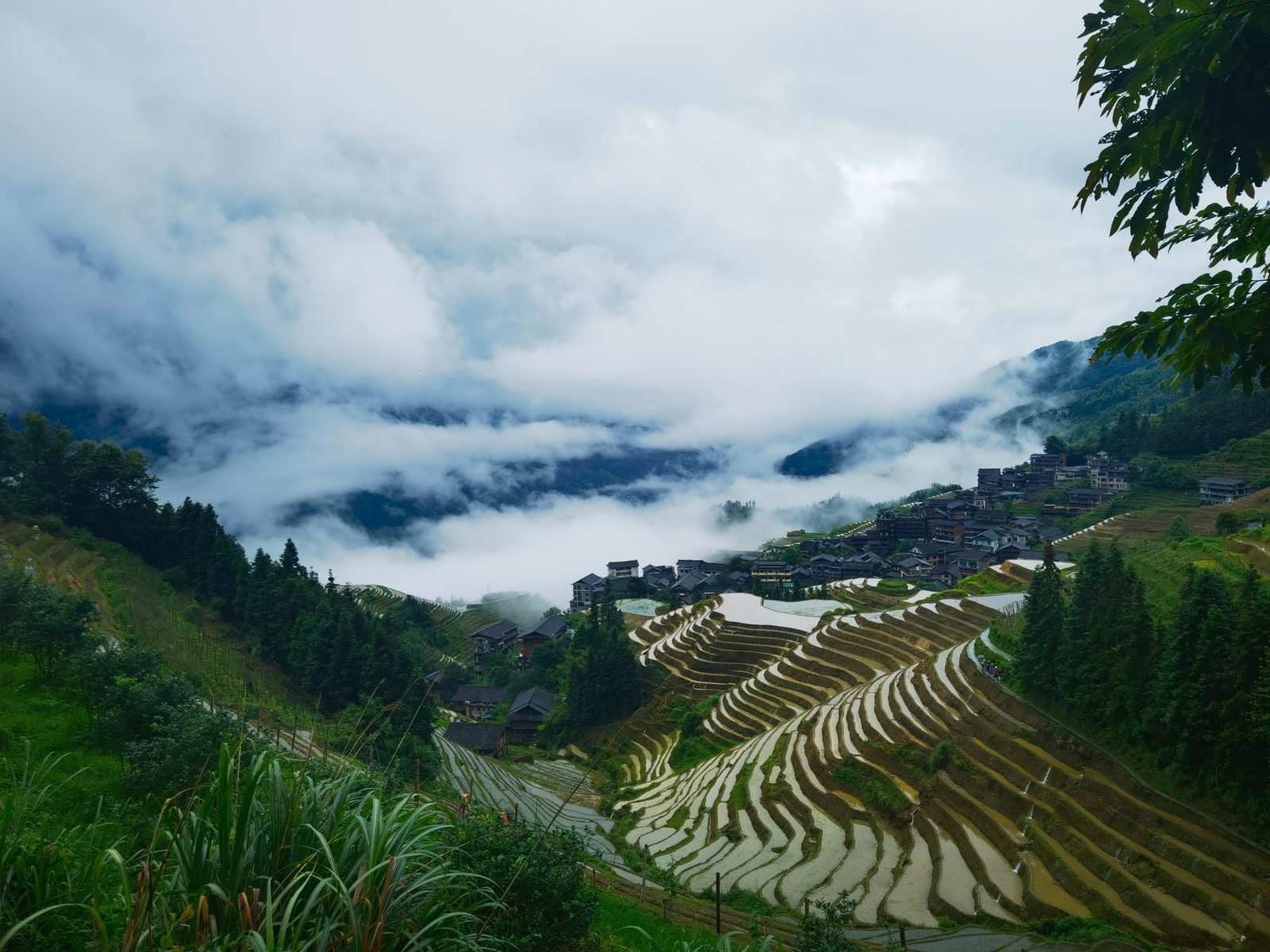
The view over the Longji Rice Terraces makes even a quick selfie look planned, and photography excursions there are on CLI's activity list.
A whole group out of the city for the day, lined up on a wooden boardwalk for the photo. Excursions like this one come around every month.
River boat rides are one of CLI's outings, and with life jackets on, the whole boat can still squeeze into one selfie.
Students stay anywhere from one week to a year, and longer stays leave time to see the region well beyond the usual group outings.
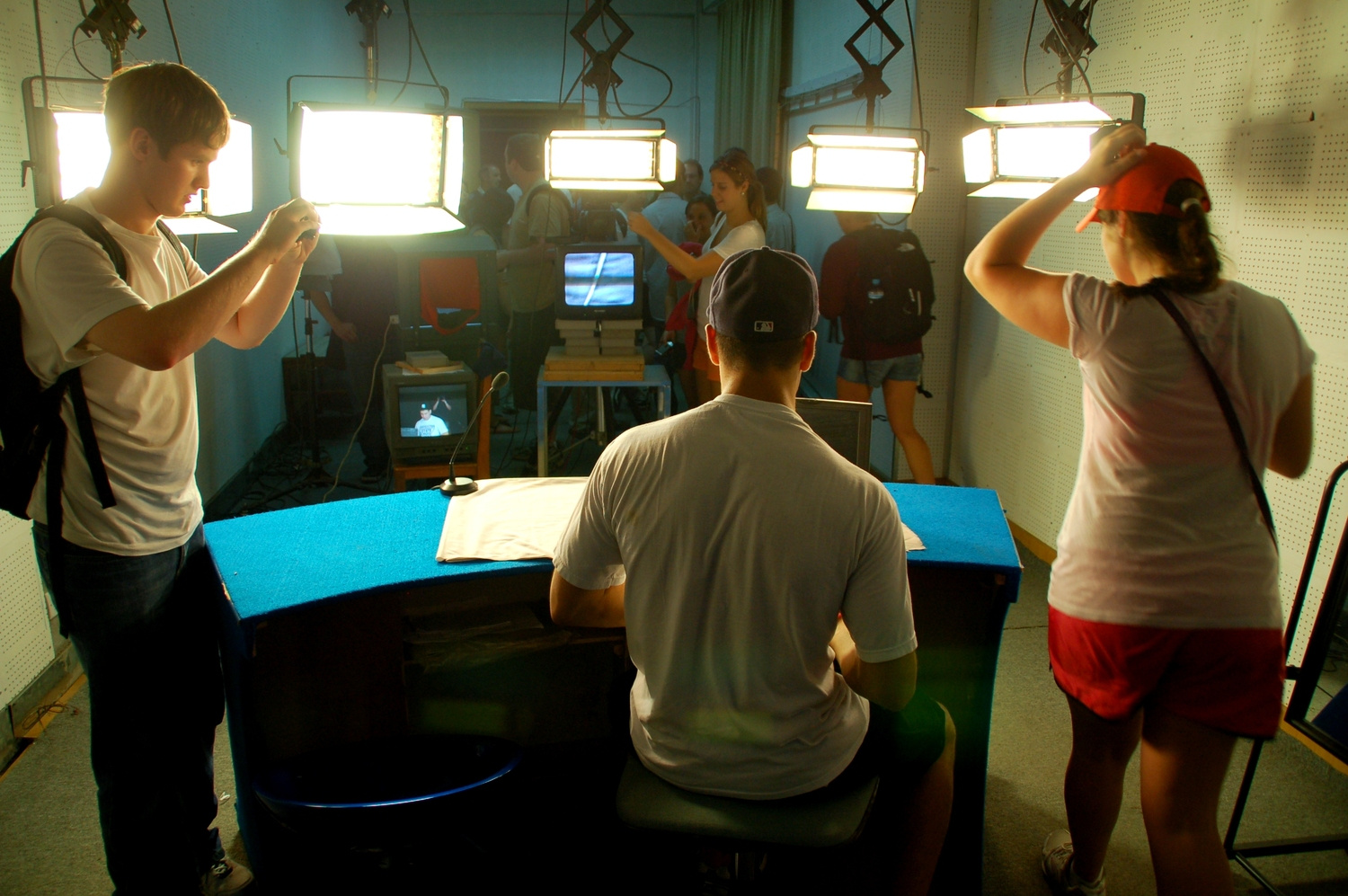
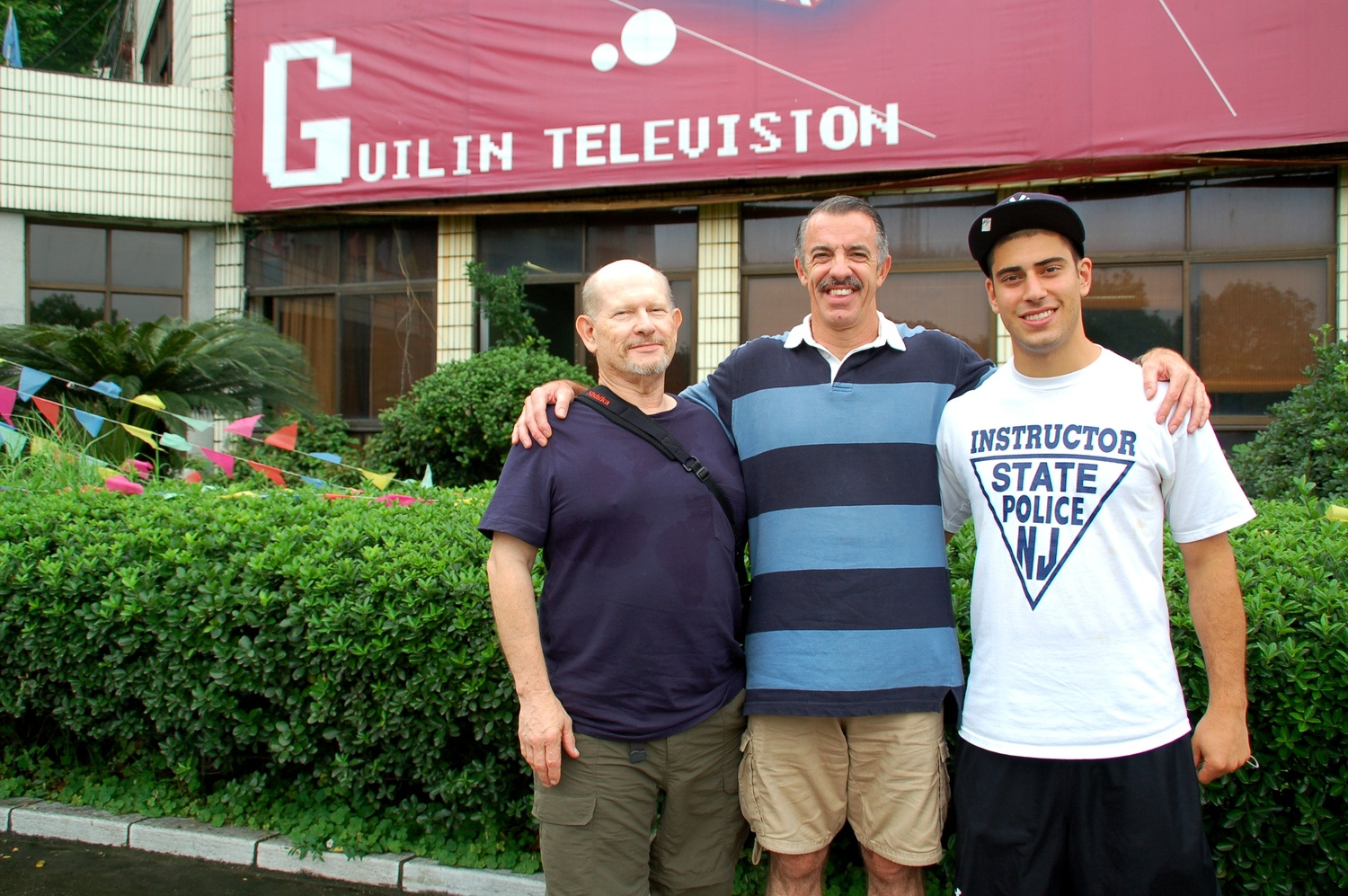
A studio desk and microphone make a good place to try out the week's new Chinese, as on this visit to a television studio.
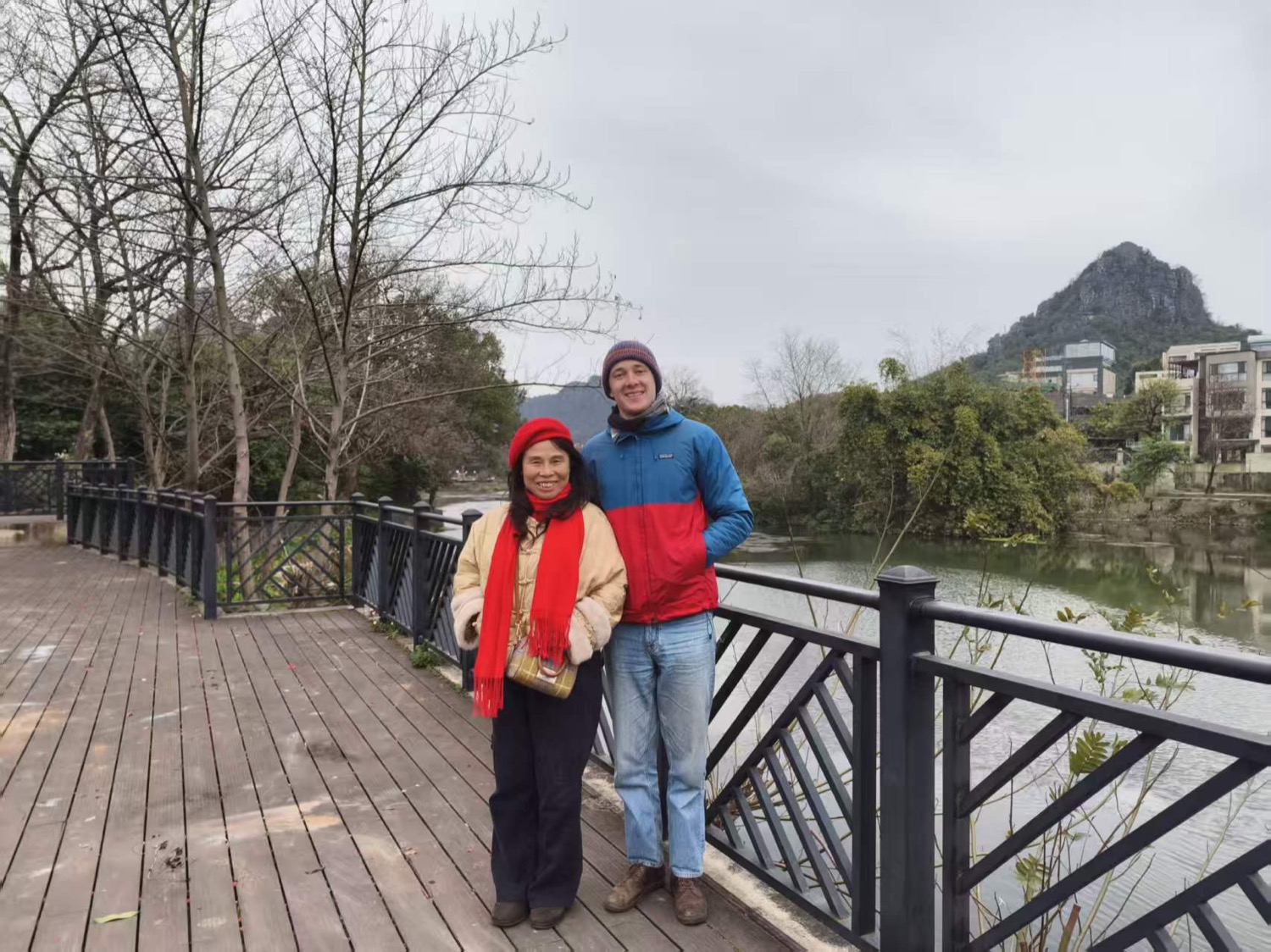
Bare branches and warm coats mark the cooler months. Guilin's winters are cool and damp but rarely drop below freezing, so outings carry on.
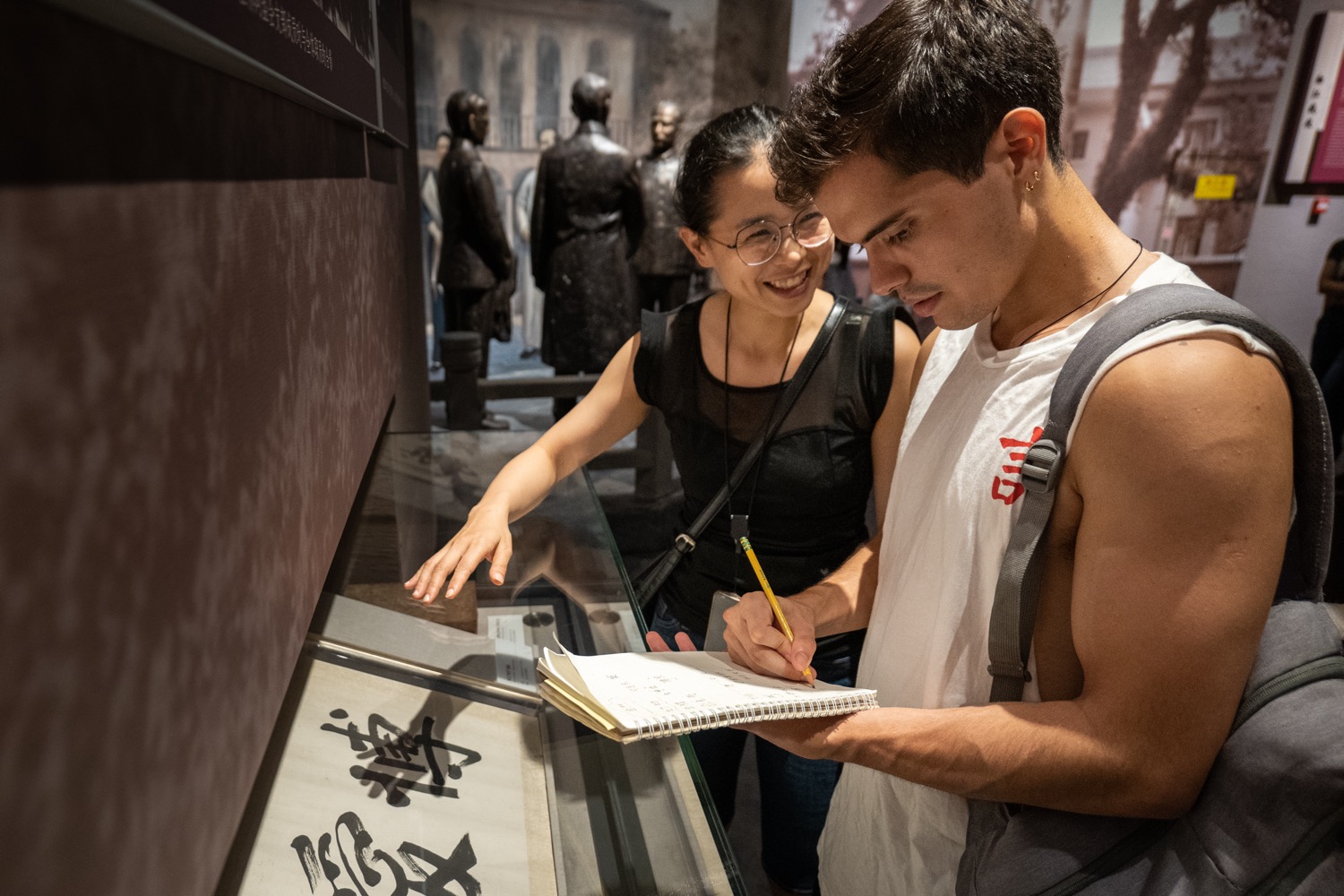
A museum visit adds the history behind the brushstrokes, with a notebook ready for new characters. Calligraphy is also among the activities CLI offers.
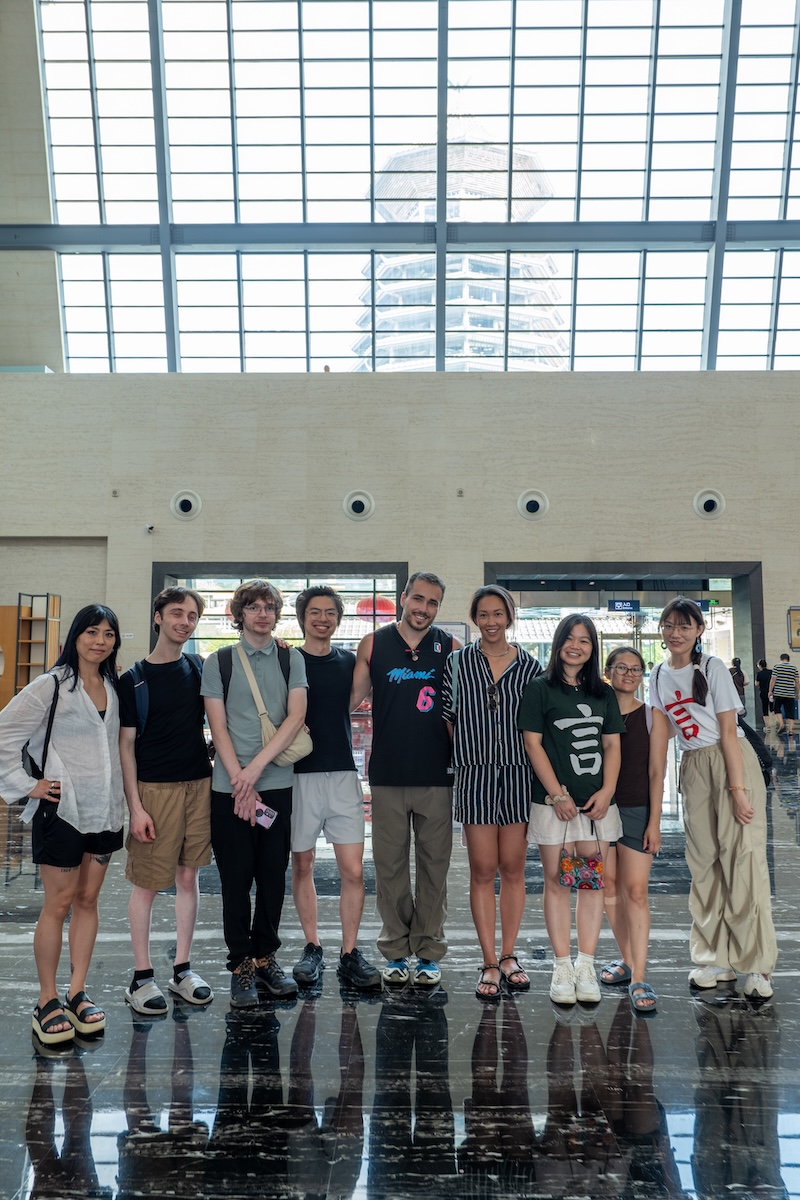
Some outings stay in the city, like the Guilin tour during orientation, and a bright hall under a glass roof is a good spot for the group photo.
On an overnight trip outside the city, nobody has to rush back before the sun sets over the mountains, so there is time to watch it from a wall like this one.
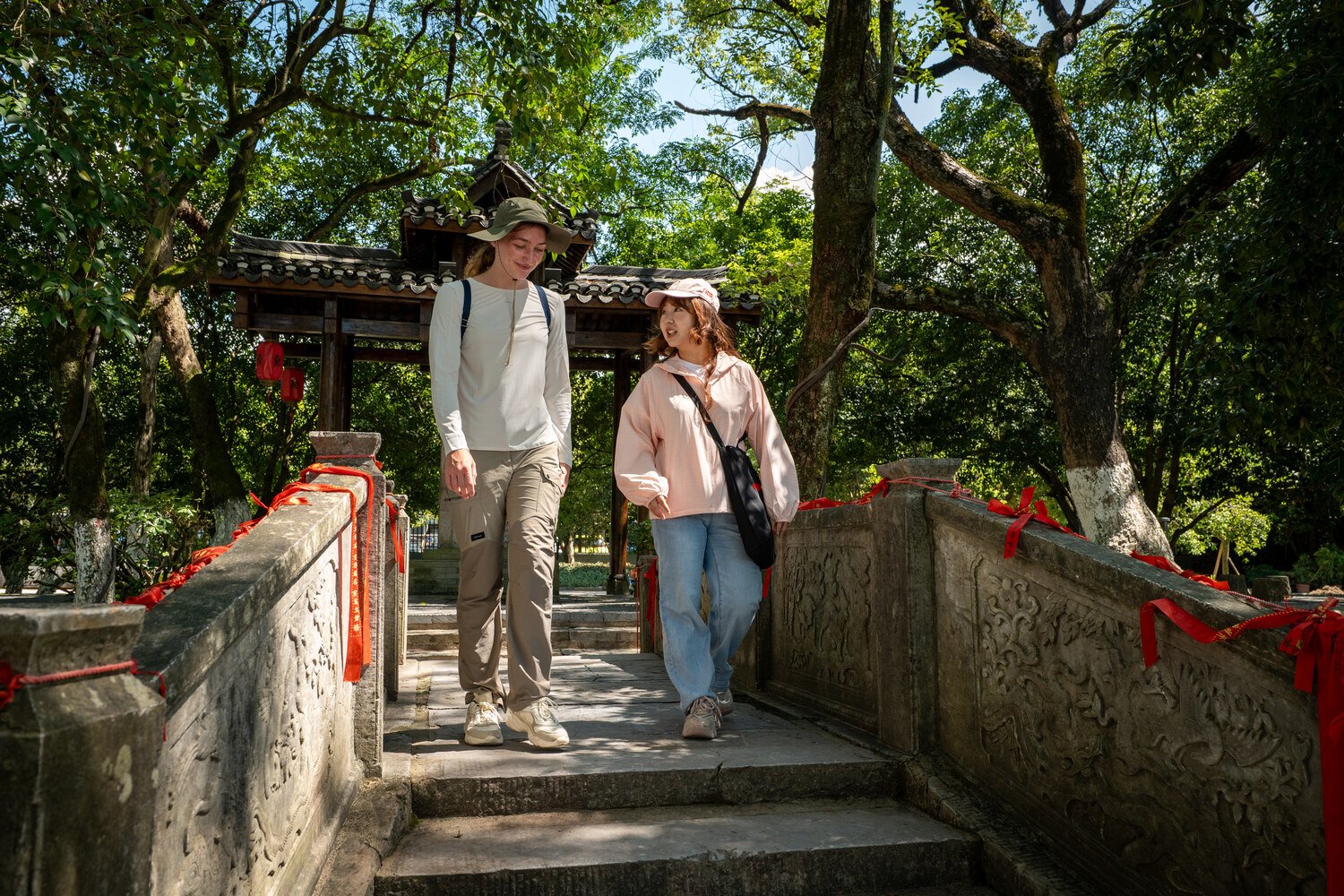
Red ribbons tied along old stone steps carry visitors' wishes, one of many customs students meet on outings and at CLI's festival celebrations.
Outings go into the city as well as out to the countryside, and a visit behind the scenes at a television studio comes with plenty of new words.
On a trip, the signboard over a pavilion is a chance to try the characters you know, and the teachers and pengyou who often come along can help with the rest.
Walking single file into a bamboo forest is cooler than the open trail, which counts for a lot in Guilin's hot, humid summer.
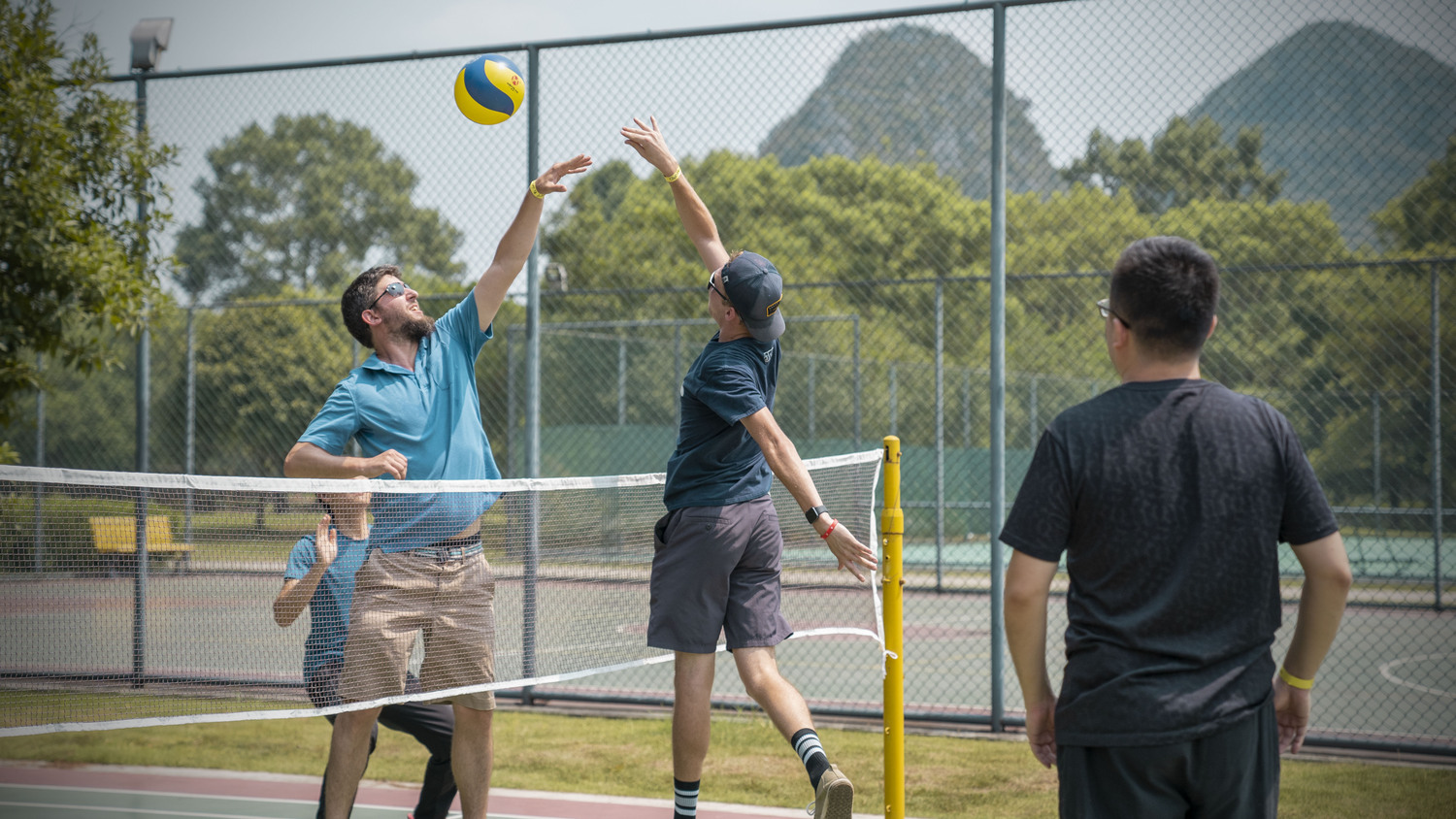
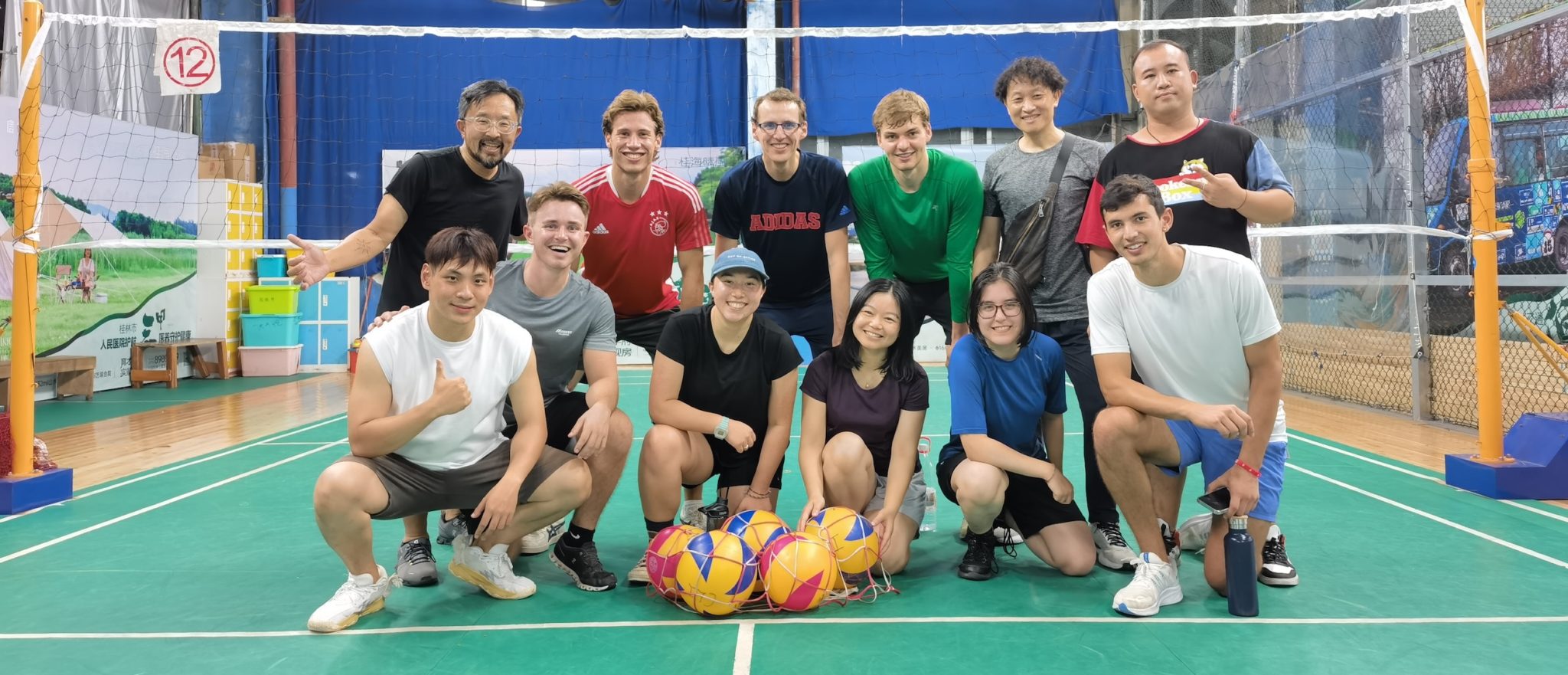
Volleyball is on the activity list along with badminton, and keeping score in Chinese is a quick way to get the numbers down.
Outings around Guilin have gone beyond the scenery over the years, with stops at places like Guilin Television.
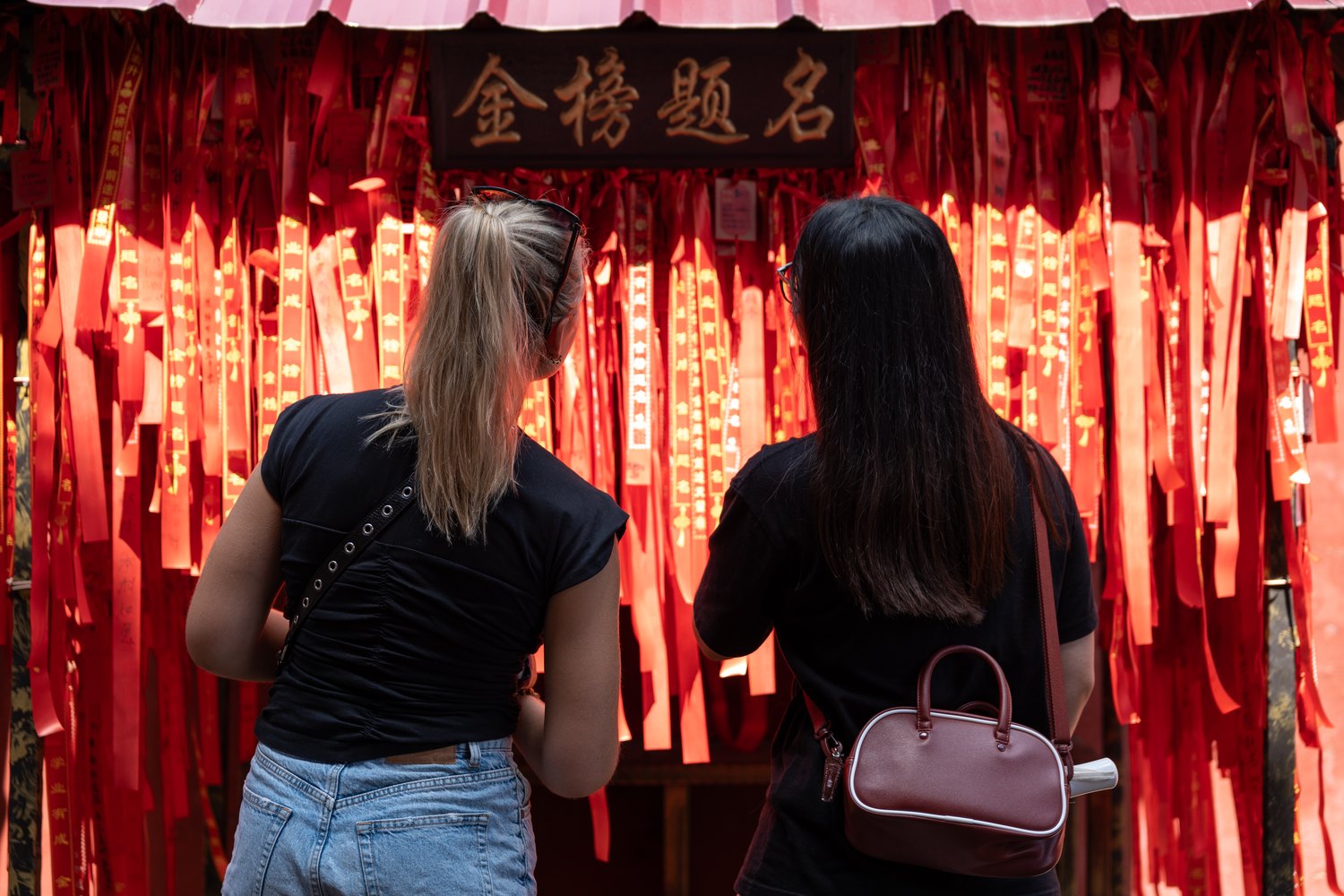
The sign reads 金榜题名 (jīnbǎng tímíng), an old wish for exam success, and on outings like this one there are characters to read on every wall.
Riverside paths run below the karst peaks outside Guilin, and a weekend trip is a good time to walk one and trade stories from the week's classes.
Guilin is surrounded by limestone peaks that appear in Chinese paintings and poetry, and a hilltop above the city lines them up like this.
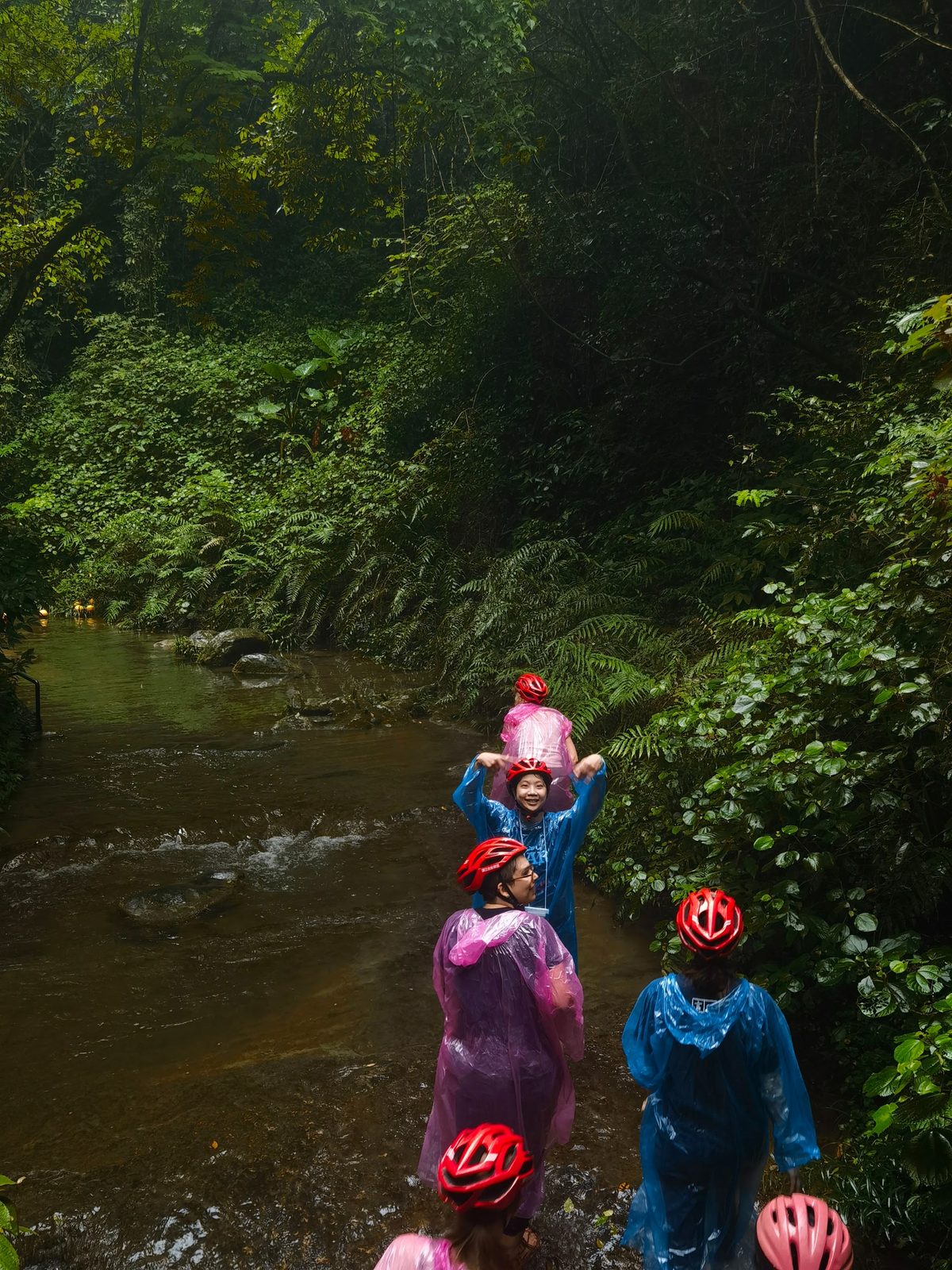
Weekend outings can be wet ones, and a stream hike in ponchos and helmets gives the day's Chinese some very practical vocabulary.
Ridge paths on a rice terrace hike give a view of the curving fields from above, with time to talk on the long walk back down.
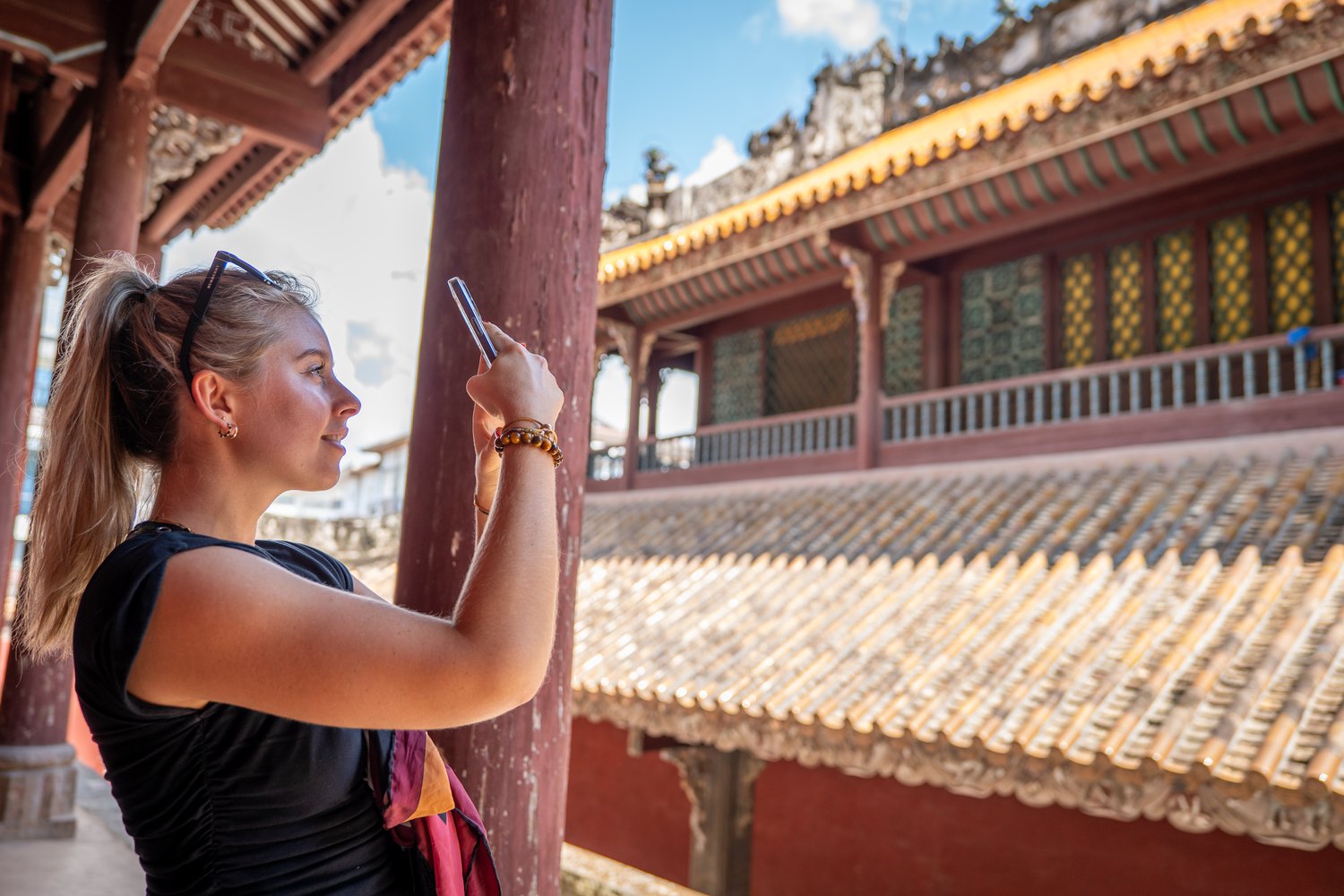
Painted eaves and old roof tiles make a temple balcony a good place for photos, and stops like this fit easily into a weekend outing.
A carved stone by an old village bridge makes a good seat for a group photo, and weekend outings reach plenty of villages like this one.
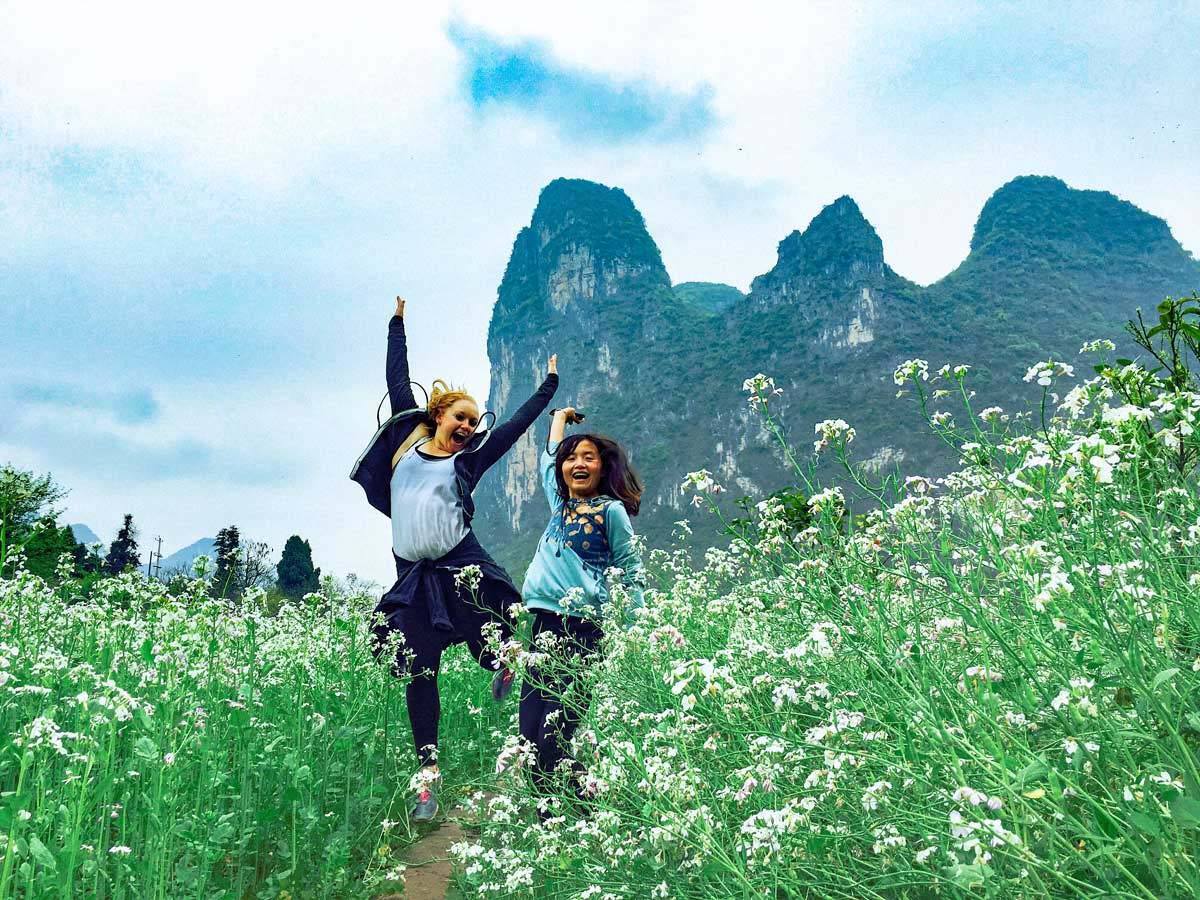
A field of white flowers below the karst peaks is reason enough to jump, and weekends leave time for it, on a group outing or a trip of your own.
Green karst peaks run to the horizon on a day out like this, and in Guilin's hot, humid summers a cap is a good idea.
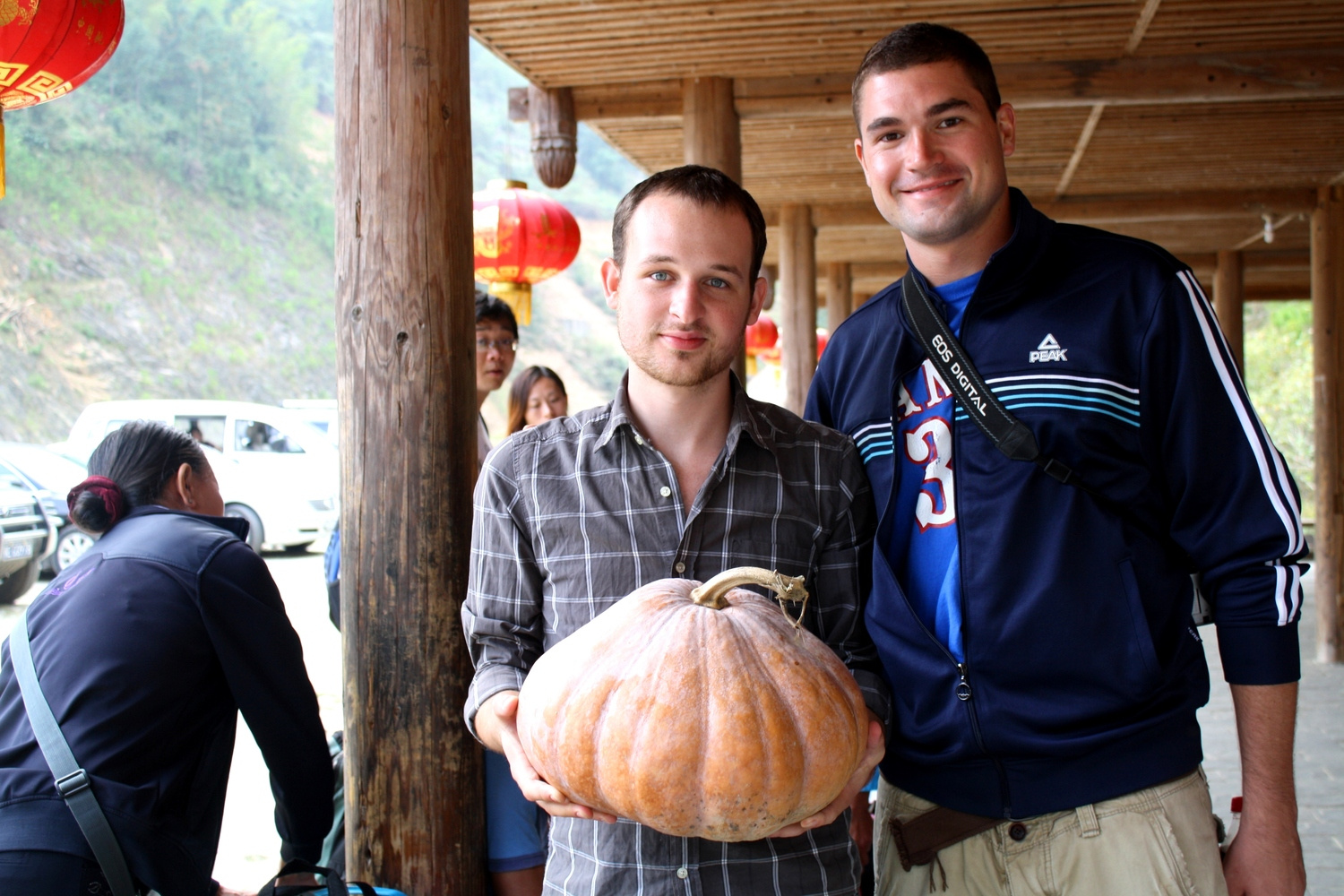
A pumpkin this size is worth a question or two in Chinese, and trips out of the city turn up plenty of surprises like it.
Hiking up Guilin's karst hills is one of the activities on offer, and the stone steps on the way up are a good place to catch your breath.
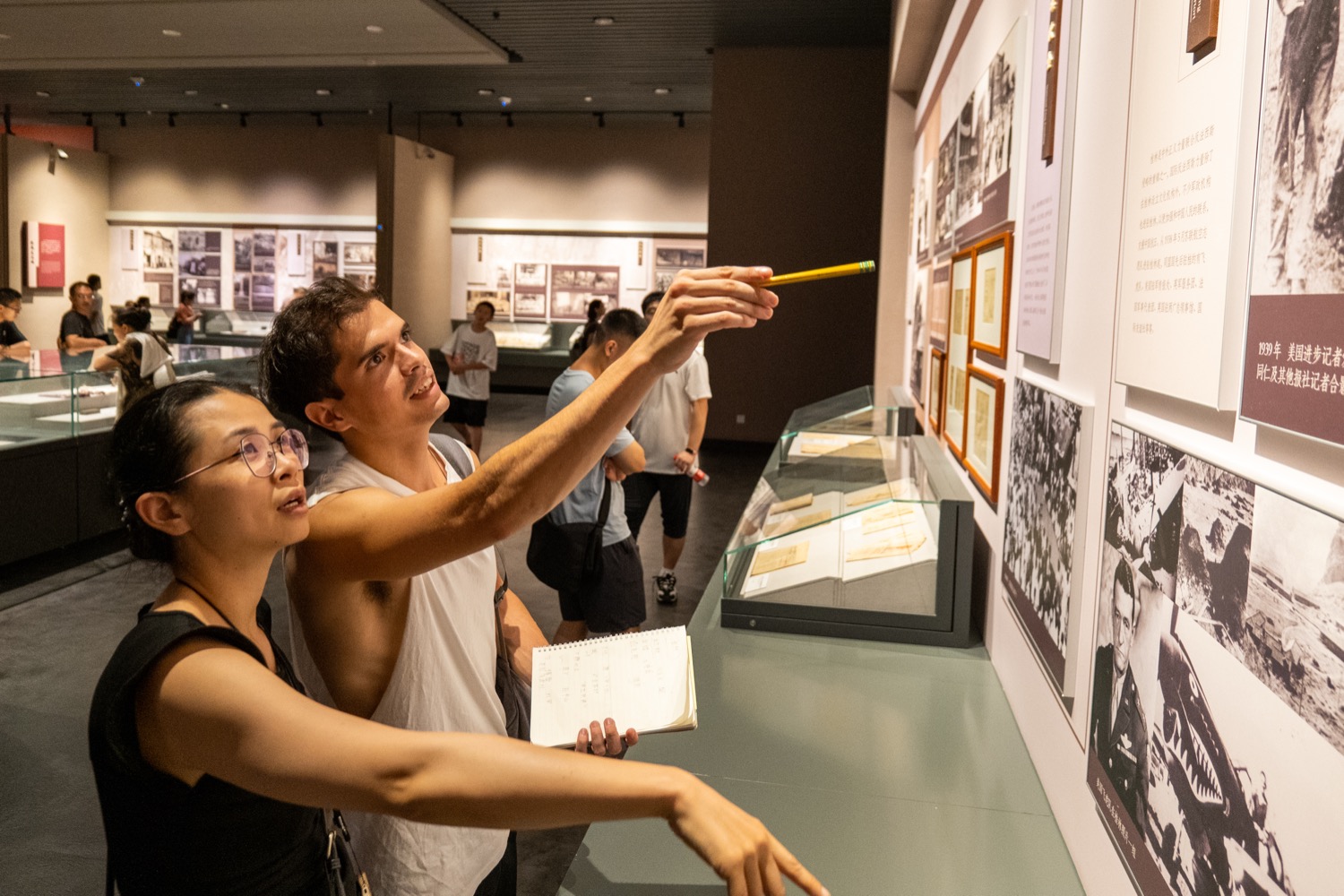
A wall of old photos and captions gives a museum outing some history, and plenty of Chinese to read one character at a time.
A wooden fence above green farmland is a natural stop for a photo on a weekend out among the karst hills.
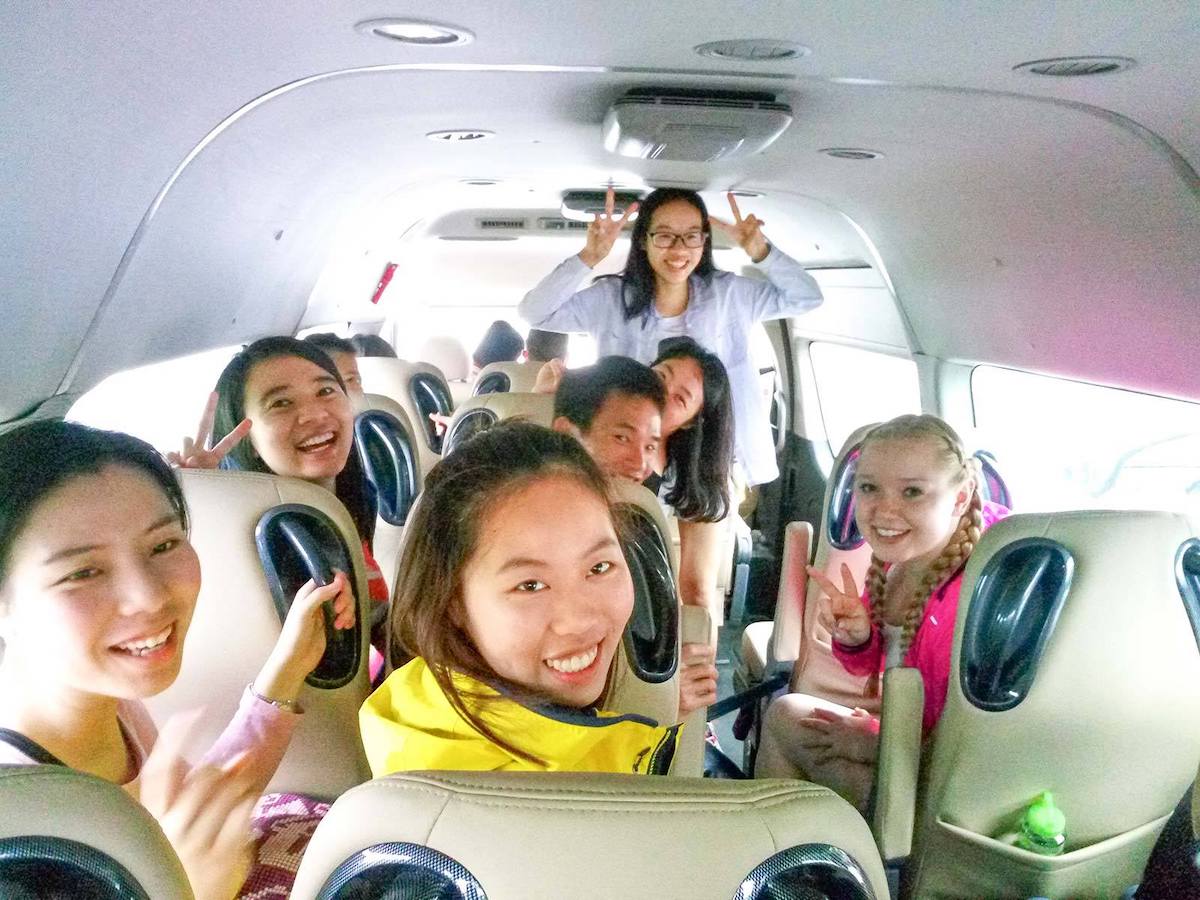
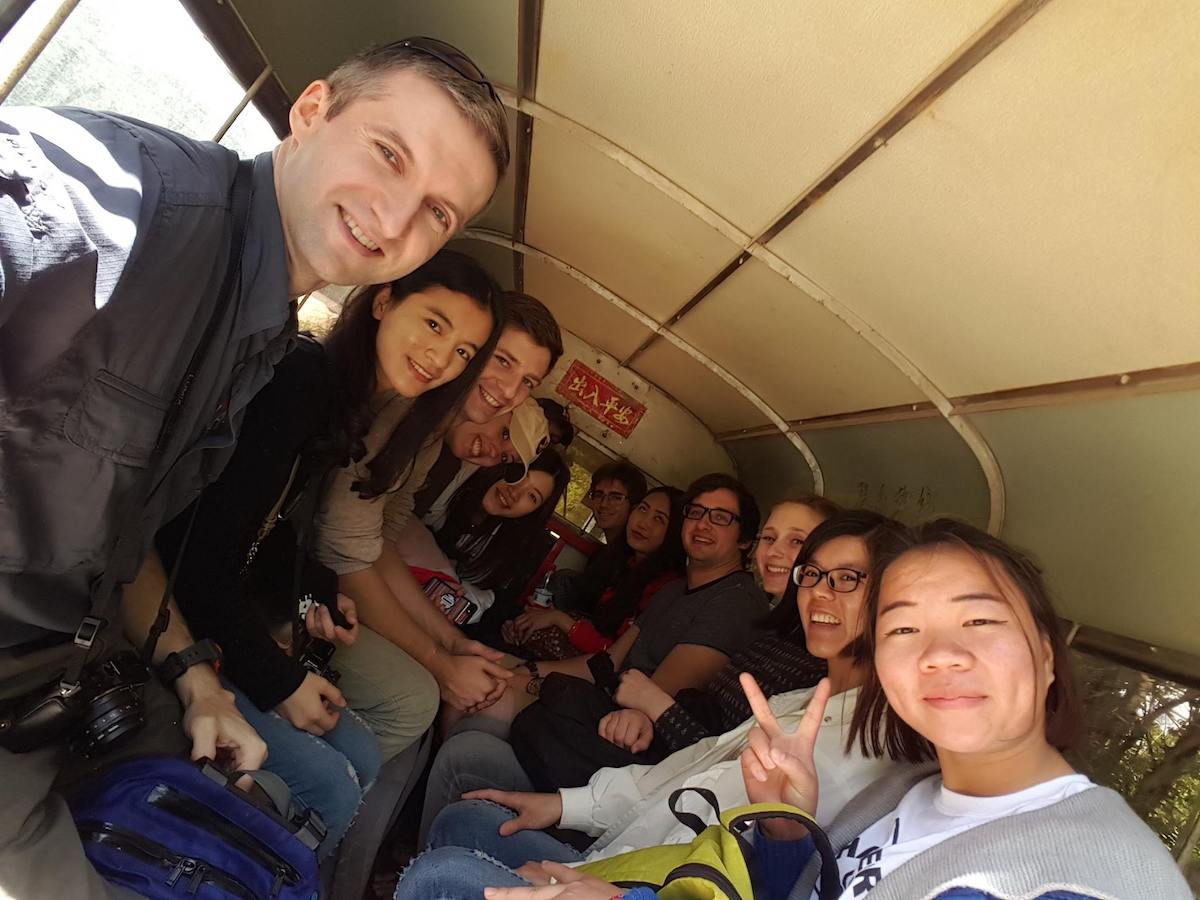
A full minibus at the start of a trip. Once a month or so the group heads out of the city overnight, and the Chinese starts on the ride there.
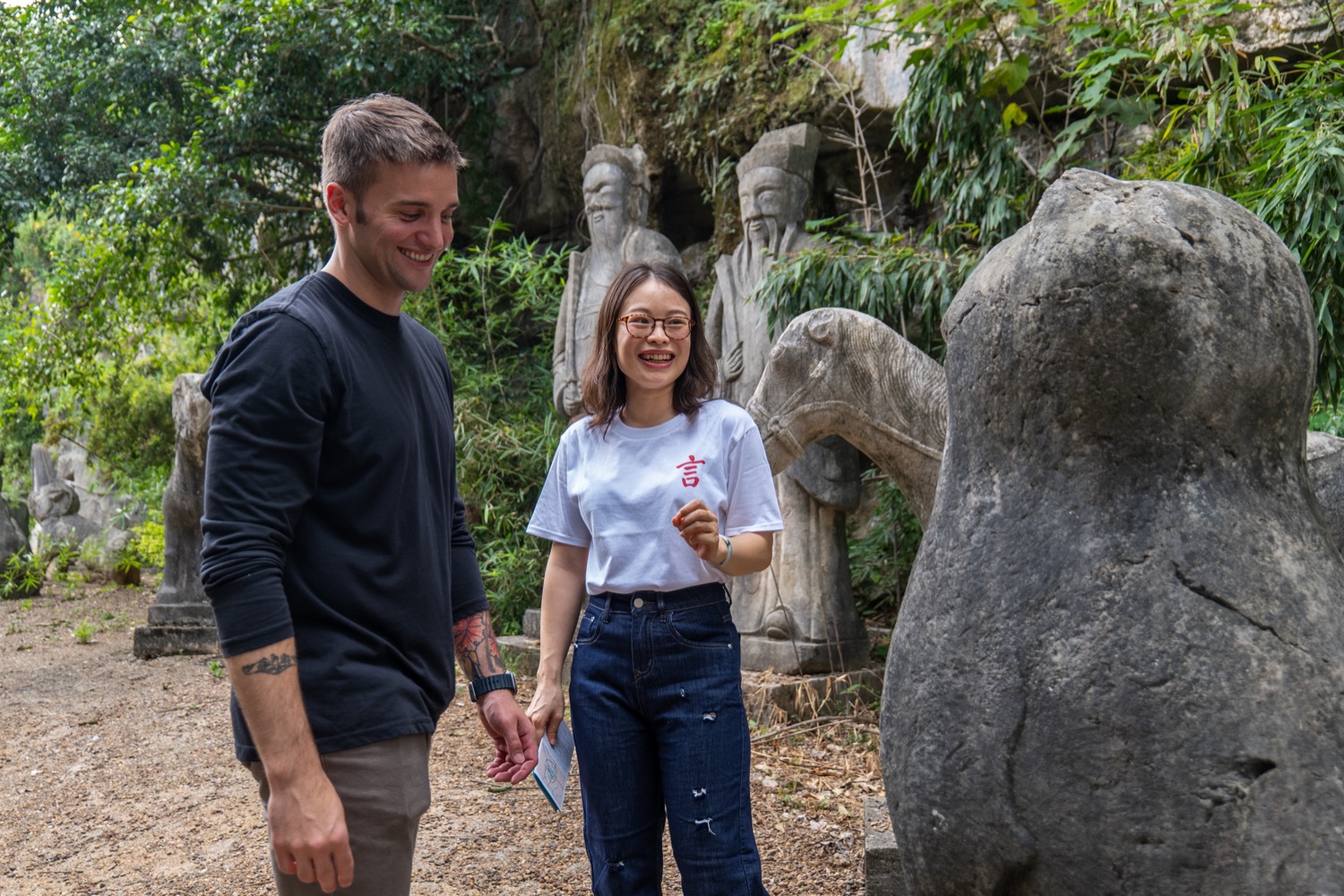
Old stone figures in a wooded garden are the kind of quiet stop a weekend can include, whether on a group outing or a trip you plan yourself.
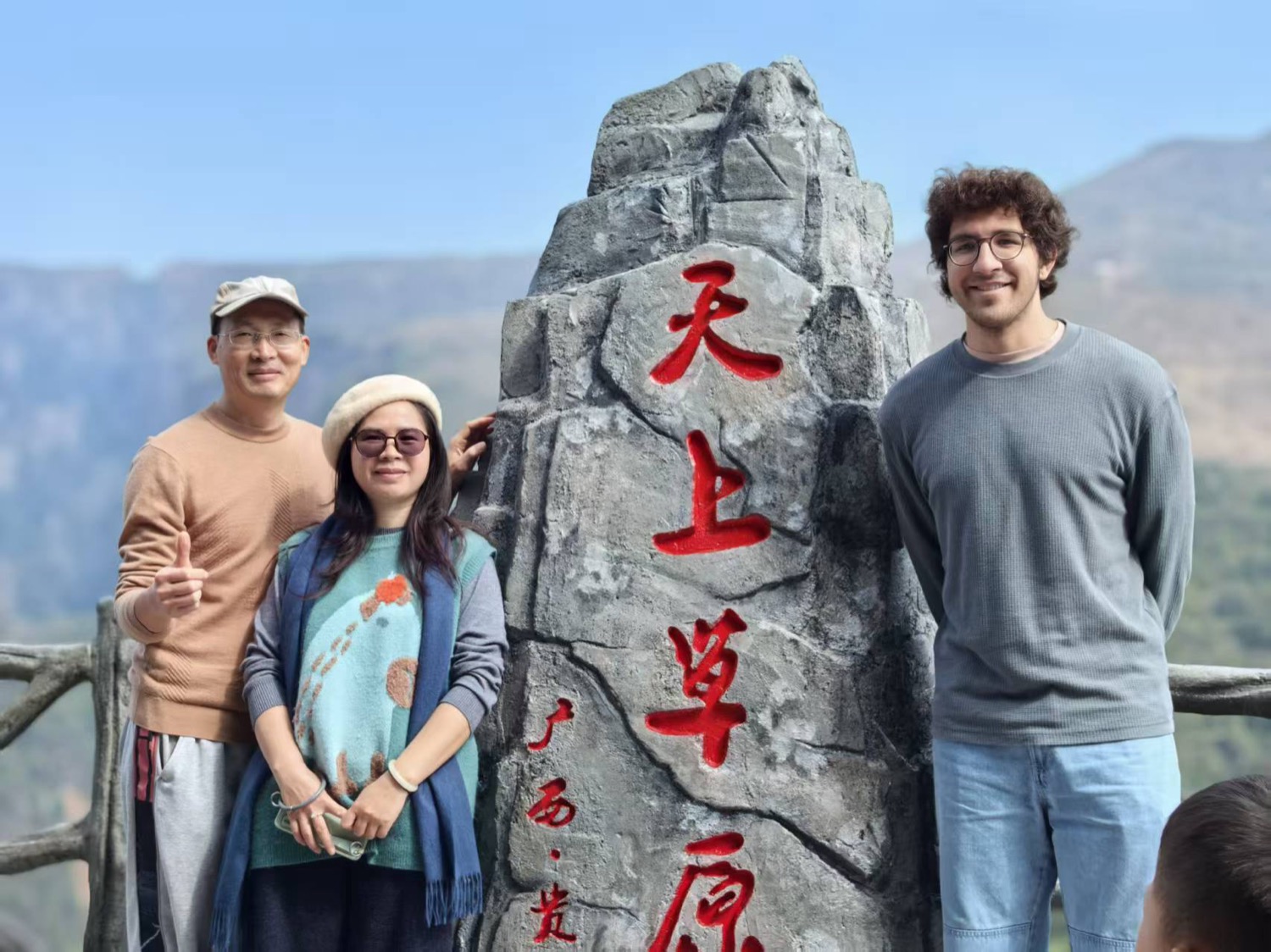
The stone reads 天上草原 (tiānshàng cǎoyuán), grassland in the sky, and sounding out signs like it is how trips double as reading practice.
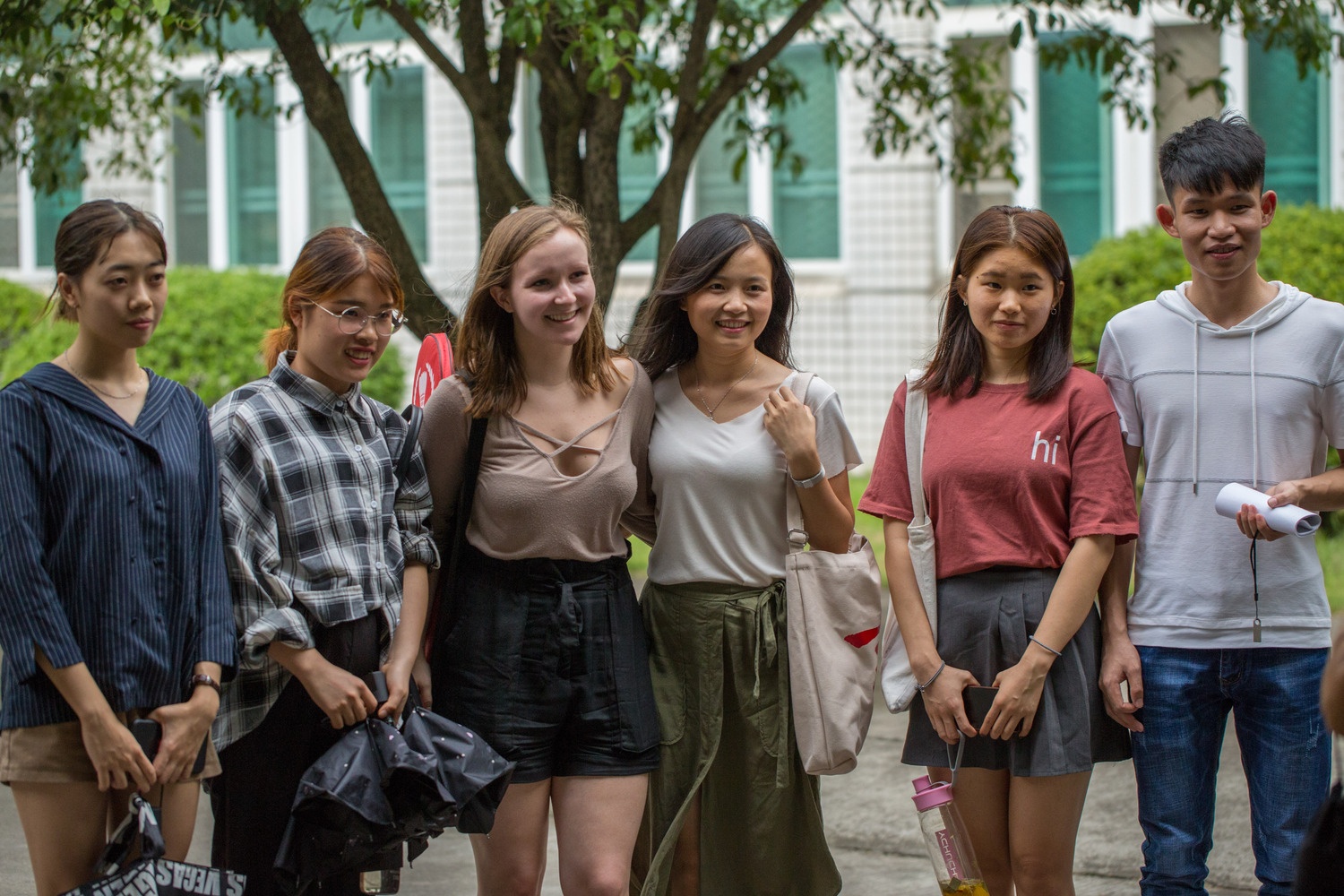
Everyone packs in shoulder to shoulder on the way to an outing, and with teachers and pengyou often along, the ride is Chinese practice too.
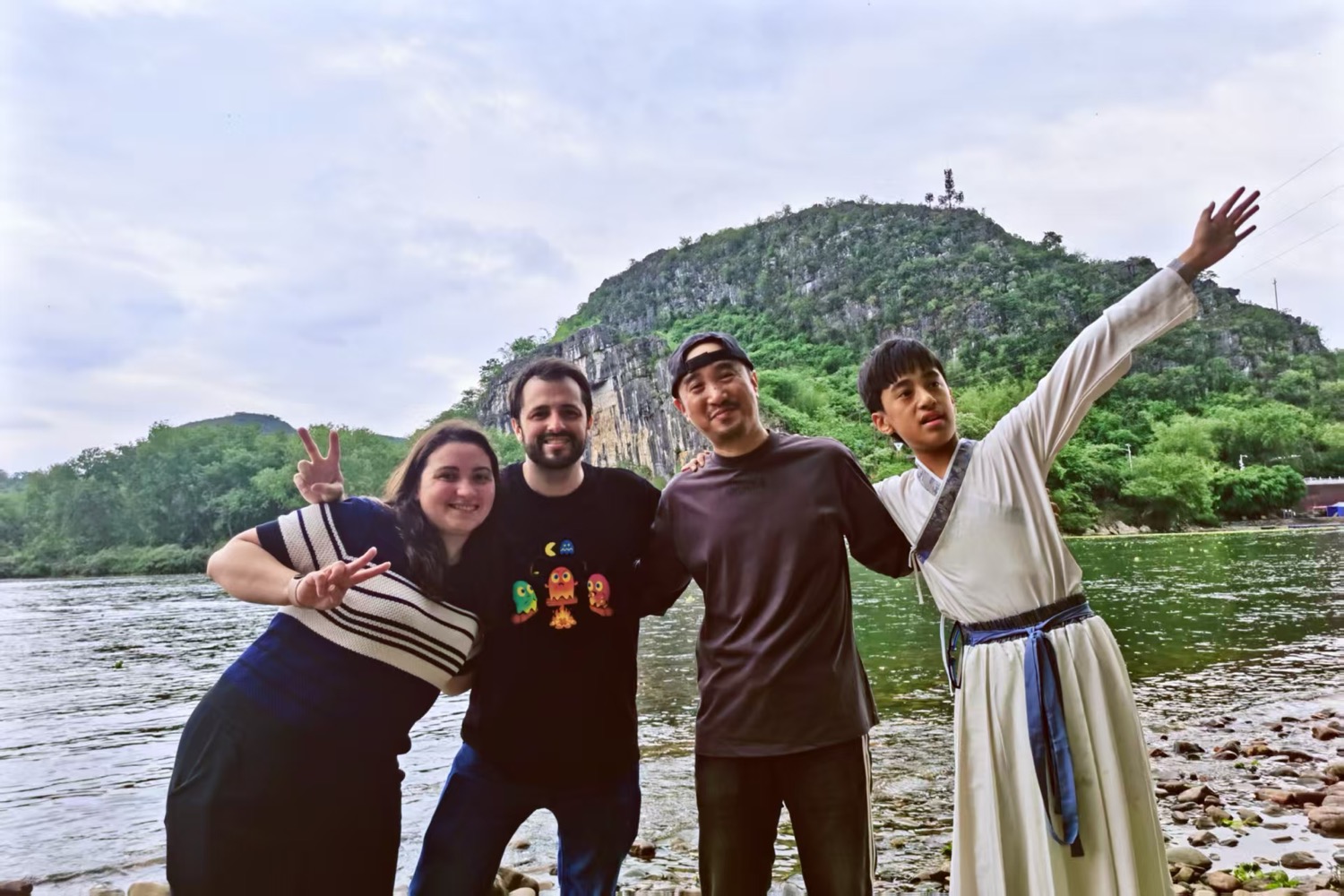
Weekends are class-free, so a day out can run long, with stops like this riverbank below a green hill.
桂林Guìlín
Guilin
Karst peaks, rivers, rice terraces, and quiet city streets.
About once a month, an overnight trip leaves the city for places such as the Longji rice terraces or the Longsheng hot springs.
Rice terrace hikes are among CLI's excursions, and at harvest time the hillsides turn gold like this.
CLI runs photography excursions to the Longji Rice Terraces, where small wooden huts sit out among the fields.
Hiking in Longsheng is one of the larger weekend outings, and the terraced hills there are worth the climb.
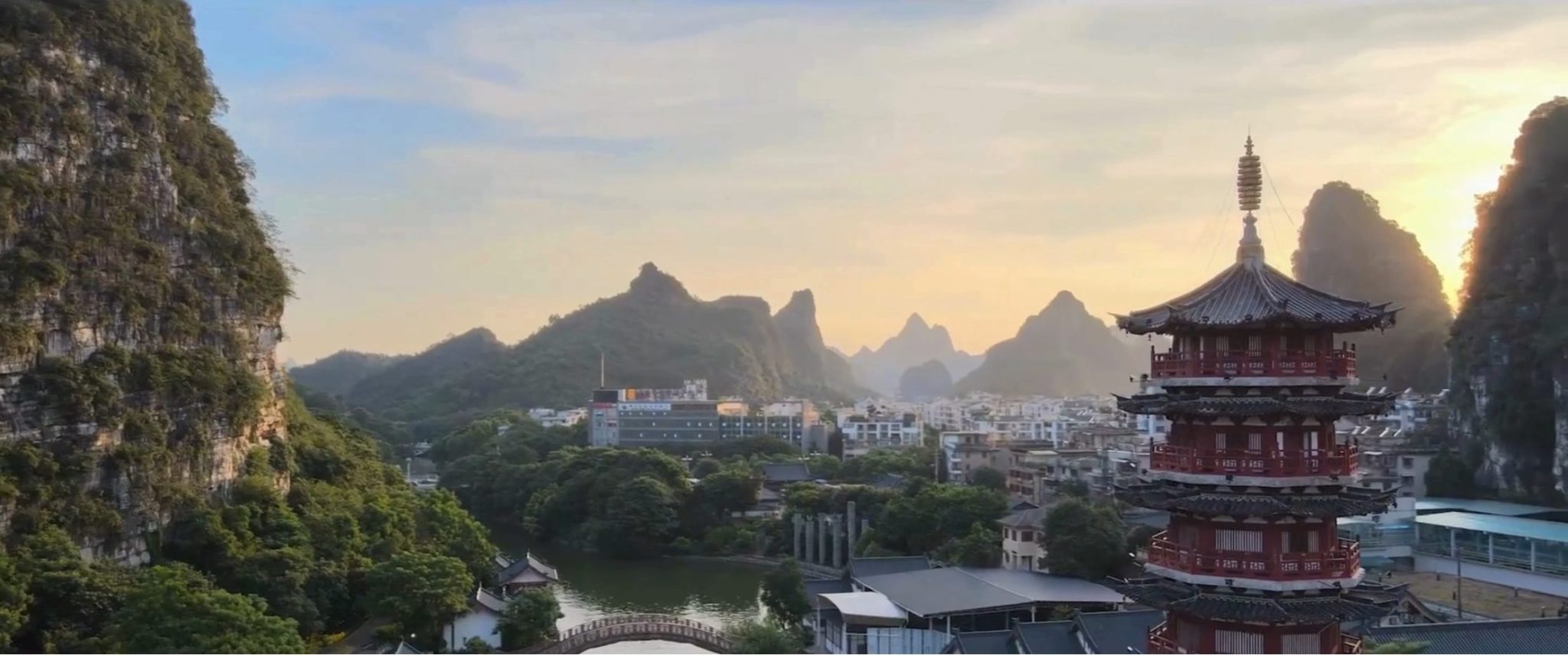
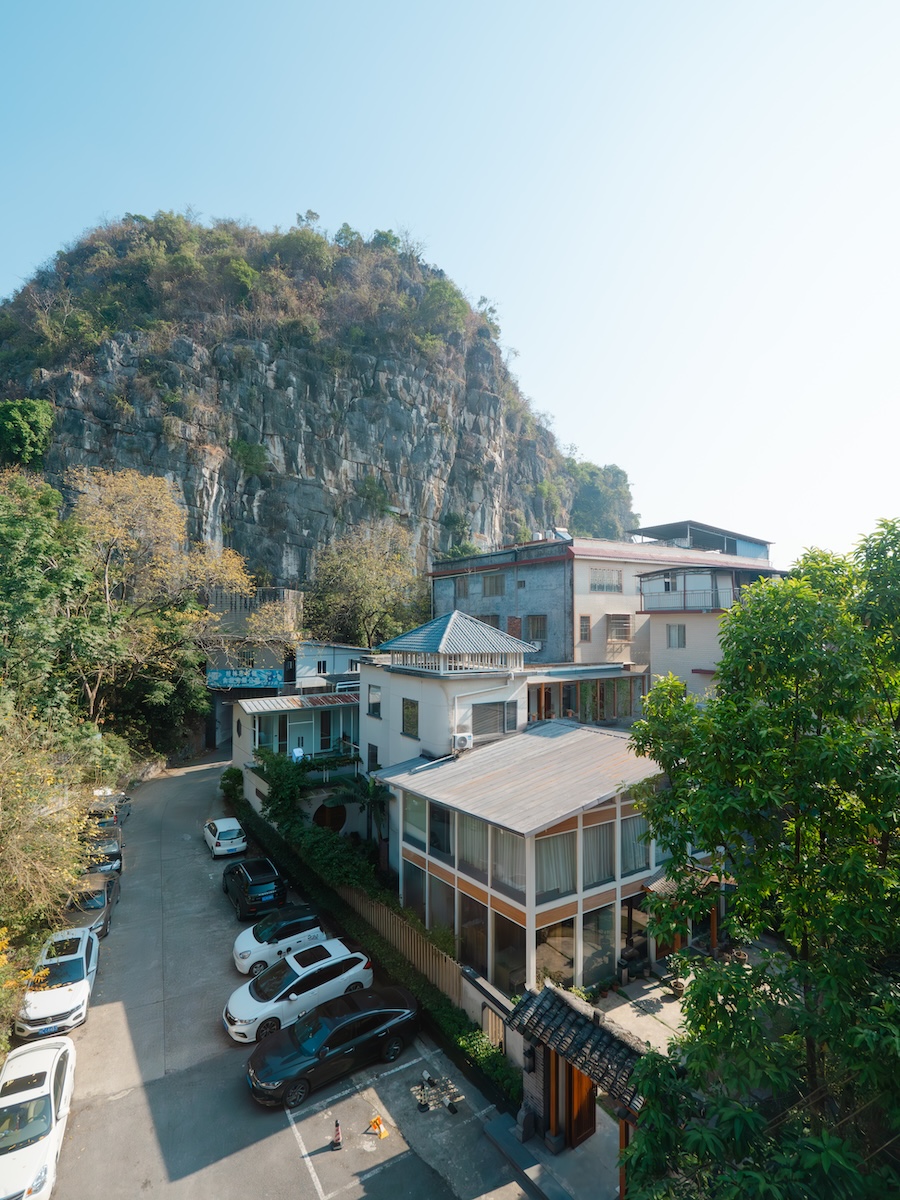
Lakes, parks and green space run through Guilin, and karst peaks rise right behind the city's buildings.
Guilin's weather runs from hot, humid summers to cool, damp winters that rarely drop below freezing, and the mountains change with it.
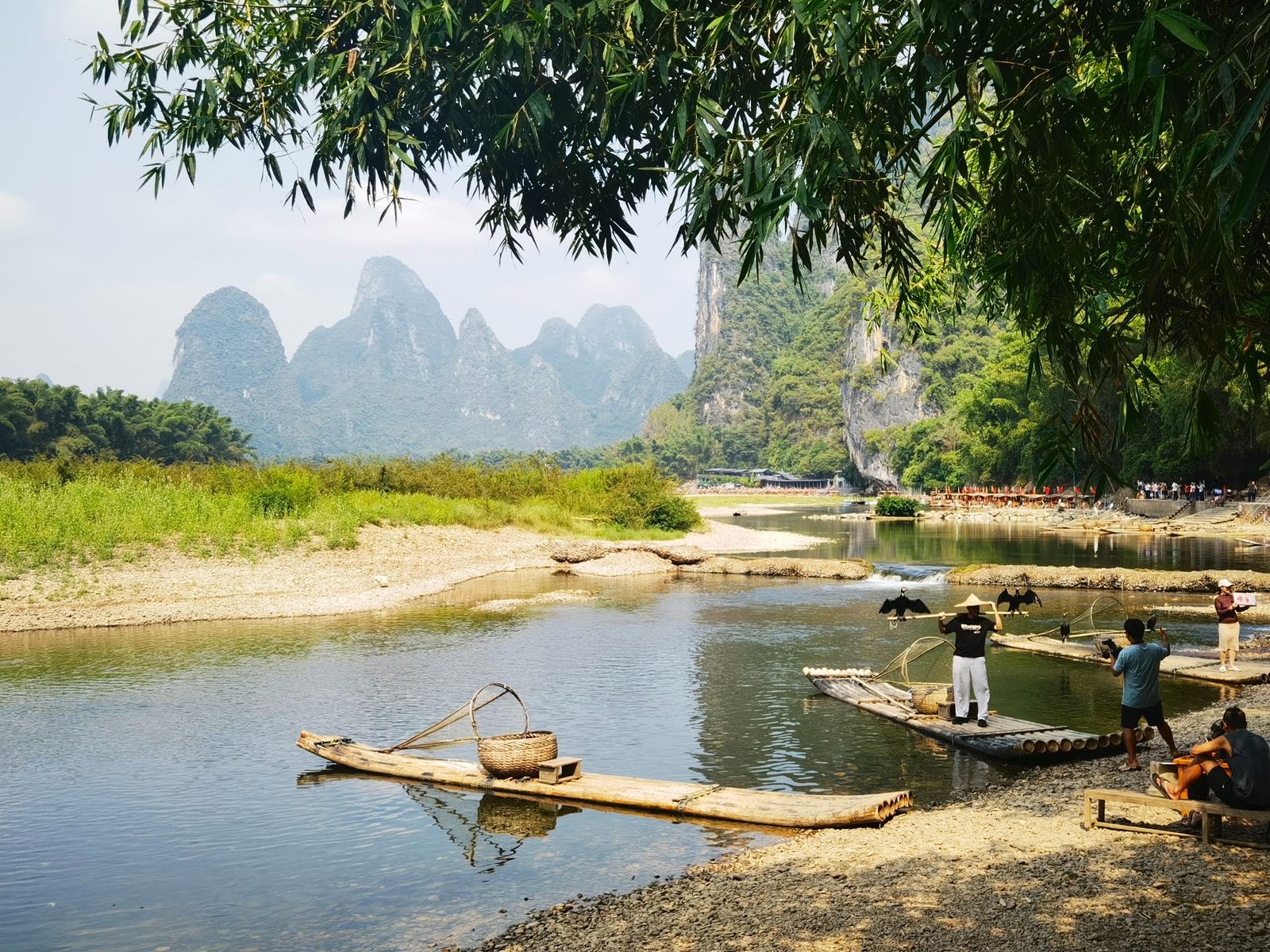
Bamboo boat rides are one of CLI's outings, and from the water the karst peaks look even taller.
Guangxi Normal University (GXNU) is CLI's university affiliate, and students can get an official GXNU transcript for their coursework at CLI.
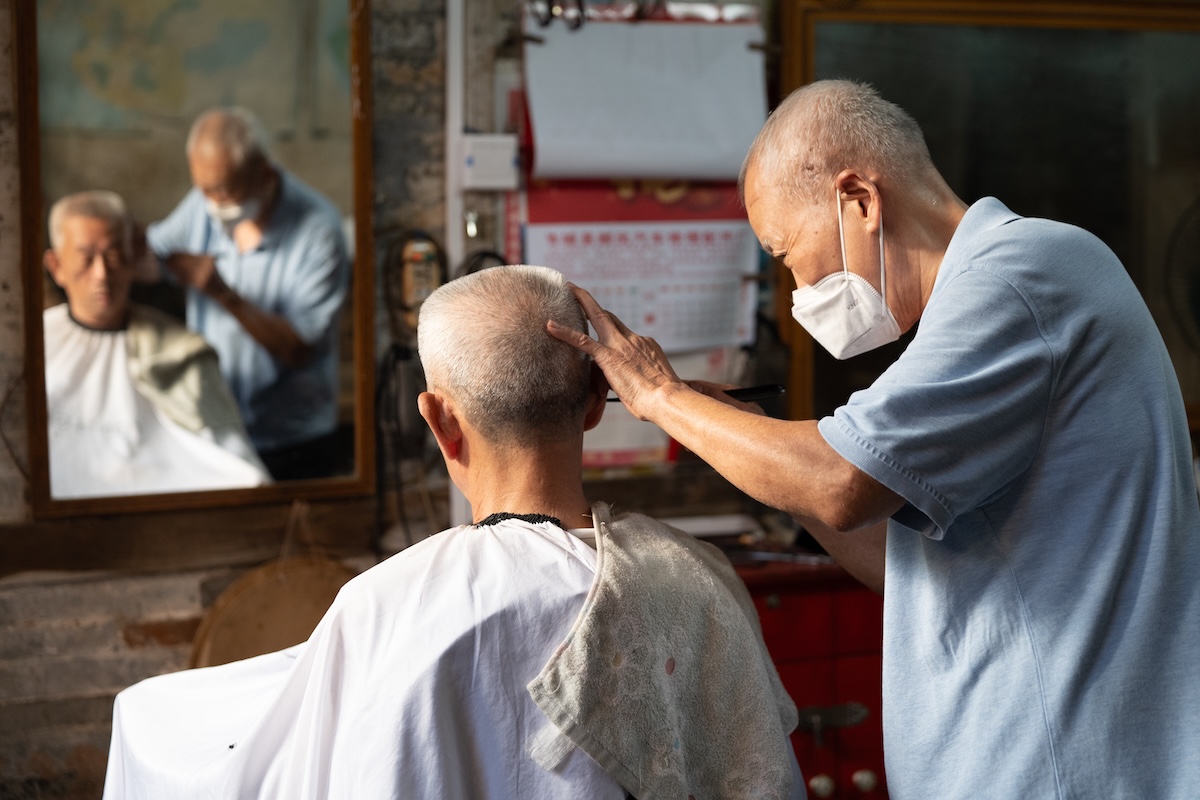
With little English spoken in Guilin, even a haircut becomes a conversation in Mandarin.
Guilin sits on the Li River in Guangxi, ringed by the limestone karst peaks that appear in Chinese painting and poetry.
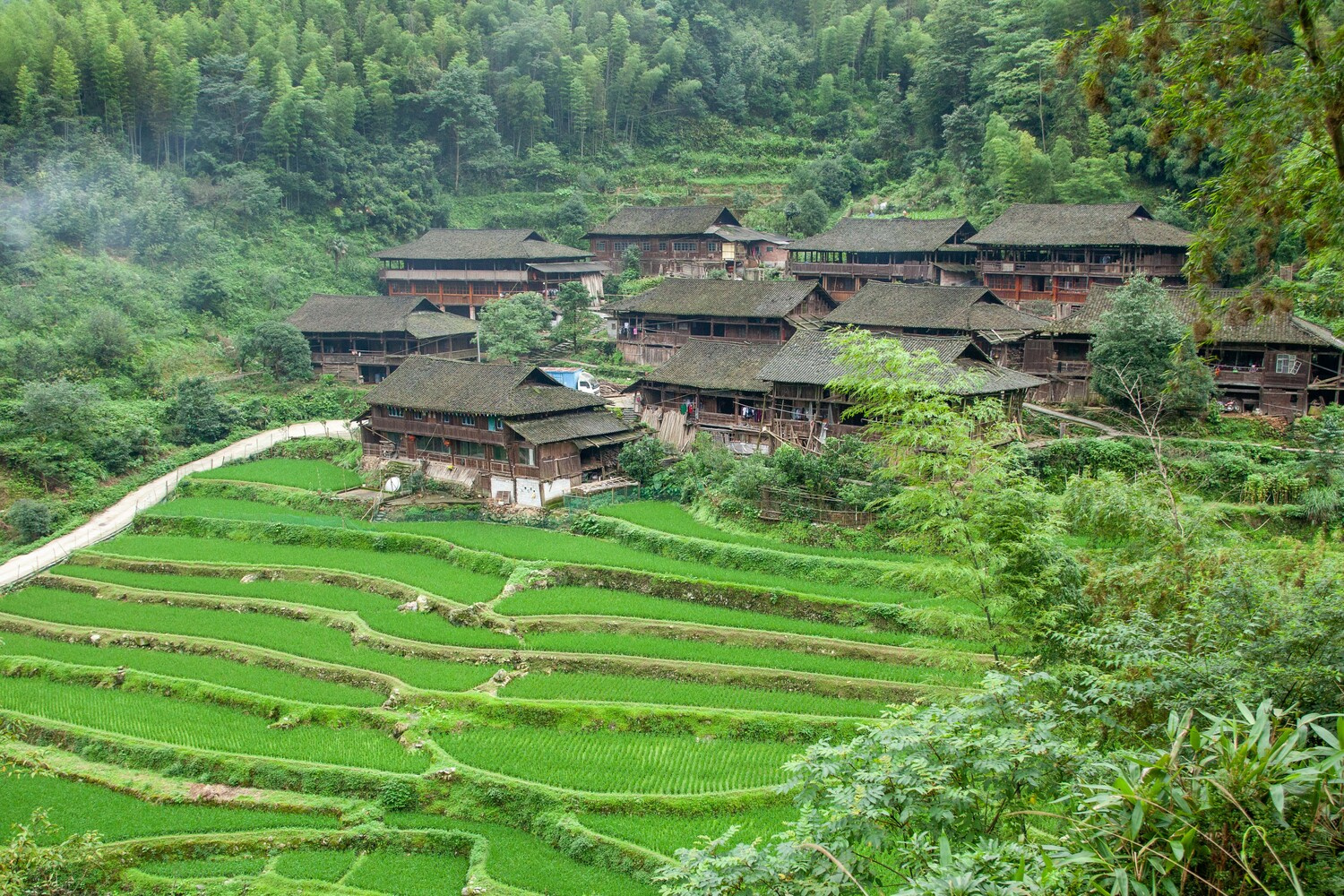
Some students use free weekends for independent travel, and terraced hills and villages like these are within reach of Guilin.
Yangshuo, Longsheng and the Li River are about an hour from Guilin, so a free Saturday is enough for a trip into the hills.
桂林山水甲天下 (Guìlín shānshuǐ jiǎ tiānxià): Guilin's mountains and rivers are said to be the best under heaven.
Village life is part of the overnight trips too, with places such as the old town of Xingping and the Dong villages of Sanjiang on the list.
Teachers and pengyou often come along on terrace hikes and other trips, so the conversation on the trail can stay in Chinese.
Wooden villages above terraced fields are part of the countryside beyond Guilin, and CLI's monthly overnight trip is a chance to see places like this.
Bamboo rafts are a familiar sight on the rivers around Guilin, whose karst peaks joined the South China Karst UNESCO World Heritage listing in 2014.
Guilin is a full city but compact and relaxed, with the shops students need for daily life within walking distance.
The CLI Center is on a quiet road about seven minutes' walk from the main gate of Guangxi Normal University.
Hikes up Guilin's karst mountains are among CLI's activities, and the city's hills rise straight up between its streets.
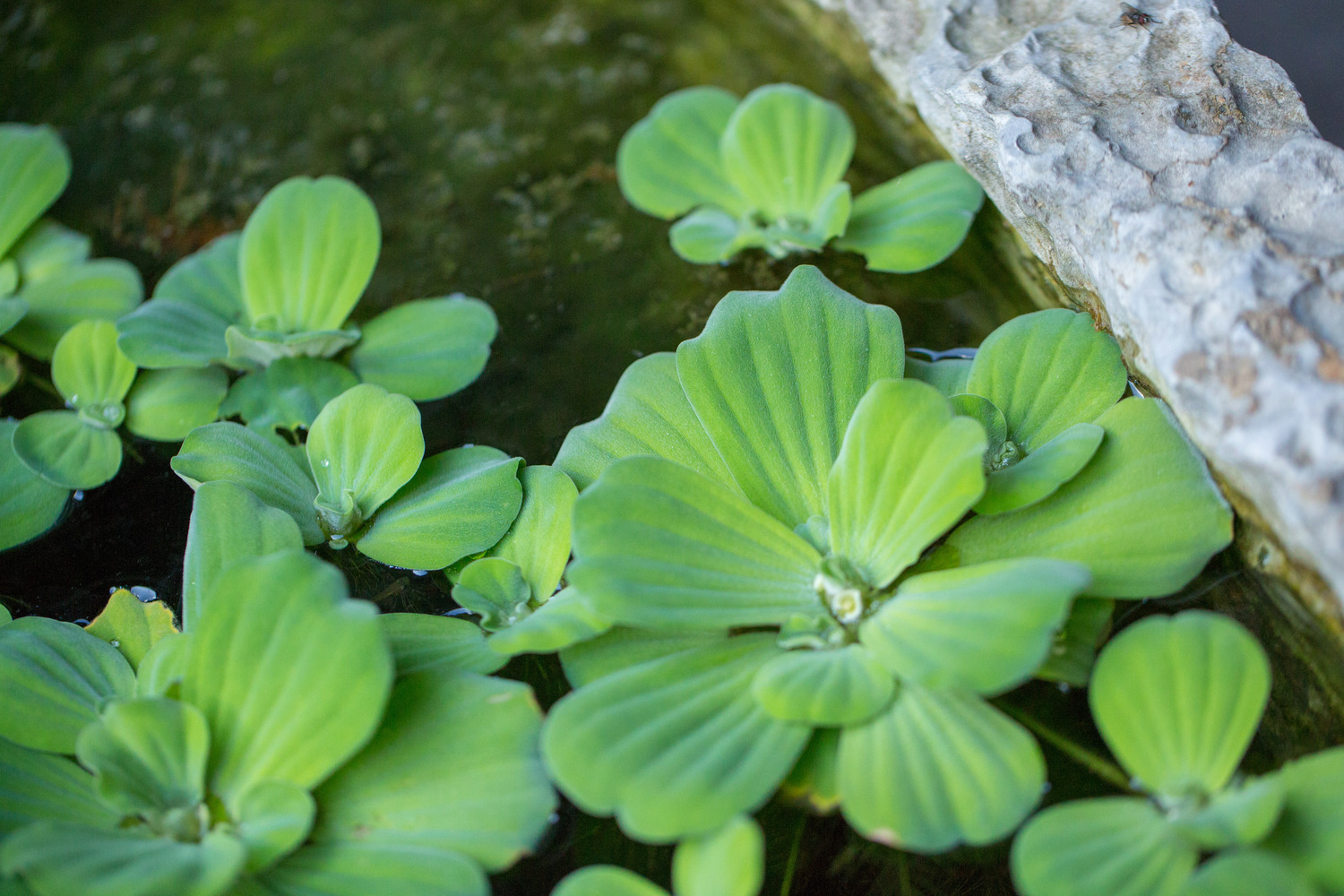
Still water and green plants are never far away in Guilin, a city with lakes, parks and green space between its streets.
Guilin's name, 桂林 (Guìlín), means osmanthus forest, and the city keeps plenty of quiet gardens and parks.
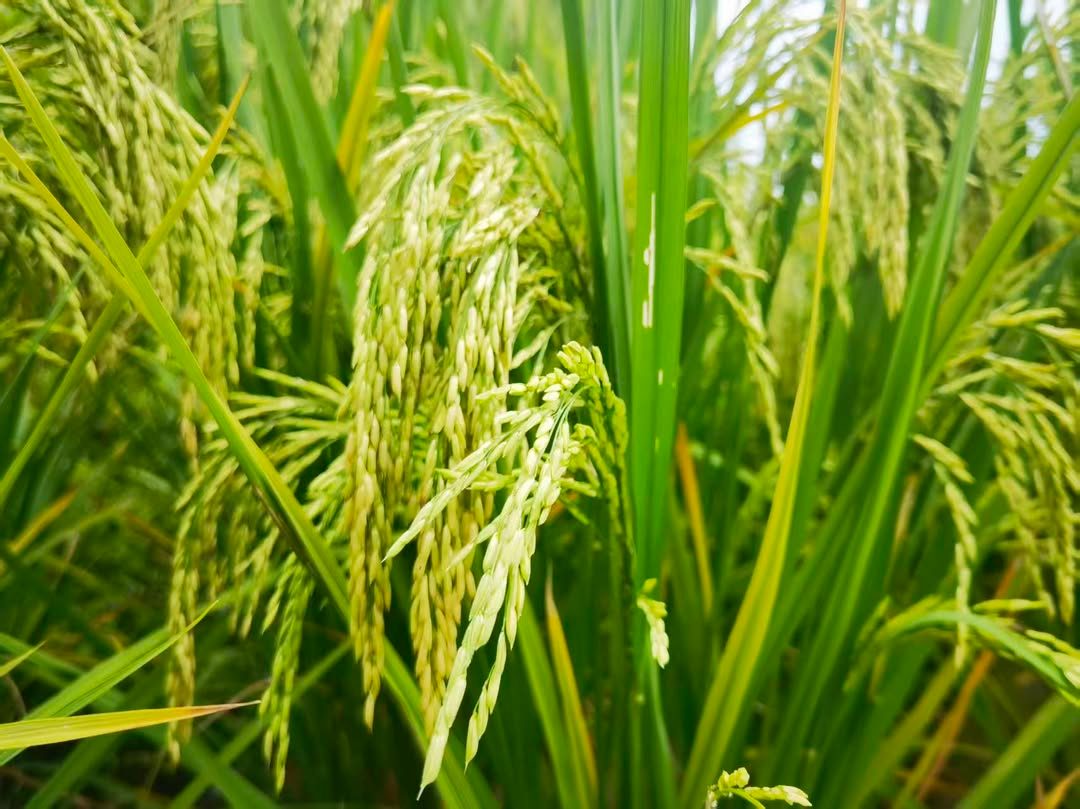
On CLI's rice terrace hikes, the path runs close enough to the fields to see the grain ripening, green and gold, on each stalk.
寄宿家庭jìsù jiātíng
Homestays
Daily life with a host family.
Homestay students share home-cooked dinners with their host family, and folding dumplings together is Chinese practice with dinner at the end.
Weekend outings with the host family are part of a homestay, and Guilin's lakes and parks are close at hand.
Dinners in a homestay are cooked in the family kitchen, and the optional meal plan adds a home-cooked weekday lunch at the CLI Center.
Mahjong with the host family is Chinese practice too. Back at the Center, the recreation room has its own mahjong table.
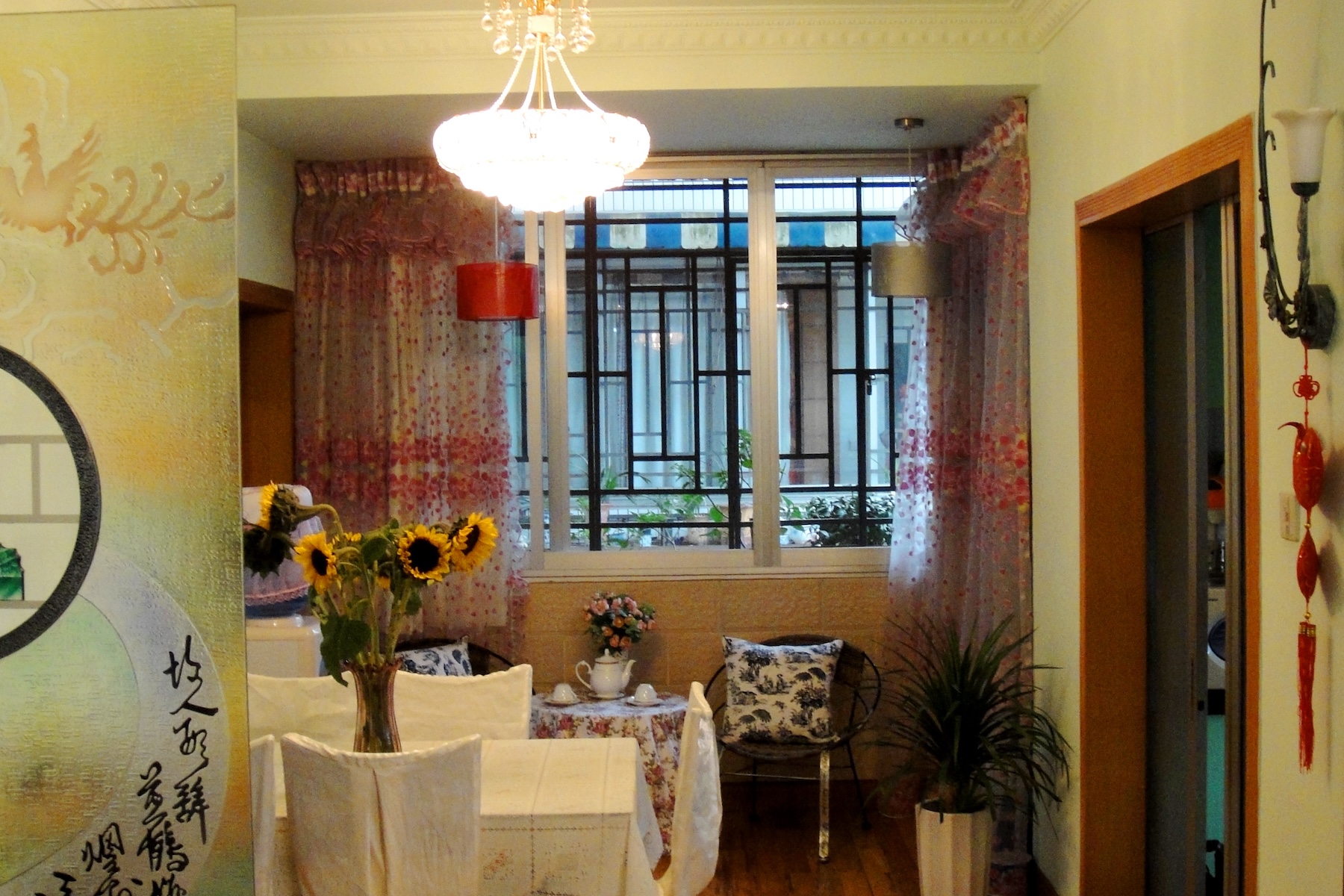
A homestay with a local Guilin family is one of the housing options included in tuition, alongside a private room at the CLI Center.
A homestay comes with a private bedroom in the family's home, and the class day happens at the CLI Center.
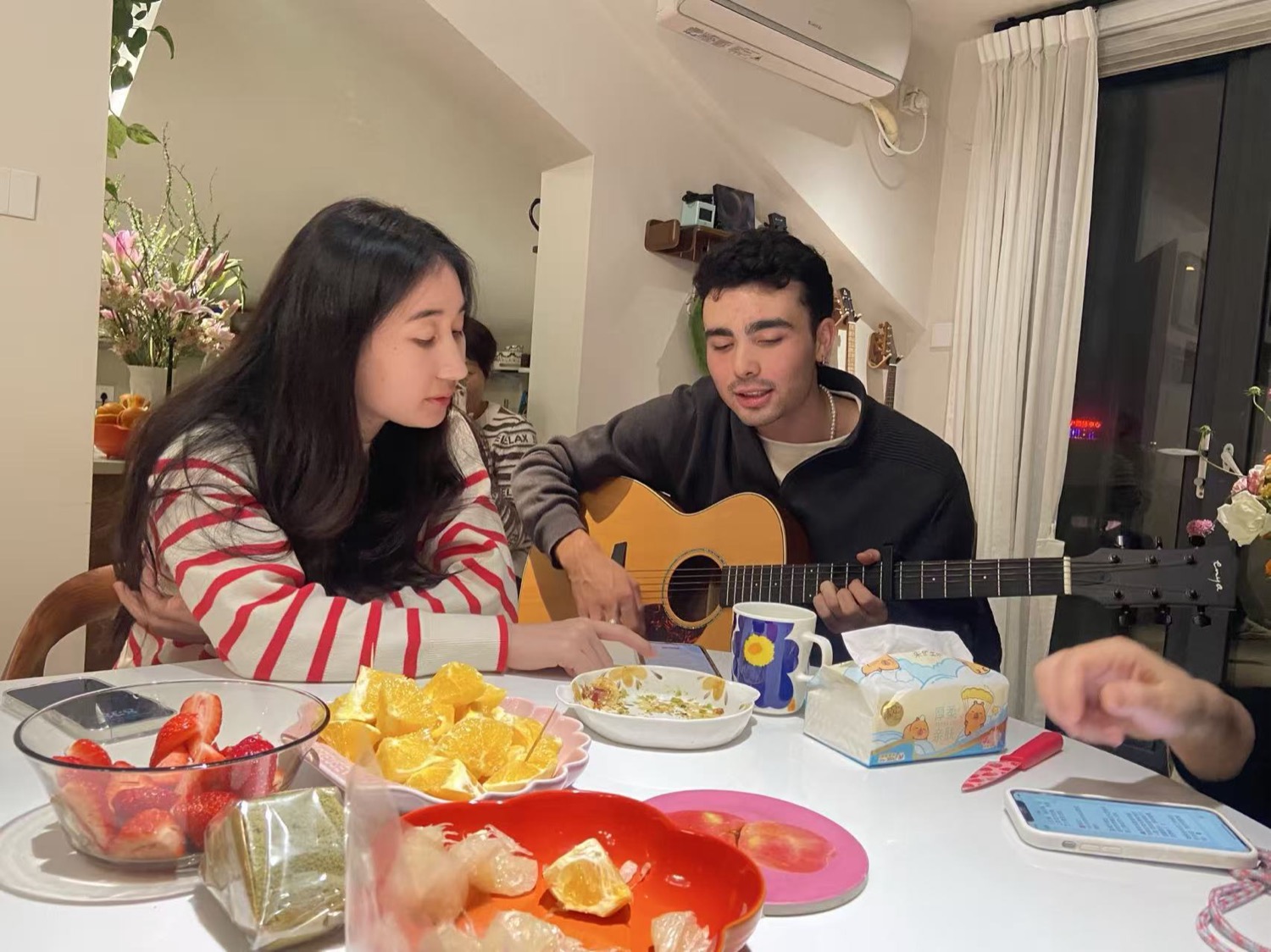
Evenings on the program are usually lighter, and in a homestay that can mean a guitar at the table and informal Chinese practice at home.
Living with a Guilin family keeps Chinese practice going after class, through dinner conversation and daily routines at home.
A homestay means constant Chinese practice, and a full family table is where you pick up the words people actually use at home.
Guangxi food leans fresh, sour and lightly spicy, and a homestay is a good way to eat it the way local families cook it.
Guilin has little English and no large expat bubble, and a homestay puts students even closer to how local families live and talk.
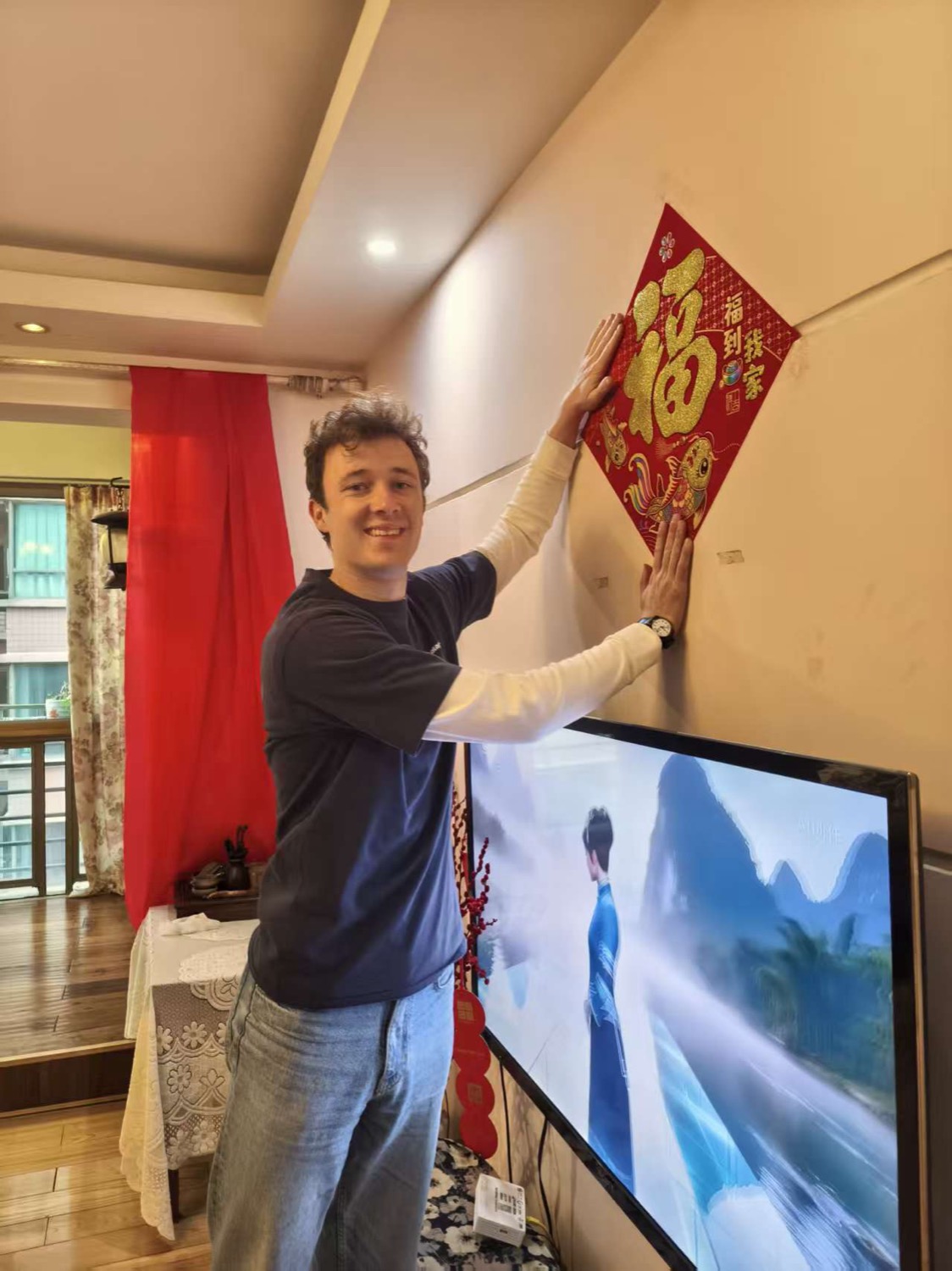
Hanging a 福 (fú, good fortune) character is a holiday custom, and a homestay over a holiday means seeing it from inside a Guilin family's home.
朋友péngyou
Friends and celebrations
Holidays, farewell dinners, anniversary parties, and time together.
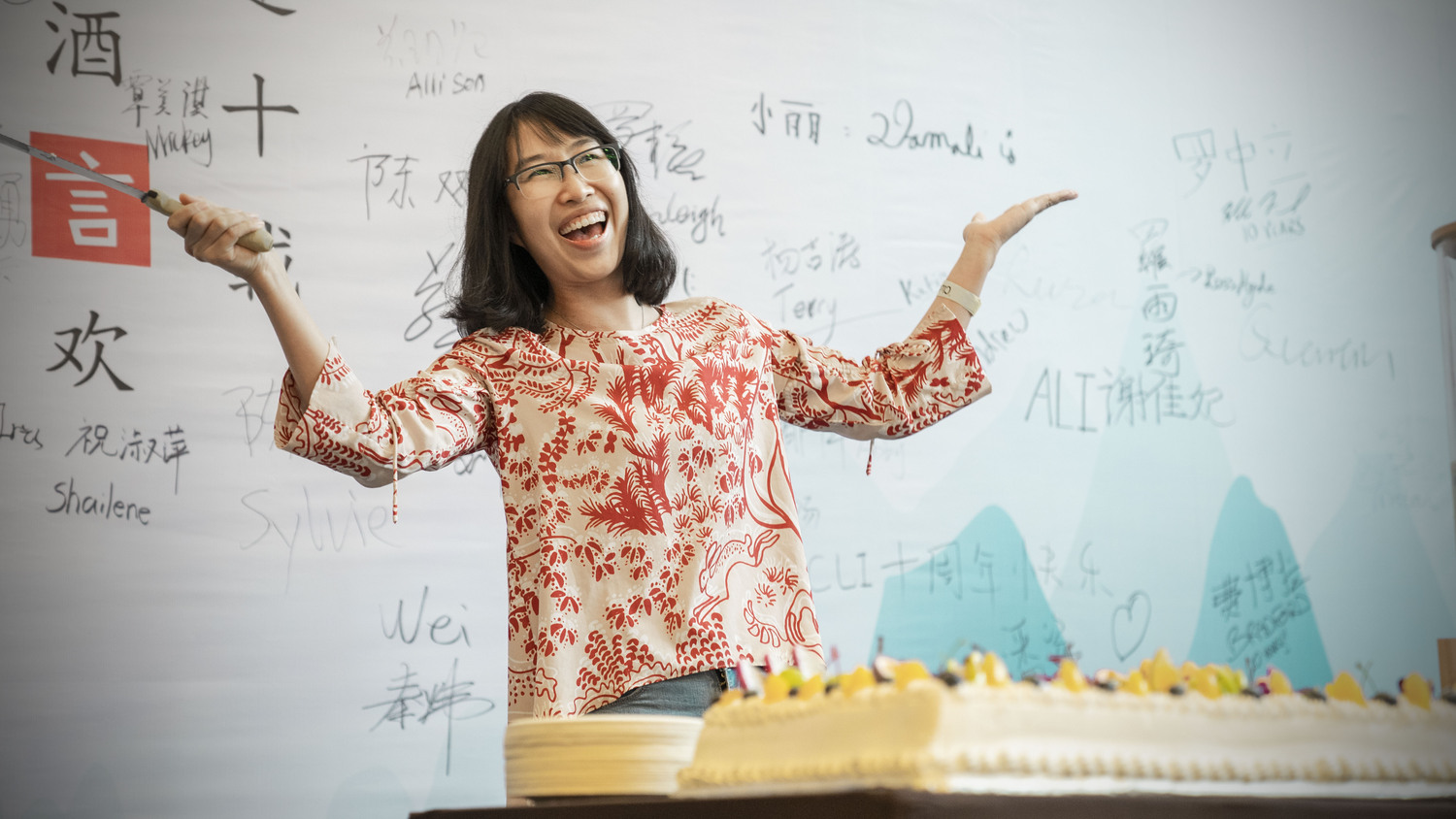
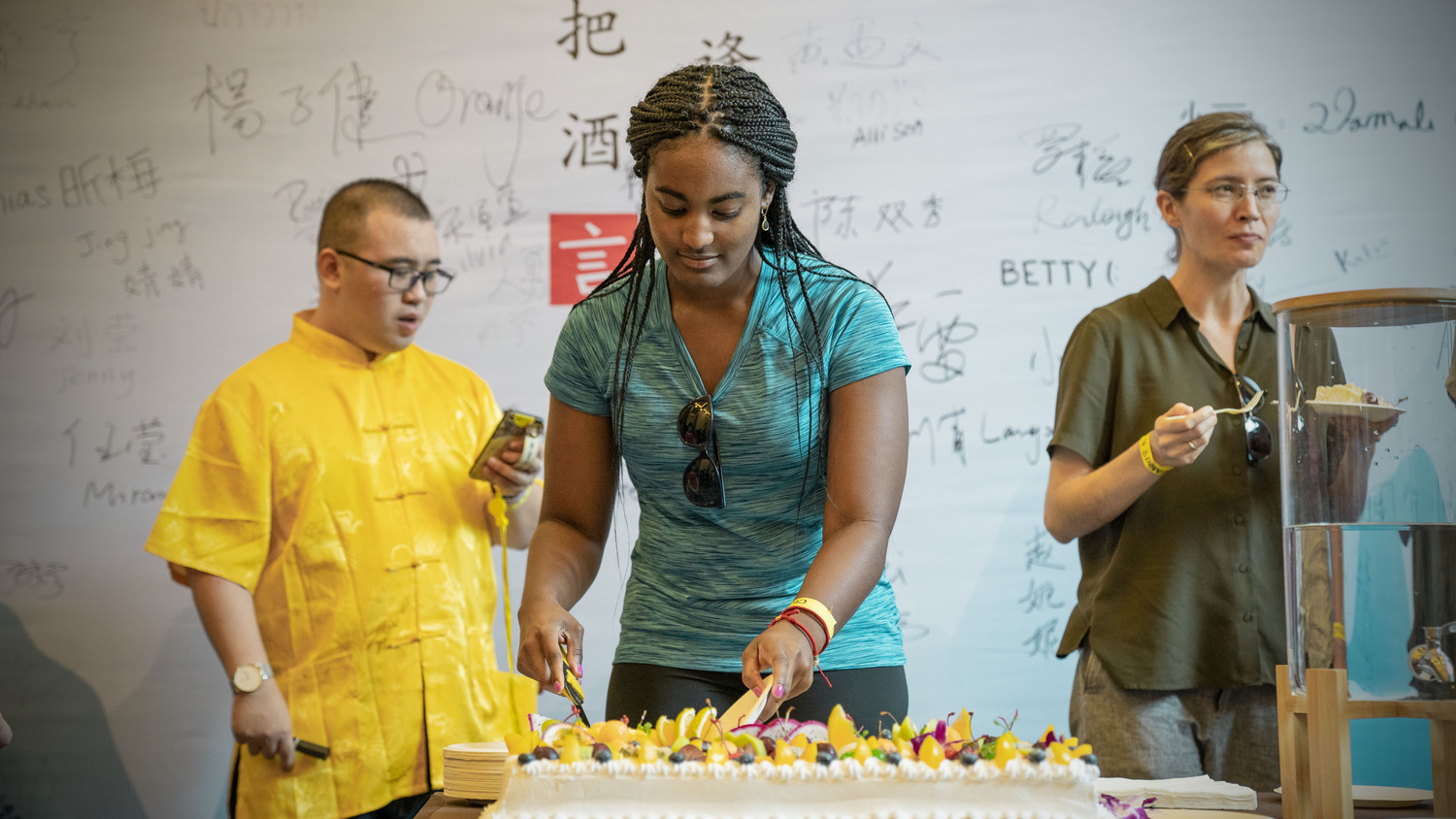
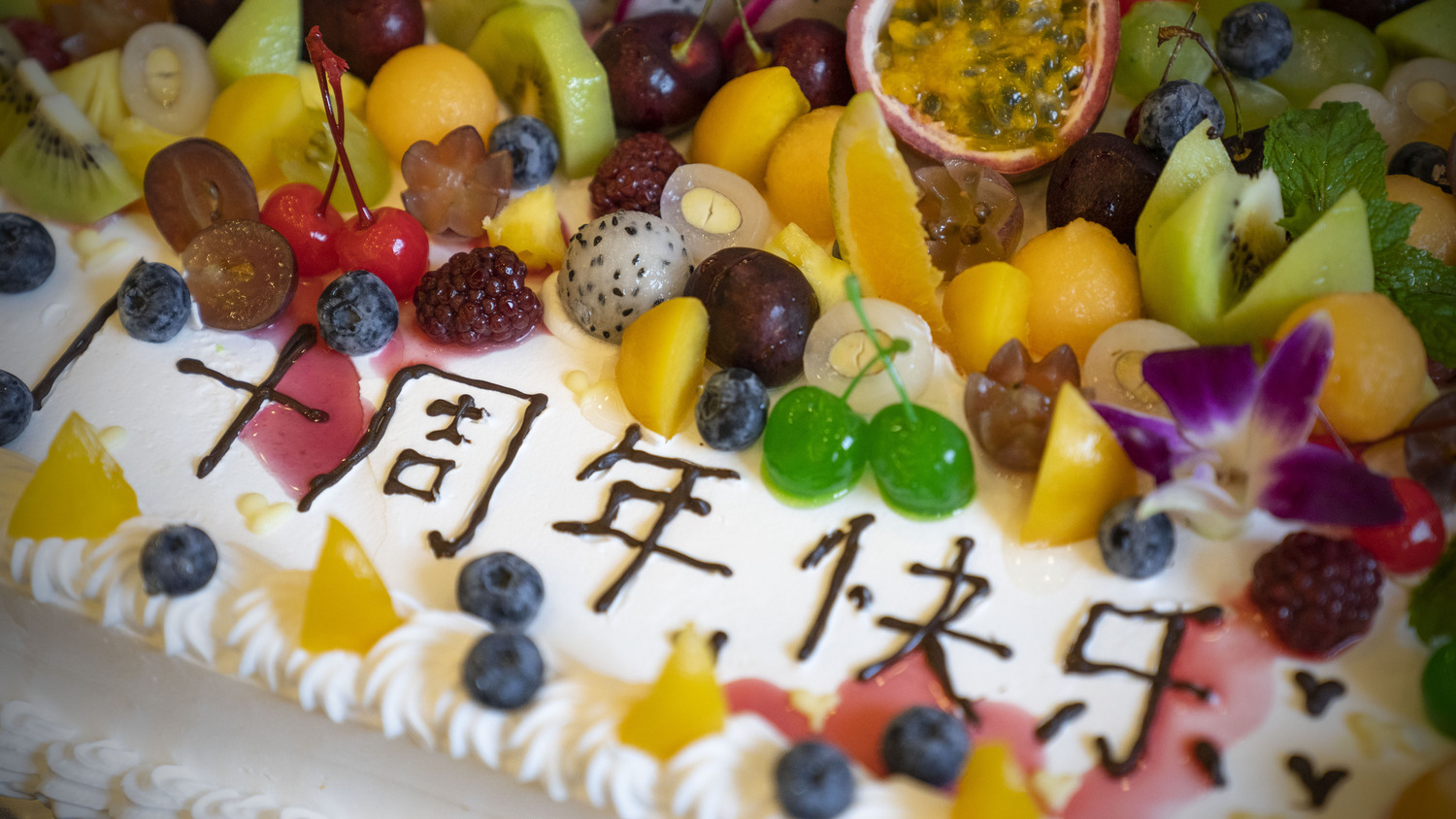
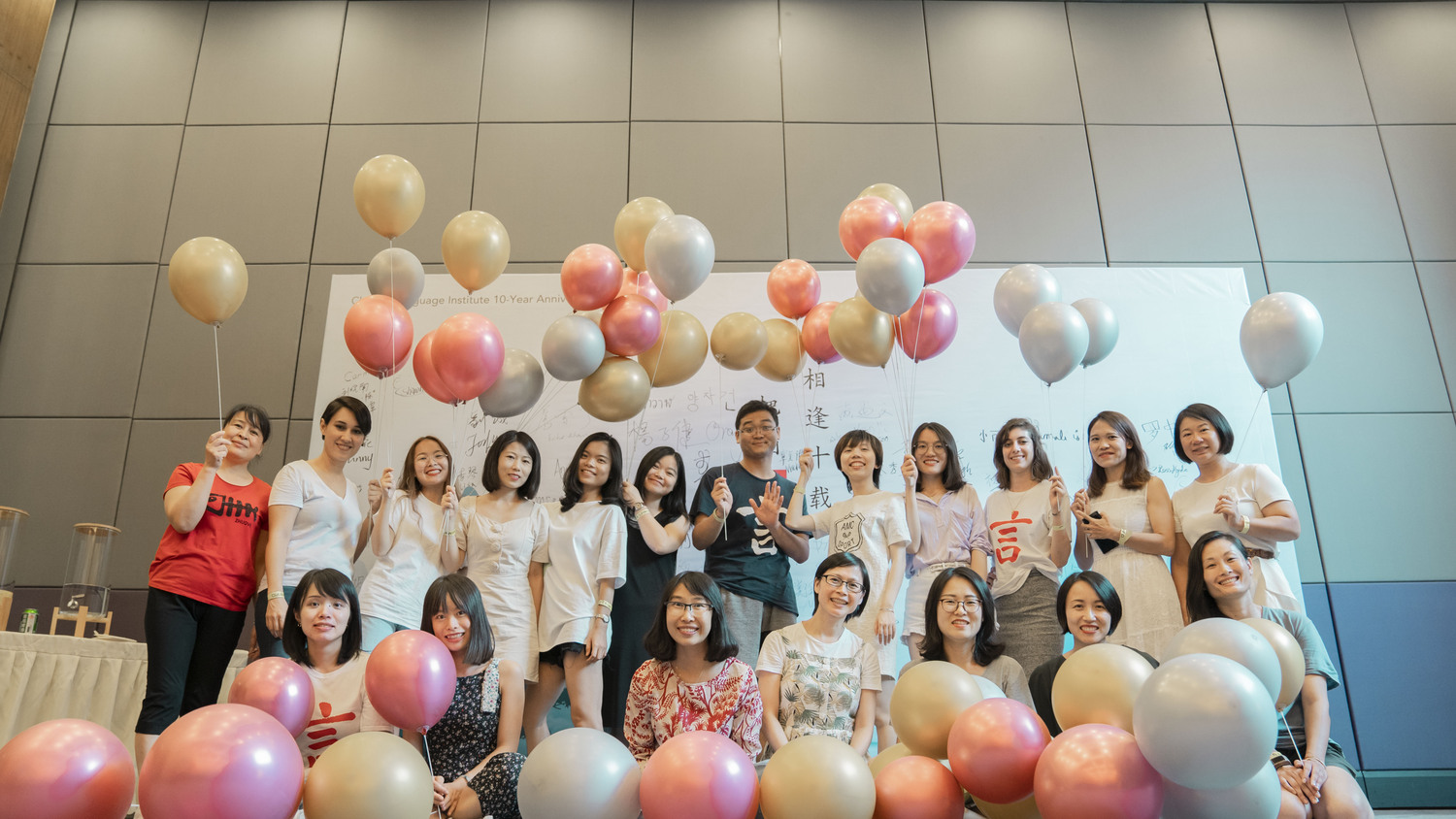
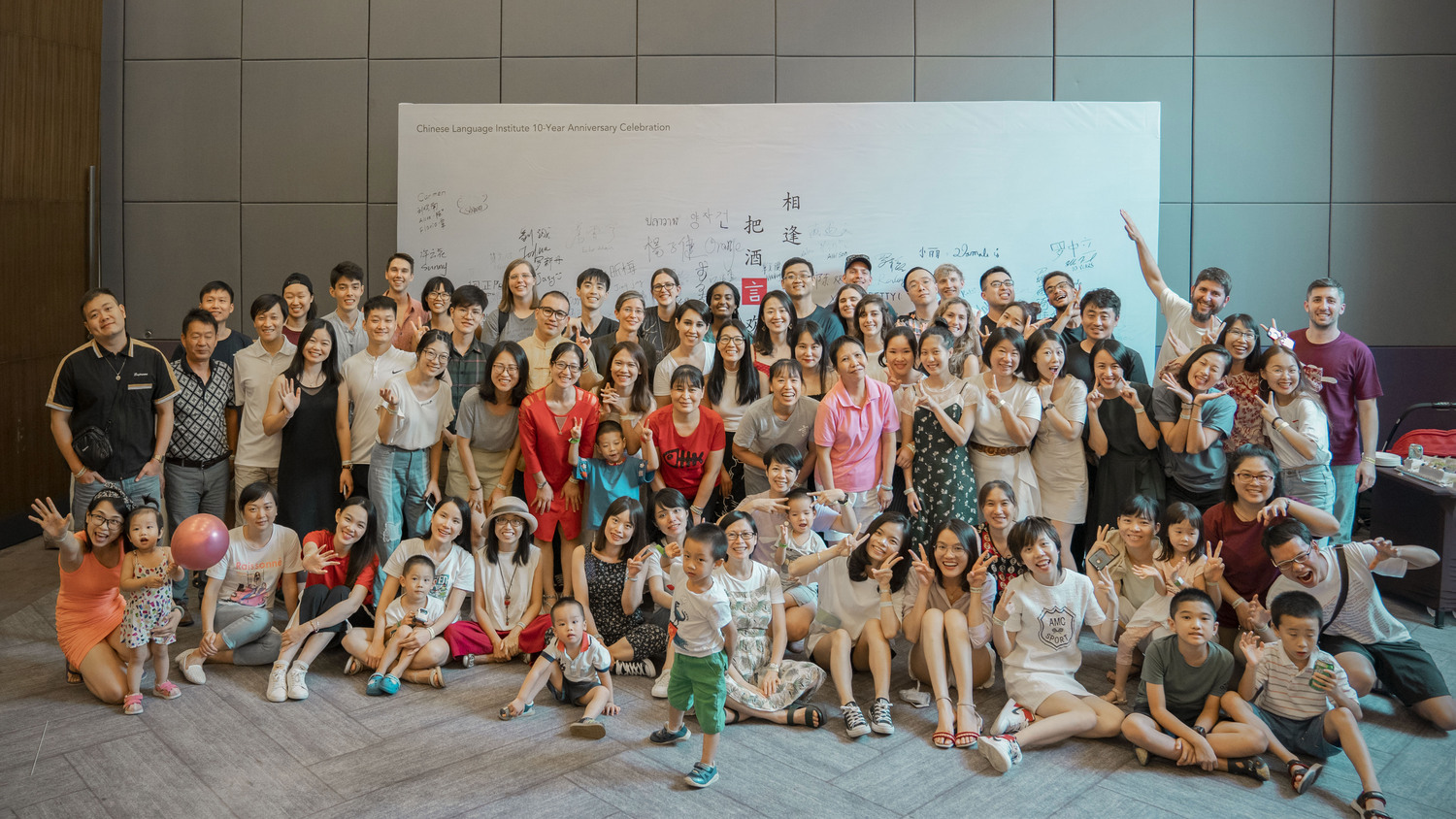
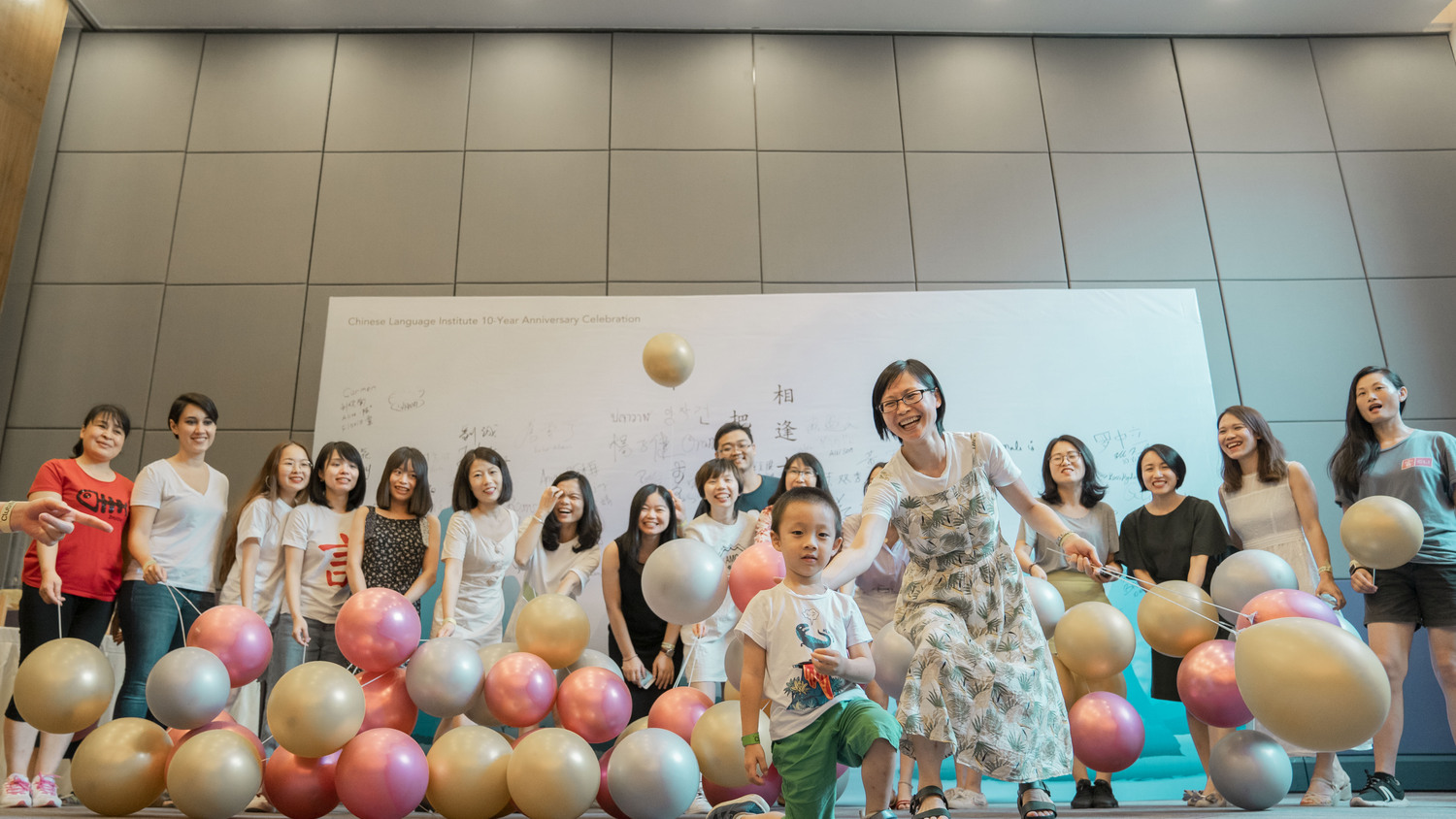
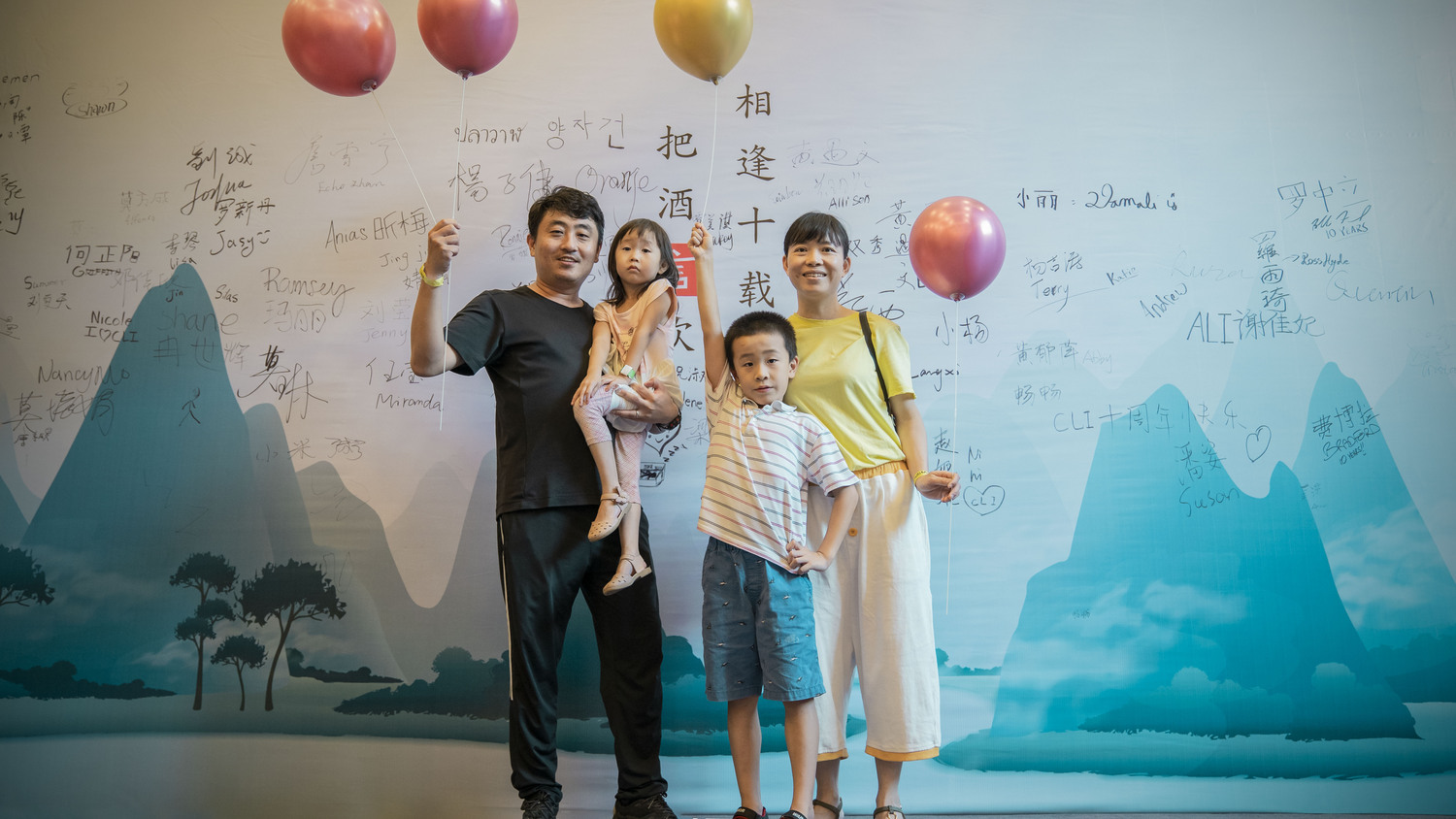
CLI was founded in Guilin in 2009, and this anniversary party, cake and signing wall included, marked the years since.
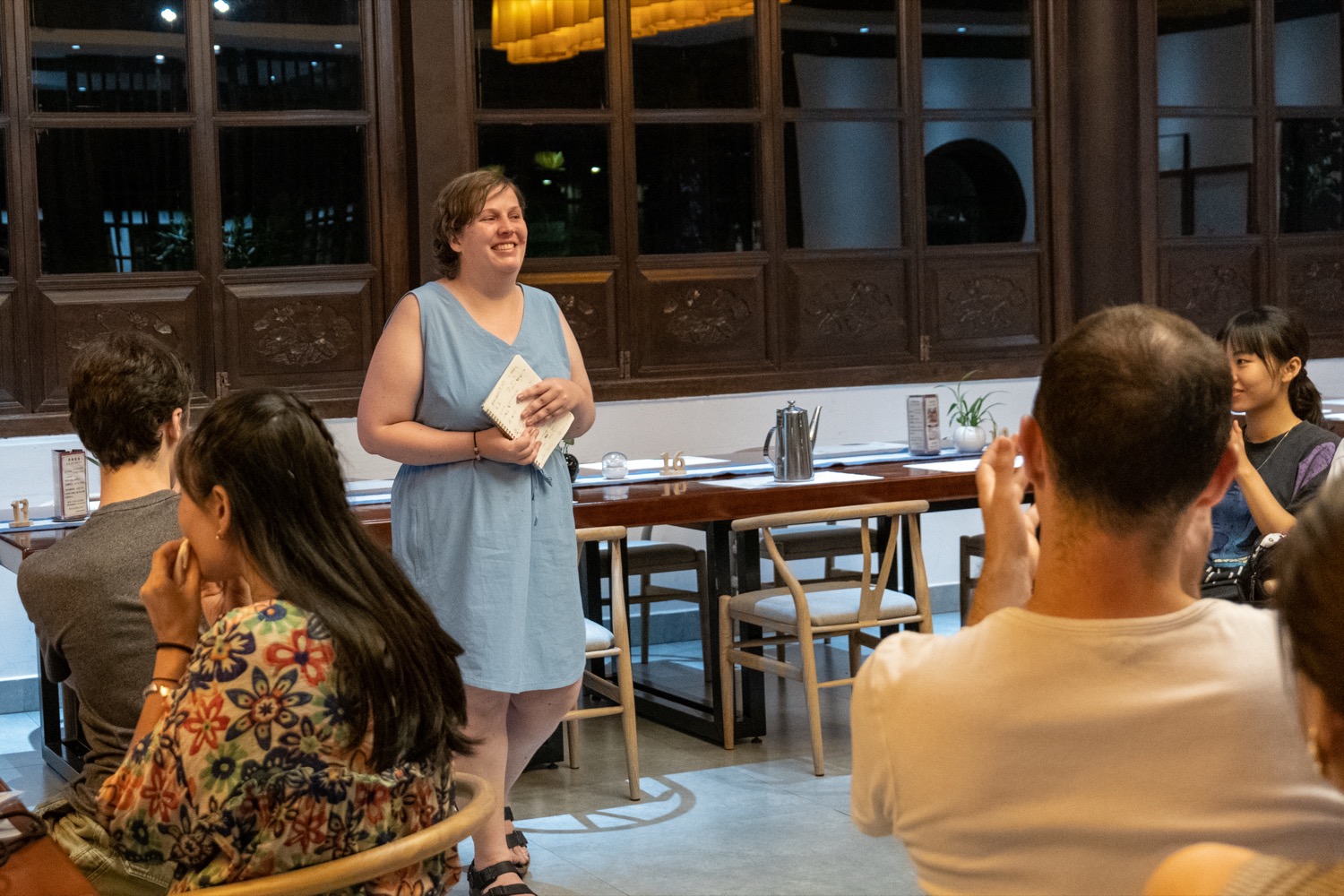
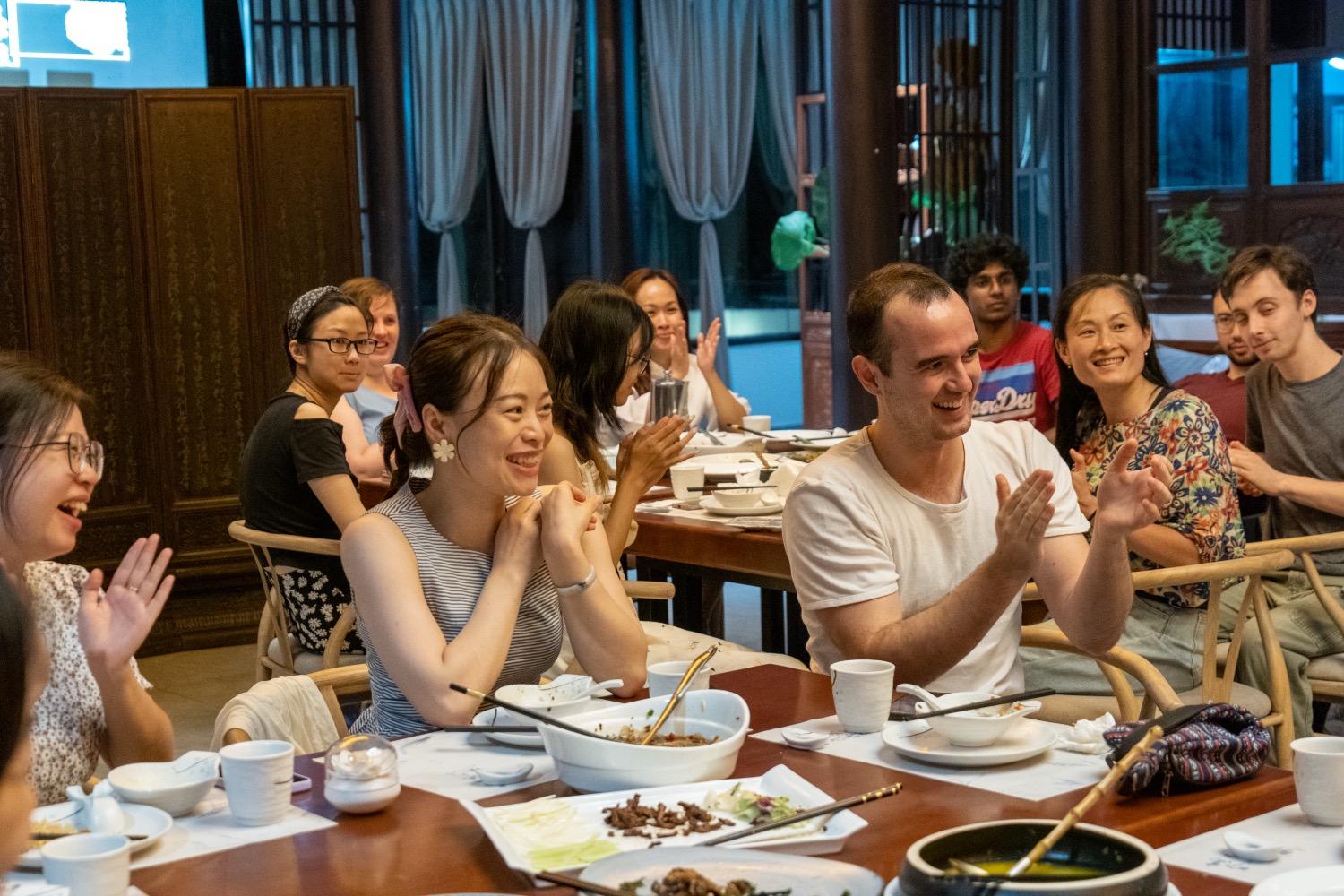
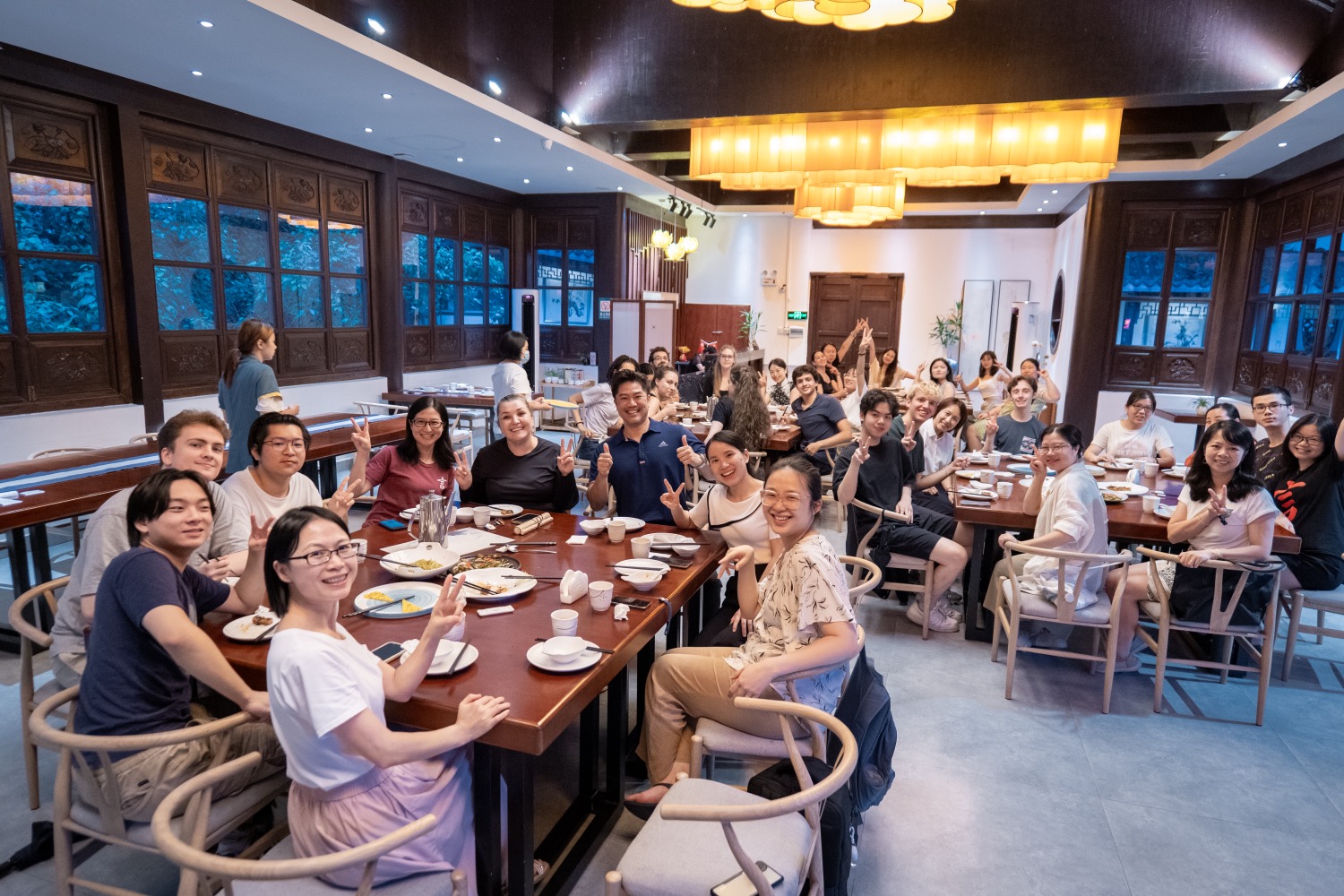
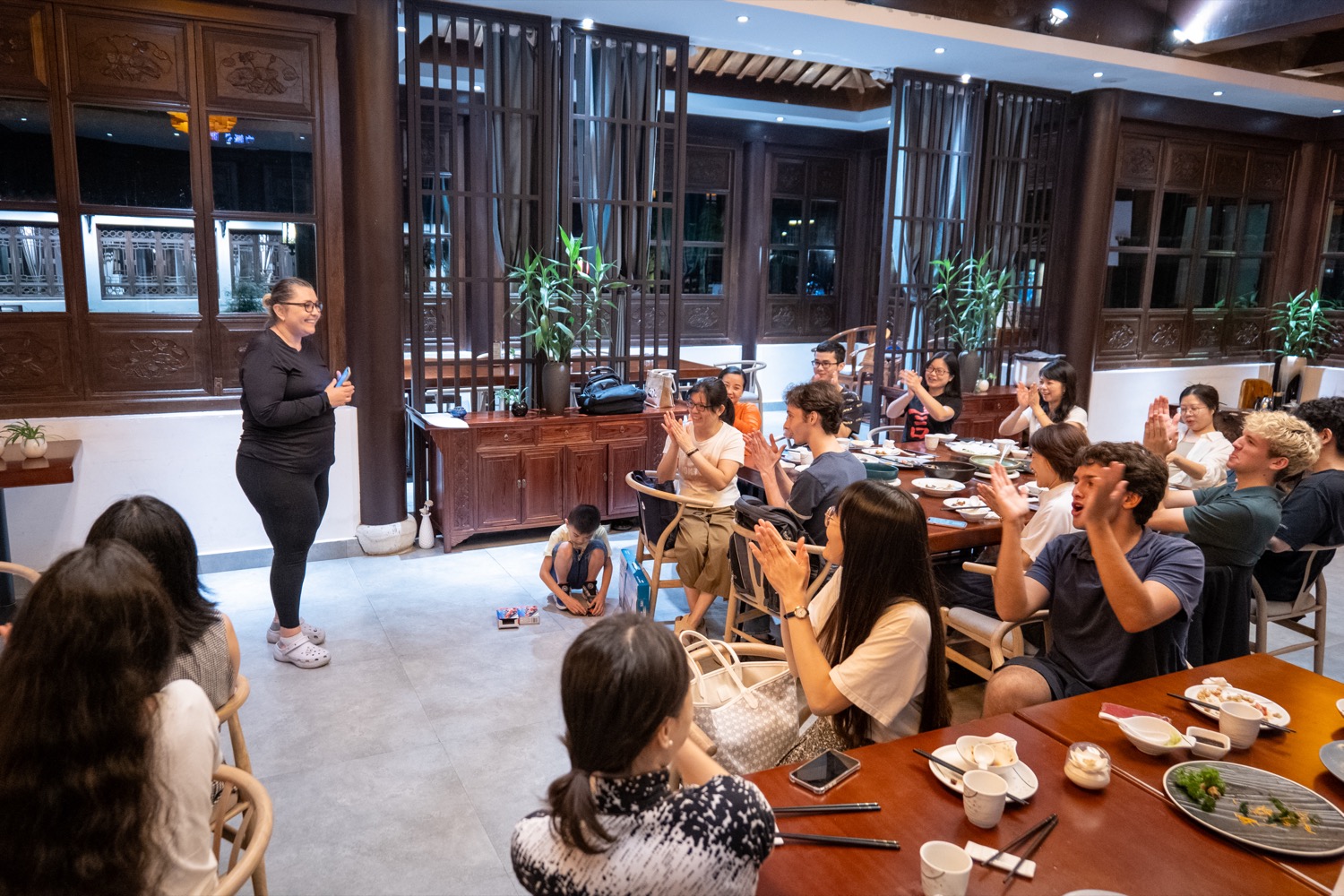
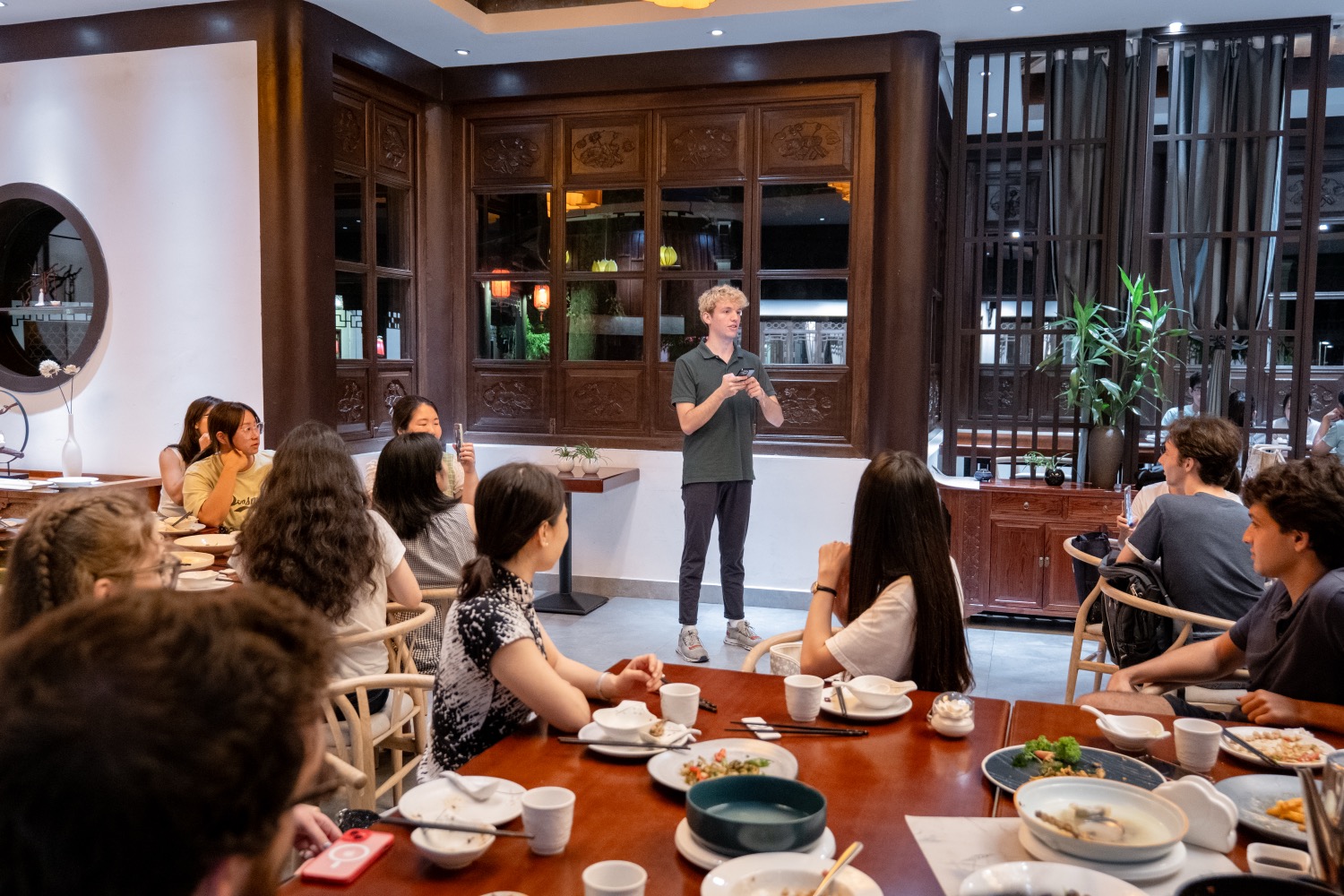
Farewell dinners come with the program, and a few words to the room, in Chinese if you can manage it, are a good way to thank the people at each table.
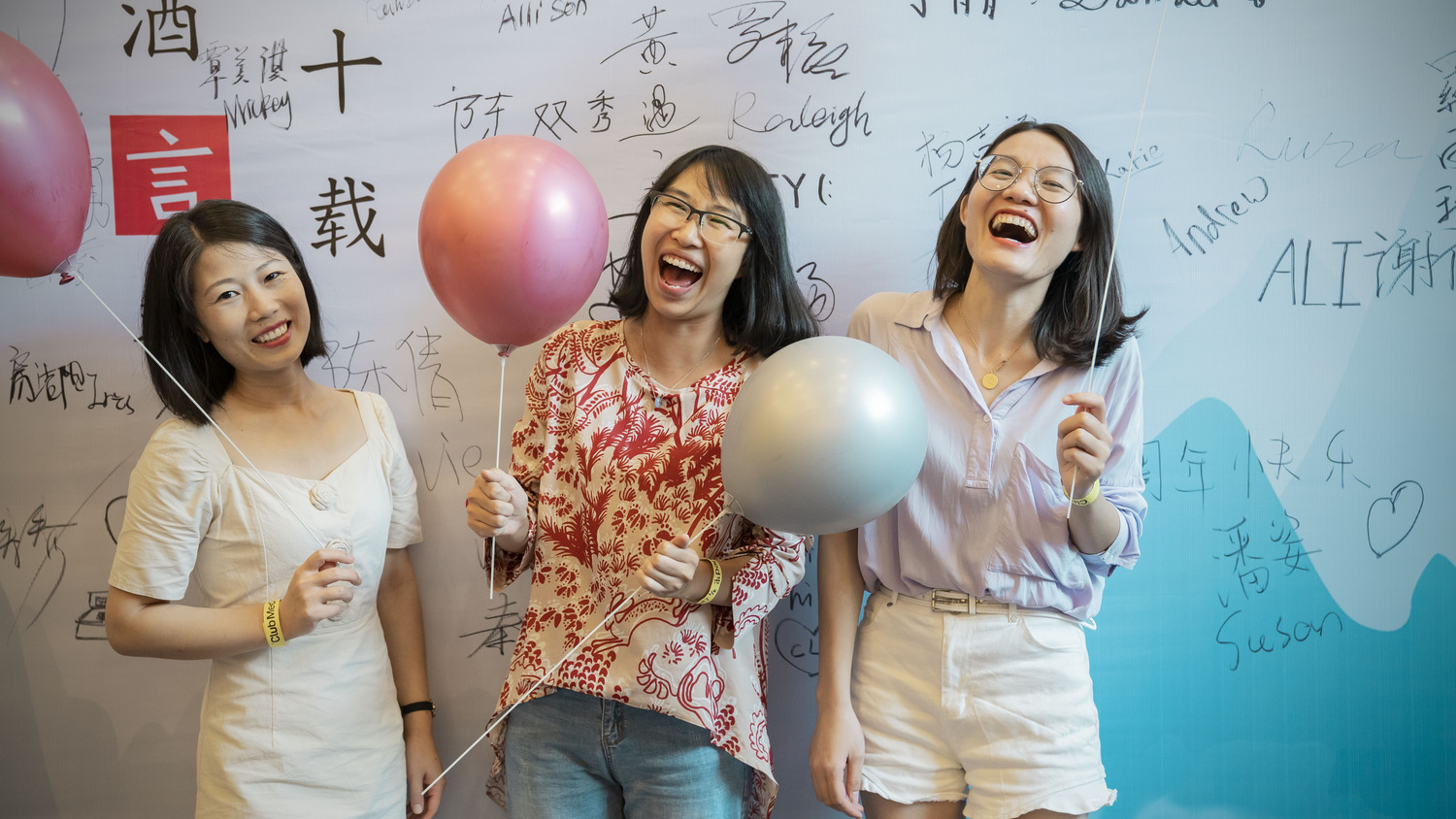
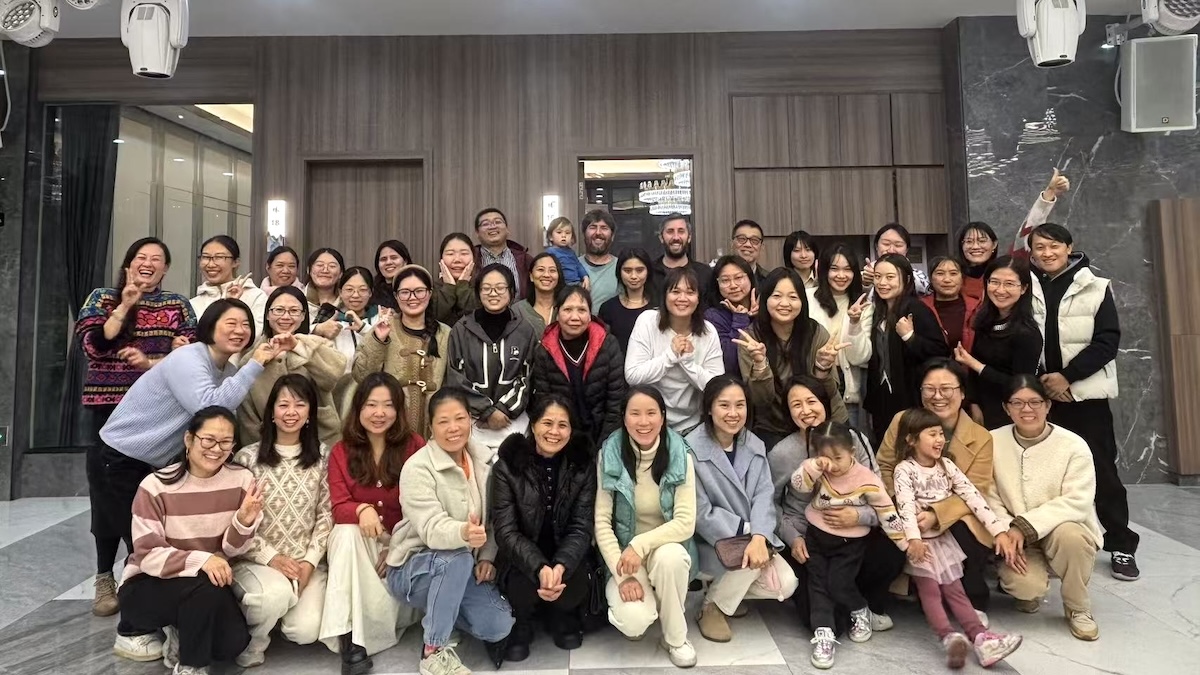
Celebrations at CLI can bring students and pengyou into one room, and the cake gets cut in front of a wall signed by the guests.
Friends at CLI can be local too: if you join the free Pengyou Program, you and your pengyou share a meal each week and get to know each other well.
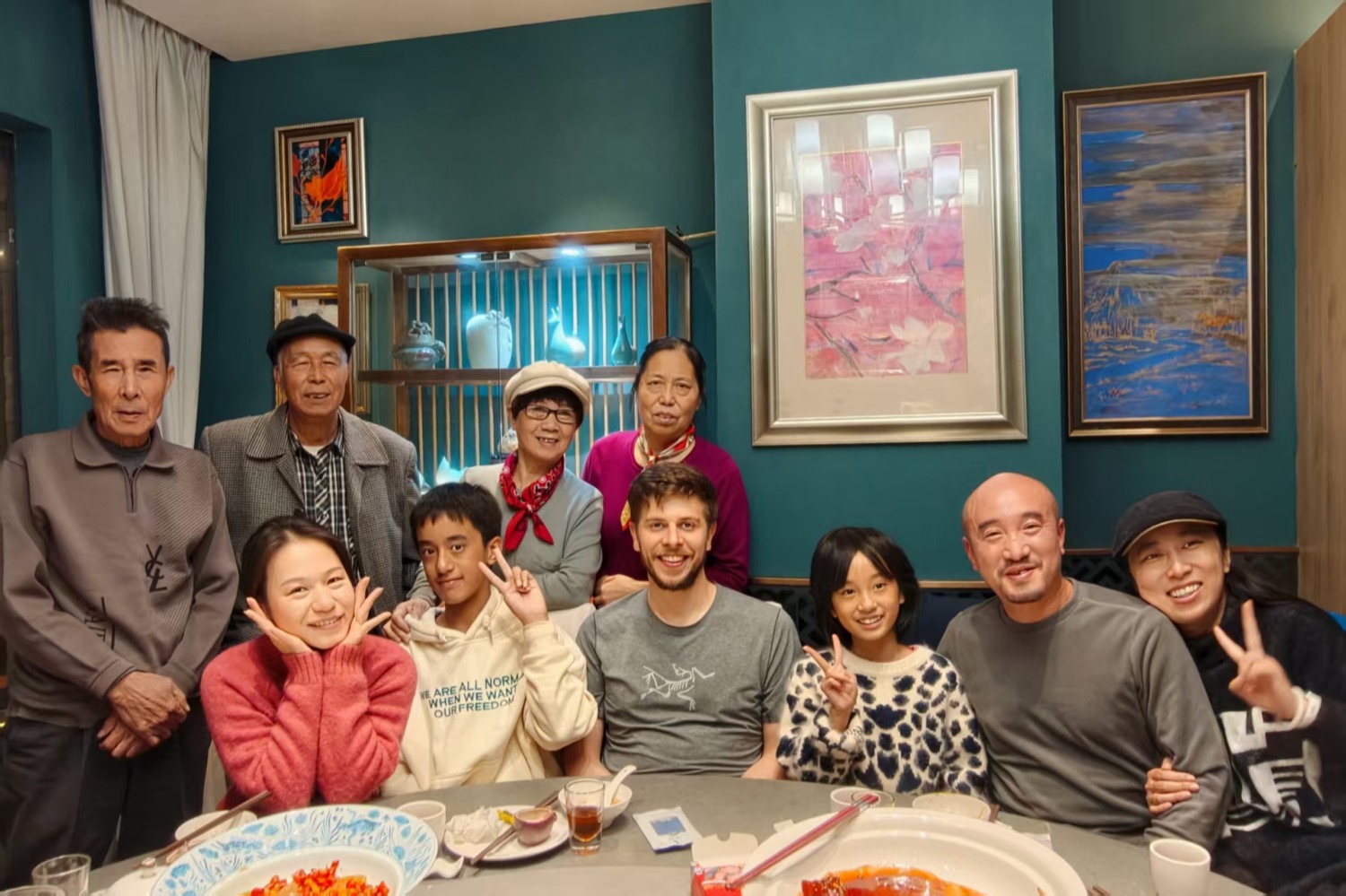
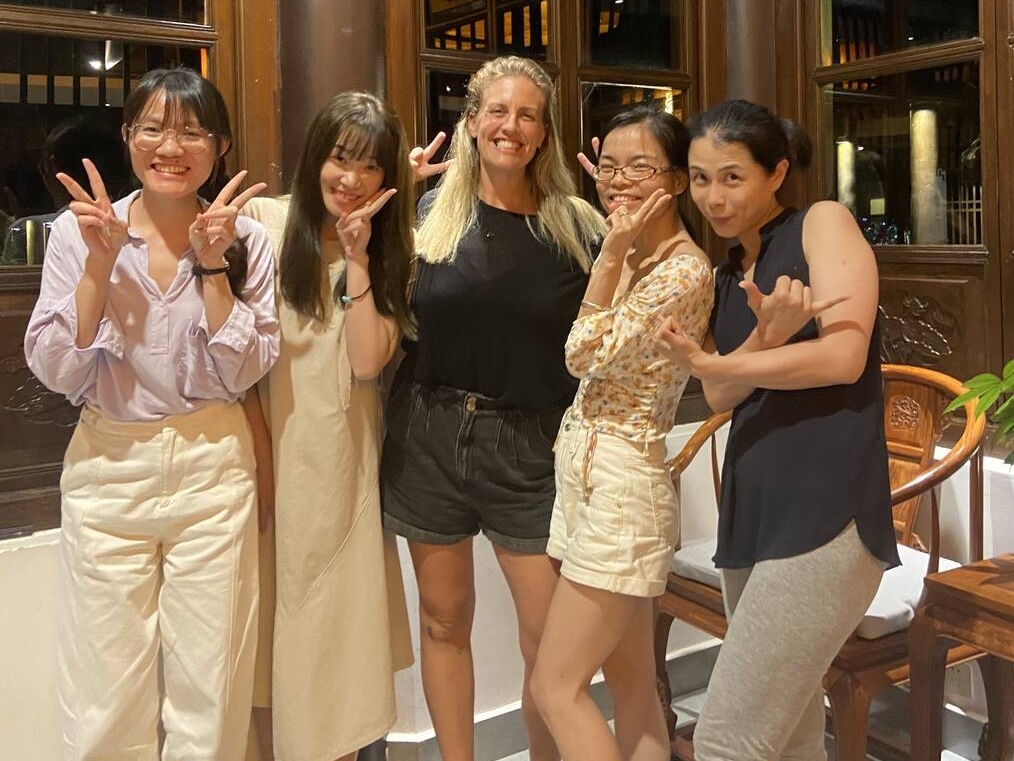
The farewell dinner is included in tuition, and it is a good night to squeeze together for one more photo with the friends you made.
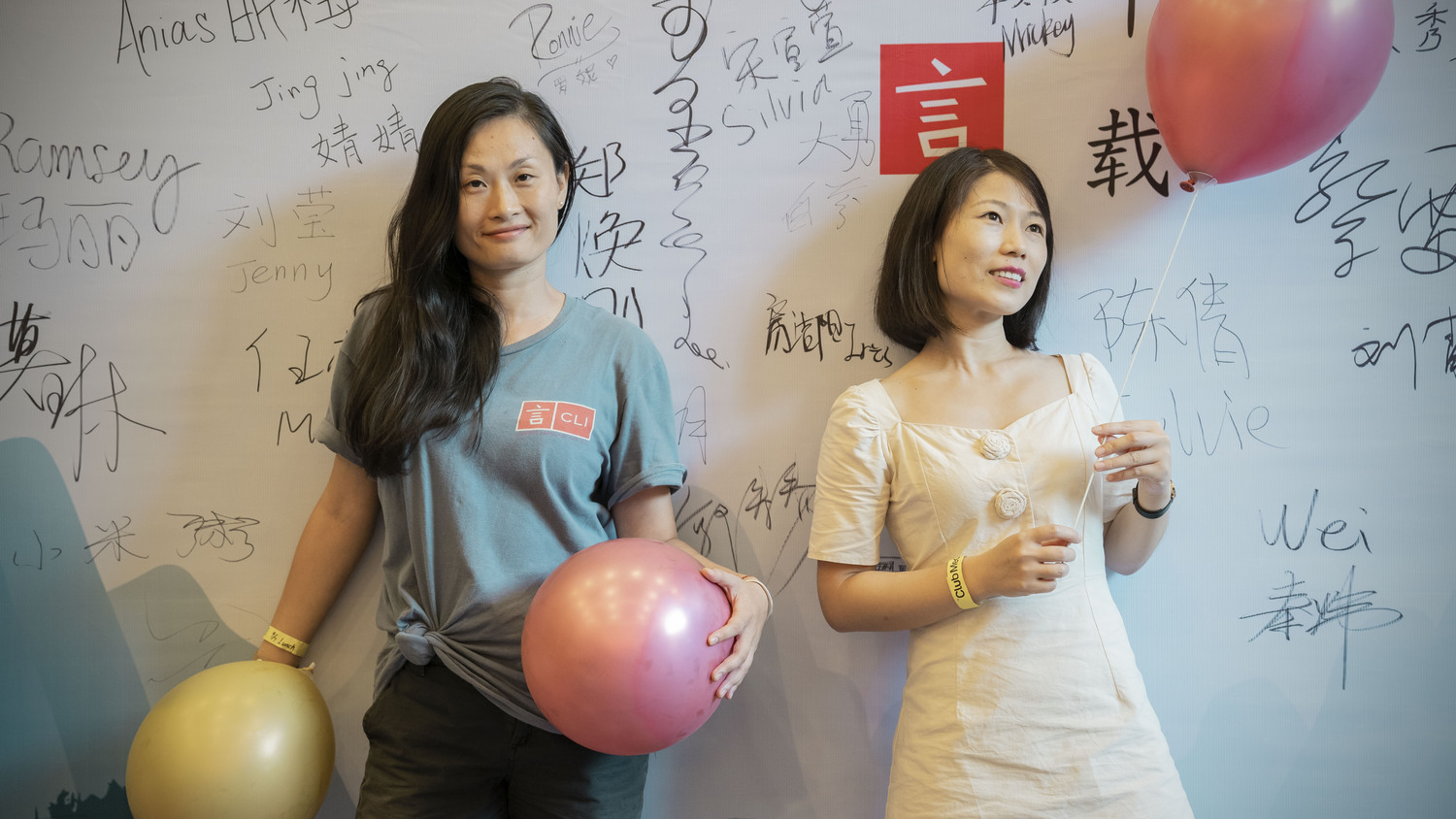
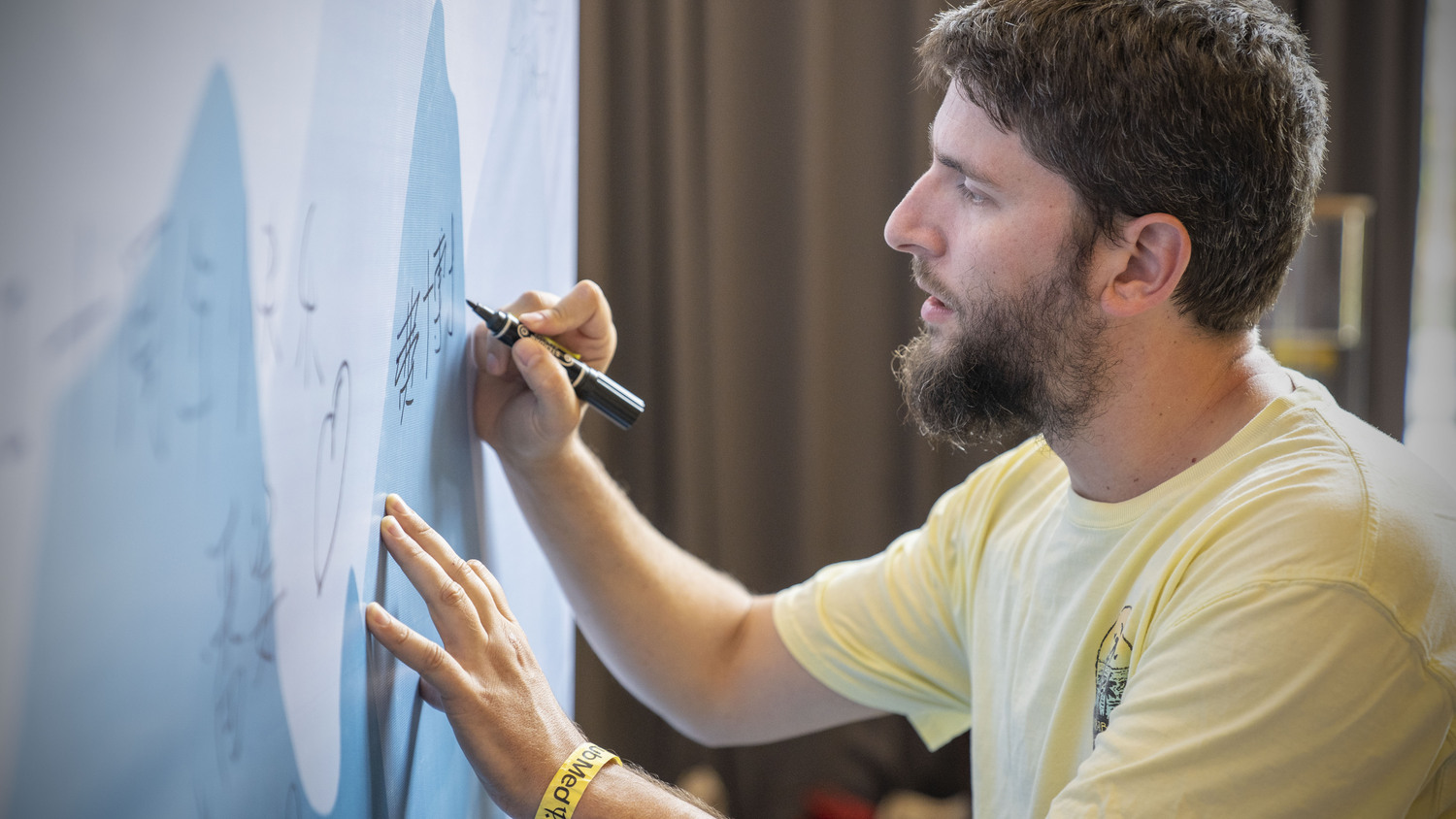
The big 载 (zǎi) on the wall behind them means year, and guests at this anniversary party signed their names all around it.
Evenings on the program are usually lighter, with dinner, review and informal practice, and once in a while a party with a microphone or two.
Weekends are for bigger outings, from Li River trips to hikes in Longsheng or Yangshuo, and teachers and pengyou often come along.
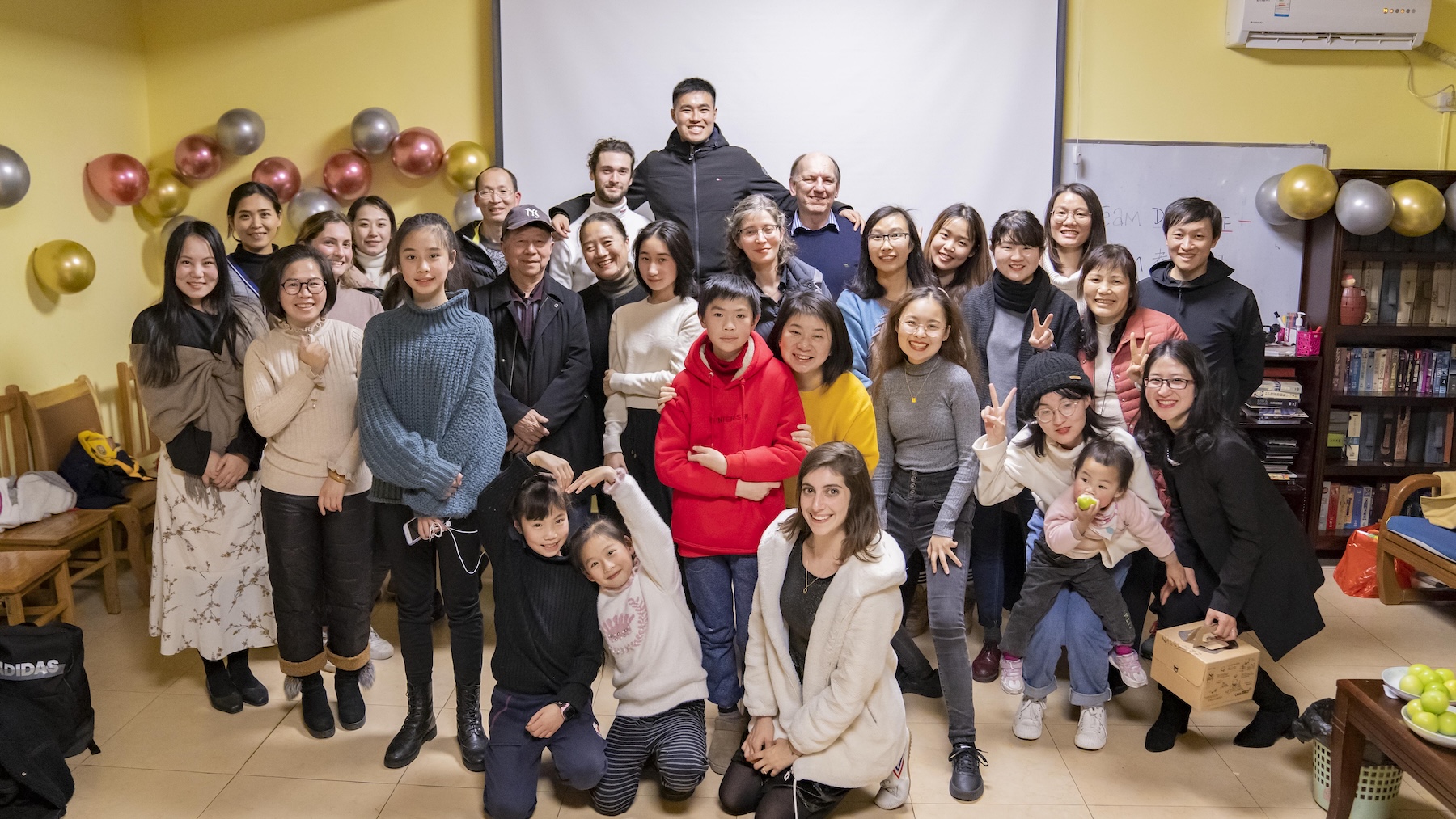
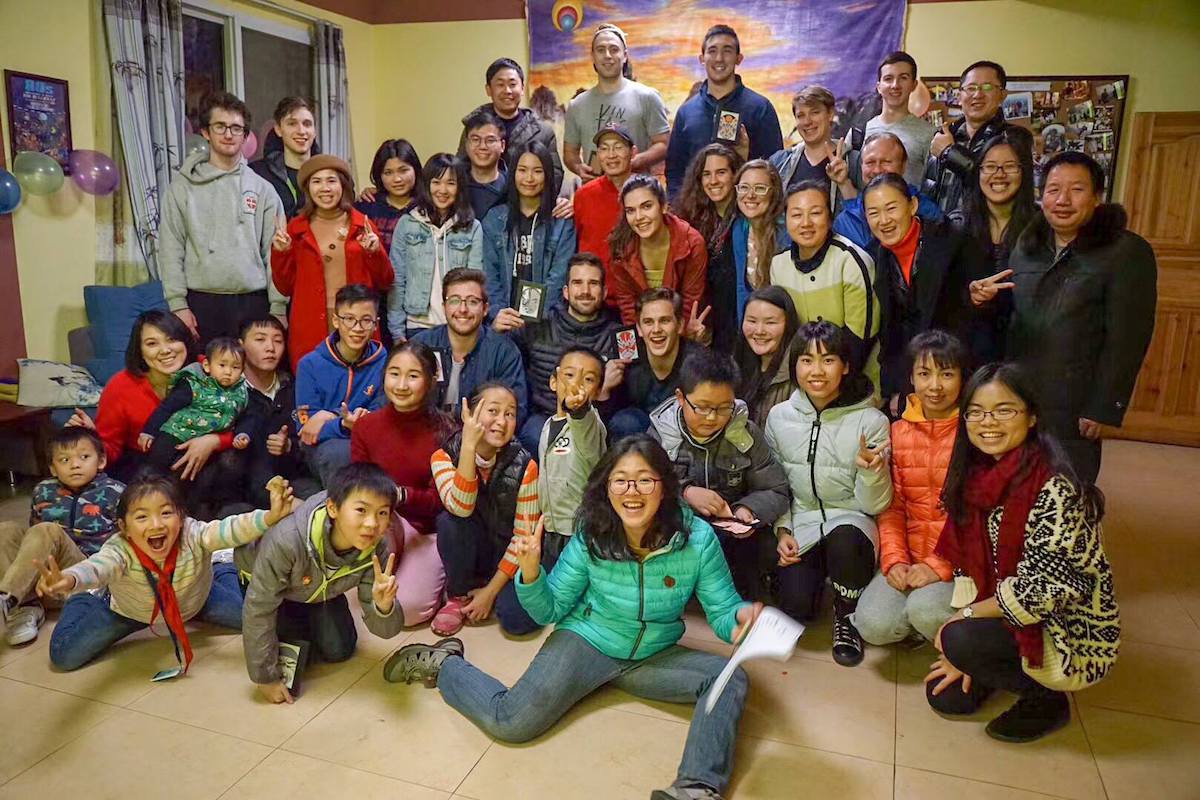
The bigger festival celebrations at CLI can fill a whole lobby, children and all, with everyone lined up for one group photo.
Families sometimes study at CLI together, and students range from high school students to retirees, so one round table can hold a wide range of ages.
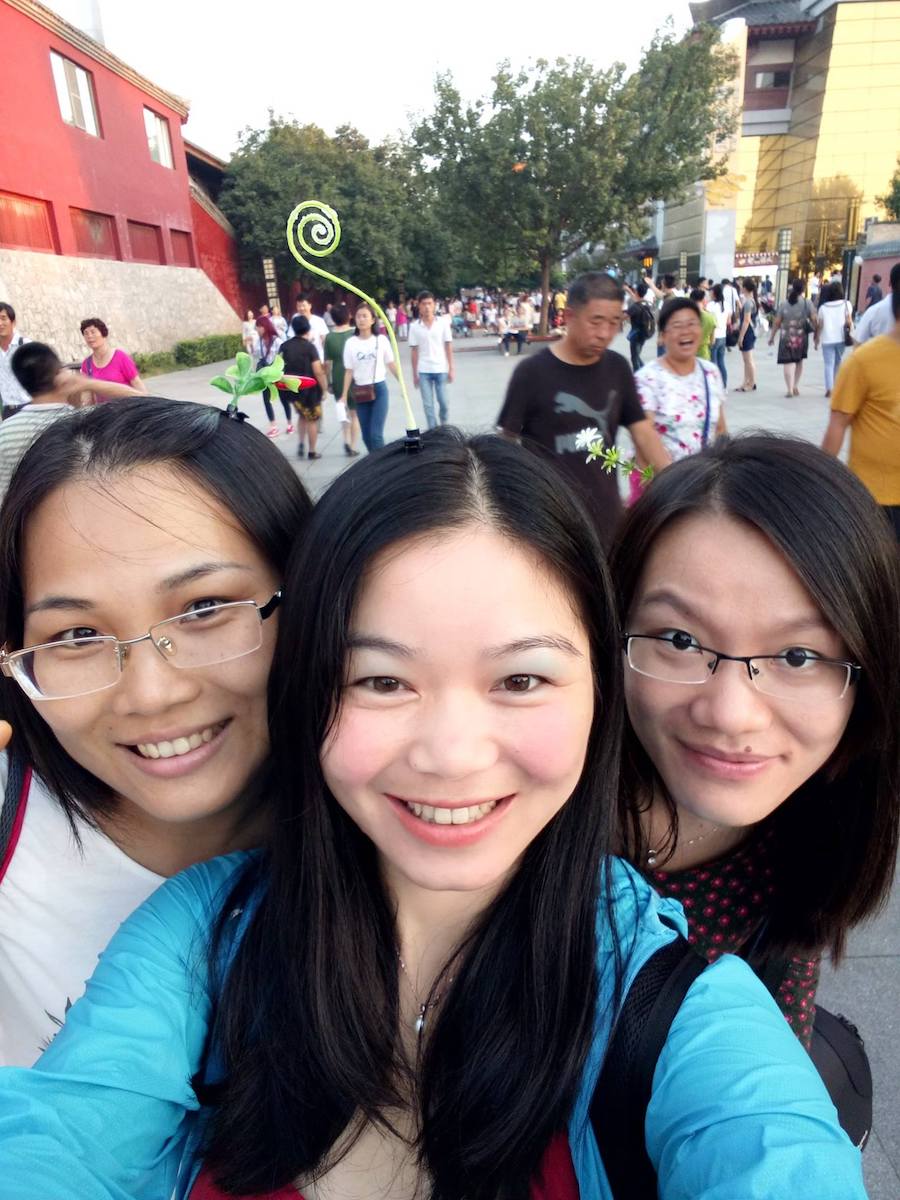
Guilin has no big expat bubble and little English, so time with friends on a street like this one happens in Mandarin.
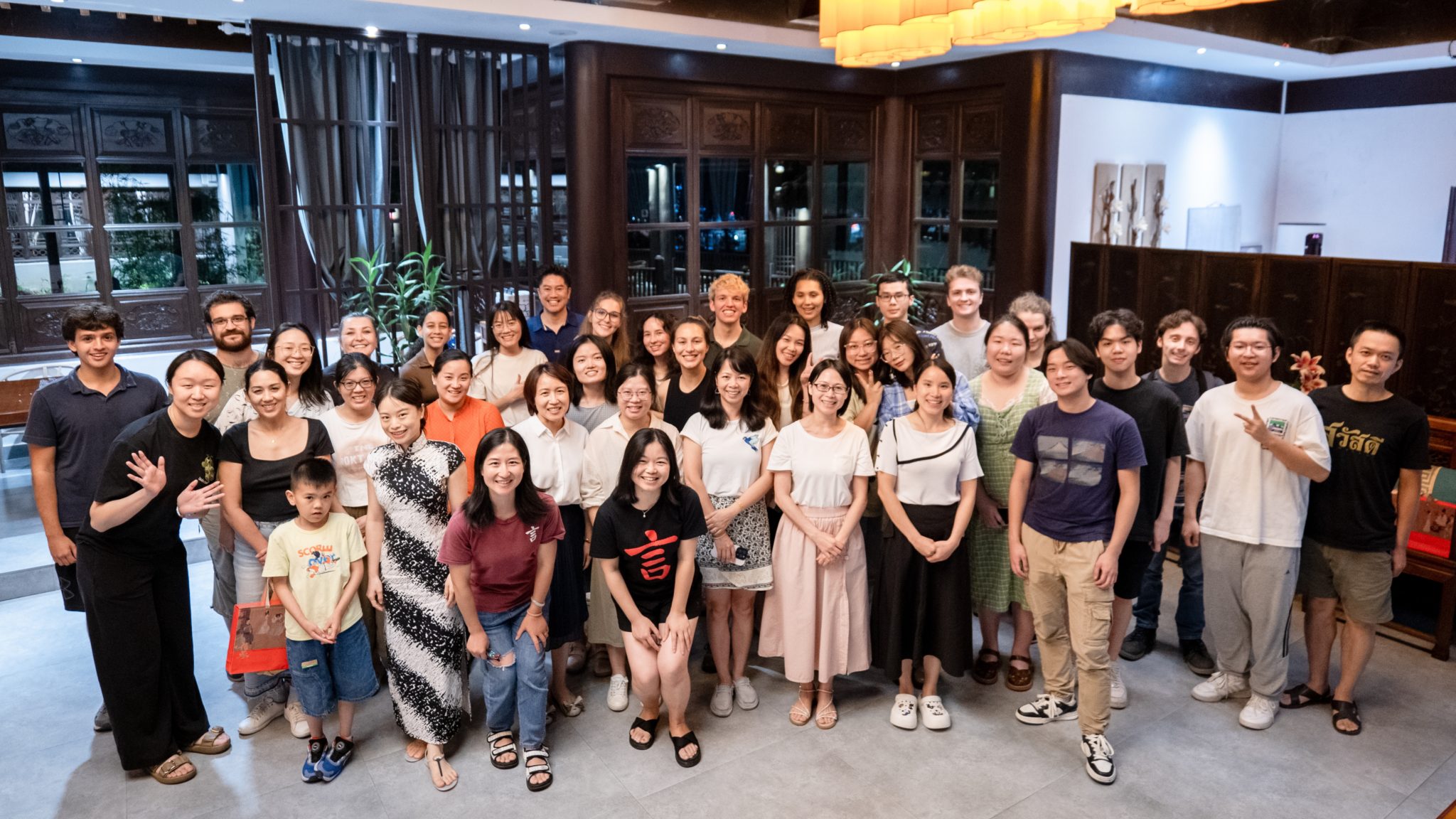
It takes a crouching front row to fit the whole community into one photo, and CLI has been in Guilin since it was founded in 2009.
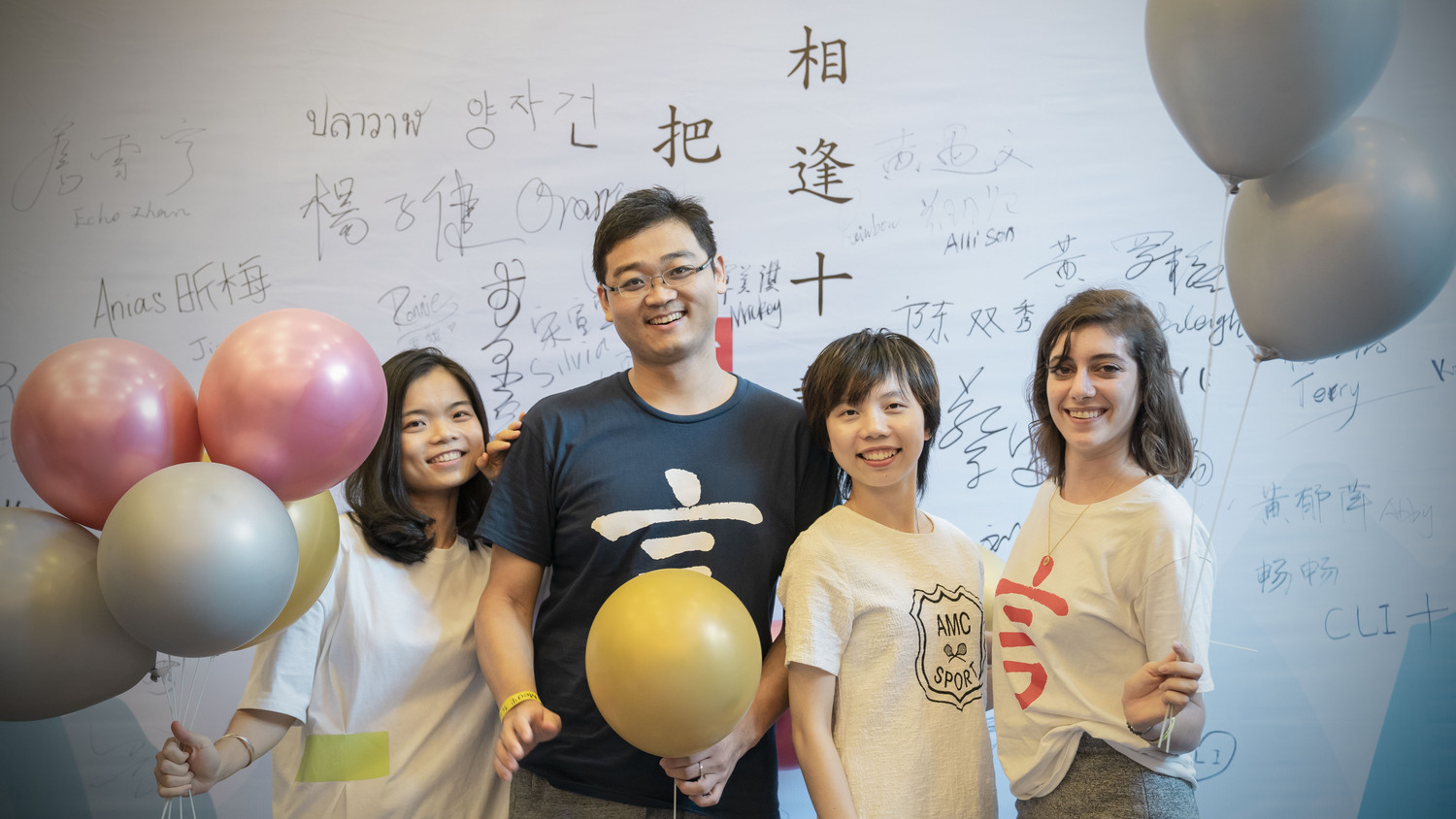
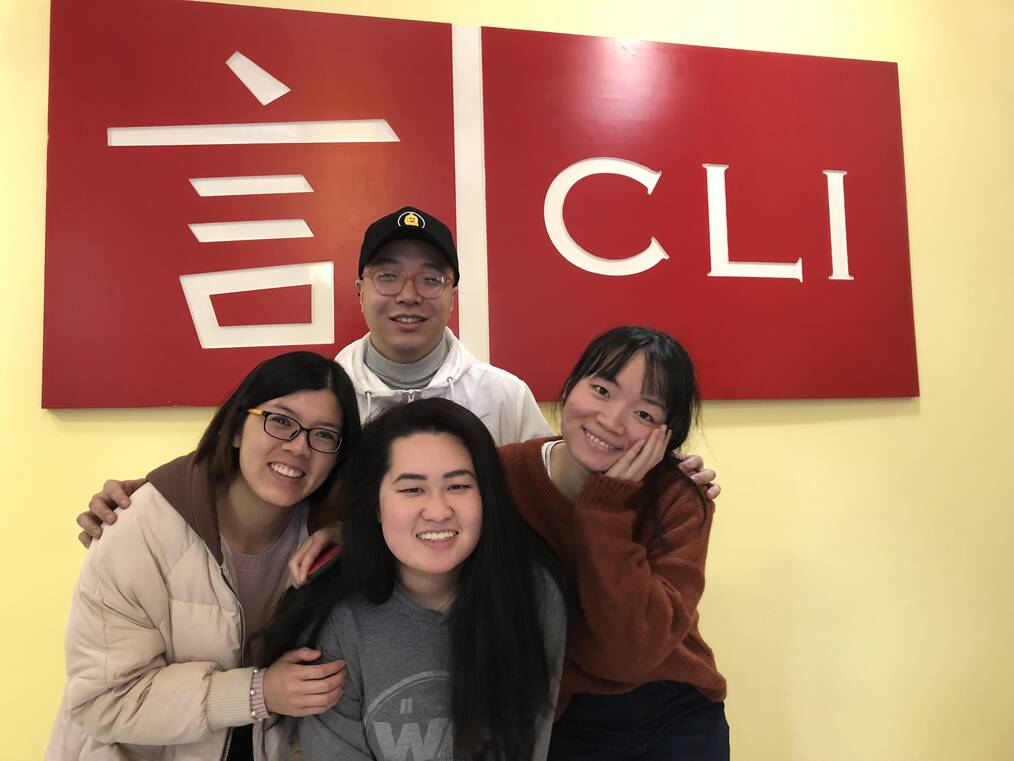
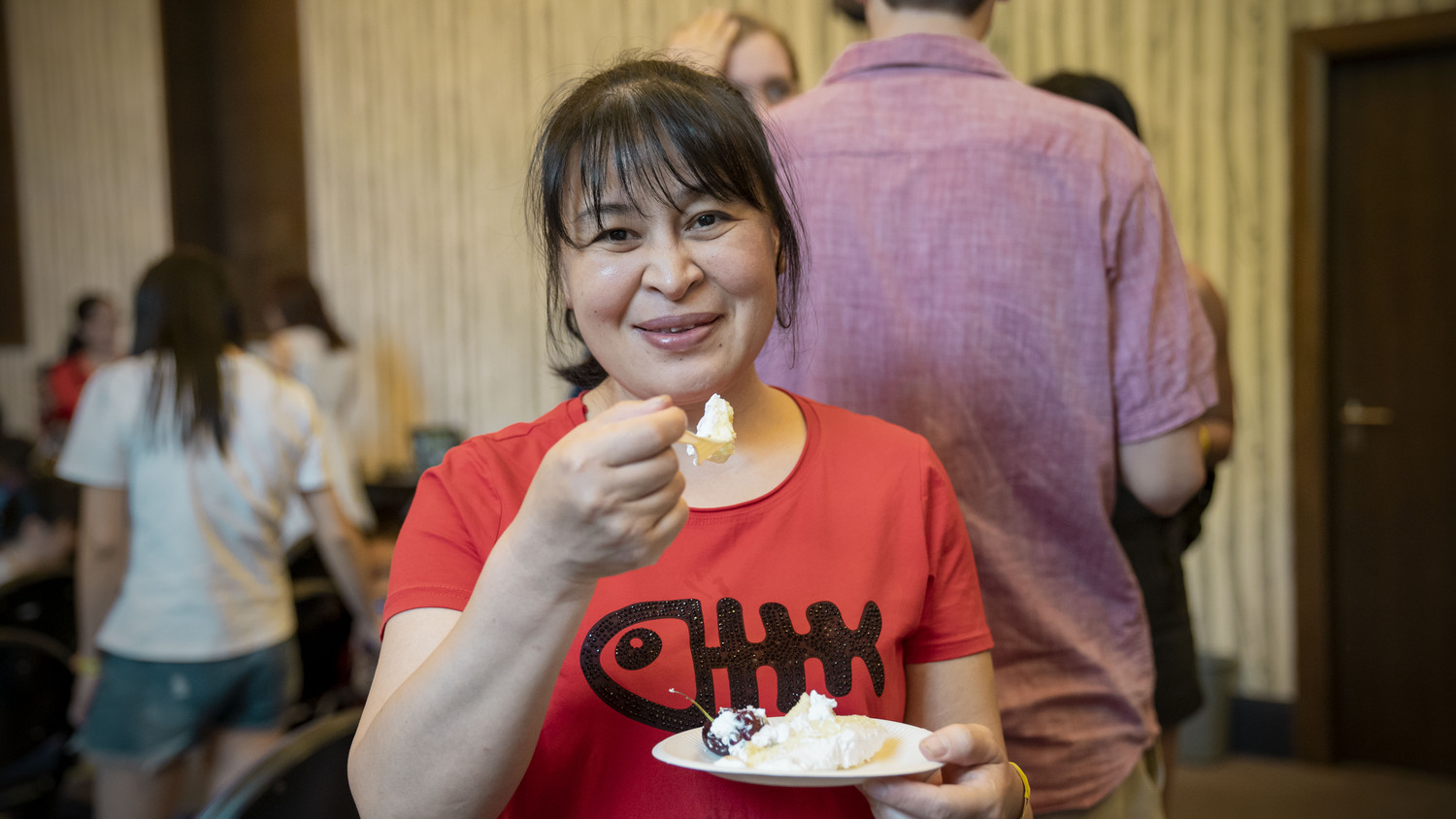
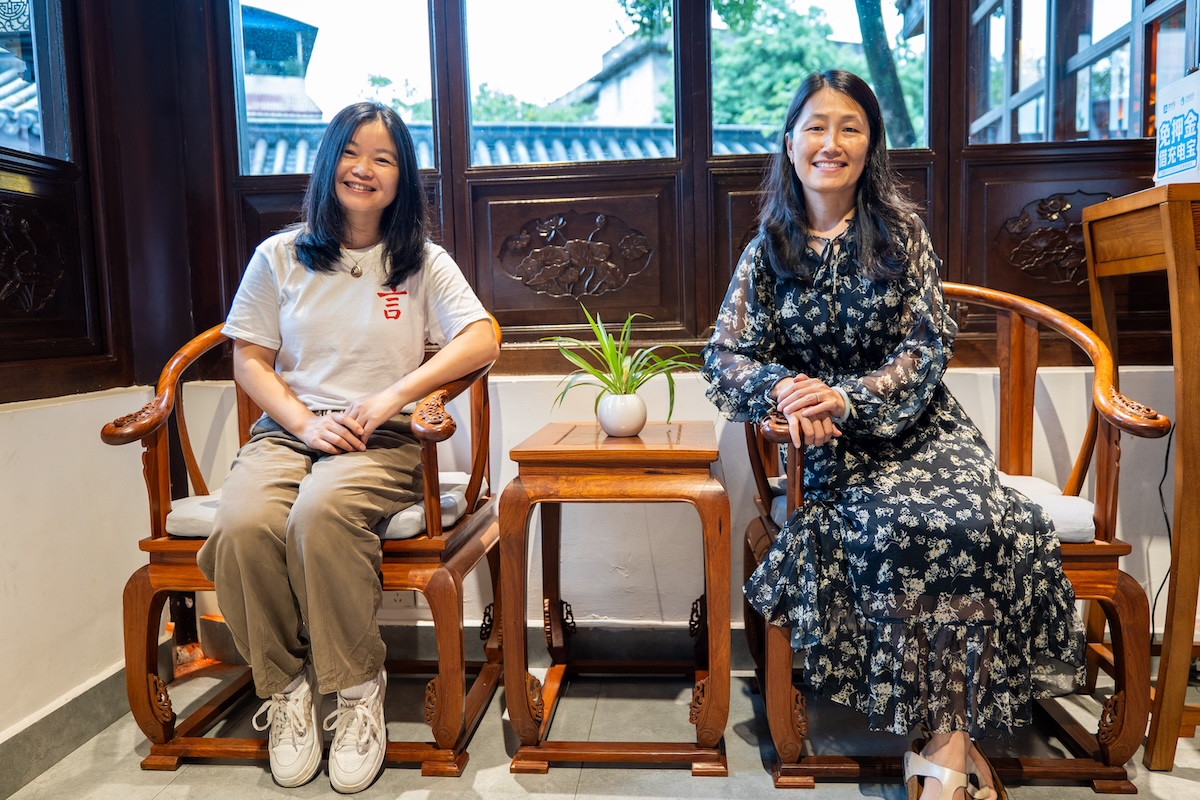
The character on the red CLI sign is 言 (yán), which means speech or words, and you'll spot it on CLI T-shirts in many photos in this gallery.
周年快乐 (zhōunián kuàilè) means happy anniversary, piped here across a fruit-covered cake at one of CLI's anniversary parties.
The 相逢 (xiāngféng) written large on this anniversary wall means meeting one another, and at CLI the free Pengyou Program makes that happen with a student from a local partner university.
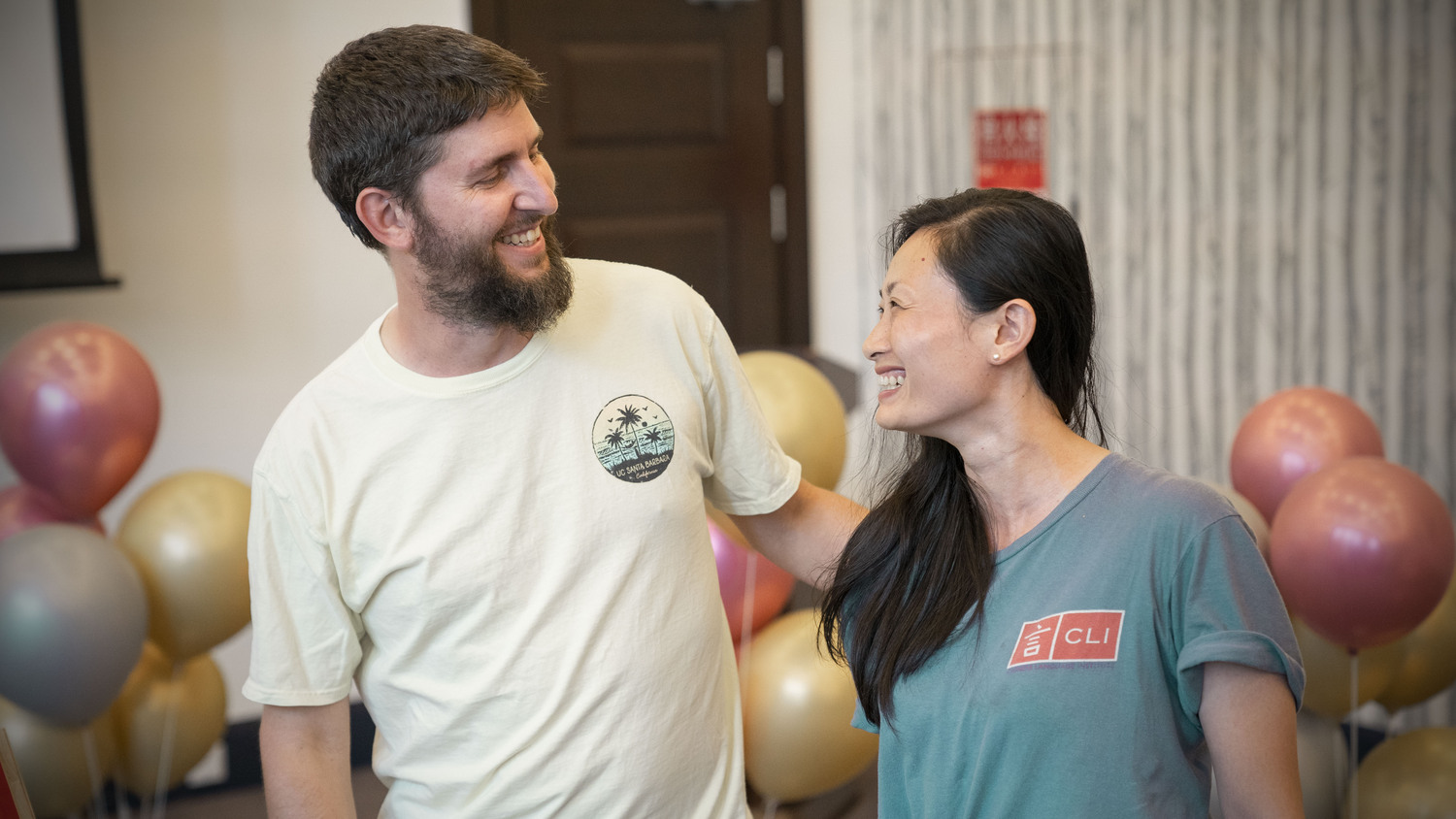
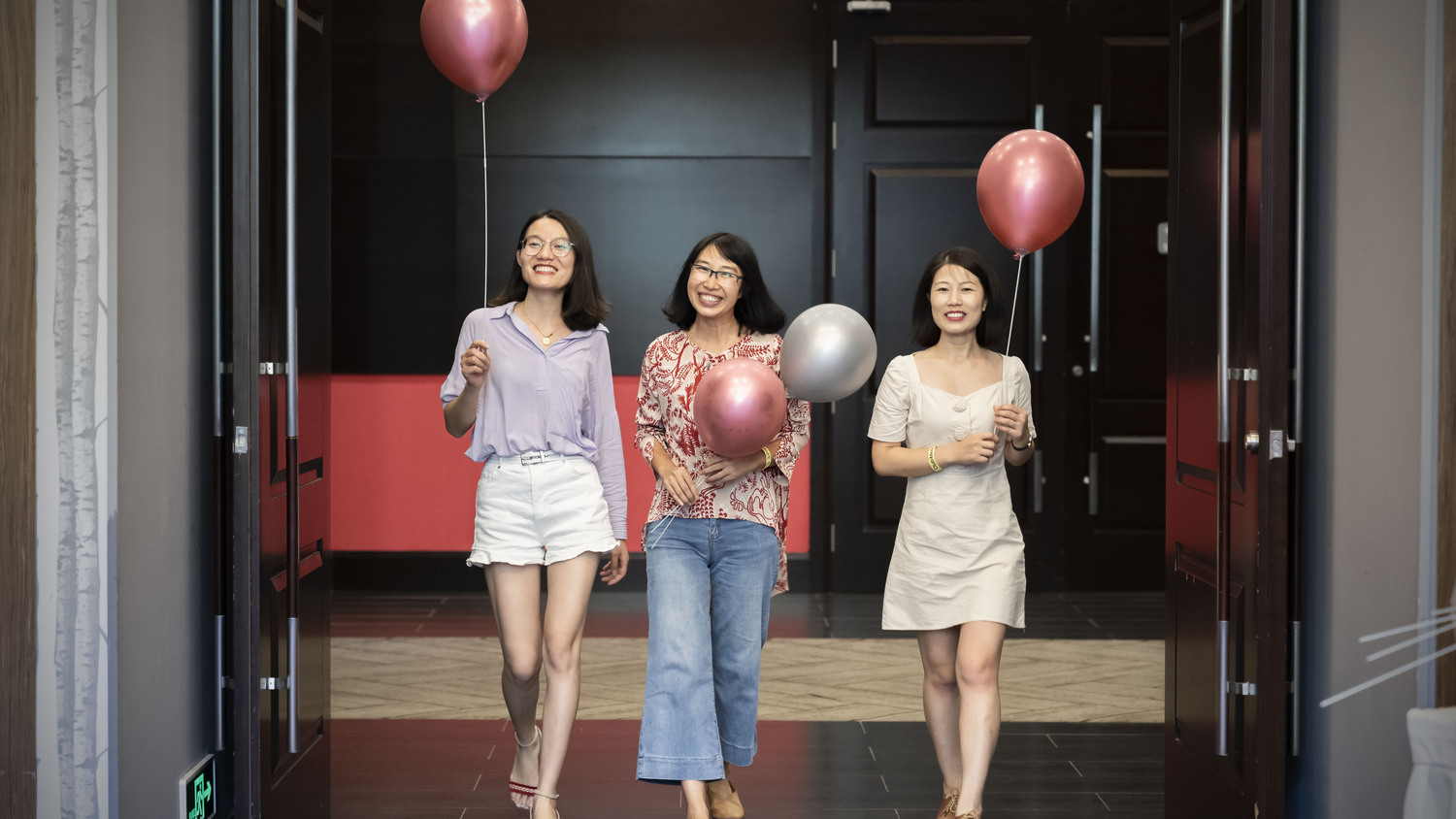
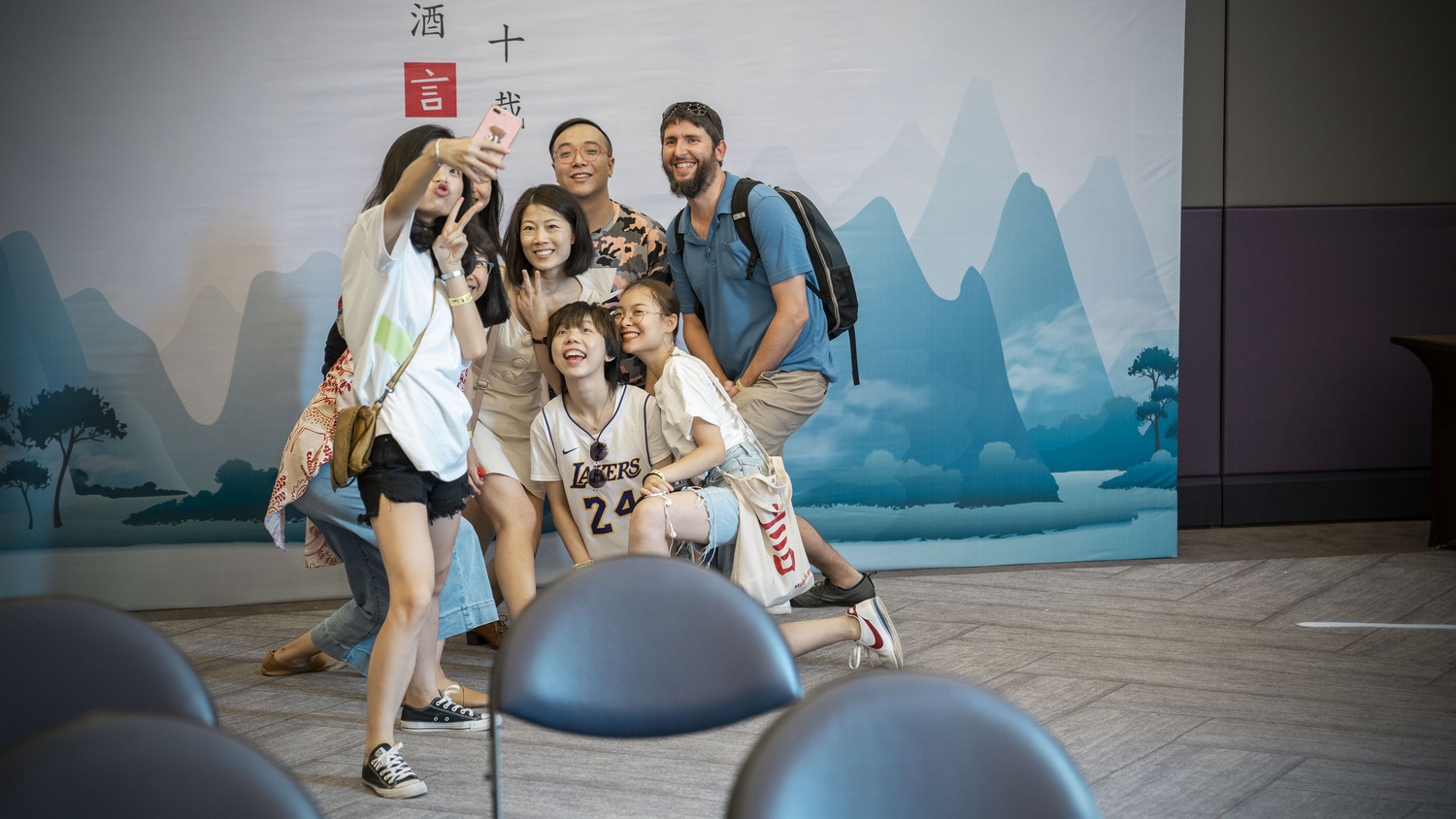
Anniversary parties and festival celebrations are when the whole CLI community fits into one room, balloons and all.
Students can start any Monday and stay from one week to a year, so a party can mix people in their first week with people in their eighth month.
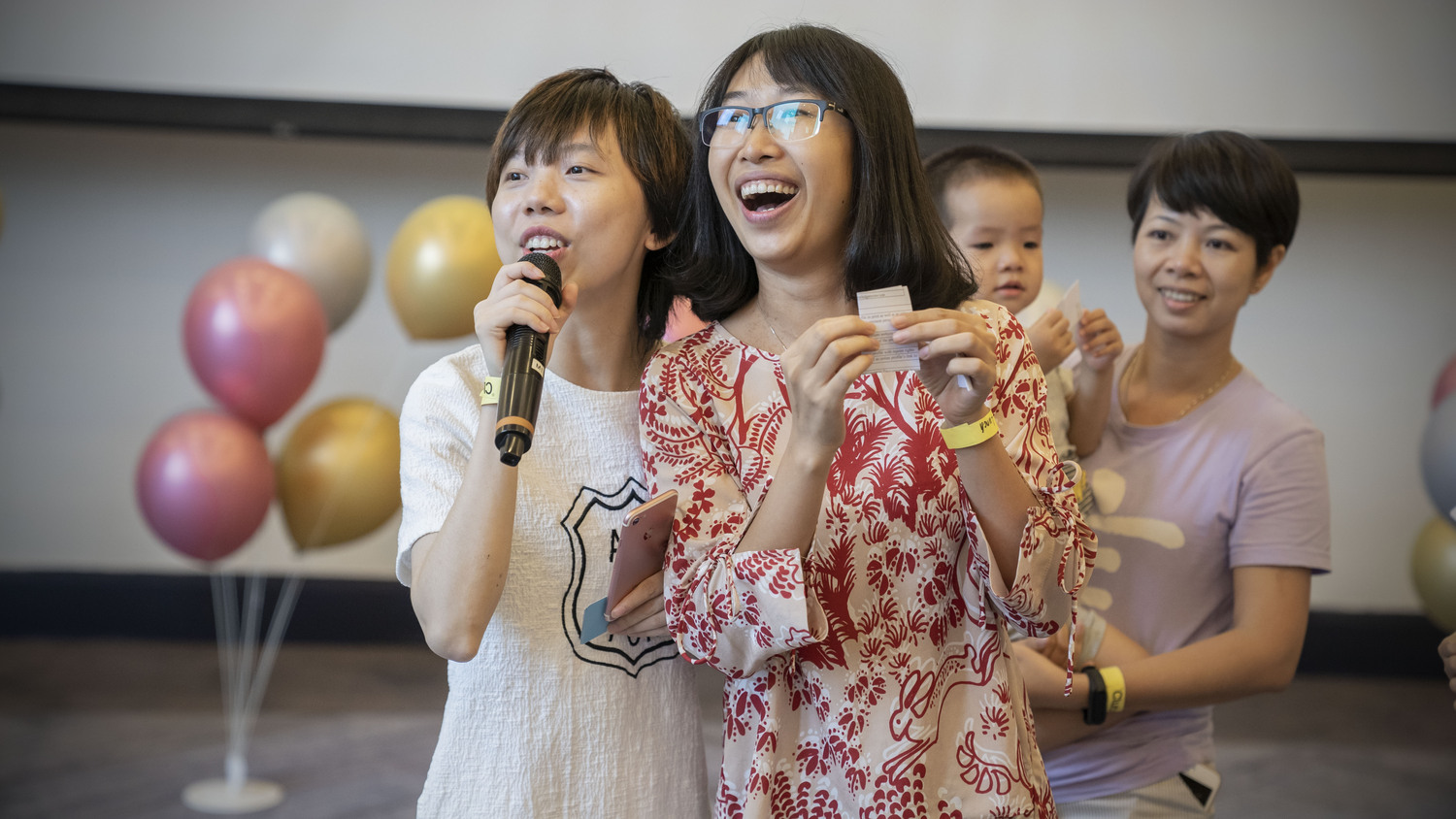
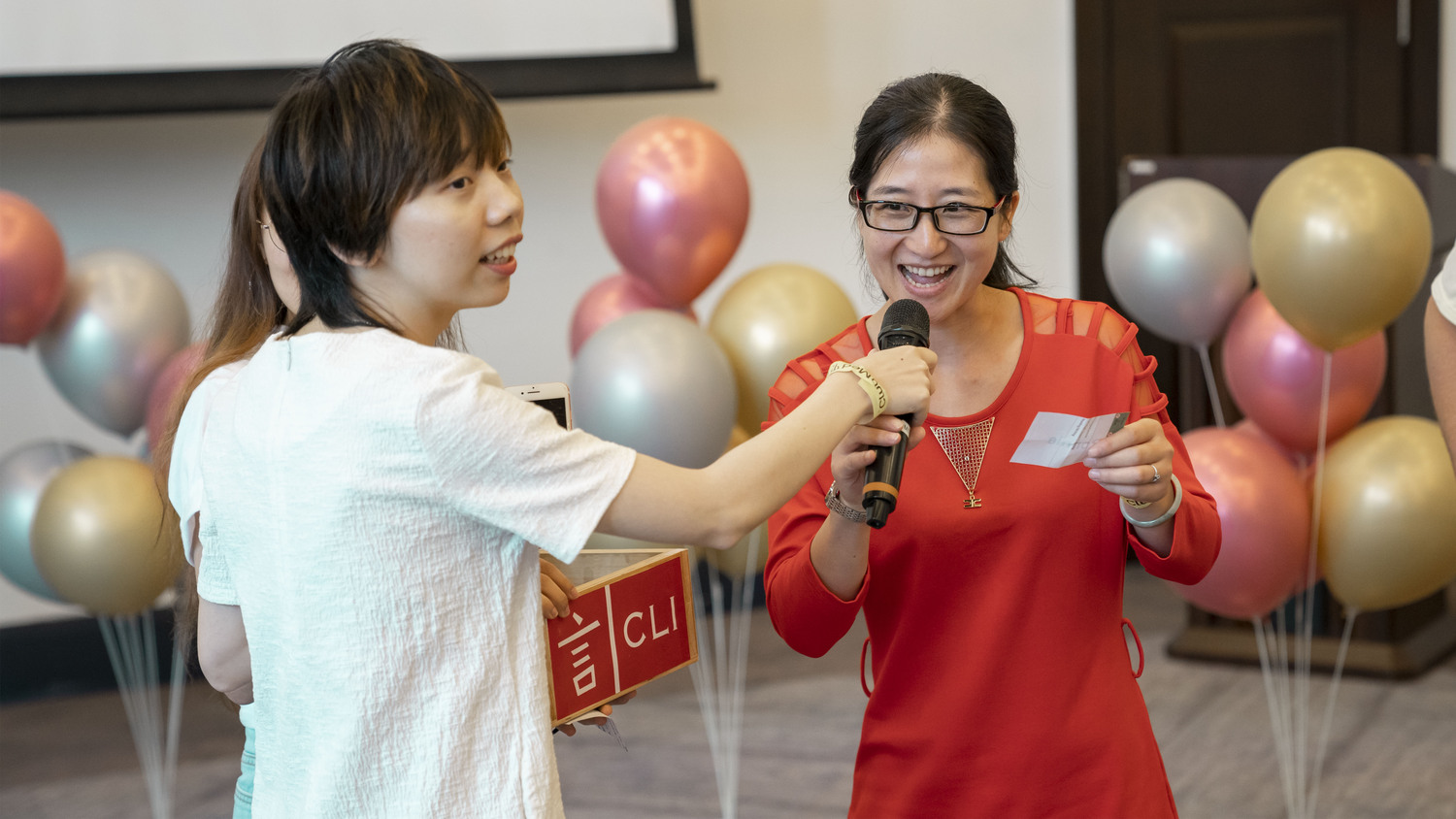
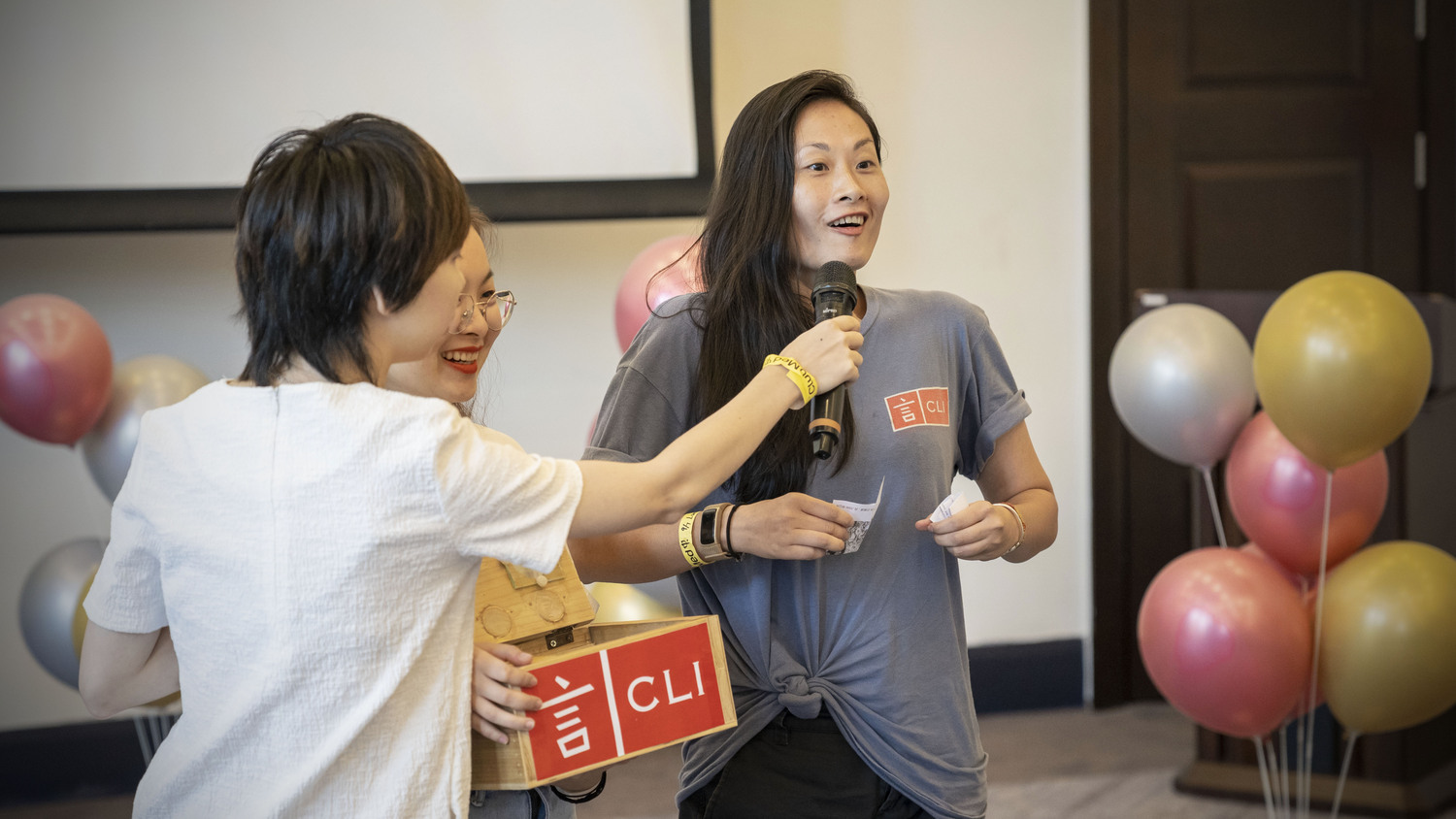
Reading a prize slip out loud at a CLI party is a low-stakes way to try your Chinese, and a friendly crowd laughs with you.
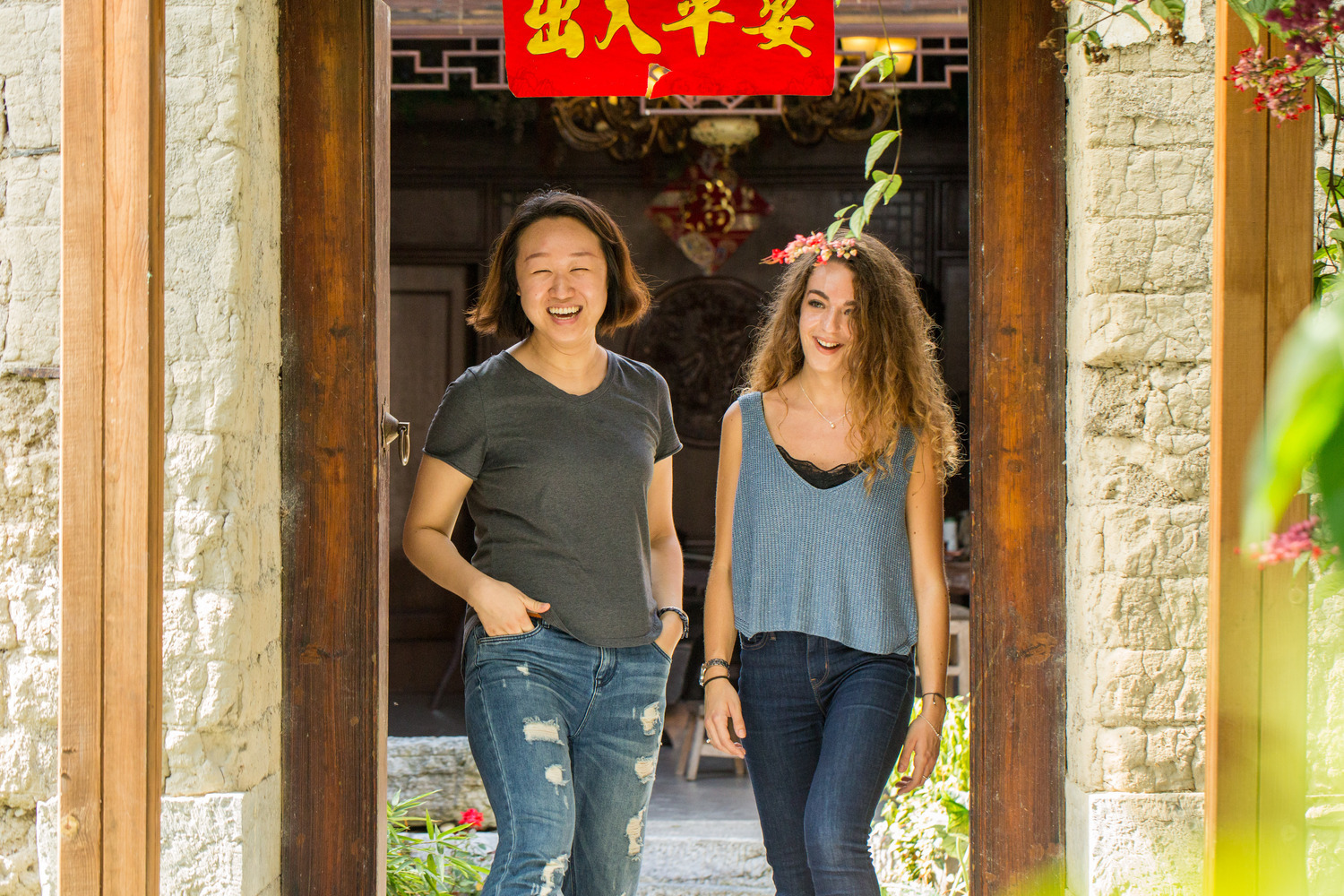
The red banner over this doorway reads 出入平安 (chūrù píng'ān), a wish for safe comings and goings, and signs like it make any walk around Guilin a little reading practice.
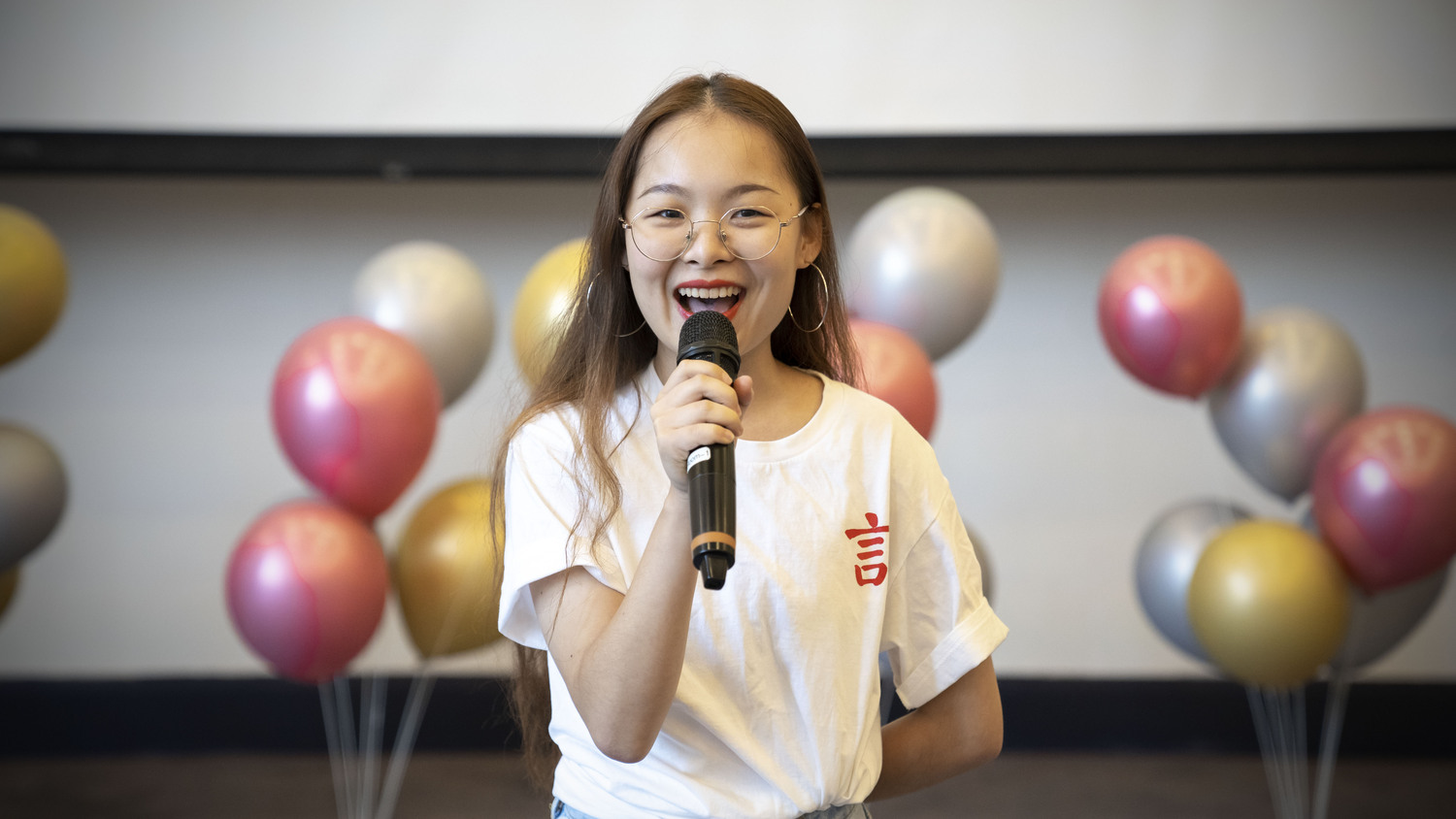
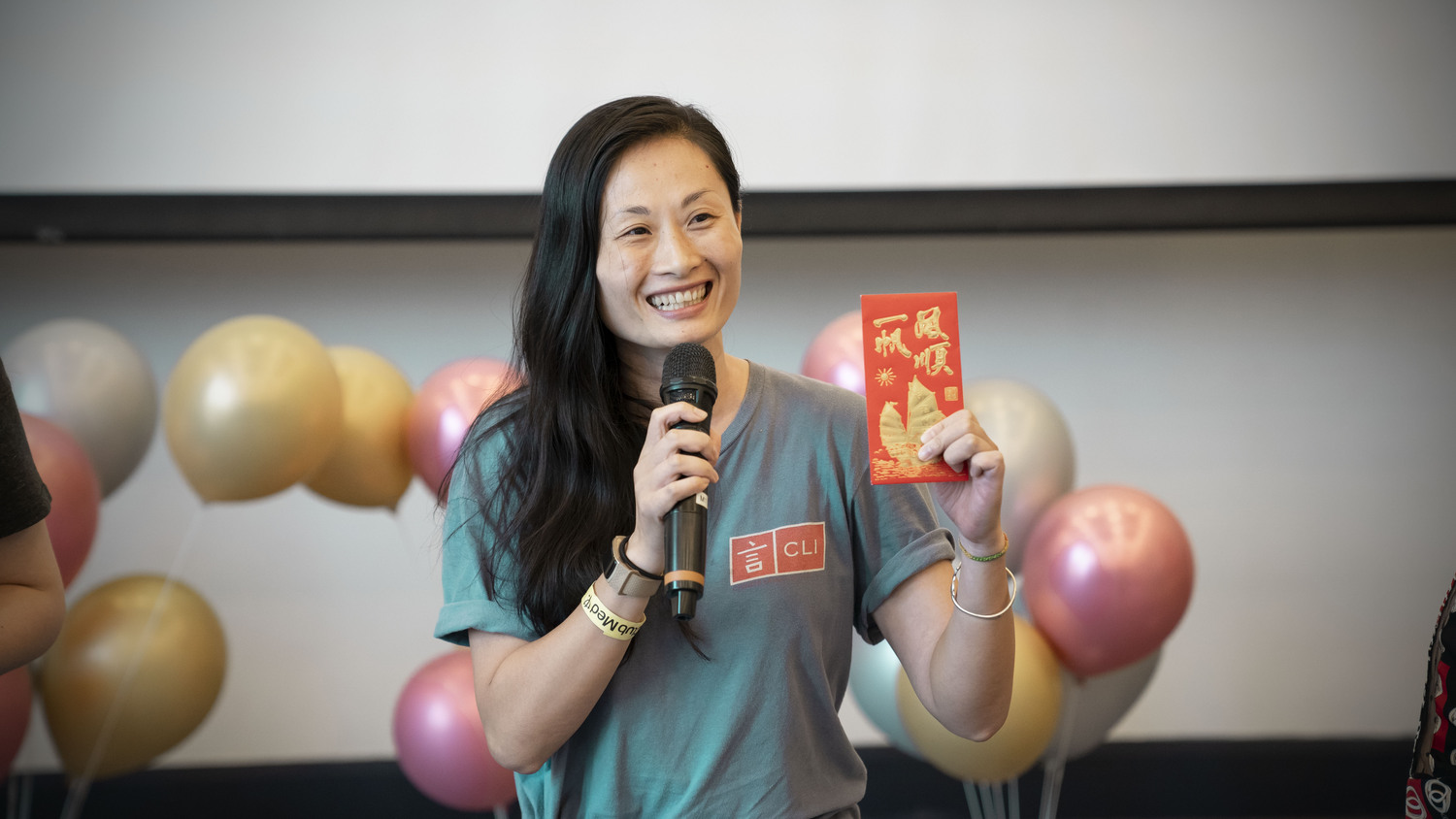
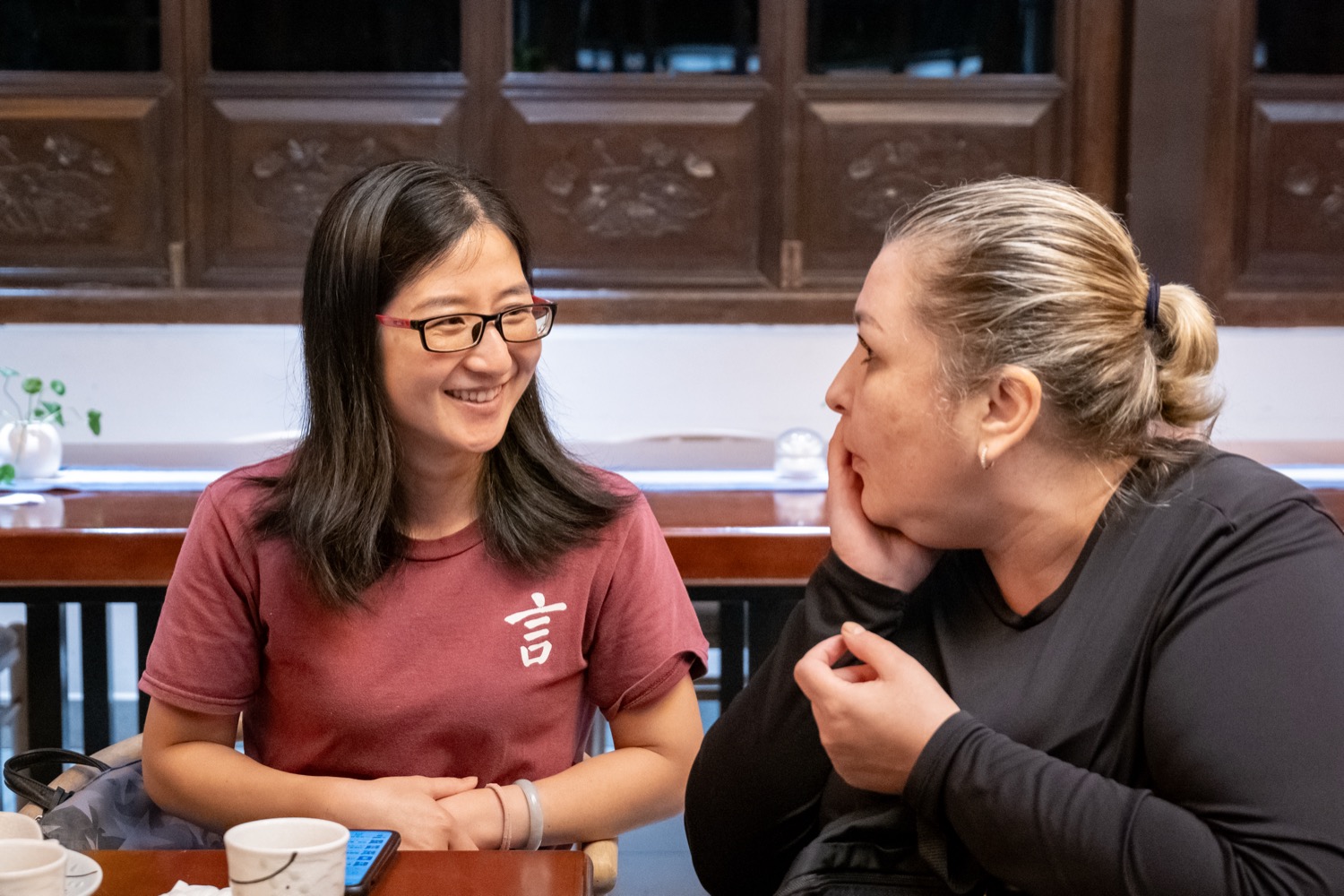
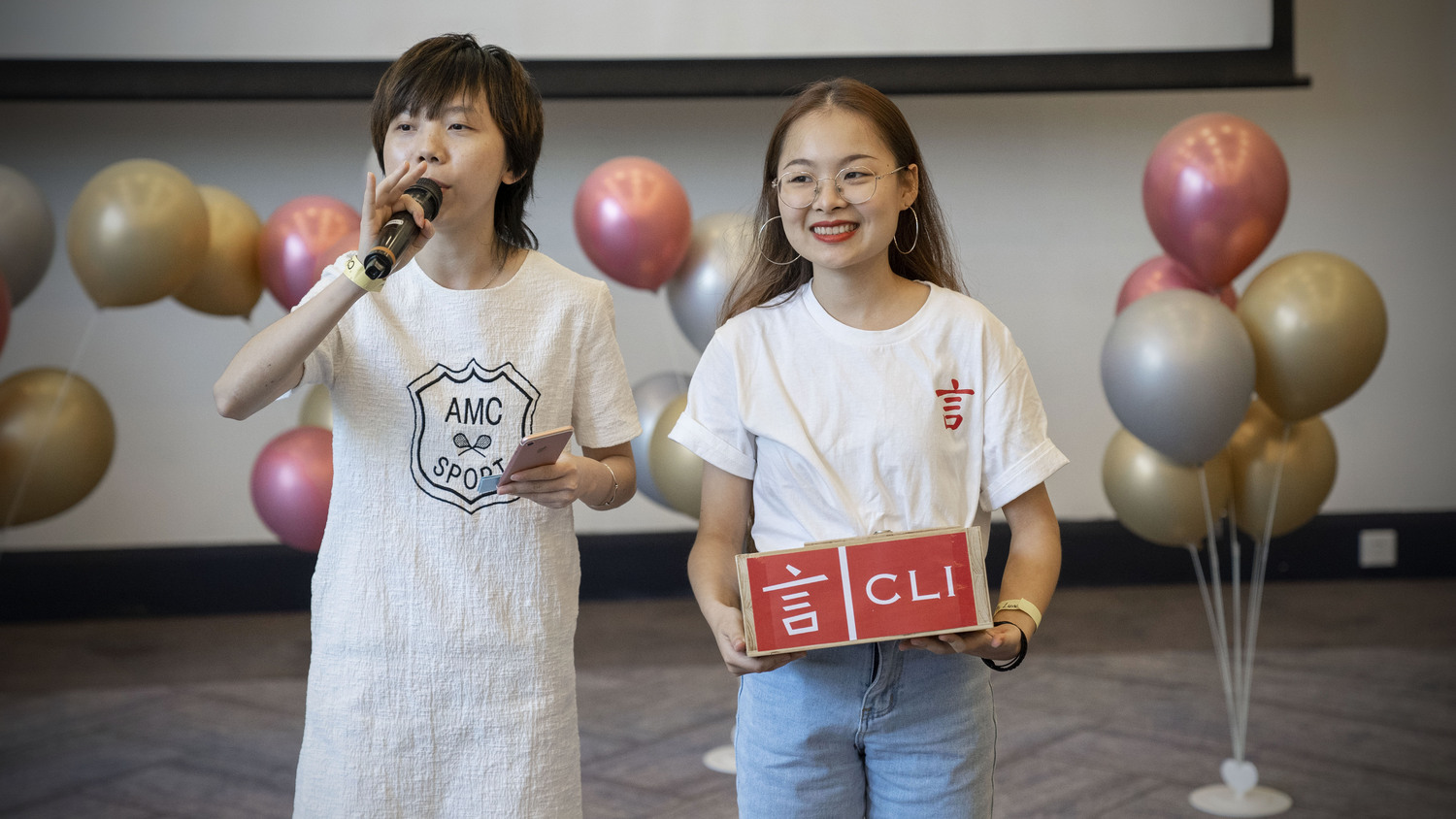
The 言 (yán) on her T-shirt means speech, which suits a turn at the microphone in front of friends at a CLI party.
Airport or train station pickup is included, so new students meet someone from CLI as soon as they arrive in Guilin.
Spring Festival couplets, 春联 (chūnlián), frame this red door, and festival celebrations are part of CLI's activities through the year.
Volleyball and badminton are both on CLI's activity list, and a mixed team is a good place to learn how to call the score in Chinese.
Lunch on CLI's optional meal plan is family style, at the same table as teachers and classmates, and meals like this are where the talking gets easy.
Weekly activities run alongside the class day, and the party ones can get as loud as this.
More than 5,000 students from over 400 institutions have studied at CLI since 2009, and the red CLI sign has turned up in a great many of their photos.
The CLI Center's recreation room has a ping pong table and a mahjong table, and downtime with friends there often slips into Chinese.
Learning Chinese in Guilin also means meeting new people, and some of them become the friends you squeeze in beside for a photo like this one.
The week's activities go up on the board on the Center's second floor, and some, like this one, need only a table and a group of friends.
The line across the top of the signing wall reads Chinese Language Institute 10-Year Anniversary Celebration, and the room filled up with guests of every age to mark it.
Orientation, usually on the first Monday, includes a welcome meal along with a tour of Guilin and an introduction to your teachers and schedule.
A red envelope makes a good party prize, and it is a Chinese custom students meet again at festival celebrations.
Language exchange is part of a typical weekday after classes, and it is one of the easiest ways to turn a practice partner into a friend.
Ordering in Mandarin is one of the first skills students pick up, and a meal out with a friend is an easy place to practice it.
A pengyou is there to help with your Chinese, and after weeks of practice and activities together, that help can turn into a friendship like any other.
Pengyou join CLI's activities too, so whoever gives a speech at a party like this one may have native speakers listening in the audience.
Christmas gets a celebration at CLI too, with a tree by the red CLI sign and a room packed for the photo.
Vegetarian, halal and other dietary needs can be accommodated, so a big shared dinner under the lantern lights works for everyone at the long tables.
The microphone gets passed around at CLI parties, and the person holding it might be announcing a prize or trying out some new Chinese.
Friends at CLI don't have to be your own age, because students here range from high schoolers to retirees.
Weekday lunches at the CLI Center keep at least one table Mandarin-only, so by the time you share a meal like this with friends, chatting in Chinese comes easier.
Students at CLI have come from more than 50 countries, and a signing wall at a party collects their names in many languages, Chinese among them.
Guilin has lakes, parks and green space across the city, and a garden pond like this one makes an easy backdrop for a photo with friends.
Chinese games are one of the activities on the program, and a turn at the microphone during a party game makes for good speaking practice.
The Pengyou Program matches students with a student from CLI's local partner university for three hours of language support and a meal together each week.
Signing the anniversary wall was a small way for each guest to say they were part of the CLI community, and plenty did it with a smile like this one.
Out on the balcony above the pond, a thumbs-up and a hand heart sum up how the farewell dinner went.
Welcome dinners are included in tuition, and they put new students at a table full of shared dishes with the people they will see every day.
By the farewell dinner, the people around the table have become friends, and a heart made with two sets of arms says so for the camera.
Guangxi food leans fresh, sour and lightly spicy, and a group dinner at long tables like these puts most of it within reach.
Guilin is a full city but compact and walkable, so friends can get from the Center to a park or a café with very little planning.
The farewell dinner comes at the end of a stay at CLI, and there is time to step out to the water's edge with a friend for a finger-heart photo.
Both the welcome and the farewell dinner come with your tuition, and either one can end with someone standing up to speak, to a round of applause.
Get-togethers with friends, youngest guest included, are an easy way to keep your Chinese going outside class, one conversation on the sofa at a time.
Weekends bring CLI's larger outings, with time left over to explore with friends on your own.
Peace signs go up while the cups and bowls are still clean, before the food arrives, and the local Guangxi dishes tend to be fresh, sour and lightly spicy.
There are no fixed semesters at CLI, so a dinner or celebration brings together whoever happens to be studying in Guilin at the time.
A red racket bag means someone is heading to badminton, one of CLI's activities, and it is easy to find a partner.
Cake is for parties, and the everyday shared meal is more modest: an optional home-cooked lunch at the CLI Center, Monday to Friday.
CLI's calendar has parties like this one as well as weekly activities and a monthly overnight trip.
Guests arriving at a CLI event get a smile at the door, and new students get the same at orientation, usually on their first Monday.
Activities come around every week at CLI, so the friends you make at an outdoor event like this one have plenty of chances to meet again.
Families sometimes study at CLI together, so the youngest guests at a celebration get the front row.
Parties like this one, balloons and all, are one way to meet people in Guilin, and a homestay with a local family, one of CLI's housing options, is another.
Farewell dinners leave time for quieter conversations too, and a pair of carved chairs by the lattice windows made a good spot for one.
Guests at CLI's anniversary party wrote their messages straight onto a painted wall, some in Chinese characters written slowly and with care.
When the applause starts at a CLI celebration, a phone or two goes up to catch it, because these are the nights people want to remember.
A red lazy Susan keeps the dishes turning, so a round-table dinner in Guilin is the easiest way to try a bit of everything.
A pengyou gives you three hours of language support a week, and it can happen anywhere, even at a railing with a sheet of notes between you.
Speeches at CLI events can let you hear native speakers talk at full speed outside class, and sometimes the best seat is right in the crowd.
A speech at a CLI party is easier with a friend on the second microphone, and the hanging lantern by the stage is a reminder of where you are.
Pengyou are students at CLI's local partner university, and the free Pengyou Program pairs you with one of them as a language partner and a friend.
Celebrations at CLI can draw a full room, and when the speeches are in Chinese, a seat beside friends is a relaxed way to hear them at a natural pace.
The Sun and Moon Pagodas light up at night on one of Guilin's city lakes, and the city's lakes and parks are good places for an evening out with friends.
朋友 (péngyǒu) is Chinese for friend, and its first character, 朋, puts two 月 (moon) characters side by side, much like friends posing together.
The red CLI sign has been the backdrop for many group photos over the years, and this one came with peace signs and finger hearts all around.
Chinese New Year is one of the festivals CLI celebrates, and this one ended with a red envelope in nearly every hand in front of the logo wall.
You can use the day's new words anywhere in Guilin, and an evening with friends by a garden pond is a good place to try them on someone other than your teacher.
Evenings are usually lighter, and dinner out with friends at a long table is one of the easiest ways to spend them.
Teams at this CLI party game were named after foods, like 饺子队 (jiǎozi duì), team dumpling, and making real dumplings is a CLI activity too.
With the optional meal plan, weekday lunch at the CLI Center is home-cooked and shared family style, and meals out with friends fill the rest.
The 中文 (Zhōngwén) on this T-shirt means Chinese, and it is the language you will use with shop owners all over Guilin.
Between or after classes there is time for homework, errands, markets and parks, and a walk with friends down a covered corridor fits right in.
Festival celebrations happen through the year at CLI, and nobody has to take the microphone, so a seat in the audience is fine too.
With students from over 50 countries at CLI, friendships made at an event like this one can cross a border or two.
Informal Chinese practice is part of life outside class at CLI, and chatting over paper cups with people you've just met is about as informal as it gets.
Some CLI parties come with a prize draw, and at this one the slips came out of a red CLI box like the one held up here.
Nobody needs to hurry home as a CLI party winds down, because evenings on the program are usually the lighter part of the day.
At a meal out with friends, the day's Chinese gets used without anyone calling it practice, and that kind of everyday use helps new words stick.
Evenings and weekends are when much of CLI's social life happens, from movie nights to weekend outings.
Movie nights and other relaxed activities fill some evenings, and now and then someone brings out a guitar in front of the CLI sign.
Yangshuo, Longsheng and the Li River are about an hour from Guilin, close enough for a weekend outing with friends.
The red shirt reads 好好学习,天天向上 (hǎohǎo xuéxí, tiāntiān xiàngshàng), study hard and improve every day, a motto for CLI students of every age.
Volleyball is one of CLI's activities, and the court is also where friends catch up in Chinese between games.
Party games in Chinese come with prizes from the CLI box, so there is a reason to speak up when the microphone comes your way.
When someone stands to speak at a CLI dinner, the whole room turns to listen, which makes it a kind audience for a first speech in Chinese.
Children and adults crowd into one photo at a CLI party, a mix that fits a school where some families come to study together.
A crowded street on a day out is a good test of the week's new Chinese, and it helps to have friends along.
The anniversary party backdrop is a mural of mountains like the limestone peaks that surround Guilin and appear in Chinese paintings and poetry.
Students come to CLI from more than 400 institutions, so the tables listening to a talk at a group dinner like this one mix schools as well as countries.
New students can arrive any Monday, so a table of friends at CLI keeps changing, and there is room for one more.
Everyone gives a thumbs-up after a game on the indoor court, and with badminton and volleyball among CLI's activities, a rematch is never far off.
The people squeezing into this selfie at the mountain mural may have arrived weeks or even months apart, since CLI has no fixed semesters.
In Guilin the day often starts with a bowl of rice noodles from a neighborhood shop, and it can end at a busy table like this one.
A bench in the sports hall is a good place to catch your breath and talk between games of badminton, one of the activities on CLI's list.
A dinner like this one seats students from many countries along the same long tables, and the shared dishes give everyone something to talk about.
We look forward to welcoming you to Guilin.
Begin your Immersion Program on almost any Monday of the year. Plan to arrive the weekend before your first class, and we’ll pick you up at the airport or train station.