在手机上打出一个“山”字,只要一秒。可是,如果回到三千多年前,人们要用刀把它刻在骨头上。从骨头到手机,汉字的样子变了很多次。
Typing the character 山 on your phone takes one second. But go back more than three thousand years, and people had to carve it into bone with a knife. From bone to phone, the look of Chinese characters has changed many times.
现在能看到的最早的成熟汉字,是商朝的甲骨文,离现在已经有三千多年了。商朝的国王做大事以前,喜欢先问问老天:明天会不会下雨?打仗能不能赢?人们先用火烧龟甲和牛的骨头,再看骨头上烧出来的裂纹,判断是好事还是坏事。然后,他们把问题和结果都刻在上面。有一个有名的说法:一百多年前,一位学者生病了,在买来的中药里看到一种叫“龙骨”的东西,上面有奇怪的符号。他仔细一看,发现这是非常古老的文字。甲骨文这才重新被人们认识。在这以前,很多写着字的“龙骨”,已经被人们打成粉,当作药吃下去了。
The earliest mature Chinese characters we can see today are the oracle bone inscriptions of the Shang dynasty, more than three thousand years old. Before doing anything important, the Shang kings liked to ask heaven first: will it rain tomorrow? Will we win the war? People heated turtle shells and ox bones with fire, then looked at the cracks the heat made to decide whether the answer was good or bad. Then they carved both the question and the result onto the bone. A famous story goes like this: more than a hundred years ago, a scholar fell ill and found strange marks on a "dragon bone" in the Chinese medicine he had bought. He looked closely and realized it was very ancient writing. Only then did people come to know oracle bone script again. Before that, many "dragon bones" covered in writing had been ground to powder and swallowed as medicine.
早期的汉字,很多是“象形字”,就是照着东西的样子画出来的。“日”像一个圆圆的太阳,“月”像一弯月亮,“山”像三座连在一起的山峰,“人”像一个侧着身子走路的人。在一节汉字课上,老师在黑板上画了三座小山,学生们马上就猜出来了:这是“山”。不过,光靠画,很多意思是画不出来的,比如“想”和“快”。所以后来出现了很多“形声字”:一部分表示意思,一部分表示读音。比如“饭”,左边的部分说明它和吃有关,右边的“反”告诉你它的读音。今天,大部分汉字都是形声字。
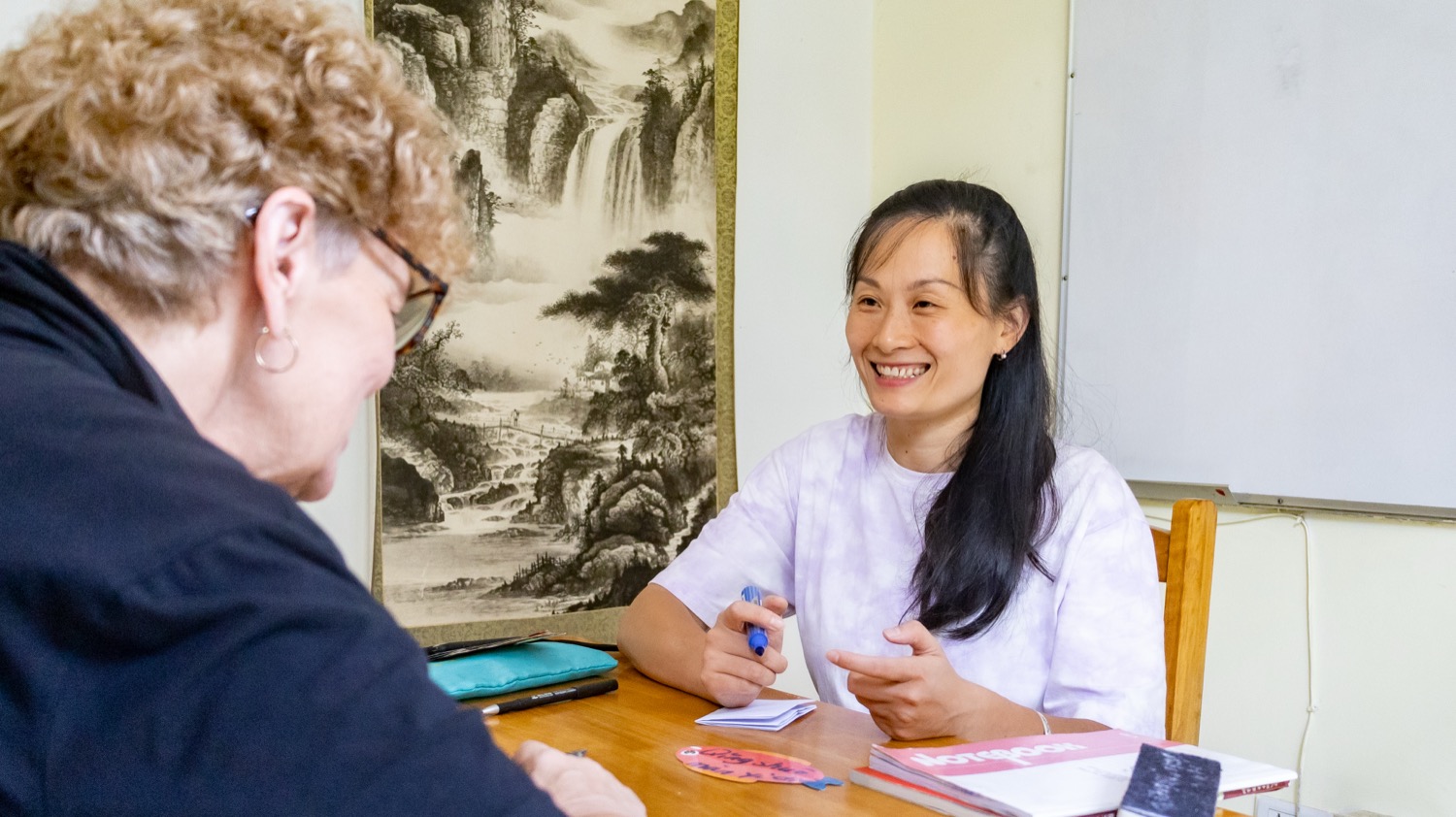
Many early characters were pictographs, drawn to look like the thing itself. 日 looks like a round sun, 月 like a crescent moon, 山 like three peaks joined together, and 人 like a person walking, seen from the side. In a character class, a teacher draws three little hills on the board, and the students guess right away: it's 山. But drawing alone can't show many meanings, such as "think" or "fast." So later, many phono-semantic characters appeared: one part shows the meaning, and one part shows the sound. Take 饭 (meal): the part on the left tells you it has to do with eating, and the 反 (fǎn) on the right tells you how it sounds. Today, most Chinese characters are phono-semantic characters.
后来,中国分成了很多国家,每个国家写字的方法都不太一样,同一个字可能有好几种写法。公元前221年,秦始皇统一了中国,也统一了文字,让大家都写一种叫“小篆”的字。小篆的线条又圆又长,很漂亮,可是写起来很慢。
Later, China split into many states, each wrote in its own way, and the same character might have several different forms. In 221 BCE, the First Emperor of Qin unified China, and he unified the writing too, making everyone write a script called small seal script. Small seal script has long, round lines and is very beautiful, but it is slow to write.
想象一下秦朝或者汉朝的一个小官员:他桌子上的文件,堆得像一座小山。天已经黑了,他的手又酸又累,可是还在一笔一笔地写。如果每个字都用小篆那样又圆又长的线条,他写到半夜也写不完。于是,他越写越快,圆的线条不知不觉就变成了方的。就这样,一种叫“隶书”的写法越来越流行。隶书把圆的线条变成了方的,把弯的笔画变直了。这是汉字历史上一次很大的变化:从这以后,汉字越来越不像画,越来越像今天的字了。再后来,又慢慢出现了“楷书”。楷书方方正正,一笔一画都很清楚,直到今天,小学生学写字,学的还是楷书。
Picture a minor official of the Qin or Han dynasty: the documents on his desk are piled up like a little hill. It is already dark and his hand is sore and tired, but he is still writing, stroke by stroke. If he made every character with the long, round lines of seal script, he would not finish even by midnight. So he writes faster and faster, and without his noticing, the round lines turn square. In this way, a style of writing called clerical script became more and more popular. Clerical script turned round lines into square ones and straightened curved strokes. This was a huge change in the history of Chinese characters: from then on, they looked less and less like pictures and more and more like the characters of today. Later still, regular script slowly appeared. Regular script is neat and square, every stroke is clear, and even today, when children in elementary school learn to write, regular script is still what they learn.
楷书虽然好看,可是有的字笔画太多,写起来很麻烦。二十世纪五十年代,中国还有很多人不识字。为了让大家更容易学会写字,1956年,国家公布了《汉字简化方案》,把很多常用字的笔画减少了。比如“灯”,以前要写十六画,简化以后只要六画;“书”以前要写十画,现在只要四画。其实,很多简化字并不是新造的,而是古人早就在用的写法。有的来自民间,有的来自写得很快的草书,“书”字就是从草书里来的。
Regular script looks good, but some characters have so many strokes that they are a lot of trouble to write. In the 1950s, many people in China still could not read or write. To make writing easier to learn, in 1956 the country published its plan for simplified characters, cutting down the strokes of many common characters. For example, 灯 (lamp; formerly 燈) once took sixteen strokes and now takes only six; 书 (book; formerly 書) once took ten and now takes only four. In fact, many simplified characters were not newly invented at all; people long ago were already writing them that way. Some came from everyday folk writing, and some came from the fast, flowing cursive script: 书 is one of them.
下次你在手机上打出“山”字的时候,可以仔细看看。三千年过去了,它还是三座连在一起的山峰。
Next time you type 山 on your phone, take a close look. Three thousand years have passed, and it is still three peaks standing side by side.