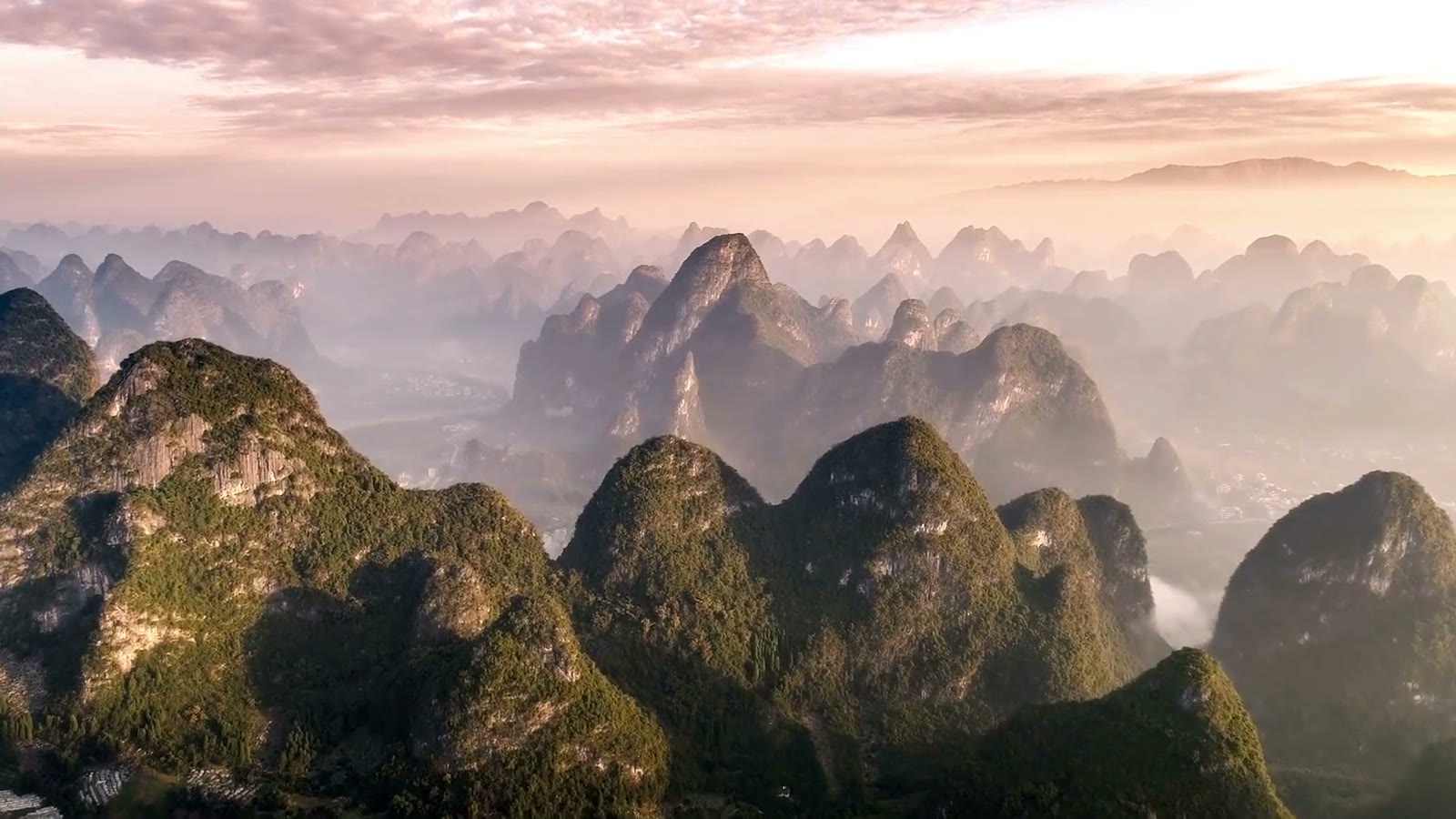
愚公每天早上推开家门,看到的第一样东西,就是山。山连太阳都挡住了。他家的南边有两座大山,一座叫太行山,一座叫王屋山。这两座山又高又大,山顶好像能碰到天。家里人每次出门,都要绕很远的路,去一趟南边的集市,往往要走上一整天。这一年,愚公已经快九十岁了。大家叫他“愚公”:“愚”就是傻的意思,“公”是对老人的尊称。
Every morning when Yugong pushed open his door, the first thing he saw was mountains. The mountains even blocked out the sun. South of his house stood two great mountains, one called Taihang and the other called Wangwu. Both were tall and huge, and their peaks seemed to touch the sky. Every time the family went out, they had to take a long way around; a trip to the market in the south often took a whole day. That year, Yugong was almost ninety. People called him Yugong: 愚 means foolish, and 公 is a respectful word for an old man.
一天晚上,愚公把全家人叫到一起,说:“我们一起努力,把这两座山挖平,开出一条路,一直通到南方,好不好?”儿子和孙子们都表示同意。只有他的妻子有点担心:“你这么大年纪了,连一座小土山都挖不动,怎么能搬走这么大的两座山?再说,挖下来的土和石头放到哪里去呢?”大家想了想,说:“可以把它们扔到渤海的边上去,扔到隐土的北边去。”隐土,是古书里说的北方很远的一个地方。
One evening, Yugong called the whole family together and said: "Let's work together, dig these two mountains flat, and open a road all the way to the south. What do you say?" His sons and grandsons all agreed. Only his wife was worried: "At your age you couldn't even dig away a small hill. How can you move two mountains this big? And besides, where will you put all the earth and stones?" Everyone thought for a moment and said: "We can throw them out at the edge of the Bohai Sea, north of Yintu." Yintu is a place in the far north that the old books tell of.
第二天天还没亮,愚公就带着儿子和孙子们上山了。他们敲石头,挖泥土,再用筐把土和石头一筐一筐地运到渤海边。冬天的风很冷,大家的手都冻得通红,可是从早到晚,山上都能听到敲石头的声音。愚公的手上很快就起了泡,他用布包一包,照样接着挖。邻居家有个七八岁的男孩子,刚开始换牙,也蹦蹦跳跳地跑来帮忙。渤海离这里太远了,他们来回一趟,要从冬天走到夏天。
The next day, before it was light, Yugong led his sons and grandsons up the mountain. They broke stones and dug earth, then carried the earth and stones basket by basket to the shore of the Bohai Sea. The winter wind was bitter, and everyone's hands were frozen red, but from morning to night you could hear stones being broken on the mountain. Soon Yugong's hands were covered in blisters; he wrapped them in cloth and kept digging all the same. A neighbor's boy of seven or eight, who was just losing his baby teeth, came skipping over to help too. The Bohai Sea was so far away that one round trip took them from winter to summer.
河曲住着另一位老人,大家都觉得他很聪明,叫他“智叟”。智叟看见愚公一家人这样干活,忍不住笑了:“你真是太傻了!你都这么老了,剩下的日子不多,连山上的一根草都拔不动,还想搬走两座大山?”愚公放下手里的工具,擦了擦汗,叹了一口气,说:“你的想法太死了,还不如那个换牙的小孩子。就算我死了,也还有我的儿子;儿子又会生孙子,孙子又会生儿子,一代一代,永远不会断。可是山不会再长高了,挖一点就少一点,何必担心挖不平呢?”智叟张了张嘴,半天也回答不出来,只好摇摇头走了。那个男孩子在旁边听了,开心地笑了起来,露出了刚掉牙的地方。
In Hequ there lived another old man whom everyone thought very clever, so they called him Zhisou, the Wise Old Man. When he saw Yugong's family at work, he couldn't help laughing: "How foolish you are! You're already so old and have so few days left that you can't even pull up a blade of grass on that mountain, and you want to move two whole mountains?" Yugong put down his tools, wiped his sweat, sighed and said: "Your thinking is so rigid that you're not even as wise as that boy losing his teeth." "Even if I die, my sons will still be here. My sons will have grandsons, and the grandsons will in turn have sons, generation after generation, never ending." "But the mountains won't grow any taller; every bit we dig is a bit less. Why worry that we can't dig them flat?" Zhisou opened his mouth, but for a long while he could find no answer, and in the end he could only shake his head and walk away. The boy, who had been listening nearby, laughed happily, showing the gap where his tooth had just fallen out.
山里有一位手里拿着蛇的山神,他听说了这件事,害怕愚公真的会一直挖下去,就去报告了天帝。天帝被愚公的精神感动了,派大力神夸娥氏的两个儿子,把两座山背到了很远的地方。从此以后,这里再也没有大山挡路了。
A snake-holding mountain god lived there. He heard about this and was afraid Yugong really would keep digging forever, so he went to report it to the Emperor of Heaven. The Emperor of Heaven was moved by Yugong's spirit and sent the two sons of Kua'e, a god of great strength, to carry the two mountains far away on their backs. From then on, no great mountain ever blocked the road there again.
今天,“愚公移山”已经成了一个成语,用来形容一个人有决心、不怕困难,坚持做一件很难的事。现代中国也真的有“愚公”。几十年前,太行山里有一个小村子,村里的人花了五年时间,用简单的工具,一下一下地在石头山里挖出了一条一千多米长的路。路的一边有一个个像窗户一样的洞口,往外一看,下面很深很深,让人不敢多看。不过,也有人开玩笑说:“愚公为什么不搬家呢?搬家不是更简单吗?”这个问题没有标准答案。有人觉得愚公太固执,也有人说,这个故事讲的并不是挖山的方法,而是做事的态度。你怎么看呢?
Today "Yugong moves the mountains" has become an idiom. It describes someone who is determined, isn't afraid of difficulty, and keeps at a hard task. And there really are "Yugongs" in modern China. Several decades ago, there was a small village in the Taihang Mountains whose people spent five years, blow by blow with simple tools, digging a road more than a thousand meters long through a mountain of rock. Along one side of the road there are openings like windows; look out, and the drop below is so deep that you hardly dare look. Still, some people joke: "Why didn't Yugong just move house? Wouldn't that have been simpler?" There's no standard answer. Some think Yugong was too stubborn; others say the story is not about how to dig a mountain at all, but about the attitude you bring to your work. What do you think?