第一次来到桂林的人,常常会被眼前的美景深深吸引。
People who come to Guilin for the first time are often deeply taken by the beautiful scenery before their eyes.
这里的山,与北方那些连绵起伏、雄伟壮阔的大山截然不同。它们不像一支庞大的队伍,整整齐齐地排列在天地之间,而是三三两两地散落在平原上,拔地而起,直插云霄。
The hills here are completely different from the majestic, grand mountains of the north that roll on and on. They aren't lined up in neat rows between heaven and earth like a huge army; instead, they stand scattered in twos and threes across the plain, rising straight up from the ground and soaring into the clouds.
有的像一支巨大的毛笔,笔尖直指天空;有的像一头大象,正低着头,在漓江边悠闲地饮水;还有的像一位沉默的老人,静静地守望着这片土地。
Some look like a giant writing brush, its tip pointing straight at the sky; some look like an elephant, head lowered, drinking at its leisure by the Li River; and others look like a silent old man quietly keeping watch over this land.
桂林的导游常常喜欢问游客一个有趣的问题:
Guilin's tour guides often like to ask visitors an interesting question:
“你们知道吗?这些奇形怪状的山峰,在很久很久以前,其实都藏在海底。”
"Did you know? Long, long ago, these strangely shaped peaks were actually all hidden at the bottom of the sea."
不少游客听了,都会露出惊讶的表情,甚至有人会不禁笑起来。一位老先生摇了摇头,半信半疑地说:
When they hear this, many visitors look surprised, and some even can't help laughing. An old gentleman shakes his head and says, half believing and half doubting:
“山原来怎么会在海里呢?”
"How could mountains once have been in the sea?"
导游微微一笑:“别着急,等我讲完,您就明白了。”
The guide gives a slight smile: "Don't worry. Once I've finished explaining, you'll understand."
那么,这些如同大自然雕塑一般的山峰,究竟是怎样形成的呢?
So how exactly did these peaks, like sculptures made by nature, come to be?
故事,要从三亿多年前说起。
The story begins more than three hundred million years ago.
那时候,今天的桂林还不是我们熟悉的模样。这里没有拔地而起的奇峰,也没有蜿蜒流淌的漓江,而是一片温暖、辽阔的浅海。
Back then, the Guilin of today did not yet look the way we know it. There were no peaks rising straight up from the ground and no winding Li River; instead, there was a warm, vast, shallow sea.
海水清澈,阳光透过水面,洒向海底。无数带着坚硬外壳的小动物在海水中生活、繁衍。它们的外壳和骨骼中,含有一种叫作“碳酸钙”的物质。
The seawater was clear, and sunlight passed through the surface and fell on the seabed. Countless small animals with hard shells lived and multiplied in the sea. Their shells and skeletons contained a substance called "calcium carbonate."
当这些小生命结束了自己的旅程,它们的外壳和骨骼便慢慢沉入海底。一层又一层,一年又一年,越积越厚。经过漫长岁月的挤压和沉积,这些细小的碎片逐渐变得坚硬,最终形成了厚厚的石灰岩。
When these little creatures came to the end of their journey, their shells and skeletons slowly sank to the seabed. Layer upon layer, year after year, they piled up thicker and thicker. Over long ages of pressing and settling, these tiny fragments gradually hardened and in the end formed thick limestone.
如果今天你有机会仔细观察桂林的山石,甚至还能在岩石中发现远古海洋生物留下的化石。
If you have the chance today to look closely at the rocks of Guilin's hills, you may even find fossils in them, left by ancient sea creatures.
你看,三亿多年前的海洋,竟然以这样的方式,把自己的印记留在了今天的桂林。
You see, the sea of more than three hundred million years ago left its mark on today's Guilin in this surprising way.
大约两亿年前,地球内部的力量开始改变这片土地的命运。地壳发生运动,原本沉睡在海底的石灰岩逐渐被抬升,海水慢慢退去,曾经的海底终于露出了水面。
About two hundred million years ago, forces deep inside the earth began to change the fate of this land. The earth's crust moved, and the limestone that had lain asleep on the seabed was gradually lifted; the seawater slowly drew back, and the old seabed at last rose above the water.
于是,海洋变成了陆地,海底的石灰岩也成了小山丘。
And so the sea became land, and the limestone of the seabed became low hills.
听到这里,那位老先生恍然大悟,点了点头:“原来这些山,真的是从海底来的!”
Hearing this, the old gentleman suddenly understands and nods: "So these hills really did come from the bottom of the sea!"
不过,故事还没有结束。
But the story isn't over yet.
如果说大地赋予了桂林山峰最初的身躯,那么,真正把它们雕刻成今天这般千姿百态的,是一位耐心十足的艺术家——水。
If the earth gave Guilin's peaks their first bodies, then the one who truly carved them into the thousand shapes we see today is a very patient artist: water.
雨水从天空落下,穿过空气和土壤,吸收了二氧化碳,变成了一种非常微弱的酸性水。这样的水遇到石灰岩,就会一点一点地将它溶解。
Rain falls from the sky, passes through the air and the soil, takes in carbon dioxide, and becomes very weakly acidic water. When this water meets limestone, it dissolves it bit by bit.
你也可以做一个小实验:在石灰岩上滴几滴醋,仔细观察,就可能看到细小的气泡冒出来。因为醋也是一种酸,能够与石灰岩发生反应。
You can try a little experiment too: put a few drops of vinegar on limestone and watch closely, and you may see tiny bubbles rising. That is because vinegar is an acid too, and it can react with limestone.
桂林气候温暖,雨水充沛,而石灰岩本身又布满了细细的裂缝。雨水便顺着这些裂缝渗进去,日复一日,年复一年,不紧不慢地溶解着岩石。
Guilin's climate is warm and its rain is plentiful, and the limestone itself is covered with fine cracks. So the rain seeps into these cracks and, day after day and year after year, dissolves the rock at its own unhurried pace.
原本细小的裂缝,渐渐变宽、变深;原本连在一起的岩石,也慢慢被分割开来。
Cracks that were tiny at first gradually grew wider and deeper; rock that was once joined together was slowly split apart.
几百万年过去了,水这位不知疲倦的雕刻师,终于完成了自己的杰作。
Millions of years went by, and water, this tireless sculptor, at last finished its masterpiece.
一座座高低错落、形态各异的山峰,就这样出现在桂林的大地上。
And so, peak after peak, high and low and each with its own shape, rose across the land of Guilin.
有的挺拔秀丽,有的圆润浑厚,有的像动物,有的像人物。每一座山,都仿佛有着自己的模样和故事。
Some are tall, straight and graceful; some are round, smooth and massive; some look like animals, and some like people. Every hill seems to have its own look and its own story.
科学家把这种由水长期溶蚀可溶性岩石形成的特殊地貌,称为“喀斯特地貌”。这个名字,来自欧洲一个叫喀斯特的地区。
Scientists call this special kind of landform, formed when water dissolves soluble rock over a long time, a "karst landform." The name comes from a region in Europe called Karst.
水的雕刻,并不只发生在地面上。
Water's carving doesn't happen only on the surface.
在我们看不见的地下,水同样在悄悄地改变着这里。水在石灰岩的裂缝中不断流动,一点一点地溶解岩石,渐渐开辟出大大小小的地下空间。日积月累,这些空间变成了神秘而奇妙的溶洞。
Underground, where we can't see, water is also quietly changing this place. Water keeps flowing through the cracks in the limestone, dissolving the rock bit by bit and slowly opening up underground spaces, big and small. Little by little over time, these spaces became mysterious, marvelous limestone caves.
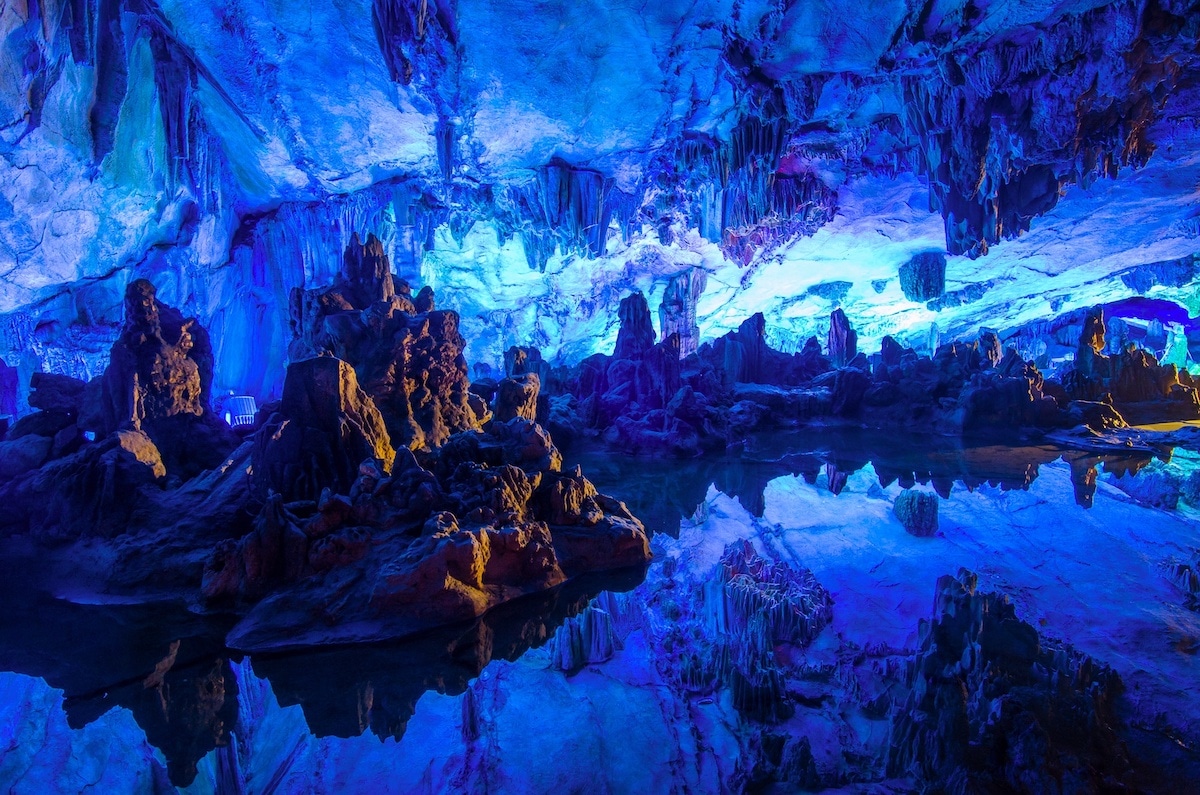
桂林有一处非常著名的溶洞,叫作芦笛岩。
Guilin has a very famous limestone cave called Reed Flute Cave.
据说,过去洞口附近生长着许多芦苇,当地人常常用芦苇制作笛子,因此,这里便有了“芦笛岩”这个名字。
It is said that many reeds once grew near the cave entrance and local people often made flutes from them, so the place came to be called "Reed Flute Cave."
走进洞中,仿佛一下子进入了另一个奇妙的世界。
Walking into the cave feels like suddenly stepping into another, magical world.
洞顶垂下一根根形态各异的钟乳石,有的像倒挂的冰凌,有的像尖尖的竹笋,还有的像一串晶莹剔透的珠帘。地面上,则有一根根向上生长的石笋。它们静静地等待着,仿佛正努力伸出双手,想要触碰头顶的钟乳石。
Stalactites of every shape hang down from the cave ceiling: some like upside-down icicles, some like pointed bamboo shoots, and some like a sparkling, crystal-clear bead curtain. On the floor, meanwhile, stalagmites grow upward one after another. They wait quietly, as if trying hard to reach out both hands and touch the stalactites overhead.
有些钟乳石和石笋经过漫长岁月,终于在洞顶与地面之间相遇,连接在一起,形成了一根根高大的石柱。
After long ages, some stalactites and stalagmites finally meet between the ceiling and the floor and join together, forming tall stone columns.
洞里常常会发生这样一个小插曲。
A little scene like this often plays out in the cave.
有的孩子看到形状奇特的钟乳石,忍不住伸出手,想摸一摸。
Sometimes a child sees an unusually shaped stalactite and can't resist reaching out to touch it.
导游赶紧轻轻拉住他的手,温柔地提醒道:
The guide quickly and gently takes hold of his hand and kindly reminds him:
“小朋友,可千万不能摸它们哦!这些石头长得特别慢,你的手上有油脂,摸过之后,可能会影响它们继续生长。”
"Little one, please don't touch them! These rocks grow very slowly. There's oil on your hands, and touching them could affect how they keep growing."
孩子赶紧缩回手,把双手乖乖地放下。
The child quickly pulls his hand back and obediently puts both hands down.
那么,这些从洞顶垂下来、从地面长上去的石头,究竟是怎样形成的呢?
So how exactly do these rocks, hanging from the ceiling and rising from the floor, form?
原来,含有二氧化碳的水在溶解石灰岩时,会带走其中的碳酸钙。当这些水滴进入溶洞,随着水滴中的二氧化碳逸出,一部分碳酸钙便会重新沉淀下来。
It turns out that when water containing carbon dioxide dissolves limestone, it carries away calcium carbonate from it. When these water drops enter the cave and the carbon dioxide in them escapes, part of the calcium carbonate settles out again.
一滴水,留下一点点;千万滴水,积累成一片。就这样,日复一日,年复一年,钟乳石一点点向下生长,石笋一点点向上延伸。它们的生长速度极其缓慢,有时几十年,甚至上百年,才能长高一厘米。所以,我们眼前看似普通的一根钟乳石,背后可能藏着几千年、几万年,甚至更漫长的时光。
One drop of water leaves a tiny bit behind; countless drops build up a whole layer. In this way, day after day and year after year, stalactites grow downward little by little, and stalagmites reach upward little by little. They grow extremely slowly: sometimes it takes decades, even a hundred years or more, to grow one centimeter taller. So an ordinary-looking stalactite in front of us may hold thousands of years, tens of thousands of years, or an even longer stretch of time behind it.
下次,当你走进芦笛岩,不妨停下脚步,安静地站一会儿。
Next time you walk into Reed Flute Cave, why not stop and stand quietly for a while?
关掉手机,放慢脚步,仔细听一听洞穴深处传来的声音。
Turn off your phone, slow your steps, and listen closely to the sounds coming from deep inside the cave.
滴答,滴答……
Drip, drip...
那是水滴从洞顶落下的声音。
That is the sound of water drops falling from the cave ceiling.
一滴水,穿越漫长的岁月,带着大自然的耐心与坚持,落在石头上,留下生命的印记。
A drop of water travels through long ages, carrying nature's patience and persistence, lands on the rock, and leaves a mark of life.
也许,你听见的,不仅仅是水滴的声音。
Perhaps what you hear is not just the sound of water drops.
那是时间在说话。
That is time speaking.
是大自然用几百万年、几千万年,写给桂林的一首诗。
It is a poem that nature has written for Guilin over millions and tens of millions of years.