HSK 1 | A Bowl of Rice Noodles

一碗米粉A Bowl of Rice Noodles

An HSK 1 story, 148 characters long, with audio in a female and a male voice. By the CLI Team.

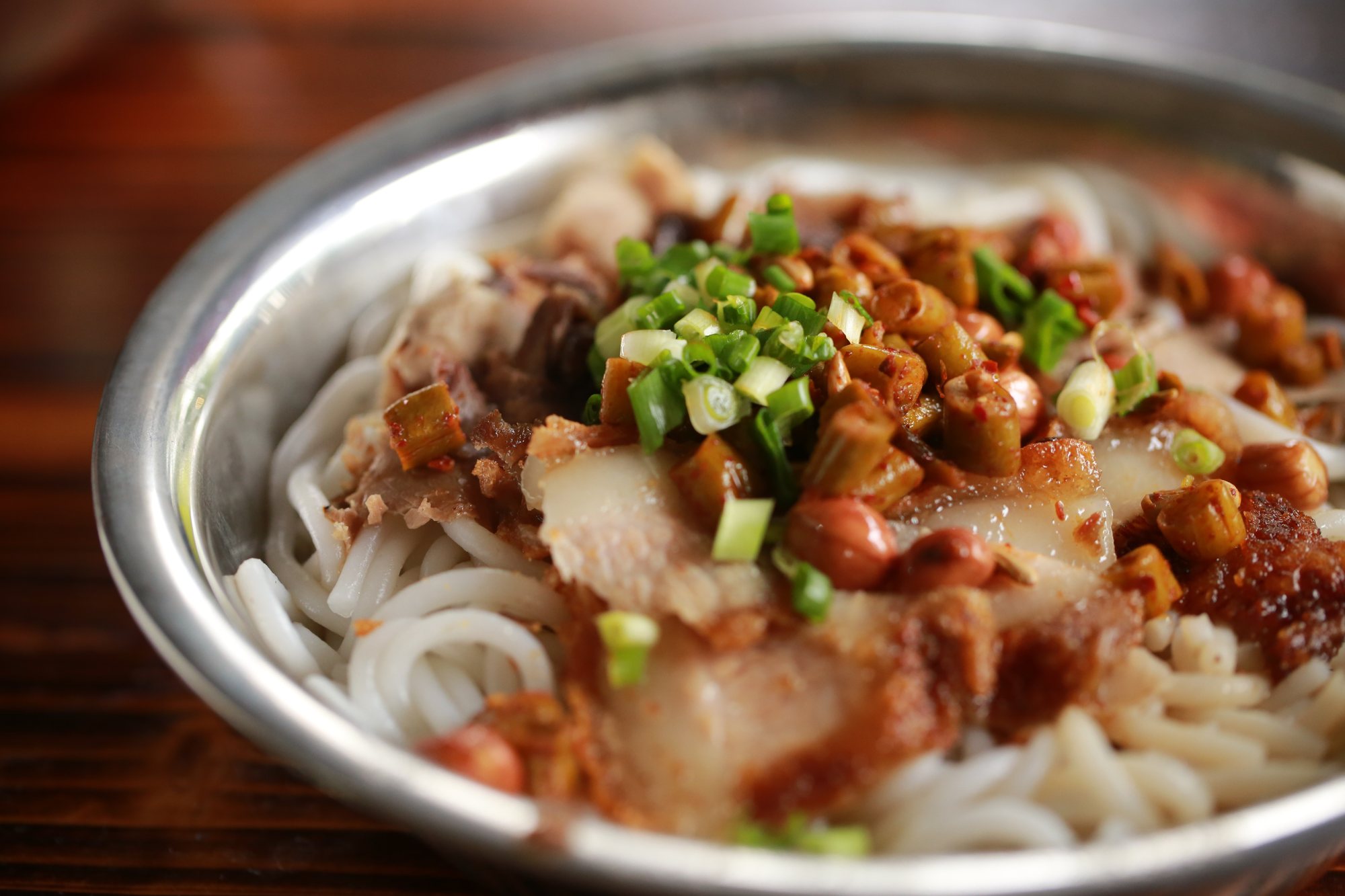
A metal bowl of rice noodles topped with crispy pork, peanuts, pickled beans and scallions

Turn on JavaScript to hear the story, see pinyin and tap words for their meaning.

桂林人早上爱吃米粉,我也爱吃。

People in Guilin love eating rice noodles in the morning, and I love them too.

我们学校外边有一个小店。店里的米粉很好吃,也很便宜。一碗只要六块钱。

There's a little shop just outside my school. Its rice noodles are tasty, and they're cheap too: a bowl costs only six yuan.

我天天早上七点起床,七点半去小店吃早饭。店里人很多,也很热。店里的阿姨认识我。她问我:“你好!今天也要一碗吗?”我说:“要!要大碗的!”她还问:“要辣的吗?”我说:“要一点儿!”

Every day I get up at seven, and at seven thirty I go to the little shop for breakfast. The shop is full of people, and it's very hot. The auntie at the shop knows me. She asks me, "Hello! One bowl again today?" I say, "Yes! A big bowl!" She also asks, "Do you want it spicy?" I say, "A little!"

米粉太好吃了,我一个人能吃两碗!现在,我早上不吃面包了。我的中国朋友说:“你现在是桂林人了!”

The rice noodles are so good that I can eat two bowls by myself! These days I don't eat bread in the morning anymore. My Chinese friend says, "You're a Guilin person now!"

生词 New words

These words are underlined in the story. Tap the characters to hear them.

名词Nouns

米粉mǐfěnrice noodles
早上zǎoshang(in the) morning
店diànshop
早饭zǎofànbreakfast
阿姨āyíauntie (polite word for an older woman)
钱qiánmoney

量词Measure words

碗wǎnbowl (of)
块kuàiyuan (Chinese money)

动词Verbs

起床qǐchuángto get up

形容词Adjectives

好吃hǎochīdelicious, tasty
便宜piányicheap
辣làspicy

短语Phrases

一点儿yìdiǎnra little

语法点 Grammar

1. Number + Measure word + Nounhow to count things in Chinese

In Chinese you can't put a number right in front of a noun. A measure word goes in between. Some measure words are also containers, like 碗 (wǎn; bowl), so they work just like "a bowl of" in English.

Number + Measure word + Noun

我们学校外边有一个小店。
Wǒmen xuéxiào wàibian yǒu yí ge xiǎo diàn.
There's a little shop just outside our school.
我有两个中国朋友。
Wǒ yǒu liǎng ge Zhōngguó péngyou.
I have two Chinese friends.
爸爸要三杯茶。
Bàba yào sān bēi chá.
Dad wants three cups of tea.

When everyone already knows what you're talking about, you can drop the noun and keep the measure word:

一碗只要六块钱。
Yì wǎn zhǐ yào liù kuài qián.
A bowl costs only six yuan.
2. Adjective + 的 (de)the ... one

Put 的 after an adjective, and you get "the ... one." It's very handy in shops and restaurants, when you point at what you want.

Adjective (+ Noun) + 的

要辣的吗?
Yào là de ma?
Do you want a spicy one?
要大碗的!
Yào dà wǎn de!
The big bowl!

大碗的 is short for 大碗的米粉: "the big-bowl one." The rice noodles are already clear, so nobody needs to say them again.

我不要热的,我要冷的。
Wǒ bú yào rè de, wǒ yào lěng de.
I don't want a hot one. I want a cold one.
3. 太 + Adjective + 了 (tài … le)really, so (often: so ... that)

太…了 makes an adjective much stronger. With a good word it sounds happy and excited; with a bad word it is a complaint.

Subject + 太 + Adjective + 了

米粉太好吃了!
Mǐfěn tài hǎochī le!
The rice noodles are so good!
今天太热了。
Jīntiān tài rè le.
It's way too hot today.
这个手机太贵了!
Zhège shǒujī tài guì le!
This phone is so expensive!

测试 Check your understanding

5 questions about the story. Pick an answer to see if it is right.

1一碗米粉多少钱?

2“我”几点去小店?

3谁认识“我”?

4现在“我”早上吃什么?

5“我”一个人能吃几碗米粉?

更多故事 More stories

Message us on WeChat

QR code for the Chinese Language Institute on WeChat

In WeChat on your phone, tap + then Scan, and point it at this code.

Take a screenshot of this code. In WeChat, tap + then Scan and choose it from your album.

Press and hold the code and choose the option to scan it.

Then tap Follow and send us a message.

We reply Monday to Friday, 8:30 AM to 6:00 PM Beijing time.