HSK 1 | My Chinese Teacher

我的中文老师My Chinese Teacher

An HSK 1 story, 163 characters long, with audio in a female and a male voice. By the CLI Team.

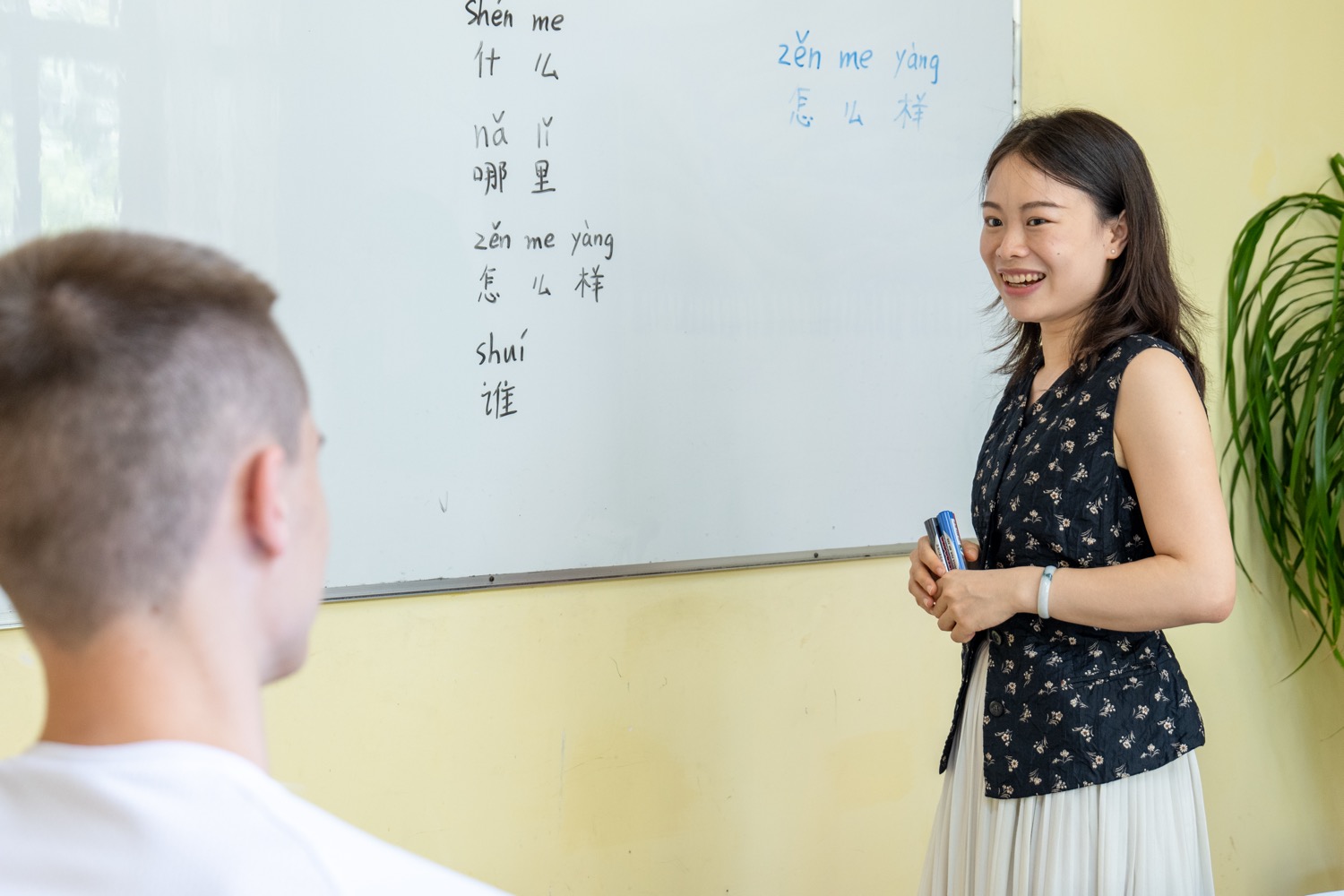
A smiling teacher stands by a whiteboard of pinyin and characters as a student listens

Turn on JavaScript to hear the story, see pinyin and tap words for their meaning.

我的中文老师叫林小雨,我们都叫她林老师。她今年二十八岁,非常爱笑。

My Chinese teacher's name is Lin Xiaoyu, and we all call her Teacher Lin. She's twenty-eight this year, and she really loves to laugh.

我在桂林学习汉语,林老师上午给我们上课。她教我们说汉语,也教我们写汉字。汉字不好写,但是林老师说:“没关系,再写一个!”

I'm studying Chinese in Guilin, and Teacher Lin teaches our class in the morning. She teaches us to speak Chinese, and she teaches us to write Chinese characters. Characters aren't easy to write, but Teacher Lin says, "That's okay. Write another one!"

林老师的课很好玩儿。有一天,我想说“我要买书”,但是我说的是“我要卖书”。林老师笑了,同学们也笑了。现在我知道了:“买”和“卖”不一样!

Teacher Lin's class is a lot of fun. One day, I wanted to say "I want to buy a book," but what I said was "I want to sell a book." Teacher Lin laughed, and my classmates laughed too. Now I know: "buy" and "sell" are not the same!

我们班有八个学生,大家都喜欢林老师。我天天写汉字,林老师说:“很好!再写一个!”

There are eight students in our class, and everyone likes Teacher Lin. I write characters every day, and Teacher Lin says, "Very good! Write another one!"


生词 New words

These words are underlined in the story. Tap the characters to hear them.

名词Nouns

老师lǎoshīteacher
学生xuéshengstudent
同学们tóngxuémenclassmates
汉字HànzìChinese character
课kèclass, lesson
班bānclass (group of students)

动词Verbs

学习xuéxíto study, to learn
教jiāoto teach
写xiěto write
笑xiàoto laugh, to smile
买mǎito buy (3rd tone: mǎi)
卖màito sell (4th tone: mài; only the tone is different from 买)

形容词Adjectives

好玩儿hǎowánrfun
一样yíyàngthe same (不一样: different)

连词Conjunctions

但是dànshìbut

语法点 Grammar

1. 叫 (jiào)v. to be called; to call someone by a name

叫 (jiào) is the everyday way to give a name. Put the person first, then 叫, then the name.

Person + 叫 + Name

我的中文老师叫林小雨。
Wǒ de Zhōngwén lǎoshī jiào Lín Xiǎoyǔ.
My Chinese teacher's name is Lin Xiaoyu.
我的狗叫大白。
Wǒ de gǒu jiào Dàbái.
My dog is called Dabai.

To ask someone's name, put 什么名字 (shénme míngzi; what name) where the name would go.

你叫什么名字?
Nǐ jiào shénme míngzi?
What's your name?

叫 can also mean "to call someone something." Then the person you call comes right after 叫, and the name comes last.

Subject + 叫 + Person + Name

我们都叫她林老师。
Wǒmen dōu jiào tā Lín lǎoshī.
We all call her Teacher Lin.
2. 给 (gěi) + Person + Verbprep. for (someone); to (someone)

When you do something for someone or to someone, put 给 and the person before the verb. In English the person usually comes at the end; in Chinese it comes first.

Subject + 给 + Person + Verb (+ Object)

林老师上午给我们上课。
Lín lǎoshī shàngwǔ gěi wǒmen shàngkè.
Teacher Lin teaches our class in the morning.
妈妈给我做饭。
Māma gěi wǒ zuò fàn.
Mom cooks for me.
我晚上给你打电话。
Wǒ wǎnshang gěi nǐ dǎ diànhuà.
I'll call you this evening.
3. 都 (dōu)adv. all; both

都 (dōu) says that something is true of every person or thing in a group. The group comes first, and 都 goes right before the verb. It never goes at the front of the sentence the way "all" can in English.

Group + 都 + Verb

大家都喜欢林老师。
Dàjiā dōu xǐhuan Lín lǎoshī.
Everyone likes Teacher Lin.
我们都是学生。
Wǒmen dōu shì xuésheng.
We're all students.

With 不, 都 still comes first: 都不 means "none of them."

他们都不喝茶。
Tāmen dōu bù hē chá.
None of them drink tea.

测试 Check your understanding

5 questions about the story. Pick an answer to see if it is right.

1林老师今年多大?

2林老师什么时候给我们上课?

3有一天,“我”想买什么?

4我们班有几个学生?

5汉字好写吗?

更多故事 More stories

Message us on WeChat

QR code for the Chinese Language Institute on WeChat

In WeChat on your phone, tap + then Scan, and point it at this code.

Take a screenshot of this code. In WeChat, tap + then Scan and choose it from your album.

Press and hold the code and choose the option to scan it.

Then tap Follow and send us a message.

We reply Monday to Friday, 8:30 AM to 6:00 PM Beijing time.