
HSK 3 | Tom's First Hot Pot

汤姆第一次吃火锅Tom's First Hot Pot

История уровня HSK 3, 424 иероглифа, с озвучкой женским и мужским голосом. Автор — команда CLI.

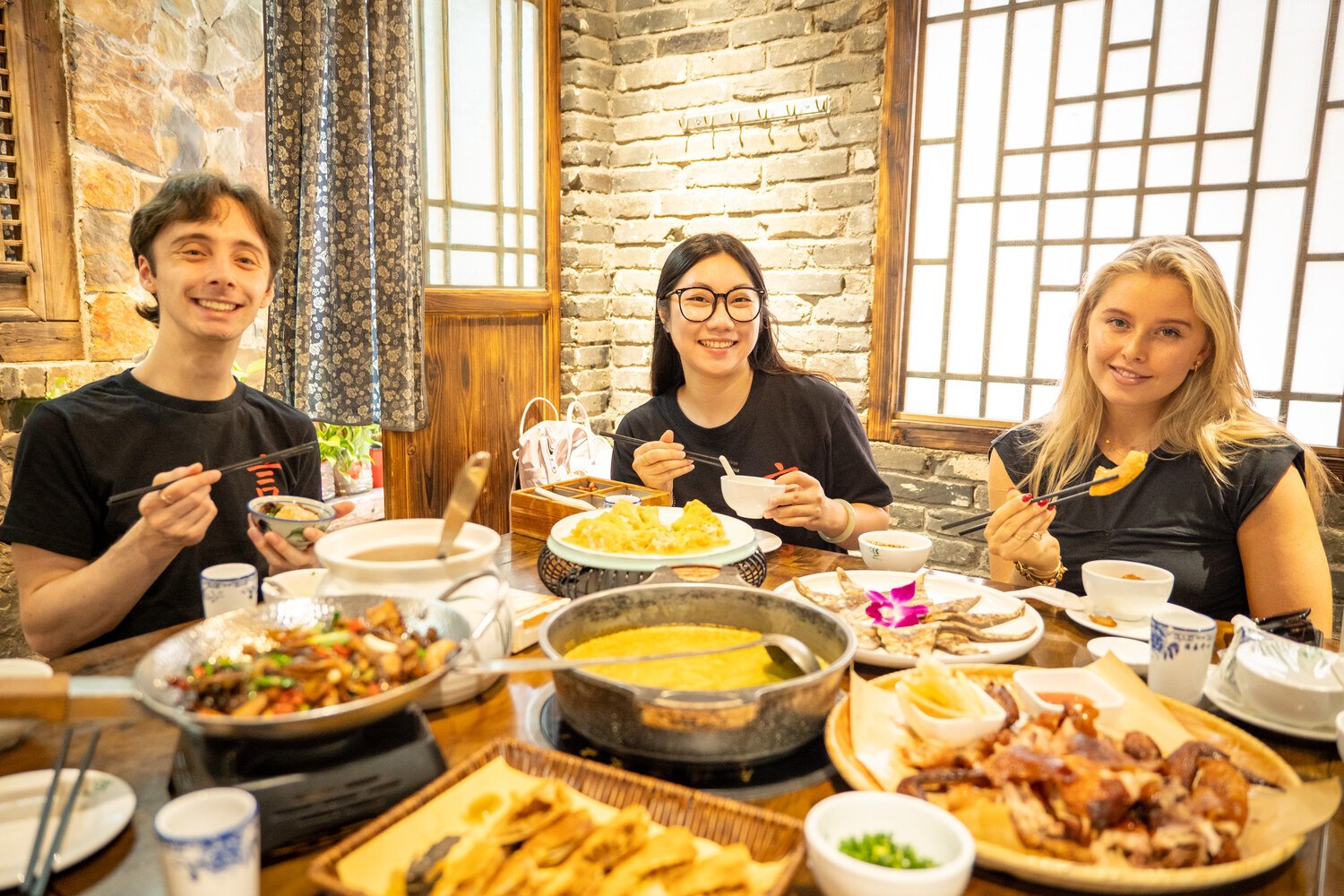
Three friends smile around a hot pot surrounded by many dishes

Включите JavaScript, чтобы слушать историю, видеть пиньинь и нажимать на слова, чтобы узнать их значение.

“汤姆,你能吃辣吗?”陈浩问。汤姆说:“没问题!我在家常常吃辣的。”汤姆是我们的外国同学,来桂林三个月了,可是还没吃过火锅。所以上个星期五,我和陈浩带他去吃火锅。

"Can you handle spicy food?" Chen Hao asked Tom. Tom said, "No problem! I eat spicy food at home all the time." Tom is a classmate of ours from abroad. He had been in Guilin for three months but had never had hot pot, so last Friday Chen Hao and I took him out for it.

火锅店里人很多,又热闹又香。桌子中间有一个大锅,锅里有两种汤。左边是红色的汤,非常辣;右边是白色的汤,一点儿也不辣。我告诉汤姆:“这样,怕辣的人和不怕辣的人就可以一起吃了。”汤姆说:“我不怕!”

The hot pot restaurant was packed, loud and full of good smells. In the middle of the table was a big pot with two kinds of broth in it. The left side was a red broth, and very spicy; the right side was a white broth that wasn't spicy at all. I told Tom, "This way, people who are scared of spice and people who aren't can eat together." Tom said, "I'm not scared!"

我们点了很多东西:牛肉、羊肉、鱼,还有很多菜。服务员很快就把菜都拿来了。汤开了以后,我们把肉放进锅里,等一两分钟就可以吃了。陈浩对汤姆说:“左边的牛肉最好吃,你一定要试一下!”

We ordered lots of things: beef, lamb, fish and plenty of vegetables. The server brought everything out fast. Once the broth was boiling, we put the meat into the pot, and after a minute or two it was ready to eat. Chen Hao said to Tom, "The beef on the left side is the best. You have to try it!"

汤姆从左边的汤里拿出一块牛肉,放进嘴里。一开始,他说:“好吃!”可是过了一会儿,他大叫:“我的嘴像着火了一样!”他马上拿起杯子,喝了很多水,可是越喝越辣。他一边喝一边问:“为什么水没有用?”陈浩马上去拿来了冰牛奶:“喝这个!吃辣的时候,牛奶比水有用多了。”喝了牛奶以后,他的嘴舒服多了。

Tom took a piece of beef out of the broth on the left and put it in his mouth. At first he said, "Tasty!" But after a moment he cried, "My mouth feels like it's on fire!" He grabbed his glass and drank lots of water, but the more he drank, the spicier it got. Drinking, he asked, "Why isn't the water working?" Chen Hao went straight off and came back with cold milk: "Drink this! With spicy food, milk works much better than water." After the milk, his mouth felt much better.

后来,汤姆只吃右边汤里的肉,左边的,他只吃了一点儿。那天晚上,我们一边吃一边聊天,吃了三个多小时。走的时候,汤姆问服务员:“下个星期我还来,你们有没有微辣的汤?”服务员说:“有啊,你今天吃的左边那个,就是微辣的。”

After that, Tom only ate the meat from the broth on the right, and had just a little from the left. That night we ate and chatted for more than three hours. As we were leaving, Tom asked the server, "I'm coming back next week. Do you have a mildly spicy broth?" The server said, "Sure. The one on the left you had today is the mildly spicy one."


生词 Новые слова

Эти слова подчёркнуты в истории. Нажмите на иероглифы, чтобы услышать их.

名词Существительные

火锅huǒguōhot pot
锅guōpot
汤tāngsoup, broth
服务员fúwùyuánserver, waiter

动词Глаголы

点diǎnto order (food)
着火zháohuǒto catch fire
聊天liáotiānto chat
怕pàto be afraid of

形容词Прилагательные

辣làspicy, hot
微辣wēilàmildly spicy
热闹rènaolively, bustling
香xiāngsmells good
舒服shūfucomfortable

副词Adverbs

越yuèthe more … (越…越)

语法点 Грамматика

1. 越…越… (yuè … yuè …)the more …, the more …

Use 越…越… when one thing grows as another grows. Put a verb or adjective after the first 越 and the result after the second. The two halves are often short, which makes the pattern sound quick and lively.

Subject + 越 + Verb + 越 + Adjective

他喝了很多水,可是越喝越辣。
Tā hē le hěn duō shuǐ, kěshì yuè hē yuè là.
He drank lots of water, but the more he drank, the spicier it got.
这个故事越听越有意思。
Zhège gùshi yuè tīng yuè yǒu yìsi.
The more you listen to this story, the more interesting it gets.
雨越下越大了。
Yǔ yuè xià yuè dà le.
The rain is coming down harder and harder.
2. 一边…一边… (yìbiān … yìbiān …)doing two things at the same time

When one person does two actions at once, put 一边 before each verb. Both actions are happening together, so this is perfect for meals, walks and long talks.

Subject + 一边 + Verb 1 + 一边 + Verb 2

我们一边吃一边聊天。
Wǒmen yìbiān chī yìbiān liáotiān.
We ate and chatted at the same time.
他一边走路一边打电话。
Tā yìbiān zǒulù yìbiān dǎ diànhuà.
He talks on the phone while he walks.
妈妈一边做饭一边听音乐。
Māma yìbiān zuòfàn yìbiān tīng yīnyuè.
Mom listens to music while she cooks.
3. 像…一样 (xiàng … yíyàng)like, just like

To compare something to a picture in your head, put the picture between 像 and 一样. You can use a noun (像大象一样) or a whole event (像着火了一样). It is the Chinese way to say “it’s like …”.

A + 像 + B + 一样 (+ Adjective)

我的嘴像着火了一样!
Wǒ de zuǐ xiàng zháohuǒ le yíyàng!
My mouth feels like it's on fire!
她的中文说得像中国人一样好。
Tā de Zhōngwén shuō de xiàng Zhōngguórén yíyàng hǎo.
She speaks Chinese as well as a Chinese person.
今天的天气像夏天一样。
Jīntiān de tiānqì xiàng xiàtiān yíyàng.
Today's weather is just like summer.

测试 Проверьте себя

5 вопросов по рассказу. Выберите ответ, чтобы узнать, верен ли он.

1为什么锅里有两种汤?

2锅里有几种汤?

3汤姆喝了很多水以后,怎么样了?

4陈浩给汤姆拿来了什么?

5服务员说,汤姆今天吃的左边的汤是什么汤?

更多故事 Другие рассказы

Напишите нам в WeChat

QR-код Chinese Language Institute в WeChat

В WeChat на телефоне нажмите +, затем Сканировать и наведите камеру на этот код.

Сделайте скриншот этого кода. В WeChat нажмите +, затем Сканировать и выберите его из галереи.

Нажмите и удерживайте код, затем выберите опцию для его сканирования.

Затем нажмите Подписаться и отправьте нам сообщение.

Мы отвечаем с понедельника по пятницу, с 8:30 до 18:00 по пекинскому времени.