
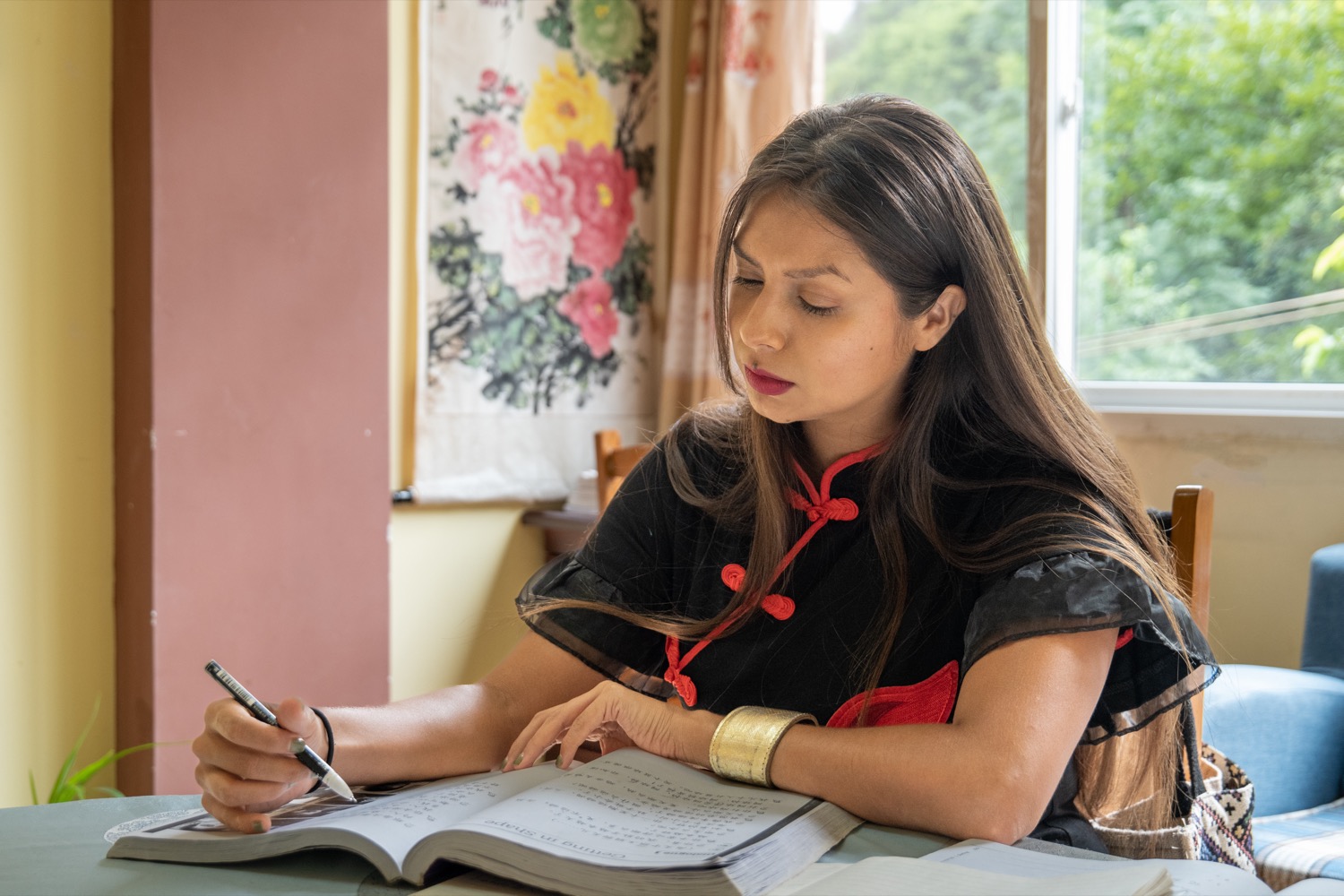
三十岁的我:你好!写这封信的时候,已经是晚上十一点了,宿舍里的同学都睡了,只有我桌子上的台灯还亮着。还记得吗?二十岁的你,每天晚上都坐在这个台灯下面写作业,考试以前还常常熬夜。老师让我们给十年后的自己写一封信,我犹豫了很久,还是不知道该从哪儿写起。
Dear thirty-year-old me, hello! As I write this letter, it's already eleven at night. Everyone else in the dorm is asleep, and only the lamp on my desk is still on. Do you remember? At twenty, you sat under this lamp every night doing homework, and before exams you often stayed up late. Our teacher asked us to write a letter to ourselves ten years from now. I hesitated for a long time and still didn't know where to start.
先告诉你一件让我骄傲的事吧。今年暑假,我去山区的一所小学当了两个月老师,那里只有三十多个学生。第一天上课,我紧张得一个字也说不出来,准备好的内容全忘了。这时候,坐在第一排的一个小朋友举手说:“老师,你别怕,我们都听你的!”那一刻,我差点儿哭出来。那两个月,我每天早上六点就起床,和孩子们一起走山路去学校。我教他们读课文,他们教我认识山上的每一种花。其实,我从他们那里学到的,似乎比我教给他们的还多。离开的那天,孩子们送了我一张画,上面画着一个老师和很多张笑脸。这张画至今还贴在我的床头。
Let me start by telling you something I'm proud of. This summer vacation, I spent two months as a teacher at a primary school in the mountains. It had only thirty-some students. On my first day of class, I was so nervous I couldn't say a single word, and I forgot everything I had prepared. Just then, a little kid in the front row raised a hand and said, "Teacher, don't be scared. We'll all listen to you!" At that moment, I almost burst into tears. For those two months, I got up at six every morning and walked the mountain path to school with the children. I taught them to read their lessons, and they taught me the name of every flower on the mountain. Actually, I seem to have learned more from them than I taught them. On the day I left, the children gave me a drawing of a teacher and lots of smiling faces. That drawing is still on the wall above my bed today.
我也得承认,我有很多担心。我怕十年后的你,每天只想着工作和钱,逐渐忘了自己当初为什么想当老师。我怕你变成一个不敢说出自己的想法、也没有勇气尝试新东西的人。我还怕你总是拿自己和别人比:别人买了房子,你就着急;别人结婚了,你也着急。我最怕的,是你太忙,很久都不回老家看奶奶。奶奶今年八十岁了,每次我回家,她都早早地站在门口等我。千万别总说“下次再回去”,毕竟奶奶年纪大了。
I also have to admit that I have a lot of worries. I'm afraid that ten years from now you'll think only about work and money every day, and slowly forget why you wanted to be a teacher in the first place. I'm afraid you'll turn into someone who doesn't dare to speak your mind, and has no courage to try anything new. I'm afraid you'll always be comparing yourself with other people: someone buys an apartment and you panic; someone gets married and you panic too. What I'm most afraid of is that you'll be too busy to go home and see Grandma for a long time. Grandma is eighty this year. Every time I go home, she is already standing at the door waiting for me, long before I arrive. Whatever you do, don't keep saying "next time." After all, Grandma is getting old.
所以,我希望你哪怕再忙,也记得每个星期给奶奶打一个电话。我希望你还在当老师,而且是一个孩子们喜欢的老师。如果你不当老师了,那就请你告诉我,是什么让你改变了主意。我还希望你依然保持着现在的好奇心:想学游泳,想去北方看一次真正的大雪,想学会包饺子,包得跟奶奶包的一样好吃。其实,我现在一下水就害怕,包的饺子也总是一煮就破。不过我想,与其一直说“以后再学”,不如这个寒假就开始。这些事,你做到了几件呢?
So I hope that however busy you are, you'll still remember to call Grandma once a week. I hope you're still a teacher, and one the children like. If you're not a teacher anymore, then please tell me what changed your mind. I also hope you've still kept the curiosity I have now: wanting to learn to swim, wanting to go north to see real heavy snow for once, wanting to learn to make dumplings as good as Grandma's. Actually, right now I panic the moment I get into the water, and the dumplings I make always fall apart as soon as they hit the boiling water. But I think that rather than always saying "I'll learn later," I'd better start this winter break. How many of those have you done?
最后,还有一个小问题要问你:那张画,你还留着吗?画上那个老师笑得特别开心,孩子们说,那就是我。如果它还在,请替我再看一眼。二十岁的林晓
Finally, I have one small question for you: do you still have that drawing? The teacher in the drawing is smiling from ear to ear. The children said that was me. If you do, please take one more look at it for me. Lin Xiao, age twenty


