
HSK 3 | Плачу телефоном

用手机付钱Paying with My Phone

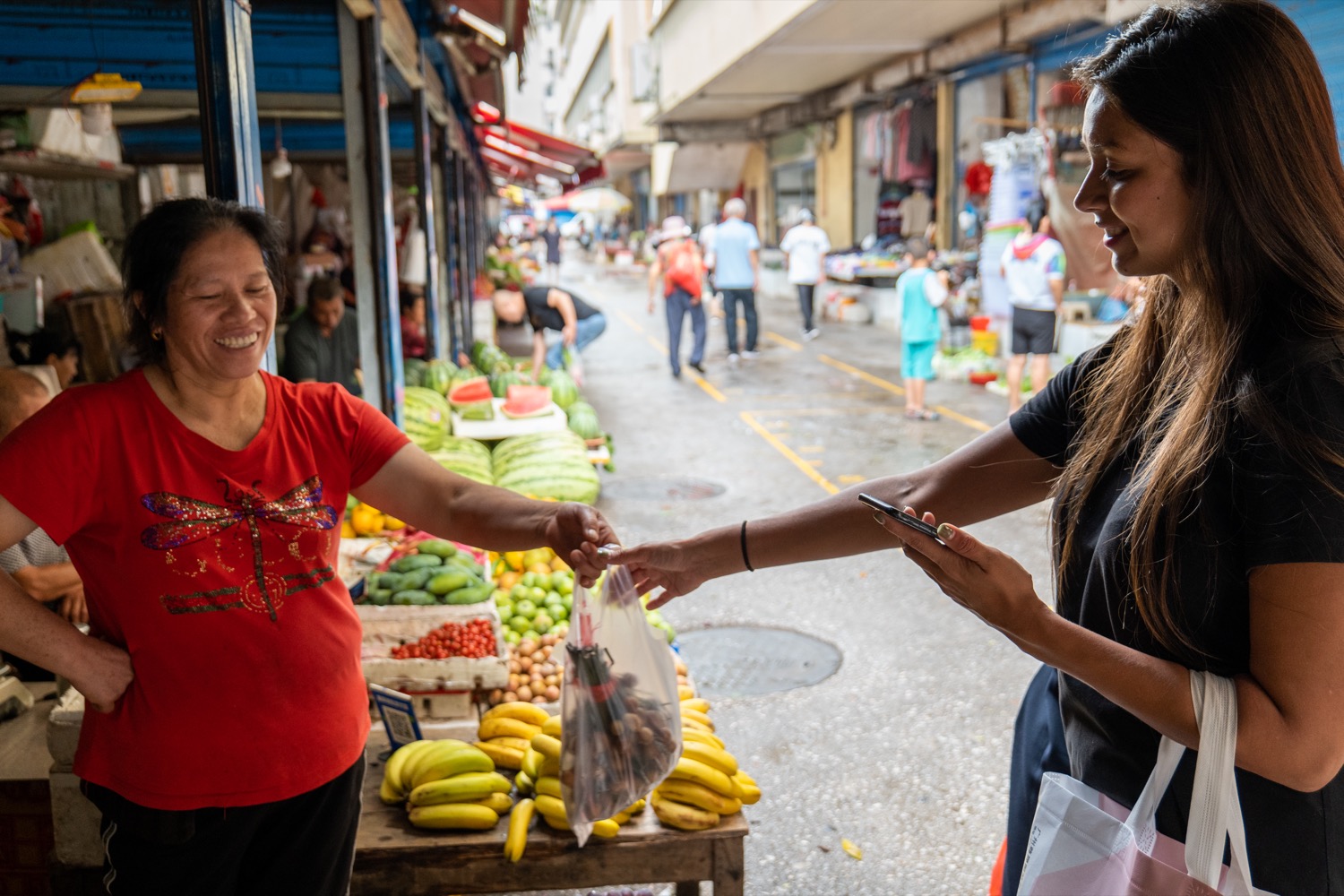
A woman holding a phone pays a smiling vendor at a street fruit stall

By the CLI Team

Включите JavaScript, чтобы слушать историю, видеть пиньинь и нажимать на слова, чтобы узнать их значение.

“阿姨,一碗米粉!”那天早上,一个外国学生走进了我的小店。我的店在学校旁边,一碗米粉十块钱。他吃完以后,拿出一张一百块的。我有点儿不好意思地说:“我这里没有零钱找你,你扫码吧!”他看着我,好像不知道“扫码”是什么意思。

"Auntie, a bowl of rice noodles, please!" That morning, a foreign student walked into my little shop. My shop is next to a school, and a bowl of noodles costs ten yuan. When he finished eating, he took out a hundred-yuan note. I felt a little bad. "I don't have change for you," I said. "Just scan the code!" He looked at me as if he didn't know what "scan the code" meant.

我拿起桌子上的一张小纸给他看,上面有一个二维码。这时候,旁边的人吃完了,拿出手机扫了一下,就走了。外国学生明白了,可是他说:“我的手机还不能付钱。”我说:“没关系,明天再给吧!”

I picked up a small piece of paper from the table and showed it to him. There was a QR code on it. Just then, the man beside him finished eating, took out his phone, scanned it and left. The student understood, but he said, "My phone can't pay yet." "That's all right," I said. "Pay me tomorrow!"

第二天早上,他又来了。他说,他的中国朋友已经教他怎么用手机付钱了。他扫了我的二维码,付了两碗的钱:昨天的和今天的。他告诉我,他以为在中国买东西,一定要用现金。我告诉他,现在很多人出门都不带钱包,只带手机。桂林到处都有二维码,路边卖水果的奶奶也有一张。他不太相信。

The next morning he came back. He said his Chinese friend had already taught him how to pay with his phone. He scanned my QR code and paid for two bowls, yesterday's and today's. He told me he'd thought you had to pay cash when you buy things in China. I told him that these days lots of people don't take a wallet when they go out, only their phones. There are QR codes everywhere in Guilin. Even the grandma selling fruit by the road has one. He didn't really believe me.

那天晚上,他又来吃米粉,高兴地告诉我:“阿姨,您说得对!我发现超市里有,饭馆里有,水果店里也有!”

That evening he came back for noodles again and told me happily, "Auntie, you were right! I found QR codes in the supermarket, in restaurants, even in the fruit shop!"

现在,他每天早上都来吃米粉。他还没进门,就已经拿出了手机。

Now he comes for noodles every morning. Before he's even through the door, his phone is already out.


生词 Новые слова

Эти слова подчёркнуты в истории. Нажмите на иероглифы, чтобы услышать их.

名词Существительные

现金xiànjīncash
米粉mǐfěnрисовая лапша
零钱língqiánsmall change
二维码èrwéimǎQR code

动词Глаголы

扫码sǎomǎto scan a QR code
付钱fùqiánto pay
付fùto pay
以为yǐwéito think (wrongly)
发现fāxiànto find, to notice
相信xiāngxìnto believe

副词Наречия

到处dàochùeverywhere

量词Счётные слова

碗wǎnbowl
张zhāng(measure word for notes, sheets of paper)

短语Выражения

不好意思bù hǎoyìsiembarrassed, sorry
没关系méi guānxiit doesn't matter, no problem

语法点 Грамматика

1. 以为 (yǐwéi)to think (and then find out you were wrong)

Both 以为 and 觉得 can mean "to think," but 以为 usually tells you the idea was wrong. A sentence with 以为 often sets up a surprise in the next part.

Subject + 以为 + what they believed, (可是 / 但是) + what was really true

他以为在中国买东西,一定要用现金。
Tā yǐwéi zài Zhōngguó mǎi dōngxi, yídìng yào yòng xiànjīn.
He thought you had to pay cash for things in China.
他以为这个菜不辣,吃了一口就喝了三杯水。
Tā yǐwéi zhège cài bú là, chī le yì kǒu jiù hē le sān bēi shuǐ.
He thought this dish wasn't spicy. One bite, and he drank three glasses of water.
我以为今天是星期五,可是今天才星期四。
Wǒ yǐwéi jīntiān shì xīngqīwǔ, kěshì jīntiān cái xīngqīsì.
I thought today was Friday, but it's only Thursday.
2. 到处都 + verb (dàochù dōu)everywhere

到处 means "everywhere." It goes before the verb, and it almost always comes with 都, because it covers every place at once.

(Place) + 到处都 + Verb / 是 + Noun

桂林到处都有二维码。
Guìlín dàochù dōu yǒu èrwéimǎ.
There are QR codes everywhere in Guilin.
周末的公园里到处都是人。
Zhōumò de gōngyuán li dàochù dōu shì rén.
On weekends the park is full of people.
我的手机呢?我到处都找了!
Wǒ de shǒujī ne? Wǒ dàochù dōu zhǎo le!
Where's my phone? I've looked everywhere!
3. Adjective + 地 + verb (de)says how someone does something

To describe the way someone does an action, put the describing word before the verb and add 地 between them. This 地 is read de, not dì.

Subject + Adjective + 地 + Verb

他高兴地告诉我……
Tā gāoxìng de gàosu wǒ……
He told me happily, …
我有点儿不好意思地说……
Wǒ yǒudiǎnr bù hǎoyìsi de shuō……
I said, feeling a little bad, …
请你慢慢地说。
Qǐng nǐ mànmàn de shuō.
Please speak slowly.

测试 Проверьте себя

5 вопросов по рассказу. Выберите ответ, чтобы узнать, верен ли он.

1外国学生吃完米粉以后,拿出了多少钱?

2我为什么让他扫码?

3第一天,外国学生为什么没有扫码?

4第二天早上,他付了几碗米粉的钱?

5谁教他怎么用手机付钱?

更多故事 Другие рассказы

Заметили ошибку или есть идея? 发现错误或有建议?

Отзыв об этом рассказе 对这篇故事的反馈

В целом этот рассказ… 整体来看,这篇故事…
Что нужно изменить? 哪里要改?

Одна заметка — одна проблема. 每个问题写一条。 Пропустите этот шаг, если история готова. 如果可以直接用,这部分不用填。

Совет: прежде чем открыть эту форму, нажмите на слово в истории — и его предложение выберется автоматически. 先点故事里的词,再打开反馈,句子会自动选好。

Преподаватели CLI, пожалуйста, укажите своё имя. 本校老师请留下姓名。

Укажите свою почту, если хотите, чтобы мы могли вам ответить. 如需回复,请留下邮箱。

Напишите нам в WeChat

QR-код Chinese Language Institute в WeChat

В WeChat на телефоне нажмите +, затем Сканировать и наведите камеру на этот код.

Сделайте скриншот этого кода. В WeChat нажмите +, затем Сканировать и выберите его из галереи.

Нажмите и удерживайте код, затем выберите опцию для его сканирования.

Затем нажмите Подписаться и отправьте нам сообщение.

Мы отвечаем с понедельника по пятницу, с 8:30 до 18:00 по пекинскому времени.