

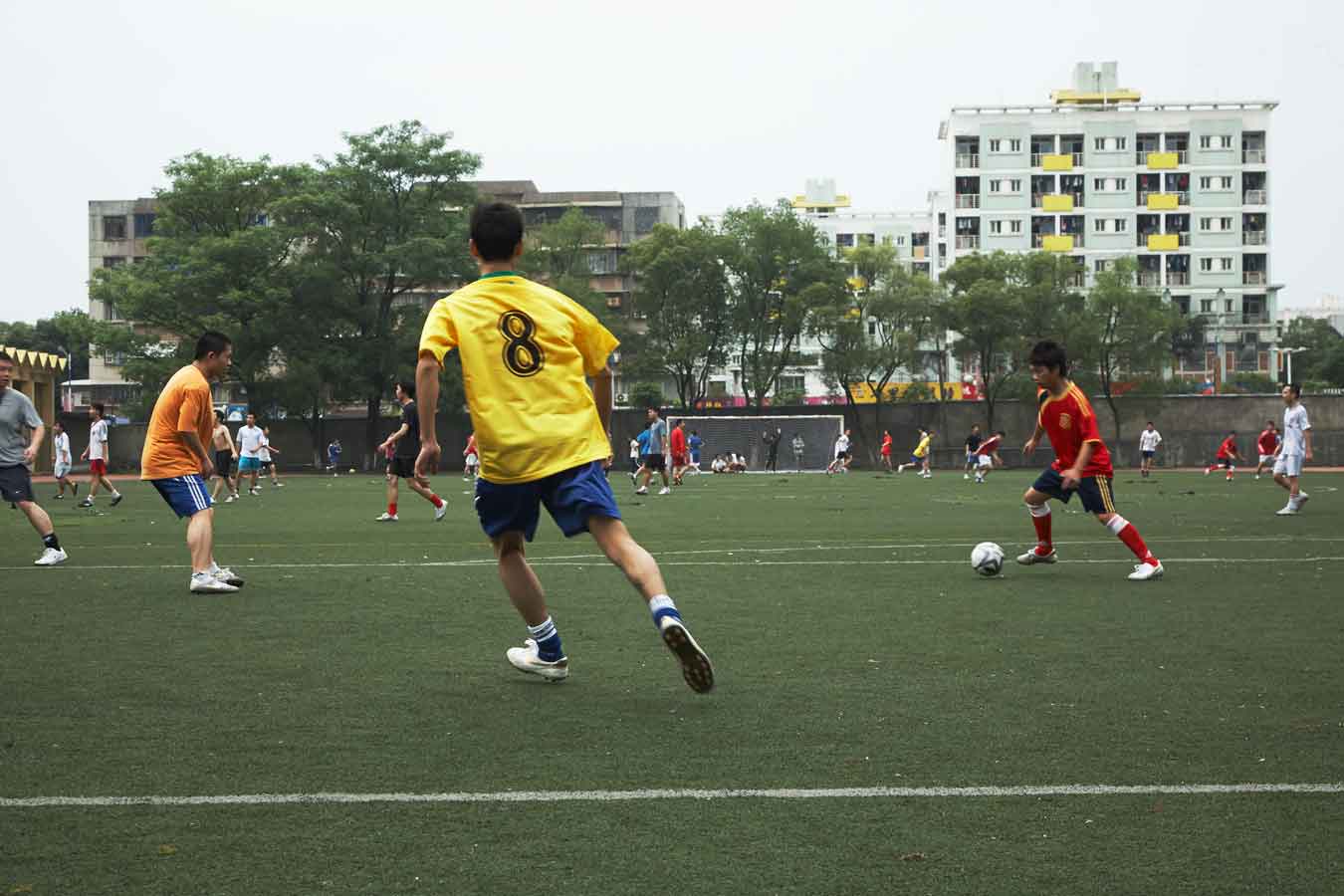
- Soccer's earliest documented ancestor is cuju (蹴鞠, cùjū), a kicking game described in Chinese texts more than two thousand years ago and used as fitness training for Han Dynasty soldiers.
- Despite those deep roots, China's men's national team has reached the World Cup only once, in 2002, and did not score a goal in the tournament.
- A national reform push launched in February 2015 put soccer into school curricula and set targets for tens of thousands of new pitches across the country.
- For language learners, a weekly pickup game is one of the most natural ways to practice Chinese — you relax, you compete, and you get to know people on a completely different level.
As a student of any language knows, practice is the most important key to retention. By finding fun and interesting ways to connect what you learn in the classroom with your life outside the classroom, fluency will come fast and naturally.
For a growing number of students in China, one of those ways involves a ball, a whistle, and ninety minutes of shouting in Mandarin.
01 The Ancient Chinese Origins of Soccer
Based on the current state of the Chinese national soccer team, some may find it hard to believe that the sport's origins can be traced back two thousand years to an early Han Dynasty military drill called "Tsu' Chu."
Today that game is usually written in pinyin as cuju (蹴鞠, cùjū) — literally "kick ball." Players aimed a stuffed leather ball at a small net strung between bamboo poles, and unlike modern soccer, the hands were off limits.
The earliest written mention appears in a Warring States–era text, and Han military manuals describe a competitive version used to keep cavalry soldiers fit. On the strength of that documentary trail, FIFA recognizes cuju as the earliest form of the game for which real evidence survives.
The sport did not stay in the barracks for long. By the Tang Dynasty it had become a popular court and city entertainment, with professional players, women's teams, and an air-filled ball that flew far better than its stuffed predecessor.
02 Why China's National Soccer Team Has Struggled
Despite this historical connection, China's national soccer ambitions have long gone unachieved. The men's national team has qualified for the World Cup exactly once — in 2002 — and left the tournament without scoring a single goal.
The drought has continued since. China missed out on the 2018, 2022, and 2026 tournaments, falling short in Asian qualifying each time.
The gap between the country's size and its results on the pitch has become a national talking point, debated everywhere from state media to the tables of neighborhood noodle shops. It is also the reason the sport ended up on a government reform agenda at all.
03 China's Soccer Reform Plan: New Pitches and Soccer in Schools
In February of 2015, President Xi Jinping and China's central reform group placed this national soccer crisis at the top of their priority list. A comprehensive plan that consists of constructing over 20,000 new soccer fields and adding soccer to the nation's educational core curriculum has been signed into action.
The follow-up development plan set the target more precisely: renovate roughly 40,000 existing school pitches, build around 20,000 more for public use, and reach a total of more than 70,000 pitches nationwide.
On the education side, the Ministry of Education designated tens of thousands of schools as soccer-specialty schools, where the sport is written into physical education classes rather than left to after-school clubs.
Reverberations from this national soccer reform can be felt all across the country, as young children put down their schoolbooks and lace up their cleats.
Soccer is far from the only sport that will get you talking with locals. Early mornings in almost any Chinese park bring out crowds practicing taiji, badminton, and square dancing — all of them low-pressure, high-repetition listening practice.
04 Soccer in Guilin: Pickup Games at the Running Horse Fields
Our hometown of Guilin is no exception. During the afternoons, the Running Horse Soccer Fields (跑马球场), just a 2-minute walk from the CLI Center, are crowded with young players dribbling through a maze of cones to the screech of their coach's whistle.
At night, cheers from family and friends can be heard as the city's amateur league teams face off against one another in friendly exhibition games — usually resulting in the losing team covering the cost of the field.
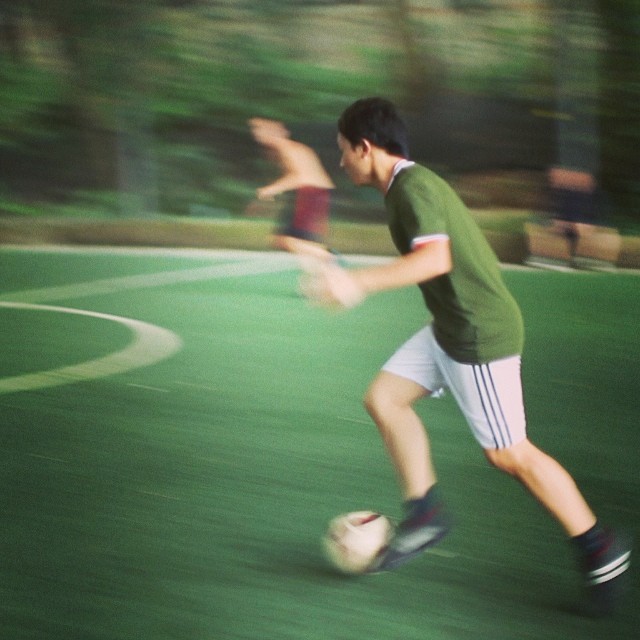
When soccer mania was spreading through the country in 2015, CLI rode the wave of excitement: every Sunday afternoon, CLI students, teachers, and team members met at the fields for a friendly game.
There were no tryouts and no minimum skill level. Teams got shuffled each week, so students ended up playing alongside teachers one Sunday and against them the next.

Study Chinese in Guilin or Start Online
CLI offers personalized Chinese instruction built around your goals. Join our Immersion Program in Guilin or begin from anywhere with a free Chinese lesson .
05 How Playing Soccer Helps You Learn Chinese
"Playing any sport with people of another culture is memorable because it allows you to relax, to be competitive, and to get to know your peers on another level."
Roger Gildersleeve, summer 2015 Immersion Program student
"It's a fun way of getting to know people outside of the classroom and using your language skills in a relaxed, real life environment," says Roger Gildersleeve, a summer 2015 Immersion Program student.
There is a practical reason this works so well. A soccer field gives you a small, repeating vocabulary — pass, shoot, my ball, nice one — attached to things you can see happening in front of you.
That combination of context and repetition is exactly what makes new words stick, and it is one of the easiest ways to practice your Chinese without opening a textbook.
It also lowers the stakes. Nobody on a pickup pitch is grading your tones, and a mistimed sentence matters a lot less than a mistimed tackle.
Students who Learn Chinese in China find that these unplanned moments — a shared water bottle at halftime, an argument over a foul — often teach more than an equivalent hour of study.
06 Chinese Soccer Vocabulary for the Pitch
The following words will get you through a pickup game, and most of them double as useful everyday Chinese vocabulary off the field as well.
| Chinese | Pinyin | Translation |
|---|---|---|
| 足球 | soccer / football | |
| 蹴鞠 | cuju (ancient Chinese kickball) | |
| 踢足球 | to play soccer | |
| 球场 | pitch / sports field | |
| 比赛 | match / competition | |
| 球队 | team | |
| 队友 | teammate | |
| 教练 | coach | |
| 裁判 | referee | |
| 守门员 | goalkeeper | |
| 传球 | to pass the ball | |
| 射门 | to shoot at goal | |
| 进球 | to score a goal | |
| 犯规 | foul | |
| 平局 | a draw / tie | |
| 球迷 | sports fan | |
| 国家队 | national team | |
| 世界杯 | World Cup | |
| 中超 | Chinese Super League | |
| 加油 | go! / come on! (cheer) |
07 Get in the Game
China's soccer reform is a long project, and its architects have always framed it in decades rather than seasons. Whether the national team eventually catches up to the ambition remains an open question.
In the meantime, a pickup game anywhere in China is still a great way to experience a familiar sport through a Chinese lens.
Bring your cleats. The rest of the vocabulary takes care of itself.