

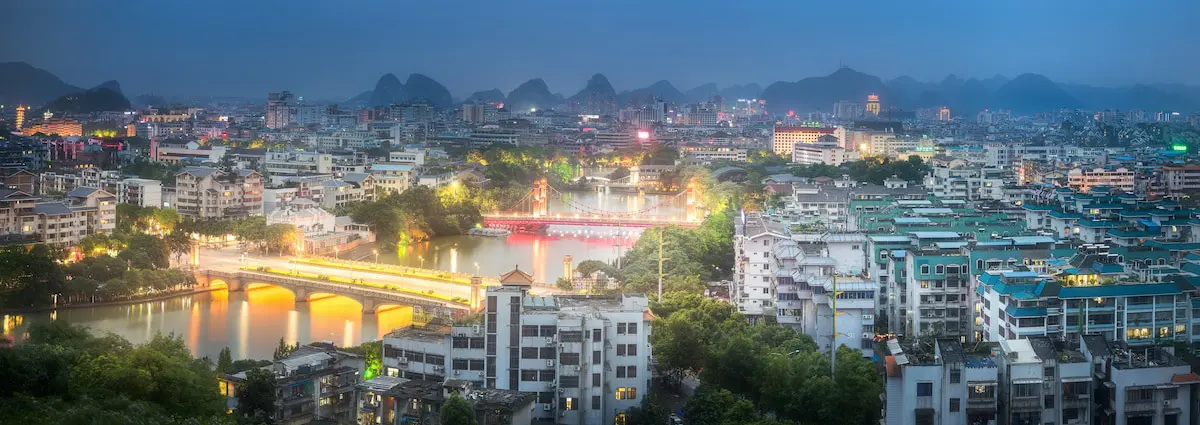
- China officially uses a single time zone, China Standard Time (UTC+8), known domestically as Beijing Time (北京时间).
- Although China is wide enough to span roughly five geographic time zones, the entire country runs on one clock.
- From 1918 to 1949, China was divided into five official time zones, ranging from UTC+5:30 to UTC+8:30.
- The single-zone system was adopted in 1949 to promote national unity, not by Sun Yat-sen as is sometimes claimed.
- China briefly observed daylight saving time from 1986 to 1991, and Xinjiang unofficially keeps its own time two hours behind Beijing.
China stretches more than 3,250 miles (5,250 km) from east to west and shares land borders with 14 countries. So how does it manage with just one official time zone?
The answer is a mix of geography, history, and politics. Whether you plan to Learn Chinese in China or simply schedule a call across the country, understanding China's single time zone makes daily life there far less confusing.
01 How many time zones does China have?
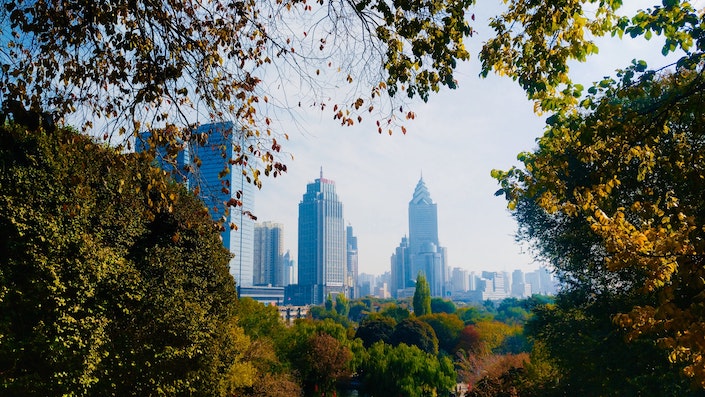
Officially, China has just one time zone: China Standard Time, set at UTC+8 and commonly called Beijing Time (北京时间 Běijīng shíjiān). Every clock from the east coast to the western deserts is meant to show the same hour.
This single zone leads to some strange situations. If you thought a midnight sunrise was the preserve of the Nordic countries, think again.
You can stargaze just before noon from a balcony in Ürümqi, or watch the Kashgar horizon glow like a "sunset" at 11 a.m. The clock says one thing, but the sky says another.
The most dramatic example sits at the Wakhjir Pass, China's narrow border with Afghanistan. Stand on the Chinese side and your phone reads UTC+8; step west into Afghanistan and it jumps to UTC+4:30.
That is one small step for a traveler and a three-and-a-half-hour leap for the clock. To understand how China's time got this way, we have to start at the very beginning.
02 How did ancient China tell time?
China's recorded history stretches back thousands of years (五千年的历史 wǔqiān nián de lìshǐ), which means the Chinese have been measuring time for as long as almost anyone. Naturally, the methods changed over the millennia.
Water clocks and incense clocks
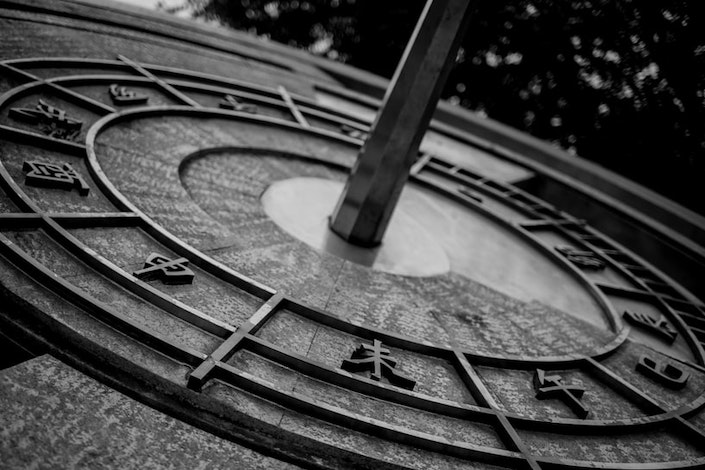
Ancient Chinese texts describe intricate ways of dividing and subdividing the day, some measuring the span from one midnight to the next. Archaeological evidence shows that ordinary people also used sundials.
Water clocks, or 水钟 (shuǐzhōng), were a popular early device that measured how long water took to drip through a mechanism. Tradition credits the legendary Yellow Emperor with the invention.
A second method was the 香钟 (xiāngzhōng), or "incense clock." It used the steady burn of incense to sever threads holding small metal weights, which dropped one by one into a bowl with a loud gong to mark the time.
These methods, developed in the Han dynasty, were later refined by successor dynasties including the Tang, Song, and Ming. Chinese astronomers paired them with the lunisolar traditional Chinese calendar to organize daily and ritual life.
Drum towers and bells
Many ancient Chinese cities built drum towers (鼓楼 gǔlóu) in their centers, the most famous being the Drum Tower of Beijing. Much like church bells in European cities, the booming drums told everyone within earshot what time it was.
03 How the Qing emperors kept time
By the late 18th century, China had a reputation among European traders as a difficult market to enter. In 1793, the Qianlong Emperor rebuffed British overtures in a famous letter to King George III.
The emperor wrote, "We possess all things. I set no value on objects strange or ingenious, and have no use for your country's manufactures." The Qing court, it seemed, wanted nothing the British had to offer.
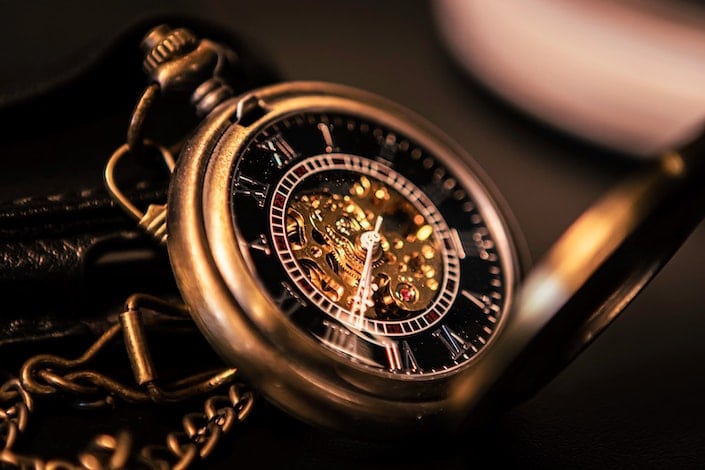
Yet one foreign product did captivate the imperial household: European clocks. The Forbidden City's Hall of Clocks still overflows with cuckoo clocks, grandfather clocks, and elaborate mechanical timepieces from Britain, the Netherlands, Switzerland, and France.
The fascination went beyond decoration. The emperors saw these precise machines as a way to grasp, and perhaps to master, time itself.
04 China's five time zones in the Republican era (1918–1949)
The Qing dynasty collapsed at the start of the 20th century, and China was soon carved up by foreign powers and warlords. Into that chaos stepped Sun Yat-sen, who helped found the Republic of China and is still honored as the father of the nation.
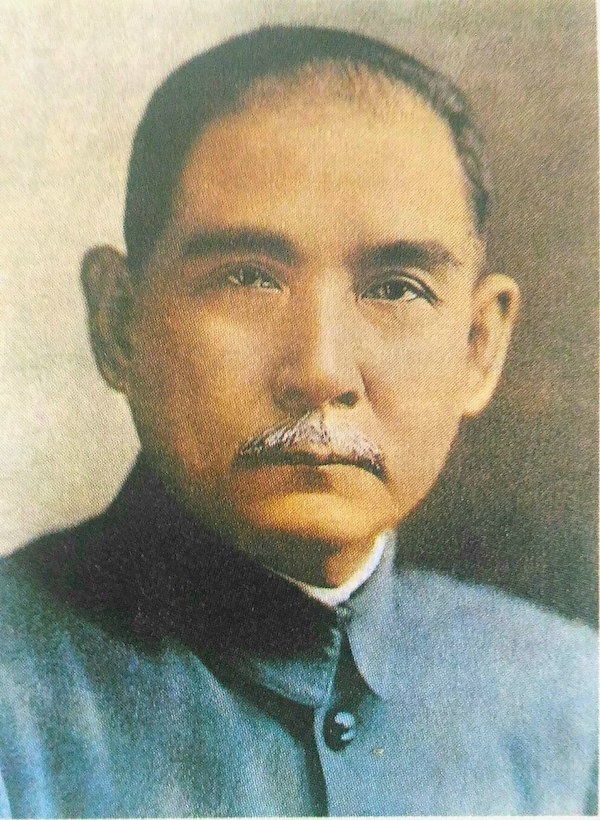
Contrary to a popular claim, the five-zone system was not the personal project of any single leader. In 1918, the Central Observatory in Beijing, then under the Beiyang government, proposed dividing the country into five standard time zones.
These zones used the pre-Hanyu Pinyin (汉语拼音 Hànyǔ Pīnyīn) spellings common at the time:
| Time zone | UTC offset | Chinese name |
|---|---|---|
| Changpai Time | UTC+8:30 | 长白时间 Chǎngbǎi Shíjiān |
| Chungyuan Time | UTC+8:00 | 中原标准时间 Zhōngyuán Biāozhǔn Shíjiān |
| Kansu-Szechwan Time | UTC+7:00 | 甘肃-四川时间 Gānsù-Sìchuān Shíjiān |
| Sinkiang-Tibet Time | UTC+6:00 | 新疆西藏时间 Xīnjiāng-Xīzàng Shíjiān |
| Kunlun Time | UTC+5:30 | 昆仑时间 Kūnlún Shíjiān |
The aim was to give people in each region a clock that matched their daylight. The Nationalist government later formally ratified the five zones at a Standard Time Conference in 1939.
In practice, the zones were mainly observed in coastal areas, and they would not last. To China's east, a militarized Japan was preparing to expand across Asia.
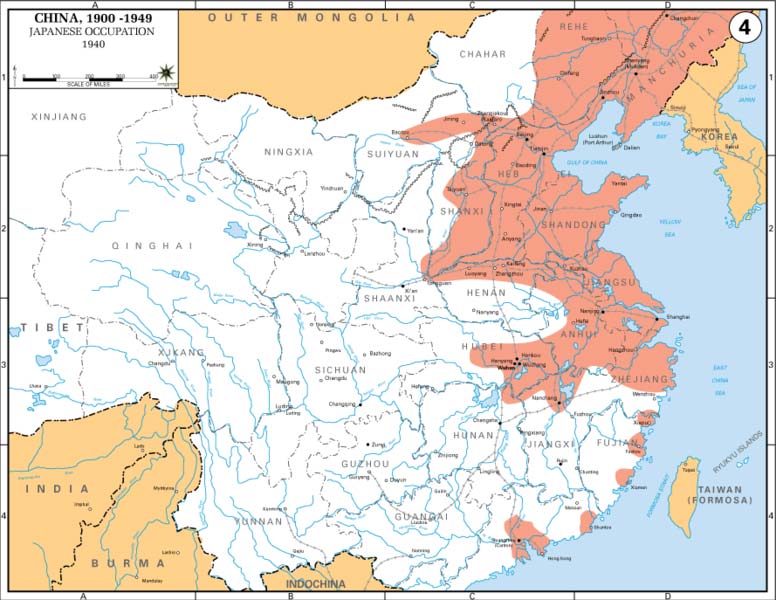
How China kept time during World War II
As Japan expanded from Korea into mainland China, more of Asia came under "Japan Standard Time." Tokyo imposed a uniform clock across its territory as a show of control and to ease its wartime administration.
The Chinese government, then based in the wartime capital of Chongqing, pushed back. Despite deep divisions between Nationalists and Communists, it agreed that the whole country would use Kansu-Szechwan Time (UTC+7) for the duration of the war.
That zone matched Chongqing's location, making it the logical choice. For ordinary civilians sheltering from air raids, however, the exact time zone was likely the least of their worries.
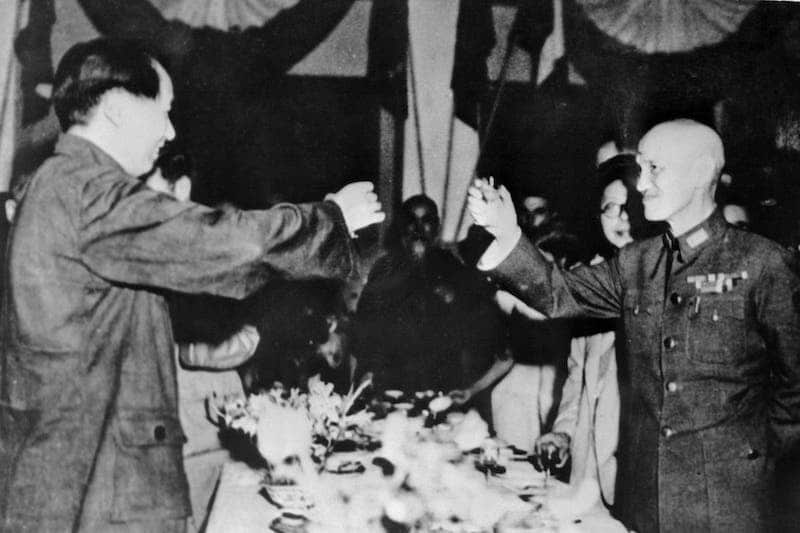
05 Beijing Time: why China adopted a single time zone in 1949
The year 1949 reshaped Chinese timekeeping into what it is today. With the wars over, the five Republican-era zones were abolished and replaced by a single zone: Beijing Time, or China Standard Time (北京时间 Běijīng shíjiān).
Why Mao chose one time zone
Chairman Mao Zedong led the victorious Communists and championed the new single zone. One of his main goals was simply to unify a nation that had spent its entire modern existence in turmoil.
Mao believed a shared clock would help forge a stronger national identity and a sense of common purpose. The change also served as a clean break with the past and a marker of the new People's Republic.
The symbolism echoed an older tradition. In imperial times, a new dynasty often announced itself with a fresh ceremonial color and element; the new republic likewise adopted a crimson flag and a unified national time.
When China tried daylight saving time (1986–1991)
In 1986, during Deng Xiaoping's "Reform and Opening" (改革开放 Gǎigé Kāifàng), China adopted daylight saving time. The goal was to conserve energy.
Research from Peking University suggested daylight saving could save China more than 2 billion kilowatt-hours of energy a year, simply by shifting the clock. Actual savings in 1986 came in closer to 700 million kilowatt-hours.
The experiment did not go smoothly. Workers in southern provinces near the equator saw little benefit and were quick to complain.
Many businesses in trade hubs like Guangzhou paid only lip service to the change and kept their usual hours. The result was scheduling chaos and constant confusion over meeting times.
After the 1991 summer period, the government ended the program for good. Daylight saving time has not returned to China since.
Study Chinese in Guilin or Start Online
CLI offers personalized Chinese instruction built around your goals. Join our Immersion Program in Guilin or begin from anywhere with a free Chinese lesson .
06 China's time zones today: Beijing Time and Xinjiang Time
Since the daylight saving experiment, little has changed. Mainland China runs on a single official clock, and you can set your watch to Beijing Time almost anywhere.
There is one notable exception. The great distance between Beijing and the far west has produced an unofficial extra zone in Xinjiang.
Locals there sometimes use Xinjiang Time, also called Ürümqi Time (新疆时间 Xīnjiāng Shíjiān), set two hours behind Beijing at UTC+6. This better matches the region's actual daylight.
Hong Kong and Macau can technically set their own time, but both keep UTC+8 to stay aligned with the mainland. You can read more about the country's vast geography in this guide to the map of China and the world.
07 Useful Chinese time and time-zone vocabulary
These terms will help you talk about time, clocks, and time zones in everyday Chinese conversations. They also appear often in travel, history, and culture articles.
| Chinese | Pinyin | Meaning |
|---|---|---|
| 时区 | Time zone | |
| 北京时间 | Beijing Time; China Standard Time | |
| 标准时间 | Standard time | |
| 时差 | Time difference; jet lag | |
| 夏令时 | Daylight saving time | |
| 新疆时间 | Xinjiang Time (unofficial, UTC+6) | |
| 鼓楼 | Drum tower | |
| 水钟 | Water clock | |
| 香钟 | Incense clock | |
| 改革开放 | Reform and Opening |
08 Frequently asked questions about China's time zones
How many time zones does China have?
China officially has one time zone: China Standard Time (UTC+8), known as Beijing Time. The country is wide enough to span roughly five geographic zones but uses a single clock for the entire mainland.
Why does China have only one time zone?
The single zone was adopted in 1949 under Mao Zedong to promote national unity and a shared identity after decades of war and division. It replaced the five time zones used during the Republican era.
What is Beijing Time?
Beijing Time (北京时间) is the name for China Standard Time, set at UTC+8. It applies across all of mainland China, as well as Hong Kong and Macau.
Does China observe daylight saving time?
No. China observed daylight saving time from 1986 to 1991, but discontinued it after the 1991 summer period because of minimal energy savings and widespread confusion.
What is Xinjiang Time?
Xinjiang Time, also called Ürümqi Time, is an unofficial local time set two hours behind Beijing at UTC+6. It is sometimes used in China's far western Xinjiang region to better match local daylight.
09 Final thoughts
China's single time zone is a small detail with a big history, woven from ancient water clocks, imperial fascination with European machinery, and a 20th-century drive for national unity. It explains why the sun can rise near midday in the far west while clocks everywhere read the same hour.
If you want to experience that rhythm firsthand, consider studying with CLI in Guilin or booking an online Mandarin class with one of our instructors. Either way, we will help you set your watch to Beijing Time so you are never late.