The complete 300-word list for HSK 3.0 Level 1, with pinyin, definitions, example sentences, grammar patterns, and downloadable flashcards.
HSK 3.0 is the revised HSK framework launching in 2026. It organizes the exam into three stages and nine levels instead of the older six-level model. Under this framework, Levels 1–3 are elementary, Levels 4–6 are intermediate, and Levels 7–9 are advanced.
In 2026, learners are still navigating a transition year. Legacy Levels 1–6 are still being offered, while HSK 7–9 is live as a separate advanced exam. Because of that overlap, many schools and programs still use older HSK level language even as the official framework shifts to HSK 3.0.
Tap the card to flip. Use the arrows to navigate all 300 words.
All 300 HSK 3.0 Level 1 vocabulary words sorted by pinyin. Use the search box to filter by Chinese characters, pinyin, or English meaning. Filter by part of speech using the buttons.
| # | Chinese | Pinyin | English | Type |
|---|
HSK 1 covers fundamental Chinese sentence structures. Below are the most important grammar patterns you should master, all illustrated with HSK 1 vocabulary.
Chinese follows SVO word order, the same as English. The subject comes first, followed by the verb, then the object.
Use 是 to connect a subject to a noun or noun phrase. Unlike English, 是 is not used before adjectives; it is only used before nouns.
In Chinese, adjectives act as verbs. You do not need 是 before them. In neutral statements, use 很 before the adjective. Without 很, the sentence implies a comparison.
Use 不 to negate most verbs and adjectives (present, future, or habitual). Use 没(有) to negate 有 and to negate past actions.
Add 吗 to the end of any statement to turn it into a yes/no question. The word order stays the same.
Chinese question words stay in the same position as the answer would. There is no need to rearrange the sentence.
了 placed after a verb indicates a completed action. It does not mean past tense exactly; it marks completion.
想 expresses "want to" or "would like to." 要 is stronger, meaning "want" or "going to." Both are placed before the main verb.
会 means "know how to" (a learned skill). 能 means "be able to" (capability). 可以 means "may" or "is allowed to" (permission).
In Chinese, time words come before the verb (often after the subject). Location phrases with 在 also come before the verb.
Practice reading real sentences built entirely from HSK 1 vocabulary. Each sentence is tagged by topic so you can study the words in context.
The 300 HSK 1 words organized into thematic groups. Studying by category helps you build practical conversational clusters.
Pinyin on this page is color-coded by tone: 1st tone (red), 2nd tone (orange), 3rd tone (green), 4th tone (blue), and neutral tone (gray). This helps you internalize tonal shapes visually.
Use the above .csv download link to create your own Anki deck, and review daily. Spaced repetition is the most efficient way to move vocabulary into long-term memory. Even 15 minutes a day makes a real difference after a few weeks.
Don't just memorize isolated words. Use the example sentences on this page to see how each word functions in a real phrase. Try creating your own sentences using 2–3 new words at a time.
Writing by hand reinforces memory far more than passive review. Start with the simplest characters and work your way up. Focus on stroke order: it helps you recognize and write faster.
HSK 3.0 is the updated Chinese proficiency standard launching in 2026. HSK 1 corresponds roughly to CEFR A1 and covers 300 words, 175 characters, and 48 syllables. For a full breakdown, see CLI's guide to the new HSK.
Try the Interactive HSK Vocabulary Trainer, explore all HSK levels, or practice with our flashcard suite.
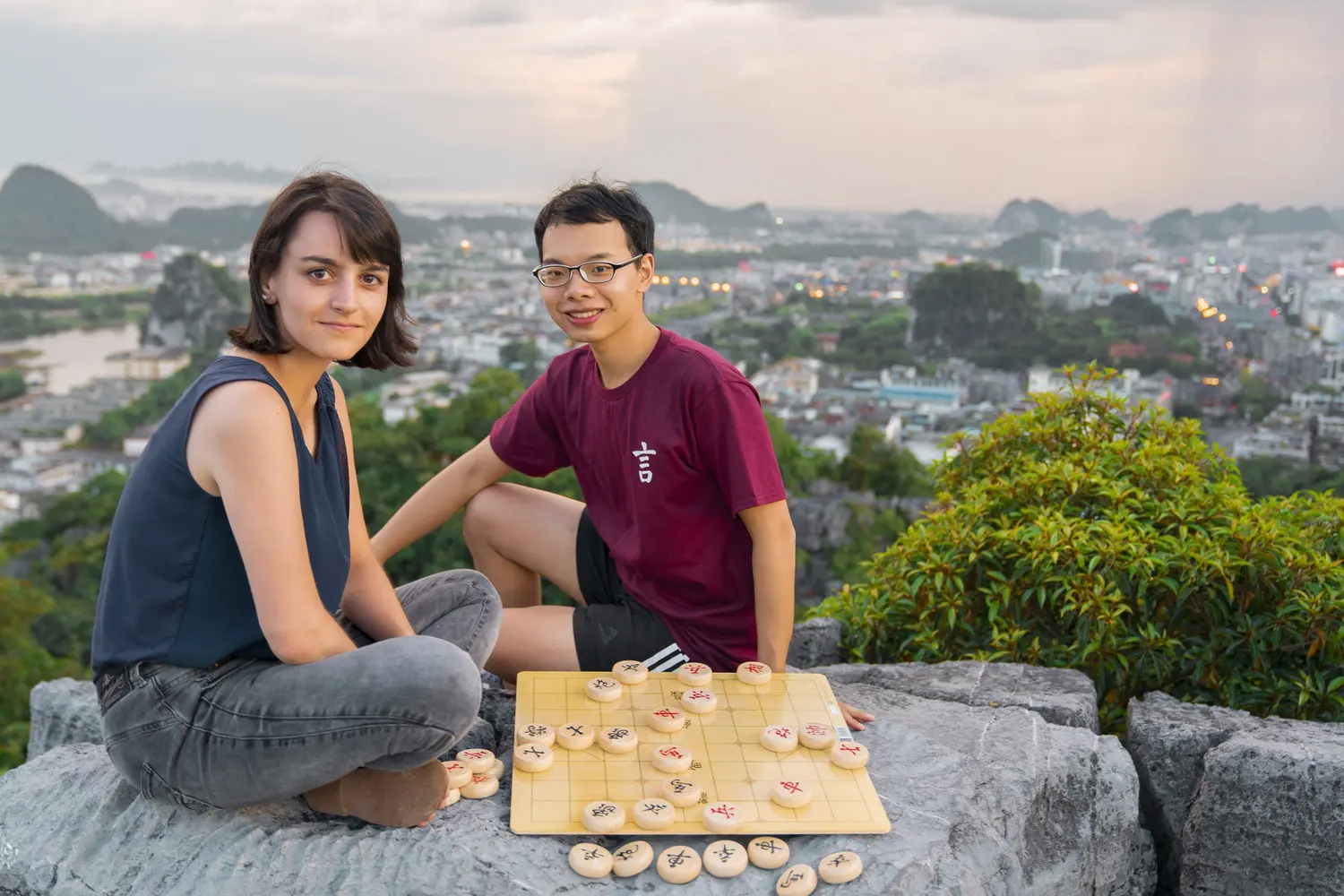
Vocabulary is the foundation, but real fluency comes from speaking. CLI's 1-on-1 online lessons pair you with a native Mandarin speaker who corrects your tones, answers your questions, and adapts to your level in real time.
Free trial lesson available · No commitment required