


- Flashcards are one of the most effective tools for building Chinese vocabulary and memorizing 汉字 (hànzì), or Chinese characters.
- They work because they combine spaced repetition and active recall, the two habits memory research links most strongly to long-term retention.
- The best Chinese flashcard apps include Pleco, Anki, and Skritter, while Quizlet is handy for textbook vocabulary.
- The free decks below cover the most common Chinese words and HSK 1–3 vocabulary, so you can start studying immediately.
- Paper flashcards such as Tuttle cards remain a strong, distraction-free option for many learners.
Flashcards are one of the best study tools for language learners, and Mandarin students have more options than ever. This guide walks through the best Chinese flashcards available today, from free online decks to top apps and classic paper cards.
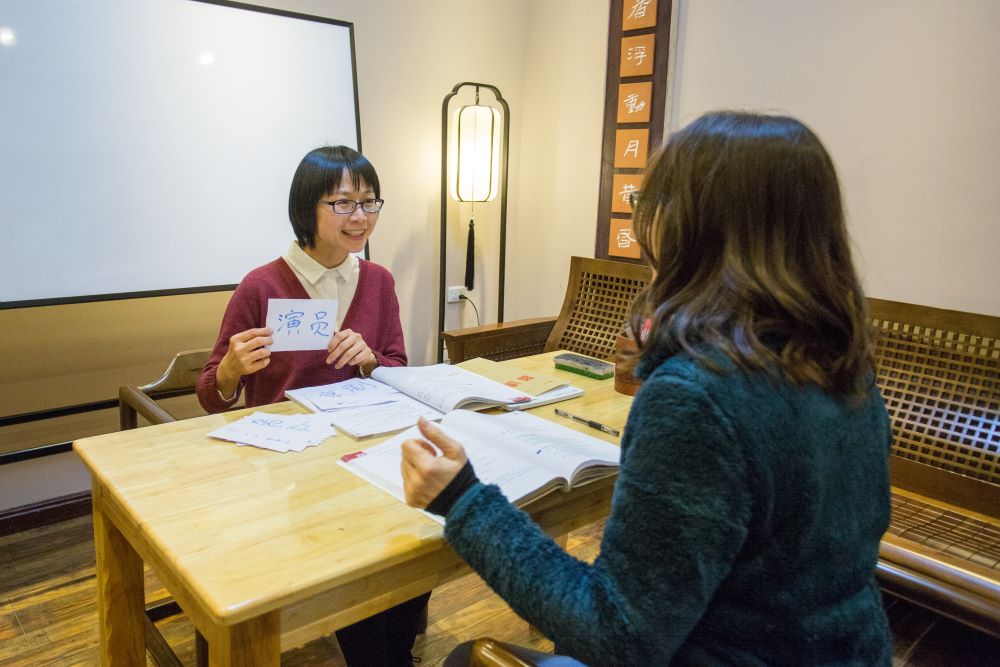
Becoming proficient in Chinese takes time and consistency, and the hardest part for many learners is using study time outside class well. Flashcards solve much of that problem because they are fast, portable, and built for daily review.
Below you will find free decks you can use right now, plus honest guidance on which tools fit different learning styles. Whether you want to Learn Chinese in China or study from home, the right flashcard system can speed up your progress dramatically.
01 Do flashcards really help you learn Chinese?
The short answer is yes. Flashcards are a time-tested, research-backed method for building the vocabulary base that every Chinese learner needs.
That said, the style of flashcards that works best depends on you. Some learners thrive with app-based spaced repetition, while others prefer the focus of physical cards.
Flashcards are especially strong for vocabulary, which is a foundational layer of any language. They also pair well with a structured Chinese study plan, giving your daily review a clear purpose.
02 Why Chinese flashcards work: spaced repetition and active recall
Flashcards force two of the most powerful study behaviors in language learning: active recall and spaced repetition. Each time you flip a card, you retrieve a word from memory rather than passively rereading it.
This retrieval practice is what strengthens memory. Repeated, well-timed review is associated with the development of new language pathways in the brain, which is exactly what fluency requires.
Short, daily review beats long cramming sessions. A small set of new cards each day, reviewed consistently, will outperform one big study marathon every week.
Flashcards are also easy to make, and the act of making them is itself useful study. They are portable too, so you can review on a commute, in a queue, or between classes.
Digital decks add even more: built-in dictionaries, native-speaker audio, and stroke-order animations. These features make flashcards one of the most efficient ways to absorb new Chinese characters.

03 Free Chinese flashcards: common words and HSK 1–3 vocabulary
Use the free decks below to study high-frequency words and characters straight away. They are a great companion to the 100 most common Chinese characters, which give you the biggest return for your study time.
100 most common Chinese words
Cards are ordered by frequency (most common first). Tap 🔀 to shuffle the deck, or ↺ to reset to the original order.50 most common Chinese nouns
Cards are ordered by frequency (most common first). Tap 🔀 to shuffle the deck, or ↺ to reset to the original order.20 most common Chinese verbs
Cards are ordered by frequency (most common first). Tap 🔀 to shuffle the deck, or ↺ to reset to the original order.20 most common Chinese adjectives
Cards are ordered by frequency (most common first). Tap 🔀 to shuffle the deck, or ↺ to reset to the original order.Chinese question words
Cards are ordered by frequency (most common first). Tap 🔀 to shuffle the deck, or ↺ to reset to the original order.HSK 1 vocabulary flashcards (150 words)
Cards are ordered alphabetically by Pinyin. Tap 🔀 to shuffle the deck, or ↺ to reset to the standard order.HSK 2 vocabulary flashcards (150 new words)
Cards are ordered alphabetically by Pinyin. Tap 🔀 to shuffle the deck, or ↺ to reset to the standard order. HSK 2 includes 300 total words — the 150 new words here plus the 150 words from HSK 1.HSK 3 vocabulary flashcards (300 new words)
Cards are ordered alphabetically by Pinyin. Tap 🔀 to shuffle the deck, or ↺ to reset to the standard order. HSK 3 includes 600 total words — the 300 new words here plus the 300 words from HSK 1 and HSK 2.Want to know how these levels fit together before you start? Our guide to what the HSK is explains the test structure and how vocabulary scales across levels.
04 The best Chinese flashcard apps (Pleco, Anki, Skritter, and Quizlet)
Digital flashcards offer unmatched convenience, with audio, example sentences, and automatic scheduling. Here are the four apps most worth your time, each suited to a different stage of learning.
| App | Best for | Cost |
|---|---|---|
| Pleco | All-in-one dictionary plus flashcards | Free core; paid add-ons |
| Anki | Powerful spaced repetition | Free (paid iOS app) |
| Skritter | Writing and stroke-order practice | Subscription |
| Quizlet | Textbook and class vocabulary | Freemium (key modes paid) |
Pleco: the best Chinese dictionary and flashcard app
Pleco is an integrated Chinese-English dictionary, document reader, and flashcard system with handwriting input and camera lookups. Its dictionary core is free, while the full flashcard system and advanced tools are paid add-ons.
You can download premade card bundles or build your own sets inside the app. Each card links to dictionary entries showing stroke order, example sentences, and the radicals that make up a character.
Pleco scales beautifully with you. Beginners can use it from day one, while its deeper features reward learners who already have some experience with the language.
Anki: spaced repetition for serious learners
Anki is a free, open-source flashcard program built around a spaced-repetition algorithm that schedules reviews just before you would forget. It is the go-to choice for learners who want maximum control and long-term efficiency.
You can create custom cards or download shared Chinese decks, including HSK sets. The desktop and Android apps are free, while the iPhone app is a one-time paid purchase that funds the project.
Skritter: flashcards for writing Chinese characters
Skritter focuses on the skill most apps neglect: handwriting. You trace characters stroke by stroke on screen, and its spaced-repetition system brings them back until the writing sticks.
This makes it ideal if your goal is to read and write rather than only recognize words. It runs on a subscription, which is worth it for learners serious about character production.
Quizlet: best for textbook and class vocabulary
Quizlet is a huge library of user-made study sets, and it shines when you are following a specific Chinese textbook. Searching the textbook name and lesson title usually surfaces a ready-made deck.
One important update: Quizlet is no longer fully free. Since 2022, its adaptive Learn mode and practice tests have been limited behind Quizlet Plus, though basic flashcards and the Match game remain free.

Study Chinese in Guilin or Start Online
CLI offers personalized Chinese instruction built around your goals. Join our Immersion Program in Guilin or begin from anywhere with a free Chinese lesson .
05 Paper Chinese flashcards: are Tuttle cards worth it?
Some learners focus better with a tactile card than a glowing screen. If the internet at your fingertips tends to distract you, paper flashcards can be a smarter choice.
You do not have to make them by hand, either. Ready-made sets like Tuttle Chinese flash cards deliver much of what advanced apps offer in a printed format.
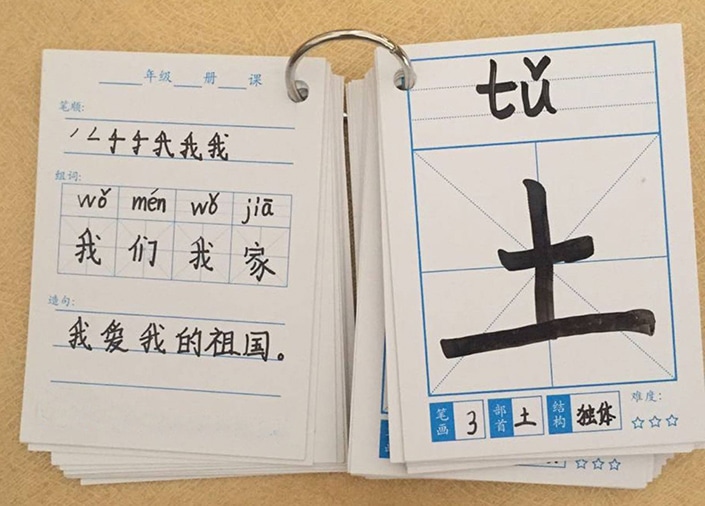
One side of a Tuttle card shows the character, its stroke order, and useful character combinations. The reverse gives the pinyin, English meaning, components and radicals, plus an example sentence.
Tuttle's first volume covers HSK Levels 1 and 2 (characters 1–349) and includes audio for pronunciation and example sentences. They may hold less than an app, but they let you study without the pull of social media or video.
06 Should you make your own Chinese flashcards?
Whether you make cards, buy them, or go digital depends entirely on your learning style. Neither paper nor digital is inherently better for language acquisition.
Handmade cards let you practice writing characters as you create them. They also need no battery and work with or without an internet connection.
Building a physical deck can even be a small source of pride and a record of your effort. The trade-off is that handmade cards lack the audio, scheduling, and dictionary links that apps and premade sets provide.
07 Useful Chinese flashcard and study vocabulary
These terms will help you navigate Chinese study apps, talk about review with a tutor, and understand learning advice in Mandarin.
| Chinese | Pinyin | Meaning |
|---|---|---|
| 闪卡 | Flashcard | |
| 词汇 | Vocabulary | |
| 生词 | New word | |
| 复习 | To review | |
| 记忆 | Memory; to memorize | |
| 汉字 | Chinese character | |
| 拼音 | Pinyin (romanization) | |
| 例句 | Example sentence |
08 Chinese flashcards FAQ
Do flashcards work for learning Chinese?
Yes. Flashcards are highly effective for Chinese because they combine active recall and spaced repetition, the two habits most strongly linked to long-term memory.
What is the best Chinese flashcard app?
Pleco is the best all-in-one choice thanks to its dictionary and flashcard system. Anki is best for serious spaced repetition, and Skritter is best for learning to write characters.
Is Pleco or Quizlet better for Chinese?
Pleco is usually better for Chinese-specific study because of its dictionary, audio, and character tools. Quizlet is more convenient when you need decks that match a class or textbook.
Are Quizlet's study features still free?
Only partly. Basic flashcards and the Match game are free, but adaptive Learn mode and practice tests are now limited behind the paid Quizlet Plus subscription.
How many Chinese flashcards should I review per day?
Consistency matters more than volume. A modest number of new cards each day, reviewed daily with a spaced-repetition app, works far better than occasional cramming.
09 Final thoughts: choosing the best Chinese flashcards for you
Whether you are studying for the HSK or prepping for a vocabulary quiz, flashcards are a powerful way to hit your goals. Paper cards and apps both get results, but each has different strengths.
Try one or more of the options above and notice which keeps you coming back. The best system is the one you will actually use every day.