

- Our verdict: for learners whose main goal is to speak Chinese well, CLI in Guilin is the best Chinese language school in China.
- The Immersion Program gives you 20 full hours of one-to-one class every week with three teachers who share notes and plan your course together.
- Housing, pickup, orientation, some weekly activities, visa guidance and 24/7 support are included, so your time goes to Chinese instead of logistics.
- Outside reviewers agree: 4.95/5 from 125 Go Overseas reviews (checked October 15, 2026), and Go Overseas names CLI "best for 1:1 attention" in its 2026 guide to language programs in China.
- Tuition starts at $1,490 for two weeks with a private room, about $36 per hour of private class with housing included. It isn't the cheapest option, and four hours a day of one-to-one class is demanding.
If you're serious about learning to speak Chinese, CLI is the best Chinese language school in China. That's a big claim, and since we're the ones making it, we owe you the evidence. This guide lays it out, including what it costs and the situations where we'd honestly point you somewhere else.
Students who learn Chinese in China with CLI get four hours of one-to-one class every weekday, a course plan built around their own goals, and a home base in Guilin, a city where Mandarin is the language of daily life and the scenery is famous across China.
Plenty of schools offer one of those things. What makes CLI the best place to learn Chinese in China for most adult learners is that we've spent 17 years making all of them work together.
CLI published this article, so we're not neutral. We've tried to make every claim checkable: independent review figures link to their source, first-party numbers are labeled as ours, prices come from our published tuition table, and there's a full section on when another school would serve you better.
01 The short answer: why CLI is the best Chinese language school in China
Five things set CLI apart. Each one is covered in detail further down.
- More one-to-one teaching than almost anywhere else. Twenty full 60-minute hours of private class a week, in two two-hour blocks a day. Not group lessons, and not 45-minute "hours."
- A teaching team, not a single tutor. Three instructors cover reading and writing, listening and speaking, and review, and they coordinate so each class builds on the others.
- A city that keeps you speaking Chinese. Guilin is big enough to be comfortable and local enough that Mandarin is what you use to order food, take a taxi or buy fruit.
- Everything else handled. Housing, arrival, orientation, activities and day-to-day support come with the program, and the CLI Center puts 18 classrooms and 36 student rooms under one roof.
- A track record you can check. Since 2009, more than 5,000 students from over 50 countries and 400 institutions have studied with us, and 125 of them have given us an average of 4.95 out of 5 on Go Overseas.
02 What "best" should mean, and how CLI measures up
A famous name, a low tuition figure, a big campus and a packed timetable can all look impressive. None of them tells you how much Chinese you'll actually speak, whether the class will stay at your level, or how much of the trip you'll have to organize yourself.
These are the six questions we think matter most, with our answer to each:
| Question | What to look for | How CLI answers it |
|---|---|---|
| How active is class? | Time you spend speaking, listening, asking questions and being corrected. A timetable alone doesn't show this. | Every class is one-to-one, so you're speaking or being corrected for most of all 20 weekly hours. |
| How personal is the curriculum? | A beginner working on tones shouldn't follow the same pace as a professional preparing for meetings. | Teachers start from established syllabi, then adjust pace, materials and topics to your goals. Regular assessments check that it's working. |
| Does learning continue outside class? | A city and routine that give you reasons to reuse new language the same day. | Sanlidian, CLI's neighborhood in Guilin, runs on Mandarin: markets, cafés, taxis, gyms and barbers. |
| How much friction is removed? | Arrival, housing, phone setup and payments all compete with study for your time. | Housing, pickup, orientation, visa guidance and 24/7 support are included in tuition. |
| Is it flexible without being improvised? | The ability to change pace or materials without losing direction. | Three coordinated teachers track your progress, and you can start any Monday of the year for anywhere from one week to a year. |
| What is the total value? | Class format and hours, housing, transfers, activities, support, and everything you'd otherwise arrange yourself. | One published price covers instruction, housing and support. See the numbers below. |
A cheaper school may beat CLI on tuition, and a major university may have a bigger campus. We haven't found another program in China that pairs this much one-to-one teaching with housing and local support in one place.
03 Class and daily life work as one system
Private lessons are only one part of an immersion program, and so are location and housing. At CLI, they're designed to feed each other. A normal week runs in a loop:
- One-to-one class. Build the language you'll need for the situations ahead.
- Teachers share notes. Your three instructors coordinate goals, progress and corrections.
- Use Chinese around Guilin. Put the new language to work in daily life.
- Bring problems back to class. Whatever went wrong becomes tomorrow's practice.
- Try again. Repeat the task with better language and more confidence.
In practice, a teacher might help you prepare to order food, explain a delivery address, talk about your work or fix a grammar habit. That afternoon you try it for real. The next morning you sort out what went wrong and try again. That's far more useful than simply being surrounded by Chinese and hoping some of it sticks.
Two optional extras keep the loop going after class. Through the Pengyou Program, you can be matched with a student from CLI's local partner university who spends three hours a week with you on review, conversation and whatever came up in class. And the CLI Language Pledge wristband lets you opt into Chinese-only time: while you wear it, our team speaks to you only in Chinese. Take it off when you need a break.
04 What 20 hours of one-to-one class feels like
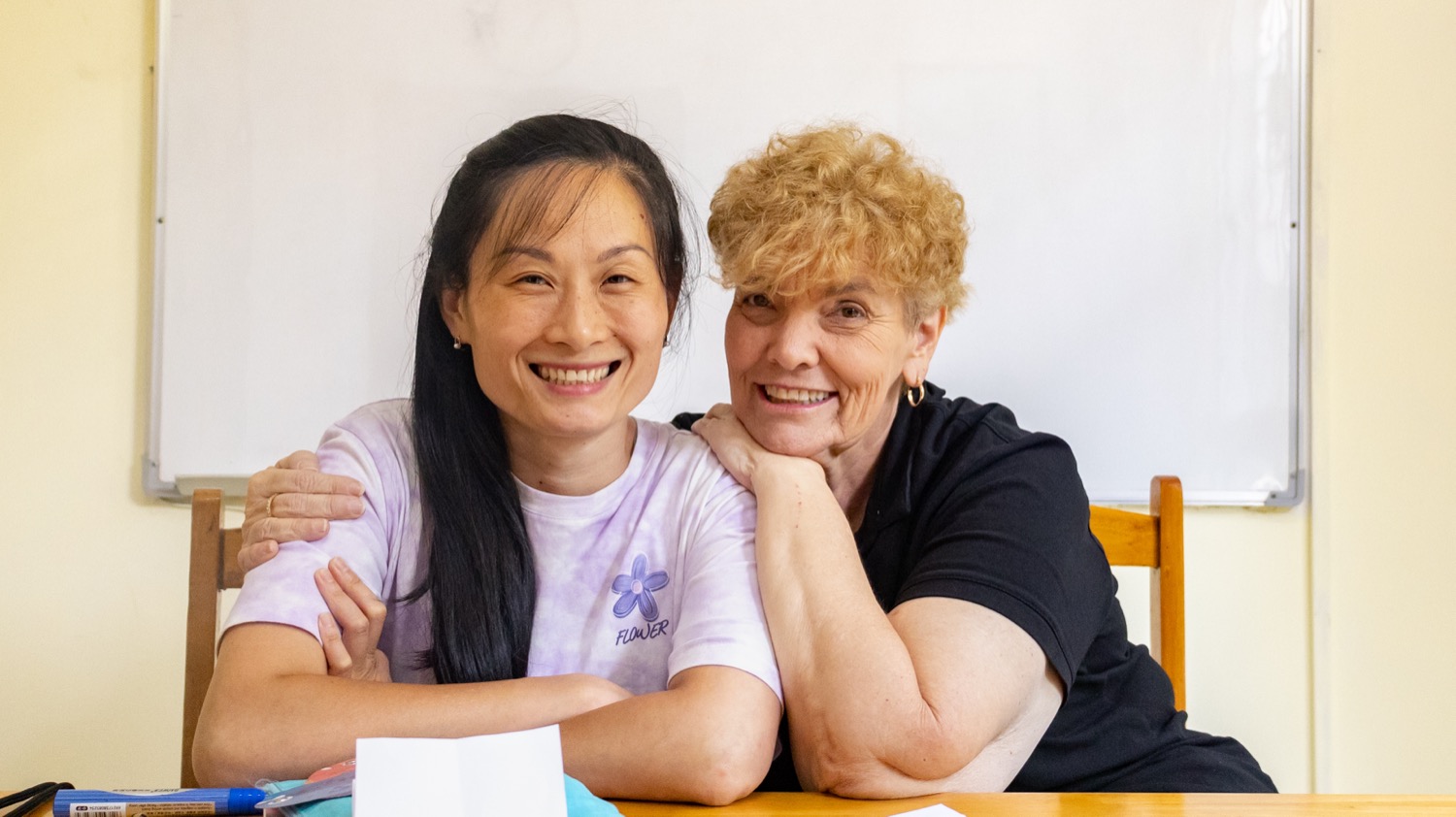
CLI runs four two-hour class sessions each weekday: 8:20 to 10:20 AM, 10:30 AM to 12:30 PM, 2:00 to 4:00 PM, and 4:10 to 6:10 PM. Immersion students take two of them, for four hours of private class a day and 20 a week. That's very different from 20 group lessons of 45 minutes. The two timetables can look alike on paper, but the amount of time you spend speaking isn't close.
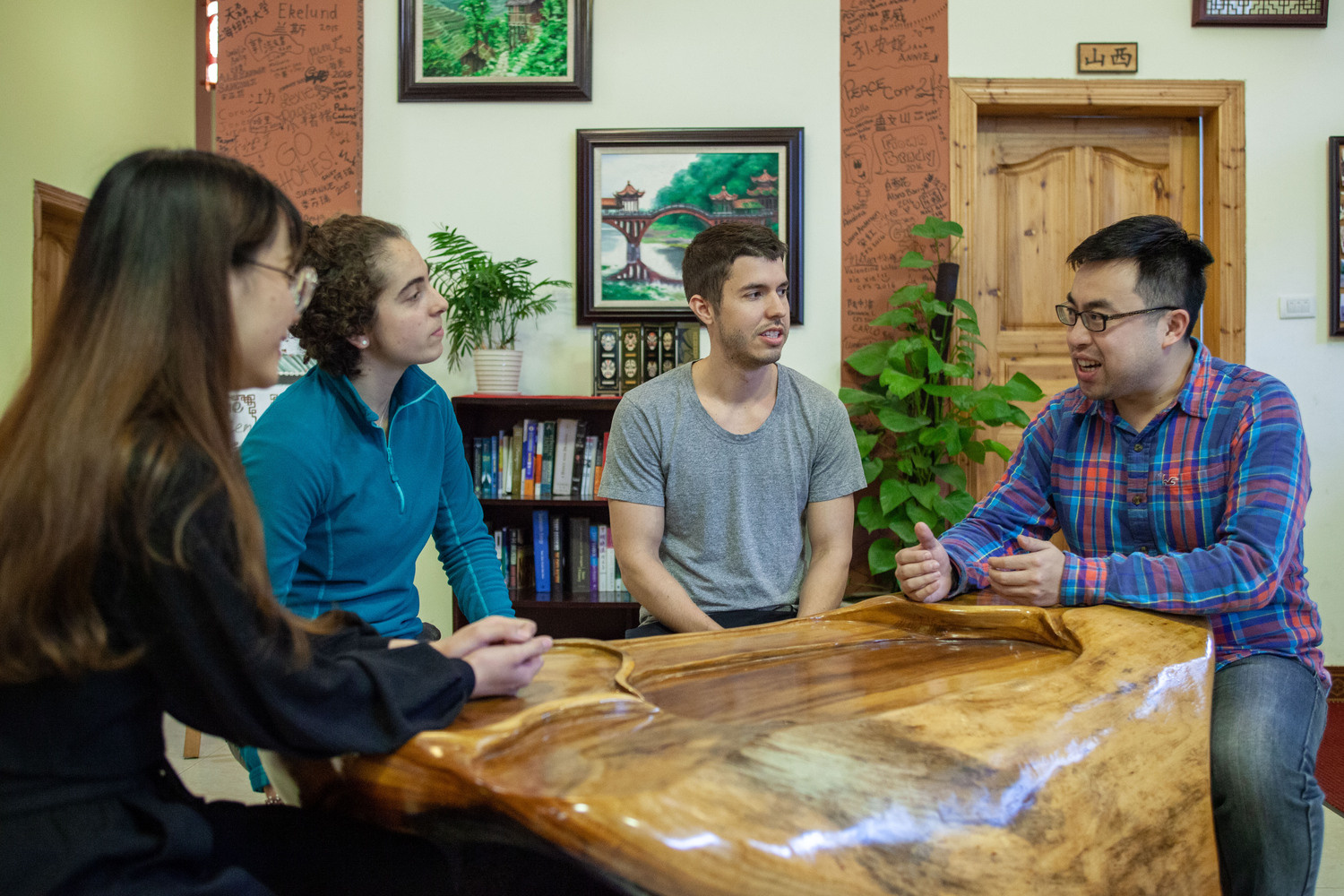
In a private lesson there's no back row. You can ask questions the moment they come up, drill a pronunciation problem until it improves, and speed up or slow down whenever you need to. A teacher can spend a whole session on an issue that would be too narrow for a group class.
It's also tiring. Four hours of direct interaction exposes weak vocabulary, listening, tones and sentence patterns quickly. Most of our students want exactly that pressure, because it's what moves them forward. If it sounds exhausting rather than exciting, a lighter group schedule may suit you better.
Why three teachers instead of one?
CLI usually assigns three instructors to each Immersion Program student. Their classes cover reading and writing, listening and speaking, and comprehensive review. Each teacher sees a different part of your progress, which helps in several ways:
- You hear more than one natural voice and more than one teaching style.
- A pronunciation issue caught in speaking class gets reinforced during review.
- Vocabulary from a reading lesson comes back in conversation.
- No single teacher has to carry you through four hours a day.
- Your course keeps its continuity when schedules change.
Three teachers only help if they talk to each other. CLI's curriculum requires instructors to track progress and reuse material across classes. Without that coordination, you'd just have three separate tutors. Students notice: one Go Overseas reviewer at about HSK 3 wrote that their teachers clearly talked among themselves outside class to keep the course coherent.
Personalized, but not improvised
CLI teaches everyone from complete beginners to advanced students. Teachers start with established syllabi, then adjust the pace, materials and topics. A beginner might spend more time on pinyin, tones, basic conversation and characters. An advanced student might work on business Chinese, reading, exam preparation, classical Chinese or a professional field. Regular assessments show you, and your teachers, how far you've come.
A fully improvised course tends to wander. A rigid one keeps moving after you've fallen behind or lost interest. You want a plan with direction that still fits the person taking the class.
Try a CLI lesson before you decide
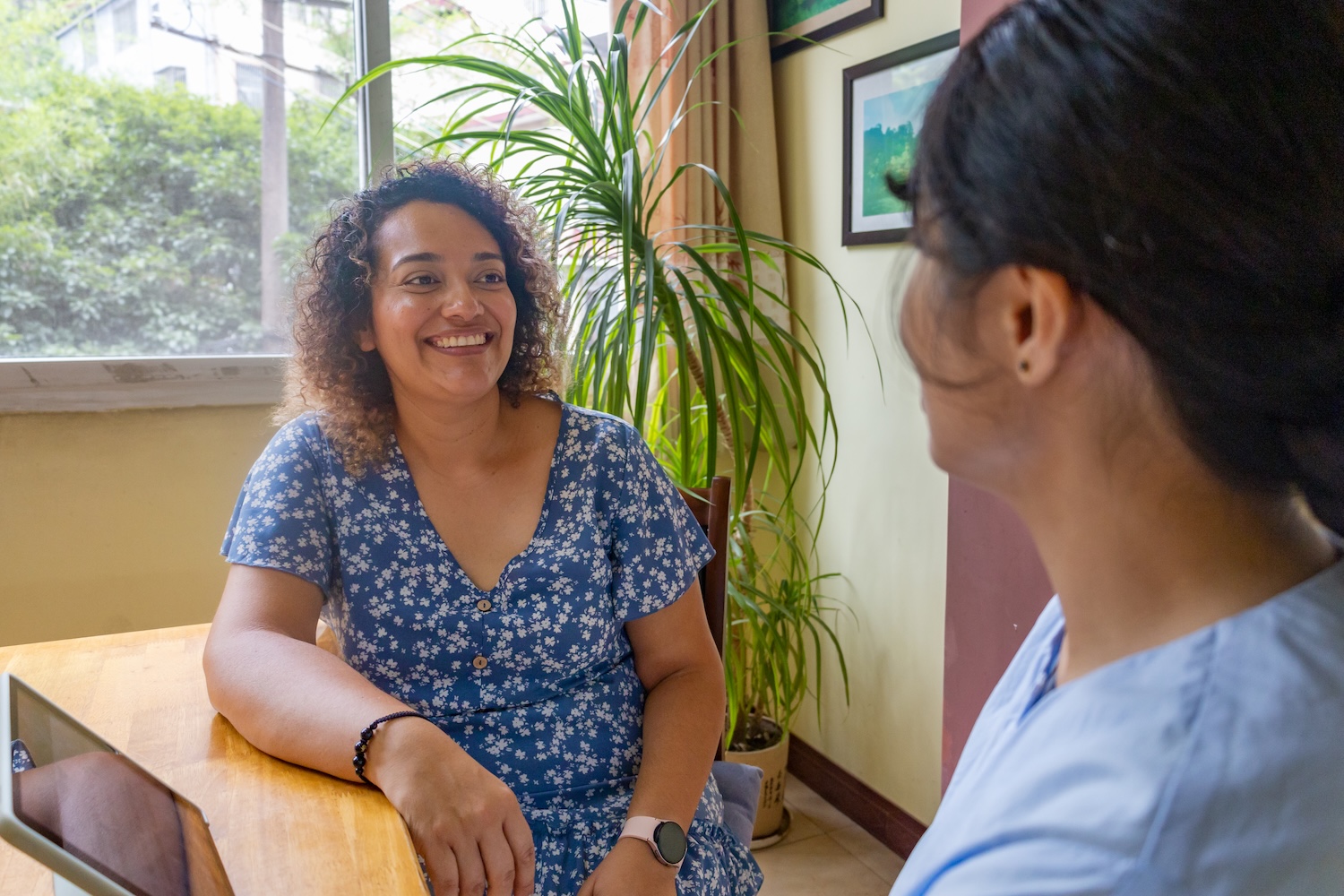
The quickest way to judge our teaching is to experience it. Book a free one-on-one trial lesson online, or read the full details of the Immersion Program in Guilin.
05 Guilin is part of the curriculum
Guilin is one of CLI's biggest advantages. Its karst mountains and the Li River are famous across China, the pace of life is manageable, and the city has plenty going on. Most importantly for a learner, Chinese is easy to use all day long.
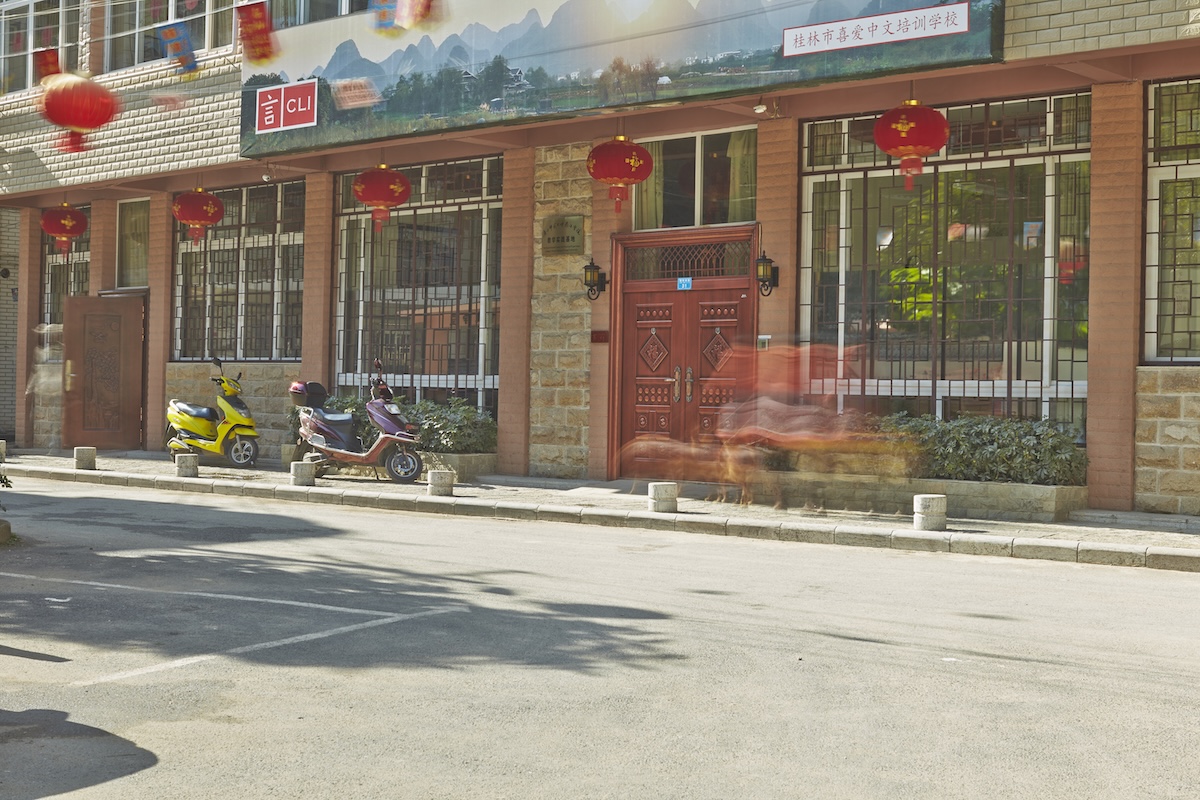
The CLI Center sits on a quiet street in Sanlidian, about a ten-minute walk from the main gate of Guangxi Normal University, surrounded by restaurants, cafés, shops, markets, parks and residential streets. You'll use Chinese to buy fruit, take a taxi, join a gym, get a haircut or ask for directions. None of those conversations is dramatic. Having them over and over is what makes new language stick.

No city creates immersion by itself. You still have to choose Chinese in your free time. Guilin just makes that choice much easier: international conveniences are around if you need them, but Mandarin is the natural language of restaurants, shops, transport and neighborhood life.
Beijing, Shanghai and Shenzhen have their own strengths, especially for networking with multinational companies. They also make it easy to spend your days in English. Guilin is a substantial city with universities, cafés, parks, shopping, nightlife and good transport, but the language you're studying is the one you need to get through the day. On weekends, the Li River, the Longji rice terraces and Yangshuo are all within easy reach.
06 Good support protects study time
Language trips get bogged down in ordinary problems: a late arrival, a phone that won't work, unfamiliar payment apps, a housing search, or the pull of the easiest social circle. None of these is academic, but all of them eat into class preparation and daily practice.
Immersion Program tuition includes pre-departure guidance, housing, pickup and drop-off at Guilin's airport or train station, orientation with a Guilin tour, welcome and farewell dinners, some weekly activities, and 24/7 emergency support throughout your stay. Students who need a Chinese student visa get guidance through the X2 visa process and an official invitation letter. Some optional activities have direct ticket or venue costs, and housing options depend on availability and program length.
The goal is to give you a reliable starting point, then make independence easier. You can explore and make mistakes without having to solve every practical problem alone.
Living and learning under one roof
The CLI Center has 18 private classrooms, shared study space, a kitchen and dining area, a recreation room, and 36 private rooms on its top three floors, each with its own bathroom, heating, air conditioning and WiFi. Your class may be one flight of stairs away. Homestays with a Guilin family are available for any length of stay, and students staying six months or more can also choose a private apartment or an apartment shared with Chinese university students. Every option includes rent, WiFi, heating, air conditioning and weekly cleaning.
That convenience matters more than it sounds. On a rainy day with homework due, a short walk to class leaves more time for sleep, review, exercise and life outside school.
07 What CLI costs, and how to compare it fairly
CLI is not the cheapest way to study Chinese in China. A university group course or a local tutor can cost far less on paper. Here is what we charge, so you can make the comparison yourself. These are 2026 prices for the Immersion Program with a private room at the CLI Center; homestays cost a little more.
| Program length | One-to-one hours | Tuition (USD), private room | Per class hour, housing included |
|---|---|---|---|
| 2 weeks | 40 | $1,490 | about $37 |
| 4 weeks | 80 | $2,870 | about $36 |
| 8 weeks | 160 | $5,590 | about $35 |
| 1 year | 1,040 | $26,870 | about $26 |
That price includes your room, pickup, orientation, some activities, visa guidance and support, so the per-hour figure is the whole trip except flights, food and spending money. An optional lunch plan costs $20 a week. Other lengths, from one week to a year, are in the full tuition table, and CLI awards a limited number of need- and merit-based scholarships each year.
Seven questions to ask any school
The fair comparison is like with like, so put these questions to every school on your list:
- Are the advertised units 60-minute hours or 45-minute lessons?
- Are classes one-to-one, small group or large group?
- How many hours will you personally spend speaking and getting feedback?
- Is housing included, and what kind of room does the price assume?
- Are utilities, cleaning, transfers, orientation, activities and support included?
- Does the program provide visa guidance and invitation materials when needed?
- How much time and risk will you take on by arranging everything separately?
If you already live in China, have housing and a visa sorted, know local people and can judge a tutor's quality, a lower-cost plan may make sense. For a first-time visitor or a busy adult with limited time, having the whole trip organized around study from day one is usually worth more than the difference in price.
08 What outside reviews say
Our own testimonials are useful, but they're still ours. Go Overseas is the clearest public cross-check, because it hosts independent reviews and compares language programs across China.
CLI is rated 4.95 out of 5 across 125 reviews on Go Overseas (checked October 15, 2026). Read the reviews on Go Overseas.
In its 2026 guide to the top eight language programs in China, Go Overseas names CLI "best for 1:1 attention" and lists these category scores:
| Category | Score (out of 5) |
|---|---|
| Instruction | 5.0 |
| Support | 4.95 |
| Fun | 4.8 |
| Value | 4.8 |
| Housing | 4.7 |
What students report
Reviewers regularly mention tailored lessons, patient teachers, a smooth arrival, clean housing and a manageable city. The most useful reviews describe specific progress. A few recent examples, each from a Go Overseas review:
- Jasmine, United States, 2 weeks (2026): finished HSK 2 and got nearly halfway through HSK 3, and found that Guilin's lack of English pushed her to use what she was learning.
- Erin, United Kingdom, 4 weeks (2026): after years of slow online study, was having slow conversations with taxi drivers and long chats in shops within a couple of weeks.
- Eli, United States, 3 weeks (2025): made more progress in three weeks than in the previous nine months.
- Maxim, Russia, one-year program (2024): went from the start of HSK 1 to starting HSK 5 between August and January.
These are individual experiences, not typical results; progress depends on your starting level, effort and time. But they show what intensive one-to-one class in a Mandarin-speaking city makes possible. So does how often people come back: our reviews include students on their second, third and fifth visits.
What reviewers caution
A minority say they'd have preferred the scale or nightlife of a megacity, and some point out that the CLI Center is outside Guilin's main downtown nightlife area. Go Overseas notes that long stays can get pricey, especially in a private apartment, and that small-group classes aren't a standard option (we can arrange groups of three to five when levels and schedules line up). First-time visitors also need to prepare for practical issues such as phone service and internet access.
Reviews aren't a controlled measure of language progress, and the people who write them choose to. Still, 125 of them give you a solid check on whether students actually got the teaching, housing, support and community we describe.
Our own operating figures are first-party data, so weigh them accordingly. Since 2009, CLI has hosted more than 5,000 students from over 50 countries. In 2025 alone, we taught more than 36,000 hours of one-to-one Chinese: about 23,000 in Guilin and 13,000 online, to students from at least 35 countries.
09 Six CLI students describe the experience
You don't have to take our word for any of this. Here are six former students in their own words.
-
Henry Fruteau de Laclos CLI student -
Stephanie Najjar CLI student -
Orson Webber CLI student -
Kyrea Njuguna CLI student -
Carine Sit CLI student -
Melissa CLI student
10 How CLI compares with other Chinese language schools and study routes
China has good university programs, private language schools, homestay programs and independent tutors. Each has real strengths. The table shows what each route tends to do well and what to watch for.
| Route | Often a good fit for | Questions and tradeoffs |
|---|---|---|
| University language program | Semester structure, campus life, formal enrollment, possible credit, and lower tuition in some cases. | Group classes, fixed calendars, less individual speaking time, and more responsibility for housing and daily logistics. |
| Big-city private school | A Beijing, Shanghai, Chengdu or other major-city experience; professional networking; group and private options. | Commutes, English-speaking social circles, separate housing costs, and private lessons that may be an add-on rather than the core model. |
| Independent tutor plus self-arranged housing | Low cost, maximum independence, and full control over city and schedule. | Teacher quality, curriculum continuity, accountability, housing, arrival, visas, activities and emergencies all become your responsibility. |
| CLI Immersion Program | The most speaking time per week, a coordinated personal curriculum, starts any Monday, housing and support included, and a close learning community in Guilin. | A higher total cost than many group options and demanding one-to-one days. Guilin is more locally rooted than China's largest global business centers, which is exactly why it works for language learning. |
CLI's private Immersion Program does not automatically award university credit. CLI's separate Study Abroad in China program is the track built around Guangxi Normal University coursework and credit. Immersion students should treat credit as unavailable unless CLI confirms a specific arrangement in writing.
11 Is CLI right for you?
These learners tend to do best at CLI:
| Learner profile | Why CLI fits |
|---|---|
| Progress comes first | You're going to China mainly to improve your Chinese, not to add a few classes to a sightseeing or nightlife trip. |
| A beginner who wants close correction | You'll get repeated, individual help with tones, pronunciation, basic sentences and practical communication from your first day. |
| An intermediate learner at a plateau | You understand a fair amount but need sustained speaking, targeted feedback and no place to hide from your weak spots. |
| An advanced learner with specific goals | You want professional vocabulary, reading, presentations, test prep or another focus a standard group course won't prioritize. |
| A first-time visitor | You want independence, but you'd like someone to handle arrival, housing, orientation and the first layer of practical problems. |
| Dates outside a university semester | You need a program that starts any Monday and runs for a length that fits a sabbatical, a break or a work schedule. |
When we'd point you somewhere else
Being the best school for serious speakers doesn't make CLI the right school for everyone. Another program may suit you better if:
- you want the lowest possible tuition and are comfortable arranging housing, tutors and logistics yourself;
- you specifically want a large university campus, a fixed cohort, a degree pathway or automatic academic credit;
- you'd rather spend most of your class time in social group classes than in one-to-one sessions;
- your priority is professional networking, nightlife or global-city life in Beijing or Shanghai;
- four hours a day of one-to-one class sounds draining rather than motivating; or
- your main goal is tourism, with Chinese as a side activity.
One-to-one instruction gives you full attention, but it also removes the natural pauses of a group class. Leave time for homework, sleep, exercise and unstructured Chinese. More scheduled class isn't better if you can't absorb or review it.
If most of the first list sounds like you and little of the second does, we'd love to hear from you. If it's the other way round, a university, a big-city school, a group course or a self-arranged plan is probably the better choice, and that's fine. Choosing the right model matters more than forcing a school to fit.
12 FAQ
Is CLI the best Chinese language school in China?
For learners whose main goal is speaking Chinese well, we believe it is. CLI combines 20 hours a week of one-to-one instruction, three coordinated teachers, included housing and support, and a Mandarin-speaking city, and it holds a 4.95/5 rating from 125 Go Overseas reviews. Learners who mainly want low tuition, university credit or big-city life may be better served elsewhere.
How much does CLI cost?
Immersion Program tuition with a private room at the CLI Center is $1,490 for two weeks, $2,870 for four weeks and $5,590 for eight weeks (2026 prices). That includes 20 hours a week of one-to-one class, housing, pickup, orientation, some activities, visa guidance and 24/7 support. Homestays cost a little more, and the full tuition table covers one week to one year.
Can complete beginners study at CLI?
Yes. CLI teaches students at every level, from complete beginners to advanced learners. Beginners usually spend more time on pinyin, tones, basic conversation and characters.
When can I start, and how long can I stay?
You can start any Monday of the year, so you don't need to wait for a university semester. Programs run from one week to a full year.
Does CLI offer group classes?
One-to-one is the core of the Immersion Program. Small-group classes of three to five students can be arranged when enrollment, levels and preferences line up.
Why study in Guilin instead of Beijing or Shanghai?
In Guilin, Mandarin is the language you need for daily life, so you get far more practice outside class than in cities where it's easy to live in English. It's still a substantial city with universities, cafés, transport and nightlife, and it's surrounded by some of China's most famous scenery.
Does the Immersion Program give university credit?
Not automatically. Students who need credit should look at CLI's separate Study Abroad in China program, which is built around Guangxi Normal University coursework.
Is housing included?
Yes. Tuition covers rent for a private room at the CLI Center or a homestay, and students staying six months or more can also choose a private apartment or an apartment with Chinese housemates. All options include WiFi, heating, air conditioning and weekly cleaning.
See whether CLI fits your goals
Check the current schedule, housing options, inclusions and tuition. When you get in touch, tell us your Chinese level, preferred dates and goals, and our admissions team will give you a specific, useful answer.
Not ready for China yet? Start with CLI Online.
13 Sources
Program details, tuition and the Go Overseas guide were checked on September 24, 2026, and the Go Overseas rating and review count on October 15, 2026. Prices, ratings, housing availability, visa rules and program inclusions can change.
- Chinese Language Institute: Immersion Program details, inclusions, class schedule, housing and 2026 tuition table. View source →
- Chinese Language Institute: FAQ, including tuition inclusions and arrival. View source →
- Chinese Language Institute: curriculum and three-instructor model. View source →
- Chinese Language Institute: CLI Center facilities and location. View source →
- Chinese Language Institute: 2025 first-party operating figures and historical reach. View source →
- Go Overseas: CLI organization listing and independent reviews (4.95/5, 125 reviews). View source →
- Go Overseas: "Where to Study Chinese Abroad: Top 8 Language Programs in China" (published April 28, 2026; updated July 10, 2026). View source →
- Chinese Language Institute: Terms and Conditions defining the distinction between Study Abroad credit and the private Immersion Program. View source →