


- Choosing where to study Chinese should come down to immersion depth, accent environment, cost, program format, and livability, not nightlife or name recognition.
- Beijing and Shanghai have strong institutions but heavy English infrastructure and high costs that work against immersion.
- Chengdu is affordable and fun, though Southwestern Mandarin speech patterns can complicate accent training for beginners.
- Taipei offers world-class programs, but traditional characters and Taiwan-specific conventions add friction for mainland-focused learners.
- Guilin stands out for deep immersion, low cost, accessible Mandarin, and CLI's one-on-one instruction model.
Most "best city to learn Chinese" articles read like tourism brochures. They tell you Shanghai is exciting, Beijing is historic, and Chengdu has great food. None of that tells you where you'll actually learn fastest.
A Different Kind of City Comparison
If you're planning to study Chinese in China, this guide compares five popular destinations across the factors that matter most for language learning: immersion depth, accent environment, cost, program format, and livability. It's written from CLI's perspective, based on years of experience helping students learn Mandarin in Guilin.
If your top priority is a prestigious university name or Taiwan-focused Chinese, your answer may differ. However, if your goal is to improve Mandarin as quickly and efficiently as possible in mainland China, Guilin makes an unusually strong case.
This comparison is not a ranking of which city is most famous, fun, or internationally connected. It is a ranking of which environment is most likely to help a motivated learner improve Mandarin quickly in mainland China. For claims that can shift over time, including visa logistics, pricing, air quality, and travel advisories, you should always confirm the current details on the linked official pages.

01 The Five Things That Actually Matter
Before comparing cities, it helps to know what to compare them on. Most rankings lean heavily on nightlife, international food, and general "vibe." Those things matter for quality of life, but ultimately they don't tell you much about how fast you'll learn.
Here are the five factors that do:
Accent environment. Is the Mandarin you hear on the street close to standard 普通话 (Pǔtōnghuà), or does the local dialect make it harder to train your ear? Every region in China has its own accent and dialect features. Some are closer to textbook Mandarin than others. For more on what standard Mandarin actually means, see our guide to Pǔtōnghuà.
Immersion depth. Can you default to English in daily life, or does the city push you to use Chinese? This matters more than most people realize.
Cost of living. A cheaper city means you can study longer, take more classes, or both. More contact hours with the language almost always means faster progress.
Program format. Are you sitting in a lecture hall with 20 other students, or getting direct feedback from a teacher who can adapt to your specific weaknesses? For a closer look at that distinction, see our guide to one-on-one vs. group Chinese classes.
Livability and environment. Air quality, green space, stress levels, and general quality of life affect how well you study and how long you can sustain intensive work.
With those criteria in mind, here's what each city actually offers.

02 Beijing: The Capital, Not the Textbook
Why Students Still Choose Beijing
Beijing is China's political and cultural capital, and it's the city most people think of first when they imagine studying Chinese. There are good reasons for that.
The city has the highest concentration of well-known university language programs in the country. Peking University, Tsinghua, and Beijing Language and Culture University (BLCU) all offer established Mandarin programs with large student cohorts. If you want a university credential, a big international peer group, or access to China's political and academic center, Beijing has clear advantages.
Where Beijing Gets Harder for Learners
The accent question, however, is more nuanced than people think. Standard Mandarin is based on Beijing pronunciation, which leads many learners to assume that Beijing is the obvious place to hear "perfect" Mandarin. In practice, everyday Beijing speech often includes conspicuous local features, especially érhuà (儿化), rapid reductions, and local slang. That does not make Beijing a bad place to learn. It simply means that the Mandarin you hear in daily life is often less neutral and less textbook-like than many beginners expect.
In fact, some learners point to northern Hebei varieties as sounding closer to broadcast-style standard Mandarin than colloquial Beijing speech. Whether or not you accept that framing, the practical takeaway is simpler: classroom Mandarin and street Mandarin are never identical, even in the capital.
On the practical side, Beijing is expensive by mainland standards. Housing and daily life cost materially more than in second- and third-tier cities, and pollution remains a recurring quality-of-life concern even though the city has improved substantially over the past decade.
Just as importantly, Beijing has a large international community and extensive English-language infrastructure. That doesn't make immersion impossible, but it does make English easier to fall back on than in smaller cities.

Beijing is a strong choice if your primary goal is a university credential, access to China's political center, or a large international student community. For learners optimizing primarily for rapid Mandarin gains, the cost, local speech features, and easier English fallback are real trade-offs.
03 Shanghai: World-Class City, Complicated for Mandarin
Shanghai is China's largest city and its global financial hub. It's cosmopolitan, fast-paced, and full of career opportunities. For learners who want to build a professional network while studying Chinese, particularly in business, finance, or tech, Shanghai has obvious appeal.
However, Shanghai presents a real challenge for Mandarin learners. The local language is Shanghainese (上海话, Shànghǎihuà), which belongs to the Wu dialect family and is not mutually intelligible with Mandarin. In practice, younger residents do speak Mandarin, but learners will still hear a local accent and a non-Mandarin language environment around them.
More importantly, Shanghai has one of the deepest English-speaking ecosystems in China. In many international neighborhoods, workplaces, restaurants, and social settings, English is readily available and sometimes close to the default. A disciplined learner can still create immersion in Shanghai, but the city rarely forces it.
On top of that, Shanghai is also one of the most expensive major study destinations in China. Compared with smaller mainland cities, rent and daily life costs can meaningfully shorten how long a student is able to stay immersed.

Shanghai is hard to beat for career networking and cosmopolitan living. For language acquisition, the easier English fallback, local non-Mandarin environment, and high costs are real trade-offs.
04 Chengdu: Great Lifestyle, Tricky Accent
Chengdu, the capital of Sichuan Province, has become one of the trendiest cities in China. The food is legendary, the nightlife is vibrant, the cost of living is lower than Beijing or Shanghai, and the city has a famously relaxed pace. Many students love living there.
The linguistic picture, however, is more complicated. Chengdu's local speech is Sichuanese, part of the Southwestern Mandarin family. Although Southwestern Mandarin is still Mandarin, not a separate language like Shanghainese, some pronunciation patterns differ noticeably from standard 普通话. For example, in local speech, retroflex initials such as zh, ch, and sh may be less sharply distinguished, and other sound patterns can shift as well.
Of course, that doesn't mean you can't learn Chinese in Chengdu. Your teachers will use standard Mandarin in the classroom, and many younger residents speak something closer to standard in formal settings. But for beginners trying to build a crisp standard accent, the gap between classroom Mandarin and everyday local speech can create a little extra adjustment.
Chengdu is a fantastic place to live and a legitimate study destination, especially for intermediate learners who already have solid pronunciation foundations. For true beginners trying to build clean standard pronunciation habits, the local speech environment can create extra adjustment.
05 Taipei: Excellent Programs, Different System
Taipei offers some of the strongest and most well-regarded Mandarin programs in the world. National Taiwan Normal University's Mandarin Training Center (MTC) and National Taiwan University's International Chinese Language Program (ICLP) are both highly respected, with long track records and experienced instructors.
However, there are a few important differences to understand. Taiwan uses traditional Chinese characters (繁體字, fántǐzì) rather than the simplified characters (简体字, jiǎntǐzì) used in mainland China. The standard language in Taiwan is called 國語 (Guóyǔ), not 普通话. It is grammatically very close to mainland standard Mandarin, but there are noticeable differences in pronunciation, vocabulary, and written conventions.
For learners whose eventual goal is working or studying in mainland China, or passing the HSK (China's official Mandarin proficiency exam), these differences matter. Learning traditional characters is valuable, and many learners find that it deepens their understanding of Chinese writing. Still, it does add later conversion work if your primary target is the mainland.
When it comes to cost, Taipei's living expenses are moderate: lower than Shanghai but generally higher than mainland second- and third-tier cities. Overall, the city is safe, well-organized, and very livable.

Taipei is an excellent choice for learners who value top-tier university programs, prefer traditional characters, or plan to work in a Taiwan-connected context. For learners focused on mainland Mandarin, simplified characters, and HSK preparation, the differences add friction.

06 Guilin: The Quiet Advantage
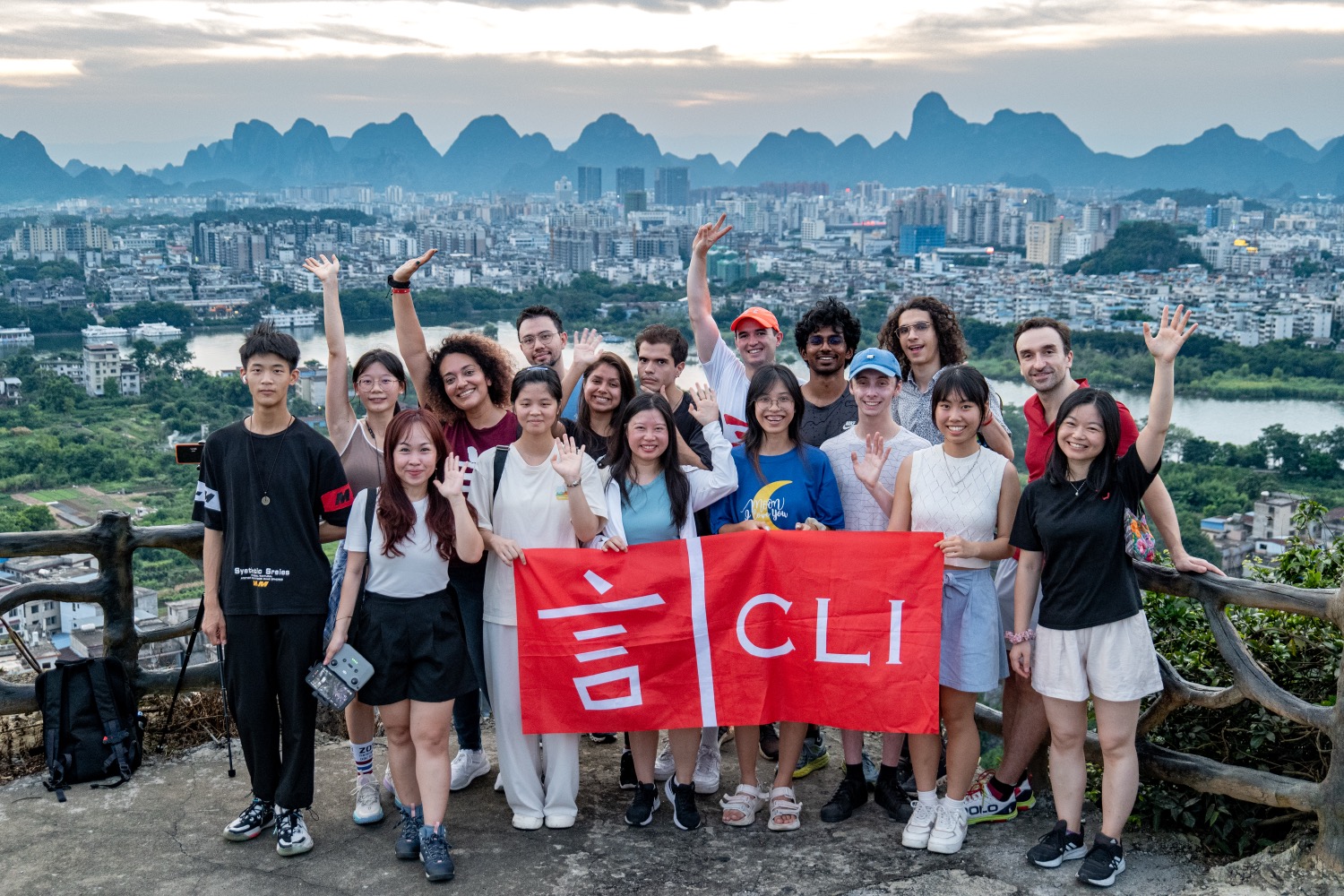
After considering the bigger-name options, 桂林 (Guìlín) may still not be the first city most people think of when they imagine studying Chinese in China. It's a smaller city in the Guangxi Zhuang Autonomous Region, better known for its extraordinary karst landscape than for marquee university branding.
But that relative lack of marquee branding is precisely why Guilin deserves the final look in this comparison. When you evaluate it against the criteria that matter most for rapid language growth, it makes an unusually strong case. It is not perfect, but the overall package is unusually efficient for serious learners.
Of course, Guilin's local speech is not identical to textbook 普通话, and you will still hear Guangxi and Southwestern features in daily life. But in urban, educational, and newcomer-facing settings, the Mandarin many students encounter is often easier to adapt to than the more distinctive local speech patterns associated with cities like Shanghai or Chengdu. For beginners, that relative neutrality matters.
That matters, but the bigger advantage lies elsewhere.
Deep, Involuntary Immersion
In practice, Guilin has far less English-language infrastructure than Beijing or Shanghai. English does exist in some hotels, tourist touchpoints, and international-facing businesses, but once you move beyond the most tourist-oriented pockets, daily life is overwhelmingly conducted in Chinese.
The practical difference is significant. A city like Shanghai makes immersion elective: you can choose to use Chinese, but English is usually close at hand when things get difficult. Guilin, by contrast, makes it much easier for Chinese to become the default language of your day.
Consequently, the grocery store, the taxi ride, the pharmacy, and the lunch order all become built-in speaking and listening practice.
Cost Advantage
In addition, Guilin is substantially cheaper than China's first-tier cities. Rent, food, transportation, and daily basics all stretch much further here than they do in Beijing or Shanghai.
Affordability matters because it's not just a comfort issue. It determines how long many students can realistically stay immersed. For CLI students, housing is included in tuition, which further simplifies the cost equation.
As a result, that cost difference directly translates into a learning advantage. Lower costs mean you can afford to study longer, or invest savings into additional instruction hours. More hours with the language equals faster acquisition.
Air Quality and Environment
Furthermore, Guilin generally offers cleaner air, more green space, and a lower-stress physical setting than China's largest first-tier cities, even though conditions still vary by season.
While research on learning does not give us a neat city-by-city formula for language gains, the broader point is still persuasive: intensive language study is cognitively demanding, and a calmer, greener environment is often easier to sustain over time than a noisy, expensive, high-friction one.
And then there's the scenery. Guilin's karst mountains, the Li River, and the surrounding countryside are extraordinary. This is the kind of environment that makes daily life feel less like a grind and more like an experience worth protecting. For a closer look at what makes Guilin special, see our insider's guide to Guilin.

07 Why Immersion Depth Matters More Than You Think
It's worth spending a moment on why the difference between "English-available" and "English-unavailable" environments matters so much.
More broadly, second-language acquisition research points in the same general direction: learners who must use the target language more frequently, and in more real-world contexts, tend to improve faster than learners whose exposure remains mostly classroom-bound. Immersion is not magic, but it does increase the amount of meaningful contact you have with the language.
To be clear, the distinction between cities where you can default to English and cities where you can't is not a formal category in SLA literature. Instead, it is simply a practical way of describing how often your environment forces you to reach for Chinese instead of your first language. The more often that happens, the more speaking, listening, repair, and retrieval practice you accumulate.
Consider the difference between ordering food in Chinese because you want to practice and ordering food in Chinese because it's simply the easiest way to get what you need.
As a result, in the second case, practice happens more often and with less dependence on willpower. That sustained volume of real-world use is exactly what many learners lack in more English-friendly environments.
If you're interested in how structured instruction amplifies this effect, our guide to the 2 sigma advantage in language immersion explores the research in more depth.
08 The Case for Guilin
No city is perfect for every learner. But for serious learners who want to maximize language acquisition speed at the best value, Guilin's overall package is hard to beat.
Why the Advantages Compound
Here's why the factors compound:
First, deep immersion combined with affordable cost means you can sustain intensive study over months, not just weeks, while using Chinese as your primary daily language the entire time. That cumulative exposure matters enormously.
Second, better air quality and natural beauty means you're studying in conditions that support concentration and reduce the fatigue that often leads students to burn out or retreat into English-language social bubbles.
Third, a manageable accent environment means your ear training isn't fighting against heavy dialectal interference, even though you'll still encounter some Southwestern features in daily speech. In the classroom, your teachers use standard pronunciation.
Finally, there's the program factor. Guilin is home to the Chinese Language Institute (CLI), which runs a model fundamentally different from the large university programs that dominate many better-known destinations.

Curious What Immersive Study in Guilin Looks Like?
CLI's Immersion Program in Guilin combines 20 hours per week of one-on-one instruction with daily immersion in a city where Chinese is the only option. Explore the program or start with a free lesson to see how CLI's approach works.
09 How to Choose Based on Your Goals
The "best" city depends on what you're optimizing for. Here's an honest quick-reference:
| Your Priority | Strongest Option | Why |
|---|---|---|
| Pure Mandarin acquisition speed and value | Guilin | Deep immersion, low cost, one-on-one instruction, minimal English |
| University credential or large cohort | Beijing | BLCU, Peking University, and Tsinghua; strong institutional names |
| Career networking in business or finance | Shanghai | China's commercial hub, professional connections |
| Traditional characters, top university programs | Taipei | MTC and ICLP; world-class programs and excellent infrastructure |
| Great lifestyle on a budget | Chengdu | Lower cost, vibrant culture, but watch the accent |
If you're a beginner or lower-intermediate learner whose primary goal is getting as good at Mandarin as possible in the time you have, Guilin is still the strongest overall answer in this comparison. Other cities are not bad, but the combination of immersion depth, affordability, and study conditions tilts the math unusually far in its favor.
10 What Makes CLI Different
One of the reasons Guilin works so well for serious language learners is the Chinese Language Institute (CLI), which has operated in Guilin since 2009. Because CLI is based in Guilin, we are not pretending to be neutral about the city.
But the reasons we favor Guilin are concrete: more daily Mandarin use, lower cost, and a program model built around active language production rather than passive classroom time.
A Different Instruction Model
CLI's model is built differently from most programs. Instead of lecture-style group classes, CLI provides 20 hours per week of one-on-one instruction (一对一, yīduìyī), with a team of three rotating teachers per student.
As a result, that rotation keeps lessons dynamic and exposes you to different speaking styles, teaching approaches, and personalities, while giving each teacher a clear picture of your strengths and weaknesses.

Why One-on-One Changes the Math
The difference between one-on-one and group instruction is not a minor detail. In a group class of 15, you might speak Chinese for a few minutes per hour. In a one-on-one lesson, you're actively producing and receiving feedback for the entire session. Over a week, a month, or a semester, that difference in active practice time is enormous.
In addition to classroom instruction, CLI also integrates cultural programming, flexible start dates (any Monday, except around the Spring Festival break), and housing into a single package. At the time of writing, Immersion Program tuition begins at $1,490 for two weeks and includes housing, airport transfers, and cultural activities. Students can also earn college credit through CLI's affiliation with Guangxi Normal University.
At the time of writing, CLI holds a 4.95 out of 5.00 rating on GoOverseas based on 100+ reviews, and the institute has hosted students from more than 50 countries over its history.
To explore what an immersive study experience in Guilin looks like, visit CLI's Immersion Program page or learn more about studying abroad in China.
11 Practical Next Steps
If you're ready to learn Chinese in China, here are a few practical things worth knowing before you go.
Visas
Foreign students studying in China generally need either an X1 visa (for programs longer than 180 days) or an X2 visa (for programs of 180 days or fewer). Your program will typically provide the documentation you need for the application. The process is straightforward, but start early because visa processing times vary, and it's better to have your paperwork settled well in advance.
China is processing student visas through normal X1/X2 channels, and study abroad in China is once again routine for international students. The U.S. State Department currently lists mainland China at Level 2: Exercise Increased Caution, which is worth reviewing before travel but does not prevent study.
Keep in mind that policies and advisories can change, so always confirm the current rules before you book flights or submit paperwork.
When to Apply
CLI offers rolling admissions with flexible start dates, so you can begin on any Monday. Even so, applying at least 4–8 weeks before your planned start date gives you time to sort out the visa, housing, and travel logistics comfortably.
Getting Started
The simplest first step is to book a free trial lesson to see how CLI's teaching approach works. From there, CLI's admissions team can help you plan the right program length, start date, and study focus for your goals.
Alternatively, if you're still in the early stages of learning and not sure where you stand, our guides to how long it takes to learn Chinese and building a Chinese study plan are good places to start.

Ready to Take the Next Step?
Book a free trial lesson to see how CLI's one-on-one approach works, with no commitment required. Or explore CLI's Immersion Program and online Chinese lessons to find the right fit for your goals.
12 FAQ
What is the best city to learn Chinese in China?
It depends on your priorities. From CLI's perspective, Guilin offers the strongest combination of deep immersion, manageable cost, and high-intensity instruction for learners focused on rapid Mandarin improvement in mainland China. Beijing is strongest for university credentials, Shanghai for career networking, and Taipei for world-class programs with traditional characters.
Is Guilin good for learning Mandarin?
Yes. Guilin offers a strong combination of lower cost, less English fallback, and an environment where Chinese becomes part of daily life quickly. The local speech is not identical to textbook Mandarin, but in educational settings and many newcomer-facing interactions, learners often find it more accessible than the local speech environments of cities like Shanghai or Chengdu.
Is Beijing or Shanghai better for learning Chinese?
For a learner focused mainly on Mandarin improvement, Beijing usually has the edge because of its stronger university ecosystem and closer relationship to standard northern pronunciation. Shanghai's strengths are more in career networking and cosmopolitan living. In both cities, however, English is easier to rely on than in Guilin.
Do I need to speak Chinese to study abroad in China?
No. Many programs, including CLI, accept complete beginners. That said, even a small amount of preparation, such as learning pinyin, tones, and basic phrases before you arrive, helps you get more out of your first weeks.
How much does it cost to study Chinese in China?
Costs vary widely by city and program. In general, Guilin is much cheaper than Beijing or Shanghai for rent and daily life, which makes longer immersion more realistic for many students. At the time of writing, CLI's Immersion Program begins at $1,490 for two weeks and includes housing, airport transfers, and cultural activities, but you should always confirm current pricing on the official program page.
What visa do I need to study Chinese in China?
Most students need an X2 visa (for programs of 180 days or fewer) or an X1 visa (for longer programs). Your school will typically provide the documentation required for the application.
Is Chinese hard to learn?
For English speakers, Mandarin is one of the more challenging major languages, but the difficulty is often overstated. Our article on whether Chinese is hard to learn breaks that down in detail.
What is the difference between Mandarin and Pǔtōnghuà?
"Mandarin" is the English name for the standard spoken Chinese language. 普通话 (Pǔtōnghuà) is the mainland Chinese name for the same standard. In Taiwan, it's called 國語 (Guóyǔ). The grammar is nearly identical; pronunciation differences are minor but noticeable. See our Pǔtōnghuà guide for more.
13 Related Vocabulary
| Chinese | Pinyin | Translation |
|---|---|---|
| 普通话 | Standard Mandarin (mainland China) | |
| 國語 | Standard Mandarin (Taiwan) | |
| 方言 | dialect | |
| 儿化 | the "r" suffix common in Beijing dialect | |
| 声调 | tone | |
| 拼音 | pinyin (Romanization system for Mandarin) | |
| 简体字 | simplified Chinese characters | |
| 繁体字 | traditional Chinese characters | |
| 汉语水平考试 | HSK (Chinese Proficiency Test) | |
| 留学 | study abroad | |
| 签证 | visa | |
| 沉浸式学习 | immersion learning | |
| 一对一 | one-on-one | |
| 桂林 | Guilin | |
| 桂林山水甲天下 | "Guilin's scenery is the best under heaven" | |
| 口语 | spoken language; speaking | |
| 听力 | listening comprehension | |
| 语言环境 | language environment | |
| 生活费 | cost of living; living expenses | |
| 学费 | tuition |
14 Selected References
- Linck, J. A., Kroll, J. F., & Sunderman, G. (2009): Losing access to the native language while immersed in a second language: Evidence for the role of inhibition in second-language learning. Psychological Science, 20(12), 1507–1515.
- Dadvand, P., et al. (2015): Green spaces and cognitive development in primary schoolchildren. Proceedings of the National Academy of Sciences, 112(26), 7937–7942.
- U.S. Department of State / Foreign Service Institute: Foreign language training benchmarks for Mandarin Chinese. View source →
- Travel.State.Gov: China Travel Advisory. View source →
- Beijing Municipal Government: Guidelines for X1/X2 student visas and study durations in China. View source →
- CLI Immersion Program: Official program details, dates, fees, housing, and weekly one-on-one structure. View source →
- CLI Study Abroad in China: Guangxi Normal University affiliation and credit information. View source →
- GoOverseas: Chinese Language Institute (CLI) profile and reviews. View source →
- Note: Pricing, review counts, visa rules, and travel advisories can change. Confirm current details on the linked official pages before publishing or traveling.