

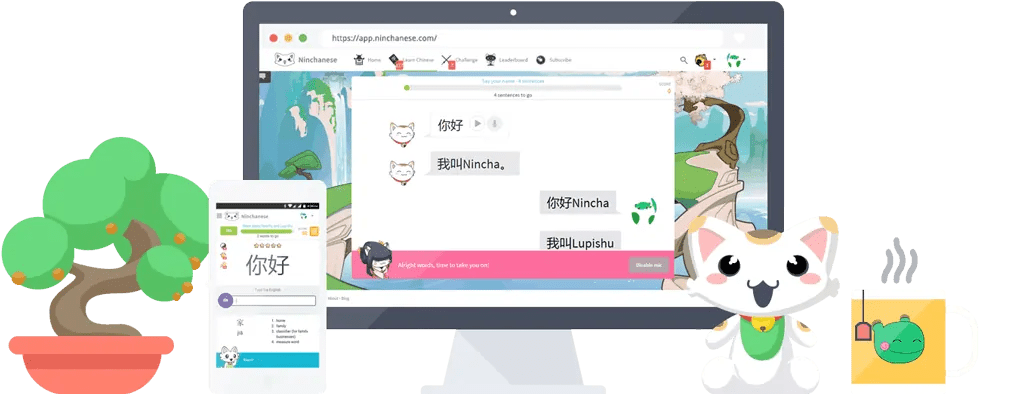
Ninchanese and Yocha are two useful Chinese learning tools from Nincha Languages. Ninchanese is best for learners who want a fuller, gamified Chinese study platform, while Yocha is best for focused grammar practice on a phone.
Both tools are especially helpful because they make self-study feel more structured. Ninchanese gives learners a broader path through vocabulary, characters, listening, speaking, and grammar. Yocha focuses more narrowly on Chinese sentence patterns, particles, examples, and review.
Ninchanese and Yocha at a glance
| Resource | Best for | Why we like it | Start here |
|---|---|---|---|
| Ninchanese | Gamified Chinese study | Structured lessons, SRS review, grammar, listening, speaking, and custom vocabulary decks | Visit Ninchanese Use code STUDYCLI for 30% off |
| Yocha | Chinese grammar practice | Clear grammar lessons, HSK organization, example sentences, instant feedback, and review tools | App Store · Google Play |
02 Ninchanese review
What is Ninchanese?
Ninchanese is a gamified Chinese learning platform that helps learners study Mandarin through lessons, review activities, sentence-building, listening practice, speaking exercises, and vocabulary decks. It is designed to make independent study feel more active, organized, and motivating.
One of Ninchanese’s biggest strengths is that it gives learners several ways to interact with Chinese. Instead of only memorizing words, learners can review characters, build sentences, hear Chinese, type Chinese, and practice speaking. This makes it a strong companion to Chinese classes because it reinforces many of the skills students need in real conversations.
Why Ninchanese is useful
Ninchanese is especially helpful for learners who enjoy structure, progress tracking, and game-like motivation. Its spaced repetition system supports vocabulary review, while its sentence-building and grammar activities help learners see how words fit together in natural Chinese sentences.
We also like that Ninchanese includes tools for custom study. Nincha Decks allow learners to build their own vocabulary lists, which is useful if you are studying for a class, preparing for travel, reviewing HSK words, or collecting phrases from real-life conversations.
CLI readers can use discount code STUDYCLI at the Ninchanese checkout page for 30% off all Ninchanese plans. The code has no expiration date.
Ninchanese is a good fit for learners who want a fuller self-study system and prefer an app that makes Chinese practice feel more like a game than a textbook.
03 Yocha grammar app review
What is Yocha?
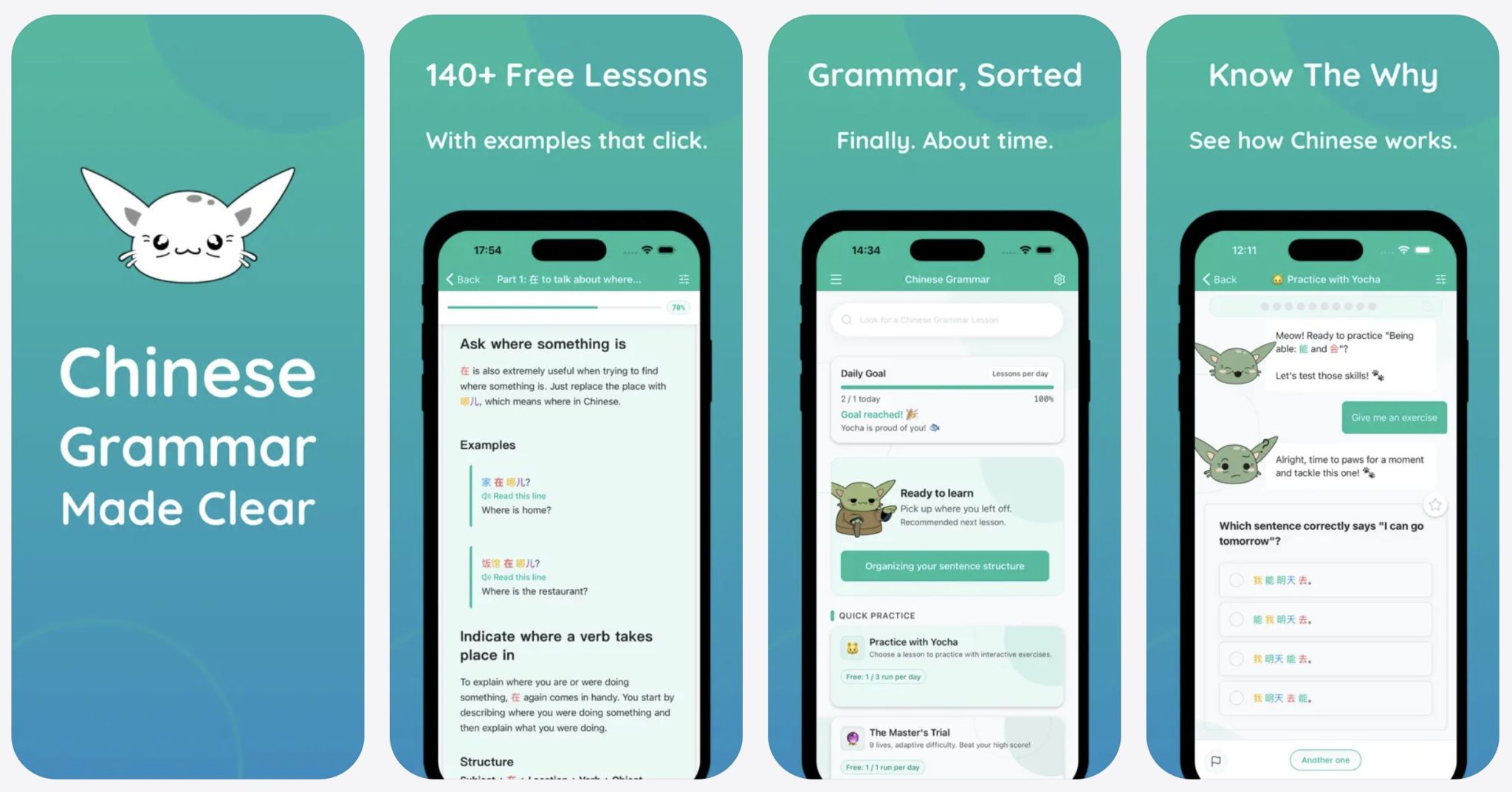
Yocha is a Chinese grammar app for learners who want clear explanations, example sentences, and structured practice. It focuses on Mandarin sentence patterns and common grammar points, including areas that often confuse learners such as 了, 过, 着, 的, 得, and 地.
The app is useful because grammar is often where Chinese learners get stuck. Vocabulary study alone is not enough. Learners also need to understand word order, particles, aspect markers, complements, comparison patterns, and how short Chinese sentences actually work.
Why Yocha is useful
Yocha does a good job making grammar feel manageable. Lessons are organized by level, examples include pinyin and translations, and practice activities give learners a way to test whether they truly understand a pattern. This makes Yocha a practical review tool after class or between tutoring sessions.
Yocha is also a strong option for learners preparing for HSK study because it organizes grammar through a structured learning path. The ability to save difficult lessons, sentences, words, and exercises for later review makes it easier to return to the patterns that need more attention.
Download: App Store · Google Play
Use Yocha when you notice yourself translating word-for-word from English. A few minutes of grammar review can help you produce Chinese sentences that sound clearer and more natural.
04 How to use Ninchanese and Yocha together
Ninchanese and Yocha work well together because they solve different problems. Ninchanese is better for broad, ongoing Mandarin practice. Yocha is better for targeted grammar review.
A simple approach is to use Ninchanese for daily vocabulary, listening, sentence-building, and speaking practice, then use Yocha whenever a grammar point feels unclear. For example, a learner might use Ninchanese to review new words and sentences during the week, then use Yocha to review a specific pattern before class.
Choose one main tool for daily review and one focused tool for weak spots. Ninchanese can serve as the main practice platform, while Yocha can serve as the grammar coach.
05 Final verdict
Ninchanese and Yocha are both worth exploring for Chinese learners. Ninchanese stands out as a fun, structured, and motivating platform for broader Mandarin practice. Yocha stands out as a clean, focused grammar app that helps learners understand how Chinese sentences work.
Neither tool replaces live instruction or real conversation, but both can make self-study more consistent and effective. Used alongside class, tutoring (in person or through online Chinese lessons), or daily Chinese interaction, Ninchanese and Yocha can help learners review more often, notice patterns more clearly, and build confidence over time.
06 Useful vocabulary for talking about Chinese study apps
Here are a few practical words and phrases that are useful when discussing Chinese learning tools.
| Chinese | Pinyin | Translation | Useful phrase |
|---|---|---|---|
| 应用 | App | 这个应用很好用。 This app is easy to use. | |
| 语法 | Grammar | 我想复习语法。 I want to review grammar. | |
| 句型 | Sentence pattern | 这个句型很有用。 This sentence pattern is useful. | |
| 复习 | Review | 我每天复习生词。 I review new words every day. | |
| 练习 | Practice | 多练习会进步。 More practice leads to progress. | |
| 进步 | Progress | 你的中文进步很快。 Your Chinese is improving quickly. |