


- Chinese hospitality revolves around food, and abundance at the table is how your host family shows care, not pressure.
- Some cultural differences, like privacy norms, comments on appearance, and personal questions, have real logic behind them. Understanding that logic makes them much easier to navigate.
- You don't need to be fluent to build a strong relationship with your host family. Effort, warmth, and a few key phrases go further than perfect grammar.
- The students who get the most out of Chinese homestays are the ones who respond to unfamiliar moments with curiosity and openness.
- CLI provides ongoing support throughout your homestay, from family matching to daily check-ins to cultural mediation when you need it.
If you're preparing to live with a Chinese host family, whether in Guilin or elsewhere in China, you've probably already read a few lists of etiquette tips. Don't stick your chopsticks upright in rice. Bring a gift. Take your shoes off at the door.
Those tips aren't wrong, but they're not what makes a homestay memorable. The students who get the most out of living with a Chinese family aren't the ones who memorized the most rules. They're the ones who learned to notice the why behind unfamiliar moments and responded with curiosity.
This guide is built around that idea. Rather than giving you a checklist, we'll walk through what daily life in a Chinese household actually looks like, explain the cultural context behind the moments that tend to catch students off guard, and give you practical phrases and strategies for navigating all of it.
Most students say their homestay was the highlight of their time in China, and that the first few days felt a little overwhelming before things clicked. That's a normal part of settling into any new household, and CLI is here for you each step of the way. Before you arrive, you'll complete a Homestay Introduction Form so your host family can get to know you, and so CLI can find the best match. Two students tell their own homestay stories: From China to America and Back Again, by a former student adopted from China as a child who relearned Chinese with a Guilin host family, and Of Mountains and Mifen, which follows another student from Shanghai to a Guilin homestay.
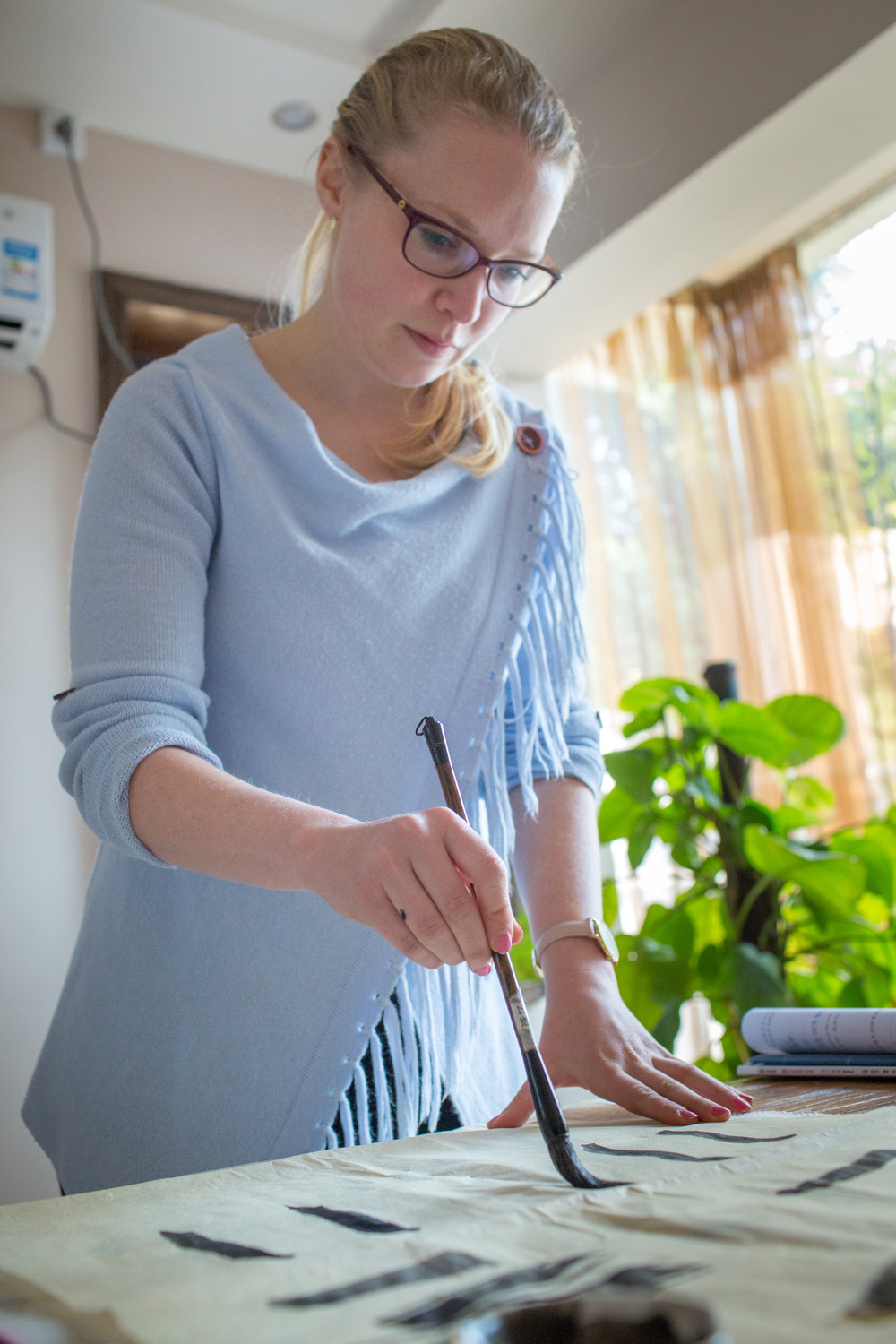
01 What Daily Life Looks Like
Every family is different, but here's what a typical weekday often looks like for students living with a host family in Guilin.
Mornings
Mornings in Guilin tend to start early. Your host family may be up by 6:00 or 6:30 AM, and you'll be responsible for preparing your own breakfast and lunch.
If you're in Guilin, there's a good chance your morning routine will involve a trip to a nearby shop for 米粉 (mǐfěn, rice noodles). Guilin rice noodles are a cornerstone of local food culture, and neighborhood rice noodle shops are everywhere — affordable, fast, and a great way to start the day like a local.
Daytime
During the day, you'll typically be at your classes or out exploring, and the household will follow its own rhythm. Many host parents work, and some households include grandparents or other extended family members who may be home during the day.
Dinner: The Main Event
Dinner is the most important shared moment. Your host family provides dinner Monday through Thursday, and this is when the household gathers.
Expect multiple dishes served communal-style, with rice (米饭 mǐfàn) as a staple at virtually every dinner.
If your host parent serves food into your bowl, that's a sign of affection. Think of it as the Chinese equivalent of "have some more, honey."
Dinner is also where much of the relationship-building happens. Even if your Chinese is limited, being present and engaged at the table matters more than you might think.
The Pace of Guilin
Guilin is not Shanghai or Beijing. It's a smaller, slower city surrounded by karst mountains and the Li River, and daily life reflects that pace.
People tend to be warm, unhurried, and genuinely curious about foreign visitors. If you're coming from a major Western city, the adjustment might not just be cultural. It might also be a welcome shift in tempo. (Curious why Guilin is an ideal place to study Chinese? See our article on the best city to learn Chinese in China.)
Your host family may also speak some Guilin dialect (桂林话 Guìlín huà) among themselves, especially with older family members. Don't worry, though. They'll use Mandarin with you. Hearing the local dialect in the background is just part of the immersion.
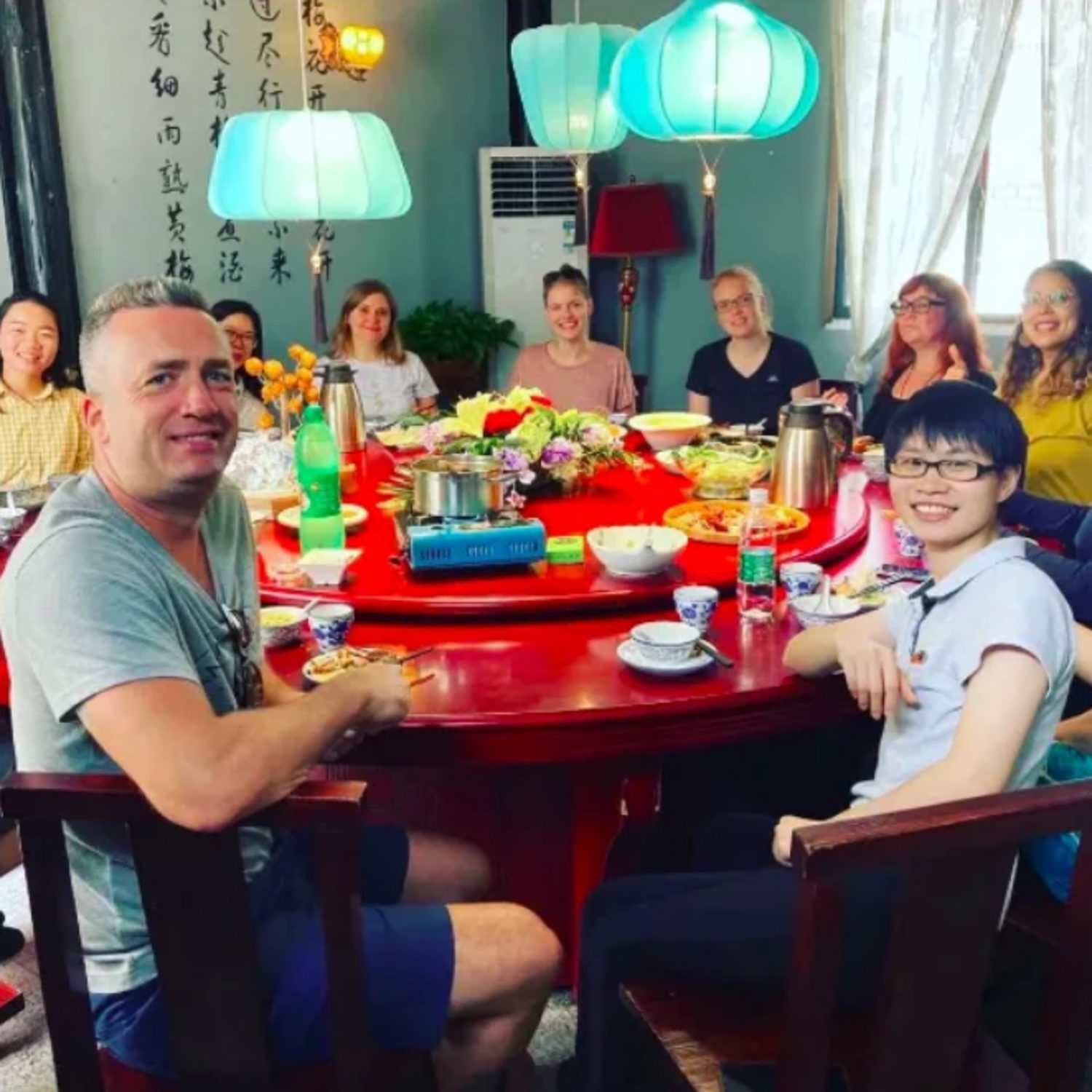
02 The Hospitality Logic: Why Your Host Family Keeps Feeding You
One of the first things students notice is the sheer generosity of Chinese hospitality around food.
The Chinese concept of 好客 (hàokè, literally "love of guests") runs deep. In a Chinese household, one of the primary ways care is expressed is through food, specifically through abundance.
A host who truly cares will prepare more food than anyone could possibly finish. An empty table at the end of a meal can imply that the host didn't provide enough, which would be a source of embarrassment.
This means your host parent may pile food into your bowl without asking, insist you eat more even after you've said you're full, spend more on meals than seems necessary, or prepare dishes specifically based on what they think you like.
None of this is meant to pressure you. It's the household's way of saying: you matter to us, and we want you to feel taken care of.
How to Respond Graciously
You don't need to eat everything. What matters is showing appreciation for the effort.
Try a little of everything. Even a small taste signals respect.
Use the phrase 我吃饱了 (wǒ chī bǎo le), "I'm full." This is the standard, polite way to indicate you've had enough. It may take a few repetitions before your host family fully accepts it, and that's okay.
Compliment specific dishes. Saying 很好吃 (hěn hǎo chī), meaning "very delicious," goes a long way.
Don't feel guilty about leftovers. Leftovers are expected. Your host family planned for them.
If you ever feel unsure about how to handle a food situation, your CLI coordinator is always happy to help.
03 Arriving Well: Your First Day
First impressions matter in any culture, but the first evening with your host family sets a tone that can carry through the entire stay. Here's how to start well.
Bring a Gift
Bringing a small gift from your home country is expected and appreciated. Good choices include specialty food or snacks from home (chocolate, cookies, regional treats), quality tea or coffee, or a small, nicely packaged item that represents your hometown or country.
A few things to keep in mind: even numbers are generally preferred for gifts, but avoid sets of four, since the number four — 四 sì — sounds similar to the word for death — 死 sǐ — in Chinese.
Avoid giving clocks (the phrase "to give a clock" (送钟 sòng zhōng) sounds like a phrase associated with funerals), sharp objects, or anything wrapped in white or black, which are colors associated with mourning.
Your host family may not open the gift in front of you. In many Chinese social contexts, gifts are set aside and opened later. This isn't a lack of appreciation but rather a form of modesty.
Shoes Off at the Door
This one is near-universal. Remove your shoes at the entrance and look for house slippers (拖鞋 tuōxié). Your host family will likely have a pair waiting for you.
The First Evening
Your first dinner will probably be a bigger-than-usual meal, your host family's way of welcoming you.
There may be some conversation, though the depth will depend on everyone's language abilities. Smile, express thanks (谢谢 xièxie works; the more respectful 谢谢您 xièxie nín is even better when addressing the host parents), and try whatever's on the table.
Don't worry about saying everything perfectly. Warmth and effort communicate more than grammar.
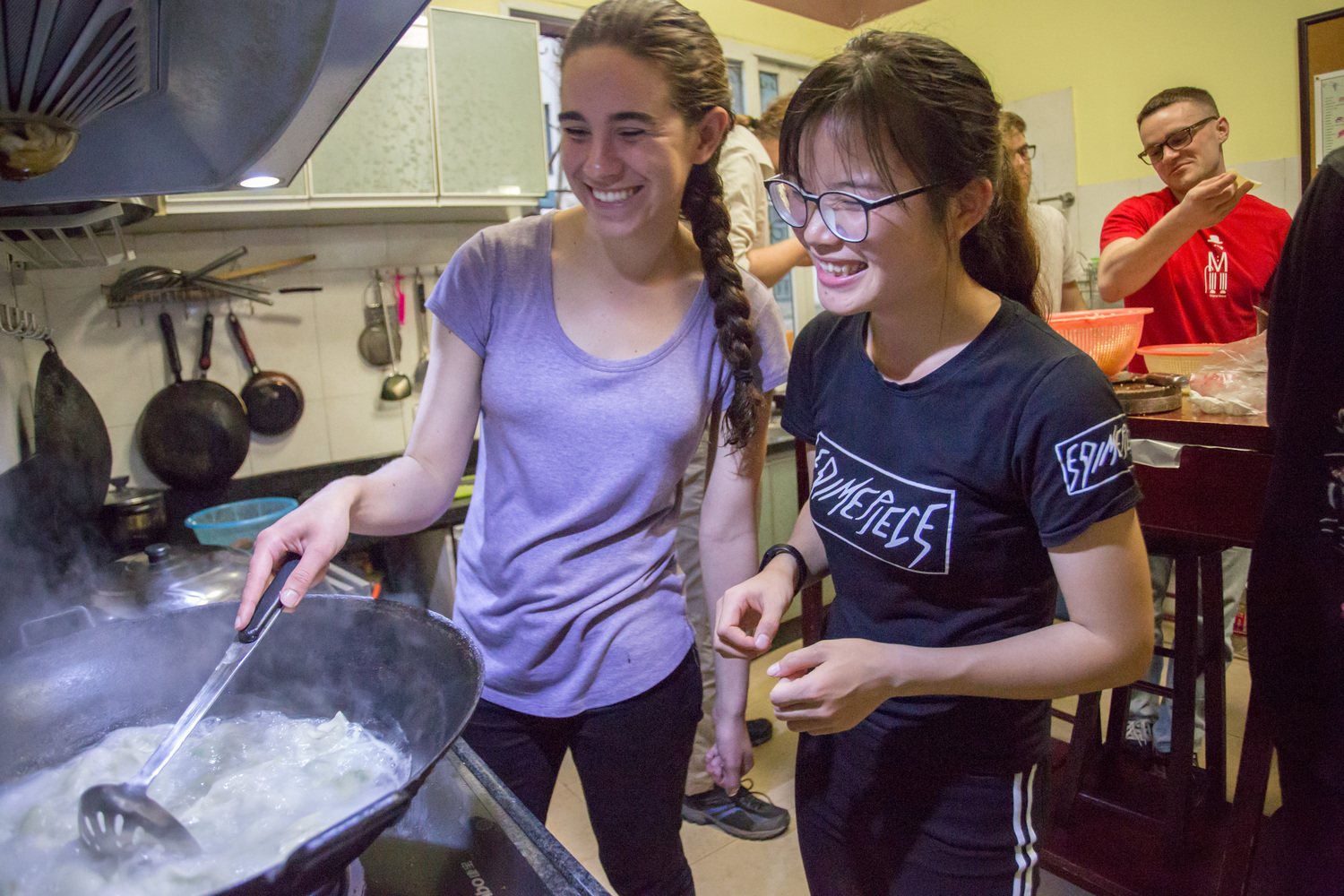
04 Moments That Might Surprise You (and What's Behind Them)
Living in any new household comes with surprises. Here are a few cultural differences students sometimes notice, along with the context that makes them make sense.
It's worth noting that CLI does prepare host families for the cross-cultural experience as well — but the goal of that preparation isn't to change Chinese cultural values or household norms. It's to broaden awareness on both sides so that you and your host family can meet each other with understanding. Culture is culture, and the richness of a homestay comes from engaging with it, not expecting it to adjust to you.
Privacy and Personal Space
Chinese households generally operate with more shared space than many Western homes. Doors may be left open, and family life tends to flow from room to room.
Your host parent might pop in to drop off laundry or bring you fruit. In a Chinese household, this is a gesture of warmth, not an intrusion. Family life tends to be communal, and your host family will love it when you hang out in shared spaces, even if you're just sitting quietly.
What to do: If you need some downtime, you can say 我想休息一下 (wǒ xiǎng xiūxi yīxià), "I'd like to rest for a bit." This is an easy, natural way to carve out a moment for yourself.
Comments on Appearance
In Chinese social contexts, it's common for people to comment casually on appearance, noticing changes in weight, complexion, or how rested you look.
These observations are typically meant as expressions of familiarity and care, similar to how a relative might say "you look tired" in English. The tone is different from how it might land in some Western cultures, and most students adjust to it quickly once they understand the intent.
If comments like these are something you're particularly sensitive to, let CLI know ahead of time. We take this into account during the family matching process.
Personal Questions
Your host family may ask questions that feel very direct by Western standards, such as questions about your age, relationship status, or family situation. In Chinese culture, these questions typically reflect interest and a desire to get to know you, not nosiness.
You're never obligated to answer anything you're uncomfortable with. A light deflection works fine: 这是秘密 (zhè shì mìmì), meaning "That's a secret," said with a smile, is a perfectly acceptable way to sidestep.
Bathroom and Laundry Norms
A few practical household conventions to know:
Laundry: In many Chinese households, including those that host CLI students, underwear and socks are hand-washed separately rather than put in the family's washing machine. This is a standard household practice, not an unusual request.
Bathroom etiquette: Plumbing in some Chinese homes cannot handle toilet paper. If there's a wastebasket next to the toilet, use it for paper. Follow whatever system the household uses.
Temperature and Air Conditioning
Many Chinese households are more conservative with AC than Western ones, and some families believe that cold air or cold drinks can cause illness, a perspective rooted in traditional Chinese medicine.
What to do: Be flexible, and if you're genuinely uncomfortable, bring it up gently. A small personal fan or an extra blanket can help you adjust on your own terms.
05 Communicating with Limited Chinese
Here's the good news: you do not need to be fluent to have a perfect homestay. Many of the students who build the deepest bonds with their host families start with very little Chinese.
What matters most is effort — showing your host family that you're trying, even when it's clumsy. A few mispronounced words delivered with genuine enthusiasm will always land better than silence.
WeChat Is Your Best Friend
WeChat (微信 Wēixìn) is the primary communication tool in Chinese daily life, and it will be in your host family's household, too.
Your host parent may text you through WeChat even when you're in the next room. This is normal.
WeChat's built-in translation feature can also help you overcome communication barriers when your vocabulary runs out. Set it up before you arrive. (If you're new to Chinese input methods, our pinyin guide can help you get started.)
Key Phrases for Daily Life
You don't need dozens of phrases to get through a day. Here are the ones that matter most:
| Chinese | Pinyin | English |
|---|---|---|
| 谢谢您 | Thank you (respectful) | |
| 我吃饱了 | I'm full | |
| 很好吃 | Very delicious | |
| 我想休息一下 | I'd like to rest for a bit | |
| 这个怎么说 | How do you say this? | |
| 可以帮我吗 | Can you help me? | |
| 我不太懂 | I don't quite understand | |
| 没关系 | It's okay / No worries | |
| 对不起 | Sorry | |
| 早上好 | Good morning | |
| 我回来了 | I'm home | |
| 我出去一下 | I'm heading out for a bit | |
| 晚安 | Good night | |
| 你好 | Hello | |
| 请问 | Excuse me (polite opener) | |
| 多少钱 | How much does it cost? | |
| 太好了 | That's great! | |
| 我知道了 | Got it / I understand | |
| 请再说一遍 | Please say that again | |
| 慢一点 | A little slower, please | |
| 我试试 | Let me try | |
| 不好意思 | Excuse me / Sorry to bother you | |
| 等一下 | Wait a moment | |
| 辛苦了 | Thank you for your effort |
The last two, 我回来了 and 我出去一下, might seem minor, but they're important in a Chinese household. Announcing your comings and goings shows consideration and helps your host family feel at ease about your safety.
(For more ways to greet your host family, check out our guide to saying hi in Chinese.)
06 Building the Relationship
A homestay isn't just a housing arrangement — it's a relationship. And like any relationship, it deepens with small, consistent gestures.
Offer to Help
Offering to help with cooking or cleaning — even if your host family waves you off — signals respect. The gesture matters even if the answer is "no, no, sit down."
In Chinese culture, the offer itself communicates that you see yourself as part of the household, not just a boarder.
Express Gratitude Regularly
A simple 谢谢 (xièxie) after meals, after receiving help, or at the end of the day goes further than you might think.
If you want to express something deeper, 辛苦了 (xīnkǔ le), roughly meaning "you've worked hard" or "thank you for your effort," is a phrase that Chinese people use to acknowledge someone's labor and care. Your host parent will notice.
Understand Their Sense of Responsibility
Your host family takes their responsibility for your wellbeing seriously. If they ask where you're going or fuss over whether you're eating enough, it's not surveillance — it's care.
In Chinese family culture, looking after someone under your roof is a deeply felt obligation. The concept of 面子 (miànzi, or "face") also plays a role: your host family's reputation is connected to how well they care for you.
Responding to this concern with patience will strengthen the relationship over time.
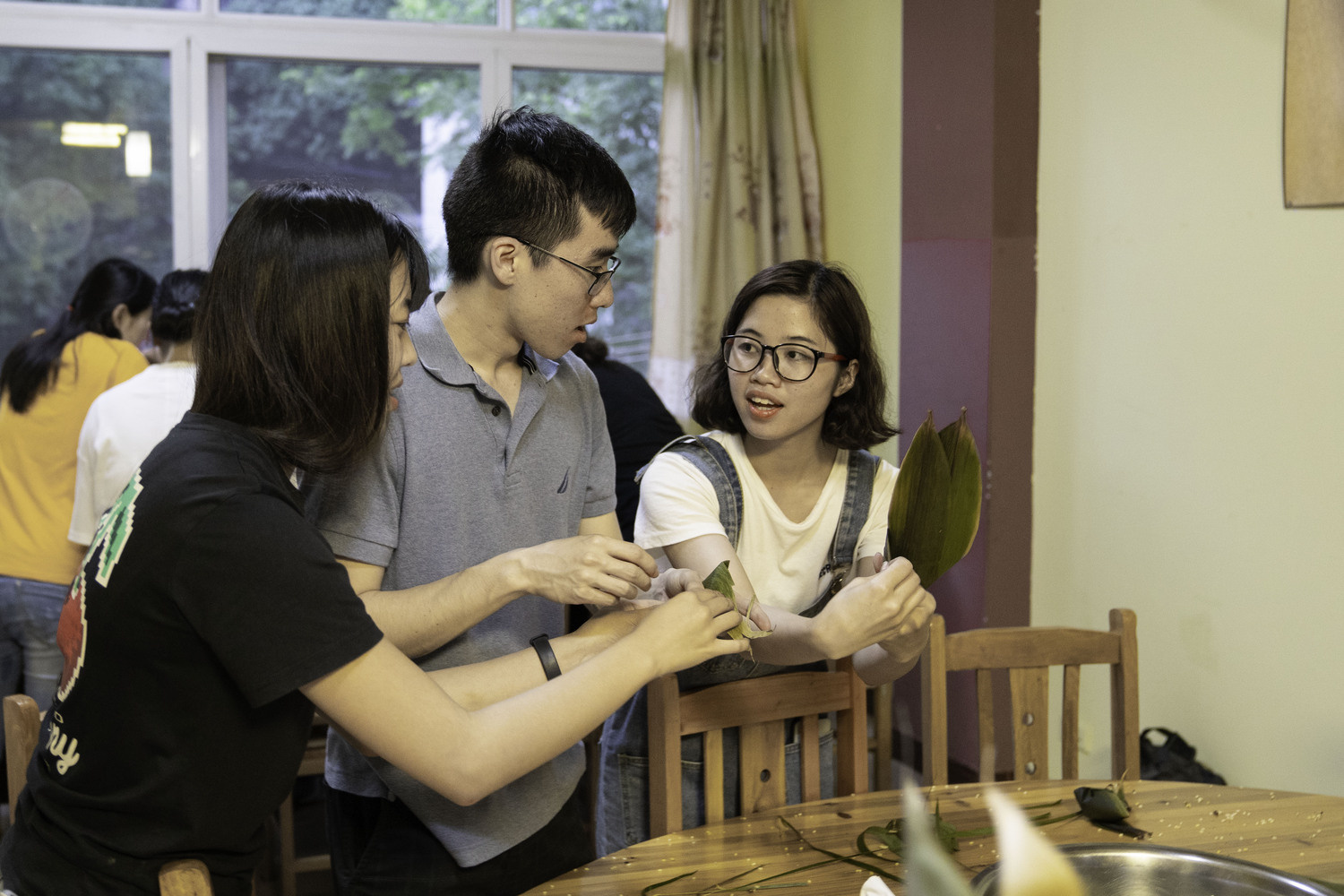
07 Settling In: What to Expect Over Time
Students consistently tell us that their homestay relationship deepened over time, and that the turning point was usually around the third or fourth week, when the household rhythms started to feel like home. Here's what that settling-in process typically looks like.
The first few days tend to feel exciting and novel. Everything is new, the family is warm, and the food is interesting.
After a week or two, the novelty settles and you start adjusting to the day-to-day rhythm. You might feel tired from the constant language effort, or notice small cultural differences more than you did at first.
If you hit a stretch where everything feels harder than it did the first week, that's usually a sign you're settling in, not a sign something's wrong. It passes, and what's on the other side is usually the best part of the experience.
After three to four weeks, most students find a new equilibrium. The household rhythms start to feel familiar. Your host family's quirks become endearing rather than confusing. And your Chinese, especially your listening comprehension, will have improved more than you realize.
CLI team members are available throughout this process. If you ever want to talk something through, reach out. They've supported hundreds of students through exactly this and can help mediate, translate, or simply listen.
08 Dietary Restrictions and Food Preferences
If you have dietary restrictions, whether for health, religious, ethical, or personal reasons, communicate them to CLI before you arrive. The Homestay Introduction Form is where you'll share dietary needs, allergies, and other preferences that help CLI match you with the right family.
CLI takes dietary needs into account during family matching, and your host family will know about your dietary restrictions before you arrive. Chinese home cooking is naturally rich in vegetable and tofu dishes, so there's usually plenty of common ground to work with.
Being clear and specific helps. "I don't eat pork" is easier for a host family to work with than "I'm mostly plant-based but flexible sometimes."
If a dish appears that you can't eat, it's okay to politely skip it. You don't need to explain your reasons at every meal. A simple 我不能吃这个 (wǒ bù néng chī zhège), meaning "I can't eat this," is sufficient.
CLI coordinators can help reinforce your needs if the message isn't getting through.
The food you eat may not be exactly like home, and that's part of the experience. But your health and comfort can't be compromised, so communicate clearly and let CLI help you work through any issues that come up.
09 Quick-Reference Phrase List
Here's a consolidated list of the most useful phrases from this guide, organized by situation.
At the Table
| Chinese | Pinyin | English |
|---|---|---|
| 我吃饱了 | I'm full | |
| 很好吃 | Very delicious | |
| 谢谢您 | Thank you (respectful) | |
| 我不能吃这个 | I can't eat this | |
| 我来洗碗 | I'll do the dishes | |
| 再来一点 | A little more, please | |
| 这个是什么 | What is this? | |
| 够了够了 | That's enough, that's enough |
Around the House
| Chinese | Pinyin | English |
|---|---|---|
| 我回来了 | I'm home | |
| 我出去一下 | I'm heading out for a bit | |
| 我想休息一下 | I'd like to rest for a bit | |
| 早上好 | Good morning | |
| 晚安 | Good night | |
| 我先洗澡 | I'll take a shower first | |
| 我在房间里 | I'm in my room | |
| 需要我帮忙吗 | Do you need my help? |
When You Need Help
| Chinese | Pinyin | English |
|---|---|---|
| 这个怎么说 | How do you say this? | |
| 可以帮我吗 | Can you help me? | |
| 我不太懂 | I don't quite understand | |
| 请再说一遍 | Please say that again | |
| 慢一点 | A little slower, please | |
| 你能写下来吗 | Can you write it down? |
General
| Chinese | Pinyin | English |
|---|---|---|
| 没关系 | It's okay / No worries | |
| 对不起 | Sorry | |
| 辛苦了 | Thank you for your effort | |
| 不好意思 | Excuse me / Sorry to bother you | |
| 太好了 | That's great! | |
| 我知道了 | Got it / I understand |
10 Making It Count
Living with a Chinese host family is one of the most rewarding experiences available to a language learner — not because it's always easy, but because it's real.
Every dinner conversation, every shared moment in the kitchen, every time you surprise your host family with a new phrase — that's language learning happening in the most human way possible.
The students who get the most out of their homestay aren't the ones who arrive perfectly prepared. They're the ones who stay curious, stay kind, and keep showing up at the dinner table.
If you're considering a homestay as part of your Chinese studies, CLI's immersion program in Guilin pairs students with carefully selected local families and provides ongoing support throughout your stay, from pre-arrival preparation to daily check-ins to the moments when you just need someone to help translate a tricky situation.
We look forward to welcoming you to Guilin.

Ready to Experience a Chinese Homestay?
CLI's Immersion Program in Guilin pairs you with a vetted local host family and provides support from day one. Start with a free lesson to see how CLI's approach works.
11 FAQ
What should I bring as a gift for my Chinese host family?
A small gift from your home country is expected and appreciated. Specialty snacks, quality tea or coffee, or a nicely packaged item representing your hometown all work well. Avoid sets of four (the number sounds like the word for death in Chinese), clocks (associated with funerals), sharp objects, and wrapping in white or black.
What is daily life like with a Chinese host family?
Mornings start early, and you'll handle your own breakfast and lunch. Dinner is the main shared event — provided Monday through Thursday — with multiple communal dishes with rice, conversation, and relationship-building.
How do I say "I'm full" in Chinese?
The standard phrase is 我吃饱了 (wǒ chī bǎo le). You may need to say it more than once, since your host family's instinct is to keep offering food as a form of care.
What cultural differences might I notice in a Chinese homestay?
Students sometimes notice differences around personal space, direct comments on appearance, personal questions about age or relationships, different laundry and bathroom practices, and preferences around temperature and air conditioning. Each has real cultural context behind it, and understanding that context makes things much easier to navigate.
Do I need to speak Chinese to live with a host family?
No. Many students start with very little Chinese and build deep bonds with their host families through effort, enthusiasm, and a few key phrases. WeChat's translation feature helps overcome communication barriers, and CLI coordinators are available to help when you need support.
What if my host family comments on my appearance?
Casual comments on appearance are culturally common in China and are generally meant as expressions of familiarity and care. Most students adjust to this quickly once they understand the intent. If it's something you're particularly sensitive to, let CLI know ahead of time. We take this into account during the family matching process.