
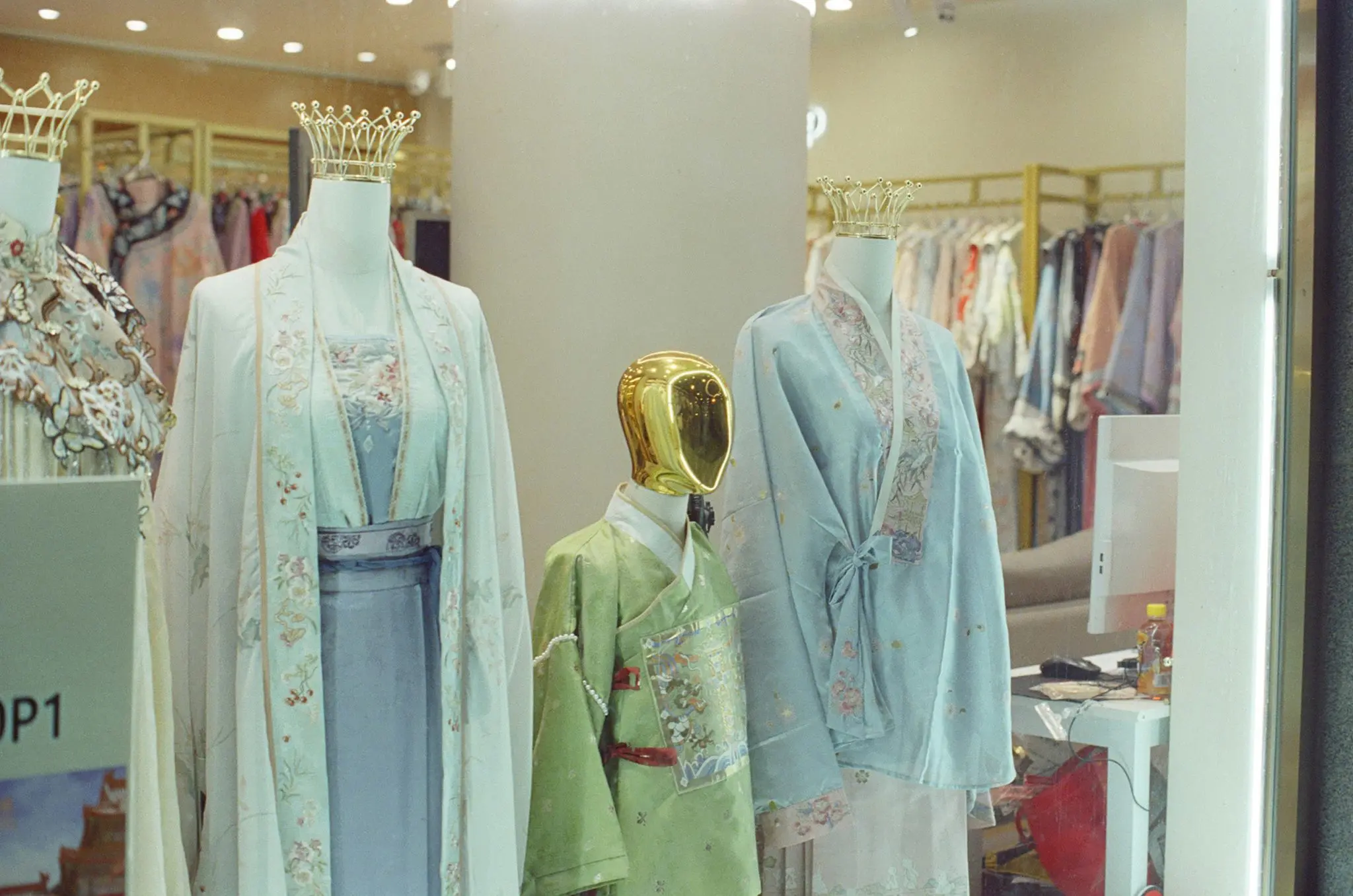
- Traditional Chinese clothing is broadly known as 汉服 (hànfú), or Han clothing.
- Each major dynasty, including the Han, Tang, Ming, and Qing, developed its own distinctive styles.
- Beyond the Han majority, China’s 55 recognized ethnic minorities each maintain their own traditional dress.
- The 旗袍 (qípáo), or cheongsam, has its origins in the Qing dynasty.
- Traditional clothing, especially hanfu, is enjoying a strong revival among young people in modern China.
What comes to mind when you think of traditional Chinese clothing? In this guide, we explore the styles that developed across China’s major dynasties, the traditional dress of its ethnic minorities, and the place of traditional clothing in modern China.
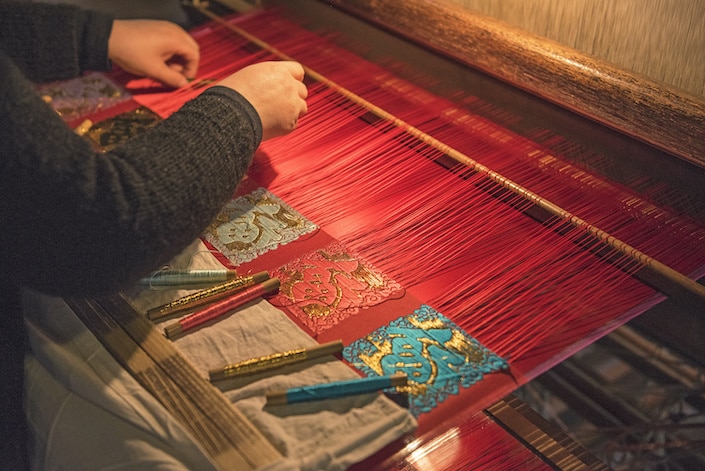
Clothing is also a fun doorway into Chinese culture for anyone who wants to Learn Chinese in China. Once you understand a few key garments and the history behind them, festivals, films, and everyday street fashion all start to make more sense.
01 Clothing throughout the major dynasties
China has a long history filled with many different dynasties, each special and influential in its own way. A few of them stand out in particular when it comes to the development of traditional Chinese clothing.
Han dynasty
The Han dynasty (206 BCE–220 CE) was China’s second imperial dynasty and an age of economic prosperity. It is regarded as one of the most powerful and influential dynasties in Chinese history.
Even today, when people think of the Chinese, they usually think of the Han people. The Han (汉族 hànzú) are the dominant ethnic group in China, and consequently Chinese characters are referred to as Han characters (汉字 hànzì).
Likewise, the Mandarin language is called the Han language (汉语 hànyǔ), and traditional Chinese clothing is called Han clothing (汉服 hànfú). During the Han dynasty, clothing designs and styles were more or less the same for men and women.
To distinguish between the genders, different colors, fabrics, and ornaments were used. This era was known for its “dark style,” which favored black and red colored fabrics.
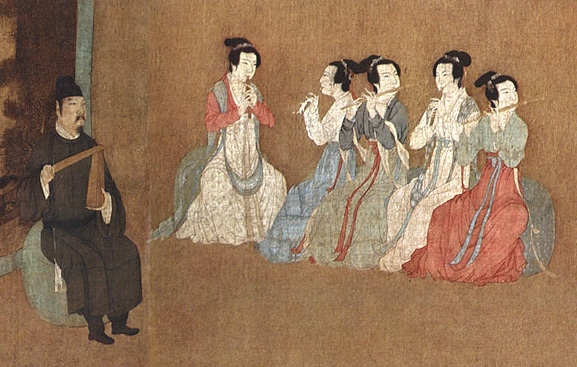
Characteristics of Han clothing include very wide sleeves and a loose, layered look. Outfits usually consisted of two or three garments: a loose open cross-collar garment, a long wrap skirt, and an open cross-collar robe worn as the outer layer and wrapped around the waist.
There were two main types of robes: the curved hem robe (曲裾袍 qūjūpáo) and the straight hem robe (直裾袍 zhíjūpáo). Women also had the option of wearing a 襦裙 (rúqún), a cross-collar wrap shirt paired with a long skirt.
Tang dynasty
The Tang dynasty (618–907 CE) is usually regarded as one of the most prosperous and culturally significant periods in Chinese history. Thanks to booming trade with neighboring countries along the Silk Road, Indian, Persian, and even Western influences were integrated into Chinese culture.
As more fabrics and new dyes arrived from neighboring countries, the perfect opportunity was created for a change in traditional fashion. Tang fashions were very colorful, and people put a lot of thought into their outfits.
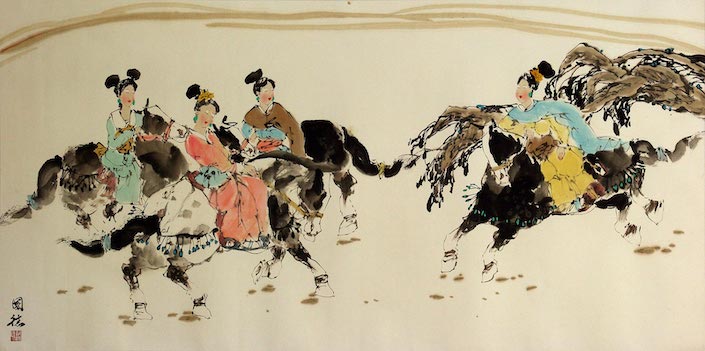
The main materials were wool, linen, and silk, with silk signifying high status. Silk was reserved for the noble class due to its price.
Gold and yellow were the exclusive colors of the emperor and royal family, and gradually evolved into symbols of imperial power. Other colors could be freely used by all social classes.
In general, women often wore long-sleeved shirts with wide sleeves and collars that showed their cleavage. These shirts were considered quite revealing and daring compared to earlier fashion, and they were tucked into long flowing skirts decorated with geometric patterns and secured by a sash tied around the chest.
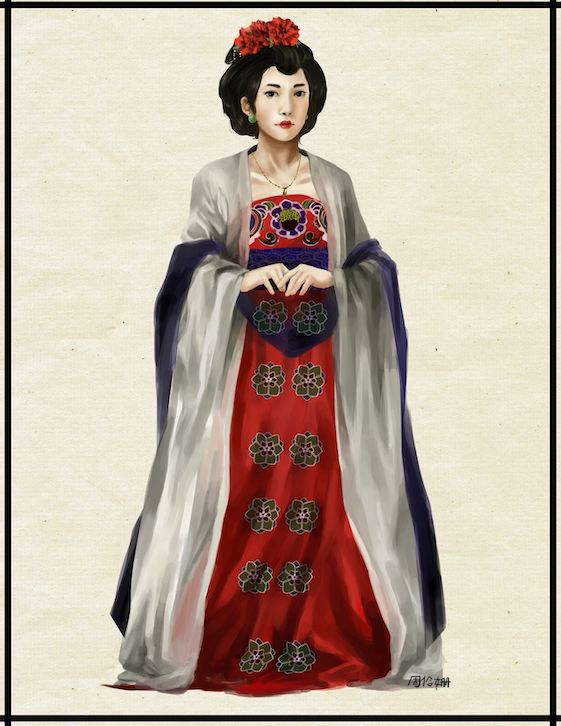
Makeup during this era was also quite daring and reflected evolving Chinese standards of beauty, with drawn-on eyebrows, lead face powder to create very white skin, and flower-like patterns painted between the brows. Men’s clothing was a continuation of Han dynasty styles, but with more options.
Daily outfits consisted of solid-colored robes with rounded collars. These were usually accompanied by leather belts and boots.
Ming dynasty
Throughout China’s dynastic history, there were periods when parts or even all of imperial China were ruled by non-Han peoples, mainly from Manchuria or Mongolia. The Ming dynasty (1368–1644 CE) was a Han ethnic majority regime that immediately followed the Mongol-led Yuan dynasty.
The start of the Ming dynasty represented a restoration of Han control, so one major aim of the ruling class was to promote Han culture and strengthen Han identity. Clothing styles therefore closely resembled those of the Han dynasty, albeit with a twist: removing the influence of foreigners and ethnic minorities.
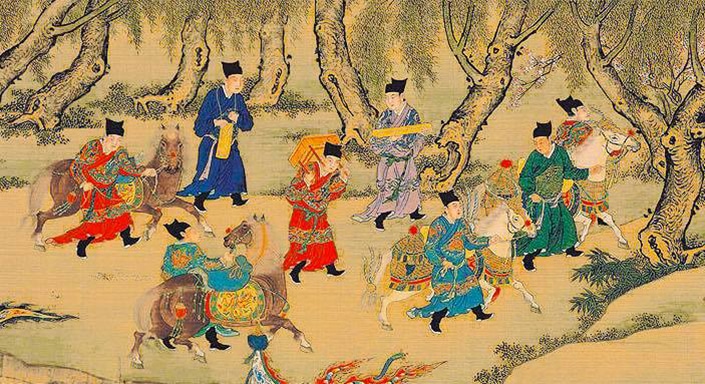
Men’s fashion revolved around square collars and patterns used to distinguish social class and rank. These “markings” consisted mainly of embroidered designs featuring animals, plants, and geometric patterns.
Men typically wore their hair in a bun, and officials wore a futou (襆头 fútóu), a black hat with two wing-like flaps made of thin, oval-shaped boards on each side. Women’s clothing became more modest during the Ming.
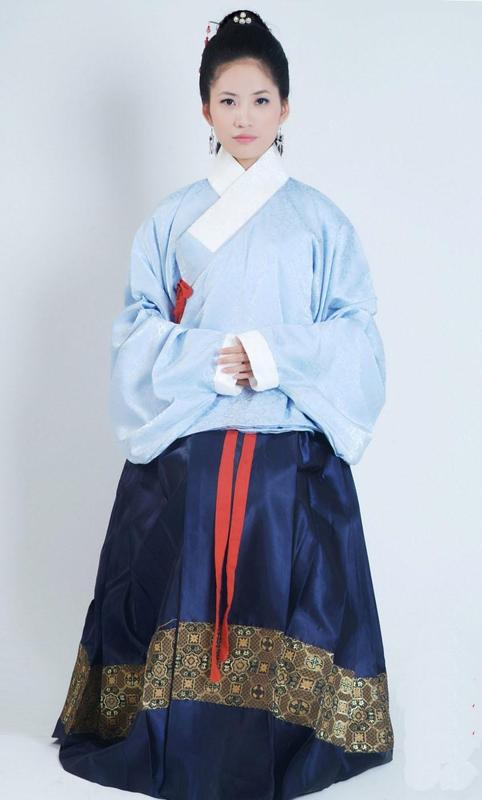
Most women wore a midi-length upper garment over a floor-length skirt, which helped create the illusion of an elongated silhouette. Another popular style was the 袄裙 (ǎoqún), a pleated skirt paired with a cross-collar cotton top that extended below the waist.
Light and pastel colors were extremely popular. Embroidered capes also became part of the ensemble for both men and women, usually featuring a straight collar with open sleeves.
Qing dynasty
In the 17th century, the nomadic Manchu people overthrew the Ming dynasty and established the Qing dynasty (1636–1912 CE) in its place. The Qing clothing system was extremely complicated and came with many different rules and regulations.
During this dynasty, a robe easily revealed the wearer’s rank. The dynasty’s color was yellow, and this auspicious color was reserved only for the royal family.
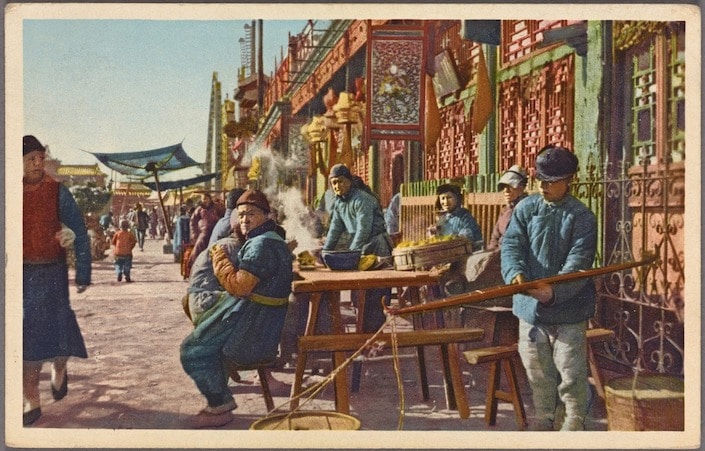
Qing dynasty fashion was largely influenced by the cavalry clothing of the Manchu horsemen. Men typically wore a tangzhuang (唐裝 tángzhuāng), a jacket with a straight collar inspired by the three-quarter-length riding jackets of the Manchu horsemen.
This was usually paired with an ankle-length wrap skirt. Manchu men also shaved the front part of their hair, leaving the rest in a braid that hung behind their heads, called a queue.
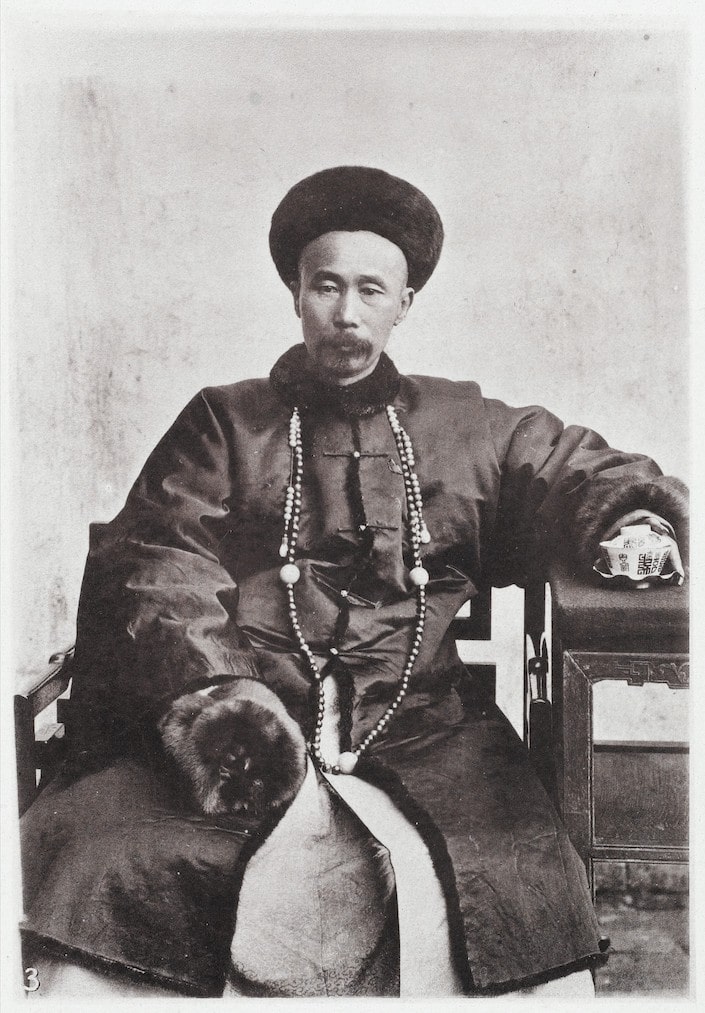
Initially, the Qing dynasty was extremely draconian about clothing rules, and many Han Chinese were forced to either adopt the Manchu hairstyle and clothing or face the death penalty. This rule later applied only to officials and scholars rather than ordinary people.
Manchu women traditionally grew their hair long in preparation for marriage, and married women had a wide variety of hairstyles to choose from. The most common was the Liangbatou (两把头 liǎngbǎtóu), the style adopted by Empress Dowager Cixi.
This style featured a tall headdress with two handfuls of hair parted to each side of the head and decorated with flowers and ornaments. Unlike the men, Han women were allowed to wear Han-style clothing from the Ming dynasty and did not need to adopt the Manchu hairstyle.
The everyday style for women from wealthier families consisted of a side- or front-fastening robe with a wrap-around pleated apron skirt.
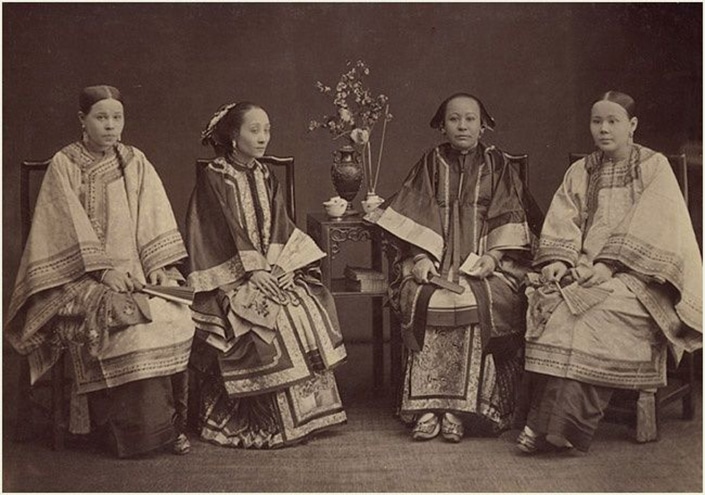
When most people think of traditional Chinese clothing for women, they usually think of the qipao (旗袍 qípáo), also known as the cheongsam. The qipao has its origins in the Qing dynasty and was the dress of Manchu women.
However, the qipao didn’t really become popular in Hong Kong and Shanghai until the 1920s, after the fall of the Qing dynasty.
02 Traditional clothing of other ethnic minorities
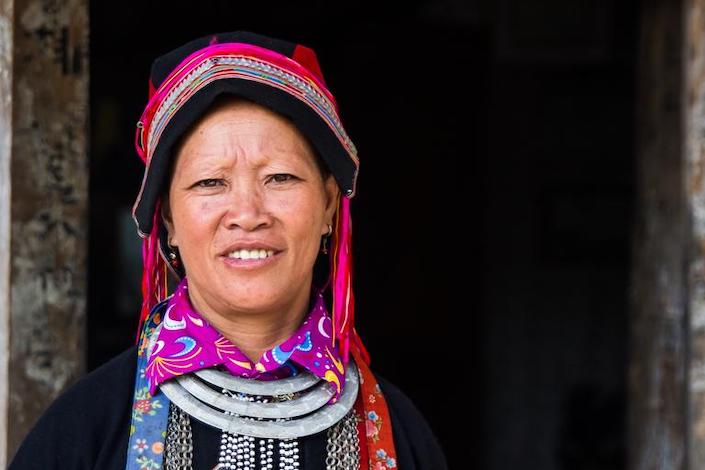
Today, the People’s Republic of China officially recognizes 55 different ethnic minority groups in addition to the Han. Chinese apparel therefore includes a wide variety of clothing worn by members of these different groups.
Many of these minority clothing styles are still widely worn today, especially in rural areas. Here are a few examples.
Dai ethnic minority (傣族 Dǎizú)
Although the Dai are among the 55 ethnic minorities of China, they also belong to a larger family of Dai ethnic groups living in neighboring Burma, Laos, Thailand, and Vietnam. Their traditional clothing reflects a mixture of cultural influences, with designs closely resembling traditional clothing worn in Southeast Asia.
For example, many Dai women wear a tight-fitting shirt and a narrow long skirt or sarong that resembles the traditional Thai silk wrap skirt. Traditional male clothing consists of collarless jackets accompanied by loose trousers.
Tibetan ethnic minority (藏族 Zàngzú)
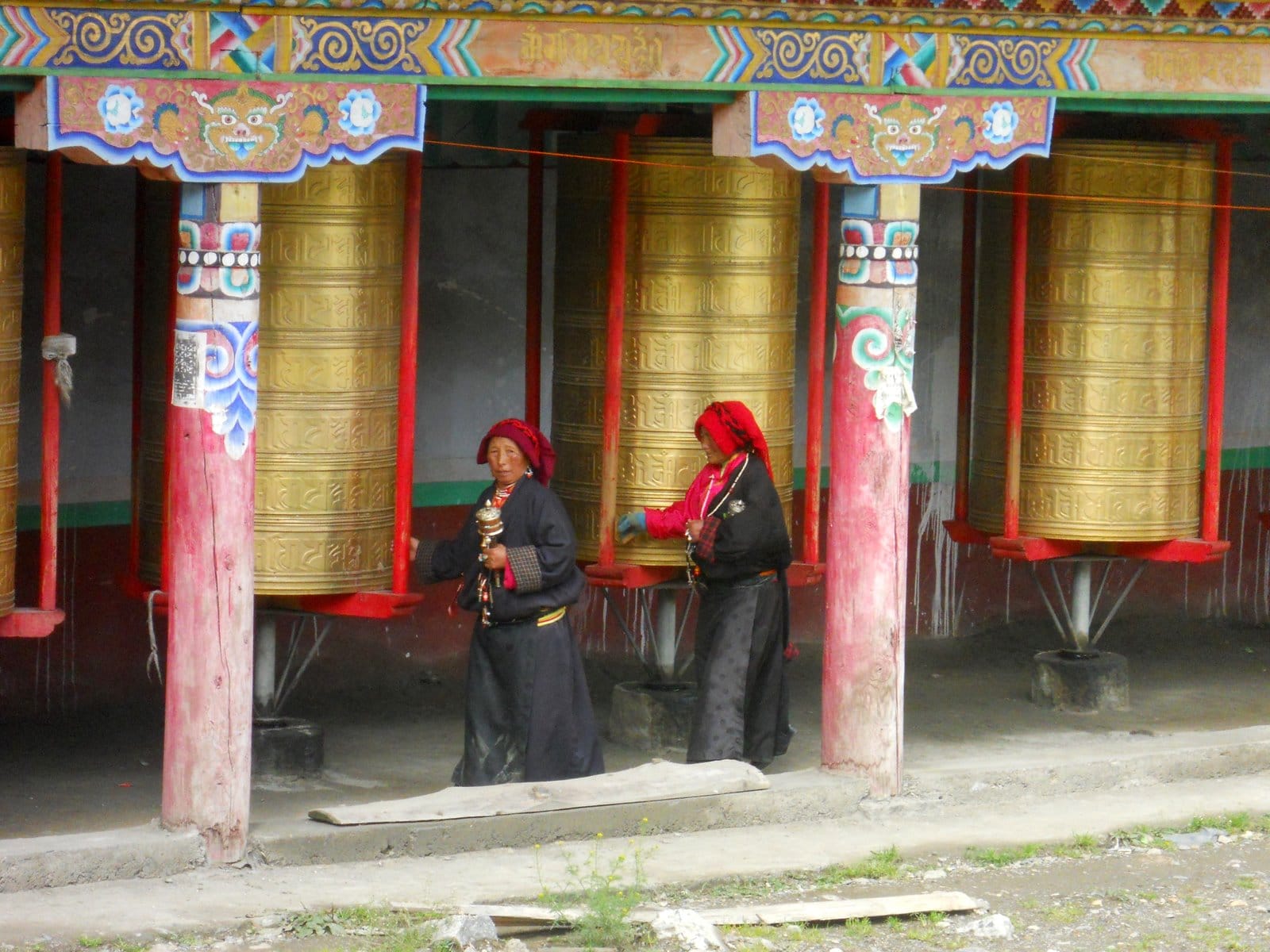
Due to the harsh weather and barren plains of the high Tibetan plateau, many Tibetans use real sheepskin, fur garments, and leather shoes to protect themselves from the cold. Because temperatures change drastically throughout the day, layers are worn and then tied around the waist as it warms up.
In general, both men and women wear long robes made of wool, sheepskin, leather, or cloth that are secured around the waist. Women sometimes wear elaborate headdresses made of silver, coral, and turquoise for special occasions and to indicate their age and marital status.
Uyghur ethnic minority (维吾尔族 Wéiwú'ěrzú)
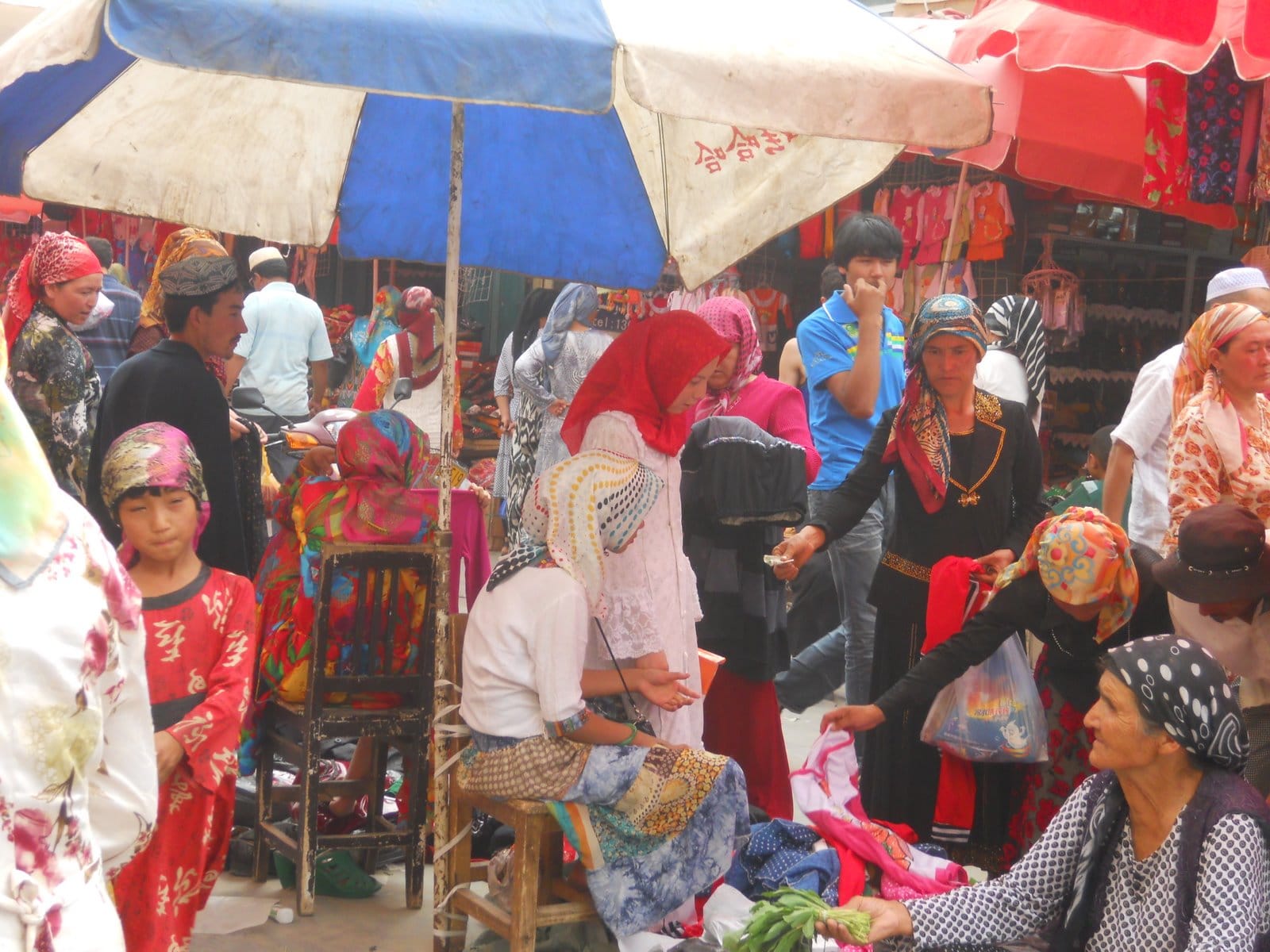
Uyghur clothing is deeply intertwined with Islamic culture and the group’s proximity to the Silk Road. As a result, Uyghur culture incorporates aspects of neighboring countries such as Pakistan, Kazakhstan, and Afghanistan.
Women traditionally wear long-sleeved dresses decorated with silk embroidery. Golds, reds, and blacks are the most popular colors.
Xinjiang produces the majority of the world’s cotton, so it is a widely used material in Uyghur clothing, along with satin and silk. Women usually use silk scarves as head coverings and tend to wear a lot of jewelry to complement their outfits.
Men wear a long caftan with a long scarf tied at the waist, plus a “chapan,” a woolen coat worn during the colder months. Men also traditionally wear a doppa, a skull cap also worn in neighboring Uzbekistan and Tajikistan.
Zhuang ethnic minority (壮族 Zhuàngzú)
The majority of the Zhuang people live in Guangxi province. Their clothing is very plain and largely consists of muted, earthy colors such as brown, black, and blue.
The Zhuang are excellent craftspeople and have historically self-spun, self-woven, and self-sewn their own clothes. Men usually wear a black tang suit with wide-fitting trousers and a waist tie, sometimes paired with a turban depending on the weather.
Women generally wear a collarless jacket, usually blue and black, with slightly wider trousers, black turbans, and aprons around their waists. Embroidery can be found on the cuffs and the bottom of the placket, an opening or slit in a garment.
Their plain outfits are usually paired with silver earrings, bracelets, and decorative head accessories. Straw shoes are commonly used by those working in the fields.
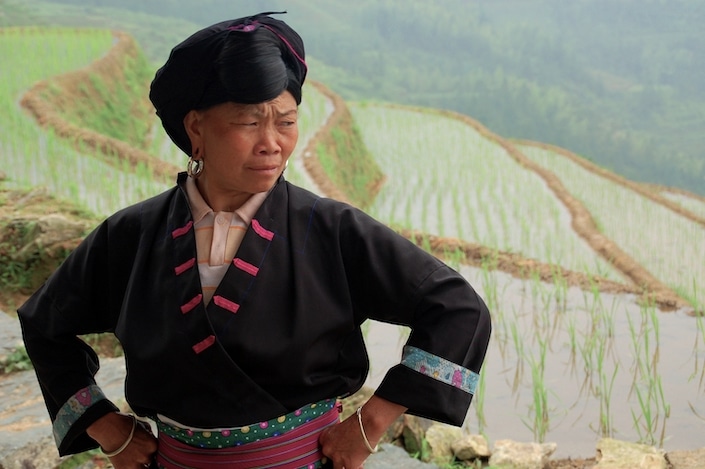
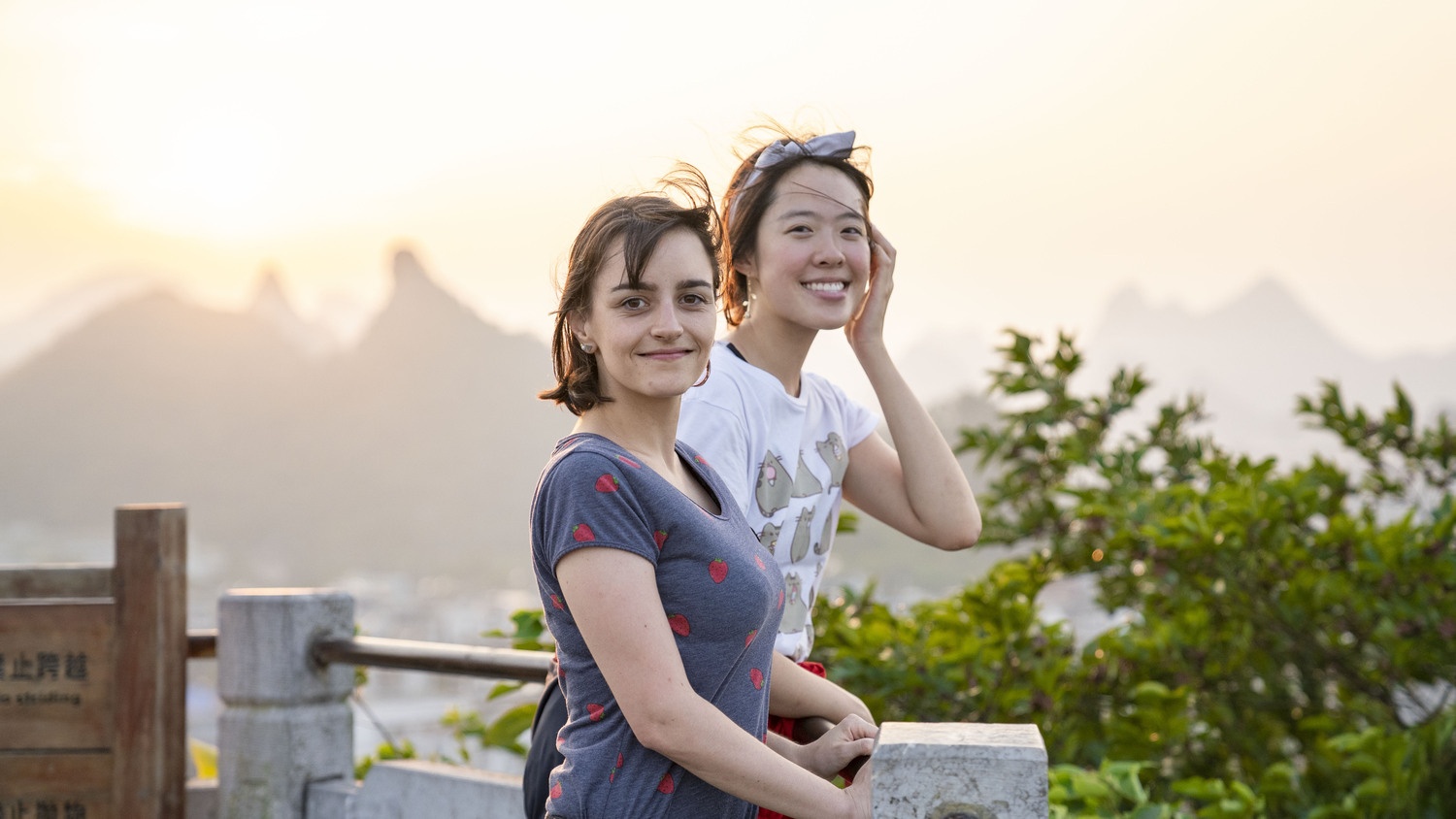
CLI regularly hosts trips to the Longji Rice Terraces for students enrolled in our Immersion Program. These trips let students experience the beauty and tranquility of Chinese village life while learning about the Zhuang, who are among the main inhabitants of Ping’an Village in Longsheng.
Learn Chinese with Cultural Context
CLI offers personalized Chinese instruction built around real language and culture. Join our Immersion Program in Guilin or start online with a free Chinese lesson.
03 Traditional clothes in modern China
In recent years, traditional Chinese clothing has become increasingly popular in modern China. This is especially true among members of the younger generation.
A source of pride and cultural recognition
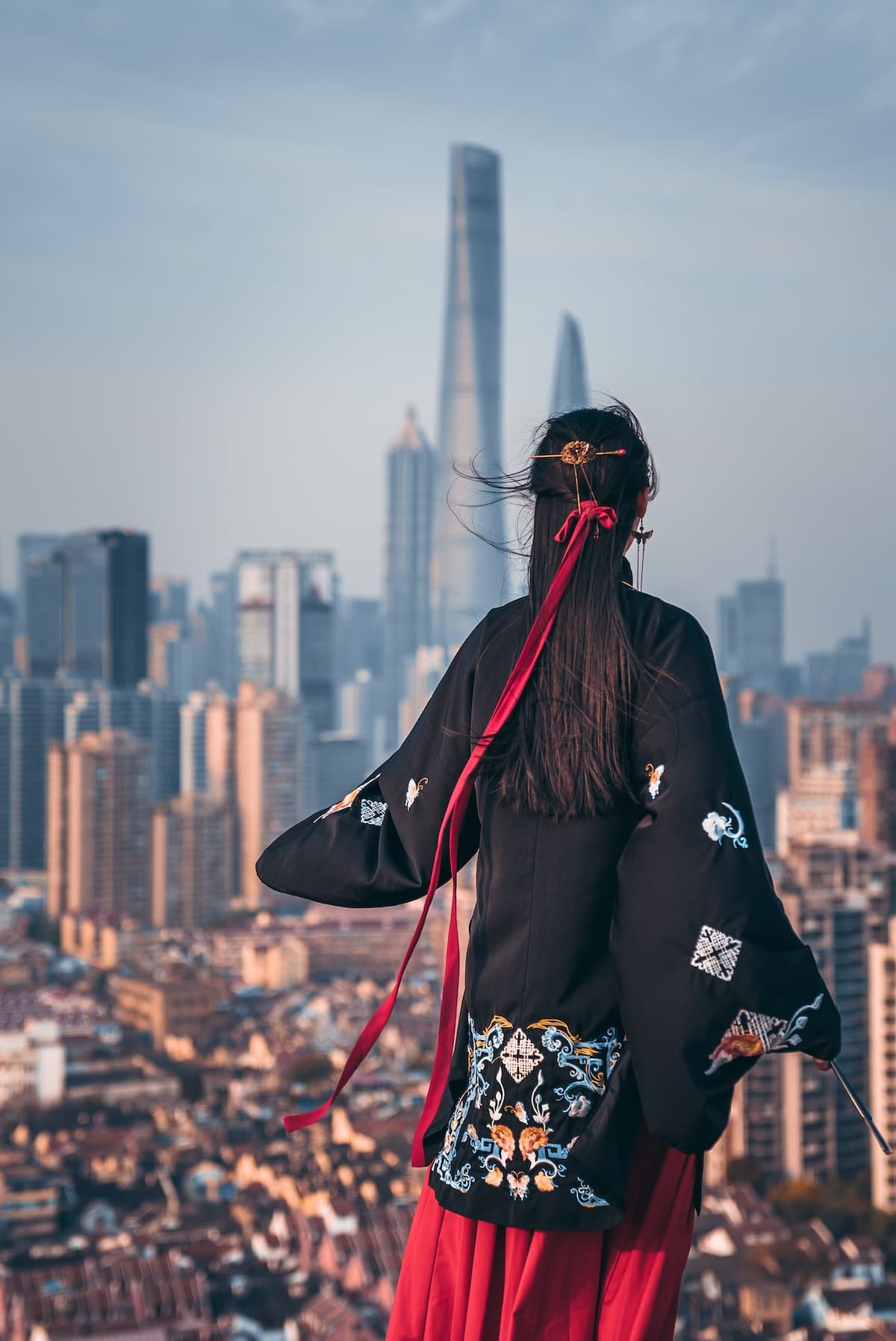
There has been a renewed interest in traditional Chinese culture, some of which can be attributed to the rise of period dramas. More and more Chinese youth advocate the revival of traditional clothing, mainly hanfu (汉服), and some now wear these styles during everyday leisure activities.
Nowadays, it is not uncommon to see a group of teenagers or young adults wearing traditional clothing while ordering bubble tea and strolling through downtown areas of major cities. Many now view traditional clothes as a source of national pride and a way to showcase the beauty of Chinese history and culture.
Formal occasions
Traditional clothing is also a popular choice for formal occasions and celebratory events. For example, many women choose to wear the qipao for formal dinners and Chinese New Year galas.
Qipaos are also sometimes used as professional uniforms for workers in the high-end hospitality industry.
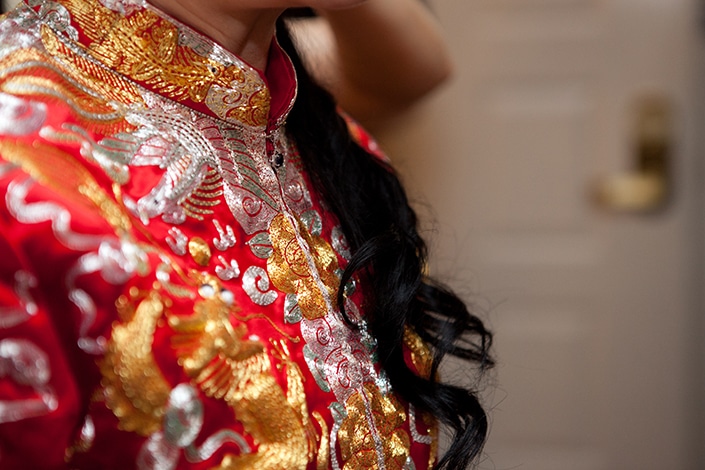
Haute couture
Many creative artists and designers in the world of haute couture have created designs that fuse international styles, using traditional Chinese clothing as inspiration and redefining the notion of “made in China.”
Some famous designers who include traditional Chinese elements in their work are Laurence Xu, Guo Pei, Huishan Zhang, and Wang Chen Tsai-Hsia (also known as the Chanel of Taiwan). Even Western fashion houses such as Dior and Elie Saab have created collections inspired by Chinese embroidery and imperial designs.
04 The new face of Chinese fashion?
Despite the ever-changing trends within the fashion industry, more people in China are looking back to the dress of their ancestors to honor their heritage. They are bringing a touch of ancient charm into our modern, digitalized world.
No matter which dynasty you consider, each has left its unique mark on traditional attire and continues to do so even in the 21st century. They say fashion repeats itself, and perhaps unearthing and revamping trends from hundreds of years ago is the new way forward.
05 Traditional Chinese clothing vocabulary
The following terms will help you recognize references to traditional Chinese clothing in articles, dramas, and everyday conversations.
| Chinese | Pinyin | Meaning |
|---|---|---|
| 汉服 | Han clothing; traditional Chinese clothing | |
| 旗袍 | Qipao; cheongsam | |
| 汉族 | Han ethnic group | |
| 汉字 | Chinese (Han) characters | |
| 汉语 | The Han language; Mandarin Chinese | |
| 唐装 | Tang suit; a straight-collar jacket | |
| 曲裾袍 | Curved-hem robe | |
| 直裾袍 | Straight-hem robe | |
| 襦裙 | Cross-collar wrap shirt paired with a long skirt | |
| 袄裙 | Pleated skirt with a cross-collar top | |
| 襆头 | A black official’s hat with two wing-like flaps |
06 FAQ
What is traditional Chinese clothing called?
Traditional Chinese clothing is broadly called hanfu (汉服), meaning Han clothing. The term reflects the dominant Han ethnic group, whose styles shaped much of Chinese fashion history.
What is the difference between a qipao and hanfu?
The qipao (cheongsam) originated with Manchu women in the Qing dynasty and has a fitted, high-collared silhouette. Hanfu refers to the older, looser cross-collar styles associated with the Han majority across earlier dynasties.
Do people in China still wear traditional clothing?
Yes. Traditional clothing appears at formal events and festivals, and there is a growing hanfu revival among young people who wear these styles in everyday life.
Did each dynasty have its own clothing style?
Yes. The Han, Tang, Ming, and Qing dynasties each developed distinctive garments, colors, and rules, often reflecting the ruling group and the cultural exchanges of the era.
07 Final thoughts
Traditional Chinese clothing is far more than fabric and ornament. It carries the history, values, and identity of each dynasty and ethnic group that shaped it.
For learners, exploring this clothing is also a window into Chinese culture, language, and daily life. The more you understand the stories behind these garments, the richer your experience of China and its traditions becomes.