


- The famous 2,200-hour estimate for Mandarin refers to classroom hours in a full-time U.S. government training environment, not the total time most independent learners will spend.
- For most beginners, basic conversational ability takes hundreds of hours, not thousands — but the exact number depends heavily on your goal and study format.
- Immersion, one-on-one instruction, and frequent speaking practice usually shorten the timeline dramatically compared with low-intensity self-study alone.
- The HSK 3.0 system takes full effect in July 2026 and uses a 9-level structure with higher vocabulary expectations than the old 6-level system.
- The new HSK framework separates recognition and writing more clearly, but writing requirements still appear below HSK 5 in the official syllabus.
How long does it take to learn Chinese? The honest answer is: longer than many European languages, but usually not as long as the internet makes it sound.
You've probably seen the famous 2,200-hour number. It is real, but it is also easy to misunderstand. That figure comes from a very specific full-time training environment, and it points to a much higher end goal than most beginners have in mind.
01 Quick Answer: How Long Does It Take to Learn Chinese?
If you are starting from zero, you can usually build basic survival Chinese faster than you think. In many cases, learners can begin handling greetings, numbers, food orders, and simple everyday exchanges within the first 100 to 200 hours of serious study.
After that, progress depends heavily on how you study. For example, a learner doing five casual hours a week will be on a very different timeline from someone taking structured lessons, speaking often, and getting regular correction. In other words, the method matters almost as much as the total number of hours.
So rather than asking one giant question — “How long does Chinese take?” — it is more useful to ask a smaller one: how long will it take to reach your goal? Travel Chinese? Basic conversation? HSK 3? HSK 4? Professional fluency?
This guide breaks the answer down in plain English. First, we'll explain what the 2,200-hour benchmark really means. Then we'll look at realistic beginner timelines, the HSK 3.0 update, and the study choices that speed things up the most.


Want the Fastest Path?
If your goal is to make progress quickly, the biggest levers are structured speaking practice, personal feedback, and enough weekly intensity to keep the language active.
02 What the 2,200-Hour Number Really Means
The U.S. Foreign Service Institute (FSI) is the source of the famous estimate that Mandarin Chinese takes about 2,200 class hours for English speakers. That number matters because it comes from one of the most serious language-training systems in the world.
But it is easy to misunderstand.
| FSI Category | Example Languages | Estimated Class Hours | Estimated Weeks (Full-Time) |
|---|---|---|---|
| Category I | Spanish, French, Italian, Portuguese | 600–750 | 24–30 |
| Category II | German, Indonesian, Swahili | 900 | 36 |
| Category III | Russian, Hindi, Greek, Thai | 1,100 | 44 |
| Category IV | Chinese (Mandarin), Arabic, Japanese, Korean | 2,200 | 88 |
So yes: for native English speakers, Mandarin is one of the hardest major languages in the FSI system.
The 2,200-hour figure refers to classroom hours, not total effort. In the FSI model, students also do substantial self-study. In practice, the real total is closer to a full-time language job than a simple class-hour count.
It also targets a very high level. FSI is not asking whether students can order food, chat with a taxi driver, or survive a semester abroad. It is training people for professional use of the language in demanding real-world settings.
That means the 2,200-hour number is a useful benchmark, but it is not the right yardstick for every beginner. If your goal is basic conversation, travel, or passing an early-to-mid HSK level, your target is much lower.

03 Realistic Beginner Timelines
Beginners usually do better with milestone-based estimates than with one giant lifetime total. Here is a practical way to think about the journey.
| Goal | Description | Approx. Hours | Self-Study | Tutoring | Immersion |
|---|---|---|---|---|---|
| First survival basics | Greetings, numbers, dates, ordering food, asking simple questions | 100–200 | 5–10 months (5 hrs/wk) |
3–6 months (8 hrs/wk) |
1–2 months (25–35 hrs/wk) |
| Basic conversation | Talk about yourself, family, daily life, likes and dislikes, simple plans | 350–700 | 1.5–3 years (5 hrs/wk) |
10–20 months (8 hrs/wk) |
3–6 months (25–35 hrs/wk) |
| Independent everyday use | Handle travel, errands, social talk, and many familiar daily situations | 700–1,200 | 3–5 years (5 hrs/wk) |
1.5–3 years (8 hrs/wk) |
6–10 months (25–35 hrs/wk) |
| Advanced study or work use | Read widely, discuss abstract topics, follow fast native speech more comfortably | 2,000+ | Many years (5 hrs/wk) |
Several years (8 hrs/wk) |
1.5–3+ years (25–35 hrs/wk) |
These are broad estimates, not guarantees. Some people move faster because they already know another language, have excellent teachers, or can study every day. Others move slower because life gets in the way or their study time is mostly passive.
Still, the main pattern is clear: the same language can feel radically different depending on how you study it. Five casual hours per week and thirty focused hours per week do not produce the same timeline, even over the same total number of months.
For most beginners, the first truly encouraging milestone is not “professional fluency.” It is being able to hold a simple real conversation without freezing. That usually arrives far earlier than the internet’s scariest numbers suggest.

04 HSK 3.0: What Changed in 2026
The HSK (汉语水平考试, ) is China's official Chinese proficiency exam for non-native speakers. Beginning in July 2026, the revised HSK 3.0 framework takes full effect and replaces the older 6-level model with a 9-level system grouped into three stages.
For beginners, the biggest practical takeaway is simple: early HSK levels now ask for more vocabulary than the old system did, so older blog posts often underestimate the amount of study required.
HSK 3.0 Cumulative Vocabulary Standards
| HSK 3.0 Level | Cumulative Vocabulary | Stage | Rough CEFR Comparison |
|---|---|---|---|
| HSK 1 | 300 words | Elementary | Approx. A1 |
| HSK 2 | 500 words | Elementary | Approx. A1+ |
| HSK 3 | 1,000 words | Elementary | Approx. A2 |
| HSK 4 | 2,000 words | Intermediate | Approx. B1 |
| HSK 5 | 3,600 words | Intermediate | Approx. B2 |
| HSK 6 | 5,400 words | Intermediate | Approx. C1 |
| HSK 7–9 | 11,000+ words | Advanced | Approx. C2 |
“Cumulative” means each level includes the words from the levels below it. So HSK 4 includes the vocabulary from HSK 1, 2, and 3.
Recognition vs. Writing Under HSK 3.0
One area that often gets oversimplified online is handwriting. The new framework separates character recognition and character writing more clearly than before, which is helpful for modern learners. But that does not mean writing disappears until HSK 5.
| Level | Recognition Focus | Writing Characters in Official Syllabus |
|---|---|---|
| HSK 1–2 | Yes | 100 |
| HSK 3 | Yes | 150 |
| HSK 4 | Yes | 150 |
| HSK 5 | Yes | 150 |
For beginners, the practical message is encouraging: you do not need perfect calligraphy to move forward. But you also should not assume that writing is completely irrelevant. Even in a typing-first world, some active character recall still helps retention.

05 What Speeds Up or Slows Down Your Progress
Two beginners can both “study Chinese for a year” and end up at very different levels. Here are the variables that usually matter most.
1. Study Intensity
How often you engage with the language matters. A concentrated period of serious study can be extremely effective, especially when it includes active use of the language instead of passive exposure alone.
That does not mean everyone needs to study full-time. It does mean that one focused hour is worth much more than one distracted hour.
2. Study Format
- Apps and self-study: Good for vocabulary review, listening repetition, and habit-building. Less effective for real-time speaking correction.
- Group classes: Good for structure and accountability, but your actual speaking time per hour is limited.
- One-on-one lessons: Especially useful for Mandarin because pronunciation, tones, and sentence patterns get corrected immediately.
- Immersion: The fastest format for many learners because class time is reinforced by constant real-world exposure.
3. Consistency
Chinese rewards regular contact. Daily or near-daily exposure helps tones, listening, and character recognition stay alive in memory. Big gaps between study sessions make the language feel harder than it is.
4. Environment
Studying in a Chinese-speaking environment changes the math because practice stops being confined to “study time.” Reading signs, hearing announcements, chatting with teachers, and handling daily errands all become extra repetitions.
5. Prior Language Experience
If you have already learned another foreign language, you have a real advantage. Not because Chinese suddenly becomes easy, but because you already understand what language learning feels like: confusion, repetition, plateaus, and gradual payoff.
6. Age and Motivation
Adults are often told they are too old to learn Chinese well. That is wrong. Adults usually bring better discipline, clearer goals, and stronger study habits. Younger learners may have some advantages in accent and long-term exposure, but motivated adults can absolutely make rapid progress.
06 What Is Usually Hardest for Beginners?
There is no single hardest part for everyone, but most English-speaking beginners run into two major challenges: tones in speech and characters in literacy.
Early on, tones often feel hardest. Mandarin uses pitch to distinguish meaning, and many beginners are not used to hearing or producing those contrasts reliably. That makes speaking and listening feel unstable at first.
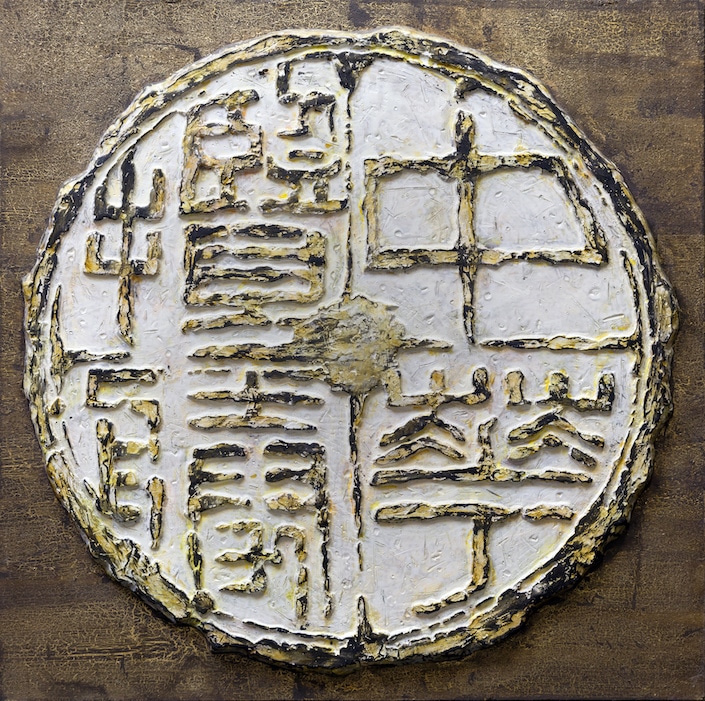
Over the long run, characters often take the most total time. Chinese does not use an alphabet, so literacy grows more slowly than in languages where you can sound out words letter by letter. Learning to recognize and eventually write characters takes patience.
That is why many beginners feel like their speaking and reading develop at different speeds. This is normal. You can become conversationally useful before you become highly literate.
Modern technology also changes the experience. Because most daily communication now happens by phone or computer, typing with pinyin is more important than elegant handwriting for many learners. But recognition still matters enormously, because you cannot choose the right character if you do not recognize it when it appears on screen.
07 Why Immersion Helps So Much
Immersion is not magic. It does not let you skip effort. What it does is multiply the number of meaningful encounters you have with Chinese each day.
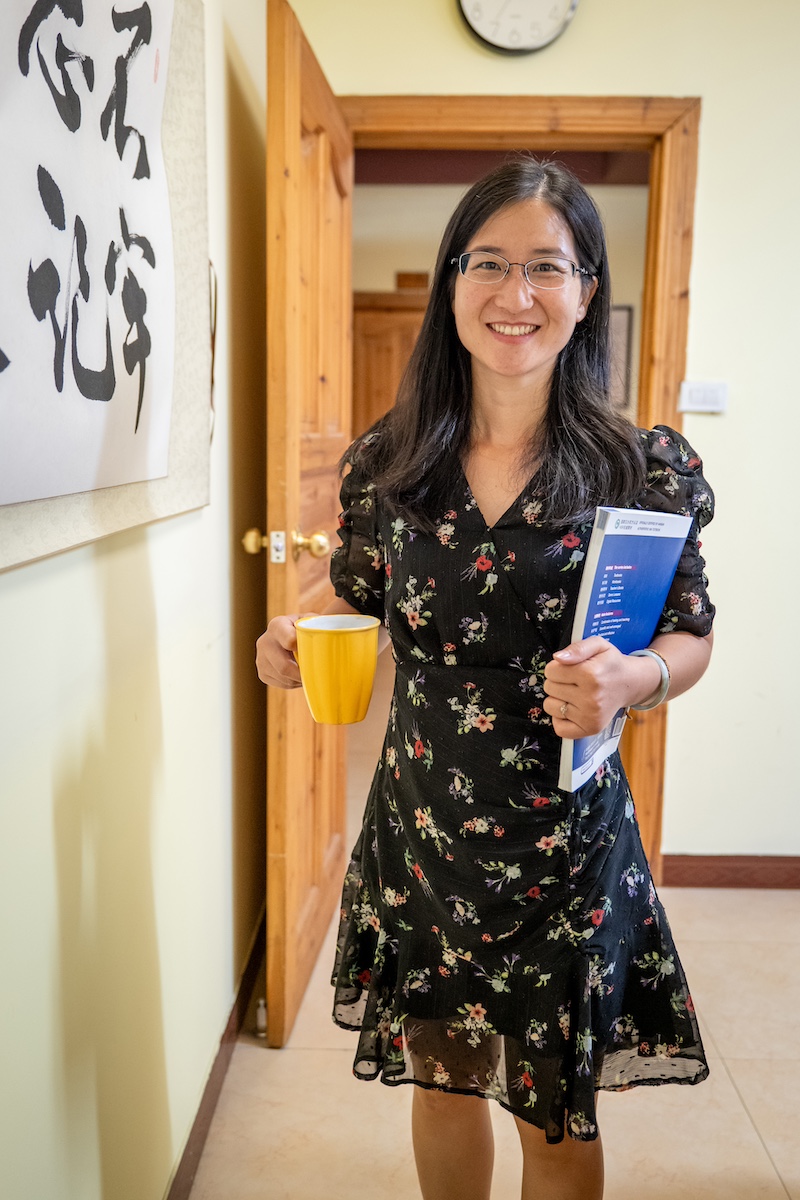
In a good immersion setup, you are not just studying in class. You are hearing Chinese at meals, seeing it on signs, texting with it, using it for errands, and getting immediate feedback when communication breaks down. That constant loop makes the language stick faster.
Research on intensive instruction and study-abroad-style learning generally points in the same direction: concentrated exposure plus real communicative use can accelerate fluency development more than low-intensity classroom study alone.
Can You Learn Chinese in One Year?
Yes — if by “learn Chinese” you mean reaching a solid beginner or lower-intermediate level, especially with high intensity. In one year, many learners can build real conversational ability, travel independently, and function comfortably in many daily situations.
No — if by “learn Chinese” you mean sounding fully native, reading everything easily, and handling any topic with total confidence. That is a much longer project.
The key is to define success correctly. A strong year of Chinese study can change your life, even if it does not make you fully advanced.

08 Does Your Language Background Help?
Sometimes yes, but usually not in a simple all-or-nothing way.
If You Speak a Tonal Language
You may be more comfortable with the idea of lexical tone, but that does not automatically make Mandarin easy. Research suggests that tone-language experience can help in some cases and interfere in others, depending on how your first-language tone system maps onto Mandarin.
If You Speak Japanese or Korean
Learners with prior exposure to Chinese characters through kanji or hanja often have an advantage in recognizing parts of the writing system. That can make reading-related progress feel faster, even though pronunciation and spontaneous speaking still require separate work.
If You Speak English or Another European Language
You probably start farther away from Mandarin in pronunciation, writing system, and vocabulary. But that does not stop you from progressing well. It just means you should expect the early stage to feel less familiar than it would in a language like Spanish or French.

09 What This Means for You
If you are just starting out, here is the most useful way to think about the question.
You do not need to commit mentally to thousands of hours before you begin. Your first meaningful goal is much closer than that. You can build travel Chinese, basic conversation, and early HSK-level competence long before you approach anything like the FSI benchmark.
The two biggest levers you control are how often you study and how interactive your study is. If your practice includes regular speaking, correction, and real listening, your progress will feel much faster than if your study is mostly passive.
So instead of asking, “How long does Chinese take?” ask:
What level do I want in the next 3 months? In the next 12 months? And what study format gives me the best chance of actually getting there?
That question leads to better decisions than any single magic hour number ever will.

Take the First Step
If you want a faster route to conversational Chinese, focus on frequent speaking, personal feedback, and enough weekly intensity to keep the language active.
| Chinese | Pinyin | Translation |
|---|---|---|
| 汉语水平考试 | HSK; Chinese Proficiency Test | |
| 汉字 | Chinese character(s) | |
| 拼音 | pinyin; Mandarin romanization system | |
| 词汇 | vocabulary |
10 Sources
- U.S. State Department — Foreign language training estimates and the 23-hours-in-class / 17-hours-of-self-study weekly model for hard languages including Mandarin. View source →
- Chinese Tests Service Website — Official HSK overview page describing the new 9-level HSK structure. View source →
- HSK Syllabus (2025-11, effective 2026-07) — Official revised HSK syllabus with vocabulary and writing requirements by level. View source →
- National Academies (2020) — Report on Foreign Service Institute language assessment and training context. View source →
- Xu, Padilla & Silva (2014) — Study comparing intensive and semester-format Mandarin instruction. View study →
- Serrano & Muñoz (2007) — Study on time distribution and language-learning outcomes. View study →
- Wang & Halenko (2024) — Study on Mandarin fluency development through pedagogic intervention and study abroad. View study →
- Hao (2012) — Study on Mandarin tone acquisition by tonal and non-tonal language speakers. View study →
- Wang (2013) — Study on the effect of first-language background on Mandarin tone perception. View study →