

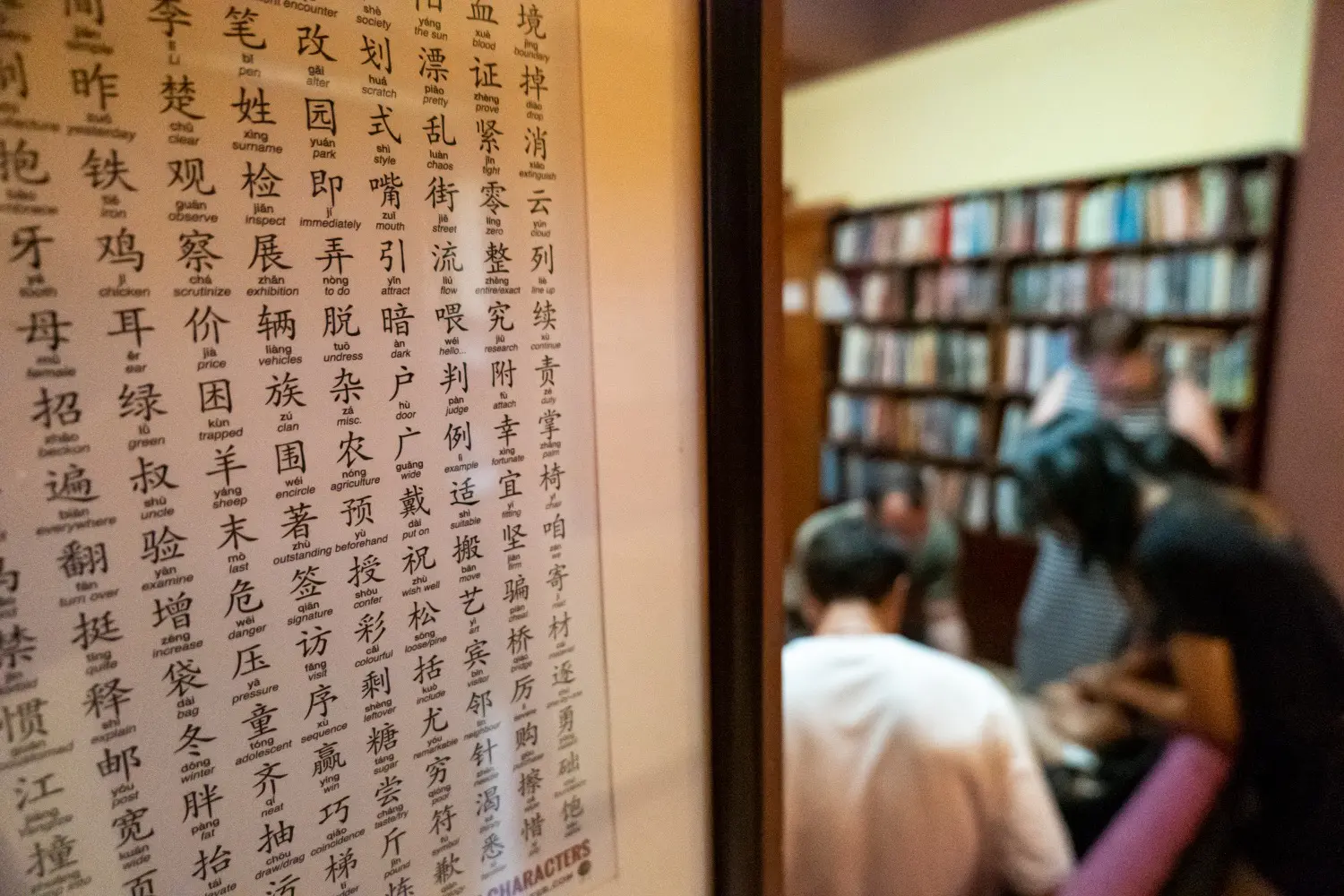
- Chinese and Japanese belong to entirely different language families — Sino-Tibetan and Japonic, respectively — despite sharing a writing system and centuries of cultural exchange.
- Chinese grammar is simpler, with no verb conjugations or gendered nouns, while Japanese pronunciation is more approachable for English speakers since it lacks tonal distinctions.
- Japanese adopted Chinese characters (Kanji) around the 4th century CE and later developed two additional scripts — Hiragana and Katakana — creating a uniquely layered writing system.
- Both languages offer immense professional and cultural value: Mandarin is the most spoken language in the world by native speakers, while Japanese opens doors to one of the world's most influential pop cultures and economies.
Comparing Chinese and Japanese is one of the most common starting points for anyone deciding which Asian language to learn. These two languages share a long history and can look remarkably similar at first glance — but beneath the surface, they differ in profound and fascinating ways.
In short: Chinese grammar is simpler, while Japanese pronunciation is easier. But the differences — and similarities — go much deeper than that.
Whether you are weighing which language to study first, or simply curious about how they compare, this guide breaks down everything from grammar and writing systems to pronunciation, vocabulary, and global reach.
For learners already leaning toward Chinese, you can learn Chinese in China through immersive programs that combine language instruction with cultural experiences — or start from anywhere with online classes. Read on to see how these two remarkable languages stack up.

01 How Are Chinese and Japanese Related?
At first glance, Japanese and Chinese (specifically Mandarin, which we focus on here) might seem quite similar, especially if you are unfamiliar with either language. After all, they both use character-based writing systems and share centuries of historical contact.
However, despite these surface similarities, Chinese and Japanese are two distinct languages that belong to completely different language families. While they do share some commonalities — primarily Chinese influence on Japanese — their origins are unrelated.
Mandarin Chinese belongs to the Sino-Tibetan language family, which encompasses more than 400 languages and is the world's second-largest language family by number of speakers. Research published in the Proceedings of the National Academy of Sciences dates the origin of this family to approximately 7,200 years ago, linking it to millet-farming cultures in northern China.
Japanese, on the other hand, is part of the Japonic language family, a small family comprising Japanese and the Ryukyuan languages spoken in the Ryukyu Islands. Linguists generally classify the Japonic family as independent, with no conclusively demonstrated genetic relationship to any other language family — making it one of the most fascinating linguistic puzzles in the world.
As we discussed in our Chinese vs Korean comparison, understanding these family trees is a helpful first step for anyone trying to decide why to learn Chinese — or which language to tackle first.
02 Chinese vs Japanese Grammar: Which Is Easier to Learn?
One of the most significant differences between Chinese and Japanese is their grammar. For many learners, this is where one language starts to feel considerably more approachable than the other.
Chinese grammar is often described as refreshingly straightforward. There are no verb conjugations based on nouns, pronouns, or tenses.
There is no grammatical gender, and no singular or plural noun or adjective agreement. If you have ever struggled with the conjugation tables of Romance languages, Chinese will feel like a breath of fresh air.
Japanese grammar, by contrast, is considerably more complex. Verbs conjugate based on several factors including tense, politeness level, and whether the verb is regular or irregular.
Sentences follow a subject-object-verb word order (unlike Chinese and English, which use subject-verb-object), which can take some adjustment for English speakers.
Japanese Keigo: Understanding Politeness Levels
In Japanese, the use of respectful language (keigo 敬語) is incredibly important and deeply embedded in daily interactions. This system is typically divided into three main categories: teineigo (丁寧語; polite language), sonkeigo (尊敬語; respectful language), and kenjougo (謙譲語; humble language).
Japanese also makes heavy use of honorific titles tied closely to social structure and hierarchy. Using overly formal language with friends can create distance, while using casual language with strangers, coworkers, or elders can cause serious offense.
These politeness levels can be one of the trickiest aspects of the language for learners to master.
Because of its political history, Chinese developed a more relaxed approach to politeness levels. Hierarchies are still present, and respect toward elders and authority figures is expected — this is deeply embedded in Chinese society.
Yet the language itself does not mark these distinctions as sharply, especially in spoken form. Over time, many traditional honorifics have been simplified, and today they rarely appear in everyday conversation.
03 Chinese vs Japanese Writing Systems Explained
At a glance, the Chinese and Japanese writing systems can come across as very similar — even identical when reading more formal content such as a newspaper article. This is because the Japanese language adopted the Chinese character writing system, or 汉字 (hànzì), as one of its writing methods.
Kanji, Hiragana, and Katakana: How Japanese Writing Works
Japanese consists of three different writing systems: Kanji, Hiragana, and Katakana.
Kanji is the Japanese word for Chinese characters, which are believed to have been imported into the Japanese language around the 4th century CE. At that time, Japanese had no writing system of its own, so Chinese characters were adopted to represent the written form of the language.
However, due to their complexity, Kanji were mainly used among nobles and elites.

Hiragana is a phonetic writing system with its earliest documented use generally dated to around 900 CE. Initially, Hiragana was primarily used by women, who did not have the same access to education as men.
This led to its use for more informal and private communication. As its popularity grew, it eventually became widely adopted across all social classes.
Katakana is another phonetic writing system that originally served as a simplified shorthand for Kanji characters. Over time, Katakana evolved to be used primarily for writing words of foreign origin.
This is extremely useful for foreigners encountering unfamiliar words — if a word is written in Katakana, you will most likely recognize it, especially if you speak English.
For Chinese learners, learning Chinese characters is a deeply rewarding process that also builds a foundation for understanding Kanji if you later decide to study Japanese.
Why Does Japanese Use Three Writing Systems?
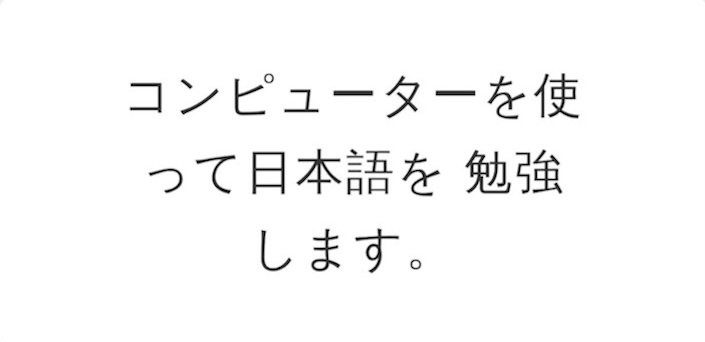
Today, all three writing systems are used together, sometimes even within the same sentence. Part of the reason is readability: Kanji creates natural breaks in sentences that make it easier for readers to distinguish between nouns, verbs, and other parts of speech.
A sentence written entirely in Hiragana would be difficult to parse — similar to an English sentence written without any spaces between words.
Additionally, Kanji helps resolve the many homophones in Japanese. Words that sound identical but have different meanings can be instantly distinguished in writing.
Katakana, meanwhile, remains useful for foreign loanwords and for adding emphasis to text. In contrast, Chinese uses a single script — though the distinction between simplified and traditional characters is an important one for learners to understand.
Onyomi vs Kunyomi: How to Read Kanji
Since Chinese and Japanese have completely different sound systems, the Japanese developed a dual approach when adopting Chinese characters: they kept approximations of the original Chinese pronunciations while also creating native Japanese readings based on their own spoken language.
These readings are categorized as onyomi (音読み) — pronunciations derived from the original Chinese — and kunyomi (訓読み) — the indigenous Japanese readings. In modern Japanese, the situation has become even more complex: some characters only have onyomi pronunciations, others only have kunyomi, and some characters have multiple readings of both types.
Generally speaking, onyomi pronunciations are used when a Kanji appears as part of a compound (two or more Kanji combined), while kunyomi pronunciations are used when the Kanji stands alone. Unfortunately, there is no simple rule for when to use which reading — learning each word in context is your best bet.
04 Shared Vocabulary Between Chinese and Japanese
Although Chinese and Japanese come from very different language families, Chinese vocabulary has exerted an enormous influence on the Japanese language. Chinese loanwords in Japanese are referred to as kango (漢語), and they are believed to make up about 60% of all Japanese vocabulary, with approximately 20% used in modern everyday speech.
While the usage and meaning of these shared words may sometimes differ significantly between the two languages, knowledge of one can provide genuine shortcuts for understanding the other — particularly in written form and especially as you become more advanced. This overlap can be a double-edged sword for learners, however.
Assuming identical meanings can lead to mistakes, as the same characters might have evolved different nuances over centuries of separate development.

Study Chinese in Guilin or Start Online
CLI offers personalized Chinese instruction built around your goals. Join our Immersion Program in Guilin or begin from anywhere with a free Chinese lesson .
05 Chinese vs Japanese Pronunciation: Tones vs Pitch Accent
Pronunciation is one of the areas where Chinese and Japanese differ most dramatically — and it often plays a decisive role in which language learners choose to study first.
In most cases, Japanese pronunciation is very approachable for non-native speakers. Each syllable has the same length and stress, making Japanese a non-stressed language with a very regular rhythm.
Japanese also has fewer vowels and consonants compared to languages like English, which simplifies the sound system considerably.
Chinese, however, is a tonal language. Mandarin has four main tones plus a neutral tone, and the pitch of your voice can change the meaning of any given word.
For non-native speakers, this makes pronunciation one of the most challenging aspects of learning Chinese. Understanding tone changes in Mandarin — including the third-tone sandhi rule — is essential for sounding natural and being understood.

What Is Pinyin? A Guide for Chinese Beginners
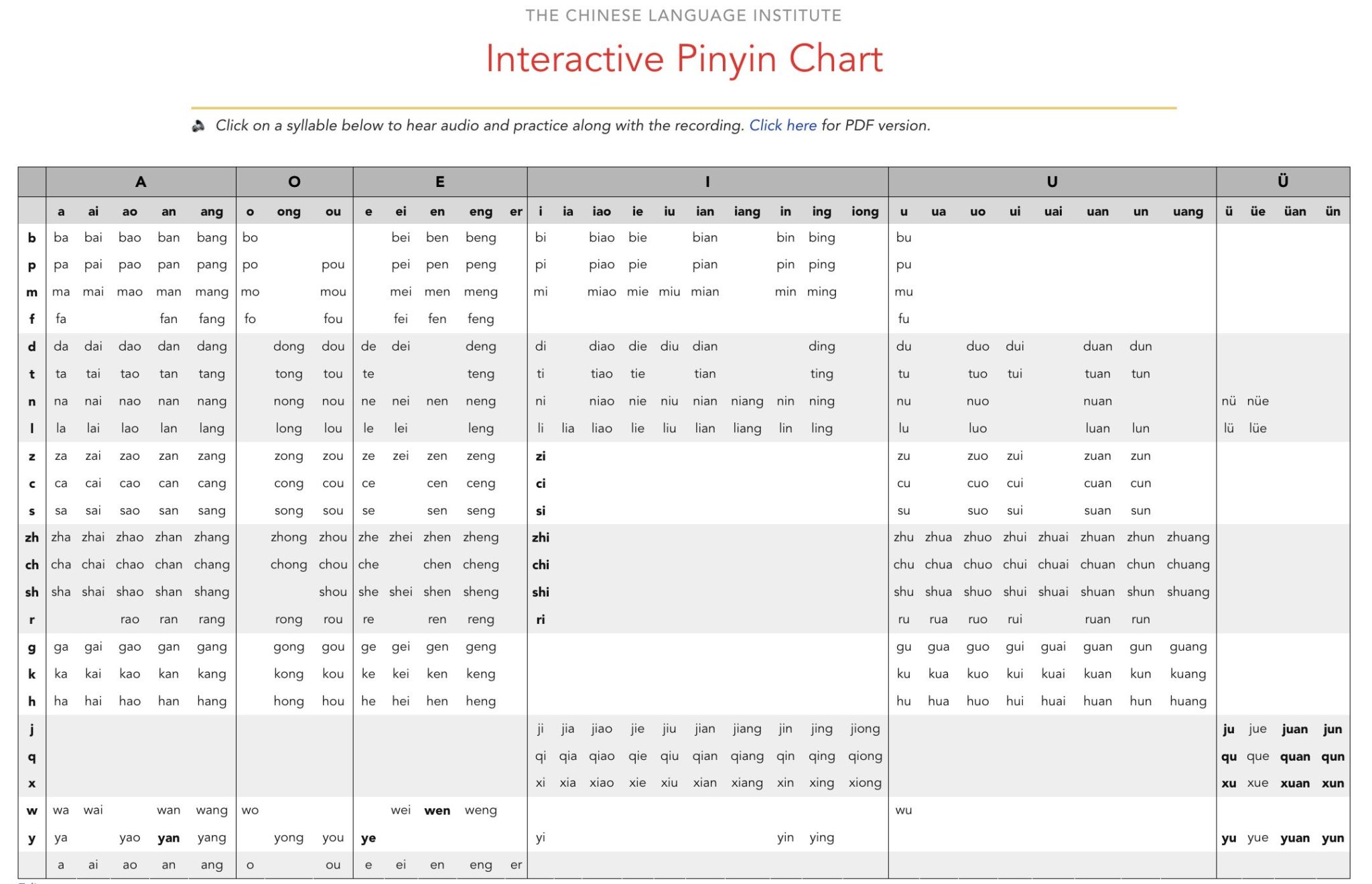
Luckily, beginners can depend on romanization systems that make these languages more accessible. For Chinese, there is the Pinyin system — the official romanization system for Standard Mandarin in Mainland China.
Developed in the 1950s, Pinyin uses the Latin alphabet to represent Chinese sounds phonetically.
Once you have learned all the sounds and tone markers, you can read the pronunciation of any character in a dictionary or digital text. Chinese children also learn Pinyin first in elementary school before transitioning to characters, making it an essential stepping stone for literacy.
For a hands-on tool, try CLI's interactive Pinyin chart to hear each sound.
What Is Romaji? A Guide for Japanese Beginners
Japanese has its own romanization system called Romaji (literally "Roman letters"), which converts Japanese sounds into Latin characters. Unlike Pinyin, which serves as the primary input method for typing Chinese and is taught to all Chinese students, Romaji plays a much smaller role in Japanese education.
Japanese children typically start with Hiragana and Katakana rather than Romaji. You will mainly encounter Romaji in contexts aimed at foreigners — street signs in tourist areas, business cards for international use, or when Japanese people communicate with non-Japanese speakers online.
Both systems serve as crucial bridges for beginners, allowing learners to focus on pronunciation and meaning before tackling the complexities of character recognition and writing. For those choosing Chinese, our guide to basic Chinese words is a great place to start building vocabulary alongside Pinyin.

06 How Many People Speak Chinese vs Japanese?
Mandarin Chinese is the official language of Mainland China, Taiwan, and Singapore, and is widely spoken by Chinese communities in Malaysia and many other countries around the world.
According to Ethnologue, it is the most spoken language globally by native speakers, with over 900 million native speakers. It ranks as the second most spoken language worldwide when including both native and non-native speakers (after English).
Japanese, on the other hand, is spoken by approximately 125 million people, primarily in Japan. While there are Japanese-speaking communities in countries like Brazil, Peru, and Hawaii due to historical migration, the language remains much more geographically concentrated.
In practical terms, you are far more likely to encounter Mandarin speakers around the world. Unless you plan to live in Japan or work primarily with Japanese companies, finding regular opportunities to practice Japanese with native speakers can be more challenging.
07 Chinese vs Japanese: Cultural Influence and Global Reach
Thanks to its ever-growing economic power, China's global influence has become impossible to ignore. With Chinese being the most spoken language in the world by native speakers, it has been implemented into academic curricula worldwide.
Chinese is rapidly becoming more important in international political and economic spheres, making it an excellent language for anyone looking to use it both within China and in global business contexts.
While Japanese may not have the same widespread adoption, its cultural influence remains powerful across the globe. Following Japan's post-war economic boom, the country became synonymous with cutting-edge technology and innovation.
By the late 1990s, Japanese anime had achieved global popularity, becoming one of the fastest-growing entertainment genres worldwide.
This cultural impact means that both languages offer an abundance of engaging learning materials. Whether you are interested in Chinese literature, business, and news, or Japanese anime, manga, video games, and pop culture, you will never be short on content to fuel your language learning journey.

08 Should I Learn Chinese or Japanese First?
In general, Chinese has a steeper learning curve at the beginning due to its exclusive use of characters and its tonal nature. However, the more you progress, the easier it becomes, and the grammar is refreshingly straightforward — especially if you are tired of wrestling with complex tenses and conjugations in other languages.
Chinese grammar follows relatively simple patterns without the verb conjugations, gender agreements, or irregular plurals that make many other languages challenging for English speakers. For a deeper dive into what to expect, our guide on whether Chinese is hard to learn breaks down the key challenges and how to overcome them.
Choosing the right Chinese textbooks can also make a significant difference in your early progress.

Japanese, on the other hand, is much more forgiving in the beginning. The pronunciation is far more straightforward, and if you are already an anime or manga fan, you might already know a few words or phrases.
Although the writing system can feel overwhelming at first, the syllabary alphabets (Hiragana and Katakana) can each be learned within a couple of days, giving you a satisfying sense of early progress.
Ultimately, both languages offer real advantages, so you cannot go wrong with either choice. Ready to take the next step? Explore CLI's immersive Study Abroad in China program or start with online Chinese lessons to begin learning today.
09 Chinese and Japanese Vocabulary Comparison Table
The table below highlights how many common words are shared — or strikingly similar — between Chinese and Japanese, thanks to centuries of cultural and linguistic exchange.
Notice how many Kanji-based Japanese words closely mirror their Chinese counterparts in both character form and meaning, even when the pronunciations differ dramatically.
| English | Chinese (Pinyin) | Japanese (Romaji) |
|---|---|---|
| Hello | 你好 (nǐ hǎo) | こんにちは (konnichiwa) |
| Thank you | 谢谢 (xièxiè) | ありがとう (arigatō) |
| Goodbye | 再见 (zàijiàn) | さようなら (sayōnara) |
| I / Me | 我 (wǒ) | 私 (watashi) |
| Friend | 朋友 (péngyǒu) | 友達 (tomodachi) |
| Water | 水 (shuǐ) | 水 (mizu) |
| Mountain | 山 (shān) | 山 (yama) |
| Book | 书 (shū) | 本 (hon) |
| School | 学校 (xuéxiào) | 学校 (gakkō) |
| Teacher | 老师 (lǎoshī) | 先生 (sensei) |
| Library | 图书馆 (túshūguǎn) | 図書館 (toshokan) |
| University | 大学 (dàxué) | 大学 (daigaku) |
| Telephone | 电话 (diànhuà) | 電話 (denwa) |
| Culture | 文化 (wénhuà) | 文化 (bunka) |
| Music | 音乐 (yīnyuè) | 音楽 (ongaku) |
Notice how words like 学校 (school), 大学 (university), 電話/电话 (telephone), and 文化 (culture) use identical or near-identical characters in both languages. If you learn Chinese characters first, you will have a significant head start on reading Japanese Kanji — and vice versa.
10 Start Your Language Learning Journey
Whether you choose Chinese or Japanese, you are embarking on a journey that will open doors to some of the richest cultures and fastest-growing economies in the world. Both languages reward dedication, and the skills you gain in one will often give you a head start in the other.
For those drawn to Chinese, the best next step is to start building a strong foundation. Our Chinese study plan guide can help you map out a realistic path from beginner to conversational fluency — whether you plan to study on your own, take online Chinese classes, or join an immersion program in China.