
- Chinese characters are formed according to six traditional categories known as 六书 (liùshū).
- Pictograms are the easiest characters to learn, but they make up only about 4% of all Chinese characters.
- Over 80% of Chinese characters are phono-semantic, combining a meaning radical with a sound component.
- Learning common radicals and phonetic components can help you guess the meaning and pronunciation of unfamiliar characters.
- Character pronunciations have shifted over centuries, so phonetic components are a helpful clue rather than a guaranteed rule.
At first glance, Chinese characters can look like a set of random and confusing symbols. In reality, they are formed and used according to a well-documented set of rules known as 六书 (liùshū), or the “six types” of Chinese characters.
Whether your goal is to pass an HSK exam or simply read a restaurant menu, knowing how characters are constructed will speed up your progress. If your goal is to Learn Chinese in China, understanding these six categories will also make it easier to build character knowledge alongside real conversation practice.
01 What are Chinese characters?
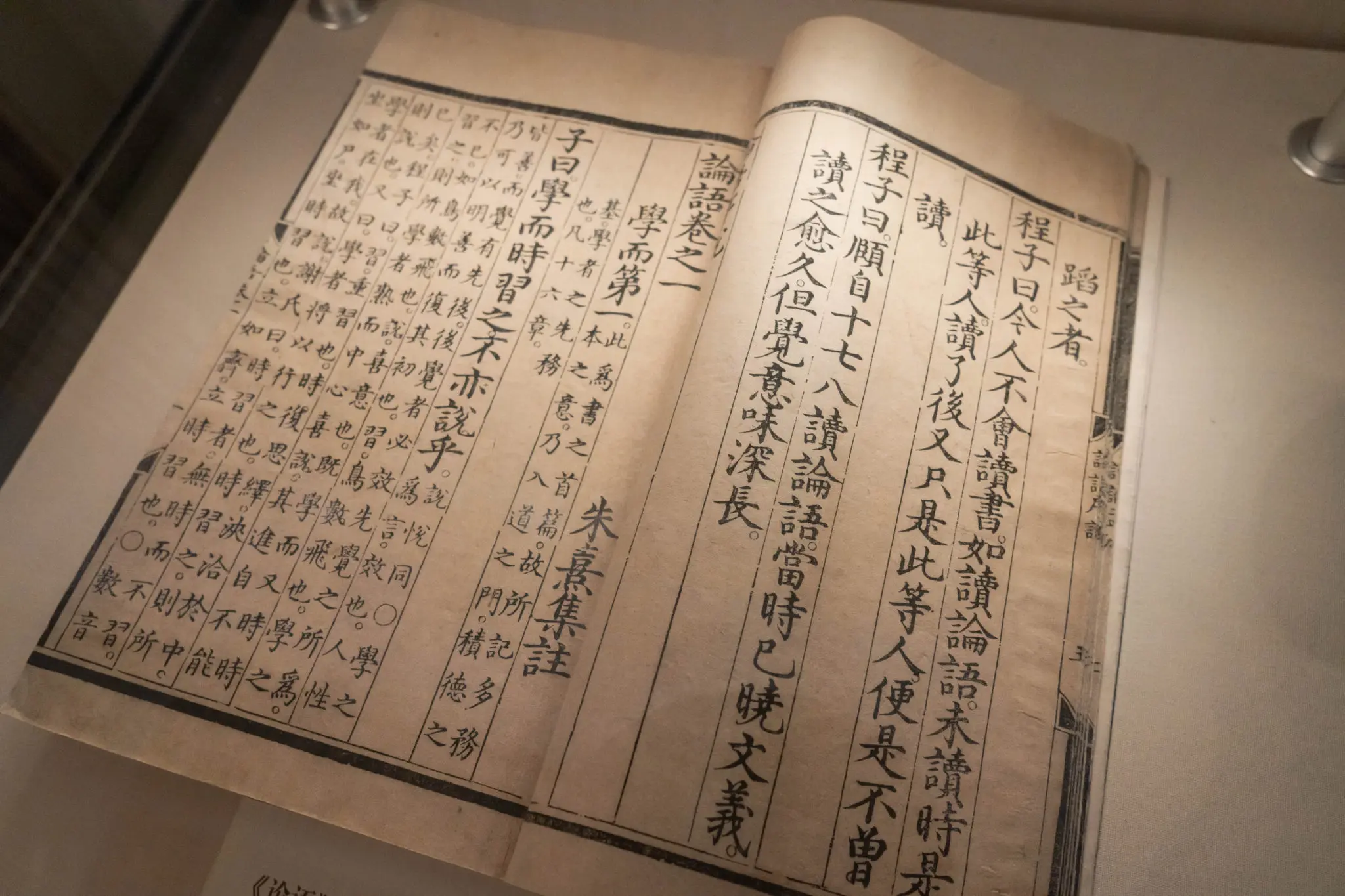
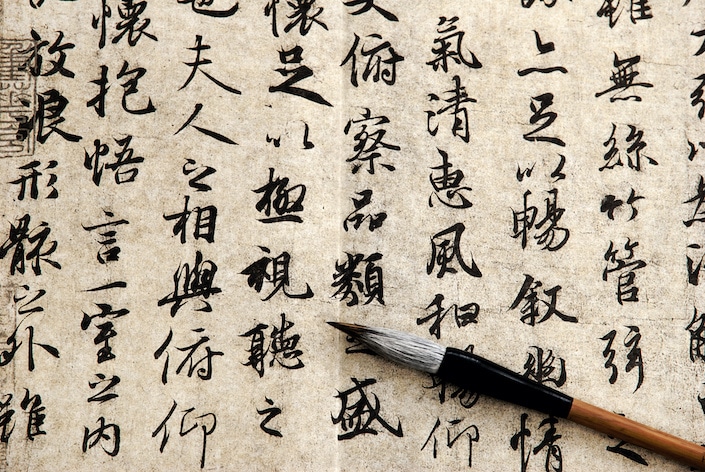
Chinese characters are logograms. Instead of being written using the letters of an alphabet, logograms consist of characters, or “pictures,” that represent a word. Egyptian hieroglyphics are a good example of this same principle.
Today, most of the world’s languages use an alphabet system to write words. Chinese, along with other East Asian languages that borrowed its writing system, such as Japanese and Korean, are the main languages that still use logograms.
Are all Chinese characters pictograms?
There is a widespread misconception that all Chinese characters are pictograms, meaning that every character visually resembles the word or meaning it represents. It’s common to see characters such as 木 (mù; wood or “tree”) and 山 (shān; mountain) used as examples of the “easy” nature of Chinese character composition.
This understanding of the language is sometimes used to “sell” Chinese to new learners, but it’s misleading. Pictograms are fun and beginner-friendly, yet they make up only about 4% of all Chinese characters. In reality, character formation is far more complex, and pictograms are just one of six distinct types.
02 The six types of Chinese characters (六书)
Chinese characters are split into six categories referred to as 六书 (liùshū). This framework was first developed by scholars who studied the composition and usage patterns of individual characters, and it’s still the standard way linguists describe how Chinese characters are formed.
Type 1: Pictograms 象形字 (xiàngxíngzì)
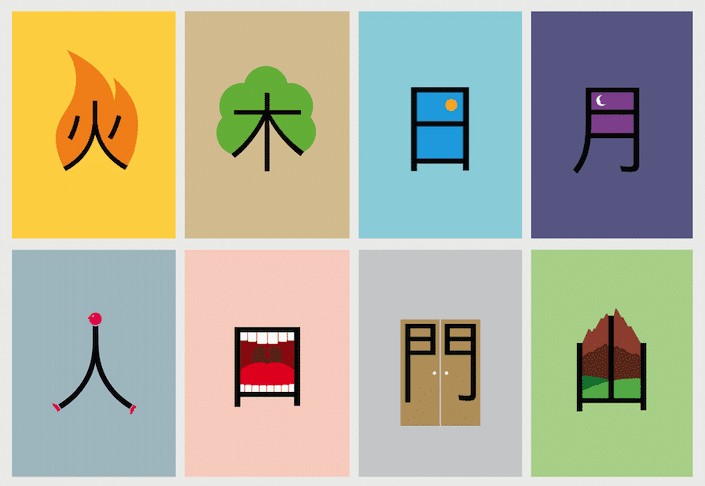
象形 (xiàngxíng) characters are pictograms. This method of forming characters is the easiest and most comprehensible for beginners to learn, since the characters are descriptive and resemble the object or phenomenon they represent.
Common pictographic characters include 日 (rì; sun), 雨 (yǔ; rain), 火 (huǒ; fire), and 口 (kǒu; mouth). Each of these 象形 characters visually echoes the concept it represents, but as mentioned above, they only make up about 4% of all Chinese characters.
Type 2: Phono-semantic characters 形声字 (xíngshēngzì)
形声 (xíngshēng) literally means to “form sound.” Over 80% of all Chinese characters fall into this category, making it by far the most common formation type.
Phono-semantic simply means that both the pronunciation and the meaning of these characters can generally be inferred just by looking at them. Native speakers are well aware of these phonetic components hidden within characters.
When they come across an unfamiliar character, they typically follow the rule of thumb 有边读边 (yǒu biān dú biān), which translates to “if it has a side, read the side.” This works because the phonetic component of a character usually appears on one of its sides.
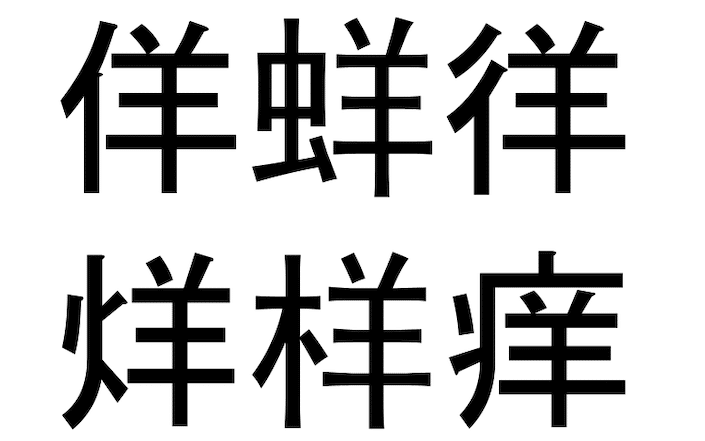
In general, the sound component of a character appears on the right, while the semantic component sits on the left. Characters can also place the phonetic component on top with the semantic component below, or nest one inside the other.
The semantic part that gives the meaning is usually a radical, which is why it helps to learn your radicals. Knowing more radicals also makes it easier to guess a character’s pronunciation, since removing the radical usually leaves the phonetic component exposed.
Characters with the same phonetic component
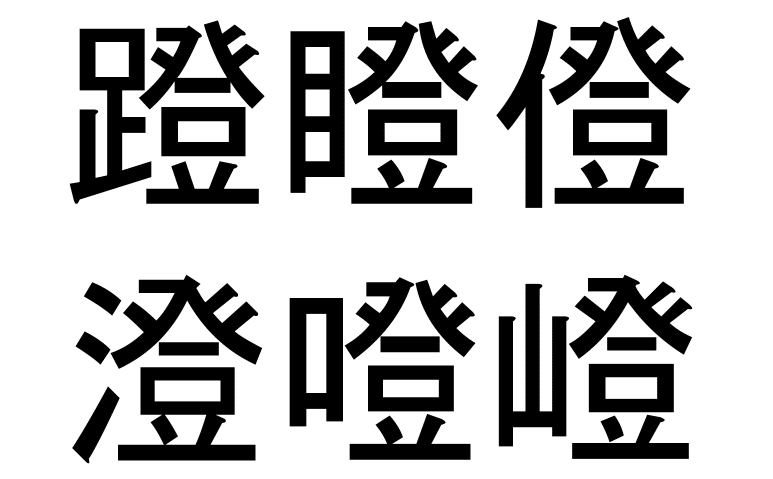
To see how a phonetic component can shape pronunciation across several characters, it helps to look at a few examples. The characters below all contain the phonetic component 登 (dēng; to ascend, to put on).
| Chinese | Pinyin | Meaning | Composition |
|---|---|---|---|
| 蹬 | dēng | to step on | 足 (foot) + 登 |
| 瞪 | dèng | to stare | 目 (eye) + 登 |
| 僜 | dèng | Deng ethnic minority (Tibet) | 亻 (person) + 登 |
| 澄 | dèng | to settle, to become clear | 氵 (water) + 登 |
| 噔 | dēng | thump (onomatopoeia) | 口 (mouth) + 登 |
| 嶝 | dèng | mountain path | 山 (mountain) + 登 |
The table below shows another pair of characters that both contain the phonetic component 反 (fǎn; contrary, in reverse).
| Chinese | Pinyin | Meaning | Composition |
|---|---|---|---|
| 饭 | fàn | rice; meal | 饣 (food radical) + 反 |
| 返 | fǎn | to return to | 辶 (walking radical) + 反 |
Test your skills: 扳
Based on what we’ve covered so far, can you guess the meaning and pronunciation of the character 扳? If you’re familiar with Chinese radicals, you’ll notice it contains the hand radical (扌, the radical form of 手; shǒu).
That means this character is probably related to the use of hands. We also know the sound component is usually on the right, and here that’s 反 (fǎn), so you might guess the whole character is pronounced “fan.”

In fact, 扳 is pronounced bān and means to pull or turn something around. The hand-radical guess was correct, but the expected sound didn’t carry over exactly, which brings us to an important point about how character pronunciations evolve.
Using a phonetic component to guess pronunciation isn’t always foolproof, since character sounds have shifted throughout history. Some characters that share a phonetic component still diverge noticeably in pronunciation today.
The characters below all contain the phonetic component 周 (zhōu). Most of them shifted toward an “iao” vowel sound over time, while only one kept the original “ou” ending.
| Chinese | Pinyin | Meaning | Composition |
|---|---|---|---|
| 雕 | diāo | to carve | 隹 (bird) + 周 |
| 凋 | diāo | to wither | 冫 (ice) + 周 |
| 碉 | diāo | blockhouse, pillbox | 石 (stone) + 周 |
| 绸 | chóu | silk | 纟 (silk) + 周 |
Noticing patterns like this one makes it easier to guess an unfamiliar character’s pronunciation, even when the match isn’t perfect. If you want a more systematic way to track these patterns, working through a structured Chinese study plan can help you build this knowledge steadily rather than all at once.
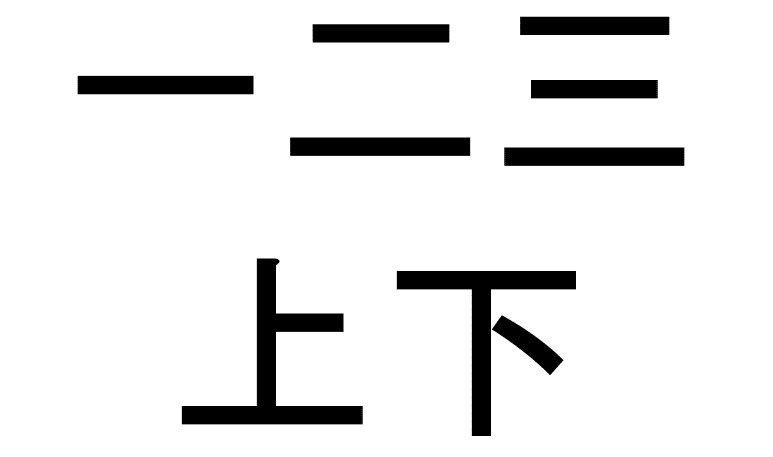
Type 3: Simple ideograms 指事字 (zhǐshìzì)
指事 (zhǐshì) literally translates as “pointing to matters.” Characters in this category are ideogramic: they express an abstract idea in an iconic form and are often called “self-explanatory” characters.
The characters 上 (shàng; up) and 下 (xià; down) are good examples. If the horizontal line represents the ground, the vertical stroke pointing upward conveys “up,” while the flipped version conveys “down.”

Study Chinese in Guilin or Start Online
CLI offers personalized Chinese instruction built around your goals. Join our Immersion Program in Guilin or begin from anywhere with a free Chinese lesson .
Type 4: Compound ideograms 会意字 (huìyìzì)
会意 (huìyì) characters are also fairly self-explanatory. They’re usually created by combining two or more pictograms or ideograms, resulting in a more abstract meaning.
This method “remedies” the limits of pure pictograms or simple ideograms, since combining elements makes it possible to express more abstract ideas. For example, the pictograph 木 (mù; wood) combines with the person radical 亻 (rén) to create 休 (xiū; to rest) — picture a person resting in the shade of a tree.

Other interesting compound ideograms include 看 (kàn; to look), a combination of 手 (shǒu; hand) and 目 (mù; eye), and 烦 (fán; to trouble, to feel vexed), which combines 火 (huǒ; fire) with the radical 页 (yè; page, leaf). A pile of burning pages certainly sounds stressful.
Type 5: Transfer characters 转注字 (zhuǎnzhùzì)
转注字 (zhuǎnzhùzì) are characters whose meanings were influenced by other words, sometimes called “mutually explanatory” characters. Chinese linguistics recognizes three styles of transfer: form transference (形转; xíngzhuǎn), meaning transference (义转; yìzhuǎn), and sound transference (音转; yīnzhuǎn).
The characters 考 (kǎo; to test) and 老 (lǎo; old) are considered 转注 characters because they were once interchangeable before their meanings drifted apart over time. 窍 (qiào; hole) and 空 (kōng; emptiness) show a similar pattern of historically overlapping meanings that later diverged.
Type 6: Loan characters 假借字 (jiǎjièzì)
假借字 (jiǎjièzì) are “borrowed” or “loan” characters, used to write words that sound the same or similar to an existing character. Linguists refer to these as homophonous or near-homophonous morphemes.
Sometimes a borrowed character’s original meaning was later dropped entirely, and a brand-new character was created to preserve it. The character 乎 (hū) originally meant “to call out,” but it was also borrowed as a grammatical particle in classical Chinese to express a question.
Eventually, a new character, 呼 (hū), was created to write the verb “to call out” by adding a mouth radical to 乎. A similar story applies to 必 (bì; must), which originally meant “weapon handle” before its sound was borrowed for the more common meaning of “must,” prompting the creation of 柲 (bì) to preserve the original sense.
The common character 来 (lái) has a similar history. It originally meant “wheat,” but that meaning was gradually replaced as 来 came to mean “to arrive,” so a new character, 麦 (mài), was assigned to represent “wheat” instead.
03 Why learn the different character types?
Chinese characters are more than a random set of pictures or symbols. Once you understand the six formation types, recognizing and memorizing new characters becomes noticeably easier.
Understanding the relationship between radicals and phonetic compounds will also help you guess both the meaning and pronunciation of characters you haven’t seen before. This background knowledge is especially useful once you start paying attention to stroke order, since writing characters correctly reinforces how their components fit together.
It’s also worth remembering that simplified characters, used in mainland China today, were built from the same six formation principles as their traditional counterparts. If you’re curious about how characters got to their modern forms, Chinese etymology is a natural next topic to explore, and it connects closely with how traditional and classical Chinese characters developed.
Once you’re comfortable with all six types, you’ll likely find that Chinese characters feel less like memorization and more like recognizing patterns. If you’d like to know roughly how many characters you’ll need along the way, our guide on how many characters you need to learn is a good place to start.
To see these types in action, lesson 4 of our free Chinese course shows characters that began as pictures and characters built from a meaning part and a sound part, each written stroke by stroke.
04 Chinese character types vocabulary
Here’s a quick reference table summarizing the six character types, along with an example character or two for each.
| Chinese | Pinyin | Meaning | Example characters |
|---|---|---|---|
| 六书 | The six types of Chinese characters | — | |
| 象形字 | Pictograms | 日, 雨, 火 | |
| 形声字 | Phono-semantic characters | 蹬, 饭 | |
| 指事字 | Simple ideograms | 上, 下 | |
| 会意字 | Compound ideograms | 休, 看 | |
| 转注字 | Transfer characters | 考, 老 | |
| 假借字 | Loan characters | 乎, 来 |
05 FAQ
What does 六书 mean?
六书 (liùshū) literally means “six writings” and refers to the six traditional categories used to classify how Chinese characters are formed.
Are most Chinese characters pictures of what they mean?
No. Pure pictograms make up only about 4% of Chinese characters. Over 80% are phono-semantic characters that combine a meaning radical with a sound component.
How can I guess the pronunciation of an unfamiliar character?
Many characters follow the rule 有边读边, meaning the phonetic component on one side often hints at the pronunciation. This isn’t foolproof, since pronunciations have shifted over time.
What is a radical in a Chinese character?
A radical is usually the semantic component of a character, giving a clue about its meaning. Recognizing common radicals also makes it easier to spot the phonetic component that remains.
Do all characters in the same phonetic family sound alike?
Not always. Characters sharing a phonetic component often sound similar, but centuries of sound change mean some diverge noticeably, as seen with characters built from 周.