

- Mandarin Chinese has the most native (L1) speakers of any language in the world — approximately 941 million.
- English is the most spoken language overall, with roughly 1.5 billion total speakers when second-language (L2) speakers are included.
- Spanish, Hindi, Portuguese, and Bengali round out the largest languages by native speakers.
- Speaker counts vary by source and edition; this article uses recent estimates from Ethnologue, the most widely cited language database.
- Whether a variety counts as a "language" or a "dialect" (for example, Mandarin vs. Cantonese, or the many varieties of Arabic) significantly affects the rankings.
What are the most spoken languages in the world? In this guide, we break down the top 10 languages by native speakers in 2026, compare them with total-speaker rankings, and explain why the answer depends on how you count.
The new year is always a time to set fresh goals, and learning a new language is consistently among the most popular resolutions. Knowing which languages have the most speakers can help you choose one that opens the most doors.

There has never been a better time to start. If you want to combine language study with full cultural immersion, you can even Learn Chinese in China through CLI's programs in Guilin.
01 What does "most spoken language" mean?
Before exploring the rankings, it's important to define what "most spoken" actually means. Different counting methods produce very different top-10 lists.
Native speakers (L1) vs. total speakers (L1 + L2)
Linguists generally distinguish between a person's first language (L1) and second language (L2). The main difference between the two is the age at which the language was acquired.
When ranking the world's most spoken languages, we must therefore separate the number of native speakers (L1) from the number of total speakers (L1 + L2 combined). This article bases its main top-10 ranking on native speakers, while also noting each language's total-speaker rank.

Languages, dialects, and mutual intelligibility
Another key question is how to handle dialects and mutually intelligible varieties. Arabic is a good example: it is often cited as a single top-10 language, but it is really a family of regional varieties that can differ considerably.
Modern Standard Arabic, the standardized literary form that developed mainly in the late 19th century, serves as the lingua franca of the Arab world. Because everyday spoken Arabic varies so much from region to region, Ethnologue treats Arabic as a macrolanguage rather than a single native language — which is why it does not appear in our L1 top 10.
Something similar applies to Chinese. Mandarin and Cantonese share a writing tradition but are mutually unintelligible when spoken, so linguists count them as separate languages within the broader Chinese language family.

02 Top 10 most spoken languages in the world: quick comparison chart
The table below summarizes the world's most spoken languages by native speakers, based on recent Ethnologue estimates. Total-speaker figures and ranks are approximate, since estimates vary between sources and editions.
| Rank (L1) | Language | Native speakers (approx.) | Total speakers (approx.) | Rank by total speakers |
|---|---|---|---|---|
| 1 | Mandarin Chinese | 941 million | 1.18 billion | 2nd |
| 2 | Spanish | 486 million | 560 million | 4th |
| 3 | English | 380 million | 1.5 billion | 1st |
| 4 | Hindi | 345 million | 610 million | 3rd |
| 5 | Portuguese | 236 million | 264 million | ~8th–9th |
| 6 | Bengali | 234 million | 273 million | ~6th–7th |
| 7 | Russian | 148 million | 255 million | ~9th |
| 8 | Japanese | 123 million | 123 million | ~13th |
| 9 | Cantonese (Yue Chinese) | 86 million | 87 million | ~18th |
| 10 | Marathi | 83 million | 99 million | ~14th |
The #10 spot is a near tie: Vietnamese (~85 million) and Turkish (~84 million) sit within a couple of million native speakers of Marathi, so different sources rank them in different orders.
03 The 10 most spoken languages in the world by native speakers
1. Mandarin Chinese — ~941 million native speakers
Mandarin Chinese is the language with the most native speakers in the world, at approximately 941 million. If you've ever wondered whether to invest time in learning Mandarin, that's a strong sign you should start today.
There are many reasons to learn Chinese, and its global reach makes it incredibly accessible, with tons of great learning resources to choose from. Despite its reputation, many learners find Chinese is not as hard to learn as they expected.
If you're brand new to pronunciation, start with our pinyin chart (and printable PDF). From there, explore Mandarin tones, the most important Chinese measure words, and some basic Chinese words.
Interested in structured study? Check out our online one-on-one Chinese classes by scheduling a free trial class today.
L1 + L2 ranking: Combining native and second-language speakers, Mandarin has roughly 1.18 billion total speakers. That makes it the second most spoken language in the world, behind only English.
2. Spanish — ~486 million native speakers
Spanish is fun, versatile, and widely considered one of the easiest languages for English speakers to pick up. With roughly 486 million native speakers, it is definitely worth adding to your list.
Spanish is an official language in 20 countries and is widely spoken in many more, particularly across South and Central America. It is also one of the most studied foreign languages in the world.
L1 + L2 ranking: Including second-language speakers, Spanish has around 560 million total speakers. That makes it the fourth most spoken language in the world.
3. English — ~380 million native speakers
With approximately 380 million native speakers, English is the lingua franca of the modern world. It dominates international business, technology, aviation, and higher education.
English holds official or special status in dozens of countries and territories across every inhabited continent. This global footprint is why so much of the world learns it in school.
L1 + L2 ranking: When second-language speakers are included, English becomes the most spoken language in the world. Total estimates now reach approximately 1.5 billion speakers.
4. Hindi — ~345 million native speakers
With around 345 million native speakers, Hindi is — along with English — one of the official languages of India's central government, and one of the country's 22 scheduled languages. It serves as a lingua franca among India's remarkably diverse linguistic and cultural groups.
There is also a huge amount of Hindi-language media (think Bollywood!), which exposes hundreds of millions of people to the language. Note that Hindi and Urdu are highly mutually intelligible; if counted as a single language (often called Hindustani), they would rank even higher.
L1 + L2 ranking: Counting its many second-language speakers, Hindi reaches roughly 610 million total speakers. That makes it the third most spoken language in the world.
5. Portuguese — ~236 million native speakers
With about 236 million native speakers, Portuguese is the official language of Portugal, Brazil, Angola, Mozambique, Cape Verde, Guinea-Bissau, São Tomé and Príncipe, and East Timor, and a co-official language of Macau. The vast majority of native speakers live in Brazil.
L1 + L2 ranking: Portuguese has comparatively fewer second-language speakers than the languages above it. Including them brings the total to roughly 264 million speakers, placing Portuguese around 8th–9th worldwide.
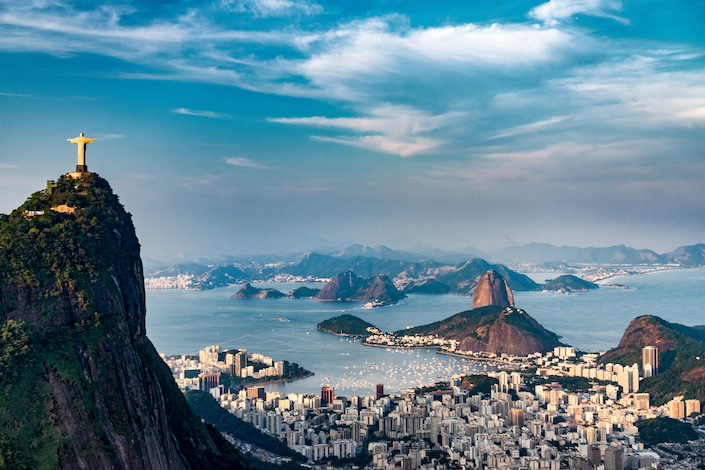
6. Bengali — ~234 million native speakers
Bengali (Bangla) is the official language of Bangladesh and of several states in India, including West Bengal. With approximately 234 million native speakers, it is the sixth most spoken language in the world by L1 speakers — remarkably close behind Portuguese.
L1 + L2 ranking: Adding roughly 39 million second-language speakers brings Bengali's total to about 273 million. That keeps it in sixth or seventh place worldwide.
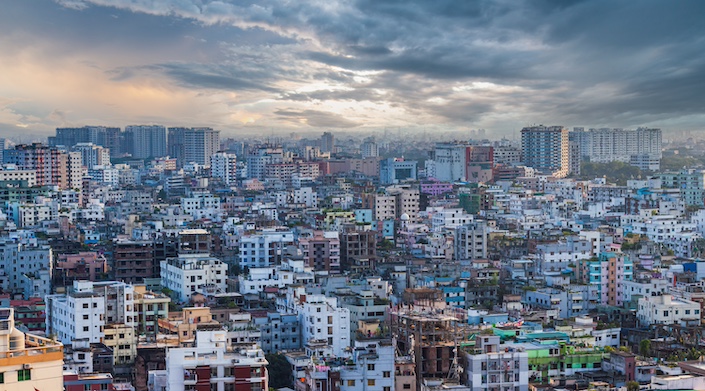
7. Russian — ~148 million native speakers
Russian is one of the six official languages of the United Nations, alongside Arabic, Chinese, English, French, and Spanish. It is the state language of Russia and Belarus, and an official language in Kyrgyzstan and Kazakhstan, with wide use in Tajikistan and other post-Soviet states.
Russian is also a recognized minority language in several countries, including Moldova and Uzbekistan. With roughly 148 million native speakers, it remains a highly useful language across Eastern Europe and Central Asia.
L1 + L2 ranking: Counting both native and second-language speakers, Russian totals about 255 million. That places it around ninth worldwide.
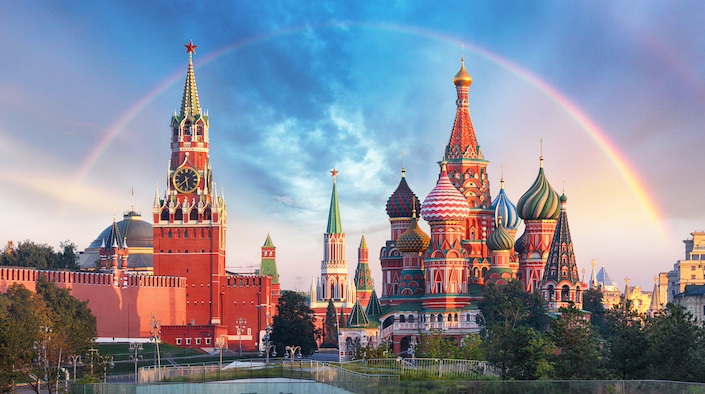
8. Japanese — ~123 million native speakers
Japanese has about 123 million native speakers, making it the eighth most spoken language in the world by L1 count. Remarkably, nearly all of those speakers are concentrated in a single country: Japan.
Many people are drawn to Japanese by Japan's rich culture — from breathtaking natural scenery and world-class cuisine to manga and anime. Learning resources are abundant, making it an accessible language to start.
Curious how it compares to Mandarin? See our guide on Chinese vs. Japanese.
L1 + L2 ranking: Only around 120,000 people speak Japanese as a second language. As a result, Japanese drops to roughly 13th place when total speakers are counted.

9. Cantonese (Yue Chinese) — ~86 million native speakers
With roughly 86 million native speakers, Cantonese is the dominant everyday language of Hong Kong and Macau, where "Chinese" is an official language and Cantonese is the variety most people actually speak. It is also widely spoken across Guangdong and Guangxi provinces — including cities like Guangzhou and Wuzhou — and in Chinese immigrant communities worldwide.
Although Cantonese and Mandarin are often informally called "dialects" of Chinese, they are mutually unintelligible in spoken form, and linguists classify them as separate languages within the Chinese family. You can read more in our guides to the languages of China and the differences between Mandarin and Cantonese.
Because both are usually written using standard written Chinese, literacy in one greatly helps with the other. Knowledge of Mandarin or Cantonese also gives you a head start on the other's vocabulary.
L1 + L2 ranking: Only around 400,000 people speak Cantonese as a second language. When total speakers are counted, Cantonese therefore falls from 9th to roughly 18th place.

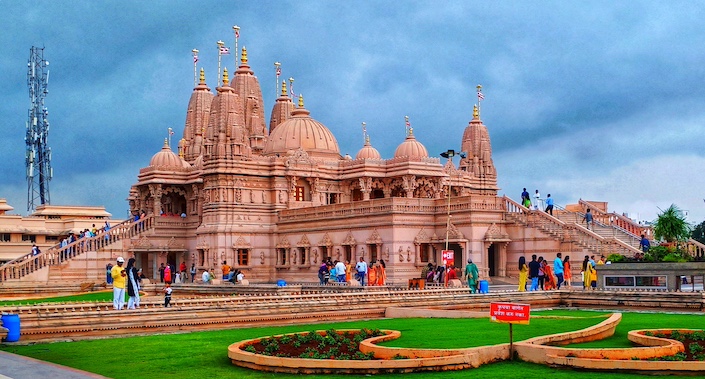
10. Marathi — ~83 million native speakers
Marathi is the official language of Maharashtra in western India, home to Mumbai. Although many people outside South Asia have never heard of it, its roughly 83 million native speakers place it around 10th in the world.
After Hindi and Bengali, Marathi has the third largest number of native speakers among India's languages. Keep in mind that Vietnamese and Turkish have nearly identical native-speaker counts, so sources differ on the exact #10.
L1 + L2 ranking: The total number of Marathi speakers is around 99 million. That makes it roughly the 14th most spoken language when L2 speakers are included.

Study Chinese in Guilin or Start Online
CLI offers personalized Chinese instruction built around your goals. Join our Immersion Program in Guilin or begin from anywhere with a free Chinese lesson .
04 Why learn a new language?
There are countless reasons why language learning matters in our ever-globalizing world. Most importantly, learning languages helps us think differently and see the world in new ways.
The Austrian-British philosopher Ludwig Wittgenstein put it beautifully: "The limits of my language mean the limits of my world." While linguists debate exactly how much language shapes thought, every new language undeniably widens your horizons.
If Mandarin is your pick, you don't need to figure it out alone. CLI can help you build a personalized Chinese study plan, understand HSK levels, and estimate how long it takes to learn Chinese.
Curious how Mandarin compares to other Asian languages? See our breakdowns of Chinese vs. Japanese and Chinese vs. Korean.
05 How to say the world's languages in Chinese: vocabulary list
Ready to put your Mandarin to work? Here's how to talk about the world's most spoken languages in Chinese.
| Chinese | Pinyin | Meaning |
|---|---|---|
| 语言 | language | |
| 母语 | native language (L1) | |
| 外语 | foreign language (L2) | |
| 普通话 | Mandarin Chinese (standard Chinese) | |
| 西班牙语 | Spanish | |
| 英语 | English | |
| 印地语 | Hindi | |
| 葡萄牙语 | Portuguese | |
| 孟加拉语 | Bengali | |
| 俄语 | Russian | |
| 日语 | Japanese | |
| 粤语 | Cantonese | |
| 马拉地语 | Marathi |
06 FAQ: most spoken languages in the world
What is the most spoken language in the world?
English is the most spoken language in the world overall, with roughly 1.5 billion total speakers. Mandarin Chinese has the most native speakers, at approximately 941 million.
Which language has the most native speakers?
Mandarin Chinese has the most native (L1) speakers of any language — about 941 million, largely due to China's population. Spanish (~486 million) and English (~380 million) come next.
Is English or Mandarin Chinese more widely spoken?
It depends on how you count. Mandarin wins by native speakers, while English wins by total speakers because so many people learn it as a second language.
Why isn't Arabic in the top 10 by native speakers?
Arabic is classified by Ethnologue as a macrolanguage made up of many regional varieties that are not all mutually intelligible. Counted together, Arabic varieties would easily rank in the top five by total speakers.
Are Mandarin and Cantonese the same language?
No. They share a writing tradition but are mutually unintelligible when spoken, so linguists treat them as separate languages within the Chinese language family.
07 Final thoughts: which language should you learn?
Whether you count native speakers or total speakers, a handful of languages — Mandarin, English, Spanish, and Hindi — dominate global communication. Each one opens doors to hundreds of millions of new conversations.
If Mandarin tops your list, CLI is here to help, whether you study from home or immerse yourself in Guilin. Schedule a free trial class and start speaking the world's largest native language today.
08 Selected References
- Ethnologue: What is the most spoken language? Rankings by native and total speakers. View source →
- Encyclopaedia Britannica: Languages by number of native speakers. View source →
- Statista (Ethnologue data): The most spoken languages worldwide. View source →
- Note: Speaker estimates vary by source, methodology, and edition, and are updated regularly. Figures in this article are approximate and reflect recent Ethnologue estimates.