


- Roughly 80% of Chinese characters are phonetic-semantic compounds — each one contains built-in clues about both meaning and pronunciation.
- Just 1,000 characters cover nearly 90% of everyday Chinese text, a meaningful reading threshold achievable within the first year of study.
- Six research-backed methods produce the best results: learning radicals first, handwriting practice, spaced repetition, extensive reading, strategic mnemonics, and prioritizing recognition before production.
- Recognition develops faster than production — focus on building a broad reading base first, then layer in writing.
- Combining methods in a layered daily routine (review, learn, read, reinforce) reflects what the research supports for long-term character retention.
The first time you see a page of Chinese text, every character can feel like its own small mystery — thousands of intricate symbols with no obvious connection to the sounds they represent or the meanings they carry. It's the kind of moment that makes you wonder whether learning to read Chinese is even realistic.
Here's the thing: the vast majority of those characters are not random at all. Roughly 80% of Chinese characters (汉字 hànzì) are built from just two parts — one that hints at meaning and one that hints at pronunciation.
Once you learn to see that internal structure, character learning shifts from brute memorization to pattern recognition. That single insight changes everything about how efficiently you can learn.
This article covers what Chinese characters are actually made of, how many Chinese characters there are and how many you need, and — most importantly — the research-backed methods that will help you learn them well.
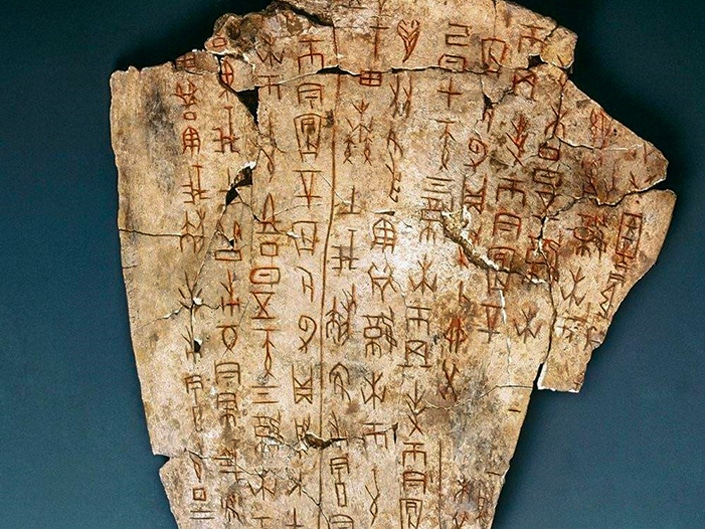
01 What Are Chinese Characters, Really?
If you've seen Chinese characters introduced as "pictographs" — little pictures of the sun, a mountain, a tree — you've been given a charming but misleading starting point. Pictographs account for only about 5% of modern characters. The real story, which begins with understanding the types of Chinese characters, is far more useful.
According to a landmark 2003 study by Shu, Chen, Anderson, Wu, and Xuan published in Child Development, approximately 80% of Chinese characters are 形声字 (xíngshēngzì, phonetic-semantic compounds). Each one contains two functional parts: a semantic component (often called a radical) that hints at the character's meaning category, and a phonetic component that hints at its pronunciation.
Take the phonetic component 青 (qīng), which appears in a whole family of characters:
- 清 (qīng, clear, clean) — 氵= water radical: think "clear water"
- 请 (qǐng, to invite, please) — 讠= speech radical: a spoken request
- 情 (qíng, emotion, feeling) — 忄= heart radical: feelings from the heart
- 晴 (qíng, sunny, clear sky) — 日 = sun radical: clear skies
Every one of these characters shares the phonetic element 青 and a pronunciation in the qing family, while the radical on the left tells you the meaning neighborhood. This isn't a coincidence — it's how the writing system was designed.
Understanding this structure is like learning that English words have Latin and Greek roots. Once you see that "cardio-" means heart, you can make informed guesses about "cardiovascular," "cardiologist," and "cardiac" even if you've never seen them before. Chinese characters work the same way, just with visual components instead of letter strings.
The structural arrangements of these compounds follow predictable patterns. The most common is left-right composition — a 2002 structural analysis by Gao and Kao found that over 60% of high-frequency characters use this arrangement, typically with the semantic radical on the left and the phonetic component on the right.
Top-bottom is the next most common at roughly 20%, followed by enclosure patterns and other configurations.
Video: The Secret Behind How Chinese Characters Work
For a beautifully animated overview of how Chinese characters evolved from ancient pictograms to the modern writing system, this TED-Ed lesson by Gina Marie Elia is one of the best introductions available. It covers the legendary origins of Chinese writing, the shift from pictographic to logographic characters, and how radicals and phonetic components work together — all in under five minutes.
How Reliable Are Phonetic Components?
A natural question: if phonetic components hint at pronunciation, how often do they actually work?
The honest answer is "partially." Shu et al. (2003) found that only about 35–38% of common compound characters are fully "regular," meaning the phonetic component matches the character's pronunciation exactly. That sounds discouraging — until you look at it from a different angle.
The same study found that the average phonological consistency among characters sharing a phonetic component is about 64%. That means when you encounter an unfamiliar character with a phonetic element you already know, there's roughly a two-in-three chance it shares some pronunciation features with its phonetic family.
You may not guess the exact tone or initial, but you'll often land in the right neighborhood.
Phonetic components won't always be right, but they dramatically narrow the possibilities — and that's far more efficient than starting from zero with every new character. They're educated guesses, not answer keys.
02 How Many Characters Do You Actually Need?
One of the most common questions learners ask is how many characters they need to know. The answer is more encouraging than you might expect.
Chinese character frequency follows a steep curve. A small number of characters do enormous amounts of work, while thousands of rare characters appear only occasionally.
Based on Jun Da's corpus analysis of approximately 258 million characters of Modern Chinese text (hosted at Middle Tennessee State University), the distribution looks like this:
| Characters Known | Approx. Text Coverage | What You Can Do | HSK 3.0 Band |
|---|---|---|---|
| 300 | ~58% | Recognize basic patterns; start reading simple sentences | Band 1 |
| 500 | ~76% | Start recognizing basic signage, simple menus | — |
| 900 | ~86% | Follow short texts with some dictionary help | Band 3 |
| 1,000 | ~89% | Follow simple WeChat messages, basic headlines | — |
| 1,500 | ~95% | Read most everyday texts with occasional gaps | Band 5 |
| 2,000 | ~97% | Comfortably read most web content and articles | — |
| 2,500 | ~98.5% | Read fluently with rare interruptions | — |
| 3,000 | ~99.2% | Near-complete coverage; approaching full literacy | Bands 7–9 |
1,000 characters gets you nearly 90% of the way there. That's a meaningful reading ability — not fluency, but enough to start engaging with real Chinese text in your daily life.
For a formal benchmark, the Chinese government's 通用规范汉字表 (Tōngyòng Guīfàn Hànzì Biǎo, Table of General Standard Chinese Characters), published in 2013 and still the current standard, defines 3,500 characters as the Level 1 common literacy set. That's the official threshold for educated adult reading.
But most learners will find that the jump from 1,000 to 2,000 characters produces the single biggest improvement in day-to-day reading ability, taking you from roughly 89% to 97% text coverage.
Chinese characters combine to form multi-character words (词 cí) with meanings that aren't always predictable from the individual characters. Knowing 1,000 characters doesn't mean you know 1,000 words — you likely know more, because those characters recombine. But it also means that reading ability depends on vocabulary knowledge beyond just character recognition.
For learners preparing for the HSK (汉语水平考试 Hànyǔ Shuǐpíng Kǎoshì, Chinese Proficiency Test), the HSK 3.0 standard underwent a significant revision in November 2025 and held its first global pilot exam in January 2026.
The revised standard maps character requirements across its bands, from 300 at Band 1 to 3,000 at Bands 7–9. CLI's detailed HSK level guide breaks down what each band expects.

Accelerate Your Character Learning
CLI's one-on-one immersion programs pair you with rotating teachers who tailor character instruction to your level — 20 hours per week of personalized guidance in Guilin, China.
03 How to Learn Chinese Characters: 6 Research-Backed Methods
Not all study methods produce equal results. The research points to specific approaches that work — and a few popular habits that waste time. Here are six methods supported by evidence, ordered roughly by when they matter most in your learning.
1. Learn Radicals and Components First
Before you try to memorize whole characters, learn the building blocks they're made of.
Chinese characters use a set of recurring components, most notably the 214 康熙部首 (Kāngxī bùshǒu, Kangxi radicals), which serve as semantic classifiers. Research from multiple studies confirms that semantic components provide meaning cues in over 80% of characters.
More importantly for learners, a 2014 study by Xu, Chang, and Perfetti in the Modern Language Journal found that beginning learners who studied characters grouped by shared radicals showed better recall and better radical generalization than those who learned characters in frequency order.
You don't need all 214 radicals right away. Starting with 50–100 of the most common ones gives you a powerful toolkit. A few examples:
- 氵(shuǐ 水, water) — appears in 河 (hé, river), 海 (hǎi, sea), 清 (qīng, clear)
- 木 (mù, wood/tree) — appears in 林 (lín, forest), 板 (bǎn, board), 桌 (zhuō, table)
- 口 (kǒu, mouth) — appears in 吃 (chī, eat), 唱 (chàng, sing), 呼 (hū, call)
- 忄(xīn 心, heart) — appears in 情 (qíng, emotion), 快 (kuài, fast/happy), 忙 (máng, busy)
Once you recognize these components, new characters become less intimidating. You're no longer looking at an inscrutable shape — you're seeing familiar parts in a new arrangement. For practice, CLI's list of the 100 most common Chinese characters is a useful starting point for building your base.

One important nuance from the Xu et al. study: the grouping advantage was strongest for beginners. Intermediate learners showed no significant difference between radical-grouped and frequency-ordered study. This makes radical learning a high-priority beginner strategy, not a lifelong method.
2. Write Characters by Hand (Yes, Really)
In an age of pinyin-typing and voice-to-text, it's fair to wonder whether handwriting practice is still worth the time. The research says yes — with a caveat.
A 2011 study by Guan, Liu, Chan, Ye, and Perfetti published in the Journal of Educational Psychology tested 48 adult learners of Chinese at the University of Pittsburgh. Participants who practiced characters through handwriting showed stronger performance on form recognition and meaning tasks compared to those who practiced through pinyin-typing.
The handwriting group was better at recognizing what characters looked like and what they meant.
However, the pinyin-typing group performed better on phonological tasks — connecting characters to their sounds. And a 2023 study by Bourgerie, Cox, and Riep found that learners who used keyboards scored significantly higher on writing proficiency assessments than those who wrote only by hand.
The practical takeaway isn't "handwriting only" or "typing only" — it's both, weighted by your stage:
| Handwriting | Pinyin Typing | |
|---|---|---|
| Strengths | Stronger character recognition; better form-meaning mapping; activates motor memory | Better phonological connection; faster composition; matches real-world usage |
| Best for | Early-stage learning; cementing new characters; building visual memory | Building writing fluency; daily communication; reinforcing pronunciation |
Early on, spend more time writing by hand to build a strong foundation in character recognition. As your character base grows, shift toward typing for speed and real-world practice. The two methods reinforce different aspects of character knowledge.
3. Use Spaced Repetition (But Not as Your Only Tool)
If you've spent any time researching language learning, you've probably heard of spaced repetition systems (SRS) — apps like Anki, Pleco, or Skritter that show you flashcards at increasing intervals based on how well you remember them.
The science behind spaced repetition is rock-solid. A major 2006 meta-analysis by Cepeda, Pashler, Vul, Wixted, and Rohrer in Psychological Bulletin, covering 184 articles and 839 assessments, confirmed that distributing practice over time produces dramatically better long-term retention than cramming.
For Chinese characters, SRS is an excellent maintenance tool. It keeps characters you've already learned from fading.
But here's where many learners go wrong: they treat SRS as their primary learning method, adding stacks of new cards and drilling them without first understanding the character's components, meaning, and context.
SRS works best when the initial encoding is meaningful — when you've analyzed a character's radical and phonetic component, understood what it means, written it a few times by hand, and maybe encountered it in a sentence. Then SRS can keep that knowledge alive.
Without that foundation, you're just memorizing visual patterns with no hooks to hold them in place.
4. Read Early, Read Often
Flashcards test recognition in isolation. Reading tests it in context — and that's where real fluency develops.
Research consistently shows that learners need multiple encounters with a word — commonly estimated at 10 to 30 exposures — before truly acquiring it. A single pass through a graded reader produces very little lasting vocabulary; studies across language contexts show that most newly encountered words are forgotten within weeks without repeated exposure.
This doesn't mean reading is ineffective. It means reading needs volume and repetition.
Graded readers designed for Chinese learners (such as those from Mandarin Companion or Chinese Breeze) let you encounter characters in natural contexts at your level, reinforcing what you've studied through flashcards and class.
Over time, this builds 语感 (yǔgǎn, language sense/intuition) — an intuitive feel for how the language works — that no amount of isolated drilling can replicate.
The most effective approach combines both: use SRS to maintain your active character base, and read extensively to deepen your contextual understanding. They complement each other. Flashcards are precise and efficient; reading is rich and natural.
5. Use Mnemonics Strategically
Mnemonic techniques — creating stories or visual associations to remember characters — have passionate advocates. The most well-known system is James Heisig's Remembering the Hanzi, which teaches character writing and meaning through component-based imaginative stories.
Heisig's method is popular for a reason: breaking characters into components and weaving those components into a memorable narrative can make even complex characters stick.
However, a few caveats are worth knowing. Volume 1 deliberately excludes pronunciation, teaching only character form and meaning. No peer-reviewed studies have tested the method's efficacy.
And the deliberate omission of pronunciation runs counter to research suggesting that phonological awareness significantly contributes to character reading ability.
Mnemonics work best as a supplementary tool — a way to get a difficult character to stick when other methods haven't — rather than a complete system. If you find yourself naturally creating stories for tricky characters, keep doing it. But don't feel obligated to adopt a full mnemonic system if component analysis and handwriting practice are already working for you.
6. Prioritize Recognition Before Production
Here's a principle that can save you a lot of frustration: you will recognize characters long before you can write them from memory, and that's completely fine.
Research by Ke (1996) in the The Modern Language Journal confirmed what most learners intuitively sense — receptive character knowledge (being able to read a character and know its meaning) develops faster and requires less cognitive effort than productive knowledge (writing it from memory without a reference).
Pinyin-based typing bridges this gap in practice: you can type any character you can recognize, even if you couldn't reproduce it by hand.
This maps neatly to how the HSK 3.0 is structured. Levels 1 through 4 require character recognition only — handwriting requirements don't begin until Level 5. The test itself is designed around the principle that recognition comes first.
The practical implication: focus on building a broad recognition base first. When you encounter a new character, prioritize being able to read it and understand it.
Handwriting practice is valuable (as we discussed above), but concentrate your handwriting energy on your most frequently used characters rather than trying to write every character you can read.
04 When Should You Start Learning Characters?
If you're a beginning Mandarin learner, you might be wondering whether to focus on 拼音 (pīnyīn, pinyin) first and add characters later, or start both at once.
There's no controlled experimental evidence establishing a precise timeline, but many experienced teachers recommend introducing characters within the first few weeks of study — after you've built some basic comfort with tones and pronunciation, but not so late that you develop what CFL educators call 拼音依赖 (pīnyīn yīlài, pinyin dependency).
This is a real and well-documented pedagogical concern: learners who rely exclusively on pinyin for too long find it increasingly difficult to transition to reading characters, because the roman letters become their default way of processing Chinese.
A reasonable approach is to spend your first week or two focused on tones, initials, finals, and basic pinyin reading — CLI's pinyin guide is a solid starting point — then begin introducing characters alongside your spoken practice.
The two skills reinforce each other: characters give visual anchors to words you're learning to say, and pronunciation knowledge helps you remember characters with phonetic components.
05 Simplified vs. Traditional: Which Should You Learn?
This is a common source of anxiety for new learners, but the answer is straightforward: follow your target region.
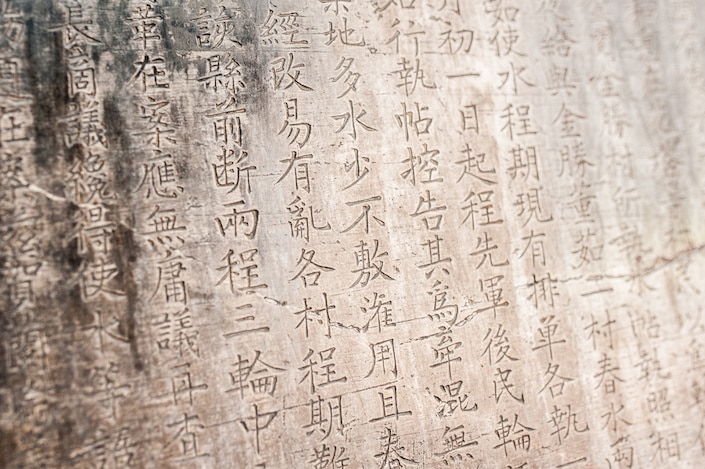
If you're planning to study or work in mainland China (or Singapore), learn 简体字 (jiǎntǐzì, simplified characters). If your focus is Taiwan or Hong Kong, learn 繁体字 (fántǐzì, traditional characters).
There's no strong evidence that either system is inherently easier or harder for second-language learners — the differences are real but manageable, and many learners eventually develop at least passive familiarity with both.
If you're studying with CLI in Guilin, you'll be learning simplified characters, which is the standard across mainland China and the system used in HSK exams.
Don't overthink this decision. Pick the one that matches where you want to use your Chinese, and start.
06 Putting It All Together: A Character Learning Routine
Knowing six good methods doesn't help much if you don't know how to combine them. Here's what a practical daily character study session might look like for a beginner-to-early-intermediate learner:
- Review (10 minutes): Open your SRS app and work through due reviews. This maintains characters you've already learned.
- Learn new characters (15–20 minutes): Study 3–5 new characters using component analysis. Identify the radical and phonetic component. Understand the meaning. Write each one by hand several times from memory — not tracing, but active recall.
- Read (10–15 minutes): Spend time with a graded reader or short text at your level. When you encounter characters you've recently studied, notice how they work in context. Look up unfamiliar characters and note recurring ones to add to your SRS.
- Add to SRS (5 minutes): Create cards for new characters you've studied and any high-frequency characters you encountered during reading.

This layered approach — review, learn, read, reinforce — reflects what the research supports: meaningful initial encoding through component analysis and handwriting, spaced repetition for maintenance, and contextual reading for depth.
Of course, the ideal version of this routine includes a teacher who can tailor character instruction to your specific level, correct your stroke order in real time, and adjust the pace based on what you're retaining.
That's one of the reasons CLI's one-on-one immersion model works well for character learning — 20 hours per week of personalized instruction with rotating teachers means your character study is guided, assessed, and adapted daily, not left to guesswork.
Whether you're studying on your own, preparing for the HSK, or considering an immersion program in China, the principles are the same: learn the structure, prioritize frequency, combine methods, and read as much as you can.
Chinese characters are a system — and like any system, they become manageable once you understand how the pieces fit together.
If you're ready to accelerate your character learning with structured, one-on-one instruction, explore CLI's immersion programs in Guilin or online classes from anywhere.
| Chinese | Pinyin | Translation |
|---|---|---|
| 汉字 | hànzì | Chinese character(s) |
| 形声字 | xíngshēngzì | phonetic-semantic compound |
| 青 | qīng | blue/green; a common phonetic component |
| 清 | qīng | clear, clean |
| 请 | qǐng | to invite; please |
| 情 | qíng | emotion, feeling |
| 晴 | qíng | sunny, clear sky |
| 词 | cí | word (multi-character) |
| 通用规范汉字表 | Tōngyòng Guīfàn Hànzì Biǎo | Table of General Standard Chinese Characters |
| 汉语水平考试 | Hànyǔ Shuǐpíng Kǎoshì | Chinese Proficiency Test (HSK) |
| 康熙部首 | Kāngxī bùshǒu | Kangxi radicals |
| 河 | hé | river |
| 海 | hǎi | sea |
| 林 | lín | forest |
| 板 | bǎn | board |
| 桌 | zhuō | table |
| 吃 | chī | to eat |
| 唱 | chàng | to sing |
| 呼 | hū | to call |
| 快 | kuài | fast; happy |
| 忙 | máng | busy |
| 语感 | yǔgǎn | language sense/intuition |
| 拼音 | pīnyīn | pinyin (romanization system) |
| 拼音依赖 | pīnyīn yīlài | pinyin dependency |
| 简体字 | jiǎntǐzì | simplified characters |
| 繁体字 | fántǐzì | traditional characters |
07 Sources
- Shu et al. (2003) — Properties of school Chinese: implications for learning to read. Child Development. View study →
- Gao & Kao (2002) — Psycho-geometric analysis of commonly used characters. In Kao, Leong & Gao (Eds.), Cognitive Neuroscience Studies of the Chinese Language. Hong Kong University Press.
- Jun Da (2004–2010) — Chinese text computing corpus (~258 million characters of Modern Chinese). View source →
- State Council of the People's Republic of China (2013) — 通用规范汉字表 (Table of General Standard Chinese Characters), Decree 国发〔2013〕23号.
- Xu, Chang & Perfetti (2014) — The effect of radical-based grouping in character learning in Chinese as a foreign language. The Modern Language Journal. View study →
- Guan et al. (2011) — Writing strengthens orthography and alphabetic-coding strengthens phonology in learning to read Chinese. Journal of Educational Psychology. View study →
- Bourgerie, Cox & Riep (2023) — Does text entry method make a difference on Chinese writing test scores? Chinese as a Second Language. View study →
- Cepeda et al. (2006) — Distributed practice in verbal recall tasks: a review and quantitative synthesis. Psychological Bulletin. View study →
- Ke (1996) — An empirical study on the relationship between Chinese character recognition and production. The Modern Language Journal. View study →
- Su & Kim (2014) — Semantic radical knowledge and word recognition in Chinese for CFL learners. Reading in a Foreign Language. View study →
- Olle Linge / Hacking Chinese (2022–2025) — Multiple articles on phonetic components, SRS calibration, and reading as spaced repetition. View source →