
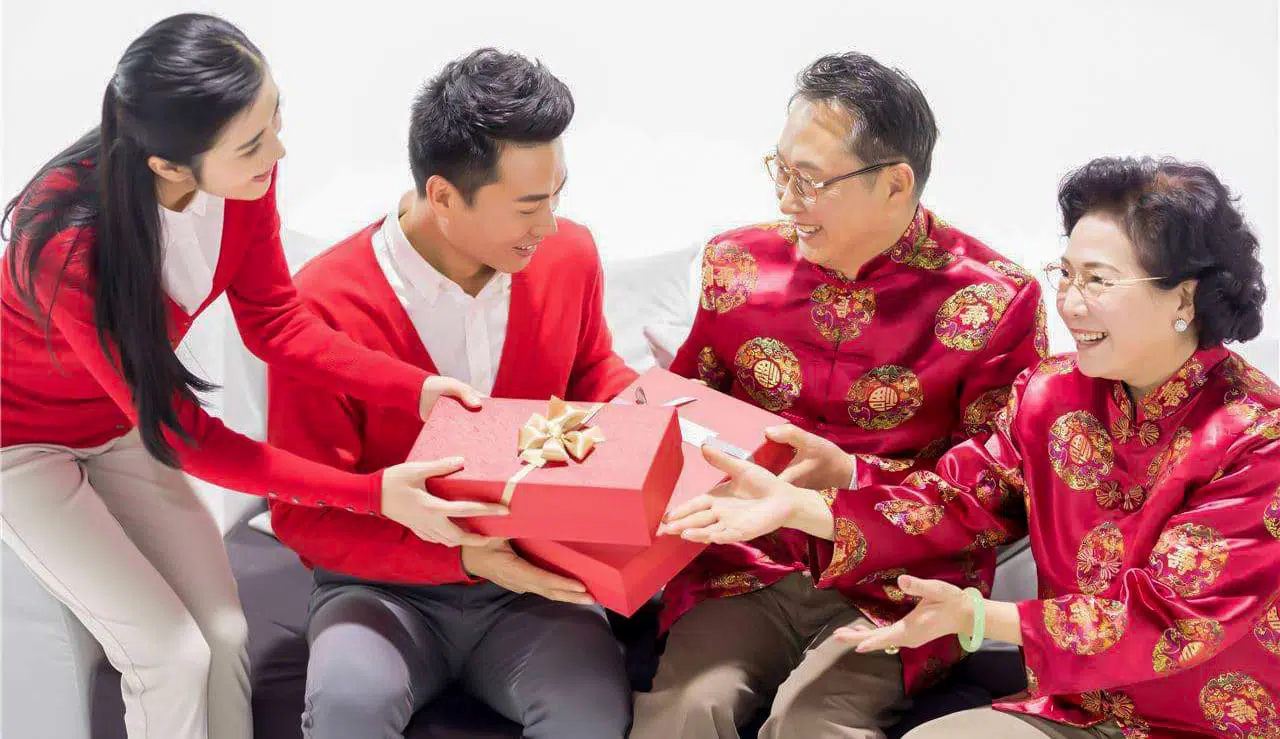
- Gift giving is an important social ritual in China, tied closely to respect, relationships, and the concept of 面子 (miànzi), or "face."
- Popular, well-received gifts include tea, tea sets, fruit, alcohol, and red envelopes filled with money.
- Color matters: red signals good fortune, while black and white carry negative associations.
- Some gifts are taboo because their names sound like unlucky words, including clocks, shoes, and umbrellas.
- Etiquette around presentation matters as much as the gift itself, from using both hands to not opening gifts in front of the giver.
Ever wondered what to give your Chinese friends on special occasions? Whether it is for Chinese New Year, a birthday, or simply a gesture of appreciation, understanding Chinese gift etiquette helps you choose something that lands well. If you read Chinese at an advanced level, our HSK 5 graded reader on Chinese gift-giving etiquette covers the same customs in Chinese.
Gift giving in China is rarely just a casual exchange. It carries social meaning, signals respect, and reflects the strength of a relationship.
Read on to discover the do's and don'ts of Chinese gift giving, along with our suggestions for thoughtful gift ideas. If you plan to Learn Chinese in China, knowing these customs will make festivals, family visits, and everyday social moments far more meaningful.

01 Gift ideas for your Chinese friends, colleagues, or family
Not sure where to start? The following gifts are widely appreciated across China and work for a range of occasions and relationships.
1. Tea
Long considered a health drink once reserved for emperors and officials, tea in China carries deep historical and cultural value. Its long association with wellness even overlaps with ideas found in traditional Chinese medicine.
When giving tea as a gift, avoid tea bags. Instead, choose high-quality loose tea leaves packaged in an attractive tin.
Famous regional teas such as Longjing (Dragon Well) green tea from Hangzhou, white chrysanthemum tea, and Dahongpao oolong from the Wuyi Mountains all make excellent choices. A premium tea reflects care and good taste without being ostentatious.
2. Chinese tea set
Historians hold that the first tea sets emerged during the Han Dynasty (206 BCE–220 CE) in China. Early tea ware was made of porcelain and came in two styles: a northern white porcelain and a southern light-blue porcelain.
What better gift than this timeless item? A good tea set is both aesthetically pleasing and genuinely useful, making it a safe and elegant option for almost anyone.
3. Clothes
Clothing is a good choice for closer friends and significant others. A warm winter set of gloves, a scarf, and a hat shows that you care about the comfort and wellbeing of the person receiving it.
Clothes are a practical yet sentimental gift that rarely goes wrong.

4. Fruit
Fresh fruit, especially when given around Chinese New Year, symbolizes life and new beginnings. You will even see fruit used as temple offerings.
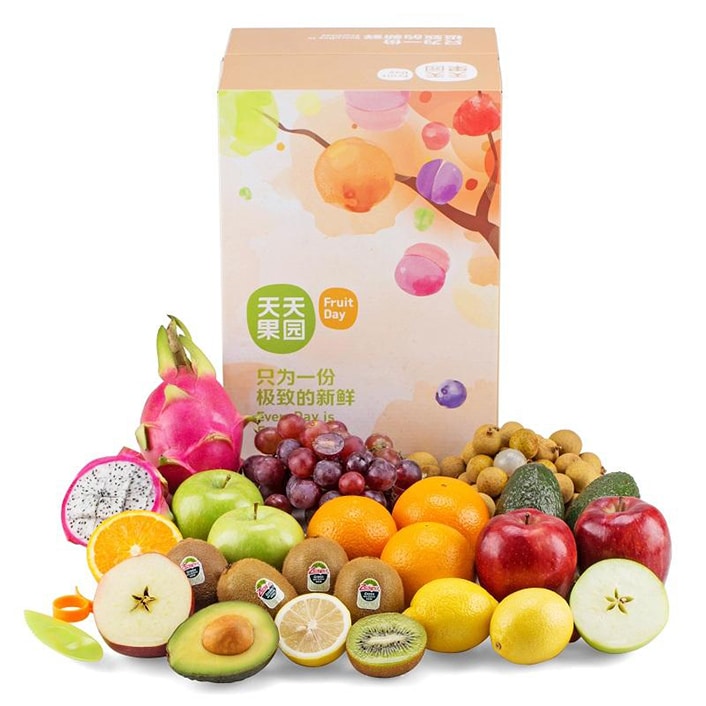
Fruit is a very popular gift, and a basket of apples, oranges, kiwis, and other seasonal picks is almost always a hit.
5. Alcohol
Alcohol is a simple gift with plenty of options. A nice bottle of wine, whiskey, or even champagne can go a long way in China.
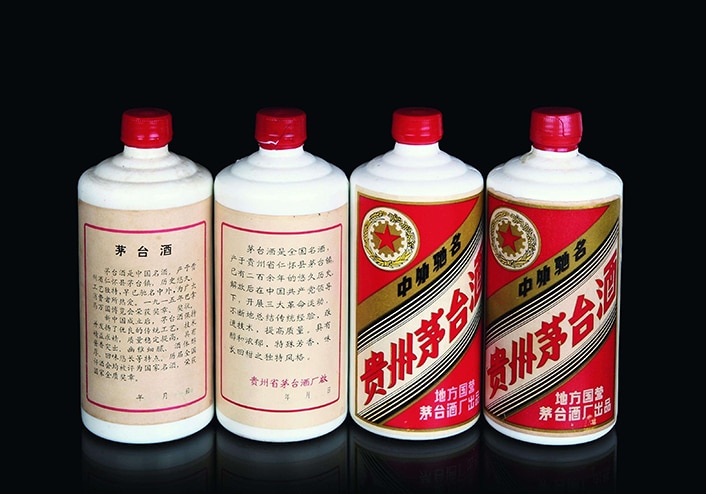
Foreign spirits are often a smart pick because they are harder to find locally. That said, you can't go wrong with a bottle of 茅台酒 (máotáijiǔ), a famous brand of Chinese 白酒 (báijiǔ, distilled Chinese liquor).
6. Red envelopes with money
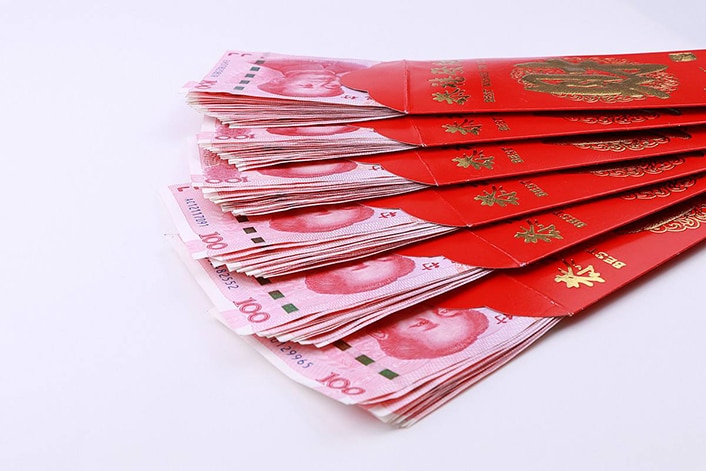
Gifting money in red envelopes (红包, hóngbāo) is a very common practice, especially during Chinese New Year, at weddings, and on birthdays. Aim for shiny, crisp new bills in multiples of 100 and based on a lucky number, such as 200, 800, or 900.
Chinese currency is usually used to fill red envelopes. It is also perfectly fine to use the currency of whatever country you and the recipient happen to be in.
Never include coins or amounts such as 40 or 400. According to Chinese numerology, the number 4 (四, sì) sounds like the word for "death" (死, sǐ).
7. Custom Chinese name seal
A name seal with a person's name custom-engraved is a timeless keepsake. It makes an excellent gift for a friend, family member, or colleague, and it pairs naturally with learning how to write your Chinese name.
In Chinese culture, the name seal is a meaningful object used as an official way of signing one's name or leaving one's mark. Seals carved from natural Shoushan stone (寿山石, shòushānshí) are especially prized.
8. Books about China
Books are a memorable gift that always finds a place in the recipient's home. Titles on Chinese history, philosophy, and culture tend to be especially well received.
For the martial-arts enthusiast, classics on the practice and philosophy of Chinese martial arts make a thoughtful choice. Books exploring the Chinese zodiac or modern Chinese history are also reliable crowd-pleasers.
9. Plants and cacti
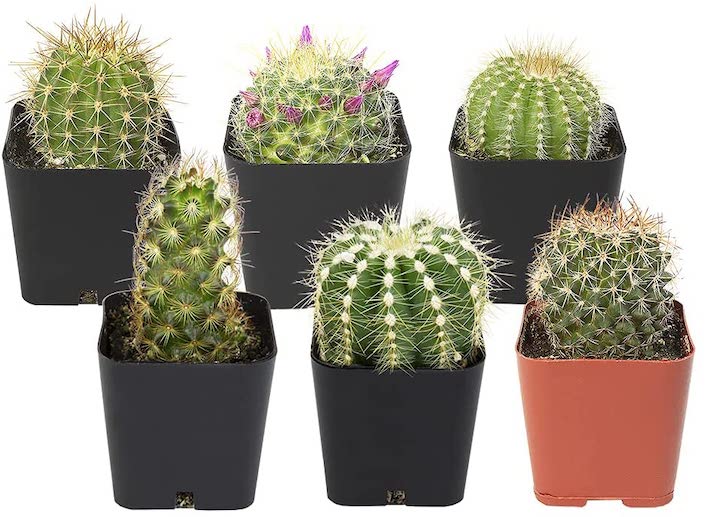
Plants are a surprisingly popular gift in Chinese culture. Succulents and cacti are good choices because they are easy to care for, compact, and widely loved.
Greenery also carries positive symbolic associations and fits neatly with the harmony-focused thinking found throughout Chinese culture.
10. Gift cards
Many businesses in China offer gift cards, and plenty of restaurants, cafes, and massage parlors include bonuses or free extras when you buy a larger bundle.
Gift cards work well when you aren't quite sure what to choose, since they let the recipient pick something they truly want.

Study Chinese in Guilin or Start Online
CLI offers personalized Chinese instruction built around your goals. Join our Immersion Program in Guilin or begin from anywhere with a free Chinese lesson .
02 Chinese gift-giving etiquette
A well-intentioned gift can backfire if you are not familiar with traditional gifting customs. Keep the following considerations in mind before you buy.
1. Avoid overly cheap or expensive gifts
Chinese culture places heavy emphasis on 面子 (miànzi, giving or saving face). It is important to choose a gift suited to the recipient's economic status.
Overly expensive gifts can feel inappropriate, since they may put the recipient in the uncomfortable position of being unable to return the favor in kind. On the other hand, a gift of very low value can come across as cheap or stingy.
Sometimes it is not just "the thought that counts." In many situations you will want to be mindful of a gift's perceived monetary value.
2. Consider the color of your gift and its wrapping
Color symbolism is woven into Chinese culture. Avoid black, associated with evil, and white, associated with funerals.
Instead, choose red for good fortune, yellow for the traditional color of the emperor, or blue for healing and immortality. If ever in doubt, go with red.
3. Don't open gifts in front of the giver
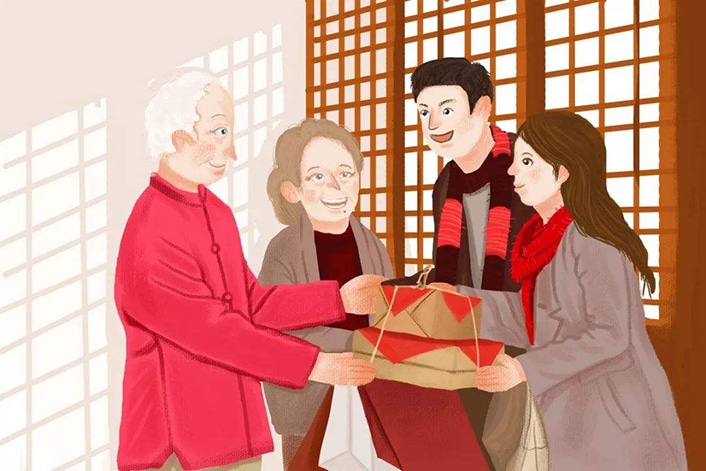
Although this matters less among younger generations, Chinese people often do not open gifts in the presence of the giver. Don't be surprised if your recipient sets the gift aside for later.
If you receive a gift, it is best to wait until later to open it rather than unwrapping it in front of everyone.

4. Avoid certain gifts
Some gifts are best avoided entirely because their names sound like unlucky words. The table below shows the most common ones to skip.
| Chinese | Pinyin | Meaning | Why to avoid it |
|---|---|---|---|
| 送钟 | To give a clock | Sounds like 送终 (sòngzhōng), to attend a funeral ritual | |
| 鞋 | Shoes | Sounds like 邪 (xié), evil | |
| 伞 | Umbrella | Sounds like 散 (sàn), to break up or part ways |
Scissors and knives are also best avoided, as they can symbolize cutting a relationship. Whatever you give, always offer and accept gifts using both hands to show respect and gratitude.
03 Useful gift-giving vocabulary
These terms come up often in conversations about gifts, holidays, and social etiquette in China.
| Chinese | Pinyin | Meaning |
|---|---|---|
| 礼物 | Gift; present | |
| 红包 | Red envelope containing money | |
| 面子 | "Face"; social standing or dignity | |
| 吉利 | Auspicious; lucky | |
| 白酒 | Distilled Chinese liquor | |
| 双手 | Both hands (used when giving or receiving gifts) |
04 FAQ
What is a good gift to give in China?
Tea, tea sets, fruit, quality alcohol, and red envelopes with money are all widely appreciated. The best choice depends on the occasion and your relationship with the recipient.
Why are clocks a bad gift in China?
Giving a clock, 送钟 (sòng zhōng), sounds like 送终 (sòngzhōng), which refers to attending a funeral ritual. Because of this association, clocks are considered an unlucky gift.
How much money should I put in a red envelope?
Use crisp new bills in amounts based on lucky numbers, such as 200, 800, or 900. Avoid amounts with the number 4, which sounds like the word for "death."
Should I open a gift when I receive it?
Traditionally, gifts are not opened in front of the giver. It is polite to set the gift aside and open it later, though younger people are often more relaxed about this.
What color should I use to wrap a gift?
Red is the safest and most auspicious choice. Avoid black and white, which are associated with evil and funerals respectively.
05 Final thoughts
Choosing a gift in China is about more than the object itself. It reflects respect, relationship, and an awareness of cultural meaning.
Keep the symbolism, color choices, and presentation customs in mind, and your gift is far more likely to be warmly received. We hope these ideas help, and we look forward to seeing you soon for a free Chinese lesson. Marking occasions also gets easier once you know how to say happy birthday in Chinese.