

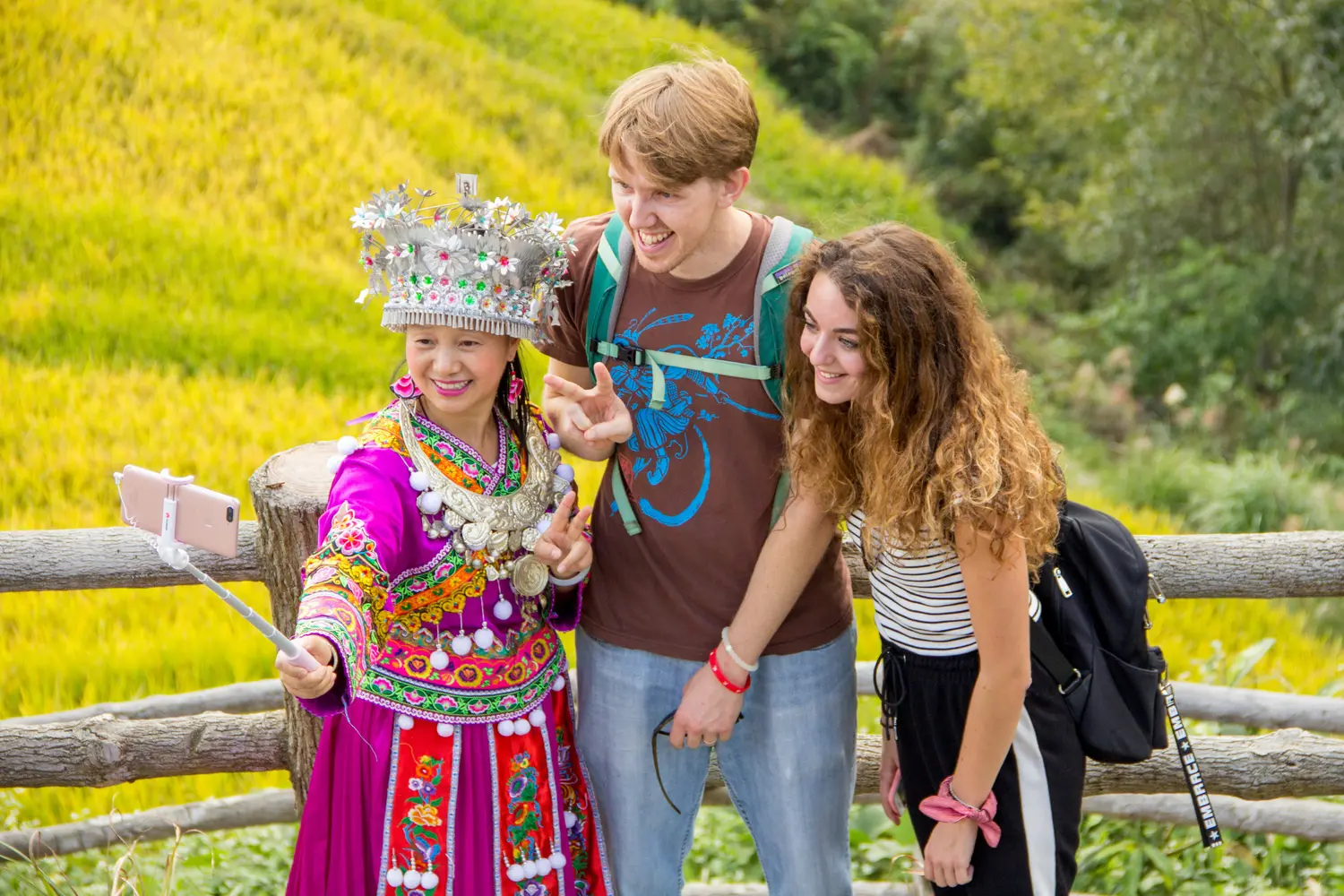
- The Zhuang people (壮族, Zhuàngzú) are China's largest ethnic minority, with deep historical roots in the Lingnan region and particularly in Guangxi, where roughly 80% of China's Zhuang population lives.
- The Zhuang language belongs to the Tai-Kadai language family — distinct from Mandarin — and is written using both the traditional Sawndip script and a modern romanized system introduced in 1957.
- Traditional Zhuang spiritual life centers on animism, ancestor worship, and Mo religion, with ritual specialists known as Bumo presiding over ceremonies that connect communities to ancestors and nature spirits.
- For Chinese learners, Guilin offers a unique window into Zhuang culture through bilingual signage, local festivals, and rural excursions — making it one of the most culturally rich places to learn Chinese in China.
China is often perceived as culturally homogeneous, yet it officially recognizes 56 ethnic groups: the Han majority alongside 55 ethnic minorities. Together, these groups contribute to China's extraordinary linguistic, cultural, and spiritual diversity.
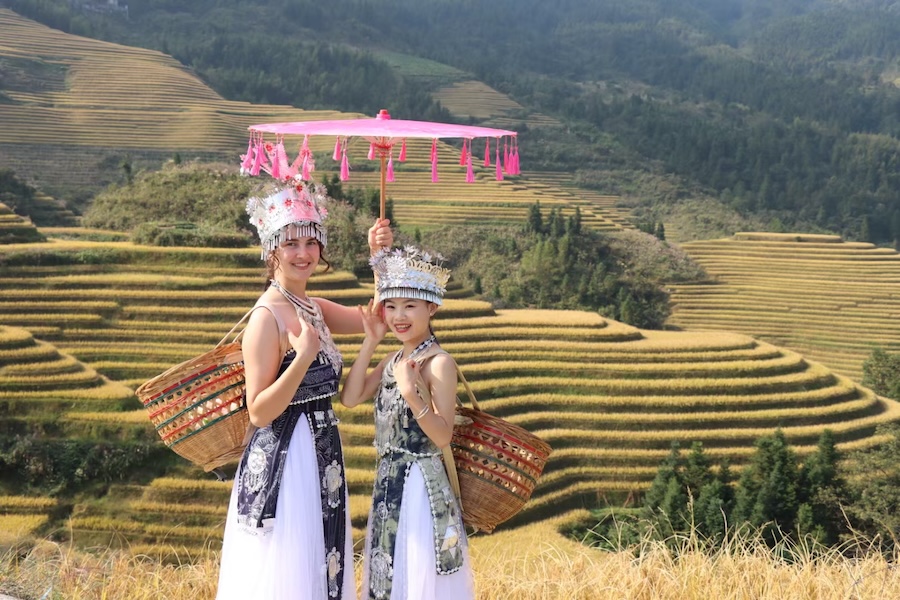
As part of our China's Ethnic Minority series, this article focuses on the Zhuang people — the largest ethnic minority in China — with deep historical roots in Guilin and the broader Guangxi region. Their story spans thousands of years of settled civilization, dynastic change, and cultural resilience, offering a fascinating lens into the diversity of Chinese culture beyond the Han majority.
01 Who Are the Zhuang People of China?
The Zhuang people (壮族, Zhuàngzú) are China's largest ethnic minority and a Tai-speaking people with long-standing roots in the Lingnan region. They are linguistically and culturally related to Tai ethnic groups across Southeast Asia, including the Thai, Lao, and Dai peoples.
Despite centuries of interaction and integration with Han Chinese society, the Zhuang have maintained distinct traditions in language, spirituality, festivals, and agricultural life. According to 2020 census-based figures, about 80% of China's Zhuang population lives in Guangxi, with additional communities in Guangdong, Yunnan, Guizhou, Hunan, and other provinces.
The Origin and Meaning of the Name "Zhuang"
Historically, the Zhuang people were known by various names, including Tong (僮, tóng), Li (俚, lǐ), and Liao (僚, liáo). During the ethnic identification process of the 1950s in China, the group was initially designated as the Tong ethnic group (僮族, tóngzú). However, the character 僮 carried ambiguous meanings associated with children or servitude.
In 1965, Premier Zhou Enlai proposed officially renaming the group as the Zhuang ethnic group (壮族, Zhuàngzú), a change later approved by the State Council after consultation with Zhuang representatives. The character 壮 (zhuàng), meaning strong or robust, conveyed dignity and prosperity. Following this decision, the Guangxi Tong Autonomous Region was officially renamed the Guangxi Zhuang Autonomous Region.
02 Zhuang History Under Chinese Dynasties
The Zhuang trace their origins to the ancient Baiyue peoples (百越, bǎiyuè), a broad group of culturally related populations who inhabited southern China long before large-scale Han expansion. Among these groups, the Luoyue (骆越, Luòyuè) are generally regarded as the direct ancestors of the Zhuang.
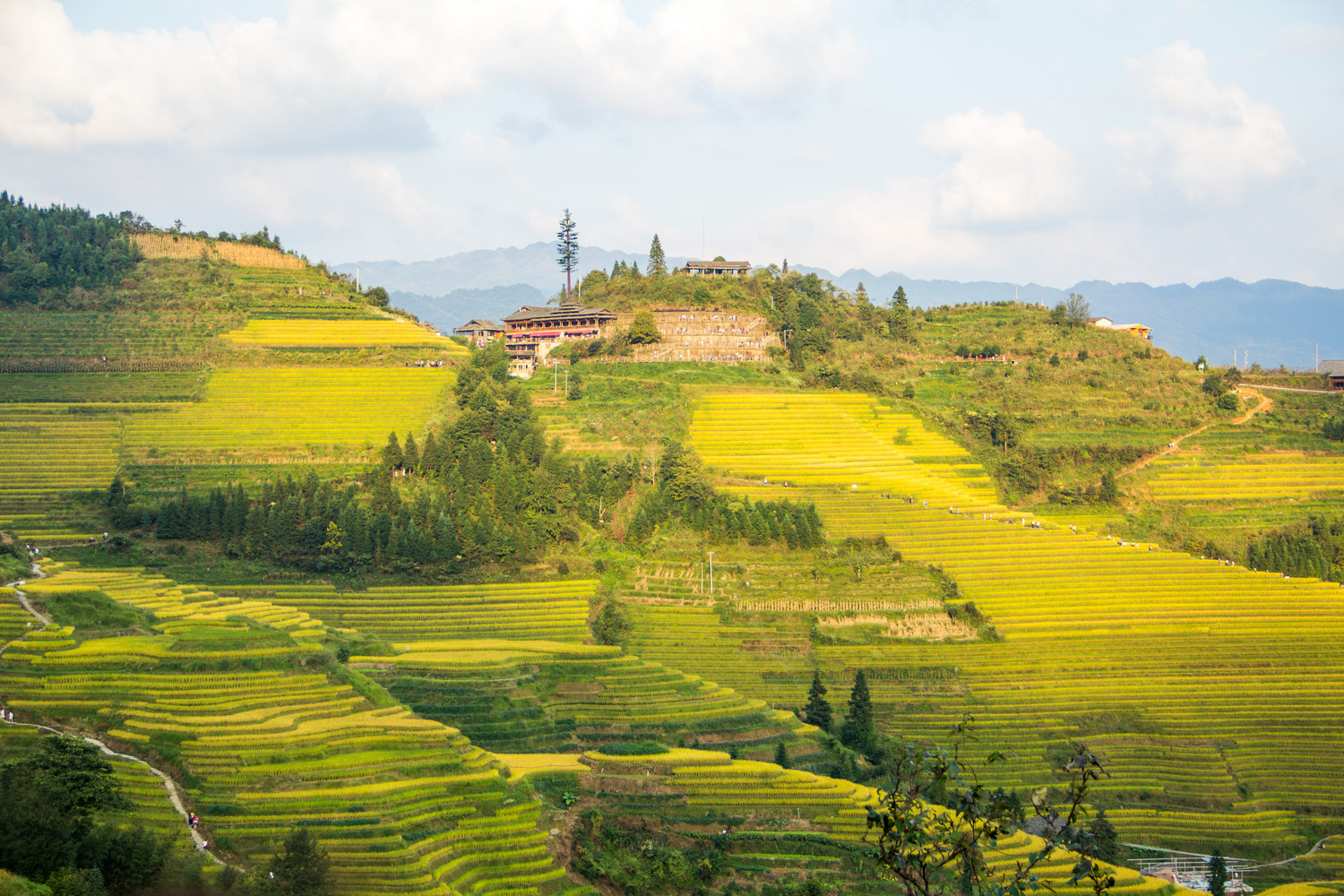
Archaeological discoveries, such as the Zengpiyan Site (甑皮岩遗址, zèngpíyán yízhǐ) and the Gantuoyan Site (感驮岩遗址, gǎntuóyán yízhǐ) in Guangxi, demonstrate that by the Neolithic period, the Lingnan region (岭南, lǐngnán) had already developed settled communities based on rice agriculture. As Chinese dynasties expanded southward, the ancestors of the Zhuang maintained varying degrees of interaction with the central states, ranging from trade and cultural exchange to political incorporation.
Pre-Qin Period: Early Zhuang Ancestors
Before China's imperial unification, the Luoyue people established early political formations in the Lingnan region and developed a distinctive bronze drum culture. Their contact with the Central Plains (zhōngyuán) remained limited, and local societies retained considerable autonomy prior to direct imperial rule.
Qin & Han Dynasties (221 BCE – 220 CE)
After the Qin conquest, agricultural techniques from the Central Plains spread south. Some Yue peoples assimilated into Han culture, while others retained their distinct identity and became ancestors of today's Zhuang.
Tang & Song Dynasties (618–1279)
During the Tang and Song dynasties, the imperial court governed frontier and minority regions through the jimi system (羁縻制度, jīmí zhìdù). This was a "loose-rein" arrangement that allowed local Zhuang clan chiefs to retain substantial autonomy while acknowledging imperial authority. This system reduced the need for direct administration but also limited effective central control.
Tensions between local leaders and the state occasionally escalated into open conflict, most notably the Nong Zhigao Uprising (侬智高起义, Nóng Zhìgāo Qǐyì) in 1052, which exposed the fragility of this indirect governance model and the competing interests of regional power and imperial rule.
Yuan, Ming & Qing Dynasties (1271–1911)
During the Yuan, Ming, and Qing dynasties, the imperial state governed many minority regions through the hereditary tusi system (土司制度, tǔsī zhìdù), under which local clan leaders ruled on behalf of the central government. In Zhuang areas, clans such as the Cen, Huang, and Mo families exercised hereditary authority.
During the Qing dynasty, the policy of "replacing native rulers with state officials" (改土归流, gǎitǔ guīliú) gradually dismantled this system, accelerating administrative integration while also provoking episodes of local resistance.
Establishment of the Guangxi Zhuang Autonomous Region (1958)
Following nationwide ethnic identification campaigns in the 1950s, the People's Republic of China officially recognized the Zhuang as a distinct ethnic minority. On March 5, 1958, the Guangxi Zhuang Autonomous Region was formally established with Nanning as its capital, becoming China's third provincial-level autonomous region after Inner Mongolia and Xinjiang. This marked a turning point in the institutional recognition of Zhuang identity while integrating the region into the national administrative system.
The Guangxi Zhuang Autonomous Region (广西壮族自治区, Guǎngxī Zhuàngzú Zìzhìqū) is one of five provincial-level autonomous regions in China, each associated with a major ethnic minority. While the regional capital is Nanning, Guilin remains the area most closely tied to Zhuang cultural heritage and tourism.
03 What Language Do the Zhuang People Speak?
The Zhuang language (壮语, Zhuàngyǔ) belongs to the Zhuang-Dai branch of the Tai-Kadai language family, which is distinct from the Sino-Tibetan family that includes Mandarin Chinese. It is generally divided into Northern Zhuang and Southern Zhuang, spoken across different parts of Guangxi and neighboring regions.
Zhuang varieties differ significantly by region. Linguists often distinguish Northern and Southern Zhuang, and some varieties are not easily mutually intelligible, which is one reason standardization has been complex. This internal diversity mirrors the broader phenomenon of China's many living languages, which number well over 250.
What Is Sawndip, the Traditional Zhuang Script?
Sawndip (壮字, Zhuàngzì, literally "immature characters" in Zhuang) is a traditional writing system historically used by the Zhuang people. This script developed through the adaptation of Chinese characters to represent the sounds, vocabulary, and grammatical structures of the Zhuang language, often modifying existing characters or creating new ones where necessary.
For centuries, Sawndip was used primarily in informal and local contexts rather than as a standardized script. It served to record Zhuang folk songs, ritual and religious texts, genealogies, and aspects of everyday life. Although its usage has declined with the introduction of standardized Latin-based Zhuang orthography and the widespread use of Mandarin, Sawndip remains an important cultural medium for preserving Zhuang history, oral traditions, and local identity.
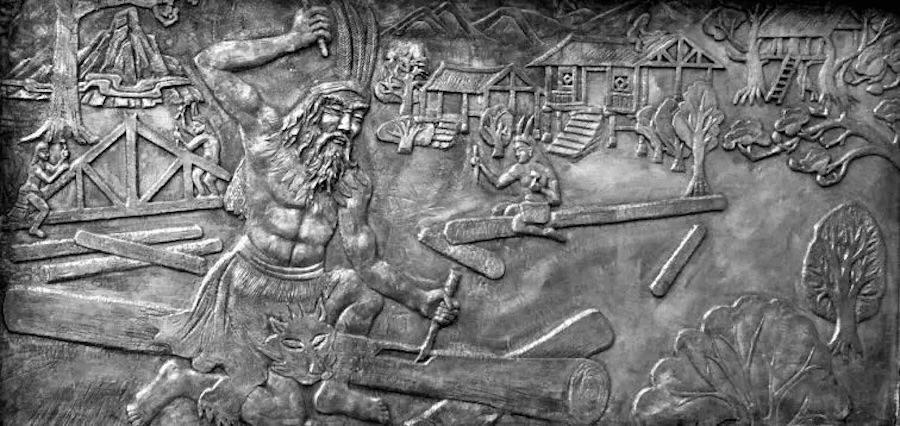
The Modern Zhuang Writing System
To promote standardization, a romanized Zhuang writing system based on the Latin alphabet was introduced in 1957 and later revised in 1982. It is used in some educational, official, publishing, and media contexts, though Mandarin remains dominant in most public and professional settings.
Zhuang Language Preservation in Modern China
China promotes bilingual education in Zhuang-populated areas, particularly in Guangxi, where schools teach both Zhuang and Standard Mandarin (普通话, Pǔtōnghuà). These policies aim to preserve linguistic heritage while supporting social and economic participation.
In parallel, the state supports the protection and development of the Zhuang language through measures such as the establishment and promotion of Zhuang-language media. One example is the Guangxi Radio and Television Zhuang-Language Channel (广西广播电视台壮语频道, Guǎngxī Guǎngbō Diànshìtái Zhuàngyǔ Píndào), a provincial-level comprehensive television channel broadcast entirely in the Zhuang language.
In cities such as Guilin (桂林, Guìlín), bilingual signage is also common, and in some cases signs appear only in Zhuang and English, reflecting the visible presence of the language in public space.
Can You Speak Mandarin in Guilin?
One of the most commonly asked questions about studying in Guilin is: "Will people speak Mandarin?" — and the answer is a resounding yes.
While the Zhuang have their own native language, in Guilin and other urban areas of Guangxi, Mandarin is widely used in education, tourism, business, and public life. Many Zhuang people are bilingual, especially younger generations, though accents and local language use vary by age, location, and community. You might encounter some elderly residents in remote villages who primarily speak Zhuang, but this is the exception rather than the rule.
It's worth noting that every region in China has some degree of local accent or linguistic influence, including cosmopolitan cities like Shanghai and Beijing. Mandarin Chinese serves as the linguistic glue that binds all of China together. Guilin's Mandarin is clear and accessible, making it an excellent environment for language learners. The Zhuang language exists alongside Mandarin rather than replacing it, enriching the cultural landscape without creating communication barriers.
If you're considering where to study Chinese, Guilin's clear Mandarin, affordable cost of living, and rich multicultural environment make it a standout choice. For a deeper look at what makes this city special for learners, see our guide to studying Mandarin in Guilin.
Study Chinese in Guilin or Start Online
CLI offers personalized Chinese instruction built around your goals. Join our Immersion Program in Guilin or begin from anywhere with a free Chinese lesson .
04 Zhuang Religion: Mo, Ancestor Worship, and Nature Spirits
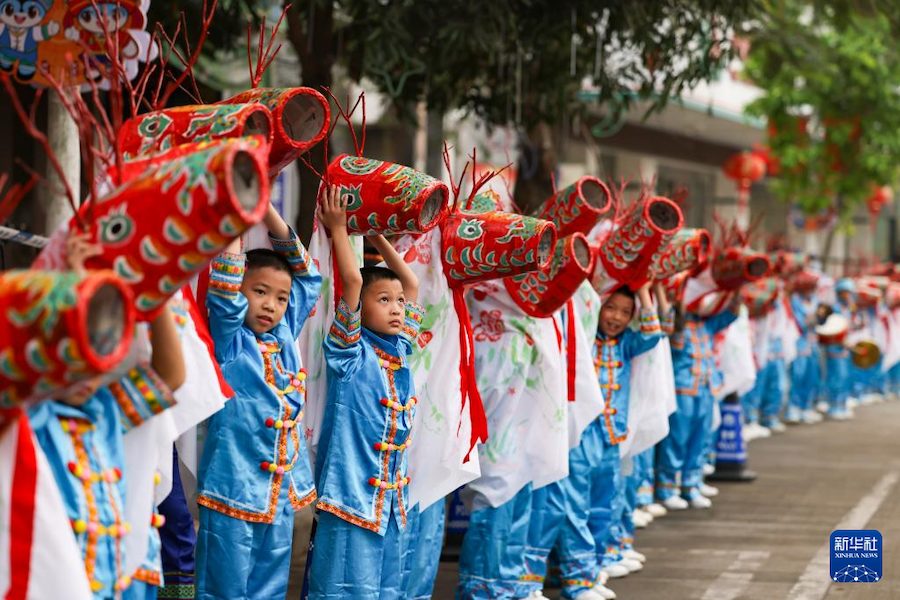
Traditional Zhuang spirituality is rooted in indigenous animism and incorporates elements of Daoism and Buddhism. These beliefs reflect a close relationship with agriculture, mountains, and water, forming the foundation of Zhuang ritual life. Zhuang religious practice varies considerably by region and community, so the traditions below should be understood as common themes rather than a single uniform belief system.
Animism and Nature Worship in Zhuang Belief
Looking at the breathtaking landscape of Guangxi Province, with its evergreen karst mountains, it is no surprise that at the heart of Zhuang spiritual belief lies animism — the understanding that mountains, rivers, ancient trees, and stones possess spirits.
In many accounts of Zhuang religious life, water, grain, and earth spirits play especially important roles. The Water Deity (水神, shuǐshén) governs rivers and water sources and is often depicted as a dragon. Many communities, especially during important festivities, perform rituals to ensure safe travel on waterways and abundant fishing. The Grain Deity (谷神, gǔshén) presides over rice cultivation and harvests and is worshipped during spring plowing and autumn harvest ceremonies. The Earth Deity (土地神, tǔdìshén) serves as the guardian spirit of villages. Nearly every Zhuang village maintains an earth shrine, with major sacrificial rites held on the second day of the second lunar month.
Ancestor Worship in Zhuang Society
Ancestor worship is central to Zhuang family life. Most households maintain ancestral altars where rituals are performed during Spring Festival, Qingming, and the Ghost Festival. Clan ancestral halls serve as collective spaces where genealogies and teachings are transmitted, often through oral tradition or written in Sawndip. Ancestors are usually viewed as protectors ensuring family continuity and prosperity.
The Mo (Bumo): Zhuang Ritual Specialists
The Mo, also known as Bumo (布摩, Bùmó), are ritual specialists within traditional Zhuang religious practice. They play a central role in community spiritual life and are typically male.
The Mo preside over major ceremonies, including spring prayer rituals (春祈, chūn qí) and harvest thanksgiving rites (丰收祭, fēngshōu jì). They also practice healing and divination (治病与占卜, zhìbìng yǔ zhānbǔ), including chicken-bone divination (鸡骨卜卦, jīgǔ bǔguà), which is used to diagnose illness, misfortune, or spiritual imbalance.
During funeral rites, Mo chant sacred Mo scriptures (摩经, Mó jīng) to guide the deceased's spirit back to the ancestral realm, acting as intermediaries between the living and the dead. The Mo are not full-time clergy. Their ritual knowledge is transmitted through family lineage or apprenticeship, rather than through formal religious institutions. Most engage in agriculture alongside other villagers, yet they command deep respect as custodians of ritual knowledge, oral tradition, and collective memory within Zhuang society.
Daoist and Buddhist Influences on Zhuang Religion
From the Tang and Song dynasties onward, Zhuang religious life gradually incorporated elements of Daoism and Buddhism — two traditions that have shaped religion in China for millennia. Daoist ritual traditions, including talismanic practices (符箓, fúlù), became closely integrated with indigenous Zhuang rites. Daoist figures such as Laozi (老子, Lǎozǐ) and the Three Officials (三官大帝, Sānguān Dàdì) entered local worship, and Daoist charms were incorporated into Mo ceremonies. In some temples, the Zhuang creator deity Buluotuo (布洛陀, Bùluòtuó) is venerated alongside Daoist gods.
Preserving Zhuang Spiritual Traditions
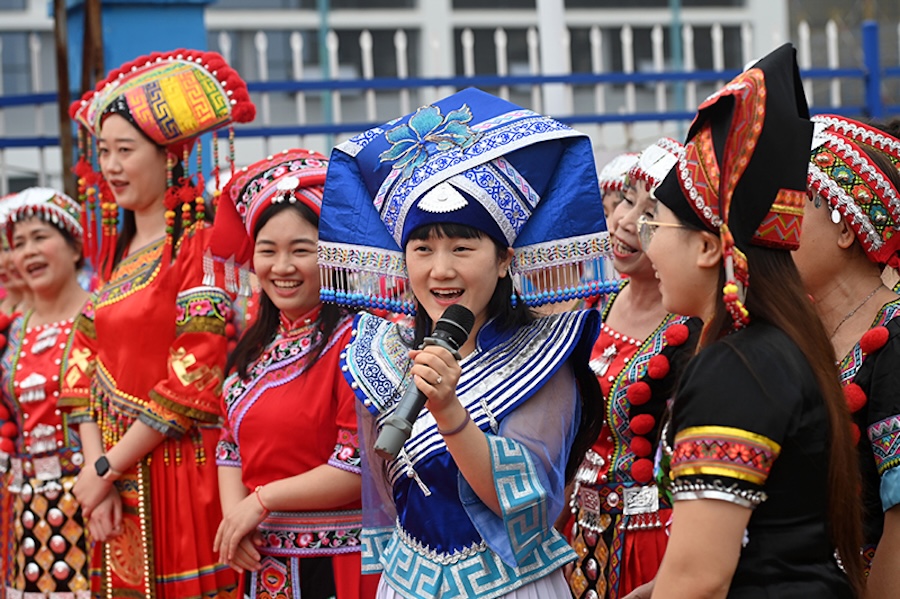
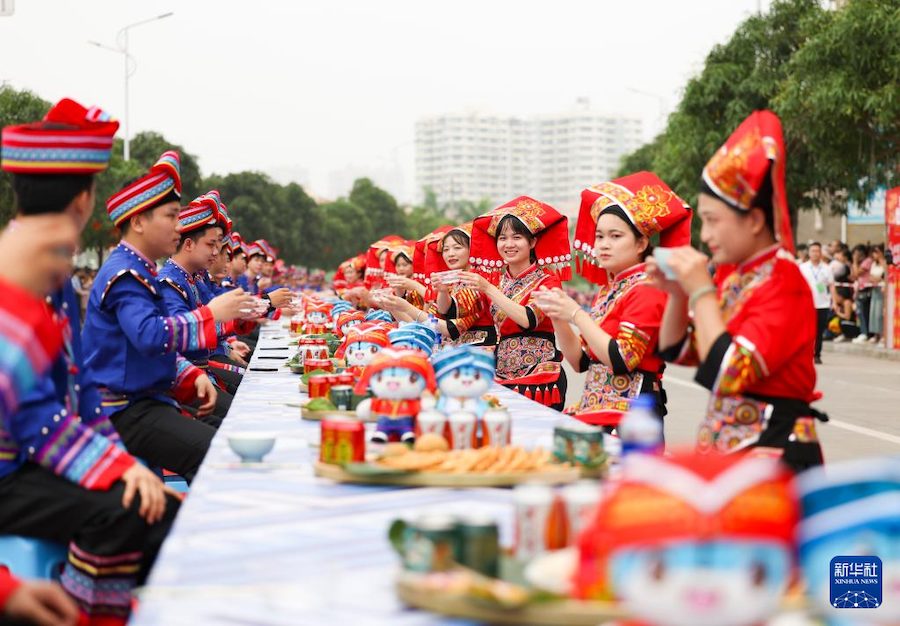
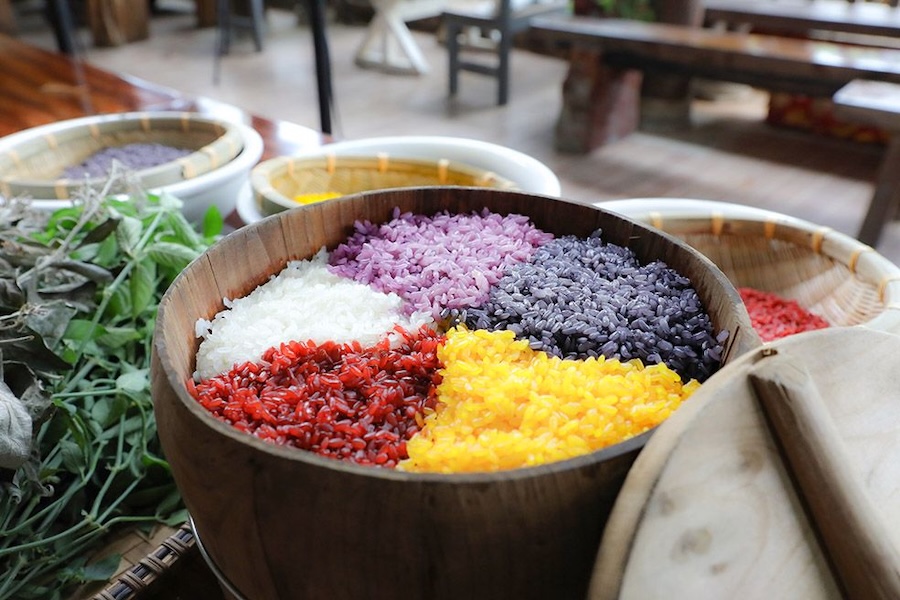
Traditional Zhuang spiritual practices face challenges common to many indigenous belief systems in a rapidly modernizing society. At the same time, preservation efforts are underway. Ritual life remains more intact in rural areas, while urban practices are often simplified or adapted to contemporary lifestyles. For example, festivals such as San Yue San (三月三, Sān Yuè Sān, "Third Day of the Third Lunar Month") now combine ancestral worship with cultural performance and tourism, serving as visible expressions of ethnic identity. Together, these efforts illustrate how Zhuang spiritual culture continues to adapt while maintaining continuity with its indigenous foundations.
05 Experience Zhuang Culture with CLI
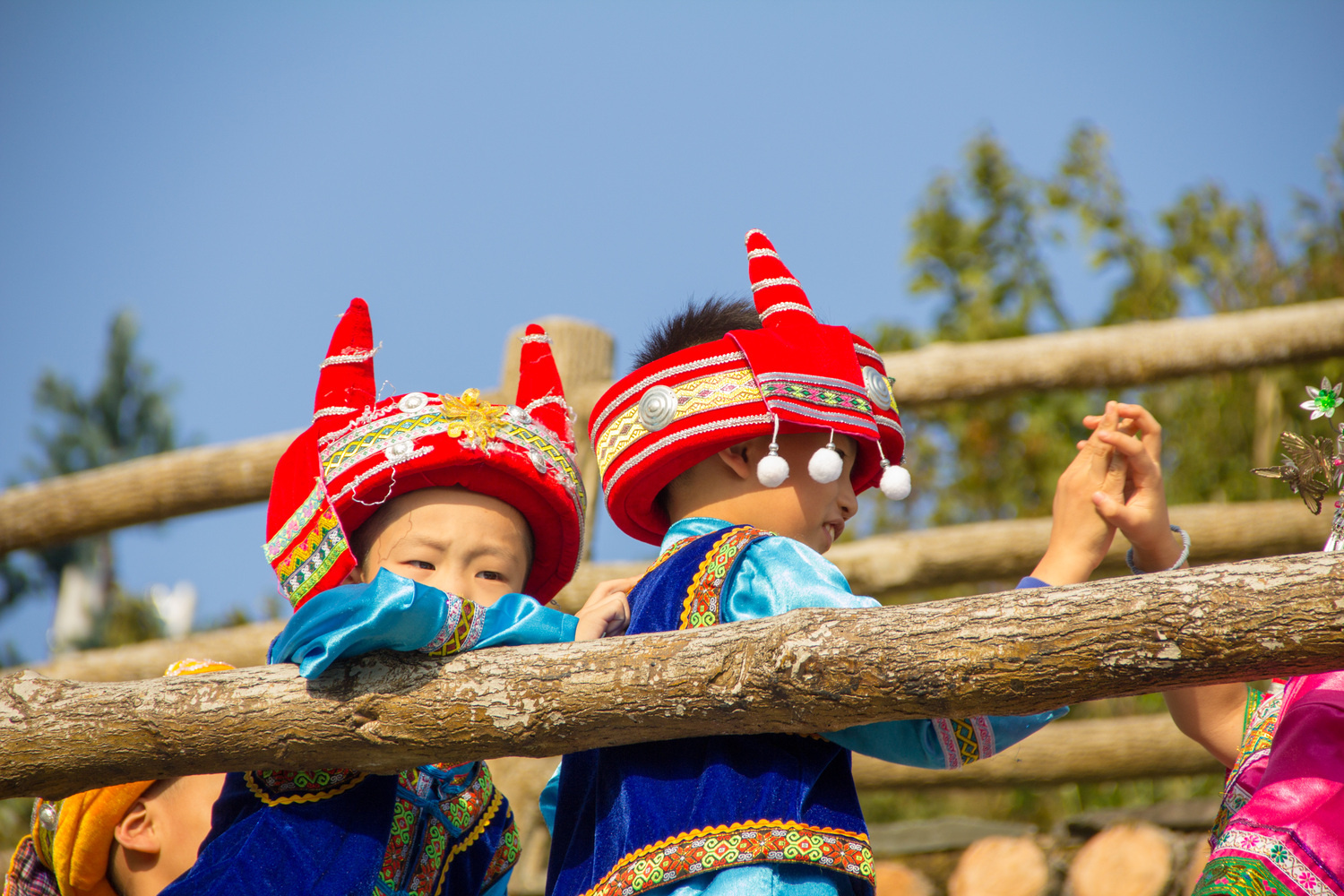
Students in Guilin encounter Zhuang culture not as museum history, but as part of Guangxi's living cultural landscape: place names, festivals, foodways, music, public signage, and rural excursions all reflect the region's multiethnic identity. From attending festivals to visiting minority villages in the Guangxi countryside, CLI offers a direct encounter with one of China's most vibrant ethnic cultures.
CLI is located in Guilin, in Guangxi — the region most closely associated with Zhuang history and culture. Through our weekly cultural excursions, community engagement projects, and immersive language programs, our students don't just learn about Chinese culture — they live it.
06 Useful Zhuang Culture Vocabulary
The following vocabulary will help you discuss Zhuang culture, language, and traditions with more confidence.
| Chinese | Pinyin | Translation |
|---|---|---|
| 壮族 | Zhuang ethnic group | |
| 少数民族 | ethnic minority | |
| 广西壮族自治区 | Guangxi Zhuang Autonomous Region | |
| 语言 | language | |
| 壮语 | Zhuang language | |
| 侗台语系 | Tai–Kadai language family | |
| 方言 | dialect | |
| 书写系统 | writing system | |
| 壮字 | Sawndip, traditional Zhuang script | |
| 罗马化 | romanization | |
| 祖先崇拜 | ancestor worship | |
| 泛灵信仰 | animism | |
| 水神 | Water Deity | |
| 谷神 | Grain Deity | |
| 土地神 | Earth Deity | |
| 仪式 | ritual | |
| 祭祀 | sacrificial rite | |
| 布摩 | Mo ritual specialist | |
| 双语教育 | bilingual education | |
| 文化认同 | cultural identity |
07 Selected References
- National Bureau of Statistics of China: official 2020 census spreadsheet table, "2-1 全国各民族人口及比重," listing China's total Zhuang population as 19,568,546. Download source spreadsheet →
- State Council Information Office of China: Guangxi Seventh National Population Census press conference, reporting Guangxi's Zhuang population at approximately 15.722 million, or 31.36% of the region's population. View source →
- Encyclopaedia Britannica: reference for Tai-language writing traditions, including Chinese-character-based writing systems used by some Central and Northern Tai varieties, including Zhuang varieties. View source →
- Kao, Ya-ning: academic study of religious revival among the Zhuang people, including Mo religion, Buluotuo belief, ritual practice, and the modern standardization of Zhuang religious identity. View source →
- Ya, Weipeng: academic study of Mo religion's view of time and its role in Zhuang spiritual life, social life, and material production. View source →
- Chinese Embassy / State Council white paper: official reference noting that the Guangxi Zhuang Autonomous Region was established in March 1958. View source →