

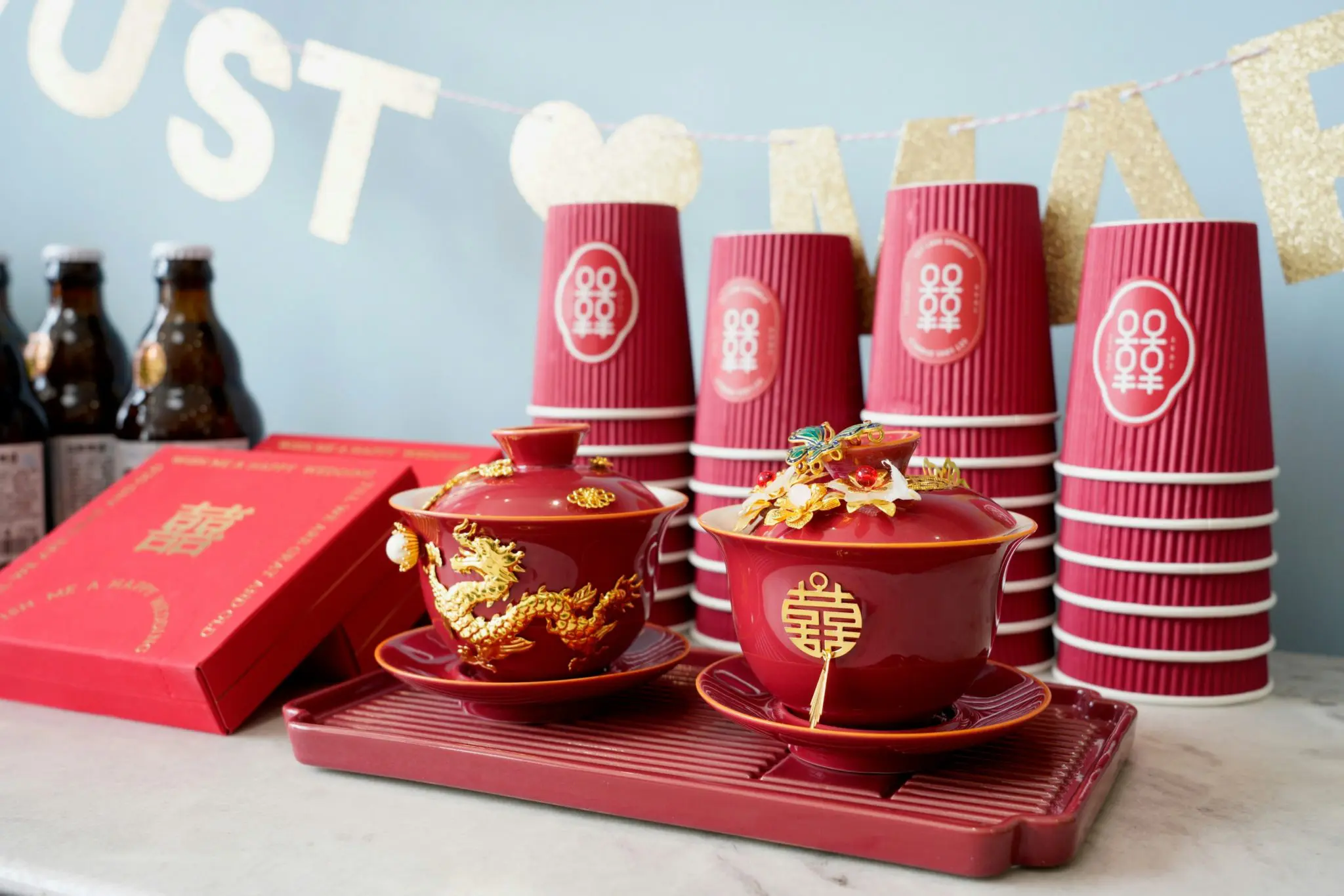
- Chinese wedding customs vary widely by region, family, generation, and ethnic background.
- Many traditions focus on auspicious beginnings, family unity, respect for elders, and public celebration.
- Modern Chinese weddings often combine Western-style elements with selected traditional rituals such as tea ceremonies, red decorations, and banquet customs.
- Practices such as 彩礼 and wedding convoy taboos should be understood as varied cultural traditions, not fixed nationwide rules.
If you've ever seen a Chinese wedding in a film or on social media, you probably remember the red decorations first. Maybe there was a tea ceremony, a lively banquet, or a convoy of decorated cars. Some weddings feature traditional clothing, while others look almost identical to modern Western ceremonies — until the couple suddenly kneels to serve tea to their parents.
That mix of old and new can feel confusing at first. Many people assume there is one unified set of "Chinese wedding customs," but the reality is much more varied. China is a huge country with different regional traditions, dialect groups, family structures, and local beliefs. What one family considers essential, another may skip entirely.
Even so, many Chinese wedding traditions share a common symbolic language. Weddings are often treated not just as a private celebration between two people, but as a public recognition of family ties, continuity, respect for elders, and an auspicious new beginning.
Some customs are centuries old. Others are surprisingly modern. Many exist somewhere in between.
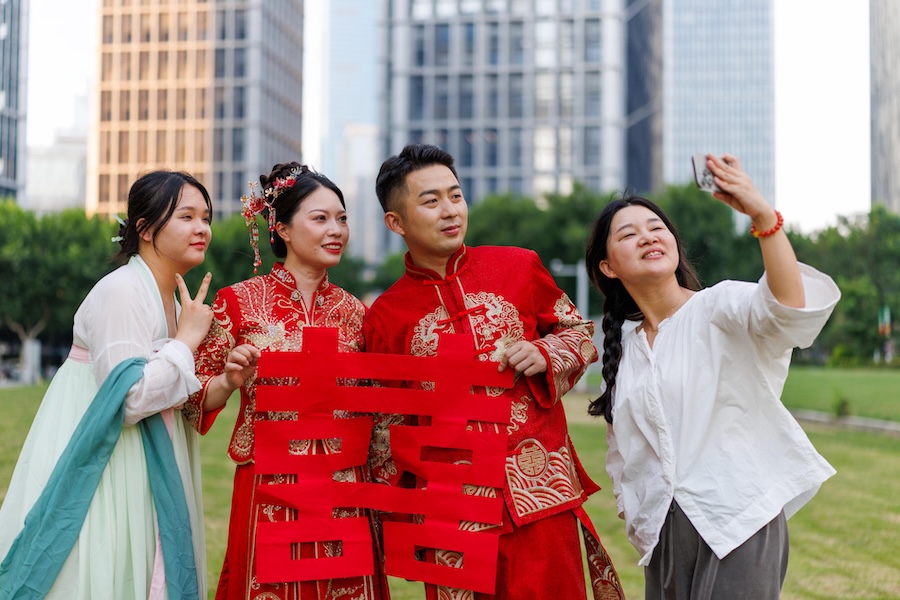
01 What Do Chinese Wedding Customs Symbolize?
At their core, many Chinese wedding customs are designed to mark transition. A wedding is not only about romance. Traditionally, it also represents the joining of families, the continuation of lineage, and the formal recognition of a new social unit.
This helps explain why so many rituals focus on symbolism rather than practicality. A wedding banquet may include foods associated with prosperity or happiness. Decorations are chosen for their auspicious meanings. Dates may be selected carefully based on principles rooted in Chinese numerology. Even small details can carry symbolic weight.
These themes also appear throughout broader Chinese culture, especially during major celebrations like Lunar New Year and other traditional Chinese holidays. If you've studied Chinese festivals or Chinese color symbolism before, some of these ideas may already feel familiar.
It's important, however, not to think of every custom as a rigid rule. Many traditions operate more like cultural references than legal requirements. Families may adapt them, reinterpret them, or combine them with modern wedding trends.
That flexibility is one reason traditional Chinese wedding customs have remained culturally recognizable even as modern weddings have changed dramatically.
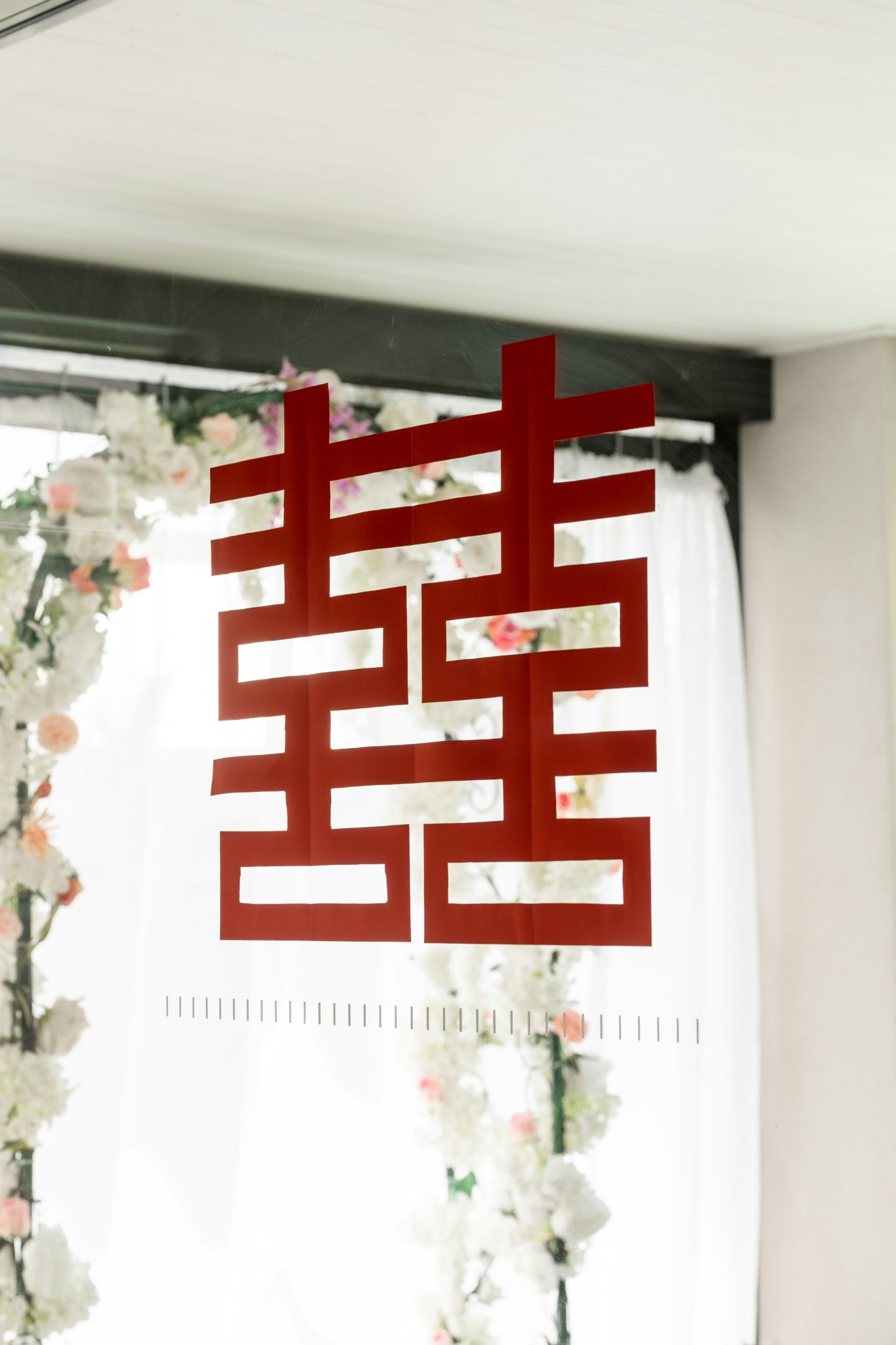
02 Traditional Chinese Weddings vs. Modern Weddings
Many traditional Chinese weddings followed highly structured ritual frameworks involving family negotiations, ceremonial processions, ancestral rites, and symbolic exchanges. Modern weddings in China are usually much more flexible.
Today, a wedding might include a civil registration, a luxury hotel banquet, Western-style wedding photography, and a traditional tea ceremony all within the same day.
Rather than disappearing completely, many older customs have been selectively preserved.
| Traditional Elements | Common Modern Adaptations |
|---|---|
| Matchmakers involved in arranging introductions | Couples usually choose partners independently |
| Ceremonies centered around family homes | Weddings often held in hotels or event venues |
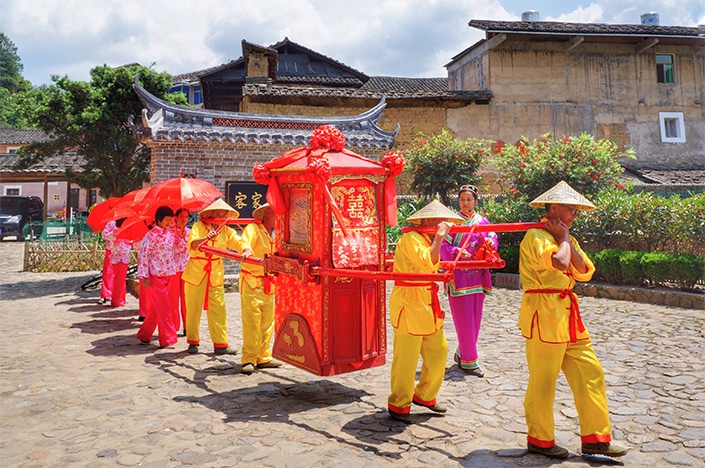
| Sedan chairs or walking processions | Decorated wedding cars and convoys |
| Strict ritual sequencing | Selective use of symbolic traditions |
| Entirely traditional wedding attire | Combination of white gowns, suits, 旗袍 (, qipao / traditional fitted dress), or other traditional Chinese clothing |
| Extended multi-day celebrations | Condensed one-day events |
Urbanization has played a major role in these changes. Modern work schedules, migration between cities, and changing family structures have all influenced how weddings are organized today. The broader shifts reshaping Chinese society — from rapid economic growth to evolving attitudes toward dating in China — are reflected in how couples approach their wedding celebrations.
At the same time, many couples still want their weddings to feel culturally meaningful. This is why symbolic traditions — especially the tea ceremony and the use of red — remain common even in highly modern weddings.

03 Common Chinese Wedding Customs Before the Ceremony
Before the wedding itself, many families participate in rituals or negotiations that formally acknowledge the upcoming marriage. Some are deeply symbolic. Others are practical family traditions that vary by region.
What Is 彩礼 (, betrothal gifts)?
One of the most discussed pre-wedding customs is 彩礼, often translated as "betrothal gifts" or "bride gifts."
At first glance, outsiders sometimes misunderstand 彩礼 as "buying a bride." That interpretation is overly simplistic and misses the broader social context behind the tradition.
Historically, 彩礼 functioned as a formal gesture between families. Depending on the region and family background, gifts could include money, jewelry, food, alcohol, or other symbolic offerings. For a deeper look at the cultural principles behind exchanging presents in China, our guide to Chinese gift-giving customs provides helpful context. The practice acknowledged the seriousness of the marriage arrangement and helped establish ties between the two families.
Modern practices vary enormously. In some families, 彩礼 remains highly important. In others, it may be largely symbolic or skipped entirely.
Regional expectations can also differ significantly. Some areas place stronger emphasis on negotiated gift exchanges, while others focus more on the wedding banquet or housing arrangements. Because of this variation, discussions around 彩礼 can become emotionally sensitive, especially when expectations between families differ.
The key point is that 彩礼 is not one fixed nationwide system. Like many Chinese wedding traditions, it exists on a spectrum shaped by family expectations, local customs, and modern economic realities.
Choosing an Auspicious Wedding Date
Some families consult calendars or traditional systems when selecting a wedding date. The Chinese calendar and concepts from feng shui may both play a role in identifying auspicious timing. The idea is not simply convenience, but choosing a time associated with harmony and good fortune.
Not every modern couple follows this practice, especially in large cities, but auspicious date selection remains culturally recognizable across many communities.
Dates containing lucky numbers are also popular. The number eight, for example, is widely associated with prosperity because its pronunciation resembles words connected to wealth and fortune in Chinese.
Bridal Preparation Rituals
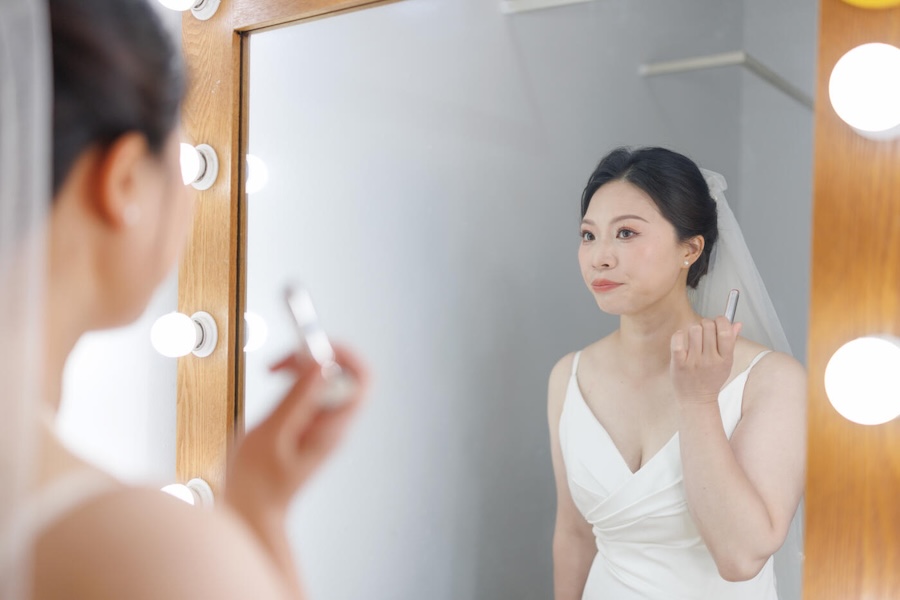
In some weddings, preparations before the ceremony carry symbolic meaning of their own. Family members may help the bride dress, prepare ceremonial items, or decorate the wedding room in red.
Hair-combing rituals and symbolic foods appear in certain regional traditions as well, although practices vary widely across China and are far from universal.
Modern wedding photography has also become a major part of Chinese wedding culture. Many couples take elaborate pre-wedding photo shoots weeks or months before the ceremony itself. These sessions often combine Western-style formalwear with traditional Chinese aesthetics, and popular backdrops range from urban skylines to the stunning landscapes found when traveling across China.
Study Chinese Culture Through Immersion
CLI helps students go beyond vocabulary lists and experience Chinese language, customs, and daily life firsthand in Guilin or online.
04 Wedding Day Customs and Their Meanings
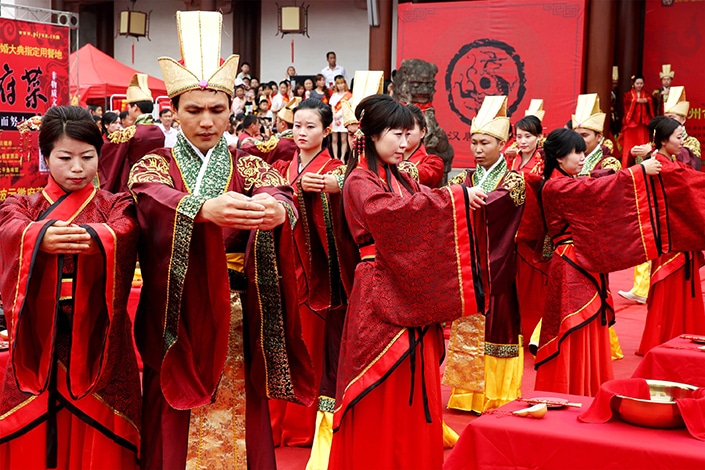
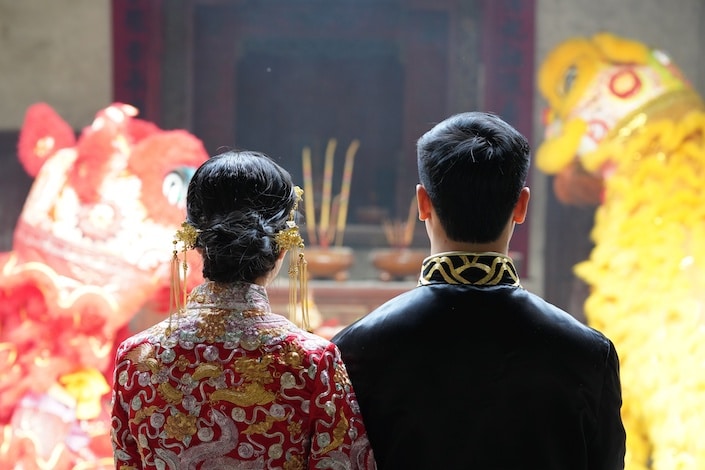
The wedding day itself is usually the most public and visually recognizable part of a traditional Chinese wedding. Even modern weddings that borrow heavily from Western formats often preserve symbolic rituals tied to family respect, celebration, and auspiciousness.
Why Is Red So Important in Chinese Weddings?
Red plays an enormous role in Chinese wedding traditions because it is strongly associated with happiness, celebration, prosperity, and good fortune.
This symbolism appears throughout Chinese culture, but weddings make especially heavy use of it. Red decorations, red envelopes (红包), red candles, and red clothing are all meant to create an atmosphere associated with joyful beginnings and auspicious energy.
Traditional bridal clothing was often red as well. Today, many brides wear both a Western-style white gown and a traditional red outfit during different parts of the celebration.
If you've studied Chinese color symbolism before, this emphasis on red will probably feel familiar. Weddings simply apply those broader cultural associations in a particularly concentrated way.
Door Games and Wedding Processions
In many modern Chinese weddings, the groom and his friends arrive to "pick up" the bride before the ceremony or banquet. This often includes playful challenges known as door games, or 堵门 (, door games).
Bridesmaids may block the entrance and require the groom to complete tasks, answer questions, sing songs, or hand out red envelopes before being allowed inside.
Although playful, these games also serve a symbolic social function. They transform the arrival into a lively public event rather than a simple pickup. They also create participation for friends and relatives, reinforcing the communal nature of the wedding.
Modern wedding convoys are another recognizable feature in some areas. Decorated cars may travel together between locations connected to the ceremony or banquet.
What Is the Tea Ceremony?
The tea ceremony remains one of the most enduring Chinese wedding customs across many modern weddings.
In a Chinese tea ceremony wedding ritual, the couple formally serves tea to parents and senior relatives as a gesture of respect and family acknowledgment. The deep cultural significance of tea in Chinese culture helps explain why this particular tradition has remained so central to wedding celebrations, even as many other rituals have faded.
While the exact format differs between families, the ceremony often follows a structure like this:
- The couple kneels or stands before parents and elders.
- Tea is prepared and served in order of seniority.
- Elders receive the tea and offer blessings or advice.
- Red envelopes or jewelry may be presented to the couple in return.
- The ceremony continues with additional relatives depending on family structure.
For many families, this ritual carries emotional significance beyond aesthetics. It publicly recognizes the relationship between generations and formally welcomes a new family member into the household structure. Understanding the Chinese family tree and its detailed kinship vocabulary can make the hierarchy of the tea ceremony much easier to follow.
Tea itself also carries symbolic associations with respect, hospitality, and social etiquette in Chinese culture more broadly. This is one reason tea ceremonies remain meaningful even in otherwise highly modern weddings.
Banquets and Public Celebration
Wedding banquets are traditionally important because weddings are often treated as public social events rather than entirely private ceremonies.
Guests gather not only to celebrate the couple, but also to recognize the union between families. Speeches, toasts, symbolic dishes, and staged entrances are common features. Familiarity with Chinese table manners is especially useful for guests attending a formal banquet for the first time.
Banquets vary enormously in scale. Some are intimate family meals. Others involve hundreds of guests in large hotel venues.
Seafood, noodles, whole fish, and sweet dishes frequently appear because foods associated with abundance, longevity, or happiness are considered especially appropriate for celebrations. Many dishes are eaten with chopsticks, and the table setting itself follows certain conventions rooted in Chinese dining culture.
Why Do Some Wedding Convoys Avoid Returning by the Same Route?
Some families and local traditions hold a folk belief that the bridal convoy should not return by the exact same route used earlier in the wedding procession.
The symbolism is usually tied to ideas about avoiding reversal or "going backward" after marriage. Taking a different route can represent moving forward into a new stage of life.
It's important not to overstate this custom. It is not a universal Chinese wedding rule, and many people have never heard of it. The belief is better understood as a regional or family-level folk practice rather than a formal nationwide tradition.
This distinction matters because Chinese wedding customs are often much more localized than outsiders expect.
05 Regional and Ethnic Differences in Chinese Wedding Traditions
One of the easiest mistakes to make when studying Chinese wedding customs is assuming that "Chinese culture" operates as a single unified tradition.
In reality, wedding practices differ across regions, dialect groups, religious backgrounds, and ethnic communities. Northern and southern customs may differ substantially. Urban weddings may look very different from rural ones. Minority ethnic traditions add even more diversity.
This is why two Chinese weddings can feel completely different while still sharing similar symbolic themes.
| Example | Variation |
|---|---|
| Wedding food traditions | Different regions emphasize different symbolic dishes |
| Wedding attire | Some couples prefer Western gowns, while others incorporate 旗袍, 汉服 (, Han-style traditional clothing), or local styles |
| Tea ceremony structure | Order and participation vary by family and region |
| Banquet scale | Some weddings prioritize large community gatherings, others remain small |
| Ritual emphasis | Certain families focus heavily on symbolism, while others prefer simplified modern ceremonies |
Ethnic minority communities across China also maintain distinct wedding traditions of their own. These may involve unique music, clothing, dances, or ceremonial structures that differ significantly from mainstream Han wedding customs.
At the same time, modernization and social media in China have increased cultural mixing. Younger couples often borrow elements from multiple traditions, combining regional customs with modern wedding aesthetics.
For this reason, it is usually more accurate to talk about "Chinese wedding customs" in plural rather than singular form.
06 Which Chinese Wedding Customs Are Still Common Today?
Not every traditional practice remains equally common in modern China.
Some customs continue because they still feel emotionally meaningful or socially important. Others have become less common due to urban lifestyles, changing values, or the practical realities of modern weddings.
| Often Still Common | Less Common or More Region-Specific |
|---|---|
| Tea ceremonies | Traditional sedan chair processions |
| Red decorations and envelopes | Extended multi-day ceremonies |
| Hotel wedding banquets | Strict adherence to older ritual frameworks |
| Wedding photography | Certain localized folk taboos |
| Combining Western and Chinese attire | Highly formalized matchmaking systems |
Perhaps the most important trend is selectivity. Many couples no longer feel obligated to reproduce every historical custom exactly as earlier generations did.
Instead, they choose rituals that still feel personally or culturally meaningful. As the old Chinese proverbs about family remind us, the bond between generations remains a powerful force — but the way that bond is expressed through ceremony continues to evolve.
This flexibility helps explain why traditional Chinese wedding customs continue to survive even as modern weddings evolve.
07 FAQs About Chinese Wedding Customs
Why do Chinese weddings use red?
Red is associated with happiness, celebration, prosperity, and good fortune in Chinese culture. Because weddings symbolize an auspicious new beginning, red decorations and clothing are commonly used throughout the celebration.
Do all Chinese weddings have tea ceremonies?
No. Tea ceremonies are common and culturally significant, but not universal. Some families treat them as essential, while others simplify or skip them entirely.
What is the difference between 彩礼 and dowry?
彩礼 traditionally refers to betrothal gifts presented by the groom's side to the bride's family. A dowry, in contrast, usually refers to property or gifts brought into the marriage by the bride's side. Exact practices vary across cultures and regions.
Are traditional Chinese weddings still common?
Many modern Chinese weddings preserve selected traditional elements rather than following older ceremonial systems exactly. Tea ceremonies, red symbolism, banquet culture, and traditional clothing remain especially recognizable today.
08 Final Thoughts: Tradition, Symbolism, and Modern Identity
Chinese wedding customs can feel overwhelming at first because there is no single master template. Traditions differ between families, regions, and generations. Some rituals are deeply formal. Others are playful or symbolic. Many modern weddings combine traditional customs with contemporary global influences.
Still, certain themes appear again and again: respect for family, auspicious beginnings, public celebration, and continuity between generations. These same values surface in Confucian thought and in everyday Chinese customs far beyond weddings.
Understanding those underlying ideas makes Chinese weddings much easier to interpret. What first looks like a collection of disconnected rituals starts to feel more coherent.
For language learners, these customs also offer a reminder that studying Chinese culture goes far beyond vocabulary lists and textbooks. Many of the meanings behind these traditions only become fully visible through real cultural exposure and lived experience. One way to deepen that understanding is to learn Chinese in China, where traditions like these are part of daily life rather than distant history. If you're ready to explore Chinese culture more deeply, programs like CLI's Chinese immersion experiences can offer a much closer look at how traditions continue to evolve in modern daily life.
09 Useful Chinese Wedding Vocabulary
The following vocabulary will help you discuss Chinese wedding customs, ceremonies, and family celebrations with more confidence. If you are still building your foundation in Mandarin, start with our guide to basic Chinese words and phrases before tackling specialized cultural vocabulary like the terms below.
| Chinese | Pinyin | Meaning |
|---|---|---|
| 旗袍 | Qipao / traditional fitted dress | |
| 彩礼 | Betrothal gifts | |
| 堵门 | Door games | |
| 汉服 | Han-style traditional clothing | |
| 婚礼 | Wedding ceremony | |
| 新郎 | Groom | |
| 新娘 | Bride | |
| 红包 | Red envelope | |
| 喜字 | Double happiness character | |
| 敬茶 | To serve tea (wedding tea ceremony) | |
| 婚宴 | Wedding banquet | |
| 嫁妆 | Dowry | |
| 伴娘 | Bridesmaid | |
| 喜糖 | Wedding candy / sweets |
10 Selected References
- Berkley Center, Georgetown University: overview of regional Chinese marriage traditions, family dynamics, and social factors shaping wedding customs. View source →
- Travel China Guide: background on ancient Chinese marriage customs, the three letters and six etiquettes, and historical wedding ceremonies. View source →
- Chinese Historical and Cultural Project: detailed reference on traditional Chinese wedding ceremonies, betrothal customs, and symbolic practices. View source →
- China Highlights: overview of ancient Chinese marriage customs, matchmaking traditions, and the six etiquettes. View source →
- Harrell, Stevan (ed.): Cultural Encounters on China's Ethnic Frontiers. University of Washington Press, 1995. View source →
- Note: Wedding customs vary significantly by region, family, and generation. The sources above provide general background and should not be treated as definitive guides to any single community's practices.