

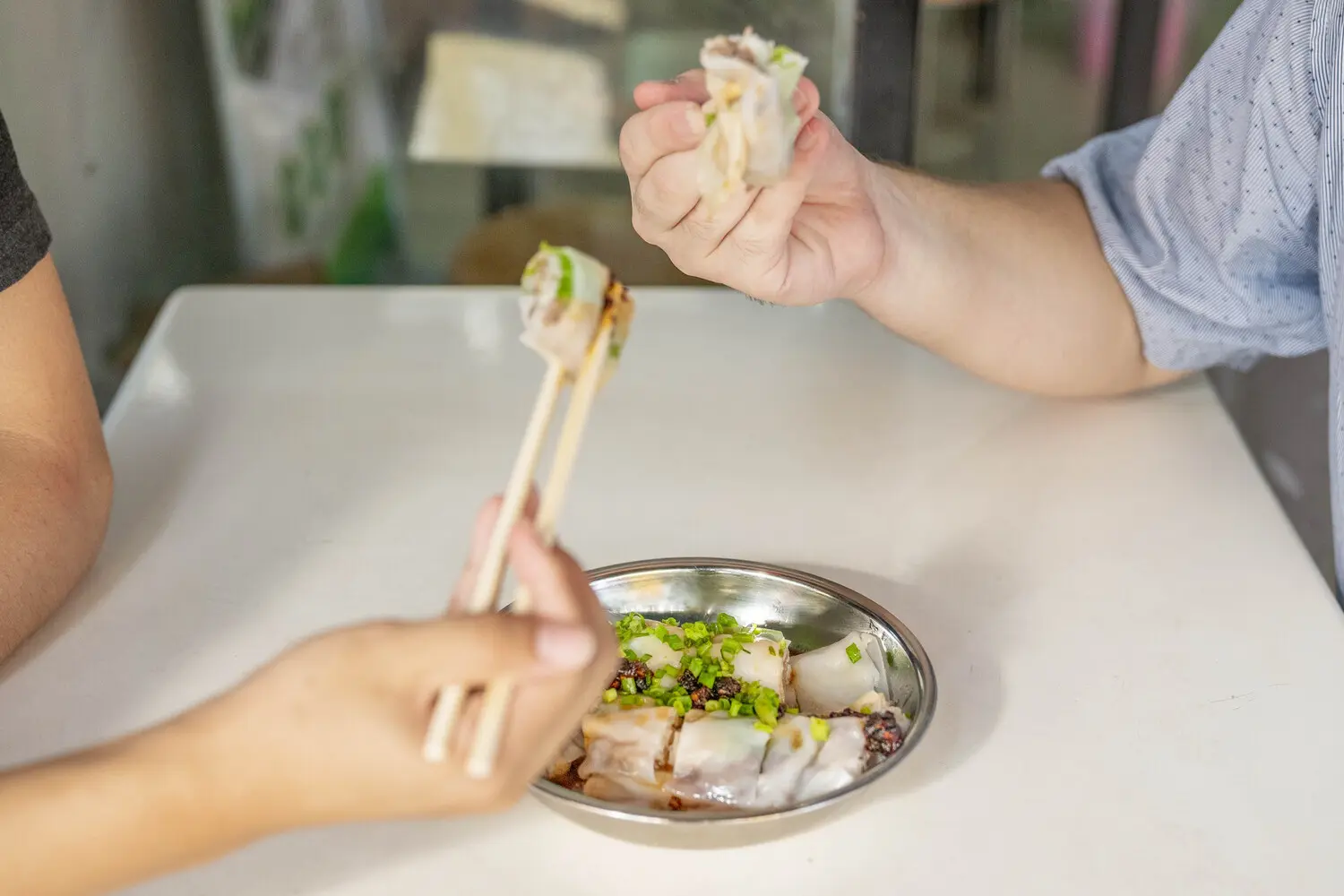
- Chopsticks originated in China, and the earliest confirmed archaeological examples are bronze chopsticks from the late Shang period, though their broader history is often described as stretching back several thousand years.
- Chinese, Korean, and Japanese chopsticks each have distinct shapes, materials, and designs that reflect their respective culinary traditions.
- Proper chopstick etiquette is an essential part of Chinese table manners — breaking the rules can be seen as rude or, in some cases, symbolically inauspicious.
- Disposable chopsticks create significant waste, while reusable alternatives can help reduce everyday single-use consumption.
You see them everywhere — at your local Chinese takeout shop, at sushi restaurants, even in your local supermarket. But have you ever wondered where chopsticks came from, or how they differ depending on where they are used?
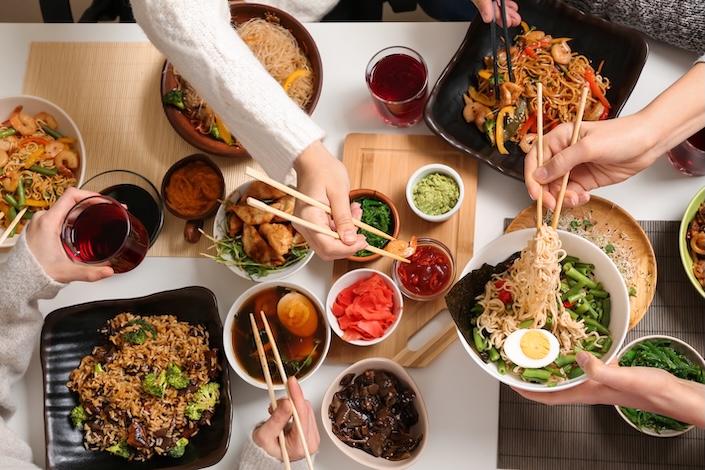
For anyone hoping to Learn Chinese in China or simply deepen their understanding of Chinese culture, the story of chopsticks is a great place to start. These simple utensils reveal a surprising amount about the history, values, and social customs of the cultures that use them.
01Who Invented Chopsticks? The Origin Story
Chopsticks are a pair of slender sticks of equal length used for cooking and eating across much of East Asia.
Chopsticks originated in China, so they are generally regarded as a Chinese invention. The exact date of their earliest use is unclear, but the oldest confirmed archaeological examples are bronze chopsticks found at Yin Ruins in Henan, dating to the late Shang dynasty.
More broadly, chopsticks are often said to have a history of several thousand years. Many scholars believe that early versions were first used in cooking rather than at the dining table, likely as practical tools for retrieving food from hot pots of water or oil.
Over time, their role gradually changed. By around 400 BCE, changes in cooking methods and food preparation appear to have helped make chopsticks more common as eating utensils.
From China, chopsticks spread to other parts of East Asia, including Korea, Japan, and Vietnam. Their spread reflects the wider cultural exchanges that shaped much of Chinese history, as ideas, customs, and technologies moved across the region.
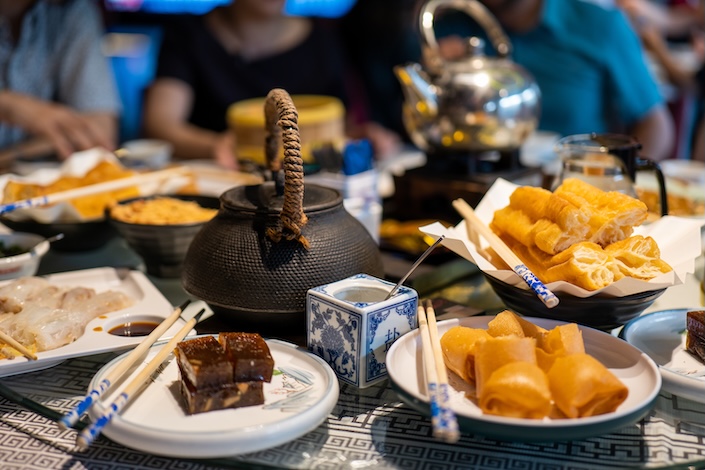
02Which Countries Use Chopsticks?
Today, chopsticks are most closely associated with China, Japan, Korea, and Vietnam, though they are also used in other parts of Asia and in Asian communities around the world. They remain one of the world's most widely used eating utensils.
In places such as Taiwan, Hong Kong, Singapore, and Malaysia, chopsticks are also commonly used, especially in Chinese or other East Asian dining contexts. In countries like Thailand, they are often used for certain noodle dishes rather than as the default utensil for every meal.
Understanding how chopsticks fit into local dining customs is part of what makes travel through Asia so rewarding. For those planning a trip, brushing up on a few essential Chinese travel phrases can go a long way.
03Chinese vs. Japanese vs. Korean Chopsticks: What's the Difference?
Over the course of their history, chopsticks have evolved in different ways. Across East Asia today, they come in a range of shapes, materials, and designs.
Chopsticks are also used in the kitchen. While many people cook with the same chopsticks they eat with, longer "cooking chopsticks" are also common.
These are thicker and longer than chopsticks intended for eating. Their added length helps cooks turn food more easily while keeping their hands farther from heat and splattering oil.
Chinese Chopsticks: Long, Blunt, and Built for Sharing
Chinese chopsticks are made from a wide range of materials, including bamboo, wood, plastic, metal, and occasionally more decorative materials.
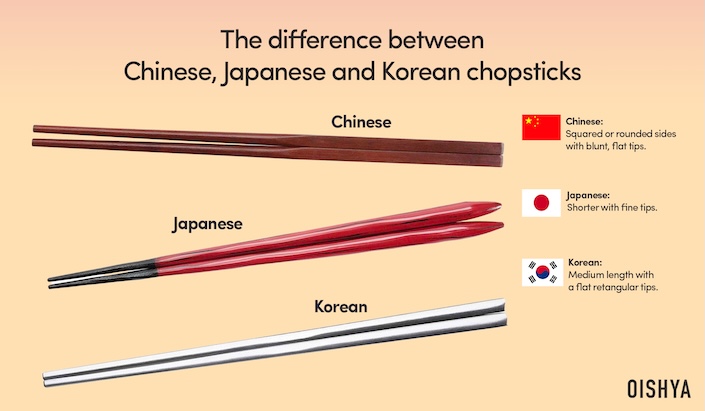
Most Chinese chopsticks are around 25 centimeters long, rectangular or square-sided, and blunt at the tip. This makes them somewhat longer than many Japanese and Korean chopsticks.
Their length suits the communal style of many Chinese meals, where several shared dishes are placed in the center of the table. Longer chopsticks make it easier to reach food from a distance and work especially well with dishes such as hot pot.
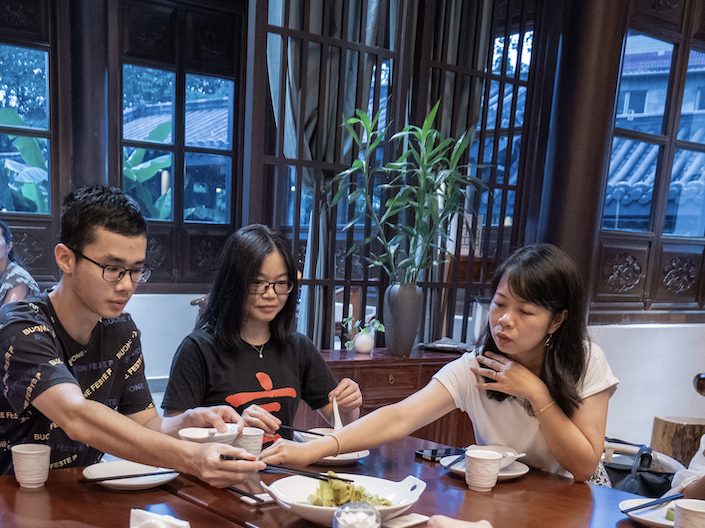
Korean Chopsticks: Why Are They Made of Metal?
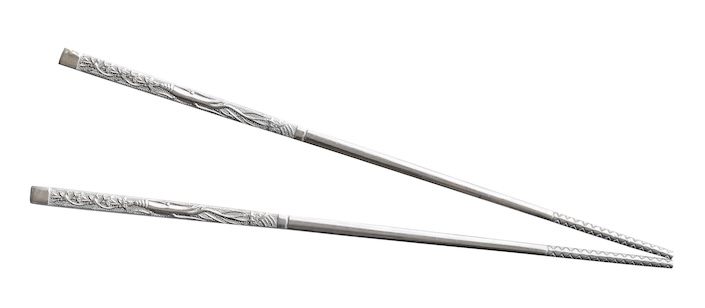
Although wooden chopsticks are also used in Korea, metal chopsticks are especially common. Historically, they were often made of brass or other metals, while modern versions are usually stainless steel.
Korean chopsticks are typically flatter and slimmer than Chinese chopsticks, and they are often paired with a matching spoon. Together, the two utensils form a standard part of many Korean table settings.
Because of their shape and material, Korean chopsticks can feel more slippery to beginners. At the same time, their durability makes them well suited to long-term everyday use.
Japanese Chopsticks: Pointed Tips for Precision
Japanese chopsticks are often made of wood with a lacquer coating, though plastic and other materials are also common. They are usually shorter and lighter than Chinese chopsticks.
Japanese chopsticks often taper to a narrow point, which makes them useful for picking up smaller bites and handling foods such as fish more precisely.
Some traditional sets also come in different sizes, with smaller chopsticks commonly marketed for children. For a broader comparison beyond the dining table, see our guide on Chinese vs. Japanese.
04Chopstick Etiquette in China: Rules You Should Know
Different chopstick-using cultures have their own dining customs. In this article, we focus mainly on etiquette in China, where the way you handle your chopsticks plays an important role in whether or not you are seen as having good table manners.
Chopstick etiquette is closely tied to broader Chinese social customs. Knowing a few basic rules shows respect, cultural awareness, and consideration for those around you.
Don't Stick Chopsticks Upright in Rice
Sticking your chopsticks upright into a bowl of rice is considered extremely rude and can also be seen as symbolically inauspicious. The reason is that it resembles incense sticks used in funerary rituals.
Don't Point at People with Chopsticks
Just as it is rude to point at people with your fingers, it is also rude to point at them with your chopsticks. You should also avoid poking at food or gesturing too much with them in your hand.
Don't Dig Through Shared Dishes
When taking food from a communal plate, do not use your chopsticks to search through the dish for the "best" piece. Choose politely and efficiently.
You should also never return a piece of food after you have already picked it up. This is considered both rude and unhygienic.
Don't Use Chopsticks as Drumsticks
Chopsticks are eating utensils, not toys. Tapping them on bowls or plates is widely considered bad table manners.
Don't Use Mismatched Chopsticks
Chopsticks are meant to be used as a matching pair, so combining chopsticks of different lengths or styles can look careless or awkward in a formal dining context.
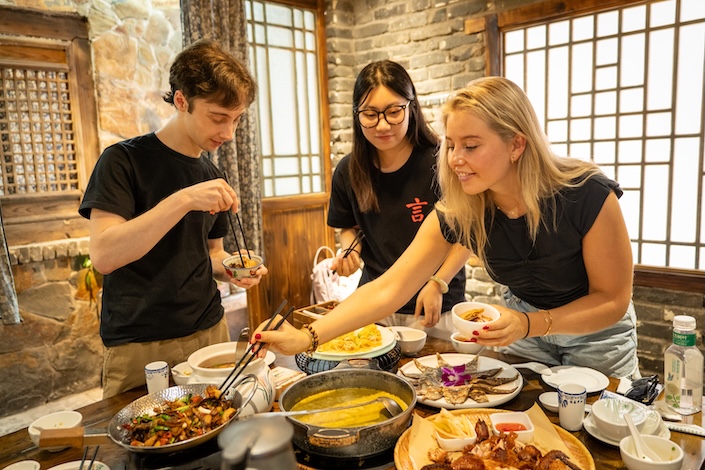
If you're eating at a restaurant with communal dishes, look for serving chopsticks (公筷, gōngkuài) placed beside shared plates. Using these instead of your personal chopsticks to pick up food shows good manners and good hygiene awareness.

Study Chinese in Guilin or Start Online
CLI offers personalized Chinese instruction built around your goals. Join our Immersion Program in Guilin or begin from anywhere with a free Chinese lesson .
05The Environmental Impact of Disposable Chopsticks
Takeout and food delivery are convenient, but they also increase reliance on single-use utensils. In places where chopsticks are the default eating utensil, that can translate into a very large volume of disposable waste.
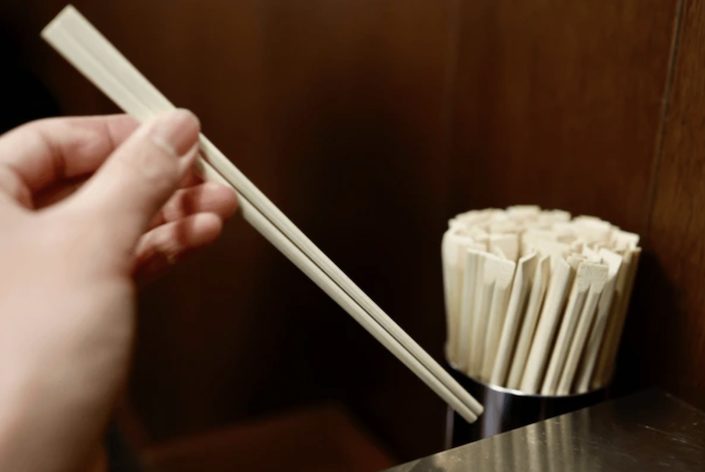
Disposable chopsticks are practical, inexpensive, and widely available, but their large-scale production and short lifespan raise environmental concerns. Even when made from renewable materials such as bamboo or wood, using them once and throwing them away creates unnecessary waste.
Bamboo disposable chopsticks are often presented as a more environmentally friendly option than plastic because bamboo grows quickly and the finished product is biodegradable. Even so, high-volume production still requires land, harvesting, transport, packaging, and processing.
Bamboo, Manufacturing, and Sustainability
Bamboo is often a better raw material than slower-growing timber for disposable utensils, but that does not make single-use consumption impact-free. Large-scale bamboo production can still bring agricultural and manufacturing pressures, especially when demand is high.
Some disposable chopsticks are also processed, bleached, or packaged in ways that make them less environmentally friendly than they first appear. This is one reason reusable chopsticks remain the better long-term option for many people.
More restaurants and takeout services now allow customers to opt out of disposable utensils entirely. Carrying a small reusable cutlery or chopstick set is a simple way to reduce waste at home, at work, or while traveling.
06Benefits of Eating with Chopsticks
So why use chopsticks when a spoon or fork might seem easier? In practice, chopsticks suit the foods and dining styles of the cultures in which they developed.
Why Chopsticks Are Well Suited to Chinese Food
Chinese meals are often communal and typically include several shared dishes filled with bite-sized foods. Chopsticks make it easy to pick up small portions from a variety of plates without needing a larger serving utensil for every bite.
They are especially practical for foods that are cut into manageable pieces before reaching the table, which is common in Chinese cooking. This makes chopsticks a natural fit for the cuisine as it is actually served.
Do Chopsticks Help You Eat Less?
Some people feel that chopsticks encourage smaller bites and a slower eating pace, especially when compared with using a fork or spoon. For that reason, some diners find that chopsticks can make a meal feel more deliberate and mindful.
That said, how much you eat depends on many factors beyond the utensil itself. It is best to think of this as a possible habit-related benefit rather than a guaranteed effect.
07How to Use Chopsticks: Tips for Beginners
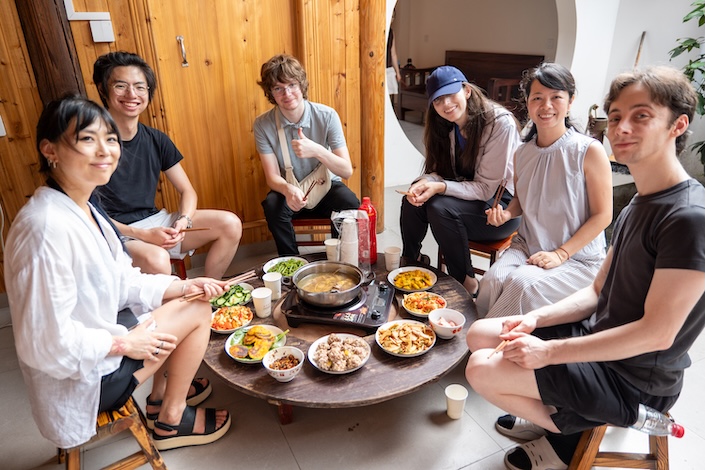
Some people assume that using chopsticks is difficult, but for most beginners it is simply a matter of practice. There is more than one acceptable grip, so it helps to try a few approaches and find the one that feels most stable.
If you are still struggling, training chopsticks or beginner-friendly designs can help. These often include connectors or guides that make the movement easier to learn at the beginning.
Whether you are just starting out or already comfortable using them, learning to use chopsticks is a fun way to engage more deeply with Chinese and East Asian food culture. It also shows curiosity, respect, and a willingness to experience another culture on its own terms.
The best way to learn about a culture is to learn more about the language. If you're hoping to learn Chinese, start with some basic Chinese words — or take the next step with a free one-on-one trial class with one of our Mandarin instructors.
08Chopstick Vocabulary in Chinese
The following vocabulary can help you talk about chopsticks, table manners, and dining culture with more confidence. To pronounce these words correctly, it helps to review what pinyin is and how it works.
| Chinese | Pinyin | Translation |
|---|---|---|
| 筷子 | chopsticks | |
| 历史 | history | |
| 礼貌 | politeness | |
| 礼仪 | etiquette | |
| 习惯 | habit | |
| 烹饪文化 | culinary culture | |
| 材料 | material | |
| 木头 | wood | |
| 塑料 | plastic | |
| 玉 | jade | |
| 竹 | bamboo | |
| 钢铁 | steel | |
| 环保 | environmentally friendly |