

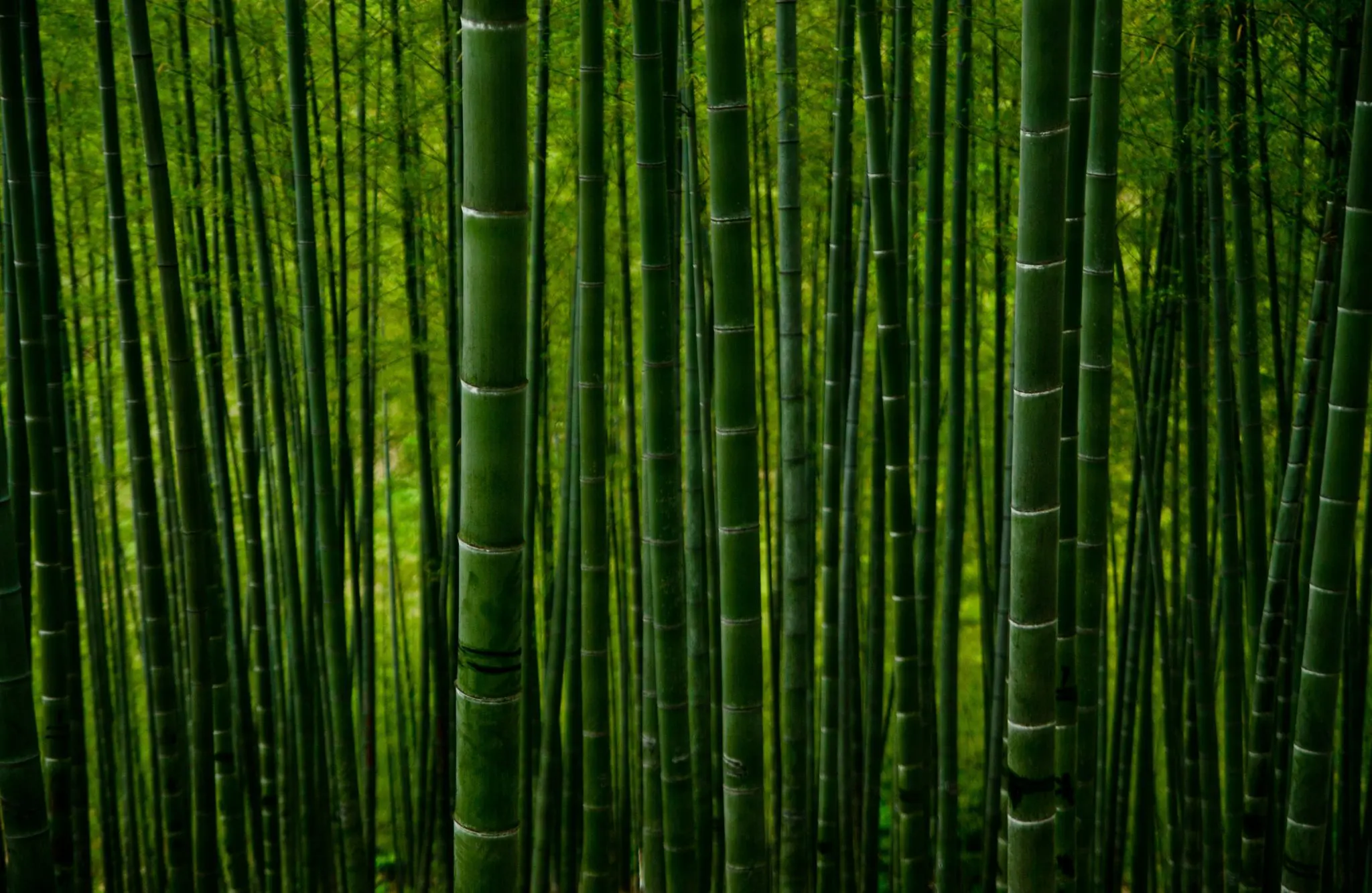
- Bamboo (竹子, zhúzi) is a fast-growing grass, not a tree, and China grows more of it than any other country.
- Bamboo has been used in China for roughly 3,000 years to make paper, food, weapons, housing, instruments, and books.
- In Chinese culture, bamboo symbolizes integrity, humility, and resilience, and is one of the “Four Gentlemen” of traditional painting.
- Bamboo is the giant panda’s main food source and central to China’s conservation and reforestation efforts.
- As a renewable, fast-growing material, bamboo is increasingly used in eco-friendly textiles, furniture, and construction.
Few plants are as woven into a civilization as bamboo (竹子, zhúzi) is into China. For thousands of years it has shaped Chinese food, art, architecture, and philosophy.
In this guide, we explore the history of bamboo in China, its many practical uses, and the deep cultural symbolism that has made it a recurring motif in Chinese art and literature. If your goal is to learn Chinese in China, understanding everyday symbols like bamboo makes real conversations and cultural references far richer.
01 Why is China called the “Bamboo Kingdom”?
China produces and uses so much bamboo that it is sometimes called the Bamboo Kingdom (竹子王国, Zhúzi Wángguó). The country is home to a large share of the world’s known bamboo species.
China holds roughly one-third of the world’s total bamboo forest area, more than any other nation. The provinces of Fujian, Jiangxi, Hunan, and Zhejiang contain the largest concentrations of bamboo cultivation.
Bamboo is also the fastest-growing plant on earth, and some species can shoot up dramatically in a single day. Despite reaching the height of a tree, bamboo is actually a type of grass.
While bamboo still plays an integral part in Chinese life today, it was even more central in the past. Before modern materials existed, it was used for an astonishing range of purposes, a story closely tied to broader Chinese culture and daily life.
02 What was bamboo used for in ancient China?
Bamboo has an extraordinarily long history in China, with use dating back roughly 3,000 years. Throughout that history, it has been turned into food, transport, weapons, housing, instruments, and books.
How bamboo became China’s first “paper”
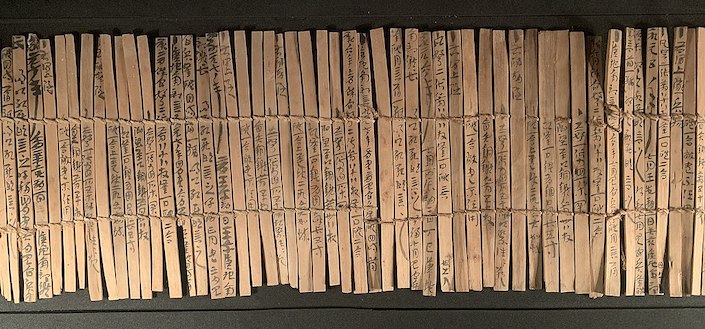
Before the invention of paper, bamboo slips (简牍, jiǎndú) served as a writing medium for documents and books. Strips of bamboo were bound together to form scrolls.
Sunzi’s masterpiece The Art of War (孙子兵法, Sūnzǐ Bīngfǎ), which dates to roughly the 5th century BCE, was originally written on bamboo. This connects bamboo directly to the development of Chinese characters and early literature.
Is bamboo used in Chinese cooking?
Bamboo shoots (竹笋, zhúsǔn) have a long history in Chinese cuisine and remain a key ingredient in many modern dishes. Young shoots add a crisp texture and gently sweet flavor.
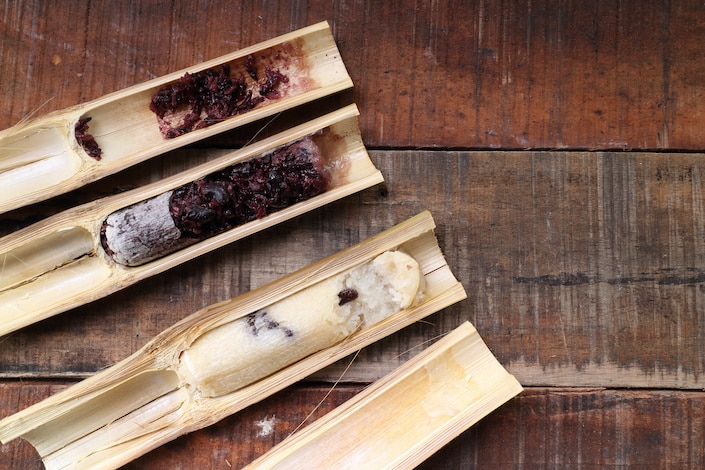
They are commonly used in stir-fries, soups, and side dishes, and pickled bamboo makes a popular condiment. A favorite dish in Guangxi province is bamboo rice (竹筒饭, zhútǒng fàn), sticky rice and meat cooked inside a hollow bamboo tube.
Bamboo in construction and transportation
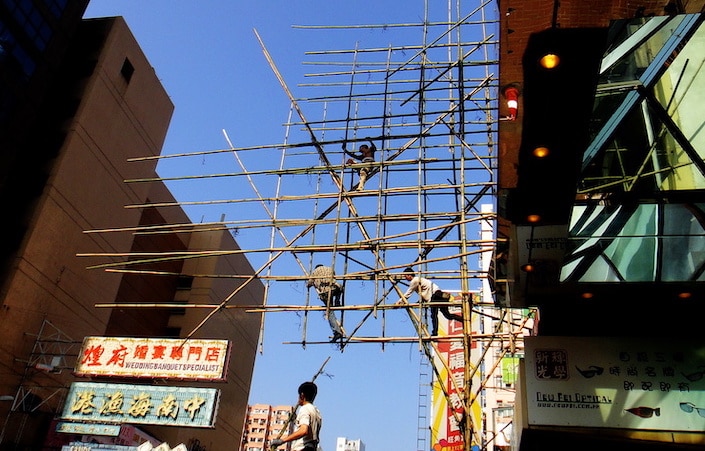
Bamboo has long been a versatile building material in China, used for everything from humble bridges to imperial rooftops. Even today, construction sites in mainland China and Hong Kong sometimes use bamboo scaffolding.
Bamboo was also once a common mode of transport, with rafts used for fishing and crossing rivers. Visitors can still ride a bamboo raft down the Yulong River (遇龙河, Yùlónghé) near the town of Yangshuo.
Bamboo in traditional Chinese music
The Chinese flute, or 笛子 (dízi), is one of the most beloved instruments in traditional Chinese music. As its bamboo construction suggests, the instrument is made entirely from the plant.
This minimalist instrument produces a bright, slightly breathy tone that gives traditional Chinese music much of its distinctive charm. The video below offers a sense of its sound.
Bamboo and the first firecrackers
Firecrackers are central to Chinese celebrations and are often used during festivals like Chinese New Year. Some of the earliest Chinese firecrackers were simply hollow bamboo stems packed with gunpowder.
03 What does bamboo symbolize in Chinese culture?
Bamboo as a symbol of integrity
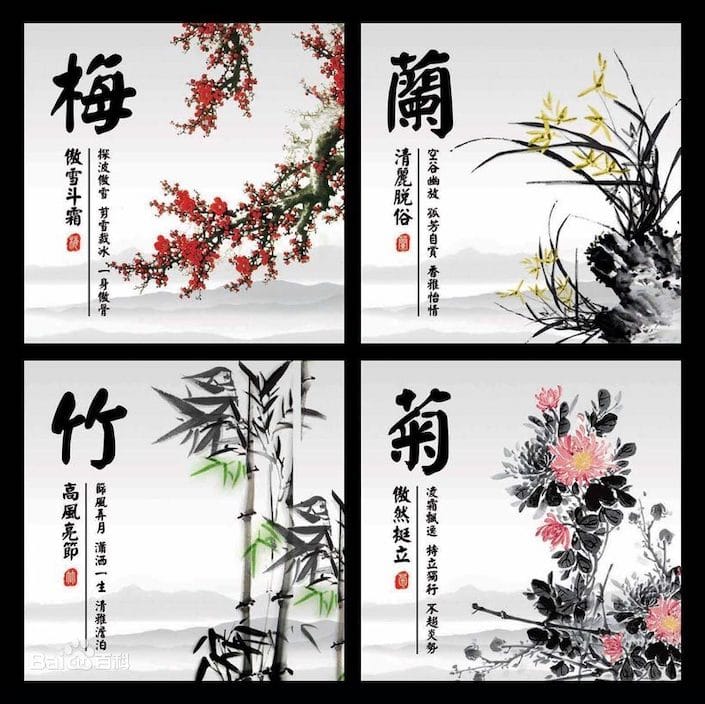
In traditional Chinese culture, bamboo (竹, zhú) joins plum blossom (梅, méi), orchid (兰, lán), and chrysanthemum (菊, jú) to form a group called the Four Gentlemen. Each plant represents a virtue of the ideal person.
Bamboo’s strength lies in its grace: it is tranquil, flexible, humble, and upright. Its deep roots denote steadiness, while its ability to bend without breaking symbolizes resilience.
When the Four Gentlemen appear together, they can also represent the four seasons, with bamboo standing for summer. Alongside pine and plum blossom, bamboo is also one of the Three Friends of Winter (岁寒三友, suìhán sānyǒu), plants admired for staying green in the cold.
Bamboo in traditional Chinese painting
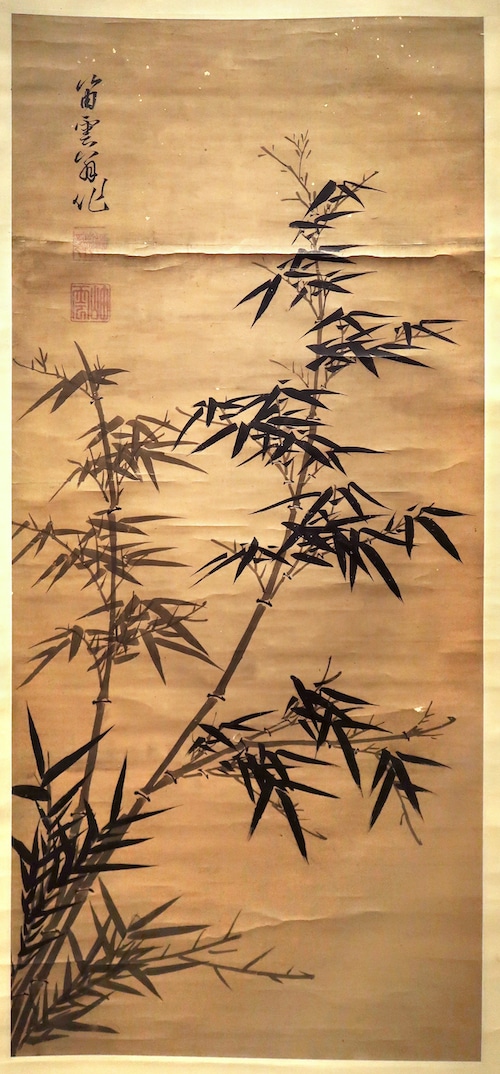
Traditional Chinese paintings (国画, guóhuà) often feature bamboo as the centerpiece. For centuries, artists have used the plant as a motif, whether alone or as part of the Four Gentlemen.
Painting bamboo well was long considered a test of an artist’s skill and character. The same reverence appears in related arts like Chinese calligraphy, where controlled, confident brushstrokes are prized.
Chinese idioms about bamboo
Many Chinese idioms (成语, chéngyǔ) reference bamboo, showing how deeply the plant runs through the language. Here are four common examples.
| Idiom | Literal translation | Meaning |
|---|---|---|
| 胸有成竹 (xiōngyǒuchéngzhú) | To have a finished bamboo in your heart before painting it | To have a well-thought-out plan |
| 破竹之势 (pòzhúzhīshì) | The force of splitting bamboo | An irresistible, unstoppable force |
| 青梅竹马 (qīngméi-zhúmǎ) | Green plums and a bamboo horse | Childhood friends, often a couple who grew up together |
| 竹篮打水 (zhúlándǎshuǐ) | Drawing water with a bamboo basket | Wasted effort |

Learn Chinese with Cultural Context
CLI offers personalized Chinese instruction built around real language and culture. Join our Immersion Program in Guilin or start online with a free Chinese lesson.
04 How is bamboo used in modern China?
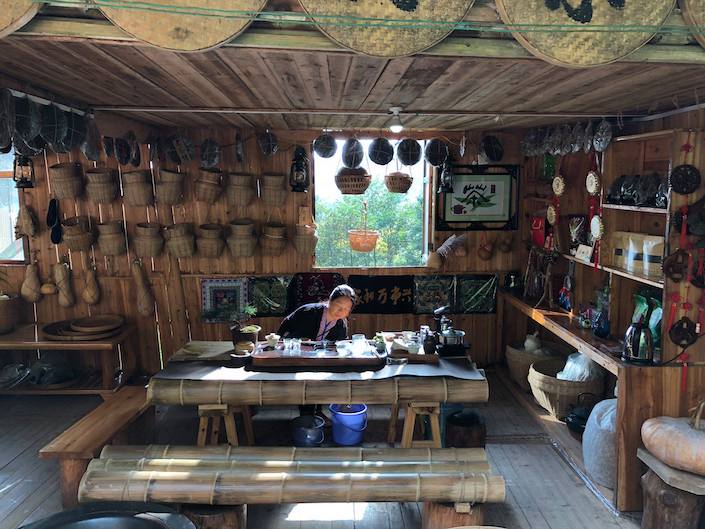
Bamboo weaving is a traditional handicraft in which the plant is manipulated into woven patterns to create useful and decorative objects. It remains a living craft across rural China today.
Bamboo furniture and household objects
Bamboo is widely used in modern China to produce furniture and everyday objects. Common items include chopsticks (竹筷, zhú kuài), baskets (竹篮, zhú lán), steamers (竹蒸笼, zhú zhēnglóng), and lanterns (竹灯笼, zhú dēnglóng).
Larger pieces like chairs, stools, tables, and tea sets are also made from bamboo. Even so, the bamboo furniture market remains a niche despite significant investment.
One cultural obstacle is that bamboo is often viewed as a cheap alternative to “real wood” rather than a premium material. This perception is reinforced by bamboo’s long association with rural life.
Is bamboo clothing really made from bamboo?
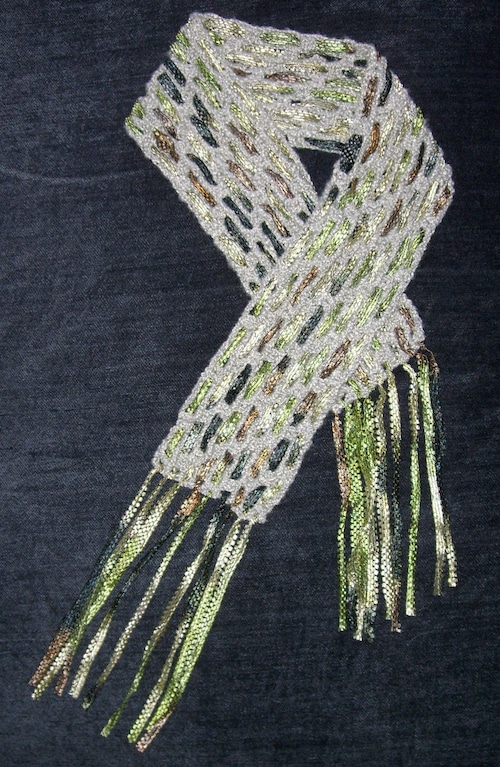
Thanks to its biodegradability and rapid growth, bamboo is increasingly marketed as an eco-friendly choice in textiles. The reality, however, is more complicated.
Although garments are often labeled “bamboo clothing,” raw bamboo fibers are rarely used directly. More often, bamboo is processed into rayon (viscose), a semi-synthetic material, or blended with other fibers.
Bamboo textiles also have a strong presence in rural life, where farmers and fishermen weave bamboo strips into hats and shoes for working in the fields. Even processed, bamboo remains a more sustainable option than many plastics.
05 Bamboo, the environment, and giant pandas
Bamboo and China’s reforestation efforts
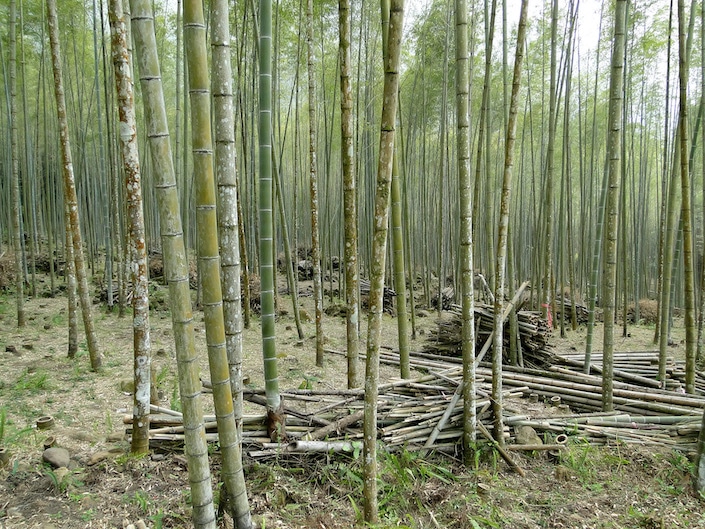
In 1999, the Chinese government launched the Grain-for-Green program to convert farmland back into forest, aiming to restore green cover and encourage biodiversity. The effort led to a large expansion of bamboo forests.
Many restored forests rely on monoculture, the practice of growing a single species. While this boosted bamboo supply, it also reduced biodiversity and soil nutrients.
As a result, bamboo monoculture may not be ecologically sustainable in the long term unless it is carefully managed. Balancing production with biodiversity remains an ongoing challenge.
Why pandas depend on bamboo
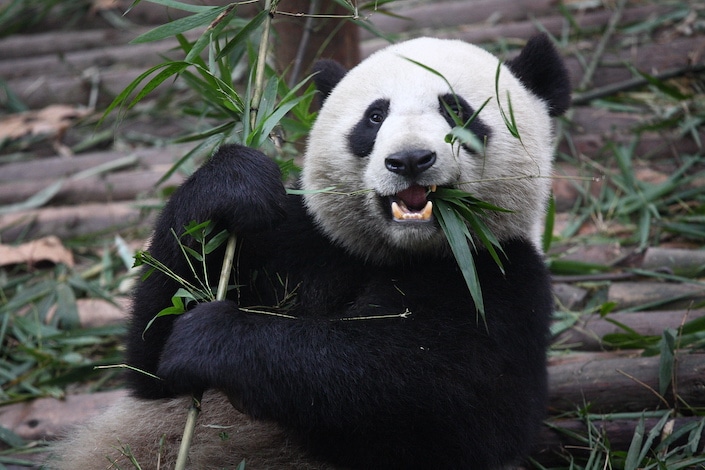
The giant panda (大熊猫, dàxióngmāo) is a symbol of peace and harmony and an emblem of China itself. The country even practices “panda diplomacy,” sending pandas abroad to strengthen diplomatic ties.
Bamboo is the panda’s main food source, so much so that pandas are sometimes called 竹熊 (zhúxióng, “bamboo bear”). On average, a panda eats around 12–14 kilograms (roughly 26–30 pounds) of bamboo a day.
Bamboo is also a critical food for red pandas and golden monkeys, making it essential to wildlife conservation. China’s reforestation plans were partly designed to protect panda habitat.
06 Best bamboo forests to visit in China
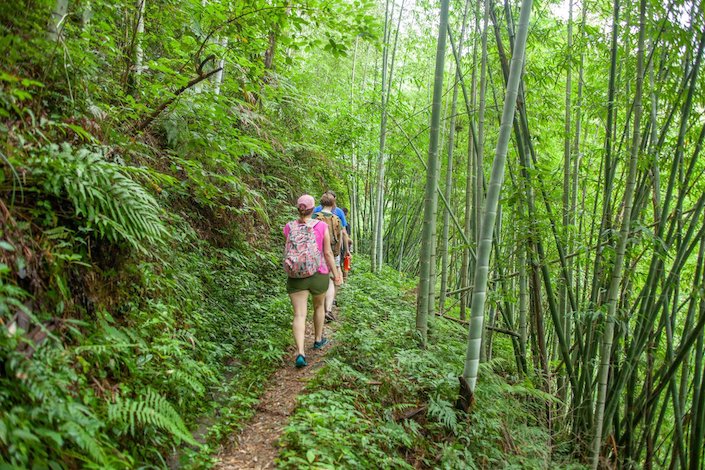
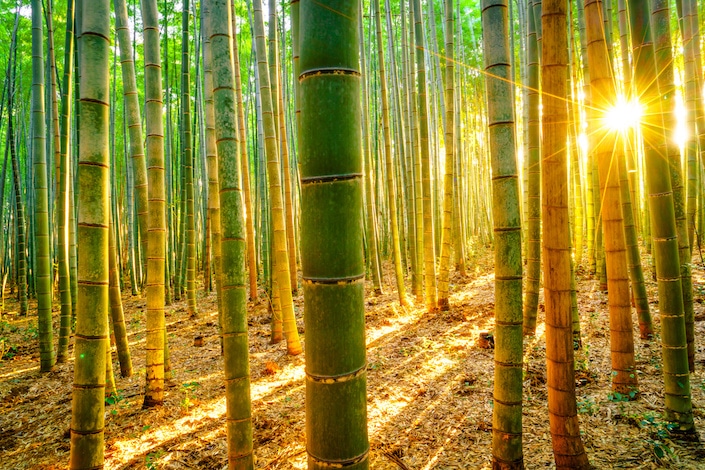
Every year, hundreds of thousands of domestic and international tourists visit China’s bamboo forests. Two destinations stand out in particular.
The Shunan Bamboo Forest (蜀南竹海国家公园, Shǔnán Zhúhǎi guójiā gōngyuán) in Yibin City, Sichuan, is the largest and oldest bamboo forest in China. Covering around 120 square kilometers, it features a bamboo museum, hiking trails, waterfalls, and caves.
The Anji Bamboo Forest (中国大竹海, Zhōngguó Dàzhúhǎi) in Zhejiang even includes a roller coaster among its attractions. It also served as a filming location for the acclaimed film Crouching Tiger, Hidden Dragon (卧虎藏龙, Wòhǔ Cánglóng).
The world’s tallest bamboo species, giant bamboo (Dendrocalamus giganteus), can reach over 40 meters in height, taller than a ten-story building. Record specimens of giant bamboo have been documented at around 46 meters.
07 Useful Chinese bamboo vocabulary
The following terms will help you recognize bamboo references in articles, conversations, cuisine, and traditional art.
| Chinese | Pinyin | Meaning |
|---|---|---|
| 竹子 | Bamboo | |
| 竹笋 | Bamboo shoots | |
| 竹林 | Bamboo forest | |
| 竹筷 | Bamboo chopsticks | |
| 笛子 | Chinese bamboo flute | |
| 大熊猫 | Giant panda | |
| 国画 | Traditional Chinese painting | |
| 成语 | Chinese idiom | |
| 岁寒三友 | Three Friends of Winter (pine, bamboo, plum) |
08 FAQ
Is bamboo a tree or a grass?
Bamboo is a type of grass, not a tree, even though some species grow as tall as trees. It is also the fastest-growing plant on earth.
What does bamboo symbolize in Chinese culture?
Bamboo symbolizes integrity, humility, and resilience. It bends without breaking, which represents the ability to endure hardship, and it is one of the “Four Gentlemen” of Chinese painting.
Why do pandas eat so much bamboo?
Bamboo is low in nutrients, so giant pandas must eat large quantities, often 12–14 kilograms a day, to meet their energy needs. It makes up the vast majority of their diet.
Does China grow the most bamboo in the world?
Yes. China holds roughly one-third of the world’s bamboo forest area and is the world’s leading bamboo producer, with major cultivation in Fujian, Jiangxi, Hunan, and Zhejiang.
Is bamboo good for the environment?
Bamboo grows quickly and is renewable, making it a sustainable alternative to wood and plastic. However, large-scale bamboo monoculture can reduce biodiversity if not carefully managed.
09 Final thoughts
Bamboo is far more than a plant in China. It is a building material, a food, a musical instrument, a symbol of moral character, and a lifeline for the giant panda.
For Chinese learners, understanding bamboo opens a window onto art, idioms, cuisine, and values. Its beauty lies in its simplicity, and its place is deeply rooted in Chinese culture, no matter what its future holds.