

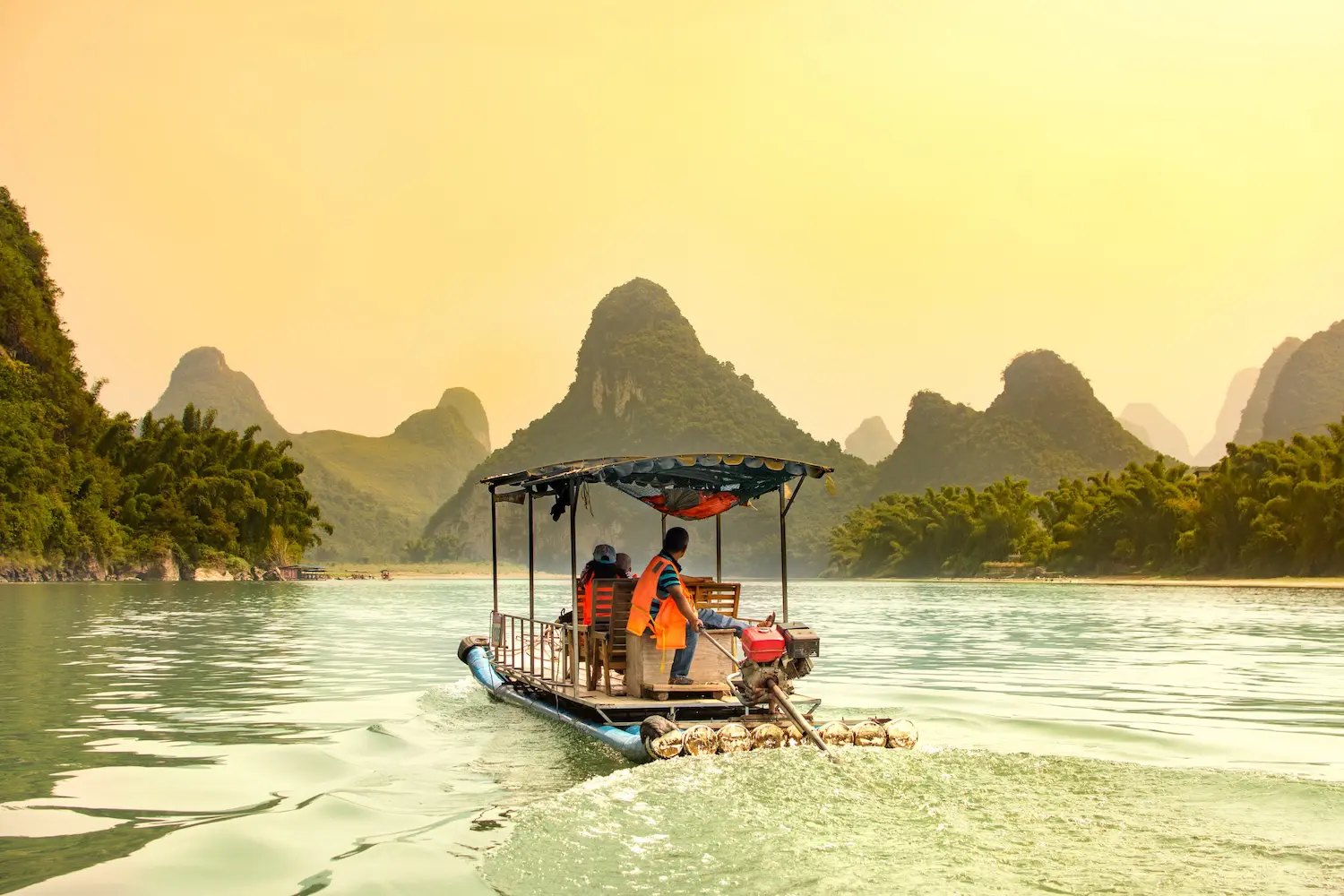
- Yangshuo (阳朔, Yángshuò) sits on the Li River just south of Guilin and is famous for its karst mountains.
- You can reach Yangshuo easily by plane via Guilin's airport, by high-speed train through Xingping or Guilin, or by taxi.
- Once in town, bicycles, scooters, and walking are the best ways to explore the countryside.
- Highlights include Yulong River bamboo rafts, Moon Hill, bustling West Street, and the Impression Liu San Jie show.
- The best time to visit is roughly April through October, when the weather is mostly sunny and rain is rare.
Yangshuo (阳朔, Yángshuò) is located on the banks of the Li River just south of Guilin. Known for its hauntingly beautiful karst mountains, unique caves, and Chinese delicacies, it is a bucket-list destination for anyone hoping to experience southern China's beauty and culture.
CLI's 2026 Yangshuo Travel Guide introduces the best spots to visit, places to see, food to eat, and landscapes to explore. Whether you are passing through for a weekend or basing yourself here for longer, this guide will help you make the most of your trip.
01 How to get to Yangshuo
Yangshuo offers travelers the best of both worlds. Its serene natural beauty makes it a relaxing place to recharge, while its bustling avenues let you experience modern China in all its neon-lit glory.
Luckily, getting there is easy. With hundreds of thousands of visitors every year, Yangshuo is a first-class travel destination, and the local government has invested in convenient transportation for locals and travelers alike.
By plane
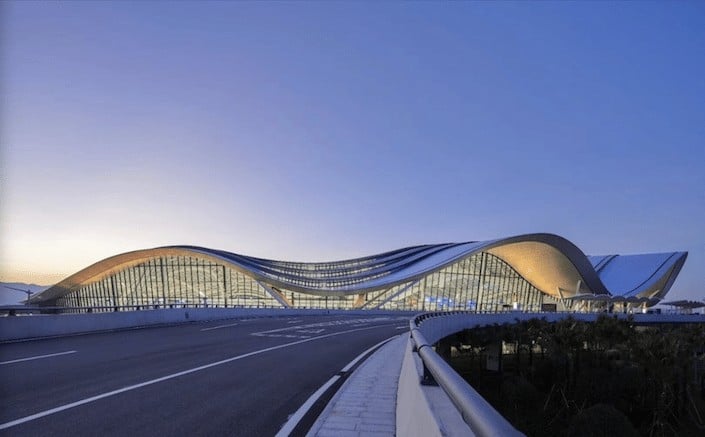
Yangshuo doesn't have its own airport. However, international and domestic travelers will find that Guilin Liangjiang International Airport (桂林两江国际机场, Guìlín Liǎngjiāng Guójì Jīchǎng) offers easy access to the town.
The airport enjoys daily flights from Shanghai, Beijing, and Kuala Lumpur. A 20 RMB ($3) shuttle service is available from the airport and makes three stops.
The second stop is next to the train station, where you can also find buses headed to Yangshuo. If you ride to the last stop, you'll find yourself in Guilin, from where you can board a bus or boat to Yangshuo. Direct buses cost about 40 RMB ($5.50).
By train
Trains are the most widely used public transportation service in China. Getting comfortable using them will make your China journey much easier.
Yangshuo is connected to Guilin, Guangzhou, and Shenzhen via high-speed train. There are two main stations travelers can use to access Yangshuo: the newer stop in Xingping and the station in Guilin.
From the Xingping station, a bright blue bus runs to Yangshuo. Travelers can buy tickets at a counter just outside the station for 20 RMB ($3), and the journey takes roughly 50 minutes.
If you arrive at Guilin North Railway Station (桂林北站, Guìlín Běi Zhàn), board Bus number 100 to the other train station. There you'll find another public bus bound for Yangshuo for just 1–2 RMB, with a ride of roughly 40 minutes.

By taxi
Taking a taxi is by far the easiest option when traveling to Yangshuo. It's also the most expensive: coming from Guilin, expect to pay between 270 and 400 RMB ($35–60).
Several factors can affect the price. These include the type of vehicle, whether you use the G65 Baomao Highway toll road (an extra 30 RMB that cuts about 35 minutes from travel time), and whether your driver thinks you can be easily overcharged.
Agree on a price before you get in a taxi, sit down at a restaurant, or buy a ticket from a tout. A few words of Mandarin go a long way, so consider memorizing some useful Chinese travel phrases before you arrive.
02 Getting around Yangshuo
By bicycle
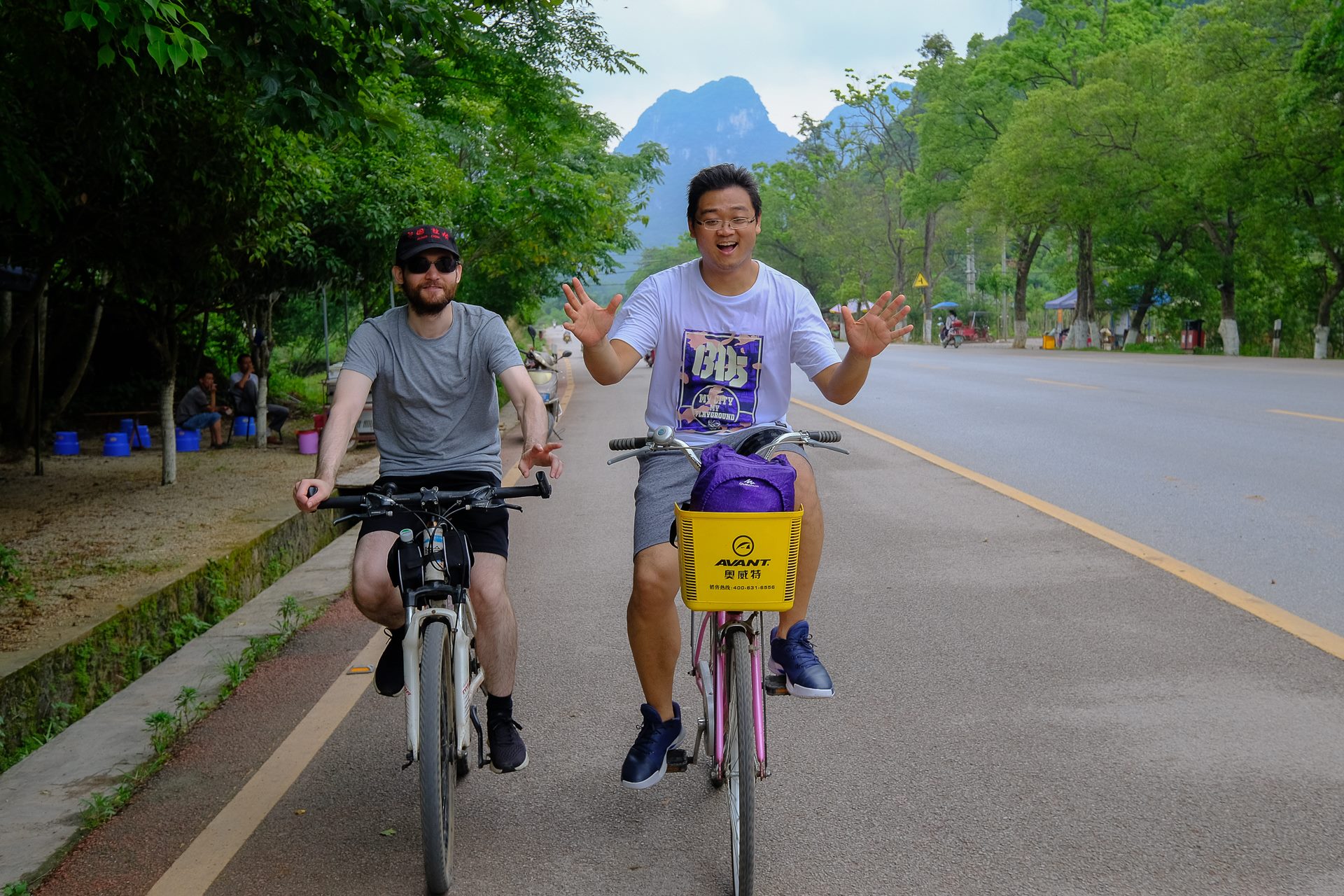
Once in town, renting a bicycle is a great way to explore Yangshuo. A simple street bike can cost as little as 20 RMB ($3), while a higher-quality mountain bike for tackling countryside dirt paths runs up to 80 RMB ($13).
Always check the brakes, tire pressure, and suspension before any money changes hands. A quick inspection can save you a lot of trouble on the road.
By motorcycle or scooter
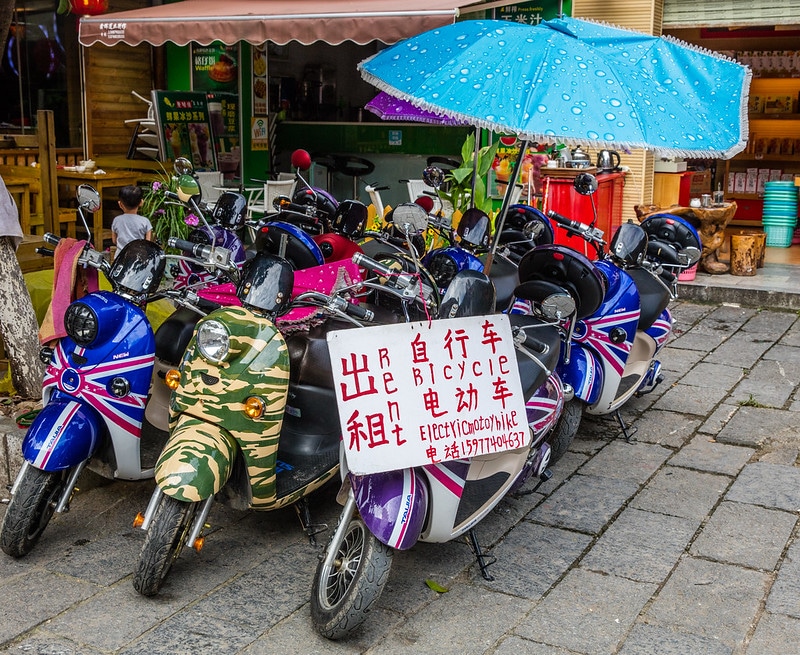
Another fantastic way to discover Yangshuo's streets and natural beauty is to rent a motorcycle or scooter. Most guesthouses, hostels, and hotels offer a rental service or can connect you with the right people.
Prices should fall somewhere between 70 and 100 RMB ($10–16) per day. A scooter gives you the freedom to reach quieter corners of the countryside at your own pace.
On foot
One of Yangshuo's charms is how manageably small it is by Chinese standards. Reserving an afternoon to simply wander and let your feet take you where they will is well worth considering.
From the sensory overload of an open-air market to a peaceful stroll along the riverwalk, you're likely to find something valuable just by footing it. Walking is also the best way to stumble upon hidden lanes and local life.
03 Top 16 things to do in Yangshuo
Most travelers come to Yangshuo to soak up the otherworldly scenery. Below are sixteen of the best ways to enjoy everything Yangshuo's stunning natural surroundings have to offer.
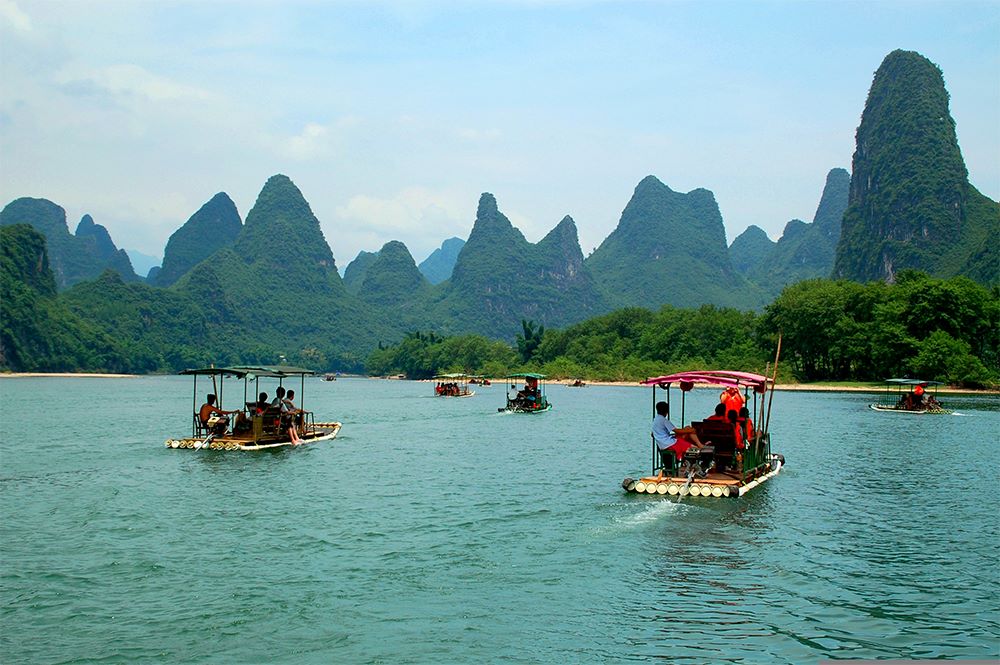
1. Ride a bamboo raft along the Yulong River
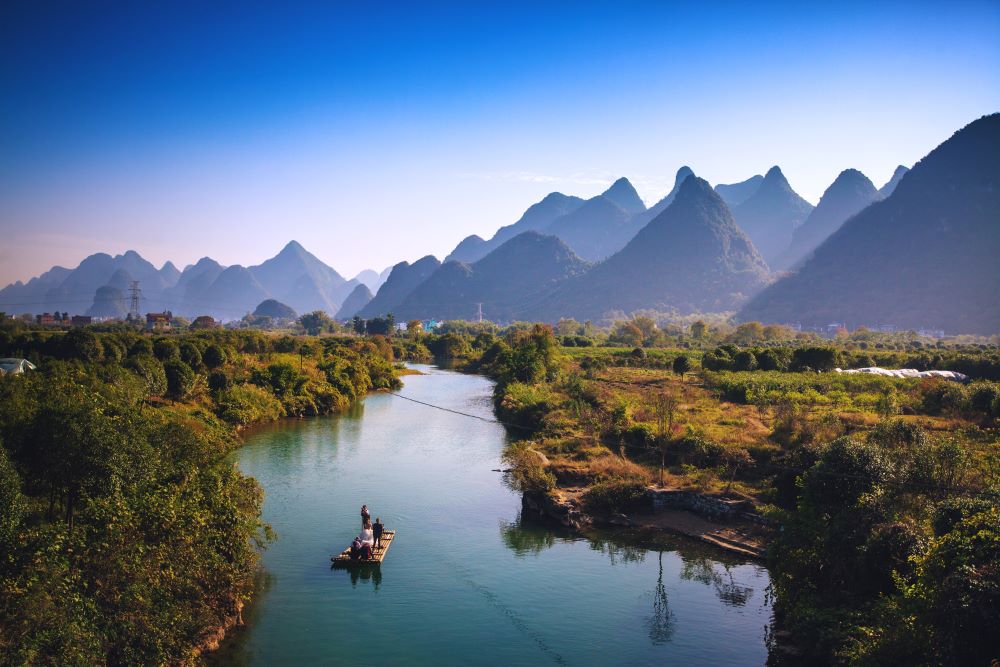
Floating down the Yulong River on a bamboo raft is one of the best ways to witness Yangshuo's spectacular beauty. A guided ride should cost you no more than 350 RMB for a two-person raft.
Several small ports make good starting and ending points. The table below compares a few popular routes by length and how busy they tend to be.
| Route | Duration | Crowds |
|---|---|---|
| Jinlong Bridge (金龙桥, Jīnlóngqiáo) to Jiuxian docks (旧县, Jiùxiàn) | 1 hr 30 min | Less crowded |
| Yima (骥马, Jìmǎ) to Shui E Di (水厄底, Shuǐ'èdǐ) | 1 hr | More crowded |
| Yulong Bridge (遇龙桥, Yùlóngqiáo) to Xia Tang Zhai (夏堂寨, Xiàtángzhài) | 1 hr 30 min | More crowded |
| Yulong Bridge (遇龙桥, Yùlóngqiáo) to Gong Nong Bridge (工农桥, Gōngnóngqiáo) | 4–5 hr | More crowded |
2. Watch the sunrise and sunset
Yangshuo's distinctive limestone mountains make for some of the most awe-inspiring sunrises and sunsets in all of China. To savor these magical moments, plan to spend some morning or evening hours outdoors.
The best places to watch the sunrise and sunset include Moon Hill, Green Lotus Peak, and Xianggong Mountain. Each offers a slightly different angle on the surrounding peaks.

3. Go biking in the countryside
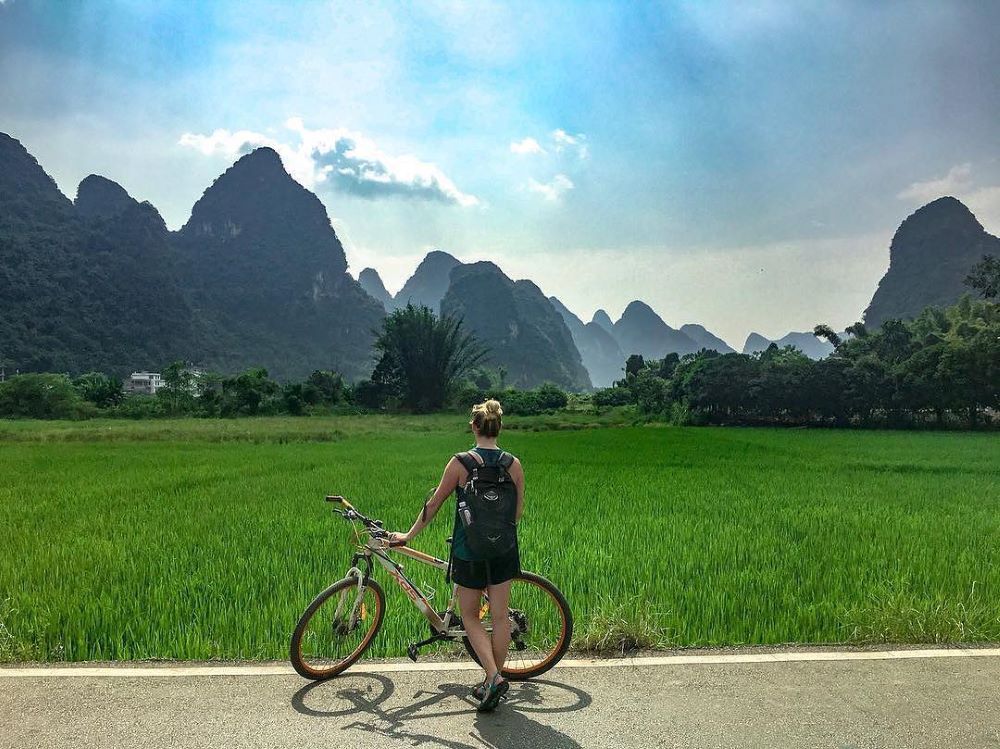
Biking is a popular way to explore Yangshuo because it lets you reach the remotest points conveniently. Along the way, you'll take in the landscape and likely encounter fellow cyclists.
For as little as 20 RMB ($3), you can rent a bike for the day. The patchwork of rice paddies and villages around town makes for unforgettable riding, and dedicated cyclists often continue on to the nearby Longsheng Rice Terraces for even more dramatic scenery.
4. Explore Yangshuo's caves
Yangshuo has several amazing caves to explore. Three of the best options are described below.
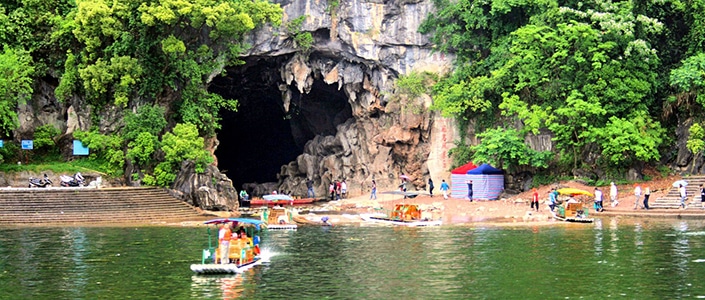
Water Cave (short: 1.5 hours; long: 3.5 hours). The rainbow-lit cave can strike some visitors as a bit tacky, but splashing around in its pools and bathing in volcanic mud is generally well received.
You'll enter by a small boat and, about halfway through, can disembark for a swim in a mud pond. Near the end you'll pass freshwater streams to wash off, with hot springs just a three-minute walk away.
Silver Cave (1.5 hours). Located more than 25 kilometers outside Yangshuo, it's a bit of a trek, but the two-kilometer path past limestone towers and countless stalactites rewards the effort.
The cave is made up of three distinct segments, each offering something fresh. During high season (July–August) it's popular with domestic tourists, so beware of scammers selling overpriced tickets and double-check prices with your hotel.
Moon Water Cave (short: 45 min; long: 3–4 hours). This expansive six-kilometer labyrinth extends through eight limestone mountains, and during World War II local resistance fighters used it as a hideaway.
The cave has a hot-spring swimming area where you can bask in volcanic mud, with nibbling fish on hand to clean your feet. Remember to bring a swimsuit, a towel, and a change of clothes.
5. Hike up TV Tower Mountain
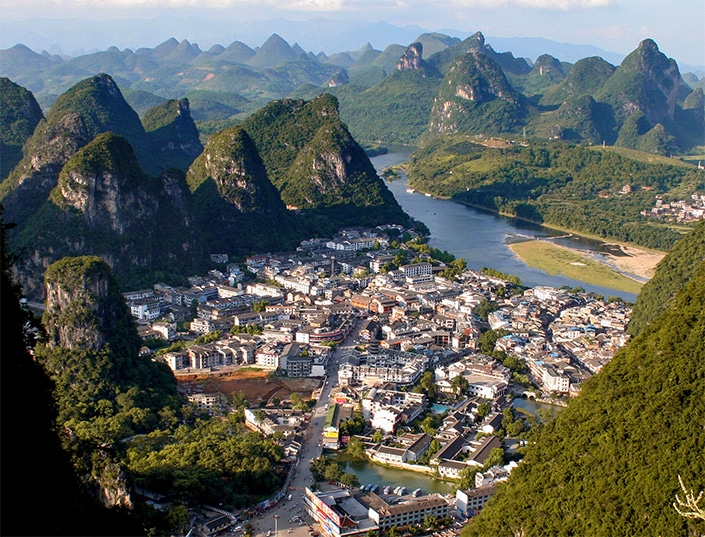
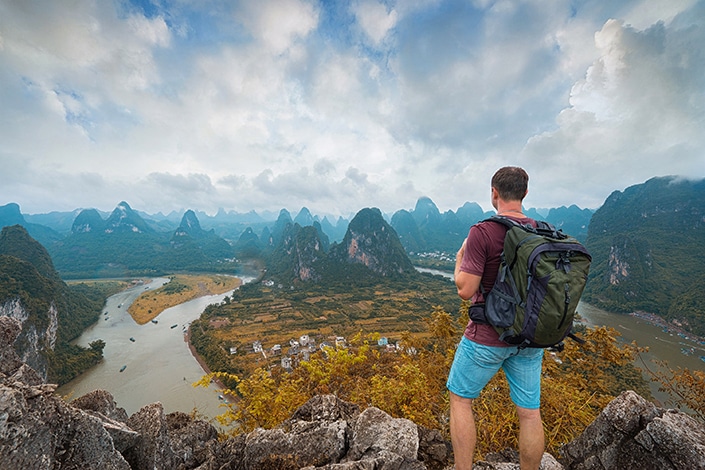
Yangshuo has many great hiking trails, and TV Tower Mountain is one of the most notable. Its summit offers an unparalleled panoramic view of the city and surrounding karst mountains.
It is without question the best place to take in the true scale of Yangshuo's famous peaks. The viewpoint sits on private property, so the owners charge a small entry fee.
Cost: bring at least 10 yuan. Time: 1.5–2.5 hours, depending on your fitness and how many photos you take.
Getting there: the mountain is near West Street, though finding the trailhead can be tricky. One hiker created a helpful step-by-step photo guide, so check it out for some useful tips!
A few things to keep in mind: the ascent is steep and many viewpoints lack guard rails, so watch your step. Bring water and insect repellent, and remember that if no one is home at the gate, there's no way past it.
6. Witness cormorant fishing
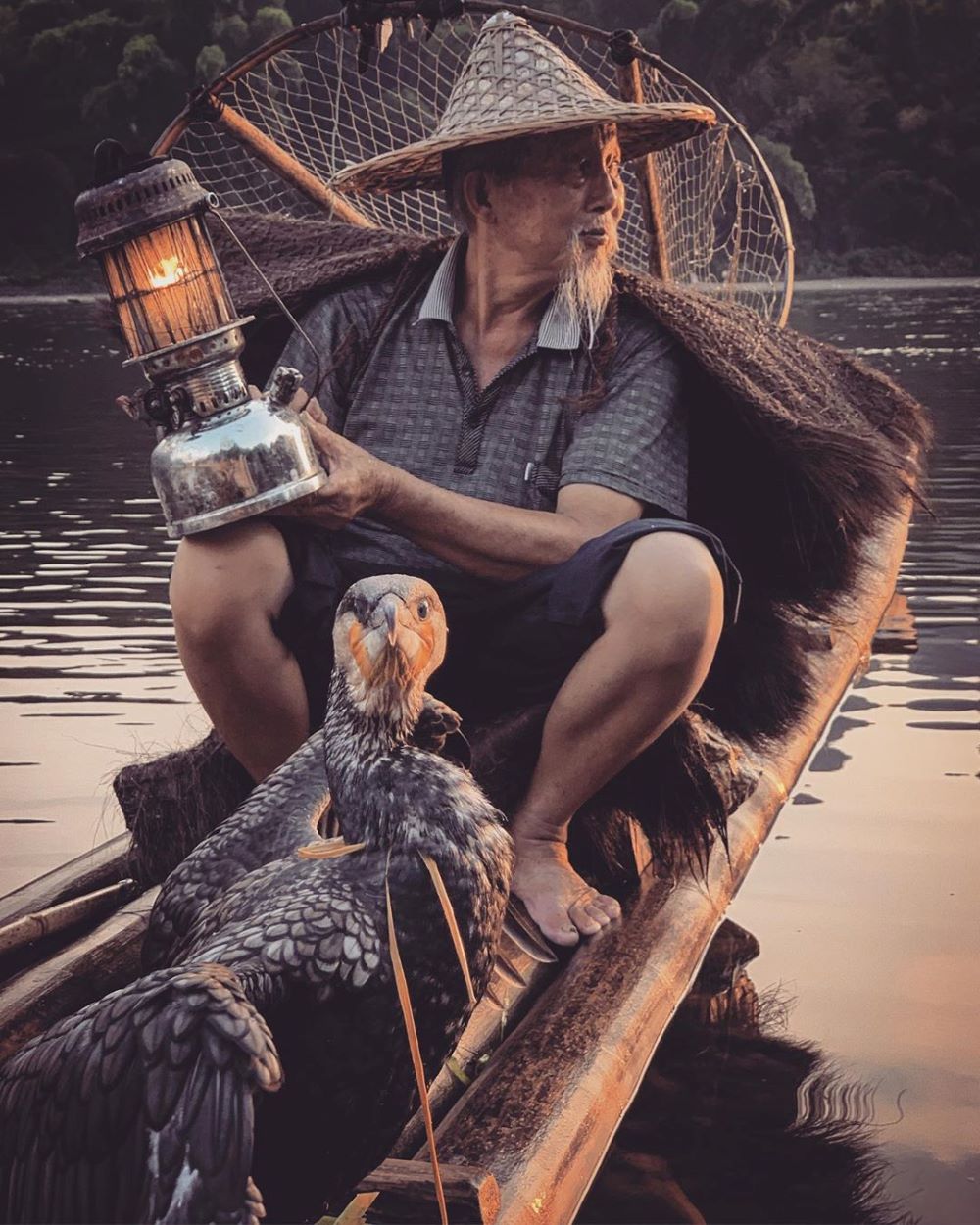
Cormorant fishing is an ancient Chinese technique in which fishermen fit snares around cormorants' necks to stop them from swallowing large fish. The birds are trained to dive deep and catch sizable fish.
Once a bird surfaces with a catch, the fisherman pulls it back into the boat and trades the large fish for a smaller reward. Knowledge of this specialized craft is dwindling, but you can still witness it along the Li River.
Sunset is the best time to see it, offering the chance to photograph these birds emerging from the water in a golden splash.
7. Attend the Impression Liu San Jie performance
Liu San Jie is a legendary figure among the Zhuang ethnic group, Guangxi's largest minority. Folktales depict her as a brave young orphan girl born in Yangshuo during the Song Dynasty.
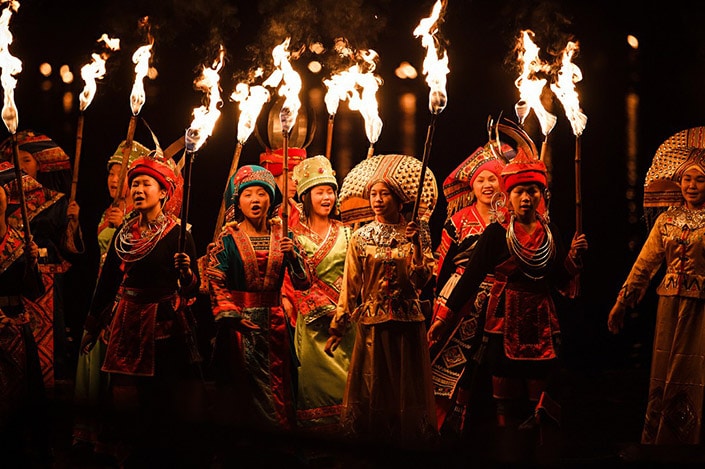
Blessed with a heavenly voice, she earned the name "Goddess of Singing," but also attracted jealousy that led to her tragic end. The "Impression Liu San Jie" performance is a spectacular outdoor show set on the glittering Li River.
Zhang Yimou, a leading Chinese director who also staged the 2008 Beijing Olympics opening ceremony, originally choreographed this stunning production. The 70-minute show features nearly 600 Zhuang, Miao, and Yao performers riding bamboo rafts in traditional dress.
Cost: adult tickets are 200 RMB (about $30); children between 1.2 and 1.4 meters pay 90 RMB. Time: about 70 minutes, with shows usually at 19:30 and 21:00.
Getting there: buy tickets at the theatre on East Street (Dong Jie). The navigation address is No. 1, Tianyuan Rd, Lijiang Shanshui Theater, Yangshuo County 541999, China.
8. Visit Xingping Ancient Town
Visitors from China and abroad celebrate Xingping (兴坪, Xìngpíng) for its scenery, heritage, and cultural artifacts. Founded in 265 AD, the town actually predates Yangshuo as the regional center by a few hundred years.
A visit offers superb views, and the town's small size means you can traverse it in about 20 minutes. Both Sun Yat-sen, the "Father of the Chinese Nation," and former U.S. president Bill Clinton toured a nearby fishing village during their visits.
Bird's View Pavilion. Built atop a karst mountain, this pavilion is a challenge to reach but rewards you with a stunning bird's-eye view. The trek covers 1,159 steps to an altitude of more than 720 feet above town.
The road deteriorates as you climb and can get treacherously slippery, so watch your footing. The summit makes a great picnic spot, so consider bringing food and plenty of water.
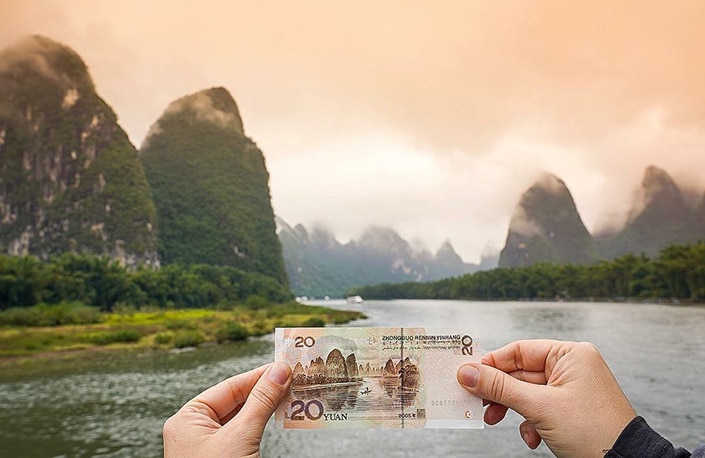
¥20 Point. Strolling along the river outside Xingping, you'll find crowds lining up to photograph one particular spot. You've stumbled upon "¥20 Point."
This is the exact vantage point depicted on the back of China's 20 RMB note. Join the cheerful crowd, line up, and take a classically Chinese selfie.
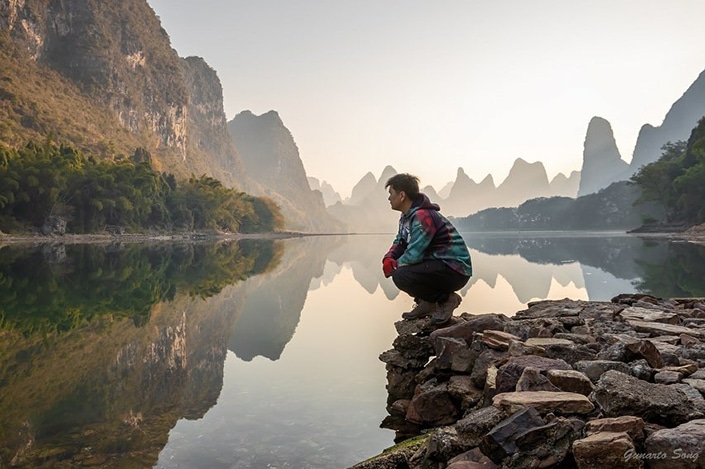
Hiking trails. The trails starting in Xingping are some of the best in the area. Passing grapefruit orchards and rice paddies beside the rippling Li River is an incredible experience.
The trails are generally well maintained without too many steep ascents, but quality hiking shoes are a must. In summer, bring more than enough water, as the heat is intense. Two great options are the seven-mile Xingping–Quanjiazhou Trail (全家洲, Quánjiāzhōu; about 4 hours) and the four-mile Xingping–Jiumahua Hill Trail (九马画山, Jiǔmǎhuàshān; about 2.5 hours).
9. Explore West Street
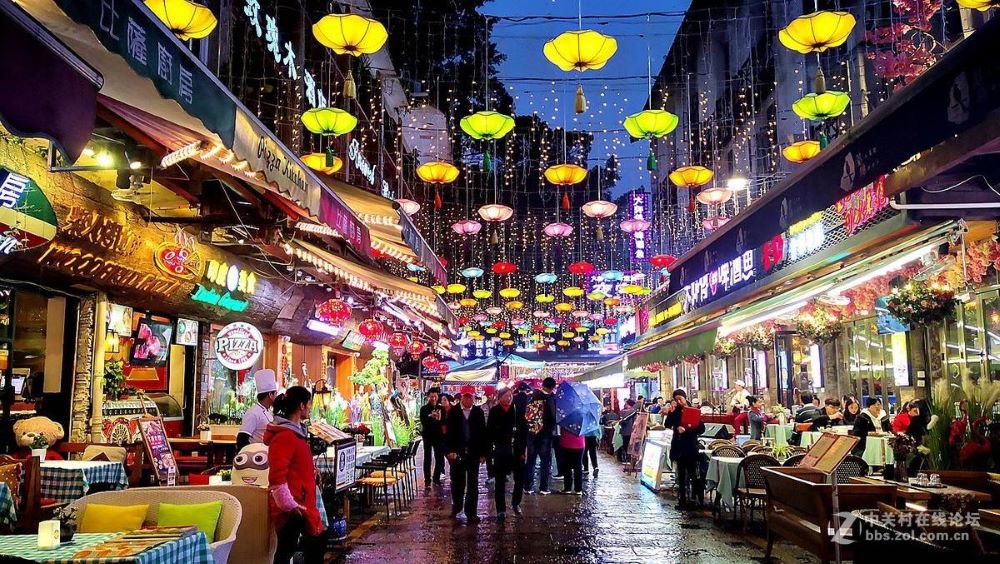
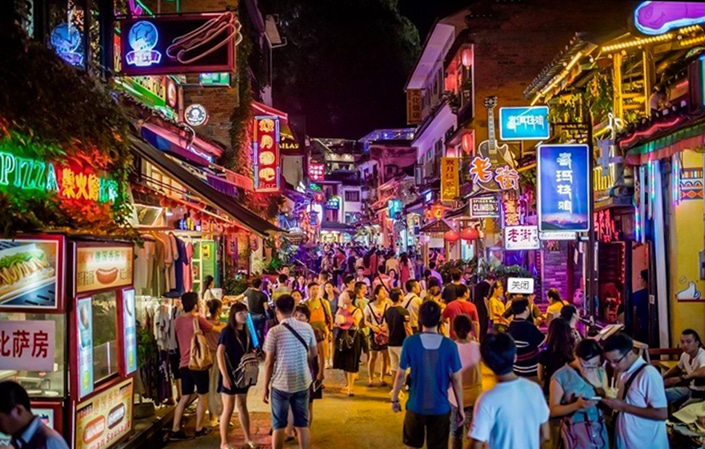
If flashing lights, local crafts, bustling crowds, and steaming street food sound like your thing, head down West Street (西街, Xījiē). Mornings are quieter, but the street draws visitors at all hours, so prepare for a jostle.
Marble-paved Xijie is Yangshuo's oldest thoroughfare, dating back more than 1,400 years. Today it serves as one of the main hubs of the town's tourist-driven economy.
Locals call it "foreigner street" because of the heavy tourist presence; it's one of the few places in China where you might hear more English than Chinese. Stalls sell everything from silk cloth and fish baskets to calligraphy pens, making it a great place for souvenirs.
10. Experience the Seven Stars Tea Plantation
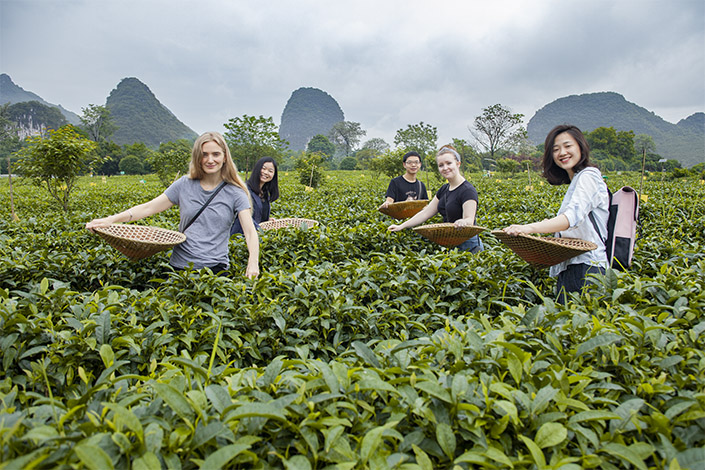
Can't go a day without tea? At the Seven Stars Tea Plantation (七仙峰, Qīxiānfēng), you can pick your own tea leaves and brew your own cup.
It's the only tea house in Yangshuo with its own plantation. Walking through with a wicker basket, learning how villagers boil the leaves in a wok, and finishing with a steaming cup of green tea is a captivating experience.
If trekking through a plantation isn't your idea of relaxation, you can simply take part in a traditional Chinese tea ceremony instead.
Cost: walking through, picking leaves, and a short tasting costs 60 RMB (about $9). Getting there: the plantation is about 12 km from town. Show taxi drivers the characters 七仙峰茶园 (Qīxiānfēng Cháyuán).
11. Stroll around Yangshuo Park
Yangshuo Park is a local favorite, and early morning is the best time for a quiet, cooler stroll. The morning also offers the best chance to watch elderly residents practice the flowing gestures of southern-style tai chi.
Viewing the sunrise sneaking over the peaks from the stone pagoda at the summit is breathtaking. Later in the day, the park fills with the wildly popular exercise known as 广场舞 (guǎngchǎngwǔ), or public square dancing.
Scattered among the dancers and tai chi practitioners are joggers, couples, and families relaxing. The park is a short walk from the city center; just say or show the characters 阳朔公园 (Yángshuò Gōngyuán) to a taxi driver.
12. Take a dip in Pubutang Waterfall
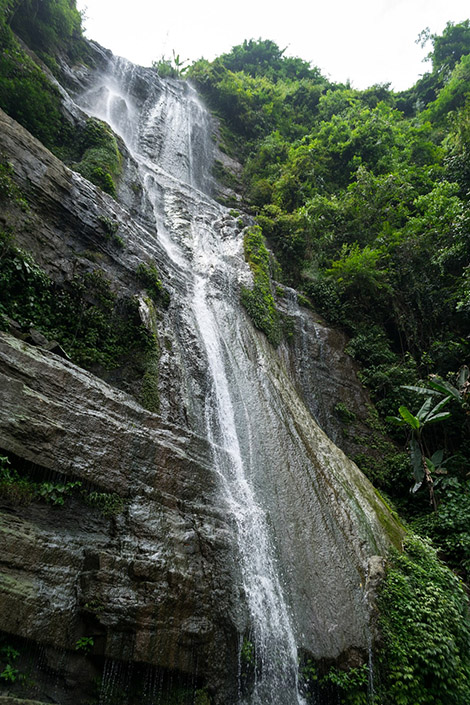
Pubutang (瀑布塘, Pùbùtáng) literally means "Waterfall Pond." This lesser-known attraction is only a 30-minute scooter ride from Yangshuo but is a bit hard to find.
You can hire an English-speaking guide at the Pubutang Cafe and Guesthouse, about a 20-minute walk from the waterfall. Along the way, the guide shares Guangxi's history and points out local plants and animals.
If you go on your own, a refreshing hike through forest and grapefruit orchards leads to a waterfall plunging 260 feet. The water may be too shallow for swimming, but you can wade in for a refreshing rinse amid breathtaking scenery.
Cost: a guide costs 300 RMB ($45); going on your own is free. Time: a guided round trip with a meal takes about 3–4 hours.
13. Climb Moon Hill
If you're after an inspiring hike, don't miss Moon Hill. This enormous limestone archway is a geological wonder.
From the top, you can see the small villages and natural scenery that define Yangshuo as a sought-after destination. Whether you rock-climb its arching face or simply use it as a sunset frame, the trip is worthwhile.
Cost: 11 RMB to hike to the summit (50 RMB to climb) plus 2 RMB for parking. Time: 1.5–2 hours, depending on fitness.
Getting there: Moon Hill is well known to taxi drivers and easy to find on major navigation apps. Bring water and insect repellent, and note that the true summit is reached via a small dirt trail looping behind the main viewing platform.
14. Explore Chinese arts and crafts
Yangshuo has preserved many aspects of Chinese culture for millennia, making it an excellent place to collect arts and crafts. From pottery and stone carvings to scroll paintings and embroidery, there are many options to choose from.
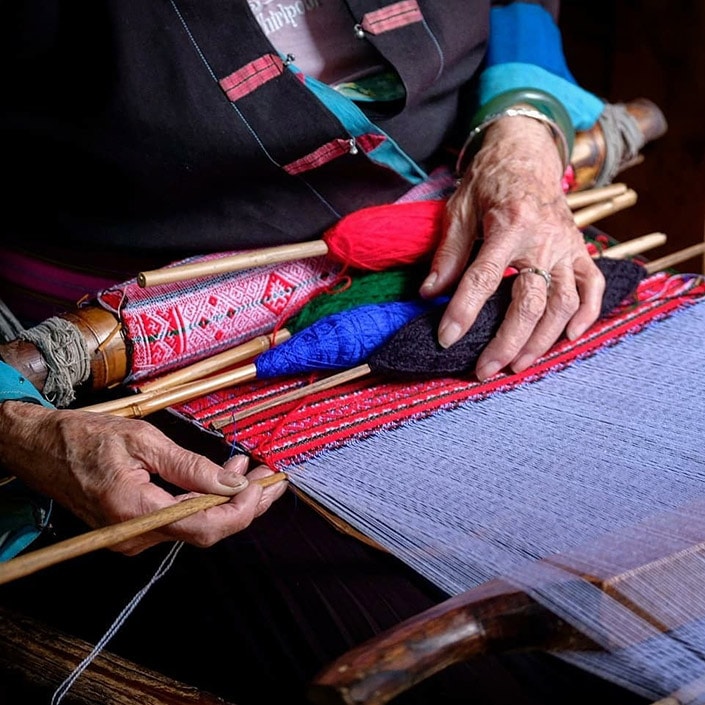
Zhuang Brocade. Guangxi is the homeland of more than 18 million people of the Zhuang ethnicity, and the official name of the province is the "Guangxi Zhuang Autonomous Region." The weaving techniques behind these brocades date back thousands of years.
By weaving contrasting blocks of color with cotton and silk, Zhuang artisans create a truly beautiful fabric. The bold geometric patterns carry enchanting names such as "Phoenixes Flying in Pairs" and "Dragons Playing with a Pearl," and prices range from 60 to 250 RMB ($9–35).
Embroidered Ball. Given as tokens of affection between young Zhuang sweethearts, embroidered balls hold a symbolic, Romeo-and-Juliet-like place in Guangxi's cultural life. They're usually decorated with a bird, flower, or mythological creature symbolizing eternal happiness.
During festivals, they're used in a flirtatious ball-throwing game to signal romantic interest. About the size of a snowball and filled with millet, corn, or cotton seeds, they cost roughly 35 RMB ($5).
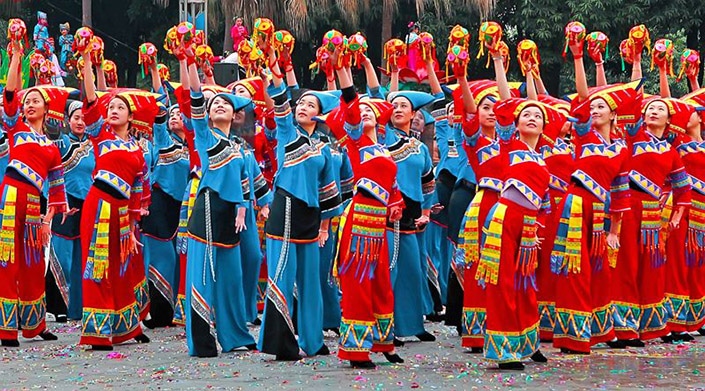
Miao Batik. Although more common in neighboring Guizhou, many people of the Miao ethnicity also live in Guangxi. The batik dyeing technique originated in Indonesia before spreading across Asia and the world.
Miao artists apply a wax paste to parts of the cloth, then soak it in colored dyes to create kaleidoscopic patterns, often featuring butterflies from Miao mythology. Dresses, handbags, scarves, and tablecloths are available for 100 to 300 RMB ($15–43).

15. Taste unique cuisine
The long history of officials, bureaucrats, and tourists visiting Yangshuo has had a wonderful influence on its food culture. You'll find restaurants serving both Northern and Southern Chinese styles, plus everything in between.
Below are some of Yangshuo's greatest culinary hits, starting with the tamer options and getting more adventurous as the list goes on.
Western and Indian cuisine. If you're craving a less adventurous meal, the town is home to international spots such as Café China, Minority Café, and the Indian Restaurant. Here you'll find a comforting variety of familiar dishes.
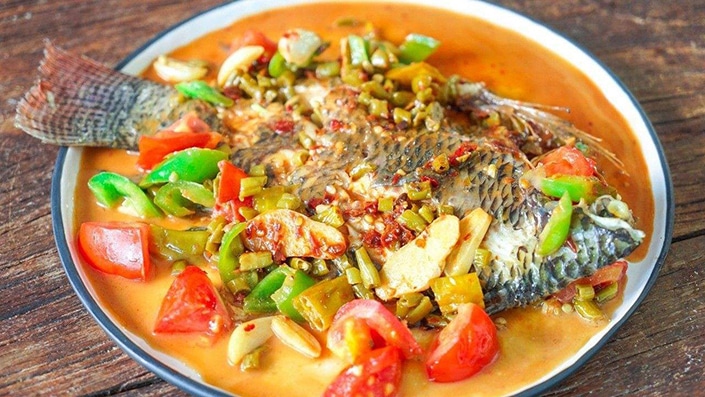
Beer Fish (啤酒鱼, píjiǔ yú). Yangshuo's signature dish is wild carp braised in a beer sauce, served with sticky rice and stir-fried peppers, onions, and garlic. Many restaurants let you select your own fish for "freshness," though the chef often dispatches it in front of you.
Be sure to agree on the total price before sitting down, as the fish is priced per 500g (斤, jīn). Some unscrupulous owners may try to overcharge foreigners.
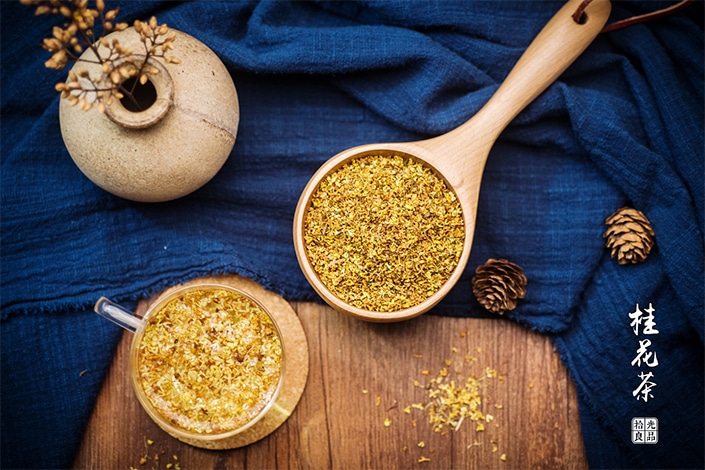
Osmanthus Tea (桂花茶, guìhuāchá) and Wine (桂花酒, guìhuājiǔ). Yangshuo's sweet, fragrant osmanthus tea is renowned across China and leaves a delightful, honey-like aftertaste. In traditional Chinese medicine, the tea is viewed as a defense against diabetes, renal disease, and cancer.
The rice liquor made from the same flower is equally well known. With an alcohol content of only 20%, osmanthus wine is much gentler than its rice-wine cousins and easier on the uninitiated palate.
Guilin Rice Noodles (桂林米粉, Guìlín mǐfěn). Although Guilin rice noodles originated in Guilin, Yangshuo is no stranger to this cheap and delicious treat.
Locals bury a generous serving of rice noodles under gravy, fried peanuts and soybeans, chopped scallions, and razor-thin slices of meat. Served with pickled vegetables on the side, they make a great breakfast, lunch, or dinner.
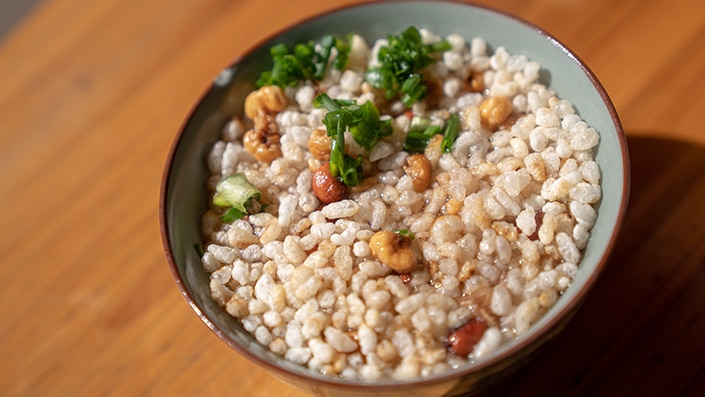
Oil Tea (油茶, yóuchá). A staple of the Dong people, oil tea is made by frying tea leaves with oil, garlic, chili, ginger, and salt in a large wok. In Guilin, people usually drink it for breakfast or brunch.
Because of its thick consistency, some call it "tea soup," and it's rarely ordered alone. Locals pair it with fried foods or cold dishes such as fried rice, pumpkin cakes, and peanuts, for around 30 RMB ($4) with side dishes.
Snake Wine (蛇酒, shéjiǔ). In the corner of some restaurants, you'll spot a large glass jar with a coiled snake steeping in rice wine. Reputed to be a miracle tonic, a shot will only cost a few yuan.
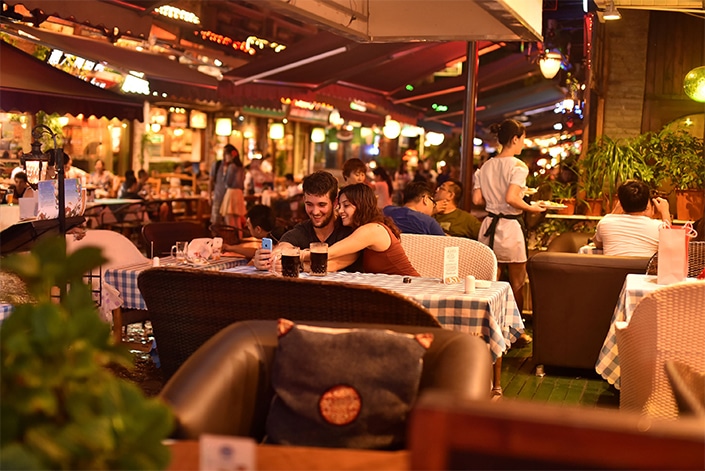
Night Market (夜市, yèshì). More an experience than a single food, Yangshuo's night market immerses you in the pulsing heart of Chinese food culture. It's on Gui Hua Lu (桂花路, Guìhuālù) near the northern end of West Street, with stalls opening around 5:30 PM.
Everything under Guangxi's sun is available, from beer-braised fish and fried tofu to snails, rabbit head, and frog. Vendors rarely speak English, so be ready to haggle by pointing, and keep an eye on your belongings, as the street attracts pickpockets.
16. Try your hand at martial arts
Many people associate China with tai chi, kung fu, and other disciplines, and Yangshuo has promoted these traditional Chinese martial arts for years. They're practiced on the streets and in local parks, and schools welcome newcomers.
If you'd like to learn from an English-speaking master, you can register at the Yangshuo Traditional Tai Chi School. It combines tai chi with traditional qigong meditation and offers everything from afternoon classes to week-long courses.
Book an overnight experience and you'll stay in a charming Qing-era farmhouse just outside town. Training while looking out over rice paddies and karst mountains is unforgettable.
Cost: a two-hour afternoon class runs about 200 RMB ($30), while a week-long course is 2,500 RMB ($360). Other options worth considering include the Long Tou Shan Tai Chi School and the Carpe Diem Tai Chi Kung Fu School.

Study Chinese in Guilin or Start Online
CLI offers personalized Chinese instruction built around your goals, right next door to Yangshuo in beautiful Guilin. Join our Immersion Program in Guilin or begin from anywhere with a free Chinese lesson .
04 Weather and what to wear
Yangshuo enjoys relatively mild weather year-round, though the four seasons are distinct. July and August are usually the hottest months, averaging 93–99°F (34–37°C), while January is the coldest, averaging 41–46°F (5–8°C).
The best time to travel is between April and October, when it's mostly sunny and rain is rare. During these months, light clothing such as shorts, tees, and short-sleeve shirts is ideal.
In the cold winter season, pack something thick and waterproof in case of rain. A raincoat, waterproof footwear, thick socks, and a sweater or jacket are all good additions to your regular clothes.
05 A truly otherworldly destination
Yangshuo is the perfect destination if you want to view magnificent scenery, experience Chinese culture, and gain insight into rural Chinese life. Using the guide above, you can start planning your visit to this breathtaking corner of China today.
Many travelers who fall for the region decide to stay longer and Learn Chinese in China, turning a short trip into a deeper cultural adventure. If you're mapping out a longer itinerary, it's also worth exploring some of the best places to visit in China beyond Guangxi.
To help your travels go smoothly, brush up on these useful Chinese travel phrases before you leave home. Enjoy your trip!