


- The Li River (漓江, Líjiāng) originates in the Mao'er Mountains northeast of Guilin and flows south for roughly 80 kilometers before reaching Yangshuo.
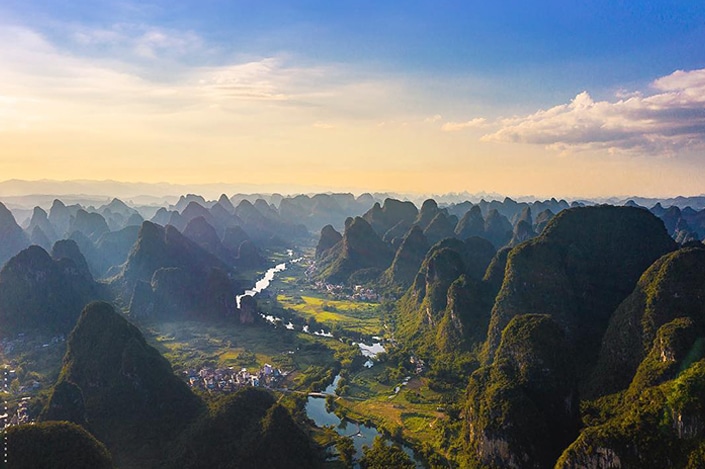
- Recognized as a national scenic zone in 1982, the river corridor is home to tens of thousands of karst peaks shaped by millions of years of erosion.
- Prominent landmarks along the way include Elephant Trunk Hill, Daxu Ancient Town, Nine Horse Fresco Hill, Yellow Cloth Shoal, and Xingping Ancient Town.
- The scenery around Yellow Cloth Shoal is featured on the back of China's 20 CNY banknote.
- Travelers can experience the river by four-star cruise, bamboo raft, riverside hike, or guided bike tour.
The Li River (漓江, Líjiāng) is one of the most celebrated waterways in China. Originating high in the Mao'er Mountains of northeastern Guangxi Province, the river flows south for roughly 80 kilometers (50 miles), carving a path through tens of thousands of karst peaks before merging with the Pingle River to form the Gui River south of Yangshuo.
The river's cultural significance was formally recognized in 1982, when China's State Council designated the Lijiang River Scenic Zone a place of scenic and historic importance. But the Li River's fame stretches back far longer than that. For centuries, its dramatic karst landscape — the byproduct of millions of years of water erosion and weathering — has inspired Chinese poets, painters, and travelers. Today, it remains one of the most photographed natural wonders in the country.
This guide follows the river from its source to its destination, highlighting the landmarks and towns along the way, before covering the best ways to experience the journey yourself.
01 The Source: Mao'er Mountains
The Li River begins its journey in the Mao'er Mountains (猫儿山, māo ér shān), also known as Cat Mountain, located in Xing'an County northeast of Guilin. At over 2,100 meters, Mao'er Mountain is the highest peak in southern China. Snowmelt and rainfall collect at its summit and feed the headwaters of the Li, which then descends southward through increasingly dramatic karst terrain on its way to Guilin.
The upper reaches of the river are narrow and fast-moving, cutting through forested valleys that few tourists visit. As the river widens and slows near Guilin, the landscape opens into the iconic panorama of rounded limestone peaks that defines the Li River corridor.
02 Guilin: Where the River Meets the City
The Li River passes directly through downtown Guilin, a city whose name literally means "Forest of Osmanthus." Guilin has served as a gateway to the Li River for over a thousand years, and today it is the starting point for most river journeys heading south toward Yangshuo.
Guilin Seven Star District (七星区, qī xīng qū)
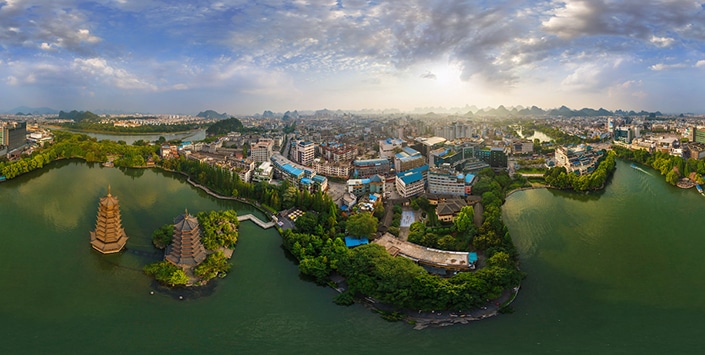
On Guilin's eastern bank lies the Seven Star District, home to Seven Star Park and its famous karst caves. The district offers a convenient vantage point for viewing the Li River as it passes through the city, with the karst skyline visible both by day and illuminated at night.
Elephant Trunk Hill (象鼻山, xiàng bí shān)
Perhaps Guilin's most recognizable landmark, Elephant Trunk Hill is a karst formation at the confluence of the Li River and the Peach Blossom River. Its distinctive shape — resembling an elephant dipping its trunk into the water — has made it a symbol of the city for centuries.
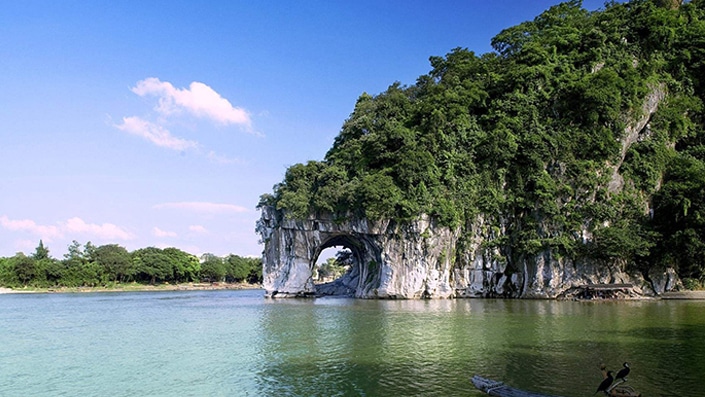
Those who enjoy a more hands-on experience will be glad to hear that Elephant Trunk Hill is also climbable. For 75 CNY (approx. 10 USD), travelers may purchase an entry ticket to the attraction, allowing access to gorgeous panoramic views of Guilin once at the top.
03 Downstream from Guilin: Daxu and the Upper River
Daxu Ancient Town (大圩古镇, dà xū gǔ zhèn)
Roughly 20 kilometers downstream from Guilin, the ancient town of Daxu sits on the river's east bank. Founded almost 2,000 years ago, Daxu rose to prominence as one of the region's most important market towns during the Ming Dynasty, when it served as a key trading hub along the river.
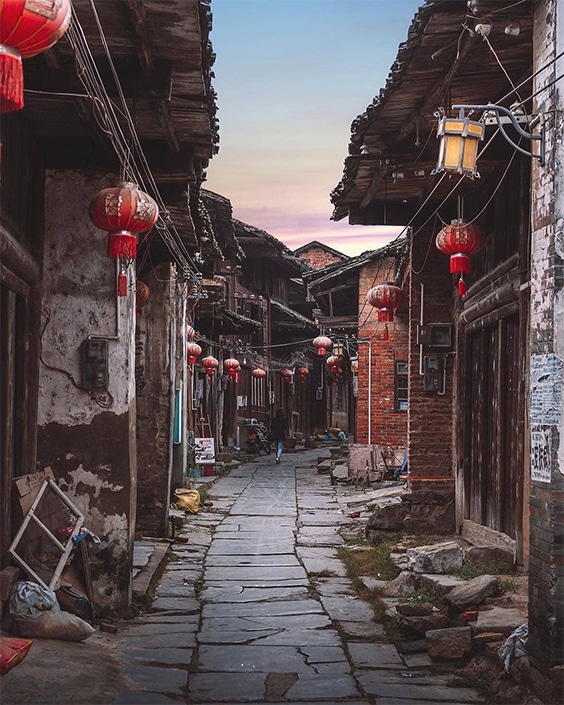
Much of the town's original architecture has survived intact. Today, Daxu is known for its traditional wooden houses and ancient flagstone streets. River cruises pass by without stopping, but the town is well worth a separate day trip for those with extra time in the area.
04 The Middle Reaches: Nine Horse Fresco Hill and Yellow Cloth Shoal
South of Daxu, the Li River enters its most dramatic stretch. The karst peaks grow taller and more densely packed, and the river corridor narrows into a series of gorges and shoals that have inspired legends for generations.
Nine Horse Fresco Hill (九马画山, jiǔ mǎ huà shān)
Also called Mural Hill or The Painted Hill of Nine Horses, this is a large stone cliff clearly visible from the river. The exposed rock face, shaped by centuries of wind and water, is said to contain the outlines of nine horses in various poses — though spotting all nine requires a keen eye.
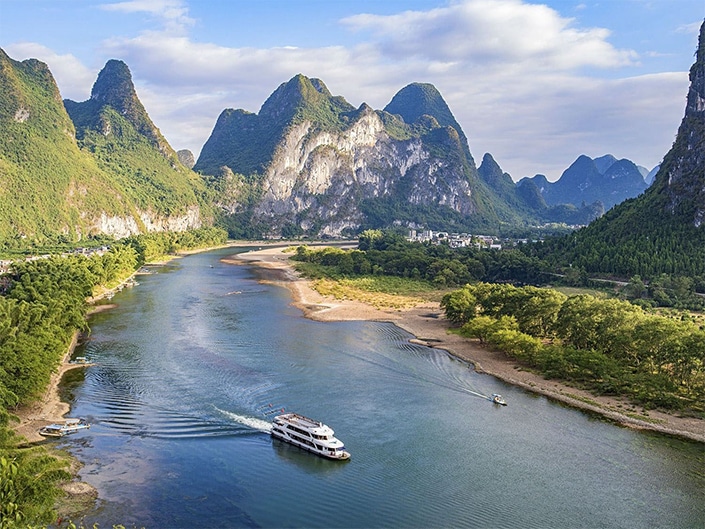
Legend has it that the mischievous Monkey King, a character in the classic Chinese novel Journey to the West, was in charge of watching the horses in heaven when they escaped. A painter spotted the horses drinking water beside the Li River. Intending to paint the scene, he startled the horses, which ran into the waterside cliff and remained etched there for eternity.
In the past, it was said that a person who could spot all nine horses on the cliffside was destined to achieve the highest score on China's ancient imperial exam.
Yellow Cloth Shoal (黄布滩, huáng bù tān)
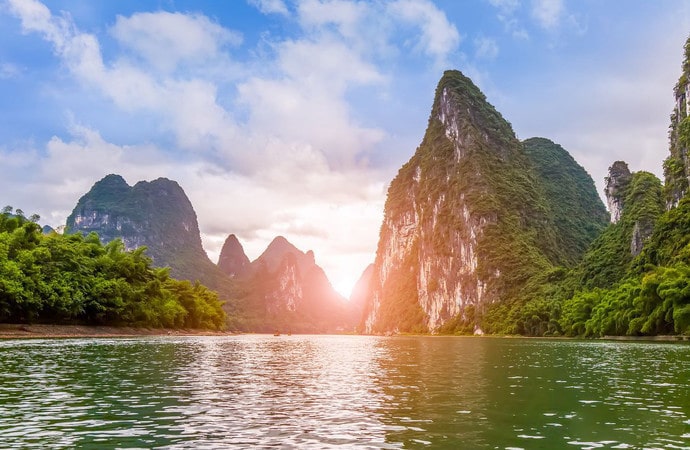
Located near Xingping Town, the scenery in the area around Yellow Cloth Shoal is the most famous — and arguably the most spectacular — of all the sights the Li River has to offer.
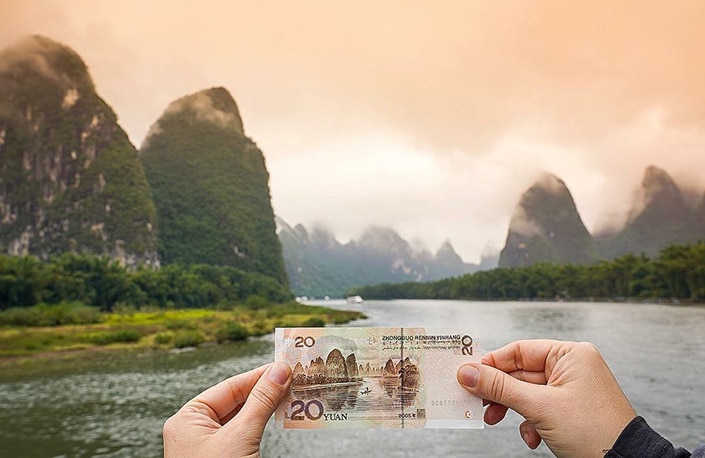
The Yellow Cloth Shoal gets its name from a large, yellowish rock which lies flat under the water like a piece of cloth. This part of the river is particularly well-known for the way the seven peaks on either side of the shoal cast reflections on the water. When it is not raining, the water here is usually calm and flat like a mirror, making the reflections especially clear and impressive.
05 The Lower Reaches: Xingping and Yangshuo
Xingping Ancient Town (兴坪古镇, xīng píng gǔ zhèn)
As the river continues south, it passes through Xingping, one of the oldest and best-preserved towns along the Li. Many of its buildings date to the Ming and Qing dynasties, including ancient houses, traditional temples, and an opera stage thought to be the oldest in the Guilin region.
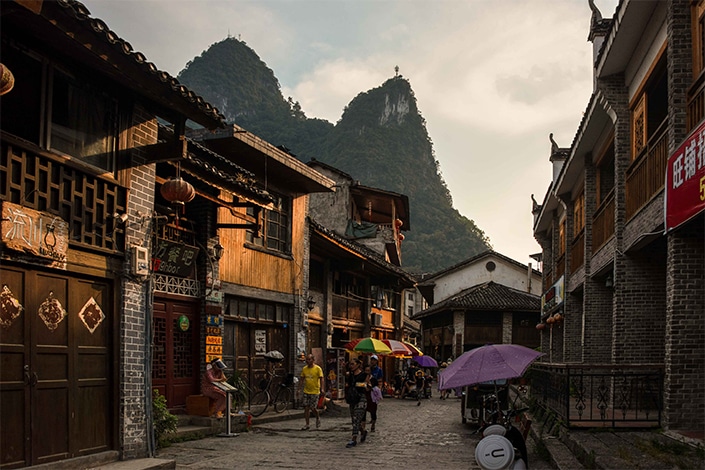
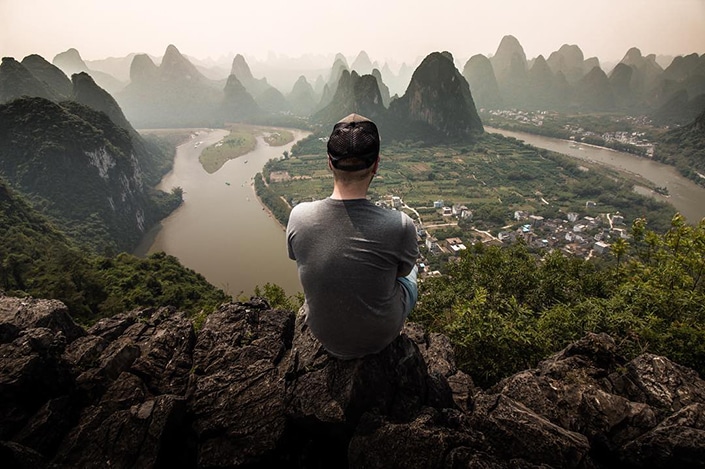
Xingping is one of the best places from which to photograph Li River scenery. From here, it is also possible to visit Xingping Fishing Village, which gained international recognition after former U.S. president Bill Clinton and his wife Hillary visited in 1998.
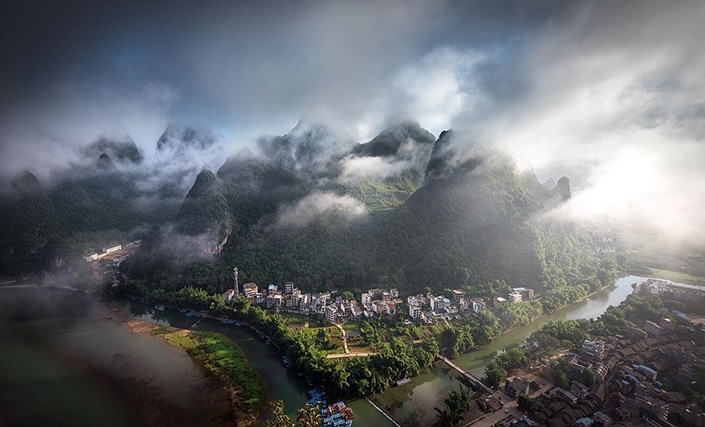
Yangshuo (阳朔, yáng shuò)
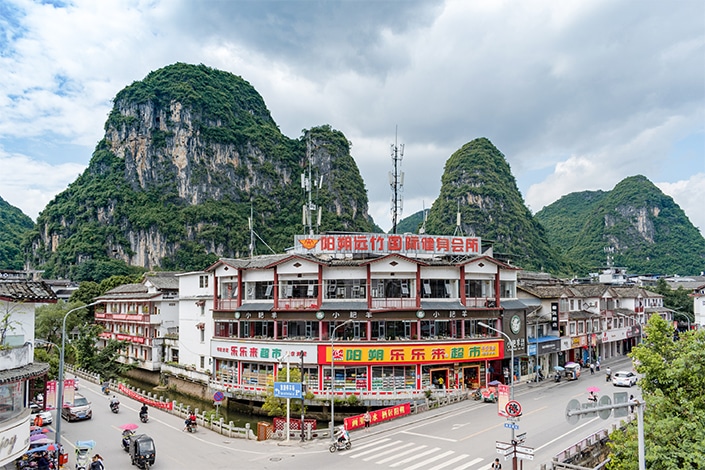
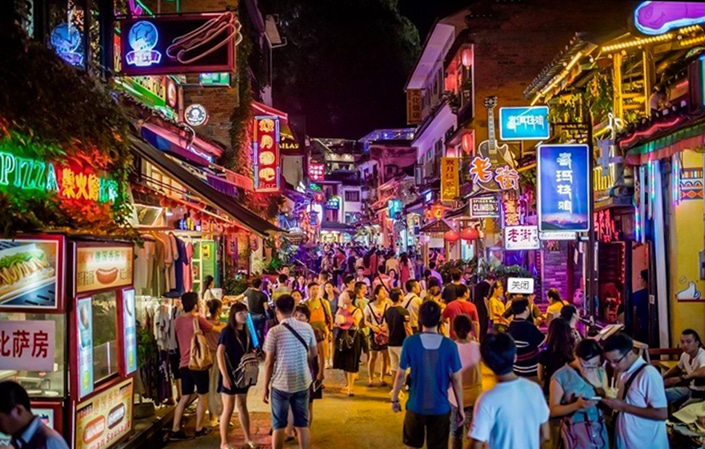
The Li River's journey through the karst corridor effectively ends at Yangshuo, a scenic town surrounded by limestone peaks on all sides. Beyond the river itself, Yangshuo offers a wide range of activities for travelers — from strolling down bustling West Street to biking through the surrounding countryside or exploring nearby caves.
06 Best Time of Year to See the Li River
The best time of the year to visit the Li River is in early fall, from September through October. This is due to Guilin's gorgeous fall weather, which is usually cool and dry with some sunshine. Although cruises are also possible in late fall, they are sometimes cut short when the water level is too low for the boats to operate.
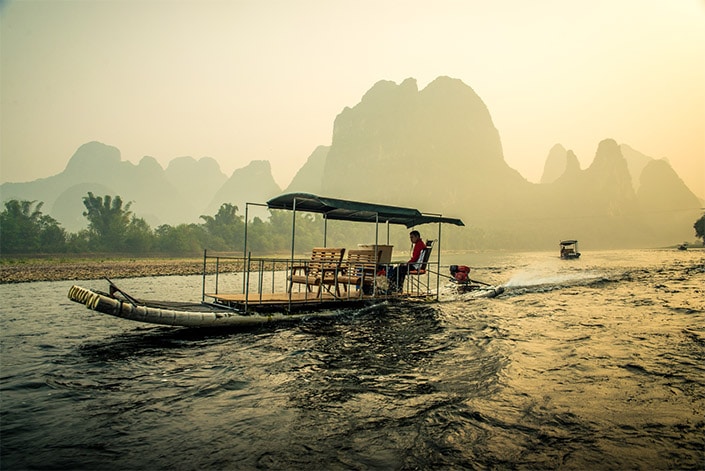
Late summer is also a good time to take a cruise since it is typically possible to enjoy sunny weather, but keep in mind that travelers may experience some downpours due to the monsoon season, which runs from April through August and typically peaks in May and June.
Visiting during the rainy season is not all bad. Guilin's spring or post-rain summer is misty, so the river and the karst peaks appear shrouded in a veil of mist — as if they were part of a traditional Chinese scroll painting. Regardless of the weather, the photographs taken while visiting the Li River are sure to mesmerize.
07 Ways to Experience the Li River
There are several ways to explore the Li River, ranging from full-day cruises to intimate bamboo raft trips to multi-hour hikes along the riverbank. Below is a breakdown of the most popular options.
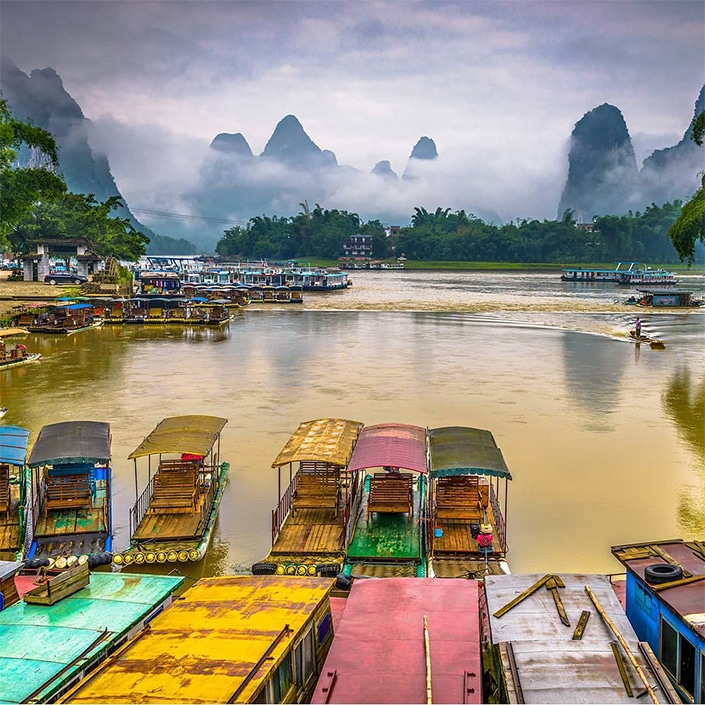
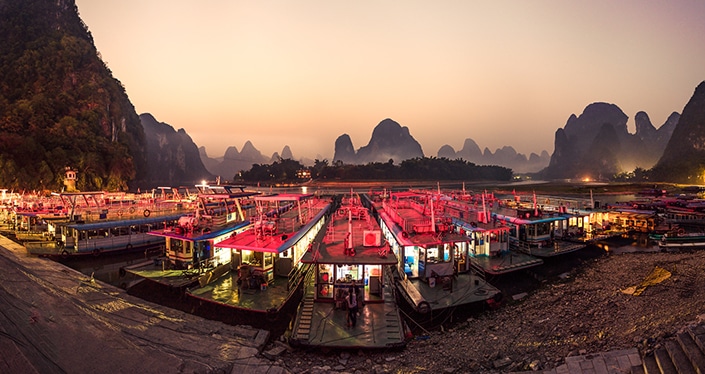
Keep in mind that boat-based options can be booked online or in person at the departure point of Zhujiang Pier (竹江码头, zhú jiāng mǎ tóu) in Guilin. Some cruise lines also depart from Mopanshan Passenger Wharf (磨盘山客运码头, mò pán shān kè yùn mǎ tóu), but these are usually aimed at domestic tourists and may not always offer English-speaking guides. Remember to bring your passport both when booking tickets and on the day of travel.
Four-Star Cruise (Guilin to Yangshuo)
| Detail | Information |
|---|---|
| Pick-up | Zhujiang Pier (竹江码头), Guilin |
| Drop-off | Shuidongmen Pier (水东门码头), Yangshuo |
| Average price | 400 CNY (~58 USD) |
| Length | 4–5 hours |
| Notes | Uses the best and newest cruise boats with modern facilities, spacious seating, an upper deck for views, and a buffet lunch. The most recommended option for travelers. |
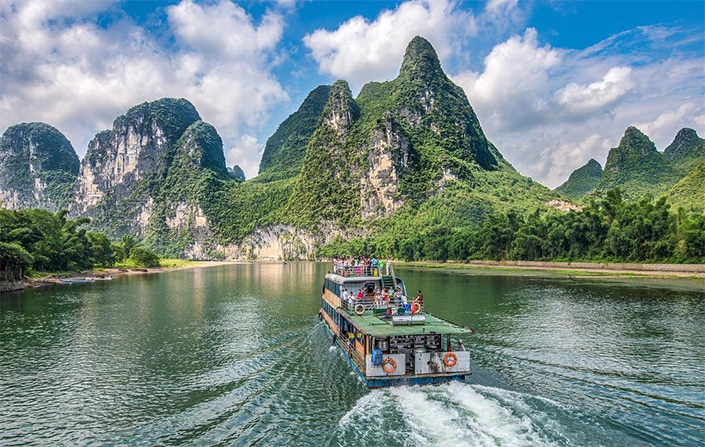
A Li River cruise covers over 40 miles (64 kilometers) and takes four to five hours. For those who do not speak Mandarin, there are travel companies like China Highlights which offer English-speaking staff and detailed descriptions of each cruise package. Cruises often sell out during peak travel season, so booking ahead is recommended.
Two Rivers Four Lakes Cruise (两江四湖, liǎng jiāng sì hú)
| Detail | Information |
|---|---|
| Pick-up | Jiefangqiao Pier (解放桥码头) or Riyuewan Pier (日月湾码头) during the day; Wenchangqiao Pier (文昌桥码头) at night |
| Drop-off | One of the three piers above (varies by company, time, and departure pier) |
| Average price | 190 CNY (~27 USD) |
| Length | 1–2 hours |
| Notes | Covers scenic spots around downtown Guilin. The "two rivers" are the Li River (漓江) and the Peach Blossom River (桃花江). The "four lakes" are Wooden Dragon Lake (木龙湖), Banyan Lake (榕湖), Chinese Fir Lake (杉湖), and Osmanthus Lake (桂湖). This cruise does not go to Yangshuo. Available during the day or at night. |
Bamboo Raft Trip (Xingping to Nine Horse Fresco Hill)
| Detail | Information |
|---|---|
| Pick-up & Drop-off | Xingping Pier (兴坪码头) |
| Average price | ~40 CNY per seat (~6 USD) |
| Length | ~1 hour |
| Notes | A more intimate experience — travelers raft through villages alongside the river, occasionally stopping on the riverbank for local snacks. Quality of service and pricing varies by raftsman. |
08 Li River Hiking and Bike Tours
For visitors looking for a more adventurous way to explore the Li River, there is always the option to hike or bike between Guilin and Yangshuo. This is a lengthier trip but allows travelers the opportunity to savor more of the natural splendor of the Guangxi countryside.
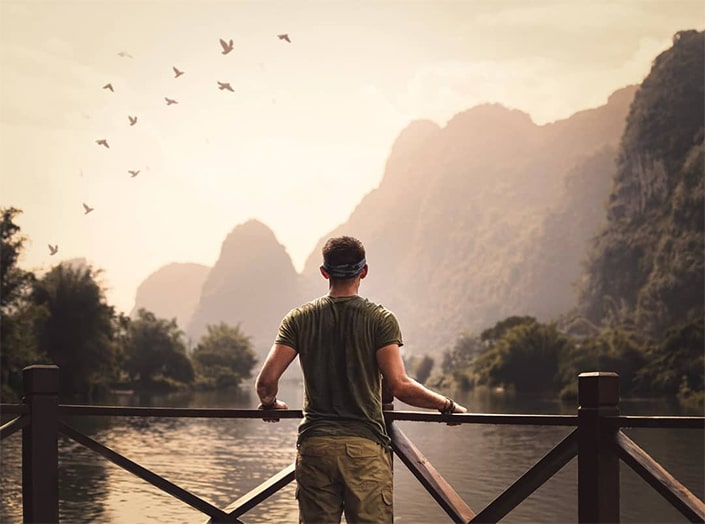
We recommend the 13.5 km (8.4 miles) hike from Quanjiazhou (全家洲, quán jiā zhōu) in Yangshuo to Xingping. Along this route, travelers are able to hike along the riverside at a leisurely pace and witness the beautiful countryside landscape. The hike takes about 3.5 hours.
Bike tours are also available through private companies and can include a three or four-star cruise with the ticket price. The most common package includes a Li River cruise from Guilin to Yangshuo, then a private bike tour in Yangshuo with a local guide.
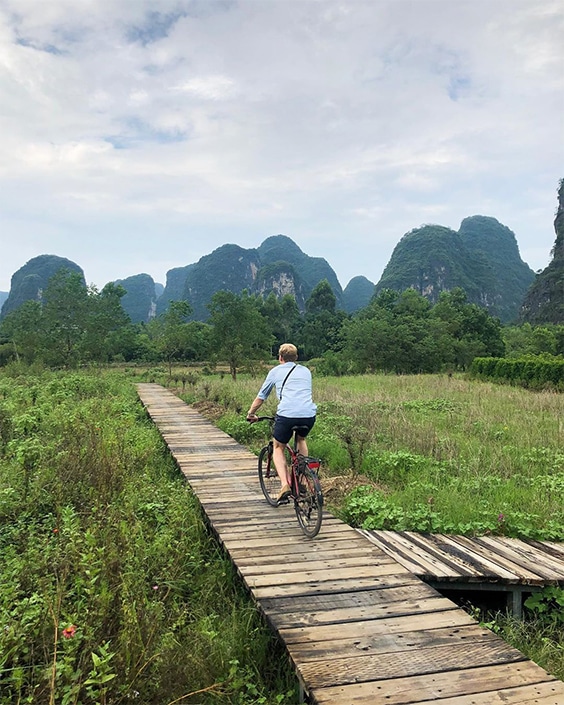
The bike tour experience lasts about 12 hours and may vary with weather conditions. Ticket prices range from 760 CNY (109 USD) to 1,190 CNY (170 USD) and typically include hotel pickup and transportation from the cruise boat to the bike rental location with the help of your guide.
09 A Once in a Lifetime Experience
Regardless of the method of transportation, all visitors can experience first-hand the awe of standing in front of towering karst mountain peaks ready to be climbed, and of adventures yet to be had. The Li River is a beautiful destination by itself, and visiting it and the surrounding areas is enough to make any trip to China more than worthwhile.

Explore the Structure Behind CLI's Immersion Program
If you want to see what a high-contact program in Guilin actually looks like, explore CLI's Chinese Immersion Program. Not ready to move to China yet? You can also start with online one-on-one lessons.
10 Vocabulary Related to the Li River
Here are some of the most useful Chinese terms you will encounter when reading about or visiting the Li River.
| Chinese | Pinyin | Translation |
|---|---|---|
| 漓江 | Li River | |
| 猫儿山 | Mao'er Mountain (Cat Mountain) | |
| 桂林 | Guilin | |
| 阳朔 | Yangshuo | |
| 喀斯特 | Karst | |
| 七星区 | Seven Star District | |
| 象鼻山 | Elephant Trunk Hill | |
| 九马画山 | Nine Horse Fresco Hill | |
| 黄布滩 | Yellow Cloth Shoal | |
| 兴坪古镇 | Xingping Ancient Town | |
| 竹筏 | Bamboo raft | |
| 码头 | Pier; wharf | |
| 游船 | Cruise boat | |
| 风景 | Scenery |