

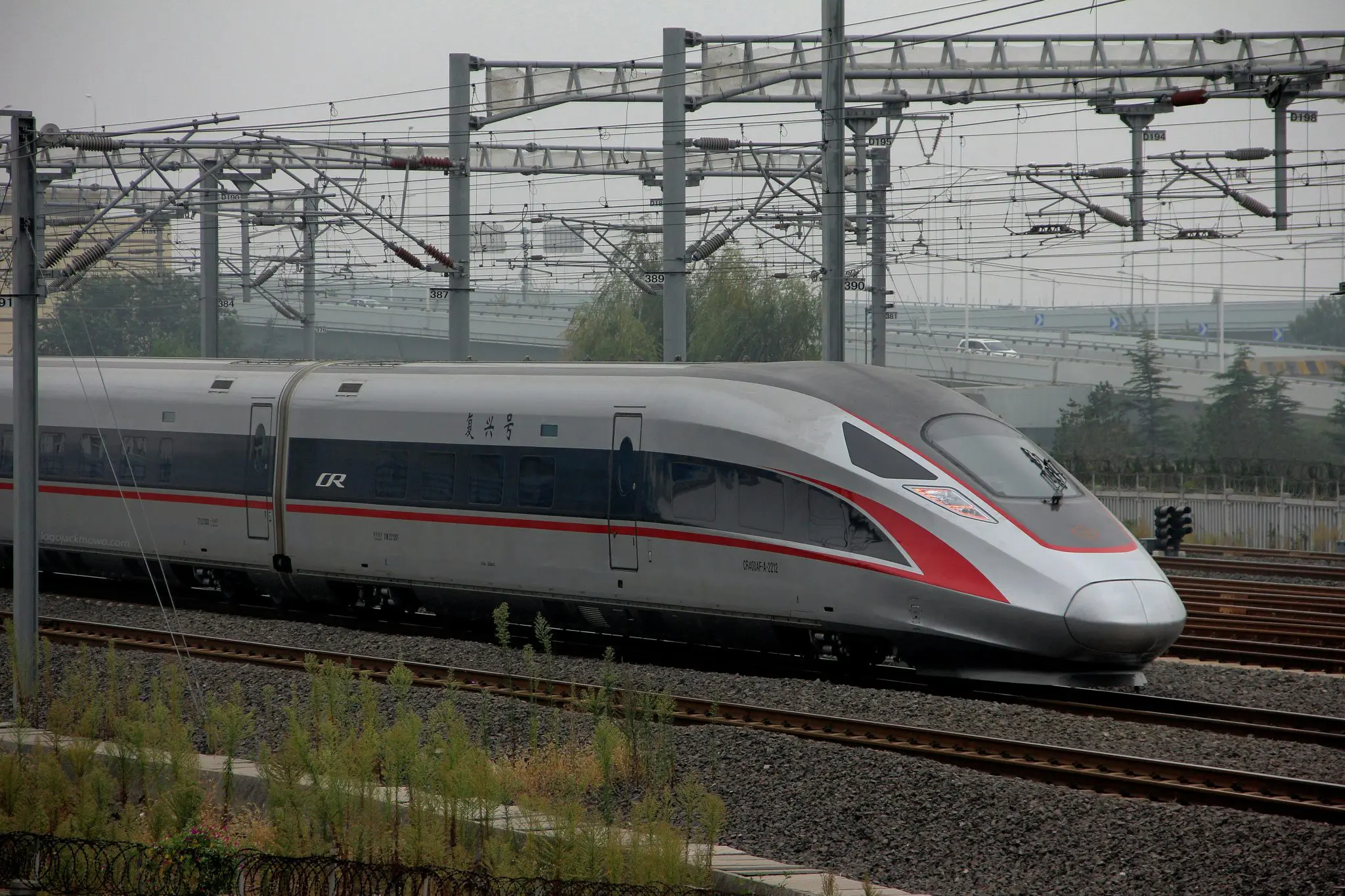
- The Shanghai-Beijing train, known as the Jinghu high-speed railway, connects China's two largest cities in as little as 4.5 hours.
- G trains are the fastest daytime option, reaching speeds of 350 km/h, while D trains run overnight with sleeper cars.
- Ticket prices generally range from around 386 CNY to 1,748 CNY depending on the train type and seating class.
- Traveling by train is often more relaxed and convenient than flying, with more central stations and fewer weather delays.
- Booking tickets online in advance is recommended, especially during peak travel seasons and holidays.
Shanghai (上海 Shànghǎi) and Beijing (北京 Běijīng) are the two biggest cities in China, and they are highly connected by rail. Whether you're visiting for business, pursuing your studies, or hoping to Learn Chinese in China, knowing how to travel between these two metropolises is very useful.
Taking the Shanghai-Beijing train is an excellent choice for anyone planning to visit both cities. It's also a great way to see some of the best places to visit in China along the way.
01 One of the World's Most Impressive Rail Networks
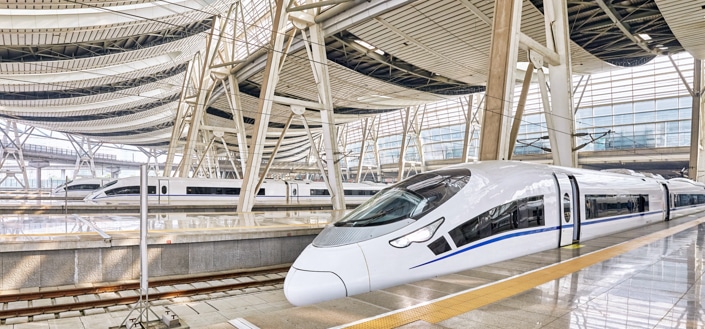
The Chinese railway system is the second longest in the world, covering an impressive 131,000 kilometers (81,400 miles). Because the country is so large, major cities can be far apart, so connecting them quickly and efficiently is essential.
The network also links many other major destinations, including Xi'an, home of the famous Terracotta Army. This makes rail travel one of the easiest ways to explore several regions of China in a single trip.
The Shanghai-Beijing train, also known as the Jinghu high-speed railway (京沪线 Jīnghùxiàn), offers an excellent option for all kinds of travelers. It's 1,318 km (819 mi) long and features some of the fastest bullet trains in the world, with a top speed of 350 km/h (217 mph).
Most fast trains depart and arrive in Shanghai at Asia's largest railway station, Shanghai Hongqiao Railway Station (上海虹桥站 Shànghǎi Hóngqiáo Zhàn). In Beijing, most depart and arrive at Beijing South Railway Station (北京南站 Běijīngnán Zhàn).
Always double check your ticket to make sure you're getting on and off at the right station. Both Shanghai and Beijing have multiple major rail stations serving different routes.
02 Shanghai to Beijing Train Types
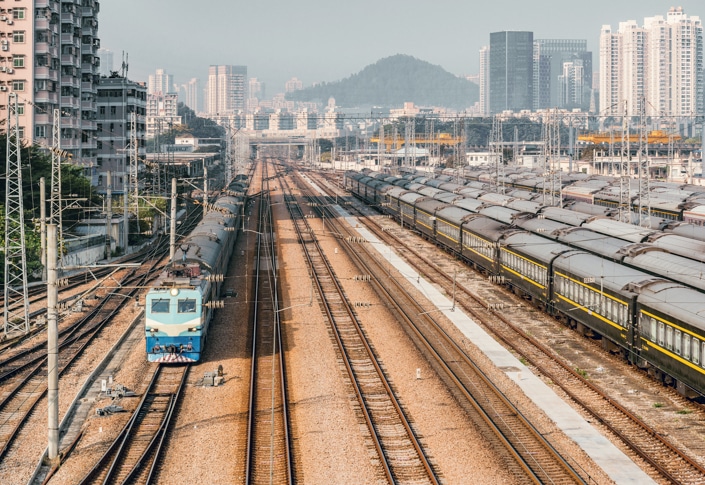
Various slow-speed trains, including the classic green type called 绿皮车 (lǜpíchē), are still available in China. While they're inexpensive, they're also much slower and considerably less comfortable than China's newer fast trains.
These fast "bullet" trains are readily available at reasonable prices, so we strongly suggest taking one of them for your Shanghai to Beijing journey. Every day, over 40 pairs of bullet trains make this trip.
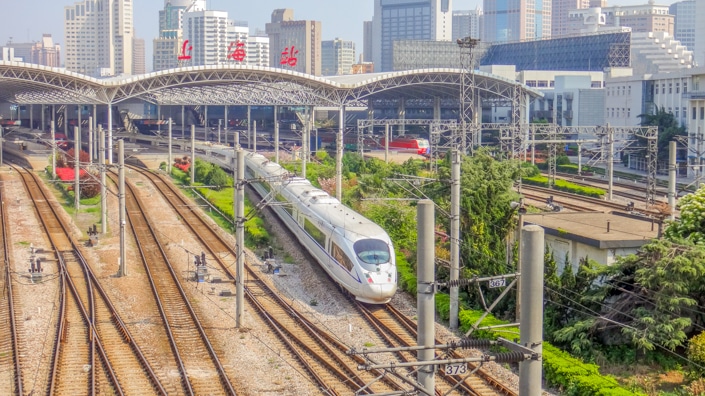
Because of the high volume of traffic, there's a good variety of train types to fit any traveler's needs or budget. High-speed trains are the fastest and most modern in China, with some of the most impressive facilities in the world.
There are two categories available on the Shanghai to Beijing route: G and D. While G trains are more advanced, both share several features.
All bullet trains are non-smoking and have air conditioning. They also have power outlets and space for luggage overhead or in the hallways between cars.
At the end of each car, you'll find a boiled water dispenser, and there is also a dining car serving freshly cooked food. Bathrooms are available at the end of each car, with squat and western toilets, though they frequently lack toilet paper and soap.

1. G Trains (高铁)
G trains, or 高铁 (gāotiě) in Chinese, are the fastest trains in the country. They reach speeds as high as 350 kph (217 mph) and run during the daytime.
Due to their technical prowess, they're the most expensive choice. They are also the best, and only, option for travelers looking to make the trip from Shanghai to Beijing during the day.
G train costs vary depending on the seating class. There are three main seating classes, listed here in ascending order of comfort and price: second, first, and business.
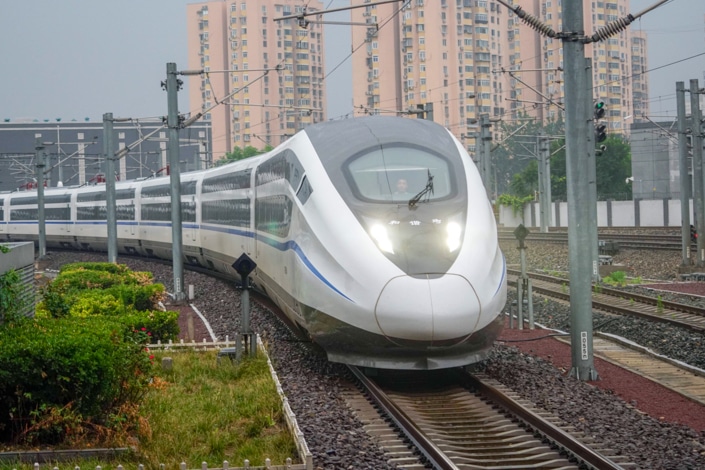
Second class (二等座 èrděngzuò) is the most affordable option on bullet trains, so space is a little tight, with 5 seats per row. Because of the smaller price tag, second class is the most crowded area on the train.
First class (一等座 yīděngzuò) offers four seats per row, making for a more spacious area. The seating is similar to an airplane's, with reclinable seats, a small foldable table, a pillow, and a footrest.
Business class seats (商务座 shāngwùzuò) are the most luxurious option on G trains, with three large, comfortable seats per row spaced 2 meters (6.6 feet) apart. The soft leather seats can recline all the way to a flat position.
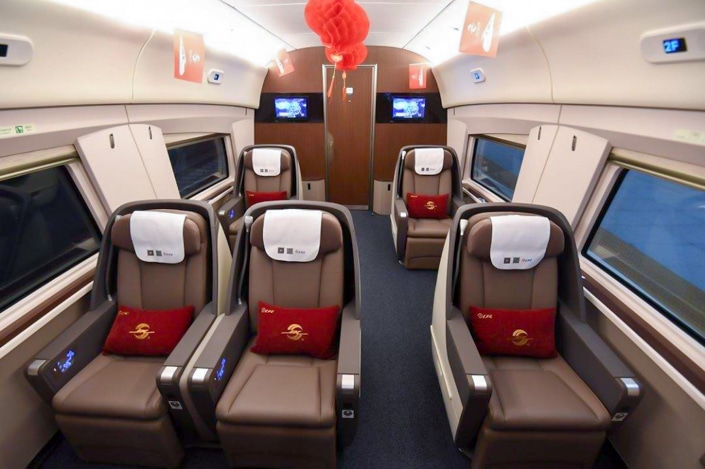
Business class passengers have access to free snacks and drinks, plus a power outlet, reading lamp, and flat-screen TV. A glass door separates the business class car from the others, giving passengers a quiet, private atmosphere.
Many train stations also feature a VIP lounge for business class travelers. Some business class carriages even have "sightseeing seats" at the very front with large windows for admiring the view.
Some trains also offer a VIP or Superior seating option. These feature three seats per row, are separated from the rest of the train by glass doors, and are priced between first and business class.
2. D Trains (动车)
D trains, or 动车 (dòngchē) in Chinese, are the second-fastest option for trips between Shanghai and Beijing, reaching speeds up to 250 kph (155 mph). On the older sections of track, however, they often won't go faster than 160 km/h (100 mph).
D trains offer first and second class tickets, and some also offer business class. Keep in mind that the D trains running the Shanghai to Beijing route are all overnight trains, departing in the evening and arriving in the morning.
They offer sleeper cars for a slower, more restful ride. Travelers hoping to get from Shanghai to Beijing during the day should take a G train instead.
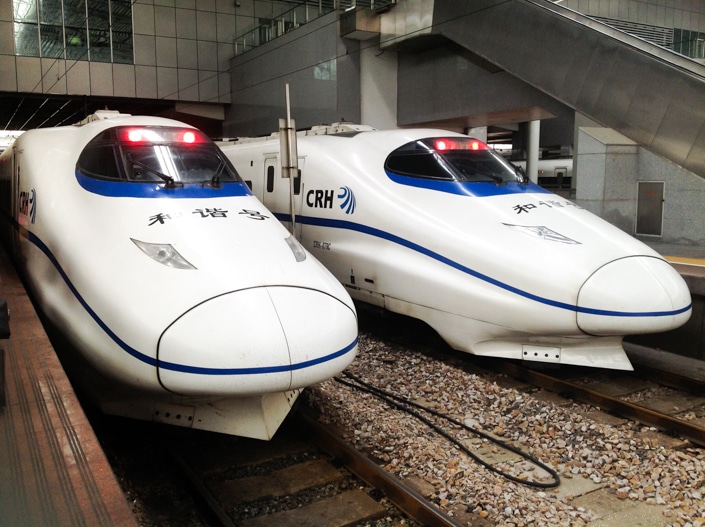
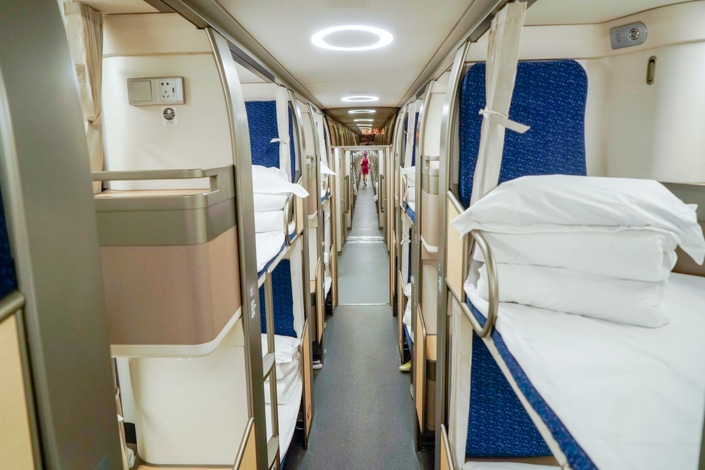
Overnight high-speed D trains are very convenient but can also be pretty expensive, sometimes even more than discount flights. They're quite comfortable, offering basic three-level bunks in the "hard sleeper" (硬卧 yìngwò) category and wide, adjustable bunks in the "soft sleeper" (软卧 ruǎnwò) category.
As the name suggests, "soft sleepers" have softer beds and are therefore more expensive. D sleeper trains also include an LCD TV for each bed, a bedside lamp, wired headphones, and an adjustable thermostat.
03 Which Train Should I Choose for My Trip?
The best way to travel between Shanghai and Beijing is definitely on one of the bullet trains described above, since they offer the best price-to-value ratio. G trains, in particular, are about as fast as flying, only cheaper.
The best way to plan your trip is to decide on your priorities before buying a ticket. If you're traveling for pleasure, an overnight D train can be a great choice, letting you arrive well-rested and ready to start your day.
You could jump right into a long-awaited stroll along the Shanghai Bund or a visit to Beijing's Summer Palace. Taking an overnight train also saves you a night of hotel expenses.
If your top priority is speed, a daytime G train will get you there quickly. Budget is also a critical factor, since options vary widely depending on how much you're willing to spend.
04 Schedules, Prices, and Booking Tickets
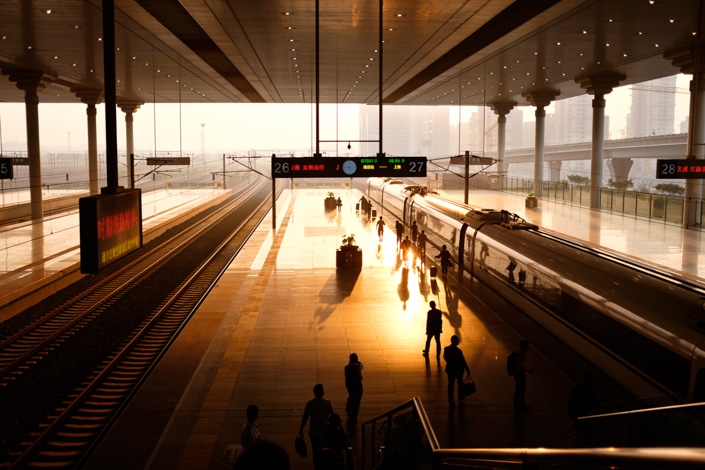
Every day, there are 44 G trains and 3 D trains from Beijing to Shanghai. G trains depart at various times between 6:43 am and 7:08 pm, with the ride lasting between 4 hours 18 minutes and 6 hours 24 minutes.
D trains depart in the evening between 7:34 pm and 9:17 pm, with rides lasting from 11 hours 49 minutes to 12 hours 1 minute. Since all of mainland China runs on a single official time zone, working out arrival times is refreshingly simple.
Going the other direction, there are 42 G trains and 3 D trains from Shanghai to Beijing each day. G trains depart between 6:26 am and 7:00 pm, with trips taking between 4 hours 18 minutes and 6 hours 20 minutes, while D trains depart between 7:09 pm and 9:24 pm.
You can check train schedules and prices on websites like Trip.com, the English-language version of the popular Chinese travel platform CTrip.
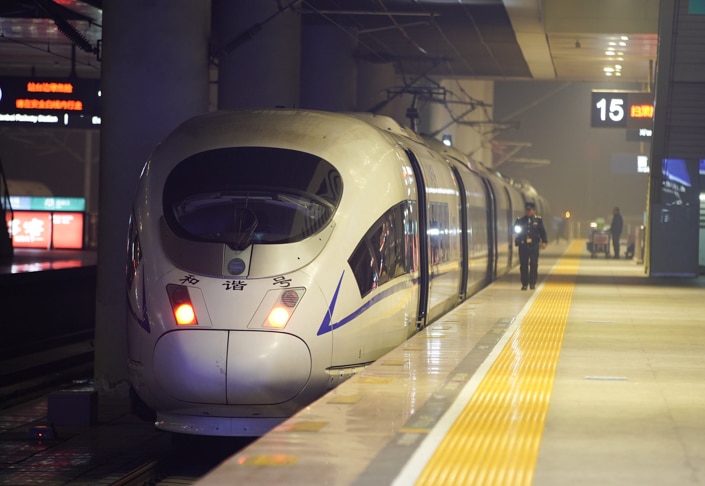
As of this writing, prices for G trains, quoted in Chinese Renminbi, range from about 553 CNY (US$84) to 1,748 CNY (US$266). Overnight D trains range from 386 CNY (US$57) to 740 CNY (US$110).
You can buy tickets online at sites like Trip.com and ChinaTicketOnline. It's also possible to buy tickets directly at the station, though queues can be long and tickets tend to sell out early during holidays.
05 Why Take the Train Instead of Flying?
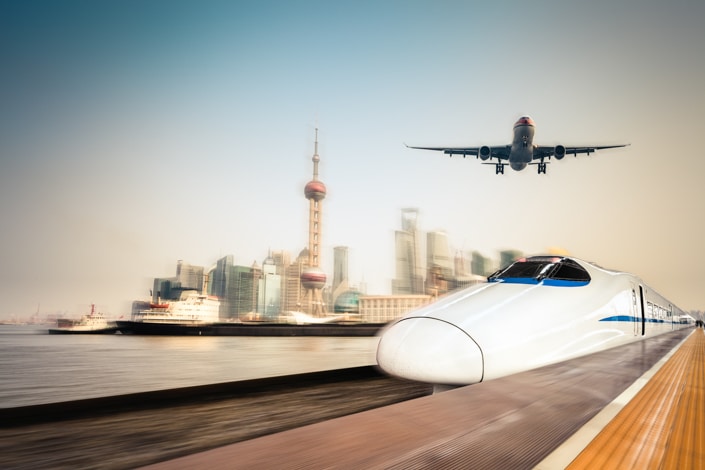
All around, the Shanghai to Beijing train offers a far more pleasant experience than its airplane equivalent. Here are some of the advantages of choosing the railway over flying between China's two biggest cities.
1. Money
Depending on when you're traveling, train tickets can be considerably cheaper than plane tickets. If you're traveling in the high season, the train is likely your best bet.
If you're traveling in the off-season, flight prices become more competitive, so it's worth checking both options against your travel dates.
2. Time
The distance between Shanghai and Beijing is 1,214.3 kilometers (754.5 miles). Actual flight time is about 2.5 hours, while a G train ride takes between 4.5 and 6 hours.
Technically, flying is considerably faster, but there are a few factors to consider. Airports in Beijing and Shanghai are often far from the city center, so getting to and from them takes extra time.
You also need to check in around two hours before your flight, and weather conditions are more likely to delay flights than train rides. Train stations, by contrast, are usually inside city limits, often in very central areas.
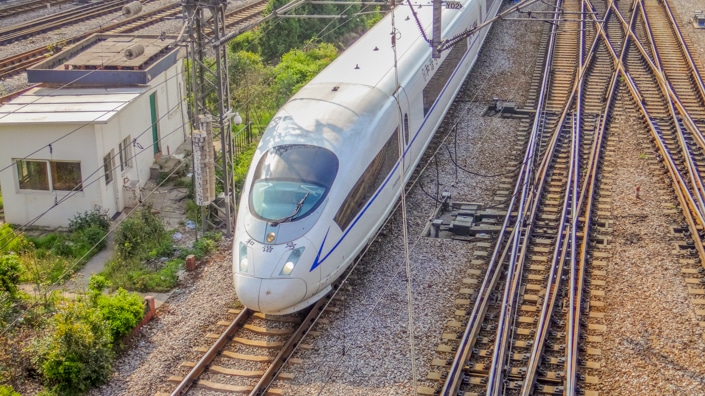
You can also board a train less than half an hour before departure, rather than waiting around as you would at the airport. Trains in China are quite punctual, and delays are far less common than in air travel.
Overnight trains take a little longer to reach their destination, but they're comfortable and let you save a night of hotel expenses. All things considered, the time difference between train and plane isn't as large as it first appears.
3. Experience
Air travel can feel constraining. Security lines take time, electronic device use is often restricted, and the overall experience can feel a little claustrophobic.
Trains are far more relaxed, letting travelers move freely between cars and use their devices at all times. Passing through train security is also faster and less cumbersome than airport security.
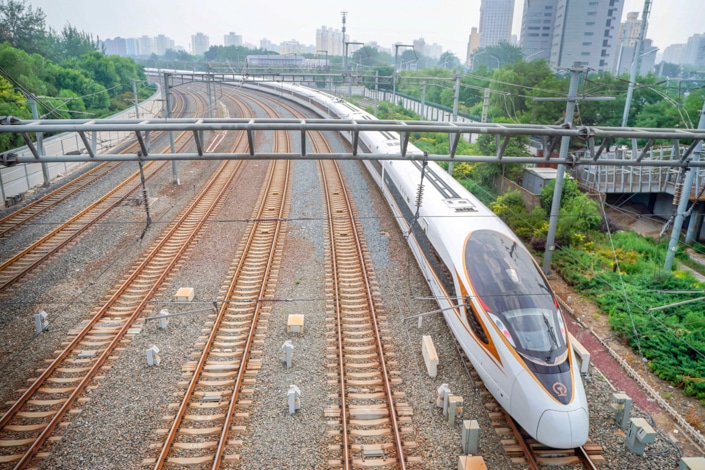
The train experience has another lovely advantage: the sights. Looking out the window while passing some of China's most impressive landscapes is a pleasant and relaxing experience.
Keep in mind that the Shanghai to Beijing train can run as fast as 350 km/h (217 mph), making it the fastest passenger rail route in the world. That alone is reason enough to want to experience it firsthand.

Study Chinese in Guilin or Start Online
CLI offers personalized Chinese instruction built around your goals. Join our Immersion Program in Guilin or begin from anywhere with a free Chinese lesson .
06 Chinese Train Vocabulary
The following terms will help you navigate stations, tickets, and conversations during your trip. Learning a little vocabulary in advance can also make the journey more enjoyable, especially if you decide to study abroad in China afterward.
| Chinese | Pinyin | Meaning | Notes |
|---|---|---|---|
| 京沪线 | Beijing-Shanghai railway line | Also called the Jinghu high-speed railway | |
| 高铁 | High-speed train | G-class trains; fastest daytime option | |
| 动车 | Bullet train | D-class trains; overnight sleeper option | |
| 绿皮车 | Green train | Older, slower, and cheaper trains | |
| 二等座 | Second class seat | 5 seats per row; most affordable | |
| 一等座 | First class seat | 4 seats per row; more legroom | |
| 商务座 | Business class seat | Most luxurious option on G trains | |
| 硬卧 | Hard sleeper | Three-level bunks on overnight D trains | |
| 软卧 | Soft sleeper | Softer, wider bunks; more expensive | |
| 一路顺风 | Bon voyage | Common farewell phrase before a trip |
07 FAQ
What is the fastest way to travel from Shanghai to Beijing?
A daytime G train is the fastest rail option, covering the 1,318 km route in as little as 4 hours 18 minutes. Flying is technically quicker in the air, but airport transfers and check-in time often close the gap.
How long does the Shanghai to Beijing train take?
G trains take between about 4.5 and 6.5 hours depending on the specific service. Overnight D trains take around 12 hours, including sleeping time.
How much does a Shanghai to Beijing train ticket cost?
G train tickets generally range from about 553 CNY to 1,748 CNY depending on class. Overnight D train tickets range from about 386 CNY to 740 CNY.
Should I take a G train or a D train?
Choose a G train if speed and daytime travel matter most to you. Choose a D train if you'd rather travel overnight and save on a night of hotel costs.
Where can I book Shanghai to Beijing train tickets?
Tickets can be booked online through platforms like Trip.com and ChinaTicketOnline, or purchased directly at the station. Booking online in advance is recommended, especially around holidays.
08 A Trip to Remember
Traveling by train is by far the best choice for those who want to get between Shanghai and Beijing. The G and D trains on this route offer a variety of affordable, fast, and comfortable options for visitors from all walks of life.
Train travel is also a popular way of getting around among Chinese people themselves. Taking a train gives you a great way to observe, and participate in, an important part of everyday life in mainland China.
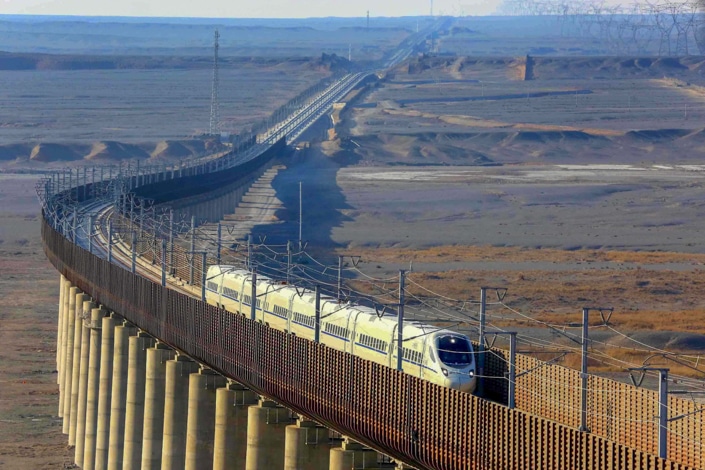
Watching the landscape shift from urban to rural and back again offers valuable insight into the pace and scope of China's modernization. Train travel also gives you a great opportunity to practice your Chinese by chatting with fellow passengers.
To prepare for your trip, consider learning some Chinese travel phrases. You might also want to learn how to say "hi" in Chinese and how to say your name in Chinese, so you're ready to introduce yourself to whoever sits next to you.
If you're looking for something to see once you've reached Beijing, check out our guide to the Summer Palace. Once you've had your fill of Shanghai's skyscrapers, consider a day trip to nearby Wuzhen Water Town or Suzhou, home to some of China's finest traditional architecture.
Wherever your travels take you, we wish you 一路顺风 (Yīlù shùnfēng; bon voyage)!