
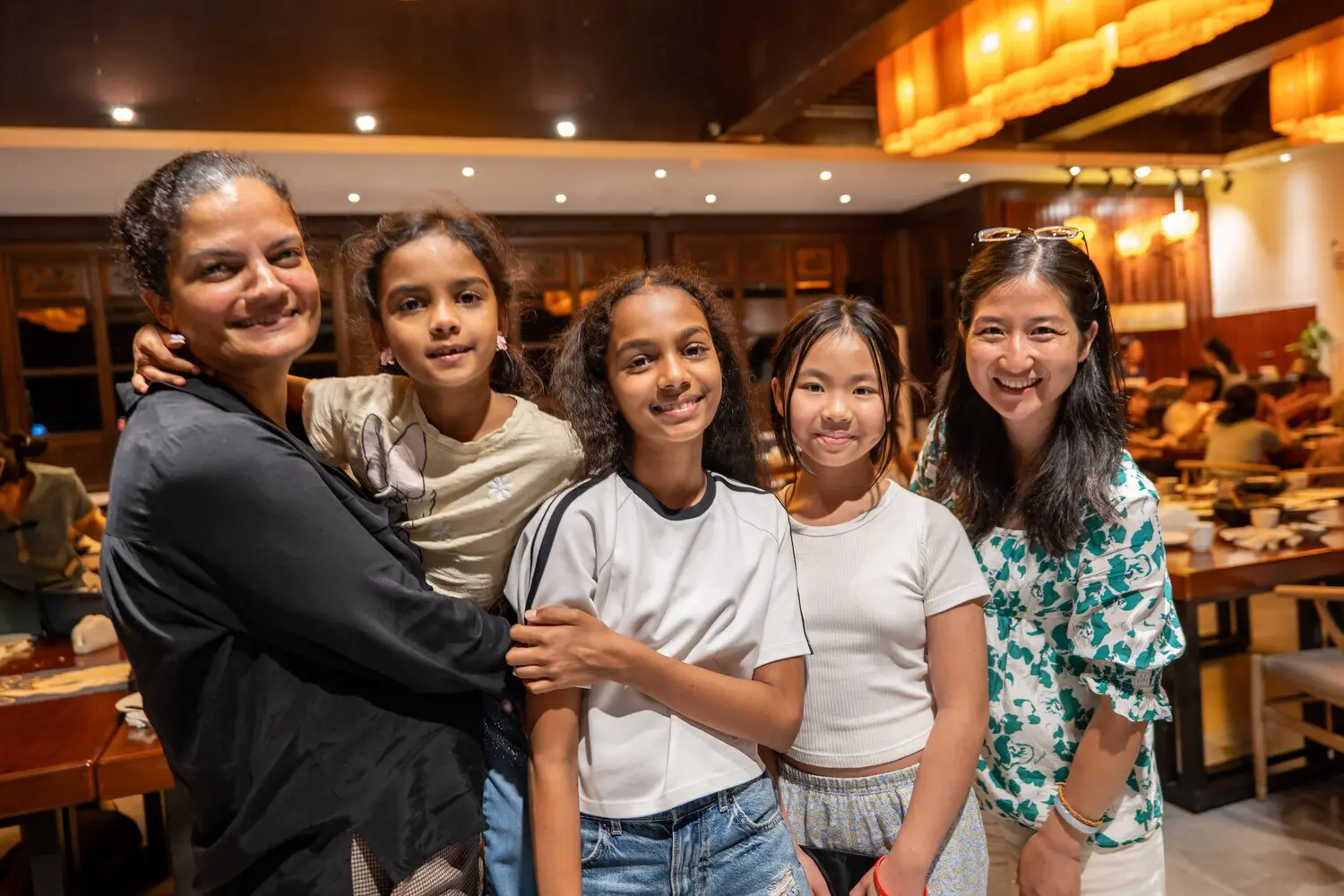
- Chinese proverbs and idioms about family reveal long-standing cultural values connected with kinship, hierarchy, obligation, and mutual support.
- Confucian ideas such as 孝顺 (xiàoshùn), or filial piety, shaped traditional Chinese family life for centuries.
- The character 家 (jiā) means home or family and appears in many important Chinese words.
- Many Chinese family sayings express respect for ancestors, the importance of roots, and the idea that family members support each other in difficult times.
- Some traditional family proverbs also reflect older gender roles and marriage customs that modern readers may find uncomfortable.
Proverbs and idioms reflect cultural belief systems. As a result, Chinese proverbs and idioms about family are a useful way to understand both historical and modern Chinese values.
In this article, we’ll first explore traditional Chinese attitudes toward family. Then, we’ll examine Chinese proverbs and idioms about family and consider how they reflect wider cultural ideas.
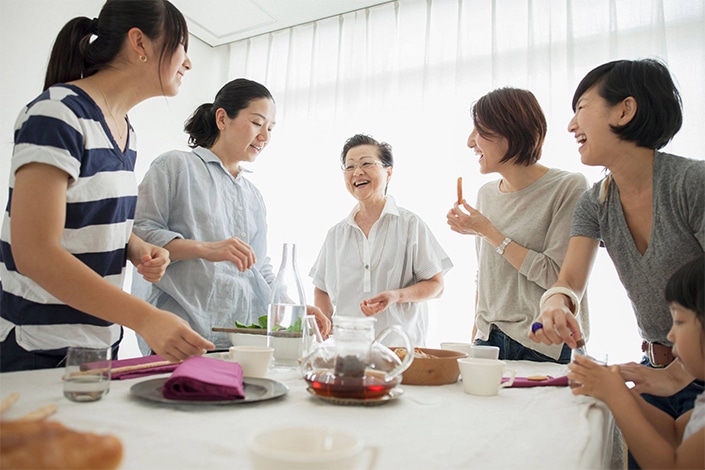
For Chinese learners, these sayings are especially useful because they show how language, culture, and history work together. If your goal is to Learn Chinese in China, understanding family-related language can help you follow conversations about relationships, holidays, ancestors, and social values.
Many of these expressions also connect with broader Chinese cultural topics, including Chinese society, ancient Chinese belief systems, and traditional holiday customs.
01 Proverbs and idioms: a cross-cultural phenomenon
Proverbs and idioms reflect society’s values. Every civilization encodes its collective wisdom, assumptions, and prejudices into memorable phrases, stories, and figures of speech.
English-language proverbs touch on everything from health and hygiene to psychology and morality. Examples include “An apple a day keeps the doctor away,” “Great minds think alike,” and “Turn the other cheek.”
China’s millennia-old civilization has also produced a wealth of proverbs, idioms, and sayings. Since family is a central pillar of Chinese culture, it is no surprise that many Chinese sayings revolve around family life.
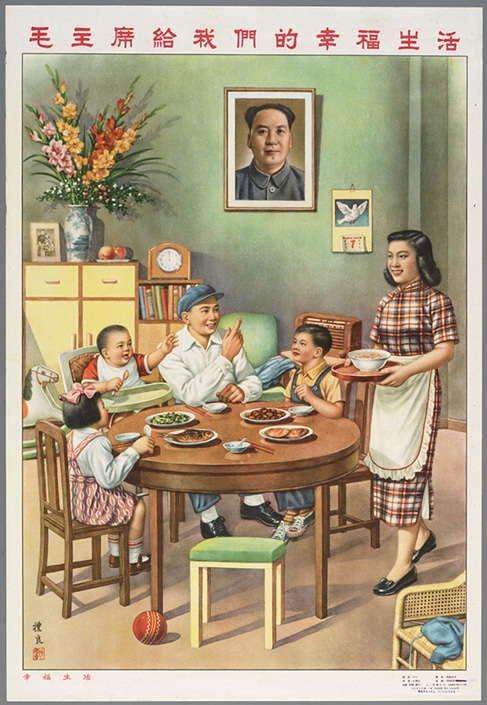
02 Traditional conceptions of the Chinese family
Confucius, known in Chinese as 孔子 (Kǒngzǐ), is essential to understanding the importance of family in Chinese society. His teachings shaped ideas about obligation, hierarchy, morality, education, and social harmony.
Confucian principles held that each person was bound to others through clearly defined relationships. Family relationships were seen as the foundation for moral behavior and social order.
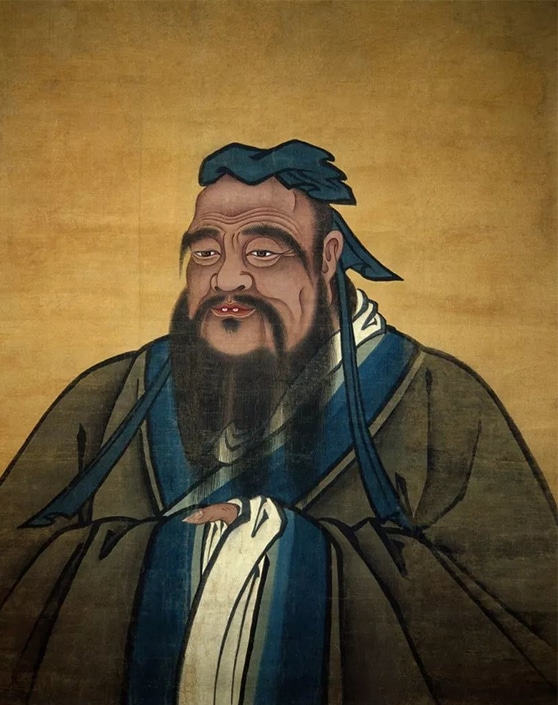
Filial piety and the Confucian hierarchy
One of the most important Confucian obligations is 孝顺 (xiàoshùn), often translated as filial piety. This concept emphasizes respect, obedience, and care for parents and elders.
Traditional Chinese social relationships were often understood through family-based models. The father-son relationship, husband-wife relationship, and ruler-subject relationship were all framed through hierarchy and reciprocal obligation.
The Confucian hierarchy emphasized families ruled by benevolent elder patriarchs. In traditional thought, the well-ordered family became the model for a well-ordered state.
Ancient Chinese thinkers also used the concept of 天下 (tiānxià), often translated as “all under heaven,” to describe the wider world or political order. External explanations of Tianxia can help clarify how family and political order were historically linked.
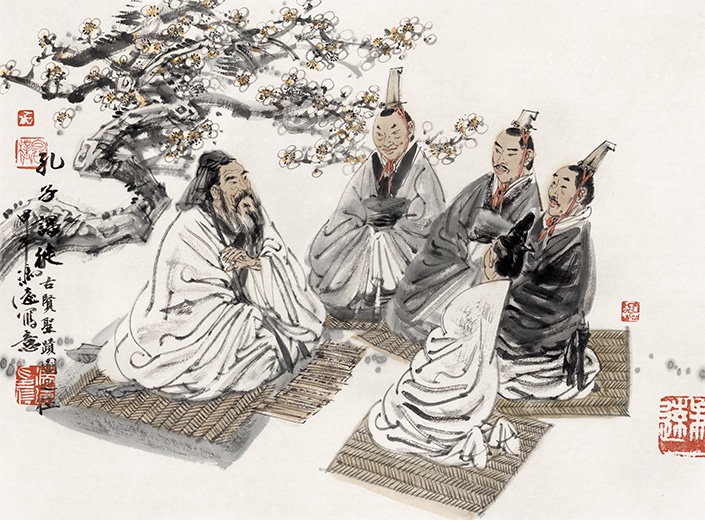
Close family bonds
For thousands of years, two key factors fostered close family bonds in China. One was the collective household system, and the other was the custom of multiple generations living under one roof.
Because of this practice, cousins often grew up together like siblings. Children were seen not only as the offspring of particular parents, but also as members of a wider generation and extended family network.
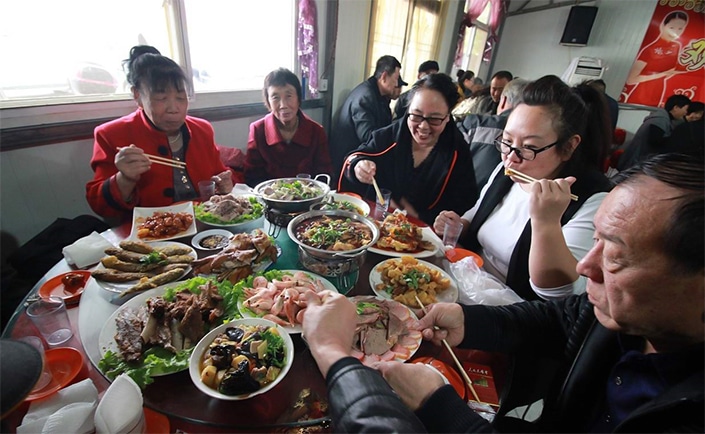
Children in these households learned to navigate the world under the watchful eye of many older relatives. The demands of rural agricultural life further encouraged extended families to operate as cooperative units.

Study Chinese in Guilin or Start Online
CLI offers personalized Chinese instruction built around your goals. Join our Immersion Program in Guilin or begin from anywhere with a free Chinese lesson .
03 Lineages, descent lines, and clans
Chinese culture places strong emphasis on family continuity and reverence for ancestors. This can be seen in the many ways people describe relationships with both living relatives and deceased ancestors.
Traditional family organization often involved lineages, descent lines, and same-surname associations. These systems helped preserve genealogy, ritual obligations, and mutual support.
Lineages
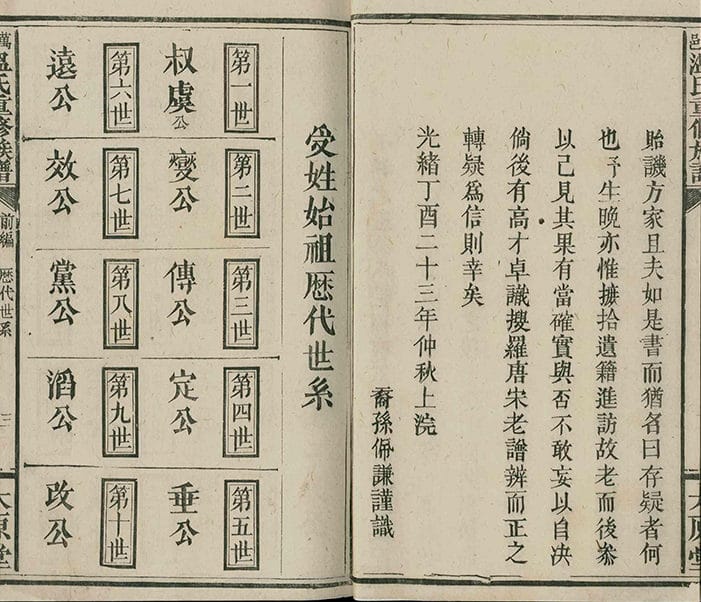
A lineage organization is a group of descendants who organize collectively to record genealogy and commemorate ancestors. The size and influence of a lineage often depended on the wealth and prestige of its members.
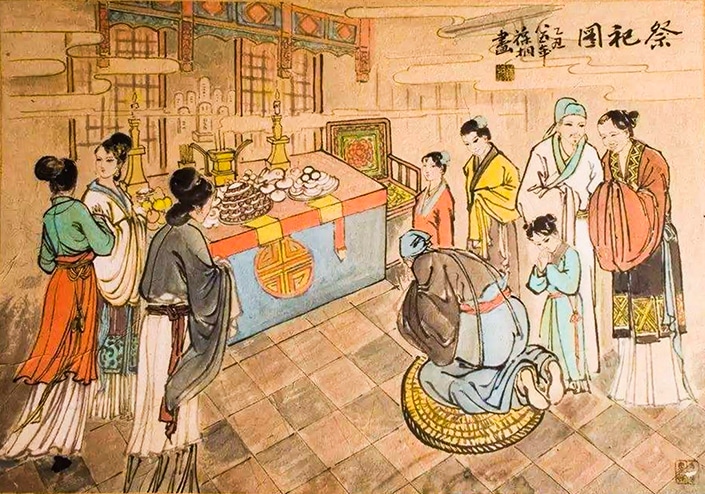
Wealthy lineages sometimes owned an ancestral hall or shrine. Descendants could gather there to worship ancestors, consult spirit tablets, hold ceremonies, and maintain family memory.
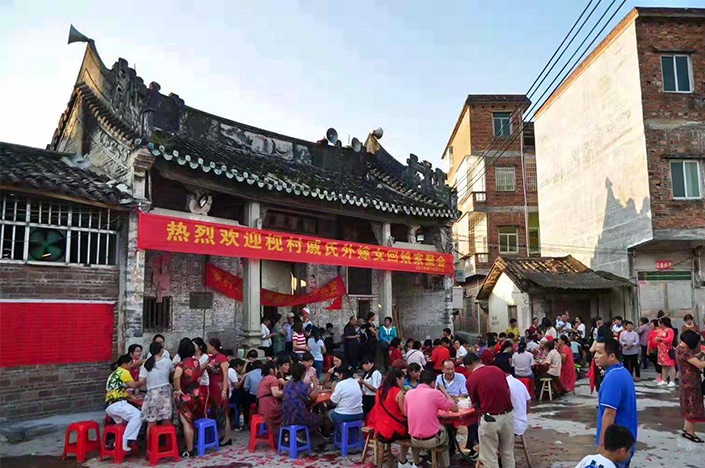
Some well-endowed lineage organizations awarded scholarships, engaged in charitable work, or acted as emergency sources of support. In times of financial instability, members could sometimes turn to lineage networks for help.
Poorer lineage organizations might simply maintain a small space in an ancestral home for honoring ancestors during important holidays. This was especially common around Qingming Festival and the Ghost Festival.
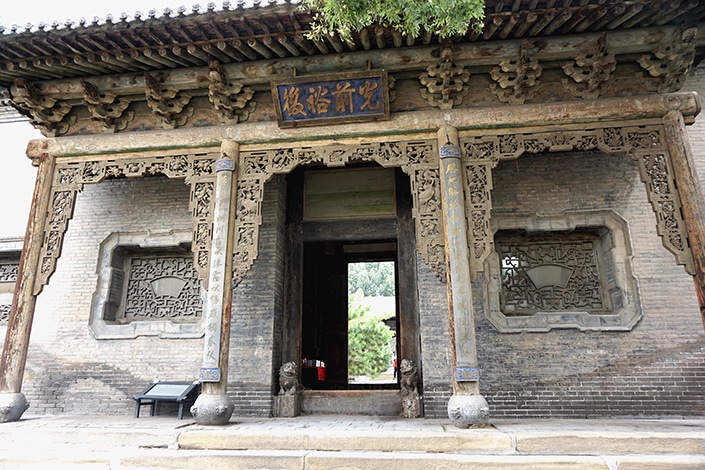
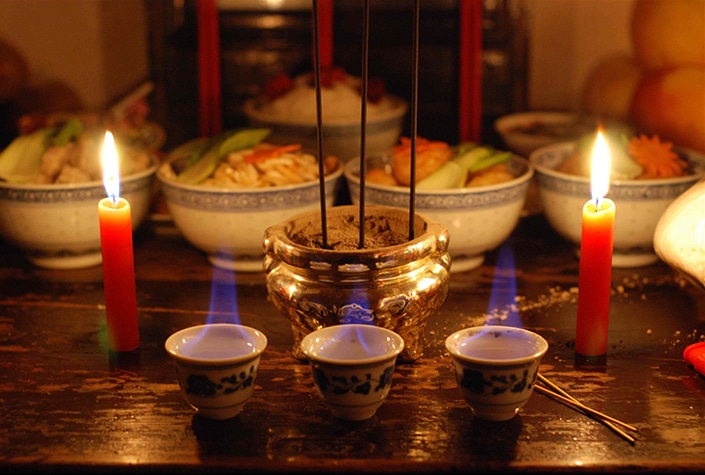
Ancestor ceremonies often involve symbolic food offerings, incense, and ritual paper offerings. These practices reflect the belief that family relationships continue beyond death.
Descent lines
A descent line traditionally consisted of fathers and sons in a family tree. It was imagined as extending backward to the founding ancestor and forward through future male heirs.
In traditional Confucian society, the absence of a male heir was considered a serious family problem. This was because sons were expected to continue the descent line, maintain ancestral rites, and preserve the family name.
Clans and same-surname associations
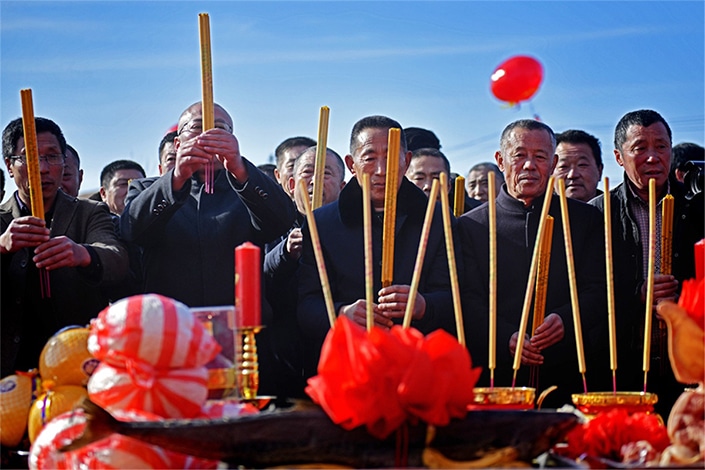
Clan and same-surname associations are broader coalitions of people who share a surname or claim a common ancestor. In Chinese, these groups can be called 同姓会 (tóngxìnghuì).
Members of these groups do not always know the exact details of their shared descent. In the absence of complete records, a shared family name can still serve as an important social bond.
Same-surname associations have often served as sources of mutual aid and protection in China and overseas. They may also preserve forms of ancestor worship and community ritual.
04 Family words in Chinese
The importance of family can also be seen in Chinese vocabulary. The character 家 (jiā) means home or family and appears in many common Chinese words.
| Chinese | Pinyin | Meaning | Literal sense |
|---|---|---|---|
| 家 | Home; family | Core family-related character | |
| 大家 | Everyone | Literally “big family” | |
| 国家 | Country; nation | Literally “national family” | |
| 家具 | Furniture | Household tools or objects |
Traditional Chinese family structures also produced a rich vocabulary for relatives. Mandarin often distinguishes relationships that English describes with broader terms like “cousin,” “aunt,” or “uncle.”
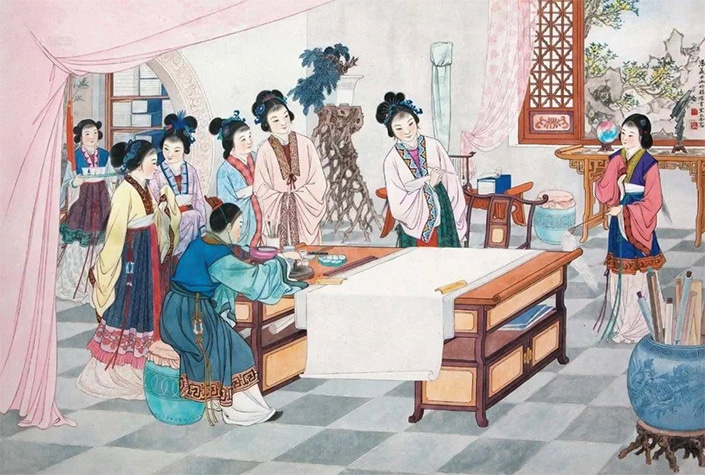
For example, 表哥 (biǎogē) means older male cousin, 弟媳 (dìxí) means younger brother’s wife, and 姨父 (yífu) means mother’s sister’s husband.
Learning family vocabulary can be challenging, but it also gives learners a clearer understanding of Chinese social structure. CLI’s guide to the Chinese family tree is a useful next step for mastering these relationship terms.
05 Men and women in the Chinese family
The relationship between men and women in China has changed dramatically over time. Traditional family roles were deeply shaped by Confucian hierarchy, patriarchal beliefs, and economic structures.
Modern Chinese society is far more diverse, but older ideas about gender and family still appear in proverbs, idioms, and cultural expectations.
Traditional gender roles
In traditional society, men were expected to act as providers, maintainers, and protectors. Women were often expected to focus on domestic responsibilities, childrearing, and producing heirs.
This preference for men over women is expressed by the phrase 重男轻女 (zhòngnán qīngnǚ), meaning to value males and undervalue females.
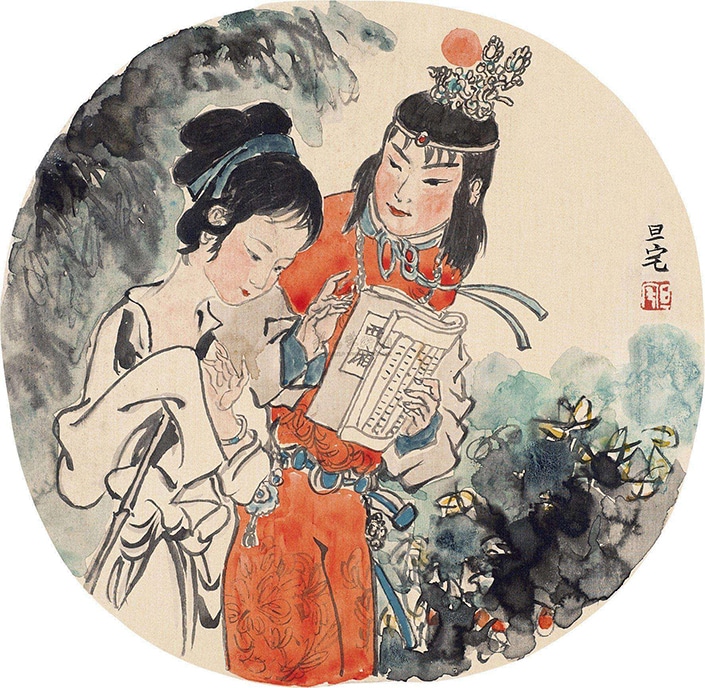
Throughout much of Chinese history, women were often judged in relation to their ability to produce male heirs and maintain the family line. CLI’s article on International Women’s Day in China explores women’s changing social status in more detail.
Some traditional sayings reflect this older worldview directly. One example is 男尊女卑 (nánzūn nǚbēi), literally “men are high, women are low,” meaning that women are inferior to men.
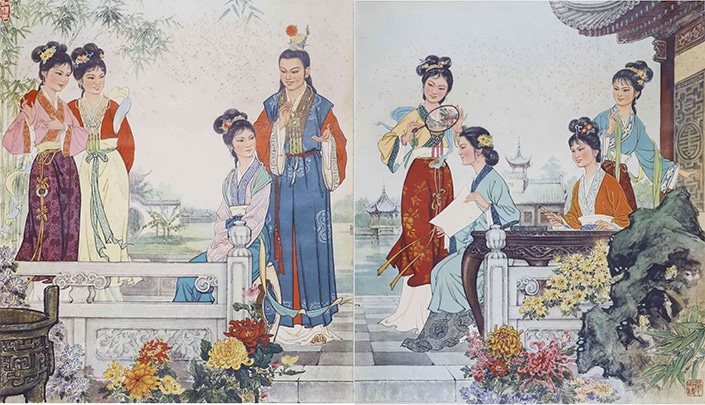
The Confucian doctrine of the Three Obediences and Four Virtues, 三从四德 (Sāncóng Sìdé), laid out strict rules for women. It taught that women should obey their fathers before marriage, husbands after marriage, and sons after widowhood.
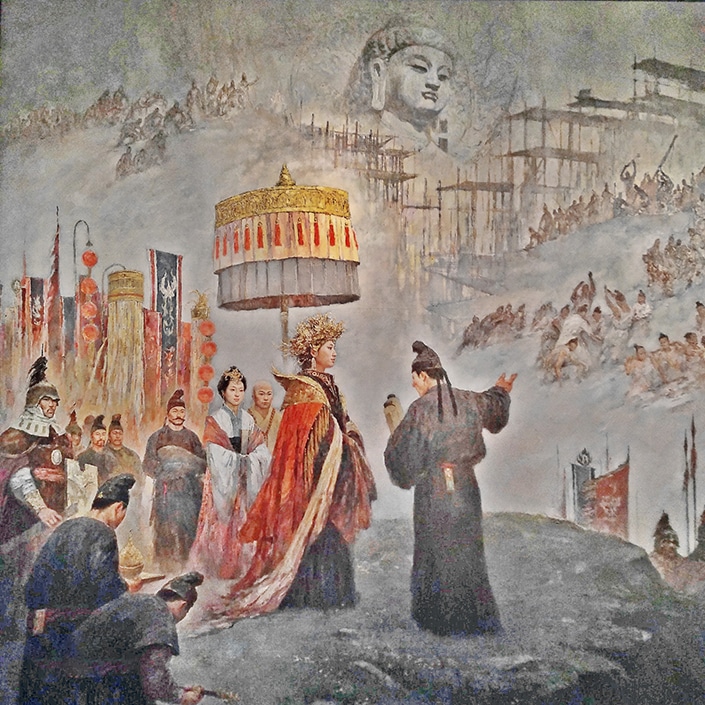
Despite these restrictive norms, some women did occupy positions of real power. The most famous example is Wu Zetian, China’s first and only female emperor.
Gender roles in today’s China
China’s 20th century reshaped many traditional patterns. Since 1949, Chinese women as a whole have become more educated, more independent, and more integrated into the workforce.
However, major differences remain between urban and rural areas, and women are still underrepresented in many leadership roles. Contemporary China continues to negotiate the relationship between modernity and tradition.
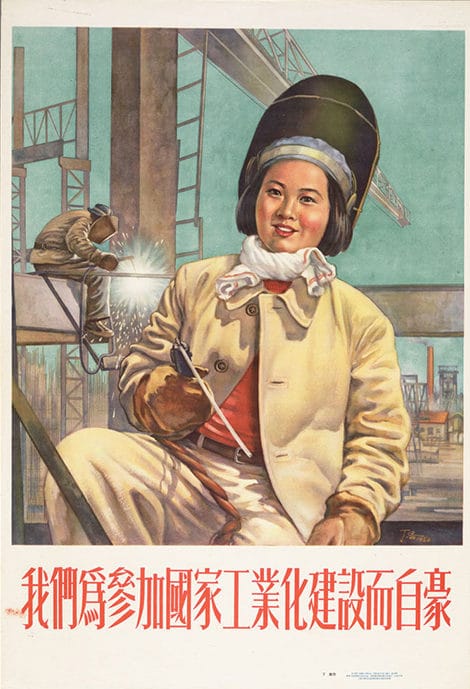
In China’s largest cities, expectations for men and women continue to change quickly. At the same time, older family models and gender assumptions still influence marriage, parenting, careers, and elder care.

06 Chinese proverbs and idioms about family
The proverbs and idioms below reflect the historical importance of family in Chinese cultural life. They also show how multidimensional the concept of family can be.
Some sayings express intimacy, loyalty, and support. Others preserve older ideas about marriage, gender roles, hierarchy, and duty.
Chinese proverbs about familial relationships
| Chinese | Pinyin | Meaning | Notes |
|---|---|---|---|
| 国无二君,家无二主 | A state cannot have two monarchs or a family two heads. | Reflects hierarchy in family and political order. | |
| 前人栽树,后人乘凉 | The predecessors plant the tree, the descendants cool off in the shade. | Expresses gratitude to previous generations. | |
| 树高千丈,落叶归根 | A tree can grow 10 thousand feet tall, but its leaves will always fall back to the roots. | Often used to express returning home or remembering one’s origins. | |
| 虎父虎子 | If the father is a tiger, then the son will also be a tiger. | Similar to “like father, like son.” | |
| 姥姥家的狗,吃完了就走 | Grandma’s dog leaves as soon as it’s finished eating. | Often used playfully by grandparents about short visits from grandchildren. | |
| 当麻烦来临,家人会给予你支持 | During difficult times, it’s your family that supports you. | Expresses the family as a source of protection and support. |
Chinese proverbs about property and secrets
| Chinese | Pinyin | Meaning | Notes |
|---|---|---|---|
| 家有敝帚,享之千金 | Be thankful for a bad broom as if it were a thousand ounces of gold. | Even something of little value should be cherished if it belongs to you. | |
| 家家有本难念的经 | There is a skeleton in every house. | Every family has its own private troubles. |
Chinese proverbs about marriage
Some traditional marriage proverbs reflect the limited choices available to women in earlier periods of Chinese history. These sayings are historically important, but they should be read in context.
| Chinese | Pinyin | Meaning | Notes |
|---|---|---|---|
| 出门看天色,进门看脸色 | When you go out, observe the color of the sky; when you come in, observe the facial expressions. | Traditional advice given to newly married women. | |
| 儿多母苦,盐多菜苦 | Just as too much salt makes food taste bad, too many children make a mother’s life hard. | Reflects the burden of childbearing and domestic labor. | |
| 嫁鸡随鸡,嫁狗随狗 | Marry a chicken, follow a chicken; marry a dog, follow a dog. | Reflects the traditional expectation that a woman followed her husband’s household. | |
| 家寒嫁汉,穿衣吃饭 | If the house is cold, then marry a man; you’ll have clothes to wear and rice to eat. | Reflects older economic realities around marriage and survival. |
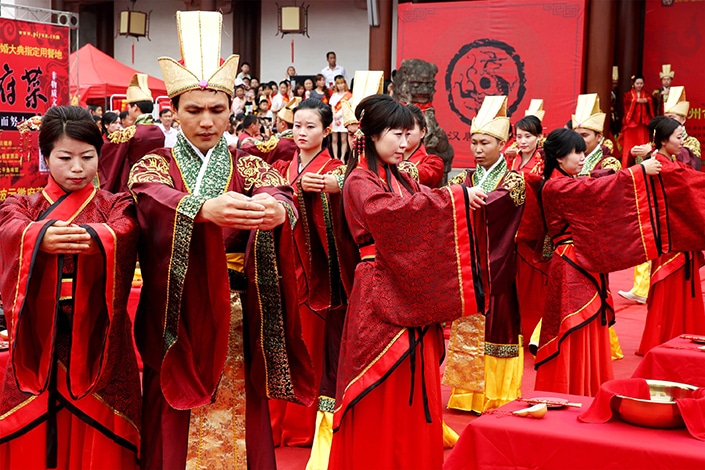
Traditional proverbs continue to appear in everyday Chinese conversation, literature, media, and family discussions. To continue exploring this topic, see CLI’s guide to Chinese idioms.
07 Chinese vocabulary, idioms, and proverbs about family
The following table brings together key vocabulary, idioms, and proverbs from this article.
| Chinese | Pinyin | Meaning |
|---|---|---|
| 孝顺 | filial piety | |
| 天下 | land under heaven; the world or China | |
| 同姓会 | same-surname association | |
| 家 | home | |
| 大家 | everyone | |
| 国家 | country; nation | |
| 家具 | furniture | |
| 表哥 | older male cousin; older male cousin on the female side | |
| 妗子 | mother's brother's wife | |
| 姨父 | mother’s sister’s husband | |
| 男尊女卑 | women are inferior to men | |
| 三从四德 | three obediences and four virtues; Confucian code of ethics for women | |
| 国无二君,家无二主 | A state cannot have two monarchs or a family two heads. | |
| 出门看天色,进门看脸色 | When you go out, observe the color of the sky; when you come in, observe the facial expressions. | |
| 前人栽树,后人乘凉 | The predecessors plant the tree, the descendants cool off in the shade. | |
| 树高千丈,落叶归根 | A tree can grow 10 thousand feet tall but its leaves will always fall back to the roots. | |
| 儿多母苦,盐多菜苦 | Just as too much salt makes food taste bad, too many children make a mother’s life hard. | |
| 虎父虎子 | If the father is a tiger, then the son will also be a tiger. | |
| 姥姥家的狗,吃完了就走 | Grandma’s dog leaves as soon as it’s finished eating. | |
| 家有敝帚,享之千金 | Be thankful for a bad broom as if it were a thousand ounces of gold. | |
| 家家有本难念的经 | There is a skeleton in every house. | |
| 当麻烦来临,家人会给予你支持 | During difficult times, it's your family that supports you. | |
| 嫁鸡随鸡,嫁狗随狗 | Marry a chicken, follow a chicken; marry a dog, follow a dog. | |
| 家寒嫁汉,穿衣吃饭 | If the house is cold then marry a man, you'll have clothes to wear and rice to eat. |
08 FAQ
What is a famous Chinese proverb about family?
One famous Chinese proverb about family is 树高千丈,落叶归根 (shùgāoqiānzhàng, luòyèguīgēn), meaning “A tree can grow 10 thousand feet tall, but its leaves will always fall back to the roots.”
What does 孝顺 mean?
孝顺 (xiàoshùn) means filial piety. It refers to respect, obedience, and care for parents and elders.
Why is family so important in Chinese culture?
Family has traditionally been viewed as the foundation of moral life, social order, ancestor worship, and personal identity in Chinese culture.
What does 家 mean in Chinese?
家 (jiā) means home or family. It appears in many common words, including 大家 (dàjiā), 国家 (guójiā), and 家具 (jiājù).
Do Chinese people still use family proverbs today?
Yes. Many family-related proverbs and idioms still appear in conversation, literature, media, and cultural education, though some older sayings reflect values that have changed over time.
09 Final thoughts
Chinese proverbs about family reveal a great deal about traditional Chinese values. They show the importance of ancestors, hierarchy, filial piety, roots, household harmony, and mutual support.
At the same time, some sayings preserve older ideas about gender and marriage that modern readers may question. This makes them valuable not only as language-learning tools, but also as windows into Chinese history and cultural change.