

- The simplest way to say “happy birthday” in Chinese is 生日快乐 (shēngrì kuàilè), literally “birthday happy.”
- A slightly more polite version, 祝你生日快乐 (zhù nǐ shēngrì kuàilè), adds “wish” and “you.”
- Different birthday blessings suit different people, from “may you live to a hundred” for elders to “success in your studies” for children.
- Many Chinese people still track their birthday by the traditional lunar calendar, which can make ages and dates surprisingly complex.
- Customs like longevity noodles, lucky red, and thoughtful gift choices remain a meaningful part of Chinese birthday culture.
Everybody loves birthdays, and China is no exception. So how do you say “happy birthday” in Chinese, and how are birthdays actually celebrated in China?
To all the birthday guys and gals out there, CLI wishes you 生日快乐 (🔈 shēngrì kuàilè)!
This guide walks you through the core phrase, colorful blessings for different ages and relationships, how to sing the birthday song, and the cultural background behind Chinese birthdays. Along the way, the birthday calendar opens a useful doorway into Chinese culture.
If your goal is to Learn Chinese in China, understanding everyday customs like these makes real conversations and celebrations far more meaningful.
01 How do you say “happy birthday” in Chinese?
The easiest way to say “happy birthday” in Chinese is 生日快乐, or “🔈 shēngrì kuàilè” in pinyin. The first part, 生日 (shēngrì), means “birthday,” and the second, 快乐 (kuàilè), means “happy.”
So 生日快乐 translates literally as “birthday happy.” Flip it around and you get “happy birthday!”
You can’t go wrong saying 生日快乐 to someone on their special day. If you want to nail the tones, our pinyin chart is a handy companion for getting the pronunciation right.
At times you’ll also hear people say 祝你生日快乐 (zhù nǐ shēngrì kuàilè). This slightly fuller version uses 祝 (zhù) and 你 (nǐ), meaning “wish” and “you,” so it translates literally as “wish you birthday happy.”
02 Other ways to express birthday wishes in Chinese
If you want something fancier than a plain “happy birthday,” you have plenty of options. Which expression you choose often depends on the age and gender of the person you’re addressing, and some of the most common are below.
For older people
祝您生日快乐,长命百岁! (🔈 zhù nín shēngrì kuàilè, chángmìngbǎisuì!)
Translation: “Happy birthday! May you live to be a hundred years old!”
This greeting swaps the informal 你 (nǐ) for the more respectful 您 (nín). The idiom 长命百岁 (chángmìngbǎisuì) means “may you live to be a hundred,” fitting given that 长 (cháng) means “long,” 命 (mìng) means “life,” and 百岁 (bǎi suì) means “100 years old.”
Elders enjoy great respect in China, thanks in part to the long tradition of filial piety.
For young women
祝你生日快乐,青春永驻! (🔈 zhù nǐ shēngrì kuàilè, qīngchūnyǒngzhù!)
Translation: “Happy birthday! May you stay young forever!” The idiom 青春永驻 (qīngchūnyǒngzhù) means “to stay young forever.”
For friends pursuing their career (any age)
祝你生日快乐,事业有成! (🔈 zhù nǐ shēngrì kuàilè, shìyèyǒuchéng!)
Translation: “Happy birthday! Wishing you professional success!” Here 事业 (shìyè) means “career” and 有成 (yǒuchéng) means “to achieve success.”
For more everyday expressions like this, explore our guide to saying “yes” in Chinese and other common conversational responses.
For friends around your own age
祝你生日快乐,天天开心,幸福美满! (🔈 zhù nǐ shēngrì kuàilè, tiāntiān kāixīn, xìngfúměimǎn!)
Translation: “Happy birthday! Hope you’ll be happy every day! May you achieve perfect happiness!” The casual 天天开心 (tiāntiān kāixīn) means “be happy every day,” while the more formal 幸福美满 (xìngfúměimǎn) means “achieve perfect happiness.”
For children (any gender)
祝你生日快乐,学业有成! (🔈 zhù nǐ shēngrì kuàilè, xuéyèyǒuchéng!)
Translation: “Happy birthday! May you achieve success in your studies!” The idiom 学业有成 (xuéyèyǒuchéng) means “to be successful in one’s studies.”
Education is highly valued in Chinese culture, a fact reflected in the birthday greetings used for children.
03 How do you sing the “happy birthday” song in Chinese?
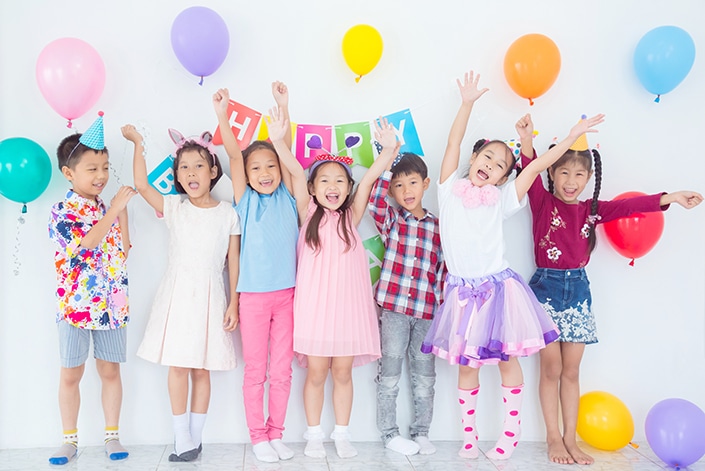
After learning to say “happy birthday,” you might wonder whether the birthday song is sung in China and, if so, how. There was no tradition of singing it in the past, but the melody and the custom were borrowed from the West, and singing it at parties is now quite popular.
If you’ve mastered 祝你生日快乐 (zhù nǐ shēngrì kuàilè), you already know everything you need. Simply sing “zhù nǐ shēngrì kuàilè” four times to the tune of the familiar English-language birthday song.

Learn Chinese with Cultural Context
CLI offers personalized Chinese instruction built around real language and culture. Join our Immersion Program in Guilin or start online with a free Chinese lesson.
04 Calculating Chinese birth dates: a complex endeavor
While some birthday traditions are changing, many are still deeply shaped by Chinese culture. Because of the continued popularity of the traditional lunar calendar, calculating Chinese ages and birth dates can be surprisingly complex.
A different way of determining age
The traditional Chinese way of calculating age differs from the Western method. Under traditional East Asian age reckoning, children are already one year old at birth.
This explains why someone who is 21 by Western counting may insist they are 22.
People are also traditionally believed to turn a year older on the first day of the Chinese Lunar New Year. So even if someone’s 21st birthday isn’t until June, relatives may start calling them 22 from the first day of the new year, even if that day falls in January.
These methods can leave your Chinese friends one or even two years “older” than the age you’d calculate from their birth year, so watch out!
So many birthdays, so little time
The traditional lunar calendar, or 农历 (nónglì), remains popular in China, even though the Gregorian calendar, or 阳历 (yánglì), is now used for official purposes. Every Gregorian date has a corresponding lunar date that shifts each year, and you can use an online calendar conversion tool to switch between the two.
The lunar birth date matters a great deal in China, and many people still celebrate accordingly. However, the official birthdate on a Chinese ID card (身份证, shēnfènzhèng) is always the Gregorian one.
Because the Gregorian calendar wasn’t widely used in the countryside until recently, officials sometimes misrecorded birthdays, leaving one person with two or even three different dates of birth.
Consider a real example. 小王 (Xiǎo Wáng) grew up in a village knowing only his lunar birth date: November 1, 1988 (农历11月初1, nónglì shíyīyuè chūyī).
When officials came to issue his ID card, they recorded “November 1, 1988” on the Gregorian calendar without checking which system he meant. But the correct Gregorian equivalent of that lunar date is actually December 9, 1988.
He now has three birthdays: November 1 and December 9 on the Gregorian calendar, plus his lunar November 1, which he considers his “real” one.
The importance of the Chinese zodiac
If all that feels confusing, there’s good news: the Chinese zodiac, a traditional 12-year astrological cycle based on lunar phases, offers an easy shortcut for estimating someone’s age. Since the 12 animals repeat in a fixed order, if Xiao Wang tells you he was born in the Year of the Dragon, you can quickly work out he was likely born in 1988 (or 2000, or 1976, depending on how young or old he looks!).
05 Chinese birthday traditions
Now that you know how to offer birthday wishes and understand lunar birth dates, what should you expect if you’re invited to a Chinese birthday party? Read on.
Noodles, not cake!
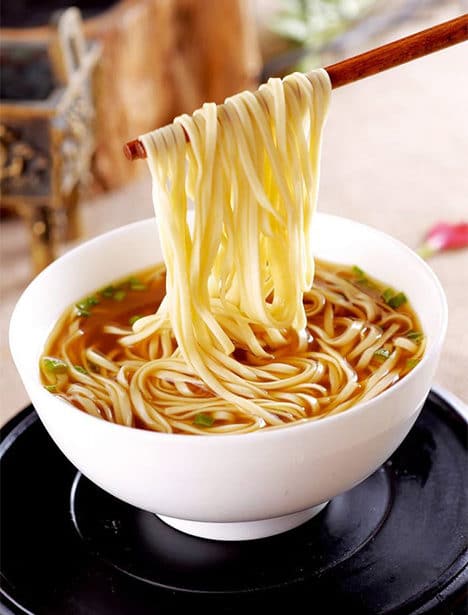
Although Western-style cake is becoming more common, many people still eat traditional foods alongside or instead of it. One of the most common customs is a big bowl of “longevity noodles,” called 长寿面 (chángshòumiàn) or simply 寿面 (shòumiàn), thought to represent long life.
Lucky red underwear
Another custom is wearing red underwear during one’s zodiac year, or 本命年 (běnmìngnián), the year matching the zodiac animal under which a person was born. Returning to Xiao Wang, who was born in 1988, a Dragon year, he should wear red in each later Dragon year (2000, 2012, 2024, and so on).
Because red is considered lucky, wearing it is believed to ward off bad luck. This kind of color symbolism runs throughout Chinese culture, from Chinese numerology to feng shui.
Gift ideas
Giving birthday gifts, or 礼物 (lǐwù), is common in China, with a few things worth remembering about gift-giving. It’s a good idea to wrap gifts in red paper.
Chinese red envelopes, or hongbao (红包, hóngbāo), containing a few ¥100 notes in Chinese renminbi are also a very popular birthday gift. A thoughtfully chosen Chinese tea set makes a welcome present too.
Other bright, festive colors are fine, but avoid black or white, which are associated with death and mourning.
Gift etiquette
If someone gives you a gift in China, remember that it’s considered rude to open it in front of the giver. Also avoid giving a clock: the phrase “to give a clock,” 送钟 (sòng zhōng), sounds identical to 送终 (sòng zhōng), meaning to pay last respects to the dying.
Steer clear of green hats too, since “to wear a green hat,” 戴绿帽子 (dài lǜ màozi), implies that someone’s spouse is unfaithful. For more of this kind of wordplay, you’ll enjoy our guide to Chinese idioms (成语).
Knowing your way around the table also helps, so it’s worth brushing up on Chinese table manners before a birthday banquet.
06 Useful Chinese birthday vocabulary
The following terms will help you give birthday wishes, understand party customs, and follow birthday conversations with confidence.
| Chinese | Pinyin | Meaning |
|---|---|---|
| 生日快乐 | Happy birthday | |
| 生日 | Birthday | |
| 快乐 | Happy | |
| 祝你生日快乐 | Wish you a happy birthday | |
| 长命百岁 | May you live to be a hundred | |
| 长寿面 | Longevity noodles | |
| 本命年 | One’s zodiac birth-sign year | |
| 礼物 | Gift | |
| 红包 | Red envelope | |
| 农历 | Traditional lunar calendar |
07 FAQ
How do you say “happy birthday” in Chinese?
The simplest phrase is 生日快乐 (shēngrì kuàilè), literally “birthday happy.” A slightly more polite version is 祝你生日快乐 (zhù nǐ shēngrì kuàilè), meaning “wish you a happy birthday.”
How do you sing the birthday song in Chinese?
Sing “zhù nǐ shēngrì kuàilè” four times to the tune of the familiar English-language birthday song. The melody was borrowed from the West and is now widely used in China.
Why do Chinese people eat noodles on their birthday?
Long “longevity noodles,” or 长寿面 (chángshòumiàn), symbolize a long life, which is why they are a traditional birthday food.
Why do some people wear red on their birthday?
Red is considered a lucky color. During one’s zodiac year, or 本命年 (běnmìngnián), wearing red, often red underwear, is believed to ward off bad luck.
What birthday gifts should you avoid in China?
Avoid clocks and green hats, since “to give a clock” sounds like paying last respects to the dying and “to wear a green hat” implies a cheating spouse. Black and white wrapping is also best avoided.
08 Final thoughts
Chinese birthdays are fascinating events steeped in tradition. If you have the chance to attend one, we hope you now feel confident wishing the birthday boy or girl a happy birthday in Chinese, and won’t be surprised to see them eating longevity noodles instead of cake.
Now that you know how to wish someone “happy birthday,” why not learn to accept your next invitation in style by exploring how to say “yes” and “no” in Chinese?
Once that invitation is in hand, you’ll want to greet the other guests with our list of 12 ways to say “hi” in Chinese. Enjoy the party!