


- Surviving as a vegetarian in China is entirely possible — vegetables, grains, beans, and tofu are staples of Chinese cuisine.
- Chinese definitions of "vegetarian" can differ from Western ones: dishes may be called vegetarian even when meat is used in the broth or seasoning.
- The most important phrase to learn is 我是吃素的 (Wǒ shì chīsù de, "I am vegetarian") — it is far more effective than saying you don't eat meat.
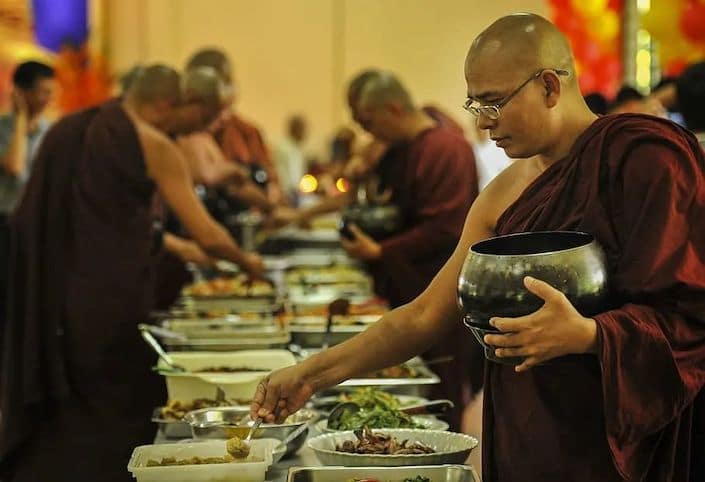
- Buddhist temples are some of the most reliable places to find strictly meat-free meals in China.
- Plant-based eating is growing fast in China's major cities, with the imitation-meat market expanding by an estimated 20%+ per year.
Knowing what to look for and how to order meals as a vegetarian in China is crucial for a deliciously smooth travel experience. Whether you're visiting for a short trip or planning to Learn Chinese in China for an extended stay, this veggie-friendly guidebook is designed for your feasting pleasure.
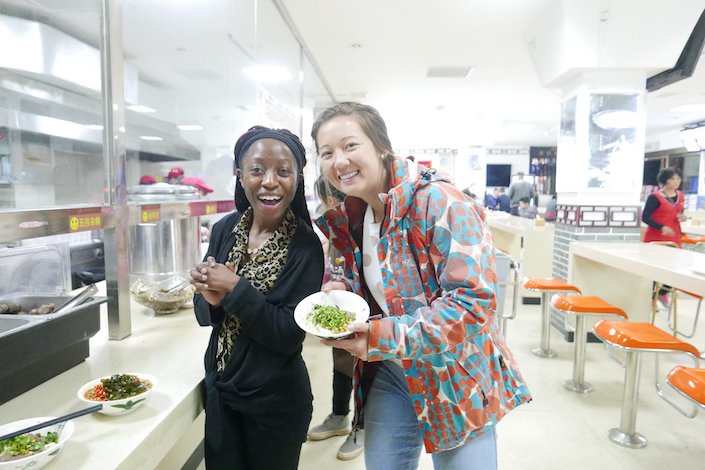
In this guide, we'll look at the cultural context surrounding vegetarianism in China, the history of meat-free eating from temple kitchens to today's plant-based boom, and the essential Mandarin vocabulary and phrases you'll need to order vegetarian food with confidence.
01 Is it hard to be a vegetarian in China?
Sticking to a vegetarian diet in China can either be challenging or straightforward depending on your expectations. Fortunately, vegetables 蔬菜 (shūcài), grains 谷物 (gǔwù), and beans 豆子 (dòuzi) are staples of Chinese cuisine, so surviving as a vegetarian in China is certainly possible.
In many Chinese homes, dinner tables are filled with abundant and flavorful non-meat dishes, from stir-fried bitter melon to oven-roasted tofu. Luckily for vegetarians, one usually doesn't need to look far to find scrumptious food in which meat isn't the main ingredient. Familiarizing yourself with Chinese table manners before sitting down to a shared meal will also help you navigate group dining with ease.
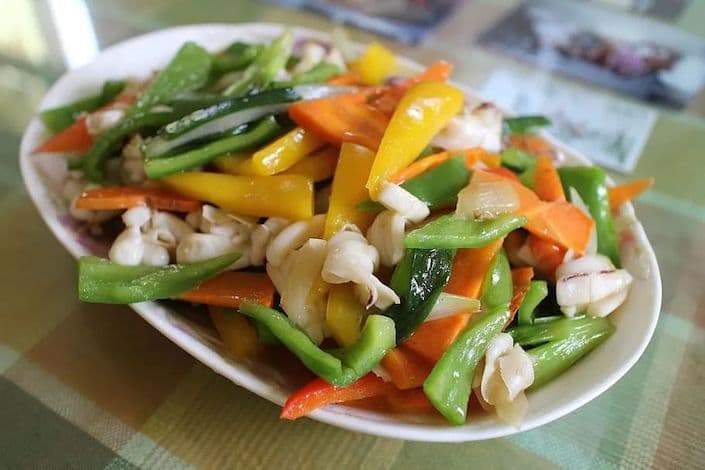
What does "vegetarian" mean in Chinese restaurants?
Despite the prevalence of veggie-friendly cuisine, a common difficulty for vegetarians in China has to do with differing ideas about what it means to be "vegetarian." It is typical for Chinese chefs, servers, and members of the general public to refer to a dish as vegetarian even if it contains some meat ingredients.
For example, your waiter may insist that a tofu dish is vegetarian even when beef was used to season the sauce. Similarly, your friend's aunt may call her pumpkin soup vegetarian, even when the broth was simmered with pork bone.
In order to eat a successfully meat-free diet in China, it's important to first examine the context and customs surrounding vegetarianism. If you're more interested in communicating your dietary preferences right away, jump directly to our handy list of essential Chinese vocabulary and phrases for vegetarians below.
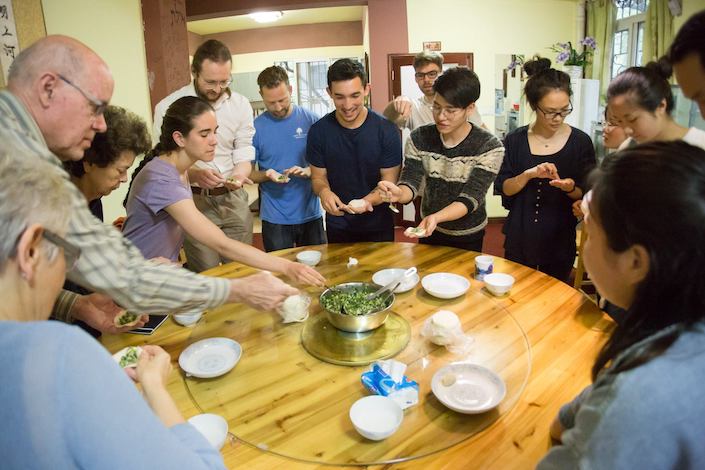
How many vegetarians are there in China?
Vegetarianism isn't exactly widely practiced in China. It is estimated that about 4% of the population regularly follows a meat-free diet. As we'll soon find out, the vast majority of China's vegetarians choose to do so for religious reasons.
Going meat-free for health, environmental, or animal rights purposes is still a somewhat new and mystifying concept to many regular people 老百姓 (lǎobǎixìng) in modern China.
Why is meat a status symbol in China?
Throughout China's dynastic history, ordinary families excluded from the noble class often lived without meat or animal products for lengthy periods of time. If meat was inaccessible, the typical farmer's diet would consist of vegetables and grains. Livestock were costly to raise, so meat was generally only consumed during festivals and special occasions.
During the communist era, famines and state-sanctioned food rationing meant that meat remained a novelty for many families throughout much of the twentieth century. Thus, meat was consumed once or twice per month at most, and sometimes only once per year, during the Chinese Spring Festival.
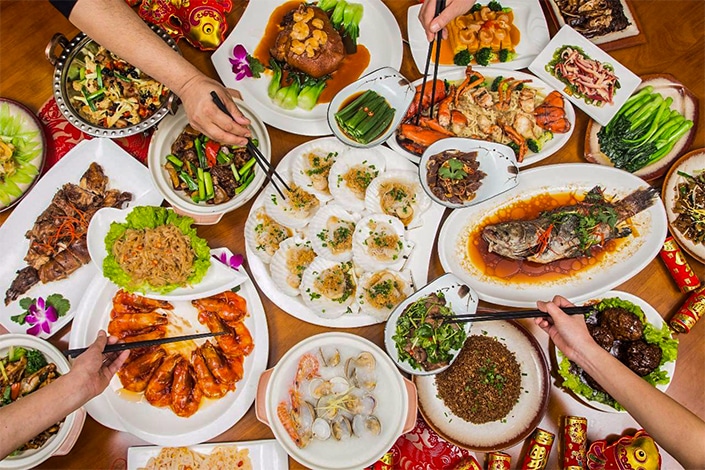
When the country's economy blossomed and manufacturing industries developed as a result of the new market reforms introduced in the 1980s, meat production also rapidly expanded. These days, Chinese consumers, who now purchase 28% of the world's meat and half of all pork, generally have easy access to all kinds of poultry, fish, pork, and beef, which was once considered a luxury ingredient and nicknamed the "millionaire's meat."
The scarcity of meat during certain periods of the Chinese collective past may contribute to the reluctant attitudes towards vegetarianism prevalent among many people in China today.

02 The history of vegetarianism in China
To further understand modern Chinese dietary preferences, the history and culture surrounding vegetarianism in the Middle Kingdom is worth exploring further.
Buddhist and Taoist origins: from the fires of temple kitchens
The historical origins of vegetarianism in China remain rather enigmatic. One of the earliest references to the diet can be found in court records from the brief Western Han dynasty (202–208 BCE), which recount that tofu was invented by the Daoist emperor at the time.
Another early reference can be found in the 齐民要术 (Qí Mín Yào Shù, "Essential Techniques for the Welfare of the People"), an epic catalogue of agrarian texts written by an official during the Northern Wei dynasty (533–544 CE) which lists several popular vegetarian recipes.
Since China was historically an epicenter of Buddhism and Taoism, it is widely accepted that these two religions, both based upon principles of compassion and harmony, influenced the nation's earliest vegetarian trends. Plant-forward eating also overlaps with ideas about dietary balance found in traditional Chinese medicine, which has shaped Chinese attitudes toward food and health for centuries.

Where to find vegetarian food: Buddhist temple restaurants
Most sizable Chinese temples 寺庙 (sìmiào) traditionally house vegetarian or vegan kitchens built to feed resident monks. These temple kitchens were likely some of China's earliest strictly meat-free eateries.
In fact, many temples across the country today also double as vegetarian or even vegan restaurants and are open to the public for dining. If you're unsure of where to find reliable vegetarian grub, consider heading to a local Buddhist temple for your next meal — and don't miss the chance to enjoy a pot of Chinese tea alongside it, another tradition deeply rooted in temple culture.
Interestingly, many Chinese people who typically consume meat choose to refrain from animal products on certain dates, including the first and fifteenth days of each lunar month on the Chinese calendar, as well as the first day of the lunar new year, a custom rooted in Chinese Buddhism and related folk beliefs.
Is veganism growing in China? The modern plant-based revolution
Despite the relatively low number of full-fledged vegetarians in China, there is some evidence suggesting attitudes towards meat may slowly be shifting.
The demand for plant-based imitation meat products in China was estimated at around 790 million USD in 2018 and has been forecasted to grow by at least 20% annually, according to a study by the Good Food Institute. In Hong Kong, approximately a quarter of the population reported that they follow a flexitarian diet.
In 2016, the Chinese government announced a plan to cut meat consumption by 50% within the next fifteen years in order to reduce the nation's carbon footprint and combat growing rates of obesity and diabetes.
In response to the demands of an increasingly health-conscious and eco-savvy generation, meatless and organic options are becoming more visible in eateries across China's cosmopolitan urban centers. More and more vegetarian and diet-friendly restaurants are opening their doors each year, and even some fast food chains in China's first-tier cities have added imitation meat burgers and nuggets to their menus.

Study Chinese in Guilin or Start Online
CLI offers personalized Chinese instruction built around your goals. Join our Immersion Program in Guilin or begin from anywhere with a free Chinese lesson .
03 How to say "I am vegetarian" in Chinese: essential vocabulary and phrases
No matter where you go in China, you're sure to have a more seamless experience if you know some Chinese terms and phrases geared towards vegetarians. These expressions pair perfectly with other essential Chinese travel phrases to make your trip smoother from airport to dinner table.
Essential Chinese food vocabulary for vegetarians
Let's begin by reviewing the following basic Chinese food-related vocabulary:
| Chinese | Pinyin | Meaning |
|---|---|---|
| 素食 | Vegetarian food | |
| 吃素 | To be vegetarian; to eat vegetarian food | |
| 蔬菜 | Vegetables | |
| 谷物 | Grains | |
| 豆子 | Beans | |
| 豆腐 | Tofu | |
| 肉 | Meat (often understood as pork) | |
| 鸡蛋 | Egg | |
| 高汤 | Stock; broth (often made with meat or bones) | |
| 纯素 | Vegan |
Popular vegetarian Chinese dishes to order
Once you've got the essentials down, keep in mind the below list of familiar, go-to vegetarian dishes to look out for when eating at restaurants. In Guilin, even the city's famous Guilin rice noodles can often be ordered without meat toppings if you ask:
| Chinese | Pinyin | Meaning |
|---|---|---|
| 番茄炒蛋 | Stir-fried tomato and egg | |
| 地三鲜 | Sautéed potato, eggplant, and green pepper | |
| 麻婆豆腐 | Mapo tofu (ask for no minced pork) | |
| 干煸四季豆 | Dry-fried green beans | |
| 清炒时蔬 | Stir-fried seasonal vegetables | |
| 酸辣土豆丝 | Hot and sour shredded potato | |
| 蛋炒饭 | Egg fried rice | |
| 素饺子 | Vegetarian dumplings |
Useful phrases for ordering vegetarian food in Chinese
Remember that because the concept of vegetarianism in China may differ from your own, it's still best to be persistent with wait staff and chefs to ensure that animal products are not being used for your food orders. Try out the following phrases when ordering or purchasing food in China:
| Chinese | Pinyin | Meaning |
|---|---|---|
| 我是吃素的 | I am vegetarian | |
| 这个菜里有肉吗 | Is there meat in this dish? | |
| 请不要放肉 | Please don't add meat | |
| 汤是用肉做的吗 | Is the soup made with meat? | |
| 有什么素菜推荐吗 | Are there any vegetarian dishes you'd recommend? | |
| 我不吃鸡蛋和奶制品 | I don't eat eggs or dairy products |
Why 我是吃素的 works better than "I don't eat meat"
Note that the phrase 我是吃素的 (Wǒ shì chīsù de, "I am vegetarian") is perhaps the most important one on the above list. Enterprising beginner students of the Chinese language unfamiliar with the character 素 (sù, a rarely-used word for vegetable) may be tempted to use the seemingly more straightforward phrase 我不吃肉 (Wǒ bù chī ròu, "I don't eat meat") instead. This strategy can backfire, however.
Just saying that you don't eat meat can be ineffective because the Chinese word for meat, 肉 (ròu), is frequently used to mean "pork" instead of meat in general. This is perhaps because pork is the most commonly eaten meat in China. Often when there is meat in a dish, it tends to be pork.
When you say that you don't eat 肉 (ròu) in China, your listener may assume that you just don't eat pork, but that other meats, such as beef and chicken, are fine. This interpretation will make sense in your listener's cultural context since China has a small but visible Muslim minority, most of whom do not consume pork.
If you are vegetarian, make sure that you go the extra mile and learn the phrase 我是吃素的 (Wǒ shì chīsù de, "I am vegetarian") before your trip. Your stomach will thank you!
04 Best apps and resources for vegetarians traveling in China
Fortunately, there are plenty of useful tools to help you get by as a vegetarian abroad. Check out HappyCow for a database of vegetarian and vegan restaurants in China and around the world. The Vegan Passport is also a helpful app for explaining veganism to waitstaff worldwide (including China).
At the CLI Center, we welcome vegetarians, vegans, and those with other dietary preferences to study Chinese and experience China with us in Guilin. Our home-cooked lunches always include several vegan options and our team is readily available to recommend veggie-friendly restaurants and dishes, and provide language tips during your program.
In fact, CLI's very own co-founder Bradford Fried spent over a decade living as a vegan in Guilin and helping guide students from around the world during their meat-free travels.

05 FAQ
Can you be a vegetarian in China?
Yes. Vegetables, grains, beans, and tofu are staples of Chinese cuisine, and most restaurants offer several meat-free dishes. The key is communicating clearly, since dishes may be called "vegetarian" even when meat is used in the broth or seasoning.
How do you say "I am vegetarian" in Chinese?
The most effective phrase is 我是吃素的 (Wǒ shì chīsù de). Avoid relying on 我不吃肉 ("I don't eat meat"), because 肉 (ròu) is often understood to mean only pork.
How many vegetarians are there in China?
An estimated 4% of China's population regularly follows a meat-free diet, with the majority doing so for religious reasons connected to Buddhism and Taoism.
Where can I find reliable vegetarian food in China?
Buddhist temples are among the most dependable options, as many house vegetarian or vegan kitchens that are open to the public. Apps like HappyCow also list vegetarian-friendly restaurants across China's cities.
Is veganism growing in China?
Yes. China's plant-based imitation meat market has been forecast to grow by at least 20% annually, and meatless options are increasingly visible in major cities, including at some fast food chains.
06 Final thoughts
Being a vegetarian is a lifelong learning process. With each new country you visit or restaurant you dine in, new challenges and rewards await you in your commitment to eating meat-free.
On behalf of CLI, we wish you health 健康 (jiànkāng) and happiness 幸福 (xìngfú) on your journey as a vegetarian in China!
07 Selected References
- VegNews: estimates of China's vegetarian and vegan population. View source →
- Good Food Institute APAC: report on plant-based market growth in China. View source →
- The Guardian: coverage of China's plan to reduce national meat consumption. View source →
- Mother Jones: analysis of rising meat consumption in China. View source →
- LIVEKINDLY: reporting on flexitarian diets in Hong Kong and mainland China. View source →
- Note: Restaurant practices, ingredient definitions, and menu options vary by region and establishment. Always confirm ingredients directly with staff when dietary restrictions are important to you.